




 Article in xml format
 Article references

 Automatic translation
 Send this article by e-mail
 Cited by SciELO
 Similars in
SciELO

 Permalink

Introduction
Little is known about the development and implementation of English for Specific Purposes (ESP) in developing countries like Costa Rica. Although ESP has been taught in technical high schools for decades, formal study of ESP and its teaching in tertiary education began in 2006 with the development of a study by the School of Modern Languages of the University of Costa Rica (UCR). The study aimed to measure the abilities that English teachers required to address the country's needs (Hernandez, 2008). Saborio and Valenzuela (2009) also suggested that the Universidad Nacional (UNA) established an ESP branch given that "Costa Rica is in its infancy with regard to ESP practices" (p. 397). This paper presents the development and results of a needs analysis implemented at UNA, Brunca Branch, which seeks to contribute to the development of ESP practices and benefit the university's students through an ESP course proposal.
Some Theoretical Considerations
In Costa Rica's tertiary public education system, some majors (e.g., Systems Engineering, Business Administration, and Tourism) include English language courses that are not tailored to the specific needs of the students' future labor demands. Many courses are based on General English (GE), while others present core content that may deviate from the fundamental linguistic needs of the students in terms of future workplace requirements. While GE courses can provide basic language knowledge, ESP training can greatly benefit many majors in the country. Anthony (2018) defined ESP as "an approach to language teaching that targets the current and/or future academic or occupational needs of learners" (p. 11). According to Kitkauskienė (2006) , both GE and ESP focus on developing communicative competence in oral and written discourse, with an emphasis on accuracy in grammar and vocabulary use. However, ESP aims to provide students with the "practical use of English" (p. 90) for their specific contexts. It is important to note that ESP builds upon the knowledge of general English; they are not contradictory but rather complementary.
ESP can be seen from two macro perspectives: English for Academic Purposes (EAP) and English for Occupational Purposes (EOP). EOP can be further divided into English for General Occupational Purposes and English for Specific Occupational Purposes (Basturkmen, 2010, p. 6). The main difference between these subdivisions is that the former draws from a core body of knowledge in the field, while the latter focuses on a more specific area. In the university context in Costa Rica, where most students do not work, adopting a general stance with EOP makes more sense.
In ESP curriculum development, Needs Analyses (NA) or Needs Assessments are essential for building a comprehensive course that addresses the needs of students and other stakeholders. Needs analysis provides the basis for lesson planning, syllabus design, materials evaluation and development, instructional design, and assessment development (Widodo, 2014, p. 127). Hutchinson and Waters (1987) emphasized that analyzing the target situation needs is not only concerned with language use but also with language learning (p. 63). Therefore, understanding the needs is only part of what teachers need to know and do; it is also important to comprehend the procedures and materials that work for the students.
Consequently, it is common for English language teaching curriculum developers to advocate for the use of needs assessments to create a curriculum that adequately responds to the needs of various stakeholders involved in language teaching, including teachers, students, community members, employers, and policymakers. Needs analysis must be the starting point for devising syllabuses, courses, materials, and the kind of teaching and learning that takes place (Jordan, as cited in Rahnuma, 2009, pp. 2-3). Therefore, regardless of the context, ESP courses, whether they are EAP or EOP, should always begin with a well-designed needs analysis.
The Context
The Universidad Nacional, Brunca Branch, Pérez Zeledón Campus, located in Costa Rica's southern region, offers a bachelor's degree in Sustainable Tourism Management (STM). This major includes a strong English language component, as it comprises four integrated English courses of ten hours per week and two English oral communication courses of four classroom hours, and six workplace practicum hours. While the curricula include certain ESP aspects, the major was initially designed at Universidad Nacional, Chorotega Campus, in the touristic North Pacific area, which has different ESP needs compared to the Brunca region.
The Learners
Students in the STM major are exposed to English as their only foreign language during their 4-year program, mainly due to the demands of the job market. Currently, English proficiency is essential for employment in the tourism sector, especially for students with training in various sections of the tourism industry in Costa Rica, including hotels, travel agencies, and government agencies.
The Objective
The Brunca Region offers a variety of tourism opportunities for students to work in. However, it is important to identify the needs, wants, and gaps in the English program for different stakeholders in the major. Thus, the main objective is to conduct a needs analysis to gather data from alumni (or former students), current STM major students, and employers regarding the existing English language needs. This analysis aims to help students better prepare to meet the linguistic demands of the current tourism market. The end product will be an EOP course proposal intended for STM major students in their third or fourth year, which can be implemented as an elective or summer course on campus.
Scope and Scale
According to Brown (2016), scope "has to do with what you will teach and how specifically or narrowly you will focus that content" (p. 30), while scale refers to "how broad or narrow the student population is that the ESP curriculum is serving" (p. 30). This needs analysis aims to gather data from 20 current students, 20 alumni, and 5 tourism employers from the target geographic area. The sampled students consisted of 55% females and 45% males, with 60% of them in their third year and 40% in their fourth year of college. The sampled alumni, with a distribution of 55% females and 45% males, graduated between 2005 and 2019, with the majority (60%) graduating between 2015 and 2019.
These former students from the STM major work in various occupations, such as concierges, hotel receptionists, human resources staff, restaurant servers, and travel agents. The employers included managers from two hotels, two adventure companies, and one nature reserve in the Brunca region.
The scope of the future course proposal should include specific language used in tourism-related positions where most alumni work, where most students expect to work, and where most employers require these students to perform.
Possible Constraints to the NA
Following Brown's (2016) framework for identifying NA constraints, the following sections summarize potential situational, stakeholder, and theoretical constraints that may arise during the NA process.
Situational Constraints
Situational constraints may have the most significant impact on the NA process. The Costa Rican society, specifically in terms of attitudes toward foreign language learning, has not fully recognized the need for English in future employment and economic growth. Many students may perceive language courses as just another subject to take as part of their program, rather than an opportunity for future success.
Stakeholders' Constraints
Regarding stakeholders, the students' own agendas for their futures and the flexible nature of the major may lead to a variety of anticipated needs and wants. Therefore, the NA should strive to address a common core that benefits all students or focus on a specific aspect that is relevant to their needs.
Theoretical Constraints
In this context, constraints related to approaches and syllabuses are not a significant issue for this NA. At the university level, professors have sufficient freedom and flexibility to choose and adapt teaching approaches and frameworks. Additionally, the potential course design can employ any approach and methodology, as it will supplement the major's English program or cater to the personal needs of the students.
It is crucial to consider these constraints while conducting the needs analysis and developing the EOP course proposal. By addressing these factors, the resulting course can better align with the needs and expectations of students, alumni, and employers in the Sustainable Tourism Management field in the Brunca region of Costa Rica.
Methodology
Data Collection
To ensure credibility and validity, the analyst employed two types of triangulation in data collection. Stakeholder triangulation involved gathering information from multiple stakeholders, including students, alumni, and potential employers (Brown, 2016, p. 141). Method triangulation was employed by using different instruments such as structured interviews and questionnaires, and also by conducting follow-up interviews with selected participants.
The data collection sequence chosen by the analyst was as follows: first, data was gathered from alumni through a questionnaire to gain initial insights into their linguistic needs and experiences in the workplace. Subsequently, selected alumni were interviewed to obtain more detailed information about their specific linguistic needs and tasks related to their work. These alumni served as key informants for the needs analysis as they could provide realistic data based on their experiences in various workplaces. Finally, students in the STM major were surveyed to gather their views on the English language needs and wants in their future workplaces.
Instrumentation
As Brown (2016) suggests, ESP curriculum design requires a needs analysis, and this analysis relies on systematic data collection (p. 5). Therefore, the analyst designed a series of instruments to collect information from different stakeholders and sources of evidence. The aim was to identify the needs and gaps of students and alumni from the STM major at UNA, Campus Pérez Zeledón, as well as the requirements and perspectives of potential employers.
The Instruments
Questionnaire for alumni: This questionnaire aimed to identify any linguistic gaps encountered by alumni in their workplaces and gather their feedback on the English program at the university. The questionnaire also sought suggestions for improving English language learning based on their experiences.
Interview with alumni: Building on the data from the questionnaire, selected former students were interviewed to establish direct contact and clarify specific workplace needs, particularly regarding linguistic skills and tasks that require English proficiency.
Questionnaire for students: This instrument aimed to gather the needs and wants of third and fourth-year students in the STM major. These students had completed their English program and had workplace practice through English practicum courses and a final professional practicum.
Interview with potential employers: This semi-structured interview instrument aimed to collect relevant data from tourism business managers regarding their specific English language needs in their contexts. The interview also explored their perspectives on English proficiency among employees and tourism students.
Results
This section of the needs analysis presents the results obtained from the implementation of the questionnaires and interviews with the sample groups. The results include a quantitative analysis of data from the questionnaires, providing information on linguistic needs and wants, difficulty levels of specific linguistic abilities in the workplace, preferred teaching materials, activities, and specific tasks performed in the workplace.
Additionally, a qualitative analysis is performed using the information gathered from the follow-up interviews with alumni and the interviews with employers. The follow-up alumni interviews provide in-depth insights into the types of tasks that require English proficiency in their current occupations. The interviews with employers yield valuable insights into the English language requirements in their businesses, the value placed on English proficiency for potential employment, and other relevant factors.
English skills considered to be the most needed to perform in a tourism-related occupation according to the alumni
According to the former students from the STM major, being able to speak English surpasses the other linguistic skills (See Figure 1). Speaking was mentioned almost three times as much as listening and all skills options.
Speaking seems to be a skill that must be mastered by tourism students from the STM major in order to perform appropriately in the workplace.
English subskills can cause the most trouble when communicating in English at a tourism-related occupation according to alumni.
Regarding the linguistic subskills that may pose challenges in the workplace, both vocabulary and pronunciation received significant attention (refer to Figure 2). These areas appear to be crucial for students to enhance and develop further.
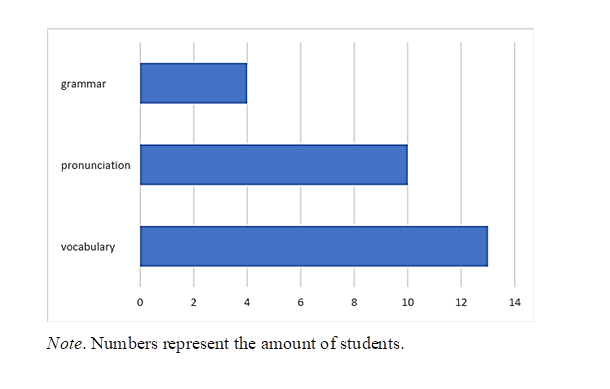
Based on the data, it can be inferred that emphasizing vocabulary and pronunciation in English courses would enhance students' prospects for effective job performance. By prioritizing these areas, students can improve their language skills and increase their chances of succeeding in the workplace.
Level of difficulty encountered when using English by alumni.
This section provides an overview of the alumni's perceptions regarding the levels of difficulty in various areas of English language use in the workplace. Table one summarizes these results.
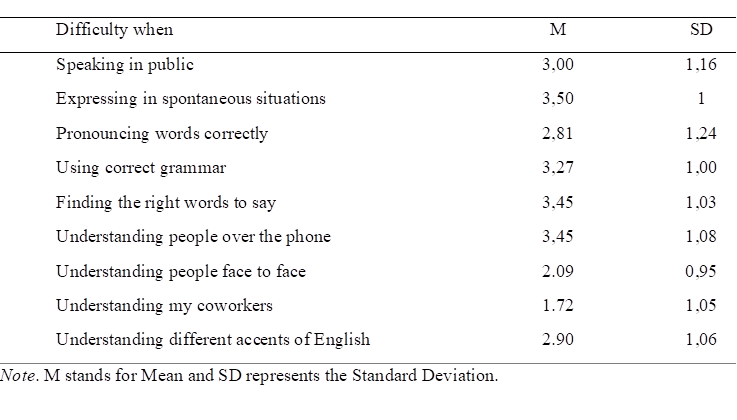
Table one reports varying levels of difficulty across different situations. The mean scores indicate the average level of difficulty reported by the students, while the standard deviation values reveal the degree of dispersion or variability in their responses.
It is important to note that some situations received higher mean scores, indicating a higher level of perceived difficulty. Conversely, situations with lower mean scores suggest less difficulty for the students. The standard deviation values provide insights into the spread of responses, highlighting the range of individual perceptions and experiences among the students.
By analyzing the data in Table One, it becomes evident that certain situations pose greater challenges for the students in terms of their English language proficiency. These findings can help identify areas where additional support and instruction may be beneficial to enhance students' skills and address their specific needs.
Level of difficulty encountered by students when using English
Table two summarized the perceptions of current students of the STM major regarding their level of difficulty in a series of situations.
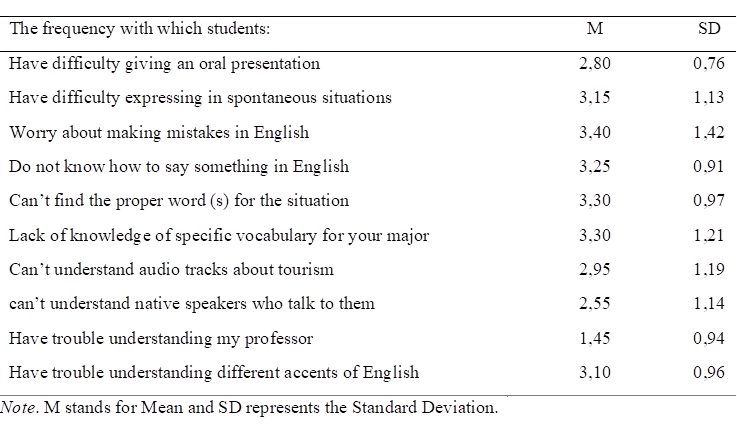
The data from Table two reveals that the students taking the STM major reported higher levels of difficulty in certain areas of English language use. Specifically, they expressed concerns about making mistakes in English, not being able to find the appropriate words for specific situations, and lacking knowledge of specialized vocabulary related to their major. These areas of difficulty are of particular importance as they directly impact the students' ability to communicate effectively in their future workplace contexts. The students' worry about making mistakes and struggling with vocabulary selection suggests a need for focused attention on these aspects in their English program.
Furthermore, the lower standard deviation values in comparison to the alumni results indicate that the students' responses were less varied, suggesting a more consistent perception of difficulty among the student population. This consistency reinforces the need to address these troublesome areas as part of the main focuses in the students' English program.
By recognizing and addressing these specific challenges, the English program can better equip the students with the necessary skills and strategies to overcome these difficulties. This targeted approach will not only enhance their overall language proficiency but also increase their confidence and preparedness for using English effectively in their future professional endeavors.
Work-Oriented Needs
The survey of alumni and students provided valuable insights into the types of work-oriented tasks that require the use of English. The findings indicate common patterns in the tasks performed by both groups.
In terms of reading, a significant percentage of both alumni (84.2%) and students (75%) identified emails as the main type of reading material in their workplace. This highlights the importance of developing reading skills related to email communication in English instruction. Additionally, check-in/check-out forms were also mentioned by both groups, with 57.9% of alumni and 65% of students selecting them. These findings suggest that reading and understanding written forms and documents play a crucial role in their work settings.
Regarding writing, emails emerged as the predominant task for both alumni (78.9%) and students (95%). It is clear that effective email writing skills are highly valued in the workplace. Additionally, messages were mentioned by 57.9% of alumni and 75% of students, indicating the importance of developing written communication skills beyond email writing. Furthermore, check-in/check-out forms were selected by 47.4% of alumni and 75% of students, highlighting the need for proficiency in completing such forms accurately.
In terms of listening, face-to-face customer interactions were identified as the primary source of listening in the workplace by both alumni (95%) and students (100%). This emphasizes the significance of developing active listening skills to effectively communicate with customers in person. Customer interactions over the phone were also mentioned, with 65% of alumni and 85% of students recognizing it as an essential listening task.
Similar trends were observed in speaking tasks. Face-to-face customer interactions were identified as the main source of speaking at work by a significant percentage of both alumni (80%) and students (95%). This underscores the importance of developing oral communication skills for effective customer service. Customer interactions over the phone ranked second in speaking tasks, with 65% of alumni and 90% of students acknowledging their significance. Based on the comparison of data from both questionnaires, it is clear that certain tasks consistently emerged as areas requiring targeted instruction in English language programs. These include reading and writing emails and check-in/out forms, as well as listening and speaking in face-to-face and phone interactions with tourists. By addressing these specific tasks in English instruction, students can enhance their ability to perform effectively in their future workplace settings.
Contexts that should be included in an English course for tourism students to help them perform at work.
The alumni selected, from a list, the contexts that should be strengthened in the STM major English curriculum to help students better their work performance. Figure three summarizes the results by presenting the percentage of informants who selected each option from a checklist.
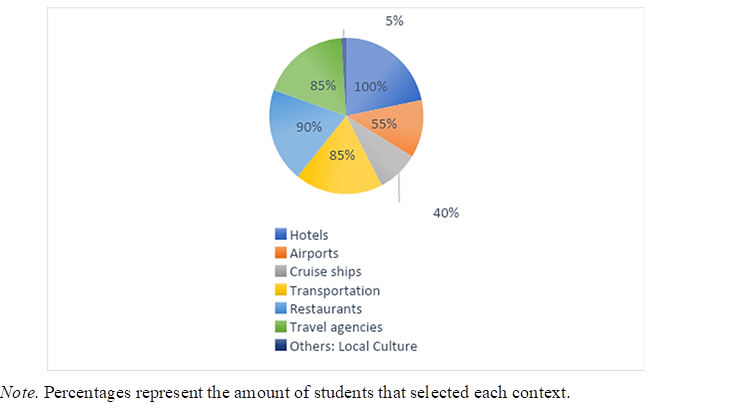
Figure three displays the alumni's selections regarding the contexts that should be strengthened in the STM major English curriculum to enhance students' work performance. The results indicate that hotels, restaurants, and transportation are the contexts that require additional focus in terms of English language use. These areas are crucial for students to acquire proficiency in the language forms and functions necessary to effectively operate in these settings and succeed in their respective careers.
Figure four presents the percentage of current STM major students who selected various contexts that they deemed important to study. The data highlights the following areas of significance.
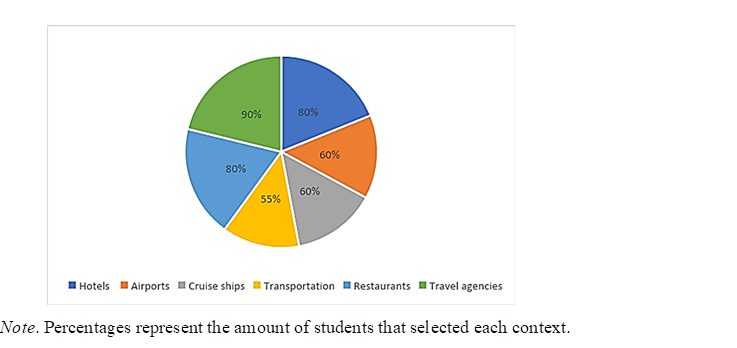
These findings suggest that the students recognize the importance of these contexts and believe that studying them will contribute to their overall language proficiency and readiness for their future careers in the tourism industry.
Functions considered to be essential for tourism students to learn to help them perform at work.
Figure five displays the responses of alumni regarding the language functions that can enhance students' linguistic achievements and work success. The following language functions emerged as key areas to focus on in the curriculum:
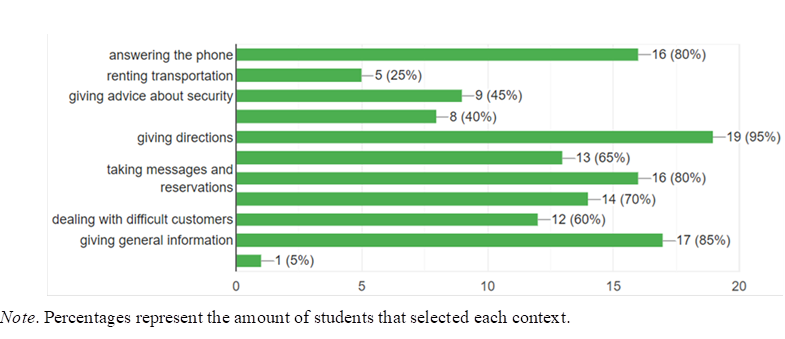
These findings suggest that incorporating instruction on these specific language functions in the curriculum can greatly contribute to students' language proficiency and their ability to succeed in their future workplace contexts within the tourism industry.
Figure six illustrates the responses of the students from the STM major regarding the language functions that they believe are crucial for tourism students to learn in order to excel in their workplace. The functions mentioned by the students include:
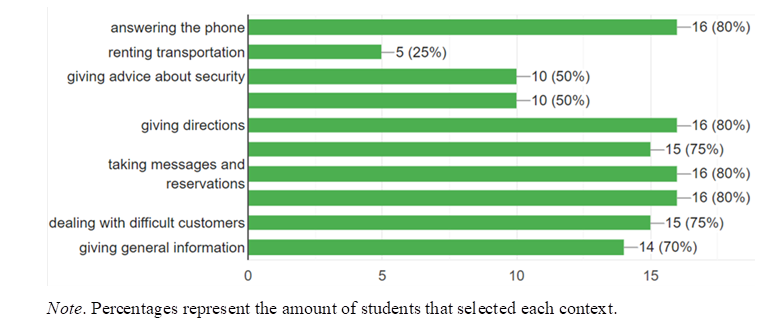
Figure 6 STM Students Selections of Language Functions for Tourism Students to Learn to Perform at Work
The convergence of responses between alumni and current students suggests a shared recognition of the importance of these language functions in the tourism industry. This alignment reinforces the need for incorporating these functions into the English curriculum, as they are perceived as essential for students' work performance and success.
Strengths of alumni concerning English learned while at STM major.
The alumni were also asked about what linguistic strengths they had developed while taking the English program of their major as shown in Figure seven.
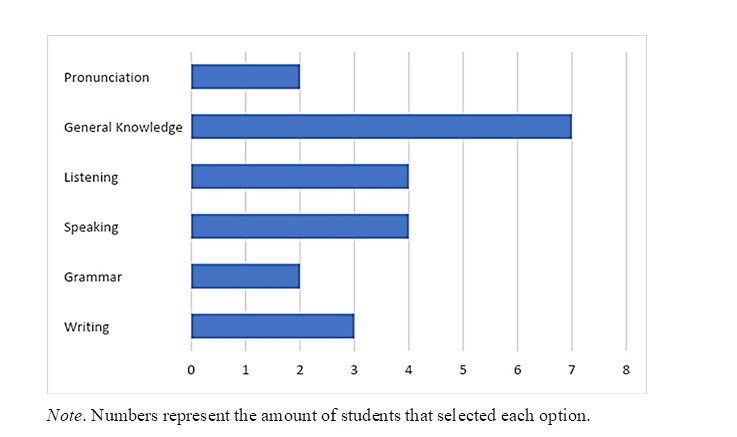
It is noteworthy that both the alumni and the current students identified general practice of the language as a primary strength in their language learning journey. This suggests that consistent and comprehensive language practice has played a significant role in their language proficiency development.
Additionally, both groups emphasized the importance of understanding and producing the language. This highlights their recognition of the reciprocal nature of language skills, where comprehension and production work in tandem to facilitate effective communication. This indicates a well-rounded approach to language learning, focusing on both receptive and productive skills.
Regarding the students' responses aligning with those of the alumni, it indicates that the current students feel well prepared in terms of speaking and listening skills. This suggests that the English program has successfully equipped them with the necessary language abilities to engage in verbal interactions and comprehend spoken English effectively.
On the other hand, the alumni emphasized their general knowledge of English as a major strength. This suggests that they perceive their overall language competence, encompassing various language skills and knowledge areas, to be a valuable asset in their work performance.
These observations underscore the importance of a comprehensive and balanced English curriculum that addresses all language skills and fosters a strong foundation in the language. The focus on general language practice and the recognition of understanding and producing the language as assets highlight the need for a holistic approach to language instruction that encompasses various language dimensions.
Alumni challenges related to English use encountered at work
Figure eight provides insights into the perceived alumni’s linguistic skill weaknesses.
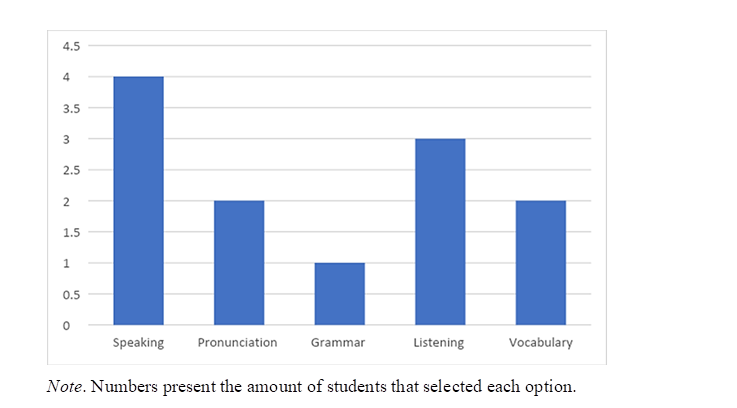
It indicates that former students from the STM major identified the proper development of oral skills as a significant challenge in the workplace. This suggests that they may have faced difficulties in effectively expressing themselves verbally and engaging in spoken communication.
Additionally, pronunciation and vocabulary were also mentioned as areas of weakness. This implies that alumni felt they struggled with accurately pronouncing English words and phrases, as well as with expanding their vocabulary repertoire. These weaknesses can potentially impact their overall communication and may hinder their ability to convey their ideas and understand others effectively.
By recognizing these linguistic weaknesses, it becomes evident that there is a need to address and strengthen oral skills, pronunciation, and vocabulary in the English curriculum for the STM major. Providing targeted instruction and practice opportunities in these areas can help students develop greater fluency, accuracy, and lexical knowledge, thereby enhancing their ability to communicate proficiently in professional settings.
It is important to note that the identification of these weaknesses by alumni highlights areas where additional support and focused instruction may be required to bridge the gap between classroom learning and real-world language use. By addressing these weaknesses, the English program can better prepare students for the linguistic demands they will encounter in their future careers.
Figure nine reveals the perceived weaknesses of current students in terms of their English language abilities.
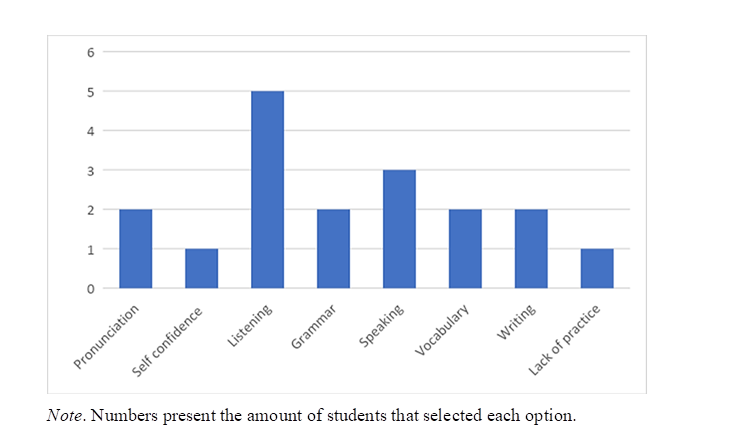
The data indicates that students face challenges primarily in the areas of listening and, to a lesser extent, speaking. This aligns with the findings from the alumni, who also identified oral skills as a weakness.
The fact that both alumni and current students highlight oral skills as an area requiring further development suggests a consistent need for improvement in this aspect of language proficiency. It emphasizes the importance of addressing oral communication skills in the English curriculum to better equip students for real-world language use and workplace demands.
Although there may appear to be a discrepancy between the strengths and challenges reported by alumni and current students, it can be interpreted as a call to reinforce and prioritize oral skills during language instruction. This highlights the need for increased focus on activities and tasks that promote listening comprehension and speaking proficiency, such as authentic dialogues, role-plays, and communicative exercises.
By recognizing and addressing these challenges, the English program can provide targeted support to enhance students' listening and speaking abilities. This may involve incorporating more interactive and communicative learning opportunities, providing sufficient practice and feedback, and integrating authentic materials and tasks that reflect real-world contexts.
Overall, these findings underscore the significance of oral skills development in the English curriculum for the STM major. By addressing these challenges and promoting effective listening and speaking skills, students can enhance their overall language proficiency and be better prepared for successful communication in their future workplace settings.
Topics that alumni would have liked to learn during their major to help them use English appropriately at work.
Figure ten presents the suggestions provided by former students regarding the topics they recommend studying in the English program for the STM major. The data reveals several key areas that alumni believe should be included in the curriculum to better prepare students for their future work settings.
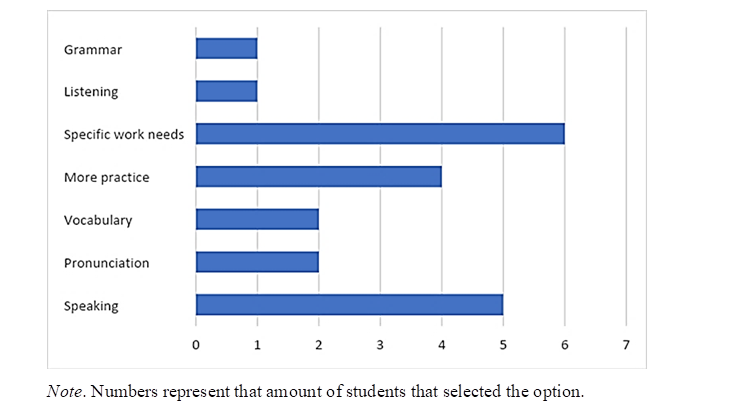
The feedback provided by the alumni highlights the importance of incorporating work-related topics into the curriculum of the STM major. Their suggestions emphasize the need for practical language skills and industry-specific knowledge that directly relate to their experiences in the workplace. Furthermore, the alumni expressed a desire for more emphasis on speaking skills and increased opportunities for language practice. This aligns with their perception of oral skills as an area that requires further development. By addressing these concerns, the English program can better prepare students for the communication demands they will face in their future work settings.
To meet these needs, the curriculum can be designed to include interactive speaking activities, role-plays, and simulations that mirror real-world work situations. Providing ample opportunities for students to practice speaking and engage in meaningful communication will enhance their language proficiency and build their confidence in using English in work-related contexts.
Students’ Needs and Wants
The STM students were questioned about their likes pertaining to teaching materials and activities that they prefer to learn English. Figures 11 and 12 summarize the answers to these queries by presenting the frequency with which the students selected them from a checklist.
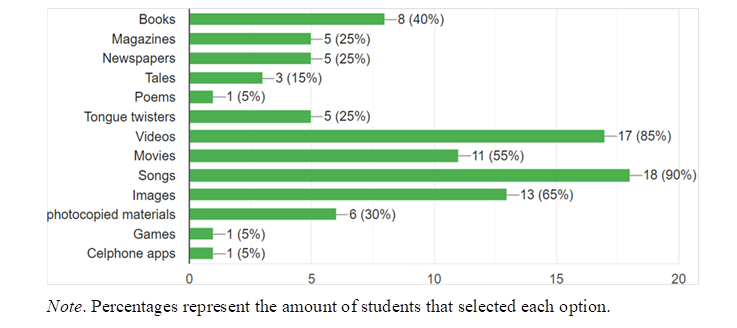
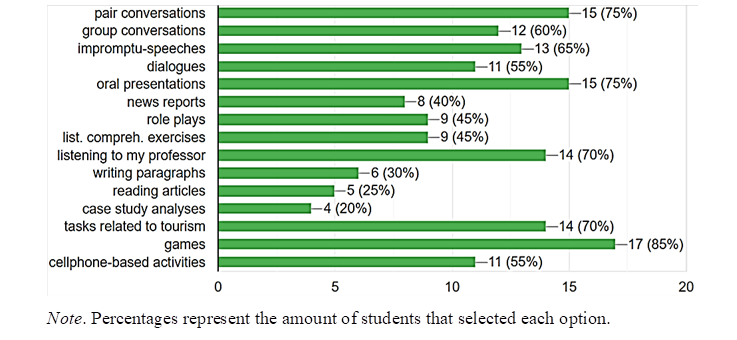
From the data presented in Figure 12 and 13, it is evident that the STM students have diverse preferences when it comes to teaching materials and learning activities in the English language classroom.
In terms of teaching materials, textbooks, and online resources were popular choices among students, highlighting the importance of structured content and access to digital resources. However, a significant number of students also expressed a preference for authentic materials and multimedia, indicating their interest in real-life language use and engaging with audiovisual materials.
Regarding learning activities, the students showed a strong preference for interactive and communicative approaches. Group discussions, role-plays, and language games were among the most favored activities, indicating a desire for hands-on practice and opportunities to engage in meaningful conversations. Presentations and simulations were also considered valuable activities for developing language skills.
These findings suggest that a well-balanced approach to teaching materials and activities should be adopted in the English program for STM students. Integrating a variety of materials, including textbooks, online resources, authentic materials, and multimedia, can cater to different learning styles and provide a rich learning experience. Similarly, incorporating interactive and communicative activities such as group discussions, role-plays, and language games can create a dynamic and engaging classroom environment that promotes active language use and skill development.
By considering the student preferences, the English program can create a learner-centered approach that aligns with their interests and enhances their motivation to learn English. It is important to regularly assess and update the teaching materials and activities based on student feedback to ensure their relevance and effectiveness in meeting the students' language learning needs.
Finally, the students were asked about how they prefer learning English. Table three presents an account of their answers.
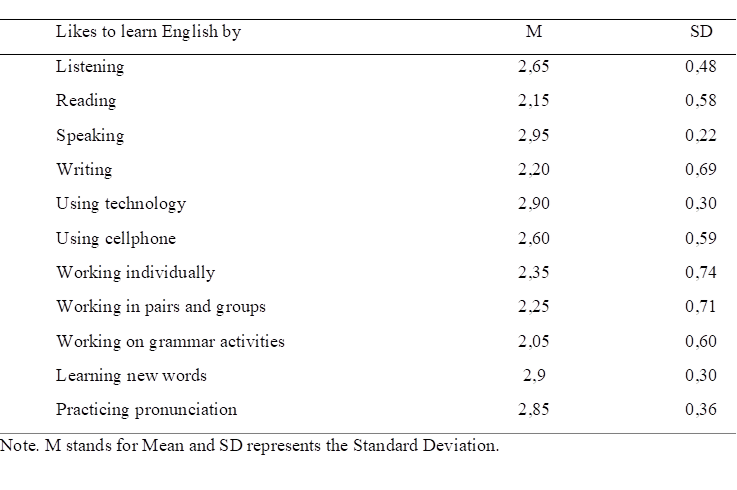
These mean scores indicate the students' preferences for different learning activities and strategies. Notably, there is a relatively higher mean score for speaking, suggesting that the students have a strong interest in developing their oral communication skills. This aligns with the findings from previous questions, highlighting the importance of oral skills in their English language learning journey.
Furthermore, the relatively low standard deviations for most criteria indicate a homogeneity in the students' responses, with a concentration around the "always" option. This suggests a consensus among the students regarding their preferences for learning English, emphasizing the consistency in their choices.
Overall, the data from Table 3 confirms that STM students have diverse preferences when it comes to learning English, with a strong emphasis on developing speaking skills. Their preferences for using technology, such as cell phones and online resources, also indicate their openness to integrating technology into their language learning process. These findings can inform instructional practices and curriculum design to cater to the students' preferences and enhance their English language learning experience.
Qualitative analysis
Two interviews were implemented to gather in-depth perceptions from alumni and to collect information from tourism business managers who are employing these former students from the STM major.
Interviews with employers
Employers found that the strengths of STM tourism students in English use include fluency, a desire to help, good speaking skills, a command of general English, and confidence. Employers expressed satisfaction with the students' speaking skills and agency. Weaknesses related to English language knowledge among STM students include a lack of confidence, fear of making mistakes, and limited interaction with customers. Employers suggested the need for contextualized practice and more experience in customer interaction, especially at the front desk positions. Employers emphasized the importance of developing oral skills, particularly listening and speaking, for effective communication and service in tourism businesses. However, some interviewees also acknowledged the importance of developing all language skills for functioning appropriately in most tourism businesses.
The situations that require employees to use English in different tourism businesses include welcoming guests, taking reservations, check-in and check-out procedures, providing general information, guiding visitors, answering calls, taking reservations, writing and translating documents, and giving instructions. These tasks were common across different types of tourism companies, such as hotels, natural reserves, and adventure companies.
English language knowledge is highly significant for companies when hiring new employees. Employers agreed that a higher level of English proficiency increases the chances of employment. One salient aspect expressed by employers is that they considered English proficiency more important than knowledge about tourism, as the company can provide training in the business operations but not in English.
From the interviews with alumni
Alumni mentioned various writing tasks, such as writing emails for reservations, providing directions, sharing information about transportation and activities, and discussing payment options and cancellations. The language used for these emails is mostly formal. Completing check-in and check-out forms also required writing in English, involving gathering information such as names, passport numbers, birth dates, nationalities, company names, and monetary amounts.
In terms of listening and speaking, alumni reported that interactions with customers mainly revolved around obtaining information. However, they expressed difficulty in engaging in less formal conversations with tourists. They highlighted the need to create small talk about weather, preferences, hobbies, and experiences to entertain customers while they wait. Additionally, they mentioned the importance of learning to interact via video conferencing, not only with customers but also in meetings with supervisors or higher authorities.
Interacting with tourists over the phone posed challenges, including understanding different accents, correctly spelling tourists' names, and comprehending large amounts of information. Providing directions over the phone, which requires specific details about roads and landmarks, was also seen as difficult to convey.
Alumni emphasized the use of English when solving problems, particularly in addressing complaints. They mentioned the importance of using proper language to show receptiveness and interest. Restaurant vocabulary was highlighted as essential in addressing food-related complaints. Additionally, alumni stressed the need for English language practice in carrying out follow-up checks after a complaint to demonstrate empathy and care.
These findings provide valuable insights into the strengths and weaknesses of STM students' English language skills, as well as the specific language functions and situations they encounter in the workplace. The information can help guide the development of the STM major English program to address these areas effectively and prepare students for successful careers in the tourism industry.
Discussion and Curricular Development Implications
In this section, we will discuss the results presented and analyzed in the previous section in relation to the possibility of designing English for Occupational Purposes (EOP) courses to supplement the English program of the STM major at Universidad Nacional, Brunca Extension.
First and foremost, it is imperative to highlight a pivotal discovery gleaned from interviews with employers. They emphasized that proficiency in English surpasses expertise in tourism knowledge, given that the company can offer specialized training for tasks specific to their operations. Conversely, providing English language instruction can be both costly and time intensive. This underscores the significance of English proficiency as a paramount skill for students in the field of tourism to cultivate. Consequently, it prompts a reconsideration of the emphasis placed on language training within the tourism curricula in Costa Rica.
Further, it is evident from the collected data that speaking is a crucial skill that tourism students from the STM major must master to perform effectively in the workplace. This need is reflected across all three sample populations and should be strengthened even though the STM major's English program already places a strong emphasis on speaking. Additionally, managers have expressed that listening is equally important as speaking in the tourism industry, and all linguistic skills should be developed holistically. Therefore, an EOP course for this population should encourage the development of oral skills from an occupational perspective, aligning students' language abilities with the requirements of the workplace while also ensuring a comprehensive improvement of other linguistic skills.
To complement the development of oral skills in tourism students, the collected information suggests that vocabulary and pronunciation should be emphasized in English courses to enhance students' opportunities for effective communication in the workplace. Both of these linguistic sub-skills are vital for successful interactions between employees and tourists and warrant attention from an EOP standpoint.
Furthermore, there should be a specific focus on teaching English for telephoning, encompassing both the language required to handle phone calls successfully and practice listening to telephone conversations. Moreover, the course should cover language skills necessary for public speaking, performing in spontaneous situations, and using a wide range of vocabulary in work-related contexts.
Regarding reading and writing emails, students should practice these skills in various topics such as making reservations, providing directions to the business location, informing about available transportation options and local activities, and clarifying payment and cancellation policies. In terms of completing check-in/out forms, students should practice eliciting information accurately, including correctly spelled names, passport numbers, birth dates, nationalities, company names, and monetary amounts.
For face-to-face interactions with tourists, an EOP course should address the challenge of engaging with tourists in a less formal manner. Students need to learn how to participate in casual conversations to entertain customers, engaging in small talk about topics such as weather, preferences, hobbies, and experiences. Additionally, proficiency in the language for video conferencing is becoming increasingly important for tourism students in modern contexts.
The survey respondents identified Hotels, Travel Agencies, Transportation, Restaurants, and Airports as the most relevant contexts that should be developed in an EOP tourism course. In terms of language functions, both populations expressed the importance of language acts such as giving directions, answering the phone, and taking messages as essential areas to learn and practice using English.
Regarding didactic materials, students expressed a preference for songs, videos, images, and movies. Activities should incorporate games, pair and group conversations, lectures, impromptu activities, tourism-related tasks, and cellphone-based activities. The managers suggested including more contextualized oral practice where students can interact with tourists and develop confidence in their English skills.
When organizing an EOP course for STM students, the design should include topics such as welcoming guests, taking reservations, completing check-in and check-out forms, providing general information, assisting guests with questions about local attractions, guiding people to different points of interest, answering calls, taking reservations, writing and translating documents, and giving instructions. These activities were identified by managers as situations where English is commonly used in their businesses, particularly at the reception desk in hotels.
Conclusions and Suggestions
In conclusion, an EOP course designed to meet the needs of STM students should prioritize speaking and listening skills. The course should provide opportunities for practical application of English in informal conversations and phone interactions related to specific work tasks. Additionally, writing should focus on email communication and completing check-in and check-out forms accurately. The teaching and learning should revolve around key contexts such as Hotels, Travel Agencies, Transportation, and Airports, enabling students to develop essential language functions. Finally, it is crucial to consider the input of managers, as they have direct knowledge of the English language requirements in their respective businesses.
To effectively address the identified needs, two EOP course proposals are suggested. Firstly, a general EOP course should be developed based on core language skills and activities commonly performed in the workplace by this population. The STM major prepares students to work in various distinct yet interrelated occupations, as evidenced by the alumni's previous and current jobs. Therefore, it is crucial to strengthen general knowledge of customer service, technical language, and overall speaking skills. Supplementing the general English program with an additional course specifically tailored to occupational needs may be beneficial.
Secondly, after analyzing the job positions held by tourism students after completing the major, it is evident that many of them work or have worked in reception and front desk positions at hotels. Therefore, it is concluded that hotel reception is a common job for tourism students from the STM major, and addressing the linguistic aspects of this role is crucial. An EOP course specifically focusing on hotel reception can better prepare these students for the English language demands they will encounter in this field, increasing their chances of securing employment.
For future course design, it is recommended to expand the needs analysis to include observations of English language use in a variety of places such as hotels and travel agencies. This first-hand view of the type and depth of interactions between employees and customers will provide valuable insights for designing relevant and effective EOP courses.

