




 English (pdf)
 Article in xml format
 Article references
 Automatic translation
 Send this article by e-mail
 Cited by SciELO
  Similars in
SciELO
Similars in
SciELO 
 Permalink
Introduction
Most theoretical considerations for teaching English as a Foreign Language (EFL) or as a Second Language (ESL) have been oriented to young children and adolescents. As a result, English language (EL) teachers who attempt to follow the methodological tenets of English for Specific Purposes (ESP) may have been devising their lesson plans, techniques, activities, and didactic materials for diverse learners, but with limited considerations about the way adults learn. Notwithstanding, there is no single approach for ESP practitioners to teach adults beyond tertiary levels; The existence of adult learning principles could guide EL instructors into the teaching context for their English students over twenty-five years old. Although not conclusive, this bibliographic review offers ESP professionals some principles that they might consider with adult English language learners.
ESP has been gaining more attention in Costa Rica (Blanco- Navarro, 2021; Chevez, 2009; Córdoba-Cubillo & Navas-Brenes, 2012; Quesada-Pacheco et al., 2020; Yeraldín et al., 2015), but an overview of the ESP literature signals that practitioners could be disregarding their learners’ age and what it means to study this target language at an older stage. Even though adult language learners already hold jobs as doctors, engineers, accountants, secretaries, and others, Purwati et al. (2022) suggested EFL teachers follow a set of adult learning principles. In their attempt to handle professional registers or jargon in the target language (Evans, 2004), adult language learners could encounter learning difficulties, anxiety, frustration, and fears of failure or ridicule (Castañeda, 2017). Their cognitive and affective needs vary greatly due to the age factor (Araujo, 2018), and ESP practitioners should address this issue under the herein tenets of adult learning principles.
ESP practitioners seek to empower their students to ccomplishing specific occupational or academic communicative tasks (Basturkmen, 2010). Through a needs analysis, these facilitators start uncovering communicative tasks, discourse communities, the participants’ wants and needs, the stakeholders’ expectations, and many more aspects that would shape the design of an ESP course (Brown, 2016). Nonetheless, the age factor deserves more attention in ESP settings where learners tend to be older (Cozma, 2015) and in the need of handling professional registers or jargon to gain involvement in target communities (Evans, 2010). How andragogical principles could strategically suit adult learners in ESP contexts pends exploration.
Younger students from tertiary education or graduate programs may respond more effectively to pedagogical principles, but ESP practitioners could have avoided exploring and implementing adult learning theories among participants with ages over 25 (Bocanegra-Valle & Basturkmen, 2019). Clearly, this overlook of adult learners reflects what Kakoulli Constantinou and Papadima- Sophocleous (2021) affirmed: “the field of ESP Teacher Education (TE) remains neglected” (p. 89). The age factor (Hashim & Othman, 2006) has played a key role in second language acquisition studies, but its influence on ESP adult learners lingers further investigation.
A narrowed perspective over adult learners may have prevailed in ESP. In fact, Schwarzer (2009) suggested “look(ing) at adult learners as whole persons rather than just ESL learners… as parents, spouses, employees or business owners, neighbors, churchgoers, and members of various communities” (p. 28). This broader view of the adult learner embraces more personal factors like family life and job responsibilities worth deserving more of the ESP instructors’ attention. While arguing for this notion of ESL adults as “whole learners”, Schwarzer (2009) pointed out seven fundamentals to support a holistic approach: “constructivist teaching, authentic learning, inquiry-based lessons, language learning, a developmental process, alternative assessment, and community of learners” (p. 28). Even though these key concepts are highly applicable in ESP, they should be interpreted under the main principles of adult education theories.
Therefore, this paper aims at reviewing andragogical principles and ways of tailoring adult language learners during instructional or curriculum design in ESP contexts. As EL teachers attempt to implement ESP tenets, their lesson plans and classes could most likely resemble GE and English teaching methodologies that have been developed with children and teenagers in mind, without fully addressing adult language learners’ needs and expectations.
Defining Adult Learners
Clarifying the concept of adultness represents a challenge. The concept might be conceptualized lawfully or biologically, yet turning into a grown up goes way beyond voting or reproducing. The majority of short or long-time studies as to age in L2 acquisition are far more oriented towards little kids, toddlers, and teens. Despite the established concepts of a critical period and ultimate attainment, Larsen-Freeman and Long (2014) affirmed that “a good deal of controversy has been generated around whether the age at which someone is first exposed to a SL… affects acquisition of that language in any way” (p. 274). Most SLA researchers hardly ever clarify about the exact age and the profile of an adult learner. Regardless of compiling age differences in L2 acquisition, Saville- Troike and Barto (2016) certainly abstained from defining an accurate age for a learner to be regarded as an adult.
This bibliographic report verbalizes the difficulty of defining the concept of an adult learner, but the establishment of age categories would offer some guidance. First, the United Nations confirmed in the 1985 General Assembly that young adults range ages between 15 and 24 years. Such description mirrors Arnett’s (2000) proposal regarding the concept of emerging adults for people whose age falls into that span. Second, Costa Rican citizens over 65 years are declared senior citizens, so plenty of discussion is likely to happen as to defining the age for a person to officially be considered an adult, both in and out SLA investigation. Tracing an age scope is an estimate since the social notion of adultness involves aspects related to economic autonomy, conjugality, parenting, and so forth (SNTCWebinars, 2019). In this literature review, L2 adult learners are those individuals whose ages range between 25 and 64 years at the time of attending ESP lessons. Their exact age of onset of acquisition (AoA) (Herschensohn, 2013) is omitted.
Adult Learning Theoretical Considerations
Research over the ways adults learn began over a hundred years ago. Knowles et al. (2005) stated that Harry Overstreet’s publication, The Mature Mind, in 1949 represents the earliest integrated framework in adult learning. One of Knowles’ first contributions entitled Informal Adult Education in 1950 highlighted that adults would welcome informality and flexibility while studying. Then, the term andragogy was introduced by Dusan Savicevic in 1967, and just a year later Knowles published Andragogy, Not Pedagogy. The study of the unique characteristics of adult learners has gone steady progress for several decades, but their repercussion in ESP deserves more attention.
Much controversy has risen over the issue of whether andragogy should be labeled as a theory of adult education or not. The fact is that this term has been employed to refer to the teaching adults as to their preferences and encouragement to internalize knowledge. In sharp contrast, andragogy’s tenets differ notoriously from pedagogy. Knowles et al. (2005) explained that the andragogical model is grounded in six didactic notions: the need to know, the learners’ self-concept, the role of the learners’ experiences, readiness to learn, orientation to learning, and motivation (pp. 64- 68). Indeed, the implications of these characteristics of andragogy in EFL were already analyzed by Purwati et al. (2022), for adult EL learners need an adaptable teaching-learning environment guided by self-direction whereby relating personal experiences with new pieces of knowledge. How to implement, adjust, or reconsider andragogical principles in ESP remains relatively unexplored.
These postulates of andragogy vary as to the tenets addressed to children or adolescents whereby conventional pedagogy is claimed. Hägg and Kurczewska (2019) recommended that a dual notion of both pedagogy and andragogy be required for novice adult learners whose ages range from 18 to 29, as determined by Arnett (2000). However, this paper focuses on adult learners (25 to 64 years old) because Bocianu and Radler (2018) highlighted “the importance of making the difference between pedagogy and andragogy in the instruction process for adult education in general and ESP in our case… to meet both their needs and those of national and international labour markets (p. 70)”. A comparison of pedagogy and andragogy led Knowles et al. (2005) to emphasize differences in terms of eight process elements. By reviewing these differences, ESP practitioners would comprehend the importance of restraining from pedagogical and teacher-centered mindsets when working with adults. Younger learners ponder very little about tracing instructional objectives, contributing to lesson planning, targeting specific language needs, or becoming passive recipients of what knowledgeable teachers signal as worthy of learning. On the other hand, adult learners resent not being involved in those processes and encountering formal, authoritarian, and teacher- centered class environments.
Table 1: Comparison of Pedagogy and Adult Learning Theories
| Particularity | Pedagogy | Andragogy | Instructional Design | Experiential Learning |
| Departure | A stablished | Conducting a | Conducting a | The adults’ |
| curriculum | needs analysis | needs analysis | previous | |
| experiences | ||||
| Curriculum | Forward | Backwards | Backward | Either forward |
| Design | process | process | process | or backward |
| process | ||||
| Learner’s role | Passive as a | Active, often | Active, often | Active, often |
| recipient of | self-directed | self-directed | self-directed | |
| knowledge | ||||
| Learner’s | Very few to | Many (full or | Many as an | Not applicable |
| duties outside | none | part-time job, | active worker | |
| class | parenting, | |||
| marriage, etc.) |
Source: Own elaboration
One of the main differences between pedagogy and andragogy is what triggers the process of instructional or curriculum design: the diagnosis of needs. In andragogy and ESP contexts, a Needs Analysis (NA) often takes place before curriculum design and classroom instruction, and the adult learners and their stakeholders play an active role in determining what their needs are. Whereas pedagogy places the entire responsibility of diagnosing needs on the teacher, andragogy and ESP welcome the involvement of adults in assessing their needs, arranging the curriculum, negotiating the objectives, consulting with subject matter experts (SMEs) (Ghafar, 2022) or specialists (Woodrow, 2018), collaboratively overcoming in-class subject knowledge dilemmas (ISKDs) (Anthony, 2018), among other issues. ESP holds a quite close learner-instructor affinity named shared expertise since “learners are likely to have more experience than the teacher in the specific area being targeted” (Hall, 2012). Such shared knowledge allows ESP scholar instructors to conquer burdens during language instruction (Bocanegra-Valle & Basturkmen, 2019, p. 137).
Needs of Analysis in ESP and Adult Education
EFL classroom environments in K-12 or tertiary education are adhered to a rigid standard course of study. However, a similarity between andragogy and ESP is the concern over the diagnosis of students’ needs that would shape the curriculum. In fact, the field of Instructional Design (ID) also addresses the participants’ needs from the very beginning (Seel et al., 2017). When ESP practitioners conduct an NA, they follow a backward-design process or ecological approach to curriculum design (Richards, 2017) that clearly resembles both an andragogical principle and a step in ID. Lindenman and Dewel (1926) affirmed,
In conventional education the student is required to adjust himself to an established curriculum; in adult education the curriculum is built around the students’ needs and interests. Every adult person finds himself in specific situations with respect to his work, his recreation, his family life, his community life, and other situations which call for adjustments. (as cited in Knowles et al., 2020, p. 37)
While conducting the NA, ESP practitioners would gather as many insights as possible about the participants and their language needs.
The NA is also a strategic occasion to discover other details about the adult learners, their motivations, life experiences, agendas, academic backgrounds, etcetera (Anthony, 2018; Brown, 2016; Woodrow, 2018). Even with this initial consideration of the participants’ needs, wants, lacks, and target communicative tasks, the following stages of instructional design and implementation can defy ESP teachers who fail to acknowledge andragogical principles with their adult learners. Thus, the NA should also be conducted with a set of theoretical considerations on how pedagogy differs from andragogy to embrace the dimension of principles in Macalister and Nation’s (2019) model of language curriculum. Their model accounts for needs analysis, environmental analysis, and principles as outer circles that influence the inner sphere traditionally viewed as the language syllabus.
When ESP teachers carry out a NA, design a highly tailored course, and approach the beginning of classroom instruction, they may encounter the following challenges. First, precise need identification varies while conducting a NA in an adult education context, for needs could be labeled as latent, manifest, intrinsic, and extrinsic. Second, some ESP practitioners may inaccurately regard some needs as “urgent” (Guerid & Mami, 2017, p. 775). As a third challenge, Sava (2012) warms on “determining the right dimension of a need in a given context” (p. 17) because contextual factors do influence what is perceived as a need. A fourth peculiarity is that “ESP language classes are usually mixed-level classes, where some students might be left behind” (Benmassoud & Bouchara, 2021, p. 177). Fifth, other individual differences (Brown & Lee, 2015) ought to shape the strategic stages of an NA, instructional or curriculum design, and lesson planning (Damayanti, 2020). A sixth challenge is that the expectations about instructional tasks and course arrangements differ among participants with different ages greatly (Cozma, 2015). Indeed, a thoughtful NA could be the main departure to embrace adult learning principles in ESP despite the numerous challenges to conduct it.
Although andragogical principles may have already been implemented in ESP through a NA, further educational research is needed on how andragogy can explicitly nurture the ESP field. Indeed, the age factor in Second Language Acquisition (Saville- Troike & Barto, 2016) could lead to diverse research initiatives in ESP. Thanks to an NA, adult learning and andragogy principles are implemented in ESP contexts by placing participants’ needs as top priorities in a model of language curriculum (Macalister & Nation’s, 2019). However, this literature review indicates that clear guidelines on how to conduct an NA in ESP with a full reference to adult learning principles are pending.
More Elaboration on Adult Learning Principles
Andragogical tenets also differ from the pedagogical model in terms of how learning occurs and what the students’ and teachers’ roles are. ESP practitioners seem to have followed unconsciously andragogical principles by considering participants’ needs and motivations, but further scrutiny is needed to gain insights on how adult learners respond and make progress in their L2 skills (Manangsa et al., 2020) while independently handling their employment, finances, marriage, parenting, and studying all at once. Although ESP differs from GE because of the careful consideration of students’ needs and motivations to “determine the curriculum” (Kakoulli Constantinou & Papadima-Sophocleous, 2021, p. 94), a full consideration of adult learning principles implies more than an NA. For instance, Holton et al. (2008) paraphrased the six assumptions or principles of andragogy into the following statements:
1) “Adults need to know why they need to learn something before learning it”.
ESP practitioners should expect their adult learners to question or doubt whether the instructional activities are worth doing. Unless clear explanations are offered about the relevance of their EL teachers’ assignments and tasks, adults may remain unmotivated or disinterested in their ESP class because they “need to understand the rationale for each activity” (Jense, 2001, p. 406). Taking time and precaution to clarify lesson plans and mediation procedures would increase adults’ understanding of the reasons behind such arrangements, and this accommodation is likely to address this first andragogical principle.
2) “The self-concept of adults is heavily dependent upon a move toward self-direction”.
Being in control of their learning signals a main trait of adult learners’ agency, and this has led to the establishment of the adult learning principle of self-direction. Disregarding this principle could hurt the participants’ sense of ownership and involvement in the learning process. To surface and polish learning-to-learn skills go hand in hand with adult self-direction because “these skills include determining a personal need to know more, knowing whom to ask or where to seek information, determining when a need is met, and development of self-awareness of one’s own learning abilities” (Blumberg, 2009, p. 133). The participation of the adults starts even in the NA, way prior classroom instruction. Meriam et. al. (2006) indicated that “self-directing means that adult students can (and must) participate in the diagnosis of their learning needs, the planning and implementation of the learning experiences, and the evaluation of those experiences” (p. 85). Even though ESP practitioners may not have realized it before, they could have been unconsciously following the andragogy principle of self-direction.
3) “Prior experiences of the learner provide a rich resource for learning”.
Adult learners should become the protagonists of the learning process by contributing with their real-life experiences (Peterson and Kolb, 2018). As a result, problem-solution and task-centered methodologies suit adult learners who tend to be highly aware of their communicative gaps “after they experience a need in their life situation” (Knowles et al., 2005, p. 294). When adults realize the relevance and occupational applicability of what they are experiencing in the ESP class and relate it to their prior life experiences, they would invest more attention and studying time because “interactions refer to the degree to which an experience related to the goals of an individual. In experiential education, students’ personal experiences come to the forefront” (Manolis et al., 2013, p. 45). Isolated and job-detached instructional activities lower adult motivation.
Feelings of acceptance and empowerment could emerge among adult learners every time ESP practitioners draw on the participants’ experiences. Quynh-Na (2007) agreed with focusing on “a certain topic in daily lives, rather than focusing on language skills” (p. 311). In this regard, Hashim and Othman (2006) recommended incorporating learners’ daily routines and tasks into content curricula, discussing core topics with learners, building empathy, and leading ongoing assessment.
4) “Adults typically become ready to learn when they experience a need to cope with a life situation or perform a task”.
Adult learners can spot their gaps and areas for improvement while kids may not realize what contents and skills they need to learn and develop. This adult learning trait allows these older learners to focus on communicating their perceived needs and studying mainly what they decide to prioritize, so “their readiness to learn may be stimulated by helping them to assess the gaps between where they are now and where they want or need to be” (Knowles, 2005, p. 294). A team partnership between the ESP practitioner and the adult learner becomes strategic as long as they understand and embrace the principle that the adult readiness to learn redirects the teaching and learning process to certain priorities set during the NA, but which undergo constant revision.
5) “Adults’ orientation to learning is life-centered, and they see education as a process of developing increased competency levels to achieve their full potential”.
Certainly, adult students’ learning contexts and situations should be considered when devising ESP instruction. Anticipatedly, Lyndenmman (1926) pointed that “adult orientation to learning is life-centered, and adult learners are motivated to learn as they experience needs and interests that learning will satisfy” (as cited in Knowles et al., 2014, p. 40). Schwarzer (2009) recommended establishing a “Community of Learners” to boost student investment and commitment “when they feel welcome and part of a caring learning community” (p. 26). Having adult learners share their culture can make them feel at home based on their participation in the classroom. This aids adult students to control their didactic context.
On the contrary, Dufour et. al. (2010) stated that “the very essence of a learning community is a focus on and a commitment to the learning of each student” (p. 11). This integration-collaboration- based perspective can create more significant expertise within the ESP curriculum, further enhancing the motivation and language proficiency of adult learners (Pontón & Fernández, 2014). Zeivots (2016) portrayed “emotional highs as inner deep satisfaction learner experiences when they have absorbed something meaningful” (p. 368). Even in distance learning, ESP practitioners can create digital niches and offer new chances for creating a sense of togetherness. With respect to a contextualized-Chinese case, Yao (2017) asserted that mixed learning environments can reduce anxiety and promote self-dependence in adult learners.
6) “The motivation for adult learners is internal rather than external” (p.120).
For most adult learners, the likelihood of an employment opportunity or salary raise triggers their motivation to learn or polish their English language skills. Within an instructional environment, how adults feel and what they experience can also boost learning as Dirkx (2001) explained:
Recognition and involvement of emotional experiences are commonly used to engage learners in adult experiential learning. These experiences are not only considered as crucial for the learning process, but emotions always refer to the self-being in the world, providing a means for developing self-knowledge. Emotions are an integral part of how we interpret and make sense of events in our lives. (as cited in Zeivots 2016, p. 356)
Overlooking the role of emotions and motivations would harm adult learning. Even when ESP practitioners face hectic agendas conducting a NA, designing a syllabus, preparing instructional materials, and other duties, adult motivation should be a guiding principle. Besides current job opportunities and possible salary raises, adults would also feel more motivated to learn once their life and professional achievements gain attention and recognition because “it is not experience, but experiencing that is the source of learning… Through a Gestalt perspective, we accept that learning and change can only occur when the individual perception and meaning-making are interrupted” (Peterson & Kolb, 2018, p. 228). Rather than uttering the adult’s weaknesses and setbacks with L2, the ESP practitioners should draw on these andragogy principles, foster self-direction, and guard what adults experience and how they feel along the learning processes.
Self-Directed Learning and Experiential Learning Theories
After listing some andragogical principles, this bibliographic review now briefly addresses two learning theories that would offer ESP practitioners a better understanding of adult learning: self- directed learning and experiential learning. First, self-direction is fundamental in adult education because “self-directed learning entails individuals taking initiative and responsibility for their own learning” (Loeng, 2020, p. 2). If adults became self-driven in their studies, their growth and progress would have higher chances to be notorious and meaningful. One of the main differences between pedagogy and andragogy is the learners’ role, for younger students often remain more passive and dependent upon their teachers. Adult students could be far more independent, while young learners rely on their target language instructor “to take full responsibility for making the decisions about what is to be learned” (Knowles et al., 2005, p. 61). This fact reflects the adults’ deep sense of self-direction despite “a number of factors affecting the propensity and ability to self-direct” (Loeng, 2020, p. 10). Self- directed learning is a key goal in ESP settings where the EL teachers are mainly facilitators. Self-directed learning is intrinsically linked to the second principle of andragogy.
Second, what adults experience and how they feel during mediation determine the extent to which meaningful learning occurs. Thus, ESP teachers should be meticulous when designing instruction, selecting learning tasks, and devising adult-oriented lesson plans. Experiential learning became “a stand-alone theory referring to a particular relationship between cognitive and emotional processes, action-reflection cycles, and ideas of personal transformation” (Seaman et al., p. 15). Out of the six propositions listed by Kolbe and Kolbe (2005) about experiential learning, three key implications in ESP include the focus on the process instead of the outcomes, learning as relearning, and an adaptation to the world (p. 194). Therefore, adults could fulfill their specific communicative needs in the target language if their ESP teachers enrich the learning experiences, include the participants’ previous life situations, acknowledge their diverse learning styles, target specific needs, and offer problem-solving tasks. Within EFL settings, Purwati et al. (2022) claimed that “teachers should explore and understand adults’ experiences as this information plays an essential role in assisting adult learners to meet their needs” (p.3). In short, motivation towards language learning in the ESP niche may be further enhanced if adult learners adopt a dynamic position when introspecting and sharing their life experiences and professional expertise.
Self-directed learning, experiential learning, and andragogy incorporate various recurring steps, and ESP practitioners should follow these cyclical processes. Knowles et al. (2005) stated that an andragogical practice involves the following procedures
preparing the learners, considering the physical and psycho- logical climate setting, involving the learners in planning for their learning, involving their learners in diagnosing their own needs for learning, involving the learners in formula- ting their own learning objectives, involving the learners in designing learning plans, helping the learners to carry out their learning plans, and involving the learners in evaluating their own learning outcomes. (p. 295)
In such manner, ESP instructors ought to consider grown- up learners’ life adventures, preferences, and necessities. Such elements certainly center on devising, assessing, and evaluating the ESP curriculum and lesson plans through interdisciplinarity and collaboration since both teachers, adult learners, and SMEs openly contribute to the instructional design and lesson planning. In fact, this cooperative work is fundamental in ESP because the parties can discuss mediation activities, elaborate on didactic material, promote a productive classroom environment, and evaluate the entire process while “construct(ing) social roles and identities in relation to one another through active participation in particular communities of practice” (Warriner, 2010, p. 23). In that regard, ESP practitioners, ESP customer populations, and SMEs display a clear example of what an andragogical process looks like when they collaborate as a community of learners.
Instructional Design (ID): Devising Lessons for Adults
Both andragogy and ID contain tenets that are compatible with ESP. ID also favors a needs analysis before designing any instructional or curriculum proposal (Seel et al., 2017). For example, some researchers have already explored the implementation of the ADDIE model in diverse ESP fields and contexts such as aeronautical English training in Korea (Park & Huffman, 2020) and business college courses in Indonesia (Iswati, 2019). Although ID embraces several models, Molenda (2015) concluded that there is “a tendency to accept the ADDIE term as an umbrella term” within ID (p. 41). The five processes this acronym stands for are the following: (needs) analysis, design, development, implementation, and evaluation. The ADDIE model clearly suits ESP projects with adults because practitioners often follow these five processes.
The ID of ESP courses should appeal to the adult participants’ skills, motivations, behaviors, and “(language learning) strategies” to plan instruction that can contribute to task operationalization within their daily life duties (Hashim et al., 2018, p. 40). However, a challenge ESP practitioners may encounter is that “adult learners come to the English lesson with lots of expectations about the learning procedures, and in the case these expectations are not accomplished, they may become critical towards the new environment of instruction” (Cozma, 2015, p. 1211). This type of student rejection must be avoided at all costs because adults are prone to drop out and stop attending classes.
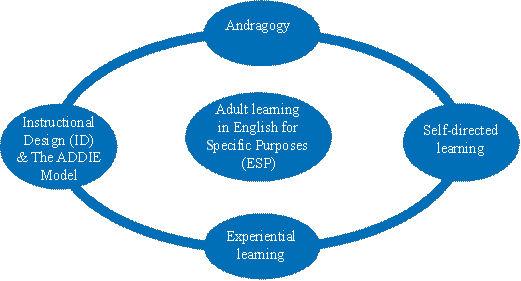
This bibliographic review has identified four fields that ESP practitioners can draw from while catering adult learners. ESP settings tend to be adult-oriented, so ESP instructors should deeply regard andragogy, experiential learning, instructional design, and self-directed learning in the work with adult. Clearly, other teaching methodologies and principles can be added to this list.
Other Cognition, Affection, Attitude and Behavior Distinctions
This last section of the bibliographic review explores some differences among toddlers, teenagers, and adults that Cozma (2015) sorted them into three groups: cognitive, attitudinal, and behavioral characteristics. Park and Reuter-Lorenz (2009) and Reuter-Lorenz and Cappell (2008) recommended the scaffolding theory of aging and cognition as “a process present across the lifespan that involves the use and development of complementary, alternative neural circuits to achieve a particular cognitive goal” (as cited in Castañeda, 2017, p. 318). Both attitude and cognition matters are clearly linked and overlapped which makes the STAC method have a strong influence on adult learners’ motivation and predisposition to learn. Leuner and Gould (2010) advised how structural ductility makes modifications in the brain with the pass of time and recalled that as people age, their capacity to produce new brain cells decreases. This means that ESP teachers need to regard such brain distinctions between young and old learners in their teaching situations.
Adult learners most likely restart English classes to fulfill the emerging professional requirements and employment options. Because younger learners are also applying for such jobs, older applicants should polish their English skills. As a result, their ESP instructors ought to acknowledge the “growing motivational, personal or affective difficulties that unemployed adult learners are currently facing in the English subject when they decide to retake their studies” (Castañeda, 2017, p. 136). Most adult learners seem aware of the relevance of upgrading the communicative skills in this foreign language as a way to meet the high expectations of a competitive labor market. Certainly, the challenges go beyond the educational contexts as Schwarzer (2009) warns that adults’ “motivation to learn ESL (ESP) also transforms and evolves with the changes they face in their lives outside classroom” (p. 27). There is a clear connection between employment, learning English, and adults’ personal lives.
Besides the challenge of learning English as technological nomads, there are other demands that include accounting for and handling personal issues. These aspects clearly interfere and make adult learners’ “study time fragmented” (Yao, 2019, p. 120). Tarnopolsky (2016) proposes three assumptions to teach English to adults: considering learner’s attitudes to the methods of teaching English, limited intensiveness of the teaching/learning process, and avoiding home tasks (pp. 10-12). ESP practitioners could plan their lessons following these principles because adults have limited time to study, so there should be fewer classroom and home tasks. Mixed-level classroom settings tend to be the norm in ESP instruction for adult learners (Benmassoud & Bouchara, 2021). When adults embark again on formal English classes after some years, they could have either gained or lost speaking fluency, vocabulary domain, and language accuracy in L2. Their diverse features go beyond language proficiency and include learning styles, paces, strategies, expectations, and previous experiences (Quynh-Na, 2007), so several teaching adjustments should be made, like offering instructional “materials (that) are adapted to their language level” (Marcu, 2020, p. 309). Another consideration to suit adult learners is that instructional exercises and tasks require careful consideration of the difficulty and “sequencing variables” (Malicka et al., 2019, p. 78). Indeed, Kurbanova and Ataeva (2020) list some of these accommodations: “The methodological basis of multilevel training (for adults) is individualization, a differentiated level of requirements, a high level of the proposed material, a multilevel system for testing” (p. 721). A way to adjust teaching materials and worksheets for students with multi-level proficiency levels includes “tiered tasks” (Bowler and Parminter, 2016, p. 59), but adults may benefit more from teamwork or projects in which they are given a customized or tailored task “that is appropriate for their (English proficiency) level” (Quynh-Na, 2007, p. 311).
Overcoming the challenge of multi-level and heterogenous classes is part of the ESP teacher’s agenda.
A well-known fact is that adults learning a foreign language may be irritated if they experience some kind of obstruction of their affective filter (Krashen, 1982). ESP instructors are to devise and develop lesson plans considering both affective and cognitive elements that contribute to decrease the manifestations of stress such as anxiety, fear, insecurity, or low self-esteem. Even in a mixed learning environment, adult learners can tend to overcome their fear of learning, develop autonomous learning skills, and develop the ability to choose individual learning strategies. To further reduce these negative feelings, it is very important to consider their learning style. Regarding experiential learning theory (ELT), Kolb and Kolb (2005) state that “learning styles are influenced by personality type, educational specialization, career choice, and current job roles and tasks” (p. 195). For this reason, instructors who pay attention to the styles and characteristics of adult learners will incorporate these aspects into their lesson plans.
As to language learning, working memory (WM) and short- term phonological memory (PSTM) may help young students to cognitively process information faster and become better at pronunciation than adults (Mackey & Sachs, 2012, p. 709). Therefore, Araujo (2018) recommended that “novice adult learners be encouraged not to do the following: write every idea down before expressing it aloud and analyze every single language component” (p. 66). Furthermore, this author advised that language teachers avoid distressing their adult students with content and information. Adult education can be more effective when classroom activities encourage question-and-answer, problem-finding, and problem-solving (Hashim & Othman 2006, p. 11). Vocabulary memorization tasks and pronunciation drills can quickly bore adults.
Nevertheless, various scholars argue that adult learners are well-equipped to reach competitive levels of target language mastery. Initially, Shevchenko (2015) concluded that “there is no tough connection between age and success in acquiring a foreign language intonation” (p. 612). Adult learners demand “more repetitive and slow learning” but tend to adopt more steady knowledge (Castañeda, 2019, p. 319). Cozma (2015) explained that adults are more cooperative learners despite their hectic job and personal agendas. Last, Tripathy (2019) argued that there is a “distaste of adult learners toward English sounds”, but effective ESP instruction would “boost their confidence in carrying out daily conversations” (p. 103). Despite their age and multiple responsibilities, adults could still polish their English language skills.
The obstacles adults face cannot block completely these participants from learning this foreign language. Younger learners benefit from formal educational settings while adults have more experience and skills within academic contexts. For this reason, Herschensohn (2012) argued that:
Unlike naturalistic exposure, instructed exposure to an L2 does not show a clear advantage for earlier learners; there is often an advantage for a higher AoA, (Age of Onset of Acquisition), for the older learner has more developed cognitive skills and academic strategies that furnish an advantage in instructed language learning. (p. 323)
ESP teachers should understand that older students are ahead of younger students in terms of previous instructional experiences, higher cognition, self-direction, and studying habits and techniques.
When adult learners make mistakes and even risk fossilization, they tend to encounter emotional or cognitive difficulties reaching language accuracy. Their inaccuracy in L2 affects them emotionally. Castañeda (2017) highlighted that “this limitation leads to fears of ridicule when speaking in public and a sharp decrease in confidence and self-esteem, which affects the possible satisfactory outcome of any communicative learning strategy” (p. 140). The way ESP practitioners offer adults feedback and work on language accuracy could either harm or boost the emotional well-being. Monitoring language production and accuracy can serve as an informal assessment tool instead of traditional testing (Macalister & Nation, 2020) that adults may feel more afraid or uncomfortable. Recasts and other feedback techniques can be employed to foster a safe and encouraging classroom atmosphere in case reaching language accuracy has been established as a need and a component of the ESP course.
Positive emotional experiences enhance experiential learning. For instance, Zeivots (2016) studied how lived experiences of emotional highs shape adult experiential learning. Among the discoveries, it was determined as fundamental to offer adults experiences to face the unknown, generate a sense of change, guide them through first-time experiences, lead to unexpected discoveries, and embark adults into the never-ending journey of learning. Certainly, these are valuable considerations that ESP practitioners should examine at any ADDIE model stage. Facing the unknown while learning a foreign language may turn troublesome at first, but proper guidance and planning can ensure adults unexpectedly discovering more insights into their professional or occupational fields.
The emotional factor with adult learners deserves more attention and consideration from how it is approached with younger students (Ni, 2012) in terms of teaching materials. To promote language accuracy and lower the chances of fossilization, ESP practitioners should invest on material adaptation or elaboration that strategically addresses the participants’ target needs, displays accurate language usage, and eases negative emotions (Bocanegra-Valle & Basturkmen, 2019). Developing ESP materials is closely linked to motivation and emotional aspects. Adults expect that instructional materials and tasks clearly aim for their needs, “otherwise they can easily get demotivated” (Marcu, 2020, p. 309). Proper materials lead to meaningful interaction with the target language within the specific contexts where adults seek to effectively participate. Motivation and self-direction are more likely to increase with catered materials. Crawford (2002) indicated that:
Materials must contextualize the language they present. Without knowledge of what is going on, who the participants are, and their social and psychological distance in time and space from the events referred to, it is impossible to understand the real meaning of an interaction. (p. 84)
ESP course design under the ADDIE model requires careful selection, adaptation, and elaboration of pertinent, genuine, and appealing materials and tasks (Iswati, 2019). Adult learners would gain more exposure to accurate language usage in materials taken from authentic contexts, contributing to error correction, leading to higher self-direction, and handling emotional overload during the learning experiences.
Conclusion
This bibliographic review sheds light on some andragogical principles that ESP teachers could bear in mind when working with adult learners. ESP teachers will encounter a wide range of factors with adult learners, so adult teaching principles should be intrinsic components of their teacher education (Papadima- Sophocleous et al., 2019). Adults and younger learners often have different goals, expectations, needs, and personal issues. Explicit implementation of andragogical principles in ESP becomes a priority when teaching adult learners. Certainly, the effectiveness of andragogy principles in ESP settings still needs to be tested and studied because EL adult learners and their contexts often vary. In fact, other aspects worth examination and reflection, besides andragogical principles, instructional design, the ADDIE model, and experiential learning for adult learners in ESP contexts, include the teachers’ methodological choices (Richards & Rodgers, 2014), traits of eclectic methodology (Mwanza, 2019), the incorporation of the six components of assessment (Gallavan, 2009), learning- oriented assessment (Jones & Saville, 2016), and eventually the “special focus on (productive skills) based on the specificity of each ESP class” (Benmassoud & Bouchara, 2021, p. 177). Curriculum design and implementation are components within a wider model of language curriculum design (Macalister & Nation, 2019), so ESP teachers could boost their professional development by reflecting on their teaching practices (Farrell, 2018) and their effectiveness with adult learners.
Most EFL programs often group their students based on their language proficiency levels although the age factor plays a key role in how teachers should approach class planning and delivery. This age precaution becomes even more fundamental when teaching English for specific purposes, for adults are the ones who find themselves in urgent need of mastering specific professional registers or jargon to apply for jobs or keep the one they have. Once a person reaches or passes the age of 25, other duties and responsibilities besides studying a foreign language overtake the learners’ time, attention, and energies. This is when ESP practitioners, professional development initiatives, and ESP teacher training programs may overlook the relevance that adult learning theories have with EL learners over the age of 25. It is time to clearly set this age boundary to avoid setting classrooms that would be suitable for younger learners but not adults.

