




 English (pdf)
 Article in xml format
 Article references
 Automatic translation
 Send this article by e-mail
 Cited by SciELO
  Similars in
SciELO
Similars in
SciELO 
 Permalink

Introduction
Health tourism is defined as the process of leaving one’s country or state of residence to receive treatments and health care in search of high specialization, faster access, and better costs (López et al., 2023). This type of tourism is divided into medical tourism and wellness tourism (see Figure 1); the former refers to all surgical and outpatient procedures such as dental, ophthalmological, bariatric surgeries, hip replacements, among others, as well as preventive, curative, or aesthetic medical treatments, in order to achieve an improvement in the health or quality of life of individuals. Wellness tourism refers to all activities aimed at restoring the psychological, physical, and social health and well-being of individuals, and includes relaxation, alternative medicine, lifestyle changes, spas, retreat centers, assisted living facilities for the elderly, among others (Guzmán Flores, 2015). In 2022, the General Tourism Law added Section X Bis to its Article 7, the Subject of Medical Tourism, due to the importance of this economic sector.
Figure 1. Health tourism outline
Source: Prepared by the authors based on López et al. 2023.
Table 1 Ranking of dental tourism destinations
| Rank | Country | Main treatment procedures |
|---|---|---|
| 1 | Mexico | Dental implants Crowns and bridges Veneers Full restorations |
| 2 | Thailand | Veneers and smile makeovers Dental implants Full oral restoration Teeth whitening |
| 3 | Hungary | Dental Implants Orthodontics Crowns and Bridges Cosmetic Dentistry |
| 4 | Turkey | Dental Implants Veneers Smile Makeovers Crowns and Bridges |
| 5 | India | Dental Implants Crowns and Bridges Orthodontics Cosmetic Dentistry |
| 6 | Costa Rica | Dental Implants Veneers Full oral restoration |
| 7 | Croacia | Dental Implants Orthodontics Crowns and Bridges Veneers |
| 8 | Colombia | Dental Implants Veneers Smile makeovers Crowns and Bridges |
Source: Prepared by the authors based on data from Universal Medical Travel (s.f.)
Four Directions of Health Tourism
There are four recognized directions in which health tourism occurs (Labonté, 2013):
North-North (between developed countries): This generally occurs among individuals residing in high-income nations. South-North (from developing countries to developed countries): This is the most traditional form and involves individuals with high purchasing power living in developing countries who seek medical care in developed countries with better facilities.
South-South (between developing countries): The most overlooked category, where individuals from developing nations travel to another developing country for medical services. Common destinations include Cuba, Yemen, Barbados, Jordan, and Mexico. North-South (from developed countries to developing countries): A newly emerging category where most services are provided by private entities in developing nations aiming to attract an underserved foreign market.
This study focuses on the last category, referring to individuals from developed countries visiting developing nations for dental health services. A notable example is Latin America, particularly Puerto Vallarta, which attracts clients from countries such as the United States and Canada. Medical Tourism in Latin America Medical tourism has been growing in recent years, capitalizing on the private healthcare infrastructure available in developing countries. In Latin America, nations such as Costa Rica, the Dominican Republic, Argentina, Colombia, Brazil, Panama, and Mexico have focused on attracting health tourists. These countries rank among the top destinations for medical tourism globally, according to Patients Beyond Borders and the Medical Tourism Index (2020; Woodman, 2020).
Dental medical tourism has positioned Mexico as the primary provider due to its proximity to a large market-the United States. This trend initially emerged in the Mexico-U.S. border region, where U.S. residents traveled south for dental care, particularly to cities such as Tijuana, Vicente Guerrero (Los Algodones), Nogales, and Ciudad Juárez. Later, dental medical tourism expanded to Mexico’s Pacific and Gulf beach destinations, including Cancún and Puerto Vallarta (Turner, 2009; Woodman, 2020).
Other Latin American countries, including Argentina, Costa Rica, Peru, Colombia, and Brazil (Dental Innovation, n.d.; Misch, 2020), have also joined this global economic activity, where dental treatment and vacations are planned together. Lower airfare prices and reduced dental service costs in developing countries have facilitated and encouraged this type of tourism.
Ranking of Dental Medical Tourism Destinations Table 1 presents a ranking of the top countries attracting dental medical tourists, based on data from Universal Medical Travel, which manages 14 destinations for medical tourism. Mexico ranks first, while Costa Rica and Colombia rank sixth and eighth, respectively.
Despite these rankings, identifying a single most popular destination remains challenging. The ranking is often influenced by the origin of the website presenting the data. For example, a Costa Rican website may list Costa Rica as the most common destination, leading to biased results. However, one certainty is that all these destinations are equipped with cutting-edge technology to provide patients with the best possible experience.
Puerto Vallarta
Puerto Vallarta is a municipality located in the Costa-Sierra Occidental region of the state of Jalisco, on Mexico’s Pacific coast (Figure 2). The city began developing as a tourist destination in the 1960s, experiencing population growth (Table 3) due to national migration. This was a result of the March to the Sea Plan, proposed by Mexican President Adolfo Tomás Ruiz Cortines (1952- 1958), which aimed to alleviate demographic congestion in the central highlands by encouraging people to migrate to coastal areas (Gómez, 2017).
Subsequent development efforts continued under President Adolfo López Mateos (1958- 1964), who ordered the construction of the Compostela-Puerto Vallarta highway. Work began in February 1960 and was completed in March 1969, with the official inauguration by President Gustavo Díaz Ordaz in 1970 (Fernández & Correa, 2016; E. Gómez, 2017; J. M. Gómez, 2018; Guzmán & Anaya, 2011). Additional infrastructure developments included the construction of Puerto Vallarta’s airport, completed in 1962 (Fernández & Correa, 2016; E. Gómez, 2017; J. M. Gómez, 2018). In 1966, the first international flight from Mexicana de Aviación arrived, covering the Puerto Vallarta-Los Angeles route via Mazatlán (E. Gómez, 2017; J. M. Gómez, 2018). Meanwhile, the construction of the maritime terminal took place between 1968 and 1970.
Today, the marina can accommodate up to three cruise ships simultaneously (National Port System Administration of Puerto Vallarta, n.d.).
Puerto Vallarta continues to experience population growth, making it one of Mexico’s leading cities in terms of both national and international immigration.
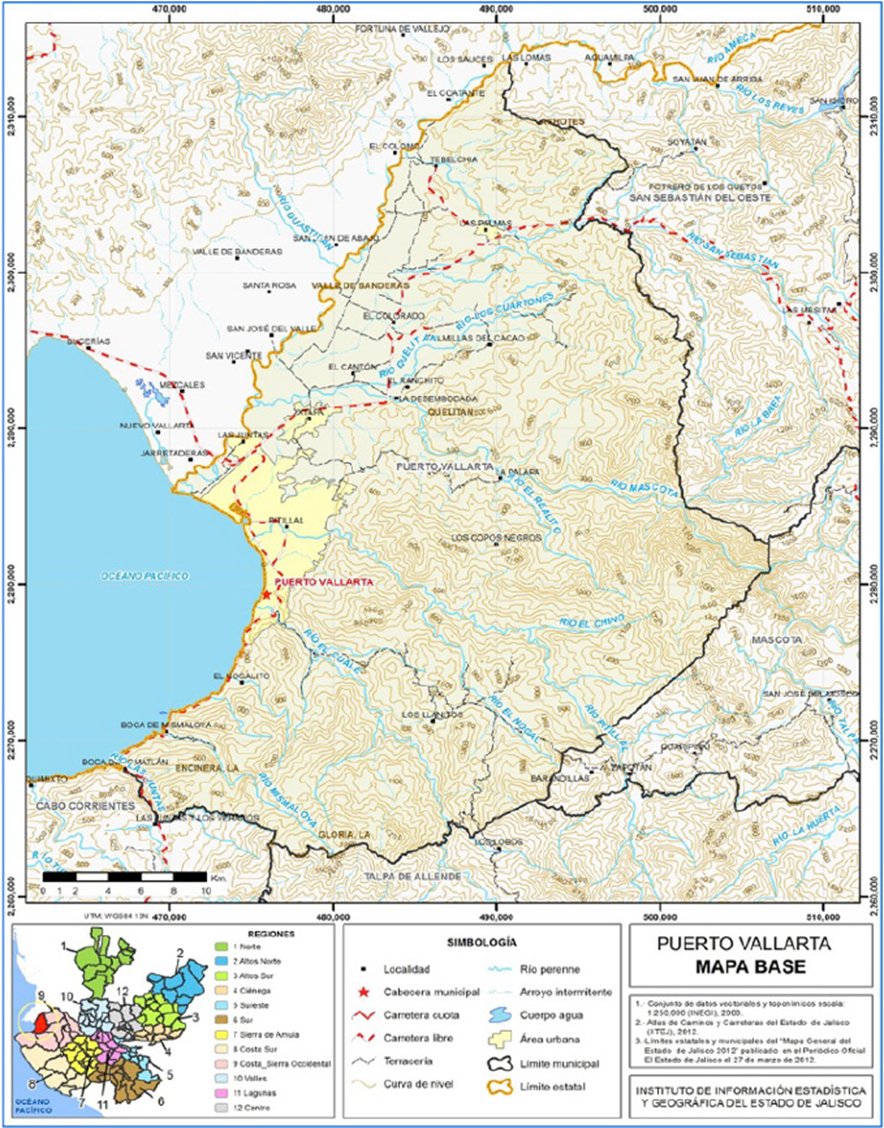
Figure 2. Geographic location of Puerto Vallarta, Jalisco, Mexico Source: Statistical and Geographic Information Institute of the State of Jalisco (2018).
Table 2 Personnel employed by the economic activity sector between 2003 and 2018 in Puerto Vallarta
| Sector | 2003 | 2008 | 2013 | 2018 | ||||
| Primary | 241 | 0.49% | 104 | 0.16% | 103 | 0.15% | 228 | 0.25% |
| Secondary | 2,596 | 5.29% | 4,100 | 6.37% | 3,321 | 4.87% | 5,115 | 5.58% |
| Tertiary | 46,220 | 94.22% | 60,120 | 93.46% | 64,702 | 94.97% | 86,300 | 94.17% |
Source: Prepared by the authors based on data from the Economic Census (INEGI) from 2004-2019.
The Beginning of Professional Dental Training in Mexico
In Mexico, the earliest recorded instance of a commercial dental practice dates back to 1823, when a French-born individual, Dr. Guillermo Parrot, became the first to advertise his services as a dental surgeon (Díaz, 2008). After the end of Mexico’s War of Independence, Parrot promoted his services in the newspaper Águila Mexicana, offering medications to whiten and preserve teeth (Alvarado, 2014; Díaz, 2008).
Table 3 Population of Puerto Vallarta between 1950 and 2020
| Year | Population | Growth rate (%) |
|---|---|---|
| 1950 | 10,801 | |
| 1960 | 15,462 | 43.15 |
| 1970 | 35,911 | 132.25 |
| 1980 | 57,028 | 58.80 |
| 1990 | 111,457 | 95.44 |
| 2000 | 184,728 | 65.74 |
| 2010 | 255,681 | 38.41 |
| 2020 | 291,839 | 14.14 |
Source: Prepared by the authors based on data from the Population and Housing Census (INEGI) from 1950 to 2020.
The Beginning of Professional Dental Training in Mexico
Due to increasing demands for quality in dental services, Mexico saw the need to accredit dentists, as the profession was not yet regulated in the country. Eugenio Crombé became the first foreign dentist accredited in Mexico (Alvarado, 2014; Díaz, 2008). Years later, in 1854, the first Mexican candidate, Mariano Chacón, was examined for dental accreditation.
He had acquired his dental knowledge through an apprenticeship system, learning from foreign dentists in their clinics (Alvarado, 2014). As a result of this mentorship system, Margarita Chorné y Salazar became the first accredited female dentist in Mexico in 1886 (Díaz, 2008).
In terms of professional training, Eduardo Clay Wise and Tobía Núñez pioneered efforts to establish a formal dental education program in 1880.
They submitted a petition to the Ministry of Justice and Public Instruction requesting a facility for a Dental School in Mexico, emphasizing its necessity (Rodríguez, 2007).
By 1887, the first edition of the journal Arte Dental was published, and a dental society was established, reinforcing the significance of dentists in Mexico (Rodríguez, 2007). As part of these efforts, various associations and private dentists requested the creation of a dental school in 1896, though multiple failed attempts were made to establish it (Alvarado, 2014; Rodríguez, 2007).
In 1898, Dr. Charles Aubrey Young published the first issue of Revista Dental Mexicana to unite and update the dental community, aiming to establish a new dental society involved in dentist certification (Alvarado, 2004). At the time, certification was handled by medical professionals with limited expertise in dentistry, leading the society to request that experienced dentists serve on the examining board. The curriculum for the dentistry program was modeled after training programs in the United States and Europe (Alvarado, 2004; Rodríguez, 2007).
In 1900, Francisco Pastor Artigas attended a dental congress in Paris on behalf of President Porfirio Díaz to obtain the curriculum from the Paris Dental School. This curriculum served as the foundation for the Mexican dental program, which was implemented in 1901 at the Consultorio Nacional de Enseñanza Dental (CNED). The curriculum was officially approved by presidential decree in 1902, published in the Diario Oficial (Rodríguez, 2007).
After more than 20 years of efforts to establish university-level dental education, classes at CNED began on January 1, 1904, under the jurisdiction of the School of Medicine at the Universidad Nacional Autónoma de México (UNAM). The school was formally inaugurated on April 19 of the same year, marking the beginning of formal dental education in Mexico.
As of 2022, Mexico has 222 higher education institutions offering programs in dental and oral health sciences.
These institutions collectively provide 2,255 academic programs: 1,032 at the undergraduate level and 1,223 at the postgraduate level, including specializations, master’s, and doctoral degrees (DataMéxico, 2023).
Objective
The objective of this research was to describe the professional and technological development of dental practitioners in Puerto Vallarta, Mexico.
Method
This study followed a descriptive-explanatory approach, aiming to illustrate the professional and technological evolution of dental practitioners in this tourist destination.
According to the National Statistical Directory of Economic Units (DENUE), as of November 2023, Puerto Vallarta had a total of 176 dentists (INEGI, 2024). From this population, a sample of 21 dentists was selected through convenience sampling. Most participants volunteered, while others were chosen randomly.
A semi-structured interview guide was designed, consisting of 12 open-ended questions focusing on the professional and technological development of dentists. The open-ended format provided flexibility, allowing interviewees to share relevant insights based on their experiences.
The interviews were conducted in person at dental offices, each lasting approximately 30 to 45 minutes. With the participants’ consent, the interviews were recorded for later transcription and analysis.
The transcriptions underwent thematic analysis, identifying recurring patterns and key themes related to the professional and technological development of dental practitioners in Puerto Vallarta.
Results
Sample Description
The study was based on a sample of 21 dentists, representing 12% of the total registered dental professionals in Puerto Vallarta as of November 2023 (INEGI, 2024). The key characteristics of the sample are as follows:
Gender distribution: 11 female and 10 male participants.
Age distribution:
10 dentists aged 30-47 years
5 dentists aged 48-65 years
6 dentists aged 66-76 years
The results indicate that most of the participating dentists were young adults (see Table 4).
Table 4 Characteristics of the research sample
| Folio | Sex | Age | Training periods | Main specialty | Subspecialty | Total specialties | Study abroad | Year of autonomy | Business line |
| 1 | M | 76 | 1966- 1970 | Oral rehabilitation | Implantology | More than 2 | Yes | 1980 | Civil society |
| 2 | F | 69 | 1972-1976 | Implantology | Geriatric dentistry | More than 2 | Yes | 1985 | Natural person |
| 3 | F | 69 | 1972-1976 | Endodontics | ND | 1 | No | 1998 | Natural person |
| 4 | M | 75 | 1967-1972 | Prostodoncia | Adhesive | 2 | No | 1972 | Natural person |
| 5 | F | 46 | 1996- 2000 | Orthodontics | Implantology | 2 | No | 2003 | Natural person |
| 6 | F | 65 | 1977-1981 | Surgery | Orthodontics | More than 2 | Yes | 1980 | Natural person |
| 7 | F | 31 | 2012-2016 | Oral rehabilitation | ND | 1 | Yes | 2020 | Natural person |
| 8 | F | 54 | 1988- 1992 | Oral rehabilitation | Prosthesis | 2 | Yes | 1992 | Natural person |
| 9 | M | 75 | 1968- 1974 | Implantology | ND | 1 | No | 1989 | Natural person |
| 10 | M | 60 | 1984- 1988 | Oral rehabilitation | Implantology | More than 2 | No | 1988 | Natural person |
| 11 | M | 47 | 1995- 2000 | Oral rehabilitation | Endodontics | 2 | No | 2001 | Natural person |
| 12 | M | 30 | 2013-2017 | Endodontics | Orthodontics | 2 | Yes | 2017 | Natural person |
| 13 | F | 48 | 1993- 1997 | Endodontics | Aesthetic dentistry | 2 | No | 2003 | Natural person |
| 14 | F | 42 | 2000- 2005 | Endodontics | Implantology | 2 | No | 2006 | Natural person |
| 15 | M | 36 | 2006- 2010 | Oral rehabilitation | ND | 1 | No | 2017 | Natural person |
| 16 | M | 33 | 2009- 2013 | Implantology | ND | 1 | No | 2017 | Natural person |
| 17 | F | 47 | 1994- 1998 | Prosthodontics | ND | 1 | No | 2014 | Natural person |
| 18 | F | 36 | 2008- 2012 | Prosthodontics | Implantology | 2 | No | 2022 | Natural person |
| 19 | M | 72 | 1973-1977 | Endodontics | ND | 1 | Yes | 1983 | Moral person |
| 20 | F | 42 | 2000- 2004 | Oral rehabilitation | Implantology | More than 2 | No | 2012 | Natural person |
| 21 | M | 55 | 1987- 1992 | Implantology | Restorative dentistry | More than 2 | Yes | 1992 | Natural person |
Source: Prepared by the authors based on the results of the interviews conducted.
Business Landscape of Dental Practices in Mexico
In Mexico, 95% of businesses are classified as microenterprises or sole proprietorships, according to the 2019 Economic Census (INEGI, 2019). These are businesses with between 1 and 10 employees, including the owner.
Among the dental practices surveyed in this study, 90% of respondents identified as sole proprietors, while the remaining 10% were registered as civil associations or corporate entities.
Regarding the year in which dentists were able to establish their own practices or clinics-achieving financial self-sufficiency-the distribution is as follows:
14% between 1972 and 1981
19% between 1982 and 1991
19% between 1992 and 2001
14% between 2002 and 2011
33% between 2012 and 2022
One key aspect of dental practice in Puerto Vallarta is collaborative work among dentists. To provide comprehensive dental health services, practitioners often collaborate, referring patients to specialists when necessary or sharing equipment. In some cases, specialists travel from Guadalajara to Puerto Vallarta to offer their services. In dental clinics, multiple specialists associate to meet the diverse treatment needs of their patients.
Among the interviewed dentists, most covered between one and six specialties in their practice through collaborative partnerships. The three most common specialties were endodontics, periodontics, and third molar surgery. When a required specialty was not available, 86% of respondents stated that they referred the patient to a trusted colleague.
Professional Development of Dental Practitioners in Puerto Vallarta
Like all healthcare fields, dentistry requires accredited professional training and continuous education. In addition to earning a university degree and specializing in at least one field, dental practitioners must stay updated on new technologies, materials, and innovations.
Table 4 outlines the years in which the interviewed dentists completed their professional training and their respective specializations. The majority obtained their degrees from the University of Guadalajara. Among the three dentists who studied between 1960 and 1969, financial and logistical challenges were significant, as they noted in their interviews.
At that time, the road connecting Puerto Vallarta to Guadalajara had only recently been completed under the Costa Program led by Governor Agustín Yáñez (1952-1958). Families in Puerto Vallarta rented homes in Guadalajara to accommodate students who pursued their education in the city.
However, few dental graduates returned to Puerto Vallarta to practice their profession, as seen in Table 4.
Notably, all interviewed dentists had at least one specialization, 38% held two specializations, and 29% had more than two specializations. The most common areas of expertise were implantology, oral rehabilitation, and endodontics. Additionally, five of the respondents had completed at least one specialization abroad.
All interviewed dentists agreed that ongoing training and professional development are essential, and they personally finance these costs.
Additionally, 53% of respondents were members of the Puerto Vallarta College of Dentists, an association that organizes courses, diploma programs, and other professional development events for its members.
Technological Advancements in Dental Practice in Puerto Vallarta
Technological advancements play a crucial role in modern dental practice. In addition to acquiring furniture and equipment, dentists must stay up to date with new techniques associated with these innovations. During interviews, dentists highlighted two main benefits of continuing education and specialization:
They gain access to the latest technology as part of their training.
Their work becomes easier and more efficient through the use of new tools and techniques.
Regarding the origin of most dental technology used in Puerto Vallarta, the distribution is as follows:
33% from the United States
27% from Germany
21% from Asian countries (Japan, China, and South Korea)
10% from other European countries (Switzerland, Italy, and Spain)
10% from various other countries
Based on the technological level and services available in the dental offices and clinics of the interviewed practitioners, a categorization of these practices was developed, as presented in Table 5.
Table 5 Categorization of the level of specialization of dental offices and clinics in Puerto Vallarta
| Lever | Services | Equipment |
|---|---|---|
| Level 1. Basic services | General dental exam | Dental chairs, hand instruments, conventional x-rays, ultrasonic dental cleaning equipment, traditional fillings, simple tooth extractions, fluoridation and dental sealants |
| Professional dental cleaning | ||
| Conventional x-rays | ||
| Cavity treatment | ||
| Simple tooth extraction | ||
| Fluoride and dental sealants | ||
| Dental hygiene education | ||
| Level 2. Intermediate services | Digital X-rays | Digital X-rays, intraoral scanner, LED teeth whitening lamp, clear aligners, CAD/CAM technology, computerized electronic anesthesia |
| Professional teeth whitening (LED light) | ||
| Invisible orthodontics (clear aligners) | ||
| Intraoral and CAD/CAM scanners | ||
| Complex extractions | ||
| Computerized electronic anesthesia | ||
| Level 3. Advanced Services | Dental implants with computer guided surgery | 3D printing, dental implants with computerized surgical guidance, laser dentistry, CT scanner, artificial intelligence for diagnosis, regenerative dentistry. |
| Laser dentistry | ||
| 3D printing | ||
| Computed tomography | ||
| Diagnostics with artificial intelligence | ||
| Regenerative dentistry |
Source: Prepared by the authors based on the results of the interviews.
According to the interviews, 14% of dentists offer basic-level services, 71% operate at an intermediate level, and 14% provide advanced- level services. This classification of technological and service levels in Puerto Vallarta’s dental offices and clinics highlights the high quality of available dental services. Additionally, when combined with the significantly lower costs compared to the United States and Canada, these factors help explain the increasing trend of dental medical tourism in Puerto Vallarta.
Regarding materials used for treatments, repairs, and dental reconstructions, dentists source them from local, state, national, and international suppliers:
62% purchase from local suppliers
86% obtain materials from suppliers in Guadalajara (state level)
67% buy from suppliers in other cities in Mexico and receive deliveries via courier
10% import their materials from foreign countries
Dental laboratories play a crucial role in completing dental procedures, particularly for reconstructive purposes. Their primary function is the design and fabrication of dental materials, such as implants, crowns, veneers, and splints. Some dental clinics operate their own in-house laboratory, but 81% of the interviewed dentists rely on local dental laboratories, while 14% use laboratories in Guadalajara.
Dental Services for Foreign Patients
As an international tourist destination, Puerto Vallarta offers unique advantages that make it attractive to individuals looking to combine vacations or recreational activities with health tourism. This phenomenon is described by Connell (2006) as “Sea, Sun, Sand, and Surgery.
Puerto Vallarta perfectly fits this concept, as it not only provides high-quality health services-particularly dental services-but also allows tourists to enjoy beaches and warm weather in one of the world’s most famous vacation spots. Among the interviewed dentists, foreign patients account for an average of 46% of their clientele per clinic. Most foreign patients seek implantology, oral rehabilitation, and dental cleaning services, which serve both aesthetic and functional purposes.
The United States and Canada are the main countries of origin for foreign patients. However, there has been a growing influx of patients from South America, Asia, and Europe. To accommodate these international visitors, most dentists have made an effort to ensure at least one staff member speaks English.
None of the interviewed dentists directly work with foreign health insurance companies, but 86% stated that they assist patients by filling out insurance forms or compiling their dental records so they can seek reimbursement from their insurance providers.
Many tourists and foreign residents willingly pay for dental services out of pocket, even if their insurance does not cover them, as the cost is significantly lower than in their home countries. The most in-demand advanced dental procedures among foreign patients include endodontics, oral rehabilitation, implantology, and maxillofacial surgery.
Discussion
This study was based on a sample representing 12% of the total registered dentists in Puerto Vallarta as of November 2023, according to DENUE (INEGI, 2024). Within this sample:
52% were female, and 48% were male
Most dentists were between the ages of 30 and 55, indicating they were at the peak of their professional productivity
90% operated as microenterprises under sole proprietorships, which is the most common business structure in Mexico
According to the interviewed dentists, dental tourism began in Puerto Vallarta approximately 40 years ago, primarily attracting patients from the United States and Canada. Foreign patients have chosen Puerto Vallarta for dental treatments because prices are up to one-third of what they would pay in their home countries, while maintaining high-quality standards.
The primary method of promotion for dental services has been word-of-mouth recommendations, with friends and family members of past patients referring new visitors.
This type of tourism is highly seasonal, with a peak during winter months (October to March), when northern hemisphere residents escape the harsh cold by migrating to warmer climates. However, in the last decade, second-home tourism has increased, leading to year-round demand for dental services as visitors extend their stays in Puerto Vallarta.
Over the past two decades, new generations of dental professionals have entered the field. However, senior dentists expressed concerns about lower training standards among new graduates and suggested that a certification process should be required. Some of the most successful dentists emphasized that high- quality dental services depend not only on formal education but also on continuous training and updates in technology, techniques, and new materials.
The Puerto Vallarta College of Dentists has attempted to establish a formal certification system for new dental professionals, but this initiative has not yet been fully implemented. All the interviewed dentists had at least one specialization, and their clinics were categorized as either intermediate or advanced-level facilities, as detailed in Table 5.
A controversial issue regarding private dental services in Puerto Vallarta is that dentists tend to prioritize foreign patients over local residents.
As a result, public health institutions should take greater responsibility in providing dental care to the general population, particularly those with limited financial resources-a need that remains largely unmet. Only a small number of dentists provide pro bono services as part of humanitarian initiatives.
Conclusions
Dental medical tourism has emerged as a major economic activity worldwide, particularly in developing countries with popular tourist destinations. In Latin America, leading destinations for dental tourism include Costa Rica, the Dominican Republic, Argentina, Colombia, Brazil, Panama, and Mexico. Although online sources list these countries as top destinations for dental tourism, it is difficult to determine the single most popular location.
This is because rankings are often influenced by the origin of the website presenting the information. For instance, a Costa Rican website may list Costa Rica as the top destination, leading to biased results. However, one clear conclusion is that all these destinations are equipped with state-of-the-art tecnología to provide patients with the best possible experience.
The development of dental services in Puerto Vallarta has been shaped by professional and technological advancements, as well as continuous education and experience. Additionally, dental practitioners contribute indirectly to the local economy by supporting the tourism value chain. The presence of medical tourists generates revenue in various sectors, including hospitality, transportation, dining, local crafts, leisure activities, excursions, and tours (Jansen, 2013).
Furthermore, dentists contribute to employment creation, as all interviewed professionals reported having at least one employee in their practice. One negative aspect of dental medical tourism is that local residents often struggle to access affordable dental care. While foreign patients benefit from low-cost services compared to their home countries, prices remain high for local residents, leading many to seek only basic or emergency treatments. As a result, adequate dental care remains inaccessible to much of the local population. The Puerto Vallarta College of Dentists not only serves as a professional organization but also promotes continuous training and education for its members. Additionally, it fosters a sense of community through social and networking activities. Finally, we express our gratitude to the dentists who voluntarily participated in this research, sharing their insights and professional experiences without restriction.
AUTHOR CONTRIBUTION: The authors have contributed to the conception, planning, execution and approval of the final version of this article.
Conflict of interest: The authors declare that they have no conflicts of interest.
Funding: No funding was received to assist with the preparation of this manuscript
Author contribution statement: Conceptualización y diseño: GCT, MCAC Revisión de literatura: GCT
Metodología y validación: GCT, MCAC
Análisis formal: GCT
Investigación y recopilación de datos: GCT Recursos: GCT, MCAC
Análisis e interpretación de datos: GCT, MCAC Redacción-preparación del borrador original: GCT, MCAC
Redacción-revisión y edición: GCT, MCAC Supervisión: MCAC
Administración de proyecto: GCT, MCAC

