




 Article in xml format
 Article references

 Automatic translation
 Send this article by e-mail
 Cited by SciELO
 Similars in
SciELO
 uBio

 Permalink


Introduction
Despite its reduced surface area, just over 51 000 km2, Costa Rica maintains an extraordinary diversity of amphibians and reptiles that allows it to surpass even megadiverse countries (sensuMittermeier et al., 1998) when estimates are made per surface area unit (Savage, 2002; Sasa et al., 2010). This small country has one of the region’s oldest traditions in herpetological studies, spanning more than 150 years of studies in this field (Cope, 1875; Picado, 1931; Savage, 2002). Because of this long history, the number of amphibian and reptile species inhabiting Costa Rica has not remained stable: new species are constantly being added to the lists of recognized species, including new descriptions, synonymized species resurrections, and new country distribution records.
Taylor (1952a), Taylor (1952b), Taylor (1954a), Taylor (1954b), Taylor (1956) undertook the first comprehensive work on the herpetofauna of Costa Rica during the twentieth century, laying the foundation for future research. His report included a staggering 143 amphibians (113 Anura, 27 Caudata, and 3 Gymnophiona) and 227 reptiles (76 Saurian, and 151 Serpentes). Savage & Villa (1986) identified 150 amphibians and 212 reptiles thirty years later, building upon Taylor’s work. In his magnum opus on Costa Rican herpetofauna, Savage (2002) reported 172 amphibians and 211 reptiles inhabiting this country almost two decades afterward. A few years later, the numbers increased again: Savage & Bolaños (2009) updated the list to 190 amphibians and 235 reptiles, while Sasa et al. (2010) recognized 189 amphibians and 231 reptiles. More recently, Leenders (2016) Leenders (2019) recognized 207 amphibians and 245 reptiles in the country, continuing the legacy of previous researchers (Fig. 1).
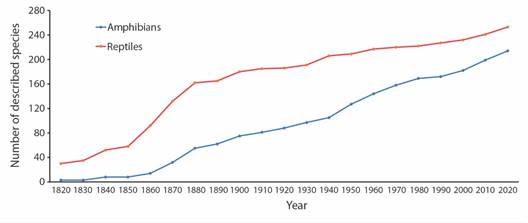
Fig. 1 Cumulative number of amphibian and reptile species that inhabit Costa Rica by year of description. Figura 1. Número acumulado de especies de anfibios y reptiles que habita en Costa Rica por año de descripción.
At the institutional level, the herpetofauna catalog is compiled in the Herpetological Collection of the Museum of Zoology at the University of Costa Rica (MZUCR). This unit, now part of the Center for Research in Biodiversity and Tropical Ecology (CIBET) of the same university (https://cibet.ucr.ac.cr/), evaluates the taxonomic changes proposed by the specialized scientific community. It is also a center for promoting the analysis of local diversity for both classes of vertebrates, mainly through the taxonomic review of the specimens preserved there, their biogeography, and the exploration of little-studied regions of the country.
In recent years, the advance of molecular techniques to analyze the evolutionary relationships of taxonomically complex groups (e.g., Terrarana anurans, Plethodontid salamanders) has generated a series of changes in the nomenclature of many amphibians and reptiles and in our understanding of the species that inhabit the country. Added to this factor is the description of new species, many of which were derived from exploring remote regions in the Talamanca Mountain range by MZUCR staff and associates (Arias et al., 2018; Arias et al., 2023; García-Rodríguez et al., 2016). For these reasons, we present here an updated list of amphibian and reptile species recognized in Costa Rica. We also briefly describe the MZUCR herpetological collection and discuss its origin and development.
Materials and methods
To account for the amphibian and reptile species in Costa Rica, we reviewed the material available in our collection and the descriptions of species not represented there. In addition, the data on admissions and the number and identity of specimens were obtained from the collection’s physical and digital catalogs. We examined the specialized literature for new taxonomic proposals for the species known to the country. To do so, we relied on two recognized databases that are periodically reviewed: Amphibian Species of the World: An Online Reference. (version 6.2 https://amphibiansoftheworld.amnh.org/index.php) and The Reptile Database (http://www.reptile-database.org). This review of the literature and our taxonomic criteria allowed us to endorse the classification presented here. To prepare the historical synopsis of the herpetological collection at MZUCR, we used internal museum reports as well as information recently published by other curators of this unit (Angulo et al., 2016; Springer, 2019).
Results
List of amphibians and reptiles of Costa Rica: Based on the review of specimens housed at the MZUCR and our literature review, we recognize 221 species of amphibians and 257 reptiles that inhabit Costa Rica (Appendix 1). Amphibians are grouped into 48 genera and 17 families, while 113 genera and 36 families of reptiles are recognized (Table 1).
Table 1 Number of families, genera and species represented in the amphibian and reptile collection of the Museum of Zoology of the University of Costa Rica.
| Taxa from Costa Rica | Taxa from other countries | |||||
| # Families | # Genera | # Species | # Families | # Genera | # Species | |
| Amphibians | 17 | 48 | 217 | 43 | 93 | 152 |
| Caecilians | 2 | 4 | 9 | 0 | 0 | 0 |
| Salamanders | 1 | 3 | 56 | 11 | 27 | 47 |
| Anura | 14 | 41 | 152 | 32 | 66 | 105 |
| Reptiles | 36 | 106 | 248 | 38 | 103 | 157 |
| Crocodilians | 2 | 2 | 2 | 1 | 1 | 1 |
| Turtles | 6 | 9 | 14 | 4 | 5 | 10 |
| Sauria | 16 | 33 | 94 | 23 | 51 | 81 |
| Snakes | 12 | 62 | 138 | 8 | 43 | 62 |
| Amphisbaenians | - | - | - | 2 | 3 | 3 |
| Total taxa | 53 | 154 | 465 | 81 | 196 | 309 |
Our findings reveal a critical situation: 10 species of anurans are now considered extinct in the country, with no individual found in the last 25 years. This list includes five species in the genera Craugastor, three Atelopus, and two Incilius species including the emblematic golden toad I. periglenes (Appendix 1). Furthermore, three species of anurans (genera Eleutherodactylus and Osteopilus), six species of lizards (genera Hemidactylus and Anolis), and a single snake (Virgotyphlops braminus) are among the exotic species currently inhabiting the country (Appendix 1).
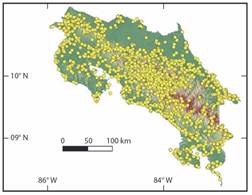
Herpetological collection at MZUCR: The Herpetological collection at MZUCR currently houses over 24 000 specimens representing 218 species of amphibians and 248 reptiles from Costa Rica. This represents a little over 99% and 97% of the known species for each group, respectively. The specimens come from localities that cover almost the entire surface of the country (Fig. 2). However, there are still regions that have not been adequately sampled, especially the lowlands in the northwest of the country and the foothills of the Talamanca Mountain range on the Caribbean side (Fig. 2). In addition, the collection is not restricted to species distributed in Costa Rica but includes material from other countries (Table 1) that is used mainly for educational purposes in specialized courses offered at the School of Biology.
The herpetological collection is predominantly wet, consisting of specimens fixed in 10% formalin and preserved in jars with 70% ethanol. The collection, handling, and preservation of specimens strictly adhere to Costa Rican legislation, following permits from the National System of Conservation Areas of the Ministry of Environment and Energy of Costa Rica and protocols approved by the Institutional Committee for the Care and Use of Animals (CICUA) of the University of Costa Rica. Once preserved, specimens are labeled with a unique collection number that retains their identity and collection information, ensuring a well-organized and managed collection. The jars are stored on metal shelves, organized by class, family, and genus in alphabetical order, within a standard room that the herpetology collection shares with wet collections of other taxonomic groups (Angulo et al., 2016). The collection room has a constant temperature of 15-17 ºC and a relative humidity of 60-65% to safeguard the integrity of the collection. Periodic checks are made of the alcohol level in the collection, and partial changes of this preservative are made to protect the specimens. Cleaning and fumigation of the collection room are also carried out periodically.
The herpetology collection also guards a significant number of type-specimens that confirm the descriptions, variation, and type localities of described species in the country. This includes 39 holotypes (Table 2) and 190 paratypes of 47 species. This material is essential for the biodiversity catalog and to ensure adequate management of the species’ identity in the country. The collection also includes at least 3 000 tissue samples from preserved specimens, usually muscle or skin. This material is fixed in 95% EtOH and stored in a freezer at -20°C (Gamble, 2014).
Table 2 Holotypes of amphibians and reptiles housed in the Museum of Zoology of the University of Costa Rica.
| UCR voucher | Species (Caudata) | UCR voucher | Species (Anura) | UCR voucher | Species (Squamata) |
| 22842 | Bolitoglossa aurae | 8042 | Atelopus chirripoensis | 999 | Drymobius margaritiferus |
| 19893 | B. aureogularis | 22961 | Craugastor aenigmaticus | 23185 | Lachesis melanocephala |
| 22965 | B. bolanosi | 21864 | C. gabbi | 5579 | Anolis riparius |
| 22420 | B. chiquitica | 22703 | C. zunigai | 2463 | A. robinsoni |
| 5217 | B. diminuta | 21843 | Diasporus amirae | 11642 | Porthidium volcanicum |
| 9378 | B. gracilis | 20493 | D. ventrimaculatus | 13983 | Sibon lamari |
| 20852 | B. kamuk | 14119 | Ecnomiohyla sukia | 3592 | Sphaerodactylus graptolaemus |
| 2445 | B. obscura | 22038 | Hyalinobatrachium dianae | 1888 | Tretanorhinus nigroluteus |
| 11788 | B. pygmaea | 8717 | Incilius aucoinae | ||
| 11216 | B. robinsoni | 16855 | I. chompipe | ||
| 20489 | B. silentium | 12877 | I. guanacaste | ||
| 19835 | B. splendida | 23700 | Tlalocohyla celeste | ||
| 22900 | Nototriton costaricense | ||||
| 23685 | N. kenorum | ||||
| 23694 | N. lateomuscus | ||||
| 23689 | N. máximo | ||||
| 23681 | N. vereh | ||||
| 22845 | Oedipina berlini | ||||
| 8391 | O. nimaso |
Discussion
Our species list presents novel findings, increasing the number of amphibians previously reported in the country by between 5.7% and 8.9%, while the number of reptiles increased by between 1.3% and 5.5% (Leenders, 2016; Leenders, 2019; Sasa et al., 2010). Equally important are recent taxonomic changes that have led to discrepancies in the nomenclature between our list and those previously published, a key point that we address here.
Gymnophiona:Dubois et al. (2021) placed Dermophis in synonymy with Gymnopis. However, Frost (2024) avoided validating this change due to the lack of information on the specimens used by San Mauro et al. (2014) who recovered Gymnopis as paraphyletic concerning Dermophis. We recognize both genera pending new data on these phylogenetic relationships.
Caudata:Boza-Oviedo et al. (2012) propose that Bolitoglossa sombra could be considered a junior synonym of B. nigrescens, given the absence of sequence divergence between the two taxa and the subtle morphological differences noted in the original description by Hanken et al. (2005). There is also a possibility that B. obscura is synonymous with B. nigrescens. However, to definitively establish the taxonomic status of these species, new evidence is urgently needed. Until such evidence emerges, we acknowledge only B. nigrescens. Furthermore, we do not acknowledge B. indio as a species present in the country, in contrast to the claims of Sunyer et al. (2012) and Leenders (2016). This is primarily due to its morphological resemblance to B. alvaradoi, the polymorphism observed within B. alvaradoi, and the crucial lack of molecular data that could provide clarity on the status of these species in the country.
Anura:Ryan et al. (2010) described Pristimantis educatoris as a closely related but distinct species to P. caryophyllaceus based on specimens from the El Cope region of Panama. However, these authors suggest its presence in southeastern Costa Rica. We follow Batista et al. (2014), who synonymized P. educatoris under P. caryophyllaceus until we have more evidence that both species occur in our country.
In our species list, we follow Dubois et al. (2021) and Duellman et al. (2016), who recognized Phyllomedusidae and Hylidae as separate families. Within this last family, Salazar-Zúñiga et al. (2019) recorded Ecnomiohyla veraguensis in Costa Rica. However, the specimens reviewed by Salazar-Zúñiga et al. (2019) seem to correspond more to E. sukia. Therefore, E. veraguensis in Costa Rica has yet to be confirmed.
Ron et al. (2016) recognized the polytypic species Trachycephalus typhonius as paraphyletic relative to other species in the genus. In resolving the identity of the populations of this species from western Ecuador and Peru and distinguishing them from T. typhonius (sensu stricto) from Suriname, these authors left the populations from Mexico and Central America without an assigned name. There is one name available for these populations: Trachycephalus vermiculatus, although we recommend its formal assignment until a more robust analysis of the Mesoamerican populations and their phylogenetic position is in place (see commentary in Frost, 2024).
We include the microhylid Elachistocleis pearsei in our checklist of anurans from Costa Rica, based on the recent report by Vargas & Barrio-Amoros (2023). These authors registered the species for Laurel de Corredores (far southeast of the country) based on a photograph. However, to date, no voucher specimen has been collected, and it remains to be confirmed whether this is an isolated case or an effectively established population in the area. This uncertainty underscores the need for further research on this species.
Our list includes Lithobates forreri as one of the leopard frog species present in the country. Researchers agree that L. forreri consists of a species complex (see, for example, Zaldívar-Riverón et al., 2004). However, there is still no clarity regarding the identity of several populations assigned to this species throughout its distribution, including those in Costa Rica. As a result, we continue to refer to them as L. forreri, recognizing the need for further research.
Testudines: The Pacific population of Chelonia mydas has been referred to as a subspecies, Chelonia mydas agassizi Bocourt 1868. However, some authors argue that morphological differences allow it to be recognized as a separate species (Okamoto & Kamezaki, 2014). However, we prefer to follow the more conservative position most specialists adopt, considering this population as a more melanistic one of the same nominal species (Bowen & Karl, 2000; Rhodin et al., 2021).
We follow the suggestions of Fritz et al. (2012), who propose the synonymy of Trachemys emolli with T. grayi, distributed in Costa Rican Pacific lowlands. Two subspecies are recognized: T. grayi emolli (in the Lake Nicaragua basin and adjacent lands in northern Costa Rica) and T. grayi panamensisMcCord, Joseph-Ouni, Hagen, & Blanck, 2010 in the South Pacific of Costa Rica (Rhodin et al., 2021). On the other hand, the status of T. venusta is a subject of intense debate. However, we align with Rhodin et al. (2021) suggestion, recognizing T. venusta uhrigi (McCord, et al., 2010) from the Caribbean lowlands of Costa Rica. In contrast, Fritz et al. (2012) propose that populations of these subspecies be recognized as T. ornata, adding to the intrigue and complexity of the taxonomic landscape.
Squamata. Sauria: Until recently, only one species of the subfamily Mabuyinae (Scincidae) was considered to occur in Costa Rica (Savage, 2002). Hedges & Conn (2012) erected the genus Marisora to include several skinks previously in Mabuya. These authors recognized three species of Marisora present in Costa Rica (Table 1), indicating features that distinguish between them.
We accepted Alopoglossidae as the family that includes Alopoglossus plicatus (Taylor, 1949). This family was recently erected (Goicoechea et al., 2016) to resolve a problem of nomenclature and priority of names within the family Gymnophthalmidae Fitzinger, 1826. This move is based on previous work (Castoe et al., 2004; Pellegrino et al., 2001; Pyron et al., 2013) that showed that Alopoglossus and Ptychoglossus Boulenger, 1890, formed the sister clade to the group Gymnophthalmidae + Teiidae.
Our placement of the microteiid species in the subfamilies Cercosaurinae and Gymnophthalminae (Table 1) follows Goicoechea et al. (2016). Neusticurus apodemus Uzzell, 1966 was transferred to the genus Potamites by Doan & Castoe (2005). In contrast, Marques de Souza et al. (2018) recovered P. apodemus as a sister species to the clade containing members of Echinosaura Boulenger 1890. Later, Vásquez-Restrepo et al. (2020) found that Echinosaura was not monophyletic, with E. apodema being closer to members of the genus Andinosaura. Consequently, these authors erected the genus Centrosaura, with C. apodema as the type species in this new combination. We have followed that suggestion.
We also recognize the genus Loxopholis Cope 1866 following Goicoechea et al. (2016), who revalidated this genus to include several species of microteiids previously recognized in Leposoma. Loxopholis rugiceps is the type species of that genus, first described from the Colombian Choco. The species has been reported from the Caribbean of Honduras and Costa Rica (Mora et al., 2019).
On the other hand, Bachia pallidiceps has been suggested for Costa Rica. However, given the subtle differences between this species and B. blairi (McDiarmid & DeWeese, 1977), we wait to list its presence until more material secures this position.
As for the teiids, we follow the conclusions of Harvey et al. (2012), who found the genus Ameiva sensu lato to be polyphyletic. These authors resurrected the genus Holcosus Cope, 1862 to resolve the polyphyly. Ugueto & Harvey (2011) recognized A. praesignis from Isthmian Central America and northern South America as distinct from A. ameiva. Meza-Lázaro et al. (2015) elevated several of the hitherto recognized subspecies of Holcosus undulatus (Wiegmann, 1834) to species level, recognizing Holcosus parvus (Barbour & Noble, 1915) as a form with a distribution from the Isthmus of Tehuantepec along the Pacific coast of Central America to northern Costa Rica. Similarly, based on this work, Holcosus pulcher (Hallowell, 1861), a species of the same complex described from Nicaragua, has been suggested for the northern Pacific of our country. However, we are refraining from listing it until we verify the presence of two species in Costa Rica. As for Cnemidophorus lemniscatus (Linnaeus, 1758), it has been suggested as a possible inhabitant of Costa Rica due to its wide distribution in Central and South America and the Caribbean (Savage, 2002). However, despite extensive herpetological studies, no specimens have been collected in this country, and hence, it is not included in our list.
We recognize the family Anolidae as including the diverse genus Anolis (Table 1), following the suggestion of De Queiroz (2022), who recently rejected using Dactyloidae Fitzinger, 1843. His suggestion is because Anolidae Cocteau (1836) has priority. Anolis auratus Daudin, 1802 is the type species of the genus Norops Wagler, 1830. Some authors favor this name for the clade containing the anolid species reported here (Nicholson et al., 2012; Nicholson et al. 2018). However, we follow a more conservative approach until the monophyly of that genus is better supported (see Poe, 2013; Poe et al., 2017). Anolis auratus from Isthmian Central America is possibly a different species from the South American populations.
Other considerations regarding anolid lizards are as follows. Anolis quaggulus was removed from the synonymy of A. humilis (Köhler et al., 2006). However, we have not been able to distinguish between both species in the country. Therefore, we agree with Poe (2016) that the diagnostic characters suggested by Köhler are insufficient to distinguish between them. Anolis laeviventris (Wiegmann, 1834) was initially described from Mexico. Until recently (Sasa et al., 2010; Savage, 2002), populations of this species in Costa Rica were assigned to A. intermedius Peters, 1863, now considered a junior synonym of the nominal species. However, given the disjunct distribution of A. laeviventris at intermediate elevations from Mexico to Costa Rica, a more thorough taxonomic revision is required to determine the species status in Costa Rica. We consider Anolis salvini Boulenger, 1885, to have priority over A. vociferans (Myers, 1971). Köhler & Vesely (2010) reviewed the polytypic species A. sericeus Hallowell, 1856 and concluded that it is a species complex, recognizing A. unilobatus as the species in Costa Rica. We have chosen to follow their suggestion.
We recognize seven anguid lizards (Anguidae + Diploglossidae) in the country (Table 1). Gerrhonotus rhombifer Peters 1876 was the type species of the genus Coloptychon Tihen, 1949. However, García-Vázquez et al. (2018) found Coloptychon to be nested within Gerrhonotus, thus validating the original description. According to Schools & Hedges (2021), the genera Celestus Gray, 1839 and Diploglossus Wiegmann, 1834 used until recently to classify diploglossids in Central America (Savage, 2002) are polyphyletic. Therefore, they propose a taxonomic reorganization that includes establishing the genus Mesoamericus and assigning the Central American species previously in Celestus to the genus Siderolamprus Cope, 1861.
Squamata. Serpentes: Some modifications to the nomenclature of snakes previously reported for the country (Solorzano, 2022) are the following. Albuquerque & Fernandes (2022) elevated several of the recognized subspecies of the nominate species Leptophis ahaetulla (Linnaeus, 1758) to species status. Leptophis occidentalis is the species that inhabits Costa Rica. Mastigodryas alternatus has been reported as a species possibly present in Costa Rica (Uetz et al., 2023). In the past, this species was synonymized with M. melanolomus (Peters & Orejas-Miranda, 1970), and some authors point out that no substantive morphological differences allow the separation of these species (Solorzano, 2022). Therefore, we adopt the more conservative position of recognizing only M. melanolomus in the country.
Among the Dipsadidae family, the taxonomy of the cat-eye snake genus Leptodeira that inhabits Costa Rica has generated some controversy (Barrio-Amorós, 2019). We kept a conservative stance when recognizing Leptodeira septentrionalis (Kennicott, 1859). This species was first described from northeastern Mexico and is known for exhibiting extensive morphological variation throughout its distribution in North, Central, and South America. In his pioneering revision of the genus, Duellman (1958) describes Leptodeira septentrionalis ornata Boccourt 1884 to account for this variation partially. According to this author, “this subspecies is naturally divided into three populations: one in lower Central America, one on the Pacific coast of South America, and one in the inter-Andean valleys in Colombia.” Costa et al. (2022) showed the polyphyly of L. septentrionalis, indicating that the populations of L. s. ornata from Costa Rica and northern Panama possibly represent a taxon yet to be described. Solorzano (2022) agrees with this treatment, avoiding assigning these populations to L. septentrionalis.
Some considerations regarding the nomenclature of the Elapidae snakes are presented here. Jowers et al. (2023) found that the nominal species Micrurus nigrocinctus is a species complex that originated in the Pliocene and is composed of at least three distinct lineages at the species level. M. n. nigrocinctus, the taxon recognized in Costa Rica and much of Central America (Savage, 2002; Solórzano, 2022), is distinct from the clade that includes the populations of central and southern Panama, near the type locality of the species. Given the potential public health implications, Jowers et al. (2023) refrained from taxonomically recognizing this divergence pending further information. Consequently, we have decided to continue recognizing M. nigrocinctus as the species of coral snake present in the Central Plateau and the North and Central Pacific of the country.
Solórzano (2022) recognizes Micrurus yatesi as a separate species from other Costa Rican coral snakes. This form was initially described as a subspecies of M. nigrocinctus (M. nigrocinctus yatesi) by Dunn (1942) from specimens collected in Puerto Armuelles, Panama, close to the southern border of Costa Rica. Savage & Vial (1974) recognize the taxon as distinctive but include it within the nominal species M. alleni Schmidt, 1933 (i.e., M. alleni yatesi). Several researchers have validated the distinctiveness of this taxon (Campbell & Lamar, 2004; Mena et al., 2022), although a formal analysis of its taxonomy is still pending.
Likewise, Solórzano (2022) also recognized the presence of M. mipartitus in the country and distinguished it from M. multifasciatus based mainly on differences in coloration patterns. We follow this author here, although the status of both species should be reviewed considering their evolutionary relationships throughout their distribution since several authors consider both forms to be the same species (Savage, 2002) or that only one species occurs in the country (Campbell & Lamar, 2004).
The extensive variation in coloration, morphological and molecular characters exhibited by the widely distributed eyelash palm pitviper, Bothriechis schlegelii (Berthold, 1846), has raised suspicions that it is a species complex (Campbell & Lamar, 2004; Taggart et al., 2001). Daza et al. (2010) and Townsend et al. (2013) showed that at least two lineages of the nominal species are recognizable at the molecular level, one distributed throughout Mesoamerica and the other in South America. In their recent systematic review, Arteaga et al. (2024) identified several lineages within the complex and recognized them as valid species. Although several of the proposed species in South America has been questioned (Reyes-Velasco, 2024), Bothriechis nigroadspersus, first described by Austrian zoologist Franz Steindachner in 1870 as the species inhabiting Mesoamerica, is considered valid. We favor this name over the nomenclature used until recently for the species in Costa Rica (Solórzano, 2022).
Historical account of the herpetological collection at MZUCR
In the early 1960s, an essential academic relationship was established between Dr. Jay M. Savage, then a professor at the University of California, and Dr. Rafael Lucas Rodríguez Caballero, the first director of the then Department of Biology at the University of Costa Rica (UCR) (García, 2009). This relationship encouraged the participation of professors from United States universities in the Department activities and provided logistical support of this unit for their field courses, mainly directed to their graduate students. The integration of these efforts by national and foreign professors constituted the origin of the Organization for Tropical Studies (OTS; https://tropicalstudies.org/), currently a consortium of universities that offer courses and facilitates research and exploration of tropical ecosystems (Stone et al., 1988).
During those early years, the link between Savage and the UCR brought several zoologists as faculty members. They made small collections initially maintained in their own offices. The first of the herpetologists, Dr. James Vial, served as a professor in the Department in 1963 (García, 2009). Vial focused his interest on amphibians, particularly salamanders, and initiated a personal collection of his study subjects (Vial, 1966; Vial, 1967). Nearly 90 specimens collected by Vial form the basis of the current amphibian collection at the Museum. Dr. Norman Scott succeeded Vial from 1964 to 1966 (García, 2009), who studied the distribution of litter herpetofauna and the factors determining their abundance and extended his interests to reptiles (Scott, 1976). Scott collected broadly while attending OTS field courses, adding about 360 specimens to the collection started by Vial. The emerging collection of amphibians and reptiles was significantly expanded thanks to the efforts of these dedicated individuals and contributions from collectors such as Carlos Valerio and Jim Brockett.
In 1966, Dr. Douglas C. Robinson joined the Department, succeeding Scott. Robinson’s academic legacy at UCR is indelible and his role in developing herpetology as a formal discipline in Costa Rica was a significant milestone. The same year of his incorporation, the herpetology and ichthyology collections were moved to a small space assigned by Dr. Jorge Mora, then director of the Department (García, 2009). This action is considered the beginning of the Museum of Zoology in said unit (Springer, 2019).
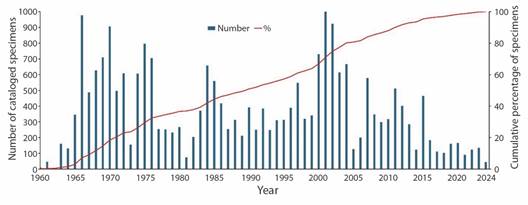
Robinson served as a professor for the next twenty-five years. In 1974, the Department was transformed into the School of Biology, and he was actively involved in developing the new academic curriculum, teaching various specialized courses, including herpetology, amphibian biology, reptile biology, comparative anatomy, and sea turtle biology, a subject that was particularly close to his heart. He focuses on improving the museum’s conditions, particularly the herpetology collection, and hiring support staff such as Roger Saenz and Federico Valverde (Sasa et al., 2022). By 1976, the collections had been moved to a larger space in the basement of the Biology School building, where they remain today (Angulo et al., 2016; García, 2009). The improvement in space allowed the inclusion of new specimens. More than 3 580 specimens collected by Robinson or his students were incorporated into the collection, and many more were added by other collectors, including Sergio Salas, Peter Siegfried, Roy W. McDiarmid, Luis Diego Gómez, Michael M. Johanboecke, and Wayne van Devender. At the time of Robinson’s death in 1991, 12 500 specimens were exceeded (Fig. 3), a testament to his impressive efforts to ensure the collection.
Robinson’s most significant contribution was to train the first generation of Costa Rican herpetologists. Like no other of the scientists who preceded him, Robinson had the vision and patience to consolidate interest in herpetology among his students (Chaves, 2018), a transcendental fact for the local development of studies on amphibians and reptiles in the country and for the development of the collection that he helped found at MZUCR.
Over the next thirty years, the collection of amphibians and reptiles experienced a significant expansion, doubling in size. This growth was not a solitary effort, but a collaborative achievement, thanks to the dedication of the curatorial team Federico Bolaños and Gerardo Chaves, and the contributions of their students and associates, including Adrián García, Alejandro Zamora, José Hernández, and Roberto Brenes. The Bolaños-Chaves duo played a key role, adding more than 3,000 specimens to the collection and accelerating its growth by facilitating the deposit of material collected by other researchers, including Jens Ehmckey, Gad Perry, Mason Ryan, Mahmood Sasa, and Alejandro Solórzano. A significant milestone during this period was the assignment of geographic coordinates to all collection localities, a task that was initiated by Douglas C. Robinson.
By 2000, the herpetological collection contained 67% of the total number cataloged today (Fig. 3). During the first years of this century, the digitalization of specimen information was completed, and tools from Geographic Information Systems were incorporated as an essential resource for analyzing their distributions. The invaluable contributions of several researchers, including Adrián García Rodríguez and Robert Puschendorf, who brought their unique experience to the project, truly made this achievement possible. García-Rodríguez first incorporated spatial analysis tools into the locality records and used modeling to resolve biogeographical questions about regional herpetofauna, while Puschendorf used these techniques to understand the ecology of the chytrid fungus associated with the decline of amphibians in the country (García-Rodríguez et al., 2012; Puschendorf et al., 2006). From this point on, once the information was digitalized, it was possible to map and model the distribution of most of the country’s amphibian and reptile species. These achievements have allowed us to advance in the knowledge about our herpetofauna and establish a new standard in data management for the scientific community. As we look to the future, these advancements open exciting possibilities for further research, as evidenced by studies related to niche modeling (Granados-Martínez et al., 2021), potential distribution (Solórzano & Sasa, 2020), and the progress of pathogens responsible for the amphibian declines (Puschendorf et al., 2009; Zumbado-Ulate et al., 2019) that have resulted from them.
From 2000 to 2020, the number of specimens preserved at the MZUCR increased by more than 25% (Fig. 3), significantly improving our research capabilities. This increase was made possible by the dedicated efforts of researchers such as David Laurencio, Erick Arias, Elda Araya, Valerie McKenzie, Eduardo Boza, Franklin Aguilar, and Robert Lovich, among others. They incorporated specimens from environmental studies and conservation projects (Arias & Bolaños, 2014; Laurencio & Malone, 2009) or parasitic communities (McKenzie, 2007), thus expanding the scope of the collection. By 2020, more than 23,600 specimens had already been cataloged in the collection. During the first four years of this last decade, some 400 more specimens have been added, mainly salamanders and anurans collected in expeditions carried out to the Talamanca Mountain range, a region known for its rich biodiversity and unique herpetofauna (Arias et al., 2024).
As of 2020, the Museum of Zoology is no longer managed by the School of Biology. It has become part of the Center for Research in Biodiversity and Tropical Ecology, a unit of the Vice-Rectorate of Research of the University of Costa Rica dedicated to research on the biodiversity and ecology of terrestrial and freshwater environments. This measure is hoped to allow for greater visibility and projection of the work carried out in the herpetology collection.
Despite the extensive history of herpetological studies, new species continue to be added to the list of amphibians and reptiles of Costa Rica. Recent taxonomic changes, many of them derived from systematic studies that incorporate new evidence of their evolutionary relationships and the discovery of new species from the least studied regions of the country, guarantee that the number and identity of species will continue to change in the coming years. In the face of these changes, the herpetology collection of the Museum of Zoology constitutes a significant asset since it protects voucher specimens that represent a very high proportion of the species in the country. In addition, the collection is a research unit that directly manages many of the studies on the biology of amphibians and reptiles that the university carries out. The history of this collection, a testament to the collaborative spirit of the field, reflects the contributions of those who helped found it, their interactions with other researchers and students, and the academic collaborations that have shaped it over time.
Ethical statement: The authors declare that they all agree with this publication and made significant contributions; that there is no conflict of interest of any kind; and that we followed all pertinent ethical and legal procedures and requirements. All financial sources are fully and clearly stated in the acknowledgments section. A signed document has been filed in the journal archives.

