

SciELO - Scientific Electronic Library Online

 
vol.73 suppl.2Yeast diversity in tropical fruits from Costa RicaRichness and abundance of non-flying terrestrial mammals in an urban environment in the Neotropic author indexsubject indexarticles search
Home Pagealphabetic serial listing  

Services on Demand

Journal

Article

Indicators

Related links

Share


Revista de Biología Tropical

On-line version ISSN 0034-7744Print version ISSN 0034-7744

Rev. biol. trop vol.73  suppl.2 San José May. 2025

http://dx.doi.org/10.15517/rev.biol.trop..v73is2.64706 

Artículo

Agricultural landscapes in Costa Rica: forest remnants account for a rich mammal (Mammalia) community

Paisajes agrícolas en Costa Rica: remanentes de bosque albergan una rica comunidad de mamíferos

Maria-I. Runnebaum1 
http://orcid.org/0000-0003-0908-723X

Manuel-R. Spinola2 
http://orcid.org/0000-0002-7839-1908

J.-Edgardo Arévalo1 
http://orcid.org/0000-0003-4160-8373

Bernal Rodríguez-Herrera1  3 
http://orcid.org/0000-0001-8168-2442

1. Escuela de Biología, Universidad de Costa Rica, San José, Costa Rica; mariaruj@gmail.com (*Correspondence), jose.arevalohernandez@ucr.ac.cr, bernal.rodriguez@ucr.ac.cr

2. Instituto Internacional en Conservación y Manejo de Vida Silvestre, Universidad Nacional, Heredia, Costa Rica; mspinola10@gmail.com

3. Centro de Investigaciones en Biodiversidad y Ecología Tropical (CIBET), Universidad de Costa Rica, San José, Costa Rica; bernal.rodriguez@ucr.ac.cr

Abstract

Introduction:

The effects of habitat loss and fragmentation on wildlife are complex processes mediated by factors other than habitat size and isolation alone. For example, the quality of the surrounding matrix, edge-induced effects, and proximity to large forest tracks are of particular importance. These factors may allow or limit animal movements and, thus, population persistence in human-modified landscapes. This is the case in some remaining forest fragments in Costa Rican landscapes.

Objective:

To investigate the influence of the landscape composition on medium (< 10 kg) and large-sized (> 10 kg) terrestrial mammals thriving in an agricultural landscape, we surveyed mammal species in 30 sites in the Sarapiquí region, Costa Rica.

Methods:

We used 45 camera traps to assess the richness and composition of mammal species in forest fragments embedded in pineapple plantations and pastures from 2013 to 2014. Richness estimates were calculated using capture-recapture models for closed populations. We adjusted the models for repeated count data analysis to determine landscape cover types that best explained species richness.

Results:

Twenty-two species of mammals in nine orders and 16 families were recorded. Despite the habitat loss, fragmentation, and agricultural practice pressures over the years, the Sarapiquí region maintains a significant portion of its native mammalian fauna compared to comprehensive historical inventories available for the area. We found that forest cover best predicts the levels of species richness.

Conclusion:

many forest-dependent species, such as the threatened Baird’s Tapir, can thrive in fragmented habitats in agricultural landscapes, while other species seem to be heavily affected by habitat modification and land use type. Forested areas and pastures with a high density of scattered trees and proximity to extensive forests could enhance the conservation of mammal communities despite the intense human land use in these agricultural landscapes.

Keywords: Biodiversity; conservation; forest cover; landscape composition; matrix quality.

Resumen

Introducción:

Los efectos de la pérdida y fragmentación de hábitats en la vida silvestre son procesos complejos, influenciados por factores más allá del tamaño y el aislamiento del hábitat. Por ejemplo, la calidad de la matriz circundante, los efectos inducidos por los bordes y la proximidad a grandes áreas forestales son de particular importancia. Estos factores pueden facilitar o limitar los movimientos de los animales, y, por lo tanto, la persistencia de las poblaciones en paisajes modificados por humanos, como ocurre en los fragmentos de bosque que aún existen en algunas regiones de Costa Rica.

Objetivo:

Investigar cómo la composición del paisaje influye en los mamíferos terrestres de tamaño mediano (< 10 kg) y grande (> 10 kg) que viven en un paisaje agrícola. Para ello, realizamos un estudio de las especies de mamíferos en 30 sitios de la región de Sarapiquí, Costa Rica.

Métodos:

Utilizamos 45 cámaras trampa para evaluar la riqueza y la tcomposición de las especies de mamíferos en fragmentos de bosque situados entre plantaciones de piña y pastizales, desde 2013 hasta 2014. Calculamos las estimaciones de riqueza utilizando modelos de captura-recaptura para poblaciones cerradas. Ajustamos estos modelos para el análisis de datos de conteo repetido, con el fin de identificar los tipos de cobertura del paisaje que mejor explican la riqueza de especies.

Resultados:

Se registraron 22 especies de mamíferos, pertenecientes a nueve órdenes y 16 familias. A pesar de la pérdida de hábitat, la fragmentación y las presiones de las prácticas agrícolas a lo largo de los años, la región de Sarapiquí conserva una parte significativa de su fauna mamífera nativa, comparada con los inventarios históricos disponibles para el área. Descubrimos que la cobertura forestal es el mejor predictor de los niveles de riqueza de especies.

Conclusión:

Muchas especies dependientes del bosque, como el amenazado tapir de Baird, pueden prosperar en hábitats fragmentados dentro de paisajes agrícolas, mientras que otras parecen verse fuertemente afectadas por la modificación del hábitat y el tipo de uso del suelo. Las áreas forestales y los pastizales con alta densidad de árboles dispersos, así como la proximidad a grandes extensiones de bosque, podrían mejorar la conservación de las comunidades de mamíferos, a pesar del intenso uso humano del suelo en estos paisajes agrícolas.

Palabras clave: Biodiversidad; cobertura boscosa; composición del paisaje; calidad de la matriz.

Introduction

Studies on tropical forests show that crucial ecological processes for wildlife thriving in fragmented habitats are complex and are highly influenced by the quality of the matrix where the fragments are imbedded (Crome, 1997; Debinski, 2006; García, 2011; Laurance & Bierregaard, 1997; Semper-Pascual et al., 2021). Animal populations may be negatively affected by the reduction of the original forests and the increase in isolation between forest fragments (Andrade-Núñez & Aide, 2010; Chetcuti et al., 2021; Murcia, 1995; Renjifo, 2001; Saunders et al., 1991). This is because the reduction in area and isolation of the fragments can modify the physical and biological conditions of animals, leading to the loss of species and a decline in population size (Andrade-Núñez & Aide, 2010). In addition, species in forest fragments may experience reduced immigration rates, suffer increased predation and parasitism, and may be affected by invasions of exotic species (Goodman & Rakotondravony, 2000; Lynam, 1997; Parsons, 1972; Ramos, 2004). These alterations can be further exacerbated by variable edge effect conditions (Bernard & Fenton, 2007; García, 2011; Semper-Pascual et al., 2021). The severity of the edge effects depends on the quality and composition of the matrix, which, in turn, may influence animal movements between fragments. Thus, the composition of the matrix may function as a buffering element or become additional habitats for some animal species (Kattan, 2002; Laurance & Peres, 2006; Medellín & Equihua, 1998; Pardini, 2004; Pardini et al., 2000; Prevedello & Vieira, 2010).

Many species of mammals are strongly affected by land modifications such as the ones described above (Chiarello, 2000; Da Silva & Mendes-Pontes, 2008). Some species may be sensitive to habitat loss and fragmentation (Chetcuti et al., 2021; Ewers & Didham, 2005; Harvey et al., 2006), while others benefit from agriculture or silviculture expansion (Lessa et al., 2012; Lyra-Jorge et al., 2008). For instance, large-sized species that have wide home ranges, specific habitat requirements, and low population densities may be particularly affected by habitat alterations (Brashares et al., 2001; García, 2011; Kinnaird et al., 2003; Michalski & Peres, 2005; Silver et al., 2004). Moreover, large-sized mammals might be more vulnerable to local extinction than small mammal species (Bennett, 1990; Daily et al., 2003; Elmhagen & Angerbjörn, 2001; Robinson, 1996). This can have ecological implications as it is known that large-sized to medium-sized mammals play an important role in tropical ecosystem function as seed dispersers and energy cycle regulators (De la Cruz, 2012; Howe & Smallwood, 1982; Silver et al., 2004; Terborgh, 1992). These attributes make some mammal species of special interest for conservation (Ceballos & Ehrlich, 2002; Chiarello, 2000; Da Silva & Mendes Pontes, 2008; Daily et al., 2003; Kerley et al., 2003; Lino et al., 2019), such as the Baird’s Tapirs (Tapirus bairdii) and Jaguars (Panthera onca), that have been recognized as flagship species for conservation programs because of their large forest area dependency, along with many other species that are listed under Appendix 1 of the Convention on International Trade in Endangered Species (CITES) (Caro & O’Doherty, 1999; Kinnaird et al., 2003).

In Costa Rica, the historical loss of forest cover has been attributed to agricultural development practices (e.g., monocultures) and cattle grazing, human population growth, and the expansion and construction of roads (Barrantes, 2000; Cove et al., 2013). Particularly during the ’80s, Costa Rica had the highest rates of deforestation in Central America with more than 70% of primary forests lost by the end of that decade (Sader & Joyce, 1998; Sánchez-Azofeifa et al., 2001; Watson et al., 1998). This deforestation process created landscape mosaics of disturbed habitats, pastures, and single-species crops. For example, the heavily deforested northern region of the country that includes the Sarapiquí region is now extensively covered by pineapple and banana plantations, mixed agriculture, forest fragments as well as private and state-owned protected areas (Butterfield, 1994; Chiarello, 2000; De la Cruz, 2012; Lyra-Jorge et al., 2008; Sánchez-Azofeifa et al., 2001; Semper-Pascual et al., 2021). Since the late 90’s, private initiatives in the area have augmented natural reserves that may have reduced pressure from agriculture and farming; however, the spread of large-scale pineapple and banana plantations, as well as cattle grazing are still posing pressure on the remaining forest habitats (Araya, 2017; Cove et al., 2012; Lino et al., 2019; Montagnini, 1994; Sánchez-Azofeifa et al., 2001).

Despite the increasing number of studies highlighting the importance of the quality of the matrix for the maintenance of biodiversity in fragmented landscapes (Fahrig et al., 2011; Perfecto & Vandermeer, 2010), there is still a lack of information about the land use characteristics that may favor or limit richness and composition of terrestrial mammal species in human-dominated landscapes (Cuarón, 2000; Daily et al., 2003; Lino et al., 2019; Urquiza-Haas et al., 2009). In tropical countries like Costa Rica, the dynamic turnover of land use types and its potential consequences for animal communities needs further investigation (De la Cruz, 2012; Gascon et al., 1999). The objective of this study is to assess the species composition of medium and large-sized mammals thriving in an agricultural landscape in the Caribbean slope of Costa Rica. We hypothesize that the amount of forest cover and proximity to large tracks of protected forest would increase habitat availability, thus favoring mammal species abundance. In addition, we expect that structurally low-quality matrices such as pasture and pineapple near or adjacent to forest fragments would decrease the abundance of mammal species.

Methods

Study Area: We conducted the study in Sarapiquí, near Puerto Viejo and La Virgen, province of Heredia, from November 2013 to May 2014. The area experiences a short dry season from March to May, followed by a prolonged rainy season from May to February. The average annual temperature is 25.3º C, and the mean annual precipitation is 3777 mm (Matlock & Hartshorn, 1999). The study area covered 32,716 hectares comprising 54% of forest fragments, 24 % pastures primarily for cattle grazing, and the remaining 22 % with pineapple and other scattered crop patches (Appendix 1). The study area is divided by the Sarapiquí River and the main road from Horquetas to La Virgen, containing important human settlements (Butterfield, 1994; Schelhas & Sánchez-Azofeifa, 2006). Large and continuous forest areas are found both in the northern and southern areas, adjacent to the northern limit of the Braulio Carrillo National Park (BCNP). With 47,586 hectares of forest, this park is the most extensive one in the region and has an ample altitudinal range, varying from 32 to 2,906 meters above sea level. In addition, the BCNP has a large proportion of primary forest that allows for suitable habitats for several threatened, endemic, and narrow-limited species in Sarapiquí (Butterfield, 1994; Schelhas & Sánchez-Azofeifa, 2006). Several forest fragments embedded in cattle pastures are found in proximity to this protected area, including Pozo Azul (161.8 ha), Selva Verde (202 ha), and Tirimbina (345 ha), which are private reserves for ecotourism and scientific research. The northern side of the study area contains the largest forest remnants within private reserves, including EcoVida (650 ha), Alfa Industrias (550 ha), and Santa Ines (526 ha) (Appendix 2). Given their relatively large size, these forest remnants may represent an important habitat for many species. Nonetheless, there is a significant amount of pressure from the expansion of the agricultural frontier, mainly pineapple. For example, Finca La Virgen, which cultivates pineapple, has several remnants of mostly riparian forests that are immersed both in pastures and pineapple plantations. There are also rivers, roads and small towns in the surrounding area.

Sampling site selection: We laid out a grid of hexagons of 1 km2 on a map of the study area using ArcGIS 10. We selected 30 hexagons with at least 10 % forest cover in a stratified manner and deployed autonomous camera traps at each of the 30 selected sampling sites. Each camera-trap was at least 1 km apart from one another.

Landscape analysis: We conducted a landscape analysis using ArcGIS 10 to classify the different landscape elements and land use types in all sites. Since no prior categorization was available, we performed the classification based on direct visual assessment of the satellite imagery (Hook et al., 2022). identifying distinct land cover types according to their composition and configuration. Specifically, we categorized areas based on forest density, the extent of pasturelands, and the presence of plantations, which were distinguishable in the images. When possible, we validated the classification through on-site verification. In addition, we measured the distances between forest fragments that could serve as potential suitable habitats for most mammals, which we defined in this study as forest remnants larger than 500 ha . This threshold was established based on internal research criteria, considering the need for sufficiently large areas to support viable populations of terrestrial mammals. While specific references using this exact threshold were not identified, previous studies have highlighted the importance of fragment size in biodiversity conservation. For instance, Hending et al. (2023) demonstrated that forest fragmentation and associated edge effects reduce tree species diversity and structural diversity in Madagascar’s transitional forests. Similarly, Ries et al. (2004) discussed how a decrease in fragment size results in an increased edge-to-core ratio, which can be disadvantageous to habitat specialist species. Furthermore, we assessed the distances between structural landscape elements, such as live fences and small forest patches, which can influence connectivity between these fragments, either facilitating or limiting species movement.

Camera-traps: We monitored medium (< 10 kg) and large terrestrial mammals (> 10 kg) in the study area with the use of camera traps (Bushnell Trophy Cam HD). This method is based on identification of animal species using photographs and videos taken by automatic cameras. A total of 45 permanent cameras remained active for a period of 6 months in 2013-2014. The number of camera-trapping days is defined as the 24-hour period that a camera operated from the moment the camera was mounted until it was removed, or when the last picture was taken. Each activation captured a sequence of three consecutive photos followed by a 10-second video, with a 30-second interval between detections. Sampling points were visited periodically to collect the recorded data and change the cameras’ location within the same site. This approach can maximize detection of species whose home ranges are less than 1 km2.

Cameras were strategically placed 50 cm above the ground on sites with evidence of animal presence (footprints, marks, or past sightings), close to trails, rivers, or streams. All cameras were geo-referenced with a portable GPS and placed under a forest canopy (protected from direct sunlight since they are activated by exposure to intense heat). Stations were baited with a mammal attractant (Calvin Klein Obsession®) on a cloth-impregnated sheltered stake, following a standardized protocol to ensure consistency in scent dispersion and avoid biases in detection differences between stations. This method has been previously used in similar studies to attract a variety of mammal species in tropical habitats (Wildlife Conservation Society, 2013; Holinda et al., 2020; Wildlife Conservation Society, 2010). Since people occasionally walked through the sites, we placed a warning sign explaining the purpose of the ongoing Project.

We identified all recorded animals to a species level, noting the time and date of the record. All species of more than 1 kg were considered, and taxonomic nomenclature follows Wilson and Reeder (2005) and Rodríguez-Herrera et al. (2014). We did not include species of rodents in the families Muridae and Cricetidae, nor the order Chiroptera, which were difficult to identify with this method. In addition, we used a comprehensive long-term database developed by the Panthera and TEAM (TEAM Network, 2011) and other monitoring projects in the area as a sound reference of the presence and absence of mammal species.

Data Analysis: We developed a detection history (1 = detected; 0 = undetected) for the total time the cameras were active at each site. For this study, a “detection” was defined as the occurrence of a species within the camera’s field of view, regardless of whether it was the same individual observed at different times. Therefore, repeated detections of the same species during different periods or frames were treated as separate events. This definition is important for the application of the occurrence models and the subsequent species richness estimation. We then ran a Cluster Analysis using PAST v 1.0.0.0, applying hierarchical clustering with complete linkage, using the detection history to determine Euclidian’s distance for grouping the sites according to their similarity.

The overall species richness of medium and large terrestrial mammals was estimated using both rarefaction analysis and capture-recapture models for closed populations, implemented in R v3.3.2 (R Development Core Team, 2016) for species detection records (Boulinier et al., 1998; Chao et al., 2014). In these models, a species was considered detected at a site if recorded at least once during the entire sampling period, regardless of repeated detections of the same or different individuals. This estimation method accounts for imperfect species detection, assuming that observed species richness underestimates the true richness in the area. Since the rarefaction curves were generated using capture-recapture models that incorporate detection probability and associated uncertainty, the resulting estimates directly reflect the expected species richness (Chao et al., 2014; Colwell et al., 2012; Hwang et al., 2002)

To assess the influence of landscape variables on species richness (forest cover, land use types such as pastures, pineapple plantations, and distance to the nearest forest fragment), we explored multiple occurrence models, combining the mentioned landscape variables. We used the Akaike’s Information Criterion (AIC) to maximize log-likelihood for the best approximating model and the true generating mechanism, where the best model would be the one with the lowest value of AIC (Anderson, 2008). To determine which variable best-explained species richness, we adjusted Repeated Count Data Analysis (Royle, 2004), taking into account detection probability for each species at each site. Using the ranked models and the determined variables, we constructed a species richness interpolation map. We used R v 3.3.2 (R Development Core Team, 2016) package ggplot 2 v. 0.8.9 (Wickham, 2016) to generate the graphs.

Results

We obtained 1 653 records of mammals (5 984 days/camera), representing 22 terrestrial native mammal species. This makes 86 % of the species reported for the area in the last 60 years (Appendix 3). Of the recorded mammals, 16 were medium-sized and six large-sized species distributed in nine orders and 16 families (Appendix 3); placing the order Carnivora as the most diverse group with 10 species. We highlight that nine of the 22 species detected are officially listed as threatened and have reduced populations in Costa Rica (Sistema Nacional de Áreas de Conservación (SINAC), Ministerio de Ambiente y Energía (MINAE), 2007). The names of the updated species are (Ramírez-Fernández et al., 2023): Baird’s Tapir, Ocelots (Leopardus pardalis), Margays (Leopardus wiedii), Oncillas (Leopardus tigrinus) and Jaguarundis (Herpailurus yagouaroundi), Spotted Pacas (Cuniculus paca), Central American Red Brockets (Mazama temama), Collared Peccary (Dicotyles tajacu) and Lesser Grison (Galictis vittata).

The most common species in the area were Nine-banded Armadillo (Dasypus novemcinctus), White-nosed Coati (Nasua narica), Northern Tamandua (Tamandua mexicana), Grey Four-eyed Opossum (Philander melanurus) and Ocelots. In contrast, rare species such as Striped Hog-nosed Skunk (Conepatus semiestriatus), Oncillas, Mexican Hary Dwarf Porcupine (Coendou mexicanus) and Lesser Grison were detected at one site; some recorded only once (Table 1).

Table 1 Medium and large-sized species of mammals recorded in thirty different sites. Camera trap detections in Sarapiquí, Costa Rica, 2013-2014. 

Order Family Species Number of sites detected Number of detections in different sites
A B C
Didelphimorphia Didelphidae Didelphis marsupialis 16 70 6 4
Didelphimorphia Didelphidae Philander melanurus 19 55 34 35
Pilosa Myrmecophagidae Tamandua mexicana 19 31 8 10
Cingulata Dasypodidae Dasypus novemcinctus 29 232 112 135
Rodentia Erethizontidae Coendou mexicanus 1 1 0 0
Rodentia Dasyproctidae Dasyprocta punctata 16 202 16 0
Rodentia Cuniculidae Cuniculus paca 8 31 1 0
Lagomorpha Leporidae Sylvilagus gabbii 3 3 0 0
Carnivora Canidae Canis latrans 5 9 1 3
Carnivora Felidae Leopardus pardalis 21 24 8 7
Carnivora Felidae Leopardus tigrinus 1 1 0 0
Carnivora Felidae Leopardus wiedii 5 7 0 0
Carnivora Felidae Herpailurus yagouaroundi 5 3 1 1
Carnivora Procyonidae Nasua narica 20 80 12 33
Carnivora Procyonidae Procyon lotor 13 13 25 32
Carnivora Mustelidae Eira barbara 15 30 8 8
Carnivora Mustelidae Galictis vittata 1 1 0 0
Carnivora Mephitidae Conepatus semistriatus 1 2 0 0
Perissodactyla Tapiridae Tapirus bairdii 4 14 0 0
Artiodactyla Tayassuidae Dicotyles tajacu 12 42 3 3
Artiodactyla Cervidae Mazama temama 4 15 1 0
Artiodactyla Cervidae Odocoileus virginianus 3 6 0 0

A. Forest fragments (18 Fragments) in high forest cover and in close proximity to extensive protected forests. / B. Forest fragments (6 Fragments) surrounded by pastures and far from extensive protected forests. / C. Forest fragments (6 Fragments) immersed in pineapple plantations.

The cluster analysis grouped sites based on species composition, indicating that fragments surrounded by forest and near large protected areas shared more similar species assemblages. In contrast, fragments embedded in pastures or pineapple plantations formed distinct clusters, suggesting an influence of land-use type on species composition (Fig. 1). In addition, the number of species increases faster in fragments surrounded by forest and in proximity to protected areas as compared with those embedded in land with pastures and pineapple plantations (Fig. 2).
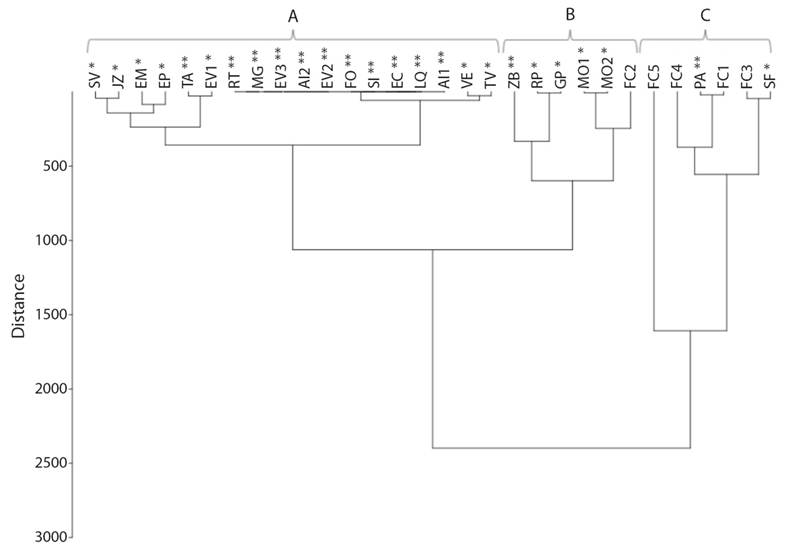
Fig. 1 Site Cluster Analysis of mammal species using Euclidian’s index in relation to the land use cover and distance to the nearest extensive protected forest. Sites with -indicate more than 75% of forest, sites with- indicate more than 30% of pineapple, and sites with * indicate more than 30% pastures. The clusters are labeled as A. Forest fragments in high forest cover and in close proximity to extensive protected forests, B. Forest fragments surrounded by pastures and far from extensive protected forests, and C. Forest fragments immersed in pineapple plantations. 
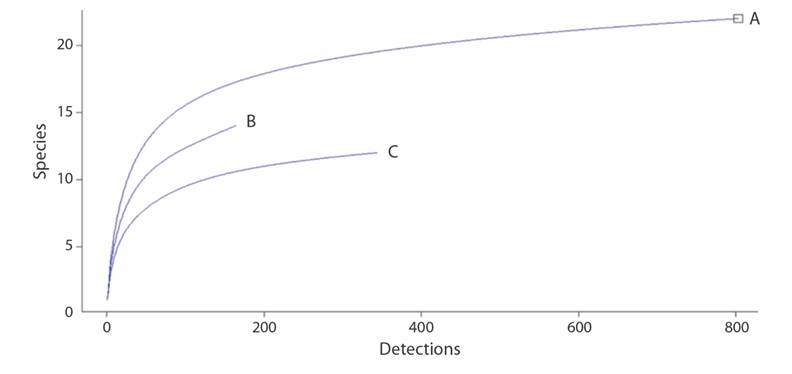
Fig. 2 Species rarefaction curves of the sites in clusters A. Forest fragments (18 Fragments) in high forest cover and in close proximity to extensive protected forests, B. Forest fragments (6 Fragments) surrounded by pastures and far from extensive protected forests, and C. Forest fragments (6 Fragments) immersed in pineapple plantations. Camera trap detections in Sarapiquí, Costa Rica, 2013-2014. 

The best model that estimated 22 species as the overall richness in the area was Mh Darroch as shown in Table 2 (Darroch et al., 1993). Two different model types adequately describe the dynamics of these species, including one with an environmental covariate, assuming forest cover as the determinant variable for species richness and considering detectability within this land cover (Table 3).

Table 2 Capture and recapture models for closed populations to estimate overall species richness of medium and large terrestrial mammals in the area of Sarapiquí, Costa Rica, 2013-2014. 

Model Richness Standard deviation deviance AIC
Observed Estimate
Mh Darroch 22.0 22.3 0.6 34.144 72.347
Mh Chao (LB) 22.0 26.3 6.6 24.988 73.191
Mh Gamma3.5 22.0 80.7 37.7 48.810 87.013
Mh Poisson2 22.0 22.0 0.0 208.458 246.661
M0 22.0 22.0 0.0 230.984 267.187

Table 3 Model selection for covariates affecting species richness in different types of landscapes in Sarapiquí, Heredia, Costa Rica, 2013-2014. 

Model AIC delta AIC AIC wgt K R2
λ (Forest), r (Forest) 1766.58 0 0.480 4 0.160
λ (.), r (.) 1767.76 1.19 0.260 2 0.000
λ (.), r (Pineapple) 1769.40 2.82 0.120 3 0.012
λ (.), r (Forest) 1769.76 3.18 0.097 3 0.000
λ (Pineapple), r (Pineaple) 1771.19 4.61 0.048 4 0.019
λ (Distance), r (.) 1802.17 35.59 0.000 4 1.900

Our results show that the species richness of mammals varied according to landscape characteristics, where pineapple-dominated areas had the fewest species; and many of the sites with large forest cover had the largest number of species (Fig. 3).
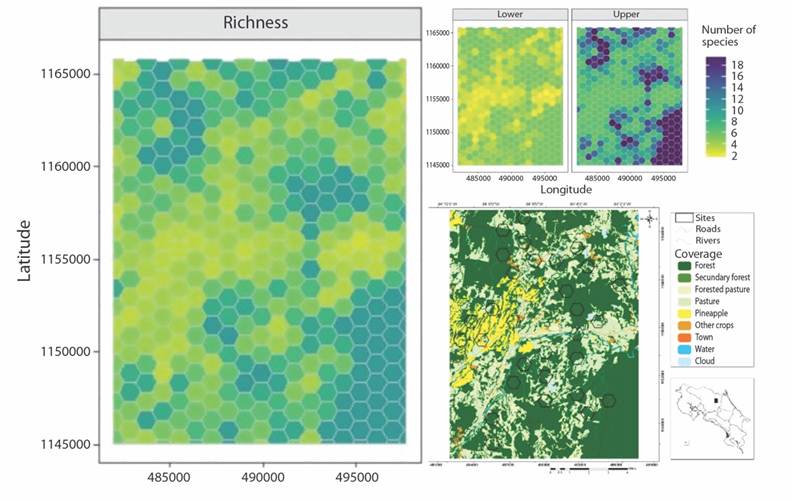
Fig. 3 Species richness interpolation map (Kriging) with 95% confidence of interval on varying forest covers. Camera trap detections in Sarapiquí, Costa Rica, 2013-2014. 

Discussion

The amount of forest cover best explains the species richness and detectability in this area. Despite the level of habitat loss and fragmentation, most remnants of natural forests surveyed in this study represent potential habitats for many mammal species. Although distance from protected areas was not a determinant variable, mammal richness was greater in sites with large forest cover compared to fragments surrounded by less forest cover. For example, EcoVida (EV1) was the forest that provided a greater detection of medium and large land mammals with 16 species, despite being further away from the largest protected forest: Braulio Carrillo National Park (BCNP). This is probably because this site is connected with other relatively large forest fragments, supporting the idea that large forest areas support more species (Chiarello, 2000; Da Silva & Mendes-Pontes, 2008; Fahrig, 2003; Gurd et al., 2001; Michalski & Peres, 2007).

Mammal species composition in forest sites, such as the ones surveyed in this study, indicates that this type of heterogeneous landscape offers a variety of resources, favoring the dispersal of animals between fragments of forests. For instance, on the southern side of BCNP, we found that the closest site (MG) had high species detection, including several detections of Baird’s Tapir. Moreover, although a number of other sites close to BCNP had low species detection (e.g., ZB, SF, FO, and TV), many of the forests in this area are not discrete patches, but forest remnants bigger than XX ha that can provide greater habitat amount and connectivity between different environments. Habitat heterogeneity with highly permeable matrices (greater proportion of trees, crops and secondary forests) allow animal movements through the landscape, maintaining ecological dynamic processes that are essential for the persistence of mammal populations and diversity and thus are of great conservation importance (Asensio et al., 2009; Fahrig, 2013; Fahrig et al., 2011).

Major changes in landscape configuration like large pineapple plantations can negatively affect mammals, reducing species survival and population viability (Banks et al., 2005; Bélisle et al., 2001; Carroll et al., 2004; Trombulak & Frissell, 2000). For example, structural contrast between forest remnants and the matrix can be abrupt, increasing the edge effect for many species. In addition, the degree of forest loss and fragmentation in areas with pineapple plantations reduces connectivity between patches, exacerbating the negative effects that limit animal movements. Nonetheless, this type of cover maintains some forest remnants and riparian forests that act as corridors, while maintaining a certain degree of physical connectivity with other forest fragments. It has been reported that several species of mammals use this type of remnants to move, maintaining the connectivity of their populations and thus their survival in altered landscapes (Hermes-Calderón, 2008); this could be the case for Ocelots in our study. However, Ocelots or other species with relatively large habitat requirements have limited ability to move, since elongated fragments like the ones found in our study area have a greater perimeter relative to area, so the edge effect would be further exacerbated.

Conservation value of forest remnants: We estimated 86 % of the species of terrestrial native, medium and large sized mammals, reported for the area in the last six decades (Appendix 3). Species such as Common Opossum (Didelphis marsupialis) and Grey Four-eyed Opossum were documented regularly and in a variety of habitats. A similar case happened with Northern Tamandua and Nine-banded Armadillo (Wilson & Mittermeier, 2009). The latter was the most common species in our study. Although the Nine-banded Armadillo’s habits are poorly understood, it is known that it moves and uses different environments including secondary forests and agricultural fields (Cuarón, 2000; González-Zamora, 2011; Navarrete & Ortega, 2011; Nuñez-Perez et al., 2011; Wainwright & Arias-Sánchez, 2007; Wilson & Mittermeier, 2009), suggesting its tolerance towards habitat alteration (De Villa Meza et al., 2002).

The presence of other species, such as Central American Agouti (Dasyprocta punctata), are commonly reported in various types of land cover, and are presumed to be tolerant to deforestation (Reid, 2009; Wainwright & Arias-Sánchez, 2007; Wilson & Mittermeier, 2009). Although they were quite common in several sites, it was not detected at all in sites with pineapple coverage. Likewise, Spotted Paca was found mainly in sites with forest and pasture cover. Unlike the previously mentioned species, many carnivores require large-scale forest mosaics to meet their daily metabolic needs (Michalski & Peres, 2005). Such is the case of the Ocelots, which occur in both continuous and fragmented forests. However, this species was only detected once in pineapple plantations (Table 1), suggesting a transitory occurrence throughout the area. Ocelots are abundant opportunistic predators and relatively easy to study compared with the other wild cats (De Villa Meza et al., 2002; Di Bitetti et al., 2006; Wilson & Mittermeier, 2009). A similar finding was obtained for other small cats such as the Oncillas, Margays and Jaguarundis, whose detection was low, but they were still present in small fragments.

There is evidence that not all species are negatively affected or declining due to habitat fragmentation (Davies et al., 2000). For instance, Canis latrans was commonly detected in highly fragmented sites and pineapple plantations, occupying a variety of habitats such as open areas and forest edges (Bekoff, 1977; Wilson & Mittermeier, 2009). This flexible behavior allows them to venture into human-altered landscapes, invading otherwise unsuitable habitats (Cove et al., 2012). Other species like the Northern raccoon (Procyon lotor), White-nosed Coati and Tayras (Eira Barbara showed high tolerance to forest alterations. These mammals are generalist species that move across large areas of non-forest habitats and may use resources from habitat edges and the landscape matrices (Cassano et al., 2012; Cuarón, 2000; González-Zamora, 2011; Lessa et al., 2012; Lyra-Jorge et al., 2008; Massara et al., 2016; Mendes-Pontes et al., 2016; Wilson & Mittermeier, 2009) . Although we had few records of Lesser Grison and Striped Hog-nosed Skunks these species are reported to be able to traverse open areas and even use hostile matrices of actively managed grasslands and cultivated areas (Kasper et al., 2009; Michalski & Peres, 2007; Wilson & Mittermeier, 2009).

The Collared Peccary was mostly recorded in sites with high forest cover, and some in forest among pasture areas. However, both individuals and groups of Collared Peccaries were also detected in pineapple plantations, contrary to other studies (e.g. Cove et al., 2012; De la Cruz, 2012). This species uses resources in open areas (Keuroghlian & Eaton, 2008; Tejeda-Cruz et al., 2009), and it has been associated with levels of forest fragmentation (Garmendia et al., 2013; Wilson & Mittermeier, 2009). It seems that Collared Peccaries could benefit by a moderate degree of forest loss and fragmentation in the landscape (Tejeda-Cruz et al., 2009; Thornton et al., 2011; Urquiza-Haas et al., 2009). In contrast, White-tailed Deer (Odocoileus virginianus) and Central American Red Brocket (Mazama americana) were only recorded in sites with high forest cover; however, both species have been reported to benefit from open areas (Garmendia et al., 2013; Keuroghlian & Eaton, 2008; Tejeda-Cruz et al., 2009; Wilson & Mittermeier, 2009). Finally, Baird’s Tapir was only recorded in sites with high forest cover and close to water bodies; a habitat known to be preferred by the species (Bodmer et al., 1997; Wilson & Mittermeier, 2009). In addition, tapirs are usually sensitive to habitat loss and human disturbance (Cove et al., 2014; Garmendia et al., 2013), although at Selva Verde (SV) site, some individuals were detected not far from the lodge and main road.

We were unable to obtain records of some species expected in the region, such as the jaguar and puma, even in the sites closest to BCNP. However, both jaguar and pumas have been seen by locals in the study area (Mattey, personal communication 2015). Although these mammals tend to prefer trails where cameras were located (Arroyo-Arce et al., 2014; Chávez, 2010; Conde et al., 2010; Kelly, 2008; Silver et al., 2004; Trolle & Kéry, 2005), the lack of detections might have been the result of our sampling design and the relatively short period of time of the study. Another species not detected in our study area was the Northern Naked Tailed Armadillo (Cabassous centralis) which resides mostly underground (Wilson & Mittermeier, 2009), so it is a rare species in camera trap studies. Similarly, the Neotropical River otter (Lontra longicaudis) prefers aquatic environments, and the Mexican Hary Dwarf Porcupine is an arboreal mammal (Wilson & Mittermeier, 2009), so they may also go undetected by cameras. In contrast, the Giant Anteater (Myrmecophaga tridactyla) is believed to have been extirpated from the area (Wainwright & Arias-Sánchez, 2007), while the White-lipped peccary (Tayassu pecari), population now occurs mostly in Corcovado National Park (Carrillo et al., 2002). Although detection was reduced for other species like Central American Red Brocket and Forest rabbit (Sylvilagus gabbii), they are not extirpated from the area as some suggest (Cove et al., 2012). Their low incidence may be due to differences in habitat preferences or low population densitiesv (Wilson & Mittermeier, 2009), It is important to note that the lack of records of a given species during our study does not mean that it is absent or extinct. Indeed, the presence of domestic dogs and the robbery of four cameras suggest poaching pressure. It is likely that human pressure is causing the reduction of some species of mammals (e.g. Spotted Pacas, Central American Agouti, Collared Peccary and Central American Red Brocket), affecting forest ecosystems processes and interactions within mammal communities (Arias Le Claire, 2000; Asquith et al., 1997; Bodmeret al., 1997; Forget & Milleron, 1991; Guariguata et al., 2000). The fact that most of the species detected in sites near pineapple plantations are listed under the least concern category (Appendix 3), suggests that the persistence of generalist species such as raccoons, coatis and Grey Four-eyed opossums, are least affected by land modifications (Parry et al., 2007; Tejeda-Cruz et al., 2009). The absence of Central American Agouti in this area is of great concern, since this species’ home range is around 2 ha and they are territorial and locally common (Wainwright & Arias-Sánchez, 2007). It is possible that habitat alteration and poaching are heavily impacting this species.

The results of this study draw attention to the biological importance and conservation value of forest fragments, as many mammal species persist in fragmented landscapes (Bruna et al., 2010; Lyra-Jorge et al., 2008). Species-specific responses to habitat loss and fragmentation are related to interspecific differences in the perception of landscape structure and the scale of habitat alteration (Lima & Zollner, 1996; Lord & Norton, 1990; Vos et al., 2001; Zollner & Lima, 1997). For example, larger species with extensive home ranges are able to perceive landscapes as more homogenous than smaller and less vagile species (Elmhagen & Angerbjörn, 2001; Gehring & Swihart, 2003; Lyra-Jorge et al., 2008). In addition, some animals may even adapt to modifications to their original habitats (McDougall et al., 2006; Morán-López et al., 2006; Tabeni & Ojeda, 2005). Our results suggest that many large and medium sized mammals in fragmented landscapes explore the region as a whole, and are not necessarily restricted to the native vegetation patches (Donadio et al., 2001; Franklin et al., 1999; Lyra-Jorge et al., 2008), such as Coyotes and Tayras that adapt to human-modified landscapes (Lyra-Jorge et al., 2008).

In conclusion, it is necessary to preserve large as well as small forest fragments, including riparian forests that serve as corridors between otherwise isolated forest fragments. Also, scattered trees and living fences within the landscape enhance quality and increase the permeability of the matrix (Umetsu & Pardini, 2007). Finally, the conservation of private nature reserves can increase landscape connectivity and habitat availability, thus favoring inter-patch movements. Both forest cover and matrix quality are key in determining the complex ecological dynamics for the maintenance of mammal species diversity in agricultural landscapes (Fahrig, 2013; Kupfer et al., 2006).

See supplementary material

References

Anderson, D. R. (2008). Model Based Inference in the Life Sciences: A Primer on Evidence. Springer New York. https://doi.org/10.1007/978-0-387-74075-1 [ Links ]

Andrade-Núñez, M. J., & Aide, T. M. (2010). Effects of habitat and landscape characteristics on medium and large mammal species richness and composition in northern Uruguay. Zoologia (Curitiba), 27(6), 909-917. https://doi.org/10.1590/S1984-46702010000600012 [ Links ]

Araya, J. (2017, 08 de Marzo). Expansión piñera se comió 5.568 hectáreas de bosque. Semanario Universidad. https://semanariouniversidad.com/pais/expansion-pinera-se-comio-5-568-hectareas-bosque/ [ Links ]

Arias Le Claire, H. (2000). Dispersión de semillas de dos especies arbóreas comerciales diseminadas por vertebrados en bosques fragmentados de Sarapiquí, Costa Rica (Tesis de maestría, CATIE). Repositorio CATIE. https://repositorio.catie.ac.cr/handle/11554/10081 [ Links ]

Arroyo-Arce, S., Guilder, J., & Salom-Pérez, R. (2014). Habitat features influencing jaguar panthera onca (Carnivora: Felidae) occupancy in tortuguero national park, Costa Rica. Revista de Biología Tropical, 62(4), 1449. https://doi.org/10.15517/rbt.v62i4.13314 [ Links ]

Asensio, N., Arroyo-Rodríguez, V., Dunn, J. C., & Cristóbal-Azkarate, J. (2009). Conservation value of landscape supplementation for howler monkeys living in forest patches. Biotropica, 41(6), 768-773. https://doi.org/10.1111/j.1744-7429.2009.00533.x [ Links ]

Asquith, N. M., Wright, S. J., & Clauss, M. J. (1997). Does mammal community composition control recruitment in Neotropical forests? Evidence from Panama. Ecology, 78(3), 941-946. https://doi.org/10.1890/0012-9658(1997)078(0941:DMCCCR)2.0.CO;2 [ Links ]

Banks, S. C., Ward, S. J., Lindenmayer, D. B., Finlayson, G. R., Lawson, S. J., & Taylor, A. C. (2005). The effects of habitat fragmentation on the social kin structure and mating system of the agile antechinus, Antechinus agilis. Molecular Ecology, 14(6), 1789-1801. https://doi.org/10.1111/j.1365-294X.2005.02535.x [ Links ]

Barrantes, G. (2000). Aplicación de incentivos a la conservación de la biodiversidad en Costa Rica. Instituto de Políticas para la Sostenibilidad (IPS), Ministerio del Ambiente y Energía (MINAE), Sistema de Áreas de Conservación (SINAC), Instituto Nacional de Biodiversidad (INBio). https://www.fbs.go.cr/sites/default/files/biblioteca/biodiversidad_psa_estudio_caso_cr.pdf [ Links ]

Bekoff, M. (1977). Canis latrans. Mammalian Species, 79, 1-9. https://doi.org/10.2307/3503817 [ Links ]

Bélisle, M., Desrochers, A., & Fortin, M.-J. (2001). Influence of forest cover on the movements of forest birds: A homing experiment. Ecology, 82(7), 1893-1904. https://doi.org/10.1890/0012-9658(2001)082(1893:IOFCOT)2.0.CO;2 [ Links ]

Bennett, A. F. (1990). Habitat corridors and the conservation of small mammals in a fragmented forest environment. Landscape Ecology, 4(2-3), 109-122. https://doi.org/10.1007/BF00132855 [ Links ]

Bernard, E., & Fenton, M. B. (2007). Bats in a fragmented landscape: Species composition, diversity and habitat interactions in savannas of Santarém, Central Amazonia, Brazil. Biological Conservation, 134(3), 332-343. https://doi.org/10.1016/j.biocon.2006.07.021 [ Links ]

Boulinier, T., Nichols, J. D., Sauer, J. R., Hines, J. E., & Pollock, K. H. (1998). Estimating species richness: The importance of heterogeneity in species detectability. Ecology, 79(3), 1018-1028. https://doi.org/10.1890/0012-9658(1998)079(1018:ESRTIO)2.0.CO;2 [ Links ]

Brashares, J. S., Arcese, P., & Sam, M. K. (2001). Human demography and reserve size predict wildlife extinction in West Africa. Proceedings of the Royal Society of London. Series B: Biological Sciences, 268(1484), 2473-2478. https://doi.org/10.1098/rspb.2001.1815 [ Links ]

Bodmer, R. E., Brooks, D. M., & Matola, S. (Eds.). (1997). Tapirs: Status survey and conservation action plan (with Spanish and Portuguese chapters). IUCN. https://portals.iucn.org/library/node/7328 [ Links ]

Bruna, E. M., Guimarães, J. F., Lopes, C. T., Duarte, P., Gomes, A. C. L., Belentani, S. C. S., Pacheco, R., Facure, K. G., Lemos, F. G., & Vasconcelos, H. L. (2010). Mammalia, estação ecológica do panga, a cerrado protected area in minas gerais state, brazil. Check List, 6(4), 668. https://doi.org/10.15560/6.4.668 [ Links ]

Butterfield, R. (1994). Forestry in Costa Rica: Status, research priorities, and the role of La Selva Biological Station. In L. McDade, K. Bawa, H. Hespenheide, & G. Hartshorn (Eds.), La Selva: Ecology and natural history of a neotropical rain forest (pp. 317-328). The University of Chicago Press. [ Links ]

Caro, T. M., & O’Doherty, G. (1999). On the use of surrogate species in conservation biology. Conservation Biology, 13(4), 805-814. https://doi.org/10.1046/j.1523-1739.1999.98338.x [ Links ]

Carrillo, E., Saenz, J. C., & Fuller, T. K. (2002). Movements and activities of white-lipped peccaries in corcovado national park, costa rica. Biological Conservation, 108(3), 317-324. https://doi.org/10.1016/S0006-3207(02)00118-0 [ Links ]

Carroll, C., Noss, R. F., Paquet, P. C., & Schumaker, N. H. (2004). Extinction debt of protected areas in developing landscapes. Conservation Biology, 18(4), 1110-1120. https://doi.org/10.1111/j.1523-1739.2004.00083.x [ Links ]

Cassano, C. R., Barlow, J., & Pardini, R. (2012). Large mammals in an agroforestry mosaic in the brazilian atlantic forest. Biotropica, 44(6), 818-825. https://doi.org/10.1111/j.1744-7429.2012.00870.x [ Links ]

Ceballos, G., & Ehrlich, P. R. (2002). Mammal population losses and the extinction crisis. Science, 296(5569), 904-907. https://doi.org/10.1126/science.1069349 [ Links ]

Chao, A., Gotelli, N. J., Hsieh, T. C., Sander, E. L., Ma, K. H., Colwell, R. K., & Ellison, A. M. (2014). Rarefaction and extrapolation with Hill numbers: A framework for sampling and estimation in species diversity studies. Ecological Monographs, 84(1), 45-67. https://doi.org/10.1890/13-0133.1 [ Links ]

Chávez, J. C. (2010). Ecología y conservación del jaguar (Panthera onca) y puma (Puma concolor) en la región de Calakmul y sus implicaciones para la conservación de la península de Yucatán (Master’s thesis). Universidad de Granada. [ Links ]

Chetcuti, J., Kunin, W. E., & Bullock, J. M. (2021). Matrix composition mediates effects of habitat fragmentation: A modelling study. Landscape Ecology, 36(6), 1631-1646. https://doi.org/10.1007/s10980-021-01243-5 [ Links ]

Chiarello, A. G. (2000). Density and population size of mammals in remnants of brazilian atlantic forest. Conservation Biology, 14(6), 1649-1657. https://doi.org/10.1046/j.1523-1739.2000.99071.x [ Links ]

Colwell, R. K., Chao, A., Gotelli, N. J., Lin, S.-Y., Mao, C. X., Chazdon, R. L., & Longino, J. T. (2012). Models and estimators linking individual-based and sample-based rarefaction, extrapolation and comparison of assemblages. Journal of Plant Ecology, 5(1), 3-21. https://doi.org/10.1093/jpe/rtr044 [ Links ]

Conde, D. A., Colchero, F., Zarza, H., Christensen, N. L., Sexton, J. O., Manterola, C., Chávez, C., Rivera, A., Azuara, D., & Ceballos, G. (2010). Sex matters: Modeling male and female habitat differences for jaguar conservation. Biological Conservation, 143(9), 1980-1988. https://doi.org/10.1016/j.biocon.2010.04.049 [ Links ]

Cove, M., Pardo, L., Spínola, R. M., Jackson, V. L., & Sáenz, J. C. (2012). Coyote (Canis latrans) (Carnivora: Canidae) range extension in northeastern Costa Rica: Possible explanations and consequences. Latin American Journal of Conservation, 2(1), 82-86. [ Links ]

Cove, M. V., Spínola, R. M., Jackson, V. L., & Saénz, J. C. (2014). The role of fragmentation and landscape changes in the ecological release of common nest predators in the Neotropics. PeerJ, 2, e464. https://doi.org/10.7717/peerj.464 [ Links ]

Cove, M. V., Spínola, R. M., Jackson, V. L., Sáenz, J. C., & Chassot, O. (2013). Integrating occupancy modeling and camera-trap data to estimate medium and large mammal detection and richness in a central american biological corridor. Tropical Conservation Science, 6(6), 781-795. https://doi.org/10.1177/194008291300600606 [ Links ]

Crome, F. H. J. (1997). Researching tropical forest fragmentation: Shall we keep on doing what we’re doing? In W. F. Laurance & R. O. Bierregaard (Eds.), Ropical forest remnants: Ecology, management, and conservation of fragmented communities (pp. 485-501). The University of Chicago Press. [ Links ]

Cuarón, A. D. (2000). A global perspective on habitat disturbance and tropical rainforest mammals. Conservation Biology, 14(6), 1574-1579. https://doi.org/10.1046/j.1523-1739.2000.01464.x [ Links ]

Da Silva, A. P., & Mendes-Pontes, A. R. (2008). The effect of a mega-fragmentation process on large mammal assemblages in the highly-threatened Pernambuco Endemism Centre, north-eastern Brazil. Biodiversity and Conservation, 17(6), 1455-1464. https://doi.org/10.1007/s10531-008-9353-0 [ Links ]

Daily, G. C., Ceballos, G., Pacheco, J., Suzán, G., & Sánchez-Azofeifa, A. (2003). Countryside biogeography of neotropical mammals: conservation opportunities in agricultural landscapes of Costa Rica. Conservation Biology, 17(6), 1814-1826. https://doi.org/10.1111/j.1523-1739.2003.00298.x [ Links ]

Darroch, J. N., Fienberg, S. E., Glonek, G. F. V., & Junker, B. W. (1993). A three-sample multiple-recapture approach to census population estimation with heterogeneous catchability. Journal of the American Statistical Association, 88(423), 1137-1148. https://doi.org/10.1080/01621459.1993.10476387 [ Links ]

Davies, K. F., Margules, C. R., & Lawrence, J. F. (2000). Which traits of species predict population declines in experimental forest fragments? Ecology, 81(5), 1450-1461. https://doi.org/10.1890/0012-9658(2000)081(1450:WTOSPP)2.0.CO;2 [ Links ]

De la Cruz, J. C. (2012). Ocurrencia de mamíferos terrestres medianos y grandes en bosques manejados y no manejados en la zona sur del Corredor Biológico San Juan - La Selva, Costa Rica (Master’s thesis). Universidad Nacional. [ Links ]

De Villa Meza, A., Martinez-Meyer, E., & López-González, C. A. (2002). Ocelot (Leopardus pardalis) food habits in a tropical deciduous forest of Jalisco, Mexico. The American Midland Naturalist, 148(1), 146-154. https://doi.org/10.1674/0003-0031(2002)148(0146:OLPFHI)2.0.CO;2 [ Links ]

Debinski, D. M. (2006). Forest fragmentation and matrix effects: The matrix does matter. Journal of Biogeography, 33(10), 1791-1792. https://doi.org/10.1111/j.1365-2699.2006.01596.x [ Links ]

Di Bitetti, M. S., Paviolo, A., & De Angelo, C. (2006). Density, habitat use and activity patterns of ocelots (leopardus pardalis) in the Atlantic Forest of Misiones, Argentina. Journal of Zoology, 270(1), 153-163. https://doi.org/10.1111/j.1469-7998.2006.00102.x [ Links ]

Donadio, E., Di Martino, S., Aubone, M., & Novaro, A. J. (2001). Activity patterns, home-range, and habitat selection of the common hog-nosed skunk, Conepatus chinga (Mammmalia, mustelidae), in northwestern Patagonia. Mammalia, 65(1), 49-54. https://doi.org/10.1515/mamm.2001.65.1.49 [ Links ]

Elmhagen, B., & Angerbjörn, A. (2001). The applicability of metapopulation theory to large mammals. Oikos, 94(1), 89-100. https://doi.org/10.1034/j.1600-0706.2001.11316.x [ Links ]

Ewers, R. M., & Didham, R. K. (2005). Confounding factors in the detection of species responses to habitat fragmentation. Biological Reviews, 81(01), 117. https://doi.org/10.1017/S1464793105006949 [ Links ]

Fahrig, L. (2003). Effects of habitat fragmentation on biodiversity. Annual Review of Ecology, Evolution, and Systematics, 34(1), 487-515. https://doi.org/10.1146/annurev.ecolsys.34.011802.132419 [ Links ]

Fahrig, L. (2013). Rethinking patch size and isolation effects: The habitat amount hypothesis. Journal of Biogeography, 40(9), 1649-1663. https://doi.org/10.1111/jbi.12130 [ Links ]

Fahrig, L., Baudry, J., Brotons, L., Burel, F. G., Crist, T. O., Fuller, R. J., Sirami, C., Siriwardena, G. M., & Martin, J. (2011). Functional landscape heterogeneity and animal biodiversity in agricultural landscapes. Ecology Letters, 14(2), 101-112. https://doi.org/10.1111/j.1461-0248.2010.01559.x [ Links ]

Forget, P.-M., & Milleron, T. (1991). Evidence for secondary seed dispersal by rodents in Panama. Oecologia, 87(4), 596-599. https://doi.org/10.1007/BF00320426 [ Links ]

Franklin, W. L., Johnson, W. E., Sarno, R. J., & Iriarte, J. A. (1999). Ecology of the Patagonia puma Felis concolor patagonica in southern Chile. Biological Conservation, 90(1), 33-40. https://doi.org/10.1016/S0006-3207(99)00008-7 [ Links ]

García, D. (2011). Efectos biológicos de la fragmentación de hábitats: Nuevas perspectivas. Ecosistemas, 20(2), 1-12. [ Links ]

Garmendia, A., Arroyo-Rodríguez, V., Estrada, A., Naranjo, E. J., & Stoner, K. E. (2013). Landscape and patch attributes impacting medium- and large-sized terrestrial mammals in a fragmented rain forest. Journal of Tropical Ecology, 29(4), 331-344. https://doi.org/10.1017/S0266467413000370 [ Links ]

Gascon, C., Lovejoy, T. E., Bierregaard Jr., R. O., Malcolm, J. R., Stouffer, P. C., Vasconcelos, H. L., Laurance, W. F., Zimmerman, B., Tocher, M., & Borges, S. (1999). Matrix habitat and species richness in tropical forest remnants. Biological Conservation, 91(2-3), 223-229. https://doi.org/10.1016/S0006-3207(99)00080-4 [ Links ]

Gehring, T. M., & Swihart, R. K. (2003). Body size, niche breadth, and ecologically scaled responses to habitat fragmentation: Mammalian predators in an agricultural landscape. Biological Conservation, 109(2), 283-295. https://doi.org/10.1016/S0006-3207(02)00156-8 [ Links ]

González-Zamora, A. (2011). The northern naked-tailed armadillo in the Lacandona rainforest, Mexico: New records and potential threats. Revista Mexicana de Biodiversidad, 83(2). https://doi.org/10.22201/ib.20078706e.2012.2.1248 [ Links ]

Goodman, S. M., & Rakotondravony, D. (2000). The effects of forest fragmentation and isolation on insectivorous small mammals (Lipotyphla) on the Central High Plateau of Madagascar. Journal of Zoology, 250(2), 193-200. https://doi.org/10.1111/j.1469-7998.2000.tb01069.x [ Links ]

Guariguata, M. R., Adame, J. J. R., & Finegan, B. (2000). Seed removal and fate in two selectively logged lowland forests with constrasting protection levels. Conservation Biology, 14(4), 1046-1054. https://doi.org/10.1046/j.1523-1739.2000.99148.x [ Links ]

Gurd, D. B., Nudds, T. D., & Rivard, D. H. (2001). Conservation of mammals in eastern North American wildlife reserves: How small is too small? Conservation Biology, 15(5), 1355-1363. https://doi.org/10.1046/j.1523-1739.2001.00188.x [ Links ]

Harvey, C. A., Gonzalez, J., & Somarriba, E. (2006). Dung beetle and terrestrial mammal diversity in forests, indigenous agroforestry systems and plantain monocultures in Talamanca, Costa Rica. Biodiversity and Conservation, 15(2), 555-585. https://doi.org/10.1007/s10531-005-2088-2 [ Links ]

Hending, D., Randrianarison, H., Andriamavosoloarisoa, N. N. M., Ranohatra-Hending, C., Holderied, M., McCabe, G., & Cotton, S. (2023). Forest fragmentation and its associated edge-effects reduce tree species diversity, size, and structural diversity in Madagascar’s transitional forests. Biodiversity and Conservation, 32(10), 3329-3353. https://doi.org/10.1007/s10531-023-02657-0 [ Links ]

Hermes-Calderón, M. S. (2008). Influencia de la composición y configuración espacial de un paisaje ganadero con fragmentos de cobertura forestal sobre la riqueza de mamíferos mayores en la región Pacífico Central de Costa Rica (Master’s thesis). Instituto Internacional en Conservación y Manejo de Vida Silvestre, Universidad Nacional. [ Links ]

Holinda, D., Burgar, J. M., & Burton, A. C. (2020). Effects of scent lure on camera trap detections vary across mammalian predator and prey species. PLOS ONE, 15(5), e0229055. https://doi.org/10.1371/journal.pone.0229055 [ Links ]

Howe, H. F., & Smallwood, J. (1982). Ecology of seed dispersal. Annual Review of Ecology and Systematics, 13(1), 201-228. https://doi.org/10.1146/annurev.es.13.110182.001221 [ Links ]

Hook, S. J., Myers, J. S., Thome, K. J., Fitzgerald, M., Kahle, A. B., Airborne Sensor Facility NASA Ames Research Center, & Diaz, J. A. (2022). MODIS/ASTER Airborne Simulator (MASTER)MASTER: Costa Rica Airborne Research and Technology Applications (CARTA), 2005 (Version 1, p. 0 MB) (HDF4, TEXT, GIF, JPEG). ORNL Distributed Active Archive Center. https://doi.org/10.3334/ORNLDAAC/2034 [ Links ]

Hwang, W., Chao, A., & Yip, P. S. F. (2002). Theory & Methods: Continuous-time capture-recapture models with time variation and behavioural response. Australian & New Zealand Journal of Statistics, 44(1), 41-54. https://doi.org/10.1111/1467-842X.00206 [ Links ]

Kasper, C. B., Da Fontoura-Rodrigues, M. L., Cavalcanti, G. N., De Freitas, T. R. O., Rodrigues, F. H. G., De Oliveira, T. G., & Eizirik, E. (2009). Recent advances in the knowledge of Molina’s hog-nosed skunk (Conepatus chinga) and striped hog-nosed skunk (C. semistriatus) in South America. Mall Carnivore Conservation, 41, 25-28. [ Links ]

Kattan, G. H. (2002). Fragmentación: Patrones y mecanismos de extinción de especies. In M. R. Guariguata & G. H. Kattan (Eds.), Ecología y conservación de bosques neotropicales (pp. 561-590). Ediciones LUR. [ Links ]

Kelly, M. J. (2008). Design, evaluate, refine: Camera trap studies for elusive species. Animal Conservation, 11(3), 182-184. https://doi.org/10.1111/j.1469-1795.2008.00179.x [ Links ]

Kerley, G. I. H., Pressey, R. L., Cowling, R. M., Boshoff, A. F., & Sims-Castley, R. (2003). Options for the conservation of large and medium-sized mammals in the Cape Floristic Region hotspot, South Africa. Biological Conservation, 112(1-2), 169-190. https://doi.org/10.1016/S0006-3207(02)00426-3 [ Links ]

Keuroghlian, A., & Eaton, D. P. (2008). Fruit availability and peccary frugivory in an isolated atlantic forest fragment: Effects on peccary ranging behavior and habitat use. Biotropica, 40(1), 62-70. https://doi.org/10.1111/j.1744-7429.2007.00351.x [ Links ]

Kinnaird, M. F., Sanderson, E. W., O’Brien, T. G., Wibisono, H. T., & Woolmer, G. (2003). Deforestation trends in a tropical landscape and implications for endangered large mammals. Conservation Biology, 17(1), 245-257. https://doi.org/10.1046/j.1523-1739.2003.02040.x [ Links ]

Kupfer, J. A., Malanson, G. P., & Franklin, S. B. (2006). Not seeing the ocean for the islands: The mediating influence of matrix-based processes on forest fragmentation effects. Global Ecology and Biogeography, 15(1), 8-20. https://doi.org/10.1111/j.1466-822X.2006.00204.x [ Links ]

Laurance, W. F., & Bierregaard, R. O. (Eds.). (1997). Tropical forest remnants: Ecology, management, and conservation of fragmented communities. University of Chicago Press. [ Links ]

Laurance, W. F., & Peres, C. A. (2006). Emerging threats to tropical forests. The University of Chicago Press. [ Links ]

Lessa, L. G., Alves, H., Geise, L., & Barreto, R. M. F. (2012). Mammals of medium and large size in a fragmented cerrado landscape in northeastern Minas Gerais state, Brazil. Check List, 8(2), 192. https://doi.org/10.15560/8.2.192 [ Links ]

Lima, S. L., & Zollner, P. A. (1996). Towards a behavioral ecology of ecological landscapes. Trends in Ecology & Evolution, 11(3), 131-135. https://doi.org/10.1016/0169-5347(96)81094-9 [ Links ]

Lino, A., Fonseca, C., Rojas, D., Fischer, E., & Ramos Pereira, M. J. (2019). A meta-analysis of the effects of habitat loss and fragmentation on genetic diversity in mammals. Mammalian Biology, 94, 69-76. https://doi.org/10.1016/j.mambio.2018.09.006 [ Links ]

Lord, J. M., & Norton, D. A. (1990). Scale and the spatial concept of fragmentation. Conservation Biology, 4(2), 197-202. https://doi.org/10.1111/j.1523-1739.1990.tb00109.x [ Links ]

Lynam, A. J. (1997). Rapid decline of small mammal diversity in monsoon evergreen forest fragments in Thailand. In W. F. Laurance & R. O. Bierregaard (Eds.), Tropical forest remnants: Ecology, management, and conservation of fragmented communities (pp. 222-240). The University of Chicago Press. [ Links ]

Lyra-Jorge, M. C., Ciocheti, G., & Pivello, V. R. (2008). Carnivore mammals in a fragmented landscape in northeast of São Paulo State, Brazil. Biodiversity and Conservation, 17(7), 1573-1580. https://doi.org/10.1007/s10531-008-9366-8 [ Links ]

Massara, R. L., Paschoal, A. M. O., Bailey, L. L., Doherty, P. F., & Chiarello, A. G. (2016). Ecological interactions between ocelots and sympatric mesocarnivores in protected areas of the Atlantic Forest, southeastern Brazil. Journal of Mammalogy, 97(6), 1634-1644. https://doi.org/10.1093/jmammal/gyw129 [ Links ]

Matlock, R., & Hartshorn, G. (1999). La Selva Biological Station (OTS). Bulletin of the Ecological Society of America, 80(4), 188-193. [ Links ]

McDougall, P. T., Réale, D., Sol, D., & Reader, S. M. (2006). Wildlife conservation and animal temperament: Causes and consequences of evolutionary change for captive, reintroduced, and wild populations. Animal Conservation, 9(1), 39-48. https://doi.org/10.1111/j.1469-1795.2005.00004.x [ Links ]

Medellín, R. A., & Equihua, M. (1998). Mammal species richness and habitat use in rainforest and abandoned agricultural fields in Chiapas, Mexico. Journal of Applied Ecology, 35(1), 13-23. https://doi.org/10.1046/j.1365-2664.1998.00272.x [ Links ]

Mendes-Pontes, A. R., Beltrão, A. C. M., Normande, I. C., Malta, A. D. J. R., Silva Júnior, A. P. D., & Santos, A. M. M. (2016). Mass extinction and the disappearance of unknown mammal species: Scenario and perspectives of a biodiversity Hotspot’s Hotspot. PLOS ONE, 11(5), e0150887. https://doi.org/10.1371/journal.pone.0150887 [ Links ]

Michalski, F., & Peres, C. A. (2005). Anthropogenic determinants of primate and carnivore local extinctions in a fragmented forest landscape of southern Amazonia. Biological Conservation, 124(3), 383-396. https://doi.org/10.1016/j.biocon.2005.01.045 [ Links ]

Michalski, F., & Peres, C. A. (2007). Disturbance-mediated mammal persistence and abundance-area relationships in Amazonian forest fragments. Conservation Biology, 21(6), 1626-1640. [ Links ]

Montagnini, F. (1994). Agricultural systems in the La Selva region. In L. McDade, K. Bawa, H. Hespenheide, & G. Hartshorn (Eds.), La Selva: Ecology and natural history of a neotropical rain forest (pp. 307-316). The University of Chicago Press. [ Links ]

Morán-López, R., Sánchez Guzmán, J. M., Borrego, E. C., & Sánchez, A. V. (2006). Nest-site selection of endangered cinereous vulture (aegypius monachus) populations affected by anthropogenic disturbance: Present and future conservation implications. Animal Conservation, 9(1), 29-37. https://doi.org/10.1111/j.1469-1795.2005.00003.x [ Links ]

Murcia, C. (1995). Edge effects in fragmented forests: Implications for conservation. Trends in Ecology & Evolution, 10(2), 58-62. https://doi.org/10.1016/S0169-5347(00)88977-6 [ Links ]

Navarrete, D., & Ortega, J. (2011). Tamandua mexicana (Pilosa: Myrmecophagidae). Mammalian Species, 43, 56-63. https://doi.org/10.1644/874.1 [ Links ]

Nuñez-Perez, R., Corona-Corona, E., Torres-Villanueva, J., Anguiano-Méndez, C., Tornez, M., Solorio, I., & Torres, A. (2011). Nuevos registros del oso hormiguero, Tamandua mexicana, en el occidente de México. Edentata, 12, 58-62. [ Links ]

Pardini, R. (2004). Effects of forest fragmentation on small mammals in an Atlantic Forest landscape. Biodiversity and Conservation, 13(13), 2567-2586. https://doi.org/10.1023/B:BIOC.0000048452.18878.2d [ Links ]

Pardini, R., Faria, D., & Baumgarten, J. (2000). Biological guidelines to conservation plans: The Resta Una Project and the Una Biological Reserve, South Bahia. In M. S. Milano & V. Theulen (Eds.), Anais - Volume II - Trabalhos Técnicos (pp. 715-721). Rede Nacional Pro Unidades de Conservacao. [ Links ]

Parry, L., Barlow, J., & Peres, C. A. (2007). Large-vertebrate assemblages of primary and secondary forests in the Brazilian Amazon. Journal of Tropical Ecology, 23(6), 653-662. https://doi.org/10.1017/S0266467407004506 [ Links ]

Parsons, J. J. (1972). Spread of african pasture grasses to the american tropics. Journal of Range Management, 25(1), 12. https://doi.org/10.2307/3896654 [ Links ]

Perfecto, I., & Vandermeer, J. (2010). The agroecological matrix as alternative to the land-sparing/agriculture intensification model. Proceedings of the National Academy of Sciences, 107(13), 5786-5791. https://doi.org/10.1073/pnas.0905455107 [ Links ]

Prevedello, J. A., & Vieira, M. V. (2010). Does the type of matrix matter? A quantitative review of the evidence. Biodiversity and Conservation, 19(5), 1205-1223. https://doi.org/10.1007/s10531-009-9750-z [ Links ]

R Development Core Team. (2016). R: A language and environment for statistical computing. (Version 3.3.2.) (Computer software). R Foundation for Statistical Computing. [ Links ]

Ramírez-Fernández, J. D., Sánchez, R., May-Collado, L. J., González-Maya, J. F., & Rodríguez-Herrera, B. (2023). Revised checklist and conservation status of the mammals of Costa Rica. Therya, 14(2), 233-244. https://doi.org/10.12933/therya-23-2142 [ Links ]

Ramos, Z. S. (2004). Estructura y composición de un paisaje boscoso fragmentado: Herramienta para el diseño de estrategias de conservación de la biodiversidad (Master’s thesis). Centro Agronómico Tropical de Investigación y Enseñanza-Escuela de Posgrado, Programa de Enseñanza para el Desarrollo y la Conservación. [ Links ]

Reid, F. A. (2009). A Field Guide to the Mammals of Central America & Southeast Mexico. Oxford University Press. [ Links ]

Renjifo, L. M. (2001). Effect of natural and anthropogenic landscape matrices on the abundance of subandean bird species. Ecological Applications, 11(1), 14-31. https://doi.org/10.1890/1051-0761(2001)011(0014:EONAAL)2.0.CO;2 [ Links ]

Ries, L., Fletcher, R. J., Battin, J., & Sisk, T. D. (2004). Ecological Responses to Habitat Edges: Mechanisms, Models, and Variability Explained. Annual Review of Ecology, Evolution, and Systematics, 35(1), 491-522. https://doi.org/10.1146/annurev.ecolsys.35.112202.130148 [ Links ]

Robinson, J. G. (1996). Hunting wildlife in forest patches: An ephemeral resource. In J. Schelhas & R. Greenberg (Eds.), Forest patches in tropical landscapes (pp. 111-130). Island Press. [ Links ]

Rodríguez-Herrera, B., Ramírez-Fernández, J. D., Villalobos-Chaves, D., & Sánchez, R. (2014). Actualización de la lista de especies de mamíferos vivientes de Costa Rica. Mastozoología Neotropical, 21(2), 275-289. [ Links ]

Royle, J. A. (2004). N-mixture models for estimating population size from spatially replicated counts. Biometrics, 60(1), 108-115. https://doi.org/10.1111/j.0006-341X.2004.00142.x [ Links ]

Sader, S. A., & Joyce, A. T. (1998). Deforestation rates and trends in Costa Rica, 1940 to 1983. Biotropica, 20(1), 11-19. [ Links ]

Sánchez-Azofeifa, G. A., Harriss, R. C., & Skole, D. L. (2001). Deforestation in Costa Rica: A quantitative analysis using remote sensing imagery. Biotropica, 33(3), 378-384. https://doi.org/10.1111/j.1744-7429.2001.tb00192.x [ Links ]

Saunders, D. A., Hobbs, R. J., & Margules, C. R. (1991). Biological consequences of ecosystem fragmentation: A review. Conservation Biology, 5(1), 18-32. https://doi.org/10.1111/j.1523-1739.1991.tb00384.x [ Links ]

Schelhas, J., & Sánchez-Azofeifa, G. A. (2006). Post-frontier forest change adjacent to braulio carrillo national park, costa rica. Human Ecology, 34(3), 407-431. https://doi.org/10.1007/s10745-006-9024-2 [ Links ]

Semper-Pascual, A., Pérez-Crespo, E., Martínez-Moreno, A., Morales-Castilla, I., & Gómez-Campillo, A. (2021). El debate sobre los efectos de la fragmentación del hábitat: Causas y consecuencias. Biogeosciences Discussions, 1-22. [ Links ]

Silver, S. C., Ostro, L. E. T., Marsh, L. K., Maffei, L., Noss, A. J., Kelly, M. J., Wallace, R. B., Gómez, H., & Ayala, G. (2004). The use of camera traps for estimating jaguar Panthera onca abundance and density using capture/recapture analysis. Oryx, 38(2), 148-154. https://doi.org/10.1017/S0030605304000286 [ Links ]

Sistema Nacional de Áreas de Conservación (SINAC), Ministerio de Ambiente y Energía (MINAE). (2007). R-SINAC-DG-128-2007. http://www.pgrweb.go.cr/scij/Busqueda/Normativa/Normas/nrm_texto_completo.aspx?param1=NRTC&nValor1=1&nValor2=62481&nValor3=71404&strTipM=TC [ Links ]

Tabeni, S., & Ojeda, R. A. (2005). Ecology of the Monte Desert small mammals in disturbed and undisturbed habitats. Journal of Arid Environments, 63(1), 244-255. https://doi.org/10.1016/j.jaridenv.2005.03.009 [ Links ]

TEAM Network. (2011). Terrestrial vertebrate protocol implementation manual , v. 3.1 (p. 69). Tropical Ecology, Assessment and Monitoring Network, Center for Applied Biodiversity Science, Conservation International. https://www.teamnetwork.org/protocols/bio/terrestrial-vertebrate [ Links ]

Tejeda-Cruz, C., Naranjo, E. J., Cuarón, A. D., Perales, H., & Cruz-Burguete, J. L. (2009). Habitat use of wild ungulates in fragmented landscapes of the Lacandon Forest, Southern Mexico. Mammalia, 73(3). https://doi.org/10.1515/MAMM.2009.044 [ Links ]

Terborgh, J. (1992). Maintenance of diversity in tropical forests. Biotropica, 24(2), 283. https://doi.org/10.2307/2388523 [ Links ]

Thornton, D. H., Branch, L. C., & Sunquist, M. E. (2011). The relative influence of habitat loss and fragmentation: Do tropical mammals meet the temperate paradigm? Ecological Applications, 21(6), 2324-2333. https://doi.org/10.1890/10-2124.1 [ Links ]

Trolle, M., & Kéry, M. (2005). Camera-trap study of ocelot and other secretive mammals in the northern Pantanal. Mammalia, 69(3-4), 409-416. https://doi.org/10.1515/mamm.2005.032 [ Links ]

Trombulak, S. C., & Frissell, C. A. (2000). Review of ecological effects of roads on terrestrial and aquatic communities. Conservation Biology, 14(1), 18-30. https://doi.org/10.1046/j.1523-1739.2000.99084.x [ Links ]

Umetsu, F., & Pardini, R. (2007). Small mammals in a mosaic of forest remnants and anthropogenic habitats-Evaluating matrix quality in an Atlantic forest landscape. Landscape Ecology, 22(4), 517-530. https://doi.org/10.1007/s10980-006-9041-y [ Links ]

Urquiza-Haas, T., Peres, C. A., & Dolman, P. M. (2009). Regional scale effects of human density and forest disturbance on large-bodied vertebrates throughout the Yucatán Peninsula, Mexico. Biological Conservation, 142(1), 134-148. https://doi.org/10.1016/j.biocon.2008.10.007 [ Links ]

Vos, C. C., Verboom, J., Opdam, P. F. M., & Ter Braak, C. J. F. (2001). Toward ecologically scaled landscape indices. The American Naturalist, 157(1), 24-41. https://doi.org/10.1086/317004 [ Links ]

Wainwright, M. D., & Arias-Sánchez, O. (2007). The mammals of Costa Rica: A natural history and field guide. Cornell. [ Links ]

Watson, V., Cervantes, S., Castro, C., Mora, L., Solis, M., Porras, I., & Cornejo, B. (1998). Abriendo espacio para una mejor actividad forestal, Estudio de Costa Rica. Proyecto Políticas exitosas para los bosques y la gente. Centro Cientifico Tropical & International Institute for Environment and Development. San José, Costa Rica. [ Links ]

Wickham, H. (2016). ggplot2: Elegant Graphics for Data Analysis (3rd ed.). Springer International Publishing. https://doi.org/10.1007/978-3-319-24277-4 [ Links ]

Wildlife Conservation Society. (2013, November 12). Rare African golden cat caught on camera trap. ScienceDaily. https://www.sciencedaily.com/releases/2013/11/131112123329.htm [ Links ]

Wildlife Conservation Society. (2010, June 10). Obsession for Cats: WCS Uses Men’s Cologne as Latest Tool in Big Cat Conservation. https://newsroom.wcs.org/News-Releases/articleType/ArticleView/articleId/5450/Obsession-for-Cats-WCS-Uses-Mens-Cologne-as-Latest-Tool-in-Big-Cat-Conservation.aspx [ Links ]

Wilson, D. E., & Mittermeier, R. A. (2009). Handbook of the mammals of the world. Lynx ed. [ Links ]

Wilson, D. E., & Reeder, D. M. (Eds.). (2005). Mammal species of the world: A taxonomic and geographic reference (3rd ed). Johns Hopkins University Press. [ Links ]

Zollner, P. A., & Lima, S. L. (1997). Landscape-level perceptual abilities in white-footed mice: Perceptual range and the detection of forested habitat. Oikos, 80(1), 51. https://doi.org/10.2307/3546515 [ Links ]

Received: September 03, 2024; Revised: March 25, 2025; Accepted: April 07, 2025

Creative Commons License This is an open-access article distributed under the terms of the Creative Commons Attribution License