




 English (pdf)
 Article in xml format
 Article references

 Automatic translation
 Send this article by e-mail
 Cited by SciELO
 Similars in
SciELO
 uBio

 Permalink


Introduction
The ocelot Leopardus pardalis is a Neotropical spotted cat with a geographic distribution ranging from Southwestern United States to Northern Argentina (Sunquist & Sunquist, 2002). The species is associated with areas of dense vegetation cover, from scrublands to tropical rainforest (Emmons, 1988; Emmons et al., 1989; Sunquist & Sunquist, 2002) but has been known to tolerate disturbed habitats to some degree (Paviolo et al., 2024). It can be found primarily at elevations below 3 000 m, although occasional sightings have been documented above 3 000 m (Nowell & Jackson, 1996; Sunquist & Sunquist, 2002). While the IUCN Red List of Threatened Species lists the ocelot as Least Concern (Paviolo et al., 2024), it is considered endangered in Costa Rica. The primary threats to the ocelot across its geographic range include habitat loss and fragmentation, retaliatory killing due to depredation of domestic animals and hunting for the illegal wildlife trade across its geographic range (Sunquist & Sunquist, 2002).
The ocelot has been the subject of numerous studies in Costa Rica. The predominant approach has involved employing non-invasive techniques, such as camera traps, to gather information about this elusive species. Topics of study have included behaviour (scent marking: Cove et al., 2014; King et al., 2017; activity patterns: Botts et al., 2020; Herrera et al., 2018), population density (González-Maya & Cardenal-Porras, 2011; Vargas et al., 2023), and habitat use (Cambronero et al., 2023; De Oliveira et al., 2010; Montalvo et al., 2015; Montalvo et al., 2023; Yaap et al., 2015). Other research has focused on the ocelot’s diet (Chinchilla, 1997; González-Maya et al., 2010; Montalvo et al., 2020), illegal trade (Kelly, 2018), genetic diversity and population structure (Ruiz-García et al., 2012; Salom-Pérez et al., 2022), the presence of infectious diseases in wild and captive felids (Avendaño et al., 2016; Blanco et al., 2011; Romero-Vega et al., 2024), and the rehabilitation and reintroduction of orphaned ocelots into the wild (Montalvo et al., 2022). It is important to highlight that although these studies have been conducted in different areas of Costa Rica, none of them have focused in Tortuguero National Park.
In Tortuguero National Park, our long-term wildlife monitoring programme has mainly focused on studying the local jaguar Panthera onca population. Through this monitoring effort, three additional species of wild cat have been documented inhabiting the area. These comprise sporadic records of the puma Puma concolor and the margay Leopardus wiedii, as well as more frequent records of the ocelot (Arroyo-Arce & Salom-Pérez, 2014; Arroyo-Arce et al., 2019). Despite being the second most recorded felid in the national park after the jaguar (I. Thomson pers. obs.), little is known about the population and behavior of the ocelot in the area. Our study aims to further our understanding of this species by primarily examining population dynamics, with observations on the behaviour of the species, using camera trap data from the 12-year monitoring program (2011-2022) in Tortuguero National Park, Costa Rica. To our knowledge, this is the longest monitoring effort for ocelots in the country to date and one of the largest monitoring efforts across the species’ geographic range (Haines et al., 2006; Satter et al., 2018; Veals et al., 2022).
Materials and methods
Study site: Tortuguero National Park is located on the Northeast Caribbean coast of Costa Rica (10°32’28” N & 83°30’08” W, Fig. 1) and encompasses an approximate terrestrial area of 45 755 ha. The predominant ecosystem is Tropical Wet Forest (Holdridge, 1969), and elevation ranges from 0 m to 311 m above sea level. The average temperature is between 25 and 30 oC, with a mean annual precipitation of 6 000 mm (Bermudez & Hernandez, 2004). The national park is bordered to the Northwest by the Barra del Colorado Wildlife Refuge and Tortuguero Protected Zone, all of which are part of Tortuguero Conservation Area (ACTo). The Western and Southern edges of the national park are bordered by communities economically dependent on crop farming (mainly banana and pineapple), extensive livestock farming (meat and milk) and to a lesser extent, tourism (Bermudez & Hernandez, 2004; Ling, 2002).
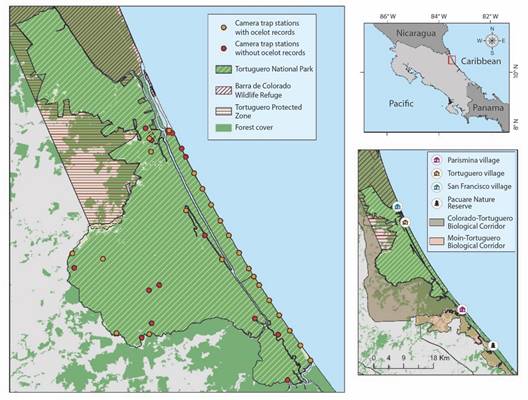
Fig. 1 Camera trap locations across the study site of Tortuguero National Park, Costa Rica, between 2011 and 2022.
Data collection: Ocelot presence was recorded at camera trap stations from January 2011 to November 2022. Each station consisted of a digital camera trap (Bushnell and Moultrie models) set to take photos (three successive photos per trigger event with 3 s delay between triggers) or videos (20 s video per trigger event with 10 s delay between triggers) and placed in areas where ocelot detection probability is considered to be high (e.g. trails). A total of 43 camera trap stations were continuously active for three months to 10 years, with seven located at the Tortuguero village boundary, nine in the forest interior, 10 near canals, and 17 in the coastal habitat (Fig. 1). The date, time and geographic coordinates were recorded for each photo/video.
Data analysis: Individual ocelots were identified from their unique spot pattern by cross-referencing the images and videos with an existing photographic database created by Coastal Jaguar Conservation from the research conducted in Barra del Colorado Wildlife Refuge (2014), Pacuare Nature Reserve (2015-2016), and Tortuguero National Park (2011-2022).
Each identifiable individual was classified as male or female based on the presence or absence of testicles. To estimate the ocelot minimum age, it was assumed that all adult individuals recorded were at least a year and a half old when first detected, as kittens usually spend the first 12-18 months of life with their mother (Hunter, 2015; Laack et al., 2005).
The sex ratio was expressed as the number of males per female (male : female; Pérez-Irineo & Santos-Moreno, 2014). A Chi-square test was performed to determine if the ratios differed significantly from a 1:1 ratio. Additionally, all individuals were categorised as either ‘resident’ or ‘transient’ according to Harmsen et al. (2017), where a resident is an individual who has been detected in the study area for at least three consecutive years, whereas a transient has been detected for less than two years.
Daily activity pattern was estimated using the kernel density estimation method, with the von Mises distribution for circular data (Ridout & Linkie, 2009) and following the recommendations of Peral et al. (2022). All statistics were performed using the package “Activity” (Rowcliffe, 2023) in R version 4.4.1 (R Core Team, 2024), following the R-Code developed by Andrade-Ponce et al. (2022). Additional information was obtained through the camera trap records (photos or videos) when possible (e.g. health condition, scent-marking behaviour).
Results
After a total of 38 151 camera trap nights, we were able to identify 30 adult ocelots (12 females and 18 males) across 25 camera trap stations including two at Tortuguero village boundary, four in the forest interior, five near canals, and 14 in the coastal habitat (Table 1, Fig. 1). Although we did not record the presence of cubs, we observed four females (two resident and two transient individuals) showing signs of pregnancy or having recently given birth (e.g. saggy belly; Table 2). The minimum age of the ocelots recorded by the end of the study varied from 3 years old up to the oldest individual recorded, F02, estimated to be at least 14 years of age (Table 2).
Table 1 Ocelot Leopardus pardalis monitoring sampling effort conducted in Tortuguero National Park, Costa Rica, between 2011 and 2022.
| Sector | Camera trap stations | Camera trap days | Camera trap images | Individuals recorded* | Females recorded | Males recorded |
| Tortuguero village boundary | 7 | 2 046 | 7 (3) | 2 | 0 | 2 |
| Forest interior | 9 | 1 764 | 58 (25) | 5 | 2 | 3 |
| Canals | 10 | 2 086 | 16 (9) | 4 | 2 | 2 |
| Coastal habitat | 17 | 32 255 | 657 (367) | 19 | 8 | 11 |
| Total | 43 | 38 151 | 738 (404) | 30 | 12 | 18 |
*All individuals were classified as adults. In brackets: number of images used for individual identification.
Table 2 Ocelot Leopardus pardalis individuals identified from camera trap stations in Tortuguero National Park, Costa Rica, between 2011 and 2022.
| Individual | 2011 | 2012 | 2013 | 2014 | 2015 | 2016 | 2017 | 2018 | 2019 | 2020 | 2021 | 2022 | Number of Years Recorded | Estimated Minimum Age |
| M01 | 5 | 7 | ||||||||||||
| F02 | PRGN | PRGN | PRGN, SMB | PRGN | PRGN | 12 | 14 | |||||||
| M03 | 1 | 3 | ||||||||||||
| M04 | 2 | 4 | ||||||||||||
| F05 | 1 | 3 | ||||||||||||
| M06 | 2 | 4 | ||||||||||||
| M07 | 2 | 4 | ||||||||||||
| M08 CONNT | 1 | 3 | ||||||||||||
| M09 | 1 | 3 | ||||||||||||
| F10 | 1 | 3 | ||||||||||||
| F11 | PRGN | 1 | 3 | |||||||||||
| F12 | 1 | 3 | ||||||||||||
| F13 | 1 | 3 | ||||||||||||
| M14 | 1 | 3 | ||||||||||||
| M15 | SMB | SMB | 5 | 7 | ||||||||||
| F16 | PRGN | PRGN | 5 | 7 | ||||||||||
| M17 | 1 | 3 | ||||||||||||
| M18 | 2 | 4 | ||||||||||||
| M19 | SMB | SMB, BLIND | 4 | 6 | ||||||||||
| M20 | 1 | 3 | ||||||||||||
| M21 | SMB | 4 | 6 | |||||||||||
| F22 | 1 | 3 | ||||||||||||
| F23 | 3 | 5 | ||||||||||||
| F24 | PRGN | 1 | 3 | |||||||||||
| F25 | 1 | 3 | ||||||||||||
| M26 | 1 | 3 | ||||||||||||
| M27 | 1 | 3 | ||||||||||||
| M28 | 1 | 3 | ||||||||||||
| F29 | 1 | 3 | ||||||||||||
| M30 | 1 | 3 |
M: male. F: female. SMB: scent-marking behaviour. PRGN: female with signs of pregnancy or recently given birth (e.g. saggy belly). CONNT: individual recorded in Pacuare Nature Reserve in July 2015 (Arroyo-Arce et al. 2017). BLIND: eyeshine only from the right eye as from June 6, 2022. Dark grey bars are resident individuals (recorded for ≥ 3 consecutive years). Light grey bars are transient individuals (recorded for ≤ 3 consecutive years).
The sex ratio was 1:0.7, which is not significantly different from 1:1 (c2 = 1.2; d.f. = 1; p = 0.2733). Seven of the individuals were residents (three females and four males) and 23 transients (nine females and 14 males; Table 2). Our data indicated a stable trend of resident ocelots throughout the study period, with varying numbers of transient individuals. The year with the highest record of individuals was 2020 with 11 individuals (six residents and five transients) followed by 2013 with 10 individuals (two residents and eight transients; Fig. 2). It is important to highlight that one transient male, M08, was first detected in Tortuguero National Park in November 2012, and on a later date, July 2015, was identified at Pacuare Nature Reserve, approximately 41 km South of Tortuguero National Park (Fig. 1). After this date, this individual was not recorded again in our study.
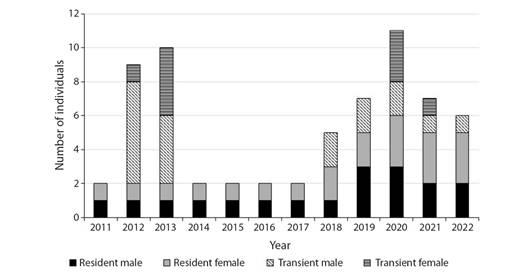
Fig. 2 The number of ocelot Leopardus pardalis individuals identified from camera trap stations in Tortuguero National Park, Costa Rica, between 2011 and 2022.
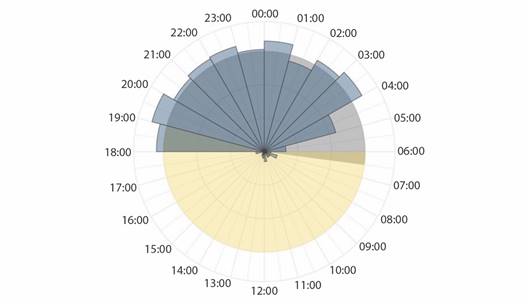
The ocelots within the study showed a predominantly nocturnal activity pattern (Fig. 3). All individuals appeared in good physical condition with one exception, M19, a male resident who was recorded from 2019 to 2022. On June 6, 2022, he was observed with eyeshine only from his right eye (Table 2). Scent-marking behaviour was exhibited exclusively by resident individuals and was recorded seven times during the study; defecation by F02, urine spraying by M15 and M21, and the spraying of glandular secretions by M19 on four different occasions in the same location (Table 2). All scent-marking behaviour occurred within the coastal habitat along a human-made trail parallel to the beach.
Discussion
The local ocelot population includes both resident and transient individuals. It is important to note that these terms, as described by Harmsen et al. (2017), apply within our specific sampling area. Therefore, some individuals we identify as transient might be residents outside our sampling area. It is also possible that residents have a larger territory than the area covered by our study (Harmsen et al., 2017). To gain a better understanding of the local ocelot population, future studies should focus on the species’ spatial ecology, particularly its territorial behaviour and habitat use in relation to its home range.
We were able to estimate the minimum age of the individuals, one of whom was at least 14 years old, representing one of the oldest recorded ocelots in the wild worldwide. Ocelots can live up to 20 years in captivity (Carolina Tiger Rescue, 2024; Wilson & Mittermeier, 2009) with some extraordinary cases of up to 28 years (Weigl, 2005). Although long-term studies on ocelot populations are rare, it has been estimated that longevity in the wild is likely between seven to 10 years (Laack, 1991; Wilson & Mittermeier, 2009), with some authors recording ocelots living 10 years (Lombardi et al., 2022), and 14 years (Muskat, 2024) in North America.
The sex ratio of ocelots observed in our study is consistent with expectations for the species and aligns with findings from other studies across the species’ geographic range (Laack et al., 2005; Pérez-Irineo & Santos-Moreno, 2014). However, some studies have reported skewed sex ratios (Di Bitetti et al., 2006; Maffei et al., 2005; Magalhães & Srbek-Araujo, 2022; Satter et al., 2018, Sternberg et al., 2023). These variations are possible as sex ratios can be influenced by factors such as social organisation (e.g. solitary species, home range sizes varying with sex), habitat characteristics (e.g. dry versus wet season), and population change (births, deaths, in-migration, and emigration) which may vary across space and time (Di Bitetti et al., 2006; Kappeler, 2017; Maffei et al., 2005; Magalhães & Srbek-Araujo, 2022; Pérez-Irineo & Santos-Moreno, 2014). It is important to also consider the sampling design used in each study, as this can impact the observed sex ratio (Magalhães & Srbek-Araujo, 2022). For example, males are more likely to use trails compared to females (Satter et al., 2018), influencing detection rates when camera traps are positioned mainly on trails.
The ocelot M08 covered approximately 41 km, comparable to distances recorded in literature (Booth-Binczik, 2007; Crawshaw, 1995; Jacob, 2002). Although it is unknown which route the ocelot traversed, it is possible the individual used the Colorado-Tortuguero Biological Corridor and the Moín-Tortuguero Biological Corridor, which connects Tortuguero National Park and Pacuare Nature Reserve through fragmented landscape using the remaining forest patches along the Caribbean coast (Acevedo, 2013). This is the first evidence of wildlife movement between Tortuguero National Park and Pacuare Nature Reserve, highlighting the significance of wildlife corridors for the long-term conservation of the species (Arroyo-Arce et al., 2017).
The ocelot’s nocturnal habits found in the study mirror those observed in similar areas along the Caribbean coast of Costa Rica, including the Barra del Colorado Wildlife Refuge (Arroyo-Arce et al., 2016) and Pacuare Nature Reserve (Arroyo-Arce et al., 2017). This is consistent with previous descriptions of the species (Wilson & Mittermeier, 2009), likely co-ordinating with the activity patterns of its main prey, small and medium-sized mammals (Ludlow & Sunquist, 1987; Moreno et al., 2006). It also serves as a strategy to avoid interspecific competition and predation by the predominantly crepuscular, larger cat species, such as jaguars and pumas (Gómez et al., 2005; Maffei et al., 2005), both of which are found in Tortuguero National Park (Arroyo-Arce & Salom-Pérez, 2014; Arroyo-Arce & Thomson, 2023).
Scent marking is a prevalent behaviour among wild cats (Mellen, 1993), yet it poses challenges in terms of documentation, particularly for cryptic species such as the ocelot (King et al., 2017; Moreno & Giacalone, 2006; Rodgers et al., 2014). Despite these challenges, our camera traps captured seven instances of scent marking, including the deposition of faeces and urine marking. As noted by previous researchers, scent marking serves as an olfactory mechanism for both intra- and interspecific communication, conveying information about an individual’s sex, reproductive status, territory, and movement patterns (King et al., 2017; Mellen, 1993; Moreno & Giacalone, 2006).
The ocelot population exhibited signs of reproduction, with females showing signs of pregnancy, despite the absence of observed offspring or young individuals. The overall health of the individuals appeared to be robust, as no external signs of sickness or injury were evident, except for one ocelot, identified as M19, which displayed eyeshine from only one eye, possibly indicative of damage to the tapetum lucidum. This could have been caused by various factors, such as an injury from a prey animal defending itself (Kays, 2016). Although no mortalities were documented during the study, it is imperative for future research to investigate the threats faced by ocelots, not only in Tortuguero National Park, but also in the Tortuguero Conservation Area. Potential threats include conflict with local communities (e.g. ocelot predation on domestic animals), illegal wildlife trade, road mortality (ocelots are the most frequently road-killed wild cat in Costa Rica), and habitat fragmentation (Corrales-Gutiérrez, 2016; Kelly, 2018; Salom-Pérez et al., 2022). Understanding these threats is crucial for making informed management decisions, necessary for the long-term survival of the species at both local and regional levels.
Our research is, to our knowledge, the only study of its kind conducted in Tortuguero National Park and represents the longest monitoring effort for ocelots in Costa Rica. It is also among the longest studies of ocelots in the Americas (Haines et al., 2006; Satter et al., 2018; Veals et al., 2022). Consequently, our findings provide critical insights into the ecology of this species. Additionally, our study raises important questions regarding various population demographic parameters of ocelots, such as abundance, density, and survival rate. Addressing these questions will enhance our understanding of ocelots at both local and regional levels. Finally, our study emphasises the significance of long-term monitoring projects in achieving a deeper, more robust understanding of the ocelot and the conditions necessary for the species to thrive.
Ethical statement: The authors declare that they all agree with this publication and made significant contributions; that there is no conflict of interest of any kind; and that we followed all pertinent ethical and legal procedures and requirements. All financial sources are fully and clearly stated in the acknowledgments section. A signed document has been filed in the journal archives.

