




 Inglês (pdf)
 Artigo em XML
 Referências do artigo

 Tradução automática
 Enviar este artigo por email
 Citado por SciELO
 Similares em
SciELO
 uBio

 Permalink


Introducción
Mexico has a large diversity of mammals. There are more than 500 identified species; many of them are in danger of extinction due to habitat loss and ecological fragmentation (Hernández-Betancourt et al., 2010; Sánchez-Cordero et al., 2014). According to their body size, they are classified as small (less than 100 g), medium (101 g to 10 kg), and large (greater than 10 kg) (Ceballos et al., 2005). Oaxaca is the state in Mexico with the largest diversity of terrestrial mammals, with 216 species, of which 155 are small, 50 are medium, and 11 are large (Briones-Salas et al., 2015).
Medium and large mammals are important as seed dispersers, pollinators, predators, and prey (Bolaños & Naranjo, 2001; Lavariega et al., 2012). They influence the composition and structure of plant and animal communities (Bell et al., 2021). These changes can result in the modification of habitats and affect the availability of resources and biological diversity (Bell et al., 2021; Cortés-Marcial & Briones-Salas, 2014). It has been suggested that medium and large mammals have different degrees of sensitivity to ecological disturbance, depending on their requirements of space, food, and behavior (Torres et al., 2003). Despite their ecological importance, medium and large mammals are being threatened by the pressure from various anthropogenic activities such as agriculture; then, knowledge of habitat characteristics that determine their distribution and abundance is crucial for the management and conservation of biodiversity (Lavariega et al., 2012; Mezhua-Velázquez et al., 2022).
Given the loss and fragmentation of the habitat, the restricted knowledge about medium and large mammals (Altamirano-Álvarez et al., 2009; Álvarez-Cárdenas et al., 2009; Ríos-Solís et al. 2021), and the change in the conventional agricultural model, it has been suggested that one of the agricultural models designed to be sustainable is the agroecosystem (Landa-Ochoa et al., 2024). It is defined as an ecosystem deliberately modified by humans to obtain goods and services, mainly for economic purposes (Paleologos et al., 2017). This concept implies that dynamic relationships are established between human populations and their physical-biological environment, which highlights the interaction between the biotic and abiotic elements that compose it. In addition, the importance of understanding how these modifications affect both agricultural production and the sustainability of the ecosystem as a whole is emphasized (Blanco & Leyva, 2007; Landa-Ochoa et al., 2024; Machado & Campos, 2008; Sans, 2007).
Various agroecosystems form a smooth transition between natural ecosystems and disturbed areas (López-Barrera & Landgrave, 2008). Their management designs are based on an approach linked to the environment that is more socially sensitive and focused not only on production but also on ecological stability (Paleologos et al., 2017). In these cases, biodiversity plays an important role in its maintenance by providing ecosystem services, defined as the benefits people obtain from ecosystems since they are essential for human well-being (Avendaño-Leadem et al., 2020). These systems contribute to nutrient recycling, to the control of local microclimate, and to the regulation of hydrological processes, among others (López-Barrera & Landgrave, 2008). For example, the shaded coffee agroecosystems associated with rainforests have a wide variety of native trees that have contributed to mitigating the loss of these services (Ruelas-Monjardín et al., 2014). For these reasons, they are important at a national and international level, since in many cases they have replaced ecosystems and have been capable of maintaining part of the original biodiversity (García-Burgos et al., 2014).
Coffee-producing countries are in regions that are considered biodiversity hotspots, which are regions of the world that host an exceptional number of endemic species and ecosystems; however, they are experiencing significant habitat loss, making them particularly vulnerable to extinction (Lessler et al., 2017; Perfecto et al., 2019). In the context of coffee-producing countries, many of these regions are in tropical and subtropical areas, where coffee production has led to drastic changes in land use (Coltri et al., 2019; Navidad-Murriera et al., 2023). However, coffee production faces significant challenges, as intensive agricultural practices can lead to deforestation and habitat loss, putting local biodiversity at risk (Escobar-Ibáñez et al., 2023; Sinu et al., 2021). Therefore, it is essential to promote sustainable cultivation techniques that integrate biodiversity conservation with agricultural production, thus ensuring the economic and ecological viability of these regions (Perfecto et al., 2019; Otero-Jiménez et al., 2020). Shade coffee agroecosystems in rainforests have contributed to mitigating the loss of ecosystem services and can also be of great importance as habitat, refuge area, food for various groups of animals, and the conservation of biodiversity, because they have a tree canopy that is usually more complex and diverse, with different heights and strata, which provides denser and more heterogeneous shade (Calderón-Patrón, 2016; García-Luis et al., 2013).
Oaxaca is one of the main coffee-producing areas; it ranks fourth nationally, with 135 000 ha cultivated in marginalized indigenous regions (García-Domínguez et al., 2021). Coffee represents an important economy for its inhabitants (among whom a high indigenous presence stands out). Coffee plantations are grown in seven of the eight regions of the state that make up the territory, where 17 coffee-producing municipalities are located (Girón-Ilescas, 2023). However, according to the literature, San Gabriel Mixtepec, is not registered among the coffee-producing municipalities despite receiving support from the government Programa para el Bienestar 2023, in coffee production (Secretaría de Agricultura y Desarrollo Rural, 2023). Approximately 100 000 families are dedicated to growing coffee. This represents almost half a million Oaxacans out of the 4 132 148 total state population (Figueroa et al., 2020). In addition, coffee plantations represent important corridors between the jungles of the lowlands and the coniferous and oak forests of the highlands of the Northern and Southern Sierras of the state (Anta, 2006).
The mammals associated with coffee plantations have great cultural importance, since these species are not only part of the state’s biodiversity, but are also deeply integrated into the traditions, beliefs, and practices of local communities. Species such as the white-tailed deer and the coyote, are valued not only for their ecological role but also for their relevance in the mythology and popular culture of the region. For example, the coyote is seen as a symbol of cunning and adaptability, while the deer is considered a sacred animal in many indigenous communities (Corona-Mendoza & Escalante, 2021; García-Grajales et al., 2022). However, studies on terrestrial mammals in the state of Oaxaca have focused on the analysis of their distribution, mammalian lists, and expansion of distribution areas (Briones-Salas, 2012; Cervantes & Yépez, 1995; López et al., 2009; Santos-Moreno & Ruiz-Velásquez, 2011). Some authors have reported exclusively on medium and large mammals (Cruz-Espinoza et al., 2012; Cruz-Jácome et al., 2015; Lira-Torres & Briones-Salas, 2012). In the case of the study area, works carried out near San Gabriel Mixtepec have also focused on mammals of all sizes (Briones-Salas et al., 2016; Buenrostro-Silva et al., 2012; Buenrostro-Silva et al., 2015; Lira-Torres et al., 2005; Lira-Torres, 2006; Lira-Torres et al., 2008), while works on medium and large mammals have been recent (Hernández-Hernández, 2002; Juárez-Velasco, 2016; Sigüenza-Pérez, 2014). Works focused on the mastofauna associated with coffee agroecosystems are not too many (Palacios-Romo et al., 2012; Pinacho López, 2014) and studies focused on the cultural value of mammals associated with the coffee plantation in Oaxaca are relatively recent (Lavariega et al., 2012; Palacios-Romo et al., 2012; Ruiz-Velásquez, 2019).
From this perspective, and considering that shaded coffee agroecosystems preserve a composition, structure, and diversity that resembles the original ecosystems, these agroecosystems function as habitats for medium and large-sized mammals. These are essential to maintain the balance of the ecosystem and are appreciated by local communities due to their various uses. Therefore, this study aimed to evaluate whether shade-grown coffee agroecosystems support a high diversity of medium and large mammals and to analyze the cultural value they have for the inhabitants of San Gabriel Mixtepec, in Southern Oaxaca.
Materials and methods
Study area: The municipality of San Gabriel Mixtepec has an altitude that varies from 550 to 1 360 meters above sea level. It is limited to the North by the municipalities of San Juan Lachao and San Jerónimo Coatlán; to the South by San Pedro Mixtepec and Santa María Colotepec; to the East by San Sebastián Coatlán and the West by Santos Reyes Nopala (Díaz-Olivera, 2013). It is located between the coordinates 15°50’ to 15°13’ N & 96°10’ to 97°15’ W (Fig. 1). The predominant climate is warm sub-humid with rains in summer and with an average relative humidity of 77.6 %; it has an average annual temperature range of 20 to 28 °C and mean annual precipitation of 1 000 to 2 500 mm (Cruz, 2013; Pinacho-López, 2014). The municipality has a vegetation of Oak Forest, Pine-Oak Forest, Mountain Cloud Forest with Secondary Vegetation and Rainfed Agriculture, Induced Grassland, and Medium Sub-evergreen Forest with Secondary Vegetation (Instituto Nacional de Estadística y Geografía (INEGI), 2021).
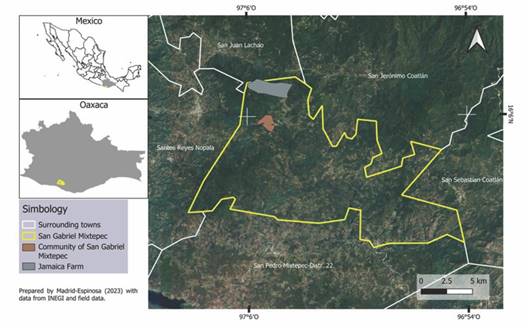
Fig. 1 Location map of the municipality of San Gabriel Mixtepec. Prepared by the authors with data from INEGI and field data.
Methodology: The work was carried out from August 2022 to April 2023, in three stages: 1) The first was to determine diversity and evaluate differences in species composition between two times of the year (dry and wet season). A sampling of medium and large mammals associated with the coffee agroecosystem located in the Jamaica farm was carried out; this is an area characterized by a shade coffee plantation associated with a medium sub-deciduous forest in the extension of approximately 500 hectares; 2) In the second stage, the cultural value of medium and large mammals associated with coffee plantations given to them by the residents of San Gabriel Mixtepec was investigated through semi-structured interviews in which questions were asked such as personal data, perceptions of changes in vegetation and fauna of the community, different uses of mammals, among other questions; and 3) In the third stage, three participatory workshops were held for coffee growers and high school students to learn their perspective on medium and large mammals and the uses that they are given.
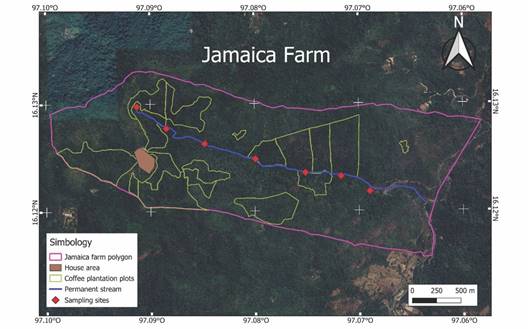
Sampling of medium and large mammals: Sampling was carried out with seven camera traps (Bushnell, model 119467C) for the detection of medium and large mammal species in coffee agroecosystems of the Finca Jamaica, that belongs to Mr. Guillermo Rojas Saldaña; the farm is located at coordinates 16°07’ to 16°08’ N & 97°65’ to 97°03’ W (Fig. 2). To cover the dry and wet seasons of the year, this work was carried out from August 2022 to April 2023. A linear transect was used; first, the study site was georeferenced, and the points for placing the camera traps were also georeferenced. For this, the location of the permanent stream, located in the middle part of the farm polygon, was taken as a linear reference. Seven digital wildlife cameras were used, with 8-megapixel images configured for three photographs per event, and one minute between each event, programmed with the highest sensitivity. In this case, no attractants were used to avoid bias in the results and minimize habitat disturbance. The photo traps were placed among the vegetation, taking the previously georeferenced points as a reference; they were attached to the trunk of a tree at an average height of 50 cm. The sampling sites had distances from each other of 350 to 550 linear meters according to the topographic condition of the area. The cameras remained active 24 hours a day for 188 days of sampling. They were reviewed approximately every 15 days, to verify their correct operation and to extract the captured images. Subsequently, data on dates, times, and sampling sites were taken for species identification.
Species diversity: The sample was analyzed by constructing a species accumulation curve, according to the Mao Tao estimator (Collwell, et al., 2004; Moreno & Halffter, 2000); sampling was randomized 100 times, and the accumulation curve was compared with that obtained with the Clench model (Moreno, 2001). Subsequently, species richness was calculated with the first-order non-parametric estimators Chao 2 and Jacknife, based on incidence (Guido-Lemus, 2015). Alpha diversity was calculated using the Shannon-Wienner index (H’). To avoid underestimation, the Pielou equity was calculated (J’;Moreno, 2001). To determine the difference between species diversity in the dry and wet seasons of the year, Hutchenson t test was used (Zar, 2010). Species turnover between the dry and wet seasons was calculated using the Whitaker index (Moreno, 2001). The similarity of medium and large mammal species numbers between the dry and wet seasons of the year was calculated with the qualitative similarity indices of Jaccard and Sørensen (Moreno, 2001). Past (Hammer et al., 2001), R Core Team (v. 4.3.1, 2022), and Species Diversity & Richness III (v. 3.0.2) software were used.
Cultural value: The Cultural Importance Index (IIC; Ávila-Nájera et al., 2011) is used to assess and measure the value of different cultural elements within a society. This index can include topics such as traditions, customs, tangible and intangible heritage, and the cultural diversity of a community. The index aims to provide a framework for understanding how these elements contribute to the social and economic development of a region. In these cases, semi-structured interviews were carried out with the staff of the Jamaica farm and residents of the municipality of San Gabriel Mixtepec. Formula:
Cultural Importance Index (IICz) = Σ (Iuz + Fmz + Vutz) / 300
Where: Luz = usage intensity, Fmz = frequency of mentions, Vuz = usage value.
A description of each of these sub-indexes is given by Ávila-Nájera et al. (2011).
To obtain the sample size, a simple random sampling without replacement was applied, based on Thompson’s formula (1992), to the population size estimated from the 2020 Population and Housing Census (INEGI, 2021), with a confidence level of 95 %. and a margin of error of 6 %. Formula:
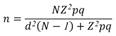
Where: n = sample size, N = Population size, p = expected proportion (5 % = 0.05), q = 1-p, Z = confidence value (1.96 at 95 % confidence), d = tolerable error margin (6 % = 0.06).
Participatory workshops: Three participatory workshops were held. One was carried out with coffee growers from San Gabriel Mixtepec. In this, the presentation of the catalog of potential species, for their visual identification, was used. Two other workshops were applied to young people at the high school level. In these, the dynamic consisted of exposing the catalog to one of the groups but not to the other; this was done to evaluate the knowledge, interest, and perspective that young people have. With the information provided in the participatory workshops, their knowledge, and perspective on medium and large mammals associated with coffee plantations were determined; also, the uses that the participants mentioned for each species they identified and recognized through the illustrative catalog were listed.
Results
Nine hundred and eighteen records of medium and large mammals belonging to 26 species, grouped into seven orders, 14 families, and 23 genera were obtained using the three methods. Of the 26 species recorded, 10 were detected from samplings with the camera traps on the Finca Jamaica farm, 25 were from the semi-structured interviews and 24 were mentioned in the participatory workshops (Table 1).
Table 1 List of species by taxa according to the proposal of Ramírez-Pulido et al., (2014), common name and number of medium and large mammals recorded by sampling on the Jamaica farm (F), Workshops (T), and Interviews (E).
| # Species | TAXA | Common name | Registration method | |||
| ORDER DIDELPHIMORPHIA | ||||||
| FAMILY DIDELPHIDAE | ||||||
| SUBFAMILY DIDELPHINAE | ||||||
| 1 | Didelphis marsupialis Linnaeus, 1758 | Opossum/Opossum | F | T | ||
| 2 | Didelphis virginiana Kerr, 1792 | Tlacuache | F | T | E | |
| CINGULATE ORDER | ||||||
| FAMILY DASYPODIDAE | ||||||
| SUBFAMILY DASYPODINAE | ||||||
| 3 | Dasypus novemcinctus Linnaeus, 1758 | Armadillo | F | T | E | |
| PILOUS ORDER | ||||||
| FAMILY MYRMECOPHAGIDAE | ||||||
| 4 | Tamandua mexicana (Saussure, 1860) | Honeysucker/ Miereneters | F | T | E | |
| FAMILY CYCLOPEDIDAE | ||||||
| 5 | Cyclopes didactylus (Linnaeus, 1758) | Marto | T | E | ||
| ORDER LAGOMORPHA | ||||||
| FAMILY LEPORIDAE | ||||||
| SUBFAMILY LEPORINAE | ||||||
| 6 | Lepus flavigularis J. A. Wagner, 1844 | Hare/Mountain rabbit | T | E | ||
| 7 | Sylvilagus cunicularius (Waterhouse, 1848) | Rabbit | T | E | ||
| RODENTIAN ORDER | ||||||
| 8 | sspp | Gopher | T | E | ||
| FAMILY SCIURIDAE | ||||||
| SUBFAMILY SCIURINAE | ||||||
| 9 | Sciurus aureogaster F. Cuvier, 1829 | Squirrel | F | T | E | |
| 10 | Sciurus deppei Peters, 1863 | Daughter/Squirrel | T | E | ||
| FAMILY ERETHIZONTIDAE | ||||||
| 11 | Coendou mexicanus Kerr, 1792 | Porcupine | T | E | ||
| CARNIVORA ORDER | ||||||
| FAMILY FELIDAE | ||||||
| SUBFAMILY FELINAE | ||||||
| 12 | Leopardus pardalis (Linnaeus, 1758) | Ocelot | F | T | E | |
| 13 | Leopardus wiedii (Schinz, 1821) | Margay | T | E | ||
| 14 | Puma concolor (Linnaeus, 1771) | Cougar | F | T | E | |
| 15 | Herpailurus yagouaroundi (Lacépède, 1809) | Panther/Ounce | T | E | ||
| SUBFAMILY PANTHERINAE | ||||||
| 16 | Panthera onca (Linnaeus, 1758) | Jaguar/Panther | T | |||
| CANIDAE FAMILY | ||||||
| 17 | Canis latrans Say, 1823 | Coyote | T | E | ||
| 18 | Urocyon cinereoargenteus (Schreber, 1775) | Costoche/Slut | T | E | ||
| FAMILY MUSTELIDAE | ||||||
| SUBFAMILY MUSTELINAE | ||||||
| 19 | Eira barbara (Linnaeus, 1758) | Water dog | T | E | ||
| 20 | Mustela frenata Lichtenstein, 1831 | Xiquimilla/Jiquimilla/Weasel | T | E | ||
| FAMILY MEPHITIDAE | ||||||
| 21 | Conepatus leuconotus (Lichtenstein, 1832) | Skunk | T | E | ||
| FAMILY PROCYONIDAE | ||||||
| SUBFAMILY PROCYONINAE | ||||||
| 22 | Bassariscus astutus (Lichtenstein, 1830) | Cacomixtle | E | |||
| 23 | Nasua narica (Linnaeus, 1766) | Badger | F | T | E | |
| 24 | Procyon lotor (Linnaeus, 1758) | Raccoon | T | E | ||
| ARTIODACTYLA ORDER | ||||||
| FAMILY TAYASSUIDAE | ||||||
| 25 | Dicotyles tajacu (Linnaeus, 1758) | Wild boar/Javelin | F | T | E | |
| FAMILY CERVIDAE | ||||||
| SUBFAMILY ODOCOILEINAE | ||||||
| 26 | Odocoileus virginianus (Zimmermann, 1780) | Deer | F | T | E | |
| Total species by record type | 10 | 24 | 25 | |||
Sampling of medium and large mammals: Two hundred and seventy-six effective records (independent records) of medium and large mammals were obtained, with 188 days of sampling effort from the camera traps. The records belong to 10 species grouped into six orders, six families, and nine genera. The species accumulation curve obtained during the 188 field samplings was fitted to the Clench model with parameters a = 0.260, b = 0.022, and rho = 0.941. In this model, the “a” value (0.260) indicates that, by increasing the sampling effort, approximately 26 % of possible species in the area are expected to be identified, suggesting that there are still many species to be discovered, but sampling is approaching its limit. The “b” value (0.022) indicates that, even if sampling continues, the probability of finding new species is low. The rho value (0.941) indicates good model fitting. This means that the accumulating species curve is a good representation of mammal diversity in the study area. Such a high value supports the idea that the results on species diversity are reliable, and this can be concluded since the accumulation curve did not reach an asymptote. The model predicted 12 species (Fig. 3). The number of species recorded is lower than that obtained with the non-parametric estimators (Chao 2 = 11.48; Jacknife 1 = 12.96). In this case, a Chao value of 2 suggests an average of 11 species of medium and large mammals associated with coffee plantations. A Jacknife value of 1 suggests that 3 species are estimated. Although a single record may not adequately reflect species diversity, the Chao 2 and Jackknife 1 estimators are designed to compensate precisely for this limitation. These estimators use information from existing records, including singletons, to make projections about the total species richness in the area; therefore, although the degree of sample coverage is important and can influence the interpretation of the results, the non-parametric estimators already consider the possibility that there are unrecorded species. Thus, the estimation of 11 to 13 species remains valid and relevant, regardless of the number of individual records. The alpha diversity of medium and large mammal species was greater in the dry season (H’ = 1.6851, J’ = 0.734) than in the wet season (H’ = 1.3407, J’ = 0.961), but the differences were not significant (t = 1.8482, d.f. = 81.426, p = 0.068). The species turnover between the dry and wet seasons of the year was low (βw = 0.333), while the similarity was intermediate (I J = 0.5; I S = 0.666) (Table 2).
Table 2 Species of medium and large mammals for the wet and dry season of the year, at Finca Jamaica, San Gabriel Mixtepec.
| Species | Common name | Epoch | Total records | ||
| Wet | Dry | ||||
| Dasypus novemcinctus | Armadillo | 8 | 30 | 38 | |
| Dicotyles tajacu | Wild boar/boar | 2 | 8 | 10 | |
| Didelphis marsupialis | Opossum | 1 | 1 | ||
| Didelphis virginiana | Tlacuache | 10 | 12 | 22 | |
| Leopardus pardalis | Ocelot | 1 | 1 | 2 | |
| Nasua narica | Badger | 4 | 4 | ||
| Odocoileus virginianus | Deer | 2 | 1 | 3 | |
| Puma concolor | Cougar | 1 | 1 | ||
| Sciurus aureogaster | Squirrel | 10 | 10 | ||
| Tamandua mexicana | Honeysucker/Aardvark | 1 | 1 | ||
| Total records | 35 | 57 | 92 | ||
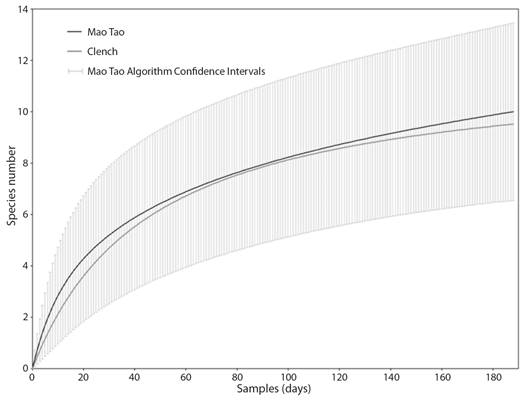
Fig. 3 Accumulation curve of medium and large mammal species, according to the Mao Tao estimator and its confidence intervals, and the Clench model at Jamaica Farm, San Gabriel Mixtepec.
Cultural value: A total of 68 semi-structured interviews were carried out with the owners and workers of Finca Jamaica (n = 7) and the residents of San Gabriel Mixtepec (n = 61), from which 639 records of 24 species were obtained, grouped into seven orders, in 14 families and 21 genera. Twelve uses given to medium and large mammals were recorded: food, pet, medicinal, ornamental, artisanal, hunting, myths and legends, ritual, beneficial, harmful, sale, and perfumery (Table 3). The deer is the species with the highest Cultural Importance Index (IIC = 0.92), followed by the armadillo (IIC = 0.61), the skunk (IIC = 0.60), and the opossum (IIC = 0.52). These indices reflect the relevance that those species have in the local community, both in terms of use and cultural significance. Their high score in the IIC indicates that they are species valued and recognized for their contribution to the local culture and economy, as well as for their importance in the ecosystems where they live. This is confirmed by the high number of uses reported. The species with the highest number of uses are the opossum and the deer with 11 uses out of 12 reported, followed by the armadillo, with 10 uses, the rabbit with nine, and the squirrel, the skunk, and the wild boar, with eight uses.
Table 3 Species of medium and large mammals recorded from interviews in San Gabriel Mixtepec.
| Species | Common name | Total mentions of the species | Applications | Types of uses | IIC |
| Didelphis virginiana | Opposum | 45 | 11 | Al, Ma, Me, Or, Ar, Ca, ML, Ri, Be, Da, Ve | 0.52 |
| Dasypus novemcinctus | Armadillo | 101 | 10 | Al, Ma, Me, Or, Ar, Ca, ML, Be, Da, Ve | 0.61 |
| Tamandua mexicana | Honeysucker/ Miereneters | 13 | 5 | Al, Ma, Or, ML, Da | 0.11 |
| Cyclopes didactylus | Marto | 3 | 3 | Al, Or, ML | 0.03 |
| Lepus flavigularis | Hare/Mountain rabbit | 9 | 3 | Al, Ma, Or | 0.04 |
| Sylvilagus cunicularius | Rabbit | 57 | 9 | Al, Ma, Or, Ar, Ca, ML, Be, Da, Ve | 0.39 |
| sspp | Gopher | 4 | 1 | Da | 0.02 |
| Sciurus aureogaster | Squirrel | 82 | 8 | Al, Ma, Me, Or, Ar, Ca, Be, Da | 0.37 |
| Sciurus deppei | Daughter/Squirrel | 14 | 4 | Al, Ma, Or, Da | 0.06 |
| Coendou mexicanus | Porcupine | 5 | 4 | Al, Ma, Me, Da | 0.04 |
| Leopardus pardalis | Ocelot | 6 | 5 | Ma,Or, Ca, ML, Da | 0.07 |
| Leopardus wiedii | Margay | 16 | 6 | Ma, Or, Ar, Ca, ML, Da | 0.16 |
| Puma concolor | Cougar | 4 | 4 | Al, Ma, Or, ML | 0.04 |
| Herpailurus yagouaroundi | Ounce | 3 | 2 | Or, Be | 0.03 |
| Canis latrans | Coyote | 1 | 1 | Or | 0.01 |
| Urocyon cinereoargenteus | Costoche/Slut | 15 | 4 | Al, Ma, Ar, Da | 0.09 |
| Eira barbara | Water dog | 2 | 2 | Al, Or | 0.01 |
| Mustela frenata | Xiquimilla/Jiquimilla/Weasel | 4 | 2 | Al, Da | 0.02 |
| Conepatus leuconotus | Skunk | 31 | 8 | Al, Ma, Me, Or, ML, Be, Da, Pe | 0.60 |
| Bassariscus astutus | Cacomixtle | 2 | 2 | Al, Or | 0.01 |
| Nasua narica | Badger | 51 | 6 | Al, Ma, Or, Ri, Be, Da | 0.26 |
| Procyon lotor | Raccoon | 3 | 3 | Al, Ma, Ar | 0.02 |
| Dicotyles tajacu | Wild boar/Javelin | 50 | 8 | Al, Ma, Or, Ar, Ca, Be, Da, Ve | 0.22 |
| Odocoileus virginianus | Deer | 118 | 11 | Al, Ma, Me, Or, Ar, Ca, ML, Ri, Be, Da, Ve | 0.92 |
Al = Food, Ma = Pet, Me = Medicinal, Or = Ornamental, Ar = Artisanal, Ca = Hunting, ML = Myths and Legends, Ri = Ritual, Be = Beneficial, Da = Harmful, Ve = Sale, Pe = Perfumery. IIC = Cultural Importance Index.
Participatory workshops: Fifty-eight coffee growers and two groups of 22 students each, of high school level, participated in the participatory workshops. One hundred and seventy-eight mentions of uses were obtained for 24 species grouped into seven orders, 16 families, and 22 genera. The use of food was the most mentioned in the three workshops. Eight uses were mentioned: food, pet, medicinal, ornamental, artisanal, myths and legends, beneficial and harmful, with food use being the most mentioned, followed by harmful and ornamental.
Discussion
Ten medium and large mammal species were recorded from the coffee farm studied. This finding is significant. It suggests that coffee plantations may provide habitats for a large number of species. However, the species accumulation curve did not reach an asymptote. This indicates that the sampling effort undertaken in this work might have not been sufficient to capture all diversity present in the ecosystem. This phenomenon is common in biodiversity studies, where habitat complexity and species behavior can make it difficult to obtain a complete inventory. The medium and large mammals recorded by this method were more numerous than what was reported by Pinacho-López (2014), who found seven species of medium and large mammals of the 30 reported in his list in San Gabriel Mixtepec. Considering the information obtained from the people of the Finca Jamaica farm and the non-parametric estimator Jacknife 1, it can be inferred that more than three species were missing to be recorded. The residents indicated having observed the ounce or panther (Herpailurus yagouaroundi), the porcupine (Coendou mexicanus), the costoche or gray fox (Urocyon cinereoargenteus), and the skunk (Conepatus leuconotus); in addition, the presence of these species has been reported for the coast of Oaxaca (Briones-Salas et al., 2015; Buenrostro-Silva et al., 2012; Juárez-Velasco, 2016; Lira-Torres et al., 2005). The ounce or panther is a species associated with high-elevation areas such as humid forests or habitats near water bodies. Unlike other felines, this species has mainly diurnal habits, although it can also be active at night, so it is more likely to be seen during the day than other more nocturnal felines (cathemeral habits); coupled with the fact that they are good swimmers and climbers, and it has been observed that they store food in trees. Their cathemeral habits allow them to be more efficient as predators, taking more advantage of their environment, increasing their chances of survival, and allowing them to avoid humans and other dangers. They can adjust their behavior according to hunting pressure or human activity in their habitat (Ávila-Nájera et al., 2016; Reid, 2009). The porcupine is an arboreal species that spends most of its time in trees. It is mainly nocturnal and solitary (Marineros-Sánchez et al., 2018). The costoche or gray fox is also a nocturnal and solitary species; they can climb trees and swim (Wong-Smer et al., 2022). Lastly, the skunk is primarily nocturnal. During the winter, some skunks can enter a state of torpor, although it does not account for complete hibernation. They build underground burrows where they rest and take refuge and usually have an affinity with water bodies (Martínez-Ku et al., 2008). They sometimes share burrows dug by other species such as foxes and raccoons (Farías-González & Hernández-Mendoza, 2021). The difficulty in recording skunks in tropical areas can be attributed to several interrelated factors, including their nocturnal and elusive behavior, which limits opportunities for direct observation, making their detection difficult, especially in dense habitats where their natural camouflage allows them to avoid human contact, coupled with the complexity and heterogeneity of tropical ecosystems, which represent an additional challenge (Astiazarán-Azacarraga et al, 2020).
According to the species recorded by Buenrostro-Silva et al. (2017) in their work carried out in a Private Reserve of San Gabriel Mixtepec, the species that remained to be recorded are probably the margay (Leopardus wiedii) and the raccoon (Procyon lotor). It is feasible that the lack of findings of these species of medium and large mammals could be because the ocelot is a difficult species to record due to its nocturnal-crepuscular and arboreal habits, despite its wide distribution (Morales-Delgado et al., 2021; Oliveira-Calleia et al., 2009). The diversity and distribution of mammal species can vary depending on the habitat, the availability of food resources, and the interaction with other animals and humans. Medium and large mammals tend to occupy more specific ecological niches and require extensive home ranges (Ávila-Nájera et al., 2016), which means that they may not pass near the camera traps as frequently as necessary to be recorded; nevertheless, when designing and analyzing the sampling data, these variables were considered to obtain more precise results.
The diversity of medium and large mammals was numerically greater in the dry season than in the wet season, although the differences were not statistically significant. These considerations suggest that variations in diversity are not simply the result of chance; they rather reflect ecological responses and behavioral patterns of species that rely on environmental conditions. Our results are similar to those of Juárez-Velasco (2016) for medium and large mammals associated with low deciduous forests in the same region. These species may require greater amount of resources, such as larger prey or larger habitat areas, which may limit their distribution and abundance as compared to smaller species (Cruz-Jácome et al., 2015). The similarities in diversity between both works can also be explained by the occurrence of the permanent stream throughout the year. Water availability is very important because medium and large mammals can meet their liquid requirements during the dry season (Juárez Velasco, 2016; Lira-Torres, 2006), even though seasonality is well-marked in this agroecosystem.
Although the turnover of medium and large mammal species between the dry and wet seasons was low, species similarity was intermediate, suggesting a significant number of species was found in both seasons, although some species are unique to each season. This may indicate that certain species are resilient and can adapt to seasonal variations, while others may be more specific to a habitat type or environmental conditions. The presence of deer and badger could have been due to their generalist habits; furthermore, the deer is one of the most adaptable and tolerant species to different anthropogenic activities, persisting in agricultural areas and even near urban centers, as long as there are pockets of habitat that provide shelter, food, water and cover in quantity and sufficient quality (Lira-Torres, 2006; Reyna-Hurtado & Tanner, 2007). The presence of tlacuache in both seasons is possibly related to its omnivorous habits because it consumes several food groups (Mesa-Zavala et al., 2012; Pina et al., 2004). The case of armadillo is possible since it is considered a common species that has been reported in disturbed environments and its movements are short, which allows it to be recorded (Mendoza-Durán, 2005). The badger is omnivorous and feeds on a variety of foods including fruits, insects, small vertebrates, and carrion (Altamirano-Álvarez et al., 2013); however, its populations have probably decreased or have been uprooted from certain areas due mainly to the loss and fragmentation of its habitat, illegal hunting, and predator control campaigns (Espinoza-García et al., 2014). In the case of the ocelot, it is a widely distributed carnivore with nocturnal habits, although it presents some diurnal activity. They are opportunists related to high consumption of mammals of less than one kilogram, so their presence in the coffee agroecosystem can be ecologically indicative since it is a species considered key because it not only regulates the populations of its prey but also determines the dynamics of the community of Neotropical mesopredators (Castagnino-Vera, 2017; Nivelo-Villavicencio et al., 2019). However, some medium and large mammals may be more vulnerable to poaching, habitat loss, and other human factors, which may affect their presence and abundance in certain areas.
Mammals are relevant in coffee crops (Barrera-Méndez & Vázquez-López, 2020). They play various roles in the coffee plantation ecosystem and are valued for their contribution to biodiversity and natural beauty (Escribano-Ávila et al., 2015; Herrera-Flores et al., 2019). The uses given to the medium and large mammals obtained in this work are similar to those reported by García et al. (2018), Zavala-Sánchez et al. (2018), and Herrera-Flores et al. (2019), with food, pet, and sale being those most reported by community residents. Interestingly, the deer, armadillo, skunk, ocelot, rabbit, and squirrel are the species of greatest cultural importance. These have been an integral part of Mexican culture for centuries and play various roles in different aspects of society (Estrada-Portillo et al., 2018; García-Grajales et al., 2022). Likewise, the cultural impact of medium and large mammals associated with coffee plantations in Mexico is significant. For example, in some works (Herrera-Flores et al., 2019; Medina-Gutiérrez & Ramírez-Silva, 2019; Ojeda-Lavariega et al., 2019) it has been indicated that the deer is considered a sacred animal in many indigenous cultures of Mexico. Its meat is used in traditional festivities and ceremonies, and its horns and skin are used to make handicrafts. Similarly, the rabbit is appreciated for its meat and is used in Mexican cuisine. In addition, its skin is used to make handicrafts, such as hats and bags (Buenrostro-Silva et al., 2017). The armadillo is used in traditional Mexican medicine. Parts of its body are believed to have healing properties and are used to treat various diseases (Zavala-Sánchez et al., 2018).
The results obtained from the participatory workshops indicate that the use of mammals is of great importance for the residents of the various indigenous or peasant communities (Ojeda-Lavariega et al., 2019), not only because they have realized that the populations of these species are decreasing. With the passage of time and the exchange of knowledge by the residents with the researchers and vice versa, both parties have been sensitized to become aware of the importance of mammals and the role they play within ecosystems and agroecosystems, as well as the importance they have for residents and the relevance of their conservation (Estrada-Portillo et al., 2018).
The mammals associated with coffee plantations represent an important resource for the community in their daily life, as a self-sufficiency activity that allows them to meet two basic needs: food and health. Knowledge of relationships allows us to understand the human-nature interaction, uses, and pressure of use, as well as the importance of the relationship between mammals and coffee plantations under shade. With this, researchers and decision-makers can facilitate the identification of the species that require greater protection (Zavala-Sánchez et al., 2018).
From this view, the mammals associated with coffee agroecosystems are of great ecological importance due to the role they play in the environment as seed dispersers, which contributes to the conservation of biodiversity and the maintenance of crop productivity. In addition, many of these mammals are important for the diet and local economy of San Gabriel Mixtepec, which highlights their ecological, cultural, and socioeconomic value. Something important to highlight is the little interest that is observed in the new generations that live in the most anthropocentric areas, concerning the interest shown by the young people who live in the rancherias or on the outskirts of the municipality which, in turn, they and their families are related to some productive activity such as coffee, corn, etc., because they show knowledge not only of the mammals of the community but of the entire environment that surrounds them.
Ethical statement: The authors declare that they all agree with this publication and made significant contributions; that there is no conflict of interest of any kind; and that we followed all pertinent ethical and legal procedures and requirements. All financial sources are fully and clearly stated in the acknowledgments section. A signed document has been filed in the journal archives.

