

SciELO - Scientific Electronic Library Online

 
vol.73 número1Effects of seedlac on soil bacterial diversity: An indication of environmental safetyDiversity and vertical distribution of epiphytic orchids and bromeliads in two contrasting forests from Northeast Andes of Colombia índice de autoresíndice de assuntospesquisa de artigos
Home Pagelista alfabética de periódicos  

Serviços Personalizados

Journal

Artigo

Indicadores

Links relacionados

Compartilhar


Revista de Biología Tropical

versão On-line ISSN 0034-7744versão impressa ISSN 0034-7744

Rev. biol. trop vol.73 no.1 San José Jan./Dez. 2025

http://dx.doi.org/10.15517/rev.biol.trop..v73i1.61917 

Artículo

Long-term monitoring of ocelots Leopardus pardalis (Carnivora: Felidae) in Tortuguero National Park, Costa Rica

Monitoreo a largo plazo del ocelote Leopardus pardalis (Carnivora: Felidae) en el Parque Nacional Tortuguero, Costa Rica

1. Coastal Jaguar Conservation, 48 Milton Road, Kirkcaldy, KY1 1TL, Fife, Scotland; sturnina@gmail.com (*Correspondence), ianitthomson@hotmail.com, kat_cutler@outlook.com, alex.aokley@gmail.com

Abstract

Introduction:

The ocelot Leopardus pardalis, though currently listed as Least Concern on the IUCN Red List, has a declining population, and faces threats such as habitat loss and fragmentation and hunting across the entirety of its geographical range, from the Southwestern United States to Northern Argentina. Being a cryptic species and with few studies monitoring ocelots over multiple years, there is a lack of information regarding ocelot ecology.

Objective:

To further understand the behaviour and population dynamics of ocelots within the study area, Tortuguero National Park (45 755 ha), Costa Rica, by analysing data from a long-term camera trapping study (2011-2022).

Methods:

Individual ocelots were identified using their unique spot markings. Sex ratio, daily activity patterns, and behaviour were evaluated, whilst ocelot minimum age was estimated for each individual and designated as either resident or transient based on the number of consecutive years observed in the study.

Results:

A total of 30 individual ocelots were identified (12 females, 18 males). The daily activity pattern (nocturnal) and sex ratio (1 : 0.7) were consistent with that described for the species. The movement of one individual from Tortuguero National Park to Pacuare Nature Reserve, 41 km South, highlights the importance of wildlife corridors for the species. The study also revealed evidence of a female ocelot at least 14 years of age. There are very few published occurrences of an ocelot this old in the wild. Scent marking behaviour was also recorded.

Conclusions:

This is the longest monitoring effort for ocelots in the country, to our knowledge. Our results highlight the importance of and need for further long-term studies of ocelots to enhance understanding of the species and thus promote the conservation of the species and its habitat.

Keywords: camera trap; daily activity pattern; long-term monitoring; ocelot; protected area; Tropical Wet Forest.

Resumen

Introducción:

A pesar de ser considerado como una especie de Preocupación Menor según la Lista Roja de la UICN, el ocelote Leopardus pardalis tiene una población en declive la cual enfrenta amenazas, como la pérdida y fragmentación del hábitat natural, y la cacería, a lo largo de su distribución geográfica, desde el Suroeste de los Estados Unidos hasta el Norte de Argentina. Al tratarse de una especie críptica y con pocos estudios disponibles a largo plazo, se carece de información sobre su ecología.

Objetivo:

Aumentar el conocimiento sobre el comportamiento y la dinámica poblacional de los ocelotes en el Parque Nacional Tortuguero (45 755 ha), Costa Rica, mediante el análisis de datos de un estudio a largo plazo con cámaras trampa (2011-2022).

Métodos:

Los ocelotes se identificaron con base en el patrón de manchas. Para cada individuo se calculó la edad mínima, y se designó como residente o transeúnte en función del número de años consecutivos observados en el estudio. También se estimó la proporción de sexos y el patrón de actividad diaria, y se brindaron observaciones sobre el comportamiento de la especie.

Resultados:

Se identificaron 30 ocelotes (12 hembras, 18 machos). El patrón de actividad diaria (nocturno) y la proporción de sexos (1 : 0.7) concuerda con lo descrito para la especie. El desplazamiento de un individuo desde el Parque Nacional Tortuguero hasta la Reserva Natural Pacuare, 41 km al sur, resalta la importancia de los corredores biológicos. Se destaca la presencia de un ocelote hembra de al menos 14 años. Hay pocas ocurrencias publicadas de ocelotes salvajes de esa edad. También se registraron comportamientos de marcaje olfativo.

Conclusiones:

Es el estudio de mayor esfuerzo de monitoreo del país, bajo nuestro conocimiento. Nuestros resultados destacan la importancia de los estudios a largo plazo para incrementar el conocimiento sobre el ocelote, y así promover la conservación de la especie y de su hábitat natural.

Palabras clave: cámaras trampa; patrón de actividad diaria; monitoreo a largo plazo; ocelote; área protegida; bosque tropical húmedo.

Introduction

The ocelot Leopardus pardalis is a Neotropical spotted cat with a geographic distribution ranging from Southwestern United States to Northern Argentina (Sunquist & Sunquist, 2002). The species is associated with areas of dense vegetation cover, from scrublands to tropical rainforest (Emmons, 1988; Emmons et al., 1989; Sunquist & Sunquist, 2002) but has been known to tolerate disturbed habitats to some degree (Paviolo et al., 2024). It can be found primarily at elevations below 3 000 m, although occasional sightings have been documented above 3 000 m (Nowell & Jackson, 1996; Sunquist & Sunquist, 2002). While the IUCN Red List of Threatened Species lists the ocelot as Least Concern (Paviolo et al., 2024), it is considered endangered in Costa Rica. The primary threats to the ocelot across its geographic range include habitat loss and fragmentation, retaliatory killing due to depredation of domestic animals and hunting for the illegal wildlife trade across its geographic range (Sunquist & Sunquist, 2002).

The ocelot has been the subject of numerous studies in Costa Rica. The predominant approach has involved employing non-invasive techniques, such as camera traps, to gather information about this elusive species. Topics of study have included behaviour (scent marking: Cove et al., 2014; King et al., 2017; activity patterns: Botts et al., 2020; Herrera et al., 2018), population density (González-Maya & Cardenal-Porras, 2011; Vargas et al., 2023), and habitat use (Cambronero et al., 2023; De Oliveira et al., 2010; Montalvo et al., 2015; Montalvo et al., 2023; Yaap et al., 2015). Other research has focused on the ocelot’s diet (Chinchilla, 1997; González-Maya et al., 2010; Montalvo et al., 2020), illegal trade (Kelly, 2018), genetic diversity and population structure (Ruiz-García et al., 2012; Salom-Pérez et al., 2022), the presence of infectious diseases in wild and captive felids (Avendaño et al., 2016; Blanco et al., 2011; Romero-Vega et al., 2024), and the rehabilitation and reintroduction of orphaned ocelots into the wild (Montalvo et al., 2022). It is important to highlight that although these studies have been conducted in different areas of Costa Rica, none of them have focused in Tortuguero National Park.

In Tortuguero National Park, our long-term wildlife monitoring programme has mainly focused on studying the local jaguar Panthera onca population. Through this monitoring effort, three additional species of wild cat have been documented inhabiting the area. These comprise sporadic records of the puma Puma concolor and the margay Leopardus wiedii, as well as more frequent records of the ocelot (Arroyo-Arce & Salom-Pérez, 2014; Arroyo-Arce et al., 2019). Despite being the second most recorded felid in the national park after the jaguar (I. Thomson pers. obs.), little is known about the population and behavior of the ocelot in the area. Our study aims to further our understanding of this species by primarily examining population dynamics, with observations on the behaviour of the species, using camera trap data from the 12-year monitoring program (2011-2022) in Tortuguero National Park, Costa Rica. To our knowledge, this is the longest monitoring effort for ocelots in the country to date and one of the largest monitoring efforts across the species’ geographic range (Haines et al., 2006; Satter et al., 2018; Veals et al., 2022).

Materials and methods

Study site: Tortuguero National Park is located on the Northeast Caribbean coast of Costa Rica (10°32’28” N & 83°30’08” W, Fig. 1) and encompasses an approximate terrestrial area of 45 755 ha. The predominant ecosystem is Tropical Wet Forest (Holdridge, 1969), and elevation ranges from 0 m to 311 m above sea level. The average temperature is between 25 and 30 oC, with a mean annual precipitation of 6 000 mm (Bermudez & Hernandez, 2004). The national park is bordered to the Northwest by the Barra del Colorado Wildlife Refuge and Tortuguero Protected Zone, all of which are part of Tortuguero Conservation Area (ACTo). The Western and Southern edges of the national park are bordered by communities economically dependent on crop farming (mainly banana and pineapple), extensive livestock farming (meat and milk) and to a lesser extent, tourism (Bermudez & Hernandez, 2004; Ling, 2002).
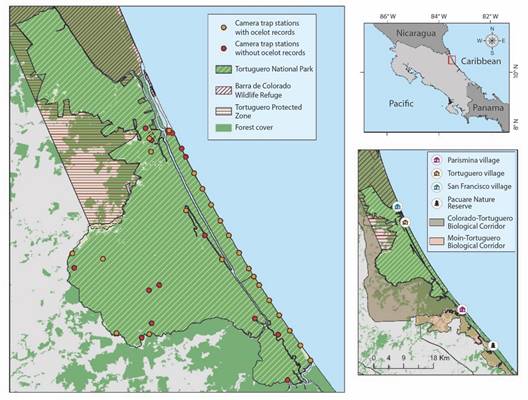
Fig. 1 Camera trap locations across the study site of Tortuguero National Park, Costa Rica, between 2011 and 2022. 

Data collection: Ocelot presence was recorded at camera trap stations from January 2011 to November 2022. Each station consisted of a digital camera trap (Bushnell and Moultrie models) set to take photos (three successive photos per trigger event with 3 s delay between triggers) or videos (20 s video per trigger event with 10 s delay between triggers) and placed in areas where ocelot detection probability is considered to be high (e.g. trails). A total of 43 camera trap stations were continuously active for three months to 10 years, with seven located at the Tortuguero village boundary, nine in the forest interior, 10 near canals, and 17 in the coastal habitat (Fig. 1). The date, time and geographic coordinates were recorded for each photo/video.

Data analysis: Individual ocelots were identified from their unique spot pattern by cross-referencing the images and videos with an existing photographic database created by Coastal Jaguar Conservation from the research conducted in Barra del Colorado Wildlife Refuge (2014), Pacuare Nature Reserve (2015-2016), and Tortuguero National Park (2011-2022).

Each identifiable individual was classified as male or female based on the presence or absence of testicles. To estimate the ocelot minimum age, it was assumed that all adult individuals recorded were at least a year and a half old when first detected, as kittens usually spend the first 12-18 months of life with their mother (Hunter, 2015; Laack et al., 2005).

The sex ratio was expressed as the number of males per female (male : female; Pérez-Irineo & Santos-Moreno, 2014). A Chi-square test was performed to determine if the ratios differed significantly from a 1:1 ratio. Additionally, all individuals were categorised as either ‘resident’ or ‘transient’ according to Harmsen et al. (2017), where a resident is an individual who has been detected in the study area for at least three consecutive years, whereas a transient has been detected for less than two years.

Daily activity pattern was estimated using the kernel density estimation method, with the von Mises distribution for circular data (Ridout & Linkie, 2009) and following the recommendations of Peral et al. (2022). All statistics were performed using the package “Activity” (Rowcliffe, 2023) in R version 4.4.1 (R Core Team, 2024), following the R-Code developed by Andrade-Ponce et al. (2022). Additional information was obtained through the camera trap records (photos or videos) when possible (e.g. health condition, scent-marking behaviour).

Results

After a total of 38 151 camera trap nights, we were able to identify 30 adult ocelots (12 females and 18 males) across 25 camera trap stations including two at Tortuguero village boundary, four in the forest interior, five near canals, and 14 in the coastal habitat (Table 1, Fig. 1). Although we did not record the presence of cubs, we observed four females (two resident and two transient individuals) showing signs of pregnancy or having recently given birth (e.g. saggy belly; Table 2). The minimum age of the ocelots recorded by the end of the study varied from 3 years old up to the oldest individual recorded, F02, estimated to be at least 14 years of age (Table 2).

Table 1 Ocelot Leopardus pardalis monitoring sampling effort conducted in Tortuguero National Park, Costa Rica, between 2011 and 2022. 

Sector Camera trap stations Camera trap days Camera trap images Individuals recorded* Females recorded Males recorded
Tortuguero village boundary 7 2 046 7 (3) 2 0 2
Forest interior 9 1 764 58 (25) 5 2 3
Canals 10 2 086 16 (9) 4 2 2
Coastal habitat 17 32 255 657 (367) 19 8 11
Total 43 38 151 738 (404) 30 12 18

*All individuals were classified as adults. In brackets: number of images used for individual identification.

Table 2 Ocelot Leopardus pardalis individuals identified from camera trap stations in Tortuguero National Park, Costa Rica, between 2011 and 2022. 

Individual 2011 2012 2013 2014 2015 2016 2017 2018 2019 2020 2021 2022 Number of Years Recorded Estimated Minimum Age
M01 5 7
F02 PRGN PRGN PRGN, SMB PRGN PRGN 12 14
M03 1 3
M04 2 4
F05 1 3
M06 2 4
M07 2 4
M08 CONNT 1 3
M09 1 3
F10 1 3
F11 PRGN 1 3
F12 1 3
F13 1 3
M14 1 3
M15 SMB SMB 5 7
F16 PRGN PRGN 5 7
M17 1 3
M18 2 4
M19 SMB SMB, BLIND 4 6
M20 1 3
M21 SMB 4 6
F22 1 3
F23 3 5
F24 PRGN 1 3
F25 1 3
M26 1 3
M27 1 3
M28 1 3
F29 1 3
M30 1 3

M: male. F: female. SMB: scent-marking behaviour. PRGN: female with signs of pregnancy or recently given birth (e.g. saggy belly). CONNT: individual recorded in Pacuare Nature Reserve in July 2015 (Arroyo-Arce et al. 2017). BLIND: eyeshine only from the right eye as from June 6, 2022. Dark grey bars are resident individuals (recorded for ≥ 3 consecutive years). Light grey bars are transient individuals (recorded for ≤ 3 consecutive years).

The sex ratio was 1:0.7, which is not significantly different from 1:1 (c2 = 1.2; d.f. = 1; p = 0.2733). Seven of the individuals were residents (three females and four males) and 23 transients (nine females and 14 males; Table 2). Our data indicated a stable trend of resident ocelots throughout the study period, with varying numbers of transient individuals. The year with the highest record of individuals was 2020 with 11 individuals (six residents and five transients) followed by 2013 with 10 individuals (two residents and eight transients; Fig. 2). It is important to highlight that one transient male, M08, was first detected in Tortuguero National Park in November 2012, and on a later date, July 2015, was identified at Pacuare Nature Reserve, approximately 41 km South of Tortuguero National Park (Fig. 1). After this date, this individual was not recorded again in our study.
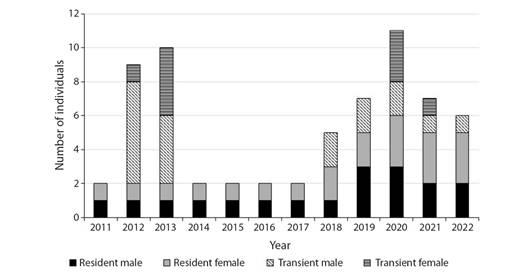
Fig. 2 The number of ocelot Leopardus pardalis individuals identified from camera trap stations in Tortuguero National Park, Costa Rica, between 2011 and 2022. 

The ocelots within the study showed a predominantly nocturnal activity pattern (Fig. 3). All individuals appeared in good physical condition with one exception, M19, a male resident who was recorded from 2019 to 2022. On June 6, 2022, he was observed with eyeshine only from his right eye (Table 2). Scent-marking behaviour was exhibited exclusively by resident individuals and was recorded seven times during the study; defecation by F02, urine spraying by M15 and M21, and the spraying of glandular secretions by M19 on four different occasions in the same location (Table 2). All scent-marking behaviour occurred within the coastal habitat along a human-made trail parallel to the beach.
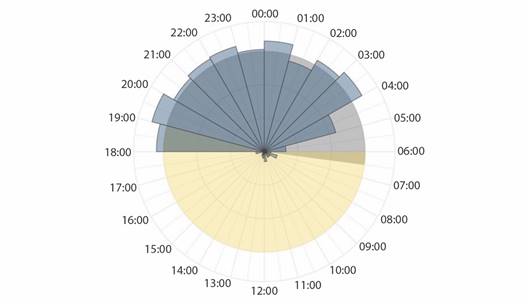
Fig. 3 Daily activity pattern of the ocelot Leopardus pardalis in Tortuguero National Park, Costa Rica. Yellow: daytime; dark yellow: twilight; grey: nighttime; blue bars: number of camera trap records. 

Discussion

The local ocelot population includes both resident and transient individuals. It is important to note that these terms, as described by Harmsen et al. (2017), apply within our specific sampling area. Therefore, some individuals we identify as transient might be residents outside our sampling area. It is also possible that residents have a larger territory than the area covered by our study (Harmsen et al., 2017). To gain a better understanding of the local ocelot population, future studies should focus on the species’ spatial ecology, particularly its territorial behaviour and habitat use in relation to its home range.

We were able to estimate the minimum age of the individuals, one of whom was at least 14 years old, representing one of the oldest recorded ocelots in the wild worldwide. Ocelots can live up to 20 years in captivity (Carolina Tiger Rescue, 2024; Wilson & Mittermeier, 2009) with some extraordinary cases of up to 28 years (Weigl, 2005). Although long-term studies on ocelot populations are rare, it has been estimated that longevity in the wild is likely between seven to 10 years (Laack, 1991; Wilson & Mittermeier, 2009), with some authors recording ocelots living 10 years (Lombardi et al., 2022), and 14 years (Muskat, 2024) in North America.

The sex ratio of ocelots observed in our study is consistent with expectations for the species and aligns with findings from other studies across the species’ geographic range (Laack et al., 2005; Pérez-Irineo & Santos-Moreno, 2014). However, some studies have reported skewed sex ratios (Di Bitetti et al., 2006; Maffei et al., 2005; Magalhães & Srbek-Araujo, 2022; Satter et al., 2018, Sternberg et al., 2023). These variations are possible as sex ratios can be influenced by factors such as social organisation (e.g. solitary species, home range sizes varying with sex), habitat characteristics (e.g. dry versus wet season), and population change (births, deaths, in-migration, and emigration) which may vary across space and time (Di Bitetti et al., 2006; Kappeler, 2017; Maffei et al., 2005; Magalhães & Srbek-Araujo, 2022; Pérez-Irineo & Santos-Moreno, 2014). It is important to also consider the sampling design used in each study, as this can impact the observed sex ratio (Magalhães & Srbek-Araujo, 2022). For example, males are more likely to use trails compared to females (Satter et al., 2018), influencing detection rates when camera traps are positioned mainly on trails.

The ocelot M08 covered approximately 41 km, comparable to distances recorded in literature (Booth-Binczik, 2007; Crawshaw, 1995; Jacob, 2002). Although it is unknown which route the ocelot traversed, it is possible the individual used the Colorado-Tortuguero Biological Corridor and the Moín-Tortuguero Biological Corridor, which connects Tortuguero National Park and Pacuare Nature Reserve through fragmented landscape using the remaining forest patches along the Caribbean coast (Acevedo, 2013). This is the first evidence of wildlife movement between Tortuguero National Park and Pacuare Nature Reserve, highlighting the significance of wildlife corridors for the long-term conservation of the species (Arroyo-Arce et al., 2017).

The ocelot’s nocturnal habits found in the study mirror those observed in similar areas along the Caribbean coast of Costa Rica, including the Barra del Colorado Wildlife Refuge (Arroyo-Arce et al., 2016) and Pacuare Nature Reserve (Arroyo-Arce et al., 2017). This is consistent with previous descriptions of the species (Wilson & Mittermeier, 2009), likely co-ordinating with the activity patterns of its main prey, small and medium-sized mammals (Ludlow & Sunquist, 1987; Moreno et al., 2006). It also serves as a strategy to avoid interspecific competition and predation by the predominantly crepuscular, larger cat species, such as jaguars and pumas (Gómez et al., 2005; Maffei et al., 2005), both of which are found in Tortuguero National Park (Arroyo-Arce & Salom-Pérez, 2014; Arroyo-Arce & Thomson, 2023).

Scent marking is a prevalent behaviour among wild cats (Mellen, 1993), yet it poses challenges in terms of documentation, particularly for cryptic species such as the ocelot (King et al., 2017; Moreno & Giacalone, 2006; Rodgers et al., 2014). Despite these challenges, our camera traps captured seven instances of scent marking, including the deposition of faeces and urine marking. As noted by previous researchers, scent marking serves as an olfactory mechanism for both intra- and interspecific communication, conveying information about an individual’s sex, reproductive status, territory, and movement patterns (King et al., 2017; Mellen, 1993; Moreno & Giacalone, 2006).

The ocelot population exhibited signs of reproduction, with females showing signs of pregnancy, despite the absence of observed offspring or young individuals. The overall health of the individuals appeared to be robust, as no external signs of sickness or injury were evident, except for one ocelot, identified as M19, which displayed eyeshine from only one eye, possibly indicative of damage to the tapetum lucidum. This could have been caused by various factors, such as an injury from a prey animal defending itself (Kays, 2016). Although no mortalities were documented during the study, it is imperative for future research to investigate the threats faced by ocelots, not only in Tortuguero National Park, but also in the Tortuguero Conservation Area. Potential threats include conflict with local communities (e.g. ocelot predation on domestic animals), illegal wildlife trade, road mortality (ocelots are the most frequently road-killed wild cat in Costa Rica), and habitat fragmentation (Corrales-Gutiérrez, 2016; Kelly, 2018; Salom-Pérez et al., 2022). Understanding these threats is crucial for making informed management decisions, necessary for the long-term survival of the species at both local and regional levels.

Our research is, to our knowledge, the only study of its kind conducted in Tortuguero National Park and represents the longest monitoring effort for ocelots in Costa Rica. It is also among the longest studies of ocelots in the Americas (Haines et al., 2006; Satter et al., 2018; Veals et al., 2022). Consequently, our findings provide critical insights into the ecology of this species. Additionally, our study raises important questions regarding various population demographic parameters of ocelots, such as abundance, density, and survival rate. Addressing these questions will enhance our understanding of ocelots at both local and regional levels. Finally, our study emphasises the significance of long-term monitoring projects in achieving a deeper, more robust understanding of the ocelot and the conditions necessary for the species to thrive.

Ethical statement: The authors declare that they all agree with this publication and made significant contributions; that there is no conflict of interest of any kind; and that we followed all pertinent ethical and legal procedures and requirements. All financial sources are fully and clearly stated in the acknowledgments section. A signed document has been filed in the journal archives.

Acknowledgments

Our research was conducted under the permits required by the Costa Rican government (ACTo-SINAC). We are thankful for the support provided by Global Vision International, Sea Turtle Conservancy, The Rufford Small Grants Foundation, and Idea Wild, that allowed us to conduct our research. Special thanks to the reviewers for their insightful comments, which significantly contributed to the improvement of our manuscript.

References

Acevedo, H. (2013). Perfil Técnico: Estudio técnico-científico del Corredor Biológico Colorado-Tortuguero y de un área piloto, con el uso de Sistemas de Información Geográfica. (Technical report). Programa de las Naciones Unidas para el Desarrollo, Fondo para el Medio Ambiente Mundial, Sistema Nacional de Áreas de Conservación. https://www.acto.go.cr/wp-content/uploads/2020/08/Perfil-Tecnico-CB-Colorado-Tortuguero.pdf [ Links ]

Andrade-Ponce, G. P., Mandujano, S., Dáttilo, W., Farías-González, V., Jiménez, J., Velásquez-C., K., & Zavaleta, A. (2022). A framework to interpret co-occurrence patterns from camera trap data: The case of the gray fox, the bobcat, and the eastern cottontail rabbit in a tropical dry habitat. Journal of Zoology, 318(2), 91-103. https://doi.org/10.1111/jzo.13002 [ Links ]

Arroyo-Arce, S., & Salom-Pérez, R. (2014). First record of Puma concolor in Tortuguero National Park, Costa Rica. Brenesia, 81-82, 115-118. [ Links ]

Arroyo-Arce, S., & Thomson, I. (2023). Impacts of jaguar predation on nesting sea turtles at Tortuguero National Park. Cat News, 78, 34-36. [ Links ]

Arroyo-Arce, S., Thomson, I., Fernández, C., & Salom-Pérez, R. (2017). Relative abundance and activity patterns of terrestrial mammals in Pacuare Nature Reserve, Costa Rica. Cuadernos de Investigación UNED, 9(1), 15-21. [ Links ]

Arroyo-Arce, S., Thomson, I., Guy, D., & Searcy, A. (2019). First confirmed record of margay in Tortuguero National Park, Costa Rica. Cat News, 69, 6-7. [ Links ]

Arroyo-Arce, S., Thomson, I., & Salom-Pérez, R. (2016). Relative abundance and activity patterns of terrestrial mammals in Barra del Colorado Wildlife Refuge, Costa Rica. Cuadernos de Investigación UNED, 8(2), 131-137. [ Links ]

Avendaño, R., Barrueta, F., Soto-Fournier, S., Chavarría, M., Monge, O., Gutiérrez-Espeleta, G. A., & Chaves, A. (2016). Canine distemper virus in wild felids of Costa Rica. Journal of Wildlife Diseases, 52(2), 373-377. https://doi.org/10.7589/2015-02-041 [ Links ]

Bermudez, F. A., & Hernandez, C. (2004). Plan de manejo del Parque Nacional Tortuguero (Technical report). Ministerio del Ambiente y Energía, San José, Costa Rica. https://www.acto.go.cr/wp-content/uploads/2020/04/Plan_de_Manejo_-PN_Tortuguero.pdf [ Links ]

Blanco, K., Peña, R., Hernández, C., Jiménez, M., Araya, L. N., Romero, J. J., & Dolz, G. (2011). Serological detection of viral infections in captive wild cats from Costa Rica. Veterinary Medicine International, 2011, 879029. [ Links ]

Booth-Binczik, S. (2007). Report from the field: monitoring ocelot dispersal with satellite telemetry. Endangered Species Update, 24(4), 110-112. [ Links ]

Botts, R. T., Eppert, A. A., Wiegman, T. J., Rodriguez, A., Blankenship, S. R., Asselin, E. M., Garley, W. M., Wagner, A. P., Ullrich, E. E., Allen, G. R., & Mooring, M. (2020). Circadian activity patterns of mammalian predators and prey in Costa Rica. Journal of Mammalogy, 101(5), 1313-1331. https://doi.org/10.1093/jmammal/gyaa103 [ Links ]

Cambronero, M., Sánchez-Calderón, R., & Lobo, R. (2023). Medium and large-sized mammals in a premontane moist forest fragment, Atenas, Costa Rica. Revista de Biología Tropical, 71(1), e53245. [ Links ]

Carolina Tiger Rescue. (2024, July 24). Magoo Ocelot. https://carolinatigerrescue.org/uncategorized/magoo-ocelot-2/ [ Links ]

Chinchilla, F. (1997). La dieta del jaguar (Panthera onca), el puma (Felis concolor) y el manigordo (Felis pardalis) (Carnivora: Felidae) en el Parque Nacional Corcovado, Costa Rica. Revista de Biología Tropical, 45(3), 1223-1229. [ Links ]

Corrales-Gutiérrez, D. (2016). Primer informe de labores 2013-2015, Unidad de Atención de Conflictos con Felinos (UACFel) (Technical report). UACFel/SINAC-Panthera, San José, Costa Rica. https://pantheracostarica.org/wp-content/uploads/2017/03/1er-Informe-Labores-UACFel-2013-2015.pdf [ Links ]

Cove, M., Spinola, M., Jackson, V. L., & Saenz, J. (2014). Camera trapping ocelots: An evaluation of felid attractants. Journal of Mammalogy, 25(2), 113-116. https://doi.org/10.4404/hystrix-25.2-9945 [ Links ]

Crawshaw, P. G. (1995). Comparative ecology of ocelot (Felis pardalis) and jaguar (Panthera onca) in a protected subtropical forest in Brazil and Argentina (Unpublished doctoral dissertation). University of Florida. [ Links ]

De Oliveira, T. G., Tortato, M. A., Silveira, L., Kasper, C. B., Mazim, F. D., Lucherini, M., Jácomo, A. T., Soares, J. B. C., Marques, R. V., & Sunquist, M. E. (2010). Ocelot ecology and its effect on the small-felid guild in the lowland Neotropics. In D. W. Macdonald, & A. J. Loveridge (Eds.), Biology and conservation of wild felids (pp. 563-574). Oxford University Press. [ Links ]

Di Bitetti, M. S., Paviolo, A., & De Angelo, C. (2006). Density, habitat use and activity patterns of ocelots (Leopardus pardalis) in the Atlantic Forest of Misiones, Argentina. Journal of Zoology, 270(1), 153-163. https://doi.org/10.1111/j.1469-7998.2006.00102.x [ Links ]

Emmons, L. (1988). A field study of ocelots (Felis pardalis) in Peru. Revue d Écologie (La Terre et La Vie), 43(2), 133-157. https://doi.org/10.3406/revec.1988.5418 [ Links ]

Emmons, L. H., Sherman, P., Bolster, D., Goldizen, A., & Terborgh, J. (1989). Ocelot behavior in moonlight. In K. H. Redford, & J. F. Eisenberg (Eds.), Advances in Neotropical mammalogy (pp. 233-242). Sandhill Crane Press. [ Links ]

Gómez, H., Wallace, R. B., Ayala, G., & Tejada, R. (2005). Dry season activity periods of some Amazonian mammals. Studies on Neotropical Fauna and Environment, 40(2), 91-95. https://doi.org/10.1080/01650520500129638 [ Links ]

González-Maya, J. F., & Cardenal-Porras, J. (2011). Ocelot density in the caribbean slope of the Talamanca region, Costa Rica. Hystrix, the Italian Journal of Mammalogy, 22(2), 355-360. https://doi.org/10.4404/hystrix-22.2-4675 [ Links ]

González-Maya, J. F., Navarro-Arquez, E., & Schipper, J. (2010). Ocelots as prey items of jaguars: A case from Talamanca, Costa Rica. Cat News, 53, 11-12. [ Links ]

Haines, A. M., Tewes, M. E., Laack, L. L., Horne, J. S., & Young, J. H. (2006). A habitat-based population viability analysis for ocelots (Leopardus pardalis) in the United States. Biological Conservation, 132, 424-436. https://doi:10.1016/j.biocon.2006.04.035 [ Links ]

Harmsen, B. J., Foster, R. J., Sanchez, E., Gutierrez-González, C. E., Silver, S. C., Ostro, L. E. T., Kelly, M. J., Kay, E., & Quigley, H. (2017). Long term monitoring of jaguars in the Cockscomb Basin Wildlife Sanctuary, Belize; Implications for camera trap studies of carnivores. PLoS ONE, 12(6), e0179505. [ Links ]

Herrera, H., Chávez, E. J., Alfaro, L. D., Fuller, T. K., Montalvo, V., Rodrigues, F., & Carrillo, E. (2018). Time partitioning among jaguar Panthera onca, puma Puma concolor and ocelot Leopardus pardalis (Carnivora: Felidae) in Costa Rica’s dry and rainforests. Revista de Biología Tropical, 66(4), 1559-1568. [ Links ]

Holdridge, L. (1969). Ecología basada en zonas de vida. Instituto Interamericano de Ciencias Agrícolas. [ Links ]

Hunter, L. (2015). Wild cats of the world. Bloomsbury Publishing. [ Links ]

Jacob, A. A. (2002). Ecologia e conservação da jaguatirica (Leopardus pardalis) no Parque Estadual Morro do Diabo, Pontal do Paranapanema, SP. (Unpublished master’s thesis). Universidade de Brasília. [ Links ]

Kappeler, P. M. (2017) Sex roles and adult sex ratios: Insights from mammalian biology and consequences for primate behaviour. Philosophical Transactions of the Royal Society B, 372(1729), 2016-0321. https://doi.org/10.1098/rstb.2016.0321 [ Links ]

Kays, R. (2016). Candid creatures: How camera traps reveal the mysteries of nature. Hopkins University Press. [ Links ]

Kelly, J. R. (2018). Insights into the illegal trade of feline derivates in Costa Rica. Global Ecology and Conservation, 13, e00381. https://doi.org/10.1016/j.gecco.2018.e00381 [ Links ]

King, T. W., Salom-Pérez, R., Shipley, L. A., Quigley, H. B., & Thornton, D. H. (2017). Ocelot latrines: Communication centers for Neotropical mammals. Journal of Mammalogy, 98(1), 106-113. https://doi.org/10.1093/jmammal/gyw174 [ Links ]

Laack, L. L. (1991). Ecology of the ocelot (Felis pardalis) in South Texas. (Master’s thesis, Texas A&I University). ProQuest Repository. https://www.proquest.com/openview/478e698c69796acc227896dd15b16871/1?pq-origsite=gscholar&cbl=18750&diss=y [ Links ]

Laack, L. L., Tewes, M. E., Haines, A. M., & Rappole, J. H. (2005). Reproductive life history of ocelots Leopardus pardalis in southern Texas. Acta Theriologica, 50, 505-514. https://doi.org/10.1007/BF03192643 [ Links ]

Ling, F. (2002). Diagnóstico de la situación actual de los recursos naturales en los sitios críticos del Corredor Biológico Mesoamericano, Sección Tortuguero (Technical report). Fondo Nacional de Financiamiento Forestal. https://www.acto.go.cr/wp-content/uploads/2020/04/DIAG_SITU_ACT_-RN.pdf [ Links ]

Lombardi, J. V., Sergeyev, M., Tewes, M. E., Schofield, L. R., & Wilkins, R. N. (2022). Spatial capture-recapture and LiDAR-derived vegetation metrics reveal high densities of ocelots on Texas ranchlands. Frontier in Conservation Science, 3, 1-12. https://doi.org/10.3389/fcosc.2022.1003044 [ Links ]

Ludlow, M. E., & Sunquist, M. E. (1987). Ecology and behaviour of ocelots in Venezuela. National Geographic Research, 3, 447-461. [ Links ]

Maffei, L., Noss, A. J., Cuéllar, E., & Rumiz, D. I. (2005). Ocelot (Felis pardalis) population densities, activity, and ranging behaviour in the dry forests of eastern Bolivia: Data from camera trapping. Journal of Tropical Ecology, 21(3), 349-353. https://doi.org/10.1017/S0266467405002397 [ Links ]

Magalhães, L. M., & Srbek-Araujo, A. C. (2022). Ocelot, Leopardus pardalis (Mammalia, Carnivora, Felidae), home range in the Lowland Atlantic Forest of Southeastern Brazil. Neotropical Biology and Conservation, 17(4), 229-237. https://doi.org/10.3897/neotropical.17.e93828 [ Links ]

Mellen, J. D. (1993). A comparative analysis of scent-marking, social and reproductive behavior in 20 species of small cats (Felis). American Zoologist, 33(2), 151-166. https://doi.org/10.1093/icb/33.2.151 [ Links ]

Montalvo, V. H., Hagnauer, I., Cruz-Díaz, J. C., Morera, B., Lloyd, K., Sáenz-Bolaños, C., Fuller, T. K., & Carrillo, E. (2022). Experimental release of orphaned wild felids into a Tropical Rainforest in Southwestern Costa Rica. Veterinary Sciences, 9(9), 468. https:// doi.org/10.3390/vetsci9090468 [ Links ]

Montalvo, V. H., Sáenz-Bolaños, C., Cruz-Díaz, J. C., Hagnauer, I., & Carrillo, E. (2020). Consumption of wild rice (Oryza latifolia) by free-ranging jaguars, pumas, and ocelots (Carnivora-Felidae) in northwestern Costa Rica. Food Webs, 22, e00138. [ Links ]

Montalvo, V. H., Sáenz-Bolaños, C., Cruz-Díaz, J. C., Kamilar, J. M., Carrillo, E., & Fuller, T. K. (2023). Effects of camera trap placement on photo rates of jaguars, their prey, and competitors in northwestern Costa Rica. Wildlife Society Bulletin, 47, e1428. https://doi.org/10.1002/wsb.1428 [ Links ]

Montalvo, V. H., Sáenz-Bolaños, C., Ramírez, S., & Carrillo, E. (2015). Abundancia del jaguar (Panthera onca), otros felinos y sus presas potenciales en el Parque Nacional Santa Rosa, Costa Rica. Cuadernos de Investigación UNED, 7(2), 305-311. [ Links ]

Moreno, R. S., & Giacalone, J. (2006). Ecological data obtained from latrine use by ocelots (Leopardus pardalis) on Barro Colorado Island, Panama. Tecnociencia, 8(1), 7-21. [ Links ]

Moreno, R. S., Kays, R. W., & Samudio, R. (2006). Competitive release in diets of ocelot (Leopardus pardalis) and puma (Puma concolor) after jaguar (Panthera onca) decline. Journal of Mammalogy, 87(4), 808-816. https://doi.org/10.1644/05-MAMM-A-360R2.1 [ Links ]

Muskat, A. (2024, April 29). Oldest wild ocelot ever documented found in Southern Arizona. Arizona Sonoran News. https://arizonasonorannews.com/37245//oldest-wild-ocelot-ever-documented-found-in-southern-arizona/ [ Links ]

Nowell, K., & Jackson, P. (1996). Wild cats. Status survey and conservation action plan. IUCN/SSC Cat Specialist Group. [ Links ]

Paviolo, A., Crawshaw, P., Caso, A., De Oliveira, T., Lopez-Gonzalez, C. A., Kelly, M., De Angelo, C., & Payan, E. (2024, August 13). Leopardus pardalis. The IUCN Red List of Threatened Species. https://dx.doi.org/10.2305/IUCN.UK.2015-4.RLTS.T11509A50653476.en [ Links ]

Peral, C., Landman, M., & Kerley, G. I. H. (2022). The inappropriate use of time-to-independence biases estimates of activity patterns of free-ranging mammals derived from camera traps. Ecology and Evolution, 12(10), e9408. https://doi.org/10.1002/ece3.9408 [ Links ]

Pérez-Irineo, G., & Santos-Moreno, A. (2014). Density, distribution, and activity of the ocelot Leopardus pardalis (Carnivora: Felidae) in Southeast Mexican rainforests. Revista de Biología Tropical, 62(4), 1421-1432. [ Links ]

R Core Team. (2024). R: A language and environment for statistical computing. R package version 1.3.4 (Software). CRAN. https://www.R-project.org/ [ Links ]

Ridout, M. S., & Linkie, M. (2009). Estimating overlap of daily activity patterns from camera trap data. Journal of Agricultural, Biological, and Environmental Statistics, 14, 322-337. [ Links ]

Rodgers, T. W., Giacalone, J., Heske, E. J., JanečKa, J. E., Phillips, C. A., & Schooley, R. L. (2014). Comparison of noninvasive genetics and camera trapping for estimating population density of ocelots (Leopardus pardalis) on Barro Colorado Island, Panama. Tropical Conservation Science, 7(4), 690-705. [ Links ]

Romero-Vega, L. M., Medlin, S., Hagnauer, I., Alfaro-Alarcón, A., & Williams, B. (2024). Case report: Renal adenoma in a captive ocelot (Leopardus pardalis) in Costa Rica. Frontiers in Veterinary Science, 11, 1393039. https://doi.org/10.3389/fvets.2024.1393039 [ Links ]

Rowcliffe, M. (2023). Activity: animal activity tatistics. R package version 1.3.4 (Software). CRAN. https://CRAN.R-project.org/package=activity [ Links ]

Ruiz-García, M., Corrales, C., & Pinedo-Castro, M. (2012). Craniometric and microsatellite genetic differentiation among putative ocelot subspecies (Leopardus pardalis) throughout Latin America. In M. Ruiz-Garcia, & J. M. Shostell (Eds.), Molecular population genetics, evolutionary biology and biological conservation of Neotropical carnivores (pp. 1-45). Nova Science Publishers, Inc. [ Links ]

Salom-Pérez, R., Wultsch, C., Adams, J. R., Soto-Fournier, S., Gutiérrez-Espeleta, G. A., & Waits, L. P. (2022). Genetic diversity and population structure for ocelots (Leopardus pardalis) in Costa Rica. Journal of Mammalogy, 103(1), 68-81. https://doi.org/10.1093/jmammal/gyab146 [ Links ]

Satter, C. B., Augustine, B. C., Harmsen, B. J., Foster, R. J., Sanchez, E. E., Wultsch, C., Davis, M. L., & Kelly, M. J. (2018). Long-term monitoring of ocelot densities in Belize. Journal of Wildlife Management, 83(2), 283-294. https://doi.org/10.1002/jwmg.21598 [ Links ]

Sternberg, M. A., Schmidt, G. M., Carrera-Treviño, R., Ocañas-García, O. A., Illescas-Martínez, F., deMaar, T., & Peña, L. J. (2023). Characteristics of ocelot populations in Tamaulipas, Mexico, using capture-recapture techniques. Endangered Species Research, 52, 113-127. https://doi.org/10.3354/esr01271 [ Links ]

Sunquist, M., & Sunquist, F. (2002). Wild cats of the world. University of Chicago Press. [ Links ]

Vargas, J. S., Flatt, E. J., Whitworth, A., Salom-Pérez, R., Espinoza-Muñoz, D., & Molnár, P. K. (2023). More than one way to count a cat: Estimation of ocelot population density using frameworks for marked and unmarked species. Biodiversity and Conservation, 32, 1821-1838. https://doi.org/10.1007/s10531-023-02579-x [ Links ]

Veals, A. M., Holbrook, J. D., Blackburn, A., Anderson, C. J., DeYoung, R. W., Campbell, T. A., Young Jr., J. H., & Tewes, M. E. (2022). Multiscale habitat relationships of a habitat specialist over time: The case of ocelots in Texas from 1982 to 2017. Ecosphere, 13, e4204. https://doi.org/10.1002/ecs2.4204 [ Links ]

Weigl, R. (2005). Longevity of mammals in captivity: From the living collections of the world. Schweizerbart Science Publishers. [ Links ]

Wilson, D. E., & Mittermeier, R. A. (2009). Handbook of the mammals of the world. Lynx Edicions. [ Links ]

Yaap, B., Watson, H., & Laurance, W. F. (2015). Mammal use of Raphia taedigera palm stands in Costa Rica’s Osa Peninsula. Mammalia, 79(3), 357-362. https://doi.org/10.1515/mammalia-2014-0033 [ Links ]

Received: July 16, 2024; Revised: December 11, 2024; Accepted: March 13, 2025

Creative Commons License This is an open-access article distributed under the terms of the Creative Commons Attribution License