


 English (pdf)
 Article in xml format
 Article references
 Automatic translation
 Send this article by e-mail
 Cited by SciELO
  Similars in
SciELO
Similars in
SciELO  uBio
uBio 
 Permalink

Introduction
Contemporaries in the first decades of the 19th century, Louise von Panhuys (1763-1844) and Nancy Anne Kingsbury Wollstonecraft (1791-1828) exemplify women’s century-long struggle for acceptance in the male-dominated world of art and science. However, their lives and careers could not have been more different, as they found themselves largely on opposite sides of the historically complex issue of rising feminism over the years.
Louise von Panhuys was a typical product of the cultural revolution brought upon the European upper classes by the Enlightenment, the European intellectual movement of the 18th century, where a high social status was generally accompanied by a refined education, but even more by the Sturm und Drang (‘Storm and Impetus’) a proto-Romanic movement in Germany that occurred between the late 1760’s and the early 1780s, which sought to overthrow the Enlightenment cult of rationalism and preceded German Romanticism. Louise was -according to the writers of her time- a classic “lady of leisure.”
Nancy K. Wollstonecraft, on the other side, was the daughter of a clergyman from New England, born as part of the broad American middle class that shaped the first decades of the United States’ independent life. She was probably self-taught in botanical matters, making her manuscript on the flora of Cuba even more remarkable.
Both, however, shared a common passion for the wonders of nature, particularly botany, and they had a shared field of action: the exuberant forests of the European colonies in the Caribbean: von Panhuys in the Dutch territory of Suriname and Wollstonecraft in the Spanish island of Cuba. Both territories underwent important social and political changes during their time in the Caribbean. Suriname faced constant revolts of its large slave population until the abolition of slavery in the Dutch colony, including one in 1816 during which her husband was murdered (Fig. 1), while in Cuba, in June 1825, the island’s countryside witnessed a large Africanled slave rebellion, a revolt that began a cycle of uprisings lasting until the mid-1840s, and that led to the abolition of slavery in 1869 (Fig. 2).
The artistic outcome of these two women’s works is astounding and took different directions: while von Panhuys painted landscapes, social scenes, fruits and flowers solely to entertain herself with a purely descriptive purpose, Wollstonecraft merged her artistic talent with her botanical knowledge to create a three-volume manuscript, Specimens of the Fruits and Plants of the Island of Cuba, featuring accurate and detailed descriptions along with beautiful illustrations.
The scientific value of their work is quite distinct. The paintings by Panhuys omit the botanical names, presumably because she lacked the necessary scientific knowledge. However, it is interesting to note that von Panhuys left Suriname in 1816, and three orchids depicted in her botanical plates - Rodriguezia secunda Kunth (1816) (now regarded as Rodriguezia lanceolata Ruiz & Pav. (1798)), Epidendrum emarginatum G.Mey (1818) and Camaridium ochroleucum Lindl. (1824) (= Maxillaria lutescens Scheidw. (1839)) were described as new species only after her return to Germany. Nonetheless, the complete set of her paintings must be regarded as an invaluable testament of Suriname’s land and people. Unfortunately, von Panhuys’ paintings were never published.
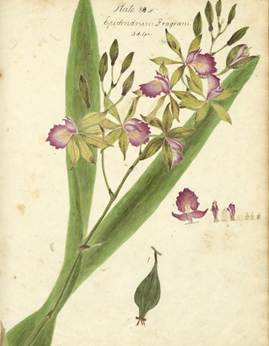
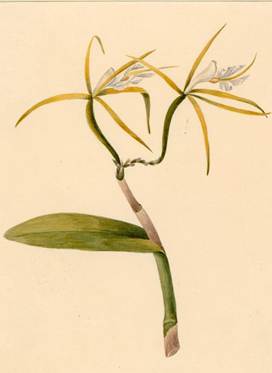
On the other side, Wollstonecraft’s figures “are carefully colored from the living specimens; and they appear to have been executed not with correctness merely, but elegance. The history which accompanies each is brief, but sententious and comprehensive, containing the leading facts and circumstances relative to their production” (Varela & Sacco, 1828). Wollstonecraft’s occasional mention of Linnaeus in her descriptions indicates that she had some training in Botany and had access to botanical books while writing her manuscript. Not being a fully qualified botanist, she often made incorrect determinations. Interestingly, in one case, she painted what she (wrongly) named Epidendrum fragrans Sw. (currently determined as Encyclia plicata (Lindl.) Schltr.) validly published only in 1847, 20 years after her death.
Louise von Panhuys (1763-1844) and Nancy Anne Kingsbury Wollstonecraft (1791-1828) were the first female illustrators of neotropical orchids, the only exceptions being Maria Sybilla Merian (1647-1717), with her watercolor of Vanilla and caterpillars, and Mary Delany (1700-1788), an English artist, who created the renowned ‘Flora Delanica’, also called ‘Delany’s paper garden’which consists of nearly 1000 collages of cut flowers, including Bletia purpurea, likely the first neotropical orchid introduced at Kew. They were followed by Augusta Hanna Innes Withers (1792-1877) and Sarah Anne Drake (1803-1857), both English professional botanical illustrators who emerged after von Panhuys and Wollstonecraft soon becoming the undisputed queens among the female botanical illustrators of the Victorian era.
An important note is that von Panhuys’ and Wollstonecraft’s orchid paintings are here published for the first time since their creation in the 19th century. Burckhard (1991) and Cueto (2018) present poor reproductions of incomplete sets of paintings, which -with a few exceptions- are only reproduced in black and white.
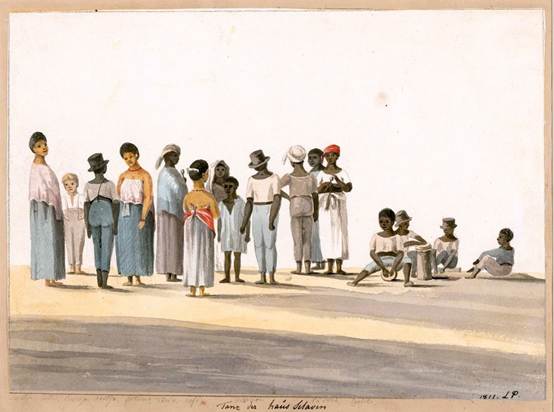
Figure 1 Dance of the house slaves. By Louise van Panhuys. Courtesy of the Senkenberg Library in Frankfurt.

Life in the plantations: Louise von Panhuys (1763-1844)
Louise Friederike Auguste von Panhuys (née von Barckhaus-Wiesenhütten) (Fig. 3), a botanical and landscape painter, was born in 1763 in Frankfurt am Main.
She came from a well-respected merchant family and received a comprehensive and attentive education. Her mother, an amateur painter herself and part of Frankfurt’s upper circles, played a crucial role in her artistic apprenticeship, which was heavily influenced by the works of Maria Sybilla Merian and of the German explorer and naturalist Alexander von Humboldt (1769-1859, Fig. 4). Furthermore, her family’s close relationship with the German writer Johann Wolfgang von Goethe (1749-1842) (Fig. 5) was of utmost importance in Louise’s general culture. Goethe was the most prominent member of the Sturm und Drang movement which proclaimed that Nature provided the utmost source of inspiration. This German literary movement of the late 18th century exalted nature, emotions, and human individualism while seeking to overthrow the Enlightenment’s cult of rationalism, preceding German Romanticism. Louise's landscapes are excellent examples of the ideals of Sturm und Drang, while her paintings of Suriname’s people, especially the large population of slaves, evoke Rousseau’s bon sauvage (‘noble savage’) published in 1755 as part of his Second Discourse (Discourse on the Origins of Inequality Among Men (1754)). This concept idealises the uncivilized man, as one symbolizes the innate goodness of a person not exposed to the corrupting influences of civilization.
Even the residence of the Barckhaus-Wiesenhüt- ten family was traditionally connected to the arts: von Panhuys’ father had purchased the famous building named Zu den Drei Königen (‘to the Three Kings’) from his parents in-law, which was constructed by famous engraver and book-printer Matthäus Merian (1593-1650), the father of Maria Sybilla Merian.
Between 1802 and 1805, Louise traveled to England together with her brother Carl Ludwig. She established strong relations with English naturalists and botanical illustrators, and it is assumed that she learned under the guidance of the botanical painter James Sowerby (1757-1822) (Fig. 6). Sowerby, also a passionate botanist, began in 1790 with the publication of English Botany, A Catalogue of Indigenous British Plants, a work in which he was also responsible for the illustrations and engravings. The work, which was concluded in 1814, consisted of 36 volumes with a total of 2592 plates, engraved in copper sheets and hand coloured.
When Louise traveled to England, she was already 40 years old and still unmarried. This was a constant source of worry for her mother, especially since Louise’s two older sisters, Charlotte and Helene, had married -according to the circumstances of their time- at a relatively old age.
In a letter to her friend, François de Théas von Thoranc (1719-1794), Louise’s mother complained: “I still have three daughters, all in the age of marriage, but the pretenders are rare. I begin to fear that they are condemned to die as virgins and martyrs”. (Burkhardt et al., 1991).
Regarding her youngest daughter, she did not live to see her wish fulfilled. She passed away in 1804, shortly before Louise married the Dutch officer Willem Benjamin van Panhuys (1764-1816) (Fig. 7) in 1805. Together, they traveled to Suriname in 1811 (Fig. 8), where van Panhuys owned the coffee plantation Nut en Schadelijk (Fig. 9), located on the lower course of the Commewijne River. The following year they bought the sugar plantation Alkmaar on the opposite side of the stream (Fig. 10-11).
“When sailing into the Suriname River from the Atlantic Ocean in the 18th century one would see plantations along the river and defense works protecting the river mouth. There were sugar plantations inland, but close to the coast one would find predominantly coffee plantations, lying on both sides of the river. After passing the first defenses and plantations, the very advantageous and strong fortress Zeelandia would come into view just north of Paramaribo. The city itself was a sight to behold with its white houses and fragrant trees lining the streets. Between 1650 and 1800 present-day Paramaribo was founded on the remnants of an indigenous village and developed into a bustling colonial city. The center of Paramaribo, as the indigenous village before it, is situated along the Suriname River on shell ridges several kilometers from the Atlantic coast, not far from where the Commewijne and Suriname River merge before they flow into the ocean (...). The city’s growth in size and function should not come as a surprise; the eighteenth century saw cities booming all along the American Atlantic coast, including the Caribbean. In Paramaribo’s hinterland the number of enslaved Africans increased to almost 60,000 after the middle decades of the eighteenth century”. (Fatah Black, 2013).
In the early decades of the 1800s, the number of plantations in Surinam, particularly sugar cane, wood, and coffee, grew to over 500. However, only their owners managed only about 60 or 80 of them (Burkhardt et al., 1991).
Louise found herself living on her husband’s plantations, which provided her with lots of opportunities and the necessary time to study the surrounding forests. She gradually began painting what would become her extraordinary legacy of 89 watercolors, capturing in vivid images the lives of the slaves, as well as the beauty of Suriname’s flora. Her botanical paintings were meticulously and accurately drawn, and the illustrated genera can be easily determined. Among her works, we find several orchids, all painted with great attention to scientific detail and accuracy.
The British had occupied the Dutch colonies during the Napoleonic wars (1799-1802 and 1804- 1815) and returned Suriname and the Dutch Caribbean islands in 1815 on condition that the Dutch would comply with the abolition of the trans-Atlantic slave trade (which was abolished in the British territories in 1807).
After the British occupation, Willem van Panhuys was named first Governor-General by King William I, taking over from the British governor, Major-General Pinson Bonham. He immediately dismissed all the old directors and appointed new ones. He also limited the power of the powerful Court of Police and Criminal Justice. Van Panhuys was not able to do much more in his new position, because he passed away in July of the same year, murdered by revolting slaves. However, according to Möbius (1941) he was poisoned by his political rivals.
The first attempt to identify van Panhuys’ orchids was by former director of the Frankfurt Botanic Garden, Martin August Johannes Möbius (1859-1946), with the assistance of August Adriaan Pulle from Utrecht. Pulle published in 1906 an Enumeration of the vascular plants known from Surinam.
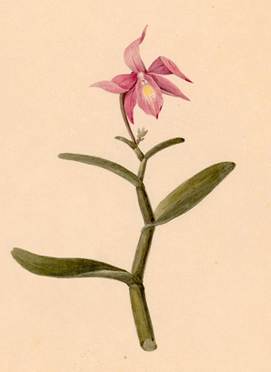
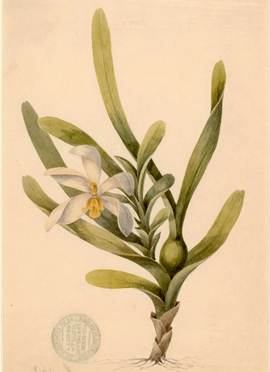
The orchids illustrated by Louise van Panhuys, often misidentified by Möbius (Table 1), were: Barkeria lindleyana Bateman ex Lindl. (1842, Fig. 12), Camaridium ochroleucum Lindl. (1824, Fig. 13), Epidendrum anceps Jacq. (1788, Fig. 14), Epidendrum ciliare L. (1759, Fig. 15), Epidendrum difforme Jacq. (1760, Fig. 16), Epidendrum nocturnum Jacq. (1760, Fig. 17), Oncidium ornithorhynchum Kunth (1816, Fig. 18), and Rodriguezia secunda Kunth (1816, Fig. 19).
Louise van Panhuys returned to Germany after her husband’s funeral in Paramaribo and moved once more into the family home in Frankfurt. In 1824, she gifted around 90 of her watercolors, created during her years in Suriname, to the Senckenberg Natural
History Society and are held today at the Senckenberg Library of the Goethe University in Frankfurt.
Louise von Panhuys’ work has been exhibited on different occasions, in 1898, 1991, 2007, 2009, and 2023.
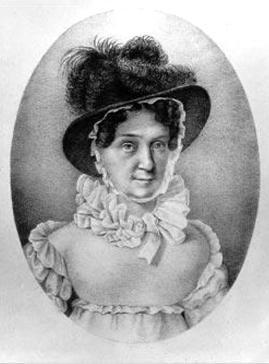
Figure 3 Louise van Panhuys (1763-1844). Unknown artist. Courtesy of Johann Christian Senckenberg Library, University of Frankfurt.
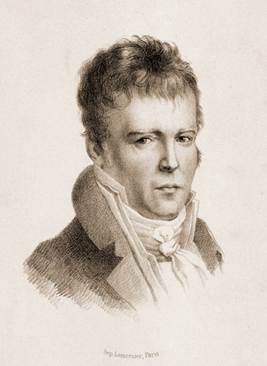
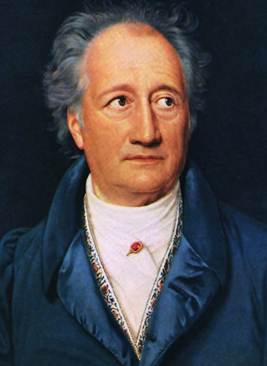
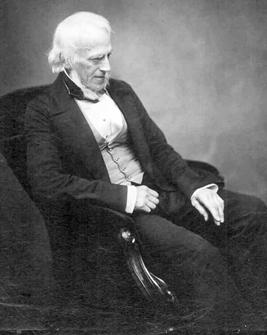

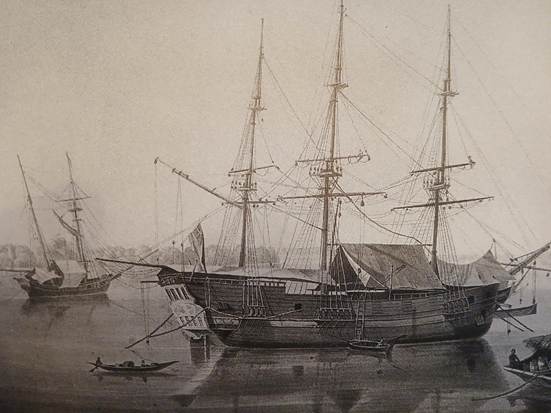
Figure 8 Harbor of Paramaribo, with a ship similar to the one that brought Louise von Panhuys to Suriname, a so-called ‘West Indiaman’. By Louise van Panhuys.
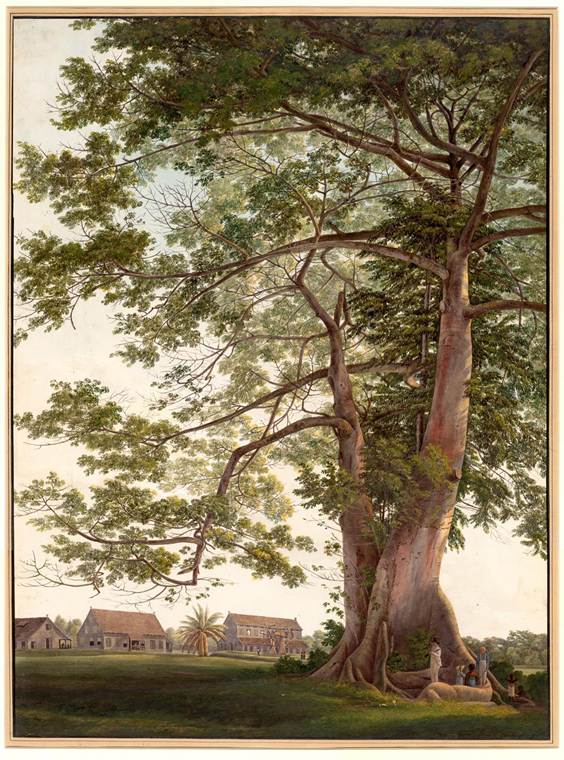
Figure 9 Plantation Nut en Schadelijk on the lower course of the Commewijne River. Watercolor by Louise van Panhuys.


Table 1 The orchids of Louise van Panhuys.
| Botanical name as given by Möbius | Correct or accepted name today |
|---|---|
| Barkeria lindleyana Bateman ex Lindl. (1842) | Epidendrum sp. |
| Camaridium ochroleucum Lindl. (1824) | Camaridium ochroleucum Lindl. (1824) |
| Epidendrum anceps Jacq. (1778) | Epidendrum anceps Jacq. (1778) |
| Epidendrum ciliare L. (1759) | Epidendrum ciliare L. (1759) |
| Epidendrum difforme Jacq. (1760) | Epidendrum sp. |
| Epidendrum fimbriatum Kunth (1816) | Epidendrum fimbriatum Kunth (1816) |
| Epidendrum nocturnum Jacq. (1760) | Epidendrum nocturnum Jacq. (1760) |
| Oncidium ornithorhynchum Kunth (1816) | Ionopsis utricularioides (Sw.) Lindl. (1821) |
| Rodriguezia secunda Kunth (1816) | Rodriguezia lanceolata Ruiz & Pav. (1798) |



The lost manuscript: Nancy Anne Kingsbury Wollstonecraft (1791-1828)
Lost for 190 years, a three-volume manuscript blooming with vivid color drawings of Cuban flora has resurfaced in upstate New York. Although there had been some references to its existence, it was only in 2018, that the Department of Rare and Manuscript Collections of the Library of the University of Cornell digitized the manuscript, making it accessible to the public and opening new research avenues concerning the history of female naturalists and illustrators (Garrido, 2022; 2023).
Cornell acquired the manuscript from one of her relatives, Benjamin Freeman Kingsbury (1872-1946). In 1923, a century after the drawings were made, Kingsbury, an alumnus and professor at Cornell, donated the volumes to the Cornell Libraries, which cataloged them in April 1923 as a manuscript. Because the title page misidentified the author’s name, its significance was not recognised.
Nondescript marbled cardboard covers and a title page in cursive handwriting announce Specimens of the Plants & Fruits of the Island of Cuba by Mrs. A.K. Wollstonecraft. This simplicity belies the contents of the slim, well-worn volumes. Pages and pages showcase 121 illustrated plates showing plants in exquisite detail (Reid, 2019).
Wollstonecraft, aside from her obvious talent for botanical descriptions and illustrations, became one of the most distinguished voices of feminism in the United States in the early 1800s. The first paragraph of her essay The Natural Rights of Woman (Wollstonecraft, 1825) is strongly influenced by her religious education; a passionate account of God’s creation of the world and the equal standings of men and women, read as follows: “Nearly six thousand years have passed since the Great Creator of the universe, crowned his labors by giving being to the most noble and intelligent of his creatures -immortal man. Male and females, created them; but declared them of one bone -one flesh- one mind. To them he directed his divine commands -and gave them rule over all that he had made. Their wisdom -their intelligence- their sovereignty was equal. God blessed them both and gave them united dominion over the earth and the sea; and bade them to continue as he had created them, in love and harmony. He looked upon all that he had made; and beholding it was good, he rested from his labors….
But it seems that man soon became wiser than his Maker, and discovered that the Almighty was mistaken, or had made a mistake, and that all the mind, or at least the greatest part of it, had been bestowed upon himself and that woman had received only a poor pittance, the mere leavings, and scrapings that could be gathered after his own wise brain was furnished.”
Wollstonecraft soon returned to the reality of her time and continued (Wollstonecraft, 1825), “She (the woman) was not permitted to enjoy a single ray of the light of science, nor to feel the genial influence of its invigorating beams; but was immersed within the prison gates of ignorance and superstition, and every avenue to escape guarded with Turkish vigilance, Pagan superstition, and Popish bigotry. And this system of female exclusion prevailed in all countries, up to so late a period, that the immortal Milton, himself the intellectual sun that enlightened the whole literary hemisphere, refused to let his own daughters be taught to write” (Wollstonecraft, 1825).
Anne had married Charles Wollstonecraft, whose sister Mary (1759-1797) had achieved fame in England as an advocate for the women’s rights. It is undeniable that her well-known work The Vindication on the Rights of Woman (1792) exerted an important influence on her sister-in-law. However, “part of the attraction for many of those who encountered this essay (Anne’s The Natural Rights of Woman) was surely the curiosity factor of reading a treatment of the rights of woman by ‘another Wollstonecraft’. Certainly, that was the case for me. It does not take one more than a few paragraphs, however, to realize that Kingsbury speaks with her own assured and forthright voice, presenting a distinctive and penetrating analysis that is fully deserving of sustained scholarly attention in its own right”. (Coffee, 2021).
After marrying Charles Wollstonecraft, a major in the United States Army, the couple lived in New Orleans until Charles died in 1817. During this time, Anne was engaged in various charitable works in New Orleans, particularly with the Poydras Female Asylum, a shelter for orphans that offered education for women with limited resources. Then, following her husband’s death, she left for Cuba, never to return.
The reasons for Anne’s emigration to Cuba (Fig. 20) have been the subject of much speculation. Her husband Charles had a daughter from his first marriage, by the name of Jane Nelson Wollstonecraft (1806-1882). Before his death from yellow fever, he left his daughter in the custody of Anne. Claire Tomalin, in the biography The life and death of Mary Wollstonecraft, speculates that Anne, after losing the legal battle about the custody of the child fled to Cuba with Jane Nelson, where all traces of her future life were lost (Tomalin, 2012). Other sources suggest that Anne traveled to Cuba for health reasons, and still others that she fled because of her husband’s unpaid debts.
The first news we have about Anne Wollstonecraft after her move to Cuba are her article about The Natural Rights of Woman (Wollstonecraft, 1825) and the two Letters from Cuba she wrote for the Boston Monthly Magazine in 1826 (Wollstonecraft, 1826b; Knapp, 1826). The Two letters from Cuba describe in detail the geography, climate, and plants native to the island, but are otherwise of no further interest for this work.
It would not be until 1828 when Cuban exiles and human rights advocates Father Félix Varela and José Antonio Saco published a note in their periodical El Mensajero Semanal mentioning an American woman in Cuba drawing Cuban plants. “A lady has occupied herself for several years in delineating and describing the more select vegetables growing on this interesting island. Three quarto volumes of descriptions and drawings have been sent to New York, by Nathaniel H. Carter, Esq., corresponding secretary of our Horticultural Society, from Havana. The figures are carefully colored from the living specimens; and they appear to have been executed not with correctness merely, but elegance. The history which accompanies each is brief, but sententious and comprehensive, containing the leading facts and circumstances relative to their production. The author of this beautiful and instructive performance is Mrs. Walstoncraft (sic) and it may be safely said that it is fully equal to the plates that embellish the celebrated book on the insects of Surinam, and the plants they fed upon, by Sybella Merian!” (Fig. 21).
News traveled slowly in those times, and Varela and Saco were not aware that Anne Wollstonecraft had passed away three months earlier.
As to Anne’s surname, she is generally referred to as ‘Mrs. Wollstonecraft’, but on at least one occasion as on ‘Mrs. Walstonecraft’. It will remain an unsolved riddle, especially, since in her own handwriting, she names herself ‘Wollstonecroft’ (Fig. 22). To make things even more complicated, some authors have written about her as “Anne” Wollstonecraft, others as “Nancy” Wollstonecraft and still others as “Nancy Anne” Wollstonecraft!
Anne Kingsbury Wollstonecraft established herself in the city of Matanzas (Fig. 23), one of Cuba’s most important ports of commerce, located on the north shore of the island, surrounding the Bay of Matanzas. The bay cuts deep into the island, and three rivers flow in the bay inside city limits: Rio Yumuri, San Juan, and Canimar. Matanzas lies about 100 kilometers east of Havanna.
Matanzas is also known as the ‘Athens of Cuba’, for its cultural and literary development. Anna arrived in the city only a few years after the introduction to Matanzas of the printing press, which marked the beginning of the so-called ‘Matanzas Golden Age’. At that time, the city had a population at that time of approximately 15,000 inhabitants.
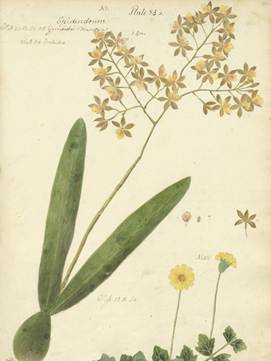
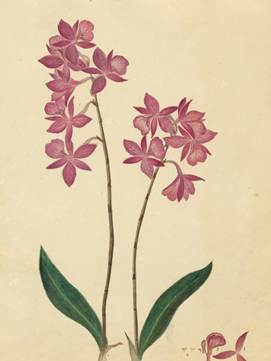
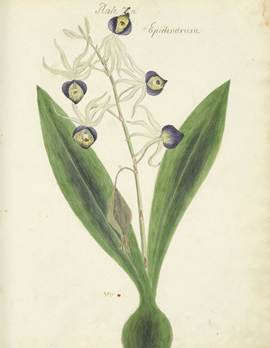
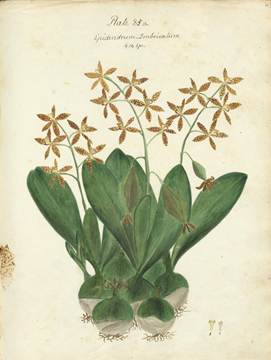
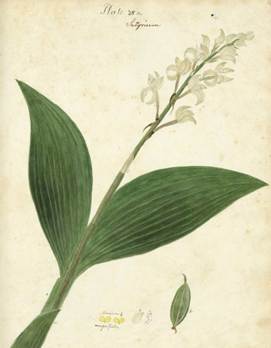
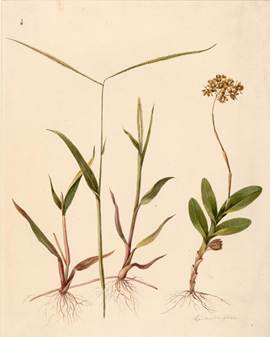
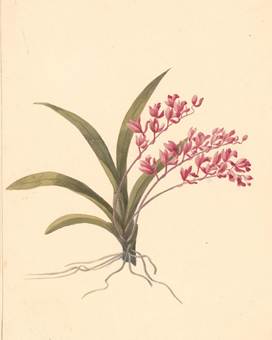
In her famous manuscript, Wollstonecraft illustrated a total of 145 Cuban fruits and plants, among which we have identified nine species of orchids, all accompanied by handwritten descriptions. Among the drawings are trees, flowers and fruits, such as the palm, pineapple or papaya, and our favorites: the orchids. The complexity and the number of illustrations makes it one of the first documents of its kind known about the region’s botany. The detailed notes made by the author on the common names and native uses of the species add a completely new and very useful dimension to ethnobotanical knowledge.
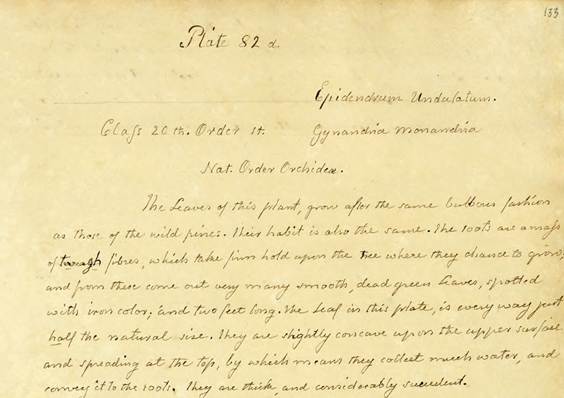
The illustrations are accompanied by approximately 220 pages of descriptions written in English, the author’s native language, which shows her great ability to connect various historical facts with the local uses of natural resources and her personal observations, which also encompass details about her lifestyle and her perspectives on various topics related to the environment and its context. The use of Latin nomenclature and the drawings of the various dissections of plants suggest that A. K. Wollstonecraft possessed at least a basic understanding of Linnaean science and taxonomy. In many plates the different enlarged parts are also shown sectioned, indicating that the author us think that the author may have had dissection materials and optical instruments, such as the magnifying glass or microscope. In a comment to her plate 66 (Aeschynomene grandiflora (L.) L. (1763)) we read:
“The tree which bears the flower and the legume represented in plate 66 grows in this island to twenty feet high. It may be that I have mistaken the genus, and species to which botanists have assigned it. But without either books to inform or scientific friends to correct, it would be astonishing if I did not make any mistakes in the nomenclatur(e) and in the artificial arrangement of plants which have been presented to me and their char
acters unfolded by Nature only without the slightest aid from scientific persons. I have not yet had so much as a single conversation with a botanist, much less a lesson (…) I describe the plants, as I have found, or thought I found them. No aid from others have aided me. It must be therefore that my descriptions shall prove faulty, yet I can affirm it is unavoidable, not willful faults that I shall deface these pages”. (Wollstonecraft, 1826a)
Whether self-taught or not, A. K. Wollstonecraft was a cultured, well-educated and precise individual. Her work was a result of direct observation and sketching, later completed with data contrast and color reproduction through watercolors. Certainly, if it had been published, her work could have become an unprecedented reference on Cuban flora.
Table 2 The orchids of Nancy Kingsbury Wollstonecraft.
| Botanical name as given by Wollstonecraft | Correct or accepted name today |
|---|---|
| Cranichis sp. | Cyrtopodium punctatum (L.) Lindl. (1833). |
| Epidendron (Epidendrum) sp. | Encyclia cf. altissima Schltr. (1914) |
| Epidendron (Epidendrum) angustifolium Sw. | Broughtonia cf. sanguinea (Sw.) R.Br. (1813) |
| Epidendron (Epidendrum) cochleatum L. (1763) | Prosthechea cochleata (L.) W.E.Higgins (1998) |
| Epidendron (Epidendrum) fragrans Lindl. | Encyclia plicata Britton & Millsp. (1920) |
| Epidendron (Epidendrum) imbricatum Lindl. (1831) | Prosthechea boothiana (Lindl.) W.E.Higgins (1998) |
| Epidendron (Epidendrum) undulatum Sw. (1788) | Trichocentrum undulatum (Sw.) Ackerman & M.W.Chase (2001) |
| Epidendron (Epidendrum) vanilla L. (1853) | Vanilla cf. phaeantha Rchb.f. (1865) |
| Satyrium plantagineum L. | Govenia utriculata Lindl. (1839) |
The following are the nine orchid species illustrated by Wollstonecraft (Table 2): Cranichis sp. (Fig. 24), Epidendron (Epidendrum) sp. (Fig. 25), Epidendron angustifolium Sw. (1788, Fig. 26), Epidendron cochleatum L. (1753, Fig. 27), Epidendron fragrans Lindl. (1847, Fig. 28), Epidendron imbricatum Lindl. (1831, Fig. 29), Epidendron undulatum Sw. (1788, Fig. 30, 33), Epidendron vanilla L. (1753, Fig. 31), Satyrium plantagineum L. (1759, Fig. 32).
According to Knapp (1834) , the illustrations showed not only plants, but also birds, fish and other animals. However, in the volume Specimens and the plants and fruits we only find the illustrated botany collection, which leads us to affirm that A. K. Wollstonecraft work’s could be even broader than we think and that it is likely that new documents may exist that are not included in this article.
Anne Kinsgsbury Wollstonecraft produced an extraordinary manuscript, combining science, art, and travel journals (Knapp, 1834).
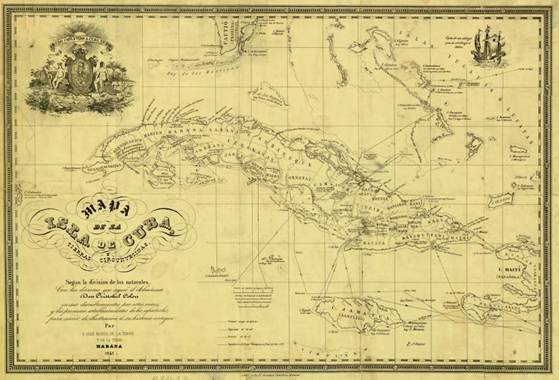
Figure 20 Map of the island of Cuba by José María de la Torre. Library of Congress. Internet, public domain.
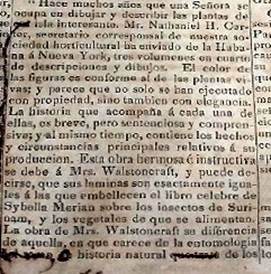
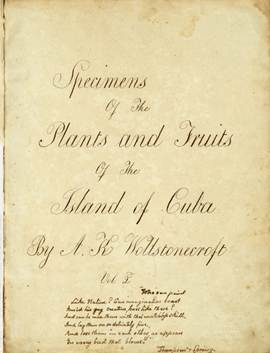
Figure 22 Title page of Wollstonecraft’s manuscript where she spells her name as ‘Wollstonecroft’ (1826a).