<?xml version="1.0" encoding="ISO-8859-1"?><article xmlns:mml="http://www.w3.org/1998/Math/MathML" xmlns:xlink="http://www.w3.org/1999/xlink" xmlns:xsi="http://www.w3.org/2001/XMLSchema-instance">
<front>
<journal-meta>
<journal-id>0253-2948</journal-id>
<journal-title><![CDATA[Revista Costarricense de Ciencias Médicas]]></journal-title>
<abbrev-journal-title><![CDATA[Rev. costarric. cienc. méd]]></abbrev-journal-title>
<issn>0253-2948</issn>
<publisher>
<publisher-name><![CDATA[Editorial Nacional de Salud y Seguridad Social]]></publisher-name>
</publisher>
</journal-meta>
<article-meta>
<article-id>S0253-29482000000100006</article-id>
<title-group>
<article-title xml:lang="es"><![CDATA[Impacto ambiental del precario Villa Libertad, Pavas]]></article-title>
</title-group>
<contrib-group>
<contrib contrib-type="author">
<name>
<surname><![CDATA[Chacón]]></surname>
<given-names><![CDATA[Ligia]]></given-names>
</name>
<xref ref-type="aff" rid="A01"/>
</contrib>
<contrib contrib-type="author">
<name>
<surname><![CDATA[Freer]]></surname>
<given-names><![CDATA[Enrique]]></given-names>
</name>
<xref ref-type="aff" rid="A02"/>
</contrib>
</contrib-group>
<aff id="A01">
<institution><![CDATA[,COOPESALUD RL  ]]></institution>
<addr-line><![CDATA[Pavas ]]></addr-line>
</aff>
<aff id="A02">
<institution><![CDATA[,Universidad de Costa Rica Unidad de Microscopía Electrónica ]]></institution>
<addr-line><![CDATA[San José ]]></addr-line>
<country>Costa Rica</country>
</aff>
<pub-date pub-type="pub">
<day>00</day>
<month>06</month>
<year>2000</year>
</pub-date>
<pub-date pub-type="epub">
<day>00</day>
<month>06</month>
<year>2000</year>
</pub-date>
<volume>21</volume>
<numero>1-2</numero>
<fpage>57</fpage>
<lpage>77</lpage>
<copyright-statement/>
<copyright-year/>
<self-uri xlink:href="http://www.scielo.sa.cr/scielo.php?script=sci_arttext&amp;pid=S0253-29482000000100006&amp;lng=en&amp;nrm=iso"></self-uri><self-uri xlink:href="http://www.scielo.sa.cr/scielo.php?script=sci_abstract&amp;pid=S0253-29482000000100006&amp;lng=en&amp;nrm=iso"></self-uri><self-uri xlink:href="http://www.scielo.sa.cr/scielo.php?script=sci_pdf&amp;pid=S0253-29482000000100006&amp;lng=en&amp;nrm=iso"></self-uri><abstract abstract-type="short" xml:lang="es"><p><![CDATA[Pavas es el noveno Distrito del Cantón Central de San José con una población de 80 000 habitantes en una extensión de 9,3 Km². Inicialmente las tierras del distrito eran utilizadas por sus habitantes para la agricultura y el pastoreo, pero desde 1960 experimentó un crecimiento importante de su población y gran parte de sus terrenos fueron utilizados para desarrollos urbanísticos. En 1978 los terrenos ubicados al Oeste del Distrito fueron invadidos repetidamente por precaristas y en la actualidad el número de precarios asciende a 18. El Precario Villa Libertad es uno de estos precarios en Pavas. Actualmente se considera que los asentamientos tipo precario ejercen una gran presión sobre el medio ambiente; destruyen recursos físicos y biológicos e inciden directamente con el proceso salud-enfermedad individual y colectivo. Aunque el precarismo no es un problema actual, en Costa Rica este fenómeno ha empeorado notablemente en los últimos 15 años. La falta de información sobre el impacto de los precarios en el ambiente es la razón para realizar el presente estudio. Se manejó como hipótesis de estudio el que el Precario Villa Libertad ejerce un impacto negativo de una magnitud importante sobre el ambiente local y que este impacto negativo tiene la capacidad potencial y real de afectar la salud de sus habitantes. Se analizaron variables como hacinamiento, riesgo de incendio, riesgo de inundación, riesgo de derrumbe, contaminación ambiental con sus respectivos indicadores, para demostrar el impacto ambiental, además la concepción de la enfermedad y de la salud de sus pobladores para evaluar el grado de conciencia de este problema. Este estudio demostró una alta densidad habitacional y poblacional con un gran hacinamiento. Se evidenció un riesgo de incendio muy alto, una gran contaminación del suelo, el agua y el aire debido a la mala disposición de desechos sólidos, excretas y aguas servidas y una total deforestación en la zona del precario. Se concluye en este trabajo que el impacto que el Precario Villa Libertad ejerce sobre el ambiente, es negativo, grave y acumulativo; amenaza la salud integral de sus moradores y de los habitantes de las urbanizaciones vecinas.]]></p></abstract>
<abstract abstract-type="short" xml:lang="en"><p><![CDATA[Pavas is the ninth district of San José’s the capital of Costa Rica. It has 80 000 inhabitants on a 9.3 Km² extension. In the beginning the district’s land was used for pasture and agricultural purposes but its population grew very fast since 1960, with an increase of the urban developments in great part of its land as a result. In 1978 the land on the west side of the district was constantly invaded by groups of slum settlers and at present the district counts with 18 precarious settlements. Villa Libertad is one of them en Pavas. It is now considered that precarious settlements exert a great pressure on the environment with the destruction of its physical and biological resources, which at the same time has a direct incidence on the individual and collective health illness process. Even thou the precarious settlement is not a current problem in Costa Rica this phenomenon worsen in the last 15 years. The aim of this study is to improve the lack of information about the impact which the precarious settlements exert on the environment is the reason of this work. The hypothesis was that the "Precario Villa Libertad" exerts a negative impact of great importance on the local environment, and furthermore this impact has a potential and real capacity of affecting the health of its inhabitants. Variables such as: confinement, fire risk, collapse risk, and environment pollution were analyzed along with their indicators to prove the environment impact, and the variables illness and health concepts were analyzed to prove the persons grade of consciousness on this respect. This study proved a high housing and population density with great confinement of persons as well of houses. The risk of fire and soil, water and air pollution were evident. It is concluded therefore that Villa Libertad exerts a negative, severe, and accumulative impact on the environment and this is harmful to the integral health of its people and to the inhabitants of the surrounding urban settlements.]]></p></abstract>
<kwd-group>
<kwd lng="es"><![CDATA[Impacto ambiental]]></kwd>
<kwd lng="es"><![CDATA[Precarismo]]></kwd>
<kwd lng="es"><![CDATA[Villa Libertad]]></kwd>
<kwd lng="es"><![CDATA[Pavas]]></kwd>
<kwd lng="en"><![CDATA[Environment impact]]></kwd>
<kwd lng="en"><![CDATA[precarious settlements]]></kwd>
<kwd lng="en"><![CDATA[Villa Libertad]]></kwd>
<kwd lng="en"><![CDATA[Pavas]]></kwd>
</kwd-group>
</article-meta>
</front><body><![CDATA[ <CENTER><B><FONT FACE="Arial,Helvetica">Impacto ambiental del precario Villa Libertad, Pavas.</FONT></B></CENTER>      <CENTER><B><FONT FACE="Arial,Helvetica">&nbsp;</FONT></B></CENTER>      <CENTER><B><FONT FACE="Arial,Helvetica">&nbsp;</FONT></B></CENTER>      <CENTER><B><FONT FACE="Arial,Helvetica"><FONT SIZE=-1>Ligia Chac&oacute;n<A NAME="1b"></A><SUP><A HREF="#1a">1</A></SUP>,&nbsp; Enrique Freer<SUP><A HREF="#2a">2</A> <A HREF="#1a">*</A></SUP></FONT></FONT></B></CENTER> &nbsp;     <BR>&nbsp;      <P><B><FONT FACE="Arial,Helvetica"><FONT SIZE=-1>Resumen</FONT></FONT></B>      <P><FONT FACE="Arial,Helvetica"><FONT SIZE=-1>Pavas es el noveno Distrito del Cant&oacute;n Central de San Jos&eacute; con una poblaci&oacute;n de 80 000 habitantes en una extensi&oacute;n de 9,3 Km<SUP>2</SUP>. Inicialmente las tierras del distrito eran utilizadas por sus habitantes para la agricultura y el pastoreo, pero desde 1960 experiment&oacute; un crecimiento importante de su poblaci&oacute;n y gran parte de sus terrenos fueron utilizados para desarrollos urban&iacute;sticos. En 1978 los terrenos ubicados al Oeste del Distrito fueron invadidos repetidamente por precaristas y en la actualidad el n&uacute;mero de precarios asciende a 18. El Precario Villa Libertad es uno de estos precarios en Pavas.</FONT></FONT>      <P><FONT FACE="Arial,Helvetica"><FONT SIZE=-1>Actualmente se considera que los asentamientos tipo precario ejercen una gran presi&oacute;n sobre el medio ambiente; destruyen recursos f&iacute;sicos y biol&oacute;gicos e inciden directamente con el proceso salud-enfermedad individual y colectivo. Aunque el precarismo no es un problema actual, en Costa Rica este fen&oacute;meno ha empeorado notablemente en los &uacute;ltimos 15 a&ntilde;os. La falta de informaci&oacute;n sobre el impacto de los precarios en el ambiente es la raz&oacute;n para realizar el presente estudio. Se manej&oacute; como hip&oacute;tesis de estudio el que el Precario Villa Libertad ejerce un impacto negativo de una magnitud importante sobre el ambiente local y que este impacto negativo tiene la capacidad potencial y real de afectar la salud de sus habitantes. Se analizaron variables como hacinamiento, riesgo de incendio, riesgo de inundaci&oacute;n, riesgo de derrumbe, contaminaci&oacute;n ambiental con sus respectivos indicadores, para demostrar el impacto ambiental, adem&aacute;s la concepci&oacute;n de la enfermedad y de la salud de sus pobladores para evaluar el grado de conciencia de este problema. Este estudio demostr&oacute; una alta densidad habitacional y poblacional con un gran hacinamiento. Se evidenci&oacute; un riesgo de incendio muy alto, una gran contaminaci&oacute;n del suelo, el agua y el aire debido a la mala disposici&oacute;n de desechos s&oacute;lidos, excretas y aguas servidas y una total deforestaci&oacute;n en la zona del precario. Se concluye en este trabajo que el impacto que el Precario Villa Libertad ejerce sobre el ambiente, es negativo, grave y acumulativo; amenaza la salud integral de sus moradores y de los habitantes de las urbanizaciones vecinas. (<I>Rev Cost Cienc Med</I> 2000; 21(1-2): 57-77)</FONT></FONT>      <P><B><FONT FACE="Arial,Helvetica"><FONT SIZE=-1>Palabras clave</FONT></FONT></B><FONT FACE="Arial,Helvetica"><FONT SIZE=-1></FONT></FONT>      <P><FONT FACE="Arial,Helvetica"><FONT SIZE=-1>Impacto ambiental, Precarismo, Villa Libertad, Pavas.</FONT></FONT>      ]]></body>
<body><![CDATA[<P><B><FONT FACE="Arial,Helvetica"><FONT SIZE=-1>Abstract</FONT></FONT></B>      <P><FONT FACE="Arial,Helvetica"><FONT SIZE=-1>Pavas is the ninth district of San Jos&eacute;’s the capital of Costa Rica. It has 80 000 inhabitants on a 9.3 Km<SUP>2</SUP> extension. In the beginning the district’s land was used for pasture and agricultural purposes but its population grew very fast since 1960, with an increase of the urban developments in great part of its land as a result. In 1978 the land on the west side of the district was constantly invaded by groups of slum settlers and at present the district counts with 18 precarious settlements. Villa Libertad is one of them en Pavas.</FONT></FONT>      <P><FONT FACE="Arial,Helvetica"><FONT SIZE=-1>It is now considered that precarious settlements exert a great pressure on the environment with the destruction of its physical and biological resources, which at the same time has a direct incidence on the individual and collective health illness process. Even thou the precarious settlement is not a current problem in Costa Rica this phenomenon worsen in the last 15 years. The aim of this study is to improve the lack of information about the impact which the precarious settlements exert on the environment is the reason of this work. The hypothesis was that the "Precario Villa Libertad" exerts a negative impact of great importance on the local environment, and furthermore this impact has a potential and real capacity of affecting the health of its inhabitants. Variables such as: confinement, fire risk, collapse risk, and environment pollution were analyzed along with their indicators to prove the environment impact, and the variables illness and health concepts were analyzed to prove the persons grade of consciousness on this respect. This study proved a high housing and population density with great confinement of persons as well of houses. The risk of fire and soil, water and air pollution were evident. It is concluded therefore that Villa Libertad exerts a negative, severe, and accumulative impact on the environment and this is harmful to the integral health of its people and to the inhabitants of the surrounding urban settlements.</FONT></FONT>      <P><B><FONT FACE="Arial,Helvetica"><FONT SIZE=-1>Key words</FONT></FONT></B><FONT FACE="Arial,Helvetica"><FONT SIZE=-1></FONT></FONT>      <P><FONT FACE="Arial,Helvetica"><FONT SIZE=-1>Environment impact, precarious settlements, Villa Libertad, Pavas.</FONT></FONT>     <BR>&nbsp;<B><FONT FACE="Arial,Helvetica"><FONT SIZE=-1></FONT></FONT></B>      <P><B><FONT FACE="Arial,Helvetica"><FONT SIZE=-1>Introducci&oacute;n</FONT></FONT></B>      <P><FONT FACE="Arial,Helvetica"><FONT SIZE=-1>En los &uacute;ltimos a&ntilde;os se ha detectado un aumento acelerado en la formaci&oacute;n de precarios, fen&oacute;meno muy relacionado con el aumento de la pobreza y el deterioro general de la sociedad (<A HREF="#1">1</A>, <A HREF="#2">2</A>). Am&eacute;rica Latina es un buen ejemplo del impacto de la pobreza pues en 1990 unos 110 millones de personas viv&iacute;an por debajo del l&iacute;mite de la pobreza (<A HREF="#3">3</A>) y actualmente la cifra ha aumentado a 224 millones (<A HREF="#4">4</A>). Este fen&oacute;meno produce un desequilibrio en la organizaci&oacute;n del espacio geogr&aacute;fico. Costa Rica se ha visto afectada por el problema de los asentamientos humanos con caracter&iacute;sticas de tugurio en diferentes zonas del pa&iacute;s, sobre todo cerca de su capital. Este comportamiento se ha acentuado desde 1980 en la zona oeste de la capital espec&iacute;ficamente el Distrito de Pavas.</FONT></FONT>      <P><FONT FACE="Arial,Helvetica"><FONT SIZE=-1>Los precarios son una respuesta de adaptaci&oacute;n de los grupos sociales marginados (<A HREF="#5">5</A>). Generalmente se ubican en terrenos no utilizados por los sistemas de producci&oacute;n, en las cercan&iacute;as de r&iacute;os y quebradas. El asentamiento no se realiza en una forma organizada o planificada, ni cumple las normas establecidas de construcci&oacute;n de las respectivas Municipalidades (<A HREF="#6">6-10</A>). Los precaristas no tienen las condiciones econ&oacute;micas m&iacute;nimas para alcanzar un nivel de vida adecuado por lo que recurren a m&uacute;ltiples estrategias para asentarse y producen generalmente una p&eacute;rdida de equilibrio en el sistema. Este desequilibrio puede ser causa de enfermedad humana. El impacto ambiental es la acci&oacute;n de producir una alteraci&oacute;n favorable o desfavorable en el medio o en alguno de sus componentes (<A HREF="#1">1</A>). El Distrito de Pavas se ha visto invadido en forma importante y actualmente existen alrededor de 18 asentamientos de este tipo (<A HREF="#11">11</A>). Este estudio desarroll&oacute; la hip&oacute;tesis de que el Precario Villa Libertad ejerce un impacto negativo de una magnitud importante sobre el ambiente local y este impacto puede tener la capacidad potencial y real de afectar la salud de sus habitantes y de la regi&oacute;n. El objetivo principal fue la descripci&oacute;n de este impacto sobre el ambiente.</FONT></FONT>      <P><FONT FACE="Arial,Helvetica"><FONT SIZE=-1>A nivel mundial se ha detectado un creciente deterioro ambiental lo que ha generado acciones espec&iacute;ficas de organismos internacionales para analizar y evaluar el problema en los diferentes pa&iacute;ses afectados y generar mecanismos globales de control (<A HREF="#12">12-24</A>). En Costa Rica se han realizado acciones espec&iacute;ficas para la conservaci&oacute;n del medio dentro del concepto del Desarrollo Sostenible (<A HREF="#22">22</A>, <A HREF="#25">25</A>).</FONT></FONT>      ]]></body>
<body><![CDATA[<P><FONT FACE="Arial,Helvetica"><FONT SIZE=-1>La ONU manifiesta una urgente necesidad de establecer mecanismos internacionales para la recopilaci&oacute;n y difusi&oacute;n de informaci&oacute;n acerca de los efectos de los asentamientos humanos y la vivienda sobre la salud, as&iacute; como de establecer criterios de salud para las condiciones sociales y ambientales de dichos asentamientos (<A HREF="#25">25</A>). Tambi&eacute;n se ha planteado la necesidad de definir las organizaciones responsables de regular los asentamientos humanos y sus posibles impactos en el ambiente (<A HREF="#26">26-28</A>).</FONT></FONT>      <P><FONT FACE="Arial,Helvetica"><FONT SIZE=-1>Seg&uacute;n estudios realizados por la ONU y la OPS (<A HREF="#1">1</A>, <A HREF="#19">19</A>, <A HREF="#27">27</A>), la salud humana est&aacute; influenciada de principalmente por la intervenci&oacute;n mutua entre los seres humanos y los factores bi&oacute;ticos, qu&iacute;micos, f&iacute;sicos y socioecon&oacute;micos que constituyen el medio humano. Cada pa&iacute;s necesita que la investigaci&oacute;n de la salud ambiental se dedique a problemas resultantes de las condiciones particulares del medio propio (<A HREF="#28">28</A>, <A HREF="#29">29</A>).</FONT></FONT>     <BR>&nbsp;<B><FONT FACE="Arial,Helvetica"><FONT SIZE=-1></FONT></FONT></B>      <P><B><FONT FACE="Arial,Helvetica"><FONT SIZE=-1>Metodolog&iacute;a</FONT></FONT></B><B><FONT FACE="Arial,Helvetica"><FONT SIZE=-1></FONT></FONT></B>      <P><FONT FACE="Arial,Helvetica"><FONT SIZE=-1>Este estudio es de tipo transversal descriptivo y se realiz&oacute; en el periodo de Octubre de 1998 a Abril de 1999. Para determinar la concepci&oacute;n de la salud, la enfermedad y el ambiente en el precario, se aplic&oacute; un cuestionario especialmente dise&ntilde;ado a cada una de las 250 viviendas del precario. Del total de 250 casas del precario Villa Libertad, se investigaron 100 casas para determinar las caracter&iacute;sticas de la vivienda. Las casas fueron seleccionadas por muestreo simple al azar, utilizando las fichas familiares del precario archivadas en el EBAIS de Libertad, COOPESALUD R.L. Los m&eacute;todos de investigaci&oacute;n utilizados fueron: la observaci&oacute;n, el cuestionario, la entrevista y el registro de las fichas familiares. Para poder evaluar el impacto ambiental del precario y su entorno se analizaron las variables y sus indicadores mostrados en el <A HREF="#Cuadro1">Cuadro l</A>. Estas variables est&aacute;n &iacute;ntimamente relacionadas entre s&iacute; e inciden profundamente en proceso de salud - enfermedad.</FONT></FONT>      <P><FONT FACE="Arial,Helvetica"><FONT SIZE=-1>Se realizaron tres visitas a cada casa durante una ma&ntilde;ana, tarde y noche, varios d&iacute;as a la semana realizando una entrevista personal y aplicando un cuestionario. La validaci&oacute;n de los cuestionarios se realiz&oacute; con un estudio piloto aplicando el cuestionario a veinticinco personas. La fiabilidad de los cuestionarios se logr&oacute; aplicando los cuestionarios en forma individual a los 250 entrevistados. Los m&eacute;todos estad&iacute;sticos utilizados fueron el c&aacute;lculo de porcentajes, proporciones o razones simples y porcentuales, distribuci&oacute;n porcentual, el promedio, la mediana y la moda a los datos pertinentes.</FONT></FONT>     <BR>&nbsp;<B><FONT FACE="Arial,Helvetica"><FONT SIZE=-1></FONT></FONT></B>      <P><B><FONT FACE="Arial,Helvetica"><FONT SIZE=-1>Resultados</FONT></FONT></B>      <P><FONT FACE="Arial,Helvetica"><FONT SIZE=-1>El precario Villa Libertad tiene una extensi&oacute;n de 26 250 m<SUP>2</SUP> (350 m de frente por 75 m de fondo). El suelo es de tipo arcilloso. El terreno es atravesado por el tubo principal de la cloaca de Pavas y el tubo de la quebrada de Pavas que desemboca en el r&iacute;o Tirib&iacute;. La poblaci&oacute;n del precario durante el per&iacute;odo de estudio fue de 1 740, 85% de nicarag&uuml;enses y 15% costarricenses. La densidad de poblaci&oacute;n fue de 663 personas por cada 10 000 m<SUP>2</SUP>. El precario ten&iacute;a 250 unidades habitacionales lo cual da una densidad habitacional de 95,3 casas por manzana (10 000 m<SUP>2</SUP>). Ciento sesenta y cinco casas (66 %) se localizan en la pendiente del r&iacute;o, 85 casas (34 %) sobre el tubo principal de la cloaca y sobre el tubo de la quebrada de Pavas.</FONT></FONT>      <P><FONT FACE="Arial,Helvetica"><FONT SIZE=-1>La ubicaci&oacute;n del precario produce un impacto en el medio ambiente. Para su construcci&oacute;n no se respet&oacute; la zona de protecci&oacute;n que debe existir alrededor de una quebrada o r&iacute;o que es de un m&iacute;nimo de 50 m (30). La zona del precario fue totalmente deforestada lo que produjo un aumento de evaporaci&oacute;n del agua corriente, un aumento de la erosi&oacute;n del suelo con lavado de material hacia el r&iacute;o. Adem&aacute;s hay contaminaci&oacute;n por desechos s&oacute;lidos del suelo y aumento importante de la sedimentaci&oacute;n con deterioro del cauce normal de la quebrada. La ubicaci&oacute;n de las casas en el &aacute;rea de protecci&oacute;n de la quebrada, y el hecho de que &eacute;stas tengan sus drenajes de aguas negras servidas hacia los tubos de la misma producen una contaminaci&oacute;n fecal del agua de la quebrada y otros desechos que alteran la flora y fauna del r&iacute;o.</FONT></FONT>      ]]></body>
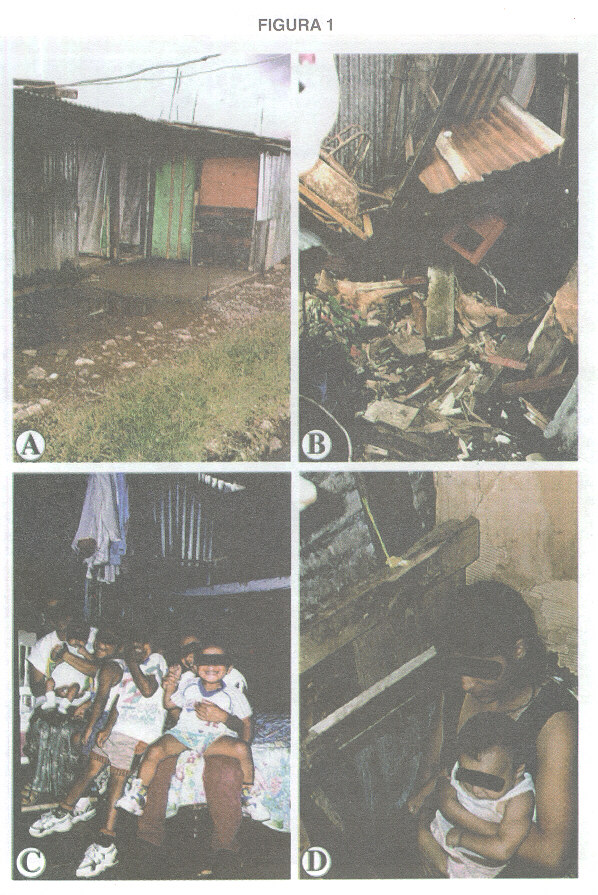
<body><![CDATA[<P><FONT FACE="Arial,Helvetica"><FONT SIZE=-1>Las caracter&iacute;sticas constructivas de las unidades habitacionales son importantes para valorar el estado del precario. Las casas construidas en madera representan el 20%, con lata el 44% y un 36% son viviendas construidas de varios materiales como bloques de cemento, latas, cartones y telas varias (<A HREF="#fig1">Fig.1A</A>). El tama&ntilde;o de las casas es peque&ntilde;o como se evidencia en el <A HREF="#Cuadro2">Cuadro 2</A>. El 48% de las casas tienen una superficie menor o igual a 30,5 m<SUP>2</SUP>. El tama&ntilde;o promedio de casa es de 36 m<SUP>2</SUP>, la moda es de 30 m<SUP>2</SUP> y la mediana es de 32 m<SUP>2</SUP>.</FONT></FONT>      <P><FONT FACE="Arial,Helvetica"><FONT SIZE=-1>El n&uacute;mero de dormitorios en cada casa es insuficiente, pues el 46% de las casas tienen de uno a dos aposentos, el 42% tienen de tres a cuatro y el 12% de cinco a seis. El hacinamiento es evidente pues el 66,8% de los habitantes residen en casas de uno a dos cuartos, el 29.9% de casas tienen 3 a 4 dormitorios y el 3.3% casas con 5 a 6 dormitorios. El n&uacute;mero promedio de personas por dormitorio es 4 y por casa es 7.</FONT></FONT>      <P><FONT FACE="Arial,Helvetica"><FONT SIZE=-1>La alta densidad habitacional y de poblaci&oacute;n tambi&eacute;n lesiona el ambiente, pues elimina las zonas de recreo, zonas verdes y produce gran cantidad de desechos s&oacute;lidos que no son bien manejados (<A HREF="#fig1">Fig. 1B</A>). En el Cuadro 3 se observa la distribuci&oacute;n de la poblaci&oacute;n. A pesar que la Municipalidad sugiere un &aacute;rea de por lo menos 30 m<SUP>2</SUP> por cada dos habitantes (<A HREF="#31">31</A>), se puede apreciar que a menor superficie de la unidad habitacional, hay mayor n&uacute;mero de personas. El Cuadro 4 muestra el alto &iacute;ndice de hacinamiento del precario de Villa Libertad de Pavas. Es importante observar que un alto porcentaje de personas (38 %) est&aacute;n distribuidas en el grupo de 6 a 10 individuos que habitan casas de 1 a 2 dormitorios (<A HREF="#fig1">Fig. 1C</A>).</FONT></FONT>      <P><FONT FACE="Arial,Helvetica"><FONT SIZE=-1>Para valorar del riesgo de incendio se revisaron los materiales con que se construyeron las casas. Tomando en cuenta la facilidad de combusti&oacute;n de los materiales podemos definir el riesgo de incendio como muy alto. A esto debemos agregar el mal estado del sistema el&eacute;ctrico y las pr&aacute;cticas peligrosas de los precaristas de hacer fogatas dentro de las casas y fuera de ellas (<A HREF="#fig2">Fig. 2A</A>). Un 25% de las personas encienden fogatas fuera de sus ranchos donde cocinan sus alimentos, el riesgo de incendio aumenta por la cercan&iacute;as de las unidades habitacionales y los estrechos espacios entre las mismas (<A HREF="#fig2">Fig. 2B</A>). El 85% de las personas cocina con electricidad, el resto lo hace con fogones colocados en sus diminutos cuartos de cocina o su &uacute;nico aposento de la casa. En la mayor&iacute;a de las casas, a escasos 50 cm de la cocina est&aacute; el tendedero de la ropa o el guardarropa. Las conexiones el&eacute;ctricas que frecuentemente son sitios de inicio de incendio han sido realizadas con una t&eacute;cnica inadecuada, el material utilizado es de desecho y en muy malas condiciones. Es frecuente observar el uso de bombillos y electrodom&eacute;sticos que se conectan a un mismo cable, sobrepasando la capacidad de resistencia del material y produciendo calentamiento (<A HREF="#fig2">Fig. 2C</A>).</FONT></FONT>      <P><FONT FACE="Arial,Helvetica"><FONT SIZE=-1>El riesgo de inundaci&oacute;n se valor&oacute; por el n&uacute;mero de perforaciones de los tubos de la cloaca y de la quebrada. Sobre el tubo de la cloaca que mide 75 m de longitud por 2 m de altura, con un &aacute;rea de 150 m<SUP>2</SUP>, est&aacute;n ubicados 15 unidades habitacionales. Sobre el tubo de la quebrada que mide 350 m de longitud por 2 m de altura, con un &aacute;rea de 700 m<SUP>2</SUP> est&aacute;n ubicadas 70 unidades habitacionales. Esto da un total de 85 viviendas sobre los tubos (<A HREF="#fig2">Fig. 2D</A>). Los precaristas de estas viviendas perforan los tubos para instalar los servicios sanitarios. Hay 128 tubos provenientes de las casas construidas en las pendientes que drenan al tubo de la quebrada, lo que da un total de 213 perforaciones sobre estas estructuras. Todas estas perforaciones contribuyen al deterioro de la estructura de los tubos predisponiendo al colapso de los mismos. En caso de aumentar el caudal de la quebrada, como ocurre en la estaci&oacute;n lluviosa puede producirse salida a presi&oacute;n del agua con inundaci&oacute;n de las viviendas.</FONT></FONT>      <P><FONT FACE="Arial,Helvetica"><FONT SIZE=-1>El riesgo de derrumbe se valor&oacute; considerando la erosi&oacute;n de las pendientes, la ausencia de vegetaci&oacute;n y la densidad habitacional en las pendientes. Las pendientes son de 10&deg; y tienen un &aacute;rea de 20 000 m<SUP>2</SUP>, donde se ubican 165 unidades habitacionales, con una densidad de 82,5 casas por cada 10 000 m<SUP>2</SUP>. La vegetaci&oacute;n en estas zonas est&aacute; ausente desde hace mucho tiempo. Se considera que el riesgo de deslizamiento o derrumbe es alto.</FONT></FONT>      <P><FONT FACE="Arial,Helvetica"><FONT SIZE=-1>Las caracter&iacute;sticas sanitarias del precario son muy malas. De las 250 casas, 218 (87%) tienen agua dentro de la casa, 213 (85%) tienen servicio sanitario intradomiciliar, 210 (84%) tienen ba&ntilde;o. El hecho de tener servicio sanitario interno no implica que la disposici&oacute;n de las excretas sea la adecuada, ya que al construir sus inodoros perforan las tuber&iacute;as de drenaje para colocar sus desag&uuml;es y no sellan bien las perforaciones (<A HREF="#fig3">Fig. 3A</A>). Por estas perforaciones hay salida de aguas negras, insectos y se percibe mal olor. Adem&aacute;s, 15 servicios sanitarios tienen su drenaje directamente sobre el tubo madre de la cloaca y hay 198 instalados sobre el tubo de la quebrada, que la contaminan directamente. Existe en total 213 perforaciones del tubo de la cloaca y la quebrada. De las 37 casas que no tienen servicio sanitario un peque&ntilde;o porcentaje utilizan bolsas de basura como servicio sanitario. La variable contaminaci&oacute;n ambiental fue valorada con los indicadores disposici&oacute;n de aguas residuales y disposici&oacute;n de residuos s&oacute;lidos. Como se mencion&oacute; anteriormente, el tubo por donde fluye la quebrada tiene 198 perforaciones para la colocaci&oacute;n de los retretes. Estas perforaciones realizadas con t&eacute;cnicas inadecuadas, permiten la salida de olores desagradables (<A HREF="#fig3">Fig. 3B</A>). Adem&aacute;s, por estos agujeros transitan cucarachas, mosquitos y roedores. Sobre el tubo principal de la cloaca, hay 15 perforaciones realizadas similares por donde salen los malos olores , insectos y roedores. Existen 37 inodoros con drenaje descubierto en el suelo y que se comunican a las salidas de aguas servidas de las 250 casas, que fluyen por la superficie de las calles (<A HREF="#fig3">Fig. 3C</A>). El suelo de esta zona est&aacute; constantemente h&uacute;medo, contaminado y f&eacute;tido. La actividad dom&eacute;stica produce una importante cantidad de residuos s&oacute;lidos que deben ser desechados. La mayor&iacute;a de las personas dicen utilizar los servicios municipales de recolecci&oacute;n de la basura de las urbanizaciones vecinas. Sin embargo, por las estrechas callejuelas que sirven de paso a sus habitantes, se pueden observar monta&ntilde;as de basura, que producen mal olor, atraen a moscas y roedores. Las 165 casas ubicadas en las pendientes, han sido construidas sobre bases de madera para compensar el desnivel del terreno. El espacio debajo de las casas, es usado por sus habitantes como basureros. Se acumulan tambi&eacute;n los escombros recogidos para reparar las habitaciones. Todo esto aumenta la humedad que se filtra hacia las habitaciones.</FONT></FONT>      <P><FONT FACE="Arial,Helvetica"><FONT SIZE=-1>La concepci&oacute;n individual de la enfermedad se valor&oacute; con los indicadores percepci&oacute;n de da&ntilde;o ambiental, percepci&oacute;n de enfermedad, relaciones sociales y h&aacute;bitos higi&eacute;nicos. Al preguntar a representantes de las 250 casas sobre qu&eacute; es el ambiente el 61% dijo que el ambiente es lo que los rodea, el 53% dijo que el ambiente es la casa, el 58% dijo que el ambiente son los &aacute;rboles, los r&iacute;os, los parques, el 52% dijo que el ambiente es su trabajo. Para valorar si los entrevistados consideran posible que el ambiente se enferme, se les hizo la pregunta directamente y respondieron que s&iacute; en un 64%, un 10% respondi&oacute; que no y un 26% no respondi&oacute;. Ante la pregunta de c&oacute;mo se puede enfermar el ambiente, el 58% respondi&oacute; que tirando la basura a los vecinos, un 59% contaminando los r&iacute;os y un 58% contaminando el aire.</FONT></FONT>      <P><FONT FACE="Arial,Helvetica"><FONT SIZE=-1>El 58% de los habitantes del precario considera que la enfermedad es solo s&iacute;ntomas f&iacute;sicos y el 66% incluye tambi&eacute;n s&iacute;ntomas psicol&oacute;gicos. El 61% refiere que la enfermedad se relaciona con no tener comida, el 60% la relaciona con no tener acceso a la escuela, un 59% refiere que la enfermedad se relaciona con no tener trabajo. Llama la atenci&oacute;n que un 67% dicen que la enfermedad se relaciona con tener un ambiente enfermo. Sobre el concepto de salud el 59% mencionan que salud es ausencia de enfermedad. Dos terceras parte de la poblaci&oacute;n asocian la salud con la alegr&iacute;a, tener casa, tener trabajo, alimentos, escuela y un ambiente sano. Cuando se investigaron los h&aacute;bitos higi&eacute;nicos el 60% de las personas dijo que para mantener el ambiente sano era necesario poner la basura en su lugar y no contaminar los r&iacute;os. El 50% opinaron que no se deb&iacute;an perforar las tuber&iacute;as del acueducto y que se deb&iacute;a construir correctamente los desag&uuml;es y los inodoros. Al pedirse la opini&oacute;n sobre qu&eacute; hacer para mantener el precario sano, un 70% indic&oacute; que se deb&iacute;a poner la basura en su lugar y no hab&iacute;a que contaminar el r&iacute;o. El resto opin&oacute; que no hab&iacute;a que perforar las tuber&iacute;as y que hab&iacute;a que mejorar los excusados y las salidas de agua. Un 17% sugiri&oacute; que se formaran comit&eacute;s de vigilancia sanitaria que para controlar este tipo de medidas. Pero estas opiniones contrastan con lo que realmente se practica, porque un 22% de la poblaci&oacute;n acostumbra tirar sus basuras al vecino, y un 21% de las personas tiran la basura fuera de su casa, lo cual sugiere esto una falta de h&aacute;bitos higi&eacute;nicos y de respeto por los vecinos.</FONT></FONT>      <P><FONT FACE="Arial,Helvetica"><FONT SIZE=-1>En el <A HREF="#Cuadro5">Cuadro 5</A> se puede observar la percepci&oacute;n de contaminaci&oacute;n y ambiente sano. Es importante notar que el 40% de las personas opina que el poner la basura en su lugar y contaminar los r&iacute;os no tiene relaci&oacute;n con el ambiente sano.</FONT></FONT>     ]]></body>
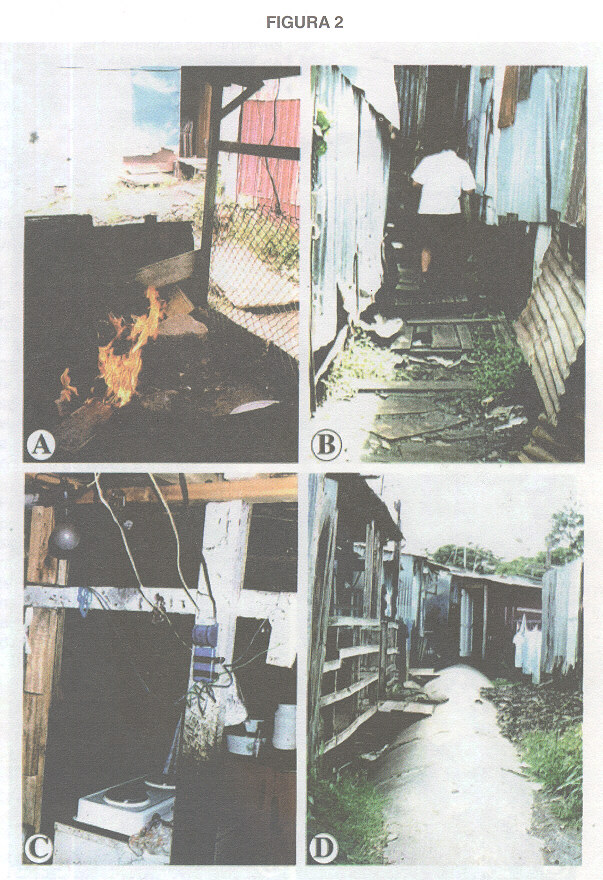
<body><![CDATA[<BR>&nbsp;<B><FONT FACE="Arial,Helvetica"><FONT SIZE=-1></FONT></FONT></B>      <P><B><FONT FACE="Arial,Helvetica"><FONT SIZE=-1>Discusi&oacute;n</FONT></FONT></B><FONT FACE="Arial,Helvetica"><FONT SIZE=-1></FONT></FONT>      <P><FONT FACE="Arial,Helvetica"><FONT SIZE=-1>A finales de la d&eacute;cada de los setenta y principios de los ochenta, se inici&oacute; en Pavas una serie de invasiones de terrenos por grupos de precaristas. Esta fue la estrategia m&aacute;s frecuente utilizada por esos grupos de indigentes para realizar presi&oacute;n pol&iacute;tica al Gobierno de la Rep&uacute;blica con el fin de resolver sus problemas de vivienda. Se formaron as&iacute; en el Distrito de Pavas alrededor de 18 precarios entre ellos Villa Libertad.</FONT></FONT>      <P><FONT FACE="Arial,Helvetica"><FONT SIZE=-1>Hist&oacute;ricamente se ha considerado que un subproducto del desarrollo es el da&ntilde;o al ambiente; sin embargo, el concepto de sostenibilidad implica un m&iacute;nimo impacto sobre el ambiente y un medio confortable y sano para sus habitantes (<A HREF="#1">1</A>, <A HREF="#32">32</A>). El primer paso para intentar un desarrollo sin da&ntilde;ar el ambiente debe ser la evaluaci&oacute;n del impacto ambiental. Por eso el principal objetivo de este trabajo es contribuir al conocimiento del impacto del precarismo en el medio ambiente. Las medidas pues a tomar deben ser incluidas en programas de desarrollo ya sean estos de salud, servicios o producci&oacute;n y depender&aacute;n de la evaluaci&oacute;n del impacto (<A HREF="#33">33</A>).</FONT></FONT>      <P><FONT FACE="Arial,Helvetica"><FONT SIZE=-1>La densidad de la poblaci&oacute;n del precario Villa Libertad es muy alta y el tama&ntilde;o de las casas se considera muy peque&ntilde;o. Estos indicadores revelan la existencia de un gran hacinamiento pues en casas de menos de 30,5 m<SUP>2</SUP> viven de 6 a 8 personas que utilizan dormitorios inferiores al tama&ntilde;o sugerido por las normas de construcci&oacute;n. Seg&uacute;n las Naciones Unidas existe hacinamiento cuando en un dormitorio de 7 m<SUP>2 </SUP>duermen m&aacute;s de 2 personas (<A HREF="#19">19</A>, <A HREF="#27">27</A>). El hacinamiento es relativo en diferentes lugares del mundo, por eso hay que considerar las leyes de construcci&oacute;n. En Costa Rica la Ley No.2760 de Erradicaci&oacute;n de Tugurios (<A HREF="#34">34</A>) establece que debe existir un espacio de 30 m<SUP>2</SUP> para la vivienda de dos personas y 7,5 m<SUP>2</SUP> para el dormitorio de una persona. En este precario duermen de 4 a 6 personas en un dormitorio muy peque&ntilde;o (<A HREF="#fig1">Fig. 1C</A>). En muchos cuartos hay una sola cama y en esa cama duermen hasta seis personas, adem&aacute;s, muchos de estos cuartos son subterr&aacute;neos con algunas de sus paredes de tierra (<A HREF="#fig1">Fig. 1D</A>), sin ventilaci&oacute;n y con una superficie de menos de 2 m. Se considera que este hacinamiento tan evidente influye en la calidad de vida y perjudica la salud integral de los individuos y su ambiente (<A HREF="#1">1</A>). Los ni&ntilde;os no tienen acceso a sitios donde ellos puedan jugar y deben aprovechar el poco espacio y las condiciones poco saludables del medio para divertirse (<A HREF="#fig3">Fig. 3D</A>). Las personas adultas que viven en este hacinamiento no pueden tener el m&iacute;nimo de privacidad para mantener relaciones de pareja normales especialmente si deben compartir el espacio con ni&ntilde;os. El desarrollo sexual de los ni&ntilde;os muchas veces es afectado por el p&eacute;simo ambiente en el que viven, observando conductas anormales para su edad. Tanto el hacinamiento poblacional como el habitacional se consideran factores causales de violencia dom&eacute;stica por la agresi&oacute;n a los ni&ntilde;os y las mujeres, problemas de incesto, embarazos no deseados en las adolescentes, prostituci&oacute;n, drogadicci&oacute;n y actos de delincuencia en general (<A HREF="#26">26</A>).</FONT></FONT>      <P><FONT FACE="Arial,Helvetica"><FONT SIZE=-1>Si se tiene en consideraci&oacute;n que los requisitos sanitarios para una vivienda saludable son una fuente de agua potable dentro de la casa, ambiente sanitariamente saludable en los alrededores de la casa, instalaciones sanitarias que reduzcan al m&iacute;nimo el peligro de transmisi&oacute;n de enfermedades, sistema de abastecimiento de agua que no se contamine con la contaminaci&oacute;n de la propia casa y protecci&oacute;n de la casa contra la contaminaci&oacute;n de desechos. Adem&aacute;s la ausencia de animales roedores e insectos, instalaciones para limpieza, mecanismos para la conservaci&oacute;n de alimentos y espacio suficiente para dormir c&oacute;modamente, de tal modo que se reduzca al m&iacute;nimo el peligro de infecci&oacute;n por contacto (<A HREF="#1">1</A>, <A HREF="#35">35</A>) es claro que este precario no re&uacute;ne las caracter&iacute;sticas de vivienda saludable.</FONT></FONT>      <P><FONT FACE="Arial,Helvetica"><FONT SIZE=-1>Se define riesgo como la probabilidad de que se presenten p&eacute;rdidas o consecuencias econ&oacute;micas y sociales debido a la ocurrencia de un fen&oacute;meno peligroso. Se conoce peligro como el riesgo potencial; t&eacute;rmino cualitativo que expresa el potencial que tiene un agente ambiental para perjudicar la salud (si el nivel de exposici&oacute;n es lo bastante elevado o si se cumplen otras condiciones) (<A HREF="#36">36</A>, <A HREF="#37">37</A>). La variable riesgo de incendio se puede definir como la probabilidad de que se inicie un incendio en el precario, cuyo resultado es variable y potencialmente devastador. El riesgo de incendio es muy alto. Para construir las unidades habitacionales se utiliz&oacute; material de desecho y para tener acceso a la corriente el&eacute;ctrica se conectan de los cables del servicio el&eacute;ctrico m&aacute;s cercano, con material inadecuado, lo que genera un alto riesgo de incendio. Es frecuente observar fogones hechos de piedras con troncos ardiendo dentro de las diminutas habitaciones, colocadas debajo de tendidos de ropa. Ya han ocurrido incendios que consumen un gran n&uacute;mero de ranchos (<A HREF="#11">11</A>). Las condiciones de construcci&oacute;n son tan malas que el Instituto Nacional de Seguros no dispone de un reglamento de seguridad contra incendios para este tipo de asentamientos.</FONT></FONT>      <P><FONT FACE="Arial,Helvetica"><FONT SIZE=-1>El asentamiento en estudio se ubica en la zona de protecci&oacute;n de una quebrada que en 1991 se desbord&oacute; y destruy&oacute; 299 viviendas del Precario Paz 86. No deben construirse asentamientos en las zonas de protecci&oacute;n de r&iacute;os y quebradas por razones ecol&oacute;gicas y peligro de inundaci&oacute;n. La Comisi&oacute;n Nacional de Emergencias hab&iacute;a declarado esta zona inhabitable en 1986. Este antecedente y las perforaciones del tubo de la quebrada y la cloaca predisponen al colapso del mismo. Teniendo en cuenta el antecedente de inundaci&oacute;n y actual densidad poblacional el desastre ser&iacute;a potencialmente mayor.</FONT></FONT>      <P><FONT FACE="Arial,Helvetica"><FONT SIZE=-1>El &aacute;rea de protecci&oacute;n de la quebrada de Pavas tiene pendientes de diez grados (<A HREF="#8">8</A>) las bases de las casas son poco s&oacute;lidas y debido al mal uso que se le ha dado al terreno, no existe vegetaci&oacute;n de amarre y la erosi&oacute;n ha sido grave, lo que aumenta el riesgo de derrumbe (<A HREF="#17">17</A>, <A HREF="#26">26</A>). Esto es considerado un impacto ecol&oacute;gico grave. En Costa Rica existen antecedentes de derrumbes en otras zonas del pa&iacute;s con severas consecuencias.</FONT></FONT>      <P><FONT FACE="Arial,Helvetica"><FONT SIZE=-1>La falta de respeto a las normas de construcci&oacute;n produce una p&eacute;rdida de equilibrio entre los habitantes y el medio con impacto negativo al ambiente. Se puede definir la contaminaci&oacute;n ambiental como la liberaci&oacute;n artificial, de sustancias o energ&iacute;as que causan una gran presi&oacute;n o efectos adversos directa o indirectamente sobre el hombre o el medio (<A HREF="#18">18</A>, <A HREF="#33">33</A>). Esto un producto de la interacci&oacute;n negativa de los seres humanos con el entorno (<A HREF="#21">21</A>, <A HREF="#38">38</A>). Existe diferencia entre residuo y contaminante y es que el primero se considera contaminante hasta que su liberaci&oacute;n produzca un impacto negativo en el medio (<A HREF="#39">39</A>). Los indicadores utilizados para esta variable son: la disposici&oacute;n de las aguas residuales y de los residuos s&oacute;lidos. El agua de buena calidad es indispensable para la vida y el mantenimiento de la salud (<A HREF="#1">1</A>). La disposici&oacute;n de las aguas servidas es muy importante para mantener el ambiente libre de contaminaci&oacute;n. Seg&uacute;n la OMS existen muchos problemas relacionados con el agua potable en los pa&iacute;ses en desarrollo, tales como la contaminaci&oacute;n del agua potable con productos biol&oacute;gicos y qu&iacute;micos, contaminaci&oacute;n generalizada de r&iacute;os, lagos y aguas subterr&aacute;neas, lo que implica un problema serio de salud p&uacute;blica en muchos pa&iacute;ses (<A HREF="#1">1</A>, <A HREF="#40">40</A>, <A HREF="#41">41</A>). En Costa Rica se ha dado mucho &eacute;nfasis al abastecimiento de agua potable para consumo humano, sin embargo, la disposici&oacute;n de los desechos l&iacute;quidos y excretas no se han considerado con igual esfuerzo, lo que al final, afecta directamente la potabilidad del agua (<A HREF="#35">35</A>).</FONT></FONT>      ]]></body>
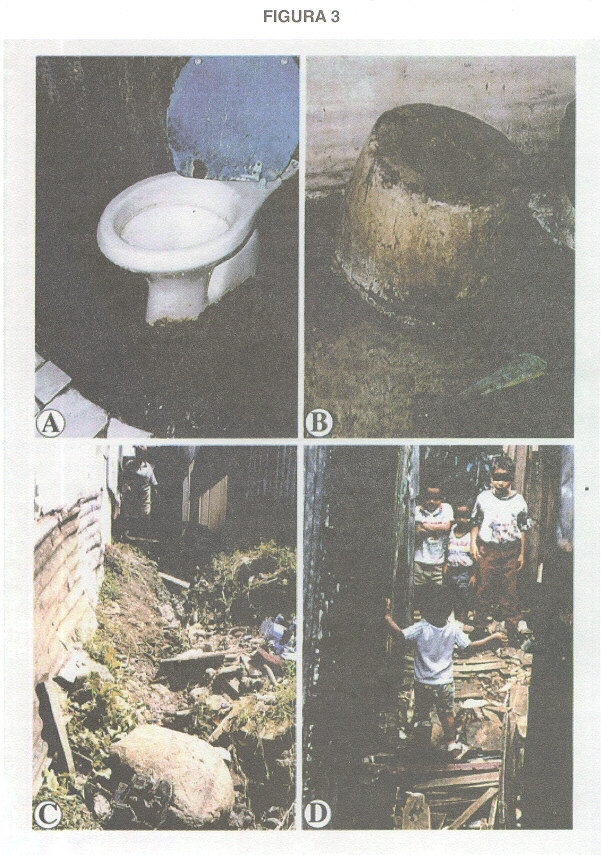
<body><![CDATA[<P><FONT FACE="Arial,Helvetica"><FONT SIZE=-1>El pa&iacute;s ha manejado los desechos en forma poco eficiente por lo que el Poder Ejecutivo en Mayo de 1991, mediante el decreto 20429 declar&oacute; el problema como emergencia nacional (<A HREF="#39">39</A>). El manejo de aguas negras implica un tratamiento previo para destruir bacterias fecales antes de verter el agua a los r&iacute;os o el mar para evitar liberaci&oacute;n de elementos pat&oacute;genos. Cada individuo consume generalmente 150 litros de agua al d&iacute;a (<A HREF="#1">1</A>), este precario producir&iacute;a unos 261 000 litros de agua contaminada la cual no es tratada y se vierte directamente a la quebrada de pavas o a las perforaciones de la cloaca que desembocan en el r&iacute;o. El mal manejo de desechos s&oacute;lidos, de las aguas residuales, de la deforestaci&oacute;n, de la contaminaci&oacute;n de los r&iacute;os y sus &aacute;reas de protecci&oacute;n producen desequilibrio en el ecosistema incidiendo en el estado salud-enfermedad. Las respuestas de los entrevistados respecto al concepto de salud, enfermedad e impacto ambiental fue contradictorio. Una gran mayor&iacute;a conocen o responden correctamente estos conceptos, pero no los ponen en pr&aacute;ctica. Contaminan el agua, aire y suelos del precario. Consideramos en una futura investigaci&oacute;n deben valorarse los motivos de esta actitud.</FONT></FONT>      <P><FONT FACE="Arial,Helvetica"><FONT SIZE=-1>En el Informe de la Comisi&oacute;n Mundial para el Desarrollo y el Medio Ambiente de las Naciones Unidas titulado Nuestro Futuro Com&uacute;n (<A HREF="#16">16</A>), se estableci&oacute; la idea del desarrollo sostenible y se advirti&oacute; que la humanidad deb&iacute;a cambiar el modo de vida y de interacci&oacute;n ambiental existentes si no deseaba la degradaci&oacute;n ecol&oacute;gica y da&ntilde;o a la humanidad. Seg&uacute;n la Conferencia de las Naciones Unidas sobre asentamientos humanos estos contribuyen a la degradaci&oacute;n de las condiciones ambientales y repercute en la salud humana (<A HREF="#17">17</A>). Se sugiri&oacute; que cada pa&iacute;s necesitaba investigar su salud ambiental y dedicar esfuerzos a solucionar sus problemas. Este trabajo viene a llenar esa necesidad de estudio que existe en este tema debido a la ausencia de informaci&oacute;n sobre el impacto ambiental de los asentamientos humanos. En conclusi&oacute;n el precario Villa Libertad produce un impacto sobre el ambiente que es negativo ya que altera la calidad ambiental de manera desfavorable, es total, inmediato, pertinaz, acumulativo, continuo y grave ya que su recuperaci&oacute;n requiere de tiempo prolongado debido a su magnitud.</FONT></FONT>     <BR>&nbsp;<B><FONT FACE="Arial,Helvetica"><FONT SIZE=-1></FONT></FONT></B>      <P><B><FONT FACE="Arial,Helvetica"><FONT SIZE=-1>Referencias</FONT></FONT></B>      <!-- ref --><P><A NAME="1"></A><FONT FACE="Arial,Helvetica"><FONT SIZE=-1>1. Organizaci&oacute;n Panamericana de la Salud. La salud y el ambiente en el desarrollo sostenible. Washington, D.C. 2000. (Publicaci&oacute;n Cient&iacute;fica No. 572).</FONT></FONT>    &nbsp;&nbsp;&nbsp;&nbsp;&nbsp;&nbsp;&nbsp;&nbsp;[&#160;<a href="javascript:void(0);" onclick="javascript: window.open('/scielo.php?script=sci_nlinks&ref=796656&pid=S0253-2948200000010000600001&lng=','','width=640,height=500,resizable=yes,scrollbars=1,menubar=yes,');">Links</a>&#160;]<!-- end-ref --><!-- ref --><P><A NAME="2"></A><FONT FACE="Arial,Helvetica"><FONT SIZE=-1>2. Castro C. An&aacute;lisis y caracter&iacute;sticas generales de los asentamientos en tugurio. 11 edici&oacute;n. Ed. IMAS. San Jos&eacute;. Costa Rica. 1983.</FONT></FONT>    &nbsp;&nbsp;&nbsp;&nbsp;&nbsp;&nbsp;&nbsp;&nbsp;[&#160;<a href="javascript:void(0);" onclick="javascript: window.open('/scielo.php?script=sci_nlinks&ref=796657&pid=S0253-2948200000010000600002&lng=','','width=640,height=500,resizable=yes,scrollbars=1,menubar=yes,');">Links</a>&#160;]<!-- end-ref --><!-- ref --><P><A NAME="3"></A><FONT FACE="Arial,Helvetica"><FONT SIZE=-1>3. Banco Mundial. Informe sobre el desarrollo mundial 1990. La Pobreza, Indicadores del Desarrollo Mundial. Washington, D. C. 1990.</FONT></FONT>    &nbsp;&nbsp;&nbsp;&nbsp;&nbsp;&nbsp;&nbsp;&nbsp;[&#160;<a href="javascript:void(0);" onclick="javascript: window.open('/scielo.php?script=sci_nlinks&ref=796658&pid=S0253-2948200000010000600003&lng=','','width=640,height=500,resizable=yes,scrollbars=1,menubar=yes,');">Links</a>&#160;]<!-- end-ref --><P><A NAME="4"></A><FONT FACE="Arial,Helvetica"><FONT SIZE=-1>4. Comisi&oacute;n Econ&oacute;mica Para Am&eacute;rica Latina y el Caribe, Naciones Unidas. Ed. CEPAL, M&eacute;xico. 2000</FONT></FONT>      <P><A NAME="5"></A><FONT FACE="Arial,Helvetica"><FONT SIZE=-1>5. Comisi&oacute;n Econ&oacute;mica Para Am&eacute;rica Latina y el Caribe, Naciones Unidas. La Pobreza Rural en Am&eacute;rica Latina y el Caribe Un Ensayo de Diagn&oacute;stico. Ed. CEPAL, M&eacute;xico. 1980</FONT></FONT>      <!-- ref --><P><A NAME="6"></A><FONT FACE="Arial,Helvetica"><FONT SIZE=-1>6. Robles A. Configuraci&oacute;n Socioespacial de los Asentamientos en Pobreza. 1995. Tesis. Universidad de Costa Rica. Ciudad Universitaria Rodrigo Facio, San Pedro de Montes de Oca, San Jos&eacute;. Costa Rica.</FONT></FONT>    &nbsp;&nbsp;&nbsp;&nbsp;&nbsp;&nbsp;&nbsp;&nbsp;[&#160;<a href="javascript:void(0);" onclick="javascript: window.open('/scielo.php?script=sci_nlinks&ref=796661&pid=S0253-2948200000010000600006&lng=','','width=640,height=500,resizable=yes,scrollbars=1,menubar=yes,');">Links</a>&#160;]<!-- end-ref --><!-- ref --><P><A NAME="7"></A><FONT FACE="Arial,Helvetica"><FONT SIZE=-1>7. Rodr&iacute;guez S. An&aacute;lisis y Caracter&iacute;sticas Generales de los Asentamientos de Tugurios, P edici&oacute;n. 1984. Ed. RVIAS, Direcci&oacute;n. de Vivienda. San Jos&eacute;. Costa Rica.</FONT></FONT>    &nbsp;&nbsp;&nbsp;&nbsp;&nbsp;&nbsp;&nbsp;&nbsp;[&#160;<a href="javascript:void(0);" onclick="javascript: window.open('/scielo.php?script=sci_nlinks&ref=796662&pid=S0253-2948200000010000600007&lng=','','width=640,height=500,resizable=yes,scrollbars=1,menubar=yes,');">Links</a>&#160;]<!-- end-ref --><!-- ref --><P><A NAME="8"></A><FONT FACE="Arial,Helvetica"><FONT SIZE=-1>8. Solano J. Diagn&oacute;stico del Precario Villa Libertad. 1997-1998. Tesis. Universidad de Costa Rica. Ciudad Universitaria Rodrigo Facio, San Pedro de Montes de Oca, San Jos&eacute;. Costa Rica.</FONT></FONT>    &nbsp;&nbsp;&nbsp;&nbsp;&nbsp;&nbsp;&nbsp;&nbsp;[&#160;<a href="javascript:void(0);" onclick="javascript: window.open('/scielo.php?script=sci_nlinks&ref=796663&pid=S0253-2948200000010000600008&lng=','','width=640,height=500,resizable=yes,scrollbars=1,menubar=yes,');">Links</a>&#160;]<!-- end-ref --><!-- ref --><P><A NAME="9"></A><FONT FACE="Arial,Helvetica"><FONT SIZE=-1>9. Sol&iacute;s L. An&aacute;lisis del Proceso de la Pol&iacute;tica de Vivienda en Costa Rica. Ed. L. Sol&iacute;s. San Jos&eacute;. Costa. Rica. Primera edici&oacute;n. 1989.</FONT></FONT>    &nbsp;&nbsp;&nbsp;&nbsp;&nbsp;&nbsp;&nbsp;&nbsp;[&#160;<a href="javascript:void(0);" onclick="javascript: window.open('/scielo.php?script=sci_nlinks&ref=796664&pid=S0253-2948200000010000600009&lng=','','width=640,height=500,resizable=yes,scrollbars=1,menubar=yes,');">Links</a>&#160;]<!-- end-ref --><!-- ref --><P><A NAME="10"></A><FONT FACE="Arial,Helvetica"><FONT SIZE=-1>10. UNESCO-Par&iacute;s. Un Enfoque Integral Para el Estudio de los Asentamientos. Ed. UNESCO. Par&iacute;s. 1981.</FONT></FONT>    &nbsp;&nbsp;&nbsp;&nbsp;&nbsp;&nbsp;&nbsp;&nbsp;[&#160;<a href="javascript:void(0);" onclick="javascript: window.open('/scielo.php?script=sci_nlinks&ref=796665&pid=S0253-2948200000010000600010&lng=','','width=640,height=500,resizable=yes,scrollbars=1,menubar=yes,');">Links</a>&#160;]<!-- end-ref --><!-- ref --><P><A NAME="11"></A><FONT FACE="Arial,Helvetica"><FONT SIZE=-1>11. Chac&oacute;n L. An&aacute;lisis del impacto ambiental del precario Villa Libertad, Pavas, San Jos&eacute;, Costa Rica. Tesis, Universidad de Costa Rica, Ciudad Universitaria Rodrigo Facio, San Pedro de Montes de Oca, 1999.</FONT></FONT>    &nbsp;&nbsp;&nbsp;&nbsp;&nbsp;&nbsp;&nbsp;&nbsp;[&#160;<a href="javascript:void(0);" onclick="javascript: window.open('/scielo.php?script=sci_nlinks&ref=796666&pid=S0253-2948200000010000600011&lng=','','width=640,height=500,resizable=yes,scrollbars=1,menubar=yes,');">Links</a>&#160;]<!-- end-ref --><!-- ref --><P><A NAME="12"></A><FONT FACE="Arial,Helvetica"><FONT SIZE=-1>12. Comisi&oacute;n de Desarrollo y Medio Ambiente de Am&eacute;rica Latina y el Caribe. Nuestra Propia Agenda. Ed. Banco Interamericano de Desarrollo. 1991.</FONT></FONT>    &nbsp;&nbsp;&nbsp;&nbsp;&nbsp;&nbsp;&nbsp;&nbsp;[&#160;<a href="javascript:void(0);" onclick="javascript: window.open('/scielo.php?script=sci_nlinks&ref=796667&pid=S0253-2948200000010000600012&lng=','','width=640,height=500,resizable=yes,scrollbars=1,menubar=yes,');">Links</a>&#160;]<!-- end-ref --><!-- ref --><P><A NAME="13"></A><FONT FACE="Arial,Helvetica"><FONT SIZE=-1>13. Friends of the Earth. La Conferencia de Estocolmo. S&oacute;lo Una Tierra. Ed. Vincens Vives. Barcelona. Espa&ntilde;a. 1972.</FONT></FONT>    &nbsp;&nbsp;&nbsp;&nbsp;&nbsp;&nbsp;&nbsp;&nbsp;[&#160;<a href="javascript:void(0);" onclick="javascript: window.open('/scielo.php?script=sci_nlinks&ref=796668&pid=S0253-2948200000010000600013&lng=','','width=640,height=500,resizable=yes,scrollbars=1,menubar=yes,');">Links</a>&#160;]<!-- end-ref --><!-- ref --><P><A NAME="14"></A><FONT FACE="Arial,Helvetica"><FONT SIZE=-1>14. Organizaci&oacute;n de las Naciones Unidas. Simposio Sobre Educaci&oacute;n en Materia de Conservaci&oacute;n. Suiza. 1966</FONT></FONT>    &nbsp;&nbsp;&nbsp;&nbsp;&nbsp;&nbsp;&nbsp;&nbsp;[&#160;<a href="javascript:void(0);" onclick="javascript: window.open('/scielo.php?script=sci_nlinks&ref=796669&pid=S0253-2948200000010000600014&lng=','','width=640,height=500,resizable=yes,scrollbars=1,menubar=yes,');">Links</a>&#160;]<!-- end-ref --><!-- ref --><P><A NAME="15"></A><FONT FACE="Arial,Helvetica"><FONT SIZE=-1>15. Organizaci&oacute;n de las Naciones Unidas. Primer Seminario Centroamericano Sobre el Medio Ambiente F&iacute;sico y el Desarrollo. Guatemala. 1971.</FONT></FONT>    &nbsp;&nbsp;&nbsp;&nbsp;&nbsp;&nbsp;&nbsp;&nbsp;[&#160;<a href="javascript:void(0);" onclick="javascript: window.open('/scielo.php?script=sci_nlinks&ref=796670&pid=S0253-2948200000010000600015&lng=','','width=640,height=500,resizable=yes,scrollbars=1,menubar=yes,');">Links</a>&#160;]<!-- end-ref --><!-- ref --><P><A NAME="16"></A><FONT FACE="Arial,Helvetica"><FONT SIZE=-1>16. Organizaci&oacute;n de las Naciones Unidas. Nuestro Futuro Com&uacute;n. Ed. OMS. Per&uacute;. 1987</FONT></FONT>    &nbsp;&nbsp;&nbsp;&nbsp;&nbsp;&nbsp;&nbsp;&nbsp;[&#160;<a href="javascript:void(0);" onclick="javascript: window.open('/scielo.php?script=sci_nlinks&ref=796671&pid=S0253-2948200000010000600016&lng=','','width=640,height=500,resizable=yes,scrollbars=1,menubar=yes,');">Links</a>&#160;]<!-- end-ref --><!-- ref --><P><A NAME="17"></A><FONT FACE="Arial,Helvetica"><FONT SIZE=-1>17. Organizaci&oacute;n de las Naciones Unidas. Conferencia de las Naciones Unidas sobre Asentamientos Humanos. Ed. Secretar&iacute;a de IUICN. 1992.</FONT></FONT>    &nbsp;&nbsp;&nbsp;&nbsp;&nbsp;&nbsp;&nbsp;&nbsp;[&#160;<a href="javascript:void(0);" onclick="javascript: window.open('/scielo.php?script=sci_nlinks&ref=796672&pid=S0253-2948200000010000600017&lng=','','width=640,height=500,resizable=yes,scrollbars=1,menubar=yes,');">Links</a>&#160;]<!-- end-ref --><!-- ref --><P><A NAME="18"></A><FONT FACE="Arial,Helvetica"><FONT SIZE=-1>18. Organizaci&oacute;n de las Naciones Unidas. Cumbre Para la Tierra. Programa Para el Cambio, el Programa 21 y los Dem&aacute;s Acuerdos de las Naciones Unidas. Ed. Organizaci&oacute;n de las Naciones Unidas. Nueva York. Estados Unidos. 1993</FONT></FONT>    &nbsp;&nbsp;&nbsp;&nbsp;&nbsp;&nbsp;&nbsp;&nbsp;[&#160;<a href="javascript:void(0);" onclick="javascript: window.open('/scielo.php?script=sci_nlinks&ref=796673&pid=S0253-2948200000010000600018&lng=','','width=640,height=500,resizable=yes,scrollbars=1,menubar=yes,');">Links</a>&#160;]<!-- end-ref --><!-- ref --><P><A NAME="19"></A><FONT FACE="Arial,Helvetica"><FONT SIZE=-1>19. Organizaci&oacute;n de las Naciones Unidas. Informe de la Conferencia de las Naciones Unidas Sobre el Medio. Ed. Conferencia de las Naciones Unidas. R&iacute;o de Janeiro. Brasil. 1995.</FONT></FONT>    &nbsp;&nbsp;&nbsp;&nbsp;&nbsp;&nbsp;&nbsp;&nbsp;[&#160;<a href="javascript:void(0);" onclick="javascript: window.open('/scielo.php?script=sci_nlinks&ref=796674&pid=S0253-2948200000010000600019&lng=','','width=640,height=500,resizable=yes,scrollbars=1,menubar=yes,');">Links</a>&#160;]<!-- end-ref --><!-- ref --><P><A NAME="20"></A><FONT FACE="Arial,Helvetica"><FONT SIZE=-1>20. Palmieri H. Estrategias Econ&oacute;micas y Medio Ambiente en Am&eacute;rica Latina y el Caribe. P edici&oacute;n. Ed. Fundaci&oacute;n Mediterr&aacute;nea. 1991.</FONT></FONT>    &nbsp;&nbsp;&nbsp;&nbsp;&nbsp;&nbsp;&nbsp;&nbsp;[&#160;<a href="javascript:void(0);" onclick="javascript: window.open('/scielo.php?script=sci_nlinks&ref=796675&pid=S0253-2948200000010000600020&lng=','','width=640,height=500,resizable=yes,scrollbars=1,menubar=yes,');">Links</a>&#160;]<!-- end-ref --><!-- ref --><P><A NAME="21"></A><FONT FACE="Arial,Helvetica"><FONT SIZE=-1>21. PNUMA-UNESCO. I Conferencia Intergubernamental Sobre Educaci&oacute;n Ambiental. Ed.. UNESCO. Thilisi, Ex URSS. 1977.</FONT></FONT>    &nbsp;&nbsp;&nbsp;&nbsp;&nbsp;&nbsp;&nbsp;&nbsp;[&#160;<a href="javascript:void(0);" onclick="javascript: window.open('/scielo.php?script=sci_nlinks&ref=796676&pid=S0253-2948200000010000600021&lng=','','width=640,height=500,resizable=yes,scrollbars=1,menubar=yes,');">Links</a>&#160;]<!-- end-ref --><!-- ref --><P><A NAME="22"></A><FONT FACE="Arial,Helvetica"><FONT SIZE=-1>22. S&aacute;nchez V. Coto J. Ambiente y Educaci&oacute;n Superior en Centroam&eacute;rica. Pedici&oacute;n. Ed. Universidad Nacional: Heredia. San Jos&eacute;. Costa Rica. 1994.</FONT></FONT>    &nbsp;&nbsp;&nbsp;&nbsp;&nbsp;&nbsp;&nbsp;&nbsp;[&#160;<a href="javascript:void(0);" onclick="javascript: window.open('/scielo.php?script=sci_nlinks&ref=796677&pid=S0253-2948200000010000600022&lng=','','width=640,height=500,resizable=yes,scrollbars=1,menubar=yes,');">Links</a>&#160;]<!-- end-ref --><!-- ref --><P><A NAME="23"></A><FONT FACE="Arial,Helvetica"><FONT SIZE=-1>23. UNESCO. Programa Hombre y Biosfera. Ed. UNESCO. Par&iacute;s. Francia. 1970.</FONT></FONT>    &nbsp;&nbsp;&nbsp;&nbsp;&nbsp;&nbsp;&nbsp;&nbsp;[&#160;<a href="javascript:void(0);" onclick="javascript: window.open('/scielo.php?script=sci_nlinks&ref=796678&pid=S0253-2948200000010000600023&lng=','','width=640,height=500,resizable=yes,scrollbars=1,menubar=yes,');">Links</a>&#160;]<!-- end-ref --><!-- ref --><P><A NAME="24"></A><FONT FACE="Arial,Helvetica"><FONT SIZE=-1>24. UNESCO y PNUMA. Seminario Internacional de Educaci&oacute;n Ambiental., Belgrado. 1972.</FONT></FONT>    &nbsp;&nbsp;&nbsp;&nbsp;&nbsp;&nbsp;&nbsp;&nbsp;[&#160;<a href="javascript:void(0);" onclick="javascript: window.open('/scielo.php?script=sci_nlinks&ref=796679&pid=S0253-2948200000010000600024&lng=','','width=640,height=500,resizable=yes,scrollbars=1,menubar=yes,');">Links</a>&#160;]<!-- end-ref --><!-- ref --><P><A NAME="25"></A><FONT FACE="Arial,Helvetica"><FONT SIZE=-1>25. Cussianovich P. El Desarrollo Sostenible, la Cumbre de R&iacute;o, La Agenda 21. Ed. INA. San Jos&eacute;, Costa Rica. 1996.</FONT></FONT>    &nbsp;&nbsp;&nbsp;&nbsp;&nbsp;&nbsp;&nbsp;&nbsp;[&#160;<a href="javascript:void(0);" onclick="javascript: window.open('/scielo.php?script=sci_nlinks&ref=796680&pid=S0253-2948200000010000600025&lng=','','width=640,height=500,resizable=yes,scrollbars=1,menubar=yes,');">Links</a>&#160;]<!-- end-ref --><!-- ref --><P><A NAME="26"></A><FONT FACE="Arial,Helvetica"><FONT SIZE=-1>26. Organizaci&oacute;n de las Naciones Unidas. Conferencia de las Naciones Unidas Sobre el Medio Ambiente y el Desarrollo. Programa 21. Series Documentales Cumbre Tierra. Ed. Conferencia de las Naciones Unidas. R&iacute;o de Janeiro. 1992</FONT></FONT>    &nbsp;&nbsp;&nbsp;&nbsp;&nbsp;&nbsp;&nbsp;&nbsp;[&#160;<a href="javascript:void(0);" onclick="javascript: window.open('/scielo.php?script=sci_nlinks&ref=796681&pid=S0253-2948200000010000600026&lng=','','width=640,height=500,resizable=yes,scrollbars=1,menubar=yes,');">Links</a>&#160;]<!-- end-ref --><!-- ref --><P><A NAME="27"></A><FONT FACE="Arial,Helvetica"><FONT SIZE=-1>27. Organizaci&oacute;n Panamericana de la Salud. La Dimensi&oacute;n Ambiental en las Ciencias de la Salud. Washington, D.C. 1985.</FONT></FONT>    &nbsp;&nbsp;&nbsp;&nbsp;&nbsp;&nbsp;&nbsp;&nbsp;[&#160;<a href="javascript:void(0);" onclick="javascript: window.open('/scielo.php?script=sci_nlinks&ref=796682&pid=S0253-2948200000010000600027&lng=','','width=640,height=500,resizable=yes,scrollbars=1,menubar=yes,');">Links</a>&#160;]<!-- end-ref --><!-- ref --><P><A NAME="28"></A><FONT FACE="Arial,Helvetica"><FONT SIZE=-1>28. Organizaci&oacute;n Mundial de la Salud. Salud Ambiental en el Desarrollo Urbano. Informe del Comit&eacute; de Expertos de la OMS. Ed. Organizaci&oacute;n Mundial de la Salud. Ginebra. 1991.</FONT></FONT>    &nbsp;&nbsp;&nbsp;&nbsp;&nbsp;&nbsp;&nbsp;&nbsp;[&#160;<a href="javascript:void(0);" onclick="javascript: window.open('/scielo.php?script=sci_nlinks&ref=796683&pid=S0253-2948200000010000600028&lng=','','width=640,height=500,resizable=yes,scrollbars=1,menubar=yes,');">Links</a>&#160;]<!-- end-ref --><!-- ref --><P><A NAME="29"></A><FONT FACE="Arial,Helvetica"><FONT SIZE=-1>29. Organizaci&oacute;n de las Naciones Unidas. Programa de las Naciones Unidas Para el Medio Ambiente. PNUMA/ Informe No.2. 1977</FONT></FONT>    &nbsp;&nbsp;&nbsp;&nbsp;&nbsp;&nbsp;&nbsp;&nbsp;[&#160;<a href="javascript:void(0);" onclick="javascript: window.open('/scielo.php?script=sci_nlinks&ref=796684&pid=S0253-2948200000010000600029&lng=','','width=640,height=500,resizable=yes,scrollbars=1,menubar=yes,');">Links</a>&#160;]<!-- end-ref --><!-- ref --><P><A NAME="30"></A><FONT FACE="Arial,Helvetica"><FONT SIZE=-1>30. Universidad de Costa Rica. Revista de Ciencias Econ&oacute;micas XIV. 2. San Jos&eacute;. 1992.</FONT></FONT>    &nbsp;&nbsp;&nbsp;&nbsp;&nbsp;&nbsp;&nbsp;&nbsp;[&#160;<a href="javascript:void(0);" onclick="javascript: window.open('/scielo.php?script=sci_nlinks&ref=796685&pid=S0253-2948200000010000600030&lng=','','width=640,height=500,resizable=yes,scrollbars=1,menubar=yes,');">Links</a>&#160;]<!-- end-ref --><!-- ref --><P><A NAME="31"></A><FONT FACE="Arial,Helvetica"><FONT SIZE=-1>31. Ley No.7029 del 24 de Abril de 1986. Ley de Construcciones. Ed. Costa Rica.</FONT></FONT>    &nbsp;&nbsp;&nbsp;&nbsp;&nbsp;&nbsp;&nbsp;&nbsp;[&#160;<a href="javascript:void(0);" onclick="javascript: window.open('/scielo.php?script=sci_nlinks&ref=796686&pid=S0253-2948200000010000600031&lng=','','width=640,height=500,resizable=yes,scrollbars=1,menubar=yes,');">Links</a>&#160;]<!-- end-ref --><!-- ref --><P><A NAME="32"></A><FONT FACE="Arial,Helvetica"><FONT SIZE=-1>32. Fournier R, Pacheco J. Vivienda Sostenible. Proyecto. Universidad de Costa Rica. San Jos&eacute;. 1997</FONT></FONT>    &nbsp;&nbsp;&nbsp;&nbsp;&nbsp;&nbsp;&nbsp;&nbsp;[&#160;<a href="javascript:void(0);" onclick="javascript: window.open('/scielo.php?script=sci_nlinks&ref=796687&pid=S0253-2948200000010000600032&lng=','','width=640,height=500,resizable=yes,scrollbars=1,menubar=yes,');">Links</a>&#160;]<!-- end-ref --><!-- ref --><P><A NAME="33"></A><FONT FACE="Arial,Helvetica"><FONT SIZE=-1>33. Castro R, Cordero S. Evaluaci&oacute;n de Impacto Ambiental y Sostenibilidad del Desarrollo. P edici&oacute;n. Ed. Universidad Estatal a Distancia y Ministerio de Ambiente y Energ&iacute;a.. San Jos&eacute;. 1998.</FONT></FONT>    &nbsp;&nbsp;&nbsp;&nbsp;&nbsp;&nbsp;&nbsp;&nbsp;[&#160;<a href="javascript:void(0);" onclick="javascript: window.open('/scielo.php?script=sci_nlinks&ref=796688&pid=S0253-2948200000010000600033&lng=','','width=640,height=500,resizable=yes,scrollbars=1,menubar=yes,');">Links</a>&#160;]<!-- end-ref --><!-- ref --><P><A NAME="34"></A><FONT FACE="Arial,Helvetica"><FONT SIZE=-1>34. Ley 2760. Erradicaci&oacute;n de Tugurios y Defensa de los Arrendatarios. Ed. INVU. Direcci&oacute;n de Urbanismo. San Jos&eacute;. 1970.</FONT></FONT>    &nbsp;&nbsp;&nbsp;&nbsp;&nbsp;&nbsp;&nbsp;&nbsp;[&#160;<a href="javascript:void(0);" onclick="javascript: window.open('/scielo.php?script=sci_nlinks&ref=796689&pid=S0253-2948200000010000600034&lng=','','width=640,height=500,resizable=yes,scrollbars=1,menubar=yes,');">Links</a>&#160;]<!-- end-ref --><!-- ref --><P><A NAME="35"></A><FONT FACE="Arial,Helvetica"><FONT SIZE=-1>35. Barboza M. Vivienda Sostenible. Proyecto. Universidad de Costa Rica. Ciudad Universitaria Rodrigo Facio, San Pedro de Montes de Oca, San Jos&eacute;. 1997.</FONT></FONT>    &nbsp;&nbsp;&nbsp;&nbsp;&nbsp;&nbsp;&nbsp;&nbsp;[&#160;<a href="javascript:void(0);" onclick="javascript: window.open('/scielo.php?script=sci_nlinks&ref=796690&pid=S0253-2948200000010000600035&lng=','','width=640,height=500,resizable=yes,scrollbars=1,menubar=yes,');">Links</a>&#160;]<!-- end-ref --><!-- ref --><P><A NAME="36"></A><FONT FACE="Arial,Helvetica"><FONT SIZE=-1>36. Organizaci&oacute;n Internacional del Trabajo. Capacitaci&oacute;n en Administraci&oacute;n del Medio. Programa de las Naciones Unidas para el Medio Ambiente. 1ra edici&oacute;n. Ed. Organizaci&oacute;n Internacional del Trabajo. Ginebra. 1990.</FONT></FONT>    &nbsp;&nbsp;&nbsp;&nbsp;&nbsp;&nbsp;&nbsp;&nbsp;[&#160;<a href="javascript:void(0);" onclick="javascript: window.open('/scielo.php?script=sci_nlinks&ref=796691&pid=S0253-2948200000010000600036&lng=','','width=640,height=500,resizable=yes,scrollbars=1,menubar=yes,');">Links</a>&#160;]<!-- end-ref --><!-- ref --><P><A NAME="37"></A><FONT FACE="Arial,Helvetica"><FONT SIZE=-1>37. Szpirinan L. Medicina Ocupacional en Israel. P edici&oacute;n. Ed. Centro de Estudios Cooperativos y Laborales, y Asociaci&oacute;n Israel&iacute; de Cooperaci&oacute;n Internacional. Israel. 1989</FONT></FONT>    &nbsp;&nbsp;&nbsp;&nbsp;&nbsp;&nbsp;&nbsp;&nbsp;[&#160;<a href="javascript:void(0);" onclick="javascript: window.open('/scielo.php?script=sci_nlinks&ref=796692&pid=S0253-2948200000010000600037&lng=','','width=640,height=500,resizable=yes,scrollbars=1,menubar=yes,');">Links</a>&#160;]<!-- end-ref --><!-- ref --><P><A NAME="38"></A><FONT FACE="Arial,Helvetica"><FONT SIZE=-1>38. Seo&aacute;nez M. El Gran Diccionario del Medio Ambiente y de la Contaminaci&oacute;n. Primera edici&oacute;n. Coediciones Mundi-prensa. Espa&ntilde;a. 1996.</FONT></FONT>    &nbsp;&nbsp;&nbsp;&nbsp;&nbsp;&nbsp;&nbsp;&nbsp;[&#160;<a href="javascript:void(0);" onclick="javascript: window.open('/scielo.php?script=sci_nlinks&ref=796693&pid=S0253-2948200000010000600038&lng=','','width=640,height=500,resizable=yes,scrollbars=1,menubar=yes,');">Links</a>&#160;]<!-- end-ref --><!-- ref --><P><A NAME="39"></A><FONT FACE="Arial,Helvetica"><FONT SIZE=-1>39. Arrieta R. Manejo de los Desechos S&oacute;lidos en Costa Rica. Proyecto COS. Enero 1995.</FONT></FONT>    &nbsp;&nbsp;&nbsp;&nbsp;&nbsp;&nbsp;&nbsp;&nbsp;[&#160;<a href="javascript:void(0);" onclick="javascript: window.open('/scielo.php?script=sci_nlinks&ref=796694&pid=S0253-2948200000010000600039&lng=','','width=640,height=500,resizable=yes,scrollbars=1,menubar=yes,');">Links</a>&#160;]<!-- end-ref --><!-- ref --><P><A NAME="40"></A><FONT FACE="Arial,Helvetica"><FONT SIZE=-1>40. Organizaci&oacute;n Mundial de la Salud. Actividades de la Organizaci&oacute;n Mundial de la Salud. Informe bienal. 1982. Ed. OMS. Ginebra, Suiza.</FONT></FONT>    &nbsp;&nbsp;&nbsp;&nbsp;&nbsp;&nbsp;&nbsp;&nbsp;[&#160;<a href="javascript:void(0);" onclick="javascript: window.open('/scielo.php?script=sci_nlinks&ref=796695&pid=S0253-2948200000010000600040&lng=','','width=640,height=500,resizable=yes,scrollbars=1,menubar=yes,');">Links</a>&#160;]<!-- end-ref --><!-- ref --><P><A NAME="41"></A><FONT FACE="Arial,Helvetica"><FONT SIZE=-1>41. World Health Organization. Edit. World Health Organization. Wasington.. (Technical Report Series. No. 586). 1976</FONT></FONT>    &nbsp;&nbsp;&nbsp;&nbsp;&nbsp;&nbsp;&nbsp;&nbsp;[&#160;<a href="javascript:void(0);" onclick="javascript: window.open('/scielo.php?script=sci_nlinks&ref=796696&pid=S0253-2948200000010000600041&lng=','','width=640,height=500,resizable=yes,scrollbars=1,menubar=yes,');">Links</a>&#160;]<!-- end-ref --><BR>&nbsp;     <BR>&nbsp;      <P><A NAME="1a"></A><FONT FACE="Arial,Helvetica"><FONT SIZE=-1><SUP><A HREF="#1b">1</A></SUP>Cl&iacute;nica de Pavas, COOPESALUD RL.</FONT></FONT>     <BR>&nbsp;     <BR><A NAME="2a"></A><FONT FACE="Arial,Helvetica"><FONT SIZE=-1><SUP><A HREF="#1b">2</A></SUP>Unidad de Microscopia Electr&oacute;nica, Universidad de Costa Rica.</FONT></FONT>     ]]></body>
<body><![CDATA[<BR><A NAME="*"></A><FONT FACE="Arial,Helvetica"><FONT SIZE=-1><A HREF="#1b">*</A> Dirigir correspondencia a: Unidad de Microscopia Electr&oacute;nica. Universidad de Costa Rica. CP-2060, San Jos&eacute;, Costa Rica. Tel&eacute;fono: (506) 207-3207. Fax: (506) 207-3182. Correo electr&oacute;nico: <A HREF="mailto:efreer@cariari.ucr.ac.cr">efreer@cariari.ucr.ac.cr</A></FONT></FONT>     <BR>&nbsp;     <BR>&nbsp;     <CENTER><A NAME="Cuadro1"></A><B><FONT FACE="Arial,Helvetica"><FONT SIZE=-1>Cuadro 1</FONT></FONT></B></CENTER>      <CENTER><B><I><FONT FACE="Arial,Helvetica"><FONT SIZE=-1>Variables e Indicadores</FONT></FONT></I></B></CENTER>      <CENTER>&nbsp;</CENTER>      <CENTER><TABLE BORDER=0 CELLSPACING=0 CELLPADDING=0 COLS=2 WIDTH="82%" > <TR> <TD COLSPAN="2" WIDTH="30%"> <HR SIZE=1 WIDTH="100%"></TD> </TR>  <TR> <TD><B><FONT FACE="Arial,Helvetica"><FONT SIZE=-1>Variables</FONT></FONT></B></TD>  <TD><B><FONT FACE="Arial,Helvetica"><FONT SIZE=-1>Indicadores</FONT></FONT></B></TD> </TR>  <TR> <TD COLSPAN="2"> <HR SIZE=1 WIDTH="100%"></TD> </TR>  <TR> <TD><FONT FACE="Arial,Helvetica"><FONT SIZE=-1>Hacinamiento</FONT></FONT>&nbsp;     <BR>&nbsp;</TD>  <TD><FONT FACE="Arial,Helvetica"><FONT SIZE=-1>Densidad habitacional</FONT></FONT>&nbsp;     <BR><FONT FACE="Arial,Helvetica"><FONT SIZE=-1>Densidad poblacional.</FONT></FONT></TD> </TR>  <TR> <TD><FONT FACE="Arial,Helvetica"><FONT SIZE=-1>Riesgo de Incendio</FONT></FONT>&nbsp;     <BR>&nbsp;</TD>  <TD><FONT FACE="Arial,Helvetica"><FONT SIZE=-1>Condici&oacute;n general de las unidades habitacionales: material de construcci&oacute;n, instalaciones el&eacute;ctricas.</FONT></FONT></TD> </TR>  <TR> <TD><FONT FACE="Arial,Helvetica"><FONT SIZE=-1>Riesgo de inundaci&oacute;n</FONT></FONT>&nbsp;     ]]></body>
<body><![CDATA[<BR>&nbsp;</TD>  <TD><FONT FACE="Arial,Helvetica"><FONT SIZE=-1>Estado general del tubo de la quebrada y del tubo de la cloaca.</FONT></FONT>&nbsp;     <BR><FONT FACE="Arial,Helvetica"><FONT SIZE=-1>N&uacute;mero de viviendas sobre los tubos.</FONT></FONT></TD> </TR>  <TR> <TD><FONT FACE="Arial,Helvetica"><FONT SIZE=-1>Riesgo de derrumbe</FONT></FONT>&nbsp;     <BR>&nbsp;     <BR>&nbsp;</TD>  <TD><FONT FACE="Arial,Helvetica"><FONT SIZE=-1>Extensi&oacute;n de la erosi&oacute;n de las pendientes.</FONT></FONT>&nbsp;     <BR><FONT FACE="Arial,Helvetica"><FONT SIZE=-1>Ausencia de vegetaci&oacute;n en pendientes.</FONT></FONT>&nbsp;     <BR><FONT FACE="Arial,Helvetica"><FONT SIZE=-1>Densidad habitacional en las pendientes.</FONT></FONT></TD> </TR>  <TR> <TD><FONT FACE="Arial,Helvetica"><FONT SIZE=-1>Contaminaci&oacute;n ambiental</FONT></FONT>&nbsp;     <BR>&nbsp;</TD>  <TD><FONT FACE="Arial,Helvetica"><FONT SIZE=-1>Disposici&oacute;n de aguas residuales.</FONT></FONT>&nbsp;     <BR><FONT FACE="Arial,Helvetica"><FONT SIZE=-1>Disposici&oacute;n de residuos s&oacute;lidos.</FONT></FONT></TD> </TR>  <TR> <TD><FONT FACE="Arial,Helvetica"><FONT SIZE=-1>Concepci&oacute;n de la enfermedad</FONT></FONT>&nbsp;     <BR>&nbsp;     <BR>&nbsp;     ]]></body>
<body><![CDATA[<BR>&nbsp;</TD>  <TD><FONT FACE="Arial,Helvetica"><FONT SIZE=-1>Percepci&oacute;n de da&ntilde;o ambiental.</FONT></FONT>&nbsp;     <BR><FONT FACE="Arial,Helvetica"><FONT SIZE=-1>Percepci&oacute;n de enfermedad.</FONT></FONT>&nbsp;     <BR><FONT FACE="Arial,Helvetica"><FONT SIZE=-1>Relaciones sociales.</FONT></FONT>&nbsp;     <BR><FONT FACE="Arial,Helvetica"><FONT SIZE=-1>H&aacute;bitos higi&eacute;nicos.</FONT></FONT></TD> </TR>  <TR> <TD><FONT FACE="Arial,Helvetica"><FONT SIZE=-1>Concepci&oacute;n de la salud</FONT></FONT>&nbsp;     <BR>&nbsp;     <BR>&nbsp;</TD>  <TD><FONT FACE="Arial,Helvetica"><FONT SIZE=-1>Percepci&oacute;n de salud.</FONT></FONT>&nbsp;     <BR><FONT FACE="Arial,Helvetica"><FONT SIZE=-1>Percepci&oacute;n de ambiente sano.</FONT></FONT>&nbsp;     <BR><FONT FACE="Arial,Helvetica"><FONT SIZE=-1>H&aacute;bitos saludables.</FONT></FONT></TD> </TR>  <TR> <TD COLSPAN="2"> <HR SIZE=1 WIDTH="100%"></TD> </TR> </TABLE></CENTER>      <CENTER>&nbsp;</CENTER>      <CENTER>&nbsp;</CENTER>      ]]></body>
<body><![CDATA[<CENTER><A NAME="Cuadro2"></A><B><FONT FACE="Arial,Helvetica"><FONT SIZE=-1>Cuadro 2</FONT></FONT></B></CENTER>      <CENTER><B><FONT FACE="Arial,Helvetica"><FONT SIZE=-1>Distribuci&oacute;n de las casas de habitaci&oacute;n seg&uacute;n &aacute;rea.</FONT></FONT></B></CENTER>      <CENTER><B><FONT FACE="Arial,Helvetica"><FONT SIZE=-1>Precario Villa Libertad, Pavas. 1998-1999.</FONT></FONT></B></CENTER> &nbsp;     <CENTER><TABLE BORDER=0 CELLSPACING=0 CELLPADDING=0 WIDTH="379" > <TR> <TD VALIGN=TOP COLSPAN="3" WIDTH="33%">     <CENTER> <HR SIZE=1 WIDTH="100%"></CENTER> </TD> </TR>  <TR> <TD>     <CENTER><FONT FACE="Arial,Helvetica"><FONT SIZE=-1>Area en m</FONT><SUP><FONT SIZE=-2>2</FONT></SUP></FONT></CENTER> </TD>  <TD>     <CENTER><FONT FACE="Arial,Helvetica"><FONT SIZE=-1>No. de viviendas</FONT></FONT></CENTER> </TD>  <TD>     <CENTER><FONT FACE="Arial,Helvetica"><FONT SIZE=-1>Porcentaje en %</FONT></FONT></CENTER> </TD> </TR>  <TR> <TD COLSPAN="3"> <HR SIZE=1 WIDTH="100%"></TD> </TR>  <TR> <TD VALIGN=TOP WIDTH="33%">     <CENTER><B><FONT FACE="Arial,Helvetica"><FONT SIZE=-1>Total</FONT></FONT></B></CENTER> </TD>  <TD VALIGN=TOP WIDTH="33%">     <CENTER><B><FONT FACE="Arial,Helvetica"><FONT SIZE=-1>100</FONT></FONT></B></CENTER> </TD>  <TD VALIGN=TOP WIDTH="33%">     ]]></body>
<body><![CDATA[<CENTER><B><FONT FACE="Arial,Helvetica"><FONT SIZE=-1>100,00</FONT></FONT></B></CENTER> </TD> </TR>  <TR> <TD VALIGN=TOP WIDTH="33%">     <CENTER><FONT FACE="Arial,Helvetica"><FONT SIZE=-1><U>&lt;</U> 8,50 a 30,50</FONT></FONT></CENTER> </TD>  <TD VALIGN=TOP WIDTH="33%">     <CENTER><FONT FACE="Arial,Helvetica"><FONT SIZE=-1>48</FONT></FONT></CENTER> </TD>  <TD VALIGN=TOP WIDTH="33%">     <CENTER><FONT FACE="Arial,Helvetica"><FONT SIZE=-1>48,00</FONT></FONT></CENTER> </TD> </TR>  <TR> <TD VALIGN=TOP WIDTH="33%">     <CENTER><FONT FACE="Arial,Helvetica"><FONT SIZE=-1>30,50 a 50,50</FONT></FONT></CENTER> </TD>  <TD VALIGN=TOP WIDTH="33%">     <CENTER><FONT FACE="Arial,Helvetica"><FONT SIZE=-1>38</FONT></FONT></CENTER> </TD>  <TD VALIGN=TOP WIDTH="33%">     <CENTER><FONT FACE="Arial,Helvetica"><FONT SIZE=-1>38,00</FONT></FONT></CENTER> </TD> </TR>  <TR> <TD VALIGN=TOP WIDTH="33%">     <CENTER><FONT FACE="Arial,Helvetica"><FONT SIZE=-1>50,50 a 70,50</FONT></FONT></CENTER> </TD>  <TD VALIGN=TOP WIDTH="33%">     <CENTER><FONT FACE="Arial,Helvetica"><FONT SIZE=-1>9</FONT></FONT></CENTER> </TD>  <TD VALIGN=TOP WIDTH="33%">     <CENTER><FONT FACE="Arial,Helvetica"><FONT SIZE=-1>9,00</FONT></FONT></CENTER> </TD> </TR>  <TR> <TD VALIGN=TOP WIDTH="33%">     ]]></body>
<body><![CDATA[<CENTER><FONT FACE="Arial,Helvetica"><FONT SIZE=-1>70,50 a 90,50</FONT></FONT></CENTER> </TD>  <TD VALIGN=TOP WIDTH="33%">     <CENTER><FONT FACE="Arial,Helvetica"><FONT SIZE=-1>1</FONT></FONT></CENTER> </TD>  <TD VALIGN=TOP WIDTH="33%">     <CENTER><FONT FACE="Arial,Helvetica"><FONT SIZE=-1>1,00</FONT></FONT></CENTER> </TD> </TR>  <TR> <TD VALIGN=TOP WIDTH="33%">     <CENTER><FONT FACE="Arial,Helvetica"><FONT SIZE=-1>90,5 a 110,50</FONT></FONT></CENTER> </TD>  <TD VALIGN=TOP WIDTH="33%">     <CENTER><FONT FACE="Arial,Helvetica"><FONT SIZE=-1>1</FONT></FONT></CENTER> </TD>  <TD VALIGN=TOP WIDTH="33%">     <CENTER><FONT FACE="Arial,Helvetica"><FONT SIZE=-1>1,00</FONT></FONT></CENTER> </TD> </TR>  <TR> <TD VALIGN=TOP WIDTH="33%">     <CENTER><FONT FACE="Arial,Helvetica"><FONT SIZE=-1>110,50 a 130,50</FONT></FONT></CENTER> </TD>  <TD VALIGN=TOP WIDTH="33%">     <CENTER><FONT FACE="Arial,Helvetica"><FONT SIZE=-1>3</FONT></FONT></CENTER> </TD>  <TD VALIGN=TOP WIDTH="33%">     <CENTER><FONT FACE="Arial,Helvetica"><FONT SIZE=-1>3,00</FONT></FONT></CENTER> </TD> </TR>  <TR> <TD COLSPAN="3"> <HR SIZE=1 WIDTH="100%"></TD> </TR> </TABLE></CENTER>      <CENTER>&nbsp;</CENTER>      ]]></body>
<body><![CDATA[<CENTER></CENTER>      <CENTER><A NAME="Cuadro3"></A><B><FONT FACE="Arial,Helvetica"><FONT SIZE=-1>Cuadro 3</FONT></FONT></B></CENTER>      <CENTER><B><FONT FACE="Arial,Helvetica"><FONT SIZE=-1>Distribuci&oacute;n de la Poblaci&oacute;n del Precario Villa Libertad</FONT></FONT></B></CENTER>      <CENTER><B><FONT FACE="Arial,Helvetica"><FONT SIZE=-1>Seg&uacute;n Superficie de la Unidad Habitacional.</FONT></FONT></B></CENTER>      <CENTER><B><FONT FACE="Arial,Helvetica"><FONT SIZE=-1>Villa Libertad, Pavas. 1998-1999.</FONT></FONT></B></CENTER>      <CENTER>&nbsp;</CENTER>      <CENTER><TABLE BORDER=0 CELLSPACING=0 CELLPADDING=0 WIDTH="528" > <TR> <TD VALIGN=TOP COLSPAN="5" WIDTH="20%"> <HR SIZE=1 WIDTH="100%"></TD> </TR>  <TR> <TD><FONT FACE="Arial,Helvetica"><FONT SIZE=-1>&Aacute;rea en m<SUP>2</SUP></FONT></FONT></TD>  <TD>     <CENTER><FONT FACE="Arial,Helvetica"><FONT SIZE=-1>No. Viviendas</FONT></FONT></CENTER> </TD>  <TD>     <CENTER><FONT FACE="Arial,Helvetica"><FONT SIZE=-1>Porcentaje</FONT></FONT></CENTER> </TD>  <TD>     <CENTER><FONT FACE="Arial,Helvetica"><FONT SIZE=-1>No. Personas</FONT></FONT></CENTER> </TD>  <TD>     ]]></body>
<body><![CDATA[<CENTER><FONT FACE="Arial,Helvetica"><FONT SIZE=-1>Porcentaje</FONT></FONT></CENTER> </TD> </TR>  <TR> <TD COLSPAN="5"> <HR SIZE=1 WIDTH="100%"></TD> </TR>  <TR> <TD VALIGN=TOP WIDTH="20%"><B><FONT FACE="Arial,Helvetica"><FONT SIZE=-1>Total</FONT></FONT></B></TD>  <TD VALIGN=TOP WIDTH="20%">     <CENTER><B><FONT FACE="Arial,Helvetica"><FONT SIZE=-1>100</FONT></FONT></B></CENTER> </TD>  <TD VALIGN=TOP WIDTH="20%">     <CENTER><B><FONT FACE="Arial,Helvetica"><FONT SIZE=-1>100,00</FONT></FONT></B></CENTER> </TD>  <TD VALIGN=TOP WIDTH="20%">     <CENTER><B><FONT FACE="Arial,Helvetica"><FONT SIZE=-1>675</FONT></FONT></B></CENTER> </TD>  <TD VALIGN=TOP WIDTH="20%">     <CENTER><B><FONT FACE="Arial,Helvetica"><FONT SIZE=-1>100,00</FONT></FONT></B></CENTER> </TD> </TR>  <TR> <TD VALIGN=TOP WIDTH="20%"><FONT FACE="Arial,Helvetica"><FONT SIZE=-1><U>&lt;</U> 8,5 a 30,5</FONT></FONT></TD>  <TD VALIGN=TOP WIDTH="20%">     <CENTER><FONT FACE="Arial,Helvetica"><FONT SIZE=-1>48</FONT></FONT></CENTER> </TD>  <TD VALIGN=TOP WIDTH="20%">     <CENTER><FONT FACE="Arial,Helvetica"><FONT SIZE=-1>48,00</FONT></FONT></CENTER> </TD>  <TD VALIGN=TOP WIDTH="20%">     <CENTER><FONT FACE="Arial,Helvetica"><FONT SIZE=-1>267</FONT></FONT></CENTER> </TD>  <TD VALIGN=TOP WIDTH="20%">     <CENTER><FONT FACE="Arial,Helvetica"><FONT SIZE=-1>39,56</FONT></FONT></CENTER> </TD> </TR>  <TR> <TD VALIGN=TOP WIDTH="20%"><FONT FACE="Arial,Helvetica"><FONT SIZE=-1>30,5 a 50,5</FONT></FONT></TD>  <TD VALIGN=TOP WIDTH="20%">     <CENTER><FONT FACE="Arial,Helvetica"><FONT SIZE=-1>38</FONT></FONT></CENTER> </TD>  <TD VALIGN=TOP WIDTH="20%">     ]]></body>
<body><![CDATA[<CENTER><FONT FACE="Arial,Helvetica"><FONT SIZE=-1>38,00</FONT></FONT></CENTER> </TD>  <TD VALIGN=TOP WIDTH="20%">     <CENTER><FONT FACE="Arial,Helvetica"><FONT SIZE=-1>294</FONT></FONT></CENTER> </TD>  <TD VALIGN=TOP WIDTH="20%">     <CENTER><FONT FACE="Arial,Helvetica"><FONT SIZE=-1>43,56</FONT></FONT></CENTER> </TD> </TR>  <TR> <TD VALIGN=TOP WIDTH="20%"><FONT FACE="Arial,Helvetica"><FONT SIZE=-1>50,5 a 70,5</FONT></FONT></TD>  <TD VALIGN=TOP WIDTH="20%">     <CENTER><FONT FACE="Arial,Helvetica"><FONT SIZE=-1>9</FONT></FONT></CENTER> </TD>  <TD VALIGN=TOP WIDTH="20%">     <CENTER><FONT FACE="Arial,Helvetica"><FONT SIZE=-1>9,00</FONT></FONT></CENTER> </TD>  <TD VALIGN=TOP WIDTH="20%">     <CENTER><FONT FACE="Arial,Helvetica"><FONT SIZE=-1>68</FONT></FONT></CENTER> </TD>  <TD VALIGN=TOP WIDTH="20%">     <CENTER><FONT FACE="Arial,Helvetica"><FONT SIZE=-1>10,07</FONT></FONT></CENTER> </TD> </TR>  <TR> <TD VALIGN=TOP WIDTH="20%"><FONT FACE="Arial,Helvetica"><FONT SIZE=-1>70,5 a 90,5</FONT></FONT></TD>  <TD VALIGN=TOP WIDTH="20%">     <CENTER><FONT FACE="Arial,Helvetica"><FONT SIZE=-1>1</FONT></FONT></CENTER> </TD>  <TD VALIGN=TOP WIDTH="20%">     <CENTER><FONT FACE="Arial,Helvetica"><FONT SIZE=-1>1,00</FONT></FONT></CENTER> </TD>  <TD VALIGN=TOP WIDTH="20%">     <CENTER><FONT FACE="Arial,Helvetica"><FONT SIZE=-1>5</FONT></FONT></CENTER> </TD>  <TD VALIGN=TOP WIDTH="20%">     ]]></body>
<body><![CDATA[<CENTER><FONT FACE="Arial,Helvetica"><FONT SIZE=-1>0,74</FONT></FONT></CENTER> </TD> </TR>  <TR> <TD VALIGN=TOP WIDTH="20%"><FONT FACE="Arial,Helvetica"><FONT SIZE=-1>90,5 a 110,5</FONT></FONT></TD>  <TD VALIGN=TOP WIDTH="20%">     <CENTER><FONT FACE="Arial,Helvetica"><FONT SIZE=-1>1</FONT></FONT></CENTER> </TD>  <TD VALIGN=TOP WIDTH="20%">     <CENTER><FONT FACE="Arial,Helvetica"><FONT SIZE=-1>1,00</FONT></FONT></CENTER> </TD>  <TD VALIGN=TOP WIDTH="20%">     <CENTER><FONT FACE="Arial,Helvetica"><FONT SIZE=-1>5</FONT></FONT></CENTER> </TD>  <TD VALIGN=TOP WIDTH="20%">     <CENTER><FONT FACE="Arial,Helvetica"><FONT SIZE=-1>0,74</FONT></FONT></CENTER> </TD> </TR>  <TR> <TD VALIGN=TOP WIDTH="20%"><FONT FACE="Arial,Helvetica"><FONT SIZE=-1>110,5 a 130,5</FONT></FONT></TD>  <TD VALIGN=TOP WIDTH="20%">     <CENTER><FONT FACE="Arial,Helvetica"><FONT SIZE=-1>3</FONT></FONT></CENTER> </TD>  <TD VALIGN=TOP WIDTH="20%">     <CENTER><FONT FACE="Arial,Helvetica"><FONT SIZE=-1>3,00</FONT></FONT></CENTER> </TD>  <TD VALIGN=TOP WIDTH="20%">     <CENTER><FONT FACE="Arial,Helvetica"><FONT SIZE=-1>36</FONT></FONT></CENTER> </TD>  <TD VALIGN=TOP WIDTH="20%">     <CENTER><FONT FACE="Arial,Helvetica"><FONT SIZE=-1>5,33</FONT></FONT></CENTER> </TD> </TR>  <TR> <TD COLSPAN="5"> <HR SIZE=1 WIDTH="100%"></TD> </TR> </TABLE></CENTER> &nbsp;     <BR>&nbsp;     ]]></body>
<body><![CDATA[<CENTER><A NAME="Cuadro4"></A><B><FONT FACE="Arial,Helvetica"><FONT SIZE=-1>Cuadro 4</FONT></FONT></B></CENTER>      <CENTER><B><FONT FACE="Arial,Helvetica"><FONT SIZE=-1>Distribuci&oacute;n de las Personas Seg&uacute;n N&uacute;mero de Dormitorios.</FONT></FONT></B></CENTER>      <CENTER><B><FONT FACE="Arial,Helvetica"><FONT SIZE=-1>Villa Libertad, Pavas. 1998-1999.</FONT></FONT></B></CENTER>      <CENTER>&nbsp;</CENTER>      <CENTER><TABLE BORDER=0 CELLSPACING=0 CELLPADDING=0 WIDTH="70%" > <TR> <TD VALIGN=TOP COLSPAN="9" WIDTH="73">     <CENTER> <HR SIZE=1 WIDTH="100%"></CENTER> </TD> </TR>  <TR> <TD><B><FONT FACE="Arial,Helvetica"><FONT SIZE=-1>Personas</FONT></FONT></B>&nbsp;     <BR>&nbsp;</TD>  <TD>     <CENTER><B><FONT FACE="Arial,Helvetica"><FONT SIZE=-1>%</FONT></FONT></B></CENTER>      <CENTER>&nbsp;</CENTER> </TD>  <TD COLSPAN="2">     <CENTER><B><FONT FACE="Arial,Helvetica"><FONT SIZE=-1>1-2 dormitorios</FONT></FONT></B>&nbsp;</CENTER>      ]]></body>
<body><![CDATA[<CENTER><B><FONT FACE="Arial,Helvetica"><FONT SIZE=-1>%</FONT></FONT></B></CENTER> </TD>  <TD COLSPAN="2">     <CENTER><B><FONT FACE="Arial,Helvetica"><FONT SIZE=-1>3-4 dormitorios</FONT></FONT></B>&nbsp;</CENTER>      <CENTER><B><FONT FACE="Arial,Helvetica"><FONT SIZE=-1>%</FONT></FONT></B></CENTER> </TD>  <TD COLSPAN="3">     <CENTER><B><FONT FACE="Arial,Helvetica"><FONT SIZE=-1>5-6 dormitorios</FONT></FONT></B>&nbsp;</CENTER>      <CENTER><B><FONT FACE="Arial,Helvetica"><FONT SIZE=-1>%</FONT></FONT></B></CENTER> </TD> </TR>  <TR> <TD COLSPAN="9"> <HR SIZE=1 WIDTH="100%"></TD> </TR>  <TR> <TD VALIGN=TOP WIDTH="73"><B><FONT FACE="Arial,Helvetica"><FONT SIZE=-1>Total</FONT></FONT></B></TD>  <TD VALIGN=TOP WIDTH="47">     <CENTER><B><FONT FACE="Arial,Helvetica"><FONT SIZE=-1>675</FONT></FONT></B></CENTER> </TD>  <TD VALIGN=TOP WIDTH="56">     <CENTER><B><FONT FACE="Arial,Helvetica"><FONT SIZE=-1>100,0</FONT></FONT></B></CENTER> </TD>  <TD VALIGN=TOP WIDTH="94">     <CENTER><B><FONT FACE="Arial,Helvetica"><FONT SIZE=-1>451</FONT></FONT></B></CENTER> </TD>  <TD VALIGN=TOP WIDTH="47">     <CENTER><B><FONT FACE="Arial,Helvetica"><FONT SIZE=-1>66,8</FONT></FONT></B></CENTER> </TD>  <TD VALIGN=TOP WIDTH="94">     <CENTER><B><FONT FACE="Arial,Helvetica"><FONT SIZE=-1>202</FONT></FONT></B></CENTER> </TD>  <TD VALIGN=TOP WIDTH="47">     ]]></body>
<body><![CDATA[<CENTER><B><FONT FACE="Arial,Helvetica"><FONT SIZE=-1>29,9</FONT></FONT></B></CENTER> </TD>  <TD VALIGN=TOP WIDTH="94">     <CENTER><B><FONT FACE="Arial,Helvetica"><FONT SIZE=-1>22</FONT></FONT></B></CENTER> </TD>  <TD VALIGN=TOP WIDTH="94">     <CENTER><B><FONT FACE="Arial,Helvetica"><FONT SIZE=-1>3,3</FONT></FONT></B></CENTER> </TD> </TR>  <TR> <TD COLSPAN="9"> <HR SIZE=1 WIDTH="100%"></TD> </TR>  <TR> <TD VALIGN=TOP WIDTH="73"><FONT FACE="Arial,Helvetica"><FONT SIZE=-1>1 a 5</FONT></FONT></TD>  <TD VALIGN=TOP WIDTH="47">     <CENTER><FONT FACE="Arial,Helvetica"><FONT SIZE=-1>224</FONT></FONT></CENTER> </TD>  <TD VALIGN=TOP WIDTH="56">     <CENTER><FONT FACE="Arial,Helvetica"><FONT SIZE=-1>33,1</FONT></FONT></CENTER> </TD>  <TD VALIGN=TOP WIDTH="94">     <CENTER><FONT FACE="Arial,Helvetica"><FONT SIZE=-1>194</FONT></FONT></CENTER> </TD>  <TD VALIGN=TOP WIDTH="47">     <CENTER><FONT FACE="Arial,Helvetica"><FONT SIZE=-1>28,7</FONT></FONT></CENTER> </TD>  <TD VALIGN=TOP WIDTH="94">     <CENTER><FONT FACE="Arial,Helvetica"><FONT SIZE=-1>30</FONT></FONT></CENTER> </TD>  <TD VALIGN=TOP WIDTH="47">     <CENTER><FONT FACE="Arial,Helvetica"><FONT SIZE=-1>4,4</FONT></FONT></CENTER> </TD>  <TD VALIGN=TOP WIDTH="94">     <CENTER><FONT FACE="Arial,Helvetica"><FONT SIZE=-1>-</FONT></FONT></CENTER> </TD>  <TD VALIGN=TOP WIDTH="94">     ]]></body>
<body><![CDATA[<CENTER><FONT FACE="Arial,Helvetica"><FONT SIZE=-1>-</FONT></FONT></CENTER> </TD> </TR>  <TR> <TD VALIGN=TOP WIDTH="73"><FONT FACE="Arial,Helvetica"><FONT SIZE=-1>6 a 10</FONT></FONT></TD>  <TD VALIGN=TOP WIDTH="47">     <CENTER><FONT FACE="Arial,Helvetica"><FONT SIZE=-1>256</FONT></FONT></CENTER> </TD>  <TD VALIGN=TOP WIDTH="56">     <CENTER><FONT FACE="Arial,Helvetica"><FONT SIZE=-1>38,0</FONT></FONT></CENTER> </TD>  <TD VALIGN=TOP WIDTH="94">     <CENTER><FONT FACE="Arial,Helvetica"><FONT SIZE=-1>188</FONT></FONT></CENTER> </TD>  <TD VALIGN=TOP WIDTH="47">     <CENTER><FONT FACE="Arial,Helvetica"><FONT SIZE=-1>27,9</FONT></FONT></CENTER> </TD>  <TD VALIGN=TOP WIDTH="94">     <CENTER><FONT FACE="Arial,Helvetica"><FONT SIZE=-1>68</FONT></FONT></CENTER> </TD>  <TD VALIGN=TOP WIDTH="47">     <CENTER><FONT FACE="Arial,Helvetica"><FONT SIZE=-1>10,1</FONT></FONT></CENTER> </TD>  <TD VALIGN=TOP WIDTH="94">     <CENTER><FONT FACE="Arial,Helvetica"><FONT SIZE=-1>-</FONT></FONT></CENTER> </TD>  <TD VALIGN=TOP WIDTH="94">     <CENTER><FONT FACE="Arial,Helvetica"><FONT SIZE=-1>-</FONT></FONT></CENTER> </TD> </TR>  <TR> <TD VALIGN=TOP WIDTH="73"><FONT FACE="Arial,Helvetica"><FONT SIZE=-1>11&ordf; 15</FONT></FONT></TD>  <TD VALIGN=TOP WIDTH="47">     <CENTER><FONT FACE="Arial,Helvetica"><FONT SIZE=-1>135</FONT></FONT></CENTER> </TD>  <TD VALIGN=TOP WIDTH="56">     ]]></body>
<body><![CDATA[<CENTER><FONT FACE="Arial,Helvetica"><FONT SIZE=-1>20,0</FONT></FONT></CENTER> </TD>  <TD VALIGN=TOP WIDTH="94">     <CENTER><FONT FACE="Arial,Helvetica"><FONT SIZE=-1>51</FONT></FONT></CENTER> </TD>  <TD VALIGN=TOP WIDTH="47">     <CENTER><FONT FACE="Arial,Helvetica"><FONT SIZE=-1>7,6</FONT></FONT></CENTER> </TD>  <TD VALIGN=TOP WIDTH="94">     <CENTER><FONT FACE="Arial,Helvetica"><FONT SIZE=-1>84</FONT></FONT></CENTER> </TD>  <TD VALIGN=TOP WIDTH="47">     <CENTER><FONT FACE="Arial,Helvetica"><FONT SIZE=-1>12,4</FONT></FONT></CENTER> </TD>  <TD VALIGN=TOP WIDTH="94">     <CENTER><FONT FACE="Arial,Helvetica"><FONT SIZE=-1>-</FONT></FONT></CENTER> </TD>  <TD VALIGN=TOP WIDTH="94">     <CENTER><FONT FACE="Arial,Helvetica"><FONT SIZE=-1>-</FONT></FONT></CENTER> </TD> </TR>  <TR> <TD VALIGN=TOP WIDTH="73"><FONT FACE="Arial,Helvetica"><FONT SIZE=-1>16&ordf; 20</FONT></FONT></TD>  <TD VALIGN=TOP WIDTH="47">     <CENTER><FONT FACE="Arial,Helvetica"><FONT SIZE=-1>38</FONT></FONT></CENTER> </TD>  <TD VALIGN=TOP WIDTH="56">     <CENTER><FONT FACE="Arial,Helvetica"><FONT SIZE=-1>5,6</FONT></FONT></CENTER> </TD>  <TD VALIGN=TOP WIDTH="94">     <CENTER><FONT FACE="Arial,Helvetica"><FONT SIZE=-1>18</FONT></FONT></CENTER> </TD>  <TD VALIGN=TOP WIDTH="47">     ]]></body>
<body><![CDATA[<CENTER><FONT FACE="Arial,Helvetica"><FONT SIZE=-1>2,6</FONT></FONT></CENTER> </TD>  <TD VALIGN=TOP WIDTH="94">     <CENTER><FONT FACE="Arial,Helvetica"><FONT SIZE=-1>20</FONT></FONT></CENTER> </TD>  <TD VALIGN=TOP WIDTH="47">     <CENTER><FONT FACE="Arial,Helvetica"><FONT SIZE=-1>3,0</FONT></FONT></CENTER> </TD>  <TD VALIGN=TOP WIDTH="94">     <CENTER><FONT FACE="Arial,Helvetica"><FONT SIZE=-1>-</FONT></FONT></CENTER> </TD>  <TD VALIGN=TOP WIDTH="94">     <CENTER><FONT FACE="Arial,Helvetica"><FONT SIZE=-1>-</FONT></FONT></CENTER> </TD> </TR>  <TR> <TD><FONT FACE="Arial,Helvetica"><FONT SIZE=-1>16<SUP>a</SUP>25</FONT></FONT></TD>  <TD>     <CENTER><FONT FACE="Arial,Helvetica"><FONT SIZE=-1>22</FONT></FONT></CENTER> </TD>  <TD>     <CENTER><FONT FACE="Arial,Helvetica"><FONT SIZE=-1>3,3</FONT></FONT></CENTER> </TD>  <TD>     <CENTER>&nbsp;</CENTER> </TD>  <TD>     <CENTER><FONT FACE="Arial,Helvetica"><FONT SIZE=-1>-</FONT></FONT></CENTER> </TD>  <TD>     <CENTER><FONT FACE="Arial,Helvetica"><FONT SIZE=-1>-</FONT></FONT></CENTER> </TD>  <TD>     ]]></body>
<body><![CDATA[<CENTER><FONT FACE="Arial,Helvetica"><FONT SIZE=-1>-</FONT></FONT></CENTER> </TD>  <TD>     <CENTER><FONT FACE="Arial,Helvetica"><FONT SIZE=-1>22</FONT></FONT></CENTER> </TD>  <TD>     <CENTER><FONT FACE="Arial,Helvetica"><FONT SIZE=-1>3,3</FONT></FONT></CENTER> </TD> </TR>  <TR> <TD COLSPAN="9"> <HR SIZE=1 WIDTH="100%"></TD> </TR> </TABLE></CENTER>      <CENTER>&nbsp;</CENTER>      <CENTER>&nbsp;</CENTER>      <CENTER><A NAME="Cuadro5"></A><B><FONT FACE="Arial,Helvetica"><FONT SIZE=-1>Cuadro 5</FONT></FONT></B></CENTER>      <CENTER><B><FONT FACE="Arial,Helvetica"><FONT SIZE=-1>Relaci&oacute;n de Actividades humanas con Ambiente Sano</FONT></FONT></B></CENTER>      <CENTER><B><FONT FACE="Arial,Helvetica"><FONT SIZE=-1>Precario Villa Libertad, Pavas</FONT></FONT></B></CENTER>      <CENTER><B><FONT FACE="Arial,Helvetica"><FONT SIZE=-1>Octubre 1998- Abril 1999</FONT></FONT></B></CENTER>      <CENTER><B><FONT FACE="Arial,Helvetica"><FONT SIZE=-1>&nbsp;</FONT></FONT></B></CENTER>      ]]></body>
<body><![CDATA[<CENTER><TABLE BORDER=0 CELLSPACING=0 CELLPADDING=0 WIDTH="582" > <TR> <TD VALIGN=TOP COLSPAN="7" WIDTH="43%"> <HR SIZE=1 WIDTH="100%"></TD> </TR>  <TR> <TD><FONT FACE="Arial,Helvetica"><FONT SIZE=-1>Actividad</FONT></FONT></TD>  <TD>     <CENTER><FONT FACE="Arial,Helvetica"><FONT SIZE=-1>Total</FONT></FONT></CENTER> </TD>  <TD>     <CENTER><FONT FACE="Arial,Helvetica"><FONT SIZE=-1>Total</FONT></FONT></CENTER> </TD>  <TD>     <CENTER><FONT FACE="Arial,Helvetica"><FONT SIZE=-1><SUP><A HREF="#*c5">*</A></SUP>R.A.</FONT></FONT></CENTER> </TD>  <TD>     <CENTER>&nbsp;</CENTER> </TD>  <TD>     <CENTER><FONT FACE="Arial,Helvetica"><FONT SIZE=-1><SUP><A HREF="#**c5">**</A></SUP>S.R.A</FONT></FONT></CENTER> </TD>  <TD>     <CENTER>&nbsp;</CENTER> </TD> </TR>  <TR> <TD COLSPAN="7"> <HR SIZE=1 WIDTH="100%"></TD> </TR>  <TR> <TD VALIGN=TOP WIDTH="43%"><FONT FACE="Arial,Helvetica"><FONT SIZE=-1>&nbsp;</FONT></FONT></TD>  <TD VALIGN=TOP WIDTH="12%">     <CENTER><FONT FACE="Arial,Helvetica"><FONT SIZE=-1>No.</FONT></FONT></CENTER> </TD>  <TD VALIGN=TOP WIDTH="9%">     <CENTER><FONT FACE="Arial,Helvetica"><FONT SIZE=-1>%</FONT></FONT></CENTER> </TD>  <TD VALIGN=TOP WIDTH="11%">     <CENTER><FONT FACE="Arial,Helvetica"><FONT SIZE=-1>No.</FONT></FONT></CENTER> </TD>  <TD VALIGN=TOP WIDTH="8%">     ]]></body>
<body><![CDATA[<CENTER><FONT FACE="Arial,Helvetica"><FONT SIZE=-1>%</FONT></FONT></CENTER> </TD>  <TD VALIGN=TOP WIDTH="11%">     <CENTER><FONT FACE="Arial,Helvetica"><FONT SIZE=-1>No.</FONT></FONT></CENTER> </TD>  <TD VALIGN=TOP WIDTH="6%">     <CENTER><FONT FACE="Arial,Helvetica"><FONT SIZE=-1>%</FONT></FONT></CENTER> </TD> </TR>  <TR> <TD VALIGN=TOP WIDTH="43%"><FONT FACE="Arial,Helvetica"><FONT SIZE=-1>Poner la basura en su lugar</FONT></FONT></TD>  <TD VALIGN=TOP WIDTH="12%">     <CENTER><FONT FACE="Arial,Helvetica"><FONT SIZE=-1>250</FONT></FONT></CENTER> </TD>  <TD VALIGN=TOP WIDTH="9%">     <CENTER><FONT FACE="Arial,Helvetica"><FONT SIZE=-1>100</FONT></FONT></CENTER> </TD>  <TD VALIGN=TOP WIDTH="11%">     <CENTER><FONT FACE="Arial,Helvetica"><FONT SIZE=-1>150</FONT></FONT></CENTER> </TD>  <TD VALIGN=TOP WIDTH="8%">     <CENTER><FONT FACE="Arial,Helvetica"><FONT SIZE=-1>60</FONT></FONT></CENTER> </TD>  <TD VALIGN=TOP WIDTH="11%">     <CENTER><FONT FACE="Arial,Helvetica"><FONT SIZE=-1>100</FONT></FONT></CENTER> </TD>  <TD VALIGN=TOP WIDTH="6%">     <CENTER><FONT FACE="Arial,Helvetica"><FONT SIZE=-1>40</FONT></FONT></CENTER> </TD> </TR>  <TR> <TD VALIGN=TOP WIDTH="43%"><FONT FACE="Arial,Helvetica"><FONT SIZE=-1>Contaminar los r&iacute;os</FONT></FONT></TD>  <TD VALIGN=TOP WIDTH="12%">     <CENTER><FONT FACE="Arial,Helvetica"><FONT SIZE=-1>250</FONT></FONT></CENTER> </TD>  <TD VALIGN=TOP WIDTH="9%">     ]]></body>
<body><![CDATA[<CENTER><FONT FACE="Arial,Helvetica"><FONT SIZE=-1>100</FONT></FONT></CENTER> </TD>  <TD VALIGN=TOP WIDTH="11%">     <CENTER><FONT FACE="Arial,Helvetica"><FONT SIZE=-1>155</FONT></FONT></CENTER> </TD>  <TD VALIGN=TOP WIDTH="8%">     <CENTER><FONT FACE="Arial,Helvetica"><FONT SIZE=-1>62</FONT></FONT></CENTER> </TD>  <TD VALIGN=TOP WIDTH="11%">     <CENTER><FONT FACE="Arial,Helvetica"><FONT SIZE=-1>95</FONT></FONT></CENTER> </TD>  <TD VALIGN=TOP WIDTH="6%">     <CENTER><FONT FACE="Arial,Helvetica"><FONT SIZE=-1>38</FONT></FONT></CENTER> </TD> </TR>  <TR> <TD VALIGN=TOP WIDTH="43%"><FONT FACE="Arial,Helvetica"><FONT SIZE=-1>Instalar incorrectamente los escusados</FONT></FONT></TD>  <TD VALIGN=TOP WIDTH="12%">     <CENTER><FONT FACE="Arial,Helvetica"><FONT SIZE=-1>250</FONT></FONT></CENTER> </TD>  <TD VALIGN=TOP WIDTH="9%">     <CENTER><FONT FACE="Arial,Helvetica"><FONT SIZE=-1>100</FONT></FONT></CENTER> </TD>  <TD VALIGN=TOP WIDTH="11%">     <CENTER><FONT FACE="Arial,Helvetica"><FONT SIZE=-1>133</FONT></FONT></CENTER> </TD>  <TD VALIGN=TOP WIDTH="8%">     <CENTER><FONT FACE="Arial,Helvetica"><FONT SIZE=-1>53</FONT></FONT></CENTER> </TD>  <TD VALIGN=TOP WIDTH="11%">     <CENTER><FONT FACE="Arial,Helvetica"><FONT SIZE=-1>117</FONT></FONT></CENTER> </TD>  <TD VALIGN=TOP WIDTH="6%">     ]]></body>
<body><![CDATA[<CENTER><FONT FACE="Arial,Helvetica"><FONT SIZE=-1>47</FONT></FONT></CENTER> </TD> </TR>  <TR> <TD VALIGN=TOP WIDTH="43%"><FONT FACE="Arial,Helvetica"><FONT SIZE=-1>Perforar las tuber&iacute;as</FONT></FONT></TD>  <TD VALIGN=TOP WIDTH="12%">     <CENTER><FONT FACE="Arial,Helvetica"><FONT SIZE=-1>250</FONT></FONT></CENTER> </TD>  <TD VALIGN=TOP WIDTH="9%">     <CENTER><FONT FACE="Arial,Helvetica"><FONT SIZE=-1>100</FONT></FONT></CENTER> </TD>  <TD VALIGN=TOP WIDTH="11%">     <CENTER><FONT FACE="Arial,Helvetica"><FONT SIZE=-1>108</FONT></FONT></CENTER> </TD>  <TD VALIGN=TOP WIDTH="8%">     <CENTER><FONT FACE="Arial,Helvetica"><FONT SIZE=-1>43</FONT></FONT></CENTER> </TD>  <TD VALIGN=TOP WIDTH="11%">     <CENTER><FONT FACE="Arial,Helvetica"><FONT SIZE=-1>142</FONT></FONT></CENTER> </TD>  <TD VALIGN=TOP WIDTH="6%">     <CENTER><FONT FACE="Arial,Helvetica"><FONT SIZE=-1>57</FONT></FONT></CENTER> </TD> </TR>  <TR> <TD VALIGN=TOP WIDTH="43%"><FONT FACE="Arial,Helvetica"><FONT SIZE=-1>Construir malos drenajes</FONT></FONT></TD>  <TD VALIGN=TOP WIDTH="12%">     <CENTER><FONT FACE="Arial,Helvetica"><FONT SIZE=-1>250</FONT></FONT></CENTER> </TD>  <TD VALIGN=TOP WIDTH="9%">     <CENTER><FONT FACE="Arial,Helvetica"><FONT SIZE=-1>100</FONT></FONT></CENTER> </TD>  <TD VALIGN=TOP WIDTH="11%">     <CENTER><FONT FACE="Arial,Helvetica"><FONT SIZE=-1>135</FONT></FONT></CENTER> </TD>  <TD VALIGN=TOP WIDTH="8%">     ]]></body>
<body><![CDATA[<CENTER><FONT FACE="Arial,Helvetica"><FONT SIZE=-1>54</FONT></FONT></CENTER> </TD>  <TD VALIGN=TOP WIDTH="11%">     <CENTER><FONT FACE="Arial,Helvetica"><FONT SIZE=-1>115</FONT></FONT></CENTER> </TD>  <TD VALIGN=TOP WIDTH="6%">     <CENTER><FONT FACE="Arial,Helvetica"><FONT SIZE=-1>46</FONT></FONT></CENTER> </TD> </TR>  <TR> <TD COLSPAN="7"> <HR SIZE=1 WIDTH="100%"></TD> </TR> </TABLE></CENTER> &nbsp;     <BLOCKQUOTE>     <BLOCKQUOTE><A NAME="*c5"></A><FONT FACE="Arial,Helvetica"><FONT SIZE=-1>* R.A..= Se relaciona con ambiente sano.</FONT></FONT>     <BR><A NAME="**c5"></A><FONT FACE="Arial,Helvetica"><FONT SIZE=-1>**S.R.A. = No se relaciona con ambiente sano.</FONT></FONT></BLOCKQUOTE> </BLOCKQUOTE>      <CENTER><A NAME="fig1"></A><IMG SRC="/img/fbpe/rccm/v21n1-2/0904i1.JPG" HEIGHT=895 WIDTH=598></CENTER> &nbsp;     
<BR><FONT SIZE=-1><FONT FACE="Arial,Helvetica">Figura 1. Caracter&iacute;sticas constructivas de las casas. A. Materiales de construcci&oacute;n variados: cemento, latas, madera, cart&oacute;n y tela. B. Manejo inadecuado de los desechos s&oacute;lidos. C. Alto &iacute;ndice de hacinamiento, 30% de los habitantes del precario viven en casas de 1 a 2 dormitorios, 6 a 10 personas por habitaci&oacute;n. D. Algunas casas tienen s&oacute;tanos de tierra donde viven varias personas.</FONT></FONT>     <BR>&nbsp;     <BR>&nbsp;     ]]></body>
<body><![CDATA[<CENTER><A NAME="fig2"></A><IMG SRC="/img/fbpe/rccm/v21n1-2/0904i2.JPG" HEIGHT=880 WIDTH=603></CENTER> <FONT SIZE=-1></FONT>      
<P><FONT SIZE=-1>&nbsp;</FONT>     <BR><FONT SIZE=-1><FONT FACE="Arial,Helvetica">Figura 2. Riesgo de incendio e inundaci&oacute;n. A. Es frecuente encender fogatas dentro y fuera de las casas. B. Estrechos pasillos comunican las casas. C. Conexiones el&eacute;ctricas hechas con materiales de desechos y sobrecargadas. D. Gran cantidad de viviendas localizadas sobre tubos de alcantarillado y cloacas. Peligro de colapso de tubos e inundaci&oacute;n.</FONT></FONT>     <BR><FONT SIZE=-1>&nbsp;</FONT>     <CENTER><A NAME="fig3"></A><IMG SRC="/img/fbpe/rccm/v21n1-2/0904i3.JPG" HEIGHT=855 WIDTH=601></CENTER>       
<P><FONT SIZE=-1><FONT FACE="Arial,Helvetica">Figura 3. Caracter&iacute;sticas sanitarias del precario. A. Inadecuada instalaci&oacute;n de servicios sanitarios. B. Salida de gases, materiales y roedores por la base de las letrinas. C. Drenaje de aguas negras a cielo abierto. D. Falta de espacio y condiciones para la diversi&oacute;n de los ni&ntilde;os.</FONT></FONT>     <BR>&nbsp;      <P>&nbsp;      ]]></body><back>
<ref-list>
<ref id="B1">
<nlm-citation citation-type="">
<collab>Organización Panamericana de la Salud</collab>
<source><![CDATA[La salud y el ambiente en el desarrollo sostenible]]></source>
<year>2000</year>
<publisher-loc><![CDATA[Washington, D.C ]]></publisher-loc>
</nlm-citation>
</ref>
<ref id="B2">
<nlm-citation citation-type="book">
<person-group person-group-type="author">
<name>
<surname><![CDATA[Castro]]></surname>
<given-names><![CDATA[C]]></given-names>
</name>
</person-group>
<source><![CDATA[Análisis y características generales de los asentamientos en tugurio]]></source>
<year>1983</year>
<edition>11</edition>
<publisher-loc><![CDATA[San José ]]></publisher-loc>
<publisher-name><![CDATA[IMAS]]></publisher-name>
</nlm-citation>
</ref>
<ref id="B3">
<nlm-citation citation-type="">
<collab>Banco Mundial</collab>
<source><![CDATA[Informe sobre el desarrollo mundial 1990: La Pobreza, Indicadores del Desarrollo Mundial]]></source>
<year>1990</year>
<publisher-loc><![CDATA[Washington, D. C ]]></publisher-loc>
</nlm-citation>
</ref>
<ref id="B4">
<nlm-citation citation-type="book">
<collab>Naciones Unidas^dComisión Económica Para América Latina y el Caribe</collab>
<source><![CDATA[]]></source>
<year>2000</year>
<publisher-name><![CDATA[Ed. CEPAL]]></publisher-name>
</nlm-citation>
</ref>
<ref id="B5">
<nlm-citation citation-type="book">
<collab>Naciones Unidas^dComisión Económica Para América Latina y el Caribe</collab>
<source><![CDATA[La Pobreza Rural en América Latina y el Caribe: Un Ensayo de Diagnóstico]]></source>
<year>1980</year>
<publisher-name><![CDATA[Ed. CEPAL]]></publisher-name>
</nlm-citation>
</ref>
<ref id="B6">
<nlm-citation citation-type="">
<person-group person-group-type="author">
<name>
<surname><![CDATA[Robles]]></surname>
<given-names><![CDATA[A]]></given-names>
</name>
</person-group>
<source><![CDATA[Configuración Socioespacial de los Asentamientos en Pobreza]]></source>
<year>1995</year>
</nlm-citation>
</ref>
<ref id="B7">
<nlm-citation citation-type="book">
<person-group person-group-type="author">
<name>
<surname><![CDATA[Rodríguez]]></surname>
<given-names><![CDATA[S]]></given-names>
</name>
</person-group>
<source><![CDATA[Análisis y Características Generales de los Asentamientos de Tugurios]]></source>
<year>1984</year>
<edition>P</edition>
<publisher-loc><![CDATA[San José ]]></publisher-loc>
<publisher-name><![CDATA[Ed. RVIAS, Dirección. de Vivienda]]></publisher-name>
</nlm-citation>
</ref>
<ref id="B8">
<nlm-citation citation-type="">
<person-group person-group-type="author">
<name>
<surname><![CDATA[Solano]]></surname>
<given-names><![CDATA[J]]></given-names>
</name>
</person-group>
<source><![CDATA[Diagnóstico del Precario Villa Libertad. 1997-1998]]></source>
<year></year>
</nlm-citation>
</ref>
<ref id="B9">
<nlm-citation citation-type="book">
<person-group person-group-type="author">
<name>
<surname><![CDATA[Solís]]></surname>
<given-names><![CDATA[L]]></given-names>
</name>
</person-group>
<source><![CDATA[Análisis del Proceso de la Política de Vivienda en Costa Rica]]></source>
<year>1989</year>
<edition>Primera edición</edition>
<publisher-loc><![CDATA[San José ]]></publisher-loc>
<publisher-name><![CDATA[Ed. L. Solís]]></publisher-name>
</nlm-citation>
</ref>
<ref id="B10">
<nlm-citation citation-type="book">
<collab>UNESCO</collab>
<source><![CDATA[Un Enfoque Integral Para el Estudio de los Asentamientos]]></source>
<year>1981</year>
<publisher-loc><![CDATA[París ]]></publisher-loc>
<publisher-name><![CDATA[Ed. UNESCO]]></publisher-name>
</nlm-citation>
</ref>
<ref id="B11">
<nlm-citation citation-type="">
<person-group person-group-type="author">
<name>
<surname><![CDATA[Chacón]]></surname>
<given-names><![CDATA[L]]></given-names>
</name>
</person-group>
<source><![CDATA[Análisis del impacto ambiental del precario Villa Libertad, Pavas, San José, Costa Rica]]></source>
<year>1999</year>
</nlm-citation>
</ref>
<ref id="B12">
<nlm-citation citation-type="book">
<collab>Comisión de Desarrollo y Medio Ambiente de América Latina y el Caribe</collab>
<source><![CDATA[Nuestra Propia Agenda]]></source>
<year>1991</year>
<publisher-name><![CDATA[Ed. Banco Interamericano de Desarrollo]]></publisher-name>
</nlm-citation>
</ref>
<ref id="B13">
<nlm-citation citation-type="book">
<collab>Friends of the Earth</collab>
<source><![CDATA[La Conferencia de Estocolmo. Sólo Una Tierra]]></source>
<year>1972</year>
<publisher-loc><![CDATA[Barcelona ]]></publisher-loc>
<publisher-name><![CDATA[Ed. Vincens Vives]]></publisher-name>
</nlm-citation>
</ref>
<ref id="B14">
<nlm-citation citation-type="">
<collab>Organización de las Naciones Unidas</collab>
<source><![CDATA[Simposio Sobre Educación en Materia de Conservación]]></source>
<year>1966</year>
</nlm-citation>
</ref>
<ref id="B15">
<nlm-citation citation-type="">
<collab>Organización de las Naciones Unidas</collab>
<source><![CDATA[Primer Seminario Centroamericano Sobre el Medio Ambiente Físico y el Desarrollo]]></source>
<year>1971</year>
</nlm-citation>
</ref>
<ref id="B16">
<nlm-citation citation-type="book">
<collab>Organización de las Naciones Unidas</collab>
<source><![CDATA[Nuestro Futuro Común]]></source>
<year>1987</year>
<publisher-name><![CDATA[Ed. OMS]]></publisher-name>
</nlm-citation>
</ref>
<ref id="B17">
<nlm-citation citation-type="book">
<collab>Organización de las Naciones Unidas</collab>
<source><![CDATA[Conferencia de las Naciones Unidas sobre Asentamientos Humanos]]></source>
<year>1992</year>
<publisher-name><![CDATA[Ed. Secretaría de IUICN]]></publisher-name>
</nlm-citation>
</ref>
<ref id="B18">
<nlm-citation citation-type="book">
<collab>Organización de las Naciones Unidas</collab>
<source><![CDATA[Cumbre Para la Tierra: Programa Para el Cambio, el Programa 21 y los Demás Acuerdos de las Naciones Unidas]]></source>
<year>1993</year>
<publisher-loc><![CDATA[Nueva York ]]></publisher-loc>
<publisher-name><![CDATA[Ed. Organización de las Naciones Unidas]]></publisher-name>
</nlm-citation>
</ref>
<ref id="B19">
<nlm-citation citation-type="book">
<collab>Organización de las Naciones Unidas</collab>
<source><![CDATA[Informe de la Conferencia de las Naciones Unidas Sobre el Medio]]></source>
<year>1995</year>
<publisher-loc><![CDATA[Río de Janeiro ]]></publisher-loc>
<publisher-name><![CDATA[Ed. Conferencia de las Naciones Unidas]]></publisher-name>
</nlm-citation>
</ref>
<ref id="B20">
<nlm-citation citation-type="book">
<person-group person-group-type="author">
<name>
<surname><![CDATA[Palmieri]]></surname>
<given-names><![CDATA[H]]></given-names>
</name>
</person-group>
<source><![CDATA[Estrategias Económicas y Medio Ambiente en América Latina y el Caribe]]></source>
<year>1991</year>
<edition>P</edition>
<publisher-name><![CDATA[Ed. Fundación Mediterránea]]></publisher-name>
</nlm-citation>
</ref>
<ref id="B21">
<nlm-citation citation-type="book">
<collab>PNUMA-UNESCO</collab>
<source><![CDATA[I Conferencia Intergubernamental Sobre Educación Ambiental]]></source>
<year>1977</year>
<publisher-name><![CDATA[Ed.. UNESCO]]></publisher-name>
</nlm-citation>
</ref>
<ref id="B22">
<nlm-citation citation-type="book">
<person-group person-group-type="author">
<name>
<surname><![CDATA[Sánchez]]></surname>
<given-names><![CDATA[V]]></given-names>
</name>
<name>
<surname><![CDATA[Coto]]></surname>
<given-names><![CDATA[J]]></given-names>
</name>
</person-group>
<source><![CDATA[Ambiente y Educación Superior en Centroamérica]]></source>
<year>1994</year>
<publisher-loc><![CDATA[Heredia ]]></publisher-loc>
<publisher-name><![CDATA[Ed. Universidad Nacional]]></publisher-name>
</nlm-citation>
</ref>
<ref id="B23">
<nlm-citation citation-type="book">
<collab>UNESCO</collab>
<source><![CDATA[Programa Hombre y Biosfera]]></source>
<year>1970</year>
<publisher-loc><![CDATA[París ]]></publisher-loc>
<publisher-name><![CDATA[Ed. UNESCO]]></publisher-name>
</nlm-citation>
</ref>
<ref id="B24">
<nlm-citation citation-type="">
<collab>UNESCO</collab>
<collab>PNUMA</collab>
<source><![CDATA[Seminario Internacional de Educación Ambiental]]></source>
<year>1972</year>
<publisher-loc><![CDATA[Belgrado ]]></publisher-loc>
</nlm-citation>
</ref>
<ref id="B25">
<nlm-citation citation-type="book">
<person-group person-group-type="author">
<name>
<surname><![CDATA[Cussianovich]]></surname>
<given-names><![CDATA[P]]></given-names>
</name>
</person-group>
<source><![CDATA[El Desarrollo Sostenible: la Cumbre de Río]]></source>
<year>1996</year>
<publisher-loc><![CDATA[San José ]]></publisher-loc>
<publisher-name><![CDATA[Ed. INA]]></publisher-name>
</nlm-citation>
</ref>
<ref id="B26">
<nlm-citation citation-type="book">
<collab>Organización de las Naciones Unidas</collab>
<source><![CDATA[Conferencia de las Naciones Unidas Sobre el Medio Ambiente y el Desarrollo]]></source>
<year>1992</year>
<publisher-loc><![CDATA[Río de Janeiro ]]></publisher-loc>
<publisher-name><![CDATA[Ed. Conferencia de las Naciones Unidas]]></publisher-name>
</nlm-citation>
</ref>
<ref id="B27">
<nlm-citation citation-type="">
<collab>Organización Panamericana de la Salud</collab>
<source><![CDATA[La Dimensión Ambiental en las Ciencias de la Salud]]></source>
<year>1985</year>
<publisher-loc><![CDATA[Washington, D.C ]]></publisher-loc>
</nlm-citation>
</ref>
<ref id="B28">
<nlm-citation citation-type="book">
<collab>Organización Mundial de la Salud</collab>
<source><![CDATA[Salud Ambiental en el Desarrollo Urbano: Informe del Comité de Expertos de la OMS]]></source>
<year>1991</year>
<publisher-loc><![CDATA[Ginebra ]]></publisher-loc>
<publisher-name><![CDATA[Ed. Organización Mundial de la Salud]]></publisher-name>
</nlm-citation>
</ref>
<ref id="B29">
<nlm-citation citation-type="book">
<collab>Organización de las Naciones Unidas</collab>
<source><![CDATA[Programa de las Naciones Unidas Para el Medio Ambiente]]></source>
<year>1977</year>
<publisher-name><![CDATA[PNUMA]]></publisher-name>
</nlm-citation>
</ref>
<ref id="B30">
<nlm-citation citation-type="">
<collab>Universidad de Costa Rica</collab>
<source><![CDATA[]]></source>
<year>1992</year>
<volume>XIV</volume>
<publisher-loc><![CDATA[San José ]]></publisher-loc>
</nlm-citation>
</ref>
<ref id="B31">
<nlm-citation citation-type="book">
<source><![CDATA[Ley No.7029 del 24 de Abril de 1986: Ley de Construcciones]]></source>
<year></year>
<publisher-name><![CDATA[Ed. Costa Rica]]></publisher-name>
</nlm-citation>
</ref>
<ref id="B32">
<nlm-citation citation-type="book">
<person-group person-group-type="author">
<name>
<surname><![CDATA[Fournier]]></surname>
<given-names><![CDATA[R]]></given-names>
</name>
<name>
<surname><![CDATA[Pacheco]]></surname>
<given-names><![CDATA[J]]></given-names>
</name>
</person-group>
<source><![CDATA[Vivienda Sostenible]]></source>
<year>1997</year>
<publisher-loc><![CDATA[San José ]]></publisher-loc>
<publisher-name><![CDATA[Universidad de Costa Rica]]></publisher-name>
</nlm-citation>
</ref>
<ref id="B33">
<nlm-citation citation-type="book">
<person-group person-group-type="author">
<name>
<surname><![CDATA[Castro]]></surname>
<given-names><![CDATA[R]]></given-names>
</name>
<name>
<surname><![CDATA[Cordero]]></surname>
<given-names><![CDATA[S]]></given-names>
</name>
</person-group>
<source><![CDATA[Evaluación de Impacto Ambiental y Sostenibilidad del Desarrollo]]></source>
<year>1998</year>
<edition>P</edition>
<publisher-loc><![CDATA[San José ]]></publisher-loc>
<publisher-name><![CDATA[Ed. Universidad Estatal a Distancia y Ministerio de Ambiente y Energía]]></publisher-name>
</nlm-citation>
</ref>
<ref id="B34">
<nlm-citation citation-type="book">
<source><![CDATA[Ley 2760: Erradicación de Tugurios y Defensa de los Arrendatarios]]></source>
<year>1970</year>
<publisher-loc><![CDATA[San José ]]></publisher-loc>
<publisher-name><![CDATA[Ed. INVU. Dirección de Urbanismo]]></publisher-name>
</nlm-citation>
</ref>
<ref id="B35">
<nlm-citation citation-type="book">
<person-group person-group-type="author">
<name>
<surname><![CDATA[Barboza]]></surname>
<given-names><![CDATA[M]]></given-names>
</name>
</person-group>
<source><![CDATA[Vivienda Sostenible]]></source>
<year>1997</year>
<publisher-loc><![CDATA[Montes de Oca^eSan José San José]]></publisher-loc>
<publisher-name><![CDATA[Universidad de Costa Rica]]></publisher-name>
</nlm-citation>
</ref>
<ref id="B36">
<nlm-citation citation-type="book">
<collab>Organización Internacional del Trabajo</collab>
<source><![CDATA[Capacitación en Administración del Medio: Programa de las Naciones Unidas para el Medio Ambiente]]></source>
<year>1990</year>
<edition>1ra</edition>
<publisher-loc><![CDATA[Ginebra ]]></publisher-loc>
<publisher-name><![CDATA[Ed. Organización Internacional del Trabajo]]></publisher-name>
</nlm-citation>
</ref>
<ref id="B37">
<nlm-citation citation-type="book">
<person-group person-group-type="author">
<name>
<surname><![CDATA[Szpirinan]]></surname>
<given-names><![CDATA[L]]></given-names>
</name>
</person-group>
<source><![CDATA[Medicina Ocupacional en Israel]]></source>
<year>1989</year>
<edition>P</edition>
<publisher-name><![CDATA[Ed. Centro de Estudios Cooperativos y Laborales, y Asociación Israelí de Cooperación Internacional]]></publisher-name>
</nlm-citation>
</ref>
<ref id="B38">
<nlm-citation citation-type="book">
<person-group person-group-type="author">
<name>
<surname><![CDATA[Seoánez]]></surname>
<given-names><![CDATA[M]]></given-names>
</name>
</person-group>
<source><![CDATA[El Gran Diccionario del Medio Ambiente y de la Contaminación]]></source>
<year>1996</year>
<edition>Primera edición</edition>
<publisher-name><![CDATA[Coediciones Mundi-prensa]]></publisher-name>
</nlm-citation>
</ref>
<ref id="B39">
<nlm-citation citation-type="book">
<person-group person-group-type="author">
<name>
<surname><![CDATA[Arrieta]]></surname>
<given-names><![CDATA[R]]></given-names>
</name>
</person-group>
<source><![CDATA[Manejo de los Desechos Sólidos en Costa Rica]]></source>
<year>Ener</year>
<month>o </month>
<day>19</day>
<publisher-name><![CDATA[Proyecto COS]]></publisher-name>
</nlm-citation>
</ref>
<ref id="B40">
<nlm-citation citation-type="book">
<collab>Organización Mundial de la Salud</collab>
<source><![CDATA[Actividades de la Organización Mundial de la Salud. Informe bienal]]></source>
<year>1982</year>
<publisher-loc><![CDATA[Ginebra ]]></publisher-loc>
<publisher-name><![CDATA[Ed. OMS]]></publisher-name>
</nlm-citation>
</ref>
<ref id="B41">
<nlm-citation citation-type="book">
<collab>World Health Organization</collab>
<source><![CDATA[]]></source>
<year>1976</year>
<volume>586</volume>
<publisher-loc><![CDATA[Wasington ]]></publisher-loc>
<publisher-name><![CDATA[Edit. World Health Organization]]></publisher-name>
</nlm-citation>
</ref>
</ref-list>
</back>
</article>