<?xml version="1.0" encoding="ISO-8859-1"?><article xmlns:mml="http://www.w3.org/1998/Math/MathML" xmlns:xlink="http://www.w3.org/1999/xlink" xmlns:xsi="http://www.w3.org/2001/XMLSchema-instance">
<front>
<journal-meta>
<journal-id>1659-1321</journal-id>
<journal-title><![CDATA[Agronomía Mesoamericana]]></journal-title>
<abbrev-journal-title><![CDATA[Agron. Mesoam]]></abbrev-journal-title>
<issn>1659-1321</issn>
<publisher>
<publisher-name><![CDATA[Universidad de Costa Rica]]></publisher-name>
</publisher>
</journal-meta>
<article-meta>
<article-id>S1659-13212013000200010</article-id>
<title-group>
<article-title xml:lang="es"><![CDATA[Identificación morfológica, morfométrica y molecular de meloidogyne incognita en higuera (ficus carica l.) en Costa Rica]]></article-title>
</title-group>
<contrib-group>
<contrib contrib-type="author">
<name>
<surname><![CDATA[Peraza-Padilla]]></surname>
<given-names><![CDATA[Walter]]></given-names>
</name>
<xref ref-type="aff" rid="A02"/>
</contrib>
<contrib contrib-type="author">
<name>
<surname><![CDATA[Rosales-Flores]]></surname>
<given-names><![CDATA[Johaner]]></given-names>
</name>
<xref ref-type="aff" rid="A03"/>
</contrib>
<contrib contrib-type="author">
<name>
<surname><![CDATA[Esquivel-Hernández]]></surname>
<given-names><![CDATA[Alejandro]]></given-names>
</name>
<xref ref-type="aff" rid="A02"/>
</contrib>
<contrib contrib-type="author">
<name>
<surname><![CDATA[Hilje-Rodríguez]]></surname>
<given-names><![CDATA[Irena]]></given-names>
</name>
<xref ref-type="aff" rid="A03"/>
</contrib>
<contrib contrib-type="author">
<name>
<surname><![CDATA[Molina-Bravo]]></surname>
<given-names><![CDATA[Ramón]]></given-names>
</name>
<xref ref-type="aff" rid="A03"/>
</contrib>
<contrib contrib-type="author">
<name>
<surname><![CDATA[Castillo-Castillo]]></surname>
<given-names><![CDATA[Pablo]]></given-names>
</name>
<xref ref-type="aff" rid="A04"/>
</contrib>
</contrib-group>
<aff id="A01">
<institution><![CDATA[,Fundación CRUSA-CSIC.  ]]></institution>
<addr-line><![CDATA[ ]]></addr-line>
</aff>
<aff id="A02">
<institution><![CDATA[,Universidad Nacional Escuela de Ciencias Agrarias Laboratorio de Nematología]]></institution>
<addr-line><![CDATA[ Heredia]]></addr-line>
<country>Costa Rica</country>
</aff>
<aff id="A03">
<institution><![CDATA[,Universidad Nacional Laboratorio de Cultivo de Tejidos y Células Vegetales, y Laboratorio de Biología Molecular ]]></institution>
<addr-line><![CDATA[ Heredia]]></addr-line>
<country>Costa Rica</country>
</aff>
<aff id="A04">
<institution><![CDATA[,Consejo Superior de Investigaciones Científicas (CSIC) Instituto de Agricultura Sostenible (IAS) ]]></institution>
<addr-line><![CDATA[ Córdoba]]></addr-line>
<country>España</country>
</aff>
<pub-date pub-type="pub">
<day>00</day>
<month>12</month>
<year>2013</year>
</pub-date>
<pub-date pub-type="epub">
<day>00</day>
<month>12</month>
<year>2013</year>
</pub-date>
<volume>24</volume>
<numero>2</numero>
<fpage>337</fpage>
<lpage>346</lpage>
<copyright-statement/>
<copyright-year/>
<self-uri xlink:href="http://www.scielo.sa.cr/scielo.php?script=sci_arttext&amp;pid=S1659-13212013000200010&amp;lng=en&amp;nrm=iso"></self-uri><self-uri xlink:href="http://www.scielo.sa.cr/scielo.php?script=sci_abstract&amp;pid=S1659-13212013000200010&amp;lng=en&amp;nrm=iso"></self-uri><self-uri xlink:href="http://www.scielo.sa.cr/scielo.php?script=sci_pdf&amp;pid=S1659-13212013000200010&amp;lng=en&amp;nrm=iso"></self-uri><abstract abstract-type="short" xml:lang="es"><p><![CDATA[Identificación morfológica, morfométrica y molecular de Meloidogyne incognita en higuera (Ficus carica L.) en Costa Rica. El objetivo de este estudio fue identificar la especie de Meloidogyne asociada a dos plantaciones de higuera en Costa Rica. En marzo de 2012, en el distrito de Pacayas, provincia de Cartago, se detectaron agallas en los sistemas radicales de plantas de higuera (Ficus carica L.) de dos fincas. De las raíces agalladas se extrajeron hembras, masas de huevos y juveniles (J2) de Meloidogyne sp. Se examinaron los patrones perineales de las hembras y los segundos estadios infectivos se analizaron morfológica y molecularmente mediante PCR-RFLP. Se amplificó la región intergénica (IGS) del genoma mitocondrial, delimitada por el gen de la subunidad II de la citocromo oxidasa (COII) y el gen ribosomal 16S. La población de nematodos se identificó como M. incognita. El tamaño de los productos de PCR generados con los imprimadores C2F3 y 1108 fue de 1,7 kb. Al tratar los productos de PCR con enzimas de restricción, se generaron cuatro fragmentos de 850, 450, 250 y 150 pb con la enzima AluI y dos fragmentos de 1300 y 400 pb con la enzima HinfI.]]></p></abstract>
<abstract abstract-type="short" xml:lang="en"><p><![CDATA[Morphological, morphometrical and molecular identification of Meloidogyne incognita in fig (Ficus carica L.) in Costa Rica. The objective of this study was to identify species of Meloidogyne associated with two fig plantations in Costa Rica. On March 2012 in Pacayas, Cartago province, root-galls were found in two fig plantations of Ficus carica L. Females, egg-masses and juveniles (J2) of Meloidogyne sp. were extracted from the galled roots. Female perineal patterns were examined and second infective stages were analyzed morphometrically and molecularly by PCR-RFLP. The mitochondrial intergenic region (IGS) flanked by the cytochrome oxidase subunit II gene (COII) and the 16S ribosomal gene was amplified. The population was identified morphologically, morphometrically and molecularly as M. incognita. The PCR product obtained with primers C2F3 and 1108 were 1.7 kb in size. When PCR products were treated with restriction enzymes they generated four fragments of 850, 450, 250 and 150 bp with AluI and two fragments of 1300 and 400 bp with HinfI.]]></p></abstract>
<kwd-group>
<kwd lng="es"><![CDATA[nematodo agallador]]></kwd>
<kwd lng="es"><![CDATA[patrones perineales]]></kwd>
<kwd lng="es"><![CDATA[taxonomía de nematodo]]></kwd>
<kwd lng="en"><![CDATA[root-knot nematode]]></kwd>
<kwd lng="en"><![CDATA[perineal patterns]]></kwd>
<kwd lng="en"><![CDATA[taxonomy nematode]]></kwd>
</kwd-group>
</article-meta>
</front><body><![CDATA[ <div style="text-align: justify;">     <div style="text-align: justify;">     <div style="text-align: center; font-weight: bold;"><font size="4"><span  style="font-family: verdana;">Identificaci&oacute;n morfol&oacute;gica, morfom&eacute;trica y molecular de meloidogyne incognita en higuera (ficus carica l.) en Costa Rica    <br>     <br> </span></font><font size="4"><span style="font-family: verdana;">Morphological, morphometrical and molecular identification of Meloidogyne incognita in fig (Ficus carica L.) in Costa&nbsp; Rica</span></font><font size="2"><span  style="font-family: verdana;"><span style="font-weight: bold;"></span></span></font>    <br> <font size="4"><span style="font-family: verdana;"><br  style="font-family: verdana;"> </span></font></div>     <div style="text-align: center;"><font size="2"><span  style="font-family: verdana;">Walter Peraza-Padilla<sup><a href="#2">2</a><a  name="5"></a>*</sup>, Johaner Rosales-Flores<sup><a href="#3">3</a><a name="6"></a>*</sup>, Alejandro Esquivel-Hern&aacute;ndez<a href="#2"><sup>2</sup></a>, Irena Hilje-Rodr&iacute;guez<a href="#3"><sup>3</sup></a>, Ram&oacute;n Molina-Bravo<a href="#3"><sup>3</sup></a>, Pablo Castillo-Castillo<sup><a href="#4">4</a><a name="7"></a>*</sup></span></font>    <br> <font size="2"><span style="font-family: verdana;"></span></font></div> <font size="2"><span style="font-family: verdana;"></span></font> <font size="2"><span style="font-family: verdana;"></span></font><font  size="2"><span style="font-family: verdana;">    <br> <a name="Corres2"></a>*<a href="#Corres1">Direcci&oacute;n de correspondencia</a><br style="font-family: verdana;"> </span></font><font size="3"><span style="font-family: verdana;"></span></font> <hr style="width: 100%; height: 2px;"><font size="3"><span  style="font-family: verdana;"><span style="font-weight: bold;">Resumen</span>    <br> <br style="font-family: verdana;"> </span></font><font size="2"><span style="font-family: verdana;">El objetivo de este estudio fue identificar la especie de <span  style="font-style: italic;">Meloidogyne</span> asociada a dos plantaciones de higuera en Costa Rica. En marzo de 2012, en el distrito de Pacayas, provincia de Cartago, se detectaron agallas en los sistemas radicales de plantas de higuera <span style="font-style: italic;">(Ficus carica L</span>.) de dos fincas. De las ra&iacute;ces agalladas se extrajeron hembras, masas de huevos y juveniles (J2) de <span style="font-style: italic;">Meloidogyne</span> sp. Se examinaron los patrones perineales de las hembras y los segundos estadios infectivos se analizaron morfol&oacute;gica y molecularmente mediante PCR-RFLP. Se amplific&oacute; la regi&oacute;n interg&eacute;nica (IGS) del genoma mitocondrial, delimitada por el gen de la subunidad II de la citocromo oxidasa (COII) y el gen ribosomal 16S. La poblaci&oacute;n de nematodos se identific&oacute; como <span style="font-style: italic;">M. incognita</span>. El tama&ntilde;o de los productos de PCR generados con los imprimadores C2F3 y 1108 fue de 1,7 kb.</span></font><br style="font-family: verdana;"> <font size="2"><span style="font-family: verdana;">Al tratar los productos de PCR con enzimas de restricci&oacute;n, se generaron cuatro fragmentos de 850, 450, 250 y 150 pb con la enzima <span style="font-style: italic;">AluI</span> y dos fragmentos de 1300 y 400 pb con la enzima <span style="font-style: italic;">HinfI.</span>    ]]></body>
<body><![CDATA[<br> <br style="font-family: verdana;"> </span></font><font size="2"><span style="font-family: verdana;"><span  style="font-weight: bold;">Palabras clave</span>: nematodo agallador, patrones perineales, taxonom&iacute;a de nematodo.    <br> <br style="font-family: verdana;"> </span></font><font size="3"><span style="font-family: verdana;"></span></font><font  size="3"><span style="font-family: verdana;"><span  style="font-weight: bold;">Abstract</span>    <br> <br style="font-family: verdana;"> </span></font><font size="2"><span style="font-family: verdana;"><span  style="font-weight: bold;"></span>The objective of this study was to identify species of <span style="font-style: italic;">Meloidogyne</span> associated with two fig plantations in Costa Rica. On March 2012 in Pacayas, Cartago province, root-galls were found in two fig plantations of Ficus carica L. Females, egg-masses and juveniles (J2) of <span style="font-style: italic;">Meloidogyne</span> sp. were extracted from the galled roots. Female perineal patterns were examined and second infective stages were analyzed morphometrically and molecularly by PCR-RFLP. The mitochondrial intergenic region (IGS) flanked by the cytochrome oxidase subunit II gene (COII) and the 16S ribosomal gene was amplified. The population was identified morphologically, morphometrically and molecularly as <span style="font-style: italic;">M. incognita.</span> The PCR product obtained with primers C2F3 and 1108 were 1.7 kb in size. When PCR products were treated with restriction enzymes they generated four fragments of 850, 450, 250 and 150 bp with AluI and two fragments of 1300 and 400 bp with <span  style="font-style: italic;">HinfI</span>.    <br> <br style="font-family: verdana; font-weight: bold;"> </span></font><font size="2"><span style="font-family: verdana;"><span  style="font-weight: bold;">Keywords:</span> root-knot nematode, perineal patterns, taxonomy nematode.    <br> </span></font> <hr style="width: 100%; height: 2px;"><font size="2"><span  style="font-family: verdana;"><br style="font-family: verdana;"> </span></font><font size="3"><span style="font-family: verdana;"><span  style="font-weight: bold;">Introducci&oacute;n</span>    <br> <br style="font-family: verdana;"> </span></font><font size="2"><span style="font-family: verdana;">La higuera (<span style="font-style: italic;">Ficus carica L</span>.) y su fruto comestible, el higo, es una de las frutas m&aacute;s antiguas conocidas por el hombre. Es originario de la regi&oacute;n mediterr&aacute;nea y se consume como fruto seco en un 90% y enlatado o como conserva en un 10% (Bolin y King 1980).    <br> <br style="font-family: verdana;"> </span></font><font size="2"><span style="font-family: verdana;">Actualmente, se cultiva en m&aacute;s de 20 pa&iacute;ses siendo Egipto, Turqu&iacute;a y Argelia los principales productores en toneladas a nivel mundial con 304 000, 205 000 y 79 000 respectivamente. En Am&eacute;rica sobresale Brasil con una producci&oacute;n de 25 727 toneladas al a&ntilde;o (FAOSTAT 2010). Seg&uacute;n datos del 2009, Costa Rica produjo m&aacute;s de 7000 kg de higo, de los cuales el 94% se comercializ&oacute; como fruto fresco. Se estima que en la zona de Cartago (Tierra Blanca, Llano Grande) existen alrededor de 47 productores (Miranda 2009); sin embargo, esta cifra podr&iacute;a ser mayor ya que en la zona de Prusia, Tobosi de Cartago y P&eacute;rez Zeled&oacute;n existen productores que iniciaron recientemente la producci&oacute;n de higo (Barboza 2007).    <br> <br style="font-family: verdana;"> </span></font><font size="2"><span style="font-family: verdana;">Los nematodos del g&eacute;nero <span style="font-style: italic;">Meloidogyne</span> (Nemata:Heteroderidae) constituyen una de las principales plagas agr&iacute;colas en una gran variedad de cultivos anuales y perennes (Goeldi 1892). Se estima que estos pat&oacute;genos pueden causar p&eacute;rdidas econ&oacute;micas de hasta un 20% en una amplia gama de plantas hospederas (Padgham et al. 2004). Sherb (1993), menciona que dentro de los problemas fitosanitarios de la higuera se encuentra <span style="font-style: italic;">Meloidogyne,</span> considerado una plaga limitante del rendimiento y la producci&oacute;n junto con la roya (<span  style="font-style: italic;">Cerotelium fici</span>). Se han documentado numerosos casos de da&ntilde;os por nematodos agalladores en la cuenca Mediterr&aacute;nea, en el norte y sur de Am&eacute;rica, y en el sur de &Aacute;frica. En Costa Rica, L&oacute;pez (1980) report&oacute; por primera vez este nematodo asociado a este cultivo en fincas localizadas en Llano Grande de Cartago. En un estudio posterior, se confirm&oacute; la presencia en plantaciones de higuera en San Rafael de Escaz&uacute;, San Jos&eacute; (L&oacute;pez et al. 1991).    <br> <br style="font-family: verdana;"> </span></font><font size="2"><span style="font-family: verdana;">Entre las especies asociadas a este cultivo en el mundo se encuentran <span style="font-style: italic;">M. arenaria, M. javanica y M. incognita</span> (McSorley 1981), esta &uacute;ltima en mayor frecuencia. La infecci&oacute;n de plantaciones comerciales de higuera por <span  style="font-style: italic;">M. incognita</span> fue previamente registrada en Colombia (Volcy 1986, Tamayo y Becerra 2002), Jap&oacute;n (Hosomi y Uchiyama 1998) y Brasil (Rossi 2002, Medina <span style="font-style: italic;">et al</span>. 2006, Dias-Ariera <span style="font-style: italic;">et al.</span> 2008, Bauer <span style="font-style: italic;">et al</span>. 2009, Formentini, 2009). La presencia de este nematodo en el cultivo afect&oacute; en el pasado la producci&oacute;n comercial en Estados Unidos (Knight Jr 1980), Francia (Scotto La Mass&egrave;se <span  style="font-style: italic;">et al</span>. 1984) y Brasil (Ferraz <span style="font-style: italic;">et al.</span> 1982, Campos 1997), pa&iacute;ses con las mayores producciones por hect&aacute;rea del mundo. En Costa Rica, este nematodo est&aacute; asociado a una gran variedad de cultivos de importancia agr&iacute;cola y ornamental, pero no existe en la mayor&iacute;a de los casos, datos que relacionen da&ntilde;os a las plantas con la presencia de <span style="font-style: italic;">Meloidogyne</span> sp. El cultivo de la higuera en Costa Rica ha crecido en &aacute;rea cultivada y recientes prospecciones detectaron plantaciones con s&iacute;ntomas de este nematodo fitopat&oacute;geno.    <br> <br style="font-family: verdana;"> </span></font><font size="2"><span style="font-family: verdana;">En la actualidad, el g&eacute;nero <span style="font-style: italic;">Meloidogyne</span> incluye m&aacute;s de 90 especies (Siddiqi 2000, de Waele y Elsen 2007). De acuerdo con Vovlas <span style="font-style: italic;">et al.</span> (2005), la identificaci&oacute;n correcta de este nematodo facilita la implementaci&oacute;n de medidas de combate, como el uso de cultivares resistentes y de medidas cuarentenarias.    ]]></body>
<body><![CDATA[<br> <br style="font-family: verdana;"> </span></font><font size="2"><span style="font-family: verdana;">Com&uacute;nmente, la identificaci&oacute;n a nivel de especie se realiza mediante la observaci&oacute;n de caracteres morfol&oacute;gicos y morfom&eacute;tricos (Taylor y Netscher 1974, Esser <span  style="font-style: italic;">et al</span>. 1976, Taylor y Sasser 1978); sin embargo, estos procedimientos requieren mucho tiempo y un amplio conocimiento sobre taxonom&iacute;a de nematodos.    <br> <br style="font-family: verdana;"> </span></font><font size="2"><span style="font-family: verdana;">Adem&aacute;s, la plasticidad fenot&iacute;pica, variabilidad intraespec&iacute;fica y similitudes morfol&oacute;gicas entre especies dificulta su identificaci&oacute;n (Poinar 1990, Pamjav <span style="font-style: italic;">et al</span>. 1999). Usualmente la identificaci&oacute;n morfol&oacute;gica se realiza mediante el estudio del patr&oacute;n perineal, regi&oacute;n que se encuentra en la parte posterior de la hembra y consiste en l&iacute;neas laterales o pliegues cuticulares que son propios para cada especie (Taylor y Netscher 1974). No obstante, las frecuentes variaciones intraespec&iacute;ficas de los patrones perineales los hace poco confiables para la identificaci&oacute;n a nivel de especie (Xu <span style="font-style: italic;">et al.</span> 2004).    <br> <br style="font-family: verdana;"> </span></font><font size="2"><span style="font-family: verdana;">Otros m&eacute;todos de identificaci&oacute;n complementan los procedimientos tradicionales y permiten una caracterizaci&oacute;n r&aacute;pida y precisa. El empleo de la reacci&oacute;n en cadena de la polimerasa (PCR por sus siglas en ingl&eacute;s) (Mullis <span style="font-style: italic;">et al</span>. 1986) y la t&eacute;cnica RFLP (Polimorfismo en la Longitud de los Fragmentos de Restricci&oacute;n) facilitan el an&aacute;lisis de regiones del genoma de los organismos (Louws <span style="font-style: italic;">et al</span>. 1999) y permiten la identificaci&oacute;n molecular de los nematodos mediante el an&aacute;lisis de su ADN (Hussey 1990, Powers 2004). El m&eacute;todo de PCR-RFLP primero genera un producto de PCR espec&iacute;fico a varias especies y posteriormente, las con un tama&ntilde;o de producto similarson diferenciadas por los patrones o fragmentos que se generan con enzimas de restricci&oacute;n. La combinaci&oacute;n de estos dos m&eacute;todos le facilita a los cient&iacute;ficos distinguir entre las diferentes especies de <span style="font-style: italic;">Meloidogyne</span> de manera r&aacute;pida y a bajo costo. Una de las regiones que se utiliza con mayor frecuencia para diferenciar especies es la regi&oacute;n interg&eacute;nica (IGS) entre los genes mitocondriales, espec&iacute;ficamente entre la subunidad II de la citocromo oxidasa (COII) y la subunidad grande (16S) del ADN ribosomal (Powers y Harris 1993). Esta regi&oacute;n mitocondrial contiene secuencias altamente variables entre especies y est&aacute; delimitada por genes muy conservados, lo cual crea una situaci&oacute;n ideal para an&aacute;lisis y diagn&oacute;stico molecular. En el presente estudio se integraron m&eacute;todos morfol&oacute;gicos, morfom&eacute;tricos y moleculares para determinar la especie de <span  style="font-style: italic;">Meloidogyne</span> responsable de producir agallas en el sistema radical de plantas de higuera provenientes de dos fincas productoras de la localidad de Pacayas, Cartago, Costa Rica.    <br> <br style="font-family: verdana; font-weight: bold;"> </span></font><font size="3"><span style="font-family: verdana;"><span  style="font-weight: bold;">Materiales y M&eacute;todos</span>    <br> <br style="font-family: verdana;"> </span></font><font size="2"><span style="font-family: verdana;"><span  style="font-weight: bold;">Recolecta de material vegetal.</span> Se recolectaron ra&iacute;ces de higuera (F. carica L.) durante los meses de febrero y marzo del 2012, en dos fincas productoras de la localidad de Pacayas, Cartago. El primer sistema de producci&oacute;n se localiz&oacute; a los 09&ordm; 55&#8217;41,50&#8217;&#8217;N y 083&ordm;48&#8217;33,01&#8217;&#8217;O y el segundo a los 09&ordm; 55&#8217;47,49&#8217;&#8217;N y 083&ordm;48&#8217;44,09&#8217;&#8217;O. Ambas plantaciones se establecieron hace aproximadamente tres a&ntilde;os. En cada una de las fincas, se tomaron cinco muestras de ra&iacute;ces noduladas o agalladas. Dichas ra&iacute;ces se llevaron al Laboratorio de Nematolog&iacute;a y los nematodos al Laboratorio de Biolog&iacute;a Molecular de la Escuela de Ciencias Agrarias de la Universidad Nacional de Costa Rica para su an&aacute;lisis.     <br> <br style="font-family: verdana;"> </span></font><font size="2"><span style="font-family: verdana;"><span  style="font-weight: bold;">Extracci&oacute;n e identificaci&oacute;n morfol&oacute;gica y morfom&eacute;trica.</span> Se extrajeron hembras y masas de huevos de <span  style="font-style: italic;">Meloidogyne</span> sp. a partir de ra&iacute;ces con agallas con ayuda de una aguja de disecci&oacute;n y bajo un estereoscopio a 45X. Se prepararon patrones perineales de 10 a 15 hembras de acuerdo con el m&eacute;todo descrito por Hartman y Sasser (1985). La caracterizaci&oacute;n morfom&eacute;trica de juveniles de segundo estadio (J<sub>2</sub>) se llev&oacute; a cabo mediante la observaci&oacute;n de doce espec&iacute;menes.    <br> <br style="font-family: verdana;"> </span></font><font size="2"><span style="font-family: verdana;">Las observaciones y mediciones se realizaron con ayuda de un microscopio compuesto a 100X. Se compar&oacute; la morfolog&iacute;a de los dise&ntilde;os con descripciones e ilustraciones de varios autores (Esser <span  style="font-style: italic;">et al</span>. 1976, L&oacute;pez y Dickson 1977, Taylor y Sasser 1978, Whitehead 1968). Se tomaron fotograf&iacute;as bajo el microscopio con una c&aacute;mara digital integrada a 100X.    <br> <br style="font-family: verdana;"> </span></font><font size="2"><span style="font-family: verdana;"><span  style="font-weight: bold;">Identificaci&oacute;n molecular</span>    <br> <br style="font-family: verdana;"> </span></font><font size="2"><span style="font-family: verdana;"><span  style="font-weight: bold;">Extracci&oacute;n de ADN.</span> Se extrajo el ADN de juveniles infectivos (J<sub>2</sub>) mediante la t&eacute;cnica de maceraci&oacute;n directa del nematodo (Powers y Harris 1993). Se coloc&oacute; un nematodo en 15 &#956;l de agua ultrapura sobre un cubre objetos y se macer&oacute; a presi&oacute;n con una punta de micropipeta est&eacute;ril bajo un microscopio. Posteriormente, dicha soluci&oacute;n con el ADN se transfiri&oacute; a un tubo de microcentrifuga y se conserv&oacute; a -20&deg;C para su posterior procesamiento y an&aacute;lisis.    <br> <br style="font-family: verdana; font-weight: bold;"> </span></font><font size="2"><span style="font-family: verdana;"><span  style="font-weight: bold;">Amplificaci&oacute;n de ADN (PCR)</span>. Para el an&aacute;lisis molecular se utilizaron los imprimadores dise&ntilde;ados por Powers y Harris (1993), C2F3 (5&#8217;-GGTCAATGTTCAGAAATTTGTGG-3&#8217;) y 1108 (5&#8217;-TACCTTTGACCAATCACGCT- 3&#8217;), los cuales amplifican una regi&oacute;n del ADN mitocondrial entre los genes COII y 16S. La reacci&oacute;n se coloc&oacute; en un tubo de 0,2 ml para PCR a un volumen total de 25 &#956;l que incluy&oacute; buffer de la Taq polimerasa 1X, dNTPs 0,08 mM, MgCl<sub>2</sub> 1,0 mM, imprimadores a 0,8 &#956;M cada uno, 0,8 U de Taq polimerasa y 15 &#956;l del ADN. El perfil de temperaturas consisti&oacute; en un primer paso de desnaturalizaci&oacute;n a 94&deg;C durante 2 minutos, seguido de 35 ciclos de 10 segundos de desnaturalizaci&oacute;n a 94&deg;C, 30 segundos de alineamiento a 48&deg;C, 2 minutos de extensi&oacute;n a 68&deg;C y una fase de extensi&oacute;n final a 72&deg;C durante 2 minutos. La reacci&oacute;n se llev&oacute; a cabo en un termociclador de 96 pozos.    ]]></body>
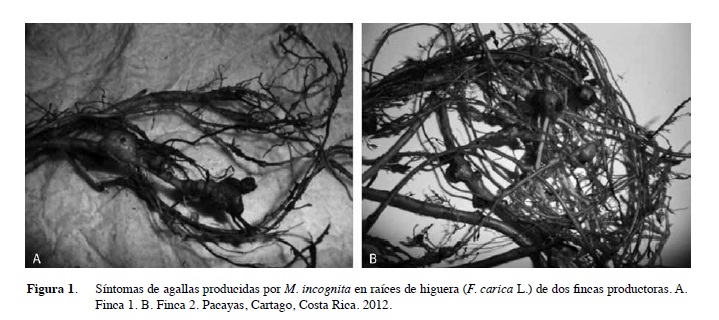
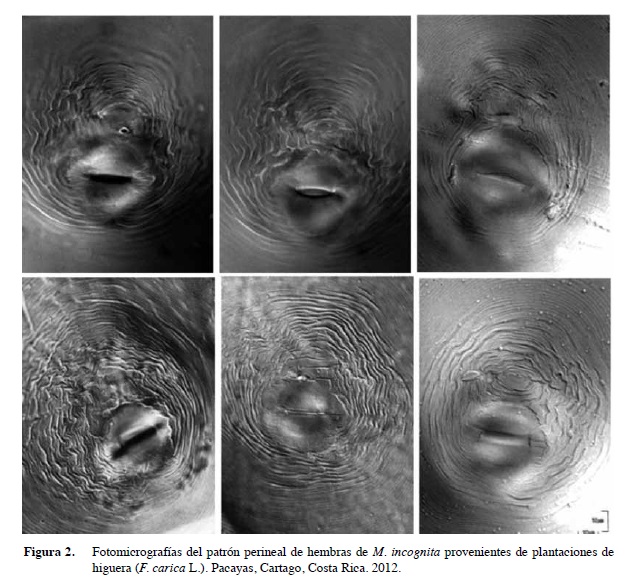
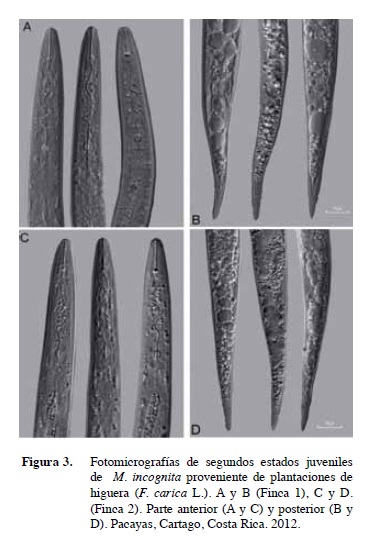
<body><![CDATA[<br> <br style="font-family: verdana; font-weight: bold;"> </span></font><font size="2"><span style="font-family: verdana;"><span  style="font-weight: bold;">Tratamiento enzim&aacute;tico de los fragmentos amplificados (RFLP).</span> Los productos de PCR se trataron posteriormente con las enzimas de restricci&oacute;n AluI y HinfI en forma independiente, seg&uacute;n las indicaciones del fabricante. Las reacciones se realizaron en un volumen total de 15 &#956;l (5 &#956;l de producto de PCR, 1 &#956;l de enzima, 1,5 &#956;l del buffer de reacci&oacute;n de la enzima a 1X, 7,5 &#956;l de agua ultrapura) y se incubaron durante una hora a 37&deg;C en un termociclador de 96 pozos.    <br> <br style="font-family: verdana;"> </span></font><font size="2"><span style="font-family: verdana;"><span  style="font-weight: bold;">Electroforesis.</span> Los fragmentos de PCR y RFLP se separaron por medio de electroforesis en geles de agarosa de 1,5 y 2% respectivamente y preparados con TBE 1X. Los geles se corrieron dentro de una c&aacute;mara de electroforesis a 90V durante 1 hora y 30 minutos.</span></font><br style="font-family: verdana;"> <font size="2"><span style="font-family: verdana;">Los fragmentos de ADN se visualizaron y se digitalizaron en un foto-documentador con un transiluminador de luz UV despu&eacute;s de te&ntilde;ir los geles con GelRed&reg; (Biotium) a 3X. El tama&ntilde;o de las bandas se calcul&oacute; con un programa de an&aacute;lisis de datos electrofor&eacute;ticos.    <br> <br style="font-family: verdana; font-weight: bold;"> </span></font><font size="3"><span style="font-family: verdana;"><span  style="font-weight: bold;">Resultados y Discusi&oacute;n</span>    <br> <br style="font-family: verdana;"> </span></font><font size="2"><span style="font-family: verdana;">Las ra&iacute;ces recolectadas en ambas parcelas mostraron s&iacute;ntomas severos de nodulaci&oacute;n radical, tanto en zonas apicales como en zonas intermedias (<a  href="/img/revistas/am/v24n2/a10i1.jpg">Figura 1</a>).    <br> <br style="font-family: verdana;"> </span></font><font size="2"><span style="font-family: verdana;">En el interior de dichas agallas se encontraron varias hembras de <span style="font-style: italic;">Meloidogyne</span> que se extrajeron mediante disecci&oacute;n directa para su identificaci&oacute;n.    <br> <br style="font-family: verdana;"> </span></font><font size="2"><span style="font-family: verdana;"><span  style="font-weight: bold;">Identificaci&oacute;n morfol&oacute;gica</span>    <br> <br style="font-family: verdana;"> </span></font><font size="2"><span style="font-family: verdana;"><span  style="font-weight: bold;">Patrones perineales.</span> Se estudiaron y analizaron al menos diez cortes perineales de hembras ov&iacute;geras.    <br> <br style="font-family: verdana;"> </span></font><font size="2"><span style="font-family: verdana;">Los patrones perineales se caracterizaron por presentar en su mayor&iacute;a, un arco dorsal alto y ligeramente achatado; sin embargo, se observaron algunas variaciones intraespec&iacute;ficas en las poblaciones estudiadas. La posici&oacute;n del poro excretor de las hembras coincidi&oacute; con el de <span style="font-style: italic;">M. incognita</span> (<a  href="/img/revistas/am/v24n2/a10i2.jpg">Figura 2</a>).    <br> <br style="font-family: verdana;"> </span></font><font size="2"><span style="font-family: verdana;">La morfolog&iacute;a de los juveniles aislados en el cultivo de higuera fue muy similar entre s&iacute; pero con algunas diferencias con respecto a la descripci&oacute;n original.</span></font><br  style="font-family: verdana;"> <font size="2"><span style="font-family: verdana;">Algunos de los caracteres morfol&oacute;gicos de importancia diagn&oacute;stica (Esser <span  style="font-style: italic;">et al</span>. 1976, Jepson 1987, Taylor 1978), tales como longitud del cuerpo, longitud del estilete, longitud de la cola y porci&oacute;n hialina de la cola mostraron en ambas poblaciones estudiadas, rangos de valores superiores que los observados en la descripci&oacute;n realizada por Kofoid y White (1919), Chitwood (1949), Orton-Williams (1973) y Jepson (1987) de <span style="font-style: italic;">M. incognita</span> (<a href="/img/revistas/am/v24n2/a10i3.jpg">Figura 3</a>).    <br> </span></font>     ]]></body>
<body><![CDATA[<div style="text-align: center;"><font size="2"><span  style="font-family: verdana;"></span></font>    <br> <font size="2"><span style="font-family: verdana;"></span></font></div> <font size="2"><span style="font-family: verdana;"> </span></font><font size="2"><span style="font-family: verdana;"><span  style="font-weight: bold;">Identificaci&oacute;n morfom&eacute;trica</span>    <br> <br style="font-family: verdana;"> </span></font><font size="2"><span style="font-family: verdana;">El an&aacute;lisis morfom&eacute;trico de doce juveniles o J2 de M. incognita junto con la descripci&oacute;n original de <span style="font-style: italic;">M. incognita</span> realizada por Orton-Williams (1973) se describe en el Cuadro 1. Los valores promedio de la longitud del cuerpo de las dos poblaciones (429,2 &#956;m para la Finca 1 y 416,2 &#956;m para la Finca 2) fueron mayores que el promedio reportado (<a href="/img/revistas/am/v24n2/a10t1.gif">Cuadro 1</a>) el cual fue de 371,0 &#956;m. Por otra parte, los valores medios de la longitud de la cola (48,7 &#956;m) y la porci&oacute;n hialina de la cola (8,9 &#956;m) descritos por Jepson (1987) para<span  style="font-style: italic;"> M. incognita</span> son menores a los encontrados en este estudio (51,3 y 10,6 &#956;m para la Finca 1) y (51,8 &#956;m y 2,2 &#956;m para la Finca 2). Existe la posibilidad de encontrar variabilidad en los par&aacute;metros morfom&eacute;tricos dentro de una misma especie, es decir, superposici&oacute;n en algunas medidas. Los promedios de las medidas obtenidas en este estudio est&aacute;n dentro del rango establecido para la especie (Kofoid y White 1919, Chitwood 1949). Estas diferencias en los caracteres morfol&oacute;gicos de J2 entre poblaciones de M. incognita de Costa Rica, pueden estar ligadas a factores ambientales que influyen directamente con el desarrollo de los estados juveniles.    <br> <br style="font-family: verdana; font-weight: bold;"> </span></font><font size="2"><span style="font-family: verdana;"><span  style="font-weight: bold;">Identificaci&oacute;n molecular</span>    <br> <br style="font-family: verdana;"> </span></font><font size="2"><span style="font-family: verdana;">La amplificaci&oacute;n (PCR) de la regi&oacute;n mitocondrial COII/16S con los imprimadores C2F3/1108 gener&oacute; un fragmento de 1,7 kb (<a  href="/img/revistas/am/v24n2/a10i4.jpg">Figura 4</a>) en todas las muestras analizadas lo que concuerda con otros estudios de <span  style="font-style: italic;">M. incognita</span> (Powers y Harris 1993, Williamson <span style="font-style: italic;">et al</span>. 1994, Han <span style="font-style: italic;">et al</span>. 2004). Los fragmentos obtenidos con las enzimas de restricci&oacute;n fueron de 850, 450, 250 y 150 pb con la enzima <span style="font-style: italic;">Alu</span>I y de 1300 kb y 400 pb con la enzima <span style="font-style: italic;">Hinf</span>I (<a href="/img/revistas/am/v24n2/a10i5.jpg">Figura 5</a>). Estos fragmentos coinciden con los obtenidos por Han et al. (2004) y Orui (1998) en sus investigaciones al cortar con ambas enzimas de restricci&oacute;n. Sin embargo, Powers y Harris (1993), reportaron que el producto de PCR de M. incognita tratado con la enzima de restricci&oacute;n <span style="font-style: italic;">Hinf</span>I gener&oacute; tresfragmentos de 1000, 400 y 300 pb, mientras que Williamson <span style="font-style: italic;">et al.</span> (1994) en Estados Unidos, Oriu (1998) en Jap&oacute;n, Han <span style="font-style: italic;">et al</span>. (2004) en Corea y Maleita <span style="font-style: italic;">et al</span>. 2012 en Portugal al igual que en este estudio en Costa Rica, mostraron s&oacute;lo dos bandas de 1300 y 400 pb con dicha enzima de restricci&oacute;n. Aunque los nematodos presentaron una morfolog&iacute;a muy similar, esas variaciones en el tama&ntilde;o de los fragmentos que se generan con las enzimas de restricci&oacute;n supone variantes gen&eacute;ticas o polimorfismos dentro de una misma especie o poblaci&oacute;n que puede deberse a mutaciones en el sitio de corte de las enzimas de restricci&oacute;n.    <br> </span></font>     <div style="text-align: center;"><font size="2"><span  style="font-family: verdana;"></span></font><br  style="font-family: verdana;"> <font size="2"><span style="font-family: verdana;"></span></font></div> <font size="2"><span style="font-family: verdana;"></span></font><font  size="2"><span style="font-family: verdana;">La cantidad de especies de <span style="font-style: italic;">Meloidogyne </span>conocidas hoy d&iacute;a, hace cada vez m&aacute;s dif&iacute;cil su identificaci&oacute;n morfol&oacute;gica, a&uacute;n para expertos tax&oacute;nomos. El diagn&oacute;stico integral empleando t&eacute;cnicas morfol&oacute;gicas, morfom&eacute;tricas y moleculares permite una mejor determinaci&oacute;n de las especies. La biolog&iacute;a molecular constituye una herramienta &uacute;til en la identificaci&oacute;n de organismos ya que con ella, se pueden detectar los polimorfismos presentes en el genoma de las diferentes especies; de ah&iacute; la importancia de ser utilizada en la caracterizaci&oacute;n de fitonematodos.    <br> <br style="font-family: verdana;"> </span></font><font size="2"><span style="font-family: verdana;">Tradicionalmente la identificaci&oacute;n de especies de <span style="font-style: italic;">Meloidogyne</span> se fundamenta en la morfolog&iacute;a de hembras adultas o en la obtenci&oacute;n y an&aacute;lisis de ADN a partir de un pool de hembras (Flores 2008, Humphreys <span style="font-style: italic;">et al.</span> 2012). Este es el primer estudio que logra la amplificaci&oacute;n y corte de ADN a partir de un solo juvenil de <span style="font-style: italic;">Meloidogyne</span>. Adem&aacute;s es el primer estudio en donde se identifica molecularmente a la especie <span style="font-style: italic;">M. incognita</span> infectando plantas de higuera en Costa Rica. El diagn&oacute;stico molecular de las especies a partir de un solo juvenil ofrece ventajas comparativas con los m&eacute;todos antes descritos, por la facilidad de aislar de muestras de suelo o ra&iacute;z los estados infectivos (J<sub>2</sub>), lo que efectivamente simplifica y agiliza el proceso de reconocimiento. La identificaci&oacute;n correcta de las especies de <span  style="font-style: italic;">Meloidogyne</span> asociadas a cultivos en nuestro pa&iacute;s es esencial para conocer su distribuci&oacute;n y propagaci&oacute;n e implementar estrategias de manejo. As&iacute; mismo, existe hoy d&iacute;a la apertura de mercados internacionales para el comercio de cultivos y ornamentales, que puede favorecer la introducci&oacute;n y diseminaci&oacute;n de especies de <span style="font-style: italic;">Meloidogyne</span> no aut&oacute;ctonas. Se desconoce la extensi&oacute;n del problema de <span style="font-style: italic;">Meloidogyne</span> en el cultivo de higuera en Costa Rica, por lo que es necesario realizar prospecciones fitonematol&oacute;gicas en otras &aacute;reas productoras para determinar la magnitud del da&ntilde;o y si la especie de <span style="font-style: italic;">Meloidogyne</span> asociada es la misma en todas las zonas. Finalmente, es necesario estar alerta a la infecci&oacute;n de este nematodo para evitar su diseminaci&oacute;n en otros sitios donde se produce este fruto.</span></font><br  style="font-family: verdana;"> <font size="3"><span style="font-family: verdana;"><br  style="font-weight: bold;"> <span style="font-weight: bold;">Agradecimientos</span>    <br> <br style="font-family: verdana;"> </span></font><font size="2"><span style="font-family: verdana;">Los autores desean expresar su agradecimiento a la Fundaci&oacute;n CRUSA-CSIC por el financiamiento y apoyo al proyecto &#8220;Diagn&oacute;stico y caracterizaci&oacute;n bioqu&iacute;mica y molecular de nematodos noduladores (<span  style="font-style: italic;">Meloidogyne</span> spp.) en cultivos tropicales y hort&iacute;colas de Costa Rica&#8221;. Al proyecto &#8220;Aplicaci&oacute;n de tecnolog&iacute;as innovadoras para contribuir con el desarrollo sostenible del cultivo del higo y mora en Costa Rica&#8221; financiado por la Comisi&oacute;n Nacional de Rectores (CONARE).    <br>     ]]></body>
<body><![CDATA[<br> </span></font> <hr style="width: 100%; height: 2px;"><font size="2"><span  style="font-family: verdana;"></span></font><font size="3"><span  style="font-family: verdana;"><span style="font-weight: bold;">Literatura citada</span>    <!-- ref --><br> <br style="font-family: verdana;"> </span></font><font size="2"><span style="font-family: verdana;">Bauer, C; Somavilla, L; Carneiro, RMDG; Desir&eacute;, A; da Costa, F&aacute;bia; Lima, I. 2009. Monitoramento do nemat&oacute;ide das galhas (<span  style="font-style: italic;">Meloidogyne</span> spp.) em figueira (<span style="font-style: italic;">Ficus carica</span> L.) no Rio Grande do Sul, Brasil. Embrapa Clima Temperado. 18 p. (Boletim de pesquisa e desenvolvimento 86).    &nbsp;&nbsp;&nbsp;&nbsp;&nbsp;&nbsp;&nbsp;&nbsp;[&#160;<a href="javascript:void(0);" onclick="javascript: window.open('/scielo.php?script=sci_nlinks&ref=327757&pid=S1659-1321201300020001000001&lng=','','width=640,height=500,resizable=yes,scrollbars=1,menubar=yes,');">Links</a>&#160;]<!-- end-ref --><!-- ref --><br> <br style="font-family: verdana;"> </span></font><font size="2"><span style="font-family: verdana;">Barboza, S. 2007. Informe final: Desarrollo del cultivo de higo (<span style="font-style: italic;">Ficus carica</span>) para consumo fresco y procesado, como una alternativa de diversificaci&oacute;n para el sector agr&iacute;cola. Cartago, Costa Rica, Instituto Tecnol&oacute;gico de Costa Rica. 30 p.    &nbsp;&nbsp;&nbsp;&nbsp;&nbsp;&nbsp;&nbsp;&nbsp;[&#160;<a href="javascript:void(0);" onclick="javascript: window.open('/scielo.php?script=sci_nlinks&ref=327758&pid=S1659-1321201300020001000002&lng=','','width=640,height=500,resizable=yes,scrollbars=1,menubar=yes,');">Links</a>&#160;]<!-- end-ref --><!-- ref --><br> <br style="font-family: verdana;"> </span></font><font size="2"><span style="font-family: verdana;">Bolin, HR; King, AD. 1980. Figs. In Nagy, S; Shaw, PE. (eds) Tropical and Sub-tropical fruits. Composition, properties and uses. Westport, Connecticut, AVI Publishing, Inc. p. 492-505.    &nbsp;&nbsp;&nbsp;&nbsp;&nbsp;&nbsp;&nbsp;&nbsp;[&#160;<a href="javascript:void(0);" onclick="javascript: window.open('/scielo.php?script=sci_nlinks&ref=327759&pid=S1659-1321201300020001000003&lng=','','width=640,height=500,resizable=yes,scrollbars=1,menubar=yes,');">Links</a>&#160;]<!-- end-ref --><!-- ref --><br> <br style="font-family: verdana;"> </span></font><font size="2"><span style="font-family: verdana;">Campos, VP. 1997. Nematodes of the fig crop. Informe Agropecuario Belo Horizonte 18188. Brasil. p. 33-38.    &nbsp;&nbsp;&nbsp;&nbsp;&nbsp;&nbsp;&nbsp;&nbsp;[&#160;<a href="javascript:void(0);" onclick="javascript: window.open('/scielo.php?script=sci_nlinks&ref=327760&pid=S1659-1321201300020001000004&lng=','','width=640,height=500,resizable=yes,scrollbars=1,menubar=yes,');">Links</a>&#160;]<!-- end-ref --><!-- ref --><br> <br style="font-family: verdana;"> </span></font><font size="2"><span style="font-family: verdana;">Chitwood, BG. 1949. Root-know nematodes, part I. A revision of the genus <span  style="font-style: italic;">Meloidogyne</span> Goeldi, 1887. Proceedings of the Helminthological Society of Washington 16:90-104.    &nbsp;&nbsp;&nbsp;&nbsp;&nbsp;&nbsp;&nbsp;&nbsp;[&#160;<a href="javascript:void(0);" onclick="javascript: window.open('/scielo.php?script=sci_nlinks&ref=327761&pid=S1659-1321201300020001000005&lng=','','width=640,height=500,resizable=yes,scrollbars=1,menubar=yes,');">Links</a>&#160;]<!-- end-ref --><!-- ref --><br> <br style="font-family: verdana;"> </span></font><font size="2"><span style="font-family: verdana;">De Waele, D; Elsen, A. 2007. Challenges in tropical plant nematology. Annual Review of Phytopathology 45:457-485.    &nbsp;&nbsp;&nbsp;&nbsp;&nbsp;&nbsp;&nbsp;&nbsp;[&#160;<a href="javascript:void(0);" onclick="javascript: window.open('/scielo.php?script=sci_nlinks&ref=327762&pid=S1659-1321201300020001000006&lng=','','width=640,height=500,resizable=yes,scrollbars=1,menubar=yes,');">Links</a>&#160;]<!-- end-ref --><!-- ref --><br> <br style="font-family: verdana;"> </span></font><font size="2"><span style="font-family: verdana;">Dias-Ariera, CR; Molina, RO; Costa, AT. 2008. Nemat&oacute;ides causadores de doen&ccedil;as em frut&iacute;feras. Boa Vista, Brasil (en l&iacute;nea). Consultado 15 may. 2012. Disponible en <a  href="http://revista.ufrr.br/index.php/agroambiente/article/download/230/169">http://revista.ufrr.br/index.php/agroambiente/article/download/230/169</a>    &nbsp;&nbsp;&nbsp;&nbsp;&nbsp;&nbsp;&nbsp;&nbsp;[&#160;<a href="javascript:void(0);" onclick="javascript: window.open('/scielo.php?script=sci_nlinks&ref=327763&pid=S1659-1321201300020001000007&lng=','','width=640,height=500,resizable=yes,scrollbars=1,menubar=yes,');">Links</a>&#160;]<!-- end-ref --><!-- ref --><br> <br style="font-family: verdana;"> </span></font><font size="2"><span style="font-family: verdana;">Esser, RP; Perry, VG; Taylor, AL. 1976. A diagnostic compendium of the genus <span  style="font-style: italic;">Meloidogyne</span> Nematoda: Heteroderidae. Proceedings of the Helminthological Society of Washington 43:138-150.    &nbsp;&nbsp;&nbsp;&nbsp;&nbsp;&nbsp;&nbsp;&nbsp;[&#160;<a href="javascript:void(0);" onclick="javascript: window.open('/scielo.php?script=sci_nlinks&ref=327764&pid=S1659-1321201300020001000008&lng=','','width=640,height=500,resizable=yes,scrollbars=1,menubar=yes,');">Links</a>&#160;]<!-- end-ref --><!-- ref --><br> <br style="font-family: verdana;"> </span></font><font size="2"><span style="font-family: verdana;">FAOSTAT (Food and Agriculture Organization Corporate Statistical Database). 2010. Crops production (en l&iacute;nea). Consultado 21 abr. 2012. Disponible en <a  href="http://faostat.fao.org/site/567/DesktopDefault.aspx?PageID=567#ancor">http://faostat.fao.org/site/567/DesktopDefault.aspx?PageID=567#ancor</a>    &nbsp;&nbsp;&nbsp;&nbsp;&nbsp;&nbsp;&nbsp;&nbsp;[&#160;<a href="javascript:void(0);" onclick="javascript: window.open('/scielo.php?script=sci_nlinks&ref=327765&pid=S1659-1321201300020001000009&lng=','','width=640,height=500,resizable=yes,scrollbars=1,menubar=yes,');">Links</a>&#160;]<!-- end-ref --><!-- ref --><br> <br style="font-family: verdana;"> </span></font><font size="2"><span style="font-family: verdana;">Ferraz, LCCB; Pereira, FM; Valente, J. 1982. Considera&ccedil;&otilde;es sobre o use de nematicidas em viveiro visando a recuperacao demudas de <span  style="font-style: italic;">Ficus carica</span> ev. roxo de valinhos infestadas por <span style="font-style: italic;">Meloidogyne incognita</span>. In Lordello, LGE. ed. Trabalhos apresentados a VI reunias Brasileira de nematologia. Publicacao No. 6. Sociedade Brasileira de Nematologia, Piracicaba, S&atilde;o Paulo, Brasil. p. 13-20.    &nbsp;&nbsp;&nbsp;&nbsp;&nbsp;&nbsp;&nbsp;&nbsp;[&#160;<a href="javascript:void(0);" onclick="javascript: window.open('/scielo.php?script=sci_nlinks&ref=327766&pid=S1659-1321201300020001000010&lng=','','width=640,height=500,resizable=yes,scrollbars=1,menubar=yes,');">Links</a>&#160;]<!-- end-ref --><!-- ref --><br> <br style="font-family: verdana;"> </span></font><font size="2"><span style="font-family: verdana;">Flores, L. 2008. Identificaci&oacute;n de especies de Meloidogyne descritas en Costa Rica con base en la variabilidad del ADN mitocondrial. Tesis de Maestr&iacute;a. Costa Rica, Universidad de Costa Rica. 48 p.    &nbsp;&nbsp;&nbsp;&nbsp;&nbsp;&nbsp;&nbsp;&nbsp;[&#160;<a href="javascript:void(0);" onclick="javascript: window.open('/scielo.php?script=sci_nlinks&ref=327767&pid=S1659-1321201300020001000011&lng=','','width=640,height=500,resizable=yes,scrollbars=1,menubar=yes,');">Links</a>&#160;]<!-- end-ref --><!-- ref --><br> <br style="font-family: verdana;"> </span></font><font size="2"><span style="font-family: verdana;">Formentini, E. 2009. Manipueira no control de Meloidogyne incognita e no rendimento da figueira (<span  style="font-style: italic;">Ficus carica</span> L.) cv. Roxo de Valinhos no oeste Paranaense. Disserta&ccedil;&atilde;o de Mestrado. BR, Univerdidade Estadual do Oeste do Paran&aacute;. 60 p.    &nbsp;&nbsp;&nbsp;&nbsp;&nbsp;&nbsp;&nbsp;&nbsp;[&#160;<a href="javascript:void(0);" onclick="javascript: window.open('/scielo.php?script=sci_nlinks&ref=327768&pid=S1659-1321201300020001000012&lng=','','width=640,height=500,resizable=yes,scrollbars=1,menubar=yes,');">Links</a>&#160;]<!-- end-ref --><!-- ref --><br> <br style="font-family: verdana;"> </span></font><font size="2"><span style="font-family: verdana;">Goeldi, EA. 1892. Relatorio sobre a molestia do cafeeiro na provincia do Rio de Janeiro. Arquivos do Museu Nacional. Rio de Janeiro, BR. 8:7-121.    &nbsp;&nbsp;&nbsp;&nbsp;&nbsp;&nbsp;&nbsp;&nbsp;[&#160;<a href="javascript:void(0);" onclick="javascript: window.open('/scielo.php?script=sci_nlinks&ref=327769&pid=S1659-1321201300020001000013&lng=','','width=640,height=500,resizable=yes,scrollbars=1,menubar=yes,');">Links</a>&#160;]<!-- end-ref --><!-- ref --><br> <br style="font-family: verdana;"> </span></font><font size="2"><span style="font-family: verdana;">Han, H; Cho, MR; Jeon, ChY; Lim, ChK; Jang, HL. 2004. PCR-RFLP identification of three major <span  style="font-style: italic;">Meloidogyne</span> species in Korea. Journal of Asia-Pacific Entomology 7(2):171-175.    &nbsp;&nbsp;&nbsp;&nbsp;&nbsp;&nbsp;&nbsp;&nbsp;[&#160;<a href="javascript:void(0);" onclick="javascript: window.open('/scielo.php?script=sci_nlinks&ref=327770&pid=S1659-1321201300020001000014&lng=','','width=640,height=500,resizable=yes,scrollbars=1,menubar=yes,');">Links</a>&#160;]<!-- end-ref --><!-- ref --><br> <br style="font-family: verdana;"> </span></font><font size="2"><span style="font-family: verdana;">Hartman, KM; Sasser, JN. 1985. Identification of <span style="font-style: italic;">Meloidogyne</span> species on the basis of differential host test and perineal patterns morphology.<span style="font-style: italic;"> In</span> Barker, KR; Carter, CC; Sasser, JN. eds. An advanced treatise on <span  style="font-style: italic;">Meloiodyne</span>. v2. Methodology. Raligh, USA, North Carolina State University Graphics. p. 69-77.    &nbsp;&nbsp;&nbsp;&nbsp;&nbsp;&nbsp;&nbsp;&nbsp;[&#160;<a href="javascript:void(0);" onclick="javascript: window.open('/scielo.php?script=sci_nlinks&ref=327771&pid=S1659-1321201300020001000015&lng=','','width=640,height=500,resizable=yes,scrollbars=1,menubar=yes,');">Links</a>&#160;]<!-- end-ref --><!-- ref --><br> <br style="font-family: verdana;"> </span></font><font size="2"><span style="font-family: verdana;">Hosomi, A; Uchiyama, T. 1998. Growth inhibiting factors in sick soil of fig orchards. Journal of the Japanese Society for Horticultural Science 67:44-50.    &nbsp;&nbsp;&nbsp;&nbsp;&nbsp;&nbsp;&nbsp;&nbsp;[&#160;<a href="javascript:void(0);" onclick="javascript: window.open('/scielo.php?script=sci_nlinks&ref=327772&pid=S1659-1321201300020001000016&lng=','','width=640,height=500,resizable=yes,scrollbars=1,menubar=yes,');">Links</a>&#160;]<!-- end-ref --><!-- ref --><br> <br style="font-family: verdana;"> </span></font><font size="2"><span style="font-family: verdana;">Humphreys, DA; Williamson, V; Salazar, L; Flores-Ch&aacute;ves, L; G&oacute;mez-Salazar, L. 2012. Presence of <span style="font-style: italic;">Meloidogyne enterolobii </span>Yang and Eisenback (=M. <span style="font-style: italic;">mayaguensis</span>) in guava and acerola from Costa Rica. Nematology 14:199-207.    &nbsp;&nbsp;&nbsp;&nbsp;&nbsp;&nbsp;&nbsp;&nbsp;[&#160;<a href="javascript:void(0);" onclick="javascript: window.open('/scielo.php?script=sci_nlinks&ref=327773&pid=S1659-1321201300020001000017&lng=','','width=640,height=500,resizable=yes,scrollbars=1,menubar=yes,');">Links</a>&#160;]<!-- end-ref --><!-- ref --><br> <br style="font-family: verdana;"> </span></font><font size="2"><span style="font-family: verdana;">Hussey, RS. 1990. Biochemical and molecular methods of identifying <span style="font-style: italic;">Meloidogyne</span> species: symposium introduction. Journal of Nematology 22:8-9.    &nbsp;&nbsp;&nbsp;&nbsp;&nbsp;&nbsp;&nbsp;&nbsp;[&#160;<a href="javascript:void(0);" onclick="javascript: window.open('/scielo.php?script=sci_nlinks&ref=327774&pid=S1659-1321201300020001000018&lng=','','width=640,height=500,resizable=yes,scrollbars=1,menubar=yes,');">Links</a>&#160;]<!-- end-ref --><!-- ref --><br> <br style="font-family: verdana;"> </span></font><font size="2"><span style="font-family: verdana;">Knight, RJ. 1980. Origin and world importance of tropical and sub-tropical fruit crops. <span  style="font-style: italic;">In</span> Nagy, S; Shaw, PE. eds. Tropical and sub-tropical fruits. Composition, poperties and uses. Westport, Connecticut, USA, AVI Publishing, Inc. p. 1-120.    &nbsp;&nbsp;&nbsp;&nbsp;&nbsp;&nbsp;&nbsp;&nbsp;[&#160;<a href="javascript:void(0);" onclick="javascript: window.open('/scielo.php?script=sci_nlinks&ref=327775&pid=S1659-1321201300020001000019&lng=','','width=640,height=500,resizable=yes,scrollbars=1,menubar=yes,');">Links</a>&#160;]<!-- end-ref --><!-- ref --><br> <br style="font-family: verdana;"> </span></font><font size="2"><span style="font-family: verdana;">Kofoid, CA; White, WA. 1919. A new nematode infection of man. Journal of the American medical Association 72:567-569.    &nbsp;&nbsp;&nbsp;&nbsp;&nbsp;&nbsp;&nbsp;&nbsp;[&#160;<a href="javascript:void(0);" onclick="javascript: window.open('/scielo.php?script=sci_nlinks&ref=327776&pid=S1659-1321201300020001000020&lng=','','width=640,height=500,resizable=yes,scrollbars=1,menubar=yes,');">Links</a>&#160;]<!-- end-ref --><!-- ref --><br> <br style="font-family: verdana;"> </span></font><font size="2"><span style="font-family: verdana;">Jepson, SB. 1987. Identi&#64257;cation of root-knot nematode (<span style="font-style: italic;">Meloidogyne species</span>). Wallingford, UK, CAB International. 265 p.    &nbsp;&nbsp;&nbsp;&nbsp;&nbsp;&nbsp;&nbsp;&nbsp;[&#160;<a href="javascript:void(0);" onclick="javascript: window.open('/scielo.php?script=sci_nlinks&ref=327777&pid=S1659-1321201300020001000021&lng=','','width=640,height=500,resizable=yes,scrollbars=1,menubar=yes,');">Links</a>&#160;]<!-- end-ref --><!-- ref --><br> <br style="font-family: verdana;"> </span></font><font size="2"><span style="font-family: verdana;">L&oacute;pez R; Dickson, DW. 1977. Morfometr&iacute;a y respuesta de hospedantes diferenciales a tres poblaciones de <span style="font-style: italic;">Meloidogyne incognita</span> y una de <span style="font-style: italic;">Meloidogyne javanica.</span> Agronom&iacute;a Costarricense 1:119-127.    &nbsp;&nbsp;&nbsp;&nbsp;&nbsp;&nbsp;&nbsp;&nbsp;[&#160;<a href="javascript:void(0);" onclick="javascript: window.open('/scielo.php?script=sci_nlinks&ref=327778&pid=S1659-1321201300020001000022&lng=','','width=640,height=500,resizable=yes,scrollbars=1,menubar=yes,');">Links</a>&#160;]<!-- end-ref --><!-- ref --><br> <br style="font-family: verdana;"> </span></font><font size="2"><span style="font-family: verdana;">L&oacute;pez, R. 1980. Cambios estacionales de la distribuci&oacute;n espacial de namatodos de un plant&iacute;o de higo. Nematropica 10(1):2.    &nbsp;&nbsp;&nbsp;&nbsp;&nbsp;&nbsp;&nbsp;&nbsp;[&#160;<a href="javascript:void(0);" onclick="javascript: window.open('/scielo.php?script=sci_nlinks&ref=327779&pid=S1659-1321201300020001000023&lng=','','width=640,height=500,resizable=yes,scrollbars=1,menubar=yes,');">Links</a>&#160;]<!-- end-ref --><!-- ref --><br> <br style="font-family: verdana;"> </span></font><font size="2"><span style="font-family: verdana;">L&oacute;pez, R; Salazar, L; Azofeifa, J. 1991. Observaciones sobre la morfolog&iacute;a de <span style="font-style: italic;">Meloidogyne incognita</span> con el microscopio electr&oacute;nico de rastreo. Agronom&iacute;a Costarricense 15:105-112.    &nbsp;&nbsp;&nbsp;&nbsp;&nbsp;&nbsp;&nbsp;&nbsp;[&#160;<a href="javascript:void(0);" onclick="javascript: window.open('/scielo.php?script=sci_nlinks&ref=327780&pid=S1659-1321201300020001000024&lng=','','width=640,height=500,resizable=yes,scrollbars=1,menubar=yes,');">Links</a>&#160;]<!-- end-ref --><!-- ref --><br> <br style="font-family: verdana;"> </span></font><font size="2"><span style="font-family: verdana;">Louws, FJ; Rademaker, KLW; de Bruijin, FJ. 1999. The three Ds of PCR-Based Genomic Analysis of Phytobacteria: Diversity, Detection, Disease Diagnose. Annual Review Phytopathology 37:81-125.    &nbsp;&nbsp;&nbsp;&nbsp;&nbsp;&nbsp;&nbsp;&nbsp;[&#160;<a href="javascript:void(0);" onclick="javascript: window.open('/scielo.php?script=sci_nlinks&ref=327781&pid=S1659-1321201300020001000025&lng=','','width=640,height=500,resizable=yes,scrollbars=1,menubar=yes,');">Links</a>&#160;]<!-- end-ref --><!-- ref --><br> <br style="font-family: verdana;"> </span></font><font size="2"><span style="font-family: verdana;">Maleita, CM; Sim&otilde;es, MJ; Egas, C; Curtis, RHC; Abrantes, IM. de O. 2012. Biometrical, biochemical, and molecular diagnosis of Portuguese <span  style="font-style: italic;">Meloidogyne hispanica</span> isolates. Plant Disease 96:865-874.    &nbsp;&nbsp;&nbsp;&nbsp;&nbsp;&nbsp;&nbsp;&nbsp;[&#160;<a href="javascript:void(0);" onclick="javascript: window.open('/scielo.php?script=sci_nlinks&ref=327782&pid=S1659-1321201300020001000026&lng=','','width=640,height=500,resizable=yes,scrollbars=1,menubar=yes,');">Links</a>&#160;]<!-- end-ref --><!-- ref --><br> <br style="font-family: verdana;"> </span></font><font size="2"><span style="font-family: verdana;">McSorley, R. 1981. Plant parasitic nematodes associated with tropical and sub-tropical fruits. Bulletin 823 of Agricultural Experiment Station Institute of Food and Agricultural Science. Gainesville, Florida, USA, University of Florida. 51 p.    &nbsp;&nbsp;&nbsp;&nbsp;&nbsp;&nbsp;&nbsp;&nbsp;[&#160;<a href="javascript:void(0);" onclick="javascript: window.open('/scielo.php?script=sci_nlinks&ref=327783&pid=S1659-1321201300020001000027&lng=','','width=640,height=500,resizable=yes,scrollbars=1,menubar=yes,');">Links</a>&#160;]<!-- end-ref --><!-- ref --><br> <br style="font-family: verdana;"> </span></font><font size="2"><span style="font-family: verdana;">Medina, IL; Bauer, GC; Rossi, C; Carneiro, RM DG. 2006. Caracteriza&ccedil;&atilde;o e identifa&ccedil;&atilde;o de polula&ccedil;&otilde;es de namat&oacute;ides de galhas provenientes de figueiras (<span  style="font-style: italic;">Ficuas carica</span> L.) do Rio Grande do Sul e de S&atilde;o Paulo. Nematologia Brasileira 30(2):179-187.    &nbsp;&nbsp;&nbsp;&nbsp;&nbsp;&nbsp;&nbsp;&nbsp;[&#160;<a href="javascript:void(0);" onclick="javascript: window.open('/scielo.php?script=sci_nlinks&ref=327784&pid=S1659-1321201300020001000028&lng=','','width=640,height=500,resizable=yes,scrollbars=1,menubar=yes,');">Links</a>&#160;]<!-- end-ref --><!-- ref --><br> <br style="font-family: verdana;"> </span></font><font size="2"><span style="font-family: verdana;">Miranda, D. 2009. Evaluaci&oacute;n de alternativas frut&iacute;colas amigables con el ambiente para contribuir al desarrollo de la zona norte de Cartago. Centro Internacional de Pol&iacute;tica Econ&oacute;mica (CINPE) de la Universidad Nacional. Costa Rica. 18 p.    &nbsp;&nbsp;&nbsp;&nbsp;&nbsp;&nbsp;&nbsp;&nbsp;[&#160;<a href="javascript:void(0);" onclick="javascript: window.open('/scielo.php?script=sci_nlinks&ref=327785&pid=S1659-1321201300020001000029&lng=','','width=640,height=500,resizable=yes,scrollbars=1,menubar=yes,');">Links</a>&#160;]<!-- end-ref --><!-- ref --><br> <br style="font-family: verdana;"> </span></font><font size="2"><span style="font-family: verdana;">Mullis, K; Faloona, F; Scharf, S; Saiki, R; Horn, G; Erlich, H. 1986. Specific enzymatic amplification of DNA <span style="font-style: italic;">in vitro</span>: the polymerase chain reaction. Cold Spring Harbor Symposium in Quantitative Biology 51:263-73.    &nbsp;&nbsp;&nbsp;&nbsp;&nbsp;&nbsp;&nbsp;&nbsp;[&#160;<a href="javascript:void(0);" onclick="javascript: window.open('/scielo.php?script=sci_nlinks&ref=327786&pid=S1659-1321201300020001000030&lng=','','width=640,height=500,resizable=yes,scrollbars=1,menubar=yes,');">Links</a>&#160;]<!-- end-ref --><!-- ref --><br> <br style="font-family: verdana;"> </span></font><font size="2"><span style="font-family: verdana;">Orui, Y. 1998. Identification of Japanese species of the <span style="font-style: italic;">genus Meloidogyne</span> (Nematoda: Meloidogynidae) by PCR-RFLP analysis. Applied Entomology and Zoology 33:43-51.    &nbsp;&nbsp;&nbsp;&nbsp;&nbsp;&nbsp;&nbsp;&nbsp;[&#160;<a href="javascript:void(0);" onclick="javascript: window.open('/scielo.php?script=sci_nlinks&ref=327787&pid=S1659-1321201300020001000031&lng=','','width=640,height=500,resizable=yes,scrollbars=1,menubar=yes,');">Links</a>&#160;]<!-- end-ref --><!-- ref --><br> <br style="font-family: verdana;"> </span></font><font size="2"><span style="font-family: verdana;">Orton-Williams, KJ. 1973. <span style="font-style: italic;">Meloidogyne incognita</span>. C.I.H. descriptions of plant parasitic nematodes. Commonwealth Institute of Helminthology, St. Albans, UK. Set 2, No. 18. 4 p.    &nbsp;&nbsp;&nbsp;&nbsp;&nbsp;&nbsp;&nbsp;&nbsp;[&#160;<a href="javascript:void(0);" onclick="javascript: window.open('/scielo.php?script=sci_nlinks&ref=327788&pid=S1659-1321201300020001000032&lng=','','width=640,height=500,resizable=yes,scrollbars=1,menubar=yes,');">Links</a>&#160;]<!-- end-ref --><!-- ref --><br> <br style="font-family: verdana;"> </span></font><font size="2"><span style="font-family: verdana;">Padgham, JL; Mazid, MA; Duxbury, JM; Abawi, GS; Hossain, M. 2004. Yield loss caused by <span  style="font-style: italic;">Meloidogyne graminicola</span> on lowland rainfed rice in Bangladesh. Journal of Nematology 36:42-48.    &nbsp;&nbsp;&nbsp;&nbsp;&nbsp;&nbsp;&nbsp;&nbsp;[&#160;<a href="javascript:void(0);" onclick="javascript: window.open('/scielo.php?script=sci_nlinks&ref=327789&pid=S1659-1321201300020001000033&lng=','','width=640,height=500,resizable=yes,scrollbars=1,menubar=yes,');">Links</a>&#160;]<!-- end-ref --><!-- ref --><br> <br style="font-family: verdana;"> </span></font><font size="2"><span style="font-family: verdana;">Pamjav, H; Triga, D; Buzas, ZT; Vellai, A; Lucska, I; Adams, A; Reid, AP; Burnell, A; Griffin, C; Glazer, I; Klein, MG; Fodor, A. 1999. Noval application of PhastSystem polyacrylamide gel electrophoresis using restriction fragment length polymorphism - internal transcribed spacer patterns of individuals for molecular identification of entomopathogenic nematodes. Electrophoresis 20:1266-1273.    &nbsp;&nbsp;&nbsp;&nbsp;&nbsp;&nbsp;&nbsp;&nbsp;[&#160;<a href="javascript:void(0);" onclick="javascript: window.open('/scielo.php?script=sci_nlinks&ref=327790&pid=S1659-1321201300020001000034&lng=','','width=640,height=500,resizable=yes,scrollbars=1,menubar=yes,');">Links</a>&#160;]<!-- end-ref --><!-- ref --><br> <br style="font-family: verdana;"> </span></font><font size="2"><span style="font-family: verdana;">Poinar, GO. 1990. Taxonomy and biology of Steinernematidae and Heterorhabditidae. <span  style="font-style: italic;">In</span> Gaugler, R; Kaya, HK. eds. Entomopathogenic nematodes in biological control. Boca Raton, USA, CRC Press. p. 23-60.    &nbsp;&nbsp;&nbsp;&nbsp;&nbsp;&nbsp;&nbsp;&nbsp;[&#160;<a href="javascript:void(0);" onclick="javascript: window.open('/scielo.php?script=sci_nlinks&ref=327791&pid=S1659-1321201300020001000035&lng=','','width=640,height=500,resizable=yes,scrollbars=1,menubar=yes,');">Links</a>&#160;]<!-- end-ref --><!-- ref --><br> <br style="font-family: verdana;"> </span></font><font size="2"><span style="font-family: verdana;">Powers, TO. 2004. Nematode molecular diagnostics: from bands to bar-codes. Annual Review of Phytopathology 42:367-383.    &nbsp;&nbsp;&nbsp;&nbsp;&nbsp;&nbsp;&nbsp;&nbsp;[&#160;<a href="javascript:void(0);" onclick="javascript: window.open('/scielo.php?script=sci_nlinks&ref=327792&pid=S1659-1321201300020001000036&lng=','','width=640,height=500,resizable=yes,scrollbars=1,menubar=yes,');">Links</a>&#160;]<!-- end-ref --><!-- ref --><br> <br style="font-family: verdana;"> </span></font><font size="2"><span style="font-family: verdana;">Powers, TO; Harris, TS. 1993. A polymerase chain reaction method for identification of five major <span style="font-style: italic;">Meloidogyne</span> species. Journal of Nematology 25:1-6.    &nbsp;&nbsp;&nbsp;&nbsp;&nbsp;&nbsp;&nbsp;&nbsp;[&#160;<a href="javascript:void(0);" onclick="javascript: window.open('/scielo.php?script=sci_nlinks&ref=327793&pid=S1659-1321201300020001000037&lng=','','width=640,height=500,resizable=yes,scrollbars=1,menubar=yes,');">Links</a>&#160;]<!-- end-ref --><!-- ref --><br> <br style="font-family: verdana;"> </span></font><font size="2"><span style="font-family: verdana;">Rossi, C. 2002. Nemat&oacute;ides em fruteiras. VII Reuni&atilde;o Itinerante de Fitossanidade do Instituto Biol&oacute;gico. Centro Experimental Central do Instituto Biol&oacute;gico. Laborat&oacute;rio de Nematologia. Brasil. 130 p.    &nbsp;&nbsp;&nbsp;&nbsp;&nbsp;&nbsp;&nbsp;&nbsp;[&#160;<a href="javascript:void(0);" onclick="javascript: window.open('/scielo.php?script=sci_nlinks&ref=327794&pid=S1659-1321201300020001000038&lng=','','width=640,height=500,resizable=yes,scrollbars=1,menubar=yes,');">Links</a>&#160;]<!-- end-ref --><!-- ref --><br> <br style="font-family: verdana;"> </span></font><font size="2"><span style="font-family: verdana;">Sherb, CT. 1993. Flutua&ccedil;&atilde;o populacional de <span  style="font-style: italic;">Meloidogyne incognita</span> (Kofoid y White, 1919) Chitwood, 1949 em figueira (<span  style="font-style: italic;">Ficus carica</span> L.) inoculadas no campo. Tese Mestrado. ESALQ. Lavras, MG, Brasil. 150 p.    &nbsp;&nbsp;&nbsp;&nbsp;&nbsp;&nbsp;&nbsp;&nbsp;[&#160;<a href="javascript:void(0);" onclick="javascript: window.open('/scielo.php?script=sci_nlinks&ref=327795&pid=S1659-1321201300020001000039&lng=','','width=640,height=500,resizable=yes,scrollbars=1,menubar=yes,');">Links</a>&#160;]<!-- end-ref --><!-- ref --><br> <br style="font-family: verdana;"> </span></font><font size="2"><span style="font-family: verdana;">Scotto La Mass&egrave;se, C; Deportes, L; Mercier, S; Roger, J. 1984. Les principaux ennemis du figuier: les nematodes et maladies. Phytoma &#8211; D&eacute;fense des Cultures 354:39-41.    &nbsp;&nbsp;&nbsp;&nbsp;&nbsp;&nbsp;&nbsp;&nbsp;[&#160;<a href="javascript:void(0);" onclick="javascript: window.open('/scielo.php?script=sci_nlinks&ref=327796&pid=S1659-1321201300020001000040&lng=','','width=640,height=500,resizable=yes,scrollbars=1,menubar=yes,');">Links</a>&#160;]<!-- end-ref --><!-- ref --><br> <br style="font-family: verdana;"> </span></font><font size="2"><span style="font-family: verdana;">Sidiqqui, M. 2000. Tylenchida: parasites of plants and insects. 2 ed. London, UK, Biddles. 833 p.    &nbsp;&nbsp;&nbsp;&nbsp;&nbsp;&nbsp;&nbsp;&nbsp;[&#160;<a href="javascript:void(0);" onclick="javascript: window.open('/scielo.php?script=sci_nlinks&ref=327797&pid=S1659-1321201300020001000041&lng=','','width=640,height=500,resizable=yes,scrollbars=1,menubar=yes,');">Links</a>&#160;]<!-- end-ref --><!-- ref --><br> <br style="font-family: verdana;"> </span></font><font size="2"><span style="font-family: verdana;">Tamayo, PJ; Becerra. 2002. Otra enfermedad del brevo (<span style="font-style: italic;">Ficus carica</span> L.) en el Departamento de Antioqu&iacute;a. Informa 28. Paipa, Boyac&aacute;, Colombia, ASCOLFI. p. 46-47.    &nbsp;&nbsp;&nbsp;&nbsp;&nbsp;&nbsp;&nbsp;&nbsp;[&#160;<a href="javascript:void(0);" onclick="javascript: window.open('/scielo.php?script=sci_nlinks&ref=327798&pid=S1659-1321201300020001000042&lng=','','width=640,height=500,resizable=yes,scrollbars=1,menubar=yes,');">Links</a>&#160;]<!-- end-ref --><!-- ref --><br> <br style="font-family: verdana;"> </span></font><font size="2"><span style="font-family: verdana;">Taylor, DP; Netscher, C. 1974. An improved technique for preparing perineal patterns of <span  style="font-style: italic;">Meloidogyne</span> spp. Nematologica 20:268-269.    &nbsp;&nbsp;&nbsp;&nbsp;&nbsp;&nbsp;&nbsp;&nbsp;[&#160;<a href="javascript:void(0);" onclick="javascript: window.open('/scielo.php?script=sci_nlinks&ref=327799&pid=S1659-1321201300020001000043&lng=','','width=640,height=500,resizable=yes,scrollbars=1,menubar=yes,');">Links</a>&#160;]<!-- end-ref --><!-- ref --><br> <br style="font-family: verdana;"> </span></font><font size="2"><span style="font-family: verdana;">Taylor, AL; Sasser, JM. 1978. Biology, identification and control of root-knot nematodes (<span  style="font-style: italic;">Meloidogyne species</span>). Raleigh, North Carolina, USA, North Carolina State University Graphics. 111 p.    &nbsp;&nbsp;&nbsp;&nbsp;&nbsp;&nbsp;&nbsp;&nbsp;[&#160;<a href="javascript:void(0);" onclick="javascript: window.open('/scielo.php?script=sci_nlinks&ref=327800&pid=S1659-1321201300020001000044&lng=','','width=640,height=500,resizable=yes,scrollbars=1,menubar=yes,');">Links</a>&#160;]<!-- end-ref --><!-- ref --><br> <br style="font-family: verdana;"> </span></font><font size="2"><span style="font-family: verdana;">Volcy, Ch. 1986. Registros de nematodos fitopar&aacute;sitos para Colombia. <span  style="font-style: italic;">In</span> Res&uacute;menes VII Congreso de la Asociaci&oacute;n Colombiana de Fitopatolog&iacute;a y Ciencias Afines. Paipa, Boyac&aacute;, Colombia, ASCOLFI. 39 p.    &nbsp;&nbsp;&nbsp;&nbsp;&nbsp;&nbsp;&nbsp;&nbsp;[&#160;<a href="javascript:void(0);" onclick="javascript: window.open('/scielo.php?script=sci_nlinks&ref=327801&pid=S1659-1321201300020001000045&lng=','','width=640,height=500,resizable=yes,scrollbars=1,menubar=yes,');">Links</a>&#160;]<!-- end-ref --><!-- ref --><br> <br style="font-family: verdana;"> </span></font><font size="2"><span style="font-family: verdana;">Vovlas, N; Mifsud, D; Landa, BB; Castillo, P. 2005. Pathogenicity of the root-knot nematode <span  style="font-style: italic;">Meloidogyne javanica</span> on potato. Plant Pathology 54:657-664.    &nbsp;&nbsp;&nbsp;&nbsp;&nbsp;&nbsp;&nbsp;&nbsp;[&#160;<a href="javascript:void(0);" onclick="javascript: window.open('/scielo.php?script=sci_nlinks&ref=327802&pid=S1659-1321201300020001000046&lng=','','width=640,height=500,resizable=yes,scrollbars=1,menubar=yes,');">Links</a>&#160;]<!-- end-ref --><!-- ref --><br> <br style="font-family: verdana;"> </span></font><font size="2"><span style="font-family: verdana;">Whitehead, AG. 1968. Taxonomy of Meloidogyne (Nematodea: Heteroderidae) with descriptions of four new species. Transactions of the Zoological Society of London 31:263-401.    &nbsp;&nbsp;&nbsp;&nbsp;&nbsp;&nbsp;&nbsp;&nbsp;[&#160;<a href="javascript:void(0);" onclick="javascript: window.open('/scielo.php?script=sci_nlinks&ref=327803&pid=S1659-1321201300020001000047&lng=','','width=640,height=500,resizable=yes,scrollbars=1,menubar=yes,');">Links</a>&#160;]<!-- end-ref --><!-- ref --><br> <br style="font-family: verdana;"> </span></font><font size="2"><span style="font-family: verdana;">Williamson, VM; Caswell-Chen, EP; Wu, FF; Hanson, D. 1994. PCR for nematode identification.<span  style="font-style: italic;"> In </span>Lamberti, F; De Giorgi, C; Bird, DM. eds. Advances in molecular plant Nematology. New York, USA, Plenum Press. p. 119-127.    &nbsp;&nbsp;&nbsp;&nbsp;&nbsp;&nbsp;&nbsp;&nbsp;[&#160;<a href="javascript:void(0);" onclick="javascript: window.open('/scielo.php?script=sci_nlinks&ref=327804&pid=S1659-1321201300020001000048&lng=','','width=640,height=500,resizable=yes,scrollbars=1,menubar=yes,');">Links</a>&#160;]<!-- end-ref --><!-- ref --><br> <br style="font-family: verdana;"> </span></font><font size="2"><span style="font-family: verdana;">Xu, J; Liu, P; Meng, Q; Long, H. 2004. Characterisation of <span style="font-style: italic;">Meloidogyne species</span> from China using isozyme phenotypes and amplified mitochondrial DNA restriction fragment length polymorphism. European Journal of Plant Pathology 110:309-315.    &nbsp;&nbsp;&nbsp;&nbsp;&nbsp;&nbsp;&nbsp;&nbsp;[&#160;<a href="javascript:void(0);" onclick="javascript: window.open('/scielo.php?script=sci_nlinks&ref=327805&pid=S1659-1321201300020001000049&lng=','','width=640,height=500,resizable=yes,scrollbars=1,menubar=yes,');">Links</a>&#160;]<!-- end-ref --><br>     <br> <a name="Corres1"></a><a href="#Corres2">*</a>Correspondencia a:     <br> </span></font><font size="2"><span style="font-family: verdana;"></span></font><font  size="2"><span style="font-family: verdana;"><sup><a name="2"></a><a  href="#5">2</a></sup>Walter Peraza-Padilla. </span></font><font  size="2"><span style="font-family: verdana;"> Laboratorio de Nematolog&iacute;a, Escuela de Ciencias Agrarias. Universidad Nacional. Heredia, Costa Rica. 86-3000. wperaza@una.ac.cr    <br> </span></font><font size="2"><span style="font-family: verdana;"><sup><a  name="3"></a><a href="#6">3</a></sup>Johaner Rosales-Flores. </span></font><font size="2"><span  style="font-family: verdana;">Laboratorio de Cultivo de Tejidos y C&eacute;lulas Vegetales, y Laboratorio de Biolog&iacute;a Molecular. Universidad Nacional. Heredia, Costa Rica. 86-3000. johngarden@gmail.com    <br> </span></font><font size="2"><span style="font-family: verdana;"><a  href="#5"><sup>2</sup></a>Alejandro Esquivel-Hern&aacute;ndez. </span></font><font size="2"><span  style="font-family: verdana;">Laboratorio de Nematolog&iacute;a, Escuela de Ciencias Agrarias. Universidad Nacional. Heredia, Costa Rica. 86-3000.</span></font><font size="2"><span  style="font-family: verdana;">aesquive@una.ac.cr    <br> </span></font><font size="2"><span style="font-family: verdana;"><a  href="#6"><sup>3</sup></a>Irena Hilje-Rodr&iacute;guez. </span></font><font size="2"><span  style="font-family: verdana;">Laboratorio de Cultivo de Tejidos y C&eacute;lulas Vegetales, y Laboratorio de Biolog&iacute;a Molecular. Universidad Nacional. Heredia, Costa Rica. 86-3000. </span></font><font  size="2"><span style="font-family: verdana;">ihilje@una.ac.cr</span></font>    <br> <font size="2"><span style="font-family: verdana;"><a href="#6"><sup>3</sup></a>Ram&oacute;n Molina-Bravo. </span></font><font size="2"><span  style="font-family: verdana;">Laboratorio de Cultivo de Tejidos y C&eacute;lulas Vegetales, y Laboratorio de Biolog&iacute;a Molecular. Universidad Nacional. Heredia, Costa Rica. 86-3000. </span></font><font  style="font-family: verdana;" size="2"><a>rmolin@una.ac.cr</a> </font><font size="2"><span style="font-family: verdana;">    <br> <sup><a name="4"></a><a href="#7">4</a></sup>Pablo Castillo-Castillo.</span></font><font size="2"><span  style="font-family: verdana;">Instituto de Agricultura Sostenible (IAS), Consejo Superior de Investigaciones Cient&iacute;ficas (CSIC). Apdo. 4084, 14080 C&oacute;rdoba, Espa&ntilde;a. pcastillo@ias.csic.es    <br> </span></font><font size="2"><span style="font-family: verdana;">Esta investigaci&oacute;n forma parte del proyecto &#8220;Diagn&oacute;stico y caracterizaci&oacute;n bioqu&iacute;mica y molecular de nematodos noduladores (Meloidogyne spp.) en cultivos tropicales y hort&iacute;colas de Costa Rica&#8221; financiado por la Fundaci&oacute;n CRUSA-CSIC.</span></font>    <br> <font size="2"><span style="font-family: verdana;"></span></font> <hr style="width: 100%; height: 2px;">     ]]></body>
<body><![CDATA[<div style="text-align: center;"><font size="2"><span  style="font-family: verdana;"></span></font><font size="2"><span  style="font-family: verdana;"><span style="font-weight: bold;">Recibido: 8 de junio, 2012. Aceptado: 28 de octubre, 2013.</span></span></font><br  style="font-family: verdana;"> <font size="2"></font></div> </div> </div> <font size="2"></font>      ]]></body><back>
<ref-list>
<ref id="B1">
<nlm-citation citation-type="">
<person-group person-group-type="author">
<name>
<surname><![CDATA[Bauer]]></surname>
<given-names><![CDATA[C]]></given-names>
</name>
<name>
<surname><![CDATA[Somavilla]]></surname>
<given-names><![CDATA[L]]></given-names>
</name>
<name>
<surname><![CDATA[Carneiro]]></surname>
<given-names><![CDATA[RMDG]]></given-names>
</name>
<name>
<surname><![CDATA[Desiré]]></surname>
<given-names><![CDATA[A]]></given-names>
</name>
<name>
<surname><![CDATA[da Costa]]></surname>
<given-names><![CDATA[Fábia]]></given-names>
</name>
<name>
<surname><![CDATA[Lima]]></surname>
<given-names><![CDATA[I]]></given-names>
</name>
</person-group>
<source><![CDATA[Monitoramento do nematóide das galhas (Meloidogyne spp.) em figueira (Ficus carica L.) no Rio Grande do Sul, Brasil: Embrapa Clima Temperado]]></source>
<year>2009</year>
<page-range>18</page-range></nlm-citation>
</ref>
<ref id="B2">
<nlm-citation citation-type="book">
<person-group person-group-type="author">
<name>
<surname><![CDATA[Barboza]]></surname>
<given-names><![CDATA[S]]></given-names>
</name>
</person-group>
<source><![CDATA[Informe final: Desarrollo del cultivo de higo (Ficus carica) para consumo fresco y procesado, como una alternativa de diversificación para el sector agrícola]]></source>
<year>2007</year>
<page-range>30</page-range><publisher-loc><![CDATA[^eCartago Cartago]]></publisher-loc>
<publisher-name><![CDATA[Instituto Tecnológico de Costa Rica]]></publisher-name>
</nlm-citation>
</ref>
<ref id="B3">
<nlm-citation citation-type="book">
<person-group person-group-type="author">
<name>
<surname><![CDATA[Bolin]]></surname>
<given-names><![CDATA[HR]]></given-names>
</name>
<name>
<surname><![CDATA[King]]></surname>
<given-names><![CDATA[AD]]></given-names>
</name>
</person-group>
<article-title xml:lang="en"><![CDATA[Figs]]></article-title>
<person-group person-group-type="editor">
<name>
<surname><![CDATA[Nagy]]></surname>
<given-names><![CDATA[S]]></given-names>
</name>
<name>
<surname><![CDATA[Shaw]]></surname>
<given-names><![CDATA[PE]]></given-names>
</name>
</person-group>
<source><![CDATA[Tropical and Sub-tropical fruits: Composition, properties and uses]]></source>
<year>1980</year>
<page-range>492-505</page-range><publisher-loc><![CDATA[Westport^eConnecticut Connecticut]]></publisher-loc>
<publisher-name><![CDATA[AVI Publishing, Inc]]></publisher-name>
</nlm-citation>
</ref>
<ref id="B4">
<nlm-citation citation-type="">
<person-group person-group-type="author">
<name>
<surname><![CDATA[Campos]]></surname>
<given-names><![CDATA[VP]]></given-names>
</name>
</person-group>
<source><![CDATA[Nematodes of the fig crop: Informe Agropecuario Belo Horizonte 18188]]></source>
<year>1997</year>
<page-range>33-38</page-range></nlm-citation>
</ref>
<ref id="B5">
<nlm-citation citation-type="journal">
<person-group person-group-type="author">
<name>
<surname><![CDATA[Chitwood]]></surname>
<given-names><![CDATA[BG]]></given-names>
</name>
</person-group>
<article-title xml:lang="en"><![CDATA[Root-know nematodes, part I: A revision of the genus Meloidogyne Goeldi, 1887]]></article-title>
<source><![CDATA[Proceedings of the Helminthological Society of Washington]]></source>
<year>1949</year>
<volume>16</volume>
<page-range>90-104</page-range></nlm-citation>
</ref>
<ref id="B6">
<nlm-citation citation-type="journal">
<person-group person-group-type="author">
<name>
<surname><![CDATA[De Waele]]></surname>
<given-names><![CDATA[D]]></given-names>
</name>
<name>
<surname><![CDATA[Elsen]]></surname>
<given-names><![CDATA[A]]></given-names>
</name>
</person-group>
<article-title xml:lang="en"><![CDATA[Challenges in tropical plant nematology]]></article-title>
<source><![CDATA[Annual Review of Phytopathology]]></source>
<year>2007</year>
<volume>45</volume>
<page-range>457-485</page-range></nlm-citation>
</ref>
<ref id="B7">
<nlm-citation citation-type="">
<person-group person-group-type="author">
<name>
<surname><![CDATA[Dias-Ariera]]></surname>
<given-names><![CDATA[CR]]></given-names>
</name>
<name>
<surname><![CDATA[Molina]]></surname>
<given-names><![CDATA[RO]]></given-names>
</name>
<name>
<surname><![CDATA[Costa]]></surname>
<given-names><![CDATA[AT]]></given-names>
</name>
</person-group>
<source><![CDATA[Nematóides causadores de doenças em frutíferas]]></source>
<year>2008</year>
<publisher-loc><![CDATA[^eBoa Vista Boa Vista]]></publisher-loc>
</nlm-citation>
</ref>
<ref id="B8">
<nlm-citation citation-type="journal">
<person-group person-group-type="author">
<name>
<surname><![CDATA[Esser]]></surname>
<given-names><![CDATA[RP]]></given-names>
</name>
<name>
<surname><![CDATA[Perry]]></surname>
<given-names><![CDATA[VG]]></given-names>
</name>
<name>
<surname><![CDATA[Taylor]]></surname>
<given-names><![CDATA[AL]]></given-names>
</name>
</person-group>
<article-title xml:lang="en"><![CDATA[A diagnostic compendium of the genus Meloidogyne Nematoda: Heteroderidae]]></article-title>
<source><![CDATA[Proceedings of the Helminthological Society of Washington]]></source>
<year>1976</year>
<volume>43</volume>
<page-range>138-150</page-range></nlm-citation>
</ref>
<ref id="B9">
<nlm-citation citation-type="">
<collab>FAOSTAT (Food and Agriculture Organization Corporate Statistical Database)</collab>
<source><![CDATA[Crops production]]></source>
<year>2010</year>
</nlm-citation>
</ref>
<ref id="B10">
<nlm-citation citation-type="book">
<person-group person-group-type="author">
<name>
<surname><![CDATA[Ferraz]]></surname>
<given-names><![CDATA[LCCB]]></given-names>
</name>
<name>
<surname><![CDATA[Pereira]]></surname>
<given-names><![CDATA[FM]]></given-names>
</name>
<name>
<surname><![CDATA[Valente]]></surname>
<given-names><![CDATA[J]]></given-names>
</name>
</person-group>
<article-title xml:lang="pt"><![CDATA[Considerações sobre o use de nematicidas em viveiro visando a recuperacao demudas de Ficus carica ev. roxo de valinhos infestadas por Meloidogyne incognita.]]></article-title>
<person-group person-group-type="editor">
<name>
<surname><![CDATA[Lordello]]></surname>
<given-names><![CDATA[LGE]]></given-names>
</name>
</person-group>
<source><![CDATA[Trabalhos apresentados a VI reunias Brasileira de nematologia]]></source>
<year>1982</year>
<page-range>13-20</page-range><publisher-loc><![CDATA[^eSão Paulo São Paulo]]></publisher-loc>
<publisher-name><![CDATA[Sociedade Brasileira de NematologiaPiracicaba]]></publisher-name>
</nlm-citation>
</ref>
<ref id="B11">
<nlm-citation citation-type="">
<person-group person-group-type="author">
<name>
<surname><![CDATA[Flores]]></surname>
<given-names><![CDATA[L]]></given-names>
</name>
</person-group>
<source><![CDATA[Identificación de especies de Meloidogyne descritas en Costa Rica con base en la variabilidad del ADN mitocondrial]]></source>
<year>2008</year>
<page-range>48</page-range></nlm-citation>
</ref>
<ref id="B12">
<nlm-citation citation-type="">
<person-group person-group-type="author">
<name>
<surname><![CDATA[Formentini]]></surname>
<given-names><![CDATA[E]]></given-names>
</name>
</person-group>
<source><![CDATA[Manipueira no control de Meloidogyne incognita e no rendimento da figueira (Ficus carica L.) cv. Roxo de Valinhos no oeste Paranaense]]></source>
<year>2009</year>
<page-range>60</page-range></nlm-citation>
</ref>
<ref id="B13">
<nlm-citation citation-type="journal">
<person-group person-group-type="author">
<name>
<surname><![CDATA[Goeldi]]></surname>
<given-names><![CDATA[EA]]></given-names>
</name>
</person-group>
<article-title xml:lang="pt"><![CDATA[Relatorio sobre a molestia do cafeeiro na provincia do Rio de Janeiro]]></article-title>
<source><![CDATA[Arquivos do Museu Nacional. Rio de Janeiro, BR]]></source>
<year>1892</year>
<volume>8</volume>
<page-range>7-121</page-range></nlm-citation>
</ref>
<ref id="B14">
<nlm-citation citation-type="journal">
<person-group person-group-type="author">
<name>
<surname><![CDATA[Han]]></surname>
<given-names><![CDATA[H]]></given-names>
</name>
<name>
<surname><![CDATA[Cho]]></surname>
<given-names><![CDATA[MR]]></given-names>
</name>
<name>
<surname><![CDATA[Jeon]]></surname>
<given-names><![CDATA[ChY]]></given-names>
</name>
<name>
<surname><![CDATA[Lim]]></surname>
<given-names><![CDATA[ChK]]></given-names>
</name>
<name>
<surname><![CDATA[Jang]]></surname>
<given-names><![CDATA[HL]]></given-names>
</name>
</person-group>
<article-title xml:lang="en"><![CDATA[PCR-RFLP identification of three major Meloidogyne species in Korea]]></article-title>
<source><![CDATA[Journal of Asia-Pacific Entomology]]></source>
<year>2004</year>
<volume>7</volume>
<numero>2</numero>
<issue>2</issue>
<page-range>171-175</page-range></nlm-citation>
</ref>
<ref id="B15">
<nlm-citation citation-type="book">
<person-group person-group-type="author">
<name>
<surname><![CDATA[Hartman]]></surname>
<given-names><![CDATA[KM]]></given-names>
</name>
<name>
<surname><![CDATA[Sasser]]></surname>
<given-names><![CDATA[JN]]></given-names>
</name>
</person-group>
<article-title xml:lang="en"><![CDATA[Identification of Meloidogyne species on the basis of differential host test and perineal patterns morphology]]></article-title>
<person-group person-group-type="editor">
<name>
<surname><![CDATA[Barker]]></surname>
<given-names><![CDATA[KR]]></given-names>
</name>
<name>
<surname><![CDATA[Carter]]></surname>
<given-names><![CDATA[CC]]></given-names>
</name>
<name>
<surname><![CDATA[Sasser]]></surname>
<given-names><![CDATA[JN]]></given-names>
</name>
</person-group>
<source><![CDATA[An advanced treatise on Meloiodyne: v2. Methodology]]></source>
<year>1985</year>
<page-range>69-77</page-range><publisher-loc><![CDATA[Raligh ]]></publisher-loc>
<publisher-name><![CDATA[North Carolina State University Graphics]]></publisher-name>
</nlm-citation>
</ref>
<ref id="B16">
<nlm-citation citation-type="journal">
<person-group person-group-type="author">
<name>
<surname><![CDATA[Hosomi]]></surname>
<given-names><![CDATA[A]]></given-names>
</name>
<name>
<surname><![CDATA[Uchiyama]]></surname>
<given-names><![CDATA[T]]></given-names>
</name>
</person-group>
<article-title xml:lang="en"><![CDATA[Growth inhibiting factors in sick soil of fig orchards]]></article-title>
<source><![CDATA[Journal of the Japanese Society for Horticultural Science]]></source>
<year>1998</year>
<volume>67</volume>
<page-range>44-50</page-range></nlm-citation>
</ref>
<ref id="B17">
<nlm-citation citation-type="journal">
<person-group person-group-type="author">
<name>
<surname><![CDATA[Humphreys]]></surname>
<given-names><![CDATA[DA]]></given-names>
</name>
<name>
<surname><![CDATA[Williamson]]></surname>
<given-names><![CDATA[V]]></given-names>
</name>
<name>
<surname><![CDATA[Salazar]]></surname>
<given-names><![CDATA[L]]></given-names>
</name>
<name>
<surname><![CDATA[Flores-Cháves]]></surname>
<given-names><![CDATA[L]]></given-names>
</name>
<name>
<surname><![CDATA[Gómez-Salazar]]></surname>
<given-names><![CDATA[L]]></given-names>
</name>
</person-group>
<article-title xml:lang="en"><![CDATA[Presence of Meloidogyne enterolobii Yang and Eisenback (=M. mayaguensis) in guava and acerola from Costa Rica.]]></article-title>
<source><![CDATA[Nematology]]></source>
<year>2012</year>
<volume>14</volume>
<page-range>199-207</page-range></nlm-citation>
</ref>
<ref id="B18">
<nlm-citation citation-type="journal">
<person-group person-group-type="author">
<name>
<surname><![CDATA[Hussey]]></surname>
<given-names><![CDATA[RS]]></given-names>
</name>
</person-group>
<article-title xml:lang="en"><![CDATA[Biochemical and molecular methods of identifying Meloidogyne species: symposium introduction]]></article-title>
<source><![CDATA[Journal of Nematology]]></source>
<year>1990</year>
<volume>22</volume>
<page-range>8-9</page-range></nlm-citation>
</ref>
<ref id="B19">
<nlm-citation citation-type="book">
<person-group person-group-type="author">
<name>
<surname><![CDATA[Knight]]></surname>
<given-names><![CDATA[RJ]]></given-names>
</name>
</person-group>
<article-title xml:lang="en"><![CDATA[Origin and world importance of tropical and sub-tropical fruit crops]]></article-title>
<person-group person-group-type="editor">
<name>
<surname><![CDATA[Nagy]]></surname>
<given-names><![CDATA[S]]></given-names>
</name>
<name>
<surname><![CDATA[Shaw]]></surname>
<given-names><![CDATA[PE]]></given-names>
</name>
</person-group>
<source><![CDATA[Tropical and sub-tropical fruits: Composition, poperties and uses]]></source>
<year>1980</year>
<page-range>1-120</page-range><publisher-loc><![CDATA[Westport^eConnecticut Connecticut]]></publisher-loc>
<publisher-name><![CDATA[AVI Publishing, Inc]]></publisher-name>
</nlm-citation>
</ref>
<ref id="B20">
<nlm-citation citation-type="journal">
<person-group person-group-type="author">
<name>
<surname><![CDATA[Kofoid]]></surname>
<given-names><![CDATA[CA]]></given-names>
</name>
<name>
<surname><![CDATA[White]]></surname>
<given-names><![CDATA[WA]]></given-names>
</name>
</person-group>
<article-title xml:lang="en"><![CDATA[A new nematode infection of man]]></article-title>
<source><![CDATA[Journal of the American medical Association]]></source>
<year>1919</year>
<volume>72</volume>
<page-range>567-569</page-range></nlm-citation>
</ref>
<ref id="B21">
<nlm-citation citation-type="book">
<person-group person-group-type="author">
<name>
<surname><![CDATA[Jepson]]></surname>
<given-names><![CDATA[SB]]></given-names>
</name>
</person-group>
<source><![CDATA[Identi&#64257;cation of root-knot nematode (Meloidogyne species)]]></source>
<year>1987</year>
<page-range>265</page-range><publisher-loc><![CDATA[^eWallingford Wallingford]]></publisher-loc>
<publisher-name><![CDATA[CAB International]]></publisher-name>
</nlm-citation>
</ref>
<ref id="B22">
<nlm-citation citation-type="journal">
<person-group person-group-type="author">
<name>
<surname><![CDATA[López]]></surname>
<given-names><![CDATA[R]]></given-names>
</name>
<name>
<surname><![CDATA[Dickson]]></surname>
<given-names><![CDATA[DW]]></given-names>
</name>
</person-group>
<article-title xml:lang="es"><![CDATA[Morfometría y respuesta de hospedantes diferenciales a tres poblaciones de Meloidogyne incognita y una de Meloidogyne javanica]]></article-title>
<source><![CDATA[Agronomía Costarricense]]></source>
<year>1977</year>
<volume>1</volume>
<page-range>119-127</page-range></nlm-citation>
</ref>
<ref id="B23">
<nlm-citation citation-type="journal">
<person-group person-group-type="author">
<name>
<surname><![CDATA[López]]></surname>
<given-names><![CDATA[R]]></given-names>
</name>
</person-group>
<article-title xml:lang="es"><![CDATA[Cambios estacionales de la distribución espacial de namatodos de un plantío de higo]]></article-title>
<source><![CDATA[Nematropica]]></source>
<year>1980</year>
<volume>10</volume>
<numero>1</numero>
<issue>1</issue>
<page-range>2</page-range></nlm-citation>
</ref>
<ref id="B24">
<nlm-citation citation-type="journal">
<person-group person-group-type="author">
<name>
<surname><![CDATA[López]]></surname>
<given-names><![CDATA[R]]></given-names>
</name>
<name>
<surname><![CDATA[Salazar]]></surname>
<given-names><![CDATA[L]]></given-names>
</name>
<name>
<surname><![CDATA[Azofeifa]]></surname>
<given-names><![CDATA[J]]></given-names>
</name>
</person-group>
<article-title xml:lang="es"><![CDATA[Observaciones sobre la morfología de Meloidogyne incognita con el microscopio electrónico de rastreo]]></article-title>
<source><![CDATA[Agronomía Costarricense]]></source>
<year>1991</year>
<volume>15</volume>
<page-range>105-112</page-range></nlm-citation>
</ref>
<ref id="B25">
<nlm-citation citation-type="journal">
<person-group person-group-type="author">
<name>
<surname><![CDATA[Louws]]></surname>
<given-names><![CDATA[FJ]]></given-names>
</name>
<name>
<surname><![CDATA[Rademaker]]></surname>
<given-names><![CDATA[KLW]]></given-names>
</name>
<name>
<surname><![CDATA[de Bruijin]]></surname>
<given-names><![CDATA[FJ]]></given-names>
</name>
</person-group>
<article-title xml:lang="en"><![CDATA[The three Ds of PCR-Based Genomic Analysis of Phytobacteria: Diversity, Detection, Disease Diagnose]]></article-title>
<source><![CDATA[Annual Review Phytopathology]]></source>
<year>1999</year>
<volume>37</volume>
<page-range>81-125</page-range></nlm-citation>
</ref>
<ref id="B26">
<nlm-citation citation-type="journal">
<person-group person-group-type="author">
<name>
<surname><![CDATA[Maleita]]></surname>
<given-names><![CDATA[CM]]></given-names>
</name>
<name>
<surname><![CDATA[Simões]]></surname>
<given-names><![CDATA[MJ]]></given-names>
</name>
<name>
<surname><![CDATA[Egas]]></surname>
<given-names><![CDATA[C]]></given-names>
</name>
<name>
<surname><![CDATA[Curtis]]></surname>
<given-names><![CDATA[RHC]]></given-names>
</name>
<name>
<surname><![CDATA[Abrantes]]></surname>
<given-names><![CDATA[IM. de O]]></given-names>
</name>
</person-group>
<article-title xml:lang="en"><![CDATA[Biometrical, biochemical, and molecular diagnosis of Portuguese Meloidogyne hispanica isolates]]></article-title>
<source><![CDATA[Plant Disease]]></source>
<year>2012</year>
<volume>96</volume>
<page-range>865-874</page-range></nlm-citation>
</ref>
<ref id="B27">
<nlm-citation citation-type="book">
<person-group person-group-type="author">
<name>
<surname><![CDATA[McSorley]]></surname>
<given-names><![CDATA[R]]></given-names>
</name>
</person-group>
<source><![CDATA[Plant parasitic nematodes associated with tropical and sub-tropical fruits: Bulletin 823 of Agricultural Experiment Station Institute of Food and Agricultural Science]]></source>
<year>1981</year>
<page-range>51</page-range><publisher-loc><![CDATA[Gainesville^eFlorida Florida]]></publisher-loc>
<publisher-name><![CDATA[University of Florida]]></publisher-name>
</nlm-citation>
</ref>
<ref id="B28">
<nlm-citation citation-type="journal">
<person-group person-group-type="author">
<name>
<surname><![CDATA[Medina]]></surname>
<given-names><![CDATA[IL]]></given-names>
</name>
<name>
<surname><![CDATA[Bauer]]></surname>
<given-names><![CDATA[GC]]></given-names>
</name>
<name>
<surname><![CDATA[Rossi]]></surname>
<given-names><![CDATA[C]]></given-names>
</name>
<name>
<surname><![CDATA[Carneiro]]></surname>
<given-names><![CDATA[RM DG]]></given-names>
</name>
</person-group>
<article-title xml:lang="pt"><![CDATA[Caracterização e identifação de polulações de namatóides de galhas provenientes de figueiras (Ficuas carica L.) do Rio Grande do Sul e de São Paulo]]></article-title>
<source><![CDATA[Nematologia Brasileira]]></source>
<year>2006</year>
<volume>30</volume>
<numero>2</numero>
<issue>2</issue>
<page-range>179-187</page-range></nlm-citation>
</ref>
<ref id="B29">
<nlm-citation citation-type="book">
<person-group person-group-type="author">
<name>
<surname><![CDATA[Miranda]]></surname>
<given-names><![CDATA[D]]></given-names>
</name>
</person-group>
<source><![CDATA[Evaluación de alternativas frutícolas amigables con el ambiente para contribuir al desarrollo de la zona norte de Cartago]]></source>
<year>2009</year>
<page-range>18</page-range><publisher-name><![CDATA[Centro Internacional de Política Económica (CINPE) de la Universidad Nacional]]></publisher-name>
</nlm-citation>
</ref>
<ref id="B30">
<nlm-citation citation-type="journal">
<person-group person-group-type="author">
<name>
<surname><![CDATA[Mullis]]></surname>
<given-names><![CDATA[K]]></given-names>
</name>
<name>
<surname><![CDATA[Faloona]]></surname>
<given-names><![CDATA[F]]></given-names>
</name>
<name>
<surname><![CDATA[Scharf]]></surname>
<given-names><![CDATA[S]]></given-names>
</name>
<name>
<surname><![CDATA[Saiki]]></surname>
<given-names><![CDATA[R]]></given-names>
</name>
<name>
<surname><![CDATA[Horn]]></surname>
<given-names><![CDATA[G]]></given-names>
</name>
<name>
<surname><![CDATA[Erlich]]></surname>
<given-names><![CDATA[H]]></given-names>
</name>
</person-group>
<article-title xml:lang="en"><![CDATA[Specific enzymatic amplification of DNA in vitro: the polymerase chain reaction]]></article-title>
<source><![CDATA[Cold Spring Harbor Symposium in Quantitative Biology]]></source>
<year>1986</year>
<volume>51</volume>
<page-range>263-73</page-range></nlm-citation>
</ref>
<ref id="B31">
<nlm-citation citation-type="journal">
<person-group person-group-type="author">
<name>
<surname><![CDATA[Orui]]></surname>
<given-names><![CDATA[Y]]></given-names>
</name>
</person-group>
<article-title xml:lang="en"><![CDATA[Identification of Japanese species of the genus Meloidogyne (Nematoda: Meloidogynidae) by PCR-RFLP analysis]]></article-title>
<source><![CDATA[Applied Entomology and Zoology]]></source>
<year>1998</year>
<volume>33</volume>
<page-range>43-51</page-range></nlm-citation>
</ref>
<ref id="B32">
<nlm-citation citation-type="book">
<person-group person-group-type="author">
<name>
<surname><![CDATA[Orton-Williams]]></surname>
<given-names><![CDATA[KJ]]></given-names>
</name>
</person-group>
<source><![CDATA[Meloidogyne incognita: C.I.H. descriptions of plant parasitic nematodes]]></source>
<year>1973</year>
<page-range>4</page-range><publisher-loc><![CDATA[^eSt. Albans St. Albans]]></publisher-loc>
<publisher-name><![CDATA[Commonwealth Institute of Helminthology]]></publisher-name>
</nlm-citation>
</ref>
<ref id="B33">
<nlm-citation citation-type="journal">
<person-group person-group-type="author">
<name>
<surname><![CDATA[Padgham]]></surname>
<given-names><![CDATA[JL]]></given-names>
</name>
<name>
<surname><![CDATA[Mazid]]></surname>
<given-names><![CDATA[MA]]></given-names>
</name>
<name>
<surname><![CDATA[Duxbury]]></surname>
<given-names><![CDATA[JM]]></given-names>
</name>
<name>
<surname><![CDATA[Abawi]]></surname>
<given-names><![CDATA[GS]]></given-names>
</name>
<name>
<surname><![CDATA[Hossain]]></surname>
<given-names><![CDATA[M]]></given-names>
</name>
</person-group>
<article-title xml:lang="en"><![CDATA[Yield loss caused by Meloidogyne graminicola on lowland rainfed rice in Bangladesh]]></article-title>
<source><![CDATA[Journal of Nematology]]></source>
<year>2004</year>
<volume>36</volume>
<page-range>42-48</page-range></nlm-citation>
</ref>
<ref id="B34">
<nlm-citation citation-type="journal">
<person-group person-group-type="author">
<name>
<surname><![CDATA[Pamjav]]></surname>
<given-names><![CDATA[H]]></given-names>
</name>
<name>
<surname><![CDATA[Triga]]></surname>
<given-names><![CDATA[D]]></given-names>
</name>
<name>
<surname><![CDATA[Buzas]]></surname>
<given-names><![CDATA[ZT]]></given-names>
</name>
<name>
<surname><![CDATA[Vellai]]></surname>
<given-names><![CDATA[A]]></given-names>
</name>
<name>
<surname><![CDATA[Lucska]]></surname>
<given-names><![CDATA[I]]></given-names>
</name>
<name>
<surname><![CDATA[Adams]]></surname>
<given-names><![CDATA[A]]></given-names>
</name>
<name>
<surname><![CDATA[Reid]]></surname>
<given-names><![CDATA[AP]]></given-names>
</name>
<name>
<surname><![CDATA[Burnell]]></surname>
<given-names><![CDATA[A]]></given-names>
</name>
<name>
<surname><![CDATA[Griffin]]></surname>
<given-names><![CDATA[C]]></given-names>
</name>
<name>
<surname><![CDATA[Glazer]]></surname>
<given-names><![CDATA[I]]></given-names>
</name>
<name>
<surname><![CDATA[Klein]]></surname>
<given-names><![CDATA[MG]]></given-names>
</name>
<name>
<surname><![CDATA[Fodor]]></surname>
<given-names><![CDATA[A]]></given-names>
</name>
</person-group>
<article-title xml:lang="en"><![CDATA[Noval application of PhastSystem polyacrylamide gel electrophoresis using restriction fragment length polymorphism - internal transcribed spacer patterns of individuals for molecular identification of entomopathogenic nematodes]]></article-title>
<source><![CDATA[Electrophoresis]]></source>
<year>1999</year>
<volume>20</volume>
<page-range>1266-1273</page-range></nlm-citation>
</ref>
<ref id="B35">
<nlm-citation citation-type="book">
<person-group person-group-type="author">
<name>
<surname><![CDATA[Poinar]]></surname>
<given-names><![CDATA[GO]]></given-names>
</name>
</person-group>
<article-title xml:lang="en"><![CDATA[Taxonomy and biology of Steinernematidae and Heterorhabditidae]]></article-title>
<person-group person-group-type="editor">
<name>
<surname><![CDATA[Gaugler]]></surname>
<given-names><![CDATA[R]]></given-names>
</name>
<name>
<surname><![CDATA[Kaya]]></surname>
<given-names><![CDATA[HK]]></given-names>
</name>
</person-group>
<source><![CDATA[Entomopathogenic nematodes in biological control]]></source>
<year>1990</year>
<page-range>23-60</page-range><publisher-loc><![CDATA[Boca Raton ]]></publisher-loc>
<publisher-name><![CDATA[CRC Press]]></publisher-name>
</nlm-citation>
</ref>
<ref id="B36">
<nlm-citation citation-type="journal">
<person-group person-group-type="author">
<name>
<surname><![CDATA[Powers]]></surname>
<given-names><![CDATA[TO]]></given-names>
</name>
</person-group>
<article-title xml:lang="en"><![CDATA[Nematode molecular diagnostics: from bands to bar-codes]]></article-title>
<source><![CDATA[Annual Review of Phytopathology]]></source>
<year>2004</year>
<volume>42</volume>
<page-range>367-383</page-range></nlm-citation>
</ref>
<ref id="B37">
<nlm-citation citation-type="journal">
<person-group person-group-type="author">
<name>
<surname><![CDATA[Powers]]></surname>
<given-names><![CDATA[TO]]></given-names>
</name>
<name>
<surname><![CDATA[Harris]]></surname>
<given-names><![CDATA[TS]]></given-names>
</name>
</person-group>
<article-title xml:lang="en"><![CDATA[A polymerase chain reaction method for identification of five major Meloidogyne species]]></article-title>
<source><![CDATA[Journal of Nematology]]></source>
<year>1993</year>
<volume>25</volume>
<page-range>1-6</page-range></nlm-citation>
</ref>
<ref id="B38">
<nlm-citation citation-type="book">
<person-group person-group-type="author">
<name>
<surname><![CDATA[Rossi]]></surname>
<given-names><![CDATA[C]]></given-names>
</name>
</person-group>
<source><![CDATA[Nematóides em fruteiras: VII Reunião Itinerante de Fitossanidade do Instituto Biológico]]></source>
<year>2002</year>
<page-range>130</page-range><publisher-name><![CDATA[Centro Experimental Central do Instituto BiológicoLaboratório de Nematologia]]></publisher-name>
</nlm-citation>
</ref>
<ref id="B39">
<nlm-citation citation-type="">
<person-group person-group-type="author">
<name>
<surname><![CDATA[Sherb]]></surname>
<given-names><![CDATA[CT]]></given-names>
</name>
</person-group>
<source><![CDATA[Flutuação populacional de Meloidogyne incognita (Kofoid y White, 1919) Chitwood, 1949 em figueira (Ficus carica L.) inoculadas no campo]]></source>
<year>1993</year>
<page-range>150</page-range></nlm-citation>
</ref>
<ref id="B40">
<nlm-citation citation-type="journal">
<person-group person-group-type="author">
<name>
<surname><![CDATA[Scotto La Massèse]]></surname>
<given-names><![CDATA[C]]></given-names>
</name>
<name>
<surname><![CDATA[Deportes]]></surname>
<given-names><![CDATA[L]]></given-names>
</name>
<name>
<surname><![CDATA[Mercier]]></surname>
<given-names><![CDATA[S]]></given-names>
</name>
<name>
<surname><![CDATA[Roger]]></surname>
<given-names><![CDATA[J]]></given-names>
</name>
</person-group>
<article-title xml:lang="fr"><![CDATA[Les principaux ennemis du figuier: les nematodes et maladies]]></article-title>
<source><![CDATA[Phytoma - Défense des Cultures]]></source>
<year>1984</year>
<volume>354</volume>
<page-range>39-41</page-range></nlm-citation>
</ref>
<ref id="B41">
<nlm-citation citation-type="book">
<person-group person-group-type="author">
<name>
<surname><![CDATA[Sidiqqui]]></surname>
<given-names><![CDATA[M]]></given-names>
</name>
</person-group>
<source><![CDATA[Tylenchida: parasites of plants and insects]]></source>
<year>2000</year>
<edition>2</edition>
<page-range>833</page-range><publisher-loc><![CDATA[^eLondon London]]></publisher-loc>
<publisher-name><![CDATA[Biddles]]></publisher-name>
</nlm-citation>
</ref>
<ref id="B42">
<nlm-citation citation-type="book">
<person-group person-group-type="author">
<name>
<surname><![CDATA[Tamayo]]></surname>
<given-names><![CDATA[PJ]]></given-names>
</name>
<name>
<surname><![CDATA[Becerra]]></surname>
</name>
</person-group>
<source><![CDATA[Otra enfermedad del brevo (Ficus carica L.) en el Departamento de Antioquía: Informa 28]]></source>
<year>2002</year>
<page-range>46-47</page-range><publisher-loc><![CDATA[Paipa^eBoyacá Boyacá]]></publisher-loc>
<publisher-name><![CDATA[ASCOLFI]]></publisher-name>
</nlm-citation>
</ref>
<ref id="B43">
<nlm-citation citation-type="journal">
<person-group person-group-type="author">
<name>
<surname><![CDATA[Taylor]]></surname>
<given-names><![CDATA[DP]]></given-names>
</name>
<name>
<surname><![CDATA[Netscher]]></surname>
<given-names><![CDATA[C]]></given-names>
</name>
</person-group>
<article-title xml:lang="en"><![CDATA[An improved technique for preparing perineal patterns of Meloidogyne spp]]></article-title>
<source><![CDATA[Nematologica]]></source>
<year>1974</year>
<volume>20</volume>
<page-range>268-269</page-range></nlm-citation>
</ref>
<ref id="B44">
<nlm-citation citation-type="book">
<person-group person-group-type="author">
<name>
<surname><![CDATA[Taylor]]></surname>
<given-names><![CDATA[AL]]></given-names>
</name>
<name>
<surname><![CDATA[Sasser]]></surname>
<given-names><![CDATA[JM]]></given-names>
</name>
</person-group>
<source><![CDATA[Biology, identification and control of root-knot nematodes (Meloidogyne species)]]></source>
<year>1978</year>
<page-range>111</page-range><publisher-loc><![CDATA[Raleigh^eNorth Carolina North Carolina]]></publisher-loc>
<publisher-name><![CDATA[North Carolina State University Graphics]]></publisher-name>
</nlm-citation>
</ref>
<ref id="B45">
<nlm-citation citation-type="book">
<person-group person-group-type="author">
<name>
<surname><![CDATA[Volcy]]></surname>
<given-names><![CDATA[Ch]]></given-names>
</name>
</person-group>
<article-title xml:lang="es"><![CDATA[Registros de nematodos fitoparásitos para Colombia]]></article-title>
<source><![CDATA[Resúmenes VII Congreso de la Asociación Colombiana de Fitopatología y Ciencias Afines]]></source>
<year>1986</year>
<page-range>39</page-range><publisher-loc><![CDATA[Paipa^eBoyacá Boyacá]]></publisher-loc>
<publisher-name><![CDATA[ASCOLFI]]></publisher-name>
</nlm-citation>
</ref>
<ref id="B46">
<nlm-citation citation-type="journal">
<person-group person-group-type="author">
<name>
<surname><![CDATA[Vovlas]]></surname>
<given-names><![CDATA[N]]></given-names>
</name>
<name>
<surname><![CDATA[Mifsud]]></surname>
<given-names><![CDATA[D]]></given-names>
</name>
<name>
<surname><![CDATA[Landa]]></surname>
<given-names><![CDATA[BB]]></given-names>
</name>
<name>
<surname><![CDATA[Castillo]]></surname>
<given-names><![CDATA[P]]></given-names>
</name>
</person-group>
<article-title xml:lang="en"><![CDATA[Pathogenicity of the root-knot nematode Meloidogyne javanica on potato]]></article-title>
<source><![CDATA[Plant Pathology]]></source>
<year>2005</year>
<volume>54</volume>
<page-range>657-664</page-range></nlm-citation>
</ref>
<ref id="B47">
<nlm-citation citation-type="journal">
<person-group person-group-type="author">
<name>
<surname><![CDATA[Whitehead]]></surname>
<given-names><![CDATA[AG]]></given-names>
</name>
</person-group>
<article-title xml:lang="en"><![CDATA[Taxonomy of Meloidogyne (Nematodea: Heteroderidae) with descriptions of four new species]]></article-title>
<source><![CDATA[Transactions of the Zoological Society of London]]></source>
<year>1968</year>
<volume>31</volume>
<page-range>263-401</page-range></nlm-citation>
</ref>
<ref id="B48">
<nlm-citation citation-type="book">
<person-group person-group-type="author">
<name>
<surname><![CDATA[Williamson]]></surname>
<given-names><![CDATA[VM]]></given-names>
</name>
<name>
<surname><![CDATA[Caswell-Chen]]></surname>
<given-names><![CDATA[EP]]></given-names>
</name>
<name>
<surname><![CDATA[Wu]]></surname>
<given-names><![CDATA[FF]]></given-names>
</name>
<name>
<surname><![CDATA[Hanson]]></surname>
<given-names><![CDATA[D]]></given-names>
</name>
</person-group>
<article-title xml:lang="en"><![CDATA[PCR for nematode identification]]></article-title>
<person-group person-group-type="editor">
<name>
<surname><![CDATA[Lamberti]]></surname>
<given-names><![CDATA[F]]></given-names>
</name>
<name>
<surname><![CDATA[De Giorgi]]></surname>
<given-names><![CDATA[C]]></given-names>
</name>
<name>
<surname><![CDATA[Bird]]></surname>
<given-names><![CDATA[DM]]></given-names>
</name>
</person-group>
<source><![CDATA[Advances in molecular plant Nematology]]></source>
<year>1994</year>
<page-range>119-127</page-range><publisher-loc><![CDATA[^eNew York New York]]></publisher-loc>
<publisher-name><![CDATA[Plenum Press]]></publisher-name>
</nlm-citation>
</ref>
<ref id="B49">
<nlm-citation citation-type="journal">
<person-group person-group-type="author">
<name>
<surname><![CDATA[Xu]]></surname>
<given-names><![CDATA[J]]></given-names>
</name>
<name>
<surname><![CDATA[Liu]]></surname>
<given-names><![CDATA[P]]></given-names>
</name>
<name>
<surname><![CDATA[Meng]]></surname>
<given-names><![CDATA[Q]]></given-names>
</name>
<name>
<surname><![CDATA[Long]]></surname>
<given-names><![CDATA[H]]></given-names>
</name>
</person-group>
<article-title xml:lang="en"><![CDATA[Characterisation of Meloidogyne species from China using isozyme phenotypes and amplified mitochondrial DNA restriction fragment length polymorphism]]></article-title>
<source><![CDATA[European Journal of Plant Pathology]]></source>
<year>2004</year>
<volume>110</volume>
<page-range>309-315</page-range></nlm-citation>
</ref>
</ref-list>
</back>
</article>