<?xml version="1.0" encoding="ISO-8859-1"?><article xmlns:mml="http://www.w3.org/1998/Math/MathML" xmlns:xlink="http://www.w3.org/1999/xlink" xmlns:xsi="http://www.w3.org/2001/XMLSchema-instance">
<front>
<journal-meta>
<journal-id>0034-7744</journal-id>
<journal-title><![CDATA[Revista de Biología Tropical]]></journal-title>
<abbrev-journal-title><![CDATA[Rev. biol. trop]]></abbrev-journal-title>
<issn>0034-7744</issn>
<publisher>
<publisher-name><![CDATA[Universidad de Costa Rica]]></publisher-name>
</publisher>
</journal-meta>
<article-meta>
<article-id>S0034-77442011000200028</article-id>
<title-group>
<article-title xml:lang="en"><![CDATA[Air pollution in a tropical city: the relationship between wind direction and lichen bio-indicators in San José, Costa Rica]]></article-title>
</title-group>
<contrib-group>
<contrib contrib-type="author">
<name>
<surname><![CDATA[Neurohr Bustamante]]></surname>
<given-names><![CDATA[Erich]]></given-names>
</name>
<xref ref-type="aff" rid="A01"/>
</contrib>
<contrib contrib-type="author">
<name>
<surname><![CDATA[Monge-Nájera]]></surname>
<given-names><![CDATA[Julián]]></given-names>
</name>
<xref ref-type="aff" rid="A01"/>
</contrib>
<contrib contrib-type="author">
<name>
<surname><![CDATA[González Lutz]]></surname>
<given-names><![CDATA[María Isabel]]></given-names>
</name>
<xref ref-type="aff" rid="A02"/>
</contrib>
</contrib-group>
<aff id="A01">
<institution><![CDATA[,UNED Laboratorio de Ecología Urbana ]]></institution>
<addr-line><![CDATA[San José ]]></addr-line>
<country>Costa Rica</country>
</aff>
<aff id="A02">
<institution><![CDATA[,Universidad de Costa Rica Escuela de Estadística ]]></institution>
<addr-line><![CDATA[San José ]]></addr-line>
<country>Costa Rica</country>
</aff>
<pub-date pub-type="pub">
<day>00</day>
<month>06</month>
<year>2011</year>
</pub-date>
<pub-date pub-type="epub">
<day>00</day>
<month>06</month>
<year>2011</year>
</pub-date>
<volume>59</volume>
<numero>2</numero>
<fpage>899</fpage>
<lpage>905</lpage>
<copyright-statement/>
<copyright-year/>
<self-uri xlink:href="http://www.scielo.sa.cr/scielo.php?script=sci_arttext&amp;pid=S0034-77442011000200028&amp;lng=en&amp;nrm=iso"></self-uri><self-uri xlink:href="http://www.scielo.sa.cr/scielo.php?script=sci_abstract&amp;pid=S0034-77442011000200028&amp;lng=en&amp;nrm=iso"></self-uri><self-uri xlink:href="http://www.scielo.sa.cr/scielo.php?script=sci_pdf&amp;pid=S0034-77442011000200028&amp;lng=en&amp;nrm=iso"></self-uri><abstract abstract-type="short" xml:lang="en"><p><![CDATA[Lichens are good bio-indicators of air pollution, but in most tropical countries there are few studies on the subject; however, in the city of San José, Costa Rica, the relationship between air pollution and lichens has been studied for decades. In this article we evaluate the hypothesis that air pollution is lower where the wind enters the urban area (Northeast) and higher where it exits San José (Southwest). We identified the urban parks with a minimum area of approximately 5 000m² and randomly selected a sample of 40 parks located along the passage of wind through the city. To measure lichen coverage, we applied a previously validated 10 x 20cm template with 50 random points to five trees per park (1.5m above ground, to the side with most lichens). Our results (years 2008 and 2009) fully agree with the generally accepted view that lichens reflect air pollution carried by circulating air masses. The practical implication is that the air enters the city relatively clean by the semi-rural and economically middle class area of Coronado, and leaves through the developed neighborhoods of Escazú and Santa Ana with a significant amount of pollutants. In the dry season, the live lichen coverage of this tropical city was lower than in the May to December rainy season, a pattern that contrasts with temperate habitats; but regardless of the season, pollution follows the pattern of wind movement through the city. Rev.Biol. Trop. 59 (2): 899-905. Epub 2011 June 01.]]></p></abstract>
<abstract abstract-type="short" xml:lang="es"><p><![CDATA[Los líquenes constituyen un buen bioindicador para estudiar la &#8220;salud de la atmósfera&#8221;, pero en los países tropicales hay pocos estudios sobre el tema, aunque para la ciudad de San José existen algunos estudios sobre la relación entre tráfico vehicular y contaminación atmosférica. En este artículo evaluamos la hipótesis de que la contaminación atmosférica es menor en las áreas por donde ingresan los vientos a la zona urbana de San José (noreste) y mayor a su salida (suroeste), para las épocas seca y lluviosa. Para obtener parques urbanos con tamaño suficiente para albergar varios árboles con líquenes, se identificaron los parques con un área aproximada mínima de 5 000m². Seleccionamos aleatoriamente una muestra de 40 parques ubicados a lo largo del paso del viento por la ciudad. Para medir el porcentaje de cobertura, en cada parque aplicamos a cinco árboles una plantilla de 10 x 20cm con 50 puntos al azar, a 1.5m sobre el suelo y del lado con mayor cobertura de líquenes. Nuestros resultados coinciden con la opinión generalmente aceptada de que los líquenes reflejan la contaminación transportada por la circulación de masas de aire. La consecuencia práctica es que el aire entra en la ciudad relativamente limpia por el área semi-rural de clase media de Coronado, y llega a los barrios desarrollados de Escazú y Santa Ana con una cantidad importante de contaminantes. En la época seca la cobertura de líquenes vivos fue menor que en la estación lluviosa (que va de mayo a diciembre), pero independientemente de la época, la contaminación sigue el patrón de viento de la ciudad.]]></p></abstract>
<kwd-group>
<kwd lng="en"><![CDATA[environmental monitoring]]></kwd>
<kwd lng="en"><![CDATA[pollution dispersion]]></kwd>
<kwd lng="en"><![CDATA[tropical city]]></kwd>
<kwd lng="en"><![CDATA[biomarkers]]></kwd>
<kwd lng="en"><![CDATA[non-vascular plants]]></kwd>
<kwd lng="es"><![CDATA[monitoreo ambiental]]></kwd>
<kwd lng="es"><![CDATA[dispersión de la contaminación]]></kwd>
<kwd lng="es"><![CDATA[ciudad tropical]]></kwd>
<kwd lng="es"><![CDATA[bioindicadores]]></kwd>
<kwd lng="es"><![CDATA[plantas no vasculares]]></kwd>
</kwd-group>
</article-meta>
</front><body><![CDATA[ <div style="text-align: justify;">     <div style="text-align: center;"><font  style="font-family: verdana; font-weight: bold;" size="4">Air pollution in a tropical city: the relationship between wind direction and lichen bio-indicators in San Jos&eacute;, Costa Rica</font><br  style="font-family: verdana;"> </div> <font size="2"><br style="font-family: verdana;"> <font size="-1"><span style="font-family: verdana;"><span  style="font-weight: bold;">Erich Neurohr Bustamante</span><a style="font-weight: bold;" href="#autor_1"><sup>1</sup></a><span  style="font-weight: bold;">, Juli&aacute;n Monge-N&aacute;jera</span><a style="font-weight: bold;"  href="#autor_1"><sup>1</sup></a><span style="font-weight: bold;"> &amp; Mar&iacute;a Isabel Gonz&aacute;lez Lutz</span><a  style="font-weight: bold;" href="#autor_2"><sup>2</sup></a><br  style="font-weight: bold;"> <br style="font-family: verdana;"> </span></font></font>     <div style="text-align: left;"><font size="-1"><span  style="font-family: verdana;"><a name="autor_1"></a>1.Laboratorio de Ecolog&iacute;a Urbana, UNED, 2050 San Jos&eacute;, Costa Rica; <a href="mailto:erichneurohr@gmail.com">erichneurohr@gmail.com</a>,<a  href="mailto:julianmonge@gmail.com">julianmonge@gmail.com</a></span></font><br  style="font-family: verdana;"> <font size="-1"><span style="font-family: verdana;"><a name="autor_2"></a>2.Escuela de Estad&iacute;stica, Universidad de Costa Rica, 2060 San Jos&eacute;, Costa Rica; <a  href="mailto:mariaisabel.gonzalezlutz@ucr.ac.cr">mariaisabel.gonzalezlutz@ucr.ac.cr</a></span></font>    <br> </div> <a href="mailto:mariaisabel.gonzalezlutz@ucr.ac.cr"></a>    <br> <a href="#Correspondencia"><font size="-1"><span  style="font-family: verdana;">Direcci&oacute;n para correspondencia</span></font></a>    <br> <br style="font-family: verdana;"> <hr style="width: 100%; height: 2px;"><font size="3"><span  style="font-family: verdana;"><span style="font-weight: bold;">Abstract</span>    <br> <br style="font-family: verdana;"> </span></font><small><span style="font-family: verdana;">Lichens are good bio-indicators of air pollution, but in most tropical countries there are few studies on the subject; however, in the city of San Jos&eacute;, Costa Rica, the relationship between air pollution and lichens has been studied for decades. In this article we evaluate the hypothesis that air pollution is lower where the wind enters the urban area (Northeast) and higher where it exits San Jos&eacute; (Southwest). We identified the urban parks with a minimum area of approximately 5 000m&sup2; and randomly selected a sample of 40 parks located along the passage of wind through the city. To measure lichen coverage, we applied a previously validated 10 x 20cm template with 50 random points to five trees per park (1.5m above ground, to the side with most lichens). Our results (years 2008 and 2009) fully agree with the generally accepted view that lichens reflect air pollution carried by circulating air masses. The practical implication is that the air enters the city relatively clean by the semi-rural and economically middle class area of Coronado, and leaves through the developed neighborhoods of Escaz&uacute; and Santa Ana with a significant amount of pollutants. In the dry season, the live lichen coverage of this tropical city was lower than in the May to December rainy season, a pattern that contrasts with temperate habitats; but regardless of the season, pollution follows the pattern of wind movement through the city. Rev.Biol. Trop. 59 (2): 899-905. Epub 2011 June 01.    <br> <br style="font-family: verdana;"> </span><span style="font-family: verdana;"><span  style="font-weight: bold;">Key words</span>: environmental monitoring, pollution dispersion, tropical city, biomarkers, non-vascular plants.</span><br  style="font-family: verdana;"> <br style="font-family: verdana;"> <font style="font-weight: bold;" size="3"><span  style="font-family: verdana;">Resumen</span></font></small>    <br> <br style="font-family: verdana;"> <small><span style="font-family: verdana;">Los l&iacute;quenes constituyen un buen bioindicador para estudiar la &#8220;salud de la atm&oacute;sfera&#8221;, pero en los pa&iacute;ses tropicales hay pocos estudios sobre el tema, aunque para la ciudad de San Jos&eacute; existen algunos estudios sobre la relaci&oacute;n entre tr&aacute;fico vehicular y contaminaci&oacute;n atmosf&eacute;rica. En este art&iacute;culo evaluamos la hip&oacute;tesis de que la contaminaci&oacute;n atmosf&eacute;rica es menor en las &aacute;reas por donde ingresan los vientos a la zona urbana de San Jos&eacute; (noreste) y mayor a su salida (suroeste), para las &eacute;pocas seca y lluviosa. Para obtener parques urbanos con tama&ntilde;o suficiente para albergar varios &aacute;rboles con l&iacute;quenes, se identificaron los parques con un &aacute;rea aproximada m&iacute;nima de 5 000m&sup2;. Seleccionamos aleatoriamente una muestra de 40 parques ubicados a lo largo del paso del viento por la ciudad. Para medir el porcentaje de cobertura, en cada parque aplicamos a cinco &aacute;rboles una plantilla de 10 x 20cm con 50 puntos al azar, a 1.5m sobre el suelo y del lado con mayor cobertura de l&iacute;quenes. Nuestros resultados coinciden con la opini&oacute;n generalmente aceptada de que los l&iacute;quenes reflejan la contaminaci&oacute;n transportada por la circulaci&oacute;n de masas de aire. La consecuencia pr&aacute;ctica es que el aire entra en la ciudad relativamente limpia por el &aacute;rea semi-rural de clase media de Coronado, y llega a los barrios desarrollados de Escaz&uacute; y Santa Ana con una cantidad importante de contaminantes. En la &eacute;poca seca la cobertura de l&iacute;quenes vivos fue menor que en la estaci&oacute;n lluviosa (que va de mayo a diciembre), pero independientemente de la &eacute;poca, la contaminaci&oacute;n sigue el patr&oacute;n de viento de la ciudad.    <br> <br style="font-family: verdana; font-weight: bold;"> </span><span style="font-family: verdana;"><span  style="font-weight: bold;">Palabras clave</span>: monitoreo ambiental, dispersi&oacute;n de la contaminaci&oacute;n, ciudad tropical, bioindicadores, plantas no vasculares.    ]]></body>
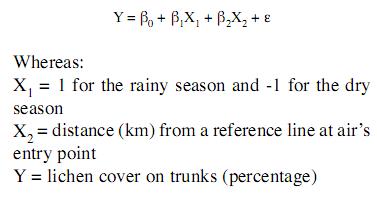
<body><![CDATA[<br> <br style="font-family: verdana;"> </span></small> <hr style="width: 100%; height: 2px;"><small><span  style="font-family: verdana;">    <br> Urban ecology research is a relatively new field, and urban ecologists have mostly done observational studies rather than formal research linking cause and effect (Shochat <span style="font-style: italic;">et al.</span> 2006). A key aspect of urban ecology is the flow of atmospheric gases, particularly contaminants that affect human health (Stapper 2004, Gombert <span  style="font-style: italic;">et al.</span> 2006, Leak <span  style="font-style: italic;">et al.</span> 2008, Policnik <span style="font-style: italic;">et al.</span> 2008). Lichens are good bioindicators of &#8220;air quality&#8221; and their communities integrally reflect pollution levels (Cristofolini <span style="font-style: italic;">et al.</span> 2008, Rojas-Fern&aacute;ndez <span style="font-style: italic;">et al.</span> 2008, Lijteroff <span style="font-style: italic;">et al.</span> 2009).    <br> <br style="font-family: verdana;"> </span><span style="font-family: verdana;">A recent book length review of lichens and monitoring (Nimis <span style="font-style: italic;">et al.</span> 2002) shows that lichens are now widely used bio-indicators in several countries of Europe and North America. This trend may be particularly important for tropical countries where funds for ecological monitoring hardware are scarce or non-existent. Detailed protocols have been developed for a variety of purposes that go from monitoring specific chemical compounds to helping forest conservation on the basis of patterns shown by lichen communities (Nimis <span  style="font-style: italic;">et al.</span> 2002, Monnet et al. 2005, Nali <span style="font-style: italic;">et al. </span>2007).    <br> <br style="font-family: verdana;"> </span><span style="font-family: verdana;">The mechanisms by which contaminants affect lichens include electrical conductivity, which is reduced when the cell membranes of the thallus are degraded by air pollution (Garty <span style="font-style: italic;">et al.</span> 2000). Antioxidant parameters of lichens can serve as indicators of rapid response to pollution stress (Weissman 2006). Standard methods have also been refined in the last decade for better determining the accumulation of various heavy metals on lichens, as in <span  style="font-style: italic;">Evernia prunastri </span>(Nimis <span  style="font-style: italic;">et al.</span> 2002, Conti <span style="font-style: italic;">et al.</span> 2004).    <br> <br style="font-family: verdana;"> </span><span style="font-family: verdana;">Another recent global trend is the identification, modeling and recording on digital maps of changes in the lichen vegetation from urban and rural areas (Policnik <span style="font-style: italic;">et al.</span> 2008). For example, digital models of lichen recolonization for the Ruhr Valley in Germany, show that there was little pollution in the 15th century, heavy pollution in the 20th century and again less pollution in the 21st century, thanks to recent interest in the recovery and conservation of healthy living conditions in cities and towns (Kricke &amp; Beige 2004). Recently, digital maps have also proved appropriate to record the effects of air pollution on the biodiversity of lichens in Italy (Loppi 2004).     <br> <br style="font-family: verdana;"> </span><span style="font-family: verdana;">Atmospheric pollution in the vicinity of a tin and lead industry clearly correlated with wind patterns when studied on the lichen <span style="font-style: italic;">Canoparmelia texana</span> (Leonardo <span  style="font-style: italic;">et al.</span> 2010).    <br> <br style="font-family: verdana;"> </span><span style="font-family: verdana;">In London and surrounding counties, pollution carried by wind explains the occurrence of two central regions with few lichens and no bryophytes, a surrounding region with a more diverse flora, including a high cover of nitrophyte-related lichens, and an outer region characterized by species absent from central London, including acidophyte lichens (Larsena <span style="font-style: italic;">et al.</span> 2007).    <br> <br style="font-family: verdana;"> </span><span style="font-family: verdana;">In the tropics, Latin American scientists have a long trajectory of research on the relationship between lichens and air pollution (M&eacute;ndez &amp; Fournier 1980, Monge-N&aacute;jera <span  style="font-style: italic;">et al. </span>2002a, Bedregal <span style="font-style: italic;">et al.</span> 2005), but this work has not received the attention that it deserves; for example, there are no Latin American authors in the book edited by Nimis <span style="font-style: italic;">et al.</span> (2002), not even for the chapter on tropical lichens.    <br> <br style="font-family: verdana;"> </span><span style="font-family: verdana;">Costa Rica has had an air-monitoring program based on lichens for several decades. For example, an early study assessed air pollution in its capital city, San Jos&eacute;, using three methods: the overall coverage of urban lichens on tree trunks, the changes in lichens transplanted from low-pollution areas near the city, and counts of living cells versus dead cells in lichens exposed for long periods to urban air pollution (M&eacute;ndez 1977, M&eacute;ndez &amp; Fournier 1980). A decade later, using transplanted temperate lichens in a tropical habitat, Gr&uuml;ninger &amp; Monge-N&aacute;jera (1988) tested the European standard bio-monitoring lichen, <span  style="font-style: italic;">Hypogymnia physodes</span>, in San Jos&eacute;.    <br> <br style="font-family: verdana;"> </span><span style="font-family: verdana;">In the 21st Century, Costa Rican lichenology includes a long term study of air pollution (Monge-N&aacute;jera <span style="font-style: italic;">et al.</span> 2002a) that is now in its 35<sup>th</sup> year and the development of a new method for determining pollution using lichens with half the effort required by previous methods (Monge-N&aacute;jera <span style="font-style: italic;">et al.</span> 2002b).    ]]></body>
<body><![CDATA[<br> <br style="font-family: verdana;"> </span><span style="font-family: verdana;">In this article we evaluate the hypothesis that air pollution is lower in areas where the air mass enters the Costa Rican capital (northeast) and higher where it exits (southwest).</span></small> <br style="font-family: verdana;"> <br style="font-family: verdana;"> <font size="3"><span style="font-family: verdana;"><span  style="font-weight: bold;">Materials and methods    <br> <br style="font-family: verdana; font-weight: bold;"> </span></span></font><small><span style="font-family: verdana;"><span  style="font-weight: bold;">Sampling sites:</span> We studied the lichen cover on tree trunks in San Jos&eacute;, Costa Rica, in a rectangular plot covering the area where the air enters the city (Guadalupe, Northeast) to the area where it exits (Escaz&uacute;, Southwest; Lambert North Costa Rica: 527 850 East and 212 670 North, <a href="/img/revistas/rbt/v59n2/a28i1.jpg">Fig. 1</a>). The width of the plot was enough to obtain the desired population of about 200 parks.    <br> <br style="font-family: verdana;"> </span><span style="font-family: verdana;">We used public maps to find all urban parks that were large enough to have several trees with lichens (the maximal size was near 40 000m&sup2;). To minimize the ecological edge effect, we limited a minimum area of approximately 5 000m&sup2;. From the population of 200 parks, we selected a sample of 40 parks with a random sample generator (<a href="www.random.org">www.random.org</a>).    <br> <br style="font-family: verdana;"> </span><span style="font-family: verdana;"><span  style="font-weight: bold;">Measurements:</span> Following Monge-N&aacute;jera <span style="font-style: italic;">et al.</span> (2002b), in each park we identified the five trees with highest lichen coverage on their trunks. We discarded those that did not have enough space for the template and the ones with contorted trunks (trunks must be straight in the first 2m above ground because the flow of rainwater affects lichen cover) (Monge-N&aacute;jera <span style="font-style: italic;">et al. </span>2002a,b). The five parks that had no suitable trees were replaced by others, also randomly, to reach the desired sample of 40 parks.    <br> <br style="font-family: verdana;"> </span><span style="font-family: verdana;">We used a 10 x 20cm template with 50 random points, applying it 1.5m above ground to the side with greater lichen coverage; a detailed description of the method and its validation are given elsewhere (Monge-N&aacute;jera <span style="font-style: italic;">et al.</span> 2002b).</span><br style="font-family: verdana;"> <br style="font-family: verdana;"> <span style="font-family: verdana;"><span style="font-weight: bold;">Lichen species:</span> In temperate countries, the species of lichens used in the surveys are usually considered individually because air pollution affects not only lichen coverage, but also species richness and composition (Nimis <span style="font-style: italic;">et al.</span> 2002). Since identifying tropical lichen species is time consuming, and in the case of San Jos&eacute;, unreliable for the lack of adequate taxonomic studies (Uma&ntilde;a &amp; Sipman 2002), we decided to include only the overall coverage of foliose lichens, which is an easy and reliable method for bio-monitoring air pollution (Monge-N&aacute;jera <span  style="font-style: italic;">et al.</span> 2002b).</span><br  style="font-family: verdana;"> <br style="font-family: verdana;"> <span style="font-family: verdana;"><span style="font-weight: bold;">Sampling dates</span>: In contrast with temperate lichens, some tropical species grow more during moist periods, and they are expected to be more affected by pollution during the dry season when they are stressed but active (Monge-N&aacute;jera <span style="font-style: italic;">et al.</span> 2002a, Uma&ntilde;a &amp; Sipman 2002). For this reason, we sampled the end of the 2008 rainy season and the end of the 2009 dry season. To reduce sampling error, we repeated the individual trees, which for this purpose were marked with numbered metal pins.</span><br style="font-family: verdana;"> <br style="font-family: verdana;"> <span style="font-family: verdana;">In order to analyze the trend of lichen reaction to pollution (as reflected by coverage on the trunks) in relation with park location along the wind path, we used the following adjusted multiple regression model:    <br>     <br> </span></small>     <div style="text-align: left;">     <div style="text-align: center;"><small><span  style="font-family: verdana;"><img alt=""  src="/img/revistas/rbt/v59n2/a28i2.jpg"  style="width: 377px; height: 200px;"></span></small><br  style="font-family: verdana;"> </div> <small><span style="font-family: verdana;"></span></small></div> <small><span style="font-family: verdana;"></span><br  style="font-family: verdana;"> <span style="font-family: verdana;">This regression has the advantage of considering any &#8220;statistical noise&#8221; that season might have on the variable that we wanted to measure: the effect of distance from the source of pollution, in this case, smog from the city vehicles, which are the main source of air pollution in San Jos&eacute; (Brighigna et al. 2002, Monge-N&aacute;jera <span style="font-style: italic;">et al.</span> 2002a).</span><br style="font-family: verdana;"> </small> <br style="font-family: verdana;"> <font style="font-weight: bold;" size="3"><span  style="font-family: verdana;">Results    <br> <br style="font-family: verdana;"> </span></font><small><span style="font-family: verdana;">The phorophites belonged to these species: <span style="font-style: italic;">Acnistus arborescens, Bauhinia purpurea, Callistemon viminales, Cassia fistula, Cedrela odorata, Chrysophyllum cainito, Citrus sinensis, Cojoba arborea, Cupressus lusitanica, Delonix regia, Enterolobium cyclocarpum, Eriobotrya japonica, Erythrina berteroana, Eucaliptus sp, Ficus benjamina, Fraxinius udhei, Hymenaea courbaril, Jacaranda mimosaefolia, </span></span><span style="font-family: verdana; font-style: italic;">Macadamia intergrifolia, Mangifera indica, Mauria heterophylla, Persea caerulea, Phoenix canariensis, Pinus sp., Quercus costaricensis, Spathodea campanulata, Tabebuia rosea, Terminalia catappa, Trichilia havanensis and Veitchia arecina.</span><br style="font-family: verdana;"> <br style="font-family: verdana;"> <span style="font-family: verdana;">The distance and the season explained 13.8% of the changes in lichen coverage on the tree trunks of the city (r&sup2;=0.138). This percentage can be considered a very good correlation, especially if one considers the high local variability in lichen coverage within the sampled area (<a href="/img/revistas/rbt/v59n2/a28i3.jpg">Fig. 2</a>).</span><br  style="font-family: verdana;"> <br style="font-family: verdana;"> <span style="font-family: verdana;">Independent of the season, coverage was reduced from northeast to southwest, on average, 1.34 percentage points per kilometer. Therefore slightly polluted parks predominated in the Northeast (wind input to the city) and heavily contaminated parks in the Southwest (<a  href="/img/revistas/rbt/v59n2/a28i3.jpg">Fig. 2</a>), where the air mass leaves the city after collecting a load of pollutants from vehicle exhausts.</span><br  style="font-family: verdana;"> <br style="font-family: verdana;"> <span style="font-family: verdana;">Regardless of the distance from the wind&#8217;s point of entry, during the dry season the lichen coverage was 6.78 percentage points lower than the mean (<a href="/img/revistas/rbt/v59n2/a28i3.jpg">Fig. 2</a>).</span></small> <br style="font-family: verdana;"> <br style="font-family: verdana;"> <font size="3"><span style="font-family: verdana;"><span  style="font-weight: bold;">Discussion</span>    ]]></body>
<body><![CDATA[<br> <br style="font-family: verdana;"> </span></font><small><span style="font-family: verdana;">Few recent authors have denied that the wind carries atmospheric pollutants and that this is reflected in the lichens&acute; cover. One of those exceptions is the team led by Marques <span  style="font-style: italic;">et al.</span> (2009), which reported that when <span style="font-style: italic;">Parmelia sulcata </span>transplants were placed to allow different routes of air influx, there were no clear wind-directional effects on element accumulation. Nevertheless, they warned that their results could not be generalized to other lichen species.</span><br  style="font-family: verdana;"> <br style="font-family: verdana;"> <span style="font-family: verdana;">On the contrary, the association between lichens and wind has been found in a variety of environments for several decades (Nimis <span  style="font-style: italic;">et al. </span>2002). For example, in the grazing land and fields of Lincolnshire, England, where there has been a limited urban and industrial development, when compared with sources of pollution some distance from it (Seaward 1973).</span><br style="font-family: verdana;"> <br style="font-family: verdana;"> <span style="font-family: verdana;">The pollutants may not travel long distances when carried by the wind: Vanadium released to the atmosphere by a power plant using heavy oil as fuel was carried by the wind towards adjacent areas, accumulating in the lichen <span style="font-style: italic;">H. physodes</span> mostly at less than 1km from the power plant (lichens collected 50km from the plant contained less than 2ppm of Vanadium; Nyg&aring;rda &amp; Harjua 1983).</span><br  style="font-family: verdana;"> <br style="font-family: verdana;"> <span style="font-family: verdana;">Our results in Costa Rica fully agree with the generally accepted view that relative lichen cover on tree trunks reflects air pollution carried by circulating air masses (Larsena <span  style="font-style: italic;">et al.</span> 2007). In San Jos&eacute;, the air collects vehicle exhaust pollutants as it moves through the city, leaving it at the Southwest area with a heavier load of contaminants, in accordance with the hypothesis proposed by Monge-N&aacute;jera <span style="font-style: italic;">et al.</span> (2002a) and tested in this study.</span><br  style="font-family: verdana;"> <br style="font-family: verdana;"> <span style="font-family: verdana;">In Europe and other temperate regions, lichens are more affected by pollution in the rainy season, possibly because they are metabolically active and because it is the time when pollutants from domestic heating and others increase (Loppi 2010 pers. comm.). In San Jos&eacute;, where neither heating nor air conditioning is necessary and there is little industrial development, the main source of air pollution is vehicle exhausts (Monge-N&aacute;jera <span style="font-style: italic;">et al</span>. 2002a). </span><br style="font-family: verdana;"> <br style="font-family: verdana;"> <span style="font-family: verdana;">Tropical lichens can grow rapidly (Uma&ntilde;a &amp; Sipman 2002) and this could explain the apparent 13.56% growth that we found a few months after the first sampling, but the growth may not be real, because this value is similar than the 11% error level of the sampling method (Monge-N&aacute;jera <span style="font-style: italic;">et al</span>. 2002b).</span><br style="font-family: verdana;"> <br style="font-family: verdana;"> <span style="font-family: verdana;">Regardless of the season, lichens reflected the passage of an air mass that enters San Jos&eacute; with lower pollution levels and leaves the city with a high burden of contaminants. The practical implication is that the air enters the city relatively clean by the semi-rural and economically middle class area of Coronado, and reaches the </span><span  style="font-family: verdana;">developed neighborhoods of Escaz&uacute; and Santa Ana with a significant amount of pollutants.</span><br  style="font-family: verdana;"> <br style="font-family: verdana;"> <span style="font-family: verdana;">Future studies of tropical urban lichens could explore if lichen cover actually is lower </span><span style="font-family: verdana;">in the dry season, a result that differs from reports from temperate regions and the effect that climate change may have on tropical lichens, as done for other regions by Insarov <span  style="font-style: italic;">et al.</span> (1999).</span></small> <br style="font-family: verdana;"> <br style="font-family: verdana;"> <font style="font-weight: bold;" size="3"><span  style="font-family: verdana;">Acknowledgments    <br> <br style="font-family: verdana;"> </span></font><small><span style="font-family: verdana;">We thank Ifigenia Bustamante G. for her assistance in field work and for the identification of trees, Juan Navarro R. for his help in locating the parks, and Stefano Loppi (Dipartimento di Scienze Ambientali, Universita di Siena, Italy), Harold Arias Leclaire (UNED, Costa Rica), Liis Marmor (Institute of Ecology and Earth Sciences, University of Tartu, Estonia), V&iacute;ctor H. M&eacute;ndez (UNED, Costa Rica) and Juri Nascimbene (Dipartimento di Biologia, Universit&agrave; di Trieste, Italy) for valuable suggestions to improve an earlier draft.    <br> <br style="font-family: verdana;"> </span></small> <hr style="width: 100%; height: 2px;"><font style="font-weight: bold;"  size="3"><span style="font-family: verdana;">References    <!-- ref --><br> <br style="font-family: verdana;"> </span></font><small><span style="font-family: verdana;">Bedregal, P., B. Torres, P. Mendoza, M. Ubill&uacute;s, J. Hurtado, I. Maza &amp; R. Espinoza. 2005. Uso de <span style="font-style: italic;">Usnea </span>sp. y<span style="font-style: italic;"> Tillandsia capillaris</span>, como bioindicadores de la contaminaci&oacute;n ambiental en la ciudad de Lima, Per&uacute;. Informe Cient&iacute;fico y Tecnol&oacute;gico. Instituto Peruano de Energ&iacute;a Nuclear, Lima, Per&uacute;    &nbsp;&nbsp;&nbsp;&nbsp;&nbsp;&nbsp;&nbsp;&nbsp;[&#160;<a href="javascript:void(0);" onclick="javascript: window.open('/scielo.php?script=sci_nlinks&ref=1779554&pid=S0034-7744201100020002800001&lng=','','width=640,height=500,resizable=yes,scrollbars=1,menubar=yes,');">Links</a>&#160;]<!-- end-ref --><!-- ref -->.</span><br  style="font-family: verdana;"> <br style="font-family: verdana;"> <span style="font-family: verdana;">Brighigna, L., A. Papini, S. Mosti, A. Cornia, P. Bocchini &amp; G. Galletti. 2002. The use of tropical bromeliads (<span  style="font-style: italic;">Tillandsia</span> spp.) for monitoring atmospheric pollution in the town of Florence, Italy. Rev. Biol. Trop. 50: 577-584.    &nbsp;&nbsp;&nbsp;&nbsp;&nbsp;&nbsp;&nbsp;&nbsp;[&#160;<a href="javascript:void(0);" onclick="javascript: window.open('/scielo.php?script=sci_nlinks&ref=1779555&pid=S0034-7744201100020002800002&lng=','','width=640,height=500,resizable=yes,scrollbars=1,menubar=yes,');">Links</a>&#160;]<!-- end-ref --><!-- ref --></span><br style="font-family: verdana;"> <br style="font-family: verdana;"> <span style="font-family: verdana;">Conti, M.E., M. Tudino, J. Stripeikis &amp; G. Cecchetti. 2004. Heavy metal accumulation in the lichen <span style="font-style: italic;">Evernia prunastri</span> transplanted at urban, rural and industrial sites in Central Italy. J. Atmosph. Chem. 49: 83-94.    &nbsp;&nbsp;&nbsp;&nbsp;&nbsp;&nbsp;&nbsp;&nbsp;[&#160;<a href="javascript:void(0);" onclick="javascript: window.open('/scielo.php?script=sci_nlinks&ref=1779556&pid=S0034-7744201100020002800003&lng=','','width=640,height=500,resizable=yes,scrollbars=1,menubar=yes,');">Links</a>&#160;]<!-- end-ref --><!-- ref --></span><br style="font-family: verdana;"> <br style="font-family: verdana;"> <span style="font-family: verdana;">Garty, J., L. Weissman, O. Tamir, S. Beer, Y. Cohen, A. Karnieli &amp; L. Orlovsky. 2000. Comparison of five physiological parameters to assess the vitality of the lichen <span style="font-style: italic;">Ramalina lacera</span> exposed to air pollution. Physiol. Plant. 109: 410-418.    &nbsp;&nbsp;&nbsp;&nbsp;&nbsp;&nbsp;&nbsp;&nbsp;[&#160;<a href="javascript:void(0);" onclick="javascript: window.open('/scielo.php?script=sci_nlinks&ref=1779557&pid=S0034-7744201100020002800004&lng=','','width=640,height=500,resizable=yes,scrollbars=1,menubar=yes,');">Links</a>&#160;]<!-- end-ref --><!-- ref --></span><br  style="font-family: verdana;"> <br style="font-family: verdana;"> <span style="font-family: verdana;">Gombert, S., J. Asta &amp; M.R.D. Seaward. 2006. Lichens and tobacco plants as complementary biomonitors of air pollution in the Grenoble area (Is&egrave;re, southeast France). Ecol. Indic. 6: 429-443.    &nbsp;&nbsp;&nbsp;&nbsp;&nbsp;&nbsp;&nbsp;&nbsp;[&#160;<a href="javascript:void(0);" onclick="javascript: window.open('/scielo.php?script=sci_nlinks&ref=1779558&pid=S0034-7744201100020002800005&lng=','','width=640,height=500,resizable=yes,scrollbars=1,menubar=yes,');">Links</a>&#160;]<!-- end-ref --><!-- ref --></span><br  style="font-family: verdana;"> <br style="font-family: verdana;"> <span style="font-family: verdana;">Gr&uuml;ninger, W. &amp; J. Monge-N&aacute;jera. 1988. Use of temperate lichen <span style="font-style: italic;">Hypogymnnia physodes</span> (Parmeliaceae) to evaluate air pollution in the Tropics. Rev. Biol. Trop. 36: 545-547.    &nbsp;&nbsp;&nbsp;&nbsp;&nbsp;&nbsp;&nbsp;&nbsp;[&#160;<a href="javascript:void(0);" onclick="javascript: window.open('/scielo.php?script=sci_nlinks&ref=1779559&pid=S0034-7744201100020002800006&lng=','','width=640,height=500,resizable=yes,scrollbars=1,menubar=yes,');">Links</a>&#160;]<!-- end-ref --><!-- ref --></span><br  style="font-family: verdana;"> <br style="font-family: verdana;"> <span style="font-family: verdana;">Insarov, G.E., S.M. Semenov &amp; I.D. Insarova. 1999. A System to Monitor Climate Change with Epilithic Lichens. Envir. Monit. Asses. 55: 279-298.    &nbsp;&nbsp;&nbsp;&nbsp;&nbsp;&nbsp;&nbsp;&nbsp;[&#160;<a href="javascript:void(0);" onclick="javascript: window.open('/scielo.php?script=sci_nlinks&ref=1779560&pid=S0034-7744201100020002800007&lng=','','width=640,height=500,resizable=yes,scrollbars=1,menubar=yes,');">Links</a>&#160;]<!-- end-ref --><!-- ref --></span><br style="font-family: verdana;"> <br style="font-family: verdana;"> <span style="font-family: verdana;">Kricke, R. &amp; G.B. Beige. 2004. Changes in epiphytic lichen flora in urban environments. Lichens in a changing pollution environment. Engl. Nat. Res. Rep. 525: 27-30.    &nbsp;&nbsp;&nbsp;&nbsp;&nbsp;&nbsp;&nbsp;&nbsp;[&#160;<a href="javascript:void(0);" onclick="javascript: window.open('/scielo.php?script=sci_nlinks&ref=1779561&pid=S0034-7744201100020002800008&lng=','','width=640,height=500,resizable=yes,scrollbars=1,menubar=yes,');">Links</a>&#160;]<!-- end-ref --><!-- ref --></span><br style="font-family: verdana;"> <br style="font-family: verdana;"> <span style="font-family: verdana;">Larsena, R.S., J.N.B. Bellb, P.W. Jamesa, P.J. Chimonidesa, F.J. Rumseya, A. Tremperc &amp; O.W. Purvisa. 2007. Lichen and bryophyte distribution on oak in London in relation to air pollution and bark acidity. Environm. Pollut. 146: 332-340.    &nbsp;&nbsp;&nbsp;&nbsp;&nbsp;&nbsp;&nbsp;&nbsp;[&#160;<a href="javascript:void(0);" onclick="javascript: window.open('/scielo.php?script=sci_nlinks&ref=1779562&pid=S0034-7744201100020002800009&lng=','','width=640,height=500,resizable=yes,scrollbars=1,menubar=yes,');">Links</a>&#160;]<!-- end-ref --><!-- ref --></span><br  style="font-family: verdana;"> <br style="font-family: verdana;"> <span style="font-family: verdana;">Leonardo, L., B.P. Mazzillia, S.R. Damatto, M. Saikib &amp; S.M.B. de Oliveira. 2010. Assessment of atmospheric pollution in the vicinity of a tin and lead industry using lichen species <span  style="font-style: italic;">Canoparmelia texana</span>. J. Environm. Radioact. 101: in press.    &nbsp;&nbsp;&nbsp;&nbsp;&nbsp;&nbsp;&nbsp;&nbsp;[&#160;<a href="javascript:void(0);" onclick="javascript: window.open('/scielo.php?script=sci_nlinks&ref=1779563&pid=S0034-7744201100020002800010&lng=','','width=640,height=500,resizable=yes,scrollbars=1,menubar=yes,');">Links</a>&#160;]<!-- end-ref --><!-- ref --></span><br  style="font-family: verdana;"> <br style="font-family: verdana;"> <span style="font-family: verdana;">Loppi, S. 2004. Mapping the effects of air pollution, nitrogen deposition, agriculture and dust by the diversity of epiphytic lichens in central Italy. Lichens in a changing pollution environment. Engl. Nat. Res. Rep. 525: 37-41.    &nbsp;&nbsp;&nbsp;&nbsp;&nbsp;&nbsp;&nbsp;&nbsp;[&#160;<a href="javascript:void(0);" onclick="javascript: window.open('/scielo.php?script=sci_nlinks&ref=1779564&pid=S0034-7744201100020002800011&lng=','','width=640,height=500,resizable=yes,scrollbars=1,menubar=yes,');">Links</a>&#160;]<!-- end-ref --><!-- ref --></span><br style="font-family: verdana;"> <br style="font-family: verdana;"> <span style="font-family: verdana;">Marques, A.P., M.C. Freitas, T.H. Wolterbeek &amp; T. Verburg. 2009. <span style="font-style: italic;">Parmelia sulcata</span> lichen transplants positioning towards wind direction (Part II): element concentrations and relationships with atmospheric element deposition. J. Radioanalyt. Nucl. Chem. 281: 231-236.    &nbsp;&nbsp;&nbsp;&nbsp;&nbsp;&nbsp;&nbsp;&nbsp;[&#160;<a href="javascript:void(0);" onclick="javascript: window.open('/scielo.php?script=sci_nlinks&ref=1779565&pid=S0034-7744201100020002800012&lng=','','width=640,height=500,resizable=yes,scrollbars=1,menubar=yes,');">Links</a>&#160;]<!-- end-ref --><!-- ref --></span><br  style="font-family: verdana;"> <br style="font-family: verdana;"> <span style="font-family: verdana;">M&eacute;ndez, O. 1977. Los l&iacute;quenes como indicadores de la contaminaci&oacute;n atmosf&eacute;rica en el &aacute;rea metropolitana de San Jos&eacute;, Costa Rica. Tesis de licenciatura, Universidad de Costa Rica, San Jos&eacute;, Costa Rica.    &nbsp;&nbsp;&nbsp;&nbsp;&nbsp;&nbsp;&nbsp;&nbsp;[&#160;<a href="javascript:void(0);" onclick="javascript: window.open('/scielo.php?script=sci_nlinks&ref=1779566&pid=S0034-7744201100020002800013&lng=','','width=640,height=500,resizable=yes,scrollbars=1,menubar=yes,');">Links</a>&#160;]<!-- end-ref --><!-- ref --></span><br  style="font-family: verdana;"> <br style="font-family: verdana;"> <span style="font-family: verdana;">M&eacute;ndez, O. &amp; L. Fournier. 1980. Los l&iacute;quenes como indicadores de la contaminaci&oacute;n atmosf&eacute;rica en el &aacute;rea metropolitana de San Jos&eacute;, Costa Rica. Rev. Biol. Trop. 28: 31-39.    &nbsp;&nbsp;&nbsp;&nbsp;&nbsp;&nbsp;&nbsp;&nbsp;[&#160;<a href="javascript:void(0);" onclick="javascript: window.open('/scielo.php?script=sci_nlinks&ref=1779567&pid=S0034-7744201100020002800014&lng=','','width=640,height=500,resizable=yes,scrollbars=1,menubar=yes,');">Links</a>&#160;]<!-- end-ref --><!-- ref --></span><br style="font-family: verdana;"> <br style="font-family: verdana;"> <span style="font-family: verdana;">Monge-N&aacute;jera, J., M.I. Gonz&aacute;lez, M. Rivas &amp; V.H. M&eacute;ndez. 2002a. Twenty years of lichen cover change in a tropical habitat (Costa Rica) and its relation with air pollution. Rev. Biol. Trop. 50: 309-319.    &nbsp;&nbsp;&nbsp;&nbsp;&nbsp;&nbsp;&nbsp;&nbsp;[&#160;<a href="javascript:void(0);" onclick="javascript: window.open('/scielo.php?script=sci_nlinks&ref=1779568&pid=S0034-7744201100020002800015&lng=','','width=640,height=500,resizable=yes,scrollbars=1,menubar=yes,');">Links</a>&#160;]<!-- end-ref --><!-- ref --></span><br style="font-family: verdana;"> <br style="font-family: verdana;"> <span style="font-family: verdana;">Monge-N&aacute;jera, J., M.I. Gonz&aacute;lez, M. Rivas &amp; V.H. M&eacute;ndez. 2002b. A new method to assess air pollution using lichens as bio-indicators. Rev. Biol. Trop. 50: 321-325.    &nbsp;&nbsp;&nbsp;&nbsp;&nbsp;&nbsp;&nbsp;&nbsp;[&#160;<a href="javascript:void(0);" onclick="javascript: window.open('/scielo.php?script=sci_nlinks&ref=1779569&pid=S0034-7744201100020002800016&lng=','','width=640,height=500,resizable=yes,scrollbars=1,menubar=yes,');">Links</a>&#160;]<!-- end-ref --><!-- ref --></span><br  style="font-family: verdana;"> <br style="font-family: verdana;"> <span style="font-family: verdana;">Monnet, F., F. Bordas, V. Deluchat, P. Chatenet, M. Botineau &amp; M. Baudu. 2005. Use of the aquatic lichen Dermatocarpon luridum as bioindicator of copper pollution. Accumulation and cellular distribution tests. Environ. Pollut. 138: 456-462.    &nbsp;&nbsp;&nbsp;&nbsp;&nbsp;&nbsp;&nbsp;&nbsp;[&#160;<a href="javascript:void(0);" onclick="javascript: window.open('/scielo.php?script=sci_nlinks&ref=1779570&pid=S0034-7744201100020002800017&lng=','','width=640,height=500,resizable=yes,scrollbars=1,menubar=yes,');">Links</a>&#160;]<!-- end-ref --><!-- ref --></span><br  style="font-family: verdana;"> <br style="font-family: verdana;"> <span style="font-family: verdana;">Nali, C., E. Balducci, L. Frati, L. Paoli, S. Loppi &amp; G. Lorenzini. 2007. Integrated biomonitoring of air quality with plants and lichens: A case study on ambient ozone from central Italy. Chemosphere 67:2169-2176.    &nbsp;&nbsp;&nbsp;&nbsp;&nbsp;&nbsp;&nbsp;&nbsp;[&#160;<a href="javascript:void(0);" onclick="javascript: window.open('/scielo.php?script=sci_nlinks&ref=1779571&pid=S0034-7744201100020002800018&lng=','','width=640,height=500,resizable=yes,scrollbars=1,menubar=yes,');">Links</a>&#160;]<!-- end-ref --><!-- ref --></span><br style="font-family: verdana;"> <br style="font-family: verdana;"> <span style="font-family: verdana;">Nimis, P.L., C. Scheidegger &amp; P.A. Wolseley (eds.). 2002. Monitoring with Lichens. Monitoring Lichens. Kluwer, Dordrect, The Netherlands.    &nbsp;&nbsp;&nbsp;&nbsp;&nbsp;&nbsp;&nbsp;&nbsp;[&#160;<a href="javascript:void(0);" onclick="javascript: window.open('/scielo.php?script=sci_nlinks&ref=1779572&pid=S0034-7744201100020002800019&lng=','','width=640,height=500,resizable=yes,scrollbars=1,menubar=yes,');">Links</a>&#160;]<!-- end-ref --><!-- ref --></span><br style="font-family: verdana;"> <br style="font-family: verdana;"> <span style="font-family: verdana;">Nyg&aring;rda S. &amp; L. Harjua. 1983. A Study of the Short Range Pollution Around a Power Plant Using Heavy Fuel Oil by Analysing Vanadium in Lichens. Lichenologist 15: 89-93.    &nbsp;&nbsp;&nbsp;&nbsp;&nbsp;&nbsp;&nbsp;&nbsp;[&#160;<a href="javascript:void(0);" onclick="javascript: window.open('/scielo.php?script=sci_nlinks&ref=1779573&pid=S0034-7744201100020002800020&lng=','','width=640,height=500,resizable=yes,scrollbars=1,menubar=yes,');">Links</a>&#160;]<!-- end-ref --><!-- ref --></span><br  style="font-family: verdana;"> <br style="font-family: verdana;"> <span style="font-family: verdana;">Policnik, H., P. Simoncic &amp; F. Batic. 2008. Monitoring air quality with lichens: A comparison between mapping in forest sites and in open areas. Environ. Pollut.&nbsp; 151: 395-400.    &nbsp;&nbsp;&nbsp;&nbsp;&nbsp;&nbsp;&nbsp;&nbsp;[&#160;<a href="javascript:void(0);" onclick="javascript: window.open('/scielo.php?script=sci_nlinks&ref=1779574&pid=S0034-7744201100020002800021&lng=','','width=640,height=500,resizable=yes,scrollbars=1,menubar=yes,');">Links</a>&#160;]<!-- end-ref --><!-- ref --></span><br  style="font-family: verdana;"> <br style="font-family: verdana;"> <span style="font-family: verdana;">Rojas-Fern&aacute;ndez, J.A., A. Balza-Quintero, V. Marcano,&nbsp; P.A. Rojas, D. D&aacute;vila-Vera, Z. Pe&ntilde;a-Contreras, R.V. Mendoza-Brice&ntilde;o &amp; E. Palacios-Pr&uuml;. 2008. Metabolitos secundarios de l&iacute;quenes de la zona nival de la Sierra Nevada de M&eacute;rida-Venezuela y su papel en la absorci&oacute;n de la radiaci&oacute;n ultravioleta. An. Jard. Bot. Madrid 65: 59-72.    &nbsp;&nbsp;&nbsp;&nbsp;&nbsp;&nbsp;&nbsp;&nbsp;[&#160;<a href="javascript:void(0);" onclick="javascript: window.open('/scielo.php?script=sci_nlinks&ref=1779575&pid=S0034-7744201100020002800022&lng=','','width=640,height=500,resizable=yes,scrollbars=1,menubar=yes,');">Links</a>&#160;]<!-- end-ref --><br>     <!-- ref --><br> Seaward. M.R.D. 1973. Lichen Ecology of the Scunthorpe Heathlands I. Mineral Accumulation. Lichenologist 5: 423-433.    &nbsp;&nbsp;&nbsp;&nbsp;&nbsp;&nbsp;&nbsp;&nbsp;[&#160;<a href="javascript:void(0);" onclick="javascript: window.open('/scielo.php?script=sci_nlinks&ref=1779577&pid=S0034-7744201100020002800023&lng=','','width=640,height=500,resizable=yes,scrollbars=1,menubar=yes,');">Links</a>&#160;]<!-- end-ref --><!-- ref --></span><br  style="font-family: verdana;"> <br style="font-family: verdana;"> <span style="font-family: verdana;">Shochat, E., P. Warren &amp; S.H. Faeth. 2006. Future directions in urban ecology. Trends Ecol. Evol. 21: 661-662.    &nbsp;&nbsp;&nbsp;&nbsp;&nbsp;&nbsp;&nbsp;&nbsp;[&#160;<a href="javascript:void(0);" onclick="javascript: window.open('/scielo.php?script=sci_nlinks&ref=1779578&pid=S0034-7744201100020002800024&lng=','','width=640,height=500,resizable=yes,scrollbars=1,menubar=yes,');">Links</a>&#160;]<!-- end-ref --><!-- ref --></span><br  style="font-family: verdana;"> <br style="font-family: verdana;"> <span style="font-family: verdana;">Stapper, N.J. 2004. Mapping aerial hypertrophication with epiphytic lichens as biomonitors in North Rhine- Westphalia (NRW, Germany). Lichens in a changing pollution environment. Engl. Nat. Res. Rep. 525: 31-36.    &nbsp;&nbsp;&nbsp;&nbsp;&nbsp;&nbsp;&nbsp;&nbsp;[&#160;<a href="javascript:void(0);" onclick="javascript: window.open('/scielo.php?script=sci_nlinks&ref=1779579&pid=S0034-7744201100020002800025&lng=','','width=640,height=500,resizable=yes,scrollbars=1,menubar=yes,');">Links</a>&#160;]<!-- end-ref --><!-- ref --></span><br style="font-family: verdana;"> <br style="font-family: verdana;"> <span style="font-family: verdana;">Uma&ntilde;a, L. &amp; H. Sipman. 2002. L&iacute;quenes de Costa Rica. Instituto Nacional de Biodiversidad, Heredia, Costa Rica.    &nbsp;&nbsp;&nbsp;&nbsp;&nbsp;&nbsp;&nbsp;&nbsp;[&#160;<a href="javascript:void(0);" onclick="javascript: window.open('/scielo.php?script=sci_nlinks&ref=1779580&pid=S0034-7744201100020002800026&lng=','','width=640,height=500,resizable=yes,scrollbars=1,menubar=yes,');">Links</a>&#160;]<!-- end-ref --><br>     <br>     <br> <a name="Correspondencia"></a>Correspondencia: </span></small><font  size="2"><font size="-1"><span style="font-family: verdana;">Erich Neurohr Bustamante &amp; Juli&aacute;n Monge-N&aacute;jera. </span></font></font><font size="-1"><span  style="font-family: verdana;">Laboratorio de Ecolog&iacute;a Urbana, UNED, 2050 San Jos&eacute;, Costa Rica; <a href="mailto:erichneurohr@gmail.com">erichneurohr@gmail.com</a>,<a  href="mailto:julianmonge@gmail.com">julianmonge@gmail.com</a></span><br  style="font-family: verdana;"> <span style="font-family: verdana;"></span></font><font size="2"><font  size="-1"><span style="font-family: verdana;">Mar&iacute;a Isabel Gonz&aacute;lez Lutz. </span></font></font><font size="-1"><span  style="font-family: verdana;">Escuela de Estad&iacute;stica, Universidad de Costa Rica, 2060 San Jos&eacute;, Costa Rica; <a  href="mailto:mariaisabel.gonzalezlutz@ucr.ac.cr">mariaisabel.gonzalezlutz@ucr.ac.cr</a></span></font><br  style="font-family: verdana;"> <small><span style="font-family: verdana;"></span><br  style="font-family: verdana;"> </small>     <div style="text-align: center;"><small></small></div> <hr  style="width: 100%; height: 2px; margin-left: auto; margin-right: auto;">     <div style="text-align: center;"><small><span  style="font-family: verdana;">Received 02-XII-2010. Corrected 17-XII-2010. Accepted 10-I-2011.</span></small></div> </div>      ]]></body><back>
<ref-list>
<ref id="B1">
<nlm-citation citation-type="book">
<person-group person-group-type="author">
<name>
<surname><![CDATA[Bedregal]]></surname>
<given-names><![CDATA[P]]></given-names>
</name>
<name>
<surname><![CDATA[Torres]]></surname>
<given-names><![CDATA[B]]></given-names>
</name>
<name>
<surname><![CDATA[Mendoza]]></surname>
<given-names><![CDATA[P]]></given-names>
</name>
<name>
<surname><![CDATA[Ubillús]]></surname>
<given-names><![CDATA[M]]></given-names>
</name>
<name>
<surname><![CDATA[Hurtado]]></surname>
<given-names><![CDATA[J]]></given-names>
</name>
<name>
<surname><![CDATA[Maza]]></surname>
<given-names><![CDATA[I]]></given-names>
</name>
<name>
<surname><![CDATA[Espinoza]]></surname>
<given-names><![CDATA[R]]></given-names>
</name>
</person-group>
<source><![CDATA[Uso de Usnea sp. y Tillandsia capillaris, como bioindicadores de la contaminación ambiental en la ciudad de Lima, Perú: Informe Científico y Tecnológico]]></source>
<year>2005</year>
<publisher-loc><![CDATA[Lima ]]></publisher-loc>
<publisher-name><![CDATA[Instituto Peruano de Energía Nuclear]]></publisher-name>
</nlm-citation>
</ref>
<ref id="B2">
<nlm-citation citation-type="journal">
<person-group person-group-type="author">
<name>
<surname><![CDATA[Brighigna]]></surname>
<given-names><![CDATA[L]]></given-names>
</name>
<name>
<surname><![CDATA[Papini]]></surname>
<given-names><![CDATA[A]]></given-names>
</name>
<name>
<surname><![CDATA[Mosti]]></surname>
<given-names><![CDATA[S]]></given-names>
</name>
<name>
<surname><![CDATA[Cornia]]></surname>
<given-names><![CDATA[A]]></given-names>
</name>
<name>
<surname><![CDATA[Bocchini]]></surname>
<given-names><![CDATA[P]]></given-names>
</name>
<name>
<surname><![CDATA[Galletti]]></surname>
<given-names><![CDATA[G]]></given-names>
</name>
</person-group>
<article-title xml:lang="en"><![CDATA[The use of tropical bromeliads (Tillandsia spp.) for monitoring atmospheric pollution in the town of Florence, Italy]]></article-title>
<source><![CDATA[Rev. Biol. Trop]]></source>
<year>2002</year>
<volume>50</volume>
<page-range>577-584</page-range></nlm-citation>
</ref>
<ref id="B3">
<nlm-citation citation-type="journal">
<person-group person-group-type="author">
<name>
<surname><![CDATA[Conti]]></surname>
<given-names><![CDATA[M.E]]></given-names>
</name>
<name>
<surname><![CDATA[Tudino]]></surname>
<given-names><![CDATA[M]]></given-names>
</name>
<name>
<surname><![CDATA[Stripeikis]]></surname>
<given-names><![CDATA[J]]></given-names>
</name>
<name>
<surname><![CDATA[Cecchetti]]></surname>
<given-names><![CDATA[G]]></given-names>
</name>
</person-group>
<article-title xml:lang="en"><![CDATA[Heavy metal accumulation in the lichen Evernia prunastri transplanted at urban, rural and industrial sites in Central Italy]]></article-title>
<source><![CDATA[J. Atmosph. Chem]]></source>
<year>2004</year>
<volume>49</volume>
<page-range>83-94</page-range></nlm-citation>
</ref>
<ref id="B4">
<nlm-citation citation-type="journal">
<person-group person-group-type="author">
<name>
<surname><![CDATA[Garty]]></surname>
<given-names><![CDATA[J]]></given-names>
</name>
<name>
<surname><![CDATA[Weissman]]></surname>
<given-names><![CDATA[L]]></given-names>
</name>
<name>
<surname><![CDATA[Tamir]]></surname>
<given-names><![CDATA[O]]></given-names>
</name>
<name>
<surname><![CDATA[Beer]]></surname>
<given-names><![CDATA[S]]></given-names>
</name>
<name>
<surname><![CDATA[Cohen]]></surname>
<given-names><![CDATA[Y]]></given-names>
</name>
<name>
<surname><![CDATA[Karnieli]]></surname>
<given-names><![CDATA[A]]></given-names>
</name>
<name>
<surname><![CDATA[Orlovsky]]></surname>
<given-names><![CDATA[L]]></given-names>
</name>
</person-group>
<article-title xml:lang="en"><![CDATA[Comparison of five physiological parameters to assess the vitality of the lichen Ramalina lacera exposed to air pollution]]></article-title>
<source><![CDATA[Physiol. Plant]]></source>
<year>2000</year>
<volume>109</volume>
<page-range>410-418</page-range></nlm-citation>
</ref>
<ref id="B5">
<nlm-citation citation-type="journal">
<person-group person-group-type="author">
<name>
<surname><![CDATA[Gombert]]></surname>
<given-names><![CDATA[S]]></given-names>
</name>
<name>
<surname><![CDATA[Asta]]></surname>
<given-names><![CDATA[J]]></given-names>
</name>
<name>
<surname><![CDATA[Seaward]]></surname>
<given-names><![CDATA[M.R.D]]></given-names>
</name>
</person-group>
<article-title xml:lang="en"><![CDATA[Lichens and tobacco plants as complementary biomonitors of air pollution in the Grenoble area (Isère, southeast France)]]></article-title>
<source><![CDATA[Ecol. Indic]]></source>
<year>2006</year>
<volume>6</volume>
<page-range>429-443</page-range></nlm-citation>
</ref>
<ref id="B6">
<nlm-citation citation-type="journal">
<person-group person-group-type="author">
<name>
<surname><![CDATA[Grüninger]]></surname>
<given-names><![CDATA[W]]></given-names>
</name>
<name>
<surname><![CDATA[Monge-Nájera]]></surname>
<given-names><![CDATA[J]]></given-names>
</name>
</person-group>
<article-title xml:lang="en"><![CDATA[Use of temperate lichen Hypogymnnia physodes (Parmeliaceae) to evaluate air pollution in the Tropics]]></article-title>
<source><![CDATA[Rev. Biol. Trop]]></source>
<year>1988</year>
<volume>36</volume>
<page-range>545-547</page-range></nlm-citation>
</ref>
<ref id="B7">
<nlm-citation citation-type="journal">
<person-group person-group-type="author">
<name>
<surname><![CDATA[Insarov]]></surname>
<given-names><![CDATA[G.E]]></given-names>
</name>
<name>
<surname><![CDATA[Semenov]]></surname>
<given-names><![CDATA[S.M]]></given-names>
</name>
<name>
<surname><![CDATA[Insarova]]></surname>
<given-names><![CDATA[I.D]]></given-names>
</name>
</person-group>
<article-title xml:lang="en"><![CDATA[A System to Monitor Climate Change with Epilithic Lichens]]></article-title>
<source><![CDATA[Envir. Monit. Asses]]></source>
<year>1999</year>
<volume>55</volume>
<page-range>279-298</page-range></nlm-citation>
</ref>
<ref id="B8">
<nlm-citation citation-type="journal">
<person-group person-group-type="author">
<name>
<surname><![CDATA[Kricke]]></surname>
<given-names><![CDATA[R]]></given-names>
</name>
<name>
<surname><![CDATA[Beige]]></surname>
<given-names><![CDATA[G.B]]></given-names>
</name>
</person-group>
<article-title xml:lang="en"><![CDATA[Changes in epiphytic lichen flora in urban environments: Lichens in a changing pollution environment]]></article-title>
<source><![CDATA[Engl. Nat. Res. Rep]]></source>
<year>2004</year>
<volume>525</volume>
<page-range>27-30</page-range></nlm-citation>
</ref>
<ref id="B9">
<nlm-citation citation-type="journal">
<person-group person-group-type="author">
<name>
<surname><![CDATA[Larsena]]></surname>
<given-names><![CDATA[R.S]]></given-names>
</name>
<name>
<surname><![CDATA[Bellb]]></surname>
<given-names><![CDATA[J.N.B]]></given-names>
</name>
<name>
<surname><![CDATA[Jamesa]]></surname>
<given-names><![CDATA[P.W]]></given-names>
</name>
<name>
<surname><![CDATA[Chimonidesa]]></surname>
<given-names><![CDATA[P.J]]></given-names>
</name>
<name>
<surname><![CDATA[Rumseya]]></surname>
<given-names><![CDATA[F.J]]></given-names>
</name>
<name>
<surname><![CDATA[Tremperc]]></surname>
<given-names><![CDATA[A]]></given-names>
</name>
<name>
<surname><![CDATA[Purvisa]]></surname>
<given-names><![CDATA[O.W]]></given-names>
</name>
</person-group>
<article-title xml:lang="en"><![CDATA[Lichen and bryophyte distribution on oak in London in relation to air pollution and bark acidity]]></article-title>
<source><![CDATA[Environm. Pollut]]></source>
<year>2007</year>
<volume>146</volume>
<page-range>332-340</page-range></nlm-citation>
</ref>
<ref id="B10">
<nlm-citation citation-type="journal">
<person-group person-group-type="author">
<name>
<surname><![CDATA[Leonardo]]></surname>
<given-names><![CDATA[L]]></given-names>
</name>
<name>
<surname><![CDATA[Mazzillia]]></surname>
<given-names><![CDATA[B.P]]></given-names>
</name>
<name>
<surname><![CDATA[Damatto]]></surname>
<given-names><![CDATA[S.R]]></given-names>
</name>
<name>
<surname><![CDATA[Saikib]]></surname>
<given-names><![CDATA[M]]></given-names>
</name>
<name>
<surname><![CDATA[de Oliveira]]></surname>
<given-names><![CDATA[S.M.B]]></given-names>
</name>
</person-group>
<article-title xml:lang="en"><![CDATA[Assessment of atmospheric pollution in the vicinity of a tin and lead industry using lichen species Canoparmelia texana]]></article-title>
<source><![CDATA[J. Environm. Radioact]]></source>
<year>2010</year>
<volume>101</volume>
</nlm-citation>
</ref>
<ref id="B11">
<nlm-citation citation-type="journal">
<person-group person-group-type="author">
<name>
<surname><![CDATA[Loppi]]></surname>
<given-names><![CDATA[S]]></given-names>
</name>
</person-group>
<article-title xml:lang="en"><![CDATA[Mapping the effects of air pollution, nitrogen deposition, agriculture and dust by the diversity of epiphytic lichens in central Italy: Lichens in a changing pollution environment]]></article-title>
<source><![CDATA[Engl. Nat. Res. Rep]]></source>
<year>2004</year>
<volume>525</volume>
<page-range>37-41</page-range></nlm-citation>
</ref>
<ref id="B12">
<nlm-citation citation-type="journal">
<person-group person-group-type="author">
<name>
<surname><![CDATA[Marques]]></surname>
<given-names><![CDATA[A.P]]></given-names>
</name>
<name>
<surname><![CDATA[Freitas]]></surname>
<given-names><![CDATA[M.C]]></given-names>
</name>
<name>
<surname><![CDATA[Wolterbeek]]></surname>
<given-names><![CDATA[T.H]]></given-names>
</name>
<name>
<surname><![CDATA[Verburg]]></surname>
<given-names><![CDATA[T]]></given-names>
</name>
</person-group>
<article-title xml:lang="en"><![CDATA[Parmelia sulcata lichen transplants positioning towards wind direction (Part II): element concentrations and relationships with atmospheric element deposition]]></article-title>
<source><![CDATA[J. Radioanalyt. Nucl. Chem]]></source>
<year>2009</year>
<volume>281</volume>
<page-range>231-236</page-range></nlm-citation>
</ref>
<ref id="B13">
<nlm-citation citation-type="">
<person-group person-group-type="author">
<name>
<surname><![CDATA[Méndez]]></surname>
<given-names><![CDATA[O]]></given-names>
</name>
</person-group>
<source><![CDATA[Los líquenes como indicadores de la contaminación atmosférica en el área metropolitana de San José, Costa Rica]]></source>
<year>1977</year>
</nlm-citation>
</ref>
<ref id="B14">
<nlm-citation citation-type="journal">
<person-group person-group-type="author">
<name>
<surname><![CDATA[Méndez]]></surname>
<given-names><![CDATA[O]]></given-names>
</name>
<name>
<surname><![CDATA[Fournier]]></surname>
<given-names><![CDATA[L]]></given-names>
</name>
</person-group>
<article-title xml:lang="es"><![CDATA[Los líquenes como indicadores de la contaminación atmosférica en el área metropolitana de San José, Costa Rica]]></article-title>
<source><![CDATA[Rev. Biol. Trop]]></source>
<year>1980</year>
<volume>28</volume>
<page-range>31-39</page-range></nlm-citation>
</ref>
<ref id="B15">
<nlm-citation citation-type="journal">
<person-group person-group-type="author">
<name>
<surname><![CDATA[Monge-Nájera]]></surname>
<given-names><![CDATA[J]]></given-names>
</name>
<name>
<surname><![CDATA[González]]></surname>
<given-names><![CDATA[M.I]]></given-names>
</name>
<name>
<surname><![CDATA[Rivas]]></surname>
<given-names><![CDATA[M]]></given-names>
</name>
<name>
<surname><![CDATA[Méndez]]></surname>
<given-names><![CDATA[V.H]]></given-names>
</name>
</person-group>
<article-title xml:lang="en"><![CDATA[Twenty years of lichen cover change in a tropical habitat (Costa Rica) and its relation with air pollution]]></article-title>
<source><![CDATA[Rev. Biol. Trop]]></source>
<year>2002</year>
<volume>50</volume>
<page-range>309-319</page-range></nlm-citation>
</ref>
<ref id="B16">
<nlm-citation citation-type="journal">
<person-group person-group-type="author">
<name>
<surname><![CDATA[Monge-Nájera]]></surname>
<given-names><![CDATA[J]]></given-names>
</name>
<name>
<surname><![CDATA[González]]></surname>
<given-names><![CDATA[M.I]]></given-names>
</name>
<name>
<surname><![CDATA[Rivas]]></surname>
<given-names><![CDATA[M]]></given-names>
</name>
<name>
<surname><![CDATA[Méndez]]></surname>
<given-names><![CDATA[V.H]]></given-names>
</name>
</person-group>
<article-title xml:lang="en"><![CDATA[A new method to assess air pollution using lichens as bio-indicators]]></article-title>
<source><![CDATA[Rev. Biol. Trop]]></source>
<year>2002</year>
<volume>50</volume>
<page-range>321-325</page-range></nlm-citation>
</ref>
<ref id="B17">
<nlm-citation citation-type="journal">
<person-group person-group-type="author">
<name>
<surname><![CDATA[Monnet]]></surname>
<given-names><![CDATA[F]]></given-names>
</name>
<name>
<surname><![CDATA[Bordas]]></surname>
<given-names><![CDATA[F]]></given-names>
</name>
<name>
<surname><![CDATA[Deluchat]]></surname>
<given-names><![CDATA[V]]></given-names>
</name>
<name>
<surname><![CDATA[Chatenet]]></surname>
<given-names><![CDATA[P]]></given-names>
</name>
<name>
<surname><![CDATA[Botineau]]></surname>
<given-names><![CDATA[M]]></given-names>
</name>
<name>
<surname><![CDATA[Baudu]]></surname>
<given-names><![CDATA[M]]></given-names>
</name>
</person-group>
<article-title xml:lang="en"><![CDATA[Use of the aquatic lichen Dermatocarpon luridum as bioindicator of copper pollution: Accumulation and cellular distribution tests]]></article-title>
<source><![CDATA[Environ. Pollut]]></source>
<year>2005</year>
<volume>138</volume>
<page-range>456-462</page-range></nlm-citation>
</ref>
<ref id="B18">
<nlm-citation citation-type="journal">
<person-group person-group-type="author">
<name>
<surname><![CDATA[Nali]]></surname>
<given-names><![CDATA[C]]></given-names>
</name>
<name>
<surname><![CDATA[Balducci]]></surname>
<given-names><![CDATA[E]]></given-names>
</name>
<name>
<surname><![CDATA[Frati]]></surname>
<given-names><![CDATA[L]]></given-names>
</name>
<name>
<surname><![CDATA[Paoli]]></surname>
<given-names><![CDATA[L]]></given-names>
</name>
<name>
<surname><![CDATA[Loppi]]></surname>
<given-names><![CDATA[S]]></given-names>
</name>
<name>
<surname><![CDATA[Lorenzini]]></surname>
<given-names><![CDATA[G]]></given-names>
</name>
</person-group>
<article-title xml:lang="en"><![CDATA[Integrated biomonitoring of air quality with plants and lichens: A case study on ambient ozone from central Italy]]></article-title>
<source><![CDATA[Chemosphere]]></source>
<year>2007</year>
<volume>67</volume>
<page-range>2169-2176</page-range></nlm-citation>
</ref>
<ref id="B19">
<nlm-citation citation-type="book">
<person-group person-group-type="author">
<name>
<surname><![CDATA[Nimis]]></surname>
<given-names><![CDATA[P.L]]></given-names>
</name>
<name>
<surname><![CDATA[Scheidegger]]></surname>
<given-names><![CDATA[C]]></given-names>
</name>
<name>
<surname><![CDATA[Wolseley]]></surname>
<given-names><![CDATA[P.A]]></given-names>
</name>
</person-group>
<source><![CDATA[Monitoring with Lichens: Monitoring Lichens]]></source>
<year>2002</year>
<publisher-loc><![CDATA[Dordrect ]]></publisher-loc>
<publisher-name><![CDATA[Kluwer]]></publisher-name>
</nlm-citation>
</ref>
<ref id="B20">
<nlm-citation citation-type="journal">
<person-group person-group-type="author">
<name>
<surname><![CDATA[Nygårda]]></surname>
<given-names><![CDATA[S]]></given-names>
</name>
<name>
<surname><![CDATA[Harjua]]></surname>
<given-names><![CDATA[L]]></given-names>
</name>
</person-group>
<article-title xml:lang="en"><![CDATA[A Study of the Short Range Pollution Around a Power Plant Using Heavy Fuel Oil by Analysing Vanadium in Lichens]]></article-title>
<source><![CDATA[Lichenologist]]></source>
<year>1983</year>
<volume>15</volume>
<page-range>89-93</page-range></nlm-citation>
</ref>
<ref id="B21">
<nlm-citation citation-type="journal">
<person-group person-group-type="author">
<name>
<surname><![CDATA[Policnik]]></surname>
<given-names><![CDATA[H]]></given-names>
</name>
<name>
<surname><![CDATA[Simoncic]]></surname>
<given-names><![CDATA[P]]></given-names>
</name>
<name>
<surname><![CDATA[Batic]]></surname>
<given-names><![CDATA[F]]></given-names>
</name>
</person-group>
<article-title xml:lang="en"><![CDATA[Monitoring air quality with lichens: A comparison between mapping in forest sites and in open areas]]></article-title>
<source><![CDATA[Environ. Pollut]]></source>
<year>2008</year>
<volume>151</volume>
<page-range>395-400</page-range></nlm-citation>
</ref>
<ref id="B22">
<nlm-citation citation-type="journal">
<person-group person-group-type="author">
<name>
<surname><![CDATA[Rojas-Fernández]]></surname>
<given-names><![CDATA[J.A]]></given-names>
</name>
<name>
<surname><![CDATA[Balza-Quintero]]></surname>
<given-names><![CDATA[A]]></given-names>
</name>
<name>
<surname><![CDATA[Marcano]]></surname>
<given-names><![CDATA[V]]></given-names>
</name>
<name>
<surname><![CDATA[Rojas]]></surname>
<given-names><![CDATA[P.A]]></given-names>
</name>
<name>
<surname><![CDATA[Dávila-Vera]]></surname>
<given-names><![CDATA[D]]></given-names>
</name>
<name>
<surname><![CDATA[Peña-Contreras]]></surname>
<given-names><![CDATA[Z]]></given-names>
</name>
<name>
<surname><![CDATA[Mendoza-Briceño]]></surname>
<given-names><![CDATA[R.V]]></given-names>
</name>
<name>
<surname><![CDATA[Palacios-Prü]]></surname>
<given-names><![CDATA[E]]></given-names>
</name>
</person-group>
<article-title xml:lang="es"><![CDATA[Metabolitos secundarios de líquenes de la zona nival de la Sierra Nevada de Mérida-Venezuela y su papel en la absorción de la radiación ultravioleta]]></article-title>
<source><![CDATA[An. Jard. Bot]]></source>
<year>2008</year>
<volume>65</volume>
<page-range>59-72</page-range><publisher-loc><![CDATA[Madrid ]]></publisher-loc>
</nlm-citation>
</ref>
<ref id="B23">
<nlm-citation citation-type="journal">
<person-group person-group-type="author">
<name>
<surname><![CDATA[Seaward]]></surname>
<given-names><![CDATA[M.R.D]]></given-names>
</name>
</person-group>
<article-title xml:lang="en"><![CDATA[Lichen Ecology of the Scunthorpe Heathlands I: Mineral Accumulation]]></article-title>
<source><![CDATA[Lichenologist]]></source>
<year>1973</year>
<volume>5</volume>
<page-range>423-433</page-range></nlm-citation>
</ref>
<ref id="B24">
<nlm-citation citation-type="journal">
<person-group person-group-type="author">
<name>
<surname><![CDATA[Shochat]]></surname>
<given-names><![CDATA[E]]></given-names>
</name>
<name>
<surname><![CDATA[Warren]]></surname>
<given-names><![CDATA[P]]></given-names>
</name>
<name>
<surname><![CDATA[Faeth]]></surname>
<given-names><![CDATA[S.H]]></given-names>
</name>
</person-group>
<article-title xml:lang="en"><![CDATA[Future directions in urban ecology]]></article-title>
<source><![CDATA[Trends Ecol. Evol]]></source>
<year>2006</year>
<volume>21</volume>
<page-range>661-662</page-range></nlm-citation>
</ref>
<ref id="B25">
<nlm-citation citation-type="journal">
<person-group person-group-type="author">
<name>
<surname><![CDATA[Stapper]]></surname>
<given-names><![CDATA[N.J]]></given-names>
</name>
</person-group>
<article-title xml:lang="en"><![CDATA[Mapping aerial hypertrophication with epiphytic lichens as biomonitors in North Rhine- Westphalia (NRW, Germany): Lichens in a changing pollution environment]]></article-title>
<source><![CDATA[Engl. Nat. Res. Rep]]></source>
<year>2004</year>
<volume>525</volume>
<page-range>31-36</page-range></nlm-citation>
</ref>
<ref id="B26">
<nlm-citation citation-type="book">
<person-group person-group-type="author">
<name>
<surname><![CDATA[Umaña]]></surname>
<given-names><![CDATA[L]]></given-names>
</name>
<name>
<surname><![CDATA[Sipman]]></surname>
<given-names><![CDATA[H]]></given-names>
</name>
</person-group>
<source><![CDATA[Líquenes de Costa Rica]]></source>
<year>2002</year>
<publisher-loc><![CDATA[Heredia ]]></publisher-loc>
<publisher-name><![CDATA[Instituto Nacional de Biodiversidad]]></publisher-name>
</nlm-citation>
</ref>
</ref-list>
</back>
</article>