<?xml version="1.0" encoding="ISO-8859-1"?><article xmlns:mml="http://www.w3.org/1998/Math/MathML" xmlns:xlink="http://www.w3.org/1999/xlink" xmlns:xsi="http://www.w3.org/2001/XMLSchema-instance">
<front>
<journal-meta>
<journal-id>0034-7744</journal-id>
<journal-title><![CDATA[Revista de Biología Tropical]]></journal-title>
<abbrev-journal-title><![CDATA[Rev. biol. trop]]></abbrev-journal-title>
<issn>0034-7744</issn>
<publisher>
<publisher-name><![CDATA[Universidad de Costa Rica]]></publisher-name>
</publisher>
</journal-meta>
<article-meta>
<article-id>S0034-77441998000200019</article-id>
<title-group>
<article-title xml:lang="es"><![CDATA[Relaciones filogenéticas entre las especies del género Cynoscionicola (Monogenea: Microcotylidae)]]></article-title>
</title-group>
<contrib-group>
<contrib contrib-type="author">
<name>
<surname><![CDATA[Mendoza Garfias]]></surname>
<given-names><![CDATA[Maria Berenit]]></given-names>
</name>
<xref ref-type="aff" rid="A01"/>
</contrib>
<contrib contrib-type="author">
<name>
<surname><![CDATA[Pérez-Ponce de León]]></surname>
<given-names><![CDATA[Gerardo]]></given-names>
</name>
<xref ref-type="aff" rid="A01"/>
</contrib>
</contrib-group>
<aff id="A01">
<institution><![CDATA[,Universidad Autónoma de México Laboratorio de Helmintología ]]></institution>
<addr-line><![CDATA[México, D.F ]]></addr-line>
</aff>
<pub-date pub-type="pub">
<day>00</day>
<month>06</month>
<year>1998</year>
</pub-date>
<pub-date pub-type="epub">
<day>00</day>
<month>06</month>
<year>1998</year>
</pub-date>
<volume>46</volume>
<numero>2</numero>
<fpage>355</fpage>
<lpage>368</lpage>
<copyright-statement/>
<copyright-year/>
<self-uri xlink:href="http://www.scielo.sa.cr/scielo.php?script=sci_arttext&amp;pid=S0034-77441998000200019&amp;lng=en&amp;nrm=iso"></self-uri><self-uri xlink:href="http://www.scielo.sa.cr/scielo.php?script=sci_abstract&amp;pid=S0034-77441998000200019&amp;lng=en&amp;nrm=iso"></self-uri><self-uri xlink:href="http://www.scielo.sa.cr/scielo.php?script=sci_pdf&amp;pid=S0034-77441998000200019&amp;lng=en&amp;nrm=iso"></self-uri><abstract abstract-type="short" xml:lang="en"><p><![CDATA[Phylogenetic analysis of seven nominal species of the genus Cynoscionicola Price 1962 based on 18 characteres and 31 character states, produced two equally parsimonious cladograms, with a consistency index of 0.85 and 35 steps. Different tree topologies depends on the position of the members that inhabit scianids in the Pacific Coast, with respect to the ones that inhabit Cynoscion in the Atlantic. Monophyly of Cynoscionicola is supported by three unambiguos synapomorphies: genital atrium formed by four atrial pouches, genital atrium presenting spines of different size and shape, and shape of spines in anterior chamber of atrial pouch. Using phylogenetic analysis as a template, we analyzed host relationships, and biogeographic distribution for members of Cynoscionicola, and we propose an origin for both, hosts and monogeans, in the Atlantic, with an early dispersal route along the Atlantic Coast, and a speciation event (vicariance) determined by the isolation of a population of Cynoscion when the Ithsmus of Panama arose in the Pliocen, combined with a host switching event to other members of the Scianidae.]]></p></abstract>
<abstract abstract-type="short" xml:lang="es"><p><![CDATA[En este trabajo se presenta un análisis filogenético para siete especies nominales del género Cynoscionicola Price 1962, el cual esta basado en 18 caracteres y 31 estados de carácter. El análisis produjo dos cladogramas igualmente parsimoniosos con un índice de coherencia de 0.85 y 35 pasos. Las diferentes topologías de los cladogramas dependen de la posición de los miembros que habitan en Scíanidos de la costa del Pacífico, con respecto a aquellas que habitan en Cynoscion en la costa del Atlántico. La monofilia de Cynoscionicola es apoyada por tres sinapomorfías no ambigüas: atrio genital formado por cuatro bolsas atriales, atrio genital armado con espinas de distinta forma y tamaño y forma de las espinas anteriores del atrio genital. Usando el análisis filogenético como un "templado", analizamos las relaciones con el hospedero y la distribución geográfica de los miembros de Cynoscionicola, proponemos un origen para ambos, hospederos y monogéneos, en el Atlántico, con una ruta de dispersión temprana a lo largo de la costa del Atlántico, un evento de especiación por vicarianza, determinado por el aislamiento de una población de Cynoscion cuando surgió el Istmo de Panamá en el Plioceno, en combinación con un evento de colonización a otros miembros de la familia Scianidae.]]></p></abstract>
<kwd-group>
<kwd lng="en"><![CDATA[Phylogeny]]></kwd>
<kwd lng="en"><![CDATA[phylogenetic analysis]]></kwd>
<kwd lng="en"><![CDATA[parasites]]></kwd>
<kwd lng="en"><![CDATA[Microcotylidae]]></kwd>
<kwd lng="en"><![CDATA[Monogenea]]></kwd>
<kwd lng="en"><![CDATA[Cynoscionicola]]></kwd>
<kwd lng="en"><![CDATA[coevolution]]></kwd>
<kwd lng="en"><![CDATA[biogeography]]></kwd>
</kwd-group>
</article-meta>
</front><body><![CDATA[ <CENTER><B><FONT FACE="Arial,Helvetica">Relaciones filogen&eacute;ticas entre las especies del g&eacute;nero Cynoscionicola</FONT></B></CENTER>      <CENTER><B><FONT FACE="Arial,Helvetica">(Monogenea: Microcotylidae)</FONT></B></CENTER>      <CENTER>&nbsp;</CENTER>      <CENTER>&nbsp;</CENTER>      <CENTER><B><FONT FACE="Arial,Helvetica"><FONT SIZE=-1>Maria Berenit Mendoza Garfias, Gerardo P&eacute;rez-Ponce de Le&oacute;n<SUP>&nbsp;<A NAME="1"></A></SUP></FONT></FONT></B><SUP><FONT FACE="Arial,Helvetica"><FONT SIZE=-1><A HREF="#1a">1</A></FONT></FONT></SUP></CENTER>      <CENTER>&nbsp;</CENTER>      <CENTER>&nbsp;</CENTER>      <CENTER><FONT FACE="Arial,Helvetica"><FONT SIZE=-1>Recibido 18-IV-1997.&nbsp; Corregido 8-XII-1997.&nbsp; Aceptado 14-1-1998.</FONT></FONT></CENTER>       <P><B><FONT FACE="Arial,Helvetica"><FONT SIZE=-1>Abstract</FONT></FONT></B>      <P><FONT FACE="Arial,Helvetica"><FONT SIZE=-1>Phylogenetic analysis of seven nominal species of the genus Cynoscionicola Price 1962 based on 18 characteres and 31 character states, produced two equally parsimonious cladograms, with a consistency index of 0.85 and 35 steps. Different tree topologies depends on the position of the members that inhabit scianids in the Pacific Coast, with respect to the ones that inhabit Cynoscion in the Atlantic. Monophyly of Cynoscionicola is supported by three unambiguos synapomorphies: genital atrium formed by four atrial pouches, genital atrium presenting spines of different size and shape, and shape of spines in anterior chamber of atrial pouch. Using phylogenetic analysis as a template, we analyzed host relationships, and biogeographic distribution for members of Cynoscionicola, and we propose an origin for both, hosts and monogeans, in the Atlantic, with an early dispersal route along the Atlantic Coast, and a speciation event (vicariance) determined by the isolation of a population of Cynoscion when the Ithsmus of Panama arose in the Pliocen, combined with a host switching event to other members of the Scianidae.</FONT></FONT>     ]]></body>
<body><![CDATA[<BR>&nbsp;      <P><B><FONT FACE="Arial,Helvetica"><FONT SIZE=-1>Key words</FONT></FONT></B>      <P><FONT FACE="Arial,Helvetica"><FONT SIZE=-1>Phylogeny, phylogenetic analysis, parasites, Microcotylidae, Monogenea, Cynoscionicola, coevolution, biogeography.</FONT></FONT>     <BR>&nbsp;      <P><FONT FACE="Arial,Helvetica"><FONT SIZE=-1>&nbsp;&nbsp;&nbsp; El cladismo o sistem&aacute;tica filogen&eacute;tica es una de las escuelas en taxonom&iacute;a contempor&aacute;nea que ha discutido y propuesto que la historia evolutiva de un grupo puede ser determinada mediante los caracteres que definen a un grupo monofil&eacute;tico. Seg&uacute;n esta l&oacute;gica, solamente los caracteres derivados compartidos o sinapomorf&iacute;as proporcionan evidencias de un origen com&uacute;n; con base en estas consideraciones es que pueden establecerse grupos monofil&eacute;ticos. Una sinapomorf&iacute;a representa un cambio evolutivo y su origen puede ser explicado mediante una hip&oacute;tesis de genealog&iacute;a; en contraste, los caracteres ancestrales (plesiomorf&iacute;as) y los ancestrales compartidos (simplesiomorf&iacute;as) no son &uacute;tiles para determinar grupos monofil&eacute;ticos pues no son caracteres directamente heredados de un ancestro com&uacute;n inmediato (<A HREF="#Wiley, E. O.">Wiley 1981</A>).</FONT></FONT>      <P><FONT FACE="Arial,Helvetica"><FONT SIZE=-1>&nbsp;&nbsp;&nbsp; Los monog&eacute;neos representan un excelente sistema de estudio para analizar aspectos de coevoluci&oacute;n y biogeograf&iacute;a en un contexto filogen&eacute;tico, en virtud de que presentan ciclos de vida directos y exhiben patrones muy marcados de especificidad hospedatoria. El g&eacute;nero Cynoscionicola, incluye en la actualidad siete especies: C. heteracantha (Manter 1938) Price 1962, C. pseudoheteracantha (Hargis 1957) Price 1962, C. srivastavai Bravo &amp; Caballero 1970, C. sciaenae Tantalean 1974, C. similis Lambert &amp; Euzet 1979, C. jamaicensis Lambert &amp; Euzet 1979 y C. powersi Payne 1991; todos ellos son par&aacute;sitos exclusivamente de peces de la familia Sciaenidae y tienen una distribuci&oacute;n geogr&aacute;fica que se restringe a los litorales occidental y oriental del Continente Americano y cuyo car&aacute;cter morfol&oacute;gico diagn&oacute;stico, es la presencia de un atrio genital complejo provisto de cuatro bolsas atriales de consistencia muscular, con un n&uacute;mero variable de espinas de diferente forma y tama&ntilde;o (Lambert &amp; Euzet 1979). El objetivo de este trabajo es inferir las relaciones filogen&eacute;ticas entre las especies del g&eacute;nero Cynoscionicola y con base en la hip&oacute;tesis generada, discutir los procesos que determinan el patr&oacute;n coevolutivo y biogeogr&aacute;fico observado.</FONT></FONT>     <BR>&nbsp;     <CENTER></CENTER>      <CENTER><A NAME="figura 1"></A><IMG SRC="/img/fbpe/rbt/v46n2/0170i01.GIF" HEIGHT=552 WIDTH=166></CENTER> &nbsp;     
<BR>&nbsp;      ]]></body>
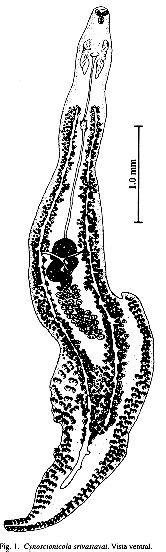
<body><![CDATA[<P><B><FONT FACE="Arial,Helvetica"><FONT SIZE=-1>Materiales y M&eacute;todos</FONT></FONT></B>      <P><FONT FACE="Arial,Helvetica"><FONT SIZE=-1><B>&nbsp;&nbsp;&nbsp; T&aacute;xones reconocidos: </B>se realiz&oacute; un an&aacute;lisis sistem&aacute;tico del g&eacute;nero Cynoscionicola (<A HREF="#CUADRO 1">Cuadro 1</A>) para lo cual se recopil&oacute; la informaci&oacute;n bibliogr&aacute;fica disponible sobre los representantes de la subfamilia Anchoromicrocotylinae y se estudiaron los siguientes ejemplares, depositados en tres colecciones: la Colecci&oacute;n Nacional de Helmintos, Instituto de Biolog&iacute;a, UNAM, M&eacute;xico (CNHE): Anchoromicrocotyle guaymensis Bravo 1981 (No. de Cat. 000191, 000192), C. pseudoheteracantha (000015), C. srivastavai (000007, 000004, 2879, 2880, 2881) (<A HREF="#figura 1">Fig. 1</A>), C. sciaenae (000277, 000278) y C. jamaicensis (000326); la U.S. National Parasite Collection (USNPC), Beltsville, Maryland: Microcotyle sp (No. Cat. 8166), M. heteracantha (9191), C. heteracantha (37743) y M. pseudoheteracantha (38251); Harold W. Manter Laboratory (UNSMHWML), Division of Parasitology, University of Nebraska State Museum, Lincoln: C. powersi (31153, 31155, 31156). La validez taxon&oacute;mica de C. sciaenae ha sido puesta en duda en virtud de que exhibe una gran semejanza con C. srivastavai, esto, asociado con la imposibilidad de estudiar el material tipo ha determinado que sea considerada como species inquerendae por <A HREF="#Jiménez">Jim&eacute;nez (1996)</A>. En este estudio se consider&oacute; a C. sciaenae como v&aacute;lida en funci&oacute;n de que difiere de C. srivastavai en el n&uacute;mero y forma de las espinas atriales anterolaterales, en el n&uacute;mero de espinas de las bolsas atriales posteriores y en el n&uacute;mero de test&iacute;culos. Finalmente, dado que no fue posible obtener ni las descripciones originales, ni los ejemplares de las especies: C. americana Tantale&aacute;n, Mart&iacute;nez &amp; Escalante 1987, C. cynoscioni Tantale&aacute;n, Mart&iacute;nez &amp; Escalante 1987 y C. intermedia Tantale&aacute;n, Escalante &amp; Mart&iacute;nez 1988, estas fueron consideradas como species inquerendae.</FONT></FONT>      <P><FONT FACE="Arial,Helvetica"><FONT SIZE=-1>An&aacute;lisis realizados: La hip&oacute;tesis inicial de las relaciones entre las especies del g&eacute;nero Cynoscionicola, fue construida utilizando la argumentaci&oacute;n de Hennig, los resultados fueron confirmados utilizando el programa de computaci&oacute;n PAUP (Phylogenetic Analysis Using Parsimony, versi&oacute;n 3.1.1) (<A HREF="#Swofford, D.">Swofford 1993</A>).</FONT></FONT>      <P><FONT FACE="Arial,Helvetica"><FONT SIZE=-1>Un total de 18 caracteres con 31 estados de car&aacute;cter (<A HREF="#CUADRO 2">Cuadro 2</A>) fueron usados en el an&aacute;lisis (13 binarios y 5 multiestado). La polarizaci&oacute;n de los caracteres se determin&oacute; con base en el m&eacute;todo del grupo externo (<A HREF="#Watrous, E.">Watrous &amp; Wheeler 1981</A>, <A HREF="#Maddison, P., M.">Maddison et al. 1984</A>), estableciendo as&iacute; el estado plesiom&oacute;rfico y apom&oacute;rfico para cada uno de ellos. El grupo externo primario estuvo representado por Anchoromicrocotyle guaymensis, grupo cercanamente relacionado con el g&eacute;nero Cynoscionicola, de acuerdo con <A HREF="#Mamaev, Yu. L.">Mamaev (1986</A>); el grupo externo alternativo estuvo representado por Microcotyle donavini Beneden &amp; Hesse 1863, especie tipo de ese g&eacute;nero. Los caracteres del cinco al 14, fueron polarizados con respecto al grupo externo alternativo, dado que en &eacute;ste se encontr&oacute; la condici&oacute;n plesiom&oacute;rfica para dichos caracteres. Se examinaron las siguientes opciones: los caracteres multiestado desordenados. Optimizaci&oacute;n: Acctran. Construcci&oacute;n de cladogramas; b&uacute;squeda exhaustiva.</FONT></FONT>     <BR>&nbsp;     <BR>&nbsp;     <CENTER></CENTER>      <CENTER><A NAME="CUADRO 1"></A><FONT FACE="Arial,Helvetica"><FONT SIZE=-1>CUADRO 1</FONT></FONT></CENTER>      <CENTER><FONT FACE="Arial,Helvetica"><FONT SIZE=-1>Composici&oacute;n espec&iacute;fica del g&eacute;nero Cynoscionicola.</FONT></FONT></CENTER>       <P><FONT FACE="Arial,Helvetica"><FONT SIZE=-1>Especie Hospedero&nbsp;&nbsp;&nbsp;&nbsp;&nbsp;&nbsp; Localidad</FONT></FONT>      ]]></body>
<body><![CDATA[<P><FONT FACE="Arial,Helvetica"><FONT SIZE=-1>C. heteracantha&nbsp;&nbsp;&nbsp;&nbsp;&nbsp;&nbsp;&nbsp;&nbsp;&nbsp;&nbsp;&nbsp;&nbsp; Cynoscion nebulosus&nbsp;&nbsp;&nbsp;&nbsp;&nbsp;&nbsp;&nbsp;&nbsp;&nbsp;&nbsp;&nbsp;&nbsp;&nbsp;&nbsp;&nbsp;&nbsp;&nbsp; Beaufort, Carolina del Norte, EEUU., Bah&iacute;a Chesapeake.</FONT></FONT>     <BR><FONT FACE="Arial,Helvetica"><FONT SIZE=-1>&nbsp;&nbsp;&nbsp;&nbsp;&nbsp;&nbsp;&nbsp;&nbsp;&nbsp;&nbsp;&nbsp;&nbsp;&nbsp;&nbsp;&nbsp;&nbsp;&nbsp;&nbsp;&nbsp;&nbsp;&nbsp;&nbsp;&nbsp;&nbsp;&nbsp;&nbsp;&nbsp;&nbsp;&nbsp;&nbsp;&nbsp;&nbsp;&nbsp;&nbsp;&nbsp;&nbsp;&nbsp;&nbsp;&nbsp;&nbsp;&nbsp;&nbsp;&nbsp;&nbsp;&nbsp;&nbsp;&nbsp;&nbsp;&nbsp;&nbsp;&nbsp;&nbsp;&nbsp;&nbsp;&nbsp;&nbsp;&nbsp;&nbsp;&nbsp;&nbsp;&nbsp;&nbsp;&nbsp;&nbsp;&nbsp;&nbsp;&nbsp;&nbsp;&nbsp;&nbsp;&nbsp;&nbsp;&nbsp;&nbsp;&nbsp;&nbsp;&nbsp;&nbsp;&nbsp;&nbsp;&nbsp;&nbsp;&nbsp;&nbsp;&nbsp; Carolina del Norte EEUU., Alligator Harbor, Florida. EEUU.</FONT></FONT>     <BR><FONT FACE="Arial,Helvetica"><FONT SIZE=-1>&nbsp;&nbsp;&nbsp;&nbsp;&nbsp;&nbsp;&nbsp;&nbsp;&nbsp;&nbsp;&nbsp;&nbsp;&nbsp;&nbsp;&nbsp;&nbsp;&nbsp;&nbsp;&nbsp;&nbsp;&nbsp;&nbsp;&nbsp;&nbsp;&nbsp;&nbsp;&nbsp;&nbsp;&nbsp;&nbsp;&nbsp;&nbsp;&nbsp;&nbsp;&nbsp;&nbsp;&nbsp;&nbsp;&nbsp;&nbsp;&nbsp;&nbsp;&nbsp;&nbsp;&nbsp;&nbsp;&nbsp;&nbsp;&nbsp;&nbsp;&nbsp;&nbsp;&nbsp;&nbsp;&nbsp;&nbsp;&nbsp;&nbsp;&nbsp;&nbsp;&nbsp;&nbsp;&nbsp;&nbsp;&nbsp;&nbsp;&nbsp;&nbsp;&nbsp;&nbsp;&nbsp;&nbsp;&nbsp;&nbsp;&nbsp;&nbsp;&nbsp;&nbsp;&nbsp;&nbsp;&nbsp;&nbsp;&nbsp;&nbsp;&nbsp; Bah&iacute;a Chesapeake. EEUU., Woods Hole, Masachusets, EEUU.</FONT></FONT>     <BR><FONT FACE="Arial,Helvetica"><FONT SIZE=-1>&nbsp;&nbsp;&nbsp;&nbsp;&nbsp;&nbsp;&nbsp;&nbsp;&nbsp;&nbsp;&nbsp;&nbsp;&nbsp;&nbsp;&nbsp;&nbsp;&nbsp;&nbsp;&nbsp;&nbsp;&nbsp;&nbsp;&nbsp;&nbsp;&nbsp;&nbsp;&nbsp;&nbsp;&nbsp;&nbsp;&nbsp;&nbsp;&nbsp;&nbsp;&nbsp;&nbsp; Cynoscion regalis Beaufort,&nbsp;&nbsp;&nbsp;&nbsp;&nbsp;&nbsp; Carolina del Norte, EEUU.</FONT></FONT>     <BR><FONT FACE="Arial,Helvetica"><FONT SIZE=-1>&nbsp;&nbsp;&nbsp;&nbsp;&nbsp;&nbsp;&nbsp;&nbsp;&nbsp;&nbsp;&nbsp;&nbsp;&nbsp;&nbsp;&nbsp;&nbsp;&nbsp;&nbsp;&nbsp;&nbsp;&nbsp;&nbsp;&nbsp;&nbsp;&nbsp;&nbsp;&nbsp;&nbsp;&nbsp;&nbsp;&nbsp;&nbsp;&nbsp;&nbsp;&nbsp;&nbsp; Eriscion nebulosus (sin.</FONT></FONT>     <BR><FONT FACE="Arial,Helvetica"><FONT SIZE=-1>&nbsp;&nbsp;&nbsp;&nbsp;&nbsp;&nbsp;&nbsp;&nbsp;&nbsp;&nbsp;&nbsp;&nbsp;&nbsp;&nbsp;&nbsp;&nbsp;&nbsp;&nbsp;&nbsp;&nbsp;&nbsp;&nbsp;&nbsp;&nbsp;&nbsp;&nbsp;&nbsp;&nbsp;&nbsp;&nbsp;&nbsp;&nbsp;&nbsp;&nbsp;&nbsp;&nbsp; Cynoscion nebulosus)&nbsp;&nbsp;&nbsp;&nbsp;&nbsp;&nbsp;&nbsp;&nbsp;&nbsp;&nbsp;&nbsp;&nbsp;&nbsp;&nbsp;&nbsp; Carolina del Norte EEUU.</FONT></FONT>      <P><FONT FACE="Arial,Helvetica"><FONT SIZE=-1>C. jamaicensis&nbsp;&nbsp;&nbsp;&nbsp;&nbsp;&nbsp;&nbsp;&nbsp;&nbsp;&nbsp;&nbsp;&nbsp;&nbsp;&nbsp; Cynoscion acoupa&nbsp;&nbsp;&nbsp;&nbsp;&nbsp;&nbsp;&nbsp;&nbsp;&nbsp;&nbsp;&nbsp;&nbsp;&nbsp;&nbsp;&nbsp;&nbsp;&nbsp;&nbsp;&nbsp; Guyana Rio de Janeiro, Brasil.</FONT></FONT>     <BR><FONT FACE="Arial,Helvetica"><FONT SIZE=-1>C. pseudoheteracantha&nbsp; Cynoscion nothus&nbsp;&nbsp;&nbsp;&nbsp;&nbsp;&nbsp;&nbsp;&nbsp;&nbsp;&nbsp;&nbsp;&nbsp;&nbsp;&nbsp;&nbsp;&nbsp;&nbsp;&nbsp;&nbsp;&nbsp;&nbsp; Gran Isla, Jefferson, Parish La. EEUU., Luisiana, EEUU.,</FONT></FONT>     <BR><FONT FACE="Arial,Helvetica"><FONT SIZE=-1>&nbsp;&nbsp;&nbsp;&nbsp;&nbsp;&nbsp;&nbsp;&nbsp;&nbsp;&nbsp;&nbsp;&nbsp;&nbsp;&nbsp;&nbsp;&nbsp;&nbsp;&nbsp;&nbsp;&nbsp;&nbsp;&nbsp;&nbsp;&nbsp;&nbsp;&nbsp;&nbsp;&nbsp;&nbsp;&nbsp;&nbsp;&nbsp;&nbsp;&nbsp;&nbsp;&nbsp;&nbsp;&nbsp;&nbsp;&nbsp;&nbsp;&nbsp;&nbsp;&nbsp;&nbsp;&nbsp;&nbsp;&nbsp;&nbsp;&nbsp;&nbsp;&nbsp;&nbsp;&nbsp;&nbsp;&nbsp;&nbsp;&nbsp;&nbsp;&nbsp;&nbsp;&nbsp;&nbsp;&nbsp;&nbsp;&nbsp;&nbsp;&nbsp;&nbsp;&nbsp;&nbsp;&nbsp;&nbsp;&nbsp;&nbsp;&nbsp;&nbsp;&nbsp;&nbsp;&nbsp;&nbsp;&nbsp;&nbsp;&nbsp;&nbsp;&nbsp; Jicacal, Veracruz, M&eacute;x..</FONT></FONT>     <BR><FONT FACE="Arial,Helvetica"><FONT SIZE=-1>&nbsp;&nbsp;&nbsp;&nbsp;&nbsp;&nbsp;&nbsp;&nbsp;&nbsp;&nbsp;&nbsp;&nbsp;&nbsp;&nbsp;&nbsp;&nbsp;&nbsp;&nbsp;&nbsp;&nbsp;&nbsp;&nbsp;&nbsp;&nbsp;&nbsp;&nbsp;&nbsp;&nbsp;&nbsp;&nbsp;&nbsp;&nbsp;&nbsp;&nbsp;&nbsp;&nbsp;&nbsp; "Silver seatrout"&nbsp;&nbsp;&nbsp;&nbsp;&nbsp;&nbsp;&nbsp;&nbsp;&nbsp;&nbsp;&nbsp;&nbsp;&nbsp;&nbsp;&nbsp;&nbsp;&nbsp;&nbsp;&nbsp;&nbsp;&nbsp;&nbsp;&nbsp; Bah&iacute;a Chesapeake,&nbsp; EEUU.</FONT></FONT>      ]]></body>
<body><![CDATA[<P><FONT FACE="Arial,Helvetica"><FONT SIZE=-1>C. sciaenae&nbsp;&nbsp;&nbsp;&nbsp;&nbsp;&nbsp;&nbsp;&nbsp;&nbsp;&nbsp;&nbsp;&nbsp;&nbsp;&nbsp;&nbsp;&nbsp;&nbsp;&nbsp;&nbsp;&nbsp; Sciaena deliciosa&nbsp;&nbsp;&nbsp;&nbsp;&nbsp;&nbsp;&nbsp;&nbsp;&nbsp;&nbsp;&nbsp;&nbsp;&nbsp;&nbsp;&nbsp;&nbsp;&nbsp;&nbsp;&nbsp;&nbsp; Callao y Chorrillos, Per&uacute;.</FONT></FONT>     <BR><FONT FACE="Arial,Helvetica"><FONT SIZE=-1>&nbsp;&nbsp;&nbsp;&nbsp;&nbsp;&nbsp;&nbsp;&nbsp;&nbsp;&nbsp;&nbsp;&nbsp;&nbsp;&nbsp;&nbsp;&nbsp;&nbsp;&nbsp;&nbsp;&nbsp;&nbsp;&nbsp;&nbsp;&nbsp;&nbsp;&nbsp;&nbsp;&nbsp;&nbsp;&nbsp;&nbsp;&nbsp;&nbsp;&nbsp;&nbsp;&nbsp;&nbsp; Umbrina xanti&nbsp;&nbsp;&nbsp;&nbsp;&nbsp;&nbsp;&nbsp;&nbsp;&nbsp;&nbsp;&nbsp;&nbsp;&nbsp;&nbsp;&nbsp;&nbsp;&nbsp;&nbsp;&nbsp;&nbsp;&nbsp;&nbsp;&nbsp;&nbsp;&nbsp; Guaymas, Sonora, M&eacute;x.</FONT></FONT>      <P><FONT FACE="Arial,Helvetica"><FONT SIZE=-1>C. similis&nbsp;&nbsp;&nbsp;&nbsp;&nbsp;&nbsp;&nbsp;&nbsp;&nbsp;&nbsp;&nbsp;&nbsp;&nbsp;&nbsp;&nbsp;&nbsp;&nbsp;&nbsp;&nbsp;&nbsp;&nbsp;&nbsp;&nbsp; Cynoscion similis&nbsp;&nbsp;&nbsp;&nbsp;&nbsp;&nbsp;&nbsp;&nbsp;&nbsp;&nbsp;&nbsp;&nbsp;&nbsp;&nbsp;&nbsp;&nbsp;&nbsp;&nbsp;&nbsp;&nbsp;&nbsp; Guyana</FONT></FONT>      <P><FONT FACE="Arial,Helvetica"><FONT SIZE=-1>C. srivastavai&nbsp;&nbsp;&nbsp;&nbsp;&nbsp;&nbsp;&nbsp;&nbsp;&nbsp;&nbsp;&nbsp;&nbsp;&nbsp;&nbsp;&nbsp;&nbsp;&nbsp; Bairdiella icistia&nbsp;&nbsp;&nbsp;&nbsp;&nbsp;&nbsp;&nbsp;&nbsp;&nbsp;&nbsp;&nbsp;&nbsp;&nbsp;&nbsp;&nbsp;&nbsp;&nbsp;&nbsp;&nbsp;&nbsp;&nbsp;&nbsp;&nbsp; Guaymas, Sonora., Bah&iacute;a de Matanchen, San Blas, Nayarit, M&eacute;x.</FONT></FONT>     <BR><FONT FACE="Arial,Helvetica"><FONT SIZE=-1>&nbsp;&nbsp;&nbsp;&nbsp;&nbsp;&nbsp;&nbsp;&nbsp;&nbsp;&nbsp;&nbsp;&nbsp;&nbsp;&nbsp;&nbsp;&nbsp;&nbsp;&nbsp;&nbsp;&nbsp;&nbsp;&nbsp;&nbsp;&nbsp;&nbsp;&nbsp;&nbsp;&nbsp;&nbsp;&nbsp;&nbsp;&nbsp;&nbsp;&nbsp;&nbsp;&nbsp;&nbsp; Cynoscion xanthulus&nbsp;&nbsp;&nbsp;&nbsp;&nbsp;&nbsp;&nbsp;&nbsp;&nbsp;&nbsp;&nbsp;&nbsp;&nbsp;&nbsp;&nbsp;&nbsp; Guaymas, Sonora, M&eacute;x.</FONT></FONT>     <BR><FONT FACE="Arial,Helvetica"><FONT SIZE=-1>&nbsp;&nbsp;&nbsp;&nbsp;&nbsp;&nbsp;&nbsp;&nbsp;&nbsp;&nbsp;&nbsp;&nbsp;&nbsp;&nbsp;&nbsp;&nbsp;&nbsp;&nbsp;&nbsp;&nbsp;&nbsp;&nbsp;&nbsp;&nbsp;&nbsp;&nbsp;&nbsp;&nbsp;&nbsp;&nbsp;&nbsp;&nbsp;&nbsp;&nbsp;&nbsp;&nbsp;&nbsp; Isopisthus altipinni&nbsp;&nbsp;&nbsp;&nbsp;&nbsp;&nbsp;&nbsp;&nbsp;&nbsp;&nbsp;&nbsp;&nbsp;&nbsp;&nbsp;&nbsp;&nbsp;&nbsp;&nbsp;&nbsp;&nbsp; Isla de Enfrente, Mazatl&aacute;n, Sinaloa Puerto Pe&ntilde;asco Sonora, M&eacute;x.</FONT></FONT>     <BR><FONT FACE="Arial,Helvetica"><FONT SIZE=-1>&nbsp;&nbsp;&nbsp;&nbsp;&nbsp;&nbsp;&nbsp;&nbsp;&nbsp;&nbsp;&nbsp;&nbsp;&nbsp;&nbsp;&nbsp;&nbsp;&nbsp;&nbsp;&nbsp;&nbsp;&nbsp;&nbsp;&nbsp;&nbsp;&nbsp;&nbsp;&nbsp;&nbsp;&nbsp;&nbsp;&nbsp;&nbsp;&nbsp;&nbsp;&nbsp;&nbsp;&nbsp; Umbrina roncador&nbsp;&nbsp;&nbsp;&nbsp;&nbsp;&nbsp;&nbsp;&nbsp;&nbsp;&nbsp;&nbsp;&nbsp;&nbsp;&nbsp;&nbsp;&nbsp;&nbsp;&nbsp;&nbsp;&nbsp; Salina Cruz, Oaxaca, M&eacute;x.</FONT></FONT>     <BR><FONT FACE="Arial,Helvetica"><FONT SIZE=-1>&nbsp;&nbsp;&nbsp;&nbsp;&nbsp;&nbsp;&nbsp;&nbsp;&nbsp;&nbsp;&nbsp;&nbsp;&nbsp;&nbsp;&nbsp;&nbsp;&nbsp;&nbsp;&nbsp;&nbsp;&nbsp;&nbsp;&nbsp;&nbsp;&nbsp;&nbsp;&nbsp;&nbsp;&nbsp;&nbsp;&nbsp;&nbsp;&nbsp;&nbsp;&nbsp;&nbsp; Umbrina sinaloae&nbsp;&nbsp;&nbsp;&nbsp;&nbsp;&nbsp;&nbsp;&nbsp;&nbsp;&nbsp;&nbsp;&nbsp;&nbsp;&nbsp;&nbsp;&nbsp;&nbsp;&nbsp;&nbsp;&nbsp;&nbsp;&nbsp; La Paz, Baja California Sur, M&eacute;x.</FONT></FONT>     <BR><FONT FACE="Arial,Helvetica"><FONT SIZE=-1>&nbsp;&nbsp;&nbsp;&nbsp;&nbsp;&nbsp;&nbsp;&nbsp;&nbsp;&nbsp;&nbsp;&nbsp;&nbsp;&nbsp;&nbsp;&nbsp;&nbsp;&nbsp;&nbsp;&nbsp;&nbsp;&nbsp;&nbsp;&nbsp;&nbsp;&nbsp;&nbsp;&nbsp;&nbsp;&nbsp;&nbsp;&nbsp;&nbsp;&nbsp;&nbsp;&nbsp; Umbrina xanti&nbsp;&nbsp;&nbsp;&nbsp;&nbsp;&nbsp;&nbsp;&nbsp;&nbsp;&nbsp;&nbsp;&nbsp;&nbsp;&nbsp;&nbsp;&nbsp;&nbsp;&nbsp;&nbsp;&nbsp;&nbsp;&nbsp;&nbsp;&nbsp;&nbsp;&nbsp;&nbsp; Chamela, Jalisco, M&eacute;x.</FONT></FONT>     <BR><FONT FACE="Arial,Helvetica"><FONT SIZE=-1>C. powersi&nbsp;&nbsp;&nbsp;&nbsp;&nbsp;&nbsp;&nbsp;&nbsp;&nbsp;&nbsp;&nbsp;&nbsp;&nbsp;&nbsp;&nbsp;&nbsp;&nbsp;&nbsp;&nbsp;&nbsp; Menticirrhus undulatus&nbsp;&nbsp;&nbsp;&nbsp;&nbsp;&nbsp;&nbsp;&nbsp;&nbsp;&nbsp;&nbsp;&nbsp;&nbsp;&nbsp; La Jolla, California, EEUU.</FONT></FONT>     ]]></body>
<body><![CDATA[<BR><FONT FACE="Arial,Helvetica"><FONT SIZE=-1>&nbsp;&nbsp;&nbsp;&nbsp;&nbsp;&nbsp;&nbsp;&nbsp;&nbsp;&nbsp;&nbsp;&nbsp;&nbsp;&nbsp;&nbsp;&nbsp;&nbsp;&nbsp;&nbsp;&nbsp;&nbsp;&nbsp;&nbsp;&nbsp;&nbsp;&nbsp;&nbsp;&nbsp;&nbsp;&nbsp;&nbsp;&nbsp;&nbsp;&nbsp;&nbsp;&nbsp;&nbsp; Seriphus politus</FONT></FONT>     <BR><FONT FACE="Arial,Helvetica"><FONT SIZE=-1>&nbsp;&nbsp;&nbsp;&nbsp;&nbsp;&nbsp;&nbsp;&nbsp;&nbsp;&nbsp;&nbsp;&nbsp;&nbsp;&nbsp;&nbsp;&nbsp;&nbsp;&nbsp;&nbsp;&nbsp;&nbsp;&nbsp;&nbsp;&nbsp;&nbsp;&nbsp;&nbsp;&nbsp;&nbsp;&nbsp;&nbsp;&nbsp;&nbsp;&nbsp;&nbsp;&nbsp;&nbsp; Umbrina roncador</FONT></FONT>     <BR>&nbsp;     <BR>&nbsp;      <P><FONT FACE="Arial,Helvetica"><FONT SIZE=-1>Argumentaci&oacute;n de caracteres: A continuaci&oacute;n se presenta la argumentaci&oacute;n de los caracteres utilizados en el an&aacute;lisis filogen&eacute;tico (<A HREF="#CUADRO 2">Cuadro 2</A>); 0 representa el estado plesiom&oacute;rfico.</FONT></FONT>     <BR>&nbsp;     <BR>&nbsp;     <BR>&nbsp;     <CENTER><TABLE BORDER=0 CELLSPACING=0 WIDTH="619" > <TR> <TD VALIGN=CENTER COLSPAN="19">     <CENTER><A NAME="CUADRO 2"></A><FONT FACE="Arial,Helvetica"><FONT SIZE=-1>CUADRO&nbsp;&nbsp; 2</FONT></FONT></CENTER> </TD> </TR>  <TR> <TD VALIGN=CENTER COLSPAN="19">     ]]></body>
<body><![CDATA[<CENTER><FONT FACE="Arial,Helvetica"><FONT SIZE=-1>Matriz de datos para las especies del g&eacute;nero Cynoscionicola. Los caracteres se ordenan</FONT></FONT>&nbsp;</CENTER>      <CENTER><FONT FACE="Arial,Helvetica"><FONT SIZE=-1>de acuerdo con la numeraci&oacute;n del texto; la descripci&oacute;n de los caraacteres y los argumentos de polaridad se detallan&nbsp;</FONT></FONT>&nbsp;</CENTER>      <CENTER><FONT FACE="Arial,Helvetica"><FONT SIZE=-1>&nbsp;en el texto. 0     = estado plesiom&oacute;rfico; 1-5 = estado apom&oacute;rfico; ? = datos     faltantes&nbsp;</FONT></FONT></CENTER>     </TD>     </TR>     <TR>     <TD VALIGN=CENTER WIDTH="5%"><FONT FACE="Arial,Helvetica"><FONT SIZE=-1>&nbsp;</FONT></FONT></TD>     <TD VALIGN=CENTER WIDTH="5%"><FONT FACE="Arial,Helvetica"><FONT SIZE=-1>1</FONT></FONT></TD>     ]]></body>
<body><![CDATA[<TD VALIGN=CENTER WIDTH="5%"><FONT FACE="Arial,Helvetica"><FONT SIZE=-1>2</FONT></FONT></TD>     <TD VALIGN=CENTER WIDTH="5%"><FONT FACE="Arial,Helvetica"><FONT SIZE=-1>3</FONT></FONT></TD>     <TD VALIGN=CENTER WIDTH="5%"><FONT FACE="Arial,Helvetica"><FONT SIZE=-1>4</FONT></FONT></TD>     <TD VALIGN=CENTER WIDTH="5%"><FONT FACE="Arial,Helvetica"><FONT SIZE=-1>5</FONT></FONT></TD>     <TD VALIGN=CENTER WIDTH="5%"><FONT FACE="Arial,Helvetica"><FONT SIZE=-1>6</FONT></FONT></TD>     <TD VALIGN=CENTER WIDTH="5%"><FONT FACE="Arial,Helvetica"><FONT SIZE=-1>7</FONT></FONT></TD>     <TD VALIGN=CENTER WIDTH="5%"><FONT FACE="Arial,Helvetica"><FONT SIZE=-1>8</FONT></FONT></TD>     <TD VALIGN=CENTER WIDTH="5%"><FONT FACE="Arial,Helvetica"><FONT SIZE=-1>9</FONT></FONT></TD>     <TD VALIGN=CENTER WIDTH="5%"><FONT FACE="Arial,Helvetica"><FONT SIZE=-1>10</FONT></FONT></TD>     <TD VALIGN=CENTER WIDTH="5%"><FONT FACE="Arial,Helvetica"><FONT SIZE=-1>11</FONT></FONT></TD>     ]]></body>
<body><![CDATA[<TD VALIGN=CENTER WIDTH="5%"><FONT FACE="Arial,Helvetica"><FONT SIZE=-1>12</FONT></FONT></TD>     <TD VALIGN=CENTER WIDTH="5%"><FONT FACE="Arial,Helvetica"><FONT SIZE=-1>13</FONT></FONT></TD>     <TD VALIGN=CENTER WIDTH="5%"><FONT FACE="Arial,Helvetica"><FONT SIZE=-1>14</FONT></FONT></TD>     <TD VALIGN=CENTER WIDTH="5%"><FONT FACE="Arial,Helvetica"><FONT SIZE=-1>15</FONT></FONT></TD>     <TD VALIGN=CENTER WIDTH="5%"><FONT FACE="Arial,Helvetica"><FONT SIZE=-1>16</FONT></FONT></TD>     <TD VALIGN=CENTER WIDTH="5%"><FONT FACE="Arial,Helvetica"><FONT SIZE=-1>17</FONT></FONT></TD>     <TD VALIGN=CENTER WIDTH="5%"><FONT FACE="Arial,Helvetica"><FONT SIZE=-1>18</FONT></FONT></TD>     </TR>     <TR>     <TD VALIGN=CENTER WIDTH="5%"><FONT FACE="Arial,Helvetica"><FONT SIZE=-1>Mdon</FONT></FONT></TD>     ]]></body>
<body><![CDATA[<TD VALIGN=CENTER WIDTH="5%"><FONT FACE="Arial,Helvetica"><FONT SIZE=-1>0</FONT></FONT></TD>     <TD VALIGN=CENTER WIDTH="5%"><FONT FACE="Arial,Helvetica"><FONT SIZE=-1>1</FONT></FONT></TD>     <TD VALIGN=CENTER WIDTH="5%"><FONT FACE="Arial,Helvetica"><FONT SIZE=-1>1</FONT></FONT></TD>     <TD VALIGN=CENTER WIDTH="5%"><FONT FACE="Arial,Helvetica"><FONT SIZE=-1>1</FONT></FONT></TD>     <TD VALIGN=CENTER WIDTH="5%"><FONT FACE="Arial,Helvetica"><FONT SIZE=-1>0</FONT></FONT></TD>     <TD VALIGN=CENTER WIDTH="5%"><FONT FACE="Arial,Helvetica"><FONT SIZE=-1>0</FONT></FONT></TD>     <TD VALIGN=CENTER WIDTH="5%"><FONT FACE="Arial,Helvetica"><FONT SIZE=-1>0</FONT></FONT></TD>     <TD VALIGN=CENTER WIDTH="5%"><FONT FACE="Arial,Helvetica"><FONT SIZE=-1>0</FONT></FONT></TD>     <TD VALIGN=CENTER WIDTH="5%"><FONT FACE="Arial,Helvetica"><FONT SIZE=-1>0</FONT></FONT></TD>     <TD VALIGN=CENTER WIDTH="5%"><FONT FACE="Arial,Helvetica"><FONT SIZE=-1>0</FONT></FONT></TD>     ]]></body>
<body><![CDATA[<TD VALIGN=CENTER WIDTH="5%"><FONT FACE="Arial,Helvetica"><FONT SIZE=-1>0</FONT></FONT></TD>     <TD VALIGN=CENTER WIDTH="5%"><FONT FACE="Arial,Helvetica"><FONT SIZE=-1>0</FONT></FONT></TD>     <TD VALIGN=CENTER WIDTH="5%"><FONT FACE="Arial,Helvetica"><FONT SIZE=-1>0</FONT></FONT></TD>     <TD VALIGN=CENTER WIDTH="5%"><FONT FACE="Arial,Helvetica"><FONT SIZE=-1>0</FONT></FONT></TD>     <TD VALIGN=CENTER WIDTH="5%"><FONT FACE="Arial,Helvetica"><FONT SIZE=-1>0</FONT></FONT></TD>     <TD VALIGN=CENTER WIDTH="5%"><FONT FACE="Arial,Helvetica"><FONT SIZE=-1>0</FONT></FONT></TD>     <TD VALIGN=CENTER WIDTH="5%"><FONT FACE="Arial,Helvetica"><FONT SIZE=-1>0</FONT></FONT></TD>     <TD VALIGN=CENTER WIDTH="5%"><FONT FACE="Arial,Helvetica"><FONT SIZE=-1>0</FONT></FONT></TD>     </TR>     <TR>     ]]></body>
<body><![CDATA[<TD VALIGN=CENTER WIDTH="5%"><FONT FACE="Arial,Helvetica"><FONT SIZE=-1>aguy</FONT></FONT></TD>     <TD VALIGN=CENTER WIDTH="5%"><FONT FACE="Arial,Helvetica"><FONT SIZE=-1>0</FONT></FONT></TD>     <TD VALIGN=CENTER WIDTH="5%"><FONT FACE="Arial,Helvetica"><FONT SIZE=-1>0</FONT></FONT></TD>     <TD VALIGN=CENTER WIDTH="5%"><FONT FACE="Arial,Helvetica"><FONT SIZE=-1>0</FONT></FONT></TD>     <TD VALIGN=CENTER WIDTH="5%"><FONT FACE="Arial,Helvetica"><FONT SIZE=-1>0</FONT></FONT></TD>     <TD VALIGN=CENTER WIDTH="5%"><FONT FACE="Arial,Helvetica"><FONT SIZE=-1>0</FONT></FONT></TD>     <TD VALIGN=CENTER WIDTH="5%"><FONT FACE="Arial,Helvetica"><FONT SIZE=-1>0</FONT></FONT></TD>     <TD VALIGN=CENTER WIDTH="5%"><FONT FACE="Arial,Helvetica"><FONT SIZE=-1>0</FONT></FONT></TD>     <TD VALIGN=CENTER WIDTH="5%"><FONT FACE="Arial,Helvetica"><FONT SIZE=-1>0</FONT></FONT></TD>     <TD VALIGN=CENTER WIDTH="5%"><FONT FACE="Arial,Helvetica"><FONT SIZE=-1>0</FONT></FONT></TD>     ]]></body>
<body><![CDATA[<TD VALIGN=CENTER WIDTH="5%"><FONT FACE="Arial,Helvetica"><FONT SIZE=-1>0</FONT></FONT></TD>     <TD VALIGN=CENTER WIDTH="5%"><FONT FACE="Arial,Helvetica"><FONT SIZE=-1>0</FONT></FONT></TD>     <TD VALIGN=CENTER WIDTH="5%"><FONT FACE="Arial,Helvetica"><FONT SIZE=-1>0</FONT></FONT></TD>     <TD VALIGN=CENTER WIDTH="5%"><FONT FACE="Arial,Helvetica"><FONT SIZE=-1>0</FONT></FONT></TD>     <TD VALIGN=CENTER WIDTH="5%"><FONT FACE="Arial,Helvetica"><FONT SIZE=-1>0</FONT></FONT></TD>     <TD VALIGN=CENTER WIDTH="5%"><FONT FACE="Arial,Helvetica"><FONT SIZE=-1>0</FONT></FONT></TD>     <TD VALIGN=CENTER WIDTH="5%"><FONT FACE="Arial,Helvetica"><FONT SIZE=-1>0</FONT></FONT></TD>     <TD VALIGN=CENTER WIDTH="5%"><FONT FACE="Arial,Helvetica"><FONT SIZE=-1>0</FONT></FONT></TD>     <TD VALIGN=CENTER WIDTH="5%"><FONT FACE="Arial,Helvetica"><FONT SIZE=-1>1</FONT></FONT></TD>     </TR>     ]]></body>
<body><![CDATA[<TR>     <TD VALIGN=CENTER WIDTH="5%"><FONT FACE="Arial,Helvetica"><FONT SIZE=-1>Chet</FONT></FONT></TD>     <TD VALIGN=CENTER WIDTH="5%"><FONT FACE="Arial,Helvetica"><FONT SIZE=-1>1</FONT></FONT></TD>     <TD VALIGN=CENTER WIDTH="5%"><FONT FACE="Arial,Helvetica"><FONT SIZE=-1>1</FONT></FONT></TD>     <TD VALIGN=CENTER WIDTH="5%"><FONT FACE="Arial,Helvetica"><FONT SIZE=-1>1</FONT></FONT></TD>     <TD VALIGN=CENTER WIDTH="5%"><FONT FACE="Arial,Helvetica"><FONT SIZE=-1>2</FONT></FONT></TD>     <TD VALIGN=CENTER WIDTH="5%"><FONT FACE="Arial,Helvetica"><FONT SIZE=-1>1</FONT></FONT></TD>     <TD VALIGN=CENTER WIDTH="5%"><FONT FACE="Arial,Helvetica"><FONT SIZE=-1>1</FONT></FONT></TD>     <TD VALIGN=CENTER WIDTH="5%"><FONT FACE="Arial,Helvetica"><FONT SIZE=-1>0</FONT></FONT></TD>     <TD VALIGN=CENTER WIDTH="5%"><FONT FACE="Arial,Helvetica"><FONT SIZE=-1>1</FONT></FONT></TD>     ]]></body>
<body><![CDATA[<TD VALIGN=CENTER WIDTH="5%"><FONT FACE="Arial,Helvetica"><FONT SIZE=-1>3</FONT></FONT></TD>     <TD VALIGN=CENTER WIDTH="5%"><FONT FACE="Arial,Helvetica"><FONT SIZE=-1>0</FONT></FONT></TD>     <TD VALIGN=CENTER WIDTH="5%"><FONT FACE="Arial,Helvetica"><FONT SIZE=-1>2</FONT></FONT></TD>     <TD VALIGN=CENTER WIDTH="5%"><FONT FACE="Arial,Helvetica"><FONT SIZE=-1>4</FONT></FONT></TD>     <TD VALIGN=CENTER WIDTH="5%"><FONT FACE="Arial,Helvetica"><FONT SIZE=-1>0</FONT></FONT></TD>     <TD VALIGN=CENTER WIDTH="5%"><FONT FACE="Arial,Helvetica"><FONT SIZE=-1>1</FONT></FONT></TD>     <TD VALIGN=CENTER WIDTH="5%"><FONT FACE="Arial,Helvetica"><FONT SIZE=-1>0</FONT></FONT></TD>     <TD VALIGN=CENTER WIDTH="5%"><FONT FACE="Arial,Helvetica"><FONT SIZE=-1>1</FONT></FONT></TD>     <TD VALIGN=CENTER WIDTH="5%"><FONT FACE="Arial,Helvetica"><FONT SIZE=-1>0</FONT></FONT></TD>     <TD VALIGN=CENTER WIDTH="5%"><FONT FACE="Arial,Helvetica"><FONT SIZE=-1>0</FONT></FONT></TD>     ]]></body>
<body><![CDATA[</TR>     <TR>     <TD VALIGN=CENTER WIDTH="5%"><FONT FACE="Arial,Helvetica"><FONT SIZE=-1>Cpse</FONT></FONT></TD>     <TD VALIGN=CENTER WIDTH="5%"><FONT FACE="Arial,Helvetica"><FONT SIZE=-1>1</FONT></FONT></TD>     <TD VALIGN=CENTER WIDTH="5%"><FONT FACE="Arial,Helvetica"><FONT SIZE=-1>1</FONT></FONT></TD>     <TD VALIGN=CENTER WIDTH="5%"><FONT FACE="Arial,Helvetica"><FONT SIZE=-1>1</FONT></FONT></TD>     <TD VALIGN=CENTER WIDTH="5%"><FONT FACE="Arial,Helvetica"><FONT SIZE=-1>2</FONT></FONT></TD>     <TD VALIGN=CENTER WIDTH="5%"><FONT FACE="Arial,Helvetica"><FONT SIZE=-1>1</FONT></FONT></TD>     <TD VALIGN=CENTER WIDTH="5%"><FONT FACE="Arial,Helvetica"><FONT SIZE=-1>1</FONT></FONT></TD>     <TD VALIGN=CENTER WIDTH="5%"><FONT FACE="Arial,Helvetica"><FONT SIZE=-1>1</FONT></FONT></TD>     ]]></body>
<body><![CDATA[<TD VALIGN=CENTER WIDTH="5%"><FONT FACE="Arial,Helvetica"><FONT SIZE=-1>0</FONT></FONT></TD>     <TD VALIGN=CENTER WIDTH="5%"><FONT FACE="Arial,Helvetica"><FONT SIZE=-1>1</FONT></FONT></TD>     <TD VALIGN=CENTER WIDTH="5%"><FONT FACE="Arial,Helvetica"><FONT SIZE=-1>1</FONT></FONT></TD>     <TD VALIGN=CENTER WIDTH="5%"><FONT FACE="Arial,Helvetica"><FONT SIZE=-1>1</FONT></FONT></TD>     <TD VALIGN=CENTER WIDTH="5%"><FONT FACE="Arial,Helvetica"><FONT SIZE=-1>3</FONT></FONT></TD>     <TD VALIGN=CENTER WIDTH="5%"><FONT FACE="Arial,Helvetica"><FONT SIZE=-1>0</FONT></FONT></TD>     <TD VALIGN=CENTER WIDTH="5%"><FONT FACE="Arial,Helvetica"><FONT SIZE=-1>1</FONT></FONT></TD>     <TD VALIGN=CENTER WIDTH="5%"><FONT FACE="Arial,Helvetica"><FONT SIZE=-1>0</FONT></FONT></TD>     <TD VALIGN=CENTER WIDTH="5%"><FONT FACE="Arial,Helvetica"><FONT SIZE=-1>0</FONT></FONT></TD>     <TD VALIGN=CENTER WIDTH="5%"><FONT FACE="Arial,Helvetica"><FONT SIZE=-1>1</FONT></FONT></TD>     ]]></body>
<body><![CDATA[<TD VALIGN=CENTER WIDTH="5%"><FONT FACE="Arial,Helvetica"><FONT SIZE=-1>0</FONT></FONT></TD>     </TR>     <TR>     <TD VALIGN=CENTER WIDTH="5%"><FONT FACE="Arial,Helvetica"><FONT SIZE=-1>Csri</FONT></FONT></TD>     <TD VALIGN=CENTER WIDTH="5%"><FONT FACE="Arial,Helvetica"><FONT SIZE=-1>1</FONT></FONT></TD>     <TD VALIGN=CENTER WIDTH="5%"><FONT FACE="Arial,Helvetica"><FONT SIZE=-1>1</FONT></FONT></TD>     <TD VALIGN=CENTER WIDTH="5%"><FONT FACE="Arial,Helvetica"><FONT SIZE=-1>1</FONT></FONT></TD>     <TD VALIGN=CENTER WIDTH="5%"><FONT FACE="Arial,Helvetica"><FONT SIZE=-1>2</FONT></FONT></TD>     <TD VALIGN=CENTER WIDTH="5%"><FONT FACE="Arial,Helvetica"><FONT SIZE=-1>1</FONT></FONT></TD>     <TD VALIGN=CENTER WIDTH="5%"><FONT FACE="Arial,Helvetica"><FONT SIZE=-1>1</FONT></FONT></TD>     ]]></body>
<body><![CDATA[<TD VALIGN=CENTER WIDTH="5%"><FONT FACE="Arial,Helvetica"><FONT SIZE=-1>1</FONT></FONT></TD>     <TD VALIGN=CENTER WIDTH="5%"><FONT FACE="Arial,Helvetica"><FONT SIZE=-1>0</FONT></FONT></TD>     <TD VALIGN=CENTER WIDTH="5%"><FONT FACE="Arial,Helvetica"><FONT SIZE=-1>5</FONT></FONT></TD>     <TD VALIGN=CENTER WIDTH="5%"><FONT FACE="Arial,Helvetica"><FONT SIZE=-1>1</FONT></FONT></TD>     <TD VALIGN=CENTER WIDTH="5%"><FONT FACE="Arial,Helvetica"><FONT SIZE=-1>3</FONT></FONT></TD>     <TD VALIGN=CENTER WIDTH="5%"><FONT FACE="Arial,Helvetica"><FONT SIZE=-1>2</FONT></FONT></TD>     <TD VALIGN=CENTER WIDTH="5%"><FONT FACE="Arial,Helvetica"><FONT SIZE=-1>1</FONT></FONT></TD>     <TD VALIGN=CENTER WIDTH="5%"><FONT FACE="Arial,Helvetica"><FONT SIZE=-1>0</FONT></FONT></TD>     <TD VALIGN=CENTER WIDTH="5%"><FONT FACE="Arial,Helvetica"><FONT SIZE=-1>0</FONT></FONT></TD>     <TD VALIGN=CENTER WIDTH="5%"><FONT FACE="Arial,Helvetica"><FONT SIZE=-1>0</FONT></FONT></TD>     ]]></body>
<body><![CDATA[<TD VALIGN=CENTER WIDTH="5%"><FONT FACE="Arial,Helvetica"><FONT SIZE=-1>1</FONT></FONT></TD>     <TD VALIGN=CENTER WIDTH="5%"><FONT FACE="Arial,Helvetica"><FONT SIZE=-1>0</FONT></FONT></TD>     </TR>     <TR>     <TD VALIGN=CENTER WIDTH="5%"><FONT FACE="Arial,Helvetica"><FONT SIZE=-1>Csci</FONT></FONT></TD>     <TD VALIGN=CENTER WIDTH="5%"><FONT FACE="Arial,Helvetica"><FONT SIZE=-1>1</FONT></FONT></TD>     <TD VALIGN=CENTER WIDTH="5%"><FONT FACE="Arial,Helvetica"><FONT SIZE=-1>1</FONT></FONT></TD>     <TD VALIGN=CENTER WIDTH="5%"><FONT FACE="Arial,Helvetica"><FONT SIZE=-1>1</FONT></FONT></TD>     <TD VALIGN=CENTER WIDTH="5%"><FONT FACE="Arial,Helvetica"><FONT SIZE=-1>2</FONT></FONT></TD>     <TD VALIGN=CENTER WIDTH="5%"><FONT FACE="Arial,Helvetica"><FONT SIZE=-1>1</FONT></FONT></TD>     ]]></body>
<body><![CDATA[<TD VALIGN=CENTER WIDTH="5%"><FONT FACE="Arial,Helvetica"><FONT SIZE=-1>1</FONT></FONT></TD>     <TD VALIGN=CENTER WIDTH="5%"><FONT FACE="Arial,Helvetica"><FONT SIZE=-1>0</FONT></FONT></TD>     <TD VALIGN=CENTER WIDTH="5%"><FONT FACE="Arial,Helvetica"><FONT SIZE=-1>1</FONT></FONT></TD>     <TD VALIGN=CENTER WIDTH="5%"><FONT FACE="Arial,Helvetica"><FONT SIZE=-1>2</FONT></FONT></TD>     <TD VALIGN=CENTER WIDTH="5%"><FONT FACE="Arial,Helvetica"><FONT SIZE=-1>1</FONT></FONT></TD>     <TD VALIGN=CENTER WIDTH="5%"><FONT FACE="Arial,Helvetica"><FONT SIZE=-1>2</FONT></FONT></TD>     <TD VALIGN=CENTER WIDTH="5%"><FONT FACE="Arial,Helvetica"><FONT SIZE=-1>2</FONT></FONT></TD>     <TD VALIGN=CENTER WIDTH="5%"><FONT FACE="Arial,Helvetica"><FONT SIZE=-1>1</FONT></FONT></TD>     <TD VALIGN=CENTER WIDTH="5%"><FONT FACE="Arial,Helvetica"><FONT SIZE=-1>1</FONT></FONT></TD>     <TD VALIGN=CENTER WIDTH="5%"><FONT FACE="Arial,Helvetica"><FONT SIZE=-1>0</FONT></FONT></TD>     ]]></body>
<body><![CDATA[<TD VALIGN=CENTER WIDTH="5%"><FONT FACE="Arial,Helvetica"><FONT SIZE=-1>0</FONT></FONT></TD>     <TD VALIGN=CENTER WIDTH="5%"><FONT FACE="Arial,Helvetica"><FONT SIZE=-1>1</FONT></FONT></TD>     <TD VALIGN=CENTER WIDTH="5%"><FONT FACE="Arial,Helvetica"><FONT SIZE=-1>0</FONT></FONT></TD>     </TR>     <TR>     <TD VALIGN=CENTER WIDTH="5%"><FONT FACE="Arial,Helvetica"><FONT SIZE=-1>Csim</FONT></FONT></TD>     <TD VALIGN=CENTER WIDTH="5%"><FONT FACE="Arial,Helvetica"><FONT SIZE=-1>1</FONT></FONT></TD>     <TD VALIGN=CENTER WIDTH="5%"><FONT FACE="Arial,Helvetica"><FONT SIZE=-1>1</FONT></FONT></TD>     <TD VALIGN=CENTER WIDTH="5%"><FONT FACE="Arial,Helvetica"><FONT SIZE=-1>1</FONT></FONT></TD>     <TD VALIGN=CENTER WIDTH="5%"><FONT FACE="Arial,Helvetica"><FONT SIZE=-1>2</FONT></FONT></TD>     ]]></body>
<body><![CDATA[<TD VALIGN=CENTER WIDTH="5%"><FONT FACE="Arial,Helvetica"><FONT SIZE=-1>1</FONT></FONT></TD>     <TD VALIGN=CENTER WIDTH="5%"><FONT FACE="Arial,Helvetica"><FONT SIZE=-1>1</FONT></FONT></TD>     <TD VALIGN=CENTER WIDTH="5%"><FONT FACE="Arial,Helvetica"><FONT SIZE=-1>1</FONT></FONT></TD>     <TD VALIGN=CENTER WIDTH="5%"><FONT FACE="Arial,Helvetica"><FONT SIZE=-1>1</FONT></FONT></TD>     <TD VALIGN=CENTER WIDTH="5%"><FONT FACE="Arial,Helvetica"><FONT SIZE=-1>4</FONT></FONT></TD>     <TD VALIGN=CENTER WIDTH="5%"><FONT FACE="Arial,Helvetica"><FONT SIZE=-1>1</FONT></FONT></TD>     <TD VALIGN=CENTER WIDTH="5%"><FONT FACE="Arial,Helvetica"><FONT SIZE=-1>1</FONT></FONT></TD>     <TD VALIGN=CENTER WIDTH="5%"><FONT FACE="Arial,Helvetica"><FONT SIZE=-1>1</FONT></FONT></TD>     <TD VALIGN=CENTER WIDTH="5%"><FONT FACE="Arial,Helvetica"><FONT SIZE=-1>0</FONT></FONT></TD>     <TD VALIGN=CENTER WIDTH="5%"><FONT FACE="Arial,Helvetica"><FONT SIZE=-1>1</FONT></FONT></TD>     ]]></body>
<body><![CDATA[<TD VALIGN=CENTER WIDTH="5%"><FONT FACE="Arial,Helvetica"><FONT SIZE=-1>1</FONT></FONT></TD>     <TD VALIGN=CENTER WIDTH="5%"><FONT FACE="Arial,Helvetica"><FONT SIZE=-1>0</FONT></FONT></TD>     <TD VALIGN=CENTER WIDTH="5%"><FONT FACE="Arial,Helvetica"><FONT SIZE=-1>?</FONT></FONT></TD>     <TD VALIGN=CENTER WIDTH="5%"><FONT FACE="Arial,Helvetica"><FONT SIZE=-1>0</FONT></FONT></TD>     </TR>     <TR>     <TD VALIGN=CENTER WIDTH="5%"><FONT FACE="Arial,Helvetica"><FONT SIZE=-1>Cjam</FONT></FONT></TD>     <TD VALIGN=CENTER WIDTH="5%"><FONT FACE="Arial,Helvetica"><FONT SIZE=-1>0</FONT></FONT></TD>     <TD VALIGN=CENTER WIDTH="5%"><FONT FACE="Arial,Helvetica"><FONT SIZE=-1>1</FONT></FONT></TD>     <TD VALIGN=CENTER WIDTH="5%"><FONT FACE="Arial,Helvetica"><FONT SIZE=-1>1</FONT></FONT></TD>     ]]></body>
<body><![CDATA[<TD VALIGN=CENTER WIDTH="5%"><FONT FACE="Arial,Helvetica"><FONT SIZE=-1>2</FONT></FONT></TD>     <TD VALIGN=CENTER WIDTH="5%"><FONT FACE="Arial,Helvetica"><FONT SIZE=-1>1</FONT></FONT></TD>     <TD VALIGN=CENTER WIDTH="5%"><FONT FACE="Arial,Helvetica"><FONT SIZE=-1>1</FONT></FONT></TD>     <TD VALIGN=CENTER WIDTH="5%"><FONT FACE="Arial,Helvetica"><FONT SIZE=-1>1</FONT></FONT></TD>     <TD VALIGN=CENTER WIDTH="5%"><FONT FACE="Arial,Helvetica"><FONT SIZE=-1>2</FONT></FONT></TD>     <TD VALIGN=CENTER WIDTH="5%"><FONT FACE="Arial,Helvetica"><FONT SIZE=-1>1</FONT></FONT></TD>     <TD VALIGN=CENTER WIDTH="5%"><FONT FACE="Arial,Helvetica"><FONT SIZE=-1>1</FONT></FONT></TD>     <TD VALIGN=CENTER WIDTH="5%"><FONT FACE="Arial,Helvetica"><FONT SIZE=-1>1</FONT></FONT></TD>     <TD VALIGN=CENTER WIDTH="5%"><FONT FACE="Arial,Helvetica"><FONT SIZE=-1>5</FONT></FONT></TD>     <TD VALIGN=CENTER WIDTH="5%"><FONT FACE="Arial,Helvetica"><FONT SIZE=-1>0</FONT></FONT></TD>     ]]></body>
<body><![CDATA[<TD VALIGN=CENTER WIDTH="5%"><FONT FACE="Arial,Helvetica"><FONT SIZE=-1>1</FONT></FONT></TD>     <TD VALIGN=CENTER WIDTH="5%"><FONT FACE="Arial,Helvetica"><FONT SIZE=-1>1</FONT></FONT></TD>     <TD VALIGN=CENTER WIDTH="5%"><FONT FACE="Arial,Helvetica"><FONT SIZE=-1>0</FONT></FONT></TD>     <TD VALIGN=CENTER WIDTH="5%"><FONT FACE="Arial,Helvetica"><FONT SIZE=-1>1</FONT></FONT></TD>     <TD VALIGN=CENTER WIDTH="5%"><FONT FACE="Arial,Helvetica"><FONT SIZE=-1>0</FONT></FONT></TD>     </TR>     <TR>     <TD VALIGN=CENTER WIDTH="5%"><FONT FACE="Arial,Helvetica"><FONT SIZE=-1>Cpow</FONT></FONT></TD>     <TD VALIGN=CENTER WIDTH="5%"><FONT FACE="Arial,Helvetica"><FONT SIZE=-1>1</FONT></FONT></TD>     <TD VALIGN=CENTER WIDTH="5%"><FONT FACE="Arial,Helvetica"><FONT SIZE=-1>1</FONT></FONT></TD>     ]]></body>
<body><![CDATA[<TD VALIGN=CENTER WIDTH="5%"><FONT FACE="Arial,Helvetica"><FONT SIZE=-1>1</FONT></FONT></TD>     <TD VALIGN=CENTER WIDTH="5%"><FONT FACE="Arial,Helvetica"><FONT SIZE=-1>2</FONT></FONT></TD>     <TD VALIGN=CENTER WIDTH="5%"><FONT FACE="Arial,Helvetica"><FONT SIZE=-1>1</FONT></FONT></TD>     <TD VALIGN=CENTER WIDTH="5%"><FONT FACE="Arial,Helvetica"><FONT SIZE=-1>1</FONT></FONT></TD>     <TD VALIGN=CENTER WIDTH="5%"><FONT FACE="Arial,Helvetica"><FONT SIZE=-1>0</FONT></FONT></TD>     <TD VALIGN=CENTER WIDTH="5%"><FONT FACE="Arial,Helvetica"><FONT SIZE=-1>1</FONT></FONT></TD>     <TD VALIGN=CENTER WIDTH="5%"><FONT FACE="Arial,Helvetica"><FONT SIZE=-1>5</FONT></FONT></TD>     <TD VALIGN=CENTER WIDTH="5%"><FONT FACE="Arial,Helvetica"><FONT SIZE=-1>1</FONT></FONT></TD>     <TD VALIGN=CENTER WIDTH="5%"><FONT FACE="Arial,Helvetica"><FONT SIZE=-1>3</FONT></FONT></TD>     <TD VALIGN=CENTER WIDTH="5%"><FONT FACE="Arial,Helvetica"><FONT SIZE=-1>2</FONT></FONT></TD>     ]]></body>
<body><![CDATA[<TD VALIGN=CENTER WIDTH="5%"><FONT FACE="Arial,Helvetica"><FONT SIZE=-1>1</FONT></FONT></TD>     <TD VALIGN=CENTER WIDTH="5%"><FONT FACE="Arial,Helvetica"><FONT SIZE=-1>1</FONT></FONT></TD>     <TD VALIGN=CENTER WIDTH="5%"><FONT FACE="Arial,Helvetica"><FONT SIZE=-1>0</FONT></FONT></TD>     <TD VALIGN=CENTER WIDTH="5%"><FONT FACE="Arial,Helvetica"><FONT SIZE=-1>0</FONT></FONT></TD>     <TD VALIGN=CENTER WIDTH="5%"><FONT FACE="Arial,Helvetica"><FONT SIZE=-1>1</FONT></FONT></TD>     <TD VALIGN=CENTER WIDTH="5%"><FONT FACE="Arial,Helvetica"><FONT SIZE=-1>0</FONT></FONT></TD>     </TR>     </TABLE></CENTER>     <FONT FACE="Arial,Helvetica"><FONT SIZE=-1>&nbsp;</FONT></FONT>     <BR><FONT FACE="Arial,Helvetica"><FONT SIZE=-1>Mdon = Microcotyle donavini; Aguy = Achoromicrocotyle guaymensis; Chet = Cynoscionicola heteracantha; Cpse = C. Pseu-</FONT></FONT>     ]]></body>
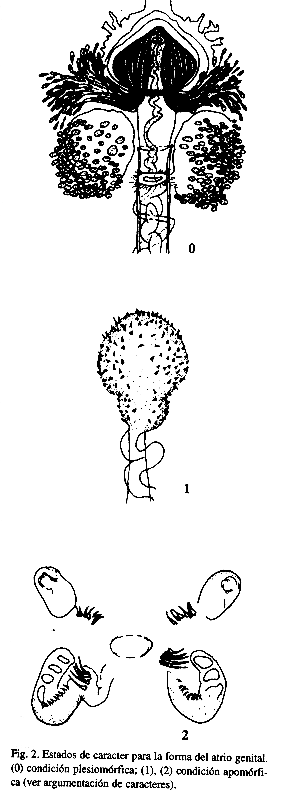
<body><![CDATA[<BR><FONT FACE="Arial,Helvetica"><FONT SIZE=-1>doheteracantha; Csri = C srivastavai; Csci = C. sciaenae; Csim = C. similis; Cjam = C. jamaicensis; Cpow = C. powersi.</FONT></FONT>     <BR>&nbsp;      <P><FONT FACE="Arial,Helvetica"><FONT SIZE=-1>1. Leng&uuml;eta larval: La presencia de esta estructura en el estado juvenil y/o adulto, es la condici&oacute;n plesiom&oacute;rfica (0), mientras que su ausencia es el estado apom&oacute;rfico (1).</FONT></FONT>      <P><FONT FACE="Arial,Helvetica"><FONT SIZE=-1>2. Pene: Esta estructura se encuentra presente en el g&eacute;nero Achoromicrocotyle, por lo que su presencia se considera como el estado plesiom&oacute;rfico (0) y la presencia de este &oacute;rgano es el estado apom&oacute;rfico (1).</FONT></FONT>      <P><FONT FACE="Arial,Helvetica"><FONT SIZE=-1>3. Naturaleza del atrio genital: Si el atrio genital no est&aacute; armado, es el estado plesiom&oacute;rfico (0), mientras que la presencia de espinas, es el estado apom&oacute;rfico (1).</FONT></FONT>      <P><FONT FACE="Arial,Helvetica"><FONT SIZE=-1>4. Forma del atrio genital: (<A HREF="#figura 2">Fig. 2</A>) Este es un car&aacute;cter multiestado: poseer dos bolsas atriales de naturaleza glandular dispuestas paralelamente, es la condici&oacute;n plesiom&oacute;rfica (0); presentar dos c&aacute;maras o bolsas atriales de naturaleza muscular dispuestas longitudinalmente (1); o bien, presentar cuatro bolsas atriales de naturaleza muscular (2), son las condiciones derivadas.</FONT></FONT>     <BR>&nbsp;     <CENTER></CENTER>      <CENTER><A NAME="figura 2"></A><IMG SRC="/img/fbpe/rbt/v46n2/0170i02.GIF" HEIGHT=800 WIDTH=282></CENTER> &nbsp;     
<BR>&nbsp;      ]]></body>
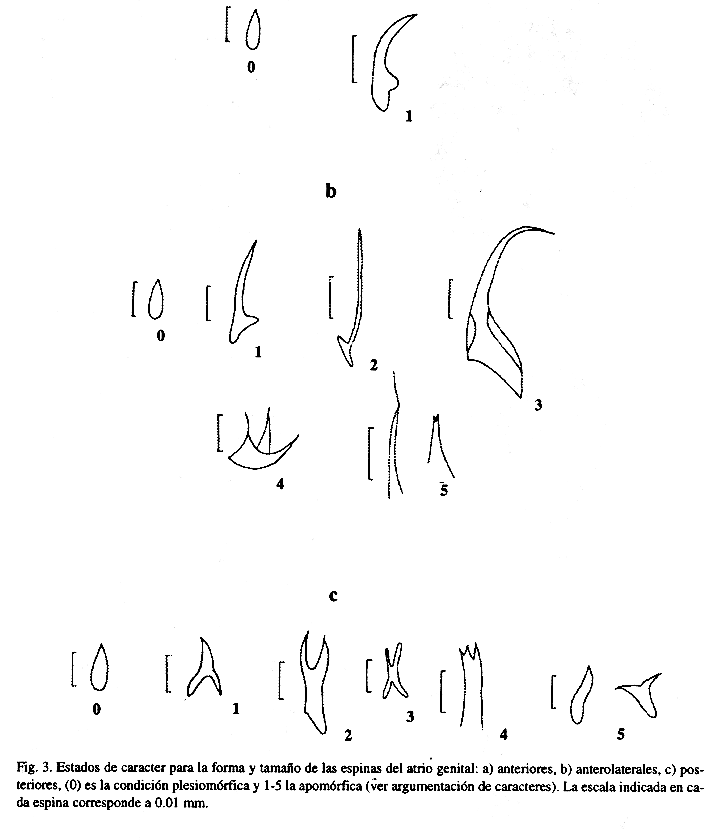
<body><![CDATA[<P><FONT FACE="Arial,Helvetica"><FONT SIZE=-1>5. Espinas del atrio genital: Espinas con la misma forma y tama&ntilde;o se encuentran presentes en Microcotyle, por lo que es la condici&oacute;n plesiom&oacute;rfica (0), mientras que espinas con diferente forma y tama&ntilde;o, representan la condici&oacute;n apom&oacute;rfica (1).</FONT></FONT>      <P><FONT FACE="Arial,Helvetica"><FONT SIZE=-1>6. Forma de las espinas de la regi&oacute;n anterior del atrio genital: (<A HREF="#figura 3">Fig. 3a</A>). La presencia de espinas con una hoja simple sin guarda, es la condici&oacute;n plesiom&oacute;rfica (0), el presentar espinas con hoja simple, guarda y mango profundas, es la condici&oacute;n apom&oacute;rfica (1).</FONT></FONT>      <P><FONT FACE="Arial,Helvetica"><FONT SIZE=-1>7. N&uacute;mero de las espinas de la regi&oacute;n anterior del atrio genital: El presentar m&aacute;s de 21 espinas, es la condici&oacute;n plesiom&oacute;rfica (0), mientras que presentar menos de 18 espinas es la apom&oacute;rfica (1).</FONT></FONT>      <P><FONT FACE="Arial,Helvetica"><FONT SIZE=-1>8. Tama&ntilde;o de las espinas de la regi&oacute;n anterior del atrio genital: (<A HREF="#figura 3">Fig. 3a</A>). Este car&aacute;cter es multiestado: El estado plesiom&oacute;rfico (0), se presenta cuando las espinas son menores a 0.009 mm, cuando las espinas son mayores a 0.01 mm pero menores a 0.019 mm es un estado apom&oacute;rfico (1), o bien, si su tama&ntilde;o es mayor a 0.02 mm (2), representan otro estado apom&oacute;rfico.</FONT></FONT>     <BR>&nbsp;     <CENTER></CENTER>      <CENTER><A NAME="figura 3"></A><IMG SRC="/img/fbpe/rbt/v46n2/0170i03.GIF" HEIGHT=840 WIDTH=716></CENTER> &nbsp;     
<BR>&nbsp;      <P><FONT FACE="Arial,Helvetica"><FONT SIZE=-1>9. Forma de las espinas de la regi&oacute;n anterolateral del atrio genital: (<A HREF="#figura 3">Fig. 3b)</A>. Este es un car&aacute;cter multiestado: la condici&oacute;n plesiom&oacute;rfica (0), se presenta cuando las espinas poseen una hoja simple sin guarda y mango evidentes; la condici&oacute;n derivada se presenta cuando las espinas poseen una hoja simple con guarda y mango profundos (1); si tienen una hoja simple, guarda y mango del mismo tama&ntilde;o y en la misma posici&oacute;n (2); espinas con hoja simple con el mango y la guarda alargados y de forma triangular (3); espinas con hoja tr&iacute;fida (4); combinaci&oacute;n de espinas con hoja simple y espinas con hoja b&iacute;fida (5).</FONT></FONT>      <P><FONT FACE="Arial,Helvetica"><FONT SIZE=-1>10. N&uacute;mero de las espinas de la regi&oacute;n anterolateral del atrio genital: El presentar m&aacute;s de diez espinas, es la condici&oacute;n plesiom&oacute;rfica (0), mientras que presentar menos de nueve (1), es la apom&oacute;rfica.</FONT></FONT>      ]]></body>
<body><![CDATA[<P><FONT FACE="Arial,Helvetica"><FONT SIZE=-1>11. Tama&ntilde;o de las espinas de la regi&oacute;n anterolateral del atrio genital: (<A HREF="#figura 3">Fig. 3b</A>). Este car&aacute;cter es multiestado: El estado plesiom&oacute;rfico (0), se presenta cuando las espinas son peque&ntilde;as menores a 0.009 mm, si las espinas son grandes, mayores a 0.02 mm, pero menores a 0.035 mm el estado es (1), si presenta espinas mayores a 0.036 mm el estado es (2), si presentan espinas peque&ntilde;as y grandes, el estado es (3).</FONT></FONT>      <P><FONT FACE="Arial,Helvetica"><FONT SIZE=-1>12. Forma de las espinas de la regi&oacute;n posterior del atrio genital: (<A HREF="#figura 3">Fig. 3c</A>). Este es un car&aacute;cter multiestado: Cuando las espinas presentan una hoja simple sin guarda y mango evidentes, la condici&oacute;n es plesiom&oacute;rfica (0); las condici&oacute;nes derivadas son: presentar espinas con hoja simple, guarda y mango profundo (1), espinas con la hoja b&iacute;fida sin guarda y mango (2); espinas con hoja b&iacute;fida con guarda y mango evidentes (3); espinas con la hoja tr&iacute;fida (4) y (5) si hay tanto espinas con hoja simple, como espinas con hoja b&iacute;fida.</FONT></FONT>      <P><FONT FACE="Arial,Helvetica"><FONT SIZE=-1>13. N&uacute;mero de las espinas de la regi&oacute;n posterior del atrio genital: El presentar menos de 35 espinas, es la condici&oacute;n plesiom&oacute;rfica (0), mientras que presentar m&aacute;s de 40 espinas es la condici&oacute;n apom&oacute;rfica (1).</FONT></FONT>      <P><FONT FACE="Arial,Helvetica"><FONT SIZE=-1>14. Tama&ntilde;o de las espinas de la regi&oacute;n posterior del atrio genital: (<A HREF="#figura 3">Fig. 3c</A>). El estado plesiom&oacute;rfico (0), se presenta cuando las espinas son peque&ntilde;as (menores a 0.009 mm), si las espinas son grandes (mayores a 0.01 mm), es el estado apom&oacute;rfico (1).</FONT></FONT>      <P><FONT FACE="Arial,Helvetica"><FONT SIZE=-1>15. Espinas en las cam&aacute;ras medias del atrio genital. La ausencia de espinas en esta regi&oacute;n es el caracter plesiom&oacute;rfico (0), su presencia es el caracter derivado (1).</FONT></FONT>      <P><FONT FACE="Arial,Helvetica"><FONT SIZE=-1>16. Vagina: La condici&oacute;n plesiom&oacute;rfica es presentar una vagina (0), mientras que la condici&oacute;n apom&oacute;rfica (1) es presentar dos vaginas.</FONT></FONT>      <P><FONT FACE="Arial,Helvetica"><FONT SIZE=-1>17. Ves&iacute;cula vaginal: La ausencia de una ves&iacute;cula vaginal contigua a la vagina, es la condici&oacute;n plesiom&oacute;rfica (0), la presencia de &eacute;sta estructura, es la condici&oacute;n apom&oacute;rfica (1).</FONT></FONT>      <P><FONT FACE="Arial,Helvetica"><FONT SIZE=-1>18. N&uacute;mero de filamentos del huevo. La presencia de un largo filamento en el polo posterior del huevo, es el car&aacute;cter plesiom&oacute;rfico (0), mientras que presentar dos filamentos, es el caracter derivado (1).</FONT></FONT>     <BR>&nbsp;      <P><B><FONT FACE="Arial,Helvetica"><FONT SIZE=-1>Resultados</FONT></FONT></B>      ]]></body>
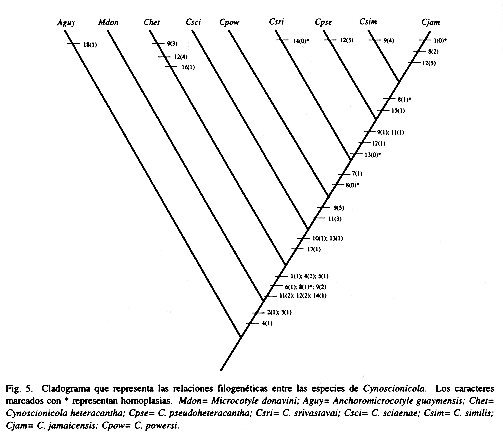
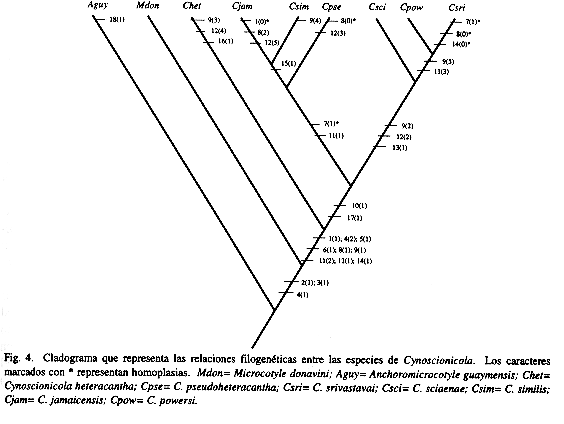
<body><![CDATA[<P><FONT FACE="Arial,Helvetica"><FONT SIZE=-1>El an&aacute;lisis filogen&eacute;tico realizado entre las siete especies de Cynoscionicola, produjo dos cladogramas igualmente parsimoniosos (<A HREF="#figura 4">Figs. 4</A> y <A HREF="#figura 5">5</A>) con 35 pasos y un &iacute;ndice de coherencia (consistency index) de 0.85. En ambos cladogramas se postula a Microcotyle donavini como el grupo hermano del g&eacute;nero Cynoscionicola y, a Anchoromicrocotyle guaymensis, como grupo hermano de los anteriores. Las diferencias entre los cladogramas son debidas a la posici&oacute;n de un grupo de especies C. sciaenae, C. srivastavai + C. powersi formando un clado independiente apoyado por tres sinapomorf&iacute;as: forma de las espinas anterolaterales, forma de las espinas posteriores y n&uacute;mero de las espinas posteriores, siendo los dos &uacute;ltimos caracteres no ambiguos, o bien, la posici&oacute;n de estas tres especies como miembros basales de un grupo que incluye a estas tres especies y a C. pseudoheteracantha, C. similis + C. jamaicensis. La posici&oacute;n de C. heteracantha como miembro basal del grupo se mantiene en ambos cladogramas.</FONT></FONT>     <BR>&nbsp;     <CENTER></CENTER>      <CENTER><A NAME="figura 4"></A><IMG SRC="/img/fbpe/rbt/v46n2/0170i04.GIF" HEIGHT=424 WIDTH=564></CENTER>      
<CENTER>&nbsp;</CENTER>      <CENTER>&nbsp;</CENTER>      <CENTER><A NAME="figura 5"></A></CENTER>      <CENTER><IMG SRC="/img/fbpe/rbt/v46n2/0170i05.GIF" HEIGHT=437 WIDTH=503></CENTER>       
<P>&nbsp;      <P><FONT FACE="Arial,Helvetica"><FONT SIZE=-1>La monofilia de las especies del g&eacute;nero se encuentra apoyada por nueve sinapomorf&iacute;as que fueron identificadas en este estudio: Ausencia de leng&uuml;eta larval, atrio genital constituido por cuatro bolsas musculares, atrio genital armado con espinas de diferente forma y tama&ntilde;o, forma y tama&ntilde;o de las espinas anteriores del atrio genital, forma y tama&ntilde;o de las espinas anterolaterales, forma y tama&ntilde;o de las espinas posteriores. Tres de &eacute;stas (atrio genital constituido por cuatro bolsas musculares, atrio genital armado con espinas de diferente forma y tama&ntilde;o y forma de las espinas anteriores del atrio genital, con guarda y manubrio evidentes) son caracteres no ambiguos, dado que no presentan otros estadios apom&oacute;rficos en la serie de transformacion como en 9(2), 11(2) y 12(2) y tampoco son caracteres homopl&aacute;sicos como en 1(0), 8(1) y 14(1).</FONT></FONT>     ]]></body>
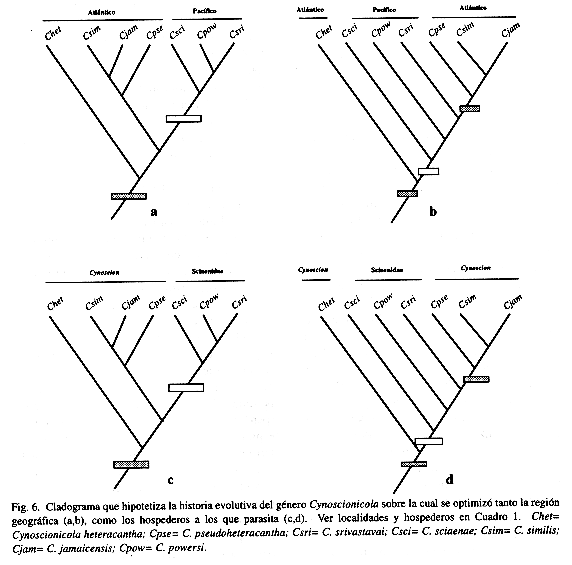
<body><![CDATA[<BR>&nbsp;      <P><B><FONT FACE="Arial,Helvetica"><FONT SIZE=-1>Discusi&oacute;n</FONT></FONT></B>      <P><FONT FACE="Arial,Helvetica"><FONT SIZE=-1>El resultado del an&aacute;lisis filogen&eacute;tico que aqui presentamos indica claramente que, por un lado, el g&eacute;nero Cynoscionicola es un grupo monofil&eacute;tico, estando la monofilia apoyada por tres sinapomorf&iacute;as no ambiguas. Por otro lado, las relaciones con respecto al grupo externo indican la inestabilidad en la clasificaci&oacute;n de los g&eacute;neros que componen a la familia Microcotylidae. <A HREF="#Bravo, H. M. 1981b">Bravo (1981 b</A>) postul&oacute; que el g&eacute;nero Cynoscionicola era el &uacute;nico representante de la subfamilia que la autora erigi&oacute; como Cynoscionicolinae. M&aacute;s adelante,<A HREF="#Mamaev, Yu. L."> Mamaev (1986</A>), no reconoce la validez de la subfamilia Cynoscionicolinae e incluye al g&eacute;nero Cynoscionicola, junto con el g&eacute;nero Anchoromicrocotyle, dentro de la subfamilia Anchoromicrocotylinae, erigida por <A HREF="#Bravo, H.1981a">Bravo (1981a</A>), considerando caracteres tales como la presencia de un &oacute;rgano copulador complejo y una leng&uuml;eta larvaria en estado adulto. La clasificaci&oacute;n propuesta por <A HREF="#Mamaev, Yu. L.">Mamaev (1986</A>) fue utilizada inicialmente en este trabajo para establecer las relaciones del grupo externo, considerando a Anchoromicrocotyle como grupo hermano de Cynoscionicola. La utilizaci&oacute;n de un segundo grupo externo (Microcotyle donavini) contribuy&oacute; a demostrar que una vez realizado el an&aacute;lisis filogen&eacute;tico, la propuesta de<A HREF="#Mamaev, Yu. L."> Mamaev (1986)</A> es err&oacute;nea y que, ambos g&eacute;neros, no pueden ser considerados como grupos hermanos y que de hecho no forman parte de la misma subfamilia. Es necesario un an&aacute;lisis filogen&eacute;tico para resolver las relaciones entre los g&eacute;neros que componen a la subfamilia Microcotylidae, lo cual permitira ratificar la idea de<A HREF="#Boeger, W. A. 1993"> Boeger y Kritsky (1993</A>) de que esta familia constituye un grupo artificial.</FONT></FONT>      <P><FONT FACE="Arial,Helvetica"><FONT SIZE=-1>El &iacute;ndice de coherencia que se obtuvo para el cladograma que hipotetiza las relaciones filogen&eacute;ticas entre las especies del g&eacute;nero Cynoscionicola, es congruente con el obtenido en otros an&aacute;lisis filogen&eacute;ticos de monog&eacute;neos a distintos niveles taxon&oacute;micos, desde especies de un g&eacute;nero (<A HREF="#Measures, N.,">Measures et al. 1990</A>, <A HREF="#Klassen, G.1994a">Klassen 1994 a</A>,<A HREF="#Klassen,1994b">b</A>), hasta relaciones a nivel de familia (<A HREF="#Klassen, G.1988">Klassen &amp; Beverly-Burton 1988</A>,<A HREF="#Boeger, W.1989"> Boeger &amp; Kritsky 1989</A>), lo que indica que es un grupo evolutivamente conservado.</FONT></FONT>      <P><FONT FACE="Arial,Helvetica"><FONT SIZE=-1>Por otra parte, <A HREF="#Brooks, D.1993a">Brooks &amp; McLennan (1993 a</A>,<A HREF="#Brooks, D. 1993b">b</A>) presentaron evidencias de que, en general, los platelmintos par&aacute;sitos no exhiben un alto grado de p&eacute;rdida evolutiva de caracteres y de homoplasia, en comparaci&oacute;n con sus grupos hermanos de vida libre, lo que pudiera indicar que estos organismos tienen niveles inusuales de simplificaci&oacute;n y/o plasticidad adaptativa; con respecto a las p&eacute;rdidas evolutivas, considerando la base de datos general para los monog&eacute;neos, encontraron que 73 de los 587 caracteres fueron p&eacute;rdidas, representando el 12%. En nuestro estudio encontramos cuatro perdidas de car&aacute;cter en ambos cladogramas (p&eacute;rdida de la leng&uuml;eta larval, tama&ntilde;o de las espinas anteriores, tama&ntilde;o de las espinas posteriores y n&uacute;mero de espinas posteriores) en 35 estados apom&oacute;rficos lo cual arroja un 11% de perdida evolutiva de caracteres y coincide totalmente con lo encontrado por <A HREF="#Brooks, D.1993a">Brooks &amp; McLennan (1993 a</A>,<A HREF="#Brooks, D. 1993b">b</A>). Lo anterior indica que las especies del g&eacute;nero Cynoscionicola exhiben una m&iacute;nima cantidad de simplificaciones secundarias en su evoluci&oacute;n y m&aacute;s bien, presentan un alto grado de modificaci&oacute;n, asociado principalmente a caracteres reproductores (composici&oacute;n del atrio genital).</FONT></FONT>      <P><FONT FACE="Arial,Helvetica"><FONT SIZE=-1>En la <A HREF="#figura 6">Fig. 6 </A>se representa la optimizaci&oacute;n tanto de los hospederos como de las &aacute;reas geogr&aacute;ficas que ocupan, sobre los cladogramas que hipotetizan las relaciones filogen&eacute;ticas entre las especies de Cynoscionicola. En ambos casos se postula que estos monog&eacute;neos son primitiva y predominantemente par&aacute;sitos de peces del g&eacute;nero Cynoscion, con un origen en el Atl&aacute;ntico Americano.</FONT></FONT>     <BR>&nbsp;     <CENTER></CENTER>      <CENTER><A NAME="figura 6"></A></CENTER>      <CENTER><IMG SRC="/img/fbpe/rbt/v46n2/0170i06.GIF" HEIGHT=565 WIDTH=572></CENTER> &nbsp;      
]]></body>
<body><![CDATA[<P><FONT FACE="Arial,Helvetica"><FONT SIZE=-1>Tomando en consideraci&oacute;n lo anterior, encontramos que la hip&oacute;tesis en donde se presentan dos clados bien definidos (<A HREF="#figura 6">Fig 6 a,c</A>), es la m&aacute;s robusta en t&eacute;rminos de la explicaci&oacute;n que obtenemos al analizar la biogeograf&iacute;a y posible coevoluci&oacute;n con los hospederos a los que parasitan. En esta hip&oacute;tesis se plantea un origen Atl&aacute;ntico en peces del g&eacute;nero Cynoscion, con el grupo m&aacute;s derivado parasitando Sci&aacute;nidos en el Pac&iacute;fico Americano. Esta hip&oacute;tesis requiere de dos pasos en cada caso (ver <A HREF="#figura 6">Fig 6 a,c</A>).</FONT></FONT>      <P><FONT FACE="Arial,Helvetica"><FONT SIZE=-1>Por otra parte, la hip&oacute;tesis alternativa (<A HREF="#figura 6">Fig. 6 b,d</A>) requiere postular el mismo origen para el grupo, un evento de colonizaci&oacute;n en Sci&aacute;nidos del Pac&iacute;fico y una "reversi&oacute;n" al estado plesiom&oacute;rfico en el clado m&aacute;s derivado, que incluye a C. pseudoheteracantha, C.<I> similis</I> + C.<I> jamaisensis</I>.</FONT></FONT>      <P><FONT FACE="Arial,Helvetica"><FONT SIZE=-1>El concepto de especies "gemelas" (geminate species), en combinaci&oacute;n con eventos geol&oacute;gicos relativamente recientes, provee apoyo adicional a la primera hip&oacute;tesis, al analizar el escenario que determin&oacute; el proceso de especiaci&oacute;n que separ&oacute; al ancestro del "clado del Pac&iacute;fico" (C. <I>sciaenae</I>, C. <I>srivastavai</I> + C. <I>powersi)</I> del clado del Atl&aacute;ntico (C. <I>pseudoheteracantha</I>, C. <I>similis</I> + C.<I> jamaisensis</I>). Las especies "gemelas" son aquellas especies hermanas que aparecen en lados opuestos de alguna barrera geogr&aacute;fica; este concepto fue aplicado recientemente por <A HREF="#Marques, F., D.">Marques et al. (1996</A>) al caso de los organismos par&aacute;sitos, en especies de tetrafil&iacute;deos (Cestoda) par&aacute;sitos de mantarrayas que est&aacute;n separados, en las costas del Atl&aacute;ntico y del Pac&iacute;fico, por el Istmo de Panam&aacute;, mismo que surgi&oacute; como un puente de conexi&oacute;n entre Norte y Sudam&eacute;rica recientemente (3.5-5.7 millones de a&ntilde;os seg&uacute;n <A HREF="#Lessios, H.">Lessios 1979</A>).</FONT></FONT>      <P><FONT FACE="Arial,Helvetica"><FONT SIZE=-1>De acuerdo con lo anterior, el ancestro del "clado Pac&iacute;fico" y del "clado Atl&aacute;ntico", tenian una distribuci&oacute;n en ambos litorales y el evento de especiaci&oacute;n que condujo a la separaci&oacute;n de ambos linajes fue producto del surgimiento del Istmo de Panam&aacute; en el Plioceno, junto con una distribuci&oacute;n secundaria, colonizaci&oacute;n o cambio de hospedero (host-switching) a otros Sci&aacute;nidos. Este patr&oacute;n de especiaci&oacute;n es alop&aacute;trico por separaci&oacute;n geogr&aacute;fica (vicarianza) de acuerdo con<A HREF="#Brooks, D.1991"> Brooks y McLennan (1991</A>) y produjo asi dos especies "gemelas", representadas por los ancestros hipot&eacute;ticos que posteriormente dieron origen, por un lado, a las especies C.<I> similis </I>+ C<I>. jamaisensis</I> y C. <I>pseudoheteracantha </I>(Atl&aacute;ntico), mientras que por el otro, al clado formado por C.<I> sciaenae </I>y C. <I>srivastavai </I>+ C.<I> powersi </I>(Pac&iacute;fico) Adicionalmente al aislamiento geogr&aacute;fico el "clado Pac&iacute;fico" tuvo un evento de colonizaci&oacute;n a otros miembros de la familia Sciaenidae, tales como Umbrina, Bairdiella, Isopisthus y Sciaena. El surgimiento del Istmo de Panam&aacute; como un factor que condujo a eventos de especiaci&oacute;n y posible formaci&oacute;n de especies "gemelas", tambien fue descrito recientemente para otro grupo de monog&eacute;neos de la familia Pterinotrematidae por <A HREF="#Pérez-Ponce">P&eacute;rez-Ponce de Le&oacute;n et al. (1997)</A>.</FONT></FONT>      <P><FONT FACE="Arial,Helvetica"><FONT SIZE=-1>El origen Atl&aacute;ntico, en peces del g&eacute;nero Cynoscion para las especies de Cynoscionicola, es congruente con la hip&oacute;tesis de relaciones filogen&eacute;ticas para los miembros de Cynoscion presentada por <A HREF="#Sasaki, K.">Sasaki (1989</A>). Este autor determin&oacute; que la distribuci&oacute;n actual de &eacute;stos es exclusiva del nuevo mundo y es Anfiamericana es decir, en ambas costas del Continente Americano; adicionalmente, las especies del g&eacute;nero tienen rangos de distribuci&oacute;n muy restringidos (<A HREF="#Nelson, J.">Nelson, 1994</A>). <A HREF="#Sasaki, K.">Sasaki (1989</A>) postul&oacute; que el ancestro del clado formado por <I>Cynoscion</I> + <I>Macrodon</I> + <I>Isopisthus </I>+ <I>Plagioscion</I> apareci&oacute; en el Atl&aacute;ntico Sudamericano. Nuestros resultados apoyan esta propuesta ya que el miembro basal C. heteracantha tiene una amplia distribuci&oacute;n en las Costas del Atl&aacute;ntico particularmente en E.U., desde Florida hasta Masachusets.</FONT></FONT>     <BR>&nbsp;      <P><B><FONT FACE="Arial,Helvetica"><FONT SIZE=-1>Agradecimientos</FONT></FONT></B>      <P><FONT FACE="Arial,Helvetica"><FONT SIZE=-1>Agradecemos a Virginia Le&oacute;n R&egrave;gagnon y Luis Garcia Prieto por la revisi&oacute;n y comentarios realizados al manuscrito. A Ralph Lichtenfels, curador del U. S. National Parasite Collection, Beltsville, Maryland y Scott Gardner, curador de la UNSMHWML por el env&iacute;o de holotipos y paratipos, depositados en estas coleciones y Agust&iacute;n Jim&eacute;nez Ruiz, por la ayuda proporcionada en la revisi&oacute;n del material.</FONT></FONT>     <BR>&nbsp;      <P><B><FONT FACE="Arial,Helvetica"><FONT SIZE=-1>Resumen</FONT></FONT></B>      ]]></body>
<body><![CDATA[<P><FONT FACE="Arial,Helvetica"><FONT SIZE=-1>En este trabajo se presenta un an&aacute;lisis filogen&eacute;tico para siete especies nominales del g&eacute;nero Cynoscionicola Price 1962, el cual esta basado en 18 caracteres y 31 estados de car&aacute;cter. El an&aacute;lisis produjo dos cladogramas igualmente parsimoniosos con un &iacute;ndice de coherencia de 0.85 y 35 pasos. Las diferentes topolog&iacute;as de los cladogramas dependen de la posici&oacute;n de los miembros que habitan en Sc&iacute;anidos de la costa del Pac&iacute;fico, con respecto a aquellas que habitan en Cynoscion en la costa del Atl&aacute;ntico. La monofilia de Cynoscionicola es apoyada por tres sinapomorf&iacute;as no ambig&uuml;as: atrio genital formado por cuatro bolsas atriales, atrio genital armado con espinas de distinta forma y tama&ntilde;o y forma de las espinas anteriores del atrio genital.</FONT></FONT>      <P><FONT FACE="Arial,Helvetica"><FONT SIZE=-1>Usando el an&aacute;lisis filogen&eacute;tico como un "templado", analizamos las relaciones con el hospedero y la distribuci&oacute;n geogr&aacute;fica de los miembros de Cynoscionicola, proponemos un origen para ambos, hospederos y monog&eacute;neos, en el Atl&aacute;ntico, con una ruta de dispersi&oacute;n temprana a lo largo de la costa del Atl&aacute;ntico, un evento de especiaci&oacute;n por vicarianza, determinado por el aislamiento de una poblaci&oacute;n de Cynoscion cuando surgi&oacute; el Istmo de Panam&aacute; en el Plioceno, en combinaci&oacute;n con un evento de colonizaci&oacute;n a otros miembros de la familia Scianidae.</FONT></FONT>     <BR>&nbsp;      <P><B><FONT FACE="Arial,Helvetica"><FONT SIZE=-1>Referencias</FONT></FONT></B>      <!-- ref --><P><A NAME="Bravo, H.1981a"></A><FONT FACE="Arial,Helvetica"><FONT SIZE=-1>Bravo, H. M. 1981a. Helmintos de peces del Pac&iacute;fico Mexicano XXXVI. Sobre un g&eacute;nero y subfamilia nuevos de la famulia Microcotylidae Taschemberg, 1879 emend. An. Inst. Cienc. Mar y Limnol., UNAM. 8: 305-314.</FONT></FONT>    &nbsp;&nbsp;&nbsp;&nbsp;&nbsp;&nbsp;&nbsp;&nbsp;[&#160;<a href="javascript:void(0);" onclick="javascript: window.open('/scielo.php?script=sci_nlinks&ref=1131171&pid=S0034-7744199800020001900001&lng=','','width=640,height=500,resizable=yes,scrollbars=1,menubar=yes,');">Links</a>&#160;]<!-- end-ref --><!-- ref --><P><A NAME="Bravo, H. M. 1981b"></A><FONT FACE="Arial,Helvetica"><FONT SIZE=-1>Bravo, H. M. 1981b. Helmintos de peces del Pac&iacute;fico Mexicano XXXVIII. Estudio de monog&eacute;neos del suborden Microcotylinea Lebedev, 1972, con la presentaci&oacute;n de una subfamilia y una especie nuevas. An. Inst. Biol., UNAM. 52: 13-26</FONT></FONT>    &nbsp;&nbsp;&nbsp;&nbsp;&nbsp;&nbsp;&nbsp;&nbsp;[&#160;<a href="javascript:void(0);" onclick="javascript: window.open('/scielo.php?script=sci_nlinks&ref=1131172&pid=S0034-7744199800020001900002&lng=','','width=640,height=500,resizable=yes,scrollbars=1,menubar=yes,');">Links</a>&#160;]<!-- end-ref --><!-- ref --><P><A NAME="Boeger, W.1989"></A><FONT FACE="Arial,Helvetica"><FONT SIZE=-1>Boeger, W. A. &amp; D. C. Kritsky. 1989. Phylogeny, coevolution and revision of the Hexabothriidae Price, 1942 (Monogenea). Int. J. Parasitol. 19: 425-440.</FONT></FONT>    &nbsp;&nbsp;&nbsp;&nbsp;&nbsp;&nbsp;&nbsp;&nbsp;[&#160;<a href="javascript:void(0);" onclick="javascript: window.open('/scielo.php?script=sci_nlinks&ref=1131173&pid=S0034-7744199800020001900003&lng=','','width=640,height=500,resizable=yes,scrollbars=1,menubar=yes,');">Links</a>&#160;]<!-- end-ref --><!-- ref --><P><A NAME="Boeger, W. A. 1993"></A><FONT FACE="Arial,Helvetica"><FONT SIZE=-1>Boeger, W. A. &amp; D. C. Kritsky. 1993. Phylogeny and a revised classification of the Monogenoidea Bychowsky, 1937 (Platyhelmintes). Syst. Parasitol. 26 : 1-32</FONT></FONT>    &nbsp;&nbsp;&nbsp;&nbsp;&nbsp;&nbsp;&nbsp;&nbsp;[&#160;<a href="javascript:void(0);" onclick="javascript: window.open('/scielo.php?script=sci_nlinks&ref=1131174&pid=S0034-7744199800020001900004&lng=','','width=640,height=500,resizable=yes,scrollbars=1,menubar=yes,');">Links</a>&#160;]<!-- end-ref --><!-- ref --><P><A NAME="Brooks, D.1991"></A><FONT FACE="Arial,Helvetica"><FONT SIZE=-1>Brooks, D. R. &amp; D. A. McLennan. 1991. Phylogeny, Ecology and Behaviour. A Research Program in Comparative Biology. University of Chicago, Chicago,. Illinois 434p.</FONT></FONT>    &nbsp;&nbsp;&nbsp;&nbsp;&nbsp;&nbsp;&nbsp;&nbsp;[&#160;<a href="javascript:void(0);" onclick="javascript: window.open('/scielo.php?script=sci_nlinks&ref=1131175&pid=S0034-7744199800020001900005&lng=','','width=640,height=500,resizable=yes,scrollbars=1,menubar=yes,');">Links</a>&#160;]<!-- end-ref --><!-- ref --><P><A NAME="Brooks, D.1993a"></A><FONT FACE="Arial,Helvetica"><FONT SIZE=-1>Brooks, D. R. &amp; D. A. McLennan. 1993a. Parascript: Parasites and the lenguage of evolution. Smithsonian Institution, Washington, D. C. 429 p.</FONT></FONT>    &nbsp;&nbsp;&nbsp;&nbsp;&nbsp;&nbsp;&nbsp;&nbsp;[&#160;<a href="javascript:void(0);" onclick="javascript: window.open('/scielo.php?script=sci_nlinks&ref=1131176&pid=S0034-7744199800020001900006&lng=','','width=640,height=500,resizable=yes,scrollbars=1,menubar=yes,');">Links</a>&#160;]<!-- end-ref --><!-- ref --><P><A NAME="Brooks, D. 1993b"></A><FONT FACE="Arial,Helvetica"><FONT SIZE=-1>Brooks, D. R. &amp; D. A. McLennan. 1993b. Macroevolutionary trends in the morphological diversification among the parasitic flatworms (Platyhelmintes: Cercomeria). Evolution 47: 495-509.</FONT></FONT>    &nbsp;&nbsp;&nbsp;&nbsp;&nbsp;&nbsp;&nbsp;&nbsp;[&#160;<a href="javascript:void(0);" onclick="javascript: window.open('/scielo.php?script=sci_nlinks&ref=1131177&pid=S0034-7744199800020001900007&lng=','','width=640,height=500,resizable=yes,scrollbars=1,menubar=yes,');">Links</a>&#160;]<!-- end-ref --><!-- ref --><P><A NAME="Jiménez"></A><FONT FACE="Arial,Helvetica"><FONT SIZE=-1>Jim&eacute;nez R., A. 1996. Taxonom&iacute;a y descripci&oacute;n de las comunidades de helmintos par&aacute;sitos de Umbrina xanti Gill, 1862 (Pisces: Scianidae) en la Bah&iacute;a de Chamela, Jalisco, M&eacute;xico. Tesis de Licenciatura. UNAM. M&eacute;xico</FONT></FONT>    &nbsp;&nbsp;&nbsp;&nbsp;&nbsp;&nbsp;&nbsp;&nbsp;[&#160;<a href="javascript:void(0);" onclick="javascript: window.open('/scielo.php?script=sci_nlinks&ref=1131178&pid=S0034-7744199800020001900008&lng=','','width=640,height=500,resizable=yes,scrollbars=1,menubar=yes,');">Links</a>&#160;]<!-- end-ref --><!-- ref --><P><A NAME="Klassen, G.1994a"></A><FONT FACE="Arial,Helvetica"><FONT SIZE=-1>. Klassen, G. J. 1994a. Phylogeny of Haliotrema species (Monogenea: Ancyrocephalidae) from Boxfishes (Tetraodontiformes: Ostraciidae): Are Haliotrema Species from Boxfishes Monophyletic?. J. Parasitol. 80: 596-610.</FONT></FONT>    &nbsp;&nbsp;&nbsp;&nbsp;&nbsp;&nbsp;&nbsp;&nbsp;[&#160;<a href="javascript:void(0);" onclick="javascript: window.open('/scielo.php?script=sci_nlinks&ref=1131179&pid=S0034-7744199800020001900009&lng=','','width=640,height=500,resizable=yes,scrollbars=1,menubar=yes,');">Links</a>&#160;]<!-- end-ref --><!-- ref --><P><A NAME="Klassen,1994b"></A><FONT FACE="Arial,Helvetica"><FONT SIZE=-1>Klassen, G. J. 1994b. On the monophyly of Haliotrema species (Monogenea: Ancyrocephalidae) from Boxfishes (Tetraodontiformes: Ostraciidae): Relationships within the Bodiani group. J. Parasitol. 80: 611-619.</FONT></FONT>    &nbsp;&nbsp;&nbsp;&nbsp;&nbsp;&nbsp;&nbsp;&nbsp;[&#160;<a href="javascript:void(0);" onclick="javascript: window.open('/scielo.php?script=sci_nlinks&ref=1131180&pid=S0034-7744199800020001900010&lng=','','width=640,height=500,resizable=yes,scrollbars=1,menubar=yes,');">Links</a>&#160;]<!-- end-ref --><!-- ref --><P><A NAME="Klassen, G.1988"></A><FONT FACE="Arial,Helvetica"><FONT SIZE=-1>Klassen, G. J. &amp; M. Beverly-Burton. 1988. North American freshwater Ancyrocephalids (Monogenea) with articulating haptoral bars: Phylogeny reconstruction. Syst. Parasitol. 11: 49-57.</FONT></FONT>    &nbsp;&nbsp;&nbsp;&nbsp;&nbsp;&nbsp;&nbsp;&nbsp;[&#160;<a href="javascript:void(0);" onclick="javascript: window.open('/scielo.php?script=sci_nlinks&ref=1131181&pid=S0034-7744199800020001900011&lng=','','width=640,height=500,resizable=yes,scrollbars=1,menubar=yes,');">Links</a>&#160;]<!-- end-ref --><!-- ref --><P><A NAME="Lambert, M."></A><FONT FACE="Arial,Helvetica"><FONT SIZE=-1>Lambert, M. &amp; L. Euzet. 1979. Esp&eacute;ces nouvelles du genre Cynoscionicola Price, 1962 (Monogenea: Microcotylidae). Z. Parasitenk. 60: 229-237.</FONT></FONT>    &nbsp;&nbsp;&nbsp;&nbsp;&nbsp;&nbsp;&nbsp;&nbsp;[&#160;<a href="javascript:void(0);" onclick="javascript: window.open('/scielo.php?script=sci_nlinks&ref=1131182&pid=S0034-7744199800020001900012&lng=','','width=640,height=500,resizable=yes,scrollbars=1,menubar=yes,');">Links</a>&#160;]<!-- end-ref --><!-- ref --><P><A NAME="Lessios, H."></A><FONT FACE="Arial,Helvetica"><FONT SIZE=-1>Lessios, H. A. 1979 Use of Panamanian sea urchins to test the molecular clock. Nature 280: 599-561.</FONT></FONT>    &nbsp;&nbsp;&nbsp;&nbsp;&nbsp;&nbsp;&nbsp;&nbsp;[&#160;<a href="javascript:void(0);" onclick="javascript: window.open('/scielo.php?script=sci_nlinks&ref=1131183&pid=S0034-7744199800020001900013&lng=','','width=640,height=500,resizable=yes,scrollbars=1,menubar=yes,');">Links</a>&#160;]<!-- end-ref --><!-- ref --><P><A NAME="Maddison, P., M."></A><FONT FACE="Arial,Helvetica"><FONT SIZE=-1>Maddison, P., M. Donag hue &amp; D. Maddison. 1984. Outgroup analysis and parsimony. Syst. Zool. 33: 83-103.</FONT></FONT>    &nbsp;&nbsp;&nbsp;&nbsp;&nbsp;&nbsp;&nbsp;&nbsp;[&#160;<a href="javascript:void(0);" onclick="javascript: window.open('/scielo.php?script=sci_nlinks&ref=1131184&pid=S0034-7744199800020001900014&lng=','','width=640,height=500,resizable=yes,scrollbars=1,menubar=yes,');">Links</a>&#160;]<!-- end-ref --><!-- ref --><P><A NAME="Mamaev, Yu. L."></A><FONT FACE="Arial,Helvetica"><FONT SIZE=-1>Mamaev, Yu. L. 1986. The taxonomical composition of the Family Microcotylidae Taschenberg, 1879 (Monogenea). Folia Parasitologica. 33: 199-206.</FONT></FONT>    &nbsp;&nbsp;&nbsp;&nbsp;&nbsp;&nbsp;&nbsp;&nbsp;[&#160;<a href="javascript:void(0);" onclick="javascript: window.open('/scielo.php?script=sci_nlinks&ref=1131185&pid=S0034-7744199800020001900015&lng=','','width=640,height=500,resizable=yes,scrollbars=1,menubar=yes,');">Links</a>&#160;]<!-- end-ref --><!-- ref --><P><A NAME="Marques, F., D."></A><FONT FACE="Arial,Helvetica"><FONT SIZE=-1>Marques, F., D. Brooks &amp; H. Molina. 1996. Two new species of Tetraphyllidean Cestodes in Himantura pacifica (Chondrichthyes: Myliobatiformes: Dasyatididae) from the Northwest Coast of Costa Rica. J. Parasitol. 82: 302-306.</FONT></FONT>    &nbsp;&nbsp;&nbsp;&nbsp;&nbsp;&nbsp;&nbsp;&nbsp;[&#160;<a href="javascript:void(0);" onclick="javascript: window.open('/scielo.php?script=sci_nlinks&ref=1131186&pid=S0034-7744199800020001900016&lng=','','width=640,height=500,resizable=yes,scrollbars=1,menubar=yes,');">Links</a>&#160;]<!-- end-ref --><!-- ref --><P><A NAME="Measures, N.,"></A><FONT FACE="Arial,Helvetica"><FONT SIZE=-1>Measures, N., M. Beverly-Burton &amp; A. Williams. 1990. Three new species of Monocotyle (Monogenea: Monocotylidae) from the stingray, Himantura varnak (Rajiformes: Dasyatidae) from the Great Barrier Reef: Phylogenetic, reconstruction, systematics and emended diagnoses. Int. J. Parasitol. 20: 755-767.</FONT></FONT>    &nbsp;&nbsp;&nbsp;&nbsp;&nbsp;&nbsp;&nbsp;&nbsp;[&#160;<a href="javascript:void(0);" onclick="javascript: window.open('/scielo.php?script=sci_nlinks&ref=1131187&pid=S0034-7744199800020001900017&lng=','','width=640,height=500,resizable=yes,scrollbars=1,menubar=yes,');">Links</a>&#160;]<!-- end-ref --><!-- ref --><P><A NAME="Nelson, J."></A><FONT FACE="Arial,Helvetica"><FONT SIZE=-1>Nelson, J. 1994. Fishes of the World. Wiley, Nueva York. 600 p.</FONT></FONT>    &nbsp;&nbsp;&nbsp;&nbsp;&nbsp;&nbsp;&nbsp;&nbsp;[&#160;<a href="javascript:void(0);" onclick="javascript: window.open('/scielo.php?script=sci_nlinks&ref=1131188&pid=S0034-7744199800020001900018&lng=','','width=640,height=500,resizable=yes,scrollbars=1,menubar=yes,');">Links</a>&#160;]<!-- end-ref --><!-- ref --><P><A NAME="Pérez-Ponce"></A><FONT FACE="Arial,Helvetica"><FONT SIZE=-1>P&eacute;rez-Ponce de Le&oacute;n, G., V. Le&oacute;n-Regagnon &amp; B. Mendoza-Garfias. 1997. An&aacute;lisis filogen&eacute;tico de la familia Pterinotrematidae Bychowsky y Nagibina, 1959 (Platyhelminthes: Moonogenea). An. Inst. Biol. UNAM. 68: (en prensa)</FONT></FONT>    &nbsp;&nbsp;&nbsp;&nbsp;&nbsp;&nbsp;&nbsp;&nbsp;[&#160;<a href="javascript:void(0);" onclick="javascript: window.open('/scielo.php?script=sci_nlinks&ref=1131189&pid=S0034-7744199800020001900019&lng=','','width=640,height=500,resizable=yes,scrollbars=1,menubar=yes,');">Links</a>&#160;]<!-- end-ref --><!-- ref --><P><A NAME="Sasaki, K."></A><FONT FACE="Arial,Helvetica"><FONT SIZE=-1>Sasaki, K. 1989. Phylogeny of the Family Sciaenidae, with notes on its Zoogeography (Teleostei: Perciformes). Mem. Fac. Fish Hokkaid Univ. 36: 1-137.</FONT></FONT>    &nbsp;&nbsp;&nbsp;&nbsp;&nbsp;&nbsp;&nbsp;&nbsp;[&#160;<a href="javascript:void(0);" onclick="javascript: window.open('/scielo.php?script=sci_nlinks&ref=1131190&pid=S0034-7744199800020001900020&lng=','','width=640,height=500,resizable=yes,scrollbars=1,menubar=yes,');">Links</a>&#160;]<!-- end-ref --><!-- ref --><P><A NAME="Swofford, D."></A><FONT FACE="Arial,Helvetica"><FONT SIZE=-1>Swofford, D. L. 1993. Phylogenetic analysis using parsimony. Version 3.1.1. Illinois Natural History Survey, Urbana, Illinois.</FONT></FONT>    &nbsp;&nbsp;&nbsp;&nbsp;&nbsp;&nbsp;&nbsp;&nbsp;[&#160;<a href="javascript:void(0);" onclick="javascript: window.open('/scielo.php?script=sci_nlinks&ref=1131191&pid=S0034-7744199800020001900021&lng=','','width=640,height=500,resizable=yes,scrollbars=1,menubar=yes,');">Links</a>&#160;]<!-- end-ref --><!-- ref --><P><A NAME="Watrous, E."></A><FONT FACE="Arial,Helvetica"><FONT SIZE=-1>Watrous, E. &amp; Q. Wheeler. 1981. The out-group comparasion method of character analysis. Syst. Zool. 30: 1-11.</FONT></FONT>    &nbsp;&nbsp;&nbsp;&nbsp;&nbsp;&nbsp;&nbsp;&nbsp;[&#160;<a href="javascript:void(0);" onclick="javascript: window.open('/scielo.php?script=sci_nlinks&ref=1131192&pid=S0034-7744199800020001900022&lng=','','width=640,height=500,resizable=yes,scrollbars=1,menubar=yes,');">Links</a>&#160;]<!-- end-ref --><!-- ref --><P><A NAME="Wiley, E. O."></A><FONT FACE="Arial,Helvetica"><FONT SIZE=-1>Wiley, E. O. 1981. Phylogenetics. The theory and practice of phylogenetic systematics. Wiley, Nueva York. 439 p.</FONT></FONT>    &nbsp;&nbsp;&nbsp;&nbsp;&nbsp;&nbsp;&nbsp;&nbsp;[&#160;<a href="javascript:void(0);" onclick="javascript: window.open('/scielo.php?script=sci_nlinks&ref=1131193&pid=S0034-7744199800020001900023&lng=','','width=640,height=500,resizable=yes,scrollbars=1,menubar=yes,');">Links</a>&#160;]<!-- end-ref --><P><A NAME="1a"></A><FONT FACE="Arial,Helvetica"><FONT SIZE=-1><SUP><A HREF="#1">1</A></SUP>Laboratorio de Helmintolog&iacute;a, Instituto de Biolog&iacute;a UNAM, Ap. Postal 70-153. C.P. 04510 M&eacute;xico, D.F., email:</FONT></FONT>     <BR><FONT FACE="Arial,Helvetica"><FONT SIZE=-1>&nbsp;<A HREF="mailto:berenit@ ibiologia.unam.mx; ppdleon@servidor.unam.mx">berenit@ ibiologia.unam.mx; ppdleon@servidor.unam.mx</A></FONT></FONT>      ]]></body><back>
<ref-list>
<ref id="B1">
<nlm-citation citation-type="journal">
<person-group person-group-type="author">
<name>
<surname><![CDATA[Bravo]]></surname>
<given-names><![CDATA[H. M.]]></given-names>
</name>
</person-group>
<article-title xml:lang="es"><![CDATA[Helmintos de peces del Pacífico Mexicano XXXVI: Sobre un género y subfamilia nuevos de la famulia Microcotylidae Taschemberg, 1879 emend]]></article-title>
<source><![CDATA[An. Inst. Cienc. Mar y Limnol.]]></source>
<year>1981</year>
<volume>8</volume>
<page-range>305-314</page-range><publisher-name><![CDATA[UNAM]]></publisher-name>
</nlm-citation>
</ref>
<ref id="B2">
<nlm-citation citation-type="journal">
<person-group person-group-type="author">
<name>
<surname><![CDATA[Bravo]]></surname>
<given-names><![CDATA[H. M.]]></given-names>
</name>
</person-group>
<article-title xml:lang="es"><![CDATA[. Helmintos de peces del Pacífico Mexicano XXXVIII: Estudio de monogéneos del suborden Microcotylinea Lebedev, 1972, con la presentación de una subfamilia y una especie nuevas]]></article-title>
<source><![CDATA[An. Inst. Biol.]]></source>
<year>1981</year>
<volume>52</volume>
<page-range>13-26</page-range><publisher-name><![CDATA[UNAM.]]></publisher-name>
</nlm-citation>
</ref>
<ref id="B3">
<nlm-citation citation-type="journal">
<person-group person-group-type="author">
<name>
<surname><![CDATA[Boeger]]></surname>
<given-names><![CDATA[W. A.]]></given-names>
</name>
<name>
<surname><![CDATA[Kritsky]]></surname>
<given-names><![CDATA[D. C.]]></given-names>
</name>
</person-group>
<article-title xml:lang="en"><![CDATA[Phylogeny, coevolution and revision of the Hexabothriidae Price, 1942 (Monogenea)]]></article-title>
<source><![CDATA[Int. J. Parasitol.]]></source>
<year>1989</year>
<volume>19</volume>
<page-range>425-440</page-range></nlm-citation>
</ref>
<ref id="B4">
<nlm-citation citation-type="journal">
<person-group person-group-type="author">
<name>
<surname><![CDATA[Boeger]]></surname>
<given-names><![CDATA[W. A.]]></given-names>
</name>
<name>
<surname><![CDATA[Kritsky]]></surname>
<given-names><![CDATA[D. C.]]></given-names>
</name>
</person-group>
<article-title xml:lang="en"><![CDATA[Phylogeny and a revised classification of the Monogenoidea Bychowsky, 1937 (Platyhelmintes]]></article-title>
<source><![CDATA[Syst. Parasitol.]]></source>
<year>1993</year>
<volume>26</volume>
<page-range>1-32</page-range></nlm-citation>
</ref>
<ref id="B5">
<nlm-citation citation-type="book">
<person-group person-group-type="author">
<name>
<surname><![CDATA[Brooks]]></surname>
<given-names><![CDATA[D. R.]]></given-names>
</name>
<name>
<surname><![CDATA[McLennan.]]></surname>
<given-names><![CDATA[D. A.]]></given-names>
</name>
</person-group>
<source><![CDATA[Phylogeny, Ecology and Behaviour.: A Research Program in Comparative Biology]]></source>
<year>1991</year>
<publisher-loc><![CDATA[Chicago^eIllinois Illinois]]></publisher-loc>
<publisher-name><![CDATA[University of Chicago]]></publisher-name>
</nlm-citation>
</ref>
<ref id="B6">
<nlm-citation citation-type="book">
<person-group person-group-type="author">
<name>
<surname><![CDATA[Brooks]]></surname>
<given-names><![CDATA[D. R.]]></given-names>
</name>
<name>
<surname><![CDATA[McLennan]]></surname>
<given-names><![CDATA[D. A.]]></given-names>
</name>
</person-group>
<source><![CDATA[Parascript: Parasites and the lenguage of evolution]]></source>
<year>1993</year>
<publisher-loc><![CDATA[Washington, D. C. ]]></publisher-loc>
<publisher-name><![CDATA[Smithsonian Institution]]></publisher-name>
</nlm-citation>
</ref>
<ref id="B7">
<nlm-citation citation-type="journal">
<person-group person-group-type="author">
<name>
<surname><![CDATA[Brooks]]></surname>
<given-names><![CDATA[D. R.]]></given-names>
</name>
<name>
<surname><![CDATA[McLennan]]></surname>
<given-names><![CDATA[D. A.]]></given-names>
</name>
</person-group>
<article-title xml:lang="en"><![CDATA[Macroevolutionary trends in the morphological diversification among the parasitic flatworms (Platyhelmintes: Cercomeria)]]></article-title>
<source><![CDATA[Evolution]]></source>
<year>1993</year>
<volume>47</volume>
<page-range>495-509</page-range></nlm-citation>
</ref>
<ref id="B8">
<nlm-citation citation-type="">
<person-group person-group-type="author">
<name>
<surname><![CDATA[Jiménez]]></surname>
<given-names><![CDATA[R., A.]]></given-names>
</name>
</person-group>
<source><![CDATA[Taxonomía y descripción de las comunidades de helmintos parásitos de Umbrina xanti Gill, 1862 (Pisces: Scianidae) en la Bahía de Chamela, Jalisco, México]]></source>
<year>1996</year>
</nlm-citation>
</ref>
<ref id="B9">
<nlm-citation citation-type="journal">
<person-group person-group-type="author">
<name>
<surname><![CDATA[Klassen]]></surname>
<given-names><![CDATA[G. J.]]></given-names>
</name>
</person-group>
<article-title xml:lang="en"><![CDATA[Phylogeny of Haliotrema species (Monogenea: Ancyrocephalidae) from Boxfishes (Tetraodontiformes: Ostraciidae): Are Haliotrema Species from Boxfishes Monophyletic?]]></article-title>
<source><![CDATA[J. Parasitol.]]></source>
<year>1994</year>
<volume>80</volume>
<page-range>596-610</page-range></nlm-citation>
</ref>
<ref id="B10">
<nlm-citation citation-type="journal">
<person-group person-group-type="author">
<name>
<surname><![CDATA[Klassen]]></surname>
<given-names><![CDATA[G. J.]]></given-names>
</name>
</person-group>
<article-title xml:lang="en"><![CDATA[On the monophyly of Haliotrema species (Monogenea: Ancyrocephalidae) from Boxfishes (Tetraodontiformes: Ostraciidae): Relationships within the Bodiani group]]></article-title>
<source><![CDATA[J. Parasitol.]]></source>
<year>1994</year>
<volume>80</volume>
<page-range>611-619</page-range></nlm-citation>
</ref>
<ref id="B11">
<nlm-citation citation-type="journal">
<person-group person-group-type="author">
<name>
<surname><![CDATA[Klassen]]></surname>
<given-names><![CDATA[G. J.]]></given-names>
</name>
<name>
<surname><![CDATA[Beverly-Burton]]></surname>
<given-names><![CDATA[M.]]></given-names>
</name>
</person-group>
<article-title xml:lang="en"><![CDATA[North American freshwater Ancyrocephalids (Monogenea) with articulating haptoral bars: Phylogeny reconstruction]]></article-title>
<source><![CDATA[Syst. Parasitol.]]></source>
<year>1988</year>
<volume>11</volume>
<page-range>49-57</page-range></nlm-citation>
</ref>
<ref id="B12">
<nlm-citation citation-type="journal">
<person-group person-group-type="author">
<name>
<surname><![CDATA[Lambert]]></surname>
<given-names><![CDATA[M.]]></given-names>
</name>
<name>
<surname><![CDATA[Euzet.]]></surname>
<given-names><![CDATA[L.]]></given-names>
</name>
</person-group>
<article-title xml:lang="en"><![CDATA[Espéces nouvelles du genre Cynoscionicola Price, 1962 (Monogenea: Microcotylidae)]]></article-title>
<source><![CDATA[Z. Parasitenk.]]></source>
<year>1979</year>
<volume>60</volume>
<page-range>229-237</page-range></nlm-citation>
</ref>
<ref id="B13">
<nlm-citation citation-type="journal">
<person-group person-group-type="author">
<name>
<surname><![CDATA[Lessios]]></surname>
<given-names><![CDATA[H. A.]]></given-names>
</name>
</person-group>
<article-title xml:lang="en"><![CDATA[Use of Panamanian sea urchins to test the molecular clock]]></article-title>
<source><![CDATA[Nature]]></source>
<year>1979</year>
<volume>280</volume>
<page-range>599-561</page-range></nlm-citation>
</ref>
<ref id="B14">
<nlm-citation citation-type="journal">
<person-group person-group-type="author">
<name>
<surname><![CDATA[Maddison]]></surname>
<given-names><![CDATA[P.]]></given-names>
</name>
<name>
<surname><![CDATA[Donag h]]></surname>
<given-names><![CDATA[M.]]></given-names>
</name>
<name>
<surname><![CDATA[Maddison]]></surname>
<given-names><![CDATA[D.]]></given-names>
</name>
</person-group>
<article-title xml:lang="en"><![CDATA[Outgroup analysis and parsimony]]></article-title>
<source><![CDATA[Syst. Zool]]></source>
<year>1984</year>
<volume>33</volume>
<page-range>83-103</page-range></nlm-citation>
</ref>
<ref id="B15">
<nlm-citation citation-type="journal">
<person-group person-group-type="author">
<name>
<surname><![CDATA[Mamaev]]></surname>
<given-names><![CDATA[Yu. L.]]></given-names>
</name>
</person-group>
<article-title xml:lang="en"><![CDATA[The taxonomical composition of the Family Microcotylidae Taschenberg, 1879 (Monogenea).]]></article-title>
<source><![CDATA[Folia Parasitologica.]]></source>
<year>1986</year>
<volume>33</volume>
<page-range>199-206</page-range></nlm-citation>
</ref>
<ref id="B16">
<nlm-citation citation-type="journal">
<person-group person-group-type="author">
<name>
<surname><![CDATA[Marques]]></surname>
<given-names><![CDATA[F.]]></given-names>
</name>
<name>
<surname><![CDATA[Brooks]]></surname>
<given-names><![CDATA[D.]]></given-names>
</name>
<name>
<surname><![CDATA[Molina]]></surname>
<given-names><![CDATA[H.]]></given-names>
</name>
</person-group>
<article-title xml:lang="en"><![CDATA[Two new species of Tetraphyllidean Cestodes in Himantura pacifica (Chondrichthyes: Myliobatiformes: Dasyatididae) from the Northwest Coast of Costa Rica]]></article-title>
<source><![CDATA[J. Parasitol.]]></source>
<year>1996</year>
<volume>82</volume>
<page-range>302-306</page-range></nlm-citation>
</ref>
<ref id="B17">
<nlm-citation citation-type="journal">
<person-group person-group-type="author">
<name>
<surname><![CDATA[Measures]]></surname>
<given-names><![CDATA[N.]]></given-names>
</name>
<name>
<surname><![CDATA[Beverly-Burton]]></surname>
<given-names><![CDATA[M.]]></given-names>
</name>
<name>
<surname><![CDATA[Williams]]></surname>
<given-names><![CDATA[A.]]></given-names>
</name>
</person-group>
<article-title xml:lang="en"><![CDATA[Three new species of Monocotyle (Monogenea: Monocotylidae) from the stingray, Himantura varnak (Rajiformes: Dasyatidae) from the Great Barrier Reef: Phylogenetic, reconstruction, systematics and emended diagnoses]]></article-title>
<source><![CDATA[Int. J. Parasitol.]]></source>
<year>1990</year>
<volume>20</volume>
<page-range>755-767</page-range></nlm-citation>
</ref>
<ref id="B18">
<nlm-citation citation-type="">
<person-group person-group-type="author">
<name>
<surname><![CDATA[Nelson]]></surname>
<given-names><![CDATA[J.]]></given-names>
</name>
</person-group>
<source><![CDATA[Fishes of the World]]></source>
<year>1994</year>
<publisher-loc><![CDATA[^eNueva York. Nueva York.]]></publisher-loc>
</nlm-citation>
</ref>
<ref id="B19">
<nlm-citation citation-type="journal">
<person-group person-group-type="author">
<name>
<surname><![CDATA[Pérez-Ponce de León]]></surname>
<given-names><![CDATA[G.]]></given-names>
</name>
<name>
<surname><![CDATA[León-Regagnon]]></surname>
<given-names><![CDATA[V.]]></given-names>
</name>
<name>
<surname><![CDATA[Mendoza-Garfias]]></surname>
<given-names><![CDATA[B.]]></given-names>
</name>
</person-group>
<article-title xml:lang="en"><![CDATA[Análisis filogenético de la familia Pterinotrematidae Bychowsky y Nagibina, 1959 (Platyhelminthes: Moonogenea)]]></article-title>
<source><![CDATA[An. Inst. Biol.]]></source>
<year>1997</year>
<volume>68</volume>
<publisher-name><![CDATA[UNAM.]]></publisher-name>
</nlm-citation>
</ref>
<ref id="B20">
<nlm-citation citation-type="journal">
<person-group person-group-type="author">
<name>
<surname><![CDATA[Sasaki]]></surname>
<given-names><![CDATA[K.]]></given-names>
</name>
</person-group>
<article-title xml:lang="en"><![CDATA[Phylogeny of the Family Sciaenidae, with notes on its Zoogeography (Teleostei: Perciformes)]]></article-title>
<source><![CDATA[Mem. Fac. Fish Hokkaid Univ.]]></source>
<year>1989</year>
<month>.</month>
<volume>36</volume>
<page-range>1-137</page-range></nlm-citation>
</ref>
<ref id="B21">
<nlm-citation citation-type="book">
<person-group person-group-type="author">
<name>
<surname><![CDATA[Swofford]]></surname>
</name>
</person-group>
<source><![CDATA[Phylogenetic analysis using parsimony: Version 3.1.1.]]></source>
<year>1993</year>
<publisher-loc><![CDATA[Urbana^eIllinois Illinois]]></publisher-loc>
<publisher-name><![CDATA[Illinois Natural History Survey]]></publisher-name>
</nlm-citation>
</ref>
<ref id="B22">
<nlm-citation citation-type="journal">
<person-group person-group-type="author">
<name>
<surname><![CDATA[Watrous]]></surname>
<given-names><![CDATA[E.]]></given-names>
</name>
<name>
<surname><![CDATA[Wheeler]]></surname>
<given-names><![CDATA[Q.]]></given-names>
</name>
</person-group>
<article-title xml:lang="en"><![CDATA[The out-group comparasion method of character analysis]]></article-title>
<source><![CDATA[Syst. Zool.]]></source>
<year>1981</year>
<month>.</month>
<volume>30</volume>
<page-range>1-11</page-range></nlm-citation>
</ref>
<ref id="B23">
<nlm-citation citation-type="book">
<person-group person-group-type="author">
<name>
<surname><![CDATA[Wiley]]></surname>
<given-names><![CDATA[E. O.]]></given-names>
</name>
</person-group>
<source><![CDATA[Phylogenetics.: The theory and practice of phylogenetic systematics]]></source>
<year>1981</year>
<publisher-loc><![CDATA[^eNueva York Nueva York]]></publisher-loc>
<publisher-name><![CDATA[Wiley]]></publisher-name>
</nlm-citation>
</ref>
</ref-list>
</back>
</article>