<?xml version="1.0" encoding="ISO-8859-1"?><article xmlns:mml="http://www.w3.org/1998/Math/MathML" xmlns:xlink="http://www.w3.org/1999/xlink" xmlns:xsi="http://www.w3.org/2001/XMLSchema-instance">
<front>
<journal-meta>
<journal-id>1659-1321</journal-id>
<journal-title><![CDATA[Agronomía Mesoamericana]]></journal-title>
<abbrev-journal-title><![CDATA[Agron. Mesoam]]></abbrev-journal-title>
<issn>1659-1321</issn>
<publisher>
<publisher-name><![CDATA[Universidad de Costa Rica]]></publisher-name>
</publisher>
</journal-meta>
<article-meta>
<article-id>S1659-13212013000200019</article-id>
<title-group>
<article-title xml:lang="es"><![CDATA[Primer reporte de la arvense Solenostemon monostachyus (P. Beauv.) Briq. (Fam. lamiaceae) en agroecosistemas de Costa Rica]]></article-title>
</title-group>
<contrib-group>
<contrib contrib-type="author">
<name>
<surname><![CDATA[Brenes-Prendas]]></surname>
<given-names><![CDATA[Steven]]></given-names>
</name>
<xref ref-type="aff" rid="A02"/>
</contrib>
<contrib contrib-type="author">
<name>
<surname><![CDATA[Agüero-Alvarado]]></surname>
<given-names><![CDATA[Renán]]></given-names>
</name>
<xref ref-type="aff" rid="A03"/>
</contrib>
<contrib contrib-type="author">
<name>
<surname><![CDATA[Sánchez-Vindas]]></surname>
<given-names><![CDATA[Pablo]]></given-names>
</name>
<xref ref-type="aff" rid="A04"/>
</contrib>
<contrib contrib-type="author">
<name>
<surname><![CDATA[Poveda-Alvarez]]></surname>
<given-names><![CDATA[Luis]]></given-names>
</name>
<xref ref-type="aff" rid="A04"/>
</contrib>
</contrib-group>
<aff id="A01">
<institution><![CDATA[,Este trabajo forma parte una investigación conjunta entre la Universidad EARTH, la Universidad de Costa Rica y la Universidad Nacional  ]]></institution>
<addr-line><![CDATA[ ]]></addr-line>
</aff>
<aff id="A02">
<institution><![CDATA[,Universidad EARTH  ]]></institution>
<addr-line><![CDATA[Guápiles Limón]]></addr-line>
<country>Costa Rica</country>
</aff>
<aff id="A03">
<institution><![CDATA[,Universidad de Costa Rica Laboratorio de arvenses ]]></institution>
<addr-line><![CDATA[ San José]]></addr-line>
<country>Costa Rica</country>
</aff>
<aff id="A04">
<institution><![CDATA[,Universidad Nacional Herbario Juvenal Valerio Rodríguez ]]></institution>
<addr-line><![CDATA[ Heredia]]></addr-line>
</aff>
<pub-date pub-type="pub">
<day>00</day>
<month>12</month>
<year>2013</year>
</pub-date>
<pub-date pub-type="epub">
<day>00</day>
<month>12</month>
<year>2013</year>
</pub-date>
<volume>24</volume>
<numero>2</numero>
<fpage>427</fpage>
<lpage>431</lpage>
<copyright-statement/>
<copyright-year/>
<self-uri xlink:href="http://www.scielo.sa.cr/scielo.php?script=sci_arttext&amp;pid=S1659-13212013000200019&amp;lng=en&amp;nrm=iso"></self-uri><self-uri xlink:href="http://www.scielo.sa.cr/scielo.php?script=sci_abstract&amp;pid=S1659-13212013000200019&amp;lng=en&amp;nrm=iso"></self-uri><self-uri xlink:href="http://www.scielo.sa.cr/scielo.php?script=sci_pdf&amp;pid=S1659-13212013000200019&amp;lng=en&amp;nrm=iso"></self-uri><abstract abstract-type="short" xml:lang="es"><p><![CDATA[Primer reporte de la arvense Solenostemon monos tachyus (P. Beauv.) Briq. (Fam. lamiaceae) en agroecosistemas de Costa Rica. Durante los años 2008 al 2013 se detectó una maleza desconocida asociada a agroecosistemas de piña, banano y ornamentales en la Región Caribe y Norte de Costa Rica. Se identificó a la especie como Solenostemon monostachyus (P. Beauv.) Briq., de origen africano y aromática. Este es el primer reporte de esta especie en el país; se describen las principales características taxonómicas para su identificación, y se indican los usos que tiene en los países de origen.]]></p></abstract>
<abstract abstract-type="short" xml:lang="en"><p><![CDATA[First report of the weed Solenostemon monostachyus (P. Beauv.) Briq. (Fam. lamiaceae) in agroecosystems in Costa Rica. From 2008 to 2013, an unidentified weed was found in several fields of pineapple, bananas and ornamental plantations, in the atlantic region of Costa Rica. The species was determined to be Solenostemon monostachyus (P. Beauv.) Briq., an african aromatic plant. The main taxonomic characteristics for the identification of this species are included in this first report.]]></p></abstract>
<kwd-group>
<kwd lng="es"><![CDATA[Plectranthus]]></kwd>
<kwd lng="es"><![CDATA[maleza introducida de S. monostachyus]]></kwd>
<kwd lng="es"><![CDATA[etnobotánica]]></kwd>
<kwd lng="es"><![CDATA[maleza aromática]]></kwd>
<kwd lng="en"><![CDATA[Plectranthus]]></kwd>
<kwd lng="en"><![CDATA[exotic weed S. monostachyus]]></kwd>
<kwd lng="en"><![CDATA[ethnobotany]]></kwd>
<kwd lng="en"><![CDATA[aromatic weed]]></kwd>
</kwd-group>
</article-meta>
</front><body><![CDATA[  <font style="font-family: Verdana;" size="2"> </font>     <p style="font-weight: bold; font-family: verdana; text-align: right;"  class="MsoNormal"><font  style="font-weight: bold; font-family: Verdana;" size="4">Comunicaci&oacute;n Corta</font></p>     <div style="text-align: center;"><font  style="font-weight: bold; font-family: Verdana;" size="4">Primer reporte de la arvense Solenostemon monostachyus (P. Beauv.) Briq. (Fam. lamiaceae) en agroecosistemas de Costa Rica    <br>     <br> </font><font style="font-weight: bold; font-family: Verdana;" size="4">First report of the weed </font><font  style="font-weight: bold; font-family: Verdana;" size="4">Solenostemon monostachyus (P. Beauv.) Briq. (Fam. lamiaceae) in agroecosystems in Costa Rica</font><span  style="" lang="EN-US"><font size="2"><span style="font-weight: bold;"></span></font></span>    <br> <font style="font-weight: bold; font-family: Verdana;" size="4">    <br> </font><span style="font-family: Verdana;"></span></div>     <div style="text-align: center;"><font style="font-family: verdana;"  size="2">Steven&nbsp;</font><font style="font-family: verdana;"  size="2">Brenes-Prendas<a name="autor1"></a><sup><a href="#2">2</a>*</sup>, Ren&aacute;n Ag&uuml;ero-Alvarado<a name="autor2"></a><sup><a href="#3">3</a>*</sup>, Pablo S&aacute;nchez-Vindas<a name="autor3"></a><sup><a href="#4">4</a>*</sup>, Luis Poveda-Alvarez<a name="autor5"></a><sup><a href="#a4">4</a> </sup></font>    <br> </div>     <div style="text-align: center;">    ]]></body>
<body><![CDATA[<br> </div>     <div style="text-align: justify;"><font size="-1"><a name="Corres2"></a>*<a  style="font-family: verdana;" href="#Corres1">Direcci&oacute;n para correspondencia</a></font>    <br> </div> <font size="-1"><a href="#Correspondencia_a"><span  style="font-family: Verdana;"></span></a></font> <hr style="width: 100%; height: 2px;">     <p style="font-family: Verdana; text-align: justify; font-weight: bold;"  class="MsoNormal"><font size="3">Resumen</font></p>     <div style="text-align: justify;"><font style="font-family: Verdana;"  size="2"><span style="font-weight: bold;"></span>Durante los a&ntilde;os 2008 al 2013 se detect&oacute; una maleza desconocida asociada a agroecosistemas de pi&ntilde;a, banano y ornamentales en la Regi&oacute;n Caribe y Norte de Costa Rica. Se identific&oacute; a la especie como <span style="font-style: italic;">Solenostemon monostachyus</span> (P. Beauv.) Briq., de origen africano y arom&aacute;tica. Este es el primer reporte de esta especie en el pa&iacute;s; se describen las principales caracter&iacute;sticas taxon&oacute;micas para su identificaci&oacute;n, y se indican los usos que tiene en los pa&iacute;ses de origen.</font></div> <span style="font-family: Verdana;"></span>     <p style="font-family: Verdana; text-align: justify;" class="MsoNormal"><font  size="2"><span style="font-weight: bold;">Palabras clave</span>: <span  style="font-style: italic;">Plectranthus</span>, maleza introducida de S. <span style="font-style: italic;">monostachyus</span>, etnobot&aacute;nica, maleza arom&aacute;tica.</font></p> <span style="font-family: Verdana;"><span style=""></span><span  style="font-weight: bold;" lang="EN-US"><font size="3">Abstract<o:p></o:p></font></span> </span>     <p style="font-family: Verdana; text-align: justify;" class="MsoNormal"><span  style="" lang="EN-US"><font size="2"><span style="font-weight: bold;"></span>From 2008 to 2013, an unidentified weed was found in several fields of pineapple, bananas and ornamental<span  style="">&nbsp;</span>plantations,<span style="">&nbsp;</span>in<span  style="">&nbsp;</span>the<span style="">&nbsp;</span>atlantic<span  style="">&nbsp;</span>region<span style="">&nbsp;</span>of<span  style="">&nbsp;</span>Costa Rica. The species was determined to be <span style="font-style: italic;">Solenostemon monostachyus</span> (P. Beauv.) Briq., an african aromatic plant. The main taxonomic characteristics for the identification of this species are included in this first report.<o:p></o:p></font></span></p> <span style="font-family: Verdana;"><font size="2"><span  style="font-weight: bold;">Keywords</span>: <span style="font-style: italic;">Plectranthus</span>,<span style="">&nbsp;</span>exotic weed<span style="">&nbsp;</span><span style="font-style: italic;">S. monostachyus</span>, ethnobotany, aromatic weed. <o:p></o:p></font> </span> <hr style="width: 100%; height: 2px;">     <p style="font-weight: bold; font-family: Verdana; text-align: justify;"  class="MsoNormal"><font size="3">Introducci&oacute;n</font></p> <font style="font-family: Verdana;" size="2">La correcta identificaci&oacute;n de una planta competidora que se asocia a un cultivo en particular, permite conocer su biolog&iacute;a y ecolog&iacute;a con el fin de crear una estrategia de manejo racional y hol&iacute;stica (Al&aacute;n <span style="font-style: italic;">et al</span>. 1995, Retana <span style="font-style: italic;">et al</span>. 2013). Sin este punto de partida es dif&iacute;cil tener &eacute;xito en cualquier estrategia de un manejo sostenible.</font><span  style="font-family: Verdana;"> </span>     <p style="font-family: Verdana; text-align: justify;" class="MsoNormal"><font  size="2">Se<span style="">&nbsp;</span>report&oacute;<span style="">&nbsp;</span>una<span  style="">&nbsp;</span>arvense<span style="">&nbsp;</span>no<span  style="">&nbsp;</span>identificada perteneciente a<span style="">&nbsp;</span>la familia<span style="">&nbsp;</span>Lamiaceae, en<span style="">&nbsp; </span>diferentes agroecosistemas de la regi&oacute;n atl&aacute;ntica y norte de Costa Rica que no corresponde a las especies descritas o reportadas en el pa&iacute;s (Hammel <span  style="font-style: italic;">et al</span>. 2003). Esta tiene mucha similitud con otro g&eacute;nero de la familia bot&aacute;nica antes mencionada, aunque con algunas diferencias taxon&oacute;micas que hicieron suponer que se trataba de una especie de un g&eacute;nero diferente.</font></p>     <div style="text-align: justify;"><font style="font-family: Verdana;"  size="2">Para <span style="font-style: italic;">Solenostemon monostachyus</span> (P. Beauv.) Briq. en costa rica, se indica una distribuci&oacute;n en campo como arvense y las principales caracter&iacute;sticas para su identificaci&oacute;n.</font></div> <span style="font-family: Verdana;"></span>     ]]></body>
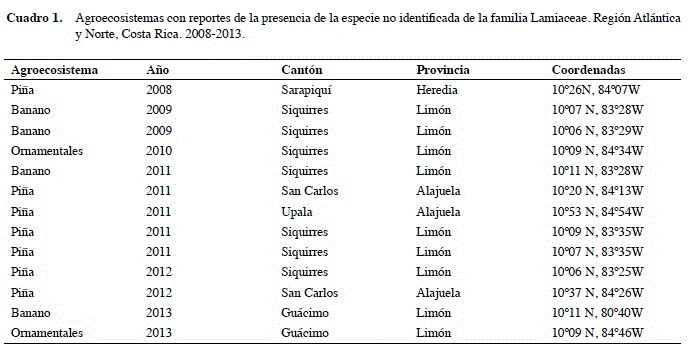
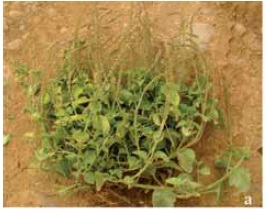
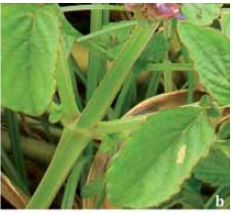
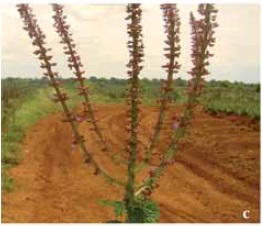
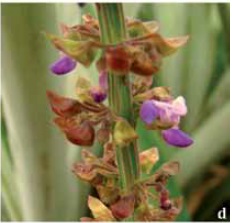
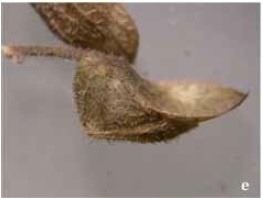
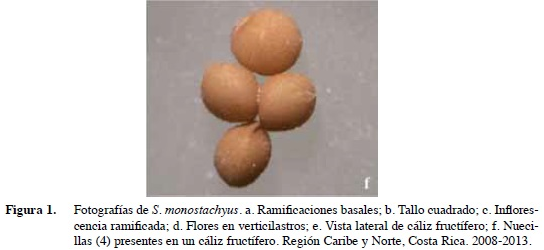
<body><![CDATA[<p style="font-weight: bold; font-family: Verdana; text-align: justify;"  class="MsoNormal"><font size="3">Materiales y M&eacute;todos</font></p>     <div style="text-align: justify;"><o:p style="font-family: Verdana;"></o:p><font  style="font-family: Verdana;" size="2">La especie <span  style="font-style: italic;">S. monostachyus</span>, conocida com&uacute;nmente como candelabro, se encontr&oacute; en varios agroecosistemas productores de pi&ntilde;a, banano y plantas ornamentales, entre los a&ntilde;os 2008 y 2013 (<a  href="/img/revistas/am/v24n2/a19t1.gif">Cuadro 1</a>). Se recolectaron muestras de los cantones de Siquirres y Gu&aacute;cimo, con ra&iacute;z, flores y frutos, las cuales se encuentran en los herbarios de la Universidad EARTH, Universidad Nacional y el Laboratorio de Arvenses de la Universidad de Costa Rica.</font><span  style="font-family: Verdana;"> </span></div>     <p style="font-family: Verdana; text-align: justify;" class="MsoNormal"><font  size="2">La<span style="">&nbsp;</span>presencia<span style="">&nbsp;</span>de<span  style=""> </span>esta<span style=""> </span>especie<span style="">&nbsp; </span>se<span  style="">&nbsp; </span>ha<span style="">&nbsp; </span>identificado gracias a las giras de cursos, investigaciones de campo y observaciones realizadas en el Laboratorio de arvenses de la Universidad de Costa Rica y de la Universidad EARTH.</font></p> <span style="font-family: Verdana;"></span><font  style="font-family: Verdana; font-weight: bold;" size="3">Resultados y discusi&oacute;n</font><o:p style="font-family: Verdana;"><font size="2">&nbsp;</font></o:p><span  style="font-family: Verdana;"> </span>     <p style="font-family: Verdana; text-align: justify;" class="MsoNormal"><font  size="2">Inicialmente se pens&oacute; que las plantas recolectadas pertenec&iacute;an a una especie del g&eacute;nero <span  style="font-style: italic;">Ocimum</span>, aunque las caracter&iacute;sticas bot&aacute;nicas que se observaban en la muestra principalmente en las estructuras florales, de c&aacute;liz fruct&iacute;fero y de los frutos (n&uacute;culas o nuecillas) no corresponden a este g&eacute;nero. Posteriormente, Alan Paton, especialista en la familia Lamiaceae del Royal Botanic Garden, Kew, identific&oacute; a la especie como <span style="font-style: italic;">Solenostemon monostachyus</span> (P. Beauv.) Briq. Esta identificaci&oacute;n se realiz&oacute; a trav&eacute;s de fotograf&iacute;as digitales de alta definici&oacute;n tomadas a las muestras de herbario del esp&eacute;cimen en cuesti&oacute;n. Esta especie no se encontraba reportada en Costa Rica, de acuerdo a la bibliograf&iacute;a bot&aacute;nica del pa&iacute;s (Hammel <span  style="font-style: italic;">et al</span>. 2003, INBio 2013) y a la ausencia de muestras en los herbarios del museo nacional, la Universidad de costa rica y la Universidad Nacional.</font></p> <font style="font-family: Verdana;" size="2">En el herbario de la Universidad EARTH durante el a&ntilde;o 2012, se encontr&oacute; una muestra de <span style="font-style: italic;">S. monostachyus</span> del a&ntilde;o 2004, colectada en el campus de la universidad, con una identificaci&oacute;n err&oacute;nea, por lo que la especie pudo haber sido introducida a&ntilde;os atr&aacute;s (<a  href="/img/revistas/am/v24n2/a19t1.gif">Cuadro 1</a>).</font><o:p  style="font-family: Verdana;"><font size="2">     <br> </font></o:p><span style="font-family: Verdana;"></span>     <p style="font-family: Verdana; text-align: justify;" class="MsoNormal"><font  size="2"><span style="font-weight: bold;">Descripci&oacute;n de</span> <span style="font-style: italic; font-weight: bold;">Solenostemon monostachyus</span></font><o:p  style="font-style: italic; font-weight: bold;"></o:p></p>     <p style="font-family: Verdana; text-align: justify;" class="MsoNormal"><font  size="2"><span style="font-style: italic;">S. monostachyus</span> es una planta herb&aacute;cea, erecta con ramificaciones basales (<a href="/img/revistas/am/v24n2/a19i1.jpg">Figura 1a</a>), de hasta 1,5 m de altura. Su tallo es cuadrado (<a href="/img/revistas/am/v24n2/a19i2.jpg">Figura 1b</a>), pubescente, tanto el tallo como las hojas pueden presentar una coloraci&oacute;n p&uacute;rpura o rojiza. Las hojas son simples opuestas,<span style="">&nbsp; </span>pecioladas,<span style="">&nbsp;</span>con<span  style="">&nbsp;</span>un<span style="">&nbsp;</span>borde<span style="">&nbsp;</span>crenado<span  style=""></span>-<span style=""></span>dentado y pubescencia principalmente en el env&eacute;s. La inflorescencia es terminal, ramificada, parecida a un candelabro, de ah&iacute; su nombre com&uacute;n (<a  href="/img/revistas/am/v24n2/a19i3.jpg">Figura 1c</a>), con verticilastros con flores pediceladas con la corola geni- culada cerca de la base, con el labio inferior entero, de color morado&#8211;p&uacute;rpura (<a href="/img/revistas/am/v24n2/a19i4.jpg">Figura 1d</a>). El c&aacute;liz fruct&iacute;fero tiene su boca cerrada y no posee alas ni escutelo y contiene cuatro frutos (<a  href="/img/revistas/am/v24n2/a19i5.jpg">Figura 1e</a>). el fruto es una nuecilla globosa, glabra y punteada de color caf&eacute; claro (<a  href="/img/revistas/am/v24n2/a19i6.jpg">Figura 1f</a>), que al contacto con el agua se cubre de mucilago.</font></p>     <div style="text-align: justify;"><font style="font-family: Verdana;"  size="2">Un detalle importante de esta especie es que al macerar sus hojas o tallos se desprende un fuerte olor similar al alcanfor, lo cual ayuda a su identificaci&oacute;n en campo, sobre todo de las pl&aacute;ntulas.</font><span  style="font-family: Verdana;"> </span></div>     <p style="font-family: Verdana; text-align: justify;" class="MsoNormal"><font  size="2">Entre los sin&oacute;nimos de esta especie se encuentran <span style="font-style: italic;">Plectranthus</span> <span  style="font-style: italic;">monostachyus</span>, <span  style="font-style: italic;">Solenostemon ocymoides</span> y <span  style="font-style: italic;">Ocimum monostachyus</span> (Lemmens 2004, morales 2011).</font></p>     <div style="text-align: justify;"><font style="font-family: Verdana;"  size="2"><span style="font-style: italic;">Solenostemon monostachyus</span> es originaria del oeste y centro de &Aacute;frica. Ha sido encontrada en Nigeria, Camer&uacute;n, Gab&oacute;n, guinea, Chad, Senegal, Angola, Costa<span style="">&nbsp; </span>de<span style="">&nbsp; </span>Marfil,<span  style="">&nbsp; </span>Zambia,<span style="">&nbsp; </span>Malawi<span style="">&nbsp; </span>y<span style="">&nbsp; </span>Congo<span style="">&nbsp; </span>(IRRI 1984, Lemmens 2004, Leistner 2005), donde crece como una especie anual en ambientes antropog&eacute;nicos y como perenne arbustiva en sabanas rocosas. Se reportan cuatro subespecies: <span style="font-style: italic;">africanus, latericola, monostachyus</span> y <span style="font-style: italic;">ocymoides</span> (Lemmens 2004), aunque se desconoce cual de estas subespecies es la reportada en este trabajo. En Am&eacute;rica Latina, s&oacute;lo se ha reportado en el noreste de Bah&iacute;a, Brasil (Harley <span style="font-style: italic;">et al</span>. 2013), por lo que se considera como una especie introducida en costa rica. Cabe recalcar que en estudios previos no se encontr&oacute; a <span  style="font-style: italic;">S. monostachyus</span> asociada a pi&ntilde;a (Brenes y Ag&uuml;ero<span style="">&nbsp;</span>2007), sino hasta el a&ntilde;o 2008 (<a href="/img/revistas/am/v24n2/a19t1.gif">Cuadro<span  style="">&nbsp;</span>1</a>). La &uacute;nica especie del g&eacute;nero Solenostemon reportada previamente para Costa Rica es <span style="font-style: italic;">S. scutellarioides</span> (L.) codd (syn. <span style="font-style: italic;">Coleus blumei</span>), la cual es utilizada como ornamental (Hammel <span style="font-style: italic;">et al</span>. 2003, Rojas <span style="font-style: italic;">et al</span> 2006, INBio 2013).</font><span style="font-family: Verdana;"> </span></div>     ]]></body>
<body><![CDATA[<p style="font-family: Verdana; text-align: justify;" class="MsoNormal"><font  size="2">En la literatura se reportan usos medicinales, en Nigeria y Camer&uacute;n, de <span style="font-style: italic;">S. monostachyus</span> contra la malaria dolores de cabeza, como facilitadora del nacimiento de ni&ntilde;os, antioxidante, estom&aacute;tica, contra la tos y la fiebre especialmente en ni&ntilde;os, contra convulsiones, problemas de la vista y aftas (Oden-onu 1996, Lemmens 2004, Jiofack <span style="font-style: italic;">et al</span>. 2008, Adebayo y Krettli 2011, Okoko y Ere 2012), adem&aacute;s, es apreciada como un<span style="">&nbsp;</span>vegetal<span  style="">&nbsp;</span>menor<span style="">&nbsp;</span>de<span style="">&nbsp;</span>consumo<span  style="">&nbsp;</span>humano<span style=""> </span>(Lemmens 2004).<span  style="">&nbsp;</span>En<span style="">&nbsp;</span>Nigeria,<span  style="">&nbsp;</span>Camer&uacute;n<span style="">&nbsp;</span>y<span  style="">&nbsp;</span>Costa<span style="">&nbsp;</span>de<span style="">&nbsp;</span>Marfil es considerada arvense en los cultivos de cacao, banano, arroz,<span style="">&nbsp;</span>ma&iacute;z<span  style=""> </span>y<span style="">&nbsp;</span>yuca<span style="">&nbsp;</span>(Adenikinju<span  style="">&nbsp;</span>1975,<span style="">&nbsp;</span>Irri 1984, Holm <span style="font-style: italic;">et al</span>. 1991, Ekelme <span style="font-style: italic;">et al</span>. 2003, Fongod <span  style="font-style: italic;">et al</span>. 2010); adem&aacute;s es hospedero alterno del nematodo fitopar&aacute;sito <span  style="font-style: italic;">Meloydogine incognita</span> (International Institute of Tropical Agriculture 1978).</font></p>     <div style="text-align: justify;"><font style="font-family: Verdana;"  size="2">En las observaciones realizadas en los agroecosistemas en donde se reporta la presencia de <span style="font-style: italic;">S. monostachyus</span> (<a href="/img/revistas/am/v24n2/a19t1.gif">Cuadro 1</a>), se encontr&oacute; a la maleza creciendo<span style="">&nbsp;</span>en<span style="">&nbsp;</span>ambientes<span  style=""> </span>desde<span style="">&nbsp; </span>plena<span style="">&nbsp;</span>exposici&oacute;n<span  style="">&nbsp;</span>de luz<span style="">&nbsp;</span>hasta<span  style="">&nbsp;</span>sitios<span style="">&nbsp;</span>de<span  style="">&nbsp;</span>sombra<span style="">&nbsp;</span>parcial.<span  style="">&nbsp;</span>En el<span style="">&nbsp;</span>caso<span  style="">&nbsp;</span>de banano y ornamentales se observaron desde individuos solitarios hasta en grupos no mayores de cinco plantas, en el caso de pi&ntilde;a se observaron distribuciones en parches de hasta 10 m<sup>2</sup>, cubriendo un &aacute;rea total de hasta 100 m<sup>2</sup>, siendo en este agroecosistema donde se reporta como una arvense de dif&iacute;cil control.</font><span  style="font-family: Verdana;"> </span></div>     <p style="font-weight: bold; font-family: Verdana; text-align: justify;"  class="MsoNormal"><font size="3">Agradecimientos</font></p>     <div style="text-align: justify;"><font style="font-family: Verdana;"  size="2">Se agradece al Dr. Alan Paton del royal Botanic Garden, Kew por su apoyo en la identificaci&oacute;n taxon&oacute;mica; al profesor Kent McLeod por la revisi&oacute;n del art&iacute;culo y a Josseth Zamora y Joaqu&iacute;n Calder&oacute;n del Laboratorio de Ciencias Naturales de la Universidad EARTH por el apoyo en el montaje de espec&iacute;menes de herbario    <br>     <br> </font> <hr style="width: 100%; height: 2px;"><font size="2"><span  style="font-family: verdana;"></span></font><font size="3"><span  style="font-family: verdana;"><span style="font-weight: bold;">Literatura citada</span>    <!-- ref --><br> <br style="font-family: verdana;"> </span></font><font size="2"><span style="font-family: verdana;">Adebayo, JO; Krettli,<span style="">&nbsp; </span>AU.<span style="">&nbsp; </span><span  style="" lang="EN-US">2011.<span style="">&nbsp;</span>Potencial<span  style="">&nbsp;</span>antimalarials from Nigerian plants: A review. Journal of ethonopharmacology 133:289-302.    &nbsp;&nbsp;&nbsp;&nbsp;&nbsp;&nbsp;&nbsp;&nbsp;[&#160;<a href="javascript:void(0);" onclick="javascript: window.open('/scielo.php?script=sci_nlinks&ref=332198&pid=S1659-1321201300020001900001&lng=','','width=640,height=500,resizable=yes,scrollbars=1,menubar=yes,');">Links</a>&#160;]<!-- end-ref --></span></span></font>    <br> <font style="font-family: Verdana;" size="2"><span style="" lang="EN-US"><o:p></o:p></span></font><span  style="font-family: Verdana;"></span>     <!-- ref --><br> <span style="font-family: verdana;" lang="EN-US"><font size="2">Adenikinju, SA. 1975. The prevalent weeds in cocoa plots in Nigeria. Ghana Journal Agricultural Science 8:205-507.    &nbsp;&nbsp;&nbsp;&nbsp;&nbsp;&nbsp;&nbsp;&nbsp;[&#160;<a href="javascript:void(0);" onclick="javascript: window.open('/scielo.php?script=sci_nlinks&ref=332201&pid=S1659-1321201300020001900002&lng=','','width=640,height=500,resizable=yes,scrollbars=1,menubar=yes,');">Links</a>&#160;]<!-- end-ref --></font></span><br  style="font-family: verdana;">     <!-- ref --><br> <font style="font-family: verdana;" size="2">Al&aacute;n, E; Barrantes, U; Soto, A; Aguero, R. 1995. Elementos para<span style="">&nbsp;</span>el<span style="">&nbsp;</span>manejo<span  style="">&nbsp;</span>de<span style="">&nbsp;</span>malezas<span  style="">&nbsp;</span>en<span style="">&nbsp;</span>agroecosistemas tropicales. Cartago, Costa Rica, Ed. Tecnol&oacute;gica. 223 p.    &nbsp;&nbsp;&nbsp;&nbsp;&nbsp;&nbsp;&nbsp;&nbsp;[&#160;<a href="javascript:void(0);" onclick="javascript: window.open('/scielo.php?script=sci_nlinks&ref=332203&pid=S1659-1321201300020001900003&lng=','','width=640,height=500,resizable=yes,scrollbars=1,menubar=yes,');">Links</a>&#160;]<!-- end-ref --> </font>    <br>     <!-- ref --><br> <font style="font-family: verdana;" size="2">Brenes, S;<span style="">&nbsp;</span>Ag&uuml;ero, R. 2007. Reconocimiento taxon&oacute;mico de arvenses y descripci&oacute;n de su manejo en cuatro fincas productoras de pi&ntilde;a (<span  style="font-style: italic;">Ananas comosus</span> L.) en Costa Rica. Agronom&iacute;a Mesoamericana 18(2):239-246.    &nbsp;&nbsp;&nbsp;&nbsp;&nbsp;&nbsp;&nbsp;&nbsp;[&#160;<a href="javascript:void(0);" onclick="javascript: window.open('/scielo.php?script=sci_nlinks&ref=332206&pid=S1659-1321201300020001900004&lng=','','width=640,height=500,resizable=yes,scrollbars=1,menubar=yes,');">Links</a>&#160;]<!-- end-ref --> </font><br  style="font-family: verdana;">     <!-- ref --><br> <span style="font-family: Verdana;"><font size="2">Ekelme, F; akobond, I; Isichei, A; Chikoye, D. 2003. Cover crops<span style="">&nbsp; </span>reduce<span style="">&nbsp; </span>weed<span style="">&nbsp; </span>seedbank<span style="">&nbsp; </span>in<span  style="">&nbsp; </span>maize<span style=""> </span>&#8211;<span style=""> </span>cassava systems in southern nigeria. Weed Science 51(5):774-780.    &nbsp;&nbsp;&nbsp;&nbsp;&nbsp;&nbsp;&nbsp;&nbsp;[&#160;<a href="javascript:void(0);" onclick="javascript: window.open('/scielo.php?script=sci_nlinks&ref=332208&pid=S1659-1321201300020001900005&lng=','','width=640,height=500,resizable=yes,scrollbars=1,menubar=yes,');">Links</a>&#160;]<!-- end-ref --><o:p></o:p></font>    <br>     <!-- ref --><br> </span><span style="font-family: verdana;" lang="EN-US"><font size="2">Fongod, A;<span style="">&nbsp;</span>Focho, D; Mih, A;<span style="">&nbsp;</span>Fonge, B; Sama<span style="">&nbsp;</span>Lang, P. 2010.<span style="">&nbsp;</span>Weeds<span style="">&nbsp;</span>managements<span  style="">&nbsp;</span>in<span style="">&nbsp;</span>bananas<span  style="">&nbsp;</span>production: The<span style="">&nbsp;</span>use<span  style="">&nbsp;</span>of<span style="">&nbsp;</span><span  style="font-style: italic;">Nelsonia&nbsp;canescens</span><span  style="">&nbsp;</span>(Lam.)<span style="">&nbsp; </span>spreng<span style="">&nbsp; </span>as a non leguminous cover crop. African Journal of Enviromental Science and Technology 4(3):167-173.    &nbsp;&nbsp;&nbsp;&nbsp;&nbsp;&nbsp;&nbsp;&nbsp;[&#160;<a href="javascript:void(0);" onclick="javascript: window.open('/scielo.php?script=sci_nlinks&ref=332211&pid=S1659-1321201300020001900006&lng=','','width=640,height=500,resizable=yes,scrollbars=1,menubar=yes,');">Links</a>&#160;]<!-- end-ref --><o:p></o:p></font></span>    <br>     <!-- ref --><br> <font style="font-family: Verdana;" size="2">Hammel,<span style="">&nbsp;</span>B;<span  style="">&nbsp;</span>Grayum,<span style="">&nbsp;</span>M;<span  style="">&nbsp;</span>Herrera,<span style="">&nbsp;</span>C;<span  style="">&nbsp;</span>Zamora,<span style="">&nbsp; </span>N. 2003. Manual de plantas de Costa Rica. Vol VI. Dicotiled&oacute;neas<span style="">&nbsp;</span>(Hamamelidaceae<span  style=""></span>-<span style=""></span>Piperaceae). Monographs<span  style="">&nbsp; </span>systematic Botany. Missouri<span style="">&nbsp; </span>Botanical Garden 92:1-911.    &nbsp;&nbsp;&nbsp;&nbsp;&nbsp;&nbsp;&nbsp;&nbsp;[&#160;<a href="javascript:void(0);" onclick="javascript: window.open('/scielo.php?script=sci_nlinks&ref=332214&pid=S1659-1321201300020001900007&lng=','','width=640,height=500,resizable=yes,scrollbars=1,menubar=yes,');">Links</a>&#160;]<!-- end-ref --></font><span  style="font-family: Verdana;"> </span>    <br>     <br>     <!-- ref --><div style="text-align: left;"><font style="font-family: verdana;"  size="2">Harley, R; Franca, F; Santos, E; Santos, J; Pastore, J. 2013. Lamiaceae in lista de flora do Brasil (en l&iacute;nea). Jard&iacute;n botanico do Rio do Janeiro. Consultado 13 mayo 2013. Disponible en <a  href="http://floradobrasil.jbrj.gov.br/jabot/%20floradobrasil/FB117359">http://floradobrasil.jbrj.gov.br/jabot/ floradobrasil/FB117359</a></font>    &nbsp;&nbsp;&nbsp;&nbsp;&nbsp;&nbsp;&nbsp;&nbsp;[&#160;<a href="javascript:void(0);" onclick="javascript: window.open('/scielo.php?script=sci_nlinks&ref=332218&pid=S1659-1321201300020001900008&lng=','','width=640,height=500,resizable=yes,scrollbars=1,menubar=yes,');">Links</a>&#160;]<!-- end-ref --><br> </div>     <!-- ref --><br> <font style="font-family: Verdana;" size="2">Holm,<span style="">&nbsp;</span>L;<span  style="">&nbsp;</span>Pancho,<span style="">&nbsp;</span>J;<span  style="">&nbsp;</span>Herberger,<span style="">&nbsp;</span>J;<span  style="">&nbsp;</span>Plucknett,<span style="">&nbsp;</span>H.<span  style="">&nbsp;</span><span style="" lang="EN-US">1991. A geographical atlas of world weeds. </span>Florida, USA, The University Press. 391 p.    &nbsp;&nbsp;&nbsp;&nbsp;&nbsp;&nbsp;&nbsp;&nbsp;[&#160;<a href="javascript:void(0);" onclick="javascript: window.open('/scielo.php?script=sci_nlinks&ref=332220&pid=S1659-1321201300020001900009&lng=','','width=640,height=500,resizable=yes,scrollbars=1,menubar=yes,');">Links</a>&#160;]<!-- end-ref --></font>    ]]></body>
<body><![CDATA[<br>     <!-- ref --><br> <span style="font-family: Verdana;" lang="EN-US"><font size="2">INBio (Instituto Nacional de Biodiversidad). 2013. Lista de espec&iacute;menes de </font></span><span  style="font-style: italic; font-family: verdana;"><font size="2">Solenostemon scutellerioides</font></span><span style="font-family: verdana;"><font  size="2"> en Costa Rica (en l&iacute;nea). Consultado 25 mayo 2013. Disponible en <a  href="http://www.inbio.ac.cr/bims/k03/p13/c045/o0138/%20f01411/g008019/s024247.htm">http://www.inbio.ac.cr/bims/k03/p13/c045/o0138/ f01411/g008019/s024247.htm</a></font>    &nbsp;&nbsp;&nbsp;&nbsp;&nbsp;&nbsp;&nbsp;&nbsp;[&#160;<a href="javascript:void(0);" onclick="javascript: window.open('/scielo.php?script=sci_nlinks&ref=332223&pid=S1659-1321201300020001900010&lng=','','width=640,height=500,resizable=yes,scrollbars=1,menubar=yes,');">Links</a>&#160;]<!-- end-ref --><br>     <!-- ref --><br> <span style="font-family: Verdana;" lang="EN-US"><font size="2">International Institute&nbsp;of&nbsp;Tropical&nbsp; Agriculture.&nbsp;1978. Proceeding of the second research planning conference on root-knot nematodes, Meloidogyne spp. Abidjan, Ivory Coast. 95 p.    &nbsp;&nbsp;&nbsp;&nbsp;&nbsp;&nbsp;&nbsp;&nbsp;[&#160;<a href="javascript:void(0);" onclick="javascript: window.open('/scielo.php?script=sci_nlinks&ref=332225&pid=S1659-1321201300020001900011&lng=','','width=640,height=500,resizable=yes,scrollbars=1,menubar=yes,');">Links</a>&#160;]<!-- end-ref --></font>    <!-- ref --><br> <br style="font-family: verdana;"> <span style="font-family: verdana;" lang="EN-US"><font size="2">IRRI (International Rice Research Institute). 1984. An overview of upland rice research. Los Ba&ntilde;os, Laguna, Phillippines. 576 p.    &nbsp;&nbsp;&nbsp;&nbsp;&nbsp;&nbsp;&nbsp;&nbsp;[&#160;<a href="javascript:void(0);" onclick="javascript: window.open('/scielo.php?script=sci_nlinks&ref=332227&pid=S1659-1321201300020001900012&lng=','','width=640,height=500,resizable=yes,scrollbars=1,menubar=yes,');">Links</a>&#160;]<!-- end-ref --><o:p></o:p></font></span>    <br>     <!-- ref --><br> <span style="font-family: Verdana;" lang="EN-US"><font size="2">Jiofack, T; Fokunang, C; Kemeuze, V; Fongnzossie, E; Tsabang, N; Nkuinkeu, R; Mapongmetsem, P; Nkongmenek, B. 2008. Ethnobotany and phytopharmacopoea of the south &#8211; West ethnoecological regi&oacute;n of Cameroon. </font></span><font  style="font-family: verdana;" size="2">Journal of Medicinal Plants Research 2(8):197-206.    &nbsp;&nbsp;&nbsp;&nbsp;&nbsp;&nbsp;&nbsp;&nbsp;[&#160;<a href="javascript:void(0);" onclick="javascript: window.open('/scielo.php?script=sci_nlinks&ref=332230&pid=S1659-1321201300020001900013&lng=','','width=640,height=500,resizable=yes,scrollbars=1,menubar=yes,');">Links</a>&#160;]<!-- end-ref --></font><o:p style="font-family: verdana;"><font size="2">&nbsp;</font></o:p><span  style="font-family: verdana;"> </span>    ]]></body>
<body><![CDATA[<br>     <!-- ref --><br> <span style="font-family: verdana;" lang="EN-US"><font size="2">Leistner,<span  style="">&nbsp;</span>OA.<span style="">&nbsp;</span>2005.<span  style="">&nbsp;</span>Seeds<span style="">&nbsp;</span>plants<span  style="">&nbsp;</span>of<span style="">&nbsp;</span>southern<span  style="">&nbsp;</span>tropical Africa: families and genera. Southern Africa Botanical Diversity Network Report N&ordm;26. Republic of South Africa. 497 p.    &nbsp;&nbsp;&nbsp;&nbsp;&nbsp;&nbsp;&nbsp;&nbsp;[&#160;<a href="javascript:void(0);" onclick="javascript: window.open('/scielo.php?script=sci_nlinks&ref=332233&pid=S1659-1321201300020001900014&lng=','','width=640,height=500,resizable=yes,scrollbars=1,menubar=yes,');">Links</a>&#160;]<!-- end-ref --><o:p></o:p></font></span>    <br>     <!-- ref --><br> <span style="font-family: Verdana;" lang="EN-US"><font size="2">Lemmens, RHMJ. 2004. Solenostemon monostachyus (P. Beauv.) Briq. (en l&iacute;nea). In Grubben, GJH; Denton, OA. eds. PROTA 2: Vegetables L&eacute;gumes. Wageningen. Netherlands. Consultado 15 mayo 2013. Disponible en <a  href="http://database.prota.org/ProTahtml/solenostemonmonostachyus_en.htm">http://database.prota.org/ProTahtml/solenostemonmonostachyus_en.htm</a></font>    &nbsp;&nbsp;&nbsp;&nbsp;&nbsp;&nbsp;&nbsp;&nbsp;[&#160;<a href="javascript:void(0);" onclick="javascript: window.open('/scielo.php?script=sci_nlinks&ref=332236&pid=S1659-1321201300020001900015&lng=','','width=640,height=500,resizable=yes,scrollbars=1,menubar=yes,');">Links</a>&#160;]<!-- end-ref --><br>     <!-- ref --><br> <span style="font-family: Verdana;" lang="EN-US"><font size="2">Morales, R. 2011. Las labiadas (Lamiaceae) de Guinea Ecuatorial.<span style="">&nbsp; </span>Anales<span  style="">&nbsp; </span>del<span style="">&nbsp; </span>Jard&iacute;n<span style="">&nbsp; </span>Bot&aacute;nico<span  style="">&nbsp; </span>de<span style="">&nbsp; </span>Madrid 68(2):199-223.    &nbsp;&nbsp;&nbsp;&nbsp;&nbsp;&nbsp;&nbsp;&nbsp;[&#160;<a href="javascript:void(0);" onclick="javascript: window.open('/scielo.php?script=sci_nlinks&ref=332238&pid=S1659-1321201300020001900016&lng=','','width=640,height=500,resizable=yes,scrollbars=1,menubar=yes,');">Links</a>&#160;]<!-- end-ref --></font><br style="font-family: verdana;">     <!-- ref --><br> <font style="font-family: Verdana;" size="2">Okoko, T; Ere, D. 2012. antioxidant activities of <span style="font-style: italic;">Solenostemon monostachyus</span> leaf extract using <span style="font-style: italic;">in vitro</span> methods. <span style="" lang="EN-US">Scientifics Research and Essays 7(6):621-626.    &nbsp;&nbsp;&nbsp;&nbsp;&nbsp;&nbsp;&nbsp;&nbsp;[&#160;<a href="javascript:void(0);" onclick="javascript: window.open('/scielo.php?script=sci_nlinks&ref=332240&pid=S1659-1321201300020001900017&lng=','','width=640,height=500,resizable=yes,scrollbars=1,menubar=yes,');">Links</a>&#160;]<!-- end-ref --><o:p></o:p></span></font><span  style="font-family: Verdana;"> </span>    ]]></body>
<body><![CDATA[<br>     <!-- ref --><br> <span style="font-family: verdana;" lang="EN-US"><font size="2">Oden-onu, U. 1996. Some pharmacological properties of <span  style="font-style: italic;">Solenostemon monostachyus</span>. Journal of Herbs, Spices and Medicinal Plants 4(2):3-7.    &nbsp;&nbsp;&nbsp;&nbsp;&nbsp;&nbsp;&nbsp;&nbsp;[&#160;<a href="javascript:void(0);" onclick="javascript: window.open('/scielo.php?script=sci_nlinks&ref=332243&pid=S1659-1321201300020001900018&lng=','','width=640,height=500,resizable=yes,scrollbars=1,menubar=yes,');">Links</a>&#160;]<!-- end-ref --><o:p></o:p></font></span>    <br>     <!-- ref --><br> <span style="font-family: Verdana;" lang="EN-US"><font size="2">Retana, K; Ag&uuml;ero, R; Montiel, M;<span style="">&nbsp; </span>Brenes, S. 2013. </font></span><font style="font-family: Verdana;" size="2">Primer reporte de <span style="font-style: italic;">Panicum repens</span> L. como potencial maleza en Costa Rica. Agronom&iacute;a Mesoamericana 24(1):189-193.    &nbsp;&nbsp;&nbsp;&nbsp;&nbsp;&nbsp;&nbsp;&nbsp;[&#160;<a href="javascript:void(0);" onclick="javascript: window.open('/scielo.php?script=sci_nlinks&ref=332246&pid=S1659-1321201300020001900019&lng=','','width=640,height=500,resizable=yes,scrollbars=1,menubar=yes,');">Links</a>&#160;]<!-- end-ref --></font><span  style="font-family: Verdana;"> </span>    <!-- ref --><br> <br style="font-family: verdana;"> <font size="2"><span style="font-family: verdana;">Rojas, F; Bermudez, E; Gonz&aacute;lez, Q. 2006. Plantas ornamentales del tr&oacute;pico. Cartago, Costa Rica, Ed. Tecnol&oacute;gica de Costa Rica. 704 p.    &nbsp;&nbsp;&nbsp;&nbsp;&nbsp;&nbsp;&nbsp;&nbsp;[&#160;<a href="javascript:void(0);" onclick="javascript: window.open('/scielo.php?script=sci_nlinks&ref=332248&pid=S1659-1321201300020001900020&lng=','','width=640,height=500,resizable=yes,scrollbars=1,menubar=yes,');">Links</a>&#160;]<!-- end-ref --></span>    <br> </font>    <br> <font size="2"><span style="font-family: verdana;"><a name="Corres1"></a><a  href="#Corres2">*</a>Correspondencia a:</span></font>    ]]></body>
<body><![CDATA[<br> <span style="font-family: Verdana;"></span> <font size="2"><span  style="font-family: verdana;"><sup><a name="2"></a><a href="#autor1">2</a></sup>Steven Brenes-Prendas: </span></font><font style="font-family: verdana;"  size="2"><span style=""></span><span style=""></span>Universidad EARTH.&nbsp;<span style=""></span>Gu&aacute;piles, Lim&oacute;n, Costa Rica. sbrenes@earth.ac.cr, sbrenesp@gmail.com    <br> <sup><a name="3"></a><a href="#autor2">3</a></sup>Ren&aacute;n Ag&uuml;ero-Alvarado: </font><font style="font-family: verdana;"  size="2"><span style=""></span><span style=""></span>Laboratorio de Arvenses. Universidad de Costa Rica. San Jos&eacute;, Costa Rica. ragueroster@gmail.com    <br> <sup><a name="4"></a><a href="#autor3">4</a></sup>Pablo S&aacute;nchez-Vindas: </font><font style="font-family: verdana;"  size="2"><span style=""></span>Herbario Juvenal Valerio Rodr&iacute;guez. Universidad Nacional. Heredia, Costa Rica. pablo.sanchez.vindas@una.cr    <br> <sup><a name="a4"></a></sup><a href="#autor5"><sup>4</sup></a>Luis Poveda-Alvarez</font><font style="font-family: verdana;" size="2"><span  style=""></span></font><font style="font-family: verdana;" size="2"><span  style=""></span></font><span style="font-family: verdana;">:&nbsp;</span><font  style="font-family: verdana;" size="2"><span style=""></span>Herbario Juvenal Valerio Rodr&iacute;guez. Universidad Nacional. Heredia, Costa Rica.</font><span style="font-family: verdana;"> </span><span  style="font-family: verdana;"><font size="-1">marzugo30@gmail.com</font></span> <hr style="width: 100%; height: 2px;">     <div style="text-align: center;"><font size="2"><font  style="font-family: Verdana;" size="2"><span style="font-weight: bold;">Recibido: 7 de junio, 2013. Aceptado: 28 de octubre, 2013</span>.</font><o:p style="font-family: Verdana;"><font size="2">&nbsp;</font></o:p></font></div> </span></span></span> </span></div>      ]]></body><back>
<ref-list>
<ref id="B1">
<nlm-citation citation-type="journal">
<person-group person-group-type="author">
<name>
<surname><![CDATA[Adebayo]]></surname>
<given-names><![CDATA[JO]]></given-names>
</name>
<name>
<surname><![CDATA[Krettli]]></surname>
<given-names><![CDATA[AU]]></given-names>
</name>
</person-group>
<article-title xml:lang="en"><![CDATA[Potencial antimalarials from Nigerian plants: A review]]></article-title>
<source><![CDATA[Journal of Ethonopharmacology]]></source>
<year>2011</year>
<volume>133</volume>
<page-range>289-302</page-range></nlm-citation>
</ref>
<ref id="B2">
<nlm-citation citation-type="journal">
<person-group person-group-type="author">
<name>
<surname><![CDATA[Adenikinju]]></surname>
<given-names><![CDATA[SA]]></given-names>
</name>
</person-group>
<article-title xml:lang="en"><![CDATA[The prevalent weeds in cocoa plots in Nigeria]]></article-title>
<source><![CDATA[Ghana Journal Agricultural Science]]></source>
<year>1975</year>
<volume>8</volume>
<page-range>205-507</page-range></nlm-citation>
</ref>
<ref id="B3">
<nlm-citation citation-type="book">
<person-group person-group-type="author">
<name>
<surname><![CDATA[Alán]]></surname>
<given-names><![CDATA[E]]></given-names>
</name>
<name>
<surname><![CDATA[Barrantes]]></surname>
<given-names><![CDATA[U]]></given-names>
</name>
<name>
<surname><![CDATA[Soto]]></surname>
<given-names><![CDATA[A]]></given-names>
</name>
<name>
<surname><![CDATA[Aguero]]></surname>
<given-names><![CDATA[R]]></given-names>
</name>
</person-group>
<source><![CDATA[Elementos para el manejo de malezas en agroecosistemas tropicales]]></source>
<year>1995</year>
<page-range>223</page-range><publisher-loc><![CDATA[^eCartago Cartago]]></publisher-loc>
<publisher-name><![CDATA[Ed. Tecnológica]]></publisher-name>
</nlm-citation>
</ref>
<ref id="B4">
<nlm-citation citation-type="journal">
<person-group person-group-type="author">
<name>
<surname><![CDATA[Brenes]]></surname>
<given-names><![CDATA[S]]></given-names>
</name>
<name>
<surname><![CDATA[Agüero]]></surname>
<given-names><![CDATA[R]]></given-names>
</name>
</person-group>
<article-title xml:lang="es"><![CDATA[Reconocimiento taxonómico de arvenses y descripción de su manejo en cuatro fincas productoras de piña (Ananas comosus L.) en Costa Rica]]></article-title>
<source><![CDATA[Agronomía Mesoamericana]]></source>
<year>2007</year>
<volume>18</volume>
<numero>2</numero>
<issue>2</issue>
<page-range>239-246</page-range></nlm-citation>
</ref>
<ref id="B5">
<nlm-citation citation-type="journal">
<person-group person-group-type="author">
<name>
<surname><![CDATA[Ekelme]]></surname>
<given-names><![CDATA[F]]></given-names>
</name>
<name>
<surname><![CDATA[Akobond]]></surname>
<given-names><![CDATA[I]]></given-names>
</name>
<name>
<surname><![CDATA[Isichei]]></surname>
<given-names><![CDATA[A]]></given-names>
</name>
<name>
<surname><![CDATA[Chikoye]]></surname>
<given-names><![CDATA[D]]></given-names>
</name>
</person-group>
<article-title xml:lang="en"><![CDATA[Cover crops reduce weed seedbank in maize - cassava systems in southern Nigeria]]></article-title>
<source><![CDATA[Weed Science]]></source>
<year>2003</year>
<volume>51</volume>
<numero>5</numero>
<issue>5</issue>
<page-range>774-780</page-range></nlm-citation>
</ref>
<ref id="B6">
<nlm-citation citation-type="">
<person-group person-group-type="author">
<name>
<surname><![CDATA[Fongod]]></surname>
<given-names><![CDATA[A]]></given-names>
</name>
<name>
<surname><![CDATA[Focho]]></surname>
<given-names><![CDATA[D]]></given-names>
</name>
<name>
<surname><![CDATA[Mih]]></surname>
<given-names><![CDATA[A]]></given-names>
</name>
<name>
<surname><![CDATA[Fonge]]></surname>
<given-names><![CDATA[B]]></given-names>
</name>
<name>
<surname><![CDATA[Sama Lang]]></surname>
<given-names><![CDATA[P]]></given-names>
</name>
</person-group>
<article-title xml:lang="en"><![CDATA[Weeds managements in bananas production: The use of Nelsonia canescens (Lam.) spreng as a non leguminous cover crop]]></article-title>
<source><![CDATA[]]></source>
<year>2010</year>
<volume>4</volume>
<numero>3</numero>
<issue>3</issue>
<page-range>167-173</page-range></nlm-citation>
</ref>
<ref id="B7">
<nlm-citation citation-type="journal">
<person-group person-group-type="author">
<name>
<surname><![CDATA[Hammel]]></surname>
<given-names><![CDATA[B]]></given-names>
</name>
<name>
<surname><![CDATA[Grayum]]></surname>
<given-names><![CDATA[M]]></given-names>
</name>
<name>
<surname><![CDATA[Herrera]]></surname>
<given-names><![CDATA[C]]></given-names>
</name>
<name>
<surname><![CDATA[Zamora]]></surname>
<given-names><![CDATA[N]]></given-names>
</name>
</person-group>
<article-title xml:lang="es"><![CDATA[Manual de plantas de Costa Rica: Vol VI. Dicotiledóneas (Hamamelidaceae-Piperaceae). Monographs Systematic Botany]]></article-title>
<source><![CDATA[Missouri Botanical Garden]]></source>
<year>2003</year>
<volume>92</volume>
<page-range>1-911</page-range></nlm-citation>
</ref>
<ref id="B8">
<nlm-citation citation-type="">
<person-group person-group-type="author">
<name>
<surname><![CDATA[Harley]]></surname>
<given-names><![CDATA[R]]></given-names>
</name>
<name>
<surname><![CDATA[Franca]]></surname>
<given-names><![CDATA[F]]></given-names>
</name>
<name>
<surname><![CDATA[Santos]]></surname>
<given-names><![CDATA[E]]></given-names>
</name>
<name>
<surname><![CDATA[Santos]]></surname>
<given-names><![CDATA[J]]></given-names>
</name>
<name>
<surname><![CDATA[Pastore]]></surname>
<given-names><![CDATA[J]]></given-names>
</name>
</person-group>
<source><![CDATA[Lamiaceae in lista de flora do Brasil: Jardín botanico do Rio do Janeiro]]></source>
<year>2013</year>
</nlm-citation>
</ref>
<ref id="B9">
<nlm-citation citation-type="book">
<person-group person-group-type="author">
<name>
<surname><![CDATA[Holm]]></surname>
<given-names><![CDATA[L]]></given-names>
</name>
<name>
<surname><![CDATA[Pancho]]></surname>
<given-names><![CDATA[J]]></given-names>
</name>
<name>
<surname><![CDATA[Herberger]]></surname>
<given-names><![CDATA[J]]></given-names>
</name>
<name>
<surname><![CDATA[Plucknett]]></surname>
<given-names><![CDATA[H]]></given-names>
</name>
</person-group>
<source><![CDATA[A geographical atlas of world weeds]]></source>
<year>1991</year>
<page-range>391</page-range><publisher-loc><![CDATA[^eFlorida Florida]]></publisher-loc>
<publisher-name><![CDATA[The University Press]]></publisher-name>
</nlm-citation>
</ref>
<ref id="B10">
<nlm-citation citation-type="">
<collab>Instituto Nacional de Biodiversidad</collab>
<source><![CDATA[Lista de especímenes de Solenostemon scutellerioides en Costa Rica]]></source>
<year>2013</year>
</nlm-citation>
</ref>
<ref id="B11">
<nlm-citation citation-type="">
<collab>International Institute of Tropical Agriculture</collab>
<source><![CDATA[Proceeding of the second research planning conference on root-knot nematodes, Meloidogyne spp]]></source>
<year>1978</year>
<page-range>95</page-range><publisher-loc><![CDATA[^eAbidjan Abidjan]]></publisher-loc>
</nlm-citation>
</ref>
<ref id="B12">
<nlm-citation citation-type="">
<collab>IRRI (International Rice Research Institute)</collab>
<source><![CDATA[An overview of upland rice research]]></source>
<year>1984</year>
<page-range>576</page-range><publisher-loc><![CDATA[Los Baños^eLaguna Laguna]]></publisher-loc>
</nlm-citation>
</ref>
<ref id="B13">
<nlm-citation citation-type="journal">
<person-group person-group-type="author">
<name>
<surname><![CDATA[Jiofack]]></surname>
<given-names><![CDATA[T]]></given-names>
</name>
<name>
<surname><![CDATA[Fokunang]]></surname>
<given-names><![CDATA[C]]></given-names>
</name>
<name>
<surname><![CDATA[Kemeuze]]></surname>
<given-names><![CDATA[V]]></given-names>
</name>
<name>
<surname><![CDATA[Fongnzossie]]></surname>
<given-names><![CDATA[E]]></given-names>
</name>
<name>
<surname><![CDATA[Tsabang]]></surname>
<given-names><![CDATA[N]]></given-names>
</name>
<name>
<surname><![CDATA[Nkuinkeu]]></surname>
<given-names><![CDATA[R]]></given-names>
</name>
<name>
<surname><![CDATA[Mapongmetsem]]></surname>
<given-names><![CDATA[P]]></given-names>
</name>
<name>
<surname><![CDATA[Nkongmenek]]></surname>
<given-names><![CDATA[B]]></given-names>
</name>
</person-group>
<article-title xml:lang="en"><![CDATA[Ethnobotany and phytopharmacopoea of the south -West ethnoecological región of Cameroon]]></article-title>
<source><![CDATA[Journal of medicinal Plants research]]></source>
<year>2008</year>
<volume>2</volume>
<numero>8</numero>
<issue>8</issue>
<page-range>197-206</page-range></nlm-citation>
</ref>
<ref id="B14">
<nlm-citation citation-type="journal">
<person-group person-group-type="author">
<name>
<surname><![CDATA[Leistner]]></surname>
<given-names><![CDATA[OA]]></given-names>
</name>
</person-group>
<article-title xml:lang="en"><![CDATA[Seeds plants of southern tropical Africa: families and genera]]></article-title>
<source><![CDATA[Southern Africa Botanical Diversity Network Report]]></source>
<year>2005</year>
<numero>26</numero>
<issue>26</issue>
<page-range>497</page-range></nlm-citation>
</ref>
<ref id="B15">
<nlm-citation citation-type="">
<person-group person-group-type="author">
<name>
<surname><![CDATA[Lemmens]]></surname>
<given-names><![CDATA[RHMJ]]></given-names>
</name>
</person-group>
<article-title xml:lang="en"><![CDATA[Solenostemon monostachyus (P. Beauv.) Briq.]]></article-title>
<person-group person-group-type="editor">
<name>
<surname><![CDATA[Grubben]]></surname>
<given-names><![CDATA[GJH]]></given-names>
</name>
<name>
<surname><![CDATA[Denton]]></surname>
<given-names><![CDATA[OA]]></given-names>
</name>
</person-group>
<source><![CDATA[PROTA 2: Vegetables Légumes]]></source>
<year>2004</year>
<publisher-loc><![CDATA[Wageningen ]]></publisher-loc>
</nlm-citation>
</ref>
<ref id="B16">
<nlm-citation citation-type="journal">
<person-group person-group-type="author">
<name>
<surname><![CDATA[Morales]]></surname>
<given-names><![CDATA[R]]></given-names>
</name>
</person-group>
<article-title xml:lang="es"><![CDATA[Las labiadas (Lamiaceae) de guinea ecuatorial]]></article-title>
<source><![CDATA[Anales del Jardín Botánico de Madrid]]></source>
<year>2011</year>
<volume>68</volume>
<numero>2</numero>
<issue>2</issue>
<page-range>199-223</page-range></nlm-citation>
</ref>
<ref id="B17">
<nlm-citation citation-type="journal">
<person-group person-group-type="author">
<name>
<surname><![CDATA[Okoko]]></surname>
<given-names><![CDATA[T]]></given-names>
</name>
<name>
<surname><![CDATA[Ere]]></surname>
<given-names><![CDATA[D]]></given-names>
</name>
</person-group>
<article-title xml:lang="en"><![CDATA[Antioxidant activities of Solenostemon monostachyus leaf extract using in vitro methods]]></article-title>
<source><![CDATA[Scientifics Research and Essays]]></source>
<year>2012</year>
<volume>7</volume>
<numero>6</numero>
<issue>6</issue>
<page-range>621-626</page-range></nlm-citation>
</ref>
<ref id="B18">
<nlm-citation citation-type="journal">
<person-group person-group-type="author">
<name>
<surname><![CDATA[Oden-onu]]></surname>
<given-names><![CDATA[U]]></given-names>
</name>
</person-group>
<article-title xml:lang="en"><![CDATA[Some pharmacological properties of Solenostemon monostachyus]]></article-title>
<source><![CDATA[Journal of Herbs, Spices and Medicinal Plants]]></source>
<year>1996</year>
<volume>4</volume>
<numero>2</numero>
<issue>2</issue>
<page-range>3-7</page-range></nlm-citation>
</ref>
<ref id="B19">
<nlm-citation citation-type="journal">
<person-group person-group-type="author">
<name>
<surname><![CDATA[Retana]]></surname>
<given-names><![CDATA[K]]></given-names>
</name>
<name>
<surname><![CDATA[Agüero]]></surname>
<given-names><![CDATA[R]]></given-names>
</name>
<name>
<surname><![CDATA[Montiel]]></surname>
<given-names><![CDATA[M]]></given-names>
</name>
<name>
<surname><![CDATA[Brenes]]></surname>
<given-names><![CDATA[S]]></given-names>
</name>
</person-group>
<article-title xml:lang="es"><![CDATA[Primer reporte de Panicum repens L. como potencial maleza en Costa Rica]]></article-title>
<source><![CDATA[Agronomía Mesoamericana]]></source>
<year>2013</year>
<volume>24</volume>
<numero>1</numero>
<issue>1</issue>
<page-range>189-193</page-range></nlm-citation>
</ref>
<ref id="B20">
<nlm-citation citation-type="book">
<person-group person-group-type="author">
<name>
<surname><![CDATA[Rojas]]></surname>
<given-names><![CDATA[F]]></given-names>
</name>
<name>
<surname><![CDATA[Bermudez]]></surname>
<given-names><![CDATA[E]]></given-names>
</name>
<name>
<surname><![CDATA[González]]></surname>
<given-names><![CDATA[Q]]></given-names>
</name>
</person-group>
<source><![CDATA[Plantas ornamentales del trópico]]></source>
<year>2006</year>
<page-range>704</page-range><publisher-loc><![CDATA[^eCartago Cartago]]></publisher-loc>
<publisher-name><![CDATA[Ed. Tecnológica de Costa Rica]]></publisher-name>
</nlm-citation>
</ref>
</ref-list>
</back>
</article>