<?xml version="1.0" encoding="ISO-8859-1"?><article xmlns:mml="http://www.w3.org/1998/Math/MathML" xmlns:xlink="http://www.w3.org/1999/xlink" xmlns:xsi="http://www.w3.org/2001/XMLSchema-instance">
<front>
<journal-meta>
<journal-id>1659-1321</journal-id>
<journal-title><![CDATA[Agronomía Mesoamericana]]></journal-title>
<abbrev-journal-title><![CDATA[Agron. Mesoam]]></abbrev-journal-title>
<issn>1659-1321</issn>
<publisher>
<publisher-name><![CDATA[Universidad de Costa Rica]]></publisher-name>
</publisher>
</journal-meta>
<article-meta>
<article-id>S1659-13212012000100007</article-id>
<title-group>
<article-title xml:lang="es"><![CDATA[Descripción y distribución del género Dieffenbachia asociado con plantaciones de banano en Costa Rica]]></article-title>
<article-title xml:lang="en"><![CDATA[Description and distribution of genus Dieffenbachia associated to banana plantations in Costa Rica]]></article-title>
</title-group>
<contrib-group>
<contrib contrib-type="author">
<name>
<surname><![CDATA[Brenes-Prendas]]></surname>
<given-names><![CDATA[Steven]]></given-names>
</name>
<xref ref-type="aff" rid="A01"/>
</contrib>
<contrib contrib-type="author">
<name>
<surname><![CDATA[Agüero-Alvarado]]></surname>
<given-names><![CDATA[Renán]]></given-names>
</name>
<xref ref-type="aff" rid="A01"/>
</contrib>
</contrib-group>
<aff id="A01">
<institution><![CDATA[,Universidad de Costa Rica CIPROC Laboratorio de Arvenses (LAR)]]></institution>
<addr-line><![CDATA[ ]]></addr-line>
</aff>
<pub-date pub-type="pub">
<day>00</day>
<month>06</month>
<year>2012</year>
</pub-date>
<pub-date pub-type="epub">
<day>00</day>
<month>06</month>
<year>2012</year>
</pub-date>
<volume>23</volume>
<numero>1</numero>
<fpage>55</fpage>
<lpage>61</lpage>
<copyright-statement/>
<copyright-year/>
<self-uri xlink:href="http://www.scielo.sa.cr/scielo.php?script=sci_arttext&amp;pid=S1659-13212012000100007&amp;lng=en&amp;nrm=iso"></self-uri><self-uri xlink:href="http://www.scielo.sa.cr/scielo.php?script=sci_abstract&amp;pid=S1659-13212012000100007&amp;lng=en&amp;nrm=iso"></self-uri><self-uri xlink:href="http://www.scielo.sa.cr/scielo.php?script=sci_pdf&amp;pid=S1659-13212012000100007&amp;lng=en&amp;nrm=iso"></self-uri><abstract abstract-type="short" xml:lang="es"><p><![CDATA[Entre los años 2006 y 2009 se visitaron 23 fincas bananeras para describir las especies del género Dieffenbachia asociadas a dichas plantaciones. Se tomaron muestras para su identificación en el laboratorio y se evaluó la cobertura de parches y la frecuencia de aparición con lo que se determinó el Índice de Frecuencia Cobertura de parches (IFC) de cada especie. Se encontraron tres especies asociadas al banano Dieffenbachia oerstedii, Dieffenbachia tonduzii y Dieffenbachia concinna, además de un posible híbrido entre D. oerstedii y D. tonduzii. La especie con mayor IFC (40,8%) fue D. oerstedii, seguida de D. tonduzii (8,2) y por último D. concinna (0,5%), lo cual permitió establecer a D. oerstedii como la principal especie de este género en los agroecosistemas bananeros evaluados.]]></p></abstract>
<abstract abstract-type="short" xml:lang="en"><p><![CDATA[Twenty three banana farms were sampled between 2006 and 2009 for Dieffenbachia species. Field samples were taken to the laboratory for identification. Field distribution and frequency were recorded and the frequency - cover index (IFC) was obtained for each species. Three species associated to banana plantations were found, Dieffenbachia oerstedii, Dieffenbachia tonduzii and Dieffenbachia concinna; besides, a potential hybrid from D. oerstedii and D. tonduzii was observed. D. oerstedii showed the highest IFC (40,8%), followed by D. tonduzii (8,2%) and D. concinna (0,5%). Currently, D. oerstedii appears as the dominant species of this genus in banana plantations in the agroecosystems evaluated.]]></p></abstract>
<kwd-group>
<kwd lng="es"><![CDATA[Sainillo]]></kwd>
<kwd lng="es"><![CDATA[Musa AAA]]></kwd>
<kwd lng="es"><![CDATA[arvenses]]></kwd>
<kwd lng="es"><![CDATA[recalcitrante]]></kwd>
<kwd lng="es"><![CDATA[taxonomía]]></kwd>
<kwd lng="en"><![CDATA[Sainillo]]></kwd>
<kwd lng="en"><![CDATA[Musa AAA]]></kwd>
<kwd lng="en"><![CDATA[weeds]]></kwd>
<kwd lng="en"><![CDATA[recalcitrant]]></kwd>
<kwd lng="en"><![CDATA[taxonomy]]></kwd>
</kwd-group>
</article-meta>
</front><body><![CDATA[ <div style="text-align: justify;">     <div style="text-align: center;"><font  style="font-family: verdana; font-weight: bold;" ="size" 2="" size="+1">Descripci&oacute;n y distribuci&oacute;n del g&eacute;nero Dieffenbachia asociado con plantaciones de banano en Costa Rica</font><br  style="font-family: verdana;"> </div> <font size="-1"><br style="font-family: verdana;"> </font>     <div style="text-align: center;"><font  style="font-family: verdana; font-style: italic;" ="size" 2=""  size="-1">Steven Brenes-Prendas<sup><sub><a href="#1">1</a><a name="2"></a>*</sub></sup>, Ren&aacute;n Ag&uuml;ero-Alvarado<a href="#1"><sup>1</sup></a></font><br  style="font-family: verdana;"> </div> <font style="font-family: verdana;" ="size" 2="" size="-1">     <br>     <a name="Correspondencia2"></a>*<a href="#Correspondencia1">Direcci&oacute;n     para correspondencia</a></font><font size="-1"><br      style="font-family: verdana;">     </font>     <hr style="width: 100%; height: 2px;"><font      style="font-family: verdana; font-weight: bold;" ="size" 2="">Resumen</font><font     ]]></body>
<body><![CDATA[ style="font-weight: bold;" size="-1"><br style="font-family: verdana;">     </font><font size="-1"><br style="font-family: verdana;">     </font><font style="font-family: verdana;" ="size" 2="" size="-1"><span      style="font-weight: bold;">Descripci&oacute;n     y distribuci&oacute;n del g&eacute;nero     Dieffenbachia asociado con plantaciones de banano en Costa Rica.</span>     Entre     los a&ntilde;os 2006 y 2009 se visitaron 23 fincas bananeras para     describir las especies del g&eacute;nero <span      style="font-style: italic;">Dieffenbachia</span> asociadas a     ]]></body>
<body><![CDATA[dichas plantaciones. Se tomaron muestras para su identificaci&oacute;n     en el laboratorio y se evalu&oacute; la cobertura de     parches y la frecuencia de aparici&oacute;n con lo que se     determin&oacute; el &Iacute;ndice de Frecuencia Cobertura de parches     (IFC) de cada especie. Se encontraron tres especies asociadas al banano     <span style="font-style: italic;">Dieffenbachia oerstedii,     Dieffenbachia tonduzii </span>y<span style="font-style: italic;">     Dieffenbachia     concinna</span>, adem&aacute;s de un posible h&iacute;brido entre <span      style="font-style: italic;">D. oerstedii     ]]></body>
<body><![CDATA[</span>y<span style="font-style: italic;"> D. tonduzii</span>. La     especie con mayor IFC (40,8%) fue <span style="font-style: italic;">D.     oerstedii,     </span>seguida de<span style="font-style: italic;"> D. tonduzii</span>     (8,2) y por &uacute;ltimo <span style="font-style: italic;">D. concinna</span>     (0,5%), lo     cual permiti&oacute; establecer a <span style="font-style: italic;">D.     oerstedii</span> como la principal     especie de este g&eacute;nero en los agroecosistemas bananeros     evaluados.</font><font size="-1"><br style="font-family: verdana;">     ]]></body>
<body><![CDATA[</font><font size="-1"><br style="font-family: verdana;">     </font><font style="font-family: verdana;" ="size" 2="" size="-1"><span      style="font-weight: bold;">Palabras clave:</span> Sainillo, <span      style="font-style: italic;">Musa </span>AAA,     arvenses, recalcitrante,     taxonom&iacute;a.</font><font size="-1"><br      style="font-family: verdana;">     </font><font style="font-weight: bold;"><br      style="font-family: verdana;">     </font><font style="font-family: verdana; font-weight: bold;" ="size"     ]]></body>
<body><![CDATA[ 2="">Abstract</font><font size="-1"><br style="font-family: verdana;">     </font><font style="font-weight: bold;" size="-1"><br      style="font-family: verdana;">     </font><font style="font-family: verdana;" ="size" 2="" size="-1"><span      style="font-weight: bold;">Description     and distribution of genus Dieffenbachia associated to     banana plantations in&nbsp; Costa Rica.</span> Twenty three banana     farms     were&nbsp; sampled between 2006 and 2009 for <span      style="font-style: italic;">Dieffenbachia species</span>.     ]]></body>
<body><![CDATA[Field samples were taken to the laboratory for identification. Field     distribution and frequency were&nbsp; recorded and the frequency &#8211;     cover index&nbsp; (IFC) was obtained&nbsp; for&nbsp; each&nbsp;     species.&nbsp; Three&nbsp;&nbsp; species&nbsp;&nbsp; associated&nbsp;     to banana&nbsp; plantations&nbsp; were&nbsp; found,&nbsp;     <span style="font-style: italic;">Dieffenbachia&nbsp; oerstedii,     Dieffenbachia tonduzii </span>and <span style="font-style: italic;">Dieffenbachia     concinna</span>; besides, a&nbsp; potential hybrid from <span      style="font-style: italic;">D. oerstedii </span>and <span      style="font-style: italic;">D.     ]]></body>
<body><![CDATA[tonduzii&nbsp; </span>was observed.<span style="font-style: italic;">&nbsp;     D.&nbsp; oerstedii</span>&nbsp;     showed&nbsp; the&nbsp; highest&nbsp; IFC&nbsp; (40,8%),     followed&nbsp;&nbsp; by <span style="font-style: italic;">D. tonduzii </span>(8,2%)     and&nbsp;<span style="font-style: italic;"> D. concinna</span>     (0,5%). Currently,&nbsp; <span style="font-style: italic;">D.&nbsp;     oerstedii&nbsp;</span> appears&nbsp;     as&nbsp; the&nbsp; dominant&nbsp; species of this genus in banana&nbsp;     plantations in the agroecosystems evaluated.</font><font size="-1"><br      style="font-family: verdana;">     ]]></body>
<body><![CDATA[</font><font size="-1"><br style="font-family: verdana;">     </font><font style="font-family: verdana;" ="size" 2="" size="-1"><span      style="font-weight: bold;">Key words:</span> Sainillo, <span      style="font-style: italic;">Musa</span> AAA,     weeds, recalcitrant, taxonomy.</font><font style="font-family: verdana;"      ="size" 2=""> </font><br style="font-family: verdana;">     <hr style="width: 100%; height: 2px;"><font      style="font-family: verdana; font-weight: bold;" ="size" 2="">Introducci&oacute;n</font><font      size="-1"><br style="font-family: verdana;">     </font><font size="-1"><br style="font-family: verdana;">     ]]></body>
<body><![CDATA[</font><font style="font-family: verdana;" ="size" 2="" size="-1">La     identificaci&oacute;n correcta de las arvenses permite un manejo     adecuado de aquellas especies que interfieren negativamente sobre el     crecimiento, desarrollo y productividad de un cultivo y la     conservaci&oacute;n de las&nbsp; especies&nbsp; ben&eacute;ficas.     En&nbsp; el&nbsp; agroecosistema&nbsp; bananero existe un grupo de     especies clasificadas como &#8220;arvenses recalcitrantes&#8221;, debido a que     escapan a los m&eacute;todos de control utilizados en la actualidad,     dificultan las labores de campo (Rodr&iacute;guez y Ag&uuml;ero 2000)     y compiten con el cultivo; adem&aacute;s, algunas de estas especies     ]]></body>
<body><![CDATA[pueden&nbsp; causar serios da&ntilde;os a la salud de los trabajadores.</font><font      size="-1"><br style="font-family: verdana;">     </font><font size="-1"><br style="font-family: verdana;">     </font><font style="font-family: verdana;" ="size" 2="" size="-1">El     sainillo (D<span style="font-style: italic;">ieffenbachia oerstedii</span>     Schott, fam. Araceae) es     considerada como una arvense recalcitrante en el cultivo de banano     (Brenes <span style="font-style: italic;">et al.</span> 2008). Esta     especie com&uacute;n del sotobosque tropical     h&uacute;medo se caracteriza por su h&aacute;bito terrestre no trepador     ]]></body>
<body><![CDATA[caulescente, por sus tallos cil&iacute;ndricos con numerosos entrenudos     y sus l&aacute;minas core&aacute;ceas de color verde liso o variegado.     El sainillo crece en parches densos (Croat 1991), bajo umbr&iacute;a y     alta humedad relativa, condiciones t&iacute;picas de las plantaciones     bananeras en el Atl&aacute;ntico de Costa Rica.</font><font size="-1"><br      style="font-family: verdana;">     </font><font size="-1"><br style="font-family: verdana;">     </font><font style="font-family: verdana;" ="size" 2="" size="-1">Los     tallos y hojas del sainillo presentan altos con- tenidos de oxalato     de calcio conocidos como r&aacute;fides, y enzimas proteol&iacute;ticas     ]]></body>
<body><![CDATA[en su savia lechosa, las cuales al entrar en contacto con la piel, ojos     o membranas mucosas de los trabajadores bananeros, durante las labores     comunes de la plantaci&oacute;n y del manejo de esta arvense,&nbsp;     les&nbsp; causan&nbsp; severas&nbsp; irritaciones&nbsp; (Nilsson&nbsp;     <span style="font-style: italic;">et al.</span> 2005, Cao 2003, Kissman     y Groth 2000). Existen reportes de     trabajadores que han perdido la visi&oacute;n temporalmente y que han     sido incapacitados de sus labores debido a estas alergias. La cantidad     de r&aacute;fides puede variar de una especie a otra y entre     variedades (Zettler y Rhodes 1975).</font><font size="-1"><br     ]]></body>
<body><![CDATA[ style="font-family: verdana;">     </font><font size="-1"><br style="font-family: verdana;">     </font><font style="font-family: verdana;" ="size" 2="" size="-1">En     varias fincas productoras de banano se observa la presencia de     especies de <span style="font-style: italic;">Dieffenbachia</span>,     pero no todos los individuos denominados     como sainillo pertenecen a la especie <span style="font-style: italic;">D.     oerstedii.</span> En el pa&iacute;s     se reporta la presencia de doce especies de este g&eacute;nero (Hammel     <span style="font-style: italic;">et al.</span> 2005), de las cuales     ]]></body>
<body><![CDATA[diez se registran en la zona     Atl&aacute;ntica (InBio 2009). Se desconoce cu&aacute;les de esas     especies se encuentran asociadas con las plantaciones de banano, de     ah&iacute; la importancia de esta descripci&oacute;n pionera con     respecto a este g&eacute;nero asociada a plantaciones bananeras.</font><font      size="-1"><br style="font-family: verdana;">     </font><font size="-1"><br style="font-family: verdana;">     </font><font style="font-family: verdana;" ="size" 2="" size="-1">El     objetivo del presente estudio fue describir las especies del     g&eacute;nero <span style="font-style: italic;">Dieffenbachia </span>y     ]]></body>
<body><![CDATA[analizar su distribuci&oacute;n y     frecuencia en fincas productores de banano en el Atl&aacute;ntico de     Costa Rica.</font><font size="-1"><br style="font-family: verdana;">     </font><font size="-1"><br style="font-family: verdana;">     </font><font style="font-family: verdana; font-weight: bold;" ="size"      2="">Materiales     y M&eacute;todos</font><font size="-1"><br style="font-family: verdana;">     </font><font size="-1"><br style="font-family: verdana;">     </font><font style="font-family: verdana; font-weight: bold;" ="size"      2="" size="-1">Ubicaci&oacute;n</font><font style="font-weight: bold;"     ]]></body>
<body><![CDATA[ size="-1"><br style="font-family: verdana;">     </font><font size="-1"><br style="font-family: verdana;">     </font><font style="font-family: verdana;" ="size" 2="" size="-1">Este     estudio se realiz&oacute; en 23 fincas bananeras ubicadas en los     cantones de Matina (dos), Siquirres (seis), Gu&aacute;cimo     (cinco) y Pococ&iacute; (diez), provincia de Lim&oacute;n, en el     per&iacute;odo de junio del 2006 a junio del 2009 (<a      href="/img/revistas/am/v23n1/a07t1.gif">Cuadro 1</a>).     Seg&uacute;n la clasificaci&oacute;n de zonas de vida de Holdridge     (1979), los lugares corresponden a la formaci&oacute;n de bosque     ]]></body>
<body><![CDATA[tropical h&uacute;medo, con una precipitaci&oacute;n anual que     fluct&uacute;a entre los 3500 a 4000 mm. La temperatura anual promedio     es de 25&deg;C y la humedad promedio del 85% (Herrera 1985).</font><font      size="-1"><br style="font-family: verdana;">     </font><font size="-1"><br style="font-family: verdana;">     </font><font style="font-family: verdana; font-weight: bold;" ="size"      2="" size="-1">Metodolog&iacute;a</font><font size="-1"><br      style="font-family: verdana;">     </font><font size="-1"><br style="font-family: verdana;">     </font><font style="font-family: verdana;" ="size" 2="" size="-1">En     ]]></body>
<body><![CDATA[cada finca visitada se seleccionaron los cables en donde el personal     de la plantaci&oacute;n ubicara las posibles plantas del     g&eacute;nero <span style="font-style: italic;">Dieffenbachia</span>,     posteriormente se realiz&oacute; una     identificaci&oacute;n previa en el campo de las plantas y se     estim&oacute; mediante observaci&oacute;n visual las dimensiones     aproximadas de las &aacute;reas ocupadas por las especies encontradas,     as&iacute; como un registro fotogr&aacute;fico de cada una. Para su     identificaci&oacute;n taxon&oacute;mica, se tomaron muestras de plantas     enteras, que fueron colocadas en bolsas pl&aacute;sticas y llevadas al     ]]></body>
<body><![CDATA[Instituto de Biodiversidad (INBio) y al Laboratorio de Arvenses de la     Universidad de Costa Rica.</font><font size="-1"><br      style="font-family: verdana;">     </font><font size="-1"><br style="font-family: verdana;">     </font><font style="font-family: verdana;" ="size" 2="" size="-1">Las     variables evaluadas fueron:</font><font size="-1"><br      style="font-family: verdana;">     </font><font size="-1"><br style="font-family: verdana;">     </font><font style="font-family: verdana;" ="size" 2="" size="-1"><span      style="font-weight: bold;">Frecuencia     ]]></body>
<body><![CDATA[(F):</span> n&uacute;mero de fincas en que apareci&oacute; la     especie / n&uacute;mero total de fincas visitadas.</font><font size="-1"><br      style="font-family: verdana;">     </font><font style="font-family: verdana;" ="size" 2="" size="-1"><span      style="font-weight: bold;">Cobertura     (C):</span> cobertura de parches de la especie / cobertura total     de todas las especies, en el lugar de aparici&oacute;n.</font><font      size="-1"><br style="font-family: verdana;">     </font><font style="font-family: verdana;" ="size" 2="" size="-1"><span      style="font-weight: bold;">&Iacute;ndice     ]]></body>
<body><![CDATA[de Frecuencia &#8211; Cobertura (IFC):</span> frecuencia X cobertura     X 100 (porcentaje).</font><font size="-1"><br      style="font-family: verdana;">     </font><font size="-1"><br style="font-family: verdana;">     </font><font style="font-family: verdana; font-weight: bold;" ="size"      2="">Resultados y Discusi&oacute;n</font><font size="-1"><br      style="font-family: verdana;">     </font><font size="-1"><br style="font-family: verdana;">     </font><font style="font-family: verdana;" ="size" 2="" size="-1">Se     identificaron tres especies del g&eacute;nero <span     ]]></body>
<body><![CDATA[ style="font-style: italic;">Dieffenbachia, </span>a     saber<span style="font-style: italic;"> D. oestedii, D. tonduzii </span>y     <span style="font-style: italic;">D. concinna</span>. La     caracterizaci&oacute;n de cada especie se detalla a continuaci&oacute;n.</font><font      size="-1"><br style="font-family: verdana;">     </font><font size="-1"><br style="font-family: verdana;">     </font><font style="font-family: verdana; font-weight: bold;" ="size"      2="" size="-1">Descripci&oacute;n     de especies</font><font style="font-weight: bold;" size="-1"><br      style="font-family: verdana;">     ]]></body>
<body><![CDATA[</font><font size="-1"><br style="font-family: verdana;">     </font><font      style="font-family: verdana; font-style: italic; font-weight: bold;"      ="size" 2="" size="-1">Dieffenbachia     oerstedii Schott</font><font size="-1"><br style="font-family: verdana;">     </font><font size="-1"><br style="font-family: verdana;">     </font><font style="font-family: verdana;" ="size" 2="" size="-1">Planta     herb&aacute;cea de hasta 1,5 m de altura, tallos     cil&iacute;ndricos de 20 cm de     di&aacute;metro, con&nbsp; numerosos entrenudos; presenta     ]]></body>
<body><![CDATA[abundante savia lechosa con un olor desagradable. Las alas de los     pec&iacute;olos alcanzan la mitad del mismo, sin llegar a la base de la     hoja (<a href="/img/revistas/am/v23n1/a07i1.jpg">Figura 1 F</a>). Las     l&aacute;minas foliares ovadas a lanceoladas,     con dimensiones de 7 a 26 cm de largo y 1,5 a 13 cm. de ancho;     consistencia cori&aacute;ceas, variegadas o verde opaco con la vena     media p&aacute;lida, brillantes (<a      href="/img/revistas/am/v23n1/a07i1.jpg">Figura 1A</a>).&nbsp; La flor     es una     espata verde clara de 7-17 cm de largo, que se torna amarilla a la     ]]></body>
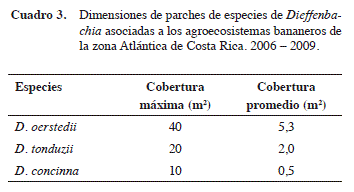
<body><![CDATA[madurez y la floraci&oacute;n se presenta en los meses de junio y julio.    <br>     <br> </font><font style="font-family: verdana;" ="size" 2="" size="-1">Esta especie posee el mayor rango de distribuci&oacute;n del g&eacute;nero <span style="font-style: italic;">Dieffenbachia</span> en Costa Rica (Hammel <span style="font-style: italic;">et al</span>. 2005). En las plantaciones esta especie se encontr&oacute; desde plantas individuales,&nbsp; parches de 1 m<sup>2</sup> hasta rodales densos de hasta 40 m<sup>2</sup> en las entrecalles y rodajas de las plantas de banano. Por lo general se encuentran plantas m&aacute;s altas y vigorosas a la sombra dentro de la plantaci&oacute;n y de menores dimensiones a plena exposici&oacute;n de luz.</font><font size="-1"><br  style="font-family: verdana;"> </font><font size="-1"><br style="font-family: verdana;"> </font><font  style="font-family: verdana; font-weight: bold; font-style: italic;"  ="size" 2="" size="-1">Dieffenbachia tonduzii Croat</font><font size="-1"><br style="font-family: verdana;"> </font><font size="-1"><br style="font-family: verdana;"> </font><font style="font-family: verdana;" ="size" 2="" size="-1">Plantas de hasta 1 m de altura, con tallos cil&iacute;ndricos de un di&aacute;metro aproximado de 4 cm, con savia lechosa con un olor desagradable. Las alas de los pec&iacute;olos alcanzan la base de las hojas (<a href="/img/revistas/am/v23n1/a07i1.jpg">Figura 1 D</a>). L&aacute;minas foliares ovadas a ovado - el&iacute;pticas, inaequilateras; con dimensiones de 28 a 45 cm de largo X 15 a 32 cm. de ancho; presenta una coloraci&oacute;n verde liso opaco (<a href="/img/revistas/am/v23n1/a07i1.jpg">Figura 1 C</a>) o levemente variegado hacia la l&aacute;mina central (Figura 1 D). Flor en una espata verde claro con el interior de la parte superior amarillento de 13-25 cm de largo (<a  href="/img/revistas/am/v23n1/a07i1.jpg">Figura 1 C</a>). Floraci&oacute;n observada en el mes de julio.</font><font size="-1"><br  style="font-family: verdana;"> </font><font size="-1"><br style="font-family: verdana;"> </font><font style="font-family: verdana;" ="size" 2="" size="-1">Se observa dentro de las plantaciones en parches de 5 a 15 m<sup>2</sup> o en plantas individuales, probablemente dispersadas por las pr&aacute;cticas de manejo mec&aacute;nico (chapeas). Crece principalmente en las &aacute;reas bajo umbr&iacute;a dentro de las plantaciones y en las zonas cercanas a los canales de drenaje.</font><font  size="-1"><br style="font-family: verdana;"> </font><font size="-1"><br style="font-family: verdana;"> </font><font style="font-family: verdana;" ="size" 2="" size="-1"><span  style="font-style: italic;">D. tonduzii</span> presenta un fuerte polimorfismo en la forma de sus hojas y en el variegado (Hammel 2005). Seg&uacute;n Croat (1999) <span  style="font-style: italic;">D. tonduzii</span> puede hibridizar con <span style="font-style: italic;">D. oerstedii</span>, lo que da como resultado plantas de sainillo muy similares a <span style="font-style: italic;">D. oesrtedii</span> (<a href="/img/revistas/am/v23n1/a07i1.jpg">Figuras 1 </a><a  href="/img/revistas/am/v23n1/a07i1.jpg">A</a> y <a  href="/img/revistas/am/v23n1/a07i1.jpg">B</a>). La diferencia entre esta &uacute;ltima y su h&iacute;drido es que el peciolo alado del h&iacute;brido llega hasta el borde de la hoja (<a href="/img/revistas/am/v23n1/a07i1.jpg">Figura 1 D</a>), mientras que en <span style="font-style: italic;">D. oerstedii</span> llega hasta la mitad del peciolo (<a href="/img/revistas/am/v23n1/a07i1.jpg">Figura 1 F</a>).</font><font  size="-1"><br style="font-family: verdana;"> </font><font size="-1"><br style="font-family: verdana;"> </font><font style="font-family: verdana;" ="size" 2="" size="-1">Se observ&oacute; parches aislados de esta especie con herbivor&iacute;a por parte de escarabajos del g&eacute;nero <span  style="font-style: italic;">Cericretus</span><sup  style="font-style: italic;">3</sup> (Familia Chrysomelidae, subfam. Alticinae). Estas plantas presentaban una altura m&aacute;xima de 30 cm y una leve clorosis en sus hojas.</font><font size="-1"><br  style="font-family: verdana;"> </font><font style="font-weight: bold; font-style: italic;" size="-1"><br  style="font-family: verdana;"> </font><font  style="font-family: verdana; font-weight: bold; font-style: italic;"  ="size" 2="" size="-1">Dieffenbachia concinna Croat y Grayum</font><font size="-1"><br  style="font-family: verdana;"> </font><font size="-1"><br style="font-family: verdana;"> </font><font style="font-family: verdana;" ="size" 2="" size="-1">Plantas de 0,6 a 1 m de alto, tallos con una coloraci&oacute;n verde oscuro fuerte, con un di&aacute;metro entre </font><font  style="font-family: verdana;" ="size" 2="" size="-1">1 a 4 cm. Pec&iacute;olos con coloraci&oacute;n verde oscuro a variegado. L&aacute;minas foliares ovadas a ovado &#8211; el&iacute;pticas, con dimensiones que van de 16 a 36 cm de largo X 10 a 15 cm. de ancho; presentan una coloraci&oacute;n verde oscuro brillantes (<a  href="/img/revistas/am/v23n1/a07i1.jpg">Figura 1 E</a>), aunque la literatura menciona que se puede presentar variegado (Hammel <span style="font-style: italic;">et al.</span> 2005), esta condici&oacute;n no ha sido observada en las plantas encontradas en plantaciones de banano. Floraci&oacute;n en el mes de marzo, con un esp&aacute;dice de 11-16 cm de largo. Esta especies es end&eacute;mica de Costa Rica (Hammel <span style="font-style: italic;">et al.</span> 2005).</font><font size="-1"><br  style="font-family: verdana;"> </font><font size="-1"><br style="font-family: verdana;"> </font><font style="font-family: verdana;" ="size" 2="" size="-1">Se observa en peque&ntilde;os parches con dimensiones de aproximadamente 10 m<sup>2</sup>, tanto a plena exposici&oacute;n solar como en umbr&iacute;a. Es poco frecuente en la flora asociada a banano.</font><font  size="-1"><br style="font-family: verdana;"> </font><font size="-1"><br style="font-family: verdana;"> </font><font style="font-family: verdana; font-weight: bold;" ="size"  2="" size="-1">Distribuci&oacute;n de especies</font><font size="-1"><br style="font-family: verdana;"> </font><font size="-1"><br style="font-family: verdana;"> </font><font style="font-family: verdana;" ="size" 2="" size="-1">La especie con mayor frecuencia fue <span style="font-style: italic;">Dieffenbachia oerstedii</span> con 61% y se encontr&oacute; en los cantones de Matina, Pococ&iacute;, Gu&aacute;cimo y Siquirres. <span style="font-style: italic;">D. tonduzii</span> con un 30% en los cantones de Matina y Pococ&iacute; y<span style="font-style: italic;"> D. concinna</span> con 9%, s&oacute;lo en el cant&oacute;n de Pococ&iacute; (<a  href="/img/revistas/am/v23n1/a07t2.gif">Cuadro 2</a>). Si bien el n&uacute;mero de fincas en los cantones evaluados no fue el mismo, lo cual no permite una comparaci&oacute;n equitativa entre cantones, es notable que la especie D. oerstedii apareci&oacute; de manera m&aacute;s frecuente que las otras especies.    <br> </font><font size="-1"><br style="font-family: verdana;"> </font><font style="font-family: verdana;" ="size" 2="" size="-1"><span  style="font-style: italic;">D. oerstedii</span> mostr&oacute; los parches con mayores dimensiones; de hasta 40 m<sup>2 </sup>en la finca Limofrut C, con un aproximado de &aacute;rea afectada en esa finca de 70 ha seg&uacute;n el estimado visual a lo largo de los cables recorridos en esta finca en particular. Sin embargo, el &aacute;rea promedio total por finca de esta especie es de 5,3 m<sup>2</sup> (<a href="#tab_3">Cuadro 3</a>) ya que hubo fincas en donde no se encontr&oacute; (finca EARTH) o los parches no superaron los 3 m<sup>2</sup>.    <br>     <br> </font>     <div style="text-align: center;"><a name="tab_3"></a><img alt=""  src="/img/revistas/am/v23n1/a07t3.gif"  style="width: 354px; height: 192px;">    <br> <br style="font-family: verdana;"> </div> <font size="-1"><br style="font-family: verdana;"> </font><font style="font-family: verdana;" ="size" 2="" size="-1">Se encontraron parches de D. tonduzii de hasta 20 m<sup>2</sup> y un promedio de 2 m<sup>2</sup>; dentro de esta especie se incluy&oacute; al posible h&iacute;brido entre <span style="font-style: italic;">D. tonduzii </span>y <span style="font-style: italic;">D. oerstedii</span>. Se encontr&oacute; en siete de las 23 fincas evaluadas (Cuadro 2). D. concinna mostr&oacute; los parches de menor dimensi&oacute;n&nbsp; con 10 m<sup>2 </sup>el mayor y un promedio de 0,5 m<sup>2</sup> (<a href="#tab_3">Cuadro 3</a>); s&oacute;lo se encontr&oacute; en dos de las fincas evaluadas (<a  href="/img/revistas/am/v23n1/a07t2.gif">Cuadro 2</a>).</font><font  size="-1"><br style="font-family: verdana;"> </font><font size="-1"><br style="font-family: verdana;"> </font><font style="font-family: verdana;" ="size" 2="" size="-1">El &Iacute;ndice de Frecuencia &#8211; Cobertura de los parches muestra a <span  style="font-style: italic;">D. oerstedii</span> con el valor m&aacute;s alto (40,8%), seguido por <span  style="font-style: italic;">D. tonduzii</span> con 8,2% y <span style="font-style: italic;">D. concinna</span> con 0,53% (<a href="/img/revistas/am/v23n1/a07i2.jpg">Figura 2</a>). Este an&aacute;lisis corrobora que en la actualidad, <span style="font-style: italic;">D. oerstedii</span> es la especie m&aacute;s abundante y dominante en las plantaciones productoras de banano en la zona Atl&aacute;ntica de Costa Rica, ya que el IFC permite relacionar las variables de frecuencia y cobertura (Rojas y Ag&uuml;ero 1996). Sin embargo, se debe considerar el potencial de <span  style="font-style: italic;">D. tonduzzi </span>y<span  style="font-style: italic;"> D concinna</span> como arvenses recalcitrantes en este agroecosistema en particular, ya que comparten el mismo h&aacute;bitat y capacidad de dispersi&oacute;n que <span style="font-style: italic;">D. oerstedii</span>, as&iacute; como los efectos de su savia irritante.    <br> </font><font size="-1"><br style="font-family: verdana;"> </font><font style="font-family: verdana;" ="size" 2="" size="-1">Las dimensiones de los parches (<a href="#tab_3">Cuadro 3</a>) y el IFC (<a  href="/img/revistas/am/v23n1/a07i2.jpg">Figura 2</a>) permiten corroborar a <span style="font-style: italic;">Dieffenbachia oerstedii</span> como la especie dominante asociada a las plantaciones bananeras en la zona Atl&aacute;ntica en estudio, por lo que los esfuerzos de control deben ir dirigidos hacia&nbsp; ella.&nbsp; Las&nbsp; condiciones&nbsp; ecol&oacute;gicas&nbsp; que&nbsp; ofrece el&nbsp; agroecosistema&nbsp; bananero&nbsp; como&nbsp; las&nbsp; condiciones de umbr&iacute;a parcial o total y la alta humedad relativa, favorecen el establecimiento de <span  style="font-style: italic;">D. oerstedii</span> en las plantaciones, al ser muy similares al sotobosque que es el nicho natural del sainillo; sin embargo, se debe estudiar a futuro el impacto del manejo de densidades de siembra, fertilizaci&oacute;n y otras pr&aacute;cticas sobre las poblaciones de esta maleza en el tiempo.</font><font  size="-1"><br style="font-family: verdana;"> </font><font size="-1"><br style="font-family: verdana;"> </font><font style="font-family: verdana;" ="size" 2="" size="-1">El conocimiento de las especies de sainillo presentes en los agroecosistemas bananeros en estudio, es la base para el desarrollo de alternativas de control de acuerdo a la biolog&iacute;a de la especie a manejar, como es el caso de <span style="font-style: italic;">Dieffenbachia oerstedii</span> (Brenes <span style="font-style: italic;">et al.</span> 2008) y no se descarta que alguna de las otras especies encontradas puedan requerir de un control a futuro. La correcta identificaci&oacute;n permite analizar aspectos de la biolog&iacute;a de sainillo que son fundamentales para su manejo como son tipo de reproducci&oacute;n, ciclo de vida y establecimiento en el campo (Al&aacute;n <span style="font-style: italic;">et al.</span> 1995).</font><font  size="-1"><br style="font-family: verdana;"> </font> <hr style="width: 100%; height: 2px;">    <!-- ref --><br> <font style="font-family: verdana; font-weight: bold;" ="size" 2="">Literatura Citada</font><font size="-1"><br style="font-family: verdana;"> </font><font size="-1"><br style="font-family: verdana;"> </font><font style="font-family: verdana;" ="size" 2="" size="-1">Al&aacute;n, E; Barrantes, U; Soto, A; Aguero, R. 1995. Elementos para el manejo de malezas en agroecosistemas tropicales. Ed. Tecnol&oacute;gica. Cartago. 223 p.    &nbsp;&nbsp;&nbsp;&nbsp;&nbsp;&nbsp;&nbsp;&nbsp;[&#160;<a href="javascript:void(0);" onclick="javascript: window.open('/scielo.php?script=sci_nlinks&ref=305156&pid=S1659-1321201200010000700001&lng=','','width=640,height=500,resizable=yes,scrollbars=1,menubar=yes,');">Links</a>&#160;]<!-- end-ref --><!-- ref --></font><font size="-1"><br  style="font-family: verdana;"> </font><font size="-1"><br style="font-family: verdana;"> </font><font style="font-family: verdana;" ="size" 2="" size="-1">Brenes,&nbsp; S;&nbsp; Ag&uuml;ero,&nbsp; R;&nbsp; Hofmann,&nbsp; L.&nbsp; 2008.&nbsp;&nbsp; Control&nbsp; de sainillo (<span  style="font-style: italic;">Dieffenbachia oerstedii</span> Schott) en banano. Agronom&iacute;a Mesoamericana 19(2):195-208.    &nbsp;&nbsp;&nbsp;&nbsp;&nbsp;&nbsp;&nbsp;&nbsp;[&#160;<a href="javascript:void(0);" onclick="javascript: window.open('/scielo.php?script=sci_nlinks&ref=305157&pid=S1659-1321201200010000700002&lng=','','width=640,height=500,resizable=yes,scrollbars=1,menubar=yes,');">Links</a>&#160;]<!-- end-ref --><!-- ref --></font><font size="-1"><br style="font-family: verdana;"> </font><font size="-1"><br style="font-family: verdana;"> </font><font style="font-family: verdana;" ="size" 2="" size="-1">Cao, H. 2003. The distribution of calcium oxalate&nbsp; crystal in&nbsp; genus&nbsp; <span style="font-style: italic;">Dieffenbachia</span>&nbsp; Schott and&nbsp; the&nbsp; relationship between&nbsp; environmental&nbsp; factors&nbsp; and&nbsp; crystal&nbsp; quantity an quality (en l&iacute;nea). Tesis para optar por el grado de Master en Ciencias. Universidad de Florida. Consultado 10 abr. 2009. Disponible&nbsp; en http://etd.fcla.edu/ UF/UFE0001245/cao_h.pdf.    &nbsp;&nbsp;&nbsp;&nbsp;&nbsp;&nbsp;&nbsp;&nbsp;[&#160;<a href="javascript:void(0);" onclick="javascript: window.open('/scielo.php?script=sci_nlinks&ref=305158&pid=S1659-1321201200010000700003&lng=','','width=640,height=500,resizable=yes,scrollbars=1,menubar=yes,');">Links</a>&#160;]<!-- end-ref --><!-- ref --></font><font size="-1"><br  style="font-family: verdana;"> </font><font size="-1"><br style="font-family: verdana;"> </font><font style="font-family: verdana;" ="size" 2="" size="-1">Croat,&nbsp; T.&nbsp; 1991.&nbsp; <span style="font-style: italic;">Dieffenbachia</span>&nbsp; (Loter&iacute;as,&nbsp; Dum&nbsp; Cane).&nbsp; <span  style="font-style: italic;">In</span> Janzen, DH. ed. Historia natural de&nbsp; Costa Rica. Ed. Universidad de Costa Rica. p. 79-81.    &nbsp;&nbsp;&nbsp;&nbsp;&nbsp;&nbsp;&nbsp;&nbsp;[&#160;<a href="javascript:void(0);" onclick="javascript: window.open('/scielo.php?script=sci_nlinks&ref=305159&pid=S1659-1321201200010000700004&lng=','','width=640,height=500,resizable=yes,scrollbars=1,menubar=yes,');">Links</a>&#160;]<!-- end-ref --><!-- ref --></font><font size="-1"><br style="font-family: verdana;"> </font><font size="-1"><br style="font-family: verdana;"> </font><font style="font-family: verdana;" ="size" 2="" size="-1">Croat, T. 1999. New species of Central American Araceae. Novon. 9(4):491-502.    &nbsp;&nbsp;&nbsp;&nbsp;&nbsp;&nbsp;&nbsp;&nbsp;[&#160;<a href="javascript:void(0);" onclick="javascript: window.open('/scielo.php?script=sci_nlinks&ref=305160&pid=S1659-1321201200010000700005&lng=','','width=640,height=500,resizable=yes,scrollbars=1,menubar=yes,');">Links</a>&#160;]<!-- end-ref --><!-- ref --></font><font size="-1"><br style="font-family: verdana;"> </font><font size="-1"><br style="font-family: verdana;"> </font><font style="font-family: verdana;" ="size" 2="" size="-1">Hammel, B. 2005. Plantas ornamentales nativas de&nbsp; Costa Rica. INBio. Heredia. Costa Rica. 269 p.    &nbsp;&nbsp;&nbsp;&nbsp;&nbsp;&nbsp;&nbsp;&nbsp;[&#160;<a href="javascript:void(0);" onclick="javascript: window.open('/scielo.php?script=sci_nlinks&ref=305161&pid=S1659-1321201200010000700006&lng=','','width=640,height=500,resizable=yes,scrollbars=1,menubar=yes,');">Links</a>&#160;]<!-- end-ref --><!-- ref --></font><font size="-1"><br  style="font-family: verdana;"> </font><font size="-1"><br style="font-family: verdana;"> </font><font style="font-family: verdana;" ="size" 2="" size="-1">Hammel, B; Grayum, M. Herrera, C; Zamora, N. 2005. Manual de plantas de Costa Rica. Vol II. Gimnospermas y monocotiled&oacute;neas (Agavaceae-Musaceae). Missouri Botanical Garden 92:1-694.    &nbsp;&nbsp;&nbsp;&nbsp;&nbsp;&nbsp;&nbsp;&nbsp;[&#160;<a href="javascript:void(0);" onclick="javascript: window.open('/scielo.php?script=sci_nlinks&ref=305162&pid=S1659-1321201200010000700007&lng=','','width=640,height=500,resizable=yes,scrollbars=1,menubar=yes,');">Links</a>&#160;]<!-- end-ref --><!-- ref --></font><font  size="-1"><br style="font-family: verdana;"> </font><font size="-1"><br style="font-family: verdana;"> </font><font style="font-family: verdana;" ="size" 2="" size="-1">Herrera, W. 1985. Clima de Costa Rica: vegetaci&oacute;n y clima de Costa Rica. Ed. UNED. Vol 2. San&nbsp; Jos&eacute;. Costa Rica. 118 p.    &nbsp;&nbsp;&nbsp;&nbsp;&nbsp;&nbsp;&nbsp;&nbsp;[&#160;<a href="javascript:void(0);" onclick="javascript: window.open('/scielo.php?script=sci_nlinks&ref=305163&pid=S1659-1321201200010000700008&lng=','','width=640,height=500,resizable=yes,scrollbars=1,menubar=yes,');">Links</a>&#160;]<!-- end-ref --><!-- ref --></font><font  size="-1"><br style="font-family: verdana;"> </font><font size="-1"><br style="font-family: verdana;"> </font><font style="font-family: verdana;" ="size" 2="" size="-1">Holdridge, L. 1979. Ecolog&iacute;a basada en zonas de vida. IICA. San Jos&eacute;. Costa Rica. 216 p.    &nbsp;&nbsp;&nbsp;&nbsp;&nbsp;&nbsp;&nbsp;&nbsp;[&#160;<a href="javascript:void(0);" onclick="javascript: window.open('/scielo.php?script=sci_nlinks&ref=305164&pid=S1659-1321201200010000700009&lng=','','width=640,height=500,resizable=yes,scrollbars=1,menubar=yes,');">Links</a>&#160;]<!-- end-ref --><!-- ref --></font><font size="-1"><br  style="font-family: verdana;"> </font><font size="-1"><br style="font-family: verdana;"> </font><font style="font-family: verdana;" ="size" 2="" size="-1">INBio (Instituto de Biodiversidad). 2009. Jerarqu&iacute;a taxon&oacute;mica (en l&iacute;nea). Heredia. Costa Rica. Consultado 18 junio 2009. Disponible en http://www.inbio.ac.cr/ bims/k03/p13/c046/o0154/f01373/g006993/s029741. htm.    &nbsp;&nbsp;&nbsp;&nbsp;&nbsp;&nbsp;&nbsp;&nbsp;[&#160;<a href="javascript:void(0);" onclick="javascript: window.open('/scielo.php?script=sci_nlinks&ref=305165&pid=S1659-1321201200010000700010&lng=','','width=640,height=500,resizable=yes,scrollbars=1,menubar=yes,');">Links</a>&#160;]<!-- end-ref --><!-- ref --></font><font  size="-1"><br style="font-family: verdana;"> </font><font size="-1"><br style="font-family: verdana;"> </font><font style="font-family: verdana;" ="size" 2="" size="-1">Kissman, K; Groth, D. 2000. Plantas infestantes a nocivas. Tomo I. 2 ed. BASF. S&acirc;o Paulo. Brasil. 722 p.    &nbsp;&nbsp;&nbsp;&nbsp;&nbsp;&nbsp;&nbsp;&nbsp;[&#160;<a href="javascript:void(0);" onclick="javascript: window.open('/scielo.php?script=sci_nlinks&ref=305166&pid=S1659-1321201200010000700011&lng=','','width=640,height=500,resizable=yes,scrollbars=1,menubar=yes,');">Links</a>&#160;]<!-- end-ref --><br>     <!-- ref --><br> Nilsson, V; S&aacute;nchez, P; Manfredi, R. 2005. Hierbas y arbustos comunes en cafetales y otros cultivos. Universidad Nacional. San Jos&eacute;. Costa Rica. 246 p.    &nbsp;&nbsp;&nbsp;&nbsp;&nbsp;&nbsp;&nbsp;&nbsp;[&#160;<a href="javascript:void(0);" onclick="javascript: window.open('/scielo.php?script=sci_nlinks&ref=305168&pid=S1659-1321201200010000700012&lng=','','width=640,height=500,resizable=yes,scrollbars=1,menubar=yes,');">Links</a>&#160;]<!-- end-ref --><!-- ref --></font><font  size="-1"><br style="font-family: verdana;"> </font><font size="-1"><br style="font-family: verdana;"> </font><font style="font-family: verdana;" ="size" 2="" size="-1">Rodr&iacute;guez, A; Ag&uuml;ero, R. 2000. Identificaci&oacute;n de&nbsp; malezas trepadoras del banano (<span  style="font-style: italic;">Musa</span> sp.) en la zona Caribe de Costa Rica. Agronom&iacute;a Mesoamericana 11:123-125.    &nbsp;&nbsp;&nbsp;&nbsp;&nbsp;&nbsp;&nbsp;&nbsp;[&#160;<a href="javascript:void(0);" onclick="javascript: window.open('/scielo.php?script=sci_nlinks&ref=305169&pid=S1659-1321201200010000700013&lng=','','width=640,height=500,resizable=yes,scrollbars=1,menubar=yes,');">Links</a>&#160;]<!-- end-ref --><!-- ref --></font><font  size="-1"><br style="font-family: verdana;"> </font><font size="-1"><br style="font-family: verdana;"> </font><font style="font-family: verdana;" ="size" 2="" size="-1">Rojas, C; Ag&uuml;ero, R. 1996. Malezas asociadas a canales de riego y terrenos colindantes de arroz anegado en finca El Cerrito, Guanacaste, Costa Rica. Agronom&iacute;a Mesoamericana 7(1):9-19.    &nbsp;&nbsp;&nbsp;&nbsp;&nbsp;&nbsp;&nbsp;&nbsp;[&#160;<a href="javascript:void(0);" onclick="javascript: window.open('/scielo.php?script=sci_nlinks&ref=305170&pid=S1659-1321201200010000700014&lng=','','width=640,height=500,resizable=yes,scrollbars=1,menubar=yes,');">Links</a>&#160;]<!-- end-ref --><!-- ref --></font><font  size="-1"><br style="font-family: verdana;"> </font><font size="-1"><br style="font-family: verdana;"> </font><font style="font-family: verdana;" ="size" 2="" size="-1">Zettler, F; Rhodes, B. 1975. Calcium oxalate variability in <span style="font-style: italic;">Dieffenbachia</span> seedlings. HortScience 10(5):481-482.    &nbsp;&nbsp;&nbsp;&nbsp;&nbsp;&nbsp;&nbsp;&nbsp;[&#160;<a href="javascript:void(0);" onclick="javascript: window.open('/scielo.php?script=sci_nlinks&ref=305171&pid=S1659-1321201200010000700015&lng=','','width=640,height=500,resizable=yes,scrollbars=1,menubar=yes,');">Links</a>&#160;]<!-- end-ref --></font><font style="font-family: verdana;"  ="size" 2="" size="-1">     <br>     <br> <a name="Correspondencia1"></a><a href="#Correspondencia2">*</a>Correspondencia a:    <br> </font><font style="font-family: verdana; font-style: italic;" ="size"  2="" size="-1">Steven Brenes-Prendas. </font><font  style="font-family: verdana;" ="size" 2="" size="-1">Laboratorio de Arvenses (LAR). CIPROC. Universidad de Costa Rica. <a href="mailto:sbrenesp@gmail.com">sbrenesp@gmail.com</a>; <a  href="mailto:ragueroster@gmail.com">ragueroster@gmail.com</a></font>    <br> <font style="font-family: verdana; font-style: italic;" ="size" 2=""  size="-1">Ren&aacute;n Ag&uuml;ero-Alvarado. </font><font  style="font-family: verdana;" ="size" 2="" size="-1">Laboratorio de Arvenses (LAR). CIPROC. Universidad de Costa Rica. <a href="mailto:sbrenesp@gmail.com">sbrenesp@gmail.com</a>; <a  href="mailto:ragueroster@gmail.com">ragueroster@gmail.com</a>    ]]></body>
<body><![CDATA[<br>     <br> </font><font style="font-family: verdana;" ="size" 2="" size="-1"><a  name="1"></a><a href="#2">1</a>. Laboratorio de Arvenses (LAR). CIPROC. Universidad de Costa Rica. <a href="mailto:sbrenesp@gmail.com">sbrenesp@gmail.com</a>; <a  href="mailto:ragueroster@gmail.com">ragueroster@gmail.com</a></font><br  style="font-family: verdana;">     <div style="text-align: center;"> <hr style="width: 100%; height: 2px;"><font  style="font-family: verdana; font-weight: bold;" ="size" 2="" size="-1">Recibido: 18 de julio, 2011. Aceptado: 12 de marzo, 2012</font><font ="size" 2="">    <br> </font></div> </div>      ]]></body><back>
<ref-list>
<ref id="B1">
<nlm-citation citation-type="book">
<person-group person-group-type="author">
<name>
<surname><![CDATA[Alán]]></surname>
<given-names><![CDATA[E]]></given-names>
</name>
<name>
<surname><![CDATA[Barrantes]]></surname>
<given-names><![CDATA[U]]></given-names>
</name>
<name>
<surname><![CDATA[Soto]]></surname>
<given-names><![CDATA[A]]></given-names>
</name>
<name>
<surname><![CDATA[Aguero]]></surname>
<given-names><![CDATA[R]]></given-names>
</name>
</person-group>
<source><![CDATA[Elementos para el manejo de malezas en agroecosistemas tropicales]]></source>
<year>1995</year>
<page-range>223</page-range><publisher-loc><![CDATA[^eCartago Cartago]]></publisher-loc>
<publisher-name><![CDATA[Ed. Tecnológica]]></publisher-name>
</nlm-citation>
</ref>
<ref id="B2">
<nlm-citation citation-type="journal">
<person-group person-group-type="author">
<name>
<surname><![CDATA[Brenes]]></surname>
<given-names><![CDATA[S]]></given-names>
</name>
<name>
<surname><![CDATA[Agüero]]></surname>
<given-names><![CDATA[R]]></given-names>
</name>
<name>
<surname><![CDATA[Hofmann]]></surname>
<given-names><![CDATA[L.]]></given-names>
</name>
</person-group>
<article-title xml:lang="es"><![CDATA[Control de sainillo (Dieffenbachia oerstedii Schott) en banano]]></article-title>
<source><![CDATA[Agronomía Mesoamericana]]></source>
<year>2008</year>
<volume>19</volume>
<numero>2</numero>
<issue>2</issue>
<page-range>195-208</page-range></nlm-citation>
</ref>
<ref id="B3">
<nlm-citation citation-type="">
<person-group person-group-type="author">
<name>
<surname><![CDATA[Cao]]></surname>
<given-names><![CDATA[H.]]></given-names>
</name>
</person-group>
<source><![CDATA[The distribution of calcium oxalate crystal in genus Dieffenbachia Schott and the relationship between environmental factors and crystal quantity an quality]]></source>
<year>2003</year>
</nlm-citation>
</ref>
<ref id="B4">
<nlm-citation citation-type="book">
<person-group person-group-type="author">
<name>
<surname><![CDATA[Croat]]></surname>
<given-names><![CDATA[T.]]></given-names>
</name>
</person-group>
<article-title xml:lang="en"><![CDATA[Dieffenbachia (Loterías, Dum Cane)]]></article-title>
<person-group person-group-type="editor">
<name>
<surname><![CDATA[Janzen]]></surname>
<given-names><![CDATA[DH]]></given-names>
</name>
</person-group>
<source><![CDATA[Historia natural de Costa Rica]]></source>
<year>1991</year>
<page-range>79-81</page-range><publisher-name><![CDATA[Ed. Universidad de Costa Rica]]></publisher-name>
</nlm-citation>
</ref>
<ref id="B5">
<nlm-citation citation-type="journal">
<person-group person-group-type="author">
<name>
<surname><![CDATA[Croat]]></surname>
<given-names><![CDATA[T.]]></given-names>
</name>
</person-group>
<article-title xml:lang="en"><![CDATA[New species of Central American Araceae]]></article-title>
<source><![CDATA[Novon.]]></source>
<year>1999</year>
<volume>9</volume>
<numero>4</numero>
<issue>4</issue>
<page-range>491-502</page-range></nlm-citation>
</ref>
<ref id="B6">
<nlm-citation citation-type="book">
<person-group person-group-type="author">
<name>
<surname><![CDATA[Hammel]]></surname>
<given-names><![CDATA[B.]]></given-names>
</name>
</person-group>
<source><![CDATA[Plantas ornamentales nativas de Costa Rica]]></source>
<year>2005</year>
<page-range>269</page-range><publisher-loc><![CDATA[^eHeredia Heredia]]></publisher-loc>
<publisher-name><![CDATA[INBio]]></publisher-name>
</nlm-citation>
</ref>
<ref id="B7">
<nlm-citation citation-type="journal">
<person-group person-group-type="author">
<name>
<surname><![CDATA[Hammel]]></surname>
<given-names><![CDATA[B]]></given-names>
</name>
<name>
<surname><![CDATA[Grayum]]></surname>
<given-names><![CDATA[M]]></given-names>
</name>
<name>
<surname><![CDATA[Herrera]]></surname>
<given-names><![CDATA[C]]></given-names>
</name>
<name>
<surname><![CDATA[Zamora]]></surname>
<given-names><![CDATA[N.]]></given-names>
</name>
</person-group>
<article-title xml:lang="es"><![CDATA[Manual de plantas de Costa Rica: Vol II. Gimnospermas y monocotiledóneas (Agavaceae-Musaceae]]></article-title>
<source><![CDATA[Missouri Botanical Garden]]></source>
<year>2005</year>
<volume>92</volume>
<page-range>1-694</page-range></nlm-citation>
</ref>
<ref id="B8">
<nlm-citation citation-type="book">
<person-group person-group-type="author">
<name>
<surname><![CDATA[Herrera]]></surname>
<given-names><![CDATA[W.]]></given-names>
</name>
</person-group>
<source><![CDATA[Clima de Costa Rica: vegetación y clima de Costa Rica]]></source>
<year>1985</year>
<volume>2</volume>
<page-range>118</page-range><publisher-loc><![CDATA[^eSan José San José]]></publisher-loc>
<publisher-name><![CDATA[Ed. UNED]]></publisher-name>
</nlm-citation>
</ref>
<ref id="B9">
<nlm-citation citation-type="book">
<person-group person-group-type="author">
<name>
<surname><![CDATA[Holdridge]]></surname>
<given-names><![CDATA[L.]]></given-names>
</name>
</person-group>
<source><![CDATA[Ecología basada en zonas de vida]]></source>
<year>1979</year>
<page-range>216</page-range><publisher-loc><![CDATA[^eSan José San José]]></publisher-loc>
<publisher-name><![CDATA[IICA]]></publisher-name>
</nlm-citation>
</ref>
<ref id="B10">
<nlm-citation citation-type="">
<collab>INBio (Instituto de Biodiversidad)</collab>
<source><![CDATA[Jerarquía taxonómica]]></source>
<year>2009</year>
<publisher-loc><![CDATA[^eHeredia Heredia]]></publisher-loc>
</nlm-citation>
</ref>
<ref id="B11">
<nlm-citation citation-type="book">
<person-group person-group-type="author">
<name>
<surname><![CDATA[Kissman]]></surname>
<given-names><![CDATA[K]]></given-names>
</name>
<name>
<surname><![CDATA[Groth]]></surname>
<given-names><![CDATA[D.]]></given-names>
</name>
</person-group>
<source><![CDATA[Plantas infestantes a nocivas]]></source>
<year>2000</year>
<edition>2</edition>
<page-range>722</page-range><publisher-loc><![CDATA[^eSâo Paulo Sâo Paulo]]></publisher-loc>
<publisher-name><![CDATA[BASF]]></publisher-name>
</nlm-citation>
</ref>
<ref id="B12">
<nlm-citation citation-type="book">
<person-group person-group-type="author">
<name>
<surname><![CDATA[Nilsson]]></surname>
<given-names><![CDATA[V]]></given-names>
</name>
<name>
<surname><![CDATA[Sánchez]]></surname>
<given-names><![CDATA[P]]></given-names>
</name>
<name>
<surname><![CDATA[Manfredi]]></surname>
<given-names><![CDATA[R.]]></given-names>
</name>
</person-group>
<source><![CDATA[Hierbas y arbustos comunes en cafetales y otros cultivos]]></source>
<year>2005</year>
<page-range>246</page-range><publisher-loc><![CDATA[^eSan José San José]]></publisher-loc>
<publisher-name><![CDATA[Universidad Nacional]]></publisher-name>
</nlm-citation>
</ref>
<ref id="B13">
<nlm-citation citation-type="journal">
<person-group person-group-type="author">
<name>
<surname><![CDATA[Rodríguez]]></surname>
<given-names><![CDATA[A]]></given-names>
</name>
<name>
<surname><![CDATA[Agüero]]></surname>
<given-names><![CDATA[R.]]></given-names>
</name>
</person-group>
<article-title xml:lang="es"><![CDATA[Identificación de malezas trepadoras del banano (Musa sp.) en la zona Caribe de Costa Rica]]></article-title>
<source><![CDATA[Agronomía Mesoamericana]]></source>
<year>2000</year>
<volume>11</volume>
<page-range>123-125</page-range></nlm-citation>
</ref>
<ref id="B14">
<nlm-citation citation-type="journal">
<person-group person-group-type="author">
<name>
<surname><![CDATA[Rojas]]></surname>
<given-names><![CDATA[C]]></given-names>
</name>
<name>
<surname><![CDATA[Agüero]]></surname>
<given-names><![CDATA[R.]]></given-names>
</name>
</person-group>
<article-title xml:lang="es"><![CDATA[Malezas asociadas a canales de riego y terrenos colindantes de arroz anegado en finca El Cerrito, Guanacaste, Costa Rica]]></article-title>
<source><![CDATA[Agronomía Mesoamericana]]></source>
<year>1996</year>
<volume>7</volume>
<numero>1</numero>
<issue>1</issue>
<page-range>9-19</page-range></nlm-citation>
</ref>
<ref id="B15">
<nlm-citation citation-type="journal">
<person-group person-group-type="author">
<name>
<surname><![CDATA[Zettler]]></surname>
<given-names><![CDATA[F]]></given-names>
</name>
<name>
<surname><![CDATA[Rhodes]]></surname>
<given-names><![CDATA[B.]]></given-names>
</name>
</person-group>
<article-title xml:lang="en"><![CDATA[Calcium oxalate variability in Dieffenbachia seedlings]]></article-title>
<source><![CDATA[HortScience]]></source>
<year>1975</year>
<volume>10</volume>
<numero>5</numero>
<issue>5</issue>
<page-range>481-482</page-range></nlm-citation>
</ref>
</ref-list>
</back>
</article>