<?xml version="1.0" encoding="ISO-8859-1"?><article xmlns:mml="http://www.w3.org/1998/Math/MathML" xmlns:xlink="http://www.w3.org/1999/xlink" xmlns:xsi="http://www.w3.org/2001/XMLSchema-instance">
<front>
<journal-meta>
<journal-id>1409-4142</journal-id>
<journal-title><![CDATA[Revista Costarricense de Cardiología]]></journal-title>
<abbrev-journal-title><![CDATA[Rev. costarric. cardiol]]></abbrev-journal-title>
<issn>1409-4142</issn>
<publisher>
<publisher-name><![CDATA[Asociación Costarricense de Cardiología]]></publisher-name>
</publisher>
</journal-meta>
<article-meta>
<article-id>S1409-41422014000100004</article-id>
<title-group>
<article-title xml:lang="es"><![CDATA[Nuevos Anticoagulantes en Cardiología]]></article-title>
</title-group>
<contrib-group>
<contrib contrib-type="author">
<name>
<surname><![CDATA[Chaves Brenes]]></surname>
<given-names><![CDATA[Liliana]]></given-names>
</name>
<xref ref-type="aff" rid="A01"/>
</contrib>
</contrib-group>
<aff id="A01">
<institution><![CDATA[,Clínica San Fernando  ]]></institution>
<addr-line><![CDATA[ ]]></addr-line>
</aff>
<pub-date pub-type="pub">
<day>00</day>
<month>06</month>
<year>2014</year>
</pub-date>
<pub-date pub-type="epub">
<day>00</day>
<month>06</month>
<year>2014</year>
</pub-date>
<volume>16</volume>
<numero>1</numero>
<fpage>17</fpage>
<lpage>22</lpage>
<copyright-statement/>
<copyright-year/>
<self-uri xlink:href="http://www.scielo.sa.cr/scielo.php?script=sci_arttext&amp;pid=S1409-41422014000100004&amp;lng=en&amp;nrm=iso"></self-uri><self-uri xlink:href="http://www.scielo.sa.cr/scielo.php?script=sci_abstract&amp;pid=S1409-41422014000100004&amp;lng=en&amp;nrm=iso"></self-uri><self-uri xlink:href="http://www.scielo.sa.cr/scielo.php?script=sci_pdf&amp;pid=S1409-41422014000100004&amp;lng=en&amp;nrm=iso"></self-uri><abstract abstract-type="short" xml:lang="es"><p><![CDATA[Los nuevos anticoagulantes orales son una alternativa más para el tratamiento y la prevencion de la enfermedad tromboembólica, como su farmacología es nueva, aquí presentamos una revisión de los aspectos farmacológicos más importantes desde su dosificación, variaciones de acuerdo con las diferentes características de los pacientes, hasta los protocolos recomendados para cirugía y para intercambio de diferentes anticoagulantes, también las ventajas y contraindicaciones, así como algunas recomendaciones de antídotos.]]></p></abstract>
<abstract abstract-type="short" xml:lang="en"><p><![CDATA[The new oral anticoagulants are an alternative for the treatment and prevention of thromboembolic disease, as its pharmacology is new, here is a review of the most important aspects from drug dosing and dose variations according to different patient, characteristics also present the recommended protocols for surgery and exchange of different anticoagulants benefits and contraindications as well as some recommendations of antidotes.]]></p></abstract>
<kwd-group>
<kwd lng="es"><![CDATA[nuevos anticoagulantes orales]]></kwd>
<kwd lng="es"><![CDATA[Dabigatran]]></kwd>
<kwd lng="es"><![CDATA[Rivaroxaban]]></kwd>
<kwd lng="es"><![CDATA[Epixaban]]></kwd>
<kwd lng="es"><![CDATA[Endoxaban]]></kwd>
<kwd lng="en"><![CDATA[new oral anticoagulants]]></kwd>
<kwd lng="en"><![CDATA[Dabigatran]]></kwd>
<kwd lng="en"><![CDATA[Rivaroxaban]]></kwd>
<kwd lng="en"><![CDATA[Epixaban]]></kwd>
<kwd lng="en"><![CDATA[Endoxaban]]></kwd>
</kwd-group>
</article-meta>
</front><body><![CDATA[ <div class="Section1">     <p class="MsoNormal" style="text-align: right;" align="right"><b  style=""><span style="font-family: Verdana;" lang="ES-CR">Trabajo original<o:p></o:p></span></b></p>     <p class="MsoNormal" style="text-align: center;" align="center"><b  style=""><span style="font-family: Verdana;" lang="ES-CR">Nuevos Anticoagulantes en Cardiología<o:p></o:p></span></b></p>     <p class="MsoNormal" style="text-align: center;" align="center"><b  style=""><span style="font-size: 11pt; font-family: Verdana;"  lang="ES-CR">Dra. Liliana <span class="SpellE">Chaves</span> Brenes    <br> </span></b></p>     <p class="MsoNormal" style="text-align: left;"><span  style="font-size: 10pt; font-family: Verdana;" lang="ES-CR"><a  name="Correspondencia2"></a>*<a href="#Correspondencia1">Dirección para correspondencia:</a></span>    <br> <b style=""><span style="font-size: 11pt; font-family: Verdana;"  lang="ES-CR"><o:p></o:p></span></b></p>     <p class="MsoNormal"><b style=""><span  style="font-size: 11pt; font-family: Verdana;" lang="ES-CR"></span></b></p> <hr style="width: 100%; height: 2px;">     <p class="MsoNormal"><b style=""><span  style="font-size: 11pt; font-family: Verdana;" lang="ES-CR">Resumen<o:p></o:p></span></b></p>     <p style="text-align: justify;" class="MsoNormal"><span  style="font-size: 10pt; font-family: Verdana;" lang="ES-CR">Los nuevos anticoagulantes orales son una alternativa más para el tratamiento y la <span class="SpellE">prevencion</span> de la enfermedad trom­boembólica, como su farmacología es nueva, aquí presentamos una revisión de los aspectos farmacológicos más impor­tantes desde su dosificación, variaciones de acuerdo con las diferentes características de los pacientes, hasta los protocolos recomendados para cirugía y para intercambio de diferentes anticoagulantes, también las ventajas y contraindicaciones, así como algunas recomendaciones de antídotos.<o:p></o:p></span></p>     ]]></body>
<body><![CDATA[<div style="text-align: justify;"></div>     <p style="text-align: justify;" class="MsoNormal"><b><span  style="font-size: 10pt; font-family: Verdana;" lang="ES-CR">Palabras clave</span></b><span style="font-size: 10pt; font-family: Verdana;"  lang="ES-CR">: nuevos anticoagulantes orales, <span class="SpellE">Dabigatran</span>, <span class="SpellE">Rivaroxaban</span>, <span class="SpellE">Epixaban</span>, <span class="SpellE">Endoxaban</span>.<o:p></o:p></span></p>     <p class="MsoNormal"><span class="SpellE"><b style=""><span  style="font-size: 11pt; font-family: Verdana;" lang="ES-CR">Abstract</span></b></span><b  style=""><span style="font-size: 11pt; font-family: Verdana;"  lang="ES-CR"><o:p></o:p></span></b></p>     <p style="text-align: justify;" class="MsoNormal"><span  style="font-size: 10pt; font-family: Verdana;" lang="EN-US">The new oral anticoagulants are an alternative for the treatment and prevention of <span class="SpellE">thromboembolic</span> disease, as its pharmacology is new, here is a review of the most important aspects from drug dosing and dose variations according to different patient, characteristics also present the recommended protocols for surgery and exchange of different anticoagulants benefits and contraindications as well as some recommendations of antidotes.<o:p></o:p></span></p>     <p style="text-align: justify;" class="MsoNormal"><span class="SpellE"><b><span  style="font-size: 10pt; font-family: Verdana;" lang="ES-CR">Keywords</span></b></span><span  style="font-size: 10pt; font-family: Verdana;" lang="ES-CR">: <span  class="SpellE">new</span> oral <span class="SpellE">anticoagulants</span>, <span class="SpellE">Dabigatran</span>, <span class="SpellE">Rivaroxaban</span>, <span class="SpellE">Epixaban</span>, <span class="SpellE">Endoxaban</span>.<o:p></o:p></span></p>     <p class="MsoNormal"><span  style="font-size: 10pt; font-family: Verdana;" lang="ES-CR"></span></p> <hr style="width: 100%; height: 2px;">     <p style="text-align: justify;" class="MsoNormal"><span  style="font-size: 10pt; font-family: Verdana;" lang="ES-CR">La historia de los anticoagulantes y sus aplicaciones en la car­diología es relativamente reciente, inicia en el año 1930 con la hepa­rin</span><span  style="font-size: 10pt; font-family: Verdana;" lang="ES-CR"><sup>(<a  href="#1">1</a>)</sup></span><span  style="font-size: 10pt; font-family: Verdana;" lang="ES-CR">, posteriormente se descubrió el <span class="SpellE">Dicumarol</span> aislado del trébol dulce o hierba bisonte, el cual provocaba sangrado cuando era in­gerido por el ganado <sup>(<a href="#2">2</a>)</sup>. En el año 1940 Sr. Karl <span class="SpellE">Paul</span> Link logró aislar la sustancia, pero el descubrimiento de su mecanismo de acción fue hecho hasta en el año 1978 <sup>(<a href="#3">3</a>)</sup>. Poco más tarde se descubre su an­tídoto, la vitamina K. Dentro de sus aplicaciones iniciales fue usada como veneno para roedores. Después se aplicó en humanos como terapia anticoagulante. Sin embargo el <span class="SpellE">Dicumarol</span> fue patentado y comercializado como anticoagulante a partir del año 1941.<o:p></o:p></span></p>     <div style="text-align: justify;"></div>     <p style="text-align: justify;" class="MsoNormal"><span  style="font-size: 10pt; font-family: Verdana;" lang="ES-CR">Si vemos la historia de los anticoagulantes es relativamente re­ciente, el descubrimiento de la heparina fue dado por Jay <span class="SpellE">Mc</span> Lean y <span class="SpellE">Willian</span> Henry Howell en 1916 <sup>(<a  href="#4">4</a>)</sup> y el descubrimiento de su mecanis­mo de acción, en donde se potencian los anticoagulantes naturales a través de la unión con la antitrombina III lo desarrolló Sr. <span class="SpellE">Roberth</span> Rosenberg y <span  class="SpellE">Paul</span> <span class="SpellE">Damus</span> en el año1973 en la Universidad de Har­vard<sup> (<a href="#5">5</a>)</sup>.<o:p></o:p></span></p>     <div style="text-align: justify;"></div>     ]]></body>
<body><![CDATA[<p style="text-align: justify;" class="MsoNormal"><span  style="font-size: 10pt; font-family: Verdana;" lang="ES-CR">Sin embargo, nuestro principal interés es hablar de los nuevos anticoagulantes orales, los cuales han venido a solucionar de una manera más sencilla la necesidad de los médicos por anticoagular un paciente. Creemos que la revisión de sus indicaciones, contrain­dicaciones y precauciones es muy importante en este momento, por lo tanto los iremos mencionando de acuerdo con su aparición en el mercado, sabemos la importancia de estos medicamentos como nuevas alternativas de tratamiento y la responsabilidad del médico cardiólogo en el caso de las valoraciones <span class="SpellE">preoperatorias</span>. El primero en la lista es:<o:p></o:p></span></p>     <p class="MsoNormal"><b style=""><span  style="font-size: 11pt; font-family: Verdana;" lang="ES-CR">Inhibidor de trombina <span class="SpellE">etexilato</span> de <span  class="SpellE">dabigatrán</span> (<span class="SpellE">pradaxa</span>)<o:p></o:p></span></b></p>     <p style="text-align: justify;" class="MsoNormal"><span  style="font-size: 10pt; font-family: Verdana;" lang="ES-CR">En el año 2002, el <span class="SpellE">etexilato</span> de <span  class="SpellE">dabigatrán</span> (<span class="SpellE">Pradaxa</span>) es sinte­tizado y analizadas sus propiedades anticoagulantes. El <span class="SpellE">dabigatrán</span> se aprobó en el 2008 en Canadá para el uso en la <span class="SpellE">prevencion</span> de <span class="SpellE">tromboembolismo</span> venoso, posterior a un reemplazo de cadera y/o cirugía de rodilla, después fue aprobado por la FDA en octubre del 2010 tanto para la prevención del accidente vascular cerebral en pacientes portadores de fibrilación auricular de origen no valvular con un nivel de evidencia B, como la profilaxis de trombosis veno­sa profunda en pacientes de alto riesgo<sup> (<a href="#11">11</a>)</sup>, la dosis recomendada es de 150 <span class="SpellE">mg</span> dos veces al día. La FDA está aprobando el uso del <span class="SpellE">dabigatrán</span> para el tratamiento de trombosis venosa profunda y em­bolismo pulmonar en fase aguda, si previamente son tratados con anticoagulante parenteral, los estudios son cuatro y están en fase III. La EMEA no tiene autorizadas estas dos indicaciones y está en fase de evaluación para ver si se autorizan <sup>(<a  href="#23">23</a>)</sup>.<o:p></o:p></span></p>     <div style="text-align: justify;"></div>     <p style="text-align: justify;" class="MsoNormal"><span  style="font-size: 10pt; font-family: Verdana;" lang="ES-CR">El <span class="SpellE">etexilato</span> de <span class="SpellE">dabigatrán</span> es una <span class="SpellE">prodroga</span> que produce una inhibición directa de trombina. Su dosis son tabletas de 150 <span class="SpellE">mg</span> y de 110 <span class="SpellE">mg</span>, las cuales se deben administrar cada 12 horas, solamente en pacientes adultos mayores de 80 años se debe reducir la dosis a 110 <span class="SpellE">mg</span> dos veces por día y en los pacientes que toman <span class="SpellE">verapamilo</span> concomitantemente. <o:p></o:p></span></p>     <div style="text-align: justify;"></div>     <p style="text-align: justify;" class="MsoNormal"><span  style="font-size: 10pt; font-family: Verdana;" lang="ES-CR">El <span class="SpellE">dabigatrán</span> tiene baja ligadura con proteínas, su excreción lo hace a través del riñón, por lo cual requiere ajuste de dosis, y está contraindicado en insuficiencia renal y en diálisis. Al excretarse a tra­vés del riñón es importantísimo ajustar la dosis de acuerdo con el aclaramiento endógeno de creatinina, la compañía <span class="SpellE">Boehinger</span> <span class="SpellE">Inge­lhei</span>m aprobó la dosis de:<o:p></o:p></span></p>     <div style="text-align: justify;"></div>     <p style="text-align: justify;" class="MsoNormal"><span  style="font-size: 10pt; font-family: Verdana;" lang="ES-CR">1. Aquellos pacientes con aclaramiento de creatinina de mayores a 30 ml/<span  class="SpellE">min</span> la dosis recomendada es de 150 <span  class="SpellE">mg</span> dos veces al día. <o:p></o:p></span></p>     <div style="text-align: justify;"></div>     ]]></body>
<body><![CDATA[<p style="text-align: justify;" class="MsoNormal"><span  style="font-size: 10pt; font-family: Verdana;" lang="ES-CR">2. Los pacientes que tiene niveles de aclaramiento de creatinina entre <st1:metricconverter  productid="15 a" w:st="on">15 a</st1:metricconverter> 30 ml/<span  class="SpellE">min</span> la dosis recomendada es de 75 <span class="SpellE">mg</span> dos veces por día. <o:p></o:p></span></p>     <div style="text-align: justify;"></div>     <p style="text-align: justify;" class="MsoNormal"><span  style="font-size: 10pt; font-family: Verdana;" lang="ES-CR">3. No se recomienda administrar a pacientes con aclaramiento de creatinina menores de 15 ml/min. O que estén con diálisis.<o:p></o:p></span></p>     <div style="text-align: justify;"></div>     <p style="text-align: justify;" class="MsoNormal"><span  style="font-size: 10pt; font-family: Verdana;" lang="ES-CR">El medicamento puede tomarse con alimentos y se debe reco­mendar consumirse con abundante agua, el <span class="SpellE">dabigatrán</span> es de rápido efecto, por lo tanto alcanza la concentración máxima de 1-3 horas posteriores a su administración. Tiene como ventaja que no es me­tabolizado en el sistema del citocromo CY P450. <o:p></o:p></span></p>     <div style="text-align: justify;"></div>     <p style="text-align: justify;" class="MsoNormal"><span  style="font-size: 10pt; font-family: Verdana;" lang="ES-CR">Sin embargo, tiene interacciones medicamentosas con fárma­cos comúnmente usados en cardiología y con los cuales se debe te­ner especial cuidado al administrarse concomitantemente: <o:p></o:p></span></p>     <div style="text-align: justify;"></div>     <p style="text-align: justify;" class="MsoNormal"><span  style="font-size: 10pt; font-family: Verdana;" lang="ES-CR">Las principales interacciones medicamentosas son con <span class="SpellE">amida­ron</span>a, <span class="SpellE">dronedarone</span> y ketoconazol, los cuales son inhibidores poten­tes de la proteína transportadora <span class="SpellE">glicoproteína–P</span> y el <span class="SpellE">dabigatrán</span> es un sustrato del transportador. Sin embargo su uso concomitante no altera la concentración de la <span  class="SpellE">amidarona</span>, debido a que esta tiene una vida media muy larga, pero si la de <span class="SpellE">dabigatrán</span> en un 60 % y 50 % respectivamente, entonces, se recomienda reducir la dosis a 150 <span  class="SpellE">mg</span> por día cuando el paciente debe tomar ambos <span  class="GramE">medicamentos<sup>(</sup></span><sup><a href="#6">6</a>)</sup>.<o:p></o:p></span></p>     <div style="text-align: justify;"></div>     ]]></body>
<body><![CDATA[<p style="text-align: justify;" class="MsoNormal"><span  style="font-size: 10pt; font-family: Verdana;" lang="ES-CR">Los otros medicamentos en los cuales se debe prestar especial atención son los inhibidores potentes de <span class="SpellE">glicoproteína–P</span> como son el <span class="SpellE">verapamilo</span>, la claritromicina y otros. <o:p></o:p></span></p>     <div style="text-align: justify;"></div>     <p style="text-align: justify;" class="MsoNormal"><span  style="font-size: 10pt; font-family: Verdana;" lang="ES-CR">Hay contraindicación absoluta para el uso de quinidina y <span  class="SpellE">dabi­gatrá</span>n y el uso de la Hierba de San Juan <sup>(<a href="#7">7</a>)</sup>.<o:p></o:p></span></p>     <div style="text-align: justify;"></div>     <p style="text-align: justify;" class="MsoNormal"><span  style="font-size: 10pt; font-family: Verdana;" lang="ES-CR">Hay también una interacción con el <span class="SpellE">pantoprazol</span> con una re­ducción del 30 % de la concentración del <span class="SpellE">dabigatrán</span> cuando se usa simultáneamente, lo cual es importante. <o:p></o:p></span></p>     <div style="text-align: justify;"></div>     <p style="text-align: justify;" class="MsoNormal"><span  style="font-size: 10pt; font-family: Verdana;" lang="ES-CR">Los inhibidores potentes de glicoproteína como la rifampicina pueden disminuir los niveles plasmáticos del <span class="SpellE">dabigatrán</span>, lo cual re­duce su eficacia.<o:p></o:p></span></p>     <p class="MsoNormal"><b style=""><span  style="font-size: 11pt; font-family: Verdana;" lang="ES-CR">Antídoto<o:p></o:p></span></b></p>     <p style="text-align: justify;" class="MsoNormal"><span  style="font-size: 10pt; font-family: Verdana;" lang="ES-CR">Antídoto no tiene. En caso de una sobredosis no existe trata­miento, pero se puede dializar. <o:p></o:p></span></p>     <div style="text-align: justify;"></div>     ]]></body>
<body><![CDATA[<p style="text-align: justify;" class="MsoNormal"><span  style="font-size: 10pt; font-family: Verdana;" lang="ES-CR">También se pueden usar concentrados de protrombina y factor VII recombinante activado, puesto que puede tener alguna eficacia en la contención del sangrado <sup>(<a  href="#8">8,9</a>)</sup>. <o:p></o:p></span></p>     <div style="text-align: justify;"></div>     <p style="text-align: justify;" class="MsoNormal"><span  style="font-size: 10pt; font-family: Verdana;" lang="ES-CR">La ventaja de este medicamento es que tiene una vida media corta a diferencia de la <span class="SpellE">warfarina</span>, esta va a depender de la función renal del paciente y de la velocidad de excreción del medicamento. <o:p></o:p></span></p>     <div style="text-align: justify;"></div>     <p style="text-align: justify;" class="MsoNormal"><span  style="font-size: 10pt; font-family: Verdana;" lang="ES-CR">Dentro de los efectos secundarios el sangrado es el más fre­cuente con una incidencia del 14 % de los pacientes. <o:p></o:p></span></p>     <div style="text-align: justify;"></div>     <p style="text-align: justify;" class="MsoNormal"><span  style="font-size: 10pt; font-family: Verdana;" lang="ES-CR">Dentro de los efectos secundarios más frecuentes se encuen­tran: las náuseas vómitos, estreñimiento y/o insomnio. <o:p></o:p></span></p>     <div style="text-align: justify;"></div>     <p style="text-align: justify;" class="MsoNormal"><span  style="font-size: 10pt; font-family: Verdana;" lang="ES-CR">El <span class="SpellE">dabigatrán</span> está contraindicado en pacientes con alguna pa­tología que muestre sangrado activo, o en pacientes que presentan hipersensibilidad a la droga.<o:p></o:p></span></p>     <p class="MsoNormal"><b style=""><span  style="font-size: 11pt; font-family: Verdana;" lang="ES-CR">Contraindicaciones<o:p></o:p></span></b></p>     ]]></body>
<body><![CDATA[<p style="text-align: justify;" class="MsoNormal"><span  style="font-size: 10pt; font-family: Verdana;" lang="ES-CR">Está contraindicado en prótesis mecánicas, embarazo y hay experiencia limitada en bioprótesis. Los resultados iniciales fueron desalentadores. La evaluación la hicieron con los estudios de fase 2 el RE-5ALIGN <span class="SpellE">trial</span>, el cual fue suspendido tempranamente a causa de presentar más eventos <span  class="SpellE">trombóticos</span> como: accidentes vasculares, isquemias cerebrales transitorias e infarto del miocardio <sup>(<a href="#9">9,10</a>)</sup>. <o:p></o:p></span></p>     <div style="text-align: justify;"></div>     <p style="text-align: justify;" class="MsoNormal"><span  style="font-size: 10pt; font-family: Verdana;" lang="ES-CR">Al igual que los trombolíticos están contraindicados en diáte­sis hemorrágicas en sangrados agudos de cualquier etiología como sangrados digestivos, traumas craneoencefálicos, etc. <o:p></o:p></span></p>     <div style="text-align: justify;"></div>     <p style="text-align: justify;" class="MsoNormal"><span  style="font-size: 10pt; font-family: Verdana;" lang="ES-CR">Una importante recomendación es <span class="GramE">explicarle</span> a los pacientes que no se debe masticar la cápsula, o perforarla, porque puede re­sultar en una mayor exposición a la dosis. <o:p></o:p></span></p>     <div style="text-align: justify;"></div>     <p style="text-align: justify;" class="MsoNormal"><span  style="font-size: 10pt; font-family: Verdana;" lang="ES-CR">Para pasar un paciente que toma <span class="SpellE">warfarina</span> a <span  class="SpellE">dabigatrán</span> se debe esperar a que el INR esté a menos de 2. <o:p></o:p></span></p>     <div style="text-align: justify;"></div>     <p style="text-align: justify;" class="MsoNormal"><span  style="font-size: 10pt; font-family: Verdana;" lang="ES-CR">Y para pasar de <span class="SpellE">dabigatrán</span> a <span  class="SpellE">warfarina</span> se debe saber cuál es el aclaramiento endógeno de creatinina según las siguientes recomendaciones:<o:p></o:p></span></p>     <div style="text-align: justify;"></div>     ]]></body>
<body><![CDATA[<p style="text-align: justify;" class="MsoNormal"><span  style="font-size: 10pt; font-family: Verdana;" lang="ES-CR">Conversión de <span class="SpellE">Pradaxa</span> (<span class="SpellE">dabigatrán</span>) a <span class="SpellE">warfarina</span> <o:p></o:p></span></p>     <div style="text-align: justify;"></div>     <p style="text-align: justify;" class="MsoNormal"><span  style="font-size: 10pt; font-family: Verdana;" lang="ES-CR">Aclaramiento de creatinina = (<span class="SpellE">CrCl</span>) <o:p></o:p></span></p>     <div style="text-align: justify;"></div>     <p style="text-align: justify;" class="MsoNormal"><span class="A18"><span  style="font-size: 10pt; font-family: Verdana;" lang="ES-CR">1. </span></span><span  style="font-size: 10pt; font-family: Verdana;" lang="ES-CR">Mayor o igual 50 ml/<span class="SpellE">min</span> iniciar <span  class="SpellE">warfarina</span> 3 días antes de descontinuar la <span  class="SpellE">Pradaxa</span>. <o:p></o:p></span></p>     <div style="text-align: justify;"></div>     <p style="text-align: justify;" class="MsoNormal"><span class="A18"><span  style="font-size: 10pt; font-family: Verdana;" lang="ES-CR">2. </span></span><span  class="SpellE"><span style="font-size: 10pt; font-family: Verdana;"  lang="ES-CR">CrCL</span></span><span  style="font-size: 10pt; font-family: Verdana;" lang="ES-CR"> 30-50 ml/<span  class="SpellE">min</span> iniciar 2 días antes la <span class="SpellE">warfarina</span>. <o:p></o:p></span></p>     <div style="text-align: justify;"></div>     <p style="text-align: justify;" class="MsoNormal"><span class="A18"><span  style="font-size: 10pt; font-family: Verdana;" lang="ES-CR">3. </span></span><span  class="SpellE"><span style="font-size: 10pt; font-family: Verdana;"  lang="ES-CR">CrCL15</span></span><span  style="font-size: 10pt; font-family: Verdana;" lang="ES-CR">-30 ml/<span  class="SpellE">min</span> iniciar un día antes la <span class="SpellE">warfarina</span>. <o:p></o:p></span></p>     <div style="text-align: justify;"></div>     ]]></body>
<body><![CDATA[<p style="text-align: justify;" class="MsoNormal"><span class="A18"><span  style="font-size: 10pt; font-family: Verdana;" lang="ES-CR">4. </span></span><span  class="SpellE"><span style="font-size: 10pt; font-family: Verdana;"  lang="ES-CR">CrCl</span></span><span  style="font-size: 10pt; font-family: Verdana;" lang="ES-CR"> &lt;15 ml/<span  class="SpellE">min</span> no se recomienda, ni en pacientes en diálisis. <o:p></o:p></span></p>     <div style="text-align: justify;"></div>     <p style="text-align: justify;" class="MsoNormal"><span  style="font-size: 10pt; font-family: Verdana;" lang="ES-CR">Realizar el control de INR para valorar dosis terapéutica de la <span  class="SpellE">warfarina</span>.<o:p></o:p></span></p>     <p class="MsoNormal"><b style=""><span  style="font-size: 11pt; font-family: Verdana;" lang="ES-CR">Laboratorio<o:p></o:p></span></b></p>     <p style="text-align: justify;" class="MsoNormal"><span  style="font-size: 10pt; font-family: Verdana;" lang="ES-CR">Recordemos que la actividad del <span class="SpellE">dabigatrán</span> se mide usando el <span class="SpellE">TPTa</span>, el cual tiene una relación lineal con el <span class="SpellE">dabigatrán</span>, en concen­traciones del medicamento de aproximadamente 200 <span class="SpellE">ng</span>/ml <sup>(<a  href="#22">22</a>)</sup>. Hay que recordar que el <span class="SpellE">dabigatrán</span> no se mide con e INR. <o:p></o:p></span></p>     <div style="text-align: justify;"></div>     <p style="text-align: justify;" class="MsoNormal"><span  style="font-size: 10pt; font-family: Verdana;" lang="ES-CR">El <span class="SpellE">dabigatrán</span> prolonga el <span class="SpellE">TPTa</span>. En el estudio Re-<span class="SpellE">Ly</span> <span class="SpellE">Trial</span> el <span class="SpellE">TPTa</span> se determinó entre 52 (40-76) <span  class="SpellE">seg</span> según el grado de la función renal <sup>(<a  href="#10">10</a>)</sup>. <o:p></o:p></span></p>     <div style="text-align: justify;"></div>     <p style="text-align: justify;" class="MsoNormal"><span  style="font-size: 10pt; font-family: Verdana;" lang="ES-CR">El Tiempo de trombina (TT) también tiene una relación lineal con la concentración de <span class="SpellE">dabigatrán</span> <sup>(<a href="#22">22</a>)</sup>. <o:p></o:p></span></p>     <div style="text-align: justify;"></div>     ]]></body>
<body><![CDATA[<p style="text-align: justify;" class="MsoNormal"><span  style="font-size: 10pt; font-family: Verdana;" lang="ES-CR">El ECT test es la prueba de coagulación más correcta para medir el efecto anticoagulante, la otra prueba que se puede utilizar es la medición del <span class="SpellE">anti</span>-<span class="SpellE">FIIa</span>. El tiempo de trombina lineal (DTI) también tiene una relación lineal con el medicamento <sup>(<a  href="#22">22</a>)</sup>.<o:p></o:p></span></p>     <div style="text-align: justify;"></div>     <p style="text-align: justify;" class="MsoNormal"><span  style="font-size: 10pt; font-family: Verdana;" lang="ES-CR">Para pasar de heparina no fraccionada a <span class="SpellE">dabigatrán</span> se suspen­de la infusión intravenosa de heparina y dos horas antes de la próxi­ma dosis se administra el <span class="SpellE">dabigatrán</span> que es el tiempo de absorción de la droga para tener niveles terapéuticos. <o:p></o:p></span></p>     <div style="text-align: justify;"></div>     <p style="text-align: justify;" class="MsoNormal"><span  style="font-size: 10pt; font-family: Verdana;" lang="ES-CR">Asimismo, recordar que para pasar de <span class="SpellE">dabigatrán</span> (<span  class="SpellE">Pradaxa</span>) a anticoagulantes <span class="SpellE">parenterales</span> debe tomarse en cuenta el aclara­miento endógeno de creatinina y si es mayor o igual a 30 ml/<span class="SpellE">min</span> debe esperarse 12 horas o 24, o si es menor antes de iniciar la dosis parenteral se deben valorar por exámenes de laboratorio el <span class="SpellE">TPTa</span> o el ECT test. Para comprobar la seguridad de administrar el nuevo medicamento.<o:p></o:p></span></p>     <div style="text-align: justify;"></div>     <p style="text-align: justify;" class="MsoNormal"><span  style="font-size: 10pt; font-family: Verdana;" lang="ES-CR">Para procedimientos quirúrgicos se recomienda descontinuar la <span  class="SpellE">Pradaxa</span> uno o dos días antes de la operación si el aclaramiento es mayor o igual a 50 ml/<span class="SpellE">min</span> y de <st1:metricconverter  productid="3 a" w:st="on">3 a</st1:metricconverter> 5 días si es menor. <o:p></o:p></span></p>     <div style="text-align: justify;"></div>     <p style="text-align: justify;" class="MsoNormal"><span  style="font-size: 10pt; font-family: Verdana;" lang="ES-CR">Dosis recomendadas para prevención de <span class="SpellE">tromboembolismo</span> venoso:<o:p></o:p></span></p>     <div style="text-align: justify;"></div>     ]]></body>
<body><![CDATA[<p style="text-align: justify;" class="MsoNormal"><span class="SpellE"><span  style="font-size: 10pt; font-family: Verdana;" lang="ES-CR">Artroplastia</span></span><span  style="font-size: 10pt; font-family: Verdana;" lang="ES-CR"> de rodilla programada y cirugía de cadera: <o:p></o:p></span></p>     <div style="text-align: justify;"></div>     <p style="text-align: justify;" class="MsoNormal"><span  style="font-size: 10pt; font-family: Verdana;" lang="ES-CR">Debe iniciar dentro de las primeras <st1:metricconverter productid="2 a"  w:st="on">2 a</st1:metricconverter> 4 horas posteriores a la cirugía con una cápsula de 110 <span class="SpellE">mg</span>, posteriormente se debe de continuar con dos cápsulas de 110 <span class="SpellE">mg</span> una vez al día durante 10 días en casos de <span class="SpellE">artroplastia</span> programada. Si el paciente está sangrando y se debe retrasar la profilaxis, esta debe iniciar con dos cápsulas una vez al día.<o:p></o:p></span></p>     <div style="text-align: justify;"></div>     <p style="text-align: justify;" class="MsoNormal"><span  style="font-size: 10pt; font-family: Verdana;" lang="ES-CR">Para <span class="SpellE">artroplastia</span> de cadera programada la dosis recomendada es iniciar con una cápsula de 110 <span class="SpellE">mg</span> en las primeras 4 horas y conti­nuar con dos cápsulas de 110 <span  class="SpellE">mg</span> una vez al día administrado en dos cápsulas de 110 <span class="SpellE">mg</span> de <st1:metricconverter productid="28 a" w:st="on">28 a</st1:metricconverter> 35 días. Se debe ajustar la dosis cuando se manifieste insuficiencia renal.<o:p></o:p></span></p>     <div style="text-align: justify;"></div>     <p style="text-align: justify;" class="MsoNormal"><span  style="font-size: 10pt; font-family: Verdana;" lang="ES-CR">Para pacientes con algún grado de insuficiencia renal la dosis diaria de <span  class="SpellE">Pradaxa</span> es de 150 <span class="SpellE">mg</span> administrados una vez al día en 2 cápsulas de 75 <span class="SpellE">mg</span>. <o:p></o:p></span></p>     <div style="text-align: justify;"></div>     <p style="text-align: justify;" class="MsoNormal"><span  style="font-size: 10pt; font-family: Verdana;" lang="ES-CR">Para anestesia espinal no se recomienda su uso, pero en caso de que se requiera se debe tener una función hemostática normal si se realiza este tipo de anestesia se debe retirar el catéter y esperar por lo menos 2 horas después de retirar el catéter antes de administrar la primera dosis del medicamento para reducir el riesgo de hematoma.<o:p></o:p></span></p>     <p class="MsoNormal"><b style=""><span  style="font-size: 11pt; font-family: Verdana;" lang="ES-CR">Antagonistas del factor X son 3 moléculas estudiadas:<o:p></o:p></span></b></p>     ]]></body>
<body><![CDATA[<p style="text-align: justify;" class="MsoNormal"><span class="SpellE"><span  style="font-size: 10pt; font-family: Verdana;" lang="ES-CR">Rivaroxaban</span></span><span  style="font-size: 10pt; font-family: Verdana;" lang="ES-CR"> (<span  class="SpellE">Xarelto</span>): <o:p></o:p></span></p>     <div style="text-align: justify;"></div>     <p style="text-align: justify;" class="MsoNormal"><span  style="font-size: 10pt; font-family: Verdana;" lang="ES-CR">Inhibidor directo del factor <span class="SpellE">Xa</span> bloquea la transformación de protrombina a trombina en donde se evitan la formación de coágu­los sanguíneos. No tiene efecto directo sobre la trombina, pero los regula inhibiendo el factor <span class="SpellE">Xa</span> libre y el que se encuentra unido a la fibrina y al complejo <span class="SpellE">protrombinasa</span>. <o:p></o:p></span></p>     <div style="text-align: justify;"></div>     <p style="text-align: justify;" class="MsoNormal"><span  style="font-size: 10pt; font-family: Verdana;" lang="ES-CR">El <span class="SpellE">rivaroxaban</span> en un medicamento que se absorbe rápidamen­te y se obtiene la concentración máxima después de las 2 o 4 horas de la administración oral. Se administra oralmente una vez al día y tiene un comportamiento farmacológico muy estable y predecible en los pacientes. <o:p></o:p></span></p>     <div style="text-align: justify;"></div>     <p style="text-align: justify;" class="MsoNormal"><span  style="font-size: 10pt; font-family: Verdana;" lang="ES-CR">La biodisponibilidad es muy alta del 80 al 100 % <sup>(<a href="#8">8</a>)</sup> tiene una vida media de 7 a 11 horas. Se absorbe con o sin alimentos y no re­quiere adecuación de dosis en pesos corporales extremos.<o:p></o:p></span></p>     <div style="text-align: justify;"></div>     <p style="text-align: justify;" class="MsoNormal"><span  style="font-size: 10pt; font-family: Verdana;" lang="ES-CR">El <span class="SpellE">rivaroxaban</span> se metaboliza <span  class="SpellE">dualmente</span> a nivel hepático, utili­za la vía de los <span class="SpellE">citocromos</span> CYP3A4, <span class="SpellE">CYP2j2</span> y CYP por mecanismos independientes. Se elimina un tercio por vía renal y dos tercios por vía hepática. Tiene la ventaja que no se requiere el monitoreo de las plaquetas, ni de los parámetros de coagulación. <o:p></o:p></span></p>     <div style="text-align: justify;"></div>     ]]></body>
<body><![CDATA[<p style="text-align: justify;" class="MsoNormal"><span  style="font-size: 10pt; font-family: Verdana;" lang="ES-CR">Debemos recordar que las dos funciones conocidas del factor <span  class="SpellE">Xa</span> son las de facilitar la coagulación y la inflamación, las cuales son inhibidas por el <span class="SpellE">rivaroxaban</span>.<o:p></o:p></span></p>     <div style="text-align: justify;"></div>     <p style="text-align: justify;" class="MsoNormal"><span class="SpellE"><span  style="font-size: 10pt; font-family: Verdana;" lang="ES-CR">Rivaroxaban</span></span><span  style="font-size: 10pt; font-family: Verdana;" lang="ES-CR"> está aprobado para el uso en:<o:p></o:p></span></p>     <div style="text-align: justify;"></div>     <p style="text-align: justify;" class="MsoNormal"><span  style="font-size: 10pt; font-family: Verdana;" lang="ES-CR">A. Prevención de <span class="SpellE">tromboembolismo</span> pulmonar en pacientes sometidos a cirugía de reemplazo total de cadera (RTC) y rodilla (RTR). En el año 2008 la American <span class="SpellE">College</span> <span  class="SpellE">of</span> <span class="SpellE">Chest</span> <span class="SpellE">Physicians</span> (ACCP) recomendó mantener la terapia de prevención por lo menos 10 días (recomendación 1-A), y mantenerla por lo menos 35 días más después de la cirugía de RTC recomendación 1-A y RTR recomendación 2-B, debido a que la mayoría de los eventos <span class="SpellE">trombóticos</span> ocurren después del día 10 <span class="SpellE">posoperatorio</span>. La dosis para profilaxis de trombosis es de 10 <span class="SpellE">mg</span> por día, la primera dosis debe ser administrada de <st1:metricconverter productid="6 a" w:st="on">6 a</st1:metricconverter> 10 horas posteriores a la cirugía. Y la dosis siguiente se le da 24 horas después <sup>(<a href="#17">17</a>)</sup>.<o:p></o:p></span></p>     <div style="text-align: justify;"></div>     <p style="text-align: justify;" class="MsoNormal"><span  style="font-size: 10pt; font-family: Verdana;" lang="ES-CR">Es importante en anestesia <span class="SpellE">neuroaxial</span> recordar que pacientes que reciben anticoagulantes tienen mayor riesgo de desarrollar un hematoma <span class="SpellE">epidural</span> o espinal, el cual puede dejar al paciente con una parálisis permanente, por lo que se deben seguir las siguientes recomendaciones:<o:p></o:p></span></p>     <div style="text-align: justify;"></div>     <p style="text-align: justify;" class="MsoNormal"><span  style="font-size: 10pt; font-family: Verdana;" lang="ES-CR">El catéter <span class="SpellE">epidural</span> o punción no podrá ser retirado hasta después de las 18 horas de haber administrado el <span  class="SpellE">rivaroxaban</span> <sup>(<a href="#18">18</a>)</sup>. <o:p></o:p></span></p>     <div style="text-align: justify;"></div>     ]]></body>
<body><![CDATA[<p style="text-align: justify;" class="MsoNormal"><span  style="font-size: 10pt; font-family: Verdana;" lang="ES-CR">En caso de pacientes ancianos la Sociedad Europea de Anestesiología recomienda esperar entre 22 y 26 horas, esto porque el paciente mayor tarda más en metabolizar los medicamentos <sup>(<a href="#19">19</a>)</sup>. <o:p></o:p></span></p>     <div style="text-align: justify;"></div>     <p style="text-align: justify;" class="MsoNormal"><span  style="font-size: 10pt; font-family: Verdana;" lang="ES-CR">Esperar por lo menos 6 horas después de haber sido retirado el catéter para administrar la siguiente dosis de <span class="SpellE">rivaroxaban</span> y esta no puede exceder la dosis de 10 <span class="SpellE">mg</span>. <o:p></o:p></span></p>     <div style="text-align: justify;"></div>     <p style="text-align: justify;" class="MsoNormal"><span  style="font-size: 10pt; font-family: Verdana;" lang="ES-CR">Si existió una punción traumática deberá esperarse las 24 horas antes de administrar el <span class="SpellE">rivaroxaban</span>. <o:p></o:p></span></p>     <div style="text-align: justify;"></div>     <p style="text-align: justify;" class="MsoNormal"><span class="SpellE"><span  style="font-size: 10pt; font-family: Verdana;" lang="ES-CR">Rivaroxaban</span></span><span  style="font-size: 10pt; font-family: Verdana;" lang="ES-CR"> se ha utilizado en pacientes con catéter <span class="SpellE">epidural</span> permanente sin omitir la dosis de 10 <span class="SpellE">mg</span> cada 24 horas <sup>(<a href="#18">18</a>)</sup>. <o:p></o:p></span></p>     <div style="text-align: justify;"></div>     <p style="text-align: justify;" class="MsoNormal"><span  style="font-size: 10pt; font-family: Verdana;" lang="ES-CR">No se debe administrar: en embarazo o lactancia materna, en enfermedad ulcerosa activa o sangrado digestivo, diátesis hemorrágicas, en hemorragia intracraneal o trauma cráneo encefálico.</span><span lang="ES-CR"> </span></p>     <div style="text-align: justify;"></div>     ]]></body>
<body><![CDATA[<p style="text-align: justify;" class="MsoNormal"><span  style="font-size: 10pt; font-family: Verdana;" lang="ES-CR">B. El <span class="SpellE">rivaroxaban</span> está indicado en caso de trombosis venosa profunda y embolismo pulmonar la dosis inicial en las primeras 3 semanas es de 15 <span class="SpellE">mg</span> dos veces por día y a partir del día 22 administrar 20 <span class="SpellE">mg</span> una vez al día, si el paciente maneja aclaramiento endógeno de creatinina mayores o iguales a 50 ml/<span  class="SpellE">min</span> y en caso de tener una disminución del aclaramiento (15 - 49 ml/<span class="SpellE">min</span>) debe reducirse la dosis a 15 <span  class="SpellE">mg</span> por día.<o:p></o:p></span></p>     <div style="text-align: justify;"></div>     <p style="text-align: justify;" class="MsoNormal"><span  style="font-size: 10pt; font-family: Verdana;" lang="ES-CR">C. <span class="SpellE">Rivaroxaban</span> también está aprobado para la prevención de accidente vascular cerebral y embolismo sistémico en pacientes con fibrilación auricular de origen no valvular.<o:p></o:p></span></p>     <div style="text-align: justify;"></div>     <p style="text-align: justify;" class="MsoNormal"><span  style="font-size: 10pt; font-family: Verdana;" lang="ES-CR">D. No está recomendado para prevención de trombosis en válvulas protésicas cardiacas <sup>(<a href="#20">20</a>)</sup>.<o:p></o:p></span></p>     <div style="text-align: justify;"></div>     <p style="text-align: justify;" class="MsoNormal"><span  style="font-size: 10pt; font-family: Verdana;" lang="ES-CR">Contraindicaciones: hipersensibilidad, hemorragia activa, enfermedad hepática, embarazo y lactancia.<o:p></o:p></span></p>     <p class="MsoNormal"><span  style="font-size: 10pt; font-family: Verdana;" lang="ES-CR">La dosis es de 20 <span class="SpellE">mg</span> una vez por día, pero para la prevención de accidente vascular cerebral (AVC) de origen no valvular y en insu­ficiencia renal moderada con aclaramiento endógeno de creatinina entre 50 y 30 ml/<span class="SpellE">min</span> debe administrarse la dosis de 15 <span class="SpellE">mg</span> una vez al día. Una ventaja del medicamento es que no requiere monitoreo de coagulación no hay restricción de dieta como tiene la <span class="SpellE">warfarina</span>, puesto que la dosis es fija una vez al día.</span><span  style="font-size: 10pt; font-family: Verdana;" lang="ES-CR"><o:p></o:p></span></p>     <p style="text-align: justify;" class="MsoNormal"><span  style="font-size: 10pt; font-family: Verdana;" lang="ES-CR">Para cambiar de <span class="SpellE">rivaroxaban</span> a <span class="SpellE">warfarina</span>, esta debe ser admi­nistrada concomitantemente hasta tener un INR mayor o igual a 2. <o:p></o:p></span></p>     <div style="text-align: justify;"></div>     ]]></body>
<body><![CDATA[<p style="text-align: justify;" class="MsoNormal"><span  style="font-size: 10pt; font-family: Verdana;" lang="ES-CR">En el caso contrario de pasar de <span class="SpellE">warfarina</span> a <span  class="SpellE">Xarelto</span>, este se ini­cia cuando el INR está en menos de 2,5 y no se continua monitori­zando el INR, ya que el <span class="SpellE">rivaroxaban</span> no lo modifica, se monitorizará con el tiempo de protrombina, con el uso del método <span class="SpellE">Neoplastin</span> Plus en caso de necesitar monitoreo para cirugía.<o:p></o:p></span></p>     <div style="text-align: justify;"></div>     <p style="text-align: justify;" class="MsoNormal"><span  style="font-size: 10pt; font-family: Verdana;" lang="ES-CR">También se puede usar el examen de <span class="SpellE">Anti–factor</span> <span  class="SpellE">Xa</span> <span class="SpellE">Chomo­geni</span>c, esta prueba está indicada para monitorizar el grado de ex­posición a la droga, las unidades se expresan en <span class="SpellE">ng</span>/ml. Esta prueba debe ser interpretada de acuerdo con el tiempo de administración del <span class="SpellE">medicamento.Si</span> se administra con otros anticoagulantes puede presentarse <span  class="SpellE">sangrado.El</span> <span class="SpellE">rivaroxaban</span> está contraindicado en insufi­ciencia hepática.<o:p></o:p></span></p>     <p style="text-align: justify;" class="MsoNormal"><span  style="font-size: 10pt; font-family: Verdana;" lang="ES-CR">Las principales interacciones del medicamento las tenemos con los antimicóticos y antivirales inhibidores de proteasa usados para el tratamiento del virus de inmunodeficiencia adquirida (VIH). Pero existen otros medicamentos con los cuales se deben tener especial cuidado, estos son los antibióticos tipo macrólidos, claritromicina, eritromicina; antimicóticos tipo fluconazol y medicación cardiaca como el <span class="SpellE">verapamilo</span>, <span  class="SpellE">amiodarona</span>; cuyo efecto es incrementar los ni­veles en plasma aunque el efecto clínico no siempre va a ser relevan­te. Sin embargo en las poblaciones que tengan insuficiencia renal o algún riesgo incrementado de sangrado se debe tener precaución.<o:p></o:p></span></p>     <div style="text-align: justify;"></div>     <p style="text-align: justify;" class="MsoNormal"><span  style="font-size: 10pt; font-family: Verdana;" lang="ES-CR">En este caso está contraindicado el uso de <span class="SpellE">dronedarone</span> y las drogas inhibidoras de proteasas del VIH. Los antimicóticos del tipo <span class="SpellE">azoles</span> como el <span class="SpellE">itraconazol</span>, ketoconazol, <span class="SpellE">voriconazol</span>, <span  class="SpellE">pasoconazol</span> incrementarán las concentraciones de <span class="SpellE">rivaroxaban</span> en el plasma, porque son fuertes inhibidores de los principales <span  class="SpellE">citocromos</span> donde se metaboliza el <span  class="SpellE">rivaroxaban</span>, CYP3A y P-<span class="SpellE">gp</span>.<o:p></o:p></span></p>     <div style="text-align: justify;"></div>     <p style="text-align: justify;" class="MsoNormal"><span  style="font-size: 10pt; font-family: Verdana;" lang="ES-CR">Los principales medicamentos que disminuyen la concentra­ción del <span  class="SpellE">rivaroxaban</span> son: <o:p></o:p></span></p>     <div style="text-align: justify;"></div>     <p style="text-align: justify;" class="MsoNormal"><span  style="font-size: 10pt; font-family: Verdana;" lang="ES-CR">La carbamazepina, la rifampicina, la <span class="SpellE">fenitoina</span>, el fenobarbital y la Hierba de San Juan, por lo tanto deben usarse con mucho cuidado y preferiblemente evitarlos, porque <span class="SpellE">disminurían</span> el efecto protector del <span class="SpellE">rivaroxaban</span> <sup>(<a  href="#21">21</a>)</sup>.<o:p></o:p></span></p>     ]]></body>
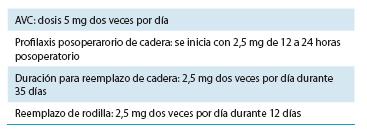
<body><![CDATA[<div style="text-align: justify;"></div>     <p style="text-align: justify;" class="MsoNormal"><span class="SpellE"><span  style="font-size: 10pt; font-family: Verdana;" lang="ES-CR">Rivaroxaban</span></span><span  style="font-size: 10pt; font-family: Verdana;" lang="ES-CR"> de 10 <span  class="SpellE">mg</span> o de más se debe evitar y en el caso de que se use se puede concomitantemente con algún antiplaqueta­rios tipo aspirina con cubierta entérica o <span  class="SpellE">Plavix</span> o <span class="SpellE">Prasugrel</span> por el riesgo incrementado de sangrado. Al igual que los antiinflamatorios de tipo no <span class="SpellE">esteroidal</span> como el <span class="SpellE">naproxeno</span> o el ibuprofeno por el au­mento de riesgo de sangrado<sup> (<a href="#21">21</a>)</sup>. <o:p></o:p></span></p>     <div style="text-align: justify;"></div>     <p style="text-align: justify;" class="MsoNormal"><span  style="font-size: 10pt; font-family: Verdana;" lang="ES-CR">Para la conversión de los diferentes anticoagulantes se recomienda:<o:p></o:p></span></p>     <p class="MsoNormal"><span  style="font-size: 10pt; font-family: Verdana;" lang="ES-CR">Para cambiar de <span class="SpellE">warfarina</span> a <span  class="SpellE">rivaroxaban</span> el INR del paciente debe estar idealmente en 2,5 se le suspende la <span  class="SpellE">warfarina</span> y se inicia el <span class="SpellE">rivaroxaban</span>, si el paciente tiene riesgo aumentado de sangrado lo ideal sería iniciar con INR en 2 y 2,5, recordar que un vez que se inicia el <span  class="SpellE">rivaroxaban</span> no se dosificará con el INR como se hace con la <span class="SpellE">warfarina</span>, puesto que este no tiene ninguna utilidad. <o:p></o:p></span></p>     <p class="MsoNormal"><span  style="font-size: 10pt; font-family: Verdana;" lang="ES-CR">Para cambiar de anticoagulantes intravenosos tipo heparina o heparinas de bajo peso molecular se recomienda iniciar el <span class="SpellE">rivaro­xaba</span>n cuando al paciente le toque la siguiente dosis de heparina y suspender inmediatamente la heparina.</span></p>     <p class="MsoNormal"><span class="SpellE"><b style=""><span  style="font-size: 11pt; font-family: Verdana;" lang="ES-CR">Apixaban</span></b></span><b  style=""><span style="font-size: 11pt; font-family: Verdana;"  lang="ES-CR"> (<span class="SpellE">Eliquis</span>):<o:p></o:p></span></b></p>     <p style="text-align: justify;" class="MsoNormal"><span  style="font-size: 10pt; font-family: Verdana;" lang="ES-CR">Tiene dos presentaciones una de 2,5 <span class="SpellE">mg</span> y la otra de 5 <span class="SpellE">mg</span>. Den­tro de las indicaciones de la tableta se especifica para la profilaxis de trombosis venosa profunda, reemplazo de rodilla o cadera, y en la prevención de trombosis venosa profunda. También está aprobado para la prevención de ACV en pacientes con fibrilación auricular de origen no valvular. La dosis que se administra es de 5 <span class="SpellE">mg</span> dos veces por día, las excepciones se presentan en: <o:p></o:p></span></p>     <div style="text-align: justify;"></div>     <p style="text-align: justify;" class="MsoNormal"><span  style="font-size: 10pt; font-family: Verdana;" lang="ES-CR">1. paciente mayor de 80 años <o:p></o:p></span></p>     ]]></body>
<body><![CDATA[<div style="text-align: justify;"></div>     <p style="text-align: justify;" class="MsoNormal"><span  style="font-size: 10pt; font-family: Verdana;" lang="ES-CR">2. personas con peso menor a <st1:metricconverter productid="60 kg"  w:st="on">60 <span class="SpellE">kg</span></st1:metricconverter><o:p></o:p></span></p>     <div style="text-align: justify;"></div>     <p style="text-align: justify;" class="MsoNormal"><span  style="font-size: 10pt; font-family: Verdana;" lang="ES-CR">3. En el caso de la función renal alterada, en donde se debe reducir la dosis a 2,5 <span class="SpellE">mg</span> dos veces por día.<o:p></o:p></span></p>     <div style="text-align: justify;"></div>     <p style="text-align: justify;" class="MsoNormal"><span  style="font-size: 10pt; font-family: Verdana;" lang="ES-CR">En caso de insuficiencia renal moderada no requiere ajuste de dosis. Pero en pacientes con creatinina mayor a 1,5 <span class="SpellE">mg</span>/<span  class="SpellE">dL</span>, lo reco­mendable es reducir la dosis a 2,5 <span  class="SpellE">mg</span> dos veces por día. <a  href="/img/revistas/rcc/v16n1/art04t1.jpg">Tabla 1</a> <o:p></o:p></span></p>     <div style="text-align: justify;"></div>     <p style="text-align: justify;" class="MsoNormal"><span  style="font-size: 10pt; font-family: Verdana;" lang="ES-CR">Esto también aplica en pacientes mayores de 80 años o con peso menor a <st1:metricconverter  productid="60 kg" w:st="on">60 <span class="SpellE">kg</span></st1:metricconverter><span  class="SpellE">.</span> <o:p></o:p></span></p>     <div style="text-align: justify;"></div>     <p style="text-align: justify;" class="MsoNormal"><span  style="font-size: 10pt; font-family: Verdana;" lang="ES-CR">El metabolismo de <span class="SpellE">apixaban</span> principal es hepático, debe re­ducirse la dosis si se necesita administrar algún medicamento de los que alteran función hepática como macrólidos, <span class="SpellE">itraconazoles</span> y antivirales. <o:p></o:p></span></p>     ]]></body>
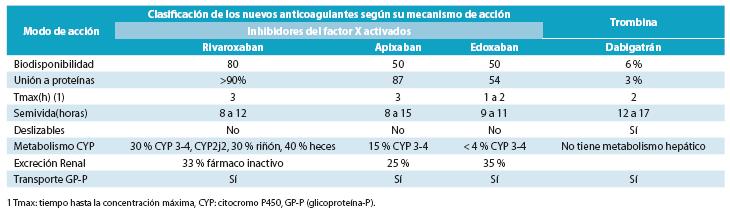
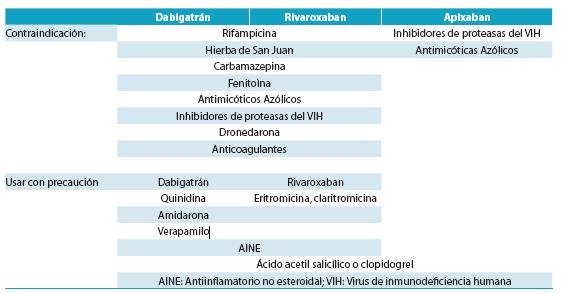
<body><![CDATA[<div style="text-align: justify;"></div>     <p style="text-align: justify;" class="MsoNormal"><span  style="font-size: 10pt; font-family: Verdana;" lang="ES-CR">Drogas como carbamazepina, <span class="SpellE">rifanpicina</span>, <span  class="SpellE">dilantin</span>, Hierba de San Juan no se deben mezclar con el <span class="SpellE">apizaban</span>. El uso de antiinflama­torios no <span class="SpellE">esteroidales</span> o fibrinolíticos aumenta el riesgo de sangrado. <o:p></o:p></span></p>     <div style="text-align: justify;"></div>     <p style="text-align: justify;" class="MsoNormal"><span  style="font-size: 10pt; font-family: Verdana;" lang="ES-CR">Para cambiar de <span class="SpellE">warfarina</span> a <span  class="SpellE">apixaban</span> debe tener el paciente un INR de 2 para iniciarlo. En el caso contrario se debe tener especial cuidado, ya que el <span class="SpellE">apixaban</span> altera el INR igual que la <span class="SpellE">warfarina</span> y esto puede determinar que se administre una dosis inadecuada de la <span class="SpellE">warfarina</span>, por lo que debe monitorizarse días después la <span class="SpellE">warfarina</span>. <o:p></o:p></span></p>     <p style="text-align: justify;" class="MsoNormal"><span  style="font-size: 10pt; font-family: Verdana;" lang="ES-CR">En el protocolo para la cirugía se recomienda la suspensión del <span  class="SpellE">apixaban</span> 48 horas antes de la cirugía o del procedimiento invasivo en pacientes de moderado y alto riesgo de sangrado. Con pacientes de bajo riesgo de sangrado o de fácil control se suspende 24 horas antes del procedimiento. <o:p></o:p></span></p>     <div style="text-align: justify;"></div>     <p style="text-align: justify;" class="MsoNormal"><span  style="font-size: 10pt; font-family: Verdana;" lang="ES-CR">El principal efecto secundario es el sangrado mayor, en el estu­dio <span  class="SpellE">Aristotle</span> se presentó en un porcentaje 2,13 versus <span class="SpellE">warfarina</span> 3,09 con una P&lt;0.0001. <a href="/img/revistas/rcc/v16n1/art04t2.jpg">Tabla 2</a> y <a  href="/img/revistas/rcc/v16n1/art04t3.jpg">Tabla 3</a><o:p></o:p></span></p>     <div style="text-align: justify;"></div>     <p style="text-align: justify;" class="MsoNormal"><span  style="font-size: 10pt; font-family: Verdana;" lang="ES-CR">Por último mencionaremos el <span class="SpellE">edoxaban</span> (<span  class="SpellE">Savaysa</span>), el cual es desarrollado por la empresa japonesa <span class="SpellE">Daiichi</span> <span class="SpellE">Sankyo</span> en enero del 2014. Este se encuentra en fase de investigación.<o:p></o:p></span></p>     <p class="MsoNormal"><b style=""><span  style="font-size: 11pt; font-family: Verdana;" lang="ES-CR"></span></b></p> <hr style="width: 100%; height: 2px;">     ]]></body>
<body><![CDATA[<p class="MsoNormal"><b style=""><span  style="font-size: 11pt; font-family: Verdana;" lang="ES-CR">Bibliografía<o:p></o:p></span></b></p>     <!-- ref --><p class="MsoNormal"><span  style="font-size: 10pt; font-family: Verdana;" lang="EN-US"><a name="1"></a>1. Mc Lean J. <span class="GramE">The <span class="SpellE">Thromboplastic</span> action of <span class="SpellE">cephalin</span>.</span> American <span class="SpellE">Jornal</span> Physiology 1916 .41<span  class="GramE">,250</span>-257.    &nbsp;&nbsp;&nbsp;&nbsp;&nbsp;&nbsp;&nbsp;&nbsp;[&#160;<a href="javascript:void(0);" onclick="javascript: window.open('/scielo.php?script=sci_nlinks&ref=766757&pid=S1409-4142201400010000400001&lng=','','width=640,height=500,resizable=yes,scrollbars=1,menubar=yes,');">Links</a>&#160;]<!-- end-ref --> <o:p></o:p></span></p>     <!-- ref --><p class="MsoNormal"><span  style="font-size: 10pt; font-family: Verdana;" lang="EN-US"><a name="2"></a>2. Link KP The discovery of <span class="SpellE">dicumarol</span> and its sequels. Circulation 1959 <span class="GramE">Jan ;19</span>(1):97-107 <o:p></o:p></span>&nbsp;&nbsp;&nbsp;&nbsp;&nbsp;&nbsp;&nbsp;&nbsp;[&#160;<a href="javascript:void(0);" onclick="javascript: window.open('/scielo.php?script=sci_nlinks&ref=766759&pid=S1409-4142201400010000400002&lng=','','width=640,height=500,resizable=yes,scrollbars=1,menubar=yes,');">Links</a>&#160;]<!-- end-ref --><!-- ref --><p class="MsoNormal"><span  style="font-size: 10pt; font-family: Verdana;" lang="EN-US"><a name="3"></a>3. Burris <span class="SpellE">RH.Karl</span> Paul Link .In Biographical <span class="SpellE"><span class="GramE">Memorirs</span></span><span  class="GramE"> :</span> v , <st1:place w:st="on"><st1:placename  w:st="on">64.National</st1:placename> <st1:placetype w:st="on">Academy</st1:placetype></st1:place> of Sciences. <span class="GramE">1994 .    &nbsp;&nbsp;&nbsp;&nbsp;&nbsp;&nbsp;&nbsp;&nbsp;[&#160;<a href="javascript:void(0);" onclick="javascript: window.open('/scielo.php?script=sci_nlinks&ref=766760&pid=S1409-4142201400010000400003&lng=','','width=640,height=500,resizable=yes,scrollbars=1,menubar=yes,');">Links</a>&#160;]<!-- end-ref --></span> <o:p></o:p></span></p>     <!-- ref --><p class="MsoNormal"><span  style="font-size: 10pt; font-family: Verdana;" lang="EN-US"><a name="4"></a>4. Mc Lean J. The discovery of heparin .Circulation 1959<span class="GramE">;19:75</span>-8.    &nbsp;&nbsp;&nbsp;&nbsp;&nbsp;&nbsp;&nbsp;&nbsp;[&#160;<a href="javascript:void(0);" onclick="javascript: window.open('/scielo.php?script=sci_nlinks&ref=766762&pid=S1409-4142201400010000400004&lng=','','width=640,height=500,resizable=yes,scrollbars=1,menubar=yes,');">Links</a>&#160;]<!-- end-ref --> <o:p></o:p></span></p>     <!-- ref --><p class="MsoNormal"><st1:street w:st="on"><st1:address w:st="on"><span  style="font-size: 10pt; font-family: Verdana;" lang="EN-US"><a name="5"></a>5. Rosenberg <span class="SpellE">RD</span></span></st1:address></st1:street><span  class="SpellE"><span class="GramE"><span  style="font-size: 10pt; font-family: Verdana;" lang="EN-US">,Damus</span></span></span><span  style="font-size: 10pt; font-family: Verdana;" lang="EN-US"> PS. The purification and mechanism of action of human <span  class="SpellE">antithombin</span>-Heparin cofactor <span class="SpellE">J<span class="GramE">:Biol</span></span> <span class="SpellE">Chem</span> 1973;248:6490-505 <o:p></o:p></span>&nbsp;&nbsp;&nbsp;&nbsp;&nbsp;&nbsp;&nbsp;&nbsp;[&#160;<a href="javascript:void(0);" onclick="javascript: window.open('/scielo.php?script=sci_nlinks&ref=766764&pid=S1409-4142201400010000400005&lng=','','width=640,height=500,resizable=yes,scrollbars=1,menubar=yes,');">Links</a>&#160;]<!-- end-ref --><!-- ref --><p class="MsoNormal"><span  style="font-size: 10pt; font-family: Verdana;" lang="EN-US"><a name="6"></a>6. <span class="SpellE">Stangier</span> J, <span class="SpellE">Rathgen</span> K, <span class="SpellE">Staähle</span> H, <span class="SpellE">Gansser</span> D, Roth W. The <span class="GramE">pharmacokinetics ,<span  class="SpellE">pharmacodynamics</span></span> and <span class="SpellE">tolerabilidad</span> of <span class="SpellE">dabigatran</span> <span class="SpellE">etixilate</span>, a new oral direct thrombin inhibitor, in healthy male subjects. Br J <span  class="SpellE">Clin</span> Pharmacol.2007 Sep<span class="GramE">;64</span>(3):292-303 <span class="SpellE">Epub</span>.    &nbsp;&nbsp;&nbsp;&nbsp;&nbsp;&nbsp;&nbsp;&nbsp;[&#160;<a href="javascript:void(0);" onclick="javascript: window.open('/scielo.php?script=sci_nlinks&ref=766765&pid=S1409-4142201400010000400006&lng=','','width=640,height=500,resizable=yes,scrollbars=1,menubar=yes,');">Links</a>&#160;]<!-- end-ref --> <o:p></o:p></span></p>     <!-- ref --><p class="MsoNormal"><span  style="font-size: 10pt; font-family: Verdana;" lang="EN-US"><a name="7"></a>7. <span class="SpellE">Mismetti</span> P, <span class="SpellE">Laporte</span> S. <span class="SpellE"><span class="GramE">Dabigatran</span></span><span  class="GramE"> :</span> clinical pharmacology .Ann Fr <span  class="SpellE">Anesth</span> Reanim.2009 Sep ;28(9 <span class="SpellE">Suppl</span>):S8-14.    &nbsp;&nbsp;&nbsp;&nbsp;&nbsp;&nbsp;&nbsp;&nbsp;[&#160;<a href="javascript:void(0);" onclick="javascript: window.open('/scielo.php?script=sci_nlinks&ref=766767&pid=S1409-4142201400010000400007&lng=','','width=640,height=500,resizable=yes,scrollbars=1,menubar=yes,');">Links</a>&#160;]<!-- end-ref --> <o:p></o:p></span></p>     <!-- ref --><p class="MsoNormal"><span  style="font-size: 10pt; font-family: Verdana;" lang="EN-US"><a name="8"></a>8. <span class="SpellE">Bleending</span> with <span class="SpellE">Dabigatran<span  class="GramE">,Rivaroxaban,Apixaban</span></span> no <span class="SpellE">antidote,and</span> little clinical experience. <span  class="SpellE">Prescrive</span> <span class="SpellE">Int</span> 2013 Jun<span class="GramE">,22</span> (139:155-9.    &nbsp;&nbsp;&nbsp;&nbsp;&nbsp;&nbsp;&nbsp;&nbsp;[&#160;<a href="javascript:void(0);" onclick="javascript: window.open('/scielo.php?script=sci_nlinks&ref=766769&pid=S1409-4142201400010000400008&lng=','','width=640,height=500,resizable=yes,scrollbars=1,menubar=yes,');">Links</a>&#160;]<!-- end-ref --><o:p></o:p></span></p>     <!-- ref --><p class="MsoNormal"><span  style="font-size: 10pt; font-family: Verdana;" lang="EN-US"><a name="9"></a>9. Annex 1 Summary of Product Characteristics <span class="SpellE">Rivaroxaban</span> .http:// <span class="SpellE">www.Xarelto</span> .com/html/downloads/<span class="SpellE">Xarelto</span>-Summary-of –Product- Characteristics-30 sep2008.    &nbsp;&nbsp;&nbsp;&nbsp;&nbsp;&nbsp;&nbsp;&nbsp;[&#160;<a href="javascript:void(0);" onclick="javascript: window.open('/scielo.php?script=sci_nlinks&ref=766771&pid=S1409-4142201400010000400009&lng=','','width=640,height=500,resizable=yes,scrollbars=1,menubar=yes,');">Links</a>&#160;]<!-- end-ref --> <o:p></o:p></span></p>     <!-- ref --><p class="MsoNormal"><span  style="font-size: 10pt; font-family: Verdana;" lang="EN-US"><a  name="10"></a>10. <span class="SpellE">Eikelboom</span> J.W., <span  class="SpellE">MD.,Stuart</span> J. Connolly ,MD et <span  class="SpellE">al.Dabigatran</span> versus <span class="SpellE">Warfarin</span> in Patients with Mechanical Heart <span class="SpellE">Valves.The</span> New Eng J of Med 2013;369:1206-1214.    &nbsp;&nbsp;&nbsp;&nbsp;&nbsp;&nbsp;&nbsp;&nbsp;[&#160;<a href="javascript:void(0);" onclick="javascript: window.open('/scielo.php?script=sci_nlinks&ref=766773&pid=S1409-4142201400010000400010&lng=','','width=640,height=500,resizable=yes,scrollbars=1,menubar=yes,');">Links</a>&#160;]<!-- end-ref --> <o:p></o:p></span></p>     <!-- ref --><p class="MsoNormal"><span  style="font-size: 10pt; font-family: Verdana;" lang="EN-US"><a  name="10_"></a>10. Connolly <span class="SpellE">SJ,Ezekowitz</span> <span  class="SpellE">MD,Ysuf</span> S, et al ;and Re-Ly Steering Committee and investigators. <span class="SpellE">Dabigatran</span> versus <span  class="SpellE">warfarin</span> in patients with <span class="SpellE">atrial</span> <span  class="SpellE">fibrillation.New</span> Eng J Med 2009<span class="GramE">;361</span> (12)1139-1151.    &nbsp;&nbsp;&nbsp;&nbsp;&nbsp;&nbsp;&nbsp;&nbsp;[&#160;<a href="javascript:void(0);" onclick="javascript: window.open('/scielo.php?script=sci_nlinks&ref=766775&pid=S1409-4142201400010000400011&lng=','','width=640,height=500,resizable=yes,scrollbars=1,menubar=yes,');">Links</a>&#160;]<!-- end-ref --> <o:p></o:p></span></p>     <!-- ref --><p class="MsoNormal"><span  style="font-size: 10pt; font-family: Verdana;" lang="EN-US"><a  name="11"></a>11. Ridgefield CT <span class="SpellE">Pradaxa</span> (prescribing <span class="GramE">information )</span> <span  class="SpellE">Boehringer</span> <span class="SpellE">Ingelheim</span> Pharmaceuticals ,Inc.    &nbsp;&nbsp;&nbsp;&nbsp;&nbsp;&nbsp;&nbsp;&nbsp;[&#160;<a href="javascript:void(0);" onclick="javascript: window.open('/scielo.php?script=sci_nlinks&ref=766777&pid=S1409-4142201400010000400012&lng=','','width=640,height=500,resizable=yes,scrollbars=1,menubar=yes,');">Links</a>&#160;]<!-- end-ref --> <o:p></o:p></span></p>     <!-- ref --><p class="MsoNormal"><span  style="font-size: 10pt; font-family: Verdana;" lang="EN-US"><a  name="12"></a>12. January CT, <span class="SpellE">Wann</span> ST, Alpert JS, et al. 2014 AHA/ACC/HRS guideline for the management of patients with <span class="SpellE">atrial</span> fibrillation. A report of the American College of Cardiology/American Heart Association Task Force on Practice Guidelines and the Heart Rhythm Society: Executive summary. </span><span  style="font-size: 10pt; font-family: Verdana;" lang="ES-CR">J <span  class="SpellE">Am</span> Coll <span class="SpellE">Cardio</span>; 2014: DOI:10.1016/<span  class="SpellE">j.jacc</span>.2014.03.021 Full <span class="SpellE">text</span>.    &nbsp;&nbsp;&nbsp;&nbsp;&nbsp;&nbsp;&nbsp;&nbsp;[&#160;<a href="javascript:void(0);" onclick="javascript: window.open('/scielo.php?script=sci_nlinks&ref=766779&pid=S1409-4142201400010000400013&lng=','','width=640,height=500,resizable=yes,scrollbars=1,menubar=yes,');">Links</a>&#160;]<!-- end-ref --><o:p></o:p></span></p>     <!-- ref --><p class="MsoNormal"><span  style="font-size: 10pt; font-family: Verdana;" lang="EN-US"><a  name="13"></a>13. <span class="SpellE">Fuster</span> V, <span  class="SpellE">Ryden</span> LE, <span class="SpellE">Cannom</span> DS, et al. ACC/AHA/ESC 2006 guidelines for the management of patients with <span  class="SpellE">atrial</span> fibrillation. </span><span class="SpellE"><span  style="font-size: 10pt; font-family: Verdana;" lang="ES-CR">Circulation</span></span><span  style="font-size: 10pt; font-family: Verdana;" lang="ES-CR"> 2006; 114:e257-e354. Full <span class="SpellE">text</span>.    &nbsp;&nbsp;&nbsp;&nbsp;&nbsp;&nbsp;&nbsp;&nbsp;[&#160;<a href="javascript:void(0);" onclick="javascript: window.open('/scielo.php?script=sci_nlinks&ref=766781&pid=S1409-4142201400010000400014&lng=','','width=640,height=500,resizable=yes,scrollbars=1,menubar=yes,');">Links</a>&#160;]<!-- end-ref --> <o:p></o:p></span></p>     <!-- ref --><p class="MsoNormal"><span  style="font-size: 10pt; font-family: Verdana;" lang="EN-US"><a  name="14"></a>14. <span class="SpellE">Wann</span> LS, Curtis AB, <span  class="SpellE">Ellenbogen</span> KA, et al. 2011 ACCF/AHA/HRS focused update on the management of patients with <span class="SpellE">atrial</span> fibrillation (update on <span class="SpellE">dabigatran</span>): A report of the <st1:place  w:st="on"><st1:placename w:st="on">American</st1:placename> <st1:placetype  w:st="on">College</st1:placetype></st1:place> of Cardiology Foundation/American Heart Association Task Force on practice guidelines. J Am <span class="SpellE">Coll</span> <span class="SpellE">Cardiol</span> 2011; 57:1330-1337. Full text <o:p></o:p></span>&nbsp;&nbsp;&nbsp;&nbsp;&nbsp;&nbsp;&nbsp;&nbsp;[&#160;<a href="javascript:void(0);" onclick="javascript: window.open('/scielo.php?script=sci_nlinks&ref=766783&pid=S1409-4142201400010000400015&lng=','','width=640,height=500,resizable=yes,scrollbars=1,menubar=yes,');">Links</a>&#160;]<!-- end-ref --><!-- ref --><p class="MsoNormal"><span  style="font-size: 10pt; font-family: Verdana;" lang="EN-US"><a  name="15"></a>15. <span class="SpellE">Wann</span> LS, Curtis AB, January CT, et al. 2011 ACCF/AHA/HRS focused update on the management of patients with <span class="SpellE">atrial</span> fibrillation (updating the 2006 guideline): A report of the <st1:place w:st="on"><st1:placename w:st="on">American</st1:placename> <st1:placetype w:st="on">College</st1:placetype></st1:place> of Cardiology Foundation/American Heart Association Task Force on Practice Guidelines. J Am <span class="SpellE">Coll</span> <span class="SpellE">Cardiol</span> 2011; 57:223-242. Full text <o:p></o:p></span>&nbsp;&nbsp;&nbsp;&nbsp;&nbsp;&nbsp;&nbsp;&nbsp;[&#160;<a href="javascript:void(0);" onclick="javascript: window.open('/scielo.php?script=sci_nlinks&ref=766784&pid=S1409-4142201400010000400016&lng=','','width=640,height=500,resizable=yes,scrollbars=1,menubar=yes,');">Links</a>&#160;]<!-- end-ref --><!-- ref --><p class="MsoNormal"><span  style="font-size: 10pt; font-family: Verdana;" lang="EN-US"><a  name="16"></a>16. <span class="SpellE">Camm</span> AJ, Lip GY, De <span  class="SpellE">Caterina</span> R, et al. 2012 focused update of the ESC Guidelines for the management of <span class="SpellE">atrial</span> fibrillation: An update of the 2010 ESC guidelines for the management of <span  class="SpellE">atrial</span> fibrillation. <span class="SpellE">Eur</span> Heart <i>J </i>2012; 33:2719-2747. <span class="GramE">Full text.    &nbsp;&nbsp;&nbsp;&nbsp;&nbsp;&nbsp;&nbsp;&nbsp;[&#160;<a href="javascript:void(0);" onclick="javascript: window.open('/scielo.php?script=sci_nlinks&ref=766785&pid=S1409-4142201400010000400017&lng=','','width=640,height=500,resizable=yes,scrollbars=1,menubar=yes,');">Links</a>&#160;]<!-- end-ref --></span> <o:p></o:p></span></p>     <!-- ref --><p class="MsoNormal"><span  style="font-size: 10pt; font-family: Verdana;" lang="EN-US"><a  name="17"></a>17. <span class="SpellE">Gerts</span> WH <span  class="SpellE">Bergquist</span> <span class="SpellE">D.Pineo</span> GF .et al Prevention venous <span class="SpellE">Thomboembolism<span  class="GramE">:American</span></span> <st1:place w:st="on"><st1:placetype w:st="on">College</st1:placetype> of <st1:placename w:st="on">Chest Physicians Evidence</st1:placename></st1:place> – Cased Clinical Practice <span class="SpellE">Gidelines</span> (8</span><span  class="A15"><span style="font-size: 10pt; font-family: Verdana;"  lang="EN-US">th </span></span><span style="font-size: 10pt; font-family: Verdana;"  lang="EN-US">editions) Chest 2008;133:381-453 <o:p></o:p></span>&nbsp;&nbsp;&nbsp;&nbsp;&nbsp;&nbsp;&nbsp;&nbsp;[&#160;<a href="javascript:void(0);" onclick="javascript: window.open('/scielo.php?script=sci_nlinks&ref=766787&pid=S1409-4142201400010000400018&lng=','','width=640,height=500,resizable=yes,scrollbars=1,menubar=yes,');">Links</a>&#160;]<!-- end-ref --><!-- ref --><p class="MsoNormal"><span  style="font-size: 10pt; font-family: Verdana;" lang="EN-US"><a  name="18"></a>18. <span class="SpellE">Rosencher</span> N <span  class="GramE">et</span> <span class="SpellE">al.Selected</span> new antithrombotic agents and <span class="SpellE">neuraxial</span> anesthesia for major <span  class="SpellE">orthopaedic</span> surgery management strategies. <span  class="SpellE">Anaesthesia</span> 2007 <span class="GramE">Vol62 ;</span> 11 :1154-1160.    &nbsp;&nbsp;&nbsp;&nbsp;&nbsp;&nbsp;&nbsp;&nbsp;[&#160;<a href="javascript:void(0);" onclick="javascript: window.open('/scielo.php?script=sci_nlinks&ref=766788&pid=S1409-4142201400010000400019&lng=','','width=640,height=500,resizable=yes,scrollbars=1,menubar=yes,');">Links</a>&#160;]<!-- end-ref --> <o:p></o:p></span></p>     <!-- ref --><p class="MsoNormal"><span  style="font-size: 10pt; font-family: Verdana;" lang="EN-US"><a  name="19"></a>19. <span class="SpellE">Gogarten</span> <span  class="SpellE">WVandermeulen</span> <span class="SpellE">E,Van</span> <span class="SpellE">Aken</span> H ,et al Regional <span class="SpellE">anaesthesia</span> and <span class="SpellE">antithombotic</span> agents recommendations of European Society of <span class="SpellE">Anaesthesiology</span> <span  class="SpellE">Eur</span> J <span class="SpellE">Anaesthesiology</span> 2010;27:999-1015.    &nbsp;&nbsp;&nbsp;&nbsp;&nbsp;&nbsp;&nbsp;&nbsp;[&#160;<a href="javascript:void(0);" onclick="javascript: window.open('/scielo.php?script=sci_nlinks&ref=766790&pid=S1409-4142201400010000400020&lng=','','width=640,height=500,resizable=yes,scrollbars=1,menubar=yes,');">Links</a>&#160;]<!-- end-ref --> <o:p></o:p></span></p>     <!-- ref --><p class="MsoNormal"><span  style="font-size: 10pt; font-family: Verdana;" lang="EN-US"><a  name="20"></a>20. Patel MR Mahaffey <span class="GramE">KW ,<span  class="SpellE">Garg</span></span> J et al <span class="SpellE">Rivaroxaban</span> for the treatment of symptomatic pulmonary <span class="SpellE">embolism.N</span> <span class="SpellE">Engl</span> Med 2011;365:883-891.    &nbsp;&nbsp;&nbsp;&nbsp;&nbsp;&nbsp;&nbsp;&nbsp;[&#160;<a href="javascript:void(0);" onclick="javascript: window.open('/scielo.php?script=sci_nlinks&ref=766792&pid=S1409-4142201400010000400021&lng=','','width=640,height=500,resizable=yes,scrollbars=1,menubar=yes,');">Links</a>&#160;]<!-- end-ref --> <o:p></o:p></span></p>     <!-- ref --><p class="MsoNormal"><span  style="font-size: 10pt; font-family: Verdana;" lang="EN-US"><a  name="21"></a>21. Alexander G.G. <span class="SpellE">Turpie;Reinhold</span> <span class="SpellE">Kreutz</span>; Juan <span class="SpellE">Llau</span> et al Management consensus guidance for the use of <span class="SpellE">rivaroxaban</span> - an oral , direct factor <span class="SpellE">Xa</span> inhibitor .Thrombosis and <span class="SpellE">Haemostasis</span> 2012 ;108:876-886 .    &nbsp;&nbsp;&nbsp;&nbsp;&nbsp;&nbsp;&nbsp;&nbsp;[&#160;<a href="javascript:void(0);" onclick="javascript: window.open('/scielo.php?script=sci_nlinks&ref=766794&pid=S1409-4142201400010000400022&lng=','','width=640,height=500,resizable=yes,scrollbars=1,menubar=yes,');">Links</a>&#160;]<!-- end-ref --> <o:p></o:p></span></p>     ]]></body>
<body><![CDATA[<!-- ref --><p class="MsoNormal"><span  style="font-size: 10pt; font-family: Verdana;" lang="ES-CR"><a  name="22"></a>22. Van <span class="SpellE">Ryn</span> J et al <span class="SpellE">Tromb</span> <span class="SpellE">Haemost</span>. 2010<span class="GramE">;103</span>(6):116-127 <o:p></o:p></span>&nbsp;&nbsp;&nbsp;&nbsp;&nbsp;&nbsp;&nbsp;&nbsp;[&#160;<a href="javascript:void(0);" onclick="javascript: window.open('/scielo.php?script=sci_nlinks&ref=766796&pid=S1409-4142201400010000400023&lng=','','width=640,height=500,resizable=yes,scrollbars=1,menubar=yes,');">Links</a>&#160;]<!-- end-ref --><!-- ref --><p class="MsoNormal"><span  style="font-size: 10pt; font-family: Verdana;" lang="ES-CR"><a  name="23"></a>23. La FDA aprueban <span class="SpellE">dabigatran</span> <span  class="SpellE">etexilato</span> para trombosis venosa profunda y embolia pulmonar Gaceta <span  class="GramE">medica.com .</span> <span class="GramE">abril</span> 2014.    &nbsp;&nbsp;&nbsp;&nbsp;&nbsp;&nbsp;&nbsp;&nbsp;[&#160;<a href="javascript:void(0);" onclick="javascript: window.open('/scielo.php?script=sci_nlinks&ref=766797&pid=S1409-4142201400010000400024&lng=','','width=640,height=500,resizable=yes,scrollbars=1,menubar=yes,');">Links</a>&#160;]<!-- end-ref --> <o:p></o:p></span></p>     <!-- ref --><p class="MsoNormal"><span  style="font-size: 10pt; font-family: Verdana;" lang="ES-CR"><a  name="24"></a>24. Luis – <span class="SpellE">Garcia</span> Frade <span class="GramE">Pasado ,presente</span> y futuro de la terapia antitrombótica .<span  class="SpellE">MEDInt</span> 2010;26(4):383-389.    &nbsp;&nbsp;&nbsp;&nbsp;&nbsp;&nbsp;&nbsp;&nbsp;[&#160;<a href="javascript:void(0);" onclick="javascript: window.open('/scielo.php?script=sci_nlinks&ref=766799&pid=S1409-4142201400010000400025&lng=','','width=640,height=500,resizable=yes,scrollbars=1,menubar=yes,');">Links</a>&#160;]<!-- end-ref --><o:p></o:p></span></p>     <p class="MsoNormal"><span  style="font-size: 10pt; font-family: Verdana;" lang="ES-CR"><a  name="Correspondencia1"></a><a href="#Correspondencia2">*</a>Correspondencia a: Médico Especialista de Cardiología Clínica San Fernando. Editora en Jefe Revista Costarricense de Cardiología. Autor de correspondencia: <span  style="color: windowtext; text-decoration: none;">lchavesb@ice.co.cr</span><o:p></o:p></span></p>     <p class="MsoNormal"><b><span  style="font-size: 10pt; font-family: Verdana;" lang="ES-CR">Abreviaturas</span></b><span  style="font-size: 10pt; font-family: Verdana;" lang="ES-CR">: EMEA: Agencia Europea de Medicamentos; FDA <span class="SpellE">Food</span> <span  class="SpellE">and</span> <span class="SpellE">Drugs</span> <span class="SpellE">Administration</span>; RTC: reemplazo total de cadera; TT: tiempo de trombina; TPT: tiempo parcial de <span class="SpellE">tromboplastina</span>; DTI: tiempo de trombina lineal; <span class="SpellE">CrCl</span>: aclaramiento de creatinina. </span><span style="font-size: 10pt; font-family: Verdana;"  lang="EN-US">ACCP: American <st1:place w:st="on"><st1:placetype  w:st="on">College</st1:placetype> of <st1:placename w:st="on">Chest Physicians</st1:placename></st1:place>, RTR: <span class="SpellE">reemplazo</span> total de <span  class="SpellE">rodilla    <br> </span></span></p>     <p class="MsoNormal"><span  style="font-size: 10pt; font-family: Verdana;" lang="ES-CR"></span></p> <hr style="width: 100%; height: 2px;">     <div style="text-align: center;"><span  style="font-size: 10pt; font-family: Verdana;" lang="ES-CR">Recibido 10-VII-2014. Aceptado 14-VII-2014</span><span  style="font-size: 9pt; color: rgb(34, 30, 31);" lang="EN-US"><o:p></o:p></span><span  style="font-size: 9pt; color: rgb(34, 30, 31);" lang="EN-US"><o:p></o:p></span><span  style="font-size: 9pt; color: rgb(34, 30, 31);" lang="EN-US"><o:p></o:p></span><span  style="font-size: 9pt; color: rgb(34, 30, 31);" lang="EN-US"><o:p></o:p></span><span  style="font-size: 9pt; color: rgb(34, 30, 31);" lang="EN-US"><o:p></o:p></span><span  style="font-size: 9pt; color: rgb(34, 30, 31);" lang="EN-US"><o:p></o:p></span><span  style="font-size: 9pt; color: rgb(34, 30, 31);" lang="EN-US"><o:p></o:p></span><span  style="" lang="EN-US"><o:p>     ]]></body>
<body><![CDATA[<br> </o:p></span></div> </div>      ]]></body><back>
<ref-list>
<ref id="B1">
<label>1</label><nlm-citation citation-type="journal">
<person-group person-group-type="author">
<name>
<surname><![CDATA[Mc Lean]]></surname>
<given-names><![CDATA[J]]></given-names>
</name>
</person-group>
<article-title xml:lang="en"><![CDATA[The Thromboplastic action of cephalin]]></article-title>
<source><![CDATA[American Jornal Physiology]]></source>
<year>1916</year>
<volume>41</volume>
<page-range>250-257</page-range></nlm-citation>
</ref>
<ref id="B2">
<label>2</label><nlm-citation citation-type="journal">
<article-title xml:lang="en"><![CDATA[Link KP The discovery of dicumarol and its sequels]]></article-title>
<source><![CDATA[Circulation]]></source>
<year>1959</year>
<month> J</month>
<day>an</day>
<volume>19</volume>
<numero>1</numero>
<issue>1</issue>
<page-range>97-107</page-range></nlm-citation>
</ref>
<ref id="B3">
<label>3</label><nlm-citation citation-type="book">
<person-group person-group-type="author">
<name>
<surname><![CDATA[Burris]]></surname>
<given-names><![CDATA[RH]]></given-names>
</name>
<name>
<surname><![CDATA[Link]]></surname>
<given-names><![CDATA[Karl Paul]]></given-names>
</name>
</person-group>
<source><![CDATA[In Biographical Memorirs]]></source>
<year>1994</year>
<volume>64</volume>
<publisher-name><![CDATA[National Academy of Sciences]]></publisher-name>
</nlm-citation>
</ref>
<ref id="B4">
<label>4</label><nlm-citation citation-type="journal">
<person-group person-group-type="author">
<name>
<surname><![CDATA[Mc Lean]]></surname>
<given-names><![CDATA[J]]></given-names>
</name>
</person-group>
<article-title xml:lang="en"><![CDATA[The discovery of heparin]]></article-title>
<source><![CDATA[Circulation]]></source>
<year>1959</year>
<volume>19</volume>
<page-range>75-8</page-range></nlm-citation>
</ref>
<ref id="B5">
<label>5</label><nlm-citation citation-type="journal">
<person-group person-group-type="author">
<name>
<surname><![CDATA[Rosenberg]]></surname>
<given-names><![CDATA[RD]]></given-names>
</name>
<name>
<surname><![CDATA[Damus]]></surname>
<given-names><![CDATA[PS]]></given-names>
</name>
</person-group>
<article-title xml:lang="en"><![CDATA[The purification and mechanism of action of human antithombin-Heparin cofactor]]></article-title>
<source><![CDATA[J:Biol Chem]]></source>
<year>1973</year>
<volume>248</volume>
<page-range>6490-505</page-range></nlm-citation>
</ref>
<ref id="B6">
<label>6</label><nlm-citation citation-type="journal">
<person-group person-group-type="author">
<name>
<surname><![CDATA[Stangier]]></surname>
<given-names><![CDATA[J]]></given-names>
</name>
<name>
<surname><![CDATA[Rathgen]]></surname>
<given-names><![CDATA[K]]></given-names>
</name>
<name>
<surname><![CDATA[Staähle]]></surname>
<given-names><![CDATA[H]]></given-names>
</name>
<name>
<surname><![CDATA[Gansser]]></surname>
<given-names><![CDATA[D]]></given-names>
</name>
<name>
<surname><![CDATA[Roth]]></surname>
<given-names><![CDATA[W]]></given-names>
</name>
</person-group>
<article-title xml:lang="en"><![CDATA[The pharmacokinetics ,pharmacodynamics and tolerabilidad of dabigatran etixilate, a new oral direct thrombin inhibitor, in healthy male subjects]]></article-title>
<source><![CDATA[Br J Clin Pharmacol]]></source>
<year>2007</year>
<month> S</month>
<day>ep</day>
<volume>64</volume>
<numero>3</numero>
<issue>3</issue>
<page-range>292-303</page-range></nlm-citation>
</ref>
<ref id="B7">
<label>7</label><nlm-citation citation-type="journal">
<person-group person-group-type="author">
<name>
<surname><![CDATA[Mismetti]]></surname>
<given-names><![CDATA[P]]></given-names>
</name>
<name>
<surname><![CDATA[Laporte]]></surname>
<given-names><![CDATA[S]]></given-names>
</name>
</person-group>
<article-title xml:lang="en"><![CDATA[Dabigatran: clinical pharmacology]]></article-title>
<source><![CDATA[Ann Fr Anesth Reanim]]></source>
<year>2009</year>
<month> S</month>
<day>ep</day>
<volume>28</volume>
<numero>^s9</numero>
<issue>^s9</issue>
<supplement>9</supplement>
<page-range>S8-14</page-range></nlm-citation>
</ref>
<ref id="B8">
<label>8</label><nlm-citation citation-type="journal">
<article-title xml:lang="en"><![CDATA[Bleending with Dabigatran,Rivaroxaban,Apixaban no antidote,and little clinical experience]]></article-title>
<source><![CDATA[Prescrive Int]]></source>
<year>2013</year>
<month> J</month>
<day>un</day>
<volume>139</volume>
<page-range>-9</page-range></nlm-citation>
</ref>
<ref id="B9">
<label>9</label><nlm-citation citation-type="">
<source><![CDATA[Annex 1 Summary of Product Characteristics Rivaroxaban]]></source>
<year></year>
</nlm-citation>
</ref>
<ref id="B10">
<label>10</label><nlm-citation citation-type="journal">
<person-group person-group-type="author">
<name>
<surname><![CDATA[Eikelboom]]></surname>
<given-names><![CDATA[J.W]]></given-names>
</name>
<name>
<surname><![CDATA[Stuart]]></surname>
<given-names><![CDATA[J]]></given-names>
</name>
<name>
<surname><![CDATA[Connolly]]></surname>
<given-names><![CDATA[MD]]></given-names>
</name>
</person-group>
<article-title xml:lang="en"><![CDATA[Dabigatran versus Warfarin in Patients with Mechanical Heart Valves]]></article-title>
<source><![CDATA[The New Eng J of Med]]></source>
<year>2013</year>
<volume>369</volume>
<page-range>1206-1214</page-range></nlm-citation>
</ref>
<ref id="B11">
<label>10</label><nlm-citation citation-type="journal">
<person-group person-group-type="author">
<name>
<surname><![CDATA[Connolly]]></surname>
<given-names><![CDATA[SJ]]></given-names>
</name>
<name>
<surname><![CDATA[Ezekowitz]]></surname>
<given-names><![CDATA[MD]]></given-names>
</name>
<name>
<surname><![CDATA[Ysuf]]></surname>
</name>
</person-group>
<article-title xml:lang="en"><![CDATA[Steering Committee and investigators: Dabigatran versus warfarin in patients with atrial fibrillation]]></article-title>
<source><![CDATA[New Eng J Med]]></source>
<year>2009</year>
<volume>361</volume>
<numero>12</numero>
<issue>12</issue>
<page-range>1139-1151</page-range></nlm-citation>
</ref>
<ref id="B12">
<label>11</label><nlm-citation citation-type="book">
<collab>Ridgefield CT Pradaxa</collab>
<source><![CDATA[]]></source>
<year></year>
<publisher-name><![CDATA[Boehringer Ingelheim Pharmaceuticals ,Inc]]></publisher-name>
</nlm-citation>
</ref>
<ref id="B13">
<label>12</label><nlm-citation citation-type="journal">
<person-group person-group-type="author">
<name>
<surname><![CDATA[January]]></surname>
<given-names><![CDATA[CT]]></given-names>
</name>
<name>
<surname><![CDATA[Wann]]></surname>
<given-names><![CDATA[ST]]></given-names>
</name>
<name>
<surname><![CDATA[Alpert]]></surname>
<given-names><![CDATA[JS]]></given-names>
</name>
</person-group>
<article-title xml:lang="en"><![CDATA[2014 AHA/ACC/HRS guideline for the management of patients with atrial fibrillation: A report of the American College of Cardiology/American Heart Association Task Force on Practice Guidelines and the Heart Rhythm Society: Executive summary]]></article-title>
<source><![CDATA[J Am Coll Cardio]]></source>
<year>2014</year>
</nlm-citation>
</ref>
<ref id="B14">
<label>13</label><nlm-citation citation-type="journal">
<person-group person-group-type="author">
<name>
<surname><![CDATA[Fuster]]></surname>
<given-names><![CDATA[V]]></given-names>
</name>
<name>
<surname><![CDATA[Ryden]]></surname>
<given-names><![CDATA[LE]]></given-names>
</name>
<name>
<surname><![CDATA[Cannom]]></surname>
<given-names><![CDATA[DS]]></given-names>
</name>
</person-group>
<article-title xml:lang="en"><![CDATA[ACC/AHA/ESC 2006 guidelines for the management of patients with atrial fibrillation]]></article-title>
<source><![CDATA[Circulation]]></source>
<year>2006</year>
<volume>114</volume>
<page-range>e257-e354</page-range></nlm-citation>
</ref>
<ref id="B15">
<label>14</label><nlm-citation citation-type="journal">
<person-group person-group-type="author">
<name>
<surname><![CDATA[Wann]]></surname>
<given-names><![CDATA[LS]]></given-names>
</name>
<name>
<surname><![CDATA[Curtis]]></surname>
<given-names><![CDATA[AB]]></given-names>
</name>
<name>
<surname><![CDATA[Ellenbogen]]></surname>
<given-names><![CDATA[KA]]></given-names>
</name>
</person-group>
<article-title xml:lang="en"><![CDATA[2011 ACCF/AHA/HRS focused update on the management of patients with atrial fibrillation (update on dabigatran): A report of the American College of Cardiology Foundation/American Heart Association Task Force on practice guidelines]]></article-title>
<source><![CDATA[J Am Coll Cardiol]]></source>
<year>2011</year>
<volume>57</volume>
<page-range>1330-1337</page-range></nlm-citation>
</ref>
<ref id="B16">
<label>15</label><nlm-citation citation-type="journal">
<person-group person-group-type="author">
<name>
<surname><![CDATA[Wann]]></surname>
<given-names><![CDATA[LS]]></given-names>
</name>
<name>
<surname><![CDATA[Curtis]]></surname>
<given-names><![CDATA[AB]]></given-names>
</name>
<name>
<surname><![CDATA[January]]></surname>
<given-names><![CDATA[CT]]></given-names>
</name>
</person-group>
<article-title xml:lang="en"><![CDATA[2011 ACCF/AHA/HRS focused update on the management of patients with atrial fibrillation (updating the 2006 guideline): A report of the American College of Cardiology Foundation/American Heart Association Task Force on Practice Guidelines]]></article-title>
<source><![CDATA[J Am Coll Cardiol]]></source>
<year>2011</year>
<volume>57</volume>
<page-range>223-242</page-range></nlm-citation>
</ref>
<ref id="B17">
<label>16</label><nlm-citation citation-type="journal">
<person-group person-group-type="author">
<name>
<surname><![CDATA[Camm]]></surname>
<given-names><![CDATA[AJ]]></given-names>
</name>
<name>
<surname><![CDATA[Lip]]></surname>
<given-names><![CDATA[GY]]></given-names>
</name>
<name>
<surname><![CDATA[De Caterina]]></surname>
<given-names><![CDATA[R]]></given-names>
</name>
</person-group>
<article-title xml:lang="en"><![CDATA[2012 focused update of the ESC Guidelines for the management of atrial fibrillation: An update of the 2010 ESC guidelines for the management of atrial fibrillation]]></article-title>
<source><![CDATA[Eur Heart J]]></source>
<year>2012</year>
<volume>33</volume>
<page-range>2719-2747</page-range></nlm-citation>
</ref>
<ref id="B18">
<label>17</label><nlm-citation citation-type="journal">
<person-group person-group-type="author">
<name>
<surname><![CDATA[Gerts]]></surname>
<given-names><![CDATA[WH]]></given-names>
</name>
<name>
<surname><![CDATA[Bergquist]]></surname>
<given-names><![CDATA[D]]></given-names>
</name>
<name>
<surname><![CDATA[Pineo]]></surname>
<given-names><![CDATA[GF]]></given-names>
</name>
</person-group>
<article-title xml:lang="en"><![CDATA[Prevention venous Thomboembolism: American College of Chest Physicians Evidence - Cased Clinical Practice Gidelines (8th editions)]]></article-title>
<source><![CDATA[Chest]]></source>
<year>2008</year>
<volume>133</volume>
<page-range>381-453</page-range></nlm-citation>
</ref>
<ref id="B19">
<label>18</label><nlm-citation citation-type="journal">
<person-group person-group-type="author">
<name>
<surname><![CDATA[Rosencher]]></surname>
<given-names><![CDATA[N]]></given-names>
</name>
</person-group>
<article-title xml:lang="en"><![CDATA[Selected new antithrombotic agents and neuraxial anesthesia for major orthopaedic surgery management strategies]]></article-title>
<source><![CDATA[Anaesthesia]]></source>
<year>2007</year>
<volume>62</volume>
<numero>11</numero>
<issue>11</issue>
<page-range>1154-1160</page-range></nlm-citation>
</ref>
<ref id="B20">
<label>19</label><nlm-citation citation-type="journal">
<person-group person-group-type="author">
<name>
<surname><![CDATA[Gogarten]]></surname>
<given-names><![CDATA[W]]></given-names>
</name>
<name>
<surname><![CDATA[Vandermeulen]]></surname>
<given-names><![CDATA[E]]></given-names>
</name>
<name>
<surname><![CDATA[Van Aken]]></surname>
<given-names><![CDATA[H]]></given-names>
</name>
</person-group>
<article-title xml:lang="en"><![CDATA[Regional anaesthesia and antithombotic agents recommendations of European Society of Anaesthesiology]]></article-title>
<source><![CDATA[Eur J Anaesthesiology]]></source>
<year>2010</year>
<volume>27</volume>
<page-range>999-1015</page-range></nlm-citation>
</ref>
<ref id="B21">
<label>20</label><nlm-citation citation-type="journal">
<person-group person-group-type="author">
<name>
<surname><![CDATA[Patel]]></surname>
<given-names><![CDATA[MR]]></given-names>
</name>
<name>
<surname><![CDATA[Mahaffey]]></surname>
<given-names><![CDATA[KW]]></given-names>
</name>
<name>
<surname><![CDATA[Garg]]></surname>
<given-names><![CDATA[J]]></given-names>
</name>
</person-group>
<article-title xml:lang="en"><![CDATA[Rivaroxaban for the treatment of symptomatic pulmonary embolism]]></article-title>
<source><![CDATA[N Engl Med]]></source>
<year>2011</year>
<volume>365</volume>
<page-range>883-891</page-range></nlm-citation>
</ref>
<ref id="B22">
<label>21</label><nlm-citation citation-type="journal">
<person-group person-group-type="author">
<name>
<surname><![CDATA[Alexander]]></surname>
<given-names><![CDATA[G.G Turpie]]></given-names>
</name>
<name>
<surname><![CDATA[Reinhold]]></surname>
<given-names><![CDATA[Kreutz]]></given-names>
</name>
<name>
<surname><![CDATA[Llau]]></surname>
<given-names><![CDATA[Juan]]></given-names>
</name>
</person-group>
<article-title xml:lang="en"><![CDATA[Management consensus guidance for the use of rivaroxaban - an oral , direct factor Xa inhibitor]]></article-title>
<source><![CDATA[Thrombosis and Haemostasis]]></source>
<year>2012</year>
<volume>108</volume>
<page-range>876-886</page-range></nlm-citation>
</ref>
<ref id="B23">
<label>22</label><nlm-citation citation-type="journal">
<person-group person-group-type="author">
<name>
<surname><![CDATA[Van Ryn]]></surname>
<given-names><![CDATA[J]]></given-names>
</name>
</person-group>
<source><![CDATA[Tromb Haemost]]></source>
<year>2010</year>
<volume>103</volume>
<numero>6</numero>
<issue>6</issue>
<page-range>116-127</page-range></nlm-citation>
</ref>
<ref id="B24">
<label>23</label><nlm-citation citation-type="">
<source><![CDATA[La FDA aprueban dabigatran etexilato para trombosis venosa profunda y embolia pulmonar]]></source>
<year>abri</year>
<month>l </month>
<day>20</day>
</nlm-citation>
</ref>
<ref id="B25">
<label>24</label><nlm-citation citation-type="journal">
<person-group person-group-type="author">
<name>
<surname><![CDATA[Garcia Frade]]></surname>
<given-names><![CDATA[Luis]]></given-names>
</name>
</person-group>
<article-title xml:lang="es"><![CDATA[Pasado ,presente y futuro de la terapia antitrombótica]]></article-title>
<source><![CDATA[MED Int]]></source>
<year>2010</year>
<volume>26</volume>
<numero>4</numero>
<issue>4</issue>
<page-range>383-389</page-range></nlm-citation>
</ref>
</ref-list>
</back>
</article>