<?xml version="1.0" encoding="ISO-8859-1"?><article xmlns:mml="http://www.w3.org/1998/Math/MathML" xmlns:xlink="http://www.w3.org/1999/xlink" xmlns:xsi="http://www.w3.org/2001/XMLSchema-instance">
<front>
<journal-meta>
<journal-id>1409-4142</journal-id>
<journal-title><![CDATA[Revista Costarricense de Cardiología]]></journal-title>
<abbrev-journal-title><![CDATA[Rev. costarric. cardiol]]></abbrev-journal-title>
<issn>1409-4142</issn>
<publisher>
<publisher-name><![CDATA[Asociación Costarricense de Cardiología]]></publisher-name>
</publisher>
</journal-meta>
<article-meta>
<article-id>S1409-41422003000100005</article-id>
<title-group>
<article-title xml:lang="es"><![CDATA[Etiología de la insuficiencia mitral pura en Costa Rica: estudio ecocardiográfico]]></article-title>
</title-group>
<contrib-group>
<contrib contrib-type="author">
<name>
<surname><![CDATA[Lidieth]]></surname>
<given-names><![CDATA[Esquivel M.]]></given-names>
</name>
<xref ref-type="aff" rid="A01"/>
</contrib>
<contrib contrib-type="author">
<name>
<surname><![CDATA[Romero]]></surname>
<given-names><![CDATA[Luis]]></given-names>
</name>
<xref ref-type="aff" rid="A01"/>
</contrib>
<contrib contrib-type="author">
<name>
<surname><![CDATA[Vásquez]]></surname>
<given-names><![CDATA[Gerardo]]></given-names>
</name>
<xref ref-type="aff" rid="A01"/>
</contrib>
<contrib contrib-type="author">
<name>
<surname><![CDATA[Gutiérrez]]></surname>
<given-names><![CDATA[Oswaldo]]></given-names>
</name>
<xref ref-type="aff" rid="A01"/>
</contrib>
</contrib-group>
<aff id="A01">
<institution><![CDATA[,CCSS Hospital México Servicio de Cardiología]]></institution>
<addr-line><![CDATA[San José ]]></addr-line>
<country>Costa Rica</country>
</aff>
<pub-date pub-type="pub">
<day>00</day>
<month>04</month>
<year>2003</year>
</pub-date>
<pub-date pub-type="epub">
<day>00</day>
<month>04</month>
<year>2003</year>
</pub-date>
<volume>5</volume>
<numero>1</numero>
<fpage>26</fpage>
<lpage>29</lpage>
<copyright-statement/>
<copyright-year/>
<self-uri xlink:href="http://www.scielo.sa.cr/scielo.php?script=sci_arttext&amp;pid=S1409-41422003000100005&amp;lng=en&amp;nrm=iso"></self-uri><self-uri xlink:href="http://www.scielo.sa.cr/scielo.php?script=sci_abstract&amp;pid=S1409-41422003000100005&amp;lng=en&amp;nrm=iso"></self-uri><self-uri xlink:href="http://www.scielo.sa.cr/scielo.php?script=sci_pdf&amp;pid=S1409-41422003000100005&amp;lng=en&amp;nrm=iso"></self-uri><abstract abstract-type="short" xml:lang="es"><p><![CDATA[Introducción: Estudios internacionales recientes han mostrado que en la actualidad la insuficiencia valvular mitral se debe principalmente a degeneración mixomatosa de la válvula o a enfermedad arterial coronaria. Este estudio ecocardiográfico tiene como objetivo establecer la prevalencia de las diferentes causas de insuficiencia mitral pura en Costa Rica. Metodología: Se incluyeron a todos aquellos pacientes referidos a nuestro laboratorio de eocardiografía en el período comprendido entre el mes de julio de 1998 y julio del 2000 en quienes se detectó insuficiencia mitral de causa orgánica. Se realizó la exploración en modo M, bidimensional y con las técnicas de mapeo con doppler pulsado, continuo y color y se clasificó a los casos en reumática, prolapso de la válvula mitral por degeneración mixoide, isquémica, degenerativa, secundaria a endocarditis, por colagenopatía y otras, según definiciones convencionales. También se valoró semicuantitativamente la severidad de la regurgitación clasificándose en leve, moderada y severa. Resultados: Se incluyeron 82 pacientes, 48 mujeres (59.7%) y 34 hombres (37.8%) entre los 14 y 87 años (promedio 50.3 +/- 20.7). Se encontraron 27 casos de insuficiencia mitral pura reumática (32.9%), 25 por degeneración mixomatosa (30.5%), 12 de origen isquémico (14.6%), 9 con enfermedad degenerativa (11%), 4 por dilatación del anillo secundaria a miocardiopatía dilatada no sospechada (4.9%), 2 con valvulitis lúpica (2.4%), 2 que no se pudieron clasificar (2.4%) y una con endocarditis (1.2%). Sesenta y dos casos presentaron insuficiencia mitral leve a moderada (76.7%) y 18 severa (21.9%). Sesenta y un pacientes presentaban función sistólica ventricular izquierda normal (75.6%) y 21 con algún grado de deterioro. Conclusión: En esta serie encontramos prevalencia similar de la causa reumática y el prolapso de la valvula mitral mixoide, las más frecuentes de insuficiencia mitral pura a diferencia de otras series internacionales. La causa isquémica ocupó el tercer lugar. La mayoría de los casos fueron leves a moderadas y de los casos con insuficiencia mitral severa, se dió la misma proporción.]]></p></abstract>
<abstract abstract-type="short" xml:lang="en"><p><![CDATA[Introduction: International studies have demonstrated that mitral valve mixoid degeneration and coronary artery disease are the most frequent causes of pure mitral regurgitation. This cardiac ultrasound study was designed to know each cause prevalence in Costa Rica. Methods: We included all patients referred to our institution since July 1998 to July 2000 in whom was detected organic pure mitral regurgitation. We performed M-mode and bidimensional imaging and pulsed, continuous and colour flow mapping exploration. We classified patients in rheumatic disease, mixoid degenerative changes, secondary to coronary artery disease, to accelerated degenerative changes, to endocarditis, to collagen disease or other, regarding international criteria. We also assessed severity of mitral regurgitation classifying it in mild, moderate and severe. Results: We studied 82 patients, 48 females (59.7%) and 34 males (37.8%) between 14 and 87 years old (mean 50.3 +/- 20.7). There were 27 patients with pure mitral regurgitation of rheumatic origin (32.9%), 25 with mixoid degenerative valve disease (30.5%), 12 with coronary artery disease (14.6%), 9 with age-related changes (11%), 4 with mitral annulus elongation secondary to dilated cardiomyopathy not previously suspected (4.9%), 2 with systemic lupus erythematosus valve involvement (2.4%), 2 with no obvious cause (2.4%) and one with endocarditis (1.2%). Sixty-two cases had mild or moderate mitral regurgitation (76.7%) and 18 severe (21.9%). Sixty-one patients had left ventricle systolic function preserved (75.6%) and 21 with some degree of diminished function. Conclusion: In this study we find a similar prevalence of rheumatic disease and mixoid degenerative disease as most frequent causes of mitral regurgitation, a fact different from international series. Coronary artery disease was the third cause. Most cases were mild or moderate and severe cases had a similar distribution.]]></p></abstract>
<kwd-group>
<kwd lng="es"><![CDATA[Insuficiencia Mitral Pura]]></kwd>
<kwd lng="es"><![CDATA[Costa Rica]]></kwd>
<kwd lng="en"><![CDATA[Pure Mitral Insufficiency]]></kwd>
</kwd-group>
</article-meta>
</front><body><![CDATA[   <DL>     <DT> <B><FONT FACE="Arial,Helvetica">Trabajo original</FONT></B></DT>      <CENTER>     <DT> <B><FONT FACE="Arial,Helvetica">Etiolog&iacute;a de la insuficiencia mitral pura en Costa Rica.</FONT></B></DT></CENTER>      <CENTER>     <DT> <B><FONT FACE="Arial,Helvetica"><FONT COLOR="#000000">Estudio ecocardiogr&aacute;fico</FONT></FONT></B></DT></CENTER>      <CENTER>     <DT> <B><FONT FACE="Arial,Helvetica"><FONT COLOR="#000000">&nbsp;</FONT></FONT></B></DT></CENTER>      <DT> <FONT FACE="Arial,Helvetica"><FONT SIZE=-1>&nbsp;</FONT></FONT></DT>      <CENTER>     ]]></body>
<body><![CDATA[<DT> <B><FONT FACE="Arial,Helvetica"><FONT SIZE=-1>Dra. Esquivel M. Lidieth,&nbsp;&nbsp; Dr. Romero Luis,&nbsp;&nbsp; Dr. V&aacute;squez Gerardo,&nbsp;&nbsp; Dr. Guti&eacute;rrez Oswaldo<A NAME="*"></A> <A HREF="#*a">*</A></FONT></FONT></B></DT></CENTER> &nbsp;<B><FONT FACE="Arial,Helvetica"><FONT SIZE=-1></FONT></FONT></B>      <P><B><FONT FACE="Arial,Helvetica"><FONT SIZE=-1>Resumen</FONT></FONT></B>     <DT style="text-align: justify; ">     <FONT FACE="Arial,Helvetica"><FONT SIZE=-1>&nbsp;</FONT></FONT></DT>     <DT style="text-align: justify; ">     <FONT FACE="Arial,Helvetica"><FONT SIZE=-1><B>Introducci&oacute;n:</B>     Estudios internacionales recientes han mostrado que en la actualidad la     insuficiencia valvular mitral se debe principalmente a degeneraci&oacute;n     mixomatosa de la v&aacute;lvula o a enfermedad arterial coronaria. Este     estudio ecocardiogr&aacute;fico tiene como objetivo establecer la prevalencia     ]]></body>
<body><![CDATA[de las diferentes causas de insuficiencia mitral pura en Costa Rica.</FONT></FONT></DT>     <DT style="text-align: justify; ">     <FONT FACE="Arial,Helvetica"><FONT SIZE=-1>&nbsp;</FONT></FONT></DT>     <DT style="text-align: justify; ">     <FONT FACE="Arial,Helvetica"><FONT SIZE=-1><B>Metodolog&iacute;a:</B> Se     incluyeron a todos aquellos pacientes referidos a nuestro laboratorio de     eocardiograf&iacute;a en el per&iacute;odo comprendido entre el mes de     julio de 1998 y julio del 2000 en quienes se detect&oacute; insuficiencia     mitral de causa org&aacute;nica. Se realiz&oacute; la exploraci&oacute;n     en modo M, bidimensional y con las t&eacute;cnicas de mapeo con doppler     ]]></body>
<body><![CDATA[pulsado, continuo y color y se clasific&oacute; a los casos en reum&aacute;tica,     prolapso de la v&aacute;lvula mitral por degeneraci&oacute;n mixoide, isqu&eacute;mica,     degenerativa, secundaria a endocarditis, por colagenopat&iacute;a y otras,     seg&uacute;n definiciones convencionales. Tambi&eacute;n se valor&oacute;     semicuantitativamente la severidad de la regurgitaci&oacute;n clasific&aacute;ndose     en leve, moderada y severa.</FONT></FONT></DT>     <DT style="text-align: justify; ">     <FONT FACE="Arial,Helvetica"><FONT SIZE=-1>&nbsp;</FONT></FONT></DT>     <DT style="text-align: justify; ">     <FONT FACE="Arial,Helvetica"><FONT SIZE=-1><B>Resultados:</B> Se incluyeron     ]]></body>
<body><![CDATA[82 pacientes, 48 mujeres (59.7%) y 34 hombres (37.8%) entre los 14 y 87     a&ntilde;os (promedio 50.3 +/- 20.7). Se encontraron 27 casos de insuficiencia     mitral pura reum&aacute;tica (32.9%), 25 por degeneraci&oacute;n mixomatosa     (30.5%), 12 de origen isqu&eacute;mico (14.6%), 9 con enfermedad degenerativa     (11%), 4 por dilataci&oacute;n del anillo secundaria a miocardiopat&iacute;a     dilatada no sospechada (4.9%), 2 con valvulitis l&uacute;pica (2.4%), 2     que no se pudieron clasificar (2.4%) y una con endocarditis (1.2%). Sesenta     y dos casos presentaron insuficiencia mitral leve a moderada (76.7%) y     18 severa (21.9%). Sesenta y un pacientes presentaban funci&oacute;n sist&oacute;lica     ventricular izquierda normal (75.6%) y 21 con alg&uacute;n grado de deterioro.</FONT></FONT></DT>     ]]></body>
<body><![CDATA[<DT style="text-align: justify; ">     <FONT FACE="Arial,Helvetica"><FONT SIZE=-1>&nbsp;</FONT></FONT></DT>     <DT style="text-align: justify; ">     <FONT FACE="Arial,Helvetica"><FONT SIZE=-1><B>Conclusi&oacute;n:</B> En     esta serie encontramos prevalencia similar de la causa reum&aacute;tica     y el prolapso de la valvula mitral mixoide, las m&aacute;s frecuentes de     insuficiencia mitral pura a diferencia de otras series internacionales.     La causa isqu&eacute;mica ocup&oacute; el tercer lugar. La mayor&iacute;a     de los casos fueron leves a moderadas y de los casos con insuficiencia     mitral severa, se di&oacute; la misma proporci&oacute;n.</FONT></FONT></DT>     ]]></body>
<body><![CDATA[<DT style="text-align: justify; ">     <B><FONT FACE="Arial,Helvetica"><FONT SIZE=-1>&nbsp;</FONT></FONT></B></DT>     <DT style="text-align: justify; ">     <B><FONT FACE="Arial,Helvetica"><FONT SIZE=-1>Palabras Claves</FONT></FONT></B></DT>     <DT style="text-align: justify; ">     <FONT FACE="Arial,Helvetica"><FONT SIZE=-1>&nbsp;</FONT></FONT></DT>     <DT style="text-align: justify; ">     <FONT FACE="Arial,Helvetica"><FONT SIZE=-1>Insuficiencia Mitral Pura, Costa     Rica.</FONT></FONT></DT>     <DT style="text-align: justify; ">     ]]></body>
<body><![CDATA[<FONT FACE="Arial,Helvetica"><FONT SIZE=-1>&nbsp;</FONT></FONT></DT>     <DT style="text-align: justify; ">     <FONT FACE="Arial,Helvetica"><FONT SIZE=-1>&nbsp;</FONT></FONT></DT>     <DT style="text-align: justify; ">     <B><FONT FACE="Arial,Helvetica"><FONT SIZE=-1>Abstract</FONT></FONT></B></DT>     <DT style="text-align: justify; ">     <B><FONT FACE="Arial,Helvetica"><FONT SIZE=-1>&nbsp;</FONT></FONT></B></DT>     <DT style="text-align: justify; ">     <FONT FACE="Arial,Helvetica"><FONT SIZE=-1><B>Introduction:</B> International     studies have demonstrated that mitral valve mixoid degeneration and coronary     ]]></body>
<body><![CDATA[artery disease are the most frequent causes of pure mitral regurgitation.     This cardiac ultrasound study was designed to know each cause prevalence     in Costa Rica.</FONT></FONT></DT>     <DT style="text-align: justify; ">     <FONT FACE="Arial,Helvetica"><FONT SIZE=-1>&nbsp;</FONT></FONT></DT>     <DT style="text-align: justify; ">     <FONT FACE="Arial,Helvetica"><FONT SIZE=-1><B>Methods:</B> We included     all patients referred to our institution since July 1998 to July 2000 in     whom was detected organic pure mitral regurgitation. We performed M-mode     and bidimensional imaging and pulsed, continuous and colour flow mapping     ]]></body>
<body><![CDATA[exploration. We classified patients in rheumatic disease, mixoid degenerative     changes, secondary to coronary artery disease, to accelerated degenerative     changes, to endocarditis, to collagen disease or other, regarding international     criteria. We also assessed severity of mitral regurgitation classifying     it in mild, moderate and severe.</FONT></FONT></DT>     <DT style="text-align: justify; ">     <FONT FACE="Arial,Helvetica"><FONT SIZE=-1>&nbsp;</FONT></FONT></DT>     <DT style="text-align: justify; ">     <FONT FACE="Arial,Helvetica"><FONT SIZE=-1><B>Results:</B> We studied 82     patients, 48 females (59.7%) and 34 males (37.8%) between 14 and 87 years     ]]></body>
<body><![CDATA[old (mean 50.3 +/- 20.7). There were 27 patients with pure mitral regurgitation     of rheumatic origin (32.9%), 25 with mixoid degenerative valve disease     (30.5%), 12 with coronary artery disease (14.6%), 9 with age-related changes     (11%), 4 with mitral annulus elongation secondary to dilated cardiomyopathy     not previously suspected (4.9%), 2 with systemic lupus erythematosus valve     involvement (2.4%), 2 with no obvious cause (2.4%) and one with endocarditis     (1.2%). Sixty-two cases had mild or moderate mitral regurgitation (76.7%)     and 18 severe (21.9%). Sixty-one patients had left ventricle systolic function     preserved (75.6%) and 21 with some degree of diminished function.</FONT></FONT></DT>     <DT style="text-align: justify; ">     ]]></body>
<body><![CDATA[<FONT FACE="Arial,Helvetica"><FONT SIZE=-1>&nbsp;</FONT></FONT></DT>     <DT style="text-align: justify; ">     <FONT FACE="Arial,Helvetica"><FONT SIZE=-1><B>Conclusion:</B> In this study     we find a similar prevalence of rheumatic disease and mixoid degenerative     disease as most frequent causes of mitral regurgitation, a fact different     from international series. Coronary artery disease was the third cause.     Most cases were mild or moderate and severe cases had a similar distribution.</FONT></FONT></DT>     <DT style="text-align: justify; ">     <B><FONT FACE="Arial,Helvetica"><FONT SIZE=-1>&nbsp;</FONT></FONT></B></DT>     <DT style="text-align: justify; ">     ]]></body>
<body><![CDATA[<B><FONT FACE="Arial,Helvetica"><FONT SIZE=-1>Key word</FONT></FONT></B></DT>     <DT style="text-align: justify; ">     <FONT FACE="Arial,Helvetica"><FONT SIZE=-1>&nbsp;</FONT></FONT></DT>     <DT style="text-align: justify; ">     <FONT FACE="Arial,Helvetica"><FONT SIZE=-1>Pure Mitral Insufficiency.</FONT></FONT></DT>     <DT style="text-align: justify; ">     <FONT FACE="Arial,Helvetica"><FONT SIZE=-1>&nbsp;</FONT></FONT></DT>     <DT style="text-align: justify; ">     <FONT FACE="Arial,Helvetica"><FONT SIZE=-1>&nbsp;</FONT></FONT></DT>     <DT style="text-align: justify; ">     ]]></body>
<body><![CDATA[<B><FONT FACE="Arial,Helvetica"><FONT SIZE=-1>Introducci&oacute;n</FONT></FONT></B></DT>     <DT style="text-align: justify; ">     <B><FONT FACE="Arial,Helvetica"><FONT SIZE=-1>&nbsp;</FONT></FONT></B></DT>     <DT style="text-align: justify; ">     <FONT FACE="Arial,Helvetica"><FONT SIZE=-1>El cierre sist&oacute;lico normal     de la v&aacute;lvula mitral depende de la funci&oacute;n integrada de las     valvas mitrales, las cuerdas tend&iacute;neas, los m&uacute;sculos papilares     y el miocardio izquierdo subyacente. El fallo de cualquiera de estos componentes     puede llevar a cierre valvular incompleto y la consiguiente insuficiencia     valvular mitral. Las causas de insuficiencia mitral producidas por alteraciones     ]]></body>
<body><![CDATA[de la estructura valvular son principalmente la fiebre reum&aacute;tica,     el prolapso de la v&aacute;vula mitral, la enfermedad arterial coronaria,     la endocarditis o sus secuelas y la enfermedad degenerativa.</FONT></FONT></DT>     <DT style="text-align: justify; ">     <FONT FACE="Arial,Helvetica"><FONT SIZE=-1>&nbsp;</FONT></FONT></DT>     <DT style="text-align: justify; ">     <FONT FACE="Arial,Helvetica"><FONT SIZE=-1>Estudios recientes han mostrado     que en la actualidad la enfermedad reum&aacute;tica valvular ya no es la     principal causa de insuficiencia mitral aislada (<A HREF="#1">1</A> ,<A HREF="#2">2</A>     ), como consecuencia de la mejor&iacute;a en las condiciones socioecon&oacute;micas     ]]></body>
<body><![CDATA[y sanitarias que han disminuido importantemente la prevalencia de fiebre     reum&aacute;tica. Tambi&eacute;n ha jugado un rol importante en ello el     uso profil&aacute;ctico de antibi&oacute;ticos en la poblaci&oacute;n en     riesgo de sufrirla. Sin embargo, en pa&iacute;ses en v&iacute;as de desarrollo     todav&iacute;a la insuficiencia o la estenosis mitral reum&aacute;tica     es motivo frecuente de reemplazo valvular. El prolapso de la v&aacute;lvula     mitral por degeneraci&oacute;n mixomatosa, cuya causa es todav&iacute;a     no clara (<A HREF="#3">3</A> ,<A HREF="#4">4</A> ) y la enfermedad coronaria     se encuentran entre las causas actualmente m&aacute;s prevalentes (<A HREF="#1">1</A>     ,<A HREF="#2">2</A> ,<A HREF="#5">5</A> ) y la enfermedad degenerativa     ]]></body>
<body><![CDATA[valvular con calcificaci&oacute;n del anillo es la causa m&aacute;s frecuente     en personas de edad avanzada (<A HREF="#5"> 5</A> ). Otras causas incluyen     las secuelas de la endocarditis bacteriana, enfermedades del col&aacute;geno     como el lupus eritematoso sist&eacute;mico, el s&iacute;ndrome carcinoide     y f&aacute;rmacos como la combinaci&oacute;n de fenfluramina y fentermina     (anorex&iacute;genos). Tambi&eacute;n se presenta como consecuencia funcional     de miocardiopat&iacute;as como la hipertr&oacute;fica y la restrictiva     o por dilataci&oacute;n del anillo como en la dilatada (<A HREF="#6">6</A>     ).</FONT></FONT></DT>     <DT style="text-align: justify; ">     ]]></body>
<body><![CDATA[<FONT FACE="Arial,Helvetica"><FONT SIZE=-1>&nbsp;</FONT></FONT></DT>     <DT style="text-align: justify; ">     <FONT FACE="Arial,Helvetica"><FONT SIZE=-1>La evoluci&oacute;n natural     de la enfermedad es variable y depende de la causa subyacente, el volumen     de reflujo y el estado del miocardio. En pacientes con insuficiencia mitral     leve asintom&aacute;ticos la enfermedad permanece estable durante muchos     a&ntilde;os; la insuficiencia mitral grave representa un peque&ntilde;o     porcentaje del total, en algunos casos precipitada por endocarditis infecciosa     adicional o a rotura de las cuerdas tendinosas. La insuficiencia mitral     tiende a avanzar m&aacute;s r&aacute;pidamente en pacientes con enfermedad     ]]></body>
<body><![CDATA[del tejido conectivo, como sucede con el s&iacute;ndrome de Marf&aacute;n,     en comparaci&oacute;n con aquellos con insuficiencia mitral de origen reum&aacute;tico.     En la actualidad es dif&iacute;cil establecer la evoluci&oacute;n natural     de los pacientes con insuficiencia mitral tratada m&eacute;dicamente debido     a que se ha modificado con la cirug&iacute;a de reparaci&oacute;n o reemplazo     valvular.</FONT></FONT></DT>     <DT style="text-align: justify; ">     <FONT FACE="Arial,Helvetica"><FONT SIZE=-1>&nbsp;</FONT></FONT></DT>     <DT style="text-align: justify; ">     <FONT FACE="Arial,Helvetica"><FONT SIZE=-1>En las &uacute;ltimas d&eacute;cadas,     ]]></body>
<body><![CDATA[del progreso de las t&eacute;cnicas de ultrasonido y de nuevos m&eacute;todos     de tratamiento m&eacute;dico y quir&uacute;rgico han permitido valorar     y manejar mejor a estos pacientes seg&uacute;n la causa subyacente, con     importantes progresos en la sobrevida de esta condici&oacute;n. Este estudio     ecocardiogr&aacute;fico tiene como objetivo establecer la prevalencia de     las diferentes causas de insuficiencia mitral pura en Costa Rica.</FONT></FONT></DT>     <DT style="text-align: justify; ">     <FONT FACE="Arial,Helvetica"><FONT SIZE=-1>&nbsp;</FONT></FONT></DT>     <DT style="text-align: justify; ">     <B><FONT FACE="Arial,Helvetica"><FONT SIZE=-1>Metodolog&iacute;a</FONT></FONT></B></DT>     ]]></body>
<body><![CDATA[<DT style="text-align: justify; ">     <B><FONT FACE="Arial,Helvetica"><FONT SIZE=-1>&nbsp;</FONT></FONT></B></DT>     <DT style="text-align: justify; ">     <FONT FACE="Arial,Helvetica"><FONT SIZE=-1><B>Pacientes: </B>se incluyeron     a todos aquellos pacientes referidos a nuestro laboratorio de eocardiograf&iacute;a     en el per&iacute;odo comprendido entre el mes de julio de 1998 y julio     del 2000 en quienes se detect&oacute; insuficiencia mitral de causa org&aacute;nica.     Se excluy&oacute; a todos los pacientes en quienes el hallazgo estuviera     asociado a estenosis mitral u otras lesiones valvulares o secundaria a     otras condiciones como miocardiopat&iacute;as (hipertr&oacute;fica o restrictiva)     ]]></body>
<body><![CDATA[o pericardiopat&iacute;as.</FONT></FONT></DT>     <DT style="text-align: justify; ">     <FONT FACE="Arial,Helvetica"><FONT SIZE=-1>&nbsp;</FONT></FONT></DT>     <DT style="text-align: justify; ">     <FONT FACE="Arial,Helvetica"><FONT SIZE=-1>Se utiliz&oacute; un equipo     ATL Ultramark 9 HDI y se les realiz&oacute; la exploraci&oacute;n en modo     M, bidimensional y con las t&eacute;cnicas de mapeo con doppler pulsado,     continuo y color. Se recolect&oacute; la informaci&oacute;n concerniente     a las caracter&iacute;sticas estructurales ecocardiogr&aacute;ficas de     las v&aacute;lvulas, que permitiera clasificar los casos seg&uacute;n la     ]]></body>
<body><![CDATA[causa en reum&aacute;tica, prolapso de la v&aacute;lvula mitral por degeneraci&oacute;n     mixoide, isqu&eacute;mica, degenerativa, secundaria a endocarditis, por     colagenopat&iacute;a y otras. Tambi&eacute;n se valor&oacute; semicuantitativamente     la severidad de la regurgitaci&oacute;n clasific&aacute;ndose en leve,     moderada y severa as&iacute; como su repercusi&oacute;n sobre el tama&ntilde;o     de las c&aacute;maras y la funci&oacute;n contr&aacute;ctil.</FONT></FONT></DT>     <DT style="text-align: justify; ">     <FONT FACE="Arial,Helvetica"><FONT SIZE=-1>&nbsp;</FONT></FONT></DT>     <DT style="text-align: justify; ">     <B><FONT FACE="Arial,Helvetica"><FONT SIZE=-1>Definiciones</FONT></FONT></B></DT>     ]]></body>
<body><![CDATA[<DT style="text-align: justify; ">     <B><FONT FACE="Arial,Helvetica"><FONT SIZE=-1>&nbsp;</FONT></FONT></B></DT>     <DT style="text-align: justify; ">     <FONT FACE="Arial,Helvetica"><FONT SIZE=-1>Se defini&oacute; como insuficiencia     mitral la presencia de un flujo sist&oacute;lico turbulento de alta velocidad     dirigido hacia el atrio izquierdo. Se estim&oacute; la severidad por mapeo     con doppler-color seg&uacute;n el ancho del flujo regurgitante y el &aacute;rea     comprometida en el atrio izquierdo.</FONT></FONT></DT>     <DT style="text-align: justify; ">     <FONT FACE="Arial,Helvetica"><FONT SIZE=-1>&nbsp;</FONT></FONT></DT>     ]]></body>
<body><![CDATA[<DT style="text-align: justify; ">     <FONT FACE="Arial,Helvetica"><FONT SIZE=-1>Se utilizaron criterios convencionales     para calificar la etiolog&iacute;a de la dolencia como reum&aacute;tica,     isqu&eacute;mica, mixomatosa, degenerativa u otra.</FONT></FONT></DT>     <DT style="text-align: justify; ">     <FONT FACE="Arial,Helvetica"><FONT SIZE=-1>&nbsp;</FONT></FONT></DT>     <DT style="text-align: justify; ">     <FONT FACE="Arial,Helvetica"><FONT SIZE=-1>Se consider&oacute; <U>reum&aacute;tica</U>     cuando se observ&oacute; en el ecocardiograma bidimensional p&eacute;rdida     de tejido valvar por fibrosis con acortamiento, deformaci&oacute;n a predominio     ]]></body>
<body><![CDATA[de los extremos comisurales sin fusi&oacute;n, engrosamiento a predominio     distal, valva posterior r&iacute;gida, sin movimiento, cierre incompleto     de la v&aacute;lvula, engrosamiento y fibrosis de cuerdas tend&iacute;neas.</FONT></FONT></DT>     <DT style="text-align: justify; ">     <FONT FACE="Arial,Helvetica"><FONT SIZE=-1>&nbsp;</FONT></FONT></DT>     <DT style="text-align: justify; ">     <FONT FACE="Arial,Helvetica"><FONT SIZE=-1>Se consider&oacute; insuficiencia     mitral causada por v&aacute;lvula mixoide a aquella con engrosamiento y     redundancia uni o bivalvar, con o sin prolapso, definido &eacute;ste como     desplazamiento del cuerpo de la valva o las valvas de 2 mm o m&aacute;s     ]]></body>
<body><![CDATA[por debajo de la l&iacute;nea que conecta los m&aacute;rgenes anteriores     y posteriores del anillo en el eje largo paraesternal izquierdo.</FONT></FONT></DT>     <DT style="text-align: justify; ">     <FONT FACE="Arial,Helvetica"><FONT SIZE=-1>&nbsp;</FONT></FONT></DT>     <DT style="text-align: justify; ">     <FONT FACE="Arial,Helvetica"><FONT SIZE=-1>Se consider&oacute; como insuficiencia     mitral degenerativa a la que present&oacute; engrosamiento, esclerosis     y datos indicativos de fibrosis y/o calcificaci&oacute;n de la v&aacute;lvula     y/o del anillo mitral.</FONT></FONT></DT>     <DT style="text-align: justify; ">     ]]></body>
<body><![CDATA[<FONT FACE="Arial,Helvetica"><FONT SIZE=-1>&nbsp;</FONT></FONT></DT>     <DT style="text-align: justify; ">     <FONT FACE="Arial,Helvetica"><FONT SIZE=-1>Se consider&oacute; como secundaria     a endocarditis a la que present&oacute; p&eacute;rdida de tejido o ruptura     del aparato subvalvular, vegetaciones, definidas como masas irregulares     adyacentes a la estructura valvular y que oscilan a alta frecuencia, adem&aacute;s     de un cuadro cl&iacute;nico compatible. Como isqu&eacute;mica o necr&oacute;tica     si existeron hallazgos indicativos de necrosis o isquemia mioc&aacute;rdica     como alteraci&oacute;n de la motilidad parietal o del engrosamiento sist&oacute;lico     de los segmentos relacionados a la inserci&oacute;n de los m&uacute;sculos     ]]></body>
<body><![CDATA[papilares o si se demostr&oacute; insuficiencia mitral durante isquemia     mioc&aacute;rdica.</FONT></FONT></DT>     <DT style="text-align: justify; ">     <FONT FACE="Arial,Helvetica"><FONT SIZE=-1>&nbsp;</FONT></FONT></DT>     <DT style="text-align: justify; ">     <B><FONT FACE="Arial,Helvetica"><FONT SIZE=-1>Resultados</FONT></FONT></B></DT>     <DT style="text-align: justify; ">     <B><FONT FACE="Arial,Helvetica"><FONT SIZE=-1>&nbsp;</FONT></FONT></B></DT>     <DT style="text-align: justify; ">     <FONT FACE="Arial,Helvetica"><FONT SIZE=-1>Durante el per&iacute;odo del     ]]></body>
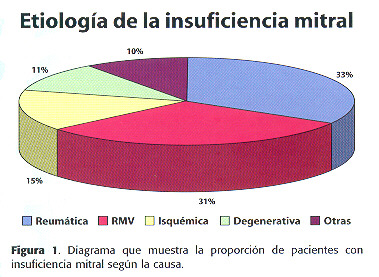
<body><![CDATA[estudio, se incluyeron consecutivamente 82 pacientes, 48 mujeres (59.7%)     y 34 hombres (37.8%) entre los 14 y 87 a&ntilde;os (promedio edad 50.3     +/- 20.7 a&ntilde;os, mediana 51 a&ntilde;os). Se encontraron 27 casos     de insuficiencia mitral pura reum&aacute;tica (32.9%), 25 por degeneraci&oacute;n     mixomatosa (30.5%), 12 de origen isqu&eacute;mico (14.6%), 9 con enfermedad     degenerativa (11%), 4 por dilataci&oacute;n del anillo secundaria a miocardiopat&iacute;a     dilatada no sospechada (4.9%), 2 con valvulitis l&uacute;pica (2.4%), 2     que no se pudieron clasificar (2.4%) y una con endocarditis (1.2%), <B>(<A HREF="#figura1">     figura 1</A> ).</B></FONT></FONT></DT>     <DT style="text-align: justify; ">     ]]></body>
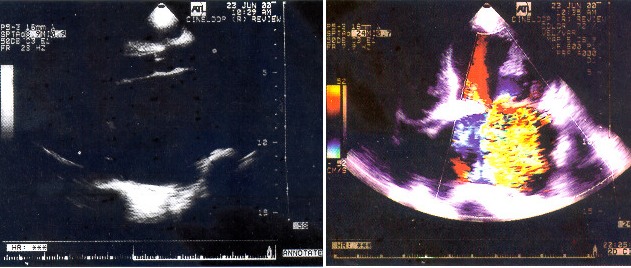
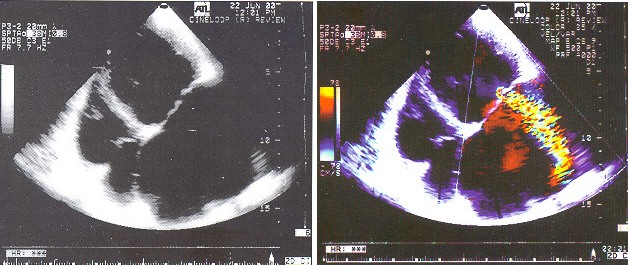
<body><![CDATA[<B><FONT FACE="Arial,Helvetica"><FONT SIZE=-1>&nbsp;</FONT></FONT></B></DT>     <DT style="text-align: justify; ">     <FONT FACE="Arial,Helvetica"><FONT SIZE=-1>Sesenta y dos casos presentaron     insuficiencia mitral leve a moderada (76.7%) y 18 severa (21.9%). De estos     18 pacientes, la mayor&iacute;a (77%) corresponden a causa reum&aacute;tica     o mixoide en igual proporci&oacute;n (9 de cada grupo), <B>(<A HREF="#figura2">     figuras 2</A> y <A HREF="#figura3">3</A> ).</B></FONT></FONT></DT>     <DT style="text-align: justify; ">     <B><FONT FACE="Arial,Helvetica"><FONT SIZE=-1>&nbsp;</FONT></FONT></B></DT>     <DT style="text-align: justify; ">     ]]></body>
<body><![CDATA[<FONT FACE="Arial,Helvetica"><FONT SIZE=-1>Sesenta y un pacientes presentaban     funci&oacute;n sist&oacute;lica ventricular izquierda normal (75.6%) y     21 con alg&uacute;n grado de deterioro.</FONT></FONT></DT>     <DT style="text-align: justify; ">     <FONT FACE="Arial,Helvetica"><FONT SIZE=-1>&nbsp;</FONT></FONT></DT>     <DT style="text-align: justify; ">     <B><FONT FACE="Arial,Helvetica"><FONT SIZE=-1>Discusi&oacute;n</FONT></FONT></B></DT>     <DT style="text-align: justify; ">     <B><FONT FACE="Arial,Helvetica"><FONT SIZE=-1>&nbsp;</FONT></FONT></B></DT>     <DT style="text-align: justify; ">     ]]></body>
<body><![CDATA[<FONT FACE="Arial,Helvetica"><FONT SIZE=-1>El hallazgo m&aacute;s notable     y esperable de esta serie es la mayor prevalencia de causa reum&aacute;tica     y mixoide, a diferencia de lo que se reporta en series norteamericanas     y en otros pa&iacute;ses industrializados. En un estudio patol&oacute;gico     publicado por Waller (<A HREF="#1">1</A> ) y colaboradores la causa principal     de insuficiencia mitral en los Estados Unidos en un alto porcentaje (66%     de los casos) fue el prolapso de v&aacute;lvula mitral por degeneraci&oacute;n     mixoide. Un 27% fue por cardiopat&iacute;a isqu&eacute;mica un 5 % por     endocarditis y solamente un 1 % de los casos de ellos fueron atribuibles     a enfermedad reum&aacute;tica.</FONT></FONT></DT>     ]]></body>
<body><![CDATA[<DT style="text-align: justify; ">     <FONT FACE="Arial,Helvetica"><FONT SIZE=-1>&nbsp;</FONT></FONT></DT>     <DT style="text-align: justify; ">     <FONT FACE="Arial,Helvetica"><FONT SIZE=-1>Esto denota que la fiebre reum&aacute;tica     sigue ocupando un lugar importante como causa productora de valvulopat&iacute;a     mitral en nuestro pa&iacute;s, por lo que la experiencia adquirida en este     tipo de afecci&oacute;n valvular es amplia y variada. Es sabido que la     prevalencia de fiebre reum&aacute;tica es paralela a las condiciones socioecon&oacute;micas,     de manera que en los pa&iacute;ses no industrializados, las clases sociales     de menos recursos son las que generalmente se ven m&aacute;s afectadas     ]]></body>
<body><![CDATA[por esta entidad cl&iacute;nica. En los &uacute;ltimos a&ntilde;os, la     cardiopat&iacute;a reum&aacute;tica en Costa Rica mostr&oacute; un descenso     importante, y aunque no hay series que cuantifiquen esta observaci&oacute;n;     ha sido evidente el repunte que ha tomado en los &uacute;ltimos a&ntilde;os,     al menos en parte relacionado con la migraci&oacute;n nicarag&uuml;ense     y de otros pa&iacute;ses. En Europa la distribuci&oacute;n es similar a     las estad&iacute;sticas Norteamericanas, aunque un grupo italiano report&oacute;     porcentajes m&aacute;s parecidos a los de este estudio (<A HREF="#7">7</A>     ,<A HREF="#8">8</A> ). Cabe anotar que tambi&eacute;n en el subgrupo con     disfunci&oacute;n valvular severa, se mantuvo similar proporci&oacute;n     ]]></body>
<body><![CDATA[entre las causas reum&aacute;tica y mixoide.</FONT></FONT></DT>     <DT style="text-align: justify; ">     <FONT FACE="Arial,Helvetica"><FONT SIZE=-1>&nbsp;</FONT></FONT></DT>     <DT style="text-align: justify; ">     <FONT FACE="Arial,Helvetica"><FONT SIZE=-1>La enfermedad arterial coronaria     que causa isquemia o lesi&oacute;n de los m&uacute;sculos papilares es     una causa com&uacute;n en la actualidad debido a su alta prevalencia en     pa&iacute;ses desarrolados (<A HREF="#9">9</A> ,<A HREF="#10">10</A> ).     Aunque tambi&eacute;n lo es en nuestros pa&iacute;ses latinoamericanos,     de igual forma es muy prevalente a&uacute;n la fiebre reum&aacute;tica,     ]]></body>
<body><![CDATA[lo que determina esta gran diferencia regional, como ya se coment&oacute;.</FONT></FONT></DT>     <DT style="text-align: justify; ">     <FONT FACE="Arial,Helvetica"><FONT SIZE=-1>Respecto a los datos obtenidos,     es de notar la mayor proporci&oacute;n de mujeres, hallazgo m&aacute;s     frecuente en estenosis mitral. Y con respecto a la edad, aunque algunos     pacientes son muy j&oacute;venes, el promedio de edad (51 a&ntilde;os)     es indicativo de la evoluci&oacute;n lenta de esta valvulopat&iacute;a     por sobrecarga de volumen, a diferencia de las por sobrecarga de presi&oacute;n     de causa reum&aacute;tica en que habitualmente se espera un inicio de s&iacute;ntomas     m&aacute;s temprano.</FONT></FONT></DT>     ]]></body>
<body><![CDATA[<DT style="text-align: justify; ">     <FONT FACE="Arial,Helvetica"><FONT SIZE=-1>&nbsp;</FONT></FONT></DT>     <DT style="text-align: justify; ">     <FONT FACE="Arial,Helvetica"><FONT SIZE=-1>El hallazgo de funci&oacute;n     ventricular preservada en la mayor&iacute;a de los pacientes tambi&eacute;n     refleja la evoluci&oacute;n relativamente lenta y benigna de esta condici&oacute;n,     pero es bien conocida tambi&eacute;n la controversia respecto al momento     quir&uacute;rgico en pacientes asintom&aacute;ticos dada la posibilidad     de progresi&oacute;n y s&iacute;ntomas incapacitantes (<A HREF="#8">8</A>     ).</FONT></FONT></DT>     ]]></body>
<body><![CDATA[<DT style="text-align: justify; ">     <FONT FACE="Arial,Helvetica"><FONT SIZE=-1>&nbsp;</FONT></FONT></DT>     <DT style="text-align: justify; ">     <FONT FACE="Arial,Helvetica"><FONT SIZE=-1>Los hallazgos obtenidos son     extrapolables al pa&iacute;s, ya que se trata de un centro de referencia     cuya &aacute;rea de atracci&oacute;n abarca alrededor del 40% del territorio     nacional.</FONT></FONT></DT>     <DT style="text-align: justify; ">     <FONT FACE="Arial,Helvetica"><FONT SIZE=-1>&nbsp;</FONT></FONT></DT>     <DT style="text-align: justify; ">     ]]></body>
<body><![CDATA[<B><FONT FACE="Arial,Helvetica"><FONT SIZE=-1>Conclusi&oacute;n</FONT></FONT></B></DT>     <DT style="text-align: justify; ">     <B><FONT FACE="Arial,Helvetica"><FONT SIZE=-1>&nbsp;</FONT></FONT></B></DT>     <DT style="text-align: justify; ">     <FONT FACE="Arial,Helvetica"><FONT SIZE=-1>En esta serie se encontr&oacute;     prevalencia similar de la causa reum&aacute;tica y el prolapso de la valvula     mitral mixoide, las m&aacute;s frecuentes de insuficiencia mitral pura.     La isqu&eacute;mica ocup&oacute; el tercer lugar. La mayor&iacute;a de     los casos fueron leves a moderadas y de los casos con insuficiencia mitral     severa, se di&oacute; la misma proporci&oacute;n.</FONT></FONT></DT>     ]]></body>
<body><![CDATA[<DT style="text-align: justify; ">     <FONT FACE="Arial,Helvetica"><FONT SIZE=-1>&nbsp;</FONT></FONT></DT>     <DT style="text-align: justify; ">     <FONT FACE="Arial,Helvetica"><FONT SIZE=-1>&nbsp;</FONT></FONT></DT>     </DL>     <CENTER><A NAME="figura1"></A><IMG SRC="/img/fbpe/rcc/v5n1/2101i1.JPG" HEIGHT=277 WIDTH=379></CENTER>      
<CENTER>&nbsp;</CENTER>      <CENTER>&nbsp;<A NAME="figura2"></A><IMG SRC="/img/fbpe/rcc/v5n1/2101i02.JPG" HEIGHT=268 WIDTH=631></CENTER>  <DL>     
<CENTER>     <DT> <FONT FACE="Arial,Helvetica"><FONT SIZE=-1><B>Figura 2.&nbsp;</B> Un caso de insuficiencia mitral severa por valvulopat&iacute;a reum&aacute;tica. En el recuadro <U>izquierdo</U>, eje largo paraesternal, se obser dilataci&oacute;n severa del atrio izquierdo. En el <U>derecho</U>, el mapeo con doppler color demuestra un flujo retr&oacute;grado hacia el atrio izquierdo indicativo de disfunci&oacute;n valvular grave.</FONT></FONT></DT></CENTER> </DL>      ]]></body>
<body><![CDATA[<CENTER></CENTER>      <CENTER><A NAME="figura3"></A><IMG SRC="/img/fbpe/rcc/v5n1/2101i03.JPG" HEIGHT=265 WIDTH=628></CENTER>      
<CENTER>&nbsp;</CENTER>      <CENTER><FONT FACE="Arial,Helvetica"><FONT SIZE=-1><B>&nbsp;Figura 3.</B> Insuficiencia mitral por degeneraci&oacute;n mixoide de la v&aacute;lvula mitral. En el recuadro <U>izquierdo</U>, vista de cuatro c&aacute;maras, dilataci&oacute;n severa del atrio izquierdo comprimiendo al derecho, se observa una v&aacute;lvula mitral redundante y engrosada. En el <U>derecho</U>, el mapeo con doppler color permite estimar la regurgitaci&oacute;n como severa.</FONT></FONT></CENTER>  <DL> <DT style="text-align: justify; "> <FONT FACE="Arial,Helvetica"><FONT SIZE=-1>&nbsp;</FONT></FONT></DT>  <DT style="text-align: justify; "> <B><FONT FACE="Arial,Helvetica"><FONT SIZE=-1>Referencias</FONT></FONT></B></DT>  <DT style="text-align: justify; "> <B><FONT FACE="Arial,Helvetica"><FONT SIZE=-1>&nbsp;</FONT></FONT></B></DT>      <!-- ref --><DT> <A NAME="1"></A><FONT FACE="Arial,Helvetica"><FONT SIZE=-1>1- Waller BF, Howard J, fess S. Pathology of mitral valve stenosis and pure mitral valve regurgitation:Part II. Clin Cardiol 1994;17(7):395-402</FONT></FONT></DT>    &nbsp;&nbsp;&nbsp;&nbsp;&nbsp;&nbsp;&nbsp;&nbsp;[&#160;<a href="javascript:void(0);" onclick="javascript: window.open('/scielo.php?script=sci_nlinks&ref=749443&pid=S1409-4142200300010000500001&lng=','','width=640,height=500,resizable=yes,scrollbars=1,menubar=yes,');">Links</a>&#160;]<!-- end-ref --><DT> <FONT FACE="Arial,Helvetica"><FONT SIZE=-1>&nbsp;</FONT></FONT></DT>      <!-- ref --><DT> <A NAME="2"></A><FONT FACE="Arial,Helvetica"><FONT SIZE=-1>2- Kalangos A, Beghetti M, Vala D,et al Anterior mitral leaflet prolapse as a primary cause of pure rheumatic mitral insufficiency. Ann Thorac Surg 2000;69(3):755-61</FONT></FONT></DT>    &nbsp;&nbsp;&nbsp;&nbsp;&nbsp;&nbsp;&nbsp;&nbsp;[&#160;<a href="javascript:void(0);" onclick="javascript: window.open('/scielo.php?script=sci_nlinks&ref=749445&pid=S1409-4142200300010000500002&lng=','','width=640,height=500,resizable=yes,scrollbars=1,menubar=yes,');">Links</a>&#160;]<!-- end-ref --><DT> <FONT FACE="Arial,Helvetica"><FONT SIZE=-1>&nbsp;</FONT></FONT></DT>      <!-- ref --><DT> <A NAME="3"></A><FONT FACE="Arial,Helvetica"><FONT SIZE=-1>3- Luxereau P, Dorent R, De Gevigney G, Bruneval P, Chomette G, Delahaye G. Aetiology of surgically treated mitral regurgitation. Eur Heart J 1991 Jul;12 Suppl B:2-4</FONT></FONT></DT>    &nbsp;&nbsp;&nbsp;&nbsp;&nbsp;&nbsp;&nbsp;&nbsp;[&#160;<a href="javascript:void(0);" onclick="javascript: window.open('/scielo.php?script=sci_nlinks&ref=749447&pid=S1409-4142200300010000500003&lng=','','width=640,height=500,resizable=yes,scrollbars=1,menubar=yes,');">Links</a>&#160;]<!-- end-ref --><DT> <FONT FACE="Arial,Helvetica"><FONT SIZE=-1>&nbsp;</FONT></FONT></DT>      ]]></body>
<body><![CDATA[<!-- ref --><DT> <A NAME="4"></A><FONT FACE="Arial,Helvetica"><FONT SIZE=-1>4- Amlie JP, Langmark F, Storstein O. Pure mitral regurgitation. Etiology, pathology and clinical aspects. Acta Med Scand 1976;200(3):201-8</FONT></FONT></DT>    &nbsp;&nbsp;&nbsp;&nbsp;&nbsp;&nbsp;&nbsp;&nbsp;[&#160;<a href="javascript:void(0);" onclick="javascript: window.open('/scielo.php?script=sci_nlinks&ref=749449&pid=S1409-4142200300010000500004&lng=','','width=640,height=500,resizable=yes,scrollbars=1,menubar=yes,');">Links</a>&#160;]<!-- end-ref --><DT> <FONT FACE="Arial,Helvetica"><FONT SIZE=-1>&nbsp;</FONT></FONT></DT>      <!-- ref --><DT> <A NAME="5"></A><FONT FACE="Arial,Helvetica"><FONT SIZE=-1>5.- Penther P, Boschat J, Etienne Y, Jobic Y. Current anatomical and etiological aspects of chronic or subacute, surgical, pure mitral valve insufficiency in adults. Apropos of 75 medicosurgical cases. Ann Cardiol Angeiol (Paris) 1991 Apr;40(4):181-5</FONT></FONT></DT>    &nbsp;&nbsp;&nbsp;&nbsp;&nbsp;&nbsp;&nbsp;&nbsp;[&#160;<a href="javascript:void(0);" onclick="javascript: window.open('/scielo.php?script=sci_nlinks&ref=749451&pid=S1409-4142200300010000500005&lng=','','width=640,height=500,resizable=yes,scrollbars=1,menubar=yes,');">Links</a>&#160;]<!-- end-ref --><DT> <FONT FACE="Arial,Helvetica"><FONT SIZE=-1>&nbsp;</FONT></FONT></DT>      <DT> <A NAME="6"></A><FONT FACE="Arial,Helvetica"><FONT SIZE=-1>6- Roberts WC Morphologic features of the normal and abnormal mitral valve. Am J Cardiol 1983 Mar 15;51(6):1005-28</FONT></FONT></DT>      <DT> <FONT FACE="Arial,Helvetica"><FONT SIZE=-1>&nbsp;</FONT></FONT></DT>      <!-- ref --><DT> <A NAME="7"></A><FONT FACE="Arial,Helvetica"><FONT SIZE=-1>7- Falco A, Sante P, Renzulli A, et al. Etiology and incidence of pure mitral insufficiency: a morphological study of 926 native valves. Cardiologia 1990 Apr;35(4):327-30</FONT></FONT></DT>    &nbsp;&nbsp;&nbsp;&nbsp;&nbsp;&nbsp;&nbsp;&nbsp;[&#160;<a href="javascript:void(0);" onclick="javascript: window.open('/scielo.php?script=sci_nlinks&ref=749455&pid=S1409-4142200300010000500007&lng=','','width=640,height=500,resizable=yes,scrollbars=1,menubar=yes,');">Links</a>&#160;]<!-- end-ref --><DT> <FONT FACE="Arial,Helvetica"><FONT SIZE=-1>&nbsp;</FONT></FONT></DT>      <!-- ref --><DT> <A NAME="8"></A><FONT FACE="Arial,Helvetica"><FONT SIZE=-1>8- Delaye J, Beaune J, Gayet JL, Fatayri W, Silvestre A. Current etiology of organic mitral insufficiency in adults. Arch Mal Coeur Vaiss 1983 Sep;76(9):1072-6</FONT></FONT></DT>    &nbsp;&nbsp;&nbsp;&nbsp;&nbsp;&nbsp;&nbsp;&nbsp;[&#160;<a href="javascript:void(0);" onclick="javascript: window.open('/scielo.php?script=sci_nlinks&ref=749457&pid=S1409-4142200300010000500008&lng=','','width=640,height=500,resizable=yes,scrollbars=1,menubar=yes,');">Links</a>&#160;]<!-- end-ref --><DT> <FONT FACE="Arial,Helvetica"><FONT SIZE=-1>&nbsp;</FONT></FONT></DT>      ]]></body>
<body><![CDATA[<!-- ref --><DT> <A NAME="9"></A><FONT FACE="Arial,Helvetica"><FONT SIZE=-1>9- Pizzarello RA, Turnier J, Goldman MA, Dworkin P, Oka M, Tortolani AJ, Padmanabhan VT. Clinical and echocardiographic features of isolated severe pure mitral regurgitation. Clin Cardiol 1984 Nov;7(11):565-71</FONT></FONT></DT>    &nbsp;&nbsp;&nbsp;&nbsp;&nbsp;&nbsp;&nbsp;&nbsp;[&#160;<a href="javascript:void(0);" onclick="javascript: window.open('/scielo.php?script=sci_nlinks&ref=749459&pid=S1409-4142200300010000500009&lng=','','width=640,height=500,resizable=yes,scrollbars=1,menubar=yes,');">Links</a>&#160;]<!-- end-ref --><DT> <FONT FACE="Arial,Helvetica"><FONT SIZE=-1>&nbsp;</FONT></FONT></DT>      <!-- ref --><DT> <A NAME="10"></A><FONT FACE="Arial,Helvetica"><FONT SIZE=-1>10- Di Chiara A, Plewka M, Fioretti PM. Systolic anterior movement of mitral valve during acute apical myocardial infarction: An unusual mechanism of acute mitral regurgitation. J Am Soc Echocardiogr 1999;12(12):1117-21</FONT></FONT></DT>    &nbsp;&nbsp;&nbsp;&nbsp;&nbsp;&nbsp;&nbsp;&nbsp;[&#160;<a href="javascript:void(0);" onclick="javascript: window.open('/scielo.php?script=sci_nlinks&ref=749461&pid=S1409-4142200300010000500010&lng=','','width=640,height=500,resizable=yes,scrollbars=1,menubar=yes,');">Links</a>&#160;]<!-- end-ref --><DT> <FONT FACE="Arial,Helvetica"><FONT SIZE=-1>&nbsp;</FONT></FONT></DT>      <DT> <FONT FACE="Arial,Helvetica"><FONT SIZE=-1>&nbsp;</FONT></FONT></DT> </DL>  <HR width="80%" size="1" noshade=""> <DL>     <DT> <FONT FACE="Arial,Helvetica"><FONT SIZE=-1>&nbsp;<A NAME="*a"></A> <A HREF="#*">*</A> Departamento de Ecocardiograf&iacute;a, Servicio de Cardiolog&iacute;a, Hospital M&eacute;xico, San Jos&eacute;, Costa Rica.</FONT></FONT></DT>      <DT> <FONT FACE="Arial,Helvetica"><FONT SIZE=-1>Correspondencia: Servicio de Cardiolog&iacute;a. Hospital M&eacute;xico, San Jos&eacute;, Costa Rica.</FONT></FONT></DT>      <DT> <FONT FACE="Arial,Helvetica"><FONT SIZE=-1>Telefax (506) 296-7259<A HREF="mailto:baltesq@racsa.co.cr"> e-mail baltesq@racsa.co.cr</A></FONT></FONT></DT> </DL>       ]]></body><back>
<ref-list>
<ref id="B1">
<label>1</label><nlm-citation citation-type="journal">
<person-group person-group-type="author">
<name>
<surname><![CDATA[Waller]]></surname>
<given-names><![CDATA[BF]]></given-names>
</name>
<name>
<surname><![CDATA[Howard]]></surname>
<given-names><![CDATA[J]]></given-names>
</name>
<name>
<surname><![CDATA[fess]]></surname>
<given-names><![CDATA[S]]></given-names>
</name>
</person-group>
<article-title xml:lang="en"><![CDATA[Pathology of mitral valve stenosis and pure mitral valve regurgitation:Part II]]></article-title>
<source><![CDATA[Clin Cardiol]]></source>
<year>1994</year>
<volume>17</volume>
<numero>^s7</numero>
<issue>^s7</issue>
<supplement>7</supplement>
<page-range>395-402</page-range></nlm-citation>
</ref>
<ref id="B2">
<label>2</label><nlm-citation citation-type="journal">
<person-group person-group-type="author">
<name>
<surname><![CDATA[Kalangos]]></surname>
<given-names><![CDATA[A]]></given-names>
</name>
<name>
<surname><![CDATA[Beghetti]]></surname>
<given-names><![CDATA[M]]></given-names>
</name>
<name>
<surname><![CDATA[Vala]]></surname>
<given-names><![CDATA[D]]></given-names>
</name>
</person-group>
<article-title xml:lang="en"><![CDATA[Anterior mitral leaflet prolapse as a primary cause of pure rheumatic mitral insufficiency]]></article-title>
<source><![CDATA[Ann Thorac Surg]]></source>
<year>2000</year>
<volume>69</volume>
<numero>^s3</numero>
<issue>^s3</issue>
<supplement>3</supplement>
<page-range>755-61</page-range></nlm-citation>
</ref>
<ref id="B3">
<label>3</label><nlm-citation citation-type="journal">
<person-group person-group-type="author">
<name>
<surname><![CDATA[Luxereau]]></surname>
<given-names><![CDATA[P]]></given-names>
</name>
<name>
<surname><![CDATA[Dorent]]></surname>
<given-names><![CDATA[R]]></given-names>
</name>
<name>
<surname><![CDATA[De Gevigney]]></surname>
<given-names><![CDATA[G]]></given-names>
</name>
<name>
<surname><![CDATA[Bruneval]]></surname>
<given-names><![CDATA[P]]></given-names>
</name>
<name>
<surname><![CDATA[Chomette]]></surname>
<given-names><![CDATA[G]]></given-names>
</name>
<name>
<surname><![CDATA[Delahaye]]></surname>
<given-names><![CDATA[G]]></given-names>
</name>
</person-group>
<article-title xml:lang="en"><![CDATA[Aetiology of surgically treated mitral regurgitation]]></article-title>
<source><![CDATA[Eur Heart J]]></source>
<year>1991</year>
<volume>12</volume>
<numero>^sB</numero>
<issue>^sB</issue>
<supplement>B</supplement>
<page-range>2-4</page-range></nlm-citation>
</ref>
<ref id="B4">
<label>4</label><nlm-citation citation-type="journal">
<person-group person-group-type="author">
<name>
<surname><![CDATA[Amlie]]></surname>
<given-names><![CDATA[JP]]></given-names>
</name>
<name>
<surname><![CDATA[Langmark]]></surname>
<given-names><![CDATA[F]]></given-names>
</name>
<name>
<surname><![CDATA[Storstein]]></surname>
<given-names><![CDATA[O]]></given-names>
</name>
</person-group>
<article-title xml:lang="en"><![CDATA[Pure mitral regurgitation. Etiology, pathology and clinical aspects]]></article-title>
<source><![CDATA[Acta Med Scand]]></source>
<year>1976</year>
<volume>200</volume>
<numero>^s3</numero>
<issue>^s3</issue>
<supplement>3</supplement>
<page-range>201-8</page-range></nlm-citation>
</ref>
<ref id="B5">
<label>5</label><nlm-citation citation-type="journal">
<person-group person-group-type="author">
<name>
<surname><![CDATA[Penther]]></surname>
<given-names><![CDATA[P]]></given-names>
</name>
<name>
<surname><![CDATA[Boschat]]></surname>
<given-names><![CDATA[J]]></given-names>
</name>
<name>
<surname><![CDATA[Etienne]]></surname>
<given-names><![CDATA[Y]]></given-names>
</name>
<name>
<surname><![CDATA[Jobic]]></surname>
<given-names><![CDATA[Y]]></given-names>
</name>
</person-group>
<article-title xml:lang="en"><![CDATA[Current anatomical and etiological aspects of chronic or subacute, surgical, pure mitral valve insufficiency in adults. Apropos of 75 medicosurgical cases]]></article-title>
<source><![CDATA[Ann Cardiol Angeiol]]></source>
<year>1991</year>
<volume>40</volume>
<numero>^s4</numero>
<issue>^s4</issue>
<supplement>4</supplement>
<page-range>181-5</page-range><publisher-loc><![CDATA[Paris ]]></publisher-loc>
</nlm-citation>
</ref>
<ref id="B6">
<label>6</label><nlm-citation citation-type="journal">
<person-group person-group-type="author">
<name>
<surname><![CDATA[Roberts]]></surname>
<given-names><![CDATA[WC]]></given-names>
</name>
</person-group>
<article-title xml:lang="en"><![CDATA[Morphologic features of the normal and abnormal mitral valve]]></article-title>
<source><![CDATA[Am J Cardiol]]></source>
<year>1983</year>
<volume>51</volume>
<numero>^s6</numero>
<issue>^s6</issue>
<supplement>6</supplement>
<page-range>1005-28</page-range></nlm-citation>
</ref>
<ref id="B7">
<label>7</label><nlm-citation citation-type="journal">
<person-group person-group-type="author">
<name>
<surname><![CDATA[Falco]]></surname>
<given-names><![CDATA[A]]></given-names>
</name>
<name>
<surname><![CDATA[Sante]]></surname>
<given-names><![CDATA[P]]></given-names>
</name>
<name>
<surname><![CDATA[Renzulli]]></surname>
<given-names><![CDATA[A]]></given-names>
</name>
</person-group>
<article-title xml:lang="en"><![CDATA[Etiology and incidence of pure mitral insufficiency: a morphological study of 926 native valves]]></article-title>
<source><![CDATA[Cardiologia]]></source>
<year>1990</year>
<volume>35</volume>
<numero>^s4</numero>
<issue>^s4</issue>
<supplement>4</supplement>
<page-range>327-30</page-range></nlm-citation>
</ref>
<ref id="B8">
<label>8</label><nlm-citation citation-type="journal">
<person-group person-group-type="author">
<name>
<surname><![CDATA[Delaye]]></surname>
<given-names><![CDATA[J]]></given-names>
</name>
<name>
<surname><![CDATA[Beaune]]></surname>
<given-names><![CDATA[J]]></given-names>
</name>
<name>
<surname><![CDATA[Gayet]]></surname>
<given-names><![CDATA[JL]]></given-names>
</name>
<name>
<surname><![CDATA[Fatayri]]></surname>
<given-names><![CDATA[W]]></given-names>
</name>
<name>
<surname><![CDATA[Silvestre]]></surname>
<given-names><![CDATA[A]]></given-names>
</name>
</person-group>
<article-title xml:lang="en"><![CDATA[Current etiology of organic mitral insufficiency in adults]]></article-title>
<source><![CDATA[Arch Mal Coeur Vaiss]]></source>
<year>1983</year>
<volume>76</volume>
<numero>^s9</numero>
<issue>^s9</issue>
<supplement>9</supplement>
<page-range>1072-6</page-range></nlm-citation>
</ref>
<ref id="B9">
<label>9</label><nlm-citation citation-type="journal">
<person-group person-group-type="author">
<name>
<surname><![CDATA[Pizzarello]]></surname>
<given-names><![CDATA[RA]]></given-names>
</name>
<name>
<surname><![CDATA[Turnier]]></surname>
<given-names><![CDATA[J]]></given-names>
</name>
<name>
<surname><![CDATA[Goldman]]></surname>
<given-names><![CDATA[MA]]></given-names>
</name>
<name>
<surname><![CDATA[Dworkin]]></surname>
<given-names><![CDATA[P]]></given-names>
</name>
<name>
<surname><![CDATA[Oka]]></surname>
<given-names><![CDATA[M]]></given-names>
</name>
<name>
<surname><![CDATA[Tortolani]]></surname>
<given-names><![CDATA[AJ]]></given-names>
</name>
<name>
<surname><![CDATA[Padmanabhan]]></surname>
<given-names><![CDATA[VT]]></given-names>
</name>
</person-group>
<article-title xml:lang="en"><![CDATA[Clinical and echocardiographic features of isolated severe pure mitral regurgitation]]></article-title>
<source><![CDATA[Clin Cardiol]]></source>
<year>1984</year>
<volume>7</volume>
<numero>^s11</numero>
<issue>^s11</issue>
<supplement>11</supplement>
<page-range>565-71</page-range></nlm-citation>
</ref>
<ref id="B10">
<label>10</label><nlm-citation citation-type="journal">
<person-group person-group-type="author">
<name>
<surname><![CDATA[Di Chiara]]></surname>
<given-names><![CDATA[A]]></given-names>
</name>
<name>
<surname><![CDATA[Plewka]]></surname>
<given-names><![CDATA[M]]></given-names>
</name>
<name>
<surname><![CDATA[Fioretti]]></surname>
<given-names><![CDATA[PM]]></given-names>
</name>
</person-group>
<article-title xml:lang="en"><![CDATA[Systolic anterior movement of mitral valve during acute apical myocardial infarction: An unusual mechanism of acute mitral regurgitation]]></article-title>
<source><![CDATA[J Am Soc Echocardiogr]]></source>
<year>1999</year>
<volume>12</volume>
<numero>^s12</numero>
<issue>^s12</issue>
<supplement>12</supplement>
<page-range>1117-21</page-range></nlm-citation>
</ref>
</ref-list>
</back>
</article>