<?xml version="1.0" encoding="ISO-8859-1"?><article xmlns:mml="http://www.w3.org/1998/Math/MathML" xmlns:xlink="http://www.w3.org/1999/xlink" xmlns:xsi="http://www.w3.org/2001/XMLSchema-instance">
<front>
<journal-meta>
<journal-id>1409-1429</journal-id>
<journal-title><![CDATA[Revista Costarricense de Salud Pública]]></journal-title>
<abbrev-journal-title><![CDATA[Rev. costarric. salud pública]]></abbrev-journal-title>
<issn>1409-1429</issn>
<publisher>
<publisher-name><![CDATA[Asociación Costarricense de Salud Pública]]></publisher-name>
</publisher>
</journal-meta>
<article-meta>
<article-id>S1409-14292011000100003</article-id>
<title-group>
<article-title xml:lang="en"><![CDATA[Dengue threat: adaptation needs in a disadvantaged neighborhood in Medellín-Colombia]]></article-title>
<article-title xml:lang="es"><![CDATA[Dengue como amenaza: la necesidad de adaptarse de un barrio desfavorecido en Medellín-Colombia]]></article-title>
</title-group>
<contrib-group>
<contrib contrib-type="author">
<name>
<surname><![CDATA[Azoh Barry]]></surname>
<given-names><![CDATA[José]]></given-names>
</name>
</contrib>
</contrib-group>
<aff id="A">
<institution><![CDATA[,  ]]></institution>
<addr-line><![CDATA[ ]]></addr-line>
</aff>
<pub-date pub-type="pub">
<day>00</day>
<month>06</month>
<year>2011</year>
</pub-date>
<pub-date pub-type="epub">
<day>00</day>
<month>06</month>
<year>2011</year>
</pub-date>
<volume>20</volume>
<numero>1</numero>
<fpage>16</fpage>
<lpage>24</lpage>
<copyright-statement/>
<copyright-year/>
<self-uri xlink:href="http://www.scielo.sa.cr/scielo.php?script=sci_arttext&amp;pid=S1409-14292011000100003&amp;lng=en&amp;nrm=iso"></self-uri><self-uri xlink:href="http://www.scielo.sa.cr/scielo.php?script=sci_abstract&amp;pid=S1409-14292011000100003&amp;lng=en&amp;nrm=iso"></self-uri><self-uri xlink:href="http://www.scielo.sa.cr/scielo.php?script=sci_pdf&amp;pid=S1409-14292011000100003&amp;lng=en&amp;nrm=iso"></self-uri><abstract abstract-type="short" xml:lang="en"><p><![CDATA[Background/Objective: Dengue fever is mosquito-borne viral disease with severe forms that are fatal. It is a complex and multi-factorial disease whose control is challenging. This growing public health problem is part of climate-sensitive diseases (seasonality) which call for adaptation strategies, especially among the most disadvantaged and vulnerable populations. The objective of this article is to address the use of insecticide-treated materials as a technological response needed for a human adaptive strategy to dengue risk transmission. Methods: First-hand data were collected throughout field work performed following a multidisciplinary methodology. A climatic characterization of the study site - Vallejuelos Medellín--was performed in order to observe the behavior of two variables: temperature and precipitation. In addition, a socio-entomological survey was carried out in a random sample of 401 households. Based on their socioeconomic characteristics, households were classified into poor and very poor strata. Results: Storing water is a widespread practice among community residents. Indices of infestation by Aedes aegypti mosquitoes recorded at the household level were high in both climatic seasons, but higher during the wet one. All houses surveyed did not have barriers such as window and door screens likely to promote vector control in the indoor environment. Conclusions: There is a high epidemiological risk all year long, along with an exposure to vector-human contact at the household level. The need for resorting to improved insecticide-treated materials is real. Such an appropriate technological response to a challenging health threat appears to be a valuable adaptation option among the socially disadvantaged]]></p></abstract>
<abstract abstract-type="short" xml:lang="es"><p><![CDATA[Antecedentes/Objetivo: El dengue es una enfermedad viral transmitida por mosquitos con formas graves que son mortales. Compleja y multifactorial, cuyo control es difícil. Este problema creciente de salud pública forma parte de enfermedades sensibles al clima (estacionalidad), que exige estrategias de adaptación, especialmente entre las poblaciones más desfavorecidas y vulnerables. El objetivo de este artículo es abordar el uso de materiales tratados con insecticida como una respuesta tecnológica de una estrategia de adaptación humana al dengue, la transmisión de riesgos. Métodos: La fuente primaria de datos recolectados fue a través del trabajo de campo realizado con una metodología multidisciplinaria. Se realizo una caracterización climática del área de estudio (Vallejuelos-Medellín) que se llevó a cabo con el fin de observar el comportamiento de dos variables: temperatura y precipitación. Además, de una encuesta socioentomológica en una muestra aleatoria de 401 hogares. En base a sus características socioeconómicas, los hogares fueron clasificados en los estratos pobres y muy pobres. Resultados: El almacenamiento de agua es una práctica extendida entre los residentes de la comunidad. Se registraron índices altos de infestación por el mosquito Aedes aegypti en los hogares mayormente en la estación húmeda. Las casas encuestadas no tienen barreras, tales como ventanas y puertas, lo que las hace susceptibles de promover el control de vectores en el ambiente interior. Conclusiones: Existe un alto riesgo epidemiológico, durante todo el año, junto con una exposición al vector-humano en el ámbito del hogar. La necesidad de recurrir a la mejora de materiales tratados con insecticidas es real. Como una respuesta tecnológica adecuada a una amenaza para la salud, un reto que parece ser una opción valiosa de adaptación entre las personas socialmente desfavorecidas]]></p></abstract>
<kwd-group>
<kwd lng="en"><![CDATA[Dengue]]></kwd>
<kwd lng="en"><![CDATA[Epidemiology]]></kwd>
<kwd lng="en"><![CDATA[Vulnerability]]></kwd>
<kwd lng="en"><![CDATA[Adaptation]]></kwd>
<kwd lng="en"><![CDATA[Environment]]></kwd>
<kwd lng="en"><![CDATA[Medellín-Colombia]]></kwd>
<kwd lng="es"><![CDATA[Dengue, Epidemiología]]></kwd>
<kwd lng="en"><![CDATA[Vulnerabilidad]]></kwd>
<kwd lng="en"><![CDATA[Adaptación]]></kwd>
<kwd lng="en"><![CDATA[Medio Ambiente]]></kwd>
<kwd lng="en"><![CDATA[Medellin-Colombia]]></kwd>
</kwd-group>
</article-meta>
</front><body><![CDATA[ <div class="Section1">     <p class="MsoNormal" style="text-align: right;" align="right"><b  style=""><span style="font-family: Verdana;" lang="EN-US">Original<o:p></o:p></span></b></p>     <p class="MsoNormal" style="text-align: center;" align="center"><b  style=""><span style="font-family: Verdana;" lang="EN-US">Dengue threat: adaptation needs in a disadvantaged neighborhood in <span  class="SpellE">Medell&#237;n</span>-Colombia<o:p></o:p></span></b>    <br> </p>     <div>     <p class="MsoNormal" style="text-align: center;" align="center"><b  style=""><span style="font-family: Verdana;" lang="ES-CR">Dengue como amenaza: la necesidad de adaptarse de un barrio desfavorecido en Medell&#237;n-Colombia</span></b><span style="font-size: 24pt;" lang="ES-CR"><o:p></o:p></span></p> </div>     <div style="text-align: center;"><small><small><b  style="font-family: verdana;">Jos&#233; Azoh Barry</b><span style="font-family: verdana;"> </span></small></small>    <br> </div> <hr style="width: 100%; height: 2px;">     <div>     <p class="MsoNormal"><b><span  style="font-size: 11pt; font-family: Verdana;" lang="EN-US">Abstract<o:p></o:p></span></b></p>     ]]></body>
<body><![CDATA[<p style="text-align: justify;" class="MsoNormal"><b><span  style="font-size: 10pt; font-family: Verdana;" lang="EN-US">Background/Objective: </span></b><span style="font-size: 10pt; font-family: Verdana;"  lang="EN-US">Dengue fever is mosquito-borne viral disease with severe forms that are fatal. It is a complex and multi-factorial disease whose control is challenging. This growing public health problem is part of climate-sensitive diseases (seasonality) which call for adaptation strategies, especially among the most disadvantaged and vulnerable populations. The objective of this article is to address the use of insecticide-treated materials as a technological response needed for a human adaptive strategy to dengue risk transmission. <o:p></o:p></span></p>     <p style="text-align: justify;" class="MsoNormal"><b><span  style="font-size: 10pt; font-family: Verdana;" lang="EN-US">Methods: </span></b><span  style="font-size: 10pt; font-family: Verdana;" lang="EN-US">First-hand data were collected throughout field work performed following a multidisciplinary methodology. A climatic characterization of the study site &#8211; <span class="SpellE">Vallejuelos</span> <span class="SpellE">Medell&#237;n</span>--was performed in order to observe the behavior of two variables: temperature and precipitation. In addition, a socio-entomological survey was carried out in a random sample of 401 households. Based on their socioeconomic characteristics, households were classified into poor and very poor strata.<o:p></o:p></span></p>     <p style="text-align: justify;" class="MsoNormal"><b><span  style="font-size: 10pt; font-family: Verdana;" lang="EN-US">Results: </span></b><span  style="font-size: 10pt; font-family: Verdana;" lang="EN-US">Storing water is a widespread practice among community residents. Indices of infestation by <span class="SpellE"><i>Aedes</i></span><i> <span  class="SpellE">aegypti</span> </i>mosquitoes recorded at the household level were high in both climatic seasons, but higher during the wet one. All houses surveyed did not have barriers such as window and door screens likely to promote vector control in the indoor environment.<o:p></o:p></span></p>     <p style="text-align: justify;" class="MsoNormal"><b><span  style="font-size: 10pt; font-family: Verdana;" lang="EN-US">Conclusions: </span></b><span style="font-size: 10pt; font-family: Verdana;"  lang="EN-US">There is a high epidemiological risk all year long, along with an exposure to vector-human contact at the household level. The need for resorting to improved insecticide-treated materials is real. Such an appropriate technological response to a challenging health threat appears to be a valuable adaptation option among the socially disadvantaged.<o:p></o:p></span></p>     <p style="text-align: justify;" class="MsoNormal"><span class="SpellE"><b><span  style="font-size: 10pt; font-family: Verdana;" lang="ES-CR">Keywords</span></b></span><b><span  style="font-size: 10pt; font-family: Verdana;" lang="ES-CR">: </span></b><span style="font-size: 10pt; font-family: Verdana;"  lang="ES-CR">Dengue, <span class="SpellE">Epidemiology</span>; <span  class="SpellE">Vulnerability</span>; <span class="SpellE">Adaptation</span>, <span class="SpellE">Environment</span>, Medell&#237;n-Colombia. <u>(</u><span  class="SpellE">source</span>: <span class="SpellE">MeHs</span>, NLM) <o:p></o:p></span></p> </div>     <div>     <div>     <p class="MsoNormal"><b><span  style="font-size: 11pt; font-family: Verdana;" lang="ES-CR">Resumen<o:p></o:p></span></b></p>     <p style="text-align: justify;" class="MsoNormal"><b><span  style="font-size: 10pt; font-family: Verdana;" lang="ES-CR">Antecedentes/Objetivo: </span></b><span style="font-size: 10pt; font-family: Verdana;"  lang="ES-CR">El dengue es una enfermedad viral transmitida por mosquitos con formas graves que son mortales. Compleja y multifactorial, cuyo control es dif&#237;cil. Este problema creciente de salud p&#250;blica forma parte de enfermedades sensibles al clima (estacionalidad), que exige estrategias de adaptaci&#243;n, especialmente entre las poblaciones m&#225;s desfavorecidas y vulnerables. El objetivo de este art&#237;culo es abordar el uso de materiales tratados con insecticida como una respuesta tecnol&#243;gica de una estrategia de adaptaci&#243;n humana al dengue, la transmisi&#243;n de riesgos.<o:p></o:p></span></p>     <p style="text-align: justify;" class="MsoNormal"><b><span  style="font-size: 10pt; font-family: Verdana;" lang="ES-CR">M&#233;todos: </span></b><span  style="font-size: 10pt; font-family: Verdana;" lang="ES-CR">La fuente primaria de datos recolectados fue a trav&#233;s del trabajo de campo realizado con una metodolog&#237;a multidisciplinaria. Se realizo una caracterizaci&#243;n clim&#225;tica del &#225;rea de estudio (Vallejuelos-Medell&#237;n) que se llev&#243; a cabo con el fin de observar el comportamiento de dos variables: temperatura y precipitaci&#243;n. Adem&#225;s, de una encuesta <span class="SpellE">socioentomol&#243;gica</span> en una muestra aleatoria de 401 hogares. En base a sus caracter&#237;sticas socioecon&#243;micas, los hogares fueron clasificados en los estratos pobres y muy pobres. <o:p></o:p></span></p>     ]]></body>
<body><![CDATA[<p style="text-align: justify;" class="MsoNormal"><b><span  style="font-size: 10pt; font-family: Verdana;" lang="ES-CR">Resultados: </span></b><span style="font-size: 10pt; font-family: Verdana;"  lang="ES-CR">El almacenamiento de agua es una pr&#225;ctica extendida entre los residentes de la comunidad. Se registraron &#237;ndices altos de infestaci&#243;n por el mosquito <i>Aedes <span class="SpellE">aegypti</span> </i>en los hogares mayormente en la estaci&#243;n h&#250;meda. Las casas encuestadas no tienen barreras, tales como ventanas y puertas, lo que las hace susceptibles de promover el control de vectores en el ambiente interior.<span style="">&nbsp; </span>Conclusiones: Existe un alto riesgo epidemiol&#243;gico, durante todo el a&#241;o, junto con una exposici&#243;n al vector-humano en el &#225;mbito del hogar. La necesidad de recurrir a la mejora de materiales tratados con insecticidas es real. Como una respuesta tecnol&#243;gica adecuada a una amenaza para la salud, un reto que parece ser una opci&#243;n valiosa de adaptaci&#243;n entre las personas socialmente desfavorecidas<o:p></o:p></span></p>     <p style="text-align: justify;" class="MsoNormal"><b><span  style="font-size: 10pt; font-family: Verdana;" lang="ES-CR">Palabras clave: </span></b><span style="font-size: 10pt; font-family: Verdana;"  lang="ES-CR">Dengue, Epidemiolog&#237;a, Vulnerabilidad, Adaptaci&#243;n, Medio Ambiente, <span  class="SpellE">Medellin</span>-Colombia. </span><span  style="font-size: 10pt; font-family: Verdana;" lang="EN-US">(<span  class="SpellE">fuente</span>: <span class="SpellE">DeCS</span>, BIREME)</span><span style="" lang="EN-US"> <o:p></o:p></span></p> </div>     <div>     <p class="MsoNormal"><span  style="font-size: 10pt; font-family: Verdana;" lang="EN-US"><o:p></o:p> <hr style="width: 100%; height: 2px;"></span></p>     <p style="text-align: justify;" class="MsoNormal"><span  style="font-size: 10pt; font-family: Verdana;" lang="EN-US">Water is indispensable to life and, like food, is part of the first layer (physiological needs) of the hierarchy of needs as described in one of the personalities&#8217; theories (<a href="#1">1</a>). Fulfilling the deficit needs, inherently basic, is not only crucial for life, but also an acknowledged human right.<o:p></o:p></span></p>     <p style="text-align: justify;" class="MsoNormal"><span  style="font-size: 10pt; font-family: Verdana;" lang="EN-US">However, there still exist discrepancies in the availability of and access to clean water in many parts of the developing world. Such differentials in a context of rapid urbanization lead to secure water at the household level, in ways that pose threats to the environment and are challenging in terms of public health.<o:p></o:p></span></p>     <p style="text-align: justify;" class="MsoNormal"><span  style="font-size: 10pt; font-family: Verdana;" lang="EN-US">Access to clean running water available 24 hours all year long, good sanitation and regular garbage collection that discourage the proliferation of rodents and insects, cannot be taken for granted in many underserved urban communities of <st1:place w:st="on">Latin America</st1:place>. <span class="SpellE">Vallejuelos</span> in <span class="SpellE">Medell&#237;n</span> (<st1:country-region w:st="on"><st1:place w:st="on">Colombia</st1:place></st1:country-region>), a slum home to people who have been displaced to escape community-wide disruptions (e.g. armed conflicts), and/or who have invaded unplanned settlements is not an exception. It is a context where <span  class="SpellE">waterstorage</span> related-practices interact with the ecology of the <span class="SpellE">Aedes</span> <span class="SpellE">aegypti</span> mosquito, main vector of dengue fever in the <st1:country-region w:st="on"><st1:place w:st="on">Americas</st1:place></st1:country-region>.<o:p></o:p></span></p>     <p style="text-align: justify;" class="MsoNormal"><span  style="font-size: 10pt; font-family: Verdana;" lang="EN-US">Dengue, an infectious disease said to be the most important <span class="SpellE">arboviral</span> one, afflicts humans in many countries worldwide and can lead to death throughout its severe forms: dengue shock syndrome (DSS) and dengue hemorrhagic fever (DHF). The disease is hyper endemic, a term which refers to the circulation of all four distinct virus serotypes(DENV-1, DENV-2,DENV-3 and DENV-4), and is characterized by a heavy burden felt at differing levels (<a href="#2">2</a>,<a href="#3">3</a>,<a  href="#4">4</a>). However, whilst the disease is expanding, a licensed vaccine is still pending.<o:p></o:p></span></p>     <p style="text-align: justify;" class="MsoNormal"><span  style="font-size: 10pt; font-family: Verdana;" lang="EN-US">In the <st1:country-region  w:st="on"><st1:place w:st="on">Americas</st1:place></st1:country-region>, an important share of the health sector budget is diverted to this single disease. As illustrated by regional health authorities, dengue-related expenditures increased over 100% in 23 countries for the period 1996-7, and disease incidence also increased during the same period of time (<a  href="#5">5</a>). Traditional vector control measures, mostly consisting of applying <span  class="SpellE">larvicides</span> and <span class="SpellE">adulticides</span> (e.g. <span class="SpellE">temephos</span>; space spraying and fogging), have been criticized for being vertical and ineffective since re-infestation occurred (<a  href="#6">6</a>,<a href="#7">7</a>).<o:p></o:p></span></p>     <p style="text-align: justify;" class="MsoNormal"><span  style="font-size: 10pt; font-family: Verdana;" lang="EN-US">Research on dengue has on the one hand established the influences of <span class="SpellE">abiotic</span> environmental factors such as humidity and temperature acting in tandem or sequentially (<a href="#8">8</a>,<a  href="#9">9</a>,<a href="#10">10</a>). On the other hand, it has been found that dengue vectors live close to humans, need their blood, are produced in water-holding containers kept in their residences, and rest in the shade of their yards (<a href="#11">11</a>,<a href="#12">12</a>).<o:p></o:p></span></p>     ]]></body>
<body><![CDATA[<p style="text-align: justify;" class="MsoNormal"><span  style="font-size: 10pt; font-family: Verdana;" lang="EN-US">Sharing a space with humans and feeding preferentially on them imply exposure to bites. Infective bites represent a threat to human health and life, and vulnerability can make a difference. An effort at apprehending vulnerability wholesomely, is relevant to take into account the <span class="SpellE">embeddedness</span> of <span  class="SpellE">humans&#8217;coping</span> capacity, adaptive capacity and resilience. It is reflected in the following definition: &#8220;Vulnerability means not lack or want, but exposure and <span  class="SpellE">defencelessness</span>. It has two sides: the external side of exposure to shocks, stress and risk; and the internal side of <span  class="SpellE">defencelessness</span>, meaning a lack of means to cope without damaging loss.&#8221; Chambers (1995: vii) (<a href="#13">13</a>).<o:p></o:p></span></p>     <p style="text-align: justify;" class="MsoNormal"><span  style="font-size: 10pt; font-family: Verdana;" lang="EN-US">It is acknowledged that climate change and its impacts are surrounded by a range of uncertainties. The capacity of human formations to adapt to uncertainty in a fast-pace changing world is therefore important. Under a climate change scenario with two degrees warmer and the possible implications for the spread of a viral disease like dengue fever (<a  href="#14">14</a>, <a href="#15">15</a>), whether to changing or not human practices regarding water storage and emphasizing individual protective measures against vector-human contact, may have important repercussions for human health.<o:p></o:p></span></p>     <p style="text-align: justify;" class="MsoNormal"><span  style="font-size: 10pt; font-family: Verdana;" lang="EN-US">The potential and actual capacity of water-holding containers to generate mosquitoes breeding, raise legitimate concerns about what and how appropriate responses should be framed to mitigate the consequences of reaching vector densities above the transmission threshold. Thresholds are conceived as a key measure to the <span class="SpellE">Ae</span>. <span class="SpellE">aegypti</span> dengue system (<a href="#16">16</a>).<o:p></o:p></span></p>     <p style="text-align: justify;" class="MsoNormal"><span  style="font-size: 10pt; font-family: Verdana;" lang="EN-US">This article seeks to address the use of insecticide-treated materials (<span class="SpellE">ITMs</span>) as a technological response needed for a human adaptive strategy to the growing dengue threat. It aims to focus on the socially disadvantaged with a view to documenting an aspect of their vulnerability to dengue risk transmission.</span><span  style="font-size: 13.5pt; color: rgb(34, 30, 31);" lang="EN-US"> </span><span  style="" lang="EN-US"><o:p></o:p></span></p> </div> </div>     <div>     <div>     <p style="text-align: justify;" class="MsoNormal"><b style=""><span  style="font-size: 11pt; font-family: Verdana;" lang="EN-US">Methods<o:p></o:p></span></b></p>     <p style="text-align: justify;" class="MsoNormal"><span  style="font-size: 10pt; font-family: Verdana;" lang="EN-US">The methodological approach to this study was multidisciplinary. It brought together methods from the natural, bio-medical/health and social sciences. <o:p></o:p></span></p>     <p style="text-align: justify;" class="MsoNormal"><span  style="font-size: 10pt; font-family: Verdana;" lang="EN-US">It was implemented in order to generate first-hand data from 2006-<st1:metricconverter productid="7 in" w:st="on">7 in</st1:metricconverter> <span class="SpellE">Vallejuelos</span>. This setting is a poor-resource neighborhood of <span class="SpellE">Medell&#237;n</span> in <st1:country-region  w:st="on"><st1:place w:st="on">Colombia</st1:place></st1:country-region>.<o:p></o:p></span></p>     <p style="text-align: justify;" class="MsoNormal"><span  style="font-size: 10pt; font-family: Verdana;" lang="EN-US">A climatic characterization of the study site was undertaken. In doing so, field observations are performed in order to look at the presence of significant relationships between atmospheric conditions and the behavior of <span class="SpellE">Ae</span>. <span class="SpellE">aegypti</span> mosquitoes during a period of time.<o:p></o:p></span></p>     ]]></body>
<body><![CDATA[<p style="text-align: justify;" class="MsoNormal"><span  style="font-size: 10pt; font-family: Verdana;" lang="EN-US">The climatic characterization of the study site was based on temperature and precipitation data, more specifically mean temperature and cumulated precipitations. Data on these variables were obtained from the nearest local meteorological station <span class="SpellE">Olaya</span> Herrera.<o:p></o:p></span></p>     <p style="text-align: justify;" class="MsoNormal"><span  style="font-size: 10pt; font-family: Verdana;" lang="EN-US">Data reliability was ensured through building a monthly series. Accordingly, the anomalous values for the corresponding longitude and latitude as presented in the National Oceanic Atmospheric Administration (NOAA) revised analysis were taken into account. <o:p></o:p></span></p> </div>     <div>     <p style="text-align: justify;" class="MsoNormal"><span  style="font-size: 10pt; font-family: Verdana;" lang="EN-US">A community fieldwork was conducted in <span class="SpellE">Vallejuelos</span>. <o:p></o:p></span></p>     <p style="text-align: justify;" class="MsoNormal"><span  style="font-size: 10pt; font-family: Verdana;" lang="EN-US">Data collection took place during the wet season from October to December 2006 and the dry season in January 2007. Socio-entomological surveys were conducted in two social strata classified as poor and very poor (or poorer). The classification was based on their socioeconomic characteristics such as annual income, education <span  class="SpellE">alachievement</span>, housing construction material. In addition, visual data were collected.<o:p></o:p></span></p>     <p style="text-align: justify;" class="MsoNormal"><span  style="font-size: 10pt; font-family: Verdana;" lang="EN-US">Sampling was <span class="SpellE">probabilistican</span> <span class="SpellE">destimate</span> <span class="SpellE">dinaccordance</span> with the guide lines <span class="SpellE">forentomological</span> sampling approved and detailed by the World Health Organization (<a href="#17">17</a>). A simple randomized sample of 401 households was used. The measurement error was 5%.<o:p></o:p></span></p>     <p style="text-align: justify;" class="MsoNormal"><span  style="font-size: 10pt; font-family: Verdana;" lang="EN-US">Besides documenting some social and <span class="SpellE">behavioural</span> aspects, entomological information was sought about the number of potential breeding sites and positive breeding sites, the presence of adults mosquitoes in various areas of the house (e.g. bathrooms, bedrooms, yards) in order to determine entomological indices. <o:p></o:p></span></p>     <p style="text-align: justify;" class="MsoNormal"><span  style="font-size: 10pt; font-family: Verdana;" lang="EN-US">These entomological indices are defined as follows: the Container index (CI) is the number of containers with immature stages per 100 containers with water; the <span class="SpellE">Breteau</span> index (BI) is the number of containers with immature stages per 100 houses; the House index (HI) is the number of houses having immature stages per 100 houses; the <span class="SpellE">Pupal</span> index (PI) is the number of pupae per person in a given area.<o:p></o:p></span></p>     <p style="text-align: justify;" class="MsoNormal"><span  style="font-size: 10pt; font-family: Verdana;" lang="EN-US">Materials collected with pipettes and pans were taken to the medical entomology lab at the Universidad de Antioquia (<span  class="SpellE">Medell&#237;n</span>-Colombia). In order to carry out the quantitative analysis of data gathered within community fieldwork, the statistical package SPSS was used. <o:p></o:p></span></p>     <p style="text-align: justify;" class="MsoNormal"><span  style="font-size: 10pt; font-family: Verdana;" lang="EN-US">Statistical analysis of the socio-entomological surveys is only descriptive. Therefore, no comparison tests or regression were performed.<o:p></o:p></span></p>     ]]></body>
<body><![CDATA[<p style="text-align: justify;" class="MsoNormal"><span  style="font-size: 10pt; font-family: Verdana;" lang="EN-US">The procedure for gathering data was not intrusive and adhered to the ethical guidelines of research involving animal and human subjects. An oral informed consent was sought prior to collecting data, and the work to be performed was explained in simple terms. The lives of research participants and their privacy were not under threat. Consequently, ethical clearance by a specialized board was not considered necessary after reviewing the research proposal and prior to funding approval.</span><span  style="" lang="EN-US"> <o:p></o:p></span></p> </div>     <div>     <div>     <p style="text-align: justify;" class="MsoNormal"><b style=""><span  style="font-size: 11pt; font-family: Verdana;" lang="EN-US">The general context: An overview <o:p></o:p></span></b></p>     <p style="text-align: justify;" class="MsoNormal"><span class="SpellE"><span  style="font-size: 10pt; font-family: Verdana;" lang="EN-US">Medell&#237;n</span></span><span  style="font-size: 10pt; font-family: Verdana;" lang="EN-US">, capital of the department of Antioquia, is one of the largest cities of <st1:country-region w:st="on"><st1:place w:st="on">Colombia</st1:place></st1:country-region> with an extension of 63, 612 km2 and a population of about 6 million. <st1:country-region  w:st="on"><st1:place w:st="on">Colombia</st1:place></st1:country-region> is a dengue-endemic country where all four dengue virus serotypes have been identified. DENV3 is the one found countrywide and with a higher epidemiological impact (<a href="#18">18</a>). A <span class="SpellE">phylogenetic</span> study of DENV-3 conducted in the Metropolitan area of <span class="SpellE">Medell&#237;n</span> found that two distinct variants of DENV-3 subtype III co-circulated during at least five years (<a href="#19">19</a>).<o:p></o:p></span></p>     <p style="text-align: justify;" class="MsoNormal"><span  style="font-size: 10pt; font-family: Verdana;" lang="EN-US">At the national level, the co-circulation of different genotypes was confirmed. Genotype III of DENV 3 is not only widely distributed, but also coupled with genotype I (Southeast Asia/South Pacific genotype). <o:p></o:p></span></p>     <p style="text-align: justify;" class="MsoNormal"><span  style="font-size: 10pt; font-family: Verdana;" lang="EN-US">Such simultaneous circulation has been associated with the severity of infection with DENV-3. Over the last decade, there has been an increase in dengue incidence in South America, and it is in <st1:country-region  w:st="on"><st1:place w:st="on">Colombia</st1:place></st1:country-region> that most cases of DHF and related fatalities have been recorded (<a  href="#20">20</a>).<o:p></o:p></span></p>     <p style="text-align: justify;" class="MsoNormal"><span  style="font-size: 10pt; font-family: Verdana;" lang="EN-US">No vaccine against dengue is available for the time being. Therefore, the focus is on the vector. Approaches to vector control and disease prevention may encompass multiple interventions with <span  class="SpellE">intersectoral</span> collaborations or be limited to single interventions.<o:p></o:p></span></p>     <p style="text-align: justify;" class="MsoNormal"><span  style="font-size: 10pt; font-family: Verdana;" lang="EN-US">A dengue epidemic prevention program with a multifaceted social mobilization program was implemented in <st1:city  w:st="on">Bucaramanga</st1:city>, in the department of <st1:city w:st="on"><st1:place w:st="on">Santander</st1:place></st1:city>. <st1:city w:st="on"><st1:place w:st="on">Santander</st1:place></st1:city> is located northeast. High incidences of dengue fever and DHF cases were recorded in the 1990&#8217;s.<o:p></o:p></span></p>     <p style="text-align: justify;" class="MsoNormal"><span  style="font-size: 10pt; font-family: Verdana;" lang="EN-US">Information, education and communication (IEC) strategies involving popular theatre and songs, the application of a behavioral change model with five stages mainly directed at housewives, and increased community motivation to participate in a special day (Thursday) dedicated al dengue were combined. They resulted in decreasing entomological indices (e.g. House index) over a five-year period (<a href="#21">21</a>). <o:p></o:p></span></p>     ]]></body>
<body><![CDATA[<p style="text-align: justify;" class="MsoNormal"><span  style="font-size: 10pt; font-family: Verdana;" lang="EN-US">A common trend in outbreak management consists of environmental management with larval habitat reduction (e.g. application of <span class="SpellE">larvicides</span>, removal of discarded <span class="SpellE">tyres</span>). Besides selected indoor spraying, adults are targeted in high risk areas through fogging or focal outdoor spraying with the use of truck-mounted guns/spray guns or aircraft when spraying is aerial.<o:p></o:p></span></p>     <p style="text-align: justify;" class="MsoNormal"><span  style="font-size: 10pt; font-family: Verdana;" lang="EN-US">In 2010, more than 174 millions in Colombian local currency have been invested in purchasing <st1:metricconverter  productid="5.040 litres" w:st="on">5.040 <span class="SpellE">litres</span></st1:metricconverter> of <span class="SpellE">Malathion</span>, an insecticide used to fumigate dengue vectors (<a href="#22">22</a>).<o:p></o:p></span></p>     <p style="text-align: justify;" class="MsoNormal"><span  style="font-size: 10pt; font-family: Verdana;" lang="EN-US">An authority, the Colombian&#8217;s National Institute of Health (NIH) which among other responsibilities officially reports cases of infection in the country, has concerns over the spread of the <span  class="SpellE">Ae</span>. <span class="SpellE">aegypti</span> mosquitoes at higher altitudes and a combination with rising temperature(<a href="#23">23</a>).<o:p></o:p></span></p>     <p style="text-align: justify;" class="MsoNormal"><span  style="font-size: 10pt; font-family: Verdana;" lang="EN-US">Another concern from the Ministry of social protection over rural border areas led to seek bilateral agreements with neighboring countries, especially <st1:country-region w:st="on"><st1:place  w:st="on">Ecuador</st1:place></st1:country-region>. Carrying out activities of education, prevention, diagnostics and treatment in conjunction, is expected to contain the spread of dengue fever (<a  href="#24">24</a>).<o:p></o:p></span></p>     <p style="text-align: justify;" class="MsoNormal"><span  style="font-size: 10pt; font-family: Verdana;" lang="EN-US">Within borders, demographic and urban dynamics also contribute to the circulation of the serotypes and spread of the disease nationwide. An important phenomenon in <st1:country-region w:st="on"><st1:place  w:st="on">Colombia</st1:place></st1:country-region>, though reported to be in decrease, is the enforced displacement of civilian peoples or PSD in Spanish acronym (personas en <span class="SpellE">situaci&#243;n</span> de <span  class="SpellE">desplazamiento</span>).<o:p></o:p></span></p>     <p style="text-align: justify;" class="MsoNormal"><span  style="font-size: 10pt; font-family: Verdana;" lang="EN-US">Antioquia is one of the departments receiving the highest number of PSD. There are about 1.8 million people displaced by violence in Colombia, the majority of whom are Afro Colombians, particularly afflicted by the highest indices of poverty (an annual income of $500 US versus $1 700 US for non-Black Colombians) and illiteracy (32 % versus15 % among non-Blacks Colombians and only 2 % at a university level).They are disadvantaged in social issues, health care, nutrition, government, military and diplomatic services (<a href="#25">25</a>)<o:p></o:p></span></p>     <p style="text-align: justify;" class="MsoNormal"><span  style="font-size: 10pt; font-family: Verdana;" lang="EN-US">Human development in the departments of Choc&#243;, <span class="SpellE">Chauca</span> and Nari&#241;o, respectively populated by 60 people from African descent and natives, is in sharp contrast with the Capital District of Bogot&#225;. The human development index (HDI) which provides &#8220;a broadened prism for viewing human progress and the complex relationship between income and well-being&#8221;, has steadily improved from 1980-2007 (<a href="#26">26</a>). <o:p></o:p></span></p>     <p style="text-align: justify;" class="MsoNormal"><span  style="font-size: 10pt; font-family: Verdana;" lang="EN-US">According to the same source, <st1:country-region w:st="on"><st1:place w:st="on">Colombia</st1:place></st1:country-region> ranked 77th out of 182 countries with an index of 0. 807. However, it does not reveal much about a persistent social exclusion and the realities that a growing population of underserved urban poor are faced with. The country is rapidly urbanizing with 72% of the population living in administrative <span  class="SpellE">centres</span>. It has been stated that 780 out of the 836 municipalities in <st1:country-region w:st="on"><st1:place w:st="on">Colombia</st1:place></st1:country-region> have conditions adequate for mosquitoes to breed (<a href="#27">27</a>).</span><span  style="font-size: 13.5pt;" lang="EN-US"> </span><span  style="font-size: 10pt; font-family: Verdana;" lang="EN-US"><o:p></o:p></span></p> </div>     <div>     <p style="text-align: justify;" class="MsoNormal"><span  style="font-size: 10pt; font-family: Verdana;" lang="EN-US">As recently reported in the media, epidemics provide the opportunity for highlighting the vulnerability to the disease at an official level: <o:p></o:p></span></p>     ]]></body>
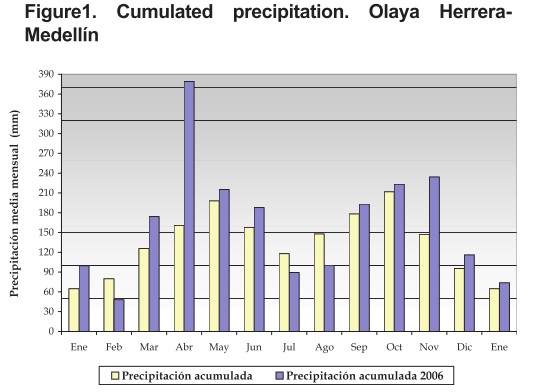
<body><![CDATA[<p style="text-align: justify;" class="MsoNormal"><i><span  style="font-size: 10pt; font-family: Verdana;" lang="EN-US">&#8220;Health officials said <st1:country-region w:st="on"><st1:place w:st="on">Colombia</st1:place></st1:country-region>&#8217;s dengue outbreak has revealed vulnerabilities in the country&#8217;s health and environment systems. About two thirds of Colombia&#8217;s cities report conditions that contribute to dengue epidemics, such as poor sanitation, improper garbage and tire disposal, inadequate rain water drainage, and risky water storage practices.&#8221; (<a href="#28">28</a>).</span></i><i><span  style="" lang="EN-US"> </span></i><span style="" lang="EN-US"><o:p></o:p></span></p> </div> </div> </div>     <div>     <div>     <p class="MsoNormal"><b style=""><span  style="font-size: 11pt; font-family: Verdana;" lang="EN-US">Results<o:p></o:p></span></b></p>     <p style="text-align: justify;" class="MsoNormal"><span  style="font-size: 10pt; font-family: Verdana;" lang="EN-US">It could be learned from the climatic characterization of the study area that it has a highland tropical climate with an altitude near to equatorial latitudes. Average temperatures vary between <st1:metricconverter  productid="21 &#186;C" w:st="on">21 &#186;C</st1:metricconverter> and <st1:metricconverter  productid="22 &#186;C" w:st="on">22 &#186;C</st1:metricconverter>. The configuration of the northern Cordillera allows an efficient impact of humid winds to generate abundant precipitations in localities of the Cordillera. Values in precipitations recorded from September to January (2006-7) indicate an anomalous wet period prior to the dry season (<a href="#figura1">Figure 1</a>) <o:p></o:p></span></p>     <p style="text-align: center;" class="MsoNormal"><b style=""><span  style="font-size: 10pt; font-family: Verdana;" lang="EN-US"><o:p><a  name="figura1"></a><img alt="figura1"  src="/img/revistas/rcsp/v20n1/art3i1.jpg"  style="width: 534px; height: 392px;">&nbsp;</o:p></span></b></p>     <p class="MsoNormal"><b style=""><span  style="font-size: 10pt; font-family: Verdana;" lang="EN-US"><span  class="SpellE"></span> <o:p></o:p></span></b></p>     <div>     <div>     <p style="text-align: justify;" class="MsoNormal"><span  style="font-size: 10pt; font-family: Verdana;" lang="EN-US">SinceJune2006, it has been observed that temperature during that year is above the climatic mean at about <st1:metricconverter  productid="0.6 &#186;C" w:st="on">0.6 &#186;C</st1:metricconverter> till November. That difference increased in December and January until reaching an abnormality of <st1:metricconverter productid="1.3 &#186;C" w:st="on">1.3 &#186;C</st1:metricconverter>. Therefore, during the last half of the year, temperatures above normal persisted. <o:p></o:p></span></p> </div> </div> </div>     ]]></body>
<body><![CDATA[<div>     <div>     <p class="MsoNormal"><b style=""><span  style="font-size: 11pt; font-family: Verdana;" lang="EN-US">Community fieldwork data<o:p></o:p></span></b></p>     <p style="text-align: justify;" class="MsoNormal"><span  style="font-size: 10pt; font-family: Verdana; color: rgb(34, 30, 31);"  lang="EN-US">Community field work conducted in <span class="SpellE">Vallejuelos</span> revealed the presence of dengue vectors in the private sphere, located in a variety of water-holding containers. These containers are commonly used for water storage, to carry water, and to perform domestic chores.<o:p></o:p></span></p>     <p style="text-align: justify;" class="MsoNormal"><span  style="font-size: 10pt; font-family: Verdana; color: rgb(34, 30, 31);"  lang="EN-US">198 out of the 401 households consisted of poor and 203 of very poor, respectively representing 47% and 53% of the sample. Positive containers were found in both social strata. However, the highest indices of infestation were recorded among the poor (87.2% vs.12.8%). As a matter of fact, the <span class="SpellE">pupal</span> index (PI) is 0.464 for the poor vs. 0.086 among the poorest. This index was higher than the adult one (AI) for the wet season. A feature of the study site is that the traditional <span class="SpellE">stegomyia</span> are generally above 5%.<o:p></o:p></span></p>     <p style="text-align: justify;" class="MsoNormal"><span  style="font-size: 10pt; font-family: Verdana; color: rgb(34, 30, 31);"  lang="EN-US">With few exceptions, most water-holding containers were not <span class="SpellE">covered.These</span> are for example the canisters, pots, and buckets. In very few occasions, it could be observed an improvisation to have the buckets covered. A round piece of wood was used for that purpose.<o:p></o:p></span></p>     <p style="text-align: justify;" class="MsoNormal"><span  style="font-size: 10pt; font-family: Verdana; color: rgb(34, 30, 31);"  lang="EN-US">For having a small closing cap, gallon drums popularly referred to as bongos represented the exception. What is noteworthy about gallon drums was their productivity. They resulted less frequently positive than the other containers. In contrast, the low concrete tanks or <span class="SpellE"><i>posetas</i></span><i> </i>in the local terminology were the most productive containers (67.5% among the poor).<o:p></o:p></span></p>     <p style="text-align: justify;" class="MsoNormal"><span  style="font-size: 10pt; font-family: Verdana; color: rgb(34, 30, 31);"  lang="EN-US">Also important in terms of their productivity were the containers located in backyards. They may be of seldom use or simply discarded. They were <span class="SpellE">labelled</span> in a category &#8220;others&#8221; and often consist of wasted pots and bottles. </span><b  style=""><span style="font-size: 11pt; font-family: Verdana;"  lang="EN-US"><o:p></o:p></span></b></p> </div> </div> </div>     <div>     <div>     ]]></body>
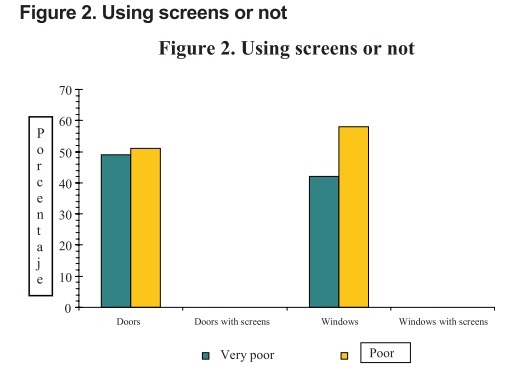
<body><![CDATA[<p class="MsoNormal"><b style=""><span  style="font-size: 11pt; font-family: Verdana;" lang="EN-US">Housing in both social conditions <o:p></o:p></span></b></p>     <p style="text-align: justify;" class="MsoNormal"><span  style="font-size: 10pt; font-family: Verdana;" lang="EN-US">Housing in <span class="SpellE">Vallejuellos</span>, a low-income locality, varies according to the mode of acquisition. Many of the residents are either invaders or displaced from their communities of origin. The displaced proceed from insecure areas in the country owing to internal armed conflicts. Some of the residents (78.7% of the poor) are beneficiaries of social housing programs. <o:p></o:p></span></p>     <p style="text-align: justify;" class="MsoNormal"><span  style="font-size: 10pt; font-family: Verdana;" lang="EN-US">Unemployment is considered an important problem in the community. <o:p></o:p></span></p>     <div>     <p class="MsoNormal"><b style=""><span  style="font-size: 10pt; font-family: Verdana;" lang="EN-US">Lack of window and door screens: A common</span></b><b style=""><span style=""  lang="EN-US"> <span style="">feature <o:p></o:p></span></span></b></p>     <p style="text-align: justify;" class="MsoNormal"><span  style="font-size: 10pt; font-family: Verdana;" lang="EN-US">Regardless of the social condition and being beneficiary or not of a housing program, an overwhelming fact is that all the houses are not equipped with physical barriers such as window and door screens (<a href="#figura2">Figure 2</a>). <o:p></o:p></span></p>     <div style="text-align: center;"><b style=""><span  style="font-size: 10pt; font-family: Verdana;" lang="EN-US"><a  name="figura2"></a><img alt="figura2"  src="/img/revistas/rcsp/v20n1/art3i2.jpg"  style="width: 507px; height: 371px;"></span></b>    <br> <b style=""><span style="font-size: 10pt; font-family: Verdana;"  lang="EN-US"></span></b></div>     <p style="text-align: justify;" class="MsoNormal"><!--[if gte vml 1]><v:shapetype id="_x0000_t75" coordsize="21600,21600"

 o:spt="75" o:preferrelative="t" path="m@4@5l@4@11@9@11@9@5xe" filled="f"

 stroked="f">

 <v:stroke joinstyle="miter"/>

 <v:formulas>

  <v:f eqn="if lineDrawn pixelLineWidth 0"/>

  <v:f eqn="sum @0 1 0"/>

  <v:f eqn="sum 0 0 @1"/>

  <v:f eqn="prod @2 1 2"/>

  <v:f eqn="prod @3 21600 pixelWidth"/>

  <v:f eqn="prod @3 21600 pixelHeight"/>

  <v:f eqn="sum @0 0 1"/>

  <v:f eqn="prod @6 1 2"/>

  <v:f eqn="prod @7 21600 pixelWidth"/>

  <v:f eqn="sum @8 21600 0"/>

  <v:f eqn="prod @7 21600 pixelHeight"/>

  <v:f eqn="sum @10 21600 0"/>

 </v:formulas>

 <v:path o:extrusionok="f" gradientshapeok="t" o:connecttype="rect"/>

 <o:lock v:ext="edit" aspectratio="t"/>

</v:shapetype><v:shape id="Imagen_x0020_3" o:spid="_x0000_s1028" type="#_x0000_t75"

 style='position:absolute;margin-left:-108.75pt;margin-top:0;width:3.75pt;

 height:3.75pt;z-index:1;visibility:visible;mso-wrap-distance-left:0;

 mso-wrap-distance-right:0;mso-position-horizontal:right;

 mso-position-vertical-relative:line' o:allowoverlap="f">

 <v:imagedata src="images/art3v20n1_img_12.jpg"/>

 <w:wrap type="square"/>

</v:shape><![endif]--><!--[if !vml]--><!--[endif]--><span  style="font-size: 10pt; font-family: Verdana;" lang="EN-US">This common trend also raises an issue of need in terms of health protection. During the day, windows are left open in order to have the house ventilated. It also permits to take advantage of daylight. <span class="SpellE">Ae</span>. <span class="SpellE">aegypti</span> are mainly daytime feeding mosquitoes. <o:p></o:p></span></p> </div> </div> </div>     <div>     ]]></body>
<body><![CDATA[<div>     <p class="MsoNormal"><b style=""><span  style="font-size: 11pt; font-family: Verdana;" lang="EN-US">Discussion<o:p></o:p></span></b></p>     <p style="text-align: justify;" class="MsoNormal"><span  style="font-size: 10pt; font-family: Verdana;" lang="EN-US">Findings of this study on a water-associated vector-borne disease provided a description of climatic conditions, human practices at residential levels, and vector abundance in a environment where the coexistence of proximal and distal factors cannot be overlooked. It must be underlined that entomological indices recorded during the wet and dry seasons were high in a setting with a highland tropical climate.<o:p></o:p></span></p>     <p style="text-align: justify;" class="MsoNormal"><span  style="font-size: 10pt; font-family: Verdana;" lang="EN-US">A warranted access to clean water on a daily basis appears more to be a luxury than a norm, or a right among the underserved in many parts of the developing world. Consequently, people need to secure water for their daily consumption and put up with situations of shortage. As usually noted about seasonality and vector abundance, water scarcity encourages water storage for a longer period of time, especially during drier months and times of infrequent supply on the one hand.<o:p></o:p></span></p>     <p style="text-align: justify;" class="MsoNormal"><span  style="font-size: 10pt; font-family: Verdana;" lang="EN-US">On the other hand, excess rainfall provides open stagnant water and opportunities for harvesting and storing water, especially among the socially disadvantaged. Rainwater is important in the socioeconomic lives of the &#8220;have not&#8221;. They often use it for their domestic chores and thus, can save water from the pipes. For the purpose of social reproduction, breeding grounds are provided to dengue vectors.<o:p></o:p></span></p>     <p style="text-align: justify;" class="MsoNormal"><span  style="font-size: 10pt; font-family: Verdana;" lang="EN-US">Both findings in the study site and from the current state of knowledge on dengue highlight the threat of being afflicted by the disease. More pupa than adults were found in water-holding containers at the household level. The pupae stage is very short (two days) and adults have a feeding preference on humans, with smaller adults female feeding more often to provide proteins to their eggs. In addition, the complete cycle of dengue transmission does not exceed two weeks (<a href="#29">29</a>).<o:p></o:p></span></p>     <p style="text-align: justify;" class="MsoNormal"><span  style="font-size: 10pt; font-family: Verdana;" lang="EN-US">Vectors&#8217; adaptive capacity is not to be underestimated. As noted about the opportunism of weeds, rodents, insects and micro-organisms, they have the ability to rapidly reproduce. Moreover, they count with features such as having huge broods, small body sizes, wide-ranging appetites and being good at dispersal and colonizing new environments (<a href="#30">30</a>).<o:p></o:p></span></p>     <p style="text-align: justify;" class="MsoNormal"><span  style="font-size: 10pt; font-family: Verdana;" lang="EN-US">Humans are at disadvantage with the shrinking availability of mosquitoes&#8217; natural predators due to agricultural practices. Findings of a research study in agronomy equated the map of the invasion of <span class="SpellE">Aedes</span> mosquitoes and the <st1:placename  w:st="on">United</st1:placename> <st1:placetype w:st="on">Republic</st1:placetype> of soy encompassing neighboring countries of South America (<st1:country-region  w:st="on">Argentina</st1:country-region>, <st1:country-region  w:st="on">Bolivia</st1:country-region>, <st1:country-region w:st="on">Brazil</st1:country-region>, <st1:country-region  w:st="on">Paraguay</st1:country-region> and <st1:country-region  w:st="on"><st1:place w:st="on">Uruguay</st1:place></st1:country-region>) where yellow fever and dengue are now taking their toll.<o:p></o:p></span></p>     <p style="text-align: justify;" class="MsoNormal"><span  style="font-size: 10pt; font-family: Verdana;" lang="EN-US">Considerable deforestation for the cultivation of soy beans and the massive use of herbicides (e.g. <span class="SpellE">glisofato</span> or Round <span class="SpellE">up,Atrazina</span>, 2-4-D, <span  class="SpellE">Diquat</span>) disturb the equilibrium of the ecosystem. Such practices also lead to the destruction of the natural habitat of fishes, amphibians, toads, frogs, and decimate their population (<a href="#31">31</a>). Hence, in the absence of these natural predators, mosquitoes can survive and be active over a longer period of time.<o:p></o:p></span></p>     <p style="text-align: justify;" class="MsoNormal"><span  style="font-size: 10pt; font-family: Verdana;" lang="EN-US">A vaccine against yellow fever already exists, but it is not yet the case for dengue. This disease is now re-emerging in <st1:country-region  w:st="on"><st1:place w:st="on">Argentina</st1:place></st1:country-region>. Therefore, the ability of individuals and institutions to cope with change in order to adapt to the uncertainty of a changing environment (<a  href="#32">32</a>) remains key to preserving human health. In contexts of hyper <span class="SpellE">endemicity</span> of dengue viruses and low herd immunity, and where health services are ill-equipped to provide proper care in a timely manner, losing control over opportunists <span class="SpellE">Ae</span>. <span class="SpellE">aegypti</span> is likely to end up in damaging dengue outbreaks. Experts have made it abundantly clear that the odds of developing DHF increase with a previous infection with a distinct serotype, since lifelong immunity is limited to a single serotype (<a href="#33">33</a>).<o:p></o:p></span></p>     ]]></body>
<body><![CDATA[<p style="text-align: justify;" class="MsoNormal"><span  style="font-size: 10pt; font-family: Verdana;" lang="EN-US">At <span  class="SpellE">amacro</span> level, early warning systems are recurrently recommended and/or endorsed <span  class="SpellE">asa</span> response against the potential climate change-related health impacts.<o:p></o:p></span></p>     <p style="text-align: justify;" class="MsoNormal"><span  style="font-size: 10pt; font-family: Verdana;" lang="EN-US">The 1990s have witnessed the development of disease early warning systems referred to as DEWS (<a href="#34">34</a>). Drawing on data from <st1:country-region w:st="on"><st1:place w:st="on">Thailand</st1:place></st1:country-region>, the National Aeronautics and Space Administration (NASA) succeeded at developing a dengue early warning system (<a href="#35">35</a>). However, the success story of the NASA is not yet widespread.<o:p></o:p></span></p>     <p style="text-align: justify;" class="MsoNormal"><span  style="font-size: 10pt; font-family: Verdana;" lang="EN-US">Models used to predict the dengue transmission cycle require accurate information on a range of parameters. Their application implies a consistent monitoring and therefore, in developing countries where the health systems are hampered by many constraints, dengue early warning systems have been considered less suitable. Making the models more affordable and monitoring less time consuming, are the recommendations made by experts (<a href="#36">36</a>).<o:p></o:p></span></p>     <p style="text-align: justify;" class="MsoNormal"><span  style="font-size: 10pt; font-family: Verdana;" lang="EN-US">At an individual level, a simple technological response consists of using <span class="SpellE">ITMs</span> such as window and door curtains, jar covers and bed nets. These tools have been improved over time with a long-lasting effect and proven effective in trials in the <st1:country-region  w:st="on">Americas</st1:country-region> and in <st1:place w:st="on">Asia</st1:place> (<a href="#37">37</a>,<a href="#38">38</a>).<o:p></o:p></span></p>     <p style="text-align: justify;" class="MsoNormal"><span  style="font-size: 10pt; font-family: Verdana;" lang="EN-US">By impregnating them with safe insecticides (e.g. <span class="SpellE">permethryn</span>), users get involved in controlling adult vectors in the indoor environment, and to some extent in the process of empowering their communities. <o:p></o:p></span></p> </div>     <div>     <p style="text-align: justify;" class="MsoNormal"><span  style="font-size: 10pt; font-family: Verdana;" lang="EN-US">An active participation of the beneficiaries in vector control is likely to induce sustainable impacts on their lives and enhance the epidemiological relevance of an indoor environment focus.<o:p></o:p></span></p>     <p style="text-align: justify;" class="MsoNormal"><span  style="font-size: 10pt; font-family: Verdana;" lang="EN-US">In a country like Cuba where vector control measures rely heavily on spraying and/or fogging, resorting to the use of bed nets at home in times of epidemics, appeared to be a valuable option to reduce disease transmission in households with an infected patient (<a href="#39">39</a>). In another context in southern <st1:country-region w:st="on"><st1:place w:st="on">India</st1:place></st1:country-region>, the use of nets has proven effective to control disease transmission in a hospital environment during dengue fever outbreaks (<a href="#40">40</a>).<o:p></o:p></span></p>     <p style="text-align: justify;" class="MsoNormal"><span  style="font-size: 10pt; font-family: Verdana;" lang="EN-US">Although questioned, traditional vector control measures are still predominant. However, <span class="SpellE">Ae</span>. <span class="SpellE">aegypti</span> mosquitoes are successful at adapting to urban environments to the point of surviving in <span class="SpellE">sceptic</span> tanks (<a href="#41">41</a>). Under conditions suitable to their survival, an imbalance in resilience and adaptation detrimental to humans may occur. Therefore, putting to good use innovative technologies is important to improve vector control efficiency and at the same time, would be conducive to reducing the knowing-doing gap.<o:p></o:p></span></p>     <p style="text-align: justify;" class="MsoNormal"><span  style="font-size: 10pt; font-family: Verdana;" lang="EN-US">In a recent report on a climate-related project, experts in the Assessment of Impacts and Adaptation to Climate Change (AIACC) addressed climate change adaptation in terms of deficit, and raised the need for creating the conditions to enable adaptation and integrate it with development (<a href="#42">42</a>). In the particular case of dengue, poverty, unplanned urbanization and lifestyle represent some of the threads of the tapestry to take into account when the acknowledged capacity of humans to take precautionary action is addressed. <o:p></o:p></span></p> </div> </div>     ]]></body>
<body><![CDATA[<div>     <div>     <p class="MsoNormal"><b style=""><span  style="font-size: 11pt; font-family: Verdana;" lang="EN-US">Conclusion<o:p></o:p></span></b></p>     <p style="text-align: justify;" class="MsoNormal"><span  style="font-size: 10pt; font-family: Verdana;" lang="EN-US">As illustrated in this paper with the case of <span class="SpellE">Vallejuelos</span> in <span class="SpellE">Medell&#237;n</span> (<st1:country-region w:st="on"><st1:place  w:st="on">Colombia</st1:place></st1:country-region>), water storage practices in conjunction with some climatic stimuli provide an ideal environment for the breeding of <span class="SpellE">Ae</span>. <span  class="SpellE">aegypti</span> mosquitoes as reflected in the entomological indices recorded. Significant differences in entomological indices were observed during the wet season. Data on the whole revealed a high epidemiological risk all year long, and did not contradict the intimacy of dengue vectors with humans.<o:p></o:p></span></p>     <p style="text-align: justify;" class="MsoNormal"><span  style="font-size: 10pt; font-family: Verdana;" lang="EN-US">Regardless of the type of housing, the lack of protection as a precautionary action to reduce human-vector contact appears more to be the rule than the exception. A permanent high vector density is of concern. Of greater concern, is the lack of individual protective measures as revealed by a notorious absence of physical barriers in homes likely to reduce possible vector-humans&#8217; infective contact.<o:p></o:p></span></p>     <p style="text-align: justify;" class="MsoNormal"><span  style="font-size: 10pt; font-family: Verdana;" lang="EN-US">The urban population is projected to grow worldwide, and this implies an increasing population density in urban centers with a growing trend of informal settlements. Crowding, associated with poverty, is beneficial to dengue vectors since it supplies them with ideal sources of blood meals. Domestic water storage practices also make breeding sources available to dengue vectors.<o:p></o:p></span></p>     <p style="text-align: justify;" class="MsoNormal"><span  style="font-size: 10pt; font-family: Verdana;" lang="EN-US">With more inhabitants in cities, more demand for potable water (a vital liquid) is to be expected. If solid waste collection schemes, water supply and sanitation infrastructure are not improved, both exposure and susceptibility to the disease are likely to be increased among slums dwellers. The same may hold true for the persistence of high unemployment and poverty rates among them.<o:p></o:p></span></p>     <p style="text-align: justify;" class="MsoNormal"><span  style="font-size: 10pt; font-family: Verdana;" lang="EN-US">IEC programs, along with clean-up campaigns are so important for the prevention and control of dengue that, related initiatives should rather be integrated than isolated. Although necessary and promising, clean-up campaigns and <span class="SpellE">behavioural</span> change require sustained efforts that may be challenged in the long run. On the other hand, lagging behind the adaptive capacity of dengue vectors would jeopardize human health &#8211;especially the health of the socially disadvantaged urbanites.<o:p></o:p></span></p>     <p style="text-align: justify;" class="MsoNormal"><span  style="font-size: 10pt; font-family: Verdana;" lang="EN-US">From such perspective, being equipped with new and improved technologies seems far from being redundant or counterproductive among the underserved. As part of an adaptive strategy, it is likely to address their need as persons in a situation of vulnerability, for being provided with a protective indoor environment. <span class="SpellE">ITMs</span> have been improved and their field-tested effectiveness provides a relevant ground for framing and promoting them as an appropriate response thus far.<o:p></o:p></span></p>     <p style="text-align: justify;" class="MsoNormal"><span  style="font-size: 10pt; font-family: Verdana;" lang="EN-US">This study is not exempt from limitations as it can be the case for <span class="SpellE">ITMs</span>. It does not go beyond a descriptive analysis, and observations should have been made during a longer period of time. However, it has generated interesting primary data from a real-life setting, based on a multidisciplinary approach.<o:p></o:p></span></p>     ]]></body>
<body><![CDATA[<p style="text-align: justify;" class="MsoNormal"><span  style="font-size: 10pt; font-family: Verdana;" lang="EN-US">Another considerable strength of the study resides in addressing the need for an adaptive option to a mosquito-borne viral disease like dengue which appears urgent, meanwhile attempts to develop vaccines and to provide genomic-oriented responses are underway.<o:p></o:p></span></p>     <p style="text-align: justify;" class="MsoNormal"><span  style="font-size: 10pt; font-family: Verdana;" lang="EN-US">Since dengue represents a growing challenging public health problem, long-term adaptation strategies likely to reduce the burden of the disease, are more needed than coping strategies suited for overcoming a specific crisis. Empowering at-risk populations to access and adopt them, and use them properly is pressing. Future research work should go in this direction given the significant weight of the social determinants of health addressed herein, the projection of a two degree warmer temperature by experts in global warming, and the lack of means to cope with external shocks among the socially disadvantaged.<o:p></o:p></span></p>     <p style="text-align: justify;" class="MsoNormal"><span  style="font-size: 10pt; font-family: Verdana;" lang="EN-US">Framing adaptive strategies for humans is legitimate and necessary to adequately address their vulnerability and resilience as far as the impact of both climate-sensitive and poverty diseases is concerned. However, it should also be kept in mind that meeting the need for an adaptive capacity, calls for an increased partnership between the policy community and the beneficiaries. <o:p></o:p></span></p> </div>     <div>     <div>     <p class="MsoNormal"><b style=""><span  style="font-size: 11pt; font-family: Verdana;" lang="EN-US">Acknowledgement<o:p></o:p></span></b></p>     <p style="text-align: justify;" class="MsoNormal"><span  style="font-size: 10pt; font-family: Verdana;" lang="EN-US">Research reported herein has been generously supported by the Inter American Institute for Global Change (http://www.iai.int) through grant TISG-J4. Data were collected in conformity with research ethics guidelines. Photos were taken with the oral informed consent of research participants. The author wishes to thank the funding institution (IAI), all research participants and research teams in <st1:country-region  w:st="on">Argentina</st1:country-region> and <st1:country-region w:st="on"><st1:place w:st="on">Colombia</st1:place></st1:country-region>. <o:p></o:p></span></p> </div> </div> </div>     <div>     <div><b style=""><span style="font-size: 11pt; font-family: Verdana;"  lang="EN-US"></span></b> <hr style="width: 100%; height: 2px;"><b style=""><span  style="font-size: 11pt; font-family: Verdana;" lang="EN-US">References<o:p></o:p></span></b>     <!-- ref --><p class="MsoNormal"><span  style="font-size: 10pt; font-family: Verdana;" lang="EN-US"><a name="1"></a>1. Maslow A. Towards a psychology of being. <st1:state w:st="on"><st1:place  w:st="on">New York</st1:place></st1:state>: Van <span class="SpellE">Nostrand</span>, 1968.    &nbsp;&nbsp;&nbsp;&nbsp;&nbsp;&nbsp;&nbsp;&nbsp;[&#160;<a href="javascript:void(0);" onclick="javascript: window.open('/scielo.php?script=sci_nlinks&ref=844240&pid=S1409-1429201100010000300001&lng=','','width=640,height=500,resizable=yes,scrollbars=1,menubar=yes,');">Links</a>&#160;]<!-- end-ref --> <o:p></o:p></span></p>     <!-- ref --><p class="MsoNormal"><span  style="font-size: 10pt; font-family: Verdana;" lang="EN-US"><a name="2"></a>2. Nathan MB, <span class="SpellE">Dayal-Drager</span> R. Recent epidemiological trends, the global strategy and public health advances in dengue. Report of the Scientific Working Group on Dengue. <st1:city  w:st="on"><st1:place w:st="on">Geneva</st1:place></st1:city>: World Health Organization, 2006 (TDR/SWG/06). Available from: http://www.tropika.net/svc/review/061001Dengue_Recent_epidemiological_trends <o:p></o:p></span>&nbsp;&nbsp;&nbsp;&nbsp;&nbsp;&nbsp;&nbsp;&nbsp;[&#160;<a href="javascript:void(0);" onclick="javascript: window.open('/scielo.php?script=sci_nlinks&ref=844242&pid=S1409-1429201100010000300002&lng=','','width=640,height=500,resizable=yes,scrollbars=1,menubar=yes,');">Links</a>&#160;]<!-- end-ref --><p class="MsoNormal"><span  style="font-size: 10pt; font-family: Verdana;" lang="EN-US"><a name="3"></a>3. World Health Organization. Dengue: Disease burden and epidemiological trends. <st1:city w:st="on"><st1:place w:st="on">Geneva</st1:place></st1:city>: WHO/TDR, 2002. Available from:    <!-- ref --><br> http://archives.who.int/prioritymeds/report/ append/33d_apx.pdf <o:p></o:p></span>&nbsp;&nbsp;&nbsp;&nbsp;&nbsp;&nbsp;&nbsp;&nbsp;[&#160;<a href="javascript:void(0);" onclick="javascript: window.open('/scielo.php?script=sci_nlinks&ref=844244&pid=S1409-1429201100010000300003&lng=','','width=640,height=500,resizable=yes,scrollbars=1,menubar=yes,');">Links</a>&#160;]<!-- end-ref --><!-- ref --><p class="MsoNormal"><span  style="font-size: 10pt; font-family: Verdana;" lang="EN-US"><a name="4"></a>4. <span class="SpellE">Gubler</span>, D. J. Resurgent vector-borne diseases as a global health problem. <span class="SpellE">Emerg</span> Infect <span class="SpellE">Dis</span> 1998; 442-450.    &nbsp;&nbsp;&nbsp;&nbsp;&nbsp;&nbsp;&nbsp;&nbsp;[&#160;<a href="javascript:void(0);" onclick="javascript: window.open('/scielo.php?script=sci_nlinks&ref=844245&pid=S1409-1429201100010000300004&lng=','','width=640,height=500,resizable=yes,scrollbars=1,menubar=yes,');">Links</a>&#160;]<!-- end-ref --> <o:p></o:p></span></p>     <!-- ref --><p class="MsoNormal"><span  style="font-size: 10pt; font-family: Verdana;" lang="EN-US"><a name="5"></a>5. Pan American Health Organization. A blueprint for action for the next generation: dengue prevention and control. Communicable Diseases Program Division of Disease Prevention and Control. <st1:state  w:st="on"><st1:place w:st="on">Washington</st1:place></st1:state>: Pan American Health Organization: 1999. (PAHO/HCP/HCT/136/99). Available <span  class="SpellE">from:http://www.searo.who.int/LinkFiles/Dengue_Bulletin</span>_ Volume_25_shortnotes.pdf <o:p></o:p></span>&nbsp;&nbsp;&nbsp;&nbsp;&nbsp;&nbsp;&nbsp;&nbsp;[&#160;<a href="javascript:void(0);" onclick="javascript: window.open('/scielo.php?script=sci_nlinks&ref=844247&pid=S1409-1429201100010000300005&lng=','','width=640,height=500,resizable=yes,scrollbars=1,menubar=yes,');">Links</a>&#160;]<!-- end-ref --><!-- ref --><p class="MsoNormal"><span  style="font-size: 10pt; font-family: Verdana;" lang="EN-US"><a name="6"></a>6. Castle T, Amador M, Rawlins S, Figueroa JP, Reiter P. Absence of impact of aerial <span class="SpellE">malathion</span> treatment on <span class="SpellE">Aedes</span> <span class="SpellE">aegypti</span> during a dengue outbreak in Kingston, Jamaica. Rev <span class="SpellE">Panam</span> <span class="SpellE">Salud</span> <span class="SpellE">P&#250;blica</span> 1999; 5:100-5.    &nbsp;&nbsp;&nbsp;&nbsp;&nbsp;&nbsp;&nbsp;&nbsp;[&#160;<a href="javascript:void(0);" onclick="javascript: window.open('/scielo.php?script=sci_nlinks&ref=844248&pid=S1409-1429201100010000300006&lng=','','width=640,height=500,resizable=yes,scrollbars=1,menubar=yes,');">Links</a>&#160;]<!-- end-ref --> <o:p></o:p></span></p>     <!-- ref --><p class="MsoNormal"><span  style="font-size: 10pt; font-family: Verdana;" lang="EN-US"><a name="7"></a>7. <span class="SpellE">Perich</span> MJ, Davila G, Turner A, Garcia A, Nelson, M. Behavior of resting <span class="SpellE">Aedes</span> <span class="SpellE">aegypti</span> (<span class="SpellE">Culicidae</span>: <span class="SpellE">Diptera</span>) and its relation to ultra-low <span  class="SpellE">volumen</span> <span class="SpellE">adulticide</span> efficacy in <st1:place w:st="on"><st1:city  w:st="on">Panama City</st1:city>, <st1:country-region w:st="on">Panama</st1:country-region></st1:place>. J Med <span class="SpellE">Entomol</span> 2000; 37(4): 541546.    &nbsp;&nbsp;&nbsp;&nbsp;&nbsp;&nbsp;&nbsp;&nbsp;[&#160;<a href="javascript:void(0);" onclick="javascript: window.open('/scielo.php?script=sci_nlinks&ref=844250&pid=S1409-1429201100010000300007&lng=','','width=640,height=500,resizable=yes,scrollbars=1,menubar=yes,');">Links</a>&#160;]<!-- end-ref --> <o:p></o:p></span></p>     <!-- ref --><p class="MsoNormal"><span  style="font-size: 10pt; font-family: Verdana;" lang="EN-US"><a name="8"></a>8. Canyon D. <st1:metricconverter productid="2001. A" w:st="on">2001. A</st1:metricconverter> Review of the Dengue Mosquito, <span class="SpellE">Aedes</span> <span  class="SpellE">aegypti</span>, in <st1:country-region w:st="on"><st1:place  w:st="on">Australia</st1:place></st1:country-region>. Rural and Remote Environmental Health 2001; 1: 27-36.    &nbsp;&nbsp;&nbsp;&nbsp;&nbsp;&nbsp;&nbsp;&nbsp;[&#160;<a href="javascript:void(0);" onclick="javascript: window.open('/scielo.php?script=sci_nlinks&ref=844252&pid=S1409-1429201100010000300008&lng=','','width=640,height=500,resizable=yes,scrollbars=1,menubar=yes,');">Links</a>&#160;]<!-- end-ref --> <o:p></o:p></span></p>     <!-- ref --><p class="MsoNormal"><span  style="font-size: 10pt; font-family: Verdana;" lang="EN-US"><a name="9"></a>9. <span class="SpellE">Depraine</span> CA, Lovell EH. <span  class="SpellE">Climatological</span> variables and the incidence of dengue disease in <st1:country-region w:st="on"><st1:place w:st="on">Barbados</st1:place></st1:country-region>. <span class="SpellE">Int</span> . J. Environ. Health Res 2004; 14: 429&#8211;441.    &nbsp;&nbsp;&nbsp;&nbsp;&nbsp;&nbsp;&nbsp;&nbsp;[&#160;<a href="javascript:void(0);" onclick="javascript: window.open('/scielo.php?script=sci_nlinks&ref=844254&pid=S1409-1429201100010000300009&lng=','','width=640,height=500,resizable=yes,scrollbars=1,menubar=yes,');">Links</a>&#160;]<!-- end-ref --> <o:p></o:p></span></p>     <!-- ref --><p class="MsoNormal"><span  style="font-size: 10pt; font-family: Verdana;" lang="EN-US"><a  name="10"></a>10. <span class="SpellE">Chakravarti</span> A, <span  class="SpellE">Kumaria</span> R. Eco-epidemiological analysis of dengue infection during an outbreak of dengue fever, <st1:country-region w:st="on"><st1:place  w:st="on">India</st1:place></st1:country-region>. Virology Journal 2005; 32:2-10.    &nbsp;&nbsp;&nbsp;&nbsp;&nbsp;&nbsp;&nbsp;&nbsp;[&#160;<a href="javascript:void(0);" onclick="javascript: window.open('/scielo.php?script=sci_nlinks&ref=844256&pid=S1409-1429201100010000300010&lng=','','width=640,height=500,resizable=yes,scrollbars=1,menubar=yes,');">Links</a>&#160;]<!-- end-ref --> <o:p></o:p></span></p>     <!-- ref --><p class="MsoNormal"><span  style="font-size: 10pt; font-family: Verdana;" lang="PT-BR"><a  name="11"></a>11. Reiter P, Amador MA, Clark GG. </span><span  style="font-size: 10pt; font-family: Verdana;" lang="EN-US">Dispersal of <span class="SpellE">Aedes</span> <span class="SpellE">aegypti in an urban area after blood feeding as demonstrated</span> by rubidium-marked eggs. Am. J. Trop. Med. <span class="SpellE">Hyg</span>. 1995; 52:177&#8211;179.    &nbsp;&nbsp;&nbsp;&nbsp;&nbsp;&nbsp;&nbsp;&nbsp;[&#160;<a href="javascript:void(0);" onclick="javascript: window.open('/scielo.php?script=sci_nlinks&ref=844258&pid=S1409-1429201100010000300011&lng=','','width=640,height=500,resizable=yes,scrollbars=1,menubar=yes,');">Links</a>&#160;]<!-- end-ref --> <o:p></o:p></span></p>     <!-- ref --><p class="MsoNormal"><span  style="font-size: 10pt; font-family: Verdana;" lang="EN-US"><a  name="12"></a>12. The <st1:place w:st="on">Pest</st1:place> Control Advisory. Feeding habits of mosquitoes. <st1:place w:st="on">Pest</st1:place> Control Newsletter 2008; 10:1.    &nbsp;&nbsp;&nbsp;&nbsp;&nbsp;&nbsp;&nbsp;&nbsp;[&#160;<a href="javascript:void(0);" onclick="javascript: window.open('/scielo.php?script=sci_nlinks&ref=844260&pid=S1409-1429201100010000300012&lng=','','width=640,height=500,resizable=yes,scrollbars=1,menubar=yes,');">Links</a>&#160;]<!-- end-ref --> <o:p></o:p></span></p>     <!-- ref --><p class="MsoNormal"><span  style="font-size: 10pt; font-family: Verdana;" lang="EN-US"><a  name="13"></a>13. Chambers R. &#8220;Poverty and livelihoods: Whose reality counts?&#8221;. In IDS Discussion paper <span class="SpellE">Vol</span> 347, <st1:placetype w:st="on">Institute</st1:placetype> of <st1:placename  w:st="on">Development Studies</st1:placename>, Brighton and <st1:place  w:st="on"><st1:placetype w:st="on">University</st1:placetype> of <st1:placename  w:st="on">Sussex</st1:placename></st1:place>: 1995.    &nbsp;&nbsp;&nbsp;&nbsp;&nbsp;&nbsp;&nbsp;&nbsp;[&#160;<a href="javascript:void(0);" onclick="javascript: window.open('/scielo.php?script=sci_nlinks&ref=844262&pid=S1409-1429201100010000300013&lng=','','width=640,height=500,resizable=yes,scrollbars=1,menubar=yes,');">Links</a>&#160;]<!-- end-ref --> <o:p></o:p></span></p>     <!-- ref --><p class="MsoNormal"><span  style="font-size: 10pt; font-family: Verdana;" lang="EN-US"><a  name="14"></a>14. <span class="SpellE">Shope</span> R. Global Climate Change and infectious diseases. <span class="SpellE">Env</span> Health Perspectives 1991; 96:171-174.    &nbsp;&nbsp;&nbsp;&nbsp;&nbsp;&nbsp;&nbsp;&nbsp;[&#160;<a href="javascript:void(0);" onclick="javascript: window.open('/scielo.php?script=sci_nlinks&ref=844264&pid=S1409-1429201100010000300014&lng=','','width=640,height=500,resizable=yes,scrollbars=1,menubar=yes,');">Links</a>&#160;]<!-- end-ref --> <o:p></o:p></span></p>     <!-- ref --><p class="MsoNormal"><span  style="font-size: 10pt; font-family: Verdana;" lang="EN-US"><a  name="15"></a>15. <span class="SpellE">Patz</span> JA, Epstein PR, Burke T.A., et al. 1996. Global climate change and emerging infectious diseases. JAMA 1996; 275(3):217-223.    &nbsp;&nbsp;&nbsp;&nbsp;&nbsp;&nbsp;&nbsp;&nbsp;[&#160;<a href="javascript:void(0);" onclick="javascript: window.open('/scielo.php?script=sci_nlinks&ref=844266&pid=S1409-1429201100010000300015&lng=','','width=640,height=500,resizable=yes,scrollbars=1,menubar=yes,');">Links</a>&#160;]<!-- end-ref --> <o:p></o:p></span></p>     <!-- ref --><p class="MsoNormal"><span  style="font-size: 10pt; font-family: Verdana;" lang="EN-US"><a  name="16"></a>16. <span class="SpellE">Focks</span> D., Barrera R. Dengue transmission dynamics: assessment and implications for control. Report of the Scientific Working Group meeting on Dengue Geneva, 1&#8211;5 October 2006. Avoidable from: http://www.who.int/tdr/ publications/publications/swg_dengue_2.htm <o:p></o:p></span>&nbsp;&nbsp;&nbsp;&nbsp;&nbsp;&nbsp;&nbsp;&nbsp;[&#160;<a href="javascript:void(0);" onclick="javascript: window.open('/scielo.php?script=sci_nlinks&ref=844268&pid=S1409-1429201100010000300016&lng=','','width=640,height=500,resizable=yes,scrollbars=1,menubar=yes,');">Links</a>&#160;]<!-- end-ref --><!-- ref --><p class="MsoNormal"><span  style="font-size: 10pt; font-family: Verdana;" lang="ES-CR"><a  name="17"></a>17. Direcci&#243;n Seccional de Salud de Antioquia (DSSA). Manual para la vigilancia y control de vectores de dengue, fiebre amarilla y encefalitis equina venezolana desde el nivel municipal. Antioquia: Direcci&#243;n Seccional de Salud: 1997.    &nbsp;&nbsp;&nbsp;&nbsp;&nbsp;&nbsp;&nbsp;&nbsp;[&#160;<a href="javascript:void(0);" onclick="javascript: window.open('/scielo.php?script=sci_nlinks&ref=844269&pid=S1409-1429201100010000300017&lng=','','width=640,height=500,resizable=yes,scrollbars=1,menubar=yes,');">Links</a>&#160;]<!-- end-ref --> <o:p></o:p></span></p>     ]]></body>
<body><![CDATA[<!-- ref --><p class="MsoNormal"><span  style="font-size: 10pt; font-family: Verdana;" lang="ES-CR"><a  name="18"></a>18. <span class="SpellE">Ocazionez</span> RE, Cortes FM, Villar LA, <span class="SpellE">Gomez</span> SY. </span><span  style="font-size: 10pt; font-family: Verdana;" lang="EN-US">Temporal distribution of dengue virus serotypes in Colombian endemic area and dengue incidence. Reintroduction of dengue-3 associated to mild febrile illness and primary infection. </span><span  style="font-size: 10pt; font-family: Verdana;" lang="PT-BR">Mem <span  class="SpellE">Inst</span> Oswaldo Cruz. 2006; 101:725&#8211;731.    &nbsp;&nbsp;&nbsp;&nbsp;&nbsp;&nbsp;&nbsp;&nbsp;[&#160;<a href="javascript:void(0);" onclick="javascript: window.open('/scielo.php?script=sci_nlinks&ref=844271&pid=S1409-1429201100010000300018&lng=','','width=640,height=500,resizable=yes,scrollbars=1,menubar=yes,');">Links</a>&#160;]<!-- end-ref --> <o:p></o:p></span></p>     <!-- ref --><p class="MsoNormal"><span  style="font-size: 10pt; font-family: Verdana;" lang="PT-BR"><a  name="19"></a>19. <span class="SpellE">Ospina</span> MC, Diaz FJ, <span  class="SpellE">Osorio</span> JE. </span><span style="font-size: 10pt; font-family: Verdana;"  lang="EN-US">Prolonged <span class="SpellE">Cocirculation</span> of Two Distinct Dengue Virus Type 3 Lineages in the <span  class="SpellE">Hyperendemic</span> Area of <span class="SpellE">Medell&#237;n</span>. </span><span  style="font-size: 10pt; font-family: Verdana;" lang="ES-CR">Colombia. <span  class="SpellE">Am</span> J <span class="SpellE">Trop</span> <span  class="SpellE">Med</span> <span class="SpellE">Hyg</span> 2010; 83:672-678.    &nbsp;&nbsp;&nbsp;&nbsp;&nbsp;&nbsp;&nbsp;&nbsp;[&#160;<a href="javascript:void(0);" onclick="javascript: window.open('/scielo.php?script=sci_nlinks&ref=844273&pid=S1409-1429201100010000300019&lng=','','width=640,height=500,resizable=yes,scrollbars=1,menubar=yes,');">Links</a>&#160;]<!-- end-ref --> <o:p></o:p></span></p>     <!-- ref --><p class="MsoNormal"><span  style="font-size: 10pt; font-family: Verdana;" lang="ES-CR"><a  name="20"></a>20. <span class="SpellE">Diaz</span>-</span><span  style="font-size: 10pt; font-family: Verdana;" lang="ES-CR">Q</span><span  style="font-size: 10pt; font-family: Verdana;" lang="ES-CR">uijano, FA. <span class="SpellE">Predictores</span> de sangrado espont&#225;neo en dengue: una revisi&#243;n sistem&#225;tica de la literatura. </span><span  style="font-size: 10pt; font-family: Verdana;" lang="EN-US">Invest. <span  class="SpellE">Cl&#237;n</span> 2008; 49:111-122.    &nbsp;&nbsp;&nbsp;&nbsp;&nbsp;&nbsp;&nbsp;&nbsp;[&#160;<a href="javascript:void(0);" onclick="javascript: window.open('/scielo.php?script=sci_nlinks&ref=844275&pid=S1409-1429201100010000300020&lng=','','width=640,height=500,resizable=yes,scrollbars=1,menubar=yes,');">Links</a>&#160;]<!-- end-ref --> <o:p></o:p></span></p>     <!-- ref --><p class="MsoNormal"><span  style="font-size: 10pt; font-family: Verdana;" lang="EN-US"><a  name="21"></a>21. Luna JE, et al. Social Mobilization Using Strategies of Education and Communication to Prevent Dengue Fever in <st1:place  w:st="on"><st1:city w:st="on">Bucaramanga</st1:city>, <st1:country-region  w:st="on">Colombia</st1:country-region></st1:place>. </span><span  style="font-size: 10pt; font-family: Verdana;" lang="ES-CR">Dengue Bull 2004; 28S: 17<o:p></o:p></span>&nbsp;&nbsp;&nbsp;&nbsp;&nbsp;&nbsp;&nbsp;&nbsp;[&#160;<a href="javascript:void(0);" onclick="javascript: window.open('/scielo.php?script=sci_nlinks&ref=844277&pid=S1409-1429201100010000300021&lng=','','width=640,height=500,resizable=yes,scrollbars=1,menubar=yes,');">Links</a>&#160;]<!-- end-ref --><!-- ref --><p class="MsoNormal"><span  style="font-size: 10pt; font-family: Verdana;" lang="ES-CR"><a  name="22"></a>22. <span class="SpellE">Relief</span> Web <span  class="SpellE">report</span>. M&#225;s de 174 millones de pesos invirti&#243; <span class="SpellE">Minprotecci&#243;n</span> en compra de m&#225;s insecticida para control del vector del dengue. Ministerio de la Protecci&#243;n Social: Informe de prensa no 006 de 2010. </span><span class="SpellE"><span  style="font-size: 10pt; font-family: Verdana;" lang="EN-US">Disponible</span></span><span  style="font-size: 10pt; font-family: Verdana;" lang="EN-US"> en: http:// reliefweb.int/node/348363 <o:p></o:p></span>&nbsp;&nbsp;&nbsp;&nbsp;&nbsp;&nbsp;&nbsp;&nbsp;[&#160;<a href="javascript:void(0);" onclick="javascript: window.open('/scielo.php?script=sci_nlinks&ref=844278&pid=S1409-1429201100010000300022&lng=','','width=640,height=500,resizable=yes,scrollbars=1,menubar=yes,');">Links</a>&#160;]<!-- end-ref --><!-- ref --><p class="MsoNormal"><span  style="font-size: 10pt; font-family: Verdana;" lang="EN-US"><a  name="23"></a>23. <span class="SpellE">Borkan</span>, Brett. 2010. Colombian government fears dengue epidemic fever. Colombia Reports 2010; Available from: http://www. <st1:country-region w:st="on"><st1:place  w:st="on">Colombia</st1:place></st1:country-region> <span class="SpellE">report.com/colombianews</span>/ news. Accessed day September 2010 <o:p></o:p></span>&nbsp;&nbsp;&nbsp;&nbsp;&nbsp;&nbsp;&nbsp;&nbsp;[&#160;<a href="javascript:void(0);" onclick="javascript: window.open('/scielo.php?script=sci_nlinks&ref=844279&pid=S1409-1429201100010000300023&lng=','','width=640,height=500,resizable=yes,scrollbars=1,menubar=yes,');">Links</a>&#160;]<!-- end-ref --><!-- ref --><p class="MsoNormal"><span  style="font-size: 10pt; font-family: Verdana;" lang="EN-US"><a  name="24"></a>24. Murillo <span class="SpellE">Urrutia</span> LG. El <span  class="SpellE">Choco</span>: The African Heart of <st1:country-region  w:st="on"><st1:place w:st="on">Colombia</st1:place></st1:country-region>. Paper presented at The American Museum of Natural History. <st1:state w:st="on">New York</st1:state>: The <st1:country-region w:st="on">Colombia</st1:country-region> Media Project and The <st1:place w:st="on">Caribbean</st1:place> Cultural Center: February 23, 2001. Available from: http://isla.igc.org/SpecialRpts/SR2murillo. html. Accessed: October 2010 <o:p></o:p></span>&nbsp;&nbsp;&nbsp;&nbsp;&nbsp;&nbsp;&nbsp;&nbsp;[&#160;<a href="javascript:void(0);" onclick="javascript: window.open('/scielo.php?script=sci_nlinks&ref=844280&pid=S1409-1429201100010000300024&lng=','','width=640,height=500,resizable=yes,scrollbars=1,menubar=yes,');">Links</a>&#160;]<!-- end-ref --><!-- ref --><p class="MsoNormal"><span  style="font-size: 10pt; font-family: Verdana;" lang="EN-US"><a  name="25"></a>25. Pan American Health Organization /PAHO/Colombia. Health in <span class="SpellE">theAmericas</span>. 2007.Volume ii&#8211;countries <st1:country-region w:st="on"><st1:place w:st="on"><span class="SpellE">colombia</span></st1:place></st1:country-region>. www.paho.org/.../paisesing/Colombia%20English.pdf Accessed: November 2010 <o:p></o:p></span>&nbsp;&nbsp;&nbsp;&nbsp;&nbsp;&nbsp;&nbsp;&nbsp;[&#160;<a href="javascript:void(0);" onclick="javascript: window.open('/scielo.php?script=sci_nlinks&ref=844281&pid=S1409-1429201100010000300025&lng=','','width=640,height=500,resizable=yes,scrollbars=1,menubar=yes,');">Links</a>&#160;]<!-- end-ref --><!-- ref --><p class="MsoNormal"><span  style="font-size: 10pt; font-family: Verdana;" lang="EN-US"><a  name="26"></a>26. United Nations Development <span class="SpellE">Programme</span>. The Human Development Index-Going beyond income. Human Development Report. <st1:state w:st="on"><st1:place w:st="on">New York</st1:place></st1:state>: UNDP: 2009. Available from: http://hdr.undp.org/en/media/HDR_2009_EN_ <span  class="SpellE">Complete.pdf</span> <o:p></o:p></span>&nbsp;&nbsp;&nbsp;&nbsp;&nbsp;&nbsp;&nbsp;&nbsp;[&#160;<a href="javascript:void(0);" onclick="javascript: window.open('/scielo.php?script=sci_nlinks&ref=844282&pid=S1409-1429201100010000300026&lng=','','width=640,height=500,resizable=yes,scrollbars=1,menubar=yes,');">Links</a>&#160;]<!-- end-ref --><div>     <p class="MsoNormal"><span  style="font-size: 10pt; font-family: Verdana;" lang="EN-US"><a  name="27"></a>27. <span class="SpellE">Begg</span> K.2010. Dengue <span  class="SpellE">deaths sky rockect</span> as Colombian temperatures soar. <st1:country-region w:st="on"><st1:place  w:st="on">Colombia</st1:place></st1:country-region> Reports 12 March. Available from:    <!-- ref --><br> http://colombiareports.com/colombia-news/ news/8663-dengue-fever-deaths-in-colombia-on-the-rise. html Accessed: November 2010 <o:p></o:p></span>&nbsp;&nbsp;&nbsp;&nbsp;&nbsp;&nbsp;&nbsp;&nbsp;[&#160;<a href="javascript:void(0);" onclick="javascript: window.open('/scielo.php?script=sci_nlinks&ref=844285&pid=S1409-1429201100010000300027&lng=','','width=640,height=500,resizable=yes,scrollbars=1,menubar=yes,');">Links</a>&#160;]<!-- end-ref --><p class="MsoNormal"><span  style="font-size: 10pt; font-family: Verdana;" lang="EN-US"><a  name="28"></a>28. <span class="SpellE">Schnirring</span> Lisa. Dengue cases rise in <st1:country-region w:st="on"><st1:place w:st="on">Colombia</st1:place></st1:country-region>, Asia-Pacific. CIDRAP News October 13, 2010. Available from:    <!-- ref --><br> http://www.cidrap.umn.edu/cidrap/content/bt/vhf/news/ oct1310dengue.html <o:p></o:p></span>&nbsp;&nbsp;&nbsp;&nbsp;&nbsp;&nbsp;&nbsp;&nbsp;[&#160;<a href="javascript:void(0);" onclick="javascript: window.open('/scielo.php?script=sci_nlinks&ref=844287&pid=S1409-1429201100010000300028&lng=','','width=640,height=500,resizable=yes,scrollbars=1,menubar=yes,');">Links</a>&#160;]<!-- end-ref --><p class="MsoNormal"><st1:place w:st="on"><st1:placename w:st="on"><span  style="font-size: 10pt; font-family: Verdana;" lang="EN-US"><a  name="29"></a>29.</span></st1:placename><span  style="font-size: 10pt; font-family: Verdana;" lang="EN-US"> <st1:placetype  w:st="on">Center</st1:placetype></span></st1:place><span  style="font-size: 10pt; font-family: Verdana;" lang="EN-US"> for Disease Control. Dengue: Clinical and Public Health Aspects, <st1:city  w:st="on"><st1:place w:st="on">Atlanta</st1:place></st1:city>: CDC/ Division of Vector-Borne Infectious Diseases. Available from:    <!-- ref --><br> http://wwwnc. cdc.gov/travel/yellowbook/2012/chapter-3-infectiousdiseases-related-to-travel/dengue-fever-and-denguehemorrhagic-fever.htm <o:p></o:p></span>&nbsp;&nbsp;&nbsp;&nbsp;&nbsp;&nbsp;&nbsp;&nbsp;[&#160;<a href="javascript:void(0);" onclick="javascript: window.open('/scielo.php?script=sci_nlinks&ref=844289&pid=S1409-1429201100010000300029&lng=','','width=640,height=500,resizable=yes,scrollbars=1,menubar=yes,');">Links</a>&#160;]<!-- end-ref --><!-- ref --><p class="MsoNormal"><span  style="font-size: 10pt; font-family: Verdana;" lang="EN-US"><a  name="30"></a>30. Epstein P. The threatened plague. People health and pollution 2003. <span class="SpellE">Availble</span> from: http://www.peopleandplanet. net/<span class="SpellE">doc.php?id</span>=104Global changes. </span><span class="SpellE"><span  style="font-size: 10pt; font-family: Verdana;" lang="ES-CR">Accessed</span></span><span  style="font-size: 10pt; font-family: Verdana;" lang="ES-CR"> <span class="SpellE">March</span> 2010.    &nbsp;&nbsp;&nbsp;&nbsp;&nbsp;&nbsp;&nbsp;&nbsp;[&#160;<a href="javascript:void(0);" onclick="javascript: window.open('/scielo.php?script=sci_nlinks&ref=844290&pid=S1409-1429201100010000300030&lng=','','width=640,height=500,resizable=yes,scrollbars=1,menubar=yes,');">Links</a>&#160;]<!-- end-ref --> <o:p></o:p></span></p>     <!-- ref --><p class="MsoNormal"><span  style="font-size: 10pt; font-family: Verdana;" lang="ES-CR"><a  name="31"></a>31. <span class="SpellE">Lapolla</span> A. Epidemia de dengue por los cultivos de soja de Monsanto. En: bolet&#237;n Armas para defender la salud. Bolet&#237;n 21, junio 2009. Asociaci&#243;n de medicinas complementarias. Disponible en: http://www.amcmh. <span class="SpellE">org</span>/<span  class="SpellE">PagAMC</span>/<span class="SpellE">downloads</span>/sojamonsanto.htm Consultado Noviembre 2010.    &nbsp;&nbsp;&nbsp;&nbsp;&nbsp;&nbsp;&nbsp;&nbsp;[&#160;<a href="javascript:void(0);" onclick="javascript: window.open('/scielo.php?script=sci_nlinks&ref=844292&pid=S1409-1429201100010000300031&lng=','','width=640,height=500,resizable=yes,scrollbars=1,menubar=yes,');">Links</a>&#160;]<!-- end-ref --> <o:p></o:p></span></p>     <!-- ref --><p class="MsoNormal"><span  style="font-size: 10pt; font-family: Verdana;" lang="EN-US"><a  name="32"></a>32. Nelson D R, <span class="SpellE">Adger</span> W N, Brown K. Adaptation to environmental change: contributions of the resilience framework. <span class="SpellE">Annu</span>. Rev. Environ. <span  class="SpellE">Resour</span>. 2007; 32: 395-419.    &nbsp;&nbsp;&nbsp;&nbsp;&nbsp;&nbsp;&nbsp;&nbsp;[&#160;<a href="javascript:void(0);" onclick="javascript: window.open('/scielo.php?script=sci_nlinks&ref=844294&pid=S1409-1429201100010000300032&lng=','','width=640,height=500,resizable=yes,scrollbars=1,menubar=yes,');">Links</a>&#160;]<!-- end-ref --> <o:p></o:p></span></p>     <p class="MsoNormal"><span  style="font-size: 10pt; font-family: Verdana;" lang="EN-US"><a  name="33"></a>33. Tropical Disease Research <span class="SpellE">Programme</span>. Report of the Scientific Working Group meeting on Dengue Geneva, 1&#8211;5 October. <st1:city w:st="on"><st1:place w:st="on">Geneva</st1:place></st1:city>: WHO/TDR: 2006 Available from:    <!-- ref --><br> http:// <span class="SpellE">apps.who.int/tdr/publications/tdr</span>-research-publications/ swg-report-dengue/pdf/swg_dengue_2.pdf <o:p></o:p></span>&nbsp;&nbsp;&nbsp;&nbsp;&nbsp;&nbsp;&nbsp;&nbsp;[&#160;<a href="javascript:void(0);" onclick="javascript: window.open('/scielo.php?script=sci_nlinks&ref=844297&pid=S1409-1429201100010000300033&lng=','','width=640,height=500,resizable=yes,scrollbars=1,menubar=yes,');">Links</a>&#160;]<!-- end-ref --><!-- ref --><p class="MsoNormal"><span  style="font-size: 10pt; font-family: Verdana;" lang="ES-CR"><a  name="34"></a>34. Hay SI, Randolph SE, Rogers DJ. </span><span  style="font-size: 10pt; font-family: Verdana;" lang="EN-US">Remote Sensing and Geographical Information Systems in Epidemiology. Advances in <span class="SpellE">Parasitology</span> 2000; 47: 357. <st1:city  w:st="on"><st1:place w:st="on">London</st1:place></st1:city>: Academic Press.    &nbsp;&nbsp;&nbsp;&nbsp;&nbsp;&nbsp;&nbsp;&nbsp;[&#160;<a href="javascript:void(0);" onclick="javascript: window.open('/scielo.php?script=sci_nlinks&ref=844298&pid=S1409-1429201100010000300034&lng=','','width=640,height=500,resizable=yes,scrollbars=1,menubar=yes,');">Links</a>&#160;]<!-- end-ref --> <o:p></o:p></span></p>     <!-- ref --><p class="MsoNormal"><span  style="font-size: 10pt; font-family: Verdana;" lang="EN-US"><a  name="35"></a>35. Myers MF, et al. Forecasting disease risk for increased epidemic preparedness in public health. Advances in <span  class="SpellE">Parasitology</span>, 2000; 47: 309-330.    &nbsp;&nbsp;&nbsp;&nbsp;&nbsp;&nbsp;&nbsp;&nbsp;[&#160;<a href="javascript:void(0);" onclick="javascript: window.open('/scielo.php?script=sci_nlinks&ref=844300&pid=S1409-1429201100010000300035&lng=','','width=640,height=500,resizable=yes,scrollbars=1,menubar=yes,');">Links</a>&#160;]<!-- end-ref --> <o:p></o:p></span></p>     <!-- ref --><p class="MsoNormal"><span  style="font-size: 10pt; font-family: Verdana;" lang="EN-US"><a  name="36"></a>36. World Health Organization. Using climate to predict disease outbreaks: a review. Climate-based early warning systems for infectious diseases. Global environmental change. <st1:city w:st="on"><st1:place  w:st="on">Geneva</st1:place></st1:city>: WHO: 2008. Available from: http://www. who.int/globalchange/publications/oeh0401/en/index6. html <o:p></o:p></span>&nbsp;&nbsp;&nbsp;&nbsp;&nbsp;&nbsp;&nbsp;&nbsp;[&#160;<a href="javascript:void(0);" onclick="javascript: window.open('/scielo.php?script=sci_nlinks&ref=844302&pid=S1409-1429201100010000300036&lng=','','width=640,height=500,resizable=yes,scrollbars=1,menubar=yes,');">Links</a>&#160;]<!-- end-ref --><!-- ref --><p class="MsoNormal"><span  style="font-size: 10pt; font-family: Verdana;" lang="EN-US"><a  name="37"></a>37. <span class="SpellE">Kroeger</span> A, <span  class="SpellE">Lenhart</span> A, Ochoa M, Villegas E, Levy M, et al. Effective control of dengue vectors with curtains and water container covers treated with insecticide in <st1:country-region w:st="on">Mexico</st1:country-region> and <st1:country-region w:st="on"><st1:place w:st="on">Venezuela</st1:place></st1:country-region>: Cluster randomized trials. British Medical Journal 2006; 332:1247-1252.    &nbsp;&nbsp;&nbsp;&nbsp;&nbsp;&nbsp;&nbsp;&nbsp;[&#160;<a href="javascript:void(0);" onclick="javascript: window.open('/scielo.php?script=sci_nlinks&ref=844303&pid=S1409-1429201100010000300037&lng=','','width=640,height=500,resizable=yes,scrollbars=1,menubar=yes,');">Links</a>&#160;]<!-- end-ref --> <o:p></o:p></span></p>     <!-- ref --><p class="MsoNormal"><span  style="font-size: 10pt; font-family: Verdana;" lang="EN-US"><a  name="38"></a>38. <span class="SpellE">Madarieta</span> SK, <span  class="SpellE">Salarda</span> A, <span class="SpellE">Benabaye</span> MRS, <span class="SpellE">Bacus</span> MB, <span class="SpellE">Tagle</span> J R. Use of <span class="SpellE">Permethrin</span>-treated Curtains for Control of <span class="SpellE">Aedes</span> <span  class="SpellE">aegypti</span>, in the Philippines. Dengue Bulletin 1999; 23:51-54.    &nbsp;&nbsp;&nbsp;&nbsp;&nbsp;&nbsp;&nbsp;&nbsp;[&#160;<a href="javascript:void(0);" onclick="javascript: window.open('/scielo.php?script=sci_nlinks&ref=844305&pid=S1409-1429201100010000300038&lng=','','width=640,height=500,resizable=yes,scrollbars=1,menubar=yes,');">Links</a>&#160;]<!-- end-ref -->. <o:p></o:p></span></p>     <!-- ref --><p class="MsoNormal"><span  style="font-size: 10pt; font-family: Verdana;" lang="EN-US"><a  name="39"></a>39. Guzman MG, et al. Final characterization of and lessons learned from the dengue 3 epidemic in <st1:country-region  w:st="on"><st1:place w:st="on">Cuba</st1:place></st1:country-region>, 2001-2002. Rev <span class="SpellE">Panam</span> <span class="SpellE">Salud</span> <span class="SpellE">P&#250;blica</span> 2006; 19 (4):282-289.    &nbsp;&nbsp;&nbsp;&nbsp;&nbsp;&nbsp;&nbsp;&nbsp;[&#160;<a href="javascript:void(0);" onclick="javascript: window.open('/scielo.php?script=sci_nlinks&ref=844307&pid=S1409-1429201100010000300039&lng=','','width=640,height=500,resizable=yes,scrollbars=1,menubar=yes,');">Links</a>&#160;]<!-- end-ref --> <o:p></o:p></span></p>     <!-- ref --><p class="MsoNormal"><span  style="font-size: 10pt; font-family: Verdana;" lang="EN-US"><a  name="40"></a>40. Victor TJ, et al. Dengue fever outbreaks in two villages of <span class="SpellE">Dharmapuri</span> district in Tamil Nadu. Indian J Med Res 2002; 116:133-139.    &nbsp;&nbsp;&nbsp;&nbsp;&nbsp;&nbsp;&nbsp;&nbsp;[&#160;<a href="javascript:void(0);" onclick="javascript: window.open('/scielo.php?script=sci_nlinks&ref=844309&pid=S1409-1429201100010000300040&lng=','','width=640,height=500,resizable=yes,scrollbars=1,menubar=yes,');">Links</a>&#160;]<!-- end-ref --> <o:p></o:p></span></p>     ]]></body>
<body><![CDATA[<!-- ref --><p class="MsoNormal"><span  style="font-size: 10pt; font-family: Verdana;" lang="EN-US"><a  name="41"></a>41. Barrera R, et al. Unusual productivity of <span class="SpellE">Aedes</span> <span class="SpellE">aegypti</span> in septic tanks and its implications for dengue control. Medical and Veterinary Entomology 2008; 22: 62-69.    &nbsp;&nbsp;&nbsp;&nbsp;&nbsp;&nbsp;&nbsp;&nbsp;[&#160;<a href="javascript:void(0);" onclick="javascript: window.open('/scielo.php?script=sci_nlinks&ref=844311&pid=S1409-1429201100010000300041&lng=','','width=640,height=500,resizable=yes,scrollbars=1,menubar=yes,');">Links</a>&#160;]<!-- end-ref --> <o:p></o:p></span></p>     <!-- ref --><p><span style="font-size: 10pt; font-family: Verdana;" lang="EN-US"><a  name="42"></a>42. Leary N, <span class="SpellE">Kulkarni</span> J, <span class="SpellE">Seipt</span> C. Assessment of Impacts and Adaptation to Climate Change (AIACC). <st1:city w:st="on">Washington</st1:city> DC, <span  class="SpellE">USAand</span> <span class="SpellE">TheAcademy</span> of Sciences for the Developing World, Trieste, Italy, 2007. Available from: http://start.org/ download/publications/<span class="SpellE">AIACCsummary.pdf</span></span>&nbsp;&nbsp;&nbsp;&nbsp;&nbsp;&nbsp;&nbsp;&nbsp;[&#160;<a href="javascript:void(0);" onclick="javascript: window.open('/scielo.php?script=sci_nlinks&ref=844313&pid=S1409-1429201100010000300042&lng=','','width=640,height=500,resizable=yes,scrollbars=1,menubar=yes,');">Links</a>&#160;]<!-- end-ref --><br> </div>     <p style="text-align: justify;" class="MsoNormal"><span  style="font-size: 10pt; font-family: Verdana;" lang="EN-US">    <br> Researcher. <span class="SpellE">Investigaci&#243;n</span> &amp; <span class="SpellE">Acci&#243;n</span>, A.C. jhazcoolyahoo.com     <br> </span></p> <hr style="width: 100%; height: 2px;">     <div style="text-align: center;"><span  style="font-size: 10pt; font-family: Verdana;" lang="EN-US">Received 03 February 2011 Accepted 05 May 2011</span><span style="" lang="EN-US"><o:p></o:p></span></div> </div> </div>      ]]></body><back>
<ref-list>
<ref id="B1">
<label>1</label><nlm-citation citation-type="book">
<person-group person-group-type="author">
<name>
<surname><![CDATA[Maslow]]></surname>
<given-names><![CDATA[A]]></given-names>
</name>
</person-group>
<source><![CDATA[Towards a psychology of being]]></source>
<year>1968</year>
<publisher-loc><![CDATA[New York ]]></publisher-loc>
<publisher-name><![CDATA[Van Nostrand]]></publisher-name>
</nlm-citation>
</ref>
<ref id="B2">
<label>2</label><nlm-citation citation-type="book">
<person-group person-group-type="author">
<name>
<surname><![CDATA[Nathan]]></surname>
<given-names><![CDATA[MB]]></given-names>
</name>
<name>
<surname><![CDATA[Dayal-Drager]]></surname>
<given-names><![CDATA[R]]></given-names>
</name>
</person-group>
<source><![CDATA[Recent epidemiological trends, the global strategy and public health advances in dengue: Report of the Scientific Working Group on Dengue]]></source>
<year>2006</year>
<publisher-loc><![CDATA[Geneva ]]></publisher-loc>
<publisher-name><![CDATA[World Health Organization]]></publisher-name>
</nlm-citation>
</ref>
<ref id="B3">
<label>3</label><nlm-citation citation-type="book">
<collab>World Health Organization</collab>
<source><![CDATA[Dengue: Disease burden and epidemiological trends]]></source>
<year>2002</year>
<publisher-loc><![CDATA[Geneva ]]></publisher-loc>
<publisher-name><![CDATA[WHO/TDR]]></publisher-name>
</nlm-citation>
</ref>
<ref id="B4">
<label>4</label><nlm-citation citation-type="journal">
<person-group person-group-type="author">
<name>
<surname><![CDATA[Gubler]]></surname>
<given-names><![CDATA[D. J]]></given-names>
</name>
</person-group>
<article-title xml:lang="en"><![CDATA[Resurgent vector-borne diseases as a global health problem]]></article-title>
<source><![CDATA[Emerg Infect Dis]]></source>
<year>1998</year>
<page-range>442-450</page-range></nlm-citation>
</ref>
<ref id="B5">
<label>5</label><nlm-citation citation-type="book">
<collab>Pan American Health Organization</collab>
<source><![CDATA[A blueprint for action for the next generation: dengue prevention and control]]></source>
<year>1999</year>
<publisher-loc><![CDATA[Washington ]]></publisher-loc>
<publisher-name><![CDATA[Pan American Health Organization]]></publisher-name>
</nlm-citation>
</ref>
<ref id="B6">
<label>6</label><nlm-citation citation-type="journal">
<person-group person-group-type="author">
<name>
<surname><![CDATA[Castle]]></surname>
<given-names><![CDATA[T]]></given-names>
</name>
<name>
<surname><![CDATA[Amador]]></surname>
<given-names><![CDATA[M]]></given-names>
</name>
<name>
<surname><![CDATA[Rawlins]]></surname>
<given-names><![CDATA[S]]></given-names>
</name>
<name>
<surname><![CDATA[Figueroa]]></surname>
<given-names><![CDATA[JP]]></given-names>
</name>
<name>
<surname><![CDATA[Reiter]]></surname>
<given-names><![CDATA[P]]></given-names>
</name>
</person-group>
<article-title xml:lang="en"><![CDATA[Absence of impact of aerial malathion treatment on Aedes aegypti during a dengue outbreak in Kingston, Jamaica]]></article-title>
<source><![CDATA[Rev Panam Salud Pública]]></source>
<year>1999</year>
<volume>5</volume>
<page-range>100-5</page-range></nlm-citation>
</ref>
<ref id="B7">
<label>7</label><nlm-citation citation-type="journal">
<person-group person-group-type="author">
<name>
<surname><![CDATA[Perich]]></surname>
<given-names><![CDATA[MJ]]></given-names>
</name>
<name>
<surname><![CDATA[Davila]]></surname>
<given-names><![CDATA[G]]></given-names>
</name>
<name>
<surname><![CDATA[Turner]]></surname>
<given-names><![CDATA[A]]></given-names>
</name>
<name>
<surname><![CDATA[Garcia]]></surname>
<given-names><![CDATA[A]]></given-names>
</name>
<name>
<surname><![CDATA[Nelson]]></surname>
<given-names><![CDATA[M]]></given-names>
</name>
</person-group>
<article-title xml:lang="en"><![CDATA[Behavior of resting Aedes aegypti (Culicidae: Diptera) and its relation to ultra-low volumen adulticide efficacy in Panama City, Panama]]></article-title>
<source><![CDATA[J Med Entomol]]></source>
<year>2000</year>
<volume>37</volume>
<numero>4</numero>
<issue>4</issue>
<page-range>541-546</page-range></nlm-citation>
</ref>
<ref id="B8">
<label>8</label><nlm-citation citation-type="">
<person-group person-group-type="author">
<name>
<surname><![CDATA[Canyon]]></surname>
<given-names><![CDATA[D]]></given-names>
</name>
</person-group>
<article-title xml:lang="en"><![CDATA[A Review of the Dengue Mosquito, Aedes aegypti, in Australia]]></article-title>
<source><![CDATA[]]></source>
<year>2001</year>
<month>20</month>
<day>01</day>
<volume>1</volume>
<page-range>27-36</page-range></nlm-citation>
</ref>
<ref id="B9">
<label>9</label><nlm-citation citation-type="journal">
<person-group person-group-type="author">
<name>
<surname><![CDATA[Depraine]]></surname>
<given-names><![CDATA[CA]]></given-names>
</name>
<name>
<surname><![CDATA[Lovell]]></surname>
<given-names><![CDATA[EH]]></given-names>
</name>
</person-group>
<article-title xml:lang="en"><![CDATA[Climatological variables and the incidence of dengue disease in Barbados]]></article-title>
<source><![CDATA[Int . J. Environ. Health Res]]></source>
<year>2004</year>
<volume>14</volume>
<page-range>429&#8211;441</page-range></nlm-citation>
</ref>
<ref id="B10">
<label>10</label><nlm-citation citation-type="">
<person-group person-group-type="author">
<name>
<surname><![CDATA[Chakravarti]]></surname>
<given-names><![CDATA[A]]></given-names>
</name>
<name>
<surname><![CDATA[Kumaria]]></surname>
<given-names><![CDATA[R]]></given-names>
</name>
</person-group>
<article-title xml:lang="en"><![CDATA[Eco-epidemiological analysis of dengue infection during an outbreak of dengue fever, India]]></article-title>
<source><![CDATA[]]></source>
<year>2005</year>
<volume>32</volume>
<page-range>2-10</page-range></nlm-citation>
</ref>
<ref id="B11">
<label>11</label><nlm-citation citation-type="journal">
<person-group person-group-type="author">
<name>
<surname><![CDATA[Reiter]]></surname>
<given-names><![CDATA[P]]></given-names>
</name>
<name>
<surname><![CDATA[Amador]]></surname>
<given-names><![CDATA[MA]]></given-names>
</name>
<name>
<surname><![CDATA[Clark]]></surname>
<given-names><![CDATA[GG]]></given-names>
</name>
</person-group>
<article-title xml:lang="en"><![CDATA[Dispersal of Aedes aegypti in an urban area after blood feeding as demonstrated by rubidium-marked eggs]]></article-title>
<source><![CDATA[Am. J. Trop. Med. Hyg]]></source>
<year>1995</year>
<volume>52</volume>
<page-range>177&#8211;179</page-range></nlm-citation>
</ref>
<ref id="B12">
<label>12</label><nlm-citation citation-type="">
<collab>The Pest Control Advisory</collab>
<article-title xml:lang="en"><![CDATA[Feeding habits of mosquitoes]]></article-title>
<source><![CDATA[]]></source>
<year>2008</year>
<volume>10</volume>
<numero>1</numero>
<issue>1</issue>
</nlm-citation>
</ref>
<ref id="B13">
<label>13</label><nlm-citation citation-type="book">
<person-group person-group-type="author">
<name>
<surname><![CDATA[Chambers]]></surname>
<given-names><![CDATA[R]]></given-names>
</name>
</person-group>
<article-title xml:lang="en"><![CDATA[&#8220;Poverty and livelihoods: Whose reality counts?&#8221;]]></article-title>
<source><![CDATA[]]></source>
<year>1995</year>
<volume>347</volume>
<publisher-name><![CDATA[Institute of Development Studies, Brighton and University of Sussex]]></publisher-name>
</nlm-citation>
</ref>
<ref id="B14">
<label>14</label><nlm-citation citation-type="journal">
<person-group person-group-type="author">
<name>
<surname><![CDATA[Shope]]></surname>
<given-names><![CDATA[R]]></given-names>
</name>
</person-group>
<article-title xml:lang="en"><![CDATA[Global Climate Change and infectious diseases]]></article-title>
<source><![CDATA[Env Health Perspectives]]></source>
<year>1991</year>
<volume>96</volume>
<page-range>171-174</page-range></nlm-citation>
</ref>
<ref id="B15">
<label>15</label><nlm-citation citation-type="journal">
<person-group person-group-type="author">
<name>
<surname><![CDATA[Patz]]></surname>
<given-names><![CDATA[JA]]></given-names>
</name>
<name>
<surname><![CDATA[Epstein]]></surname>
<given-names><![CDATA[PR]]></given-names>
</name>
<name>
<surname><![CDATA[Burke]]></surname>
<given-names><![CDATA[T.A]]></given-names>
</name>
</person-group>
<source><![CDATA[JAMA]]></source>
<year>1996</year>
<volume>275</volume>
<numero>3</numero>
<issue>3</issue>
<page-range>217-223</page-range></nlm-citation>
</ref>
<ref id="B16">
<label>16</label><nlm-citation citation-type="confpro">
<person-group person-group-type="author">
<name>
<surname><![CDATA[Focks]]></surname>
<given-names><![CDATA[D]]></given-names>
</name>
<name>
<surname><![CDATA[Barrera]]></surname>
<given-names><![CDATA[R]]></given-names>
</name>
</person-group>
<source><![CDATA[Dengue transmission dynamics: assessment and implications for control]]></source>
<year></year>
<conf-name><![CDATA[ Report of the Scientific Working Group meeting on Dengue]]></conf-name>
<conf-date>1-5 October 2006</conf-date>
<conf-loc>Geneva </conf-loc>
</nlm-citation>
</ref>
<ref id="B17">
<label>17</label><nlm-citation citation-type="book">
<collab>Dirección Seccional de Salud de Antioquia (DSSA)</collab>
<source><![CDATA[Manual para la vigilancia y control de vectores de dengue, fiebre amarilla y encefalitis equina venezolana desde el nivel municipal]]></source>
<year>1997</year>
<publisher-loc><![CDATA[Antioquia ]]></publisher-loc>
<publisher-name><![CDATA[Dirección Seccional de Salud]]></publisher-name>
</nlm-citation>
</ref>
<ref id="B18">
<label>18</label><nlm-citation citation-type="journal">
<person-group person-group-type="author">
<name>
<surname><![CDATA[Ocazionez]]></surname>
<given-names><![CDATA[RE]]></given-names>
</name>
<name>
<surname><![CDATA[Cortes]]></surname>
<given-names><![CDATA[FM]]></given-names>
</name>
<name>
<surname><![CDATA[Villar]]></surname>
<given-names><![CDATA[LA]]></given-names>
</name>
<name>
<surname><![CDATA[Gomez]]></surname>
<given-names><![CDATA[SY]]></given-names>
</name>
</person-group>
<article-title xml:lang="en"><![CDATA[Temporal distribution of dengue virus serotypes in Colombian endemic area and dengue incidence: Reintroduction of dengue-3 associated to mild febrile illness and primary infection]]></article-title>
<source><![CDATA[Mem Inst Oswaldo Cruz]]></source>
<year>2006</year>
<volume>101</volume>
<page-range>725-731</page-range></nlm-citation>
</ref>
<ref id="B19">
<label>19</label><nlm-citation citation-type="journal">
<person-group person-group-type="author">
<name>
<surname><![CDATA[Ospina]]></surname>
<given-names><![CDATA[MC]]></given-names>
</name>
<name>
<surname><![CDATA[Diaz]]></surname>
<given-names><![CDATA[FJ]]></given-names>
</name>
<name>
<surname><![CDATA[Osorio]]></surname>
<given-names><![CDATA[JE]]></given-names>
</name>
</person-group>
<article-title xml:lang="en"><![CDATA[Prolonged Cocirculation of Two Distinct Dengue Virus Type 3 Lineages in the Hyperendemic Area of Medellín. Colombia]]></article-title>
<source><![CDATA[Am J Trop Med Hyg]]></source>
<year>2010</year>
<volume>83</volume>
<page-range>672-678</page-range></nlm-citation>
</ref>
<ref id="B20">
<label>20</label><nlm-citation citation-type="journal">
<person-group person-group-type="author">
<name>
<surname><![CDATA[Diaz-Quijano]]></surname>
<given-names><![CDATA[FA]]></given-names>
</name>
</person-group>
<article-title xml:lang="es"><![CDATA[Predictores de sangrado espontáneo en dengue: una revisión sistemática de la literatura]]></article-title>
<source><![CDATA[Invest. Clín]]></source>
<year>2008</year>
<volume>49</volume>
<page-range>111-122</page-range></nlm-citation>
</ref>
<ref id="B21">
<label>21</label><nlm-citation citation-type="journal">
<person-group person-group-type="author">
<name>
<surname><![CDATA[Luna]]></surname>
<given-names><![CDATA[JE]]></given-names>
</name>
</person-group>
<article-title xml:lang="en"><![CDATA[Social Mobilization Using Strategies of Education and Communication to Prevent Dengue Fever in Bucaramanga, Colombia]]></article-title>
<source><![CDATA[Dengue Bull]]></source>
<year>2004</year>
<volume>28S</volume>
<page-range>17</page-range></nlm-citation>
</ref>
<ref id="B22">
<label>22</label><nlm-citation citation-type="book">
<collab>Relief Web report</collab>
<source><![CDATA[Más de 174 millones de pesos invirtió Minprotección en compra de más insecticida para control del vector del dengue]]></source>
<year>2010</year>
<publisher-name><![CDATA[Ministerio de la Protección Social]]></publisher-name>
</nlm-citation>
</ref>
<ref id="B23">
<label>23</label><nlm-citation citation-type="book">
<person-group person-group-type="author">
<name>
<surname><![CDATA[Borkan]]></surname>
<given-names><![CDATA[Brett]]></given-names>
</name>
</person-group>
<source><![CDATA[Colombian government fears dengue epidemic fever]]></source>
<year>2010</year>
<publisher-name><![CDATA[Colombia Reports 2010]]></publisher-name>
</nlm-citation>
</ref>
<ref id="B24">
<label>24</label><nlm-citation citation-type="book">
<person-group person-group-type="author">
<name>
<surname><![CDATA[Murillo Urrutia]]></surname>
<given-names><![CDATA[LG]]></given-names>
</name>
</person-group>
<source><![CDATA[El Choco: The African Heart of Colombia]]></source>
<year>Febr</year>
<month>ua</month>
<day>ry</day>
<publisher-loc><![CDATA[New York ]]></publisher-loc>
<publisher-name><![CDATA[The Colombia Media Project and The Caribbean Cultural Center]]></publisher-name>
</nlm-citation>
</ref>
<ref id="B25">
<label>25</label><nlm-citation citation-type="">
<collab>Pan American Health Organization /PAHO/Colombia</collab>
<source><![CDATA[Health in the Americas]]></source>
<year>2007</year>
<volume>ii</volume>
</nlm-citation>
</ref>
<ref id="B26">
<label>26</label><nlm-citation citation-type="book">
<collab>United Nations Development Programme</collab>
<source><![CDATA[The Human Development Index-Going beyond income]]></source>
<year>2009</year>
<publisher-loc><![CDATA[New York ]]></publisher-loc>
<publisher-name><![CDATA[Human Development ReportUNDP]]></publisher-name>
</nlm-citation>
</ref>
<ref id="B27">
<label>27</label><nlm-citation citation-type="">
<person-group person-group-type="author">
<name>
<surname><![CDATA[Begg]]></surname>
<given-names><![CDATA[K]]></given-names>
</name>
</person-group>
<source><![CDATA[Dengue deaths sky rockect as Colombian temperatures soar: Colombia Reports 12 March]]></source>
<year>2010</year>
</nlm-citation>
</ref>
<ref id="B28">
<label>28</label><nlm-citation citation-type="book">
<person-group person-group-type="author">
<name>
<surname><![CDATA[Schnirring]]></surname>
<given-names><![CDATA[Lisa]]></given-names>
</name>
</person-group>
<source><![CDATA[Dengue cases rise in Colombia]]></source>
<year>Octo</year>
<month>be</month>
<day>r </day>
<publisher-loc><![CDATA[^eAsia-Pacific Asia-Pacific]]></publisher-loc>
<publisher-name><![CDATA[CIDRAP News]]></publisher-name>
</nlm-citation>
</ref>
<ref id="B29">
<label>29</label><nlm-citation citation-type="book">
<collab>Center for Disease Control</collab>
<source><![CDATA[Dengue: Clinical and Public Health Aspects]]></source>
<year></year>
<publisher-loc><![CDATA[Atlanta ]]></publisher-loc>
<publisher-name><![CDATA[CDC/ Division of Vector-Borne Infectious Diseases]]></publisher-name>
</nlm-citation>
</ref>
<ref id="B30">
<label>30</label><nlm-citation citation-type="">
<person-group person-group-type="author">
<name>
<surname><![CDATA[Epstein]]></surname>
<given-names><![CDATA[P]]></given-names>
</name>
</person-group>
<source><![CDATA[The threatened plague: People health and pollution 2003]]></source>
<year></year>
</nlm-citation>
</ref>
<ref id="B31">
<label>31</label><nlm-citation citation-type="book">
<person-group person-group-type="author">
<name>
<surname><![CDATA[Lapolla]]></surname>
<given-names><![CDATA[A]]></given-names>
</name>
</person-group>
<source><![CDATA[Epidemia de dengue por los cultivos de soja de Monsanto]]></source>
<year>21, </year>
<month>ju</month>
<day>ni</day>
<publisher-name><![CDATA[Asociación de medicinas complementarias]]></publisher-name>
</nlm-citation>
</ref>
<ref id="B32">
<label>32</label><nlm-citation citation-type="journal">
<person-group person-group-type="author">
<name>
<surname><![CDATA[Nelson]]></surname>
<given-names><![CDATA[D R]]></given-names>
</name>
<name>
<surname><![CDATA[Adger]]></surname>
<given-names><![CDATA[W N]]></given-names>
</name>
<name>
<surname><![CDATA[Brown]]></surname>
<given-names><![CDATA[K]]></given-names>
</name>
</person-group>
<article-title xml:lang="en"><![CDATA[Adaptation to environmental change: contributions of the resilience framework]]></article-title>
<source><![CDATA[Annu. Rev. Environ. Resour]]></source>
<year>2007</year>
<volume>32</volume>
<page-range>395-419</page-range></nlm-citation>
</ref>
<ref id="B33">
<label>33</label><nlm-citation citation-type="confpro">
<collab>Tropical Disease Research Programme</collab>
<source><![CDATA[Report of the Scientific Working]]></source>
<year>2006</year>
<conf-name><![CDATA[ Group meeting on Dengue]]></conf-name>
<conf-date>1&#8211;5 October</conf-date>
<conf-loc>Geneva </conf-loc>
<publisher-loc><![CDATA[Geneva ]]></publisher-loc>
<publisher-name><![CDATA[WHO/TDR]]></publisher-name>
</nlm-citation>
</ref>
<ref id="B34">
<label>34</label><nlm-citation citation-type="book">
<person-group person-group-type="author">
<name>
<surname><![CDATA[Hay]]></surname>
<given-names><![CDATA[SI]]></given-names>
</name>
<name>
<surname><![CDATA[Randolph]]></surname>
<given-names><![CDATA[SE]]></given-names>
</name>
<name>
<surname><![CDATA[Rogers]]></surname>
<given-names><![CDATA[DJ]]></given-names>
</name>
</person-group>
<article-title xml:lang="en"><![CDATA[Remote Sensing and Geographical Information Systems in Epidemiology]]></article-title>
<source><![CDATA[]]></source>
<year>2000</year>
<volume>47</volume>
<page-range>357</page-range><publisher-loc><![CDATA[London ]]></publisher-loc>
<publisher-name><![CDATA[Academic Press]]></publisher-name>
</nlm-citation>
</ref>
<ref id="B35">
<label>35</label><nlm-citation citation-type="">
<person-group person-group-type="author">
<name>
<surname><![CDATA[Myers]]></surname>
<given-names><![CDATA[MF]]></given-names>
</name>
</person-group>
<article-title xml:lang="en"><![CDATA[Forecasting disease risk for increased epidemic preparedness in public health]]></article-title>
<source><![CDATA[]]></source>
<year>2000</year>
<volume>47</volume>
<page-range>309-330</page-range></nlm-citation>
</ref>
<ref id="B36">
<label>36</label><nlm-citation citation-type="book">
<collab>World Health Organization</collab>
<source><![CDATA[Using climate to predict disease outbreaks: a review]]></source>
<year>2008</year>
<publisher-loc><![CDATA[Geneva ]]></publisher-loc>
<publisher-name><![CDATA[WHO]]></publisher-name>
</nlm-citation>
</ref>
<ref id="B37">
<label>37</label><nlm-citation citation-type="">
<person-group person-group-type="author">
<name>
<surname><![CDATA[Kroeger]]></surname>
<given-names><![CDATA[A]]></given-names>
</name>
<name>
<surname><![CDATA[Lenhart]]></surname>
<given-names><![CDATA[A]]></given-names>
</name>
<name>
<surname><![CDATA[Ochoa]]></surname>
<given-names><![CDATA[M]]></given-names>
</name>
<name>
<surname><![CDATA[Villegas]]></surname>
<given-names><![CDATA[E]]></given-names>
</name>
<name>
<surname><![CDATA[Levy]]></surname>
<given-names><![CDATA[M]]></given-names>
</name>
</person-group>
<article-title xml:lang="en"><![CDATA[Effective control of dengue vectors with curtains and water container covers treated with insecticide in Mexico and Venezuela: Cluster randomized trials]]></article-title>
<source><![CDATA[]]></source>
<year>2006</year>
<volume>332</volume>
<page-range>1247-1252</page-range></nlm-citation>
</ref>
<ref id="B38">
<label>38</label><nlm-citation citation-type="">
<person-group person-group-type="author">
<name>
<surname><![CDATA[Madarieta]]></surname>
<given-names><![CDATA[SK]]></given-names>
</name>
<name>
<surname><![CDATA[Salarda]]></surname>
<given-names><![CDATA[A]]></given-names>
</name>
<name>
<surname><![CDATA[Benabaye]]></surname>
<given-names><![CDATA[MRS]]></given-names>
</name>
<name>
<surname><![CDATA[Bacus]]></surname>
<given-names><![CDATA[MB]]></given-names>
</name>
<name>
<surname><![CDATA[Tagle]]></surname>
<given-names><![CDATA[J R]]></given-names>
</name>
</person-group>
<article-title xml:lang="en"><![CDATA[Use of Permethrin-treated Curtains for Control of Aedes aegypti, in the Philippines]]></article-title>
<source><![CDATA[]]></source>
<year>1999</year>
<volume>23</volume>
<page-range>51-54</page-range></nlm-citation>
</ref>
<ref id="B39">
<label>39</label><nlm-citation citation-type="journal">
<person-group person-group-type="author">
<name>
<surname><![CDATA[Guzman]]></surname>
<given-names><![CDATA[MG]]></given-names>
</name>
</person-group>
<article-title xml:lang="en"><![CDATA[Final characterization of and lessons learned from the dengue 3 epidemic in Cuba, 2001-2002]]></article-title>
<source><![CDATA[Rev Panam Salud Pública]]></source>
<year>2006</year>
<volume>19</volume>
<numero>4</numero>
<issue>4</issue>
<page-range>282-289</page-range></nlm-citation>
</ref>
<ref id="B40">
<label>40</label><nlm-citation citation-type="journal">
<person-group person-group-type="author">
<name>
<surname><![CDATA[Victor]]></surname>
<given-names><![CDATA[TJ]]></given-names>
</name>
</person-group>
<article-title xml:lang="en"><![CDATA[Dengue fever outbreaks in two villages of Dharmapuri district in Tamil Nadu]]></article-title>
<source><![CDATA[Indian J Med Res]]></source>
<year>2002</year>
<volume>116</volume>
<page-range>133-139</page-range></nlm-citation>
</ref>
<ref id="B41">
<label>41</label><nlm-citation citation-type="">
<person-group person-group-type="author">
<name>
<surname><![CDATA[Barrera]]></surname>
<given-names><![CDATA[R]]></given-names>
</name>
</person-group>
<article-title xml:lang="en"><![CDATA[Unusual productivity of Aedes aegypti in septic tanks and its implications for dengue control]]></article-title>
<source><![CDATA[]]></source>
<year>2008</year>
<volume>22</volume>
<page-range>62-69</page-range></nlm-citation>
</ref>
<ref id="B42">
<label>42</label><nlm-citation citation-type="">
<person-group person-group-type="author">
<name>
<surname><![CDATA[Leary]]></surname>
<given-names><![CDATA[N]]></given-names>
</name>
<name>
<surname><![CDATA[Kulkarni]]></surname>
<given-names><![CDATA[J]]></given-names>
</name>
<name>
<surname><![CDATA[Seipt]]></surname>
<given-names><![CDATA[C]]></given-names>
</name>
</person-group>
<source><![CDATA[Assessment of Impacts and Adaptation to Climate Change (AIACC)]]></source>
<year>2007</year>
<publisher-loc><![CDATA[Washington DC ]]></publisher-loc>
</nlm-citation>
</ref>
</ref-list>
</back>
</article>