<?xml version="1.0" encoding="ISO-8859-1"?><article xmlns:mml="http://www.w3.org/1998/Math/MathML" xmlns:xlink="http://www.w3.org/1999/xlink" xmlns:xsi="http://www.w3.org/2001/XMLSchema-instance">
<front>
<journal-meta>
<journal-id>0253-2948</journal-id>
<journal-title><![CDATA[Revista Costarricense de Ciencias Médicas]]></journal-title>
<abbrev-journal-title><![CDATA[Rev. costarric. cienc. méd]]></abbrev-journal-title>
<issn>0253-2948</issn>
<publisher>
<publisher-name><![CDATA[Editorial Nacional de Salud y Seguridad Social]]></publisher-name>
</publisher>
</journal-meta>
<article-meta>
<article-id>S0253-29481997000400003</article-id>
<title-group>
<article-title xml:lang="es"><![CDATA[Intervención nutricional y farmacológica en pacientes dislipidémicos]]></article-title>
</title-group>
<contrib-group>
<contrib contrib-type="author">
<name>
<surname><![CDATA[Jiménez-Montero]]></surname>
<given-names><![CDATA[José G.]]></given-names>
</name>
<xref ref-type="aff" rid="A01"/>
</contrib>
<contrib contrib-type="author">
<name>
<surname><![CDATA[Roselló-Araya]]></surname>
<given-names><![CDATA[Marlene]]></given-names>
</name>
<xref ref-type="aff" rid="A01"/>
</contrib>
<contrib contrib-type="author">
<name>
<surname><![CDATA[Figueroa-Sánchez]]></surname>
<given-names><![CDATA[Gina]]></given-names>
</name>
<xref ref-type="aff" rid="A01"/>
</contrib>
<contrib contrib-type="author">
<name>
<surname><![CDATA[Mora-Morales]]></surname>
<given-names><![CDATA[Eric]]></given-names>
</name>
<xref ref-type="aff" rid="A02"/>
</contrib>
</contrib-group>
<aff id="A01">
<institution><![CDATA[,Instituto Costarricense de Investigación Enseñanza Nutrición y Salud  ]]></institution>
<addr-line><![CDATA[ ]]></addr-line>
</aff>
<aff id="A02">
<institution><![CDATA[,Universidad de Costa Rica Escuela de Medicina ]]></institution>
<addr-line><![CDATA[ ]]></addr-line>
</aff>
<pub-date pub-type="pub">
<day>00</day>
<month>12</month>
<year>1997</year>
</pub-date>
<pub-date pub-type="epub">
<day>00</day>
<month>12</month>
<year>1997</year>
</pub-date>
<volume>18</volume>
<numero>4</numero>
<fpage>29</fpage>
<lpage>39</lpage>
<copyright-statement/>
<copyright-year/>
<self-uri xlink:href="http://www.scielo.sa.cr/scielo.php?script=sci_arttext&amp;pid=S0253-29481997000400003&amp;lng=en&amp;nrm=iso"></self-uri><self-uri xlink:href="http://www.scielo.sa.cr/scielo.php?script=sci_abstract&amp;pid=S0253-29481997000400003&amp;lng=en&amp;nrm=iso"></self-uri><self-uri xlink:href="http://www.scielo.sa.cr/scielo.php?script=sci_pdf&amp;pid=S0253-29481997000400003&amp;lng=en&amp;nrm=iso"></self-uri><abstract abstract-type="short" xml:lang="es"><p><![CDATA[El efecto de la intervención nutricional y farmacológica sobre el perfil lípidico fue evaluado en 38 pacientes dislipidémicos (M = 15, F = 23, edad 50.0 ± 1.5 años) durante seis meses18 tenían hipercolesterolemia y 10 dislipidemia mixta. Mediante intervención nutricional, la dieta redujo el colesterol (344,0 ± 14,0 a 309,0 ± 17.0 mg/dl) y el colesterol LDL descendió un 18%. En pacientes dislipidémicos con predominio de triglicéridos, el colesterol bajó de 263,2 ± 13,0 a 249,0 ± 20.0 mg/dl (-5%), pero el colesterol LDL no varió; los triglicéridos descendieron de 379,0 ± 45,0 a 359,6 ± 27,0 mg/dl. La dislipidemia persistió a pesar de dieta por lo que los pacientes hipercolesterolémicos recibieron lovastatina y aquellos con hipertrigliceridemia, gemfibrozil. En los primeros, el colesterol se redujo (309.0 ± 16.7 a 257.0 ± 16.0 mg/dl); el colesterol LDL bajó un 28 % (p < 0.001) y el colesterol HDL subió (47,0 ± 2,6 vs 55,0 ± 3,4 mg/dl, p < 0,05). Pacientes con gemfibrozil redujeron el colesterol (244,0 ± 17,0 a 223,0 ± 17,0 mg/dl) y los triglicéridos (391,0 ± 73,0 a 273,0 ± 26,0 mg/dl, p < 0,06), el colesterol HDL varió (39,5 ± 4,1 a 37,5 ± 5,5 mg/dl). Después de la intervención nutricional, la relación colesterol/colesterol HDL fue 6,57 en hipercolesterolémicos y 6,11 en hipertrigliceridemicos. Esta relación bajó a 4,67 y a 5,36 en los tratados con lovastatina y gem-fibrozil, respectivamente. Este reporte muestra el efecto de tratamientos hipolipemiantes para reducir el riesgo de las complicaciones para alcanzar las metas deseadas en el perfil lipídico.]]></p></abstract>
<abstract abstract-type="short" xml:lang="en"><p><![CDATA[Thirty eight patients (15 males and 23 females) aged 50,0 ± 1.5 years old, were studied during a six month period. Eighteen had hypercholesterolemia and 10 mixed dyslipidemia. Six hypercholesterolemic, and 6 with mixed dyslipidemic patients had coronary artery disease. With a dietary intervention for three months, patients with hypercholesterolemia reduced total cholesterol (344,0 ± 14,0 309.0 ± mg/dl) and lowdensity lipoprotein concentrations cholesterol by 18 per cent. In patients with mixed dyslipidemias total cholesterol was reduced from 263,2 ± 13,0 to 249,0 ± 12,0 mg/dl, (-5%) but LDL cholesterol did not change. Triglyceride levels changed from 379,0 ± 45,0 to 359,6 ± 27,0 mg/dl. Despite dietary intervention, dyslipidemia persisted. Therefore, in patients with predominant hypercholesterolemia, lovastatinewas prescribed, whereas gemfibrozil for those with mixed dyslipidemias. In patients who received lovastatine, total cholesterol decreased from 309,0 ± 16,7 to 257,0 ± 16,0 mg/dl and LDL cholesterol by 28 percent (p < 0.001). HDL cholesterol increased from 47,0 ± 2,6 to 55,0 ± 3,4 mg/dl (p < 0.05). Patients on gemfibrozil reduced total cholesterol and triglyceride levels (244,0 ± 17,0 to 223,0 ± 17,0 mg/dl; and 391,0 ± 73,0 to 273,0 ± 26,0 mg/dl, p < 0.06, respectively) and HDL cholesterol changed from 39,5 ± 4.1 to 37,5 ± 5,5 mg/dl. The cholesterol HDL ratio was 6.56 and 6.11 after dietary intervention in hypercholesterolemic patients and in those with mixed dyslipidemias and decreased to 4.67 and to 5.36 in patients who received lovastatine and gemfibrozil, respectively. These results showed the of effect interventions on lipid profiles in dyslipidemic patients aimed to reduce cardiovascular risk an achieving the goals in the lipid profile.]]></p></abstract>
</article-meta>
</front><body><![CDATA[ <CENTER><B><FONT FACE="Arial,Helvetica">Intervenci&oacute;n nutricional y farmacol&oacute;gica en pacientes dislipid&eacute;micos</FONT></B></CENTER>      <CENTER>&nbsp;</CENTER>      <CENTER>&nbsp;</CENTER>      <CENTER><B><FONT FACE="Arial,Helvetica"><FONT SIZE=-1>Jos&eacute; G. Jim&eacute;nez-Montero</FONT><SUP><FONT SIZE=-2><A HREF="#1">1</A></FONT></SUP><FONT SIZE=-1>,&nbsp; Marlene Rosell&oacute;-Araya</FONT><SUP><FONT SIZE=-2><A HREF="#1">1</A></FONT></SUP><FONT SIZE=-1>,&nbsp; Gina Figueroa-S&aacute;nchez<A NAME="1a"></A></FONT><SUP><FONT SIZE=-2><A HREF="#1">1</A></FONT></SUP><FONT SIZE=-1>&nbsp; y&nbsp; Eric Mora-Morales<A NAME="2a"></A></FONT><SUP><FONT SIZE=-2><A HREF="#2">2</A></FONT></SUP></FONT></B></CENTER>      <DIV ALIGN=right>&nbsp;</DIV> &nbsp;     <BR>&nbsp;      <P><B><FONT FACE="Arial,Helvetica"><FONT SIZE=-1>Resumen</FONT></FONT></B>      <P><FONT FACE="Arial,Helvetica"><FONT SIZE=-1>El efecto de la intervenci&oacute;n nutricional y farmacol&oacute;gica sobre el perfil l&iacute;pidico fue evaluado en 38 pacientes dislipid&eacute;micos (M = 15, F = 23, edad 50.0 &plusmn; 1.5 a&ntilde;os) durante seis meses18 ten&iacute;an hipercolesterolemia y 10 dislipidemia mixta.</FONT></FONT>      <P><FONT FACE="Arial,Helvetica"><FONT SIZE=-1>Mediante intervenci&oacute;n nutricional, la dieta redujo el colesterol (344,0 &plusmn; 14,0 a 309,0 &plusmn; 17.0 mg/dl) y el colesterol LDL descendi&oacute; un 18%. En pacientes dislipid&eacute;micos con predominio de triglic&eacute;ridos, el colesterol baj&oacute; de 263,2 &plusmn; 13,0 a 249,0 &plusmn; 20.0 mg/dl (-5%), pero el colesterol LDL no vari&oacute;; los triglic&eacute;ridos descendieron de 379,0 &plusmn; 45,0 a 359,6 &plusmn; 27,0 mg/dl. La dislipidemia persisti&oacute; a pesar de dieta por lo que los pacientes hipercolesterol&eacute;micos recibieron lovastatina y aquellos con hipertrigliceridemia, gemfibrozil. En los primeros, el colesterol se redujo (309.0 &plusmn; 16.7 a 257.0 &plusmn; 16.0 mg/dl); el colesterol LDL baj&oacute; un 28 % (p &lt; 0.001) y el colesterol HDL subi&oacute; (47,0 &plusmn; 2,6 vs 55,0 &plusmn; 3,4 mg/dl, p &lt; 0,05). Pacientes con gemfibrozil redujeron el colesterol (244,0 &plusmn; 17,0 a 223,0 &plusmn; 17,0 mg/dl) y los triglic&eacute;ridos (391,0 &plusmn; 73,0 a 273,0 &plusmn; 26,0 mg/dl, p &lt; 0,06), el colesterol HDL vari&oacute; (39,5 &plusmn; 4,1 a 37,5 &plusmn; 5,5 mg/dl). Despu&eacute;s de la intervenci&oacute;n nutricional, la relaci&oacute;n colesterol/colesterol HDL fue 6,57 en hipercolesterol&eacute;micos y 6,11 en hipertrigliceridemicos. Esta relaci&oacute;n baj&oacute; a 4,67 y a 5,36 en los tratados con lovastatina y gem-fibrozil, respectivamente. Este reporte muestra el efecto de tratamientos hipolipemiantes para reducir el riesgo de las complicaciones para alcanzar las metas deseadas en el perfil lip&iacute;dico. (Rev. Costarricense de Ciencias M&eacute;dicas, 1997. 18-04: 29-40)</FONT></FONT>     <BR><FONT SIZE=-1>&nbsp;</FONT>     ]]></body>
<body><![CDATA[<BR><FONT SIZE=-1>&nbsp;</FONT>     <BR><FONT SIZE=-1>&nbsp;</FONT>     <BR><B><FONT FACE="Arial,Helvetica"><FONT SIZE=-1>Introducci&oacute;n</FONT></FONT></B>      <P><FONT FACE="Arial,Helvetica"><FONT SIZE=-1>En Costa Rica la enfermedad coronaria y sus complicaciones son la primera causa de muerte general en la poblaci&oacute;n adulta. Dentro de estas, la enfermedad isqu&eacute;mica del coraz&oacute;n es la responsable del 30-50 por ciento de todas las muertes y aunque su tasa sea de 60 por cada 100,000 habitantes, su tendencia es a aumentar seg&uacute;n se ha demostrado recientemente<SUP>(<A HREF="#1.">1</A>)</SUP>.</FONT></FONT>      <P><FONT FACE="Arial,Helvetica"><FONT SIZE=-1>La enfermedad isqu&eacute;mica del coraz&oacute;n es el resultado de la disminuci&oacute;n gradual o s&uacute;bita de la irrigaci&oacute;n coronaria y tiene como sustrato anatomopat&oacute;logico a la aterosclerosis, proceso lento y silencioso caracterizado por la acumulaci&oacute;n de colesterol, proliferaci&oacute;n de tejido fibrocol&aacute;geno, y a un fen&oacute;meno tromb&oacute;tico de m&aacute;s r&aacute;pida evoluci&oacute;n, frecuentemente asociado con la ruptura y hemorragia de la placa ateromatosa<SUP>(<A HREF="#2.">2</A>-<A HREF="#4.">4</A>)</SUP>.</FONT></FONT>     <BR><FONT FACE="Arial,Helvetica"><FONT SIZE=-1>&nbsp;</FONT></FONT>     <BR><FONT FACE="Arial,Helvetica"><FONT SIZE=-1>Los factores de riesgo asociados con esta enfermedad vascular son la edad, el g&eacute;nero, la herencia (factores no modificables) y otros susceptibles de modificaci&oacute;n como los son la elevaci&oacute;n del colesterol ligado a las lipoprote&iacute;nas de baja densidad (col LDL), la reducci&oacute;n en el colesterol asociado con las lipoprote&iacute;nas de alta densidad (col HDL), el tabaquismo, la hipertensi&oacute;n arterial, la diabetes mellitus, la obesidad abdominal y los factores nutricionales<SUP>(<A HREF="#5.">5</A>-<A HREF="#7.">7</A>)</SUP>.</FONT></FONT>      <P><FONT FACE="Arial,Helvetica"><FONT SIZE=-1>Se ha demostrado que la modificaci&oacute;n de estos factores mediante invenciones espec&iacute;ficas, tales como la reducci&oacute;n del col LDL, altera el curso de la aterosclerosis y la enfermedad coronaria en personas sin cardiopat&iacute;a coronaria<SUP>(<A HREF="#8.">8</A>-<A HREF="#9.">9</A>)</SUP> y, en forma muy significativa, en aquellas que han sufrido un infarto al miocardio o tienen demostraci&oacute;n angiogr&aacute;fica de aterosclerosis coronaria<SUP>(<A HREF="#10.">10</A>-<A HREF="#12.">12</A>)</SUP>.</FONT></FONT>      <P><FONT FACE="Arial,Helvetica"><FONT SIZE=-1>A&uacute;n es controversial si la hipertriglice-ridemia moderada por s&iacute; sola representa un factor de riesgo coronario, debido a que en la mayor&iacute;a de los estudios epidemiol&oacute;gicos no se ha demostrado esa asociaci&oacute;n en los an&aacute;lisis multivariados<SUP>(<A HREF="#13.">13</A>)</SUP>.</FONT></FONT>      <P><FONT FACE="Arial,Helvetica"><FONT SIZE=-1>Por otro lado, los pacientes con hipertri-gliceridemia masiva pueden sufrir dolor abdominal a repetici&oacute;n y algunos desarrollan pancreatitis aguda<SUP>(<A HREF="#7.">7</A>)</SUP>.</FONT></FONT>      ]]></body>
<body><![CDATA[<P><FONT FACE="Arial,Helvetica"><FONT SIZE=-1>En este reporte se analizan los resultados de intervenciones nutricionales y farmacol&oacute;gicas sobre el perfil de l&iacute;pidos y lipo-prote&iacute;nas en pacientes con dislipidemias familiarias de origen primario con enfermedad coronaria y sin ella, siguiendo las recomendaciones establecidas por el Comit&eacute; de Farmacoterapia de la Caja Costarricense de Seguro Social de Costa Rica<SUP>(<A HREF="#14.">14</A>)</SUP>.</FONT></FONT>     <BR>&nbsp;      <P><B><FONT FACE="Arial,Helvetica"><FONT SIZE=-1>Material y m&eacute;todos</FONT></FONT></B>     <BR><FONT SIZE=-1>&nbsp;</FONT>      <P><B><FONT FACE="Arial,Helvetica"><FONT SIZE=-1>Sujetos</FONT></FONT></B>      <P><FONT FACE="Arial,Helvetica"><FONT SIZE=-1>Treinta y ocho pacientes dislipid&eacute;micos en alto riesgo cardiovascular y que ya hab&iacute;an sido evaluados previamente en otros centros, fueron referidos a la Cl&iacute;nica de Factores de Riesgo Cardiovascular del INCIENSA/Hospital Rafael Angel Calder&oacute;n Guardia para un control especializado.</FONT></FONT>     <BR><FONT FACE="Arial,Helvetica"><FONT SIZE=-1>De acuerdo a la clasificaci&oacute;n etiol&oacute;gica<SUP>(<A HREF="#15.">15</A>-<A HREF="#16.">16</A>)</SUP>, nueve pacientes ten&iacute;an hiperco-lesterolemia familiar heterocigota, uno ten&iacute;a disbetalipoproteinemia y los restantes hiperlipidemia familiar combinada o hiper-colesterolemia polig&eacute;nica.</FONT></FONT>      <P><FONT FACE="Arial,Helvetica"><FONT SIZE=-1>Los pacientes con elevaci&oacute;n de los triglic&eacute;ridos eran portadores de hipertri-gliceridemia familiar o hiperlipidemia familiar combinada. Fenotipicamente, 28 pacientes ten&iacute;an dislipidemia en la que predominaba la elevaci&oacute;n del colesterol; 10 dislipidemia mixta con predominio de triglic&eacute;ridos.</FONT></FONT>      <P><FONT FACE="Arial,Helvetica"><FONT SIZE=-1>Dos pacientes con hipotiroidismo primario en tratamiento con L-tiroxina se encontraban cl&iacute;nicamente eutiroideos y ten&iacute;an pruebas de funci&oacute;n tiroidea normales. Siete pacientes eran diab&eacute;ticos en control con glibenclamida siendo su contol glic&eacute;mico aceptable (Hb glucosilada &lt; 8). Doce pacientes ten&iacute;an cardiopat&iacute;a isqu&eacute;mica (9 varones y 3 mujeres) definidos seg&uacute;n los siguientes criterios: infarto de miocardio con s&iacute;ntomas y cambios electrocardiogr&aacute;ficos y enzim&aacute;ticos; angina de pecho y cambios electrocardiogr&aacute;ficos; angiograf&iacute;a coronaria con evidencia de obstrucciones mayores al cincuenta por ciento de la luz de la arteria y/o angioplast&iacute;a o puente coronario. Los pacientes con cardiopat&iacute;a isqu&eacute;mica estaban asintom&aacute;ticos y/o hab&iacute;an sufrido un evento vascular m&aacute;s de seis meses antes del presente estudio.</FONT></FONT>     <BR><FONT SIZE=-1>&nbsp;</FONT>     ]]></body>
<body><![CDATA[<BR><FONT SIZE=-1>&nbsp;</FONT>      <P><B><FONT FACE="Arial,Helvetica"><FONT SIZE=-1>Protocolo</FONT></FONT></B>      <P><FONT SIZE=-1><FONT FACE="Arial,Helvetica">A los pacientes se les efectu&oacute; una historia cl&iacute;nica y examen f&iacute;sico y se solicitaron ex&aacute;menes para descartar causas secundarias de dislipidemias<SUP>(<A HREF="#17.">17</A>)</SUP>. Se tom&oacute; la muestra de sangre en dos ocasiones en d&iacute;as separados (tiempo 1, basal) para la determinaciones de l&iacute;pidos y lipoprote&iacute;nas<SUP>(<A HREF="#17.">17</A>-<A HREF="#19.">19</A>)</SUP> y se inici&oacute; un per&iacute;odo de dieta seg&uacute;n las recomendaciones establecidas<SUP>(<A HREF="#20.">20</A>)</SUP>. A mes y tres meses de tratamiento nutricional (tiempo 2 y 3 respectivamente) se repitieron las determinaciones de l&iacute;pidos y debido a que los pacientes no se alcanzaron las metas del perfil lip&iacute;dico, solo con la intervenci&oacute;n nutricional, fase 2 de la dieta para dislipidemias<SUP>(<A HREF="#7.">7</A>)</SUP>, se les prescribi&oacute; tratamiento farmacol&oacute;gico seg&uacute;n criterios establecidos por el Comit&eacute; de Farmacoterapia de la Caja Costarricense de Seguro Social<SUP>(<A HREF="#14.">14</A>)</SUP> y fueron evaluados nuevamente tres meses despu&eacute;s (tiempo 4). Los pacientes con hipercoleste-rolemia predominante se trataron con lovastatina en dosis de 20 a 60 mg por d&iacute;a; y los pacientes con dislipidemias mixta a predominio de triglic&eacute;ridos se trataron con gemfibrozil a dosis de 1200 mg al d&iacute;a<SUP>(<A HREF="#14.">14</A>)</SUP>. Un paciente con hipercolesterolemia familiar severa recibi&oacute; 12 gramos de colestiramina adem&aacute;s de la lovastatina como ha sido recomendado previamente<SUP>(<A HREF="#14.">14</A>)</SUP>.</FONT>&nbsp;</FONT>     <BR>&nbsp;      <P><B><FONT FACE="Arial,Helvetica"><FONT SIZE=-1>M&eacute;todos de laboratorio</FONT></FONT></B>      <P><FONT FACE="Arial,Helvetica"><FONT SIZE=-1>Despu&eacute;s de un ayuno de 14 horas se tom&oacute; una muestra de sangre venosa para determinaciones s&eacute;ricas de l&iacute;pidos y lipo-prote&iacute;nas. El suero se separ&oacute; mediante centrifugaci&oacute;n a 2,500 rpm y el colesterol y triglic&eacute;ridos se determinaron mediante m&eacute;todos colorim&eacute;tricos enzim&aacute;ticos<SUP>(<A HREF="#17.">17</A>-<A HREF="#18.">18</A>)</SUP>. La determinaci&oacute;n de col HDL se realiz&oacute; por medio de precipitaci&oacute;n con polianiones y el col LDL se estim&oacute; empleando la f&oacute;rmula de Friedewald cuando los valores de triglic&eacute;ridos eran menores de 450 mg/dl<SUP>(<A HREF="#18.">18</A>-<A HREF="#19.">19</A>)</SUP>.</FONT></FONT>     <BR>&nbsp;      <P><B><FONT FACE="Arial,Helvetica"><FONT SIZE=-1>M&eacute;todos estad&iacute;sticos</FONT></FONT></B>      <P><FONT FACE="Arial,Helvetica"><FONT SIZE=-1>Los resultados se reportan como promedio &plusmn; error est&aacute;ndar del promedio. Las comparaciones en el mismos grupos se efectuaron empleando la prueba de Student apareada. Se consider&oacute; la p &lt; 0,05 como estad&iacute;sticamente significante.</FONT></FONT>     <BR>&nbsp;      ]]></body>
<body><![CDATA[<P><B><FONT FACE="Arial,Helvetica"><FONT SIZE=-1>Resultados</FONT></FONT></B>      <P><B><FONT FACE="Arial,Helvetica"><FONT SIZE=-1>Caracter&iacute;sticas cl&iacute;nicas</FONT></FONT></B>      <P><FONT FACE="Arial,Helvetica"><FONT SIZE=-1>Las principales caracter&iacute;sticas cl&iacute;nicas seg&uacute;n el tipo de dislipidemia se presentan en el <A HREF="#Cuadro1">Cuadro No. 1</A>.</FONT></FONT>     <CENTER><FONT SIZE=-1>&nbsp;</FONT></CENTER>      <CENTER><A NAME="Cuadro1"></A><B><FONT FACE="Arial,Helvetica"><FONT SIZE=-1>CUADRO No. 1</FONT></FONT></B></CENTER>      <CENTER><B><FONT FACE="Arial,Helvetica"><FONT SIZE=-1>PRINCIPALES CARACTER&Iacute;STICAS CL&Iacute;NICAS</FONT></FONT></B></CENTER>      <CENTER><FONT SIZE=-1>&nbsp;</FONT></CENTER>      <CENTER><TABLE BORDER CELLSPACING=0 CELLPADDING=0 COLS=5 WIDTH="95%" > <TR> <TD ROWSPAN="2" WIDTH="22%"><FONT SIZE=-1>&nbsp;</FONT></TD>  <TD COLSPAN="2">     <CENTER><B><FONT FACE="Arial,Helvetica"><FONT SIZE=-1>Hipercolesterolemia</FONT></FONT></B></CENTER>      <CENTER><B><FONT FACE="Arial,Helvetica"><FONT SIZE=-1>predominante</FONT></FONT></B></CENTER> </TD>  <TD COLSPAN="2" WIDTH="27%">     ]]></body>
<body><![CDATA[<CENTER><B><FONT FACE="Arial,Helvetica"><FONT SIZE=-1>Dislipidemia mixta predominio</FONT></FONT></B></CENTER>      <CENTER><B><FONT FACE="Arial,Helvetica"><FONT SIZE=-1>de triglic&eacute;ridos</FONT></FONT></B></CENTER> </TD> </TR>  <TR> <TD>     <CENTER><B><FONT FACE="Arial,Helvetica"><FONT SIZE=-1>MASC</FONT></FONT></B></CENTER>      <CENTER><B><FONT FACE="Arial,Helvetica"><FONT SIZE=-1>(n=9)</FONT></FONT></B></CENTER> </TD>  <TD>     <CENTER><B><FONT FACE="Arial,Helvetica"><FONT SIZE=-1>FEM</FONT></FONT></B></CENTER>      <CENTER><B><FONT FACE="Arial,Helvetica"><FONT SIZE=-1>(n=19)</FONT></FONT></B></CENTER> </TD>  <TD>     <CENTER><B><FONT FACE="Arial,Helvetica"><FONT SIZE=-1>MASC</FONT></FONT></B></CENTER>      <CENTER><B><FONT FACE="Arial,Helvetica"><FONT SIZE=-1>(n=7)</FONT></FONT></B></CENTER> </TD>  <TD>     <CENTER><B><FONT FACE="Arial,Helvetica"><FONT SIZE=-1>FEM</FONT></FONT></B></CENTER>      <CENTER><B><FONT FACE="Arial,Helvetica"><FONT SIZE=-1>(n=3)</FONT></FONT></B></CENTER> </TD> </TR>  <TR> <TD><FONT FACE="Arial,Helvetica"><FONT SIZE=-1>&nbsp;EDAD (a&ntilde;os)</FONT></FONT></TD>  <TD>     ]]></body>
<body><![CDATA[<CENTER><FONT FACE="Arial,Helvetica"><FONT SIZE=-1>50&plusmn;4.4</FONT></FONT></CENTER> </TD>  <TD>     <CENTER><FONT FACE="Arial,Helvetica"><FONT SIZE=-1>53&plusmn;1.5</FONT></FONT></CENTER> </TD>  <TD>     <CENTER><FONT FACE="Arial,Helvetica"><FONT SIZE=-1>52&plusmn;2.6</FONT></FONT></CENTER> </TD>  <TD>     <CENTER><FONT FACE="Arial,Helvetica"><FONT SIZE=-1>46&plusmn;10</FONT></FONT></CENTER> </TD> </TR>  <TR> <TD><FONT FACE="Arial,Helvetica"><FONT SIZE=-1>&nbsp;HIPOTIROIDISMO</FONT></FONT></TD>  <TD>     <CENTER><FONT FACE="Arial,Helvetica"><FONT SIZE=-1>0</FONT></FONT></CENTER> </TD>  <TD>     <CENTER><FONT FACE="Arial,Helvetica"><FONT SIZE=-1>2</FONT></FONT></CENTER> </TD>  <TD>     <CENTER><FONT FACE="Arial,Helvetica"><FONT SIZE=-1>0</FONT></FONT></CENTER> </TD>  <TD>     <CENTER><FONT FACE="Arial,Helvetica"><FONT SIZE=-1>0</FONT></FONT></CENTER> </TD> </TR>  <TR> <TD><FONT FACE="Arial,Helvetica"><FONT SIZE=-1>&nbsp;DIABETES MELITUS</FONT></FONT></TD>  <TD>     <CENTER><FONT FACE="Arial,Helvetica"><FONT SIZE=-1>0</FONT></FONT></CENTER> </TD>  <TD>     <CENTER><FONT FACE="Arial,Helvetica"><FONT SIZE=-1>2</FONT></FONT></CENTER> </TD>  <TD>     ]]></body>
<body><![CDATA[<CENTER><FONT FACE="Arial,Helvetica"><FONT SIZE=-1>3</FONT></FONT></CENTER> </TD>  <TD>     <CENTER><FONT FACE="Arial,Helvetica"><FONT SIZE=-1>2</FONT></FONT></CENTER> </TD> </TR>  <TR> <TD><FONT FACE="Arial,Helvetica"><FONT SIZE=-1>&nbsp;HIPERTENSI&Oacute;N ARTERIAL</FONT></FONT></TD>  <TD>     <CENTER><FONT FACE="Arial,Helvetica"><FONT SIZE=-1>3</FONT></FONT></CENTER> </TD>  <TD>     <CENTER><FONT FACE="Arial,Helvetica"><FONT SIZE=-1>11</FONT></FONT></CENTER> </TD>  <TD>     <CENTER><FONT FACE="Arial,Helvetica"><FONT SIZE=-1>3</FONT></FONT></CENTER> </TD>  <TD>     <CENTER><FONT FACE="Arial,Helvetica"><FONT SIZE=-1>1</FONT></FONT></CENTER> </TD> </TR>  <TR> <TD><FONT FACE="Arial,Helvetica"><FONT SIZE=-1>&nbsp;CARDIOPAT&Iacute;A ISQU&Eacute;MICA</FONT></FONT></TD>  <TD>     <CENTER><FONT FACE="Arial,Helvetica"><FONT SIZE=-1>4</FONT></FONT></CENTER> </TD>  <TD>     <CENTER><FONT FACE="Arial,Helvetica"><FONT SIZE=-1>2</FONT></FONT></CENTER> </TD>  <TD>     <CENTER><FONT FACE="Arial,Helvetica"><FONT SIZE=-1>5</FONT></FONT></CENTER> </TD>  <TD>     <CENTER><FONT FACE="Arial,Helvetica"><FONT SIZE=-1>1</FONT></FONT></CENTER> </TD> </TR>  <TR> <TD><FONT FACE="Arial,Helvetica"><FONT SIZE=-1>&nbsp;OBESIDAD</FONT></FONT></TD>  <TD>     ]]></body>
<body><![CDATA[<CENTER><FONT FACE="Arial,Helvetica"><FONT SIZE=-1>5</FONT></FONT></CENTER> </TD>  <TD>     <CENTER><FONT FACE="Arial,Helvetica"><FONT SIZE=-1>7</FONT></FONT></CENTER> </TD>  <TD>     <CENTER><FONT FACE="Arial,Helvetica"><FONT SIZE=-1>9</FONT></FONT></CENTER> </TD>  <TD>     <CENTER><FONT FACE="Arial,Helvetica"><FONT SIZE=-1>2</FONT></FONT></CENTER> </TD> </TR>  <TR> <TD><FONT FACE="Arial,Helvetica"><FONT SIZE=-1>&nbsp;IMC (kg/m<SUP>2</SUP>)</FONT></FONT></TD>  <TD>     <CENTER><FONT FACE="Arial,Helvetica"><FONT SIZE=-1>24.9&plusmn;1.6</FONT></FONT></CENTER> </TD>  <TD>     <CENTER><FONT FACE="Arial,Helvetica"><FONT SIZE=-1>25.4&plusmn;1.2</FONT></FONT></CENTER> </TD>  <TD>     <CENTER><FONT FACE="Arial,Helvetica"><FONT SIZE=-1>26.7&plusmn;0.8</FONT></FONT></CENTER> </TD>  <TD>     <CENTER><FONT FACE="Arial,Helvetica"><FONT SIZE=-1>24.5&plusmn;1.3</FONT></FONT></CENTER> </TD> </TR> </TABLE></CENTER> <FONT FACE="Arial,Helvetica"><FONT SIZE=-1>&nbsp;&nbsp; IMC = &iacute;ndice de masa corporal en kg talla al cuadrado.</FONT></FONT>     <BR><FONT FACE="Arial,Helvetica"><FONT SIZE=-1>&nbsp;&nbsp;&nbsp;&nbsp;&nbsp;&nbsp;&nbsp;&nbsp;&nbsp;&nbsp;&nbsp;&nbsp; resultados expresados como promedio &plusmn; error est&aacute;ndar</FONT></FONT>     <BR><FONT FACE="Helvetica,Arial"><FONT SIZE=-1>&nbsp;</FONT></FONT>      ]]></body>
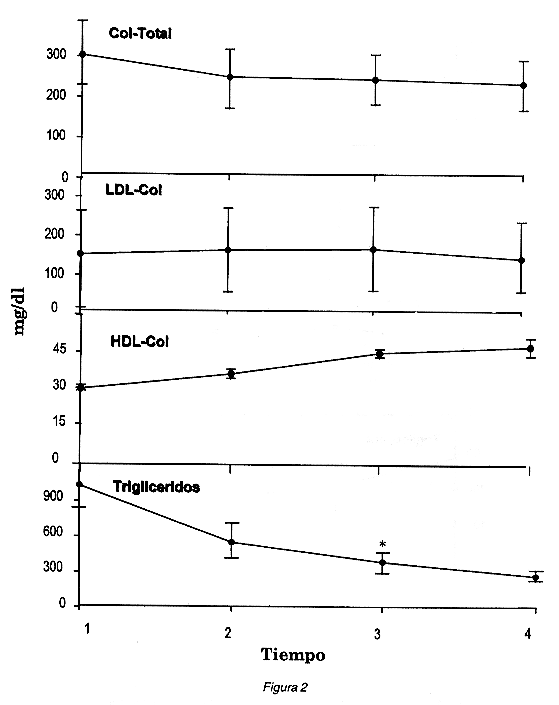
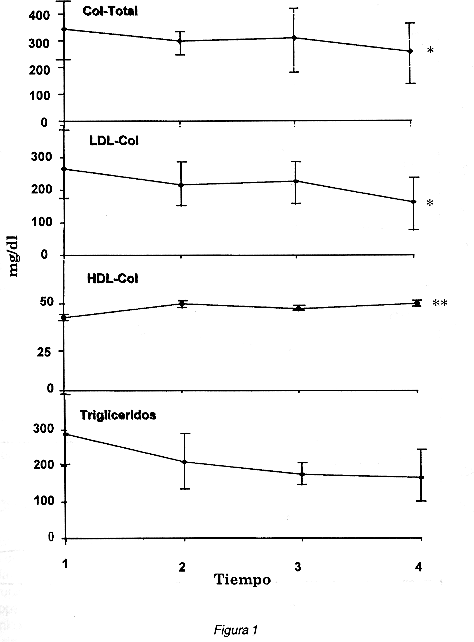
<body><![CDATA[<P><B><FONT FACE="Arial,Helvetica"><FONT SIZE=-1>Efecto de la intervenci&oacute;n nutricional</FONT></FONT></B>      <P><FONT FACE="Arial,Helvetica"><FONT SIZE=-1>Todos los pacientes recibieron una intervenci&oacute;n nutricional siguiendo el esquema recomendado previamente<SUP>(<A HREF="#20.">20</A>)</SUP>. El efecto de esta intervenci&oacute;n se demostr&oacute; por la p&eacute;rdida promedio de 2,5 kg y mediante la corroboraci&oacute;n del seguimiento de la dieta empleando frecuencias de consumo de alimentos.</FONT></FONT>      <P><FONT FACE="Arial,Helvetica"><FONT SIZE=-1>En los pacientes con hipercolesterolemia predominante, la concentraci&oacute;n del colesterol total se redujo del valor inicial de 344,4 &plusmn; 14,6 a 297,5 &plusmn; 12,5 y a 309,0 &plusmn; 17,0 mg/dl al mes y tres meses de tratamiento nutricional, respectivamente. La concentraci&oacute;n del col LDL se redujo de 266,5 &plusmn; 27,3 a 214,1 &plusmn; 16,6 y a 226 &plusmn; 15,3 en el mismo per&iacute;odo (18 por ciento de cambio). La concentraci&oacute;n de triglic&eacute;ridos baj&oacute; y la del col HDL se increment&oacute; discretamente (<A HREF="#Figura1">Figura 1</A>). En los pacientes con predominio de triglic&eacute;ridos (n=10), la concentraci&oacute;n del colesterol total disminuy&oacute; de 263,2 &plusmn; 13,0 a 249,0 &plusmn; 20.0 y a 250,0 &plusmn; 21,0 mg/dl al mes y tres meses de tratamiento diet&eacute;tico, respectivamente. La concentraci&oacute;n del col LDL no vari&oacute;, se observ&oacute; por el contrario, un ligero aumento de 151,7 &plusmn; 32,0 a 168,0 &plusmn; 28,0 mg/dl a los tres meses de intervenci&oacute;n nutricional. En estos pacientes la concentraci&oacute;n de triglic&eacute;ridos disminuy&oacute; de 379,0 &plusmn; 45,0 a 359,6 &plusmn; 27,0 y a 300,0 &plusmn; 25,0 mg/dl al mes y tres meses de intervenci&oacute;n nutricional. La concentraci&oacute;n del col HDL vari&oacute; de 29,8 &plusmn; 2,1 mg/dl a 34,7 &plusmn; 4,6 mg/dl, cambio que no fue estad&iacute;sticamente significativo (<A HREF="#Figura2">Figura 2</A>).</FONT></FONT>     <BR><FONT FACE="Helvetica,Arial"><FONT SIZE=-1>&nbsp;</FONT></FONT>      <P><B><FONT FACE="Arial,Helvetica"><FONT SIZE=-1>Intervenci&oacute;n farmacol&oacute;gica</FONT></FONT></B>      <P><FONT FACE="Arial,Helvetica"><FONT SIZE=-1>A final de los tres meses de dieta, se inici&oacute; la terapia con lovastatina (dosis inicial de 20 mg y promedio de 40 mg/diarios) en los pacientes con hipercolesterolemia predominante (n= 28) mientras que la dieta se manten&iacute;a igual. Con esta intervenci&oacute;n la concentraci&oacute;n de colesterol disminuy&oacute; de 309,8 &plusmn; 14,1 a 254,6 &plusmn; 16,0 mg/dl y la del col LDL de 226,4 &plusmn; 15,3 a 162,0 &plusmn; 19,0 mg/dl, p &lt;0.001 (<A HREF="#Figura1">tiempo 4, Figura 1</A>), correspondiendo a un cambio del 28 por ciento. Adem&aacute;s la concentraci&oacute;n de col HDL se increment&oacute; de 47,0 &plusmn; 2,6 a 55,0 &plusmn; 3,4 mg/dl (p &lt; 0,05) (<A HREF="#Figura1">Figura 1</A>). De igual manera, en los pacientes con dislipidemia a predominio de triglic&eacute;ridos (n=10), el tratamiento con gem-fibrozil redujo la concentraci&oacute;n de colesterol de 250,0 &plusmn; 17,0 a 246,0 &plusmn; 21,0 y el col LDL cambi&oacute; de 168,0 &plusmn; 27,0 a 165,0 &plusmn; 21,0 mg/dl (p = ns) lo que signific&oacute; una disminuci&oacute;n del 15 por ciento en el colesterol total. Los triglic&eacute;ridos disminuyeron de 300,0 &plusmn; 25,0 a 248,0 &plusmn; 31,0 (p &lt; 0.06) y la concentraci&oacute;n del col HDL que era de 39,5 3 &plusmn; 4,1 al final de la dieta cambi&oacute; a 37,5 &plusmn; 5,5 mg/dl al final del periodo de tratamiento farmacol&oacute;gico (<A HREF="#Figura2">Figura 2</A>). (p = ns); con la dieta, el col LDL vari&oacute; de 151.0 &plusmn; 16.0 a 155.0 &plusmn; 16.0 mg/dl, y con el gemfibrozil se mantuvo en 165,0&plusmn; 21,0 mg/dl (p = ns).</FONT></FONT>      <P><FONT FACE="Arial,Helvetica"><FONT SIZE=-1>Al final de la intervenci&oacute;n nutricional, la relaci&oacute;n colesterol/col HDL fue en promedio de 6,57 en los pacientes con hipercolesterolemia predominante y de 6,11 en aquellos dislipidemia a predominio de triglic&eacute;ridios. Esta relaci&oacute;n se redujo a 4,67 y a 5,36 en los tratados con la lovastatina y el gemfibrozil, respectivamente. El efecto de la intervenci&oacute;n farmacol&oacute;gica en los pacientes con cardiopat&iacute;a isqu&eacute;mica se muestra en el <A HREF="#Cuadro2">Cuadro No. 2</A>. En los pacientes con cardiopat&iacute;a isqu&eacute;mica e hipercolesterolemia predominante que recibieron lovastatina, el col LDL se redujo de 176,0 &plusmn; 15,0 a 125,0 &plusmn; 12,0 mg/dl (p&lt;0.005). En los que ten&iacute;an dislipidemia con predominio de triglic&eacute;ridos en tratamiento con gemfibrozil, el col LDL baj&oacute; de 192,0 &plusmn; 31,0 a 174,0 &plusmn; 31,0 mg/dl (p = ns). La relaci&oacute;n colesterol/col HDL se redujo a 4,0 y a 5,79 en los pacientes tratados con lovastatina y gemfibrozil, respectivamente.</FONT></FONT>     <BR><FONT SIZE=-1>&nbsp;</FONT>      <P><FONT FACE="Helvetica,Arial"><FONT SIZE=-1>&nbsp;</FONT></FONT>     <CENTER><A NAME="Figura1"></A><IMG SRC="/img/fbpe/rccm/v18n4/0030i01.GIF" HEIGHT=642 WIDTH=474></CENTER>      
]]></body>
<body><![CDATA[<CENTER><FONT SIZE=-1>&nbsp;</FONT></CENTER>       <P><FONT FACE="Arial,Helvetica"><FONT SIZE=-1>Efecto de la intervenci&oacute;n nutricional y farmacol&oacute;gica con lovastatina sobre la concentraci&oacute;n de colesterol total, LDL colesterol, HDL colesterol y triglic&eacute;ridos (mg/dl) en pacientes con hipercolesterolemia predominante (n = 28) en tiempo basal (1); efecto de la dieta al mes y tres meses (tiempos <A HREF="#Figura1">2</A> y <A HREF="#Figura1">3</A>) y efecto del tratamiento farmacol&oacute;gico (<A HREF="#Figura1">tiempo 4</A>).</FONT></FONT>      <P><FONT FACE="Arial,Helvetica"><FONT SIZE=-1>*&nbsp;&nbsp; p &lt; 0.001 comparado con tiempo 3</FONT></FONT>     <BR><FONT FACE="Arial,Helvetica"><FONT SIZE=-1>**&nbsp; p &lt; 0.05 comparado con tiempo 3</FONT></FONT>      <P><FONT SIZE=-1>&nbsp;</FONT>     <CENTER><A NAME="Figura2"></A><IMG SRC="/img/fbpe/rccm/v18n4/0030i02.GIF" HEIGHT=705 WIDTH=559></CENTER>      
<CENTER><FONT SIZE=-1>&nbsp;</FONT></CENTER> <FONT SIZE=-1>&nbsp;</FONT>      <P><FONT FACE="Arial,Helvetica"><FONT SIZE=-1>Efecto de la intervenci&oacute;n nutricional y farmacol&oacute;gica con gemfibrozil sobre la concentraci&oacute;n de colesterol total, LDL colesterol, HDL colesterol y triglic&eacute;ridos (mg/dl) en pacientes con hipertrigliceridemia predominante (n = 10) en tiempo basal (1); efecto de la dieta al mes y tres meses (tiempos <A HREF="#Figura2">2</A> y <A HREF="#Figura2">3</A>) y efecto del tratamiento farmacol&oacute;gico (<A HREF="#Figura2">tiempo 4</A>).</FONT></FONT>      <P><FONT FACE="Arial,Helvetica"><FONT SIZE=-1>*&nbsp;&nbsp; p &lt; 0.06 comparado con tiempo 1 y 2</FONT></FONT>     <BR><FONT SIZE=-1>&nbsp;</FONT>      ]]></body>
<body><![CDATA[<P><FONT FACE="Helvetica,Arial"><FONT SIZE=-1>&nbsp;</FONT></FONT>     <CENTER><A NAME="Cuadro2"></A><B><FONT FACE="Arial,Helvetica"><FONT SIZE=-1>CUADRO No. 2</FONT></FONT></B></CENTER>      <CENTER><B><FONT FACE="Arial,Helvetica"><FONT SIZE=-1>EFECTO DE LA INTERVENCI&Oacute;N FARMACOL&Oacute;GICA</FONT></FONT></B></CENTER>      <CENTER><B><FONT FACE="Arial,Helvetica"><FONT SIZE=-1>SOBRE LA CONCENTRACI&Oacute;N DE L&Iacute;PIDOS Y LIPOPROTE&Iacute;NAS</FONT></FONT></B></CENTER>      <CENTER><B><FONT FACE="Arial,Helvetica"><FONT SIZE=-1>EN PACIENTES CON CARDIOPAT&Iacute;A ISQU&Eacute;MICA</FONT></FONT></B></CENTER>      <CENTER><FONT SIZE=-1>&nbsp;</FONT></CENTER>      <CENTER><TABLE BORDER CELLSPACING=0 CELLPADDING=0 COLS=5 WIDTH="91%" > <TR> <TD WIDTH="22%"><FONT SIZE=-1>&nbsp;</FONT></TD>  <TD COLSPAN="2">     <CENTER><B><FONT FACE="Arial,Helvetica"><FONT SIZE=-1>Hipercolesterolemia</FONT></FONT></B></CENTER>      <CENTER><B><FONT FACE="Arial,Helvetica"><FONT SIZE=-1>predominante</FONT></FONT></B></CENTER>      <CENTER><B><FONT FACE="Arial,Helvetica"><FONT SIZE=-1>(n = 6)</FONT></FONT></B></CENTER> </TD>  <TD COLSPAN="2" WIDTH="27%">     ]]></body>
<body><![CDATA[<CENTER><B><FONT FACE="Arial,Helvetica"><FONT SIZE=-1>Dislipidemia mixta</FONT></FONT></B></CENTER>      <CENTER><B><FONT FACE="Arial,Helvetica"><FONT SIZE=-1>predominiode</FONT></FONT></B></CENTER>      <CENTER><B><FONT FACE="Arial,Helvetica"><FONT SIZE=-1>triglic&eacute;ridos</FONT></FONT></B></CENTER>      <CENTER><B><FONT FACE="Arial,Helvetica"><FONT SIZE=-1>(n = 6)</FONT></FONT></B></CENTER> </TD> </TR>  <TR> <TD></TD>  <TD>     <CENTER><FONT FACE="Arial,Helvetica"><FONT SIZE=-1>antes</FONT></FONT></CENTER> </TD>  <TD>     <CENTER><FONT FACE="Arial,Helvetica"><FONT SIZE=-1>despu&eacute;s</FONT></FONT></CENTER> </TD>  <TD>     <CENTER><FONT FACE="Arial,Helvetica"><FONT SIZE=-1>antes</FONT></FONT></CENTER> </TD>  <TD>     <CENTER><FONT FACE="Arial,Helvetica"><FONT SIZE=-1>despu&eacute;s</FONT></FONT></CENTER> </TD> </TR>  <TR> <TD><FONT FACE="Arial,Helvetica"><FONT SIZE=-1>&nbsp;Colesterol</FONT></FONT></TD>  <TD>     <CENTER><FONT FACE="Arial,Helvetica"><FONT SIZE=-1>266&plusmn; 23</FONT></FONT></CENTER> </TD>  <TD>     <CENTER><FONT FACE="Arial,Helvetica"><FONT SIZE=-1>201&plusmn; 17</FONT></FONT></CENTER> </TD>  <TD>     ]]></body>
<body><![CDATA[<CENTER><FONT FACE="Arial,Helvetica"><FONT SIZE=-1>281&plusmn; 21</FONT></FONT></CENTER> </TD>  <TD>     <CENTER><FONT FACE="Arial,Helvetica"><FONT SIZE=-1>249&plusmn; 28</FONT></FONT></CENTER> </TD> </TR>  <TR> <TD><FONT FACE="Arial,Helvetica"><FONT SIZE=-1>&nbsp;Triglic&eacute;ridos</FONT></FONT></TD>  <TD>     <CENTER><FONT FACE="Arial,Helvetica"><FONT SIZE=-1>187&plusmn; 36</FONT></FONT></CENTER> </TD>  <TD>     <CENTER><FONT FACE="Arial,Helvetica"><FONT SIZE=-1>152&plusmn; 26</FONT></FONT></CENTER> </TD>  <TD>     <CENTER><FONT FACE="Arial,Helvetica"><FONT SIZE=-1>431&plusmn; 125</FONT></FONT></CENTER> </TD>  <TD>     <CENTER><FONT FACE="Arial,Helvetica"><FONT SIZE=-1>262&plusmn; 32</FONT></FONT></CENTER> </TD> </TR>  <TR> <TD><FONT FACE="Arial,Helvetica"><FONT SIZE=-1>&nbsp;col LDL</FONT></FONT></TD>  <TD>     <CENTER><FONT FACE="Arial,Helvetica"><FONT SIZE=-1>176&plusmn; 15</FONT></FONT></CENTER> </TD>  <TD>     <CENTER><FONT FACE="Arial,Helvetica"><FONT SIZE=-1>125&plusmn; 12*</FONT></FONT></CENTER> </TD>  <TD>     <CENTER><FONT FACE="Arial,Helvetica"><FONT SIZE=-1>192&plusmn; 31</FONT></FONT></CENTER> </TD>  <TD>     <CENTER><FONT FACE="Arial,Helvetica"><FONT SIZE=-1>174&plusmn; 32</FONT></FONT></CENTER> </TD> </TR>  <TR> <TD><FONT FACE="Arial,Helvetica"><FONT SIZE=-1>&nbsp;col HDL</FONT></FONT></TD>  <TD>     ]]></body>
<body><![CDATA[<CENTER><FONT FACE="Arial,Helvetica"><FONT SIZE=-1>47&plusmn; 2</FONT></FONT></CENTER> </TD>  <TD>     <CENTER><FONT FACE="Arial,Helvetica"><FONT SIZE=-1>50&plusmn; 6</FONT></FONT></CENTER> </TD>  <TD>     <CENTER><FONT FACE="Arial,Helvetica"><FONT SIZE=-1>40&plusmn; 5</FONT></FONT></CENTER> </TD>  <TD>     <CENTER><FONT FACE="Arial,Helvetica"><FONT SIZE=-1>43&plusmn; 12</FONT></FONT></CENTER> </TD> </TR> </TABLE></CENTER> <FONT FACE="Arial,Helvetica"><FONT SIZE=-1>&nbsp;&nbsp;&nbsp;&nbsp;&nbsp;&nbsp;&nbsp;&nbsp; Resultados en mg/dl se expresan como promedio &plusmn; error est&aacute;ndar</FONT></FONT>     <BR><FONT FACE="Arial,Helvetica"><FONT SIZE=-1>&nbsp;&nbsp;&nbsp;&nbsp;&nbsp;&nbsp;&nbsp;&nbsp; * p &lt; 0.005</FONT></FONT>      <P><FONT FACE="Arial,Helvetica"><FONT SIZE=-1>&nbsp;&nbsp;&nbsp; En general, no se presentaron efectos adversos con la intervenci&oacute;n farmacol&oacute;gica, las pruebas de funci&oacute;n hep&aacute;tica se mantuvieron normales en todos los pacientes.</FONT></FONT>     <BR>&nbsp;      <P><B><FONT FACE="Arial,Helvetica"><FONT SIZE=-1>Discusi&oacute;n</FONT></FONT></B>      <P><FONT FACE="Arial,Helvetica"><FONT SIZE=-1>En este reporte se presentan los resultados del efecto de la intervenci&oacute;n nutricional y farmacol&oacute;gica sobre el perfil lip&iacute;dico en un grupo de pacientes dislipid&eacute;micos con cardiopat&iacute;a coronaria y sin ella atendidos en la Cl&iacute;nica de Factores de Riesgo Cardiovascular del INCIENSA/Hospital Rafael Angel Calder&oacute;n Guardia. En estos pacientes se intent&oacute; modificar los principales factores de riesgo cardiovascular en un esfuerzo por prevenir el desarrollo o progreso de la cardiopat&iacute;a isqu&eacute;mica. Diversos estudios han demostrado que es posible mediante la reducci&oacute;n del col LDL evitar el desarrollo de cardiopat&iacute;a isqu&eacute;mica en sujetos con aterosclerosis coronaria, asimismo, reducir el progreso de la aterosclerosis y disminuir las complicaciones en aquellos individuos que ya han sufrido infarto al miocardio<SUP>(<A HREF="#7.">7</A>-<A HREF="#11.">11</A>)</SUP>. El estudio de supervivencia con simvastatina, demostr&oacute; tanto en hombres como mujeres una reducci&oacute;n en la mortalidad cardiovascular y un aumento en la sobrevida de los pacientes con cardiopat&iacute;a coronaria<SUP>(<A HREF="#12.">12</A>)</SUP>.</FONT></FONT>      <P><FONT FACE="Arial,Helvetica"><FONT SIZE=-1>Al analizar los resultados del presente estudio se nota, en primer lugar, que la dieta y p&eacute;rdida de peso modificaron la concentraci&oacute;n promedio del colesterol total y de los triglic&eacute;ridos, efectos que se ha demostrado en diversos estudios<SUP>(<A HREF="#21.">21</A>, <A HREF="#26.">26</A>)</SUP>. No obstante no se alcanzaron los niveles deseados en la concentraci&oacute;n del col ldl, considerada la lipoprote&iacute;na aterog&eacute;nica por excelencia <SUP>(<A HREF="#7.">7</A>)</SUP>.</FONT></FONT>      ]]></body>
<body><![CDATA[<P><FONT FACE="Arial,Helvetica"><FONT SIZE=-1>Cabe hacer notar que se presentaron diferencias en la respuesta a la dieta en los dos grupos de pacientes. En los pacientes con hipercolesterolemia predominante, la dieta modific&oacute; en un 18 por ciento la concentraci&oacute;n del col LDL, mientras que en los pacientes con dislipidemia mixta a predominio de triglic&eacute;ridos no se observaron cambios en el perfil lip&iacute;dico. Se podr&iacute;a interpretar que el efecto de la dieta sobre el perfil lip&iacute;dico fue insuficiente pues no se alcanzaron las metas<SUP>(<A HREF="#7.">7</A>)</SUP>. No obstante, debe considerarse que la disminuci&oacute;n promedio de 50 mg/dl en la concentraci&oacute;n del col LDL en los pacientes con hipercolesterolemia predominante fue importante<SUP>(<A HREF="#7.">7</A>,<A HREF="#20.">20</A>-<A HREF="#27.">27</A>)</SUP>.</FONT></FONT>      <P><FONT FACE="Arial,Helvetica"><FONT SIZE=-1>El hecho de que estos pacientes eran portadores de enfermedades primarias del metabolismo de las lipoprote&iacute;nas explica la resistencia a intervenci&oacute;n nutricional como &uacute;nica forma de terapia. La dieta y la p&eacute;rdida de peso tambi&eacute;n reducen otros factores de riesgo cardiovascular que con frecuencia se encuentran en estos pacientes, como son la hipertensi&oacute;n arterial y la obesidad<SUP>(<A HREF="#21.">21</A>-<A HREF="#22.">22</A>)</SUP>.</FONT></FONT>      <P><FONT FACE="Arial,Helvetica"><FONT SIZE=-1>Al iniciar el tratamiento con lovastatina y mantener la dieta, los pacientes con hiperco-lesterolemia predominante, redujeron la concentraci&oacute;n del col LDL en un 28 por ciento (p&lt;0,01). En los pacientes con dislipidemia mixta con predominio de hipertriglic&eacute;ridemia el tratamiento con gemfibrozil no modific&oacute; la concentraci&oacute;n del col LDL. Las diferencias del efecto de estos agentes sobre la concentraci&oacute;n del col LDL puede ser explicada por el mecanismo de acci&oacute;n de estos hipolipemiantes. La lovastatina inhibe competitivamente la s&iacute;ntesis de colesterol y aumenta la tasa de catabolismo de las lipoprote&iacute;nas aterog&eacute;nicas como las lipoprote&iacute;nas de densidad intermedia (IDL) y las LDL, respectivamente<SUP>(<A HREF="#28.">28</A>)</SUP>. Mientras que, el gemfibrozil afecta principalmente la concentraci&oacute;n de las lipoprote&iacute;nas de muy baja densidad (VLDL) y por consiguiente reduce particularmente la concentraci&oacute;n de triglic&eacute;ridos mediante la disminuci&oacute;n de la producci&oacute;n y el aumento del catabolismo de las VLDL. No obstante, cabe se&ntilde;alar que en este grupo de pacientes la intervenci&oacute;n farmacol&oacute;gica redujo en forma similar la concentraci&oacute;n de triglic&eacute;ridos a pesar de que el gemfibrozil es, como se indic&oacute;, m&aacute;s potente para reducir esta grasa. Este efecto podr&iacute;a explicarse por el hecho de que los pacientes mantuvieron un control diet&eacute;tico estricto que facilit&oacute; la disminuci&oacute;n en la concentraci&oacute;n de triglic&eacute;ridos y, adicionalmente, la lovastatina tambi&eacute;n puede reducirlos aunque en menor magnitud.</FONT></FONT>      <P><FONT FACE="Arial,Helvetica"><FONT SIZE=-1>Al comparar el efecto de la lovastatina y el gemfibrozil en pacientes con cardiopat&iacute;a isqu&eacute;mica (<A HREF="#Cuadro2">Cuadro No.</A> <A HREF="#Cuadro2">2</A>), se observa que solo la primera redujo la concentraci&oacute;n del col LDL significativamente, alcanz&aacute;ndose niveles menores de 130 mg/dl y elev&oacute; la concentraci&oacute;n del col HDL a cifras superiores a 45 mg/dl. Aunque la concentraci&oacute;n del colesterol LDL no llega a ser menor de 100 mg/dl<SUP>(<A HREF="#7.">7</A>)</SUP>, la tendencia fue a alcanzar esta cifra. Por lo tanto, en estas situaciones se considera que el siguiente paso ser&iacute;a aumentar la dosis del hipolipemiante o bien emplear otro de m&aacute;s potencia<SUP>(<A HREF="#27.">27</A>)</SUP>.</FONT></FONT>      <P><FONT FACE="Arial,Helvetica"><FONT SIZE=-1>En pacientes con cardiopat&iacute;a coronaria y dislipidemia se ha reportado que el col LDL elevado induce a disfunci&oacute;n del endotelio, alteraci&oacute;n que mejora con la reducci&oacute;n de estas lipoprote&iacute;nas<SUP>(<A HREF="#28.">28</A>, <A HREF="#29.">29</A>)</SUP>, por lo que se debe considerar como meta primaria la disminuci&oacute;n de las LDL con el fin de mejorar la disfunci&oacute;n endotelial en un intento de reducir el riesgo de otro evento vascular. De acuerdo al NECP<SUP>(<A HREF="#7.">7</A>)</SUP> y apoyado en otros estudios de prevenci&oacute;n primaria<SUP>(<A HREF="#30.">30</A>)</SUP> y secundaria<SUP>(<A HREF="#12.">12</A>)</SUP> se ha definido que en los pacientes con m&uacute;ltiples factores de riesgo o con cardiopat&iacute;a isqu&eacute;mica, la meta primaria es reducir la concentraci&oacute;n del col LDL a menos de 130 y a menos de 100 mg/dl, respectivamente y considerar la relaci&oacute;n colesterol total/colesterol HDL, la cual debe ser menor de 4,5<SUP>(<A HREF="#31.">31</A>)</SUP>. Para alcanzar esto en ocasiones es necesario emplear combinaciones de agentes hipolipemiantes como se ha recomendado previamente<SUP>(<A HREF="#7.">7</A>,<A HREF="#31.">31</A>-<A HREF="#32.">32</A>)</SUP> debido a que los efectos de cada uno de ellos pueden potencializar la reducci&oacute;n de colesterol LDL. En conclusi&oacute;n, en este informe se presentan los resultados de efecto de la intervenci&oacute;n nutricional y farmacol&oacute;gica en pacientes dislipid&eacute;micos con cardiopat&iacute;a isqu&eacute;mica y sin ella. Se alerta al m&eacute;dico para que escoja apropiadamente los agentes hipolipemiantes despu&eacute;s de una adecuada intervenci&oacute;n diet&eacute;tica, particularmente en aquellos pacientes con cardiopat&iacute;a isqu&eacute;mica, en prevenci&oacute;n secundaria, cuyo objetivo primordial es disminuir el colesterol LDL a menos de 100 mg/dl, como la meta para reducir el riesgo de otro evento vascular.</FONT></FONT>     <BR>&nbsp;      <P><B><FONT FACE="Arial,Helvetica"><FONT SIZE=-1>Agradecimientos</FONT></FONT></B>      <P><FONT FACE="Arial,Helvetica"><FONT SIZE=-1>Agradecemos la colaboraci&oacute;n del personal de enfermer&iacute;a y de nutrici&oacute;n del Hospital Rafael Angel Calder&oacute;n Guardia, San Jos&eacute;, Costa Rica por su valiosa colaboraci&oacute;n.</FONT></FONT>      <P><FONT FACE="Arial,Helvetica"><FONT SIZE=-1>Este estudio fue financiado por el Ministerio de Salud de Costa Rica, el Fondo de Asignaciones Familiares, la Caja Costarricense de Seguro Social y por el Grant de Investigaci&oacute;n de la Universidad de Toronto\INCIENSA\CIDA, S22735.</FONT></FONT>     <BR>&nbsp;      ]]></body>
<body><![CDATA[<P><B><FONT FACE="Arial,Helvetica"><FONT SIZE=-1>Abstract</FONT></FONT></B>      <P><FONT FACE="Arial,Helvetica"><FONT SIZE=-1>Thirty eight patients (15 males and 23 females) aged 50,0 &plusmn; 1.5 years old, were studied during a six month period. Eighteen had hypercholesterolemia and 10 mixed dyslipidemia. Six hypercholesterolemic, and 6 with mixed dyslipidemic patients had coronary artery disease. With a dietary intervention for three months, patients with hypercholesterolemia reduced total cholesterol (344,0 &plusmn; 14,0 309.0 &plusmn; mg/dl) and lowdensity lipoprotein concentrations cholesterol by 18 per cent. In patients with mixed dyslipidemias total cholesterol was reduced from 263,2 &plusmn; 13,0 to 249,0 &plusmn; 12,0 mg/dl, (-5%) but LDL cholesterol did not change. Triglyceride levels changed from 379,0 &plusmn; 45,0 to 359,6 &plusmn; 27,0 mg/dl. Despite dietary intervention, dyslipidemia persisted. Therefore, in patients with predominant hypercholesterolemia, lovastatinewas prescribed, whereas gemfibrozil for those with mixed dyslipidemias. In patients who received lovastatine, total cholesterol decreased from 309,0 &plusmn; 16,7 to 257,0 &plusmn; 16,0 mg/dl and LDL cholesterol by 28 percent (p &lt; 0.001). HDL cholesterol increased from 47,0 &plusmn; 2,6 to 55,0 &plusmn; 3,4 mg/dl (p &lt; 0.05). Patients on gemfibrozil reduced total cholesterol and triglyceride levels (244,0 &plusmn; 17,0 to 223,0 &plusmn; 17,0 mg/dl; and 391,0 &plusmn; 73,0 to 273,0 &plusmn; 26,0 mg/dl, p &lt; 0.06, respectively) and HDL cholesterol changed from 39,5 &plusmn; 4.1 to 37,5 &plusmn; 5,5 mg/dl. The cholesterol HDL ratio was 6.56 and 6.11 after dietary intervention in hypercholesterolemic patients and in those with mixed dyslipidemias and decreased to 4.67 and to 5.36 in patients who received lovastatine and gemfibrozil, respectively. These results showed the of effect interventions on lipid profiles in dyslipidemic patients aimed to reduce cardiovascular risk an achieving the goals in the lipid profile.</FONT></FONT>     <BR><FONT SIZE=-1>&nbsp;</FONT>     <BR><FONT SIZE=-1>&nbsp;</FONT>      <P><B><FONT FACE="Arial,Helvetica"><FONT SIZE=-1>Referencias</FONT></FONT></B>      <!-- ref --><P><A NAME="1."></A><FONT SIZE=-1><FONT FACE="Arial,Helvetica">1. Jim&eacute;nez, JG. La promoci&oacute;n de la salud: un instrumento para prevenir las enfermedades</FONT> <FONT FACE="Arial,Helvetica">cardiovasculares. <I>Rev Cent Adm Publ</I> 1993 julio-diciembre 17-28.</FONT></FONT>    &nbsp;&nbsp;&nbsp;&nbsp;&nbsp;&nbsp;&nbsp;&nbsp;[&#160;<a href="javascript:void(0);" onclick="javascript: window.open('/scielo.php?script=sci_nlinks&ref=768825&pid=S0253-2948199700040000300001&lng=','','width=640,height=500,resizable=yes,scrollbars=1,menubar=yes,');">Links</a>&#160;]<!-- end-ref --><!-- ref --><P><A NAME="2."></A><FONT SIZE=-1><FONT FACE="Arial,Helvetica">2. Fuster V, Stein B, Ambrose JA, et al. Atherosclerotic plaque rupture and thrombosis evolving concepts.</FONT> <FONT FACE="Arial,Helvetica"><I>Circulation</I> 1988; 77:1213-122.</FONT></FONT>    &nbsp;&nbsp;&nbsp;&nbsp;&nbsp;&nbsp;&nbsp;&nbsp;[&#160;<a href="javascript:void(0);" onclick="javascript: window.open('/scielo.php?script=sci_nlinks&ref=768826&pid=S0253-2948199700040000300002&lng=','','width=640,height=500,resizable=yes,scrollbars=1,menubar=yes,');">Links</a>&#160;]<!-- end-ref --><!-- ref --><P><A NAME="3."></A><FONT SIZE=-1><FONT FACE="Arial,Helvetica">3. Fuster V, Badimon L, Badimon JJ, Chesebro JH. The pathogenesis of coronary artery disease and the</FONT> <FONT FACE="Arial,Helvetica">acute coronary syndromes (first of two parts). <I>N Engl J Med</I> 1992; 326:242-250.</FONT></FONT>    &nbsp;&nbsp;&nbsp;&nbsp;&nbsp;&nbsp;&nbsp;&nbsp;[&#160;<a href="javascript:void(0);" onclick="javascript: window.open('/scielo.php?script=sci_nlinks&ref=768827&pid=S0253-2948199700040000300003&lng=','','width=640,height=500,resizable=yes,scrollbars=1,menubar=yes,');">Links</a>&#160;]<!-- end-ref --><!-- ref --><P><A NAME="4."></A><FONT SIZE=-1><FONT FACE="Arial,Helvetica">4. Fuster V, Badimon L, Badimon JJ, Chesebro JH. The pathogenesis of coronary artery disease and the</FONT> <FONT FACE="Arial,Helvetica">acute coronary syndromes (second of two parts). <I>N Engl J Med</I> 1992; 326:310-318.</FONT></FONT>    &nbsp;&nbsp;&nbsp;&nbsp;&nbsp;&nbsp;&nbsp;&nbsp;[&#160;<a href="javascript:void(0);" onclick="javascript: window.open('/scielo.php?script=sci_nlinks&ref=768828&pid=S0253-2948199700040000300004&lng=','','width=640,height=500,resizable=yes,scrollbars=1,menubar=yes,');">Links</a>&#160;]<!-- end-ref --><!-- ref --><P><A NAME="5."></A><FONT FACE="Arial,Helvetica"><FONT SIZE=-1>5. Castelli WP. Epidemiology of coronary heart disease: Framingham Study. <I>Am J Med</I> 1984;76:4-12.</FONT></FONT>    &nbsp;&nbsp;&nbsp;&nbsp;&nbsp;&nbsp;&nbsp;&nbsp;[&#160;<a href="javascript:void(0);" onclick="javascript: window.open('/scielo.php?script=sci_nlinks&ref=768829&pid=S0253-2948199700040000300005&lng=','','width=640,height=500,resizable=yes,scrollbars=1,menubar=yes,');">Links</a>&#160;]<!-- end-ref --><!-- ref --><P><A NAME="6."></A><FONT SIZE=-1><FONT FACE="Arial,Helvetica">6. Abbott RD, Wilson PWF, Kannel WB, Castelli WP. High density lipoprotein cholesterol, total cholesterol</FONT> <FONT FACE="Arial,Helvetica">and myocardial infarction: <I>Framingham Study. Arteriosclerosis</I> 1988;8:207-211.</FONT></FONT>    &nbsp;&nbsp;&nbsp;&nbsp;&nbsp;&nbsp;&nbsp;&nbsp;[&#160;<a href="javascript:void(0);" onclick="javascript: window.open('/scielo.php?script=sci_nlinks&ref=768830&pid=S0253-2948199700040000300006&lng=','','width=640,height=500,resizable=yes,scrollbars=1,menubar=yes,');">Links</a>&#160;]<!-- end-ref --><!-- ref --><P><A NAME="7."></A><FONT SIZE=-1><FONT FACE="Arial,Helvetica">7. Summary of the second report of the National Colesterol Education Program (NCEP) expert panel on detection, evaluation and treatment of high blood cholesterol in adults (Adult Treatment Panel II). <I>JAMA</I></FONT> <FONT FACE="Arial,Helvetica">1993; 269:3015-3023.</FONT></FONT>    &nbsp;&nbsp;&nbsp;&nbsp;&nbsp;&nbsp;&nbsp;&nbsp;[&#160;<a href="javascript:void(0);" onclick="javascript: window.open('/scielo.php?script=sci_nlinks&ref=768831&pid=S0253-2948199700040000300007&lng=','','width=640,height=500,resizable=yes,scrollbars=1,menubar=yes,');">Links</a>&#160;]<!-- end-ref --><!-- ref --><P><A NAME="8."></A><FONT SIZE=-1><FONT FACE="Arial,Helvetica">8. Lipid Research Clinics coronary primary prevention trial results I. Reduction in incidence of CHD. Lipid</FONT> <FONT FACE="Arial,Helvetica">Research Clinics Program. <I>JAMA</I> 1984;251:351-364.</FONT></FONT>    &nbsp;&nbsp;&nbsp;&nbsp;&nbsp;&nbsp;&nbsp;&nbsp;[&#160;<a href="javascript:void(0);" onclick="javascript: window.open('/scielo.php?script=sci_nlinks&ref=768832&pid=S0253-2948199700040000300008&lng=','','width=640,height=500,resizable=yes,scrollbars=1,menubar=yes,');">Links</a>&#160;]<!-- end-ref --><!-- ref --><P><A NAME="9."></A><FONT SIZE=-1><FONT FACE="Arial,Helvetica">9. Frick MH, Elo O, Haapa K, Heinonen OP, Heinsalmi P, et al Helsink Hert Study: Primary-prevention trial</FONT> <FONT FACE="Arial,Helvetica">with Gemfibrozil in middle-aged men with dyslipidemia. <I>N Engl J Med</I> 1987; 317:1237-45.</FONT></FONT>    &nbsp;&nbsp;&nbsp;&nbsp;&nbsp;&nbsp;&nbsp;&nbsp;[&#160;<a href="javascript:void(0);" onclick="javascript: window.open('/scielo.php?script=sci_nlinks&ref=768833&pid=S0253-2948199700040000300009&lng=','','width=640,height=500,resizable=yes,scrollbars=1,menubar=yes,');">Links</a>&#160;]<!-- end-ref --><!-- ref --><P><A NAME="10."></A><FONT SIZE=-1><FONT FACE="Arial,Helvetica">10. Blankenhorn DH, Nessim SA, Johnson RL. Beneficial effects of combined colestipol-niacin therapy on</FONT>&nbsp;<FONT FACE="Arial,Helvetica"> coronary atherosclerosis and coronary venous by pass grafts. <I>JAMA</I> 1987;257:3233-40.</FONT></FONT>    &nbsp;&nbsp;&nbsp;&nbsp;&nbsp;&nbsp;&nbsp;&nbsp;[&#160;<a href="javascript:void(0);" onclick="javascript: window.open('/scielo.php?script=sci_nlinks&ref=768834&pid=S0253-2948199700040000300010&lng=','','width=640,height=500,resizable=yes,scrollbars=1,menubar=yes,');">Links</a>&#160;]<!-- end-ref --><!-- ref --><P><A NAME="11."></A><FONT SIZE=-1><FONT FACE="Arial,Helvetica">11. Brown G, Albers JJ, Fisher L. Regres-sion of coronary artery disease as a result of intensive lipid</FONT> <FONT FACE="Arial,Helvetica">lowering therapy in men with high levels of apolipoprotein B. <I>N Engl J Med</I> 1990;323: 1289-1298.</FONT></FONT>    &nbsp;&nbsp;&nbsp;&nbsp;&nbsp;&nbsp;&nbsp;&nbsp;[&#160;<a href="javascript:void(0);" onclick="javascript: window.open('/scielo.php?script=sci_nlinks&ref=768835&pid=S0253-2948199700040000300011&lng=','','width=640,height=500,resizable=yes,scrollbars=1,menubar=yes,');">Links</a>&#160;]<!-- end-ref --><!-- ref --><P><A NAME="12."></A><FONT SIZE=-1><FONT FACE="Arial,Helvetica">12. The Scandinavian Simvastatin Survival Study Group. Ramdomised trial of cholesterol lowering in 4444</FONT> <FONT FACE="Arial,Helvetica">patients with coronary heart disease: the Scandinavian Simvastatin Survival Study (4S).<I>Lancet</I> 1994;</FONT> <FONT FACE="Arial,Helvetica">344:1383-1389.</FONT></FONT>    &nbsp;&nbsp;&nbsp;&nbsp;&nbsp;&nbsp;&nbsp;&nbsp;[&#160;<a href="javascript:void(0);" onclick="javascript: window.open('/scielo.php?script=sci_nlinks&ref=768836&pid=S0253-2948199700040000300012&lng=','','width=640,height=500,resizable=yes,scrollbars=1,menubar=yes,');">Links</a>&#160;]<!-- end-ref --><!-- ref --><P><A NAME="13."></A><FONT SIZE=-1><FONT FACE="Arial,Helvetica">13. NIH consensus development panel on triglyceride, high-density lipoprotein and coronary heart disease.</FONT> <FONT FACE="Arial,Helvetica"><I>JAMA</I> 1993; 269:505-510.</FONT></FONT>    &nbsp;&nbsp;&nbsp;&nbsp;&nbsp;&nbsp;&nbsp;&nbsp;[&#160;<a href="javascript:void(0);" onclick="javascript: window.open('/scielo.php?script=sci_nlinks&ref=768837&pid=S0253-2948199700040000300013&lng=','','width=640,height=500,resizable=yes,scrollbars=1,menubar=yes,');">Links</a>&#160;]<!-- end-ref --><!-- ref --><P><A NAME="14."></A><FONT SIZE=-1><FONT FACE="Arial,Helvetica">14. Chaves Matamoros, A, Fuchs Cord&oacute;n JR, Guzm&aacute;n Ovares, R, et al. Instructivo general para el abordaje</FONT> <FONT FACE="Arial,Helvetica">diagn&oacute;stico y terap&eacute;utico de las dislipidemias. <I>Farmacos</I> 1990; 90:3-11.</FONT></FONT>    &nbsp;&nbsp;&nbsp;&nbsp;&nbsp;&nbsp;&nbsp;&nbsp;[&#160;<a href="javascript:void(0);" onclick="javascript: window.open('/scielo.php?script=sci_nlinks&ref=768838&pid=S0253-2948199700040000300014&lng=','','width=640,height=500,resizable=yes,scrollbars=1,menubar=yes,');">Links</a>&#160;]<!-- end-ref --><!-- ref --><P><A NAME="15."></A><FONT SIZE=-1><FONT FACE="Arial,Helvetica">15. Goldstein JL, Brown MS. Familial hypercholesterolemia. In: Stambury JB, Fredrickson DS, Goldstein</FONT> <FONT FACE="Arial,Helvetica">JL, Brown MS eds. The Metabolic basis of inherit-ed disease. 5th ed. New York: McGraw-Hill,</FONT> <FONT FACE="Arial,Helvetica">1983;672-712.</FONT></FONT>    &nbsp;&nbsp;&nbsp;&nbsp;&nbsp;&nbsp;&nbsp;&nbsp;[&#160;<a href="javascript:void(0);" onclick="javascript: window.open('/scielo.php?script=sci_nlinks&ref=768839&pid=S0253-2948199700040000300015&lng=','','width=640,height=500,resizable=yes,scrollbars=1,menubar=yes,');">Links</a>&#160;]<!-- end-ref --><!-- ref --><P><A NAME="16."></A><FONT SIZE=-1><FONT FACE="Arial,Helvetica">16. Goldstein JL. Schrott HG, Hazzard WR, et al. Hyperlipidemia in coronary heart disease II. Genetic</FONT> <FONT FACE="Arial,Helvetica">analysis of lipid levels in 176 families and delineation of a new inherited disorder, combined</FONT> <FONT FACE="Arial,Helvetica">hyperlipidemia. <I>J Clin Invest</I> 1973; 52:1544-1568.</FONT></FONT>    &nbsp;&nbsp;&nbsp;&nbsp;&nbsp;&nbsp;&nbsp;&nbsp;[&#160;<a href="javascript:void(0);" onclick="javascript: window.open('/scielo.php?script=sci_nlinks&ref=768840&pid=S0253-2948199700040000300016&lng=','','width=640,height=500,resizable=yes,scrollbars=1,menubar=yes,');">Links</a>&#160;]<!-- end-ref --><!-- ref --><P><A NAME="17."></A><FONT SIZE=-1><FONT FACE="Arial,Helvetica">17. Jim&eacute;nez JG, Mora E. Diagn&oacute;stico y manejo de las dislipoproteinemias. <I>Rev Cost Cien Med</I> 1990;</FONT> <FONT FACE="Arial,Helvetica">11:(1)41-49.</FONT></FONT>    &nbsp;&nbsp;&nbsp;&nbsp;&nbsp;&nbsp;&nbsp;&nbsp;[&#160;<a href="javascript:void(0);" onclick="javascript: window.open('/scielo.php?script=sci_nlinks&ref=768841&pid=S0253-2948199700040000300017&lng=','','width=640,height=500,resizable=yes,scrollbars=1,menubar=yes,');">Links</a>&#160;]<!-- end-ref --><!-- ref --><P><A NAME="18."></A><FONT SIZE=-1><FONT FACE="Arial,Helvetica">18. Lipid and lipoprotein analysis: Lipid Research Clinics program Manual of laboratory operations, vol 1</FONT> <FONT FACE="Arial,Helvetica">Washington DC,U.S. Government printing office. (DHEW publication no NIH, 1974;75- 628.</FONT></FONT>    &nbsp;&nbsp;&nbsp;&nbsp;&nbsp;&nbsp;&nbsp;&nbsp;[&#160;<a href="javascript:void(0);" onclick="javascript: window.open('/scielo.php?script=sci_nlinks&ref=768842&pid=S0253-2948199700040000300018&lng=','','width=640,height=500,resizable=yes,scrollbars=1,menubar=yes,');">Links</a>&#160;]<!-- end-ref --><!-- ref --><P><A NAME="19."></A><FONT FACE="Arial,Helvetica"><FONT SIZE=-1>19. Friedewald WT, Levy RL, Fridrikson D.S. Estimation of the concentration of low-density lipoprotein</FONT></FONT> <FONT FACE="Arial,Helvetica"><FONT SIZE=-1>cholesterol in plasma, without use of the preparative ultracentrifugation. <I>Clin Chem</I> 1972; 18:499-502.</FONT></FONT>    &nbsp;&nbsp;&nbsp;&nbsp;&nbsp;&nbsp;&nbsp;&nbsp;[&#160;<a href="javascript:void(0);" onclick="javascript: window.open('/scielo.php?script=sci_nlinks&ref=768843&pid=S0253-2948199700040000300019&lng=','','width=640,height=500,resizable=yes,scrollbars=1,menubar=yes,');">Links</a>&#160;]<!-- end-ref --><!-- ref --><P><A NAME="20."></A><FONT FACE="Arial,Helvetica"><FONT SIZE=-1>20. Ara&uacute;z AG, Jim&eacute;nez Z, Dur&aacute;n L, et al. Intervenci&oacute;n nutricional en pacientes con hiperlipoproteinemia.</FONT></FONT> <FONT FACE="Arial,Helvetica"><FONT SIZE=-1><I>Rev Cost Cienc Med</I> 1987; 8:205-10.</FONT></FONT>    &nbsp;&nbsp;&nbsp;&nbsp;&nbsp;&nbsp;&nbsp;&nbsp;[&#160;<a href="javascript:void(0);" onclick="javascript: window.open('/scielo.php?script=sci_nlinks&ref=768844&pid=S0253-2948199700040000300020&lng=','','width=640,height=500,resizable=yes,scrollbars=1,menubar=yes,');">Links</a>&#160;]<!-- end-ref --><!-- ref --><P><A NAME="21."></A><FONT FACE="Arial,Helvetica"><FONT SIZE=-1>21. Wolf RN, Grundy SM. Influence of weight reduction on plasma lipoproteins in obese patients.</FONT></FONT> <FONT FACE="Arial,Helvetica"><FONT SIZE=-1><I>Arteriosclerosis</I> 1983; 3:160-169.</FONT></FONT>    &nbsp;&nbsp;&nbsp;&nbsp;&nbsp;&nbsp;&nbsp;&nbsp;[&#160;<a href="javascript:void(0);" onclick="javascript: window.open('/scielo.php?script=sci_nlinks&ref=768845&pid=S0253-2948199700040000300021&lng=','','width=640,height=500,resizable=yes,scrollbars=1,menubar=yes,');">Links</a>&#160;]<!-- end-ref --><!-- ref --><P><A NAME="22."></A><FONT FACE="Arial,Helvetica"><FONT SIZE=-1>22. Jim&eacute;nez-Montero JG, Fong BS, Julien P, et al. Weight loss in massive obesity: reciprocal changes in</FONT></FONT> <FONT FACE="Arial,Helvetica"><FONT SIZE=-1>plasma HDL cholesterol and HDL binding to human adipocyte plasma membranes. <I>Metabolism</I> 1988;</FONT></FONT> <FONT FACE="Arial,Helvetica"><FONT SIZE=-1>37:580-586.</FONT></FONT>    &nbsp;&nbsp;&nbsp;&nbsp;&nbsp;&nbsp;&nbsp;&nbsp;[&#160;<a href="javascript:void(0);" onclick="javascript: window.open('/scielo.php?script=sci_nlinks&ref=768846&pid=S0253-2948199700040000300022&lng=','','width=640,height=500,resizable=yes,scrollbars=1,menubar=yes,');">Links</a>&#160;]<!-- end-ref --><!-- ref --><P><A NAME="23."></A><FONT FACE="Arial,Helvetica"><FONT SIZE=-1>23. Cobb MM, Risch N. Low-density lipoprotein cholesterol responsiveness to diet in normolipemic</FONT></FONT> <FONT FACE="Arial,Helvetica"><FONT SIZE=-1>subjects. <I>Metabolism</I> 1993; 421:7-13.</FONT></FONT>    &nbsp;&nbsp;&nbsp;&nbsp;&nbsp;&nbsp;&nbsp;&nbsp;[&#160;<a href="javascript:void(0);" onclick="javascript: window.open('/scielo.php?script=sci_nlinks&ref=768847&pid=S0253-2948199700040000300023&lng=','','width=640,height=500,resizable=yes,scrollbars=1,menubar=yes,');">Links</a>&#160;]<!-- end-ref --><!-- ref --><P><A NAME="24."></A><FONT FACE="Arial,Helvetica"><FONT SIZE=-1>24. Grundy SM; Vega GL. Plasma cholesterol responsiveness to saturated fatty acids. <I>Am J Clin Nut</I> 1988;</FONT></FONT> <FONT FACE="Arial,Helvetica"><FONT SIZE=-1>47:822-841.</FONT></FONT>    &nbsp;&nbsp;&nbsp;&nbsp;&nbsp;&nbsp;&nbsp;&nbsp;[&#160;<a href="javascript:void(0);" onclick="javascript: window.open('/scielo.php?script=sci_nlinks&ref=768848&pid=S0253-2948199700040000300024&lng=','','width=640,height=500,resizable=yes,scrollbars=1,menubar=yes,');">Links</a>&#160;]<!-- end-ref --><!-- ref --><P><A NAME="25."></A><FONT FACE="Arial,Helvetica"><FONT SIZE=-1>25. Spady DK, Dietschy JM. Dietary saturated triaglycerols suppress hepatic low density lipoprotein</FONT></FONT> <FONT FACE="Arial,Helvetica"><FONT SIZE=-1>receptor activity in the hamster. <I>Proc Natl Acad Sci USA</I> 1985; 82:4526-30.</FONT></FONT>    &nbsp;&nbsp;&nbsp;&nbsp;&nbsp;&nbsp;&nbsp;&nbsp;[&#160;<a href="javascript:void(0);" onclick="javascript: window.open('/scielo.php?script=sci_nlinks&ref=768849&pid=S0253-2948199700040000300025&lng=','','width=640,height=500,resizable=yes,scrollbars=1,menubar=yes,');">Links</a>&#160;]<!-- end-ref --><!-- ref --><P><A NAME="26."></A><FONT FACE="Arial,Helvetica"><FONT SIZE=-1>26. Havel RJ, Rapaprot E. Mangement of primary hyperlipidemia. <I>New Engl J Med</I> 1995; 332:1491-1498.</FONT></FONT>    &nbsp;&nbsp;&nbsp;&nbsp;&nbsp;&nbsp;&nbsp;&nbsp;[&#160;<a href="javascript:void(0);" onclick="javascript: window.open('/scielo.php?script=sci_nlinks&ref=768850&pid=S0253-2948199700040000300026&lng=','','width=640,height=500,resizable=yes,scrollbars=1,menubar=yes,');">Links</a>&#160;]<!-- end-ref --><!-- ref --><P><A NAME="27."></A><FONT FACE="Arial,Helvetica"><FONT SIZE=-1>27. Hunninghake DB, Stein EA, Dujovne CA, et al. The effects of intensive dietary therapy alone and or combined with lovastatin in out patients with hyper-cholesterolemia. <I>N Eng J Med</I> 1993; 328:1213-1219.</FONT></FONT>    &nbsp;&nbsp;&nbsp;&nbsp;&nbsp;&nbsp;&nbsp;&nbsp;[&#160;<a href="javascript:void(0);" onclick="javascript: window.open('/scielo.php?script=sci_nlinks&ref=768851&pid=S0253-2948199700040000300027&lng=','','width=640,height=500,resizable=yes,scrollbars=1,menubar=yes,');">Links</a>&#160;]<!-- end-ref --><!-- ref --><P><A NAME="28."></A><FONT FACE="Arial,Helvetica"><FONT SIZE=-1>28. Treasure ChB, Klein JL, Weintraub WS, et al Beneficial effects of cholesterol-lowering therapy on the</FONT></FONT> <FONT FACE="Arial,Helvetica"><FONT SIZE=-1>coronary endothelium in patients with coronary artery disease. <I>N Engl J Med</I> 1995; 332:481-487.</FONT></FONT>    &nbsp;&nbsp;&nbsp;&nbsp;&nbsp;&nbsp;&nbsp;&nbsp;[&#160;<a href="javascript:void(0);" onclick="javascript: window.open('/scielo.php?script=sci_nlinks&ref=768852&pid=S0253-2948199700040000300028&lng=','','width=640,height=500,resizable=yes,scrollbars=1,menubar=yes,');">Links</a>&#160;]<!-- end-ref --><!-- ref --><P><A NAME="29."></A><FONT FACE="Arial,Helvetica"><FONT SIZE=-1>29. Anderson TJ, Meredith IT, Yeung AC, et al. The effect of cholesterol-lowering and antioxidant therapy on</FONT></FONT> <FONT FACE="Arial,Helvetica"><FONT SIZE=-1>endothe-lium- dependent coronary vasomotion. <I>N Engl J Med</I> 1995; 332:488-493.</FONT></FONT>    &nbsp;&nbsp;&nbsp;&nbsp;&nbsp;&nbsp;&nbsp;&nbsp;[&#160;<a href="javascript:void(0);" onclick="javascript: window.open('/scielo.php?script=sci_nlinks&ref=768853&pid=S0253-2948199700040000300029&lng=','','width=640,height=500,resizable=yes,scrollbars=1,menubar=yes,');">Links</a>&#160;]<!-- end-ref --><!-- ref --><P><A NAME="30."></A><FONT FACE="Arial,Helvetica"><FONT SIZE=-1>30. Shepherd J, Cobbe SM, Ford I, et al, for the West of Scotland Coronary Prevention Study Group. <I>N Eng</I></FONT></FONT> <FONT FACE="Arial,Helvetica"><FONT SIZE=-1><I>J Med</I> 1995; 333:1301-1307 -32.</FONT></FONT>    &nbsp;&nbsp;&nbsp;&nbsp;&nbsp;&nbsp;&nbsp;&nbsp;[&#160;<a href="javascript:void(0);" onclick="javascript: window.open('/scielo.php?script=sci_nlinks&ref=768854&pid=S0253-2948199700040000300030&lng=','','width=640,height=500,resizable=yes,scrollbars=1,menubar=yes,');">Links</a>&#160;]<!-- end-ref --><!-- ref --><P><A NAME="31."></A><FONT FACE="Arial,Helvetica"><FONT SIZE=-1>31. Kwiterovich PO, et al. Long-term predictors of subsequent cardio-vascular events with coronary artery</FONT></FONT> <FONT FACE="Arial,Helvetica"><FONT SIZE=-1>disease and &laquo;desirable&raquo; levels of plasma cholesterol. <I>Circulation</I> 1992; 86:1165-1170.</FONT></FONT>    &nbsp;&nbsp;&nbsp;&nbsp;&nbsp;&nbsp;&nbsp;&nbsp;[&#160;<a href="javascript:void(0);" onclick="javascript: window.open('/scielo.php?script=sci_nlinks&ref=768855&pid=S0253-2948199700040000300031&lng=','','width=640,height=500,resizable=yes,scrollbars=1,menubar=yes,');">Links</a>&#160;]<!-- end-ref --><!-- ref --><P><A NAME="32."></A><FONT FACE="Arial,Helvetica"><FONT SIZE=-1>32. Jim&eacute;nez JG, Vargas MA, Rosello M, et al. Nuevas direcciones en el tratamiento de la</FONT></FONT> <FONT FACE="Arial,Helvetica"><FONT SIZE=-1>hipercolesterolemia primaria. <I>Acta M&eacute;d Cost</I>. 1990; 33:17-23.</FONT></FONT>    &nbsp;&nbsp;&nbsp;&nbsp;&nbsp;&nbsp;&nbsp;&nbsp;[&#160;<a href="javascript:void(0);" onclick="javascript: window.open('/scielo.php?script=sci_nlinks&ref=768856&pid=S0253-2948199700040000300032&lng=','','width=640,height=500,resizable=yes,scrollbars=1,menubar=yes,');">Links</a>&#160;]<!-- end-ref --><BR><FONT SIZE=-1>&nbsp;</FONT>     <BR><FONT SIZE=-1>&nbsp;</FONT>      <P><A NAME="1"></A><FONT FACE="Arial,Helvetica"><FONT SIZE=-1><A HREF="#1a">1</A>&nbsp;&nbsp; Instituto Costarricense de Investigaci&oacute;n Ense&ntilde;anza Nutrici&oacute;n y Salud (INCIENSA) y Departamento de Farmacolog&iacute;a,</FONT></FONT>     ]]></body>
<body><![CDATA[<BR><FONT FACE="Arial,Helvetica"><FONT SIZE=-1>&nbsp;&nbsp;&nbsp;&nbsp; Facultad de Medicina, Unversidad de Costa Rica.</FONT></FONT>     <BR><FONT FACE="Arial,Helvetica"><FONT SIZE=-1>&nbsp;</FONT></FONT>     <BR><A NAME="2"></A><FONT FACE="Helvetica,Arial"><FONT SIZE=-1><A HREF="#2a"> 2</A>&nbsp;&nbsp; Servicio de Endocrinolog&iacute;a Hospital Dr. RA Calder&oacute;n Guardia y Facultad de Medicina, Escuela de Medicina, Universidad de</FONT></FONT>     <BR><FONT FACE="Helvetica,Arial"><FONT SIZE=-1>&nbsp;&nbsp;&nbsp;&nbsp; Costa Rica.</FONT></FONT>      ]]></body><back>
<ref-list>
<ref id="B1">
<label>1</label><nlm-citation citation-type="journal">
<person-group person-group-type="author">
<name>
<surname><![CDATA[Jiménez]]></surname>
<given-names><![CDATA[JG.]]></given-names>
</name>
</person-group>
<article-title xml:lang="es"><![CDATA[La promoción de la salud: un instrumento para prevenir las enfermedades cardiovasculares]]></article-title>
<source><![CDATA[Rev Cent Adm Publ]]></source>
<year>1993</year>
<month> j</month>
<day>ul</day>
<page-range>17-28</page-range></nlm-citation>
</ref>
<ref id="B2">
<label>2</label><nlm-citation citation-type="journal">
<person-group person-group-type="author">
<name>
<surname><![CDATA[Fuster]]></surname>
<given-names><![CDATA[V]]></given-names>
</name>
<name>
<surname><![CDATA[Stein]]></surname>
<given-names><![CDATA[B]]></given-names>
</name>
<name>
<surname><![CDATA[Ambrose]]></surname>
<given-names><![CDATA[JA]]></given-names>
</name>
</person-group>
<article-title xml:lang="en"><![CDATA[Atherosclerotic plaque rupture and thrombosis evolving concepts]]></article-title>
<source><![CDATA[Circulation]]></source>
<year>1988</year>
<volume>77</volume>
<page-range>1213-122</page-range></nlm-citation>
</ref>
<ref id="B3">
<label>3</label><nlm-citation citation-type="journal">
<person-group person-group-type="author">
<name>
<surname><![CDATA[Fuster]]></surname>
<given-names><![CDATA[V]]></given-names>
</name>
<name>
<surname><![CDATA[Badimon]]></surname>
<given-names><![CDATA[L]]></given-names>
</name>
<name>
<surname><![CDATA[Badimon]]></surname>
<given-names><![CDATA[JJ]]></given-names>
</name>
<name>
<surname><![CDATA[Chesebro]]></surname>
<given-names><![CDATA[JH]]></given-names>
</name>
</person-group>
<article-title xml:lang="en"><![CDATA[The pathogenesis of coronary artery disease and the acute coronary syndromes (first of two parts)]]></article-title>
<source><![CDATA[N Engl J Med]]></source>
<year>1992</year>
<volume>326</volume>
<page-range>242-250</page-range></nlm-citation>
</ref>
<ref id="B4">
<label>4</label><nlm-citation citation-type="journal">
<person-group person-group-type="author">
<name>
<surname><![CDATA[Fuster]]></surname>
<given-names><![CDATA[V]]></given-names>
</name>
<name>
<surname><![CDATA[Badimon]]></surname>
<given-names><![CDATA[L]]></given-names>
</name>
<name>
<surname><![CDATA[Badimon]]></surname>
<given-names><![CDATA[JJ]]></given-names>
</name>
<name>
<surname><![CDATA[Chesebro]]></surname>
<given-names><![CDATA[JH.]]></given-names>
</name>
</person-group>
<article-title xml:lang="en"><![CDATA[The pathogenesis of coronary artery disease and the acute coronary syndromes (second of two parts)]]></article-title>
<source><![CDATA[N Engl J Med]]></source>
<year>1992</year>
<volume>326</volume>
<page-range>310-318</page-range></nlm-citation>
</ref>
<ref id="B5">
<label>5</label><nlm-citation citation-type="journal">
<person-group person-group-type="author">
<name>
<surname><![CDATA[Castelli]]></surname>
<given-names><![CDATA[WP]]></given-names>
</name>
</person-group>
<article-title xml:lang="en"><![CDATA[Epidemiology of coronary heart disease: Framingham Study]]></article-title>
<source><![CDATA[Am J Med]]></source>
<year>1984</year>
<volume>76</volume>
<page-range>4-12</page-range></nlm-citation>
</ref>
<ref id="B6">
<label>6</label><nlm-citation citation-type="journal">
<person-group person-group-type="author">
<name>
<surname><![CDATA[Abbott]]></surname>
<given-names><![CDATA[RD]]></given-names>
</name>
<name>
<surname><![CDATA[Wilson]]></surname>
<given-names><![CDATA[PWF]]></given-names>
</name>
<name>
<surname><![CDATA[Kannel]]></surname>
<given-names><![CDATA[WB]]></given-names>
</name>
<name>
<surname><![CDATA[Castelli]]></surname>
<given-names><![CDATA[WP]]></given-names>
</name>
</person-group>
<article-title xml:lang="en"><![CDATA[High density lipoprotein cholesterol, total cholesterol and myocardial infarction: Framingham Study]]></article-title>
<source><![CDATA[Arteriosclerosis]]></source>
<year>1988</year>
<volume>8</volume>
<page-range>207-211</page-range></nlm-citation>
</ref>
<ref id="B7">
<label>7</label><nlm-citation citation-type="journal">
<article-title xml:lang="en"><![CDATA[Summary of the second report of the National Colesterol Education Program (NCEP) expert panel on detection, evaluation and treatment of high blood cholesterol in adults (Adult Treatment Panel II)]]></article-title>
<source><![CDATA[JAMA]]></source>
<year>1993</year>
<volume>269</volume>
<page-range>3015-3023</page-range></nlm-citation>
</ref>
<ref id="B8">
<label>8</label><nlm-citation citation-type="journal">
<article-title xml:lang="en"><![CDATA[Lipid Research Clinics coronary primary prevention trial results I.: Reduction in incidence of CHD. Lipid Research Clinics Program]]></article-title>
<source><![CDATA[JAMA]]></source>
<year>1984</year>
<volume>251</volume>
<page-range>351-364</page-range></nlm-citation>
</ref>
<ref id="B9">
<label>9</label><nlm-citation citation-type="journal">
<person-group person-group-type="author">
<name>
<surname><![CDATA[Frick]]></surname>
<given-names><![CDATA[MH]]></given-names>
</name>
<name>
<surname><![CDATA[Elo]]></surname>
<given-names><![CDATA[O]]></given-names>
</name>
<name>
<surname><![CDATA[Haapa]]></surname>
<given-names><![CDATA[K]]></given-names>
</name>
<name>
<surname><![CDATA[Heinonen]]></surname>
<given-names><![CDATA[OP]]></given-names>
</name>
<name>
<surname><![CDATA[Heinsalmi]]></surname>
<given-names><![CDATA[P]]></given-names>
</name>
</person-group>
<article-title xml:lang="en"><![CDATA[Helsink Hert Study: Primary-prevention trial with Gemfibrozil in middle-aged men with dyslipidemia]]></article-title>
<source><![CDATA[N Engl J Med]]></source>
<year>1987</year>
<volume>317</volume>
<page-range>1237-45</page-range></nlm-citation>
</ref>
<ref id="B10">
<label>10</label><nlm-citation citation-type="journal">
<person-group person-group-type="author">
<name>
<surname><![CDATA[Blankenhorn]]></surname>
<given-names><![CDATA[DH]]></given-names>
</name>
<name>
<surname><![CDATA[Nessim]]></surname>
<given-names><![CDATA[SA]]></given-names>
</name>
<name>
<surname><![CDATA[Johnson]]></surname>
<given-names><![CDATA[RL]]></given-names>
</name>
</person-group>
<article-title xml:lang="en"><![CDATA[Beneficial effects of combined colestipol-niacin therapy on coronary atherosclerosis and coronary venous by pass grafts]]></article-title>
<source><![CDATA[JAMA]]></source>
<year>1987</year>
<volume>257</volume>
<page-range>3233-40</page-range></nlm-citation>
</ref>
<ref id="B11">
<label>11</label><nlm-citation citation-type="journal">
<person-group person-group-type="author">
<name>
<surname><![CDATA[Brown]]></surname>
<given-names><![CDATA[G]]></given-names>
</name>
<name>
<surname><![CDATA[Albers]]></surname>
<given-names><![CDATA[JJ]]></given-names>
</name>
<name>
<surname><![CDATA[Fisher]]></surname>
<given-names><![CDATA[L.]]></given-names>
</name>
</person-group>
<article-title xml:lang="en"><![CDATA[Regres-sion of coronary artery disease as a result of intensive lipid lowering therapy in men with high levels of apolipoprotein B]]></article-title>
<source><![CDATA[N Engl J Med]]></source>
<year>1990</year>
<volume>323</volume>
<page-range>1289-1298</page-range></nlm-citation>
</ref>
<ref id="B12">
<label>12</label><nlm-citation citation-type="journal">
<collab>Scandinavian Simvastatin Survival Study Group</collab>
<article-title xml:lang="en"><![CDATA[Ramdomised trial of cholesterol lowering in 4444 patients with coronary heart disease: the Scandinavian Simvastatin Survival Study (4S)]]></article-title>
<source><![CDATA[Lancet]]></source>
<year>1994</year>
<volume>344</volume>
<page-range>1383-1389</page-range></nlm-citation>
</ref>
<ref id="B13">
<label>13</label><nlm-citation citation-type="journal">
<article-title xml:lang="en"><![CDATA[NIH consensus development panel on triglyceride, high-density lipoprotein and coronary heart disease]]></article-title>
<source><![CDATA[JAMA]]></source>
<year>1993</year>
<volume>269</volume>
<page-range>505-510</page-range></nlm-citation>
</ref>
<ref id="B14">
<label>14</label><nlm-citation citation-type="journal">
<person-group person-group-type="author">
<name>
<surname><![CDATA[Chaves Matamoros]]></surname>
<given-names><![CDATA[A]]></given-names>
</name>
<name>
<surname><![CDATA[Fuchs Cordón]]></surname>
<given-names><![CDATA[JR]]></given-names>
</name>
<name>
<surname><![CDATA[Guzmán Ovares]]></surname>
<given-names><![CDATA[R]]></given-names>
</name>
</person-group>
<article-title xml:lang="es"><![CDATA[Instructivo general para el abordaje diagnóstico y terapéutico de las dislipidemias]]></article-title>
<source><![CDATA[Farmacos]]></source>
<year>1990</year>
<volume>90</volume>
<page-range>3-11</page-range></nlm-citation>
</ref>
<ref id="B15">
<label>15</label><nlm-citation citation-type="book">
<person-group person-group-type="author">
<name>
<surname><![CDATA[Goldstein]]></surname>
<given-names><![CDATA[JL]]></given-names>
</name>
<name>
<surname><![CDATA[Brown]]></surname>
<given-names><![CDATA[MS]]></given-names>
</name>
</person-group>
<article-title xml:lang="en"><![CDATA[Familial hypercholesterolemia]]></article-title>
<person-group person-group-type="editor">
<name>
<surname><![CDATA[Stambury]]></surname>
<given-names><![CDATA[JB]]></given-names>
</name>
<name>
<surname><![CDATA[Fredrickson]]></surname>
<given-names><![CDATA[DS]]></given-names>
</name>
<name>
<surname><![CDATA[Goldstein]]></surname>
<given-names><![CDATA[JL]]></given-names>
</name>
<name>
<surname><![CDATA[Brown]]></surname>
<given-names><![CDATA[MS]]></given-names>
</name>
</person-group>
<source><![CDATA[The Metabolic basis of inherit-ed disease]]></source>
<year>1983</year>
<edition>5</edition>
<page-range>672-712</page-range><publisher-loc><![CDATA[^eNew York New York]]></publisher-loc>
<publisher-name><![CDATA[McGraw-Hill]]></publisher-name>
</nlm-citation>
</ref>
<ref id="B16">
<label>16</label><nlm-citation citation-type="journal">
<person-group person-group-type="author">
<name>
<surname><![CDATA[Goldstein]]></surname>
<given-names><![CDATA[JL.]]></given-names>
</name>
<name>
<surname><![CDATA[Schrott]]></surname>
<given-names><![CDATA[HG]]></given-names>
</name>
<name>
<surname><![CDATA[Hazzard]]></surname>
<given-names><![CDATA[WR]]></given-names>
</name>
</person-group>
<article-title xml:lang="en"><![CDATA[Hyperlipidemia in coronary heart disease II: Genetic analysis of lipid levels in 176 families and delineation of a new inherited disorder, combined hyperlipidemia]]></article-title>
<source><![CDATA[J Clin Invest]]></source>
<year>1973</year>
<volume>52</volume>
<page-range>1544-1568</page-range></nlm-citation>
</ref>
<ref id="B17">
<label>17</label><nlm-citation citation-type="journal">
<person-group person-group-type="author">
<name>
<surname><![CDATA[Jiménez]]></surname>
<given-names><![CDATA[JG]]></given-names>
</name>
<name>
<surname><![CDATA[Mora]]></surname>
<given-names><![CDATA[E.]]></given-names>
</name>
</person-group>
<article-title xml:lang="es"><![CDATA[Diagnóstico y manejo de las dislipoproteinemias]]></article-title>
<source><![CDATA[Rev Cost Cien Med]]></source>
<year>1990</year>
<volume>11</volume>
<numero>1</numero>
<issue>1</issue>
<page-range>41-49</page-range></nlm-citation>
</ref>
<ref id="B18">
<label>18</label><nlm-citation citation-type="book">
<source><![CDATA[Lipid and lipoprotein analysis: Lipid Research Clinics program Manual of laboratory operations]]></source>
<year>1974</year>
<volume>1</volume>
<page-range>75- 628</page-range><publisher-loc><![CDATA[^eWashington DC Washington DC]]></publisher-loc>
<publisher-name><![CDATA[Government printing office]]></publisher-name>
</nlm-citation>
</ref>
<ref id="B19">
<label>19</label><nlm-citation citation-type="journal">
<person-group person-group-type="author">
<name>
<surname><![CDATA[Friedewald]]></surname>
<given-names><![CDATA[WT]]></given-names>
</name>
<name>
<surname><![CDATA[Levy]]></surname>
<given-names><![CDATA[RL]]></given-names>
</name>
<name>
<surname><![CDATA[Fridrikson]]></surname>
<given-names><![CDATA[D.S.]]></given-names>
</name>
</person-group>
<article-title xml:lang="en"><![CDATA[Estimation of the concentration of low-density lipoprotein cholesterol in plasma, without use of the preparative ultracentrifugation]]></article-title>
<source><![CDATA[Clin Chem]]></source>
<year>1972</year>
<volume>18</volume>
<page-range>499-502</page-range></nlm-citation>
</ref>
<ref id="B20">
<label>20</label><nlm-citation citation-type="journal">
<person-group person-group-type="author">
<name>
<surname><![CDATA[Araúz]]></surname>
<given-names><![CDATA[AG]]></given-names>
</name>
<name>
<surname><![CDATA[Jiménez]]></surname>
<given-names><![CDATA[Z]]></given-names>
</name>
<name>
<surname><![CDATA[Durán]]></surname>
<given-names><![CDATA[L]]></given-names>
</name>
</person-group>
<article-title xml:lang="es"><![CDATA[Intervención nutricional en pacientes con hiperlipoproteinemia]]></article-title>
<source><![CDATA[Rev Cost Cienc Med]]></source>
<year>1987</year>
<volume>8</volume>
<page-range>205-10</page-range></nlm-citation>
</ref>
<ref id="B21">
<label>21</label><nlm-citation citation-type="journal">
<person-group person-group-type="author">
<name>
<surname><![CDATA[Wolf]]></surname>
<given-names><![CDATA[RN]]></given-names>
</name>
<name>
<surname><![CDATA[Grundy]]></surname>
<given-names><![CDATA[SM]]></given-names>
</name>
</person-group>
<article-title xml:lang="en"><![CDATA[Influence of weight reduction on plasma lipoproteins in obese patients]]></article-title>
<source><![CDATA[Arteriosclerosis]]></source>
<year>1983</year>
<volume>3</volume>
<page-range>160-169</page-range></nlm-citation>
</ref>
<ref id="B22">
<label>22</label><nlm-citation citation-type="journal">
<person-group person-group-type="author">
<name>
<surname><![CDATA[Jiménez-Montero]]></surname>
<given-names><![CDATA[JG]]></given-names>
</name>
<name>
<surname><![CDATA[Fong]]></surname>
<given-names><![CDATA[BS]]></given-names>
</name>
<name>
<surname><![CDATA[Julien]]></surname>
<given-names><![CDATA[P]]></given-names>
</name>
</person-group>
<article-title xml:lang="en"><![CDATA[Weight loss in massive obesity: reciprocal changes in plasma HDL cholesterol and HDL binding to human adipocyte plasma membranes]]></article-title>
<source><![CDATA[Metabolism]]></source>
<year>1988</year>
<volume>37</volume>
<page-range>580-586</page-range></nlm-citation>
</ref>
<ref id="B23">
<label>23</label><nlm-citation citation-type="journal">
<person-group person-group-type="author">
<name>
<surname><![CDATA[Cobb]]></surname>
<given-names><![CDATA[MM]]></given-names>
</name>
<name>
<surname><![CDATA[Risch]]></surname>
<given-names><![CDATA[N.]]></given-names>
</name>
</person-group>
<article-title xml:lang="en"><![CDATA[Low-density lipoprotein cholesterol responsiveness to diet in normolipemic subjects]]></article-title>
<source><![CDATA[Metabolism]]></source>
<year>1993</year>
<volume>421</volume>
<page-range>7-13</page-range></nlm-citation>
</ref>
<ref id="B24">
<label>24</label><nlm-citation citation-type="journal">
<person-group person-group-type="author">
<name>
<surname><![CDATA[Grundy]]></surname>
<given-names><![CDATA[SM]]></given-names>
</name>
<name>
<surname><![CDATA[Vega]]></surname>
<given-names><![CDATA[GL]]></given-names>
</name>
</person-group>
<article-title xml:lang="en"><![CDATA[Plasma cholesterol responsiveness to saturated fatty acids]]></article-title>
<source><![CDATA[Am J Clin Nut]]></source>
<year>1988</year>
<volume>47</volume>
<page-range>822-841</page-range></nlm-citation>
</ref>
<ref id="B25">
<label>25</label><nlm-citation citation-type="journal">
<person-group person-group-type="author">
<name>
<surname><![CDATA[Spady]]></surname>
<given-names><![CDATA[DK]]></given-names>
</name>
<name>
<surname><![CDATA[Dietschy]]></surname>
<given-names><![CDATA[JM]]></given-names>
</name>
</person-group>
<article-title xml:lang="en"><![CDATA[Dietary saturated triaglycerols suppress hepatic low density lipoprotein receptor activity in the hamster]]></article-title>
<source><![CDATA[Proc Natl Acad Sci]]></source>
<year>1985</year>
<volume>82</volume>
<page-range>4526-30</page-range></nlm-citation>
</ref>
<ref id="B26">
<label>26</label><nlm-citation citation-type="journal">
<person-group person-group-type="author">
<name>
<surname><![CDATA[Havel]]></surname>
<given-names><![CDATA[RJ]]></given-names>
</name>
<name>
<surname><![CDATA[Rapaprot]]></surname>
<given-names><![CDATA[E.]]></given-names>
</name>
</person-group>
<article-title xml:lang="en"><![CDATA[Mangement of primary hyperlipidemia]]></article-title>
<source><![CDATA[New Engl J Med]]></source>
<year>1995</year>
<volume>332</volume>
<page-range>1491-1498</page-range></nlm-citation>
</ref>
<ref id="B27">
<label>27</label><nlm-citation citation-type="journal">
<person-group person-group-type="author">
<name>
<surname><![CDATA[Hunninghake]]></surname>
<given-names><![CDATA[DB]]></given-names>
</name>
<name>
<surname><![CDATA[Stein]]></surname>
<given-names><![CDATA[EA]]></given-names>
</name>
<name>
<surname><![CDATA[Dujovne]]></surname>
<given-names><![CDATA[CA]]></given-names>
</name>
</person-group>
<article-title xml:lang="en"><![CDATA[The effects of intensive dietary therapy alone and or combined with lovastatin in out patients with hyper-cholesterolemia]]></article-title>
<source><![CDATA[N Eng J Med]]></source>
<year>1993</year>
<volume>328</volume>
<page-range>1213-1219</page-range></nlm-citation>
</ref>
<ref id="B28">
<label>28</label><nlm-citation citation-type="journal">
<person-group person-group-type="author">
<name>
<surname><![CDATA[Treasure]]></surname>
<given-names><![CDATA[ChB]]></given-names>
</name>
<name>
<surname><![CDATA[Klein]]></surname>
<given-names><![CDATA[JL]]></given-names>
</name>
<name>
<surname><![CDATA[Weintraub]]></surname>
<given-names><![CDATA[WS]]></given-names>
</name>
</person-group>
<article-title xml:lang="en"><![CDATA[Beneficial effects of cholesterol-lowering therapy on the coronary endothelium in patients with coronary artery disease]]></article-title>
<source><![CDATA[N Engl J Med]]></source>
<year>1995</year>
<volume>332</volume>
<page-range>481-487</page-range></nlm-citation>
</ref>
<ref id="B29">
<label>29</label><nlm-citation citation-type="journal">
<person-group person-group-type="author">
<name>
<surname><![CDATA[Anderson]]></surname>
<given-names><![CDATA[TJ]]></given-names>
</name>
<name>
<surname><![CDATA[Meredith]]></surname>
<given-names><![CDATA[IT]]></given-names>
</name>
<name>
<surname><![CDATA[Yeung]]></surname>
<given-names><![CDATA[AC]]></given-names>
</name>
</person-group>
<article-title xml:lang="en"><![CDATA[The effect of cholesterol-lowering and antioxidant therapy on endothe-lium- dependent coronary vasomotion]]></article-title>
<source><![CDATA[N Engl J Med]]></source>
<year>1995</year>
<volume>332</volume>
<page-range>488-493</page-range></nlm-citation>
</ref>
<ref id="B30">
<label>30</label><nlm-citation citation-type="journal">
<person-group person-group-type="author">
<name>
<surname><![CDATA[Shepherd]]></surname>
<given-names><![CDATA[J]]></given-names>
</name>
<name>
<surname><![CDATA[Cobbe]]></surname>
<given-names><![CDATA[SM]]></given-names>
</name>
<name>
<surname><![CDATA[Ford]]></surname>
<given-names><![CDATA[I]]></given-names>
</name>
</person-group>
<article-title xml:lang="en"><![CDATA[for the West of Scotland Coronary Prevention Study Group]]></article-title>
<source><![CDATA[N Eng J Med]]></source>
<year>1995</year>
<volume>333</volume>
<page-range>1301-1307 -32</page-range></nlm-citation>
</ref>
<ref id="B31">
<label>31</label><nlm-citation citation-type="journal">
<person-group person-group-type="author">
<name>
<surname><![CDATA[Kwiterovich]]></surname>
<given-names><![CDATA[PO]]></given-names>
</name>
</person-group>
<article-title xml:lang="en"><![CDATA[Long-term predictors of subsequent cardio-vascular events with coronary artery disease and &laquo;desirable&raquo; levels of plasma cholesterol]]></article-title>
<source><![CDATA[Circulation]]></source>
<year>1992</year>
<volume>86</volume>
<page-range>1165-1170</page-range></nlm-citation>
</ref>
<ref id="B32">
<label>32</label><nlm-citation citation-type="journal">
<person-group person-group-type="author">
<name>
<surname><![CDATA[Jiménez]]></surname>
<given-names><![CDATA[JG]]></given-names>
</name>
<name>
<surname><![CDATA[Vargas]]></surname>
<given-names><![CDATA[MA]]></given-names>
</name>
<name>
<surname><![CDATA[Rosello]]></surname>
<given-names><![CDATA[M]]></given-names>
</name>
</person-group>
<article-title xml:lang="es"><![CDATA[Nuevas direcciones en el tratamiento de la hipercolesterolemia primaria]]></article-title>
<source><![CDATA[Acta Méd Cost.]]></source>
<year>1990</year>
<volume>33</volume>
<page-range>17-23</page-range></nlm-citation>
</ref>
</ref-list>
</back>
</article>