<?xml version="1.0" encoding="ISO-8859-1"?><article xmlns:mml="http://www.w3.org/1998/Math/MathML" xmlns:xlink="http://www.w3.org/1999/xlink" xmlns:xsi="http://www.w3.org/2001/XMLSchema-instance">
<front>
<journal-meta>
<journal-id>0034-7744</journal-id>
<journal-title><![CDATA[Revista de Biología Tropical]]></journal-title>
<abbrev-journal-title><![CDATA[Rev. biol. trop]]></abbrev-journal-title>
<issn>0034-7744</issn>
<publisher>
<publisher-name><![CDATA[Universidad de Costa Rica]]></publisher-name>
</publisher>
</journal-meta>
<article-meta>
<article-id>S0034-77442015000200010</article-id>
<title-group>
<article-title xml:lang="en"><![CDATA[Traditional utilization and biochemical composition of six mollusc shells in Nigeria]]></article-title>
</title-group>
<contrib-group>
<contrib contrib-type="author">
<name>
<surname><![CDATA[Kehinde O.]]></surname>
<given-names><![CDATA[Ademolu]]></given-names>
</name>
</contrib>
<contrib contrib-type="author">
<name>
<surname><![CDATA[Mariam Y.]]></surname>
<given-names><![CDATA[Akintola]]></given-names>
</name>
</contrib>
<contrib contrib-type="author">
<name>
<surname><![CDATA[Adebimpe O.]]></surname>
<given-names><![CDATA[Olalonye]]></given-names>
</name>
</contrib>
<contrib contrib-type="author">
<name>
<surname><![CDATA[Blessing A.]]></surname>
<given-names><![CDATA[Adelabu]]></given-names>
</name>
</contrib>
</contrib-group>
<aff id="A01">
<institution><![CDATA[,Federal University of Agriculture  ]]></institution>
<addr-line><![CDATA[ Abeokuta]]></addr-line>
<country>Nigeria</country>
</aff>
<pub-date pub-type="pub">
<day>00</day>
<month>06</month>
<year>2015</year>
</pub-date>
<pub-date pub-type="epub">
<day>00</day>
<month>06</month>
<year>2015</year>
</pub-date>
<volume>63</volume>
<numero>2</numero>
<fpage>459</fpage>
<lpage>464</lpage>
<copyright-statement/>
<copyright-year/>
<self-uri xlink:href="http://www.scielo.sa.cr/scielo.php?script=sci_arttext&amp;pid=S0034-77442015000200010&amp;lng=en&amp;nrm=iso"></self-uri><self-uri xlink:href="http://www.scielo.sa.cr/scielo.php?script=sci_abstract&amp;pid=S0034-77442015000200010&amp;lng=en&amp;nrm=iso"></self-uri><self-uri xlink:href="http://www.scielo.sa.cr/scielo.php?script=sci_pdf&amp;pid=S0034-77442015000200010&amp;lng=en&amp;nrm=iso"></self-uri><abstract abstract-type="short" xml:lang="en"><p><![CDATA[The shells of molluscs protect them from physical damage, predators and dehydration. We studied various local uses of shells and their biochemical properties in Abeokuta, Nigeria. A standard structured questionnaire about use was applied to 100 snail and herb sellers and shells from 120 adult individuals of Archachatina marginata, Achatina achatina, Achatina fulica, Littorina littorea, Meretrix lusoria and Merceneria mercenaria were evaluated for their mineral components (Ca2+, Fe2+, Mg2+, Na+, Zn+, P+, K+) and proximate composition (crude protein, ash, fibre, crude fat and carbohydrate) using standard methods. Properties against fungi and bacteria isolates were also tested. These shells are used for bleaching, brushing, abrasion and others. The weight of the shells varied from 0.5g (L. littorea) to 25.00g (A. marginata) and thickness from 0.46mm in M .lusoria to 5.35mm in M. mercenaria. We found no inhibitory effect against fungi and bacterial isolates. The molluscs are high in carbohydrates (83.54-92.76g/100g) and low in protein (0.16-0.38g/100g). The fat content ranged between 0.42g/100g and 0.82g/100g, and ash between 2.14g/100g and 9.45g/100g. Ca2+ was the most abundant (10.25-96.35mg/g) while K+ was the least abundant (0.3-0.7mg/g) (p<0.05). Active ingredients of these shells can be used in the feed and construction industries.]]></p></abstract>
<abstract abstract-type="short" xml:lang="es"><p><![CDATA[Las conchas protegen a los moluscos del daño físico, los depredadores y la deshidratación. En este trabajo se estudiaron los diversos usos locales de las conchas y sus propiedades bioquímicas en Abeokuta, Nigeria. Se utilizó un cuestionario estructurado estándar sobre los usos de las conchas, aplicado a 100 vendedores de caracoles y hierbas, conchas de 120 individuos adultos de Archachatina marginata, Achatina achatina, Achatina fulica, Littorina littorea, Meretrix lusoria y Merceneria mercenaria fueron evaluados para la extracción de los compuestos minerales (Ca2+, Fe2+, Mg2+, Na+, Zn+, P+, K+) y la composición proximal (proteína cruda, materia seca, fibra, contenido graso y carbohidratos) usando métodos estándar. También se analizaron las propiedades de aislamientos contra hongos y bacterias. Las conchas se utilizan para el blanqueamiento, cepillado, abrasión y otros. El peso de las conchas varió de 0.5g (L. littorea) a 25.00g (A. marginata) y el espesor de 0.46mm en M. lusoria a 5.35mm en M. mercenaria. No se encontraron efectos inhibidores de los aislamientos contra hongos y bacterias. Los moluscos resultaron ricos en carbohidratos (83.54-92.76g/100g) y bajos en proteínas (0.16-0.38g/100g). El contenido graso osciló entre 0.42g/100g y 0.82g/100g y la materia seca entre 2.14g/100g y 9.45g/100g. Ca2+ fue el más abundante (10.25-96.35mg/g), mientras que K+ el menos abundante (0.3-0.7mg/g) (p<0.05). Los ingredientes activos de estas conchas se pueden utilizar en la industria alimentaria y de la construcción.]]></p></abstract>
<kwd-group>
<kwd lng="en"><![CDATA[shell]]></kwd>
<kwd lng="en"><![CDATA[mollusc]]></kwd>
<kwd lng="en"><![CDATA[proximate analysis]]></kwd>
<kwd lng="en"><![CDATA[antimicrobial]]></kwd>
<kwd lng="en"><![CDATA[antifungal]]></kwd>
<kwd lng="en"><![CDATA[uses]]></kwd>
<kwd lng="es"><![CDATA[concha]]></kwd>
<kwd lng="es"><![CDATA[molusco]]></kwd>
<kwd lng="es"><![CDATA[análisis proximal]]></kwd>
<kwd lng="es"><![CDATA[antimicrobiano]]></kwd>
<kwd lng="es"><![CDATA[antifúngico]]></kwd>
<kwd lng="es"><![CDATA[usos]]></kwd>
</kwd-group>
</article-meta>
</front><body><![CDATA[ <div style="text-align: justify;">     <div style="text-align: center;"><font style="font-weight: bold;"  size="4"><span style="font-family: verdana;">Traditional utilization and biochemical composition of six mollusc shells in Nigeria    <br>     <br> </span></font><font style="font-weight: bold;" size="4"><span  style="font-family: verdana;">Utilizaci&oacute;n tradicional y composici&oacute;n bioqu&iacute;mica de seis conchas de moluscos en Nigeria</span></font><font size="2"><span style="font-family: verdana;"><span  style="font-weight: bold;"></span></span></font><br  style="font-family: verdana;"> </div> <br style="font-family: verdana;">     <div style="text-align: center;"><font size="2"><span      style="font-family: verdana;">Ademolu, Kehinde O.<sup><a href="#1">1</a><a      name="2"></a>*</sup>,     Akintola,     Mariam Y.</span></font><a href="#1"><font size="2"><span      style="font-family: verdana;"><sup>1</sup></span></font></a><font     ]]></body>
<body><![CDATA[ size="2"><span style="font-family: verdana;">, Olalonye, Adebimpe O.</span></font><a      href="#1"><font size="2"><span style="font-family: verdana;"><sup>1</sup></span></font></a><font      size="2"><span style="font-family: verdana;"> &amp; Adelabu, Blessing     A.</span></font><a href="#1"><font size="2"><span      style="font-family: verdana;"><sup>1</sup></span></font></a><br      style="font-family: verdana;">     </div>     <hr style="width: 100%; height: 2px;"><font style="font-weight: bold;"      size="3"><span style="font-family: verdana;">Abstract</span></font><br      style="font-family: verdana;">     ]]></body>
<body><![CDATA[<br style="font-family: verdana;">     <font size="2"><span style="font-family: verdana;">The shells of     molluscs protect them     from physical damage, predators and dehydration. We studied various     local uses of shells and their biochemical properties in Abeokuta,     Nigeria. A standard structured questionnaire about use was applied to     100 snail and herb sellers and shells from 120 adult individuals of     <span style="font-style: italic;">Archachatina marginata, Achatina     achatina, Achatina fulica, Littorina     littorea, Meretrix lusoria</span> and <span style="font-style: italic;">Merceneria     ]]></body>
<body><![CDATA[mercenaria</span> were evaluated for     their mineral components (Ca<sup>2+</sup>, Fe</span></font><font      size="2"><span style="font-family: verdana;"><sup>2+</sup></span></font><font      size="2"><span style="font-family: verdana;">, Mg</span></font><font      size="2"><span style="font-family: verdana;"><sup>2+</sup></span></font><font      size="2"><span style="font-family: verdana;">, Na<sup>+</sup>, Zn</span></font><font      size="2"><span style="font-family: verdana;"><sup>+</sup></span></font><font      size="2"><span style="font-family: verdana;">, P</span></font><font      size="2"><span style="font-family: verdana;"><sup>+</sup></span></font><font      size="2"><span style="font-family: verdana;">, K</span></font><font     ]]></body>
<body><![CDATA[ size="2"><span style="font-family: verdana;"><sup>+</sup></span></font><font      size="2"><span style="font-family: verdana;">) and     proximate composition (crude protein, ash, fibre, crude fat and     carbohydrate) using standard methods. Properties against fungi and     bacteria isolates were also tested. These shells are used for     bleaching, brushing, abrasion and others. The weight of the shells     varied from 0.5g (</span></font><font size="2"><span      style="font-family: verdana;"><span style="font-style: italic;">L.     littorea</span></span></font><font size="2"><span      style="font-family: verdana;">) to 25.00g (<span     ]]></body>
<body><![CDATA[ style="font-style: italic;">A. marginata</span>) and thickness     from 0.46mm in <span style="font-style: italic;">M .lusoria</span> to     5.35mm in <span style="font-style: italic;">M. mercenaria</span>. We     found no     inhibitory effect against fungi and bacterial isolates. The molluscs     are high in carbohydrates (83.54-92.76g/100g) and low in protein     (0.16-0.38g/100g). The fat content ranged between 0.42g/100g and     0.82g/100g, and ash between 2.14g/100g and 9.45g/100g. Ca</span></font><font      size="2"><span style="font-family: verdana;"><sup>2</sup></span></font><font      size="2"><span style="font-family: verdana;"><sup>+</sup></span></font><font     ]]></body>
<body><![CDATA[ size="2"><span style="font-family: verdana;"> was the     most abundant (10.25-96.35mg/g) while K</span></font><font size="2"><span      style="font-family: verdana;"><sup>+</sup></span></font><font size="2"><span      style="font-family: verdana;"> was the least abundant     (0.3-0.7mg/g) (p&lt;0.05). Active ingredients of these shells can be     used in the feed and construction industries.</span></font><br      style="font-family: verdana;">     <br style="font-family: verdana;">     <font size="2"><span style="font-family: verdana;"><span      style="font-weight: bold;">Key words:</span> shell, mollusc,     ]]></body>
<body><![CDATA[proximate analysis, antimicrobial, antifungal, uses.</span></font><br      style="font-family: verdana;">     <br style="font-family: verdana;">     <font style="font-weight: bold;" size="3"><span      style="font-family: verdana;">Resumen</span></font><br      style="font-family: verdana;">     <br style="font-family: verdana;">     <font size="2"><span style="font-family: verdana;"><span      style="font-weight: bold;"></span>Las conchas protegen a los moluscos     del da&ntilde;o     ]]></body>
<body><![CDATA[f&iacute;sico, los depredadores y la deshidrataci&oacute;n. En este     trabajo se estudiaron los diversos usos locales de las conchas y sus     propiedades bioqu&iacute;micas en Abeokuta, Nigeria. Se utiliz&oacute;     un cuestionario estructurado est&aacute;ndar sobre los usos de las     conchas, aplicado a 100 vendedores de caracoles y hierbas, conchas de     120 individuos adultos de </span></font><font size="2"><span      style="font-family: verdana;"><span style="font-style: italic;">Archachatina     marginata</span></span></font><font size="2"><span      style="font-family: verdana;">, </span></font><font size="2"><span      style="font-family: verdana;"><span style="font-style: italic;">Achatina     ]]></body>
<body><![CDATA[achatina</span></span></font><font size="2"><span      style="font-family: verdana;">, </span></font><font size="2"><span      style="font-family: verdana;"><span style="font-style: italic;">Achatina     fulica</span></span></font><font size="2"><span      style="font-family: verdana;">, </span></font><font size="2"><span      style="font-family: verdana;"><span style="font-style: italic;">Littorina     littorea</span></span></font><font size="2"><span      style="font-family: verdana;">, </span></font><font size="2"><span      style="font-family: verdana;"><span style="font-style: italic;">Meretrix     lusoria</span></span></font><font size="2"><span     ]]></body>
<body><![CDATA[ style="font-family: verdana;"> y </span></font><font size="2"><span      style="font-family: verdana;"><span style="font-style: italic;">Merceneria     mercenaria</span></span></font><font size="2"><span      style="font-family: verdana;"> fueron evaluados para la     extracci&oacute;n de los compuestos     minerales (Ca</span></font><font size="2"><span      style="font-family: verdana;"><sup>2</sup></span></font><font size="2"><span      style="font-family: verdana;"><sup>+</sup></span></font><font size="2"><span      style="font-family: verdana;">, Fe</span></font><font size="2"><span      style="font-family: verdana;"><sup>2</sup></span></font><font size="2"><span     ]]></body>
<body><![CDATA[ style="font-family: verdana;"><sup>+</sup></span></font><font size="2"><span      style="font-family: verdana;">, Mg</span></font><font size="2"><span      style="font-family: verdana;"><sup>2</sup></span></font><font size="2"><span      style="font-family: verdana;"><sup>+</sup></span></font><font size="2"><span      style="font-family: verdana;">, Na</span></font><font size="2"><span      style="font-family: verdana;"><sup>+</sup></span></font><font size="2"><span      style="font-family: verdana;">, Zn</span></font><font size="2"><span      style="font-family: verdana;"><sup>+</sup></span></font><font size="2"><span      style="font-family: verdana;">, P</span></font><font size="2"><span      style="font-family: verdana;"><sup>+</sup></span></font><font size="2"><span     ]]></body>
<body><![CDATA[ style="font-family: verdana;">, K</span></font><font size="2"><span      style="font-family: verdana;"><sup>+</sup></span></font><font size="2"><span      style="font-family: verdana;">) y la composici&oacute;n     proximal (prote&iacute;na cruda, materia seca, fibra, contenido graso y     carbohidratos) usando m&eacute;todos est&aacute;ndar. Tambi&eacute;n se     analizaron las propiedades de aislamientos contra hongos y bacterias.     Las conchas se utilizan para el blanqueamiento, cepillado,     abrasi&oacute;n y otros. El peso de las conchas vari&oacute; de 0.5g     (</span></font><font size="2"><span style="font-family: verdana;"><span      style="font-style: italic;">L.     ]]></body>
<body><![CDATA[littorea</span></span></font><font size="2"><span      style="font-family: verdana;">) a 25.00g (</span></font><font size="2"><span      style="font-family: verdana;"><span style="font-style: italic;">A.     marginata</span></span></font><font size="2"><span      style="font-family: verdana;">) y el espesor de 0.46mm en M.     lusoria a 5.35mm en </span></font><font size="2"><span      style="font-family: verdana;"><span style="font-style: italic;">M.     mercenaria</span></span></font><font size="2"><span      style="font-family: verdana;">. No se encontraron efectos     inhibidores de los aislamientos contra hongos y bacterias. Los moluscos     ]]></body>
<body><![CDATA[resultaron ricos en carbohidratos (83.54-92.76g/100g) y bajos en     prote&iacute;nas (0.16-0.38g/100g). El contenido graso oscil&oacute;     entre 0.42g/100g y 0.82g/100g y la materia seca entre 2.14g/100g y     9.45g/100g. Ca</span></font><font size="2"><span      style="font-family: verdana;"><sup>2</sup></span></font><font size="2"><span      style="font-family: verdana;"><sup>+</sup></span></font><font size="2"><span      style="font-family: verdana;"> fue el m&aacute;s abundante     (10.25-96.35mg/g),     mientras que K</span></font><font size="2"><span      style="font-family: verdana;"><sup>+</sup></span></font><font size="2"><span     ]]></body>
<body><![CDATA[ style="font-family: verdana;"> el menos abundante (0.3-0.7mg/g)     (p&lt;0.05). Los     ingredientes activos de estas conchas se pueden utilizar en la     industria alimentaria y de la construcci&oacute;n.</span></font><br      style="font-family: verdana;">     <br style="font-family: verdana;">     <font size="2"><span style="font-family: verdana;"><span      style="font-weight: bold;">Palabras clave:</span> concha, molusco,     an&aacute;lisis proximal, antimicrobiano, antif&uacute;ngico, usos.</span></font><br      style="font-family: verdana;">     ]]></body>
<body><![CDATA[<br style="font-family: verdana;">     <hr style="width: 100%; height: 2px;"><font size="2"><span      style="font-family: verdana;">The shell is made up     of calcium     carbonate and it encloses supports and protects the soft part of     animals in the Phylum Mollusca. Its members include: snails,     periwinkles and clam. Man consumes animal products especially milk,     egg, meat and fish. These products are treasured in the diet because of     their flavor, texture and nutrients. However, shells are disposed as     wastes where they constitute environmental nuisance due to unpleasant     ]]></body>
<body><![CDATA[odor and unsightly appearance (Adewuyi, &amp; Ola, 2005).</span></font><br      style="font-family: verdana;">     <br style="font-family: verdana;">     <font size="2"><span style="font-family: verdana;">Research studies     confirm that land     snail parts (flesh and haemolymph) are useful in the treatment of     diseases like anemia, hypertension, labor pain and constipation     (Akinnusi, 2004; Adikwu, 2012). Similarly, periwinkle shells serve as a     coarse aggregate of concrete in areas where there are neither stones     nor granite for paving of water logged areas (Falade, 1995). Clam     ]]></body>
<body><![CDATA[shells were similarly used as a source of calcium supplements for     lactating cows (Finkelstein, Wohlt, &amp; Emmanuele, 1993). Agbelusi     and Ejidike (1992) reported that snail shells were used not only as     calcium source to farm animals but as an important ingredient in     traditional medicine. Some rural dwellers store traditional medicines     or concoctions in the shells of snails while some use them for washing     utensils and teeth brushing.</span></font><br      style="font-family: verdana;">     <br style="font-family: verdana;">     <font size="2"><span style="font-family: verdana;">Most of the     ]]></body>
<body><![CDATA[literature focuses on     the flesh and haemolymph of molluscs, while shell and especially the     traditional use of mollusc shells have received very little attention.     The aims of this study were to document and evaluate the various uses     of mollusc shells and to analyze their chemical compositions.</span></font><br      style="font-family: verdana;">     <br style="font-family: verdana;">     <font style="font-weight: bold;" size="3"><span      style="font-family: verdana;">Materials and Methods</span></font><br      style="font-family: verdana;">     ]]></body>
<body><![CDATA[<br style="font-family: verdana;">     <font size="2"><span style="font-family: verdana;"><span      style="font-weight: bold;">Experimental site:</span> The study was     conducted at the Department of Biological Sciences, Federal University     of Agriculture, Nigeria (7&deg;10&#8217;00&#8221; N - 3&deg;02&#8217;00&#8221; E). The ambient     temperature was 27.0&plusmn;0.05&deg;C and relative humidity was 65.70%     (12D:12L).</span></font><br style="font-family: verdana;">     <br style="font-family: verdana;">     <font size="2"><span style="font-family: verdana;">Experimental     samples: Six members     ]]></body>
<body><![CDATA[of Phylum Mollusca commonly found in Southwest Nigeria were used for     this study. They were three snail species (</span></font><font size="2"><span      style="font-family: verdana;"><span style="font-style: italic;">Archachatina     marginata</span></span></font><font size="2"><span      style="font-family: verdana;">, </span></font><font size="2"><span      style="font-family: verdana;"><span style="font-style: italic;">Achatina     achatina</span></span></font><font size="2"><span      style="font-family: verdana;">, and </span></font><font size="2"><span      style="font-family: verdana;"><span style="font-style: italic;">Achatina     fulica</span></span></font><font size="2"><span     ]]></body>
<body><![CDATA[ style="font-family: verdana;">), periwinkle (</span></font><font      size="2"><span style="font-family: verdana;"><span      style="font-style: italic;">Littorina     littorea</span></span></font><font size="2"><span      style="font-family: verdana;">) which were purchased from Itoku     market, Abeokuta, Nigeria and     the two species of clam (</span></font><font size="2"><span      style="font-family: verdana;"><span style="font-style: italic;">Meretrix     lusoria</span></span></font><font size="2"><span      style="font-family: verdana;"> and <span style="font-style: italic;">Mercenaria     ]]></body>
<body><![CDATA[mercenaria</span>)     were obtained from Lagos lagoon, Lagos state (6&deg;40&#8217;94&#8221; N -     4&deg;09&#8217;15&#8221; E). Twenty individuals of each species were de-shelled and     the shell weighed by sensitive electronic balance (Mettler-PM 11K), and     the shell thickness was measured using a micrometer screw gauge.</span></font><br      style="font-family: verdana;">     <br style="font-family: verdana;">     <font size="2"><span style="font-family: verdana;"><span      style="font-weight: bold;">Questionnaire administration:</span> A     standard structured questionnaire (containing 25 questions) was     ]]></body>
<body><![CDATA[administered to 100 persons (herb and snail sellers) at three major     markets in Abeokuta, Nigeria. The questionnaire was administered so as     to evaluate the various uses of mollusc shells in Abeokuta, Nigeria.</span></font><br      style="font-family: verdana;">     <br style="font-family: verdana;">     <font size="2"><span style="font-family: verdana;"><span      style="font-weight: bold;">Chemical analysis: </span>The proximate     analysis of the mollusc shells was carried out by A.O.A.C (1990)     methods. The content of ash, fibre, protein, fat and carbohydrate of     the shells were all determined. Also, the mineral analysis of the     ]]></body>
<body><![CDATA[shells (Fe</span></font><font size="2"><span      style="font-family: verdana;"><sup>2</sup></span></font><font size="2"><span      style="font-family: verdana;"><sup>+</sup></span></font><font size="2"><span      style="font-family: verdana;">, Zn</span></font><font size="2"><span      style="font-family: verdana;"><sup>2</sup></span></font><font size="2"><span      style="font-family: verdana;"><sup>+</sup></span></font><font size="2"><span      style="font-family: verdana;">, Ca</span></font><font size="2"><span      style="font-family: verdana;"><sup>2</sup></span></font><font size="2"><span      style="font-family: verdana;"><sup>+</sup></span></font><font size="2"><span      style="font-family: verdana;">, Mg</span></font><font size="2"><span     ]]></body>
<body><![CDATA[ style="font-family: verdana;"><sup>2</sup></span></font><font size="2"><span      style="font-family: verdana;"><sup>+</sup></span></font><font size="2"><span      style="font-family: verdana;">, Na</span></font><font size="2"><span      style="font-family: verdana;"><sup>+</sup></span></font><font size="2"><span      style="font-family: verdana;">, K</span></font><font size="2"><span      style="font-family: verdana;"><sup>+</sup></span></font><font size="2"><span      style="font-family: verdana;"> and P) was also carried out     using spectrophotometry method. All experiments were repeated three     times.</span></font><br style="font-family: verdana;">     <br style="font-family: verdana;">     ]]></body>
<body><![CDATA[<font size="2"><span style="font-family: verdana;"><span      style="font-weight: bold;">Microbial analysis:</span> The shells of     the molluscs were sun dried and ground into fine particles using mortar     and pestle. Anti-microbial analysis of the shell was determined by     methods described by Sodipe, Osinowo, Onagbesan and Bankole (2012)     using disc diffusion method. The anti-microbial activities were tested     against bacterial (<span style="font-style: italic;">Proteus mirabitus</span>,     <span style="font-style: italic;">Pseudodomonas aeruginosa</span> and     <span style="font-style: italic;">Staphylococcus aureus</span>) and     fungal (<span style="font-style: italic;">Aspergillus flavus</span>, <span     ]]></body>
<body><![CDATA[ style="font-style: italic;">Aspergillus     fumigatus</span> and <span style="font-style: italic;">Aspergillus     niger</span>) isolates. The plates were incubated     and the zones of inhibition were measured (Sodipe et al., 2012).</span></font><br      style="font-family: verdana;">     <br style="font-family: verdana;">     <font size="2"><span style="font-family: verdana;">Data collected were     analyzed by     one-way analysis of variance (ANOVA) and separation of significant     values (p&lt;0.05) was done by Duncan Multiple Range Test (DMRT).</span></font><br     ]]></body>
<body><![CDATA[ style="font-family: verdana;">     <br style="font-family: verdana;">     <font style="font-weight: bold;" size="3"><span      style="font-family: verdana;">Results</span></font><br      style="font-family: verdana;">     <br style="font-family: verdana;">     <font size="2"><span style="font-family: verdana;"><span      style="font-weight: bold;">Shell uses:</span> The various uses of     mollusc shells as mentioned by respondents are shown in <a      href="/img/revistas/rbt/v63n2/a10t1.gif">Table 1</a>.     ]]></body>
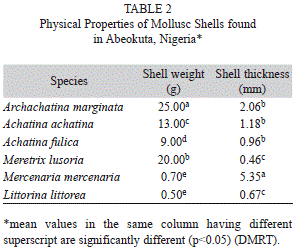
<body><![CDATA[Respondents stated that shells of various molluscs were used for     brushing, washing of utensils and form part of ingredients for curing     measles and other infections.</span></font><br      style="font-family: verdana;">     <br style="font-family: verdana;">     <font size="2"><span style="font-family: verdana;"><span      style="font-weight: bold;">Physical and chemical composition     of the shells:</span> <a href="#Table2">Table 2</a> presents the     physical properties of the     shells.     ]]></body>
<body><![CDATA[The shell of </span></font><font size="2"><span      style="font-family: verdana;"><span style="font-style: italic;">A.     marginata</span></span></font><font size="2"><span      style="font-family: verdana;"> had the highest weight while the shell     of <span style="font-style: italic;"></span></span></font><font      size="2"><span style="font-family: verdana;"><span      style="font-style: italic;">L.     littorea</span></span></font><font size="2"><span      style="font-family: verdana;"><span style="font-style: italic;"></span>     had the lowest value.    ]]></body>
<body><![CDATA[<br>     <br> </span></font>     <div style="text-align: center;"><font size="2"><span      style="font-family: verdana;"><a name="Table2"></a><img alt=""      src="/img/revistas/rbt/v63n2/a10t2.gif"      style="width: 298px; height: 252px;"></span></font><br      style="font-family: verdana;">     <font size="2"><span style="font-family: verdana;"></span></font></div>     <br style="font-family: verdana;">     <font size="2"><span style="font-family: verdana;"><a     ]]></body>
<body><![CDATA[ href="/img/revistas/rbt/v63n2/a10t3.gif">Table 3</a> shows the     proximate     composition of the mollusc shells. The shells contain no moisture     content except </span></font><font size="2"><span      style="font-family: verdana;"><span style="font-style: italic;">M.     mercenaria</span></span></font><font size="2"><span      style="font-family: verdana;"> and </span></font><font size="2"><span      style="font-family: verdana;"><span style="font-style: italic;">L.     littorea</span></span></font><font size="2"><span      style="font-family: verdana;"> (2.22% and 3.37%     ]]></body>
<body><![CDATA[respectively). Similarly, the shells had low fat and protein content.     However, the shells had high carbohydrate content which ranged between     83.54g/100g (</span></font><font size="2"><span      style="font-family: verdana;"><span style="font-style: italic;">L.     littorea</span></span></font><font size="2"><span      style="font-family: verdana;">) and 92.76/100g (A. achatina).</span></font><br      style="font-family: verdana;">     <br style="font-family: verdana;">     <font size="2"><span style="font-family: verdana;">The mineral     composition of the     ]]></body>
<body><![CDATA[mollusc shells is shown in <a href="/img/revistas/rbt/v63n2/a10t4.gif">Table     4</a>. Results showed that M. lussoria and     </span></font><font size="2"><span style="font-family: verdana;"><span      style="font-style: italic;">M. mercenaria</span></span></font><font      size="2"><span style="font-family: verdana;"> (clam species) had the     highest Ca</span></font><font size="2"><span      style="font-family: verdana;"><sup>2</sup></span></font><font size="2"><span      style="font-family: verdana;"><sup>+</sup></span></font><font size="2"><span      style="font-family: verdana;"> and Fe</span></font><font size="2"><span      style="font-family: verdana;"><sup>2</sup></span></font><font size="2"><span     ]]></body>
<body><![CDATA[ style="font-family: verdana;"><sup>+</sup></span></font><font size="2"><span      style="font-family: verdana;">     concentrations while A. achatina had the least.</span></font><br      style="font-family: verdana;">     <br style="font-family: verdana;">     <font size="2"><span style="font-family: verdana;">Microbial analysis:     The     antimicrobial effects of the mollusc shells against bacteria and fungi     isolates are shown in <a href="/img/revistas/rbt/v63n2/a10t5.gif">Table     5</a>. The shells of the molluscs did not     ]]></body>
<body><![CDATA[inhibit the isolates except the control.</span></font><br      style="font-family: verdana;">     <br style="font-family: verdana;">     <font style="font-weight: bold;" size="3"><span      style="font-family: verdana;">Discussion</span></font><br      style="font-family: verdana;">     <br style="font-family: verdana;">     <font size="2"><span style="font-family: verdana;">Responses from herb     and snail     sellers in Abeokuta shows that mollusc shells were used for washing     ]]></body>
<body><![CDATA[utensils, as abrasive material and used in treating infections like     cough, measles and tuberculosis by mixing with other plants materials.     This parallels the reports of Agbelusi and Ejidike (1992) that in Ondo     State, Nigeria snail shells form part of the material used in     traditional medicine for treating gonorrhea, measles and cough. The     shells were burnt into ashes, ground into fine powder and mixed with     other ingredients to form herbal concoction. Similarly, other     respondents mentioned that mollusc shells are used for aesthetic     purpose. Amusan and Omidiji (1998) and Amubode and Fafunwa (2014)     reported that snail shells are used to decorate offices, cars and     ]]></body>
<body><![CDATA[beautify homes. This observed usage of the shells was due to the     indelible unique markings or stripes on the mollusc shells especially     <span style="font-style: italic;">A. achatina</span> and clam.</span></font><br      style="font-family: verdana;">     <br style="font-family: verdana;">     <font size="2"><span style="font-family: verdana;">The physical     characteristics of     mollusc shells revealed that a clam shell (</span></font><font size="2"><span      style="font-family: verdana;"><span style="font-style: italic;">M.     mercenaria</span></span></font><font size="2"><span     ]]></body>
<body><![CDATA[ style="font-family: verdana;">) has the     highest thickness followed by </span></font><font size="2"><span      style="font-family: verdana;"><span style="font-style: italic;">A.     marginata</span></span></font><font size="2"><span      style="font-family: verdana;">. This probably explains     their being used for cutting objects and storing substances as earlier     reported by Agbelusi and Ejidike (1992).</span></font><br      style="font-family: verdana;">     <br style="font-family: verdana;">     <font size="2"><span style="font-family: verdana;">Falade (1995)     ]]></body>
<body><![CDATA[reported that shells     of molluscs (periwinkle) are used in coarse aggregate of buildings. The     low moisture content of mollusc shells observed in this study might     probably explain this function of mollusc shells. Recently too, Adewuyi     (2014) discovered that mollusc shells are good replacement for Ordinary     Portland Cement in concrete production. This is made possible because     of their strong, hard and bristle properties.</span></font><br      style="font-family: verdana;">     <br style="font-family: verdana;">     <font size="2"><span style="font-family: verdana;">The mollusc shells     ]]></body>
<body><![CDATA[have high     carbohydrate content. This is not surprising as the organic     constituents of mollusc shell according to Hodasi (1982) are     polysaccharides and glycoproteins. Jatto, Asia and Medjor (2010)     similarly reported that shells of four snail species have high     carbohydrate content. Thus, shell of molluscs can be added to animal     feeds as energy source.</span></font><br style="font-family: verdana;">     <br style="font-family: verdana;">     <font size="2"><span style="font-family: verdana;">The low protein and     fat content of     ]]></body>
<body><![CDATA[the mollusc shell observed in this study agrees with the findings of     Yusuff and Oseni (2004) on pond snail <span style="font-style: italic;">Lymnae     stagnalis.</span> The main     function of mollusc shell is protection and carbohydrate unlike protein     and fat has strong binding properties which do not decompose easily in     the presence of bad elements of weather.</span></font><br      style="font-family: verdana;">     <br style="font-family: verdana;">     <font size="2"><span style="font-family: verdana;">The mineral analysis     of the mollusc     ]]></body>
<body><![CDATA[shells showed that there were significant differences in the     concentration of ions across the mollusc species. It was observed that     clams (<span style="font-style: italic;">M. lusoria</span> and </span></font><font      size="2"><span style="font-family: verdana;"><span      style="font-style: italic;">M. mercenaria</span></span></font><font      size="2"><span style="font-family: verdana;">) had significantly     higher Fe</span></font><font size="2"><span      style="font-family: verdana;"><sup>2</sup></span></font><font size="2"><span      style="font-family: verdana;"><sup>+</sup></span></font><font size="2"><span      style="font-family: verdana;"> and     ]]></body>
<body><![CDATA[Ca</span></font><font size="2"><span style="font-family: verdana;"><sup>2</sup></span></font><font      size="2"><span style="font-family: verdana;"><sup>+</sup></span></font><font      size="2"><span style="font-family: verdana;"> than other mollusc     species. This might likely be due to their     location, that is, marine environment, whereas other molluscs are     terrestrial. Bertine and Goldberg (1972) observed that shell     composition changes as a result of changing water chemistry. Subtidal     anoxic marine sediments contain high amount of soluble sulphate (H2S)     and acid labile sulphate (FeS) (Howarth, &amp; Giblin, 1983).     Furthermore, Ca</span></font><font size="2"><span     ]]></body>
<body><![CDATA[ style="font-family: verdana;"><sup>2</sup></span></font><font size="2"><span      style="font-family: verdana;"><sup>+</sup></span></font><font size="2"><span      style="font-family: verdana;">was significantly more than other ions     present in the     shells. This might explain the use of mollusc shells as abrasive,     brushing agents and for stopping bleeding as earlier reported by     Agbelusi and Ejidike (1992). Blood clotting involves conversion of     fibrinogen to fibrin which forms a mesh network and covers the wound     (Muszbek, Bagoly, Bereczky, &amp; Katona, 2008). This process depends     on calcium availability for its proper mechanism. Similarly,     ]]></body>
<body><![CDATA[Finkelstein et al. (1993) added clam shells to lactating cow feed as a     calcium supplement because snail shell is known to have high     concentration of calcium. Egonmwan (2008) reported that a positive     relationship existed between snail (<span style="font-style: italic;">Limicolaria     flammea</span>) shell and     calcium concentration. The presence of these vital minerals needed for     strong teeth in snail shells warranted their inclusion in formula for     washing teeth in rural areas of Ondo state. Here, the shell is     oven-dried and ground into fine powder and kept in safe container.</span></font><br      style="font-family: verdana;">     ]]></body>
<body><![CDATA[<br style="font-family: verdana;">     <font size="2"><span style="font-family: verdana;">The mollusc shells     had low Na</span></font><font size="2"><span      style="font-family: verdana;"><sup>+</sup></span></font><font size="2"><span      style="font-family: verdana;">     concentration. This is not unexpected as other parts of the     molluscs-haemolymph and flesh are reported to have low concentration of     Na</span></font><font size="2"><span style="font-family: verdana;"><sup>+</sup></span></font><font      size="2"><span style="font-family: verdana;"> (Ademolu, Idowu,     Mafiana, &amp; Osinowo, 2007; Idowu, Somide, &amp;     ]]></body>
<body><![CDATA[Ademolu, 2008). Thus, mollusc shells can be included in livestock and     man&#8217;s diet without fear of complications arising from high Na</span></font><font      size="2"><span style="font-family: verdana;"><sup>+</sup></span></font><font      size="2"><span style="font-family: verdana;"> intake.</span></font><br      style="font-family: verdana;">     <br style="font-family: verdana;">     <font size="2"><span style="font-family: verdana;">Results showed that     mollusc shells     do not have antimicrobial property as they did not inhibit the growth     of pathogenic isolates. Sodipe et al. (2012) and Kayode and Ademolu     ]]></body>
<body><![CDATA[(2014) likewise observed that snails&#8217; haemolymph did not resist the     growth of fungal and bacterial isolates. This is in tandem with earlier     observation of Akinloye &amp; Olorode (2000) that the physiological     state of the snails is reflected in the haemolymph as it has open     circulatory system where the fluid bathes the entire organs and     tissues. However, in a recent study by Abiona, Akinduti, Osinowo and     Onagbesan (2013), the epiphragm of albino and normal skinned </span></font><font      size="2"><span style="font-family: verdana;"><span      style="font-style: italic;">A. marginata </span></span></font><font      size="2"><span style="font-family: verdana;">inhibited four bacterial     ]]></body>
<body><![CDATA[isolates better than the conventional     antibiotics (streptomycin). In conclusion, this study has revealed the     reason behind the use of mollusc shells in traditional medicine and     industries. The high concentration of carbohydrate, Fe</span></font><font      size="2"><span style="font-family: verdana;"><sup>2</sup></span></font><font      size="2"><span style="font-family: verdana;"><sup>+</sup></span></font><font      size="2"><span style="font-family: verdana;"> Ca</span></font><font      size="2"><span style="font-family: verdana;"><sup>2</sup></span></font><font      size="2"><span style="font-family: verdana;"><sup>+</sup></span></font><font      size="2"><span style="font-family: verdana;"> and Mg</span></font><font     ]]></body>
<body><![CDATA[ size="2"><span style="font-family: verdana;"><sup>2</sup></span></font><font      size="2"><span style="font-family: verdana;"><sup>+</sup></span></font><font      size="2"><span style="font-family: verdana;">     in the shells is the major reason for their usage in washing teeth,     stopping bleeding and inclusion in animal feeds formulation.</span></font><br      style="font-family: verdana;">     <br style="font-family: verdana;">     <hr style="width: 100%; height: 2px;"><font style="font-weight: bold;"      size="3"><span style="font-family: verdana;">References</span></font><br      style="font-family: verdana;">     ]]></body>
<body><![CDATA[<br style="font-family: verdana;">     <!-- ref --><div style="text-align: left;"><font size="2"><span  style="font-family: verdana;">Abiona, J. A., Akinduti, A., Osinowo, O. A., &amp; Onagbesan, O. M. (2013). Comparative evaluation of inhibitory activity of epiphragm from albino and normal skinned giant African land snail (</span></font><font size="2"><span  style="font-family: verdana;"><span style="font-style: italic;">Archachatina marginata</span></span></font><font size="2"><span  style="font-family: verdana;">) against selected bacteria isolates. <span style="font-style: italic;">Ethiopia Journal of Environmental Studies and Management, 6</span>(2), 177-181.    &nbsp;&nbsp;&nbsp;&nbsp;&nbsp;&nbsp;&nbsp;&nbsp;[&#160;<a href="javascript:void(0);" onclick="javascript: window.open('/scielo.php?script=sci_nlinks&ref=1603184&pid=S0034-7744201500020001000001&lng=','','width=640,height=500,resizable=yes,scrollbars=1,menubar=yes,');">Links</a>&#160;]<!-- end-ref --><!-- ref --></span></font><br  style="font-family: verdana;"> <br style="font-family: verdana;"> <font size="2"><span style="font-family: verdana;">Ademolu, K. O., Idowu, A. B., Mafiana, C. F., &amp; Osinowo, O. A. (2007). Performance, proximate and minerals analysis of African giant land snail (</span></font><font  size="2"><span style="font-family: verdana;"><span  style="font-style: italic;">Archachatina marginata</span></span></font><font  size="2"><span style="font-family: verdana;">) fed different nitrogen sources. <span style="font-style: italic;">Tropical Veterinarian, 25</span>(4), 124-131.    &nbsp;&nbsp;&nbsp;&nbsp;&nbsp;&nbsp;&nbsp;&nbsp;[&#160;<a href="javascript:void(0);" onclick="javascript: window.open('/scielo.php?script=sci_nlinks&ref=1603185&pid=S0034-7744201500020001000002&lng=','','width=640,height=500,resizable=yes,scrollbars=1,menubar=yes,');">Links</a>&#160;]<!-- end-ref --><!-- ref --></span></font><br  style="font-family: verdana;"> <br style="font-family: verdana;"> <font size="2"><span style="font-family: verdana;">Adewuyi, A. P., &amp; Ola, B. F. (2005). Application of waterworks sludge as partial replacement for cement in concrete production. <span style="font-style: italic;">Science Focus Journal, 10</span>(1), 123-130.    &nbsp;&nbsp;&nbsp;&nbsp;&nbsp;&nbsp;&nbsp;&nbsp;[&#160;<a href="javascript:void(0);" onclick="javascript: window.open('/scielo.php?script=sci_nlinks&ref=1603186&pid=S0034-7744201500020001000003&lng=','','width=640,height=500,resizable=yes,scrollbars=1,menubar=yes,');">Links</a>&#160;]<!-- end-ref --><!-- ref --></span></font><br  style="font-family: verdana;"> <br style="font-family: verdana;"> <font size="2"><span style="font-family: verdana;">Adikwu, M. U. (2012). Snail production for sustainable development and good health. In S. I. Ola, G. A. Dedeke, &amp; A. O. Fafiolu (Eds.),<span  style="font-style: italic;"> Procceedings of the 1st International Conference on Giant African Land snails (NeTGALS)</span> (pp. 3-7). Federal University of Agriculture, Abeokuta, Nigeria.    &nbsp;&nbsp;&nbsp;&nbsp;&nbsp;&nbsp;&nbsp;&nbsp;[&#160;<a href="javascript:void(0);" onclick="javascript: window.open('/scielo.php?script=sci_nlinks&ref=1603187&pid=S0034-7744201500020001000004&lng=','','width=640,height=500,resizable=yes,scrollbars=1,menubar=yes,');">Links</a>&#160;]<!-- end-ref --><!-- ref --></span></font><br  style="font-family: verdana;"> <br style="font-family: verdana;"> <font size="2"><span style="font-family: verdana;">Adewuyi, A. P. (2014). Relevance of residues of snail farming to civil engineering construction works. In J. A. Abiona, &amp; I. O. Osunsina (Eds.), <span  style="font-style: italic;">Proceedings of the 3rd International Conference on Giant African Land Snails (NeTGALS)</span> (pp. 18-25). Federal College of Education, Abeokuta, Nigeria.    &nbsp;&nbsp;&nbsp;&nbsp;&nbsp;&nbsp;&nbsp;&nbsp;[&#160;<a href="javascript:void(0);" onclick="javascript: window.open('/scielo.php?script=sci_nlinks&ref=1603188&pid=S0034-7744201500020001000005&lng=','','width=640,height=500,resizable=yes,scrollbars=1,menubar=yes,');">Links</a>&#160;]<!-- end-ref --><!-- ref --></span></font><br  style="font-family: verdana;"> <br style="font-family: verdana;"> <font size="2"><span style="font-family: verdana;">Agbelusi, E. A., &amp; Ejidike, B. N. (1992). Utilization of the Giant African Land Snail, </span></font><font  size="2"><span style="font-family: verdana;"><span  style="font-style: italic;">Archachatina marginata</span></span></font><font  size="2"><span style="font-family: verdana;"> in the humid area of Nigeria. <span style="font-style: italic;">Journal of Tropical Agriculture, 69</span>, 88-92.    &nbsp;&nbsp;&nbsp;&nbsp;&nbsp;&nbsp;&nbsp;&nbsp;[&#160;<a href="javascript:void(0);" onclick="javascript: window.open('/scielo.php?script=sci_nlinks&ref=1603189&pid=S0034-7744201500020001000006&lng=','','width=640,height=500,resizable=yes,scrollbars=1,menubar=yes,');">Links</a>&#160;]<!-- end-ref --><!-- ref --></span></font><br  style="font-family: verdana;"> <br style="font-family: verdana;"> <font size="2"><span style="font-family: verdana;">Akinloye, O. A., &amp; Olorode, O. (2000). Effect of different feeding condition on performance, haemolymph biochemical and mineral value of Giant African Snail (</span></font><font size="2"><span style="font-family: verdana;"><span  style="font-style: italic;">Archachatina marginata</span></span></font><font  size="2"><span style="font-family: verdana;">). <span  style="font-style: italic;">Journal of Agriculture and Environment, 1</span>, 143-147.    &nbsp;&nbsp;&nbsp;&nbsp;&nbsp;&nbsp;&nbsp;&nbsp;[&#160;<a href="javascript:void(0);" onclick="javascript: window.open('/scielo.php?script=sci_nlinks&ref=1603190&pid=S0034-7744201500020001000007&lng=','','width=640,height=500,resizable=yes,scrollbars=1,menubar=yes,');">Links</a>&#160;]<!-- end-ref --><!-- ref --></span></font><br style="font-family: verdana;"> <br style="font-family: verdana;"> <font size="2"><span style="font-family: verdana;">Akinnusi, F. A. O. (2004). I<span style="font-style: italic;">ntroduction to Snails and Snail farming.</span> Abeokuta, Nigeria: Gbemi Sodipo Press Ltd.    &nbsp;&nbsp;&nbsp;&nbsp;&nbsp;&nbsp;&nbsp;&nbsp;[&#160;<a href="javascript:void(0);" onclick="javascript: window.open('/scielo.php?script=sci_nlinks&ref=1603191&pid=S0034-7744201500020001000008&lng=','','width=640,height=500,resizable=yes,scrollbars=1,menubar=yes,');">Links</a>&#160;]<!-- end-ref --><!-- ref --></span></font><br style="font-family: verdana;"> <br style="font-family: verdana;"> <font size="2"><span style="font-family: verdana;">Amubode, A. A., &amp; Fafunwa, F. (2014). Snail farming and hospitality industries. In In J. A. Abiona, &amp; I. O. Osunsina (Eds.), Proceedings of the 3rd International Conference on Giant African Land Snails (NeTGALS)(pp. 31-36). Federal College of Education, Abeokuta, Nigeria.    &nbsp;&nbsp;&nbsp;&nbsp;&nbsp;&nbsp;&nbsp;&nbsp;[&#160;<a href="javascript:void(0);" onclick="javascript: window.open('/scielo.php?script=sci_nlinks&ref=1603192&pid=S0034-7744201500020001000009&lng=','','width=640,height=500,resizable=yes,scrollbars=1,menubar=yes,');">Links</a>&#160;]<!-- end-ref --><!-- ref --></span></font><br  style="font-family: verdana;"> <br style="font-family: verdana;"> <font size="2"><span style="font-family: verdana;">Amusan, J. A., &amp; Omidiji, M. O. (1998). <span style="font-style: italic;">Edible Land Snail: A Technical Guide to Snail Farming in the Tropics.</span> lbadan, Nigeria: Verity Printer Limited.    &nbsp;&nbsp;&nbsp;&nbsp;&nbsp;&nbsp;&nbsp;&nbsp;[&#160;<a href="javascript:void(0);" onclick="javascript: window.open('/scielo.php?script=sci_nlinks&ref=1603193&pid=S0034-7744201500020001000010&lng=','','width=640,height=500,resizable=yes,scrollbars=1,menubar=yes,');">Links</a>&#160;]<!-- end-ref --><!-- ref --></span></font><br  style="font-family: verdana;"> <br style="font-family: verdana;"> <font size="2"><span style="font-family: verdana;">Association of Official Analytical Chemist (A.O.A.C.). (1990). <span style="font-style: italic;">13th edition.</span> Washington, D.C.: Lexington Books Inc.    &nbsp;&nbsp;&nbsp;&nbsp;&nbsp;&nbsp;&nbsp;&nbsp;[&#160;<a href="javascript:void(0);" onclick="javascript: window.open('/scielo.php?script=sci_nlinks&ref=1603194&pid=S0034-7744201500020001000011&lng=','','width=640,height=500,resizable=yes,scrollbars=1,menubar=yes,');">Links</a>&#160;]<!-- end-ref --><!-- ref --></span></font><br style="font-family: verdana;"> <br style="font-family: verdana;"> <font size="2"><span style="font-family: verdana;">Bertine, K. K., &amp; Goldgerg, E. D. (1972). Trace elements in clams, mussels and shrimps. <span  style="font-style: italic;">Limnology and Oceanography, 17</span>(6), 877-884.    &nbsp;&nbsp;&nbsp;&nbsp;&nbsp;&nbsp;&nbsp;&nbsp;[&#160;<a href="javascript:void(0);" onclick="javascript: window.open('/scielo.php?script=sci_nlinks&ref=1603195&pid=S0034-7744201500020001000012&lng=','','width=640,height=500,resizable=yes,scrollbars=1,menubar=yes,');">Links</a>&#160;]<!-- end-ref --><!-- ref --></span></font><br  style="font-family: verdana;"> <br style="font-family: verdana;"> <font size="2"><span style="font-family: verdana;">Egonmwan, R. I. (2008). Effects of dietary calcium on growth and oviposition of the African land snail </span></font><font  size="2"><span style="font-family: verdana;"><span  style="font-style: italic;">Limicolaria flammea</span></span></font><font  size="2"><span style="font-family: verdana;"> (Pulmonata:Achatinidae). <span style="font-style: italic;">Revista de Biolog&iacute;a Tropical, 56</span>(1), 333-343.    &nbsp;&nbsp;&nbsp;&nbsp;&nbsp;&nbsp;&nbsp;&nbsp;[&#160;<a href="javascript:void(0);" onclick="javascript: window.open('/scielo.php?script=sci_nlinks&ref=1603196&pid=S0034-7744201500020001000013&lng=','','width=640,height=500,resizable=yes,scrollbars=1,menubar=yes,');">Links</a>&#160;]<!-- end-ref --><!-- ref --></span></font><br  style="font-family: verdana;"> <br style="font-family: verdana;"> <font size="2"><span style="font-family: verdana;">Falade, F. (1995). An Investigation of Periwinkle Shell as Coarse Aggregate in Concrete.<span  style="font-style: italic;"> Building and Environment, 30</span>(4), 573-577.    &nbsp;&nbsp;&nbsp;&nbsp;&nbsp;&nbsp;&nbsp;&nbsp;[&#160;<a href="javascript:void(0);" onclick="javascript: window.open('/scielo.php?script=sci_nlinks&ref=1603197&pid=S0034-7744201500020001000014&lng=','','width=640,height=500,resizable=yes,scrollbars=1,menubar=yes,');">Links</a>&#160;]<!-- end-ref --><!-- ref --></span></font><br  style="font-family: verdana;"> <br style="font-family: verdana;"> <font size="2"><span style="font-family: verdana;">Finkelstein, A. D., Wohlt, J. E., &amp; Emmanuele, S. M. (1993). Composition and nutritive value of ground sea clam shells as calcium supplements for lactating Holsten cows. <span style="font-style: italic;">Journal of Dairy Science, 76</span>(2), 582-589.    &nbsp;&nbsp;&nbsp;&nbsp;&nbsp;&nbsp;&nbsp;&nbsp;[&#160;<a href="javascript:void(0);" onclick="javascript: window.open('/scielo.php?script=sci_nlinks&ref=1603198&pid=S0034-7744201500020001000015&lng=','','width=640,height=500,resizable=yes,scrollbars=1,menubar=yes,');">Links</a>&#160;]<!-- end-ref --><!-- ref --></span></font><br style="font-family: verdana;"> <br style="font-family: verdana;"> <font size="2"><span style="font-family: verdana;">Hodasi, J. K. N. (1982). The effect of different light regimes on the behavior and biology of </span></font><font  size="2"><span style="font-family: verdana;"><span  style="font-style: italic;">Achatina achatina</span></span></font><font  size="2"><span style="font-family: verdana;">. <span  style="font-style: italic;">Journal of Molluscan Studies, 48</span>, 1-7.    &nbsp;&nbsp;&nbsp;&nbsp;&nbsp;&nbsp;&nbsp;&nbsp;[&#160;<a href="javascript:void(0);" onclick="javascript: window.open('/scielo.php?script=sci_nlinks&ref=1603199&pid=S0034-7744201500020001000016&lng=','','width=640,height=500,resizable=yes,scrollbars=1,menubar=yes,');">Links</a>&#160;]<!-- end-ref --><!-- ref --></span></font><br style="font-family: verdana;"> <br style="font-family: verdana;"> <font size="2"><span style="font-family: verdana;">Howarth, R. W., &amp; Giblin, A. (1983). Sulphate reduction in salts marshes at Sapelo Island, Georgia. <span style="font-style: italic;">Limnology and Oceanography, 28</span>(1), 70-82.    &nbsp;&nbsp;&nbsp;&nbsp;&nbsp;&nbsp;&nbsp;&nbsp;[&#160;<a href="javascript:void(0);" onclick="javascript: window.open('/scielo.php?script=sci_nlinks&ref=1603200&pid=S0034-7744201500020001000017&lng=','','width=640,height=500,resizable=yes,scrollbars=1,menubar=yes,');">Links</a>&#160;]<!-- end-ref --><!-- ref --></span></font><br style="font-family: verdana;"> <br style="font-family: verdana;"> <font size="2"><span style="font-family: verdana;">Idowu, A. B., Somide, O. M., &amp; Ademolu, K. O. (2008). Comparative Analysis of the chemical composition of the haemolymph, flesh and the microflora content of the guts of some African land snails in Abeokuta, Nigeria. <span  style="font-style: italic;">Tropical Veterinarian, 26</span>(1&amp;2), 20-29.    &nbsp;&nbsp;&nbsp;&nbsp;&nbsp;&nbsp;&nbsp;&nbsp;[&#160;<a href="javascript:void(0);" onclick="javascript: window.open('/scielo.php?script=sci_nlinks&ref=1603201&pid=S0034-7744201500020001000018&lng=','','width=640,height=500,resizable=yes,scrollbars=1,menubar=yes,');">Links</a>&#160;]<!-- end-ref --><!-- ref --></span></font><br  style="font-family: verdana;"> <br style="font-family: verdana;"> <font size="2"><span style="font-family: verdana;">Jatto, O. E., Asia, I. O., &amp; Medjor, W. E. (2010). Proximate and mineral composition of different species of snail shell. <span style="font-style: italic;">The Pacific Journal of Science and Technology, 11</span>(1), 416-419.    &nbsp;&nbsp;&nbsp;&nbsp;&nbsp;&nbsp;&nbsp;&nbsp;[&#160;<a href="javascript:void(0);" onclick="javascript: window.open('/scielo.php?script=sci_nlinks&ref=1603202&pid=S0034-7744201500020001000019&lng=','','width=640,height=500,resizable=yes,scrollbars=1,menubar=yes,');">Links</a>&#160;]<!-- end-ref --><!-- ref --></span></font><br style="font-family: verdana;"> <br style="font-family: verdana;"> <font size="2"><span style="font-family: verdana;">Kayode, O. V., &amp; Ademolu, K. O. (2014). Antimicrobial and Biochemical properties of Haemolymph from two snail ecotypes. In J. A. Abiona, &amp; I. O. Osunsina (Eds.), <span style="font-style: italic;">Proceedings of the 3rd International conference on Giant African Land Snails (NeTGALS)</span> (pp 45-48). Federal College of Education, Abeokuta, Nigeria.    &nbsp;&nbsp;&nbsp;&nbsp;&nbsp;&nbsp;&nbsp;&nbsp;[&#160;<a href="javascript:void(0);" onclick="javascript: window.open('/scielo.php?script=sci_nlinks&ref=1603203&pid=S0034-7744201500020001000020&lng=','','width=640,height=500,resizable=yes,scrollbars=1,menubar=yes,');">Links</a>&#160;]<!-- end-ref --><!-- ref --></span></font><br style="font-family: verdana;"> <br style="font-family: verdana;"> <font size="2"><span style="font-family: verdana;">Muszbek, L., Bagoly, Z., Bereczky, Z., &amp; Katona, E. (2008). The involvement of blood coagulation factor XIII in fibrinolysis and thrombosis. <span  style="font-style: italic;">Cardiovascular and Hematological Agents in Medical Chemistry, 6</span>(3), 190-205.    &nbsp;&nbsp;&nbsp;&nbsp;&nbsp;&nbsp;&nbsp;&nbsp;[&#160;<a href="javascript:void(0);" onclick="javascript: window.open('/scielo.php?script=sci_nlinks&ref=1603204&pid=S0034-7744201500020001000021&lng=','','width=640,height=500,resizable=yes,scrollbars=1,menubar=yes,');">Links</a>&#160;]<!-- end-ref --><!-- ref --></span></font><br  style="font-family: verdana;"> <br style="font-family: verdana;"> <font size="2"><span style="font-family: verdana;">Sodipe, O. G., Osinowo, O. A., Onagbesan, O. M., &amp; Bankole, O. M. (2012). Evaluation of the haemolymph of the Giant African land Snails </span></font><font  size="2"><span style="font-family: verdana;"><span  style="font-style: italic;">Achatina achatina</span></span></font><font  size="2"><span style="font-family: verdana;"> and </span></font><font  size="2"><span style="font-family: verdana;"><span  style="font-style: italic;">Archachatina marginata</span></span></font><font  size="2"><span style="font-family: verdana;"> for bacteria sterility and inhibitory properties. <span style="font-style: italic;">Proceedings of the 1st International Conference on Giant African Land snails (NeTGALS)</span>, Federal University of Agriculture, Abeokuta.    &nbsp;&nbsp;&nbsp;&nbsp;&nbsp;&nbsp;&nbsp;&nbsp;[&#160;<a href="javascript:void(0);" onclick="javascript: window.open('/scielo.php?script=sci_nlinks&ref=1603205&pid=S0034-7744201500020001000022&lng=','','width=640,height=500,resizable=yes,scrollbars=1,menubar=yes,');">Links</a>&#160;]<!-- end-ref --><!-- ref --></span></font><br style="font-family: verdana;"> <br style="font-family: verdana;"> <font size="2"><span style="font-family: verdana;">Yusuff, A. A., &amp; Oseni, O. A. (2004). Nutritional value and functional properties of pond snail (Lymnae stagnalis). I. C. Eromosele, &amp; T. O. S. Popoola (Eds.), <span style="font-style: italic;">Proceedings of the 1st International Conference on Science and National Development</span> (pp. 90-93). College of Natural Sciences, Federal University of Agriculture, Abeokuta, Nigeria.    &nbsp;&nbsp;&nbsp;&nbsp;&nbsp;&nbsp;&nbsp;&nbsp;[&#160;<a href="javascript:void(0);" onclick="javascript: window.open('/scielo.php?script=sci_nlinks&ref=1603206&pid=S0034-7744201500020001000023&lng=','','width=640,height=500,resizable=yes,scrollbars=1,menubar=yes,');">Links</a>&#160;]<!-- end-ref --></span></font>    <br> <font size="2"><span style="font-family: verdana;"></span></font></div> <font size="2"><span style="font-family: verdana;">    <br> </span></font><font size="2"><span style="font-family: verdana;"><a  name="1"></a><a href="#2">1</a>. Department of Biological Sciences, Federal University of Agriculture, P.M.B.2240, Abeokuta, Nigeria; kennyademolu@yahoo.com, akintolamy@yahoo.com, funmiolayinka@yahoo.co.uk, bola.blessing@yahoo.com</span></font><font size="2"><span  style="font-family: verdana;"></span></font><br  style="font-family: verdana;"> <hr style="width: 100%; height: 2px;">     <div style="text-align: center;"><font style="font-weight: bold;"  size="2"><span style="font-family: verdana;">Received 03-II-2014. Corrected 12-XII-2014. Accepted 23-I-2015.</span></font></div> </div>      ]]></body><back>
<ref-list>
<ref id="B1">
<nlm-citation citation-type="journal">
<person-group person-group-type="author">
<name>
<surname><![CDATA[Abiona]]></surname>
<given-names><![CDATA[J. A.]]></given-names>
</name>
<name>
<surname><![CDATA[Akinduti]]></surname>
<given-names><![CDATA[A.]]></given-names>
</name>
<name>
<surname><![CDATA[Osinowo]]></surname>
<given-names><![CDATA[O. A.]]></given-names>
</name>
<name>
<surname><![CDATA[Onagbesan]]></surname>
<given-names><![CDATA[O. M.]]></given-names>
</name>
</person-group>
<article-title xml:lang="en"><![CDATA[Comparative evaluation of inhibitory activity of epiphragm from albino and normal skinned giant African land snail (Archachatina marginata) against selected bacteria isolates]]></article-title>
<source><![CDATA[Ethiopia Journal of Environmental Studies and Management]]></source>
<year>2013</year>
<volume>6</volume>
<numero>2</numero>
<issue>2</issue>
<page-range>177-181</page-range></nlm-citation>
</ref>
<ref id="B2">
<nlm-citation citation-type="journal">
<person-group person-group-type="author">
<name>
<surname><![CDATA[Ademolu]]></surname>
<given-names><![CDATA[K. O.]]></given-names>
</name>
<name>
<surname><![CDATA[Idowu]]></surname>
<given-names><![CDATA[A. B.]]></given-names>
</name>
<name>
<surname><![CDATA[Mafiana]]></surname>
<given-names><![CDATA[C. F.]]></given-names>
</name>
<name>
<surname><![CDATA[Osinowo]]></surname>
<given-names><![CDATA[O. A.]]></given-names>
</name>
</person-group>
<article-title xml:lang="en"><![CDATA[Performance, proximate and minerals analysis of African giant land snail (Archachatina marginata) fed different nitrogen sources]]></article-title>
<source><![CDATA[Tropical Veterinarian]]></source>
<year>2007</year>
<volume>25</volume>
<numero>4</numero>
<issue>4</issue>
<page-range>124-131</page-range></nlm-citation>
</ref>
<ref id="B3">
<nlm-citation citation-type="journal">
<person-group person-group-type="author">
<name>
<surname><![CDATA[Adewuyi]]></surname>
<given-names><![CDATA[A. P.]]></given-names>
</name>
<name>
<surname><![CDATA[Ola]]></surname>
<given-names><![CDATA[B. F.]]></given-names>
</name>
</person-group>
<article-title xml:lang="en"><![CDATA[Application of waterworks sludge as partial replacement for cement in concrete production]]></article-title>
<source><![CDATA[Science Focus Journal]]></source>
<year>2005</year>
<volume>10</volume>
<numero>1</numero>
<issue>1</issue>
<page-range>123-130</page-range></nlm-citation>
</ref>
<ref id="B4">
<nlm-citation citation-type="book">
<person-group person-group-type="author">
<name>
<surname><![CDATA[Adikwu]]></surname>
<given-names><![CDATA[M. U.]]></given-names>
</name>
</person-group>
<article-title xml:lang="en"><![CDATA[Snail production for sustainable development and good health]]></article-title>
<person-group person-group-type="editor">
<name>
<surname><![CDATA[Ola]]></surname>
<given-names><![CDATA[S. I.]]></given-names>
</name>
<name>
<surname><![CDATA[Dedeke]]></surname>
<given-names><![CDATA[G. A.]]></given-names>
</name>
<name>
<surname><![CDATA[Fafiolu]]></surname>
<given-names><![CDATA[A. O.]]></given-names>
</name>
</person-group>
<source><![CDATA[Procceedings of the 1st International Conference on Giant African Land snails (NeTGALS)]]></source>
<year>2012</year>
<page-range>3-7</page-range><publisher-loc><![CDATA[^eAbeokuta Abeokuta]]></publisher-loc>
<publisher-name><![CDATA[Federal University of Agriculture]]></publisher-name>
</nlm-citation>
</ref>
<ref id="B5">
<nlm-citation citation-type="">
<person-group person-group-type="author">
<name>
<surname><![CDATA[Adewuyi]]></surname>
<given-names><![CDATA[A. P.]]></given-names>
</name>
</person-group>
<article-title xml:lang="en"><![CDATA[Relevance of residues of snail farming to civil engineering construction works]]></article-title>
<person-group person-group-type="editor">
<name>
<surname><![CDATA[Abiona]]></surname>
<given-names><![CDATA[J. A.]]></given-names>
</name>
<name>
<surname><![CDATA[Osunsina]]></surname>
<given-names><![CDATA[I. O.]]></given-names>
</name>
</person-group>
<source><![CDATA[Proceedings of the 3rd International Conference on Giant African Land Snails (NeTGALS)]]></source>
<year>2014</year>
<page-range>18-25</page-range></nlm-citation>
</ref>
<ref id="B6">
<nlm-citation citation-type="journal">
<person-group person-group-type="author">
<name>
<surname><![CDATA[Agbelusi]]></surname>
<given-names><![CDATA[E. A.]]></given-names>
</name>
<name>
<surname><![CDATA[Ejidike]]></surname>
<given-names><![CDATA[B. N.]]></given-names>
</name>
</person-group>
<article-title xml:lang="en"><![CDATA[Utilization of the Giant African Land Snail, Archachatina marginata in the humid area of Nigeria]]></article-title>
<source><![CDATA[Journal of Tropical Agriculture]]></source>
<year>1992</year>
<volume>69</volume>
<page-range>88-92</page-range></nlm-citation>
</ref>
<ref id="B7">
<nlm-citation citation-type="journal">
<person-group person-group-type="author">
<name>
<surname><![CDATA[Akinloye]]></surname>
<given-names><![CDATA[O. A.]]></given-names>
</name>
<name>
<surname><![CDATA[Olorode]]></surname>
<given-names><![CDATA[O.]]></given-names>
</name>
</person-group>
<article-title xml:lang="en"><![CDATA[Effect of different feeding condition on performance, haemolymph biochemical and mineral value of Giant African Snail (Archachatina marginata)]]></article-title>
<source><![CDATA[Journal of Agriculture and Environment]]></source>
<year>2000</year>
<volume>1</volume>
<page-range>143-147</page-range></nlm-citation>
</ref>
<ref id="B8">
<nlm-citation citation-type="book">
<person-group person-group-type="author">
<name>
<surname><![CDATA[Akinnusi]]></surname>
<given-names><![CDATA[F. A. O.]]></given-names>
</name>
</person-group>
<source><![CDATA[Introduction to Snails and Snail farming]]></source>
<year>2004</year>
<publisher-loc><![CDATA[^eAbeokuta Abeokuta]]></publisher-loc>
<publisher-name><![CDATA[Gbemi Sodipo Press Ltd]]></publisher-name>
</nlm-citation>
</ref>
<ref id="B9">
<nlm-citation citation-type="book">
<person-group person-group-type="author">
<name>
<surname><![CDATA[Amubode]]></surname>
<given-names><![CDATA[A. A]]></given-names>
</name>
<name>
<surname><![CDATA[Fafunwa]]></surname>
<given-names><![CDATA[F]]></given-names>
</name>
</person-group>
<article-title xml:lang="en"><![CDATA[Snail farming and hospitality industries]]></article-title>
<person-group person-group-type="editor">
<name>
<surname><![CDATA[Abiona]]></surname>
<given-names><![CDATA[J. A]]></given-names>
</name>
<name>
<surname><![CDATA[Osunsina]]></surname>
<given-names><![CDATA[I. O]]></given-names>
</name>
</person-group>
<source><![CDATA[Proceedings of the 3rd International Conference on Giant African Land Snails (NeTGALS)(pp. 31-36)]]></source>
<year>2014</year>
<publisher-loc><![CDATA[Abeokuta ]]></publisher-loc>
<publisher-name><![CDATA[Federal College of Education]]></publisher-name>
</nlm-citation>
</ref>
<ref id="B10">
<nlm-citation citation-type="book">
<person-group person-group-type="author">
<name>
<surname><![CDATA[Amusan]]></surname>
<given-names><![CDATA[J. A.]]></given-names>
</name>
<name>
<surname><![CDATA[Omidiji]]></surname>
<given-names><![CDATA[M. O.]]></given-names>
</name>
</person-group>
<source><![CDATA[Edible Land Snail: A Technical Guide to Snail Farming in the Tropics]]></source>
<year>1998</year>
<publisher-loc><![CDATA[^elbadan, Nigeria lbadan, Nigeria]]></publisher-loc>
<publisher-name><![CDATA[Verity Printer Limited]]></publisher-name>
</nlm-citation>
</ref>
<ref id="B11">
<nlm-citation citation-type="book">
<person-group person-group-type="author">
<name>
<surname><![CDATA[Association]]></surname>
<given-names><![CDATA[of Official Analytical Chemist]]></given-names>
</name>
</person-group>
<source><![CDATA[13th edition]]></source>
<year>1990</year>
<publisher-loc><![CDATA[^eWashington, D.C. Washington, D.C.]]></publisher-loc>
<publisher-name><![CDATA[Lexington Books Inc]]></publisher-name>
</nlm-citation>
</ref>
<ref id="B12">
<nlm-citation citation-type="journal">
<person-group person-group-type="author">
<name>
<surname><![CDATA[Bertine]]></surname>
<given-names><![CDATA[K. K.]]></given-names>
</name>
<name>
<surname><![CDATA[Goldgerg]]></surname>
<given-names><![CDATA[E. D.]]></given-names>
</name>
</person-group>
<article-title xml:lang="en"><![CDATA[Trace elements in clams, mussels and shrimps]]></article-title>
<source><![CDATA[Limnology and Oceanography]]></source>
<year>1972</year>
<volume>17</volume>
<numero>6</numero>
<issue>6</issue>
<page-range>877-884</page-range></nlm-citation>
</ref>
<ref id="B13">
<nlm-citation citation-type="journal">
<person-group person-group-type="author">
<name>
<surname><![CDATA[Egonmwan]]></surname>
<given-names><![CDATA[R. I.]]></given-names>
</name>
</person-group>
<article-title xml:lang="en"><![CDATA[Effects of dietary calcium on growth and oviposition of the African land snail Limicolaria flammea (Pulmonata: Achatinidae)]]></article-title>
<source><![CDATA[Revista de Biología Tropical]]></source>
<year>2008</year>
<volume>56</volume>
<numero>1</numero>
<issue>1</issue>
<page-range>333-343</page-range></nlm-citation>
</ref>
<ref id="B14">
<nlm-citation citation-type="journal">
<person-group person-group-type="author">
<name>
<surname><![CDATA[Falade]]></surname>
<given-names><![CDATA[F.]]></given-names>
</name>
</person-group>
<article-title xml:lang="en"><![CDATA[An Investigation of Periwinkle Shell as Coarse Aggregate in Concrete]]></article-title>
<source><![CDATA[Building and Environment]]></source>
<year>1995</year>
<volume>30</volume>
<numero>4</numero>
<issue>4</issue>
<page-range>573-577</page-range></nlm-citation>
</ref>
<ref id="B15">
<nlm-citation citation-type="journal">
<person-group person-group-type="author">
<name>
<surname><![CDATA[Finkelstein]]></surname>
<given-names><![CDATA[A. D.]]></given-names>
</name>
<name>
<surname><![CDATA[Wohlt]]></surname>
<given-names><![CDATA[J. E.]]></given-names>
</name>
<name>
<surname><![CDATA[Emmanuele]]></surname>
<given-names><![CDATA[S. M.]]></given-names>
</name>
</person-group>
<article-title xml:lang="en"><![CDATA[Composition and nutritive value of ground sea clam shells as calcium supplements for lactating Holsten cows]]></article-title>
<source><![CDATA[Journal of Dairy Science]]></source>
<year>1993</year>
<volume>76</volume>
<numero>2</numero>
<issue>2</issue>
<page-range>582-589</page-range></nlm-citation>
</ref>
<ref id="B16">
<nlm-citation citation-type="journal">
<person-group person-group-type="author">
<name>
<surname><![CDATA[Hodasi]]></surname>
<given-names><![CDATA[J. K. N.]]></given-names>
</name>
</person-group>
<article-title xml:lang="en"><![CDATA[The effect of different light regimes on the behavior and biology of Achatina achatina]]></article-title>
<source><![CDATA[Journal of Molluscan Studies]]></source>
<year>1982</year>
<volume>48</volume>
<page-range>1-7</page-range></nlm-citation>
</ref>
<ref id="B17">
<nlm-citation citation-type="journal">
<person-group person-group-type="author">
<name>
<surname><![CDATA[Howarth]]></surname>
<given-names><![CDATA[R. W.]]></given-names>
</name>
<name>
<surname><![CDATA[Giblin]]></surname>
<given-names><![CDATA[A.]]></given-names>
</name>
</person-group>
<article-title xml:lang="en"><![CDATA[Sulphate reduction in salts marshes at Sapelo Island, Georgia]]></article-title>
<source><![CDATA[Limnology and Oceanography]]></source>
<year>1983</year>
<volume>28</volume>
<numero>1</numero>
<issue>1</issue>
<page-range>70-82</page-range></nlm-citation>
</ref>
<ref id="B18">
<nlm-citation citation-type="journal">
<person-group person-group-type="author">
<name>
<surname><![CDATA[Idowu]]></surname>
<given-names><![CDATA[A. B.]]></given-names>
</name>
<name>
<surname><![CDATA[Somide]]></surname>
<given-names><![CDATA[O. M.]]></given-names>
</name>
<name>
<surname><![CDATA[Ademolu]]></surname>
<given-names><![CDATA[K. O.]]></given-names>
</name>
</person-group>
<article-title xml:lang="en"><![CDATA[Comparative Analysis of the chemical composition of the haemolymph, flesh and the microflora content of the guts of some African land snails in Abeokuta, Nigeria]]></article-title>
<source><![CDATA[Tropical Veterinarian]]></source>
<year>2008</year>
<volume>26</volume>
<numero>1&2</numero>
<issue>1&2</issue>
<page-range>20-29</page-range></nlm-citation>
</ref>
<ref id="B19">
<nlm-citation citation-type="journal">
<person-group person-group-type="author">
<name>
<surname><![CDATA[Jatto]]></surname>
<given-names><![CDATA[O. E.]]></given-names>
</name>
<name>
<surname><![CDATA[Asia]]></surname>
<given-names><![CDATA[I. O.]]></given-names>
</name>
<name>
<surname><![CDATA[Medjor]]></surname>
<given-names><![CDATA[W. E.]]></given-names>
</name>
</person-group>
<article-title xml:lang="en"><![CDATA[Proximate and mineral composition of different species of snail shell]]></article-title>
<source><![CDATA[The Pacific Journal of Science and Technology]]></source>
<year>2010</year>
<volume>11</volume>
<numero>1</numero>
<issue>1</issue>
<page-range>416-419</page-range></nlm-citation>
</ref>
<ref id="B20">
<nlm-citation citation-type="">
<person-group person-group-type="author">
<name>
<surname><![CDATA[Kayode]]></surname>
<given-names><![CDATA[O. V.]]></given-names>
</name>
<name>
<surname><![CDATA[Ademolu]]></surname>
<given-names><![CDATA[K. O.]]></given-names>
</name>
</person-group>
<article-title xml:lang="en"><![CDATA[Antimicrobial and Biochemical properties of Haemolymph from two snail ecotypes]]></article-title>
<person-group person-group-type="editor">
<name>
<surname><![CDATA[Abiona]]></surname>
<given-names><![CDATA[J. A.]]></given-names>
</name>
<name>
<surname><![CDATA[Osunsina]]></surname>
<given-names><![CDATA[I. O.]]></given-names>
</name>
</person-group>
<source><![CDATA[Proceedings of the 3rd International Conference on Giant African Land Snails (NeTGALS)]]></source>
<year>2014</year>
<page-range>45-48</page-range></nlm-citation>
</ref>
<ref id="B21">
<nlm-citation citation-type="journal">
<person-group person-group-type="author">
<name>
<surname><![CDATA[Muszbek]]></surname>
<given-names><![CDATA[L.]]></given-names>
</name>
<name>
<surname><![CDATA[Bagoly]]></surname>
<given-names><![CDATA[Z.]]></given-names>
</name>
<name>
<surname><![CDATA[Bereczky]]></surname>
<given-names><![CDATA[Z.]]></given-names>
</name>
<name>
<surname><![CDATA[Katona]]></surname>
<given-names><![CDATA[E.]]></given-names>
</name>
</person-group>
<article-title xml:lang="en"><![CDATA[The involvement of blood coagulation factor XIII in fibrinolysis and thrombosis]]></article-title>
<source><![CDATA[Cardiovascular and Hematological Agents in Medical Chemistry]]></source>
<year>2008</year>
<volume>6</volume>
<numero>3</numero>
<issue>3</issue>
<page-range>190-205</page-range></nlm-citation>
</ref>
<ref id="B22">
<nlm-citation citation-type="">
<person-group person-group-type="author">
<name>
<surname><![CDATA[Sodipe]]></surname>
<given-names><![CDATA[O. G.]]></given-names>
</name>
<name>
<surname><![CDATA[Osinowo]]></surname>
<given-names><![CDATA[O. A.]]></given-names>
</name>
<name>
<surname><![CDATA[Onagbesan]]></surname>
<given-names><![CDATA[O. M.]]></given-names>
</name>
<name>
<surname><![CDATA[Bankole]]></surname>
<given-names><![CDATA[O. M.]]></given-names>
</name>
</person-group>
<source><![CDATA[Evaluation of the haemolymph of the Giant African land Snails Achatina achatina and Archachatina marginata for bacteria sterility and inhibitory properties. Proceedings of the 1st International Conference on Giant African Land snails]]></source>
<year>2012</year>
</nlm-citation>
</ref>
<ref id="B23">
<nlm-citation citation-type="book">
<person-group person-group-type="author">
<name>
<surname><![CDATA[Yusuff]]></surname>
<given-names><![CDATA[A. A.]]></given-names>
</name>
<name>
<surname><![CDATA[Oseni]]></surname>
<given-names><![CDATA[O. A.]]></given-names>
</name>
<name>
<surname><![CDATA[Eromosele]]></surname>
<given-names><![CDATA[I. C.]]></given-names>
</name>
<name>
<surname><![CDATA[Popoola]]></surname>
<given-names><![CDATA[T. O. S.]]></given-names>
</name>
</person-group>
<source><![CDATA[Nutritional value and functional properties of pond snail (Lymnae stagnalis)]]></source>
<year>2004</year>
<page-range>90-93</page-range><publisher-loc><![CDATA[^eAbeokuta Abeokuta]]></publisher-loc>
<publisher-name><![CDATA[College of Natural Sciences, Federal University of Agriculture]]></publisher-name>
</nlm-citation>
</ref>
</ref-list>
</back>
</article>