<?xml version="1.0" encoding="ISO-8859-1"?><article xmlns:mml="http://www.w3.org/1998/Math/MathML" xmlns:xlink="http://www.w3.org/1999/xlink" xmlns:xsi="http://www.w3.org/2001/XMLSchema-instance">
<front>
<journal-meta>
<journal-id>0034-7744</journal-id>
<journal-title><![CDATA[Revista de Biología Tropical]]></journal-title>
<abbrev-journal-title><![CDATA[Rev. biol. trop]]></abbrev-journal-title>
<issn>0034-7744</issn>
<publisher>
<publisher-name><![CDATA[Universidad de Costa Rica]]></publisher-name>
</publisher>
</journal-meta>
<article-meta>
<article-id>S0034-77442014000400031</article-id>
<title-group>
<article-title xml:lang="en"><![CDATA[Ethnic background and CYP2D6 genetic polymorphisms in Costa Ricans]]></article-title>
<article-title xml:lang="es"><![CDATA[Antecedentes étnicos y polimorfismo genético del CYP2D6 en los costarricenses]]></article-title>
</title-group>
<contrib-group>
<contrib contrib-type="author">
<name>
<surname><![CDATA[Céspedes-Garro]]></surname>
<given-names><![CDATA[Carolina]]></given-names>
</name>
</contrib>
<contrib contrib-type="author">
<name>
<surname><![CDATA[Jiménez-Arce]]></surname>
<given-names><![CDATA[Gerardo]]></given-names>
</name>
</contrib>
<contrib contrib-type="author">
<name>
<surname><![CDATA[G. Naranjo]]></surname>
<given-names><![CDATA[María-Eugenia]]></given-names>
</name>
</contrib>
<contrib contrib-type="author">
<name>
<surname><![CDATA[Barrantes]]></surname>
<given-names><![CDATA[Ramiro]]></given-names>
</name>
</contrib>
<contrib contrib-type="author">
<name>
<surname><![CDATA[LLerena]]></surname>
<given-names><![CDATA[Adrián]]></given-names>
</name>
</contrib>
</contrib-group>
<aff id="A01">
<institution><![CDATA[,University of Costa Rica  ]]></institution>
<addr-line><![CDATA[San Pedro San José]]></addr-line>
<country>Costa Rica</country>
</aff>
<aff id="A02">
<institution><![CDATA[,Extremadura University Hospital and Medical School  ]]></institution>
<addr-line><![CDATA[ Badajoz]]></addr-line>
<country>Spain</country>
</aff>
<pub-date pub-type="pub">
<day>00</day>
<month>12</month>
<year>2014</year>
</pub-date>
<pub-date pub-type="epub">
<day>00</day>
<month>12</month>
<year>2014</year>
</pub-date>
<volume>62</volume>
<numero>4</numero>
<fpage>1659</fpage>
<lpage>1671</lpage>
<copyright-statement/>
<copyright-year/>
<self-uri xlink:href="http://www.scielo.sa.cr/scielo.php?script=sci_arttext&amp;pid=S0034-77442014000400031&amp;lng=en&amp;nrm=iso"></self-uri><self-uri xlink:href="http://www.scielo.sa.cr/scielo.php?script=sci_abstract&amp;pid=S0034-77442014000400031&amp;lng=en&amp;nrm=iso"></self-uri><self-uri xlink:href="http://www.scielo.sa.cr/scielo.php?script=sci_pdf&amp;pid=S0034-77442014000400031&amp;lng=en&amp;nrm=iso"></self-uri><abstract abstract-type="short" xml:lang="en"><p><![CDATA[CYP2D6 differences have already been demonstrated within Latin American populations by the CEIBA.FP Consortium of the Ibero-American Network of Pharmacogenetics (RIBEF, as per the acronym in Spanish). However, within the population of Costa Rica, no research has been conducted until now, even though this population has a trihybrid component ancestry that represents an interesting condition. Thus, the present study was aimed to determine the frequency of Ultra-rapid Metabolizers (UMs) and Poor Metabolizers (PMs) in a Costa Rican population, as well as to determine whether there are differences in the CYP2D6-predicted phenotype frequencies among three Costa Rican groups with different ethnic backgrounds. Additionally, these frequencies of PMs and UMs obtained were compared with Ibero-American populations published data. Finally, we also aimed to describe allele frequencies among different Costa Rican ethnic groups. This research has been undertaken within the framework of the RIBEF CEIBA Consortium studies on Latin American populations. A total of 385 individuals were included in the study: 139 mestizos, 197 Amerindians, and 49 Afro-Caribbeans. CYP2D6 genotypes were determined by XL-PCR and Real-Time PCR. The CYP2D6 variant alleles *2, *3, *4, *5, *6, *10, *17, *29, *35 and *41 were also determined. For the entire Costa Rican population, the frequency of PMs and UMs was 6% and 6.5%, respectively. The percentage of UMs in the mestizo population was higher than in the Amerindian population. CYP2D6 UMs vary from 3.6% to 10.1% and PMs from 1.4% to 10.2% among three Costa Rican groups. The highest frequencies of UMs (10.1%) and PMs (10.2%) were found in the mestizo and Amerindian populations, respectively. In conclusion, the frequencies of UMs and PMs for CYP2D6 varied widely across the mestizo, Amerindian and Afro-Caribbean Costa Rican populations. Future research in this population should be oriented to identify new CYP2D6 variants through sequencing methods, as well as to determine CYP2D6 phenotype, in order to establish the phenotype-genotype relation. Finally, further studies involving genetic markers of ancestry are needed in the Costa Rican population.]]></p></abstract>
<abstract abstract-type="short" xml:lang="es"><p><![CDATA[El Consorcio de la Red Iberoamericana de Farmacogenética CEIBA.FP ha demostrado que existen diferencias en cuanto a CYP2D6 en las poblaciones latinoamericanas. Sin embargo, hasta ahora, se sabe poco de este gen de importancia farmacogenética en la población de Costa Rica, la cual tiene una ancestría trihíbrida. El presente estudio tiene como objetivos: determinar la frecuencia de los fenotipos extrapolados de CYP2D6 en una población costarricense y determinar si existen diferencias en cuanto a las frecuencias de metabolizadores lentos (PMs) y ultra-rápidos (UMs) entre tres grupos con distinto origen étnico. Adicionalmente, las frecuencias de PMs y UMs obtenidas en este estudio fueron comparadas con datos de poblaciones iberoamericanas. Por último, se pretende describir las frecuencias alélicas en los distintos grupos. En el estudio se incluyeron 385 muestras de individuos: 139 mestizos, 197 amerindios y 49 afro-caribeños. Los genotipos CYP2D6 fueron determinados por XL-PCR y PCR tiempo real. Se determinaron las variantes alélicas *2, *3, *4, *5, *6, *10, *17, *29, *35 y *41. Para la población total estudiada las frecuencia de PMs y UMs fueron respectivamente 6% y 6.5%. El porcentaje de individuos UMs fue mayor en la población mestiza que en la amerindia. La frecuencia de UMs varió de 3.6 a 10.1% y la de PMs de 1.4 a 10.1% en los grupos costarricenses. Las frecuencias más altas de UMs (10.1%) y de PMs (10.2%) se encontraron respectivamente en las poblaciones mestiza y amerindia. En conclusión, las frecuencias de UMs y PMs de CYP2D6 varían ampliamente en las poblaciones mestiza, amerindia y afro-caribeña de Costa Rica. Investigaciones futuras en la población de Costa Rica deberían orientarse a identificar nuevas variantes del CYP2D6 mediante métodos de secuenciación, así como a determi- nar el fenotipo de CYP2D6 con el objetivo de establecer la relación fenotipo-genotipo. Finalmente, es necesario realizar estudios adicionales que involucren marcadores genéticos de ancestría en la población costarricense.]]></p></abstract>
<kwd-group>
<kwd lng="en"><![CDATA[CYP2D6]]></kwd>
<kwd lng="en"><![CDATA[Costa Rica]]></kwd>
<kwd lng="en"><![CDATA[Amerindian]]></kwd>
<kwd lng="en"><![CDATA[Afro-Caribbean]]></kwd>
<kwd lng="en"><![CDATA[mestizo, populations]]></kwd>
<kwd lng="en"><![CDATA[Poor Metabolizers]]></kwd>
<kwd lng="en"><![CDATA[Ultra-rapid Metabolizers]]></kwd>
<kwd lng="es"><![CDATA[CYP2D6]]></kwd>
<kwd lng="es"><![CDATA[Costa Rica]]></kwd>
<kwd lng="es"><![CDATA[amerindios]]></kwd>
<kwd lng="es"><![CDATA[afro- caribeños]]></kwd>
<kwd lng="es"><![CDATA[mestizos]]></kwd>
<kwd lng="es"><![CDATA[poblaciones]]></kwd>
<kwd lng="es"><![CDATA[metabolizadores lentos]]></kwd>
<kwd lng="es"><![CDATA[metabolizadores ultra-rápidos]]></kwd>
</kwd-group>
</article-meta>
</front><body><![CDATA[ <div class="Section1">     <p class="MsoNormal" style="text-align: center;" align="center"><b  style=""><span style="font-family: Verdana;" lang="EN-US">Ethnic background and </span></b><b style=""><i><span  style="font-family: Verdana;" lang="EN-US">CYP2D6 </span></i></b><b  style=""><span style="font-family: Verdana;" lang="EN-US">genetic polymorphisms in Costa Ricans<o:p></o:p></span></b></p>     <p class="MsoNormal" style="text-align: center;" align="center"><b  style=""><span style="font-family: Verdana;">Antecedentes étnicos y polimorfismo genético del CYP2D6 en los costarricenses<o:p></o:p></span></b></p>     <p class="MsoNormal" style="text-align: center;" align="center"><st1:place  w:st="on"><st1:city w:st="on"><b style=""><span  style="font-size: 11pt; font-family: Verdana;" lang="EN-US">Carolina</span></b></st1:city></st1:place><b  style=""><span style="font-size: 11pt; font-family: Verdana;"  lang="EN-US"> Céspedes-Garro<sup><a href="#1">1</a><span class="GramE">,<a  href="#2">2</a></span></sup>, Gerardo Jiménez-Arce<a href="#1"><sup>1</sup></a>, <span class="SpellE">María</span>-Eugenia G. Naranjo<a href="#2"><sup>2</sup></a>, Ramiro Barrantes<sup><a href="#1">1</a><a name="3"></a>*</sup>, <span  class="SpellE">Adrián</span> LLerena<sup><a href="#2">2</a><a name="4"></a>*</sup> &amp; CEIBA.FP Consortium of the <span class="SpellE">Ibero</span>-American Network of <span class="SpellE">Pharmacogenetics</span> &amp; <span  class="SpellE">Pharmacogenomics</span> RIBEF.<o:p></o:p></span></b></p>     <p class="MsoNormal"><b><span  style="font-size: 11pt; font-family: Verdana;" lang="EN-US"></span></b></p> <hr style="width: 100%; height: 2px;">     <p class="MsoNormal"><b><span  style="font-size: 11pt; font-family: Verdana;" lang="EN-US">Abstract<o:p></o:p></span></b></p>     <div style="text-align: justify;"><span  style="font-size: 10pt; font-family: Verdana;" lang="EN-US">CYP2D6 differences have already been demonstrated within Latin American populations by the CEIBA.FP Consortium of the <span  class="SpellE">Ibero</span>-American Network of <span class="SpellE">Pharmacogenetics</span> (RIBEF, as per the acronym in Spanish). However, within the population of <st1:country-region w:st="on"><st1:place w:st="on">Costa Rica</st1:place></st1:country-region>, no research has been conducted until now, even though this population has a <span class="SpellE">trihybrid</span> component ancestry that represents an interesting condition. Thus, the present study was aimed to determine the frequency of Ultra-rapid <span class="SpellE">Metabolizers</span> (<span  class="SpellE">UMs</span>) and Poor <span class="SpellE">Metabolizers</span> (<span class="SpellE">PMs</span>) in a Costa Rican population, as well as to determine whether there are differences in the CYP2D6-predicted phenotype frequencies among three Costa Rican groups with different ethnic backgrounds. Additionally, these frequencies of <span class="SpellE">PMs</span> and <span class="SpellE">UMs</span> obtained were compared with <span class="SpellE">Ibero</span>-American populations published data. Finally, we also aimed to describe allele frequencies among different Costa Rican ethnic groups. This research has been undertaken within the framework of the RIBEF CEIBA Consortium studies on Latin American populations. A total of 385 individuals were included in the study: 139 <span  class="SpellE">mestizos</span>, 197 Amerindians, and 49 Afro-<span class="SpellE">Caribbeans</span>. </span><i><span  style="font-size: 10pt; font-family: Verdana;" lang="EN-US">CYP2D6 </span></i><span  style="font-size: 10pt; font-family: Verdana;" lang="EN-US">genotypes were determined by XL-PCR and Real-Time PCR. The </span><i><span  style="font-size: 10pt; font-family: Verdana;" lang="EN-US">CYP2D6 </span></i><span  style="font-size: 10pt; font-family: Verdana;" lang="EN-US">variant alleles </span><i><span style="font-size: 10pt; font-family: Verdana;"  lang="EN-US">*2</span></i><span  style="font-size: 10pt; font-family: Verdana;" lang="EN-US">, </span><i><span style="font-size: 10pt; font-family: Verdana;"  lang="EN-US">*3</span></i><span  style="font-size: 10pt; font-family: Verdana;" lang="EN-US">, </span><i><span style="font-size: 10pt; font-family: Verdana;"  lang="EN-US">*4</span></i><span  style="font-size: 10pt; font-family: Verdana;" lang="EN-US">, </span><i><span style="font-size: 10pt; font-family: Verdana;"  lang="EN-US">*5</span></i><span  style="font-size: 10pt; font-family: Verdana;" lang="EN-US">, </span><i><span style="font-size: 10pt; font-family: Verdana;"  lang="EN-US">*6</span></i><span  style="font-size: 10pt; font-family: Verdana;" lang="EN-US">, </span><i><span style="font-size: 10pt; font-family: Verdana;"  lang="EN-US">*10</span></i><span  style="font-size: 10pt; font-family: Verdana;" lang="EN-US">, </span><i><span style="font-size: 10pt; font-family: Verdana;"  lang="EN-US">*17</span></i><span  style="font-size: 10pt; font-family: Verdana;" lang="EN-US">, </span><i><span style="font-size: 10pt; font-family: Verdana;"  lang="EN-US">*29</span></i><span  style="font-size: 10pt; font-family: Verdana;" lang="EN-US">, </span><i><span style="font-size: 10pt; font-family: Verdana;"  lang="EN-US">*35 </span></i><span  style="font-size: 10pt; font-family: Verdana;" lang="EN-US">and </span><i><span style="font-size: 10pt; font-family: Verdana;"  lang="EN-US">*41 </span></i><span  style="font-size: 10pt; font-family: Verdana;" lang="EN-US">were also determined. For the entire Costa Rican population, the frequency of <span class="SpellE">PMs</span> and <span class="SpellE">UMs</span> was 6% and 6.5%, respectively. The percentage of <span class="SpellE">UMs</span> in the <span class="SpellE">mestizo</span> population was higher than in the Amerindian population. CYP2D6 <span class="SpellE">UMs</span> vary from 3.6% to 10.1% and <span class="SpellE">PMs</span> from 1.4% to 10.2% among three Costa Rican groups. The highest frequencies of <span class="SpellE">UMs</span> (10.1%) and <span  class="SpellE">PMs</span> (10.2%) were found in the <span  class="SpellE">mestizo</span> and Amerindian populations, respectively. In conclusion, the frequencies of <span class="SpellE">UMs</span> and <span  class="SpellE">PMs</span> for CYP2D6 varied widely across the <span class="SpellE">mestizo</span>, Amerindian and Afro-Caribbean Costa Rican populations. Future research in<o:p></o:p></span><span  class="GramE"><span style="font-size: 10pt; font-family: Verdana;"  lang="EN-US"> this</span></span><span  style="font-size: 10pt; font-family: Verdana;" lang="EN-US"> population should be oriented to identify new </span><i><span  style="font-size: 10pt; font-family: Verdana;" lang="EN-US">CYP2D6 </span></i><span  style="font-size: 10pt; font-family: Verdana;" lang="EN-US">variants through sequencing methods, as well as to determine CYP2D6 phenotype, in order to establish the phenotype-genotype relation. Finally, further studies involving genetic markers of ancestry are needed in the Costa Rican population. Rev. Biol. Trop. 62 (4): 1659- 1671. <span class="SpellE">Epub</span> 2014 December 01.<o:p></o:p></span> </div>     <p style="text-align: justify;" class="MsoNormal"><b><span  style="font-size: 10pt; font-family: Verdana;" lang="EN-US">Key words: </span></b><i><span style="font-size: 10pt; font-family: Verdana;"  lang="EN-US">CYP2D6</span></i><span  style="font-size: 10pt; font-family: Verdana;" lang="EN-US">, <st1:place  w:st="on"><st1:country-region w:st="on">Costa Rica</st1:country-region></st1:place>, Amerindian, Afro-Caribbean, <span class="SpellE">mestizo</span>, populations, Poor <span class="SpellE">Metabolizers</span>, <span class="SpellE">Ultrarapid</span> <span class="SpellE">Metabolizers</span>.<o:p></o:p></span></p>     <p class="MsoNormal"><b style=""><span  style="font-size: 11pt; font-family: Verdana;">Resumen<o:p></o:p></span></b></p>     <p style="text-align: justify;" class="MsoNormal"><span  style="font-size: 10pt; font-family: Verdana;">El Consorcio de la Red Iberoamericana de <span class="SpellE">Farmacogenética</span> <span  class="SpellE">CEIBA.FP</span> ha demostrado que existen diferencias en cuanto a CYP2D6 en las poblaciones latinoamericanas. Sin embargo, hasta ahora, se sabe poco de este gen de importancia <span class="SpellE">farmacogenética</span> en la población de Costa Rica, la cual tiene una <span class="SpellE">ancestría</span> <span  class="SpellE">trihíbrida</span>.<o:p></o:p></span></p>     ]]></body>
<body><![CDATA[<div style="text-align: justify;"><span  style="font-size: 10pt; font-family: Verdana;">El presente estudio tiene como objetivos: determinar la frecuencia de los fenotipos extrapolados de CYP2D6 en una población costarricense y determinar si existen diferencias en cuanto a las frecuencias de metabolizadotes lentos (<span class="SpellE">PMs</span>) y ultra-rápidos (<span class="SpellE">UMs</span>) entre tres grupos con distinto origen étnico. Adicionalmente, las frecuencias de <span class="SpellE">PMs</span> y <span  class="SpellE">UMs</span> obtenidas en este estudio fueron comparadas con datos de poblaciones iberoamericanas. Por último, se pretende describir las frecuencias alélicas en los distintos grupos. En el estudio se incluyeron 385 muestras de individuos:<o:p></o:p> 139 mestizos, 197 amerindios y 49 afro-caribeños.<o:p></o:p></span> </div>     <p style="text-align: justify;" class="MsoNormal"><span  style="font-size: 10pt; font-family: Verdana;">Los genotipos </span><i><span  style="font-size: 10pt; font-family: Verdana;">CYP2D6 </span></i><span  style="font-size: 10pt; font-family: Verdana;">fueron determinados por XL-PCR y PCR tiempo real. Se determinaron las variantes alélicas </span><i><span  style="font-size: 10pt; font-family: Verdana;">*2, *3, *4, *5, *6, *10, *17, *29, *35 </span></i><span  style="font-size: 10pt; font-family: Verdana;">y </span><i><span  style="font-size: 10pt; font-family: Verdana;">*41</span></i><span  style="font-size: 10pt; font-family: Verdana;">. Para la población total estudiada las frecuencia de <span class="SpellE">PMs</span> y <span class="SpellE">UMs</span> fueron respectivamente 6% y 6.5%. El porcentaje de individuos <span  class="SpellE">UMs</span> fue mayor en la población mestiza que en la amerindia.<o:p></o:p></span></p>     <p style="text-align: justify;" class="MsoNormal"><span  style="font-size: 10pt; font-family: Verdana;">La frecuencia de <span  class="SpellE">UMs</span> varió de 3.6 a 10.1% y la de <span class="SpellE">PMs</span> de 1.4 a 10.1% en los grupos costarricenses. Las frecuencias más altas de <span class="SpellE">UMs</span> (10.1%) y de <span class="SpellE">PMs</span> (10.2%) se encontraron respectivamente en las poblaciones mestiza y amerindia. En conclusión, las frecuencias de <span class="SpellE">UMs</span> y <span class="SpellE">PMs</span> de CYP2D6 varían ampliamente en las poblaciones mestiza, amerindia y afro-caribeña de Costa Rica. Investigaciones<o:p></o:p></span></p>     <p style="text-align: justify;" class="MsoNormal"><span class="GramE"><span  style="font-size: 10pt; font-family: Verdana;">futuras</span></span><span  style="font-size: 10pt; font-family: Verdana;"> en la población de Costa Rica deberían orientarse a identificar nuevas variantes del </span><i><span  style="font-size: 10pt; font-family: Verdana;">CYP2D6</span></i><span  style="font-size: 10pt; font-family: Verdana;"> mediante métodos de secuenciación, así como a determinar el fenotipo de CYP2D6 con el objetivo de establecer la relación fenotipo-genotipo. Finalmente, es necesario realizar estudios adicionales que involucren marcadores genéticos de <span class="SpellE">ancestría</span> en la población costarricense.<o:p></o:p></span></p>     <p style="text-align: justify;" class="MsoNormal"><b><span  style="font-size: 10pt; font-family: Verdana;">Palabras clave: </span></b><span style="font-size: 10pt; font-family: Verdana;">CYP2D6, Costa Rica, amerindios, <span class="SpellE">afrocaribeños</span>, mestizos, poblaciones, <span class="SpellE">metabolizadores</span> lentos, </span><span  class="SpellE"><span style="font-size: 10pt; font-family: Verdana;"  lang="EN-US">metabolizadores</span></span><span  style="font-size: 10pt; font-family: Verdana;" lang="EN-US"> ultra-<span  class="SpellE">rápidos</span>.</span><span  style="font-size: 10pt; font-family: Verdana;"><o:p></o:p></span></p>     <p class="MsoNormal"><span  style="font-size: 10pt; font-family: Verdana;" lang="EN-US"></span></p> <hr style="width: 100%; height: 2px;">     <p style="text-align: justify;" class="MsoNormal"><span  style="font-size: 10pt; font-family: Verdana;" lang="EN-US">CYP2D6 is involved in the metabolism of widely used drugs, such as antidepressants, antipsychotics, <span class="SpellE">antihypertensives</span>, analgesics, and beta-blockers (<span class="SpellE">Ingelman-Sundberg</span>, 2005).<o:p></o:p></span></p>     <p style="text-align: justify;" class="MsoNormal"><span  style="font-size: 10pt; font-family: Verdana;" lang="EN-US">The </span><i><span  style="font-size: 10pt; font-family: Verdana;" lang="EN-US">CYP2D6 </span></i><span  style="font-size: 10pt; font-family: Verdana;" lang="EN-US">gene, located on chromosome 22q13.1, is highly polymorphic, with alleles causing absent, reduced, normal and increased catalytic activity (CYP Alleles Nomenclature Database).<o:p></o:p></span></p>     <p style="text-align: justify;" class="MsoNormal"><span  style="font-size: 10pt; font-family: Verdana;" lang="EN-US">Inter-ethnic differences in such <span class="SpellE">cytochrome</span> P450 polymorphism might be partially responsible for the variations in drug disposition among populations. During the 16th century, people from the Iberian Peninsula arrived to different places of <st1:country-region w:st="on">America</st1:country-region> leading current Costa Rican, Latin American, and <st1:place w:st="on">Caribbean</st1:place> populations to have different degrees of admixture (<span class="SpellE">Gaedigk</span> et al., 2010; <span class="SpellE">Llerena</span> et al., 2012; <span  class="SpellE">Montané</span>-Jaime, <span class="SpellE">Lalla</span>, <span class="SpellE">Steimer</span>, &amp; <span class="SpellE">Gaedigk</span>, 2013). Latin American populations are products of a process of admixture, mainly including groups of Amerindian, European and African ancestry (Sans, 2000). The Costa Rican population has been described as having estimated mean ancestry proportions for European, Amerindian, and African components of 54%, 32%, and 13%, respectively (Segura-Wang, <span class="SpellE">Raventós</span>, Escamilla, &amp; <span class="SpellE">Barrantes</span>, 2010). Therefore, it could be of relevance to determine potential differences across the multi-ethnic Costa Rican population.<o:p></o:p></span></p>     <p style="text-align: justify;" class="MsoNormal"><span  style="font-size: 10pt; font-family: Verdana;" lang="EN-US">A high frequency of Ultra-rapid <span class="SpellE">Metabolizers</span> (<span class="SpellE">UMs</span>) has been previously described in Spanish population (<span class="SpellE">Llerena</span>, Dorado, &amp; <span  class="SpellE">Peñas-Lledó</span>, 2009; <span class="SpellE">Peñas-Lledó</span> et al., 2012). <o:p></o:p></span></p>     ]]></body>
<body><![CDATA[<p style="text-align: justify;" class="MsoNormal"><span  style="font-size: 10pt; font-family: Verdana;" lang="EN-US">Given the <st1:place  w:st="on">Iberian Peninsula</st1:place>’s influence on the hybrid population, we hypothesized that a high frequency of <span class="SpellE">UMs</span> would be present in the <span  class="SpellE">mestizo</span> population. It was also hypothesized that high frequencies of </span><i><span  style="font-size: 10pt; font-family: Verdana;" lang="EN-US">CYP2D6*17 </span></i><span  style="font-size: 10pt; font-family: Verdana;" lang="EN-US">would be found in the Afro-Caribbean population due to their African ancestry and </span><i><span style="font-size: 10pt; font-family: Verdana;"  lang="EN-US">CYP2D6*10 </span></i><span  style="font-size: 10pt; font-family: Verdana;" lang="EN-US">within the Amerindian population due to their Asian ancestry (<st1:place  w:st="on">Bradford</st1:place>, 2002).<o:p></o:p></span></p>     <p style="text-align: justify;" class="MsoNormal"><span  style="font-size: 10pt; font-family: Verdana;" lang="EN-US">In Central American countries, there are just a few studies in Panama (Arias et al., 1986; Arias, Jorge, Lee, <span  class="SpellE">Barrantes</span>, &amp; <span class="SpellE">Inaba</span>, 1988), Nicaragua (<span  class="SpellE">Llerena</span> et al., 2012; <span class="SpellE">Llerena</span> et al., 2013) and Costa Rica (reporting some alleles of a Costa Rican Amerindian population) (Jorge &amp; Arias, 1995). </span><i><span  style="font-size: 10pt; font-family: Verdana;" lang="EN-US">CYP2D6 </span></i><span style="font-size: 10pt; font-family: Verdana;"  lang="EN-US">genetic polymorphisms studies have been carried out in Latin American countries supported by the CEIBA. FP Consortium of the <span  class="SpellE">Ibero</span>-American Network of <span class="SpellE">Pharmacogenetics</span> &amp; <span class="SpellE">Pharmacogenomics</span> (RIBEF) (de Andrés et al., 2013; <span class="SpellE">Rodeiro</span> et al., 2012), including Ecuadorians (Dorado et al., 2012), Mexicans (Sosa-<span class="SpellE">Macías</span>, Dorado, Alanis- <span class="SpellE">Bañuelos</span>, <span class="SpellE">Llerena</span>, &amp; <span class="SpellE">Lares-Asseff</span>, 2010) and Cubans (<span  class="SpellE">González</span> et al., 2008; <span class="SpellE">Llerena</span> et al., 2012; <span class="SpellE">Llerena</span> et al., 2013; <span  class="SpellE">Peñas-Lledó</span>,<o:p></o:p></span></p>     <p style="text-align: justify;" class="MsoNormal"><span class="GramE"><span  style="font-size: 10pt; font-family: Verdana;" lang="EN-US">Dorado, Pacheco, <span class="SpellE">González</span>, &amp; <span  class="SpellE">Llerena</span>, 2009).</span></span><span  style="font-size: 10pt; font-family: Verdana;" lang="EN-US"> However, this will constitute the first report of a Costa Rican population including groups from different ethnic backgrounds.<o:p></o:p></span></p>     <p style="text-align: justify;" class="MsoNormal"><span  style="font-size: 10pt; font-family: Verdana;" lang="EN-US">The present study aimed to determine the frequency of <span class="SpellE">UMs</span> and Poor <span class="SpellE">Metabolizers</span> (<span class="SpellE">PMs</span>) in a Costa Rican population, as well as to determine whether there are differences in CYP2D6-predicted phenotype frequencies among three Costa Rican groups with different ethnic backgrounds. Additionally, the frequency of <span class="SpellE">PMs</span> and <span class="SpellE">UMs</span> obtained in this study was compared with published data from <span  class="SpellE">Ibero</span>-American populations, and finally, this study also aimed to describe allele frequencies among different Costa Rican ethnic groups.<o:p></o:p></span></p>     <p class="MsoNormal"><span class="SpellE"><b style=""><span  style="font-size: 11pt; font-family: Verdana;">Materials</span></b></span><b  style=""><span style="font-size: 11pt; font-family: Verdana;"> <span  class="SpellE">and</span> <span class="SpellE">methods</span><o:p></o:p></span></b></p>     <p style="text-align: justify;" class="MsoNormal"><b><span  style="font-size: 10pt; font-family: Verdana;" lang="EN-US">Subjects: </span></b><span style="font-size: 10pt; font-family: Verdana;"  lang="EN-US">The study comprised 385 healthy individuals belonging to three ethnic groups: Amerindian (n=197), Afro-Caribbean (n=49) and <span  class="SpellE">mestizo</span> (n=139).<o:p></o:p></span></p>     <p style="text-align: justify;" class="MsoNormal"><span  style="font-size: 10pt; font-family: Verdana;" lang="EN-US">The DNA samples were obtained from a DNA <span class="SpellE">biobank</span> of the <st1:placetype w:st="on">School</st1:placetype> of <st1:placename w:st="on">Biology</st1:placename> of the <st1:place  w:st="on"><st1:placetype w:st="on">University</st1:placetype> of <st1:placename  w:st="on">Costa Rica</st1:placename></st1:place>. The samples were collected and stored after approval from review boards of the University of Costa Rica, and have been widely studied (<span  class="SpellE">Azofeifa</span> et al., 2004; <span class="SpellE">Barrantes</span> et al., 1990; <span  class="SpellE">Barrantes</span>, <span class="SpellE">Smouse</span>, Neel, <span class="SpellE">Mohrenweiser</span>, &amp; <span  class="SpellE">Gershowitz</span>, 1982; <span class="SpellE">Barrantes</span>, 1993a, 1993b; <span  class="SpellE">Morera</span>, <span class="SpellE">Barrantes</span>, &amp; Marin-Rojas, 2003; <span  class="SpellE">Morera</span> &amp; <span class="SpellE">Barrantes</span>, 2004; Reich et al., 2012; Santos, Ward, &amp; <span class="SpellE">Barrantes</span>, 1994; Thompson, Neel, <span class="SpellE">Smouse</span>, &amp; <span  class="SpellE">Barrantes</span>, 1992; Wang et al., 2007, 2008)</span><b><span  style="font-size: 10pt; font-family: Verdana;" lang="EN-US">.</span></b><span  style="font-size: 10pt; font-family: Verdana;" lang="EN-US"><o:p></o:p></span></p>     <p style="text-align: justify;" class="MsoNormal"><span  style="font-size: 10pt; font-family: Verdana;" lang="EN-US">All the samples were already classified according to the ethnic origin and previous studies (see inclusion criteria), codified, and stored with an ID. Demographic data of these populations are available elsewhere (<span class="SpellE">Barrantes</span>, 1989; Madrigal, 2006; <span class="SpellE">Morera</span> et al., 2003).<o:p></o:p></span></p>     <p style="text-align: justify;" class="MsoNormal"><span class="SpellE"><span  style="font-size: 10pt; font-family: Verdana;">The</span></span><span  style="font-size: 10pt; font-family: Verdana;"> <span class="SpellE">inclusion</span> <span class="SpellE">criteria</span> <span class="SpellE">were</span>:<o:p></o:p></span></p>     <p style="text-align: justify;" class="MsoNormal"><b><span  style="font-size: 10pt; font-family: Verdana;" lang="EN-US">Phenotype features: </span></b><span  style="font-size: 10pt; font-family: Verdana;" lang="EN-US">For the Amerindian population, the criteria were copper-colored skin, straight hair, slanted eyes, and short stature; in the Afro-Caribbean population, dark skin, curly hair, flat nose, and prominent cheekbones were the criteria; the <span class="SpellE">Mestizo</span> population comprised all those subjects not included in any of the aforementioned groups.<o:p></o:p></span></p>     ]]></body>
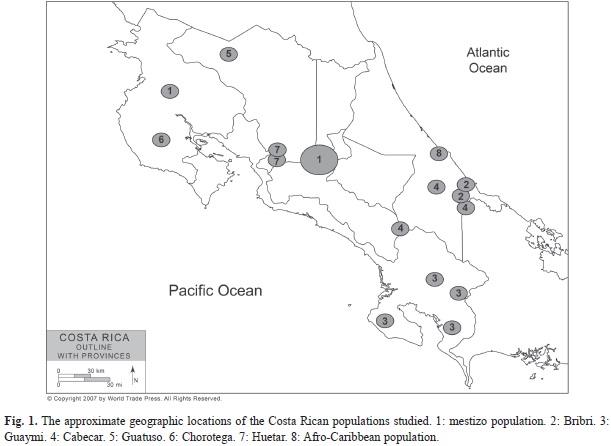
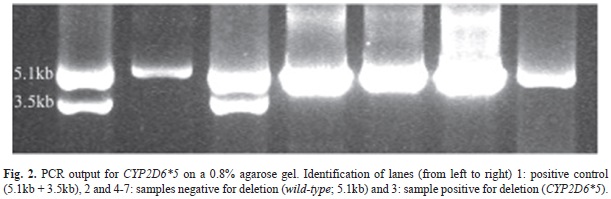
<body><![CDATA[<p style="text-align: justify;" class="MsoNormal"><b><span  style="font-size: 10pt; font-family: Verdana;" lang="EN-US">Places of residence: </span></b><span  style="font-size: 10pt; font-family: Verdana;" lang="EN-US">For the Amerindian group, the places of residence were <span class="SpellE">Matambu</span> Indian locality (<span  class="SpellE">Chorotega</span>), the South and the Pacific area (<span  class="SpellE">Guaymi</span>), the<o:p></o:p></span></p>     <p style="text-align: justify;" class="MsoNormal"><span class="GramE"><span  style="font-size: 10pt; font-family: Verdana;" lang="EN-US">Atlantic Talamanca and the Pacific area (<span class="SpellE">Cabecar</span>), the Talamanca area (<span  class="SpellE">Bribri</span>), the <span class="SpellE">Quitirrisi</span> and <span class="SpellE">Zapaton</span> Indian localities</span><span  style="font-family: Verdana;" lang="EN-US"> </span><span  style="font-size: 10pt; font-family: Verdana;" lang="ES-CR">(<span  class="SpellE">Huetar</span>), <span class="SpellE">and</span> <span class="SpellE">the</span> Margarita <span class="SpellE">and</span> <span class="SpellE">Tonjibe</span> Guatuso <span class="SpellE">Indian</span> <span class="SpellE">localities</span> (Guatuso <span class="SpellE">or</span> <span class="SpellE">Maleku</span>).</span></span><span  style="font-size: 10pt; font-family: Verdana;" lang="ES-CR"> <span  class="SpellE">The</span> <span class="SpellE">samples</span> <span class="SpellE">of</span> <span  class="SpellE">the</span> Afro- Caribbean <span class="SpellE">population</span> <span class="SpellE">were</span> <span class="SpellE">collected</span> <span class="SpellE">from</span> <span class="SpellE">volunteers</span> living in <span class="SpellE">the</span> <span class="SpellE">Atlantic</span> <span class="SpellE">coastal</span> <span class="SpellE">region</span> <span class="SpellE">of</span> <span  class="SpellE">Limon</span>. <span class="SpellE">The</span> mestizo <span  class="SpellE">population</span> <span class="SpellE">was</span> <span  class="SpellE">selected</span> <span class="SpellE">from</span> <span  class="SpellE">people</span> living in <span class="SpellE">the</span> Guanacaste <span  class="SpellE">region</span>, <span class="SpellE">and</span> in <span class="SpellE">the</span> Western <span class="SpellE">or</span> Central <span class="SpellE">Valley</span> <span class="SpellE">of</span> Costa Rica (<a  href="/img/revistas/rbt/v62n4/a31i1.jpg">Fig. 1</a>). <span  class="SpellE">The</span> <span class="SpellE">inclusion</span> <span  class="SpellE">of</span> <span class="SpellE">an</span> individual in a <span class="SpellE">group</span> <span class="SpellE">excluded</span> <span class="SpellE">that</span> individual <span class="SpellE">from</span> <span class="SpellE">being</span> <span class="SpellE">part</span> <span  class="SpellE">of</span> <span class="SpellE">any</span> <span class="SpellE">other</span> <span  class="SpellE">population</span>.<o:p></o:p></span></p>     <p style="text-align: justify;" class="MsoNormal"><b><span  style="font-size: 10pt; font-family: Verdana;" lang="EN-US">Genetic markers such as blood group systems: </span></b><span  style="font-size: 10pt; font-family: Verdana;" lang="EN-US">ABO (O for Amerindians and B</span><b><span  style="font-size: 10pt; font-family: Verdana;" lang="EN-US"> </span></b><span  style="font-size: 10pt; font-family: Verdana;" lang="EN-US">for the Afro-<span class="SpellE">Caribbeans</span>), rhesus, MNS,</span><b><span  style="font-size: 10pt; font-family: Verdana;" lang="EN-US"> </span></b><span  style="font-size: 10pt; font-family: Verdana;" lang="EN-US">P, <span  class="SpellE">Kell</span>, Kidd, Duffy, Diego, and Lewis;</span><b><span  style="font-size: 10pt; font-family: Verdana;" lang="EN-US"> </span></b><span  style="font-size: 10pt; font-family: Verdana;" lang="EN-US">plasmatic protein systems (albumin, <span class="SpellE">transferrin</span>,</span><b><span  style="font-size: 10pt; font-family: Verdana;" lang="EN-US"> </span></b><span  class="SpellE"><span style="font-size: 10pt; font-family: Verdana;"  lang="EN-US">haptoglobin</span></span><span  style="font-size: 10pt; font-family: Verdana;" lang="EN-US">, and <span class="SpellE">ceruloplasmin</span>)</span><b><span  style="font-size: 10pt; font-family: Verdana;" lang="EN-US"> </span></b><span  style="font-size: 10pt; font-family: Verdana;" lang="EN-US">(<span  class="SpellE">Barrantes</span> et al., 1990; <span class="SpellE">Bieber</span>, <span class="SpellE">Bieber</span>,</span><b><span  style="font-size: 10pt; font-family: Verdana;" lang="EN-US"> </span></b><span  class="SpellE"><span style="font-size: 10pt; font-family: Verdana;"  lang="EN-US">Rodewald</span></span><span  style="font-size: 10pt; font-family: Verdana;" lang="EN-US">, &amp; <span class="SpellE">Barrantes</span>, 1996); single</span><b><span  style="font-size: 10pt; font-family: Verdana;" lang="EN-US"> </span></b><span  style="font-size: 10pt; font-family: Verdana;" lang="EN-US">nucleotide polymorphisms (<span class="SpellE">SNPs</span>) (Herrmann</span><b><span  style="font-size: 10pt; font-family: Verdana;" lang="EN-US"> </span></b><span  style="font-size: 10pt; font-family: Verdana;" lang="EN-US">et al., 2002); microsatellites (Wang</span><b><span  style="font-size: 10pt; font-family: Verdana;" lang="EN-US"> </span></b><span  style="font-size: 10pt; font-family: Verdana;" lang="EN-US">et al., 2007); mitochondrial DNA (Santos</span><b><span  style="font-size: 10pt; font-family: Verdana;" lang="EN-US"> </span></b><span  style="font-size: 10pt; font-family: Verdana;" lang="EN-US">et al., 1994) and chromosome Y (Ruiz-</span><b><span  style="font-size: 10pt; font-family: Verdana;" lang="EN-US"> </span></b><span  class="SpellE"><span style="font-size: 10pt; font-family: Verdana;"  lang="EN-US">Narváez</span></span><span  style="font-size: 10pt; font-family: Verdana;" lang="EN-US"> et al., 2005).<o:p></o:p></span></p>     <p style="text-align: justify;" class="MsoNormal"><b><span  style="font-size: 10pt; font-family: Verdana;" lang="EN-US">Genotyping procedure: </span></b><span  style="font-size: 10pt; font-family: Verdana;" lang="EN-US">For genotyping, the CEIBA.FP Consortium methodology was followed. To detect the presence of allelic variants harboring a </span><i><span style="font-size: 10pt; font-family: Verdana;"  lang="EN-US">CYP2D6*5 </span></i><span style="font-size: 10pt; font-family: Verdana;"  lang="EN-US">gene deletion or a duplication, long range (XL)-PCR was performed as described in detail elsewhere (<a  href="/img/revistas/rbt/v62n4/a31i2.jpg">Fig. 2</a>) (Dorado et al., 2005). Subjects positive for a duplication or deletion were further characterized for gene copy number with the <span class="SpellE">TaqMan</span> assay Hs00010001_cn, which specifically amplifies <span class="SpellE">exon</span> 9 sequences and does not amplify </span><i><span  style="font-size: 10pt; font-family: Verdana;" lang="EN-US">CYP2D7 </span></i><span style="font-size: 10pt; font-family: Verdana;"  lang="EN-US">or </span><i><span  style="font-size: 10pt; font-family: Verdana;" lang="EN-US">CYP2D8 </span></i><span  class="SpellE"><span style="font-size: 10pt; font-family: Verdana;"  lang="EN-US">pseudogenes</span></span><span  style="font-size: 10pt; font-family: Verdana;" lang="EN-US"> or </span><i><span style="font-size: 10pt; font-family: Verdana;"  lang="EN-US">CYP2D6</span></i><span  style="font-size: 10pt; font-family: Verdana;" lang="EN-US">/</span><i><span  style="font-size: 10pt; font-family: Verdana;" lang="EN-US">CYP2D7 </span></i><span  style="font-size: 10pt; font-family: Verdana;" lang="EN-US">hybrids alleles carrying </span><i><span  style="font-size: 10pt; font-family: Verdana;" lang="EN-US">CYP2D7 </span></i><span class="SpellE"><span  style="font-size: 10pt; font-family: Verdana;" lang="EN-US">exon</span></span><span  style="font-size: 10pt; font-family: Verdana;" lang="EN-US"> 9 sequences. Genotype analysis for the </span><i><span  style="font-size: 10pt; font-family: Verdana;" lang="EN-US">CYP2D6*2 </span></i><span  style="font-size: 10pt; font-family: Verdana;" lang="EN-US">(-1584 C&gt;G)</span><i><span style="font-size: 10pt; font-family: Verdana;"  lang="EN-US">, *3</span></i><span  style="font-size: 10pt; font-family: Verdana;" lang="EN-US"> (2549A&gt;del)</span><i><span  style="font-size: 10pt; font-family: Verdana;" lang="EN-US">, *4 </span></i><span style="font-size: 10pt; font-family: Verdana;"  lang="EN-US">(100 C&gt;T, 1846G&gt;A)</span><i><span  style="font-size: 10pt; font-family: Verdana;" lang="EN-US">, *6</span></i><span  style="font-size: 10pt; font-family: Verdana;" lang="EN-US"> (1707 T&gt;del)</span><i><span style="font-size: 10pt; font-family: Verdana;"  lang="EN-US">, *10 </span></i><span  style="font-size: 10pt; font-family: Verdana;" lang="EN-US">(100 C&gt;T)</span><i><span style="font-size: 10pt; font-family: Verdana;"  lang="EN-US">, *17 </span></i><span  style="font-size: 10pt; font-family: Verdana;" lang="EN-US">(1023 C&gt;T)</span><i><span style="font-size: 10pt; font-family: Verdana;"  lang="EN-US">, *29 </span></i><span  style="font-size: 10pt; font-family: Verdana;" lang="EN-US">(3183 G&gt;A)</span><i><span style="font-size: 10pt; font-family: Verdana;"  lang="EN-US">, *35 </span></i><span  style="font-size: 10pt; font-family: Verdana;" lang="EN-US">(-1584 C&gt;G and 31 G&gt;A)</span><i><span  style="font-size: 10pt; font-family: Verdana;" lang="EN-US">, </span></i><span  style="font-size: 10pt; font-family: Verdana;" lang="EN-US">and </span><i><span  style="font-size: 10pt; font-family: Verdana;" lang="EN-US">*41 </span></i><span  style="font-size: 10pt; font-family: Verdana;" lang="EN-US">(2988 G&gt;A) allelic variants was carried out on genomic DNA, using commercially available <span class="SpellE">TaqMan</span> assays as previously described (Dorado et al., 2012). To discriminate among </span><i><span  style="font-size: 10pt; font-family: Verdana;" lang="EN-US">CYP2D6*1xN</span></i><span  style="font-size: 10pt; font-family: Verdana;" lang="EN-US">, </span><i><span style="font-size: 10pt; font-family: Verdana;"  lang="EN-US">*2xN</span></i><span  style="font-size: 10pt; font-family: Verdana;" lang="EN-US">, </span><i><span style="font-size: 10pt; font-family: Verdana;"  lang="EN-US">*4xN</span></i><span  style="font-size: 10pt; font-family: Verdana;" lang="EN-US"> and </span><i><span style="font-size: 10pt; font-family: Verdana;"  lang="EN-US">*10xN </span></i><span  style="font-size: 10pt; font-family: Verdana;" lang="EN-US">alleles, a 10kb long XL-PCR fragment was generated from duplication-positive subjects and tested for respective <span class="SpellE">SNPs</span> by an established PCR-RFLP approach (Dorado et al., 2005).<o:p></o:p></span></p>     <p class="MsoNormal"><b style=""><span  style="font-size: 10pt; font-family: Verdana;" lang="EN-US">Predicted hydroxylation capacity group:<o:p></o:p></span></b></p>     <p style="text-align: justify;" class="MsoNormal"><span  style="font-size: 10pt; font-family: Verdana;" lang="EN-US">In order to extrapolate genetic data to metabolic phenotype information, an activity score was utilized as previously described (<span class="SpellE">Gaedigk</span> et al., 2008; <span class="SpellE">Llerena</span> et al., 2012).<o:p></o:p></span></p>     <p style="text-align: justify;" class="MsoNormal"><span  style="font-size: 10pt; font-family: Verdana;" lang="EN-US">Zero value was assigned to </span><i><span  style="font-size: 10pt; font-family: Verdana;" lang="EN-US">CYP2D6*3</span></i><span  style="font-size: 10pt; font-family: Verdana;" lang="EN-US">, </span><i><span  style="font-size: 10pt; font-family: Verdana;" lang="EN-US">*4, *4XN, *5, *6 </span></i><span style="font-size: 10pt; font-family: Verdana;"  lang="EN-US">variants; 0.5 to each copy of </span><i><span  style="font-size: 10pt; font-family: Verdana;" lang="EN-US">CYP2D6*10, *17</span></i><b><i><span style="font-size: 10pt; font-family: Verdana;"  lang="EN-US">, *</span></i></b><i><span  style="font-size: 10pt; font-family: Verdana;" lang="EN-US">29, *41 </span></i><span  style="font-size: 10pt; font-family: Verdana;" lang="EN-US">alleles; one was assigned to </span><i><span style="font-size: 10pt; font-family: Verdana;"  lang="EN-US">CYP2D6 wt, *2, *35</span></i><span  style="font-size: 10pt; font-family: Verdana;" lang="EN-US">, and more than two (depending on the number of copies) to the multiplication of the active alleles (</span><span  class="SpellE"><i><span style="font-size: 10pt; font-family: Verdana;"  lang="EN-US">wtxN</span></i></span><i><span  style="font-size: 10pt; font-family: Verdana;" lang="EN-US">,</span></i><span  style="font-size: 10pt; font-family: Verdana;" lang="EN-US"> </span><i><span  style="font-size: 10pt; font-family: Verdana;" lang="EN-US">*2xN</span></i><span  style="font-size: 10pt; font-family: Verdana;" lang="EN-US">). Individuals with zero active genes were<o:p></o:p></span></p>     <p style="text-align: justify;" class="MsoNormal"><span class="GramE"><span  style="font-size: 10pt; font-family: Verdana;" lang="EN-US">classified</span></span><span  style="font-size: 10pt; font-family: Verdana;" lang="EN-US"> as poor <span class="SpellE">metabolizers</span> (<span class="SpellE">PMs</span>), and those with more than two active gene copies were classified as Ultra-rapid <span class="SpellE">Metabolizers</span> (<span  class="SpellE">UMs</span>) (<span class="SpellE">Gaedigk</span> et al., 2008; <span class="SpellE">Llerena</span> et al., 2012).<o:p></o:p></span></p>     <p style="text-align: justify;" class="MsoNormal"><span  style="font-size: 10pt; font-family: Verdana;" lang="EN-US">The differences in </span><i><span  style="font-size: 10pt; font-family: Verdana;" lang="EN-US">CYP2D6 </span></i><span  style="font-size: 10pt; font-family: Verdana;" lang="EN-US">allele frequencies were compared using the X2-test and/or Fisher’s exact test. P-values &lt;0.05 were regarded as statistically significant. Hardy-Weinberg equilibrium was determined by comparing the genotype frequencies with the expected values using a contingency table X2 statistic with <span class="SpellE">Yate’s</span> correction. Statistical analyses were performed using the STATISTICA 4.3 (Stat- Soft, <st1:city w:st="on">Tulsa</st1:city>, <st1:state w:st="on">OK</st1:state>, <st1:country-region w:st="on">USA</st1:country-region>) and <span  class="SpellE">GraphPad</span> Prism 3.02 (<span class="SpellE">GraphPad</span> Software, <st1:place  w:st="on"><st1:city w:st="on">San Diego</st1:city>, <st1:state  w:st="on">CA</st1:state>, <st1:country-region w:st="on">USA</st1:country-region></st1:place>) software.<o:p></o:p></span></p>     <p class="MsoNormal"><b style=""><span  style="font-size: 11pt; font-family: Verdana;" lang="EN-US">Results<o:p></o:p></span></b></p>     ]]></body>
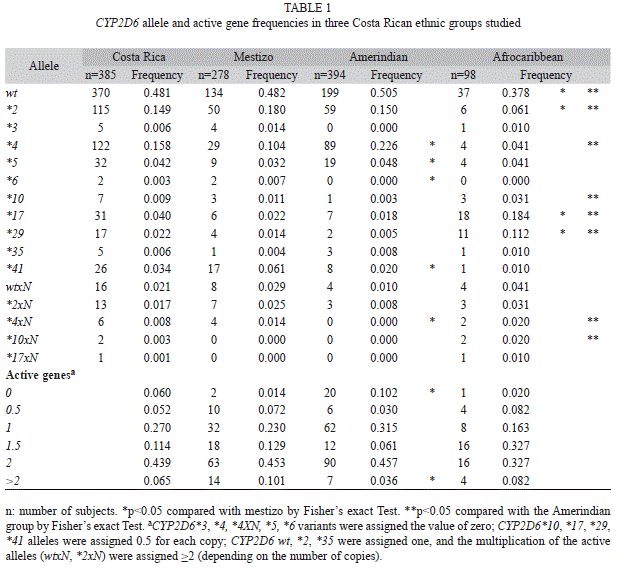
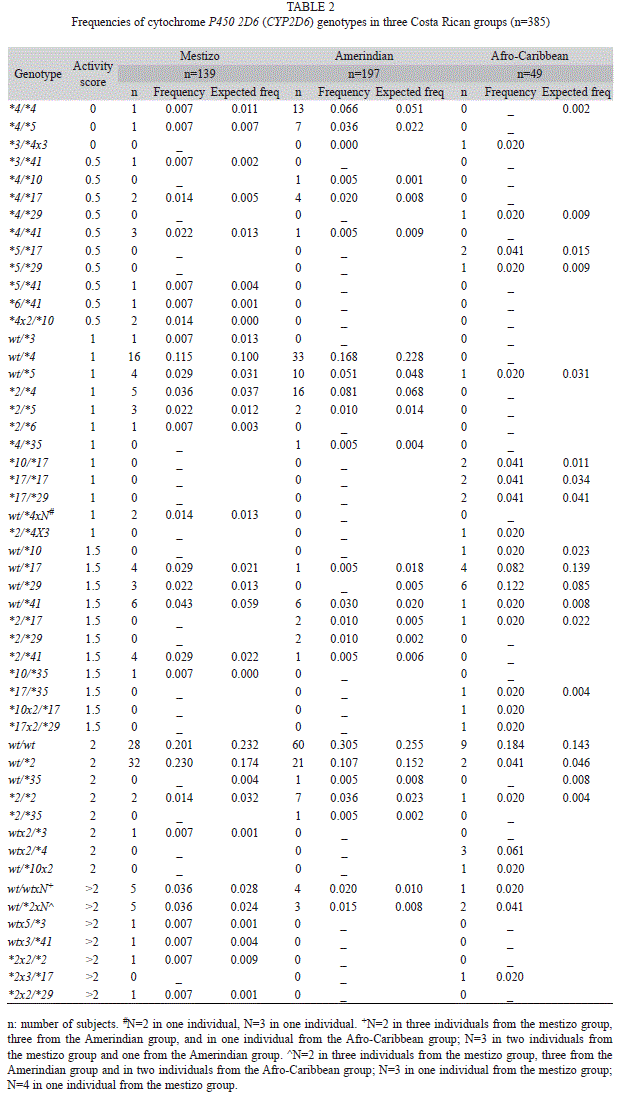
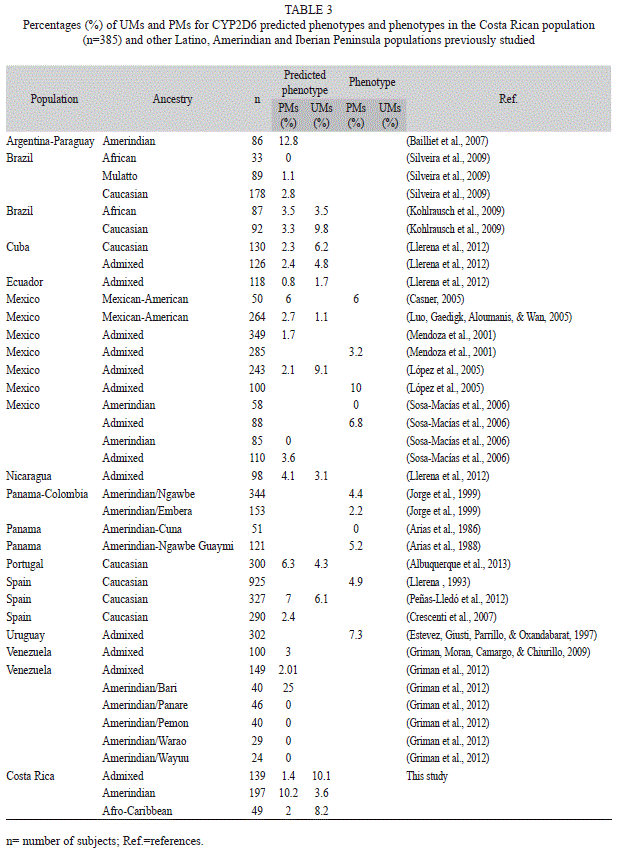
<body><![CDATA[<p style="text-align: justify;" class="MsoNormal"><i><span  style="font-size: 10pt; font-family: Verdana;" lang="EN-US">CYP2D6 </span></i><span style="font-size: 10pt; font-family: Verdana;"  lang="EN-US">allele frequencies are given in table 1. Multiplications of active genes (</span><span class="SpellE"><i><span  style="font-size: 10pt; font-family: Verdana;" lang="EN-US">wtxN</span></i></span><span  style="font-size: 10pt; font-family: Verdana;" lang="EN-US">, </span><i><span  style="font-size: 10pt; font-family: Verdana;" lang="EN-US">*2xN</span></i><span  style="font-size: 10pt; font-family: Verdana;" lang="EN-US">) were present in 15 individuals of the <span class="SpellE">mestizo</span> population and in seven of each of the Amerindian and Afro-Caribbean populations (<a href="/img/revistas/rbt/v62n4/a31t1.gif">Table 1</a>).<o:p></o:p></span></p>     <p style="text-align: justify;" class="MsoNormal"><span  style="font-size: 10pt; font-family: Verdana;" lang="EN-US">Null activity alleles </span><i><span  style="font-size: 10pt; font-family: Verdana;" lang="EN-US">*4 </span></i><span  style="font-size: 10pt; font-family: Verdana;" lang="EN-US">and </span><i><span  style="font-size: 10pt; font-family: Verdana;" lang="EN-US">*5 </span></i><span  style="font-size: 10pt; font-family: Verdana;" lang="EN-US">frequencies in the Amerindian population were higher (22.6% and 4.8%, respectively) than in the <span  class="SpellE">mestizo</span> group (10.4% and 3.2%, respectively; p&lt;0.05) (<a  href="/img/revistas/rbt/v62n4/a31t1.gif">Table 1</a>). The frequencies of alleles with decreased activity (</span><i><span  style="font-size: 10pt; font-family: Verdana;" lang="EN-US">*17 </span></i><span  style="font-size: 10pt; font-family: Verdana;" lang="EN-US">and </span><i><span  style="font-size: 10pt; font-family: Verdana;" lang="EN-US">*29</span></i><span  style="font-size: 10pt; font-family: Verdana;" lang="EN-US">) in the Afro-Caribbean population were higher (18.4% and 11.2%) than in the other two populations (p&lt;0.05), and the </span><i><span style="font-size: 10pt; font-family: Verdana;"  lang="EN-US">CYP2D6*10 </span></i><span style="font-size: 10pt; font-family: Verdana;"  lang="EN-US">frequency in the Amerindian population (0.3%) was lower than in the Afro-Caribbean (3.1%; p&lt;0.05).<o:p></o:p></span></p>     <p style="text-align: justify;" class="MsoNormal"><span  style="font-size: 10pt; font-family: Verdana;" lang="EN-US">The </span><i><span  style="font-size: 10pt; font-family: Verdana;" lang="EN-US">CYP2D6 </span></i><span  style="font-size: 10pt; font-family: Verdana;" lang="EN-US">frequencies for each activity score group are given in <a href="/img/revistas/rbt/v62n4/a31t1.gif">table 1</a>. The entire Costa Rican population frequency of <span class="SpellE">PMs</span> and <span class="SpellE">UMs</span> were 6% and 6.5% respectively.<o:p></o:p></span></p>     <p style="text-align: justify;" class="MsoNormal"><span  style="font-size: 10pt; font-family: Verdana;" lang="EN-US">As expected, the percentage of <span class="SpellE">UMs</span> in the <span class="SpellE">mestizo</span> population (10.1%) was higher than in the Amerindian population (3.6%, p&lt;0.05) (<a  href="/img/revistas/rbt/v62n4/a31t1.gif">Table 1</a>). However, the frequency of individuals classified as <span class="SpellE">PMs</span> (zero active genes) was higher in Amerindians (10.2%) than in the <span class="SpellE">mestizo</span> population (1.4%, p&lt;0.05). The frequency<o:p></o:p></span></p>     <p style="text-align: justify;" class="MsoNormal"><span class="GramE"><span  style="font-size: 10pt; font-family: Verdana;" lang="EN-US">of</span></span><span  style="font-size: 10pt; font-family: Verdana;" lang="EN-US"> <span  class="SpellE">UMs</span> (8.2%) and <span class="SpellE">PMs</span> (2%) of the Afro-Caribbean population was not different to any of the Costa Rican populations studied.<o:p></o:p></span></p>     <p style="text-align: justify;" class="MsoNormal"><span  style="font-size: 10pt; font-family: Verdana;" lang="EN-US">The frequencies of </span><i><span  style="font-size: 10pt; font-family: Verdana;" lang="EN-US">CYP2D6 </span></i><span  style="font-size: 10pt; font-family: Verdana;" lang="EN-US">genotypes are listed in <a href="/img/revistas/rbt/v62n4/a31t2.gif">table 2</a>. The <span  class="SpellE">mestizo</span> population showed more diversity concerning genotypes in comparison with the other Costa Rican populations studied. In all three groups, the most frequently found </span><i><span  style="font-size: 10pt; font-family: Verdana;" lang="EN-US">CYP2D6 </span></i><span  style="font-size: 10pt; font-family: Verdana;" lang="EN-US">genotypes belonged to the classification of two active genes (Table<o:p></o:p></span></p>     <p style="text-align: justify;" class="MsoNormal"><span  style="font-size: 10pt; font-family: Verdana;" lang="EN-US">2). Published data from Latin American populations is used to compare results with the Costa Rican populations (<a  href="/img/revistas/rbt/v62n4/a31t3.gif">Table 3</a>).<o:p></o:p></span></p>     <p class="MsoNormal"><span class="SpellE"><b style=""><span  style="font-size: 11pt; font-family: Verdana;">Discussion</span></b></span><b  style=""><span style="font-size: 11pt; font-family: Verdana;"><o:p></o:p></span></b></p>     <p style="text-align: justify;" class="MsoNormal"><span  style="font-size: 10pt; font-family: Verdana;" lang="EN-US">To the best of our knowledge, this is the first study in a Costa Rican population that examined the predicted metabolic phenotype frequencies of CYP2D6 (<span class="SpellE">UMs</span> and <span  class="SpellE">PMs</span>) in three ethnic groups. The entire Costa Rican population frequency of <span  class="SpellE">PMs</span> (6%) is consistent with the Portuguese (Albuquerque et al., 2013), the Mexican-American (<span class="SpellE">Casner</span>, 2005), and the Colombian <span class="SpellE">mestizo</span> (<span class="SpellE">Isaza</span>, <span class="SpellE">Henao</span>, <span class="SpellE">López</span>, &amp; <span class="SpellE">Cacabelos</span>, 2000) populations. Likewise, the frequency of <span class="SpellE">UMs</span> for the Costa Rican population is similar to those reported for the Spanish population (6.1%) <span class="GramE">(<span  class="SpellE">Peñas-Lledó</span> et al., 2012).</span><o:p></o:p></span></p>     <p style="text-align: justify;" class="MsoNormal"><span  style="font-size: 10pt; font-family: Verdana;" lang="EN-US">Considering the ethnicity of the analyzed populations, the frequency of <span class="SpellE">UMs</span> in the <span  class="SpellE">mestizo</span> group (10.1%) is similar to those reported in a Spanish population (6.1%) (<span class="SpellE">Peñas-Lledó</span> et al., 2012), those of a Mexican admixed population (9.1%) (<span class="SpellE">López</span>, Guerrero, Jung-Cook, &amp; Alonso, 2005), and it is lightly greater than the percentage of <span  class="SpellE">UMs</span> determined with <span class="SpellE">debrisoquine</span> in a Spanish population (5.2%, p=0.053) (<span class="SpellE">Llerena</span> et al., 2009). Moreover, the high frequency of <span class="SpellE">PMs</span> in the Costa Rican Amerindian population (10.2%) is similar to that reported in an Amerindian population from <st1:country-region w:st="on">Argentina</st1:country-region> and <st1:country-region w:st="on"><st1:place w:st="on">Paraguay</st1:place></st1:country-region> (12.8%) <span class="GramE">(<span class="SpellE">Bailliet</span> et al., 2007).</span><o:p></o:p></span></p>     ]]></body>
<body><![CDATA[<p style="text-align: justify;" class="MsoNormal"><span  style="font-size: 10pt; font-family: Verdana;" lang="EN-US">Despite the small number of individuals in the Afro-Caribbean group, the frequencies of <span class="SpellE">PMs</span> and <span class="SpellE">UMs</span> are comparable to those of Brazilian populations with African ancestry (<span class="SpellE">Kohlrausch</span> et al., 2009; <span  class="SpellE">Silveira</span>, <span class="SpellE">Canalle</span>, <span  class="SpellE">Scrideli</span>, <span class="SpellE">Queiroz</span>, &amp; Tone, 2009).<o:p></o:p></span></p>     <p style="text-align: justify;" class="MsoNormal"><span  style="font-size: 10pt; font-family: Verdana;" lang="EN-US">Individuals carrying two inactive alleles will produce a non-functional protein. Therefore, all of them will likewise be determined as <span class="SpellE">PMs</span> in <span class="SpellE">phenotyping</span> studies. However, discordance between the identification of Ums by molecular methods and phenotype has been reported (<span class="SpellE">Llerena</span> et al., 2012; <span class="SpellE">Løvlie</span>, Daly, <span  class="SpellE">Molven</span>, Idle, &amp; Steen, 1996), so the predicted phenotype estimation needs to be confirmed with <span class="SpellE">phenotyping</span> studies.<o:p></o:p></span></p>     <p style="text-align: justify;" class="MsoNormal"><span  style="font-size: 10pt; font-family: Verdana;" lang="EN-US">Variability of </span><i><span style="font-size: 10pt; font-family: Verdana;"  lang="EN-US">CYP2D6 </span></i><span  style="font-size: 10pt; font-family: Verdana;" lang="EN-US">alleles was found within this Costa Rican population, in accordance with the finding that the Costa Rican population is genetically heterogeneous (<span class="SpellE">Morera</span> et al., 2003; <span class="SpellE">Morera</span> &amp; <span  class="SpellE">Barrantes</span>, 2004). The high frequency of <span class="SpellE">PMs</span> in the Amerindian group can mainly be accounted for by the presence of the null allele </span><i><span  style="font-size: 10pt; font-family: Verdana;" lang="EN-US">CYP2D6*4 </span></i><span  style="font-size: 10pt; font-family: Verdana;" lang="EN-US">in this population (22.6%) at a frequency similar to those found in Amerindian populations of Argentina-Paraguay<o:p></o:p></span></p>     <p style="text-align: justify;" class="MsoNormal"><span  style="font-size: 10pt; font-family: Verdana;" lang="EN-US">(17.8%) <span  class="GramE">(<span class="SpellE">Bailliet</span> et al., 2007).</span> However, it is higher than those reported in Panamanian <span class="SpellE">Embera</span> (14%) and <span  class="SpellE">Ngwabe</span> (17.1%) populations (p&lt;0.05) (Jorge, <span class="SpellE">Eichelbaum</span>, <span class="SpellE">Griese</span>, <span class="SpellE">Inaba</span>, &amp; Arias, 1999).<o:p></o:p></span></p>     <p style="text-align: justify;" class="MsoNormal"><span  style="font-size: 10pt; font-family: Verdana;" lang="EN-US">Regarding reduced activity alleles</span><i><span  style="font-size: 10pt; font-family: Verdana;" lang="EN-US">, </span></i><span  style="font-size: 10pt; font-family: Verdana;" lang="EN-US">the </span><i><span style="font-size: 10pt; font-family: Verdana;"  lang="EN-US">CYP2D6*17 </span></i><span style="font-size: 10pt; font-family: Verdana;"  lang="EN-US">and </span><i><span  style="font-size: 10pt; font-family: Verdana;" lang="EN-US">CYP2D6*29 </span></i><span  style="font-size: 10pt; font-family: Verdana;" lang="EN-US">frequencies in the Afro-Caribbean population were similar to those reported for an Afro-American population (<span class="SpellE">Gaedigk</span>, Bradford, <span  class="SpellE">Marcucci</span>, &amp; <span class="SpellE">Leeder</span>, 2002), in agreement with their African ancestry (<st1:place w:st="on">Bradford</st1:place>, 2002). Moreover, the </span><i><span style="font-size: 10pt; font-family: Verdana;"  lang="EN-US">CYP2D6*10</span></i><span  style="font-size: 10pt; font-family: Verdana;" lang="EN-US"><o:p></o:p></span></p>     <p style="text-align: justify;" class="MsoNormal"><span class="GramE"><span  style="font-size: 10pt; font-family: Verdana;" lang="EN-US">frequency</span></span><span  style="font-size: 10pt; font-family: Verdana;" lang="EN-US"> in the Amerindian group (0.3%) was similar to that of the <span  class="SpellE">Tepehuano</span> (0%) (Sosa- <span class="SpellE">Macías</span> et al., 2006, 2010) and <span class="SpellE">Mapuche</span> (1.8%) <span class="GramE">(<span  class="SpellE">Muñoz</span> et al., 1998) populations, but lower than other Amerindian populations (7.1% and 6.9%; p&lt;0.05) (<span class="SpellE">Bailliet</span> et al., 2007; Jorge et al<i><span style="">.</span></i>, 1999).</span><o:p></o:p></span></p>     <p style="text-align: justify;" class="MsoNormal"><span  style="font-size: 10pt; font-family: Verdana;" lang="EN-US">A limitation of this study was that the Lumber of individuals in the Afro-Caribbean population was low (n=49). Moreover, the inclusion criteria did not include ancestry informative markers analysis (<span class="SpellE">AIMs</span>). In this sense, further studies involving genetic markers of ancestry are needed in the Costa Rican population. It is<o:p></o:p></span></p>     <p style="text-align: justify;" class="MsoNormal"><span class="GramE"><span  style="font-size: 10pt; font-family: Verdana;" lang="EN-US">necessary</span></span><span  style="font-size: 10pt; font-family: Verdana;" lang="EN-US"> to remark that even though this study reports allele frequencies of </span><i><span  style="font-size: 10pt; font-family: Verdana;" lang="EN-US">CYP2D6 </span></i><span  style="font-size: 10pt; font-family: Verdana;" lang="EN-US">for Costa Ricans, they might not be representative of the population and might have been influenced by random effects.<o:p></o:p></span></p>     <p style="text-align: justify;" class="MsoNormal"><span  style="font-size: 10pt; font-family: Verdana;" lang="EN-US">Furthermore, the study of populations with complex ancestry such as Latin American populations comprises the fact that novel or rare variants (<span class="SpellE">Fohner</span> et al., 2013; <span  class="SpellE">Gaedigk</span> et al., 2010) might appear, leading to poor metabolism or reduced function (<span class="SpellE">Montané</span>-Jaime et al., 2013). In the future, sequencing the </span><i><span  style="font-size: 10pt; font-family: Verdana;" lang="EN-US">CYP2D6</span></i><span  style="font-size: 10pt; font-family: Verdana;" lang="EN-US"><o:p></o:p></span></p>     <p style="text-align: justify;" class="MsoNormal"><span class="GramE"><span  style="font-size: 10pt; font-family: Verdana;" lang="EN-US">gene</span></span><span  style="font-size: 10pt; font-family: Verdana;" lang="EN-US"> in these populations might be suitable to detect relevant genetic variants.<o:p></o:p></span></p>     ]]></body>
<body><![CDATA[<p style="text-align: justify;" class="MsoNormal"><span  style="font-size: 10pt; font-family: Verdana;" lang="EN-US">Given the percentage of <span class="SpellE">UMs</span> found in the <span class="SpellE">mestizo</span> and Afro-Caribbean population and of <span class="SpellE">PMs</span> in the Amerindian group, it might be appropriate to follow available guidelines that provide information relating to the interpretation of </span><i><span  style="font-size: 10pt; font-family: Verdana;" lang="EN-US">CYP2D6 </span></i><span  style="font-size: 10pt; font-family: Verdana;" lang="EN-US">genotype test results to guide the dosing of different drugs (Crews et al.,<o:p></o:p></span></p>     <p style="text-align: justify;" class="MsoNormal"><span class="GramE"><span  style="font-size: 10pt; font-family: Verdana;" lang="EN-US">2012; Hicks et al., 2013).</span></span><span  style="font-size: 10pt; font-family: Verdana;" lang="EN-US"> Likewise, the information provided by this study supports that it might be appropriate to consider the development of drug treatment guidelines taking into account population ethnic background, meaning specific alleles of the population tested, to improve drug safety and efficacy in Costa Rican and Latin American populations.<o:p></o:p></span></p>     <p style="text-align: justify;" class="MsoNormal"><span  style="font-size: 10pt; font-family: Verdana;" lang="EN-US">In conclusion, we report here for the first time the frequency of <span class="SpellE">PMs</span> (6%) and Ums (6.5%) in a Costa Rican population. Secondly, we found a difference between the frequency of predicted UM and PM phenotype across ethnicity in Costa Ricans.<o:p></o:p></span></p>     <p class="MsoNormal"><span class="SpellE"><b style=""><span  style="font-size: 11pt; font-family: Verdana;">Acknowledgments</span></b></span><b  style=""><span style="font-size: 11pt; font-family: Verdana;"><o:p></o:p></span></b></p>     <p style="text-align: justify;" class="MsoNormal"><span  style="font-size: 10pt; font-family: Verdana;" lang="EN-US">CCG was supported by a fellowship of the <st1:placetype w:st="on">University</st1:placetype> of <st1:placename w:st="on">Costa Rica</st1:placename> in the PhD program of the <st1:place w:st="on"><st1:placetype w:st="on">University</st1:placetype> of <st1:placename w:st="on">Extremadura</st1:placename></st1:place>. The study is part of the Research Program entitled "<span class="SpellE">Genética</span>, <span class="SpellE">Ecología</span> y <span class="SpellE">Salud</span> en los <span class="SpellE">Amerindios</span> de <st1:country-region  w:st="on">Costa Rica</st1:country-region>" (N°742-93-903) and the project N&#730; 742-90-416 of the <st1:place  w:st="on"><st1:placetype w:st="on">University</st1:placetype> of <st1:placename  w:st="on">Costa Rica</st1:placename></st1:place>.<o:p></o:p></span></p>     <p style="text-align: justify;" class="MsoNormal"><span  style="font-size: 10pt; font-family: Verdana;" lang="EN-US">The research was supported by <span class="SpellE">Gobierno</span> de Extremadura, <span class="SpellE">Consejería</span> de <span  class="SpellE">Empleo</span>, <span class="SpellE">Empresa</span> e <span class="SpellE">Innovación</span>, and <span class="SpellE">Fondo</span> Social <span class="SpellE">Europeo</span> (FSE) fellowship PD10199 (MEGN) and a grant from AEXCID 13IA002. The project was coordinated in the CEIBA.FP Consortium of the <span class="SpellE">Ibero</span>-American Network of <span class="SpellE">Pharmacogenetics</span><o:p></o:p></span></p>     <p style="text-align: justify;" class="MsoNormal"><span  style="font-size: 10pt; font-family: Verdana;" lang="EN-US">&amp; <span  class="SpellE">Pharmacogenomics</span> (RIBEF): Graciela E. <span class="SpellE">Moya</span> (Buenos Aires, Argentina), Eduardo <span class="SpellE">Tarazona</span>-Santos (Belo Horizonte, Brazil), Alba P. Sarmiento (Bogotá, Colombia), Ramiro <span class="SpellE">Barrantes</span> (San José, Costa Rica), <span class="SpellE">Idania</span> <span  class="SpellE">Rodeiro</span>, Luis R. <span class="SpellE">Calzadilla</span> (La Habana, Cuba), Enrique <span class="SpellE">Terán</span> (Quito, Ecuador), <span  class="SpellE">Rocío</span> Ortiz-<span class="SpellE">López</span> (Nuevo León, México), Marisol <span  class="SpellE">López-López</span> (Mexico City, Mexico), Martha G. Sosa-<span class="SpellE">Macías</span> (Durango, Mexico), Ronald <span  class="SpellE">Ramírez-Roa</span> (León, Nicaragua), Manuela <span class="SpellE">Grazina</span> (Coimbra, Portugal), <span class="SpellE">Adrián</span> <span class="SpellE">LLerena</span> (Badajoz, Spain), Francisco E. <span class="SpellE">Estévez</span>-Carrizo (Montevideo, Uruguay).<o:p></o:p></span></p>     <p class="MsoNormal"><span class="SpellE"><b style=""><span  style="font-size: 11pt; font-family: Verdana;"></span></b></span></p> <hr style="width: 100%; height: 2px;">     <p class="MsoNormal"><span class="SpellE"><b style=""><span  style="font-size: 11pt; font-family: Verdana;">References</span></b></span><span  style="font-size: 10pt; font-family: TimesNewRomanPSMT;"><o:p></o:p></span></p>     <!-- ref --><p class="MsoNormal"><span  style="font-size: 10pt; font-family: Verdana;" lang="PT-BR">Albuquerque, J<span class="GramE">.,</span> Ribeiro, C., <span class="SpellE">Naranjo</span>, M. E., <span class="SpellE">Llerena</span>, A., <span class="SpellE">Grazina</span>, M., &amp; CEIBA.FP Consortium. </span><span style="font-size: 10pt; font-family: Verdana;"  lang="EN-US">(2013). Characterization of CYP2D6 genotypes and metabolic profiles in the Portuguese population: <span class="SpellE">pharmacogenetic</span> implications. </span><span  class="GramE"><i><span style="font-size: 10pt; font-family: Verdana;"  lang="EN-US">Personalized Medicine, 10</span></i><span  style="font-size: 10pt; font-family: Verdana;" lang="EN-US">(7), 709-718.    &nbsp;&nbsp;&nbsp;&nbsp;&nbsp;&nbsp;&nbsp;&nbsp;[&#160;<a href="javascript:void(0);" onclick="javascript: window.open('/scielo.php?script=sci_nlinks&ref=1581163&pid=S0034-7744201400040003100001&lng=','','width=640,height=500,resizable=yes,scrollbars=1,menubar=yes,');">Links</a>&#160;]<!-- end-ref --></span></span><span  style="font-size: 10pt; font-family: Verdana;" lang="EN-US"><o:p></o:p></span></p>     <!-- ref --><p class="MsoNormal"><span class="GramE"><span  style="font-size: 10pt; font-family: Verdana;" lang="EN-US">Arias, T. D., Jorge, L., Lee, D., Guerrero de <span class="SpellE">Solís</span>, N., Escobar, J., <span  class="SpellE">Barrantes</span>, R., &amp; <span class="SpellE">Inaba</span>, T. (1986).</span></span><span  style="font-size: 10pt; font-family: Verdana;" lang="EN-US"> <span class="GramE">Biotransformation of <span class="SpellE">sparteine</span> in the <span class="SpellE">Cuna</span> American Indians of Panama.</span> </span><span class="SpellE"><span class="GramE"><i><span  style="font-size: 10pt; font-family: Verdana;" lang="EN-US">Revista</span></i></span></span><span  class="GramE"><i><span style="font-size: 10pt; font-family: Verdana;"  lang="EN-US"> <span class="SpellE">médica</span> de Panamá, 11</span></i><span  style="font-size: 10pt; font-family: Verdana;" lang="EN-US">(3), 199-209.    &nbsp;&nbsp;&nbsp;&nbsp;&nbsp;&nbsp;&nbsp;&nbsp;[&#160;<a href="javascript:void(0);" onclick="javascript: window.open('/scielo.php?script=sci_nlinks&ref=1581165&pid=S0034-7744201400040003100002&lng=','','width=640,height=500,resizable=yes,scrollbars=1,menubar=yes,');">Links</a>&#160;]<!-- end-ref --></span></span><span  style="font-size: 10pt; font-family: Verdana;" lang="EN-US"><o:p></o:p></span></p>     <!-- ref --><p class="MsoNormal"><span  style="font-size: 10pt; font-family: Verdana;" lang="PT-BR">Arias, T. <span  class="GramE">D.</span>, Jorge, L. F., Lee, D., <span class="SpellE">Barrantes</span>, R., &amp; <span  class="SpellE">Inaba</span>, T. (1988). </span><span style="font-size: 10pt; font-family: Verdana;"  lang="EN-US">The oxidative metabolism of <span class="SpellE">sparteine</span> in the <span class="SpellE">Cuna</span> Amerindians of Panama: absence of evidence for deficient <span class="SpellE">metabolizers</span>. </span><i><span  style="font-size: 10pt; font-family: Verdana;" lang="EN-US">Clinical Pharmacology</span></i><span  style="font-size: 10pt; font-family: Verdana;" lang="EN-US"> </span><i><span style="font-size: 10pt; font-family: Verdana;"  lang="EN-US">and Therapeutics, 43</span></i><span  style="font-size: 10pt; font-family: Verdana;" lang="EN-US">(4), 456-465.    &nbsp;&nbsp;&nbsp;&nbsp;&nbsp;&nbsp;&nbsp;&nbsp;[&#160;<a href="javascript:void(0);" onclick="javascript: window.open('/scielo.php?script=sci_nlinks&ref=1581167&pid=S0034-7744201400040003100003&lng=','','width=640,height=500,resizable=yes,scrollbars=1,menubar=yes,');">Links</a>&#160;]<!-- end-ref --><o:p></o:p></span></p>     <!-- ref --><p class="MsoNormal"><span class="SpellE"><span class="GramE"><span  style="font-size: 10pt; font-family: Verdana;" lang="EN-US">Azofeifa</span></span></span><span  class="GramE"><span style="font-size: 10pt; font-family: Verdana;"  lang="EN-US">, J., Hahn, M., Ruiz, E., <span class="SpellE">Hummerich</span>, L., Morales, A. I., <span class="SpellE">Jiménez</span>, G., &amp; <span  class="SpellE">Barrantes</span>, R. (2004).</span></span><span  style="font-size: 10pt; font-family: Verdana;" lang="EN-US"> The STR polymorphism (AAAAT<span class="GramE">)n</span> within the <span class="SpellE">intron</span> 1 of the tumor protein 53 (TP53) locus in 17 populations of different ethnic groups of Africa, <st1:country-region w:st="on">America</st1:country-region>, Asia and <st1:place w:st="on">Europe</st1:place>. </span><i><span  style="font-size: 10pt; font-family: Verdana;">Revista de Biología Tropical, 52</span></i><span  style="font-size: 10pt; font-family: Verdana;">(3), 645-657.    &nbsp;&nbsp;&nbsp;&nbsp;&nbsp;&nbsp;&nbsp;&nbsp;[&#160;<a href="javascript:void(0);" onclick="javascript: window.open('/scielo.php?script=sci_nlinks&ref=1581169&pid=S0034-7744201400040003100004&lng=','','width=640,height=500,resizable=yes,scrollbars=1,menubar=yes,');">Links</a>&#160;]<!-- end-ref --><o:p></o:p></span></p>     <!-- ref --><p class="MsoNormal"><span class="SpellE"><span  style="font-size: 10pt; font-family: Verdana;">Bailliet</span></span><span  style="font-size: 10pt; font-family: Verdana;">, G., Santos, M. R., Alfaro, E. L., <span class="SpellE">Dipierri</span>, J. E., <span  class="SpellE">Demarchi</span>, D. A., <span class="SpellE">Carnese</span>, F. R., &amp; Bianchi, N. O. (2007). </span><span class="GramE"><span  style="font-size: 10pt; font-family: Verdana;" lang="EN-US">Allele and genotype frequencies of metabolic genes in Native Americans from <st1:country-region w:st="on">Argentina</st1:country-region> and <st1:country-region w:st="on"><st1:place w:st="on">Paraguay</st1:place></st1:country-region>.</span></span><span  style="font-size: 10pt; font-family: Verdana;" lang="EN-US"> </span><i><span style="font-size: 10pt; font-family: Verdana;"  lang="EN-US">Mutation Research, 627</span></i><span  style="font-size: 10pt; font-family: Verdana;" lang="EN-US">(2), 171-177.    &nbsp;&nbsp;&nbsp;&nbsp;&nbsp;&nbsp;&nbsp;&nbsp;[&#160;<a href="javascript:void(0);" onclick="javascript: window.open('/scielo.php?script=sci_nlinks&ref=1581171&pid=S0034-7744201400040003100005&lng=','','width=640,height=500,resizable=yes,scrollbars=1,menubar=yes,');">Links</a>&#160;]<!-- end-ref --><o:p></o:p></span></p>     <!-- ref --><p class="MsoNormal"><span class="SpellE"><span  style="font-size: 10pt; font-family: Verdana;" lang="EN-US">Barrantes</span></span><span  style="font-size: 10pt; font-family: Verdana;" lang="EN-US">, R., <span class="SpellE">Smouse</span>, P. E., Neel, J. V., <span  class="SpellE">Mohrenweiser</span>, H. W., &amp; <span class="SpellE">Gershowitz</span>, H. (1982). <span  class="GramE">Migration and genetic infrastructure of the Central American <span class="SpellE">Guaymi</span> and their affinities with other tribal groups.</span> </span><i><span style="font-size: 10pt; font-family: Verdana;"  lang="EN-US">American</span></i><span  style="font-size: 10pt; font-family: Verdana;" lang="EN-US"> </span><i><span style="font-size: 10pt; font-family: Verdana;"  lang="EN-US">Journal of Physical Anthropology, 58</span></i><span  style="font-size: 10pt; font-family: Verdana;" lang="EN-US">(2), 201-214.    &nbsp;&nbsp;&nbsp;&nbsp;&nbsp;&nbsp;&nbsp;&nbsp;[&#160;<a href="javascript:void(0);" onclick="javascript: window.open('/scielo.php?script=sci_nlinks&ref=1581173&pid=S0034-7744201400040003100006&lng=','','width=640,height=500,resizable=yes,scrollbars=1,menubar=yes,');">Links</a>&#160;]<!-- end-ref --><o:p></o:p></span></p>     <!-- ref --><p class="MsoNormal"><span  style="font-size: 10pt; font-family: Verdana;">Barrantes, R. (1989). <span  class="SpellE">Biodemografía</span> de las poblaciones amerindias de Costa Rica. </span><i><span  style="font-size: 10pt; font-family: Verdana;" lang="PT-BR">Vínculos, 15</span></i><span style="font-size: 10pt; font-family: Verdana;"  lang="PT-BR">, 59-68.    &nbsp;&nbsp;&nbsp;&nbsp;&nbsp;&nbsp;&nbsp;&nbsp;[&#160;<a href="javascript:void(0);" onclick="javascript: window.open('/scielo.php?script=sci_nlinks&ref=1581175&pid=S0034-7744201400040003100007&lng=','','width=640,height=500,resizable=yes,scrollbars=1,menubar=yes,');">Links</a>&#160;]<!-- end-ref --><o:p></o:p></span></p>     <!-- ref --><p><span class="SpellE"><span  style="font-size: 10pt; font-family: Verdana;" lang="EN-US">Barrantes,R., Smouse, P. E., Mohrenweiser, H. W., Gershowitz, H., Azofeifa,J., Arias, T. D., &amp; Neel, J. V. (1990). Microevolution in lower Central America: genetic characterization of the Chibcha-speaking groups of Costa Rica and country-region Panama, and a consensus taxonomy based on genetic and linguistic affinity. American Journal of Human Genetics, 46(1), 63-84.    &nbsp;&nbsp;&nbsp;&nbsp;&nbsp;&nbsp;&nbsp;&nbsp;[&#160;<a href="javascript:void(0);" onclick="javascript: window.open('/scielo.php?script=sci_nlinks&ref=1581177&pid=S0034-7744201400040003100008&lng=','','width=640,height=500,resizable=yes,scrollbars=1,menubar=yes,');">Links</a>&#160;]<!-- end-ref --><o:p></o:p></span></span></p>     <!-- ref --><p class="MsoNormal"><span  style="font-size: 10pt; font-family: Verdana;">Barrantes, R. (1993a). Diversidad genética y mezcla racial en los amerindios de Costa Rica y Panamá. </span><i><span  style="font-size: 10pt; font-family: Verdana;">Revista de</span></i><span  style="font-size: 10pt; font-family: Verdana;"> </span><i><span  style="font-size: 10pt; font-family: Verdana;">Biología Tropical, 41</span></i><span  style="font-size: 10pt; font-family: Verdana;">(3), 379-384.    &nbsp;&nbsp;&nbsp;&nbsp;&nbsp;&nbsp;&nbsp;&nbsp;[&#160;<a href="javascript:void(0);" onclick="javascript: window.open('/scielo.php?script=sci_nlinks&ref=1581179&pid=S0034-7744201400040003100009&lng=','','width=640,height=500,resizable=yes,scrollbars=1,menubar=yes,');">Links</a>&#160;]<!-- end-ref --><o:p></o:p></span></p>     <!-- ref --><p class="MsoNormal"><span  style="font-size: 10pt; font-family: Verdana;">Barrantes, R. (1993b). Estructura de poblaciones. In </span><i><span  style="font-size: 10pt; font-family: Verdana;">Evolución en el trópico: los amerindios de Costa Rica y Panamá </span></i><span style="font-size: 10pt; font-family: Verdana;">(pp. 51-85). San José, Costa Rica: Editorial</span><i><span  style="font-size: 10pt; font-family: Verdana;"> </span></i><span  style="font-size: 10pt; font-family: Verdana;">de la Universidad de Costa Rica.    &nbsp;&nbsp;&nbsp;&nbsp;&nbsp;&nbsp;&nbsp;&nbsp;[&#160;<a href="javascript:void(0);" onclick="javascript: window.open('/scielo.php?script=sci_nlinks&ref=1581181&pid=S0034-7744201400040003100010&lng=','','width=640,height=500,resizable=yes,scrollbars=1,menubar=yes,');">Links</a>&#160;]<!-- end-ref --><o:p></o:p></span></p>     <!-- ref --><p class="MsoNormal"><span class="SpellE"><span  style="font-size: 10pt; font-family: Verdana;">Bieber</span></span><span  style="font-size: 10pt; font-family: Verdana;">, H., <span  class="SpellE">Bieber</span>, S. W., <span class="SpellE">Rodewald</span>, A., &amp; Barrantes, R. (1996). </span><span style="font-size: 10pt; font-family: Verdana;"  lang="EN-US">Microevolution and genetic affinities among six Amerindian tribes of lower <st1:place  w:st="on">Central America</st1:place>: comparative genetic study of serum proteins. </span><i><span  style="font-size: 10pt; font-family: Verdana;" lang="EN-US">Human</span></i><span  style="font-size: 10pt; font-family: Verdana;" lang="EN-US"> </span><i><span style="font-size: 10pt; font-family: Verdana;"  lang="EN-US">Biology, 68</span></i><span style="font-size: 10pt; font-family: Verdana;"  lang="EN-US">(6), 929-953.    &nbsp;&nbsp;&nbsp;&nbsp;&nbsp;&nbsp;&nbsp;&nbsp;[&#160;<a href="javascript:void(0);" onclick="javascript: window.open('/scielo.php?script=sci_nlinks&ref=1581183&pid=S0034-7744201400040003100011&lng=','','width=640,height=500,resizable=yes,scrollbars=1,menubar=yes,');">Links</a>&#160;]<!-- end-ref --><o:p></o:p></span></p>     <!-- ref --><p class="MsoNormal"><span  style="font-size: 10pt; font-family: Verdana;" lang="EN-US">Bradford, L. D. (2002). <span class="GramE">CYP2D6 allele frequency in European Caucasians, Asians, Africans and their descendants.</span> </span><span class="SpellE"><i><span  style="font-size: 10pt; font-family: Verdana;">Pharmacogenomics</span></i></span><i><span  style="font-size: 10pt; font-family: Verdana;">, 3</span></i><span  style="font-size: 10pt; font-family: Verdana;">(2), 229-243.    &nbsp;&nbsp;&nbsp;&nbsp;&nbsp;&nbsp;&nbsp;&nbsp;[&#160;<a href="javascript:void(0);" onclick="javascript: window.open('/scielo.php?script=sci_nlinks&ref=1581185&pid=S0034-7744201400040003100012&lng=','','width=640,height=500,resizable=yes,scrollbars=1,menubar=yes,');">Links</a>&#160;]<!-- end-ref --><o:p></o:p></span></p>     <!-- ref --><p class="MsoNormal"><span class="SpellE"><span  style="font-size: 10pt; font-family: Verdana;" lang="EN-US">Casner</span></span><span  style="font-size: 10pt; font-family: Verdana;" lang="EN-US">, P. R. (2005). <span class="GramE">The effect of CYP2D6 polymorphisms on <span class="SpellE">dextromethorphan</span> metabolism in Mexican Americans.</span> </span><i><span  style="font-size: 10pt; font-family: Verdana;" lang="EN-US">Journal of Clinical Pharmacology,</span></i><span  style="font-size: 10pt; font-family: Verdana;" lang="EN-US"> </span><i><span  style="font-size: 10pt; font-family: Verdana;" lang="EN-US">45</span></i><span  style="font-size: 10pt; font-family: Verdana;" lang="EN-US">(11), 1230-1235.    &nbsp;&nbsp;&nbsp;&nbsp;&nbsp;&nbsp;&nbsp;&nbsp;[&#160;<a href="javascript:void(0);" onclick="javascript: window.open('/scielo.php?script=sci_nlinks&ref=1581187&pid=S0034-7744201400040003100013&lng=','','width=640,height=500,resizable=yes,scrollbars=1,menubar=yes,');">Links</a>&#160;]<!-- end-ref --><o:p></o:p></span></p>     <!-- ref --><p class="MsoNormal"><span class="SpellE"><span  style="font-size: 10pt; font-family: Verdana;" lang="EN-US">Crescenti</span></span><span  style="font-size: 10pt; font-family: Verdana;" lang="EN-US">, A., <span class="SpellE">Mas</span>, S., <span class="SpellE">Gassó</span>, P., <span class="SpellE">Baiget</span>, M., Bernardo, M., &amp; <span  class="SpellE">Lafuente</span>, A. (2007). Simultaneous genotyping of CYP2D6*3, *4, *5 and *6 polymorphisms in a Spanish population through multiplex long polymerase chain reaction and <span class="SpellE">minisequencing</span> multiplex single base extension analysis. </span><i><span  style="font-size: 10pt; font-family: Verdana;" lang="EN-US">Clinical and Experimental</span></i><span  style="font-size: 10pt; font-family: Verdana;" lang="EN-US"> </span><span class="SpellE"><i><span  style="font-size: 10pt; font-family: Verdana;">Pharmacology</span></i></span><i><span  style="font-size: 10pt; font-family: Verdana;"> &amp; <span  class="SpellE">Physiology</span>, 34</span></i><span  style="font-size: 10pt; font-family: Verdana;">(10), 992-997.    &nbsp;&nbsp;&nbsp;&nbsp;&nbsp;&nbsp;&nbsp;&nbsp;[&#160;<a href="javascript:void(0);" onclick="javascript: window.open('/scielo.php?script=sci_nlinks&ref=1581189&pid=S0034-7744201400040003100014&lng=','','width=640,height=500,resizable=yes,scrollbars=1,menubar=yes,');">Links</a>&#160;]<!-- end-ref --><o:p></o:p></span></p>     <!-- ref --><p class="MsoNormal"><span  style="font-size: 10pt; font-family: Verdana;" lang="EN-US">Crews, K. R., <span class="SpellE">Gaedigk</span>, A., <span class="SpellE">Dunnenberger</span>, H. M., Klein, T. E., <span class="SpellE">Shen</span>, D. D., Callaghan, J. T., <span class="SpellE">Kharasch</span>, E. D., &amp; <span class="SpellE">Skaar</span>, T. C. (2012). <span  class="GramE">Clinical <span class="SpellE">Pharmacogenetics</span> Implementation Consortium.</span> <span class="GramE">Clinical <span  class="SpellE">Pharmacogenetics</span> Implementation Consortium (CPIC) guidelines for codeine therapy in the context of <span  class="SpellE">cytochrome</span> P450 2D6 (CYP2D6) genotype.</span> </span><i><span  style="font-size: 10pt; font-family: Verdana;" lang="EN-US">Clinical Pharmacology</span></i><span  style="font-size: 10pt; font-family: Verdana;" lang="EN-US"> </span><i><span style="font-size: 10pt; font-family: Verdana;"  lang="EN-US">and Therapeutics, 91</span></i><span  style="font-size: 10pt; font-family: Verdana;" lang="EN-US">(2), 321-326.    &nbsp;&nbsp;&nbsp;&nbsp;&nbsp;&nbsp;&nbsp;&nbsp;[&#160;<a href="javascript:void(0);" onclick="javascript: window.open('/scielo.php?script=sci_nlinks&ref=1581191&pid=S0034-7744201400040003100015&lng=','','width=640,height=500,resizable=yes,scrollbars=1,menubar=yes,');">Links</a>&#160;]<!-- end-ref --><o:p></o:p></span></p>     <!-- ref --><p class="MsoNormal"><span class="GramE"><span  style="font-size: 10pt; font-family: Verdana;" lang="EN-US">CYP Alleles Nomenclature Database.</span></span><span  style="font-size: 10pt; font-family: Verdana;" lang="EN-US"> (2013). </span><span class="GramE"><i><span  style="font-size: 10pt; font-family: Verdana;" lang="EN-US">The</span></i></span><i><span  style="font-size: 10pt; font-family: Verdana;" lang="EN-US"> Human <span  class="SpellE">Cytochrome</span> P450 (CYP) Allele Nomenclature Database</span></i><span  style="font-size: 10pt; font-family: Verdana;" lang="EN-US">.</span><i><span  style="font-size: 10pt; font-family: Verdana;" lang="EN-US"> </span></i><span  style="font-size: 10pt; font-family: Verdana;" lang="EN-US">Retrieved from http://www.cypalleles.ki.se/</span><i><span  style="font-size: 10pt; font-family: Verdana;" lang="EN-US"> </span></i><span  style="font-size: 10pt; font-family: Verdana;" lang="EN-US">cyp2d6.htm<o:p></o:p></span>&nbsp;&nbsp;&nbsp;&nbsp;&nbsp;&nbsp;&nbsp;&nbsp;[&#160;<a href="javascript:void(0);" onclick="javascript: window.open('/scielo.php?script=sci_nlinks&ref=1581193&pid=S0034-7744201400040003100016&lng=','','width=640,height=500,resizable=yes,scrollbars=1,menubar=yes,');">Links</a>&#160;]<!-- end-ref --><p class="MsoNormal"><span  style="font-size: 10pt; font-family: Verdana;" lang="EN-US"><a name="1"></a><a  href="#3">1</a>. Genetics Section, School of Biology, University of Costa Rica, 2060 San Pedro, San José, Costa Rica;<o:p></o:p></span></p>     <p class="MsoNormal"><span  style="font-size: 10pt; font-family: Verdana;" lang="EN-US">ccg004@gmail.com, <span class="SpellE">gerardo.jimenez@ucr.ac.cr</span>, <span class="SpellE">ramiro.barrantes@ucr.ac.cr</span><o:p></o:p></span></p>     <p class="MsoNormal"><span  style="font-size: 10pt; font-family: Verdana;" lang="EN-US"><a name="2"></a><a  href="#4">2</a>. CICAB Clinical Research Centre, <st1:placename  w:st="on">Extremadura</st1:placename> <st1:placetype w:st="on">University</st1:placetype> <st1:placetype w:st="on">Hospital</st1:placetype> and <st1:placename  w:st="on">Medical</st1:placename> <st1:placetype w:st="on">School</st1:placetype>, <st1:place w:st="on"><st1:city  w:st="on">Badajoz</st1:city>, <st1:country-region w:st="on">Spain</st1:country-region></st1:place>;<o:p></o:p></span></p>     <p class="MsoNormal"><span  style="font-size: 10pt; font-family: Verdana;" lang="EN-US">megleznaranjo@gmail.com, <span class="SpellE">allerena@unex.es</span><o:p></o:p></span></p>     <p class="MsoNormal"><span class="GramE"><span  style="font-size: 10pt; font-family: Verdana;" lang="EN-US"></span></span></p> <hr style="width: 100%; height: 2px;">     <div style="text-align: center;"><span class="GramE"><span  style="font-size: 10pt; font-family: Verdana;" lang="EN-US">Received 14-I-2014.</span></span><span  style="font-size: 10pt; font-family: Verdana;" lang="EN-US"> <span class="GramE">Corrected 28-VI-2014.</span> <span class="GramE">Accepted 29-VII-2014.</span><o:p></o:p></span></div> </div>      ]]></body><back>
<ref-list>
<ref id="B1">
<nlm-citation citation-type="journal">
<person-group person-group-type="author">
<name>
<surname><![CDATA[Albuquerque]]></surname>
<given-names><![CDATA[J.]]></given-names>
</name>
<name>
<surname><![CDATA[Ribeiro]]></surname>
<given-names><![CDATA[C.]]></given-names>
</name>
<name>
<surname><![CDATA[Naranjo]]></surname>
<given-names><![CDATA[M. E.]]></given-names>
</name>
<name>
<surname><![CDATA[Llerena]]></surname>
<given-names><![CDATA[A.]]></given-names>
</name>
<name>
<surname><![CDATA[Grazina]]></surname>
<given-names><![CDATA[M.]]></given-names>
</name>
</person-group>
<collab>CEIBA.FP Consortium.</collab>
<article-title xml:lang="en"><![CDATA[Characterization of CYP2D6 genotypes and metabolic profiles in the Portuguese population:: pharmacoge-netic implications.]]></article-title>
<source><![CDATA[Personalized Medicine]]></source>
<year>2013</year>
<volume>10</volume>
<numero>7</numero>
<issue>7</issue>
<page-range>709-718</page-range></nlm-citation>
</ref>
<ref id="B2">
<nlm-citation citation-type="journal">
<person-group person-group-type="author">
<name>
<surname><![CDATA[Arias]]></surname>
<given-names><![CDATA[T. D.]]></given-names>
</name>
<name>
<surname><![CDATA[Jorge]]></surname>
<given-names><![CDATA[L.]]></given-names>
</name>
<name>
<surname><![CDATA[Lee]]></surname>
<given-names><![CDATA[D.]]></given-names>
</name>
<name>
<surname><![CDATA[Guerrero de Solís]]></surname>
<given-names><![CDATA[N.]]></given-names>
</name>
<name>
<surname><![CDATA[Esco- bar]]></surname>
<given-names><![CDATA[J.]]></given-names>
</name>
<name>
<surname><![CDATA[Barrantes]]></surname>
<given-names><![CDATA[R.]]></given-names>
</name>
<name>
<surname><![CDATA[Inaba]]></surname>
<given-names><![CDATA[T.]]></given-names>
</name>
</person-group>
<article-title xml:lang="en"><![CDATA[Biotransfor- mation of sparteine in the Cuna American Indians of Panama.]]></article-title>
<source><![CDATA[Revista médica de Panamá]]></source>
<year>1986</year>
<volume>11</volume>
<numero>3</numero>
<issue>3</issue>
<page-range>199-209</page-range></nlm-citation>
</ref>
<ref id="B3">
<nlm-citation citation-type="journal">
<person-group person-group-type="author">
<name>
<surname><![CDATA[Arias]]></surname>
<given-names><![CDATA[T. D.]]></given-names>
</name>
<name>
<surname><![CDATA[Jorge]]></surname>
<given-names><![CDATA[L. F.]]></given-names>
</name>
<name>
<surname><![CDATA[Lee]]></surname>
<given-names><![CDATA[D.]]></given-names>
</name>
<name>
<surname><![CDATA[Barrantes]]></surname>
<given-names><![CDATA[R.]]></given-names>
</name>
<name>
<surname><![CDATA[Inaba]]></surname>
<given-names><![CDATA[T.]]></given-names>
</name>
</person-group>
<article-title xml:lang="en"><![CDATA[The oxidative metabolism of sparteine in the Cuna Amerindians of Panama:: absence of evidence for deficient metabolizers.]]></article-title>
<source><![CDATA[Clinical Pharmacology and Therapeutics]]></source>
<year>1988</year>
<volume>43</volume>
<numero>4</numero>
<issue>4</issue>
<page-range>456-465</page-range></nlm-citation>
</ref>
<ref id="B4">
<nlm-citation citation-type="journal">
<person-group person-group-type="author">
<name>
<surname><![CDATA[Azofeifa]]></surname>
<given-names><![CDATA[J.]]></given-names>
</name>
<name>
<surname><![CDATA[Hahn]]></surname>
<given-names><![CDATA[M.]]></given-names>
</name>
<name>
<surname><![CDATA[Ruiz]]></surname>
<given-names><![CDATA[E.]]></given-names>
</name>
<name>
<surname><![CDATA[Hummerich]]></surname>
<given-names><![CDATA[L.]]></given-names>
</name>
<name>
<surname><![CDATA[Morales]]></surname>
<given-names><![CDATA[A. I.]]></given-names>
</name>
<name>
<surname><![CDATA[Jiménez]]></surname>
<given-names><![CDATA[G.]]></given-names>
</name>
<name>
<surname><![CDATA[Barrantes]]></surname>
<given-names><![CDATA[R.]]></given-names>
</name>
</person-group>
<article-title xml:lang="en"><![CDATA[The STR polymorphism (AAAAT)n within the intron 1 of the tumor protein 53 (TP53) locus in 17 populations of different ethnic groups of Africa, America, Asia and Europe.]]></article-title>
<source><![CDATA[Revista de Biología Tropical]]></source>
<year>2004</year>
<volume>52</volume>
<numero>3</numero>
<issue>3</issue>
<page-range>645-657</page-range></nlm-citation>
</ref>
<ref id="B5">
<nlm-citation citation-type="journal">
<person-group person-group-type="author">
<name>
<surname><![CDATA[Bailliet]]></surname>
<given-names><![CDATA[G.]]></given-names>
</name>
<name>
<surname><![CDATA[Santos]]></surname>
<given-names><![CDATA[M. R.]]></given-names>
</name>
<name>
<surname><![CDATA[Alfaro]]></surname>
<given-names><![CDATA[E. L.]]></given-names>
</name>
<name>
<surname><![CDATA[Dipierri]]></surname>
<given-names><![CDATA[J. E.]]></given-names>
</name>
<name>
<surname><![CDATA[Demarchi]]></surname>
<given-names><![CDATA[D. A.]]></given-names>
</name>
<name>
<surname><![CDATA[Carnese]]></surname>
<given-names><![CDATA[F. R.]]></given-names>
</name>
<name>
<surname><![CDATA[Bianchi]]></surname>
<given-names><![CDATA[N. O.]]></given-names>
</name>
</person-group>
<article-title xml:lang="en"><![CDATA[Allele and genotype frequencies of metabolic genes in Native Americans from Argentina and Paraguay.]]></article-title>
<source><![CDATA[Mutation Research]]></source>
<year>2007</year>
<volume>627</volume>
<numero>2</numero>
<issue>2</issue>
<page-range>171-177</page-range></nlm-citation>
</ref>
<ref id="B6">
<nlm-citation citation-type="journal">
<person-group person-group-type="author">
<name>
<surname><![CDATA[Barrantes]]></surname>
<given-names><![CDATA[R.]]></given-names>
</name>
<name>
<surname><![CDATA[Smouse]]></surname>
<given-names><![CDATA[P. E.]]></given-names>
</name>
<name>
<surname><![CDATA[Neel]]></surname>
<given-names><![CDATA[J. V.]]></given-names>
</name>
<name>
<surname><![CDATA[Mohrenweiser]]></surname>
<given-names><![CDATA[H. W.]]></given-names>
</name>
<name>
<surname><![CDATA[Gershowitz]]></surname>
<given-names><![CDATA[H.]]></given-names>
</name>
</person-group>
<article-title xml:lang="en"><![CDATA[Migration and genetic infrastructure of the Central American Guaymi and their affinities with other tribal groups.]]></article-title>
<source><![CDATA[American Journal of Physical Anthropology]]></source>
<year>1982</year>
<volume>58</volume>
<numero>2</numero>
<issue>2</issue>
<page-range>201-214</page-range></nlm-citation>
</ref>
<ref id="B7">
<nlm-citation citation-type="journal">
<person-group person-group-type="author">
<name>
<surname><![CDATA[Barrantes]]></surname>
<given-names><![CDATA[R.]]></given-names>
</name>
</person-group>
<article-title xml:lang="es"><![CDATA[Biodemografía de las poblaciones amerindias de Costa Rica.]]></article-title>
<source><![CDATA[Vínculos]]></source>
<year>1989</year>
<volume>15</volume>
<page-range>59-68</page-range></nlm-citation>
</ref>
<ref id="B8">
<nlm-citation citation-type="journal">
<person-group person-group-type="author">
<name>
<surname><![CDATA[Barrantes]]></surname>
<given-names><![CDATA[R]]></given-names>
</name>
<name>
<surname><![CDATA[Smouse]]></surname>
<given-names><![CDATA[P. E]]></given-names>
</name>
<name>
<surname><![CDATA[Mohrenweiser]]></surname>
<given-names><![CDATA[H. W]]></given-names>
</name>
<name>
<surname><![CDATA[Gershowitz]]></surname>
<given-names><![CDATA[H]]></given-names>
</name>
<name>
<surname><![CDATA[Azofeifa]]></surname>
<given-names><![CDATA[J]]></given-names>
</name>
<name>
<surname><![CDATA[Arias]]></surname>
<given-names><![CDATA[T. D]]></given-names>
</name>
<name>
<surname><![CDATA[Neel]]></surname>
<given-names><![CDATA[J. V]]></given-names>
</name>
</person-group>
<article-title xml:lang="en"><![CDATA[Microevolution in lower Central America: genetic characterization of the Chibcha-speaking groups of Costa Rica and country-region Panama, and a consensus taxonomy based on genetic and linguistic affinity]]></article-title>
<source><![CDATA[American Journal of Human Genetics]]></source>
<year>1990</year>
<volume>46</volume>
<numero>1</numero>
<issue>1</issue>
<page-range>63-84</page-range></nlm-citation>
</ref>
<ref id="B9">
<nlm-citation citation-type="journal">
<person-group person-group-type="author">
<name>
<surname><![CDATA[Barrantes]]></surname>
<given-names><![CDATA[R.]]></given-names>
</name>
</person-group>
<article-title xml:lang="es"><![CDATA[Diversidad genética y mezcla racial en los amerindios de Costa Rica y Panamá.]]></article-title>
<source><![CDATA[Revista de Biología Tropical]]></source>
<year>1993</year>
<volume>41</volume>
<numero>3</numero>
<issue>3</issue>
<page-range>379-384</page-range></nlm-citation>
</ref>
<ref id="B10">
<nlm-citation citation-type="book">
<person-group person-group-type="author">
<name>
<surname><![CDATA[Barrantes]]></surname>
<given-names><![CDATA[R.]]></given-names>
</name>
</person-group>
<source><![CDATA[Estructura de poblaciones.]]></source>
<year>1993</year>
<page-range>51-85</page-range><publisher-loc><![CDATA[^eSan José San José]]></publisher-loc>
<publisher-name><![CDATA[Editorial de la Universidad de Costa Rica]]></publisher-name>
</nlm-citation>
</ref>
<ref id="B11">
<nlm-citation citation-type="journal">
<person-group person-group-type="author">
<name>
<surname><![CDATA[Bieber]]></surname>
<given-names><![CDATA[H.]]></given-names>
</name>
<name>
<surname><![CDATA[Bieber]]></surname>
<given-names><![CDATA[S. W.]]></given-names>
</name>
<name>
<surname><![CDATA[Rodewald]]></surname>
<given-names><![CDATA[A.]]></given-names>
</name>
<name>
<surname><![CDATA[Barrantes]]></surname>
<given-names><![CDATA[R.]]></given-names>
</name>
</person-group>
<article-title xml:lang="en"><![CDATA[Microevolution and genetic affinities among six Amerindian tribes of lower Central America:: comparative genetic study of serum proteins.]]></article-title>
<source><![CDATA[Human Biology]]></source>
<year>1996</year>
<volume>68</volume>
<numero>6</numero>
<issue>6</issue>
<page-range>929-953</page-range></nlm-citation>
</ref>
<ref id="B12">
<nlm-citation citation-type="journal">
<person-group person-group-type="author">
<name>
<surname><![CDATA[Bradford]]></surname>
<given-names><![CDATA[L. D.]]></given-names>
</name>
</person-group>
<article-title xml:lang="en"><![CDATA[CYP2D6 allele frequency in European Caucasians, Asians, Africans and their descendants.]]></article-title>
<source><![CDATA[Pharmacogenomics]]></source>
<year>2002</year>
<volume>3</volume>
<numero>2</numero>
<issue>2</issue>
<page-range>229-243</page-range></nlm-citation>
</ref>
<ref id="B13">
<nlm-citation citation-type="journal">
<person-group person-group-type="author">
<name>
<surname><![CDATA[Casner]]></surname>
<given-names><![CDATA[P. R.]]></given-names>
</name>
</person-group>
<article-title xml:lang="en"><![CDATA[The effect of CYP2D6 polymorphisms on dextromethorphan metabolism in Mexi- can Americans.]]></article-title>
<source><![CDATA[Journal of Clinical Pharmacology]]></source>
<year>2005</year>
<volume>45</volume>
<numero>11</numero>
<issue>11</issue>
<page-range>1230-1235</page-range></nlm-citation>
</ref>
<ref id="B14">
<nlm-citation citation-type="journal">
<person-group person-group-type="author">
<name>
<surname><![CDATA[Crescenti]]></surname>
<given-names><![CDATA[A.]]></given-names>
</name>
<name>
<surname><![CDATA[Mas]]></surname>
<given-names><![CDATA[S.]]></given-names>
</name>
<name>
<surname><![CDATA[Gassó]]></surname>
<given-names><![CDATA[P.]]></given-names>
</name>
<name>
<surname><![CDATA[Baiget]]></surname>
<given-names><![CDATA[M.]]></given-names>
</name>
<name>
<surname><![CDATA[Bernardo]]></surname>
<given-names><![CDATA[M.]]></given-names>
</name>
<name>
<surname><![CDATA[Lafuente]]></surname>
<given-names><![CDATA[A.]]></given-names>
</name>
</person-group>
<article-title xml:lang="en"><![CDATA[Simultaneous genotyping of CYP2D6*3, *4, *5 and *6 polymorphisms in a Spa- nish population through multiplex long polymerase chain reaction and minisequencing multiplex single base extension analysis.]]></article-title>
<source><![CDATA[Clinical and Experimental Pharmacology & Physiology]]></source>
<year>2007</year>
<volume>34</volume>
<numero>10</numero>
<issue>10</issue>
<page-range>992-997</page-range></nlm-citation>
</ref>
<ref id="B15">
<nlm-citation citation-type="journal">
<person-group person-group-type="author">
<name>
<surname><![CDATA[Crews]]></surname>
<given-names><![CDATA[K. R.]]></given-names>
</name>
<name>
<surname><![CDATA[Gaedigk]]></surname>
<given-names><![CDATA[A.]]></given-names>
</name>
<name>
<surname><![CDATA[Dunnenberger]]></surname>
<given-names><![CDATA[H. M.]]></given-names>
</name>
<name>
<surname><![CDATA[Klein]]></surname>
<given-names><![CDATA[T. E]]></given-names>
</name>
<name>
<surname><![CDATA[Shen]]></surname>
<given-names><![CDATA[D. D.]]></given-names>
</name>
<name>
<surname><![CDATA[Callaghan]]></surname>
<given-names><![CDATA[J. T.]]></given-names>
</name>
<name>
<surname><![CDATA[Kharasch]]></surname>
<given-names><![CDATA[E. D.]]></given-names>
</name>
<name>
<surname><![CDATA[Skaar]]></surname>
<given-names><![CDATA[T. C.]]></given-names>
</name>
</person-group>
<article-title xml:lang="en"><![CDATA[Clinical Pharmacogenetics Implementation Consortium. Clinical Pharmacogenetics Implementation Consortium (CPIC) guidelines for codeine therapy in the context of cytochrome P450 2D6 (CYP2D6) genotype.]]></article-title>
<source><![CDATA[Clinical Pharmacology and Therapeutics]]></source>
<year>2012</year>
<volume>91</volume>
<numero>2</numero>
<issue>2</issue>
<page-range>321-326</page-range></nlm-citation>
</ref>
<ref id="B16">
<nlm-citation citation-type="">
<collab>CYP Alleles Nomenclature Database</collab>
<source><![CDATA[The Human Cytochrome P450 (CYP) Allele Nomenclature Data- base.]]></source>
<year>2013</year>
</nlm-citation>
</ref>
<ref id="B17">
<nlm-citation citation-type="journal">
<person-group person-group-type="author">
<name>
<surname><![CDATA[De Andrés]]></surname>
<given-names><![CDATA[F.]]></given-names>
</name>
<name>
<surname><![CDATA[Sosa-Macías]]></surname>
<given-names><![CDATA[M.]]></given-names>
</name>
<name>
<surname><![CDATA[Lazalde-Ramos]]></surname>
<given-names><![CDATA[B. P.]]></given-names>
</name>
<name>
<surname><![CDATA[Naranjo]]></surname>
<given-names><![CDATA[M. E. G.]]></given-names>
</name>
<name>
<surname><![CDATA[Tarazona-Santos]]></surname>
<given-names><![CDATA[E.]]></given-names>
</name>
<name>
<surname><![CDATA[Llerena]]></surname>
<given-names><![CDATA[A.]]></given-names>
</name>
</person-group>
<collab>CEIBA.FP Consortium of the Ibero-American Network of Pharmacogenetics and Pharmacogenomics RIBEFa</collab>
<article-title xml:lang="en"><![CDATA[Evaluation of drug-metabolizing enzyme hydroxylation phenotypes in Hispanic populations:: the CEIBA cocktail]]></article-title>
<source><![CDATA[Drug Metabolism and Drug Interactions]]></source>
<year>2013</year>
<volume>28</volume>
<numero>3</numero>
<issue>3</issue>
<page-range>135-146</page-range><page-range>doi:10.1515/ dmdi-2013-0020</page-range></nlm-citation>
</ref>
<ref id="B18">
<nlm-citation citation-type="journal">
<person-group person-group-type="author">
<name>
<surname><![CDATA[Dorado]]></surname>
<given-names><![CDATA[P.]]></given-names>
</name>
<name>
<surname><![CDATA[Cáceres]]></surname>
<given-names><![CDATA[M. C.]]></given-names>
</name>
<name>
<surname><![CDATA[Pozo-Guisado]]></surname>
<given-names><![CDATA[E.]]></given-names>
</name>
<name>
<surname><![CDATA[Wong]]></surname>
<given-names><![CDATA[M. L.]]></given-names>
</name>
<name>
<surname><![CDATA[Licinio]]></surname>
<given-names><![CDATA[J.]]></given-names>
</name>
<name>
<surname><![CDATA[Llerena]]></surname>
<given-names><![CDATA[A.]]></given-names>
</name>
</person-group>
<article-title xml:lang="en"><![CDATA[Development of a PCR-based strategy for CYP2D6 genotyping including gene multiplication of worldwide potential use.]]></article-title>
<source><![CDATA[BioTechniques]]></source>
<year>2005</year>
<volume>39</volume>
<numero>4</numero>
<issue>4</issue>
<page-range>571-574</page-range></nlm-citation>
</ref>
<ref id="B19">
<nlm-citation citation-type="journal">
<person-group person-group-type="author">
<name>
<surname><![CDATA[Dorado]]></surname>
<given-names><![CDATA[P.]]></given-names>
</name>
<name>
<surname><![CDATA[Heras]]></surname>
<given-names><![CDATA[N.]]></given-names>
</name>
<name>
<surname><![CDATA[Machín]]></surname>
<given-names><![CDATA[E.]]></given-names>
</name>
<name>
<surname><![CDATA[Hernández]]></surname>
<given-names><![CDATA[F.]]></given-names>
</name>
<name>
<surname><![CDATA[Teran]]></surname>
<given-names><![CDATA[E.]]></given-names>
</name>
<name>
<surname><![CDATA[Llerena]]></surname>
<given-names><![CDATA[A.]]></given-names>
</name>
</person-group>
<article-title xml:lang="en"><![CDATA[CYP2D6 genotype and dextromethorphan hydroxylation phenotype in an Ecuadorian population.]]></article-title>
<source><![CDATA[European Journal of Clinical Pharmacology]]></source>
<year>2012</year>
<volume>68</volume>
<numero>5</numero>
<issue>5</issue>
<page-range>637-644</page-range></nlm-citation>
</ref>
<ref id="B20">
<nlm-citation citation-type="journal">
<person-group person-group-type="author">
<name>
<surname><![CDATA[Estevez]]></surname>
<given-names><![CDATA[F.]]></given-names>
</name>
<name>
<surname><![CDATA[Giusti]]></surname>
<given-names><![CDATA[M.]]></given-names>
</name>
<name>
<surname><![CDATA[Parrillo]]></surname>
<given-names><![CDATA[S.]]></given-names>
</name>
<name>
<surname><![CDATA[Oxandabarat]]></surname>
<given-names><![CDATA[J.]]></given-names>
</name>
</person-group>
<article-title xml:lang="en"><![CDATA[Dextromethorphan O-demethylation polymorphism in the Uruguayan population.]]></article-title>
<source><![CDATA[European Journal of Clinical Pharmacology]]></source>
<year>1997</year>
<volume>52</volume>
<numero>5</numero>
<issue>5</issue>
<page-range>417-418</page-range></nlm-citation>
</ref>
<ref id="B21">
<nlm-citation citation-type="journal">
<person-group person-group-type="author">
<name>
<surname><![CDATA[Fohner]]></surname>
<given-names><![CDATA[A.]]></given-names>
</name>
<name>
<surname><![CDATA[Muzquiz]]></surname>
<given-names><![CDATA[L. I.]]></given-names>
</name>
<name>
<surname><![CDATA[Austin]]></surname>
<given-names><![CDATA[M. A.]]></given-names>
</name>
<name>
<surname><![CDATA[Gaedigk]]></surname>
<given-names><![CDATA[A.]]></given-names>
</name>
<name>
<surname><![CDATA[Gordon]]></surname>
<given-names><![CDATA[A.]]></given-names>
</name>
<name>
<surname><![CDATA[Thornton]]></surname>
<given-names><![CDATA[T.]]></given-names>
</name>
<name>
<surname><![CDATA[Rieder]]></surname>
<given-names><![CDATA[M. J.]]></given-names>
</name>
<name>
<surname><![CDATA[Pershouse]]></surname>
<given-names><![CDATA[M. A.]]></given-names>
</name>
<name>
<surname><![CDATA[Putnam]]></surname>
<given-names><![CDATA[E. A.]]></given-names>
</name>
<name>
<surname><![CDATA[Howlett]]></surname>
<given-names><![CDATA[K.]]></given-names>
</name>
<name>
<surname><![CDATA[Beatty]]></surname>
<given-names><![CDATA[P.]]></given-names>
</name>
<name>
<surname><![CDATA[Thum- mel]]></surname>
<given-names><![CDATA[K. E.]]></given-names>
</name>
<name>
<surname><![CDATA[Woodahl]]></surname>
<given-names><![CDATA[E. L.]]></given-names>
</name>
</person-group>
<article-title xml:lang="en"><![CDATA[Pharmacoge- netics in American Indian populations:: analysis of CYP2D6, CYP3A4, CYP3A5, and CYP2C9 in the Confederated Salish and Kootenai Tribes.]]></article-title>
<source><![CDATA[Pharmacogenetics and Genomics]]></source>
<year>2013</year>
<volume>23</volume>
<numero>8</numero>
<issue>8</issue>
<page-range>403-414</page-range><page-range>doi:10.1097/ FPC.0b013e3283629ce9</page-range></nlm-citation>
</ref>
<ref id="B22">
<nlm-citation citation-type="journal">
<person-group person-group-type="author">
<name>
<surname><![CDATA[Gaedigk]]></surname>
<given-names><![CDATA[A.]]></given-names>
</name>
<name>
<surname><![CDATA[Bradford]]></surname>
<given-names><![CDATA[L.]]></given-names>
</name>
<name>
<surname><![CDATA[Marcucci]]></surname>
<given-names><![CDATA[K.]]></given-names>
</name>
<name>
<surname><![CDATA[Leeder]]></surname>
<given-names><![CDATA[J.]]></given-names>
</name>
</person-group>
<article-title xml:lang="en"><![CDATA[Unique CYP2D6 activity distribution and genotype-phenotype discordance in black Americans.]]></article-title>
<source><![CDATA[Clinical Pharmacology and Therapeutics]]></source>
<year>2002</year>
<volume>72</volume>
<numero>1</numero>
<issue>1</issue>
<page-range>76-89</page-range></nlm-citation>
</ref>
<ref id="B23">
<nlm-citation citation-type="journal">
<person-group person-group-type="author">
<name>
<surname><![CDATA[Gaedigk]]></surname>
<given-names><![CDATA[A.]]></given-names>
</name>
<name>
<surname><![CDATA[Simon]]></surname>
<given-names><![CDATA[S. D.]]></given-names>
</name>
<name>
<surname><![CDATA[Pearce]]></surname>
<given-names><![CDATA[R. E.]]></given-names>
</name>
<name>
<surname><![CDATA[Bradford]]></surname>
<given-names><![CDATA[L. D.]]></given-names>
</name>
<name>
<surname><![CDATA[Kennedy]]></surname>
<given-names><![CDATA[M. J.]]></given-names>
</name>
<name>
<surname><![CDATA[Leeder]]></surname>
<given-names><![CDATA[J. S.]]></given-names>
</name>
</person-group>
<article-title xml:lang="en"><![CDATA[The CYP2D6 activity score:: translating genotype information into a qualitative measure of phenotype.]]></article-title>
<source><![CDATA[Clinical Pharmacology and Therapeutics]]></source>
<year>2008</year>
<volume>83</volume>
<numero>2</numero>
<issue>2</issue>
<page-range>234-242</page-range></nlm-citation>
</ref>
<ref id="B24">
<nlm-citation citation-type="journal">
<person-group person-group-type="author">
<name>
<surname><![CDATA[Gaedigk]]></surname>
<given-names><![CDATA[A.]]></given-names>
</name>
<name>
<surname><![CDATA[Isidoro-García]]></surname>
<given-names><![CDATA[M.]]></given-names>
</name>
<name>
<surname><![CDATA[Pearce]]></surname>
<given-names><![CDATA[R. E.]]></given-names>
</name>
<name>
<surname><![CDATA[Sánchez]]></surname>
<given-names><![CDATA[S.]]></given-names>
</name>
<name>
<surname><![CDATA[García-Solaesa]]></surname>
<given-names><![CDATA[V.]]></given-names>
</name>
<name>
<surname><![CDATA[Lorenzo-Romo]]></surname>
<given-names><![CDATA[C.]]></given-names>
</name>
<name>
<surname><![CDATA[Gonzalez- Tejera]]></surname>
<given-names><![CDATA[G.]]></given-names>
</name>
<name>
<surname><![CDATA[Corey]]></surname>
<given-names><![CDATA[S.]]></given-names>
</name>
</person-group>
<article-title xml:lang="en"><![CDATA[Discovery of the nonfunctional CYP2D6 31 allele in Spanish, Puerto Rican, and US Hispanic populations.]]></article-title>
<source><![CDATA[European Journal of Clinical Pharmacology]]></source>
<year>2010</year>
<volume>66</volume>
<numero>9</numero>
<issue>9</issue>
<page-range>859-864</page-range></nlm-citation>
</ref>
<ref id="B25">
<nlm-citation citation-type="journal">
<person-group person-group-type="author">
<name>
<surname><![CDATA[González]]></surname>
<given-names><![CDATA[I.]]></given-names>
</name>
<name>
<surname><![CDATA[Peñas-Lledó]]></surname>
<given-names><![CDATA[E. M.]]></given-names>
</name>
<name>
<surname><![CDATA[Pérez]]></surname>
<given-names><![CDATA[B.]]></given-names>
</name>
<name>
<surname><![CDATA[Dorado]]></surname>
<given-names><![CDATA[P.]]></given-names>
</name>
<name>
<surname><![CDATA[Alvarez]]></surname>
<given-names><![CDATA[M.]]></given-names>
</name>
<name>
<surname><![CDATA[Llerena]]></surname>
<given-names><![CDATA[A.]]></given-names>
</name>
</person-group>
<article-title xml:lang="en"><![CDATA[Relation between CYP2D6 phenotype and genotype and personality in healthy volunteers.]]></article-title>
<source><![CDATA[Pharmacogenomics]]></source>
<year>2008</year>
<volume>9</volume>
<numero>7</numero>
<issue>7</issue>
<page-range>833-840</page-range></nlm-citation>
</ref>
<ref id="B26">
<nlm-citation citation-type="journal">
<person-group person-group-type="author">
<name>
<surname><![CDATA[Griman]]></surname>
<given-names><![CDATA[P.]]></given-names>
</name>
<name>
<surname><![CDATA[Moran]]></surname>
<given-names><![CDATA[Y.]]></given-names>
</name>
<name>
<surname><![CDATA[Camargo]]></surname>
<given-names><![CDATA[M.]]></given-names>
</name>
<name>
<surname><![CDATA[Chiurillo]]></surname>
<given-names><![CDATA[M.]]></given-names>
</name>
</person-group>
<article-title xml:lang="es"><![CDATA[Caraterización de las variantes alélicas del citocromo CYP2D6 en la población de la región centroccidental de Venezuela.]]></article-title>
<source><![CDATA[Acta Biológica Colom- biana]]></source>
<year>2009</year>
<volume>14</volume>
<numero>1</numero>
<issue>1</issue>
<page-range>195-202</page-range></nlm-citation>
</ref>
<ref id="B27">
<nlm-citation citation-type="journal">
<person-group person-group-type="author">
<name>
<surname><![CDATA[Griman]]></surname>
<given-names><![CDATA[P.]]></given-names>
</name>
<name>
<surname><![CDATA[Moran]]></surname>
<given-names><![CDATA[Y.]]></given-names>
</name>
<name>
<surname><![CDATA[Valero]]></surname>
<given-names><![CDATA[G.]]></given-names>
</name>
<name>
<surname><![CDATA[Loreto]]></surname>
<given-names><![CDATA[M.]]></given-names>
</name>
<name>
<surname><![CDATA[Borjas]]></surname>
<given-names><![CDATA[L.]]></given-names>
</name>
<name>
<surname><![CDATA[Chiurillo]]></surname>
<given-names><![CDATA[M. A.]]></given-names>
</name>
</person-group>
<article-title xml:lang="en"><![CDATA[CYP2D6 gene variants in urban/admixed and Amerindian populations of Venezuela:: pharmacogenetics and anthropological impli- cations.]]></article-title>
<source><![CDATA[Annals of Human Biology]]></source>
<year>2012</year>
<volume>39</volume>
<numero>2</numero>
<issue>2</issue>
<page-range>137-142</page-range></nlm-citation>
</ref>
<ref id="B28">
<nlm-citation citation-type="">
<person-group person-group-type="author">
<name>
<surname><![CDATA[Herrmann]]></surname>
<given-names><![CDATA[F.]]></given-names>
</name>
<name>
<surname><![CDATA[Salazar-Sánchez]]></surname>
<given-names><![CDATA[L.]]></given-names>
</name>
<name>
<surname><![CDATA[Schuster]]></surname>
<given-names><![CDATA[G.]]></given-names>
</name>
<name>
<surname><![CDATA[Jiménez-Arce]]></surname>
<given-names><![CDATA[G.]]></given-names>
</name>
<name>
<surname><![CDATA[Grimm]]></surname>
<given-names><![CDATA[R.]]></given-names>
</name>
<name>
<surname><![CDATA[Gómez]]></surname>
<given-names><![CDATA[X.]]></given-names>
</name>
<name>
<surname><![CDATA[Chavez]]></surname>
<given-names><![CDATA[V.]]></given-names>
</name>
<name>
<surname><![CDATA[Schrøder]]></surname>
<given-names><![CDATA[W.]]></given-names>
</name>
</person-group>
<source><![CDATA[Molecular markers in the genes for FV (FVL. FV HR2, FVIVS 16), MTHFR, prothrombin and ACE in Amerindians and Africans from Costa Rica.: Gene Diagnosis of Inherited Blee- ding Disorders]]></source>
<year>2002</year>
<page-range>203-220</page-range></nlm-citation>
</ref>
<ref id="B29">
<nlm-citation citation-type="journal">
<person-group person-group-type="author">
<name>
<surname><![CDATA[Hicks]]></surname>
<given-names><![CDATA[J. K.]]></given-names>
</name>
<name>
<surname><![CDATA[Swen]]></surname>
<given-names><![CDATA[J. J.]]></given-names>
</name>
<name>
<surname><![CDATA[Thorn]]></surname>
<given-names><![CDATA[C. F.]]></given-names>
</name>
<name>
<surname><![CDATA[Sangkuhl]]></surname>
<given-names><![CDATA[K.]]></given-names>
</name>
<name>
<surname><![CDATA[Kha- rasch]]></surname>
<given-names><![CDATA[E. D.]]></given-names>
</name>
<name>
<surname><![CDATA[Ellingrod]]></surname>
<given-names><![CDATA[V. L.]]></given-names>
</name>
<name>
<surname><![CDATA[Skaar]]></surname>
<given-names><![CDATA[T. C.]]></given-names>
</name>
<name>
<surname><![CDATA[Müller]]></surname>
<given-names><![CDATA[D. J.]]></given-names>
</name>
<name>
<surname><![CDATA[Gaedigk]]></surname>
<given-names><![CDATA[A.]]></given-names>
</name>
<name>
<surname><![CDATA[Stingl]]></surname>
<given-names><![CDATA[J. C.]]></given-names>
</name>
</person-group>
<article-title xml:lang="en"><![CDATA[linical Pharmacogenetics Implementation Consortium guideline for CYP2D6 and CYP2C19 genotypes and dosing of tricyclic antidepressants.]]></article-title>
<source><![CDATA[Clinical Pharmacology and Therapeutics]]></source>
<year>2013</year>
<volume>93</volume>
<numero>5</numero>
<issue>5</issue>
<page-range>402-408</page-range></nlm-citation>
</ref>
<ref id="B30">
<nlm-citation citation-type="journal">
<person-group person-group-type="author">
<name>
<surname><![CDATA[Ingelman-Sundberg]]></surname>
<given-names><![CDATA[M.]]></given-names>
</name>
</person-group>
<article-title xml:lang="en"><![CDATA[Genetic polymorphisms of cytochrome P450 2D6 (CYP2D6):: clinical consequences, evolutionary aspects and functional diversity.]]></article-title>
<source><![CDATA[The Pharmacogenomics Journal]]></source>
<year>2005</year>
<volume>5</volume>
<numero>1</numero>
<issue>1</issue>
<page-range>6-13</page-range></nlm-citation>
</ref>
<ref id="B31">
<nlm-citation citation-type="journal">
<person-group person-group-type="author">
<name>
<surname><![CDATA[Isaza]]></surname>
<given-names><![CDATA[C. A.]]></given-names>
</name>
<name>
<surname><![CDATA[Henao]]></surname>
<given-names><![CDATA[J.]]></given-names>
</name>
<name>
<surname><![CDATA[López]]></surname>
<given-names><![CDATA[A. M.]]></given-names>
</name>
<name>
<surname><![CDATA[Cacabelos]]></surname>
<given-names><![CDATA[R.]]></given-names>
</name>
</person-group>
<article-title xml:lang="en"><![CDATA[Isolation, sequence and genotyping of the drug metabolizer CYP2D6 gene in the Colombian population.]]></article-title>
<source><![CDATA[Methods and Findings in Experimental and Clinical Pharmacology]]></source>
<year>2000</year>
<volume>22</volume>
<numero>9</numero>
<issue>9</issue>
<page-range>695-705</page-range></nlm-citation>
</ref>
<ref id="B32">
<nlm-citation citation-type="journal">
<person-group person-group-type="author">
<name>
<surname><![CDATA[Jorge]]></surname>
<given-names><![CDATA[L. F.]]></given-names>
</name>
<name>
<surname><![CDATA[Arias]]></surname>
<given-names><![CDATA[T. D.]]></given-names>
</name>
</person-group>
<article-title xml:lang="en"><![CDATA[Human biodiversity and its effects on the pharmacological variability:: CYP2D6 and NAT2 enzymes in Amerind populations of Panama, Colombia and Costa Rica.]]></article-title>
<source><![CDATA[Revista Médica de Panamá]]></source>
<year>1995</year>
<volume>20</volume>
<numero>3</numero>
<issue>3</issue>
<page-range>98-107</page-range></nlm-citation>
</ref>
<ref id="B33">
<nlm-citation citation-type="journal">
<person-group person-group-type="author">
<name>
<surname><![CDATA[Jorge]]></surname>
<given-names><![CDATA[L. F.]]></given-names>
</name>
<name>
<surname><![CDATA[Eichelbaum]]></surname>
<given-names><![CDATA[M.]]></given-names>
</name>
<name>
<surname><![CDATA[Griese]]></surname>
<given-names><![CDATA[E. U.]]></given-names>
</name>
<name>
<surname><![CDATA[Inaba]]></surname>
<given-names><![CDATA[T.]]></given-names>
</name>
<name>
<surname><![CDATA[Arias]]></surname>
<given-names><![CDATA[T. D.]]></given-names>
</name>
</person-group>
<article-title xml:lang="en"><![CDATA[Comparative evolutionary phar- macogenetics of CYP2D6 in Ngawbe and Embera Amerindians of Panama and Colombia:: role of selection versus drift in world populations.]]></article-title>
<source><![CDATA[Pharmacogenetics]]></source>
<year>1999</year>
<volume>9</volume>
<numero>2</numero>
<issue>2</issue>
<page-range>217-228</page-range></nlm-citation>
</ref>
<ref id="B34">
<nlm-citation citation-type="journal">
<person-group person-group-type="author">
<name>
<surname><![CDATA[Kohlrausch]]></surname>
<given-names><![CDATA[F. B.]]></given-names>
</name>
<name>
<surname><![CDATA[Gama]]></surname>
<given-names><![CDATA[C. S.]]></given-names>
</name>
<name>
<surname><![CDATA[Lobato]]></surname>
<given-names><![CDATA[M. I.]]></given-names>
</name>
<name>
<surname><![CDATA[Belmontede-Abreu]]></surname>
<given-names><![CDATA[P]]></given-names>
</name>
<name>
<surname><![CDATA[Gesteira]]></surname>
<given-names><![CDATA[A.]]></given-names>
</name>
<name>
<surname><![CDATA[Barros]]></surname>
<given-names><![CDATA[F.]]></given-names>
</name>
<name>
<surname><![CDATA[Carracedo]]></surname>
<given-names><![CDATA[A.]]></given-names>
</name>
<name>
<surname><![CDATA[Hutz]]></surname>
<given-names><![CDATA[M. H.]]></given-names>
</name>
</person-group>
<article-title xml:lang="en"><![CDATA[Molecular diversity at the CYP2D6 locus in healthy and schizophrenic southern Brazilians.]]></article-title>
<source><![CDATA[Pharmacogenomics]]></source>
<year>2009</year>
<volume>10</volume>
<numero>9</numero>
<issue>9</issue>
<page-range>1457-1466</page-range></nlm-citation>
</ref>
<ref id="B35">
<nlm-citation citation-type="journal">
<person-group person-group-type="author">
<name>
<surname><![CDATA[Llerena]]></surname>
<given-names><![CDATA[A.]]></given-names>
</name>
<name>
<surname><![CDATA[Edman]]></surname>
<given-names><![CDATA[G.]]></given-names>
</name>
<name>
<surname><![CDATA[Cobaleda]]></surname>
<given-names><![CDATA[J.]]></given-names>
</name>
<name>
<surname><![CDATA[Benítez]]></surname>
<given-names><![CDATA[J.]]></given-names>
</name>
<name>
<surname><![CDATA[Schalling]]></surname>
<given-names><![CDATA[D.]]></given-names>
</name>
<name>
<surname><![CDATA[Bertilsson]]></surname>
<given-names><![CDATA[L.]]></given-names>
</name>
</person-group>
<article-title xml:lang="en"><![CDATA[Relationship between personality and debrisoquine hydroxylation capacity.: Suggestion of an endogenous neuroactive substrate or product of the cytochrome P4502D6.]]></article-title>
<source><![CDATA[Acta Psychiatrica Scandinavica]]></source>
<year>1993</year>
<volume>87</volume>
<numero>1</numero>
<issue>1</issue>
<page-range>23-28</page-range></nlm-citation>
</ref>
<ref id="B36">
<nlm-citation citation-type="journal">
<person-group person-group-type="author">
<name>
<surname><![CDATA[Llerena]]></surname>
<given-names><![CDATA[A.]]></given-names>
</name>
<name>
<surname><![CDATA[Dorado]]></surname>
<given-names><![CDATA[P.]]></given-names>
</name>
<name>
<surname><![CDATA[Peñas-Lledó]]></surname>
<given-names><![CDATA[E. M.]]></given-names>
</name>
</person-group>
<article-title xml:lang="en"><![CDATA[Pharmacogenetics of debrisoquine and its use as a marker for CYP2D6 hydroxylation capacity.]]></article-title>
<source><![CDATA[Pharmacogenomics]]></source>
<year>2009</year>
<volume>10</volume>
<numero>1</numero>
<issue>1</issue>
<page-range>17-28</page-range></nlm-citation>
</ref>
<ref id="B37">
<nlm-citation citation-type="journal">
<person-group person-group-type="author">
<name>
<surname><![CDATA[Llerena]]></surname>
<given-names><![CDATA[A.]]></given-names>
</name>
<name>
<surname><![CDATA[Dorado]]></surname>
<given-names><![CDATA[P.]]></given-names>
</name>
<name>
<surname><![CDATA[Ramírez]]></surname>
<given-names><![CDATA[R.]]></given-names>
</name>
<name>
<surname><![CDATA[González]]></surname>
<given-names><![CDATA[I.]]></given-names>
</name>
<name>
<surname><![CDATA[Alvarez]]></surname>
<given-names><![CDATA[M.]]></given-names>
</name>
<name>
<surname><![CDATA[Peñas-Lledó]]></surname>
<given-names><![CDATA[E. M.]]></given-names>
</name>
<name>
<surname><![CDATA[Pérez]]></surname>
<given-names><![CDATA[B.]]></given-names>
</name>
<name>
<surname><![CDATA[Calzadilla]]></surname>
<given-names><![CDATA[L. R.]]></given-names>
</name>
</person-group>
<article-title xml:lang="en"><![CDATA[CYP2D6 genotype and debrisoquine hydroxylation phenotype in Cubans and Nicaraguans.]]></article-title>
<source><![CDATA[The Pharmacogenomics Journal]]></source>
<year>2012</year>
<volume>12</volume>
<numero>2</numero>
<issue>2</issue>
<page-range>176-183</page-range></nlm-citation>
</ref>
<ref id="B38">
<nlm-citation citation-type="journal">
<person-group person-group-type="author">
<name>
<surname><![CDATA[Llerena]]></surname>
<given-names><![CDATA[A.]]></given-names>
</name>
<name>
<surname><![CDATA[Dorado]]></surname>
<given-names><![CDATA[P.]]></given-names>
</name>
<name>
<surname><![CDATA[Ramírez]]></surname>
<given-names><![CDATA[R.]]></given-names>
</name>
<name>
<surname><![CDATA[Calzadilla]]></surname>
<given-names><![CDATA[L. R.]]></given-names>
</name>
<name>
<surname><![CDATA[Peñas-Lledó]]></surname>
<given-names><![CDATA[E.]]></given-names>
</name>
<name>
<surname><![CDATA[Alvarez]]></surname>
<given-names><![CDATA[M.]]></given-names>
</name>
<name>
<surname><![CDATA[Naranjo]]></surname>
<given-names><![CDATA[M. E.]]></given-names>
</name>
<name>
<surname><![CDATA[González]]></surname>
<given-names><![CDATA[I.]]></given-names>
</name>
<name>
<surname><![CDATA[Pérez]]></surname>
<given-names><![CDATA[B.]]></given-names>
</name>
</person-group>
<collab>CEIBA Consortium of the Ibero-American Network of Pharmacogenetics & Pharmacogenomics RIBEF.</collab>
<article-title xml:lang="en"><![CDATA[CYP2D6-1584C>G promoter polymorphism and debrisoquine ultrarapid hydroxylation in healthy volunteers.]]></article-title>
<source><![CDATA[Pharmacogenomics]]></source>
<year>2013</year>
<volume>14</volume>
<numero>16</numero>
<issue>16</issue>
<page-range>1973-1977</page-range></nlm-citation>
</ref>
<ref id="B39">
<nlm-citation citation-type="journal">
<person-group person-group-type="author">
<name>
<surname><![CDATA[López]]></surname>
<given-names><![CDATA[M.]]></given-names>
</name>
<name>
<surname><![CDATA[Guerrero]]></surname>
<given-names><![CDATA[J.]]></given-names>
</name>
<name>
<surname><![CDATA[Jung-Cook]]></surname>
<given-names><![CDATA[H.]]></given-names>
</name>
<name>
<surname><![CDATA[Alonso]]></surname>
<given-names><![CDATA[M. E.]]></given-names>
</name>
</person-group>
<article-title xml:lang="en"><![CDATA[CYP2D6 genotype and phenotype determi- nation in a Mexican Mestizo population.]]></article-title>
<source><![CDATA[European Journal of Clinical Pharmacology]]></source>
<year>2005</year>
<volume>61</volume>
<numero>10</numero>
<issue>10</issue>
<page-range>749-754</page-range></nlm-citation>
</ref>
<ref id="B40">
<nlm-citation citation-type="journal">
<person-group person-group-type="author">
<name>
<surname><![CDATA[Løvlie]]></surname>
<given-names><![CDATA[R.]]></given-names>
</name>
<name>
<surname><![CDATA[Daly]]></surname>
<given-names><![CDATA[A. K.]]></given-names>
</name>
<name>
<surname><![CDATA[Molven]]></surname>
<given-names><![CDATA[A.]]></given-names>
</name>
<name>
<surname><![CDATA[Idle]]></surname>
<given-names><![CDATA[J. R.]]></given-names>
</name>
<name>
<surname><![CDATA[Steen]]></surname>
<given-names><![CDATA[V. M.]]></given-names>
</name>
</person-group>
<article-title xml:lang="en"><![CDATA[Ultrarapid metabolizers of debrisoquine: characterization and PCR-based detection of alleles with duplication of the CYP2D6 gene.]]></article-title>
<source><![CDATA[FEBS Letters]]></source>
<year>1996</year>
<volume>392</volume>
<numero>1</numero>
<issue>1</issue>
<page-range>30-34</page-range></nlm-citation>
</ref>
<ref id="B41">
<nlm-citation citation-type="journal">
<person-group person-group-type="author">
<name>
<surname><![CDATA[Luo]]></surname>
<given-names><![CDATA[H. R.]]></given-names>
</name>
<name>
<surname><![CDATA[Gaedigk]]></surname>
<given-names><![CDATA[A.]]></given-names>
</name>
<name>
<surname><![CDATA[Aloumanis]]></surname>
<given-names><![CDATA[V.]]></given-names>
</name>
<name>
<surname><![CDATA[Wan]]></surname>
<given-names><![CDATA[Y. J. Y.]]></given-names>
</name>
</person-group>
<article-title xml:lang="en"><![CDATA[Identification of CYP2D6 impaired functional alleles in Mexican Americans.]]></article-title>
<source><![CDATA[European Journal of Clinical Pharmacology]]></source>
<year>2005</year>
<volume>61</volume>
<numero>11</numero>
<issue>11</issue>
<page-range>797-802</page-range></nlm-citation>
</ref>
<ref id="B42">
<nlm-citation citation-type="book">
<person-group person-group-type="author">
<name>
<surname><![CDATA[Madrigal]]></surname>
<given-names><![CDATA[L.]]></given-names>
</name>
</person-group>
<source><![CDATA[The Afro-Caribbean population in Limón, Costa Rica. I]]></source>
<year>2006</year>
<page-range>176-185</page-range><publisher-loc><![CDATA[^eNew York New York]]></publisher-loc>
<publisher-name><![CDATA[Cambridge University Press]]></publisher-name>
</nlm-citation>
</ref>
<ref id="B43">
<nlm-citation citation-type="journal">
<person-group person-group-type="author">
<name>
<surname><![CDATA[Mendoza]]></surname>
<given-names><![CDATA[R.]]></given-names>
</name>
<name>
<surname><![CDATA[Wan]]></surname>
<given-names><![CDATA[Y. J.]]></given-names>
</name>
<name>
<surname><![CDATA[Poland]]></surname>
<given-names><![CDATA[R. E.]]></given-names>
</name>
<name>
<surname><![CDATA[Smith]]></surname>
<given-names><![CDATA[M.]]></given-names>
</name>
<name>
<surname><![CDATA[Zheng]]></surname>
<given-names><![CDATA[Y.]]></given-names>
</name>
<name>
<surname><![CDATA[Berman]]></surname>
<given-names><![CDATA[N.]]></given-names>
</name>
<name>
<surname><![CDATA[Lin]]></surname>
<given-names><![CDATA[K. M.]]></given-names>
</name>
</person-group>
<article-title xml:lang="en"><![CDATA[CYP2D6 polymorphism in a Mexican American population.]]></article-title>
<source><![CDATA[Clinical Pharmacology and Therapeutics]]></source>
<year>2001</year>
<volume>70</volume>
<numero>6</numero>
<issue>6</issue>
<page-range>552-560</page-range></nlm-citation>
</ref>
<ref id="B44">
<nlm-citation citation-type="journal">
<person-group person-group-type="author">
<name>
<surname><![CDATA[Montané-Jaime]]></surname>
<given-names><![CDATA[L. K.]]></given-names>
</name>
<name>
<surname><![CDATA[Lalla]]></surname>
<given-names><![CDATA[A.]]></given-names>
</name>
<name>
<surname><![CDATA[Steimer]]></surname>
<given-names><![CDATA[W.]]></given-names>
</name>
<name>
<surname><![CDATA[Gaedigk]]></surname>
<given-names><![CDATA[A.]]></given-names>
</name>
</person-group>
<article-title xml:lang="en"><![CDATA[Characterization of the CYP2D6 gene locus and metabolic activity in Indo- and Afro-Trinidadians:: discovery of novel allelic variants.]]></article-title>
<source><![CDATA[Pharmacogenomics]]></source>
<year>2013</year>
<volume>14</volume>
<numero>3</numero>
<issue>3</issue>
<page-range>261-276</page-range></nlm-citation>
</ref>
<ref id="B45">
<nlm-citation citation-type="journal">
<person-group person-group-type="author">
<name>
<surname><![CDATA[Morera]]></surname>
<given-names><![CDATA[B.]]></given-names>
</name>
<name>
<surname><![CDATA[Barrantes]]></surname>
<given-names><![CDATA[R.]]></given-names>
</name>
<name>
<surname><![CDATA[Marin-Rojas]]></surname>
<given-names><![CDATA[R.]]></given-names>
</name>
</person-group>
<article-title xml:lang="en"><![CDATA[Gene admixture in the Costa Rican population.]]></article-title>
<source><![CDATA[Annals of Human Genetics]]></source>
<year>2003</year>
<volume>67</volume>
<numero>1</numero>
<issue>1</issue>
<page-range>71-80</page-range></nlm-citation>
</ref>
<ref id="B46">
<nlm-citation citation-type="journal">
<person-group person-group-type="author">
<name>
<surname><![CDATA[Morera]]></surname>
<given-names><![CDATA[B.]]></given-names>
</name>
<name>
<surname><![CDATA[Barrantes]]></surname>
<given-names><![CDATA[R.]]></given-names>
</name>
</person-group>
<article-title xml:lang="en"><![CDATA[Is the Central Valley of Costa Rica a genetic isolate?]]></article-title>
<source><![CDATA[Revista de Biología Tropical]]></source>
<year>2004</year>
<volume>52</volume>
<numero>3</numero>
<issue>3</issue>
<page-range>629-644</page-range></nlm-citation>
</ref>
<ref id="B47">
<nlm-citation citation-type="journal">
<person-group person-group-type="author">
<name>
<surname><![CDATA[Muñoz]]></surname>
<given-names><![CDATA[S.]]></given-names>
</name>
<name>
<surname><![CDATA[Vollrath]]></surname>
<given-names><![CDATA[V.]]></given-names>
</name>
<name>
<surname><![CDATA[Vallejos]]></surname>
<given-names><![CDATA[M. P.]]></given-names>
</name>
<name>
<surname><![CDATA[Miquel]]></surname>
<given-names><![CDATA[J. F.]]></given-names>
</name>
<name>
<surname><![CDATA[Covarrubias]]></surname>
<given-names><![CDATA[C.]]></given-names>
</name>
<name>
<surname><![CDATA[Raddatz]]></surname>
<given-names><![CDATA[A.]]></given-names>
</name>
<name>
<surname><![CDATA[Chianale]]></surname>
<given-names><![CDATA[J.]]></given-names>
</name>
</person-group>
<article-title xml:lang="en"><![CDATA[Genetic polymorphisms of CYP2D6, CYP1A1 and CYP2E1 in the South-Amerindian population of Chile.]]></article-title>
<source><![CDATA[Pharmacogenetics]]></source>
<year>1998</year>
<volume>8</volume>
<numero>4</numero>
<issue>4</issue>
<page-range>343-351</page-range></nlm-citation>
</ref>
<ref id="B48">
<nlm-citation citation-type="journal">
<person-group person-group-type="author">
<name>
<surname><![CDATA[Peñas-Lledó]]></surname>
<given-names><![CDATA[E. M.]]></given-names>
</name>
<name>
<surname><![CDATA[Dorado]]></surname>
<given-names><![CDATA[P.]]></given-names>
</name>
<name>
<surname><![CDATA[Pacheco]]></surname>
<given-names><![CDATA[R.]]></given-names>
</name>
<name>
<surname><![CDATA[González]]></surname>
<given-names><![CDATA[I.]]></given-names>
</name>
<name>
<surname><![CDATA[Llerena]]></surname>
<given-names><![CDATA[A.]]></given-names>
</name>
</person-group>
<article-title xml:lang="en"><![CDATA[Relation between CYP2D6 genotype personality, neurocognition and overall psychopathology in healthy volunteers.]]></article-title>
<source><![CDATA[Pharmacogenomics]]></source>
<year>2009</year>
<volume>10</volume>
<numero>7</numero>
<issue>7</issue>
<page-range>1111-1120</page-range></nlm-citation>
</ref>
<ref id="B49">
<nlm-citation citation-type="journal">
<person-group person-group-type="author">
<name>
<surname><![CDATA[Peñas-Lledó]]></surname>
<given-names><![CDATA[E. M.]]></given-names>
</name>
<name>
<surname><![CDATA[Dorado]]></surname>
<given-names><![CDATA[P.]]></given-names>
</name>
<name>
<surname><![CDATA[Agüera]]></surname>
<given-names><![CDATA[Z.]]></given-names>
</name>
<name>
<surname><![CDATA[Gratacós]]></surname>
<given-names><![CDATA[M.]]></given-names>
</name>
<name>
<surname><![CDATA[Estivill]]></surname>
<given-names><![CDATA[X.]]></given-names>
</name>
<name>
<surname><![CDATA[Fernández-Aranda]]></surname>
<given-names><![CDATA[F.]]></given-names>
</name>
<name>
<surname><![CDATA[Llerena]]></surname>
<given-names><![CDATA[A.]]></given-names>
</name>
</person-group>
<article-title xml:lang="en"><![CDATA[CYP2D6 polymorphism in patients with eating disorders.]]></article-title>
<source><![CDATA[The Pharmacogenomics Journal]]></source>
<year>2012</year>
<volume>12</volume>
<numero>2</numero>
<issue>2</issue>
<page-range>173-175</page-range></nlm-citation>
</ref>
<ref id="B50">
<nlm-citation citation-type="journal">
<person-group person-group-type="author">
<name>
<surname><![CDATA[Reich]]></surname>
<given-names><![CDATA[D.]]></given-names>
</name>
<name>
<surname><![CDATA[Patterson]]></surname>
<given-names><![CDATA[N.]]></given-names>
</name>
<name>
<surname><![CDATA[Campbell]]></surname>
<given-names><![CDATA[D.]]></given-names>
</name>
<name>
<surname><![CDATA[Tandon]]></surname>
<given-names><![CDATA[A.]]></given-names>
</name>
<name>
<surname><![CDATA[Mazieres]]></surname>
<given-names><![CDATA[S.]]></given-names>
</name>
<name>
<surname><![CDATA[Ray]]></surname>
<given-names><![CDATA[N.]]></given-names>
</name>
<name>
<surname><![CDATA[Parra]]></surname>
<given-names><![CDATA[M. V.]]></given-names>
</name>
<name>
<surname><![CDATA[Rojas]]></surname>
<given-names><![CDATA[W.]]></given-names>
</name>
<name>
<surname><![CDATA[Duque]]></surname>
<given-names><![CDATA[C.]]></given-names>
</name>
<name>
<surname><![CDATA[Mesa]]></surname>
<given-names><![CDATA[N.]]></given-names>
</name>
<name>
<surname><![CDATA[García]]></surname>
<given-names><![CDATA[L. F.]]></given-names>
</name>
<name>
<surname><![CDATA[Triana]]></surname>
<given-names><![CDATA[O.]]></given-names>
</name>
<name>
<surname><![CDATA[Blair]]></surname>
<given-names><![CDATA[S.]]></given-names>
</name>
<name>
<surname><![CDATA[Maestre]]></surname>
<given-names><![CDATA[A.]]></given-names>
</name>
<name>
<surname><![CDATA[Dib]]></surname>
<given-names><![CDATA[J. C.]]></given-names>
</name>
<name>
<surname><![CDATA[Bravi]]></surname>
<given-names><![CDATA[C. M.]]></given-names>
</name>
<name>
<surname><![CDATA[Bailliet]]></surname>
<given-names><![CDATA[G.]]></given-names>
</name>
<name>
<surname><![CDATA[Corach]]></surname>
<given-names><![CDATA[D.]]></given-names>
</name>
<name>
<surname><![CDATA[Hünemeier]]></surname>
<given-names><![CDATA[T.]]></given-names>
</name>
<name>
<surname><![CDATA[Bortolini]]></surname>
<given-names><![CDATA[M. C.]]></given-names>
</name>
<name>
<surname><![CDATA[Salzano]]></surname>
<given-names><![CDATA[F. M.]]></given-names>
</name>
<name>
<surname><![CDATA[Petzl-Erler]]></surname>
<given-names><![CDATA[M. L.]]></given-names>
</name>
<name>
<surname><![CDATA[Acuña-Alonzo]]></surname>
<given-names><![CDATA[V.]]></given-names>
</name>
<name>
<surname><![CDATA[Aguilar- Salinas]]></surname>
<given-names><![CDATA[C.]]></given-names>
</name>
<name>
<surname><![CDATA[Canizales-Quinteros]]></surname>
<given-names><![CDATA[S.]]></given-names>
</name>
<name>
<surname><![CDATA[Tusié-Luna]]></surname>
<given-names><![CDATA[T.]]></given-names>
</name>
<name>
<surname><![CDATA[Riba]]></surname>
<given-names><![CDATA[L.]]></given-names>
</name>
<name>
<surname><![CDATA[Rodríguez-Cruz]]></surname>
<given-names><![CDATA[M.]]></given-names>
</name>
<name>
<surname><![CDATA[López-Alarcón]]></surname>
<given-names><![CDATA[M.]]></given-names>
</name>
<name>
<surname><![CDATA[Coral-Vázquez]]></surname>
<given-names><![CDATA[R.]]></given-names>
</name>
<name>
<surname><![CDATA[Canto-Cetina]]></surname>
<given-names><![CDATA[T.]]></given-names>
</name>
<name>
<surname><![CDATA[Silva-Zolezzi]]></surname>
<given-names><![CDATA[I.]]></given-names>
</name>
<name>
<surname><![CDATA[Fernández-López]]></surname>
<given-names><![CDATA[J. C.]]></given-names>
</name>
<name>
<surname><![CDATA[Contreras]]></surname>
<given-names><![CDATA[A. V.]]></given-names>
</name>
<name>
<surname><![CDATA[Jiménez- Sánchez]]></surname>
<given-names><![CDATA[G.]]></given-names>
</name>
<name>
<surname><![CDATA[Gómez-Vázquez]]></surname>
<given-names><![CDATA[M. J.]]></given-names>
</name>
<name>
<surname><![CDATA[Molina]]></surname>
<given-names><![CDATA[J.]]></given-names>
</name>
<name>
<surname><![CDATA[Carracedo]]></surname>
<given-names><![CDATA[A.]]></given-names>
</name>
<name>
<surname><![CDATA[Salas]]></surname>
<given-names><![CDATA[A.]]></given-names>
</name>
<name>
<surname><![CDATA[Gallo]]></surname>
<given-names><![CDATA[C.]]></given-names>
</name>
<name>
<surname><![CDATA[Poletti]]></surname>
<given-names><![CDATA[G.]]></given-names>
</name>
<name>
<surname><![CDATA[Witonsky]]></surname>
<given-names><![CDATA[D. B.]]></given-names>
</name>
<name>
<surname><![CDATA[Alkorta-Aranburu]]></surname>
<given-names><![CDATA[G.]]></given-names>
</name>
<name>
<surname><![CDATA[Sukernik]]></surname>
<given-names><![CDATA[R. I.]]></given-names>
</name>
<name>
<surname><![CDATA[Osipova]]></surname>
<given-names><![CDATA[L.]]></given-names>
</name>
<name>
<surname><![CDATA[Fedorova]]></surname>
<given-names><![CDATA[S. A.]]></given-names>
</name>
<name>
<surname><![CDATA[Vasquez]]></surname>
<given-names><![CDATA[R.]]></given-names>
</name>
<name>
<surname><![CDATA[Villena]]></surname>
<given-names><![CDATA[M.]]></given-names>
</name>
<name>
<surname><![CDATA[Moreau]]></surname>
<given-names><![CDATA[C.]]></given-names>
</name>
<name>
<surname><![CDATA[Barrantes]]></surname>
<given-names><![CDATA[R.]]></given-names>
</name>
<name>
<surname><![CDATA[Pauls]]></surname>
<given-names><![CDATA[D.]]></given-names>
</name>
<name>
<surname><![CDATA[Excoffier]]></surname>
<given-names><![CDATA[L.]]></given-names>
</name>
<name>
<surname><![CDATA[Bedoya]]></surname>
<given-names><![CDATA[G.]]></given-names>
</name>
<name>
<surname><![CDATA[Rothhammer]]></surname>
<given-names><![CDATA[F.]]></given-names>
</name>
<name>
<surname><![CDATA[Dugoujon]]></surname>
<given-names><![CDATA[J. M]]></given-names>
</name>
<name>
<surname><![CDATA[Larrouy]]></surname>
<given-names><![CDATA[G.]]></given-names>
</name>
<name>
<surname><![CDATA[Klitz]]></surname>
<given-names><![CDATA[W.]]></given-names>
</name>
<name>
<surname><![CDATA[Labuda]]></surname>
<given-names><![CDATA[D.]]></given-names>
</name>
<name>
<surname><![CDATA[Kidd]]></surname>
<given-names><![CDATA[J.]]></given-names>
</name>
<name>
<surname><![CDATA[Kidd]]></surname>
<given-names><![CDATA[K.]]></given-names>
</name>
<name>
<surname><![CDATA[Di Rienzo]]></surname>
<given-names><![CDATA[A.]]></given-names>
</name>
<name>
<surname><![CDATA[Freimer]]></surname>
<given-names><![CDATA[N. B.]]></given-names>
</name>
<name>
<surname><![CDATA[Price]]></surname>
<given-names><![CDATA[A. L.]]></given-names>
</name>
<name>
<surname><![CDATA[Ruiz- Linares]]></surname>
<given-names><![CDATA[A.]]></given-names>
</name>
</person-group>
<article-title xml:lang="en"><![CDATA[Reconstructing Native American population history.]]></article-title>
<source><![CDATA[Nature]]></source>
<year>2012</year>
<volume>488</volume>
<numero>7411</numero>
<issue>7411</issue>
<page-range>370-374</page-range></nlm-citation>
</ref>
<ref id="B51">
<nlm-citation citation-type="journal">
<person-group person-group-type="author">
<name>
<surname><![CDATA[Rodeiro]]></surname>
<given-names><![CDATA[I.]]></given-names>
</name>
<name>
<surname><![CDATA[Remírez-Figueredo]]></surname>
<given-names><![CDATA[D.]]></given-names>
</name>
<name>
<surname><![CDATA[García-Mesa]]></surname>
<given-names><![CDATA[M.]]></given-names>
</name>
<name>
<surname><![CDATA[Dorado]]></surname>
<given-names><![CDATA[P.]]></given-names>
</name>
<name>
<surname><![CDATA[Llerena]]></surname>
<given-names><![CDATA[A.]]></given-names>
</name>
</person-group>
<collab>CEIBA.FP Consortium of the Ibero-American Network of Pharmacogenetics and Pharmacogenomics RIBEF.</collab>
<article-title xml:lang="en"><![CDATA[Pharmaco- genetics in Latin American populations:: regulatory aspects, application to herbal medicine, cardiovascu- lar and psychiatric disorders.]]></article-title>
<source><![CDATA[Drug Metabolism and Drug Interactions]]></source>
<year>2012</year>
<volume>27</volume>
<numero>1</numero>
<issue>1</issue>
<page-range>57-60</page-range></nlm-citation>
</ref>
<ref id="B52">
<nlm-citation citation-type="journal">
<person-group person-group-type="author">
<name>
<surname><![CDATA[Ruiz-Narváez]]></surname>
<given-names><![CDATA[E. A.]]></given-names>
</name>
<name>
<surname><![CDATA[Santos]]></surname>
<given-names><![CDATA[F. R.]]></given-names>
</name>
<name>
<surname><![CDATA[Carvalho-Silva]]></surname>
<given-names><![CDATA[D. R.]]></given-names>
</name>
<name>
<surname><![CDATA[Azofeifa]]></surname>
<given-names><![CDATA[J.]]></given-names>
</name>
<name>
<surname><![CDATA[Barrantes]]></surname>
<given-names><![CDATA[R.]]></given-names>
</name>
<name>
<surname><![CDATA[Pena]]></surname>
<given-names><![CDATA[S. D. J.]]></given-names>
</name>
</person-group>
<article-title xml:lang="en"><![CDATA[Genetic variation of the Y chromosome in Chibcha- speaking Amerindians of Costa Rica and Panama.]]></article-title>
<source><![CDATA[Human Biology]]></source>
<year>2005</year>
<volume>77</volume>
<numero>1</numero>
<issue>1</issue>
<page-range>71-91</page-range></nlm-citation>
</ref>
<ref id="B53">
<nlm-citation citation-type="journal">
<person-group person-group-type="author">
<name>
<surname><![CDATA[Sans]]></surname>
<given-names><![CDATA[M.]]></given-names>
</name>
</person-group>
<article-title xml:lang="en"><![CDATA[Admixture studies in Latin America:: from the 20th to the 21st century.]]></article-title>
<source><![CDATA[Human Biology]]></source>
<year>2000</year>
<volume>72</volume>
<numero>1</numero>
<issue>1</issue>
<page-range>155-177</page-range></nlm-citation>
</ref>
<ref id="B54">
<nlm-citation citation-type="journal">
<person-group person-group-type="author">
<name>
<surname><![CDATA[Santos]]></surname>
<given-names><![CDATA[M.]]></given-names>
</name>
<name>
<surname><![CDATA[Ward]]></surname>
<given-names><![CDATA[R. H.]]></given-names>
</name>
<name>
<surname><![CDATA[Barrantes]]></surname>
<given-names><![CDATA[R.]]></given-names>
</name>
</person-group>
<article-title xml:lang="en"><![CDATA[mtDNA variation in the Chibcha Amerindian Huetar from Costa Rica.]]></article-title>
<source><![CDATA[Human Biology]]></source>
<year>1994</year>
<volume>66</volume>
<numero>6</numero>
<issue>6</issue>
<page-range>963-977</page-range></nlm-citation>
</ref>
<ref id="B55">
<nlm-citation citation-type="journal">
<person-group person-group-type="author">
<name>
<surname><![CDATA[Segura-Wang]]></surname>
<given-names><![CDATA[M.]]></given-names>
</name>
<name>
<surname><![CDATA[Raventós]]></surname>
<given-names><![CDATA[H.]]></given-names>
</name>
<name>
<surname><![CDATA[Escamilla]]></surname>
<given-names><![CDATA[M.]]></given-names>
</name>
<name>
<surname><![CDATA[Barran- tes]]></surname>
<given-names><![CDATA[R.]]></given-names>
</name>
</person-group>
<article-title xml:lang="en"><![CDATA[Assessment of genetic ancestry and population substructure in Costa Rica by analysis of individuals with a familial history of mental disorder]]></article-title>
<source><![CDATA[Annals of Human Genetics]]></source>
<year>2010</year>
<volume>74</volume>
<numero>6</numero>
<issue>6</issue>
<page-range>516-524</page-range></nlm-citation>
</ref>
<ref id="B56">
<nlm-citation citation-type="journal">
<person-group person-group-type="author">
<name>
<surname><![CDATA[Silveira]]></surname>
<given-names><![CDATA[V. D. S.]]></given-names>
</name>
<name>
<surname><![CDATA[Canalle]]></surname>
<given-names><![CDATA[R.]]></given-names>
</name>
<name>
<surname><![CDATA[Scrideli]]></surname>
<given-names><![CDATA[C. A.]]></given-names>
</name>
<name>
<surname><![CDATA[Queiroz]]></surname>
<given-names><![CDATA[R. G. de P.]]></given-names>
</name>
<name>
<surname><![CDATA[Tone]]></surname>
<given-names><![CDATA[L. G.]]></given-names>
</name>
</person-group>
<article-title xml:lang="en"><![CDATA[Polymorphisms in genes encoding drugs and xenobiotic metabolizing enzymes in a Brazilian population.]]></article-title>
<source><![CDATA[Biomarkers: Biochemical Indicators of Exposure, Response, and Susceptibility to Chemicals]]></source>
<year>2009</year>
<volume>14</volume>
<numero>2</numero>
<issue>2</issue>
<page-range>111-117</page-range></nlm-citation>
</ref>
<ref id="B57">
<nlm-citation citation-type="journal">
<person-group person-group-type="author">
<name>
<surname><![CDATA[Sosa-Macías]]></surname>
<given-names><![CDATA[M.]]></given-names>
</name>
<name>
<surname><![CDATA[Elizondo]]></surname>
<given-names><![CDATA[G.]]></given-names>
</name>
<name>
<surname><![CDATA[Flores-Pérez]]></surname>
<given-names><![CDATA[C.]]></given-names>
</name>
<name>
<surname><![CDATA[Flores- Pérez]]></surname>
<given-names><![CDATA[J.]]></given-names>
</name>
<name>
<surname><![CDATA[Bradley-Alvarez]]></surname>
<given-names><![CDATA[F.]]></given-names>
</name>
<name>
<surname><![CDATA[Alanis-Bañuelos]]></surname>
<given-names><![CDATA[R. E.]]></given-names>
</name>
<name>
<surname><![CDATA[Lares-Asseff]]></surname>
<given-names><![CDATA[I.]]></given-names>
</name>
</person-group>
<article-title xml:lang="en"><![CDATA[CYP2D6 genotype and phenotype in Amerindians of Tepehuano origin and Mestizos of Durango, Mexico.]]></article-title>
<source><![CDATA[Journal of Clinical Pharmacology]]></source>
<year>2006</year>
<volume>46</volume>
<numero>5</numero>
<issue>5</issue>
<page-range>527-536</page-range></nlm-citation>
</ref>
<ref id="B58">
<nlm-citation citation-type="journal">
<person-group person-group-type="author">
<name>
<surname><![CDATA[Sosa-Macías]]></surname>
<given-names><![CDATA[M.]]></given-names>
</name>
<name>
<surname><![CDATA[Dorado]]></surname>
<given-names><![CDATA[P.]]></given-names>
</name>
<name>
<surname><![CDATA[Alanis-Bañuelos]]></surname>
<given-names><![CDATA[R. E.]]></given-names>
</name>
<name>
<surname><![CDATA[Llerena]]></surname>
<given-names><![CDATA[A.]]></given-names>
</name>
<name>
<surname><![CDATA[Lares-Asseff]]></surname>
<given-names><![CDATA[I.]]></given-names>
</name>
</person-group>
<article-title xml:lang="en"><![CDATA[Influence of CYP2D6 deletion, multiplication, -1584C-->G, 31G-->A and 2988G-->a gene polymorphisms on dextro- methorphan metabolism among Mexican tepehuanos and mestizos.]]></article-title>
<source><![CDATA[Pharmacology]]></source>
<year>2010</year>
<volume>86</volume>
<numero>1</numero>
<issue>1</issue>
<page-range>30-36</page-range></nlm-citation>
</ref>
<ref id="B59">
<nlm-citation citation-type="journal">
<person-group person-group-type="author">
<name>
<surname><![CDATA[Thompson]]></surname>
<given-names><![CDATA[E. A.]]></given-names>
</name>
<name>
<surname><![CDATA[Neel]]></surname>
<given-names><![CDATA[J. V.]]></given-names>
</name>
<name>
<surname><![CDATA[Smouse]]></surname>
<given-names><![CDATA[P. E.]]></given-names>
</name>
<name>
<surname><![CDATA[Barrantes]]></surname>
<given-names><![CDATA[R.]]></given-names>
</name>
</person-group>
<article-title xml:lang="en"><![CDATA[Microevolution of the Chibcha-speaking peoples of lower Central America:: rare genes in an Amerindian complex.]]></article-title>
<source><![CDATA[American Journal of Human Genetics]]></source>
<year>1992</year>
<volume>51</volume>
<numero>3</numero>
<issue>3</issue>
<page-range>609-626</page-range></nlm-citation>
</ref>
<ref id="B60">
<nlm-citation citation-type="journal">
<person-group person-group-type="author">
<name>
<surname><![CDATA[Wang]]></surname>
<given-names><![CDATA[S.]]></given-names>
</name>
<name>
<surname><![CDATA[Lewis]]></surname>
<given-names><![CDATA[C. M.]]></given-names>
</name>
<name>
<surname><![CDATA[Jakobsson]]></surname>
<given-names><![CDATA[M.]]></given-names>
</name>
<name>
<surname><![CDATA[Ramachandran]]></surname>
<given-names><![CDATA[S.]]></given-names>
</name>
<name>
<surname><![CDATA[Ray]]></surname>
<given-names><![CDATA[N.]]></given-names>
</name>
<name>
<surname><![CDATA[Bedoya]]></surname>
<given-names><![CDATA[G.]]></given-names>
</name>
<name>
<surname><![CDATA[Rojas]]></surname>
<given-names><![CDATA[W.]]></given-names>
</name>
<name>
<surname><![CDATA[Parra]]></surname>
<given-names><![CDATA[M. V.]]></given-names>
</name>
<name>
<surname><![CDATA[Molina]]></surname>
<given-names><![CDATA[J. A.]]></given-names>
</name>
<name>
<surname><![CDATA[Gallo]]></surname>
<given-names><![CDATA[C.]]></given-names>
</name>
<name>
<surname><![CDATA[Mazzotti]]></surname>
<given-names><![CDATA[G.]]></given-names>
</name>
<name>
<surname><![CDATA[Poletti]]></surname>
<given-names><![CDATA[G.]]></given-names>
</name>
<name>
<surname><![CDATA[Hill]]></surname>
<given-names><![CDATA[K.]]></given-names>
</name>
<name>
<surname><![CDATA[Hurtado]]></surname>
<given-names><![CDATA[A. M.]]></given-names>
</name>
<name>
<surname><![CDATA[Labuda]]></surname>
<given-names><![CDATA[D.]]></given-names>
</name>
<name>
<surname><![CDATA[Klitz]]></surname>
<given-names><![CDATA[W.]]></given-names>
</name>
<name>
<surname><![CDATA[Barrantes]]></surname>
<given-names><![CDATA[R.]]></given-names>
</name>
<name>
<surname><![CDATA[Bortolini]]></surname>
<given-names><![CDATA[M. C.]]></given-names>
</name>
<name>
<surname><![CDATA[Salzano]]></surname>
<given-names><![CDATA[F. M.]]></given-names>
</name>
<name>
<surname><![CDATA[Petzl-Erler]]></surname>
<given-names><![CDATA[M. L.]]></given-names>
</name>
<name>
<surname><![CDATA[Tsuneto]]></surname>
<given-names><![CDATA[L. T.]]></given-names>
</name>
<name>
<surname><![CDATA[Llop]]></surname>
<given-names><![CDATA[E.]]></given-names>
</name>
<name>
<surname><![CDATA[Rothhammer]]></surname>
<given-names><![CDATA[F.]]></given-names>
</name>
<name>
<surname><![CDATA[Excoffier]]></surname>
<given-names><![CDATA[L.]]></given-names>
</name>
<name>
<surname><![CDATA[Feldman]]></surname>
<given-names><![CDATA[M. W.]]></given-names>
</name>
<name>
<surname><![CDATA[Rosenberg]]></surname>
<given-names><![CDATA[N. A.]]></given-names>
</name>
<name>
<surname><![CDATA[Ruiz- Linares]]></surname>
<given-names><![CDATA[A.]]></given-names>
</name>
</person-group>
<article-title xml:lang="en"><![CDATA[Genetic variation and population structure in native Americans.]]></article-title>
<source><![CDATA[PLoS Genetics]]></source>
<year>2007</year>
<volume>3</volume>
<numero>11</numero>
<issue>11</issue>
<page-range>e185</page-range></nlm-citation>
</ref>
<ref id="B61">
<nlm-citation citation-type="journal">
<person-group person-group-type="author">
<name>
<surname><![CDATA[Wang]]></surname>
<given-names><![CDATA[S.]]></given-names>
</name>
<name>
<surname><![CDATA[Ray]]></surname>
<given-names><![CDATA[N.]]></given-names>
</name>
<name>
<surname><![CDATA[Rojas]]></surname>
<given-names><![CDATA[W.]]></given-names>
</name>
<name>
<surname><![CDATA[Parra]]></surname>
<given-names><![CDATA[M. V.]]></given-names>
</name>
<name>
<surname><![CDATA[Bedoya]]></surname>
<given-names><![CDATA[G.]]></given-names>
</name>
<name>
<surname><![CDATA[Gallo]]></surname>
<given-names><![CDATA[C.]]></given-names>
</name>
<name>
<surname><![CDATA[Poletti]]></surname>
<given-names><![CDATA[G.]]></given-names>
</name>
<name>
<surname><![CDATA[Mazzotti]]></surname>
<given-names><![CDATA[G.]]></given-names>
</name>
<name>
<surname><![CDATA[Hill]]></surname>
<given-names><![CDATA[K.]]></given-names>
</name>
<name>
<surname><![CDATA[Hurtado]]></surname>
<given-names><![CDATA[A. M.]]></given-names>
</name>
<name>
<surname><![CDATA[Camrena]]></surname>
<given-names><![CDATA[B.]]></given-names>
</name>
<name>
<surname><![CDATA[Nicolini]]></surname>
<given-names><![CDATA[H.]]></given-names>
</name>
<name>
<surname><![CDATA[Klitz]]></surname>
<given-names><![CDATA[W.]]></given-names>
</name>
<name>
<surname><![CDATA[Barrantes]]></surname>
<given-names><![CDATA[R.]]></given-names>
</name>
<name>
<surname><![CDATA[Molina]]></surname>
<given-names><![CDATA[J. A.]]></given-names>
</name>
<name>
<surname><![CDATA[Freimer]]></surname>
<given-names><![CDATA[N. B.]]></given-names>
</name>
<name>
<surname><![CDATA[Bortolini]]></surname>
<given-names><![CDATA[M. C.]]></given-names>
</name>
<name>
<surname><![CDATA[Salzano]]></surname>
<given-names><![CDATA[F. M.]]></given-names>
</name>
<name>
<surname><![CDATA[Petzl-Erler]]></surname>
<given-names><![CDATA[M. L.]]></given-names>
</name>
<name>
<surname><![CDATA[Tsuneto]]></surname>
<given-names><![CDATA[L. T.]]></given-names>
</name>
<name>
<surname><![CDATA[Dipierri]]></surname>
<given-names><![CDATA[J. E.]]></given-names>
</name>
<name>
<surname><![CDATA[Alfaro]]></surname>
<given-names><![CDATA[E. A.]]></given-names>
</name>
<name>
<surname><![CDATA[Bailliet]]></surname>
<given-names><![CDATA[G.]]></given-names>
</name>
<name>
<surname><![CDATA[Bianchi]]></surname>
<given-names><![CDATA[N. O.]]></given-names>
</name>
<name>
<surname><![CDATA[Llop]]></surname>
<given-names><![CDATA[E.]]></given-names>
</name>
<name>
<surname><![CDATA[Rothhammer]]></surname>
<given-names><![CDATA[F.]]></given-names>
</name>
<name>
<surname><![CDATA[Excoffier]]></surname>
<given-names><![CDATA[L.]]></given-names>
</name>
<name>
<surname><![CDATA[Ruiz- Linares]]></surname>
<given-names><![CDATA[A.]]></given-names>
</name>
</person-group>
<article-title xml:lang="en"><![CDATA[Geographic patterns of genome admixture in Latin American Mestizos.]]></article-title>
<source><![CDATA[PLoS Gene- tics]]></source>
<year>2008</year>
<volume>4</volume>
<numero>3</numero>
<issue>3</issue>
<page-range>e1000037</page-range></nlm-citation>
</ref>
</ref-list>
</back>
</article>