<?xml version="1.0" encoding="ISO-8859-1"?><article xmlns:mml="http://www.w3.org/1998/Math/MathML" xmlns:xlink="http://www.w3.org/1999/xlink" xmlns:xsi="http://www.w3.org/2001/XMLSchema-instance">
<front>
<journal-meta>
<journal-id>0034-7744</journal-id>
<journal-title><![CDATA[Revista de Biología Tropical]]></journal-title>
<abbrev-journal-title><![CDATA[Rev. biol. trop]]></abbrev-journal-title>
<issn>0034-7744</issn>
<publisher>
<publisher-name><![CDATA[Universidad de Costa Rica]]></publisher-name>
</publisher>
</journal-meta>
<article-meta>
<article-id>S0034-77442013000400040</article-id>
<title-group>
<article-title xml:lang="en"><![CDATA[Spatial distribution of Guaiacum sanctum (Zygophyllaceae) seedlings and saplings relative to canopy cover in Palo Verde National Park, Costa Rica]]></article-title>
<article-title xml:lang="es"><![CDATA[Distribución espacial de Guaiacum sanctum (Zygophyllaceae) en relación con la cobertura de dosel en el Parque Nacional Palo Verde, Costa Rica]]></article-title>
</title-group>
<contrib-group>
<contrib contrib-type="author">
<name>
<surname><![CDATA[Fuchs]]></surname>
<given-names><![CDATA[Eric J.]]></given-names>
</name>
<xref ref-type="aff" rid="A01"/>
</contrib>
<contrib contrib-type="author">
<name>
<surname><![CDATA[Robles]]></surname>
<given-names><![CDATA[Tatiana]]></given-names>
</name>
<xref ref-type="aff" rid="A03"/>
</contrib>
<contrib contrib-type="author">
<name>
<surname><![CDATA[Hamrick]]></surname>
<given-names><![CDATA[James L.]]></given-names>
</name>
<xref ref-type="aff" rid="A01"/>
</contrib>
</contrib-group>
<aff id="A01">
<institution><![CDATA[,University of Georgia  ]]></institution>
<addr-line><![CDATA[Athens GA]]></addr-line>
<country>USA</country>
</aff>
<aff id="A02">
<institution><![CDATA[,Universidad de Costa Rica  ]]></institution>
<addr-line><![CDATA[ San José]]></addr-line>
<country>Costa Rica</country>
</aff>
<aff id="A03">
<institution><![CDATA[,Universidad Estatal a Distancia  ]]></institution>
<addr-line><![CDATA[ San José]]></addr-line>
<country>Costa Rica</country>
</aff>
<pub-date pub-type="pub">
<day>00</day>
<month>09</month>
<year>2013</year>
</pub-date>
<pub-date pub-type="epub">
<day>00</day>
<month>09</month>
<year>2013</year>
</pub-date>
<volume>61</volume>
<numero>3</numero>
<fpage>1521</fpage>
<lpage>1533</lpage>
<copyright-statement/>
<copyright-year/>
<self-uri xlink:href="http://www.scielo.sa.cr/scielo.php?script=sci_arttext&amp;pid=S0034-77442013000400040&amp;lng=en&amp;nrm=iso"></self-uri><self-uri xlink:href="http://www.scielo.sa.cr/scielo.php?script=sci_abstract&amp;pid=S0034-77442013000400040&amp;lng=en&amp;nrm=iso"></self-uri><self-uri xlink:href="http://www.scielo.sa.cr/scielo.php?script=sci_pdf&amp;pid=S0034-77442013000400040&amp;lng=en&amp;nrm=iso"></self-uri><abstract abstract-type="short" xml:lang="en"><p><![CDATA[The spatial distribution of individuals is a fundamental property of most species and constitutes essential information for the development of restoration and conservation strategies, especially for endangered plant species. In this paper we describe the spatial distribution of different size classes of the endangered tropical tree Guaiacum sanctum and the effect of canopy cover on spatial aggregation. Adult G. sanctum were located and mapped in a 50ha plot in Palo Verde National Park, Costa Rica. Seedlings, saplings and juveniles were mapped to the nearest centimetre and permanently marked in three 50x50m subplots. Within each subplot spatial aggregation was assessed using Ripley&#8217;s K statistic and canopy opening readings were performed every 5m using a densitometer. Kriging spatial interpolation and Monte Carlo simulations were used to determine if average canopy cover differed among size classes. Individuals of G. sanctum were spatially aggregated at all size classes with seedlings being the most frequent size class in all subplots. Seedlings were found predominantly in areas with significantly higher canopy cover. In contrast, juveniles were more likely found in areas with higher light availability. The high number of seedlings, saplings, and juveniles relative to adults suggests that populations of G. sanctum in PVNP are expanding. Light availability and canopy structure are important factors shaping the spatial distribution of this species. The contemporary demographic structure of G. sanctum is dependent on forest gap dynamics and changes in human disturbance during the past 25 years.]]></p></abstract>
<abstract abstract-type="short" xml:lang="es"><p><![CDATA[La distribución espacial es una característica fundamental de las especies y es importante para el desarrollo de estrategias de conservación y manejo. Aquí presentamos la distribución espacial de varias etapas de desarrollo del árbol tropical Guaiacum sanctum, una especie en vías de extinción. Todos los adultos de G. sanctum se geo-referenciaron en una parcela de 50ha en el Parque Nacional Palo Verde. Las plántulas, los briznales y juveniles se mapearon en tres sub-parcelas de 50x50m. En cada sub-parcela se estimó la agregación espacial de los individuos mediante la K de Ripley. Observamos que los individuos de G. sanctum se encuentran siempre agregados, sin importar en que etapa de desarrollo se encuentren. Registramos la apertura del dosel cada 5m con un densiómetro y mediante una extra-polación espacial (Krigin) determinamos que las plántulas se agregan con mayor frecuencia en áreas con abundante cobertura de dosel, mientras que es más probable encontrar juveniles agregados en áreas con una mayor incidencia de luz. Las plántulas son los individuos más abundantes, esta distribución de edades nos sugiere que esta población probablemente está en expansión. Concluimos que el régimen lumínico y la cobertura de dosel son factores que afectan significativamente la distribución espacial del Guayacán Real.]]></p></abstract>
<kwd-group>
<kwd lng="en"><![CDATA[gap dynamics]]></kwd>
<kwd lng="en"><![CDATA[bird dispersal]]></kwd>
<kwd lng="en"><![CDATA[microenvironment selection]]></kwd>
<kwd lng="en"><![CDATA[desiccation avoidance]]></kwd>
<kwd lng="es"><![CDATA[dinámica de claros]]></kwd>
<kwd lng="es"><![CDATA[ornitocoria]]></kwd>
<kwd lng="es"><![CDATA[selección de microambientes]]></kwd>
<kwd lng="es"><![CDATA[escape a la desecación]]></kwd>
</kwd-group>
</article-meta>
</front><body><![CDATA[ <div style="text-align: justify;">     <div style="text-align: center;"><font size="2"><span  style="font-family: verdana;"></span></font><font size="2"><span  style="font-family: verdana;"></span></font><font  style="font-weight: bold;" size="4"><span style="font-family: verdana;">Spatial distribution of </span></font><font style="font-style: italic;"  size="4"><span style="font-family: verdana;">Guaiacum sanctum</span></font><font style="font-weight: bold;" size="4"><span  style="font-family: verdana;"> (Zygophyllaceae) seedlings and saplings relative to canopy cover in Palo Verde National Park, Costa Rica    <br> </span></font><font style="font-weight: bold;" size="4"><span  style="font-family: verdana;">    <br> Distribuci&oacute;n espacial de </span></font><font  style="font-style: italic;" size="4"><span  style="font-family: verdana;">Guaiacum sanctum</span></font><font style="font-weight: bold;" size="4"><span  style="font-family: verdana;"> (Zygophyllaceae) en relaci&oacute;n con la cobertura de dosel en el Parque Nacional Palo Verde, Costa Rica</span></font><font  size="2"><span style="font-family: verdana;"><span  style="font-weight: bold;"></span></span></font><br  style="font-family: verdana;"> </div> <br style="font-family: verdana;">     <div style="text-align: center;"><font size="2"><span  style="font-family: verdana;">Eric J. Fuchs<sup><a href="#1">1</a><a name="4"></a>*,<a href="#2">2</a><a  name="5"></a>*</sup>, Tatiana Robles<sup><a href="#3">3</a><a name="6"></a>*</sup> &amp; James L. Hamrick<a href="#1"><sup>1</sup></a></span></font><br  style="font-family: verdana;"> </div> <font size="2"><span style="font-family: verdana;">    <br>     <a name="Correspondencia2"></a>*<a href="#Correspondencia1">Direcci&oacute;n     para correspondencia:</a></span></font><br style="font-family: verdana;">     <font size="2"></font>     <hr style="width: 100%; height: 2px;"><font size="3"><span     ]]></body>
<body><![CDATA[ style="font-family: verdana; font-weight: bold;">Abstract</span></font><br      style="font-family: verdana;">     <font size="2"></font><br style="font-family: verdana;">     <font size="2"><span style="font-family: verdana;"><span      style="font-weight: bold;"></span>The     spatial     distribution of individuals is a fundamental property of most species     and constitutes essential information for the development of     restoration and conservation strategies, especially for endangered     plant species. In this paper we describe the spatial distribution of     ]]></body>
<body><![CDATA[different size classes of the endangered tropical tree <span      style="font-style: italic;">Guaiacum sanctum</span>     and the effect of canopy cover on spatial aggregation. Adult <span      style="font-style: italic;">G. sanctum</span>     were located and mapped in a 50ha plot in Palo Verde National Park,     Costa Rica. Seedlings, saplings and juveniles were mapped to the     nearest centimetre and permanently marked in three 50x50m subplots.     Within each subplot spatial aggregation was assessed using Ripley&#8217;s K     statistic and canopy opening readings were performed every 5m using a     densitometer. Kriging spatial interpolation and Monte Carlo simulations     ]]></body>
<body><![CDATA[were used to determine if average canopy cover differed among size     classes. Individuals of <span style="font-style: italic;">G. sanctum</span>     were spatially aggregated at all     size classes with seedlings being the most frequent size class in all     subplots. Seedlings were found predominantly in areas with     significantly higher canopy cover. In contrast, juveniles were more     likely found in areas with higher light availability. The high number     of seedlings, saplings, and juveniles relative to adults suggests that     populations of <span style="font-style: italic;">G. sanctum</span> in     PVNP are expanding. Light availability and     ]]></body>
<body><![CDATA[canopy structure are important factors shaping the spatial distribution     of this species. The contemporary demographic structure of <span      style="font-style: italic;">G. sanctum</span>     is dependent on forest gap dynamics and changes in human disturbance     during the past 25 years. </span></font><br      style="font-family: verdana;">     <font size="2"></font><br style="font-family: verdana;">     <font size="2"><span style="font-family: verdana;"><span      style="font-weight: bold;">Key words:</span> gap dynamics, bird     dispersal, microenvironment selection, desiccation avoidance.</span></font><br     ]]></body>
<body><![CDATA[ style="font-family: verdana;">     <font size="2"></font><br style="font-family: verdana;">     <font size="3"><span style="font-family: verdana; font-weight: bold;">Resumen</span></font><br      style="font-family: verdana;">     <font size="2"></font><br style="font-family: verdana;">     <font size="2"><span style="font-family: verdana;">La     distribuci&oacute;n espacial es     una caracter&iacute;stica fundamental de las especies y es importante     para el desarrollo de estrategias de conservaci&oacute;n y manejo.     Aqu&iacute; presentamos la distribuci&oacute;n espacial de varias     ]]></body>
<body><![CDATA[etapas de desarrollo del &aacute;rbol tropical <span      style="font-style: italic;">Guaiacum sanctum</span>, una     especie en v&iacute;as de extinci&oacute;n. Todos los adultos de <span      style="font-style: italic;">G.     sanctum</span> se geo-referenciaron en una parcela de 50ha en el Parque     Nacional Palo Verde. Las pl&aacute;ntulas, los briznales y juveniles se     mapearon en tres sub-parcelas de 50x50m. En cada sub-parcela se     estim&oacute; la agregaci&oacute;n espacial de los individuos mediante     la K de Ripley. Observamos que los individuos de <span      style="font-style: italic;">G. sanctum</span> se     ]]></body>
<body><![CDATA[encuentran siempre agregados, sin importar en que etapa de desarrollo     se encuentren. Registramos la apertura del dosel cada 5m con un     densi&oacute;metro y mediante una extra-polaci&oacute;n espacial     (Krigin) determinamos que las pl&aacute;ntulas se agregan con mayor     frecuencia en &aacute;reas con abundante cobertura de dosel, mientras     que es m&aacute;s probable encontrar juveniles agregados en     &aacute;reas con una mayor incidencia de luz. Las pl&aacute;ntulas son     los individuos m&aacute;s abundantes, esta distribuci&oacute;n de     edades nos sugiere que esta poblaci&oacute;n probablemente est&aacute;     en expansi&oacute;n. Concluimos que el r&eacute;gimen lum&iacute;nico y     ]]></body>
<body><![CDATA[la cobertura de dosel son factores que afectan significativamente la     distribuci&oacute;n espacial del Guayac&aacute;n Real.</span></font><br      style="font-family: verdana;">     <font size="2"></font><br style="font-family: verdana;">     <font size="2"><span style="font-family: verdana;"><span      style="font-weight: bold;">Palabras clave:</span> din&aacute;mica de     claros, ornitocoria, selecci&oacute;n de microambientes, escape a la     desecaci&oacute;n.</span></font><br style="font-family: verdana;">     <font size="2"></font>     <hr style="width: 100%; height: 2px;"><font size="2"><span     ]]></body>
<body><![CDATA[ style="font-family: verdana;">Spatial distribution and patterning     of plants is an important characteristic of communities and is a     fundamental property of most species. Hutchinson (1953) determined that     at least five causal factors shape the spatial pattern of plant     species: 1) environmental factors such as nutrients or light     availability, 2) reproductive factors including propagule dispersal and     sea-sonality, 3) interspecific or social factors such as     territoriality, predation and competition, 4) intraspecific components     such as competition and density dependent factors and 5) stochastic     variation in any of these causal factors. Evidence for     ]]></body>
<body><![CDATA[micro-environmental heterogeneity (Forget <span      style="font-style: italic;">et al.</span> 1999, Palmiotto <span      style="font-style: italic;">et al.</span>     2004), localized seed dispersal (Russo &amp; Augspurger 2004) and     density-dependent factors affecting spatial distribution have been     previously determined for many tree species (Gilbert <span      style="font-style: italic;">et al.</span> 1994, Grau     2000, John <span style="font-style: italic;">et al.</span> 2002,     Lambers <span style="font-style: italic;">et al.</span> 2002, Schupp     1992), with some     ]]></body>
<body><![CDATA[authors supporting a combination of multiple factors (Itoh <span      style="font-style: italic;">et al.</span>     1997). Many authors have shown that most tropical tree species have     aggregated spatial distributions (Armesto <span      style="font-style: italic;">et al.</span> 1986, Condit <span      style="font-style: italic;">et al.</span>     2000, He <span style="font-style: italic;">et al.</span> 1997, Hubbell     1979, Okuda <span style="font-style: italic;">et al.</span> 1997),     generally     attributed to a combination of dispersal limitation and micro-site     ]]></body>
<body><![CDATA[variation. Light availability and gap-phase dynamics have also been     described as important factors shaping the spatial distribution and     regeneration patterns of tropical trees (Denslow 1987). In tropical dry     forests, light availability is directly related to seedling mortality     and recruitment patterns. Areas with low canopy cover generally have     few seedlings due to increased desiccation (Gerhardt 1996). Therefore,     light availability should be taken into account when studying the     spatial distribution and regeneration of tropical dry forest tree     species. Condit <span style="font-style: italic;">et al.</span> (2000)     showed that rare species are generally     ]]></body>
<body><![CDATA[more aggregated than common species, and Hubbell &amp; Foster (1986)     proposed that light availability was the main proximal factor shaping     aggregated distributions, with a significant proportion of rare or     endangered species in the heliophyle category. For many endangered     species, necessary information on their spatial distribution and the     effect of abiotic factors on spatial patterns is lacking.</span></font><br      style="font-family: verdana;">     <font size="2"></font><br style="font-family: verdana;">     <font size="2"><span style="font-family: verdana;"><span      style="font-style: italic;">Guaiacum sanctum</span> (Zygophyllaceae)     ]]></body>
<body><![CDATA[is a slow growing tropical and subtropical dry forest tree, distributed     from Southern Central America to Northern Mexico and Florida, and     throughout the Greater Antilles (Holdridge &amp; Poveda 1975). This     species, also known as Lignumvitae, has been heavily exploited for its     hard wood and medicinal value. It&#8217;s extremely dense wood was popularly     used for the construction of propeller shafts on steam-ships.     Additionally, for over five centuries, adecoction of <span      style="font-style: italic;">Guaiacum sanctum</span>     was believed to cure syphilis (Voeks 2004). Therefore, most populations     of <span style="font-style: italic;">G. sanctum</span> were decimated     ]]></body>
<body><![CDATA[by the end of the 19th century with a few     remnant and highly isolated populations remaining in Mexico, Central     America, and the Florida Keys. In Costa Rica, <span      style="font-style: italic;">G. sanctum</span> is distributed     throughout the dry forests of the Northwest Pacific coast (Fuchs &amp;     Hamrick 2010a). Tropical dry forests are the most endangered biome in     the Neotropics with less than 0.1% of its original cover remaining     (Janzen 1988), and currently many sites suitable for <span      style="font-style: italic;">G. sanctum</span>     populations have been transformed to agricultural fields or pastures.     ]]></body>
<body><![CDATA[Therefore, extant populations of <span style="font-style: italic;">G.     sanctum</span> in Costa Rica are rare, and     generally restricted to national parks or reserves that continue to be     menaced by habitat loss, fire or exploitation (Oldfield <span      style="font-style: italic;">et al.</span> 1998).     Because of its restricted distribution and reduced population sizes, <span      style="font-style: italic;">G.     sanctum</span> is now included in Appendix I of the CITES convention     (CITES     2000) and is also termed &#8220;Endangered&#8221; in the World List of Threatened     ]]></body>
<body><![CDATA[Trees (Oldfield <span style="font-style: italic;">et al.</span> 1998).</span></font><br      style="font-family: verdana;">     <font size="2"></font><br style="font-family: verdana;">     <font size="2"><span style="font-family: verdana;">Recent work on <span      style="font-style: italic;">G. sanctum</span> showed     high levels of intra population genetic diversity and a lack of     fine-scale genetic structure (Fuchs &amp; Hamrick 2010b), congruent     with high rates of seed dispersal and seed mixture from multiple     maternal plants. Based on these results, we hypothesize a random     spatial distribution of <span style="font-style: italic;">G. sanctum</span>     ]]></body>
<body><![CDATA[seedlings. As a typical species of     tropical dry forest, canopy cover and desiccation avoidance should play     an important role in its recruitment and survival, therefore, we expect     that canopy cover should have a measurable effect on the spatial     distribution of this species. Finally, differences in spatial patterns     between size classes may be used to obtain important information on the     regeneration requirements of this species (Nichols <span      style="font-style: italic;">et al.</span> 1999, Okuda     <span style="font-style: italic;">et al.</span> 1997, Yamada &amp;     Suzuki 1997). In this study we described the     ]]></body>
<body><![CDATA[spatial distribution of different size classes of <span      style="font-style: italic;">G. Sanctum</span> in a dry     forest from North-western Costa Rica. We also used spatial statistics     to analyse the effect of light availability on regeneration and the     spatial distribution of age classes of this endangered tropical tree.</span></font><br      style="font-family: verdana;">     <font size="2"></font><br style="font-family: verdana;">     <font style="font-weight: bold;" size="3"><span      style="font-family: verdana;">Materials and Methods</span></font><br      style="font-family: verdana;">     ]]></body>
<body><![CDATA[<font size="2"></font><br style="font-family: verdana;">     <font size="2"><span style="font-family: verdana;"><span      style="font-weight: bold;">Study site:</span> This study was     conducted within Palo Verde National Park (PVNP) in the lower Tempisque     River basin on the Pacific lowlands of North-western Costa Rica     (10&deg;21&#8217; N-85&deg;21&#8217; W). Upland portions of the 19&#8201;000ha park are     mainly composed of dry tropical forest on limestone outcrops, with mean     annual rainfall below 1&#8201;500mm and mean annual temperature of 30&deg;C.     The area is characterized by an extended dry season from December     through April and a wet season from May to November. Palo Verde     ]]></body>
<body><![CDATA[National Park has areas of continuous forest, which have been preserved     from forest fires or logging for the last 25-30 years. One of the last     remaining populations of <span style="font-style: italic;">Guaiacum     sanctum</span> in Costa Rica occurs on its     dry limestone slopes. Soil type on these hills isof the Inceptisols     order (lithic ustropept subgroup), which is a well-drained low     fertility soil with a shallow calcic horizon (Vaughan <span      style="font-style: italic;">et al.</span> 1982).</span></font><br      style="font-family: verdana;">     <font size="2"></font><br style="font-family: verdana;">     ]]></body>
<body><![CDATA[<font size="2"><span style="font-family: verdana;"><span      style="font-weight: bold;">Spatial distribution:</span> In 2003, a     50ha plot (i.e. 1km x 500m) was created on the South-western slope of     &#8220;Guayacan&#8221; hill in PVNP (<a href="/img/revistas/rbt/v61n3/a40i1.jpg">Fig.     1</a>). All adult <span style="font-style: italic;">G. sanctum</span>     within the plot     were marked and mapped using a GPS and densities and spatial     distribution of <span style="font-style: italic;">G. sanctum</span>     adults were determined. To determine the     density and spatial distribution of seedling and juvenile <span     ]]></body>
<body><![CDATA[ style="font-style: italic;">G. sanctum</span>,     three permanent 50x50m subplots were established in areas of high <span      style="font-style: italic;">G.     sanctum</span> density within the 50ha plot (<a      href="/img/revistas/rbt/v61n3/a40i1.jpg">Fig. 1</a>).</span></font><br      style="font-family: verdana;">     <font size="2"></font><br style="font-family: verdana;">     <font size="2"><span style="font-family: verdana;">The three sub-plots     have recent     tree-falls (i.e. within 5-10 years) and hence vary in canopy structure.     ]]></body>
<body><![CDATA[Within these subplots all <span style="font-style: italic;">G. sanctum</span>     were mapped to the nearest     centimetre using tape measures and were marked with permanent aluminium     or plastic tags. Height (h) and diameter at ground level (DGL) were     determined for all individuals within the subplots; DBH was also     measured for individuals with DBH&gt;5cm. All data were collected     during the wet season, between June and December 2004.</span></font><br      style="font-family: verdana;">     <font size="2"></font><br style="font-family: verdana;">     <font size="2"><span style="font-family: verdana;">Individuals within     ]]></body>
<body><![CDATA[all three     subplots were grouped into five height classes or life stages:     seedlings (<span style="font-style: italic;">h</span>&lt;15cm),     saplings (15&lt;<span style="font-style: italic;">h</span>&lt;30cm),     juveniles     (30cm&lt;<span style="font-style: italic;">h</span>&lt;2m), sub-adults     (2&lt;<span style="font-style: italic;">h</span>&lt;5m) and adults (<span      style="font-style: italic;">h</span>&gt;5m).     Height is used as a proxy for age, since no prior information exists on     growth rates for this species. Size and height will be used     ]]></body>
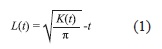
<body><![CDATA[interchangeably. Spatial patterns for each size class were tested using     Ripley&#8217;s K(<span style="font-style: italic;">t</span>) function (Ripley     1977). This function describes     two-dimensional spatial distribution patterns. The K(<span      style="font-style: italic;">t</span>) function     tallies the expected number of points that fall within a circle of     radius <span style="font-style: italic;">t</span> at any point in     two-dimensional space based on the Poisson     distribution. That is, K(<span style="font-style: italic;">t</span>)     shows the proportion of points that fall     ]]></body>
<body><![CDATA[within each <span style="font-style: italic;">t</span> distance class.     The L(<span style="font-style: italic;">t</span>) square-root     transformation of     K(<span style="font-style: italic;">t</span>):    <br>     <br>     <br> </span></font>     <div style="text-align: center;"><font size="2"><span  style="font-family: verdana;"><img alt=""  src="/img/revistas/rbt/v61n3/a40f1.jpg"  style="width: 162px; height: 49px;">    <br>     <br style="font-family: verdana;">     ]]></body>
<body><![CDATA[</span></font><font size="2"><span style="font-family: verdana;"></span></font></div>     <br style="font-family: verdana;">     <font size="2"><span style="font-family: verdana;">is generally     preferred since it     linearizes the function and homogenizes confidence interval widths,     which allows easier interpretation (Diggle 2003). Graphical     representation of the L(<span style="font-style: italic;">t</span>)     function may be interpreted as follows:     complete random distribution of points if L(<span      style="font-style: italic;">t</span>) does not deviate from     ]]></body>
<body><![CDATA[zero; aggregated spatial distribution L(<span      style="font-style: italic;">t</span>)&gt;0; and L(t)&lt;0 suggests     a regular distribution. For each subplot, we analyzed the spatial     distribution of the three youngest size classes (juveniles and     sub-adults were pooled due to a low number of individuals in the latter     category) at 1m intervals, for <span style="font-style: italic;">t</span>     distances ranging from 1 to 25m (i.e.     half the length of the subplot). Due to their low densities, the     spatial pattern of adult trees was analyzed by means of Ripley&#8217;s K     function using data for the entire 50ha plot.</span></font><br     ]]></body>
<body><![CDATA[ style="font-family: verdana;">     <font size="2"></font><br style="font-family: verdana;">     <font size="2"><span style="font-family: verdana;">We analyzed the     spatial     distribution between different size classes with Ripley&#8217;s second order     analysis (Ripley 1976). This function describes the spatial     relationship between two size classes (i.e. aggregated, random or     repulsion). Categories are aggregated when individuals from different     groups are found at closer distances than expected by random. Repulsion     is the contrary effect, when individuals from different size classes     ]]></body>
<body><![CDATA[are rarely found in close proximity. If no pattern is observed, the     distribution of the two size classes relative to one another is     considered random. We examined the spatial relationship between all     pairwise comparisons of different size classes by means of the L(<span      style="font-style: italic;">t</span>)     function. A 95% confidence envelope was created for all L(<span      style="font-style: italic;">t</span>) functions     by means of 10 000 Monte Carlo simulations, where the position of     individuals is randomly shifted in a toroidal plane. All calculations     were performed using the SpatStat library in R (R Development Core Team     ]]></body>
<body><![CDATA[2008, Turner &amp; Baddeley 2005). To determine if the average distance     to an adult varies with size, we measured the Euclidean distance of     every individual within a sub-plot to every adult within the sub-plot.     Average distances to the nearest adult and the second and third nearest     adult were calculated for each size class and averaged across plots.</span></font><br      style="font-family: verdana;">     <font size="2"></font><br style="font-family: verdana;">     <font size="2"><span style="font-family: verdana;"><span      style="font-weight: bold;">Canopy cover: </span>To determine the     effect of canopy cover on seedling and sapling abundances, we created a     ]]></body>
<body><![CDATA[two-dimensional map of canopy cover for each subplot. We estimated     canopy openness on a 5x5m grid over each subplot taking measurements at     each grid node using a spherical convex densitometer. We took four     readings in orthogonal directions for each node and three measurements     were conducted during the day: 07:00 am, 12:00 pm and 17:00 pm.     Densitometer readings were transformed to percent canopy opening     following instrument directions and average all node measurements for     further analysis. To estimate canopy opening for each marked     individual, a canopy cover map was created using Ordinary Kriging     interpolation technique implemented by the GeoR library (Ribeiro &amp;     ]]></body>
<body><![CDATA[Diggle 2001) in R (Ihaka &amp; Gentleman 1996). A canopy opening index     (COI: % canopy opening) was estimated for each marked <span      style="font-style: italic;">G. sanctum</span>     individual in each subplot using this canopy cover map.</span></font><br      style="font-family: verdana;">     <font size="2"></font><br style="font-family: verdana;">     <font size="2"><span style="font-family: verdana;">We compared the     average canopy     opening index of different size classes from those expected by a null     distribution produced by re-sampling random points from each sub-plot.     ]]></body>
<body><![CDATA[Random locations from each subplot where drawn based on a uniform     probability distribution, and their canopy opening index was determined     using a canopy cover map estimated via kriging. For each size category,     the number of random points drawn was equivalent to the number of     observed individuals. An average canopy opening index was estimated for     the simulated points and was compared to the average canopy opening     index of observed individuals. This process was repeated 10 000 times     for each size category and 95% confidence intervals were built around     the mean of simulated values. The average canopy cover of each size     class was statistically different than the random expectation if the     ]]></body>
<body><![CDATA[mean did not overlap with the confidence interval. </span></font><br      style="font-family: verdana;">     <font size="2"><span style="font-family: verdana;">&nbsp;</span></font><br      style="font-family: verdana;">     <font size="3"><span style="font-family: verdana; font-weight: bold;">Results</span></font><br      style="font-family: verdana;">     <font size="2"></font><br style="font-family: verdana;">     <font size="2"><span style="font-family: verdana;">A total of 35 adults     were marked     within the 50ha plot (i.e. 0.7 adults per hectare; <a     ]]></body>
<body><![CDATA[ href="/img/revistas/rbt/v61n3/a40i1.jpg">Fig. 1</a>.). Adults had     an average DBH of 35cm (?8.2) with a skewed distribution towards lower     diameters. Adults were spatially aggregated forming clumps of two to     four individuals within &raquo;20m of one another (data not shown).</span></font><br      style="font-family: verdana;">     <font size="2"></font><br style="font-family: verdana;">     <font size="2"><span style="font-family: verdana;">A total of 2 155 <span      style="font-style: italic;">G. sanctum</span>     individuals were marked in the three sub-plots. Over 65% of these     individuals belonged to the seed-ling category: saplings and juveniles     ]]></body>
<body><![CDATA[represent 16.7% and 17.6% of the entire sample, respectively. Adults     (11 individuals) and sub-adults (seven individuals) comprised less than     1% of the total sample. The percentage of individuals in different size     classes varied significantly among subplots (G<sup>2</sup>=445.61,     df=8,     p&lt;0.001; <a href="/img/revistas/rbt/v61n3/a40i2.jpg">Fig. 2</a>.)     with juveniles being the most common size class in     sub-plot three. Overall, the average seedling to adult ratio was 106.33     (?49.38). Sapling and juvenile to adult ratios were 35.5 (?6.22) and     43.9 (&plusmn;20.56), respectively. There was a two-fold decline in the     ]]></body>
<body><![CDATA[number of juveniles relative to seedlings.</span></font><br      style="font-family: verdana;">     <font size="2"></font><br style="font-family: verdana;">     <font size="2"><span style="font-family: verdana;">Seedlings, saplings     and juveniles     were distinctly clumped (i.e. L(<span style="font-style: italic;">t</span>)&gt;0;     <a href="/img/revistas/rbt/v61n3/a40i3.jpg">Fig. 3</a>.). Seedlings     have the     highest aggregation across all distances, and juveniles are more     aggregated than saplings. The spatial distribution of saplings becomes     ]]></body>
<body><![CDATA[random at higher spatial distances for all three subplots, a trend not     observed for the other size categories (<a      href="/img/revistas/rbt/v61n3/a40i3.jpg">Fig. 3</a>.). Across all     subplots,     seedlings, saplings and juveniles are always aggregated with each other     (data not shown). Seedlings, saplings and juveniles are randomly     distributed relative to adults, with seedlings showing sporadic     departures from random (data not shown). Average distance to the     nearest adult increases significantly with size (<a      href="/img/revistas/rbt/v61n3/a40i4.jpg">Fig. 4</a>; F=159.73,     ]]></body>
<body><![CDATA[p&lt;0.001; box-cox transformation ?=0.2). The average distance of     seedlings to the nearest adult is 7.75m (&plusmn;0.144), while for     saplings and juveniles; it is 13.28m (&plusmn;0.484) and 14.50     (&plusmn;0.470) meters, respectively.</span></font><font size="2"><span      style="font-family: verdana;"></span></font><br      style="font-family: verdana;">     <font size="2"><span style="font-family: verdana;">&nbsp;</span></font><br      style="font-family: verdana;">     <font size="2"><span style="font-family: verdana;">Seedlings tend to be     found in areas     ]]></body>
<body><![CDATA[with dense canopy cover with an average canopy opening index (COI) of     39.7% (&plusmn;0.25). Conversely, juveniles occur more commonly in     canopy openings (<a href="/img/revistas/rbt/v61n3/a40i5.jpg">Fig. 5</a>.);     the COI for juveniles is 58.2%     (&plusmn;0.63). Sapling distribution in reference to light availability     does not differ from random expectations (COI=49.1; <a      href="/img/revistas/rbt/v61n3/a40i5.jpg">Fig. 5</a>). Overall, a     positive relationship between size class and light availability is     observed (Spearmans r=0.76, p&lt;0.001), with larger size classes more     common in areas with higher light availability. Average canopy opening     ]]></body>
<body><![CDATA[differs between size classes.</span></font><br      style="font-family: verdana;">     <font size="2"></font><br style="font-family: verdana;">     <font size="3"><span style="font-family: verdana; font-weight: bold;">Discussion</span></font><br      style="font-family: verdana;">     <font size="2"></font><br style="font-family: verdana;">     <font size="2"><span style="font-family: verdana;">Populations of <span      style="font-style: italic;">G. sanctum</span> in PVNP     are characterized by highly skewed size distributions, with     disproportionate numbers of young plants and few representatives in the     ]]></body>
<body><![CDATA[sub-adult and adult categories. This distribution is typical of     expanding populations of long-lived species with slow growth rates     (Korning &amp; Balslev 1994, Zuidema &amp; Boot 2002, Sagar &amp; Singh     2004). A preliminary study with a similar plot system (0.7ha vs.     0.75ha) conducted by Ribbens (1990 Tropical Biology course, OTS 90-1),     showed a size class distribution skewed towards seedlings and     sap-lings, but lacked individuals in the juvenile category. Although it     was previously suggested that regeneration of <span      style="font-style: italic;">G. sanctum</span> in PVNP is     almost negligible (Jim&eacute;nez 1993), both studies (OTS course and     ]]></body>
<body><![CDATA[ours) are consistent with population growth. Since 1975, PVNP forests     have been protected from harvesting and fires. During the first half of     the 20th century, timber extraction occurred in most of PVNP and fires     were relatively common. It is likely that during this time, many adult     and sub-adult <span style="font-style: italic;">G. sanctum</span> were     removed by logging. This could have     impacted the reproductive success of the population, by reducing the     number of individuals recruiting into younger size categories.     Seedlings, saplings and juveniles are sensitive to fire, while adults     and sub-adults are more resistant (Otterstrom <span     ]]></body>
<body><![CDATA[ style="font-style: italic;">et al.</span> 2006).</span></font><br      style="font-family: verdana;">     <font size="2"></font><br style="font-family: verdana;">     <font size="2"><span style="font-family: verdana;">Seasonal fires tend     to reduce the     number of individuals in younger cohorts of climax tropical tree     species, and repeated fires (i.e. within 15 years) increase local     extinction probabilities of many climax tree species (Slik &amp;     Eichhorn 2003). Fires in Palo Verde are generally anthropogenic in     origin, although lightning strikes occur infrequently. Most adults in     ]]></body>
<body><![CDATA[our plots have large fire-scars (EJF personal observation), suggesting     that this site experienced fires in the relatively recent past. After     PVNP was established (1978), reproduction from remaining adults began     to generate a pool of seedlings and saplings. Otterstrom <span      style="font-style: italic;">et al.</span> (2006)     showed that regeneration of <span style="font-style: italic;">G.     sanctum</span> is greatly increased in     post-fire treatments. Additionally, sub-adults spared during logging     may have become reproductive, increasing the number of progeny     produced. Insufficient time had passed for new recruits to contribute     ]]></body>
<body><![CDATA[significantly to the juvenile size class by the time of Ribbens (1990)     study. However, two decades later, there is not a noticeable gap of     individuals between the sapling and juvenile size classes, but there     are still a low number of sub-adults and adults. Judging from the     changes seen in age structure since PVNP was created, our data     indicates that this population is actively growing, and that within a     few decades, sub-adults and adult numbers will increase.</span></font><br      style="font-family: verdana;">     <font size="2"></font><br style="font-family: verdana;">     <font size="2"><span style="font-family: verdana;">Spatial genetic     ]]></body>
<body><![CDATA[structure (SGS)     data from this population suggests ample mixing of seeds and high     levels of seed dispersal (Fuchs &amp; Hamrick 2010b), which should     result in a random distribution of propagules. However, contrary to     expectations, <span style="font-style: italic;">G. sanctum</span>     individuals in PVNP are spatially aggregated     at all size classes, with more aggregation in the seedling category.     Spatial aggregation may occur due to two non-mutually exclusive     processes: localized seed dispersal (Howe &amp; Smallwood 1982, Barot     <span style="font-style: italic;">et al.</span> 1999, Bleher &amp;     ]]></body>
<body><![CDATA[Bohning-Gaese 2001, Russo &amp; Augspurger     2004) and the non-random distribution of microhabitats suitable for     germination, establishment and growth (Forget <span      style="font-style: italic;">et al.</span> 1999, Silla <span      style="font-style: italic;">et al.</span>     2002, Souza &amp; Martins 2004). Localized seed dispersal has been     proposed as a major factor contributing to aggregated distributions,     with evidence in animal and wind dispersed species (Nathan &amp;     Muller-Landau 2000, Greene <span style="font-style: italic;">et al.</span>     2004). Howe (1989) defined bird     ]]></body>
<body><![CDATA[dispersed species as &#8220;scatter-dispersed&#8221;, meaning they recruit as     isolated individuals with random or over-dispersed distributions. <span      style="font-style: italic;">G.     sanctum</span> has ornithochorous fruits (Wendelken &amp; Martin 1987),     whose     seeds are dispersed by a large array of frugivorous birds, the most     common species observed actively foraging on <span      style="font-style: italic;">G. sanctum</span> were: <span      style="font-style: italic;">Trogon     melanocephalus</span>, <span style="font-style: italic;">Trogon elegans</span>,     ]]></body>
<body><![CDATA[<span style="font-style: italic;">Tityra semifasciata</span>, <span      style="font-style: italic;">Eumomotus momota</span>,     <span style="font-style: italic;">Pitangus sulphuratus</span> and <span      style="font-style: italic;">Calocitta formosa</span> (EJF pers. obs).     These birds     generally swallow the entire seed, either during flight (i.e. Trogons)     or while foraging at the tree (i.e. Tityras and Magpiejay&#8217;s),     suggesting that most consumed seeds are dispersed away from maternal     trees. In this population, the genetic relatedness of seedlings was     independent of distance between individuals (i.e. no SGS, Fuchs &amp;     ]]></body>
<body><![CDATA[Hamrick 2010b). A lack of SGS likely results from dispersers mixing the     progeny of multiple maternal plants or an overlap of multiple adult     seed shadows (e.g. Sezen <span style="font-style: italic;">et al.</span>     2009).</span></font><br style="font-family: verdana;">     <font size="2"></font><br style="font-family: verdana;">     <font size="2"><span style="font-family: verdana;">However, <span      style="font-style: italic;">G. sanctum</span> individuals may     still exhibit clumped or aggregated spatial distributions in the     absence of SGS via contagious seed dispersal. Birds may become &#8220;clumped     dispersers&#8221; (sensu Howe 1989) if they defecate or regurgitate seeds in     ]]></body>
<body><![CDATA[specific areas such as seed processing sites, display roosts, along     foraging routes or in sites where predation risk is minimized (Howe     &amp; Smallwood 1982). In PVNP, seedlings are more commonly found in     areas with heavy canopy cover suggesting that seeds are more likely     defecated in areas with dense canopy cover. Wheelwright (1991) has     shown that birds minimize their time in foraging trees and digest in     other trees to reduce predation. Most species feeding on <span      style="font-style: italic;">G. sanctum</span>     have conspicuous coloration and may move to areas with dense canopy     cover to reduce predation risk, thus depositing seeds in closed canopy     ]]></body>
<body><![CDATA[environments.</span></font><br style="font-family: verdana;">     <font size="2"></font><br style="font-family: verdana;">     <font size="2"><span style="font-family: verdana;">A more likely     explanation and     congruent with previous genetic results, suggest that birds disperse     seeds randomly and that preferential seedling germination occurs in     specific spatially clumped microhabitats resulting in an aggregated     distribution of seedlings. Seed germination and seedling establishment     in tropical dry forests is often regulated by moisture and light     (Gerhardt 1993, Ray &amp; Brown 1995). Research conducted in tropical     ]]></body>
<body><![CDATA[dry forests in Ghana (Lieberman &amp; Li 1992) and Costa Rica (Gerhardt     1996) showed that moisture stress significantly increases seedling     mortality during the dry season. Mortality is high in areas with high     irradiance or within canopy gaps. Palo Verde has a marked dry season     between December and May. Germination and establishment in open canopy     areas during the wet season may result in their death during the dry     season. In contrast, seedlings that germinate under shaded conditions     have a higher probability of surviving during the dry season. Our     results are consistent with this scenario. McLaren &amp; McDonald     (2003) reported similar results for tropical dry forest trees in     ]]></body>
<body><![CDATA[Jamaica, they showed that seedling establishment and survival was     higher in heavily shaded environments, which conserved moisture. Their     results were more marked for evergreen shade-tolerant species, such as     <span style="font-style: italic;">G. sanctum</span>. Although McLaren     &amp; McDonald (2003) showed that plants     in high light environments produced more above ground biomass, this     advantage could not overcome the increase in mortality caused by     dehydration in these environments. Heterogeneity in the distribution of     nutrients or suitable environments for germination may also generate     spatially aggregated seedlings. Although we do not have information on     ]]></body>
<body><![CDATA[nutrient availability, fertility is homogeneously low in the well drain     shallow soils of the &#8220;Guayacan Hill&#8221; (Vaughan <span      style="font-style: italic;">et al.</span> 1982). Given the     slope of the hill and precipitation regimes in PVNP, humidity is more     likely to affect seedling recruitment than a patchy distribution of     nutrients. Therefore we conclude that the high proportion of <span      style="font-style: italic;">G. sanctum</span>     seedlings in shaded environments, which results in an aggregated     distribution, is the result of greater recruitment in more mesic     microhabitats. Clumped distributions arise through the combined effects     ]]></body>
<body><![CDATA[of random or partially clumped seed dispersal and site-specific dry     season mortality. Seedlings germinating into gaps or high radiance     sites are less likely to survive the dry season, and there-fore, would     not occur in our censuses, which were conducted during the wet season.</span></font><br      style="font-family: verdana;">     <font size="2"></font><br style="font-family: verdana;">     <font size="2"><span style="font-family: verdana;">Juvenile and adult <span      style="font-style: italic;">G. sanctum</span> are     randomly distributed relative to each other, nonetheless, the average     distance between adults and juveniles is significantly higher than     ]]></body>
<body><![CDATA[between adults and other size categories. This trend has been shown for     other tropical tree species (Clark &amp; Clark 1984, Sterner <span      style="font-style: italic;">et al.</span>     1986, Condit <span style="font-style: italic;">et al.</span> 1992,     Itoh <span style="font-style: italic;">et al.</span> 1997, Okuda <span      style="font-style: italic;">et al.</span> 1997). Density     dependent mortality (Grau 2000) and selection for specific environments     (Itoh <span style="font-style: italic;">et al.</span> 2003) have been     proposed as the predominant explanations     for repulsion between these two size categories. A large proportion of     ]]></body>
<body><![CDATA[young individuals close to adults combined with a larger proportion of     saplings and juveniles at greater distances from adults may be the     result of density dependent mortality (i.e. Janzen-Connell effect,     Connell 1971, Janzen 1970). However, we did not observe significant     signs of herbivory or pathogen infections on <span      style="font-style: italic;">G. sanctum</span> seedlings or     juveniles. Also, our spatial analysis shows that seedlings, saplings     and juveniles are randomly distributed relative to adults with no signs     of repulsion, suggesting that areas suitable for germination,     establishment and growth, are randomly dispersed relative to adults.     ]]></body>
<body><![CDATA[The increase in the average distance between juveniles and adults,     relative to that of seedlings and adults, could be caused simply by     population thinning. Therefore, biotic factors are probably not the     predominant factor shaping the spatial distribution of this species.</span></font><br      style="font-family: verdana;">     <font size="2"></font><br style="font-family: verdana;">     <font size="2"><span style="font-family: verdana;">The distribution of     juveniles     indicates that light availability shapes the spatial distribution of     older size categories. Juveniles were predominantly found in areas with     ]]></body>
<body><![CDATA[higher light availability. The environmental requirements of a species     may change during development and conditions advantageous for one life     stage (e.g. seedlings) may be disadvantageous for another (i.e.     juveniles). While seedlings may require shade for recruitment,     juveniles may require increased light availability for an extended     length of time to reach maturity (Denslow 1987, Schupp 1995). Sites     located near adults lack enough light for juveniles to grow, due to the     dense evergreen canopy of <span style="font-style: italic;">G. sanctum</span>     adults. Therefore, suitable sites     for growth may only become available during gap formation. Delayed     ]]></body>
<body><![CDATA[gap-phase dynamics, where saplings and juveniles experience increased     growth following gap formation, has been shown for many tropical     rainforest trees (Denslow 1987). Gerhardt (1996) showed that for the     tropical dry forest evergreen species, <span      style="font-style: italic;">Hymenaea courbaril</span> and <span      style="font-style: italic;">Swietenia     macrophylla</span>, increased light availability was negatively     correlated     with dry season survival. Nonetheless, higher irradiance associated     with canopy openings were positively correlated with high growth rates.     ]]></body>
<body><![CDATA[She also showed that seedling vulnerability decreased with plant     height. Therefore it is likely that once <span      style="font-style: italic;">G. sanctum</span> seedlings are     established in shaded areas, they are able to develop root systems that     access moisture in deeper soil strata, allowing them a more desiccation     resistance. Canopy openings caused by tree falls provide juveniles with     increased light regimes, which translate into higher growth rates.     These gaps not only allow increased photosynthetic activity, but also     signal the availability of space for saplings and juveniles to grow     into the sub-adult and adult categories. As mentioned previously, all     ]]></body>
<body><![CDATA[subplots have had minor to large gaps formed by tree falls within the     last five to 10 years, creating the environments necessary for juvenile     and sapling growth and maturation.</span></font><br      style="font-family: verdana;">     <font size="2"></font><br style="font-family: verdana;">     <font size="2"><span style="font-family: verdana;">In conclusion,     populations of <span style="font-style: italic;">G.     sanctum</span> in PVNP appear to be expanding due to the large number     of     seedlings, saplings and juveniles observed. Spatial patterns observed     ]]></body>
<body><![CDATA[demonstrate that light availability due to canopy openings is an     important factor shaping the spatial distribution of small plants. The     demographic structure of <span style="font-style: italic;">G. sanctum</span>     is dependent on forest gap dynamics     which has direct implications for its conservation. Endangered species     require detailed descriptions of their life history, so that well     suited management and conservation strategies can be devised to insure     their future survival.</span></font><br style="font-family: verdana;">     <font size="2"></font><br style="font-family: verdana;">     <font size="3"><span style="font-family: verdana; font-weight: bold;">Acknowledgments</span></font><br     ]]></body>
<body><![CDATA[ style="font-family: verdana;">     <font size="2"></font><br style="font-family: verdana;">     <font size="2"><span style="font-family: verdana;">The authors thank C.     Alvarado and     U. Chavarria from ACAT, C. Deen and D. Trapnell for laboratory     assistance, G. Barrantes for bird identification, and P. Smouse and E.     Gonzales for statistical support. Special thanks to J. Ross-Ibarra and     M. Poelchau for improving previous versions of this manuscript. This     work was supported by IdeaWild, Vicerrector&iacute;a de     Investigaci&oacute;n-UCR, Organization for Tropical Studies to EJF and     ]]></body>
<body><![CDATA[National Science Foundation grant 0211526 to JLH.</span></font><br      style="font-family: verdana;">     <font size="2"></font>     <hr style="width: 100%; height: 2px;"><font size="3"><span      style="font-family: verdana; font-weight: bold;">References</span></font><br      style="font-family: verdana;">     <br style="font-family: verdana;">     <!-- ref --><div style="text-align: left;"><font size="2"><span  style="font-family: verdana;">Armesto, J.J., J.D. Mitchell &amp; C. Villagran. 1986. A comparison of spatial patterns of trees in some tropical and temperate forests. Biotropica 18: 1-11.    &nbsp;&nbsp;&nbsp;&nbsp;&nbsp;&nbsp;&nbsp;&nbsp;[&#160;<a href="javascript:void(0);" onclick="javascript: window.open('/scielo.php?script=sci_nlinks&ref=1661436&pid=S0034-7744201300040004000001&lng=','','width=640,height=500,resizable=yes,scrollbars=1,menubar=yes,');">Links</a>&#160;]<!-- end-ref --><!-- ref --></span></font><br  style="font-family: verdana;"> <br style="font-family: verdana;"> <font size="2"><span style="font-family: verdana;">Barot, S., J. Gignoux &amp; J.C. Menaut. 1999. Demography of a savannah palm tree: predictions from comprehensive spatial pattern analyses. Ecology 80: 1987-2005.    &nbsp;&nbsp;&nbsp;&nbsp;&nbsp;&nbsp;&nbsp;&nbsp;[&#160;<a href="javascript:void(0);" onclick="javascript: window.open('/scielo.php?script=sci_nlinks&ref=1661437&pid=S0034-7744201300040004000002&lng=','','width=640,height=500,resizable=yes,scrollbars=1,menubar=yes,');">Links</a>&#160;]<!-- end-ref --><!-- ref --></span></font><br  style="font-family: verdana;"> <br style="font-family: verdana;"> <font size="2"><span style="font-family: verdana;">Bleher, B. &amp; K. Bohning-Gaese. 2001. Consequences of frugivore diversity for seed dispersal, seedling establishment and the spatial pattern of seedlings and trees. Oecologia 129: 385-394.    &nbsp;&nbsp;&nbsp;&nbsp;&nbsp;&nbsp;&nbsp;&nbsp;[&#160;<a href="javascript:void(0);" onclick="javascript: window.open('/scielo.php?script=sci_nlinks&ref=1661438&pid=S0034-7744201300040004000003&lng=','','width=640,height=500,resizable=yes,scrollbars=1,menubar=yes,');">Links</a>&#160;]<!-- end-ref --><!-- ref --></span></font><br style="font-family: verdana;"> <br style="font-family: verdana;"> <font size="2"><span style="font-family: verdana;">CITES. 2000. Proposal to transfer <span style="font-style: italic;">Guaiacum sanctum</span> from Appendix II to Apendix I of CITES. Speller &amp; Sons, New York, USA.    &nbsp;&nbsp;&nbsp;&nbsp;&nbsp;&nbsp;&nbsp;&nbsp;[&#160;<a href="javascript:void(0);" onclick="javascript: window.open('/scielo.php?script=sci_nlinks&ref=1661439&pid=S0034-7744201300040004000004&lng=','','width=640,height=500,resizable=yes,scrollbars=1,menubar=yes,');">Links</a>&#160;]<!-- end-ref --><!-- ref --></span></font><br style="font-family: verdana;"> <br style="font-family: verdana;"> <font size="2"><span style="font-family: verdana;">Clark, D.A. &amp; D.B. Clark. 1984. Spacing dynamics of a tropical rain forest tree: evaluation of the Janzen-Connell model. Am. Nat. 124: 769-788.    &nbsp;&nbsp;&nbsp;&nbsp;&nbsp;&nbsp;&nbsp;&nbsp;[&#160;<a href="javascript:void(0);" onclick="javascript: window.open('/scielo.php?script=sci_nlinks&ref=1661440&pid=S0034-7744201300040004000005&lng=','','width=640,height=500,resizable=yes,scrollbars=1,menubar=yes,');">Links</a>&#160;]<!-- end-ref --><!-- ref --></span></font><br  style="font-family: verdana;"> <br style="font-family: verdana;"> <font size="2"><span style="font-family: verdana;">Condit, R., P.S. Ashton, P. Baker, S. Bunyavejchewin, S. Gunatilleke, N. Gunatilleke, S.P. Hubbell, R.B. Foster, A. Itoh, J.V. Lafrankie, H.S. Lee, E. Losos, N. Manokaran, R. Sukumar &amp; T. Yamakura. 2000. Spatial patterns in the distribution of tropical tree species. Science 288: 1414-1418.    &nbsp;&nbsp;&nbsp;&nbsp;&nbsp;&nbsp;&nbsp;&nbsp;[&#160;<a href="javascript:void(0);" onclick="javascript: window.open('/scielo.php?script=sci_nlinks&ref=1661441&pid=S0034-7744201300040004000006&lng=','','width=640,height=500,resizable=yes,scrollbars=1,menubar=yes,');">Links</a>&#160;]<!-- end-ref --><!-- ref --></span></font><br  style="font-family: verdana;"> <br style="font-family: verdana;"> <font size="2"><span style="font-family: verdana;">Condit, R., S.P. Hubbell &amp; R.B. Foster. 1992. Recruitment near conspecific adults and the maintenance of tree and shrub diversity in a neotropical forest. Am. Nat. 140: 261-286.    &nbsp;&nbsp;&nbsp;&nbsp;&nbsp;&nbsp;&nbsp;&nbsp;[&#160;<a href="javascript:void(0);" onclick="javascript: window.open('/scielo.php?script=sci_nlinks&ref=1661442&pid=S0034-7744201300040004000007&lng=','','width=640,height=500,resizable=yes,scrollbars=1,menubar=yes,');">Links</a>&#160;]<!-- end-ref --><!-- ref --></span></font><br style="font-family: verdana;"> <br style="font-family: verdana;"> <font size="2"><span style="font-family: verdana;">Connell, J.H. 1971. On the role of natural enemies in preventing competitive exclusion in some marine animals and in rain forest trees, p. 298-312. <span  style="font-style: italic;">In </span>P.J. van der Boer &amp; G.R. Gradwell (eds.). Dynamics of Numbers in Populations.Center for Agricultural Publication and Documentation, Wageningen.    &nbsp;&nbsp;&nbsp;&nbsp;&nbsp;&nbsp;&nbsp;&nbsp;[&#160;<a href="javascript:void(0);" onclick="javascript: window.open('/scielo.php?script=sci_nlinks&ref=1661443&pid=S0034-7744201300040004000008&lng=','','width=640,height=500,resizable=yes,scrollbars=1,menubar=yes,');">Links</a>&#160;]<!-- end-ref --><!-- ref --></span></font><br  style="font-family: verdana;"> <br style="font-family: verdana;"> <font size="2"><span style="font-family: verdana;">Denslow, J.S. 1987. Tropical rainforest gaps and tree species diversity. Annu. Rev. Ecol. Syst. 18: 431-451.    &nbsp;&nbsp;&nbsp;&nbsp;&nbsp;&nbsp;&nbsp;&nbsp;[&#160;<a href="javascript:void(0);" onclick="javascript: window.open('/scielo.php?script=sci_nlinks&ref=1661444&pid=S0034-7744201300040004000009&lng=','','width=640,height=500,resizable=yes,scrollbars=1,menubar=yes,');">Links</a>&#160;]<!-- end-ref --><!-- ref --></span></font><br style="font-family: verdana;"> <br style="font-family: verdana;"> <font size="2"><span style="font-family: verdana;">Diggle, P. 2003. Statistical analysis of spatial point patterns. Oxford University, London, New York.    &nbsp;&nbsp;&nbsp;&nbsp;&nbsp;&nbsp;&nbsp;&nbsp;[&#160;<a href="javascript:void(0);" onclick="javascript: window.open('/scielo.php?script=sci_nlinks&ref=1661445&pid=S0034-7744201300040004000010&lng=','','width=640,height=500,resizable=yes,scrollbars=1,menubar=yes,');">Links</a>&#160;]<!-- end-ref --><!-- ref --></span></font><br  style="font-family: verdana;"> <br style="font-family: verdana;"> <font size="2"><span style="font-family: verdana;">Forget, P.M., F. Mercier &amp; F. Collinet. 1999. Spatial patterns of two rodent-dispersed rain forest trees <span style="font-style: italic;">Carapa procera</span> (Meliaceae) and <span style="font-style: italic;">Vouacapoua americana</span> (Caesalpiniaceae) at Paracou, French Guiana. J. Trop. Biol. 15: 301-313.    &nbsp;&nbsp;&nbsp;&nbsp;&nbsp;&nbsp;&nbsp;&nbsp;[&#160;<a href="javascript:void(0);" onclick="javascript: window.open('/scielo.php?script=sci_nlinks&ref=1661446&pid=S0034-7744201300040004000011&lng=','','width=640,height=500,resizable=yes,scrollbars=1,menubar=yes,');">Links</a>&#160;]<!-- end-ref --><!-- ref --></span></font><br  style="font-family: verdana;"> <br style="font-family: verdana;"> <font size="2"><span style="font-family: verdana;">Fuchs, E.J. &amp; J.L. Hamrick. 2010a. Genetic diversity in the endangered tropical tree, <span  style="font-style: italic;">Guaiacum sanctum</span> (Zygophyllaceae). J. Hered. 101: 284-291.    &nbsp;&nbsp;&nbsp;&nbsp;&nbsp;&nbsp;&nbsp;&nbsp;[&#160;<a href="javascript:void(0);" onclick="javascript: window.open('/scielo.php?script=sci_nlinks&ref=1661447&pid=S0034-7744201300040004000012&lng=','','width=640,height=500,resizable=yes,scrollbars=1,menubar=yes,');">Links</a>&#160;]<!-- end-ref --><!-- ref --></span></font><br  style="font-family: verdana;"> <br style="font-family: verdana;"> <font size="2"><span style="font-family: verdana;">Fuchs, E.J. &amp; J.L. Hamrick. 2010b. Spatial genetic structure within size classes of the endangered tropical tree <span style="font-style: italic;">Guaiacum sanctum</span> (Zygophyllaceae). Am. J. Bot. 97: 1200-1207.    &nbsp;&nbsp;&nbsp;&nbsp;&nbsp;&nbsp;&nbsp;&nbsp;[&#160;<a href="javascript:void(0);" onclick="javascript: window.open('/scielo.php?script=sci_nlinks&ref=1661448&pid=S0034-7744201300040004000013&lng=','','width=640,height=500,resizable=yes,scrollbars=1,menubar=yes,');">Links</a>&#160;]<!-- end-ref --><!-- ref --></span></font><br style="font-family: verdana;"> <br style="font-family: verdana;"> <font size="2"><span style="font-family: verdana;">Gerhardt, K. 1996. Effects of root competition and canopy openness on survival and growth of tree seedlings in a tropical seasonal dry forest. For. Ecol. Mang. 82: 33-48.    &nbsp;&nbsp;&nbsp;&nbsp;&nbsp;&nbsp;&nbsp;&nbsp;[&#160;<a href="javascript:void(0);" onclick="javascript: window.open('/scielo.php?script=sci_nlinks&ref=1661449&pid=S0034-7744201300040004000014&lng=','','width=640,height=500,resizable=yes,scrollbars=1,menubar=yes,');">Links</a>&#160;]<!-- end-ref --><!-- ref --></span></font><br  style="font-family: verdana;"> <br style="font-family: verdana;"> <font size="2"><span style="font-family: verdana;">Gerhardt, K. 1993. Tree seedling development in tropical dry abandoned pasture and secondary forest in Costa Rica. J. Veg. Sci. 4: 95-102.    &nbsp;&nbsp;&nbsp;&nbsp;&nbsp;&nbsp;&nbsp;&nbsp;[&#160;<a href="javascript:void(0);" onclick="javascript: window.open('/scielo.php?script=sci_nlinks&ref=1661450&pid=S0034-7744201300040004000015&lng=','','width=640,height=500,resizable=yes,scrollbars=1,menubar=yes,');">Links</a>&#160;]<!-- end-ref --><!-- ref --></span></font><br  style="font-family: verdana;"> <br style="font-family: verdana;"> <font size="2"><span style="font-family: verdana;">Gilbert, G.S., S.P. Hubbell &amp; R.B. Foster. 1994. Density and distance-to-adult effects of a canker disease of trees in a moist tropical forest. Oecologia 98: 100-108.    &nbsp;&nbsp;&nbsp;&nbsp;&nbsp;&nbsp;&nbsp;&nbsp;[&#160;<a href="javascript:void(0);" onclick="javascript: window.open('/scielo.php?script=sci_nlinks&ref=1661451&pid=S0034-7744201300040004000016&lng=','','width=640,height=500,resizable=yes,scrollbars=1,menubar=yes,');">Links</a>&#160;]<!-- end-ref --><!-- ref --></span></font><br  style="font-family: verdana;"> <br style="font-family: verdana;"> <font size="2"><span style="font-family: verdana;">Grau, H.R. 2000. Regeneration patterns of <span style="font-style: italic;">Cedrela lilloi</span> (Meliaceae) in northwestern Argentina subtropical montane forests. J. Trop. Biol. 16: 227-242.    &nbsp;&nbsp;&nbsp;&nbsp;&nbsp;&nbsp;&nbsp;&nbsp;[&#160;<a href="javascript:void(0);" onclick="javascript: window.open('/scielo.php?script=sci_nlinks&ref=1661452&pid=S0034-7744201300040004000017&lng=','','width=640,height=500,resizable=yes,scrollbars=1,menubar=yes,');">Links</a>&#160;]<!-- end-ref --><!-- ref --></span></font><br  style="font-family: verdana;"> <br style="font-family: verdana;"> <font size="2"><span style="font-family: verdana;">Greene, D.F., C.D. Canham, K.D. Coates &amp; P.T. Lepage. 2004. An evaluation of alternative dispersal functions for trees. J. Ecol. 92: 758-766.    &nbsp;&nbsp;&nbsp;&nbsp;&nbsp;&nbsp;&nbsp;&nbsp;[&#160;<a href="javascript:void(0);" onclick="javascript: window.open('/scielo.php?script=sci_nlinks&ref=1661453&pid=S0034-7744201300040004000018&lng=','','width=640,height=500,resizable=yes,scrollbars=1,menubar=yes,');">Links</a>&#160;]<!-- end-ref --><!-- ref --></span></font><br  style="font-family: verdana;"> <br style="font-family: verdana;"> <font size="2"><span style="font-family: verdana;">He, F.L., P. Legendre &amp; J.V. Lafrankie. 1997. Distribution patterns of tree species in a Malaysian tropical rain forest. J. Veg. Sci. 8: 105-114.    &nbsp;&nbsp;&nbsp;&nbsp;&nbsp;&nbsp;&nbsp;&nbsp;[&#160;<a href="javascript:void(0);" onclick="javascript: window.open('/scielo.php?script=sci_nlinks&ref=1661454&pid=S0034-7744201300040004000019&lng=','','width=640,height=500,resizable=yes,scrollbars=1,menubar=yes,');">Links</a>&#160;]<!-- end-ref --><!-- ref --></span></font><br  style="font-family: verdana;"> <br style="font-family: verdana;"> <font size="2"><span style="font-family: verdana;">Holdridge, L.R. &amp; L.J. Poveda. 1975. <span style="font-style: italic;">&Aacute;rboles de Costa Rica</span>, Centro Cient&iacute;fico Tropical, San Jos&eacute;, Costa Rica.    &nbsp;&nbsp;&nbsp;&nbsp;&nbsp;&nbsp;&nbsp;&nbsp;[&#160;<a href="javascript:void(0);" onclick="javascript: window.open('/scielo.php?script=sci_nlinks&ref=1661455&pid=S0034-7744201300040004000020&lng=','','width=640,height=500,resizable=yes,scrollbars=1,menubar=yes,');">Links</a>&#160;]<!-- end-ref --><!-- ref --></span></font><br  style="font-family: verdana;"> <br style="font-family: verdana;"> <font size="2"><span style="font-family: verdana;">Howe, H.F. 1989. Scatter-dispersal and clump-dispersal and seedling demography-hypothesis and implications. Oecologia 79: 417-426.    &nbsp;&nbsp;&nbsp;&nbsp;&nbsp;&nbsp;&nbsp;&nbsp;[&#160;<a href="javascript:void(0);" onclick="javascript: window.open('/scielo.php?script=sci_nlinks&ref=1661456&pid=S0034-7744201300040004000021&lng=','','width=640,height=500,resizable=yes,scrollbars=1,menubar=yes,');">Links</a>&#160;]<!-- end-ref --><!-- ref --></span></font><br  style="font-family: verdana;"> <br style="font-family: verdana;"> <font size="2"><span style="font-family: verdana;">Howe, H.F. &amp; J. Smallwood. 1982. Ecology of seed dispersal. Ann. Rev. Ecol Syst. 13: 201-228.    &nbsp;&nbsp;&nbsp;&nbsp;&nbsp;&nbsp;&nbsp;&nbsp;[&#160;<a href="javascript:void(0);" onclick="javascript: window.open('/scielo.php?script=sci_nlinks&ref=1661457&pid=S0034-7744201300040004000022&lng=','','width=640,height=500,resizable=yes,scrollbars=1,menubar=yes,');">Links</a>&#160;]<!-- end-ref --><!-- ref --></span></font><br  style="font-family: verdana;"> <br style="font-family: verdana;"> <font size="2"><span style="font-family: verdana;">Hubbell, S.P. 1979. Tree dispersion, abundance, and diversity in a tropical dry forest. Science 203: 1299-1309.    &nbsp;&nbsp;&nbsp;&nbsp;&nbsp;&nbsp;&nbsp;&nbsp;[&#160;<a href="javascript:void(0);" onclick="javascript: window.open('/scielo.php?script=sci_nlinks&ref=1661458&pid=S0034-7744201300040004000023&lng=','','width=640,height=500,resizable=yes,scrollbars=1,menubar=yes,');">Links</a>&#160;]<!-- end-ref --><!-- ref --></span></font><br style="font-family: verdana;"> <br style="font-family: verdana;"> <font size="2"><span style="font-family: verdana;">Hubbell, S.P. &amp; R.B. Foster. 1986. Commonness and rarity in a Neotropical forest: implications for tropical tree conservation, p. 205-231 <span  style="font-style: italic;">In</span> M.E. Soul&eacute; (ed.). Conservation Biology: The Science of Scarcity and Diversity. Sinauer, Sunderland, Massachusetts.    &nbsp;&nbsp;&nbsp;&nbsp;&nbsp;&nbsp;&nbsp;&nbsp;[&#160;<a href="javascript:void(0);" onclick="javascript: window.open('/scielo.php?script=sci_nlinks&ref=1661459&pid=S0034-7744201300040004000024&lng=','','width=640,height=500,resizable=yes,scrollbars=1,menubar=yes,');">Links</a>&#160;]<!-- end-ref --><!-- ref --></span></font><br  style="font-family: verdana;"> <br style="font-family: verdana;"> <font size="2"><span style="font-family: verdana;">Hutchinson, G.E. 1953. Concept of pattern in ecology. Proc. Acad. Nat. Sci. Phil. 105: 1-12.    &nbsp;&nbsp;&nbsp;&nbsp;&nbsp;&nbsp;&nbsp;&nbsp;[&#160;<a href="javascript:void(0);" onclick="javascript: window.open('/scielo.php?script=sci_nlinks&ref=1661460&pid=S0034-7744201300040004000025&lng=','','width=640,height=500,resizable=yes,scrollbars=1,menubar=yes,');">Links</a>&#160;]<!-- end-ref --><!-- ref --></span></font><br  style="font-family: verdana;"> <br style="font-family: verdana;"> <font size="2"><span style="font-family: verdana;">Ihaka, R. &amp; R. Gentleman. 1996. R: A language for data analysis and graphics. J. Compu. Graph. Stat. 5: 299-314.    &nbsp;&nbsp;&nbsp;&nbsp;&nbsp;&nbsp;&nbsp;&nbsp;[&#160;<a href="javascript:void(0);" onclick="javascript: window.open('/scielo.php?script=sci_nlinks&ref=1661461&pid=S0034-7744201300040004000026&lng=','','width=640,height=500,resizable=yes,scrollbars=1,menubar=yes,');">Links</a>&#160;]<!-- end-ref --><!-- ref --></span></font><br style="font-family: verdana;"> <br style="font-family: verdana;"> <font size="2"><span style="font-family: verdana;">Itoh, A., T. Yamakura, K. Ogino, H.S. Lee &amp; P.S. Ashton. 1997. Spatial distribution patterns of two predominant emergent trees in a tropical rainforest in Sarawak, Malaysia. Plant. Ecol. 132: 121-136.    &nbsp;&nbsp;&nbsp;&nbsp;&nbsp;&nbsp;&nbsp;&nbsp;[&#160;<a href="javascript:void(0);" onclick="javascript: window.open('/scielo.php?script=sci_nlinks&ref=1661462&pid=S0034-7744201300040004000027&lng=','','width=640,height=500,resizable=yes,scrollbars=1,menubar=yes,');">Links</a>&#160;]<!-- end-ref --><!-- ref --></span></font><br  style="font-family: verdana;"> <br style="font-family: verdana;"> <font size="2"><span style="font-family: verdana;">Itoh, A., T. Yamakura, T. Ohkubo, M. Kanzaki, P.A. Palmiotto, J.V. Lafrankie, P.S. Ashton &amp; H.S. Lee. 2003. Importance of topography and soil texture in the spa-tial distribution of two sympatric Dipterocarp trees in a Bornean rainforest. Ecol. Res. 18: 307-320.    &nbsp;&nbsp;&nbsp;&nbsp;&nbsp;&nbsp;&nbsp;&nbsp;[&#160;<a href="javascript:void(0);" onclick="javascript: window.open('/scielo.php?script=sci_nlinks&ref=1661463&pid=S0034-7744201300040004000028&lng=','','width=640,height=500,resizable=yes,scrollbars=1,menubar=yes,');">Links</a>&#160;]<!-- end-ref --><!-- ref --></span></font><br  style="font-family: verdana;"> <br style="font-family: verdana;"> <font size="2"><span style="font-family: verdana;">Janzen, D.H. 1970. Herbivores and the number of tree species in tropical forest. Am. Nat. 104: 501-528.    &nbsp;&nbsp;&nbsp;&nbsp;&nbsp;&nbsp;&nbsp;&nbsp;[&#160;<a href="javascript:void(0);" onclick="javascript: window.open('/scielo.php?script=sci_nlinks&ref=1661464&pid=S0034-7744201300040004000029&lng=','','width=640,height=500,resizable=yes,scrollbars=1,menubar=yes,');">Links</a>&#160;]<!-- end-ref --><!-- ref --></span></font><br  style="font-family: verdana;"> <br style="font-family: verdana;"> <font size="2"><span style="font-family: verdana;">Janzen, D.H. 1988. Tropical dry forests: the most endangered major tropical ecosystem, p. 130-137 <span  style="font-style: italic;">In</span> E.O. Wilson (ed.). Biodiversity. National Academy, Washington, D.C., USA.    &nbsp;&nbsp;&nbsp;&nbsp;&nbsp;&nbsp;&nbsp;&nbsp;[&#160;<a href="javascript:void(0);" onclick="javascript: window.open('/scielo.php?script=sci_nlinks&ref=1661465&pid=S0034-7744201300040004000030&lng=','','width=640,height=500,resizable=yes,scrollbars=1,menubar=yes,');">Links</a>&#160;]<!-- end-ref --><!-- ref --></span></font><br style="font-family: verdana;"> <br style="font-family: verdana;"> <font size="2"><span style="font-family: verdana;">Jim&eacute;nez, Q.M. 1993. <span style="font-style: italic;">&Aacute;rboles maderables en peligro de extinci&oacute;n en Costa Rica</span>. Museo Nacional de Costa Rica, San Jos&eacute;, Costa Rica.    &nbsp;&nbsp;&nbsp;&nbsp;&nbsp;&nbsp;&nbsp;&nbsp;[&#160;<a href="javascript:void(0);" onclick="javascript: window.open('/scielo.php?script=sci_nlinks&ref=1661466&pid=S0034-7744201300040004000031&lng=','','width=640,height=500,resizable=yes,scrollbars=1,menubar=yes,');">Links</a>&#160;]<!-- end-ref --><!-- ref --></span></font><br  style="font-family: verdana;"> <br style="font-family: verdana;"> <font size="2"><span style="font-family: verdana;">John, R., H.S. Dattaraja, H.S. Suresh &amp; R. Sukumar. 2002. Density-dependence in common tree species in a tropical dry forest in Mudumalai, Southern India. J. Veg. Sci. 13: 45-56.    &nbsp;&nbsp;&nbsp;&nbsp;&nbsp;&nbsp;&nbsp;&nbsp;[&#160;<a href="javascript:void(0);" onclick="javascript: window.open('/scielo.php?script=sci_nlinks&ref=1661467&pid=S0034-7744201300040004000032&lng=','','width=640,height=500,resizable=yes,scrollbars=1,menubar=yes,');">Links</a>&#160;]<!-- end-ref --><!-- ref --></span></font><br style="font-family: verdana;"> <br style="font-family: verdana;"> <font size="2"><span style="font-family: verdana;">Korning, J. &amp; H. Balslev. 1994. Growth rates and mortality patterns of tropical lowland tree species and the relation to forest structure in Amazonian Ecuador. J. Trop. Ecol. 10: 151-166.    &nbsp;&nbsp;&nbsp;&nbsp;&nbsp;&nbsp;&nbsp;&nbsp;[&#160;<a href="javascript:void(0);" onclick="javascript: window.open('/scielo.php?script=sci_nlinks&ref=1661468&pid=S0034-7744201300040004000033&lng=','','width=640,height=500,resizable=yes,scrollbars=1,menubar=yes,');">Links</a>&#160;]<!-- end-ref --><!-- ref --></span></font><br style="font-family: verdana;"> <br style="font-family: verdana;"> <font size="2"><span style="font-family: verdana;">Lambers, J.H.R., J.S. Clark &amp; B. Beckage. 2002. Density-dependent mortality and the latitudinal gradient in species diversity. Nature 417: 732-735.    &nbsp;&nbsp;&nbsp;&nbsp;&nbsp;&nbsp;&nbsp;&nbsp;[&#160;<a href="javascript:void(0);" onclick="javascript: window.open('/scielo.php?script=sci_nlinks&ref=1661469&pid=S0034-7744201300040004000034&lng=','','width=640,height=500,resizable=yes,scrollbars=1,menubar=yes,');">Links</a>&#160;]<!-- end-ref --><!-- ref --></span></font><br  style="font-family: verdana;"> <br style="font-family: verdana;"> <font size="2"><span style="font-family: verdana;">Lieberman, D. &amp; M. Li. 1992. Seedling recruitment patterns in a tropical dry forest in Ghana. J. Veg. Sci. 3: 375-382.    &nbsp;&nbsp;&nbsp;&nbsp;&nbsp;&nbsp;&nbsp;&nbsp;[&#160;<a href="javascript:void(0);" onclick="javascript: window.open('/scielo.php?script=sci_nlinks&ref=1661470&pid=S0034-7744201300040004000035&lng=','','width=640,height=500,resizable=yes,scrollbars=1,menubar=yes,');">Links</a>&#160;]<!-- end-ref --><!-- ref --></span></font><br style="font-family: verdana;"> <br style="font-family: verdana;"> <font size="2"><span style="font-family: verdana;">McLaren, K.P. &amp; M.A. McDonald. 2003. The effects of moisture and shade on seed germination and seedling survival in a tropical dry forest in Jamaica. For. Ecol. Manag. 183: 61-75.    &nbsp;&nbsp;&nbsp;&nbsp;&nbsp;&nbsp;&nbsp;&nbsp;[&#160;<a href="javascript:void(0);" onclick="javascript: window.open('/scielo.php?script=sci_nlinks&ref=1661471&pid=S0034-7744201300040004000036&lng=','','width=640,height=500,resizable=yes,scrollbars=1,menubar=yes,');">Links</a>&#160;]<!-- end-ref --><!-- ref --></span></font><br style="font-family: verdana;"> <br style="font-family: verdana;"> <font size="2"><span style="font-family: verdana;">Nathan, R. &amp; H.C. Muller-Landau. 2000. Spatial patterns of seed dispersal, their determinants and consequences for recruitment. TREE 15: 278-285.    &nbsp;&nbsp;&nbsp;&nbsp;&nbsp;&nbsp;&nbsp;&nbsp;[&#160;<a href="javascript:void(0);" onclick="javascript: window.open('/scielo.php?script=sci_nlinks&ref=1661472&pid=S0034-7744201300040004000037&lng=','','width=640,height=500,resizable=yes,scrollbars=1,menubar=yes,');">Links</a>&#160;]<!-- end-ref --><!-- ref --></span></font><br  style="font-family: verdana;"> <br style="font-family: verdana;"> <font size="2"><span style="font-family: verdana;">Nichols, J.D., V.K. Agyeman, F.B. Agurgo, M.R. Wagner &amp; J.R. Cobbinah. 1999. Patterns of seedling survival in the tropical African tree <span style="font-style: italic;">Milicia excelsa</span>. J. Trop. Ecol. 15: 451-461.    &nbsp;&nbsp;&nbsp;&nbsp;&nbsp;&nbsp;&nbsp;&nbsp;[&#160;<a href="javascript:void(0);" onclick="javascript: window.open('/scielo.php?script=sci_nlinks&ref=1661473&pid=S0034-7744201300040004000038&lng=','','width=640,height=500,resizable=yes,scrollbars=1,menubar=yes,');">Links</a>&#160;]<!-- end-ref --><!-- ref --></span></font><br style="font-family: verdana;"> <br style="font-family: verdana;"> <font size="2"><span style="font-family: verdana;">Okuda, T., N. Kachi, S.K. Yap &amp; N. Manokaran. 1997. Tree distribution pattern and fate of juveniles in a lowland tropical rain forest implications for regeneration and maintenance of species diversity. Plant. Ecol. 131: 155-171.    &nbsp;&nbsp;&nbsp;&nbsp;&nbsp;&nbsp;&nbsp;&nbsp;[&#160;<a href="javascript:void(0);" onclick="javascript: window.open('/scielo.php?script=sci_nlinks&ref=1661474&pid=S0034-7744201300040004000039&lng=','','width=640,height=500,resizable=yes,scrollbars=1,menubar=yes,');">Links</a>&#160;]<!-- end-ref --><!-- ref --></span></font><br  style="font-family: verdana;"> <br style="font-family: verdana;"> <font size="2"><span style="font-family: verdana;">Oldfield, S., C. Lusty &amp; A. Mackinven. 1998. The world list of threatened trees. World Conservation, Cambridge, USA.    &nbsp;&nbsp;&nbsp;&nbsp;&nbsp;&nbsp;&nbsp;&nbsp;[&#160;<a href="javascript:void(0);" onclick="javascript: window.open('/scielo.php?script=sci_nlinks&ref=1661475&pid=S0034-7744201300040004000040&lng=','','width=640,height=500,resizable=yes,scrollbars=1,menubar=yes,');">Links</a>&#160;]<!-- end-ref --><!-- ref --></span></font><br  style="font-family: verdana;"> <br style="font-family: verdana;"> <font size="2"><span style="font-family: verdana;">Otterstrom, S.M., M.W. Schwartz &amp; I. Velazquez-Rocha. 2006. Responses to fire in selected tropical dry forest trees. Biotropica 38: 592-598.    &nbsp;&nbsp;&nbsp;&nbsp;&nbsp;&nbsp;&nbsp;&nbsp;[&#160;<a href="javascript:void(0);" onclick="javascript: window.open('/scielo.php?script=sci_nlinks&ref=1661476&pid=S0034-7744201300040004000041&lng=','','width=640,height=500,resizable=yes,scrollbars=1,menubar=yes,');">Links</a>&#160;]<!-- end-ref --><!-- ref --></span></font><br  style="font-family: verdana;"> <br style="font-family: verdana;"> <font size="2"><span style="font-family: verdana;">Palmiotto, P.A., S.J. Davies, K.A. Vogt, M.S. Ashton, D.J. Vogt &amp; P.S. Ashton. 2004. Soil-related habitat specialization in Dipterocarp rain forest tree species in Borneo. J. Ecol. 92: 609-623.    &nbsp;&nbsp;&nbsp;&nbsp;&nbsp;&nbsp;&nbsp;&nbsp;[&#160;<a href="javascript:void(0);" onclick="javascript: window.open('/scielo.php?script=sci_nlinks&ref=1661477&pid=S0034-7744201300040004000042&lng=','','width=640,height=500,resizable=yes,scrollbars=1,menubar=yes,');">Links</a>&#160;]<!-- end-ref --><!-- ref --></span></font><br  style="font-family: verdana;"> <br style="font-family: verdana;"> <font size="2"><span style="font-family: verdana;">R Development Core Team. 2008. R: A Language and Environment for Statistical Computing.Vienna, Austria. Available at: http://www.R-project.org.    &nbsp;&nbsp;&nbsp;&nbsp;&nbsp;&nbsp;&nbsp;&nbsp;[&#160;<a href="javascript:void(0);" onclick="javascript: window.open('/scielo.php?script=sci_nlinks&ref=1661478&pid=S0034-7744201300040004000043&lng=','','width=640,height=500,resizable=yes,scrollbars=1,menubar=yes,');">Links</a>&#160;]<!-- end-ref --><!-- ref --></span></font><br  style="font-family: verdana;"> <br style="font-family: verdana;"> <font size="2"><span style="font-family: verdana;">Ray, G.J. &amp; B.J. Brown. 1995. Restoring Caribbean dry forests: evaluation of tree propagation techniques. Res. Ecol. 3: 86-94.    &nbsp;&nbsp;&nbsp;&nbsp;&nbsp;&nbsp;&nbsp;&nbsp;[&#160;<a href="javascript:void(0);" onclick="javascript: window.open('/scielo.php?script=sci_nlinks&ref=1661479&pid=S0034-7744201300040004000044&lng=','','width=640,height=500,resizable=yes,scrollbars=1,menubar=yes,');">Links</a>&#160;]<!-- end-ref --><!-- ref --></span></font><br  style="font-family: verdana;"> <br style="font-family: verdana;"> <font size="2"><span style="font-family: verdana;">Ribeiro, P.J.J. &amp; P.J. Diggle. 2001. GeoR: a package for geostatistical analysis. R-NEWS 1: 14-18.    &nbsp;&nbsp;&nbsp;&nbsp;&nbsp;&nbsp;&nbsp;&nbsp;[&#160;<a href="javascript:void(0);" onclick="javascript: window.open('/scielo.php?script=sci_nlinks&ref=1661480&pid=S0034-7744201300040004000045&lng=','','width=640,height=500,resizable=yes,scrollbars=1,menubar=yes,');">Links</a>&#160;]<!-- end-ref --><!-- ref --></span></font><br  style="font-family: verdana;"> <br style="font-family: verdana;"> <font size="2"><span style="font-family: verdana;">Ripley, B.D. 1977. Modeling spatial patterns. J. Roy. Stat. Soc. B. 39: 172-212.    &nbsp;&nbsp;&nbsp;&nbsp;&nbsp;&nbsp;&nbsp;&nbsp;[&#160;<a href="javascript:void(0);" onclick="javascript: window.open('/scielo.php?script=sci_nlinks&ref=1661481&pid=S0034-7744201300040004000046&lng=','','width=640,height=500,resizable=yes,scrollbars=1,menubar=yes,');">Links</a>&#160;]<!-- end-ref --><!-- ref --></span></font><br  style="font-family: verdana;"> <br style="font-family: verdana;"> <font size="2"><span style="font-family: verdana;">Ripley, B.D. 1976. The second-order analysis of stationary point processes. J. App. Prob. 13: 255-256.    &nbsp;&nbsp;&nbsp;&nbsp;&nbsp;&nbsp;&nbsp;&nbsp;[&#160;<a href="javascript:void(0);" onclick="javascript: window.open('/scielo.php?script=sci_nlinks&ref=1661482&pid=S0034-7744201300040004000047&lng=','','width=640,height=500,resizable=yes,scrollbars=1,menubar=yes,');">Links</a>&#160;]<!-- end-ref --><!-- ref --></span></font><br  style="font-family: verdana;"> <br style="font-family: verdana;"> <font size="2"><span style="font-family: verdana;">Russo, S.E. &amp; C.K. Augspurger. 2004. Aggregated seed dispersal by spider monkeys limits recruitment to clumped patterns in <span style="font-style: italic;">Virola calophylla</span>. Ecol. Lett. 7: 1058-1067.    &nbsp;&nbsp;&nbsp;&nbsp;&nbsp;&nbsp;&nbsp;&nbsp;[&#160;<a href="javascript:void(0);" onclick="javascript: window.open('/scielo.php?script=sci_nlinks&ref=1661483&pid=S0034-7744201300040004000048&lng=','','width=640,height=500,resizable=yes,scrollbars=1,menubar=yes,');">Links</a>&#160;]<!-- end-ref --><!-- ref --></span></font><br style="font-family: verdana;"> <br style="font-family: verdana;"> <font size="2"><span style="font-family: verdana;">Sagar, R. &amp; J.S. Singh. 2004. Local plant species depletion in a tropical dry deciduous forest of northern India. Environ. Conserv. 31: 55-62.    &nbsp;&nbsp;&nbsp;&nbsp;&nbsp;&nbsp;&nbsp;&nbsp;[&#160;<a href="javascript:void(0);" onclick="javascript: window.open('/scielo.php?script=sci_nlinks&ref=1661484&pid=S0034-7744201300040004000049&lng=','','width=640,height=500,resizable=yes,scrollbars=1,menubar=yes,');">Links</a>&#160;]<!-- end-ref --><!-- ref --></span></font><br  style="font-family: verdana;"> <br style="font-family: verdana;"> <font size="2"><span style="font-family: verdana;">Schupp, E.W. 1995. Seed seedling conflicts, habitat choice, and patterns of plant recruitment. Am. J. Bot. 82: 399-409.    &nbsp;&nbsp;&nbsp;&nbsp;&nbsp;&nbsp;&nbsp;&nbsp;[&#160;<a href="javascript:void(0);" onclick="javascript: window.open('/scielo.php?script=sci_nlinks&ref=1661485&pid=S0034-7744201300040004000050&lng=','','width=640,height=500,resizable=yes,scrollbars=1,menubar=yes,');">Links</a>&#160;]<!-- end-ref --><!-- ref --></span></font><br style="font-family: verdana;"> <br style="font-family: verdana;"> <font size="2"><span style="font-family: verdana;">Schupp, E.W. 1992. The Janzen-Connell model for tropical tree diversity: Population implications and the importance of spatial scale. Am. Nat. 140: 526-530.    &nbsp;&nbsp;&nbsp;&nbsp;&nbsp;&nbsp;&nbsp;&nbsp;[&#160;<a href="javascript:void(0);" onclick="javascript: window.open('/scielo.php?script=sci_nlinks&ref=1661486&pid=S0034-7744201300040004000051&lng=','','width=640,height=500,resizable=yes,scrollbars=1,menubar=yes,');">Links</a>&#160;]<!-- end-ref --><!-- ref --></span></font><br  style="font-family: verdana;"> <br style="font-family: verdana;"> <font size="2"><span style="font-family: verdana;">Sezen, U.U., R.L. Chazdon &amp; K.E. Holsinger. 2009. Proximity is not a proxy for parentage in an animal-dispersed neotropical canopy palm. P. Roy. Soc. Lond. B. 276: 2037-2044.    &nbsp;&nbsp;&nbsp;&nbsp;&nbsp;&nbsp;&nbsp;&nbsp;[&#160;<a href="javascript:void(0);" onclick="javascript: window.open('/scielo.php?script=sci_nlinks&ref=1661487&pid=S0034-7744201300040004000052&lng=','','width=640,height=500,resizable=yes,scrollbars=1,menubar=yes,');">Links</a>&#160;]<!-- end-ref --><!-- ref --></span></font><br style="font-family: verdana;"> <br style="font-family: verdana;"> <font size="2"><span style="font-family: verdana;">Silla, F., S. Fraver, A. Lara, T.R. Allnutt &amp; A. Newton. 2002. Regeneration and stand dynamics of <span style="font-style: italic;">Fitzroya cupressoides</span> (Cupressaceae) forests of southern Chile&#8217;s Central Depression. For. Ecol. Manag. 165: 213-224.    &nbsp;&nbsp;&nbsp;&nbsp;&nbsp;&nbsp;&nbsp;&nbsp;[&#160;<a href="javascript:void(0);" onclick="javascript: window.open('/scielo.php?script=sci_nlinks&ref=1661488&pid=S0034-7744201300040004000053&lng=','','width=640,height=500,resizable=yes,scrollbars=1,menubar=yes,');">Links</a>&#160;]<!-- end-ref --><!-- ref --></span></font><br  style="font-family: verdana;"> <br style="font-family: verdana;"> <font size="2"><span style="font-family: verdana;">Slik, J.W.F. &amp; K.A.O. Eichhorn. 2003. Fire survival of lowland tropical rain forest trees in relation to stem diameter and topographic position. Oecologia 137: 446-455.    &nbsp;&nbsp;&nbsp;&nbsp;&nbsp;&nbsp;&nbsp;&nbsp;[&#160;<a href="javascript:void(0);" onclick="javascript: window.open('/scielo.php?script=sci_nlinks&ref=1661489&pid=S0034-7744201300040004000054&lng=','','width=640,height=500,resizable=yes,scrollbars=1,menubar=yes,');">Links</a>&#160;]<!-- end-ref --><!-- ref --></span></font><br  style="font-family: verdana;"> <br style="font-family: verdana;"> <font size="2"><span style="font-family: verdana;">Souza, A.F. &amp; F.R. Martins. 2004. Microsite specialization and spatial distribution of <span style="font-style: italic;">Geonomabrevispatha</span>, a clonal palm in south-eastern Brazil. Ecol. Res. 19: 521-532.    &nbsp;&nbsp;&nbsp;&nbsp;&nbsp;&nbsp;&nbsp;&nbsp;[&#160;<a href="javascript:void(0);" onclick="javascript: window.open('/scielo.php?script=sci_nlinks&ref=1661490&pid=S0034-7744201300040004000055&lng=','','width=640,height=500,resizable=yes,scrollbars=1,menubar=yes,');">Links</a>&#160;]<!-- end-ref --><!-- ref --></span></font><br style="font-family: verdana;"> <br style="font-family: verdana;"> <font size="2"><span style="font-family: verdana;">Sterner, R.W., C.A. Ribic &amp; G.E. Schatz. 1986. Testing for life historical changes in spatial patterns of four tropical tree species. J. Ecol. 74: 621-633.    &nbsp;&nbsp;&nbsp;&nbsp;&nbsp;&nbsp;&nbsp;&nbsp;[&#160;<a href="javascript:void(0);" onclick="javascript: window.open('/scielo.php?script=sci_nlinks&ref=1661491&pid=S0034-7744201300040004000056&lng=','','width=640,height=500,resizable=yes,scrollbars=1,menubar=yes,');">Links</a>&#160;]<!-- end-ref --><!-- ref --></span></font><br  style="font-family: verdana;"> <br style="font-family: verdana;"> <font size="2"><span style="font-family: verdana;">Turner, R. &amp; A. Baddeley. 2005. Spatstat: An R package for analysing spatial point patterns. J. Stat. Software. 12: 1-42.    &nbsp;&nbsp;&nbsp;&nbsp;&nbsp;&nbsp;&nbsp;&nbsp;[&#160;<a href="javascript:void(0);" onclick="javascript: window.open('/scielo.php?script=sci_nlinks&ref=1661492&pid=S0034-7744201300040004000057&lng=','','width=640,height=500,resizable=yes,scrollbars=1,menubar=yes,');">Links</a>&#160;]<!-- end-ref --><!-- ref --></span></font><br style="font-family: verdana;"> <br style="font-family: verdana;"> <font size="2"><span style="font-family: verdana;">Vaughan, C., G. Canessa, M. McCoy, J. Rodriguez, J. S&aacute;nchez, R. Morales, T. Hawkins, E. Crozier, D. Shaffer, M. Rodriguez &amp; F. Hodgson. 1982. Refugio de fauna Silvestre Rafael Lucas Caballero. Plan de Manejo. Editorial UNA, Heredia, Costa Rica.    &nbsp;&nbsp;&nbsp;&nbsp;&nbsp;&nbsp;&nbsp;&nbsp;[&#160;<a href="javascript:void(0);" onclick="javascript: window.open('/scielo.php?script=sci_nlinks&ref=1661493&pid=S0034-7744201300040004000058&lng=','','width=640,height=500,resizable=yes,scrollbars=1,menubar=yes,');">Links</a>&#160;]<!-- end-ref --><!-- ref --></span></font><br style="font-family: verdana;"> <br style="font-family: verdana;"> <font size="2"><span style="font-family: verdana;">Voeks, R.A. 2004. Disturbance pharmacopoeias: medicine and myth from the humid tropics. Ann. Assoc. Am. Geogr. 94: 868-888.    &nbsp;&nbsp;&nbsp;&nbsp;&nbsp;&nbsp;&nbsp;&nbsp;[&#160;<a href="javascript:void(0);" onclick="javascript: window.open('/scielo.php?script=sci_nlinks&ref=1661494&pid=S0034-7744201300040004000059&lng=','','width=640,height=500,resizable=yes,scrollbars=1,menubar=yes,');">Links</a>&#160;]<!-- end-ref --><!-- ref --></span></font><br style="font-family: verdana;"> <br style="font-family: verdana;"> <font size="2"><span style="font-family: verdana;">Wendelken, P. &amp; R. Martin. 1987. Avian consumption of <span style="font-style: italic;">Guaiacum sanctum</span> fruit in the arid interior of Guatemala. Biotropica 19: 116-121.    &nbsp;&nbsp;&nbsp;&nbsp;&nbsp;&nbsp;&nbsp;&nbsp;[&#160;<a href="javascript:void(0);" onclick="javascript: window.open('/scielo.php?script=sci_nlinks&ref=1661495&pid=S0034-7744201300040004000060&lng=','','width=640,height=500,resizable=yes,scrollbars=1,menubar=yes,');">Links</a>&#160;]<!-- end-ref --><!-- ref --></span></font><br  style="font-family: verdana;"> <br style="font-family: verdana;"> <font size="2"><span style="font-family: verdana;">Wheelwright, N.T. 1991. How long do fruit-eating birds stay in the plants where they feed? Biotropica 23: 29-40.    &nbsp;&nbsp;&nbsp;&nbsp;&nbsp;&nbsp;&nbsp;&nbsp;[&#160;<a href="javascript:void(0);" onclick="javascript: window.open('/scielo.php?script=sci_nlinks&ref=1661496&pid=S0034-7744201300040004000061&lng=','','width=640,height=500,resizable=yes,scrollbars=1,menubar=yes,');">Links</a>&#160;]<!-- end-ref --><!-- ref --></span></font><br style="font-family: verdana;"> <br style="font-family: verdana;"> <font size="2"><span style="font-family: verdana;">Yamada, T. &amp; E. Suzuki. 1997. Changes in spatial distribution during the life history of a tropical tree, <span style="font-style: italic;">Scaphiummacropodum</span> (Sterculiaceae) in Borneo. J. Plant. Res. 110: 179-186.    &nbsp;&nbsp;&nbsp;&nbsp;&nbsp;&nbsp;&nbsp;&nbsp;[&#160;<a href="javascript:void(0);" onclick="javascript: window.open('/scielo.php?script=sci_nlinks&ref=1661497&pid=S0034-7744201300040004000062&lng=','','width=640,height=500,resizable=yes,scrollbars=1,menubar=yes,');">Links</a>&#160;]<!-- end-ref --><!-- ref --></span></font><br style="font-family: verdana;"> <br style="font-family: verdana;"> <font size="2"><span style="font-family: verdana;">Zuidema, P.A. &amp; R.G.A. Boot. 2002. Demography of the Brazil nut tree (<span  style="font-style: italic;">Bertholletia excelsa</span>) in the Bolivian Amazon: impact of seed extraction on recruitment and population dynamics. J. Trop. Ecol. 18: 1-31.    &nbsp;&nbsp;&nbsp;&nbsp;&nbsp;&nbsp;&nbsp;&nbsp;[&#160;<a href="javascript:void(0);" onclick="javascript: window.open('/scielo.php?script=sci_nlinks&ref=1661498&pid=S0034-7744201300040004000063&lng=','','width=640,height=500,resizable=yes,scrollbars=1,menubar=yes,');">Links</a>&#160;]<!-- end-ref --></span></font>    <br> <font size="2"><span style="font-family: verdana;"></span></font></div> <font size="2"><span style="font-family: verdana;"></span></font><font  size="2"><span style="font-family: verdana;">    <br> <a name="Correspondencia1"></a><a href="#Correspondencia2">*</a>Correspondencia a    <br> </span></font><font size="2"><span style="font-family: verdana;">Eric J. Fuchs</span></font><font size="2"><span style="font-family: verdana;">. Plant Biology Dept. University of Georgia, Athens, GA. 30602, USA; </span></font><font  size="2"><span style="font-family: verdana;">Escuela de Biolog&iacute;a, Universidad de Costa Rica, 2060 San Jos&eacute;, Costa Rica; e.j.fuchs@gmail.com, eric.fuchs@ucr.ac.cr </span></font><br  style="font-family: verdana;"> <font size="2"><span style="font-family: verdana;">Tatiana Robles</span></font><font  size="2"><span style="font-family: verdana;">. Escuela de Ciencias de la Educaci&oacute;n, Universidad Estatal a Distancia, San Jos&eacute;, Costa Rica; ttrobles@gmail.com    <br> </span></font><font size="2"><span style="font-family: verdana;">James L. Hamrick</span></font><font size="2"><span  style="font-family: verdana;">. Plant Biology Dept. University of Georgia, Athens, GA. 30602, USA; hamrick@plantbio.uga.ed     <br> </span></font><font size="2"><span style="font-family: verdana;"><a  name="1"></a><a href="#4">1</a>. Plant Biology Dept. University of Georgia, Athens, GA. 30602, USA; hamrick@plantbio.uga.ed</span></font><span style="font-family: verdana;">    <br> </span><font size="2"><span style="font-family: verdana;"><a name="2"></a><a  href="#5">2</a>. Escuela de Biolog&iacute;a, Universidad de Costa Rica, 2060 San Jos&eacute;, Costa Rica; e.j.fuchs@gmail.com, eric.fuchs@ucr.ac.cr </span></font><br  style="font-family: verdana;"> <font size="2"><span style="font-family: verdana;"><a name="3"></a><a  href="#6">3</a>. Escuela de Ciencias de la Educaci&oacute;n, Universidad Estatal a Distancia, San Jos&eacute;, Costa Rica; ttrobles@gmail.com</span></font><br  style="font-family: verdana;"> <font size="2"><span style="font-family: verdana; font-weight: bold;"></span></font></div> <hr  style="width: 100%; height: 2px; margin-left: 0px; margin-right: 0px;">     <div style="text-align: center;"><font size="2"><span  style="font-family: verdana; font-weight: bold;"></span><span  style="font-family: verdana; font-weight: bold;">Received 14-VI-2012. Corrected 30-X-2012. Accepted 19-XI-2012.</span></font>    <br> </div>      ]]></body><back>
<ref-list>
<ref id="B1">
<nlm-citation citation-type="journal">
<person-group person-group-type="author">
<name>
<surname><![CDATA[Armesto]]></surname>
<given-names><![CDATA[J.J]]></given-names>
</name>
<name>
<surname><![CDATA[Mitchell]]></surname>
<given-names><![CDATA[J.D]]></given-names>
</name>
<name>
<surname><![CDATA[Villagran]]></surname>
<given-names><![CDATA[C]]></given-names>
</name>
</person-group>
<article-title xml:lang="en"><![CDATA[A comparison of spatial patterns of trees in some tropical and temperate forests]]></article-title>
<source><![CDATA[Biotropica]]></source>
<year>1986</year>
<volume>18</volume>
<page-range>1-11</page-range></nlm-citation>
</ref>
<ref id="B2">
<nlm-citation citation-type="journal">
<person-group person-group-type="author">
<name>
<surname><![CDATA[Barot]]></surname>
<given-names><![CDATA[S]]></given-names>
</name>
<name>
<surname><![CDATA[Gignoux]]></surname>
<given-names><![CDATA[J]]></given-names>
</name>
<name>
<surname><![CDATA[Menaut]]></surname>
<given-names><![CDATA[J.C]]></given-names>
</name>
</person-group>
<article-title xml:lang="en"><![CDATA[Demography of a savannah palm tree: predictions from comprehensive spatial pattern analyses]]></article-title>
<source><![CDATA[Ecology]]></source>
<year>1999</year>
<volume>80</volume>
<page-range>1987-2005</page-range></nlm-citation>
</ref>
<ref id="B3">
<nlm-citation citation-type="journal">
<person-group person-group-type="author">
<name>
<surname><![CDATA[Bleher]]></surname>
<given-names><![CDATA[B]]></given-names>
</name>
<name>
<surname><![CDATA[Bohning-Gaese]]></surname>
<given-names><![CDATA[K]]></given-names>
</name>
</person-group>
<article-title xml:lang="en"><![CDATA[Consequences of frugivore diversity for seed dispersal, seedling establishment and the spatial pattern of seedlings and trees]]></article-title>
<source><![CDATA[Oecologia]]></source>
<year>2001</year>
<volume>129</volume>
<page-range>385-394</page-range></nlm-citation>
</ref>
<ref id="B4">
<nlm-citation citation-type="book">
<collab>CITES</collab>
<source><![CDATA[Proposal to transfer Guaiacum sanctum from Appendix II to Apendix I of CITES]]></source>
<year>2000</year>
<publisher-loc><![CDATA[^eNew York New York]]></publisher-loc>
<publisher-name><![CDATA[Speller & Sons]]></publisher-name>
</nlm-citation>
</ref>
<ref id="B5">
<nlm-citation citation-type="journal">
<person-group person-group-type="author">
<name>
<surname><![CDATA[Clark]]></surname>
<given-names><![CDATA[D.A]]></given-names>
</name>
<name>
<surname><![CDATA[Clark]]></surname>
<given-names><![CDATA[D.B]]></given-names>
</name>
</person-group>
<article-title xml:lang="en"><![CDATA[Spacing dynamics of a tropical rain forest tree: evaluation of the Janzen-Connell model]]></article-title>
<source><![CDATA[Am. Nat.]]></source>
<year>1984</year>
<volume>124</volume>
<page-range>769-788</page-range></nlm-citation>
</ref>
<ref id="B6">
<nlm-citation citation-type="journal">
<person-group person-group-type="author">
<name>
<surname><![CDATA[Condit]]></surname>
<given-names><![CDATA[R]]></given-names>
</name>
<name>
<surname><![CDATA[Ashton]]></surname>
<given-names><![CDATA[P.S]]></given-names>
</name>
<name>
<surname><![CDATA[Baker]]></surname>
<given-names><![CDATA[P]]></given-names>
</name>
<name>
<surname><![CDATA[Bunyavejchewin]]></surname>
<given-names><![CDATA[S]]></given-names>
</name>
<name>
<surname><![CDATA[Gunatilleke]]></surname>
<given-names><![CDATA[S]]></given-names>
</name>
<name>
<surname><![CDATA[Gunatilleke]]></surname>
<given-names><![CDATA[N]]></given-names>
</name>
<name>
<surname><![CDATA[Hubbell]]></surname>
<given-names><![CDATA[S.P]]></given-names>
</name>
<name>
<surname><![CDATA[Foster]]></surname>
<given-names><![CDATA[R.B]]></given-names>
</name>
<name>
<surname><![CDATA[Itoh]]></surname>
<given-names><![CDATA[A]]></given-names>
</name>
<name>
<surname><![CDATA[Lafrankie]]></surname>
<given-names><![CDATA[J.V]]></given-names>
</name>
<name>
<surname><![CDATA[Lee]]></surname>
<given-names><![CDATA[H.S]]></given-names>
</name>
<name>
<surname><![CDATA[Losos]]></surname>
<given-names><![CDATA[E]]></given-names>
</name>
<name>
<surname><![CDATA[Manokaran]]></surname>
<given-names><![CDATA[N]]></given-names>
</name>
<name>
<surname><![CDATA[Sukumar]]></surname>
<given-names><![CDATA[R]]></given-names>
</name>
<name>
<surname><![CDATA[Yamakura]]></surname>
<given-names><![CDATA[T]]></given-names>
</name>
</person-group>
<article-title xml:lang="en"><![CDATA[Spatial patterns in the distribution of tropical tree species]]></article-title>
<source><![CDATA[Science]]></source>
<year>2000</year>
<volume>288</volume>
<page-range>1414-1418</page-range></nlm-citation>
</ref>
<ref id="B7">
<nlm-citation citation-type="journal">
<person-group person-group-type="author">
<name>
<surname><![CDATA[Condit]]></surname>
<given-names><![CDATA[R]]></given-names>
</name>
<name>
<surname><![CDATA[Hubbell]]></surname>
<given-names><![CDATA[S.P]]></given-names>
</name>
<name>
<surname><![CDATA[Foster]]></surname>
<given-names><![CDATA[R.B]]></given-names>
</name>
</person-group>
<article-title xml:lang="en"><![CDATA[Recruitment near conspecific adults and the maintenance of tree and shrub diversity in a neotropical forest]]></article-title>
<source><![CDATA[Am. Nat]]></source>
<year>1992</year>
<volume>140</volume>
<page-range>261-286</page-range></nlm-citation>
</ref>
<ref id="B8">
<nlm-citation citation-type="book">
<person-group person-group-type="author">
<name>
<surname><![CDATA[Connell]]></surname>
<given-names><![CDATA[J.H]]></given-names>
</name>
</person-group>
<article-title xml:lang="en"><![CDATA[On the role of natural enemies in preventing competitive exclusion in some marine animals and in rain forest trees]]></article-title>
<person-group person-group-type="editor">
<name>
<surname><![CDATA[van der Boer]]></surname>
<given-names><![CDATA[P.J]]></given-names>
</name>
<name>
<surname><![CDATA[Gradwell]]></surname>
<given-names><![CDATA[G.R.]]></given-names>
</name>
</person-group>
<source><![CDATA[Dynamics of Numbers in Populations]]></source>
<year>1971</year>
<page-range>298-312</page-range><publisher-name><![CDATA[Center for Agricultural Publication and Documentation]]></publisher-name>
</nlm-citation>
</ref>
<ref id="B9">
<nlm-citation citation-type="journal">
<person-group person-group-type="author">
<name>
<surname><![CDATA[Denslow]]></surname>
<given-names><![CDATA[J.S]]></given-names>
</name>
</person-group>
<article-title xml:lang="en"><![CDATA[Tropical rainforest gaps and tree species diversity]]></article-title>
<source><![CDATA[Annu. Rev. Ecol. Syst]]></source>
<year>1987</year>
<volume>18</volume>
<page-range>431-451</page-range></nlm-citation>
</ref>
<ref id="B10">
<nlm-citation citation-type="book">
<person-group person-group-type="author">
<name>
<surname><![CDATA[Diggle]]></surname>
<given-names><![CDATA[P]]></given-names>
</name>
</person-group>
<source><![CDATA[Statistical analysis of spatial point patterns]]></source>
<year>2003</year>
<publisher-loc><![CDATA[London^eNew York New York]]></publisher-loc>
<publisher-name><![CDATA[Oxford University]]></publisher-name>
</nlm-citation>
</ref>
<ref id="B11">
<nlm-citation citation-type="journal">
<person-group person-group-type="author">
<name>
<surname><![CDATA[Forget]]></surname>
<given-names><![CDATA[P.M]]></given-names>
</name>
<name>
<surname><![CDATA[Mercier]]></surname>
<given-names><![CDATA[F]]></given-names>
</name>
<name>
<surname><![CDATA[Collinet]]></surname>
<given-names><![CDATA[F]]></given-names>
</name>
</person-group>
<article-title xml:lang="en"><![CDATA[Spatial patterns of two rodent-dispersed rain forest trees Carapa procera (Meliaceae) and Vouacapoua americana (Caesalpiniaceae) at Paracou, French Guiana]]></article-title>
<source><![CDATA[J. Trop. Biol]]></source>
<year>1999</year>
<volume>15</volume>
<page-range>301-313</page-range></nlm-citation>
</ref>
<ref id="B12">
<nlm-citation citation-type="journal">
<person-group person-group-type="author">
<name>
<surname><![CDATA[Fuchs]]></surname>
<given-names><![CDATA[E.J]]></given-names>
</name>
<name>
<surname><![CDATA[Hamrick]]></surname>
<given-names><![CDATA[J.L]]></given-names>
</name>
</person-group>
<article-title xml:lang="en"><![CDATA[Genetic diversity in the endangered tropical tree, Guaiacum sanctum (Zygophyllaceae)]]></article-title>
<source><![CDATA[J. Hered]]></source>
<year>2010</year>
<volume>101</volume>
<page-range>284-291</page-range></nlm-citation>
</ref>
<ref id="B13">
<nlm-citation citation-type="journal">
<person-group person-group-type="author">
<name>
<surname><![CDATA[Fuchs]]></surname>
<given-names><![CDATA[E.J]]></given-names>
</name>
<name>
<surname><![CDATA[Hamrick]]></surname>
<given-names><![CDATA[J.L]]></given-names>
</name>
</person-group>
<article-title xml:lang="en"><![CDATA[Spatial genetic structure within size classes of the endangered tropical tree Guaiacum sanctum (Zygophyllaceae)]]></article-title>
<source><![CDATA[Am. J. Bot]]></source>
<year>2010</year>
<volume>97</volume>
<page-range>1200-1207</page-range></nlm-citation>
</ref>
<ref id="B14">
<nlm-citation citation-type="journal">
<person-group person-group-type="author">
<name>
<surname><![CDATA[Gerhardt]]></surname>
<given-names><![CDATA[K]]></given-names>
</name>
</person-group>
<article-title xml:lang="en"><![CDATA[Effects of root competition and canopy openness on survival and growth of tree seedlings in a tropical seasonal dry forest]]></article-title>
<source><![CDATA[For. Ecol. Mang]]></source>
<year>1996</year>
<volume>82</volume>
<page-range>33-48</page-range></nlm-citation>
</ref>
<ref id="B15">
<nlm-citation citation-type="journal">
<person-group person-group-type="author">
<name>
<surname><![CDATA[Gerhardt]]></surname>
<given-names><![CDATA[K]]></given-names>
</name>
</person-group>
<article-title xml:lang="en"><![CDATA[Tree seedling development in tropical dry abandoned pasture and secondary forest in Costa Rica]]></article-title>
<source><![CDATA[J. Veg. Sci]]></source>
<year>1993</year>
<volume>4</volume>
<page-range>95-102</page-range></nlm-citation>
</ref>
<ref id="B16">
<nlm-citation citation-type="journal">
<person-group person-group-type="author">
<name>
<surname><![CDATA[Gilbert]]></surname>
<given-names><![CDATA[G.S]]></given-names>
</name>
<name>
<surname><![CDATA[Hubbell]]></surname>
<given-names><![CDATA[S.P]]></given-names>
</name>
<name>
<surname><![CDATA[Foster]]></surname>
<given-names><![CDATA[R.B]]></given-names>
</name>
</person-group>
<article-title xml:lang="en"><![CDATA[Density and distance-to-adult effects of a canker disease of trees in a moist tropical forest]]></article-title>
<source><![CDATA[Oecologia]]></source>
<year>1994</year>
<volume>98</volume>
<page-range>100-108</page-range></nlm-citation>
</ref>
<ref id="B17">
<nlm-citation citation-type="journal">
<person-group person-group-type="author">
<name>
<surname><![CDATA[Grau]]></surname>
<given-names><![CDATA[H.R]]></given-names>
</name>
</person-group>
<article-title xml:lang="en"><![CDATA[Regeneration patterns of Cedrela lilloi (Meliaceae) in northwestern Argentina subtropical montane forests]]></article-title>
<source><![CDATA[J. Trop. Biol.]]></source>
<year>2000</year>
<volume>16</volume>
<page-range>227-242</page-range></nlm-citation>
</ref>
<ref id="B18">
<nlm-citation citation-type="journal">
<person-group person-group-type="author">
<name>
<surname><![CDATA[Greene]]></surname>
<given-names><![CDATA[D.F]]></given-names>
</name>
<name>
<surname><![CDATA[Canham]]></surname>
<given-names><![CDATA[C.D]]></given-names>
</name>
<name>
<surname><![CDATA[Coates]]></surname>
<given-names><![CDATA[K.D]]></given-names>
</name>
<name>
<surname><![CDATA[Lepage]]></surname>
<given-names><![CDATA[P.T]]></given-names>
</name>
</person-group>
<article-title xml:lang="en"><![CDATA[An evaluation of alternative dispersal functions for trees]]></article-title>
<source><![CDATA[J. Ecol]]></source>
<year>2004</year>
<volume>92</volume>
<page-range>758-766</page-range></nlm-citation>
</ref>
<ref id="B19">
<nlm-citation citation-type="journal">
<person-group person-group-type="author">
<name>
<surname><![CDATA[He]]></surname>
<given-names><![CDATA[F.L]]></given-names>
</name>
<name>
<surname><![CDATA[Legendre]]></surname>
<given-names><![CDATA[P]]></given-names>
</name>
<name>
<surname><![CDATA[Lafrankie]]></surname>
<given-names><![CDATA[J.V]]></given-names>
</name>
</person-group>
<article-title xml:lang="en"><![CDATA[Distribution patterns of tree species in a Malaysian tropical rain forest]]></article-title>
<source><![CDATA[J. Veg. Sci]]></source>
<year>1997</year>
<volume>8</volume>
<page-range>105-114</page-range></nlm-citation>
</ref>
<ref id="B20">
<nlm-citation citation-type="book">
<person-group person-group-type="author">
<name>
<surname><![CDATA[Holdridge]]></surname>
<given-names><![CDATA[L.R]]></given-names>
</name>
<name>
<surname><![CDATA[Poveda]]></surname>
<given-names><![CDATA[L.J]]></given-names>
</name>
</person-group>
<source><![CDATA[Árboles de Costa Rica]]></source>
<year>1975</year>
<publisher-loc><![CDATA[^eSan José San José]]></publisher-loc>
<publisher-name><![CDATA[Centro Científico Tropical]]></publisher-name>
</nlm-citation>
</ref>
<ref id="B21">
<nlm-citation citation-type="journal">
<person-group person-group-type="author">
<name>
<surname><![CDATA[Howe]]></surname>
<given-names><![CDATA[H.F]]></given-names>
</name>
</person-group>
<article-title xml:lang="en"><![CDATA[Scatter-dispersal and clump-dispersal and seedling demography-hypothesis and implications]]></article-title>
<source><![CDATA[Oecologia]]></source>
<year>1989</year>
<volume>79</volume>
<page-range>417-426</page-range></nlm-citation>
</ref>
<ref id="B22">
<nlm-citation citation-type="journal">
<person-group person-group-type="author">
<name>
<surname><![CDATA[Howe]]></surname>
<given-names><![CDATA[H.F]]></given-names>
</name>
<name>
<surname><![CDATA[Smallwood]]></surname>
<given-names><![CDATA[J]]></given-names>
</name>
</person-group>
<article-title xml:lang="en"><![CDATA[Ecology of seed dispersal]]></article-title>
<source><![CDATA[Ann. Rev. Ecol Syst]]></source>
<year>1982</year>
<volume>13</volume>
<page-range>201-228</page-range></nlm-citation>
</ref>
<ref id="B23">
<nlm-citation citation-type="journal">
<person-group person-group-type="author">
<name>
<surname><![CDATA[Hubbell]]></surname>
<given-names><![CDATA[S.P]]></given-names>
</name>
</person-group>
<article-title xml:lang="en"><![CDATA[Tree dispersion, abundance, and diversity in a tropical dry forest]]></article-title>
<source><![CDATA[Science]]></source>
<year>1979</year>
<volume>203</volume>
<page-range>1299-1309</page-range></nlm-citation>
</ref>
<ref id="B24">
<nlm-citation citation-type="book">
<person-group person-group-type="author">
<name>
<surname><![CDATA[Hubbell]]></surname>
<given-names><![CDATA[S.P]]></given-names>
</name>
<name>
<surname><![CDATA[Foster]]></surname>
<given-names><![CDATA[R.B]]></given-names>
</name>
</person-group>
<article-title xml:lang="en"><![CDATA[Commonness and rarity in a Neotropical forest: implications for tropical tree conservation]]></article-title>
<person-group person-group-type="editor">
<name>
<surname><![CDATA[Soulé]]></surname>
<given-names><![CDATA[M.E]]></given-names>
</name>
</person-group>
<source><![CDATA[Conservation Biology: The Science of Scarcity and Diversity]]></source>
<year>1986</year>
<page-range>205-231</page-range><publisher-loc><![CDATA[Sunderland^eMassachusetts Massachusetts]]></publisher-loc>
<publisher-name><![CDATA[Sinauer]]></publisher-name>
</nlm-citation>
</ref>
<ref id="B25">
<nlm-citation citation-type="journal">
<person-group person-group-type="author">
<name>
<surname><![CDATA[Hutchinson]]></surname>
<given-names><![CDATA[G.E]]></given-names>
</name>
</person-group>
<article-title xml:lang="en"><![CDATA[Concept of pattern in ecology]]></article-title>
<source><![CDATA[Proc. Acad. Nat. Sci. Phil]]></source>
<year>1953</year>
<volume>105</volume>
<page-range>1-12</page-range></nlm-citation>
</ref>
<ref id="B26">
<nlm-citation citation-type="journal">
<person-group person-group-type="author">
<name>
<surname><![CDATA[Ihaka]]></surname>
<given-names><![CDATA[R]]></given-names>
</name>
<name>
<surname><![CDATA[Gentleman]]></surname>
<given-names><![CDATA[R]]></given-names>
</name>
</person-group>
<article-title xml:lang="en"><![CDATA[R: A language for data analysis and graphics]]></article-title>
<source><![CDATA[J. Compu. Graph. Stat]]></source>
<year>1996</year>
<volume>5</volume>
<page-range>299-314</page-range></nlm-citation>
</ref>
<ref id="B27">
<nlm-citation citation-type="journal">
<person-group person-group-type="author">
<name>
<surname><![CDATA[Itoh]]></surname>
<given-names><![CDATA[A]]></given-names>
</name>
<name>
<surname><![CDATA[Yamakura]]></surname>
<given-names><![CDATA[T]]></given-names>
</name>
<name>
<surname><![CDATA[Ogino]]></surname>
<given-names><![CDATA[K]]></given-names>
</name>
<name>
<surname><![CDATA[Lee]]></surname>
<given-names><![CDATA[H.S]]></given-names>
</name>
<name>
<surname><![CDATA[Ashton]]></surname>
<given-names><![CDATA[P.S]]></given-names>
</name>
</person-group>
<article-title xml:lang="en"><![CDATA[Spatial distribution patterns of two predominant emergent trees in a tropical rainforest in Sarawak, Malaysia]]></article-title>
<source><![CDATA[Plant. Ecol]]></source>
<year>1997</year>
<volume>132</volume>
<page-range>121-136</page-range></nlm-citation>
</ref>
<ref id="B28">
<nlm-citation citation-type="journal">
<person-group person-group-type="author">
<name>
<surname><![CDATA[Itoh]]></surname>
<given-names><![CDATA[A]]></given-names>
</name>
<name>
<surname><![CDATA[Yamakura]]></surname>
<given-names><![CDATA[T]]></given-names>
</name>
<name>
<surname><![CDATA[Ohkubo]]></surname>
<given-names><![CDATA[T]]></given-names>
</name>
<name>
<surname><![CDATA[Kanzaki]]></surname>
<given-names><![CDATA[M]]></given-names>
</name>
<name>
<surname><![CDATA[Palmiotto]]></surname>
<given-names><![CDATA[P.A]]></given-names>
</name>
<name>
<surname><![CDATA[Lafrankie]]></surname>
<given-names><![CDATA[J.V]]></given-names>
</name>
<name>
<surname><![CDATA[Ashton]]></surname>
<given-names><![CDATA[P.S]]></given-names>
</name>
<name>
<surname><![CDATA[Lee]]></surname>
<given-names><![CDATA[H.S]]></given-names>
</name>
</person-group>
<article-title xml:lang="en"><![CDATA[Importance of topography and soil texture in the spa-tial distribution of two sympatric Dipterocarp trees in a Bornean rainforest]]></article-title>
<source><![CDATA[Ecol. Res]]></source>
<year>2003</year>
<volume>18</volume>
<page-range>307-320</page-range></nlm-citation>
</ref>
<ref id="B29">
<nlm-citation citation-type="journal">
<person-group person-group-type="author">
<name>
<surname><![CDATA[Janzen]]></surname>
<given-names><![CDATA[D.H]]></given-names>
</name>
</person-group>
<article-title xml:lang="en"><![CDATA[Herbivores and the number of tree species in tropical forest]]></article-title>
<source><![CDATA[Am. Nat]]></source>
<year>1970</year>
<volume>104</volume>
<page-range>501-528</page-range></nlm-citation>
</ref>
<ref id="B30">
<nlm-citation citation-type="book">
<person-group person-group-type="author">
<name>
<surname><![CDATA[Janzen]]></surname>
<given-names><![CDATA[D.H]]></given-names>
</name>
</person-group>
<article-title xml:lang="en"><![CDATA[Tropical dry forests: the most endangered major tropical ecosystem]]></article-title>
<person-group person-group-type="editor">
<name>
<surname><![CDATA[Wilson]]></surname>
<given-names><![CDATA[E.O]]></given-names>
</name>
</person-group>
<source><![CDATA[Biodiversity]]></source>
<year>1988</year>
<page-range>130-137</page-range><publisher-loc><![CDATA[Washington^eD.C D.C]]></publisher-loc>
<publisher-name><![CDATA[National Academy]]></publisher-name>
</nlm-citation>
</ref>
<ref id="B31">
<nlm-citation citation-type="book">
<person-group person-group-type="author">
<name>
<surname><![CDATA[Jiménez]]></surname>
<given-names><![CDATA[Q.M]]></given-names>
</name>
</person-group>
<source><![CDATA[Árboles maderables en peligro de extinción en Costa Rica]]></source>
<year>1993</year>
<publisher-loc><![CDATA[^eSan José San José]]></publisher-loc>
<publisher-name><![CDATA[Museo Nacional de Costa Rica]]></publisher-name>
</nlm-citation>
</ref>
<ref id="B32">
<nlm-citation citation-type="journal">
<person-group person-group-type="author">
<name>
<surname><![CDATA[John]]></surname>
<given-names><![CDATA[R]]></given-names>
</name>
<name>
<surname><![CDATA[Dattaraja]]></surname>
<given-names><![CDATA[H.S]]></given-names>
</name>
<name>
<surname><![CDATA[Suresh]]></surname>
<given-names><![CDATA[H.S]]></given-names>
</name>
<name>
<surname><![CDATA[Sukumar]]></surname>
<given-names><![CDATA[R]]></given-names>
</name>
</person-group>
<article-title xml:lang="en"><![CDATA[Density-dependence in common tree species in a tropical dry forest in Mudumalai, Southern India]]></article-title>
<source><![CDATA[J. Veg. Sci]]></source>
<year>2002</year>
<volume>13</volume>
<page-range>45-56</page-range></nlm-citation>
</ref>
<ref id="B33">
<nlm-citation citation-type="journal">
<person-group person-group-type="author">
<name>
<surname><![CDATA[Korning]]></surname>
<given-names><![CDATA[J]]></given-names>
</name>
<name>
<surname><![CDATA[Balslev]]></surname>
<given-names><![CDATA[H]]></given-names>
</name>
</person-group>
<article-title xml:lang="en"><![CDATA[Growth rates and mortality patterns of tropical lowland tree species and the relation to forest structure in Amazonian Ecuador]]></article-title>
<source><![CDATA[J. Trop. Ecol]]></source>
<year>1994</year>
<volume>10</volume>
<page-range>151-166</page-range></nlm-citation>
</ref>
<ref id="B34">
<nlm-citation citation-type="journal">
<person-group person-group-type="author">
<name>
<surname><![CDATA[Lambers]]></surname>
<given-names><![CDATA[J.H.R]]></given-names>
</name>
<name>
<surname><![CDATA[Clark]]></surname>
<given-names><![CDATA[J.S]]></given-names>
</name>
<name>
<surname><![CDATA[Beckage]]></surname>
<given-names><![CDATA[B]]></given-names>
</name>
</person-group>
<article-title xml:lang="en"><![CDATA[Density-dependent mortality and the latitudinal gradient in species diversity]]></article-title>
<source><![CDATA[Nature]]></source>
<year>2002</year>
<volume>417</volume>
<page-range>732-735</page-range></nlm-citation>
</ref>
<ref id="B35">
<nlm-citation citation-type="journal">
<person-group person-group-type="author">
<name>
<surname><![CDATA[Lieberman]]></surname>
<given-names><![CDATA[D]]></given-names>
</name>
<name>
<surname><![CDATA[Li]]></surname>
<given-names><![CDATA[M]]></given-names>
</name>
</person-group>
<article-title xml:lang="en"><![CDATA[Seedling recruitment patterns in a tropical dry forest in Ghana]]></article-title>
<source><![CDATA[J. Veg. Sci]]></source>
<year>1992</year>
<volume>3</volume>
<page-range>375-382</page-range></nlm-citation>
</ref>
<ref id="B36">
<nlm-citation citation-type="journal">
<person-group person-group-type="author">
<name>
<surname><![CDATA[McLaren]]></surname>
<given-names><![CDATA[K.P]]></given-names>
</name>
<name>
<surname><![CDATA[McDonald]]></surname>
<given-names><![CDATA[M.A]]></given-names>
</name>
</person-group>
<article-title xml:lang="en"><![CDATA[The effects of moisture and shade on seed germination and seedling survival in a tropical dry forest in Jamaica]]></article-title>
<source><![CDATA[For. Ecol. Manag]]></source>
<year>2003</year>
<volume>183</volume>
<page-range>61-75</page-range></nlm-citation>
</ref>
<ref id="B37">
<nlm-citation citation-type="journal">
<person-group person-group-type="author">
<name>
<surname><![CDATA[Nathan]]></surname>
<given-names><![CDATA[R]]></given-names>
</name>
<name>
<surname><![CDATA[Muller-Landau]]></surname>
<given-names><![CDATA[H.C]]></given-names>
</name>
</person-group>
<article-title xml:lang="en"><![CDATA[Spatial patterns of seed dispersal, their determinants and consequences for recruitment]]></article-title>
<source><![CDATA[TREE]]></source>
<year>2000</year>
<volume>15</volume>
<page-range>278-285</page-range></nlm-citation>
</ref>
<ref id="B38">
<nlm-citation citation-type="journal">
<person-group person-group-type="author">
<name>
<surname><![CDATA[Nichols]]></surname>
<given-names><![CDATA[J.D]]></given-names>
</name>
<name>
<surname><![CDATA[Agyeman]]></surname>
<given-names><![CDATA[V.K]]></given-names>
</name>
<name>
<surname><![CDATA[Agurgo]]></surname>
<given-names><![CDATA[F.B]]></given-names>
</name>
<name>
<surname><![CDATA[Wagner]]></surname>
<given-names><![CDATA[M.R]]></given-names>
</name>
<name>
<surname><![CDATA[Cobbinah]]></surname>
<given-names><![CDATA[J.R]]></given-names>
</name>
</person-group>
<article-title xml:lang="en"><![CDATA[Patterns of seedling survival in the tropical African tree Milicia excelsa]]></article-title>
<source><![CDATA[J. Trop. Ecol]]></source>
<year>1999</year>
<volume>15</volume>
<page-range>451-461</page-range></nlm-citation>
</ref>
<ref id="B39">
<nlm-citation citation-type="journal">
<person-group person-group-type="author">
<name>
<surname><![CDATA[Okuda]]></surname>
<given-names><![CDATA[T]]></given-names>
</name>
<name>
<surname><![CDATA[Kachi]]></surname>
<given-names><![CDATA[N]]></given-names>
</name>
<name>
<surname><![CDATA[Yap]]></surname>
<given-names><![CDATA[S.K]]></given-names>
</name>
<name>
<surname><![CDATA[Manokaran]]></surname>
<given-names><![CDATA[N]]></given-names>
</name>
</person-group>
<article-title xml:lang="en"><![CDATA[Tree distribution pattern and fate of juveniles in a lowland tropical rain forest implications for regeneration and maintenance of species diversity]]></article-title>
<source><![CDATA[Plant. Ecol]]></source>
<year>1997</year>
<volume>131</volume>
<page-range>155-171</page-range></nlm-citation>
</ref>
<ref id="B40">
<nlm-citation citation-type="book">
<person-group person-group-type="author">
<name>
<surname><![CDATA[Oldfield]]></surname>
<given-names><![CDATA[S]]></given-names>
</name>
<name>
<surname><![CDATA[Lusty]]></surname>
<given-names><![CDATA[C]]></given-names>
</name>
<name>
<surname><![CDATA[Mackinven]]></surname>
<given-names><![CDATA[A]]></given-names>
</name>
</person-group>
<source><![CDATA[The world list of threatened trees]]></source>
<year>1998</year>
<publisher-loc><![CDATA[Cambridge ]]></publisher-loc>
<publisher-name><![CDATA[World Conservation]]></publisher-name>
</nlm-citation>
</ref>
<ref id="B41">
<nlm-citation citation-type="journal">
<person-group person-group-type="author">
<name>
<surname><![CDATA[Otterstrom]]></surname>
<given-names><![CDATA[S.M]]></given-names>
</name>
<name>
<surname><![CDATA[Schwartz]]></surname>
<given-names><![CDATA[M.W]]></given-names>
</name>
<name>
<surname><![CDATA[Velazquez-Rocha]]></surname>
<given-names><![CDATA[I]]></given-names>
</name>
</person-group>
<article-title xml:lang="en"><![CDATA[Responses to fire in selected tropical dry forest trees]]></article-title>
<source><![CDATA[Biotropica]]></source>
<year>2006</year>
<volume>38</volume>
<page-range>592-598</page-range></nlm-citation>
</ref>
<ref id="B42">
<nlm-citation citation-type="journal">
<person-group person-group-type="author">
<name>
<surname><![CDATA[Palmiotto]]></surname>
<given-names><![CDATA[P.A]]></given-names>
</name>
<name>
<surname><![CDATA[Davies]]></surname>
<given-names><![CDATA[S.J]]></given-names>
</name>
<name>
<surname><![CDATA[Vogt]]></surname>
<given-names><![CDATA[K.A]]></given-names>
</name>
<name>
<surname><![CDATA[Ashton]]></surname>
<given-names><![CDATA[M.S]]></given-names>
</name>
<name>
<surname><![CDATA[Vogt]]></surname>
<given-names><![CDATA[D.J]]></given-names>
</name>
<name>
<surname><![CDATA[Ashton]]></surname>
<given-names><![CDATA[P.S]]></given-names>
</name>
</person-group>
<article-title xml:lang="en"><![CDATA[Soil-related habitat specialization in Dipterocarp rain forest tree species in Borneo]]></article-title>
<source><![CDATA[J. Ecol]]></source>
<year>2004</year>
<volume>92</volume>
<page-range>609-623</page-range></nlm-citation>
</ref>
<ref id="B43">
<nlm-citation citation-type="">
<collab>Development Core Team</collab>
<source><![CDATA[R: A Language and Environment for Statistical Computing]]></source>
<year>2008</year>
<publisher-loc><![CDATA[^eVienna Vienna]]></publisher-loc>
</nlm-citation>
</ref>
<ref id="B44">
<nlm-citation citation-type="journal">
<person-group person-group-type="author">
<name>
<surname><![CDATA[Ray]]></surname>
<given-names><![CDATA[G.J]]></given-names>
</name>
<name>
<surname><![CDATA[Brown]]></surname>
<given-names><![CDATA[B.J]]></given-names>
</name>
</person-group>
<article-title xml:lang="en"><![CDATA[Restoring Caribbean dry forests: evaluation of tree propagation techniques]]></article-title>
<source><![CDATA[Res. Ecol]]></source>
<year>1995</year>
<volume>3</volume>
<page-range>86-94</page-range></nlm-citation>
</ref>
<ref id="B45">
<nlm-citation citation-type="journal">
<person-group person-group-type="author">
<name>
<surname><![CDATA[Ribeiro]]></surname>
<given-names><![CDATA[P.J.J]]></given-names>
</name>
<name>
<surname><![CDATA[Diggle]]></surname>
<given-names><![CDATA[P.J]]></given-names>
</name>
</person-group>
<article-title xml:lang="en"><![CDATA[GeoR: a package for geostatistical analysis]]></article-title>
<source><![CDATA[R-NEWS]]></source>
<year>2001</year>
<volume>1</volume>
<page-range>14-18</page-range></nlm-citation>
</ref>
<ref id="B46">
<nlm-citation citation-type="journal">
<person-group person-group-type="author">
<name>
<surname><![CDATA[Ripley]]></surname>
<given-names><![CDATA[B.D]]></given-names>
</name>
</person-group>
<article-title xml:lang="en"><![CDATA[Modeling spatial patterns]]></article-title>
<source><![CDATA[J. Roy. Stat. Soc. B]]></source>
<year>1977</year>
<volume>39</volume>
<page-range>172-212</page-range></nlm-citation>
</ref>
<ref id="B47">
<nlm-citation citation-type="journal">
<person-group person-group-type="author">
<name>
<surname><![CDATA[Ripley]]></surname>
<given-names><![CDATA[B.D]]></given-names>
</name>
</person-group>
<article-title xml:lang="en"><![CDATA[The second-order analysis of stationary point processes]]></article-title>
<source><![CDATA[J. App. Prob]]></source>
<year>1976</year>
<volume>13</volume>
<page-range>255-256</page-range></nlm-citation>
</ref>
<ref id="B48">
<nlm-citation citation-type="journal">
<person-group person-group-type="author">
<name>
<surname><![CDATA[Russo]]></surname>
<given-names><![CDATA[S.E]]></given-names>
</name>
<name>
<surname><![CDATA[Augspurger]]></surname>
<given-names><![CDATA[C.K]]></given-names>
</name>
</person-group>
<article-title xml:lang="en"><![CDATA[Aggregated seed dispersal by spider monkeys limits recruitment to clumped patterns in Virola calophylla]]></article-title>
<source><![CDATA[Ecol. Lett]]></source>
<year>2004</year>
<volume>7</volume>
<page-range>1058-1067</page-range></nlm-citation>
</ref>
<ref id="B49">
<nlm-citation citation-type="journal">
<person-group person-group-type="author">
<name>
<surname><![CDATA[Sagar]]></surname>
<given-names><![CDATA[R]]></given-names>
</name>
<name>
<surname><![CDATA[Singh]]></surname>
<given-names><![CDATA[J.S]]></given-names>
</name>
</person-group>
<article-title xml:lang="en"><![CDATA[Local plant species depletion in a tropical dry deciduous forest of northern India]]></article-title>
<source><![CDATA[Environ. Conserv]]></source>
<year>2004</year>
<volume>31</volume>
<page-range>55-62</page-range></nlm-citation>
</ref>
<ref id="B50">
<nlm-citation citation-type="journal">
<person-group person-group-type="author">
<name>
<surname><![CDATA[Schupp]]></surname>
<given-names><![CDATA[E.W]]></given-names>
</name>
</person-group>
<article-title xml:lang="en"><![CDATA[Seed seedling conflicts, habitat choice, and patterns of plant recruitment]]></article-title>
<source><![CDATA[Am. J. Bot]]></source>
<year>1995</year>
<volume>82</volume>
<page-range>399-409</page-range></nlm-citation>
</ref>
<ref id="B51">
<nlm-citation citation-type="journal">
<person-group person-group-type="author">
<name>
<surname><![CDATA[Schupp]]></surname>
<given-names><![CDATA[E.W]]></given-names>
</name>
</person-group>
<article-title xml:lang="en"><![CDATA[The Janzen-Connell model for tropical tree diversity: Population implications and the importance of spatial scale]]></article-title>
<source><![CDATA[Am. Nat]]></source>
<year>1992</year>
<volume>140</volume>
<page-range>526-530</page-range></nlm-citation>
</ref>
<ref id="B52">
<nlm-citation citation-type="journal">
<person-group person-group-type="author">
<name>
<surname><![CDATA[Sezen]]></surname>
<given-names><![CDATA[U.U]]></given-names>
</name>
<name>
<surname><![CDATA[Chazdon]]></surname>
<given-names><![CDATA[R.L]]></given-names>
</name>
<name>
<surname><![CDATA[Holsinger]]></surname>
<given-names><![CDATA[K.E]]></given-names>
</name>
</person-group>
<article-title xml:lang="en"><![CDATA[Proximity is not a proxy for parentage in an animal-dispersed neotropical canopy palm]]></article-title>
<source><![CDATA[P. Roy. Soc. Lond. B]]></source>
<year>2009</year>
<volume>276</volume>
<page-range>2037-2044</page-range></nlm-citation>
</ref>
<ref id="B53">
<nlm-citation citation-type="journal">
<person-group person-group-type="author">
<name>
<surname><![CDATA[Silla]]></surname>
<given-names><![CDATA[F]]></given-names>
</name>
<name>
<surname><![CDATA[Fraver]]></surname>
<given-names><![CDATA[S]]></given-names>
</name>
<name>
<surname><![CDATA[Lara]]></surname>
<given-names><![CDATA[A]]></given-names>
</name>
<name>
<surname><![CDATA[Allnutt]]></surname>
<given-names><![CDATA[T.R]]></given-names>
</name>
<name>
<surname><![CDATA[Newton]]></surname>
<given-names><![CDATA[A]]></given-names>
</name>
</person-group>
<article-title xml:lang="en"><![CDATA[Regeneration and stand dynamics of Fitzroya cupressoides (Cupressaceae) forests of southern Chile&#8217;s Central Depression]]></article-title>
<source><![CDATA[For. Ecol. Manag]]></source>
<year>2002</year>
<volume>165</volume>
<page-range>213-224</page-range></nlm-citation>
</ref>
<ref id="B54">
<nlm-citation citation-type="journal">
<person-group person-group-type="author">
<name>
<surname><![CDATA[Slik]]></surname>
<given-names><![CDATA[J.W.F]]></given-names>
</name>
<name>
<surname><![CDATA[Eichhorn]]></surname>
<given-names><![CDATA[K.A.O]]></given-names>
</name>
</person-group>
<article-title xml:lang="en"><![CDATA[Fire survival of lowland tropical rain forest trees in relation to stem diameter and topographic position]]></article-title>
<source><![CDATA[Oecologia]]></source>
<year>2003</year>
<volume>137</volume>
<page-range>446-455</page-range></nlm-citation>
</ref>
<ref id="B55">
<nlm-citation citation-type="journal">
<person-group person-group-type="author">
<name>
<surname><![CDATA[Souza]]></surname>
<given-names><![CDATA[A.F]]></given-names>
</name>
<name>
<surname><![CDATA[Martins]]></surname>
<given-names><![CDATA[F.R]]></given-names>
</name>
</person-group>
<article-title xml:lang="en"><![CDATA[Microsite specialization and spatial distribution of Geonomabrevispatha, a clonal palm in south-eastern Brazil]]></article-title>
<source><![CDATA[Ecol. Res]]></source>
<year>2004</year>
<volume>19</volume>
<page-range>521-532</page-range></nlm-citation>
</ref>
<ref id="B56">
<nlm-citation citation-type="journal">
<person-group person-group-type="author">
<name>
<surname><![CDATA[Sterner]]></surname>
<given-names><![CDATA[R.W]]></given-names>
</name>
<name>
<surname><![CDATA[Ribic]]></surname>
<given-names><![CDATA[C.A]]></given-names>
</name>
<name>
<surname><![CDATA[Schatz]]></surname>
<given-names><![CDATA[G.E]]></given-names>
</name>
</person-group>
<article-title xml:lang="en"><![CDATA[Testing for life historical changes in spatial patterns of four tropical tree species]]></article-title>
<source><![CDATA[J. Ecol]]></source>
<year>1986</year>
<volume>74</volume>
<page-range>621-633</page-range></nlm-citation>
</ref>
<ref id="B57">
<nlm-citation citation-type="journal">
<person-group person-group-type="author">
<name>
<surname><![CDATA[Turner]]></surname>
<given-names><![CDATA[R]]></given-names>
</name>
<name>
<surname><![CDATA[Baddeley]]></surname>
<given-names><![CDATA[A]]></given-names>
</name>
</person-group>
<article-title xml:lang="en"><![CDATA[Spatstat: An R package for analysing spatial point patterns]]></article-title>
<source><![CDATA[J. Stat. Software]]></source>
<year>2005</year>
<volume>12</volume>
<page-range>1-42</page-range></nlm-citation>
</ref>
<ref id="B58">
<nlm-citation citation-type="book">
<person-group person-group-type="author">
<name>
<surname><![CDATA[Vaughan]]></surname>
<given-names><![CDATA[C]]></given-names>
</name>
<name>
<surname><![CDATA[Canessa]]></surname>
<given-names><![CDATA[G]]></given-names>
</name>
<name>
<surname><![CDATA[McCoy]]></surname>
<given-names><![CDATA[M]]></given-names>
</name>
<name>
<surname><![CDATA[Rodriguez]]></surname>
<given-names><![CDATA[J]]></given-names>
</name>
<name>
<surname><![CDATA[Sánchez]]></surname>
<given-names><![CDATA[J]]></given-names>
</name>
<name>
<surname><![CDATA[Morales]]></surname>
<given-names><![CDATA[R]]></given-names>
</name>
<name>
<surname><![CDATA[Hawkins]]></surname>
<given-names><![CDATA[T]]></given-names>
</name>
<name>
<surname><![CDATA[Crozier]]></surname>
<given-names><![CDATA[E]]></given-names>
</name>
<name>
<surname><![CDATA[Shaffer]]></surname>
<given-names><![CDATA[D]]></given-names>
</name>
<name>
<surname><![CDATA[Rodriguez]]></surname>
<given-names><![CDATA[M]]></given-names>
</name>
<name>
<surname><![CDATA[Hodgson]]></surname>
<given-names><![CDATA[F]]></given-names>
</name>
</person-group>
<source><![CDATA[Refugio de fauna Silvestre Rafael Lucas Caballero: Plan de Manejo]]></source>
<year>1982</year>
<publisher-loc><![CDATA[^eHeredia Heredia]]></publisher-loc>
<publisher-name><![CDATA[Editorial UNA]]></publisher-name>
</nlm-citation>
</ref>
<ref id="B59">
<nlm-citation citation-type="journal">
<person-group person-group-type="author">
<name>
<surname><![CDATA[Voeks]]></surname>
<given-names><![CDATA[R.A]]></given-names>
</name>
</person-group>
<article-title xml:lang="en"><![CDATA[Disturbance pharmacopoeias: medicine and myth from the humid tropics]]></article-title>
<source><![CDATA[Ann. Assoc. Am. Geogr]]></source>
<year>2004</year>
<volume>94</volume>
<page-range>868-888</page-range></nlm-citation>
</ref>
<ref id="B60">
<nlm-citation citation-type="journal">
<person-group person-group-type="author">
<name>
<surname><![CDATA[Wendelken]]></surname>
<given-names><![CDATA[P]]></given-names>
</name>
<name>
<surname><![CDATA[Martin]]></surname>
<given-names><![CDATA[R]]></given-names>
</name>
</person-group>
<article-title xml:lang="en"><![CDATA[Avian consumption of Guaiacum sanctum fruit in the arid interior of Guatemala]]></article-title>
<source><![CDATA[Biotropica]]></source>
<year>1987</year>
<volume>19</volume>
<page-range>116-121</page-range></nlm-citation>
</ref>
<ref id="B61">
<nlm-citation citation-type="journal">
<person-group person-group-type="author">
<name>
<surname><![CDATA[Wheelwright]]></surname>
<given-names><![CDATA[N.T]]></given-names>
</name>
</person-group>
<article-title xml:lang="en"><![CDATA[How long do fruit-eating birds stay in the plants where they feed?]]></article-title>
<source><![CDATA[Biotropica]]></source>
<year>1991</year>
<volume>23</volume>
<page-range>29-40</page-range></nlm-citation>
</ref>
<ref id="B62">
<nlm-citation citation-type="journal">
<person-group person-group-type="author">
<name>
<surname><![CDATA[Yamada]]></surname>
<given-names><![CDATA[T]]></given-names>
</name>
<name>
<surname><![CDATA[Suzuki]]></surname>
<given-names><![CDATA[E]]></given-names>
</name>
</person-group>
<source><![CDATA[J. Plant. Res]]></source>
<year>1997</year>
<volume>110</volume>
<page-range>179-186</page-range></nlm-citation>
</ref>
<ref id="B63">
<nlm-citation citation-type="journal">
<person-group person-group-type="author">
<name>
<surname><![CDATA[Zuidema]]></surname>
<given-names><![CDATA[P.A]]></given-names>
</name>
<name>
<surname><![CDATA[Boot]]></surname>
<given-names><![CDATA[R.G.A]]></given-names>
</name>
</person-group>
<article-title xml:lang="en"><![CDATA[Demography of the Brazil nut tree (Bertholletia excelsa) in the Bolivian Amazon: impact of seed extraction on recruitment and population dynamics]]></article-title>
<source><![CDATA[J. Trop. Ecol]]></source>
<year>2002</year>
<volume>18</volume>
<page-range>1-31</page-range></nlm-citation>
</ref>
</ref-list>
</back>
</article>