<?xml version="1.0" encoding="ISO-8859-1"?><article xmlns:mml="http://www.w3.org/1998/Math/MathML" xmlns:xlink="http://www.w3.org/1999/xlink" xmlns:xsi="http://www.w3.org/2001/XMLSchema-instance">
<front>
<journal-meta>
<journal-id>0034-7744</journal-id>
<journal-title><![CDATA[Revista de Biología Tropical]]></journal-title>
<abbrev-journal-title><![CDATA[Rev. biol. trop]]></abbrev-journal-title>
<issn>0034-7744</issn>
<publisher>
<publisher-name><![CDATA[Universidad de Costa Rica]]></publisher-name>
</publisher>
</journal-meta>
<article-meta>
<article-id>S0034-77442013000400024</article-id>
<title-group>
<article-title xml:lang="es"><![CDATA[Comparación de tres métodos indirectos para estimar el crecimiento de la tilapia Oreochromis aureus (Perciformes: Cichlidae) en un lago tropical de México]]></article-title>
<article-title xml:lang="en"><![CDATA[A comparative analysis of three length based methods for estimating growth of the tilapia Oreochromis aureus (Perciformes: Cichlidae) in a tropical lake of Mexico]]></article-title>
</title-group>
<contrib-group>
<contrib contrib-type="author">
<name>
<surname><![CDATA[Arellano-Torres]]></surname>
<given-names><![CDATA[Andrés]]></given-names>
</name>
<xref ref-type="aff" rid="A01"/>
</contrib>
<contrib contrib-type="author">
<name>
<surname><![CDATA[Hernández Montaño]]></surname>
<given-names><![CDATA[Daniel]]></given-names>
</name>
<xref ref-type="aff" rid="A01"/>
</contrib>
<contrib contrib-type="author">
<name>
<surname><![CDATA[Meléndez Galicia]]></surname>
<given-names><![CDATA[Carlos]]></given-names>
</name>
<xref ref-type="aff" rid="A01"/>
</contrib>
</contrib-group>
<aff id="A01">
<institution><![CDATA[,Instituto Nacional de Pesca  ]]></institution>
<addr-line><![CDATA[Pátzcuaro Michoacán]]></addr-line>
<country>México</country>
</aff>
<pub-date pub-type="pub">
<day>00</day>
<month>09</month>
<year>2013</year>
</pub-date>
<pub-date pub-type="epub">
<day>00</day>
<month>09</month>
<year>2013</year>
</pub-date>
<volume>61</volume>
<numero>3</numero>
<fpage>1301</fpage>
<lpage>1312</lpage>
<copyright-statement/>
<copyright-year/>
<self-uri xlink:href="http://www.scielo.sa.cr/scielo.php?script=sci_arttext&amp;pid=S0034-77442013000400024&amp;lng=en&amp;nrm=iso"></self-uri><self-uri xlink:href="http://www.scielo.sa.cr/scielo.php?script=sci_abstract&amp;pid=S0034-77442013000400024&amp;lng=en&amp;nrm=iso"></self-uri><self-uri xlink:href="http://www.scielo.sa.cr/scielo.php?script=sci_pdf&amp;pid=S0034-77442013000400024&amp;lng=en&amp;nrm=iso"></self-uri><abstract abstract-type="short" xml:lang="en"><p><![CDATA[Several methods are now avail- able to estimate fish individual growth based upon the distribution of body lengths in a population. Comparative analyses of length-based methods have been undertaken mainly for marine species; nevertheless, limited information is available for inland species. Tilapia is one of the most important freshwater fisheries and its growth parameters have been estimated by several authors, usually using one length-based method. Thus, the main objectives of this study were: a) to estimate growth parameters of O. aureus from Chapala lake, Mexico, using three length-based methods ELEFAN, PROJMAT and SLCA; b) to quantify the effect of input data variations in growth parameters estimates by the jackknife technique; and c) to compare the new estimates with those previously reported, through the standard growth index f&#8217;. We collected and analyzed a total of 1 973 specimens from commercial landings from January to December 2010. The three length-base methods used in the present study resulted in parameter estimates within the range of those reported in other studies. Results derived from jackknife analysis revealed lowest values in the error percentage and coefficient of variation for L&#8734; when applying ELEFAN, while PROJMAT showed lowest values in the precision estimators for K, which was very similar to ELEFAN. Estimates of the comparative growth index f&#8217; were also very similar to those reported for the same species when studied in different reservoirs. Considering our results, we suggest the use of ELEFAN rather than SLCA due to its accuracy to estimate growth parameters for O. aureus.]]></p></abstract>
<abstract abstract-type="short" xml:lang="es"><p><![CDATA[Una de las pesquerías de aguas continentales más importantes en México es la pesca de la tilapia Oreochromis aureus. Con base en el análisis de frecuencia de tallas mediante ELEFAN, SLCA y PROJMAT se estimó el crecimiento en la tilapia en el lago de Chapala, Jalisco, para lo cual se utilizaron 1 973 individuos que fueron recolectados de la captura comercial de enero a diciembre 2010. Se cuantificó la variabilidad de los estimadores y el efecto de las muestras mensuales a través de la técnica de remuestreo jackknife. Los parámetros de crecimiento de L&#8734; y K se unificaron para efectos comparativos mediante el índice de crecimiento estándar (f&#8217;). Con los tres métodos utilizados se estimaron valores de los parámetros de crecimiento que se encuentran dentro del rango reportado en la literatura. La aplicación de jackknife mostró que ELEFAN estimó los mejores resultados, con los valores más bajos en el error porcentual y coeficiente de variación para L&#8734;, en tanto PROJMAT presentó los valores más bajos en los estimadores de precisión para K, la cual fue muy similar a la de ELEFAN. Los intervalos del índice comparativo de crecimiento f&#8217; fueron muy similares a los reportados para la especie en diferentes embalses. Se sugiere el uso de ELEFAN en lugar de SLCA, debido a su precisión para estimar los parámetros de crecimiento de Oreochromis aureus.]]></p></abstract>
<kwd-group>
<kwd lng="en"><![CDATA[growth]]></kwd>
<kwd lng="en"><![CDATA[length-based methods]]></kwd>
<kwd lng="en"><![CDATA[jackknife]]></kwd>
<kwd lng="en"><![CDATA[lake Chapala]]></kwd>
<kwd lng="en"><![CDATA[Oreochromis aureus]]></kwd>
<kwd lng="es"><![CDATA[crecimiento]]></kwd>
<kwd lng="es"><![CDATA[métodos indirectos]]></kwd>
<kwd lng="es"><![CDATA[jackknife]]></kwd>
<kwd lng="es"><![CDATA[lago de Chapala]]></kwd>
<kwd lng="es"><![CDATA[Oreochromis aureus]]></kwd>
</kwd-group>
</article-meta>
</front><body><![CDATA[ <div style="text-align: justify;">     <div style="text-align: center;"><font style="font-weight: bold;"  size="4"><span style="font-family: verdana;">Comparaci&oacute;n de tres m&eacute;todos indirectos para estimar el crecimiento de la tilapia </span></font><font size="4"><span style="font-family: verdana;"><span  style="font-style: italic;">Oreochromis aureus</span></span></font><font  style="font-weight: bold;" size="4"><span style="font-family: verdana;"> (Perciformes: Cichlidae) en un lago tropical de M&eacute;xico    <br> </span></font><font style="font-weight: bold;" size="4"><span  style="font-family: verdana;">    <br> A compartative analysis of three length based methods for estimating growth of the tilapia </span></font><font  size="4"><span style="font-family: verdana;"><span  style="font-style: italic;">Oreochromis aureus</span></span></font><font  style="font-weight: bold;" size="4"><span style="font-family: verdana;"> (Perciformes: Cichlidae) in a tropical lake of Mexico</span></font><font  size="2"><span style="font-family: verdana;"><span  style="font-weight: bold;"></span><span style="font-weight: bold;">&nbsp;</span> </span></font><br style="font-family: verdana;"> </div> <br style="font-family: verdana;">     <div style="text-align: center;"><font size="2"><span  style="font-family: verdana;">Andr&eacute;s Arellano-Torres<sup><a href="#1">1</a><a name="2"></a>*</sup>, Daniel Hern&aacute;ndez Monta&ntilde;o<a href="#1"><sup>1</sup></a> &amp; Carlos Mel&eacute;ndez Galicia<a href="#1"><sup>1</sup></a></span></font><br  style="font-family: verdana;"> </div> <font size="2"><span style="font-family: verdana;">     <br> <a name="Correspondencia2"></a>*<a href="#Correspondencia1">Direcci&oacute;n para correspondencia:</a><br style="font-family: verdana;"> </span></font><font size="2"></font> <hr style="width: 100%; height: 2px;"><font style="font-weight: bold;"  size="3"><span style="font-family: verdana;">Abstract</span></font><br  style="font-family: verdana;"> <font size="2"></font><br style="font-family: verdana;"> <font size="2"><span style="font-family: verdana;"><span  style="font-weight: bold;"></span>Several methods are now available to estimate fish individual growth based upon the distribution of body lengths in a population. Comparative analyses of length-based methods have been undertaken mainly for marine species; nevertheless, limited information is available for inland species. Tilapia is one of the most important freshwater fisheries and its growth parameters have been estimated by several authors,&nbsp; usually using one length-based method. Thus, the main objectives of this study were: a) to estimate growth parameters of <span style="font-style: italic;">O. aureus</span> from Chapala lake, Mexico, using three length-based methods ELEFAN, PROJMAT and SLCA; b) to quantify the effect of input data variations in growth parameters estimates by the <span  style="font-style: italic;">jackknife </span>technique; and c) to compare the new estimates with those previously reported, through the standard growth index <img alt=""  src="/img/revistas/rbt/v61n3/a24f9.jpg"  style="width: 10px; height: 14px;"></span></font><font size="2"><span  style="font-family: verdana;">&#8217;</span></font><font size="2"><span  style="font-family: verdana;">. We collected and analyzed a total of 1 973 specimens from commercial landings from January to December 2010. The three length-base methods used in the present study resulted in parameter estimates within the range of those reported in other studies. Results derived from <span style="font-style: italic;">jackknife</span> analysis revealed lowest values in the error percentage and coefficient of variation for L<sub>&#8734;</sub> when applying ELEFAN, while PROJMAT showed lowest values in the precision estimators for K, which was very similar to ELEFAN. Estimates of the comparative growth index&nbsp;<img alt=""  src="/img/revistas/rbt/v61n3/a24f9.jpg"  style="width: 10px; height: 14px;"></span></font><font size="2"><span  style="font-family: verdana;">&#8217;</span></font><font size="2"><span  style="font-family: verdana;"> were also very similar to those reported for the same species when studied in different reservoirs. Considering our results, we suggest the use of ELEFAN rather than SLCA due to its accuracy to estimate growth parameters for <span style="font-style: italic;">O. aureus.</span> </span></font><br  style="font-family: verdana;"> <font size="2"></font><br style="font-family: verdana;"> <font size="2"><span style="font-family: verdana;"><span  style="font-weight: bold;">Key words: </span>growth, length-based methods, jackknife, lake Chapala, <span style="font-style: italic;">Oreochromis aureus.</span></span></font><br style="font-family: verdana;"> <font size="2"></font><br style="font-family: verdana;"> <font style="font-weight: bold;" size="3"><span  style="font-family: verdana;">Resumen</span></font><br  style="font-family: verdana;"> <font size="2"></font><br style="font-family: verdana;"> <font size="2"><span style="font-family: verdana;">Una&nbsp; de las pesquer&iacute;as de aguas&nbsp; continentales m&aacute;s importantes en M&eacute;xico es la pesca de la tilapia <span style="font-style: italic;">Oreochromis aureus</span>. Con base en el an&aacute;lisis de frecuencia de tallas mediante ELEFAN, SLCA y PROJMAT se estim&oacute; el crecimiento en la tilapia en el lago de Chapala, Jalisco, para lo cual se utilizaron 1 973 individuos que fueron recolectados de la&nbsp; captura comercial de enero a diciembre&nbsp; 2010. Se cuantific&oacute; la variabilidad de los estimadores y el efecto de las muestras mensuales a trav&eacute;s de la t&eacute;cnica de remuestreo <span style="font-style: italic;">jackknife</span>. Los par&aacute;metros de crecimiento de&nbsp; L<sub>&#8734;</sub> y&nbsp; K se unificaron para efectos comparativos mediante el &iacute;ndice de crecimiento est&aacute;ndar (f&#8217;). Con los tres m&eacute;todos utilizados se estimaron valores de los par&aacute;metros de crecimiento que se encuentran dentro del rango reportado en la literatura. La aplicaci&oacute;n de <span  style="font-style: italic;">jackknife </span>mostr&oacute; que ELEFAN estim&oacute; los mejores resultados, con los valores m&aacute;s bajos en el error porcentual y coeficiente&nbsp; de variaci&oacute;n para L<sub>&#8734;</sub>,&nbsp; en tanto PROJMAT present&oacute; los valores m&aacute;s bajos en los estimadores de precisi&oacute;n para K, la cual fue muy similar a la de ELEFAN. Los intervalos del &iacute;ndice&nbsp; comparativo de crecimiento f&#8217; fueron muy similares a los reportados para la especie en diferentes embalses. Se sugiere el uso de ELEFAN en lugar de SLCA, debido a su precisi&oacute;n para estimar los par&aacute;metros de crecimiento de <span  style="font-style: italic;">Oreochromis aureus.</span></span></font><br  style="font-family: verdana;"> <font size="2"></font><br style="font-family: verdana;"> <font size="2"><span style="font-family: verdana;"><span  style="font-weight: bold;">Palabras clave:</span> crecimiento, m&eacute;todos indirectos, jackknife, lago de Chapala, <span  style="font-style: italic;">Oreochromis aureus.</span>    <br> <br style="font-family: verdana;"> </span></font><font size="2"></font> <hr style="width: 100%; height: 2px;">     <div style="text-align: justify;"><font size="2"><span      style="font-family: verdana;">Las estimaciones de crecimiento son     esenciales en el manejo de recursos pesqueros, ya que&nbsp;     ]]></body>
<body><![CDATA[sirven&nbsp; como&nbsp; base&nbsp; en&nbsp; diversos&nbsp; modelos para     describir y cuantificar la estimaci&oacute;n de la mortalidad,     reclutamiento, edad de primera madurez, rendimiento m&aacute;ximo     sostenible entre otras variables poblacionales relacionadas a su     explotaci&oacute;n, con la finalidad de aplicar estrategias para un     adecuado manejo y explotaci&oacute;n (Isaac&nbsp; 1990,&nbsp;     Haddon&nbsp; 2001).&nbsp; La&nbsp; estimaci&oacute;n del crecimiento en     recursos pesqueros puede realizarse mediante la aplicaci&oacute;n de     m&eacute;todos directos&nbsp; e&nbsp; indirectos.&nbsp; Los&nbsp;     m&eacute;todos&nbsp; directos consisten en el registro de incrementos     ]]></body>
<body><![CDATA[de talla en el tiempo mediante la lectura de marcas     peri&oacute;dicas&nbsp; (anuales,&nbsp; estacionales&nbsp; o&nbsp;     diarias) en&nbsp; estructuras&nbsp; r&iacute;gidas&nbsp; como&nbsp;     otolitos,&nbsp; escamas y v&eacute;rtebras entre otros. Sin embargo, su     aplicaci&oacute;n genera altos costos econ&oacute;micos y requiere     largos tiempos para la obtenci&oacute;n y procesamiento de las muestras     (Sparre <span style="font-style: italic;">et al</span>.1989); aunado     al hecho de que en algunos organismos     acu&aacute;ticos (por ejemplo, crust&aacute;ceos) es dif&iacute;cil     realizar estimaciones de edad y crecimiento con estos m&eacute;todos     ]]></body>
<body><![CDATA[(Isaac 1990). Por otro lado, los m&eacute;todos indirectos basados en     el an&aacute;lisis de frecuencias de tallas son alternativas     com&uacute;nmente utilizadas para estimar el crecimiento, debido a que     los datos de longitud son relativamente sencillos de obtener, el tiempo     de procesamiento es r&aacute;pido e implica bajos costos de     operaci&oacute;n (Sparre <span style="font-style: italic;">et al</span>.     1989, Isaac 1990). Sin embargo, el uso     generalizado de estos m&eacute;todos est&aacute; limitado por las     caracter&iacute;sticas de las distribuciones de frecuencia de tallas     utilizadas y su compatibilidad con los algoritmos que lo sustentan. Por     ]]></body>
<body><![CDATA[lo que, para cada aplicaci&oacute;n particular, se debe conocer los     supuestos de los m&eacute;todos aplicados, sus algoritmos y las     caracter&iacute;sticas del ciclo de vida y biolog&iacute;a de la     poblaci&oacute;n. De esta manera, la elecci&oacute;n&nbsp; del&nbsp;     m&eacute;todo&nbsp; apropiado&nbsp; para&nbsp; estimar el crecimiento     depender&aacute; de las caracter&iacute;sticas particulares de la     poblaci&oacute;n estudiada (Galindo </span></font><font size="2"><span      style="font-family: verdana;">2005). Para estimar el crecimiento,     actualmente existen diversos m&eacute;todos basados en la     distribuci&oacute;n de tallas. Tres de los m&eacute;todos indirectos     ]]></body>
<body><![CDATA[m&aacute;s populares son: 1) ELEFAN (Electronic Length Frequency     Analysis) (Gayanilo <span style="font-style: italic;">et al</span>.     1994),&nbsp; 2)&nbsp; SLCA (Sheperd&#8217;s&nbsp;     Length&nbsp; Composition Analysis) (Sheperd 1987b) y 3) PROJ- MAT     (Projection Matrix Method) (Rosenberg <span style="font-style: italic;">et&nbsp;     al</span>.&nbsp; 1986,&nbsp;     Sheperd&nbsp; 1987a).&nbsp; La&nbsp; evaluaci&oacute;n de la     aplicaci&oacute;n de estos m&eacute;todos indirectos para estimar el     crecimiento, se han realizado esencialmente en especies de origen     marino (Defeo <span style="font-style: italic;">et al</span>. 1992a,     ]]></body>
<body><![CDATA[Leonce-Valencia &amp; Defeo 1997,     Nepita-Villanueva &amp; Defeo 2001, Galindo 2005). Sin embargo, no se     ha realizado un an&aacute;lisis comparativo de la aplicaci&oacute;n de     estos m&eacute;todos en especies de aguas continentales; a pesar de que     en los &uacute;ltimos a&ntilde;os la pesca en aguas interiores tiene     gran importancia, debido a la creciente demanda nutricional por la     obtenci&oacute;n de alimento de alto contenido proteico y por la     creaci&oacute;n de fuentes de empleo (Beltr&aacute;n- &Aacute;lvarez <span      style="font-style: italic;">et     al</span>. 2010).</span></font><br style="font-family: verdana;">     ]]></body>
<body><![CDATA[</div>     <br style="font-family: verdana;">     <font size="2"><span style="font-family: verdana;">Una de las     pesquer&iacute;as de     aguas continentales m&aacute;s importantes en M&eacute;xico es la pesca     de tilapia, su producci&oacute;n en el a&ntilde;o 2010 fue de 81     250ton, lo que representa el 5.02% de la producci&oacute;n pesquera     nacional (CONAPESCA 2010). La pesca de especies como la tilapia     (<span style="font-style: italic;">Oreochromis </span>spp.), ha     generado importantes beneficios sociales y     ]]></body>
<body><![CDATA[econ&oacute;micos, principalmente para las comunidades rurales     relacionadas con la pesquer&iacute;a, debido a que se caracteriza por     presentar un r&aacute;pido crecimiento, una f&aacute;cil     comercializaci&oacute;n, adem&aacute;s de que es considerada como un     producto altamente nutritivo, relativamente barato y de f&aacute;cil     adquisici&oacute;n (Jim&eacute;nez-Badillo 2006). En el lago de     Chapala, la tilapia es una de las especies m&aacute;s importantes en la     captura comercial. En 2003 represent&oacute; el 42% de la     producci&oacute;n total del lago (Diario Oficial de la     Federaci&oacute;n 2006) y en 2007 el 51.5% (C. Mel&eacute;ndez en     ]]></body>
<body><![CDATA[prep.); sin embargo sus&nbsp; vol&uacute;menes&nbsp; de&nbsp;     captura&nbsp; muestran&nbsp; signos de sobrexplotaci&oacute;n del     recurso (Hern&aacute;ndez- Monta&ntilde;o 2006), por lo cual es     necesario proporcionar alternativas que sirvan de base para una     adecuada administraci&oacute;n de este recurso, as&iacute; como para     reforzar los lineamientos de las investigaciones al respecto.</span></font><br      style="font-family: verdana;">     <font size="2"></font><br style="font-family: verdana;">     <font size="2"><span style="font-family: verdana;">Para estimar el     crecimiento de     ]]></body>
<body><![CDATA[tilapia se han realizado diversos estudios (Bernal 1984, Ram&iacute;rez     2007, Beltr&aacute;n-&Aacute;lvarez <span style="font-style: italic;">et     al</span>. 2010,     G&oacute;mez-Ponce&nbsp; <span style="font-style: italic;">et&nbsp; al</span>.&nbsp;     2011),&nbsp; algunos&nbsp;     de&nbsp; ellos se han basado en m&eacute;todos indirectos (Ramos- Cruz     1995, Jim&eacute;nez-Badillo 2006, Hern&aacute;ndez- Monta&ntilde;o     2006, G&oacute;mez-M&aacute;rquez <span style="font-style: italic;">et     al</span>. 2008, Pe&ntilde;a-Messina <span style="font-style: italic;">et     al</span>. 2010). Sin embargo, en la mayor&iacute;a de los estudios     ]]></body>
<body><![CDATA[previos no     se han realizado estimaciones alternativas por m&aacute;s de un     m&eacute;todo, ni tampoco se ha cuantificado la incertidumbre asociada     a dichas estimaciones. Esta incertidumbre cobra especial importancia en     recursos tropicales como la tilapia (<span style="font-style: italic;">Oreochromis     </span>spp), donde ciertas     caracter&iacute;sticas del ciclo de vida (e. g., ciclo reproductivo y     reclutamientos continuos) impiden una clara progresi&oacute;n de clases     modales, lo cual resalta la importancia de&nbsp; determinar&nbsp;     la&nbsp; influencia&nbsp; que&nbsp; tiene&nbsp; cada grupo de datos     ]]></body>
<body><![CDATA[mensuales en la estimaci&oacute;n de los par&aacute;metros de     crecimiento (Leonce-Valencia &amp; Defeo 1997). Es muy com&uacute;n     adem&aacute;s la presencia de errores de medici&oacute;n y sesgos en la     obtenci&oacute;n de datos, por lo cual es necesario evaluar la     precisi&oacute;n de cada m&eacute;todo.</span></font><br      style="font-family: verdana;">     <font size="2"></font><br style="font-family: verdana;">     <font size="2"><span style="font-family: verdana;">En este contexto,     los objetivos del     presente&nbsp; trabajo&nbsp; fueron:&nbsp; a)&nbsp; estimar&nbsp;     ]]></body>
<body><![CDATA[los&nbsp; par&aacute;metros de crecimiento de <span      style="font-style: italic;">O. aureus</span> del lago de     Chapala, usando los m&eacute;todos indirectos de ELEFAN, SLCA y     PROJMAT; b) cuantificar la incertidumbre en los par&aacute;metros del     modelo, resultantes de variaciones en la estructura de la base de datos     y c) comparar las estimaciones con aquellas reportadas en la literatura     para <span style="font-style: italic;">O. aureus</span>, usando el     &iacute;ndice de crecimiento est&aacute;ndar f&#8217; (Pauly &amp; Munro     1984).</span></font><br style="font-family: verdana;">     <font size="2"></font><br style="font-family: verdana;">     ]]></body>
<body><![CDATA[<font style="font-weight: bold;" size="3"><span      style="font-family: verdana;">Materiales y m&eacute;todos</span></font><br      style="font-family: verdana;">     <font size="2"></font><br style="font-family: verdana;">     <font size="2"><span style="font-family: verdana;">&Aacute;rea de     estudio: El lago de     Chapala es un cuerpo de agua natural que por su tama&ntilde;o es     considerado el m&aacute;s grande de M&eacute;xico y el tercero en     Latinoam&eacute;rica (Guzm&aacute;n-Arroyo 1995). Se localiza en la     meseta central en los estados de Jalisco y Michoac&aacute;n, entre los     ]]></body>
<body><![CDATA[20&ordm;07&#8217;00&#8221; - 20&ordm;21&#8217;30&#8221; N y 102&ordm;40&#8217;45&#8221; - 103&ordm;25&#8217;30&#8221;     W. En la parte oriental recibe aguas de los R&iacute;os Lerma y Duero,     en la parte sur de los R&iacute;os Jiquilpan, de la Pasi&oacute;n y     Sahuayo, y al norte del R&iacute;o Zula, en la parte noreste tiene como     su principal afluente el R&iacute;o Santiago. Presenta una superficie     de 1 100km<sup>2</sup>, tiene una profundidad media de 4.5m con una     m&aacute;xima     de 7m (Hern&aacute;ndez-Monta&ntilde;o 2006). En el lago de Chapala, la     din&aacute;mica hidrol&oacute;gica, est&aacute; definida por la entrada     del R&iacute;o Lerma. El contenido de ox&iacute;geno disuelto es alto     ]]></body>
<body><![CDATA[en todo el cuerpo de agua (&gt;5.0mg/L) debido a la constante     circulaci&oacute;n durante todo el a&ntilde;o. Estos perfiles de     ox&iacute;genos as&iacute; como los de temperatura permiten clasificar     a la laguna como polim&iacute;ctico c&aacute;lido continuo. El     contenido de f&oacute;sforo es muy alto, lo que se refleja en elevados     contenidos de clorofila (a), por lo que se le puede clasificar como     eutr&oacute;fico (E. Arredondo, en prep.).</span></font><br      style="font-family: verdana;">     <font size="2"></font><br style="font-family: verdana;">     <font size="2"><span style="font-family: verdana;">Los ejemplares de <span     ]]></body>
<body><![CDATA[ style="font-style: italic;">O. aureus</span> se     obtuvieron de&nbsp; doce&nbsp; muestreos&nbsp; de&nbsp; la&nbsp;     captura&nbsp; comercial, de enero a diciembre de 2010 en el lago de     Chapala. Con la finalidad de garantizar la representatividad del     espectro de tallas y sexos, se examinaron espec&iacute;menes en     diferentes localidades pesqueras del lago y para disminuir el efecto de     la selectividad del arte de pesca, los organismos&nbsp; se&nbsp;     obtuvieron&nbsp; de&nbsp; redes&nbsp; agalleras con aberturas de malla     desde 2&#8221; hasta 5&#8221;, que miden entre 60 y 150m de largo por 1.5 a 2m de     alto. Para maniobrarlas, se tienden en el agua y se fijan de forma que     ]]></body>
<body><![CDATA[&eacute;sta se extienda lo suficiente para que los organismos logren     atravesar y se enmallen en ella, las redes com&uacute;nmente operan     d&iacute;a y noche.</span></font><br style="font-family: verdana;">     <font size="2"></font><br style="font-family: verdana;">     <font size="2"><span style="font-family: verdana;">Los organismos se     identificaron     mediante el uso de claves dicot&oacute;micas (Trewavas 1983,     Arredondo-Figueroa &amp; Guzm&aacute;n-Arroyo 1986,     Arredondo-Figueroa&nbsp; &amp;&nbsp; Tejeda-Salinas&nbsp; 1989) y a     cada uno se les registr&oacute; la longitud patr&oacute;n (LP;     ]]></body>
<body><![CDATA[&plusmn;0.1cm) que comprendi&oacute; desde la punta de la cabeza al     ped&uacute;nculo caudal, utilizando un icti&oacute;metro convencional,     as&iacute; como el peso total (PT; &plusmn;0.1g). El sexo se     registr&oacute; mediante la observaci&oacute;n directa de las     g&oacute;nadas (Morales 1991). La relaci&oacute;n longitud-peso fue     descrita de acuerdo a Ricker (1975) y se utiliz&oacute; la prueba-t de     student para determinar si los peces muestran diferencias respecto a un     crecimiento isom&eacute;trico (b=3) (Pauly 1984). Las frecuencias de     tallas fueron agrupadas en un intervalo de clase&nbsp; de&nbsp;     1cm,&nbsp; siguiendo&nbsp; criterios&nbsp; de&nbsp; Defeo <span     ]]></body>
<body><![CDATA[ style="font-style: italic;">et al</span>.     (1992b).</span></font><br style="font-family: verdana;">     <font size="2"></font><br style="font-family: verdana;">     <font size="2"><span style="font-family: verdana;">Para estimar los     par&aacute;metros     de crecimiento se aplicaron los m&eacute;todos indirectos ELEFAN     (Gayanilo <span style="font-style: italic;">et al</span>.1994), SLCA     (Sheperd 1987b) y PROJMAT (Rosenberg <span style="font-style: italic;">et     al</span>.     1986, Sheperd 1987a), que asumen un crecimiento individual descrito por     ]]></body>
<body><![CDATA[el modelo de von Bertalanffy (Defeo <span style="font-style: italic;">et     al</span>. 1992a). En resumen cada     m&eacute;todo funciona de la siguiente manera:</span></font><br      style="font-family: verdana;">     <font size="2"></font><br style="font-family: verdana;">     <font size="2"><span style="font-family: verdana;">1.&nbsp;&nbsp;     &nbsp;ELEFAN&nbsp;     I:&nbsp; identifica&nbsp; picos&nbsp; y&nbsp; valles&nbsp; en las     distribuciones de frecuencia de tallas y ajusta una curva de     crecimiento la cual pasa&nbsp; por&nbsp; el&nbsp; m&aacute;ximo&nbsp;     ]]></body>
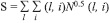
<body><![CDATA[n&uacute;mero&nbsp; de&nbsp; picos, sin suponer normalidad en dichas     distribuciones. Un &iacute;ndice de bondad de ajuste denominado <span      style="font-style: italic;">Rn </span>(ver     Gayanilo <span style="font-style: italic;">et al</span>. 1994 para     detalles) es determinado por la forma     exponencial de la     relaci&oacute;n <span style="font-style: italic;">ESP/ASP</span>,     donde <span style="font-style: italic;">ESP </span>representa la Suma     Explicada de Picos y <span style="font-style: italic;">ASP </span>la     Suma Disponible de los Picos como:    ]]></body>
<body><![CDATA[<br>     <br> </span></font>     <div style="text-align: center;"><font size="2"><span  style="font-family: verdana;"><img alt=""  src="/img/revistas/rbt/v61n3/a24f1.jpg"  style="width: 92px; height: 32px;"></span></font><br  style="font-family: verdana;"> <font size="2"><span style="font-family: verdana;"></span></font></div> <br style="font-family: verdana;"> <font size="2"><span style="font-family: verdana;">2. SLCA: estima el crecimiento basado en una funci&oacute;n coseno, la cual es independiente del n&uacute;mero y posici&oacute;n de las modas (Shepherd 1987a). Esta funci&oacute;n es expresada como:    <br> <br style="font-family: verdana;"> </span></font>     <div style="text-align: center;"><img alt=""  src="/img/revistas/rbt/v61n3/a24f2.jpg"  style="width: 203px; height: 36px;">    <br> <br style="font-family: verdana;"> </div> <font size="2"><span style="font-family: verdana;">Donde t<sub>max</sub> y t<sub>min</sub> son las edades correspondientes a los limites superior e inferior del respectivo intervalo de longitud, t<sub>prom</sub> es la edad promedio y t<sub>s</sub> es la fracci&oacute;n del a&ntilde;o en la cual la muestra fue recolectada (Shepherd 1987a). </span></font><br style="font-family: verdana;"> <font size="2"></font><br style="font-family: verdana;"> <font size="2"><span style="font-family: verdana;">Una funci&oacute;n de prueba, la cual es positiva para modas y negativa entre modas, calcula una puntuaci&oacute;n derivada de la suma de todas las categor&iacute;as de longitud, siendo maximizada por la combinaci&oacute;n m&aacute;s adecuada de par&aacute;metros de crecimiento. La funci&oacute;n de prueba de la puntuaci&oacute;n est&aacute; dada por:    <br>     <br> </span></font>     <div style="text-align: center;"><font size="2"><span  style="font-family: verdana;"><img alt=""  src="/img/revistas/rbt/v61n3/a24f3.jpg"  style="width: 110px; height: 23px;"></span></font><br  style="font-family: verdana;"> <font size="2"><span style="font-family: verdana;"></span></font></div> <br style="font-family: verdana;"> <font size="2"><span style="font-family: verdana;">Donde <span  style="font-style: italic;">S</span> es la funci&oacute;n de puntaje, <span style="font-style: italic;">l</span> hace referencia a los grupos de longitud respectivos,<span style="font-style: italic;"> i</span> a las distribuciones identificadas (disponibles) y <span  style="font-style: italic;">N</span> son las frecuencias observadas (Jones <span style="font-style: italic;">et al</span>. 1990).</span></font><br style="font-family: verdana;"> <font size="2"></font><br style="font-family: verdana;"> <font size="2"><span style="font-family: verdana;">3. PROJMAT: est&aacute; basado en la matriz poblacional de proyecci&oacute;n de Leslie (Leslie 1945). Shepherd (1987b) mostr&oacute; que una matriz de transici&oacute;n (A) puede ser resuelta directamente como: </span></font><br  style="font-family: verdana;">     <br>     ]]></body>
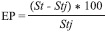
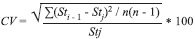
<body><![CDATA[<div style="text-align: center;"><img alt=""  src="/img/revistas/rbt/v61n3/a24f4.jpg"  style="width: 84px; height: 17px;">    <br> </div> <br style="font-family: verdana;"> <font size="2"><span style="font-family: verdana;">Donde <img alt=""  src="../img/a24f10.jpg" style="width: 12px; height: 14px;"><span  style="font-style: italic;">(t)</span> y<span  style="font-style: italic;"> </span><img alt=""  src="../img/a24f10.jpg" style="width: 12px; height: 14px;">(<span  style="font-style: italic;">t </span>+ 1) son vectores que describen la estructura de la poblaci&oacute;n en el tiempo <span  style="font-style: italic;">t</span> y <span  style="font-style: italic;">t</span>+1 respectivamente. Puede ser desagregada como:    <br>     <br> </span></font>     <div style="text-align: center;"><font size="2"><span  style="font-family: verdana;"><img alt=""  src="/img/revistas/rbt/v61n3/a24f5.jpg"  style="width: 98px; height: 14px;"></span></font><br  style="font-family: verdana;"> <font size="2"><span style="font-family: verdana;"></span></font></div> <br style="font-family: verdana;"> <font size="2"><span style="font-family: verdana;">Donde <span  style="font-style: italic;">G(j,i)</span> es la matriz de crecimiento, sus elementos son proporciones de cada grupo de longitud inicial <span style="font-style: italic;">i</span> que contribuye a formar el grupo de longitudes finales<span style="font-style: italic;"> j</span> asumiendo la ecuaci&oacute;n de crecimiento de von Bertalanffy, <span  style="font-style: italic;">S(i)</span> es la sobrevivencia promedio del intervalo <span  style="font-style: italic;">i</span>; con &eacute;stos elementos PROJMAT proyecta la muestra obtenida del tiempo <span  style="font-style: italic;">t</span> al tiempo <span  style="font-style: italic;">t</span>+1, usando valores semilla de <span style="font-style: italic;">K</span> y&nbsp;<span  style="font-style: italic;"></span></span></font><font size="2"><span  style="font-family: verdana;"><span style="font-style: italic;">L</span></span></font><font  size="2"><span style="font-family: verdana;"><sub>&#8734;</sub>. La distribuci&oacute;n de frecuencia de longitud proyectada es comparada estad&iacute;sticamente con la observada a trav&eacute;s de la suma de diferencias cuadr&aacute;ticas (SSQ). Este procedimiento es repetido hasta que se llevan a cabo todas las comparaciones entre <span style="font-style: italic;">n</span> muestras para un rango amplio de valores de <span  style="font-style: italic;">K</span> y <span style="font-style: italic;">L</span><sub>&#8734;</sub>, donde las mejores estimaciones son aquellas que minimizan la SSQ (Basson <span style="font-style: italic;">et al</span>. 1988).</span></font><br  style="font-family: verdana;"> <font size="2"></font><br style="font-family: verdana;"> <font size="2"><span style="font-family: verdana;">Para evaluar la influencia que tiene cada muestra por mes en la estimaci&oacute;n de los par&aacute;metros de crecimiento, se aplic&oacute; la t&eacute;cnica de corte <span style="font-style: italic;">jackknife </span>(Efron 1982, Levi <span style="font-style: italic;">et al</span>. 1987), la cual consiste en suprimir cada uno de los 12 meses secuencialmente con sustituci&oacute;n, generando 12 grupos de 11 datos por mes. Por lo tanto se obtuvieron 12 combinaciones diferentes de par&aacute;metros de crecimiento. Se utilizaron el error porcentual (EP) y el coeficiente de variaci&oacute;n porcentual (CV) como estimadores de precisi&oacute;n. El primero fue obtenido como:    <br>     <br> </span></font>     <div style="text-align: center;"><font size="2"><span  style="font-family: verdana;"><img alt=""  src="/img/revistas/rbt/v61n3/a24f6.jpg"  style="width: 106px; height: 34px;"></span></font><br  style="font-family: verdana;"> <font size="2"><span style="font-family: verdana;"></span></font></div> <br style="font-family: verdana;"> <font size="2"><span style="font-family: verdana;">Donde <span  style="font-style: italic;">St</span> es el par&aacute;metro de crecimiento estimado usando la muestra total (12 meses) y Stj es el promedio del par&aacute;metro estimado derivado de los n pseudovalores <span style="font-style: italic;">jackknife</span>. EP es &oacute;ptimo cuando es igual a cero. El CV <span style="font-style: italic;">jackknife </span>fue obtenido por:    <br>     <br> </span></font>     ]]></body>
<body><![CDATA[<div style="text-align: center;"><font size="2"><span  style="font-family: verdana;"><img alt=""  src="/img/revistas/rbt/v61n3/a24f7.jpg"  style="width: 195px; height: 39px;"></span></font><br  style="font-family: verdana;"> <font size="2"><span style="font-family: verdana;"></span></font></div> <br style="font-family: verdana;"> <font size="2"><span style="font-family: verdana;">Donde St<sub>i-1</sub> es el estimador del par&aacute;metro al omitir una muestra y <span  style="font-style: italic;">n</span> es el tama&ntilde;o de la&nbsp;&nbsp; &nbsp; muestra anual (<span style="font-style: italic;">n</span>=12).</span></font><br  style="font-family: verdana;"> <font size="2"></font><br style="font-family: verdana;"> <font size="2"><span style="font-family: verdana;">El &iacute;ndice de crecimiento est&aacute;ndar (f&#8217;) (Pauly &amp; Munro 1984) fue usado como criterio para comparar las diferentes estimaciones de crecimiento, el cual fue aplicado para cada par de valores K y L<sub>&#8734;</sub> obtenidos con todos los datos por cada m&eacute;todo y por los valores obtenidos del an&aacute;lisis de <span style="font-style: italic;">jackknife</span>. La ecuaci&oacute;n que define este &iacute;ndice es:</span></font><br  style="font-family: verdana;">     <br>     <div style="text-align: center;"><img alt=""  src="/img/revistas/rbt/v61n3/a24f8.jpg"  style="width: 130px; height: 17px;">    <br> </div> <br style="font-family: verdana;"> <font size="2"><span style="font-family: verdana;">Este criterio fue elegido debido a que proporciona un par&aacute;metro unificado del crecimiento, y aunque se deriva de K y de<span style="font-style: italic;"> L</span><sub>&#8734;</sub>, los valores de <img alt="" src="../img/a24f9.jpg"  style="width: 10px; height: 14px;">&#8217; no muestran grandes oscilaciones como los que se presentan con los par&aacute;metros cl&aacute;sicos (Sparre <span style="font-style: italic;">et al</span>. 1989).</span></font><br style="font-family: verdana;"> <font size="2"></font><br style="font-family: verdana;"> <font style="font-weight: bold;" size="3"><span  style="font-family: verdana;">Resultados</span></font><br  style="font-family: verdana;"> <font size="2"></font><br style="font-family: verdana;"> <font size="2"><span style="font-family: verdana;">La poblaci&oacute;n estudiada consisti&oacute; en un total de 1 973 organismos de <span  style="font-style: italic;">O. aureus</span>, 1 012 fueron hembras (51.3%) y 961 fueron machos (48.7%). Las tallas estuvieron en una escala de 10 a 35cm de LP (<a  href="/img/revistas/rbt/v61n3/a24i1.jpg">Fig. 1</a>) y los pesos variaron de 30 a 700g de PT. La relaci&oacute;n de sexos macho: hembra no fue&nbsp; stad&iacute;sticamente diferente de 1:1 (<span  style="font-style: italic;">&#967;</span><sup>2</sup>=0.02, p&gt;0.05), por lo que hembras y machos fueron agrupados de forma general para su an&aacute;lisis. El mejor modelo que describi&oacute; la relaci&oacute;n longitud-peso (LP vs PT) fue de tipo potencial, el cual se expres&oacute; como: PT=0.104(LP)<sup>2.62</sup> (r<sup>2</sup>=0.84, p&lt;0.05). El valor del exponente (b=2.62), fue significativamente diferente de tres (prueba-t, p&lt;0.05), por lo que el crecimiento de la especie en este embalse se consider&oacute; como alom&eacute;trico.</span></font><br  style="font-family: verdana;"> <br style="font-family: verdana;"> <font size="2"><span style="font-family: verdana;"><span  style="font-weight: bold;">Conjunto completo de datos:</span> Al considerar toda la informaci&oacute;n (los 12 meses de muestreo), los resultados obtenidos por los tres m&eacute;todos indirectos estimaron valores similares de <span style="font-style: italic;">L</span><sub>&#8734;</sub>, los cuales oscilaron de 38 a 40cm de LP, mientras que los valores K fueron de 0.30 a 0.35/a&ntilde;o, para t<sub>0</sub> los valores fueron de -0.18 a -0.56a&ntilde;os, es decir mostraron una amplia diferencia entre m&eacute;todos (<a  href="/img/revistas/rbt/v61n3/a24t1.gif">Cuadro 1</a>). SLCA y PROJMAT presentaron m&uacute;ltiples picos de convergencia.</span></font><br  style="font-family: verdana;"> <font size="2"></font><br style="font-family: verdana;"> <font size="2"><span style="font-family: verdana;"><span  style="font-weight: bold;">An&aacute;lisis <span  style="font-style: italic;">jackknife</span>: </span>La iteraci&oacute;n del an&aacute;lisis <span style="font-style: italic;">jackknife </span>que omite secuencialmente uno de los 12 meses de muestreo, mostraron diferentes&nbsp; efectos de las variaciones aleatorias en los datos de entrada entre los tres m&eacute;todos indirectos utilizados (<a  href="/img/revistas/rbt/v61n3/a24i2.jpg">Fig. 2</a>). En el caso de ELEFAN, <span style="font-style: italic;">L</span><sub>&#8734;</sub> vari&oacute; de 33.7 a 45cm de LP, mientras que K estuvo en el intervalo de 0.26 a 0.60/a&ntilde;o; mostr&oacute; una progresi&oacute;n negativa, la m&aacute;s alta <span  style="font-style: italic;">L</span><sub>&#8734;</sub> y la m&aacute;s baja K ocurrieron cuando enero fue omitido, mientras que los valores m&aacute;s bajos de L&#8734; y los m&aacute;s altos de K resultaron cuando febrero fue omitido (<a href="/img/revistas/rbt/v61n3/a24i2.jpg">Fig. 2A</a>). La aplicaci&oacute;n <span style="font-style: italic;">jackknife </span>con SLCA mostr&oacute; menos variaci&oacute;n en las estimaciones de <span  style="font-style: italic;">L</span><sub>&#8734;</sub> (42.8-45.7cm de LP) y present&oacute; moderada variabilidad para K (0.30-0.60/a&ntilde;o). Sin embargo, a pesar de que los resultados mostraron poca variabilidad, no hubo una relaci&oacute;n predecible entre <span style="font-style: italic;">L</span><sub>&#8734;</sub> y K, cuando se omiti&oacute; abril se resentaron los valores m&aacute;s altos que para los otros once conjunto de datos (<a  href="/img/revistas/rbt/v61n3/a24i2.jpg">Fig. 2B</a>). PROJMAT present&oacute; las mayores variaciones en las estimaciones de <span style="font-style: italic;">L</span><sub>&#8734;</sub> (30-43cm de LP) y la menor variabilidad en los resultados de K (0.25-0.45/a&ntilde;o) (<a href="/img/revistas/rbt/v61n3/a24i2.jpg">Fig. 2C</a>). </span></font><br style="font-family: verdana;">     <div style="text-align: center;"><br style="font-family: verdana;"> </div> <font size="2"><span style="font-family: verdana;">Los estimadores de precisi&oacute;n EP y CV derivados del an&aacute;lisis <span style="font-style: italic;">jackknife</span>, mostraron que ELEFAN consistentemente present&oacute; los valores m&aacute;s bajos de EP (0.67%) y CV (2.15%) para <span style="font-style: italic;">L</span><sub>&#8734;</sub>; PROJMAT registr&oacute; los valores m&iacute;nimos de EP (6.97%) y CV (5.13%) para K; en tanto que SLCA mostr&oacute; los valores m&aacute;ximos de EP y CV en los tres par&aacute;metros de crecimiento (<a  href="/img/revistas/rbt/v61n3/a24t1.gif">Cuadro 1</a>).</span></font><br  style="font-family: verdana;"> <font size="2"></font><br style="font-family: verdana;"> <font size="2"><span style="font-family: verdana;"><span  style="font-weight: bold;">Comparaciones con el &iacute;ndice de crecimiento est&aacute;ndar <img alt=""  src="/img/revistas/rbt/v61n3/a24f9.jpg"  style="width: 10px; height: 14px;">&#8217;:</span> El an&aacute;lisis comparativo de f&#8217; derivado de la omisi&oacute;n secuencial de muestras fue similar entre los valores estimados por ELEFAN y SLCA, mientras que PROJMAT gener&oacute; los valores m&aacute;s bajos. La <a  href="/img/revistas/rbt/v61n3/a24i3.jpg">figura 3</a> muestra la variaci&oacute;n de los valores de K y <span  style="font-style: italic;">L</span><sub>&#8734;</sub> generados del an&aacute;lisis <span style="font-style: italic;">jackknife</span>. De la omisi&oacute;n secuencial de una muestra con ELEFAN se estimaron valores de <img alt=""  src="/img/revistas/rbt/v61n3/a24f9.jpg"  style="width: 10px; height: 14px;">&#8217; entre 2.63 (cuando enero fue omitido) y 2.97 (cuando diciembre fue omitido). SLCA present&oacute; valores de f&#8217; en el rango de 2.74 (cuando junio fue omitido) a 3.16 (cuando abril fue omitido). PROJMAT present&oacute; el valor m&iacute;nimo (2.43) cuando diciembre fue omitido y el dato m&aacute;s alto (2.77) cuando julio fue omitido (<a href="/img/revistas/rbt/v61n3/a24i3.jpg">Fig. 3</a>).</span></font><br  style="font-family: verdana;">     <br>     <font style="font-weight: bold;" size="3"><span      style="font-family: verdana;">Discusi&oacute;n</span></font><br      style="font-family: verdana;">     <font size="2"></font><br style="font-family: verdana;">     ]]></body>
<body><![CDATA[<font size="2"><span style="font-family: verdana;">En el presente     estudio las tallas     de <span style="font-style: italic;">O. aureus</span> estuvieron en     una escala de 10 a 35cm LP, las tallas     m&iacute;nimas fueron similares a las reportadas para&nbsp; la&nbsp;     presa Aguamilpa&nbsp; (10&nbsp; a&nbsp; 40.3cm&nbsp; LP) en el estado     de Nayarit (Pe&ntilde;a-Messina <span style="font-style: italic;">et al</span>.     2010), sin embargo, fueron mucho     mayores a las registradas por G&oacute;mez-Ponce <span      style="font-style: italic;">et al</span>. (2011) en la     ]]></body>
<body><![CDATA[presa Zimap&aacute;n (3.8 a 23.2cm LP). Esto puede estar relacionado a     las diferencias que hay entre las artes de pesca usadas en el lago de     Chapala, con respecto a los otros cuerpos de agua. El an&aacute;lisis     de la relaci&oacute;n longitud- peso (LP vs PT) mostr&oacute; un     crecimiento de tipo alom&eacute;trico. Este mismo tipo de crecimiento     ha sido reportado para <span style="font-style: italic;">O. aureus </span>(Pe&ntilde;a-Messina     <span style="font-style: italic;">et al</span>. 2010) y     para <span style="font-style: italic;">O. niloticus </span>(G&oacute;mez-M&aacute;rquez     <span style="font-style: italic;">et al</span>. 2008). Estudios     realizados en distintas especies de tilapias y cuerpos de agua en     ]]></body>
<body><![CDATA[M&eacute;xico, muestran que los valores de la pendiente de esta     relaci&oacute;n oscila entre 2.5 y 3.5 (Granado 1996). Esto indica que     el valor de b=2.62 se encuentra dentro del intervalo mencionado, y da     confiabilidad a los resultados obtenidos en este trabajo para las     tilapias del lago de Chapala. Por otra parte, el crecimiento     alom&eacute;trico para diferentes especies de tilapia ha sido atribuido     principalmente a problemas de alimento y densidades en el agua     (Murphy <span style="font-style: italic;">et al</span>. 1991)</span></font><br      style="font-family: verdana;">     <font size="2"></font><br style="font-family: verdana;">     ]]></body>
<body><![CDATA[<font size="2"><span style="font-family: verdana;">Respecto a los tres     m&eacute;todos     indirectos evaluados en el presente estudio, ELEFAN mostr&oacute; los     mejores valores (m&aacute;s bajos EP y CV), seguido de PROJMAT y     posteriormente SLCA. Lo anterior se basa a partir: 1) de una     comparaci&oacute;n de los par&aacute;metros de crecimiento<span      style="font-style: italic;"> L</span><sub>&#8734;</sub> y K y del     &iacute;ndice de crecimiento est&aacute;ndar <img alt=""      src="/img/revistas/rbt/v61n3/a24f9.jpg"      style="width: 10px; height: 14px;">&#8217; estimados     ]]></body>
<body><![CDATA[por los tres     m&eacute;todos indirectos con los resultados previamente reportados en     la literatura, que hacen estimaciones con m&eacute;todos directos; 2)     de los dos estimadores de precisi&oacute;n EP y CV derivados del     an&aacute;lisis <span style="font-style: italic;">jackknife </span>y     3) de evaluar la incertidumbre de los     par&aacute;metros de crecimiento resultantes de variaciones en la base     de datos por medio de la t&eacute;cnica de <span      style="font-style: italic;">jackknife</span>. </span></font><br      style="font-family: verdana;">     ]]></body>
<body><![CDATA[<font size="2"></font><br style="font-family: verdana;">     <font size="2"><span style="font-family: verdana;">En cuanto a la     comparaci&oacute;n     de los par&aacute;metros de crecimiento calculados con los tres     m&eacute;todos indirectos utilizados en este trabajo, se observ&oacute;     que los valores de <span style="font-style: italic;">L</span><sub>&#8734;</sub>     y K son semejantes a los reportados para <span      style="font-style: italic;">O.     aureus</span> por Bernal (1984), Ram&iacute;rez (2007),     Beltr&aacute;n-&Aacute;lvarez <span style="font-style: italic;">et al</span>.     ]]></body>
<body><![CDATA[(2010), G&oacute;mez-Ponce <span style="font-style: italic;">et al</span>.     (2011); quienes estimaron los par&aacute;metros de crecimiento a     trav&eacute;s de m&eacute;todos directos (<a      href="/img/revistas/rbt/v61n3/a24t2.gif">Cuadro 2</a>).</span></font><br      style="font-family: verdana;">     <font size="2"></font><br style="font-family: verdana;">     <font size="2"><span style="font-family: verdana;">El an&aacute;lisis <span      style="font-style: italic;">jackknife     </span>permiti&oacute; determinar una fuerte variabilidad en los     par&aacute;metros individuales de crecimiento estimados por los tres     ]]></body>
<body><![CDATA[m&eacute;todos, en especial para SLCA. ELEFAN present&oacute; la menor     variabilidad seguida de PROJMAT, con valores dentro de los rangos     reportados previamente en la literatura. El an&aacute;lisis comparativo     del &iacute;ndice de crecimiento <img alt=""      src="/img/revistas/rbt/v61n3/a24f9.jpg"      style="width: 10px; height: 14px;">&#8217; en conjunci&oacute;n con <span      style="font-style: italic;">jackknife</span>:     corrobor&oacute; la gran utilidad de &eacute;ste par&aacute;metro a     efectos comparativos. Los valores de <img alt=""      src="/img/revistas/rbt/v61n3/a24f9.jpg"     ]]></body>
<body><![CDATA[ style="width: 10px; height: 14px;">&#8217; obtenidos con SLCA, fueron     ligeramente m&aacute;s altos a los obtenidos con&nbsp; ELEFAN&nbsp;     y&nbsp; PROJMAT.&nbsp; Sin&nbsp; embargo, los par&aacute;metros de     crecimiento estimados por medio de m&eacute;todos directos e indirectos     en otros estudios,&nbsp; se&nbsp; compararon&nbsp; con&nbsp; los&nbsp;     resultados obtenidos por los tres m&eacute;todos indirectos utilizados     en la presente investigaci&oacute;n. Los valores del &iacute;ndice de     crecimiento <img alt="" src="/img/revistas/rbt/v61n3/a24f9.jpg"      style="width: 10px; height: 14px;">&#8217;, calculados con <span      style="font-style: italic;">L</span><sub>&#8734;</sub>     ]]></body>
<body><![CDATA[y K reportados en estudios previos,     variaron entre 2.29 y 3.02, intervalo que oscila dentro de los valores     de <img alt="" src="/img/revistas/rbt/v61n3/a24f9.jpg"      style="width: 10px; height: 14px;">&#8217; obtenidos por ELEFAN, SLCA y     PROJMAT en este estudio.</span></font><br style="font-family: verdana;">     <font size="2"></font><br style="font-family: verdana;">     <font size="2"><span style="font-family: verdana;">Con base en las     caracter&iacute;sticas biol&oacute;gicas del recurso y de acuerdo a los     resultados de los tres m&eacute;todos indirectos evaluados en el     presente estudio, ELEFAN fue el m&aacute;s adecuado para estimar los     ]]></body>
<body><![CDATA[par&aacute;metros de crecimiento de <span style="font-style: italic;">O.     aureus</span>, debido a que     mostr&oacute; los valores m&iacute;nimos en los estimadores de     precisi&oacute;n (EP y CV) para L&#8734;, un valor similar de K al estimado     por PROJMAT, quien en &eacute;ste caso present&oacute; los valores     m&iacute;nimos de EP y CV. Sin embargo, Jim&eacute;nez-Badillo (2006)     que estim&oacute; el crecimiento de <span style="font-style: italic;">O.     aureus</span> con ELEFAN, SLCA Y     PROJMAT; sugiere que el m&eacute;todo de ELEFAN es el menos adecuado     para evaluar el crecimiento de tilapia, y debido a que es sensible a     ]]></body>
<body><![CDATA[las modas discretas en los datos frecuencia de tallas, es importante     mencionar que en ese estudio no se evalu&oacute; la variabilidad en los     par&aacute;metros individuales de crecimiento estimados por los tres     m&eacute;todos y cabe se&ntilde;alar que en el estudio mencionado, a     pesar de que se detectaron 11 grupos de edad mediante op&eacute;rculos     y escamas, los par&aacute;metros de crecimiento fueron sobrestimados     por ELEFAN. No obstante, se ha mostrado que ELEFAN trabaja mejor cuando     se incluyen m&aacute;s grupos de edad (Defeo <span      style="font-style: italic;">et al</span>. 1992a).     Adem&aacute;s menciona que PROJMAT proporciona una estimaci&oacute;n     ]]></body>
<body><![CDATA[m&aacute;s fiable de los par&aacute;metros de crecimiento y aunque ha     sido sugerido para especies con una &eacute;poca de desove corta (Defeo     <span style="font-style: italic;">et al</span>. 1992a), no sucede en el     caso de tilapia, ya que es una especie     que presenta m&uacute;ltiples desoves a lo largo de un a&ntilde;o     (Babiker &amp; Ibrahim 1979, Morales 1991).</span></font><br      style="font-family: verdana;">     <font size="2"></font><br style="font-family: verdana;">     <font size="2"><span style="font-family: verdana;">Por otro lado, la     aplicaci&oacute;n     ]]></body>
<body><![CDATA[de SLCA en principio&nbsp; podr&iacute;a&nbsp; ser&nbsp; adecuada&nbsp;     para&nbsp; estimar los par&aacute;metros de crecimiento de <span      style="font-style: italic;">O. aureus</span>,     debido a que los resultados del presente trabajo mostraron que los     par&aacute;metros de crecimiento se encontraron dentro del intervalo     reportado en la literatura por m&eacute;todos directos. Sin embargo,     Jim&eacute;nez-Badillo (2006), report&oacute; como subestimados los     par&aacute;metros de crecimiento de <span style="font-style: italic;">O.     aureus</span> calculados con SLCA, lo     cual es acorde con los resultados encontrados en el presente trabajo.     ]]></body>
<body><![CDATA[SLCA mostr&oacute; la mayor variabilidad de los estimadores de     precisi&oacute;n (valores muy altos de EP y CV), adem&aacute;s de que     se ha corroborado en estudios previos que SLCA es &uacute;til para     estimar par&aacute;metros de crecimientos en especies longevas con     bajas tasas de crecimiento (Basson <span style="font-style: italic;">et     al</span>. 1988), caso contrario a lo     observado en tilapia que se caracteriza por tener un r&aacute;pido     crecimiento&nbsp; (G&oacute;mez-M&aacute;rquez&nbsp; <span      style="font-style: italic;">et&nbsp; al</span>.&nbsp;     2008). Con base en lo anterior y a nuestros resultados, SLCA no es     ]]></body>
<body><![CDATA[adecuado para evaluar el crecimiento de tilapia, por tanto se sugiere     el uso de ELEFAN, debido a su precisi&oacute;n para estimar los     par&aacute;metros de crecimiento de <span style="font-style: italic;">Oreochromis     aureus.</span> Sin embargo, no     existe una gu&iacute;a para juzgar en qu&eacute; casos es apropiado un     m&eacute;todo en particular (Rosenberg &amp; Beddington 1987), y por     tanto cada especie constituye un caso independientemente en cuanto al     uso de m&eacute;todos a emplear para estimar crecimiento. En el caso de     <span style="font-style: italic;">O. aureus</span>, las diferencias de     los par&aacute;metros de crecimiento en     ]]></body>
<body><![CDATA[los distintos cuerpos de agua pueden ser causadas por la temperatura,     la disponibilidad del alimento, la actividad metab&oacute;lica y     reproductiva, entre otros factores, lo cual se refleja en <span      style="font-style: italic;">L</span><sub>&#8734;</sub>&nbsp; y K     (Isaac 1990). Por lo tanto, las estimaciones obtenidas por los tres     m&eacute;todos aplicados aqu&iacute;, enfatizan que se debe tener     cuidado cuando se analiza informaci&oacute;n que est&aacute;     fuertemente influenciada por procesos ligados a cambios en la longitud,     como lo son las condiciones ambientales, la presi&oacute;n de pesca,     los patrones de mortalidad, la variabilidad en el reclutamiento, la     ]]></body>
<body><![CDATA[estacionalidad en el crecimiento, como lo han sugerido Majkowsky &amp;     Hampton (1989).</span></font><br style="font-family: verdana;">     <font size="2"></font><br style="font-family: verdana;">     <font style="font-weight: bold;" size="3"><span      style="font-family: verdana;">Agradecimientos</span></font><br      style="font-family: verdana;">     <font size="2"></font><br style="font-family: verdana;">     <font size="2"><span style="font-family: verdana;">A&nbsp; los&nbsp;     pescadores&nbsp;     del&nbsp; lago&nbsp; de&nbsp; Chapala por su apoyo brindado durante el     ]]></body>
<body><![CDATA[registro de datos en campo y a cinco revisores an&oacute;nimos por sus     muy &uacute;tiles comentarios. Este trabajo forma parte de una     investigaci&oacute;n realizada en el Centro Regional de     Investigaci&oacute;n Pesquera en P&aacute;tzcuaro, la cual fue     financiada por el Instituto Nacional de Pesca.    <br> <br style="font-family: verdana;"> </span></font><font size="2"></font> <hr style="width: 100%; height: 2px;"><font style="font-weight: bold;"  size="3"><span style="font-family: verdana;">Referencias</span></font><br  style="font-family: verdana;"> <br style="font-family: verdana;">     <!-- ref --><div style="text-align: left;"><font size="2"><span  style="font-family: verdana;">Arredondo-Figueroa,&nbsp; J.L.&nbsp; &amp;&nbsp; M.&nbsp; Guzm&aacute;n-Arroyo.&nbsp; 1986. Actual&nbsp; situaci&oacute;n&nbsp; taxon&oacute;mica&nbsp; de&nbsp; las&nbsp;&nbsp; especies&nbsp; de la&nbsp; Tribu&nbsp; Tilapiini&nbsp; (Pisces:&nbsp; Cichlidae)&nbsp; introducidas en M&eacute;xico. An.&nbsp; Inst. Biol. UNAM. Ser. Zool. 56: 555-572.    &nbsp;&nbsp;&nbsp;&nbsp;&nbsp;&nbsp;&nbsp;&nbsp;[&#160;<a href="javascript:void(0);" onclick="javascript: window.open('/scielo.php?script=sci_nlinks&ref=1661357&pid=S0034-7744201300040002400001&lng=','','width=640,height=500,resizable=yes,scrollbars=1,menubar=yes,');">Links</a>&#160;]<!-- end-ref --><!-- ref --></span></font><br  style="font-family: verdana;"> <br style="font-family: verdana;"> <font size="2"><span style="font-family: verdana;">Arredondo-Figueroa,&nbsp; J.L. &amp; M. Tejeda-Salinas.&nbsp; 1989. El hueso Far&iacute;ngeo, una estructura &uacute;til para la identificaci&oacute;n de especies de la tribu Tilapini (Pisces: Cichlidae) introducida en M&eacute;xico. An. Inst. Biol. UNAM. Ser. Zool. 16: 58-68.    &nbsp;&nbsp;&nbsp;&nbsp;&nbsp;&nbsp;&nbsp;&nbsp;[&#160;<a href="javascript:void(0);" onclick="javascript: window.open('/scielo.php?script=sci_nlinks&ref=1661358&pid=S0034-7744201300040002400002&lng=','','width=640,height=500,resizable=yes,scrollbars=1,menubar=yes,');">Links</a>&#160;]<!-- end-ref --><!-- ref --></span></font><br  style="font-family: verdana;"> <br style="font-family: verdana;"> <font size="2"><span style="font-family: verdana;">Babiker, M. &amp; H. Ibrahim. 1979. Studies on the biology of reproduction in the Cichlid Tilapia nilotica (Linneo): gonadal&nbsp; maturation and fecundity. J. Fish Biol.&nbsp; 14: 437-448.    &nbsp;&nbsp;&nbsp;&nbsp;&nbsp;&nbsp;&nbsp;&nbsp;[&#160;<a href="javascript:void(0);" onclick="javascript: window.open('/scielo.php?script=sci_nlinks&ref=1661359&pid=S0034-7744201300040002400003&lng=','','width=640,height=500,resizable=yes,scrollbars=1,menubar=yes,');">Links</a>&#160;]<!-- end-ref --><!-- ref --></span></font><br style="font-family: verdana;"> <br style="font-family: verdana;"> <font size="2"><span style="font-family: verdana;">Basson,&nbsp; M., A.A. Ronsenberg &amp; J.R.&nbsp; Beddington. 1988. The accuracy and reliability of two new methods for estimating growth parameters from length frequency data. J. Cons. Int. Explor. Mer. 44: 277-285.    &nbsp;&nbsp;&nbsp;&nbsp;&nbsp;&nbsp;&nbsp;&nbsp;[&#160;<a href="javascript:void(0);" onclick="javascript: window.open('/scielo.php?script=sci_nlinks&ref=1661360&pid=S0034-7744201300040002400004&lng=','','width=640,height=500,resizable=yes,scrollbars=1,menubar=yes,');">Links</a>&#160;]<!-- end-ref --><!-- ref --></span></font><br  style="font-family: verdana;"> <br style="font-family: verdana;"> <font size="2"><span style="font-family: verdana;">Beltr&aacute;n-&Aacute;lvarez,&nbsp; R., J. S&aacute;nchez-Palacios &amp; G.L.&nbsp; Valdez. 2010. Edad y crecimiento de la mojarra <span style="font-style: italic;">Oreochromis aureus </span>(Pisces: Cichlidae) en la Presa Sanalona, Sinaloa, M&eacute;xico. Rev. Biol. Trop. 58: 325-338.    &nbsp;&nbsp;&nbsp;&nbsp;&nbsp;&nbsp;&nbsp;&nbsp;[&#160;<a href="javascript:void(0);" onclick="javascript: window.open('/scielo.php?script=sci_nlinks&ref=1661361&pid=S0034-7744201300040002400005&lng=','','width=640,height=500,resizable=yes,scrollbars=1,menubar=yes,');">Links</a>&#160;]<!-- end-ref --><!-- ref --></span></font><br  style="font-family: verdana;"> <br style="font-family: verdana;"> <font size="2"><span style="font-family: verdana;">Bernal,&nbsp; B.F. 1984. An&aacute;lisis de los factores&nbsp; relacionados con la producci&oacute;n pesquera de <span style="font-style: italic;">Tilapia nilotica</span> en la presa Adolfo L&oacute;pez Mateos (Infiernillo), Michoac&aacute;n- Guerrero. Tesis de Licenciatura, Universidad Nacional Aut&oacute;noma de M&eacute;xico, M&eacute;xico.    &nbsp;&nbsp;&nbsp;&nbsp;&nbsp;&nbsp;&nbsp;&nbsp;[&#160;<a href="javascript:void(0);" onclick="javascript: window.open('/scielo.php?script=sci_nlinks&ref=1661362&pid=S0034-7744201300040002400006&lng=','','width=640,height=500,resizable=yes,scrollbars=1,menubar=yes,');">Links</a>&#160;]<!-- end-ref --><!-- ref --></span></font><br style="font-family: verdana;"> <br style="font-family: verdana;"> <font size="2"><span style="font-family: verdana;">CONAPESCA.&nbsp; 2010. Anuario estad&iacute;stico de&nbsp; acuacultura y pesca. Comisi&oacute;n Nacional de Acuacultura y Pesca, M&eacute;xico.    &nbsp;&nbsp;&nbsp;&nbsp;&nbsp;&nbsp;&nbsp;&nbsp;[&#160;<a href="javascript:void(0);" onclick="javascript: window.open('/scielo.php?script=sci_nlinks&ref=1661363&pid=S0034-7744201300040002400007&lng=','','width=640,height=500,resizable=yes,scrollbars=1,menubar=yes,');">Links</a>&#160;]<!-- end-ref --><!-- ref --></span></font><br  style="font-family: verdana;"> <br style="font-family: verdana;"> <font size="2"><span style="font-family: verdana;">Defeo,&nbsp; O.,&nbsp; F.&nbsp; Arregu&iacute;n-S&aacute;nchez&nbsp; &amp;&nbsp; J.&nbsp; S&aacute;nchez.&nbsp; 1992a. Growth&nbsp; study of the yellow clam&nbsp; <span style="font-style: italic;">Mesodesma mactroides:</span> a comparative analysis of three length-based methods. Sci. Mar. 56: 53-59.    &nbsp;&nbsp;&nbsp;&nbsp;&nbsp;&nbsp;&nbsp;&nbsp;[&#160;<a href="javascript:void(0);" onclick="javascript: window.open('/scielo.php?script=sci_nlinks&ref=1661364&pid=S0034-7744201300040002400008&lng=','','width=640,height=500,resizable=yes,scrollbars=1,menubar=yes,');">Links</a>&#160;]<!-- end-ref --><!-- ref --></span></font><br  style="font-family: verdana;"> <br style="font-family: verdana;"> <font size="2"><span style="font-family: verdana;">Defeo, O., E. Ortiz &amp; J.C. Castilla. 1992b. Growth, mortality and recruitment of the yellow clam Mesodesma mactroides in&nbsp; Uruguayan beaches. Mar. Biol. 114:</span></font><font  size="2"><span style="font-family: verdana;"> 429-437.    &nbsp;&nbsp;&nbsp;&nbsp;&nbsp;&nbsp;&nbsp;&nbsp;[&#160;<a href="javascript:void(0);" onclick="javascript: window.open('/scielo.php?script=sci_nlinks&ref=1661365&pid=S0034-7744201300040002400009&lng=','','width=640,height=500,resizable=yes,scrollbars=1,menubar=yes,');">Links</a>&#160;]<!-- end-ref --><!-- ref --></span></font><br  style="font-family: verdana;"> <br style="font-family: verdana;"> <font size="2"><span style="font-family: verdana;">Diario Oficial de la Federaci&oacute;n. 2006. Carta&nbsp; Nacional Pesquera, SAGARPA, CONAPESCA Diario Oficial de la Federaci&oacute;n del 25 de agosto de 2006, Segunda Secci&oacute;n, M&eacute;xico.    &nbsp;&nbsp;&nbsp;&nbsp;&nbsp;&nbsp;&nbsp;&nbsp;[&#160;<a href="javascript:void(0);" onclick="javascript: window.open('/scielo.php?script=sci_nlinks&ref=1661366&pid=S0034-7744201300040002400010&lng=','','width=640,height=500,resizable=yes,scrollbars=1,menubar=yes,');">Links</a>&#160;]<!-- end-ref --><!-- ref --></span></font><br  style="font-family: verdana;"> <br style="font-family: verdana;"> <font size="2"><span style="font-family: verdana;">Efron,&nbsp; B. 1982. The Jackknife, the Bootstrap&nbsp; and Other Resampling Plans. Society for Industrial and Applied Mathematics, Filadelfia, Pensilvania, EE.UU.    &nbsp;&nbsp;&nbsp;&nbsp;&nbsp;&nbsp;&nbsp;&nbsp;[&#160;<a href="javascript:void(0);" onclick="javascript: window.open('/scielo.php?script=sci_nlinks&ref=1661367&pid=S0034-7744201300040002400011&lng=','','width=640,height=500,resizable=yes,scrollbars=1,menubar=yes,');">Links</a>&#160;]<!-- end-ref --><!-- ref --></span></font><br  style="font-family: verdana;"> <br style="font-family: verdana;"> <font size="2"><span style="font-family: verdana;">Galindo,&nbsp; C.G.&nbsp; 2005.&nbsp; Evaluaci&oacute;n&nbsp; de&nbsp; tres&nbsp; m&eacute;todos&nbsp; para estimaci&oacute;n&nbsp; del&nbsp; crecimiento&nbsp; basados&nbsp; en&nbsp; el&nbsp; an&aacute;lisis de&nbsp; distribuciones de frecuencia de&nbsp; longitudes. Tesis de Maestr&iacute;a, Instituto&nbsp; Polit&eacute;cnico Nacional, Centro Interdisciplinario de Ciencias Marinas, La Paz, B. C. S., M&eacute;xico.    &nbsp;&nbsp;&nbsp;&nbsp;&nbsp;&nbsp;&nbsp;&nbsp;[&#160;<a href="javascript:void(0);" onclick="javascript: window.open('/scielo.php?script=sci_nlinks&ref=1661368&pid=S0034-7744201300040002400012&lng=','','width=640,height=500,resizable=yes,scrollbars=1,menubar=yes,');">Links</a>&#160;]<!-- end-ref --><!-- ref --></span></font><br  style="font-family: verdana;"> <br style="font-family: verdana;"> <font size="2"><span style="font-family: verdana;">Gayanilo,&nbsp; F.C., P. Sparre &amp; D. Pauly. 1994.&nbsp; The FAO- ICLARM Stock Assessment&nbsp; Tools (FISAT) User&#8250;s Guide. FAO Comp. Inf. Ser. Fisheries 7, FAO, Roma, Italia.    &nbsp;&nbsp;&nbsp;&nbsp;&nbsp;&nbsp;&nbsp;&nbsp;[&#160;<a href="javascript:void(0);" onclick="javascript: window.open('/scielo.php?script=sci_nlinks&ref=1661369&pid=S0034-7744201300040002400013&lng=','','width=640,height=500,resizable=yes,scrollbars=1,menubar=yes,');">Links</a>&#160;]<!-- end-ref --><!-- ref --></span></font><br style="font-family: verdana;"> <br style="font-family: verdana;"> <font size="2"><span style="font-family: verdana;">G&oacute;mez-M&aacute;rquez, J.L., B. Pe&ntilde;a-Mendoza, H.I.&nbsp; Salgado- Ugarte &amp; J.L.&nbsp; Arredondo-Figueroa. 2008. Age and growth of tilapia,<span  style="font-style: italic;"> Oreochromis niloticus&nbsp; </span>(Perciformes: Cichlidae) from a tropical shallow lake in Mexico. Rev. Biol. Trop. 56: 875-884.    &nbsp;&nbsp;&nbsp;&nbsp;&nbsp;&nbsp;&nbsp;&nbsp;[&#160;<a href="javascript:void(0);" onclick="javascript: window.open('/scielo.php?script=sci_nlinks&ref=1661370&pid=S0034-7744201300040002400014&lng=','','width=640,height=500,resizable=yes,scrollbars=1,menubar=yes,');">Links</a>&#160;]<!-- end-ref --><!-- ref --></span></font><br  style="font-family: verdana;"> <br style="font-family: verdana;"> <font size="2"><span style="font-family: verdana;">G&oacute;mez-Ponce,&nbsp; M.A., K. Granados-Flores, C.&nbsp; Padilla, M. L&oacute;pez-Hern&aacute;ndez &amp; G. Nu&ntilde;ez-Nogueira. 2011. Edad y crecimiento del h&iacute;brido de tilapia <span style="font-style: italic;">Oreochromis niloticus x Oreochromis aureus</span> (Perciformes: Cichlidae) en la represa &#8220;Zimap&aacute;n&#8221; Hidalgo, M&eacute;xico. Rev. Biol. Trop. 59: 761-770.    &nbsp;&nbsp;&nbsp;&nbsp;&nbsp;&nbsp;&nbsp;&nbsp;[&#160;<a href="javascript:void(0);" onclick="javascript: window.open('/scielo.php?script=sci_nlinks&ref=1661371&pid=S0034-7744201300040002400015&lng=','','width=640,height=500,resizable=yes,scrollbars=1,menubar=yes,');">Links</a>&#160;]<!-- end-ref --><!-- ref --></span></font><br  style="font-family: verdana;"> <br style="font-family: verdana;"> <font size="2"><span style="font-family: verdana;">Granado,&nbsp; L.C. 1996. Ecolog&iacute;a de peces.&nbsp; Universidad de Sevilla, Sevilla, Espa&ntilde;a.    &nbsp;&nbsp;&nbsp;&nbsp;&nbsp;&nbsp;&nbsp;&nbsp;[&#160;<a href="javascript:void(0);" onclick="javascript: window.open('/scielo.php?script=sci_nlinks&ref=1661372&pid=S0034-7744201300040002400016&lng=','','width=640,height=500,resizable=yes,scrollbars=1,menubar=yes,');">Links</a>&#160;]<!-- end-ref --><!-- ref --></span></font><br style="font-family: verdana;"> <br style="font-family: verdana;"> <font size="2"><span style="font-family: verdana;">Guzm&aacute;n-Arroyo, M. 1995. El lago de Chapala, p. 129-145. <span style="font-style: italic;">In&nbsp; </span>G. De la Lanza-Espino &amp; J.L.&nbsp; Garc&iacute;a-Calder&oacute;n (eds.). Lagos y Presas de M&eacute;xico. Centro de Ecolog&iacute;a y Desarrollo, M&eacute;xico, D.F., M&eacute;xico.    &nbsp;&nbsp;&nbsp;&nbsp;&nbsp;&nbsp;&nbsp;&nbsp;[&#160;<a href="javascript:void(0);" onclick="javascript: window.open('/scielo.php?script=sci_nlinks&ref=1661373&pid=S0034-7744201300040002400017&lng=','','width=640,height=500,resizable=yes,scrollbars=1,menubar=yes,');">Links</a>&#160;]<!-- end-ref --><!-- ref --></span></font><br style="font-family: verdana;"> <br style="font-family: verdana;"> <font size="2"><span style="font-family: verdana;">Haddon, M. 2001. Modelling and quantitative methods in fisheries. Chapman, Florida, EE.UU.    &nbsp;&nbsp;&nbsp;&nbsp;&nbsp;&nbsp;&nbsp;&nbsp;[&#160;<a href="javascript:void(0);" onclick="javascript: window.open('/scielo.php?script=sci_nlinks&ref=1661374&pid=S0034-7744201300040002400018&lng=','','width=640,height=500,resizable=yes,scrollbars=1,menubar=yes,');">Links</a>&#160;]<!-- end-ref --><!-- ref --></span></font><br  style="font-family: verdana;"> <br style="font-family: verdana;"> <font size="2"><span style="font-family: verdana;">Hern&aacute;ndez-Monta&ntilde;o,&nbsp; D. 2006. Lago de Chapala,&nbsp; p. 367- 388. <span  style="font-style: italic;">In</span> F. Arregu&iacute;n-S&aacute;nchez, L. B&eacute;lendez Moreno, I. M&eacute;ndez G&oacute;mez-Humaran, R. Solana Sansores &amp; C. Rangel D&aacute;valos&nbsp; (eds.). Sustentabilidad y pesca responsable en M&eacute;xico. Evaluaci&oacute;n y Manejo. Instituto Nacional de la Pesca, M&eacute;xico, D.F., M&eacute;xico.    &nbsp;&nbsp;&nbsp;&nbsp;&nbsp;&nbsp;&nbsp;&nbsp;[&#160;<a href="javascript:void(0);" onclick="javascript: window.open('/scielo.php?script=sci_nlinks&ref=1661375&pid=S0034-7744201300040002400019&lng=','','width=640,height=500,resizable=yes,scrollbars=1,menubar=yes,');">Links</a>&#160;]<!-- end-ref --><!-- ref --></span></font><br  style="font-family: verdana;"> <br style="font-family: verdana;"> <font size="2"><span style="font-family: verdana;">Isaac,&nbsp; V.J.&nbsp; 1990.&nbsp; The&nbsp; accuracy&nbsp; of&nbsp; some&nbsp;&nbsp; length-based methods for fish population studies. ICLARM. Tech. Rep. 27, Manila, Filipinas.    &nbsp;&nbsp;&nbsp;&nbsp;&nbsp;&nbsp;&nbsp;&nbsp;[&#160;<a href="javascript:void(0);" onclick="javascript: window.open('/scielo.php?script=sci_nlinks&ref=1661376&pid=S0034-7744201300040002400020&lng=','','width=640,height=500,resizable=yes,scrollbars=1,menubar=yes,');">Links</a>&#160;]<!-- end-ref --><!-- ref --></span></font><br  style="font-family: verdana;"> <br style="font-family: verdana;"> <font size="2"><span style="font-family: verdana;">Jim&eacute;nez-Badillo,&nbsp; L. 2006. Age-growth models&nbsp; for tilapia <span  style="font-style: italic;">Oreochromis aureus </span>(Perciformes, Cichlidae) of the Infiernillo reservoir, M&eacute;xico and reproductive behavior. Rev. Biol. Trop. 54: 577-588.    &nbsp;&nbsp;&nbsp;&nbsp;&nbsp;&nbsp;&nbsp;&nbsp;[&#160;<a href="javascript:void(0);" onclick="javascript: window.open('/scielo.php?script=sci_nlinks&ref=1661377&pid=S0034-7744201300040002400021&lng=','','width=640,height=500,resizable=yes,scrollbars=1,menubar=yes,');">Links</a>&#160;]<!-- end-ref --><!-- ref --></span></font><br  style="font-family: verdana;"> <br style="font-family: verdana;"> <font size="2"><span style="font-family: verdana;">Jones, J.C., M. Basson &amp; S. Holden. 1990. LFDA (Length Frequency Analysis Data). A prototype software package for the&nbsp; estimation of growth parameters from length frequency distribution. User&#8217;s manual (version 2.0).&nbsp; Ren. Res. Ass. Group. Imperial&nbsp; College. Londres, Inglaterra.    &nbsp;&nbsp;&nbsp;&nbsp;&nbsp;&nbsp;&nbsp;&nbsp;[&#160;<a href="javascript:void(0);" onclick="javascript: window.open('/scielo.php?script=sci_nlinks&ref=1661378&pid=S0034-7744201300040002400022&lng=','','width=640,height=500,resizable=yes,scrollbars=1,menubar=yes,');">Links</a>&#160;]<!-- end-ref --><!-- ref --></span></font><br  style="font-family: verdana;"> <br style="font-family: verdana;"> <font size="2"><span style="font-family: verdana;">Leonce-Valencia, C. &amp; O. Defeo. 1997.&nbsp; Evaluation&nbsp; of three&nbsp; length-based&nbsp; methods&nbsp; for&nbsp; estimating&nbsp; growth in&nbsp; tropical fishes: the red snapper&nbsp; <span style="font-style: italic;">Lutjanus campechanus</span> of the&nbsp; Campeche&nbsp; Bank (Mexico). Sci. Mar. 61: 297-303.    &nbsp;&nbsp;&nbsp;&nbsp;&nbsp;&nbsp;&nbsp;&nbsp;[&#160;<a href="javascript:void(0);" onclick="javascript: window.open('/scielo.php?script=sci_nlinks&ref=1661379&pid=S0034-7744201300040002400023&lng=','','width=640,height=500,resizable=yes,scrollbars=1,menubar=yes,');">Links</a>&#160;]<!-- end-ref --><!-- ref --></span></font><br  style="font-family: verdana;"> <br style="font-family: verdana;"> <font size="2"><span style="font-family: verdana;">Leslie, P.H. 1945. The use of matrices in certain populations mathematics. Biometrika 35: 213-245.    &nbsp;&nbsp;&nbsp;&nbsp;&nbsp;&nbsp;&nbsp;&nbsp;[&#160;<a href="javascript:void(0);" onclick="javascript: window.open('/scielo.php?script=sci_nlinks&ref=1661380&pid=S0034-7744201300040002400024&lng=','','width=640,height=500,resizable=yes,scrollbars=1,menubar=yes,');">Links</a>&#160;]<!-- end-ref --><!-- ref --></span></font><br  style="font-family: verdana;"> <br style="font-family: verdana;"> <font size="2"><span style="font-family: verdana;">Levi,&nbsp; D., M.G. Andreoli &amp; L. Canizzarro.&nbsp; 1987. Use of ELEFAN I for sampling&nbsp; design, p. 311-319. <span style="font-style: italic;">In</span> D. Pauly &amp; G. P. Morgan (eds.). Length-based Methods in&nbsp; Fisheries&nbsp; Research.&nbsp; ICLARM&nbsp; Conf.&nbsp; Proc.&nbsp; 13, Manila, Filipinas.    &nbsp;&nbsp;&nbsp;&nbsp;&nbsp;&nbsp;&nbsp;&nbsp;[&#160;<a href="javascript:void(0);" onclick="javascript: window.open('/scielo.php?script=sci_nlinks&ref=1661381&pid=S0034-7744201300040002400025&lng=','','width=640,height=500,resizable=yes,scrollbars=1,menubar=yes,');">Links</a>&#160;]<!-- end-ref --><!-- ref --></span></font><br  style="font-family: verdana;"> <br style="font-family: verdana;"> <font size="2"><span style="font-family: verdana;">Majkowsky, J. &amp; J. Hampton. 1989. Length-based method for stock&nbsp; assessment&nbsp; and their robustness: a&nbsp; review with emphasis on some&nbsp; Australian&nbsp; experiences, p. 267-278.&nbsp; <span style="font-style: italic;">In&nbsp;</span> E.&nbsp; Chavez&nbsp; (ed.).&nbsp; Proceedings&nbsp; of&nbsp; the Australia-Mexico&nbsp; Workshop&nbsp; on&nbsp; Marine&nbsp; Sciences, M&eacute;xico.    &nbsp;&nbsp;&nbsp;&nbsp;&nbsp;&nbsp;&nbsp;&nbsp;[&#160;<a href="javascript:void(0);" onclick="javascript: window.open('/scielo.php?script=sci_nlinks&ref=1661382&pid=S0034-7744201300040002400026&lng=','','width=640,height=500,resizable=yes,scrollbars=1,menubar=yes,');">Links</a>&#160;]<!-- end-ref --><!-- ref --></span></font><br  style="font-family: verdana;"> <br style="font-family: verdana;"> <font size="2"><span style="font-family: verdana;">Morales, D.A. 1991. La tilapia en M&eacute;xico biolog&iacute;a, cultivo y pesquer&iacute;as. AGT, M&eacute;xico, D. F., M&eacute;xico.    &nbsp;&nbsp;&nbsp;&nbsp;&nbsp;&nbsp;&nbsp;&nbsp;[&#160;<a href="javascript:void(0);" onclick="javascript: window.open('/scielo.php?script=sci_nlinks&ref=1661383&pid=S0034-7744201300040002400027&lng=','','width=640,height=500,resizable=yes,scrollbars=1,menubar=yes,');">Links</a>&#160;]<!-- end-ref --><!-- ref --></span></font><br  style="font-family: verdana;"> <br style="font-family: verdana;"> <font size="2"><span style="font-family: verdana;">Murphy, B.R., D. Willis &amp; T.A. Springer. 1991. The relative weight index in fisheries management: Status and needs. Fisheries 16: 30-38.    &nbsp;&nbsp;&nbsp;&nbsp;&nbsp;&nbsp;&nbsp;&nbsp;[&#160;<a href="javascript:void(0);" onclick="javascript: window.open('/scielo.php?script=sci_nlinks&ref=1661384&pid=S0034-7744201300040002400028&lng=','','width=640,height=500,resizable=yes,scrollbars=1,menubar=yes,');">Links</a>&#160;]<!-- end-ref --><!-- ref --></span></font><br  style="font-family: verdana;"> <br style="font-family: verdana;"> <font size="2"><span style="font-family: verdana;">Nepita-Villanueva, R. &amp; O. Defeo. 2001. Crecimiento del pulpo <span style="font-style: italic;">Octopus maya</span> (Mollusca: Cephalopoda) de la costa de Yucat&aacute;n, M&eacute;xico: un an&aacute;lisis de largo plazo. Rev. Biol. Trop. 49: 93-101.    &nbsp;&nbsp;&nbsp;&nbsp;&nbsp;&nbsp;&nbsp;&nbsp;[&#160;<a href="javascript:void(0);" onclick="javascript: window.open('/scielo.php?script=sci_nlinks&ref=1661385&pid=S0034-7744201300040002400029&lng=','','width=640,height=500,resizable=yes,scrollbars=1,menubar=yes,');">Links</a>&#160;]<!-- end-ref --><!-- ref --></span></font><br  style="font-family: verdana;"> <br style="font-family: verdana;"> <font size="2"><span style="font-family: verdana;">Pauly,&nbsp; D.&nbsp; 1984.&nbsp; Fish&nbsp; population&nbsp; dynamics&nbsp; in&nbsp; tropical waters: A manual for use&nbsp; with programmable calculators. ICLARM. Studies and Reviews 8, Manila, Filipinas.    &nbsp;&nbsp;&nbsp;&nbsp;&nbsp;&nbsp;&nbsp;&nbsp;[&#160;<a href="javascript:void(0);" onclick="javascript: window.open('/scielo.php?script=sci_nlinks&ref=1661386&pid=S0034-7744201300040002400030&lng=','','width=640,height=500,resizable=yes,scrollbars=1,menubar=yes,');">Links</a>&#160;]<!-- end-ref --><!-- ref --></span></font><br  style="font-family: verdana;"> <br style="font-family: verdana;"> <font size="2"><span style="font-family: verdana;">Pauly, D. &amp; J.L. Munro. 1984. Once more on the comparison of growth in fish and&nbsp; invertebrates. Fishbyte 2: 21.    &nbsp;&nbsp;&nbsp;&nbsp;&nbsp;&nbsp;&nbsp;&nbsp;[&#160;<a href="javascript:void(0);" onclick="javascript: window.open('/scielo.php?script=sci_nlinks&ref=1661387&pid=S0034-7744201300040002400031&lng=','','width=640,height=500,resizable=yes,scrollbars=1,menubar=yes,');">Links</a>&#160;]<!-- end-ref --><!-- ref --></span></font><br style="font-family: verdana;"> <br style="font-family: verdana;"> <font size="2"><span style="font-family: verdana;">Pe&ntilde;a-Messina,&nbsp;&nbsp; E.,&nbsp; R.&nbsp; Tapia,&nbsp; J.I.&nbsp; Vel&aacute;zquez,&nbsp; A.&nbsp; Orbe- Mendoza &amp; J.M. Ruiz. 2010. Growth, mortality and reproduction of the blue tilapia <span style="font-style: italic;">Oreochromis aureus </span>(Perciformes:Cichlidae) in the Aguamilpa Reservoir, Mexico. Rev. Biol. Trop. 58: 1577-1586.    &nbsp;&nbsp;&nbsp;&nbsp;&nbsp;&nbsp;&nbsp;&nbsp;[&#160;<a href="javascript:void(0);" onclick="javascript: window.open('/scielo.php?script=sci_nlinks&ref=1661388&pid=S0034-7744201300040002400032&lng=','','width=640,height=500,resizable=yes,scrollbars=1,menubar=yes,');">Links</a>&#160;]<!-- end-ref --><!-- ref --></span></font><br style="font-family: verdana;"> <br style="font-family: verdana;"> <font size="2"><span style="font-family: verdana;">Ramos-Cruz, C. 1995. Reproducci&oacute;n y&nbsp; crecimiento&nbsp; de la mojarra tilapia&nbsp; (<span style="font-style: italic;">Oreochromis aureus</span>) en la presa Benito&nbsp; Ju&aacute;rez, Oaxaca, M&eacute;xico. Cien. Pesquera&nbsp; 11: 54-61.    &nbsp;&nbsp;&nbsp;&nbsp;&nbsp;&nbsp;&nbsp;&nbsp;[&#160;<a href="javascript:void(0);" onclick="javascript: window.open('/scielo.php?script=sci_nlinks&ref=1661389&pid=S0034-7744201300040002400033&lng=','','width=640,height=500,resizable=yes,scrollbars=1,menubar=yes,');">Links</a>&#160;]<!-- end-ref --></span></font>    ]]></body>
<body><![CDATA[<!-- ref --><br> <font size="2"><span style="font-family: verdana;"></span></font><br  style="font-family: verdana;"> <font size="2"><span style="font-family: verdana;"></span></font><font  size="2"><span style="font-family: verdana;">Ram&iacute;rez,&nbsp; T.J.H. 2007. Edad y crecimiento de&nbsp; la mojarra <span  style="font-style: italic;">Oreochromis aureus</span> (Steindachner, 1864), de la Presa Adolfo&nbsp; L&oacute;pez&nbsp; Mateos&nbsp; &#8220;El&nbsp; Varejonal&#8221;&nbsp; Badiraguato Sinaloa, M&eacute;xico. Tesis de Licenciatura, Universidad Aut&oacute;noma de Sinaloa, M&eacute;xico.    &nbsp;&nbsp;&nbsp;&nbsp;&nbsp;&nbsp;&nbsp;&nbsp;[&#160;<a href="javascript:void(0);" onclick="javascript: window.open('/scielo.php?script=sci_nlinks&ref=1661391&pid=S0034-7744201300040002400034&lng=','','width=640,height=500,resizable=yes,scrollbars=1,menubar=yes,');">Links</a>&#160;]<!-- end-ref --><!-- ref --></span></font><br style="font-family: verdana;"> <br style="font-family: verdana;"> <font size="2"><span style="font-family: verdana;">Ricker, E.W. 1975. Computation and interpretation of biological statistics of fish populations. Bull. Fish. Res. Board. Can. 191: 145-157.    &nbsp;&nbsp;&nbsp;&nbsp;&nbsp;&nbsp;&nbsp;&nbsp;[&#160;<a href="javascript:void(0);" onclick="javascript: window.open('/scielo.php?script=sci_nlinks&ref=1661392&pid=S0034-7744201300040002400035&lng=','','width=640,height=500,resizable=yes,scrollbars=1,menubar=yes,');">Links</a>&#160;]<!-- end-ref --><!-- ref --></span></font><br  style="font-family: verdana;"> <br style="font-family: verdana;"> <font size="2"><span style="font-family: verdana;">Rosenberg, A.A. &amp; J.R. Beddington. 1987.&nbsp; Monte Carlo testing of two methods for&nbsp; estimating growth from length&nbsp; frequency&nbsp; data&nbsp; with&nbsp; general&nbsp; conditions&nbsp; for their&nbsp; applicability, p. 283-290. <span style="font-style: italic;">In </span>D. Pauly &amp;&nbsp; G.P. Morgan&nbsp; (eds.).&nbsp; Length-based&nbsp; Methods&nbsp;&nbsp; in&nbsp;&nbsp; Fisheries&nbsp; Research.&nbsp; ICLARM&nbsp; Conf.&nbsp; Proc.&nbsp; 13,&nbsp; Manila, Filipinas.    &nbsp;&nbsp;&nbsp;&nbsp;&nbsp;&nbsp;&nbsp;&nbsp;[&#160;<a href="javascript:void(0);" onclick="javascript: window.open('/scielo.php?script=sci_nlinks&ref=1661393&pid=S0034-7744201300040002400036&lng=','','width=640,height=500,resizable=yes,scrollbars=1,menubar=yes,');">Links</a>&#160;]<!-- end-ref --><!-- ref --></span></font><br  style="font-family: verdana;"> <br style="font-family: verdana;"> <font size="2"><span style="font-family: verdana;">Rosenberg, A.A., J.R. Beddington &amp; M. Basson. 1986. The growth and longevity of krill during the first decade of pelagic whaling. Nature 324: 152-154.    &nbsp;&nbsp;&nbsp;&nbsp;&nbsp;&nbsp;&nbsp;&nbsp;[&#160;<a href="javascript:void(0);" onclick="javascript: window.open('/scielo.php?script=sci_nlinks&ref=1661394&pid=S0034-7744201300040002400037&lng=','','width=640,height=500,resizable=yes,scrollbars=1,menubar=yes,');">Links</a>&#160;]<!-- end-ref --><!-- ref --></span></font><br  style="font-family: verdana;"> <br style="font-family: verdana;"> <font size="2"><span style="font-family: verdana;">Shepherd, J.G. 1987a. A weakly parametric method for the analysis of length composition data, p. 113-119. <span style="font-style: italic;">In</span> D. Pauly &amp; G.P. Morgan (eds.). Length-based Methods in&nbsp; Fisheries&nbsp; Research.&nbsp; ICLARM&nbsp; Conf.&nbsp; Proc.&nbsp; 13, Manila, Filipinas.    &nbsp;&nbsp;&nbsp;&nbsp;&nbsp;&nbsp;&nbsp;&nbsp;[&#160;<a href="javascript:void(0);" onclick="javascript: window.open('/scielo.php?script=sci_nlinks&ref=1661395&pid=S0034-7744201300040002400038&lng=','','width=640,height=500,resizable=yes,scrollbars=1,menubar=yes,');">Links</a>&#160;]<!-- end-ref --><!-- ref --></span></font><br  style="font-family: verdana;"> <br style="font-family: verdana;"> <font size="2"><span style="font-family: verdana;">Shepherd,&nbsp; J.G. 1987b. Towards a method for&nbsp; short-term forecasting of catch rates based on length composition, p. 167-176. <span style="font-style: italic;">In</span> D. Pauly &amp; G.P. Morgan. Length- based&nbsp; Methods&nbsp; in&nbsp; Fisheries&nbsp;&nbsp; Research.&nbsp; ICLARM Conf. Proc. 13, Manila, Filipinas.    &nbsp;&nbsp;&nbsp;&nbsp;&nbsp;&nbsp;&nbsp;&nbsp;[&#160;<a href="javascript:void(0);" onclick="javascript: window.open('/scielo.php?script=sci_nlinks&ref=1661396&pid=S0034-7744201300040002400039&lng=','','width=640,height=500,resizable=yes,scrollbars=1,menubar=yes,');">Links</a>&#160;]<!-- end-ref --><!-- ref --></span></font><br  style="font-family: verdana;"> <br style="font-family: verdana;"> <font size="2"><span style="font-family: verdana;">Sparre, P., E. Ursin &amp; S.C. Venema. 1989. Introduction to tropical fish stock&nbsp; assessment. Part I. Manual FAO Fish. Tech. Pap. 306.    &nbsp;&nbsp;&nbsp;&nbsp;&nbsp;&nbsp;&nbsp;&nbsp;[&#160;<a href="javascript:void(0);" onclick="javascript: window.open('/scielo.php?script=sci_nlinks&ref=1661397&pid=S0034-7744201300040002400040&lng=','','width=640,height=500,resizable=yes,scrollbars=1,menubar=yes,');">Links</a>&#160;]<!-- end-ref --><!-- ref --></span></font><br  style="font-family: verdana;"> <br style="font-family: verdana;"> <font size="2"><span style="font-family: verdana;">Trewavas, E. 1983. Tilapiine fishes of the genera <span style="font-style: italic;">Sarotherodon, Oreochromis </span>and <span style="font-style: italic;">Danakilia</span>. British Museum of Natural History, Londres, Inglaterra.    &nbsp;&nbsp;&nbsp;&nbsp;&nbsp;&nbsp;&nbsp;&nbsp;[&#160;<a href="javascript:void(0);" onclick="javascript: window.open('/scielo.php?script=sci_nlinks&ref=1661398&pid=S0034-7744201300040002400041&lng=','','width=640,height=500,resizable=yes,scrollbars=1,menubar=yes,');">Links</a>&#160;]<!-- end-ref --></span></font>    <br> <font size="2"><span style="font-family: verdana;"></span></font></div> <font size="2"><span style="font-family: verdana;">    ]]></body>
<body><![CDATA[<br> <a name="Correspondencia1"></a><a href="#Correspondencia2">*</a>Correspondencia: </span></font><font size="2"><span style="font-family: verdana;">Andr&eacute;s Arellano-Torres: </span></font><font size="2"><span  style="font-family: verdana;">Centro Regional de Investigaci&oacute;n Pesquera-P&aacute;tzcuaro, Instituto Nacional de Pesca- SAGARPA. Calzada Ibarra No. 28, Col. Ibarra, P&aacute;tzcuaro, Michoac&aacute;n, C. P. 61609, M&eacute;xico; andres.arellano@inapesca.sagarpa.gob.mx</span></font>    <br> <font size="2"><span style="font-family: verdana;">Daniel Hern&aacute;ndez Monta&ntilde;o: </span></font><font size="2"><span  style="font-family: verdana;">Centro Regional de Investigaci&oacute;n Pesquera-P&aacute;tzcuaro, Instituto Nacional de Pesca- SAGARPA. Calzada Ibarra No. 28, Col. Ibarra, P&aacute;tzcuaro, Michoac&aacute;n, C. P. 61609, M&eacute;xico; daniel.hernandez@inapesca.sagarpa.gob.mx</span></font>    <br> <font size="2"><span style="font-family: verdana;">Carlos Mel&eacute;ndez Galicia:</span></font><font size="2"><span style="font-family: verdana;"> Centro Regional de Investigaci&oacute;n Pesquera-P&aacute;tzcuaro, Instituto Nacional de Pesca- SAGARPA. Calzada Ibarra No. 28, Col. Ibarra, P&aacute;tzcuaro, Michoac&aacute;n, C. P. 61609, M&eacute;xico; carlos.melendez@inapesca.sagarpa.gob.mx    <br> </span></font><font size="2"><span style="font-family: verdana;"><a  name="1"></a><a href="#2">1</a>. Centro Regional de Investigaci&oacute;n Pesquera-P&aacute;tzcuaro, Instituto Nacional de Pesca- SAGARPA. Calzada Ibarra No. 28, Col. Ibarra, P&aacute;tzcuaro, Michoac&aacute;n, C. P. 61609, M&eacute;xico; andres.arellano@inapesca.sagarpa.gob.mx, daniel.hernandez@inapesca.sagarpa.gob.mx, carlos.melendez@inapesca.sagarpa.gob.mx</span></font><br  style="font-family: verdana;"> <font size="2"><span style="font-family: verdana;"></span></font> <hr style="width: 100%; height: 2px;">     <div style="text-align: center;"><font style="font-weight: bold;"  size="2"><span style="font-family: verdana;">Recibido 13-VI-2012. Corregido 10-XI-2012. Aceptado 12-XII-2012.</span></font></div> <font style="font-weight: bold;" size="2"></font></div>      ]]></body><back>
<ref-list>
<ref id="B1">
<nlm-citation citation-type="journal">
<person-group person-group-type="author">
<name>
<surname><![CDATA[Arredondo-Figueroa]]></surname>
<given-names><![CDATA[J.L.]]></given-names>
</name>
<name>
<surname><![CDATA[Guzmán-Arroyo]]></surname>
<given-names><![CDATA[M.]]></given-names>
</name>
</person-group>
<article-title xml:lang="es"><![CDATA[Actual situación taxonómica de las especies de la Tribu Tilapiini (Pisces: Cichlidae) introducidas en México.]]></article-title>
<source><![CDATA[An. Inst. Biol. UNAM. Ser. Zool.]]></source>
<year>1986</year>
<volume>56</volume>
<page-range>555-572</page-range></nlm-citation>
</ref>
<ref id="B2">
<nlm-citation citation-type="journal">
<person-group person-group-type="author">
<name>
<surname><![CDATA[Arredondo-Figueroa]]></surname>
<given-names><![CDATA[J.L.]]></given-names>
</name>
<name>
<surname><![CDATA[Tejeda-Salinas]]></surname>
<given-names><![CDATA[M.]]></given-names>
</name>
</person-group>
<article-title xml:lang="es"><![CDATA[El hueso Faríngeo, una estructura útil para la identificación de especies de la tribu Tilapini (Pisces: Cichlidae) introducida en México.]]></article-title>
<source><![CDATA[An. Inst. Biol. UNAM. Ser. Zool.]]></source>
<year>1989</year>
<volume>16</volume>
<page-range>58-68</page-range></nlm-citation>
</ref>
<ref id="B3">
<nlm-citation citation-type="journal">
<person-group person-group-type="author">
<name>
<surname><![CDATA[Babiker]]></surname>
<given-names><![CDATA[M.]]></given-names>
</name>
<name>
<surname><![CDATA[Ibrahim]]></surname>
<given-names><![CDATA[H.]]></given-names>
</name>
</person-group>
<article-title xml:lang="en"><![CDATA[Studies on the biology of reproduction in the Cichlid Tilapia nilotica (Linneo):: gonadal maturation and fecundity.]]></article-title>
<source><![CDATA[J. Fish Biol.]]></source>
<year>1979</year>
<volume>14</volume>
<page-range>437-448</page-range></nlm-citation>
</ref>
<ref id="B4">
<nlm-citation citation-type="journal">
<person-group person-group-type="author">
<name>
<surname><![CDATA[Basson]]></surname>
<given-names><![CDATA[M.]]></given-names>
</name>
<name>
<surname><![CDATA[Ronsenberg]]></surname>
<given-names><![CDATA[A.A.]]></given-names>
</name>
<name>
<surname><![CDATA[Beddington]]></surname>
<given-names><![CDATA[J.R.]]></given-names>
</name>
</person-group>
<article-title xml:lang="en"><![CDATA[The accuracy and reliability of two new methods for estimating growth parameters from length frequency data.]]></article-title>
<source><![CDATA[J. Cons. Int. Explor. Mer.]]></source>
<year>1988</year>
<volume>44</volume>
<page-range>277-285</page-range></nlm-citation>
</ref>
<ref id="B5">
<nlm-citation citation-type="journal">
<person-group person-group-type="author">
<name>
<surname><![CDATA[Beltrán-Álvarez]]></surname>
<given-names><![CDATA[R.]]></given-names>
</name>
<name>
<surname><![CDATA[Sánchez-Palacios]]></surname>
<given-names><![CDATA[J.]]></given-names>
</name>
<name>
<surname><![CDATA[Valdez]]></surname>
<given-names><![CDATA[G.L.]]></given-names>
</name>
</person-group>
<article-title xml:lang="es"><![CDATA[Edad y crecimiento de la mojarra Oreochromis aureus (Pisces: Cichlidae) en la Presa Sanalona, Sinaloa, México.]]></article-title>
<source><![CDATA[Rev. Biol. Trop.]]></source>
<year>2010</year>
<volume>58</volume>
<page-range>325-338</page-range></nlm-citation>
</ref>
<ref id="B6">
<nlm-citation citation-type="">
<person-group person-group-type="author">
<name>
<surname><![CDATA[Bernal]]></surname>
<given-names><![CDATA[B.F.]]></given-names>
</name>
</person-group>
<source><![CDATA[Análisis de los factores relacionados con la producción pesquera de Tilapia nilotica en la presa Adolfo López Mateos (Infiernillo), Michoacán- Guerrero.]]></source>
<year>1984</year>
</nlm-citation>
</ref>
<ref id="B7">
<nlm-citation citation-type="book">
<collab>CONAPESCA</collab>
<source><![CDATA[Anuario estadístico de acuacultura y pesca.]]></source>
<year>2010</year>
<publisher-name><![CDATA[Comisión Nacional de Acuacultura y Pesca]]></publisher-name>
</nlm-citation>
</ref>
<ref id="B8">
<nlm-citation citation-type="journal">
<person-group person-group-type="author">
<name>
<surname><![CDATA[Defeo]]></surname>
<given-names><![CDATA[O.]]></given-names>
</name>
<name>
<surname><![CDATA[Arreguín-Sánchez]]></surname>
<given-names><![CDATA[F.]]></given-names>
</name>
<name>
<surname><![CDATA[Sánchez]]></surname>
<given-names><![CDATA[J.]]></given-names>
</name>
</person-group>
<article-title xml:lang="en"><![CDATA[Growth study of the yellow clam Mesodesma mactroides:: a comparative analysis of three length-based methods.]]></article-title>
<source><![CDATA[Sci. Mar.]]></source>
<year>1992</year>
<volume>56</volume>
<page-range>53-59</page-range></nlm-citation>
</ref>
<ref id="B9">
<nlm-citation citation-type="journal">
<person-group person-group-type="author">
<name>
<surname><![CDATA[Defeo]]></surname>
<given-names><![CDATA[O.]]></given-names>
</name>
<name>
<surname><![CDATA[Ortiz]]></surname>
<given-names><![CDATA[E.]]></given-names>
</name>
<name>
<surname><![CDATA[Castilla]]></surname>
<given-names><![CDATA[J.C.]]></given-names>
</name>
</person-group>
<article-title xml:lang="en"><![CDATA[Growth, mortality and recruitment of the yellow clam Mesodesma mactroides in Uruguayan beaches.]]></article-title>
<source><![CDATA[Mar. Biol.]]></source>
<year>1992</year>
<volume>114</volume>
<page-range>429-437</page-range></nlm-citation>
</ref>
<ref id="B10">
<nlm-citation citation-type="journal">
<collab>SAGARPA</collab>
<collab>CONAPESCA</collab>
<article-title xml:lang="es"><![CDATA[Carta Nacional Pesquera]]></article-title>
<source><![CDATA[Diario Oficial de la Federación]]></source>
<year>2006</year>
<month>25</month>
<day> d</day>
</nlm-citation>
</ref>
<ref id="B11">
<nlm-citation citation-type="book">
<person-group person-group-type="author">
<name>
<surname><![CDATA[Efron]]></surname>
<given-names><![CDATA[B.]]></given-names>
</name>
</person-group>
<source><![CDATA[The Jackknife, the Bootstrap and Other Resampling Plans.]]></source>
<year>1982</year>
<publisher-loc><![CDATA[Filadelfia^ePensilvania Pensilvania]]></publisher-loc>
<publisher-name><![CDATA[Society for Industrial and Applied Mathematics]]></publisher-name>
</nlm-citation>
</ref>
<ref id="B12">
<nlm-citation citation-type="">
<person-group person-group-type="author">
<name>
<surname><![CDATA[Galindo]]></surname>
<given-names><![CDATA[C.G.]]></given-names>
</name>
</person-group>
<source><![CDATA[Evaluación de tres métodos para estimación del crecimiento basados en el análisis de distribuciones de frecuencia de longitudes.]]></source>
<year>2005</year>
</nlm-citation>
</ref>
<ref id="B13">
<nlm-citation citation-type="book">
<person-group person-group-type="author">
<name>
<surname><![CDATA[Gayanilo]]></surname>
<given-names><![CDATA[F.C.]]></given-names>
</name>
<name>
<surname><![CDATA[Sparre]]></surname>
<given-names><![CDATA[P.]]></given-names>
</name>
<name>
<surname><![CDATA[Pauly]]></surname>
<given-names><![CDATA[D.]]></given-names>
</name>
</person-group>
<source><![CDATA[The FAO- ICLARM Stock Assessment Tools (FISAT) User&#8250;s Guide.]]></source>
<year>1994</year>
<volume>7</volume>
<publisher-loc><![CDATA[^eRoma Roma]]></publisher-loc>
<publisher-name><![CDATA[FAO]]></publisher-name>
</nlm-citation>
</ref>
<ref id="B14">
<nlm-citation citation-type="journal">
<person-group person-group-type="author">
<name>
<surname><![CDATA[Gómez-Márquez]]></surname>
<given-names><![CDATA[J.L.]]></given-names>
</name>
<name>
<surname><![CDATA[Peña-Mendoza]]></surname>
<given-names><![CDATA[B.]]></given-names>
</name>
<name>
<surname><![CDATA[Salgado- Ugarte]]></surname>
<given-names><![CDATA[H.I.]]></given-names>
</name>
<name>
<surname><![CDATA[Arredondo-Figueroa]]></surname>
<given-names><![CDATA[J.L.]]></given-names>
</name>
</person-group>
<article-title xml:lang="en"><![CDATA[Age and growth of tilapia, Oreochromis niloticus (Perciformes: Cichlidae) from a tropical shallow lake in Mexico.]]></article-title>
<source><![CDATA[Rev. Biol. Trop.]]></source>
<year>2008</year>
<volume>56</volume>
<page-range>875-884</page-range></nlm-citation>
</ref>
<ref id="B15">
<nlm-citation citation-type="journal">
<person-group person-group-type="author">
<name>
<surname><![CDATA[Gómez-Ponce]]></surname>
<given-names><![CDATA[M.A.]]></given-names>
</name>
<name>
<surname><![CDATA[Granados-Flores]]></surname>
<given-names><![CDATA[K.]]></given-names>
</name>
<name>
<surname><![CDATA[Padilla]]></surname>
<given-names><![CDATA[C.]]></given-names>
</name>
<name>
<surname><![CDATA[López-Hernández]]></surname>
<given-names><![CDATA[M.]]></given-names>
</name>
<name>
<surname><![CDATA[Nuñez-Nogueira]]></surname>
<given-names><![CDATA[G.]]></given-names>
</name>
</person-group>
<article-title xml:lang="es"><![CDATA[Edad y crecimiento del híbrido de tilapia Oreochromis niloticus x Oreochromis aureus (Perciformes: Cichlidae) en la represa &#8220;Zimapán&#8221; Hidalgo, México.]]></article-title>
<source><![CDATA[Rev. Biol. Trop.]]></source>
<year>2011</year>
<volume>59</volume>
<page-range>761-770</page-range></nlm-citation>
</ref>
<ref id="B16">
<nlm-citation citation-type="book">
<person-group person-group-type="author">
<name>
<surname><![CDATA[Granado]]></surname>
<given-names><![CDATA[L.C.]]></given-names>
</name>
</person-group>
<source><![CDATA[Ecología de peces.]]></source>
<year>1996</year>
<publisher-loc><![CDATA[^eSevilla Sevilla]]></publisher-loc>
<publisher-name><![CDATA[Universidad de Sevilla]]></publisher-name>
</nlm-citation>
</ref>
<ref id="B17">
<nlm-citation citation-type="book">
<person-group person-group-type="author">
<name>
<surname><![CDATA[Guzmán-Arroyo]]></surname>
<given-names><![CDATA[M.]]></given-names>
</name>
</person-group>
<article-title xml:lang="es"><![CDATA[El lago de Chapala]]></article-title>
<person-group person-group-type="editor">
<name>
<surname><![CDATA[De la Lanza-Espino]]></surname>
<given-names><![CDATA[G.]]></given-names>
</name>
<name>
<surname><![CDATA[García-Calderón]]></surname>
<given-names><![CDATA[J.L.]]></given-names>
</name>
</person-group>
<source><![CDATA[Lagos y Presas de México.]]></source>
<year>1995</year>
<page-range>129-145</page-range><publisher-loc><![CDATA[^eMéxico, D.F. México, D.F.]]></publisher-loc>
<publisher-name><![CDATA[Centro de Ecología y Desarrollo]]></publisher-name>
</nlm-citation>
</ref>
<ref id="B18">
<nlm-citation citation-type="book">
<person-group person-group-type="author">
<name>
<surname><![CDATA[Haddon]]></surname>
<given-names><![CDATA[M.]]></given-names>
</name>
</person-group>
<source><![CDATA[Modelling and quantitative methods in fisheries.]]></source>
<year>2001</year>
<publisher-loc><![CDATA[^eFlorida Florida]]></publisher-loc>
<publisher-name><![CDATA[Chapman]]></publisher-name>
</nlm-citation>
</ref>
<ref id="B19">
<nlm-citation citation-type="book">
<person-group person-group-type="author">
<name>
<surname><![CDATA[Hernández-Montaño]]></surname>
<given-names><![CDATA[D.]]></given-names>
</name>
</person-group>
<article-title xml:lang="es"><![CDATA[Lago de Chapala]]></article-title>
<person-group person-group-type="editor">
<name>
<surname><![CDATA[Arreguín-Sánchez]]></surname>
<given-names><![CDATA[F.]]></given-names>
</name>
<name>
<surname><![CDATA[Bélendez Moreno]]></surname>
<given-names><![CDATA[L.]]></given-names>
</name>
<name>
<surname><![CDATA[Méndez Gómez-Humaran]]></surname>
<given-names><![CDATA[I.]]></given-names>
</name>
<name>
<surname><![CDATA[Solana Sansores]]></surname>
<given-names><![CDATA[R.]]></given-names>
</name>
<name>
<surname><![CDATA[Rangel Dávalos]]></surname>
<given-names><![CDATA[C.]]></given-names>
</name>
</person-group>
<source><![CDATA[Sustentabilidad y pesca responsable en México.: Evaluación y Manejo.]]></source>
<year>2006</year>
<page-range>367- 388</page-range><publisher-loc><![CDATA[^eMéxico, D.F. México, D.F.]]></publisher-loc>
<publisher-name><![CDATA[Instituto Nacional de la Pesca]]></publisher-name>
</nlm-citation>
</ref>
<ref id="B20">
<nlm-citation citation-type="book">
<person-group person-group-type="author">
<name>
<surname><![CDATA[Isaac]]></surname>
<given-names><![CDATA[V.J.]]></given-names>
</name>
</person-group>
<source><![CDATA[The accuracy of some length-based methods for fish population studies.]]></source>
<year>1990</year>
<volume>27</volume>
<publisher-loc><![CDATA[Manila ]]></publisher-loc>
<publisher-name><![CDATA[ICLARM]]></publisher-name>
</nlm-citation>
</ref>
<ref id="B21">
<nlm-citation citation-type="journal">
<person-group person-group-type="author">
<name>
<surname><![CDATA[Jiménez-Badillo]]></surname>
<given-names><![CDATA[L.]]></given-names>
</name>
</person-group>
<article-title xml:lang="en"><![CDATA[Age-growth models for tilapia Oreochromis aureus (Perciformes, Cichlidae) of the Infiernillo reservoir, México and reproductive behavior.]]></article-title>
<source><![CDATA[Rev. Biol. Trop.]]></source>
<year>2006</year>
<volume>54</volume>
<page-range>577-588</page-range></nlm-citation>
</ref>
<ref id="B22">
<nlm-citation citation-type="book">
<person-group person-group-type="author">
<name>
<surname><![CDATA[Jones]]></surname>
<given-names><![CDATA[J.C.]]></given-names>
</name>
<name>
<surname><![CDATA[Basson]]></surname>
<given-names><![CDATA[M.]]></given-names>
</name>
<name>
<surname><![CDATA[Holden]]></surname>
<given-names><![CDATA[S.]]></given-names>
</name>
</person-group>
<source><![CDATA[LFDA (Length Frequency Analysis Data).: A prototype software package for the estimation of growth parameters from length frequency distribution. User&#8217;s manual (version 2.0).]]></source>
<year>1990</year>
<publisher-loc><![CDATA[^eLondres Londres]]></publisher-loc>
<publisher-name><![CDATA[Ren. Res. Ass. Group. Imperial College]]></publisher-name>
</nlm-citation>
</ref>
<ref id="B23">
<nlm-citation citation-type="journal">
<person-group person-group-type="author">
<name>
<surname><![CDATA[Leonce-Valencia]]></surname>
<given-names><![CDATA[C.]]></given-names>
</name>
<name>
<surname><![CDATA[Defeo]]></surname>
<given-names><![CDATA[O.]]></given-names>
</name>
</person-group>
<article-title xml:lang="en"><![CDATA[Evaluation of three length-based methods for estimating growth in tropical fishes:: the red snapper Lutjanus campechanus of the Campeche Bank (Mexico).]]></article-title>
<source><![CDATA[Sci. Mar.]]></source>
<year>1997</year>
<volume>61</volume>
<page-range>297-303</page-range></nlm-citation>
</ref>
<ref id="B24">
<nlm-citation citation-type="journal">
<person-group person-group-type="author">
<name>
<surname><![CDATA[Leslie]]></surname>
<given-names><![CDATA[P.H.]]></given-names>
</name>
</person-group>
<article-title xml:lang="en"><![CDATA[The use of matrices in certain populations mathematics.]]></article-title>
<source><![CDATA[Biometrika]]></source>
<year>1945</year>
<volume>35</volume>
<page-range>213-245</page-range></nlm-citation>
</ref>
<ref id="B25">
<nlm-citation citation-type="confpro">
<person-group person-group-type="author">
<name>
<surname><![CDATA[Levi]]></surname>
<given-names><![CDATA[D.]]></given-names>
</name>
<name>
<surname><![CDATA[Andreoli]]></surname>
<given-names><![CDATA[M.G.]]></given-names>
</name>
<name>
<surname><![CDATA[Canizzarro]]></surname>
<given-names><![CDATA[L.]]></given-names>
</name>
</person-group>
<article-title xml:lang="en"><![CDATA[Use of ELEFAN I for sampling design]]></article-title>
<person-group person-group-type="editor">
<name>
<surname><![CDATA[Pauly]]></surname>
<given-names><![CDATA[D.]]></given-names>
</name>
<name>
<surname><![CDATA[Morgan]]></surname>
<given-names><![CDATA[G. P.]]></given-names>
</name>
</person-group>
<source><![CDATA[Length-based Methods in Fisheries Research.]]></source>
<year>1987</year>
<conf-name><![CDATA[13 ICLARM Conf. Proc.]]></conf-name>
<conf-loc>Manila Manila</conf-loc>
<page-range>311-319</page-range></nlm-citation>
</ref>
<ref id="B26">
<nlm-citation citation-type="confpro">
<person-group person-group-type="author">
<name>
<surname><![CDATA[Majkowsky]]></surname>
<given-names><![CDATA[J.]]></given-names>
</name>
<name>
<surname><![CDATA[Hampton]]></surname>
<given-names><![CDATA[J.]]></given-names>
</name>
</person-group>
<article-title xml:lang="en"><![CDATA[Length-based method for stock assessment and their robustness:: a review with emphasis on some Australian experiences]]></article-title>
<person-group person-group-type="editor">
<name>
<surname><![CDATA[Chavez]]></surname>
<given-names><![CDATA[E.]]></given-names>
</name>
</person-group>
<source><![CDATA[]]></source>
<year>1989</year>
<conf-name><![CDATA[ Proceedings of the Australia-Mexico Workshop on Marine Sciences]]></conf-name>
<conf-loc> </conf-loc>
<page-range>267-278</page-range></nlm-citation>
</ref>
<ref id="B27">
<nlm-citation citation-type="book">
<person-group person-group-type="author">
<name>
<surname><![CDATA[Morales]]></surname>
<given-names><![CDATA[D.A.]]></given-names>
</name>
</person-group>
<source><![CDATA[La tilapia en México: biología, cultivo y pesquerías.]]></source>
<year>1991</year>
<publisher-loc><![CDATA[^eMéxico, D. F. México, D. F.]]></publisher-loc>
<publisher-name><![CDATA[AGT]]></publisher-name>
</nlm-citation>
</ref>
<ref id="B28">
<nlm-citation citation-type="journal">
<person-group person-group-type="author">
<name>
<surname><![CDATA[Murphy]]></surname>
<given-names><![CDATA[B.R.]]></given-names>
</name>
<name>
<surname><![CDATA[Willis]]></surname>
<given-names><![CDATA[D.]]></given-names>
</name>
<name>
<surname><![CDATA[Springer]]></surname>
<given-names><![CDATA[T.A.]]></given-names>
</name>
</person-group>
<article-title xml:lang="en"><![CDATA[The relative weight index in fisheries management:: Status and needs.]]></article-title>
<source><![CDATA[Fisheries]]></source>
<year>1991</year>
<volume>16</volume>
<page-range>30-38</page-range></nlm-citation>
</ref>
<ref id="B29">
<nlm-citation citation-type="journal">
<person-group person-group-type="author">
<name>
<surname><![CDATA[Nepita-Villanueva]]></surname>
<given-names><![CDATA[R.]]></given-names>
</name>
<name>
<surname><![CDATA[Defeo]]></surname>
<given-names><![CDATA[O.]]></given-names>
</name>
</person-group>
<article-title xml:lang="es"><![CDATA[Crecimiento del pulpo Octopus maya (Mollusca: Cephalopoda) de la costa de Yucatán, México:: un análisis de largo plazo.]]></article-title>
<source><![CDATA[Rev. Biol. Trop.]]></source>
<year>2001</year>
<volume>49</volume>
<page-range>93-101</page-range></nlm-citation>
</ref>
<ref id="B30">
<nlm-citation citation-type="">
<person-group person-group-type="author">
<name>
<surname><![CDATA[Pauly]]></surname>
<given-names><![CDATA[D.]]></given-names>
</name>
</person-group>
<source><![CDATA[Fish population dynamics in tropical waters:: A manual for use with programmable calculators.]]></source>
<year>1984</year>
<volume>8</volume>
<publisher-loc><![CDATA[^eManila Manila]]></publisher-loc>
</nlm-citation>
</ref>
<ref id="B31">
<nlm-citation citation-type="journal">
<person-group person-group-type="author">
<name>
<surname><![CDATA[Pauly]]></surname>
<given-names><![CDATA[D.]]></given-names>
</name>
<name>
<surname><![CDATA[Munro]]></surname>
<given-names><![CDATA[J.L.]]></given-names>
</name>
</person-group>
<article-title xml:lang="en"><![CDATA[Once more on the comparison of growth in fish and invertebrates.]]></article-title>
<source><![CDATA[Fishbyte]]></source>
<year>1984</year>
<volume>2</volume>
<page-range>21</page-range></nlm-citation>
</ref>
<ref id="B32">
<nlm-citation citation-type="journal">
<person-group person-group-type="author">
<name>
<surname><![CDATA[Peña-Messina]]></surname>
<given-names><![CDATA[E.]]></given-names>
</name>
<name>
<surname><![CDATA[Tapia]]></surname>
<given-names><![CDATA[R.]]></given-names>
</name>
<name>
<surname><![CDATA[Velázquez]]></surname>
<given-names><![CDATA[J.I.]]></given-names>
</name>
<name>
<surname><![CDATA[Orbe- Mendoza]]></surname>
<given-names><![CDATA[A.]]></given-names>
</name>
<name>
<surname><![CDATA[Ruiz]]></surname>
<given-names><![CDATA[J.M.]]></given-names>
</name>
</person-group>
<article-title xml:lang="en"><![CDATA[Growth, mortality and reproduction of the blue tilapia Oreochromis aureus (Perciformes:Cichlidae) in the Aguamilpa Reservoir, Mexico.]]></article-title>
<source><![CDATA[Rev. Biol. Trop.]]></source>
<year>2010</year>
<volume>58</volume>
<page-range>1577-1586</page-range></nlm-citation>
</ref>
<ref id="B33">
<nlm-citation citation-type="journal">
<person-group person-group-type="author">
<name>
<surname><![CDATA[Ramos-Cruz]]></surname>
<given-names><![CDATA[C.]]></given-names>
</name>
</person-group>
<article-title xml:lang="es"><![CDATA[Reproducción y crecimiento de la mojarra tilapia (Oreochromis aureus) en la presa Benito Juárez, Oaxaca, México.]]></article-title>
<source><![CDATA[Cien. Pesquera]]></source>
<year>1995</year>
<volume>11</volume>
<page-range>54-61</page-range></nlm-citation>
</ref>
<ref id="B34">
<nlm-citation citation-type="">
<person-group person-group-type="author">
<name>
<surname><![CDATA[Ramírez]]></surname>
<given-names><![CDATA[T.J.H.]]></given-names>
</name>
</person-group>
<source><![CDATA[Edad y crecimiento de la mojarra Oreochromis aureus (Steindachner, 1864), de la Presa Adolfo López Mateos &#8220;El Varejonal&#8221; Badiraguato Sinaloa, México.]]></source>
<year>2007</year>
</nlm-citation>
</ref>
<ref id="B35">
<nlm-citation citation-type="journal">
<person-group person-group-type="author">
<name>
<surname><![CDATA[Ricker]]></surname>
<given-names><![CDATA[E.W.]]></given-names>
</name>
</person-group>
<article-title xml:lang="en"><![CDATA[Computation and interpretation of biological statistics of fish populations.]]></article-title>
<source><![CDATA[Bull. Fish. Res. Board. Can.]]></source>
<year>1975</year>
<volume>191</volume>
<page-range>145-157</page-range></nlm-citation>
</ref>
<ref id="B36">
<nlm-citation citation-type="confpro">
<person-group person-group-type="author">
<name>
<surname><![CDATA[Rosenberg]]></surname>
<given-names><![CDATA[A.A.]]></given-names>
</name>
<name>
<surname><![CDATA[Beddington]]></surname>
<given-names><![CDATA[J.R.]]></given-names>
</name>
</person-group>
<article-title xml:lang="en"><![CDATA[Monte Carlo testing of two methods for estimating growth from length frequency data with general conditions for their applicability]]></article-title>
<person-group person-group-type="editor">
<name>
<surname><![CDATA[Pauly]]></surname>
<given-names><![CDATA[D.]]></given-names>
</name>
<name>
<surname><![CDATA[Morgan]]></surname>
<given-names><![CDATA[G.P.]]></given-names>
</name>
</person-group>
<source><![CDATA[Length-based Methods in Fisheries Research.]]></source>
<year>1987</year>
<conf-name><![CDATA[13 ICLARM Conf. Proc.]]></conf-name>
<conf-loc>Manila Manila</conf-loc>
<page-range>283-290</page-range></nlm-citation>
</ref>
<ref id="B37">
<nlm-citation citation-type="journal">
<person-group person-group-type="author">
<name>
<surname><![CDATA[Rosenberg]]></surname>
<given-names><![CDATA[A.A.]]></given-names>
</name>
<name>
<surname><![CDATA[Beddington]]></surname>
<given-names><![CDATA[J.R.]]></given-names>
</name>
<name>
<surname><![CDATA[Basson]]></surname>
<given-names><![CDATA[M.]]></given-names>
</name>
</person-group>
<article-title xml:lang="en"><![CDATA[The growth and longevity of krill during the first decade of pelagic whaling.]]></article-title>
<source><![CDATA[Nature]]></source>
<year>1986</year>
<volume>324</volume>
<page-range>152-154</page-range></nlm-citation>
</ref>
<ref id="B38">
<nlm-citation citation-type="confpro">
<person-group person-group-type="author">
<name>
<surname><![CDATA[Shepherd]]></surname>
<given-names><![CDATA[J.G.]]></given-names>
</name>
</person-group>
<article-title xml:lang="en"><![CDATA[A weakly parametric method for the analysis of length composition data]]></article-title>
<person-group person-group-type="editor">
<name>
<surname><![CDATA[Pauly]]></surname>
<given-names><![CDATA[D.]]></given-names>
</name>
<name>
<surname><![CDATA[Morgan]]></surname>
<given-names><![CDATA[G.P.]]></given-names>
</name>
</person-group>
<source><![CDATA[Length-based Methods in Fisheries Research.]]></source>
<year>1987</year>
<conf-name><![CDATA[13 ICLARM Conf. Proc.]]></conf-name>
<conf-loc>Manila Manila</conf-loc>
<page-range>113-119</page-range></nlm-citation>
</ref>
<ref id="B39">
<nlm-citation citation-type="book">
<person-group person-group-type="author">
<name>
<surname><![CDATA[Shepherd]]></surname>
<given-names><![CDATA[J.G]]></given-names>
</name>
</person-group>
<article-title xml:lang="en"><![CDATA[Towards a method for short-term forecasting of catch rates based on length composition]]></article-title>
<person-group person-group-type="editor">
<name>
<surname><![CDATA[Pauly]]></surname>
<given-names><![CDATA[D]]></given-names>
</name>
<name>
<surname><![CDATA[Morgan]]></surname>
<given-names><![CDATA[G.P]]></given-names>
</name>
</person-group>
<source><![CDATA[Length- based Methods in Fisheries Research]]></source>
<year>1987</year>
<page-range>167-176</page-range><publisher-loc><![CDATA[Manila ]]></publisher-loc>
<publisher-name><![CDATA[ICLARM]]></publisher-name>
</nlm-citation>
</ref>
<ref id="B40">
<nlm-citation citation-type="">
<person-group person-group-type="author">
<name>
<surname><![CDATA[Sparre]]></surname>
<given-names><![CDATA[P.]]></given-names>
</name>
<name>
<surname><![CDATA[Ursin]]></surname>
<given-names><![CDATA[E.]]></given-names>
</name>
<name>
<surname><![CDATA[Venema]]></surname>
<given-names><![CDATA[S.C.]]></given-names>
</name>
</person-group>
<source><![CDATA[Introduction to tropical fish stock assessment.: Part I. Manual FAO Fish.]]></source>
<year>1989</year>
<volume>306</volume>
</nlm-citation>
</ref>
<ref id="B41">
<nlm-citation citation-type="book">
<person-group person-group-type="author">
<name>
<surname><![CDATA[Trewavas]]></surname>
<given-names><![CDATA[E.]]></given-names>
</name>
</person-group>
<source><![CDATA[Tilapiine fishes of the genera Sarotherodon, Oreochromis and Danakilia.]]></source>
<year>1983</year>
<publisher-loc><![CDATA[^eLondres Londres]]></publisher-loc>
<publisher-name><![CDATA[British Museum of Natural History]]></publisher-name>
</nlm-citation>
</ref>
</ref-list>
</back>
</article>