<?xml version="1.0" encoding="ISO-8859-1"?><article xmlns:mml="http://www.w3.org/1998/Math/MathML" xmlns:xlink="http://www.w3.org/1999/xlink" xmlns:xsi="http://www.w3.org/2001/XMLSchema-instance">
<front>
<journal-meta>
<journal-id>0034-7744</journal-id>
<journal-title><![CDATA[Revista de Biología Tropical]]></journal-title>
<abbrev-journal-title><![CDATA[Rev. biol. trop]]></abbrev-journal-title>
<issn>0034-7744</issn>
<publisher>
<publisher-name><![CDATA[Universidad de Costa Rica]]></publisher-name>
</publisher>
</journal-meta>
<article-meta>
<article-id>S0034-77442012000300026</article-id>
<title-group>
<article-title xml:lang="en"><![CDATA[Fishery of the Green Jack Caranx caballus (Osteichytes: Carangidae) in Las Perlas Archipelago, Pacific Panama]]></article-title>
</title-group>
<contrib-group>
<contrib contrib-type="author">
<name>
<surname><![CDATA[Mair]]></surname>
<given-names><![CDATA[James M.]]></given-names>
</name>
<xref ref-type="aff" rid="A01"/>
</contrib>
<contrib contrib-type="author">
<name>
<surname><![CDATA[Cipriani]]></surname>
<given-names><![CDATA[Roberto]]></given-names>
</name>
<xref ref-type="aff" rid="A02"/>
</contrib>
<contrib contrib-type="author">
<name>
<surname><![CDATA[Guzman]]></surname>
<given-names><![CDATA[Hector M.]]></given-names>
</name>
<xref ref-type="aff" rid="A03"/>
</contrib>
<contrib contrib-type="author">
<name>
<surname><![CDATA[Usan]]></surname>
<given-names><![CDATA[David]]></given-names>
</name>
<xref ref-type="aff" rid="A01"/>
</contrib>
</contrib-group>
<aff id="A01">
<institution><![CDATA[,Heriot-Watt University School of Life Sciences Centre for Marine Biodiversity and Biotechnology]]></institution>
<addr-line><![CDATA[ Scotland]]></addr-line>
<country>UK</country>
</aff>
<aff id="A02">
<institution><![CDATA[,California State University Departament of Biological Science ]]></institution>
<addr-line><![CDATA[ Fullerton]]></addr-line>
<country>US</country>
</aff>
<aff id="A03">
<institution><![CDATA[,Smithsonian Tropical Research Institute  ]]></institution>
<addr-line><![CDATA[Balboa Ancon]]></addr-line>
<country>Panama</country>
</aff>
<pub-date pub-type="pub">
<day>00</day>
<month>09</month>
<year>2012</year>
</pub-date>
<pub-date pub-type="epub">
<day>00</day>
<month>09</month>
<year>2012</year>
</pub-date>
<volume>60</volume>
<numero>3</numero>
<fpage>1271</fpage>
<lpage>1288</lpage>
<copyright-statement/>
<copyright-year/>
<self-uri xlink:href="http://www.scielo.sa.cr/scielo.php?script=sci_arttext&amp;pid=S0034-77442012000300026&amp;lng=en&amp;nrm=iso"></self-uri><self-uri xlink:href="http://www.scielo.sa.cr/scielo.php?script=sci_abstract&amp;pid=S0034-77442012000300026&amp;lng=en&amp;nrm=iso"></self-uri><self-uri xlink:href="http://www.scielo.sa.cr/scielo.php?script=sci_pdf&amp;pid=S0034-77442012000300026&amp;lng=en&amp;nrm=iso"></self-uri><abstract abstract-type="short" xml:lang="en"><p><![CDATA[Green Jacks, Caranx caballus, are distributed along the Eastern Pacific coast. In Panama, C. caballus was heavily fished around Las Perlas Archipelago to sustain local markets until 2007, when the archipelago was declared a marine protected area. This first study in Panama, analyzed a sample of 4 990 individuals from Las Perlas, obtained monthly from June 2005 to June 2006, from landings at the central fish market. Average total length was 36.1±6.4cm and optimum length 38.9cm. Approximately 68% of fish lengths were within ±10% of the optimal length but only six (15%) were considered mega-spawners. The von Bertalanffy parameters describe a long-lived and fast growing species, while mortality rates revealed that C. caballus is under high fishing pressure. Standard length at which half of the population is mature was 38.8cm, and the size at which individuals matured massively, 33cm. Only 10-13% of the fish were immature. C. caballus reproduces two to three times per year, with peaks in December, April, and probably September, and recruits to the population at least twice per year. Catch per unit effort (CPUE) was best predicted by minimum annual values of the Multivariate ENSO/ LNSO Index (MEI) (R²=0.54). Results show that C. caballus in Pacific Panama is overfished. We recommend the raising of the minimum capture/landing size of this species in order to increase the proportion of megaspawners in the population and guarantee the sustainability of this resource.]]></p></abstract>
<abstract abstract-type="short" xml:lang="es"><p><![CDATA[El jurel verde o &#8220;cojinúa&#8221;, Caranx caballus, se distribuye a lo largo de la costa del Pacífico Oriental. En el Archipiélago de Las Perlas, Panamá, la cojinúa fue pescada sin control para sostener mercados locales hasta el 2007, fecha en la que esta región fue declarada área marina protegida. En este primer estudio para Panamá, se analizaron desde junio de 2005 a junio de 2006, 4 990 individuos en las descargas del Mercado Central de Mariscos provenientes de Las Perlas. La longitud media total de esta especie fue de 36.1±6.4cm y la longitud óptima, 38.9cm. Aproximadamente, 68% de los individuos muestreados poseen longitudes dentro de ±10% de la longitud óptima, pero sólo seis (15%) eran mega-reproductores. Los parámetros de la ecuación de von Bertalanffy describen la especie como de larga vida y de rápido crecimiento, mientras que las tasas de mortalidad indican que la cojinúa está bajo una alta presión de pesca. La longitud estándar a la que la mitad de la población es sexualmente madura es 38.8cm y el tamaño de maduración masiva, 33cm. Sólo entre el 10-13% de los individuos muestreados son inmaduros. La cojinúa se reproduce 2-3 veces al año, con picos en diciembre, abril y probablemente septiembre, y recluta a la población por lo menos dos veces al año. Los valores mínimos anuales del Índice ENSO/LNSO multivariado (MEI) son los mejores predictores de la CPUE de esta especie (R²=0.54). Nuestros resultados demuestran que la cojinúa en el Pacífico Panameño está sobreexplotada por lo que recomendamos elevar la talla mínima de captura para permitir que aumente la proporción de mega-reproductores en la población con el fin de garantizar la sostenibilidad del recurso.]]></p></abstract>
<kwd-group>
<kwd lng="en"><![CDATA[Caranx caballus]]></kwd>
<kwd lng="en"><![CDATA[cojinua]]></kwd>
<kwd lng="en"><![CDATA[green jack]]></kwd>
<kwd lng="en"><![CDATA[fishery assessment]]></kwd>
<kwd lng="en"><![CDATA[Eastern Pacific]]></kwd>
<kwd lng="en"><![CDATA[Panama]]></kwd>
<kwd lng="es"><![CDATA[Caranx caballus]]></kwd>
<kwd lng="es"><![CDATA[cojinua]]></kwd>
<kwd lng="es"><![CDATA[jurel verde]]></kwd>
<kwd lng="es"><![CDATA[evaluación pesquera]]></kwd>
<kwd lng="es"><![CDATA[Pacífico oriental]]></kwd>
<kwd lng="es"><![CDATA[Panamá]]></kwd>
</kwd-group>
</article-meta>
</front><body><![CDATA[ <div style="text-align: justify;">     <div style="text-align: center;"><font style="font-weight: bold;"  size="4"><span style="font-family: verdana;">Fishery of the Green Jack </span></font><font size="4"><span style="font-family: verdana;"><span  style="font-style: italic;">Caranx caballus</span></span></font><font style="font-weight: bold;" size="4"><span  style="font-family: verdana;"> (Osteichytes: Carangidae) in Las Perlas Archipelago, Pacific Panama</span></font><br style="font-family: verdana;"> </div> <br style="font-family: verdana;">     <div style="text-align: center;"><font size="2"><span  style="font-family: verdana;">James M. Mair<sup><a href="#1">1</a><a  name="4"></a>*</sup>, Roberto Cipriani<sup><a href="#2">2</a><a name="5"></a>*</sup>, Hector M. Guzman<sup><a href="#3">3</a><a name="6"></a>*</sup> &amp; David Usan<a href="#1"><sup>1</sup></a></span></font><br  style="font-family: verdana;"> </div> <font size="2"><span style="font-family: verdana;"></span></font>    <br> <font size="2"><span style="font-family: verdana;"><a  name="Correspondencia2"></a>*<a href="#Correspondencia1">Direccci&oacute;n para correspondencia</a></span></font> <br style="font-family: verdana;"> <font size="2"><span style="font-family: verdana;"></span></font> </div> <hr  style="width: 100%; height: 2px; margin-left: 0px; margin-right: 0px;">     <div style="text-align: justify;"><br style="font-family: verdana;"> <font style="font-weight: bold;" size="3"><span  style="font-family: verdana;">Abstract</span></font><br  style="font-family: verdana;"> <br style="font-family: verdana;"> <font size="2"><span style="font-family: verdana;">Green Jacks, <span  style="font-style: italic;">Caranx caballus</span>, are distributed along the Eastern Pacific coast. In Panama, <span  style="font-style: italic;">C. caballus</span> was heavily fished around Las Perlas Archipelago to sustain local markets until 2007, when the archipelago was declared a marine protected area. This first study in Panama, analyzed a sample of 4 990 individuals from Las Perlas, obtained monthly from June 2005 to June 2006, from landings at the central fish market. Average total length was 36.1&plusmn;6.4cm and optimum length 38.9cm. Approximately 68% of fish lengths were within &plusmn;10% of the optimal length but only six (15%) were considered mega-spawners. The von Bertalanffy parameters describe a long-lived and fast growing species, while mortality rates revealed that <span style="font-style: italic;">C. caballus</span> is under high fishing pressure. Standard length at which half of the population is mature was 38.8cm, and the size at which individuals matured massively, 33cm. Only 10-13% of the fish were immature. <span style="font-style: italic;">C. caballus</span> reproduces two to three times per year, with peaks in December, April, and probably September, and recruits to the population at least twice per year. Catch per unit effort (CPUE) was best predicted by minimum annual values of the Multivariate ENSO/ LNSO Index (MEI) (R<sup>2</sup>=0.54). Results show that <span  style="font-style: italic;">C. caballus</span> in Pacific Panama is overfished. We recommend the raising of the minimum capture/landing size of this species in order to increase the proportion of megaspawners in the population and guarantee the sustainability of this resource. </span></font><br style="font-family: verdana;"> <br style="font-family: verdana;"> <font size="2"><span style="font-family: verdana;"><span  style="font-weight: bold;">Key words:</span> <span  style="font-style: italic;">Caranx caballus</span>, cojinua, green jack, fishery&nbsp; assessment, Eastern Pacific, Panama.</span></font><br  style="font-family: verdana;"> <br style="font-family: verdana;"> <font style="font-weight: bold;" size="3"><span  style="font-family: verdana;">Resumen    <br> <br style="font-family: verdana;"> </span></font><font size="2"><span style="font-family: verdana;">El jurel verde o &#8220;cojin&uacute;a&#8221;, <span style="font-style: italic;">Caranx caballus</span>, se distribuye a lo largo de la costa del Pac&iacute;fico Oriental. En el Archipi&eacute;lago de Las Perlas, Panam&aacute;, la cojin&uacute;a fue pescada sin control para sostener mercados locales hasta el 2007, fecha en la que esta regi&oacute;n fue declarada &aacute;rea marina protegida. </span></font><font size="2"><span  style="font-family: verdana;">En este primer estudio para Panam&aacute;, se analizaron desde junio de 2005 a junio de 2006, 4 990 individuos en las descargas del Mercado Central de Mariscos provenientes de Las Perlas. La longitud media total de esta especie fue de 36.1&plusmn;6.4cm y la longitud &oacute;ptima, 38.9cm. Aproximadamente, 68% de los individuos muestreados poseen longitudes dentro de &plusmn;10% de la longitud &oacute;ptima, pero s&oacute;lo seis (15%) eran mega-reproductores. Los par&aacute;metros de la ecuaci&oacute;n de von Bertalanffy describen la especie como de larga vida y de r&aacute;pido crecimiento, mientras que las tasas de mortalidad indican que la cojin&uacute;a est&aacute; bajo una alta presi&oacute;n de pesca. La longitud est&aacute;ndar a la que la mitad de la poblaci&oacute;n es sexualmente madura es 38.8cm y el tama&ntilde;o de maduraci&oacute;n masiva, 33cm. S&oacute;lo entre el 10-13% de los individuos muestreados son inmaduros. La cojin&uacute;a se reproduce 2-3 veces al a&ntilde;o, con picos en diciembre, abril y probablemente septiembre, y recluta a la poblaci&oacute;n por lo menos dos veces al a&ntilde;o. Los valores m&iacute;nimos anuales del &Iacute;ndice ENSO/LNSO multivariado (MEI) son los mejores predictores de la CPUE de esta especie (R<sup>2</sup>=0.54). Nuestros resultados demuestran que la cojin&uacute;a en el Pac&iacute;fico Paname&ntilde;o est&aacute; sobreexplotada por lo que recomendamos elevar la talla m&iacute;nima de captura para permitir que aumente la proporci&oacute;n de mega-reproductores en la poblaci&oacute;n con el fin de garantizar la sostenibilidad del recurso.</span></font><br  style="font-family: verdana;"> <br style="font-family: verdana;"> <font size="2"><span style="font-family: verdana;"><span  style="font-weight: bold;">Palabras clave:</span> <span  style="font-style: italic;">Caranx caballus</span>, cojinua, jurel verde, evaluaci&oacute;n pesquera, Pac&iacute;fico oriental, Panam&aacute;.</span></font><br style="font-family: verdana;"> </div> <hr  style="width: 100%; height: 2px; margin-left: 0px; margin-right: 0px;">     <div style="text-align: justify;"><br style="font-family: verdana;"> <font size="2"><span style="font-family: verdana;"><span  style="font-style: italic;">Caranx caballus</span>, G&uuml;nther 1868, is a pelagic species inhabiting coastal waters from Southern California to Chile, the Galapagos, Cocos, Malpelo, the Revillagigedo Islands in the Eastern Pacific Ocean, and Hawaii in the Central Pacific Ocean (Robertson &amp; Allen 2008, Froese &amp; Pauly 2010). Juveniles are found in coastal waters, estuaries (Smith-Vaniz 1995), and swimming close to floating objects in the open ocean, while adults live 30 to 100m deep forming schools over soft bottoms (Robertson &amp; Allen 2008, Froese &amp; Pauly 2010). They feed upon crustaceans, mollusks, chaetognaths, cnidarians and pelagic fish such as engraulids and clupeids, and are prey of sharks, marlins and other large predators (Bernal-Ornelas <span style="font-style: italic;">et al</span>. 2005, Robertson &amp; Allen 2008).</span></font>    <br> <font size="2"><span style="font-family: verdana;"></span></font><br  style="font-family: verdana;"> <font size="2"><span style="font-family: verdana;"></span></font><font  size="2"><span style="font-family: verdana;">Most catches of Green Jack in the Eastern Pacific result from unregulated, artisanal, and subsistence fisheries. Equipment commonly used includes gill and cast nets, lines, hooks, and spinning tackles deployed from small boats or from land (Gallardo-Cabello <span style="font-style: italic;">et al</span>. 2007). As these catches are consumed locally, fishing records are generally non-existent or incomplete. In small towns, Green Jacks are marketed in salted, dried, and smoked forms, and are often used to produce fishmeal and fish oil (Froese &amp; Pauly 2010).</span></font>    <br>     <font size="2"><span style="font-family: verdana;"></span></font><br     ]]></body>
<body><![CDATA[ style="font-family: verdana;">     <font size="2"><span style="font-family: verdana;"></span></font><font      size="2"><span style="font-family: verdana;">In Las     Perlas Archipelago, Gulf of     Panama, <span style="font-style: italic;">Caranx caballus</span>,     Cojin&uacute;as, or Green Jacks, are     fished&nbsp; using&nbsp; seine&nbsp; nets,&nbsp; operated by winches     from boats up to 25m long, either known as <span      style="font-style: italic;">bolicheros</span>, or deployed by     hand from smaller boats during fishing campaigns lasting from 4 to 5     ]]></body>
<body><![CDATA[days, and very occasionally 8-9 days. After capture, Green Jacks are     kept in ice and transported to <span style="font-style: italic;">Mercado     del Marisco</span>, the Fish Market in     Panama City, where they are sold fresh to the public.</span></font><br      style="font-family: verdana;">     <br style="font-family: verdana;">     <font size="2"><span style="font-family: verdana;">Their relative high     abundance, meat     of poor to average quality, and lack of intermediaries between     fishermen and consumers, have kept&nbsp; the&nbsp; Green&nbsp;     ]]></body>
<body><![CDATA[Jack&nbsp; sale&nbsp; prices&nbsp; accessible to people with low     incomes, varying from US$0.5-1.1 in 2006 to US$3.1-3.7 in 2010 (ACODECO     2010). Green Jacks are also one of the food items of the &#8220;basic     shopping basket&#8221; (<span style="font-style: italic;">canasta&nbsp;     b&aacute;sica</span>,&nbsp; in&nbsp;     Spanish),&nbsp; which&nbsp; is used to calculate the overall cost of     household and food essentials for a family in Panama.</span></font><br      style="font-family: verdana;">     <br style="font-family: verdana;">     <font size="2"><span style="font-family: verdana;">In recent years, the     ]]></body>
<body><![CDATA[annual     production of Green Jacks in Panama has become a topic of concern to     scientists and authorities, as it decreased from 1 436t in 2003 to 477t     in 2006. As the total number of fishing boats had increased slowly in     the region since 1998 (Anonymous 2010b), these abrupt changes in     production were feared to be early signs of overexploitation (Anonymous     2010a). On May 31 2007, the Assembly of Panama approved Law N&deg;18,     banning fisheries operating with mechanical&nbsp; gears,&nbsp;     such&nbsp; as&nbsp; those&nbsp; carried&nbsp; out on&nbsp; <span      style="font-style: italic;">bolicheros</span>,     ]]></body>
<body><![CDATA[from&nbsp; the&nbsp; waters&nbsp; surrounding Las&nbsp; Perlas     Archipelago,&nbsp; and&nbsp; declaring&nbsp; these waters as a Special     Management Marine and Coastal Zone.</span></font><br      style="font-family: verdana;">     <br style="font-family: verdana;">     <font size="2"><span style="font-family: verdana;">In 2008, the annual     production of     Green Jacks recovered to 1 640t. Despite the introduction of Law     N&deg;18, which aimed to create management plans for marine natural     resources in the archipelago, using the best scientific evidence     ]]></body>
<body><![CDATA[available, there was in 2010 still very scarce information in the     region&#8217;s technical literature on Green Jacks, such as growth,     reproduction, ecology, and population dynamics.&nbsp; The few studies     available were on the populations fished along the shores of Colima,     Pacific Mexico (e.g. Cruz-Romero <span style="font-style: italic;">et     al</span>. 1993, Gallardo-Cabello <span style="font-style: italic;">et     al</span>.     2007).</span></font><br style="font-family: verdana;">     <br style="font-family: verdana;">     <font size="2"><span style="font-family: verdana;">In&nbsp; this&nbsp;     ]]></body>
<body><![CDATA[study,&nbsp;     analyses&nbsp; were&nbsp; carried&nbsp; out on the length frequency     distributions of Green Jacks or <span style="font-style: italic;">C.     caballus</span> obtained from the Panama     Fish Market from June 2005-June 2006, and these were then used to     estimate stable age groups, parameters of the corresponding von     Bertalanffy&#8217;s&nbsp; model,&nbsp; longevity,&nbsp; and&nbsp; mortality     rates. In addition, descriptions are given of their reproductive stages     using both external gonadic features and a weight-based gonadic index,     and this information is combined with growth&nbsp; data&nbsp; to&nbsp;     ]]></body>
<body><![CDATA[determine&nbsp; size&nbsp; at&nbsp; the&nbsp; onset of maturity.     Finally, the association between the&nbsp; fishing&nbsp;     productivity&nbsp; and&nbsp; the&nbsp; effects&nbsp; of the yearly     upwelling event and the ENSO/ LNSO&nbsp; in&nbsp; Central&nbsp;     and&nbsp; South&nbsp; Eastern&nbsp; Pacific was assessed.</span></font><br      style="font-family: verdana;">     <br style="font-family: verdana;">     <font style="font-weight: bold;" size="3"><span      style="font-family: verdana;">Materials and methods</span></font><br      style="font-family: verdana;">     ]]></body>
<body><![CDATA[<br style="font-family: verdana;">     <font size="2"><span style="font-family: verdana;"><span      style="font-weight: bold;">Study area and samples: </span>Las Perlas     Archipelago, Roca Trollope, and Isla Galera, are important fishing     grounds in the Gulf of Panama (Cipriani <span      style="font-style: italic;">et al</span>. 2008a, b, Guzman <span      style="font-style: italic;">et al</span>.     2008). Enclosed within a Marine Special Management Zone, extending 168     771ha, the archipelago has 255 islands (33 153ha) of which Del Rey     (8&deg; 22&#8217;54.64&#8217;&#8217; N-78&deg; 54&#8217;20.16&#8217;&#8217; W) is the largest (Guzman <span     ]]></body>
<body><![CDATA[ style="font-style: italic;">et     al</span>. 2008). During the dry season, between January and April,     Northeast     trade winds create upwelling along the Gulf of Panama. The warm,     nutrient depleted&nbsp; water&nbsp; carried&nbsp; away&nbsp; from&nbsp;     the&nbsp; coast by the winds is replaced by cold, nutrient-rich water     (15&ordm;-20&ordm;C) from the deep, triggering large-scale&nbsp;     phytoplankton&nbsp; blooms&nbsp; that&nbsp; boost the archipelago&#8217;s     productivity (D&#8217;Croz <span style="font-style: italic;">et al</span>.     1991). The region also experiences the     ]]></body>
<body><![CDATA[effects of El Ni&ntilde;o (ENSO) and La Ni&ntilde;a Southern     Oscillation (LNSO) (McNiven 2003, D&#8217;Croz &amp; O&#8217;Dea 2007).</span></font><br      style="font-family: verdana;">     <br style="font-family: verdana;">     <font size="2"><span style="font-family: verdana;">Between June 2005     and June 2006, 4     990 <span style="font-style: italic;">C. caballus</span> from <span      style="font-style: italic;">Mercado del Marisco</span> were obtained:     400 fish were     haphazardly selected and bought every month, apart from in June 2005     ]]></body>
<body><![CDATA[(200 fish) and May 2006 (790 fish). No fish were available in November     2005 as bad weather grounded the fishing fleet. Samples were analyzed,     as explained in next paragraphs, in the Coastal Ecology and     Conservation Biology Laboratory at the STRI facility of Naos. Samples     from May and June 2006 were strongly biased in size and were excluded     from growth, mortality, age structure, and maturity analyses.</span></font><br      style="font-family: verdana;">     <br style="font-family: verdana;">     <font size="2"><span style="font-family: verdana;"><span      style="font-weight: bold;">Biometrics, growth and mortality:</span>     ]]></body>
<body><![CDATA[Measurements taken were the standard (<span style="font-style: italic;">L</span><sub      style="font-style: italic;">S</sub>) and total length (<span      style="font-style: italic;">L</span><sub style="font-style: italic;">T</sub>)     of all     individuals using an ichthyometer, and their total wet weight (<span      style="font-style: italic;">W</span><sub style="font-style: italic;">T</sub>)     to     the nearest ounce (transformed to grams in our analyses) using a     weighing scale (BAICO, 40lb max, Colombia). The relationship between <span      style="font-style: italic;">L</span><sub style="font-style: italic;">T</sub>     ]]></body>
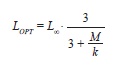
<body><![CDATA[and L<sub style="font-style: italic;">S</sub> was described using a     reduced major axis model (RMA)     in the form:    <br> <br style="font-family: verdana;"> </span></font>     <div style="text-align: center;"><img alt=""  src="/img/revistas/rbt/v60n3/a26f1.jpg"  style="width: 88px; height: 41px;"><br style="font-family: verdana;"> </div>     <div style="text-align: center;"><font size="2"><span  style="font-family: verdana;">where <span style="font-style: italic;">a</span> and <span style="font-style: italic;">b</span> are regression parameters.</span></font><br style="font-family: verdana;"> </div> <br style="font-family: verdana;">     <div style="text-align: center;"><font size="2"><span  style="font-family: verdana;">The power law equation    <br>     <br> <img alt="" src="/img/revistas/rbt/v60n3/a26f2.jpg"  style="width: 96px; height: 41px;">    <br> <br style="font-family: verdana;"> </span></font></div> <font size="2"><span style="font-family: verdana;">where <span  style="font-style: italic;">a</span> and <span  style="font-style: italic;">b</span> are regression parameters and <span style="font-style: italic;">L</span> is length, was used to describe the relation between <span style="font-style: italic;">L<sub>S</sub></span> and <span  style="font-style: italic;">W<sub>T</sub></span> and that between <span  style="font-style: italic;">L<sub>T</sub></span> and <span  style="font-style: italic;">W<sub>T</sub></span>. The model was fitted to the data using non-linear weighted least-squares using the statistical package R (R Development Core Team 2011). Intervals of 95% confidence (CI) of parameters <span style="font-style: italic;">a</span> and <span  style="font-style: italic;">b</span> were obtained by bootstrapping each data set 4 999 times. Finally, we estimated L<sub>OPT</sub> following Beddington &amp; Cooke (1983) and (1992),    ]]></body>
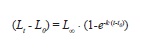
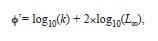
<body><![CDATA[<br>     <br> </span></font>     <div style="text-align: center;"><font size="2"><span  style="font-family: verdana;"><img alt=""  src="/img/revistas/rbt/v60n3/a26f3.jpg"  style="width: 126px; height: 65px;"></span></font><font size="2"><span  style="font-family: verdana;"></span></font></div> <font size="2"><span style="font-family: verdana;"></span></font><font  size="2"><span style="font-family: verdana;">    <br> where <span style="font-style: italic;">M</span> is the average natural mortality (0.5 in the current samples), L<sub>&#8734;</sub> is the infinite length, <span style="font-style: italic;">k</span> is the curvature of von Bertalanffy&#8217;s model (eq. 4). Also estimated was<span  style="font-style: italic;"> L</span><sub style="font-style: italic;">OPT</sub> using the approximation of Froese &amp; Binohlan (2000).</span></font><br  style="font-family: verdana;"> <font size="2"><span style="font-family: verdana;">Optimal fisheries should exploit fish within the approximate range <span style="font-style: italic;">L<sub>OPT</sub> &plusmn;</span>10%: smaller fish are too young or immature and larger fish are mega-spawners (Froese 2004).</span></font><br  style="font-family: verdana;"> <font size="2"><span style="font-family: verdana;">Length frequency histograms with bins of 1cm were prepared. von Bertalanffy&#8217;s models (Sparre &amp; Venema 1998, Essington <span style="font-style: italic;">et al</span>. 2001) in the form:</span></font>    <br>     <div style="text-align: center;"><img alt=""  src="/img/revistas/rbt/v60n3/a26f4.jpg"  style="width: 145px; height: 55px;"><br style="font-family: verdana;"> </div> <font size="2"><span style="font-family: verdana;">were fitted to monthly histogram sets of <span style="font-style: italic;">L<sub>S</sub></span> obtained from males and females, and to monthly histogram sets of <span style="font-style: italic;">L<sub>S</sub></span> and <span  style="font-style: italic;">L<sub>T</sub></span> obtained from pooled samples of both sexes.</span></font><br style="font-family: verdana;"> <font size="2"><span style="font-family: verdana;"></span></font>    <br> <font size="2"><span style="font-family: verdana;">Green Jacks were assumed to start growing at lengths of 0cm (<span style="font-style: italic;">L<sub>O</sub></span>=0) at year 0 (<span style="font-style: italic;">t<sub>O</sub></span>=0), but rounding-off errors produced small values of <span style="font-style: italic;">t<sub>O</sub></span>. Models were fitted using the ELEFAN I procedure implemented in the software program FAO-ICLARM Fish Assessment Tools (FiSAT II, ver. 1.2.2) (Gayanilo <span  style="font-style: italic;">et al</span>. 2005). The best value of k was reported from the scan method, L&#8734; as the ratio of the instantaneous rate of mortality<span style="font-style: italic;"> Z</span> and<span style="font-style: italic;"> k</span> (Powell 1979, Wetherall 1986), and the two best estimates of <span style="font-style: italic;">L<sub>&#8734;</sub></span> and <span style="font-style: italic;">k</span> from the surface response analysis (Sparre &amp; Venema 1998).</span></font>    <br> <font size="2"><span style="font-family: verdana;"></span></font><br  style="font-family: verdana;"> <font size="2"><span style="font-family: verdana;"></span></font><font  size="2"><span style="font-family: verdana;">The growth performance index<sub><img alt=""  src="/img/revistas/rbt/v60n3/a26f5.jpg"  style="width: 22px; height: 23px;"></sub>was calculated as:    <br>     <br> </span></font>     ]]></body>
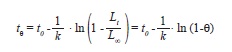
<body><![CDATA[<div style="text-align: center;"><font size="2"><span  style="font-family: verdana;"></span></font><img alt=""  src="/img/revistas/rbt/v60n3/a26f6.jpg"  style="width: 158px; height: 41px;">    <br>     <div style="text-align: justify;">implemented in FiSAT II, ver. 1.2.2 (Gayanilo <span style="font-style: italic;">et al</span>. 2005), and longevity, the time required to achieve 95% of <span style="font-style: italic;">L<sub>&#8734;</sub></span>, following:    <br> </div> </div> <font size="2"><span style="font-family: verdana;">    <br> </span></font>     <div style="text-align: center;"><font size="2"><span  style="font-family: verdana;"></span></font><img alt=""  src="/img/revistas/rbt/v60n3/a26f7.jpg"  style="width: 232px; height: 52px;"><br style="font-family: verdana;"> </div> <font size="2"><span style="font-family: verdana;">    <br>     where &#952;=0.95 (Taylor     1958). All     chronological ages were obtained from eq. 6 using parameters from     ]]></body>
<body><![CDATA[pooled data of both sexes.</span></font><br      style="font-family: verdana;">     <br style="font-family: verdana;">     <font size="2"><span style="font-family: verdana;">The age distribution     and growth     rate of Green Jacks were assumed to be stable, so <span      style="font-style: italic;">Z</span> was approximated     using length-converted catch curves and the methods of Jones and van     Zalinge (1981), Hoenig (1982), Hoenig &amp; Lawing (1982), Beverton     &amp; Holt (1956), and Ault &amp; Erhardt (1991), and Erhardt &amp;     ]]></body>
<body><![CDATA[Ault (1992). The natural mortality coefficient M was estimated using     the Rikhter &amp; Efanov&#8217;s (1976) and Taylor&#8217;s method (1958, 1960), and     Pauly&acute;s empirical formula (1980, 1983, 1984), using 27.4&deg;C as     the average surface temperature of the Gulf of Panama. All these     methods, apart from Taylor&#8217;s, were implemented in FiSAT II, ver. 1.2.2     (Gayanilo <span style="font-style: italic;">et al</span>. 2005).     Pauly&#8217;s <span style="font-style: italic;">M</span> was multiplied by     0.8 (Pauly 1983) as     Green Jacks are a schooling species (Allen &amp; Robertson 1994). The     fishing mortality coefficient <span style="font-style: italic;">F</span>,     ]]></body>
<body><![CDATA[was calculated as<span style="font-style: italic;"> F=Z-M</span> and     the     exploitation ratio as <span style="font-style: italic;">E=F/Z</span>     (Sparre &amp; Venema 1998).</span></font><br      style="font-family: verdana;">     <br style="font-family: verdana;">     <font size="2"><span style="font-family: verdana;"><span      style="font-weight: bold;">Age structure and maturity:</span> The     monthly age structure of the stock was estimated using Bhattacharya&#8217;s     method on histograms of <span style="font-style: italic;">L<sub>S</sub></span>.     ]]></body>
<body><![CDATA[Average values of <span style="font-style: italic;">L<sub>S</sub></span>     transformed to <span style="font-style: italic;">L<sub>T</sub></span>     were     used to estimate mean age groups using NORMSEP. Both methods were also     implemented in FiSAT II, ver. 1.2.2 (Gayanilo <span      style="font-style: italic;">et al</span>. 2005).</span></font><br      style="font-family: verdana;">     <font size="2"><span style="font-family: verdana;">Green Jacks were     sexed by the     macroscopic appearance of their gonads. Monthly, assessment was made of     ]]></body>
<body><![CDATA[the ratio males: females and the length of the smallest mature male and     female in the samples, <span style="font-style: italic;">ML<sub>S</sub></span>.     Fully mature individuals were recognized by     the presence of gametes, enlarged gonads, and tissue rich in blood     vessels. Testes ready to spawn were whitish and triangular in     cross-section and oviducts were enlarged and full of eggs.</span></font><br      style="font-family: verdana;">     <br style="font-family: verdana;">     <font size="2"><span style="font-family: verdana;">Cumulative frequency     distributions     ]]></body>
<body><![CDATA[were used to estimate the <span style="font-style: italic;">L<sub>S</sub></span>     at the 50<sup>th</sup> percentile (<span style="font-style: italic;">L<sub>S</sub>50</span>),     average     standard length at which half of males and females in the population     were mature. Intervals of 95% confidence of <span      style="font-style: italic;">L<sub>S</sub>50</span> were estimated by     randomly sampling 2000 times each dataset. Only the largest CI is     reported.</span></font><br style="font-family: verdana;">     <br style="font-family: verdana;">     <font size="2"><span style="font-family: verdana;">Gonads were weighed     ]]></body>
<body><![CDATA[to the nearest     0.01g using an ACCULAB weighing scale, model VI-200. The ratio between     the gonadic weight (oviducts in females) <span      style="font-style: italic;">W<sub>G</sub></span>, and <span      style="font-style: italic;">W<sub>T</sub></span>, times 100, was     used as the gonadic index <span style="font-style: italic;">I<sub>G</sub></span>.     The size at first massive spawning or at     first maturity <span style="font-style: italic;">L<sub>m</sub></span>,     was that at which the maximum values per month of <span      style="font-style: italic;">I<sub>G</sub></span>     ]]></body>
<body><![CDATA[increased abruptly.</span></font><br style="font-family: verdana;">     <br style="font-family: verdana;">     <font size="2"><span style="font-family: verdana;">The associations     between the     monthly arcsine- transformed proportions of fully mature stages and <span      style="font-style: italic;">I<sub>G</sub></span>     monthly maxima, and the monthly averages of sea surface temperature     (SST, Celsius degrees) and chlorophyll concentrations (mg/m<sup>3</sup>)     from the     Gulf of Panama, recorded between 1999 and 2003 (Agujetas 2005), were     ]]></body>
<body><![CDATA[tested using the Pearson&#8217;s product-moment correlation coefficient     (Sokal &amp; Rohlf 1995).</span></font><br style="font-family: verdana;">     <br style="font-family: verdana;">     <font size="2"><span style="font-family: verdana;"><span      style="font-weight: bold;">Green Jack&#8217;s fisheries:</span> Values of     the annual production of Green Jack in Panama from 1994-2006 were     obtained from Autoridad Mar&iacute;tima de Panam&aacute; (Anonymous     1999) and Direcci&oacute;n de Estad&iacute;stica y Censo (Anonymous     2010a). Catch per unit effort (CPUE) was estimated using two different     proxies of effort: a) the number of boats of the semi-industrial and     ]]></body>
<body><![CDATA[artisanal fleets from 1994-2007 (CPUE1), and b) the number of boats of     the semi-industrial and artisanal fleets in Panamanian coastal     provinces on the Pacific Ocean (i.e. Panam&aacute;, Cocl&eacute;,     Herrera, Dari&eacute;n, Veraguas y Chiriqu&iacute;) from 2000-2004     (CPUE2) (Anonymous 2010b). The scarce data available suggest an     increasing number of fishing boats per year, between 1994 and 2007.     Missing values within this interval were approximated using linear     regression models (CPUE1: <span style="font-style: italic;">boats</span>=391&middot;year+776198,     R<sup>2</sup>=0.98, CPUE2:<span style="font-style: italic;">     boats</span>=584&middot;year, R<sup>2</sup>=0.98).</span></font><br     ]]></body>
<body><![CDATA[ style="font-family: verdana;">     <br style="font-family: verdana;">     <font size="2"><span style="font-family: verdana;">RMA linear models,     such as those in     eq.1, were used to describe the association between the annual minima,     maxima, and average of the Multivariate ENSO/LNSO Index (MEI) and the     CPUE, from December 1994 to December 2007. Only results from the models     that best fitted the data were reported. Positive values of MEI were     associated with the occurrence of ENSO events, while negative values     with the occurrence of LNSO events (Wolter &amp; Timlin 1993, 1998).     ]]></body>
<body><![CDATA[CPUE was standardized to standardized values, CPUEs, and to their     natural logarithms plus a constant 1.5. Bimonthly MEI values were     aligned to those of CPUEs by matching month 1-month 2 in the former to     month 2 in the latter.</span></font><br style="font-family: verdana;">     <br style="font-family: verdana;">     <font style="font-weight: bold;" size="3"><span      style="font-family: verdana;">Results</span></font><br      style="font-family: verdana;">     <br style="font-family: verdana;">     <font size="2"><span style="font-family: verdana;"><span     ]]></body>
<body><![CDATA[ style="font-weight: bold;">Biometrics, growth and mortality:</span> A     total of 2 370 male and 2 620 female <span style="font-style: italic;">C.     caballus</span> were examined. The     smallest fish in the sample measured <span style="font-style: italic;">L<sub>S</sub></span>=12.7cm     (<span style="font-style: italic;">L<sub>T</sub></span>=17.0cm; 0.9-1.0     years) and the largest <span style="font-style: italic;">L<sub>S</sub></span>=45.0cm     (56.5cm; 7.8&#8211;8.5 years). The average     <span style="font-style: italic;">L<sub>S</sub></span> in males was     28.5&plusmn;5.2cm (<span style="font-style: italic;">L<sub>T</sub></span>     36.4&plusmn;6.3cm) and in females 28.1&plusmn;5.3cm     ]]></body>
<body><![CDATA[(35.8&plusmn;6.5cm), while that of the full sample (&plusmn;1 standard     deviation)     was <span style="font-style: italic;">L<sub>S</sub></span>=28.3&plusmn;5.3cm     (<span style="font-style: italic;">L<sub>T</sub></span>     =36.1&plusmn;6.4cm, 2.5-2.8 years, 495g). The average     wet weight of males was 548&plusmn;244g (13.4-1 588g) and that of     females was     525&plusmn;250g (85.0-1 644g).</span></font><br      style="font-family: verdana;">     <br style="font-family: verdana;">     ]]></body>
<body><![CDATA[<font size="2"><span style="font-family: verdana;">Regression     parameters within sexes     and within the pooled sample of both sexes were positive and     significant. Models describing the linear associations of <span      style="font-style: italic;">LS</span> and <span      style="font-style: italic;">LT</span>     (<a href="/img/revistas/rbt/v60n3/a26i1.jpg">Fig. 1A</a>) explained a     large proportion of the data variance (R<sup>2</sup>=97%,     Table 1). Parameter differences between sexes in models describing the     non-linear associations of <span style="font-style: italic;">LS</span>     ]]></body>
<body><![CDATA[and <span style="font-style: italic;">WT</span> (<a      href="/img/revistas/rbt/v60n3/a26i1.jpg">Fig. 1B</a>, Table 1)     were     significant. However, those obtained from <span      style="font-style: italic;">LT</span> and <span      style="font-style: italic;">WT </span>(<a      href="/img/revistas/rbt/v60n3/a26i1.jpg">Fig. 1C</a>, <a      href="/img/revistas/rbt/v60n3/a26t1.gif">Table 1</a>),     were not.</span></font><br style="font-family: verdana;">     <font size="2"><span style="font-family: verdana;">    ]]></body>
<body><![CDATA[<br> Values of <span style="font-style: italic;">L<sub>OPT</sub></span>&plusmn;10% from eq. 3 were 31.8&plusmn;3.2cm for males and 32.6&plusmn;3.3cm for females. Estimates of <span style="font-style: italic;">L<sub>OPT</sub></span>&plusmn;10% in the pooled data of both sexes were 32.2&plusmn;3.2cm in the <span  style="font-style: italic;">L<sub>S</sub></span> data set, and 38.9&plusmn;3.9cm in the <span  style="font-style: italic;">L<sub>T</sub></span> data set (<a  href="/img/revistas/rbt/v60n3/a26i2.jpg">Fig. 2A</a>,<a  href="/img/revistas/rbt/v60n3/a26i2.jpg">B</a>, <a href="/img/revistas/rbt/v60n3/a26t2.gif">Table 2</a>). Values of <span style="font-style: italic;">L<sub>OPT</sub></span> from Froese &amp; Binholan (2000) were 29.1cm for males, 30.8cm for females, 29.8cm for the pooled sample of the <span  style="font-style: italic;">L<sub>S</sub></span> data set, and 37.4cm for the pooled sample of the <span  style="font-style: italic;">L<sub>T</sub></span> data set. Ranges of <span  style="font-style: italic;">L<sub>OPT</sub></span> of male and female data were similar to that of the pooled sample, so only the latter were considered for further analyses. According to the <span  style="font-style: italic;">L<sub>S</sub></span> data set, 68% of all the fish in the sample had lengths within the corresponding optimal ranges, and 6% were mega-spawners (<a  href="/img/revistas/rbt/v60n3/a26i2.jpg">Fig. 2A</a>). In the <span style="font-style: italic;">L<sub>T</sub></span> data set, corresponding estimates were 68% and 15% (<a  href="/img/revistas/rbt/v60n3/a26i2.jpg">Fig. 2B</a>).</span></font><br  style="font-family: verdana;"> <br style="font-family: verdana;"> <font size="2"><span style="font-family: verdana;">Parameters of the von Bertalanffy models, growth performance indexes, and estimates of longevity are shown in <a href="/img/revistas/rbt/v60n3/a26t2.gif">table 2</a>, while plots of the growth curves are shown in <a  href="/img/revistas/rbt/v60n3/a26i3.jpg">figure </a></span></font><font  size="2"><span style="font-family: verdana;"><a  href="/img/revistas/rbt/v60n3/a26i3.jpg">3</a>. Three independent estimations of <span style="font-style: italic;">L<sub>&#8734;</sub></span> within sex groups were all similar, and 2.6 to 4.0cm larger in females than in males. Similarities were also found between the first two best estimates of k, 0.33 to 0.36/year from <span  style="font-style: italic;">L<sub>S</sub></span> data, and 0.32/year from <span style="font-style: italic;">L<sub>T</sub></span> data. Differences between<span style="font-style: italic;"> t<sub>O</sub></span> and 0 were almost negligible in the model fitted to values of <span style="font-style: italic;">L<sub>S</sub></span>, as they represented intervals not larger than 13 days. However, differences between<span  style="font-style: italic;"> t<sub>O</sub></span> and 0 were as high as 23.3 days in the model fitted to values of <span  style="font-style: italic;">L<sub>T</sub></span>.</span></font><br  style="font-family: verdana;"> <font size="2"><span style="font-family: verdana;">Corresponding estimates of <span style="font-style: italic;">L<sub>O</sub></span> were 0.55 to 1.22cm (<a href="/img/revistas/rbt/v60n3/a26t2.gif">Table 2</a>).    <br>     <br> </span></font><font size="2"><span style="font-family: verdana;">The growth performance index, a linear function of the logarithmic transformations of<span  style="font-style: italic;"> L<sub>&#8734;</sub></span> and <span  style="font-style: italic;">k</span> (eq. 5), was similar between all sex groups within the <span  style="font-style: italic;">L<sub>S</sub></span> data set (2.89-2.92/year) and slightly smaller than the performance index obtained from the <span style="font-style: italic;">L<sub>T</sub></span> data set (3.05/year). Estimates of longevity were also very similar between data sets and sex groups, and ranged between 8.3-9.4 years (<a href="/img/revistas/rbt/v60n3/a26t2.gif">Table 2</a>).</span></font>    <br>     <font size="2"><span style="font-family: verdana;"></span></font><br      style="font-family: verdana;">     <font size="2"><span style="font-family: verdana;"></span></font><font      size="2"><span style="font-family: verdana;">Estimates     of <span style="font-style: italic;">Z</span> from     length-converted catch curves were 2.0-.9/year in <span     ]]></body>
<body><![CDATA[ style="font-style: italic;">L<sub>S</sub></span> and <span      style="font-style: italic;">L<sub>T</sub></span> data sets,     respectively. Those obtained from the Jones and van Zalinge&#8217;s method     (1981), 2.0 and 1.8/year, closely matched them. However, the Hoenig&#8217;s     method (1982, Hoenig &amp; Lawing 1982) produced values of Z equal to     1.0 and 1.1/year, respectively, as low as half the previous estimates.     Those from the Beverton &amp; Holt&#8217;s (1956), and Ault &amp; Erhardt&#8217;s     methods (1991, Erhardt &amp; Ault 1992) were between 0.1-0.2 units off     from Hoenig&#8217;s (1982, Hoenig &amp; Lawing 1982) estimates (<a      href="/img/revistas/rbt/v60n3/a26t3.gif">Table 3</a>).</span></font><br     ]]></body>
<body><![CDATA[ style="font-family: verdana;">     <br style="font-family: verdana;">     <font size="2"><span style="font-family: verdana;">The Rikhter &amp;     Efanov&#8217;s (1976)     method produced estimates of M=0.7/year in the <span      style="font-style: italic;">L<sub>S</sub></span> data set (<span      style="font-style: italic;">L<sub>m</sub></span>=26.5cm;     2.3 years) and <span style="font-style: italic;">M</span> = 0.6/ year     in the <span style="font-style: italic;">L<sub>T</sub></span> data set     (33cm, 2.5 years).     ]]></body>
<body><![CDATA[Taylor&#8217;s (1958, 1960) estimates of<span style="font-style: italic;"> M</span>     were 0.3/year in all data sets,     and Pauly&#8217;s (1980, 1983, 1984) were 0.6/year (at 27.4&deg;C) (<a      href="/img/revistas/rbt/v60n3/a26t3.gif">Table 3</a>).     </span></font><br style="font-family: verdana;">     <br style="font-family: verdana;">     <font size="2"><span style="font-family: verdana;">In the <span      style="font-style: italic;">L<sub>S</sub></span> data set,     estimates of F     obtained from the catch curve mortality ranged between 1.3-1.7/year,     ]]></body>
<body><![CDATA[while those from Hoening&#8217;s method (1982, Hoenig &amp; Lawing 1982)     ranged between 0.5-0.8/year. These values of <span      style="font-style: italic;">F</span> were similar to those in     the <span style="font-style: italic;">L<sub>T</sub></span> data set,     as they ranged from 1.3-1.6/year and from     0.4-0.7/year,-respectively. High values of <span      style="font-style: italic;">F</span> matched high values of<span      style="font-style: italic;"> E</span>     and ranged between 0.4-0.8 (<a href="/img/revistas/rbt/v60n3/a26t3.gif">Table     3</a>).</span></font><br style="font-family: verdana;">     ]]></body>
<body><![CDATA[<br style="font-family: verdana;">     <font size="2"><span style="font-family: verdana;"><span      style="font-weight: bold;">Age structure and maturity:</span>     Bhattacharya&#8217;s method suggests the presence of eight age groups from     the Green Jack sample (A through H, in <span      style="font-style: italic;">L<sub>S</sub></span>) (<a      href="/img/revistas/rbt/v60n3/a26t4.gif">Table 4</a>). Groups A     - E were     also found by NORMSEP (in<span style="font-style: italic;"> L<sub>T</sub></span>),     but NORMSEP pooled Bhattacahrya&#8217;s F and     ]]></body>
<body><![CDATA[G into a single group, and was unable to discriminate group H.     Chronological ages in groups A through E in both analyses were     different by no more than 2.5 months (i.e. maximum difference found in     Group E) (<a href="/img/revistas/rbt/v60n3/a26t4.gif">Table 4</a>).</span></font><br      style="font-family: verdana;">     <br style="font-family: verdana;">     <font size="2"><span style="font-family: verdana;">Male to female     ratios ranged from     1:1.64 in July to 1:0.77 in May, averaging 1:1.28&plusmn;0.98 per month     during the sampling period. The sex ratio of the full sample was 1:1.1.     ]]></body>
<body><![CDATA[The smallest mature male found was <span style="font-style: italic;">ML<sub>S</sub></span>=18.5cm     long (1.4 years, 146g)     and the smallest mature female <span style="font-style: italic;">ML<sub>S</sub></span>=16.8cm     (1.2 years, 111g). The     average standard lengths at which half of the population was mature in     males and females were very similar, <span style="font-style: italic;">L<sub>S</sub></span>50=30.5&plusmn;0.1cm     (<span style="font-style: italic;">L</span><sub      style="font-style: italic;">T</sub>50=38.8cm,     2.9-3.2 years) and <span style="font-style: italic;">L<sub>S</sub></span>50=30.2&plusmn;0.1cm     (38.7cm, 2.8-3.2 years)     ]]></body>
<body><![CDATA[respectively (<a href="/img/revistas/rbt/v60n3/a26i4.jpg">Fig. 4A</a>,<a      href="/img/revistas/rbt/v60n3/a26i4.jpg">B</a>).<br      style="font-family: verdana;">     </span></font><br style="font-family: verdana;">     <font size="2"><span style="font-family: verdana;">The distribution of     <span style="font-style: italic;">I<sub>G</sub></span> maxima in     relation to <span style="font-style: italic;">L<sub>S</sub></span> was     similar in both sexes. Low values of <span style="font-style: italic;">I<sub>G</sub></span>     maxima (1 or     2) were common among fish as large as <span style="font-style: italic;">L<sub>S</sub></span>=26cm.     ]]></body>
<body><![CDATA[<span style="font-style: italic;">I<sub>G</sub></span> maxima increased     abruptly, up to values of 9 and 10 in males and females attaining<span      style="font-style: italic;">     L<sub>S</sub></span>=<span style="font-style: italic;">L<sub>m</sub></span>=26.5cm     and larger, and <span style="font-style: italic;">L<sub>T</sub></span>=<span      style="font-style: italic;">L<sub>m</sub></span>=33.0cm and larger     (2.3&#8211;2.5 years). </span></font><br style="font-family: verdana;">     <font size="2"><span style="font-family: verdana;">In fish larger than     LS=32.0cm     (<span style="font-style: italic;">L<sub>T</sub></span>=43.0cm), <span     ]]></body>
<body><![CDATA[ style="font-style: italic;">I<sub>G</sub></span> maxima decreased     gradually to four in fish of <span style="font-style: italic;">L<sub>S</sub></span>=41cm     (<span style="font-style: italic;">L<sub>T</sub></span>=50.0cm) and     larger (<a href="/img/revistas/rbt/v60n3/a26i4.jpg">Fig. 4C</a>,<a      href="/img/revistas/rbt/v60n3/a26i4.jpg">D</a>). The age at first     maturity of the     pooled sample was <span style="font-style: italic;">L<sub>m</sub></span>=26.8cm     in the <span style="font-style: italic;">L<sub>S</sub></span> data set     (20.0-35.9cm), and     <span style="font-style: italic;">L<sub>m</sub></span>=32.6cm in the <span     ]]></body>
<body><![CDATA[ style="font-style: italic;">L<sub>T</sub></span> data set     (24.3-43.7cm). Of all the fish in the     sample, 10-13% were immature or smaller than the estimates of <span      style="font-style: italic;">L<sub>m</sub></span> (<a      href="/img/revistas/rbt/v60n3/a26i4.jpg">Fig.     4C</a>,<a href="/img/revistas/rbt/v60n3/a26i4.jpg">D</a>).</span></font><br      style="font-family: verdana;">     <br style="font-family: verdana;">     <font size="2"><span style="font-family: verdana;">The reproduction of     Green Jacks is     ]]></body>
<body><![CDATA[associated with the upwelling events that annually occur in the Gulf of     Panama. Monthly SST averages were inversely correlated to monthly <span      style="font-style: italic;">I<sub>G</sub></span>     maxima (Pearson&#8217;s r=-0.67, p&#8804;0.018 males; -0.80, p&#8804;0.002 females) and     to proportions of mature individuals (0.74, p&#8804;0.006 males; -0.72,     p&#8804;0.009 females). Monthly chlorophyll surface concentrations were     directly correlated to<span style="font-style: italic;"> I<sub>G</sub></span>     maxima (0.77, p&#8804;0.001 males; 0.918, p&#8804;0.003     females) and to the proportion of mature individuals (0.91, p&#8804;0.001     males; 0.88, p&#8804;0.001 females). The largest values of <span     ]]></body>
<body><![CDATA[ style="font-style: italic;">I<sub>G</sub></span> and mature     individuals occurred approximately three months before the local     upwelling reached its maximum, a time when the lowest values of SST and     the highest concentrations of chlorophyll occurred (<a      href="/img/revistas/rbt/v60n3/a26i5.jpg">Fig. 5A</a>,<a      href="/img/revistas/rbt/v60n3/a26i5.jpg">B</a>,<a      href="/img/revistas/rbt/v60n3/a26i5.jpg">C</a>). <br      style="font-family: verdana;">     </span></font><font size="2"><span style="font-family: verdana;"><span      style="font-style: italic;">I<sub>G</sub></span> maxima and the     ]]></body>
<body><![CDATA[proportion of     mature individuals changed synchronously in relation to environmental     variables (<a href="/img/revistas/rbt/v60n3/a26i5.jpg">Fig. 5A</a>,<a      href="/img/revistas/rbt/v60n3/a26i5.jpg">B</a>,<a      href="/img/revistas/rbt/v60n3/a26i5.jpg">C</a>). Male and female     annual values in <span style="font-style: italic;">I<sub>G</sub></span>     maxima     peaked in December for males (10.5), in January for females (10.6), in     April (6.9 males: 5.4 females), and in September (5.0 males: 4.3     females). Notable values of <span style="font-style: italic;">I<sub>G</sub></span>     ]]></body>
<body><![CDATA[maxima (&gt;0.25) also occurred in     January, February, August, and October (<a      href="/img/revistas/rbt/v60n3/a26i5.jpg">Fig. 5B</a>). The highest     proportion of individuals with fully mature gonads occurred in December     2005 (0.98 males: 0.88 females) and April 2006 (0.42:0.36) and other     high values (&gt;0.30) occurred also in January and February. Mature     individuals (1-25% of the current sample) were found every month, and     the monthly proportion of mature males and females was approximately     constant during the sampling period (<a      href="/img/revistas/rbt/v60n3/a26i5.jpg">Fig. 5C</a>).<br     ]]></body>
<body><![CDATA[ style="font-family: verdana;">     </span></font><br style="font-family: verdana;">     <font size="2"><span style="font-family: verdana;"><span      style="font-weight: bold;">Green Jack&#8217;s fisheries:</span> The CPUE of     Green Jacks was significantly associated to MEI. Standardized values of     CPUE1s and their natural logarithms were best described by the minimum     annual values of MEI (CPUE1s= [1.17&plusmn;0.85] + MEI     &#8729;[2.34&plusmn;1.16],     R<sup>2</sup>=0.54; <span style="font-style: italic;">Ln</span> [     CPUE1s + 1.5] = [1.02&plusmn;0.28] + MEI &#8729; [1.65&plusmn;0.62],     ]]></body>
<body><![CDATA[R<sup>2</sup>=0.54) (<a href="/img/revistas/rbt/v60n3/a26i5.jpg">Fig. 5D</a>,<a      href="/img/revistas/rbt/v60n3/a26i5.jpg">E</a>,<a      href="/img/revistas/rbt/v60n3/a26i5.jpg">F</a>). Models using MEI     minimum annual     values to     predict CPUE2s and those using MEI annual averages to predict CPUE1s,     explained poorly the variability of the data sets (R<sup>2</sup>&lt;0.31).</span></font><br      style="font-family: verdana;">     <br style="font-family: verdana;">     <font style="font-weight: bold;" size="3"><span     ]]></body>
<body><![CDATA[ style="font-family: verdana;">Discussion</span></font><br      style="font-family: verdana;">     <br style="font-family: verdana;">     <font size="2"><span style="font-family: verdana;">Within its range of     distribution,     the Green Jack is one of the most abundant pelagic fish of commercial     interest in the Central Eastern Pacific. From 1994-2002, its yearly     average production in Panama ranged between 159- 850t/year     (446&plusmn;216t/year) and based on the available underestimated local     fishing statistics. Despite the sudden reduction of catches in 1994-95     ]]></body>
<body><![CDATA[(850-341t), in 1998-99 (469-159t), and in 2003-04 (1 436-737t), Panama     increased its yearly production 3.4 times in 2006-08 (477-1 640t),     boosting its average production to 1 234&plusmn;656t/year during the     same     period (Anonymous 1999, 2010a).</span></font><br      style="font-family: verdana;">     <br style="font-family: verdana;">     <font size="2"><span style="font-family: verdana;">The Las Perlas     Archipelago was the     most important fishing ground of Green Jacks until 2007. By the time     ]]></body>
<body><![CDATA[Law N&ordm;18 was approved by the Assembly of Panama in May of that     year, semi-industrial fisheries operating in the Archipelago were     responsible for approximately 70% of the catches.</span></font><br      style="font-family: verdana;">     <br style="font-family: verdana;">     <font size="2"><span style="font-family: verdana;">Even although the     production of     Green Jack in the state of Colima, Pacific Mexico, is of one order of     magnitude smaller than that of Panama it has been monitored since the     1980&#8217;s (Cruz-Romero <span style="font-style: italic;">et al</span>.     ]]></body>
<body><![CDATA[1993, Espino-Barr 2000,     God&iacute;nez-Dom&iacute;nguez <span style="font-style: italic;">et al</span>.     2000, Navarro- Rodr&iacute;guez     2000, Rojo-V&aacute;zquez <span style="font-style: italic;">et al</span>.     2001, Gallardo-Cabello <span style="font-style: italic;">et al</span>.     2006a,     b, 2007). From 1980-2002, Green Jack catches ranged between 9-250t/year     (93t on average) and in 2007 they represented 6% of all the production     in this Mexican state, only surpassed by that of the highly profitable     snappers (Lutjanidae) (Gallardo- Cabello <span     ]]></body>
<body><![CDATA[ style="font-style: italic;">et al</span>. 2007). The average body     length of Green Jacks from Colima, <span style="font-style: italic;">L<sub>S</sub></span>=23.0cm     (<span style="font-style: italic;">L<sub>T</sub></span>=29cm), and     their <span style="font-style: italic;">L<sub>&#8734;</sub></span>     (47.0-68.0cm) (estimated using LS), did not show any significant trend     between 1982-1997 (Espino-Barr 2000).</span></font><br      style="font-family: verdana;">     <font size="2"><span style="font-family: verdana;">The average length     remained     slightly smaller during this period of time than the average LS of     ]]></body>
<body><![CDATA[Green Jacks from Las Perlas recorded in this study, <span      style="font-style: italic;">L<sub>S</sub></span>=28.3</span></font><font      size="2"><span style="font-family: verdana;">&plusmn;</span></font><font      size="2"><span style="font-family: verdana;">5.3cm     (<span style="font-style: italic;">L<sub>T</sub></span>=36.1&plusmn;6.4).</span></font><br      style="font-family: verdana;">     <br style="font-family: verdana;">     <font size="2"><span style="font-family: verdana;">Old fish play a very     important role     in the long-term survival of populations, as they are reservoirs of     ]]></body>
<body><![CDATA[desirable genes and a safeguard to recruitment failure. They are more     fecund than younger individuals, produce larger eggs with better     chances of survival, and their presence is a measure of the     population&#8217;s resilience (Froese 2004). The largest Green Jacks from Las     Perlas measured&nbsp; <span style="font-style: italic;">L<sub>S</sub></span>=45.0cm     (<span style="font-style: italic;">L<sub>T</sub></span>=56.0cm, 8.2-7.8     years, 1 644g) and     were also larger than those from Colima, <span      style="font-style: italic;">L<sub>S</sub></span>=44.0cm (<span      style="font-style: italic;">L<sub>T</sub></span>=53cm, 1 689g)     ]]></body>
<body><![CDATA[(Espino-Barr 2000), but both were smaller than the record sizes     attributed to the species; 70cm total length (Robertson &amp; Allen     2008) and 55.0cm fork length (Froese &amp; Pauly 2010). Stocks with a     percentage of mega-spawners lower than 20% are very susceptible to the     effects of random events and massive recruitment failures (Froese     2004). </span></font><font size="2"><span style="font-family: verdana;">Only     6-15% of Green Jacks in Las     Perlas sample were mega-spawners.</span></font><br      style="font-family: verdana;">     <br style="font-family: verdana;">     ]]></body>
<body><![CDATA[<font size="2"><span style="font-family: verdana;">The smallest Green     Jacks from Las     Perlas, measuring <span style="font-style: italic;">L<sub>S</sub></span>=12.7cm     (<span style="font-style: italic;">L<sub>T</sub></span>=17.0cm, 0.9-1.0     years, 50g), were     smaller than the smallest from Colima collected between 1982-1998     (<span style="font-style: italic;">L<sub>S</sub></span>=14cm, <span      style="font-style: italic;">L<sub>T</sub></span>=19cm) (Espino-Barr     2000). Fish measuring between     16.8-18.5cm (<span style="font-style: italic;">ML<sub>S</sub></span>)     ]]></body>
<body><![CDATA[were the youngest mature Green Jacks from the     archipelago, but most individuals matured simultaneously and massively     after attaining <span style="font-style: italic;">L<sub>m</sub></span>=26.5cm     (in <span style="font-style: italic;">L<sub>S</sub></span> data set)     and <span style="font-style: italic;">L<sub>m</sub></span>=33.0cm (in     the <span style="font-style: italic;">L<sub>T</sub></span>     data set) (2.3-2.5 years). All estimates of <span      style="font-style: italic;">L<sub>m</sub></span> from Las Perlas were     also similar to those from Colima. Typically, <span      style="font-style: italic;">L<sub>m</sub></span> is lower than the     ]]></body>
<body><![CDATA[size     at which half of the population is mature or <span      style="font-style: italic;">L<sub>S</sub></span>50, and lower than <span      style="font-style: italic;">L<sub>OPT</sub></span> &plusmn; 10%. In     Las Perlas samples, 10-13% of all fish were smaller than<span      style="font-style: italic;"> Lm</span>     meaning that between 2005 and 2006, one in every 10 Green Jacks caught     in fisheries from Las Perlas never had a chance to reproduce.</span></font><br      style="font-family: verdana;">     <br style="font-family: verdana;">     ]]></body>
<body><![CDATA[<font size="2"><span style="font-family: verdana;">Gallardo-Cabello <span      style="font-style: italic;">et al</span>. (2007) also     estimated parameters for the power law relationship between <span      style="font-style: italic;">L<sub>T</sub></span> and <span      style="font-style: italic;">W<sub>T</sub></span>     of Green Jacks from Colima, <span style="font-style: italic;">a</span>=0.012     and <span style="font-style: italic;">b</span>=2.972 (N=747). In     samples     from Las Perlas, parameters <span style="font-style: italic;">a</span>=0.025     and <span style="font-style: italic;">b</span>=2.77, were highly     ]]></body>
<body><![CDATA[significant     (p&lt;0) and significantly different from those reported in     Gallardo-Cabello <span style="font-style: italic;">et al</span>.     (2007). Other authors, studying the     length-weight relationship of Green Jacks, used weights from     eviscerated fish (Gallardo-Cabello <span style="font-style: italic;">et     al</span>. 2006a, 2007) or used fork     lengths as independent variables (e.g. Froese &amp; Pauly 2010), making     further comparisons difficult with our current results.</span></font><br      style="font-family: verdana;">     ]]></body>
<body><![CDATA[<font size="2"><span style="font-family: verdana;">Significant     differences in equation     parameters between sexes in non-linear models of <span      style="font-style: italic;">LS</span> and <span      style="font-style: italic;">WT</span> indicated     that the body weight of males increased faster per unit length than     that of females. All parameter estimations were well within the range     of those reported in other species of the family Carangidae (Froese     &amp; Pauly 2010).</span></font><br style="font-family: verdana;">     <br style="font-family: verdana;">     ]]></body>
<body><![CDATA[<font size="2"><span style="font-family: verdana;">Average sex ratios     and maximum     values of <span style="font-style: italic;">L<sub>S</sub></span>, <span      style="font-style: italic;">L<sub>T</sub></span>, <span      style="font-style: italic;">L<sub>&#8734;</sub></span>, <span      style="font-style: italic;">k</span>, and longevity, in samples from     Las Perlas,     indicate that Green Jack females were somewhat more numerous and     perhaps longer living than males. Females also grew slightly faster and     larger than the opposite sex. </span></font><br     ]]></body>
<body><![CDATA[ style="font-family: verdana;">     <font size="2"><span style="font-family: verdana;">However, all these     differences were     very small, and in general, males and females were indistinguishable     from their external morphology. For these reasons, only growth models     fitted to the pooled data were used for further comparisons.</span></font><br      style="font-family: verdana;">     <br style="font-family: verdana;">     <font size="2"><span style="font-family: verdana;">All growth curves of     Green Jacks     ]]></body>
<body><![CDATA[from Colima plotted within those of models fitted to the <span      style="font-style: italic;">L<sub>S</sub></span> and the <span      style="font-style: italic;">L<sub>T</sub></span>     data sets from Las Perlas. </span></font><br      style="font-family: verdana;">     <font size="2"><span style="font-family: verdana;">Most values of <span      style="font-style: italic;">k</span>     were very similar     between data sets, localities, and sources, ranging from     0.32-0.35/year. In contrast, <span style="font-style: italic;">L<sub>&#8734;</sub></span>     ]]></body>
<body><![CDATA[estimates were all dissimilar, starting     at 59.2cm (<span style="font-style: italic;">L<sub>T</sub></span> data     set) in Las Perlas, 55.4-51.5cm in Colima, and     finishing at 47.6cm in Las Perlas (<span style="font-style: italic;">L<sub>S</sub></span>     data set). Similar values of <span style="font-style: italic;">L<sub>&#8734;</sub></span><sub>     </sub>in samples from Las Perlas and Colima suggest comparable     environmental     and biological conditions for this species in both localities, while     similar values of <span style="font-style: italic;">k</span>,     equivalent life history traits. Values of <span     ]]></body>
<body><![CDATA[ style="font-style: italic;">k</span>     &gt;0.3 are commonly associated with highly productive stocks (e.g.     Dulvy <span style="font-style: italic;">et al</span>. 2004).</span></font><br      style="font-family: verdana;">     <br style="font-family: verdana;">     <font size="2"><span style="font-family: verdana;">However, not only     were the range of     values of <span style="font-style: italic;">L<sub>&#8734;</sub></span> and<img      alt="" src="/img/revistas/rbt/v60n3/a26f5.jpg"      style="width: 24px; height: 22px;">(2.62-3.08)     ]]></body>
<body><![CDATA[the largest found in this study, but     also those of longevity (7.7-20 years) and<span      style="font-style: italic;"> k</span> (0.15-0.39/year). In     samples from Las Perlas, the first best estimate of <span      style="font-style: italic;">k</span> obtained, from     the surface of response method from the <span      style="font-style: italic;">L<sub>T</sub></span> data set, was as low     as     0.28/year. The second best estimate, 0.33/year, was closer to the value     of <span style="font-style: italic;">k</span> obtained from the     ]]></body>
<body><![CDATA[Powell-Wetherall&#8217;s method (Powell, 1979;     Wetherall, 1986), 0.32/year. If the growth signal in the data set is     robust, approximation methods are expected to produce congruent     parameter values for the same data sets. In contrast, if the growth     signal is poor, several different combinations of parameter values may     explain equally well the same data set. The lack of growth signal is     probably responsible for growth parameters from the Espino-Barr (2000)     study to be so variable, as she had access to only 1 320 Green Jacks to     describe the 16-year long behavior of fisheries in Colima (on average,     only 83 fish/year).</span></font>    ]]></body>
<body><![CDATA[<br> <font size="2"><span style="font-family: verdana;"></span></font><br  style="font-family: verdana;"> <font size="2"><span style="font-family: verdana;"></span></font><font  size="2"><span style="font-family: verdana;">In samples from Las Perlas, <span style="font-style: italic;">Z</span> ranged between 0.9-2.0/year. Estimates from the length-converted catch curves and from the Jones and van Zalinge&#8217;s (1981) method, were similar, as expected, as both use comparable assumptions (Pauly 1984). All mortality rates from Las Perlas were high, but they were still lower than the 16-year long average of <span  style="font-style: italic;">Z</span>, 2.2 &plusmn;1.31 year<sup>-1</sup>, estimated from yearly catch curve values from Colima.</span></font>    <br> <font size="2"><span style="font-family: verdana;"></span></font><br  style="font-family: verdana;"> <font size="2"><span style="font-family: verdana;"></span></font><font  size="2"><span style="font-family: verdana;">Instantaneous mortality rates from Hoenig&#8217;s (1982; Hoenig &amp; Lawing 1982), Beverton and Holt&#8217;s (1956), and Ault and Erhardt&#8217;s (1991; Erhardt &amp; Ault 1992) methods produced estimates that were approximately one-half of those obtained from length-converted catch curves and from the Jones and van Zalinge&#8217;s (1981) method. Both types were expected to differ, as estimates from the first three models are based on longevity, asymptotic length, mean length, and <span style="font-style: italic;">k</span>, while those from the emaining models depend on the distribution of catches, expressed as lengths or counts, and ordered according to a proxy of age (Sparre &amp; Venema 1998). As length parameters are used in a number of these models, estimates of <span  style="font-style: italic;">Z</span> are obviously strongly (and inversely) correlated with them, as shown by McGurk (1986) and the current results. For example, in Green Jacks from Las Perlas <span style="font-style: italic;">Z</span>=1.9/year and <span  style="font-style: italic;">L<sub>&#8734;</sub></span>=59.2cm, while in those from Colima; <span style="font-style: italic;">Z</span>=2.2/year and <span  style="font-style: italic;">L<sub>&#8734;</sub></span>=51.5-55.4cm. In <span  style="font-style: italic;">Caranx caninus</span>, values </span></font><font  size="2"><span style="font-family: verdana;">of <span  style="font-style: italic;">Z</span>, also from Colima, decreased on average from 0.79-0.65/year in a decade, while their asymptotic lengths increased from 74.4- 104.1cm during the same period (Cruz-Romero <span style="font-style: italic;">et al</span>. 1993, Espino-Barr <span style="font-style: italic;">et al</span>. 2008).</span></font>    <br> <font size="2"><span style="font-family: verdana;"></span></font><br  style="font-family: verdana;"> <font size="2"><span style="font-family: verdana;"></span></font><font  size="2"><span style="font-family: verdana;">Nothing is known about natural mortality in Green Jacks from the Central Eastern Pacific other than approximations from methods that are based on regression models, such as those used in this study. Estimates of <span  style="font-style: italic;">M</span> from Las Perlas ranged between 0.3-0.6/year and those from Colima, between 0.3/year, from Taylor&#8217;s method (1958, 1960) and 0.4/year, from Pauly&#8217;s </span></font><font  size="2"><span style="font-family: verdana;">method (1980, 1983, 1984). Values from Rikhter &amp; Efanov&#8217;s (1976) and from Pauly&#8217;s methods were similar in Green Jacks from Las Perlas (0.5 - 0.7/year) while those from Taylor&#8217;s method (1958, 1960) were the smallest (0.3/year) in all data sets. In Colima, values of <span style="font-style: italic;">M</span> were estimated (using Pauly&#8217;s equation with 27.5&ordm; C) at 0.6/year, from data published by Cruz-Romero <span style="font-style: italic;">et al</span>. (1993) and Gallardo- Cabello (2006a, 2007). Despite these differences, all estimates are well within the range of <span  style="font-style: italic;">M</span> reported in other genera of carangids (Froese &amp; Pauly 2010): <span style="font-style: italic;">Carangoides</span> (0.15-1.40/year), <span  style="font-style: italic;">Caranx </span>(0.34-0.58/year), <span  style="font-style: italic;">Decapterus</span> (1.40- 2.02/year), <span style="font-style: italic;">Megalaspis</span> (0.39-1.36/year), <span style="font-style: italic;">Selarioides</span> </span></font><font size="2"><span style="font-family: verdana;">(1.46/year), <span style="font-style: italic;">Seriola</span> (0.50-0.94/year), and <span style="font-style: italic;">Trachurus</span> (0.49-1.36/year).</span></font>    <br> <font size="2"><span style="font-family: verdana;"></span></font><br  style="font-family: verdana;"> <font size="2"><span style="font-family: verdana;"></span></font><font  size="2"><span style="font-family: verdana;">Values of <span style="font-style: italic;">E</span> ranging from 0.4-0.8/year in Green Jacks from Las Perlas, and 0.8/year in fish from Colima, suggest that high exploitation rates occur in both localities.</span></font><br  style="font-family: verdana;"> <font size="2"><span style="font-family: verdana;">Subtle evidence of the high intensity of fishing in Colima is observed in the low values of <span  style="font-style: italic;">L<sub>&#8734;</sub></span> and <span style="font-style: italic;">L<sub>OPT</sub></span> and the high values of <span style="font-style: italic;">k</span> of its samples, compared to those from Las Perlas, while <span style="font-style: italic;">M</span> (from Pauly&#8217;s equation) remains comparable in both localities (but not according to Espino-Barr 2000).</span></font>    <br> <font size="2"><span style="font-family: verdana;"></span></font><br  style="font-family: verdana;"> <font size="2"><span style="font-family: verdana;"></span></font><font  size="2"><span style="font-family: verdana;">Six separate age groups were found by NORMSEP, clearly representing individuals between 2-5 years old. Green Jacks recruit to the population in Las Perlas before they reach 0.9-1.0 year old (<span style="font-style: italic;">L<sub>S</sub></span>=12.7cm, <span style="font-style: italic;">L<sub>T</sub></span>=16.5cm). The bias against small sizes in Las Perlas samples (&lt;<span style="font-style: italic;">L<sub>S</sub></span>=23cm) is attributed in part to the selectivity of the fishing methods. Habitat preferences also play an important role in this bias, as most juveniles of Green Jacks grow in coastal and estuarine waters before recruiting to populations (Smith-Vaniz 1995). Migration to these areas does not occur before they attain 2.4cm in total length, as individuals up to this size and smaller larvae are commonly collected by plankton tows all along the Central Eastern Pacific coast (Sumida <span style="font-style: italic;">et al</span>. 1985, Rojo-V&aacute;zquez <span style="font-style: italic;">et al</span>. 2001, Escarria <span  style="font-style: italic;">et al</span>. 2006).</span></font>    <br> <font size="2"><span style="font-family: verdana;"></span></font><br  style="font-family: verdana;"> <font size="2"><span style="font-family: verdana;"></span></font><font  size="2"><span style="font-family: verdana;">Groups of old individuals were not identified by NORMSEP, consistent with the fact that older fish and mega-spawners are not abundant in Las Perlas samples. In addition to this, individuals grow slower the older they become, and the size classes of old individuals tend to overlap and decrease in relative frequency, becoming harder to separate from classes of younger adults.</span></font>    <br> <font size="2"><span style="font-family: verdana;"></span></font><br  style="font-family: verdana;"> <font size="2"><span style="font-family: verdana;"></span></font><font  size="2"><span style="font-family: verdana;">The observation that two age groups are included in every single age suggests that at least two recruitment events to the population occur every year. The percentage of fully mature individuals only increasing in November-February and April also suggests the existence of at least two main reproductive events. However, the<span style="font-style: italic;"> I<sub>G</sub></span> index indicates that there are at least three reproductive events every year: in August-September, December-February, and April. Under both scenarios, the evidence points to December as the strongest reproductive month. Information that could help corroborate these patterns, such as recruitment and temporal distribution of larvae in Las Perlas, is not available.</span></font>    <br> <font size="2"><span style="font-family: verdana;"></span></font><br  style="font-family: verdana;"> <font size="2"><span style="font-family: verdana;"></span></font><font  size="2"><span style="font-family: verdana;">Two to three months was the delay between the yearly maximum of <span style="font-style: italic;">I<sub>G</sub></span> and the </span></font><font size="2"><span  style="font-family: verdana;">top percentage of fully mature individuals in the samples (occurring in December), and the highest chlorophyll concentration and the lowest SST. Spawning two to three months in advance of the moment of highest productivity guarantees a continuous food supply to the growing larvae. The growth models presented here suggest that approximately 1.5 months are required for Green Jack larvae to reach 2.4cm of total length, the size of the largest juveniles sampled in the Central Eastern Pacific by Sumida <span  style="font-style: italic;">et al</span>. (1985). To achieve this size, larvae must grow 0.5mm/day, a rate well within the range reported in other carangids, 0.2-0.8mm/day (Leis <span style="font-style: italic;">et al</span>. 2006). This result suggests that abundant food may be available in Las Perlas for Green Jacks larvae, hatched between November and February, to become juveniles two months later.</span></font>    <br> <font size="2"><span style="font-family: verdana;"></span></font><br  style="font-family: verdana;"> <font size="2"><span style="font-family: verdana;"></span></font><font  size="2"><span style="font-family: verdana;">The abundance of Green Jacks in the region increases during the warmest years, especially in those in which ENSO occurs (Espino-Barr 2000, God&iacute;nez-Dom&iacute;nguez <span  style="font-style: italic;">et al</span>. </span></font><font size="2"><span  style="font-family: verdana;">2000, Rojo-V&aacute;zquez <span  style="font-style: italic;">et al</span>. 2001). Espino-Barr (2000) measured the cross-correlation between the Multivariate ENSO Index (MEI) and the monthly catch per unit effort (CPUE) of Green Jacks from Colima, in a 16-year long time series with 192 data points (one for each month). The best correlation between these two time series (<span style="font-style: italic;">r</span>=0.412) was obtained when both data sets were shifted by 16 months. No clear explanation was given for such a difference. </span></font><font size="2"><span  style="font-family: verdana;">Las Perlas time series had only 14 data points, one for each month, the reason why the temporal structure of Las Perlas data was dismissed. However, a significant direct association between the CPUEs and the corresponding yearly minimum values of MEI was found. Given the time scale of the current analysis, shifting MEI values in relation to the CPUEs time series did not improved the fitting scores. The results suggest that the minimum values of MEI could be used as an additional tool to evaluate <span  style="font-style: italic;">a posteriori a</span>nd very roughly, the productivity of Green Jacks during a given year, by comparing current and previous annual records with the oceanographic conditions of the region.</span></font>    <br> <font size="2"><span style="font-family: verdana;"></span></font><br  style="font-family: verdana;"> <font size="2"><span style="font-family: verdana;"></span></font><font  size="2"><span style="font-family: verdana;">It is also apparent that the current status of Green Jacks is far better than that of other marine commercial resources in Las Perlas, such as the severely overexploited pearl oysters, lobsters, and conchs (Cipriani <span  style="font-style: italic;">et al</span>. 2008a, b, Guzman <span style="font-style: italic;">et al</span>. 2008). However, the results demonstrate that 10-13% of the current captures of Green Jacks are on average immature individuals, 68% of catches are within the<span style="font-style: italic;"> L<sub>OPT</sub></span> range, and only 6-15% of fish in the population are mega-spawners. According to Froese (2004), this is enough evidence to assert that Green Jacks from Las Perlas are overfished. At the same time, results also describe a population with fast growing individuals, with rates of natural mortality similar to those of other carangid species, and under strong fishing pressure. It is speculated that the production of Green Jacks in Las Perlas is probably maintained by the enormous availability of larvae resulting from two or three reproductive events each year, fueled by one strong annual upwelling that boosts the primary productivity of the region, and by the capacity of these larvae to successfully recruit to the local population.</span></font><br style="font-family: verdana;"> <font size="2"><span style="font-family: verdana;">Under this scenario, if recruitment fails due to an unfortunate combination of environmental and man-made conditions, and the fisheries of Green Jacks collapse, the low proportion of mega-spawners will hamper their recovery. </span></font><font  size="2"><span style="font-family: verdana;">Implementing strategies to increase the proportion of mega-spawners in an exploited population is not a simple task in fisheries where the upper limits of size are usually not regulated, and larger fish are targeted from the very onset of the fishing activities.</span></font><br style="font-family: verdana;"> <br style="font-family: verdana;"> <font style="font-weight: bold;" size="3"><span  style="font-family: verdana;">Acknowledgments</span></font>    ]]></body>
<body><![CDATA[<br> <font style="font-weight: bold;" size="3"><span  style="font-family: verdana;"></span></font><br  style="font-family: verdana;"> <font style="font-weight: bold;" size="3"><span  style="font-family: verdana;"></span></font><font size="2"><span  style="font-family: verdana;">The authors thank Carlos Guevara and Carlos Vega for processing samples and Julio Agujetas for providing access to satellite data and all fishermen who provided information about the fisheries in Las Perlas. The Government of Panama provided permits to work in the area. This research was partially sponsored by DEFRA&#8217;s Darwin Initiative Fund (UK), Heriot-Watt University, Smithsonian Tropical Research Institute, Panama, and Universidad Simon Bolivar (GID-67), Caracas, Venezuela.</span></font><br  style="font-family: verdana;"> </div> <hr  style="width: 100%; height: 2px; margin-left: 0px; margin-right: 0px;">     <!-- ref --><div style="text-align: justify;"><br style="font-family: verdana;"> <font style="font-weight: bold;" size="3"><span  style="font-family: verdana;">References</span></font><br  style="font-family: verdana;"> <font size="2"><span style="font-family: verdana;">ACODECO. 2010. Autoridad de Protecci&oacute;n al Consumidor y Defensa a la Competencia. (Downloaded: October 30, 2010, http://www.acodeco.gob.pa).    &nbsp;&nbsp;&nbsp;&nbsp;&nbsp;&nbsp;&nbsp;&nbsp;[&#160;<a href="javascript:void(0);" onclick="javascript: window.open('/scielo.php?script=sci_nlinks&ref=1480482&pid=S0034-7744201200030002600001&lng=','','width=640,height=500,resizable=yes,scrollbars=1,menubar=yes,');">Links</a>&#160;]<!-- end-ref --><!-- ref --></span></font><br  style="font-family: verdana;"> <br style="font-family: verdana;"> <font size="2"><span style="font-family: verdana;">Agujetas, J. 2005. The seasonal upwelling and primary production of the Panama Bight estimated from satellite data: ENSO implications. M.Sc. Thesis, University of Wales, Bangor, United Kingdom.    &nbsp;&nbsp;&nbsp;&nbsp;&nbsp;&nbsp;&nbsp;&nbsp;[&#160;<a href="javascript:void(0);" onclick="javascript: window.open('/scielo.php?script=sci_nlinks&ref=1480483&pid=S0034-7744201200030002600002&lng=','','width=640,height=500,resizable=yes,scrollbars=1,menubar=yes,');">Links</a>&#160;]<!-- end-ref --><!-- ref --></span></font><br style="font-family: verdana;"> <br style="font-family: verdana;"> <font size="2"><span style="font-family: verdana;">Allen, G.R. &amp; D.R. Robertson. 1994. Fishes of the Tropical Eastern Pacific. University of Hawaii, Hawaii, USA.    &nbsp;&nbsp;&nbsp;&nbsp;&nbsp;&nbsp;&nbsp;&nbsp;[&#160;<a href="javascript:void(0);" onclick="javascript: window.open('/scielo.php?script=sci_nlinks&ref=1480484&pid=S0034-7744201200030002600003&lng=','','width=640,height=500,resizable=yes,scrollbars=1,menubar=yes,');">Links</a>&#160;]<!-- end-ref --><!-- ref --></span></font><br style="font-family: verdana;"> <br style="font-family: verdana;"> <font size="2"><span style="font-family: verdana;">Anonymous. 1999. Compendio Estad&iacute;stico 1998. Departamento de Estad&iacute;sticas Generales, Autoridad Mar&iacute;tima de Panam&aacute;, Panama, Panama.    &nbsp;&nbsp;&nbsp;&nbsp;&nbsp;&nbsp;&nbsp;&nbsp;[&#160;<a href="javascript:void(0);" onclick="javascript: window.open('/scielo.php?script=sci_nlinks&ref=1480485&pid=S0034-7744201200030002600004&lng=','','width=640,height=500,resizable=yes,scrollbars=1,menubar=yes,');">Links</a>&#160;]<!-- end-ref --><!-- ref --></span></font><br  style="font-family: verdana;"> <br style="font-family: verdana;"> <font size="2"><span style="font-family: verdana;">Anonymous. 2010a. Publicacions: Panam&aacute; en Cifras 1999- 2003 and Panam&aacute; en Cifras 2003-2007. Contralor&iacute;a General de la Rep&uacute;blica de Panam&aacute;. Direcci&oacute;n de Estad&iacute;stica y Censo. (Downloaded: November 1, 2010, http://www.contraloria.gob.pa/dec/).    &nbsp;&nbsp;&nbsp;&nbsp;&nbsp;&nbsp;&nbsp;&nbsp;[&#160;<a href="javascript:void(0);" onclick="javascript: window.open('/scielo.php?script=sci_nlinks&ref=1480486&pid=S0034-7744201200030002600005&lng=','','width=640,height=500,resizable=yes,scrollbars=1,menubar=yes,');">Links</a>&#160;]<!-- end-ref --><!-- ref --></span></font><br  style="font-family: verdana;"> <br style="font-family: verdana;"> <font size="2"><span style="font-family: verdana;">Anonymous. 2010b. Publicacions: Estad&iacute;sticas Ambientales 1998-2000 and Estad&iacute;sticas Ambientales 2002-2004. Contralor&iacute;a General de la Rep&uacute;blica de Panam&aacute;. Direcci&oacute;n de Estad&iacute;stica y Censo. (Downloaded: November 1, 2010, http://www.contraloria.gob.pa/dec/).    &nbsp;&nbsp;&nbsp;&nbsp;&nbsp;&nbsp;&nbsp;&nbsp;[&#160;<a href="javascript:void(0);" onclick="javascript: window.open('/scielo.php?script=sci_nlinks&ref=1480487&pid=S0034-7744201200030002600006&lng=','','width=640,height=500,resizable=yes,scrollbars=1,menubar=yes,');">Links</a>&#160;]<!-- end-ref --><!-- ref --></span></font><br  style="font-family: verdana;"> <br style="font-family: verdana;"> <font size="2"><span style="font-family: verdana;">Ault, J.S. &amp; N.M. Ehrhardt. 1991. Correction to the Beverton and Holt Z-estimator for truncated catch lengthfrequency distributions. ICLARM Fishbyte 9: 37-39.    &nbsp;&nbsp;&nbsp;&nbsp;&nbsp;&nbsp;&nbsp;&nbsp;[&#160;<a href="javascript:void(0);" onclick="javascript: window.open('/scielo.php?script=sci_nlinks&ref=1480488&pid=S0034-7744201200030002600007&lng=','','width=640,height=500,resizable=yes,scrollbars=1,menubar=yes,');">Links</a>&#160;]<!-- end-ref --><!-- ref --></span></font><br  style="font-family: verdana;"> <br style="font-family: verdana;"> <font size="2"><span style="font-family: verdana;">Beddington, J.R. &amp; J.G. Cooke. 1983. On the potential yield of fish stocks. FAO Fish. Tech. Pap. 242, Rome, Italia.    &nbsp;&nbsp;&nbsp;&nbsp;&nbsp;&nbsp;&nbsp;&nbsp;[&#160;<a href="javascript:void(0);" onclick="javascript: window.open('/scielo.php?script=sci_nlinks&ref=1480489&pid=S0034-7744201200030002600008&lng=','','width=640,height=500,resizable=yes,scrollbars=1,menubar=yes,');">Links</a>&#160;]<!-- end-ref --><!-- ref --></span></font><br style="font-family: verdana;"> <br style="font-family: verdana;"> <font size="2"><span style="font-family: verdana;">Bernal-Ornelas, I.H., M. Saucedo-Lozano, E. Espino-Barr, A. Garc&iacute;a-Boa, E.G. Cabral-Solis &amp; M. Puente--G&oacute;mez. 2005. An&aacute;lisis de la alimentaci&oacute;n de <span style="font-style: italic;">Caranx caballus</span> G&uuml;nther 1868, en la costa de Manzanillo, Colima, M&eacute;xico. Abs. Mem. XVIII Cong. Nac. Zool., Monterrey, Mexico.    &nbsp;&nbsp;&nbsp;&nbsp;&nbsp;&nbsp;&nbsp;&nbsp;[&#160;<a href="javascript:void(0);" onclick="javascript: window.open('/scielo.php?script=sci_nlinks&ref=1480490&pid=S0034-7744201200030002600009&lng=','','width=640,height=500,resizable=yes,scrollbars=1,menubar=yes,');">Links</a>&#160;]<!-- end-ref --><!-- ref --></span></font><br style="font-family: verdana;"> <br style="font-family: verdana;"> <font size="2"><span style="font-family: verdana;">Beverton, R.J.H. &amp; S.J. Holt. 1956. A review of methods for estimating mortality rates in exploited fish populations, with special reference to sources of bias in catch sampling. Rapp.P.-V.R&eacute;un. CIEM, 140: 67-83.    &nbsp;&nbsp;&nbsp;&nbsp;&nbsp;&nbsp;&nbsp;&nbsp;[&#160;<a href="javascript:void(0);" onclick="javascript: window.open('/scielo.php?script=sci_nlinks&ref=1480491&pid=S0034-7744201200030002600010&lng=','','width=640,height=500,resizable=yes,scrollbars=1,menubar=yes,');">Links</a>&#160;]<!-- end-ref --><!-- ref --></span></font><br  style="font-family: verdana;"> <br style="font-family: verdana;"> <font size="2"><span style="font-family: verdana;">Cipriani, R., H.M. Guzman &amp; M. Lopez. 2008a. Harvest history and current densities of the pearl oyster <span style="font-style: italic;">Pinctada mazatlanica</span> (Bivalvia: Pteriidae) in Las Perlas and Coiba Archipelagos, Panama. J. Shellfish Res. 27: 691-700.    &nbsp;&nbsp;&nbsp;&nbsp;&nbsp;&nbsp;&nbsp;&nbsp;[&#160;<a href="javascript:void(0);" onclick="javascript: window.open('/scielo.php?script=sci_nlinks&ref=1480492&pid=S0034-7744201200030002600011&lng=','','width=640,height=500,resizable=yes,scrollbars=1,menubar=yes,');">Links</a>&#160;]<!-- end-ref --><!-- ref --></span></font><br  style="font-family: verdana;"> <br style="font-family: verdana;"> <font size="2"><span style="font-family: verdana;">Cipriani, R., H.M. Guzman, A.J. Vega &amp; M. Lopez. 2008b. Population assessment of the conch <span  style="font-style: italic;">Strombus galeatus</span> (Gastropoda, Strombidae) in Pacific Panama. J. Shellfish Res. 27: 889-896.    &nbsp;&nbsp;&nbsp;&nbsp;&nbsp;&nbsp;&nbsp;&nbsp;[&#160;<a href="javascript:void(0);" onclick="javascript: window.open('/scielo.php?script=sci_nlinks&ref=1480493&pid=S0034-7744201200030002600012&lng=','','width=640,height=500,resizable=yes,scrollbars=1,menubar=yes,');">Links</a>&#160;]<!-- end-ref --><!-- ref --></span></font><br style="font-family: verdana;"> <br style="font-family: verdana;"> <font size="2"><span style="font-family: verdana;">Cruz-Romero, M., E. Espino-Barr &amp; A. Garcia-Boa. 1993. Car&aacute;ngidos: Aspectos biol&oacute;gico-pesqueros en el litoral colimense. Cuad. Mex. Zool. 1: 81-88.    &nbsp;&nbsp;&nbsp;&nbsp;&nbsp;&nbsp;&nbsp;&nbsp;[&#160;<a href="javascript:void(0);" onclick="javascript: window.open('/scielo.php?script=sci_nlinks&ref=1480494&pid=S0034-7744201200030002600013&lng=','','width=640,height=500,resizable=yes,scrollbars=1,menubar=yes,');">Links</a>&#160;]<!-- end-ref --><!-- ref --></span></font><br style="font-family: verdana;"> <br style="font-family: verdana;"> <font size="2"><span style="font-family: verdana;">D&#8217;Croz, L., J. Del Rosario &amp; J. Gomez. 1991. Upwelling and phytoplankton in the Bay of Panama. Rev. Biol. Trop. 39: 233-241.    &nbsp;&nbsp;&nbsp;&nbsp;&nbsp;&nbsp;&nbsp;&nbsp;[&#160;<a href="javascript:void(0);" onclick="javascript: window.open('/scielo.php?script=sci_nlinks&ref=1480495&pid=S0034-7744201200030002600014&lng=','','width=640,height=500,resizable=yes,scrollbars=1,menubar=yes,');">Links</a>&#160;]<!-- end-ref --><!-- ref --></span></font><br style="font-family: verdana;"> <br style="font-family: verdana;"> <font size="2"><span style="font-family: verdana;">D&#8217;Croz, L. &amp; A. O&#8217;Dea. 2007. Variability in upwelling along the Pacific shelf of Panama and implications for the distribution of nutrients and chlorophyll. Est. Coast. Shelf. Sci. 73:325-340.    &nbsp;&nbsp;&nbsp;&nbsp;&nbsp;&nbsp;&nbsp;&nbsp;[&#160;<a href="javascript:void(0);" onclick="javascript: window.open('/scielo.php?script=sci_nlinks&ref=1480496&pid=S0034-7744201200030002600015&lng=','','width=640,height=500,resizable=yes,scrollbars=1,menubar=yes,');">Links</a>&#160;]<!-- end-ref --><!-- ref --></span></font><br  style="font-family: verdana;"> <br style="font-family: verdana;"> <font size="2"><span style="font-family: verdana;">Dulvy, N.K., J.R. Elvis, N.B. Goodwin, A. Grant, J.D. Reynolds &amp; S. Jennings. 2004. Methods of assessing extinction risk in marine fishes. Fish Fish. 5: 255-276.    &nbsp;&nbsp;&nbsp;&nbsp;&nbsp;&nbsp;&nbsp;&nbsp;[&#160;<a href="javascript:void(0);" onclick="javascript: window.open('/scielo.php?script=sci_nlinks&ref=1480497&pid=S0034-7744201200030002600016&lng=','','width=640,height=500,resizable=yes,scrollbars=1,menubar=yes,');">Links</a>&#160;]<!-- end-ref --><!-- ref --></span></font><br  style="font-family: verdana;"> <br style="font-family: verdana;"> <font size="2"><span style="font-family: verdana;">Ehrhardt, N.M. &amp; J.S. Ault. 1992. Analysis of two lengthbased mortality models applied to bounded catch length frequencies. Trans. Am. Fish. Soc. 121: 115-122.    &nbsp;&nbsp;&nbsp;&nbsp;&nbsp;&nbsp;&nbsp;&nbsp;[&#160;<a href="javascript:void(0);" onclick="javascript: window.open('/scielo.php?script=sci_nlinks&ref=1480498&pid=S0034-7744201200030002600017&lng=','','width=640,height=500,resizable=yes,scrollbars=1,menubar=yes,');">Links</a>&#160;]<!-- end-ref --><!-- ref --></span></font><br  style="font-family: verdana;"> <br style="font-family: verdana;"> <font size="2"><span style="font-family: verdana;">Escarria, E., B.S. Beltr&aacute;n-Le&oacute;n &amp; A. Giraldo. 2006. Ictioplancton superficial de la Cuenca del Oc&eacute;ano Pac&iacute;fico Colombiano (Septiembre 2003). Invest. Mar. 34: 169-173.    &nbsp;&nbsp;&nbsp;&nbsp;&nbsp;&nbsp;&nbsp;&nbsp;[&#160;<a href="javascript:void(0);" onclick="javascript: window.open('/scielo.php?script=sci_nlinks&ref=1480499&pid=S0034-7744201200030002600018&lng=','','width=640,height=500,resizable=yes,scrollbars=1,menubar=yes,');">Links</a>&#160;]<!-- end-ref --><!-- ref --></span></font><br  style="font-family: verdana;"> <br style="font-family: verdana;"> <font size="2"><span style="font-family: verdana;">Espino-Barr, E. 2000. Criterios biol&oacute;gicos para la administraci&oacute;n de la pesca multiespec&iacute;fica artisanal en la costa de Colima, M&eacute;xico. Tesis de Doctorado, Universidad de Colima, Colima, M&eacute;xico.    &nbsp;&nbsp;&nbsp;&nbsp;&nbsp;&nbsp;&nbsp;&nbsp;[&#160;<a href="javascript:void(0);" onclick="javascript: window.open('/scielo.php?script=sci_nlinks&ref=1480500&pid=S0034-7744201200030002600019&lng=','','width=640,height=500,resizable=yes,scrollbars=1,menubar=yes,');">Links</a>&#160;]<!-- end-ref --><!-- ref --></span></font><br  style="font-family: verdana;"> <br style="font-family: verdana;"> <font size="2"><span style="font-family: verdana;">Espino-Barr, E., M. Gallardo-Cabello, E.G. Cabral-Sol&iacute;s, A. Garc&iacute;a-Boa &amp; M. Puente-G&oacute;mez. 2008. Growth of the Pacific jack <span  style="font-style: italic;">Caranx caninus </span>(Pisces: Carangidae) from the coast of Colima, M&eacute;xico. Rev. Biol. Trop. 56: 171-179.    &nbsp;&nbsp;&nbsp;&nbsp;&nbsp;&nbsp;&nbsp;&nbsp;[&#160;<a href="javascript:void(0);" onclick="javascript: window.open('/scielo.php?script=sci_nlinks&ref=1480501&pid=S0034-7744201200030002600020&lng=','','width=640,height=500,resizable=yes,scrollbars=1,menubar=yes,');">Links</a>&#160;]<!-- end-ref --><!-- ref --></span></font><br style="font-family: verdana;"> <br style="font-family: verdana;"> <font size="2"><span style="font-family: verdana;">Essington, T.E., J.F. Kitchel &amp; C.J. Walters. 2001. The von Bertalanffy growth function, bioenergetics, and the consumption rates of fish. Can. J. Fish. Aqua. Sci. 58: 2129-2138.    &nbsp;&nbsp;&nbsp;&nbsp;&nbsp;&nbsp;&nbsp;&nbsp;[&#160;<a href="javascript:void(0);" onclick="javascript: window.open('/scielo.php?script=sci_nlinks&ref=1480502&pid=S0034-7744201200030002600021&lng=','','width=640,height=500,resizable=yes,scrollbars=1,menubar=yes,');">Links</a>&#160;]<!-- end-ref --><!-- ref --></span></font><br style="font-family: verdana;"> <br style="font-family: verdana;"> <font size="2"><span style="font-family: verdana;">Froese, R. 2004. Keep it simple: three indicators to deal with overfishing. Fish Fish. 5: 86-91.    &nbsp;&nbsp;&nbsp;&nbsp;&nbsp;&nbsp;&nbsp;&nbsp;[&#160;<a href="javascript:void(0);" onclick="javascript: window.open('/scielo.php?script=sci_nlinks&ref=1480503&pid=S0034-7744201200030002600022&lng=','','width=640,height=500,resizable=yes,scrollbars=1,menubar=yes,');">Links</a>&#160;]<!-- end-ref --><!-- ref --></span></font><br  style="font-family: verdana;"> <br style="font-family: verdana;"> <font size="2"><span style="font-family: verdana;">Froese, R. &amp; C. Binohlan. 2000. Empirical relationships to estimate asymptotic length, length at first maturity and length at maximum yield per recruit in fishes, with a simple method to evaluate length frequency data. J. Fish Biol. 56: 758-773.    &nbsp;&nbsp;&nbsp;&nbsp;&nbsp;&nbsp;&nbsp;&nbsp;[&#160;<a href="javascript:void(0);" onclick="javascript: window.open('/scielo.php?script=sci_nlinks&ref=1480504&pid=S0034-7744201200030002600023&lng=','','width=640,height=500,resizable=yes,scrollbars=1,menubar=yes,');">Links</a>&#160;]<!-- end-ref --><!-- ref --> </span></font><br style="font-family: verdana;"> <br style="font-family: verdana;"> <font size="2"><span style="font-family: verdana;">Froese, R. &amp; D. Pauly. 2010. FishBase. World Wide Web Electronic Publication. www.fishbase.org. version (08/2010).    &nbsp;&nbsp;&nbsp;&nbsp;&nbsp;&nbsp;&nbsp;&nbsp;[&#160;<a href="javascript:void(0);" onclick="javascript: window.open('/scielo.php?script=sci_nlinks&ref=1480505&pid=S0034-7744201200030002600024&lng=','','width=640,height=500,resizable=yes,scrollbars=1,menubar=yes,');">Links</a>&#160;]<!-- end-ref --><!-- ref --></span></font><br style="font-family: verdana;"> <br style="font-family: verdana;"> <font size="2"><span style="font-family: verdana;">Gallardo-Cabello, M., E. Espino-Barr, A. Garc&iacute;a-Boa, E.G. Cabral-Sol&iacute;s &amp; M. Puente-G&oacute;mez. 2006a. Algunos par&aacute;metros biol&oacute;gicos del cocinero <span style="font-style: italic;">Caranx caballus</span> en la costa de Colima, M&eacute;xico, p. 485-493. <span style="font-style: italic;">In</span> M.C. Jim&eacute;nez-Quiroz &amp; E. Espino-Barr (eds.). Los recursos pesqueros de Colima, Jalisco y Michoac&aacute;n. Secretar&iacute;a de Agricultura, Ganader&iacute;a, Desarrollo Rural, Pesca y Alimentaci&oacute;n. Instituto Nacional de la Pesca, M&eacute;xico.    &nbsp;&nbsp;&nbsp;&nbsp;&nbsp;&nbsp;&nbsp;&nbsp;[&#160;<a href="javascript:void(0);" onclick="javascript: window.open('/scielo.php?script=sci_nlinks&ref=1480506&pid=S0034-7744201200030002600025&lng=','','width=640,height=500,resizable=yes,scrollbars=1,menubar=yes,');">Links</a>&#160;]<!-- end-ref --><!-- ref --></span></font><br style="font-family: verdana;"> <br style="font-family: verdana;"> <font size="2"><span style="font-family: verdana;">Gallardo-Cabello, M., E. Espino-Barr, A. Garc&iacute;a-Boa, E.G. Cabral-Sol&iacute;s &amp; M. Puente-G&oacute;mez. 2006b. Morphologic and morphometric analysis and growth rings identification of otholiths: <span  style="font-style: italic;">sagitta</span>, <span  style="font-style: italic;">asteriscus</span> and<span  style="font-style: italic;"> lapillus</span> of <span style="font-style: italic;">Caranx caballus</span> (Pisces: Carangidae) in the coast of Colima, Mexico. Int. J. Zool. Res. 2: 34-47.    &nbsp;&nbsp;&nbsp;&nbsp;&nbsp;&nbsp;&nbsp;&nbsp;[&#160;<a href="javascript:void(0);" onclick="javascript: window.open('/scielo.php?script=sci_nlinks&ref=1480507&pid=S0034-7744201200030002600026&lng=','','width=640,height=500,resizable=yes,scrollbars=1,menubar=yes,');">Links</a>&#160;]<!-- end-ref --><!-- ref --></span></font><br  style="font-family: verdana;"> <br style="font-family: verdana;"> <font size="2"><span style="font-family: verdana;">Gallardo-Cabello, M., E. Espino-Barr, A. Garc&iacute;a-Boa, E.G. Cabral-Sol&iacute;s &amp; M. Puente-G&oacute;mez. 2007. Study of the Growth of the Green Jack <span  style="font-style: italic;">Caranx caballus</span> G&uuml;nther 1868, in the coast of Colima, Mexico. J. Fish. Aquat. Sci. 2: 131-139.    &nbsp;&nbsp;&nbsp;&nbsp;&nbsp;&nbsp;&nbsp;&nbsp;[&#160;<a href="javascript:void(0);" onclick="javascript: window.open('/scielo.php?script=sci_nlinks&ref=1480508&pid=S0034-7744201200030002600027&lng=','','width=640,height=500,resizable=yes,scrollbars=1,menubar=yes,');">Links</a>&#160;]<!-- end-ref --><!-- ref --></span></font><br style="font-family: verdana;"> <br style="font-family: verdana;"> <font size="2"><span style="font-family: verdana;">Gayanilo, F.C. Jr., P. Sparre &amp; D. Pauly. 2005. The FAOICLARM Stock Assessment Tools (FiSAT II) User&#8217;s Guide. FAO Comput. Inf. Ser. Fish. No. 8, Rome, Italia.    &nbsp;&nbsp;&nbsp;&nbsp;&nbsp;&nbsp;&nbsp;&nbsp;[&#160;<a href="javascript:void(0);" onclick="javascript: window.open('/scielo.php?script=sci_nlinks&ref=1480509&pid=S0034-7744201200030002600028&lng=','','width=640,height=500,resizable=yes,scrollbars=1,menubar=yes,');">Links</a>&#160;]<!-- end-ref --><!-- ref --></span></font><br  style="font-family: verdana;"> <br style="font-family: verdana;"> <font size="2"><span style="font-family: verdana;">God&iacute;nez-Dom&iacute;nguez, E., J. Rojo-V&aacute;zquez, V. Galv&aacute;n- Pi&ntilde;a &amp; B. Aguilar-Palomino. 2000. Changes in the Structure of a Coastal Fish Assemblage Exploited by a Small Scale Gillnet Fishery During an El Ni&ntilde;o-La Ni&ntilde;a Event. Estuar. Coast. Shelf. Sci. 51: 773-787.    &nbsp;&nbsp;&nbsp;&nbsp;&nbsp;&nbsp;&nbsp;&nbsp;[&#160;<a href="javascript:void(0);" onclick="javascript: window.open('/scielo.php?script=sci_nlinks&ref=1480510&pid=S0034-7744201200030002600029&lng=','','width=640,height=500,resizable=yes,scrollbars=1,menubar=yes,');">Links</a>&#160;]<!-- end-ref --><!-- ref --></span></font><br style="font-family: verdana;"> <br style="font-family: verdana;"> <font size="2"><span style="font-family: verdana;">Guzman, H.M., R. Cipriani, A.J. Vega, M. Lopez &amp; J.M. Mair. 2008. Population assessment of the Pacific green spiny lobster <span style="font-style: italic;">Panulirus gracilis </span>in Pacific Panama. J. Shellfish Res. 27: 907-915.    &nbsp;&nbsp;&nbsp;&nbsp;&nbsp;&nbsp;&nbsp;&nbsp;[&#160;<a href="javascript:void(0);" onclick="javascript: window.open('/scielo.php?script=sci_nlinks&ref=1480511&pid=S0034-7744201200030002600030&lng=','','width=640,height=500,resizable=yes,scrollbars=1,menubar=yes,');">Links</a>&#160;]<!-- end-ref --><!-- ref --></span></font><br  style="font-family: verdana;"> <br style="font-family: verdana;"> <font size="2"><span style="font-family: verdana;">Hoenig, J.M. 1982. Estimating mortality rate from the maximum observed age. ICES. C.M./1982/D:5, Copenhagen, Denmark.    &nbsp;&nbsp;&nbsp;&nbsp;&nbsp;&nbsp;&nbsp;&nbsp;[&#160;<a href="javascript:void(0);" onclick="javascript: window.open('/scielo.php?script=sci_nlinks&ref=1480512&pid=S0034-7744201200030002600031&lng=','','width=640,height=500,resizable=yes,scrollbars=1,menubar=yes,');">Links</a>&#160;]<!-- end-ref --><!-- ref --></span></font><br style="font-family: verdana;"> <br style="font-family: verdana;"> <font size="2"><span style="font-family: verdana;">Hoenig, J.M. &amp; W.D. Lawing. 1982. Estimating the total mortality rate using the maximum-order statistic for age. ICES C.M./1982/D: 7, Copenhagen, Denmark.    &nbsp;&nbsp;&nbsp;&nbsp;&nbsp;&nbsp;&nbsp;&nbsp;[&#160;<a href="javascript:void(0);" onclick="javascript: window.open('/scielo.php?script=sci_nlinks&ref=1480513&pid=S0034-7744201200030002600032&lng=','','width=640,height=500,resizable=yes,scrollbars=1,menubar=yes,');">Links</a>&#160;]<!-- end-ref --><!-- ref --></span></font><br  style="font-family: verdana;"> <br style="font-family: verdana;"> <font size="2"><span style="font-family: verdana;">Jones, R. &amp; N.P. van Zalinge. 1981. Estimations of mortality rate and population size for shrimp in Kuwait waters. Kuwait Bull. Mar. Sci. 2: 273-288.    &nbsp;&nbsp;&nbsp;&nbsp;&nbsp;&nbsp;&nbsp;&nbsp;[&#160;<a href="javascript:void(0);" onclick="javascript: window.open('/scielo.php?script=sci_nlinks&ref=1480514&pid=S0034-7744201200030002600033&lng=','','width=640,height=500,resizable=yes,scrollbars=1,menubar=yes,');">Links</a>&#160;]<!-- end-ref --><!-- ref --></span></font><br  style="font-family: verdana;"> <br style="font-family: verdana;"> <font size="2"><span style="font-family: verdana;">Leis, J.M., A.C. Hay, D.A. Clark, I-S. Chen &amp; K-T. Shao. 2006. Behavioral ontogeny in larvae and early juveniles of the giant trevally, <span  style="font-style: italic;">Caranx ignobilis</span> (Pisces: Carangidae). US. Fish. Bull. 104: 401-414.    &nbsp;&nbsp;&nbsp;&nbsp;&nbsp;&nbsp;&nbsp;&nbsp;[&#160;<a href="javascript:void(0);" onclick="javascript: window.open('/scielo.php?script=sci_nlinks&ref=1480515&pid=S0034-7744201200030002600034&lng=','','width=640,height=500,resizable=yes,scrollbars=1,menubar=yes,');">Links</a>&#160;]<!-- end-ref --><!-- ref --></span></font><br  style="font-family: verdana;"> <br style="font-family: verdana;"> <font size="2"><span style="font-family: verdana;">McGurk, M.D. 1986. Natural mortality of marine pelagic fish eggs and larvae: role of spatial patchiness. Mar. Ecol. Prog. Ser. 34: 227-242.    &nbsp;&nbsp;&nbsp;&nbsp;&nbsp;&nbsp;&nbsp;&nbsp;[&#160;<a href="javascript:void(0);" onclick="javascript: window.open('/scielo.php?script=sci_nlinks&ref=1480516&pid=S0034-7744201200030002600035&lng=','','width=640,height=500,resizable=yes,scrollbars=1,menubar=yes,');">Links</a>&#160;]<!-- end-ref --><!-- ref --></span></font><br  style="font-family: verdana;"> <br style="font-family: verdana;"> <font size="2"><span style="font-family: verdana;">McNiven, G. 2003. An Assessment of the Pearl Islands Archipelago, Pacific Panama. M. Sc. Thesis, Heriot-Watt University, Edinburgh, United Kingdom.    &nbsp;&nbsp;&nbsp;&nbsp;&nbsp;&nbsp;&nbsp;&nbsp;[&#160;<a href="javascript:void(0);" onclick="javascript: window.open('/scielo.php?script=sci_nlinks&ref=1480517&pid=S0034-7744201200030002600036&lng=','','width=640,height=500,resizable=yes,scrollbars=1,menubar=yes,');">Links</a>&#160;]<!-- end-ref --><!-- ref --></span></font><br  style="font-family: verdana;"> <br style="font-family: verdana;"> <font size="2"><span style="font-family: verdana;">Navarro-Rodr&iacute;guez, M.C. 2000. Variaci&oacute;n anual de la distribuci&oacute;n y abundancia de larvas de peces de las familias Serranidae, Haemulidae, Sciaenidae y Carangidae (Perciformes: Actinopterygii) de la plataforma continental de Jalisco y Colima, M&eacute;xico. Tesis de Maestr&iacute;a, Universidad de Colima, Colima, Mexico.    &nbsp;&nbsp;&nbsp;&nbsp;&nbsp;&nbsp;&nbsp;&nbsp;[&#160;<a href="javascript:void(0);" onclick="javascript: window.open('/scielo.php?script=sci_nlinks&ref=1480518&pid=S0034-7744201200030002600037&lng=','','width=640,height=500,resizable=yes,scrollbars=1,menubar=yes,');">Links</a>&#160;]<!-- end-ref --><!-- ref --></span></font><br  style="font-family: verdana;"> <br style="font-family: verdana;"> <font size="2"><span style="font-family: verdana;">Pauly, D. 1980. On the interrelationships between natural mortality, growth parameters and mean environmental temperature in 175 fish stocks. J. Cons. CIEM 39: 175-192.    &nbsp;&nbsp;&nbsp;&nbsp;&nbsp;&nbsp;&nbsp;&nbsp;[&#160;<a href="javascript:void(0);" onclick="javascript: window.open('/scielo.php?script=sci_nlinks&ref=1480519&pid=S0034-7744201200030002600038&lng=','','width=640,height=500,resizable=yes,scrollbars=1,menubar=yes,');">Links</a>&#160;]<!-- end-ref --><!-- ref --></span></font><br style="font-family: verdana;"> <br style="font-family: verdana;"> <font size="2"><span style="font-family: verdana;">Pauly, D. 1983. Some simple methods for the assessment of tropical fish stocks. FAO Fish. Tech. Pap. 234, Rome, Italia.    &nbsp;&nbsp;&nbsp;&nbsp;&nbsp;&nbsp;&nbsp;&nbsp;[&#160;<a href="javascript:void(0);" onclick="javascript: window.open('/scielo.php?script=sci_nlinks&ref=1480520&pid=S0034-7744201200030002600039&lng=','','width=640,height=500,resizable=yes,scrollbars=1,menubar=yes,');">Links</a>&#160;]<!-- end-ref --><!-- ref --></span></font><br style="font-family: verdana;"> <br style="font-family: verdana;"> <font size="2"><span style="font-family: verdana;">Pauly, D. 1984. Fish population dynamics in tropical waters: a manual for use with programmable calculators. ICLARM Stud. Rev. Manila, Philippines.    &nbsp;&nbsp;&nbsp;&nbsp;&nbsp;&nbsp;&nbsp;&nbsp;[&#160;<a href="javascript:void(0);" onclick="javascript: window.open('/scielo.php?script=sci_nlinks&ref=1480521&pid=S0034-7744201200030002600040&lng=','','width=640,height=500,resizable=yes,scrollbars=1,menubar=yes,');">Links</a>&#160;]<!-- end-ref --><!-- ref --></span></font><br  style="font-family: verdana;"> <br style="font-family: verdana;"> <font size="2"><span style="font-family: verdana;">Powell, D.G. 1979. Estimation of mortality and growth parameters from the length-frequency in the catch. Rapp. P.-V. R&eacute;un. CIEM. 175: 167-169.    &nbsp;&nbsp;&nbsp;&nbsp;&nbsp;&nbsp;&nbsp;&nbsp;[&#160;<a href="javascript:void(0);" onclick="javascript: window.open('/scielo.php?script=sci_nlinks&ref=1480522&pid=S0034-7744201200030002600041&lng=','','width=640,height=500,resizable=yes,scrollbars=1,menubar=yes,');">Links</a>&#160;]<!-- end-ref --><!-- ref --></span></font><br  style="font-family: verdana;"> <br style="font-family: verdana;"> <font size="2"><span style="font-family: verdana;">R Development Core Team. 2011. R: A language and environment for statistical computing. R Foundation for Statistical Computing, Vienna, Austria.    &nbsp;&nbsp;&nbsp;&nbsp;&nbsp;&nbsp;&nbsp;&nbsp;[&#160;<a href="javascript:void(0);" onclick="javascript: window.open('/scielo.php?script=sci_nlinks&ref=1480523&pid=S0034-7744201200030002600042&lng=','','width=640,height=500,resizable=yes,scrollbars=1,menubar=yes,');">Links</a>&#160;]<!-- end-ref --><!-- ref --></span></font><br  style="font-family: verdana;"> <br style="font-family: verdana;"> <font size="2"><span style="font-family: verdana;">Rikhter, V.A. &amp; V.N. Efanov. 1976. On one of the approaches to estimation of natural mortality of fish populations. ICNAF Res. Doc., 79/VI/8, Dartmouth, Nova Scotia, Canada.    &nbsp;&nbsp;&nbsp;&nbsp;&nbsp;&nbsp;&nbsp;&nbsp;[&#160;<a href="javascript:void(0);" onclick="javascript: window.open('/scielo.php?script=sci_nlinks&ref=1480524&pid=S0034-7744201200030002600043&lng=','','width=640,height=500,resizable=yes,scrollbars=1,menubar=yes,');">Links</a>&#160;]<!-- end-ref --><!-- ref --></span></font><br style="font-family: verdana;"> <br style="font-family: verdana;"> <font size="2"><span style="font-family: verdana;">Robertson, D.R. &amp; G.R. Allen. 2008. Shorefishes of the Tropical Eastern Pacific online information system. Version 1.0 (2008). Smithsonian Tropical Research Institute, Panam&aacute;. (http:ww.neotropicalfishes.org/sftep, ww.stri.org/sftep).    &nbsp;&nbsp;&nbsp;&nbsp;&nbsp;&nbsp;&nbsp;&nbsp;[&#160;<a href="javascript:void(0);" onclick="javascript: window.open('/scielo.php?script=sci_nlinks&ref=1480525&pid=S0034-7744201200030002600044&lng=','','width=640,height=500,resizable=yes,scrollbars=1,menubar=yes,');">Links</a>&#160;]<!-- end-ref --><!-- ref --></span></font><br style="font-family: verdana;"> <br style="font-family: verdana;"> <font size="2"><span style="font-family: verdana;">Rojo-V&aacute;zquez, J.A., B. Aguilar-Palomino, V. Galvan-Pina, H.E. God&iacute;nez-Dom&iacute;nguez, S. Hern&aacute;ndez-V&aacute;zquez, S. Ruiz-Ram&iacute;rez &amp; G. Lucano-Ram&iacute;rez. 2001. Ictiofauna de la pesquer&iacute;a ribere&ntilde;a en Bah&iacute;a de Navidad, Jalisco, M&eacute;xico, asociada al evento El Ni&ntilde;o 1997-1998. Rev .Biol. Trop. 49: 915-929.    &nbsp;&nbsp;&nbsp;&nbsp;&nbsp;&nbsp;&nbsp;&nbsp;[&#160;<a href="javascript:void(0);" onclick="javascript: window.open('/scielo.php?script=sci_nlinks&ref=1480526&pid=S0034-7744201200030002600045&lng=','','width=640,height=500,resizable=yes,scrollbars=1,menubar=yes,');">Links</a>&#160;]<!-- end-ref --><!-- ref --></span></font><br style="font-family: verdana;"> <br style="font-family: verdana;"> <font size="2"><span style="font-family: verdana;">Smith-Vaniz, W.F. 1995. Carangidae. Jureles, p&aacute;mpanos, cojin&uacute;as, zapateros, cocineros, casabes, macarelas, chicharros, jorobados, medregales, pez pilota, p.940- 986. <span style="font-style: italic;">In</span> W. Fischer, F. Krupp, W. Schneider, C. Sommer, K.E. Carpenter &amp; V. Niem (eds.). Gu&iacute;a FAO para la Identificaci&oacute;n de Especies para los fines de la Pesca. Pac&iacute;fico Centro-Oriental. FAO, Rome, Italia.    &nbsp;&nbsp;&nbsp;&nbsp;&nbsp;&nbsp;&nbsp;&nbsp;[&#160;<a href="javascript:void(0);" onclick="javascript: window.open('/scielo.php?script=sci_nlinks&ref=1480527&pid=S0034-7744201200030002600046&lng=','','width=640,height=500,resizable=yes,scrollbars=1,menubar=yes,');">Links</a>&#160;]<!-- end-ref --><!-- ref --></span></font><br  style="font-family: verdana;"> <br style="font-family: verdana;"> <font size="2"><span style="font-family: verdana;">Sokal, R.R. &amp; F.J. Rohlf. 1995. Biometry: the principles and practice of statistics in biological research. W.H. Freeman, New York, USA.    &nbsp;&nbsp;&nbsp;&nbsp;&nbsp;&nbsp;&nbsp;&nbsp;[&#160;<a href="javascript:void(0);" onclick="javascript: window.open('/scielo.php?script=sci_nlinks&ref=1480528&pid=S0034-7744201200030002600047&lng=','','width=640,height=500,resizable=yes,scrollbars=1,menubar=yes,');">Links</a>&#160;]<!-- end-ref --><!-- ref --></span></font><br  style="font-family: verdana;"> <br style="font-family: verdana;"> <font size="2"><span style="font-family: verdana;">Sparre, P. &amp; S.C. Venema. 1998. Introduction to tropical fish stock assessment. Part 1. Manual. FAO Fish. Tech. Pap. 306/1 Rev. 2, Rome, Italia.    &nbsp;&nbsp;&nbsp;&nbsp;&nbsp;&nbsp;&nbsp;&nbsp;[&#160;<a href="javascript:void(0);" onclick="javascript: window.open('/scielo.php?script=sci_nlinks&ref=1480529&pid=S0034-7744201200030002600048&lng=','','width=640,height=500,resizable=yes,scrollbars=1,menubar=yes,');">Links</a>&#160;]<!-- end-ref --><!-- ref --></span></font><br  style="font-family: verdana;"> <br style="font-family: verdana;"> <font size="2"><span style="font-family: verdana;">Sumida, B.Y., H.G. Moser &amp; E.H. Ahlstrom. 1985. Descriptions of larvae of California Yellowtail, <span  style="font-style: italic;">&nbsp;lalandi</span>, and three other carangids from the eastern Tropical Pacific: <span style="font-style: italic;">Chloroscombrus orqueta</span>, <span style="font-style: italic;">Caranx caballus</span>, and <span style="font-style: italic;">Caranx sexfasclatus</span>. CalCOFI Rep. 26: 139-159.    &nbsp;&nbsp;&nbsp;&nbsp;&nbsp;&nbsp;&nbsp;&nbsp;[&#160;<a href="javascript:void(0);" onclick="javascript: window.open('/scielo.php?script=sci_nlinks&ref=1480530&pid=S0034-7744201200030002600049&lng=','','width=640,height=500,resizable=yes,scrollbars=1,menubar=yes,');">Links</a>&#160;]<!-- end-ref --><!-- ref --></span></font><br  style="font-family: verdana;"> <br style="font-family: verdana;"> <font size="2"><span style="font-family: verdana;">Taylor, C.C. 1958. Cod growth and temperature. J. Cons. Int. Explor. Mer. 23: 366-370.    &nbsp;&nbsp;&nbsp;&nbsp;&nbsp;&nbsp;&nbsp;&nbsp;[&#160;<a href="javascript:void(0);" onclick="javascript: window.open('/scielo.php?script=sci_nlinks&ref=1480531&pid=S0034-7744201200030002600050&lng=','','width=640,height=500,resizable=yes,scrollbars=1,menubar=yes,');">Links</a>&#160;]<!-- end-ref --><!-- ref --></span></font><br  style="font-family: verdana;"> <br style="font-family: verdana;"> <font size="2"><span style="font-family: verdana;">Taylor, C.C. 1960. Temperature, growth and mortality &#8211; The Pacific Cockle. J. Cons. Int. Explor. Mer. 26:117-124.    &nbsp;&nbsp;&nbsp;&nbsp;&nbsp;&nbsp;&nbsp;&nbsp;[&#160;<a href="javascript:void(0);" onclick="javascript: window.open('/scielo.php?script=sci_nlinks&ref=1480532&pid=S0034-7744201200030002600051&lng=','','width=640,height=500,resizable=yes,scrollbars=1,menubar=yes,');">Links</a>&#160;]<!-- end-ref --><!-- ref --></span></font><br style="font-family: verdana;"> <br style="font-family: verdana;"> <font size="2"><span style="font-family: verdana;">Wetherall, J.A. 1986. A new method for estimating growth and mortality parameters from length-frequency data. ICLARM, Fishbyte 4: 12-14.    &nbsp;&nbsp;&nbsp;&nbsp;&nbsp;&nbsp;&nbsp;&nbsp;[&#160;<a href="javascript:void(0);" onclick="javascript: window.open('/scielo.php?script=sci_nlinks&ref=1480533&pid=S0034-7744201200030002600052&lng=','','width=640,height=500,resizable=yes,scrollbars=1,menubar=yes,');">Links</a>&#160;]<!-- end-ref --><!-- ref --></span></font><br  style="font-family: verdana;"> <br style="font-family: verdana;"> <font size="2"><span style="font-family: verdana;">Wolter, K. &amp; M.S. Timlin. 1993. Monitoring ENSO in COADS with a seasonally adjusted principal component index. Proc. of the 17th Climate Diagnostics Workshop, University of Oklahoma, Oklahoma, USA.    &nbsp;&nbsp;&nbsp;&nbsp;&nbsp;&nbsp;&nbsp;&nbsp;[&#160;<a href="javascript:void(0);" onclick="javascript: window.open('/scielo.php?script=sci_nlinks&ref=1480534&pid=S0034-7744201200030002600053&lng=','','width=640,height=500,resizable=yes,scrollbars=1,menubar=yes,');">Links</a>&#160;]<!-- end-ref --><!-- ref --></span></font><br style="font-family: verdana;"> <br style="font-family: verdana;"> <font size="2"><span style="font-family: verdana;">Wolter, K. &amp; M.S. Timlin. 1998. Measuring the strength of ENSO events - how does 1997/98 rank? Weather 53: 315-324.    &nbsp;&nbsp;&nbsp;&nbsp;&nbsp;&nbsp;&nbsp;&nbsp;[&#160;<a href="javascript:void(0);" onclick="javascript: window.open('/scielo.php?script=sci_nlinks&ref=1480535&pid=S0034-7744201200030002600054&lng=','','width=640,height=500,resizable=yes,scrollbars=1,menubar=yes,');">Links</a>&#160;]<!-- end-ref --></span></font>    <br> <font size="2"><span style="font-family: verdana;"></span></font>    <br> <font size="2"><span style="font-family: verdana;"><a  name="Correspondencia1"></a><a href="#Correspondencia2">*</a>Correspondencia:</span></font><br  style="font-family: verdana;"> <font size="2"> <span style="font-family: verdana;">James M. Mair: </span></font><font  size="2"><span style="font-family: verdana;">Centre for Marine Biodiversity and Biotechnology, School of Life Sciences, Heriot-Watt University, Edinburgh EH14 4AS, Scotland, UK. </span></font><font  size="2"><span style="font-family: verdana;">j.m.mair@hw.ac.uk</span></font>    <br> <font size="2"><span style="font-family: verdana;">Roberto Cipriani: </span></font><font  size="2"><span style="font-family: verdana;">Departament of Biological Science, California State University, Fullerton, US. rcipriani@fullerton.edu</span></font>    <br> <font size="2"><span style="font-family: verdana;">Hector M. Guzman: </span></font><font  size="2"><span style="font-family: verdana;">Smithsonian Tropical Research Institute, Apartado 0843-03092, Balboa, Ancon, Panama; guzmanh@si.edu. </span></font>    ]]></body>
<body><![CDATA[<br> <font size="2"><span style="font-family: verdana;">David Usan: </span></font><font  size="2"><span style="font-family: verdana;">Centre for Marine Biodiversity and Biotechnology, School of Life Sciences, Heriot-Watt University, Edinburgh EH14 4AS, Scotland, UK. </span></font><font  size="2"><span style="font-family: verdana;">dausan@hotmail.com</span></font>    <br> <font size="2"><span style="font-family: verdana;"><a name="1"></a><a  href="#4">1</a>. Centre for Marine Biodiversity and Biotechnology, School of Life Sciences, Heriot-Watt University, Edinburgh EH14 4AS, Scotland, UK; j.m.mair@hw.ac.uk, dausan@hotmail.com</span></font><br  style="font-family: verdana;"> <font size="2"><span style="font-family: verdana;"><a name="2"></a><a  href="#5">2</a>. Departament of Biological Science, California State University, Fullerton, US; rcipriani@fullerton.edu</span></font><br style="font-family: verdana;"> <font size="2"><span style="font-family: verdana;"><a name="3"></a><a  href="#6">3</a>. Smithsonian Tropical Research Institute, Apartado 0843-03092, Balboa, Ancon, Panama; guzmanh@si.edu</span></font><br style="font-family: verdana;"> </div> <hr  style="width: 100%; height: 2px; margin-left: 0px; margin-right: 0px;">     <div style="text-align: justify;">     <div style="text-align: center;"><font style="font-weight: bold;"  size="2"><span style="font-family: verdana;">Received 29-vIII-2011.Corrected 10-III-2012. Accepted 12-Iv-2012 </span></font><br  style="font-family: verdana;"> </div> <font size="2"><span style="font-family: verdana;"></span></font></div>     <div> </div>      ]]></body><back>
<ref-list>
<ref id="B1">
<nlm-citation citation-type="">
<collab>ACODECO</collab>
<source><![CDATA[Autoridad de Protección al Consumidor y Defensa a la Competencia.]]></source>
<year>2010</year>
</nlm-citation>
</ref>
<ref id="B2">
<nlm-citation citation-type="">
<person-group person-group-type="author">
<name>
<surname><![CDATA[Agujetas]]></surname>
<given-names><![CDATA[J.]]></given-names>
</name>
</person-group>
<source><![CDATA[The seasonal upwelling and primary production of the Panama Bight estimated from satellite data: ENSO implications]]></source>
<year>2005</year>
</nlm-citation>
</ref>
<ref id="B3">
<nlm-citation citation-type="book">
<person-group person-group-type="author">
<name>
<surname><![CDATA[Allen]]></surname>
<given-names><![CDATA[G.R.]]></given-names>
</name>
<name>
<surname><![CDATA[Robertson]]></surname>
<given-names><![CDATA[D.R.]]></given-names>
</name>
</person-group>
<source><![CDATA[Fishes of the Tropical Eastern Pacific]]></source>
<year>1994</year>
<publisher-loc><![CDATA[^eHawaii Hawaii]]></publisher-loc>
<publisher-name><![CDATA[University of Hawaii]]></publisher-name>
</nlm-citation>
</ref>
<ref id="B4">
<nlm-citation citation-type="book">
<person-group person-group-type="author">
<name>
</name>
<name>
</name>
</person-group>
<source><![CDATA[Compendio Estadístico 1998]]></source>
<year>1999</year>
<publisher-loc><![CDATA[^ePanama Panama]]></publisher-loc>
<publisher-name><![CDATA[Departamento de Estadísticas Generales, Autoridad Marítima de Panamá]]></publisher-name>
</nlm-citation>
</ref>
<ref id="B5">
<nlm-citation citation-type="book">
<person-group person-group-type="author">
<name>
</name>
<name>
</name>
</person-group>
<source><![CDATA[Publicacions: Panamá en Cifras 1999- 2003 and Panamá en Cifras 2003-2007]]></source>
<year>2010</year>
<publisher-name><![CDATA[Contraloría General de la República de PanamáDirección de Estadística y Censo]]></publisher-name>
</nlm-citation>
</ref>
<ref id="B6">
<nlm-citation citation-type="book">
<person-group person-group-type="author">
<name>
</name>
<name>
</name>
</person-group>
<source><![CDATA[Publicacions: Estadísticas Ambientales 1998-2000 and Estadísticas Ambientales 2002-2004]]></source>
<year>2010</year>
<publisher-name><![CDATA[Contraloría General de la República de PanamáDirección de Estadística y Censo]]></publisher-name>
</nlm-citation>
</ref>
<ref id="B7">
<nlm-citation citation-type="journal">
<person-group person-group-type="author">
<name>
<surname><![CDATA[Ault]]></surname>
<given-names><![CDATA[J.S.]]></given-names>
</name>
<name>
<surname><![CDATA[Ehrhardt]]></surname>
<given-names><![CDATA[N.M.]]></given-names>
</name>
</person-group>
<article-title xml:lang="en"><![CDATA[Correction to the Beverton and Holt Z-estimator for truncated catch lengthfrequency distributions]]></article-title>
<source><![CDATA[ICLARM Fishbyte]]></source>
<year>1991</year>
<volume>9</volume>
<page-range>37-39</page-range></nlm-citation>
</ref>
<ref id="B8">
<nlm-citation citation-type="">
<person-group person-group-type="author">
<name>
<surname><![CDATA[Beddington]]></surname>
<given-names><![CDATA[J.R.]]></given-names>
</name>
<name>
<surname><![CDATA[Cooke]]></surname>
<given-names><![CDATA[J.G.]]></given-names>
</name>
</person-group>
<source><![CDATA[On the potential yield of fish stocks]]></source>
<year>1983</year>
<publisher-loc><![CDATA[^eRome Rome]]></publisher-loc>
</nlm-citation>
</ref>
<ref id="B9">
<nlm-citation citation-type="confpro">
<person-group person-group-type="author">
<name>
<surname><![CDATA[Bernal-Ornelas]]></surname>
<given-names><![CDATA[I.H.]]></given-names>
</name>
<name>
<surname><![CDATA[Saucedo-Lozano]]></surname>
<given-names><![CDATA[M.]]></given-names>
</name>
<name>
<surname><![CDATA[Espino-Barr]]></surname>
<given-names><![CDATA[E.]]></given-names>
</name>
<name>
<surname><![CDATA[García-Boa]]></surname>
<given-names><![CDATA[A.]]></given-names>
</name>
<name>
<surname><![CDATA[Cabral-Solis]]></surname>
<given-names><![CDATA[E.G.]]></given-names>
</name>
<name>
<surname><![CDATA[Puente--Gómez]]></surname>
<given-names><![CDATA[M.]]></given-names>
</name>
</person-group>
<source><![CDATA[Análisis de la alimentación de Caranx caballus Günther 1868, en la costa de Manzanillo, Colima, México]]></source>
<year>2005</year>
<conf-name><![CDATA[XVIII Cong. Nac. Zool.]]></conf-name>
<conf-loc>Monterrey Monterrey</conf-loc>
</nlm-citation>
</ref>
<ref id="B10">
<nlm-citation citation-type="journal">
<person-group person-group-type="author">
<name>
<surname><![CDATA[Beverton]]></surname>
<given-names><![CDATA[R.J.H.]]></given-names>
</name>
<name>
<surname><![CDATA[Holt]]></surname>
<given-names><![CDATA[S.J.]]></given-names>
</name>
</person-group>
<article-title xml:lang="en"><![CDATA[A review of methods for estimating mortality rates in exploited fish populations, with special reference to sources of bias in catch sampling]]></article-title>
<source><![CDATA[Rapp.P.-V.Réun. CIEM]]></source>
<year>1956</year>
<volume>140</volume>
<page-range>67-83</page-range></nlm-citation>
</ref>
<ref id="B11">
<nlm-citation citation-type="journal">
<person-group person-group-type="author">
<name>
<surname><![CDATA[Cipriani]]></surname>
<given-names><![CDATA[R.]]></given-names>
</name>
<name>
<surname><![CDATA[Guzman]]></surname>
<given-names><![CDATA[H.M.]]></given-names>
</name>
<name>
<surname><![CDATA[Lopez]]></surname>
<given-names><![CDATA[M.]]></given-names>
</name>
</person-group>
<article-title xml:lang="en"><![CDATA[Harvest history and current densities of the pearl oyster Pinctada mazatlanica (Bivalvia: Pteriidae) in Las Perlas and Coiba Archipelagos, Panama.]]></article-title>
<source><![CDATA[J. Shellfish Res]]></source>
<year>2008</year>
<volume>27</volume>
<page-range>691-700</page-range></nlm-citation>
</ref>
<ref id="B12">
<nlm-citation citation-type="journal">
<person-group person-group-type="author">
<name>
<surname><![CDATA[Cipriani]]></surname>
<given-names><![CDATA[R.]]></given-names>
</name>
<name>
<surname><![CDATA[Guzman]]></surname>
<given-names><![CDATA[H.M.]]></given-names>
</name>
<name>
<surname><![CDATA[Vega]]></surname>
<given-names><![CDATA[A.J.]]></given-names>
</name>
<name>
<surname><![CDATA[Lopez]]></surname>
<given-names><![CDATA[M.]]></given-names>
</name>
</person-group>
<article-title xml:lang="en"><![CDATA[Population assessment of the conch Strombus galeatus (Gastropoda, Strombidae) in Pacific Panama]]></article-title>
<source><![CDATA[J. Shellfish Res.]]></source>
<year>2008</year>
<volume>27</volume>
<page-range>889-896</page-range></nlm-citation>
</ref>
<ref id="B13">
<nlm-citation citation-type="journal">
<person-group person-group-type="author">
<name>
<surname><![CDATA[Cruz-Romero]]></surname>
<given-names><![CDATA[M.]]></given-names>
</name>
<name>
<surname><![CDATA[Espino-Barr]]></surname>
<given-names><![CDATA[E.]]></given-names>
</name>
<name>
<surname><![CDATA[Garcia-Boa]]></surname>
<given-names><![CDATA[A.]]></given-names>
</name>
</person-group>
<article-title xml:lang="es"><![CDATA[Carángidos: Aspectos biológico-pesqueros en el litoral colimense]]></article-title>
<source><![CDATA[Cuad. Mex. Zool.]]></source>
<year>1993</year>
<volume>1</volume>
<page-range>81-88</page-range></nlm-citation>
</ref>
<ref id="B14">
<nlm-citation citation-type="journal">
<person-group person-group-type="author">
<name>
<surname><![CDATA[D&#8217;Croz]]></surname>
<given-names><![CDATA[L.]]></given-names>
</name>
<name>
<surname><![CDATA[Del Rosario]]></surname>
<given-names><![CDATA[J.]]></given-names>
</name>
<name>
<surname><![CDATA[Gomez]]></surname>
<given-names><![CDATA[J.]]></given-names>
</name>
</person-group>
<article-title xml:lang="en"><![CDATA[Upwelling and phytoplankton in the Bay of Panama]]></article-title>
<source><![CDATA[Rev. Biol. Trop.]]></source>
<year>1991</year>
<volume>39</volume>
<page-range>233-241</page-range></nlm-citation>
</ref>
<ref id="B15">
<nlm-citation citation-type="journal">
<person-group person-group-type="author">
<name>
<surname><![CDATA[D&#8217;Croz]]></surname>
<given-names><![CDATA[L.]]></given-names>
</name>
<name>
<surname><![CDATA[O&#8217;Dea]]></surname>
<given-names><![CDATA[A.]]></given-names>
</name>
</person-group>
<article-title xml:lang="en"><![CDATA[Variability in upwelling along the Pacific shelf of Panama and implications for the distribution of nutrients and chlorophyll]]></article-title>
<source><![CDATA[Est. Coast. Shelf. Sci.]]></source>
<year>2007</year>
<volume>73</volume>
<page-range>325-340</page-range></nlm-citation>
</ref>
<ref id="B16">
<nlm-citation citation-type="journal">
<person-group person-group-type="author">
<name>
<surname><![CDATA[Dulvy]]></surname>
<given-names><![CDATA[N.K.]]></given-names>
</name>
<name>
<surname><![CDATA[Elvis]]></surname>
<given-names><![CDATA[J.R.]]></given-names>
</name>
<name>
<surname><![CDATA[Goodwin]]></surname>
<given-names><![CDATA[N.B.]]></given-names>
</name>
<name>
<surname><![CDATA[Grant]]></surname>
<given-names><![CDATA[A.]]></given-names>
</name>
<name>
<surname><![CDATA[Reynolds]]></surname>
<given-names><![CDATA[J.D.]]></given-names>
</name>
<name>
<surname><![CDATA[Jennings]]></surname>
<given-names><![CDATA[S.]]></given-names>
</name>
</person-group>
<article-title xml:lang="en"><![CDATA[Methods of assessing extinction risk in marine fishes]]></article-title>
<source><![CDATA[Fish Fish.]]></source>
<year>2004</year>
<volume>5</volume>
<page-range>255-276</page-range></nlm-citation>
</ref>
<ref id="B17">
<nlm-citation citation-type="journal">
<person-group person-group-type="author">
<name>
<surname><![CDATA[Ehrhardt]]></surname>
<given-names><![CDATA[N.M.]]></given-names>
</name>
<name>
<surname><![CDATA[Ault]]></surname>
<given-names><![CDATA[J.S.]]></given-names>
</name>
</person-group>
<article-title xml:lang="en"><![CDATA[Analysis of two lengthbased mortality models applied to bounded catch length frequencies]]></article-title>
<source><![CDATA[Trans. Am. Fish. Soc.]]></source>
<year>1992</year>
<volume>121</volume>
<page-range>115-122</page-range></nlm-citation>
</ref>
<ref id="B18">
<nlm-citation citation-type="journal">
<person-group person-group-type="author">
<name>
<surname><![CDATA[Escarria]]></surname>
<given-names><![CDATA[E.]]></given-names>
</name>
<name>
<surname><![CDATA[Beltrán-León]]></surname>
<given-names><![CDATA[B.S.]]></given-names>
</name>
<name>
<surname><![CDATA[Giraldo]]></surname>
<given-names><![CDATA[A.]]></given-names>
</name>
</person-group>
<article-title xml:lang="es"><![CDATA[Ictioplancton superficial de la Cuenca del Océano Pacífico Colombiano (Septiembre 2003)]]></article-title>
<source><![CDATA[Invest. Mar.]]></source>
<year>2006</year>
<volume>34</volume>
<page-range>169-173</page-range></nlm-citation>
</ref>
<ref id="B19">
<nlm-citation citation-type="">
<person-group person-group-type="author">
<name>
<surname><![CDATA[Espino-Barr]]></surname>
<given-names><![CDATA[E.]]></given-names>
</name>
</person-group>
<source><![CDATA[Criterios biológicos para la administración de la pesca multiespecífica artisanal en la costa de Colima, México]]></source>
<year>2000</year>
</nlm-citation>
</ref>
<ref id="B20">
<nlm-citation citation-type="journal">
<person-group person-group-type="author">
<name>
<surname><![CDATA[Espino-Barr]]></surname>
<given-names><![CDATA[E.]]></given-names>
</name>
<name>
<surname><![CDATA[Gallardo-Cabello]]></surname>
<given-names><![CDATA[M.]]></given-names>
</name>
<name>
<surname><![CDATA[Cabral-Solís]]></surname>
<given-names><![CDATA[E.G.]]></given-names>
</name>
<name>
<surname><![CDATA[García-Boa]]></surname>
<given-names><![CDATA[A.]]></given-names>
</name>
<name>
<surname><![CDATA[Puente-Gómez]]></surname>
<given-names><![CDATA[M.]]></given-names>
</name>
</person-group>
<article-title xml:lang="en"><![CDATA[Growth of the Pacific jack Caranx caninus (Pisces: Carangidae) from the coast of Colima, México]]></article-title>
<source><![CDATA[Rev. Biol. Trop]]></source>
<year>2008</year>
<volume>56</volume>
<page-range>171-179</page-range></nlm-citation>
</ref>
<ref id="B21">
<nlm-citation citation-type="journal">
<person-group person-group-type="author">
<name>
<surname><![CDATA[Essington]]></surname>
<given-names><![CDATA[T.E.]]></given-names>
</name>
<name>
<surname><![CDATA[Kitchel]]></surname>
<given-names><![CDATA[J.F.]]></given-names>
</name>
<name>
<surname><![CDATA[Walters]]></surname>
<given-names><![CDATA[C.J.]]></given-names>
</name>
</person-group>
<article-title xml:lang="en"><![CDATA[The von Bertalanffy growth function, bioenergetics, and the consumption rates of fish]]></article-title>
<source><![CDATA[Can. J. Fish. Aqua. Sci.]]></source>
<year>2001</year>
<volume>58</volume>
<page-range>2129-2138</page-range></nlm-citation>
</ref>
<ref id="B22">
<nlm-citation citation-type="journal">
<person-group person-group-type="author">
<name>
<surname><![CDATA[Froese]]></surname>
<given-names><![CDATA[R.]]></given-names>
</name>
</person-group>
<article-title xml:lang="en"><![CDATA[Keep it simple: three indicators to deal with overfishing]]></article-title>
<source><![CDATA[Fish Fish.]]></source>
<year>2004</year>
<volume>5</volume>
<page-range>86-91</page-range></nlm-citation>
</ref>
<ref id="B23">
<nlm-citation citation-type="journal">
<person-group person-group-type="author">
<name>
<surname><![CDATA[Froese]]></surname>
<given-names><![CDATA[R.]]></given-names>
</name>
<name>
<surname><![CDATA[Binohlan]]></surname>
<given-names><![CDATA[C.]]></given-names>
</name>
</person-group>
<article-title xml:lang="en"><![CDATA[Empirical relationships to estimate asymptotic length, length at first maturity and length at maximum yield per recruit in fishes, with a simple method to evaluate length frequency data]]></article-title>
<source><![CDATA[J. Fish Biol.]]></source>
<year>2000</year>
<volume>56</volume>
<page-range>758-773</page-range></nlm-citation>
</ref>
<ref id="B24">
<nlm-citation citation-type="book">
<person-group person-group-type="author">
<name>
<surname><![CDATA[Froese]]></surname>
<given-names><![CDATA[R.]]></given-names>
</name>
<name>
<surname><![CDATA[Pauly]]></surname>
<given-names><![CDATA[D.]]></given-names>
</name>
</person-group>
<source><![CDATA[FishBase]]></source>
<year>2010</year>
<publisher-name><![CDATA[World Wide Web Electronic Publication]]></publisher-name>
</nlm-citation>
</ref>
<ref id="B25">
<nlm-citation citation-type="book">
<person-group person-group-type="author">
<name>
<surname><![CDATA[Gallardo-Cabello]]></surname>
<given-names><![CDATA[M.]]></given-names>
</name>
<name>
<surname><![CDATA[Espino-Barr]]></surname>
<given-names><![CDATA[E.]]></given-names>
</name>
<name>
<surname><![CDATA[García-Boa]]></surname>
<given-names><![CDATA[A.]]></given-names>
</name>
<name>
<surname><![CDATA[Cabral-Solís]]></surname>
<given-names><![CDATA[E.G.]]></given-names>
</name>
<name>
<surname><![CDATA[Puente-Gómez]]></surname>
<given-names><![CDATA[M.]]></given-names>
</name>
</person-group>
<article-title xml:lang="es"><![CDATA[Algunos parámetros biológicos del cocinero Caranx caballus en la costa de Colima, México]]></article-title>
<person-group person-group-type="editor">
<name>
<surname><![CDATA[Jiménez-Quiroz]]></surname>
<given-names><![CDATA[M.C.]]></given-names>
</name>
<name>
<surname><![CDATA[Espino-Barr]]></surname>
<given-names><![CDATA[E.]]></given-names>
</name>
</person-group>
<source><![CDATA[Los recursos pesqueros de Colima, Jalisco y Michoacán]]></source>
<year>2006</year>
<page-range>485-493</page-range><publisher-name><![CDATA[Secretaría de Agricultura, Ganadería, Desarrollo Rural, Pesca y AlimentaciónInstituto Nacional de la Pesca]]></publisher-name>
</nlm-citation>
</ref>
<ref id="B26">
<nlm-citation citation-type="journal">
<person-group person-group-type="author">
<name>
<surname><![CDATA[Gallardo-Cabello]]></surname>
<given-names><![CDATA[M.]]></given-names>
</name>
<name>
<surname><![CDATA[Espino-Barr]]></surname>
<given-names><![CDATA[E.]]></given-names>
</name>
<name>
<surname><![CDATA[García-Boa]]></surname>
<given-names><![CDATA[A.]]></given-names>
</name>
<name>
<surname><![CDATA[Cabral-Solís]]></surname>
<given-names><![CDATA[E.G.]]></given-names>
</name>
<name>
<surname><![CDATA[Puente-Gómez]]></surname>
<given-names><![CDATA[M.]]></given-names>
</name>
</person-group>
<article-title xml:lang="en"><![CDATA[Morphologic and morphometric analysis and growth rings identification of otholiths: sagitta, asteriscus and lapillus of Caranx caballus (Pisces: Carangidae) in the coast of Colima, Mexico.]]></article-title>
<source><![CDATA[Int. J. Zool. Res.]]></source>
<year>2006</year>
<volume>2</volume>
<page-range>34-47</page-range></nlm-citation>
</ref>
<ref id="B27">
<nlm-citation citation-type="journal">
<person-group person-group-type="author">
<name>
<surname><![CDATA[Gallardo-Cabello]]></surname>
<given-names><![CDATA[M.]]></given-names>
</name>
<name>
<surname><![CDATA[Espino-Barr]]></surname>
<given-names><![CDATA[E.]]></given-names>
</name>
<name>
<surname><![CDATA[García-Boa]]></surname>
<given-names><![CDATA[A.]]></given-names>
</name>
<name>
<surname><![CDATA[Cabral-Solís]]></surname>
<given-names><![CDATA[E.G.]]></given-names>
</name>
<name>
<surname><![CDATA[Puente-Gómez]]></surname>
<given-names><![CDATA[M.]]></given-names>
</name>
</person-group>
<article-title xml:lang="en"><![CDATA[Study of the Growth of the Green Jack Caranx caballus Günther 1868, in the coast of Colima, Mexico]]></article-title>
<source><![CDATA[J. Fish. Aquat. Sci.]]></source>
<year>2007</year>
<volume>2</volume>
<page-range>131-139</page-range></nlm-citation>
</ref>
<ref id="B28">
<nlm-citation citation-type="">
<person-group person-group-type="author">
<name>
<surname><![CDATA[Gayanilo]]></surname>
<given-names><![CDATA[F.C. Jr.]]></given-names>
</name>
<name>
<surname><![CDATA[Sparre]]></surname>
<given-names><![CDATA[P.]]></given-names>
</name>
<name>
<surname><![CDATA[Pauly]]></surname>
<given-names><![CDATA[D.]]></given-names>
</name>
</person-group>
<source><![CDATA[The FAOICLARM Stock Assessment Tools (FiSAT II) User&#8217;s Guide]]></source>
<year>2005</year>
<publisher-loc><![CDATA[^eRome Rome]]></publisher-loc>
</nlm-citation>
</ref>
<ref id="B29">
<nlm-citation citation-type="journal">
<person-group person-group-type="author">
<name>
<surname><![CDATA[Godínez-Domínguez]]></surname>
<given-names><![CDATA[E.]]></given-names>
</name>
<name>
<surname><![CDATA[Rojo-Vázquez]]></surname>
<given-names><![CDATA[J.]]></given-names>
</name>
<name>
<surname><![CDATA[Galván- Piña]]></surname>
<given-names><![CDATA[V.]]></given-names>
</name>
<name>
<surname><![CDATA[Aguilar-Palomino]]></surname>
<given-names><![CDATA[B.]]></given-names>
</name>
</person-group>
<article-title xml:lang="en"><![CDATA[Changes in the Structure of a Coastal Fish Assemblage Exploited by a Small Scale Gillnet Fishery During an El Niño-La Niña Event]]></article-title>
<source><![CDATA[Estuar. Coast. Shelf. Sci.]]></source>
<year>2000</year>
<volume>51</volume>
<page-range>773-787</page-range></nlm-citation>
</ref>
<ref id="B30">
<nlm-citation citation-type="journal">
<person-group person-group-type="author">
<name>
<surname><![CDATA[Guzman]]></surname>
<given-names><![CDATA[H.M.]]></given-names>
</name>
<name>
<surname><![CDATA[Cipriani]]></surname>
<given-names><![CDATA[R.]]></given-names>
</name>
<name>
<surname><![CDATA[Vega]]></surname>
<given-names><![CDATA[A.J.]]></given-names>
</name>
<name>
<surname><![CDATA[Lopez]]></surname>
<given-names><![CDATA[M.]]></given-names>
</name>
<name>
<surname><![CDATA[Mair]]></surname>
<given-names><![CDATA[J.M.]]></given-names>
</name>
</person-group>
<article-title xml:lang="en"><![CDATA[Population assessment of the Pacific green spiny lobster Panulirus gracilis in Pacific Panama]]></article-title>
<source><![CDATA[J. Shellfish Res.]]></source>
<year>2008</year>
<volume>27</volume>
<page-range>907-915</page-range></nlm-citation>
</ref>
<ref id="B31">
<nlm-citation citation-type="book">
<person-group person-group-type="author">
<name>
<surname><![CDATA[Hoenig]]></surname>
<given-names><![CDATA[J.M.]]></given-names>
</name>
</person-group>
<source><![CDATA[Estimating mortality rate from the maximum observed age]]></source>
<year>1982</year>
<publisher-loc><![CDATA[^eCopenhagen Copenhagen]]></publisher-loc>
<publisher-name><![CDATA[ICES. C.M./1982/D:5]]></publisher-name>
</nlm-citation>
</ref>
<ref id="B32">
<nlm-citation citation-type="book">
<person-group person-group-type="author">
<name>
<surname><![CDATA[Hoenig]]></surname>
<given-names><![CDATA[J.M.]]></given-names>
</name>
<name>
<surname><![CDATA[Lawing]]></surname>
<given-names><![CDATA[W.D.]]></given-names>
</name>
</person-group>
<source><![CDATA[Estimating the total mortality rate using the maximum-order statistic for age]]></source>
<year>1982</year>
<publisher-loc><![CDATA[^eCopenhagen Copenhagen]]></publisher-loc>
<publisher-name><![CDATA[ICES C.M./1982/D: 7]]></publisher-name>
</nlm-citation>
</ref>
<ref id="B33">
<nlm-citation citation-type="journal">
<person-group person-group-type="author">
<name>
<surname><![CDATA[Jones]]></surname>
<given-names><![CDATA[R.]]></given-names>
</name>
<name>
<surname><![CDATA[van Zalinge]]></surname>
<given-names><![CDATA[N.P.]]></given-names>
</name>
</person-group>
<article-title xml:lang="en"><![CDATA[Estimations of mortality rate and population size for shrimp in Kuwait waters]]></article-title>
<source><![CDATA[Kuwait Bull. Mar. Sci.]]></source>
<year>1981</year>
<volume>2</volume>
<page-range>273-288</page-range></nlm-citation>
</ref>
<ref id="B34">
<nlm-citation citation-type="journal">
<person-group person-group-type="author">
<name>
<surname><![CDATA[Leis]]></surname>
<given-names><![CDATA[J.M.]]></given-names>
</name>
<name>
<surname><![CDATA[Hay]]></surname>
<given-names><![CDATA[A.C.]]></given-names>
</name>
<name>
<surname><![CDATA[Clark]]></surname>
<given-names><![CDATA[D.A.]]></given-names>
</name>
<name>
<surname><![CDATA[Chen]]></surname>
<given-names><![CDATA[I-S.]]></given-names>
</name>
<name>
<surname><![CDATA[Shao]]></surname>
<given-names><![CDATA[K-T.]]></given-names>
</name>
</person-group>
<article-title xml:lang="en"><![CDATA[Behavioral ontogeny in larvae and early juveniles of the giant trevally, Caranx ignobilis (Pisces: Carangidae).]]></article-title>
<source><![CDATA[US. Fish. Bull.]]></source>
<year>2006</year>
<volume>104</volume>
<page-range>401-414</page-range></nlm-citation>
</ref>
<ref id="B35">
<nlm-citation citation-type="journal">
<person-group person-group-type="author">
<name>
<surname><![CDATA[McGurk]]></surname>
<given-names><![CDATA[M.D.]]></given-names>
</name>
</person-group>
<article-title xml:lang="en"><![CDATA[Natural mortality of marine pelagic fish eggs and larvae: role of spatial patchiness]]></article-title>
<source><![CDATA[Mar. Ecol. Prog. Ser.]]></source>
<year>1986</year>
<volume>34</volume>
<page-range>227-242</page-range></nlm-citation>
</ref>
<ref id="B36">
<nlm-citation citation-type="">
<person-group person-group-type="author">
<name>
<surname><![CDATA[McNiven]]></surname>
<given-names><![CDATA[G.]]></given-names>
</name>
</person-group>
<source><![CDATA[An Assessment of the Pearl Islands Archipelago, Pacific Panama]]></source>
<year>2003</year>
</nlm-citation>
</ref>
<ref id="B37">
<nlm-citation citation-type="">
<person-group person-group-type="author">
<name>
<surname><![CDATA[Navarro-Rodríguez]]></surname>
<given-names><![CDATA[M.C.]]></given-names>
</name>
</person-group>
<source><![CDATA[Variación anual de la distribución y abundancia de larvas de peces de las familias Serranidae, Haemulidae, Sciaenidae y Carangidae (Perciformes: Actinopterygii) de la plataforma continental de Jalisco y Colima, México]]></source>
<year>2000</year>
</nlm-citation>
</ref>
<ref id="B38">
<nlm-citation citation-type="journal">
<person-group person-group-type="author">
<name>
<surname><![CDATA[Pauly]]></surname>
<given-names><![CDATA[D.]]></given-names>
</name>
</person-group>
<article-title xml:lang="en"><![CDATA[On the interrelationships between natural mortality, growth parameters and mean environmental temperature in 175 fish stocks.]]></article-title>
<source><![CDATA[J. Cons. CIEM]]></source>
<year>1980</year>
<volume>39</volume>
<page-range>175-192</page-range></nlm-citation>
</ref>
<ref id="B39">
<nlm-citation citation-type="">
<person-group person-group-type="author">
<name>
<surname><![CDATA[Pauly]]></surname>
<given-names><![CDATA[D.]]></given-names>
</name>
</person-group>
<source><![CDATA[Some simple methods for the assessment of tropical fish stocks]]></source>
<year>1983</year>
<publisher-loc><![CDATA[^eRome Rome]]></publisher-loc>
</nlm-citation>
</ref>
<ref id="B40">
<nlm-citation citation-type="book">
<person-group person-group-type="author">
<name>
<surname><![CDATA[Pauly]]></surname>
<given-names><![CDATA[D.]]></given-names>
</name>
</person-group>
<source><![CDATA[Fish population dynamics in tropical waters: a manual for use with programmable calculators]]></source>
<year>1984</year>
<publisher-name><![CDATA[ICLARM Stud. Rev. Manila]]></publisher-name>
</nlm-citation>
</ref>
<ref id="B41">
<nlm-citation citation-type="journal">
<person-group person-group-type="author">
<name>
<surname><![CDATA[Powell]]></surname>
<given-names><![CDATA[D.G.]]></given-names>
</name>
</person-group>
<article-title xml:lang="en"><![CDATA[Estimation of mortality and growth parameters from the length-frequency in the catch]]></article-title>
<source><![CDATA[Rapp. P.-V. Réun. CIEM.]]></source>
<year>1979</year>
<volume>175</volume>
<page-range>167-169</page-range></nlm-citation>
</ref>
<ref id="B42">
<nlm-citation citation-type="book">
<collab>R Development Core Team</collab>
<source><![CDATA[R: A language and environment for statistical computing]]></source>
<year>2011</year>
<publisher-loc><![CDATA[^eVienna Vienna]]></publisher-loc>
<publisher-name><![CDATA[R Foundation for Statistical Computing]]></publisher-name>
</nlm-citation>
</ref>
<ref id="B43">
<nlm-citation citation-type="book">
<person-group person-group-type="author">
<name>
<surname><![CDATA[Rikhter]]></surname>
<given-names><![CDATA[V.A.]]></given-names>
</name>
<name>
<surname><![CDATA[Efanov]]></surname>
<given-names><![CDATA[V.N.]]></given-names>
</name>
</person-group>
<source><![CDATA[On one of the approaches to estimation of natural mortality of fish populations]]></source>
<year>1976</year>
<publisher-loc><![CDATA[Dartmouth^eNova Scotia Nova Scotia]]></publisher-loc>
<publisher-name><![CDATA[ICNAF Res. Doc., 79/VI/8]]></publisher-name>
</nlm-citation>
</ref>
<ref id="B44">
<nlm-citation citation-type="book">
<person-group person-group-type="author">
<name>
<surname><![CDATA[Robertson]]></surname>
<given-names><![CDATA[D.R.]]></given-names>
</name>
<name>
<surname><![CDATA[Allen]]></surname>
<given-names><![CDATA[G.R.]]></given-names>
</name>
</person-group>
<source><![CDATA[Shorefishes of the Tropical Eastern Pacific online information system]]></source>
<year>2008</year>
<publisher-name><![CDATA[Smithsonian Tropical Research Institute]]></publisher-name>
</nlm-citation>
</ref>
<ref id="B45">
<nlm-citation citation-type="journal">
<person-group person-group-type="author">
<name>
<surname><![CDATA[Rojo-Vázquez]]></surname>
<given-names><![CDATA[J.A.]]></given-names>
</name>
<name>
<surname><![CDATA[Aguilar-Palomino]]></surname>
<given-names><![CDATA[B.]]></given-names>
</name>
<name>
<surname><![CDATA[Galvan-Pina]]></surname>
<given-names><![CDATA[V.]]></given-names>
</name>
<name>
<surname><![CDATA[Godínez-Domínguez]]></surname>
<given-names><![CDATA[H.E.]]></given-names>
</name>
<name>
<surname><![CDATA[Hernández-Vázquez]]></surname>
<given-names><![CDATA[S.]]></given-names>
</name>
<name>
<surname><![CDATA[Ruiz-Ramírez]]></surname>
<given-names><![CDATA[S.]]></given-names>
</name>
<name>
<surname><![CDATA[Lucano-Ramírez]]></surname>
<given-names><![CDATA[G.]]></given-names>
</name>
</person-group>
<article-title xml:lang="es"><![CDATA[Ictiofauna de la pesquería ribereña en Bahía de Navidad, Jalisco, México, asociada al evento El Niño 1997-1998]]></article-title>
<source><![CDATA[Rev .Biol. Trop.]]></source>
<year>2001</year>
<volume>49</volume>
<page-range>915-929</page-range></nlm-citation>
</ref>
<ref id="B46">
<nlm-citation citation-type="book">
<person-group person-group-type="author">
<name>
<surname><![CDATA[Smith-Vaniz]]></surname>
<given-names><![CDATA[W.F.]]></given-names>
</name>
</person-group>
<article-title xml:lang="es"><![CDATA[Carangidae: Jureles, pámpanos, cojinúas, zapateros, cocineros, casabes, macarelas, chicharros, jorobados, medregales, pez pilota]]></article-title>
<person-group person-group-type="editor">
<name>
<surname><![CDATA[Fischer]]></surname>
<given-names><![CDATA[W.]]></given-names>
</name>
<name>
<surname><![CDATA[Krupp]]></surname>
<given-names><![CDATA[F.]]></given-names>
</name>
<name>
<surname><![CDATA[Schneider]]></surname>
<given-names><![CDATA[W.]]></given-names>
</name>
<name>
<surname><![CDATA[Sommer]]></surname>
<given-names><![CDATA[C.]]></given-names>
</name>
<name>
<surname><![CDATA[Carpenter]]></surname>
<given-names><![CDATA[K.E.]]></given-names>
</name>
<name>
<surname><![CDATA[Niem]]></surname>
<given-names><![CDATA[V.]]></given-names>
</name>
</person-group>
<source><![CDATA[Guía FAO para la Identificación de Especies para los fines de la Pesca]]></source>
<year>1995</year>
<page-range>940- 986</page-range><publisher-loc><![CDATA[^eRome Rome]]></publisher-loc>
<publisher-name><![CDATA[Pacífico Centro-Oriental. FAO]]></publisher-name>
</nlm-citation>
</ref>
<ref id="B47">
<nlm-citation citation-type="book">
<person-group person-group-type="author">
<name>
<surname><![CDATA[Sokal]]></surname>
<given-names><![CDATA[R.R.]]></given-names>
</name>
<name>
<surname><![CDATA[Rohlf]]></surname>
<given-names><![CDATA[F.J.]]></given-names>
</name>
</person-group>
<source><![CDATA[Biometry: the principles and practice of statistics in biological research]]></source>
<year>1995</year>
<publisher-loc><![CDATA[^eNew York New York]]></publisher-loc>
<publisher-name><![CDATA[W.H. Freeman]]></publisher-name>
</nlm-citation>
</ref>
<ref id="B48">
<nlm-citation citation-type="book">
<person-group person-group-type="author">
<name>
<surname><![CDATA[Sparre]]></surname>
<given-names><![CDATA[P.]]></given-names>
</name>
<name>
<surname><![CDATA[Venema]]></surname>
<given-names><![CDATA[S.C.]]></given-names>
</name>
</person-group>
<source><![CDATA[Introduction to tropical fish stock assessment]]></source>
<year>1998</year>
<publisher-loc><![CDATA[^eRome Rome]]></publisher-loc>
<publisher-name><![CDATA[Part 1. Manual. FAO Fish. Tech. Pap. 306/1 Rev. 2]]></publisher-name>
</nlm-citation>
</ref>
<ref id="B49">
<nlm-citation citation-type="journal">
<person-group person-group-type="author">
<name>
<surname><![CDATA[Sumida]]></surname>
<given-names><![CDATA[B.Y.]]></given-names>
</name>
<name>
<surname><![CDATA[Moser]]></surname>
<given-names><![CDATA[H.G.]]></given-names>
</name>
<name>
<surname><![CDATA[Ahlstrom]]></surname>
<given-names><![CDATA[E.H.]]></given-names>
</name>
</person-group>
<article-title xml:lang="en"><![CDATA[Descriptions of larvae of California Yellowtail, lalandi, and three other carangids from the eastern Tropical Pacific: Chloroscombrus orqueta, Caranx caballus, and Caranx sexfasclatus.]]></article-title>
<source><![CDATA[CalCOFI Rep.]]></source>
<year>1985</year>
<volume>26</volume>
<page-range>139-159</page-range></nlm-citation>
</ref>
<ref id="B50">
<nlm-citation citation-type="journal">
<person-group person-group-type="author">
<name>
<surname><![CDATA[Taylor]]></surname>
<given-names><![CDATA[C.C.]]></given-names>
</name>
</person-group>
<article-title xml:lang="en"><![CDATA[Cod growth and temperature]]></article-title>
<source><![CDATA[J. Cons. Int. Explor. Mer.]]></source>
<year>1958</year>
<volume>23</volume>
<page-range>366-370</page-range></nlm-citation>
</ref>
<ref id="B51">
<nlm-citation citation-type="journal">
<person-group person-group-type="author">
<name>
<surname><![CDATA[Taylor]]></surname>
<given-names><![CDATA[C.C.]]></given-names>
</name>
</person-group>
<article-title xml:lang="en"><![CDATA[Temperature, growth and mortality - The Pacific Cockle]]></article-title>
<source><![CDATA[J. Cons. Int. Explor. Mer.]]></source>
<year>1960</year>
<volume>26</volume>
<page-range>117-124</page-range></nlm-citation>
</ref>
<ref id="B52">
<nlm-citation citation-type="journal">
<person-group person-group-type="author">
<name>
<surname><![CDATA[Wetherall]]></surname>
<given-names><![CDATA[J.A.]]></given-names>
</name>
</person-group>
<article-title xml:lang="en"><![CDATA[A new method for estimating growth and mortality parameters from length-frequency data]]></article-title>
<source><![CDATA[ICLARM, Fishbyte]]></source>
<year>1986</year>
<volume>4</volume>
<page-range>12-14</page-range></nlm-citation>
</ref>
<ref id="B53">
<nlm-citation citation-type="book">
<person-group person-group-type="author">
<name>
<surname><![CDATA[Wolter]]></surname>
<given-names><![CDATA[K.]]></given-names>
</name>
<name>
<surname><![CDATA[Timlin]]></surname>
<given-names><![CDATA[M.S.]]></given-names>
</name>
</person-group>
<source><![CDATA[Monitoring ENSO in COADS with a seasonally adjusted principal component index]]></source>
<year>1993</year>
<publisher-loc><![CDATA[^eOklahoma Oklahoma]]></publisher-loc>
<publisher-name><![CDATA[Proc. of the 17th Climate Diagnostics WorkshopUniversity of Oklahoma]]></publisher-name>
</nlm-citation>
</ref>
<ref id="B54">
<nlm-citation citation-type="journal">
<person-group person-group-type="author">
<name>
<surname><![CDATA[Wolter]]></surname>
<given-names><![CDATA[K.]]></given-names>
</name>
<name>
<surname><![CDATA[Timlin]]></surname>
<given-names><![CDATA[M.S.]]></given-names>
</name>
</person-group>
<article-title xml:lang="en"><![CDATA[Measuring the strength of ENSO events - how does 1997/98 rank?]]></article-title>
<source><![CDATA[Weather]]></source>
<year>1998</year>
<volume>53</volume>
<page-range>315-324</page-range></nlm-citation>
</ref>
</ref-list>
</back>
</article>