<?xml version="1.0" encoding="ISO-8859-1"?><article xmlns:mml="http://www.w3.org/1998/Math/MathML" xmlns:xlink="http://www.w3.org/1999/xlink" xmlns:xsi="http://www.w3.org/2001/XMLSchema-instance">
<front>
<journal-meta>
<journal-id>0034-7744</journal-id>
<journal-title><![CDATA[Revista de Biología Tropical]]></journal-title>
<abbrev-journal-title><![CDATA[Rev. biol. trop]]></abbrev-journal-title>
<issn>0034-7744</issn>
<publisher>
<publisher-name><![CDATA[Universidad de Costa Rica]]></publisher-name>
</publisher>
</journal-meta>
<article-meta>
<article-id>S0034-77442012000200003</article-id>
<title-group>
<article-title xml:lang="en"><![CDATA[A revised strategy for the monitoring and management of the Galapagos sea cucumber Isostichopus fuscus (Aspidochirotida: Stichopodidae)]]></article-title>
</title-group>
<contrib-group>
<contrib contrib-type="author">
<name>
<surname><![CDATA[Wolff]]></surname>
<given-names><![CDATA[Matthias]]></given-names>
</name>
<xref ref-type="aff" rid="A01"/>
<xref ref-type="aff" rid="A02"/>
</contrib>
<contrib contrib-type="author">
<name>
<surname><![CDATA[Schuhbauer]]></surname>
<given-names><![CDATA[Anna]]></given-names>
</name>
<xref ref-type="aff" rid="A01"/>
</contrib>
<contrib contrib-type="author">
<name>
<surname><![CDATA[Castrejón]]></surname>
<given-names><![CDATA[Mauricio]]></given-names>
</name>
<xref ref-type="aff" rid="A03"/>
</contrib>
</contrib-group>
<aff id="A01">
<institution><![CDATA[,Charles Darwin Foundation (CDF)  ]]></institution>
<addr-line><![CDATA[Santa Cruz Galápagos]]></addr-line>
<country>Ecuador</country>
</aff>
<aff id="A02">
<institution><![CDATA[,Leibniz Center for Tropical Marine Ecology  ]]></institution>
<addr-line><![CDATA[Bremen ]]></addr-line>
<country>Deutschland</country>
</aff>
<aff id="A03">
<institution><![CDATA[,World Wildlife Fund (WWF)  ]]></institution>
<addr-line><![CDATA[Santa Cruz Galápagos]]></addr-line>
<country>Ecuador</country>
</aff>
<pub-date pub-type="pub">
<day>00</day>
<month>06</month>
<year>2012</year>
</pub-date>
<pub-date pub-type="epub">
<day>00</day>
<month>06</month>
<year>2012</year>
</pub-date>
<volume>60</volume>
<numero>2</numero>
<fpage>539</fpage>
<lpage>551</lpage>
<copyright-statement/>
<copyright-year/>
<self-uri xlink:href="http://www.scielo.sa.cr/scielo.php?script=sci_arttext&amp;pid=S0034-77442012000200003&amp;lng=en&amp;nrm=iso"></self-uri><self-uri xlink:href="http://www.scielo.sa.cr/scielo.php?script=sci_abstract&amp;pid=S0034-77442012000200003&amp;lng=en&amp;nrm=iso"></self-uri><self-uri xlink:href="http://www.scielo.sa.cr/scielo.php?script=sci_pdf&amp;pid=S0034-77442012000200003&amp;lng=en&amp;nrm=iso"></self-uri><abstract abstract-type="short" xml:lang="en"><p><![CDATA[The brown sea cucumber fishery is active in the Galapagos Islands since the year 1991 after its collapse in mainland Ecuador. This paper analyzes the Galapagos Sea cucumber fishery over the past decade and the reasons for its management pitfalls and chronic over fishing, and proposes an improved strategy for estimating stock size and harvest potential. Based on the historical distribution of the fishing fleet and past fishery surveys, 15 macrozones were defined; their areas were estimated from the coastline to the 30m isobaths and the numbers of sample replicates per macrozone were calculated for a density estimate precision of ±25%. Overall stock size was calculated by summing over all macrozones and was multiplied by 0.122 to obtain the annual quota. This multiplier was derived by inserting an exploitation rate of E=0.3 and a published natural mortality value of M=0.17 into Cadimas formula, thereby obtaining a more conservative precautionary quota estimate. Pre-fishery stock densities in 2009 were below the legal threshold value and the fishery remained closed. Mean densities were significantly lower in the deeper (&gt;15m) than in the shallower (<15m) stratum, contrary to fishermen expectations. Through an empirical regression of (log) pre-fishery density versus subsequent annual catch for the period 1998-2008 we found that catches of most years greatly exceeded the here proposed quota explaining the collapsed nature of the stock. Rev. Biol. Trop. 60 (2): 539-551. Epub 2012 June 01.]]></p></abstract>
<abstract abstract-type="short" xml:lang="es"><p><![CDATA[Este artículo analiza la pesquería del pepino de mar en Galápagos, durante la década pasada y se estudian las razones de su difícil manejo y la sobre-explotación crónica. El objetivo principal de este trabajo fue proponer una estrategia mejorada para estimar el tamano poblacional y el potencial de captura. Se definieron 15 macrozonas, y para ello se tomo en cuenta la distribución histórica de la flota pesquera y los resultados de prospecciones pesqueras pasadas. Las respectivas aéreas fueron estimadas desde la línea de costa hasta la isobata de los 30m. El numero de replicas de muestreo por macrozona fueron calculadas para estimar la densidad poblacional con una precisión del ±25%. El tamano poblacional total fue calculado sumando la densidad poblacional de todas las macrozonas, luego el resultado fue multiplicado por 0.122 para obtener la cuota anual de captura. Este factor de multiplicación fue derivado mediante la fórmula de Cadima, en la cual se considero una tasa de explotación (E) de 0.3 y una tasa de mortalidad natural (M) de 0.17. Estos resultados permitieron obtener una estimación precautoria y más conservadora de la cuota total de captura. La densidad poblacional pre-pesquería en 2009 estuvo por debajo del punto de referencia límite establecido, en consecuencia fue declarada en veda. Las densidades poblacionales promedio fueron significativamente menores a profundidades mayores a los 15m, contrario a lo esperado por los pescadores. A través de una regresión empírica entre el logaritmo de la densidad poblacional pre-pesquería y la subsecuente cuota de captura anual para el periodo 1998-2008, se descubrió que las capturas totales en la mayoría de los años han excedido la cuota de captura propuesta en este articulo, lo que explica el estado actual de este recurso, el cual se encuentra colapsado.]]></p></abstract>
<kwd-group>
<kwd lng="en"><![CDATA[Galapagos]]></kwd>
<kwd lng="en"><![CDATA[invertebrates]]></kwd>
<kwd lng="en"><![CDATA[over fishing]]></kwd>
<kwd lng="en"><![CDATA[quota]]></kwd>
<kwd lng="en"><![CDATA[sea cucumber]]></kwd>
<kwd lng="es"><![CDATA[Galápagos]]></kwd>
<kwd lng="es"><![CDATA[invertebrados]]></kwd>
<kwd lng="es"><![CDATA[sobre-pesca]]></kwd>
<kwd lng="es"><![CDATA[cuota]]></kwd>
<kwd lng="es"><![CDATA[pepino de mar]]></kwd>
</kwd-group>
</article-meta>
</front><body><![CDATA[ <div style="text-align: justify;">     <div style="text-align: center;"></div>     <div style="text-align: justify;">     <div style="text-align: center;"><span  style="font-family: verdana; font-weight: bold;"><font size="4">A revised strategy for the monitoring and management of the Galapagos sea cucumber </font></span><span style="font-family: verdana;"><font  size="4"><span style="font-style: italic;">Isostichopus fuscus</span></font></span><span  style="font-family: verdana; font-weight: bold;"><font size="4"> (Aspidochirotida: Stichopodidae)</font></span><br  style="font-family: verdana;"> </div> <br style="font-family: verdana;">     <div style="text-align: center;"><font size="2"><span  style="font-family: verdana;">Matthias Wolff<sup><a href="#1">1</a><a  name="4"></a>*,<a href="#2">2</a><a name="5"></a>*</sup>, Anna Schuhbauer<a href="#1"><sup>1</sup></a> &amp; Mauricio Castrejon<sup><a  href="#3">3</a><a name="6"></a>*</sup></span></font><br  style="font-family: verdana;"> </div>     <br> <font size="2"><span style="font-family: verdana;"><a  name="Correspondencia2"></a>*<a href="#Correspondencia1">Direcci&oacute;n para correspondencia:</a></span></font><br  style="font-family: verdana; font-weight: bold;"> <font size="2"><span style="font-family: verdana; font-weight: bold;"></span></font> </div> <hr  style="width: 100%; height: 2px; margin-left: 0px; margin-right: 0px;">     <div style="text-align: justify;"><font size="2"><!-- big --><span  style="font-family: verdana; font-weight: bold;">Abstract</span><!-- /big --></font><br  style="font-family: verdana;"> <font size="2"></font><br style="font-family: verdana;"> <font size="2"><span style="font-family: verdana;">The brown sea cucumber fishery is active in the Galapagos Islands since the year 1991 after its collapse in mainland Ecuador. This paper analyzes the Galapagos Sea cucumber fishery over the past decade and the reasons for its management pitfalls and chronic over fishing, and proposes an improved strategy for estimating stock size and harvest potential. Based on the historical distribution of the fishing fleet and past fishery surveys, 15 macrozones were defined; their areas were estimated from the coastline to the 30m isobaths and the numbers of sample replicates per macrozone were calculated for a density estimate precision of &plusmn;25%. Overall stock size was calculated by summing over all macrozones and was multiplied by 0.122 to obtain the annual quota. This multiplier was derived by inserting an exploitation rate of E=0.3 and a published natural mortality value of M=0.17 into Cadimas formula, thereby obtaining a more conservative precautionary quota estimate. Pre-fishery stock densities in 2009 were below the legal threshold value and the fishery remained closed. Mean densities were significantly lower in the deeper (&gt;15m) than in the shallower (&lt;15m) stratum,&nbsp; contrary to fishermen expectations. Through an empirical regression of (log) pre-fishery density versus subsequent annual catch for the period 1998-2008 we found that catches of most years greatly exceeded the here proposed quota explaining the collapsed nature of the stock. Rev. Biol. Trop. 60 (2): 539-551. Epub 2012 June 01.</span></font><br  style="font-family: verdana;"> <font size="2"></font><br style="font-family: verdana;"> <font size="2"><span style="font-family: verdana;"><span  style="font-weight: bold;">Key words:</span> Galapagos, invertebrates, over fishing, quota, sea cucumber.</span></font><br  style="font-family: verdana;"> <font size="2"></font><br style="font-family: verdana;"> <font size="2"><span style="font-family: verdana;"><!-- big --><span  style="font-weight: bold;">Resumen</span><!-- /big --></span></font>    <br> <font size="2"><span style="font-family: verdana;"></span></font><br  style="font-family: verdana;"> <font size="2"><span style="font-family: verdana;"></span><span  style="font-family: verdana;">Este art&iacute;culo analiza la pesqueria del pepino de mar en Galapagos, durante la decada pasada y se estudian las razones de su dificil manejo y la sobre-explotacion cronica. El objetivo principal de este trabajo fue proponer una estrategia mejorada para estimar el tamano poblacional y el potencial de captura. Se definieron 15 macrozonas, y para ello se tomo en cuenta la distribucion historica de la flota pesquera y los resultados de prospecciones pesqueras pasadas. Las respectivas areas fueron estimadas desde la linea de costa hasta la isobata de los 30m. El numero de replicas de muestreo por macrozona fueron calculadas para estimar la densidad poblacional con una precision del </span></font><font size="2"><span  style="font-family: verdana;">&plusmn;</span></font><font size="2"><span  style="font-family: verdana;">25%. El tamano poblacional total fue calculado sumando la densidad poblacional de todas las macrozonas, luego el resultado fue multiplicado por 0.122 para obtener la cuota anual de captura. Este factor de multiplicacion fue derivado mediante la formula de Cadima, en la cual se considero una tasa de explotacion (E) de 0.3 y una tasa de mortalidad natural (M) de 0.17. Estos resultados permitieron obtener una estimacion precautoria y mas conservadora de la cuota total de captura. La densidad poblacional pre-pesqueria en 2009 estuvo por debajo del punto de referencia limite establecido, en consecuencia fue declarada en veda. Las densidades poblacionales promedio fueron significativamente menores a profundidades mayores a los 15m, contrario a lo esperado por los pescadores. A traves de una regresi&oacute;n empirica entre el logaritmo de la densidad poblacional prepesqueria y la subsecuente cuota de captura anual para el periodo 1998-2008, se descubrio que las capturas totales en la mayoria de los anos han excedido la cuota de captura propuesta en este articulo, lo que explica el estado actual de este recurso, el cual se encuentra colapasado.</span></font><br  style="font-family: verdana;"> <font size="2"></font><br style="font-family: verdana;"> <font size="2"><span style="font-family: verdana;"><span  style="font-weight: bold;">Palabras clave:</span> Galapagos, invertebrados, sobre-pesca, cuota, pepino de mar.</span></font><br  style="font-family: verdana;"> <font size="2"></font><br style="font-family: verdana;"> <font size="2"><span style="font-family: verdana;"></span></font> </div> <hr  style="width: 100%; height: 2px; margin-left: 0px; margin-right: 0px;">     <div style="text-align: justify;"><font size="2"><span      style="font-family: verdana;">The small scale fishery of the     ]]></body>
<body><![CDATA[brown sea cucumber (<span style="font-style: italic;">Isostichopus     fuscus</span>, Ludwig, 1875), one of the most     commonly found species in the Eastern Pacific (Maluf 1991), started in     the Galapagos Islands in 1991 after its fishery collapse in mainland     Ecuador (De Paco <span style="font-style: italic;">et al.</span> 1993,     Powell <span style="font-style: italic;">&amp;</span> Gibbs 1995,     Martinez 2001).     A fishery based on this species lasted only six years in Baja     California (Aguila-Ibarra <span style="font-style: italic;">&amp;</span>     Ramirez-Soberon 2002). The Galapagos     ]]></body>
<body><![CDATA[pepino diving fishery operates in shallow waters of usually less than     30m depth. Of a total number of 1 032 fishermen presently registered,     the number involved with the sea cucumbers has greatly varied over the     years (Castrejon 2009). During the most recent season (2009) less than     30% of registered fishermen have participated in the fishery.</span></font><br      style="font-family: verdana;">     <font size="2"></font><br style="font-family: verdana;">     <font size="2"><span style="font-family: verdana;">After the start of     the fishery in     Galapagos, catches rose and during the &#8220;peak period&#8221; 1999 to 2005     ]]></body>
<body><![CDATA[almost 30 million sea cucumbers were harvested legally within the     Galapagos Marine Reserve (GMR) corresponding to a total fresh weight of     &gt;8 000t. Catches peaked in the year 2002 with over 8.3 million     individuals (<a href="/img/revistas/rbt/v60n2/a03i1.jpg">Fig. 1</a>),     but continuously decreased thereafter. During the     fishing season of 2008 only about 0.86 million individuals were caught,     although a total allowable catch (TAC) of 1.3 million had been agreed     upon by the Participatory Management System (PMS), which is in place in     Galapagos since 1998. The great decrease in catches after 2002 is     generally explained by strong over fishing, driven by a Chinese market,     ]]></body>
<body><![CDATA[where this species is appreciated and of high market value     (Toral-Granda 2008). The boom and bust situation of the Galapagos sea     cucumber followed by a prolonged period of a very low stock sizes, has     also been described for many other sea cucumber species worldwide     (Conand 2004, Uthicke 2004). This seems at least partly due to the fact     that most species are fairly slow growing with low population     productivity and great vulnerability to overfishing (Toral-Granda <span      style="font-style: italic;">et     al. </span>2008).</span></font><br style="font-family: verdana;">     <font size="2"></font><br style="font-family: verdana;">     ]]></body>
<body><![CDATA[<font size="2"><span style="font-family: verdana;"><span      style="font-style: italic;">Isostichopus     fuscus</span> is gonochoric,     but does not display sexual dimorphism. Fifty percent of individuals     from Galapagos attain sexual maturity at 23.6cm, although individuals     of 16cm with developing gonads have been recorded (Toral-Granda 1996).     Reproductive activity occurs throughout the year and is thought not to     be affected by temperature in the Galapagos Islands (Toral-Granda     1996); while in Mexico, increased reproductive activity was observed in     the warm water season (Herrero-Perezrul <span     ]]></body>
<body><![CDATA[ style="font-style: italic;">et al.</span> 1999). Larvae are     planktotrophic (Toral-Granda 1996) and transparent, and display     indirect development (Hamel <span style="font-style: italic;">et al.</span>     2003). Under aboratory conditions,     metamorphosis and settlement of 1mm juveniles can occur 28 days after     fertilization (Hamel <span style="font-style: italic;">et al.</span>     2003). Herrero-Perezrul <span style="font-style: italic;">et al.</span>     (1999)     obtained preliminary population parameters of <span      style="font-style: italic;">I. fuscus</span> from Mexico,     ]]></body>
<body><![CDATA[which included estimations of asymptotic length (L&#8734;=36.118cm) and     growth coefficient (K=0.180/yr). In a later study, Reyes-Bonilla &amp;     Herrero-Per&eacute;zrul (2003) obtained a smaller infinite length and a     higher     k-value (L&#8734;=29.108cm, K=0.243/yr). These growth parameters suggest a     life span of this species between 12-17 years.</span></font><br      style="font-family: verdana;">     <font size="2"></font><br style="font-family: verdana;">     <font size="2"><span style="font-family: verdana;">The starting fishery     was centered     ]]></body>
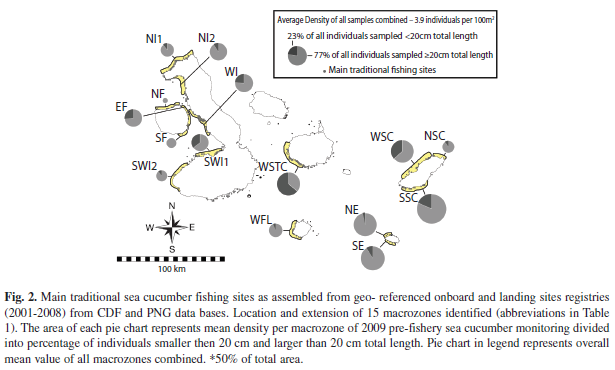
<body><![CDATA[in Western Isabela and Fernandina (<a      href="/img/revistas/rbt/v60n2/a03i2.jpg">Fig. 2</a>), where population     densities     were highest. A pilot population study off Fernandina in 1993 yielded a     mean density of 6.24ind./m<sup>2</sup> (Aguilar <span      style="font-style: italic;">et al.</span> 1993), and later     assessments recorded between 0.8-6.2ind./m<sup>2</sup> in the Canal     Bolivar area     (Aguilar <span style="font-style: italic;">et al.</span> 1993,     Richmond <span style="font-style: italic;">&amp;</span> Martinez     ]]></body>
<body><![CDATA[1993). A stock depletion     model run in this area (Hearn <span style="font-style: italic;">et al.</span>     2005) yielded initial densities of     adults (&gt;16cm TL), between 0.27-0.40ind./m<sup>2</sup> from 1994 to     1997,     similar to those obtained in 1999 (Toral-Granda <span      style="font-style: italic;">&amp;</span> Martinez 2004).     Currently, densities have decreased by about an order of magnitude to     0.03ind./m<sup>2</sup> (Murillo <span style="font-style: italic;">et     al.</span> 2008, this study).</span></font><br     ]]></body>
<body><![CDATA[ style="font-family: verdana;">     <font size="2"></font><br style="font-family: verdana;">     <font size="2"><span style="font-family: verdana;">A strong recruitment     event of the     <span style="font-style: italic;">I. fuscus</span> population in     Galapagos was registered in 2000 in the Canal     Bolivar area (Murillo <span style="font-style: italic;">et al.</span>     2002, Hearn <span style="font-style: italic;">et al.</span> 2005),     which ended in     2002.</span></font><br style="font-family: verdana;">     ]]></body>
<body><![CDATA[<font size="2"></font><br style="font-family: verdana;">     <font size="2"><span style="font-family: verdana;">The steadily     decreasing catches of     the sea cucumber fishery over the past decade (following the peak of     2002), are mainly the results of a chronic over fishing that has not     allowed the stock recuperation (Hearn <span style="font-style: italic;">et     al.</span> 2005). The main reasons     are an overcapacity of the fleet, a reactive instead of proactive     management, and a &#8216;race for fish&#8217; situation, the lack of control as     well as difficult enforcement of the fishery regulations in this large     ]]></body>
<body><![CDATA[archipelago with far away fishing zones, which also leads to illegal     fishery. In addition to these problems, the determination of an annual     quota by the managers of the marine reserve and the scientists     involved, had not been derived from stock size estimates and scientific     reasoning about an acceptable fraction of the annual stock to be     harvested. Instead, the quota was </span><span      style="font-family: verdana;">negotiated by the co-management     system in place (except for the boom year of 2002). Only in 2009 a     limit reference point (LRP) of 11ind./100m<sup>2</sup> was implemented     and the     ]]></body>
<body><![CDATA[fishery may only be opened once the stock density in the principal     fishing area of Isabela as derived from the pre-fishery monitoring is     above this reference value (Comision Tecnica Pesquera de la Junta de     Manejo Participativo 2009). LRP reflects the lower end of a mean     density range (11-20ind./100m<sup>2</sup>) observed during historical     surveys and     characteristic for a stock in recuperation. Below this density interval     the stock is considered to be in a critical stage, above in a healthy     stage (Castrejon <span style="font-style: italic;">et al.</span>     2008). These measures caused two problems. The     ]]></body>
<body><![CDATA[first was that fishermen preferentially monitored areas, where     densities had traditionally been above average, not representing the     overall mean density of all macrozones. The second problema was that     once the fishery was opened, fishermen would take out all adult sea     cucumbers (&gt;20cm total length), that they could find within their     economic constraints. In years, when quota was negotiated, there was a     lack of an adequate stock monitoring design and the poor information     available did not allow for a precise quota calculation. As a result     the quota was usually too high with the result that the remaining     post-fishery stock was extremely small, lacking the potential for     ]]></body>
<body><![CDATA[biomass to rebuild up to the next year&#8217;s fishing season. Due to these     problems associated with the management of the Galapagos sea cucumber     fishery, we aimed to improve the monitoring and management strategy.</span></font><br      style="font-family: verdana;">     <font size="2"></font><br style="font-family: verdana;">     <font size="2"><span style="font-family: verdana;">Our research goals     were to: (1)     optimize stock evaluation procedures by considering macrozone     differences in density and stock distribution, and (2) to provide a     scientific basis for the estimation of an annual quota. Specific     ]]></body>
<body><![CDATA[research questions addressed were: a) are there spatial-temporal     differences in sea cucumber densities within the fishing area, for the     period 1999-2009, which would allow to classify key areas/macrozones of     sea cucumber distribution in the archipelago? b) Is there an observable     spatial-temporal trend in sea cucumber size distribution? (i.e. are     there macrozones and years of higher numbers of recruits?) c) Are stock     densities higher in deeper (&gt;15m) than in shallow (&lt;15m) waters     as suggested by fishermen? d) Can we derive an estimate on stock     productivity based on available literature, which allows for the     calculation of a reasonable catch quota from annual estimates of stock     ]]></body>
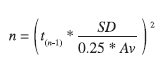
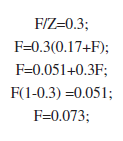
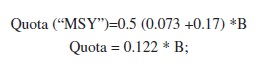
<body><![CDATA[size?</span></font><br style="font-family: verdana;">     <font size="2"></font><br      style="font-family: verdana; font-weight: bold;">     <font size="2"></font>    <br> <font size="3"><span style="font-family: verdana; font-weight: bold;">Material and methods</span></font><br style="font-family: verdana;"> <font size="2"></font><br style="font-family: verdana;"> <font size="2"><span style="font-family: verdana;"><span  style="font-weight: bold;">Estimation of fishing areas (macrozones):</span> The design of the new monitoring plan was derived from information of past monitoring surveys carried out annually from 1999 to 2008. Two types of monitoring had been carried out, pre-fishing and post-fishing. Since the prefishing data were generally more complete and consistent (Vadas 2008), we decided to focus on those for the analysis. The monitoring effort of all years was aimed to cover the principal fishing areas as well as no-fishing areas. This resulted in very large areas and for several of them in wide confidence limits around the density estimates. </span></font><br  style="font-family: verdana;"> <font size="2"></font><br style="font-family: verdana;"> <font size="2"><span style="font-family: verdana;">The first 19 macrozones for the islands of Fernandina, Isabela, Espanola, Floreana, San Cristobal and Santa Cruz were defined considering the principal sea cucumber fishing zones as derived from fisheries statistics of the PNG and CDF of the period 2001-2008. Due to insufficient financial resources and because fishermen insisted that four of the previously defined macrozones (east Santa Cruz, East and South-East Isabela and East Floreana) are not currently used as fishing zones, the macrozones surveyed in this study were reduced to 15.</span></font><br style="font-family: verdana;"> <font size="2"></font><br style="font-family: verdana;"> <font size="2"><span style="font-family: verdana;">Each macrozone was delimited using georeferenced catch data from the participative monitoring programme conducted during this period by the following procedure: bathymetric data compiled by Chadwick (1994) for the depth range from 0-1 500m depth, as well as from the CDF Geographical Information System (coastline CDF/Clirsen-TNG/GNPS) data from 0-39m were subjected to an ArcGIS Triangulated Irregular Network (TIN) interpolation routine, which creates circumcircles around each selected sample point and their intersections are connected to a network of non overlapping triangles, being as compacted as possible. Based on this interpolation a -30m isobath, which is the maximum depth where fishing can be carried out, was created. With the isobath line as the outer and the coastline as the inner boundary, the area of each polygon (m<sup>2</sup>) was mapped. A histogram was created to describe the frequencies of points per depth strata and an analysis was done to describe mean distances between points by using nearest neighbor statistics (ArcGIS and Surfer). Only 50% of the estimated area was considered as suitable sea cucumber fishing area and habitat, given that approximately 20% has unsuitable sandy bottoms and another 30% is too shallow (&lt;5m intertidal waters), or uninhabitable steep slopes (Banks <span  style="font-style: italic;">et al.</span> 2006).</span></font><br  style="font-family: verdana;"> <font size="2"></font><br style="font-family: verdana;"> <font size="2"><span style="font-family: verdana;"><span  style="font-weight: bold;">Determination of transect number per macrozone: </span>In order to estimate the required number of transects per macrozone, we proceeded as follows: first, means and standard deviations of stock densities obtained during past surveys were calculated for each zone. Then, 95% confidence intervals around the mean stock densities were estimated for each zone and 95% confidence intervals around the mean stock densities were calculated; second, the homogeneity/degree of patchiness of sea cucumber distribution per macrozone as reflected by those statistics was then used to calculate the minimum number of replicates necessary per macrozone to achieve a precisi&oacute;n of &plusmn;25% applying the following formula: </span></font>    <br> <font size="2"><span style="font-family: verdana;"></span></font>    <br>     <div style="text-align: center;"><font size="2"><span  style="font-family: verdana;"></span></font><img alt=""  src="/img/revistas/rbt/v60n2/a03f1.jpg"  style="width: 161px; height: 69px;">    <br> </div> <font size="2"><span style="font-family: verdana;"></span></font>    <br> <font size="2"><span style="font-family: verdana;">with n=minimum number of replicates required to achieve a precision of &plusmn;25% around our est&iacute;mate of mean density; t=value of the t distribution (student&#8217;s t-test) for p&lt;0.05; Av=annual average of the sea cucumber density per macrozone and SD = standard deviation.</span></font><br  style="font-family: verdana;"> <font size="2"></font><br style="font-family: verdana;"> <font size="2"><span style="font-family: verdana;">Using the above formula, differences in spatial distribution and stock density per macrozone resulted in different numbers of replicates required for the different areas, with more replicates for areas of higher patchiness, and lower numbers where the population appears more evenly distributed. Based on this procedure population size estimates are considered substantially more precise than if the replicate number was just proportional to the size of the area.</span></font><br style="font-family: verdana;"> <font size="2"></font><br style="font-family: verdana;"> <font size="2"><span style="font-family: verdana;"><span  style="font-weight: bold;">Sampling:</span> The type of sample unit used was a circular transect with a radius of 5.6m which covers an area of 100m<sup>2</sup>. This has been used in monitoring activities before and has proven to allow for the collection of available sea cucumbers with low error (Hearn <span style="font-style: italic;">et al</span>. 2005). Moreover, using this sample unit unbiased comparisons with previous surveys became possible. The exact location of each transects in each macrozone was decided jointly between fishermen and scientists with the aim to adequately cover each area. The sampling sites were distributed in two depth strata: shallow (&lt;15m) and deep (&gt;15m), with the shallowest and deepest waters around five and 25m respectively.</span></font><br  style="font-family: verdana;"> <font size="2"></font><br style="font-family: verdana;"> <font size="2"><span style="font-family: verdana;">The stock size per macrozone was estimated extrapolating the mean density value (ind./m<sup>2</sup>) to the corresponding total area. Then, the stock sizes of each macrozone were added up to estimate the stock for the whole fishing area.</span></font><br  style="font-family: verdana;"> <font size="2"></font><br style="font-family: verdana;"> <font size="2"><span style="font-family: verdana;">The mean density value within the West Isabela macrozone was then compared with the sea cucumber reference points defined in the Fishery Chapter of the Management Plan for the Galapagos Marine Reserve (GMR) (Castrejon <span  style="font-style: italic;">et al.</span> 2008, Comision Tecnica Pesquera de la Junta de Manejo Participativo 2009). According to these reference points a healthy, abundant stock should have a West Isabela macrozone density &gt;21ind./100m<sup>2</sup>, while densities of a stock in recuperation should range from 11-20.9 ind./100m<sup>2</sup>. If densities are &lt;11ind./100m<sup>2</sup>, the stock is closed for fishing.</span></font><br  style="font-family: verdana;"> <font size="2"></font><br style="font-family: verdana;"> <font size="2"><span style="font-family: verdana;"><span  style="font-weight: bold;">Precision of density estimates and density comparisons between depth strata:</span> Since the density values of each macrozone proved to be not normally distributed, a bootstrap resampling routine (Efron 1981) was applied, which consisted in a random resampling (1 000x) of the data matrix for each macrozone. This yielded 1 000 normally distributed mean density values and allowed for the computation of the standard deviation and coefficient of variation (CV%) around the mean of these values.</span></font><br  style="font-family: verdana;"> <font size="2"></font><br style="font-family: verdana;"> <font size="2"><span style="font-family: verdana;">In order to test for depth strata differences in sea cucumber densities, all density </span><span  style="font-family: verdana;">measurements taken in each depth stratum (shallow and deep), were considered for the calculation of overall means per depth strata. The resulting mean densities were bootstrapped for each depth stratum and compared using a t-test of means. For comparative purposes also a non-parametric Mann-Whitney U test for the medians was applied. We repeated this analysis by combining the information of sea cucumber density per depth strata for all those years where sufficient samples had been taken (1999-2002 and 2006-2009).</span></font><br style="font-family: verdana;"> <font size="2"></font><br style="font-family: verdana;"> <font size="2"><span style="font-family: verdana;"><span  style="font-weight: bold;">Calculating the catch quota.</span> Annual stock production can be calculated by multiplying mean stock size by the rate of total production (P/B=Z) which is the sum of natural (M) and fisheries (F) mortalities. P/B tends to increase with fishing pressure while the stock biomass decreases. Gulland (1971) and Garcia &amp; Le Reste (1981) proposed to approximate the maximum sustainable yield (MSY) of a stock from an estimate of its virgin biomass (B&#8734;) and the rate of natural mortality (M). They propose: MSY = X* M*B&#8734; (With X=0.5 in the formula of Gulland and in the range of 0.32-0.44 in the formula of Garcia and Le Reste respectively). If a resource is heavily exploited and virgin stock levels can not be determined this </span><span  style="font-family: verdana;">formula should not be applied. Cadima (in Troadec 1977) proposed to use the following formula instead:</span></font><br  style="font-family: verdana;">     ]]></body>
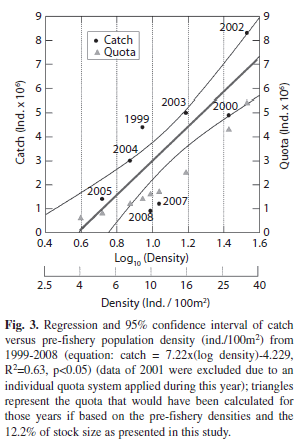
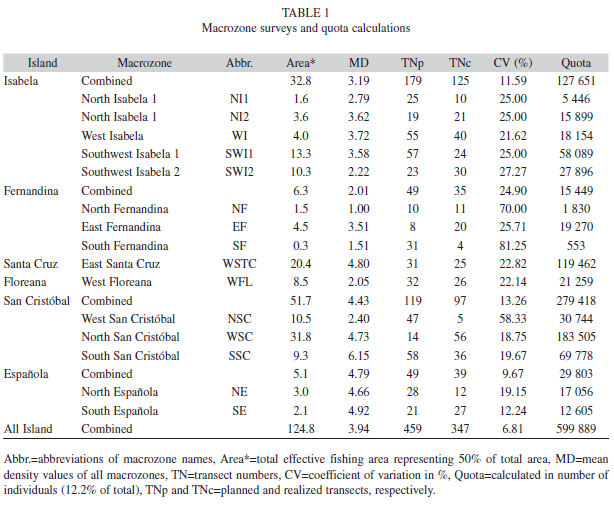
<body><![CDATA[<br>     <div style="text-align: center;"><img alt=""  src="/img/revistas/rbt/v60n2/a03f2.jpg"  style="width: 363px; height: 49px;">    <br> </div> <br style="font-family: verdana;"> <font size="2"><span style="font-family: verdana;">This formula is identical to MSY=M*B, if F=M at an exploitation rate of E=0.5.</span></font><br  style="font-family: verdana;"> <font size="2"></font><br style="font-family: verdana;"> <font size="2"><span style="font-family: verdana;">Garcia <span  style="font-style: italic;">et al.</span> (1989) pointed out that Cadima&#8217;s formula only gives unbiased estimates of MSY if the stock is virgin and Z=M (when it is identical to Gullands formula mentioned above) or when the stock happens to be exploited at the level of MSY already (at B&#8734;/2 and an exploitation rate of 0.5).</span></font><br  style="font-family: verdana;"> <font size="2"></font><br style="font-family: verdana;"> <font size="2"><span style="font-family: verdana;">Considering this reasoning of the above authors and assuming that the current stock level of the Galapagos Sea Cucumber is far below B&#8734;/2 it was decided to use a lower (precautionary) exploitation rate of E=0.3 when applying the Cadima formula. The M- value (0.17/year) of Hearn <span  style="font-style: italic;">et al. </span>(2005) was used, which was derived from a stock depletion model. This value was based on a rich data source and appears as a sound estimate in the right order of magnitude, when compared to other slow growing marine invertebrates reported in the literature (Brey 2001). A value double as high for this species in Mexico (M= 0.354/year) was proposed by Reyes-Bonilla &amp; Herrero-Per&eacute;zrul (2003), who, however used empirical formulas for its derivation, which were not established for holothurians.</span></font><br  style="font-family: verdana;"> <font size="2"></font><br style="font-family: verdana;"> <font size="2"><span style="font-family: verdana;">Considering this M value of 0.17 the F value was calculated corresponding to an exploitation rate of E=0.3 by calculating:</span></font>    <br> <font size="2"><span style="font-family: verdana;"></span></font>    <br>     <div style="text-align: center;"><font size="2"><span  style="font-family: verdana;"></span></font><img alt=""  src="/img/revistas/rbt/v60n2/a03f3.jpg"  style="width: 123px; height: 141px;">    <br> </div> <font size="2"><span style="font-family: verdana;"></span></font><br  style="font-family: verdana;"> <font size="2"><span style="font-family: verdana;">By inserting the F and M values in the Cadima formula (above), we arrived at: </span></font>    <br> <font size="2"><span style="font-family: verdana;"></span></font>    <br>     <div style="text-align: center;"><font size="2"><span  style="font-family: verdana;"></span></font><img alt=""  src="/img/revistas/rbt/v60n2/a03f4.jpg"  style="width: 262px; height: 64px;"><br style="font-family: verdana;"> </div> <font size="2"><span style="font-family: verdana;"></span></font><br  style="font-family: verdana;"> <font size="2"><span style="font-family: verdana;">The annual quota here proposed is thus 12.2% of the standing stock.</span></font><br  style="font-family: verdana;"> <font size="2"></font><br style="font-family: verdana;"> <font size="3"><span style="font-family: verdana; font-weight: bold;">Results</span></font><br  style="font-family: verdana;"> <font size="2"></font><br style="font-family: verdana;"> <font size="2"><span style="font-family: verdana;"><span  style="font-weight: bold;">Estimates of macrozone areas and number of transects per macrozone:</span> <a  href="/img/revistas/rbt/v60n2/a03i2.jpg">Figure 2</a> shows the distribution of sea cucumber fishing activities in the archipelago for the years 2001 and 2008 and the 15 macrozones using these data. <a  href="/img/revistas/rbt/v60n2/a03t1.gif">Table 1</a> gives their extension and the numbers of replicates per macrozone required for a mean stock density estimates &lt;&plusmn;25% precision. It also provides the density estimates and quota per macrozone derived from the monitoring survey of 2009. The overall estimate of fishable area of all macrozones combined is 124.8km<sup>2</sup>.</span></font><br  style="font-family: verdana;"> <font size="2"></font><br style="font-family: verdana;"> <font size="2"><span style="font-family: verdana;">The population monitoring was carried out in the last two weeks of May 2009 by fishermen, National Park and CDF staff coordinated and financed mainly by the National Park. San Cristobal is the island with the largest fishing area (52km<sup>2</sup>), followed by Isabela (33km<sup>2</sup>) and Santa Cruz (20.4km<sup>2</sup>). Floreana, Espanola and Fernandina combined only represent 20km<sup>2</sup>. While the coastline of Isabela where fishing takes place is much larger than the one of San Cristobal, the fishing area is smaller due to the very steep slope bringing the -30m isobath much closer to the coastline in Isabela than in San Cristobal. It is interesting to see that replicate numbers vary greatly between zones with Espanola requiring the highest number per area (49/5km<sup>2</sup>), while Santa Cruz requires only 31 transects in 20.5km<sup>2</sup>.</span></font><br style="font-family: verdana;"> <font size="2"></font><br style="font-family: verdana;"> <font size="2"><span style="font-family: verdana;"><span  style="font-weight: bold;">Densities and catch quota for the season 2009: </span>Mean density for West-Isabela </span><span  style="font-family: verdana;">(3.72ind./100m<sup>2</sup>) is far below the critical value for the opening of the fishery (11ind./100m<sup>2</sup>) and was de lowest ever recorded in the last decade (<a href="#Fig_3">Fig. 3</a>). So, following the decision rule in place, it was recommended not to open the fishery for the year (2009). This recommendation was thereafter accepted by the co-management body (Interinstitutional Management Authority, IMA). The densities of all macrozones with the coefficient of variation around the mean (CV, %) are given in <a  href="/img/revistas/rbt/v60n2/a03t1.gif">Table 1</a>. If our rationale for a quota (TAC) estimate based on the stock size (4.9 million individuals) derived from the overall mean density (0.039ind./m<sup>2</sup>) and our combined area estimate (124.8km<sup>2</sup>) had been followed, the TAC would have been 59 889 individuals for the 2009 fishing season for the whole archipelago.</span></font><br  style="font-family: verdana;">     ]]></body>
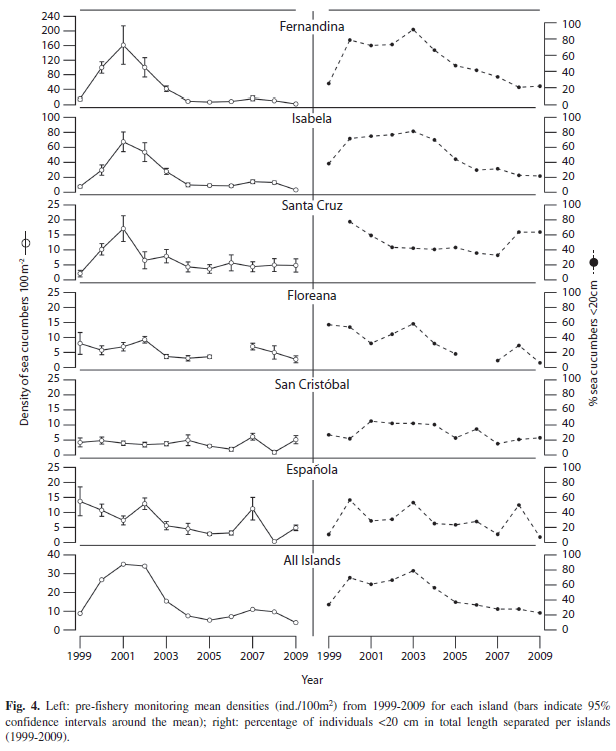
<body><![CDATA[<br>     <br>     <div style="text-align: center;"><a name="Fig_3"></a><img alt=""  src="/img/revistas/rbt/v60n2/a03i3.jpg"  style="width: 302px; height: 448px;">    <br> </div> <br style="font-family: verdana;"> <font size="2"><span style="font-family: verdana;"><a  href="/img/revistas/rbt/v60n2/a03i4.jpg">Figure 4</a> shows the mean densities (left) and the proportion of small (&lt;20cm) sea cucumbers in the samples (right). Floreana, Isabela and Fernandina show a steady density decrease over the past years, while Santa Cruz has remained quite constant over the past six years. The density value of San Cristobal in 2009 was surprisingly the second highest since 1999.</span></font><br  style="font-family: verdana;"> <font size="2"></font><br style="font-family: verdana;"> <font size="2"><span style="font-family: verdana;">The proportion of juveniles (recruits) in the stock has steadily decreased for the Western islands Isabela and Fernandina and is the lowest ever recorded in Espanola and Floreana. Santa Cruz and Cristobal revealed a slight increase over the last three years.</span></font><br style="font-family: verdana;"> <font size="2"></font><br style="font-family: verdana;"> <font size="2"><span style="font-family: verdana;">The 2009 monitoring data for the two depth strata showed higher densities in the shallow stratum compared to the deep stratum (4.5 compared to 3.2ind./100m<sup>2</sup> respectively). Statistically, this difference was significant if the non-parametric Mann-Whitney U test of the median density values was used or if the mean values using the bootstrapping routine were compared (t-test, p&lt;0.05). The density difference between depth strata was even more pronounced, when the data of eight years was combined (8.7 versus 17.9ind./100m<sup>2</sup> for deep and shallow strata respectively).</span></font><br style="font-family: verdana;"> <font size="2"></font><br style="font-family: verdana;"> <font size="3"><span style="font-family: verdana; font-weight: bold;">Discussion</span></font><br  style="font-family: verdana;"> <font size="2"></font><br style="font-family: verdana;"> <font size="2"><span style="font-family: verdana;">This study is the first in trying to est&iacute;mate the fishing area of the sea cucumber stock of Galapagos, which seemed imperative if overall stock size was to be approximated for quota calculations. Since the topography and slope of the sea bottom varies substantially between macrozones, and available bathymetric data points were not covering all areas uniformly, the mapping of the polygons between the coastline and 30m isobath using ArcGIS required an interpolation procedure. The TIN interpolation used to define the -30m isobath for our 15 macrozones was supported by 8 615 geographical data points over the depth range from 0-1 500m, of which a large proportion (3 228 points, 37.5%) were situated within the macrozone depth limits. Based on a nearest neighbor analysis, a separation value for the mean distance between points was found equal to 0.0031589 with a standard deviation of 0.0054607 (degrees).</span></font><br  style="font-family: verdana;"> <font size="2"></font><br style="font-family: verdana;"> <font size="2"><span style="font-family: verdana;">While we believe that our first fishing area estimate is a good approximation, it can definitely be improved through a more detailed bathymetric survey of the coastlines of the Galapagos Archipelago.</span></font>    <br> <font size="2"><span style="font-family: verdana;"></span></font>    <br>     <font size="2"><span style="font-family: verdana;">The assumption was     then made that of the     estimated area 20% is unsuitable Sandy bottom habitat and 30% too     shallow (&lt;5m) intertidal water or comprised by too deep waters     ]]></body>
<body><![CDATA[(&gt;25m) or inhabitable steep slopes. These assumptions are derived     from a decade of sub-tidal macrofauna monitoring, as well as specific     pre-and post-fishery monitoring reflecting a sufficient amount of data     and the best estimate available for this study. It should be stated     here, that the Ecuadorian Oceanographic Institute (INOCAR) has already     started to conduct a mapping of the whole Galapagos coastal sub tidal     areas using side scan sonar technology. We expect to soon be able to     update our here presented estimates based on this information.</span></font><br      style="font-family: verdana;">     <font size="2"></font><br style="font-family: verdana;">     ]]></body>
<body><![CDATA[<font size="2"><span style="font-family: verdana;">Only 383 out of 547     planned     transects (70%) could be carried out during the 2009 pre-fishery     monitoring due to financial constraints. However, this transect number     is the highest ever used in the Galapagos sea cucumber pre-fishery     monitoring (the second highest was 303 transects taken in the year     2008). The precision around the mean densities differs between     macrozones with a coefficient of variation (CV) ranging from 12.2% for     Eastern Espanola (n=27/a=2.1km<sup>2</sup>) to 81.2% for Southern     Fernandina     ]]></body>
<body><![CDATA[(n=4/a=8.5km<sup>2</sup>). These differences can be attributed to the     number of </span><span style="font-family: verdana;">transects and the     degree of     patchiness of the sea cucumbers in each zone. When the transect data     are integrated for each island, the respective density estimate is     greatly improved with CVs always &lt;25%. The two islands that had the     highest transect numbers (Isabela with 125 and San Cristobal with 97)     had the lowest CV around the mean density estimate (11.6% and 13.3%     respectively). The density est&iacute;mate for all transects combined     (3.94ind./100m<sup>2</sup>,CV=6.8%) can be considered of a very good     ]]></body>
<body><![CDATA[precision.     The great differences in densities and stock aggregation found between     areas have been emphasized as being symptomatic for sea cucumber     populations in general. Hand &amp; Rogers (1999) summarized this     problem by pointing to the variable spatio-temporal distribution of sea     cucumbers, which make random surveys and conventional statistical     approaches inappropriate. They also argue for the collection of     ancillary information, such as substrate type to increase the precision     of density estimates and for the use of geostatistical analysis and GIS     to map the sea bed for benthic invertebrates. In our study, we followed     ]]></body>
<body><![CDATA[the reasoning of these authors and our statistical analysis suggests     that our macrozone and overall density estimates are good in general.     However, some directed sampling has possibly occurred since fishermen     often argued for sampling in those areas, where they had found sea     cucumbers in previous years, sometimes not permitting full random     sampling in each macrozone. </span></font><br      style="font-family: verdana;">     <font size="2"></font><br style="font-family: verdana;">     <font size="2"><span style="font-family: verdana;">Of all macrozones     sampled, none     ]]></body>
<body><![CDATA[reached the minimum density of 11ind./100m<sup>2</sup> to open the     fishery, which     points to a very critical state of the stock in all macrozones. Several     factors may explain this situation. During years 1999-2002 the seasonal     fishery was opened without quota limits, and the stock was depleted to     extreme low densities, not keeping a large enough residual biomass for     the next season. In years, when catch quota were determined through the     co-management process, these were often too high, representing too     large a part of the available stock. This may be illustrated by the     example of the year 2004, when a mean density of 7ind./100m<sup>2</sup>     ]]></body>
<body><![CDATA[was     counted during the pre-fisheries monitoring and a catch quota of three     million individuals as agreed upon, 2.5 times the number which would     have been estimated considering the reasoning of this study (12.2% of     8.73 million individuals, which are only 1.06 million). The general     problem was that the quota was set with no available estimate of     absolute stock size. </span></font><br style="font-family: verdana;">     <font size="2"></font><br style="font-family: verdana;">     <font size="2"><span style="font-family: verdana;">The density and     recruit fraction     ]]></body>
<body><![CDATA[trend over the past decade, suggests a further reason for the critical     state of the stock: a lack of substantial recruitment during the past     decade of predominant cold waters. Since the strong El Nino 1997/98,     which seemed to have improved recruitment of sea cucumbers to the     fishery during the years 2000-2003, sea surface temperatures (SST)     around the Galapagos archipelago have remained quite low for most of     the time representing an extended La Nina cold regime (Wolff 2010; see     also SST data base of CDF on www.cdf.org.ec). So it may well be that in     addition to the problem of a too small spawning stock remaining after     each fishing season, spawning activity as well as larval and     ]]></body>
<body><![CDATA[pre-recruit survival, may have been comparatively low during these     years. Unfortunately, as yet little is known about the environmental     window for optimal reproduction and early life stages development of     this species. The strongest reduction in recruit proportions within the     monitoring surveys over the past years was found in the Western islands     Isabela and Fernandina, which were strongly exposed to cold upwelling     waters during the past years of La Nina regime. The El Nino 1997/98     warming, on the other hand, seem to have caused strong recruitment in     these areas, leading to enormous stock densities during the post-El     Nino years 2000-2003. This positive El Nino warming effect on the     ]]></body>
<body><![CDATA[recruitment of <span style="font-style: italic;">I. fuscus</span> was     first published by Herrero-Per&eacute;zrul <span      style="font-style: italic;">et al.</span>     (1999). Santa Cruz is the only island, where the fraction of small     specimens &lt;20cm seem to have increased over the past years 2008 and     2009. However, since mean density has not increased in parallel, this     relative increase in small specimens is rather a sign of heavy     depletion of larger adults than of a successful recruitment. In     Espanola a density increase during the year 2007 was paralleled by an     increased fraction of small specimens, which may suggest a small     ]]></body>
<body><![CDATA[recruitment here.</span></font><br style="font-family: verdana;">     <font size="2"></font><br style="font-family: verdana;">     <font size="2"><span style="font-family: verdana;">In this report, an     empirical     relationship between the pre-fishery (log) density obtained through the     annual monitoring surveys and the catches obtained later in the same     year has been assembled. While there is a great scatter around the     regression line, possibly partly due to differences in monitoring     precision between years (see discussion above), the figure shown     suggests a significant relationship between both variables. The quota     ]]></body>
<body><![CDATA[estimate for all these years was included when the fishery was opened     and it is evident that catches taken were in most cases far higher (2-3     times) than the quota that would have been recommended using the     reasoning of this study. This, however, is not the case for the years     2007 and 2008, when less sea cucumber were fished, than the quota would     have allowed. We think that this discrepancy is due to great     overestimates of mean pre-fishery stock densities in these years     (through which too high quota were negotiated).</span></font><br      style="font-family: verdana;">     <font size="2"></font><br style="font-family: verdana;">     ]]></body>
<body><![CDATA[<font size="2"><span style="font-family: verdana;">The often heard     statement by the     fishing sector that sea cucumber densities are higher in deeper waters     giving the stock a strength in reserve if fishing pressure in shallower     waters is high, could clearly be shown to be wrong for the year 2009,     and also for the combined data of the eight year&#8217;s period. This is an     important finding of our study since it removes the basis for the     argument that a large portion of the stock is out there in deeper     waters where it can not be caught.</span></font><br      style="font-family: verdana;">     ]]></body>
<body><![CDATA[<font size="2"></font><br style="font-family: verdana;">     <font size="2"><span style="font-family: verdana;">We believe that the     monitoring and     management strategy of the Galapagos sea cucumber stock that has been     presented in this paper is an important step towards a sustainable     fishery of this species. It is the first time that the attempt was made     to estimate the size of the whole fishing area and of the fishable     stock. Moreover, the monitoring was adapted to specific conditions     (size and sea cucumber patchiness) of each macrozone, and the quota was     made a fraction of the stock size (12.2%), which makes it adaptive to     ]]></body>
<body><![CDATA[natural inter-annual stock fluctuations.</span></font><br      style="font-family: verdana;">     <font size="2"></font><br style="font-family: verdana;">     <font size="2"><span style="font-family: verdana;">As a future step it     may be     considered to look for spatially-explicit tools for management of the     Galapagos sea cucumber such as the implementation of territorial use     rights (Defeo &amp; Castilla 2005) or rotational closures of different     areas from year to year. The first seems difficult in Galapagos because     there are more fishermen with licenses than active fishermen and stock     ]]></body>
<body><![CDATA[productivity is not evenly distributed over the different macrozones     and also seems to vary spatially and temporally, which makes difficult     a possible distribution of sub-areas to fishermen groups. The latter,     however, seems a viable approach and our study provides a good basis     through the classification and delimitation of macrozones and the     estimation of their relative contribution to the overall stock. Closing     macrozones completely for the fishery over a longer period of several     years, would allow for a substantial stock rebuilding, and     fertilization success should increase in these higher density areas and     population wide recruitment may result. While this paper is being     ]]></body>
<body><![CDATA[written, the National Park of Galapagos and the Charles Darwin     Foundation are preparing for a pilot project for stock enhancement of     the Galapagos sea cucumber through the collection of wild larvae in     areas closed to the fishery. If successful, this project would allow     for an acceleration of the stock rebuilding process.</span></font><br      style="font-family: verdana;">     <font size="2"></font><br style="font-family: verdana;">     <font size="3"><span style="font-family: verdana; font-weight: bold;">Acknowledgments</span></font><br      style="font-family: verdana;">     <font size="2"></font><br style="font-family: verdana;">     ]]></body>
<body><![CDATA[<font size="2"><span style="font-family: verdana;">We want to thank all     participants     of the monitoring survey of 2009: H. Reyes, J. Paredes, G. Vasquez, M.     Villalta, L. Garcia, W. Fuertes, O. Ricaurte, J. Garcia, Y. Llerena, Y.     Mascarell, M. Ortega, J.L. Ballesteros, J. Pilamunga, P. Espinoza, W.     Bran, J. Araujo, L. Lozano, F. Lucas, F. Parrales, Y. Araujo, A.     Yamuca, F. Velez, J. Camacho, C. Lozano, I. Maffare, P. Tipan, L.     Bonilla, G. Gil, J. Moreno, J. Delgado, S. Clarke, J.P. Tiernan, J.C.     Murillo, S. Cruz, the National Park of Galapagos and the WWF. This     publication is contribution number 2048 of the Charles Darwin     ]]></body>
<body><![CDATA[Foundation for the Galapagos Islands.</span></font><br      style="font-family: verdana;">     <font size="2"></font><br style="font-family: verdana;">     <font size="2"><span style="font-family: verdana; font-weight: bold;"></span></font>     </div>     <hr      style="width: 100%; height: 2px; margin-left: 0px; margin-right: 0px;">     <!-- ref --><div style="text-align: justify;"><font size="3"><span  style="font-family: verdana; font-weight: bold;">References</span></font><br  style="font-family: verdana;"> <font size="2"></font><br style="font-family: verdana;"> <font size="2"><span style="font-family: verdana;">Aguilar, F., X. Chalen, F. Castro, J. Sonnenholzner <span style="font-style: italic;">&amp;</span> M. Herrera. 1993. Evaluacion del recurso pepino de mar (Holothuroidea) al este de la Isla Fernandina en la Provincia de Galapagos, Guayaquil. Instituto Nacional de Pesca.    &nbsp;&nbsp;&nbsp;&nbsp;&nbsp;&nbsp;&nbsp;&nbsp;[&#160;<a href="javascript:void(0);" onclick="javascript: window.open('/scielo.php?script=sci_nlinks&ref=1490716&pid=S0034-7744201200020000300001&lng=','','width=640,height=500,resizable=yes,scrollbars=1,menubar=yes,');">Links</a>&#160;]<!-- end-ref --><!-- ref --></span></font><br  style="font-family: verdana;"> <font size="2"></font><br style="font-family: verdana;"> <font size="2"><span style="font-family: verdana;">Aguilar-Ibarra, A. <span  style="font-style: italic;">&amp;</span> G. Ramirez-Soberon. 2002. Economic reasons, ecological actions and social consequences in the Mexican sea cucumber fishery. SPC Beche-de- Mer Information Bulletin 17:33-36.    &nbsp;&nbsp;&nbsp;&nbsp;&nbsp;&nbsp;&nbsp;&nbsp;[&#160;<a href="javascript:void(0);" onclick="javascript: window.open('/scielo.php?script=sci_nlinks&ref=1490717&pid=S0034-7744201200020000300002&lng=','','width=640,height=500,resizable=yes,scrollbars=1,menubar=yes,');">Links</a>&#160;]<!-- end-ref --><!-- ref --></span></font><br  style="font-family: verdana;"> <font size="2"></font><br style="font-family: verdana;"> <font size="2"><span style="font-family: verdana;">Banks, S., M.Vera, M. Toscano, D. Ruiz <span style="font-style: italic;">&amp;</span> N. Tirado. 2006. Monitoreo ecologico de la zona costera para la evaluacion de la zonificacion provisional consensuada (ZPC). Resumen de actividades octubre 2004 &#8211; septiembre 2006. Informe de avances para USAID. Fundacion Charles Darwin, Santa Cruz, Galapagos, Ecuador.    &nbsp;&nbsp;&nbsp;&nbsp;&nbsp;&nbsp;&nbsp;&nbsp;[&#160;<a href="javascript:void(0);" onclick="javascript: window.open('/scielo.php?script=sci_nlinks&ref=1490718&pid=S0034-7744201200020000300003&lng=','','width=640,height=500,resizable=yes,scrollbars=1,menubar=yes,');">Links</a>&#160;]<!-- end-ref --><!-- ref --></span></font><br  style="font-family: verdana;"> <font size="2"></font><br style="font-family: verdana;"> <font size="2"><span style="font-family: verdana;">Brey, T. 2001. Population dynamics in benthic invertebrates. A virtual handbook. Version 01.2. (<a href="http://www.thomas-brey.de/science/virtualhandbook">http://www.thomas-brey.de/science/virtualhandbook</a>).    &nbsp;&nbsp;&nbsp;&nbsp;&nbsp;&nbsp;&nbsp;&nbsp;[&#160;<a href="javascript:void(0);" onclick="javascript: window.open('/scielo.php?script=sci_nlinks&ref=1490719&pid=S0034-7744201200020000300004&lng=','','width=640,height=500,resizable=yes,scrollbars=1,menubar=yes,');">Links</a>&#160;]<!-- end-ref --><!-- ref --></span></font><br  style="font-family: verdana;"> <font size="2"></font><br style="font-family: verdana;"> <font size="2"><span style="font-family: verdana;">Castrejon, M. 2011. Co-manejo pesquero en la Reserva Marina de Galapagos: tendencias, retos y perspectivas de cambio. Fundacion Charles Darwin, Puerto Ayora, Santa Cruz, Galapagos, Ecuador.    &nbsp;&nbsp;&nbsp;&nbsp;&nbsp;&nbsp;&nbsp;&nbsp;[&#160;<a href="javascript:void(0);" onclick="javascript: window.open('/scielo.php?script=sci_nlinks&ref=1490720&pid=S0034-7744201200020000300005&lng=','','width=640,height=500,resizable=yes,scrollbars=1,menubar=yes,');">Links</a>&#160;]<!-- end-ref --><!-- ref --></span></font><br style="font-family: verdana;"> <font size="2"></font><br style="font-family: verdana;"> <font size="2"><span style="font-family: verdana;">Castrejon, M., A. Hearn, J.C. Murillo, A. Lalancette, H. Reyes, N. Gaibor, X. Chalen, E. Espinoza<span  style="font-style: italic;"> &amp;</span> U. Avendano. 2008. Puntos de referencia objetivo para la pesqueria de pepino de mar (<span style="font-style: italic;">Isostichopus fuscus</span>) en la Reserva Marina de Galapagos. Reporte de la Comision Tecnica de la JMP, Puerto Ayora, Santa Cruz, Galapagos, Ecuador.    &nbsp;&nbsp;&nbsp;&nbsp;&nbsp;&nbsp;&nbsp;&nbsp;[&#160;<a href="javascript:void(0);" onclick="javascript: window.open('/scielo.php?script=sci_nlinks&ref=1490721&pid=S0034-7744201200020000300006&lng=','','width=640,height=500,resizable=yes,scrollbars=1,menubar=yes,');">Links</a>&#160;]<!-- end-ref --><!-- ref --></span></font><br  style="font-family: verdana;"> <font size="2"></font><br style="font-family: verdana;"> <font size="2"><span style="font-family: verdana;">Chadwick, B. 1994. Bathymetric Data of Galapagos Downloaded: July 29, 2011, <a href="http://www.pmel.noaa.gov/vents/staff/chadwick/galapagos.html">http://www.pmel.noaa.gov/vents/staff/chadwick/galapagos.html</a> to download the file click the following link &#8220;galapall.xyz.Z&#8221;    &nbsp;&nbsp;&nbsp;&nbsp;&nbsp;&nbsp;&nbsp;&nbsp;[&#160;<a href="javascript:void(0);" onclick="javascript: window.open('/scielo.php?script=sci_nlinks&ref=1490722&pid=S0034-7744201200020000300007&lng=','','width=640,height=500,resizable=yes,scrollbars=1,menubar=yes,');">Links</a>&#160;]<!-- end-ref --><!-- ref -->.</span></font><br  style="font-family: verdana;"> <font size="2"></font><br style="font-family: verdana;"> <font size="2"><span style="font-family: verdana;">Conand, C. 2004. Present status of world sea cucumber resources and utilisation: an international overview, p. 13-23. <span style="font-style: italic;">In</span> A. Lovatelli, C. Conand, S. Purcell, S. Uthicke, J.F. Hamel &amp; A. Mercier (eds.). Advances in sea cucumber aquaculture and management. FAO Fisheries Technical Paper No. 463.    &nbsp;&nbsp;&nbsp;&nbsp;&nbsp;&nbsp;&nbsp;&nbsp;[&#160;<a href="javascript:void(0);" onclick="javascript: window.open('/scielo.php?script=sci_nlinks&ref=1490723&pid=S0034-7744201200020000300008&lng=','','width=640,height=500,resizable=yes,scrollbars=1,menubar=yes,');">Links</a>&#160;]<!-- end-ref --><!-- ref --></span></font><br  style="font-family: verdana;"> <font size="2"></font><br style="font-family: verdana;"> <font size="2"><span style="font-family: verdana;">Defeo, O. <span  style="font-style: italic;">&amp;</span> J.C. Castilla. 2005. More than one bag for the world fishery crisis and keys for co-management successes in selected artisanal Latin American shellfisheries. Rev. Fish. Biol. Fish. 15: 265-283.    &nbsp;&nbsp;&nbsp;&nbsp;&nbsp;&nbsp;&nbsp;&nbsp;[&#160;<a href="javascript:void(0);" onclick="javascript: window.open('/scielo.php?script=sci_nlinks&ref=1490724&pid=S0034-7744201200020000300009&lng=','','width=640,height=500,resizable=yes,scrollbars=1,menubar=yes,');">Links</a>&#160;]<!-- end-ref --><!-- ref --></span></font><br  style="font-family: verdana;"> <font size="2"></font><br style="font-family: verdana;"> <font size="2"><span style="font-family: verdana;">De Paco, C., M. Hurtado, C. McFarland, P. Martinez, G. Reck <span style="font-style: italic;">&amp;</span> R. Richmond. 1993. Evaluacion de la pesqueria de pepinos de mar en las islas Galapagos, Ecuador. Informe para la Union Mundial de la Naturaleza (UICN) como resultado de la Mision realizada a solicitud de la Fundacion Charles Darwin para las Islas Galapagos, Fundacion Charles Darwin, Quito, Ecuador.    &nbsp;&nbsp;&nbsp;&nbsp;&nbsp;&nbsp;&nbsp;&nbsp;[&#160;<a href="javascript:void(0);" onclick="javascript: window.open('/scielo.php?script=sci_nlinks&ref=1490725&pid=S0034-7744201200020000300010&lng=','','width=640,height=500,resizable=yes,scrollbars=1,menubar=yes,');">Links</a>&#160;]<!-- end-ref --><!-- ref --></span></font><br  style="font-family: verdana;"> <font size="2"></font><br style="font-family: verdana;"> <font size="2"><span style="font-family: verdana;">Efron, B. 1981. Nonparametric estimates of standard error: the jackknife, the bootstrap and other methods. Biometrika 68: 589-599.    &nbsp;&nbsp;&nbsp;&nbsp;&nbsp;&nbsp;&nbsp;&nbsp;[&#160;<a href="javascript:void(0);" onclick="javascript: window.open('/scielo.php?script=sci_nlinks&ref=1490726&pid=S0034-7744201200020000300011&lng=','','width=640,height=500,resizable=yes,scrollbars=1,menubar=yes,');">Links</a>&#160;]<!-- end-ref --><!-- ref --></span></font><br  style="font-family: verdana;"> <font size="2"></font><br style="font-family: verdana;"> <font size="2"><span style="font-family: verdana;">Garcia, S. <span  style="font-style: italic;">&amp;</span> L. Le Reste. 1981. Life cycles, dynamics, exploitation and management of coastal peneid shrimp stocks. FAO Fish.Tech. Pap. 203.    &nbsp;&nbsp;&nbsp;&nbsp;&nbsp;&nbsp;&nbsp;&nbsp;[&#160;<a href="javascript:void(0);" onclick="javascript: window.open('/scielo.php?script=sci_nlinks&ref=1490727&pid=S0034-7744201200020000300012&lng=','','width=640,height=500,resizable=yes,scrollbars=1,menubar=yes,');">Links</a>&#160;]<!-- end-ref --><!-- ref --></span></font><br  style="font-family: verdana;"> <font size="2"></font><br style="font-family: verdana;"> <font size="2"><span style="font-family: verdana;">Garcia, S., P. Sparre <span style="font-style: italic;">&amp;</span> J. Csirke. 1989. Estimating surplus production and maximum sustainable yield from biomass data when catch and effort time series are not available. Fish. Res. Fish. Res. 8: 13-23.    &nbsp;&nbsp;&nbsp;&nbsp;&nbsp;&nbsp;&nbsp;&nbsp;[&#160;<a href="javascript:void(0);" onclick="javascript: window.open('/scielo.php?script=sci_nlinks&ref=1490728&pid=S0034-7744201200020000300013&lng=','','width=640,height=500,resizable=yes,scrollbars=1,menubar=yes,');">Links</a>&#160;]<!-- end-ref --><!-- ref --></span></font><br  style="font-family: verdana;"> <font size="2"></font><br style="font-family: verdana;"> <font size="2"><span style="font-family: verdana;">Gulland, J.A. 1971. The fish resources of the ocean. Fishing News Books, West Byfleet, United Kingdom.    &nbsp;&nbsp;&nbsp;&nbsp;&nbsp;&nbsp;&nbsp;&nbsp;[&#160;<a href="javascript:void(0);" onclick="javascript: window.open('/scielo.php?script=sci_nlinks&ref=1490729&pid=S0034-7744201200020000300014&lng=','','width=640,height=500,resizable=yes,scrollbars=1,menubar=yes,');">Links</a>&#160;]<!-- end-ref --><br>     <!-- ref --><br> Hamel, J.F., R. Ycaza-Hidalgo <span style="font-style: italic;">&amp;</span> A. Mercier. 2003. Larval development and juvenile growth of the Galapagos Sea cucumber Isostichopus fuscus. SPC Beche-de-Mer Information Bulletin 18: 3-8.    &nbsp;&nbsp;&nbsp;&nbsp;&nbsp;&nbsp;&nbsp;&nbsp;[&#160;<a href="javascript:void(0);" onclick="javascript: window.open('/scielo.php?script=sci_nlinks&ref=1490731&pid=S0034-7744201200020000300015&lng=','','width=640,height=500,resizable=yes,scrollbars=1,menubar=yes,');">Links</a>&#160;]<!-- end-ref --><!-- ref --></span></font><br  style="font-family: verdana;"> <font size="2"></font><br style="font-family: verdana;"> <font size="2"><span style="font-family: verdana;">Hand, C.M. <span  style="font-style: italic;">&amp;</span> J. Rogers. 1999. Sea Cumber Phase 1 Fishery Progress Report. Canadian Stock Assessment Secretariat Research Document 99/141, Canada.    &nbsp;&nbsp;&nbsp;&nbsp;&nbsp;&nbsp;&nbsp;&nbsp;[&#160;<a href="javascript:void(0);" onclick="javascript: window.open('/scielo.php?script=sci_nlinks&ref=1490732&pid=S0034-7744201200020000300016&lng=','','width=640,height=500,resizable=yes,scrollbars=1,menubar=yes,');">Links</a>&#160;]<!-- end-ref --><!-- ref --></span></font><br  style="font-family: verdana;"> <font size="2"></font><br style="font-family: verdana;"> <font size="2"><span style="font-family: verdana;">Hearn, A., P Martinez, M.V. Toral-Granda, J.C. Murillo <span style="font-style: italic;">&amp;</span> J. Polovina. 2005. Population Dynamics of the exploited sea cucumber <span style="font-style: italic;">Isostichopus fuscus</span> in the Western Galapagos Islands, Ecuador. Fish. Oceanogr. 14: 1-9.    &nbsp;&nbsp;&nbsp;&nbsp;&nbsp;&nbsp;&nbsp;&nbsp;[&#160;<a href="javascript:void(0);" onclick="javascript: window.open('/scielo.php?script=sci_nlinks&ref=1490733&pid=S0034-7744201200020000300017&lng=','','width=640,height=500,resizable=yes,scrollbars=1,menubar=yes,');">Links</a>&#160;]<!-- end-ref --><!-- ref --></span></font><br  style="font-family: verdana;"> <font size="2"></font><br style="font-family: verdana;"> <font size="2"><span style="font-family: verdana;">Herrero-Perezrul, M.D., H. Reyes-Bonilla, F. Garcia- Dominguez <span style="font-style: italic;">&amp;</span> C.E. Cintra-Buenrostro. 1999. Reproduction and growth of <span style="font-style: italic;">Isostichopus focus</span> (Echinodermata: Holothuridae) in the southern Gulf of California, Mexico. Mar. Biol. 135: 521-532.    &nbsp;&nbsp;&nbsp;&nbsp;&nbsp;&nbsp;&nbsp;&nbsp;[&#160;<a href="javascript:void(0);" onclick="javascript: window.open('/scielo.php?script=sci_nlinks&ref=1490734&pid=S0034-7744201200020000300018&lng=','','width=640,height=500,resizable=yes,scrollbars=1,menubar=yes,');">Links</a>&#160;]<!-- end-ref --><!-- ref --></span></font><br style="font-family: verdana;"> <font size="2"></font><br style="font-family: verdana;"> <font size="2"><span style="font-family: verdana;">Maluf, L.Y. 1991. Composition and distribution of the central eastern Pacific echinoderms. Tec. Rep. Nat. Hist. Mus. Los Ang. County 2: 1-242.    &nbsp;&nbsp;&nbsp;&nbsp;&nbsp;&nbsp;&nbsp;&nbsp;[&#160;<a href="javascript:void(0);" onclick="javascript: window.open('/scielo.php?script=sci_nlinks&ref=1490735&pid=S0034-7744201200020000300019&lng=','','width=640,height=500,resizable=yes,scrollbars=1,menubar=yes,');">Links</a>&#160;]<!-- end-ref --><!-- ref --></span></font><br  style="font-family: verdana;"> <font size="2"></font><br style="font-family: verdana;"> <font size="2"><span style="font-family: verdana;">Martinez, P.C. 2001. The Galapagos sea cucumber fishery: a risk or an opportunity for conservation? SPC Beche-de-Mar Inf. Bull. 14: 22-23.    &nbsp;&nbsp;&nbsp;&nbsp;&nbsp;&nbsp;&nbsp;&nbsp;[&#160;<a href="javascript:void(0);" onclick="javascript: window.open('/scielo.php?script=sci_nlinks&ref=1490736&pid=S0034-7744201200020000300020&lng=','','width=640,height=500,resizable=yes,scrollbars=1,menubar=yes,');">Links</a>&#160;]<!-- end-ref --><!-- ref --></span></font><br  style="font-family: verdana;"> <font size="2"></font><br style="font-family: verdana;"> <font size="2"><span style="font-family: verdana;">Murillo, J.C., P. Martinez, M.V. Toral-Granda <span style="font-style: italic;">&amp;</span> A. Hearn. 2002. Pepino de Mar, p. 176-198.<span style="font-style: italic;"> In</span> E. Danulat <span style="font-style: italic;">&amp;</span> G.J. Edgar (eds.). Reserva Marina de Galapagos, Linea base de Biodiversidad. Fundacion Charles Darwin y Servicio Parque Nacional de Galapagos, Santa Cruz, Ecuador.    &nbsp;&nbsp;&nbsp;&nbsp;&nbsp;&nbsp;&nbsp;&nbsp;[&#160;<a href="javascript:void(0);" onclick="javascript: window.open('/scielo.php?script=sci_nlinks&ref=1490737&pid=S0034-7744201200020000300021&lng=','','width=640,height=500,resizable=yes,scrollbars=1,menubar=yes,');">Links</a>&#160;]<!-- end-ref --><!-- ref --></span></font><br  style="font-family: verdana;"> <font size="2"></font><br style="font-family: verdana;"> <font size="2"><span style="font-family: verdana;">Murillo, J.C., H. Reyes &amp; M. Wolff. 2008. Tecnico de las Pesquerias de Pepino de mar (<span  style="font-style: italic;">Isostichopus fuscus</span>) y Langosta espinosa (<span style="font-style: italic;">Panuliris penicilatus</span> y <span style="font-style: italic;">P. gracilis</span>) en la Reserva Marina de Galapagos, Parque Nacional Galapagos, Ecuador.    &nbsp;&nbsp;&nbsp;&nbsp;&nbsp;&nbsp;&nbsp;&nbsp;[&#160;<a href="javascript:void(0);" onclick="javascript: window.open('/scielo.php?script=sci_nlinks&ref=1490738&pid=S0034-7744201200020000300022&lng=','','width=640,height=500,resizable=yes,scrollbars=1,menubar=yes,');">Links</a>&#160;]<!-- end-ref --><!-- ref --></span></font><br  style="font-family: verdana;"> <font size="2"></font><br style="font-family: verdana;"> <font size="2"><span style="font-family: verdana;">Powell, J.R. <span  style="font-style: italic;">&amp;</span> J.P. Gibbs. 1995. A report from Galapagos. TREE 10: 351-354.    &nbsp;&nbsp;&nbsp;&nbsp;&nbsp;&nbsp;&nbsp;&nbsp;[&#160;<a href="javascript:void(0);" onclick="javascript: window.open('/scielo.php?script=sci_nlinks&ref=1490739&pid=S0034-7744201200020000300023&lng=','','width=640,height=500,resizable=yes,scrollbars=1,menubar=yes,');">Links</a>&#160;]<!-- end-ref --><!-- ref --></span></font><br  style="font-family: verdana;"> <font size="2"></font><br style="font-family: verdana;"> <font size="2"><span style="font-family: verdana;">Reyes-Bonilla, H. <span  style="font-style: italic;">&amp;</span> M.D. Herrero-Per&eacute;zrul. 2003. Population parameters of an exploited population of <span style="font-style: italic;">Isostichopus fuscus</span> (Holothuroidea) in the southern Gulf of </span><span style="font-family: verdana;">California, Mexico. Fish. Res. 59: 423-430.    &nbsp;&nbsp;&nbsp;&nbsp;&nbsp;&nbsp;&nbsp;&nbsp;[&#160;<a href="javascript:void(0);" onclick="javascript: window.open('/scielo.php?script=sci_nlinks&ref=1490740&pid=S0034-7744201200020000300024&lng=','','width=640,height=500,resizable=yes,scrollbars=1,menubar=yes,');">Links</a>&#160;]<!-- end-ref --><!-- ref --> </span></font><br style="font-family: verdana;"> <font size="2"></font><br style="font-family: verdana;"> <font size="2"><span style="font-family: verdana;">Richmond, R.H. <span  style="font-style: italic;">&amp;</span> P.C. Martinez. 1993. Sea cucumber fisheries in the Galapagos Islands. Biological aspects, impacts and concerns. World Conservation Union (IUCN), Technical Report.    &nbsp;&nbsp;&nbsp;&nbsp;&nbsp;&nbsp;&nbsp;&nbsp;[&#160;<a href="javascript:void(0);" onclick="javascript: window.open('/scielo.php?script=sci_nlinks&ref=1490741&pid=S0034-7744201200020000300025&lng=','','width=640,height=500,resizable=yes,scrollbars=1,menubar=yes,');">Links</a>&#160;]<!-- end-ref --><!-- ref --></span></font><br style="font-family: verdana;"> <font size="2"></font><br style="font-family: verdana;"> <font size="2"><span style="font-family: verdana;">Comision Tecnica Pesquera de la Junta de Manejo Participativo, 2009. Capitulo Pesca del Plan de Manejo de la Reserva Marina de Galapagos. Galapagos, Ecuador.    &nbsp;&nbsp;&nbsp;&nbsp;&nbsp;&nbsp;&nbsp;&nbsp;[&#160;<a href="javascript:void(0);" onclick="javascript: window.open('/scielo.php?script=sci_nlinks&ref=1490742&pid=S0034-7744201200020000300026&lng=','','width=640,height=500,resizable=yes,scrollbars=1,menubar=yes,');">Links</a>&#160;]<!-- end-ref --><!-- ref --></span></font><br  style="font-family: verdana;"> <font size="2"></font><br style="font-family: verdana;"> <font size="2"><span style="font-family: verdana;">Toral-Granda, M.V. 1996. Biologia reproductiva del pepino de mar <span style="font-style: italic;">Isostichopus fuscus</span> en la isla Caamano, Santa Cruz, Galapagos. Tesis de Licenciatura, Universidad del Azuay, Cuenca, Ecuador.    &nbsp;&nbsp;&nbsp;&nbsp;&nbsp;&nbsp;&nbsp;&nbsp;[&#160;<a href="javascript:void(0);" onclick="javascript: window.open('/scielo.php?script=sci_nlinks&ref=1490743&pid=S0034-7744201200020000300027&lng=','','width=640,height=500,resizable=yes,scrollbars=1,menubar=yes,');">Links</a>&#160;]<!-- end-ref --><!-- ref --></span></font><br style="font-family: verdana;"> <font size="2"></font><br style="font-family: verdana;"> <font size="2"><span style="font-family: verdana;">Toral-Granda, M.V. <span  style="font-style: italic;">&amp;</span> P.C. Martinez. 2004. Population density and fisheries impacts on the sea cucumber (<span style="font-style: italic;">Isostichopus fuscus</span>) in the Galapagos Marine Reserve, p. 91-100.<span style="font-style: italic;"> In</span> A. Lovatelli, C. Conand, S. Purcell, S. Uthicke, J.F. Hamel <span style="font-style: italic;">&amp;</span> A. Mercier (eds.). Advances in sea cucumber aquaculture and management. FAO Fisheries technical Paper, No. 463. Rome, FAO.    &nbsp;&nbsp;&nbsp;&nbsp;&nbsp;&nbsp;&nbsp;&nbsp;[&#160;<a href="javascript:void(0);" onclick="javascript: window.open('/scielo.php?script=sci_nlinks&ref=1490744&pid=S0034-7744201200020000300028&lng=','','width=640,height=500,resizable=yes,scrollbars=1,menubar=yes,');">Links</a>&#160;]<!-- end-ref --><!-- ref --></span></font><br  style="font-family: verdana;"> <font size="2"></font><br style="font-family: verdana;"> <font size="2"><span style="font-family: verdana;">Toral-Granda, M.V. 2008. Galapagos Islands: a hotspot of sea cucumber fisheries in Central and South America, p. 231-253. <span style="font-style: italic;">In</span> V. Toral-Granda, A. Lovatelli <span style="font-style: italic;">&amp;</span> M. Vasconcellos (eds.). Sea cucumbers. A global review of fisheries and trade. FAO Fisheries and Aquaculture Technical Paper, No. 516. Rome, FAO, Italy.    &nbsp;&nbsp;&nbsp;&nbsp;&nbsp;&nbsp;&nbsp;&nbsp;[&#160;<a href="javascript:void(0);" onclick="javascript: window.open('/scielo.php?script=sci_nlinks&ref=1490745&pid=S0034-7744201200020000300029&lng=','','width=640,height=500,resizable=yes,scrollbars=1,menubar=yes,');">Links</a>&#160;]<!-- end-ref --><!-- ref --></span></font><br style="font-family: verdana;"> <font size="2"></font><br style="font-family: verdana;"> <font size="2"><span style="font-family: verdana;">Toral-Granda, V., A. Lovatelli <span style="font-style: italic;">&amp;</span> M. Vasconcellos. 2008. Sea cucumbers. A global review of fisheries and trade. FAO Fisheries and Aquaculture Technical Paper. No. 516. Rome, FAO.    &nbsp;&nbsp;&nbsp;&nbsp;&nbsp;&nbsp;&nbsp;&nbsp;[&#160;<a href="javascript:void(0);" onclick="javascript: window.open('/scielo.php?script=sci_nlinks&ref=1490746&pid=S0034-7744201200020000300030&lng=','','width=640,height=500,resizable=yes,scrollbars=1,menubar=yes,');">Links</a>&#160;]<!-- end-ref --><!-- ref --> </span></font><br style="font-family: verdana;"> <font size="2"></font><br style="font-family: verdana;"> <font size="2"><span style="font-family: verdana;">Troadec, J.P. 1977. Methodes semi-quantitatives d&#8217;evaluation.FAO Circ. Peches 701: 131-141.    &nbsp;&nbsp;&nbsp;&nbsp;&nbsp;&nbsp;&nbsp;&nbsp;[&#160;<a href="javascript:void(0);" onclick="javascript: window.open('/scielo.php?script=sci_nlinks&ref=1490747&pid=S0034-7744201200020000300031&lng=','','width=640,height=500,resizable=yes,scrollbars=1,menubar=yes,');">Links</a>&#160;]<!-- end-ref --><!-- ref --></span></font><br  style="font-family: verdana;"> <font size="2"></font><br style="font-family: verdana;"> <font size="2"><span style="font-family: verdana;">Uthicke, S. 2004. Overfishing of holothurians: lessons from the Great Barrier Reef, p. 163-171. <span  style="font-style: italic;">In</span> A. Lovatelli, C. Conand, S. Purcell, S. Uthicke, J.F. Hamel <span  style="font-style: italic;">&amp;</span> A. Mercier (eds.). Advances in sea cucumber Aquaculture and Management, FAO Fish. Tech. Paper, No. 463, FAO, Rome, Italy.    &nbsp;&nbsp;&nbsp;&nbsp;&nbsp;&nbsp;&nbsp;&nbsp;[&#160;<a href="javascript:void(0);" onclick="javascript: window.open('/scielo.php?script=sci_nlinks&ref=1490748&pid=S0034-7744201200020000300032&lng=','','width=640,height=500,resizable=yes,scrollbars=1,menubar=yes,');">Links</a>&#160;]<!-- end-ref --><!-- ref --></span></font><br  style="font-family: verdana;"> <font size="2"></font><br style="font-family: verdana;"> <font size="2"><span style="font-family: verdana;">Vadas, F. 2008. Sea cucumber (<span style="font-style: italic;">I. fuscus</span>) stock dynamics around the Galapagos Islands, 1999-2005. Charles Darwin Foundation, Internal Report Galapagos, Ecuador.    &nbsp;&nbsp;&nbsp;&nbsp;&nbsp;&nbsp;&nbsp;&nbsp;[&#160;<a href="javascript:void(0);" onclick="javascript: window.open('/scielo.php?script=sci_nlinks&ref=1490749&pid=S0034-7744201200020000300033&lng=','','width=640,height=500,resizable=yes,scrollbars=1,menubar=yes,');">Links</a>&#160;]<!-- end-ref --><!-- ref --></span></font><br  style="font-family: verdana;"> <font size="2"></font><br style="font-family: verdana;"> <font size="2"><span style="font-family: verdana;">Wolff, M. 2010. Galapagos does not show recent warming but increased seasonality. Galapagos Research 67:38-44.    &nbsp;&nbsp;&nbsp;&nbsp;&nbsp;&nbsp;&nbsp;&nbsp;[&#160;<a href="javascript:void(0);" onclick="javascript: window.open('/scielo.php?script=sci_nlinks&ref=1490750&pid=S0034-7744201200020000300034&lng=','','width=640,height=500,resizable=yes,scrollbars=1,menubar=yes,');">Links</a>&#160;]<!-- end-ref --></span></font>    <br> <font size="2"><span style="font-family: verdana;"></span></font>    <br> <font size="2"><span style="font-family: verdana;"></span></font>    <br> <font size="2"><span style="font-family: verdana;"><a  name="Correspondencia1"></a><a href="#Correspondencia2">*</a>Correspondencia a: </span></font><font size="2"><span style="font-family: verdana;">Matthias Wolff: </span></font><font size="2"><span style="font-family: verdana;">Charles Darwin Foundation (CDF), Santa Cruz, Galapagos, Ecuador; </span></font><font size="2"><span  style="font-family: verdana;"><a  href="mailto:anna.schuhbauer@fcdarwin.org.ec">anna.schuhbauer@fcdarwin.org.ec</a>, <a href="mailto:acschuhbauer@gmail.com">acschuhbauer@gmail.co</a></span></font><font  size="2"><span style="font-family: verdana;"> </span></font><font  size="2"><span style="font-family: verdana;">Leibniz Center for Tropical Marine Ecology, Fahrenheitstr. 6, 28359 Bremen, Deutschland; <a href="mailto:matthias.wolff@zmt-bremen.de">matthias.wolff@zmt-bremen.de</a></span></font><font  size="2"><span style="font-family: verdana;"></span></font><br  style="font-family: verdana;"> <font size="2"><span style="font-family: verdana;">Anna Schuhbauer: </span></font><font size="2"><span  style="font-family: verdana;">Charles Darwin Foundation (CDF), Santa Cruz, Galapagos, Ecuador; </span></font><font size="2"><span  style="font-family: verdana;"><a  href="mailto:anna.schuhbauer@fcdarwin.org.ec">anna.schuhbauer@fcdarwin.org.ec</a>, <a href="mailto:acschuhbauer@gmail.com">acschuhbauer@gmail.co</a></span></font><br  style="font-family: verdana;"> <font size="2"><span style="font-family: verdana;"></span></font><font  size="2"><span style="font-family: verdana;">Mauricio Castrejon: </span></font><font  size="2"><span style="font-family: verdana;">World Wildlife Fund (WWF), Santa Cruz, Galapagos, Ecuador; <a href="mailto:maucm@hotmail.com">maucm@hotmail.com</a></span></font>    <br> <font size="2"><span style="font-family: verdana;"></span></font><font  size="2"><span style="font-family: verdana;">    <br> <a name="1"></a><a href="#4">1</a>. Charles Darwin Foundation (CDF), Santa Cruz, Galapagos, Ecuador; <a  href="mailto:anna.schuhbauer@fcdarwin.org.ec">anna.schuhbauer@fcdarwin.org.ec</a>, <a href="mailto:acschuhbauer@gmail.com">acschuhbauer@gmail.com</a></span></font><br  style="font-family: verdana;"> <font size="2"><span style="font-family: verdana;"><a name="2"></a><a  href="#5">2</a>. Leibniz Center for Tropical Marine Ecology, Fahrenheitstr. 6, 28359 Bremen, Deutschland; <a href="mailto:matthias.wolff@zmt-bremen.de">matthias.wolff@zmt-bremen.de</a></span></font><br  style="font-family: verdana;"> <font size="2"><span style="font-family: verdana;"><a name="3"></a><a  href="#6">3</a>. World Wildlife Fund (WWF), Santa Cruz, Galapagos, Ecuador; <a href="mailto:maucm@hotmail.com">maucm@hotmail.com</a></span></font><br  style="font-family: verdana;"> <font size="2"><span style="font-family: verdana;"></span></font> </div> <hr  style="width: 100%; height: 2px; margin-left: 0px; margin-right: 0px;">     <div style="text-align: justify;">     <div style="text-align: center;"><font size="2"><span  style="font-family: verdana;">Received 09-V-2011. Corrected 05-IX-2011. Accepted 07-X-2011.</span></font><br  style="font-family: verdana;"> </div> </div> <font size="2"></font></div>     ]]></body>
<body><![CDATA[ ]]></body><back>
<ref-list>
<ref id="B1">
<nlm-citation citation-type="book">
<person-group person-group-type="author">
<name>
<surname><![CDATA[Aguilar]]></surname>
<given-names><![CDATA[F]]></given-names>
</name>
<name>
<surname><![CDATA[Chalen]]></surname>
<given-names><![CDATA[X]]></given-names>
</name>
<name>
<surname><![CDATA[Castro]]></surname>
<given-names><![CDATA[F]]></given-names>
</name>
<name>
<surname><![CDATA[Sonnenholzner]]></surname>
<given-names><![CDATA[J]]></given-names>
</name>
<name>
<surname><![CDATA[Herrera]]></surname>
<given-names><![CDATA[M]]></given-names>
</name>
</person-group>
<source><![CDATA[Evaluacion del recurso pepino de mar (Holothuroidea) al este de la Isla Fernandina en la Provincia de Galapagos, Guayaquil]]></source>
<year>1993</year>
<publisher-name><![CDATA[Instituto Nacional de Pesca]]></publisher-name>
</nlm-citation>
</ref>
<ref id="B2">
<nlm-citation citation-type="journal">
<person-group person-group-type="author">
<name>
<surname><![CDATA[Aguilar-Ibarra]]></surname>
<given-names><![CDATA[A]]></given-names>
</name>
<name>
<surname><![CDATA[Ramirez-Soberon]]></surname>
<given-names><![CDATA[G]]></given-names>
</name>
</person-group>
<article-title xml:lang="en"><![CDATA[Economic reasons, ecological actions and social consequences in the Mexican sea cucumber fishery]]></article-title>
<source><![CDATA[SPC Beche-de- Mer Information Bulletin]]></source>
<year>2002</year>
<volume>17</volume>
<page-range>33-36</page-range></nlm-citation>
</ref>
<ref id="B3">
<nlm-citation citation-type="book">
<person-group person-group-type="author">
<name>
<surname><![CDATA[Banks]]></surname>
<given-names><![CDATA[S]]></given-names>
</name>
<name>
<surname><![CDATA[Vera]]></surname>
<given-names><![CDATA[M]]></given-names>
</name>
<name>
<surname><![CDATA[Toscano]]></surname>
<given-names><![CDATA[M]]></given-names>
</name>
<name>
<surname><![CDATA[Ruiz]]></surname>
<given-names><![CDATA[D]]></given-names>
</name>
<name>
<surname><![CDATA[Tirado]]></surname>
<given-names><![CDATA[N]]></given-names>
</name>
</person-group>
<source><![CDATA[Monitoreo ecologico de la zona costera para la evaluacion de la zonificacion provisional consensuada (ZPC): Resumen de actividades octubre 2004 - septiembre 2006]]></source>
<year>2006</year>
<publisher-loc><![CDATA[Santa Cruz, Galapagos ]]></publisher-loc>
<publisher-name><![CDATA[Fundacion Charles Darwin]]></publisher-name>
</nlm-citation>
</ref>
<ref id="B4">
<nlm-citation citation-type="">
<person-group person-group-type="author">
<name>
<surname><![CDATA[Brey]]></surname>
<given-names><![CDATA[T]]></given-names>
</name>
</person-group>
<source><![CDATA[Population dynamics in benthic invertebrates: A virtual handbook. Version 01.2]]></source>
<year>2001</year>
</nlm-citation>
</ref>
<ref id="B5">
<nlm-citation citation-type="book">
<person-group person-group-type="author">
<name>
<surname><![CDATA[Castrejon]]></surname>
<given-names><![CDATA[M]]></given-names>
</name>
</person-group>
<source><![CDATA[Co-manejo pesquero en la Reserva Marina de Galapagos: tendencias, retos y perspectivas de cambio]]></source>
<year>2011</year>
<publisher-loc><![CDATA[Puerto Ayora, Santa Cruz, Galapagos ]]></publisher-loc>
<publisher-name><![CDATA[Fundacion Charles Darwin]]></publisher-name>
</nlm-citation>
</ref>
<ref id="B6">
<nlm-citation citation-type="">
<person-group person-group-type="author">
<name>
<surname><![CDATA[Castrejon]]></surname>
<given-names><![CDATA[M]]></given-names>
</name>
<name>
<surname><![CDATA[Hearn]]></surname>
<given-names><![CDATA[A]]></given-names>
</name>
<name>
<surname><![CDATA[Murillo]]></surname>
<given-names><![CDATA[J.C]]></given-names>
</name>
<name>
<surname><![CDATA[Lalancette]]></surname>
<given-names><![CDATA[A]]></given-names>
</name>
<name>
<surname><![CDATA[Reyes]]></surname>
<given-names><![CDATA[H]]></given-names>
</name>
<name>
<surname><![CDATA[Gaibor]]></surname>
<given-names><![CDATA[N]]></given-names>
</name>
<name>
<surname><![CDATA[Chalen]]></surname>
<given-names><![CDATA[X]]></given-names>
</name>
<name>
<surname><![CDATA[Espinoza]]></surname>
<given-names><![CDATA[E]]></given-names>
</name>
<name>
<surname><![CDATA[Avendano]]></surname>
<given-names><![CDATA[U]]></given-names>
</name>
</person-group>
<source><![CDATA[Puntos de referencia objetivo para la pesqueria de pepino de mar (Isostichopus fuscus) en la Reserva Marina de Galapagos]]></source>
<year>2008</year>
</nlm-citation>
</ref>
<ref id="B7">
<nlm-citation citation-type="">
<person-group person-group-type="author">
<name>
<surname><![CDATA[Chadwick]]></surname>
<given-names><![CDATA[B]]></given-names>
</name>
</person-group>
<source><![CDATA[Bathymetric Data of Galapagos]]></source>
<year>1994</year>
</nlm-citation>
</ref>
<ref id="B8">
<nlm-citation citation-type="">
<person-group person-group-type="author">
<name>
<surname><![CDATA[Conand]]></surname>
<given-names><![CDATA[C]]></given-names>
</name>
</person-group>
<article-title xml:lang="en"><![CDATA[Present status of world sea cucumber resources and utilisation: an international overview]]></article-title>
<person-group person-group-type="editor">
<name>
<surname><![CDATA[Lovatelli]]></surname>
<given-names><![CDATA[A]]></given-names>
</name>
<name>
<surname><![CDATA[Conand]]></surname>
<given-names><![CDATA[C]]></given-names>
</name>
<name>
<surname><![CDATA[Purcell]]></surname>
<given-names><![CDATA[S]]></given-names>
</name>
<name>
<surname><![CDATA[Uthicke]]></surname>
<given-names><![CDATA[S]]></given-names>
</name>
<name>
<surname><![CDATA[Hamel]]></surname>
<given-names><![CDATA[J.F]]></given-names>
</name>
<name>
<surname><![CDATA[Mercier]]></surname>
<given-names><![CDATA[A]]></given-names>
</name>
</person-group>
<source><![CDATA[Advances in sea cucumber aquaculture and management]]></source>
<year>2004</year>
<volume>463</volume>
<page-range>13-23</page-range></nlm-citation>
</ref>
<ref id="B9">
<nlm-citation citation-type="journal">
<person-group person-group-type="author">
<name>
<surname><![CDATA[Defeo]]></surname>
<given-names><![CDATA[O]]></given-names>
</name>
<name>
<surname><![CDATA[Castilla]]></surname>
<given-names><![CDATA[J.C]]></given-names>
</name>
</person-group>
<article-title xml:lang="en"><![CDATA[More than one bag for the world fishery crisis and keys for co-management successes in selected artisanal Latin American shellfisheries]]></article-title>
<source><![CDATA[Rev. Fish. Biol. Fish]]></source>
<year>2005</year>
<volume>15</volume>
<page-range>265-283</page-range></nlm-citation>
</ref>
<ref id="B10">
<nlm-citation citation-type="">
<person-group person-group-type="author">
<name>
<surname><![CDATA[De Paco]]></surname>
<given-names><![CDATA[C]]></given-names>
</name>
<name>
<surname><![CDATA[Hurtado]]></surname>
<given-names><![CDATA[M]]></given-names>
</name>
<name>
<surname><![CDATA[McFarland]]></surname>
<given-names><![CDATA[C]]></given-names>
</name>
<name>
<surname><![CDATA[Martinez]]></surname>
<given-names><![CDATA[P]]></given-names>
</name>
<name>
<surname><![CDATA[Reck]]></surname>
<given-names><![CDATA[G]]></given-names>
</name>
<name>
<surname><![CDATA[Richmond]]></surname>
<given-names><![CDATA[R]]></given-names>
</name>
</person-group>
<source><![CDATA[Evaluacion de la pesqueria de pepinos de mar en las islas Galapagos, Ecuador: Informe para la Union Mundial de la Naturaleza (UICN) como resultado de la Mision realizada a solicitud de la Fundacion Charles Darwin para las Islas Galapagos, Fundacion Charles Darwin, Quito, Ecuador]]></source>
<year>1993</year>
</nlm-citation>
</ref>
<ref id="B11">
<nlm-citation citation-type="journal">
<person-group person-group-type="author">
<name>
<surname><![CDATA[Efron]]></surname>
<given-names><![CDATA[B]]></given-names>
</name>
</person-group>
<article-title xml:lang="en"><![CDATA[Nonparametric estimates of standard error: the jackknife, the bootstrap and other methods]]></article-title>
<source><![CDATA[Biometrika]]></source>
<year>1981</year>
<volume>68</volume>
<page-range>589-599</page-range></nlm-citation>
</ref>
<ref id="B12">
<nlm-citation citation-type="journal">
<person-group person-group-type="author">
<name>
<surname><![CDATA[Garcia]]></surname>
<given-names><![CDATA[S]]></given-names>
</name>
<name>
<surname><![CDATA[Le Reste]]></surname>
<given-names><![CDATA[L]]></given-names>
</name>
</person-group>
<article-title xml:lang="en"><![CDATA[Life cycles, dynamics, exploitation and management of coastal peneid shrimp stocks]]></article-title>
<source><![CDATA[FAO Fish.Tech. Pap]]></source>
<year>1981</year>
<volume>203</volume>
</nlm-citation>
</ref>
<ref id="B13">
<nlm-citation citation-type="journal">
<person-group person-group-type="author">
<name>
<surname><![CDATA[Garcia]]></surname>
<given-names><![CDATA[S]]></given-names>
</name>
<name>
<surname><![CDATA[Sparre]]></surname>
<given-names><![CDATA[P]]></given-names>
</name>
<name>
<surname><![CDATA[Csirke]]></surname>
<given-names><![CDATA[J]]></given-names>
</name>
</person-group>
<article-title xml:lang="en"><![CDATA[Estimating surplus production and maximum sustainable yield from biomass data when catch and effort time series are not available]]></article-title>
<source><![CDATA[Fish. Res. Fish. Res]]></source>
<year>1989</year>
<volume>8</volume>
<page-range>13-23</page-range></nlm-citation>
</ref>
<ref id="B14">
<nlm-citation citation-type="book">
<person-group person-group-type="author">
<name>
<surname><![CDATA[Gulland]]></surname>
<given-names><![CDATA[J.A]]></given-names>
</name>
</person-group>
<source><![CDATA[The fish resources of the ocean]]></source>
<year>1971</year>
<publisher-loc><![CDATA[West Byfleet ]]></publisher-loc>
<publisher-name><![CDATA[Fishing News Books]]></publisher-name>
</nlm-citation>
</ref>
<ref id="B15">
<nlm-citation citation-type="journal">
<person-group person-group-type="author">
<name>
<surname><![CDATA[Hamel]]></surname>
<given-names><![CDATA[J.F]]></given-names>
</name>
<name>
<surname><![CDATA[Ycaza-Hidalgo]]></surname>
<given-names><![CDATA[R]]></given-names>
</name>
<name>
<surname><![CDATA[Mercier]]></surname>
<given-names><![CDATA[A]]></given-names>
</name>
</person-group>
<article-title xml:lang="en"><![CDATA[Larval development and juvenile growth of the Galapagos Sea cucumber Isostichopus fuscus]]></article-title>
<source><![CDATA[SPC Beche-de-Mer Information Bulletin]]></source>
<year>2003</year>
<volume>18</volume>
<page-range>3-8</page-range></nlm-citation>
</ref>
<ref id="B16">
<nlm-citation citation-type="">
<person-group person-group-type="author">
<name>
<surname><![CDATA[Hand]]></surname>
<given-names><![CDATA[C.M]]></given-names>
</name>
<name>
<surname><![CDATA[Rogers]]></surname>
<given-names><![CDATA[J]]></given-names>
</name>
</person-group>
<source><![CDATA[Sea Cumber Phase 1 Fishery Progress Report]]></source>
<year>1999</year>
<volume>99/141</volume>
</nlm-citation>
</ref>
<ref id="B17">
<nlm-citation citation-type="journal">
<person-group person-group-type="author">
<name>
<surname><![CDATA[Hearn]]></surname>
<given-names><![CDATA[A]]></given-names>
</name>
<name>
<surname><![CDATA[Martinez]]></surname>
<given-names><![CDATA[P]]></given-names>
</name>
<name>
<surname><![CDATA[Toral-Granda]]></surname>
<given-names><![CDATA[M.V]]></given-names>
</name>
<name>
<surname><![CDATA[Murillo]]></surname>
<given-names><![CDATA[J.C]]></given-names>
</name>
<name>
<surname><![CDATA[Polovina]]></surname>
<given-names><![CDATA[J]]></given-names>
</name>
</person-group>
<article-title xml:lang="en"><![CDATA[Population Dynamics of the exploited sea cucumber Isostichopus fuscus in the Western Galapagos Islands, Ecuador]]></article-title>
<source><![CDATA[Fish. Oceanogr]]></source>
<year>2005</year>
<volume>14</volume>
<page-range>1-9</page-range></nlm-citation>
</ref>
<ref id="B18">
<nlm-citation citation-type="journal">
<person-group person-group-type="author">
<name>
<surname><![CDATA[Herrero-Perezrul]]></surname>
<given-names><![CDATA[M.D]]></given-names>
</name>
<name>
<surname><![CDATA[Reyes-Bonilla]]></surname>
<given-names><![CDATA[H]]></given-names>
</name>
<name>
<surname><![CDATA[Garcia- Dominguez]]></surname>
<given-names><![CDATA[F]]></given-names>
</name>
<name>
<surname><![CDATA[Cintra-Buenrostro]]></surname>
<given-names><![CDATA[C.E]]></given-names>
</name>
</person-group>
<article-title xml:lang="en"><![CDATA[Reproduction and growth of Isostichopus focus (Echinodermata: Holothuridae): in the southern Gulf of California, Mexico]]></article-title>
<source><![CDATA[Mar. Biol]]></source>
<year>1999</year>
<volume>135</volume>
<page-range>521-532</page-range></nlm-citation>
</ref>
<ref id="B19">
<nlm-citation citation-type="journal">
<person-group person-group-type="author">
<name>
<surname><![CDATA[Maluf]]></surname>
<given-names><![CDATA[L.Y]]></given-names>
</name>
</person-group>
<article-title xml:lang="en"><![CDATA[Composition and distribution of the central eastern Pacific echinoderms]]></article-title>
<source><![CDATA[Tec. Rep. Nat. Hist. Mus. Los Ang. County]]></source>
<year>1991</year>
<volume>2</volume>
<page-range>1-242</page-range></nlm-citation>
</ref>
<ref id="B20">
<nlm-citation citation-type="journal">
<person-group person-group-type="author">
<name>
<surname><![CDATA[Martinez]]></surname>
<given-names><![CDATA[P.C]]></given-names>
</name>
</person-group>
<article-title xml:lang="en"><![CDATA[The Galapagos sea cucumber fishery: a risk or an opportunity for conservation?]]></article-title>
<source><![CDATA[SPC Beche-de-Mar Inf. Bull]]></source>
<year>2001</year>
<volume>14</volume>
<page-range>22-23</page-range></nlm-citation>
</ref>
<ref id="B21">
<nlm-citation citation-type="book">
<person-group person-group-type="author">
<name>
<surname><![CDATA[Murillo]]></surname>
<given-names><![CDATA[J.C]]></given-names>
</name>
<name>
<surname><![CDATA[Martinez]]></surname>
<given-names><![CDATA[P]]></given-names>
</name>
<name>
<surname><![CDATA[Toral-Granda]]></surname>
<given-names><![CDATA[M.V]]></given-names>
</name>
<name>
<surname><![CDATA[Hearn]]></surname>
<given-names><![CDATA[A]]></given-names>
</name>
<name>
<surname><![CDATA[Danulat]]></surname>
<given-names><![CDATA[E]]></given-names>
</name>
<name>
<surname><![CDATA[G.J]]></surname>
<given-names><![CDATA[Edgar]]></given-names>
</name>
</person-group>
<source><![CDATA[Pepino de Mar]]></source>
<year>2002</year>
<page-range>176-198</page-range><publisher-loc><![CDATA[Santa Cruz ]]></publisher-loc>
<publisher-name><![CDATA[Fundacion Charles Darwin y Servicio Parque Nacional de Galapagos]]></publisher-name>
</nlm-citation>
</ref>
<ref id="B22">
<nlm-citation citation-type="">
<person-group person-group-type="author">
<name>
<surname><![CDATA[Murillo]]></surname>
<given-names><![CDATA[J.C]]></given-names>
</name>
<name>
<surname><![CDATA[Reyes]]></surname>
<given-names><![CDATA[H]]></given-names>
</name>
<name>
<surname><![CDATA[Wolff]]></surname>
<given-names><![CDATA[M]]></given-names>
</name>
</person-group>
<source><![CDATA[Tecnico de las Pesquerias de Pepino de mar (Isostichopus fuscus) y Langosta espinosa (Panuliris penicilatus y P. gracilis) en la Reserva Marina de Galapagos, Parque Nacional Galapagos, Ecuador]]></source>
<year>2008</year>
</nlm-citation>
</ref>
<ref id="B23">
<nlm-citation citation-type="journal">
<person-group person-group-type="author">
<name>
<surname><![CDATA[Powell]]></surname>
<given-names><![CDATA[J.R]]></given-names>
</name>
<name>
<surname><![CDATA[Gibbs]]></surname>
<given-names><![CDATA[J.P]]></given-names>
</name>
</person-group>
<article-title xml:lang="en"><![CDATA[A report from Galapagos]]></article-title>
<source><![CDATA[TREE]]></source>
<year>1995</year>
<volume>10</volume>
<page-range>351-354</page-range></nlm-citation>
</ref>
<ref id="B24">
<nlm-citation citation-type="journal">
<person-group person-group-type="author">
<name>
<surname><![CDATA[Reyes-Bonilla]]></surname>
<given-names><![CDATA[H]]></given-names>
</name>
<name>
<surname><![CDATA[Herrero-Perézrul]]></surname>
<given-names><![CDATA[M.D]]></given-names>
</name>
</person-group>
<article-title xml:lang="en"><![CDATA[Population parameters of an exploited population of Isostichopus fuscus (Holothuroidea) in the southern Gulf of California, Mexico]]></article-title>
<source><![CDATA[Fish. Res]]></source>
<year>2003</year>
<volume>59</volume>
<page-range>423-430</page-range></nlm-citation>
</ref>
<ref id="B25">
<nlm-citation citation-type="book">
<person-group person-group-type="author">
<name>
<surname><![CDATA[Richmond]]></surname>
<given-names><![CDATA[R.H]]></given-names>
</name>
<name>
<surname><![CDATA[Martinez]]></surname>
<given-names><![CDATA[P.C]]></given-names>
</name>
</person-group>
<source><![CDATA[Sea cucumber fisheries in the Galapagos Islands: Biological aspects, impacts and concerns]]></source>
<year>1993</year>
<publisher-name><![CDATA[World Conservation Union (IUCN)]]></publisher-name>
</nlm-citation>
</ref>
<ref id="B26">
<nlm-citation citation-type="">
<collab>Comision Tecnica Pesquera de la Junta de Manejo Participativo</collab>
<source><![CDATA[Capitulo Pesca del Plan de Manejo de la Reserva Marina de Galapagos]]></source>
<year>2009</year>
<publisher-loc><![CDATA[Galapagos ]]></publisher-loc>
</nlm-citation>
</ref>
<ref id="B27">
<nlm-citation citation-type="">
<person-group person-group-type="author">
<name>
<surname><![CDATA[Toral-Granda]]></surname>
<given-names><![CDATA[M.V]]></given-names>
</name>
</person-group>
<source><![CDATA[Biologia reproductiva del pepino de mar Isostichopus fuscus en la isla Caamano, Santa Cruz, Galapagos]]></source>
<year>1996</year>
</nlm-citation>
</ref>
<ref id="B28">
<nlm-citation citation-type="book">
<person-group person-group-type="author">
<name>
<surname><![CDATA[Toral-Granda]]></surname>
<given-names><![CDATA[M.V]]></given-names>
</name>
<name>
<surname><![CDATA[Martinez]]></surname>
<given-names><![CDATA[P.C]]></given-names>
</name>
</person-group>
<article-title xml:lang="en"><![CDATA[Population density and fisheries impacts on the sea cucumber (Isostichopus fuscus) in the Galapagos Marine Reserve]]></article-title>
<person-group person-group-type="editor">
<name>
<surname><![CDATA[Lovatelli]]></surname>
<given-names><![CDATA[A]]></given-names>
</name>
<name>
<surname><![CDATA[Conand]]></surname>
<given-names><![CDATA[C]]></given-names>
</name>
<name>
<surname><![CDATA[Purcell]]></surname>
<given-names><![CDATA[S]]></given-names>
</name>
<name>
<surname><![CDATA[Uthicke]]></surname>
<given-names><![CDATA[S]]></given-names>
</name>
<name>
<surname><![CDATA[Hamel]]></surname>
<given-names><![CDATA[J.F]]></given-names>
</name>
<name>
<surname><![CDATA[Mercier]]></surname>
<given-names><![CDATA[A]]></given-names>
</name>
</person-group>
<source><![CDATA[Advances in sea cucumber aquaculture and management]]></source>
<year>2004</year>
<volume>463</volume>
<page-range>91-100</page-range><publisher-name><![CDATA[FAO]]></publisher-name>
</nlm-citation>
</ref>
<ref id="B29">
<nlm-citation citation-type="book">
<person-group person-group-type="author">
<name>
<surname><![CDATA[Toral-Granda]]></surname>
<given-names><![CDATA[M.V]]></given-names>
</name>
</person-group>
<article-title xml:lang="en"><![CDATA[Galapagos Islands: a hotspot of sea cucumber fisheries in Central and South America]]></article-title>
<person-group person-group-type="editor">
<name>
<surname><![CDATA[Toral-Granda]]></surname>
<given-names><![CDATA[V]]></given-names>
</name>
<name>
<surname><![CDATA[Lovatelli]]></surname>
<given-names><![CDATA[A]]></given-names>
</name>
<name>
<surname><![CDATA[Vasconcellos]]></surname>
<given-names><![CDATA[M]]></given-names>
</name>
</person-group>
<source><![CDATA[Sea cucumbers: A global review of fisheries and trade]]></source>
<year>2008</year>
<volume>516</volume>
<page-range>231-253</page-range><publisher-loc><![CDATA[Rome ]]></publisher-loc>
<publisher-name><![CDATA[FAO]]></publisher-name>
</nlm-citation>
</ref>
<ref id="B30">
<nlm-citation citation-type="book">
<person-group person-group-type="author">
<name>
<surname><![CDATA[Toral-Granda]]></surname>
<given-names><![CDATA[V]]></given-names>
</name>
<name>
<surname><![CDATA[Lovatelli]]></surname>
<given-names><![CDATA[A]]></given-names>
</name>
<name>
<surname><![CDATA[Vasconcellos]]></surname>
<given-names><![CDATA[M]]></given-names>
</name>
</person-group>
<source><![CDATA[Sea cucumbers: A global review of fisheries and trade]]></source>
<year>2008</year>
<volume>516</volume>
<publisher-loc><![CDATA[Rome ]]></publisher-loc>
<publisher-name><![CDATA[FAO]]></publisher-name>
</nlm-citation>
</ref>
<ref id="B31">
<nlm-citation citation-type="journal">
<person-group person-group-type="author">
<name>
<surname><![CDATA[Troadec]]></surname>
<given-names><![CDATA[J.P]]></given-names>
</name>
</person-group>
<article-title xml:lang="en"><![CDATA[Methodes semi-quantitatives d&#8217;evaluation]]></article-title>
<source><![CDATA[FAO Circ. Peches]]></source>
<year>1977</year>
<volume>701</volume>
<page-range>131-141</page-range></nlm-citation>
</ref>
<ref id="B32">
<nlm-citation citation-type="book">
<person-group person-group-type="author">
<name>
<surname><![CDATA[Uthicke]]></surname>
<given-names><![CDATA[S]]></given-names>
</name>
</person-group>
<article-title xml:lang="en"><![CDATA[Overfishing of holothurians: lessons from the Great Barrier Reef]]></article-title>
<person-group person-group-type="editor">
<name>
<surname><![CDATA[Lovatelli]]></surname>
<given-names><![CDATA[A]]></given-names>
</name>
<name>
<surname><![CDATA[Conand]]></surname>
<given-names><![CDATA[C]]></given-names>
</name>
<name>
<surname><![CDATA[Purcell]]></surname>
<given-names><![CDATA[S]]></given-names>
</name>
<name>
<surname><![CDATA[Uthicke]]></surname>
<given-names><![CDATA[S]]></given-names>
</name>
<name>
<surname><![CDATA[Hamel]]></surname>
<given-names><![CDATA[J.F]]></given-names>
</name>
<name>
<surname><![CDATA[Mercier]]></surname>
<given-names><![CDATA[A]]></given-names>
</name>
</person-group>
<source><![CDATA[Advances in sea cucumber Aquaculture and Management]]></source>
<year>2004</year>
<volume>463</volume>
<page-range>163-171</page-range><publisher-loc><![CDATA[Rome ]]></publisher-loc>
<publisher-name><![CDATA[FAO]]></publisher-name>
</nlm-citation>
</ref>
<ref id="B33">
<nlm-citation citation-type="book">
<person-group person-group-type="author">
<name>
<surname><![CDATA[Vadas]]></surname>
<given-names><![CDATA[F]]></given-names>
</name>
</person-group>
<source><![CDATA[Sea cucumber (I. fuscus) stock dynamics around the Galapagos Islands, 1999-2005]]></source>
<year>2008</year>
<publisher-name><![CDATA[Charles Darwin Foundation]]></publisher-name>
</nlm-citation>
</ref>
<ref id="B34">
<nlm-citation citation-type="journal">
<person-group person-group-type="author">
<name>
<surname><![CDATA[Wolff]]></surname>
<given-names><![CDATA[M]]></given-names>
</name>
</person-group>
<article-title xml:lang="en"><![CDATA[Galapagos does not show recent warming but increased seasonality]]></article-title>
<source><![CDATA[Galapagos Research]]></source>
<year>2010</year>
<volume>67</volume>
<page-range>38-44</page-range></nlm-citation>
</ref>
</ref-list>
</back>
</article>