<?xml version="1.0" encoding="ISO-8859-1"?><article xmlns:mml="http://www.w3.org/1998/Math/MathML" xmlns:xlink="http://www.w3.org/1999/xlink" xmlns:xsi="http://www.w3.org/2001/XMLSchema-instance">
<front>
<journal-meta>
<journal-id>0034-7744</journal-id>
<journal-title><![CDATA[Revista de Biología Tropical]]></journal-title>
<abbrev-journal-title><![CDATA[Rev. biol. trop]]></abbrev-journal-title>
<issn>0034-7744</issn>
<publisher>
<publisher-name><![CDATA[Universidad de Costa Rica]]></publisher-name>
</publisher>
</journal-meta>
<article-meta>
<article-id>S0034-77442012000100028</article-id>
<title-group>
<article-title xml:lang="es"><![CDATA[Biología reproductiva del pargo Lutjanus inermis (Perciformes: Lutjanidae), en el Pacífico central mexicano]]></article-title>
<article-title xml:lang="en"><![CDATA[Reproductive biology of the Golden snapper Lutjanus inermis (Perciformes: Lutjanidae) in the central Mexican Pacific]]></article-title>
</title-group>
<contrib-group>
<contrib contrib-type="author">
<name>
<surname><![CDATA[Lucano-Ramírez]]></surname>
<given-names><![CDATA[Gabriela]]></given-names>
</name>
<xref ref-type="aff" rid="A01"/>
</contrib>
<contrib contrib-type="author">
<name>
<surname><![CDATA[Ruiz-Ramírez]]></surname>
<given-names><![CDATA[Salvador]]></given-names>
</name>
<xref ref-type="aff" rid="A01"/>
</contrib>
<contrib contrib-type="author">
<name>
<surname><![CDATA[González-Sansón]]></surname>
<given-names><![CDATA[Gaspar]]></given-names>
</name>
<xref ref-type="aff" rid="A01"/>
</contrib>
<contrib contrib-type="author">
<name>
<surname><![CDATA[Ceballos-Vázquez]]></surname>
<given-names><![CDATA[Bertha Patricia]]></given-names>
</name>
<xref ref-type="aff" rid="A02"/>
</contrib>
</contrib-group>
<aff id="A01">
<institution><![CDATA[,Universidad de Guadalajara Departamento de Estudios para el Desarrollo Sustentable de Zonas Costeras ]]></institution>
<addr-line><![CDATA[San Patricio-Melaque Jalisco]]></addr-line>
<country>México</country>
</aff>
<aff id="A02">
<institution><![CDATA[,Instituto Politécnico Nacional Centro Interdisciplinario de Ciencias Marinas Laboratorio de Invertebrados Marinos]]></institution>
<addr-line><![CDATA[La Paz Baja California Sur]]></addr-line>
<country>México</country>
</aff>
<pub-date pub-type="pub">
<day>00</day>
<month>03</month>
<year>2012</year>
</pub-date>
<pub-date pub-type="epub">
<day>00</day>
<month>03</month>
<year>2012</year>
</pub-date>
<volume>60</volume>
<numero>1</numero>
<fpage>393</fpage>
<lpage>403</lpage>
<copyright-statement/>
<copyright-year/>
<self-uri xlink:href="http://www.scielo.sa.cr/scielo.php?script=sci_arttext&amp;pid=S0034-77442012000100028&amp;lng=en&amp;nrm=iso"></self-uri><self-uri xlink:href="http://www.scielo.sa.cr/scielo.php?script=sci_abstract&amp;pid=S0034-77442012000100028&amp;lng=en&amp;nrm=iso"></self-uri><self-uri xlink:href="http://www.scielo.sa.cr/scielo.php?script=sci_pdf&amp;pid=S0034-77442012000100028&amp;lng=en&amp;nrm=iso"></self-uri><abstract abstract-type="short" xml:lang="en"><p><![CDATA[Reproductive biology of the Golden snapper Lutjanus inermis (Perciformes: Lutjanidae) in the central Mexican Pacific. Reproductive aspects and information on the effect of fishery activities over this species stock are scarce, despite the imperative need of effective protection and resource management programs. To support the possible establishment of closed seasons and catch levels for the area, our study aimed to evaluate the spawning season of the Golden snapper (Lutjanus inermis). For this, fish caught by artisanal fisheries in the Navidad, Tenacatita and Chamela bays (Jalisco, Mexico) were sampled monthly from 1999-2008, and analyzed sex ratios, spawning season and size at first maturity. A total of 311 (53.1%) females and 275 (46.9%) males were caught, and the observed sex ratio was 1:0.88. The total length range was 14.4-37.0cm and total weight range from 48-575g. The length at first maturity was 23.9cm TL for females and 23.6cm TL for males. The gonadosomatic index showed two principal reproductive periods in the year (February-April and September- November), when the largest number of mature gonads were observed. Ovaries were of asynchronic development type and seven oocyte development stages were identified. Testicles showed lobular development and spermatozoa were observed in the center of the cysts and in the collecting ducts. It is important to mention that our results support the current suitable exploitation of this species in the area.]]></p></abstract>
<abstract abstract-type="short" xml:lang="es"><p><![CDATA[Debido a los escasos antecedentes del efecto de las pesquerías y manejo del pargo Lutjanus inermis, es importante conocer la época reproductiva para el establecimiento de temporadas de veda, ya que la biomasa de los peces en fase de reproducción, es usada como punto de referencia para evaluar la condición del stock explotado y para establecer futuros niveles de captura. Por ello, el objetivo de este trabajo fue analizar algunos aspectos reproductivos como proporción sexual, época reproductiva, talla de madurez de L. inermis en las costas de Jalisco, México. Durante 1999-2008, se llevaron a cabo muestreos mensuales de los ejemplares capturados por la pesca artesanal en las bahías de Navidad, Tenacatita y Chamela (Jalisco, México). Se recolectaron 311 (53.1%) hembras y 275 (46.9%) machos y, la proporción de sexos (1:0.88) no presentó diferencia significativa. El intervalo de longitud total fue 14.4 a 37.0cm y el peso total de 48 a 575g. L. inermis presentó los máximos valores del IGS en dos periodos, febrero-abril y septiembre-noviembre, también en estos periodos se presentaron los mayores porcentajes de organismos en estadio de maduración. El ovario presentó el tipo de desarrollo asincrónico y se reconocieron siete fases del desarrollo de los ovocitos. En los testículos se observó el tipo de desarrollo lobular, se observaron espermatozoides en el centro de los cistos y en el conducto recolector. La talla de madurez (L50) fue de 23.9cm LT para hembras y 23.6cm LT para machos. Considerando el periodo de muestreo de este estudio, los antecedentes descritos podrían ser de utilidad en la formulación de planes o estrategias de manejo de esta especie.]]></p></abstract>
<kwd-group>
<kwd lng="en"><![CDATA[Lutjanidae]]></kwd>
<kwd lng="en"><![CDATA[sex ratio]]></kwd>
<kwd lng="en"><![CDATA[maturation stages]]></kwd>
<kwd lng="en"><![CDATA[gonadosomatic index]]></kwd>
<kwd lng="en"><![CDATA[sexual maturity]]></kwd>
<kwd lng="es"><![CDATA[Lutjanidae]]></kwd>
<kwd lng="es"><![CDATA[reproducción]]></kwd>
<kwd lng="es"><![CDATA[proporción sexual]]></kwd>
<kwd lng="es"><![CDATA[estadios de madurez]]></kwd>
<kwd lng="es"><![CDATA[índice gonadosomático]]></kwd>
</kwd-group>
</article-meta>
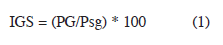
</front><body><![CDATA[ <div style="text-align: justify;">     <div style="text-align: center;"><font style="font-weight: bold;"  size="4"><span style="font-family: verdana;">Biolog&iacute;a reproductiva del pargo Lutjanus inermis (Perciformes: Lutjanidae), en el Pac&iacute;fico central mexicano</span></font><br style="font-family: verdana;"> </div> <br style="font-family: verdana;">     <div style="text-align: center;"><font size="2"><span  style="font-family: verdana;">Gabriela Lucano-Ram&iacute;rez<sup><a href="#1">1</a><a name="3"></a>*</sup>, Salvador Ruiz-Ram&iacute;rez<a href="#1"><sup>1</sup></a>, Gaspar Gonz&aacute;lez-Sans&oacute;n<a href="#1"><sup>1</sup></a> &amp; Bertha Patricia Ceballos-V&aacute;zquez<sup><a href="#2">2</a><a  name="4"></a>*</sup></span></font><br style="font-family: verdana;"> </div> <br style="font-family: verdana;"> <font size="2"><span style="font-family: verdana;"></span></font><font  size="2"><span style="font-family: verdana;">    <br> <a name="Correspondencia2"></a>*<a href="#Correspondencia1">Direcci&oacute;n para correspondencia</a></span></font><br style="font-family: verdana;"> <font size="2"><span style="font-family: verdana;"></span></font></div> <hr  style="width: 100%; height: 2px; margin-left: 0px; margin-right: 0px;">     <div style="text-align: justify;"><font style="font-weight: bold;"  size="3"><span style="font-family: verdana;">Abstract</span></font><br  style="font-family: verdana;"> <font size="2"></font><br style="font-family: verdana;"> <font size="2"><span style="font-family: verdana;"><span  style="font-weight: bold;">Reproductive biology of the Golden snapper</span> <span style="font-style: italic;">Lutjanus inermis</span> <span style="font-weight: bold;">(Perciformes: Lutjanidae) in the central Mexican Pacific.</span> Reproductive aspects and information on the effect of fishery activities over this species stock are scarce, despite the imperative need of effective protection and resource management programs. To support the possible establishment of closed seasons and catch levels for the area, our study aimed to evaluate the spawning season of the Golden snapper (<span style="font-style: italic;">Lutjanus inermis</span>). For this, fish caught by artisanal fisheries in the Navidad, Tenacatita and Chamela bays (Jalisco, Mexico) were sampled monthly from 1999-2008, and analyzed </span><span  style="font-family: verdana;">sex ratios, spawning season and size at first maturity. A total of 311 (53.1%) females and 275 (46.9%) males were caught, and the observed sex ratio was 1:0.88. The total length range was 14.4-37.0cm and total weight range from 48-575g. The length at first maturity was 23.9cm TL for females and 23.6cm TL for males. The gonadosomatic index showed two principal reproductive periods in the year (February-April and September- November), when the largest number of mature gonads were observed. Ovaries were of asynchronic development type and seven oocyte development stages were identified. Testicles showed lobular development and spermatozoa were observed in the center of the cysts and in the collecting ducts. It is important to mention that our results support the current suitable exploitation of this species in the area.</span></font><br  style="font-family: verdana;"> <font size="2"></font><br style="font-family: verdana;"> <font size="2"><span style="font-family: verdana;"><span  style="font-weight: bold;">Key words:</span> Lutjanidae, sex ratio, maturation stages, gonadosomatic index, sexual maturity.</span></font><br  style="font-family: verdana;"> <font size="2"></font><br style="font-family: verdana;"> <font style="font-weight: bold;" size="3"><span  style="font-family: verdana;">Resumen</span></font><br  style="font-family: verdana;"> <font size="2"></font><br style="font-family: verdana;"> <font size="2"><span style="font-family: verdana;">Debido a los escasos antecedentes del efecto de las pesquer&iacute;as y manejo del pargo <span  style="font-style: italic;">Lutjanus inermis</span>, es importante conocer la &eacute;poca reproductiva para el establecimiento de temporadas de veda, ya que la biomasa de los peces en fase de reproducci&oacute;n, es usada como punto de referencia para evaluar la condici&oacute;n del stock explotado y para establecer futuros niveles de captura. Por ello, el objetivo de este trabajo fue analizar algunos aspectos reproductivos como proporci&oacute;n sexual, &eacute;poca reproductiva, talla de madurez de<span  style="font-style: italic;"> L. inermis </span>en las costas de Jalisco, M&eacute;xico. Durante 1999-2008, se llevaron a cabo muestreos mensuales de los ejemplares capturados por la pesca artesanal en las bah&iacute;as de Navidad, Tenacatita y Chamela (Jalisco, M&eacute;xico). Se recolectaron 311 (53.1%) hembras y 275 (46.9%) machos y, la proporci&oacute;n de sexos (1:0.88) no present&oacute; diferencia significativa. El intervalo de longitud total fue 14.4 a 37.0cm y el peso total de 48 a 575g. <span style="font-style: italic;">L. inermis</span> present&oacute; los m&aacute;ximos valores del IGS en dos periodos, febrero-abril y septiembre-noviembre, tambi&eacute;n en estos periodos se presentaron los mayores porcentajes de organismos en estadio de maduraci&oacute;n. El ovario present&oacute; el tipo de desarrollo asincr&oacute;nico y se reconocieron siete fases del desarrollo de los ovocitos. En los test&iacute;culos se observ&oacute; el tipo de desarrollo lobular, se observaron espermatozoides en el centro de los cistos y en el conducto recolector. La talla de madurez (L<sub>50</sub>) fue de 23.9cm LT para hembras y 23.6cm LT para machos. Considerando el periodo de muestreo de este estudio, los antecedentes descritos podr&iacute;an ser de utilidad en la formulaci&oacute;n de planes o estrategias de manejo de esta especie.</span></font><br  style="font-family: verdana;"> <font size="2"></font><br style="font-family: verdana;"> <font size="2"><span style="font-family: verdana;"><span  style="font-weight: bold;">Palabras clave:</span> Lutjanidae, reproducci&oacute;n, proporci&oacute;n sexual, estadios de madurez, &iacute;ndice gonadosom&aacute;tico.</span></font><br  style="font-family: verdana;"> <font size="2"></font><br style="font-family: verdana;"> <font size="2"><span style="font-family: verdana;"></span></font></div> <hr  style="width: 100%; height: 2px; margin-left: 0px; margin-right: 0px;">     <div style="text-align: justify;"><font size="2"><span  style="font-family: verdana;">Los miembros de la familia Lutjanidae, se conocen como pargos, habitan aguas tropicales y subtropicales, incluye 21 g&eacute;neros y 125 especies reconocidas. La mayor&iacute;a de los pargos viven en aguas someras, aunque hay especies que se encuentran entre los 100 y 500m de profundidad. En el Pac&iacute;fico oriental, diez especies de pargos se agrupan en dos g&eacute;neros, <span style="font-style: italic;">Hoplopagrus</span> y <span style="font-style: italic;">Lutjanus</span> el cual est&aacute; representado por nueve especies. El pargo rabirrubia del pac&iacute;fico, Lutjanus inermis (Peters 1869), se distribuye en el Pac&iacute;fico desde M&eacute;xico hasta Colombia, es com&uacute;n encontrarlo en costas rocosas y arrecifes de coral hasta los 40m de profundidad, durante el d&iacute;a forman grupos de 30 o m&aacute;s individuos, que a veces permanecen inm&oacute;viles. Se alimentan de crust&aacute;ceos y peces, tambi&eacute;n zooplancton, especialmente larvas de peces (Amezcua-Linares 1996, Allen <span style="font-style: italic;">&amp;</span> Robertson 1998). En el Pac&iacute;fico tropical mexicano se captura con redes agalleras, de arrastre y l&iacute;nea de mano, principalmente en &aacute;reas costeras. Con importancia econ&oacute;mica, se comercializa localmente entero. La captura comercial ribere&ntilde;a (en Jalisco) ha presentado oscilaciones que van de 0.5 a 1.0 tonelada por a&ntilde;o (Amezcua-Linares 1996, Espino-Barr <span style="font-style: italic;">et al.</span> 2004). Rojo-Vazqu&eacute;z <span style="font-style: italic;">et al. </span>(2008), enlista a<span style="font-style: italic;"> L. inermis</span> entre las 30 especies m&aacute;s abundantes en un periodo de 47 meses de muestreo. Hasta el momento solo se ha reportado de esta especie aspectos como: descripci&oacute;n, distribuci&oacute;n, redescubrimiento en el golfo de California y listados de especies en el Pac&iacute;fico (Amezcua-Linares 1996, Allen <span style="font-style: italic;">&amp;</span> Robertson 1998, Tavera <span  style="font-style: italic;">&amp;</span> De la Cruz-Ag&uuml;ero 2006, Rojo-V&aacute;zquez <span style="font-style: italic;">et al.</span> 2009).</span></font><br style="font-family: verdana;"> <font size="2"></font><br style="font-family: verdana;"> <font size="2"><span style="font-family: verdana;">Los antecedentes sobre la biolog&iacute;a, ecolog&iacute;a y el efecto de las pesquer&iacute;as en la especie no se encontraron, a pesar de que los mismos son necesarios para desarrollar programas efectivos de protecci&oacute;n y manejo del recurso. En este sentido, el reconocimiento de la &eacute;poca reproductiva es necesaria para el establecimiento de vedas de captura, ya que com&uacute;nmente la biomasa de los peces en fase de reproducci&oacute;n, es usada como uno de los puntos de referencia para evaluar la condici&oacute;n del stock explotado y para establecer futuros niveles de captura (Vitale <span style="font-style: italic;">et al. </span>2006). Por ello, se analizan e interpretan algunos aspectos reproductivos (proporci&oacute;n sexual, &eacute;poca reproductiva, talla de primera madurez) de <span  style="font-style: italic;">Lutjanus inermis</span> en las costas de Jalisco, M&eacute;xico, durante un periodo de nueve a&ntilde;os de muestreos.</span></font><br  style="font-family: verdana;"> <font size="2"></font><br style="font-family: verdana;"> <font style="font-weight: bold;" size="3"><span  style="font-family: verdana;">Materiales y m&eacute;todos</span></font><br  style="font-family: verdana;"> <font size="2"></font><br style="font-family: verdana;"> <font size="2"><span style="font-family: verdana;"><span  style="font-weight: bold;">Recolecta de muestras:</span> Las muestras se obtuvieron entre enero de 1999 y diciembre de 2008 (excepto 2001) durante cinco d&iacute;as de cada mes. Los organismos analizados provinieron de la captura comercial realizada con redes agalleras de diferente luz de malla (3.0&#8221;, 3.5&#8221;, 4.0&#8221; y 4.5&#8221;), las cuales se colocaban a las 19:00 y se </span></font><font size="2"><span  style="font-family: verdana;">levantaban al otro d&iacute;a a las 7:00 por pescadores ribere&ntilde;os en las Bah&iacute;as de Navidad (19&deg;12&#8217;34&#8221; N - 104&deg;41&#8217;24&#8221; W), Tenacatita (19&deg;18&#8217;08&#8221; N - 104&deg;48&#8217;21&#8221; W) y Chamela (19&deg;33&#8217;29&#8221; N - 105&deg;05&#8217;35&#8221; W), ubicadas en el estado de Jalisco, M&eacute;xico. Los organismos de <span  style="font-style: italic;">L. inermis</span> fueron separados del resto de la fauna capturada, se le registr&oacute; la longitud total (LT&plusmn;1mm) y el peso total (PT&plusmn;0.1g). El sexo se identific&oacute; mediante la observaci&oacute;n directa de las g&oacute;nadas y se registr&oacute; el peso de las mismas (PG&plusmn;0.01g). Las g&oacute;nadas se fijaron en formol neutro al 10% para su posterior an&aacute;lisis histol&oacute;gico.    <br>     <br> Para conocer la temporada reproductiva se aplicaron dos m&eacute;todos complementarios. El primero consisti&oacute; en el c&aacute;lculo del &iacute;ndice gonadosom&aacute;tico como la relaci&oacute;n porcentual del peso de la g&oacute;nada con respecto al peso del organismo (S&aacute;nchez-C&aacute;rdenas <span  style="font-style: italic;">et al.</span> 2007). El otro m&eacute;todo consisti&oacute; en la aplicaci&oacute;n de la escala morfocrom&aacute;tica de cuatro fases de desarrollo gon&aacute;dico (inmaduro, en maduraci&oacute;n, maduro y desovado) de acuerdo a los criterios de Everson <span style="font-style: italic;">et al.</span> (1989).</span></font><br style="font-family: verdana;"> <font size="2"></font><br style="font-family: verdana;"> <font size="2"><span style="font-family: verdana;">Para describir la organizaci&oacute;n interna de la g&oacute;nada se hicieron cortes histol&oacute;gicos de ovarios y test&iacute;culos en diferentes grados de desarrollo. El proceso histol&oacute;gico consisti&oacute; en la deshidrataci&oacute;n en una serie de soluciones de alcohol et&iacute;lico en concentraciones crecientes, inclusi&oacute;n en paraplast, cortes de 5mm y tinci&oacute;n con hematoxilina-eosina (Lucano-Ram&iacute;rez <span style="font-style: italic;">et al.</span> 2001a). La observaci&oacute;n y an&aacute;lisis de las g&oacute;nadas se realiz&oacute; con un microscopio Axiostar Plus (Zeiss). Se clasificaron los diferentes tipos de ovocitos de acuerdo a Yamamoto <span style="font-style: italic;">&amp;</span> Yamazaki (1961), Cerisola (1984) y Lucano-Ram&iacute;rez <span style="font-style: italic;">et al. </span>(2001a). La organizaci&oacute;n de los test&iacute;culos se describi&oacute; de acuerdo a Hyder (1969) y Lucano-Ram&iacute;rez <span style="font-style: italic;">et al.</span> (2001b). </span></font><br style="font-family: verdana;"> <font size="2"></font><br style="font-family: verdana;"> <font size="2"><span style="font-family: verdana;">Se calcul&oacute; el &iacute;ndice gonadosom&aacute;tico (IGS) de cada individuo mediante la expresi&oacute;n:    <br>     <br> </span></font>     ]]></body>
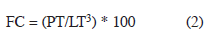
<body><![CDATA[<div style="text-align: center;"><font size="2"><span  style="font-family: verdana;"><img alt=""  src="/img/revistas/rbt/v60n1/a28f1.jpg"  style="width: 223px; height: 45px;"></span></font><br  style="font-family: verdana;"> <font size="2"><span style="font-family: verdana;"></span></font></div> <font size="2"><span style="font-family: verdana;"></span></font><br  style="font-family: verdana;"> <font size="2"><span style="font-family: verdana;">donde: PG es el peso de la g&oacute;nada, Psg es el peso sin el peso de la g&oacute;nada. </span></font><br  style="font-family: verdana;"> <font size="2"><span style="font-family: verdana;">    <br> Se obtuvo el factor de condici&oacute;n (FC) para cada uno de los organismos, mediante la expresi&oacute;n:</span></font><br style="font-family: verdana;">     <br>     <div style="text-align: center;"><img alt=""  src="/img/revistas/rbt/v60n1/a28f2.jpg"  style="width: 211px; height: 45px;"><br style="font-family: verdana;"> </div> <br style="font-family: verdana;"> <font size="2"><span style="font-family: verdana;">donde: PT= peso total, LT= longitud total.</span></font><br style="font-family: verdana;"> <font size="2"><span style="font-family: verdana;">    <br> La existencia de diferencias significativas entre los valores medios de estos &iacute;ndices se&nbsp; verific&oacute; mediante el an&aacute;lisis de varianza (ANDEVA) y la correlaci&oacute;n entre &iacute;ndices mediante el coeficiente de correlaci&oacute;n por rangos de Spearman (r<sub>s</sub>). En todas las pruebas se utiliz&oacute; el programa STATISTICA. 7.0, fijando un nivel de significaci&oacute;n de 0.05.</span></font><br  style="font-family: verdana;"> <font size="2"></font><br style="font-family: verdana;"> <font size="2"><span style="font-family: verdana;">Se calcul&oacute; la proporci&oacute;n sexual como la raz&oacute;n del n&uacute;mero de hembras entre el n&uacute;mero </span></font><font size="2"><span  style="font-family: verdana;">de machos, considerando la muestra total, anual, y por frecuencia de tallas. Se utiliz&oacute; </span></font><font  size="2"><span style="font-family: verdana;">la prueba de bondad de ajuste Chi cuadrada con correcci&oacute;n para continuidad de Yates (Zar 2010) para comparar y determinar si la proporci&oacute;n de sexos difieren del esperado 1:1.</span></font><br style="font-family: verdana;"> <font size="2"></font><br style="font-family: verdana;"> <font size="2"><span style="font-family: verdana;">La talla de maduraci&oacute;n sexual (L<sub>50</sub>) se estim&oacute; como la longitud a la cual el 50% de los </span></font><font size="2"><span  style="font-family: verdana;">individuos han alcanzado la madurez sexual. Para ello se ajust&oacute; un modelo log&iacute;stico a la frecuencia relativa acumulada de peces maduros&nbsp; (en intervalos de 2cm). El valor L<sub>50</sub> para cada sexo se obtuvo a partir de los par&aacute;metros estimados en cada caso, seg&uacute;n la expresi&oacute;n</span></font><br style="font-family: verdana;">     <br>     <div style="text-align: center;"><img alt=""  src="/img/revistas/rbt/v60n1/a28f3.jpg"  style="width: 247px; height: 45px;"><br style="font-family: verdana;"> </div> <br style="font-family: verdana;"> <font size="2"><span style="font-family: verdana;">donde: P<sub>LT</sub> es el porcentaje de individuos maduros a la longitud x, <span style="font-style: italic;">a</span> y <span style="font-style: italic;">b</span> son&nbsp; par&aacute;metros del modelo log&iacute;stico ajustado (Echeverria 1987). Este modelo se ajust&oacute; mediante un m&eacute;todo no lineal basado en el algoritmo de Levenberg-Maquard, utilizando el programa STATISTICA 7.0.</span></font><br  style="font-family: verdana;"> <font size="3"><span style="font-family: verdana;">    <br>     <span style="font-weight: bold;">Resultados</span></span></font><br      style="font-family: verdana;">     ]]></body>
<body><![CDATA[<font size="2"></font><br style="font-family: verdana;">     <font size="2"><span style="font-family: verdana;">En total se     recolectaron 586     organismos. La longitud total de las hembras vari&oacute; entre&nbsp;     7.0 y 37.0cm con un promedio de 28.2&plusmn;0.26cm y el peso total     vari&oacute; entre 54 y 575g con promedio de 275.9&plusmn;6.92g. Los     machos presentaron un intervalo de longitud total entre 14.4 y 36.7cm,     con promedio de 27.5&plusmn;0.26cm y el peso total vari&oacute; entre     48 y 564g con un promedio de 252.4&plusmn;6.79g. Al parecer las hembras     son m&aacute;s grandes que los machos, ya que al realizar un ANDEVA,     ]]></body>
<body><![CDATA[este present&oacute; diferencia significativa entre las tallas (F=3.92,     p=0.04). Las longitudes promedio, encontradas en los diferentes     a&ntilde;os de muestreo, fluctuaron desde 24.9cm hasta 32.1cm. En     hembras y en machos se observ&oacute; la talla promedio m&aacute;xima     (32.0 y 32.1cm) en 2007, y la m&iacute;nima (24.9 y 25.1cm) en 1999.</span></font><br      style="font-family: verdana;">     <font size="2"></font><br style="font-family: verdana;">     <font size="2"><span style="font-family: verdana;">De los organismos     recolectados, 311     fueron hembras (53.1%) y 275 machos (46.9%). Las proporciones sexuales     ]]></body>
<body><![CDATA[para cada uno de los a&ntilde;os de muestreo, as&iacute; como la total     (1H:0.88M) no fueron significativamente diferentes de la esperada 1:1     (x<sup>2</sup>=2.21, p&gt;0.05). Al realizar el an&aacute;lisis por     talla,     s&oacute;lo se present&oacute; diferencia significativa en la     frecuencia de longitud de 32-33.9cm (x<sup>2</sup>=3.88, p=0.049), esta     proporci&oacute;n no influye sobre la anual ni la total en donde no se     present&oacute; diferencia significativa (<a      href="/img/revistas/rbt/v60n1/a28i1.jpg">Fig. 1</a>).</span></font><br      style="font-family: verdana;">     ]]></body>
<body><![CDATA[<font size="2"></font><br style="font-family: verdana;">     <font size="2"><span style="font-family: verdana;">Variaci&oacute;n     mensual de     porcentajes de madurez gon&aacute;dica (<a      href="/img/revistas/rbt/v60n1/a28i2.jpg">Fig. 2</a>). Estadio     Inmaduro: Se     present&oacute; en todos los meses tanto en hembras como en machos, con     porcentaje m&aacute;ximo en mayo (60% y 76.9% respectivamente). Estadio     en Maduraci&oacute;n: En hembras el mayor porcentaje se observ&oacute;     en marzo (20.4%) y en machos en abril (44.4%). Estadio Maduro: Abril     ]]></body>
<body><![CDATA[(64.3%) y noviembre (46.2%) fueron los meses con el mayor porcentaje en     hembras; en machos abril (44.4%) y octubre (42.9%). Estadio Desovado:     En junio (85.0% y 85.7%) se presentaron los porcentajes altos tanto en     hembras como en machos.</span></font><br style="font-family: verdana;">     <font size="2"></font><br style="font-family: verdana;">     <font size="2"><span style="font-family: verdana;">La variaci&oacute;n     mensual de los     porcentajes de madurez gon&aacute;dica y del &iacute;ndice     gonadosom&aacute;tico (IGS) sugieren que la especie se reproduce en dos     temporadas del a&ntilde;o (<a href="/img/revistas/rbt/v60n1/a28i2.jpg">Figs.     ]]></body>
<body><![CDATA[2</a>, <a href="/img/revistas/rbt/v60n1/a28i3.jpg">3</a>), la primera     febrero-abril y la     segunda septiembre-noviembre.</span></font><br      style="font-family: verdana;">     <font size="2"></font><br style="font-family: verdana;">     <font size="2"><span style="font-family: verdana;">El IGS     present&oacute; una     variaci&oacute;n estacional significativa en hembras (F=10.68,     p&lt;0.05) y en machos (F=6.58, p&lt;0.05). Entre ambos sexos se     present&oacute; una tendencia similar; sin embargo, los valores del IGS     ]]></body>
<body><![CDATA[de los machos fueron significativamente menores a los de las hembras     (F=26.83, p&lt;0.05). Los promedios altos del IGS en hembras se     presentaron en febrero y abril (3.03 y 4.28) y en septiembre y     noviembre (3.28 y 3.60) y, en los machos, en marzo y abril (1.98 y     2.76) y septiembre y noviembre (2.23 y 1.81). Aunque en hembras el IGS     disminuy&oacute; en marzo y octubre, estos no se igualan a los     m&iacute;nimos registrados despu&eacute;s de dichos periodos (<a      href="/img/revistas/rbt/v60n1/a28i3.jpg">Fig. 3</a>).</span></font><br      style="font-family: verdana;">     <font size="2"></font><br style="font-family: verdana;">     ]]></body>
<body><![CDATA[<font size="2"><span style="font-family: verdana;">El factor de     condici&oacute;n     present&oacute; valores altos en mayo y junio tanto en hembras (1.17 y     1.19) como en machos (1.22 y 1.23), ocurriendo en la temporada no     reproductiva (<a href="/img/revistas/rbt/v60n1/a28i3.jpg">Fig. 3</a>).     Los valores promedios del FC presentaron     diferencia significativa de manera temporal tanto en hembras (F=4.57,     p&lt;0.05), como en machos (F=5.34, p&lt;0.05), los promedios variaron     entre 1.09 y 1.19 en las hembras, y de 1.08 a 1.23 en los machos. Se     present&oacute; correlaci&oacute;n positiva significativa entre los     ]]></body>
<body><![CDATA[valores promedio mensuales del IGS de hembras y del IGS de machos     (r<sub>s</sub>=0.916, p=0.000028) y entre los valores promedio     mensuales del FC de     hembras y del FC de machos (r<sub>s</sub>=0.741, p=0.0058), pero no se     encontr&oacute; correlaci&oacute;n entre el IGS y el FC entre hembras     (r<sub>s</sub>=0.011,&nbsp; p=0.834) y machos (r<sub>s</sub>=0.047,     p=0.430).</span></font><br style="font-family: verdana;">     <font size="2"></font><br style="font-family: verdana;">     <font size="2"><span style="font-family: verdana;">Descripci&oacute;n     microsc&oacute;pica de las g&oacute;nadas: Los ovarios est&aacute;n     ]]></body>
<body><![CDATA[envueltos por una t&uacute;nica que penetra en el ovario formando     lamelas ov&iacute;geras. En el interior del ovario se observaron     ovocitos en diferentes grados de desarrollo por lo que se puede     considerar que <span style="font-style: italic;">L. inermis</span>     presenta un desarrollo asincr&oacute;nico     (<a href="/img/revistas/rbt/v60n1/a28i4.jpg">Fig. 4</a>). Se     identificaron siete fases de desarrollo de los ovocitos:     1) ovocitos cromatina nucl&eacute;olo con di&aacute;metro promedio de     57.1&plusmn;0.54<span style="font-style: italic;">&#956;</span>m, se     caracterizan por tener poco citoplasma y un     ]]></body>
<body><![CDATA[n&uacute;cleo grande con nucl&eacute;olos; 2) en perinucl&eacute;olo     con di&aacute;metro de 81.5&plusmn;2.40<span style="font-style: italic;">&#956;</span>m,     los nucl&eacute;olos     se&nbsp; observan en la periferia del n&uacute;cleo; 3) con     ves&iacute;culas vitelinas con di&aacute;metro promedio de     133.5&plusmn;2.50<span style="font-style: italic;">&#956;</span>m, en el     citoplasma se forman gotas de aceite, con     ellos se inicia la formaci&oacute;n de vitelo; 4) en     vitelog&eacute;nesis primaria el di&aacute;metro promedio fue de     236.7&plusmn;2.95<span style="font-style: italic;">&#956;</span>m, se     ]]></body>
<body><![CDATA[observan gl&oacute;bulos de vitelo en el     citoplasma; 5) en vitelog&eacute;nesis secundaria con di&aacute;metro     de 304.4&plusmn;3.59<span style="font-style: italic;">&#956;</span>m, en     todo el citoplasma se encuentran     gl&oacute;bulos de vitelo; 6) vitelog&eacute;nesis terciaria     di&aacute;metro de 321.2&plusmn;7.13<span style="font-style: italic;">&#956;</span>m,     los gl&oacute;bulos de vitelo     se empiezan a fusionar y el n&uacute;cleo se encuentra en proceso de     migraci&oacute;n hacia el polo animal y 7) maduros con di&aacute;metro     de 334.7&plusmn;13.34<span style="font-style: italic;">&#956;</span>m,     ]]></body>
<body><![CDATA[vitelo completamente fusionado, no se observa     el n&uacute;cleo.</span></font><br style="font-family: verdana;">     <font size="2"></font><br style="font-family: verdana;">     <font size="2"><span style="font-family: verdana;">El interior de los     test&iacute;culos se encuentra organizado por l&oacute;bulos, los     cuales est&aacute;n formados por varios cistos dentro de los cuales se     lleva a cabo la espermatog&eacute;nesis. Una vez formados los     espermatozoides son liberados al interior del l&oacute;bulo y     posteriormente se agrupan en el conducto receptor para ser expulsados.     A este tipo de organizaci&oacute;n que tienen las c&eacute;lulas del     ]]></body>
<body><![CDATA[test&iacute;culo se le denomina desarrollo lobular.</span></font><br      style="font-family: verdana;">     <font size="2"></font><br style="font-family: verdana;">     <font size="2"><span style="font-family: verdana;">En las     g&oacute;nadas en estadio     inmaduro (<a href="/img/revistas/rbt/v60n1/a28i4.jpg">Figs. 4A</a>, <a      href="/img/revistas/rbt/v60n1/a28i5.jpg">5A</a>), se observaron     principalmente ovocitos en     cromatina nucl&eacute;olo y en perinucl&eacute;olo y en los machos el     test&iacute;culo present&oacute; cistos con poco desarrollo celular y     ]]></body>
<body><![CDATA[el conducto receptor libre de espermatozoides. En el estadio en     maduraci&oacute;n (<a href="/img/revistas/rbt/v60n1/a28i4.jpg">Figs. 4B</a>,     <a href="/img/revistas/rbt/v60n1/a28i5.jpg">5B</a>), los ovarios     presentan ovocitos     cromatina nucl&eacute;olo, en perinucl&eacute;olo, con ves&iacute;culas     vitelinas, vitelog&eacute;nesis primaria y pocos en     vitelog&eacute;nesis secundaria y los test&iacute;culos presentan     desarrollo celular en los cistos y espermatozoides en el conducto     receptor. En el estadio maduro (<a      href="/img/revistas/rbt/v60n1/a28i4.jpg">Figs. 4C</a>, <a     ]]></body>
<body><![CDATA[ href="/img/revistas/rbt/v60n1/a28i5.jpg">5C</a>), el ovario     est&aacute;     constituido principalmente por ovocitos en vitelog&eacute;nesis     secundaria, pero se pueden identificar otras fases como en cromatina     nucl&eacute;olo, perinucl&eacute;olo, ves&iacute;culas vitelinas y     vitelog&eacute;nesis primaria. Por su parte, el test&iacute;culo     presenta una gran cantidad de espermatozoides en el conducto receptor.     El estadio desovado (<a href="/img/revistas/rbt/v60n1/a28i4.jpg">Figs.     4D</a>, <a href="/img/revistas/rbt/v60n1/a28i5.jpg">5D</a>) presenta     en el ovario ovocitos en     ]]></body>
<body><![CDATA[cromatina nucl&eacute;olo y algunos en vitelog&eacute;nesis secundaria,     y en el test&iacute;culo se observan cistos semivac&iacute;os y pocos     espermatozoides en </span></font><font size="2"><span      style="font-family: verdana;">el conducto receptor. </span></font><br      style="font-family: verdana;">     <font size="2"></font><br style="font-family: verdana;">     <font size="2"><span style="font-family: verdana;">Talla de     maduraci&oacute;n sexual     (L<sub>50</sub>): La hembra y el macho m&aacute;s peque&ntilde;os con     g&oacute;nadas </span></font><font size="2"><span     ]]></body>
<body><![CDATA[ style="font-family: verdana;">maduras fueron de 20.1 y 21.3cm LT,     respectivamente. Por su parte, los organismos m&aacute;s grandes con     g&oacute;nadas inmaduras fueron de 27.0cm LT, la hembra y 26.6cm LT, el     macho. Considerando las frecuencias relativas acumuladas, se     encontr&oacute; que las hembras con talla promedio de 28.2cm,     representaron el 99.1% del total de hembras maduras y los machos con     talla promedio de 27.4cm representaron el 97.3% del total de machos     maduros. La longitud de madurez sexual (L<sub>50</sub>) calculada     utilizando todos     los individuos muestreados fue de 23.9cm LT para las hembras y 23.6cm     ]]></body>
<body><![CDATA[LT para los machos (<a href="/img/revistas/rbt/v60n1/a28i6.jpg">Fig. 6</a>).</span></font><br      style="font-family: verdana;">     <font size="2"></font><br style="font-family: verdana;">     <font style="font-weight: bold;" size="3"><span      style="font-family: verdana;">Discusi&oacute;n</span></font><br      style="font-family: verdana;">     <font size="2"></font><br style="font-family: verdana;">     <font size="2"><span style="font-family: verdana;">El intervalo de     longitud que se     obtuvo en el presente trabajo (14.4 a 37.0cm LT), es similar al     ]]></body>
<body><![CDATA[reportado por Espino-Bar <span style="font-style: italic;">et al.</span>     (2004) para la costa de Jalisco (18.6 a     37.3cm LT). La longitud m&aacute;xima reportada por Amezcua- Linares     (1996) y Allen <span style="font-style: italic;">&amp;</span>     Robertson (1998) en el Pac&iacute;fico oriental     tropical, es inferior (35.0cm LT) a la encontrada en el presente     trabajo. La talla promedio encontrada por Espino-Bar <span      style="font-style: italic;">et al. </span>(2004), es     similar (27.7cm LT) a la observada en el presente trabajo (27.8cm LT).     Esta coincidencia puede deberse a que los organismos muestreados para     ]]></body>
<body><![CDATA[ambos casos provinieron de la pesca comercial.</span></font><br      style="font-family: verdana;">     <font size="2"></font><br style="font-family: verdana;">     <font size="2"><span style="font-family: verdana;">Un aspecto     importante en la     reproducci&oacute;n de los peces es la proporci&oacute;n de hembras y </span></font><font      size="2"><span style="font-family: verdana;">machos que integran una     poblaci&oacute;n. Se encontr&oacute; diferencia significativa en la     distribuci&oacute;n de tallas (32-33.9cm), en donde se observ&oacute;     un mayor n&uacute;mero de hembras que machos, como lo mencionan varios     ]]></body>
<body><![CDATA[autores en otras especies, esto puede estar ligado a varios aspectos     como la supervivencia, la distribuci&oacute;n y preferencia del     h&aacute;bitat, la profundidad, la distribuci&oacute;n de tallas, o     bien en los aspectos alimenticios y reproductivos (Nikolsky 1963, Rojas     <span style="font-style: italic;">et al.</span> 2004,     Pi&ntilde;&oacute;n <span style="font-style: italic;">et al.</span>     2009).</span></font><br style="font-family: verdana;">     <font size="2"></font><br style="font-family: verdana;">     <font size="2"><span style="font-family: verdana;">El periodo     reproductivo de <span style="font-style: italic;">L.     ]]></body>
<body><![CDATA[inermis</span>, descrito en el presente estudio (febrero-abril y     septiembre-noviembre) constituye el primer reporte sobre este aspecto     de la biolog&iacute;a de la especie, autores como     S&aacute;nchez-C&aacute;rdenas <span style="font-style: italic;">et al.</span>     (2007), mencionaron que el IGS es     un buen indicador del periodo reproductivo, adem&aacute;s ha sido     utilizado para establecer dichos periodos en diversas especies     (Gonz&aacute;lez <span style="font-style: italic;">&amp;</span>     Oyarz&uacute;n 2002, Palomera-S&aacute;nchez     2004, Lucano-Ram&iacute;rez <span style="font-style: italic;">et al. </span>2006,     ]]></body>
<body><![CDATA[Pi&ntilde;&oacute;n <span style="font-style: italic;">et al.</span>     2009). El IGS y el FC no est&aacute;n correlacionados entre s&iacute;     en L. inermis, este mismo resultado tambi&eacute;n se encontr&oacute;     en las especies Holacanthus passer (Arellano-Mart&iacute;nez <span      style="font-style: italic;">&amp;</span>     Ceballos-V&aacute;zquez 2001) y en Pinguipes chilensis (Gonz&aacute;lez     <span style="font-style: italic;">&amp;</span> Oyarz&uacute;n 2002).     Esto puede deberse a que el FC est&aacute;     relacionado con la condici&oacute;n fisiol&oacute;gica y requerimientos     energ&eacute;ticos de un pez, tal como se detect&oacute; en el bacalao     ]]></body>
<body><![CDATA[del Atl&aacute;ntico. Adem&aacute;s, el FC presenta independencia de la     energ&iacute;a almacenada en la producci&oacute;n de ovocitos     (Gonz&aacute;lez <span style="font-style: italic;">&amp;</span>     Oyarz&uacute;n 2002).</span></font><br style="font-family: verdana;">     <font size="2"></font><br style="font-family: verdana;">     <font size="2"><span style="font-family: verdana;">El desove     asincr&oacute;nico     (parcial o fraccionado) que present&oacute; <span      style="font-style: italic;">L. inermis </span>es similar al     que presentan otras especies que se distribuyen en regiones tropicales     ]]></body>
<body><![CDATA[y subtropicales como Scomberomorus sierra (Palomera-S&aacute;nchez     2004), Pseudupeneus grandisquamis (Lucano- Ram&iacute;rez <span      style="font-style: italic;">et al.</span> 2006)     y Diodon holocanthus (Lucano-Ram&iacute;rez <span      style="font-style: italic;">et al. </span>2011); en contraste     con el mostrado por los peces de las regiones templadas, los cuales     tienen periodos cortos, desove total y desarrollo de la g&oacute;nada     sincr&oacute;nico (Nikolsky 1963, Granados-Lorencio 2002). Los peces     que presentan desarrollo asincr&oacute;nico, como en el caso de <span      style="font-style: italic;">L.     ]]></body>
<body><![CDATA[inermis</span>, por lo general desovan en varias ocasiones en una     temporada     reproductiva prolongada (Nagahama <span style="font-style: italic;">et     al.</span> 1995, Maack &amp; George 1999)     y los ovarios contienen ovocitos en diferentes fases de desarrollo.</span></font><br      style="font-family: verdana;">     <font size="2"></font><br style="font-family: verdana;">     <font size="2"><span style="font-family: verdana;">En el presente     trabajo, como en     otros realizados en la regi&oacute;n (Palomera-S&aacute;nchez 2004, </span></font><font     ]]></body>
<body><![CDATA[ size="2"><span style="font-family: verdana;">Lucano-Ram&iacute;rez <span      style="font-style: italic;">et al.</span> 2001a,     2006, 2011),&nbsp; se han identificado de cinco a siete fases de     desarrollo de los ovocitos los cuales representan la     vitelog&eacute;nesis como tal. Gonz&aacute;lez <span      style="font-style: italic;">et al.</span> (1979)     describieron cinco fases del desarrollo de los ovocitos en la especie     <span style="font-style: italic;">Lutjanus griseus</span>. Seg&uacute;n     los autores, las fases de la I a la IV,     son no maduras, las cuales se observaron en organismos capturados en el     ]]></body>
<body><![CDATA[medio natural, mientras que la fase V (ovocitos maduros), se     observ&oacute; s&oacute;lo en hembras tratadas con la hormona GCH.</span></font><br      style="font-family: verdana;">     <font size="2"></font><br style="font-family: verdana;">     <font size="2"><span style="font-family: verdana;">Microsc&oacute;picamente     el     test&iacute;culo de <span style="font-style: italic;">L. inermis</span>     present&oacute; el desarrollo de tipo     lobular, coincidiendo con lo descrito para <span      style="font-style: italic;">L. peru</span>     ]]></body>
<body><![CDATA[(Lucano-Ram&iacute;rez <span style="font-style: italic;">et al.</span>     2001b), P. grandisquamis     (Lucano-Ram&iacute;rez <span style="font-style: italic;">et al.</span>     2006) y Diodon holocanthus     (Lucano-Ram&iacute;rez<span style="font-style: italic;"> et al.</span>     2011) en la costa sur de Jalisco.</span></font><br      style="font-family: verdana;">     <font size="2"></font><br style="font-family: verdana;">     <font size="2"><span style="font-family: verdana;">La talla de madurez     (L<sub>50</sub>) fue     ]]></body>
<body><![CDATA[similar en ambos sexos y constituyen los primeros reportes de este     par&aacute;metro para <span style="font-style: italic;">L. inermis</span>,     cabe resaltar que la L<sub>50</sub>, es inferior     a la talla promedio del total de organismos capturados y a las tallas     promedio encontradas en los distintos a&ntilde;os de muestreo, por lo     tanto podemos inferir que cerca o mas del 50% de los organismos ya se     hab&iacute;an reproducido por lo menos una vez.</span></font><br      style="font-family: verdana;">     <font size="2"></font><br style="font-family: verdana;">     <font style="font-weight: bold;" size="3"><span     ]]></body>
<body><![CDATA[ style="font-family: verdana;">Agradecimientos</span></font><br      style="font-family: verdana;">     <font size="2"></font><br style="font-family: verdana;">     <font size="2"><span style="font-family: verdana;">Los autores     agradecen a Daniel     Kosonoy, Gerardo Kosonoy y Manuel D&iacute;az por su ayuda en la     realizaci&oacute;n de las actividades de pesca. A las cooperativas     &#8220;Rivera Melaque&#8221; y &#8220;Punta Farall&oacute;n&#8221; por facilitarnos sus     instalaciones. A la Universidad de Guadalajara por financiar el     proyecto &#8220;Reproducci&oacute;n de los peces de la familia Lutjanidae     ]]></body>
<body><![CDATA[colectados en el Pac&iacute;fico tropical mexicano&#8221; y a los estudiantes     del Departamento de Estudios para el Desarrollo Sustentable de Zonas     Costeras, que colaboraron en los muestreos.</span></font><br      style="font-family: verdana;">     <font size="2"></font><br style="font-family: verdana;">     <font size="2"><span style="font-family: verdana;"></span></font></div>     <hr      style="width: 100%; height: 2px; margin-left: 0px; margin-right: 0px;">     <!-- ref --><div style="text-align: justify;"><font style="font-weight: bold;"  size="3"><span style="font-family: verdana;">Referencias</span></font><br  style="font-family: verdana;"> <font size="2"></font><br style="font-family: verdana;"> <font size="2"><span style="font-family: verdana;">Allen, G.R. &amp; D.R. Robertson. 1998. Peces del Pac&iacute;fico oriental tropical. Comisi&oacute;n Nacional para el Conocimiento y Uso de la Biodiversidad y Agrupaci&oacute;n Sierra Madre, M&eacute;xico, D.F., M&eacute;xico.    &nbsp;&nbsp;&nbsp;&nbsp;&nbsp;&nbsp;&nbsp;&nbsp;[&#160;<a href="javascript:void(0);" onclick="javascript: window.open('/scielo.php?script=sci_nlinks&ref=1428340&pid=S0034-7744201200010002800001&lng=','','width=640,height=500,resizable=yes,scrollbars=1,menubar=yes,');">Links</a>&#160;]<!-- end-ref --><!-- ref --></span></font><br  style="font-family: verdana;"> <font size="2"></font><br style="font-family: verdana;"> <font size="2"><span style="font-family: verdana;">Amezcua-Linares, F. 1996. Peces demersales de la plataforma continental del Pac&iacute;fico Central de M&eacute;xico. Instituto de Ciencias de Mar y Limnolog&iacute;a, UNAM, Comisi&oacute;n Nacional para el Conocimiento y Uso de la Biodiversidad, M&eacute;xico, D.F., M&eacute;xico.    &nbsp;&nbsp;&nbsp;&nbsp;&nbsp;&nbsp;&nbsp;&nbsp;[&#160;<a href="javascript:void(0);" onclick="javascript: window.open('/scielo.php?script=sci_nlinks&ref=1428341&pid=S0034-7744201200010002800002&lng=','','width=640,height=500,resizable=yes,scrollbars=1,menubar=yes,');">Links</a>&#160;]<!-- end-ref --><!-- ref --></span></font><br  style="font-family: verdana;"> <font size="2"></font><br style="font-family: verdana;"> <font size="2"><span style="font-family: verdana;">Arellano-Mart&iacute;nez, M. &amp; B.P. Ceballos-V&aacute;zquez. 2001. Reproductive activity and condition index of <span style="font-style: italic;">Holacanthus passer </span>(Teleostei: Pomacanthidae) in the Gulf of California, M&eacute;xico. Rev. Biol. Trop. 49: 939-943 (Tambi&eacute;n disponible en l&iacute;nea: <a  href="http://www.scielo.sa.cr/scielo.php?script=sci_arttext&amp;pid=S0034-77442001000300013&amp;lng=es&amp;nrm=iso&amp;tlng=en">http://www.scielo.sa.cr/scielo.php?script=sci_arttext&amp;pid=S0034-77442001000300013&amp;lng=es&amp;nrm=iso&amp;tlng=en</a>).    &nbsp;&nbsp;&nbsp;&nbsp;&nbsp;&nbsp;&nbsp;&nbsp;[&#160;<a href="javascript:void(0);" onclick="javascript: window.open('/scielo.php?script=sci_nlinks&ref=1428342&pid=S0034-7744201200010002800003&lng=','','width=640,height=500,resizable=yes,scrollbars=1,menubar=yes,');">Links</a>&#160;]<!-- end-ref --><!-- ref --></span></font><br  style="font-family: verdana;"> <font size="2"></font><br style="font-family: verdana;"> <font size="2"><span style="font-family: verdana;">Cerisola, H. 1984. Cambios estructurales del fol&iacute;culo ov&aacute;rico durante su maduraci&oacute;n en el pejesapo <span style="font-style: italic;">Sicyases sanguineus</span>, Muller y Troschel 1843. (Gobiescocidae: Teleostei). Rev. Biol. Mar., Valpara&iacute;so 20: 1-21.    &nbsp;&nbsp;&nbsp;&nbsp;&nbsp;&nbsp;&nbsp;&nbsp;[&#160;<a href="javascript:void(0);" onclick="javascript: window.open('/scielo.php?script=sci_nlinks&ref=1428343&pid=S0034-7744201200010002800004&lng=','','width=640,height=500,resizable=yes,scrollbars=1,menubar=yes,');">Links</a>&#160;]<!-- end-ref --><!-- ref --></span></font><br style="font-family: verdana;"> <font size="2"></font><br style="font-family: verdana;"> <font size="2"><span style="font-family: verdana;">Echeverria, W.T. 1987. Thirty-four species of California rockfishes: maturity and seasonality of reproduction. Fish. Bull. 85: 229-250.    &nbsp;&nbsp;&nbsp;&nbsp;&nbsp;&nbsp;&nbsp;&nbsp;[&#160;<a href="javascript:void(0);" onclick="javascript: window.open('/scielo.php?script=sci_nlinks&ref=1428344&pid=S0034-7744201200010002800005&lng=','','width=640,height=500,resizable=yes,scrollbars=1,menubar=yes,');">Links</a>&#160;]<!-- end-ref --><!-- ref --></span></font><br  style="font-family: verdana;"> <font size="2"></font><br style="font-family: verdana;"> <font size="2"><span style="font-family: verdana;">Espino-Barr, E., E.G. Cabral-Sol&iacute;s, A. Garc&iacute;a-Boa &amp; M. Puente-G&oacute;mez. 2004. Especies marinas con valores comerciales de la costa de Jalisco, M&eacute;xico. CRIP, Manzanillo, M&eacute;xico.    &nbsp;&nbsp;&nbsp;&nbsp;&nbsp;&nbsp;&nbsp;&nbsp;[&#160;<a href="javascript:void(0);" onclick="javascript: window.open('/scielo.php?script=sci_nlinks&ref=1428345&pid=S0034-7744201200010002800006&lng=','','width=640,height=500,resizable=yes,scrollbars=1,menubar=yes,');">Links</a>&#160;]<!-- end-ref --><!-- ref --></span></font><br  style="font-family: verdana;"> <font size="2"></font><br style="font-family: verdana;"> <font size="2"><span style="font-family: verdana;">Everson, A.R., H.A. Williams &amp; B.M. Ito. 1989. Maturation and reproduction in two Hawaiian eteline snappers, uku, <span style="font-style: italic;">Aprion virescens</span>, and onaga, <span style="font-style: italic;">Etelis coruscans</span>. Fish. Bull. 87: 877-888.    &nbsp;&nbsp;&nbsp;&nbsp;&nbsp;&nbsp;&nbsp;&nbsp;[&#160;<a href="javascript:void(0);" onclick="javascript: window.open('/scielo.php?script=sci_nlinks&ref=1428346&pid=S0034-7744201200010002800007&lng=','','width=640,height=500,resizable=yes,scrollbars=1,menubar=yes,');">Links</a>&#160;]<!-- end-ref --><!-- ref --></span></font><br style="font-family: verdana;"> <font size="2"></font><br style="font-family: verdana;"> <font size="2"><span style="font-family: verdana;">Granados-Lorencio, C. 2002. Ecolog&iacute;a de peces. Secretariado de publicaciones. Universidad de Sevilla, Espa&ntilde;a.    &nbsp;&nbsp;&nbsp;&nbsp;&nbsp;&nbsp;&nbsp;&nbsp;[&#160;<a href="javascript:void(0);" onclick="javascript: window.open('/scielo.php?script=sci_nlinks&ref=1428347&pid=S0034-7744201200010002800008&lng=','','width=640,height=500,resizable=yes,scrollbars=1,menubar=yes,');">Links</a>&#160;]<!-- end-ref --><!-- ref --></span></font><br style="font-family: verdana;"> <font size="2"></font><br style="font-family: verdana;"> <font size="2"><span style="font-family: verdana;">Gonz&aacute;lez, E., T. Damas, N. Millares &amp; M. Borrero. 1979. Desove inducido en el caballerote (<span style="font-style: italic;">Lutjanus griseus</span> Linn&eacute;, 1758) en condiciones de laboratorio. Rev. Cub. Inv. Pesq. 4: 43-63.    &nbsp;&nbsp;&nbsp;&nbsp;&nbsp;&nbsp;&nbsp;&nbsp;[&#160;<a href="javascript:void(0);" onclick="javascript: window.open('/scielo.php?script=sci_nlinks&ref=1428348&pid=S0034-7744201200010002800009&lng=','','width=640,height=500,resizable=yes,scrollbars=1,menubar=yes,');">Links</a>&#160;]<!-- end-ref --><!-- ref --></span></font><br  style="font-family: verdana;"> <font size="2"></font><br style="font-family: verdana;"> <font size="2"><span style="font-family: verdana;">Gonz&aacute;lez, P. &amp; C. Oyarz&uacute;n. 2002. Variabilidad de &iacute;ndices biol&oacute;gicos en <span style="font-style: italic;">Pinguipes chilensis</span> Valenciennes 1833 (Perciformes, Pinguipedidae): &iquest;Estan realmente correlacionados? Gayana, 66: 249-253.    &nbsp;&nbsp;&nbsp;&nbsp;&nbsp;&nbsp;&nbsp;&nbsp;[&#160;<a href="javascript:void(0);" onclick="javascript: window.open('/scielo.php?script=sci_nlinks&ref=1428349&pid=S0034-7744201200010002800010&lng=','','width=640,height=500,resizable=yes,scrollbars=1,menubar=yes,');">Links</a>&#160;]<!-- end-ref --><!-- ref --></span></font><br  style="font-family: verdana;"> <font size="2"></font><br style="font-family: verdana;"> <font size="2"><span style="font-family: verdana;">Hyder, M. 1969. Histological studies on the testis of tilapia leucosticta and other species of the genus Tilapia (Pisces:Teleostei). Trans. Amer. Microsc. Soc. 88: 211-231.    &nbsp;&nbsp;&nbsp;&nbsp;&nbsp;&nbsp;&nbsp;&nbsp;[&#160;<a href="javascript:void(0);" onclick="javascript: window.open('/scielo.php?script=sci_nlinks&ref=1428350&pid=S0034-7744201200010002800011&lng=','','width=640,height=500,resizable=yes,scrollbars=1,menubar=yes,');">Links</a>&#160;]<!-- end-ref --><!-- ref --></span></font><br style="font-family: verdana;"> <font size="2"></font><br style="font-family: verdana;"> <font size="2"><span style="font-family: verdana;">Lucano-Ram&iacute;rez, G., E. Pe&ntilde;a-P&eacute;rez, S. Ruiz-Ram&iacute;rez, J.A. Rojo-V&aacute;zquez &amp; G. Gonz&aacute;lez-Sans&oacute;n. 2011. Aspectos reproductivos del pez erizo, <span style="font-style: italic;">Diodon holocanthus</span> (Pisces: Diodontidae) en la plataforma continental del Pac&iacute;fico Central Mexicano. Rev. Biol. Trop. 59: 217-232 (Tambi&eacute;n disponible en l&iacute;nea: <a  href="www.ots.ac.cr/tropiweb/intpages/vols/vol59-1.html">www.ots.ac.cr/tropiweb/intpages/vols/vol59-1.html</a>).    &nbsp;&nbsp;&nbsp;&nbsp;&nbsp;&nbsp;&nbsp;&nbsp;[&#160;<a href="javascript:void(0);" onclick="javascript: window.open('/scielo.php?script=sci_nlinks&ref=1428351&pid=S0034-7744201200010002800012&lng=','','width=640,height=500,resizable=yes,scrollbars=1,menubar=yes,');">Links</a>&#160;]<!-- end-ref --><!-- ref --></span></font><br  style="font-family: verdana;"> <font size="2"></font><br style="font-family: verdana;"> <font size="2"><span style="font-family: verdana;">Lucano-Ram&iacute;rez, G., S. Ruiz-Ram&iacute;rez &amp; J.A. Rojo-V&aacute;zquez. 2006. Composici&oacute;n por tallas y ciclo reproductivo de <span  style="font-style: italic;">Pseudupeneus grandisquamis</span> (Pisces: Mullidae) en el Pac&iacute;fico central Mexicano. Rev. Biol. Trop. 54: 195-207 (Tambi&eacute;n disponible en l&iacute;nea: <a  href="www.ots.ac.cr/tropiweb/attachments/volumes/vol54-1/20-LUCANO-Composici.pdf">www.ots.ac.cr/tropiweb/attachments/volumes/vol54-1/20-LUCANO-Composici.pdf</a>).    &nbsp;&nbsp;&nbsp;&nbsp;&nbsp;&nbsp;&nbsp;&nbsp;[&#160;<a href="javascript:void(0);" onclick="javascript: window.open('/scielo.php?script=sci_nlinks&ref=1428352&pid=S0034-7744201200010002800013&lng=','','width=640,height=500,resizable=yes,scrollbars=1,menubar=yes,');">Links</a>&#160;]<!-- end-ref --><!-- ref --></span></font><br  style="font-family: verdana;"> <font size="2"></font><br style="font-family: verdana;"> <font size="2"><span style="font-family: verdana;">Lucano-Ram&iacute;rez, G., M. Villagr&aacute;n-Santa Cruz, S. Ruiz-Ram&iacute;rez &amp; M.T. L&oacute;pez-Trujillo. 2001a. Histolog&iacute;a de los ovocitos de <span style="font-style: italic;">Lutjanus peru</span> (Nichols y Murphy, 1922) (Pisces: Lutjanidae). Cienc. Mar. 3: 335-349 (Tambi&eacute;n disponible en l&iacute;nea: <a href="redalyc.uaemex.mx/redalyc/html/480/48027302/48027302.html">redalyc.uaemex.mx/redalyc/html/480/48027302/48027302.html</a>).    &nbsp;&nbsp;&nbsp;&nbsp;&nbsp;&nbsp;&nbsp;&nbsp;[&#160;<a href="javascript:void(0);" onclick="javascript: window.open('/scielo.php?script=sci_nlinks&ref=1428353&pid=S0034-7744201200010002800014&lng=','','width=640,height=500,resizable=yes,scrollbars=1,menubar=yes,');">Links</a>&#160;]<!-- end-ref --><!-- ref --></span></font><br  style="font-family: verdana;"> <font size="2"></font><br style="font-family: verdana;"> <font size="2"><span style="font-family: verdana;">Lucano-Ram&iacute;rez, G., M. Villagr&aacute;n-Santa Cruz &amp; S. Ruiz- Ram&iacute;rez. 2001b. Cambios estructurales en las g&oacute;nadas de <span  style="font-style: italic;">Lutjanus peru</span> (Pisces:Lutjanidae), en la Costa sur de Jalisco, M&eacute;xico. Bol. Centro Invest. Biol. 35: 295-316.    &nbsp;&nbsp;&nbsp;&nbsp;&nbsp;&nbsp;&nbsp;&nbsp;[&#160;<a href="javascript:void(0);" onclick="javascript: window.open('/scielo.php?script=sci_nlinks&ref=1428354&pid=S0034-7744201200010002800015&lng=','','width=640,height=500,resizable=yes,scrollbars=1,menubar=yes,');">Links</a>&#160;]<!-- end-ref --><!-- ref --></span></font><br  style="font-family: verdana;"> <font size="2"></font><br style="font-family: verdana;"> <font size="2"><span style="font-family: verdana;">Maack, G. &amp; M.R. George. 1999. Contributions to the reproductive biology of <span  style="font-style: italic;">Encrasicholina punctifer</span> Fowler, 1938 (Engraulidae) from West Sumatra, Indonesia. Fish. Research 44: 113-120.    &nbsp;&nbsp;&nbsp;&nbsp;&nbsp;&nbsp;&nbsp;&nbsp;[&#160;<a href="javascript:void(0);" onclick="javascript: window.open('/scielo.php?script=sci_nlinks&ref=1428355&pid=S0034-7744201200010002800016&lng=','','width=640,height=500,resizable=yes,scrollbars=1,menubar=yes,');">Links</a>&#160;]<!-- end-ref --><!-- ref --></span></font><br style="font-family: verdana;"> <font size="2"></font><br style="font-family: verdana;"> <font size="2"><span style="font-family: verdana;">Nagahama, Y., M. Yoshikuni, T. Yamashita, M. Tokumoto &amp; Y. Katsu. 1995. Regulation of oocyte growth and maturation in fish. Current Topics Develop. Biol. 30: 103-145.    &nbsp;&nbsp;&nbsp;&nbsp;&nbsp;&nbsp;&nbsp;&nbsp;[&#160;<a href="javascript:void(0);" onclick="javascript: window.open('/scielo.php?script=sci_nlinks&ref=1428356&pid=S0034-7744201200010002800017&lng=','','width=640,height=500,resizable=yes,scrollbars=1,menubar=yes,');">Links</a>&#160;]<!-- end-ref --><!-- ref --></span></font><br style="font-family: verdana;"> <font size="2"></font><br style="font-family: verdana;"> <font size="2"><span style="font-family: verdana;">Nikolsky, G. 1963. The ecology of fishes. Academic, Londres, Inglaterra.    &nbsp;&nbsp;&nbsp;&nbsp;&nbsp;&nbsp;&nbsp;&nbsp;[&#160;<a href="javascript:void(0);" onclick="javascript: window.open('/scielo.php?script=sci_nlinks&ref=1428357&pid=S0034-7744201200010002800018&lng=','','width=640,height=500,resizable=yes,scrollbars=1,menubar=yes,');">Links</a>&#160;]<!-- end-ref --><!-- ref --></span></font><br  style="font-family: verdana;"> <font size="2"></font><br style="font-family: verdana;"> <font size="2"><span style="font-family: verdana;">Palomera-S&aacute;nchez, F.I. 2004. Caracter&iacute;sticas reproductivas de <span  style="font-style: italic;">Scomberomorus sierra </span>Jordan y Starks </span></font><font size="2"><span style="font-family: verdana;">1895 (Pisces: Scombridae) en Bah&iacute;a Navidad, Jalisco, M&eacute;xico. Tesis de Licenciatura, Universidad de Guadalajara, M&eacute;xico.    &nbsp;&nbsp;&nbsp;&nbsp;&nbsp;&nbsp;&nbsp;&nbsp;[&#160;<a href="javascript:void(0);" onclick="javascript: window.open('/scielo.php?script=sci_nlinks&ref=1428358&pid=S0034-7744201200010002800019&lng=','','width=640,height=500,resizable=yes,scrollbars=1,menubar=yes,');">Links</a>&#160;]<!-- end-ref --><!-- ref --></span></font><br  style="font-family: verdana;"> <font size="2"></font><br style="font-family: verdana;"> <font size="2"><span style="font-family: verdana;">Pi&ntilde;&oacute;n, A., F. Amezcua &amp; N. Duncan. 2009. Reproductive cycle of female yellow snapper <span style="font-style: italic;">Lutjanus argentiventris</span> (Pisces, Actinopterygii, Lutjanidae) in the SW Gulf of California: gonadic stages, spawning seasonality and length at sexual maturity. J. Appl. Ichthyol. 25: 18-25.    &nbsp;&nbsp;&nbsp;&nbsp;&nbsp;&nbsp;&nbsp;&nbsp;[&#160;<a href="javascript:void(0);" onclick="javascript: window.open('/scielo.php?script=sci_nlinks&ref=1428359&pid=S0034-7744201200010002800020&lng=','','width=640,height=500,resizable=yes,scrollbars=1,menubar=yes,');">Links</a>&#160;]<!-- end-ref --><!-- ref --></span></font><br  style="font-family: verdana;"> <font size="2"></font><br style="font-family: verdana;"> <font size="2"><span style="font-family: verdana;">Rojas, P.A., F.C. Guti&eacute;rrez &amp; V. Puentes. 2004. Aspectos de la biolog&iacute;a y din&aacute;mica poblacional del pargo coliamarillo <span  style="font-style: italic;">Lutjanus argentiventris</span> en el Parque Nacional Natural Gorgona, Colombia. Invest. Mar. Valpara&iacute;so 32: 23-36.    &nbsp;&nbsp;&nbsp;&nbsp;&nbsp;&nbsp;&nbsp;&nbsp;[&#160;<a href="javascript:void(0);" onclick="javascript: window.open('/scielo.php?script=sci_nlinks&ref=1428360&pid=S0034-7744201200010002800021&lng=','','width=640,height=500,resizable=yes,scrollbars=1,menubar=yes,');">Links</a>&#160;]<!-- end-ref --><!-- ref --></span></font><br  style="font-family: verdana;"> <font size="2"></font><br style="font-family: verdana;"> <font size="2"><span style="font-family: verdana;">Rojo-V&aacute;zquez, J.A., C. Qui&ntilde;onez-Vel&aacute;zquez, H.A. Echavarria-Heras, G. Lucano-Ram&iacute;rez, E. God&iacute;nez- Dom&iacute;nguez, S. Ruiz-Ram&iacute;rez, V.H. Galv&aacute;n-Pi&ntilde;a &amp; O. Sosa-Nishizaki. 2008. The fish species composition and variation of catch from the small-scale gillnet fishery before, during and after the 1997-1998 ENSO event, central Mexican Pacific. Rev. Biol. Trop. 56:133-152 (Tambi&eacute;n disponible en l&iacute;nea: <a  href="www.biologiatropical.ucr.ac.cr/attachments/volumes/vol56-1/09-Rojo-Fish.pdf">www.biologiatropical.ucr.ac.cr/attachments/volumes/vol56-1/09-Rojo-Fish.pdf</a>).    &nbsp;&nbsp;&nbsp;&nbsp;&nbsp;&nbsp;&nbsp;&nbsp;[&#160;<a href="javascript:void(0);" onclick="javascript: window.open('/scielo.php?script=sci_nlinks&ref=1428361&pid=S0034-7744201200010002800022&lng=','','width=640,height=500,resizable=yes,scrollbars=1,menubar=yes,');">Links</a>&#160;]<!-- end-ref --><!-- ref --></span></font><br  style="font-family: verdana;"> <font size="2"></font><br style="font-family: verdana;"> <font size="2"><span style="font-family: verdana;">Rojo-V&aacute;zquez, J.A., G. Lucano-Ram&iacute;rez &amp; S. Ruiz- Ram&iacute;rez. 2009. Length-Weight relationships for coastal fish species from the gillnet artisanal fishery in the central Mex</span></font><font size="2"><span  style="font-family: verdana;">ican Pacific. J. Appl. Ichthyol. 25: 497-498.    &nbsp;&nbsp;&nbsp;&nbsp;&nbsp;&nbsp;&nbsp;&nbsp;[&#160;<a href="javascript:void(0);" onclick="javascript: window.open('/scielo.php?script=sci_nlinks&ref=1428362&pid=S0034-7744201200010002800023&lng=','','width=640,height=500,resizable=yes,scrollbars=1,menubar=yes,');">Links</a>&#160;]<!-- end-ref --><!-- ref --></span></font><br style="font-family: verdana;"> <font size="2"></font><br style="font-family: verdana;"> <font size="2"><span style="font-family: verdana;">S&aacute;nchez-C&aacute;rdenas, R., B.P. Ceballos-V&aacute;zquez, M. Arellano-Mart&iacute;nez, M.C. Valdez-Pineda &amp; R.E. Mor&aacute;n-Angulo. 2007. Reproductive aspects of <span style="font-style: italic;">Sphoeroides annulatus</span> (Jenyns, 1842) (Tetraodontiformes, Tetraodontidae) inhabiting the Mazatlan coast, Sinaloa, Mexico. Rev. Biol. Mar. Oceanogr. 42: 385-392.    &nbsp;&nbsp;&nbsp;&nbsp;&nbsp;&nbsp;&nbsp;&nbsp;[&#160;<a href="javascript:void(0);" onclick="javascript: window.open('/scielo.php?script=sci_nlinks&ref=1428363&pid=S0034-7744201200010002800024&lng=','','width=640,height=500,resizable=yes,scrollbars=1,menubar=yes,');">Links</a>&#160;]<!-- end-ref --><!-- ref --></span></font><br  style="font-family: verdana;"> <font size="2"></font><br style="font-family: verdana;"> <font size="2"><span style="font-family: verdana;">Tavera, J.J. &amp; J. De la Cruz-Ag&uuml;ero. 2006. Rediscovery of the golden snapper <span  style="font-style: italic;">Lutjanus inermis</span> (Peters, 1869) (Perciformes: Lutjanidae) in the gulf of California. Ocean Sci. J. 41: 191-193.    &nbsp;&nbsp;&nbsp;&nbsp;&nbsp;&nbsp;&nbsp;&nbsp;[&#160;<a href="javascript:void(0);" onclick="javascript: window.open('/scielo.php?script=sci_nlinks&ref=1428364&pid=S0034-7744201200010002800025&lng=','','width=640,height=500,resizable=yes,scrollbars=1,menubar=yes,');">Links</a>&#160;]<!-- end-ref --><!-- ref --></span></font><br  style="font-family: verdana;"> <font size="2"></font><br style="font-family: verdana;"> <font size="2"><span style="font-family: verdana;">Vitale, F., H. Sved&auml;ng &amp; M. Cardinale. 2006. Histological analysis invalidates macroscopically determined maturity ogives of the Kattegat cod (<span  style="font-style: italic;">Gadus morhua</span>) and suggests new proxies for estimating maturity status of individual fish. J. Mar. Sci. 63: 485-492.    &nbsp;&nbsp;&nbsp;&nbsp;&nbsp;&nbsp;&nbsp;&nbsp;[&#160;<a href="javascript:void(0);" onclick="javascript: window.open('/scielo.php?script=sci_nlinks&ref=1428365&pid=S0034-7744201200010002800026&lng=','','width=640,height=500,resizable=yes,scrollbars=1,menubar=yes,');">Links</a>&#160;]<!-- end-ref --><!-- ref --></span></font><br style="font-family: verdana;"> <font size="2"></font><br style="font-family: verdana;"> <font size="2"><span style="font-family: verdana;">Yamamoto, K. &amp; M. Yamazaki. 1961. Rhythm of development in the oocyte of the gold-fish, <span  style="font-style: italic;">Carassius auratus</span>. Bull. Fac. Fish. Hokkaido Univ. 12: 93-114.    &nbsp;&nbsp;&nbsp;&nbsp;&nbsp;&nbsp;&nbsp;&nbsp;[&#160;<a href="javascript:void(0);" onclick="javascript: window.open('/scielo.php?script=sci_nlinks&ref=1428366&pid=S0034-7744201200010002800027&lng=','','width=640,height=500,resizable=yes,scrollbars=1,menubar=yes,');">Links</a>&#160;]<!-- end-ref --><br>     <!-- ref --><br> Zar, J.H. 2010. Biostatistical analysis. Prentice Hall, Nueva Jersey, EEUU.    &nbsp;&nbsp;&nbsp;&nbsp;&nbsp;&nbsp;&nbsp;&nbsp;[&#160;<a href="javascript:void(0);" onclick="javascript: window.open('/scielo.php?script=sci_nlinks&ref=1428368&pid=S0034-7744201200010002800028&lng=','','width=640,height=500,resizable=yes,scrollbars=1,menubar=yes,');">Links</a>&#160;]<!-- end-ref --><br>     <br>     <br> <a name="Correspondencia1"></a><a href="#Correspondencia2">*</a>Correspondencia a: </span></font><font size="2"> <span style="font-family: verdana;">Gabriela Lucano-Ram&iacute;rez, Salvador Ruiz-Ram&iacute;rez </span></font><font size="2"><span  style="font-family: verdana;">&amp; </span></font><font size="2"><span  style="font-family: verdana;">Gaspar Gonz&aacute;lez-Sans&oacute;n: </span></font><font  size="2"><span style="font-family: verdana;">Departamento de Estudios para el Desarrollo Sustentable de Zonas Costeras, Universidad de Guadalajara, V. G&oacute;mez Farias 82, San Patricio-Melaque, Jalisco, M&eacute;xico, CP 48980; </span></font><font size="2"><span  style="font-family: verdana;"><a  href="mailto:lucanorg@costera.melaque.udg.mx">lucanorg@costera.melaque.udg.mx</a>, <a href="mailto:sruizram@costera.melaque.udg.mx">sruizram@costera.melaque.udg.mx</a>, <a href="mailto:gaspargonzalez2001@yahoo.es">gaspargonzalez2001@yahoo.es</a></span></font><br  style="font-family: verdana;"> <font size="2"><span style="font-family: verdana;">Bertha Patricia Ceballos-V&aacute;zquez: </span></font><font size="2"><span  style="font-family: verdana;">Laboratorio de Invertebrados Marinos, Centro Interdisciplinario de Ciencias Marinas, Instituto Polit&eacute;cnico Nacional, Apartado Postal 592, 23000, La Paz, Baja California Sur, M&eacute;xico; <a href="mailto:bceballo@ipn.mx">bceballo@ipn.mx</a>    ]]></body>
<body><![CDATA[<br>     <br> </span></font><font size="2"><span style="font-family: verdana;"><a  name="1"></a><a href="#3">1</a>. Departamento de Estudios para el Desarrollo Sustentable de Zonas Costeras, Universidad de Guadalajara, V. G&oacute;mez Farias 82, San Patricio-Melaque, Jalisco, M&eacute;xico, CP 48980; <a  href="mailto:lucanorg@costera.melaque.udg.mx">lucanorg@costera.melaque.udg.mx</a>, <a href="mailto:sruizram@costera.melaque.udg.mx">sruizram@costera.melaque.udg.mx</a>, <a href="mailto:gaspargonzalez2001@yahoo.es">gaspargonzalez2001@yahoo.es</a></span></font><br  style="font-family: verdana;"> <font size="2"><span style="font-family: verdana;"><a name="2"></a><a  href="#4">2</a>. Laboratorio de Invertebrados Marinos, Centro Interdisciplinario de Ciencias Marinas, Instituto Polit&eacute;cnico Nacional, Apartado Postal 592, 23000, La Paz, Baja California Sur, M&eacute;xico; <a href="mailto:bceballo@ipn.mx">bceballo@ipn.mx</a></span></font><br  style="font-family: verdana;"> <font size="2"><span style="font-family: verdana;"></span></font></div> <hr  style="width: 100%; height: 2px; margin-left: 0px; margin-right: 0px;">     <div style="text-align: center;"><font size="2"><span  style="font-family: verdana;">Recibido 04-II-2011. Corregido 12-V-2011. Aceptado 14-VI-2011.</span></font>    <br> </div>      ]]></body><back>
<ref-list>
<ref id="B1">
<nlm-citation citation-type="book">
<person-group person-group-type="author">
<name>
<surname><![CDATA[Allen]]></surname>
<given-names><![CDATA[G.R.]]></given-names>
</name>
<name>
<surname><![CDATA[Robertson]]></surname>
<given-names><![CDATA[D.R.]]></given-names>
</name>
</person-group>
<source><![CDATA[Peces del Pacífico oriental tropical]]></source>
<year>1998</year>
<publisher-loc><![CDATA[^eMéxico, D.F. México, D.F.]]></publisher-loc>
<publisher-name><![CDATA[Comisión Nacional para el Conocimiento y Uso de la Biodiversidad y Agrupación Sierra Madre]]></publisher-name>
</nlm-citation>
</ref>
<ref id="B2">
<nlm-citation citation-type="book">
<person-group person-group-type="author">
<name>
<surname><![CDATA[Amezcua-Linares]]></surname>
<given-names><![CDATA[F.]]></given-names>
</name>
</person-group>
<source><![CDATA[Peces demersales de la plataforma continental del Pacífico Central de México.]]></source>
<year>1996</year>
<publisher-loc><![CDATA[^eMéxico, D.F. México, D.F.]]></publisher-loc>
<publisher-name><![CDATA[Instituto de Ciencias de Mar y LimnologíaUNAMComisión Nacional para el Conocimiento y Uso de la Biodiversidad]]></publisher-name>
</nlm-citation>
</ref>
<ref id="B3">
<nlm-citation citation-type="journal">
<person-group person-group-type="author">
<name>
<surname><![CDATA[Arellano-Martínez]]></surname>
<given-names><![CDATA[M.]]></given-names>
</name>
<name>
<surname><![CDATA[Ceballos-Vázquez]]></surname>
<given-names><![CDATA[B.P.]]></given-names>
</name>
</person-group>
<source><![CDATA[Rev. Biol. Trop.Reproductive activity and condition index of Holacanthus passer (Teleostei: Pomacanthidae) in the Gulf of California, México. )]]></source>
<year>2001</year>
<volume>49</volume>
<page-range>939-943</page-range></nlm-citation>
</ref>
<ref id="B4">
<nlm-citation citation-type="journal">
<person-group person-group-type="author">
<name>
<surname><![CDATA[Cerisola]]></surname>
<given-names><![CDATA[H.]]></given-names>
</name>
</person-group>
<article-title xml:lang="es"><![CDATA[Cambios estructurales del folículo ovárico durante su maduración en el pejesapo Sicyases sanguineus, Muller y Troschel 1843. (Gobiescocidae: Teleostei)]]></article-title>
<source><![CDATA[Rev. Biol. Mar., Valparaíso]]></source>
<year>1984</year>
<volume>20</volume>
<page-range>1-21</page-range></nlm-citation>
</ref>
<ref id="B5">
<nlm-citation citation-type="journal">
<person-group person-group-type="author">
<name>
<surname><![CDATA[Echeverria]]></surname>
<given-names><![CDATA[W.T.]]></given-names>
</name>
</person-group>
<article-title xml:lang="en"><![CDATA[Thirty-four species of California rockfishes: maturity and seasonality of reproduction]]></article-title>
<source><![CDATA[Fish. Bull.]]></source>
<year>1987</year>
<volume>85</volume>
<page-range>229-250</page-range></nlm-citation>
</ref>
<ref id="B6">
<nlm-citation citation-type="book">
<person-group person-group-type="author">
<name>
<surname><![CDATA[Espino-Barr]]></surname>
<given-names><![CDATA[E.]]></given-names>
</name>
<name>
<surname><![CDATA[Cabral-Solís]]></surname>
<given-names><![CDATA[E.G.]]></given-names>
</name>
<name>
<surname><![CDATA[García-Boa]]></surname>
<given-names><![CDATA[A.]]></given-names>
</name>
<name>
<surname><![CDATA[Puente-Gómez]]></surname>
<given-names><![CDATA[M.]]></given-names>
</name>
</person-group>
<source><![CDATA[Especies marinas con valores comerciales de la costa de Jalisco, México.]]></source>
<year>2004</year>
<publisher-loc><![CDATA[^eManzanillo Manzanillo]]></publisher-loc>
<publisher-name><![CDATA[CRIP]]></publisher-name>
</nlm-citation>
</ref>
<ref id="B7">
<nlm-citation citation-type="journal">
<person-group person-group-type="author">
<name>
<surname><![CDATA[Everson]]></surname>
<given-names><![CDATA[A.R.]]></given-names>
</name>
<name>
<surname><![CDATA[Williams]]></surname>
<given-names><![CDATA[H.A.]]></given-names>
</name>
<name>
<surname><![CDATA[Ito]]></surname>
<given-names><![CDATA[B.M.]]></given-names>
</name>
</person-group>
<article-title xml:lang="en"><![CDATA[Maturation and reproduction in two Hawaiian eteline snappers, uku, Aprion virescens, and onaga, Etelis coruscans]]></article-title>
<source><![CDATA[Fish. Bull.]]></source>
<year>1989</year>
<volume>87</volume>
<page-range>877-888</page-range></nlm-citation>
</ref>
<ref id="B8">
<nlm-citation citation-type="book">
<person-group person-group-type="author">
<name>
<surname><![CDATA[Granados-Lorencio]]></surname>
<given-names><![CDATA[C.]]></given-names>
</name>
</person-group>
<source><![CDATA[Ecología de peces]]></source>
<year>2002</year>
<publisher-name><![CDATA[Secretariado de publicacionesUniversidad de Sevilla]]></publisher-name>
</nlm-citation>
</ref>
<ref id="B9">
<nlm-citation citation-type="journal">
<person-group person-group-type="author">
<name>
<surname><![CDATA[González]]></surname>
<given-names><![CDATA[E.]]></given-names>
</name>
<name>
<surname><![CDATA[Damas]]></surname>
<given-names><![CDATA[T.]]></given-names>
</name>
<name>
<surname><![CDATA[Millares]]></surname>
<given-names><![CDATA[N.]]></given-names>
</name>
<name>
<surname><![CDATA[Borrero]]></surname>
<given-names><![CDATA[M.]]></given-names>
</name>
</person-group>
<article-title xml:lang="es"><![CDATA[Desove inducido en el caballerote (Lutjanus griseus Linné, 1758) en condiciones de laboratorio]]></article-title>
<source><![CDATA[Rev. Cub. Inv. Pesq.]]></source>
<year>1979</year>
<volume>4</volume>
<page-range>43-63</page-range></nlm-citation>
</ref>
<ref id="B10">
<nlm-citation citation-type="journal">
<person-group person-group-type="author">
<name>
<surname><![CDATA[González]]></surname>
<given-names><![CDATA[P.]]></given-names>
</name>
<name>
<surname><![CDATA[Oyarzún]]></surname>
<given-names><![CDATA[C.]]></given-names>
</name>
</person-group>
<article-title xml:lang="es"><![CDATA[Variabilidad de índices biológicos en Pinguipes chilensis Valenciennes 1833 (Perciformes, Pinguipedidae): ¿Estan realmente correlacionados?]]></article-title>
<source><![CDATA[Gayana]]></source>
<year>2002</year>
<volume>66</volume>
<page-range>249-253</page-range></nlm-citation>
</ref>
<ref id="B11">
<nlm-citation citation-type="journal">
<person-group person-group-type="author">
<name>
<surname><![CDATA[Hyder]]></surname>
<given-names><![CDATA[M.]]></given-names>
</name>
</person-group>
<article-title xml:lang="en"><![CDATA[Histological studies on the testis of tilapia leucosticta and other species of the genus Tilapia (Pisces:Teleostei)]]></article-title>
<source><![CDATA[Trans. Amer. Microsc. Soc.]]></source>
<year>1969</year>
<volume>88</volume>
<page-range>211-231</page-range></nlm-citation>
</ref>
<ref id="B12">
<nlm-citation citation-type="journal">
<person-group person-group-type="author">
<name>
<surname><![CDATA[Lucano-Ramírez]]></surname>
<given-names><![CDATA[G.]]></given-names>
</name>
<name>
<surname><![CDATA[Peña-Pérez]]></surname>
<given-names><![CDATA[E.]]></given-names>
</name>
<name>
<surname><![CDATA[Ruiz-Ramírez]]></surname>
<given-names><![CDATA[S.]]></given-names>
</name>
<name>
<surname><![CDATA[Rojo-Vázquez]]></surname>
<given-names><![CDATA[J.A.]]></given-names>
</name>
<name>
<surname><![CDATA[González-Sansón]]></surname>
<given-names><![CDATA[G.]]></given-names>
</name>
</person-group>
<article-title xml:lang="es"><![CDATA[Aspectos reproductivos del pez erizo, Diodon holocanthus (Pisces: Diodontidae) en la plataforma continental del Pacífico Central Mexicano]]></article-title>
<source><![CDATA[Rev. Biol. Trop.]]></source>
<year>2011</year>
<volume>59</volume>
<page-range>217-232</page-range></nlm-citation>
</ref>
<ref id="B13">
<nlm-citation citation-type="journal">
<person-group person-group-type="author">
<name>
<surname><![CDATA[Lucano-Ramírez]]></surname>
<given-names><![CDATA[G.]]></given-names>
</name>
<name>
<surname><![CDATA[Ruiz-Ramírez]]></surname>
<given-names><![CDATA[S.]]></given-names>
</name>
<name>
<surname><![CDATA[Rojo-Vázquez]]></surname>
<given-names><![CDATA[J.A.]]></given-names>
</name>
</person-group>
<article-title xml:lang="es"><![CDATA[Composición por tallas y ciclo reproductivo de Pseudupeneus grandisquamis (Pisces: Mullidae) en el Pacífico central Mexicano]]></article-title>
<source><![CDATA[Rev. Biol. Trop.]]></source>
<year>2006</year>
<volume>54</volume>
<page-range>195-207</page-range></nlm-citation>
</ref>
<ref id="B14">
<nlm-citation citation-type="journal">
<person-group person-group-type="author">
<name>
<surname><![CDATA[Lucano-Ramírez]]></surname>
<given-names><![CDATA[G.]]></given-names>
</name>
<name>
<surname><![CDATA[Villagrán-Santa Cruz]]></surname>
<given-names><![CDATA[M.]]></given-names>
</name>
<name>
<surname><![CDATA[Ruiz-Ramírez]]></surname>
<given-names><![CDATA[S.]]></given-names>
</name>
<name>
<surname><![CDATA[López-Trujillo]]></surname>
<given-names><![CDATA[M.T.]]></given-names>
</name>
</person-group>
<article-title xml:lang="es"><![CDATA[Histología de los ovocitos de Lutjanus peru (Nichols y Murphy, 1922) (Pisces: Lutjanidae)]]></article-title>
<source><![CDATA[Cienc. Mar.]]></source>
<year>2001</year>
<volume>3</volume>
<page-range>335-349</page-range></nlm-citation>
</ref>
<ref id="B15">
<nlm-citation citation-type="journal">
<person-group person-group-type="author">
<name>
<surname><![CDATA[Lucano-Ramírez]]></surname>
<given-names><![CDATA[G.]]></given-names>
</name>
<name>
<surname><![CDATA[Villagrán-Santa Cruz]]></surname>
<given-names><![CDATA[M.]]></given-names>
</name>
<name>
<surname><![CDATA[Ruiz- Ramírez]]></surname>
<given-names><![CDATA[S.]]></given-names>
</name>
</person-group>
<article-title xml:lang="es"><![CDATA[Cambios estructurales en las gónadas de Lutjanus peru (Pisces:Lutjanidae), en la Costa sur de Jalisco, México]]></article-title>
<source><![CDATA[Bol. Centro Invest. Biol.]]></source>
<year>2001</year>
<volume>35</volume>
<page-range>295-316</page-range></nlm-citation>
</ref>
<ref id="B16">
<nlm-citation citation-type="journal">
<person-group person-group-type="author">
<name>
<surname><![CDATA[Maack]]></surname>
<given-names><![CDATA[G]]></given-names>
</name>
<name>
<surname><![CDATA[George]]></surname>
<given-names><![CDATA[M.R]]></given-names>
</name>
</person-group>
<article-title xml:lang="en"><![CDATA[Contributions to the reproductive biology of Encrasicholina punctifer Fowler, 1938 (Engraulidae) from West Sumatra, Indonesia]]></article-title>
<source><![CDATA[Fish. Research]]></source>
<year>1999</year>
<volume>44</volume>
<page-range>113-120</page-range></nlm-citation>
</ref>
<ref id="B17">
<nlm-citation citation-type="journal">
<person-group person-group-type="author">
<name>
<surname><![CDATA[Nagahama]]></surname>
<given-names><![CDATA[Y.]]></given-names>
</name>
<name>
<surname><![CDATA[Yoshikuni]]></surname>
<given-names><![CDATA[M.]]></given-names>
</name>
<name>
<surname><![CDATA[Yamashita]]></surname>
<given-names><![CDATA[T.]]></given-names>
</name>
<name>
<surname><![CDATA[Tokumoto]]></surname>
<given-names><![CDATA[M.]]></given-names>
</name>
<name>
<surname><![CDATA[Katsu]]></surname>
<given-names><![CDATA[Y.]]></given-names>
</name>
</person-group>
<article-title xml:lang="en"><![CDATA[Regulation of oocyte growth and maturation in fish]]></article-title>
<source><![CDATA[Current Topics Develop. Biol.]]></source>
<year>1995</year>
<volume>30</volume>
<page-range>103-145</page-range></nlm-citation>
</ref>
<ref id="B18">
<nlm-citation citation-type="book">
<person-group person-group-type="author">
<name>
<surname><![CDATA[Nikolsky]]></surname>
<given-names><![CDATA[G.]]></given-names>
</name>
</person-group>
<source><![CDATA[The ecology of fishes]]></source>
<year>1963</year>
<publisher-loc><![CDATA[^eLondres Londres]]></publisher-loc>
<publisher-name><![CDATA[Academic]]></publisher-name>
</nlm-citation>
</ref>
<ref id="B19">
<nlm-citation citation-type="">
<person-group person-group-type="author">
<name>
<surname><![CDATA[Palomera-Sánchez]]></surname>
<given-names><![CDATA[F.I.]]></given-names>
</name>
</person-group>
<source><![CDATA[Características reproductivas de Scomberomorus sierra Jordan y Starks 1895 (Pisces: Scombridae) en Bahía Navidad, Jalisco, México.]]></source>
<year>2004</year>
</nlm-citation>
</ref>
<ref id="B20">
<nlm-citation citation-type="journal">
<person-group person-group-type="author">
<name>
<surname><![CDATA[Piñón]]></surname>
<given-names><![CDATA[A.]]></given-names>
</name>
<name>
<surname><![CDATA[Amezcua]]></surname>
<given-names><![CDATA[F.]]></given-names>
</name>
<name>
<surname><![CDATA[Duncan]]></surname>
<given-names><![CDATA[N.]]></given-names>
</name>
</person-group>
<article-title xml:lang="en"><![CDATA[Reproductive cycle of female yellow snapper Lutjanus argentiventris (Pisces, Actinopterygii, Lutjanidae) in the SW Gulf of California: gonadic stages, spawning seasonality and length at sexual maturity]]></article-title>
<source><![CDATA[J. Appl. Ichthyol.]]></source>
<year>2009</year>
<volume>25</volume>
<page-range>18-25</page-range></nlm-citation>
</ref>
<ref id="B21">
<nlm-citation citation-type="journal">
<person-group person-group-type="author">
<name>
<surname><![CDATA[Rojas]]></surname>
<given-names><![CDATA[P.A.]]></given-names>
</name>
<name>
<surname><![CDATA[Gutiérrez]]></surname>
<given-names><![CDATA[F.C.]]></given-names>
</name>
<name>
<surname><![CDATA[Puentes]]></surname>
<given-names><![CDATA[V.]]></given-names>
</name>
</person-group>
<article-title xml:lang="es"><![CDATA[Aspectos de la biología y dinámica poblacional del pargo coliamarillo Lutjanus argentiventris en el Parque Nacional Natural Gorgona, Colombia]]></article-title>
<source><![CDATA[Invest. Mar. Valparaíso]]></source>
<year>2004</year>
<volume>32</volume>
<page-range>23-36</page-range></nlm-citation>
</ref>
<ref id="B22">
<nlm-citation citation-type="journal">
<person-group person-group-type="author">
<name>
<surname><![CDATA[Rojo-Vázquez]]></surname>
<given-names><![CDATA[J.A.]]></given-names>
</name>
<name>
<surname><![CDATA[Quiñonez-Velázquez]]></surname>
<given-names><![CDATA[C.]]></given-names>
</name>
<name>
<surname><![CDATA[Echavarria-Heras]]></surname>
<given-names><![CDATA[H.A.]]></given-names>
</name>
<name>
<surname><![CDATA[Lucano-Ramírez]]></surname>
<given-names><![CDATA[G.]]></given-names>
</name>
<name>
<surname><![CDATA[Godínez- Domínguez]]></surname>
<given-names><![CDATA[E.]]></given-names>
</name>
<name>
<surname><![CDATA[Ruiz-Ramírez]]></surname>
<given-names><![CDATA[S.]]></given-names>
</name>
<name>
<surname><![CDATA[Galván-Piña]]></surname>
<given-names><![CDATA[V.H.]]></given-names>
</name>
<name>
<surname><![CDATA[Sosa-Nishizaki]]></surname>
<given-names><![CDATA[O.]]></given-names>
</name>
</person-group>
<article-title xml:lang="en"><![CDATA[The fish species composition and variation of catch from the small-scale gillnet fishery before, during and after the 1997-1998 ENSO event, central Mexican Pacific]]></article-title>
<source><![CDATA[Rev. Biol. Trop.]]></source>
<year>2008</year>
<volume>56</volume>
<page-range>133-152</page-range></nlm-citation>
</ref>
<ref id="B23">
<nlm-citation citation-type="journal">
<person-group person-group-type="author">
<name>
<surname><![CDATA[Rojo-Vázquez]]></surname>
<given-names><![CDATA[J.A.]]></given-names>
</name>
<name>
<surname><![CDATA[Lucano-Ramírez]]></surname>
<given-names><![CDATA[G.]]></given-names>
</name>
<name>
<surname><![CDATA[Ruiz- Ramírez]]></surname>
<given-names><![CDATA[S.]]></given-names>
</name>
</person-group>
<article-title xml:lang="en"><![CDATA[Length-Weight relationships for coastal fish species from the gillnet artisanal fishery in the central Mexican Pacific]]></article-title>
<source><![CDATA[J. Appl. Ichthyol.]]></source>
<year>2009</year>
<volume>25</volume>
<page-range>497-498</page-range></nlm-citation>
</ref>
<ref id="B24">
<nlm-citation citation-type="journal">
<person-group person-group-type="author">
<name>
<surname><![CDATA[Sánchez-Cárdenas]]></surname>
<given-names><![CDATA[R.]]></given-names>
</name>
<name>
<surname><![CDATA[Ceballos-Vázquez]]></surname>
<given-names><![CDATA[B.P.]]></given-names>
</name>
<name>
<surname><![CDATA[Arellano-Martínez]]></surname>
<given-names><![CDATA[M.]]></given-names>
</name>
<name>
<surname><![CDATA[Valdez-Pineda]]></surname>
<given-names><![CDATA[M.C.]]></given-names>
</name>
<name>
<surname><![CDATA[Morán-Angulo]]></surname>
<given-names><![CDATA[R.E.]]></given-names>
</name>
</person-group>
<article-title xml:lang="en"><![CDATA[Reproductive aspects of Sphoeroides annulatus (Jenyns, 1842) (Tetraodontiformes, Tetraodontidae) inhabiting the Mazatlan coast, Sinaloa, Mexico.]]></article-title>
<source><![CDATA[Rev. Biol. Mar. Oceanogr.]]></source>
<year>2007</year>
<volume>42</volume>
<page-range>385-392</page-range></nlm-citation>
</ref>
<ref id="B25">
<nlm-citation citation-type="journal">
<person-group person-group-type="author">
<name>
<surname><![CDATA[Tavera]]></surname>
<given-names><![CDATA[J.J.]]></given-names>
</name>
<name>
<surname><![CDATA[De la Cruz-Agüero]]></surname>
<given-names><![CDATA[J.]]></given-names>
</name>
</person-group>
<article-title xml:lang="en"><![CDATA[Rediscovery of the golden snapper Lutjanus inermis (Peters, 1869) (Perciformes: Lutjanidae) in the gulf of California]]></article-title>
<source><![CDATA[Ocean Sci. J.]]></source>
<year>2006</year>
<volume>41</volume>
<page-range>191-193</page-range></nlm-citation>
</ref>
<ref id="B26">
<nlm-citation citation-type="journal">
<person-group person-group-type="author">
<name>
<surname><![CDATA[Vitale]]></surname>
<given-names><![CDATA[F.]]></given-names>
</name>
<name>
<surname><![CDATA[Svedäng]]></surname>
<given-names><![CDATA[H.]]></given-names>
</name>
<name>
<surname><![CDATA[Cardinale]]></surname>
<given-names><![CDATA[M.]]></given-names>
</name>
</person-group>
<article-title xml:lang="en"><![CDATA[Histological analysis invalidates macroscopically determined maturity ogives of the Kattegat cod (Gadus morhua) and suggests new proxies for estimating maturity status of individual fish.]]></article-title>
<source><![CDATA[J. Mar. Sci.]]></source>
<year>2006</year>
<page-range>63</page-range><page-range>485-492</page-range></nlm-citation>
</ref>
<ref id="B27">
<nlm-citation citation-type="journal">
<person-group person-group-type="author">
<name>
<surname><![CDATA[Yamamoto]]></surname>
<given-names><![CDATA[K]]></given-names>
</name>
<name>
<surname><![CDATA[Yamazaki]]></surname>
<given-names><![CDATA[M]]></given-names>
</name>
</person-group>
<article-title xml:lang="en"><![CDATA[Rhythm of development in the oocyte of the gold-fish, Carassius auratus]]></article-title>
<source><![CDATA[Bull. Fac. Fish. Hokkaido Univ]]></source>
<year>1961</year>
<volume>12</volume>
<page-range>93-114</page-range></nlm-citation>
</ref>
<ref id="B28">
<nlm-citation citation-type="book">
<person-group person-group-type="author">
<name>
<surname><![CDATA[Zar]]></surname>
<given-names><![CDATA[J.H]]></given-names>
</name>
</person-group>
<source><![CDATA[Biostatistical analysis]]></source>
<year>2010</year>
<publisher-loc><![CDATA[Nueva Jersey ]]></publisher-loc>
<publisher-name><![CDATA[Prentice Hall]]></publisher-name>
</nlm-citation>
</ref>
</ref-list>
</back>
</article>