<?xml version="1.0" encoding="ISO-8859-1"?><article xmlns:mml="http://www.w3.org/1998/Math/MathML" xmlns:xlink="http://www.w3.org/1999/xlink" xmlns:xsi="http://www.w3.org/2001/XMLSchema-instance">
<front>
<journal-meta>
<journal-id>0034-7744</journal-id>
<journal-title><![CDATA[Revista de Biología Tropical]]></journal-title>
<abbrev-journal-title><![CDATA[Rev. biol. trop]]></abbrev-journal-title>
<issn>0034-7744</issn>
<publisher>
<publisher-name><![CDATA[Universidad de Costa Rica]]></publisher-name>
</publisher>
</journal-meta>
<article-meta>
<article-id>S0034-77442012000100021</article-id>
<title-group>
<article-title xml:lang="en"><![CDATA[Trophic ecology of the freshwater prawn, Pseudopalaemon bouvieri (Decapoda: Palaemonidae) in Northeastern Argentina: with remarks on population structure]]></article-title>
</title-group>
<contrib-group>
<contrib contrib-type="author">
<name>
<surname><![CDATA[Carnevali]]></surname>
<given-names><![CDATA[Romina Patricia]]></given-names>
</name>
<xref ref-type="aff" rid="A01"/>
</contrib>
<contrib contrib-type="author">
<name>
<surname><![CDATA[Collins]]></surname>
<given-names><![CDATA[Pablo Agustín]]></given-names>
</name>
<xref ref-type="aff" rid="A03"/>
</contrib>
<contrib contrib-type="author">
<name>
<surname><![CDATA[Poi de Neiff]]></surname>
<given-names><![CDATA[Alicia S. Guadalupe]]></given-names>
</name>
<xref ref-type="aff" rid="A02"/>
</contrib>
</contrib-group>
<aff id="A01">
<institution><![CDATA[,Centro de Ecología Aplicada del Litoral (CECOAL-CONICET)  ]]></institution>
<addr-line><![CDATA[ ]]></addr-line>
<country>Argentina</country>
</aff>
<aff id="A02">
<institution><![CDATA[,Universidad Nacional del Nordeste (UNNE) Departamento de Biología ]]></institution>
<addr-line><![CDATA[ ]]></addr-line>
</aff>
<aff id="A03">
<institution><![CDATA[,Facultad de Bioquímica y Ciencias Biológicas (INALI-CONICET-UNL) Instituto Nacional de Limnología ]]></institution>
<addr-line><![CDATA[ ]]></addr-line>
<country>Argentina</country>
</aff>
<aff id="A04">
<institution><![CDATA[,Facultad de Ciencias y Tecnología (UADER)  ]]></institution>
<addr-line><![CDATA[ ]]></addr-line>
<country>Argentina</country>
</aff>
<pub-date pub-type="pub">
<day>00</day>
<month>03</month>
<year>2012</year>
</pub-date>
<pub-date pub-type="epub">
<day>00</day>
<month>03</month>
<year>2012</year>
</pub-date>
<volume>60</volume>
<numero>1</numero>
<fpage>305</fpage>
<lpage>316</lpage>
<copyright-statement/>
<copyright-year/>
<self-uri xlink:href="http://www.scielo.sa.cr/scielo.php?script=sci_arttext&amp;pid=S0034-77442012000100021&amp;lng=en&amp;nrm=iso"></self-uri><self-uri xlink:href="http://www.scielo.sa.cr/scielo.php?script=sci_abstract&amp;pid=S0034-77442012000100021&amp;lng=en&amp;nrm=iso"></self-uri><self-uri xlink:href="http://www.scielo.sa.cr/scielo.php?script=sci_pdf&amp;pid=S0034-77442012000100021&amp;lng=en&amp;nrm=iso"></self-uri><abstract abstract-type="short" xml:lang="en"><p><![CDATA[Freshwater decapod crustaceans are important components of food webs in these environments, but little is known about the diet of species that live in tropical waters. We studied the feeding ecology of the prawn Pseudopalaemon bouvieri and its population structure in two different areas with six lagoons, with a different composition and abundance of aquatic macrophytes. At each site of macrophytes banks, 18 prawns sample was collected with a hand net (1mm mesh size) from 1m². In the laboratory, prawns cephalothorax length was measured, sex determined, and a total of 208 stomachs were examined for food items. Our results showed that the population abundance varied between 10 ind/m² and 1 411 ind/m². The cephalothorax length ranged between 6mm and 21mm, and the male:female ratio varied between 0.3 and 1.0, with a higher proportion of ovigerous females (21%) in area one than area two. P. bouvieri is omnivorous, and its diet was principally based on algae, plant remains, Protozoa, Rotifera, Oligochaeta, Crustacea, Insecta, detritus and other items. The analysis of the stomach content did not reveal any significant difference in the diet between juveniles and adults, and males and females of both areas consumed a similar diet (Kruskal-Wallis test p=0.8273). We concluded that the dietary items consumed by prawns and the niche breadth were similar between the two areas, although the proportion of items consumed varied between lagoons of both areas. The density of P. bouvieri was different between areas, but the size of cephalothorax (CL) was similar.]]></p></abstract>
<abstract abstract-type="short" xml:lang="es"><p><![CDATA[Los crustáceos decápodos de agua dulce son un componente importante de la cadena trófica, pero poco se sabe sobre la dieta de las especies que viven en aguas tropicales. Nosotros estudiamos la ecología alimentaria del camarón Pseudopalaemon bouvieri y la estructura de su población en dos áreas diferentes con seis lagunas, con una diferente composición y abundancia de macrófitas acuáticas. En cada sitio poblado con macrófitas, se tomaron 18 muestras con una red manual (1mm de tamaño de malla) de 1m². En laboratorio, se midió la longitud de cefalotórax de los camarones y se determinó el sexo. Asimismo, fueron examinados un total de 208 estómagos para determinar su alimentación. Nuestros resultados mostraron que la abundancia de la población varió entre 10 ind/m² y 1 411 ind/ m². La longitud de cefalotórax osciló entre 6 y 21mm, y la razón macho:hembra varió entre 0.3 y 1.0, con una mayor proporción de hembras ovígeras (21%) en el área 1 que en el área 2. P. bouvieri es omnívoro y su alimentación se basa principalmente en algas, restos de plantas, protozoos, rotíferos, Oligochaeta, crustáceos, Insecta, detrito y otros ítems. El análisis del contenido estomacal no reveló ninguna diferencia significativa en la dieta entre juveniles y adultos, y los machos y hembras de ambas áreas consumieron una dieta similar (Kruskal-Wallis, p=0.8273). Nosotros concluimos que los ítems alimentarios consumidos por los camarones y la amplitud de nicho fueron similares entre las dos áreas, aunque la proporción de ítems consumidos varió entre lagunas de ambas áreas. La densidad de P. bouvieri fue diferente entre áreas, pero el tamaño del cefalotórax (CL) fue similar.]]></p></abstract>
<kwd-group>
<kwd lng="en"><![CDATA[feeding ecology]]></kwd>
<kwd lng="en"><![CDATA[omnivorous]]></kwd>
<kwd lng="en"><![CDATA[sex ratio]]></kwd>
<kwd lng="en"><![CDATA[prawn densities]]></kwd>
<kwd lng="en"><![CDATA[Crustacea]]></kwd>
<kwd lng="es"><![CDATA[ecología de la alimentación]]></kwd>
<kwd lng="es"><![CDATA[omnívoros]]></kwd>
<kwd lng="es"><![CDATA[proporción sexual]]></kwd>
<kwd lng="es"><![CDATA[densidad de camarones]]></kwd>
<kwd lng="es"><![CDATA[Crustacea]]></kwd>
</kwd-group>
</article-meta>
</front><body><![CDATA[ <div style="text-align: justify;">     <div style="text-align: center;"><font style="font-weight: bold;"  size="4"><span style="font-family: verdana;">Trophic ecology of the freshwater prawn, </span></font><font style="font-style: italic;"  size="4"><span style="font-family: verdana;">Pseudopalaemon bouvieri</span></font><font  style="font-weight: bold;" size="4"><span style="font-family: verdana;"> (Decapoda: Palaemonidae) in Northeastern Argentina, with remarks on population structure</span></font><br  style="font-family: verdana; font-weight: bold;"> </div> <br style="font-family: verdana;">     <div style="text-align: center;"><font size="2"><span  style="font-family: verdana;">Romina Patricia Carnevali<sup><a href="#1">1</a><a name="5"></a>*,<a href="#2">2</a><a  name="6"></a>*</sup>, Pablo Agust&iacute;n Collins<sup><a href="#3">3</a><a name="7"></a>*,<a  href="#4">4</a><a name="8"></a>*</sup> &amp; Alicia S. Guadalupe Poi de Neiff<sup><a href="#1">1</a>,<a href="#2">2</a></sup></span></font><br  style="font-family: verdana;"> </div> <font size="2"><span style="font-family: verdana;">    <br>     <a name="Correspondencia2"></a>*<a href="#Correspondencia1">Direcci&oacute;n     para correspondencia</a></span></font><br style="font-family: verdana;">     <font style="font-weight: bold;" size="2"><span      style="font-family: verdana;"></span></font>     <hr style="width: 100%; height: 2px;"><font style="font-weight: bold;"      size="3"><span style="font-family: verdana;">Abstract</span></font><br     ]]></body>
<body><![CDATA[ style="font-family: verdana;">     <br style="font-family: verdana;">     <font size="2"><span style="font-family: verdana;">Freshwater decapod     crustaceans are     important components of food webs in these environments, but little is     known about the diet of species that live in tropical waters. We     studied the feeding ecology of the prawn <span      style="font-style: italic;">Pseudopalaemon bouvieri </span>and     its population structure in two different areas with six lagoons, with     a different composition and abundance of aquatic macrophytes. At each     ]]></body>
<body><![CDATA[site of macrophytes banks, 18 prawns sample was collected with a hand     net (1mm mesh size) from 1m&sup2;. In the laboratory, prawns     cephalothorax length was measured, sex determined, and a total of 208     stomachs were examined for food items. Our results showed that the     population abundance varied between 10 ind/m<sup>2</sup> and 1 411 ind/m<sup>2</sup>.     The     cephalothorax length ranged between 6mm and 21mm, and the male:female     ratio varied between 0.3 and 1.0, with a higher proportion of ovigerous     females (21%) in area one than area two. <span      style="font-style: italic;">P. bouvieri</span> is omnivorous, and     ]]></body>
<body><![CDATA[its diet was principally based on algae, plant remains, Protozoa,     Rotifera, Oligochaeta, Crustacea, Insecta, detritus and other items.     The analysis of the stomach content did not reveal any significant     difference in the diet between juveniles and adults, and males and     females of both areas consumed a similar diet (Kruskal-Wallis test     p=0.8273). We concluded that the dietary items consumed by prawns and     the niche breadth were similar between the two areas, although the     proportion of items consumed varied between lagoons of both areas. The     density of <span style="font-style: italic;">P. bouvieri </span>was     different between areas, but the size of     ]]></body>
<body><![CDATA[cephalothorax (CL) was similar. </span></font><br      style="font-family: verdana;">     <br style="font-family: verdana;">     <font size="2"><span style="font-family: verdana;"><span      style="font-weight: bold;">Key words:</span> feeding ecology,     omnivorous, sex ratio, prawn densities, Crustacea.</span></font><br      style="font-family: verdana;">     <br style="font-family: verdana;">     <font style="font-weight: bold;" size="3"><span      style="font-family: verdana;">Resumen</span></font><br     ]]></body>
<body><![CDATA[ style="font-family: verdana;">     <br style="font-family: verdana;">     <font size="2"><span style="font-family: verdana;">Los     crust&aacute;ceos     dec&aacute;podos de agua dulce son un componente importante de la     cadena tr&oacute;fica, pero poco se sabe sobre la dieta de las especies     que viven en aguas tropicales. Nosotros estudiamos la ecolog&iacute;a     alimentaria del camar&oacute;n <span style="font-style: italic;">Pseudopalaemon     bouvieri </span>y la estructura     de su poblaci&oacute;n en dos &aacute;reas diferentes con seis lagunas,     ]]></body>
<body><![CDATA[con una diferente composici&oacute;n y abundancia de macr&oacute;fitas     acu&aacute;ticas. En cada sitio poblado con macr&oacute;fitas, se     tomaron 18 muestras con una red manual (1mm de tama&ntilde;o de malla)     de 1m&sup2;. En laboratorio, se midi&oacute; la longitud de     cefalot&oacute;rax de los camarones y se determin&oacute; el sexo.     Asimismo, fueron examinados un total de 208 est&oacute;magos para&nbsp;     determinar su alimentaci&oacute;n. Nuestros resultados mostraron que la     abundancia de la poblaci&oacute;n vari&oacute; entre 10 ind/m<sup>2</sup>     y 1 411     ind/ m<sup>2</sup>. La longitud de cefalot&oacute;rax oscil&oacute;     ]]></body>
<body><![CDATA[entre 6 y     21mm, y la raz&oacute;n macho:hembra vari&oacute; entre 0.3 y 1.0, con     una mayor proporci&oacute;n de hembras ov&iacute;geras (21%) en el     &aacute;rea 1 que en el &aacute;rea 2. <span      style="font-style: italic;">P. bouvieri </span>es omn&iacute;voro y     su alimentaci&oacute;n se basa principalmente en algas, restos de     plantas, protozoos, rot&iacute;feros, Oligochaeta, crust&aacute;ceos,     Insecta, detrito y otros &iacute;tems. El an&aacute;lisis del contenido     estomacal no revel&oacute; ninguna diferencia significativa en la dieta     entre&nbsp; juveniles y adultos, y los machos y hembras de ambas     ]]></body>
<body><![CDATA[&aacute;reas consumieron una dieta similar (Kruskal-Wallis, p=0.8273).     Nosotros concluimos que los &iacute;tems alimentarios consumidos por     los camarones y la amplitud de nicho fueron similares entre las dos     &aacute;reas, aunque la proporci&oacute;n de &iacute;tems consumidos     vari&oacute; entre lagunas de ambas &aacute;reas. La densidad de <span      style="font-style: italic;">P.     bouvieri</span> fue diferente entre &aacute;reas, pero el tama&ntilde;o     del     cefalot&oacute;rax (CL) fue similar.</span></font><br      style="font-family: verdana;">     ]]></body>
<body><![CDATA[<br style="font-family: verdana;">     <font size="2"><span style="font-family: verdana;"><span      style="font-weight: bold;">Palabras clave:</span> ecolog&iacute;a de     la alimentaci&oacute;n, omn&iacute;voros, proporci&oacute;n sexual,     densidad de camarones, Crustacea.</span></font><br      style="font-family: verdana;">     <br style="font-family: verdana;">     <font size="2"><span style="font-family: verdana;"></span></font>     <hr style="width: 100%; height: 2px;"><font size="2"><span      style="font-family: verdana;">Decapod crustaceans are important     ]]></body>
<body><![CDATA[components of food webs in freshwater environments, and for many years     they were considered to have detritivorous and necrofagous habits.     However, several research studies have shown that these organisms can     capture live animals in an active action, and are present in different     habitats such as aquatic plants, the water column or benthic     communities (Collins 1997, Collins <span style="font-style: italic;">&amp;</span>     Paggi 1998, Jayachandra 2001,     Collins <span style="font-style: italic;">et al.</span> 2004, Collins <span      style="font-style: italic;">et al.</span> 2006). Other studies have     suggested     ]]></body>
<body><![CDATA[that prawns are essentially omnivorous (Walker 2009) and have an     important role as shredders in tropical waters (Rosemond <span      style="font-style: italic;">et al.</span> 1998).     In addition, numerous studies have indicated that the freshwater prawns     and crabs are important components of the diets of fishes, reptiles,     birds and mammals (Collins <span style="font-style: italic;">et al.</span>     </span></font><font size="2"><span style="font-family: verdana;">2006,     Borteiro <span style="font-style: italic;">et al.</span> 2009).</span></font><br      style="font-family: verdana;">     <br style="font-family: verdana; font-style: italic;">     ]]></body>
<body><![CDATA[<font size="2"><span style="font-family: verdana;"><span      style="font-style: italic;">Pseudopalaemon bouvieri</span> Sollaud     1911 lives in hipoosmotic environments with distribution in Southern     Brazil, Northeastern Argentina and Eastern Uruguay (Bond-Buckup <span      style="font-style: italic;">&amp;</span>     Buckup 1989). In Argentina, it is restricted to the water bodies of     Corrientes and Entre R&iacute;os (Lopretto 1995), at the Paran&aacute;     and Uruguay River basins. In these systems, the species of Palaemonidae     inhabits in swamps, shallowponds, lagoons, streams and rivers, some of     which are characterized by very low salinity (Poi de Neiff 2003). In     ]]></body>
<body><![CDATA[subtropical wetlands, the aquatic vegetation provides habitat of high     complexity that structured the invertebrate assemblages (Poi de Neiff     <span style="font-style: italic;">&amp;</span> Neiff 2006, Thomaz <span      style="font-style: italic;">et al.</span> 2008). <span      style="font-style: italic;">P. bouvieri</span> diet has not been     studied but Walker (2009) mentioned the feeding habits of other species     of <span style="font-style: italic;">Pseudopalaemon</span>. In the     present study, we compared the feeding     ecology of the freshwater prawn <span style="font-style: italic;">P.     bouvieri</span>, in lagoons having a     ]]></body>
<body><![CDATA[different composition and abundance of aquatic macrophytes. Moreover,     differences in abundance, sex ratio, proportion of ovigerous females     and prawn size were also considered. We investigated the hypothesis     that the feeding ecology of <span style="font-style: italic;">P.     bouvieri</span> and its population structure     differ in lagoons with different biotic and abiotic characteristics.</span></font><br      style="font-family: verdana;">     <br style="font-family: verdana;">     <font style="font-weight: bold;" size="3"><span      style="font-family: verdana;">Materials and methods</span></font><br     ]]></body>
<body><![CDATA[ style="font-family: verdana;">     <br style="font-family: verdana;">     <font size="2"><span style="font-family: verdana;"><span      style="font-weight: bold;">Study site:</span> We selected six lagoons     (<a href="/img/revistas/rbt/v60n1/a21i1.jpg">Fig.1</a>) located near to     the Paran&aacute; River     (area 1) and the     Uruguay River (area 2), each with a similar depth, a small area,     sand-fine sediments and a variable composition of aquatic plants.     Changes in volume depended mainly on the rainwater in area 1, which     ]]></body>
<body><![CDATA[primarily produces input water with very low dissolved salt content.     Because, the left bank of the Paran&aacute; River and the right bank of     Uruguay River are high, the lagoons are not located in the floodplain     of both rivers.    <br> <br style="font-family: verdana;"> </span></font><font size="2"><span style="font-family: verdana;"><span  style="font-weight: bold;">Field procedures:</span> Water temperature, dissolved oxygen, conductivity, and pH were </span></font><font  size="2"><span style="font-family: verdana;">measured simultaneously on each sampling occasion with digital equipment (Chekmate 90 Corning; Oxi-30 WTW; 330 WTW). Transparency was estimated using a Secchi disc.</span></font><br  style="font-family: verdana;"> <br style="font-family: verdana;"> <font size="2"><span style="font-family: verdana;">Prawns were collected in the morning, during spring, using a hand net (900cm<sup>2</sup> diameter) with a 1mm mesh size. Because, this time period was during the reproductive season, the population density was high and all stages of <span  style="font-style: italic;">P. bouvieri</span> were resent. At each site, 18 samples, covering each one an area of approximately 1m&sup2; following the macrophytes banks, were collected. Prawns were immediately anaesthetized by cooling in a refrigerator with ice and preserved in 10<span style="font-style: italic;">%</span> buffered formalin in the field.</span></font><br  style="font-family: verdana;"> <br style="font-family: verdana; font-weight: bold;"> <font size="2"><span style="font-family: verdana;"><span  style="font-weight: bold;">Laboratory procedures:</span> Specimens of <span style="font-style: italic;">P. bouvieri</span> were separated, and the sex was determined by <span style="font-style: italic;">appendix masculina</span> (Boschi 1981). The cephalothorax length (CL) was measured using a caliper (&plusmn;0.1mm), and the digestive tracts were removed under a stereoscopic microscope. Stomach fullness was estimated visually according to a subjective scale from 0 (empty) to 5 (full) (Collins <span style="font-style: italic;">&amp;</span> Paggi 1998).</span></font><br  style="font-family: verdana;"> <br style="font-family: verdana;"> <font size="2"><span style="font-family: verdana;">In order to compare food items, prawns in the intermolt (C) stage were used in all </span></font><font  size="2"><span style="font-family: verdana;">sampling sites and the minimum number of stomachs was defined. Stomach contents were mounted in 50<span  style="font-style: italic;">%</span> glycerol. Consumed &iacute;tems&nbsp; were sorted into taxonomic groups, counted, and measured under a compound microscope at 150x to 600x. We examined 208 stomachs in total for both areas.     <br>     <br> The gut content was assigned to 13 dietary items: unicellular algae, filamentous algae, fungi, macrophyte remains, Protozoa, Rotifera, Cladocera, Copepoda, Insecta larvae, Chironomidae larvae, Oligochaeta, Acaridae, and others (Porifera, Arachnidae). The different taxonomic groups were identified to the lowest possible taxonomic level using keys in Lopretto <span  style="font-style: italic;">&amp;</span> Tell 1995, Fern&aacute;ndez <span style="font-style: italic;">&amp;</span> Dom&iacute;nguez 2001, Zalocar de Domitrovic 2003.     <br>     <br> Prawn densities and limnological parameters were compared between lagoons from both areas using the Kruskal-Wallis test and the post test of Mann-Whitney pairwise comparisons. The minimum number of stomachs was determined using the mean cumulative trophic diversity based on ICE mean, Bootstrap and Chao I indexes according to the EstimateS Win 8.00 program (Colwell 2006) (<a  href="/img/revistas/rbt/v60n1/a21i2.jpg">Fig. 2</a>). The comparison of prawn size and density was assessed by one way analysis-of-variance (ANOVA). Differences were tested using a Tukey HSD post-test according to Zar (1996).    <br> </span></font><br style="font-family: verdana;"> <font size="2"><span style="font-family: verdana;">Standard methods were employed for the evaluation of variation in feeding intensity involving the determination of the fullness index, which was calculated according to the </span></font><font size="2"><span style="font-family: verdana;">expression FI=(NSFS/NT)*100, where NSFS is the number of stomachs at each fullness scale, and NT is the total number of stomachs. The fullness index homogeneity among sites was compared with a Chi<sup>2</sup> test. To establish the importance of each fullness scale, food volumes were calculated by approximation to regular geometric shapes or converted to volume data for weight according to the literature (Edmonson <span style="font-style: italic;">&amp;</span> Winberg 1971, Dumont <span style="font-style: italic;">et al.</span> 1975, Ruttner-Kolisko 1977).     ]]></body>
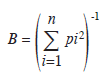
<body><![CDATA[<br>     <br> Niche breadth was estimated for each sampled area using the equation of Ricklefs (1979),    <br>     <br> </span></font>     <div style="text-align: center;"><font size="2"><span  style="font-family: verdana;"><img alt=""  src="/img/revistas/rbt/v60n1/a21f1.jpg"  style="width: 112px; height: 82px;"></span></font>    <br> <font size="2"><span style="font-family: verdana;"></span></font></div> <font size="2"><span style="font-family: verdana;">    <br> where pi is the proportion of individuals found using resource i. Values of niche breadths&nbsp; were standardized on a scale of zero to one (Pianka 1973).     <br>     <br> The food items were analyzed by means of the Index of Relative Importance (Pinkas <span style="font-style: italic;">et al.</span> 1971), IRI=<span style="font-style: italic;">(C<sub>v</sub>+C<sub>n</sub>)*F<sub>o</sub></span>, where C<sub>v</sub> is the volumetric content of the prey, C<sub>n</sub> is the numeric content of the prey, and F<sub>o</sub> is the frequency of the occurrence of a prey item. The variation coefficient of the IRI for each item was performed for both areas.     <br>     ]]></body>
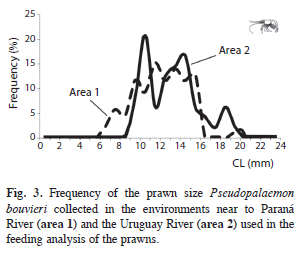
<body><![CDATA[<br> To assess the main contribution (volume or frequency) of the prey, we used the Weighted Result Index, Rw=[[<span style="font-style: italic;">Q</span> (v<sub>i</sub><sup>2</sup>+o<sub>i</sub><sup>2</sup>)<sup>&frac12;</sup>]*[&#934;<span  style="font-style: italic;">Q</span>(v<sub>i</sub><sup>2</sup>+o<sub>i</sub><sup>2</sup>)<sup>&frac12;</sup>]<sup>-1</sup>]*100, where<span style="font-style: italic;"> v</span> is a volume percentage of item<sub>1</sub>, <span style="font-style: italic;">o</span> is an occurrence percentage of item<sub>1</sub>, <span  style="font-style: italic;">Q</span> takes into account the deviation of angle &#934; from the mid-way, while grading the importance of the food. The angle is determined as tan<sup>-1</sup> (o<sub>i</sub>/v<sub>i</sub>) (Mohan <span style="font-style: italic;">&amp;</span> Sankaran 1988, Williner 2010).</span></font><br style="font-family: verdana;"> <br style="font-family: verdana;"> <font style="font-weight: bold;" size="3"><span  style="font-family: verdana;">Result</span></font><br  style="font-family: verdana;"> <br style="font-family: verdana;"> <font size="2"><span style="font-family: verdana;">Temperature and pH (<a href="/img/revistas/rbt/v60n1/a21t1.gif">Table 1</a>) were not statistically significant different between areas 1 and 2 (K-W<sub>temperature</sub>: 10.3, p=0.0675; K-W<sub>pH</sub>: 10.12, p=0.0718). The water was mostly transparent in area 1 (K-W: 14.3, p=0.0117) and had more electrical conductivity in area 2 (K-W: 17.3, p=0.0039). The concentration of dissolved oxygen did not differ between areas (K-W: 4.59, p=0.322), but it was highest in two lagoons of area 1 (K-W: 9.06, p=0.0108).</span></font><br style="font-family: verdana;"> <br style="font-family: verdana;"> <font size="2"><span style="font-family: verdana;">The composition and abundance of vegetation was dissimilar in both areas, with submerged aquatic plants (mainly <span style="font-style: italic;">Egeria densa </span>Planch.) dominating in area 1 and flooded green grass and <span style="font-style: italic;">Nymphoides indica </span>(L.) Kuntze dominated in area 2 (<a href="/img/revistas/rbt/v60n1/a21t1.gif">Table 1</a>).</span></font><br style="font-family: verdana;"> <br style="font-family: verdana;"> <font size="2"><span style="font-family: verdana;">The density of prawns varied between 10ind/m<sup>2</sup> and 1411 ind/m<sup>2</sup>, being statistically significant different between areas (F: 8.77, p=0.01). Mean values (<a  href="/img/revistas/rbt/v60n1/a21t1.gif">Table 1</a>) were similar in area 2 (K-W: 3.82, p=0.1479) and statistically significant different in one lagoon of area 1 respect to other lagoons of this zone (K-W: 7.01, p=0.0302). The size of CL ranged between 6mm and 21mm (<a  href="#Fig_3">Fig. 3</a>), being similar in both areas (F: 1.09, p=0.733), and the male:female ratio varied between 0.3 and 1.0 with a higher proportion of ovigerous females (21%) in area 1 when compared to area 2. When </span></font><font  size="2"><span style="font-family: verdana;">the vegetation was scarce in the lagoons, males and females were found in similar proportions.     <br>     <br> </span></font>     <div style="text-align: center;"><font size="2"><a name="Fig_3"></a><img  alt="" src="/img/revistas/rbt/v60n1/a21i3.jpg"  style="width: 302px; height: 254px;"><span  style="font-family: verdana;"></span></font>    <br> <font size="2"><span style="font-family: verdana;"></span></font></div> <font size="2"><span style="font-family: verdana;">    <br> In the study sites, stomach fullness varied between 0 and 5, with a mean of 3.23&plusmn;1.22, and, with a very low number of empty stomachs (15%). We found that more than 60% of the prawns had stomach fullness (<a  href="/img/revistas/rbt/v60n1/a21i4.jpg">Fig. 4</a>) in the 3, 4 and 5 scale (level medium and full). However the percentage of each fullness scale was different between both zones (Chi<sup>2</sup>: 12.99, p=0.0113). The minimum number of stomachs was estimated in 13 and 11 for areas 1 and 2, respectively (<a  href="/img/revistas/rbt/v60n1/a21i2.jpg">Fig. 2</a>). The highest number of </span></font><font size="2"><span  style="font-family: verdana;">stomachs was found in lagoons with a high abundance of aquatic vegetation (area 1).    <br>     <br> </span></font> <font size="2"><span style="font-family: verdana;">The principal food resources recorded in both areas are listed in <a  href="/img/revistas/rbt/v60n1/a21t2.gif">table 2</a>. The consumed </span></font><font  size="2"><span style="font-family: verdana;">items consisting of planktonic, benthonic or others organisms associated to aquatic plants.     <br>     <br>     ]]></body>
<body><![CDATA[The more     abundant algaes were <span style="font-style: italic;">Staurastrum</span>     sp., <span style="font-style: italic;">Staurodesmus</span> sp., <span      style="font-style: italic;">Dinobryon</span> sp.,     <span style="font-style: italic;">Oedogonium</span> sp., <span      style="font-style: italic;">Basicladia</span> sp. and <span      style="font-style: italic;">Scenedesmus</span> sp. Rotifers, <span      style="font-style: italic;">Lecane </span>sp.     and <span style="font-style: italic;">Keratella</span> sp., were more     abundant in area 2. Other registered items     ]]></body>
<body><![CDATA[were Cladocera (mainly <span style="font-style: italic;">Iliocryptus</span>     sp., <span style="font-style: italic;">Bosmina</span> sp., and <span      style="font-style: italic;">Chydorus</span> sp.)     as well as Copepoda (<a href="/img/revistas/rbt/v60n1/a21t2.gif">Table 2</a>).     Insecta larvae (mainly Chironomidae,     <span style="font-style: italic;">Parachironomus </span>sp.), together     with Oligochaeta (<a href="/img/revistas/rbt/v60n1/a21t2.gif">Table 2</a>),     displayed a     larger volume and a higher frequency in area 2.</span></font><br      style="font-family: verdana;">     ]]></body>
<body><![CDATA[<br style="font-family: verdana;">     <font size="2"><span style="font-family: verdana;">Males and females of     both areas had     similar ranges for the types of items consumed </span></font><font      size="2"><span style="font-family: verdana;">(K-W: 0.05, p=0.8273).     However,     these were unlike between areas (K-W: 6.56, p=0.0104). The trophic     niche was alike among juveniles, sub-adults and adults in each lagoon     (K-W: 2.03, p=0.1573).</span></font><br style="font-family: verdana;">     <br style="font-family: verdana;">     ]]></body>
<body><![CDATA[<font size="2"><span style="font-family: verdana;">The niche breadth of     prawns from     the six lagoons varied between 0.56 and 0.87. The largest values were     obtained in area 2, with mean values of 0.84 &plusmn; 0.036; while in     area 1, this index had a mean value of 0.66 &plusmn; 0.123. The     differences between areas were not statistically significant (F=7.22,     p=0.055).</span></font><br style="font-family: verdana;">     <br style="font-family: verdana;">     <font size="2"><span style="font-family: verdana;">Macrophytes remain     and the algae     ]]></body>
<body><![CDATA[items (<a href="/img/revistas/rbt/v60n1/a21i5.jpg">Fig. 5</a>) showed     the greatest values for the importance relative     index (IRI). Moreover, these values were higher for the stomach content     from organisms in the lagoons of area 1 compared to area 2 (except for     unicellular algae) (K-W<sub>macrophyte remains</sub>:5.33, p=0.0209;     K-W<sub>filamentous algae</sub>:4.08, p=0.03; K-W<sub>unicellular algae</sub>:0.01,     p=0.8852). The IRI values for the animal components were lower than     those for the vegetal components, with Protozoa and Insecta larvae as     more frequent in some lagoons of area 1 (K-W<sub>protozoa</sub>:5.5,     p=0.0339;     ]]></body>
<body><![CDATA[K-W<sub>insecta larvae</sub>:5.33, p=0.0210), and Rotifera, Cladocera,     Copepoda     and Oligochaeta as more frequent in area 2 (<a      href="/img/revistas/rbt/v60n1/a21i5.jpg">Fig. 5</a>) (K-W<sub>rotifera</sub>:5.53,     p=0.0220; K-W<sub>cladocera</sub>: 5.33, p=0.0271; K-W<sub>copepoda</sub>:4.91,     p=0.02952;     K-W<sub>oligochaeta</sub>:5.33, p=0.0209). Whilst the Chironomidae     larvae is     consumed alike in both areas (K-W:0.01, p=0.8852). The coefficient     variations of the IRI were more stable in the lagoons with lower     ]]></body>
<body><![CDATA[diversities and densities of aquatic vegetation (area 2). Moreover, the     CV was higher for the animal items (Cladocera and Copepoda in area 1;     Protozoa </span></font><font size="2"><span      style="font-family: verdana;">and Rotifera in area 2) (<a      href="/img/revistas/rbt/v60n1/a21i5.jpg">Fig. 5</a>).</span></font><br      style="font-family: verdana;">     <br style="font-family: verdana;">     <font size="2"><span style="font-family: verdana;">In the lagoons of     the areas 1 and 2     there were a major proportion of Oligochaeta and </span></font><font     ]]></body>
<body><![CDATA[ size="2"><span style="font-family: verdana;">Chironomidae larvae, when     the     volume was considered (RW index, <a      href="/img/revistas/rbt/v60n1/a21i6.jpg">Fig. 6</a>) and other food     items, when the     frequency was considered. According to the RW index, the importance of     each item varied with the numerical abundances (e.g., vegetal and some     planktonic items) while among the animals, volume was more important     (<a href="/img/revistas/rbt/v60n1/a21i6.jpg">Fig. 6</a>).</span></font><br      style="font-family: verdana;">     ]]></body>
<body><![CDATA[<br style="font-family: verdana;">     <font size="2"><span style="font-family: verdana;">Moreover, other food     resources that     had a short life cycle (protozoa, rotifers, cladocerans and copepods),     or for which the substratum type limit their development, displayed     greater variation, while items more difficult to capture were those     that have larger size and mobility (Ephemeroptera and Orthoptera     larvae) (Collins 1995, Collins 1997, Collins <span      style="font-style: italic;">et al.</span> 2007).</span></font><br      style="font-family: verdana;">     ]]></body>
<body><![CDATA[<br style="font-family: verdana;">     <font style="font-weight: bold;" size="3"><span      style="font-family: verdana;">Discussion</span></font><br      style="font-family: verdana;">     <br style="font-family: verdana;">     <font size="2"><span style="font-family: verdana;">The prawn <span      style="font-style: italic;">P. bouvieri</span> is     omnivorous, consuming a wide spectrum of items, from algae that lives     in plankton, benthos and pleuston, to insects. Many authors have shown     that Palaemonidae species also have a diet made up of a number of     ]]></body>
<body><![CDATA[different items, although detritus is usually an important and quite     common component (Howard 1984, Collins <span      style="font-style: italic;">&amp;</span> Paggi 1998, Albertoni <span      style="font-style: italic;">et     al.</span> 2003, Walker 2009). Not only does this group, but also those     members of the Peneidae family present in estuarial environments, use     the detritus (Masitah <span style="font-style: italic;">&amp;</span>     Chong 2002). In the same way, in freshwater     crabs and anomurans are also present this source (Collins<span      style="font-style: italic;"> et al.</span> 2007).</span></font><br     ]]></body>
<body><![CDATA[ style="font-family: verdana;">     <br style="font-family: verdana;">     <font size="2"><span style="font-family: verdana;">The minimum number     of specimens,     that permit the observation of the complete trophic spectrum used by     the prawns was relatively low (11-13 stomach prawns). However, we used     three to four times the minimum number. The low number needed for the     observation proves the similarities in the trophic habits for all size     range and sexes (males, females, and ovigerous females). In like manner     that the densities, aquatic vegetation provided with heterogeneity to     ]]></body>
<body><![CDATA[development of more diversities of prey, it force to observe more     stomach of the prawn due to higher of resource than those occurs in     environments without, or impoverished of aquatic vegetation.</span></font><br      style="font-family: verdana;">     <br style="font-family: verdana;">     <font size="2"><span style="font-family: verdana;">The observations for     fungi,     primarily ascomycetes, in the stomachs of decapods could be related to     their need to ingest microorganisms capable of decomposition to make     plant energy available (Zimmer <span style="font-style: italic;">&amp;</span>     ]]></body>
<body><![CDATA[Topp 2000). The consumption of     plant material provides energy at the expense of its hard conditions     and great quantity of produced waste. By including plants as a food     source, decapods display a strategy that utilizes readily available     food in the environment and eliminates the need to search for other     food sources (Wolcott <span style="font-style: italic;">&amp;</span>     O&#8217;Connor 1992, Williner 2010). This     abundant energy resource could be available immediately to the upper     levels of the food web.</span></font><br style="font-family: verdana;">     <br style="font-family: verdana;">     ]]></body>
<body><![CDATA[<font size="2"><span style="font-family: verdana;">Macrophytes have     been considered     key components of habitat in aquatic environments, because of their     role in structuring invertebrate assemblages (Poi de Neiff <span      style="font-style: italic;">&amp;</span> Neiff     2006, Thomaz <span style="font-style: italic;">et al.</span> 2008).     Conductivity was the more distinctive     abiotic parameter between the areas. Our results indicated that the     abundance of <span style="font-style: italic;">P. bouvieri </span>varied     between the study areas and among     ]]></body>
<body><![CDATA[lagoons with different percentage of aquatic vegetation cover (area 1).     The complexities of the vegetated zone could be </span></font><font      size="2"><span style="font-family: verdana;">inducing differences in     proportions     between males and females, as a mechanism of separation with the latter     being more frequent in the roots of aquatic plants. The separation of     the sexes during the reproductive season, e.g., spring, could be a     strategy employed to avoid the competence by space and resource. The     lagoons with major cover of aquatic plants had a highest proportion of     ovigerous females. The preference of the females by the vegetated zone     ]]></body>
<body><![CDATA[could be related to the available refuge and food, therefore allowing     for a more successful reproductive season (Albertoni <span      style="font-style: italic;">et al.</span> 2003,     Montoya 2003, Pelicice<span style="font-style: italic;"> &amp;</span>     Agostinho 2006, Collins <span style="font-style: italic;">et al.</span>     2006).</span></font><br style="font-family: verdana;">     <br style="font-family: verdana;">     <font size="2"><span style="font-family: verdana;">The relationship     between     cephalothorax length (CL) of <span style="font-style: italic;">P.     ]]></body>
<body><![CDATA[bouvieri</span> and conductivity could be     reflected by the growth (e.g., intermolt period and/or increase by     molt); however, the final size of the prawns at all lagoons observed     was similar. The food should be providing the necessary nutrients to     allow growth, storage, and reproduction (Karasov <span      style="font-style: italic;">&amp;</span> Martinez del     R&iacute;o 2007). While, the variation of the trophic spectrum due to     conductivity was not significant at the functional level, it could be     reflected at the species levels that were used as prey or food, or at     the significance level according to the method used (Williner 2010).     ]]></body>
<body><![CDATA[Stomach content analysis revealed no significant diet differences     between juvenile and adult prawns that fed on a variety of food     comprised mainly of plant remains, algae, zooplankton, oligochaeta,     insect larvae and detritus. Moreover, the food resource was used in a     similar manner by all sizes and sexes of <span      style="font-style: italic;">P. bouvieri</span> and other decapod     species, e.g., <span style="font-style: italic;">Macrobrachium borellii</span>     (Nobili, 1896) (Collins <span style="font-style: italic;">&amp;</span>     Paggi 1998), but unlike <span style="font-style: italic;">Palaemonetes     argentinus</span> Nobili, 1901 (Collins     ]]></body>
<body><![CDATA[1999).</span></font><br style="font-family: verdana;">     <br style="font-family: verdana;">     <font size="2"><span style="font-family: verdana;">Furthermore, the     prey of the prawns     was more diverse in the lagoons of the area with more aquatic     vegetation. This finding was evident from the dissection and     observation of a number of prawns with large stomachs. The coefficient     of variation was low for the plant remains; this item was more constant     among the lagoons.</span></font><br style="font-family: verdana;">     <br style="font-family: verdana;">     ]]></body>
<body><![CDATA[<font size="2"><span style="font-family: verdana;">The dietary items     consumed by     prawns and the niche breadth were similar between the two areas,     although the proportion of items consumed varied between lagoons of     different areas. The density of <span style="font-style: italic;">P.     bouvieri</span> was different between areas     and the size of cephalothorax (CL) was similar in both areas.     Therefore, the hypothesis can be only partially accepted.    <br>     <br> In the theoretical concepts, omnivores in aquatic continental systems help stabilize populations and communities by combining the resources with different conversion efficiencies (Krivan <span  style="font-style: italic;">&amp;</span> Diehl 2005, Walker 2009). This characteristic regulates the flow of energy and the recycling of nutrients (Evans-White <span style="font-style: italic;">et al.</span> 2001, Buck <span style="font-style: italic;">et al.</span> 2003, Williner 2010). Omnivory was observed in other decapods of freshwater environments in the same region,&nbsp; such as the prawns <span  style="font-style: italic;">M. borellii</span> and<span style="font-style: italic;"> P. argentinus</span>, the freshwater crab <span style="font-style: italic;">Dilocarcinus pagei</span> (Stimpson, 1861), and the freshwater anomuran <span style="font-style: italic;">Aegla uruguayana</span> (Schmitt, 1942) (Collins <span style="font-style: italic;">&amp;</span> Paggi 1998, Collins 1999, Williner <span style="font-style: italic;">&amp;</span> Collins 2002, Williner 2010). All these species live in environments with abundant organic matter mainly it come from to aquatic plants. Given the similarity of the freshwater crab species mentioned above, the importance of vegetal items remains remarkable to the prawns.    ]]></body>
<body><![CDATA[<br> <br style="font-family: verdana;"> </span></font><font size="2"><span style="font-family: verdana;">Moreover, <span style="font-style: italic;">P. bouvieri</span> consumes with a greater frequency and volume upon autotrophic organisms at area 1 than area 2, where the cover of aquatic vegetation was low. Species that possess enzymes from endosymbiotic bacteria are able to break down the cellulose of the plant remains consumed by the prawns (Karasov <span style="font-style: italic;">&amp;</span> Martinez del R&iacute;o 2007).</span></font><br style="font-family: verdana;"> <br style="font-family: verdana;"> <font size="2"><span style="font-family: verdana;">Omnivory is very common in natural communities. Low nutritional quality of the resources creates conditions for the evolution and maintenance of omnivory (Diehl 2003). However omnivory may have resulted from animals incidentally consuming animal material from the detrital compartment (Thompson <span  style="font-style: italic;">et al.</span> 2009). Gut content analysis can not distinguish these events and the use of stable isotopes is recommended for food webs structure (Woodward <span  style="font-style: italic;">&amp;</span> Hildrew 2002).</span></font><br style="font-family: verdana;"> <br style="font-family: verdana;"> <font style="font-weight: bold;" size="3"><span  style="font-family: verdana;">Acknowledgments</span></font><br  style="font-family: verdana;"> <br style="font-family: verdana;"> <font size="2"><span style="font-family: verdana;">This study was supported by PICT 01360, Diversidad biol&oacute;gica en ambientes dulceacu&iacute;colas a trav&eacute;s del gradiente este-oeste de Argentina: rot&iacute;feros, microcrust&aacute;ceos y macrocrust&aacute;ceos como grupos de estudio.</span></font><br  style="font-family: verdana;"> <br style="font-family: verdana;"> <font size="2"><span style="font-family: verdana;"></span></font> <hr style="width: 100%; height: 2px;">    <!-- ref --><br> <font style="font-weight: bold;" size="3"><span  style="font-family: verdana;">References</span></font><br  style="font-family: verdana;"> <br style="font-family: verdana;"> <font size="2"><span style="font-family: verdana;">Albertoni, E.F., C. Palma-Silva <span style="font-style: italic;">&amp;</span> F.A. Esteves. 2003. Overlap of dietary niche and&nbsp; electivity of three shrimp species (Crustacea, Decapoda) in a tropical coastal lagoon (Rio de Janeiro, Brazil). Rev. Bras. Zool. 20: 135-140.    &nbsp;&nbsp;&nbsp;&nbsp;&nbsp;&nbsp;&nbsp;&nbsp;[&#160;<a href="javascript:void(0);" onclick="javascript: window.open('/scielo.php?script=sci_nlinks&ref=1431974&pid=S0034-7744201200010002100001&lng=','','width=640,height=500,resizable=yes,scrollbars=1,menubar=yes,');">Links</a>&#160;]<!-- end-ref --><!-- ref --></span></font><br  style="font-family: verdana;"> <br style="font-family: verdana;"> <font size="2"><span style="font-family: verdana;">Bond-Buckup, G. <span  style="font-style: italic;">&amp;</span> L. Buckup. 1989. Os Palaemonidae de &aacute;guas continentais do Brasil Meridional (Crustacea, Decapoda). Rev. Bras. Biol. 49: 883-896.    &nbsp;&nbsp;&nbsp;&nbsp;&nbsp;&nbsp;&nbsp;&nbsp;[&#160;<a href="javascript:void(0);" onclick="javascript: window.open('/scielo.php?script=sci_nlinks&ref=1431975&pid=S0034-7744201200010002100002&lng=','','width=640,height=500,resizable=yes,scrollbars=1,menubar=yes,');">Links</a>&#160;]<!-- end-ref --><!-- ref --></span></font><br  style="font-family: verdana;"> <br style="font-family: verdana;"> <font size="2"><span style="font-family: verdana;">Borteiro, C., F. Guti&eacute;rrez, M. Tedros <span style="font-style: italic;">&amp;</span> F. Kolenc. 2009. Food habits of the Broad-snouted Caiman (<span style="font-style: italic;">Caiman latirostris</span>: Crocodylia, Alligatoridae) in northwestern Uruguay. Stud. Neotrop. Fauna Environ. 44: 31-36.    &nbsp;&nbsp;&nbsp;&nbsp;&nbsp;&nbsp;&nbsp;&nbsp;[&#160;<a href="javascript:void(0);" onclick="javascript: window.open('/scielo.php?script=sci_nlinks&ref=1431976&pid=S0034-7744201200010002100003&lng=','','width=640,height=500,resizable=yes,scrollbars=1,menubar=yes,');">Links</a>&#160;]<!-- end-ref --><!-- ref --></span></font><br  style="font-family: verdana;"> <br style="font-family: verdana;"> <font size="2"><span style="font-family: verdana;">Buck, T.L., G.A. Breed, S.C. Pennings, M.E. Chase, M. Zimmer <span style="font-style: italic;">&amp;</span> T.H. Carefoot. 2003. Diet choice in an omnivorous salt-marsh crab: different food types, body size, and habitat complexity. J. Exp. Mar. Biol. Ecol. 292: 103-116.    &nbsp;&nbsp;&nbsp;&nbsp;&nbsp;&nbsp;&nbsp;&nbsp;[&#160;<a href="javascript:void(0);" onclick="javascript: window.open('/scielo.php?script=sci_nlinks&ref=1431977&pid=S0034-7744201200010002100004&lng=','','width=640,height=500,resizable=yes,scrollbars=1,menubar=yes,');">Links</a>&#160;]<!-- end-ref --><!-- ref --></span></font><br  style="font-family: verdana;"> <br style="font-family: verdana;"> <font size="2"><span style="font-family: verdana;">Collins, P.A. 1995 Variaciones diarias de la actividad tr&oacute;fica en una poblaci&oacute;n de <span style="font-style: italic;">Palaemonetes argentinus</span> (Crustacea Decapoda). Rev. Asoc. Cienc. Nat. Litoral 26: 57-66.    &nbsp;&nbsp;&nbsp;&nbsp;&nbsp;&nbsp;&nbsp;&nbsp;[&#160;<a href="javascript:void(0);" onclick="javascript: window.open('/scielo.php?script=sci_nlinks&ref=1431978&pid=S0034-7744201200010002100005&lng=','','width=640,height=500,resizable=yes,scrollbars=1,menubar=yes,');">Links</a>&#160;]<!-- end-ref --><!-- ref --></span></font><br style="font-family: verdana;"> <br style="font-family: verdana;"> <font size="2"><span style="font-family: verdana;">Collins, P.A. 1997. Ritmo diario de alimentaci&oacute;n del camar&oacute;n <span  style="font-style: italic;">Macrobrachium borellii</span> (Decapoda: Palaemonidae). Iheringia. S&eacute;r. Zool. 82: 19-24.    &nbsp;&nbsp;&nbsp;&nbsp;&nbsp;&nbsp;&nbsp;&nbsp;[&#160;<a href="javascript:void(0);" onclick="javascript: window.open('/scielo.php?script=sci_nlinks&ref=1431979&pid=S0034-7744201200010002100006&lng=','','width=640,height=500,resizable=yes,scrollbars=1,menubar=yes,');">Links</a>&#160;]<!-- end-ref --><!-- ref --></span></font><br  style="font-family: verdana;"> <br style="font-family: verdana;"> <font size="2"><span style="font-family: verdana;">Collins, P.A. 1999. Feeding of <span style="font-style: italic;">Palaemonetes argentinus</span> (Nobili) (Decapoda: Palaemonidae) in flood valley of river Paran&aacute;, Argentina. J. Crustac. Biol. 19: 485-492.    &nbsp;&nbsp;&nbsp;&nbsp;&nbsp;&nbsp;&nbsp;&nbsp;[&#160;<a href="javascript:void(0);" onclick="javascript: window.open('/scielo.php?script=sci_nlinks&ref=1431980&pid=S0034-7744201200010002100007&lng=','','width=640,height=500,resizable=yes,scrollbars=1,menubar=yes,');">Links</a>&#160;]<!-- end-ref --><!-- ref --> </span></font><br style="font-family: verdana;"> <br style="font-family: verdana;"> <font size="2"><span style="font-family: verdana;">Collins, P.A. <span  style="font-style: italic;">&amp;</span> J.C. Paggi. 1998. Feeding ecology of <span style="font-style: italic;">Macrobrachium borelli </span>(Nobili) (Decapoda: Palaemonidae) in the flood valley of the River Paran&aacute;, Argentina. Hydrobiologia 362: 21-30.    &nbsp;&nbsp;&nbsp;&nbsp;&nbsp;&nbsp;&nbsp;&nbsp;[&#160;<a href="javascript:void(0);" onclick="javascript: window.open('/scielo.php?script=sci_nlinks&ref=1431981&pid=S0034-7744201200010002100008&lng=','','width=640,height=500,resizable=yes,scrollbars=1,menubar=yes,');">Links</a>&#160;]<!-- end-ref --><!-- ref --></span></font><br  style="font-family: verdana;"> <br style="font-family: verdana;"> <font size="2"><span style="font-family: verdana;">Collins, P.A., F. Giri <span style="font-style: italic;">&amp;</span> V. Williner. 2004. Crust&aacute;ceos Dec&aacute;podos del Litoral Fluvial Argentino. (Crustacea: Eucarida). INSUGEO. Miscel&aacute;nea 12: 253-264.    &nbsp;&nbsp;&nbsp;&nbsp;&nbsp;&nbsp;&nbsp;&nbsp;[&#160;<a href="javascript:void(0);" onclick="javascript: window.open('/scielo.php?script=sci_nlinks&ref=1431982&pid=S0034-7744201200010002100009&lng=','','width=640,height=500,resizable=yes,scrollbars=1,menubar=yes,');">Links</a>&#160;]<!-- end-ref --><!-- ref --></span></font><br style="font-family: verdana;"> <br style="font-family: verdana;"> <font size="2"><span style="font-family: verdana;">Collins, P.A., F. Giri <span style="font-style: italic;">&amp;</span> V. Williner. 2006. Population dynamics of Trichodactylus&nbsp; borellianus (Crustacea. Decapoda. Brachyura) and interactions with the aquatic vegetation of the Paran&aacute; River (South America, Argentina). Ann. Limnol. Int. J. Lim. 42: 19-25.    &nbsp;&nbsp;&nbsp;&nbsp;&nbsp;&nbsp;&nbsp;&nbsp;[&#160;<a href="javascript:void(0);" onclick="javascript: window.open('/scielo.php?script=sci_nlinks&ref=1431983&pid=S0034-7744201200010002100010&lng=','','width=640,height=500,resizable=yes,scrollbars=1,menubar=yes,');">Links</a>&#160;]<!-- end-ref --><!-- ref --></span></font><br  style="font-family: verdana;"> <br style="font-family: verdana;"> <font size="2"><span style="font-family: verdana;">Collins, P.A., V. Williner <span style="font-style: italic;">&amp;</span> F. Giri. 2007. Littoral Communities. Macrocrustaceans, p. 277-301. <span  style="font-style: italic;">In</span> M.H. Iriondo, J.C. Paggi <span style="font-style: italic;">&amp;</span> M.J. Parma (eds.). The Middle Paran&aacute; River. Limnology of a Subtropical Wetland. Springer, Berlin, Heidelberg, Germany.    &nbsp;&nbsp;&nbsp;&nbsp;&nbsp;&nbsp;&nbsp;&nbsp;[&#160;<a href="javascript:void(0);" onclick="javascript: window.open('/scielo.php?script=sci_nlinks&ref=1431984&pid=S0034-7744201200010002100011&lng=','','width=640,height=500,resizable=yes,scrollbars=1,menubar=yes,');">Links</a>&#160;]<!-- end-ref --><br>     <!-- ref --><br> Colwell, R.K. 2006. EstimateS: Statistical estimation of species richness and shared species from samples. Version 8 (Downloaded: January 21, 2010, <a  href="http://www.purl.oclc.org/estimates">http://www.purl.oclc.org/estimates</a>).    &nbsp;&nbsp;&nbsp;&nbsp;&nbsp;&nbsp;&nbsp;&nbsp;[&#160;<a href="javascript:void(0);" onclick="javascript: window.open('/scielo.php?script=sci_nlinks&ref=1431986&pid=S0034-7744201200010002100012&lng=','','width=640,height=500,resizable=yes,scrollbars=1,menubar=yes,');">Links</a>&#160;]<!-- end-ref --><!-- ref --></span></font><br  style="font-family: verdana;"> <br style="font-family: verdana;"> <font size="2"><span style="font-family: verdana;">Diehl, S. 2003. The evolution and maintenance of omnivory: dynamic constraints and the role of food quality. Ecology 84: 2557-2567.    &nbsp;&nbsp;&nbsp;&nbsp;&nbsp;&nbsp;&nbsp;&nbsp;[&#160;<a href="javascript:void(0);" onclick="javascript: window.open('/scielo.php?script=sci_nlinks&ref=1431987&pid=S0034-7744201200010002100013&lng=','','width=640,height=500,resizable=yes,scrollbars=1,menubar=yes,');">Links</a>&#160;]<!-- end-ref --><!-- ref --></span></font><br  style="font-family: verdana;"> <br style="font-family: verdana;"> <font size="2"><span style="font-family: verdana;">Dumont, H.J., I. Van de Velde <span style="font-style: italic;">&amp;</span> S. Dumont. 1975. The dry weight estimate of biomass in a selection of Cladocera, Copepoda and Rotifera from the plankton, periphyton and benthos of continental waters. Oecologia 19: 79-97.    &nbsp;&nbsp;&nbsp;&nbsp;&nbsp;&nbsp;&nbsp;&nbsp;[&#160;<a href="javascript:void(0);" onclick="javascript: window.open('/scielo.php?script=sci_nlinks&ref=1431988&pid=S0034-7744201200010002100014&lng=','','width=640,height=500,resizable=yes,scrollbars=1,menubar=yes,');">Links</a>&#160;]<!-- end-ref --><!-- ref --></span></font><br  style="font-family: verdana;"> <br style="font-family: verdana;"> <font size="2"><span style="font-family: verdana;">Edmonson, W.F. <span  style="font-style: italic;">&amp;</span> G.G. Winberg. 1971. A Manual on Methods for the Assessment of Secondary Productivity in Fresh Waters, Blackwell Scientific Publications, Oxford, England.    &nbsp;&nbsp;&nbsp;&nbsp;&nbsp;&nbsp;&nbsp;&nbsp;[&#160;<a href="javascript:void(0);" onclick="javascript: window.open('/scielo.php?script=sci_nlinks&ref=1431989&pid=S0034-7744201200010002100015&lng=','','width=640,height=500,resizable=yes,scrollbars=1,menubar=yes,');">Links</a>&#160;]<!-- end-ref --><!-- ref --></span></font><br  style="font-family: verdana;"> <br style="font-family: verdana;"> <font size="2"><span style="font-family: verdana;">Evans-White, M., W.K. Dodds, L.A. Gray <span style="font-style: italic;">&amp;</span> K.M. Fritz. 2001. A comparison of the trophic ecology of the crayfishes (<span style="font-style: italic;">Orconectes nais</span> (Faxon) and <span style="font-style: italic;">Orconectes neglectus</span> (Faxon)) and the central stoneroller minnow (<span style="font-style: italic;">Campostoma anomalum</span> (Rafinesque)): omnivory in a tallgrass prairie stream. Hydrobiologia 462: 131-144.    &nbsp;&nbsp;&nbsp;&nbsp;&nbsp;&nbsp;&nbsp;&nbsp;[&#160;<a href="javascript:void(0);" onclick="javascript: window.open('/scielo.php?script=sci_nlinks&ref=1431990&pid=S0034-7744201200010002100016&lng=','','width=640,height=500,resizable=yes,scrollbars=1,menubar=yes,');">Links</a>&#160;]<!-- end-ref --><!-- ref --></span></font><br  style="font-family: verdana;"> <br style="font-family: verdana;"> <font size="2"><span style="font-family: verdana;">Fern&aacute;ndez, H.R. <span style="font-style: italic;">&amp;</span> E. Dom&iacute;nguez. 2001. Gu&iacute;a para la determinaci&oacute;n de los artr&oacute;podos bent&oacute;nicos sudamericanos. Universidad Nacional de Tucum&aacute;n. Facultad de Ciencias Naturales e Instituto M. Lillo, Tucum&aacute;n, Argentina.    &nbsp;&nbsp;&nbsp;&nbsp;&nbsp;&nbsp;&nbsp;&nbsp;[&#160;<a href="javascript:void(0);" onclick="javascript: window.open('/scielo.php?script=sci_nlinks&ref=1431991&pid=S0034-7744201200010002100017&lng=','','width=640,height=500,resizable=yes,scrollbars=1,menubar=yes,');">Links</a>&#160;]<!-- end-ref --><!-- ref --></span></font><br  style="font-family: verdana;"> <br style="font-family: verdana;"> <font size="2"><span style="font-family: verdana;">Howard, R.K. 1984. The trophic ecology of caridean shrimps in an eelgrass community. Aquat. Bot. 18: 155-174.    &nbsp;&nbsp;&nbsp;&nbsp;&nbsp;&nbsp;&nbsp;&nbsp;[&#160;<a href="javascript:void(0);" onclick="javascript: window.open('/scielo.php?script=sci_nlinks&ref=1431992&pid=S0034-7744201200010002100018&lng=','','width=640,height=500,resizable=yes,scrollbars=1,menubar=yes,');">Links</a>&#160;]<!-- end-ref --><!-- ref --></span></font><br style="font-family: verdana;"> <br style="font-family: verdana;"> <font size="2"><span style="font-family: verdana;">Jayachandran, K.V. 2001. Palaemonid prawns: biodiversity, taxonomy, biology and management. Science, Enfield, New Hampshire, USA.    &nbsp;&nbsp;&nbsp;&nbsp;&nbsp;&nbsp;&nbsp;&nbsp;[&#160;<a href="javascript:void(0);" onclick="javascript: window.open('/scielo.php?script=sci_nlinks&ref=1431993&pid=S0034-7744201200010002100019&lng=','','width=640,height=500,resizable=yes,scrollbars=1,menubar=yes,');">Links</a>&#160;]<!-- end-ref --><!-- ref --></span></font><br  style="font-family: verdana;"> <br style="font-family: verdana;"> <font size="2"><span style="font-family: verdana;">Karasov, W.H. <span  style="font-style: italic;">&amp;</span> C. Martinez del Rio. 2007. Physiological Ecology: How Animals Process&nbsp; Energy, Nutrients, and Toxins, Princeton University, Princeton, USA.    &nbsp;&nbsp;&nbsp;&nbsp;&nbsp;&nbsp;&nbsp;&nbsp;[&#160;<a href="javascript:void(0);" onclick="javascript: window.open('/scielo.php?script=sci_nlinks&ref=1431994&pid=S0034-7744201200010002100020&lng=','','width=640,height=500,resizable=yes,scrollbars=1,menubar=yes,');">Links</a>&#160;]<!-- end-ref --><!-- ref --> </span></font><br  style="font-family: verdana;"> <br style="font-family: verdana;"> <font size="2"><span style="font-family: verdana;">Krivan, V. <span  style="font-style: italic;">&amp;</span> S. Diehl. 2005. Adaptative omnivory and species coexistence in tri-trophic food webs. Theor. Popul. Biol. 67: 85-99.    &nbsp;&nbsp;&nbsp;&nbsp;&nbsp;&nbsp;&nbsp;&nbsp;[&#160;<a href="javascript:void(0);" onclick="javascript: window.open('/scielo.php?script=sci_nlinks&ref=1431995&pid=S0034-7744201200010002100021&lng=','','width=640,height=500,resizable=yes,scrollbars=1,menubar=yes,');">Links</a>&#160;]<!-- end-ref --><!-- ref --></span></font><br  style="font-family: verdana;"> <br style="font-family: verdana;"> <font size="2"><span style="font-family: verdana;">Lopretto, E.C. 1995. Crustacea Eumalacostraca, p. 1001- 1039. <span style="font-style: italic;">In</span> E.C. Lopretto <span style="font-style: italic;">&amp;</span> G. Tell (eds.). Ecosistemas de aguas continentales, Ediciones Sur, La Plata, Argentina.    &nbsp;&nbsp;&nbsp;&nbsp;&nbsp;&nbsp;&nbsp;&nbsp;[&#160;<a href="javascript:void(0);" onclick="javascript: window.open('/scielo.php?script=sci_nlinks&ref=1431996&pid=S0034-7744201200010002100022&lng=','','width=640,height=500,resizable=yes,scrollbars=1,menubar=yes,');">Links</a>&#160;]<!-- end-ref --><!-- ref --></span></font><br  style="font-family: verdana;"> <br style="font-family: verdana;"> <font size="2"><span style="font-family: verdana;">Lopretto, E.C. <span  style="font-style: italic;">&amp;</span> G. Tell. 1995. Ecosistemas de Aguas Continentales, Metodolog&iacute;a para su Estudio. Ediciones Sur, La Plata, Argentina.    &nbsp;&nbsp;&nbsp;&nbsp;&nbsp;&nbsp;&nbsp;&nbsp;[&#160;<a href="javascript:void(0);" onclick="javascript: window.open('/scielo.php?script=sci_nlinks&ref=1431997&pid=S0034-7744201200010002100023&lng=','','width=640,height=500,resizable=yes,scrollbars=1,menubar=yes,');">Links</a>&#160;]<!-- end-ref --><!-- ref --></span></font><br  style="font-family: verdana;"> <br style="font-family: verdana;"> <font size="2"><span style="font-family: verdana;">Masitah, I. <span  style="font-style: italic;">&amp;</span> V.C. Chong. 2002. Population and Feeding Ecology of <span style="font-style: italic;">Parapenaeopsis scuiptilis</span> (Heller, 1862) in Klang Strait, Peninsular Malaysia. Malaysian J. Science 21: 61-68.    &nbsp;&nbsp;&nbsp;&nbsp;&nbsp;&nbsp;&nbsp;&nbsp;[&#160;<a href="javascript:void(0);" onclick="javascript: window.open('/scielo.php?script=sci_nlinks&ref=1431998&pid=S0034-7744201200010002100024&lng=','','width=640,height=500,resizable=yes,scrollbars=1,menubar=yes,');">Links</a>&#160;]<!-- end-ref --><!-- ref --><br> <br style="font-family: verdana;"> </span></font><font size="2"><span style="font-family: verdana;">Mohan, M.V. <span style="font-style: italic;">&amp;</span> T.M. Sankaran. 1988. Two new indices for stomach content analysis of&nbsp; fishes. J. Fish. Biol. 33: 289-292.    &nbsp;&nbsp;&nbsp;&nbsp;&nbsp;&nbsp;&nbsp;&nbsp;[&#160;<a href="javascript:void(0);" onclick="javascript: window.open('/scielo.php?script=sci_nlinks&ref=1431999&pid=S0034-7744201200010002100025&lng=','','width=640,height=500,resizable=yes,scrollbars=1,menubar=yes,');">Links</a>&#160;]<!-- end-ref --><!-- ref --></span></font><br style="font-family: verdana;"> <br style="font-family: verdana;"> <font size="2"><span style="font-family: verdana;">Montoya, J.V. 2003. Freshwater shrimps of the genus <span style="font-style: italic;">Macrobrachium</span> associated with roots of <span style="font-style: italic;">Eichhornia crassipes</span> (water hyacinth) in the Orinoco Delta (Venezuela). Caribb. J. Sci. 39: 155-159.    &nbsp;&nbsp;&nbsp;&nbsp;&nbsp;&nbsp;&nbsp;&nbsp;[&#160;<a href="javascript:void(0);" onclick="javascript: window.open('/scielo.php?script=sci_nlinks&ref=1432000&pid=S0034-7744201200010002100026&lng=','','width=640,height=500,resizable=yes,scrollbars=1,menubar=yes,');">Links</a>&#160;]<!-- end-ref --><!-- ref --></span></font><br style="font-family: verdana;"> <br style="font-family: verdana;"> <font size="2"><span style="font-family: verdana;">Pelicice, F.M. <span  style="font-style: italic;">&amp;</span> A.A. Agostinho. 2006. Feeding ecology of fishes associated with <span  style="font-style: italic;">Egeria</span> spp. patches in a tropical reservoir, Brazil. Ecol. Freshw. Fish. 15: 10-19.    &nbsp;&nbsp;&nbsp;&nbsp;&nbsp;&nbsp;&nbsp;&nbsp;[&#160;<a href="javascript:void(0);" onclick="javascript: window.open('/scielo.php?script=sci_nlinks&ref=1432001&pid=S0034-7744201200010002100027&lng=','','width=640,height=500,resizable=yes,scrollbars=1,menubar=yes,');">Links</a>&#160;]<!-- end-ref --><!-- ref --></span></font><br  style="font-family: verdana;"> <br style="font-family: verdana;"> <font size="2"><span style="font-family: verdana;">Pianka, E.R. 1973. The structure of lizard communities. Annu. Rev. Ecol. Syst. 4: 53-74.    &nbsp;&nbsp;&nbsp;&nbsp;&nbsp;&nbsp;&nbsp;&nbsp;[&#160;<a href="javascript:void(0);" onclick="javascript: window.open('/scielo.php?script=sci_nlinks&ref=1432002&pid=S0034-7744201200010002100028&lng=','','width=640,height=500,resizable=yes,scrollbars=1,menubar=yes,');">Links</a>&#160;]<!-- end-ref --><!-- ref --></span></font><br  style="font-family: verdana;"> <br style="font-family: verdana;"> <font size="2"><span style="font-family: verdana;">Pinkas, L., M.S. Oliphant <span style="font-style: italic;">&amp;</span> I.L.K. Iverson. 1971. Food habits of albacore, bluefin tuna and bonito in California waters. Fish. Bull. Calif. Dep. Fish. Game 152: 1-105.    &nbsp;&nbsp;&nbsp;&nbsp;&nbsp;&nbsp;&nbsp;&nbsp;[&#160;<a href="javascript:void(0);" onclick="javascript: window.open('/scielo.php?script=sci_nlinks&ref=1432003&pid=S0034-7744201200010002100029&lng=','','width=640,height=500,resizable=yes,scrollbars=1,menubar=yes,');">Links</a>&#160;]<!-- end-ref --><!-- ref --></span></font><br  style="font-family: verdana;"> <br style="font-family: verdana;"> <font size="2"><span style="font-family: verdana;">Poi de Neiff, A. 2003. Invertebrados de la vegetaci&oacute;n del Iber&aacute;, p. 171-191. <span  style="font-style: italic;">In</span> A. Poi de Neiff (ed.). Limnolog&iacute;a del Iber&aacute;. Aspectos f&iacute;sicos, qu&iacute;micos y biol&oacute;gicos de sus aguas, Editorial Universitaria de la Universidad Nacional del Nordeste (Eudene), Corrientes, Argentina.    &nbsp;&nbsp;&nbsp;&nbsp;&nbsp;&nbsp;&nbsp;&nbsp;[&#160;<a href="javascript:void(0);" onclick="javascript: window.open('/scielo.php?script=sci_nlinks&ref=1432004&pid=S0034-7744201200010002100030&lng=','','width=640,height=500,resizable=yes,scrollbars=1,menubar=yes,');">Links</a>&#160;]<!-- end-ref --><!-- ref --></span></font><br  style="font-family: verdana;"> <br style="font-family: verdana;"> <font size="2"><span style="font-family: verdana;">Poi de Neiff, A. <span  style="font-style: italic;">&amp;</span> J.J. Neiff. 2006. Riqueza de especies y similaridad de los invertebrados que viven en plantas flotantes de la planicie de inundaci&oacute;n del r&iacute;o&nbsp; Paran&aacute;. Interciencia 31: 220-225.    &nbsp;&nbsp;&nbsp;&nbsp;&nbsp;&nbsp;&nbsp;&nbsp;[&#160;<a href="javascript:void(0);" onclick="javascript: window.open('/scielo.php?script=sci_nlinks&ref=1432005&pid=S0034-7744201200010002100031&lng=','','width=640,height=500,resizable=yes,scrollbars=1,menubar=yes,');">Links</a>&#160;]<!-- end-ref --><!-- ref --></span></font><br  style="font-family: verdana;"> <br style="font-family: verdana;"> <font size="2"><span style="font-family: verdana;">Ricklefs, R. 1979. Ecology. Chiron, University of Pennsylvania, New York, USA.    &nbsp;&nbsp;&nbsp;&nbsp;&nbsp;&nbsp;&nbsp;&nbsp;[&#160;<a href="javascript:void(0);" onclick="javascript: window.open('/scielo.php?script=sci_nlinks&ref=1432006&pid=S0034-7744201200010002100032&lng=','','width=640,height=500,resizable=yes,scrollbars=1,menubar=yes,');">Links</a>&#160;]<!-- end-ref --><!-- ref --></span></font><br  style="font-family: verdana;"> <br style="font-family: verdana;"> <font size="2"><span style="font-family: verdana;">Rosemond, A.D., C.M. Pringle <span style="font-style: italic;">&amp;</span> A. Ram&iacute;rez. 1998. Macroconsumer effects on insect detritivores and detritus processing in a tropical stream. Freshwater Biol. 39: 515-523.    &nbsp;&nbsp;&nbsp;&nbsp;&nbsp;&nbsp;&nbsp;&nbsp;[&#160;<a href="javascript:void(0);" onclick="javascript: window.open('/scielo.php?script=sci_nlinks&ref=1432007&pid=S0034-7744201200010002100033&lng=','','width=640,height=500,resizable=yes,scrollbars=1,menubar=yes,');">Links</a>&#160;]<!-- end-ref --><!-- ref --></span></font><br style="font-family: verdana;"> <br style="font-family: verdana;"> <font size="2"><span style="font-family: verdana;">Ruttner-Kolisko, A. 1977. Suggestions for biomass calculation of plankton rotifers. Arch. Hydrobiol. 8: 71-76.    &nbsp;&nbsp;&nbsp;&nbsp;&nbsp;&nbsp;&nbsp;&nbsp;[&#160;<a href="javascript:void(0);" onclick="javascript: window.open('/scielo.php?script=sci_nlinks&ref=1432008&pid=S0034-7744201200010002100034&lng=','','width=640,height=500,resizable=yes,scrollbars=1,menubar=yes,');">Links</a>&#160;]<!-- end-ref --><!-- ref --> </span></font><br style="font-family: verdana;"> <br style="font-family: verdana;"> <font size="2"><span style="font-family: verdana;">Thomaz, S.M., E.D. Dibble, L.R Evangelista, J. Higuti <span style="font-style: italic;">&amp;</span> L.M. Bini. 2008. Influence of aquatic macrophyte habitat complexity on invertebrate abundance and richness in tropical lagoons. Freshwater Biol. 53: 358-367.    &nbsp;&nbsp;&nbsp;&nbsp;&nbsp;&nbsp;&nbsp;&nbsp;[&#160;<a href="javascript:void(0);" onclick="javascript: window.open('/scielo.php?script=sci_nlinks&ref=1432009&pid=S0034-7744201200010002100035&lng=','','width=640,height=500,resizable=yes,scrollbars=1,menubar=yes,');">Links</a>&#160;]<!-- end-ref --><!-- ref --></span></font><br  style="font-family: verdana;"> <br style="font-family: verdana;"> <font size="2"><span style="font-family: verdana;">Thompson, R., M. Hemberg, B.M. Starzomski <span style="font-style: italic;">&amp;</span> J. Shurin. 2009. The ubiquity of omnivory. Verh. Internat. Verein. Limnol. 30: 761-764.    &nbsp;&nbsp;&nbsp;&nbsp;&nbsp;&nbsp;&nbsp;&nbsp;[&#160;<a href="javascript:void(0);" onclick="javascript: window.open('/scielo.php?script=sci_nlinks&ref=1432010&pid=S0034-7744201200010002100036&lng=','','width=640,height=500,resizable=yes,scrollbars=1,menubar=yes,');">Links</a>&#160;]<!-- end-ref --><!-- ref --></span></font><br  style="font-family: verdana;"> <br style="font-family: verdana;"> <font size="2"><span style="font-family: verdana;">Walker, I. 2009. Omnivory and resource-sharing in nutrient-deficient Rio Negro waters: Stabilization of biodiversity? Acta Amazon. 39: 617-626.    &nbsp;&nbsp;&nbsp;&nbsp;&nbsp;&nbsp;&nbsp;&nbsp;[&#160;<a href="javascript:void(0);" onclick="javascript: window.open('/scielo.php?script=sci_nlinks&ref=1432011&pid=S0034-7744201200010002100037&lng=','','width=640,height=500,resizable=yes,scrollbars=1,menubar=yes,');">Links</a>&#160;]<!-- end-ref --><!-- ref --></span></font><br  style="font-family: verdana;"> <br style="font-family: verdana;"> <font size="2"><span style="font-family: verdana;">Williner, V. <span  style="font-style: italic;">&amp;</span> P.A. Collins. 2002. Daily rhythm of feeding activity of a freshwater crab <span style="font-style: italic;">Dilocarcinus pagei pagei </span>in National Park R&iacute;o Pilcomayo, Formosa, Argentina, p. 171-178. <span style="font-style: italic;">In</span> E. Escobar-Briones &amp; F. Alvarez (eds.). Modern approaches to the study of Crustacea. Kluwer Academic and Plenum Publishers, New York, USA.    &nbsp;&nbsp;&nbsp;&nbsp;&nbsp;&nbsp;&nbsp;&nbsp;[&#160;<a href="javascript:void(0);" onclick="javascript: window.open('/scielo.php?script=sci_nlinks&ref=1432012&pid=S0034-7744201200010002100038&lng=','','width=640,height=500,resizable=yes,scrollbars=1,menubar=yes,');">Links</a>&#160;]<!-- end-ref --><!-- ref --></span></font><br  style="font-family: verdana;"> <br style="font-family: verdana;"> <font size="2"><span style="font-family: verdana;">Williner, V. 2010. Foregut ossicles morphology and feeding of the freshwater anomuran crab <span  style="font-style: italic;">Aegla uruguayana</span> (Decapoda, Aeglidae). Acta Zool. 91: 408-415.    &nbsp;&nbsp;&nbsp;&nbsp;&nbsp;&nbsp;&nbsp;&nbsp;[&#160;<a href="javascript:void(0);" onclick="javascript: window.open('/scielo.php?script=sci_nlinks&ref=1432013&pid=S0034-7744201200010002100039&lng=','','width=640,height=500,resizable=yes,scrollbars=1,menubar=yes,');">Links</a>&#160;]<!-- end-ref --><!-- ref --></span></font><br  style="font-family: verdana;"> <br style="font-family: verdana;"> <font size="2"><span style="font-family: verdana;">Wolcott, D.L. <span  style="font-style: italic;">&amp;</span> N.J. O&#8217;Connor. 1992. Herbivory in crabs: adaptations and ecological considerations. Am. Zool. 32: 370-381.    &nbsp;&nbsp;&nbsp;&nbsp;&nbsp;&nbsp;&nbsp;&nbsp;[&#160;<a href="javascript:void(0);" onclick="javascript: window.open('/scielo.php?script=sci_nlinks&ref=1432014&pid=S0034-7744201200010002100040&lng=','','width=640,height=500,resizable=yes,scrollbars=1,menubar=yes,');">Links</a>&#160;]<!-- end-ref --><!-- ref --><br> <br style="font-family: verdana;"> </span></font><font size="2"><span style="font-family: verdana;">Woodward, G. <span style="font-style: italic;">&amp;</span> A.G. Hildrew. 2002. Food web structure in riverine landscapes. Freshwater Biol. 47: 777-798.    &nbsp;&nbsp;&nbsp;&nbsp;&nbsp;&nbsp;&nbsp;&nbsp;[&#160;<a href="javascript:void(0);" onclick="javascript: window.open('/scielo.php?script=sci_nlinks&ref=1432015&pid=S0034-7744201200010002100041&lng=','','width=640,height=500,resizable=yes,scrollbars=1,menubar=yes,');">Links</a>&#160;]<!-- end-ref --><!-- ref --></span></font><br style="font-family: verdana;"> <br style="font-family: verdana;"> <font size="2"><span style="font-family: verdana;">Zalocar de Domitrovic, Y. 2003. Fitoplancton de lagunas y cursos de agua del Sistema Iber&aacute;, p. 85-142. <span style="font-style: italic;">In</span> A. Poi de Neiff (ed.). Limnolog&iacute;a del Iber&aacute;. Aspectos f&iacute;sicos, qu&iacute;micos y biol&oacute;gicos de sus aguas, Editorial Universitaria de la Universidad Nacional del Nordeste (Eudene), Corrientes, Argentina.    &nbsp;&nbsp;&nbsp;&nbsp;&nbsp;&nbsp;&nbsp;&nbsp;[&#160;<a href="javascript:void(0);" onclick="javascript: window.open('/scielo.php?script=sci_nlinks&ref=1432016&pid=S0034-7744201200010002100042&lng=','','width=640,height=500,resizable=yes,scrollbars=1,menubar=yes,');">Links</a>&#160;]<!-- end-ref --><!-- ref --></span></font><br  style="font-family: verdana;"> <br style="font-family: verdana;"> <font size="2"><span style="font-family: verdana;">Zar, J.H. 1996. Biostatistical Analysis. Prentice Hall, New Jersey, USA.    &nbsp;&nbsp;&nbsp;&nbsp;&nbsp;&nbsp;&nbsp;&nbsp;[&#160;<a href="javascript:void(0);" onclick="javascript: window.open('/scielo.php?script=sci_nlinks&ref=1432017&pid=S0034-7744201200010002100043&lng=','','width=640,height=500,resizable=yes,scrollbars=1,menubar=yes,');">Links</a>&#160;]<!-- end-ref --><!-- ref --></span></font><br  style="font-family: verdana;"> <br style="font-family: verdana;"> <font size="2"><span style="font-family: verdana;">Zimmer, M. <span  style="font-style: italic;">&amp;</span> W. Topp. 2000. Species-specific utilization of food sources by sympatric&nbsp; woodlice (Isopoda: Oniscidea). J. Anim. Ecol. 69: 1071-1082.    &nbsp;&nbsp;&nbsp;&nbsp;&nbsp;&nbsp;&nbsp;&nbsp;[&#160;<a href="javascript:void(0);" onclick="javascript: window.open('/scielo.php?script=sci_nlinks&ref=1432018&pid=S0034-7744201200010002100044&lng=','','width=640,height=500,resizable=yes,scrollbars=1,menubar=yes,');">Links</a>&#160;]<!-- end-ref --><br>     <br>     <br> <a name="Correspondencia1"></a><a href="#Correspondencia2">*</a>Correspondencia a: </span></font><font size="2"> <span style="font-family: verdana;">Romina Patricia Carnevali &amp; Alicia S. Guadalupe Poi de Neiff: </span></font><font size="2"><span  style="font-family: verdana;">Centro de Ecolog&iacute;a Aplicada del Litoral (CECOAL-CONICET), Ruta 5 km. 2.5, C. C. 291, Corrientes, Argentina; <a href="mailto:romicarnevali@gmail.com">romicarnevali@gmail.com</a></span></font><font  size="2"><span style="font-family: verdana;"> Departamento de Biolog&iacute;a, Universidad Nacional del Nordeste (UNNE). 3400, Corrientes, Argentina; <a href="mailto:guadalupepoi@gmail.com">guadalupepoi@gmail.com</a></span></font><br  style="font-family: verdana;"> <font size="2"><span style="font-family: verdana;">Pablo Agust&iacute;n Collins: </span></font><font size="2"><span  style="font-family: verdana;">Instituto Nacional de Limnolog&iacute;a. Facultad de Bioqu&iacute;mica y Ciencias Biol&oacute;gicas (INALI-CONICET-UNL). 3016. Santa Fe, Argentina; <a href="mailto:pagcollins@gmail.com">pagcollins@gmail.com</a></span></font><font  size="2"><span style="font-family: verdana;"> Facultad de Ciencias y Tecnolog&iacute;a (UADER), Paran&aacute;, Entre R&iacute;os, Argentina.    <br>     ]]></body>
<body><![CDATA[<br> </span></font><font size="2"><span style="font-family: verdana;"><a  name="1"></a><a href="#5">1</a>. Centro de Ecolog&iacute;a Aplicada del Litoral (CECOAL-CONICET), Ruta 5 km. 2.5, C. C. 291, Corrientes, Argentina; <a href="mailto:romicarnevali@gmail.com">romicarnevali@gmail.com</a></span></font><br  style="font-family: verdana;"> <font size="2"><span style="font-family: verdana;"><a name="2"></a><a  href="#6">2</a>. Departamento de Biolog&iacute;a, Universidad Nacional del Nordeste (UNNE). 3400, Corrientes, Argentina; <a href="mailto:guadalupepoi@gmail.com">guadalupepoi@gmail.com</a></span></font><br  style="font-family: verdana;"> <font size="2"><span style="font-family: verdana;"><a name="3"></a><a  href="#7">3</a>. Instituto Nacional de Limnolog&iacute;a. Facultad de Bioqu&iacute;mica y Ciencias Biol&oacute;gicas (INALI-CONICET-UNL). 3016. Santa Fe, Argentina; <a href="mailto:pagcollins@gmail.com">pagcollins@gmail.com</a></span></font><br  style="font-family: verdana;"> <font size="2"><span style="font-family: verdana;"><a name="4"></a><a  href="#8">4</a>. Facultad de Ciencias y Tecnolog&iacute;a (UADER), Paran&aacute;, Entre R&iacute;os, Argentina.</span></font><br  style="font-family: verdana;"> <font size="2"><span style="font-family: verdana;"></span></font> <hr style="width: 100%; height: 2px;">     <div style="text-align: center;"><font size="2"><span  style="font-family: verdana;">Received 27-IV-2011. Corrected 09-VIII-2011. Accepted 08-IX-2011.</span></font></div> </div>      ]]></body><back>
<ref-list>
<ref id="B1">
<nlm-citation citation-type="journal">
<person-group person-group-type="author">
<name>
<surname><![CDATA[Albertoni]]></surname>
<given-names><![CDATA[E.F]]></given-names>
</name>
<name>
<surname><![CDATA[Palma-Silva]]></surname>
<given-names><![CDATA[C]]></given-names>
</name>
<name>
<surname><![CDATA[Esteves]]></surname>
<given-names><![CDATA[F.A]]></given-names>
</name>
</person-group>
<article-title xml:lang="en"><![CDATA[Overlap of dietary niche and electivity of three shrimp species (Crustacea, Decapoda) in a tropical coastal lagoon (Rio de Janeiro, Brazil)]]></article-title>
<source><![CDATA[Rev. Bras. Zool.]]></source>
<year>2003</year>
<volume>20</volume>
<page-range>135-140</page-range></nlm-citation>
</ref>
<ref id="B2">
<nlm-citation citation-type="journal">
<person-group person-group-type="author">
<name>
<surname><![CDATA[Bond-Buckup]]></surname>
<given-names><![CDATA[G.]]></given-names>
</name>
<name>
<surname><![CDATA[Buckup]]></surname>
<given-names><![CDATA[L.]]></given-names>
</name>
</person-group>
<article-title xml:lang="pt"><![CDATA[Os Palaemonidae de águas continentais do Brasil Meridional (Crustacea, Decapoda)]]></article-title>
<source><![CDATA[Rev. Bras. Biol.]]></source>
<year>1989</year>
<volume>49</volume>
<page-range>883-896</page-range></nlm-citation>
</ref>
<ref id="B3">
<nlm-citation citation-type="journal">
<person-group person-group-type="author">
<name>
<surname><![CDATA[Borteiro]]></surname>
<given-names><![CDATA[C.]]></given-names>
</name>
<name>
<surname><![CDATA[Gutiérrez]]></surname>
<given-names><![CDATA[F.]]></given-names>
</name>
<name>
<surname><![CDATA[Tedros]]></surname>
<given-names><![CDATA[M.]]></given-names>
</name>
<name>
<surname><![CDATA[Kolenc]]></surname>
<given-names><![CDATA[F.]]></given-names>
</name>
</person-group>
<article-title xml:lang="en"><![CDATA[Food habits of the Broad-snouted Caiman (Caiman latirostris: Crocodylia, Alligatoridae) in northwestern Uruguay]]></article-title>
<source><![CDATA[Stud. Neotrop. Fauna Environ.]]></source>
<year>2009</year>
<volume>44</volume>
<page-range>31-36</page-range></nlm-citation>
</ref>
<ref id="B4">
<nlm-citation citation-type="journal">
<person-group person-group-type="author">
<name>
<surname><![CDATA[Buck]]></surname>
<given-names><![CDATA[T.L.]]></given-names>
</name>
<name>
<surname><![CDATA[Breed]]></surname>
<given-names><![CDATA[G.A.]]></given-names>
</name>
<name>
<surname><![CDATA[Pennings]]></surname>
<given-names><![CDATA[S.C.]]></given-names>
</name>
<name>
<surname><![CDATA[Chase]]></surname>
<given-names><![CDATA[M.E.]]></given-names>
</name>
<name>
<surname><![CDATA[Zimmer]]></surname>
<given-names><![CDATA[M.]]></given-names>
</name>
<name>
<surname><![CDATA[Carefoot]]></surname>
<given-names><![CDATA[T.H.]]></given-names>
</name>
</person-group>
<article-title xml:lang="en"><![CDATA[Diet choice in an omnivorous salt-marsh crab: different food types, body size, and habitat complexity]]></article-title>
<source><![CDATA[J. Exp. Mar. Biol. Ecol.]]></source>
<year>2003</year>
<volume>292</volume>
<page-range>103-116</page-range></nlm-citation>
</ref>
<ref id="B5">
<nlm-citation citation-type="journal">
<person-group person-group-type="author">
<name>
<surname><![CDATA[Collins]]></surname>
<given-names><![CDATA[P.A.]]></given-names>
</name>
</person-group>
<article-title xml:lang="es"><![CDATA[Variaciones diarias de la actividad trófica en una población de Palaemonetes argentinus (Crustacea Decapoda)]]></article-title>
<source><![CDATA[Rev. Asoc. Cienc. Nat. Litoral]]></source>
<year>1995</year>
<volume>26</volume>
<page-range>57-66</page-range></nlm-citation>
</ref>
<ref id="B6">
<nlm-citation citation-type="journal">
<person-group person-group-type="author">
<name>
<surname><![CDATA[Collins]]></surname>
<given-names><![CDATA[P.A.]]></given-names>
</name>
</person-group>
<article-title xml:lang="es"><![CDATA[Ritmo diario de alimentación del camarón Macrobrachium borellii (Decapoda: Palaemonidae)]]></article-title>
<source><![CDATA[Iheringia. Sér. Zool.]]></source>
<year>1997</year>
<volume>82</volume>
<page-range>19-24</page-range></nlm-citation>
</ref>
<ref id="B7">
<nlm-citation citation-type="journal">
<person-group person-group-type="author">
<name>
<surname><![CDATA[Collins]]></surname>
<given-names><![CDATA[P.A.]]></given-names>
</name>
</person-group>
<article-title xml:lang="en"><![CDATA[Feeding of Palaemonetes argentinus (Nobili) (Decapoda: Palaemonidae) in flood valley of river Paraná, Argentina]]></article-title>
<source><![CDATA[J. Crustac. Biol.]]></source>
<year>1999</year>
<volume>19</volume>
<page-range>485-492</page-range></nlm-citation>
</ref>
<ref id="B8">
<nlm-citation citation-type="journal">
<person-group person-group-type="author">
<name>
<surname><![CDATA[Collins]]></surname>
<given-names><![CDATA[P.A.]]></given-names>
</name>
<name>
<surname><![CDATA[Paggi]]></surname>
<given-names><![CDATA[J.C.]]></given-names>
</name>
</person-group>
<article-title xml:lang="en"><![CDATA[Feeding ecology of Macrobrachium borelli (Nobili) (Decapoda: Palaemonidae) in the flood valley of the River Paraná, Argentina]]></article-title>
<source><![CDATA[Hydrobiologia]]></source>
<year>1998</year>
<volume>362</volume>
<page-range>21-30</page-range></nlm-citation>
</ref>
<ref id="B9">
<nlm-citation citation-type="journal">
<person-group person-group-type="author">
<name>
<surname><![CDATA[Collins]]></surname>
<given-names><![CDATA[P.A.]]></given-names>
</name>
<name>
<surname><![CDATA[Giri]]></surname>
<given-names><![CDATA[F.]]></given-names>
</name>
<name>
<surname><![CDATA[Williner]]></surname>
<given-names><![CDATA[V.]]></given-names>
</name>
</person-group>
<article-title xml:lang="es"><![CDATA[Crustáceos Decápodos del Litoral Fluvial Argentino. (Crustacea: Eucarida). INSUGEO]]></article-title>
<source><![CDATA[Miscelánea]]></source>
<year>2004</year>
<volume>12</volume>
<page-range>253-264</page-range></nlm-citation>
</ref>
<ref id="B10">
<nlm-citation citation-type="journal">
<person-group person-group-type="author">
<name>
<surname><![CDATA[Collins]]></surname>
<given-names><![CDATA[P.A.]]></given-names>
</name>
<name>
<surname><![CDATA[Giri]]></surname>
<given-names><![CDATA[F.]]></given-names>
</name>
<name>
<surname><![CDATA[Williner]]></surname>
<given-names><![CDATA[V.]]></given-names>
</name>
</person-group>
<article-title xml:lang="en"><![CDATA[Population dynamics of Trichodactylus borellianus (Crustacea. Decapoda. Brachyura) and interactions with the aquatic vegetation of the Paraná River (South America, Argentina)]]></article-title>
<source><![CDATA[Ann. Limnol. Int. J. Lim.]]></source>
<year>2006</year>
<volume>42</volume>
<page-range>19-25</page-range></nlm-citation>
</ref>
<ref id="B11">
<nlm-citation citation-type="book">
<person-group person-group-type="author">
<name>
<surname><![CDATA[Collins]]></surname>
<given-names><![CDATA[P.A.]]></given-names>
</name>
<name>
<surname><![CDATA[Williner]]></surname>
<given-names><![CDATA[V.]]></given-names>
</name>
<name>
<surname><![CDATA[Giri]]></surname>
<given-names><![CDATA[F.]]></given-names>
</name>
</person-group>
<article-title xml:lang="en"><![CDATA[Littoral Communities. Macrocrustaceans]]></article-title>
<person-group person-group-type="editor">
<name>
<surname><![CDATA[Iriondo]]></surname>
<given-names><![CDATA[M.H.]]></given-names>
</name>
<name>
<surname><![CDATA[Paggi]]></surname>
<given-names><![CDATA[J.C.]]></given-names>
</name>
<name>
<surname><![CDATA[Parma]]></surname>
<given-names><![CDATA[M.J.]]></given-names>
</name>
</person-group>
<source><![CDATA[The Middle Paraná River. Limnology of a Subtropical Wetland]]></source>
<year>2007</year>
<page-range>277-301</page-range><publisher-loc><![CDATA[^eBerlin^eHeidelberg BerlinHeidelberg]]></publisher-loc>
<publisher-name><![CDATA[Springer]]></publisher-name>
</nlm-citation>
</ref>
<ref id="B12">
<nlm-citation citation-type="">
<person-group person-group-type="author">
<name>
<surname><![CDATA[Colwell]]></surname>
<given-names><![CDATA[R.K.]]></given-names>
</name>
</person-group>
<source><![CDATA[EstimateS: Statistical estimation of species richness and shared species from samples]]></source>
<year>2006</year>
</nlm-citation>
</ref>
<ref id="B13">
<nlm-citation citation-type="journal">
<person-group person-group-type="author">
<name>
<surname><![CDATA[Diehl]]></surname>
<given-names><![CDATA[S.]]></given-names>
</name>
</person-group>
<article-title xml:lang="en"><![CDATA[The evolution and maintenance of omnivory: dynamic constraints and the role of food quality]]></article-title>
<source><![CDATA[Ecology]]></source>
<year>2003</year>
<volume>84</volume>
<page-range>2557-2567</page-range></nlm-citation>
</ref>
<ref id="B14">
<nlm-citation citation-type="journal">
<person-group person-group-type="author">
<name>
<surname><![CDATA[Dumont]]></surname>
<given-names><![CDATA[H.J.]]></given-names>
</name>
<name>
<surname><![CDATA[Van de Velde]]></surname>
<given-names><![CDATA[I.]]></given-names>
</name>
<name>
<surname><![CDATA[Dumont]]></surname>
<given-names><![CDATA[S.]]></given-names>
</name>
</person-group>
<article-title xml:lang="en"><![CDATA[The dry weight estimate of biomass in a selection of Cladocera, Copepoda and Rotifera from the plankton, periphyton and benthos of continental waters]]></article-title>
<source><![CDATA[Oecologia]]></source>
<year>1975</year>
<volume>19</volume>
<page-range>79-97</page-range></nlm-citation>
</ref>
<ref id="B15">
<nlm-citation citation-type="book">
<person-group person-group-type="author">
<name>
<surname><![CDATA[Edmonson]]></surname>
<given-names><![CDATA[W.F.]]></given-names>
</name>
<name>
<surname><![CDATA[Winberg]]></surname>
<given-names><![CDATA[G.G.]]></given-names>
</name>
</person-group>
<source><![CDATA[A Manual on Methods for the Assessment of Secondary Productivity in Fresh Waters]]></source>
<year>1971</year>
<publisher-loc><![CDATA[^eOxford Oxford]]></publisher-loc>
<publisher-name><![CDATA[Blackwell Scientific Publications]]></publisher-name>
</nlm-citation>
</ref>
<ref id="B16">
<nlm-citation citation-type="journal">
<person-group person-group-type="author">
<name>
<surname><![CDATA[Evans-White]]></surname>
<given-names><![CDATA[M.]]></given-names>
</name>
<name>
<surname><![CDATA[Dodds]]></surname>
<given-names><![CDATA[W.K.]]></given-names>
</name>
<name>
<surname><![CDATA[Gray]]></surname>
<given-names><![CDATA[L.A.]]></given-names>
</name>
<name>
<surname><![CDATA[Fritz]]></surname>
<given-names><![CDATA[K.M.]]></given-names>
</name>
</person-group>
<article-title xml:lang="en"><![CDATA[A comparison of the trophic ecology of the crayfishes (Orconectes nais (Faxon) and Orconectes neglectus (Faxon)) and the central stoneroller minnow (Campostoma anomalum (Rafinesque)): omnivory in a tallgrass prairie stream]]></article-title>
<source><![CDATA[Hydrobiologia]]></source>
<year>2001</year>
<volume>462</volume>
<page-range>131-144</page-range></nlm-citation>
</ref>
<ref id="B17">
<nlm-citation citation-type="book">
<person-group person-group-type="author">
<name>
<surname><![CDATA[Fernández]]></surname>
<given-names><![CDATA[H.R.]]></given-names>
</name>
<name>
<surname><![CDATA[Domínguez]]></surname>
<given-names><![CDATA[E.]]></given-names>
</name>
</person-group>
<source><![CDATA[Guía para la determinación de los artrópodos bentónicos sudamericanos]]></source>
<year>2001</year>
<publisher-loc><![CDATA[^eTucumán Tucumán]]></publisher-loc>
<publisher-name><![CDATA[Universidad Nacional de TucumánFacultad de Ciencias Naturales e Instituto M. Lillo]]></publisher-name>
</nlm-citation>
</ref>
<ref id="B18">
<nlm-citation citation-type="journal">
<person-group person-group-type="author">
<name>
<surname><![CDATA[Howard]]></surname>
<given-names><![CDATA[R.K.]]></given-names>
</name>
</person-group>
<article-title xml:lang="en"><![CDATA[The trophic ecology of caridean shrimps in an eelgrass community]]></article-title>
<source><![CDATA[Aquat. Bot.]]></source>
<year>1984</year>
<volume>18</volume>
<page-range>155-174</page-range></nlm-citation>
</ref>
<ref id="B19">
<nlm-citation citation-type="book">
<person-group person-group-type="author">
<name>
<surname><![CDATA[Jayachandran]]></surname>
<given-names><![CDATA[K.V.]]></given-names>
</name>
</person-group>
<source><![CDATA[Palaemonid prawns: biodiversity, taxonomy, biology and management]]></source>
<year>2001</year>
<publisher-loc><![CDATA[Enfield^eNew Hampshire New Hampshire]]></publisher-loc>
<publisher-name><![CDATA[Science]]></publisher-name>
</nlm-citation>
</ref>
<ref id="B20">
<nlm-citation citation-type="book">
<person-group person-group-type="author">
<name>
<surname><![CDATA[Karasov]]></surname>
<given-names><![CDATA[W.H.]]></given-names>
</name>
<name>
<surname><![CDATA[Martinez del Rio]]></surname>
<given-names><![CDATA[C.]]></given-names>
</name>
</person-group>
<source><![CDATA[Physiological Ecology: How Animals Process Energy, Nutrients, and Toxins]]></source>
<year>2007</year>
<publisher-loc><![CDATA[^ePrinceton Princeton]]></publisher-loc>
<publisher-name><![CDATA[Princeton University]]></publisher-name>
</nlm-citation>
</ref>
<ref id="B21">
<nlm-citation citation-type="journal">
<person-group person-group-type="author">
<name>
<surname><![CDATA[Krivan]]></surname>
<given-names><![CDATA[V.]]></given-names>
</name>
<name>
<surname><![CDATA[Diehl]]></surname>
<given-names><![CDATA[S.]]></given-names>
</name>
</person-group>
<article-title xml:lang="en"><![CDATA[Adaptative omnivory and species coexistence in tri-trophic food webs]]></article-title>
<source><![CDATA[Theor. Popul. Biol.]]></source>
<year>2005</year>
<volume>67</volume>
<page-range>85-99</page-range></nlm-citation>
</ref>
<ref id="B22">
<nlm-citation citation-type="book">
<person-group person-group-type="author">
<name>
<surname><![CDATA[Lopretto]]></surname>
<given-names><![CDATA[E.C.]]></given-names>
</name>
</person-group>
<article-title xml:lang="en"><![CDATA[Crustacea Eumalacostraca]]></article-title>
<person-group person-group-type="editor">
<name>
<surname><![CDATA[Lopretto]]></surname>
<given-names><![CDATA[E.C.]]></given-names>
</name>
<name>
<surname><![CDATA[Tell]]></surname>
<given-names><![CDATA[G.]]></given-names>
</name>
</person-group>
<source><![CDATA[Ecosistemas de aguas continentales]]></source>
<year>1995</year>
<page-range>1001- 1039</page-range><publisher-loc><![CDATA[^eLa Plata La Plata]]></publisher-loc>
<publisher-name><![CDATA[Ediciones Sur]]></publisher-name>
</nlm-citation>
</ref>
<ref id="B23">
<nlm-citation citation-type="book">
<person-group person-group-type="author">
<name>
<surname><![CDATA[Lopretto]]></surname>
<given-names><![CDATA[E.C.]]></given-names>
</name>
<name>
<surname><![CDATA[Tell]]></surname>
<given-names><![CDATA[G.]]></given-names>
</name>
</person-group>
<source><![CDATA[Ecosistemas de Aguas Continentales: Metodología para su Estudio]]></source>
<year>1995</year>
<publisher-loc><![CDATA[^eLa Plata La Plata]]></publisher-loc>
<publisher-name><![CDATA[Ediciones Sur]]></publisher-name>
</nlm-citation>
</ref>
<ref id="B24">
<nlm-citation citation-type="journal">
<person-group person-group-type="author">
<name>
<surname><![CDATA[Masitah]]></surname>
<given-names><![CDATA[I.]]></given-names>
</name>
<name>
<surname><![CDATA[Chong]]></surname>
<given-names><![CDATA[V.C.]]></given-names>
</name>
</person-group>
<article-title xml:lang="en"><![CDATA[Population and Feeding Ecology of Parapenaeopsis scuiptilis (Heller, 1862) in Klang Strait, Peninsular Malaysia]]></article-title>
<source><![CDATA[Malaysian J. Science]]></source>
<year>2002</year>
<volume>21</volume>
<page-range>61-68</page-range></nlm-citation>
</ref>
<ref id="B25">
<nlm-citation citation-type="journal">
<person-group person-group-type="author">
<name>
<surname><![CDATA[Mohan]]></surname>
<given-names><![CDATA[M.V.]]></given-names>
</name>
<name>
<surname><![CDATA[Sankaran]]></surname>
<given-names><![CDATA[T.M.]]></given-names>
</name>
</person-group>
<article-title xml:lang="en"><![CDATA[Two new indices for stomach content analysis of fishes]]></article-title>
<source><![CDATA[J. Fish. Biol.]]></source>
<year>1988</year>
<volume>33</volume>
<page-range>289-292</page-range></nlm-citation>
</ref>
<ref id="B26">
<nlm-citation citation-type="journal">
<person-group person-group-type="author">
<name>
<surname><![CDATA[Montoya]]></surname>
<given-names><![CDATA[J.V.]]></given-names>
</name>
</person-group>
<article-title xml:lang="en"><![CDATA[Freshwater shrimps of the genus Macrobrachium associated with roots of Eichhornia crassipes (water hyacinth) in the Orinoco Delta (Venezuela)]]></article-title>
<source><![CDATA[Caribb. J. Sci.]]></source>
<year>2003</year>
<volume>39</volume>
<page-range>155-159</page-range></nlm-citation>
</ref>
<ref id="B27">
<nlm-citation citation-type="journal">
<person-group person-group-type="author">
<name>
<surname><![CDATA[Pelicice]]></surname>
<given-names><![CDATA[F.M.]]></given-names>
</name>
<name>
<surname><![CDATA[Agostinho]]></surname>
<given-names><![CDATA[A.A.]]></given-names>
</name>
</person-group>
<article-title xml:lang="en"><![CDATA[Feeding ecology of fishes associated with Egeria spp. patches in a tropical reservoir, Brazil]]></article-title>
<source><![CDATA[Ecol. Freshw. Fish.]]></source>
<year>2006</year>
<volume>15</volume>
<page-range>10-19</page-range></nlm-citation>
</ref>
<ref id="B28">
<nlm-citation citation-type="journal">
<person-group person-group-type="author">
<name>
<surname><![CDATA[Pianka]]></surname>
<given-names><![CDATA[E.R.]]></given-names>
</name>
</person-group>
<article-title xml:lang="en"><![CDATA[The structure of lizard communities]]></article-title>
<source><![CDATA[Annu. Rev. Ecol. Syst.]]></source>
<year>1973</year>
<volume>4</volume>
<page-range>53-74</page-range></nlm-citation>
</ref>
<ref id="B29">
<nlm-citation citation-type="journal">
<person-group person-group-type="author">
<name>
<surname><![CDATA[Pinkas]]></surname>
<given-names><![CDATA[L.]]></given-names>
</name>
<name>
<surname><![CDATA[Oliphant]]></surname>
<given-names><![CDATA[M.S.]]></given-names>
</name>
<name>
<surname><![CDATA[Iverson]]></surname>
<given-names><![CDATA[I.L.K.]]></given-names>
</name>
</person-group>
<article-title xml:lang="en"><![CDATA[Food habits of albacore, bluefin tuna and bonito in California waters]]></article-title>
<source><![CDATA[Fish. Bull. Calif. Dep. Fish. Game]]></source>
<year>1971</year>
<volume>152</volume>
<page-range>1-105</page-range></nlm-citation>
</ref>
<ref id="B30">
<nlm-citation citation-type="book">
<person-group person-group-type="author">
<name>
<surname><![CDATA[Poi de Neiff]]></surname>
<given-names><![CDATA[A.]]></given-names>
</name>
</person-group>
<article-title xml:lang="es"><![CDATA[Invertebrados de la vegetación del Iberá]]></article-title>
<person-group person-group-type="editor">
<name>
<surname><![CDATA[Poi de Neiff]]></surname>
<given-names><![CDATA[A.]]></given-names>
</name>
</person-group>
<source><![CDATA[Limnología del Iberá: Aspectos físicos, químicos y biológicos de sus aguas]]></source>
<year>2003</year>
<page-range>171-191</page-range><publisher-loc><![CDATA[^eCorrientes Corrientes]]></publisher-loc>
<publisher-name><![CDATA[Universitaria de la Universidad Nacional del Nordeste (Eudene)]]></publisher-name>
</nlm-citation>
</ref>
<ref id="B31">
<nlm-citation citation-type="journal">
<person-group person-group-type="author">
<name>
<surname><![CDATA[Poi de Neiff]]></surname>
<given-names><![CDATA[A.]]></given-names>
</name>
<name>
<surname><![CDATA[Neiff]]></surname>
<given-names><![CDATA[J.J.]]></given-names>
</name>
</person-group>
<article-title xml:lang="es"><![CDATA[Riqueza de especies y similaridad de los invertebrados que viven en plantas flotantes de la planicie de inundación del río Paraná]]></article-title>
<source><![CDATA[Interciencia]]></source>
<year>2006</year>
<volume>31</volume>
<page-range>220-225</page-range></nlm-citation>
</ref>
<ref id="B32">
<nlm-citation citation-type="book">
<person-group person-group-type="author">
<name>
<surname><![CDATA[Ricklefs]]></surname>
<given-names><![CDATA[R.]]></given-names>
</name>
</person-group>
<source><![CDATA[Ecology: Chiron]]></source>
<year>1979</year>
<publisher-loc><![CDATA[^eNew York New York]]></publisher-loc>
<publisher-name><![CDATA[University of Pennsylvania]]></publisher-name>
</nlm-citation>
</ref>
<ref id="B33">
<nlm-citation citation-type="journal">
<person-group person-group-type="author">
<name>
<surname><![CDATA[Rosemond]]></surname>
<given-names><![CDATA[A.D]]></given-names>
</name>
<name>
<surname><![CDATA[Pringle]]></surname>
<given-names><![CDATA[C.M]]></given-names>
</name>
<name>
<surname><![CDATA[Ramírez]]></surname>
<given-names><![CDATA[A]]></given-names>
</name>
</person-group>
<article-title xml:lang="en"><![CDATA[Macroconsumer effects on insect detritivores and detritus processing in a tropical stream]]></article-title>
<source><![CDATA[Freshwater Biol.]]></source>
<year>1998</year>
<volume>39</volume>
<page-range>515-523</page-range></nlm-citation>
</ref>
<ref id="B34">
<nlm-citation citation-type="journal">
<person-group person-group-type="author">
<name>
<surname><![CDATA[Ruttner-Kolisko]]></surname>
<given-names><![CDATA[A]]></given-names>
</name>
</person-group>
<article-title xml:lang="en"><![CDATA[Suggestions for biomass calculation of plankton rotifers]]></article-title>
<source><![CDATA[Arch. Hydrobiol.]]></source>
<year>1977</year>
<volume>8</volume>
<page-range>71-76</page-range></nlm-citation>
</ref>
<ref id="B35">
<nlm-citation citation-type="journal">
<person-group person-group-type="author">
<name>
<surname><![CDATA[Thomaz]]></surname>
<given-names><![CDATA[S.M]]></given-names>
</name>
<name>
<surname><![CDATA[Dibble]]></surname>
<given-names><![CDATA[E.D]]></given-names>
</name>
<name>
<surname><![CDATA[Evangelista]]></surname>
<given-names><![CDATA[L.R]]></given-names>
</name>
<name>
<surname><![CDATA[Higuti]]></surname>
<given-names><![CDATA[J]]></given-names>
</name>
<name>
<surname><![CDATA[Bini]]></surname>
<given-names><![CDATA[L.M]]></given-names>
</name>
</person-group>
<article-title xml:lang="en"><![CDATA[Influence of aquatic macrophyte habitat complexity on invertebrate abundance and richness in tropical lagoons]]></article-title>
<source><![CDATA[Freshwater Biol.]]></source>
<year>2008</year>
<volume>53</volume>
<page-range>358-367</page-range></nlm-citation>
</ref>
<ref id="B36">
<nlm-citation citation-type="journal">
<person-group person-group-type="author">
<name>
<surname><![CDATA[Thompson]]></surname>
<given-names><![CDATA[R]]></given-names>
</name>
<name>
<surname><![CDATA[Hemberg]]></surname>
<given-names><![CDATA[M]]></given-names>
</name>
<name>
<surname><![CDATA[Starzomski]]></surname>
<given-names><![CDATA[B.M]]></given-names>
</name>
<name>
<surname><![CDATA[Shurin]]></surname>
<given-names><![CDATA[J]]></given-names>
</name>
</person-group>
<article-title xml:lang="en"><![CDATA[The ubiquity of omnivory]]></article-title>
<source><![CDATA[Verh. Internat. Verein. Limnol.]]></source>
<year>2009</year>
<volume>30</volume>
<page-range>761-764</page-range></nlm-citation>
</ref>
<ref id="B37">
<nlm-citation citation-type="journal">
<person-group person-group-type="author">
<name>
<surname><![CDATA[Walker]]></surname>
<given-names><![CDATA[I]]></given-names>
</name>
</person-group>
<article-title xml:lang="en"><![CDATA[Omnivory and resource-sharing in nutrient-deficient Rio Negro waters: Stabilization of biodiversity?]]></article-title>
<source><![CDATA[Acta Amazon]]></source>
<year>2009</year>
<volume>39</volume>
<page-range>617-626</page-range></nlm-citation>
</ref>
<ref id="B38">
<nlm-citation citation-type="book">
<person-group person-group-type="author">
<name>
<surname><![CDATA[Williner]]></surname>
<given-names><![CDATA[V]]></given-names>
</name>
<name>
<surname><![CDATA[Collins]]></surname>
<given-names><![CDATA[P.A]]></given-names>
</name>
</person-group>
<article-title xml:lang="en"><![CDATA[Daily rhythm of feeding activity of a freshwater crab Dilocarcinus pagei pagei in National Park Río Pilcomayo, Formosa, Argentina]]></article-title>
<person-group person-group-type="editor">
<name>
<surname><![CDATA[Escobar-Briones]]></surname>
<given-names><![CDATA[E.]]></given-names>
</name>
<name>
<surname><![CDATA[Alvarez]]></surname>
<given-names><![CDATA[F.]]></given-names>
</name>
</person-group>
<source><![CDATA[Modern approaches to the study of Crustacea.]]></source>
<year>2002</year>
<page-range>171-178</page-range><publisher-loc><![CDATA[^eNew York New York]]></publisher-loc>
<publisher-name><![CDATA[Kluwer Academic and Plenum Publishers]]></publisher-name>
</nlm-citation>
</ref>
<ref id="B39">
<nlm-citation citation-type="journal">
<person-group person-group-type="author">
<name>
<surname><![CDATA[Williner]]></surname>
<given-names><![CDATA[V]]></given-names>
</name>
</person-group>
<article-title xml:lang="en"><![CDATA[Foregut ossicles morphology and feeding of the freshwater anomuran crab Aegla uruguayana (Decapoda, Aeglidae)]]></article-title>
<source><![CDATA[Acta Zool.]]></source>
<year>2010</year>
<volume>91</volume>
<page-range>408-415</page-range></nlm-citation>
</ref>
<ref id="B40">
<nlm-citation citation-type="journal">
<person-group person-group-type="author">
<name>
<surname><![CDATA[Wolcott]]></surname>
<given-names><![CDATA[D.L]]></given-names>
</name>
<name>
<surname><![CDATA[O&#8217;Connor]]></surname>
<given-names><![CDATA[N.J]]></given-names>
</name>
</person-group>
<article-title xml:lang="en"><![CDATA[Herbivory in crabs: adaptations and ecological considerations]]></article-title>
<source><![CDATA[Am. Zool.]]></source>
<year>1992</year>
<volume>32</volume>
<page-range>370-381</page-range></nlm-citation>
</ref>
<ref id="B41">
<nlm-citation citation-type="journal">
<person-group person-group-type="author">
<name>
<surname><![CDATA[Woodward]]></surname>
<given-names><![CDATA[G]]></given-names>
</name>
<name>
<surname><![CDATA[Hildrew]]></surname>
<given-names><![CDATA[A.G]]></given-names>
</name>
</person-group>
<article-title xml:lang="en"><![CDATA[Food web structure in riverine landscapes]]></article-title>
<source><![CDATA[Freshwater Biol.]]></source>
<year>2002</year>
<volume>47</volume>
<page-range>777-798</page-range></nlm-citation>
</ref>
<ref id="B42">
<nlm-citation citation-type="book">
<person-group person-group-type="author">
<name>
<surname><![CDATA[Zalocar de Domitrovic]]></surname>
<given-names><![CDATA[Y]]></given-names>
</name>
</person-group>
<article-title xml:lang="es"><![CDATA[Fitoplancton de lagunas y cursos de agua del Sistema Iberá]]></article-title>
<person-group person-group-type="editor">
<name>
<surname><![CDATA[Poi de Neiff]]></surname>
<given-names><![CDATA[A.]]></given-names>
</name>
</person-group>
<source><![CDATA[Limnología del Iberá: Aspectos físicos, químicos y biológicos de sus aguas]]></source>
<year>2003</year>
<page-range>85-142</page-range><publisher-loc><![CDATA[^eCorrientes Corrientes]]></publisher-loc>
<publisher-name><![CDATA[Editorial Universitaria de la Universidad Nacional del Nordeste (Eudene)]]></publisher-name>
</nlm-citation>
</ref>
<ref id="B43">
<nlm-citation citation-type="book">
<person-group person-group-type="author">
<name>
<surname><![CDATA[Zar]]></surname>
<given-names><![CDATA[J.H.]]></given-names>
</name>
</person-group>
<source><![CDATA[Biostatistical Analysis]]></source>
<year>1996</year>
<publisher-loc><![CDATA[^eNew Jersey New Jersey]]></publisher-loc>
<publisher-name><![CDATA[Prentice Hall]]></publisher-name>
</nlm-citation>
</ref>
<ref id="B44">
<nlm-citation citation-type="journal">
<person-group person-group-type="author">
<name>
<surname><![CDATA[Zimmer]]></surname>
<given-names><![CDATA[M]]></given-names>
</name>
<name>
<surname><![CDATA[Topp]]></surname>
<given-names><![CDATA[W]]></given-names>
</name>
</person-group>
<article-title xml:lang="en"><![CDATA[Species-specific utilization of food sources by sympatric woodlice (Isopoda: Oniscidea)]]></article-title>
<source><![CDATA[J. Anim. Ecol.]]></source>
<year>2000</year>
<volume>69</volume>
<page-range>1071-1082</page-range></nlm-citation>
</ref>
</ref-list>
</back>
</article>