<?xml version="1.0" encoding="ISO-8859-1"?><article xmlns:mml="http://www.w3.org/1998/Math/MathML" xmlns:xlink="http://www.w3.org/1999/xlink" xmlns:xsi="http://www.w3.org/2001/XMLSchema-instance">
<front>
<journal-meta>
<journal-id>0034-7744</journal-id>
<journal-title><![CDATA[Revista de Biología Tropical]]></journal-title>
<abbrev-journal-title><![CDATA[Rev. biol. trop]]></abbrev-journal-title>
<issn>0034-7744</issn>
<publisher>
<publisher-name><![CDATA[Universidad de Costa Rica]]></publisher-name>
</publisher>
</journal-meta>
<article-meta>
<article-id>S0034-77442012000100010</article-id>
<title-group>
<article-title xml:lang="en"><![CDATA[Successional pattern of phytoplankton (>55&#956;m) in Lekki lagoon, Nigeria]]></article-title>
</title-group>
<contrib-group>
<contrib contrib-type="author">
<name>
<surname><![CDATA[Abosede Adesalu]]></surname>
<given-names><![CDATA[Taofikat]]></given-names>
</name>
<xref ref-type="aff" rid="A01"/>
</contrib>
<contrib contrib-type="author">
<name>
<surname><![CDATA[Ikegwu Nwankwo]]></surname>
<given-names><![CDATA[Dike]]></given-names>
</name>
<xref ref-type="aff" rid="A02"/>
</contrib>
</contrib-group>
<aff id="A01">
<institution><![CDATA[,University of Lagos Department of Botany ]]></institution>
<addr-line><![CDATA[ ]]></addr-line>
<country>Nigeria</country>
</aff>
<aff id="A02">
<institution><![CDATA[,University of Lagos Department of Marine sciences ]]></institution>
<addr-line><![CDATA[ ]]></addr-line>
<country>Nigeria</country>
</aff>
<pub-date pub-type="pub">
<day>00</day>
<month>03</month>
<year>2012</year>
</pub-date>
<pub-date pub-type="epub">
<day>00</day>
<month>03</month>
<year>2012</year>
</pub-date>
<volume>60</volume>
<numero>1</numero>
<fpage>143</fpage>
<lpage>155</lpage>
<copyright-statement/>
<copyright-year/>
<self-uri xlink:href="http://www.scielo.sa.cr/scielo.php?script=sci_arttext&amp;pid=S0034-77442012000100010&amp;lng=en&amp;nrm=iso"></self-uri><self-uri xlink:href="http://www.scielo.sa.cr/scielo.php?script=sci_abstract&amp;pid=S0034-77442012000100010&amp;lng=en&amp;nrm=iso"></self-uri><self-uri xlink:href="http://www.scielo.sa.cr/scielo.php?script=sci_pdf&amp;pid=S0034-77442012000100010&amp;lng=en&amp;nrm=iso"></self-uri><abstract abstract-type="short" xml:lang="en"><p><![CDATA[Lagoons are dominant features along large stretches of the West Africa coast. These freshwater environments are very valuable areas where phytoplankton constitute the basis of aquatic food webs. In order to know the effects of environmental variables on phytoplankton, a study of the successional pattern of phytoplankton in Lekki lagoon was carried out monthly for two years (June 2003-May 2005). Phytoplankton samples were collected from 12 stations using a plankton net of 55&#956;m mesh, and samples preserved in 4% unbuffered formalin. Besides, surface water samples were taken for physico-chemical analysis. For each year, the seasonal distribution and succession of dominant phytoplankton followed different patterns. Phytoplankton abundance was higher during the dry season (November-April) for the two annual cycles. The diatoms (Aulacoseira granulate and A. granulata var angustissima) and blue green algaes, Microcystis aeruginosa, Merismopedia tennuissima and Trichodesmium lacustre showed this trend by being the abundant species in some of these months. For the rainy season, the green alga Mougeotia sp. dominated. The replacement of one form by another throughout seasonal cycles was probably controlled by the changes in environmental variables such as rainfall, nitratenitrogen and phosphate-phosphorus.]]></p></abstract>
<abstract abstract-type="short" xml:lang="es"><p><![CDATA[La costa oeste de África se caracteriza por la dominancia de lagunas, como ambientes de agua dulce tienen un gran valor, en donde el fitoplancton constituye la base de las cadenas tróficas acuáticas. Con el objetivo de conocer el efecto de las variables ambientales en el fitoplancton, se llevó a cabo un estudio sucesional mensual del fitoplancton, en la laguna Lekki, durante dos años (junio 2003-mayo 2005). En 12 estaciones, se obtuvieron muestras de fitoplancton mediante una red de plancton que tiene una malla de 55&#956;m, que posteriormente fueron preservadas en formalina al 4%. Además, se tomaron muestras de agua superficial, para análisis físico-químico. En cada año, la distribución estacional y la sucesión de fitoplancton dominante siguieron patrones diferentes. La abundancia de fitoplancton fue mayor durante la estación seca (noviembre-abril) durante los dos ciclos anuales. Esta misma tendencia la presentaron las diatomeas (Aulacoseira granulata y A. granulata var angustissima) y las algas verde azules, además de Microcystis aeruginosa, Merismopedia tennuissima y Trichodesmium lacustre, las mismas fueron especies abundantes en algunos de estos meses. En la temporada de lluvias, el alga verde Mougeotia sp. fue la que dominó. La sustitución de una forma por otra a lo largo de los ciclos estacionales fue controlada probablemente por los cambios en las variables ambientales como la lluvia, el nitrato y fósfato.]]></p></abstract>
<kwd-group>
<kwd lng="en"><![CDATA[phytoplankton]]></kwd>
<kwd lng="en"><![CDATA[tropical lagoon]]></kwd>
<kwd lng="en"><![CDATA[shallowness]]></kwd>
<kwd lng="en"><![CDATA[Lekki lagoon]]></kwd>
<kwd lng="en"><![CDATA[seasonal changes]]></kwd>
<kwd lng="es"><![CDATA[fitoplancton]]></kwd>
<kwd lng="es"><![CDATA[laguna tropical]]></kwd>
<kwd lng="es"><![CDATA[aguas someras]]></kwd>
<kwd lng="es"><![CDATA[Laguna Lekki]]></kwd>
<kwd lng="es"><![CDATA[cambios estacionales]]></kwd>
</kwd-group>
</article-meta>
</front><body><![CDATA[ <div style="text-align: justify;">     <div style="text-align: center;"><font style="font-weight: bold;"  size="4"><span style="font-family: verdana;">Successional pattern of phytoplankton (&gt;55<span style="font-style: italic;">&#956;</span>m) in Lekki lagoon, Nigeria</span></font><br style="font-family: verdana;"> </div> <br style="font-family: verdana;">     <div style="text-align: center;"><font size="2"><span  style="font-family: verdana;">Taofikat Abosede Adesalu<sup><a href="#Afiliacion1">1</a><a name="Afiliacion3"></a>*</sup><sup> </sup>&amp; Dike Ikegwu Nwankwo<sup><a href="#Afiliacion2">2</a><a  name="Afiliacion4"></a>*</sup></span></font><br  style="font-family: verdana;"> </div> <font size="2"><span style="font-family: verdana;">    <br>     <a name="Correspondencia2"></a>*<a href="#Correspondencia1">Direcci&oacute;n     para correspondencia</a></span></font><br style="font-family: verdana;">     <font style="font-weight: bold;" size="3"><span      style="font-family: verdana;"></span></font>     <hr style="width: 100%; height: 2px;"><font style="font-weight: bold;"      size="3"><span style="font-family: verdana;">Abstract</span></font><br     ]]></body>
<body><![CDATA[ style="font-family: verdana;">     <font size="2"></font><br style="font-family: verdana;">     <font size="2"><span style="font-family: verdana;">Lagoons are dominant     features along     large stretches of the West Africa coast. These freshwater environments     are very valuable areas where phytoplankton constitute the basis of     aquatic food webs. In order to know the effects of environmental     variables on phytoplankton, a study of the successional pattern of     phytoplankton in Lekki lagoon was carried out monthly for two years     (June 2003-May 2005). Phytoplankton samples were collected from 12     ]]></body>
<body><![CDATA[stations using a plankton net of 55&#956;m mesh, and samples preserved in 4%     unbuffered formalin. Besides, surface water samples were taken for     physico-chemical analysis. For each year, the seasonal distribution and     succession of dominant phytoplankton followed different patterns.     Phytoplankton abundance was higher during the dry season     (November-April) for the two annual cycles. The diatoms (<span      style="font-style: italic;">Aulacoseira     granulate</span> and <span style="font-style: italic;">A. granulata     var angustissima</span>) and blue green algaes,     <span style="font-style: italic;">Microcystis aeruginosa, Merismopedia     ]]></body>
<body><![CDATA[tennuissima</span> and <span style="font-style: italic;">Trichodesmium     lacustre</span> showed this trend by being the abundant species in some     of     these months. For the rainy season, the green alga <span      style="font-style: italic;">Mougeotia</span> sp.     dominated. The replacement of one form by another throughout seasonal     cycles was probably controlled by the changes in environmental     variables such as rainfall, nitratenitrogen and phosphate-phosphorus. </span></font><br      style="font-family: verdana;">     <font size="2"></font><br style="font-family: verdana;">     ]]></body>
<body><![CDATA[<font size="2"><span style="font-family: verdana;"><span      style="font-weight: bold;">Keywords:</span> phytoplankton, tropical     lagoon, shallowness, Lekki lagoon, seasonal changes.</span></font><br      style="font-family: verdana;">     <font size="2"></font><br style="font-family: verdana;">     <font style="font-weight: bold;" size="3"><span      style="font-family: verdana;">Resumen</span></font><br      style="font-family: verdana;">     <font size="2"></font><br style="font-family: verdana;">     <font size="2"><span style="font-family: verdana;">La costa oeste de     ]]></body>
<body><![CDATA[&Aacute;frica se     caracteriza por la dominancia de lagunas, como ambientes de agua dulce     tienen un gran valor, en donde el fitoplancton constituye la base de     las cadenas tr&oacute;ficas acu&aacute;ticas. Con el objetivo de     conocer el efecto de las variables ambientales en el fitoplancton, se     llev&oacute; a cabo un estudio sucesional mensual del fitoplancton, en     la laguna Lekki, durante dos a&ntilde;os (junio 2003-mayo 2005). En 12     estaciones, se obtuvieron muestras de fitoplancton mediante una red de     plancton que tiene una malla de 55&#956;m, que posteriormente fueron     preservadas en formalina al 4%. Adem&aacute;s, se tomaron muestras de     ]]></body>
<body><![CDATA[agua superficial, para an&aacute;lisis f&iacute;sico-qu&iacute;mico. En     cada a&ntilde;o, la distribuci&oacute;n estacional y la sucesi&oacute;n     de fitoplancton dominante siguieron patrones diferentes. La abundancia     de fitoplancton fue mayor durante la&nbsp; estaci&oacute;n seca     (noviembre-abril) durante los dos ciclos anuales. Esta misma tendencia     la presentaron las diatomeas (<span style="font-style: italic;">Aulacoseira     granulata</span> y <span style="font-style: italic;">A. granulata var     angustissima</span>) y las algas verde azules, adem&aacute;s de <span      style="font-style: italic;">Microcystis     aeruginosa, Merismopedia tennuissima</span> y <span     ]]></body>
<body><![CDATA[ style="font-style: italic;">Trichodesmium lacustre</span>, las     mismas fueron especies abundantes en algunos de estos meses. En la     temporada de lluvias, el alga verde <span style="font-style: italic;">Mougeotia</span>     sp. fue la </span></font><font size="2"><span      style="font-family: verdana;">que domin&oacute;. La     sustituci&oacute;n de una forma por otra a lo largo de los ciclos     estacionales fue controlada probablemente por los cambios en las     variables ambientales como la lluvia, el nitrato y f&oacute;sfato.</span></font><br      style="font-family: verdana;">     <font size="2"></font><br style="font-family: verdana;">     ]]></body>
<body><![CDATA[<font size="2"><span style="font-family: verdana;"><span      style="font-weight: bold;">Palabras clave:</span> fitoplancton,     laguna tropical, aguas someras,Laguna Lekki, cambios estacionales.</span></font><br      style="font-family: verdana;">     <font size="2"></font><br style="font-family: verdana;">     <font size="2"><span style="font-family: verdana;"></span></font>     <hr style="width: 100%; height: 2px;"><font size="2"><span      style="font-family: verdana;">According to Solarin (1998),     Lagoons represent 15% of the world coastal zone and their productivity     results from the interaction between oceanic and continental inputs,     ]]></body>
<body><![CDATA[which enable them to play a considerable biological and economical     role, far beyond their seemingly limited geographical extent. Lagoons     are dominant features along large stretches of the West Africa coast.     They are of utmost importance as natural harbours, nursery grounds for     marine fishes and shrimps and often sustain significant fisheries.</span></font><br      style="font-family: verdana;">     <font size="2"></font><br style="font-family: verdana;">     <font size="2"><span style="font-family: verdana;">Early studies on     freshwater     phytoplankton in Nigeria included those of Holden <span     ]]></body>
<body><![CDATA[ style="font-style: italic;">&amp;</span> Green (1960),     Eaton (1966) investigated the plankton of parts of River Niger, while     Imevbore (1967, 1968) studied plankton of Eleiyele reservoir, Ibadan.     Imevbore <span style="font-style: italic;">et al.</span> (1969)     investigated plankton of Ikogosi warm spring;     and Egborge (1973, 1974, 1979) described the phytoplankton of Osun     river and subsequently its seasonal variation. Additionally, Dahlin <span      style="font-style: italic;">et     al.</span> (1985) investigated the composition of the phytoplankton and     zooplankton communities in the Niger Delta area, Kadiri (1999) on     ]]></body>
<body><![CDATA[phytoplankton of some coastal waters in Nigeria, while Powell <span      style="font-style: italic;">&amp;</span>     Chindah (1986) reported variations in phytoplankton communities and     densities along the Bonny/New Calabar estuary. Adeniji (1971) made     preliminary investigations into the composition and seasonal variation     of phytoplankton in Kainji lake Nigeria. On the South Western coast of     Nigeria, algological data on the lagoons are limited to the 9 lagoons     (Yewa, Badagry, Ologe, Kuramo, Iyagbe, Lagos, Epe, Lekki and Mahin).     Out of these lagoons only Lagos has been subjected to extensive     investigations (Hill <span style="font-style: italic;">&amp;</span>     ]]></body>
<body><![CDATA[Webb 1958, Webb <span style="font-style: italic;">&amp;</span> Hill     1958, Nwankwo     1984, 1993, 1996, 2000). Some published works on Lekki lagoon include     Kusemiju (1973, 1976) who studied catfishes of the Lekki lagoon with     particular reference to distribution, reproduction and growth of     catfish <span style="font-style: italic;">Chrysichthys walkeri </span>(Gunther).     Marc <span style="font-style: italic;">et al.</span> (2006) studied     species assemblage succession in the shallow tropical lake Guiers,     Senegal. Hence this paper aims on the study of the successional pattern     of phytoplankton of Lekki for environmental biological monitoring.</span></font><br     ]]></body>
<body><![CDATA[ style="font-family: verdana;">     <font size="2"></font><br style="font-family: verdana;">     <font style="font-weight: bold;" size="3"><span      style="font-family: verdana;">Materials and Methods</span></font><br      style="font-family: verdana;">     <font size="2"></font><br style="font-family: verdana;">     <font size="2"><span style="font-family: verdana;"><span      style="font-weight: bold;">Study area:</span> Lekki lagoon, a large     expanse of shallow freshwater, is located in Lagos and Ogun States of     Nigeria, where the alternation of the dry and wet seasons are     ]]></body>
<body><![CDATA[phenomenal (Adesalu <span style="font-style: italic;">&amp;</span>     Nwankwo 2009). It covers an area of nearly     247km<sup>2</sup>. A greater part of the lagoon is shallow (&lt;3.0m),     while some     areas are up to 6.0m deep (Adesalu 2007). It lies between     06&deg;25&#8217;-06&deg;35&#8217; N and 004&deg;00&#8217;-004&deg;13&#8217; E. Two peaks of     rainfall are associated with the Lekki lagoon, a major peak in July and     a lesser peak in September. There are two peaks of sunshine hours which     approximately correspond to the equinoxes. The environment is     characterized by fringing macrophyte vegetations which are dominated by     ]]></body>
<body><![CDATA[mangrove and freshwater types. The mangrove species are dominated by     few genera: <span style="font-style: italic;">Rhizophora racemosa</span>     (Red mangrove), <span style="font-style: italic;">Avicennia nitida</span>     (White     mangrove), <span style="font-style: italic;">Acrosticum aureum,     Paspalum orbiculare</span> and <span style="font-style: italic;">Dryopteris</span>.     The     riparian vegetation is also dominated by <span      style="font-style: italic;">Cocos nucifera</span> and <span      style="font-style: italic;">Terminalia     ]]></body>
<body><![CDATA[cattapa</span> trees. A number of floating macrophytes find their way     through     the numerous adjoining rivers, creeks and creeklets into this lagoon.     Notably important is<span style="font-style: italic;"> Eichhornia     crassipes</span> Solm (Mart.) that may disturb     navigation by impeding traffic and fishing within the lagoon. Other     observed macrophytes were <span style="font-style: italic;">Pistia     stratiotes, Lemna pausicaudata</span> and     <span style="font-style: italic;">Vosia cuspidata</span>. Associated     with these plants are periphytic organisms     ]]></body>
<body><![CDATA[such as algae and mollusks. The mainstay of human communities that live     around this environment is artisanal fishing.</span></font><br      style="font-family: verdana;">     <font size="2"></font><br style="font-family: verdana;">     <font size="2"><span style="font-family: verdana;"><span      style="font-weight: bold;">Collection of samples:</span> A motorized     boat and Global Positioning System (GPS) were used during the 24 months     sampling period (June 2003-May 2005). Phytoplankton samples were     collected monthly from 12 stations (Adesalu<span      style="font-style: italic;"> &amp;</span> Nwankwo 2009) chosen     ]]></body>
<body><![CDATA[to reflect distance and confluence of rivers and creeks into the     lagoon. All samples were taken using a standard plankton net of 55<span      style="font-style: italic;">&#956;</span>m     mesh size towed steadily for ten minutes at low speed, and samples     preserved in 4% unbuffered formalin. For physico-chemical analysis,     surface water samples were stored in 1L properly labeled plastic     containers with screw caps and transported to the laboratory in     ice-chests. In the laboratory, all water samples were stored in     refrigera&#8804;4<sup>0</sup>C) for further analysis within 24h. All samples     were     ]]></body>
<body><![CDATA[collected during daylight hours of to minimize variations due to     diurnal migration (Bainbridge 1972).</span></font><br      style="font-family: verdana;">     <font size="2"></font><br style="font-family: verdana;">     <font size="2"><span style="font-family: verdana;"><span      style="font-weight: bold;">Physical and chemical analysis of     water samples:</span> The methods described by America Public Health     Association (Apha 1998) were used for physical and chemical analysis.     Air and surface water temperature were measured <span      style="font-style: italic;">in situ </span>with a simple     ]]></body>
<body><![CDATA[mercury thermometer. The transparency was measured using a 20cm     diameter Secchi disc. The depth was measured with a calibrated pole and     the water Ph determined using a Phillips pH meter (Model PW950). The     chemical factors determined include salinity, conductivity, dissolved     oxygen (DO) and biological oxygen demand (BOD<sub>5</sub>). Salinity     was     determined using the Silver Nitrate Chromate titration method as     described by Barnes (1980), while Dissolved oxygen content was     determined using a Griffin oxygen meter. Biological Oxygen Demand was     done after the dissolved oxygen had been measured using the standard     ]]></body>
<body><![CDATA[method of biochemical consumption of oxygen in five days at 20&deg;C,     while conductivity was determined using the HANNA instrument (H18733)     and values recorded as mS/cm at 25</span></font><font size="2"><span      style="font-family: verdana;">&deg;</span></font><font size="2"><span      style="font-family: verdana;">C. Chemical oxygen demand and     Chloride ion were determined using titrimetric and titration methods,     respectively. Oil and grease values were determined using Soxhlet     extraction method (APHA 1998). Copper and Iron analysis were done by     Atomic absorption spectrophotometer (APHA 1998). The Federal     Meteorological Department, Oshodi, Lagos kindly provided rainfall and     ]]></body>
<body><![CDATA[sunshine hours data for the investigation period.</span></font><br      style="font-family: verdana;">     <font size="2"></font><br style="font-family: verdana;">     <font size="2"><span style="font-family: verdana;"><span      style="font-weight: bold;">Nutrient determination:</span> For nitrate     determination the colorimetric method was applied (Apha 1998).     Phosphate-phosphorus was determined by the ascorbic acid method, and     the values obtained were recorded in milligrams per liter (mg/L).</span></font><br      style="font-family: verdana;">     <font size="2"></font><br style="font-family: verdana;">     ]]></body>
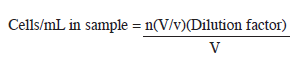
<body><![CDATA[<font size="2"><span style="font-family: verdana;"><span      style="font-weight: bold;">Phytoplankton studies:</span> Dilution     factor was used for quantitative analysis of biological samples. From a     known volume, a 0.1mL aliquot of the sample was placed in a Palmer-     Maloney counting chamber using Eppendorf pipette and enumerated using     Olympus BX51 photomicroscope. A total of 30 fields were observed for     each sample throughout the analysis. In this study, the filamentous     blue green were counted using 10<span style="font-style: italic;">&#956;</span>m     of filament length, that represented     one unit (unicells), and solitary cells were tallied as separate     ]]></body>
<body><![CDATA[individuals. Since many algae are colonial and consist of a few to many     cells, all colonial forms were counted by the individual cell that     comprised that colony, except for <span style="font-style: italic;">Microcystis</span>     sp. in which the method     used for filamentous algae was applied. For further analysis, one unit     was equated as one cell. Calculations for individual and total numbers     of organisms per millimeter were made using the following formula:    <br>     <br> </span></font>     <div style="text-align: center;"><font size="2"><span  style="font-family: verdana;"><img alt=""  src="/img/revistas/rbt/v60n1/a10f1.jpg"  style="width: 300px; height: 63px;"></span></font><br  style="font-family: verdana;"> <font size="2"><span style="font-family: verdana;"></span></font></div> <font size="2"><span style="font-family: verdana;"></span></font><br  style="font-family: verdana;"> <font size="2"><span style="font-family: verdana;">Calculation of number of cells per mL:</span></font><br style="font-family: verdana;"> <font size="2"><span style="font-family: verdana;">    ]]></body>
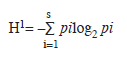
<body><![CDATA[<br> Where,</span></font><br style="font-family: verdana;"> <font size="2"><span style="font-family: verdana;">n=cells counted</span></font><br  style="font-family: verdana;"> <font size="2"><span style="font-family: verdana;">V=original sample volume</span></font><br style="font-family: verdana;"> <font size="2"><span style="font-family: verdana;">v=volume counted, which is given by the following</span></font><br style="font-family: verdana;"> <font size="2"><span style="font-family: verdana;">calculation (Number of fields x volume of fields)</span></font><br style="font-family: verdana;"> <font size="2"><span style="font-family: verdana;">Volume of fields=One Palmer cell count field=00008954</span></font><br style="font-family: verdana;"> <font size="2"><span style="font-family: verdana;">Number of fields=30</span></font><font  size="2"><span style="font-family: verdana;">    <br> (Number of fields x volume of fields)=(30 x .00008954)=0.0026862</span></font><br  style="font-family: verdana;"> <font size="2"></font><br style="font-family: verdana;"> <font size="2"><span style="font-family: verdana;">Since specific identification of most species of diatoms could not be determined using high dry objective, samples were acid cleaned using concentrated Nitric acid (HN0<sub>3</sub>). Taxonomic keys employed in the identification included Hustedt (1930, 1937, 1942 and 1971), Patrick <span style="font-style: italic;">&amp;</span> Reimer (1966, 1975), Prescott (1961, 1973 and 1982), Komarek <span  style="font-style: italic;">&amp;</span> Fott (1983), Round (1981), John <span style="font-style: italic;">&amp;</span> Robert (2003), Krammer <span style="font-style: italic;">&amp;</span> Lange-Bertalot (1986, 1988, 1991a, 1991b, 2000), Komarek <span style="font-style: italic;">&amp;</span> Anagnostids (1998, 2005) and Wolowski <span style="font-style: italic;">&amp;</span> Hindak (2005).</span></font><br  style="font-family: verdana;"> <font size="2"></font><br style="font-family: verdana;"> <font size="2"><span style="font-family: verdana;"><span  style="font-weight: bold;">Community structure:</span> To obtain the estimate of species diversity, three community structure indices were used. The species richness given by the equation (Margalef 1970):    <br>     <br> </span></font>     <div style="text-align: center;"><font size="2"><span  style="font-family: verdana;"><img alt=""  src="/img/revistas/rbt/v60n1/a10f2.jpg"  style="width: 88px; height: 55px;"></span></font><br  style="font-family: verdana;"> <font size="2"><span style="font-family: verdana;"></span></font></div> <font size="2"><span style="font-family: verdana;"></span></font><br  style="font-family: verdana;"> <font size="2"><span style="font-family: verdana;">Shannon-Wiener diversity index using the following equation (Shannon <span style="font-style: italic;">&amp;</span> Wiener 1973):    <br>     <br> </span></font>     <div style="text-align: center;"><font size="2"><span  style="font-family: verdana;"><img alt=""  src="/img/revistas/rbt/v60n1/a10f3.jpg"  style="width: 127px; height: 58px;"></span></font><br  style="font-family: verdana;"> <font size="2"><span style="font-family: verdana;"></span></font></div> <font size="2"><span style="font-family: verdana;"></span></font><br  style="font-family: verdana;"> <font size="2"><span style="font-family: verdana;">Species equitability with the following equation (Pielou 1975):    <br>     <br> </span></font>     ]]></body>
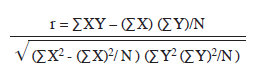
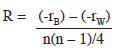
<body><![CDATA[<div style="text-align: center;"><font size="2"><span  style="font-family: verdana;"><img alt=""  src="/img/revistas/rbt/v60n1/a10f4.jpg"  style="width: 88px; height: 55px;"></span></font><br  style="font-family: verdana;"> <font size="2"><span style="font-family: verdana;"></span></font></div> <font size="2"><span style="font-family: verdana;"></span></font><br  style="font-family: verdana;"> <font size="2"><span style="font-family: verdana;"><span  style="font-weight: bold;">Correlation coefficient values (r):</span> The coefficient of correlation values for the relationship between some physico-chemical parameters and different classes of phytoplankton in the study site were calculated using     <br>     <br> </span></font>     <div style="text-align: center;"><font size="2"><span  style="font-family: verdana;"><img alt=""  src="/img/revistas/rbt/v60n1/a10f5.jpg"  style="width: 258px; height: 74px;"></span></font><br  style="font-family: verdana;"> <font size="2"><span style="font-family: verdana;"></span></font></div> <font size="2"><span style="font-family: verdana;"></span></font><br  style="font-family: verdana;"> <font size="2"><span style="font-family: verdana;">Where r=coefficient of correlation</span></font><br style="font-family: verdana;"> <font size="2"><span style="font-family: verdana;">X and Y=variables under consideration</span></font><br style="font-family: verdana;"> <font size="2"><span style="font-family: verdana;">N=Total number of individuals</span></font><br style="font-family: verdana;"> <font size="2"></font><br style="font-family: verdana;"> <font size="2"><span style="font-family: verdana;"><span  style="font-weight: bold;">Multidimensional Scaling (MDS):</span> Multidimensional scaling (MDS) is specifically designed to graphically represent relationships between objects in multidimensional space. Analysis of similarities (ANOSIM) using Bray-Curtis dissimilarities was applied. The following equation was used:    <br>     <br> </span></font>     <div style="text-align: center;"><font size="2"><span  style="font-family: verdana;"><img alt=""  src="/img/revistas/rbt/v60n1/a10f6.jpg"  style="width: 124px; height: 55px;"></span></font><br  style="font-family: verdana;"> <font size="2"><span style="font-family: verdana;"></span></font></div> <font size="2"><span style="font-family: verdana;"></span></font><br  style="font-family: verdana;"> <font size="2"><span style="font-family: verdana;"><span  style="font-weight: bold;">Principal Component Analysis (PCA): </span>Principal Component Analysis (PCA) objects were plotted in multidimensional space with the distance between objects representing the biological dissimilarities. All multivariate plots were obtained using the PRIMER 5 computer program of Clarke <span  style="font-style: italic;">&amp;</span> Gorley (2001). </span></font><br  style="font-family: verdana;"> <font size="2"></font><br style="font-family: verdana;"> <font style="font-weight: bold;" size="3"><span  style="font-family: verdana;">Results</span></font><br  style="font-family: verdana;"> <font size="2"></font><br style="font-family: verdana;"> <font size="2"><span style="font-family: verdana;"><span  style="font-weight: bold;">Physico-chemical parameters:</span> The mean physico-chemical characteristics of Lekki lagoon water is shown in <a href="/img/revistas/rbt/v60n1/a10t1.gif">Table 1</a>. Mean surface water temperature values ranged between 30.23<sup>0</sup>C and 30.73<sup>0</sup>C with the highest value recorded at station B. The surface water is essentially neutral as pH mean values ranged between 7.38-7.46 throughout the sampling period. Surface water salinity values were low throughout the study period (&#8804;0.55mg/L) while phosphate-phosphorus content (mg/L) recorded mean values ranged from 2.44 to 2.96 in stations L and H respectively. High nitratenitrogen content (3.97mg/L) was recorded ata station L while the low value (2.73mg/L) was recorded in station A. Chloride ion values recorded throughout the study period was generally low with the mean highest value (10.00mg/L) recorded at Station D, and mean values for conductivity in the various stations ranged from 0.46 to 0.62mS/cm.</span></font><br  style="font-family: verdana;"> <font size="2"></font><br style="font-family: verdana;"> <font size="2"><span style="font-family: verdana;">In general, higher dissolve oxygen content with mean value (4.25mg/L) was recorded at station F. The Biological oxygen demand value ranged from 0.22-0.31mg/L while chemical oxygen demand values ranged from 0.40- 0.36mg/L for all the stations. Oil and grease values were generally low; it ranged from 0.001 to 0.090mg/L throughout the sampling period.</span></font><br  style="font-family: verdana;"> <font size="2"></font><br style="font-family: verdana;"> <font size="2"><span style="font-family: verdana;"><span  style="font-weight: bold;">Community structure:</span> Throughout the sampling period, higher species richness (d) value (5.12) was recorded in March 2004 during the first annual cycle while the lowest value (0.18) was recorded in August 2004 of the second annual cycle. Shannon-Weiner (H<sup>1</sup>) index was generally low throughout the sampling period. The highest diversity (H=4.05) and lowest (H=0.04) values were recorded in August and October 2003 respectively throughout the 12 stations (<a href="/img/revistas/rbt/v60n1/a10t2.gif">Table 2</a>). The H<sup>I</sup> during the wet season apparently was related to the introduction of numerous benthic forms in the phytoplankton. Highest (0.92) and lowest (0.01) </span></font><font size="2"><span  style="font-family: verdana;">equitability values were recorded during the wet season (August and October 2003) at stations I. Station L recorded highest (0.92) equitability value as station L. The Shannon-Weiner information value (H<sup>1</sup>) and species richness (d) followed almost same pattern with lowest value for species richness (2.09) corresponded with lowest value (2.52) for Shannon-Weiner index (<a  href="/img/revistas/rbt/v60n1/a10i1.jpg">Fig. 1</a>).    <br>     </span></font><br style="font-family: verdana;">     <font size="2"><span style="font-family: verdana;"><span     ]]></body>
<body><![CDATA[ style="font-weight: bold;">Seasonal succession: </span>The seasonal     succession of phytoplankton which followed different pattern as shown     in <a href="/img/revistas/rbt/v60n1/a10t3.gif">Table 3</a>. The     phytoplankton abundance was higher during the dry     season (November-April) for the two annual cycles. </span></font><br      style="font-family: verdana;">     <font size="2"></font><br style="font-family: verdana;">     <font size="2"><span style="font-family: verdana;">For example, diatoms     (<span style="font-style: italic;">Aulacoseira     granulata</span> and <span style="font-style: italic;">A. granulata     ]]></body>
<body><![CDATA[var angustissima</span>); blue green algae,     <span style="font-style: italic;">Microcystis aeruginosa, Merismopedia     tennuissima</span> and <span style="font-style: italic;">Trichodesmium     lacustre</span> showed this trend by being the abundant species in some     of     these months. In the rainy season, green alga, <span      style="font-style: italic;">Mougeotia</span> sp1 dominated     this season in June-July 2003 with<span style="font-style: italic;">     Chroococcus turgidus, Tetraspora     gelatinosa</span> and <span style="font-style: italic;">M. aeruginosa</span>     ]]></body>
<body><![CDATA[as the sub-dominant species in June while     <span style="font-style: italic;">A. granulata, Oscillatoria germinata</span>     and <span style="font-style: italic;">A. islandica</span> were     sub-dominant     species in July.</span></font><br style="font-family: verdana;">     <font size="2"></font><br style="font-family: verdana;">     <font size="2"><span style="font-family: verdana;">In corresponding     year (June-July     2004) the diatom, <span style="font-style: italic;">A. granutala</span>     was recorded as the dominant species     ]]></body>
<body><![CDATA[with <span style="font-style: italic;">Mougeotia</span> sp. 11, <span      style="font-style: italic;">A. islandica</span> and <span      style="font-style: italic;">Microcystis flos-aquae</span> as some     of the sub-dominant species. In August 2003 and 2004 <span      style="font-style: italic;">A. granulata</span>     dominated and have <span style="font-style: italic;">Mougeotia</span>     sp. 11, <span style="font-style: italic;">Aphanocapsa delicatissima </span>and     <span style="font-style: italic;">Aulacoseira</span> spp. as important     members of the phytoplankton spectrum. <span      style="font-style: italic;">M.     ]]></body>
<body><![CDATA[aeruginosa</span> remained dominant in September 2003 and 2004 while     two     members of the division Cyanophyta (<span style="font-style: italic;">Microcystis     flos-aquae</span> and <span style="font-style: italic;">C.     minutus</span>) were associated species in addition to <span      style="font-style: italic;">Aulacoseira</span> spp.     October and November 2003 recorded <span style="font-style: italic;">Aulacoseira     granulata</span> as the     dominant species while <span style="font-style: italic;">Aulacoseira</span>     spp. and <span style="font-style: italic;">Lyngbya hypolimnectica</span>     ]]></body>
<body><![CDATA[were     recorded as the sub-dominant species.</span></font><br      style="font-family: verdana;">     <font size="2"></font><br style="font-family: verdana;">     <font size="2"><span style="font-family: verdana;">In October 2004, <span      style="font-style: italic;">M. aeruginosa</span> took     over the succession while <span style="font-style: italic;">T. lacustre</span>     for the first time was recorded     as the dominant species in November 2004. December 2003 and 2004 also     recorded different cyanophytes (<span style="font-style: italic;">Cyanosarcina     ]]></body>
<body><![CDATA[huebeliorum</span> and <span style="font-style: italic;">M.     aeruginosa</span>) as the dominant species. <span      style="font-style: italic;">M. aeruginosa</span> and <span      style="font-style: italic;">A. granulata</span>     were recorded as dominant species in January 2004 and 2005,     respectively. For the first time <span style="font-style: italic;">A.     granulata</span> maintained the dominance     throughout February to April 2004 and 2005. <span      style="font-style: italic;">Mougeotia</span> sp. 11 was     dominant in May 2004 while May 2005 recorded <span     ]]></body>
<body><![CDATA[ style="font-style: italic;">M. tennuisima</span>.</span></font><br      style="font-family: verdana;">     <font size="2"></font><br style="font-family: verdana;">     <font size="2"><span style="font-family: verdana;">Generally, <span      style="font-style: italic;">A. granulata</span> had     variable patterns of abundance as it recorded its dominance both in dry     and wet season.The correlation values between different classes of     phytoplankton and some physico-chemical parameters showed inverse     relationship between Bacillariophyceae, Chlorophyceae, Euglenophyceae     and Xanthophyceae with phosphate-phosphorus (<a     ]]></body>
<body><![CDATA[ href="/img/revistas/rbt/v60n1/a10t4.gif">Table 4</a>). Phytoplankton     dynamics from different </span></font><font size="2"><span      style="font-family: verdana;">stations showed that is being     controlled by the same factors and recorded almost same species (<a      href="/img/revistas/rbt/v60n1/a10i2.jpg">Figs.     2</a> and <a href="/img/revistas/rbt/v60n1/a10i3.jpg">3</a>).These     factors according to the result generated using Primer 5     software included Phosphate-phosphorus, Nitrate-nitrogen, rainfall, pH     and depth.</span></font><br style="font-family: verdana;">     <font size="2"></font><br style="font-family: verdana;">     ]]></body>
<body><![CDATA[<font style="font-weight: bold;" size="3"><span      style="font-family: verdana;">Discussion</span></font><br      style="font-family: verdana;">     <font size="2"></font><br style="font-family: verdana;">     <font size="2"><span style="font-family: verdana;">Dilution of lagoon     water during the     wet season and the degree of dilution and flushing depended on the     amount of rainfall in the catchment areas and the attendant effects of     flood waters. Flooding caused seasonal changes in the volume of water     and the dilution of cations in the lagoon complex. Thomas (1966) and     ]]></body>
<body><![CDATA[Biswas (1972) reported similar effects of dilution in some water bodies     in Ghana. The low phytoplankton biomass in the rainy season may be due     to flood water which diluted the physico-chemical environment, reduced     retention time, reduced transparency and flushed out phytoplankton     taxa. The present observation that diatoms dominate the phytoplankton     community confirms earlier reports by Imevbore (1965, 1968) and Egborge     (1979) who reported similar results for reservoirs of South Western     Nigeria and Nwankwo (1984) for Lagos lagoon and adjacent sea. Centric     diatoms were dominant almost all through each annual cycle with major     floristic changes between the seasons. Centric diatoms dominance also     ]]></body>
<body><![CDATA[conforms to Nwankwo (1984) who reported that Melosira was the dominant     species in Lagos lagoon and the adjacent sea. The dominance of centric     diatoms most especially <span style="font-style: italic;">Aulacoseira     granulate</span> could be an indication     that <span style="font-style: italic;">Aulacoseira</span> species     needed low salinity level to thrive, since an     increased salinity value especially in September 2003, favored the blue     green algae during which highest relative abundance (96.7%) was     recorded with Microcystis aeruginosa recording 95.5% out of the total     (96.7%), this indicated that salinity range of 0.85-1.05mg/L probably     ]]></body>
<body><![CDATA[favored <span style="font-style: italic;">M. aeruginosa</span> and not     <span style="font-style: italic;">Aulacoseira</span> sp. In general, pH     value     recorded in this study highly favored <span style="font-style: italic;">A.     granulata</span> which remained     dominant at most of the time and this supported Talling (1986) report,     who by using data collected from some central African lakes suggested     that the effects of pH and alkalinity in lake waters may be reflected     in the occurrence of some species such as <span      style="font-style: italic;">A. granulata</span>.</span></font><br     ]]></body>
<body><![CDATA[ style="font-family: verdana;">     <font size="2"></font><br style="font-family: verdana;">     <font size="2"><span style="font-family: verdana;">The phytoplankton     community and the     physio-chemical parameters exhibited seasonal changes closely related     to the pattern of rainfall. According to Egborge (1974) and Tezuka     (1984), seasonal fluctuation in abundance of phytoplankton is     influenced by changes in the physical and chemical properties of the     water, which themselves can be dependent on rainfall. Differences in     abundance of most species during the two seasonal cycles could be     ]]></body>
<body><![CDATA[attributed to significant variations in the physicochemical variables     and nutrients levels within these periods. This probably explained the     successional pattern of the phytoplankton&nbsp; taxa, which showed that     between September and December 2004, the blue green dominated the     phytoplankton spectrum, living <span style="font-style: italic;">Aulacoseira</span>     spp. to be sub-dominant     among the blue green that dominated the phytoplankton spectrum in one     month; or the other during this study were, <span      style="font-style: italic;">Cyanosarcina huebeliorum</span>     (December 2003) which is a new record for Lagos lagoon complex     ]]></body>
<body><![CDATA[<span style="font-style: italic;">Merismopedia tennuissima</span> (May     2005), </span></font><font size="2"><span style="font-family: verdana;"><span      style="font-style: italic;">Trichodesmium lacustre</span> (November     2004) and <span style="font-style: italic;">M. aeruginosa</span> that     recorded its abundance in many occasions     while <span style="font-style: italic;">Mougeotia</span> sp. 1     dominated in June and July 2003 and May 2004. All     the green and blue green algae showed dominance in the wet season, when     the nitrate level was high, except for <span      style="font-style: italic;">M. aeruginosa</span> that appeared in     ]]></body>
<body><![CDATA[both seasons but most abundantly in wet. The increase and decrease of     phytoplankton populations and the replacement of one form by another     throughout the season is controlled by the varying environmental     parameters such as Phosphate-phosphorus, Nitrate-nitrogen and rainfall.     Influence of the sea on phytoplankton of Lekki lagoon is not     significant, because is fresh all year through and is not close to the     sea as Lagos lagoon.</span></font><br style="font-family: verdana;">     <font size="2"></font><br style="font-family: verdana;">     <font style="font-weight: bold;" size="3"><span      style="font-family: verdana;">Acknowledgment</span></font><br     ]]></body>
<body><![CDATA[ style="font-family: verdana;">     <font size="2"></font><br style="font-family: verdana;">     <font size="2"><span style="font-family: verdana;">We acknowledge the     Fulbright     program for the scholarship awarded to Adesalu T.A. and Prof. Rex Lowe     of Bowling Green State University Ohio, U.S.A for his assistance.</span></font><br      style="font-family: verdana;">     <font size="2"></font><br style="font-family: verdana;">     <font size="2"><span style="font-family: verdana;"></span></font>     <hr style="width: 100%; height: 2px;"><font style="font-weight: bold;"     ]]></body>
<body><![CDATA[ size="3"><span style="font-family: verdana;">References</span></font><br      style="font-family: verdana;">     <font size="2"></font><br style="font-family: verdana;">     <font size="2"><span style="font-family: verdana;">Adeniji, H.A. 1971.     Preliminary     investigation into composition and seasonal variation of plankton in     the Kainji Lake, Nigeria. Abstract International Symposium on Manmade     <!-- ref -->lakes. Ackermann, White and Worthington, 617-619.    &nbsp;&nbsp;&nbsp;&nbsp;&nbsp;&nbsp;&nbsp;&nbsp;[&#160;<a href="javascript:void(0);" onclick="javascript: window.open('/scielo.php?script=sci_nlinks&ref=1430314&pid=S0034-7744201200010001000001&lng=','','width=640,height=500,resizable=yes,scrollbars=1,menubar=yes,');">Links</a>&#160;]<!-- end-ref --><!-- ref --></span></font><br  style="font-family: verdana;"> <font size="2"></font><br style="font-family: verdana;"> <font size="2"><span style="font-family: verdana;">Adesalu, T.A. 2007. Phytoplankton dynamics in relation to water quality indices in Lekkki lagoon, Lagos. Ph.D. Thesis, University of Lagos, Lagos, Nigeria.    &nbsp;&nbsp;&nbsp;&nbsp;&nbsp;&nbsp;&nbsp;&nbsp;[&#160;<a href="javascript:void(0);" onclick="javascript: window.open('/scielo.php?script=sci_nlinks&ref=1430315&pid=S0034-7744201200010001000002&lng=','','width=640,height=500,resizable=yes,scrollbars=1,menubar=yes,');">Links</a>&#160;]<!-- end-ref --><!-- ref --></span></font><br  style="font-family: verdana;"> <font size="2"></font><br style="font-family: verdana;"> <font size="2"><span style="font-family: verdana;">Adesalu, T.A. <span  style="font-style: italic;">&amp;</span> D.I. Nwankwo. 2009. A checklist of Lekki lagoon diatoms. Int. J. Bot. 5: 126-134.    &nbsp;&nbsp;&nbsp;&nbsp;&nbsp;&nbsp;&nbsp;&nbsp;[&#160;<a href="javascript:void(0);" onclick="javascript: window.open('/scielo.php?script=sci_nlinks&ref=1430316&pid=S0034-7744201200010001000003&lng=','','width=640,height=500,resizable=yes,scrollbars=1,menubar=yes,');">Links</a>&#160;]<!-- end-ref --><!-- ref --></span></font><br  style="font-family: verdana;"> <font size="2"></font><br style="font-family: verdana;"> <font size="2"><span style="font-family: verdana;">APHA. 1998. Standard Methods for the Examination of Water and Wastewater. American Public Health Association, Washington D.C., USA.    &nbsp;&nbsp;&nbsp;&nbsp;&nbsp;&nbsp;&nbsp;&nbsp;[&#160;<a href="javascript:void(0);" onclick="javascript: window.open('/scielo.php?script=sci_nlinks&ref=1430317&pid=S0034-7744201200010001000004&lng=','','width=640,height=500,resizable=yes,scrollbars=1,menubar=yes,');">Links</a>&#160;]<!-- end-ref --><!-- ref --></span></font><br  style="font-family: verdana;"> <font size="2"></font><br style="font-family: verdana;"> <font size="2"><span style="font-family: verdana;">Bainbridge, R. 1972. The zooplankton of the Gulf of Guinea. Bull. Mar. Ecol. 8: 61-87.    &nbsp;&nbsp;&nbsp;&nbsp;&nbsp;&nbsp;&nbsp;&nbsp;[&#160;<a href="javascript:void(0);" onclick="javascript: window.open('/scielo.php?script=sci_nlinks&ref=1430318&pid=S0034-7744201200010001000005&lng=','','width=640,height=500,resizable=yes,scrollbars=1,menubar=yes,');">Links</a>&#160;]<!-- end-ref --><!-- ref --> </span></font><br  style="font-family: verdana;"> <font size="2"></font><br style="font-family: verdana;"> <font size="2"><span style="font-family: verdana;">Barnes, R.S.K. 1980. Coastal lagoons. Cambridge University, London, England.    &nbsp;&nbsp;&nbsp;&nbsp;&nbsp;&nbsp;&nbsp;&nbsp;[&#160;<a href="javascript:void(0);" onclick="javascript: window.open('/scielo.php?script=sci_nlinks&ref=1430319&pid=S0034-7744201200010001000006&lng=','','width=640,height=500,resizable=yes,scrollbars=1,menubar=yes,');">Links</a>&#160;]<!-- end-ref --><!-- ref --> </span></font><br  style="font-family: verdana;"> <font size="2"></font><br style="font-family: verdana;"> <font size="2"><span style="font-family: verdana;">Biswas, S. 1972. Ecology of phytoplankton of the Volta Lake. Hydrobiology 39: 277-288.    &nbsp;&nbsp;&nbsp;&nbsp;&nbsp;&nbsp;&nbsp;&nbsp;[&#160;<a href="javascript:void(0);" onclick="javascript: window.open('/scielo.php?script=sci_nlinks&ref=1430320&pid=S0034-7744201200010001000007&lng=','','width=640,height=500,resizable=yes,scrollbars=1,menubar=yes,');">Links</a>&#160;]<!-- end-ref --><!-- ref --> </span></font><br  style="font-family: verdana;"> <font size="2"></font><br style="font-family: verdana;"> <font size="2"><span style="font-family: verdana;">Clarke, K.R <span  style="font-style: italic;">&amp;</span> R.N. Gorley. 2001. PRIMER v5: User manual/Tutorial. Primer-e, Plymouth, England.    &nbsp;&nbsp;&nbsp;&nbsp;&nbsp;&nbsp;&nbsp;&nbsp;[&#160;<a href="javascript:void(0);" onclick="javascript: window.open('/scielo.php?script=sci_nlinks&ref=1430321&pid=S0034-7744201200010001000008&lng=','','width=640,height=500,resizable=yes,scrollbars=1,menubar=yes,');">Links</a>&#160;]<!-- end-ref --><br>     <!-- ref --><br> Dahlin, J., S. Hess, P. Duncan <span style="font-style: italic;">&amp;</span> C.B. Powell. 1985. </span></font><font size="2"><span  style="font-family: verdana;">Composition of the Phytoplankton and zooplankton communities of the Niger Delta. Proc. International Seminar on the petroleum industry and the Nigerian environment, Kaduna, Nigeria.    &nbsp;&nbsp;&nbsp;&nbsp;&nbsp;&nbsp;&nbsp;&nbsp;[&#160;<a href="javascript:void(0);" onclick="javascript: window.open('/scielo.php?script=sci_nlinks&ref=1430323&pid=S0034-7744201200010001000009&lng=','','width=640,height=500,resizable=yes,scrollbars=1,menubar=yes,');">Links</a>&#160;]<!-- end-ref --><!-- ref --></span></font><br style="font-family: verdana;"> <font size="2"></font><br style="font-family: verdana;"> <font size="2"><span style="font-family: verdana;">Eaton, J.W. 1966. Algal investigations. The first scientific report of the Kainji Biological Research Team 8-16. White, Liverpool, England.    &nbsp;&nbsp;&nbsp;&nbsp;&nbsp;&nbsp;&nbsp;&nbsp;[&#160;<a href="javascript:void(0);" onclick="javascript: window.open('/scielo.php?script=sci_nlinks&ref=1430324&pid=S0034-7744201200010001000010&lng=','','width=640,height=500,resizable=yes,scrollbars=1,menubar=yes,');">Links</a>&#160;]<!-- end-ref --><!-- ref --></span></font><br  style="font-family: verdana;"> <font size="2"></font><br style="font-family: verdana;"> <font size="2"><span style="font-family: verdana;">Egborge, A.B.M. 1973. A preliminary checklist of the phytoplankton of Oshun River, Nigeria. Freshwater Biol. 4: 569-572.    &nbsp;&nbsp;&nbsp;&nbsp;&nbsp;&nbsp;&nbsp;&nbsp;[&#160;<a href="javascript:void(0);" onclick="javascript: window.open('/scielo.php?script=sci_nlinks&ref=1430325&pid=S0034-7744201200010001000011&lng=','','width=640,height=500,resizable=yes,scrollbars=1,menubar=yes,');">Links</a>&#160;]<!-- end-ref --><!-- ref --></span></font><br style="font-family: verdana;"> <font size="2"></font><br style="font-family: verdana;"> <font size="2"><span style="font-family: verdana;">Egborge, A.B.M. 1974. The seasonal variation and distribution of phytoplankton in the Oshun River, Nigeria. Freshwater Biol. 4: 177-191.    &nbsp;&nbsp;&nbsp;&nbsp;&nbsp;&nbsp;&nbsp;&nbsp;[&#160;<a href="javascript:void(0);" onclick="javascript: window.open('/scielo.php?script=sci_nlinks&ref=1430326&pid=S0034-7744201200010001000012&lng=','','width=640,height=500,resizable=yes,scrollbars=1,menubar=yes,');">Links</a>&#160;]<!-- end-ref --><!-- ref --></span></font><br  style="font-family: verdana;"> <font size="2"></font><br style="font-family: verdana;"> <font size="2"><span style="font-family: verdana;">Egborge, A.B.M. 1979. The effect of impoundment on the phytoplankton of the Oshun River, Nigeria. Nova Hedwigia 31: 401-417.    &nbsp;&nbsp;&nbsp;&nbsp;&nbsp;&nbsp;&nbsp;&nbsp;[&#160;<a href="javascript:void(0);" onclick="javascript: window.open('/scielo.php?script=sci_nlinks&ref=1430327&pid=S0034-7744201200010001000013&lng=','','width=640,height=500,resizable=yes,scrollbars=1,menubar=yes,');">Links</a>&#160;]<!-- end-ref --><!-- ref --></span></font><br style="font-family: verdana;"> <font size="2"></font><br style="font-family: verdana;"> <font size="2"><span style="font-family: verdana;">Hill, M.B. <span  style="font-style: italic;">&amp;</span> J.E. Webb. 1958. The ecology of Lagos lagoon II. The topography and physical features of Lagos harbour and Lagos lagoon. Phil. Trans. R. Soc. Lond. 241: 319-417.    &nbsp;&nbsp;&nbsp;&nbsp;&nbsp;&nbsp;&nbsp;&nbsp;[&#160;<a href="javascript:void(0);" onclick="javascript: window.open('/scielo.php?script=sci_nlinks&ref=1430328&pid=S0034-7744201200010001000014&lng=','','width=640,height=500,resizable=yes,scrollbars=1,menubar=yes,');">Links</a>&#160;]<!-- end-ref --><!-- ref --></span></font><br  style="font-family: verdana;"> <font size="2"></font><br style="font-family: verdana;"> <font size="2"><span style="font-family: verdana;">Holden, M.J. <span  style="font-style: italic;">&amp;</span> J. Green. 1960. The hydrology and plankton of the River Sokoto. J. Anim. Ecol. 29: 65-84.    &nbsp;&nbsp;&nbsp;&nbsp;&nbsp;&nbsp;&nbsp;&nbsp;[&#160;<a href="javascript:void(0);" onclick="javascript: window.open('/scielo.php?script=sci_nlinks&ref=1430329&pid=S0034-7744201200010001000015&lng=','','width=640,height=500,resizable=yes,scrollbars=1,menubar=yes,');">Links</a>&#160;]<!-- end-ref --><!-- ref --></span></font><br style="font-family: verdana;"> <font size="2"></font><br style="font-family: verdana;"> <font size="2"><span style="font-family: verdana;">Hustedt, F. 1937. Die Kieselalgen Deutschlands, &Ouml;sterreichs und der Schweiz unter Ber&uuml;cksichtigung der &uuml;brigen L&auml;nder Europas sowie der angrenzendenn Meeresgebiete, p. 609-920. <span  style="font-style: italic;">In</span> L. Rabenhorst (ed.). </span></font><font  size="2"><span style="font-family: verdana;">Kryptogamen Flora von Deutschland, &Ouml;sterreich und der Schweiz, Fischer, Stuttgart, Germany.    &nbsp;&nbsp;&nbsp;&nbsp;&nbsp;&nbsp;&nbsp;&nbsp;[&#160;<a href="javascript:void(0);" onclick="javascript: window.open('/scielo.php?script=sci_nlinks&ref=1430330&pid=S0034-7744201200010001000016&lng=','','width=640,height=500,resizable=yes,scrollbars=1,menubar=yes,');">Links</a>&#160;]<!-- end-ref --><!-- ref --></span></font><br  style="font-family: verdana;"> <font size="2"></font><br style="font-family: verdana;"> <font size="2"><span style="font-family: verdana;">Hustedt, F. 1942. Susswasser-Diatomeen des indomalayischen Archipels und der Hawaii-Inslen. Int. Rev. Hydrobiol. 42: 1-252.    &nbsp;&nbsp;&nbsp;&nbsp;&nbsp;&nbsp;&nbsp;&nbsp;[&#160;<a href="javascript:void(0);" onclick="javascript: window.open('/scielo.php?script=sci_nlinks&ref=1430331&pid=S0034-7744201200010001000017&lng=','','width=640,height=500,resizable=yes,scrollbars=1,menubar=yes,');">Links</a>&#160;]<!-- end-ref --><!-- ref --></span></font><br  style="font-family: verdana;"> <font size="2"></font><br style="font-family: verdana;"> <font size="2"><span style="font-family: verdana;">Hustedt, F. 1971. <span  style="font-style: italic;">Kryptogamen-flora von Deutschland, &Ouml;sterreichs un der Schweiz.</span> A Kademiscehe Vergasell Schaft M.L.H., Leipzing, Germany.    &nbsp;&nbsp;&nbsp;&nbsp;&nbsp;&nbsp;&nbsp;&nbsp;[&#160;<a href="javascript:void(0);" onclick="javascript: window.open('/scielo.php?script=sci_nlinks&ref=1430332&pid=S0034-7744201200010001000018&lng=','','width=640,height=500,resizable=yes,scrollbars=1,menubar=yes,');">Links</a>&#160;]<!-- end-ref --><!-- ref --></span></font><br  style="font-family: verdana;"> <font size="2"></font><br style="font-family: verdana;"> <font size="2"><span style="font-family: verdana;">Imevbore, A.M.A. 1965. A preliminary check-list of the planktonic organism of Eleiyele reservoir, Ibadan, Nigeria. J. West Afric. Sci. Assoc. 10: 156-160.    &nbsp;&nbsp;&nbsp;&nbsp;&nbsp;&nbsp;&nbsp;&nbsp;[&#160;<a href="javascript:void(0);" onclick="javascript: window.open('/scielo.php?script=sci_nlinks&ref=1430333&pid=S0034-7744201200010001000019&lng=','','width=640,height=500,resizable=yes,scrollbars=1,menubar=yes,');">Links</a>&#160;]<!-- end-ref --><!-- ref --></span></font><br  style="font-family: verdana;"> <font size="2"></font><br style="font-family: verdana;"> <font size="2"><span style="font-family: verdana;">Imevbore, A.M.A. 1967. Hydrology and Plankton of Eleiyele reservoir, Ibadan, Nigeria. Hydrobiology 30: 154-176.    &nbsp;&nbsp;&nbsp;&nbsp;&nbsp;&nbsp;&nbsp;&nbsp;[&#160;<a href="javascript:void(0);" onclick="javascript: window.open('/scielo.php?script=sci_nlinks&ref=1430334&pid=S0034-7744201200010001000020&lng=','','width=640,height=500,resizable=yes,scrollbars=1,menubar=yes,');">Links</a>&#160;]<!-- end-ref --><!-- ref --></span></font><br style="font-family: verdana;"> <font size="2"></font><br style="font-family: verdana;"> <font size="2"><span style="font-family: verdana;">Imevbore, A.M.A. 1968. Planktonic algae of Eleiyele reservoir, Nigeria. J. Sci. 2: 85-90.    &nbsp;&nbsp;&nbsp;&nbsp;&nbsp;&nbsp;&nbsp;&nbsp;[&#160;<a href="javascript:void(0);" onclick="javascript: window.open('/scielo.php?script=sci_nlinks&ref=1430335&pid=S0034-7744201200010001000021&lng=','','width=640,height=500,resizable=yes,scrollbars=1,menubar=yes,');">Links</a>&#160;]<!-- end-ref --><!-- ref --></span></font><br  style="font-family: verdana;"> <font size="2"></font><br style="font-family: verdana;"> <font size="2"><span style="font-family: verdana;">Imevbore, A.M.A., O.S. Adegoke <span style="font-style: italic;">&amp;</span> A.S. Rogers. 1969. Physical and chemical properties of the Ikogosi warm water spring, Western Nigeria. Nig. J. Mining Geol. 4: 69-81.    &nbsp;&nbsp;&nbsp;&nbsp;&nbsp;&nbsp;&nbsp;&nbsp;[&#160;<a href="javascript:void(0);" onclick="javascript: window.open('/scielo.php?script=sci_nlinks&ref=1430336&pid=S0034-7744201200010001000022&lng=','','width=640,height=500,resizable=yes,scrollbars=1,menubar=yes,');">Links</a>&#160;]<!-- end-ref --><!-- ref --></span></font><br style="font-family: verdana;"> <font size="2"></font><br style="font-family: verdana;"> <font size="2"><span style="font-family: verdana;">John, D.W <span  style="font-style: italic;">&amp;</span> G.S. Robert. 2003. Freshwater algae of North America, ecology and classification. Academic, San Diego California, USA.    &nbsp;&nbsp;&nbsp;&nbsp;&nbsp;&nbsp;&nbsp;&nbsp;[&#160;<a href="javascript:void(0);" onclick="javascript: window.open('/scielo.php?script=sci_nlinks&ref=1430337&pid=S0034-7744201200010001000023&lng=','','width=640,height=500,resizable=yes,scrollbars=1,menubar=yes,');">Links</a>&#160;]<!-- end-ref --><!-- ref --></span></font><br  style="font-family: verdana;"> <font size="2"></font><br style="font-family: verdana;"> <font size="2"><span style="font-family: verdana;">Kadiri, M.O. 1999. Phytoplankton distribution in some coastal waters of Nigeria. Nigerian J. Bot. 12: 51-62.    &nbsp;&nbsp;&nbsp;&nbsp;&nbsp;&nbsp;&nbsp;&nbsp;[&#160;<a href="javascript:void(0);" onclick="javascript: window.open('/scielo.php?script=sci_nlinks&ref=1430338&pid=S0034-7744201200010001000024&lng=','','width=640,height=500,resizable=yes,scrollbars=1,menubar=yes,');">Links</a>&#160;]<!-- end-ref --><!-- ref --></span></font><br style="font-family: verdana;"> <font size="2"></font><br style="font-family: verdana;"> <font size="2"><span style="font-family: verdana;">Komarek, J. <span  style="font-style: italic;">&amp;</span> B. Fott. 1983. Chlorophyceae. Chlorococcales, p. 1044. <span  style="font-style: italic;">In</span> G. Huber-Pestalozzi (ed.). Das Phytoplankton de S&uuml;sswassers, Systematik u. Biologie, Teil.1 Stuttgart, Germany.    &nbsp;&nbsp;&nbsp;&nbsp;&nbsp;&nbsp;&nbsp;&nbsp;[&#160;<a href="javascript:void(0);" onclick="javascript: window.open('/scielo.php?script=sci_nlinks&ref=1430339&pid=S0034-7744201200010001000025&lng=','','width=640,height=500,resizable=yes,scrollbars=1,menubar=yes,');">Links</a>&#160;]<!-- end-ref --><!-- ref --> </span></font><br style="font-family: verdana;"> <font size="2"></font><br style="font-family: verdana;"> <font size="2"><span style="font-family: verdana;">Komarek, J. <span  style="font-style: italic;">&amp;</span> K. Anagnostidis. 1998. Cyanoprokaryota 1. Teil: Chroococcales, p. 548. <span  style="font-style: italic;">In</span> H. Ettl, G. G&auml;rtner, H. Heynig <span style="font-style: italic;">&amp;</span> D. Mollenhauer (eds.). S&uuml;sswasserflora von Mitteleuropa 19/1. Fischer, Stuttgart, Germany.    &nbsp;&nbsp;&nbsp;&nbsp;&nbsp;&nbsp;&nbsp;&nbsp;[&#160;<a href="javascript:void(0);" onclick="javascript: window.open('/scielo.php?script=sci_nlinks&ref=1430340&pid=S0034-7744201200010001000026&lng=','','width=640,height=500,resizable=yes,scrollbars=1,menubar=yes,');">Links</a>&#160;]<!-- end-ref --><!-- ref --></span></font><br  style="font-family: verdana;"> <font size="2"></font><br style="font-family: verdana;"> <font size="2"><span style="font-family: verdana;">Komarek, J. <span  style="font-style: italic;">&amp;</span> K. Anagnostidis. 2005. Cyanoprokaryota 2. Teil/ 2nd Part: Oscillatoriales, p. 759. <span  style="font-style: italic;">In</span> B. Budel, L. Krienitz, G. G&auml;rtner <span style="font-style: italic;">&amp;</span> M. Schagerl (eds.). S&uuml;sswasserflora von Mitteleuropa 19/2. Elsevier, Heidelberg, Germany.    &nbsp;&nbsp;&nbsp;&nbsp;&nbsp;&nbsp;&nbsp;&nbsp;[&#160;<a href="javascript:void(0);" onclick="javascript: window.open('/scielo.php?script=sci_nlinks&ref=1430341&pid=S0034-7744201200010001000027&lng=','','width=640,height=500,resizable=yes,scrollbars=1,menubar=yes,');">Links</a>&#160;]<!-- end-ref --><!-- ref --></span></font><br style="font-family: verdana;"> <font size="2"></font><br style="font-family: verdana;"> <font size="2"><span style="font-family: verdana;">Krammer, H. <span  style="font-style: italic;">&amp;</span> H. Lange-Bertalot. 1986. S&uuml;&szlig;wasserflora von Mitteleuropa. Band 2. Bacillariophyceae. Teil 1. Naviculaceae. Fischer, Stuttgart, Germany.    &nbsp;&nbsp;&nbsp;&nbsp;&nbsp;&nbsp;&nbsp;&nbsp;[&#160;<a href="javascript:void(0);" onclick="javascript: window.open('/scielo.php?script=sci_nlinks&ref=1430342&pid=S0034-7744201200010001000028&lng=','','width=640,height=500,resizable=yes,scrollbars=1,menubar=yes,');">Links</a>&#160;]<!-- end-ref --><!-- ref --></span></font><br  style="font-family: verdana;"> <font size="2"></font><br style="font-family: verdana;"> <font size="2"><span style="font-family: verdana;">Krammer, H. <span  style="font-style: italic;">&amp;</span> H. Lange-Bertalot. 1988. S&uuml;&szlig;wasserflora von Mitteleuropa. Band 2. Bacillariophyceae. Teil 2. Bacillariaceae, Epithemiaceae, Surirellaceae. Fischer, Stuttgart, Germany.    &nbsp;&nbsp;&nbsp;&nbsp;&nbsp;&nbsp;&nbsp;&nbsp;[&#160;<a href="javascript:void(0);" onclick="javascript: window.open('/scielo.php?script=sci_nlinks&ref=1430343&pid=S0034-7744201200010001000029&lng=','','width=640,height=500,resizable=yes,scrollbars=1,menubar=yes,');">Links</a>&#160;]<!-- end-ref --><!-- ref --></span></font><br  style="font-family: verdana;"> <font size="2"></font><br style="font-family: verdana;"> <font size="2"><span style="font-family: verdana;">Krammer, H. <span  style="font-style: italic;">&amp;</span> H. Lange-Bertalot. 1991a. S&uuml;&szlig;wasserflora von Mitteleuropa. Band 2. Bacillariophyceae. Teil 3. Centrales, Fragilariaceae, Eunotiaceae. Fischer, Stuttgart, Germany.    &nbsp;&nbsp;&nbsp;&nbsp;&nbsp;&nbsp;&nbsp;&nbsp;[&#160;<a href="javascript:void(0);" onclick="javascript: window.open('/scielo.php?script=sci_nlinks&ref=1430344&pid=S0034-7744201200010001000030&lng=','','width=640,height=500,resizable=yes,scrollbars=1,menubar=yes,');">Links</a>&#160;]<!-- end-ref --><!-- ref --></span></font><br  style="font-family: verdana;"> <font size="2"></font><br style="font-family: verdana;"> <font size="2"><span style="font-family: verdana;">Krammer, H. <span  style="font-style: italic;">&amp;</span> H. Lange-Bertalot. 1991b. S&uuml;&szlig;wasserflora von Mitteleuropa. Band 2. Bacillariophyceae. Teil 4. Achnanthaceae, Kritische Erg&auml;nzungen zu <span style="font-style: italic;">Navicula</span> (Lineolatae) and <span  style="font-style: italic;">Gomphonema.</span> Fischer, Stuttgart, Germany.    &nbsp;&nbsp;&nbsp;&nbsp;&nbsp;&nbsp;&nbsp;&nbsp;[&#160;<a href="javascript:void(0);" onclick="javascript: window.open('/scielo.php?script=sci_nlinks&ref=1430345&pid=S0034-7744201200010001000031&lng=','','width=640,height=500,resizable=yes,scrollbars=1,menubar=yes,');">Links</a>&#160;]<!-- end-ref --><!-- ref --></span></font><br style="font-family: verdana;"> <font size="2"></font><br style="font-family: verdana;"> <font size="2"><span style="font-family: verdana;">Krammer, H. <span  style="font-style: italic;">&amp;</span> H. Lange-Bertalot. 2000. S&uuml;&szlig;wasserflora von Mitteleuropa. Band 2/5. Bacillariophyceae. Part 5. English and French Translation of the Keys. Fischer, Stuttgart, Germany.    &nbsp;&nbsp;&nbsp;&nbsp;&nbsp;&nbsp;&nbsp;&nbsp;[&#160;<a href="javascript:void(0);" onclick="javascript: window.open('/scielo.php?script=sci_nlinks&ref=1430346&pid=S0034-7744201200010001000032&lng=','','width=640,height=500,resizable=yes,scrollbars=1,menubar=yes,');">Links</a>&#160;]<!-- end-ref --><!-- ref --></span></font><br  style="font-family: verdana;"> <font size="2"></font><br style="font-family: verdana;"> <font size="2"><span style="font-family: verdana;">Kusemiju, K. 1973. A study of catfishes of Lekki lagoon with particular reference to species of <span style="font-style: italic;">Chrysichthys walkeri</span> (Bagridae). Ph.D. Thesis University of Lagos, Lagos, Nigeria.    &nbsp;&nbsp;&nbsp;&nbsp;&nbsp;&nbsp;&nbsp;&nbsp;[&#160;<a href="javascript:void(0);" onclick="javascript: window.open('/scielo.php?script=sci_nlinks&ref=1430347&pid=S0034-7744201200010001000033&lng=','','width=640,height=500,resizable=yes,scrollbars=1,menubar=yes,');">Links</a>&#160;]<!-- end-ref --><!-- ref --></span></font><br style="font-family: verdana;"> <font size="2"></font><br style="font-family: verdana;"> <font size="2"><span style="font-family: verdana;">Kusemiju, K. 1976. Distribution, reproduction and growth of the catfish <span  style="font-style: italic;">Chrysichthys walkeri</span> (Gunther) in the Lekki lagoon, Nigeria. J. Fish. Biol. 8: 453-458.    &nbsp;&nbsp;&nbsp;&nbsp;&nbsp;&nbsp;&nbsp;&nbsp;[&#160;<a href="javascript:void(0);" onclick="javascript: window.open('/scielo.php?script=sci_nlinks&ref=1430348&pid=S0034-7744201200010001000034&lng=','','width=640,height=500,resizable=yes,scrollbars=1,menubar=yes,');">Links</a>&#160;]<!-- end-ref --><!-- ref --></span></font><br  style="font-family: verdana;"> <font size="2"></font><br style="font-family: verdana;"> <font size="2"><span style="font-family: verdana;">Marc, B., B. Ngansoumana, K. Samba, S. Seyni, P. Marc <span style="font-style: italic;">&amp;</span> A. Robert. 2006. Phytoplankton community structure and species assemblage succession in a shallow tropical </span></font><font  size="2"><span style="font-family: verdana;">lake (Lake Guiers, Senegal). Aq. Microb. Ecol. 45: 147-161.    &nbsp;&nbsp;&nbsp;&nbsp;&nbsp;&nbsp;&nbsp;&nbsp;[&#160;<a href="javascript:void(0);" onclick="javascript: window.open('/scielo.php?script=sci_nlinks&ref=1430349&pid=S0034-7744201200010001000035&lng=','','width=640,height=500,resizable=yes,scrollbars=1,menubar=yes,');">Links</a>&#160;]<!-- end-ref --><!-- ref --></span></font><br  style="font-family: verdana;"> <font size="2"></font><br style="font-family: verdana;"> <font size="2"><span style="font-family: verdana;">Margalef, D.R. 1970. Perspective in Ecological Theory. University of Chicago, Illinois, USA.    &nbsp;&nbsp;&nbsp;&nbsp;&nbsp;&nbsp;&nbsp;&nbsp;[&#160;<a href="javascript:void(0);" onclick="javascript: window.open('/scielo.php?script=sci_nlinks&ref=1430350&pid=S0034-7744201200010001000036&lng=','','width=640,height=500,resizable=yes,scrollbars=1,menubar=yes,');">Links</a>&#160;]<!-- end-ref --><!-- ref --></span></font><br  style="font-family: verdana;"> <font size="2"></font><br style="font-family: verdana;"> <font size="2"><span style="font-family: verdana;">Nwankwo, D.I. 1984. Seasonal changes of phytoplankton of Lagos lagoon and the adjacent sea in relation to environmental factors. Ph.D. Thesis, University of Lagos, Lagos, Nigeria.    &nbsp;&nbsp;&nbsp;&nbsp;&nbsp;&nbsp;&nbsp;&nbsp;[&#160;<a href="javascript:void(0);" onclick="javascript: window.open('/scielo.php?script=sci_nlinks&ref=1430351&pid=S0034-7744201200010001000037&lng=','','width=640,height=500,resizable=yes,scrollbars=1,menubar=yes,');">Links</a>&#160;]<!-- end-ref --><!-- ref --></span></font><br style="font-family: verdana;"> <font size="2"></font><br style="font-family: verdana;"> <font size="2"><span style="font-family: verdana;">Nwankwo, D.I. 1993. Cyanobacteria bloom species in coastal waters of South-western Nigeria. Archiv. Hydrobiol. 90: 553-542.    &nbsp;&nbsp;&nbsp;&nbsp;&nbsp;&nbsp;&nbsp;&nbsp;[&#160;<a href="javascript:void(0);" onclick="javascript: window.open('/scielo.php?script=sci_nlinks&ref=1430352&pid=S0034-7744201200010001000038&lng=','','width=640,height=500,resizable=yes,scrollbars=1,menubar=yes,');">Links</a>&#160;]<!-- end-ref --><!-- ref --></span></font><br style="font-family: verdana;"> <font size="2"></font><br style="font-family: verdana;"> <font size="2"><span style="font-family: verdana;">Nwankwo, D.I. 1996. Phytoplankton diversity and succession in Lagos lagoon, Nigeria. Archiv. Hydrobiol. 135: 529-542.    &nbsp;&nbsp;&nbsp;&nbsp;&nbsp;&nbsp;&nbsp;&nbsp;[&#160;<a href="javascript:void(0);" onclick="javascript: window.open('/scielo.php?script=sci_nlinks&ref=1430353&pid=S0034-7744201200010001000039&lng=','','width=640,height=500,resizable=yes,scrollbars=1,menubar=yes,');">Links</a>&#160;]<!-- end-ref --><!-- ref --></span></font><br style="font-family: verdana;"> <font size="2"></font><br style="font-family: verdana;"> <font size="2"><span style="font-family: verdana;">Nwankwo, D.I. 2000. Seasonal variation in estuarine litoral diatom population in Lagos lagoon, Nigeria. J. Pure Appl. Sci. 3: 29-38.    &nbsp;&nbsp;&nbsp;&nbsp;&nbsp;&nbsp;&nbsp;&nbsp;[&#160;<a href="javascript:void(0);" onclick="javascript: window.open('/scielo.php?script=sci_nlinks&ref=1430354&pid=S0034-7744201200010001000040&lng=','','width=640,height=500,resizable=yes,scrollbars=1,menubar=yes,');">Links</a>&#160;]<!-- end-ref --><!-- ref --></span></font><br  style="font-family: verdana;"> <font size="2"></font><br style="font-family: verdana;"> <font size="2"><span style="font-family: verdana;">Patrick, R. <span  style="font-style: italic;">&amp;</span> C.W. Reimer. 1966. The diatoms of the United States exclusive of Alaska and Hawaii. Acad. Nat. Sci. Phil.    &nbsp;&nbsp;&nbsp;&nbsp;&nbsp;&nbsp;&nbsp;&nbsp;[&#160;<a href="javascript:void(0);" onclick="javascript: window.open('/scielo.php?script=sci_nlinks&ref=1430355&pid=S0034-7744201200010001000041&lng=','','width=640,height=500,resizable=yes,scrollbars=1,menubar=yes,');">Links</a>&#160;]<!-- end-ref --><!-- ref --></span></font><br style="font-family: verdana;"> <font size="2"></font><br style="font-family: verdana;"> <font size="2"><span style="font-family: verdana;">Patrick, R. <span  style="font-style: italic;">&amp;</span> C.W. Reimer. 1975. <span style="font-style: italic;">The diatoms of the United States (exclusive of Alaska and Hawaii)</span>. Monographs. Acad. Nat. Sci. Phil.    &nbsp;&nbsp;&nbsp;&nbsp;&nbsp;&nbsp;&nbsp;&nbsp;[&#160;<a href="javascript:void(0);" onclick="javascript: window.open('/scielo.php?script=sci_nlinks&ref=1430356&pid=S0034-7744201200010001000042&lng=','','width=640,height=500,resizable=yes,scrollbars=1,menubar=yes,');">Links</a>&#160;]<!-- end-ref --><!-- ref --></span></font><br  style="font-family: verdana;"> <font size="2"></font><br style="font-family: verdana;"> <font size="2"><span style="font-family: verdana;">Pielou, E.C. 1975. The measurement of diversity to different types of biological collections. J. Theor. Biol. 13: 131-144.    &nbsp;&nbsp;&nbsp;&nbsp;&nbsp;&nbsp;&nbsp;&nbsp;[&#160;<a href="javascript:void(0);" onclick="javascript: window.open('/scielo.php?script=sci_nlinks&ref=1430357&pid=S0034-7744201200010001000043&lng=','','width=640,height=500,resizable=yes,scrollbars=1,menubar=yes,');">Links</a>&#160;]<!-- end-ref --><!-- ref --></span></font><br style="font-family: verdana;"> <font size="2"></font><br style="font-family: verdana;"> <font size="2"><span style="font-family: verdana;">Powell, C.B. <span  style="font-style: italic;">&amp;</span> A.C. Chindah. 1986. Variations in phytoplankton communities and densities along the middle </span></font><font size="2"><span style="font-family: verdana;">and upper reaches of the Bonny/New Calabar estuary. Man and Biosphere Workshop on Wetlands in Niger Delta Port-Harcourt, Nigeria.    &nbsp;&nbsp;&nbsp;&nbsp;&nbsp;&nbsp;&nbsp;&nbsp;[&#160;<a href="javascript:void(0);" onclick="javascript: window.open('/scielo.php?script=sci_nlinks&ref=1430358&pid=S0034-7744201200010001000044&lng=','','width=640,height=500,resizable=yes,scrollbars=1,menubar=yes,');">Links</a>&#160;]<!-- end-ref --><!-- ref --></span></font><br style="font-family: verdana;"> <font size="2"></font><br style="font-family: verdana;"> <font size="2"><span style="font-family: verdana;">Prescott, G.W. 1961. Algae of the western Great Lakes area with an illustrated key to the genera of desmids and freshwater diatoms. Brown, Iowa, USA.    &nbsp;&nbsp;&nbsp;&nbsp;&nbsp;&nbsp;&nbsp;&nbsp;[&#160;<a href="javascript:void(0);" onclick="javascript: window.open('/scielo.php?script=sci_nlinks&ref=1430359&pid=S0034-7744201200010001000045&lng=','','width=640,height=500,resizable=yes,scrollbars=1,menubar=yes,');">Links</a>&#160;]<!-- end-ref --><!-- ref --> </span></font><br  style="font-family: verdana;"> <font size="2"></font><br style="font-family: verdana;"> <font size="2"><span style="font-family: verdana;">Prescott, G.W. 1973. Algae of the Western Great Lakes Area. Brown, Iowa, USA.    &nbsp;&nbsp;&nbsp;&nbsp;&nbsp;&nbsp;&nbsp;&nbsp;[&#160;<a href="javascript:void(0);" onclick="javascript: window.open('/scielo.php?script=sci_nlinks&ref=1430360&pid=S0034-7744201200010001000046&lng=','','width=640,height=500,resizable=yes,scrollbars=1,menubar=yes,');">Links</a>&#160;]<!-- end-ref --><!-- ref --></span></font><br  style="font-family: verdana;"> <font size="2"></font><br style="font-family: verdana;"> <font size="2"><span style="font-family: verdana;">Prescott, G.W. 1982. Algae of the Western Great Lakes area with an illustrated key to the genera of desmids and freshwater diatoms. Brown, Iowa, USA.    &nbsp;&nbsp;&nbsp;&nbsp;&nbsp;&nbsp;&nbsp;&nbsp;[&#160;<a href="javascript:void(0);" onclick="javascript: window.open('/scielo.php?script=sci_nlinks&ref=1430361&pid=S0034-7744201200010001000047&lng=','','width=640,height=500,resizable=yes,scrollbars=1,menubar=yes,');">Links</a>&#160;]<!-- end-ref --><!-- ref --></span></font><br  style="font-family: verdana;"> <font size="2"></font><br style="font-family: verdana;"> <font size="2"><span style="font-family: verdana;">Round, F.E. 1981. The ecology of algae. Cambridge University, London, England.    &nbsp;&nbsp;&nbsp;&nbsp;&nbsp;&nbsp;&nbsp;&nbsp;[&#160;<a href="javascript:void(0);" onclick="javascript: window.open('/scielo.php?script=sci_nlinks&ref=1430362&pid=S0034-7744201200010001000048&lng=','','width=640,height=500,resizable=yes,scrollbars=1,menubar=yes,');">Links</a>&#160;]<!-- end-ref --><!-- ref --></span></font><br  style="font-family: verdana;"> <font size="2"></font><br style="font-family: verdana;"> <font size="2"><span style="font-family: verdana;">Shannon, C.E. <span  style="font-style: italic;">&amp;</span> W. Weiner. 1973. The mathematical theory of communication. University of Illionois, Illinois, USA.    &nbsp;&nbsp;&nbsp;&nbsp;&nbsp;&nbsp;&nbsp;&nbsp;[&#160;<a href="javascript:void(0);" onclick="javascript: window.open('/scielo.php?script=sci_nlinks&ref=1430363&pid=S0034-7744201200010001000049&lng=','','width=640,height=500,resizable=yes,scrollbars=1,menubar=yes,');">Links</a>&#160;]<!-- end-ref --><!-- ref --></span></font><br style="font-family: verdana;"> <font size="2"></font><br style="font-family: verdana;"> <font size="2"><span style="font-family: verdana;">Solarin, B.B. 1998. The hydrobiology, fishes and fisheries of the Lagos lagoon, Nigeria. Ph.D. Thesis, University of Lagos, Lagos, Nigeria.    &nbsp;&nbsp;&nbsp;&nbsp;&nbsp;&nbsp;&nbsp;&nbsp;[&#160;<a href="javascript:void(0);" onclick="javascript: window.open('/scielo.php?script=sci_nlinks&ref=1430364&pid=S0034-7744201200010001000050&lng=','','width=640,height=500,resizable=yes,scrollbars=1,menubar=yes,');">Links</a>&#160;]<!-- end-ref --><!-- ref --></span></font><br  style="font-family: verdana;"> <font size="2"></font><br style="font-family: verdana;"> <font size="2"><span style="font-family: verdana;">Talling, J.F. 1986. The seasonality of phytoplankton in African lagoons. (The Useu lakes in Morocco and South Africa). Hydrobiology 138: 139-160.    &nbsp;&nbsp;&nbsp;&nbsp;&nbsp;&nbsp;&nbsp;&nbsp;[&#160;<a href="javascript:void(0);" onclick="javascript: window.open('/scielo.php?script=sci_nlinks&ref=1430365&pid=S0034-7744201200010001000051&lng=','','width=640,height=500,resizable=yes,scrollbars=1,menubar=yes,');">Links</a>&#160;]<!-- end-ref --><!-- ref --></span></font><br  style="font-family: verdana;"> <font size="2"></font><br style="font-family: verdana;"> <font size="2"><span style="font-family: verdana;">Tezuka, Y. 1984. Seasonal variations in the dominant phytoplankton. Chlorophyll a and nutrient levels in the pelagic regions of Lake Biwa. Jap. J. Limnol. 45: 126-137.    &nbsp;&nbsp;&nbsp;&nbsp;&nbsp;&nbsp;&nbsp;&nbsp;[&#160;<a href="javascript:void(0);" onclick="javascript: window.open('/scielo.php?script=sci_nlinks&ref=1430366&pid=S0034-7744201200010001000052&lng=','','width=640,height=500,resizable=yes,scrollbars=1,menubar=yes,');">Links</a>&#160;]<!-- end-ref --><!-- ref --></span></font><br  style="font-family: verdana;"> <font size="2"></font><br style="font-family: verdana;"> <font size="2"><span style="font-family: verdana;">Thomas, J.D. 1966. Some preliminary observations on the fauna and flora of a small Man-made lake in the West Africa savannah. <span style="font-style: italic;">Bull. Inst. Fondam. Afrique Noire Sci. Nat.</span> 28: 542-562.    &nbsp;&nbsp;&nbsp;&nbsp;&nbsp;&nbsp;&nbsp;&nbsp;[&#160;<a href="javascript:void(0);" onclick="javascript: window.open('/scielo.php?script=sci_nlinks&ref=1430367&pid=S0034-7744201200010001000053&lng=','','width=640,height=500,resizable=yes,scrollbars=1,menubar=yes,');">Links</a>&#160;]<!-- end-ref --><!-- ref --></span></font><br style="font-family: verdana;"> <font size="2"></font><br style="font-family: verdana;"> <font size="2"><span style="font-family: verdana;">Webb, J.E. <span  style="font-style: italic;">&amp; </span>M.B. Hill.1958. The Ecology of Lagos Lagoon. IV. On the reactions of <span  style="font-style: italic;">Branchiostoma nigeriense </span>Webb to its environment. Phil. Trans. R. Soc. Lond. 241: 355-391.    &nbsp;&nbsp;&nbsp;&nbsp;&nbsp;&nbsp;&nbsp;&nbsp;[&#160;<a href="javascript:void(0);" onclick="javascript: window.open('/scielo.php?script=sci_nlinks&ref=1430368&pid=S0034-7744201200010001000054&lng=','','width=640,height=500,resizable=yes,scrollbars=1,menubar=yes,');">Links</a>&#160;]<!-- end-ref --><!-- ref --></span></font><br style="font-family: verdana;"> <font size="2"></font><br style="font-family: verdana;"> <font size="2"><span style="font-family: verdana;">Wolowski, K. <span  style="font-style: italic;">&amp;</span> F. Hindak. 2005. Atlas of Euglenophytes. Slovak Acad. Sci., Cracow, Poland.    &nbsp;&nbsp;&nbsp;&nbsp;&nbsp;&nbsp;&nbsp;&nbsp;[&#160;<a href="javascript:void(0);" onclick="javascript: window.open('/scielo.php?script=sci_nlinks&ref=1430369&pid=S0034-7744201200010001000055&lng=','','width=640,height=500,resizable=yes,scrollbars=1,menubar=yes,');">Links</a>&#160;]<!-- end-ref --></span></font><br  style="font-family: verdana;"> <font size="2"></font>    <br> <font size="2"><span style="font-family: verdana;">    <br> <a name="Correspondencia1"></a><a href="#Correspondencia2">*</a>Correspondencia a:</span></font><font size="2"> <span style="font-family: verdana;">Taofikat Abosede Adesalu: </span></font><font  size="2"><span style="font-family: verdana;">Department of Botany, University of Lagos, Nigeria; <a href="mailto:boseadesalu@yahoo.com">boseadesalu@yahoo.com</a></span></font>    <br> <font size="2"><span style="font-family: verdana;">Dike Ikegwu Nwankwo: </span></font><font size="2"><span style="font-family: verdana;">Department of Marine sciences, University of Lagos, Nigeria     <br> </span></font><br style="font-family: verdana;"> <font size="2"><span style="font-family: verdana;"><a name="Afiliacion1"></a><a  href="#Afiliacion3">1</a>. Department of Botany, University of Lagos, Nigeria; <a href="mailto:boseadesalu@yahoo.com">boseadesalu@yahoo.com</a></span></font><br  style="font-family: verdana;"> <font size="2"><span style="font-family: verdana;"><a name="Afiliacion2"></a><a  href="#Afiliacion4">2</a>. Department of Marine sciences, University of Lagos, Nigeria </span></font><br  style="font-family: verdana;"> <font size="2"><span style="font-family: verdana;"></span></font> <hr style="width: 100%; height: 2px;">     <div style="text-align: center;"><font size="2"><span  style="font-family: verdana;">Received 21-IX-2010. Corrected 01-VIII-2011. Accepted 05-IX-2011.</span></font><br  style="font-family: verdana;"> <font size="2"></font></div> </div>      ]]></body><back>
<ref-list>
<ref id="B1">
<nlm-citation citation-type="book">
<person-group person-group-type="author">
<name>
<surname><![CDATA[Adeniji]]></surname>
<given-names><![CDATA[H.A]]></given-names>
</name>
</person-group>
<source><![CDATA[Preliminary investigation into composition and seasonal variation of plankton in the Kainji Lake, Nigeria: Abstract International Symposium on Manmade lakes]]></source>
<year>1971</year>
<page-range>617-619</page-range><publisher-name><![CDATA[Ackermann, White and Worthington]]></publisher-name>
</nlm-citation>
</ref>
<ref id="B2">
<nlm-citation citation-type="">
<person-group person-group-type="author">
<name>
<surname><![CDATA[Adesalu]]></surname>
<given-names><![CDATA[T.A]]></given-names>
</name>
</person-group>
<source><![CDATA[Phytoplankton dynamics in relation to water quality indices in Lekkki lagoon, Lagos]]></source>
<year>2007</year>
</nlm-citation>
</ref>
<ref id="B3">
<nlm-citation citation-type="journal">
<person-group person-group-type="author">
<name>
<surname><![CDATA[Adesalu]]></surname>
<given-names><![CDATA[T.A]]></given-names>
</name>
<name>
<surname><![CDATA[Nwankwo]]></surname>
<given-names><![CDATA[D.I]]></given-names>
</name>
</person-group>
<article-title xml:lang="en"><![CDATA[A checklist of Lekki lagoon diatoms]]></article-title>
<source><![CDATA[Int. J. Bot]]></source>
<year>2009</year>
<volume>5</volume>
<page-range>126-134</page-range></nlm-citation>
</ref>
<ref id="B4">
<nlm-citation citation-type="book">
<collab>APHA</collab>
<source><![CDATA[Standard Methods for the Examination of Water and Wastewater]]></source>
<year>1998</year>
<publisher-loc><![CDATA[Washington D.C. ]]></publisher-loc>
<publisher-name><![CDATA[American Public Health Association]]></publisher-name>
</nlm-citation>
</ref>
<ref id="B5">
<nlm-citation citation-type="journal">
<person-group person-group-type="author">
<name>
<surname><![CDATA[Bainbridge]]></surname>
<given-names><![CDATA[R]]></given-names>
</name>
</person-group>
<article-title xml:lang="en"><![CDATA[The zooplankton of the Gulf of Guinea]]></article-title>
<source><![CDATA[Bull. Mar. Ecol]]></source>
<year>1972</year>
<volume>8</volume>
<page-range>61-87</page-range></nlm-citation>
</ref>
<ref id="B6">
<nlm-citation citation-type="book">
<person-group person-group-type="author">
<name>
<surname><![CDATA[Barnes]]></surname>
<given-names><![CDATA[R.S.K]]></given-names>
</name>
</person-group>
<source><![CDATA[Coastal lagoons]]></source>
<year>1980</year>
<publisher-loc><![CDATA[London ]]></publisher-loc>
<publisher-name><![CDATA[Cambridge University]]></publisher-name>
</nlm-citation>
</ref>
<ref id="B7">
<nlm-citation citation-type="journal">
<person-group person-group-type="author">
<name>
<surname><![CDATA[Biswas]]></surname>
<given-names><![CDATA[S]]></given-names>
</name>
</person-group>
<article-title xml:lang="en"><![CDATA[Ecology of phytoplankton of the Volta Lake]]></article-title>
<source><![CDATA[Hydrobiology]]></source>
<year>1972</year>
<volume>39</volume>
<page-range>277-288</page-range></nlm-citation>
</ref>
<ref id="B8">
<nlm-citation citation-type="">
<person-group person-group-type="author">
<name>
<surname><![CDATA[Clarke]]></surname>
<given-names><![CDATA[K.R]]></given-names>
</name>
<name>
<surname><![CDATA[Gorley]]></surname>
<given-names><![CDATA[R.N]]></given-names>
</name>
</person-group>
<source><![CDATA[PRIMER v5: User manual/Tutorial]]></source>
<year>2001</year>
<edition>Primer-e</edition>
<publisher-loc><![CDATA[Plymouth ]]></publisher-loc>
</nlm-citation>
</ref>
<ref id="B9">
<nlm-citation citation-type="">
<person-group person-group-type="author">
<name>
<surname><![CDATA[Dahlin]]></surname>
<given-names><![CDATA[J]]></given-names>
</name>
<name>
<surname><![CDATA[Hess]]></surname>
<given-names><![CDATA[S]]></given-names>
</name>
<name>
<surname><![CDATA[Duncan]]></surname>
<given-names><![CDATA[P]]></given-names>
</name>
<name>
<surname><![CDATA[Powell]]></surname>
<given-names><![CDATA[C.B]]></given-names>
</name>
</person-group>
<source><![CDATA[Composition of the Phytoplankton and zooplankton communities of the Niger Delta: Proc. International Seminar on the petroleum industry and the Nigerian environment]]></source>
<year>1985</year>
<publisher-loc><![CDATA[Kaduna ]]></publisher-loc>
</nlm-citation>
</ref>
<ref id="B10">
<nlm-citation citation-type="book">
<person-group person-group-type="author">
<name>
<surname><![CDATA[Eaton]]></surname>
<given-names><![CDATA[J.W]]></given-names>
</name>
</person-group>
<source><![CDATA[Algal investigations: The first scientific report of the Kainji Biological Research Team 8-16]]></source>
<year>1966</year>
<publisher-loc><![CDATA[Liverpool ]]></publisher-loc>
<publisher-name><![CDATA[White]]></publisher-name>
</nlm-citation>
</ref>
<ref id="B11">
<nlm-citation citation-type="journal">
<person-group person-group-type="author">
<name>
<surname><![CDATA[Egborge]]></surname>
<given-names><![CDATA[A.B.M]]></given-names>
</name>
</person-group>
<article-title xml:lang="en"><![CDATA[A preliminary checklist of the phytoplankton of Oshun River, Nigeria]]></article-title>
<source><![CDATA[Freshwater Biol]]></source>
<year>1973</year>
<volume>4</volume>
<page-range>569-572</page-range></nlm-citation>
</ref>
<ref id="B12">
<nlm-citation citation-type="journal">
<person-group person-group-type="author">
<name>
<surname><![CDATA[Egborge]]></surname>
<given-names><![CDATA[A.B.M]]></given-names>
</name>
</person-group>
<article-title xml:lang="en"><![CDATA[The seasonal variation and distribution of phytoplankton in the Oshun River, Nigeria]]></article-title>
<source><![CDATA[Freshwater Biol]]></source>
<year>1974</year>
<volume>4</volume>
<page-range>177-191</page-range></nlm-citation>
</ref>
<ref id="B13">
<nlm-citation citation-type="journal">
<person-group person-group-type="author">
<name>
<surname><![CDATA[Egborge]]></surname>
<given-names><![CDATA[A.B.M]]></given-names>
</name>
</person-group>
<article-title xml:lang="en"><![CDATA[The effect of impoundment on the phytoplankton of the Oshun River, Nigeria]]></article-title>
<source><![CDATA[Nova Hedwigia]]></source>
<year>1979</year>
<volume>31</volume>
<page-range>401-417</page-range></nlm-citation>
</ref>
<ref id="B14">
<nlm-citation citation-type="journal">
<person-group person-group-type="author">
<name>
<surname><![CDATA[Hill]]></surname>
<given-names><![CDATA[M.B]]></given-names>
</name>
<name>
<surname><![CDATA[Webb]]></surname>
<given-names><![CDATA[J.E]]></given-names>
</name>
</person-group>
<article-title xml:lang="en"><![CDATA[The ecology of Lagos lagoon II: The topography and physical features of Lagos harbour and Lagos lagoon]]></article-title>
<source><![CDATA[Phil. Trans. R. Soc. Lond]]></source>
<year>1958</year>
<volume>241</volume>
<page-range>319-417</page-range></nlm-citation>
</ref>
<ref id="B15">
<nlm-citation citation-type="journal">
<person-group person-group-type="author">
<name>
<surname><![CDATA[Holden]]></surname>
<given-names><![CDATA[M.J]]></given-names>
</name>
<name>
<surname><![CDATA[Green]]></surname>
<given-names><![CDATA[J]]></given-names>
</name>
</person-group>
<article-title xml:lang="en"><![CDATA[The hydrology and plankton of the River Sokoto]]></article-title>
<source><![CDATA[J. Anim. Ecol]]></source>
<year>1960</year>
<volume>29</volume>
<page-range>65-84</page-range></nlm-citation>
</ref>
<ref id="B16">
<nlm-citation citation-type="book">
<person-group person-group-type="author">
<name>
<surname><![CDATA[Hustedt]]></surname>
<given-names><![CDATA[F]]></given-names>
</name>
</person-group>
<article-title xml:lang="de"><![CDATA[Die Kieselalgen Deutschlands, Österreichs und der Schweiz unter Berücksichtigung der übrigen Länder Europas sowie der angrenzendenn Meeresgebiete]]></article-title>
<person-group person-group-type="editor">
<name>
<surname><![CDATA[Rabenhorst]]></surname>
<given-names><![CDATA[L]]></given-names>
</name>
</person-group>
<source><![CDATA[Kryptogamen Flora von Deutschland, Österreich und der Schweiz]]></source>
<year>1937</year>
<page-range>609-920</page-range><publisher-loc><![CDATA[Stuttgart ]]></publisher-loc>
<publisher-name><![CDATA[Fischer]]></publisher-name>
</nlm-citation>
</ref>
<ref id="B17">
<nlm-citation citation-type="journal">
<person-group person-group-type="author">
<name>
<surname><![CDATA[Hustedt]]></surname>
</name>
</person-group>
<article-title xml:lang="de"><![CDATA[Susswasser-Diatomeen des indomalayischen Archipels und der Hawaii-Inslen]]></article-title>
<source><![CDATA[Int. Rev. Hydrobiol]]></source>
<year>1942</year>
<volume>42</volume>
<page-range>1-252</page-range></nlm-citation>
</ref>
<ref id="B18">
<nlm-citation citation-type="book">
<person-group person-group-type="author">
<name>
<surname><![CDATA[Hustedt]]></surname>
<given-names><![CDATA[F]]></given-names>
</name>
</person-group>
<source><![CDATA[Kryptogamen-flora von Deutschland, Österreichs un der Schweiz]]></source>
<year>1971</year>
<publisher-loc><![CDATA[Leipzing ]]></publisher-loc>
<publisher-name><![CDATA[A Kademiscehe Vergasell Schaft M.L.H]]></publisher-name>
</nlm-citation>
</ref>
<ref id="B19">
<nlm-citation citation-type="journal">
<person-group person-group-type="author">
<name>
<surname><![CDATA[Imevbore]]></surname>
<given-names><![CDATA[A.M.A]]></given-names>
</name>
</person-group>
<article-title xml:lang="en"><![CDATA[A preliminary check-list of the planktonic organism of Eleiyele reservoir, Ibadan, Nigeria]]></article-title>
<source><![CDATA[J. West Afric. Sci. Assoc]]></source>
<year>1965</year>
<volume>10</volume>
<page-range>156-160</page-range></nlm-citation>
</ref>
<ref id="B20">
<nlm-citation citation-type="journal">
<person-group person-group-type="author">
<name>
<surname><![CDATA[Imevbore]]></surname>
<given-names><![CDATA[A.M.A]]></given-names>
</name>
</person-group>
<article-title xml:lang="en"><![CDATA[Hydrology and Plankton of Eleiyele reservoir, Ibadan, Nigeria]]></article-title>
<source><![CDATA[Hydrobiology]]></source>
<year>1967</year>
<volume>30</volume>
<page-range>154-176</page-range></nlm-citation>
</ref>
<ref id="B21">
<nlm-citation citation-type="journal">
<person-group person-group-type="author">
<name>
<surname><![CDATA[Imevbore]]></surname>
<given-names><![CDATA[A.M.A]]></given-names>
</name>
</person-group>
<article-title xml:lang="en"><![CDATA[Planktonic algae of Eleiyele reservoir, Nigeria]]></article-title>
<source><![CDATA[J. Sci]]></source>
<year>1968</year>
<volume>2</volume>
<page-range>85-90</page-range></nlm-citation>
</ref>
<ref id="B22">
<nlm-citation citation-type="journal">
<person-group person-group-type="author">
<name>
<surname><![CDATA[Imevbore]]></surname>
<given-names><![CDATA[A.M.A]]></given-names>
</name>
<name>
<surname><![CDATA[Adegoke]]></surname>
<given-names><![CDATA[O.S]]></given-names>
</name>
<name>
<surname><![CDATA[Rogers]]></surname>
<given-names><![CDATA[A.S]]></given-names>
</name>
</person-group>
<article-title xml:lang="en"><![CDATA[Physical and chemical properties of the Ikogosi warm water spring, Western Nigeria]]></article-title>
<source><![CDATA[Nig. J. Mining Geol]]></source>
<year>1969</year>
<volume>4</volume>
<page-range>69-81</page-range></nlm-citation>
</ref>
<ref id="B23">
<nlm-citation citation-type="book">
<person-group person-group-type="author">
<name>
<surname><![CDATA[John]]></surname>
<given-names><![CDATA[D.W]]></given-names>
</name>
<name>
<surname><![CDATA[Robert]]></surname>
<given-names><![CDATA[G.S]]></given-names>
</name>
</person-group>
<source><![CDATA[Freshwater algae of North America, ecology and classification]]></source>
<year>2003</year>
<publisher-loc><![CDATA[San Diego^eCalifornia California]]></publisher-loc>
<publisher-name><![CDATA[Academic]]></publisher-name>
</nlm-citation>
</ref>
<ref id="B24">
<nlm-citation citation-type="journal">
<person-group person-group-type="author">
<name>
<surname><![CDATA[Kadiri]]></surname>
<given-names><![CDATA[M.O]]></given-names>
</name>
</person-group>
<article-title xml:lang="en"><![CDATA[Phytoplankton distribution in some coastal waters of Nigeria]]></article-title>
<source><![CDATA[Nigerian J. Bot]]></source>
<year>1999</year>
<volume>12</volume>
<page-range>51-62</page-range></nlm-citation>
</ref>
<ref id="B25">
<nlm-citation citation-type="">
<person-group person-group-type="author">
<name>
<surname><![CDATA[Komarek]]></surname>
<given-names><![CDATA[J]]></given-names>
</name>
<name>
<surname><![CDATA[Fott]]></surname>
<given-names><![CDATA[B]]></given-names>
</name>
</person-group>
<article-title xml:lang="en"><![CDATA[Chlorophyceae: Chlorococcales]]></article-title>
<person-group person-group-type="editor">
<name>
<surname><![CDATA[Huber-Pestalozzi]]></surname>
<given-names><![CDATA[G]]></given-names>
</name>
</person-group>
<source><![CDATA[Das Phytoplankton de Süsswassers: Systematik u. Biologie, Teil.1]]></source>
<year>1983</year>
<page-range>1044</page-range><publisher-loc><![CDATA[Stuttgart ]]></publisher-loc>
</nlm-citation>
</ref>
<ref id="B26">
<nlm-citation citation-type="book">
<person-group person-group-type="author">
<name>
<surname><![CDATA[Komarek]]></surname>
<given-names><![CDATA[J]]></given-names>
</name>
<name>
<surname><![CDATA[Anagnostidis]]></surname>
<given-names><![CDATA[K]]></given-names>
</name>
</person-group>
<article-title xml:lang="de"><![CDATA[Cyanoprokaryota 1: Teil: Chroococcales]]></article-title>
<person-group person-group-type="editor">
<name>
<surname><![CDATA[Ettl]]></surname>
<given-names><![CDATA[H]]></given-names>
</name>
<name>
<surname><![CDATA[Gärtner]]></surname>
<given-names><![CDATA[G]]></given-names>
</name>
<name>
<surname><![CDATA[Heynig]]></surname>
<given-names><![CDATA[H]]></given-names>
</name>
<name>
<surname><![CDATA[Mollenhauer]]></surname>
<given-names><![CDATA[D]]></given-names>
</name>
</person-group>
<source><![CDATA[Süsswasserflora von Mitteleuropa 19/1]]></source>
<year>1998</year>
<page-range>548</page-range><publisher-loc><![CDATA[Stuttgart ]]></publisher-loc>
<publisher-name><![CDATA[Fischer]]></publisher-name>
</nlm-citation>
</ref>
<ref id="B27">
<nlm-citation citation-type="book">
<person-group person-group-type="author">
<name>
<surname><![CDATA[Komarek]]></surname>
<given-names><![CDATA[J]]></given-names>
</name>
<name>
<surname><![CDATA[Anagnostidis]]></surname>
<given-names><![CDATA[K]]></given-names>
</name>
</person-group>
<article-title xml:lang="de"><![CDATA[Cyanoprokaryota 2: Teil/ 2nd Part: Oscillatoriales]]></article-title>
<person-group person-group-type="editor">
<name>
<surname><![CDATA[Budel]]></surname>
<given-names><![CDATA[B]]></given-names>
</name>
<name>
<surname><![CDATA[Krienitz]]></surname>
<given-names><![CDATA[L]]></given-names>
</name>
<name>
<surname><![CDATA[Gärtner]]></surname>
<given-names><![CDATA[G]]></given-names>
</name>
<name>
<surname><![CDATA[Schagerl]]></surname>
<given-names><![CDATA[M]]></given-names>
</name>
</person-group>
<source><![CDATA[Süsswasserflora von Mitteleuropa 19/2]]></source>
<year>2005</year>
<page-range>759</page-range><publisher-loc><![CDATA[Heidelberg ]]></publisher-loc>
<publisher-name><![CDATA[Elsevier]]></publisher-name>
</nlm-citation>
</ref>
<ref id="B28">
<nlm-citation citation-type="book">
<person-group person-group-type="author">
<name>
<surname><![CDATA[Krammer]]></surname>
<given-names><![CDATA[H]]></given-names>
</name>
<name>
<surname><![CDATA[Lange-Bertalot]]></surname>
<given-names><![CDATA[H]]></given-names>
</name>
</person-group>
<source><![CDATA[Süßwasserflora von Mitteleuropa: Band 2. Bacillariophyceae. Teil 1. Naviculaceae]]></source>
<year>1986</year>
<publisher-loc><![CDATA[Stuttgart ]]></publisher-loc>
<publisher-name><![CDATA[Fischer]]></publisher-name>
</nlm-citation>
</ref>
<ref id="B29">
<nlm-citation citation-type="book">
<person-group person-group-type="author">
<name>
<surname><![CDATA[Krammer]]></surname>
<given-names><![CDATA[H]]></given-names>
</name>
<name>
<surname><![CDATA[Lange-Bertalot]]></surname>
<given-names><![CDATA[H]]></given-names>
</name>
</person-group>
<source><![CDATA[Süßwasserflora von Mitteleuropa: Band 2. Bacillariophyceae. Teil 2. Bacillariaceae, Epithemiaceae, Surirellaceae]]></source>
<year>1988</year>
<publisher-loc><![CDATA[Stuttgart ]]></publisher-loc>
<publisher-name><![CDATA[Fischer]]></publisher-name>
</nlm-citation>
</ref>
<ref id="B30">
<nlm-citation citation-type="book">
<person-group person-group-type="author">
<name>
<surname><![CDATA[Krammer]]></surname>
<given-names><![CDATA[H]]></given-names>
</name>
<name>
<surname><![CDATA[Lange-Bertalot]]></surname>
<given-names><![CDATA[H]]></given-names>
</name>
</person-group>
<source><![CDATA[Süßwasserflora von Mitteleuropa: Band 2. Bacillariophyceae. Teil 3. Centrales, Fragilariaceae, Eunotiaceae]]></source>
<year>1991</year>
<publisher-loc><![CDATA[Stuttgart ]]></publisher-loc>
<publisher-name><![CDATA[Fischer]]></publisher-name>
</nlm-citation>
</ref>
<ref id="B31">
<nlm-citation citation-type="book">
<person-group person-group-type="author">
<name>
<surname><![CDATA[Krammer]]></surname>
<given-names><![CDATA[H]]></given-names>
</name>
<name>
<surname><![CDATA[Lange-Bertalot]]></surname>
<given-names><![CDATA[H]]></given-names>
</name>
</person-group>
<source><![CDATA[Süßwasserflora von Mitteleuropa: Band 2. Bacillariophyceae. Teil 4. Achnanthaceae, Kritische Ergänzungen zu Navicula (Lineolatae) and Gomphonema]]></source>
<year>1991</year>
<publisher-loc><![CDATA[Stuttgart ]]></publisher-loc>
<publisher-name><![CDATA[Fischer]]></publisher-name>
</nlm-citation>
</ref>
<ref id="B32">
<nlm-citation citation-type="book">
<person-group person-group-type="author">
<name>
<surname><![CDATA[Krammer]]></surname>
<given-names><![CDATA[H]]></given-names>
</name>
<name>
<surname><![CDATA[Lange-Bertalot]]></surname>
<given-names><![CDATA[H]]></given-names>
</name>
</person-group>
<source><![CDATA[Süßwasserflora von Mitteleuropa: Band 2/5. Bacillariophyceae. Part 5. English and French Translation of the Keys]]></source>
<year>2000</year>
<publisher-loc><![CDATA[Stuttgart ]]></publisher-loc>
<publisher-name><![CDATA[Fischer]]></publisher-name>
</nlm-citation>
</ref>
<ref id="B33">
<nlm-citation citation-type="">
<person-group person-group-type="author">
<name>
<surname><![CDATA[Kusemiju]]></surname>
<given-names><![CDATA[K]]></given-names>
</name>
</person-group>
<source><![CDATA[A study of catfishes of Lekki lagoon with particular reference to species of Chrysichthys walkeri (Bagridae)]]></source>
<year>1973</year>
</nlm-citation>
</ref>
<ref id="B34">
<nlm-citation citation-type="journal">
<person-group person-group-type="author">
<name>
<surname><![CDATA[Kusemiju]]></surname>
<given-names><![CDATA[K]]></given-names>
</name>
</person-group>
<article-title xml:lang="en"><![CDATA[Distribution, reproduction and growth of the catfish Chrysichthys walkeri (Gunther) in the Lekki lagoon, Nigeria]]></article-title>
<source><![CDATA[J. Fish. Biol]]></source>
<year>1976</year>
<volume>8</volume>
<page-range>453-458</page-range></nlm-citation>
</ref>
<ref id="B35">
<nlm-citation citation-type="journal">
<person-group person-group-type="author">
<name>
<surname><![CDATA[Marc]]></surname>
<given-names><![CDATA[B]]></given-names>
</name>
<name>
<surname><![CDATA[Ngansoumana]]></surname>
<given-names><![CDATA[B]]></given-names>
</name>
<name>
<surname><![CDATA[Samba]]></surname>
<given-names><![CDATA[K]]></given-names>
</name>
<name>
<surname><![CDATA[Seyni]]></surname>
<given-names><![CDATA[S]]></given-names>
</name>
<name>
<surname><![CDATA[Marc]]></surname>
<given-names><![CDATA[P]]></given-names>
</name>
<name>
<surname><![CDATA[Robert]]></surname>
<given-names><![CDATA[A]]></given-names>
</name>
</person-group>
<article-title xml:lang="en"><![CDATA[Phytoplankton community structure and species assemblage succession in a shallow tropical lake (Lake Guiers, Senegal)]]></article-title>
<source><![CDATA[Aq. Microb. Ecol]]></source>
<year>2006</year>
<volume>45</volume>
<page-range>147-161</page-range></nlm-citation>
</ref>
<ref id="B36">
<nlm-citation citation-type="book">
<person-group person-group-type="author">
<name>
<surname><![CDATA[Margalef]]></surname>
<given-names><![CDATA[D.R]]></given-names>
</name>
</person-group>
<source><![CDATA[Perspective in Ecological Theory]]></source>
<year>1970</year>
<publisher-loc><![CDATA[^eIllinois Illinois]]></publisher-loc>
<publisher-name><![CDATA[University of Chicago]]></publisher-name>
</nlm-citation>
</ref>
<ref id="B37">
<nlm-citation citation-type="">
<person-group person-group-type="author">
<name>
<surname><![CDATA[Nwankwo]]></surname>
<given-names><![CDATA[D.I]]></given-names>
</name>
</person-group>
<source><![CDATA[Seasonal changes of phytoplankton of Lagos lagoon and the adjacent sea in relation to environmental factors]]></source>
<year>1984</year>
</nlm-citation>
</ref>
<ref id="B38">
<nlm-citation citation-type="journal">
<person-group person-group-type="author">
<name>
<surname><![CDATA[Nwankwo]]></surname>
<given-names><![CDATA[D.I]]></given-names>
</name>
</person-group>
<article-title xml:lang="en"><![CDATA[Cyanobacteria bloom species in coastal waters of South-western Nigeria]]></article-title>
<source><![CDATA[Archiv. Hydrobiol]]></source>
<year>1993</year>
<volume>90</volume>
<page-range>553-542</page-range></nlm-citation>
</ref>
<ref id="B39">
<nlm-citation citation-type="journal">
<person-group person-group-type="author">
<name>
<surname><![CDATA[Nwankwo]]></surname>
<given-names><![CDATA[D.I]]></given-names>
</name>
</person-group>
<article-title xml:lang="en"><![CDATA[Phytoplankton diversity and succession in Lagos lagoon, Nigeria]]></article-title>
<source><![CDATA[Archiv. Hydrobiol]]></source>
<year>1996</year>
<volume>135</volume>
<page-range>529-542</page-range></nlm-citation>
</ref>
<ref id="B40">
<nlm-citation citation-type="journal">
<person-group person-group-type="author">
<name>
<surname><![CDATA[Nwankwo]]></surname>
<given-names><![CDATA[D.I]]></given-names>
</name>
</person-group>
<article-title xml:lang="en"><![CDATA[Seasonal variation in estuarine litoral diatom population in Lagos lagoon, Nigeria]]></article-title>
<source><![CDATA[J. Pure Appl. Sci]]></source>
<year>2000</year>
<volume>3</volume>
<page-range>29-38</page-range></nlm-citation>
</ref>
<ref id="B41">
<nlm-citation citation-type="book">
<person-group person-group-type="author">
<name>
<surname><![CDATA[Patrick]]></surname>
<given-names><![CDATA[R]]></given-names>
</name>
<name>
<surname><![CDATA[Reimer]]></surname>
<given-names><![CDATA[C.W]]></given-names>
</name>
</person-group>
<source><![CDATA[The diatoms of the United States exclusive of Alaska and Hawaii]]></source>
<year>1966</year>
<publisher-name><![CDATA[Acad. Nat. Sci. Phil]]></publisher-name>
</nlm-citation>
</ref>
<ref id="B42">
<nlm-citation citation-type="book">
<person-group person-group-type="author">
<name>
<surname><![CDATA[Patrick]]></surname>
<given-names><![CDATA[R]]></given-names>
</name>
<name>
<surname><![CDATA[Reimer]]></surname>
<given-names><![CDATA[C.W]]></given-names>
</name>
</person-group>
<source><![CDATA[The diatoms of the United States (exclusive of Alaska and Hawaii): Monographs]]></source>
<year>1975</year>
<publisher-name><![CDATA[Acad. Nat. Sci. Phil]]></publisher-name>
</nlm-citation>
</ref>
<ref id="B43">
<nlm-citation citation-type="journal">
<person-group person-group-type="author">
<name>
<surname><![CDATA[Pielou]]></surname>
<given-names><![CDATA[E.C]]></given-names>
</name>
</person-group>
<article-title xml:lang="en"><![CDATA[The measurement of diversity to different types of biological collections]]></article-title>
<source><![CDATA[J. Theor. Biol]]></source>
<year>1975</year>
<volume>13</volume>
<page-range>131-144</page-range></nlm-citation>
</ref>
<ref id="B44">
<nlm-citation citation-type="">
<person-group person-group-type="author">
<name>
<surname><![CDATA[Powell]]></surname>
<given-names><![CDATA[C.B]]></given-names>
</name>
<name>
<surname><![CDATA[Chindah]]></surname>
<given-names><![CDATA[A.C]]></given-names>
</name>
</person-group>
<source><![CDATA[Variations in phytoplankton communities and densities along the middle and upper reaches of the Bonny/New Calabar estuary: Man and Biosphere Workshop on Wetlands in Niger Delta Port-Harcourt, Nigeria]]></source>
<year>1986</year>
</nlm-citation>
</ref>
<ref id="B45">
<nlm-citation citation-type="book">
<person-group person-group-type="author">
<name>
<surname><![CDATA[Prescott]]></surname>
<given-names><![CDATA[G.W]]></given-names>
</name>
</person-group>
<source><![CDATA[Algae of the western Great Lakes area with an illustrated key to the genera of desmids and freshwater diatoms]]></source>
<year>1961</year>
<publisher-loc><![CDATA[^eIowa Iowa]]></publisher-loc>
<publisher-name><![CDATA[Brown]]></publisher-name>
</nlm-citation>
</ref>
<ref id="B46">
<nlm-citation citation-type="book">
<person-group person-group-type="author">
<name>
<surname><![CDATA[Prescott]]></surname>
<given-names><![CDATA[G.W]]></given-names>
</name>
</person-group>
<source><![CDATA[Algae of the Western Great Lakes Area]]></source>
<year>1973</year>
<publisher-loc><![CDATA[^eIowa Iowa]]></publisher-loc>
<publisher-name><![CDATA[Brown]]></publisher-name>
</nlm-citation>
</ref>
<ref id="B47">
<nlm-citation citation-type="book">
<person-group person-group-type="author">
<name>
<surname><![CDATA[Prescott]]></surname>
<given-names><![CDATA[G.W]]></given-names>
</name>
</person-group>
<source><![CDATA[Algae of the Western Great Lakes area with an illustrated key to the genera of desmids and freshwater diatoms]]></source>
<year>1982</year>
<publisher-loc><![CDATA[^eIowa Iowa]]></publisher-loc>
<publisher-name><![CDATA[Brown]]></publisher-name>
</nlm-citation>
</ref>
<ref id="B48">
<nlm-citation citation-type="book">
<person-group person-group-type="author">
<name>
<surname><![CDATA[Round]]></surname>
<given-names><![CDATA[F.E]]></given-names>
</name>
</person-group>
<source><![CDATA[The ecology of algae]]></source>
<year>1981</year>
<publisher-loc><![CDATA[London ]]></publisher-loc>
<publisher-name><![CDATA[Cambridge University]]></publisher-name>
</nlm-citation>
</ref>
<ref id="B49">
<nlm-citation citation-type="book">
<person-group person-group-type="author">
<name>
<surname><![CDATA[Shannon]]></surname>
<given-names><![CDATA[C.E]]></given-names>
</name>
<name>
<surname><![CDATA[Weiner]]></surname>
<given-names><![CDATA[W]]></given-names>
</name>
</person-group>
<source><![CDATA[The mathematical theory of communication]]></source>
<year>1973</year>
<publisher-loc><![CDATA[^eIllinois Illinois]]></publisher-loc>
<publisher-name><![CDATA[University of Illionois]]></publisher-name>
</nlm-citation>
</ref>
<ref id="B50">
<nlm-citation citation-type="">
<person-group person-group-type="author">
<name>
<surname><![CDATA[Solarin]]></surname>
<given-names><![CDATA[B.B]]></given-names>
</name>
</person-group>
<source><![CDATA[The hydrobiology, fishes and fisheries of the Lagos lagoon, Nigeria]]></source>
<year>1998</year>
</nlm-citation>
</ref>
<ref id="B51">
<nlm-citation citation-type="journal">
<person-group person-group-type="author">
<name>
<surname><![CDATA[Talling]]></surname>
<given-names><![CDATA[J.F]]></given-names>
</name>
</person-group>
<article-title xml:lang="en"><![CDATA[The seasonality of phytoplankton in African lagoons. (The Useu lakes in Morocco and South Africa)]]></article-title>
<source><![CDATA[Hydrobiology]]></source>
<year>1986</year>
<volume>138</volume>
<page-range>139-160</page-range></nlm-citation>
</ref>
<ref id="B52">
<nlm-citation citation-type="journal">
<person-group person-group-type="author">
<name>
<surname><![CDATA[Tezuka]]></surname>
<given-names><![CDATA[Y]]></given-names>
</name>
</person-group>
<article-title xml:lang="en"><![CDATA[Seasonal variations in the dominant phytoplankton: Chlorophyll a and nutrient levels in the pelagic regions of Lake Biwa]]></article-title>
<source><![CDATA[Jap. J. Limnol]]></source>
<year>1984</year>
<volume>45</volume>
<page-range>126-137</page-range></nlm-citation>
</ref>
<ref id="B53">
<nlm-citation citation-type="journal">
<person-group person-group-type="author">
<name>
<surname><![CDATA[Thomas]]></surname>
<given-names><![CDATA[J.D]]></given-names>
</name>
</person-group>
<article-title xml:lang="en"><![CDATA[Some preliminary observations on the fauna and flora of a small Man-made lake in the West Africa savannah]]></article-title>
<source><![CDATA[Bull. Inst. Fondam. Afrique Noire Sci. Nat]]></source>
<year>1966</year>
<volume>28</volume>
<page-range>542-562</page-range></nlm-citation>
</ref>
<ref id="B54">
<nlm-citation citation-type="journal">
<person-group person-group-type="author">
<name>
<surname><![CDATA[Webb]]></surname>
<given-names><![CDATA[J.E]]></given-names>
</name>
<name>
<surname><![CDATA[Hill]]></surname>
<given-names><![CDATA[M.B]]></given-names>
</name>
</person-group>
<article-title xml:lang="en"><![CDATA[The Ecology of Lagos Lagoon: IV. On the reactions of Branchiostoma nigeriense Webb to its environment]]></article-title>
<source><![CDATA[Phil. Trans. R. Soc. Lond]]></source>
<year>1958</year>
<volume>241</volume>
<page-range>355-391</page-range></nlm-citation>
</ref>
<ref id="B55">
<nlm-citation citation-type="book">
<person-group person-group-type="author">
<name>
<surname><![CDATA[Wolowski]]></surname>
<given-names><![CDATA[K]]></given-names>
</name>
<name>
<surname><![CDATA[Hindak]]></surname>
<given-names><![CDATA[F]]></given-names>
</name>
</person-group>
<source><![CDATA[Atlas of Euglenophytes]]></source>
<year>2005</year>
<publisher-loc><![CDATA[Cracow ]]></publisher-loc>
<publisher-name><![CDATA[Slovak Acad. Sci]]></publisher-name>
</nlm-citation>
</ref>
</ref-list>
</back>
</article>