<?xml version="1.0" encoding="ISO-8859-1"?><article xmlns:mml="http://www.w3.org/1998/Math/MathML" xmlns:xlink="http://www.w3.org/1999/xlink" xmlns:xsi="http://www.w3.org/2001/XMLSchema-instance">
<front>
<journal-meta>
<journal-id>0034-7744</journal-id>
<journal-title><![CDATA[Revista de Biología Tropical]]></journal-title>
<abbrev-journal-title><![CDATA[Rev. biol. trop]]></abbrev-journal-title>
<issn>0034-7744</issn>
<publisher>
<publisher-name><![CDATA[Universidad de Costa Rica]]></publisher-name>
</publisher>
</journal-meta>
<article-meta>
<article-id>S0034-77442011000300007</article-id>
<title-group>
<article-title xml:lang="es"><![CDATA[Anatomía foliar comparada y relaciones filogenéticas de 11 especies de Laeliinae con énfasis en Brassavola (Orchidaceae)]]></article-title>
</title-group>
<contrib-group>
<contrib contrib-type="author">
<name>
<surname><![CDATA[Noguera-Savelli]]></surname>
<given-names><![CDATA[Eliana]]></given-names>
</name>
<xref ref-type="aff" rid="A01"/>
</contrib>
<contrib contrib-type="author">
<name>
<surname><![CDATA[Jáuregui]]></surname>
<given-names><![CDATA[Damelis]]></given-names>
</name>
<xref ref-type="aff" rid="A02"/>
</contrib>
</contrib-group>
<aff id="A01">
<institution><![CDATA[,Centro de Investigación Científica de Yucatán Unidad de Recursos Naturales Posgrado en Ciencias Biológicas]]></institution>
<addr-line><![CDATA[Mérida Yucatán]]></addr-line>
<country>México</country>
</aff>
<aff id="A02">
<institution><![CDATA[,Universidad Central de Venezuela Facultad de Agronomía Instituto de Botánica Agrícola]]></institution>
<addr-line><![CDATA[ ]]></addr-line>
</aff>
<pub-date pub-type="pub">
<day>00</day>
<month>09</month>
<year>2011</year>
</pub-date>
<pub-date pub-type="epub">
<day>00</day>
<month>09</month>
<year>2011</year>
</pub-date>
<volume>59</volume>
<numero>3</numero>
<fpage>1047</fpage>
<lpage>1059</lpage>
<copyright-statement/>
<copyright-year/>
<self-uri xlink:href="http://www.scielo.sa.cr/scielo.php?script=sci_arttext&amp;pid=S0034-77442011000300007&amp;lng=en&amp;nrm=iso"></self-uri><self-uri xlink:href="http://www.scielo.sa.cr/scielo.php?script=sci_abstract&amp;pid=S0034-77442011000300007&amp;lng=en&amp;nrm=iso"></self-uri><self-uri xlink:href="http://www.scielo.sa.cr/scielo.php?script=sci_pdf&amp;pid=S0034-77442011000300007&amp;lng=en&amp;nrm=iso"></self-uri><abstract abstract-type="short" xml:lang="en"><p><![CDATA[Comparative leaf anatomy and phylogenetic relationships of 11 species of Laeliinae with emphasis on Brassavola (Orchidaceae). Brassavola inhabits a wide altitude range and habitat types from Northern Mexico to Northern Argentina. Classification schemes in plants have normally used vegetative and floral characters, but when species are very similar, as in this genus, conflicts arise in species delimitation, and alternative methods should be applied. In this study we explored the taxonomic and phylogenetic value of the anatomical structure of leaves in Brassavola; as ingroup, seven species of Brassavola were considered, and as an outgroup Guarianthe skinneri, Laelia anceps, Rhyncholaelia digbyana and Rhyncholaelia glauca were evaluated. Leaf anatomical characters were studied in freehand cross sections of the middle portion with a light microscope. Ten vegetative anatomical characters were selected and coded for the phylogenetic analysis. Phylogenetic reconstruction was carried out under maximum parsimony using the program NONA through WinClada. Overall, Brassavola species reveal a wide variety of anatomical characters, many of them associated with xeromorphic plants: thick cuticle, hypodermis and cells of the mesophyll with spiral thickenings in the secondary wall. Moreover, mesophyll is either homogeneous or heterogeneous, often with extravascular bundles of fibers near the epidermis at both terete and flat leaves. All vascular bundles are collateral, arranged in more than one row in the mesophyll. The phylogenetic analysis did not resolve internal relationships of the genus; we obtained a polytomy, indicating that the anatomical characters by themselves have little phylogenetic value in Brassavola. We concluded that few anatomical characters are phylogenetically important; however, they would provide more support to elucidate the phylogenetic relantionships in the Orchidaceae and other plant groups if they are used in conjunction with morphological and/or molecular characters. Rev. Biol. Trop. 59 (3): 1047-1059. Epub 2011 September 01.]]></p></abstract>
<abstract abstract-type="short" xml:lang="es"><p><![CDATA[Brassavola crece en un amplio rango altitudinal y de tipos de hábitat desde el Norte de México hasta el Norte de Argentina. En los sistemas de clasificación de las plantas se utilizan normalmente caracteres vegetativos y florales, pero cuando las especies son muy similares, como es el caso de este género, los conflictos surgen en la delimitación de las especies, por lo tanto deben ser aplicados métodos alternativos de identificación. En este trabajo se exploró el valor taxonómico y filogenético de la estructura anatómica de las hojas de Brassavola, se consideró como grupo interno a siete especies de este género y como grupo externo a Guarianthe skinneri, Laelia anceps, Rhyncholaelia digbyana y Rhyncholaelia glauca. Entonces se realizaron secciones transversales de hojas frescas para el estudio de los caracteres anatómicos. Diez caracteres anatómicosvegetativos fueron seleccionados y codificados para el análisis filogenético. La reconstrucción filogenética se llevó a cabo bajo el principio de máxima parsimonia utilizando el programa NONA a través de WinClada. Todas las especies son anatómicamente similares, no obstante, difieren en algunos rasgos como presencia o no: de papilas epidérmicas, de hipodermis, de células con engrosamientos espiralados en la pared secundaria de las células del mesofilo, de inclusiones cristalinas; además en el tipo de hoja de acuerdo al arreglo del mesofilo; en la organización de los haces vasculares y de los paquetes de fibras extravasculares. En el árbol de consenso estricto se obtuvo una politomía. Asimismo, fue evidente que los caracteres anatómicos analizados son filogenéticamente poco informativos; sin embargo, en conjunción con caracteres morfológicos y/o moleculares, podrían dilucidar las relaciones filogenéticas.]]></p></abstract>
<kwd-group>
<kwd lng="en"><![CDATA[Cladistic analysis]]></kwd>
<kwd lng="en"><![CDATA[leaf anatomy]]></kwd>
<kwd lng="en"><![CDATA[orchids]]></kwd>
<kwd lng="en"><![CDATA[Brassavola]]></kwd>
<kwd lng="en"><![CDATA[Laelia]]></kwd>
<kwd lng="en"><![CDATA[Guarianthe]]></kwd>
<kwd lng="en"><![CDATA[Rhyncholaelia]]></kwd>
<kwd lng="es"><![CDATA[anatomía foliar]]></kwd>
<kwd lng="es"><![CDATA[análisis cladístico]]></kwd>
<kwd lng="es"><![CDATA[orquídeas]]></kwd>
<kwd lng="es"><![CDATA[Brassavola]]></kwd>
<kwd lng="es"><![CDATA[Laelia]]></kwd>
<kwd lng="es"><![CDATA[Guarianthe]]></kwd>
<kwd lng="es"><![CDATA[Rhyncholaelia]]></kwd>
</kwd-group>
</article-meta>
</front><body><![CDATA[ <div style="text-align: justify;">     <div style="text-align: center;"><font style="font-weight: bold;"  size="4"><span style="font-family: verdana;">Anatom&iacute;a foliar comparada y relaciones filogen&eacute;ticas de 11 especies de Laeliinae con &eacute;nfasis en <span style="font-style: italic;">Brassavola</span> (Orchidaceae)</span></font><br style="font-family: verdana;"> </div> <br style="font-family: verdana;">     <div style="text-align: left;"><font size="2"><span  style="font-family: verdana;">Eliana Noguera-Savelli<a href="#aut1"><sup>1</sup></a> &amp; Damelis J&aacute;uregui<a href="#aut2"><sup>2</sup></a></span></font><br  style="font-family: verdana;"> <br style="font-family: verdana;"> <font size="2"><span style="font-family: verdana;"><a name="aut1"></a>1. Posgrado en Ciencias Biol&oacute;gicas, Unidad de Recursos Naturales, Centro de Investigaci&oacute;n Cient&iacute;fica de Yucat&aacute;n, A.C. (CICY), Colonia Chuburn&aacute; de Hidalgo, Calle 43. N&deg;130. M&eacute;rida, Yucat&aacute;n, M&eacute;xico C.P. 97200; <a  href="mailto:eliananoguera@yahoo.com">eliananoguera@yahoo.com</a></span></font><br  style="font-family: verdana;"> <font size="2"><span style="font-family: verdana;"><a name="aut2"></a>2. Universidad Central de Venezuela, Facultad de Agronom&iacute;a, Instituto de Bot&aacute;nica Agr&iacute;cola, Laboratorio de Morfoanatom&iacute;a Vegetal, Prolongaci&oacute;n Av. 19 de abril, Maracay 2101, Estado Aragua, Venezuela; <a href="mailto:jaureguid@agr.ucv.ve">jaureguid@agr.ucv.ve</a>    <br>     <br>     <a href="#correspondencia">Direcci&oacute;n para correspondencia</a><br      style="font-family: verdana;">     </span></font></div>     <font size="2"><span style="font-family: verdana;"></span></font>     <hr style="width: 100%; height: 2px;"><font style="font-weight: bold;"     ]]></body>
<body><![CDATA[ size="3"><span style="font-family: verdana;">Abstract</span></font><br      style="font-family: verdana;">     <br style="font-family: verdana;">     <font size="2"><span style="font-family: verdana;"><span      style="font-weight: bold;">Comparative leaf     anatomy and     phylogenetic relationships of 11 species of Laeliinae with emphasis on</span>     <span style="font-style: italic;">Brassavola</span> (<span      style="font-weight: bold;">Orchidaceae</span>). <span      style="font-style: italic;">Brassavola</span> inhabits a wide altitude     ]]></body>
<body><![CDATA[range and     habitat types from Northern Mexico to Northern Argentina.     Classification schemes in plants have normally used vegetative and     floral characters, but when species are very similar, as in this genus,     conflicts arise in species delimitation, and alternative methods should     be applied. In this study we explored the taxonomic and phylogenetic     value of the anatomical structure of leaves in <span      style="font-style: italic;">Brassavola</span>; as ingroup,     seven species of <span style="font-style: italic;">Brassavola </span>were     considered, and as an outgroup     ]]></body>
<body><![CDATA[<span style="font-style: italic;">Guarianthe skinneri, Laelia anceps,     Rhyncholaelia digbyana </span>and     <span style="font-style: italic;">Rhyncholaelia glauca</span> were     evaluated. Leaf anatomical characters were     studied in freehand cross sections of the middle portion with a light     microscope. Ten vegetative anatomical characters were selected and     coded for the phylogenetic analysis. Phylogenetic reconstruction was     carried out under maximum parsimony using the program NONA through     WinClada. Overall, <span style="font-style: italic;">Brassavola</span>     species reveal a wide variety of     ]]></body>
<body><![CDATA[anatomical characters, many of them associated with xeromorphic plants:     thick cuticle, hypodermis and cells of the mesophyll with spiral     thickenings in the secondary wall. Moreover, mesophyll is either     homogeneous or heterogeneous, often with extravascular bundles of     fibers near the epidermis at both terete and flat leaves. All vascular     bundles are collateral, arranged in more than one row in the mesophyll.     The phylogenetic analysis did not resolve internal relationships of the     genus; we obtained a polytomy, indicating that the anatomical     characters by themselves have little phylogenetic value in <span      style="font-style: italic;">Brassavola</span>.     ]]></body>
<body><![CDATA[We concluded that few anatomical characters are phylogenetically     important; however, they would provide more support to elucidate the     phylogenetic relantionships in the Orchidaceae and other plant groups     if they are used in conjunction with morphological and/or molecular     characters. Rev. Biol. Trop. 59 (3): 1047-1059. Epub 2011 September 01.</span></font><br      style="font-family: verdana;">     <br style="font-family: verdana;">     <font size="2"><span style="font-family: verdana;"><span      style="font-weight: bold;">Key words:</span> Cladistic     analysis, leaf     ]]></body>
<body><![CDATA[anatomy, orchids, <span style="font-style: italic;">Brassavola,     Laelia, Guarianthe, Rhyncholaelia</span>.</span></font><br      style="font-family: verdana;">     <br style="font-family: verdana;">     <font style="font-weight: bold;" size="2"><span      style="font-family: verdana;">Resumen</span></font><br      style="font-family: verdana;">     <br style="font-family: verdana;">     <font size="2"><span style="font-family: verdana;"><span      style="font-style: italic;">Brassavola</span> crece en     ]]></body>
<body><![CDATA[un amplio rango     altitudinal y de tipos de h&aacute;bitat desde el Norte de     M&eacute;xico hasta el Norte de Argentina. En los sistemas de     clasificaci&oacute;n de las plantas se utilizan normalmente caracteres     vegetativos y florales, pero cuando las especies son muy similares,     como es el caso de este g&eacute;nero, los conflictos surgen en la     delimitaci&oacute;n de las especies, por lo tanto deben ser aplicados     m&eacute;todos alternativos de identificaci&oacute;n. En este trabajo     se explor&oacute; el valor taxon&oacute;mico y filogen&eacute;tico de     la estructura anat&oacute;mica de las hojas de <span     ]]></body>
<body><![CDATA[ style="font-style: italic;">Brassavola</span>, se     consider&oacute; como grupo interno a siete especies de este     g&eacute;nero y como grupo externo a <span style="font-style: italic;">Guarianthe     skinneri, Laelia     anceps, Rhyncholaelia digbyana y Rhyncholaelia glauca</span>. Entonces     se     realizaron secciones transversales de hojas frescas para el estudio de     los caracteres anat&oacute;micos. Diez caracteres     anat&oacute;micosvegetativos fueron seleccionados y codificados para el     an&aacute;lisis filogen&eacute;tico. La reconstrucci&oacute;n     ]]></body>
<body><![CDATA[filogen&eacute;tica se llev&oacute; a cabo bajo el principio de     m&aacute;xima parsimonia utilizando el programa NONA a trav&eacute;s de     WinClada. Todas las especies son anat&oacute;micamente similares, no     obstante, difieren en algunos rasgos como presencia o no: de papilas     epid&eacute;rmicas, de hipodermis, de c&eacute;lulas con engrosamientos     espiralados en la pared secundaria de las c&eacute;lulas del mesofilo,     de inclusiones cristalinas; adem&aacute;s en el tipo de hoja de acuerdo     al arreglo del mesofilo; en la organizaci&oacute;n de los haces     vasculares y de los paquetes de fibras extravasculares. En el     &aacute;rbol de consenso estricto se obtuvo una politom&iacute;a.     ]]></body>
<body><![CDATA[Asimismo, fue evidente que los caracteres anat&oacute;micos analizados     son filogen&eacute;ticamente poco informativos; sin embargo, en     conjunci&oacute;n con caracteres morfol&oacute;gicos y/o moleculares,     podr&iacute;an dilucidar las relaciones filogen&eacute;ticas.</span></font><br      style="font-family: verdana;">     <br style="font-family: verdana; font-weight: bold;">     <font size="2"><span style="font-family: verdana;"><span      style="font-weight: bold;">Palabras clave:     </span>anatom&iacute;a     foliar, an&aacute;lisis clad&iacute;stico, orqu&iacute;deas,     ]]></body>
<body><![CDATA[<span style="font-style: italic;">Brassavola, Laelia, Guarianthe,     Rhyncholaelia</span></span></font><br style="font-family: verdana;">     <font size="2"><span style="font-family: verdana;"><span      style="font-style: italic;"></span></span></font>     <hr style="width: 100%; height: 2px;"><font size="2"><span      style="font-family: verdana;">Laeliinae es una     subtribu     neotropical que comprende alrededor de 40 g&eacute;neros y 1913     especies (van den Berg 2005). G&eacute;neros como:<span      style="font-style: italic;"> Brassavola</span> R. Br.,     ]]></body>
<body><![CDATA[<span style="font-style: italic;">Cattleya</span> Lindl., <span      style="font-style: italic;">Guarianthe</span> Dressler &amp; W.E.     Higgins y <span style="font-style: italic;">Rhyncholaelia</span>     Schltr., son de un extraordinario valor ornamental; otros como <span      style="font-style: italic;">Encyclia</span>     Hook., <span style="font-style: italic;">Epidendrum</span> L. y <span      style="font-style: italic;">Prosthechea</span> Knowles &amp; Westc.,     constituyen     elementos flor&iacute;sticos comunes del Neotr&oacute;pico. <span      style="font-style: italic;">Brassavola</span>     ]]></body>
<body><![CDATA[(Epidendroideae, Laeliinae) se distribuye desde el norte de     M&eacute;xico hasta el norte de Argentina y ocupan intervalos de     distribuci&oacute;n altitudinal desde los 0-1000 (- 1700) msnm.     Entonces se caracteriza por presentar plantas ep&iacute;fitas con     tallos teretes, de una sola hoja suculenta, e inflorescencias     generalmente racemosas, de una a tres (-18) flores. Las especies de<span      style="font-style: italic;">     Brassavola</span> son com&uacute;nmente conocidas como &#8220;dama de noche&#8221;     por sus     flores blancas, muy fragantes al anochecer. La mayor&iacute;a de las     ]]></body>
<body><![CDATA[plantas muestran un aspecto similar en sus caracter&iacute;sticas     vegetativas y florales, lo cual ha causado conflictos en la     delimitaci&oacute;n de las especies y en los sistemas de     clasificaci&oacute;n propuestos. El n&uacute;mero y la     delimitaci&oacute;n de las especies para el g&eacute;nero es variable     de acuerdo a diversos autores, Jones (1975), consider&oacute; 18 spp;     Brieger <span style="font-style: italic;">et al</span>. (1976),     incluyeron 15 spp; por su parte Withner (1998)     se&ntilde;al&oacute; 16 spp. y posteriormente en 2007     reconsider&oacute; el g&eacute;nero constituido por 19 spp.</span></font><br     ]]></body>
<body><![CDATA[ style="font-family: verdana;">     <br style="font-family: verdana;">     <font size="2"><span style="font-family: verdana;">A pesar de los     avances en el     conocimiento de la estructura anat&oacute;mica de muchos representantes     de las Orchidaceae, Stern &amp; Carlsward (2009) se&ntilde;alaron que     los estudios anat&oacute;micos exhaustivos en la subtribu Laeliinae han     sido escasos. Sin embargo, Baker (1972) caracteriz&oacute;     detalladamente la morfolog&iacute;a y anatom&iacute;a foliar de 36     g&eacute;neros y 79 taxones de las Laeliinae. Por otra parte, Oliveira     ]]></body>
<body><![CDATA[&amp; Sajo (1999) estudiaron la anatom&iacute;a foliar de los     g&eacute;neros:<span style="font-style: italic;"> Prosthechea</span> y<span      style="font-style: italic;"> Encyclia</span>, adem&aacute;s de las     especies     <span style="font-style: italic;">Epidendrum campestre</span> Lindl. y <span      style="font-style: italic;">E. secundum </span>Jacq., tambi&eacute;n     pertenecientes a las Laeliinae.</span></font><br      style="font-family: verdana;">     <br style="font-family: verdana;">     <font size="2"><span style="font-family: verdana;">En <span     ]]></body>
<body><![CDATA[ style="font-style: italic;">Brassavola</span> las     investigaciones     se han centrado principalmente en dos especies <span      style="font-style: italic;">B. nodosa</span> (L.) <span      style="font-style: italic;">Lindl</span>. y     <span style="font-style: italic;">B. cucullata</span> (L.) R. Br. En     las cuales se ha estudiado la     anatom&iacute;a de sus &oacute;rganos vegetativos (Abreu &amp;     Pe&ntilde;a 1982, Pridgeon <span style="font-style: italic;">et al</span>.     1983, Porembski &amp; Barthlott 1988,     ]]></body>
<body><![CDATA[Stern &amp; Carlsward 2009). Stern &amp; Carlsward (2009) con un     enfoque evolutivo, realizaron un an&aacute;lisis clad&iacute;stico     basado en caracteres morfo-anat&oacute;micos vegetativos de 40 especies     (incluyendo <span style="font-style: italic;">B. cucullata</span>) de     la subtribu Laeliinae, con el fin de     examinar si la anatom&iacute;a podr&iacute;a proporcionar evidencia     sobre la monofilia del grupo. De esta manera se evaluaron seis     caracteres anat&oacute;micos foliares, los resultados obtenidos     indicaron que los caracteres vegetativos por si solos son insuficientes     para resolver las relaciones filogen&eacute;ticas entre los taxones     ]]></body>
<body><![CDATA[estudiados, pero pueden ser &uacute;tiles para evaluar los patrones de     evoluci&oacute;n dentro de la subtribu.</span></font><br      style="font-family: verdana;">     <br style="font-family: verdana;">     <font size="2"><span style="font-family: verdana;">Dado que <span      style="font-style: italic;">Brassavola</span>     es un grupo     monofil&eacute;tico (van den Berg <span style="font-style: italic;">et     al</span>. 2009) y que sus plantas     presentan una morfolog&iacute;a foliar muy similar, en el presente     ]]></body>
<body><![CDATA[trabajo se examin&oacute; la estructura anat&oacute;mica foliar de un     grupo de especies de Laeliinae con &eacute;nfasis en <span      style="font-style: italic;">Brassavola</span>, con el     prop&oacute;sito de explorar caracteres de valor taxon&oacute;mico y     adem&aacute;s evaluar si &eacute;stos son filogen&eacute;ticamente     informativos para este g&eacute;nero. </span></font><br      style="font-family: verdana;">     <br style="font-family: verdana;">     <font style="font-weight: bold;" size="3"><span      style="font-family: verdana;">Materiales y     ]]></body>
<body><![CDATA[m&eacute;todos</span></font><br style="font-family: verdana;">     <br style="font-family: verdana;">     <font size="2"><span style="font-family: verdana;">En clasificaciones     taxon&oacute;micas previas para <span style="font-style: italic;">Brassavola</span>     (Schlechter 1919, Brieger <span style="font-style: italic;">et     al</span>. 1976, Withner 1998, 2007) la mayor&iacute;a coinciden en la     existencia de cuatro secciones. En este estudio se consideraron siete     especies pertenecientes a tres de las secciones propuestas por estos     autores: 1. Secc. <span style="font-style: italic;">Brassavola</span>     Lindl: B. <span style="font-style: italic;">appendiculata</span> A.     ]]></body>
<body><![CDATA[Rich. &amp; H.     G. Galeotti; 2. Secc. <span style="font-style: italic;">Cuneilabia </span>Rchb.:     B. <span style="font-style: italic;">acaulis </span>Lindley &amp;     Paxton, B. <span style="font-style: italic;">nodosa</span> (L.) Lindl.     Y B. <span style="font-style: italic;">subulifolia</span> Lindl.; 3.     Secc.     <span style="font-style: italic;">Conchoglossa</span> Schltr.: B.<span      style="font-style: italic;"> ceboletta</span> Rchb., B. <span      style="font-style: italic;">fragrans</span> Barb. Rodr. y B.<span      style="font-style: italic;">     ]]></body>
<body><![CDATA[tuberculata</span> Hook.; basado en revisiones taxon&oacute;micas     previas en     este trabajo se acepta el nombre B. <span style="font-style: italic;">appendiculata</span>.     La especie     <span style="font-style: italic;">Brassavola</span> <span      style="font-style: italic;">appendiculata</span> se distribuye desde     el Norte de M&eacute;xico     hasta Nicaragua y corresponde con lo que otros autores han llamado en     esta zona como <span style="font-style: italic;">B. cucullata</span>.     Adicionalmente, se analizaron cuatro     ]]></body>
<body><![CDATA[especies tambi&eacute;n pertenecientes a la subtribu Laeliinae:     <span style="font-style: italic;">Guarianthe skinneri </span>(Bateman)     Dressler &amp; W. E. Higgins, <span style="font-style: italic;">Laelia     anceps</span> Lindl., R<span style="font-style: italic;">hyncholaelia     glauca</span> (Lindl.) Schltr. y <span style="font-style: italic;">R.     digbyana</span>     (Lindl.) Schltr. La cita de los nombres de los autores fue seguida de     acuerdo a Brumitt &amp; Powell (1992). Los espec&iacute;menes del     material estudiado provienen de plantas recolectadas en el campo y de     colecciones particulares. Muestras representativas de cada tax&oacute;n     ]]></body>
<body><![CDATA[fueron depositadas en el Herbario CICY, del Centro de     Investigaci&oacute;n Cient&iacute;fica de Yucat&aacute;n,     M&eacute;rida, M&eacute;xico, con los siguientes registros: <span      style="font-style: italic;">R. glauca</span>:     D. Angulo sn; <span style="font-style: italic;">R. digbyana</span>: G.     Carnevali <span style="font-style: italic;">et al</span>. # 4966; <span      style="font-style: italic;">B. subulifolia</span>:     G. Carnevali # 7503; <span style="font-style: italic;">B. ceboletta</span>:     G. Carnevali #7529; <span style="font-style: italic;">B. fragrans</span>:     G.     ]]></body>
<body><![CDATA[Carnevali #7530; <span style="font-style: italic;">B. nodosa</span>:     G. Carnevali #7531; <span style="font-style: italic;">B. acaulis</span>:     G.     Carnevali #7236; <span style="font-style: italic;">G. skinneri</span>:G.     Carnevali sn; <span style="font-style: italic;">Laelia anceps</span>:     G.     Carnevali sn; <span style="font-style: italic;">B. appendiculata</span>:     W. Cetzal # 32; <span style="font-style: italic;">B. tuberculata</span>:     A.     Pardo sn.</span></font><br style="font-family: verdana;">     ]]></body>
<body><![CDATA[<br style="font-family: verdana;">     <font size="2"><span style="font-family: verdana;">El estudio se     llev&oacute; a cabo     con hojas maduras de plantas vivas; se tomaron fragmentos de la     porci&oacute;n media de la hoja y se fijaron en FAA (Formaldehido 5%,     &Aacute;cido ac&eacute;tico 5%, Agua 40% y Etanol 50%) (Sass 1958).     Dichos fragmentos fueron seccionados transversalmente a mano alzada.     Las secciones fueron te&ntilde;idas con azul de tolouidina acuosa     (0.5%), se montaron en glicerina (50%) y se sellaron con esmalte     transparente para u&ntilde;as. Para el estudio epid&eacute;rmico, se     ]]></body>
<body><![CDATA[colocaron porciones de hoja de aproximadamente 0.5cm en hipoclorito de     sodio comercial (3.75%) durante tres horas, se lavaron exhaustivamente     con agua destilada y se eliminaron los restos del mesofilo con ayuda de     un pincel y bajo un microscopio estereosc&oacute;pico. Las porciones de     epidermis se ti&ntilde;eron y se montaron de forma semejante a lo antes     expuesto. Todas las l&aacute;minas preparadas fueron fotografiadas con     un microscopio &oacute;ptico Nikon Eclipse E 200 equipado con     c&aacute;mara fotogr&aacute;fica digital Evolution LC en el Laboratorio     de Anatom&iacute;a Vegetal &#8220;Antonio Fern&aacute;ndez&#8221;, de la Facultad     de Agronom&iacute;a de la Universidad Central de Venezuela (UCV), en     ]]></body>
<body><![CDATA[Maracay, Venezuela. Por otra parte, se observaron con un microscopio     &oacute;ptico binocular Leica-DME para la descripci&oacute;n de los     caracteres de los tejidos d&eacute;rmico, fundamental y vascular, en el     Laboratorio de Anatom&iacute;a Vegetal de la Unidad de Recursos     Naturales del Centro de Investigaci&oacute;n Cient&iacute;fica de     Yucat&aacute;n, A.C. (CICY), M&eacute;rida, Yucat&aacute;n,     M&eacute;xico.</span></font><br style="font-family: verdana;">     <br style="font-family: verdana;">     <font size="2"><span style="font-family: verdana;">Producto de la     caracterizaci&oacute;n y observaci&oacute;n de la estructura     ]]></body>
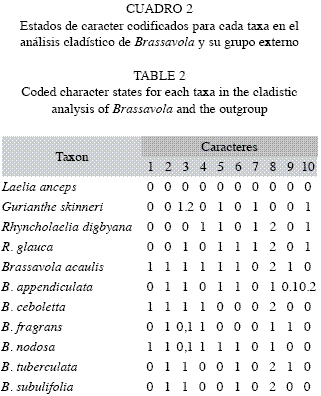
<body><![CDATA[anat&oacute;mica foliar se codificaron 10 caracteres, los mismos     definieron sus estados en cada caso (<a      href="/img/revistas/rbt/v59n3/v59n3/a07t1.gif">Cuadro 1</a>). Una vez     codificados     todos los caracteres para cada taxa, se procedi&oacute; a construir la     matriz que se emplear&iacute;a en el an&aacute;lisis clad&iacute;stico     (<a href="#t2">Cuadro 2</a>). Los caracteres codificados fueron no     ordenados, discretos,     binarios y multiestados. Las especies: <span      style="font-style: italic;">G. skinneri, L. anceps, R.     ]]></body>
<body><![CDATA[glauca</span> y <span style="font-style: italic;">R. digbyana</span>     se seleccionaron como grupo externo, esto basado     en la filogenia de las Laeliinae realizada por van den Berg <span      style="font-style: italic;">et al</span>.     (2009); para la polarizaci&oacute;n de los caracteres se utiliz&oacute;     como ra&iacute;z a <span style="font-style: italic;">L. anceps</span>.     La reconstrucci&oacute;n     filogen&eacute;tico se efectu&oacute; con el uso de NONA (Goloboff     1993) a trav&eacute;s de WinClada (Nixon 2002). Por lo tanto, se     aplic&oacute; el algoritmo Ratchet (Nixon 1999) con 500 iteraciones,     ]]></body>
<body><![CDATA[diez &aacute;rboles y tres caracteres muestreados en cada     iteraci&oacute;n. Cuando se obtuvo m&aacute;s de un &aacute;rbol     igualmente parsimonioso, se calcularon &aacute;rboles de consenso     estricto para identificar los clados comunes a todos estos     &aacute;rboles. La discriminaci&oacute;n entre los &aacute;rboles     resultantes se hizo sobre las bases de longitud de los &aacute;rboles     (L), el &iacute;ndice de consistencia (IC) (Kluge &amp; Farris 1969) y     el &iacute;ndice de retenci&oacute;n (IR) los cuales son valores que     eval&uacute;an la homoplasia del juego de datos (Farris 1989).    <br>     ]]></body>
<body><![CDATA[<br>     <br> </span></font>     <div style="text-align: center;"><font size="2"><span      style="font-family: verdana;"><a name="t2"></a><img alt=""      src="/img/revistas/rbt/v59n3/a07t2.gif"      style="width: 321px; height: 396px;"></span></font><br      style="font-family: verdana;">     <font size="2"><span style="font-family: verdana;"></span></font></div>     <br style="font-family: verdana;">     <font style="font-weight: bold;" size="3"><span     ]]></body>
<body><![CDATA[ style="font-family: verdana;">Resultados</span></font><br      style="font-family: verdana;">     <br style="font-family: verdana; font-weight: bold;">     <font size="2"><span style="font-family: verdana;"><span      style="font-weight: bold;">Estudio     anat&oacute;mico foliar:</span>     Sistema d&eacute;rmico (<a href="/img/revistas/rbt/v59n3/a07t3.gif">Cuadro     3</a>):<span style="font-weight: bold;">     Cut&iacute;cula</span>: tanto las especies     de <span style="font-style: italic;">Brassavola</span> como las del     ]]></body>
<body><![CDATA[grupo externo tienen cut&iacute;cula gruesa,     sus espesores superan los 10<span style="font-style: italic;">&micro;</span>m     (evaluaci&oacute;n efectuada sobre     fotograf&iacute;as), la cual var&iacute;a de lisa a ondulada (Figs.     <a href="/img/revistas/rbt/v59n3/a07i1-4.jpg">1-2</a>). <span      style="font-weight: bold;">C&eacute;lulas     epid&eacute;rmicas t&iacute;picas</span>:     isodiam&eacute;tricas a ligeramente alargadas en vista     parad&eacute;rmica con paredes anticlinales rectas y gruesas, mientras     que en secci&oacute;n transversal se observan cuadrangulares a     ]]></body>
<body><![CDATA[rectangulares con la pared periclinal externa plana o convexa en mayor     o menor grado y llegan a formar papilas en <span      style="font-style: italic;">Brassavola acaulis,     Brassavola ceboletta</span> (<a      href="/img/revistas/rbt/v59n3/a07i1-4.jpg">Fig. 3</a>) y <span      style="font-style: italic;">Brassavola nodosa</span> (<a      href="/img/revistas/rbt/v59n3/a07i1-4.jpg">Fig. 4</a>). <span      style="font-weight: bold;">Tricomas</span>:     ausentes en todas las especies estudiadas. <span      style="font-weight: bold;">Estomas</span>: las hojas de     ]]></body>
<body><![CDATA[<span style="font-style: italic;">Brassavola</span> son     anfiestom&aacute;ticas, sin embargo el resto de las     especies estudiadas tienen hojas hipoestom&aacute;ticas (<a      href="/img/revistas/rbt/v59n3/a07t3.gif">Cuadro 3</a>). El     tipo de estoma en <span style="font-style: italic;">Brassavola</span>     es variable: parac&iacute;ticos,     tetrac&iacute;ticos o combinaciones de &eacute;stos, los cuales pueden     estar al mismo nivel del resto de las c&eacute;lulas epid&eacute;rmicas     o hundidos. En<span style="font-style: italic;"> B. acaulis</span>     (<a href="/img/revistas/rbt/v59n3/a07i5-8.jpg">Fig. 5</a>), <span     ]]></body>
<body><![CDATA[ style="font-style: italic;">B. appendiculata</span>,<span      style="font-style: italic;"> B. tuberculata</span>,     <span style="font-style: italic;">B. subulifolia</span> (<a      href="/img/revistas/rbt/v59n3/a07i5-8.jpg">Fig. 6</a>) y <span      style="font-style: italic;">B. ceboletta</span>, son     parac&iacute;ticos; en     <span style="font-style: italic;">Brassavola</span> <span      style="font-style: italic;">fragrans</span> y <span      style="font-style: italic;">B. nodosa</span> son parac&iacute;ticos y     tetrac&iacute;ticos; en <span style="font-style: italic;">Rhyncholaelia     ]]></body>
<body><![CDATA[digbyana</span> y <span style="font-style: italic;">Laelia anceps</span>     son     tetrac&iacute;ticos y en <span style="font-style: italic;">Rhyncholaelia     glauca</span> (<a href="/img/revistas/rbt/v59n3/a07i5-8.jpg">Fig. 7</a>)     son     parac&iacute;ticos (<a href="/img/revistas/rbt/v59n3/a07t3.gif">Cuadro 3</a>).     S&oacute;lo en <span style="font-style: italic;">Guarianthe skinneri</span>     se     diferencian estomas anomoc&iacute;ticos (<a      href="/img/revistas/rbt/v59n3/a07i5-8.jpg">Fig. 8</a>) adem&aacute;s     ]]></body>
<body><![CDATA[de los     parac&iacute;ticos. <span style="font-weight: bold;">Sistema     fundamental</span>: (<a href="/img/revistas/rbt/v59n3/a07t4.gif">Cuadro     4</a>). <span style="font-weight: bold;">Hipodermis</span>:     en las     especies estudiadas que tienen hipodermis, esta es uniestratificada a     excepci&oacute;n de <span style="font-style: italic;">G. skinneri</span>     que la presenta biestratificada, pero     s&oacute;lo en la cara adaxial. En las hojas teretes de <span      style="font-style: italic;">B.     ]]></body>
<body><![CDATA[appendiculata</span> (<a href="/img/revistas/rbt/v59n3/a07i9-12.jpg">Fig.     9</a>) y <span style="font-style: italic;">B.     fragrans</span>, la hipodermis se distribuye en la     cara abaxial y adaxial, por consiguiente circunda la hoja, mientras que     las hojas conduplicadas de <span style="font-style: italic;">B. nodosa</span>,     se ubica en ambas caras. En <span style="font-style: italic;">L.     anceps</span>, se dispone s&oacute;lo en la cara adaxial (<a      href="/img/revistas/rbt/v59n3/a07i9-12.jpg">Fig. 10</a>). Las     c&eacute;lulas de este tejido son isodiam&eacute;tricas o en ocasiones     ligeramente alargadas periclinal o anticlinalmente y con paredes     ]]></body>
<body><![CDATA[engrosadas. <span style="font-weight: bold;">Clor&eacute;nquima</span>:     a pesar que algunas hojas de <span style="font-style: italic;">Brassavola</span>     son teretes o semiteretes, se puede diferenciar un lado adaxial     correspondiente al &aacute;rea superficial sulcada de la hoja y uno     abaxial que corresponde a la regi&oacute;n convexa o redondeada de la     misma hoja. Por lo tanto se observaron dos tipos de hoja de acuerdo a     la disposici&oacute;n del par&eacute;nquima: bifaciales y equifaciales.     En <span style="font-style: italic;">G. skinneri</span>, <span      style="font-style: italic;">R. digbyana</span> y <span      style="font-style: italic;">R. glauca</span>, el mesofilo es bifacial,     ]]></body>
<body><![CDATA[con     una clara diferenciaci&oacute;n de par&eacute;nquima en empalizada,     conformado por tres a seis capas de c&eacute;lulas alargadas y de     par&eacute;nquima esponjoso constituido por nueve a trece capas de     c&eacute;lulas, voluminosas y de paredes delgadas (<a      href="/img/revistas/rbt/v59n3/a07t4.gif">Cuadro 4</a>). El resto     de las especies poseen hojas equifaciales, unas con     diferenciaci&oacute;n de par&eacute;nquima empalizada y     par&eacute;nquima esponjoso en ambas caras: <span      style="font-style: italic;">B. ceboletta</span>, <span     ]]></body>
<body><![CDATA[ style="font-style: italic;">B. nodosa</span> y     <span style="font-style: italic;">L. anceps</span>; y se presentaron     generalmente cinco a seis capas del primer     tejido en la cara adaxial y cuatro a cinco en la abaxial con siete a     diez capas del esponjoso en el centro, este &uacute;ltimo constituido     por c&eacute;lulas voluminosas y de paredes delgadas, y las otras: <span      style="font-style: italic;">B.     acaulis</span>,<span style="font-style: italic;"> B. fragrans</span>, <span      style="font-style: italic;">B. tuberculata</span> y <span      style="font-style: italic;">B. subulifolia</span> con mesofilo     ]]></body>
<body><![CDATA[homog&eacute;neo (sin distinci&oacute;n entre par&eacute;nquima     empalizada y esponjoso) (<a href="/img/revistas/rbt/v59n3/a07t4.gif">Cuadro     4</a>); estas &uacute;ltimas especies     tienen hojas de semiteretes a teretes y el mesofilo est&aacute;     integrado por aproximadamente 20-22 capas de c&eacute;lulas. En <span      style="font-style: italic;">B.     appendiculata</span> el mesofilo puede ser heterog&eacute;neo u     homog&eacute;neo. (<a href="/img/revistas/rbt/v59n3/a07t4.gif">Cuadro 4</a>).     <span style="font-weight: bold;">C&eacute;lulas     con engrosamientos</span>:     ]]></body>
<body><![CDATA[espiralados en la pared secundaria de las c&eacute;lulas del mesofilo     son muy abundantes en: <span style="font-style: italic;">B. acaulis</span>     (<a href="/img/revistas/rbt/v59n3/a07i9-12.jpg">Fig. 11</a>), <span      style="font-style: italic;">B. ceboletta</span>, <span      style="font-style: italic;">B. fragrans     </span>y <span style="font-style: italic;">B. nodosa</span>; mientras     que en<span style="font-style: italic;"> R. digbyana</span>, son     reticulados y muy     engrosados. En el resto de las especies estudiadas no se observaron     dichos engrosamientos (<a href="/img/revistas/rbt/v59n3/a07t4.gif">Cuadro     ]]></body>
<body><![CDATA[4</a>). inclusiones Celulares: idioblastos     conteniendo cristales de oxalato de calcio en forma de rafidios en el     mesofilo de: <span style="font-style: italic;">B. ceboletta</span>     (<a href="/img/revistas/rbt/v59n3/a07i9-12.jpg">Fig. 12</a>), <span      style="font-style: italic;">B. fragrans, L. anceps,     G.     skinneri </span>y <span style="font-style: italic;">R. digbyana</span>;     o con drusas en la hipodermis y el mesofilo de:     <span style="font-style: italic;">G. skinneri, R. digbyana y R. glauca</span>     (<a href="/img/revistas/rbt/v59n3/a07t4.gif">Cuadro 4</a>). <span     ]]></body>
<body><![CDATA[ style="font-weight: bold;">Fibras     extravasculares:</span> son comunes en todas las especies estudiadas,     los     paquetes de fibras son variables en posici&oacute;n y n&uacute;mero.     Dispuestos en la cara abaxial: <span style="font-style: italic;">B.     acaulis</span>, <span style="font-style: italic;">B. appendiculata</span>,     <span style="font-style: italic;">B. nodosa</span>,     <span style="font-style: italic;">G. skinneri</span>, <span      style="font-style: italic;">R. digbyana</span> y <span      style="font-style: italic;">R. glauca</span> y organizados en ambas     ]]></body>
<body><![CDATA[caras en:     <span style="font-style: italic;">B. ceboletta, B. fragrans, B.     tuberculata, B. subulifolia</span> y <span style="font-style: italic;">L.     anceps</span>     (<a href="/img/revistas/rbt/v59n3/a07t4.gif">Cuadro 4</a>) (<a      href="/img/revistas/rbt/v59n3/a07i13.jpg">Fig. 13</a>). En las hojas     teretes a semiteretes se     observ&oacute; una mayor cantidad de paquetes de fibras     extravasculares. <span style="font-weight: bold;">Sistema Vascular:</span>     <span style="font-weight: bold;">Haz Vascular:</span> de tipo colateral     ]]></body>
<body><![CDATA[cerrado. En <span style="font-style: italic;">Brassavola</span> los     haces principales generalmente se disponen     en un arco central y los haces vasculares secundarios, en arcos     subyacentes superior y/o inferior, arreglados en zig-zag. En <span      style="font-style: italic;">L. anceps,     G. skinneri, R. digbyana</span> y <span style="font-style: italic;">R.     glauca</span>, los haces vasculares principales     se organizan en una hilera central, intercalados con haces vasculares     secundarios. Estos haces est&aacute;n bordeados por una vaina vascular     esclerenquim&aacute;tica, m&aacute;s desarrollada hacia el lado del     ]]></body>
<body><![CDATA[floema (<a href="/img/revistas/rbt/v59n3/a07i13.jpg">Fig. 13</a>).</span></font><br      style="font-family: verdana;">     <br style="font-family: verdana;">     <font size="2"><span style="font-family: verdana;"><span      style="font-weight: bold;">An&aacute;lisis     filogen&eacute;tico     de <span style="font-style: italic;">Brassavola</span></span>: La     matriz de datos anat&oacute;micos comprendi&oacute;     diez caracteres (<a href="/img/revistas/rbt/v59n3/a07t2.gif">Cuadro 2</a>).     En la b&uacute;squeda heur&iacute;stica se     ]]></body>
<body><![CDATA[encontraron 168 &aacute;rboles m&aacute;s parsimoniosos de 22 pasos, un     IC=0.50 y un IR=0.57. En el &aacute;rbol de consenso estricto no se     resuelven las relaciones internas del g&eacute;nero, se obtuvo una     politom&iacute;a (<a href="/img/revistas/rbt/v59n3/a07i14.jpg">Fig. 14</a>).</span></font><br      style="font-family: verdana;">     <br style="font-family: verdana;">     <font style="font-weight: bold;" size="3"><span      style="font-family: verdana;">Discusi&oacute;n</span></font><br      style="font-family: verdana; font-weight: bold;">     <br style="font-family: verdana;">     ]]></body>
<body><![CDATA[<font size="2"><span style="font-family: verdana;">Los caracteres     presentes en la     cut&iacute;cula de las especies de <span style="font-style: italic;">Brassavola</span>     coinciden con las     caracter&iacute;sticas se&ntilde;aladas para las Laeliinae por Baker     (1972) al referirse a la presencia de una cut&iacute;cula de lisa a     granular. En este estudio se caracteriz&oacute; como lisa u ondulada     hasta papilosa. Sandoval- Zapotitla <span style="font-style: italic;">et     al</span>. (2003) mencionaron que la     presencia de micropapilas como ornamentaciones epid&eacute;rmicas     ]]></body>
<body><![CDATA[facilita una mejor captaci&oacute;n de luz por diferentes     &aacute;ngulos oblicuos. Asimismo, pueden actuar en la     regulaci&oacute;n de la cantidad de luz incidente y evitan que se     calienten los tejidos subyacentes y se da&ntilde;en los estomas     (Lindorf <span style="font-style: italic;">et al</span>. 1991). En     Brassavola, la presencia de papilas estuvo     asociada a las especies con hojas planas y erectas de <span      style="font-style: italic;">B. ceboletta</span> y     semiteretes de <span style="font-style: italic;">B. nodosa</span>, sin     embargo, tambi&eacute;n se presentaron en     ]]></body>
<body><![CDATA[<span style="font-style: italic;">B. acaulis</span>, que tienen hojas     teretes. De acuerdo a Esau (1965) y     Withner <span style="font-style: italic;">et al</span>. (1974) el     grosor de la cut&iacute;cula est&aacute;     determinado por la exposici&oacute;n al sol, las hojas m&aacute;s     expuestas tienden a exhibir una cut&iacute;cula m&aacute;s gruesa en     ambas caras; este rasgo ha sido observado en otras orqu&iacute;deas,     como <span style="font-style: italic;">Maxillaria miniata</span> y <span      style="font-style: italic;">Pleurothalis cardiantha</span> (Ely <span      style="font-style: italic;">et al</span>. 2007).     ]]></body>
<body><![CDATA[Esta condici&oacute;n se constat&oacute; en<span      style="font-style: italic;"> Brassavola</span>, debido a que     crecen generalmente en las ramas m&aacute;s expuestas del forofito y     presentan cut&iacute;culas gruesas, superiores a 7<span      style="font-style: italic;">&micro;</span>m     (considerando la propuesta de Pyykk&ouml; 1966), adem&aacute;s tienen     las paredes anticlinales y periclinales de las c&eacute;lulas     epid&eacute;rmicas engrosadas. No se observaron tricomas en<span      style="font-style: italic;"> Brassavola     </span>y el resto de las especies estudiadas, esto en correspondencia     ]]></body>
<body><![CDATA[con los     resultados de Stern &amp; Carlsward (2009), quienes mencionaron la     ausencia de tricomas en las Laeliinae. Sin embargo, Baker (1972)     indic&oacute; que es frecuente la presencia de tricomas en las     Laeliinae, por lo que Stern &amp; Carlsward (2009) argumentaron que la     ausencia de tricomas en las 37 especies estudiadas, posiblemente se     deb&iacute;a a que la c&eacute;lula Terminal de dichos tricomas tiene     paredes delgadas y se desprende f&aacute;cilmente, adem&aacute;s     mencionaron que estos tricomas son ef&iacute;meros en las hojas     adultas. No obstante, lo anteriormente expuesto es poco probable porque     ]]></body>
<body><![CDATA[deber&iacute;an observarse las bases de los mismos en la epidermis. Los     estomas parac&iacute;ticos y tetrac&iacute;ticos fueron los m&aacute;s     frecuentes, lo cual coincide con lo descrito por Stern &amp; Carlsward     (2009), quienes se&ntilde;alaron que los estomas tetrac&iacute;ticos     son los m&aacute;s comunes en las Laeliinae. En el trabajo de los     autores antes citados no se describieron los tipos de estomas de cada     una de las especies consideradas, de igual forma ocurre con el estudio     de Abreu &amp; Pe&ntilde;a (1982). Por consiguiente, en esta     investigaci&oacute;n se presenta una primera descripci&oacute;n de los     tipos de estomas para siete especies de <span     ]]></body>
<body><![CDATA[ style="font-style: italic;">Brassavola</span> y para las especies     <span style="font-style: italic;">G. skinneri, L. anceps, R. glauca</span>     y <span style="font-style: italic;">R. digbyana</span>. </span></font><br      style="font-family: verdana;">     <br style="font-family: verdana;">     <font size="2"><span style="font-family: verdana;">En algunas especies     de     orqu&iacute;deas que carecen de seudobulbos, el mesofilo foliar posee     c&eacute;lulas con engrosamientos espiralados, que tienen por     funci&oacute;n almacenar agua y evitar el colapso de los tejidos     ]]></body>
<body><![CDATA[durante los per&iacute;odos de sequ&iacute;a, tal como se presenta en     la subtribu Pleurothallidinae (Pridgeon 1986, Scatena &amp; Nunes 1996,     Ely <span style="font-style: italic;">et al</span>. 2007). Este rasgo     se observ&oacute; en <span style="font-style: italic;">B. acaulis</span>     y <span style="font-style: italic;">B.     ceboletta</span>. En <span style="font-style: italic;">Brassavola</span>     los tallos son muy delgados, teretes y     posiblemente sea muy limitada su funci&oacute;n de almacenamiento de     agua, por consiguiente, la hoja est&aacute; adaptada para cumplir esta     funci&oacute;n. Madisson (1977) y Roth (1992) consideraron que la     ]]></body>
<body><![CDATA[hipodermis es la estructura m&aacute;s com&uacute;n para el     almacenamiento foliar de agua, estando presente en varias familias de     ep&iacute;fitas. Seg&uacute;n Haberlandt (1914), Madisson (1977) y Ely     <span style="font-style: italic;">et al</span>. (2007), adem&aacute;s     de almacenar agua, la hipodermis ejerce un     papel importante en la econom&iacute;a de calor especialmente en     ep&iacute;fitas con metabolismo CAM y protege al tejido     fotosint&eacute;tico del exceso de luz, al disminuir la cantidad de     &eacute;sta que incide sobre el clor&eacute;nquima.</span></font><br      style="font-family: verdana;">     ]]></body>
<body><![CDATA[<br style="font-family: verdana;">     <font size="2"><span style="font-family: verdana;">La     constituci&oacute;n del mesofilo     est&aacute; asociada a la forma de la hoja; por lo general las hojas     teretes presentan mesofilo homog&eacute;neo, no presentando     diferenciaci&oacute;n entre par&eacute;nquima en empalizada y esponjoso     (Oliveira &amp; Sajo 1999, Stern &amp; Carlsward 2009) y las hojas     conduplicadas pueden presentar mesofilo heterog&eacute;neo, donde se     distingue par&eacute;nquima en empalizada y esponjoso. La     mayor&iacute;a de las especies estudiadas de <span     ]]></body>
<body><![CDATA[ style="font-style: italic;">Brassavola</span> que presentaron     par&eacute;nquima homog&eacute;neo, poseen hojas teretes o semiteretes.     La deposici&oacute;n de inclusiones celulares cristalinas ha sido     frecuentemente observada en Orchidaceae (Sandoval-Zapotitla <span      style="font-style: italic;">et al</span>.     2003, Stern <span style="font-style: italic;">et al</span>. 2004,     Stern &amp; Carslward 2009). No obstante, poco     se conoce sobre la funci&oacute;n(es) de los cristales. Stern &amp;     Carlsward (2009) notaron la presencia de paquetes de fibras en muchos     taxones de Laeliinae. La distribuci&oacute;n de las fibras observadas     ]]></body>
<body><![CDATA[en este estudio, corresponde con la se&ntilde;alada por Stern &amp;     Carlsward (2009) para <span style="font-style: italic;">L. anceps, R.     digbyana, G. skinneri </span>y <span style="font-style: italic;">B.     cucullata</span> (<span style="font-style: italic;">B. appendiculata</span>     en este estudio). Oliveira &amp; Sajo     (1999) indicaron que las c&eacute;lulas esclerificadas confieren     resistencia mec&aacute;nica en caso de deshidrataci&oacute;n, por otra     parte Withner <span style="font-style: italic;">et al</span>. (1974),     se&ntilde;alaron que en Orchidaceae la     presencia de hojas cori&aacute;ceas, son caracter&iacute;sticas de     ]]></body>
<body><![CDATA[formas vegetativas m&aacute;s evolucionadas, que poseen seudobulbos y     son capaces de sobrevivir en h&aacute;bitats x&eacute;ricos. Conforme     con los caracteres se&ntilde;alados por Rudall (1992), los resultados     observados en las especies estudiadas indican que estas plantas poseen     rasgos xerom&oacute;rficos, puesto que la mayor&iacute;a de la especies     tienen cut&iacute;cula gruesa, hipodermis, c&eacute;lulas con     engrosamientos espiralados en el mesofilo y abundantes paquetes de     fibras. Los caracteres anat&oacute;micos foliares evaluados fueron muy     heterog&eacute;neos dentro del g&eacute;nero y a su vez compartidos con     otros taxones de las Laeliinae previamente estudiados a nivel     ]]></body>
<body><![CDATA[espec&iacute;fico, por consiguiente, no aportaron informaci&oacute;n de     valor taxon&oacute;mico para <span style="font-style: italic;">Brassavola</span>.     En el caso de las Laeliinae y     espec&iacute;ficamente en <span style="font-style: italic;">Brassavola</span>,     la variabilidad anat&oacute;mica     observada en sus representantes est&aacute; posiblemente asociada al     amplio rango de h&aacute;bitats donde crecen.</span></font><br      style="font-family: verdana;">     <br style="font-family: verdana;">     <font size="2"><span style="font-family: verdana;">Stern &amp;     ]]></body>
<body><![CDATA[Carlsward (2009)     realizaron un an&aacute;lisis filogen&eacute;tico con caracteres     anat&oacute;micos vegetativos a nivel gen&eacute;rico en las Laeliinae,     sin embargo, no obtuvieron resoluci&oacute;n en las relaciones,     concluyendo que dichos caracteres no fueron filogen&eacute;ticamente     informativos. Los resultados del an&aacute;lisis filogen&eacute;tico     realizado en este trabajo tampoco presentaron resoluci&oacute;n a nivel     inter e intragen&eacute;rico, por lo que conllevan a la siguiente     interrogante &iquest;En el resto de los g&eacute;neros de las Laeliinae     los caracteres anat&oacute;micos permiten resolver las relaciones     ]]></body>
<body><![CDATA[filogen&eacute;ticos intragen&eacute;ricas? Es importante realizar     estudios donde se explore la utilidad de los caracteres     anat&oacute;micos para facilitar la interpretaci&oacute;n de la     evoluci&oacute;n de estos caracteres y el entendimiento de las     relaciones entre taxones.</span></font><br style="font-family: verdana;">     <br style="font-family: verdana;">     <font size="2"><span style="font-family: verdana;">Los caracteres     anat&oacute;micos     evaluados presentaron poco valor filogen&eacute;ticamente informativo     en <span style="font-style: italic;">Brassavola</span>. Por otra     ]]></body>
<body><![CDATA[parte, an&aacute;lisis filogen&eacute;ticos en     diferentes grupos de las Orchidaceae, como Oncidiinae (Stern &amp;     Carlsward 2006) y Maxillarieae (Stern <span style="font-style: italic;">et     al</span>. 2004); ambos basados en     ocho a diez caracteres anat&oacute;micos de la hoja, tallo y/o     ra&iacute;z, generaron poca resoluci&oacute;n en las topolog&iacute;as.     Estas investigaciones coinciden en se&ntilde;alar que los caracteres     anat&oacute;micos generalmente son pocos y que por s&iacute; solos     presentan limitada informaci&oacute;n filogen&eacute;tica. Sin embargo,     es importante destacar que a excepci&oacute;n del trabajo aqu&iacute;     ]]></body>
<body><![CDATA[presentado, en la mayor&iacute;a de los estudios arriba citados el     n&uacute;mero de taxa excede ampliamente el n&uacute;mero de     caracteres, lo cual dificulta la obtenci&oacute;n de la     resoluci&oacute;n y soporte en las topolog&iacute;as. En     conclusi&oacute;n, los caracteres anat&oacute;micos de las siete     especies de <span style="font-style: italic;">Brassavola</span>     resultaron ser homog&eacute;neos y no aportaron     suficiente informaci&oacute;n que permitiera separar las especies y     adem&aacute;s, estos mismos caracteres no fueron     filogen&eacute;ticamente informativos. No obstante, en     ]]></body>
<body><![CDATA[conjunci&oacute;n con caracteres morfol&oacute;gicos y/o caracteres     moleculares, pueden permitir dilucidar con mayor soporte las relaciones     filogen&eacute;ticas en las Orchidaceae y de otros grupos de plantas.     As&iacute; por ejemplo, Cameron <span style="font-style: italic;">et al</span>.     (1999) sugirieron que las tribus     Cymbidieae y Maxillarieae est&aacute;n cercanamente relacionadas de     acuerdo a datos de secuencias de rbcL, y posteriormente Yukawa &amp;     Stern (2002) consideraron que los est&eacute;gmatas presentes en la     ra&iacute;z de especies de estas subtribus podr&iacute;a ser una     sinapomorf&iacute;a en el clado Cymbidieae-Maxillarieae. Ahora bien,     ]]></body>
<body><![CDATA[Prychid <span style="font-style: italic;">et al</span>. (2004),     se&ntilde;alaron que los cuerpos de     s&iacute;lice est&aacute;n ausentes en dos subfamilias de Orchidaceae:     Vanilloideae y Orchidoideae, y en la mayor&iacute;a de las tribus y     subtribus de las Epidendroideae, pero est&aacute;n presentes en las     Apostasioideae que representa el grupo hermano del resto de las     Orchidaceae. Estos resultados anteriormente expuestos conducen a la     interpretaci&oacute;n que los caracteres anat&oacute;micos en general     pueden ser de utilidad taxon&oacute;mica y/o filogen&eacute;tica a     diferentes niveles y dependiendo del grupo en estudio.</span></font><br     ]]></body>
<body><![CDATA[ style="font-family: verdana;">     <br style="font-family: verdana;">     <font style="font-weight: bold;" size="3"><span      style="font-family: verdana;">Agradecimientos</span></font><br      style="font-family: verdana;">     <br style="font-family: verdana;">     <font size="2"><span style="font-family: verdana;">A la     Secretar&iacute;a de     Relaciones Exteriores de M&eacute;xico, por la beca N&deg;     NOGELI73101008 otorgada a la primera autora para realizar estudios de     ]]></body>
<body><![CDATA[doctorado. A Diego Angulo, Germ&aacute;n Carnevali, William Cetzal y     Alexis Pardo por el material vegetativo facilitado para la     realizaci&oacute;n del estudio. Al Personal del Laboratorio de     Anatom&iacute;a Vegetal &#8220;Antonio Fern&aacute;ndez&#8221; de la Facultad de     Agronom&iacute;a de la Universidad Central de Venezuela. A Iv&oacute;n     Ram&iacute;rez y Rodrigo Duno por sus comentarios al documento     original. A William Cetzal, Lizandro Peraza y Jos&eacute; Luis Tapia     por la revisi&oacute;n y sus comentarios de este manuscrito. A Silvia     Hern&aacute;ndez por el procesamiento del material depositado en el     Herbario CICY. A William Cetzal por la elaboraci&oacute;n de la     ]]></body>
<body><![CDATA[ilustraci&oacute;n.</span></font><br style="font-family: verdana;">     <font style="font-weight: bold;" size="3"><span      style="font-family: verdana;"></span></font>     <hr style="width: 100%; height: 2px;"><font style="font-weight: bold;"      size="3"><span style="font-family: verdana;">Referencias</span></font><br      style="font-family: verdana;">     <br style="font-family: verdana;">     <!-- ref --><div style="text-align: left;"><font size="2"><span  style="font-family: verdana;">Abreu, C. &amp; C. Pe&ntilde;a. 1982. Estudio anat&oacute;mico de hoja y tallo de orqu&iacute;deas que habitan en ambiente de bosque seco. Trabajo especial de grado, Universidad Cat&oacute;lica Andr&eacute;s Bello, Caracas D.F., Venezuela.    &nbsp;&nbsp;&nbsp;&nbsp;&nbsp;&nbsp;&nbsp;&nbsp;[&#160;<a href="javascript:void(0);" onclick="javascript: window.open('/scielo.php?script=sci_nlinks&ref=1721245&pid=S0034-7744201100030000700001&lng=','','width=640,height=500,resizable=yes,scrollbars=1,menubar=yes,');">Links</a>&#160;]<!-- end-ref --><!-- ref --></span></font><br style="font-family: verdana;"> <br style="font-family: verdana;"> <font size="2"><span style="font-family: verdana;">Baker, R. 1972. Foliar anatomy of the Laeliinae (Orchidaceae). Tesis de Doctorado, Universidad de Washington, Washington, EEUU.    &nbsp;&nbsp;&nbsp;&nbsp;&nbsp;&nbsp;&nbsp;&nbsp;[&#160;<a href="javascript:void(0);" onclick="javascript: window.open('/scielo.php?script=sci_nlinks&ref=1721246&pid=S0034-7744201100030000700002&lng=','','width=640,height=500,resizable=yes,scrollbars=1,menubar=yes,');">Links</a>&#160;]<!-- end-ref --><!-- ref --></span></font><br  style="font-family: verdana;"> <br style="font-family: verdana;"> <font size="2"><span style="font-family: verdana;">Cameron, K.M., W.M. Whitten, P.J. Kores, D.C. Jarell, V.A. Albert, T. Yukawa, H.G. Hills &amp; D.H. Goldman. 1999. A phylogenetic analysis of the Orchidaceae. Evidence from rbcL nucleotide sequences. Am. J. Bot. 86: 208-224.    &nbsp;&nbsp;&nbsp;&nbsp;&nbsp;&nbsp;&nbsp;&nbsp;[&#160;<a href="javascript:void(0);" onclick="javascript: window.open('/scielo.php?script=sci_nlinks&ref=1721247&pid=S0034-7744201100030000700003&lng=','','width=640,height=500,resizable=yes,scrollbars=1,menubar=yes,');">Links</a>&#160;]<!-- end-ref --><!-- ref --></span></font><br  style="font-family: verdana;"> <br style="font-family: verdana;"> <font size="2"><span style="font-family: verdana;">Brieger, F., R. Maatsch &amp; K. Senghas. 1976. Die Orchideen, Lieferrung 8-12 (Schlechter III in text). Paul Parey, Berlin y Hamburgo, Alemania.    &nbsp;&nbsp;&nbsp;&nbsp;&nbsp;&nbsp;&nbsp;&nbsp;[&#160;<a href="javascript:void(0);" onclick="javascript: window.open('/scielo.php?script=sci_nlinks&ref=1721248&pid=S0034-7744201100030000700004&lng=','','width=640,height=500,resizable=yes,scrollbars=1,menubar=yes,');">Links</a>&#160;]<!-- end-ref --><!-- ref --></span></font><br  style="font-family: verdana;"> <br style="font-family: verdana;"> <font size="2"><span style="font-family: verdana;">Brumitt, R. &amp; C. Powell. 1992. Authors of plant names. Kew, Royal Botanical Gardens, Londres, Reino Unido.    &nbsp;&nbsp;&nbsp;&nbsp;&nbsp;&nbsp;&nbsp;&nbsp;[&#160;<a href="javascript:void(0);" onclick="javascript: window.open('/scielo.php?script=sci_nlinks&ref=1721249&pid=S0034-7744201100030000700005&lng=','','width=640,height=500,resizable=yes,scrollbars=1,menubar=yes,');">Links</a>&#160;]<!-- end-ref --><!-- ref --></span></font><br style="font-family: verdana;"> <br style="font-family: verdana;"> <font size="2"><span style="font-family: verdana;">Ely, F., F. Torres, F. Rada &amp; Y. Le&oacute;n. 2007. Estudio morfoanat&oacute;mico de dos orqu&iacute;deas de una selva nublada tropical. Interciencia 32: 410-418.    &nbsp;&nbsp;&nbsp;&nbsp;&nbsp;&nbsp;&nbsp;&nbsp;[&#160;<a href="javascript:void(0);" onclick="javascript: window.open('/scielo.php?script=sci_nlinks&ref=1721250&pid=S0034-7744201100030000700006&lng=','','width=640,height=500,resizable=yes,scrollbars=1,menubar=yes,');">Links</a>&#160;]<!-- end-ref --><!-- ref --></span></font><br style="font-family: verdana;"> <br style="font-family: verdana;"> <font size="2"><span style="font-family: verdana;">Esau, K. 1965. Anatomy of seed plants. Wiley, Nueva York, EEUU.    &nbsp;&nbsp;&nbsp;&nbsp;&nbsp;&nbsp;&nbsp;&nbsp;[&#160;<a href="javascript:void(0);" onclick="javascript: window.open('/scielo.php?script=sci_nlinks&ref=1721251&pid=S0034-7744201100030000700007&lng=','','width=640,height=500,resizable=yes,scrollbars=1,menubar=yes,');">Links</a>&#160;]<!-- end-ref --><!-- ref --></span></font><br  style="font-family: verdana;"> <br style="font-family: verdana;"> <font size="2"><span style="font-family: verdana;">Farris, J. 1989. The retention index and rescaled consistency index. Cladistics 5: 417-419.    &nbsp;&nbsp;&nbsp;&nbsp;&nbsp;&nbsp;&nbsp;&nbsp;[&#160;<a href="javascript:void(0);" onclick="javascript: window.open('/scielo.php?script=sci_nlinks&ref=1721252&pid=S0034-7744201100030000700008&lng=','','width=640,height=500,resizable=yes,scrollbars=1,menubar=yes,');">Links</a>&#160;]<!-- end-ref --><!-- ref --></span></font><br  style="font-family: verdana;"> <br style="font-family: verdana;"> <font size="2"><span style="font-family: verdana;">Goloboff, P. 1993. Nona Ver 1.6. Program and documentation. Distribuido por el autor. Buenos Aires, Argentina.    &nbsp;&nbsp;&nbsp;&nbsp;&nbsp;&nbsp;&nbsp;&nbsp;[&#160;<a href="javascript:void(0);" onclick="javascript: window.open('/scielo.php?script=sci_nlinks&ref=1721253&pid=S0034-7744201100030000700009&lng=','','width=640,height=500,resizable=yes,scrollbars=1,menubar=yes,');">Links</a>&#160;]<!-- end-ref --><!-- ref --></span></font><br style="font-family: verdana;"> <br style="font-family: verdana;"> <font size="2"><span style="font-family: verdana;">Haberlandt, G. 1914. Physiological plant anatomy. MacMillan, Londres, Reino Unido.    &nbsp;&nbsp;&nbsp;&nbsp;&nbsp;&nbsp;&nbsp;&nbsp;[&#160;<a href="javascript:void(0);" onclick="javascript: window.open('/scielo.php?script=sci_nlinks&ref=1721254&pid=S0034-7744201100030000700010&lng=','','width=640,height=500,resizable=yes,scrollbars=1,menubar=yes,');">Links</a>&#160;]<!-- end-ref --><!-- ref --> </span></font><br  style="font-family: verdana;"> <br style="font-family: verdana;"> <font size="2"><span style="font-family: verdana;">Jones, H.G. 1975. Nomenclatural revision of the genus <span style="font-style: italic;">Brassavola</span> R. Br. of the Orchidaceae. Ann. Naturhist. Mus. in Wien. 79: 9-22.    &nbsp;&nbsp;&nbsp;&nbsp;&nbsp;&nbsp;&nbsp;&nbsp;[&#160;<a href="javascript:void(0);" onclick="javascript: window.open('/scielo.php?script=sci_nlinks&ref=1721255&pid=S0034-7744201100030000700011&lng=','','width=640,height=500,resizable=yes,scrollbars=1,menubar=yes,');">Links</a>&#160;]<!-- end-ref --><!-- ref --></span></font><br  style="font-family: verdana;"> <br style="font-family: verdana;"> <font size="2"><span style="font-family: verdana;">Kluge, A.G. &amp; J.S. Farris. 1969. Quantitative phyletics and evolution of anurans. Syst. Zool. 18: 1-32.    &nbsp;&nbsp;&nbsp;&nbsp;&nbsp;&nbsp;&nbsp;&nbsp;[&#160;<a href="javascript:void(0);" onclick="javascript: window.open('/scielo.php?script=sci_nlinks&ref=1721256&pid=S0034-7744201100030000700012&lng=','','width=640,height=500,resizable=yes,scrollbars=1,menubar=yes,');">Links</a>&#160;]<!-- end-ref --><!-- ref --></span></font><br style="font-family: verdana;"> <br style="font-family: verdana;"> <font size="2"><span style="font-family: verdana;">Lindorf, H., L. de Parisca &amp; P. Rodr&iacute;guez. 1991. Bot&aacute;nica: clasificaci&oacute;n, estructura, reproducci&oacute;n. Ediciones de la Biblioteca, Universidad Central de Venezuela, Caracas D. F., Venezuela.    &nbsp;&nbsp;&nbsp;&nbsp;&nbsp;&nbsp;&nbsp;&nbsp;[&#160;<a href="javascript:void(0);" onclick="javascript: window.open('/scielo.php?script=sci_nlinks&ref=1721257&pid=S0034-7744201100030000700013&lng=','','width=640,height=500,resizable=yes,scrollbars=1,menubar=yes,');">Links</a>&#160;]<!-- end-ref --><!-- ref --></span></font><br  style="font-family: verdana;"> <br style="font-family: verdana;"> <font size="2"><span style="font-family: verdana;">Madisson, M. 1977. Vascular epiphytes: their systematic occurrence and salient features. Selbyana 2: 1-13.    &nbsp;&nbsp;&nbsp;&nbsp;&nbsp;&nbsp;&nbsp;&nbsp;[&#160;<a href="javascript:void(0);" onclick="javascript: window.open('/scielo.php?script=sci_nlinks&ref=1721258&pid=S0034-7744201100030000700014&lng=','','width=640,height=500,resizable=yes,scrollbars=1,menubar=yes,');">Links</a>&#160;]<!-- end-ref --><!-- ref --></span></font><br style="font-family: verdana;"> <br style="font-family: verdana;"> <font size="2"><span style="font-family: verdana;">Nixon, K. 1999. The parsimony Ratchet: A new method for rapid parsimony analysis. Cladistics 15: 207-414.    &nbsp;&nbsp;&nbsp;&nbsp;&nbsp;&nbsp;&nbsp;&nbsp;[&#160;<a href="javascript:void(0);" onclick="javascript: window.open('/scielo.php?script=sci_nlinks&ref=1721259&pid=S0034-7744201100030000700015&lng=','','width=640,height=500,resizable=yes,scrollbars=1,menubar=yes,');">Links</a>&#160;]<!-- end-ref --><!-- ref --></span></font><br style="font-family: verdana;"> <br style="font-family: verdana;"> <font size="2"><span style="font-family: verdana;">Nixon, K. 2002. WinClada ver. 1.00.08. Published by the author, Ithaca, Nueva York, EEUU.    &nbsp;&nbsp;&nbsp;&nbsp;&nbsp;&nbsp;&nbsp;&nbsp;[&#160;<a href="javascript:void(0);" onclick="javascript: window.open('/scielo.php?script=sci_nlinks&ref=1721260&pid=S0034-7744201100030000700016&lng=','','width=640,height=500,resizable=yes,scrollbars=1,menubar=yes,');">Links</a>&#160;]<!-- end-ref --><!-- ref --></span></font><br  style="font-family: verdana;"> <br style="font-family: verdana;"> <font size="2"><span style="font-family: verdana;">Oliveira, V.C. &amp; M.G. Sajo. 1999. Anatom&iacute;a foliar de especies ep&iacute;fitas de Orchidaceae. Rev. Bras. Bot. 22: 363-374.    &nbsp;&nbsp;&nbsp;&nbsp;&nbsp;&nbsp;&nbsp;&nbsp;[&#160;<a href="javascript:void(0);" onclick="javascript: window.open('/scielo.php?script=sci_nlinks&ref=1721261&pid=S0034-7744201100030000700017&lng=','','width=640,height=500,resizable=yes,scrollbars=1,menubar=yes,');">Links</a>&#160;]<!-- end-ref --><!-- ref --></span></font><br  style="font-family: verdana;"> <br style="font-family: verdana;"> <font size="2"><span style="font-family: verdana;">Porembski, S. &amp; W. Barthlott. 1988. Velamen radicum micromorphology and classification of Orchidaceae. Nord. J. Bot. 8: 117-137.    &nbsp;&nbsp;&nbsp;&nbsp;&nbsp;&nbsp;&nbsp;&nbsp;[&#160;<a href="javascript:void(0);" onclick="javascript: window.open('/scielo.php?script=sci_nlinks&ref=1721262&pid=S0034-7744201100030000700018&lng=','','width=640,height=500,resizable=yes,scrollbars=1,menubar=yes,');">Links</a>&#160;]<!-- end-ref --><!-- ref --></span></font><br  style="font-family: verdana;"> <br style="font-family: verdana;"> <font size="2"><span style="font-family: verdana;">Pridgeon, A.M. 1986. Anatomical adaptations in Orchidaceae. Lyndleyana 1: 90-101.    &nbsp;&nbsp;&nbsp;&nbsp;&nbsp;&nbsp;&nbsp;&nbsp;[&#160;<a href="javascript:void(0);" onclick="javascript: window.open('/scielo.php?script=sci_nlinks&ref=1721263&pid=S0034-7744201100030000700019&lng=','','width=640,height=500,resizable=yes,scrollbars=1,menubar=yes,');">Links</a>&#160;]<!-- end-ref --><!-- ref --> </span></font><br  style="font-family: verdana;"> <br style="font-family: verdana;"> <font size="2"><span style="font-family: verdana;">Pridgeon, A.M., W.L. Stern &amp; D. Benzing. 1983. Tilosomes in roots of Orchidaceae: Morphology and systematic occurrence. Am. J. Bot. 70: 1365-1377.    &nbsp;&nbsp;&nbsp;&nbsp;&nbsp;&nbsp;&nbsp;&nbsp;[&#160;<a href="javascript:void(0);" onclick="javascript: window.open('/scielo.php?script=sci_nlinks&ref=1721264&pid=S0034-7744201100030000700020&lng=','','width=640,height=500,resizable=yes,scrollbars=1,menubar=yes,');">Links</a>&#160;]<!-- end-ref --><!-- ref --></span></font><br  style="font-family: verdana;"> <br style="font-family: verdana;"> <font size="2"><span style="font-family: verdana;">Prychid, C.J., P. Rudall &amp; M. Gregory. 2004. Systematics and biology of silica bodies in Monocotyledons. Bot. Rew. 69: 377-440.    &nbsp;&nbsp;&nbsp;&nbsp;&nbsp;&nbsp;&nbsp;&nbsp;[&#160;<a href="javascript:void(0);" onclick="javascript: window.open('/scielo.php?script=sci_nlinks&ref=1721265&pid=S0034-7744201100030000700021&lng=','','width=640,height=500,resizable=yes,scrollbars=1,menubar=yes,');">Links</a>&#160;]<!-- end-ref --><!-- ref --></span></font><br  style="font-family: verdana;"> <br style="font-family: verdana;"> <font size="2"><span style="font-family: verdana;">Pyykk&ouml;, M. 1966. The leaf anatomy of east Patagonian xeromorphic plants. Ann. Bot. Fenn. 3: 453-662.    &nbsp;&nbsp;&nbsp;&nbsp;&nbsp;&nbsp;&nbsp;&nbsp;[&#160;<a href="javascript:void(0);" onclick="javascript: window.open('/scielo.php?script=sci_nlinks&ref=1721266&pid=S0034-7744201100030000700022&lng=','','width=640,height=500,resizable=yes,scrollbars=1,menubar=yes,');">Links</a>&#160;]<!-- end-ref --><!-- ref --> </span></font><br style="font-family: verdana;"> <br style="font-family: verdana;"> <font size="2"><span style="font-family: verdana;">Roth, I. 1992. Leaf structure: coastal vegetation and mangroves of Venezuela. Gebr. Borntraeger, Berlin, Alemania.    &nbsp;&nbsp;&nbsp;&nbsp;&nbsp;&nbsp;&nbsp;&nbsp;[&#160;<a href="javascript:void(0);" onclick="javascript: window.open('/scielo.php?script=sci_nlinks&ref=1721267&pid=S0034-7744201100030000700023&lng=','','width=640,height=500,resizable=yes,scrollbars=1,menubar=yes,');">Links</a>&#160;]<!-- end-ref --><!-- ref --></span></font><br style="font-family: verdana;"> <br style="font-family: verdana;"> <font size="2"><span style="font-family: verdana;">Rudall, P. 1992. Anatomy of flowering plants. An introduction to structure and development. Cambridge University, Londres, Reino Unido.    &nbsp;&nbsp;&nbsp;&nbsp;&nbsp;&nbsp;&nbsp;&nbsp;[&#160;<a href="javascript:void(0);" onclick="javascript: window.open('/scielo.php?script=sci_nlinks&ref=1721268&pid=S0034-7744201100030000700024&lng=','','width=640,height=500,resizable=yes,scrollbars=1,menubar=yes,');">Links</a>&#160;]<!-- end-ref --><!-- ref --></span></font><br  style="font-family: verdana;"> <br style="font-family: verdana;"> <font size="2"><span style="font-family: verdana;">Sandoval-Zapotitla, E., T. Terrazas, G. Salazar, A. Vallejo &amp; B. Estrada. 2003. Anatom&iacute;a vegetativa de <span style="font-style: italic;">Mexipedium xerophyticum</span> (Soto, Salazar &amp; H&aacute;gsater) V. A. Albert &amp; M. W. Chase y g&eacute;neros relacionados (Orchidaceae, Cypripedioideae). Lankesteriana 7: 54-56.    &nbsp;&nbsp;&nbsp;&nbsp;&nbsp;&nbsp;&nbsp;&nbsp;[&#160;<a href="javascript:void(0);" onclick="javascript: window.open('/scielo.php?script=sci_nlinks&ref=1721269&pid=S0034-7744201100030000700025&lng=','','width=640,height=500,resizable=yes,scrollbars=1,menubar=yes,');">Links</a>&#160;]<!-- end-ref --><!-- ref --></span></font><br  style="font-family: verdana;"> <br style="font-family: verdana;"> <font size="2"><span style="font-family: verdana;">Sass, J. 1958. Botanical microtechnique. Iowa State College, Iowa, EEUU.    &nbsp;&nbsp;&nbsp;&nbsp;&nbsp;&nbsp;&nbsp;&nbsp;[&#160;<a href="javascript:void(0);" onclick="javascript: window.open('/scielo.php?script=sci_nlinks&ref=1721270&pid=S0034-7744201100030000700026&lng=','','width=640,height=500,resizable=yes,scrollbars=1,menubar=yes,');">Links</a>&#160;]<!-- end-ref --><!-- ref --></span></font><br  style="font-family: verdana;"> <br style="font-family: verdana;"> <font size="2"><span style="font-family: verdana;">Scatena, V. &amp; A. Nunes. 1996. Anatom&iacute;a de Pleurothallis ruprestris Lindl. (Orchidaceae) de dos campos rupestres de Brasil. Bol. Bot. 15: 35-43.    &nbsp;&nbsp;&nbsp;&nbsp;&nbsp;&nbsp;&nbsp;&nbsp;[&#160;<a href="javascript:void(0);" onclick="javascript: window.open('/scielo.php?script=sci_nlinks&ref=1721271&pid=S0034-7744201100030000700027&lng=','','width=640,height=500,resizable=yes,scrollbars=1,menubar=yes,');">Links</a>&#160;]<!-- end-ref --><!-- ref --></span></font><br  style="font-family: verdana;"> <br style="font-family: verdana;"> <font size="2"><span style="font-family: verdana;">Schlechter, R. 1919. Die Gattung <span style="font-style: italic;">Brassavola</span> R. Br. Orchis 13: 40-77.    &nbsp;&nbsp;&nbsp;&nbsp;&nbsp;&nbsp;&nbsp;&nbsp;[&#160;<a href="javascript:void(0);" onclick="javascript: window.open('/scielo.php?script=sci_nlinks&ref=1721272&pid=S0034-7744201100030000700028&lng=','','width=640,height=500,resizable=yes,scrollbars=1,menubar=yes,');">Links</a>&#160;]<!-- end-ref --><!-- ref --></span></font><br style="font-family: verdana;"> <br style="font-family: verdana;"> <font size="2"><span style="font-family: verdana;">Stern, W.L., W. Judd &amp; B.S. Carlsward. 2004. Systematic and comparative anatomy of Maxillarieae (Orchidaceae), sans Oncidiinae. Bot. J. Linn. Soc. 144: 251-274.    &nbsp;&nbsp;&nbsp;&nbsp;&nbsp;&nbsp;&nbsp;&nbsp;[&#160;<a href="javascript:void(0);" onclick="javascript: window.open('/scielo.php?script=sci_nlinks&ref=1721273&pid=S0034-7744201100030000700029&lng=','','width=640,height=500,resizable=yes,scrollbars=1,menubar=yes,');">Links</a>&#160;]<!-- end-ref --><!-- ref --></span></font><br  style="font-family: verdana;"> <br style="font-family: verdana;"> <font size="2"><span style="font-family: verdana;">Stern, W.L. &amp; B.S. Carlsward. 2006. Comparative vegetative anatomy and systematics of Oncidiinae (Maxillarieae, Orchidaceae). Bot. J. Linn. Soc. 152: 91-107.    &nbsp;&nbsp;&nbsp;&nbsp;&nbsp;&nbsp;&nbsp;&nbsp;[&#160;<a href="javascript:void(0);" onclick="javascript: window.open('/scielo.php?script=sci_nlinks&ref=1721274&pid=S0034-7744201100030000700030&lng=','','width=640,height=500,resizable=yes,scrollbars=1,menubar=yes,');">Links</a>&#160;]<!-- end-ref --><!-- ref --></span></font><br  style="font-family: verdana;"> <br style="font-family: verdana;"> <font size="2"><span style="font-family: verdana;">Stern, W.L. &amp; B.S. Carlsward. 2009. Comparative vegetative anatomy and systematic of Laeliinae (Orchidaceae). Bot. J. Linn. Soc. 160: 21-41.    &nbsp;&nbsp;&nbsp;&nbsp;&nbsp;&nbsp;&nbsp;&nbsp;[&#160;<a href="javascript:void(0);" onclick="javascript: window.open('/scielo.php?script=sci_nlinks&ref=1721275&pid=S0034-7744201100030000700031&lng=','','width=640,height=500,resizable=yes,scrollbars=1,menubar=yes,');">Links</a>&#160;]<!-- end-ref --><!-- ref --></span></font><br  style="font-family: verdana;"> <br style="font-family: verdana;"> <font size="2"><span style="font-family: verdana;">van den Berg, C. 2005. Laeliinae, p. 181-186. <span style="font-style: italic;">In</span> A. Pridgeon, P. Cribb, C. Mark &amp; F. Rammunssen. (eds.). Genera Orchidacearum 4. Epidendroideae</span></font><br  style="font-family: verdana;"> <font size="2"><span style="font-family: verdana;">(Part. One). Oxford University, Oxford, Reino Unido.    &nbsp;&nbsp;&nbsp;&nbsp;&nbsp;&nbsp;&nbsp;&nbsp;[&#160;<a href="javascript:void(0);" onclick="javascript: window.open('/scielo.php?script=sci_nlinks&ref=1721276&pid=S0034-7744201100030000700032&lng=','','width=640,height=500,resizable=yes,scrollbars=1,menubar=yes,');">Links</a>&#160;]<!-- end-ref --><!-- ref --> </span></font><br style="font-family: verdana;"> <br style="font-family: verdana;"> <font size="2"><span style="font-family: verdana;">van den Berg, C., W. Higgins, R. Dressler, M. Whitten, M. Soto-Arenas &amp; M. Chase. 2009. A phylogenetic study of Laeliinae (Orchidaceae) based on combined nuclear and plastid DNA sequences. Ann. Bot. 104: 417-430.    &nbsp;&nbsp;&nbsp;&nbsp;&nbsp;&nbsp;&nbsp;&nbsp;[&#160;<a href="javascript:void(0);" onclick="javascript: window.open('/scielo.php?script=sci_nlinks&ref=1721277&pid=S0034-7744201100030000700033&lng=','','width=640,height=500,resizable=yes,scrollbars=1,menubar=yes,');">Links</a>&#160;]<!-- end-ref --><!-- ref --></span></font><br  style="font-family: verdana;"> <br style="font-family: verdana;"> <font size="2"><span style="font-family: verdana;">Withner, C., P. Nelson &amp; P. Wejksnora. 1974. The anatomy of orchids. In the Orchids: scientific studies. Wiley, Nueva York, EEUU.    &nbsp;&nbsp;&nbsp;&nbsp;&nbsp;&nbsp;&nbsp;&nbsp;[&#160;<a href="javascript:void(0);" onclick="javascript: window.open('/scielo.php?script=sci_nlinks&ref=1721278&pid=S0034-7744201100030000700034&lng=','','width=640,height=500,resizable=yes,scrollbars=1,menubar=yes,');">Links</a>&#160;]<!-- end-ref --><!-- ref --></span></font><br  style="font-family: verdana;"> <br style="font-family: verdana;"> <font size="2"><span style="font-family: verdana;">Withner, C. 1998. The Cattleyas and their relatives, Vol. V. <span style="font-style: italic;">Brassavola</span>, <span style="font-style: italic;">Encyclia</span> and other genera of Mexico and Central America. Timber, Portland, Oregon, EEUU.    &nbsp;&nbsp;&nbsp;&nbsp;&nbsp;&nbsp;&nbsp;&nbsp;[&#160;<a href="javascript:void(0);" onclick="javascript: window.open('/scielo.php?script=sci_nlinks&ref=1721279&pid=S0034-7744201100030000700035&lng=','','width=640,height=500,resizable=yes,scrollbars=1,menubar=yes,');">Links</a>&#160;]<!-- end-ref --><!-- ref --> </span></font><br  style="font-family: verdana;"> <br style="font-family: verdana;"> <font size="2"><span style="font-family: verdana;">Withner, C. 2007. The genus<span style="font-style: italic;"> Brassavola </span>revisited. Another look at a confusing taxon. Orchid Digest. 71: 246-255.    &nbsp;&nbsp;&nbsp;&nbsp;&nbsp;&nbsp;&nbsp;&nbsp;[&#160;<a href="javascript:void(0);" onclick="javascript: window.open('/scielo.php?script=sci_nlinks&ref=1721280&pid=S0034-7744201100030000700036&lng=','','width=640,height=500,resizable=yes,scrollbars=1,menubar=yes,');">Links</a>&#160;]<!-- end-ref --><!-- ref --></span></font><br style="font-family: verdana;"> <br style="font-family: verdana;"> <font size="2"><span style="font-family: verdana;">Yukawa, T. &amp; W.L. Stern. 2002. Comparative vegetative anatomy and systematics of <span  style="font-style: italic;">Cymbidium</span> (Cymbidieae: Orchidaceae). Bot. J. Linn. Soc. 138: 383-419.    &nbsp;&nbsp;&nbsp;&nbsp;&nbsp;&nbsp;&nbsp;&nbsp;[&#160;<a href="javascript:void(0);" onclick="javascript: window.open('/scielo.php?script=sci_nlinks&ref=1721281&pid=S0034-7744201100030000700037&lng=','','width=640,height=500,resizable=yes,scrollbars=1,menubar=yes,');">Links</a>&#160;]<!-- end-ref --> </span></font>    <br> <font size="2"><span style="font-family: verdana;"></span></font><br  style="font-family: verdana;"> <font size="2"><span style="font-family: verdana;"></span></font><font  size="2"><span style="font-family: verdana;"><a name="correspondencia"></a>Correspondencia a: </span></font><font size="2"><span style="font-family: verdana;">Eliana Noguera-Savelli. </span></font><font size="2"><span  style="font-family: verdana;">Posgrado en Ciencias Biol&oacute;gicas, Unidad de Recursos Naturales, Centro de Investigaci&oacute;n Cient&iacute;fica de Yucat&aacute;n, A.C. (CICY), Colonia Chuburn&aacute; de Hidalgo, Calle 43. N&deg;130. M&eacute;rida, Yucat&aacute;n, M&eacute;xico C.P. 97200; <a  href="mailto:eliananoguera@yahoo.com">eliananoguera@yahoo.com</a></span></font><font  size="2"><span style="font-family: verdana;"></span></font>    <br> <font size="2"><span style="font-family: verdana;">Damelis J&aacute;uregui. </span></font><font size="2"><span  style="font-family: verdana;">Universidad Central de Venezuela, Facultad de Agronom&iacute;a, Instituto de Bot&aacute;nica Agr&iacute;cola, Laboratorio de Morfoanatom&iacute;a Vegetal, Prolongaci&oacute;n Av. 19 de abril, Maracay 2101, Estado Aragua, Venezuela; <a href="mailto:jaureguid@agr.ucv.ve">jaureguid@agr.ucv.ve</a></span></font></div>     <div style="text-align: center;"><font size="2"><span  style="font-family: verdana;"></span></font> <hr style="width: 100%; height: 2px;"><font size="2"><span  style="font-family: verdana;">Recibido 05-I-2011. Corregido 25-I-2011. Aceptado 14-II-2011.</span></font><br  style="font-family: verdana;"> </div> <br style="font-family: verdana;"> </div>      ]]></body><back>
<ref-list>
<ref id="B1">
<nlm-citation citation-type="">
<person-group person-group-type="author">
<name>
<surname><![CDATA[Abreu]]></surname>
<given-names><![CDATA[C]]></given-names>
</name>
<name>
<surname><![CDATA[Peña]]></surname>
<given-names><![CDATA[C]]></given-names>
</name>
</person-group>
<source><![CDATA[Estudio anatómico de hoja y tallo de orquídeas que habitan en ambiente de bosque seco]]></source>
<year>1982</year>
</nlm-citation>
</ref>
<ref id="B2">
<nlm-citation citation-type="">
<person-group person-group-type="author">
<name>
<surname><![CDATA[Baker]]></surname>
<given-names><![CDATA[R]]></given-names>
</name>
</person-group>
<source><![CDATA[Foliar anatomy of the Laeliinae (Orchidaceae)]]></source>
<year>1972</year>
</nlm-citation>
</ref>
<ref id="B3">
<nlm-citation citation-type="journal">
<person-group person-group-type="author">
<name>
<surname><![CDATA[Cameron]]></surname>
<given-names><![CDATA[K.M]]></given-names>
</name>
<name>
<surname><![CDATA[Whitten]]></surname>
<given-names><![CDATA[W.M]]></given-names>
</name>
<name>
<surname><![CDATA[Kores]]></surname>
<given-names><![CDATA[P.J]]></given-names>
</name>
<name>
<surname><![CDATA[Jarell]]></surname>
<given-names><![CDATA[D.C]]></given-names>
</name>
<name>
<surname><![CDATA[Albert]]></surname>
<given-names><![CDATA[V.A.]]></given-names>
</name>
<name>
<surname><![CDATA[Yukawa]]></surname>
<given-names><![CDATA[T]]></given-names>
</name>
<name>
<surname><![CDATA[Hills]]></surname>
<given-names><![CDATA[H.G]]></given-names>
</name>
<name>
<surname><![CDATA[Goldman]]></surname>
<given-names><![CDATA[D.H]]></given-names>
</name>
</person-group>
<article-title xml:lang="en"><![CDATA[A phylogenetic analysis of the Orchidaceae. Evidence from rbcL nucleotide sequences]]></article-title>
<source><![CDATA[Am. J. Bot]]></source>
<year>1999</year>
<volume>86</volume>
<page-range>208-224</page-range></nlm-citation>
</ref>
<ref id="B4">
<nlm-citation citation-type="book">
<person-group person-group-type="author">
<name>
<surname><![CDATA[Brieger]]></surname>
<given-names><![CDATA[F]]></given-names>
</name>
<name>
<surname><![CDATA[Maatsch]]></surname>
<given-names><![CDATA[R]]></given-names>
</name>
<name>
<surname><![CDATA[Senghas]]></surname>
<given-names><![CDATA[K]]></given-names>
</name>
</person-group>
<source><![CDATA[Die Orchideen, Lieferrung 8-12 (Schlechter III in text)]]></source>
<year>1976</year>
<publisher-loc><![CDATA[BerlinHamburgo ]]></publisher-loc>
<publisher-name><![CDATA[Paul Parey]]></publisher-name>
</nlm-citation>
</ref>
<ref id="B5">
<nlm-citation citation-type="book">
<person-group person-group-type="author">
<name>
<surname><![CDATA[Brumitt]]></surname>
<given-names><![CDATA[R]]></given-names>
</name>
<name>
<surname><![CDATA[Powell]]></surname>
<given-names><![CDATA[C]]></given-names>
</name>
</person-group>
<source><![CDATA[Authors of plant names]]></source>
<year>1992</year>
<publisher-loc><![CDATA[Londres ]]></publisher-loc>
<publisher-name><![CDATA[Kew, Royal Botanical Gardens]]></publisher-name>
</nlm-citation>
</ref>
<ref id="B6">
<nlm-citation citation-type="journal">
<person-group person-group-type="author">
<name>
<surname><![CDATA[Ely]]></surname>
<given-names><![CDATA[F]]></given-names>
</name>
<name>
<surname><![CDATA[Torres]]></surname>
<given-names><![CDATA[F]]></given-names>
</name>
<name>
<surname><![CDATA[Rada]]></surname>
<given-names><![CDATA[F]]></given-names>
</name>
<name>
<surname><![CDATA[León]]></surname>
<given-names><![CDATA[Y]]></given-names>
</name>
</person-group>
<article-title xml:lang="es"><![CDATA[Estudio morfoanatómico de dos orquídeas de una selva nublada tropical]]></article-title>
<source><![CDATA[Interciencia]]></source>
<year>2007</year>
<volume>32</volume>
<page-range>410-418</page-range></nlm-citation>
</ref>
<ref id="B7">
<nlm-citation citation-type="book">
<person-group person-group-type="author">
<name>
<surname><![CDATA[Esau]]></surname>
<given-names><![CDATA[K]]></given-names>
</name>
</person-group>
<source><![CDATA[Anatomy of seed plants]]></source>
<year>1965</year>
<publisher-loc><![CDATA[Nueva York ]]></publisher-loc>
<publisher-name><![CDATA[Wiley]]></publisher-name>
</nlm-citation>
</ref>
<ref id="B8">
<nlm-citation citation-type="journal">
<person-group person-group-type="author">
<name>
<surname><![CDATA[Farris]]></surname>
<given-names><![CDATA[J]]></given-names>
</name>
</person-group>
<article-title xml:lang="en"><![CDATA[The retention index and rescaled consistency index]]></article-title>
<source><![CDATA[Cladistics]]></source>
<year>1989</year>
<page-range>5417-419</page-range></nlm-citation>
</ref>
<ref id="B9">
<nlm-citation citation-type="">
<person-group person-group-type="author">
<name>
<surname><![CDATA[Goloboff]]></surname>
<given-names><![CDATA[P]]></given-names>
</name>
</person-group>
<source><![CDATA[Nona Ver 1.6. Program and documentation]]></source>
<year>1993</year>
<publisher-loc><![CDATA[Buenos Aires ]]></publisher-loc>
</nlm-citation>
</ref>
<ref id="B10">
<nlm-citation citation-type="book">
<person-group person-group-type="author">
<name>
<surname><![CDATA[Haberlandt]]></surname>
<given-names><![CDATA[G]]></given-names>
</name>
</person-group>
<source><![CDATA[Physiological plant anatomy]]></source>
<year>1914</year>
<publisher-loc><![CDATA[Londres ]]></publisher-loc>
<publisher-name><![CDATA[MacMillan]]></publisher-name>
</nlm-citation>
</ref>
<ref id="B11">
<nlm-citation citation-type="journal">
<person-group person-group-type="author">
<name>
<surname><![CDATA[Jones]]></surname>
<given-names><![CDATA[H.G]]></given-names>
</name>
</person-group>
<article-title xml:lang="en"><![CDATA[Nomenclatural revision of the genus Brassavola R. Br. of the Orchidaceae]]></article-title>
<source><![CDATA[Ann. Naturhist. Mus. in Wien]]></source>
<year>1975</year>
<volume>79</volume>
<page-range>9-22</page-range></nlm-citation>
</ref>
<ref id="B12">
<nlm-citation citation-type="journal">
<person-group person-group-type="author">
<name>
<surname><![CDATA[Kluge]]></surname>
<given-names><![CDATA[A.G]]></given-names>
</name>
<name>
<surname><![CDATA[Farris]]></surname>
<given-names><![CDATA[J.S]]></given-names>
</name>
</person-group>
<article-title xml:lang="en"><![CDATA[Quantitative phyletics and evolution of anurans]]></article-title>
<source><![CDATA[Syst. Zool]]></source>
<year>1969</year>
<volume>18</volume>
<page-range>1-32</page-range></nlm-citation>
</ref>
<ref id="B13">
<nlm-citation citation-type="book">
<person-group person-group-type="author">
<name>
<surname><![CDATA[Lindorf]]></surname>
<given-names><![CDATA[H]]></given-names>
</name>
<name>
<surname><![CDATA[de Parisca]]></surname>
<given-names><![CDATA[L]]></given-names>
</name>
<name>
<surname><![CDATA[Rodríguez]]></surname>
<given-names><![CDATA[P]]></given-names>
</name>
</person-group>
<source><![CDATA[Botánica: clasificación, estructura, reproducción]]></source>
<year>1991</year>
<publisher-loc><![CDATA[Caracas D. F ]]></publisher-loc>
<publisher-name><![CDATA[Ediciones de la Biblioteca, Universidad Central de Venezuela]]></publisher-name>
</nlm-citation>
</ref>
<ref id="B14">
<nlm-citation citation-type="journal">
<person-group person-group-type="author">
<name>
<surname><![CDATA[Madisson]]></surname>
<given-names><![CDATA[M]]></given-names>
</name>
</person-group>
<article-title xml:lang="en"><![CDATA[Vascular epiphytes: their systematic occurrence and salient features]]></article-title>
<source><![CDATA[Selbyana]]></source>
<year>1977</year>
<volume>2</volume>
<page-range>1-13</page-range></nlm-citation>
</ref>
<ref id="B15">
<nlm-citation citation-type="journal">
<person-group person-group-type="author">
<name>
<surname><![CDATA[Nixon]]></surname>
<given-names><![CDATA[K]]></given-names>
</name>
</person-group>
<article-title xml:lang="en"><![CDATA[The parsimony Ratchet: A new method for rapid parsimony analysis]]></article-title>
<source><![CDATA[Cladistics]]></source>
<year>1999</year>
<volume>15</volume>
<page-range>207-414</page-range></nlm-citation>
</ref>
<ref id="B16">
<nlm-citation citation-type="">
<person-group person-group-type="author">
<name>
<surname><![CDATA[Nixon]]></surname>
<given-names><![CDATA[K]]></given-names>
</name>
</person-group>
<source><![CDATA[WinClada ver. 1.00.08]]></source>
<year>2002</year>
<publisher-loc><![CDATA[Ithaca^eNueva York Nueva York]]></publisher-loc>
</nlm-citation>
</ref>
<ref id="B17">
<nlm-citation citation-type="journal">
<person-group person-group-type="author">
<name>
<surname><![CDATA[Oliveira]]></surname>
<given-names><![CDATA[V.C]]></given-names>
</name>
<name>
<surname><![CDATA[Sajo]]></surname>
<given-names><![CDATA[M.G]]></given-names>
</name>
</person-group>
<article-title xml:lang="es"><![CDATA[Anatomía foliar de especies epífitas de Orchidaceae]]></article-title>
<source><![CDATA[Rev. Bras. Bot]]></source>
<year>1999</year>
<volume>22</volume>
<page-range>363-374</page-range></nlm-citation>
</ref>
<ref id="B18">
<nlm-citation citation-type="journal">
<person-group person-group-type="author">
<name>
<surname><![CDATA[Porembski]]></surname>
<given-names><![CDATA[S]]></given-names>
</name>
<name>
<surname><![CDATA[Barthlott]]></surname>
<given-names><![CDATA[W]]></given-names>
</name>
</person-group>
<article-title xml:lang="en"><![CDATA[Velamen radicum micromorphology and classification of Orchidaceae]]></article-title>
<source><![CDATA[Nord. J. Bot]]></source>
<year>1988</year>
<volume>8</volume>
<page-range>117-137</page-range></nlm-citation>
</ref>
<ref id="B19">
<nlm-citation citation-type="journal">
<person-group person-group-type="author">
<name>
<surname><![CDATA[Pridgeon,]]></surname>
<given-names><![CDATA[A.M]]></given-names>
</name>
</person-group>
<article-title xml:lang="en"><![CDATA[Anatomical adaptations in Orchidaceae]]></article-title>
<source><![CDATA[Lyndleyana]]></source>
<year>1986</year>
<volume>1</volume>
<page-range>90-101</page-range></nlm-citation>
</ref>
<ref id="B20">
<nlm-citation citation-type="journal">
<person-group person-group-type="author">
<name>
<surname><![CDATA[Pridgeon]]></surname>
<given-names><![CDATA[A.M]]></given-names>
</name>
<name>
<surname><![CDATA[Stern]]></surname>
<given-names><![CDATA[W.L]]></given-names>
</name>
<name>
<surname><![CDATA[Benzing]]></surname>
<given-names><![CDATA[D]]></given-names>
</name>
</person-group>
<source><![CDATA[Am. J. Bot.]]></source>
<year>1983</year>
<volume>70</volume>
<page-range>1365-1377</page-range></nlm-citation>
</ref>
<ref id="B21">
<nlm-citation citation-type="journal">
<person-group person-group-type="author">
<name>
<surname><![CDATA[Prychid]]></surname>
<given-names><![CDATA[C.J]]></given-names>
</name>
<name>
<surname><![CDATA[Rudall]]></surname>
<given-names><![CDATA[P]]></given-names>
</name>
<name>
<surname><![CDATA[Gregory]]></surname>
<given-names><![CDATA[M]]></given-names>
</name>
</person-group>
<article-title xml:lang="en"><![CDATA[Systematics and biology of silica bodies in Monocotyledons]]></article-title>
<source><![CDATA[Bot. Rew]]></source>
<year>2004</year>
<volume>69</volume>
<page-range>377-440</page-range></nlm-citation>
</ref>
<ref id="B22">
<nlm-citation citation-type="journal">
<person-group person-group-type="author">
<name>
<surname><![CDATA[Pyykkö]]></surname>
<given-names><![CDATA[M]]></given-names>
</name>
</person-group>
<article-title xml:lang="en"><![CDATA[The leaf anatomy of east Patagonian xeromorphic plants]]></article-title>
<source><![CDATA[Ann. Bot. Fenn]]></source>
<year>1966</year>
<volume>3</volume>
<page-range>453-662</page-range></nlm-citation>
</ref>
<ref id="B23">
<nlm-citation citation-type="book">
<person-group person-group-type="author">
<name>
<surname><![CDATA[Roth]]></surname>
<given-names><![CDATA[I]]></given-names>
</name>
</person-group>
<source><![CDATA[Leaf structure: coastal vegetation and mangroves of Venezuela]]></source>
<year>1992</year>
<publisher-loc><![CDATA[Berlin ]]></publisher-loc>
<publisher-name><![CDATA[Gebr. Borntraeger]]></publisher-name>
</nlm-citation>
</ref>
<ref id="B24">
<nlm-citation citation-type="book">
<person-group person-group-type="author">
<name>
<surname><![CDATA[Rudall]]></surname>
<given-names><![CDATA[P]]></given-names>
</name>
</person-group>
<source><![CDATA[Anatomy of flowering plants. An introduction to structure and development]]></source>
<year>1992</year>
<publisher-loc><![CDATA[Londres ]]></publisher-loc>
<publisher-name><![CDATA[Cambridge University]]></publisher-name>
</nlm-citation>
</ref>
<ref id="B25">
<nlm-citation citation-type="journal">
<person-group person-group-type="author">
<name>
<surname><![CDATA[Sandoval-Zapotitla]]></surname>
<given-names><![CDATA[E]]></given-names>
</name>
<name>
<surname><![CDATA[Terrazas]]></surname>
<given-names><![CDATA[T]]></given-names>
</name>
<name>
<surname><![CDATA[Salazar]]></surname>
<given-names><![CDATA[G]]></given-names>
</name>
<name>
<surname><![CDATA[Vallejo]]></surname>
<given-names><![CDATA[A]]></given-names>
</name>
<name>
<surname><![CDATA[Estrada]]></surname>
<given-names><![CDATA[B]]></given-names>
</name>
</person-group>
<article-title xml:lang="es"><![CDATA[Anatomía vegetativa de Mexipedium xerophyticum (Soto, Salazar & Hágsater) V. A. Albert & M. W. Chase y géneros relacionados (Orchidaceae, Cypripedioideae)]]></article-title>
<source><![CDATA[Lankesteriana]]></source>
<year>2003</year>
<volume>7</volume>
<page-range>54-56</page-range></nlm-citation>
</ref>
<ref id="B26">
<nlm-citation citation-type="book">
<person-group person-group-type="author">
<name>
<surname><![CDATA[Sass]]></surname>
<given-names><![CDATA[J]]></given-names>
</name>
</person-group>
<source><![CDATA[Botanical microtechnique]]></source>
<year>1958</year>
<publisher-loc><![CDATA[Iowa ]]></publisher-loc>
<publisher-name><![CDATA[Iowa State College]]></publisher-name>
</nlm-citation>
</ref>
<ref id="B27">
<nlm-citation citation-type="journal">
<person-group person-group-type="author">
<name>
<surname><![CDATA[Scatena]]></surname>
<given-names><![CDATA[V]]></given-names>
</name>
<name>
<surname><![CDATA[Nunes]]></surname>
<given-names><![CDATA[A]]></given-names>
</name>
</person-group>
<article-title xml:lang="es"><![CDATA[Anatomía de Pleurothallis ruprestris Lindl. (Orchidaceae) de dos campos rupestres de Brasil]]></article-title>
<source><![CDATA[Bol. Bot.]]></source>
<year>1996</year>
<volume>15</volume>
<page-range>35-43</page-range></nlm-citation>
</ref>
<ref id="B28">
<nlm-citation citation-type="journal">
<person-group person-group-type="author">
<name>
<surname><![CDATA[Schlechter]]></surname>
<given-names><![CDATA[R]]></given-names>
</name>
</person-group>
<article-title xml:lang="de"><![CDATA[Die Gattung Brassavola]]></article-title>
<source><![CDATA[R. Br. Orchis]]></source>
<year>1919</year>
<month>.</month>
<volume>13</volume>
<page-range>40-77</page-range></nlm-citation>
</ref>
<ref id="B29">
<nlm-citation citation-type="journal">
<person-group person-group-type="author">
<name>
<surname><![CDATA[Stern]]></surname>
<given-names><![CDATA[W.L]]></given-names>
</name>
<name>
<surname><![CDATA[Judd]]></surname>
<given-names><![CDATA[W]]></given-names>
</name>
<name>
<surname><![CDATA[Carlsward]]></surname>
<given-names><![CDATA[B.S]]></given-names>
</name>
</person-group>
<article-title xml:lang="en"><![CDATA[Systematic and comparative anatomy of Maxillarieae (Orchidaceae), sans Oncidiinae]]></article-title>
<source><![CDATA[Bot. J. Linn. Soc]]></source>
<year>2004</year>
<volume>144</volume>
<page-range>251-274</page-range></nlm-citation>
</ref>
<ref id="B30">
<nlm-citation citation-type="journal">
<person-group person-group-type="author">
<name>
<surname><![CDATA[Stern]]></surname>
<given-names><![CDATA[W.L]]></given-names>
</name>
<name>
<surname><![CDATA[Carlsward]]></surname>
<given-names><![CDATA[B.S]]></given-names>
</name>
</person-group>
<article-title xml:lang="en"><![CDATA[Comparative vegetative anatomy and systematics of Oncidiinae (Maxillarieae, Orchidaceae)]]></article-title>
<source><![CDATA[Bot. J. Linn. Soc]]></source>
<year>2006</year>
<volume>152</volume>
<page-range>91-107</page-range></nlm-citation>
</ref>
<ref id="B31">
<nlm-citation citation-type="journal">
<person-group person-group-type="author">
<name>
<surname><![CDATA[Stern]]></surname>
<given-names><![CDATA[W.L]]></given-names>
</name>
<name>
<surname><![CDATA[Carlsward]]></surname>
<given-names><![CDATA[B.S]]></given-names>
</name>
</person-group>
<article-title xml:lang="en"><![CDATA[Comparative vegetative anatomy and systematic of Laeliinae (Orchidaceae)]]></article-title>
<source><![CDATA[Bot. J. Linn. Soc]]></source>
<year>2009</year>
<volume>160</volume>
<page-range>21-41</page-range></nlm-citation>
</ref>
<ref id="B32">
<nlm-citation citation-type="book">
<person-group person-group-type="author">
<name>
<surname><![CDATA[van den Berg]]></surname>
<given-names><![CDATA[C]]></given-names>
</name>
</person-group>
<article-title xml:lang="en"><![CDATA[Laeliinae]]></article-title>
<person-group person-group-type="editor">
<name>
<surname><![CDATA[Pridgeon]]></surname>
<given-names><![CDATA[A]]></given-names>
</name>
<name>
<surname><![CDATA[Cribb]]></surname>
<given-names><![CDATA[P]]></given-names>
</name>
<name>
<surname><![CDATA[Mark]]></surname>
<given-names><![CDATA[C]]></given-names>
</name>
<name>
<surname><![CDATA[Rammunssen]]></surname>
<given-names><![CDATA[F]]></given-names>
</name>
</person-group>
<source><![CDATA[Genera Orchidacearum 4. Epidendroideae (Part. One)]]></source>
<year>2005</year>
<month>.</month>
<page-range>181-186</page-range><publisher-loc><![CDATA[Oxford ]]></publisher-loc>
<publisher-name><![CDATA[Oxford University]]></publisher-name>
</nlm-citation>
</ref>
<ref id="B33">
<nlm-citation citation-type="journal">
<person-group person-group-type="author">
<name>
<surname><![CDATA[van den Berg]]></surname>
<given-names><![CDATA[C]]></given-names>
</name>
<name>
<surname><![CDATA[Higgins]]></surname>
<given-names><![CDATA[W]]></given-names>
</name>
<name>
<surname><![CDATA[Dressler]]></surname>
<given-names><![CDATA[R]]></given-names>
</name>
<name>
<surname><![CDATA[Whitten]]></surname>
<given-names><![CDATA[M]]></given-names>
</name>
<name>
<surname><![CDATA[Soto-Arenas]]></surname>
<given-names><![CDATA[M]]></given-names>
</name>
<name>
<surname><![CDATA[Chase]]></surname>
<given-names><![CDATA[M]]></given-names>
</name>
</person-group>
<article-title xml:lang="en"><![CDATA[A phylogenetic study of Laeliinae (Orchidaceae) based on combined nuclear and plastid DNA sequences]]></article-title>
<source><![CDATA[Ann. Bot]]></source>
<year>2009</year>
<volume>104</volume>
<page-range>417-430</page-range></nlm-citation>
</ref>
<ref id="B34">
<nlm-citation citation-type="book">
<person-group person-group-type="author">
<name>
<surname><![CDATA[Withner]]></surname>
<given-names><![CDATA[C]]></given-names>
</name>
<name>
<surname><![CDATA[Nelson]]></surname>
<given-names><![CDATA[P]]></given-names>
</name>
<name>
<surname><![CDATA[Wejksnora]]></surname>
<given-names><![CDATA[P]]></given-names>
</name>
</person-group>
<source><![CDATA[The anatomy of orchids. In the Orchids: scientific studies]]></source>
<year>1974</year>
<publisher-loc><![CDATA[Nueva York ]]></publisher-loc>
<publisher-name><![CDATA[Wiley]]></publisher-name>
</nlm-citation>
</ref>
<ref id="B35">
<nlm-citation citation-type="book">
<person-group person-group-type="author">
<name>
<surname><![CDATA[Withner]]></surname>
<given-names><![CDATA[C]]></given-names>
</name>
</person-group>
<source><![CDATA[The Cattleyas and their relatives, Vol. V. Brassavola, Encyclia and other genera of Mexico and Central America]]></source>
<year>1998</year>
<publisher-loc><![CDATA[Portland^eOregon Oregon]]></publisher-loc>
<publisher-name><![CDATA[Timber]]></publisher-name>
</nlm-citation>
</ref>
<ref id="B36">
<nlm-citation citation-type="journal">
<person-group person-group-type="author">
<name>
<surname><![CDATA[Withner]]></surname>
<given-names><![CDATA[C]]></given-names>
</name>
</person-group>
<article-title xml:lang="en"><![CDATA[The genus Brassavola revisited. Another look at a confusing taxon]]></article-title>
<source><![CDATA[Orchid Digest]]></source>
<year>2007</year>
<volume>71</volume>
<page-range>246-255</page-range></nlm-citation>
</ref>
<ref id="B37">
<nlm-citation citation-type="journal">
<person-group person-group-type="author">
<name>
<surname><![CDATA[Yukawa]]></surname>
<given-names><![CDATA[T]]></given-names>
</name>
<name>
<surname><![CDATA[Stern]]></surname>
<given-names><![CDATA[W.L]]></given-names>
</name>
</person-group>
<article-title xml:lang="en"><![CDATA[Comparative vegetative anatomy and systematics of Cymbidium (Cymbidieae: Orchidaceae)]]></article-title>
<source><![CDATA[Bot. J. Linn. Soc]]></source>
<year>2002</year>
<volume>138</volume>
<page-range>383-419</page-range></nlm-citation>
</ref>
</ref-list>
</back>
</article>