<?xml version="1.0" encoding="ISO-8859-1"?><article xmlns:mml="http://www.w3.org/1998/Math/MathML" xmlns:xlink="http://www.w3.org/1999/xlink" xmlns:xsi="http://www.w3.org/2001/XMLSchema-instance">
<front>
<journal-meta>
<journal-id>0034-7744</journal-id>
<journal-title><![CDATA[Revista de Biología Tropical]]></journal-title>
<abbrev-journal-title><![CDATA[Rev. biol. trop]]></abbrev-journal-title>
<issn>0034-7744</issn>
<publisher>
<publisher-name><![CDATA[Universidad de Costa Rica]]></publisher-name>
</publisher>
</journal-meta>
<article-meta>
<article-id>S0034-77442011000200027</article-id>
<title-group>
<article-title xml:lang="en"><![CDATA[Population parameters of the Pacific flagfin mojarra Eucinostomus currani (Perciformes: Gerreidae) captured by shrimp trawling fishery in the Gulf of California]]></article-title>
</title-group>
<contrib-group>
<contrib contrib-type="author">
<name>
<surname><![CDATA[López-Martínez]]></surname>
<given-names><![CDATA[Juana]]></given-names>
</name>
<xref ref-type="aff" rid="A01"/>
</contrib>
<contrib contrib-type="author">
<name>
<surname><![CDATA[Rodríguez-Romero]]></surname>
<given-names><![CDATA[Jesús]]></given-names>
</name>
<xref ref-type="aff" rid="A02"/>
</contrib>
<contrib contrib-type="author">
<name>
<surname><![CDATA[Hernández-Saavedra]]></surname>
<given-names><![CDATA[Norma Y]]></given-names>
</name>
<xref ref-type="aff" rid="A02"/>
</contrib>
<contrib contrib-type="author">
<name>
<surname><![CDATA[Herrera-Valdivia]]></surname>
<given-names><![CDATA[Eloisa]]></given-names>
</name>
<xref ref-type="aff" rid="A01"/>
</contrib>
</contrib-group>
<aff id="A01">
<institution><![CDATA[,Centro de Investigaciones Biológicas del Noroeste  ]]></institution>
<addr-line><![CDATA[ Sonora]]></addr-line>
<country>Mexico</country>
</aff>
<aff id="A02">
<institution><![CDATA[,Centro de Investigaciones Biológicas del Noroeste  ]]></institution>
<addr-line><![CDATA[ ]]></addr-line>
<country>Mexico</country>
</aff>
<pub-date pub-type="pub">
<day>00</day>
<month>06</month>
<year>2011</year>
</pub-date>
<pub-date pub-type="epub">
<day>00</day>
<month>06</month>
<year>2011</year>
</pub-date>
<volume>59</volume>
<numero>2</numero>
<fpage>887</fpage>
<lpage>897</lpage>
<copyright-statement/>
<copyright-year/>
<self-uri xlink:href="http://www.scielo.sa.cr/scielo.php?script=sci_arttext&amp;pid=S0034-77442011000200027&amp;lng=en&amp;nrm=iso"></self-uri><self-uri xlink:href="http://www.scielo.sa.cr/scielo.php?script=sci_abstract&amp;pid=S0034-77442011000200027&amp;lng=en&amp;nrm=iso"></self-uri><self-uri xlink:href="http://www.scielo.sa.cr/scielo.php?script=sci_pdf&amp;pid=S0034-77442011000200027&amp;lng=en&amp;nrm=iso"></self-uri><abstract abstract-type="short" xml:lang="en"><p><![CDATA[Shrimp trawling fishery in the Gulf of California captures a wide variety of non-target species of fish, crustaceans, and mollusks that are relatively unknown. The Pacific flagfin mojarra Eucinostomus currani is a frequently found species in these catches, nevertheless, nothing is currently known about its population dynamics. To contribute to the knowledge on this fish species, we studied the size structure, growth, mortality, and the recruitment pattern during the 2004-2005 seasons. A total of 6 078 mojarra were captured from 350 samples, with minimum and maximum lengths of 4.5cm and a maximum of 21.0cm. The average total length of the four major cohorts was 11.4, 13.7, 15.6 and 18.0cm, corresponding to ages 0.9, 1.2, 1.6 and 2.2 years, respectively, being the most abundant the 1.2 year-old group. The instant growth coefficient indicated moderate growth rates (K S=0.81/year, K E=0.85/year), corresponding to individuals living between 3.5 to 3.7 years. The estimated asymptotic lengths was L&#8734;=21.8cm. In general, the population could be considered healthy: natural mortality (M=1.53/year); total mortality (Z=2.73 /year); condition factor (K=0.01072); fishery mortality (F=1.2/ year) and exploitation rate (E=0.43/year). The maximum reproduction period almost coincided with the closed season for shrimp fishing (March to August), thus we concluded that survival of the species is ensured because reproduction is indirectly protected. Rev. Biol. Trop. 59 (2): 887-897. Epub 2011 June 01.]]></p></abstract>
<abstract abstract-type="short" xml:lang="es"><p><![CDATA[La pesquería de camarón del Golfo de California captura una amplia variedad de especies incidentales, relativamente no conocidas que incluye peces, crustáceos y moluscos. La mojarra bandera del Pacífico Eucinostomus currani es frecuentemente encontrada en las capturas del camarón y no hay información sobre su dinámica poblacional. La estructura de tallas, crecimiento, mortalidad y patrón de reclutamiento fueron determinados durante la temporada 2004-2005. De manera que se recolectaron 6 078 organismos de esta especie en 350 muestras, las tallas mínima y máxima fueron 4.5cm y 21.0cm. La talla media de las cuatro cohortes presentes fueron 11.4, 13.7, 15.6 y 18.0cm, correspondiendo a edades de 0.9, 1.2, 1.6 y 2.2 años. El coeficiente instantáneo de crecimiento indica un crecimiento moderado (KS=0.81/año, KE=0.85/año), con una longevidad de 3.5 años. La longitud asintótica estimada fue L&#8734;=21.8cm. En general, la población se mostró saludable, con una mortalidad natural (M=1.53/año); factor de condición (K=0.01072); mortalidad total (Z=2.73 /año); mortalidad por pesca (F=1.2/año) y tasa de explotación (E=0.43/año). El periodo de máxima reproducción coincide con la temporada de veda de la pesca de camarón (marzo a agosto). Concluimos que la sobrevivencia de la especie se encuentra indirectamente protegida.]]></p></abstract>
<kwd-group>
<kwd lng="en"><![CDATA[Pacific flagfin mojarra]]></kwd>
<kwd lng="en"><![CDATA[Eucinostomus currani]]></kwd>
<kwd lng="en"><![CDATA[Gulf of California]]></kwd>
<kwd lng="en"><![CDATA[shrimp bycath]]></kwd>
<kwd lng="es"><![CDATA[mojarra bandera del Pacífico]]></kwd>
<kwd lng="es"><![CDATA[Eucinostomus currani]]></kwd>
<kwd lng="es"><![CDATA[Golfo de California]]></kwd>
<kwd lng="es"><![CDATA[fauna acompañante]]></kwd>
</kwd-group>
</article-meta>
</front><body><![CDATA[ <div style="text-align: center;"><font style="font-weight: bold;"  size="4"><span style="font-family: verdana;">Population parameters of the Pacific flagfin mojarra <span style="font-style: italic;">Eucinostomus currani</span> (Perciformes: Gerreidae) captured by shrimp trawling fishery in the Gulf of California</span></font><br style="font-family: verdana;"> </div> <font size="2"><br style="font-family: verdana;"> </font><font style="font-weight: bold;" size="2"><font size="-1"><span  style="font-family: verdana;">Juana L&oacute;pez-Mart&iacute;nez<a href="#autor_1"><sup>1</sup></a>, Jes&uacute;s Rodr&iacute;guez-Romero<a href="#autor_2"><sup>2</sup></a>, Norma Y. Hern&aacute;ndez-Saavedra<a href="#autor_2"><sup>2</sup></a> </span></font></font><font style="font-weight: bold;" size="-1"><span  style="font-family: verdana;">&amp; Eloisa Herrera-Valdivia<a href="#autor_1"><sup>1</sup></a></span></font><br  style="font-family: verdana;">     <div style="text-align: justify;"><br style="font-family: verdana;"> <font size="-1"><span style="font-family: verdana;"><a name="autor_1"></a>1.Centro de Investigaciones Biol&oacute;gicas del Noroeste, Unidad Sonora, Km. 2.35 carretera a Las Tinajas S/N Las Tinajas, Guaymas, Sonora 85465, Mexico; <a href="mailto:jlopez04@cibnor.mx">jlopez04@cibnor.mx</a>, <a href="mailto:eloisa04@cibnor.mx">eloisa04@cibnor.mx</a></span></font><br  style="font-family: verdana;"> <font size="-1"><span style="font-family: verdana;"><a name="autor_2"></a>2.Centro de Investigaciones Biol&oacute;gicas del Noroeste, Mar Bermejo 195 Col. Playa Palo de Santa Rita, La Paz, B.C.S. 23090, Mexico; <a href="mailto:jrodri04@cibnor.mx">jrodri04@cibnor.mx</a>, <a  href="mailto:nhernan04@cibnor.mx">nhernan04@cibnor.mx</a></span></font><a  href="mailto:nhernan04@cibnor.mx">    <br> </a>    <br> <a href="#Correspondencia"><font size="-1"><span  style="font-family: verdana;"> Direcci&oacute;n para correspondencia</span></font></a>    <br> <br style="font-family: verdana;"> <hr style="width: 100%; height: 2px;"><font size="3"><span  style="font-family: verdana;"><span style="font-weight: bold;">Abstract</span>    <br> <br style="font-family: verdana;"> </span></font><font size="-1"><span style="font-family: verdana;">Shrimp trawling fishery in the Gulf of California captures a wide variety of non-target species of fish, crustaceans, and mollusks that are relatively unknown. The Pacific flagfin mojarra <span  style="font-style: italic;">Eucinostomus currani</span> is a frequently found species in these catches, nevertheless, nothing is currently known about its population dynamics. To contribute to the knowledge on this fish species, we studied the size structure, growth, mortality, and the recruitment pattern during the 2004-2005 seasons. A total of 6 078 mojarra were captured from 350 samples, with minimum and maximum lengths of 4.5cm and a maximum of 21.0cm. The average total length of the four major cohorts was 11.4, 13.7, 15.6 and 18.0cm, corresponding to ages 0.9, 1.2, 1.6 and 2.2 years, respectively, being the most abundant the 1.2 year-old group. The instant growth coefficient indicated moderate growth rates (K<sub>S</sub>=0.81/year, K<sub>E</sub>=0.85/year), corresponding to individuals living between 3.5 to 3.7 years. The estimated asymptotic lengths was L<sub>&#8734;</sub>=21.8cm. In general, the population could be considered healthy: natural mortality (M=1.53/year); total mortality (Z=2.73 /year); condition factor (K=0.01072); fishery mortality (F=1.2/ year) and exploitation rate (E=0.43/year). The maximum reproduction period almost coincided with the closed season for shrimp fishing (March to August), thus we concluded that survival of the species is ensured because reproduction is indirectly protected. Rev. Biol. Trop. 59 (2): 887-897. Epub 2011 June 01.</span></font><br style="font-family: verdana;"> <br style="font-family: verdana;"> <font size="-1"><span style="font-family: verdana;"><span  style="font-weight: bold;">Key words</span>: Pacific flagfin mojarra, <span style="font-style: italic;">Eucinostomus currani</span>, Gulf of California, shrimp bycath.</span></font><br  style="font-family: verdana;"> <br style="font-family: verdana;"> <font size="3"><span style="font-family: verdana;"><span  style="font-weight: bold;">Resumen</span>    <br> <br style="font-family: verdana;"> </span></font><font size="-1"><span style="font-family: verdana;">La pesquer&iacute;a de camar&oacute;n del Golfo de California captura una amplia variedad de especies incidentales, relativamente no conocidas que incluye peces, crust&aacute;ceos y moluscos. La mojarra bandera del Pac&iacute;fico Eucinostomus currani es frecuentemente encontrada en las capturas del camar&oacute;n y no hay informaci&oacute;n sobre su din&aacute;mica poblacional. La estructura de tallas, crecimiento, mortalidad y patr&oacute;n de reclutamiento fueron determinados durante la temporada 2004-2005. De manera que se recolectaron 6 078 organismos de esta especie en 350 muestras, las tallas m&iacute;nima y m&aacute;xima fueron 4.5cm y 21.0cm. La talla media de las cuatro cohortes presentes fueron 11.4, 13.7, 15.6 y 18.0cm, correspondiendo a edades de 0.9, 1.2, 1.6 y 2.2 a&ntilde;os. El coeficiente instant&aacute;neo de crecimiento indica un crecimiento moderado (KS=0.81/a&ntilde;o, KE=0.85/a&ntilde;o), con una longevidad de 3.5 a&ntilde;os. La longitud asint&oacute;tica estimada fue L&#8734;=21.8cm. En general, la poblaci&oacute;n se mostr&oacute; saludable, con una mortalidad natural (M=1.53/a&ntilde;o); factor de condici&oacute;n (K=0.01072); mortalidad total (Z=2.73 /a&ntilde;o); mortalidad por pesca (F=1.2/a&ntilde;o) y tasa de explotaci&oacute;n (E=0.43/a&ntilde;o). El periodo de m&aacute;xima reproducci&oacute;n coincide con la temporada de veda de la pesca de camar&oacute;n (marzo a agosto). Concluimos que la sobrevivencia de la especie se encuentra indirectamente protegida.     <br> <br style="font-family: verdana;"> </span></font><font size="-1"><span style="font-family: verdana;"><span  style="font-weight: bold;">Palabras clave</span>: mojarra bandera del Pac&iacute;fico, <span style="font-style: italic;">Eucinostomus currani</span>, Golfo de California, fauna acompa&ntilde;ante.    <br> <br style="font-family: verdana;"> </span></font> <hr style="width: 100%; height: 2px;"><font size="-1"><span  style="font-family: verdana;">    <br> The shrimp trawling is one of the most important economic activities in the Gulf of California. During trawling activities many fish, crustacean and mollusk species are caught as bycatch. Based on preliminary surveys, has been demonstrated that over 98% of fish and invertebrate by-catch are obtained during this region shrimp trawling (Rodr&iacute;guez <span style="font-style: italic;">et al.</span> 2009). Most of the bycatch is thrown back into the sea, because it has no commercial value or the organisms have too small sizes (Herrera 2004). </span></font><font size="-1"><span  style="font-family: verdana;">    ]]></body>
<body><![CDATA[<br>     <br> The Gerreidae family has a wide distribution in tropical and subtropical latitudes and constitutes an abundant resource of commercial importance in Mexico coastal lagoons (Grijalva- Chon <span  style="font-style: italic;">et al.</span> 1996).    <br> <br style="font-family: verdana;"> </span></font><font size="-1"><span style="font-family: verdana;"><span  style="font-style: italic;">Eucinostomus currani </span>Zahuranec in Y&aacute;&ntilde;ez-Arancibia, 1980 is a coastal species found from California and the Gulf of California to Northern Peru, the Galapagos Islands and the Cocos Island. They congregate in small shoals. Larvae are pelagic and the juveniles are commonly found in protected environments, from as estuaries, mangroves, tidal channels, rivers deltas to 20km offshore, and hypersaline mangroves. Adults often occur in deeper waters (0 to 30m). It is an omnivorous fish that feeds on plants, organic matter, micro-invertebrates, mollusks and detritus (Bussing 1998). A maximum size of 24cm has been observed (Franke &amp; Acero 1996); this species has low commercial value and is commonly used as bait.    <br> <br style="font-family: verdana;"> </span></font><font size="-1"><span style="font-family: verdana;">Although E. currani is one of the most frequent species in the shrimp bycatch, no study has addressed the effect of the incidental capture on its population dynamics, because there is very little knowledge about the species on wild or captivity conditions. Previously, it was reported that <span style="font-style: italic;">E. currani</span> is a slow growing species, since in captivity the specimen reached 0.24g in one day, making it unattractive for commercial purposes (Rubio <span style="font-style: italic;">et al.</span> 2004). The main objective of this study was to estimate the population parameters of the Pacific flagfin mojarra obtained from the shrimp trawl catches in the Gulf of California.</span></font><br style="font-family: verdana;"> <br style="font-family: verdana;"> <font size="3"><span style="font-family: verdana;"><span  style="font-weight: bold;">Materials and methods</span>    <br> <br style="font-family: verdana;"> </span></font><font size="-1"><span style="font-family: verdana;"><span  style="font-weight: bold;">Study area</span>: In the Gulf of California, the trawling shrimp takes place on the continental shelf at depths between nine to 90m. During the shrimp season (August-March 2004-2005), 10 observers on board the Sonora shrimp fleet homeport, operating on the Sonora, Sinaloa and Nayarit platform (21&deg;1&#8217;37&#8217;&#8217;-31&deg;24&#8217;35&#8221; N-105&deg;16&#8217;06&#8221;-114&deg;22&#8217;51&#8221; W) (<a  href="/img/revistas/rbt/v59n2/a27i1.jpg">Fig. 1</a>). All tows were made at night. In each throw, the observers took randomly 20kg samples of the total capture. The samples were stored in plastic bags at -20&deg;C and labeled with the data collection site. The samples were processed at the Fisheries and Ichthyology Laboratory CIBNOR.     <br>     <br> </span></font><font size="-1"><span style="font-family: verdana;"><span  style="font-weight: bold;">Morphometric measurements</span>: In the laboratory, samples were thawed and separated by taxonomic groups. Identification to species level was done using the taxonomic keys of Bussing (1995), Jordan &amp; Everman (1896), Allen &amp; Robertson (1994) and Nelson <span  style="font-style: italic;">et al.</span> (2004, 2006) taxonomic keys. The diacritical characteristics of <span  style="font-style: italic;">E. currani</span> used for identification were: tri-banded dorsal fin (grey at the base, silver-light in the midsection, and deep black at the tip), no color pattern on either side of the body. Some young specimens have dark spots (Y&aacute;&ntilde;ez-Arancibia 1980).    <br> <br style="font-family: verdana;"> </span></font><font size="-1"><span style="font-family: verdana;">Morphometric measurements of each organism included total length (from the mouth to the end of the caudal fin), standard length (from the mouth to the end of the caudal peduncle), weight, sex and sexual maturity. To determine sexual maturity, the reference scale of Nikolsky (1963) was used (gonad morphochromatic characterization), which is based on color and gonad texture, as well as its space in the abdominal cavity.    <br> <br style="font-family: verdana;"> </span></font><font size="-1"><span style="font-family: verdana;">The parameters a and b of the length-weight relationship (W=aL<sup>b</sup>), where W is weight (g) and L is length (cm), were determined by means of a potential regression. The b value of the weight-length relationship was used for the condition factor calculation. Individual values of the condition factor were obtained through the formula K=W/TL<sup>b</sup>, where W is weight and TL is total length. The monthly means were calculated from individual values.    <br> <br style="font-family: verdana;"> </span></font><font size="-1"><span style="font-family: verdana;">In order to obtain size frequencies for each two-week period, data were grouped by intervals of five total length subgroups. To determine number of the cohorts in a capture, Bhattacharya proposed a method (Pauly &amp; Caddy 1985), assuming a normal distribution around the average size of each cohort.    ]]></body>
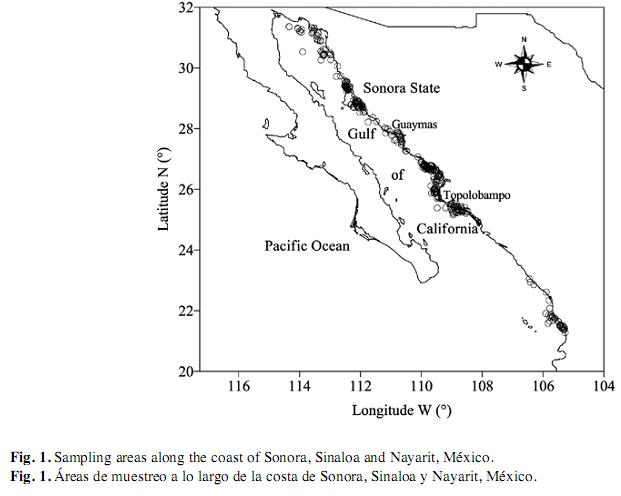
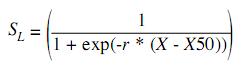
<body><![CDATA[<br> <br style="font-family: verdana;"> </span></font><font size="-1"><span style="font-family: verdana;">By using the mean and standard deviation of each cohort like the initial data, NORMSEP analysis (maximum verisimilitude) was performed (Sparre &amp; Venema 1995). Growth was calculated from the size frequency distribution analysis assuming that <span  style="font-style: italic;">E. currani</span> follows a von Bertalanffy kinetics model (Pauly <span style="font-style: italic;">et al.</span> 1984, Brey &amp; Pauly 1986). Besides, ELEFAN I was used to estimate growth parameters (Pauly &amp; David 1981, Pauly 1987). This method was selected because it incorporates seasonal growth, which is characteristic of the fauna in the transition from tropical to temperate areas, such as the one from the Gulf of California (Pauly et al. 1984, Garc&iacute;a 1988). The seasonalgrowth model has the following form:</span></font><br  style="font-family: verdana;">     <br>     <div style="text-align: center;"><img alt=""  src="/img/revistas/rbt/v59n2/a27i2.jpg"  style="width: 286px; height: 37px;">    <br> </div> <br style="font-family: verdana;"> <font size="-1"><span style="font-family: verdana;">where L<sub>t</sub> is the length at time t, L<sub>&#8734;</sub> is the asymptotic length, K is the instant growth coefficient (per year), t<sub>0</sub> is the hypothetical time at which the length of the organism is zero, t<sub>s</sub> is the beginning of sinusoidal growth oscillation with respect to t=0, and <span  style="font-style: italic;">C</span> is the intensity of the oscillation of growth.</span></font><br  style="font-family: verdana;"> <br style="font-family: verdana;"> <font size="-1"><span style="font-family: verdana;">To start the estimations, seed values of L<sub>&#8734;</sub> were calculated by the methods of Powell (1979) and Wetherall <span  style="font-style: italic;">et al.</span> (1987). The K value was calculated by the Shepherd&#8217;s length composition analysis (NSLCA) (Shepherd 1987, Pauly &amp; Arregu&iacute;n 1995), while estimates of the third parameter (t0) were performed with the empirical equation proposed by Pauly <span style="font-style: italic;">et al.</span> (1984). </span></font><br style="font-family: verdana;"> <br style="font-family: verdana;"> <font size="-1"><span style="font-family: verdana;">Natural mortality (M) was determined by the empirical equation proposed by Pauly (1980),</span></font><br style="font-family: verdana;">     <br>     <div style="text-align: center;"><img alt=""  src="/img/revistas/rbt/v59n2/a27i3.jpg"  style="width: 371px; height: 45px;">    <br> </div> <br style="font-family: verdana;"> <font size="-1"><span style="font-family: verdana;">where T is the habitat&#8217;s average annual sea surface temperature, and by the M=1.5&times;K equation (Jensen 1996), where K is the instant growth coefficient.</span></font><br style="font-family: verdana;"> <br style="font-family: verdana;"> <font size="-1"><span style="font-family: verdana;">Total mortality and capture probability (selectivity) were estimated with the lengthconverted catch curve method (Pauly <span  style="font-style: italic;">et al.</span> 1984). Fishing mortality was estimated from the difference of Z=F+M, and the exploitation rate E=F/Z, where values over 0.5 reflect overexploited populations, and values under 0.5 denote a sub-exploited ones (Gulland &amp; Rosemberg 1992).</span></font><br style="font-family: verdana;"> <br style="font-family: verdana;"> <font size="-1"><span style="font-family: verdana;">Because the information on <span style="font-style: italic;">E. currani </span>only includes the months of the fishing season (September to March), the pattern of reproductive recruitment was used as an alternative method to determine the probable birth date of the organisms caught, by the method ELEFAN II (Pauly 1980, 1987), that analyses the size structure of catches once the selection bias is corrected. The results generated by this model should be treated as approximations, since statements on the annual reproductive pulses number and on their relative strength, is based on the assumptions that fish in the sample grow as described by a single set of growth parameters, and that one month a year has zero recruitment (Moreau &amp; Cuende 1991). Size at first maturity was calculated from the number of mature females at stages III and IV in each size group. The relationship between size and maturity was fitted to a nonlinear estimate, using the least squares procedure. To test the appropriateness of the logistic model, we used the determination coefficient (R<sup>2</sup>). The maturity-length relationship describes a logistic curve (Pauly 1984):    <br>     <br> </span></font>     <div style="text-align: center;"><font size="-1"><span  style="font-family: verdana;"><img alt=""  src="/img/revistas/rbt/v59n2/a27i4.jpg"  style="width: 241px; height: 67px;"></span></font><br  style="font-family: verdana;"> <font size="-1"><span style="font-family: verdana;"></span></font></div> <font size="-1"><span style="font-family: verdana;"></span></font><br  style="font-family: verdana;"> <font size="-1"><span style="font-family: verdana;">where r and X50 are sigmoid parameters. The size at first maturity (L50%) is described as the point that intercepts 50% of the logistic model. In this case, L50%=X<sub>50</sub> (Pauly 1984). As the same, the selectivity-length relationship describes a logistic curve and was fitted to a nonlinear estimate, using the least squares procedure.</span></font><br  style="font-family: verdana;"> <br style="font-family: verdana;"> <font style="font-weight: bold;" size="3"><span  style="font-family: verdana;">Results    ]]></body>
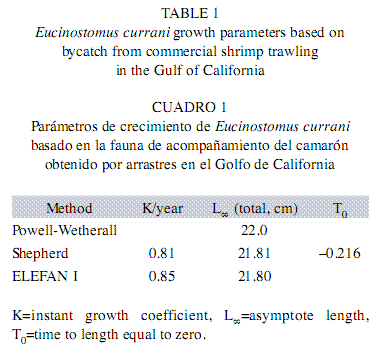
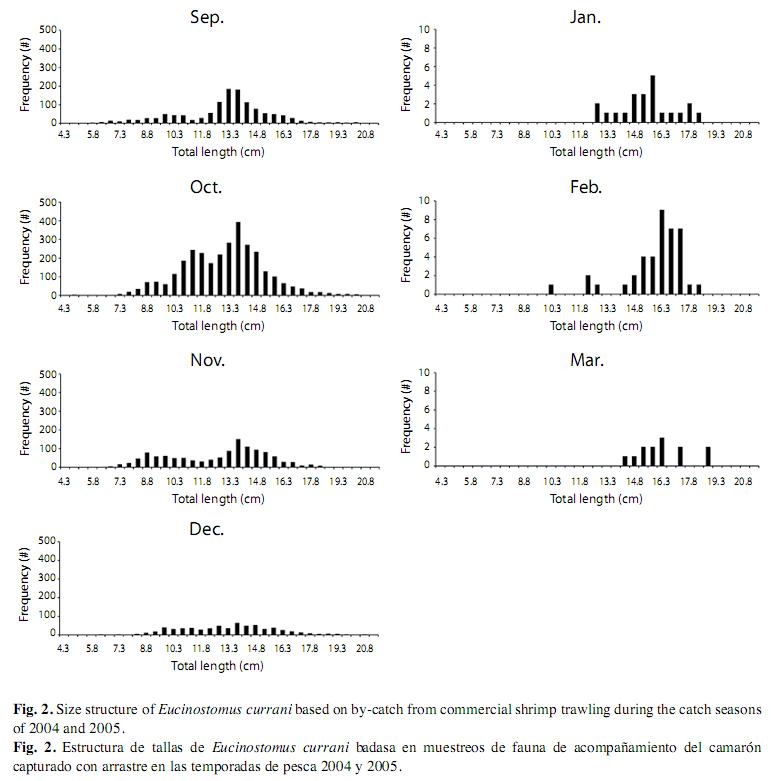
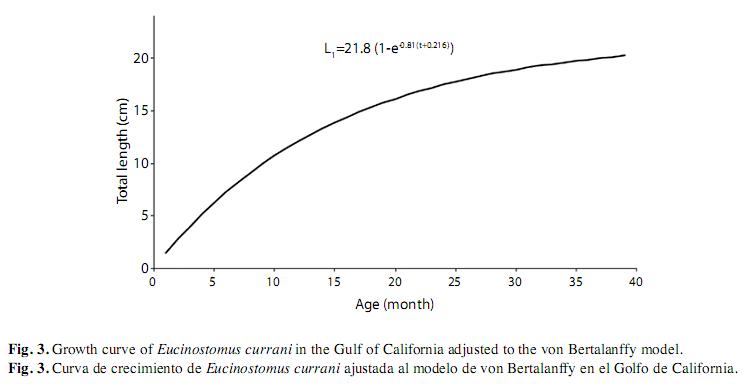
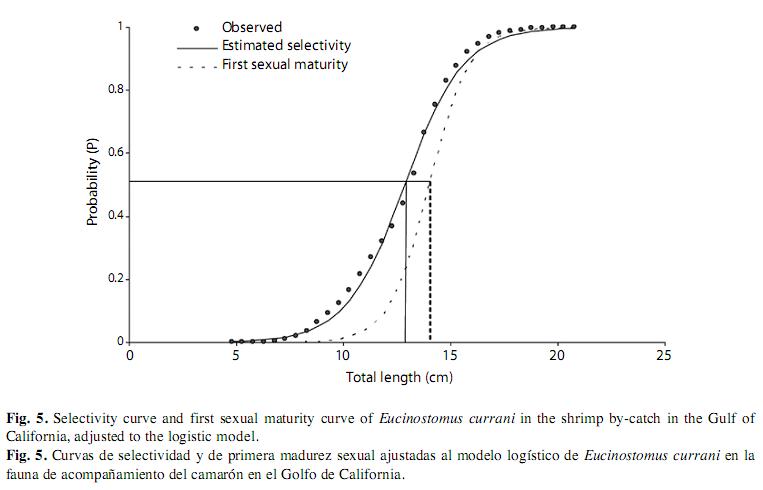
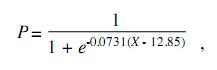
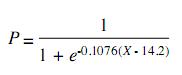
<body><![CDATA[<br> <br style="font-family: verdana;"> </span></font><font size="-1"><span style="font-family: verdana;">In the samplings, Pacific flagfin mojarra was one of the most common by-catch species (9%). In this study were measured 6 078 mojarra from 350 samples collected from August 15<sup>th</sup> 2004 to March 15<sup>th</sup> 2005 (<a href="/img/revistas/rbt/v59n2/a27i6.jpg">Fig. 2</a>). Their lengths ranged from 4.6 to 21.0cm. Four cohorts, in terms of mean total length, were 11.4, 13.7, 15.6, and 18.0cm, corresponding to ages 0.9, 1.2, 1.6, and 2.2 years were found; the 1.2 year-old group was the most abundant.</span></font><br style="font-family: verdana;"> <br style="font-family: verdana;"> <font size="-1"><span style="font-family: verdana;">Estimates for the weight-length relationship showed that coefficient b was 3.065 (Lo conf. limit=3.021817, Lu conf. limit=3.040513; p-level=0.00) and coefficient was 0.000011 (Lo conf. limit=0.000011, Lu conf. limit=0.000011; p-Level=0.00) and the correlation coefficient R was R=0.9750 (p-level=0.00). Was found a moderate growth (K<sub>S</sub>=0.81/year, K<sub>E</sub>=0.85/ year) corresponds to specimens that were ~3.7 years old (longevity=3/K) as well as an asymptotic length of L<sub>&#8734;</sub>=21.8cm (W<sub>&#8734;</sub>=128.1g) by the Shepherd and ELEFAN I methods, when t<sub>0</sub>=- 0.216 (<a href="#Cuadro_1">Table 1</a>). The resulting curve is shown in <a  href="/img/revistas/rbt/v59n2/a27i8.jpg">Fig. 3.</a></span></font><br  style="font-family: verdana;">     <br>     <div style="text-align: center;">    <br> <a name="Cuadro_1"></a><img alt=""  src="/img/revistas/rbt/v59n2/a27t1.gif"  style="width: 380px; height: 355px;">    <br>     <br> </div> <br style="font-family: verdana;"> <font size="-1"><span style="font-family: verdana;">The condition factor average was K=0.01072, and K index showed the lowest value in February and the highest value in March (this is, at the beginning of the reproductive period) (<a  href="/img/revistas/rbt/v59n2/a27i9.jpg">Fig. 4</a>). The estimated natural mortality was M=1.53/year; total mortality Z=2.73/year (CI 1.9-3.5); fishery mortality F=1.2/year, and exploitation rate is E=0.43/year. Mortality values for fishery and exploitation rates suggest a healthy population. Although samples were as small as 4.6cm, first-capture estimated size was 12.85cm, with a value of L<sub>50%</sub>=12.8cm (t<sub>50%</sub>=10 months) and L<sub>75%</sub>=14.3cm (t<sub>75%</sub>=13.2 months) and selection rank R=30mm (<a href="/img/revistas/rbt/v59n2/a27i10.jpg">Fig. 5</a>). The resultant adjusted equation to the logistic selectivity model is:    <br>     <br> </span></font>     <div style="text-align: center;"><font size="-1"><span  style="font-family: verdana;"><img alt=""  src="/img/revistas/rbt/v59n2/a27i5.jpg"  style="width: 182px; height: 75px;"></span></font><br  style="font-family: verdana;"> <font size="-1"><span style="font-family: verdana;"></span></font></div> <font size="-1"><span style="font-family: verdana;"></span></font><br  style="font-family: verdana;"> <font size="-1"><span style="font-family: verdana;">where<span  style="font-style: italic;"> P</span> is the probability of capture and X is the total length in cm.     <br>     ]]></body>
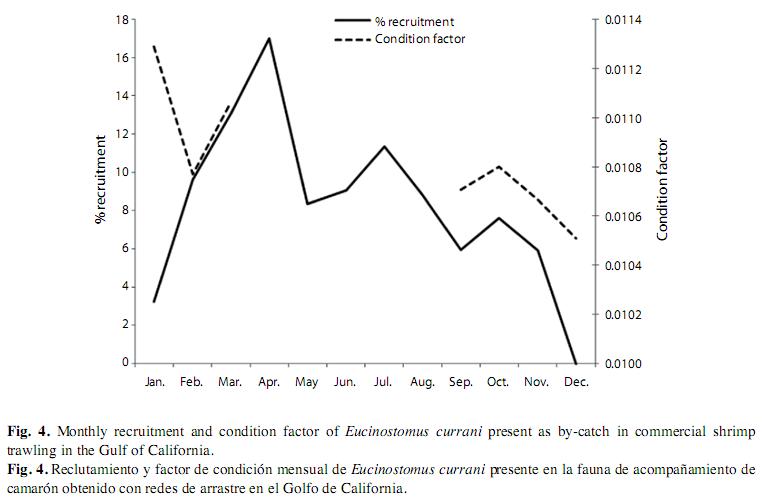
<body><![CDATA[<br> Incorporation of new recruits was observed throughout the year, with two peaks: the first of 30.07% from March to April and the second of 29.19% from June through August (<a  href="/img/revistas/rbt/v59n2/a27i9.jpg">Fig. 4</a>). The size at first maturity was estimated at 14.2cm of total length, corresponding to an approximate age of 15 months (<a  href="/img/revistas/rbt/v59n2/a27i10.jpg">Fig. 5</a>). The adjusted equation to the logistic model was:    <br>     <br> </span></font>     <div style="text-align: center;"><font size="-1"><span  style="font-family: verdana;"><img alt=""  src="/img/revistas/rbt/v59n2/a27i7.jpg"  style="width: 182px; height: 75px;"></span></font><br  style="font-family: verdana;"> <font size="-1"><span style="font-family: verdana;"></span></font></div> <font size="-1"><span style="font-family: verdana;"></span></font><br  style="font-family: verdana;"> <font style="font-weight: bold;" size="3"><span  style="font-family: verdana;">Discussion    <br>     <br style="font-family: verdana;">     </span></font><font size="-1"><span style="font-family: verdana;">The     Pacific flagfin     mojarra is the     most abundant species in shrimp     ]]></body>
<body><![CDATA[bycatch in the Gulf of California (L&oacute;pez-Mart&iacute;nez <span      style="font-style: italic;">et al.</span>     2010). It occupies coastal zones from three to 77m. In the literature,     the maximum depth is stated as 60m (Ayala &amp; Tapia 1990), but our     samples extend this range to 77m. This mojarra is a demersal,     freshwater and marine inhabitant in the Mexican Pacific coasts that     uses lagoons for protection and feeding in their early developmental     stages (Amezcua 1976, Grijalva-Chon <span style="font-style: italic;">et     al.</span> 1996). The wider     distribution range to depth of the mojarra allow it to remain highly     ]]></body>
<body><![CDATA[productive, in spite of the high bycatch, and remain competitive in the     ecosystem where this species take advantage of habitat and food, as     documented for other species from the Southern Baja California     peninsula (Rodr&iacute;guez- Romero <span style="font-style: italic;">et     al.</span> 2008). The same as the     latitudinal distribution, the distribution in depth of the species, can     be limited by thermal barriers and of pressure as well as of type     topographical existent in the Gulf of California. The different depth     distribution (5-77m) of this species, can be due to the existence of     big sandy-muddy coastal extensions, that are very productive areas, in     ]]></body>
<body><![CDATA[the Oriental side of the Gulf of California, and where they support a     great diversity of species of fish and other organisms, including this     species (Grijalva-Chon <span style="font-style: italic;">et al. </span>1996,     L&oacute;pez-Mart&iacute;nez <span style="font-style: italic;">et al.</span>     2010).</span></font><br style="font-family: verdana;">     <br style="font-family: verdana;">     <font size="-1"><span style="font-family: verdana;">The weight-length     relationship is     according to the value estimate from     the same species by Ru&iacute;z-Ramirez <span     ]]></body>
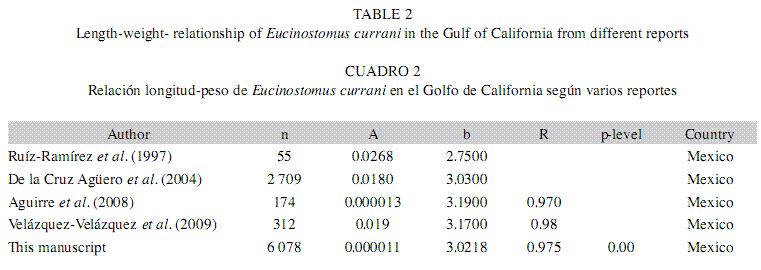
<body><![CDATA[ style="font-style: italic;">et al.</span> (1997), Gonz&aacute;lez-     Acosta <span style="font-style: italic;">et al.</span> (2004), Aguirre     <span style="font-style: italic;">et al.</span> (2008) and     Vel&aacute;zquez-Vel&aacute;zquez <span style="font-style: italic;">et     al.</span> (2009) (<a href="/img/revistas/rbt/v59n2/a27t2.gif">Table 2</a>)     and show an     isometric growth.</span></font><br style="font-family: verdana;">     <br style="font-family: verdana;">     <font size="-1"><span style="font-family: verdana;">The Pacific flagfin     mojarra has     ]]></body>
<body><![CDATA[relatively slow growth and a lifespan     close to four years. Our results on maximum sizes agree with previous     reports (Franke &amp; Acero 1996, Ru&iacute;z-Ramirez <span      style="font-style: italic;">et al.</span> 1997). The     calculated K value was greater than previously reported values     (K=0.58), corresponding to 4.9 year-old mojarra. This result can be     attributed to larger sizes being sampled previously     (Ru&iacute;z-Ramirez <span style="font-style: italic;">et al.</span>     1997).</span></font><br style="font-family: verdana;">     <br style="font-family: verdana;">     ]]></body>
<body><![CDATA[<font size="-1"><span style="font-family: verdana;">The recruitment     pattern (the     reproductive period) was from March to     August and size at first sexual maturity being slightly smaller     compared to a previous report on this species in the Gulf of     Tehuantepec (14.5cm) (Ru&iacute;z- Ramirez <span      style="font-style: italic;">et al</span>. 1997). The condition     factor is an index reflecting interactions between biotic and abiotic     factors in the physiological condition of fishes. It shows the     population&#8217;s welfare during various stages of the life cycle (Angelescu     ]]></body>
<body><![CDATA[<span style="font-style: italic;">et al.</span> 1958). In the case of <span      style="font-style: italic;">E. currani</span>, the condition factor     decreases     at the start of the spawning period due to very high metabolic rates.     Unfortunately, we have data of E. currani only for the months of shrimp     fishing (September to March), being impossible to follow the behavior     of K during the period of maximum recruitment. Vazzoler &amp; Vazzoler     (1965), Martins-Juras (1980) and Lizama &amp; Ambrosio (2002) state     that the condition factor does not merely reflect the feeding condition     of the adult stage, but includes the state of gonadal development,     ]]></body>
<body><![CDATA[based on the consumption of fat reserves during the spawning period.</span></font><br      style="font-family: verdana;">     <br style="font-family: verdana;">     <font size="-1"><span style="font-family: verdana;">The size structure     and the size at     first sexual maturity indicated that     58% of the sample were juveniles (&lt;13 months), this is, sexually     immature. In some previous reports, juveniles are commonly found in     estuarine regions, mangroves, tidal streams and rivers far from the     coast, and the adults occur in deeper waters (De la Cruz-Ag&uuml;ero <span     ]]></body>
<body><![CDATA[ style="font-style: italic;">et     al.</span> 1997). This finding is very important, indicating the low     selectivity of shrimp nets. <span style="font-style: italic;">E.     currani</span> represents an important     component of the trophic chain for many marine species in areas of high     biological productivity (Ram&iacute;rez-Luna <span      style="font-style: italic;">et al.</span> 2008). By-catch     arises because fishing gears have imperfect selection properties, but     the problem is made worse by economic pressures resulting from     overexploitation. This fact can lead tothe decrease in the abundance of     ]]></body>
<body><![CDATA[both target and non-target species and to inefficient use of resources     (Cook 2001).</span></font><br style="font-family: verdana;">     <br style="font-family: verdana;">     <font size="-1"><span style="font-family: verdana;">The consequences of     trawling     activities on ecosystems have been     frequently studied during the past years. Common trends of community     responses have been detected, for instance, areas with high disturbance     may become more uniform and characterized by fewer and more dominant     species (Escolar <span style="font-style: italic;">et al.</span>     ]]></body>
<body><![CDATA[2009). In this context, we stress out the     important ecological role of the species of bycatch herein analyzed.     Reyes-Bonilla <span style="font-style: italic;">et al.</span> (2009)     have outlined that in the Gulf of     California has diminished the trophic level of the captures, as     consequence of the fishing pressure. Arregu&iacute;n-S&aacute;nchez <span      style="font-style: italic;">et     al.</span> (2002) suggests that fish mortality in the bycatch could     have a     positive impact on the shrimp stock, due to fact that some species has     ]]></body>
<body><![CDATA[a diet based in shrimp, diminishing the pressure of the predators to     the shrimp. This is the case of the Pacific flagfin mojarra, which     bases 45% of their diet on shrimps (Ram&iacute;rez-Luna <span      style="font-style: italic;">et al.</span> 2008).</span></font><br      style="font-family: verdana;">     <br style="font-family: verdana;">     <font size="-1"><span style="font-family: verdana;">The mortality     indicators here     obtained are relatively low, considering     natural and catch </span></font><font size="-1"><span     ]]></body>
<body><![CDATA[ style="font-family: verdana;">conditions, as well     as an     exploitation rate close to maximum. <span style="font-style: italic;">E.     currani</span> is reported as highly &#8220;resilient&#8221; because its population     doubling time is less than 15 months (Froese &amp; Pauly 2000).     Additionally, the recruitment pattern coincides with the peak     reproduction period, which closely matches the end of the shrimp     fishery season (March through August). We concluded that survival of     this mojarra is ensured because the reproduction season is indirectly     protected. A detailed analysis of the mojarra reproductive&nbsp;     ]]></body>
<body><![CDATA[biology is recommended.</span></font><br style="font-family: verdana;">     <br style="font-family: verdana;">     <font style="font-weight: bold;" size="3"><span      style="font-family: verdana;">Acknowledgments    <br> <br style="font-family: verdana;"> </span></font><font size="-1"><span style="font-family: verdana;">Thanks to the participating owners of the shrimp trawlers based in the port of Guaymas, Sonora for facilitating our participation in the shrimp and by-catch surveys. Funds were provided by SAGARPA-CONACYT (SAGARPA grant 2003-C01-089), PRODUCE Sonora grant 26-2009-1356 and CIBNOR (Project EP1.1). Thanks to Ira Foguel English Editor.    <br> <br style="font-family: verdana;"> </span></font> <hr style="width: 100%; height: 2px;"><font style="font-weight: bold;"  size="3"><span style="font-family: verdana;">References    <!-- ref --><br> <br style="font-family: verdana;"> </span></font><font size="-1"><span style="font-family: verdana;">Aguirre, H., F. Amezcua, J. Madrid-Vera &amp; C. Soto. 2008. Length&#8211;weight relationship for 21 fish species from a coastal lagoon in the southwestern Gulf of California. J. Appl. Ichthyol. 24: 91-92.    &nbsp;&nbsp;&nbsp;&nbsp;&nbsp;&nbsp;&nbsp;&nbsp;[&#160;<a href="javascript:void(0);" onclick="javascript: window.open('/scielo.php?script=sci_nlinks&ref=1767593&pid=S0034-7744201100020002700001&lng=','','width=640,height=500,resizable=yes,scrollbars=1,menubar=yes,');">Links</a>&#160;]<!-- end-ref --><!-- ref --></span></font><br  style="font-family: verdana;"> <br style="font-family: verdana;"> <font size="-1"><span style="font-family: verdana;">Allen, G.R. &amp; D.R. Robertson. 1994. Fishes of the tropical eastern Pacific. University of Hawaii, Honolulu, Hawaii, USA.    &nbsp;&nbsp;&nbsp;&nbsp;&nbsp;&nbsp;&nbsp;&nbsp;[&#160;<a href="javascript:void(0);" onclick="javascript: window.open('/scielo.php?script=sci_nlinks&ref=1767594&pid=S0034-7744201100020002700002&lng=','','width=640,height=500,resizable=yes,scrollbars=1,menubar=yes,');">Links</a>&#160;]<!-- end-ref --><!-- ref --></span></font><br  style="font-family: verdana;"> <br style="font-family: verdana;"> <font size="-1"><span style="font-family: verdana;">Amezcua, L.F. 1977. Generalidades ictiol&oacute;gicas del sistema lagunar costero de Huizache-Caimanero, Sinaloa, M&eacute;xico. An. Inst. Cienc. Mar Limnol, UNAM, M&eacute;xico.    &nbsp;&nbsp;&nbsp;&nbsp;&nbsp;&nbsp;&nbsp;&nbsp;[&#160;<a href="javascript:void(0);" onclick="javascript: window.open('/scielo.php?script=sci_nlinks&ref=1767595&pid=S0034-7744201100020002700003&lng=','','width=640,height=500,resizable=yes,scrollbars=1,menubar=yes,');">Links</a>&#160;]<!-- end-ref --><!-- ref --></span></font><br  style="font-family: verdana;"> <br style="font-family: verdana;"> <font size="-1"><span style="font-family: verdana;">Angelescu, V., F.S. Gneri &amp; A. Nani. 1958. La merluza del mar argentino (biolog&iacute;a y taxonom&iacute;a). Secr. Mar. Serv. Hidrog. Nav. Pub. H., Buenos Aires, Argentina.    &nbsp;&nbsp;&nbsp;&nbsp;&nbsp;&nbsp;&nbsp;&nbsp;[&#160;<a href="javascript:void(0);" onclick="javascript: window.open('/scielo.php?script=sci_nlinks&ref=1767596&pid=S0034-7744201100020002700004&lng=','','width=640,height=500,resizable=yes,scrollbars=1,menubar=yes,');">Links</a>&#160;]<!-- end-ref --><!-- ref --></span></font><br  style="font-family: verdana;"> <br style="font-family: verdana;"> <font size="-1"><span style="font-family: verdana;">Arregu&iacute;n-S&aacute;nchez, F., E. Arcos &amp; E.A. Ch&aacute;vez. 2002. Flows of biomass and structure in an exploited benthic ecosystem in the gulf of California, Mexico. Ecol. Model. 156: 167-183.    &nbsp;&nbsp;&nbsp;&nbsp;&nbsp;&nbsp;&nbsp;&nbsp;[&#160;<a href="javascript:void(0);" onclick="javascript: window.open('/scielo.php?script=sci_nlinks&ref=1767597&pid=S0034-7744201100020002700005&lng=','','width=640,height=500,resizable=yes,scrollbars=1,menubar=yes,');">Links</a>&#160;]<!-- end-ref --><!-- ref --></span></font><br  style="font-family: verdana;"> <br style="font-family: verdana;"> <font size="-1"><span style="font-family: verdana;">Ayala, G. &amp; M. Tapia. 1990. Composici&oacute;n y abundancia de la familia Gerreidae en el Golfo de Tehuantepec, con &eacute;nfasis en las estrategias reproductivas de las especies dominantes. Conabio, M&eacute;xico D.F., M&eacute;xico.    &nbsp;&nbsp;&nbsp;&nbsp;&nbsp;&nbsp;&nbsp;&nbsp;[&#160;<a href="javascript:void(0);" onclick="javascript: window.open('/scielo.php?script=sci_nlinks&ref=1767598&pid=S0034-7744201100020002700006&lng=','','width=640,height=500,resizable=yes,scrollbars=1,menubar=yes,');">Links</a>&#160;]<!-- end-ref --><!-- ref --></span></font><br  style="font-family: verdana;"> <br style="font-family: verdana;"> <font size="-1"><span style="font-family: verdana;">Brey, T. &amp; D. Pauly. 1986. Electronic Length Frequency Analysis. A Revised and Expanded User&#8217;s Guide to ELEFAN 0, 1 and 2. Ber. Inst. Meereskd, University Kiel, Alemania.    &nbsp;&nbsp;&nbsp;&nbsp;&nbsp;&nbsp;&nbsp;&nbsp;[&#160;<a href="javascript:void(0);" onclick="javascript: window.open('/scielo.php?script=sci_nlinks&ref=1767599&pid=S0034-7744201100020002700007&lng=','','width=640,height=500,resizable=yes,scrollbars=1,menubar=yes,');">Links</a>&#160;]<!-- end-ref --><!-- ref --></span></font><br  style="font-family: verdana;"> <br style="font-family: verdana;"> <font size="-1"><span style="font-family: verdana;">Bussing, W.A. 1995. Gerreidae. Mojarras, p. 1114-1128. <span style="font-style: italic;">In</span>: W. Fischer, F. Krupp, W. Schneider, C. Sommer, K.E. Carpenter &amp; V. Niem (eds.). Gu&iacute;a FAO para identificaci&oacute;n de especies para los fines de la pesca. Pac&iacute;fico Centro-Oriental. FAO, Rome, Italy.    &nbsp;&nbsp;&nbsp;&nbsp;&nbsp;&nbsp;&nbsp;&nbsp;[&#160;<a href="javascript:void(0);" onclick="javascript: window.open('/scielo.php?script=sci_nlinks&ref=1767600&pid=S0034-7744201100020002700008&lng=','','width=640,height=500,resizable=yes,scrollbars=1,menubar=yes,');">Links</a>&#160;]<!-- end-ref --><!-- ref --></span></font><br  style="font-family: verdana;"> <br style="font-family: verdana;"> <font size="-1"><span style="font-family: verdana;">Bussing, W.A. 1998. Peces de las aguas continentales de Costa Rica. Universidad de Costa Rica, San Jos&eacute;, Costa Rica.    &nbsp;&nbsp;&nbsp;&nbsp;&nbsp;&nbsp;&nbsp;&nbsp;[&#160;<a href="javascript:void(0);" onclick="javascript: window.open('/scielo.php?script=sci_nlinks&ref=1767601&pid=S0034-7744201100020002700009&lng=','','width=640,height=500,resizable=yes,scrollbars=1,menubar=yes,');">Links</a>&#160;]<!-- end-ref --><!-- ref --></span></font><br  style="font-family: verdana;"> <br style="font-family: verdana;"> <font size="-1"><span style="font-family: verdana;">Cook, R. 2001. The magnitude and impact of by-catch mortality by fishing gear, p. 96-98. <span style="font-style: italic;">In</span> FAO (ed.). Report of Reykiavik Conference on responsible fisheries in the marine ecosystem. Reykiavik, Iceland 1-4 october. FAO Fisheries Report 658, Rome, Italy.    &nbsp;&nbsp;&nbsp;&nbsp;&nbsp;&nbsp;&nbsp;&nbsp;[&#160;<a href="javascript:void(0);" onclick="javascript: window.open('/scielo.php?script=sci_nlinks&ref=1767602&pid=S0034-7744201100020002700010&lng=','','width=640,height=500,resizable=yes,scrollbars=1,menubar=yes,');">Links</a>&#160;]<!-- end-ref --><!-- ref --></span></font><br  style="font-family: verdana;"> <br style="font-family: verdana;"> <font size="-1"><span style="font-family: verdana;">De la Cruz-Ag&uuml;ero, J., M. Arellano-Mart&iacute;nez, V.M. Cota- G&oacute;mez &amp; G. de la Cruz-Ag&uuml;ero. 1997. Cat&aacute;logo de los peces marinos de Baja California Sur. IPNCICIMAR, La Paz, Baja California, Mexico.    &nbsp;&nbsp;&nbsp;&nbsp;&nbsp;&nbsp;&nbsp;&nbsp;[&#160;<a href="javascript:void(0);" onclick="javascript: window.open('/scielo.php?script=sci_nlinks&ref=1767603&pid=S0034-7744201100020002700011&lng=','','width=640,height=500,resizable=yes,scrollbars=1,menubar=yes,');">Links</a>&#160;]<!-- end-ref --><!-- ref --></span></font><br style="font-family: verdana;"> <br style="font-family: verdana;"> <font size="-1"><span style="font-family: verdana;">Escolar, M., M. Diez, D. Hern&aacute;ndez, &Aacute;. Marecos, S. Campod&oacute;nico &amp; C. Bremen. 2009. Invertebrate bycatch in Patagonian scallop fishing grounds: a study case with data obtained by the On Board Observers Program. Biol. Mar. Oceanog. 44: 369-377.    &nbsp;&nbsp;&nbsp;&nbsp;&nbsp;&nbsp;&nbsp;&nbsp;[&#160;<a href="javascript:void(0);" onclick="javascript: window.open('/scielo.php?script=sci_nlinks&ref=1767604&pid=S0034-7744201100020002700012&lng=','','width=640,height=500,resizable=yes,scrollbars=1,menubar=yes,');">Links</a>&#160;]<!-- end-ref --><!-- ref --></span></font><br  style="font-family: verdana;"> <br style="font-family: verdana;"> <font size="-1"><span style="font-family: verdana;">Franke, R. &amp; A. Acero. 1996. Peces &oacute;seos comerciales del Parque Gorgona, Pac&iacute;fico colombiano (Osteichthyes: Muraenesocidae, Hemiramphidae, Belonidae, Scorpaenidae, </span></font><font  size="-1"><span style="font-family: verdana;">Triglidae, Malacanthidae, Gerreidae, Sparidae, Kyphosidae, Sphyraenidae e Istiophoridae). Rev. Biol. Trop. 44: 763-770.    &nbsp;&nbsp;&nbsp;&nbsp;&nbsp;&nbsp;&nbsp;&nbsp;[&#160;<a href="javascript:void(0);" onclick="javascript: window.open('/scielo.php?script=sci_nlinks&ref=1767605&pid=S0034-7744201100020002700013&lng=','','width=640,height=500,resizable=yes,scrollbars=1,menubar=yes,');">Links</a>&#160;]<!-- end-ref --><!-- ref --></span></font><br  style="font-family: verdana;"> <br style="font-family: verdana;"> <font size="-1"><span style="font-family: verdana;">Froese, R. &amp; D. Pauly. 2000. FishBase 2000: concepts, design and data sources. ICLARM Contribution, 1594. ICLARM: Los Ba&ntilde;os, Laguna, Philippines.    &nbsp;&nbsp;&nbsp;&nbsp;&nbsp;&nbsp;&nbsp;&nbsp;[&#160;<a href="javascript:void(0);" onclick="javascript: window.open('/scielo.php?script=sci_nlinks&ref=1767606&pid=S0034-7744201100020002700014&lng=','','width=640,height=500,resizable=yes,scrollbars=1,menubar=yes,');">Links</a>&#160;]<!-- end-ref --><!-- ref --></span></font><br style="font-family: verdana;"> <br style="font-family: verdana;"> <font size="-1"><span style="font-family: verdana;">Garc&iacute;a, S. 1988. Tropical penaeid prawns, p. 219-249. <span style="font-style: italic;">In</span> J.A. Gulland (ed.). Fish populations dynamics. Wiley, New York, USA.    &nbsp;&nbsp;&nbsp;&nbsp;&nbsp;&nbsp;&nbsp;&nbsp;[&#160;<a href="javascript:void(0);" onclick="javascript: window.open('/scielo.php?script=sci_nlinks&ref=1767607&pid=S0034-7744201100020002700015&lng=','','width=640,height=500,resizable=yes,scrollbars=1,menubar=yes,');">Links</a>&#160;]<!-- end-ref --><!-- ref --></span></font><br  style="font-family: verdana;"> <br style="font-family: verdana;"> <font size="-1"><span style="font-family: verdana;">Gonz&aacute;lez-Acosta, A.F., G. De La Cruz-Ag&uuml;ero &amp; J. De La Cruz-Ag&uuml;ero. 2004. Length-weight relationships of fish species caught in a mangrove swamp in the Gulf of California. J. Appl. Ichthyol. 20:154-155.    &nbsp;&nbsp;&nbsp;&nbsp;&nbsp;&nbsp;&nbsp;&nbsp;[&#160;<a href="javascript:void(0);" onclick="javascript: window.open('/scielo.php?script=sci_nlinks&ref=1767608&pid=S0034-7744201100020002700016&lng=','','width=640,height=500,resizable=yes,scrollbars=1,menubar=yes,');">Links</a>&#160;]<!-- end-ref --><!-- ref --></span></font><br style="font-family: verdana;"> <br style="font-family: verdana;"> <font size="-1"><span style="font-family: verdana;">Grijalva-Chon, M., S. N&uacute;&ntilde;ez, R. Quevedo &amp; L. Castro. 1996. Ictiofauna de la laguna costera La Cruz, Sonora. Cien. Mar. 22: 129-150.    &nbsp;&nbsp;&nbsp;&nbsp;&nbsp;&nbsp;&nbsp;&nbsp;[&#160;<a href="javascript:void(0);" onclick="javascript: window.open('/scielo.php?script=sci_nlinks&ref=1767609&pid=S0034-7744201100020002700017&lng=','','width=640,height=500,resizable=yes,scrollbars=1,menubar=yes,');">Links</a>&#160;]<!-- end-ref --><!-- ref --></span></font><br style="font-family: verdana;"> <br style="font-family: verdana;"> <font size="-1"><span style="font-family: verdana;">Gulland, J.A. &amp; A.A. Rosenberg. 1992. Examen de los m&eacute;todos que se basan en la talla para evaluar las poblaciones de peces. FAO Fish.Tech. doc. 323. FAO, Rome, Italy.    &nbsp;&nbsp;&nbsp;&nbsp;&nbsp;&nbsp;&nbsp;&nbsp;[&#160;<a href="javascript:void(0);" onclick="javascript: window.open('/scielo.php?script=sci_nlinks&ref=1767610&pid=S0034-7744201100020002700018&lng=','','width=640,height=500,resizable=yes,scrollbars=1,menubar=yes,');">Links</a>&#160;]<!-- end-ref --><!-- ref --></span></font><br  style="font-family: verdana;"> <br style="font-family: verdana;"> <font size="-1"><span style="font-family: verdana;">Herrera, E. 2004. Manual para observadores a bordo de la flota comercial temporada de pesca 2004-2005. Laboratory of fisheries, CIBNOR, Guaymas, Sonora, Mexico.    &nbsp;&nbsp;&nbsp;&nbsp;&nbsp;&nbsp;&nbsp;&nbsp;[&#160;<a href="javascript:void(0);" onclick="javascript: window.open('/scielo.php?script=sci_nlinks&ref=1767611&pid=S0034-7744201100020002700019&lng=','','width=640,height=500,resizable=yes,scrollbars=1,menubar=yes,');">Links</a>&#160;]<!-- end-ref --><!-- ref --></span></font><br  style="font-family: verdana;"> <br style="font-family: verdana;"> <font size="-1"><span style="font-family: verdana;">Jensen, A.L. 1996. Beverton and Holt life history invariant result from optimal trade-off of reproduction and survival. Can. J. Fish. Aquat. Sci. 53: 820-822.    &nbsp;&nbsp;&nbsp;&nbsp;&nbsp;&nbsp;&nbsp;&nbsp;[&#160;<a href="javascript:void(0);" onclick="javascript: window.open('/scielo.php?script=sci_nlinks&ref=1767612&pid=S0034-7744201100020002700020&lng=','','width=640,height=500,resizable=yes,scrollbars=1,menubar=yes,');">Links</a>&#160;]<!-- end-ref --><!-- ref --></span></font><br style="font-family: verdana;"> <br style="font-family: verdana;"> <font size="-1"><span style="font-family: verdana;">Jordan, D.S. &amp; B. Everman. 1896. Fishes of North and Middle America. B. Am. Mus. Nat. Hist. 47: 1-1240.    &nbsp;&nbsp;&nbsp;&nbsp;&nbsp;&nbsp;&nbsp;&nbsp;[&#160;<a href="javascript:void(0);" onclick="javascript: window.open('/scielo.php?script=sci_nlinks&ref=1767613&pid=S0034-7744201100020002700021&lng=','','width=640,height=500,resizable=yes,scrollbars=1,menubar=yes,');">Links</a>&#160;]<!-- end-ref --><!-- ref --> </span></font><br  style="font-family: verdana;"> <br style="font-family: verdana;"> <font size="-1"><span style="font-family: verdana;">Lizama, M.A.P. &amp; A.M. Ambr&oacute;sio. 2002. Condition factor in nine species of fish of the Characidae family in the upper Paran&aacute; River Floodplain, Brazil. Braz. J. Biol. 62: 113-124.    &nbsp;&nbsp;&nbsp;&nbsp;&nbsp;&nbsp;&nbsp;&nbsp;[&#160;<a href="javascript:void(0);" onclick="javascript: window.open('/scielo.php?script=sci_nlinks&ref=1767614&pid=S0034-7744201100020002700022&lng=','','width=640,height=500,resizable=yes,scrollbars=1,menubar=yes,');">Links</a>&#160;]<!-- end-ref --><!-- ref --></span></font><br  style="font-family: verdana;"> <br style="font-family: verdana;"> <font size="-1"><span style="font-family: verdana;">L&oacute;pez-Mart&iacute;nez, J., E. Herrera-Valdivia, J. Rodr&iacute;guez- Romero &amp; S. Hern&aacute;ndez-V&aacute;zquez. 2010. Composici&oacute;n taxon&oacute;mica de peces integrantes de la fauna de acompa&ntilde;amiento de la pesca industrial de camar&oacute;n del Golfo de California, M&eacute;xico. Rev. Biol. Trop. 58: 925-942.    &nbsp;&nbsp;&nbsp;&nbsp;&nbsp;&nbsp;&nbsp;&nbsp;[&#160;<a href="javascript:void(0);" onclick="javascript: window.open('/scielo.php?script=sci_nlinks&ref=1767615&pid=S0034-7744201100020002700023&lng=','','width=640,height=500,resizable=yes,scrollbars=1,menubar=yes,');">Links</a>&#160;]<!-- end-ref --><!-- ref --></span></font><br  style="font-family: verdana;"> <br style="font-family: verdana;"> <font size="-1"><span style="font-family: verdana;">Martins-Juras, I.A.G. 1980. Estudo sobre o crescimento de <span style="font-style: italic;">Macrodon ancylodon</span> (Bloch &amp; Schneider, 1801) capturada nas costas do Rio Grande do Sul (Latitude 29oSa 32oS). Master Tesis, University of S&atilde;o Paulo, Instituto Oceanogr&aacute;fico, S&atilde;o Paulo, Brazil.    &nbsp;&nbsp;&nbsp;&nbsp;&nbsp;&nbsp;&nbsp;&nbsp;[&#160;<a href="javascript:void(0);" onclick="javascript: window.open('/scielo.php?script=sci_nlinks&ref=1767616&pid=S0034-7744201100020002700024&lng=','','width=640,height=500,resizable=yes,scrollbars=1,menubar=yes,');">Links</a>&#160;]<!-- end-ref --><!-- ref --></span></font><br style="font-family: verdana;"> <br style="font-family: verdana;"> <font size="-1"><span style="font-family: verdana;">Moreau, J. &amp; F.X. Cuende. 1991. On improving the resolution of the recruitment patterns of fishes. ICLARM Fishbyte 9: 45-46.    &nbsp;&nbsp;&nbsp;&nbsp;&nbsp;&nbsp;&nbsp;&nbsp;[&#160;<a href="javascript:void(0);" onclick="javascript: window.open('/scielo.php?script=sci_nlinks&ref=1767617&pid=S0034-7744201100020002700025&lng=','','width=640,height=500,resizable=yes,scrollbars=1,menubar=yes,');">Links</a>&#160;]<!-- end-ref --><!-- ref --></span></font><br  style="font-family: verdana;"> <br style="font-family: verdana;"> <font size="-1"><span style="font-family: verdana;">Nelson, J.S., E.J. Crossman, H. Espinosa, L.T. Findley, C.R. Gilbert , R.N. Lea. &amp; J.D. Williams. 2004. Common and scientific names of fishes from the United States, Canada, and Mexico. Amer. Fish. Soc. Spec. Pub. 29, Bethesda, Maryland, USA.    &nbsp;&nbsp;&nbsp;&nbsp;&nbsp;&nbsp;&nbsp;&nbsp;[&#160;<a href="javascript:void(0);" onclick="javascript: window.open('/scielo.php?script=sci_nlinks&ref=1767618&pid=S0034-7744201100020002700026&lng=','','width=640,height=500,resizable=yes,scrollbars=1,menubar=yes,');">Links</a>&#160;]<!-- end-ref --><!-- ref --></span></font><br  style="font-family: verdana;"> <br style="font-family: verdana;"> <font size="-1"><span style="font-family: verdana;">Nelson, J.S., H. Espinosa-P&eacute;rez, L.T. Findley, C.R. Gilbert, R.N. Lea, N.E. Mandrak &amp; J.D. Williams. 2006. Corrections to common and scientific names of fishes from the United States, Canada, and Mexico. Fisheries 31: 138-140.    &nbsp;&nbsp;&nbsp;&nbsp;&nbsp;&nbsp;&nbsp;&nbsp;[&#160;<a href="javascript:void(0);" onclick="javascript: window.open('/scielo.php?script=sci_nlinks&ref=1767619&pid=S0034-7744201100020002700027&lng=','','width=640,height=500,resizable=yes,scrollbars=1,menubar=yes,');">Links</a>&#160;]<!-- end-ref --><!-- ref --></span></font><br  style="font-family: verdana;"> <br style="font-family: verdana;"> <font size="-1"><span style="font-family: verdana;">Nikolsky, G. 1963. The ecology of fishes. Academy, New York, USA.    &nbsp;&nbsp;&nbsp;&nbsp;&nbsp;&nbsp;&nbsp;&nbsp;[&#160;<a href="javascript:void(0);" onclick="javascript: window.open('/scielo.php?script=sci_nlinks&ref=1767620&pid=S0034-7744201100020002700028&lng=','','width=640,height=500,resizable=yes,scrollbars=1,menubar=yes,');">Links</a>&#160;]<!-- end-ref --><!-- ref --></span></font><br  style="font-family: verdana;"> <br style="font-family: verdana;"> <font size="-1"><span style="font-family: verdana;">Pauly, D. 1980. On the interrelation between natural mortality, growth parameters and mean environmental temperature in 175 fish stocks. J. Cons CIEM 39: 175-192.    &nbsp;&nbsp;&nbsp;&nbsp;&nbsp;&nbsp;&nbsp;&nbsp;[&#160;<a href="javascript:void(0);" onclick="javascript: window.open('/scielo.php?script=sci_nlinks&ref=1767621&pid=S0034-7744201100020002700029&lng=','','width=640,height=500,resizable=yes,scrollbars=1,menubar=yes,');">Links</a>&#160;]<!-- end-ref --><!-- ref --></span></font><br style="font-family: verdana;"> <br style="font-family: verdana;"> <font size="-1"><span style="font-family: verdana;">Pauly, D. 1984. Fish population dynamics in tropical waters: a manual for use with programmable calculatrs. ICLARM Fishbyte 2: 17-19.    &nbsp;&nbsp;&nbsp;&nbsp;&nbsp;&nbsp;&nbsp;&nbsp;[&#160;<a href="javascript:void(0);" onclick="javascript: window.open('/scielo.php?script=sci_nlinks&ref=1767622&pid=S0034-7744201100020002700030&lng=','','width=640,height=500,resizable=yes,scrollbars=1,menubar=yes,');">Links</a>&#160;]<!-- end-ref --><!-- ref --></span></font><br  style="font-family: verdana;"> <br style="font-family: verdana;"> <font size="-1"><span style="font-family: verdana;">Pauly, D. &amp; F. Arregu&iacute;n. 1995. Improving Shepherd&acute;s length composition analysis (SLCA) method for growth parameter estimations. NAGA ICLARM Q. 18: 31-33.    &nbsp;&nbsp;&nbsp;&nbsp;&nbsp;&nbsp;&nbsp;&nbsp;[&#160;<a href="javascript:void(0);" onclick="javascript: window.open('/scielo.php?script=sci_nlinks&ref=1767623&pid=S0034-7744201100020002700031&lng=','','width=640,height=500,resizable=yes,scrollbars=1,menubar=yes,');">Links</a>&#160;]<!-- end-ref --><!-- ref --></span></font><br  style="font-family: verdana;"> <br style="font-family: verdana;"> <font size="-1"><span style="font-family: verdana;">Pauly, D. &amp; J. Caddy. 1985. A modification of Bhattacharya&acute;s method for the analysis of mixtures of normal distributions. FAO Fish. Circ. 781: 16.    &nbsp;&nbsp;&nbsp;&nbsp;&nbsp;&nbsp;&nbsp;&nbsp;[&#160;<a href="javascript:void(0);" onclick="javascript: window.open('/scielo.php?script=sci_nlinks&ref=1767624&pid=S0034-7744201100020002700032&lng=','','width=640,height=500,resizable=yes,scrollbars=1,menubar=yes,');">Links</a>&#160;]<!-- end-ref --><!-- ref --></span></font><br style="font-family: verdana;"> <br style="font-family: verdana;"> <font size="-1"><span style="font-family: verdana;">Pauly, D. &amp; N. David. 1981. ELEFAN I. a BASIC program for the objective extraction of growth parameters from length frequency data. Meeresforsch 28: 205-211.    &nbsp;&nbsp;&nbsp;&nbsp;&nbsp;&nbsp;&nbsp;&nbsp;[&#160;<a href="javascript:void(0);" onclick="javascript: window.open('/scielo.php?script=sci_nlinks&ref=1767625&pid=S0034-7744201100020002700033&lng=','','width=640,height=500,resizable=yes,scrollbars=1,menubar=yes,');">Links</a>&#160;]<!-- end-ref --><!-- ref --></span></font><br style="font-family: verdana;"> <br style="font-family: verdana;"> <font size="-1"><span style="font-family: verdana;">Pauly, D., J. Ingles &amp; R. Neal. 1984. Application to shrimp stocks of objective methods for the estimation of growth, mortality and recruitment-related parameters from length-frequency data (ELEFAN I and II), p. 220-234. <span style="font-style: italic;">In</span> J. Gulland &amp; B. Rothschild (eds.). Penaeid shrimps, their biology and management. Fish, New Books, England.    &nbsp;&nbsp;&nbsp;&nbsp;&nbsp;&nbsp;&nbsp;&nbsp;[&#160;<a href="javascript:void(0);" onclick="javascript: window.open('/scielo.php?script=sci_nlinks&ref=1767626&pid=S0034-7744201100020002700034&lng=','','width=640,height=500,resizable=yes,scrollbars=1,menubar=yes,');">Links</a>&#160;]<!-- end-ref --><!-- ref --></span></font><br  style="font-family: verdana;"> <br style="font-family: verdana;"> <font size="-1"><span style="font-family: verdana;">Pauly, D. 1987. A review of the ELEFAN system for the analysis of length-frecuency data in fish &amp; aquatic invertebrates. ICLARM Conf. Proc. 13: 7-34.    &nbsp;&nbsp;&nbsp;&nbsp;&nbsp;&nbsp;&nbsp;&nbsp;[&#160;<a href="javascript:void(0);" onclick="javascript: window.open('/scielo.php?script=sci_nlinks&ref=1767627&pid=S0034-7744201100020002700035&lng=','','width=640,height=500,resizable=yes,scrollbars=1,menubar=yes,');">Links</a>&#160;]<!-- end-ref --><!-- ref --></span></font><br style="font-family: verdana;"> <br style="font-family: verdana;"> <font size="-1"><span style="font-family: verdana;">Powell, D.G. 1979. Estimation of mortality and growth parameters from the length frequency of a catch. Rapp. P.V. Reun. CIEM 175: 167-169.    &nbsp;&nbsp;&nbsp;&nbsp;&nbsp;&nbsp;&nbsp;&nbsp;[&#160;<a href="javascript:void(0);" onclick="javascript: window.open('/scielo.php?script=sci_nlinks&ref=1767628&pid=S0034-7744201100020002700036&lng=','','width=640,height=500,resizable=yes,scrollbars=1,menubar=yes,');">Links</a>&#160;]<!-- end-ref --><!-- ref --></span></font><br  style="font-family: verdana;"> <br style="font-family: verdana;"> <font size="-1"><span style="font-family: verdana;">Ram&iacute;rez-Luna, V., A.F. Navia &amp; E.A. Rubio. 2008. Food habits and feeding ecology of an estuarine fish assemblage of northern Pacific Coast of Ecuador. Pan Am. J. Aqua. Sci. 3: 361-372.    &nbsp;&nbsp;&nbsp;&nbsp;&nbsp;&nbsp;&nbsp;&nbsp;[&#160;<a href="javascript:void(0);" onclick="javascript: window.open('/scielo.php?script=sci_nlinks&ref=1767629&pid=S0034-7744201100020002700037&lng=','','width=640,height=500,resizable=yes,scrollbars=1,menubar=yes,');">Links</a>&#160;]<!-- end-ref --><!-- ref --></span></font><br  style="font-family: verdana;"> <br style="font-family: verdana;"> <font size="-1"><span style="font-family: verdana;">Reyes-Bonilla, H., L.E. Calder&oacute;n, O. Aburto, J.G. D&iacute;az- Uribe, H. P&eacute;rez-Espa&ntilde;a, P. del Monte-Luna, S. Lluch- Cota &amp; L. L&oacute;pez-Lemus. 2009. La disminuci&oacute;n del nivel tr&oacute;fico de las capturas pesqueras en M&eacute;xico. Ciencia 60: 1-9.    &nbsp;&nbsp;&nbsp;&nbsp;&nbsp;&nbsp;&nbsp;&nbsp;[&#160;<a href="javascript:void(0);" onclick="javascript: window.open('/scielo.php?script=sci_nlinks&ref=1767630&pid=S0034-7744201100020002700038&lng=','','width=640,height=500,resizable=yes,scrollbars=1,menubar=yes,');">Links</a>&#160;]<!-- end-ref --><!-- ref --></span></font><br style="font-family: verdana;"> <br style="font-family: verdana;"> <font size="-1"><span style="font-family: verdana;">Rodr&iacute;guez-Romero, J., S. Hern&aacute;ndez-V&aacute;zquez &amp; J. L&oacute;pez- Mart&iacute;nez. 2009. Desarrollo potencial de peces desaprovechados. <span style="font-style: italic;">In </span>Diversidad Marina. Ciencia y Desarrollo. CONACYT, M&eacute;xico. 35: 45-51.    &nbsp;&nbsp;&nbsp;&nbsp;&nbsp;&nbsp;&nbsp;&nbsp;[&#160;<a href="javascript:void(0);" onclick="javascript: window.open('/scielo.php?script=sci_nlinks&ref=1767631&pid=S0034-7744201100020002700039&lng=','','width=640,height=500,resizable=yes,scrollbars=1,menubar=yes,');">Links</a>&#160;]<!-- end-ref --><!-- ref --></span></font><br style="font-family: verdana;"> <br style="font-family: verdana;"> <font size="-1"><span style="font-family: verdana;">Rodr&iacute;guez-Romero, J., S. Hern&aacute;ndez-V&aacute;zquez, L&oacute;pez- Mart&iacute;nez, D.S. Palacios, G. Ponce, J. de Anda, E. Balart, F. Galv&aacute;n, I. V&aacute;zquez, E de La Vega &amp; L.A. Abitia-Cardenas. 2008. Composici&oacute;n y zoogeograf&iacute;a de los peces demersales de la costa occidental de Baja California Sur, M&eacute;xico. Rev. Biol. Trop. 56: 1765-1783.    &nbsp;&nbsp;&nbsp;&nbsp;&nbsp;&nbsp;&nbsp;&nbsp;[&#160;<a href="javascript:void(0);" onclick="javascript: window.open('/scielo.php?script=sci_nlinks&ref=1767632&pid=S0034-7744201100020002700040&lng=','','width=640,height=500,resizable=yes,scrollbars=1,menubar=yes,');">Links</a>&#160;]<!-- end-ref --><!-- ref --></span></font><br  style="font-family: verdana;"> <br style="font-family: verdana;"> <font size="-1"><span style="font-family: verdana;">Rubio, E., H. Jairo &amp; R. Arroyo. 2004. Crecimiento y supervivencia de dos especies de mojarras (<span style="font-style: italic;">Diapterus peruvianus y Eucinostomus currani</span>) criadas en jaulas flotantes en la Bah&iacute;a de Buenaventura (Colombia), Congreso Iberoamericano Virtual de Acuicultura. </span></font><font  size="-1"><span style="font-family: verdana;">(Consultado 19 de agosto del 2005, www.civa2004. org.756-760).    &nbsp;&nbsp;&nbsp;&nbsp;&nbsp;&nbsp;&nbsp;&nbsp;[&#160;<a href="javascript:void(0);" onclick="javascript: window.open('/scielo.php?script=sci_nlinks&ref=1767633&pid=S0034-7744201100020002700041&lng=','','width=640,height=500,resizable=yes,scrollbars=1,menubar=yes,');">Links</a>&#160;]<!-- end-ref --><!-- ref --></span></font><br  style="font-family: verdana;"> <br style="font-family: verdana;"> <font size="-1"><span style="font-family: verdana;">Ru&iacute;z-Ram&iacute;rez, S., G. Lucano-Ram&iacute;rez &amp; J. Mariscal- Romero. 1997. Length-Weight relationships of softbottom demersal fishes from Jalisco and Colima states, Mexico. Naga, ICLARM Q. 20: 62-63.    &nbsp;&nbsp;&nbsp;&nbsp;&nbsp;&nbsp;&nbsp;&nbsp;[&#160;<a href="javascript:void(0);" onclick="javascript: window.open('/scielo.php?script=sci_nlinks&ref=1767634&pid=S0034-7744201100020002700042&lng=','','width=640,height=500,resizable=yes,scrollbars=1,menubar=yes,');">Links</a>&#160;]<!-- end-ref --><!-- ref --></span></font><br style="font-family: verdana;"> <br style="font-family: verdana;"> <font size="-1"><span style="font-family: verdana;">Sherperd, J.G. 1987. A weakly parametric method for estimating growth parameters from length composition data, p 113-120. <span  style="font-style: italic;">In</span> D. Pauly &amp; G. Morgan (eds.). Length-based methods in fisheries research. ICLARM Conf. Proc. 13. Kuwait Institute for Scientific Research. Manila, Philippines.    &nbsp;&nbsp;&nbsp;&nbsp;&nbsp;&nbsp;&nbsp;&nbsp;[&#160;<a href="javascript:void(0);" onclick="javascript: window.open('/scielo.php?script=sci_nlinks&ref=1767635&pid=S0034-7744201100020002700043&lng=','','width=640,height=500,resizable=yes,scrollbars=1,menubar=yes,');">Links</a>&#160;]<!-- end-ref --><!-- ref --></span></font><br style="font-family: verdana;"> <br style="font-family: verdana;"> <font size="-1"><span style="font-family: verdana;">Sparre, P. &amp; S.C. Venema. 1995. Introducci&oacute;n a la Evaluaci&oacute;n de los Recursos Pesqueros Tropicales. Parte 1. Manual. FAO Fish. Tech. Paper 85673, Rome, Italy.    &nbsp;&nbsp;&nbsp;&nbsp;&nbsp;&nbsp;&nbsp;&nbsp;[&#160;<a href="javascript:void(0);" onclick="javascript: window.open('/scielo.php?script=sci_nlinks&ref=1767636&pid=S0034-7744201100020002700044&lng=','','width=640,height=500,resizable=yes,scrollbars=1,menubar=yes,');">Links</a>&#160;]<!-- end-ref --><!-- ref --></span></font><br  style="font-family: verdana;"> <br style="font-family: verdana;"> <font size="-1"><span style="font-family: verdana;">Vazzoler, A.E.A. de M. &amp; G.Vazzoler. 1965. Relation between condition factor and sexual development in <span  style="font-style: italic;">Sardinella aurita</span> (Cuv. &amp; Val. 1847). Anais Acad. Bras. Ci&ecirc;nc. 37: 353-359.    &nbsp;&nbsp;&nbsp;&nbsp;&nbsp;&nbsp;&nbsp;&nbsp;[&#160;<a href="javascript:void(0);" onclick="javascript: window.open('/scielo.php?script=sci_nlinks&ref=1767637&pid=S0034-7744201100020002700045&lng=','','width=640,height=500,resizable=yes,scrollbars=1,menubar=yes,');">Links</a>&#160;]<!-- end-ref --><!-- ref --></span></font><br  style="font-family: verdana;"> <br style="font-family: verdana;"> <font size="-1"><span style="font-family: verdana;">Vel&aacute;zquez-Vel&aacute;zquez, E., J. Navarro, S.E. Dom&iacute;nguez- Cisneros &amp; M.E. Vega-Cendejas. 2009. Lengthweight relationships for 24 fish species in a coastal lagoon of the Mexican South Pacific. J. Appl. Ichthyol. 25: 228-229.    &nbsp;&nbsp;&nbsp;&nbsp;&nbsp;&nbsp;&nbsp;&nbsp;[&#160;<a href="javascript:void(0);" onclick="javascript: window.open('/scielo.php?script=sci_nlinks&ref=1767638&pid=S0034-7744201100020002700046&lng=','','width=640,height=500,resizable=yes,scrollbars=1,menubar=yes,');">Links</a>&#160;]<!-- end-ref --><!-- ref --></span></font><br  style="font-family: verdana;"> <br style="font-family: verdana;"> <font size="-1"><span style="font-family: verdana;">Wetherall, J.A., J.J. Polovina &amp; S. Ralston. 1987. Estimating growth and mortality in steady-state fish stocks from length-frequency data. ICLARM Conf. Proc. 13: 53-74.    &nbsp;&nbsp;&nbsp;&nbsp;&nbsp;&nbsp;&nbsp;&nbsp;[&#160;<a href="javascript:void(0);" onclick="javascript: window.open('/scielo.php?script=sci_nlinks&ref=1767639&pid=S0034-7744201100020002700047&lng=','','width=640,height=500,resizable=yes,scrollbars=1,menubar=yes,');">Links</a>&#160;]<!-- end-ref --><!-- ref --></span></font><br  style="font-family: verdana;"> <br style="font-family: verdana;"> <font size="-1"><span style="font-family: verdana;">Y&aacute;&ntilde;ez-Arancibia, A. 1980. Taxonom&iacute;a, ecolog&iacute;a y estructura de las comunidades de peces en lagunas costeras con bocas ef&iacute;meras del Pac&iacute;fico de M&eacute;xico. Publ. Esp. Cen. Cienc. Mar Limnol. U.N.A.M. 2: 1-303.    &nbsp;&nbsp;&nbsp;&nbsp;&nbsp;&nbsp;&nbsp;&nbsp;[&#160;<a href="javascript:void(0);" onclick="javascript: window.open('/scielo.php?script=sci_nlinks&ref=1767640&pid=S0034-7744201100020002700048&lng=','','width=640,height=500,resizable=yes,scrollbars=1,menubar=yes,');">Links</a>&#160;]<!-- end-ref --><br> <br style="font-family: verdana;"> </span></font>    <br> <font size="-1"><span style="font-family: verdana;"><a  name="Correspondencia"></a>Correspondencia: </span></font><font  size="2"><font size="-1"><span style="font-family: verdana;">Juana L&oacute;pez-Mart&iacute;nez &amp; </span></font></font><font size="-1"><span  style="font-family: verdana;">Eloisa Herrera-Valdivia. </span></font><font size="-1"><span  style="font-family: verdana;">Centro de Investigaciones Biol&oacute;gicas del Noroeste, Unidad Sonora, Km. 2.35 carretera a Las Tinajas S/N Las Tinajas, Guaymas, Sonora 85465, Mexico; <a href="mailto:jlopez04@cibnor.mx">jlopez04@cibnor.mx</a>, <a href="mailto:eloisa04@cibnor.mx">eloisa04@cibnor.mx</a>    <br> </span></font><font size="-1"><span style="font-family: verdana;"> Jes&uacute;s Rodr&iacute;guez-Romero &amp; Norma Y. Hern&aacute;ndez-Saavedra. </span></font><font  size="-1"><span style="font-family: verdana;">Centro de Investigaciones Biol&oacute;gicas del Noroeste, Mar Bermejo 195 Col. Playa Palo de Santa Rita, La Paz, B.C.S. 23090, Mexico; <a href="mailto:jrodri04@cibnor.mx">jrodri04@cibnor.mx</a>, <a  href="mailto:nhernan04@cibnor.mx">nhernan04@cibnor.mx</a>    <br>     <br> </span></font><font size="-1"><span style="font-family: verdana;"> </span></font> <hr style="width: 100%; height: 2px;">     <div style="text-align: center;"><font size="-1"><span  style="font-family: verdana;">Received 24-V-2010. Corrected 01-XII-2010. Accepted 17-I-2011.</span></font></div> </div>     ]]></body>
<body><![CDATA[ ]]></body><back>
<ref-list>
<ref id="B1">
<nlm-citation citation-type="journal">
<person-group person-group-type="author">
<name>
<surname><![CDATA[Aguirre]]></surname>
<given-names><![CDATA[H]]></given-names>
</name>
<name>
<surname><![CDATA[Amezcua]]></surname>
<given-names><![CDATA[F.]]></given-names>
</name>
<name>
<surname><![CDATA[Madrid-Vera]]></surname>
<given-names><![CDATA[J.]]></given-names>
</name>
<name>
<surname><![CDATA[Soto]]></surname>
<given-names><![CDATA[C.]]></given-names>
</name>
</person-group>
<article-title xml:lang="en"><![CDATA[Length-weight relationship for 21 fish species from a coastal lagoon in the southwestern Gulf of California]]></article-title>
<source><![CDATA[J. Appl. Ichthyol.]]></source>
<year>2008</year>
<volume>24</volume>
<page-range>91-92</page-range></nlm-citation>
</ref>
<ref id="B2">
<nlm-citation citation-type="book">
<person-group person-group-type="author">
<name>
<surname><![CDATA[Allen]]></surname>
<given-names><![CDATA[G.R.]]></given-names>
</name>
<name>
<surname><![CDATA[Robertson]]></surname>
<given-names><![CDATA[D.R.]]></given-names>
</name>
</person-group>
<source><![CDATA[Fishes of the tropical eastern Pacific]]></source>
<year>1994</year>
<publisher-loc><![CDATA[Honolulu^eHawaii Hawaii]]></publisher-loc>
<publisher-name><![CDATA[University of Hawaii]]></publisher-name>
</nlm-citation>
</ref>
<ref id="B3">
<nlm-citation citation-type="book">
<person-group person-group-type="author">
<name>
<surname><![CDATA[Amezcua]]></surname>
<given-names><![CDATA[L.F.]]></given-names>
</name>
</person-group>
<source><![CDATA[Generalidades ictiológicas del sistema lagunar costero de Huizache-Caimanero, Sinaloa, México]]></source>
<year>1977</year>
<publisher-name><![CDATA[UNAM]]></publisher-name>
</nlm-citation>
</ref>
<ref id="B4">
<nlm-citation citation-type="book">
<person-group person-group-type="author">
<name>
<surname><![CDATA[Angelescu]]></surname>
<given-names><![CDATA[V.]]></given-names>
</name>
<name>
<surname><![CDATA[Gneri]]></surname>
<given-names><![CDATA[F.S.]]></given-names>
</name>
<name>
<surname><![CDATA[Nani]]></surname>
<given-names><![CDATA[A.]]></given-names>
</name>
</person-group>
<source><![CDATA[La merluza del mar argentino (biología y taxonomía).]]></source>
<year>1958</year>
<publisher-loc><![CDATA[^eBuenos Aires Buenos Aires]]></publisher-loc>
<publisher-name><![CDATA[Secr. Mar. Serv. Hidrog. Nav. Pub. H.]]></publisher-name>
</nlm-citation>
</ref>
<ref id="B5">
<nlm-citation citation-type="journal">
<person-group person-group-type="author">
<name>
<surname><![CDATA[Arreguín-Sánchez]]></surname>
<given-names><![CDATA[F]]></given-names>
</name>
<name>
<surname><![CDATA[Arcos]]></surname>
<given-names><![CDATA[E]]></given-names>
</name>
<name>
<surname><![CDATA[Chávez]]></surname>
<given-names><![CDATA[E.A]]></given-names>
</name>
</person-group>
<article-title xml:lang="en"><![CDATA[Flows of biomass and structure in an exploited benthic ecosystem in the gulf of California, Mexico]]></article-title>
<source><![CDATA[Ecol. Model]]></source>
<year>2002</year>
<volume>156</volume>
<page-range>167-183</page-range></nlm-citation>
</ref>
<ref id="B6">
<nlm-citation citation-type="book">
<person-group person-group-type="author">
<name>
<surname><![CDATA[Ayala]]></surname>
<given-names><![CDATA[G]]></given-names>
</name>
<name>
<surname><![CDATA[Tapia]]></surname>
<given-names><![CDATA[M.]]></given-names>
</name>
</person-group>
<source><![CDATA[Composición y abundancia de la familia Gerreidae en el Golfo de Tehuantepec, con énfasis en las estrategias reproductivas de las especies dominantes]]></source>
<year>1990</year>
<publisher-loc><![CDATA[^eMéxico D.F. México D.F.]]></publisher-loc>
<publisher-name><![CDATA[Conabio]]></publisher-name>
</nlm-citation>
</ref>
<ref id="B7">
<nlm-citation citation-type="book">
<person-group person-group-type="author">
<name>
<surname><![CDATA[Brey]]></surname>
<given-names><![CDATA[T.]]></given-names>
</name>
<name>
<surname><![CDATA[Pauly]]></surname>
<given-names><![CDATA[D.]]></given-names>
</name>
</person-group>
<source><![CDATA[Electronic Length Frequency Analysis: A Revised and Expanded User&#8217;s Guide to ELEFAN 0, 1 and 2.]]></source>
<year>1986</year>
<publisher-name><![CDATA[University Kiel]]></publisher-name>
</nlm-citation>
</ref>
<ref id="B8">
<nlm-citation citation-type="book">
<person-group person-group-type="author">
<name>
<surname><![CDATA[Bussing]]></surname>
<given-names><![CDATA[W.A]]></given-names>
</name>
</person-group>
<article-title xml:lang="es"><![CDATA[Gerreidae. Mojarras]]></article-title>
<person-group person-group-type="editor">
<name>
<surname><![CDATA[Fischer]]></surname>
<given-names><![CDATA[W]]></given-names>
</name>
<name>
<surname><![CDATA[Krupp]]></surname>
<given-names><![CDATA[F]]></given-names>
</name>
<name>
<surname><![CDATA[Schneider]]></surname>
<given-names><![CDATA[W]]></given-names>
</name>
<name>
<surname><![CDATA[Sommer]]></surname>
<given-names><![CDATA[C]]></given-names>
</name>
<name>
<surname><![CDATA[Carpenter]]></surname>
<given-names><![CDATA[K.E]]></given-names>
</name>
<name>
<surname><![CDATA[Niem]]></surname>
<given-names><![CDATA[V]]></given-names>
</name>
</person-group>
<source><![CDATA[Guía FAO para identificación de especies para los fines de la pesca]]></source>
<year>1995</year>
<page-range>1114-1128</page-range><publisher-loc><![CDATA[Rome ]]></publisher-loc>
<publisher-name><![CDATA[FAO]]></publisher-name>
</nlm-citation>
</ref>
<ref id="B9">
<nlm-citation citation-type="book">
<person-group person-group-type="author">
<name>
<surname><![CDATA[Bussing]]></surname>
<given-names><![CDATA[W.A]]></given-names>
</name>
</person-group>
<source><![CDATA[Peces de las aguas continentales de Costa Rica]]></source>
<year>1998</year>
<publisher-loc><![CDATA[San José ]]></publisher-loc>
<publisher-name><![CDATA[Universidad de Costa Rica]]></publisher-name>
</nlm-citation>
</ref>
<ref id="B10">
<nlm-citation citation-type="book">
<person-group person-group-type="author">
<name>
<surname><![CDATA[Cook]]></surname>
<given-names><![CDATA[R.]]></given-names>
</name>
</person-group>
<article-title xml:lang="en"><![CDATA[The magnitude and impact of by-catch mortality by fishing gear]]></article-title>
<collab>FAO</collab>
<source><![CDATA[Report of Reykiavik Conference on responsible fisheries in the marine ecosystem. Reykiavik, Iceland 1-4 october]]></source>
<year>2001</year>
<volume>658</volume>
<page-range>96-98</page-range><publisher-loc><![CDATA[^eRome Rome]]></publisher-loc>
<publisher-name><![CDATA[FAO Fisheries Report]]></publisher-name>
</nlm-citation>
</ref>
<ref id="B11">
<nlm-citation citation-type="book">
<person-group person-group-type="author">
<name>
<surname><![CDATA[De la Cruz-Agüero]]></surname>
<given-names><![CDATA[J.]]></given-names>
</name>
<name>
<surname><![CDATA[Arellano-Martínez]]></surname>
<given-names><![CDATA[M.]]></given-names>
</name>
<name>
<surname><![CDATA[Cota- Gómez]]></surname>
<given-names><![CDATA[V. M.]]></given-names>
</name>
<name>
<surname><![CDATA[de la Cruz-Agüero]]></surname>
<given-names><![CDATA[G.]]></given-names>
</name>
</person-group>
<source><![CDATA[atálogo de los peces marinos de Baja California Sur]]></source>
<year>1997</year>
<publisher-loc><![CDATA[La Paz^eBaja California Baja California]]></publisher-loc>
<publisher-name><![CDATA[IPNCICIMAR]]></publisher-name>
</nlm-citation>
</ref>
<ref id="B12">
<nlm-citation citation-type="journal">
<person-group person-group-type="author">
<name>
<surname><![CDATA[Escolar]]></surname>
<given-names><![CDATA[M.]]></given-names>
</name>
<name>
<surname><![CDATA[Diez]]></surname>
<given-names><![CDATA[M.]]></given-names>
</name>
<name>
<surname><![CDATA[Hernández]]></surname>
<given-names><![CDATA[D.]]></given-names>
</name>
<name>
<surname><![CDATA[Marecos]]></surname>
<given-names><![CDATA[Á.]]></given-names>
</name>
<name>
<surname><![CDATA[Campodónico]]></surname>
<given-names><![CDATA[S.]]></given-names>
</name>
<name>
<surname><![CDATA[Bremen]]></surname>
<given-names><![CDATA[C.]]></given-names>
</name>
</person-group>
<article-title xml:lang="en"><![CDATA[Invertebrate bycatch in Patagonian scallop fishing grounds:: a study case with data obtained by the On Board Observers Program]]></article-title>
<source><![CDATA[Biol. Mar. Oceanog.]]></source>
<year>2009</year>
<volume>44</volume>
<page-range>369-377</page-range></nlm-citation>
</ref>
<ref id="B13">
<nlm-citation citation-type="journal">
<person-group person-group-type="author">
<name>
<surname><![CDATA[Franke]]></surname>
<given-names><![CDATA[R.]]></given-names>
</name>
<name>
<surname><![CDATA[Acero]]></surname>
<given-names><![CDATA[A.]]></given-names>
</name>
</person-group>
<article-title xml:lang="en"><![CDATA[Peces óseos comerciales del Parque Gorgona, Pacífico colombiano (Osteichthyes: Muraenesocidae, Hemiramphidae, Belonidae, Scorpaenidae, Triglidae, Malacanthidae, Gerreidae, Sparidae, Kyphosidae, Sphyraenidae e Istiophoridae)]]></article-title>
<source><![CDATA[Rev. Biol. Trop.]]></source>
<year>1996</year>
<volume>44</volume>
<page-range>763-770</page-range></nlm-citation>
</ref>
<ref id="B14">
<nlm-citation citation-type="book">
<person-group person-group-type="author">
<name>
<surname><![CDATA[Froese]]></surname>
<given-names><![CDATA[R.]]></given-names>
</name>
<name>
<surname><![CDATA[Pauly]]></surname>
<given-names><![CDATA[D.]]></given-names>
</name>
</person-group>
<source><![CDATA[FishBase 2000:: concepts, design and data sources. ICLARM Contribution, 1594.]]></source>
<year>2000</year>
<publisher-loc><![CDATA[^eLaguna Laguna]]></publisher-loc>
<publisher-name><![CDATA[ICLARM: Los Baños]]></publisher-name>
</nlm-citation>
</ref>
<ref id="B15">
<nlm-citation citation-type="book">
<person-group person-group-type="author">
<name>
<surname><![CDATA[García]]></surname>
<given-names><![CDATA[S.]]></given-names>
</name>
</person-group>
<article-title xml:lang="en"><![CDATA[Tropical penaeid prawns]]></article-title>
<person-group person-group-type="editor">
<name>
<surname><![CDATA[Gulland]]></surname>
<given-names><![CDATA[J.A.]]></given-names>
</name>
</person-group>
<source><![CDATA[Fish populations dynamics]]></source>
<year>1988</year>
<page-range>219-249</page-range><publisher-loc><![CDATA[^eNew York New York]]></publisher-loc>
<publisher-name><![CDATA[Wiley]]></publisher-name>
</nlm-citation>
</ref>
<ref id="B16">
<nlm-citation citation-type="journal">
<person-group person-group-type="author">
<name>
<surname><![CDATA[González-Acosta]]></surname>
<given-names><![CDATA[A.F]]></given-names>
</name>
<name>
<surname><![CDATA[De La Cruz-Agüero]]></surname>
<given-names><![CDATA[G.]]></given-names>
</name>
<name>
<surname><![CDATA[De La Cruz-Agüero]]></surname>
<given-names><![CDATA[J.]]></given-names>
</name>
</person-group>
<article-title xml:lang="en"><![CDATA[Length-weight relationships of fish species caught in a mangrove swamp in the Gulf of California]]></article-title>
<source><![CDATA[J. Appl. Ichthyo]]></source>
<year>2004</year>
<volume>20</volume>
<page-range>154-155</page-range></nlm-citation>
</ref>
<ref id="B17">
<nlm-citation citation-type="journal">
<person-group person-group-type="author">
<name>
<surname><![CDATA[Grijalva-Chon]]></surname>
<given-names><![CDATA[M.]]></given-names>
</name>
<name>
<surname><![CDATA[Núñez]]></surname>
<given-names><![CDATA[S.]]></given-names>
</name>
<name>
<surname><![CDATA[Quevedo]]></surname>
<given-names><![CDATA[R]]></given-names>
</name>
<name>
<surname><![CDATA[Castro]]></surname>
<given-names><![CDATA[L.]]></given-names>
</name>
</person-group>
<article-title xml:lang="es"><![CDATA[Ictiofauna de la laguna costera La Cruz, Sonora]]></article-title>
<source><![CDATA[Cien. Mar.]]></source>
<year>1996</year>
<volume>22</volume>
<page-range>129-150</page-range></nlm-citation>
</ref>
<ref id="B18">
<nlm-citation citation-type="book">
<person-group person-group-type="author">
<name>
<surname><![CDATA[Gulland]]></surname>
<given-names><![CDATA[J.A.]]></given-names>
</name>
<name>
<surname><![CDATA[Rosenberg]]></surname>
<given-names><![CDATA[A.A.]]></given-names>
</name>
</person-group>
<source><![CDATA[Examen de los métodos que se basan en la talla para evaluar las poblaciones de peces]]></source>
<year>1992</year>
<publisher-loc><![CDATA[^eRome Rome]]></publisher-loc>
<publisher-name><![CDATA[FAO]]></publisher-name>
</nlm-citation>
</ref>
<ref id="B19">
<nlm-citation citation-type="book">
<person-group person-group-type="author">
<name>
<surname><![CDATA[Herrera]]></surname>
<given-names><![CDATA[E]]></given-names>
</name>
</person-group>
<source><![CDATA[Manual para observadores a bordo de la flota comercial temporada de pesca 2004-2005]]></source>
<year>2004</year>
<publisher-loc><![CDATA[Guaymas^eSonora Sonora]]></publisher-loc>
<publisher-name><![CDATA[Laboratory of fisheries, CIBNOR]]></publisher-name>
</nlm-citation>
</ref>
<ref id="B20">
<nlm-citation citation-type="journal">
<person-group person-group-type="author">
<name>
<surname><![CDATA[Jensen]]></surname>
<given-names><![CDATA[A.L.]]></given-names>
</name>
</person-group>
<article-title xml:lang="en"><![CDATA[Beverton and Holt life history invariant result from optimal trade-off of reproduction and survival]]></article-title>
<source><![CDATA[Can. J. Fish. Aquat. Sci.]]></source>
<year>1996</year>
<volume>53</volume>
<page-range>820-822</page-range></nlm-citation>
</ref>
<ref id="B21">
<nlm-citation citation-type="journal">
<person-group person-group-type="author">
<name>
<surname><![CDATA[Jordan]]></surname>
<given-names><![CDATA[D.S.]]></given-names>
</name>
<name>
<surname><![CDATA[Everman]]></surname>
<given-names><![CDATA[B.]]></given-names>
</name>
</person-group>
<article-title xml:lang="en"><![CDATA[Fishes of North and Middle America]]></article-title>
<source><![CDATA[B. Am. Mus. Nat. Hist.]]></source>
<year>1896</year>
<volume>47</volume>
<page-range>1-1240</page-range></nlm-citation>
</ref>
<ref id="B22">
<nlm-citation citation-type="journal">
<person-group person-group-type="author">
<name>
<surname><![CDATA[Lizama]]></surname>
<given-names><![CDATA[M.]]></given-names>
</name>
<name>
<surname><![CDATA[Ambrósio]]></surname>
<given-names><![CDATA[A.M.]]></given-names>
</name>
</person-group>
<article-title xml:lang="en"><![CDATA[Condition factor in nine species of fish of the Characidae family in the upper Paraná River Floodplain, Brazil]]></article-title>
<source><![CDATA[Braz. J. Biol.]]></source>
<year>2002</year>
<volume>62</volume>
<page-range>113-124</page-range></nlm-citation>
</ref>
<ref id="B23">
<nlm-citation citation-type="journal">
<person-group person-group-type="author">
<name>
<surname><![CDATA[López-Martínez]]></surname>
<given-names><![CDATA[J.]]></given-names>
</name>
<name>
<surname><![CDATA[Herrera-Valdivia]]></surname>
<given-names><![CDATA[E.]]></given-names>
</name>
<name>
<surname><![CDATA[Rodríguez- Romero]]></surname>
<given-names><![CDATA[J.]]></given-names>
</name>
<name>
<surname><![CDATA[Hernández-Vázquez]]></surname>
<given-names><![CDATA[S.]]></given-names>
</name>
</person-group>
<article-title xml:lang="es"><![CDATA[Composición taxonómica de peces integrantes de la fauna de acompañamiento de la pesca industrial de camarón del Golfo de California, México]]></article-title>
<source><![CDATA[Rev. Biol. Trop.]]></source>
<year>2010</year>
<volume>58</volume>
<page-range>925-942</page-range></nlm-citation>
</ref>
<ref id="B24">
<nlm-citation citation-type="">
<person-group person-group-type="author">
<name>
<surname><![CDATA[Martins-Juras]]></surname>
<given-names><![CDATA[I.A.G.]]></given-names>
</name>
</person-group>
<source><![CDATA[Estudo sobre o crescimento de Macrodon ancylodon (Bloch & Schneider, 1801) capturada nas costas do Rio Grande do Sul (Latitude 29oSa 32oS)]]></source>
<year>1980</year>
</nlm-citation>
</ref>
<ref id="B25">
<nlm-citation citation-type="journal">
<person-group person-group-type="author">
<name>
<surname><![CDATA[Moreau]]></surname>
<given-names><![CDATA[J.]]></given-names>
</name>
<name>
<surname><![CDATA[Cuende]]></surname>
<given-names><![CDATA[F.x.]]></given-names>
</name>
</person-group>
<article-title xml:lang="en"><![CDATA[On improving the resolution of the recruitment patterns of fishes]]></article-title>
<source><![CDATA[ICLARM Fishbyte]]></source>
<year>1991</year>
<volume>9</volume>
<page-range>45-46</page-range></nlm-citation>
</ref>
<ref id="B26">
<nlm-citation citation-type="">
<person-group person-group-type="author">
<name>
<surname><![CDATA[Nelson]]></surname>
<given-names><![CDATA[J.S]]></given-names>
</name>
<name>
<surname><![CDATA[Crossman]]></surname>
<given-names><![CDATA[E.J.]]></given-names>
</name>
<name>
<surname><![CDATA[Espinosa]]></surname>
<given-names><![CDATA[H.]]></given-names>
</name>
<name>
<surname><![CDATA[Findley]]></surname>
<given-names><![CDATA[L.T.]]></given-names>
</name>
<name>
<surname><![CDATA[Gilbert]]></surname>
<given-names><![CDATA[C.R.]]></given-names>
</name>
<name>
<surname><![CDATA[Lea]]></surname>
<given-names><![CDATA[R.N.]]></given-names>
</name>
<name>
<surname><![CDATA[Williams]]></surname>
<given-names><![CDATA[J.D.]]></given-names>
</name>
</person-group>
<source><![CDATA[Common and scientific names of fishes from the United States, Canada, and Mexico]]></source>
<year>2004</year>
<publisher-loc><![CDATA[Bethesda^eMaryland Maryland]]></publisher-loc>
</nlm-citation>
</ref>
<ref id="B27">
<nlm-citation citation-type="journal">
<person-group person-group-type="author">
<name>
<surname><![CDATA[Nelson]]></surname>
<given-names><![CDATA[J.S]]></given-names>
</name>
<name>
<surname><![CDATA[Espinosa-Pérez]]></surname>
<given-names><![CDATA[H.]]></given-names>
</name>
<name>
<surname><![CDATA[Findley]]></surname>
<given-names><![CDATA[L.T.]]></given-names>
</name>
<name>
<surname><![CDATA[Gilbert]]></surname>
<given-names><![CDATA[C.R.]]></given-names>
</name>
<name>
<surname><![CDATA[Le]]></surname>
<given-names><![CDATA[R.N.]]></given-names>
</name>
<name>
<surname><![CDATA[Mandrak]]></surname>
<given-names><![CDATA[N.E.]]></given-names>
</name>
<name>
<surname><![CDATA[Williams]]></surname>
<given-names><![CDATA[J.D.]]></given-names>
</name>
</person-group>
<article-title xml:lang="en"><![CDATA[Corrections to common and scientific names of fishes from the United States, Canada, and Mexico]]></article-title>
<source><![CDATA[Fisheries]]></source>
<year>2006</year>
<volume>31</volume>
<page-range>138-140</page-range></nlm-citation>
</ref>
<ref id="B28">
<nlm-citation citation-type="book">
<person-group person-group-type="author">
<name>
<surname><![CDATA[Nikolsky]]></surname>
<given-names><![CDATA[G.]]></given-names>
</name>
</person-group>
<source><![CDATA[The ecology of fishes]]></source>
<year>1963</year>
<publisher-loc><![CDATA[^eNew York New York]]></publisher-loc>
<publisher-name><![CDATA[Academy]]></publisher-name>
</nlm-citation>
</ref>
<ref id="B29">
<nlm-citation citation-type="journal">
<person-group person-group-type="author">
<name>
<surname><![CDATA[Pauly]]></surname>
<given-names><![CDATA[D]]></given-names>
</name>
</person-group>
<article-title xml:lang="en"><![CDATA[On the interrelation between natural mortality, growth parameters and mean environmental temperature in 175 fish stocks]]></article-title>
<source><![CDATA[J. Cons CIEM]]></source>
<year>1980</year>
<volume>39</volume>
<page-range>175-192</page-range></nlm-citation>
</ref>
<ref id="B30">
<nlm-citation citation-type="journal">
<person-group person-group-type="author">
<name>
<surname><![CDATA[Pauly]]></surname>
<given-names><![CDATA[D]]></given-names>
</name>
</person-group>
<article-title xml:lang="en"><![CDATA[Fish population dynamics in tropical waters: a manual for use with programmable calculatrs]]></article-title>
<source><![CDATA[ICLARM Fishbyte]]></source>
<year>1984</year>
<volume>2</volume>
<page-range>17-19</page-range></nlm-citation>
</ref>
<ref id="B31">
<nlm-citation citation-type="journal">
<person-group person-group-type="author">
<name>
<surname><![CDATA[Pauly]]></surname>
<given-names><![CDATA[D]]></given-names>
</name>
<name>
<surname><![CDATA[Arreguín]]></surname>
<given-names><![CDATA[F]]></given-names>
</name>
</person-group>
<article-title xml:lang="en"><![CDATA[Improving Shepherd´s length composition analysis (SLCA) method for growth parameter estimations]]></article-title>
<source><![CDATA[NAGA ICLARM Q]]></source>
<year>1995</year>
<volume>18</volume>
<page-range>31-33</page-range></nlm-citation>
</ref>
<ref id="B32">
<nlm-citation citation-type="journal">
<person-group person-group-type="author">
<name>
<surname><![CDATA[Pauly]]></surname>
<given-names><![CDATA[D]]></given-names>
</name>
<name>
<surname><![CDATA[Caddy]]></surname>
<given-names><![CDATA[J]]></given-names>
</name>
</person-group>
<article-title xml:lang="en"><![CDATA[A modification of Bhattacharya´s method for the analysis of mixtures of normal distributions]]></article-title>
<source><![CDATA[FAO Fish. Circ]]></source>
<year>1985</year>
<volume>781</volume>
<page-range>16</page-range></nlm-citation>
</ref>
<ref id="B33">
<nlm-citation citation-type="journal">
<person-group person-group-type="author">
<name>
<surname><![CDATA[Pauly]]></surname>
<given-names><![CDATA[D]]></given-names>
</name>
<name>
<surname><![CDATA[David]]></surname>
<given-names><![CDATA[N]]></given-names>
</name>
</person-group>
<article-title xml:lang="en"><![CDATA[ELEFAN I. a BASIC program for the objective extraction of growth parameters from length frequency data]]></article-title>
<source><![CDATA[Meeresforsch]]></source>
<year>1981</year>
<volume>28</volume>
<page-range>205-211</page-range></nlm-citation>
</ref>
<ref id="B34">
<nlm-citation citation-type="book">
<person-group person-group-type="author">
<name>
<surname><![CDATA[Pauly]]></surname>
<given-names><![CDATA[D]]></given-names>
</name>
<name>
<surname><![CDATA[Ingles]]></surname>
<given-names><![CDATA[J]]></given-names>
</name>
<name>
<surname><![CDATA[Neal]]></surname>
<given-names><![CDATA[R]]></given-names>
</name>
</person-group>
<article-title xml:lang="en"><![CDATA[Application to shrimp stocks of objective methods for the estimation of growth, mortality and recruitment-related parameters from length-frequency data (ELEFAN I and II)]]></article-title>
<person-group person-group-type="editor">
<name>
<surname><![CDATA[Gulland]]></surname>
<given-names><![CDATA[J]]></given-names>
</name>
<name>
<surname><![CDATA[Rothschild]]></surname>
<given-names><![CDATA[B]]></given-names>
</name>
</person-group>
<source><![CDATA[Penaeid shrimps, their biology and management]]></source>
<year>1984</year>
<page-range>220-234</page-range><publisher-name><![CDATA[Fish, New Books]]></publisher-name>
</nlm-citation>
</ref>
<ref id="B35">
<nlm-citation citation-type="journal">
<person-group person-group-type="author">
<name>
<surname><![CDATA[Pauly]]></surname>
<given-names><![CDATA[D]]></given-names>
</name>
</person-group>
<article-title xml:lang="en"><![CDATA[A review of the ELEFAN system for the analysis of length-frecuency data in fish & aquatic invertebrates]]></article-title>
<source><![CDATA[ICLARM Conf. Proc]]></source>
<year>1987</year>
<volume>13</volume>
<page-range>7-34</page-range></nlm-citation>
</ref>
<ref id="B36">
<nlm-citation citation-type="journal">
<person-group person-group-type="author">
<name>
<surname><![CDATA[Powell]]></surname>
<given-names><![CDATA[D.G.]]></given-names>
</name>
</person-group>
<article-title xml:lang="en"><![CDATA[Estimation of mortality and growth parameters from the length frequency of a catch]]></article-title>
<source><![CDATA[Rapp. P.V. Reun. CIEM]]></source>
<year>1979</year>
<volume>175</volume>
<page-range>167-169</page-range></nlm-citation>
</ref>
<ref id="B37">
<nlm-citation citation-type="journal">
<person-group person-group-type="author">
<name>
<surname><![CDATA[Ramírez-Luna]]></surname>
<given-names><![CDATA[V]]></given-names>
</name>
<name>
<surname><![CDATA[Navia]]></surname>
<given-names><![CDATA[A.F.]]></given-names>
</name>
<name>
<surname><![CDATA[Rubio]]></surname>
<given-names><![CDATA[E.A.]]></given-names>
</name>
</person-group>
<article-title xml:lang="en"><![CDATA[Food habits and feeding ecology of an estuarine fish assemblage of northern Pacific Coast of Ecuador]]></article-title>
<source><![CDATA[Pan Am. J. Aqua. Sci.]]></source>
<year>2008</year>
<volume>3</volume>
<page-range>361-372</page-range></nlm-citation>
</ref>
<ref id="B38">
<nlm-citation citation-type="journal">
<person-group person-group-type="author">
<name>
<surname><![CDATA[Reyes-Bonilla]]></surname>
<given-names><![CDATA[H]]></given-names>
</name>
<name>
<surname><![CDATA[Calderón]]></surname>
<given-names><![CDATA[L.E]]></given-names>
</name>
<name>
<surname><![CDATA[Aburto]]></surname>
<given-names><![CDATA[O]]></given-names>
</name>
<name>
<surname><![CDATA[Díaz-Uribe]]></surname>
<given-names><![CDATA[J.G]]></given-names>
</name>
<name>
<surname><![CDATA[Pérez-España]]></surname>
<given-names><![CDATA[H]]></given-names>
</name>
<name>
<surname><![CDATA[Monte-Luna]]></surname>
<given-names><![CDATA[P]]></given-names>
</name>
<name>
<surname><![CDATA[Lluch-Cota]]></surname>
<given-names><![CDATA[S]]></given-names>
</name>
<name>
<surname><![CDATA[López-Lemus]]></surname>
<given-names><![CDATA[L]]></given-names>
</name>
</person-group>
<article-title xml:lang="es"><![CDATA[La disminución del nivel trófico de las capturas pesqueras en México]]></article-title>
<source><![CDATA[Ciencia]]></source>
<year>2009</year>
<volume>60</volume>
<page-range>1-9</page-range></nlm-citation>
</ref>
<ref id="B39">
<nlm-citation citation-type="journal">
<person-group person-group-type="author">
<name>
<surname><![CDATA[Rodríguez-Romero]]></surname>
<given-names><![CDATA[J.]]></given-names>
</name>
<name>
<surname><![CDATA[Hernández-Vázquez]]></surname>
<given-names><![CDATA[S.]]></given-names>
</name>
<name>
<surname><![CDATA[López- Martínez]]></surname>
<given-names><![CDATA[J.]]></given-names>
</name>
</person-group>
<article-title xml:lang="es"><![CDATA[Desarrollo potencial de peces desaprovechados]]></article-title>
<source><![CDATA[iversidad Marina. Ciencia y Desarrollo. CONACYT, México.]]></source>
<year>2009</year>
<volume>35</volume>
<page-range>45-51</page-range></nlm-citation>
</ref>
<ref id="B40">
<nlm-citation citation-type="journal">
<person-group person-group-type="author">
<name>
<surname><![CDATA[Rodríguez-Romero]]></surname>
<given-names><![CDATA[J.]]></given-names>
</name>
<name>
<surname><![CDATA[Hernández-Vázquez]]></surname>
<given-names><![CDATA[S.]]></given-names>
</name>
<name>
<surname><![CDATA[López- Martínez]]></surname>
<given-names><![CDATA[D.S.]]></given-names>
</name>
<name>
<surname><![CDATA[Palacios]]></surname>
<given-names><![CDATA[G.]]></given-names>
</name>
<name>
<surname><![CDATA[Ponce]]></surname>
<given-names><![CDATA[J. de Anda]]></given-names>
</name>
<name>
<surname><![CDATA[Balart]]></surname>
<given-names><![CDATA[E.]]></given-names>
</name>
<name>
<surname><![CDATA[Galván]]></surname>
<given-names><![CDATA[F.]]></given-names>
</name>
<name>
<surname><![CDATA[Vázquez]]></surname>
<given-names><![CDATA[I.]]></given-names>
</name>
<name>
<surname><![CDATA[de La Vega]]></surname>
<given-names><![CDATA[E]]></given-names>
</name>
<name>
<surname><![CDATA[Abitia-Cardenas]]></surname>
<given-names><![CDATA[L.A.]]></given-names>
</name>
</person-group>
<article-title xml:lang="es"><![CDATA[Composición y zoogeografía de los peces demersales de la costa occidental de Baja California Sur, México]]></article-title>
<source><![CDATA[Rev. Biol. Trop.]]></source>
<year>2008</year>
<volume>56</volume>
<page-range>1765-1783</page-range></nlm-citation>
</ref>
<ref id="B41">
<nlm-citation citation-type="confpro">
<person-group person-group-type="author">
<name>
<surname><![CDATA[Rubio]]></surname>
<given-names><![CDATA[E.]]></given-names>
</name>
<name>
<surname><![CDATA[Jairo]]></surname>
<given-names><![CDATA[H.]]></given-names>
</name>
<name>
<surname><![CDATA[Arroyo]]></surname>
<given-names><![CDATA[R.]]></given-names>
</name>
</person-group>
<source><![CDATA[Crecimiento y supervivencia de dos especies de mojarras (Diapterus peruvianus y Eucinostomus currani) criadas en jaulas flotantes en la Bahía de Buenaventura (Colombia)]]></source>
<year>2004</year>
<conf-name><![CDATA[ Congreso Iberoamericano Virtual de Acuicultura]]></conf-name>
<conf-loc> </conf-loc>
</nlm-citation>
</ref>
<ref id="B42">
<nlm-citation citation-type="journal">
<person-group person-group-type="author">
<name>
<surname><![CDATA[Ruíz-Ramírez]]></surname>
<given-names><![CDATA[S.]]></given-names>
</name>
<name>
<surname><![CDATA[Lucano-Ramírez]]></surname>
<given-names><![CDATA[G.]]></given-names>
</name>
<name>
<surname><![CDATA[Mariscal- Romero]]></surname>
<given-names><![CDATA[J.]]></given-names>
</name>
</person-group>
<article-title xml:lang="en"><![CDATA[Length-Weight relationships of softbottom demersal fishes from Jalisco and Colima states, Mexico]]></article-title>
<source><![CDATA[Naga, ICLARM Q.]]></source>
<year>1997</year>
<volume>20</volume>
<page-range>62-63</page-range></nlm-citation>
</ref>
<ref id="B43">
<nlm-citation citation-type="confpro">
<person-group person-group-type="author">
<name>
<surname><![CDATA[Sherperd]]></surname>
<given-names><![CDATA[J.G]]></given-names>
</name>
</person-group>
<article-title xml:lang="en"><![CDATA[A weakly parametric method for estimating growth parameters from length composition data]]></article-title>
<person-group person-group-type="editor">
<name>
<surname><![CDATA[Pauly]]></surname>
<given-names><![CDATA[D]]></given-names>
</name>
<name>
<surname><![CDATA[Morgan]]></surname>
<given-names><![CDATA[G]]></given-names>
</name>
</person-group>
<source><![CDATA[Length-based methods in fisheries research]]></source>
<year>1987</year>
<conf-name><![CDATA[13 ICLARM Conf. Proc]]></conf-name>
<conf-loc> </conf-loc>
<page-range>113-120</page-range><publisher-loc><![CDATA[Manila ]]></publisher-loc>
<publisher-name><![CDATA[Kuwait Institute for Scientific Research]]></publisher-name>
</nlm-citation>
</ref>
<ref id="B44">
<nlm-citation citation-type="book">
<person-group person-group-type="author">
<name>
<surname><![CDATA[Sparre]]></surname>
<given-names><![CDATA[P.]]></given-names>
</name>
<name>
<surname><![CDATA[Venema]]></surname>
<given-names><![CDATA[S.C.]]></given-names>
</name>
</person-group>
<source><![CDATA[Introducción a la Evaluación de los Recursos Pesqueros Tropicales. Parte 1. Manual.]]></source>
<year>1995</year>
<publisher-loc><![CDATA[^eRome Rome]]></publisher-loc>
<publisher-name><![CDATA[FAO Fish. Tech. Paper 85673]]></publisher-name>
</nlm-citation>
</ref>
<ref id="B45">
<nlm-citation citation-type="journal">
<person-group person-group-type="author">
<name>
<surname><![CDATA[Vazzoler]]></surname>
<given-names><![CDATA[A.E.A. de M.]]></given-names>
</name>
<name>
<surname><![CDATA[Vazzoler]]></surname>
<given-names><![CDATA[G.]]></given-names>
</name>
</person-group>
<article-title xml:lang="en"><![CDATA[Relation between condition factor and sexual development in Sardinella aurita (Cuv. & Val. 1847)]]></article-title>
<source><![CDATA[Anais Acad. Bras. Ciênc.]]></source>
<year>1965</year>
<volume>37</volume>
<page-range>353-359</page-range></nlm-citation>
</ref>
<ref id="B46">
<nlm-citation citation-type="journal">
<person-group person-group-type="author">
<name>
<surname><![CDATA[Velázquez-Velázquez]]></surname>
<given-names><![CDATA[E]]></given-names>
</name>
<name>
<surname><![CDATA[Navarro]]></surname>
<given-names><![CDATA[J.]]></given-names>
</name>
<name>
<surname><![CDATA[Domínguez- Cisneros]]></surname>
<given-names><![CDATA[S.E.]]></given-names>
</name>
<name>
<surname><![CDATA[Vega-Cendejas]]></surname>
<given-names><![CDATA[M.E.]]></given-names>
</name>
</person-group>
<article-title xml:lang="en"><![CDATA[Lengthweight relationships for 24 fish species in a coastal lagoon of the Mexican South Pacific]]></article-title>
<source><![CDATA[J. Appl. Ichthyol.]]></source>
<year>2009</year>
<volume>25</volume>
<page-range>228-229</page-range></nlm-citation>
</ref>
<ref id="B47">
<nlm-citation citation-type="journal">
<person-group person-group-type="author">
<name>
<surname><![CDATA[Wetherall]]></surname>
<given-names><![CDATA[J.A]]></given-names>
</name>
<name>
<surname><![CDATA[Polovina]]></surname>
<given-names><![CDATA[J.J.]]></given-names>
</name>
<name>
<surname><![CDATA[Ralston]]></surname>
<given-names><![CDATA[S.]]></given-names>
</name>
</person-group>
<article-title xml:lang="en"><![CDATA[Estimating growth and mortality in steady-state fish stocks from length-frequency data]]></article-title>
<source><![CDATA[ICLARM Conf. Proc.]]></source>
<year>1987</year>
<volume>13</volume>
<page-range>53-74</page-range></nlm-citation>
</ref>
<ref id="B48">
<nlm-citation citation-type="journal">
<person-group person-group-type="author">
<name>
<surname><![CDATA[Yáñez-Arancibia]]></surname>
<given-names><![CDATA[A.]]></given-names>
</name>
</person-group>
<article-title xml:lang="es"><![CDATA[Taxonomía, ecología y estructura de las comunidades de peces en lagunas costeras con bocas efímeras del Pacífico de México]]></article-title>
<source><![CDATA[Publ. Esp. Cen. Cienc. Mar Limnol. U.N.A.M.]]></source>
<year>1980</year>
<volume>2</volume>
<page-range>1-303</page-range></nlm-citation>
</ref>
</ref-list>
</back>
</article>