<?xml version="1.0" encoding="ISO-8859-1"?><article xmlns:mml="http://www.w3.org/1998/Math/MathML" xmlns:xlink="http://www.w3.org/1999/xlink" xmlns:xsi="http://www.w3.org/2001/XMLSchema-instance">
<front>
<journal-meta>
<journal-id>0034-7744</journal-id>
<journal-title><![CDATA[Revista de Biología Tropical]]></journal-title>
<abbrev-journal-title><![CDATA[Rev. biol. trop]]></abbrev-journal-title>
<issn>0034-7744</issn>
<publisher>
<publisher-name><![CDATA[Universidad de Costa Rica]]></publisher-name>
</publisher>
</journal-meta>
<article-meta>
<article-id>S0034-77442011000200024</article-id>
<title-group>
<article-title xml:lang="es"><![CDATA[Distribución y densidad de dos especies de holoturoideos en la isla de Cubagua, Venezuela]]></article-title>
</title-group>
<contrib-group>
<contrib contrib-type="author">
<name>
<surname><![CDATA[Tagliafico]]></surname>
<given-names><![CDATA[Alejandro]]></given-names>
</name>
<xref ref-type="aff" rid="A01"/>
</contrib>
<contrib contrib-type="author">
<name>
<surname><![CDATA[Rangel]]></surname>
<given-names><![CDATA[María Salomé]]></given-names>
</name>
<xref ref-type="aff" rid="A02"/>
</contrib>
<contrib contrib-type="author">
<name>
<surname><![CDATA[Rago]]></surname>
<given-names><![CDATA[Néstor]]></given-names>
</name>
<xref ref-type="aff" rid="A03"/>
</contrib>
</contrib-group>
<aff id="A01">
<institution><![CDATA[,Universidad de Oriente Núcleo de Nueva Esparta Escuela de Ciencias Aplicadas del Mar]]></institution>
<addr-line><![CDATA[Boca de Río Isla de Margarita]]></addr-line>
<country>Venezuela</country>
</aff>
<aff id="A02">
<institution><![CDATA[,Universidad de Oriente Núcleo de Nueva Esparta Departamento de Ciencias]]></institution>
<addr-line><![CDATA[Guatamare Isla de Margarita]]></addr-line>
<country>Venezuela</country>
</aff>
<aff id="A03">
<institution><![CDATA[,Universidad Nacional de Costa Rica  ]]></institution>
<addr-line><![CDATA[ ]]></addr-line>
</aff>
<pub-date pub-type="pub">
<day>00</day>
<month>06</month>
<year>2011</year>
</pub-date>
<pub-date pub-type="epub">
<day>00</day>
<month>06</month>
<year>2011</year>
</pub-date>
<volume>59</volume>
<numero>2</numero>
<fpage>843</fpage>
<lpage>852</lpage>
<copyright-statement/>
<copyright-year/>
<self-uri xlink:href="http://www.scielo.sa.cr/scielo.php?script=sci_arttext&amp;pid=S0034-77442011000200024&amp;lng=en&amp;nrm=iso"></self-uri><self-uri xlink:href="http://www.scielo.sa.cr/scielo.php?script=sci_abstract&amp;pid=S0034-77442011000200024&amp;lng=en&amp;nrm=iso"></self-uri><self-uri xlink:href="http://www.scielo.sa.cr/scielo.php?script=sci_pdf&amp;pid=S0034-77442011000200024&amp;lng=en&amp;nrm=iso"></self-uri><abstract abstract-type="short" xml:lang="en"><p><![CDATA[Distribution and density of two holothurian species in Cubagua Island, Venezuela. Holothurian populations in the Caribbean have been significantly depleted in some areas, and others are still in danger to satisfy international markets. In Venezuela, this marine resource has been illegally exploited since the early 1990s. To contribute with their management and protection, this work analyzed the distribution, abundance and population structure of two commercial holothurians Isostichopus badionotus and Holothuria mexicana in Cubagua Island shores. A total of 52 stations were studied around the island during the year 2008. Surveys included visits to each station, for which a band transect of 50m² with four replicates were carried out. The results show that I. badionotus has a higher distribution on the East coast of the island, and is found over Thalassia testudinum beds or bivalve molluscs aggregations, with an average density of 0.011ind/m², C.I. 95%=0.005-0.017, n=122, and a general abundance estimated in 117ind/ha. H. mexicana has been practically depleted (0.001 ind/m2 C.I. 95%=0.0002-0.0013, 7.7 ind/ha, n=8). We recommend the maintenance of the total ban adopted in 1997 to assure the protection of these species, mainly because no previous data supported the start of the fishery, and also, because the current densities are still very low when compared to other areas in Venezuela and the Caribbean. These are animals easy to catch, susceptible to overfishing, and with a very low recovery rate; thus, more control is required from the local authorities. Rev. Biol. Trop. 59 (2): 843-852. Epub 2011 June 01.]]></p></abstract>
<abstract abstract-type="short" xml:lang="es"><p><![CDATA[En algunas zonas del Caribe, poblaciones enteras de holoturias han sido agotadas. En Venezuela, éste recurso ha sido explotado ilegalmente desde inicios de 1990. Por esta razón, se planteó estimar la distribución, abundancia y estructura poblacional de las holoturias comerciales Isostichopus badionotus y Holothuria mexicana en la isla Cubagua. Para ello, durante el año 2008, se realizaron cuatro transectas bandas de 50m² cada una en 52 estaciones ubicadas alrededor de la isla. Entre los resultados obtenidos destacan: I. badionotus presenta mayor distribución en el lado este de la isla, sobre fondos de Thalassia testudinum o bancos de moluscos bivalvos; con una densidad promedio de 0.011±0.022ind/m² (n=122), y una abundancia general estimada en 117ind/ha. Se identificaron cinco posibles zonas de crianza para esta última especie. H. mexicana ha sido prácticamente agotada (0.001±0.002ind/m², 7.7ind/ ha, n=8). Se recomienda mantener la veda total implantada en 1997, principalmente por no tener conocimiento de las densidades previas al inicio de la pesquería; por considerar que la densidad actual sigue siendo muy baja en comparación con otras zonas de Venezuela, y por ser animales de fácil captura, rápidamente sobreexplotables y de recuperación lenta.]]></p></abstract>
<kwd-group>
<kwd lng="en"><![CDATA[Isostichopus badionotus]]></kwd>
<kwd lng="en"><![CDATA[Holoturia mexicana]]></kwd>
<kwd lng="en"><![CDATA[sea cucumber]]></kwd>
<kwd lng="en"><![CDATA[beche-de-mer]]></kwd>
<kwd lng="es"><![CDATA[Isostichopus badionotus]]></kwd>
<kwd lng="es"><![CDATA[Holoturia mexicana]]></kwd>
<kwd lng="es"><![CDATA[pepino de mar]]></kwd>
<kwd lng="es"><![CDATA[beche-de-mer]]></kwd>
</kwd-group>
</article-meta>
</front><body><![CDATA[ <div style="text-align: center;"><font style="font-weight: bold;"  size="4"> <span style="font-family: verdana;">Distribuci&oacute;n y densidad de dos especies de holoturoideos </span></font><font  style="font-weight: bold;" size="4"><span style="font-family: verdana;">en la isla de Cubagua, Venezuela</span></font><br  style="font-family: verdana;"> </div> <font size="2"><br style="font-family: verdana;"> <br style="font-family: verdana;"> </font>     <div style="text-align: justify;"><font style="font-weight: bold;"  size="2"><span style="font-family: verdana;">Alejandro Tagliafico<a  href="#autor_1"><sup>1</sup></a>, Mar&iacute;a Salom&eacute; Rangel<a href="#autor_2"><sup>2</sup></a> &amp; N&eacute;stor Rago<a href="#autor_3"><sup>3</sup></a></span></font><br  style="font-family: verdana;"> <font size="2"></font><br style="font-family: verdana;"> <font size="2"></font>     <div style="text-align: left;"><font size="2"><span  style="font-family: verdana;"><a name="autor_1"></a>1.Escuela de Ciencias Aplicadas del Mar, N&uacute;cleo de Nueva Esparta, Universidad de Oriente, Boca de R&iacute;o, Isla de </span></font><font  size="2"><span style="font-family: verdana;">Margarita, Venezuela; <a href="mailto:atagliafico@hotmail.com">atagliafico@hotmail.com</a></span></font><br  style="font-family: verdana;"> <font size="2"><span style="font-family: verdana;"><a name="autor_2"></a>2.Departamento de Ciencias, N&uacute;cleo de Nueva Esparta, Universidad de Oriente, Guatamare, Isla de Margarita, </span></font><font  size="2"><span style="font-family: verdana;">Venezuela; <a href="mailto:salome453@gmail.com">salome453@gmail.com</a></span></font><br  style="font-family: verdana;"> <font size="2"><span style="font-family: verdana;"><a name="autor_3"></a>3.Maestr&iacute;a en Ciencias Marinas y Costeras. Universidad Nacional de Costa Rica; <a href="mailto:nestorrago@yahoo.es">nestorrago@yahoo.es </a>    <br>     <br> <a href="#Correspondencia">Direcci&oacute;n de correspondencia</a></span></font><br  style="font-family: verdana;"> </div> <br style="font-family: verdana;"> <hr style="width: 100%; height: 2px;"><font size="2"></font><font  size="2"><font size="3"><span  style="font-family: verdana; font-weight: bold;">Abstract    <br> <br style="font-family: verdana;"> </span></font></font><font size="2"><span style="font-family: verdana;"><span  style="font-weight: bold;">Distribution and density of two holothurian species in Cubagua Island, Venezuela</span>. Holothurian populations in the Caribbean have been significantly depleted in some areas, and others are still in danger to satisfy international markets. In Venezuela, this marine resource has been illegally exploited since the early 1990s. To contribute with their management and protection, this work analyzed the distribution, abundance and population structure of two commercial holothurians Isostichopus badionotus and Holothuria mexicana in Cubagua Island shores. A total of 52 stations were studied around the island during the year 2008. Surveys included visits to each station, for which a band transect of 50m2 with four replicates were carried out. The results show that I. badionotus has a higher distribution on the East coast of the island, and is found over Thalassia testudinum beds or bivalve molluscs aggregations, with an average density of 0.011ind/m2, C.I. 95%=0.005-0.017, n=122, and a general abundance estimated in 117ind/ha. H. mexicana has been practically depleted (0.001 ind/m2 C.I. 95%=0.0002-0.0013, 7.7 ind/ha, n=8). We recommend the maintenance of the total ban adopted in 1997 to assure the protection of these species, mainly because no previous data supported the start of the fishery, and also, because the current densities are still very low when compared to other areas in Venezuela and the Caribbean. These are animals easy to catch, susceptible to overfishing, and with a very low recovery rate; thus, more control is required from the local authorities. Rev. Biol. Trop. 59 (2): 843-852. Epub 2011 June 01.</span></font><br  style="font-family: verdana;"> <font size="2"></font><br style="font-family: verdana;"> <font size="2"><span style="font-family: verdana;"><span  style="font-weight: bold;">Key words</span>: <span style="font-style: italic;">Isostichopus badionotus</span>, <span style="font-style: italic;">Holoturia mexicana</span>, sea cucumber, beche-de-mer.</span></font><br style="font-family: verdana;"> <font size="2"></font><br style="font-family: verdana;"> <font size="2"><font size="3"><span  style="font-family: verdana; font-weight: bold;">Resumen    <br> <br style="font-family: verdana;"> </span></font></font><font size="2"><span style="font-family: verdana;">En algunas zonas del Caribe, poblaciones enteras de holoturias han sido agotadas. En Venezuela, &eacute;ste recurso ha sido explotado ilegalmente desde inicios de 1990. Por esta raz&oacute;n, se plante&oacute; estimar la distribuci&oacute;n, abundancia y estructura poblacional de las holoturias comerciales Isostichopus badionotus y Holothuria mexicana en la isla Cubagua. Para ello, durante el a&ntilde;o 2008, se realizaron cuatro transectas bandas de 50m2 cada una en 52 estaciones ubicadas alrededor de la isla. Entre los resultados obtenidos destacan: I. badionotus presenta mayor distribuci&oacute;n en el lado este de la isla, sobre fondos de Thalassia testudinum o bancos de moluscos bivalvos; con una densidad promedio de 0.011&plusmn;0.022ind/m2 (n=122), y una abundancia general estimada en 117ind/ha. Se identificaron cinco posibles zonas de crianza para esta &uacute;ltima especie. H. mexicana ha sido pr&aacute;cticamente agotada (0.001&plusmn;0.002ind/m2, 7.7ind/ ha, n=8). Se recomienda mantener la veda total implantada en 1997, principalmente por no tener conocimiento de las densidades previas al inicio de la pesquer&iacute;a; por considerar que la densidad actual sigue siendo muy baja en comparaci&oacute;n con otras zonas de Venezuela, y por ser animales de f&aacute;cil captura, r&aacute;pidamente sobreexplotables y de recuperaci&oacute;n lenta.</span></font><br  style="font-family: verdana;"> <font size="2"></font><br  style="font-family: verdana; font-weight: bold;"> <font size="2"><span style="font-family: verdana;"><span  style="font-weight: bold;">Palabras clave</span>: Isostichopus badionotus, Holoturia mexicana, pepino de mar, beche-de-mer.    <br>     <br> </span></font> <hr style="width: 100%; height: 2px;"><font size="2"><span  style="font-family: verdana;"></span></font><font size="2"><span  style="font-family: verdana;">    <br> Las holoturias tienen un papel importante dentro de los ecosistemas marinos, se alimentan del sedimento y aprovechan la microbiota, materia org&aacute;nica y nutrientes (Sambrano et al. 1990), lo que produce cambios sobre el fondo marino pues evita la estratificaci&oacute;n, enriquece los sedimentos con paquetes fecales que pueden contener hasta el doble de nitr&oacute;geno que el sedimento circundante, y procesa la materia org&aacute;nica originada por las faner&oacute;gamas, indigerible para la mayor&iacute;a de los individuos marinos (Conde et al. 1995).</span></font><br style="font-family: verdana;"> <font size="2"></font><br style="font-family: verdana;"> <font size="2"><span style="font-family: verdana;">Este recurso pesquero, posee gran demanda en los mercados asi&aacute;ticos, donde es consumido seco, salado, crudo y fermentado (Guzm&aacute;n &amp; Guevara 2002). Unas 60 especies son pescadas en m&aacute;s de 40 pa&iacute;ses (Purcell et al. 2010). Sin embargo, algunas caracter&iacute;sticas biol&oacute;gicas como madurez tard&iacute;a, reproducci&oacute;n denso-dependiente, baja tasa de reclutamiento y la facilidad de sus capturas (Bruckner et al. 2003), implican que este recurso sea especialmente susceptible a la sobre-explotaci&oacute;n. Desde hace al menos dos d&eacute;cadas, nuevos casos de sobrepesca son reportados cada a&ntilde;o en los oc&eacute;anos de todo el mundo (Lokani 1990, Conand &amp; Hoffschir 1991, Leslie 1992, Steward 1993, Holland 1994, Powell &amp; Gibbs 1995, Lokani 1996, Tsuda 1997, Rasolofonirina &amp; Conand 1998, Baine &amp; Poh 1999, Samyn 2000, Conand 2001, Aguilar &amp; Ram&iacute;rez 2002, Uthicke et al. 2003, Lindsay &amp; Simpson 2004, Uthicke &amp; Conand 2005, Hearn &amp; Pinillos 2006, Otero-Villanueva &amp; Ngoc 2007, Hasan 2008, 2009, Al-Rashdi &amp; Claereboudt 2010). As&iacute;, poblaciones enteras del Pac&iacute;fico han sido agotadas, por lo que empresarios coreanos y japoneses iniciaron la b&uacute;squeda de nuevas &aacute;reas de pesca en Latinoam&eacute;rica y el Caribe, desarrollando pesquer&iacute;as ilegales en &aacute;reas no tradicionales, donde los habitantes locales no consumen el producto (Guzm&aacute;n &amp; Guevara 2002), y se desconocen las caracter&iacute;sticas m&aacute;s b&aacute;sicas de sus poblaciones (Buitrago &amp; Boada 1996).</span></font><br  style="font-family: verdana;"> <font size="2"></font><br style="font-family: verdana;"> <font size="2"><span style="font-family: verdana;">En Venezuela, desde inicios de la d&eacute;cada de los noventa, existe la presencia de compa&ntilde;&iacute;as coreanas dedicadas a la extracci&oacute;n de holoturias. Ante el vac&iacute;o legal en que operaban, a mediados de 1994 se les otorg&oacute; un permiso temporal, condicionado a la colaboraci&oacute;n con institutos de investigaci&oacute;n, para la obtenci&oacute;n de datos referentes a la pesquer&iacute;a, abundancia, reproducci&oacute;n y crecimiento de las especies explotadas (Rodr&iacute;guez-Milliet &amp; Pauls 1998). De ese convenio, el trabajo de Buitrago &amp; Boada (1996) reporta la extracci&oacute;n de 16 840 ejemplares de Isostichopus badionotus (Selenka 1867), en 459 inmersiones realizadas en un &aacute;rea aproximada de 46ha en la regi&oacute;n oriental del pa&iacute;s, distribuidas entre Araya, Cariaco, Cubagua, La Isleta, Coche y</span></font><br  style="font-family: verdana;"> <font size="2"><span style="font-family: verdana;">Macanao. Por su parte, Le&oacute;n &amp; Cabrera (1994) se&ntilde;alaron la extracci&oacute;n de un total de 5.8 toneladas de I. badionotus y Holothuria mexicana, entre dos compa&ntilde;&iacute;as (12 botes) en cinco meses.</span></font><br  style="font-family: verdana;"> <font size="2"></font><br style="font-family: verdana;"> <font size="2"><span style="font-family: verdana;">Actualmente, la pesca de holoturias est&aacute; totalmente prohibida (seg&uacute;n Gaceta Oficial N&ordm;195 del 19 de julio de 1997). Sin embargo, por observaciones directas y decomisos reportados por la Guardia Costera de Cubagua al instituto encargado de regular la pesca (INSOPESCA), se sabe que estas compa&ntilde;&iacute;as contin&uacute;an con la extracci&oacute;n de grandes cantidades, con el uso de compresores de buceo. Laboy-Nieves &amp; Conde (2006) se&ntilde;alan que existe una necesidad urgente de evaluar el recurso para determinar la sostenibilidad de las pesquer&iacute;as de holoturias en el pa&iacute;s. Por lo anterior es que este trabajo pretende describir la distribuci&oacute;n, densidad y estructura de tallas de I. badionotus y H. mexicana (Ludwing 1875) en los alrededores de la isla de Cubagua, Venezuela, con el objetivo de generar informaci&oacute;n de l&iacute;nea base que permita realizar comparaciones con los estudios iniciales realizados en el pa&iacute;s, y contribuir con la regulaci&oacute;n de la extracci&oacute;n del recurso.</span></font><br  style="font-family: verdana;"> <font size="2"></font><br style="font-family: verdana;"> <font size="2"><font size="3"><span  style="font-family: verdana; font-weight: bold;">Materiales y m&eacute;todos    ]]></body>
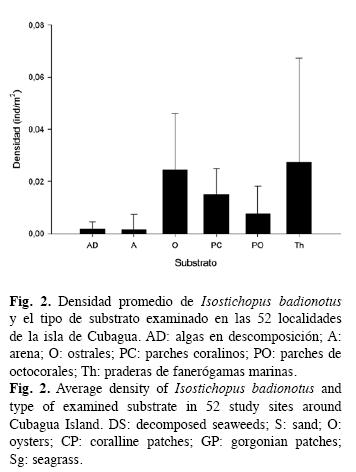
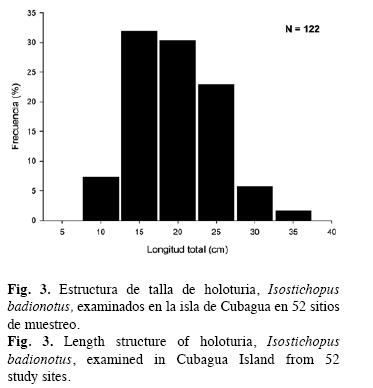
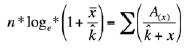
<body><![CDATA[<br> <br style="font-family: verdana;"> </span></font></font><font size="2"><span style="font-family: verdana;"><span  style="font-weight: bold;">&Aacute;rea de Estudio:</span> La isla de Cubagua se encuentra ubicada en la regi&oacute;n nororiental de </span></font><font size="2"><span  style="font-family: verdana;">Venezuela, sobre la plataforma continental, entre los paralelos 10&ordm;47&#8217; - 10&ordm;51&#8217; N y 61&ordm;8&#8217; - 64&ordm;14&#8217; W; a una distancia aproximada de 8km al sur de la Isla de Margarita (Pta. Piedras) y a unos 20km al norte de la Pen&iacute;nsula de Araya. Adem&aacute;s, tiene una superficie de 22 438km2 con una longitud aproximada de costa de 25km (Cervig&oacute;n 1997).</span></font><br  style="font-family: verdana;"> <font size="2"></font><br  style="font-family: verdana; font-weight: bold;"> <font size="2"><span style="font-family: verdana;"><span  style="font-weight: bold;">Trabajo de campo:</span> La zona costera de la isla de Cubagua fue dividida en 52 celdas imaginarias de 1km<sup>2</sup>, hasta una profundidad m&aacute;xima de 18m. Durante enero-diciembre 2008, se eligieron al azar, y sin reposici&oacute;n, un m&iacute;nimo de cuatro y un m&aacute;ximo de cinco celdas por mes, hasta cubrir todos los alrededores de la isla. Cada una de las celdas o estaciones de muestreo fue reconocida al ubicar el punto central, y en campo mediante el uso de un Sistema de Posicionamiento Global (GPS). Dentro de cada celda, una pareja de buzos con equipo aut&oacute;nomo, traz&oacute; un total de cuatro r&eacute;plicas al azar de transectas bandas de 10m de largo x 5m de ancho (50m<sup>2</sup> cada una), y totaliz&oacute; un &aacute;rea de muestreo de 200m<sup>2</sup> por celda de muestreo. Entonces, se realizaron 208 transectos banda, para un total de 10 400m<sup>2</sup> de substrato evaluado alrededor de toda la isla de Cubagua. Se contaron cada uno de los ejemplares de I. badionotus y H. mexicana observados; para evitar extraerlos del agua y ocasionarles alg&uacute;n tipo de da&ntilde;o, cada individuo fue medido in situ de la boca al ano, con una cinta m&eacute;trica flexible (Fuente-Betancourt et al. 2001).</span></font><br  style="font-family: verdana;"> <font size="2"></font><br style="font-family: verdana;"> <font size="2"><span style="font-family: verdana;">Para examinar la relaci&oacute;n entre la densidad de pepinos (ind/m<sup>2</sup>) y el tipo de fondo, fueron categorizadas, mediante estimaciones visuales, cada una de las 52 celdas en funci&oacute;n al tipo de substrato dominante observado en cada transecto. Posteriormente, se compar&oacute; dicha abundancia utilizando un an&aacute;lisis de varianza desbalanceado de un factor, con seis niveles de substrato. Los tipos de substrato considerados fueron: arena, ostrales, parches coralinos, parches de octocoral, praderas de faner&oacute;gamas (Thalassia testudinum) y algas en descomposici&oacute;n.</span></font><br  style="font-family: verdana;"> <font size="2"></font><br style="font-family: verdana;"> <font size="2"><span style="font-family: verdana;">Para determinar el tipo de distribuci&oacute;n de los organismos en el &aacute;rea de estudio, se estim&oacute; en primer lugar el cociente entre la varianza y la media de la densidad de organismos observados en campo, para cada una de las especies. Una vez descartado el patr&oacute;n de distribuci&oacute;n uniforme (cociente entre la varianza y la media de la densidad&gt;1), se determinaron las frecuencias de aparici&oacute;n de organismos por transectas, y las frecuencias esperadas para una distribuci&oacute;n binomial negativa (asociada a distribuciones agregadas), y se us&oacute; un estimado preliminar de k (par&aacute;metro que describe la medida de agregaci&oacute;n de los organismos) mediante la siguiente f&oacute;rmula:</span></font><br style="font-family: verdana;"> <br style="font-family: verdana;">     <div style="text-align: center;"><img alt=""  src="/img/revistas/rbt/v59n2/a24ia.jpg"  style="width: 76px; height: 50px;"><br style="font-family: verdana;"> </div> <br style="font-family: verdana;"> <font size="2"><span style="font-family: verdana;">Luego, se calcul&oacute; k por m&aacute;xima verosimilitud, resolviendo iterativamente, y tratando de igualar las 2 ecuaciones siguientes:    <br> <br style="font-family: verdana;"> </span></font>     <div style="text-align: center;"><img alt=""  src="/img/revistas/rbt/v59n2/a24ib.jpg"  style="width: 193px; height: 50px;"><br style="font-family: verdana;"> </div> <br style="font-family: verdana;"> <font size="2"><span style="font-family: verdana;">donde, A(x) es la suma de las frecuencias observadas superiores a x para cada x, y donde x corresponde al n&uacute;mero de organismos encontrados en cada celda de muestreo (Elliot 1977). </span></font><br  style="font-family: verdana;"> <font size="2"></font><br style="font-family: verdana;"> <font size="2"><span style="font-family: verdana;">Las zonas con elevadas proporciones de j&oacute;venes fueron identificadas cuando el porcentaje de individuos menores o iguales a 15cm de longitud total superaban el 65% de los ejemplares encontrados por celda (en zonas con m&aacute;s de 2 individuos). La talla utilizada para diferenciar j&oacute;venes de adultos (15cm) fue elegida en funci&oacute;n del rango de talla observado, y por la talla de madurez sexual se&ntilde;alada por Le&oacute;n &amp; Cabrera (1994) para I. badionotus (18cm) y la indicada por Guzm&aacute;n &amp; Guevara (2003) de 13 y 20cm de Lt para I. badionotus y H. mexicana respectivamente.</span></font><br  style="font-family: verdana;"> <font size="2"></font><br style="font-family: verdana;"> <font size="2"><span style="font-family: verdana;">Finalmente, al utilizar el programa Arc-View, fueron realizados los mapas de distribuci&oacute;n y densidad de ambas especies, clasificando los rangos de dichos mapas por quartiles.</span></font><br  style="font-family: verdana;"> <font size="2"></font><br style="font-family: verdana;"> <font size="2"><font size="3"><span style="font-family: verdana;"><span  style="font-weight: bold;">Resultados    <br> <br style="font-family: verdana;"> </span></span></font></font><font size="2"><span  style="font-family: verdana;">En el 38% de las estaciones de muestreo hubo presencia de la especie I. badionotus. Fueron observados un total de 122 ejemplares, con un rango de abundancia entre 0-24 individuos por estaci&oacute;n. Se detect&oacute; una densidad promedio de 0.011ind/m<sup>2</sup> (C.I. 95%=0.005- 0.017), lo que corresponde a unos 117ind/ha, aproximadamente. La mayor densidad registrada (0.12ind/m<sup>2</sup>) se observ&oacute; en la regi&oacute;n suroeste de la isla. Sin embargo, es en la zona oriental donde se encuentra el mayor n&uacute;mero de celdas </span></font><font size="2"><span  style="font-family: verdana;">con presencia de I. badionotus. En cambio, en el noreste de la isla no fue observado ning&uacute;n individuo (<a  href="/img/revistas/rbt/v59n2/a24i1.jpg">Fig. 1</a>).</span></font><br  style="font-family: verdana;"> <font size="2"></font><br style="font-family: verdana;"> <font size="2"><span style="font-family: verdana;">La distribuci&oacute;n geogr&aacute;fica de I. badionotus estuvo estrechamente relacionada con el tipo de substrato predominante en cada una de las zonas (ANOVA, gl<sub>res</sub>.=46, p=0.03). </span></font><font  size="2"><span style="font-family: verdana;">La especie muestra un patr&oacute;n de distribuci&oacute;n espacial agregada, con un estimado del par&aacute;metro de agregaci&oacute;n k de 0.20 (mientras menor es el valor de k, mayor es el grado de agregaci&oacute;n de los organismos en el espacio). La mayor densidad de I. badionotus se encontr&oacute; en praderas de faner&oacute;gamas marinas y en ostrales (0.027&plusmn;0.04ind/m<sup>2</sup> y 0.024&plusmn;0.02ind/ m<sup>2</sup>, respectivamente); en parches de corales y </span></font><font  size="2"><span style="font-family: verdana;">octocorales se detect&oacute; una abundancia intermedia (0.015&plusmn;0.01ind/m<sup>2</sup> y 0.008&plusmn;0.01ind/ m<sup>2</sup>, respectivamente); y la menor densidad se observ&oacute; en comunidades de fondos arenosos y algas descompuestas (0.001&plusmn;0.01ind/m<sup>2</sup> y 0.002&plusmn;0.003ind/m<sup>2</sup>, respectivamente) (<a  href="#figura2">Fig. 2</a>).    <br>     <br>     <br> </span></font>     <div style="text-align: center;"><font size="2"><a name="figura2"></a><img  alt="" src="/img/revistas/rbt/v59n2/a24i2.jpg"  style="width: 356px; height: 472px;">    <br> <span style="font-family: verdana;"></span></font>    ]]></body>
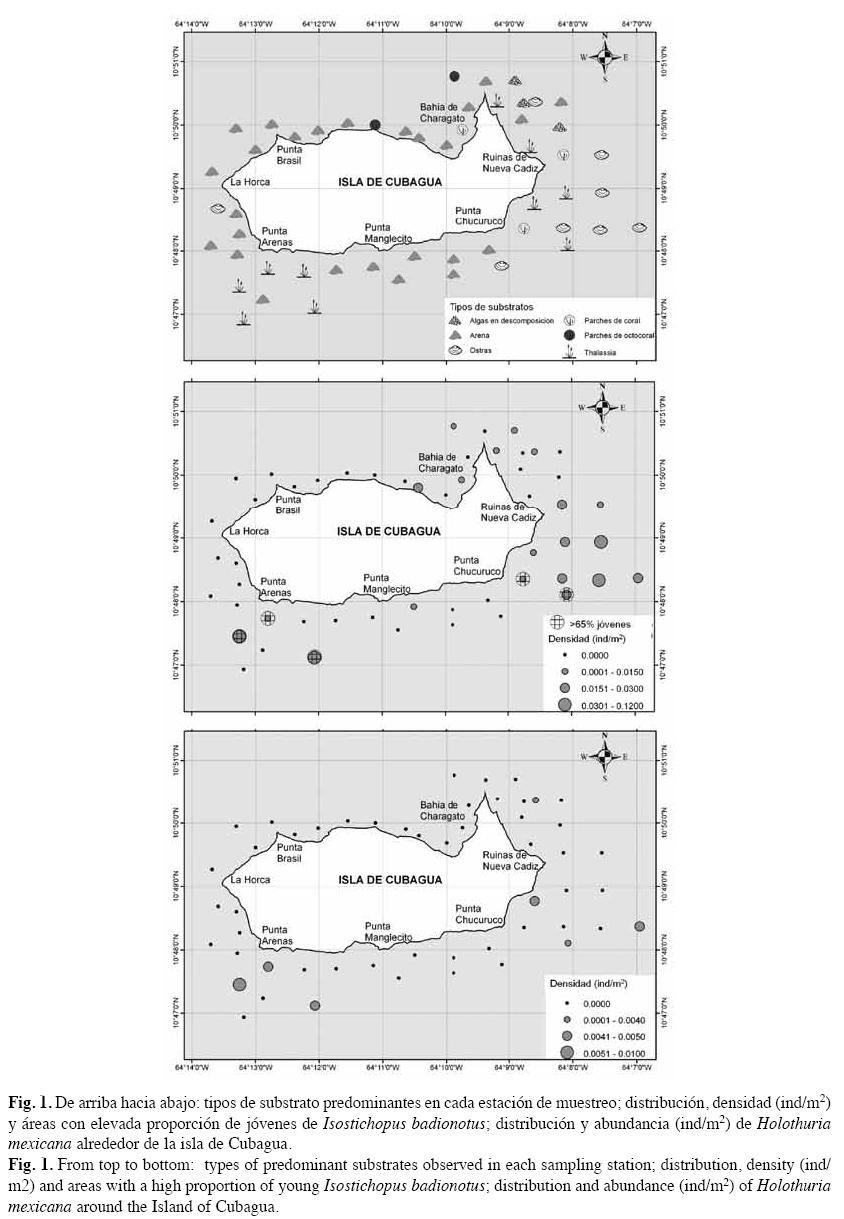
<body><![CDATA[<br> <font size="2"><span style="font-family: verdana;"></span></font></div> <br style="font-family: verdana;"> <font size="2"><span style="font-family: verdana;">I. badionotus present&oacute; un rango de tallas de 7 a 35cm, con un promedio de 18&plusmn;5.3cm </span></font><font size="2"><span  style="font-family: verdana;">(<a href="#figura3">Fig. 3</a>). En el 50% de las estaciones fueron observados adultos y j&oacute;venes juntos; en un 45% s&oacute;lo adultos, y un 5% solo j&oacute;venes. Se identificaron cinco zonas ubicadas al suroeste y sureste de la isla, con m&aacute;s de 65% de individuos inmaduros (<a  href="/img/revistas/rbt/v59n2/a24i1.jpg">Fig. 1</a>).    <br>     <br> </span></font>     <div style="text-align: center;"><font size="2"><span  style="font-family: verdana;"></span></font>    <br> <a name="figura3"></a><img alt=""  src="/img/revistas/rbt/v59n2/a24i3.jpg"  style="width: 373px; height: 388px;">    <br> <br style="font-family: verdana;"> <font size="2"><span style="font-family: verdana;"></span></font></div> <br style="font-family: verdana;"> <font size="2"><span style="font-family: verdana;">S&oacute;lo en el 13.5% de las estaciones de muestreo se detect&oacute; la presencia de H. mexicana, para un total de ocho individuos en toda el &aacute;rea, con una densidad promedio de 0.001ind/m<sup>2</sup> (C.I. 95%=0.0002-0.0013) equivalente a unos 7.7ind/ha (<a  href="/img/revistas/rbt/v59n2/a24i1.jpg">Fig. 1</a>). La especie muestra escasa agregaci&oacute;n, con coeficiente k de 1.34. No obstante, debido al escaso n&uacute;mero de ejemplares analizados, no se realizaron an&aacute;lisis de estructura de talla o de preferencia por alg&uacute;n tipo de substrato. Por lo tanto, su rango de tallas vari&oacute; entre 8 y 23cm, con un promedio de 16&plusmn;4.7cm. Se registr&oacute; un total de seis ejemplares adultos, y dos j&oacute;venes. Todos los individuos fueron observados solitarios, a excepci&oacute;n de una estaci&oacute;n donde se encontr&oacute; un adulto y un juvenil. Adem&aacute;s, en todas las estaciones con presencia de H. mexicana, tambi&eacute;n se encontr&oacute; I. badionotus.</span></font><br style="font-family: verdana;"> <font size="2"></font><br style="font-family: verdana;"> <font size="2"><font size="3"><span  style="font-family: verdana; font-weight: bold;">Discusi&oacute;n    <br>     <br style="font-family: verdana;">     </span></font></font><font size="2"><span style="font-family: verdana;">Las     mayores     ]]></body>
<body><![CDATA[abundancias y     densidades observadas para ambas especies,     corresponden a zonas donde el substrato predominante est&aacute;     compuesto por praderas de T. testudinum, lo que coincide con lo     reportado en otras &aacute;reas del pa&iacute;s (Conde et al. 1995).     Tambi&eacute;n se encontraron numerosas holoturias en substratos     cubiertos por los moluscos bivalvos: Pinctada imbricata Roding 1798 y     Arca zebra (Swaison 1833).</span></font><br      style="font-family: verdana;">     <font size="2"></font><br style="font-family: verdana;">     ]]></body>
<body><![CDATA[<font size="2"><span style="font-family: verdana;">As&iacute; pues,     I.badionotus     habita de forma agregada, hecho que     coincide con la reproducci&oacute;n denso-dependiente reportada para     este grupo de organismos (Bruckner et al. 2003). Esta especie, muestra     una mayor presencia en praderas de faner&oacute;gamas y ostrales,     aunque, fue tambi&eacute;n observada entre arenales, parches de     corales, octocorales y zonas de algas en descomposici&oacute;n, pero en     menores densidades. En cambio, H. mexicana solo fue observada de manera     dispersa en zonas de faner&oacute;gamas</span></font><br     ]]></body>
<body><![CDATA[ style="font-family: verdana;">     <font size="2"><span style="font-family: verdana;">(50%) y ostrales     (50%).</span></font><br style="font-family: verdana;">     <font size="2"></font><br style="font-family: verdana;">     <font size="2"><span style="font-family: verdana;">En la regi&oacute;n     este de Cubagua     se observ&oacute; una mayor     heterogeneidad de substratos, y m&aacute;s amplia distribuci&oacute;n     de ambas especies. No obstante, en la zona suroeste destacan dos de las     mayores concentraciones observadas para I. badionotus, en la cual se     ]]></body>
<body><![CDATA[incluyen tres &aacute;reas donde m&aacute;s del 65% de los ejemplares     analizados fueron inferiores a 15cm, y tambi&eacute;n estuvo presente     H. mexicana. La presencia de la faner&oacute;gama T. testudinum, puede     explicar estas densidades. En la zona noroeste no fue observado     ning&uacute;n ejemplar, hecho relacionado a la presencia de grandes     extensiones de arenales,</span></font><br style="font-family: verdana;">     <font size="2"><span style="font-family: verdana;">substrato que     demostr&oacute; tener     la menor densidad de holoturias. En     el Caribe paname&ntilde;o, ambas especies muestran mayores densidades     ]]></body>
<body><![CDATA[en &aacute;reas con substratos heterog&eacute;neos compuestos por     pastos marinos y arrecifes coralinos (Guzm&aacute;n &amp; Guevara 2002).</span></font><br      style="font-family: verdana;">     <font size="2"></font><br style="font-family: verdana;">     <font size="2"><span style="font-family: verdana;">Para I. badionotus     se estimaron     117ind/ha, valor superior al calculado     con datos provenientes de la pesquer&iacute;a por Buitrago &amp; Boada     (1996) (90ind/ha), e inferior al estimado con los datos de Le&oacute;n     &amp; Cabrera en 1994 (entre 530 y 1 100ind./ha).</span></font><br     ]]></body>
<body><![CDATA[ style="font-family: verdana;">     <font size="2"></font><br style="font-family: verdana;">     <font size="2"><span style="font-family: verdana;">H. mexicana muestra     una     disminuci&oacute;n en su densidad (7.7ind/ha)     en comparaci&oacute;n con el rango de 110 a 210ind/ha, observado por     Le&oacute;n &amp; Cabrera (1994); la cual coincide en que esta especie     es menos abundante que I. badionotus; caso contrario a lo observado en     el Caribe paname&ntilde;o (Guzm&aacute;n &amp; Guevara 2002). Mientras     que, H. mexicana, por alcanzar tallas mayores (Laboy-Nieves &amp; Conde     ]]></body>
<body><![CDATA[2006) puede haber sido extra&iacute;da en mayores cantidades y esto     podr&iacute;a explicar la menor cantidad observada.</span></font><br      style="font-family: verdana;">     <font size="2"></font><br style="font-family: verdana;">     <font size="2"><span style="font-family: verdana;">Los estudios previos     realizados en     la zona son escasos, y los que     existen fueron desarrollados varios a&ntilde;os despu&eacute;s de la     instalaci&oacute;n de empresas coreanas dedicadas a la     extracci&oacute;n del recurso en las costas orientales de Venezuela,     ]]></body>
<body><![CDATA[por lo que la abundancia natural del recurso antes del inicio de la     pesquer&iacute;a es desconocida. En otras zonas del pa&iacute;s, como     el Parque Nacional Morrocoy, se han reportado densidades de 7 667     ind/ha (Conde 1997), y el promedio general calculado para el mar     Caribe, en el que se incluyen varias localidades ya explotadas por     pesquer&iacute;as, es de 6 585 ind/ha (Guzm&aacute;n &amp; Guevara     2002), por lo que probablemente las densidades registradas para Cubagua     son inferiores a las originales, y corroboran una lenta     recuperaci&oacute;n del recurso en respuesta a la intensa     extracci&oacute;n llevada a cabo antes de que se decretara la veda     ]]></body>
<body><![CDATA[total de la pesquer&iacute;a.</span></font><br      style="font-family: verdana;">     <font size="2"></font><br style="font-family: verdana;">     <font size="2"><span style="font-family: verdana;">Las densidades     reportadas pueden     estar siendo subestimadas, ya que este     estudio se llev&oacute; a cabo hasta una profundidad m&aacute;xima de     18m, pero se sabe que la extracci&oacute;n ilegal se realiza con     compresores de aire que poseen mangueras de unos 80m de largo, lo que     probablemente permite a los pescadores bajar hasta unos 35m de     ]]></body>
<body><![CDATA[profundidad para recolectar las holoturias.</span></font><br      style="font-family: verdana;">     <font size="2"></font><br style="font-family: verdana;">     <font size="2"><span style="font-family: verdana;">Para I. badionotus,     la estructura     de tallas fue pr&aacute;cticamente de     tipo unimodal con predominio de talla entre los 15 y 20cm. En general,     las poblaciones de holoturias est&aacute;n compuestas de individuos de     tallas similares (Sloan &amp; von Bodungen 1980, Laboy-Nieves &amp;     Conde 2006), entonces los j&oacute;venes son raros de encontrar, o     ]]></body>
<body><![CDATA[aparecen en poca cantidad (Shiell 2004a), adem&aacute;s de presentar     reclutamiento bajo y espor&aacute;dico (Uthicke et al. 2003, Shiell     2004b). Contrariamente, en el lado sur de Cubagua, se observaron zonas     con elevadas concentraciones de individuos con tallas inferiores a los     15cm (&gt;65%) y escasa presencia de adultos. El 80% de estas zonas     poseen un substrato predominante de praderas de faner&oacute;gamas, las     cuales deber&iacute;an ser consideradas como &aacute;reas prioritarias     de protecci&oacute;n integral para la especie.</span></font><br      style="font-family: verdana;">     <font size="2"></font><br style="font-family: verdana;">     ]]></body>
<body><![CDATA[<font size="2"><span style="font-family: verdana;">Fuente-Betancourt et     al. (2001)     indican un rango de tallas para H.     mexicana ubicado entre 17 y 51cm para aguas del Caribe mexicano.     Le&oacute;n &amp; Cabrera (1994) reportan para la isla de Cubagua     tallas m&aacute;ximas cercanas a 30cm en las dos especies estudiadas.     En general, H. mexicana es considerada como una especie de mayor     tama&ntilde;o en comparaci&oacute;n con I. badionotus (Laboy-Nieves     &amp; Conde 2006). En el presente trabajo, H. mexicana mostr&oacute;     una talla m&aacute;xima de 21cm y I. badionotus de 35cm. Sin embargo,     ]]></body>
<body><![CDATA[las diferentes metodolog&iacute;as utilizadas para medir las holoturias     entre los distintos trabajos, no permiten realizar una mejor     comparaci&oacute;n.</span></font><br style="font-family: verdana;">     <font size="2"></font><br style="font-family: verdana;">     <font size="2"><span style="font-family: verdana;">Implicaciones de     manejo:     Observaciones directas en el &aacute;rea de     estudio permiten inferir que la veda total implantada hace m&aacute;s     de diez a&ntilde;os (seg&uacute;n Gaceta Oficial N&ordm;195 del 19 de     julio de 1997) no se cumple. En septiembre de 2008 (durante las salidas     ]]></body>
<body><![CDATA[de muestreo), la Guardia Nacional detuvo una embarcaci&oacute;n con     buzos que utilizaban un compresor de aire para recolectar holoturias, y     donde se decomisaron aproximadamente unos 200 ejemplares, que no fueron     devueltos al agua, para ser usados como evidencia del delito. Sumado a     esto, la pesca il&iacute;cita no solo ocurre en la zona de estudio,     puesto que existen numerosas denuncias en los Parques Nacionales:     Mochima, Morrocoy, Archipi&eacute;lago de los Roques y las Aves     (Rodr&iacute;guez- Milliet &amp; Pauls 1998). Las pesquer&iacute;as en     veda, sin apropiada vigilancia y control, casi nunca cesan por     completo, puesto que los elevados precios de exportaci&oacute;n del     ]]></body>
<body><![CDATA[producto para mercados asi&aacute;ticos, son un fuerte incentivo para     que la pesca ilegal contin&uacute;e, sobre todo en sectores de bajos     recursos econ&oacute;micos. Purcell et al. (2010) se&ntilde;alan que     los precios de venta por kg de holoturia seca oscilan entre 300-     500USD. Por lo general, los elevados precios de venta del producto, en     comparaci&oacute;n con las bajas multas o la posibilidad de pago de     sobornos si son encontrados llevando a cabo pesca ilegal, incentivan a     que muchos pescadores tomen el riesgo, por estar conscientes de que las     p&eacute;rdidas son m&iacute;nimas. Adem&aacute;s, es necesario revisar     las v&iacute;as y formatos en que est&aacute; siendo exportado     ]]></body>
<body><![CDATA[ilegalmente el producto.</span></font><br style="font-family: verdana;">     <font size="2"></font><br style="font-family: verdana;">     <font size="2"><span style="font-family: verdana;">En muchas regiones     del mundo, la     pesca de pepino de mar aparece     repentinamente como una actividad muy lucrativa para los pescadores, lo     que trae como consecuencia el r&aacute;pido declive de las especies     objetivos una vez establecida la pesquer&iacute;a. Algunas poblaciones     agotadas no se recuperan inclusive despu&eacute;s de prohibirse por     completo la pesca, y pueden requerir unos 50 a&ntilde;os para lograrlo     ]]></body>
<body><![CDATA[(Bruckner et al. 2003).</span></font><br style="font-family: verdana;">     <font size="2"></font><br style="font-family: verdana;">     <font size="2"><span style="font-family: verdana;">Si asumimos que los     alrededores de     la isla de Cubagua poseen una     superficie aproximada de 45ha, con una abundancia homog&eacute;nea para     todo el &aacute;rea, igual a la observada para I. badionotus     (117ind/ha), permitir niveles de explotaci&oacute;n similares a los     reportados por Buitrago &amp; Boada (1996) (8hr por bote al d&iacute;a,     y capturas de 22ind/hora, &oacute; 176ind/d&iacute;a), podr&iacute;a     ]]></body>
<body><![CDATA[provocar que un solo bote agote el recurso en tan solo 29 d&iacute;as.     Ahora bien, la situaci&oacute;n podr&iacute;a ser m&aacute;s grave, ya     que la abundancia del recurso no es homog&eacute;nea, lo que conlleva a     que el esfuerzo de pesca se concentre tan s&oacute;lo en el lado sur y     este de la isla. Guzm&aacute;n &amp; Guevara (2002) para el Caribe     paname&ntilde;o se&ntilde;alan que de permitir niveles de     explotaci&oacute;n similares a los llevados a cabo en 1997 (25 000     ind/d&iacute;a), agotar&iacute;an las tres especies explotadas en la     zona (H. mexicana, I. badionotus y A. multifidus) en tan solo 9     d&iacute;as.</span></font><br style="font-family: verdana;">     ]]></body>
<body><![CDATA[<font size="2"></font><br style="font-family: verdana;">     <font size="2"><span style="font-family: verdana;">Por lo tanto, se     recomienda el     monitoreo continuo de las densidades de     holoturia en la regi&oacute;n oriental del pa&iacute;s, adem&aacute;s     de llevar a cabo estudios de reproducci&oacute;n y reclutamiento de     ambas especies. Continuar con la veda total, pero asegurar su     cumplimiento, puesto que las densidades de individuos todav&iacute;a     son muy bajas para abrir la pesquer&iacute;a. La Guardia Nacional e     INSOPESCA, al realizar decomisos de pesca ilegal, deber&iacute;an tomar     ]]></body>
<body><![CDATA[fotograf&iacute;as y devolver inmediatamente al agua los animales, en     lugar de conservarlos muertos como evidencia de pesca ilegal.</span></font><br      style="font-family: verdana;">     <font size="2"></font><br style="font-family: verdana;">     <font size="2"><span style="font-family: verdana;">Las &aacute;reas     marinas protegidas     son efectivas herramientas de     manejo que deben ser implementadas junto con otras regulaciones para     mantener los niveles estables de las pesquer&iacute;as (Purcell et al.     2010). La zona protegida m&aacute;s cercana a la isla de Cubagua, es el     ]]></body>
<body><![CDATA[Parque Nacional Laguna de la Restinga, pero por sus     caracter&iacute;sticas ecol&oacute;gicas no representa un refugio     importante para estas especies. En este sentido, Cubagua, ha sido     se&ntilde;alada con antiguas riquezas pesqueras actualmente agotadas     (Romero et al. 1999), y un alto valor hist&oacute;rico&nbsp;     (Cervig&oacute;n 1997), por lo que existen numerosas justificaciones     para protegerla y suficientes atractivos como para que los pescadores     residentes puedan obtener beneficios econ&oacute;micos proveniente de     actividades relacionadas al turismo. Entonces, se recomienda decretar     algunas zonas de veda donde se proh&iacute;ba por completo la pesca,     ]]></body>
<body><![CDATA[para poder asegurar la recuperaci&oacute;n de estas especies.</span></font><br      style="font-family: verdana;">     <font size="2"></font><br style="font-family: verdana;">     <font size="2"><span style="font-family: verdana;">En algunos     pa&iacute;ses, ya ha     sido planteado utilizar la acuicultura     para fines comerciales y de repoblaci&oacute;n como soluci&oacute;n a     la evidente sobreexplotaci&oacute;n del recurso (Conand 2001,     Toral-Granda et al. 2008, Azari et al. 2010). Inclusive, se han     desarrollado co-cultivos exitosos con camarones (Pitt et al. 2004,     ]]></body>
<body><![CDATA[Pursell et al. 2006). Ya que &eacute;stos &uacute;ltimos son el     principal rubro cultivado del pa&iacute;s (Lodeiros &amp; Freites     2008), habr&iacute;a que evaluar esta posibilidad para ambas especies     de holoturia, ya que muestran signos de declive poblacional.</span></font><br      style="font-family: verdana;">     <font size="2"></font><br style="font-family: verdana;">     <font size="2"><font size="3"><span      style="font-family: verdana; font-weight: bold;">Agradecimientos    <br> <br style="font-family: verdana;"> </span></font></font><font size="2"><span style="font-family: verdana;">Provita y fondo IEA por financiar el proyecto. Alexander Marcano y Alexis Marcano por toda la ayuda brindada en campo. A Jes&uacute;s Rosas y todo el personal que labora en la estaci&oacute;n cient&iacute;fica &#8220;Fernando Cervig&oacute;n&#8221; de la Universidad de Oriente en la Isla de Cubagua, por todo el apoyo log&iacute;stico. R&eacute;gulo L&oacute;pez (padre e hijo) por valiosa colaboraci&oacute;n. Jos&eacute; Silva por su ayuda en la realizaci&oacute;n de los mapas. Sebasti&aacute;n Rodr&iacute;guez y Gabriela P&eacute;rez por su asesor&iacute;a. H&eacute;ctor Guzm&aacute;n por el env&iacute;o de art&iacute;culos sobre el tema. Edlin Guerra por la lectura cr&iacute;tica del manuscrito. Denise Debrot y Richard Parkinson por la revisi&oacute;n del Abstrac. A los revisores an&oacute;nimos por sus acertadas sugerencias.    <br> <br style="font-family: verdana;"> </span></font><font size="2"></font> <hr style="width: 100%; height: 2px;"><font size="2"><font size="3"><span  style="font-family: verdana; font-weight: bold;">    ]]></body>
<body><![CDATA[<br> Referencias    <!-- ref --><br> <br style="font-family: verdana;"> </span></font></font><font size="2"><span style="font-family: verdana;">Aguilar, A. &amp; G. Ram&iacute;rez. 2002. Economic reasons, ecological actions and social consequences in the Mexican sea cucumber fishery. SPC Beche-de-mer Infor. Bull. 17: 33-36.    &nbsp;&nbsp;&nbsp;&nbsp;&nbsp;&nbsp;&nbsp;&nbsp;[&#160;<a href="javascript:void(0);" onclick="javascript: window.open('/scielo.php?script=sci_nlinks&ref=1766080&pid=S0034-7744201100020002400001&lng=','','width=640,height=500,resizable=yes,scrollbars=1,menubar=yes,');">Links</a>&#160;]<!-- end-ref --><!-- ref --></span></font><br  style="font-family: verdana;"> <font size="2"></font><br style="font-family: verdana;"> <font size="2"><span style="font-family: verdana;">Al-Rashdi, K. &amp; R. Claereboudt. 2010. Evidence of rapid overfishing of sea cucumbers in the Sultanate of Oman. SPC Beche-de-mer Infor. Bull. 30: 10-13.    &nbsp;&nbsp;&nbsp;&nbsp;&nbsp;&nbsp;&nbsp;&nbsp;[&#160;<a href="javascript:void(0);" onclick="javascript: window.open('/scielo.php?script=sci_nlinks&ref=1766081&pid=S0034-7744201100020002400002&lng=','','width=640,height=500,resizable=yes,scrollbars=1,menubar=yes,');">Links</a>&#160;]<!-- end-ref --><!-- ref --></span></font><br style="font-family: verdana;"> <font size="2"></font><br style="font-family: verdana;"> <font size="2"><span style="font-family: verdana;">Azari, D., B. Giraspy &amp; I. Walsalam. 2010. Aquaculture potential of the tropical sea cucumbers Holothuria scabra and H. lessoni in the Indo-Pacific region. SPC Beche-de-mer Infor. Bull. 30: 29-32.    &nbsp;&nbsp;&nbsp;&nbsp;&nbsp;&nbsp;&nbsp;&nbsp;[&#160;<a href="javascript:void(0);" onclick="javascript: window.open('/scielo.php?script=sci_nlinks&ref=1766082&pid=S0034-7744201100020002400003&lng=','','width=640,height=500,resizable=yes,scrollbars=1,menubar=yes,');">Links</a>&#160;]<!-- end-ref --><!-- ref --></span></font><br  style="font-family: verdana;"> <font size="2"></font><br style="font-family: verdana;"> <font size="2"><span style="font-family: verdana;">Baine, M. &amp; C. Poh. 1999. Sea cucumber fisheries in Malaysia, towards a conservation strategy. SPC Beche-de-mer Infor. Bull. 12: 6-10.    &nbsp;&nbsp;&nbsp;&nbsp;&nbsp;&nbsp;&nbsp;&nbsp;[&#160;<a href="javascript:void(0);" onclick="javascript: window.open('/scielo.php?script=sci_nlinks&ref=1766083&pid=S0034-7744201100020002400004&lng=','','width=640,height=500,resizable=yes,scrollbars=1,menubar=yes,');">Links</a>&#160;]<!-- end-ref --><!-- ref --></span></font><br  style="font-family: verdana;"> <font size="2"></font><br style="font-family: verdana;"> <font size="2"><span style="font-family: verdana;">Bruckner, A., K. Johnson &amp; J. Field. 2003. Conservation strategies for sea cucumber: can CITES Appendix II listing promote sustainable international trade? SPC Beche-de-mer Infor. Bull. 24: 1-10.    &nbsp;&nbsp;&nbsp;&nbsp;&nbsp;&nbsp;&nbsp;&nbsp;[&#160;<a href="javascript:void(0);" onclick="javascript: window.open('/scielo.php?script=sci_nlinks&ref=1766084&pid=S0034-7744201100020002400005&lng=','','width=640,height=500,resizable=yes,scrollbars=1,menubar=yes,');">Links</a>&#160;]<!-- end-ref --><!-- ref --></span></font><br  style="font-family: verdana;"> <font size="2"></font><br style="font-family: verdana;"> <font size="2"><span style="font-family: verdana;">Buitrago, J. &amp; J. Boada. 1996. La pesca de la holoturia Isostichopus badionotus en el oriente de Venezuela. Mem. Soc. Cien. Nat. La Salle 56: 33-40.    &nbsp;&nbsp;&nbsp;&nbsp;&nbsp;&nbsp;&nbsp;&nbsp;[&#160;<a href="javascript:void(0);" onclick="javascript: window.open('/scielo.php?script=sci_nlinks&ref=1766085&pid=S0034-7744201100020002400006&lng=','','width=640,height=500,resizable=yes,scrollbars=1,menubar=yes,');">Links</a>&#160;]<!-- end-ref --><!-- ref --></span></font><br style="font-family: verdana;"> <font size="2"></font><br style="font-family: verdana;"> <font size="2"><span style="font-family: verdana;">Cervig&oacute;n, F. 1997. Cubagua 500 a&ntilde;os. Fundaci&oacute;n Museo del Mar, Boca de R&iacute;o, Nueva Esparta, Venezuela.    &nbsp;&nbsp;&nbsp;&nbsp;&nbsp;&nbsp;&nbsp;&nbsp;[&#160;<a href="javascript:void(0);" onclick="javascript: window.open('/scielo.php?script=sci_nlinks&ref=1766086&pid=S0034-7744201100020002400007&lng=','','width=640,height=500,resizable=yes,scrollbars=1,menubar=yes,');">Links</a>&#160;]<!-- end-ref --><!-- ref --></span></font><br  style="font-family: verdana;"> <font size="2"></font><br style="font-family: verdana;"> <font size="2"><span style="font-family: verdana;">Conand, C. &amp; C. Hoffschir. 1991. Recent trends in sea cucumbers exploitation in New Caledonia. SPC Beche-de-mer Infor. Bull. 3: 5-7.    &nbsp;&nbsp;&nbsp;&nbsp;&nbsp;&nbsp;&nbsp;&nbsp;[&#160;<a href="javascript:void(0);" onclick="javascript: window.open('/scielo.php?script=sci_nlinks&ref=1766087&pid=S0034-7744201100020002400008&lng=','','width=640,height=500,resizable=yes,scrollbars=1,menubar=yes,');">Links</a>&#160;]<!-- end-ref --><!-- ref --></span></font><br  style="font-family: verdana;"> <font size="2"></font><br style="font-family: verdana;"> <font size="2"><span style="font-family: verdana;">Conand, C. 2001. Overview over the last decade of sea cucumber fisheries: what possibilities for a durable management?, p. 339-344. In M. Barker (ed.). Echinoderms 2000: Proceedings of the 10th International Conference. A. A. Balkema, Rotterdam, Holanda.    &nbsp;&nbsp;&nbsp;&nbsp;&nbsp;&nbsp;&nbsp;&nbsp;[&#160;<a href="javascript:void(0);" onclick="javascript: window.open('/scielo.php?script=sci_nlinks&ref=1766088&pid=S0034-7744201100020002400009&lng=','','width=640,height=500,resizable=yes,scrollbars=1,menubar=yes,');">Links</a>&#160;]<!-- end-ref --><!-- ref --></span></font><br  style="font-family: verdana;"> <font size="2"></font><br style="font-family: verdana;"> <font size="2"><span style="font-family: verdana;">Conde, J.E. 1997. Apr&egrave;s les b&eacute;b&eacute;s phoques, les concombres de mer. La Recherche 304: 61-64.    &nbsp;&nbsp;&nbsp;&nbsp;&nbsp;&nbsp;&nbsp;&nbsp;[&#160;<a href="javascript:void(0);" onclick="javascript: window.open('/scielo.php?script=sci_nlinks&ref=1766089&pid=S0034-7744201100020002400010&lng=','','width=640,height=500,resizable=yes,scrollbars=1,menubar=yes,');">Links</a>&#160;]<!-- end-ref --><!-- ref --></span></font><br  style="font-family: verdana;"> <font size="2"></font><br style="font-family: verdana;"> <font size="2"><span style="font-family: verdana;">Conde, J.E., A. Sambrano &amp; H. D&iacute;az. 1995. Sedimertivorous activity, density and spatial distribution of the deposit-feeding holothurians Holothuria Mexicana Ludwing and Isostichopus badionotus Selenka. Manuscrito, Caracas, Distrito Federal, Venezuela.    &nbsp;&nbsp;&nbsp;&nbsp;&nbsp;&nbsp;&nbsp;&nbsp;[&#160;<a href="javascript:void(0);" onclick="javascript: window.open('/scielo.php?script=sci_nlinks&ref=1766090&pid=S0034-7744201100020002400011&lng=','','width=640,height=500,resizable=yes,scrollbars=1,menubar=yes,');">Links</a>&#160;]<!-- end-ref --><!-- ref --></span></font><br  style="font-family: verdana;"> <font size="2"></font><br style="font-family: verdana;"> <font size="2"><span style="font-family: verdana;">Elliot, J.M. 1977. Some methods for the statistical analysis of samples of benthic invertebrates. Freshwater Biological Association, Ambleside, Inglaterra.    &nbsp;&nbsp;&nbsp;&nbsp;&nbsp;&nbsp;&nbsp;&nbsp;[&#160;<a href="javascript:void(0);" onclick="javascript: window.open('/scielo.php?script=sci_nlinks&ref=1766091&pid=S0034-7744201100020002400012&lng=','','width=640,height=500,resizable=yes,scrollbars=1,menubar=yes,');">Links</a>&#160;]<!-- end-ref --><!-- ref --></span></font><br style="font-family: verdana;"> <font size="2"></font><br style="font-family: verdana;"> <font size="2"><span style="font-family: verdana;">Fuente-Betancourt de la G.M., A. Jes&uacute;s-Navarrete, E. Sosa- Cordero &amp; M.D. Herrero-Perezrul. 2001. Assessment of the sea cucumber (Echinodermata; Holothuroidea) as potencial fishery resource in 274 Banco Chinchorro, Quintana Roo, Mexico. Bull. Mar. Sci. 68: 59-67.    &nbsp;&nbsp;&nbsp;&nbsp;&nbsp;&nbsp;&nbsp;&nbsp;[&#160;<a href="javascript:void(0);" onclick="javascript: window.open('/scielo.php?script=sci_nlinks&ref=1766092&pid=S0034-7744201100020002400013&lng=','','width=640,height=500,resizable=yes,scrollbars=1,menubar=yes,');">Links</a>&#160;]<!-- end-ref --><!-- ref --></span></font><br style="font-family: verdana;"> <font size="2"></font><br style="font-family: verdana;"> <font size="2"><span style="font-family: verdana;">Guzm&aacute;n, H. &amp; C. Guevara. 2002. Population structure, distribution and abundance of three commercial species of Sea Cucumber (Echinodermata) in Panama. Caribb. J. Sci. 38: 230-238.    &nbsp;&nbsp;&nbsp;&nbsp;&nbsp;&nbsp;&nbsp;&nbsp;[&#160;<a href="javascript:void(0);" onclick="javascript: window.open('/scielo.php?script=sci_nlinks&ref=1766093&pid=S0034-7744201100020002400014&lng=','','width=640,height=500,resizable=yes,scrollbars=1,menubar=yes,');">Links</a>&#160;]<!-- end-ref --><!-- ref --></span></font><br  style="font-family: verdana;"> <font size="2"></font><br style="font-family: verdana;"> <font size="2"><span style="font-family: verdana;">Guzm&aacute;n, H. &amp; C. Guevara. 2003. Reproductive cycle of two commercial species of sea cucumber (Echinodermata: Holothuroidea) from Caribbean Panama. Mar. Biol. 142: 271-279.    &nbsp;&nbsp;&nbsp;&nbsp;&nbsp;&nbsp;&nbsp;&nbsp;[&#160;<a href="javascript:void(0);" onclick="javascript: window.open('/scielo.php?script=sci_nlinks&ref=1766094&pid=S0034-7744201100020002400015&lng=','','width=640,height=500,resizable=yes,scrollbars=1,menubar=yes,');">Links</a>&#160;]<!-- end-ref --><!-- ref --></span></font><br  style="font-family: verdana;"> <font size="2"></font><br style="font-family: verdana;"> <font size="2"><span style="font-family: verdana;">Hasan, M. 2008. Fisheries status and management plan for Saudi Arabian sea cucumbers. SPC Beche-de-mer Infor. Bull. 28: 14-21.    &nbsp;&nbsp;&nbsp;&nbsp;&nbsp;&nbsp;&nbsp;&nbsp;[&#160;<a href="javascript:void(0);" onclick="javascript: window.open('/scielo.php?script=sci_nlinks&ref=1766095&pid=S0034-7744201100020002400016&lng=','','width=640,height=500,resizable=yes,scrollbars=1,menubar=yes,');">Links</a>&#160;]<!-- end-ref --><!-- ref --></span></font><br  style="font-family: verdana;"> <font size="2"></font><br style="font-family: verdana;"> <font size="2"><span style="font-family: verdana;">Hasan, M. 2009. Stock assessment of holothuroid populations in the Red Sea waters of Saudi Arabia. SPC Beche-de-mer Infor. Bull. 29: 31-37.    &nbsp;&nbsp;&nbsp;&nbsp;&nbsp;&nbsp;&nbsp;&nbsp;[&#160;<a href="javascript:void(0);" onclick="javascript: window.open('/scielo.php?script=sci_nlinks&ref=1766096&pid=S0034-7744201100020002400017&lng=','','width=640,height=500,resizable=yes,scrollbars=1,menubar=yes,');">Links</a>&#160;]<!-- end-ref --><!-- ref --></span></font><br  style="font-family: verdana;"> <font size="2"></font><br style="font-family: verdana;"> <font size="2"><span style="font-family: verdana;">Hearn, A. &amp; F. Pinillos. 2006. Baseline information on the warty sea cucumber Stichopus horrens in Santa Cruz, Gal&aacute;pagos, prior to the commencement of an illegal fishery. SPC Beche-de-mer Infor. Bull. 24: 3-10.    &nbsp;&nbsp;&nbsp;&nbsp;&nbsp;&nbsp;&nbsp;&nbsp;[&#160;<a href="javascript:void(0);" onclick="javascript: window.open('/scielo.php?script=sci_nlinks&ref=1766097&pid=S0034-7744201100020002400018&lng=','','width=640,height=500,resizable=yes,scrollbars=1,menubar=yes,');">Links</a>&#160;]<!-- end-ref --><!-- ref --></span></font><br style="font-family: verdana;"> <font size="2"></font><br style="font-family: verdana;"> <font size="2"><span style="font-family: verdana;">Holland, A. 1994. The beche-de-mer industry in the Solomon Islands: recent trends and suggestions for management. SPC Beche-de-mer Infor. Bull. 6: 2-9.    &nbsp;&nbsp;&nbsp;&nbsp;&nbsp;&nbsp;&nbsp;&nbsp;[&#160;<a href="javascript:void(0);" onclick="javascript: window.open('/scielo.php?script=sci_nlinks&ref=1766098&pid=S0034-7744201100020002400019&lng=','','width=640,height=500,resizable=yes,scrollbars=1,menubar=yes,');">Links</a>&#160;]<!-- end-ref --><!-- ref --></span></font><br style="font-family: verdana;"> <font size="2"></font><br style="font-family: verdana;"> <font size="2"><span style="font-family: verdana;">Laboy-Nieves, E. &amp; J.E. Conde. 2006. A new approach for measuring Holothuria mexicana and Isostichopus badionotus for stock assessments. SPC Beche-de-mer Infor. Bull. 24: 39-44.    &nbsp;&nbsp;&nbsp;&nbsp;&nbsp;&nbsp;&nbsp;&nbsp;[&#160;<a href="javascript:void(0);" onclick="javascript: window.open('/scielo.php?script=sci_nlinks&ref=1766099&pid=S0034-7744201100020002400020&lng=','','width=640,height=500,resizable=yes,scrollbars=1,menubar=yes,');">Links</a>&#160;]<!-- end-ref --><!-- ref --></span></font><br  style="font-family: verdana;"> <font size="2"></font><br style="font-family: verdana;"> <font size="2"><span style="font-family: verdana;">Le&oacute;n, L. &amp; T. Cabrera. 1994. Informe de avance sobre la pesquer&iacute;a del pepino de mar en las costas del nororiente de Venezuela. Informe T&eacute;cnico, Escuela de Ciencias Aplicadas del Mar, Universidad de Oriente, Boca de R&iacute;o, Nueva Esparta, Venezuela.    &nbsp;&nbsp;&nbsp;&nbsp;&nbsp;&nbsp;&nbsp;&nbsp;[&#160;<a href="javascript:void(0);" onclick="javascript: window.open('/scielo.php?script=sci_nlinks&ref=1766100&pid=S0034-7744201100020002400021&lng=','','width=640,height=500,resizable=yes,scrollbars=1,menubar=yes,');">Links</a>&#160;]<!-- end-ref --><!-- ref --></span></font><br style="font-family: verdana;"> <font size="2"></font><br style="font-family: verdana;"> <font size="2"><span style="font-family: verdana;">Leslie, J. 1992. Review of the beche-de-mer (sea cucumber) fishery in the Maldives, Programme Officer, Bay of Bengal Programme (April 1992). Bay of Bengal Programme, Madras, India.    &nbsp;&nbsp;&nbsp;&nbsp;&nbsp;&nbsp;&nbsp;&nbsp;[&#160;<a href="javascript:void(0);" onclick="javascript: window.open('/scielo.php?script=sci_nlinks&ref=1766101&pid=S0034-7744201100020002400022&lng=','','width=640,height=500,resizable=yes,scrollbars=1,menubar=yes,');">Links</a>&#160;]<!-- end-ref --><!-- ref --></span></font><br  style="font-family: verdana;"> <font size="2"></font><br style="font-family: verdana;"> <font size="2"><span style="font-family: verdana;">Lindsay, S. &amp; A. Simpson. 2004. Resource evaluation of current populations of two commercially harvested sea cucumber species (Actinopyga mauritiana and Stichopus chloronotus), and recommendations for management for Kosrae State, Federated States of Micronesia. SPC Beche-de-mer Infor. Bull. 19: 31-33.    &nbsp;&nbsp;&nbsp;&nbsp;&nbsp;&nbsp;&nbsp;&nbsp;[&#160;<a href="javascript:void(0);" onclick="javascript: window.open('/scielo.php?script=sci_nlinks&ref=1766102&pid=S0034-7744201100020002400023&lng=','','width=640,height=500,resizable=yes,scrollbars=1,menubar=yes,');">Links</a>&#160;]<!-- end-ref --><!-- ref --></span></font><br  style="font-family: verdana;"> <font size="2"></font><br style="font-family: verdana;"> <font size="2"><span style="font-family: verdana;">Lodeiros, C. &amp; L. Freites. 2008. Estado actual y perspectivas del cultivo de moluscos bivalvos en Venezuela, p.135-150. In A. Lovatelli, A. Farias &amp; I. Uriarte (eds.). Estado actual del cultivo y manejo de moluscos bivalvos y su proyeccion futura: factores que afectan su sustentabilidad en Am&eacute;rica Latina. FAO Actas de Pesca y Acuicultura. Roma, Italia.    &nbsp;&nbsp;&nbsp;&nbsp;&nbsp;&nbsp;&nbsp;&nbsp;[&#160;<a href="javascript:void(0);" onclick="javascript: window.open('/scielo.php?script=sci_nlinks&ref=1766103&pid=S0034-7744201100020002400024&lng=','','width=640,height=500,resizable=yes,scrollbars=1,menubar=yes,');">Links</a>&#160;]<!-- end-ref --><!-- ref --></span></font><br  style="font-family: verdana;"> <font size="2"></font><br style="font-family: verdana;"> <font size="2"><span style="font-family: verdana;">Lokani, P. 1990. Beche-de-mer research and development in Papua New Guinea. SPC Beche-de-mer Infor. Bull. 2: 8-11.    &nbsp;&nbsp;&nbsp;&nbsp;&nbsp;&nbsp;&nbsp;&nbsp;[&#160;<a href="javascript:void(0);" onclick="javascript: window.open('/scielo.php?script=sci_nlinks&ref=1766104&pid=S0034-7744201100020002400025&lng=','','width=640,height=500,resizable=yes,scrollbars=1,menubar=yes,');">Links</a>&#160;]<!-- end-ref --><!-- ref --></span></font><br  style="font-family: verdana;"> <font size="2"></font><br style="font-family: verdana;"> <font size="2"><span style="font-family: verdana;">Lokani, P. 1996. Illegal fishing for sea-cucumber (bechedemer) by Papua New Guinea artisanal fishermen in the Torres Strait protected zone. SPC Beche-de-mer Infor. Bull. 8: 2-6.    &nbsp;&nbsp;&nbsp;&nbsp;&nbsp;&nbsp;&nbsp;&nbsp;[&#160;<a href="javascript:void(0);" onclick="javascript: window.open('/scielo.php?script=sci_nlinks&ref=1766105&pid=S0034-7744201100020002400026&lng=','','width=640,height=500,resizable=yes,scrollbars=1,menubar=yes,');">Links</a>&#160;]<!-- end-ref --><!-- ref --></span></font><br  style="font-family: verdana;"> <font size="2"></font><br style="font-family: verdana;"> <font size="2"><span style="font-family: verdana;">Otero-Villanueva, M. &amp; V. Ngoc. 2007. Sea cucumber fisheries around Phu Quoc Archipelago: A cross-border </span></font><font size="2"><span  style="font-family: verdana;">issue between South Vietnam and Cambodia. SPC Beche-de-mer Infor. Bull. 25: 32-36.    &nbsp;&nbsp;&nbsp;&nbsp;&nbsp;&nbsp;&nbsp;&nbsp;[&#160;<a href="javascript:void(0);" onclick="javascript: window.open('/scielo.php?script=sci_nlinks&ref=1766106&pid=S0034-7744201100020002400027&lng=','','width=640,height=500,resizable=yes,scrollbars=1,menubar=yes,');">Links</a>&#160;]<!-- end-ref --><!-- ref --></span></font><br style="font-family: verdana;"> <font size="2"></font><br style="font-family: verdana;"> <font size="2"><span style="font-family: verdana;">Pitt, R., N. Duy, T. Duy &amp; H. Long. 2004. Sandfish (Holothuria scabra) with shrimp (Penaeus monodon) co-culture tank trials. Beche-de-mer Infor. Bull. 20: 12-22.    &nbsp;&nbsp;&nbsp;&nbsp;&nbsp;&nbsp;&nbsp;&nbsp;[&#160;<a href="javascript:void(0);" onclick="javascript: window.open('/scielo.php?script=sci_nlinks&ref=1766107&pid=S0034-7744201100020002400028&lng=','','width=640,height=500,resizable=yes,scrollbars=1,menubar=yes,');">Links</a>&#160;]<!-- end-ref --><!-- ref --></span></font><br  style="font-family: verdana;"> <font size="2"></font><br style="font-family: verdana;"> <font size="2"><span style="font-family: verdana;">Powell, J. &amp; J. Gibbs. 1995. A report from Galapagos. Tree 10: 351-354.    &nbsp;&nbsp;&nbsp;&nbsp;&nbsp;&nbsp;&nbsp;&nbsp;[&#160;<a href="javascript:void(0);" onclick="javascript: window.open('/scielo.php?script=sci_nlinks&ref=1766108&pid=S0034-7744201100020002400029&lng=','','width=640,height=500,resizable=yes,scrollbars=1,menubar=yes,');">Links</a>&#160;]<!-- end-ref --><!-- ref --></span></font><br style="font-family: verdana;"> <font size="2"></font><br style="font-family: verdana;"> <font size="2"><span style="font-family: verdana;">Pursell, S., J. Patrois &amp; N. Fraisse. 2006. Experimental evaluation of co-culture of juvenile sea cucumbers, Holothuria scabra (Jaeger), with juvenile blue shrimp, Litopenaeus stylirostris (Stimpson). Aquac. Res. 515-522.    &nbsp;&nbsp;&nbsp;&nbsp;&nbsp;&nbsp;&nbsp;&nbsp;[&#160;<a href="javascript:void(0);" onclick="javascript: window.open('/scielo.php?script=sci_nlinks&ref=1766109&pid=S0034-7744201100020002400030&lng=','','width=640,height=500,resizable=yes,scrollbars=1,menubar=yes,');">Links</a>&#160;]<!-- end-ref --><!-- ref --></span></font><br style="font-family: verdana;"> <font size="2"></font><br style="font-family: verdana;"> <font size="2"><span style="font-family: verdana;">Purcell, S., A. Lovatelli, M. Vasconcellos &amp; Y. Ye. 2010. Managing sea cucumber fisheries with an ecosystem approach. FAO Fish. Aquac. Tech. Paper 520, Roma, Italia.    &nbsp;&nbsp;&nbsp;&nbsp;&nbsp;&nbsp;&nbsp;&nbsp;[&#160;<a href="javascript:void(0);" onclick="javascript: window.open('/scielo.php?script=sci_nlinks&ref=1766110&pid=S0034-7744201100020002400031&lng=','','width=640,height=500,resizable=yes,scrollbars=1,menubar=yes,');">Links</a>&#160;]<!-- end-ref --><!-- ref --></span></font><br  style="font-family: verdana;"> <font size="2"></font><br style="font-family: verdana;"> <font size="2"><span style="font-family: verdana;">Rasolofonirina, R. &amp; C. Conand. 1998. Sea cucumber exploitation in the Toliara region of south-west Madagascar. Beche-de-mer Infor. Bull. 10: 10-13.    &nbsp;&nbsp;&nbsp;&nbsp;&nbsp;&nbsp;&nbsp;&nbsp;[&#160;<a href="javascript:void(0);" onclick="javascript: window.open('/scielo.php?script=sci_nlinks&ref=1766111&pid=S0034-7744201100020002400032&lng=','','width=640,height=500,resizable=yes,scrollbars=1,menubar=yes,');">Links</a>&#160;]<!-- end-ref --><!-- ref --></span></font><br style="font-family: verdana;"> <font size="2"></font><br style="font-family: verdana;"> <font size="2"><span style="font-family: verdana;">Rodr&iacute;guez-Milliet, E. &amp; S.M. Pauls. 1998. Sea cucumbers fisheries in Venezuela, p. 513-516. <span style="font-style: italic;">In</span> R. Mooi &amp; M. Telford (eds.). Echinoderms. Balkema, San Francisco, Estados Unidos.    &nbsp;&nbsp;&nbsp;&nbsp;&nbsp;&nbsp;&nbsp;&nbsp;[&#160;<a href="javascript:void(0);" onclick="javascript: window.open('/scielo.php?script=sci_nlinks&ref=1766112&pid=S0034-7744201100020002400033&lng=','','width=640,height=500,resizable=yes,scrollbars=1,menubar=yes,');">Links</a>&#160;]<!-- end-ref --><!-- ref --></span></font><br  style="font-family: verdana;"> <font size="2"></font><br style="font-family: verdana;"> <font size="2"><span style="font-family: verdana;">Romero, A., S. Chilbert &amp; M. Eisenhart. 1999. Cubagua&#8217;s Pearl-Oyster beds: the first depletion of a natural resource caused by Europeans in the American Continent. J. Polit. Ecol. 6: 57-78.    &nbsp;&nbsp;&nbsp;&nbsp;&nbsp;&nbsp;&nbsp;&nbsp;[&#160;<a href="javascript:void(0);" onclick="javascript: window.open('/scielo.php?script=sci_nlinks&ref=1766113&pid=S0034-7744201100020002400034&lng=','','width=640,height=500,resizable=yes,scrollbars=1,menubar=yes,');">Links</a>&#160;]<!-- end-ref --><!-- ref --></span></font><br  style="font-family: verdana;"> <font size="2"></font><br style="font-family: verdana;"> <font size="2"><span style="font-family: verdana;">Sambrano, A., H. D&iacute;az &amp; J.E. Conde. 1990. Caracterizaci&oacute;n de la ingesta en Isostichopus badionotus (Selenka) y Holothuria mexicana (Ludwing). (Echinodermata:</span></font><br  style="font-family: verdana;"> <font size="2"><span style="font-family: verdana;">Holothuroidea). Caribb. J. Sci. 26: 45-51.    &nbsp;&nbsp;&nbsp;&nbsp;&nbsp;&nbsp;&nbsp;&nbsp;[&#160;<a href="javascript:void(0);" onclick="javascript: window.open('/scielo.php?script=sci_nlinks&ref=1766114&pid=S0034-7744201100020002400035&lng=','','width=640,height=500,resizable=yes,scrollbars=1,menubar=yes,');">Links</a>&#160;]<!-- end-ref --><!-- ref --></span></font><br style="font-family: verdana;"> <font size="2"></font><br style="font-family: verdana;"> <font size="2"><span style="font-family: verdana;">Samyn, Y. 2000. Conservation of aspidochirotid holothurians in the littoral waters of Kenya. SPC Beche-demer Infor. Bull. 13: 12-17.    &nbsp;&nbsp;&nbsp;&nbsp;&nbsp;&nbsp;&nbsp;&nbsp;[&#160;<a href="javascript:void(0);" onclick="javascript: window.open('/scielo.php?script=sci_nlinks&ref=1766115&pid=S0034-7744201100020002400036&lng=','','width=640,height=500,resizable=yes,scrollbars=1,menubar=yes,');">Links</a>&#160;]<!-- end-ref --><!-- ref --></span></font><br  style="font-family: verdana;"> <font size="2"></font><br style="font-family: verdana;"> <font size="2"><span style="font-family: verdana;">Shiell, G. 2004a. Field observation of juvenile sea cucumber. SPC Beche-de-mer Infor. Bull. 20: 6-11.    &nbsp;&nbsp;&nbsp;&nbsp;&nbsp;&nbsp;&nbsp;&nbsp;[&#160;<a href="javascript:void(0);" onclick="javascript: window.open('/scielo.php?script=sci_nlinks&ref=1766116&pid=S0034-7744201100020002400037&lng=','','width=640,height=500,resizable=yes,scrollbars=1,menubar=yes,');">Links</a>&#160;]<!-- end-ref --><!-- ref --></span></font><br  style="font-family: verdana;"> <font size="2"></font><br style="font-family: verdana;"> <font size="2"><span style="font-family: verdana;">Shiell, G. 2004b. Questionnarie on the field observation of juvenile sea cucumber. SPC Beche-de-mer Infor. Bull. 19: 41.    &nbsp;&nbsp;&nbsp;&nbsp;&nbsp;&nbsp;&nbsp;&nbsp;[&#160;<a href="javascript:void(0);" onclick="javascript: window.open('/scielo.php?script=sci_nlinks&ref=1766117&pid=S0034-7744201100020002400038&lng=','','width=640,height=500,resizable=yes,scrollbars=1,menubar=yes,');">Links</a>&#160;]<!-- end-ref --><!-- ref --></span></font><br  style="font-family: verdana;"> <font size="2"></font><br style="font-family: verdana;"> <font size="2"><span style="font-family: verdana;">Sloan, N.A. &amp; B. Von Bodungen. 1980. Distribution and feeding of the sea cucumber Isostichopus badionotus in relation to shelter and sediment criteria of the Bermuda platform. Mar. Ecol. Prog. Ser. 2: 257-264.    &nbsp;&nbsp;&nbsp;&nbsp;&nbsp;&nbsp;&nbsp;&nbsp;[&#160;<a href="javascript:void(0);" onclick="javascript: window.open('/scielo.php?script=sci_nlinks&ref=1766118&pid=S0034-7744201100020002400039&lng=','','width=640,height=500,resizable=yes,scrollbars=1,menubar=yes,');">Links</a>&#160;]<!-- end-ref --><!-- ref --></span></font><br style="font-family: verdana;"> <font size="2"></font><br style="font-family: verdana;"> <font size="2"><span style="font-family: verdana;">Stewart, B. 1993. Evidence for a marked decline of bechedemer populations in the Suva and Beqa areas of Fiji, and apreliminary description of a method of identifying beche-de-mer individuals based on characteristicbody wrinkles. University of the SouthPacific Marine Studies Technical Report No.1/93. University of Otago, Nueva Zelandia.    &nbsp;&nbsp;&nbsp;&nbsp;&nbsp;&nbsp;&nbsp;&nbsp;[&#160;<a href="javascript:void(0);" onclick="javascript: window.open('/scielo.php?script=sci_nlinks&ref=1766119&pid=S0034-7744201100020002400040&lng=','','width=640,height=500,resizable=yes,scrollbars=1,menubar=yes,');">Links</a>&#160;]<!-- end-ref --><!-- ref --></span></font><br  style="font-family: verdana;"> <font size="2"></font><br style="font-family: verdana;"> <font size="2"><span style="font-family: verdana;">Toral-Granda, V., A. Lovatelli &amp; M. Vasconcellos. 2008. Sea cucumbers. A global review on fishery and trade. Beche-de-mer Infor. Bull. 27: 4-6.    &nbsp;&nbsp;&nbsp;&nbsp;&nbsp;&nbsp;&nbsp;&nbsp;[&#160;<a href="javascript:void(0);" onclick="javascript: window.open('/scielo.php?script=sci_nlinks&ref=1766120&pid=S0034-7744201100020002400041&lng=','','width=640,height=500,resizable=yes,scrollbars=1,menubar=yes,');">Links</a>&#160;]<!-- end-ref --><!-- ref --></span></font><br style="font-family: verdana;"> <font size="2"></font><br style="font-family: verdana;"> <font size="2"><span style="font-family: verdana;">Tsuda, R. 1997. Survey of commercially-valued sea cucumbers in the Saipan Lagoon, CNMI Beche-demer Infor. Bull. 9: 15-17.    &nbsp;&nbsp;&nbsp;&nbsp;&nbsp;&nbsp;&nbsp;&nbsp;[&#160;<a href="javascript:void(0);" onclick="javascript: window.open('/scielo.php?script=sci_nlinks&ref=1766121&pid=S0034-7744201100020002400042&lng=','','width=640,height=500,resizable=yes,scrollbars=1,menubar=yes,');">Links</a>&#160;]<!-- end-ref --><!-- ref --></span></font><br  style="font-family: verdana;"> <font size="2"></font><br style="font-family: verdana;"> <font size="2"><span style="font-family: verdana;">Uthicke, S., D. Welch &amp; J. Benzie. 2003. Slow growth and lack of recovery in overfished holothurians on the Great Barrier Reef: evidence from DNA fingerprints and repeated large-scale surveys. Conserv. Biol. 18: 1395-1404.    &nbsp;&nbsp;&nbsp;&nbsp;&nbsp;&nbsp;&nbsp;&nbsp;[&#160;<a href="javascript:void(0);" onclick="javascript: window.open('/scielo.php?script=sci_nlinks&ref=1766122&pid=S0034-7744201100020002400043&lng=','','width=640,height=500,resizable=yes,scrollbars=1,menubar=yes,');">Links</a>&#160;]<!-- end-ref --><!-- ref --></span></font><br style="font-family: verdana;"> <font size="2"></font><br style="font-family: verdana;"> <font size="2"><span style="font-family: verdana;">Uthicke, S. &amp; C. Conand. 2005. Local examples of beche-de-mer overfishing: An initial summary and request for information. SPC Beche-de-mer Infor. Bull. 21: 9-14.    &nbsp;&nbsp;&nbsp;&nbsp;&nbsp;&nbsp;&nbsp;&nbsp;[&#160;<a href="javascript:void(0);" onclick="javascript: window.open('/scielo.php?script=sci_nlinks&ref=1766123&pid=S0034-7744201100020002400044&lng=','','width=640,height=500,resizable=yes,scrollbars=1,menubar=yes,');">Links</a>&#160;]<!-- end-ref --><br>     <br>     <br> <a name="Correspondencia"></a>Correspondencia a: </span></font><font  size="2"><span style="font-family: verdana;">Alejandro Tagliafico: </span></font><font  size="2"><span style="font-family: verdana;">Escuela de Ciencias Aplicadas del Mar, N&uacute;cleo de Nueva Esparta, Universidad de Oriente, Boca de R&iacute;o, Isla de </span></font><font  size="2"><span style="font-family: verdana;">Margarita, Venezuela; <a href="mailto:atagliafico@hotmail.com">atagliafico@hotmail.com</a></span></font>    <br> <font size="2"><span style="font-family: verdana;">Mar&iacute;a Salom&eacute; Rangel</span></font><font size="2"><span  style="font-family: verdana;">: Departamento de Ciencias, N&uacute;cleo de Nueva Esparta, Universidad de Oriente, Guatamare, Isla de Margarita,</span></font><br  style="font-family: verdana;"> <font size="2"><span style="font-family: verdana;">Venezuela; <a href="mailto:salome453@gmail.com">salome453@gmail.com</a></span></font>    <br> <font size="2"><span style="font-family: verdana;">N&eacute;stor Rago</span></font>: <font size="2"><span style="font-family: verdana;">Maestr&iacute;a en Ciencias Marinas y Costeras. Universidad Nacional de Costa Rica; <a href="mmailto:nestorrago@yahoo.es">nestorrago@yahoo.es </a>    ]]></body>
<body><![CDATA[<br>     <br> </span></font> </div> <hr  style="width: 100%; height: 2px; margin-left: 0px; margin-right: 0px;">     <div style="text-align: center;"><font size="2"><span  style="font-family: verdana;">Recibido 30-VII-2010. Corregido 10-XI-2010. Aceptado 14-XII-2010.</span></font></div>      ]]></body><back>
<ref-list>
<ref id="B1">
<nlm-citation citation-type="journal">
<person-group person-group-type="author">
<name>
<surname><![CDATA[Aguilar]]></surname>
<given-names><![CDATA[A]]></given-names>
</name>
<name>
<surname><![CDATA[Ramírez]]></surname>
<given-names><![CDATA[G]]></given-names>
</name>
</person-group>
<article-title xml:lang="en"><![CDATA[Economic reasons, ecological actions and social consequences in the Mexican sea cucumber fishery]]></article-title>
<source><![CDATA[SPC Beche-de-mer Infor. Bull]]></source>
<year>2002</year>
<volume>17</volume>
<page-range>33-36</page-range></nlm-citation>
</ref>
<ref id="B2">
<nlm-citation citation-type="journal">
<person-group person-group-type="author">
<name>
<surname><![CDATA[Al-Rashdi]]></surname>
<given-names><![CDATA[K.]]></given-names>
</name>
<name>
<surname><![CDATA[Claereboudt]]></surname>
<given-names><![CDATA[R.]]></given-names>
</name>
</person-group>
<article-title xml:lang="en"><![CDATA[vidence of rapid overfishing of sea cucumbers in the Sultanate of Oman.]]></article-title>
<source><![CDATA[SPC Beche-de-mer Infor. Bull.]]></source>
<year>2010</year>
<volume>30</volume>
<page-range>10-13</page-range></nlm-citation>
</ref>
<ref id="B3">
<nlm-citation citation-type="journal">
<person-group person-group-type="author">
<name>
<surname><![CDATA[Azari]]></surname>
<given-names><![CDATA[D.]]></given-names>
</name>
<name>
<surname><![CDATA[Giraspy]]></surname>
<given-names><![CDATA[B.]]></given-names>
</name>
<name>
<surname><![CDATA[Walsalam]]></surname>
<given-names><![CDATA[I.]]></given-names>
</name>
</person-group>
<article-title xml:lang="en"><![CDATA[Aquaculture potential of the tropical sea cucumbers Holothuria scabra and H. lessoni in the Indo-Pacific region]]></article-title>
<source><![CDATA[SPC Beche-de-mer Infor. Bull.]]></source>
<year>2010</year>
<volume>30</volume>
<page-range>29-32</page-range></nlm-citation>
</ref>
<ref id="B4">
<nlm-citation citation-type="journal">
<person-group person-group-type="author">
<name>
<surname><![CDATA[Baine]]></surname>
<given-names><![CDATA[M.]]></given-names>
</name>
<name>
<surname><![CDATA[Poh]]></surname>
<given-names><![CDATA[C.]]></given-names>
</name>
</person-group>
<article-title xml:lang="en"><![CDATA[Sea cucumber fisheries in Malaysia, towards a conservation strategy]]></article-title>
<source><![CDATA[SPC Beche-de-mer Infor. Bull.]]></source>
<year>1999</year>
<volume>12</volume>
<page-range>6-10</page-range></nlm-citation>
</ref>
<ref id="B5">
<nlm-citation citation-type="journal">
<person-group person-group-type="author">
<name>
<surname><![CDATA[Bruckner]]></surname>
<given-names><![CDATA[A.]]></given-names>
</name>
<name>
<surname><![CDATA[Johnson]]></surname>
<given-names><![CDATA[K.]]></given-names>
</name>
<name>
<surname><![CDATA[Fiel]]></surname>
<given-names><![CDATA[J.]]></given-names>
</name>
</person-group>
<article-title xml:lang="en"><![CDATA[Conservation strategies for sea cucumber:: can CITES Appendix II listing promote sustainable international trade?]]></article-title>
<source><![CDATA[SPC Beche-de-mer Infor. Bull.]]></source>
<year>2003</year>
<volume>24</volume>
<page-range>1-10</page-range></nlm-citation>
</ref>
<ref id="B6">
<nlm-citation citation-type="journal">
<person-group person-group-type="author">
<name>
<surname><![CDATA[Buitrago]]></surname>
<given-names><![CDATA[J.]]></given-names>
</name>
<name>
<surname><![CDATA[Boada]]></surname>
<given-names><![CDATA[J.]]></given-names>
</name>
</person-group>
<article-title xml:lang="es"><![CDATA[La pesca de la holoturia Isostichopus badionotus en el oriente de Venezuela]]></article-title>
<source><![CDATA[Mem. Soc. Cien. Nat. La Salle]]></source>
<year>1996</year>
<volume>56</volume>
<page-range>33-40</page-range></nlm-citation>
</ref>
<ref id="B7">
<nlm-citation citation-type="book">
<person-group person-group-type="author">
<name>
<surname><![CDATA[Cervigón]]></surname>
<given-names><![CDATA[F]]></given-names>
</name>
</person-group>
<source><![CDATA[Cubagua 500 años]]></source>
<year>1997</year>
<publisher-loc><![CDATA[Boca de RíoNueva Esparta ]]></publisher-loc>
<publisher-name><![CDATA[Fundación Museo del Mar]]></publisher-name>
</nlm-citation>
</ref>
<ref id="B8">
<nlm-citation citation-type="journal">
<person-group person-group-type="author">
<name>
<surname><![CDATA[Conand]]></surname>
<given-names><![CDATA[C.]]></given-names>
</name>
<name>
<surname><![CDATA[Hoffschir]]></surname>
<given-names><![CDATA[C.]]></given-names>
</name>
</person-group>
<article-title xml:lang="en"><![CDATA[Recent trends in sea cucumbers exploitation in New Caledonia]]></article-title>
<source><![CDATA[SPC Beche-de-mer Infor. Bull.]]></source>
<year>1991</year>
<volume>3</volume>
<page-range>5-7</page-range></nlm-citation>
</ref>
<ref id="B9">
<nlm-citation citation-type="book">
<person-group person-group-type="author">
<name>
<surname><![CDATA[Conand]]></surname>
<given-names><![CDATA[C.]]></given-names>
</name>
</person-group>
<article-title xml:lang="en"><![CDATA[Overview over the last decade of sea cucumber fisheries:: what possibilities for a durable management?]]></article-title>
<person-group person-group-type="editor">
<name>
<surname><![CDATA[Barker]]></surname>
<given-names><![CDATA[M.]]></given-names>
</name>
</person-group>
<source><![CDATA[Echinoderms 2000:: Proceedings of the 10th International ConferenceA. A.]]></source>
<year>2001</year>
<page-range>339-344</page-range><publisher-loc><![CDATA[^eRotterdam Rotterdam]]></publisher-loc>
<publisher-name><![CDATA[Balkema]]></publisher-name>
</nlm-citation>
</ref>
<ref id="B10">
<nlm-citation citation-type="journal">
<person-group person-group-type="author">
<name>
<surname><![CDATA[Conde]]></surname>
<given-names><![CDATA[J.E.]]></given-names>
</name>
</person-group>
<article-title xml:lang="fr"><![CDATA[Après les bébés phoques, les concombres de mer]]></article-title>
<source><![CDATA[La Recherche]]></source>
<year>1997</year>
<volume>304</volume>
<page-range>61-64</page-range></nlm-citation>
</ref>
<ref id="B11">
<nlm-citation citation-type="">
<person-group person-group-type="author">
<name>
<surname><![CDATA[Conde]]></surname>
<given-names><![CDATA[J.E.]]></given-names>
</name>
<name>
<surname><![CDATA[Sambrano]]></surname>
<given-names><![CDATA[A.]]></given-names>
</name>
<name>
<surname><![CDATA[Díaz]]></surname>
<given-names><![CDATA[H.]]></given-names>
</name>
</person-group>
<source><![CDATA[Sedimertivorous activity, density and spatial distribution of the deposit-feeding holothurians Holothuria Mexicana Ludwing and Isostichopus badionotus Selenka]]></source>
<year>1995</year>
<publisher-loc><![CDATA[^eCaracas, Distrito Federal Caracas, Distrito Federal]]></publisher-loc>
</nlm-citation>
</ref>
<ref id="B12">
<nlm-citation citation-type="book">
<person-group person-group-type="author">
<name>
<surname><![CDATA[Elliot]]></surname>
<given-names><![CDATA[J.M.]]></given-names>
</name>
</person-group>
<source><![CDATA[Some methods for the statistical analysis of samples of benthic invertebrates]]></source>
<year>1977</year>
<publisher-loc><![CDATA[Ambleside ]]></publisher-loc>
<publisher-name><![CDATA[Freshwater Biological Association]]></publisher-name>
</nlm-citation>
</ref>
<ref id="B13">
<nlm-citation citation-type="journal">
<person-group person-group-type="author">
<name>
<surname><![CDATA[Fuente-Betancourt de la]]></surname>
<given-names><![CDATA[G.M.]]></given-names>
</name>
<name>
<surname><![CDATA[Jesús-Navarrete]]></surname>
<given-names><![CDATA[A.]]></given-names>
</name>
<name>
<surname><![CDATA[Sosa- Cordero]]></surname>
<given-names><![CDATA[E.]]></given-names>
</name>
<name>
<surname><![CDATA[Herrero-Perezrul]]></surname>
<given-names><![CDATA[M.D.]]></given-names>
</name>
</person-group>
<article-title xml:lang="en"><![CDATA[Assessment of the sea cucumber (Echinodermata; Holothuroidea) as potencial fishery resource in 274 Banco Chinchorro, Quintana Roo, Mexico]]></article-title>
<source><![CDATA[Bull. Mar. Sci.]]></source>
<year>2001</year>
<volume>68</volume>
<page-range>59-67</page-range></nlm-citation>
</ref>
<ref id="B14">
<nlm-citation citation-type="journal">
<person-group person-group-type="author">
<name>
<surname><![CDATA[Guzmán]]></surname>
<given-names><![CDATA[H.]]></given-names>
</name>
<name>
<surname><![CDATA[Guevara]]></surname>
<given-names><![CDATA[C.]]></given-names>
</name>
</person-group>
<article-title xml:lang="en"><![CDATA[Population structure, distribution and abundance of three commercial species of Sea Cucumber (Echinodermata) in Panama]]></article-title>
<source><![CDATA[Caribb. J. Sci.]]></source>
<year>2002</year>
<volume>38</volume>
<page-range>230-238</page-range></nlm-citation>
</ref>
<ref id="B15">
<nlm-citation citation-type="journal">
<person-group person-group-type="author">
<name>
<surname><![CDATA[Guzmán]]></surname>
<given-names><![CDATA[H.]]></given-names>
</name>
<name>
<surname><![CDATA[Guevara]]></surname>
<given-names><![CDATA[C.]]></given-names>
</name>
</person-group>
<article-title xml:lang="en"><![CDATA[Reproductive cycle of two commercial species of sea cucumber (Echinodermata: Holothuroidea) from Caribbean Panama]]></article-title>
<source><![CDATA[Mar. Biol.]]></source>
<year>2003</year>
<volume>142</volume>
<page-range>271-279</page-range></nlm-citation>
</ref>
<ref id="B16">
<nlm-citation citation-type="journal">
<person-group person-group-type="author">
<name>
<surname><![CDATA[Hasan]]></surname>
<given-names><![CDATA[M.]]></given-names>
</name>
</person-group>
<article-title xml:lang="en"><![CDATA[Fisheries status and management plan for Saudi Arabian sea cucumbers]]></article-title>
<source><![CDATA[SPC Beche-de-mer Infor. Bull.]]></source>
<year>2008</year>
<volume>28</volume>
<page-range>14-21</page-range></nlm-citation>
</ref>
<ref id="B17">
<nlm-citation citation-type="journal">
<person-group person-group-type="author">
<name>
<surname><![CDATA[Hasan]]></surname>
<given-names><![CDATA[M.]]></given-names>
</name>
</person-group>
<article-title xml:lang="en"><![CDATA[tock assessment of holothuroid populations in the Red Sea waters of Saudi Arabia]]></article-title>
<source><![CDATA[SPC Beche-de-mer Infor. Bull.]]></source>
<year>2009</year>
<volume>29</volume>
<page-range>31-37</page-range></nlm-citation>
</ref>
<ref id="B18">
<nlm-citation citation-type="journal">
<person-group person-group-type="author">
<name>
<surname><![CDATA[Hearn]]></surname>
<given-names><![CDATA[A.]]></given-names>
</name>
<name>
<surname><![CDATA[Pinillos]]></surname>
<given-names><![CDATA[F.]]></given-names>
</name>
</person-group>
<article-title xml:lang="en"><![CDATA[Baseline information on the warty sea cucumber Stichopus horrens in Santa Cruz, Galápagos, prior to the commencement of an illegal fishery]]></article-title>
<source><![CDATA[SPC Beche-de-mer Infor. Bull]]></source>
<year>2006</year>
<volume>24</volume>
<page-range>3-10</page-range></nlm-citation>
</ref>
<ref id="B19">
<nlm-citation citation-type="journal">
<person-group person-group-type="author">
<name>
<surname><![CDATA[Holland]]></surname>
<given-names><![CDATA[A]]></given-names>
</name>
</person-group>
<article-title xml:lang="en"><![CDATA[The beche-de-mer industry in the Solomon Islands: recent trends and suggestions for management]]></article-title>
<source><![CDATA[SPC Beche-de-mer Infor. Bull]]></source>
<year>1994</year>
<volume>6</volume>
<page-range>2-9</page-range></nlm-citation>
</ref>
<ref id="B20">
<nlm-citation citation-type="journal">
<person-group person-group-type="author">
<name>
<surname><![CDATA[Laboy-Nieves]]></surname>
<given-names><![CDATA[E]]></given-names>
</name>
<name>
<surname><![CDATA[Conde]]></surname>
<given-names><![CDATA[J.E]]></given-names>
</name>
</person-group>
<article-title xml:lang="en"><![CDATA[A new approach for measuring Holothuria mexicana and Isostichopus badionotus for stock assessments]]></article-title>
<source><![CDATA[SPC Beche-de-mer Infor. Bull]]></source>
<year>2006</year>
<volume>24</volume>
<page-range>39-44</page-range></nlm-citation>
</ref>
<ref id="B21">
<nlm-citation citation-type="book">
<person-group person-group-type="author">
<name>
<surname><![CDATA[León]]></surname>
<given-names><![CDATA[L.]]></given-names>
</name>
<name>
<surname><![CDATA[Cabrera]]></surname>
<given-names><![CDATA[T.]]></given-names>
</name>
</person-group>
<source><![CDATA[Informe de avance sobre la pesquería del pepino de mar en las costas del nororiente de Venezuela: Informe Técnico]]></source>
<year>1994</year>
<publisher-loc><![CDATA[^eNueva Esparta Nueva Esparta]]></publisher-loc>
<publisher-name><![CDATA[Escuela de Ciencias Aplicadas del Mar, Universidad de Oriente, Boca de Río]]></publisher-name>
</nlm-citation>
</ref>
<ref id="B22">
<nlm-citation citation-type="book">
<person-group person-group-type="author">
<name>
<surname><![CDATA[Leslie]]></surname>
<given-names><![CDATA[J.]]></given-names>
</name>
</person-group>
<source><![CDATA[Review of the beche-de-mer (sea cucumber) fishery in the Maldives, Programme Officer, Bay of Bengal Programme (April 1992).]]></source>
<year>1992</year>
<publisher-loc><![CDATA[^eMadras Madras]]></publisher-loc>
<publisher-name><![CDATA[Bay of Bengal Programme]]></publisher-name>
</nlm-citation>
</ref>
<ref id="B23">
<nlm-citation citation-type="journal">
<person-group person-group-type="author">
<name>
<surname><![CDATA[Lindsay]]></surname>
<given-names><![CDATA[S.]]></given-names>
</name>
<name>
<surname><![CDATA[Simpson]]></surname>
<given-names><![CDATA[A.]]></given-names>
</name>
</person-group>
<article-title xml:lang="en"><![CDATA[Resource evaluation of current populations of two commercially harvested sea cucumber species (Actinopyga mauritiana and Stichopus chloronotus), and recommendations for management for Kosrae State, Federated States of Micronesia.]]></article-title>
<source><![CDATA[SPC Beche-de-mer Infor. Bull.]]></source>
<year>2004</year>
<volume>19</volume>
<page-range>31-33</page-range></nlm-citation>
</ref>
<ref id="B24">
<nlm-citation citation-type="book">
<person-group person-group-type="author">
<name>
<surname><![CDATA[Lodeiros]]></surname>
<given-names><![CDATA[C.]]></given-names>
</name>
<name>
<surname><![CDATA[Freites]]></surname>
<given-names><![CDATA[L.]]></given-names>
</name>
</person-group>
<article-title xml:lang="es"><![CDATA[Estado actual y perspectivas del cultivo de moluscos bivalvos en Venezuela]]></article-title>
<person-group person-group-type="editor">
<name>
<surname><![CDATA[Lovatelli]]></surname>
<given-names><![CDATA[A.]]></given-names>
</name>
<name>
<surname><![CDATA[Farias]]></surname>
<given-names><![CDATA[A.]]></given-names>
</name>
<name>
<surname><![CDATA[Uriarte]]></surname>
<given-names><![CDATA[I.]]></given-names>
</name>
</person-group>
<source><![CDATA[Estado actual del cultivo y manejo de moluscos bivalvos y su proyeccion futura:: factores que afectan su sustentabilidad en América Latina]]></source>
<year>2008</year>
<page-range>135-150</page-range><publisher-loc><![CDATA[^eRoma Roma]]></publisher-loc>
<publisher-name><![CDATA[FAO Actas de Pesca y Acuicultura]]></publisher-name>
</nlm-citation>
</ref>
<ref id="B25">
<nlm-citation citation-type="journal">
<person-group person-group-type="author">
<name>
<surname><![CDATA[Lokani]]></surname>
<given-names><![CDATA[P.]]></given-names>
</name>
</person-group>
<article-title xml:lang="en"><![CDATA[Beche-de-mer research and development in Papua New Guinea]]></article-title>
<source><![CDATA[SPC Beche-de-mer Infor. Bull.]]></source>
<year>1990</year>
<volume>2</volume>
<page-range>8-11</page-range></nlm-citation>
</ref>
<ref id="B26">
<nlm-citation citation-type="journal">
<person-group person-group-type="author">
<name>
<surname><![CDATA[Lokani]]></surname>
<given-names><![CDATA[P.]]></given-names>
</name>
</person-group>
<article-title xml:lang="en"><![CDATA[Illegal fishing for sea-cucumber (bechedemer) by Papua New Guinea artisanal fishermen in the Torres Strait protected zone]]></article-title>
<source><![CDATA[SPC Beche-de-mer Infor. Bull.]]></source>
<year>1996</year>
<volume>8</volume>
<page-range>2-6</page-range></nlm-citation>
</ref>
<ref id="B27">
<nlm-citation citation-type="journal">
<person-group person-group-type="author">
<name>
<surname><![CDATA[Otero-Villanueva]]></surname>
<given-names><![CDATA[M]]></given-names>
</name>
<name>
<surname><![CDATA[Ngoc]]></surname>
<given-names><![CDATA[V]]></given-names>
</name>
</person-group>
<article-title xml:lang="en"><![CDATA[Sea cucumber fisheries around Phu Quoc Archipelago: A cross-border issue between South Vietnam and Cambodia]]></article-title>
<source><![CDATA[SPC Beche-de-mer Infor. Bull]]></source>
<year>2007</year>
<volume>25</volume>
<page-range>32-36</page-range></nlm-citation>
</ref>
<ref id="B28">
<nlm-citation citation-type="journal">
<person-group person-group-type="author">
<name>
<surname><![CDATA[Pitt]]></surname>
<given-names><![CDATA[R.]]></given-names>
</name>
<name>
<surname><![CDATA[Duy]]></surname>
<given-names><![CDATA[N.]]></given-names>
</name>
<name>
<surname><![CDATA[Duy]]></surname>
<given-names><![CDATA[T.]]></given-names>
</name>
<name>
<surname><![CDATA[Long]]></surname>
<given-names><![CDATA[H.]]></given-names>
</name>
</person-group>
<article-title xml:lang="en"><![CDATA[Sandfish (Holothuria scabra) with shrimp (Penaeus monodon) co-culture tank trials]]></article-title>
<source><![CDATA[Beche-de-mer Infor. Bull.]]></source>
<year>2004</year>
<volume>20</volume>
<page-range>12-22</page-range></nlm-citation>
</ref>
<ref id="B29">
<nlm-citation citation-type="journal">
<person-group person-group-type="author">
<name>
<surname><![CDATA[Powell]]></surname>
<given-names><![CDATA[J.]]></given-names>
</name>
<name>
<surname><![CDATA[Gibbs]]></surname>
<given-names><![CDATA[J.]]></given-names>
</name>
</person-group>
<article-title xml:lang="en"><![CDATA[A report from Galapagos]]></article-title>
<source><![CDATA[Tree]]></source>
<year>1995</year>
<volume>10</volume>
<page-range>351-354</page-range></nlm-citation>
</ref>
<ref id="B30">
<nlm-citation citation-type="journal">
<person-group person-group-type="author">
<name>
<surname><![CDATA[Pursell]]></surname>
<given-names><![CDATA[S.]]></given-names>
</name>
<name>
<surname><![CDATA[Patrois]]></surname>
<given-names><![CDATA[J.]]></given-names>
</name>
<name>
<surname><![CDATA[Fraisse]]></surname>
<given-names><![CDATA[N.]]></given-names>
</name>
</person-group>
<article-title xml:lang="en"><![CDATA[Experimental evaluation of co-culture of juvenile sea cucumbers, Holothuria scabra (Jaeger), with juvenile blue shrimp, Litopenaeus stylirostris (Stimpson)]]></article-title>
<source><![CDATA[Aquac. Res.]]></source>
<year>2006</year>
<page-range>515-522</page-range></nlm-citation>
</ref>
<ref id="B31">
<nlm-citation citation-type="book">
<person-group person-group-type="author">
<name>
<surname><![CDATA[Purcell]]></surname>
<given-names><![CDATA[S]]></given-names>
</name>
<name>
<surname><![CDATA[Lovatelli]]></surname>
<given-names><![CDATA[A.]]></given-names>
</name>
<name>
<surname><![CDATA[Vasconcellos]]></surname>
<given-names><![CDATA[M.]]></given-names>
</name>
<name>
<surname><![CDATA[Ye]]></surname>
<given-names><![CDATA[Y.]]></given-names>
</name>
</person-group>
<source><![CDATA[Managing sea cucumber fisheries with an ecosystem approach.]]></source>
<year>2010</year>
<publisher-loc><![CDATA[^eRoma Roma]]></publisher-loc>
<publisher-name><![CDATA[FAO Fish. Aquac. Tech. Paper]]></publisher-name>
</nlm-citation>
</ref>
<ref id="B32">
<nlm-citation citation-type="journal">
<person-group person-group-type="author">
<name>
<surname><![CDATA[Rasolofonirina]]></surname>
<given-names><![CDATA[R.]]></given-names>
</name>
<name>
<surname><![CDATA[Conand]]></surname>
<given-names><![CDATA[C.]]></given-names>
</name>
</person-group>
<article-title xml:lang="en"><![CDATA[Sea cucumber exploitation in the Toliara region of south-west Madagascar]]></article-title>
<source><![CDATA[Beche-de-mer Infor. Bull.]]></source>
<year>1998</year>
<volume>10</volume>
<page-range>10-13</page-range></nlm-citation>
</ref>
<ref id="B33">
<nlm-citation citation-type="book">
<person-group person-group-type="author">
<name>
<surname><![CDATA[Rodríguez-Milliet]]></surname>
<given-names><![CDATA[E.]]></given-names>
</name>
<name>
<surname><![CDATA[Pauls]]></surname>
<given-names><![CDATA[S.M.]]></given-names>
</name>
</person-group>
<article-title xml:lang="en"><![CDATA[Sea cucumbers fisheries in Venezuela]]></article-title>
<person-group person-group-type="editor">
<name>
<surname><![CDATA[Mooi]]></surname>
<given-names><![CDATA[R.]]></given-names>
</name>
<name>
<surname><![CDATA[Telford]]></surname>
<given-names><![CDATA[M.]]></given-names>
</name>
</person-group>
<source><![CDATA[Echinoderms]]></source>
<year>1998</year>
<page-range>513-516</page-range><publisher-loc><![CDATA[^eSan Francisco San Francisco]]></publisher-loc>
<publisher-name><![CDATA[Balkema]]></publisher-name>
</nlm-citation>
</ref>
<ref id="B34">
<nlm-citation citation-type="journal">
<person-group person-group-type="author">
<name>
<surname><![CDATA[Romero]]></surname>
<given-names><![CDATA[A]]></given-names>
</name>
<name>
<surname><![CDATA[Chilbert]]></surname>
<given-names><![CDATA[S]]></given-names>
</name>
<name>
<surname><![CDATA[Eisenhart]]></surname>
<given-names><![CDATA[M]]></given-names>
</name>
</person-group>
<article-title xml:lang="en"><![CDATA[Cubagua&#8217;s Pearl-Oyster beds: the first depletion of a natural resource caused by Europeans in the American Continent]]></article-title>
<source><![CDATA[J. Polit. Ecol]]></source>
<year>1999</year>
<volume>6</volume>
<page-range>57-78</page-range></nlm-citation>
</ref>
<ref id="B35">
<nlm-citation citation-type="journal">
<person-group person-group-type="author">
<name>
<surname><![CDATA[Sambrano]]></surname>
<given-names><![CDATA[A.]]></given-names>
</name>
<name>
<surname><![CDATA[Díaz]]></surname>
<given-names><![CDATA[H.]]></given-names>
</name>
<name>
<surname><![CDATA[Conde]]></surname>
<given-names><![CDATA[J.E.]]></given-names>
</name>
</person-group>
<article-title xml:lang="es"><![CDATA[Caracterización de la ingesta en Isostichopus badionotus (Selenka) y Holothuria mexicana (Ludwing). (Echinodermata: Holothuroidea)]]></article-title>
<source><![CDATA[Caribb. J. Sci.]]></source>
<year>1990</year>
<volume>26</volume>
<page-range>45-51</page-range></nlm-citation>
</ref>
<ref id="B36">
<nlm-citation citation-type="journal">
<person-group person-group-type="author">
<name>
<surname><![CDATA[Samyn]]></surname>
<given-names><![CDATA[Y.]]></given-names>
</name>
</person-group>
<article-title xml:lang="en"><![CDATA[Conservation of aspidochirotid holothurians in the littoral waters of Kenya.]]></article-title>
<source><![CDATA[SPC Beche-demer Infor. Bull.]]></source>
<year>2000</year>
<volume>13</volume>
<page-range>12-17</page-range></nlm-citation>
</ref>
<ref id="B37">
<nlm-citation citation-type="journal">
<person-group person-group-type="author">
<name>
<surname><![CDATA[Shiell]]></surname>
<given-names><![CDATA[G.]]></given-names>
</name>
</person-group>
<article-title xml:lang="en"><![CDATA[Field observation of juvenile sea cucumber]]></article-title>
<source><![CDATA[SPC Beche-de-mer Infor. Bull.]]></source>
<year>2004</year>
<volume>20</volume>
<page-range>6-11</page-range></nlm-citation>
</ref>
<ref id="B38">
<nlm-citation citation-type="journal">
<person-group person-group-type="author">
<name>
<surname><![CDATA[Shiell]]></surname>
<given-names><![CDATA[G.]]></given-names>
</name>
</person-group>
<article-title xml:lang="en"><![CDATA[Questionnarie on the field observation of juvenile sea cucumber]]></article-title>
<source><![CDATA[SPC Beche-de-mer Infor. Bull.]]></source>
<year>2004</year>
<volume>19</volume>
<page-range>41</page-range></nlm-citation>
</ref>
<ref id="B39">
<nlm-citation citation-type="journal">
<person-group person-group-type="author">
<name>
<surname><![CDATA[Sloan]]></surname>
<given-names><![CDATA[N.A.]]></given-names>
</name>
<name>
<surname><![CDATA[Von Bodungen]]></surname>
<given-names><![CDATA[B.]]></given-names>
</name>
</person-group>
<article-title xml:lang="en"><![CDATA[Distribution and feeding of the sea cucumber Isostichopus badionotus in relation to shelter and sediment criteria of the Bermuda platform]]></article-title>
<source><![CDATA[Mar. Ecol. Prog. Ser.]]></source>
<year>1980</year>
<volume>2</volume>
<page-range>257-264</page-range></nlm-citation>
</ref>
<ref id="B40">
<nlm-citation citation-type="book">
<person-group person-group-type="author">
<name>
<surname><![CDATA[Stewart]]></surname>
<given-names><![CDATA[B.]]></given-names>
</name>
</person-group>
<source><![CDATA[Evidence for a marked decline of bechedemer populations in the Suva and Beqa areas of Fiji, and apreliminary description of a method of identifying beche-de-mer individuals based on characteristicbody wrinkles]]></source>
<year>1993</year>
<publisher-name><![CDATA[University of the SouthPacific Marine Studies Technical ReportUniversity of Otago]]></publisher-name>
</nlm-citation>
</ref>
<ref id="B41">
<nlm-citation citation-type="journal">
<person-group person-group-type="author">
<name>
<surname><![CDATA[Toral-Granda]]></surname>
<given-names><![CDATA[V.]]></given-names>
</name>
<name>
<surname><![CDATA[Lovatelli]]></surname>
<given-names><![CDATA[A.]]></given-names>
</name>
<name>
<surname><![CDATA[Vasconcellos]]></surname>
<given-names><![CDATA[M.]]></given-names>
</name>
</person-group>
<article-title xml:lang="en"><![CDATA[Sea cucumbers.: A global review on fishery and trade.]]></article-title>
<source><![CDATA[Beche-de-mer Infor. Bull.]]></source>
<year>2008</year>
<volume>27</volume>
<page-range>4-6</page-range></nlm-citation>
</ref>
<ref id="B42">
<nlm-citation citation-type="journal">
<person-group person-group-type="author">
<name>
<surname><![CDATA[Tsuda]]></surname>
<given-names><![CDATA[R.]]></given-names>
</name>
</person-group>
<article-title xml:lang="en"><![CDATA[Survey of commercially-valued sea cucumbers in the Saipan Lagoon]]></article-title>
<source><![CDATA[CNMI Beche-demer Infor. Bull.]]></source>
<year>1997</year>
<volume>9</volume>
<page-range>15-17</page-range></nlm-citation>
</ref>
<ref id="B43">
<nlm-citation citation-type="journal">
<person-group person-group-type="author">
<name>
<surname><![CDATA[Uthicke]]></surname>
<given-names><![CDATA[S.]]></given-names>
</name>
<name>
<surname><![CDATA[Welch]]></surname>
<given-names><![CDATA[D.]]></given-names>
</name>
<name>
<surname><![CDATA[Benzie]]></surname>
<given-names><![CDATA[J.]]></given-names>
</name>
</person-group>
<article-title xml:lang="en"><![CDATA[Slow growth and lack of recovery in overfished holothurians on the Great Barrier Reef:: evidence from DNA fingerprints and repeated large-scale surveys]]></article-title>
<source><![CDATA[Conserv. Biol.]]></source>
<year>2003</year>
<volume>18</volume>
<page-range>1395-1404</page-range></nlm-citation>
</ref>
<ref id="B44">
<nlm-citation citation-type="journal">
<person-group person-group-type="author">
<name>
<surname><![CDATA[Uthicke]]></surname>
<given-names><![CDATA[S.]]></given-names>
</name>
<name>
<surname><![CDATA[Conand]]></surname>
<given-names><![CDATA[C.]]></given-names>
</name>
</person-group>
<article-title xml:lang="en"><![CDATA[Local examples of beche-de-mer overfishing:: An initial summary and request for information]]></article-title>
<source><![CDATA[SPC Beche-de-mer Infor. Bull.]]></source>
<year>2005</year>
<volume>21</volume>
<page-range>9-14</page-range></nlm-citation>
</ref>
</ref-list>
</back>
</article>