<?xml version="1.0" encoding="ISO-8859-1"?><article xmlns:mml="http://www.w3.org/1998/Math/MathML" xmlns:xlink="http://www.w3.org/1999/xlink" xmlns:xsi="http://www.w3.org/2001/XMLSchema-instance">
<front>
<journal-meta>
<journal-id>0034-7744</journal-id>
<journal-title><![CDATA[Revista de Biología Tropical]]></journal-title>
<abbrev-journal-title><![CDATA[Rev. biol. trop]]></abbrev-journal-title>
<issn>0034-7744</issn>
<publisher>
<publisher-name><![CDATA[Universidad de Costa Rica]]></publisher-name>
</publisher>
</journal-meta>
<article-meta>
<article-id>S0034-77442011000200020</article-id>
<title-group>
<article-title xml:lang="en"><![CDATA[Sex determination in Turdus amaurochalinus (Passeriformes: Muscicapidae): morphometrical analysis supported by CHD gene]]></article-title>
</title-group>
<contrib-group>
<contrib contrib-type="author">
<name>
<surname><![CDATA[de Andrade Silva]]></surname>
<given-names><![CDATA[Katyucha Von Kossel]]></given-names>
</name>
<xref ref-type="aff" rid="A01"/>
</contrib>
<contrib contrib-type="author">
<name>
<surname><![CDATA[Lôbo-Hajdu]]></surname>
<given-names><![CDATA[Gisele]]></given-names>
</name>
<xref ref-type="aff" rid="A02"/>
</contrib>
<contrib contrib-type="author">
<name>
<surname><![CDATA[Alves]]></surname>
<given-names><![CDATA[Maria Alice S.]]></given-names>
</name>
<xref ref-type="aff" rid="A03"/>
</contrib>
</contrib-group>
<aff id="A01">
<institution><![CDATA[,Universidade do Estado do Rio de Janeiro IBRAG Programa de Iniciação Científica]]></institution>
<addr-line><![CDATA[Alto da Boa Vista Rio de Janeiro]]></addr-line>
<country>Brasil</country>
</aff>
<aff id="A02">
<institution><![CDATA[,Universidade do Estado do Rio de Janeiro IBRAG Departamento de Genética]]></institution>
<addr-line><![CDATA[Maracanã Rio de Janeiro]]></addr-line>
<country>Brasil</country>
</aff>
<aff id="A03">
<institution><![CDATA[,Universidade do Estado do Rio de Janeiro IBRAG Departamento de Ecologia]]></institution>
<addr-line><![CDATA[Maracanã Rio de Janeiro]]></addr-line>
<country>Brasil</country>
</aff>
<pub-date pub-type="pub">
<day>00</day>
<month>06</month>
<year>2011</year>
</pub-date>
<pub-date pub-type="epub">
<day>00</day>
<month>06</month>
<year>2011</year>
</pub-date>
<volume>59</volume>
<numero>2</numero>
<fpage>789</fpage>
<lpage>794</lpage>
<copyright-statement/>
<copyright-year/>
<self-uri xlink:href="http://www.scielo.sa.cr/scielo.php?script=sci_arttext&amp;pid=S0034-77442011000200020&amp;lng=en&amp;nrm=iso"></self-uri><self-uri xlink:href="http://www.scielo.sa.cr/scielo.php?script=sci_abstract&amp;pid=S0034-77442011000200020&amp;lng=en&amp;nrm=iso"></self-uri><self-uri xlink:href="http://www.scielo.sa.cr/scielo.php?script=sci_pdf&amp;pid=S0034-77442011000200020&amp;lng=en&amp;nrm=iso"></self-uri><abstract abstract-type="short" xml:lang="en"><p><![CDATA[Sex determination is important for conservation and population studies, particularly for reproduction programs of threatened species and behavioural ecology. Turdus amaurochalinus, Creamy-bellied Thrush, only exhibits sexual dimorphism during the breeding season, when males are considered to show intense yellow bills, and females and immature males show dark brown bills. The objectives of this study were: 1) to determine the sex of individuals using genetic techniques, and 2) to test the hypothesis that sex dimorphism can be detected by morphometry. This study was carried out at Parque Nacional da Restinga de Jurubatiba, a preserved area located on the North coast of Rio de Janeiro State. The birds were captured using ornithological nets, singly marked with metal rings, weighed, measured and had blood samples collected before being released. The sex of 42 T. amaurochalinus individuals was determined using the CHD gene marker. A total of 20 males and 22 females were identified from June to August, with peak capture frequency in June. Turdus amaurochalinus females and males differed significantly in morphometrical measures. The most important traits to distinguish males from females were wing length (Student t-test=4.34, df=40, p=0.0001) and weight (Student t-test=2.08,df=40, p=0.044): females were heavier and had significantly shorter wing length than males. Females and males were correctly classified in 86% and 75% of cases, respectively, using Discriminant Analysis. The molecular analysis was the most secure method for sex determination in the studied species. Rev. Biol. Trop. 59 (2): 789- 794. Epub 2011 June 01.]]></p></abstract>
<abstract abstract-type="short" xml:lang="es"><p><![CDATA[La determinación del sexo es importante para la conservación y los estudios poblacionales. Turdus amaurochalinus no presenta aparente dimorfismo sexual. El objetivo de este estudio fue determinar el sexo a través de una técnica genética, mediante el uso del marcador del gen CHD y se puso a prueba la hipótesis de que el dimorfismo sexual puede ser detectado por morfometría. Este estudio se llevó a cabo en el Parque Nacional da Restinga de Jurubatiba, una zona protegida situada en la costa norte de Río de Janeiro. Las aves fueron capturadas con redes de niebla, los individuos se marcaron con anillos de metal, se pesaron, medieron y se les tomó una muestra de sangre antes de ser liberados. Un total de 20 machos y 22 hembras fueron identificados en el área de estudio desde junio hasta agosto, con la frecuencia máxima de captura en junio. La prueba de t-student fue usada para evaluar si hembras y machos se diferencian considerablemente en relación a medidas morfométricas. Los rasgos más importantes para distinguir machos de hembras fueron la longitud del ala y el peso: las hembras eran más pesadas y tenían longitud de ala considerablemente más corta que los machos. Hembras y machos fueron correctamente clasificados en un 86% y 75% de casos respectivamente, donde se usó un análisis discriminante. El análisis molecular es el método más seguro para la determinación sexual en la especie estudiada.]]></p></abstract>
<kwd-group>
<kwd lng="en"><![CDATA[sex determination]]></kwd>
<kwd lng="en"><![CDATA[Turdus amaurochalinus]]></kwd>
<kwd lng="en"><![CDATA[morphometrics]]></kwd>
<kwd lng="en"><![CDATA[CHD gene]]></kwd>
<kwd lng="en"><![CDATA[Restinga de Jurubatiba]]></kwd>
<kwd lng="es"><![CDATA[determinación de sexo]]></kwd>
<kwd lng="es"><![CDATA[Turdus amaurochalinus]]></kwd>
<kwd lng="es"><![CDATA[morfometría]]></kwd>
<kwd lng="es"><![CDATA[gen CHD]]></kwd>
<kwd lng="es"><![CDATA[Restinga de Jurubatiba]]></kwd>
</kwd-group>
</article-meta>
</front><body><![CDATA[ <div style="text-align: center;"><font  style="font-family: verdana; font-weight: bold;"><font size="+1">Sex determination in <span style="font-style: italic;">Turdus amaurochalinus</span> (Passeriformes: Muscicapidae): morphometrical analysis supported by CHD gene</font>    <br>     <br> </font></div> <font style="font-family: verdana; font-weight: bold;" size="-1">Katyucha Von Kossel de Andrade Silva<a href="#autor1"><sup>1</sup></a>, Gisele L&ocirc;bo-Hajdu<a href="#autor2"><sup>2</sup></a> &amp; Maria Alice S. Alves<a href="#autor3"><sup>3</sup></a></font>    <br>     <div style="text-align: justify;">    <br>     <div style="text-align: left;"><font style="font-family: verdana;"  size="-1"><a name="autor1"></a>1.Programa de Inicia&ccedil;&atilde;o Cient&iacute;fica, Universidade do Estado do Rio de Janeiro, IBRAG. Present address: InstitutoChico Mendes de Conserva&ccedil;&atilde;o da Biodiversidade, Parque Nacional da Tijuca, Estrada da Cascatinha 850, Alto da Boa Vista, Rio de Janeiro, RJ, Brasil; <a href="mailto:katyucha.silva@icmbio.gov.br">katyucha.silva@icmbio.gov.br</a></font>    <br> <font style="font-family: verdana;" size="-1"><a name="autor2"></a>2.Universidade do Estado do Rio de Janeiro, IBRAG, Departamento de Gen&eacute;tica, Rua S&atilde;o Francisco Xavier 524,Maracan&atilde;, Rio de Janeiro, RJ, Brasil; <a href="mailto:glhajdu@uerj.br">glhajdu@uerj.br</a></font>    <br> <font style="font-family: verdana;" size="-1"><a name="autor3"></a>3.Universidade do Estado do Rio de Janeiro, IBRAG, Departamento de Ecologia, Rua S&atilde;o Francisco Xavier 524,20550-011, Maracan&atilde;, Rio de Janeiro, RJ, Brasil; <a  href="mailto:masaal@globo.com">masaal@globo.com    <br> </a>    ]]></body>
<body><![CDATA[<br> <a href="#Correspondencia">Direcci&oacute;n para correspondencia</a>    <br> </font></div>     <br> </div> <hr  style="width: 100%; height: 2px; margin-left: 0px; margin-right: 0px;">     <div style="text-align: justify;"><font style="font-family: verdana;"><span  style="font-weight: bold;"><font size="3">Abstract</font>    <br>     <br> </span></font><font style="font-family: verdana;" size="-1">Sex determination is important for conservation and population studies, particularly for reproduction programs of threatened species and behavioural ecology. <span style="font-style: italic;">Turdus amaurochalinus</span>, Creamy-bellied Thrush, only exhibits sexual dimorphism during the breeding season, when males are considered to show intense yellow bills, </font><font  style="font-family: verdana;" size="-1">and females and immature males show dark brown bills. The objectives of this study were: 1) to determine the sex of individuals using genetic techniques, and 2) to test the hypothesis that sex dimorphism can be detected by morphometry. This study was carried out at Parque Nacional da Restinga de Jurubatiba, a preserved area located on the North coast of Rio de Janeiro State. The birds were captured using ornithological nets, singly marked with metal rings, weighed, measured and had blood samples collected before being released. The sex of 42 <span  style="font-style: italic;">T. amaurochalinus</span> individuals was determined using the CHD gene marker. A total of 20 males and 22 females were identified from June to August, with peak capture frequency in June. <span style="font-style: italic;">Turdus amaurochalinus</span> females and males differed significantly in morphometrical measures. The most important traits to distinguish males from females were wing length (Student t-test=4.34, df=40, p=0.0001) and weight (Student t-test=2.08,df=40, p=0.044): females were heavier and had significantly shorter wing length than males. Females and males were correctly classified in 86% and 75% of cases, respectively, using Discriminant Analysis. The molecular analysis was the most secure method for sex determination in the studied species. Rev. Biol. Trop. 59 (2): 789- 794. Epub 2011 June 01.</font>    <br>     <br> <font style="font-family: verdana;" size="-1"><span  style="font-weight: bold;">Key words</span>: sex determination, <span  style="font-style: italic;">Turdus amaurochalinus</span>, morphometrics, CHD gene, Restinga de Jurubatiba.</font>    <br>     <br> <font style="font-family: verdana;"><span style="font-weight: bold;"><font  size="3">Resumen</font>    ]]></body>
<body><![CDATA[<br>     <br> </span></font><font style="font-family: verdana;" size="-1">La determinaci&oacute;n del sexo es importante para la conservaci&oacute;n y los estudios poblacionales. <span  style="font-style: italic;">Turdus amaurochalinu</span>s no presenta aparente dimorfismo sexual. El objetivo de este estudio fue determinar el sexo a trav&eacute;s de una t&eacute;cnica gen&eacute;tica, mediante el uso del marcador del gen CHD y se puso a prueba la hip&oacute;tesis de que el dimorfismo sexual puede ser detectado por morfometr&iacute;a. Este estudio se llev&oacute; a cabo en el Parque Nacional da Restinga de Jurubatiba, una zona protegida situada en la costa norte de R&iacute;o de Janeiro. Las aves fueron capturadas con redes de niebla, los individuos se marcaron con anillos de metal, se pesaron, medieron y se les tom&oacute; una muestra de sangre antes de ser liberados. Un total de 20 machos y 22 hembras fueron identificados en el &aacute;rea de estudio desde junio hasta agosto, con la frecuencia m&aacute;xima de captura en junio. La prueba de t-student fue usada para evaluar si hembras y machos se diferencian considerablemente en relaci&oacute;n a medidas morfom&eacute;tricas. Los rasgos m&aacute;s importantes para distinguir machos de hembras fueron la longitud del ala y el peso: las hembras eran m&aacute;s pesadas y ten&iacute;an longitud de ala considerablemente m&aacute;s corta que los machos. Hembras y machos fueron correctamente clasificados en un 86% y 75% de casos respectivamente, donde se us&oacute; un an&aacute;lisis discriminante. El an&aacute;lisis molecular es el m&eacute;todo m&aacute;s seguro para la determinaci&oacute;n sexual en la especie estudiada. </font>    <br>     <br> <font style="font-family: verdana;" size="-1"><span  style="font-weight: bold;">Palabras clave</span>: determinaci&oacute;n de sexo, <span style="font-style: italic;">Turdus amaurochalinus,</span> morfometr&iacute;a, gen CHD, Restinga de Jurubatiba.    <br> </font>    <br> <hr style="width: 100%; height: 2px;"><font  style="font-family: verdana;" size="-1">    <br> Many bird species cannot be sexed by any morphological trait, not differing in morphological external characteristics, while others are sexually dimorphic only in the adult phase (Ellegren &amp; Sheldon 1997, Kahn <span style="font-style: italic;">et al.</span>1998). In the case of <span style="font-style: italic;">Turdus amaurochalinus</span>, it is difficult to differentiate young males from adult females. </font>    <br>     <br> <font style="font-family: verdana;" size="-1">The sexual identification of birds is very important for population and conservation </font><font style="font-family: verdana;" size="-1">studies, particularly for reproduction programs of threatened species (Ellegren &amp; Sheldon 1997, Miyaki <span style="font-style: italic;">et al.</span> 1998), identification of morphological aspects (King &amp; Griffiths 1994, Burns 1998), behavioural ecology and evolutionary biology (Ellegren 1996, Lessells &amp; Mateman 1998).</font>    <br>     ]]></body>
<body><![CDATA[<br> <font style="font-family: verdana;" size="-1">Sex is one of the most important variables to distinguish individuals in a population. </font><font style="font-family: verdana;" size="-1">According to Fisher&#8217;s theory about sexual proportion, if equal conditions were available for male and female production, the sex ratio at the time parental investment ends should stabilize at 1:1 (Fisher 1930). The individuals of many populations diverge from the expected sex ratio of 50% for each sex, not being able to assume a 1:1 constant ratio (Krebs 1994). However, these differences between species and populations could have importance, if correlated to some particularity of their life cycle (Bull &amp; Charnov 1988, Lens <span  style="font-style: italic;">et al.</span> 1998).</font>    <br>     <br> <font style="font-family: verdana;" size="-1">Techniques for sex determination in birds include laparoscopy, karyotyping (Basrur <span style="font-style: italic;">et </span></font><font  style="font-family: verdana;" size="-1"><span  style="font-style: italic;">al. </span>1998), analysis of the faecal steroid, DNA fingerprinting and molecular techniques based on the chromo-helicase-DNA binding (CHD) gene (Ellegren 1996, Griffiths <span style="font-style: italic;">et al.</span> 1998). The CHD gene has been used successfully in many bird species (Griffiths<span  style="font-style: italic;"> et al. </span>1998, Miyaki <span  style="font-style: italic;">et al.</span> 1998, Ito <span style="font-style: italic;">et al.</span> 2003, Sacchi <span style="font-style: italic;">et al.</span> 2004, Lee <span  style="font-style: italic;">et al.</span> 2007, 2010), since the gene is preserved in most bird species (Griffiths &amp; Tiwari 1995). </font>    <br>     <br> <font style="font-family: verdana;" size="-1">In birds, females are the heterogametic sex (ZW) and males are homogametic (ZZ) (Ellegren 1996). The W chromosome is special for the female, and the determination of the sex is made based on the absence or presenceof the marker W-linked. Using polymerase chain reaction (PCR) techniques, it is possible to easily identify the females, since they show two bands on agarose gel. The CHD gene was successfully used for sex determination in the White-necked Thrush <span  style="font-style: italic;">Turdus albicollis</span> (Vieillot,1818), not apparently sexually dimorphic in the adult phase. For this species, males and&nbsp; females differed in morphometric characteristics such as wing length and body mass, which were significantly bigger in males (Ritter <span style="font-style: italic;">et al.</span> 2003). For this reason, we would expect to find distinct morphological characteristics between sexes in the con-generic species, Creamy-bellied Thrush <span  style="font-style: italic;">T. amaurochalinus</span> Cabanis 1850, found in the forests of Argentina, Bolivia, Brazil, Chile, Paraguay, Peru and Uruguay. </font>    <br>     <br> <font style="font-family: verdana;" size="-1">The present study aims to determine the sex proportion of <span style="font-style: italic;">T. amaurochalinus</span> using CHD gene marker, and to evaluate if morphological characteristics that may help to identify the sex of an individual in the field. </font>    <br>     <br> <font style="font-family: verdana; font-weight: bold;"><font size="3">Methods</font>    <br>     ]]></body>
<body><![CDATA[<br> </font><font style="font-family: verdana;" size="-1"><span  style="font-weight: bold;">Study sites</span>: The work was carried out in an area of Restinga, which is part of the Atlantic forest biome, in Restinga de Jurubatiba National Park, located at the Eastern coast of Rio de Janeiro State, Brazil (22&ordm;00&#8217; - 22&ordm;23&#8217; S, 41&ordm;15&#8217; - 41&ordm;45&#8217; W). The region is dominated by a large lake of fresh water (Lagoa Feia) and by a sandy quaternary plain, which stretches towards the continent, advancing from the sea to the interior approximately 2km, where the seasonally flooded forest begins to appear. There is accented seasonality, with maximum rainfall in the summer (approximately 190mm) and minimum in the winter (around 40mm). The mean annual temperature was 22.6&deg;C (Henriques <span  style="font-style: italic;">et al.</span> 1986).</font>    <br>     <br> <font style="font-family: verdana;" size="-1"><span  style="font-weight: bold;">Data collection at field</span>: Birds were captured wice a month from 2003 to 2004 in the </font><font style="font-family: verdana;" size="-1">Restinga de Jurubatiba National Park (Alves et al. 2004). Each month 10 nets were set up in open <span style="font-style: italic;">Clusia</span> scrub and 10 nets in Forest Formation (seasonally flooded forest), with two consecutive days in each area for each excursion (20 nets total per sample period). Nets were exposed for 7 hours of sampling each day, with half of this period in the morning (06:30-10:30h) and half in the afternoon (14:30-17:30h).</font>    <br>     <br> <font style="font-family: verdana;" size="-1">Captured birds were placed individually in clean cotton bags, and were marked separately with metal and coloured rings. Shortly after capture, we recorded the following measurements: total length, wing length, length of the tail, tarsus length, exposed culmen, nostril-tip, opening-bill base, bill height in the nostril and in the base, bill width in the nostril and in the base, and length of the head to the bill tip (Sick 1997). The morphometrical data were always taken by the same researcher (one of the authors, M.A.S. Alves) to avoid bias. </font>    <br>     <br> <font style="font-family: verdana;" size="-1">We collected approximately 50-150ml of blood from the tarsal vein using a disposable </font><font style="font-family: verdana;" size="-1">needle 13x4.5mm (26G1/2) and 50&micro;l capillary tubes with heparin. Blood was immediately transferred to 1.5ml plastic tubes with absolute ethanol; all samples were stored at room temperature during field work and at 4&deg;C in the laboratory</font>    <br>     <br> <font style="font-family: verdana;" size="-1"><span  style="font-weight: bold;">Laboratory analysis</span>: Sex determination was carried out at the Bird Ecology Laboratory, Ecology Department of the Universidade do Estado do Rio de Janeiro (UERJ) using the CHD gene technique developed by Griffiths <span style="font-style: italic;">et al. </span>(1998), and modified by Miyaki et al.(1998). DNA was extracted using the phenolchloroform extraction/alcohol precipitation method described in detail by Bruford <span style="font-style: italic;">et al.</span> (1992) or by cellular lysis as described by Khatib &amp; Gruenbaum (1996).</font>    <br>     ]]></body>
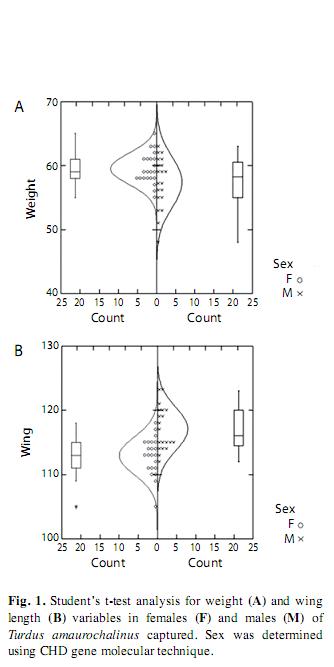
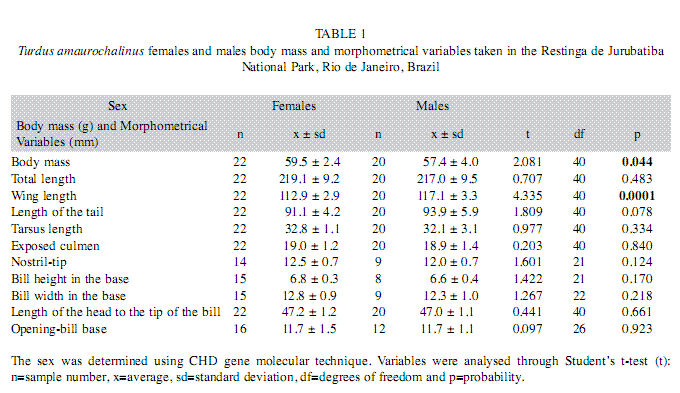
<body><![CDATA[<br> <font style="font-family: verdana;" size="-1">The CHD gene was amplified by PCR, using P2 and P8 primers (P2: 5&#8217;-TCTGCATCGCTAAATCCTTT- 3&#8217; and P8: 5&#8217;-CTCCCAAGGATGAGRAAYTG-3&#8217;; Griffiths <span style="font-style: italic;">et al.</span> 1998). The PCRs were carried out in a total volume of 10&micro;l, consisting of 1&micro;l of reaction buffer (10mM KCl, 20mM Tris-</font><font style="font-family: verdana;" size="-1">HCl pH 8.8, 10mM (NH<sub>4</sub>)<sub>2</sub>SO<sub>4</sub>, 0.1% Triton- X-100, 100mg/ml gelatin); 2&micro;M of dNTP mix; 2mM of MgCl<sub>2</sub>; 100pmoles/&micro;l of each primer; 1-10ng of genomic DNA and 0.05 units of DNA polimerase (Biotools of Brazil). A cycle of 95&deg;C for thirty seconds, 45&deg;C for thirty seconds, 72&deg;C for thirty seconds, preceded by a step of 95&deg;C for five minutes, was repeated 40 times, followed by a step of 72&deg;C for five minutes. The products were separated in 2% agarose gels.</font>    <br>     <br> <font style="font-family: verdana;" size="-1">Initially, the CHD gene sex determination technique was tested for several bird species, including <span style="font-style: italic;">T. amaurochalinus.</span> Some individuals of <span style="font-style: italic;">T. albicollis</span> were used as positive controls for the method (Ritter <span  style="font-style: italic;">et al.</span> 2003) and <span style="font-style: italic;">Ramphocelus bresilius</span> (Linnaeus, 1766) as positive controls for sex differentiation. This last species presents obvious sexual dimorphism of plumage and iris colour: males, including the young males, present red iris colour, and females, chestnut iris colour (Nogueira &amp; Alves 2008). The result proved that the protocol developed for this technique is secure, since</font>    <br> <font style="font-family: verdana;" size="-1"><span  style="font-style: italic;">R. bresilius</span> males presented one band, while females presented two bands.</font>    <br>     <br> <font style="font-family: verdana;" size="-1">The statistical analyses of data followed Zar (1984) and were carried out in SYSTAT </font><font style="font-family: verdana;" size="-1">software (version 10.2). Only data collected from <span  style="font-style: italic;">T. amaurochalinus</span> adults, selected by plumage, tarsus and bill commissure characters, were used. Discriminant Analysis includes only the variables with observations for all forty individuals: body mass, total length, wing length, length of the tail, tarsus length, exposed culmen and length of the head to the bill tip. </font>    <br>     <br> <font style="font-family: verdana; font-weight: bold;"><font size="3">Results</font>    <br>     <br> </font><font style="font-family: verdana;" size="-1"><span  style="font-weight: bold;">Sexual reason and morphometric analyses</span>: We categorized 42 (20 males and 22 </font><font style="font-family: verdana;" size="-1">females) <span  style="font-style: italic;">T. amaurochalinus</span>: males and females differed significantly (Test-t, p&lt;0.05; <a href="/img/revistas/rbt/v59n2/a20t1.gif">Table 1</a>) on two of 11 analyzed variables. Males presented longer wing length than females, while females appeared heavier than males (<a href="#fig1">Fig. 1</a>).    ]]></body>
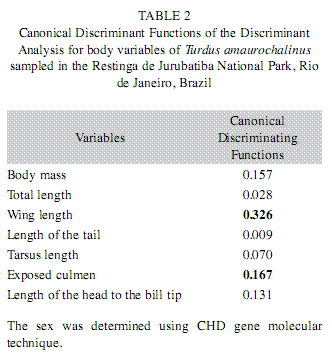
<body><![CDATA[<br>     <br> </font>     <div style="text-align: center;"><a name="fig1"></a><img alt=""  src="/img/revistas/rbt/v59n2/a20i1.jpg"  style="width: 334px; height: 667px;">    <br> </div>     <br>     <br> <font style="font-family: verdana;" size="-1">Discriminant Analysis showed that 86% of the females and 75% of the males were categorized correctly (Wilk&#8217;s lambda=0.549 and p-tail=0.0028). The variables that contributed more to distinguish the sexes were wing length and exposed culmen (<a href="#cuadro2">Table 2</a>). The males have longer wing length than females, while females presented a bigger value for exposed culmen.    <br>     <br>     <br> </font>     <div style="text-align: center;"><font style="font-family: verdana;"  size="-1"><a name="cuadro2"></a><img alt=""  src="/img/revistas/rbt/v59n2/a20t2.gif"  style="width: 332px; height: 359px;"></font>    ]]></body>
<body><![CDATA[<br> </div>     <br>     <br> <font style="font-family: verdana;" size="-1">We effectively amplified a selected region of the CHD-W gene and its homologous copy </font><font style="font-family: verdana;" size="-1">CHD-Z from <span style="font-style: italic;">T. amaurochalinus</span> with P2/P8 primers (Griffiths et al. 1998). PCR products </font><font style="font-family: verdana;"  size="-1">were 380/340 base pairs (bp) in length (CHDW/ CHD-Z, respectively).</font>    <br>     <br> <font style="font-family: verdana; font-weight: bold;"><font size="3">Discussion</font>    <br>     <br> </font><font style="font-family: verdana;" size="-1">It is reported that during breeding period, <span style="font-style: italic;">T. amaurochalinus</span> males show intense yellow upper bill, and females and immature males show black coloured upper bill (Sick 1997). However, this correlation was not demonstrated in this study, since females were recorded with partially yellow bills.</font>    <br>     <br> <font style="font-family: verdana;" size="-1">Just wing length and body mass variables were statistically significant to separate sexes when Student&#8217;s t-test was applied (<a  href="/img/revistas/rbt/v59n2/a20t1.gif">Table 1</a> and <a  href="#fig1">Fig. 1</a>). Regarding body mass, this result is already anticipated, since capture was carried out during species&#8217; reproduction time, when females are heavier due to eggs production. The fact that males presented larger wing length can be due to their major displacement (i.e. flies longer distances) in living area regarding females.</font>    <br>     ]]></body>
<body><![CDATA[<br> <font style="font-family: verdana;" size="-1">When Discriminant Analysis was applied to <span style="font-style: italic;">T. amaurochalinus</span> morphometrical data, 86% of the females and 75% of the males were classified correctly. Wing length was the most significant variable in sex distinction of this species, with exposed culmen the second most significant variable (<a href="#cuadro2">Table 2</a>).     <br>     <br> Student&#8217;s t-test and Discriminating Analysis </font><font style="font-family: verdana;" size="-1">ratified wing length as a very significant variable to sexually separate individuals. Lens </font><font style="font-family: verdana;"  size="-1"><span style="font-style: italic;">et al. </span>(1998) and Ritter <span style="font-style: italic;">et al.</span> (2003) also concluded that wing length is a relevant factor to separate adult males from females in <span style="font-style: italic;">Thorichthys helleri</span> and <span  style="font-style: italic;">Turdus albicollis</span>, respectively.     <br>     <br> CHD-W and CHD-Z gene sizes are compatible with con-generic species: 394/349 bp, respectively, in length for <span style="font-style: italic;">Turdus merula</span> (Dybus <span style="font-style: italic;">et al.</span> 2009) and 379/341 bp, respectively, in length for <span  style="font-style: italic;">Turdus pallidus</span> (Lee et al. 2010). </font>    <br>     <br> <font style="font-family: verdana;" size="-1"><span  style="font-style: italic;">Turdus amaurochalinus </span>males presented wing length larger than females, while body mass was larger in females than in males. These characters can be used as indication of sex status in field. However, molecular analysis remains the most accurate method to determine sex for this species.</font>    <br>     <br> <font style="font-family: verdana; font-weight: bold;"><font size="3">Acknowledgments</font>    <br>     ]]></body>
<body><![CDATA[<br> </font><font style="font-family: verdana;" size="-1">Authors acknowledge FAPERJ, PROCI&Ecirc;NCIA-SR2-UERJ and CNPq/MCT for fellowships and grants. The last author (M.A.S.A.) also received CNPq (Process no. 302718/2003-6) and FAPERJ (proc. no. E-26/102.868/2008) research grants. We thank Clinton Jenkins for helping with the English review. Erli Schneider Costa and Est&eacute;fane Cardinot Reis helped with figures. The present study followed all ethical guidelines and legal requirements of Brazil concerning sampling in a protected area (121/2004 and 106/2003 - CGFAU/LIC/IBAMA; 029/03 SNA/IBAMA).    <br>     <br> </font> <hr style="width: 100%; height: 2px;"><font  style="font-family: verdana; font-weight: bold;">    <br> <font size="3">Literature cited</font></font>    <br>     <!-- ref --><br> <font style="font-family: verdana;" size="-1">Alves, M.A.S., A. Storni, E.M. Almeida, V.S.M. Gomes,C.H.P. Oliveira, R.V. Marques &amp; M.B. Vecchi. 2004. A comunidade de aves na Restinga de Jurubatiba, p. 119-214. <span style="font-style: italic;">In</span> C.F.D. Rocha, F.A. Esteves &amp; F.R. Scarano (eds.). Pesquisas de Longa Dura&ccedil;&atilde;o na Restinga de Jurubatiba-Ecologia, Hist&oacute;ria Natural e Conserva&ccedil;&atilde;o. EdUERJ, Rio de Janeiro, Brazil.    &nbsp;&nbsp;&nbsp;&nbsp;&nbsp;&nbsp;&nbsp;&nbsp;[&#160;<a href="javascript:void(0);" onclick="javascript: window.open('/scielo.php?script=sci_nlinks&ref=1766818&pid=S0034-7744201100020002000001&lng=','','width=640,height=500,resizable=yes,scrollbars=1,menubar=yes,');">Links</a>&#160;]<!-- end-ref --></font>    <br>     <!-- ref --><br> <font style="font-family: verdana;" size="-1">Basrur, P.K., R. Nambiar &amp; W.A. King. 1998. Sex detection in birds. Rev. Bras. Reprod. Anim. 22: 133-139.    &nbsp;&nbsp;&nbsp;&nbsp;&nbsp;&nbsp;&nbsp;&nbsp;[&#160;<a href="javascript:void(0);" onclick="javascript: window.open('/scielo.php?script=sci_nlinks&ref=1766821&pid=S0034-7744201100020002000002&lng=','','width=640,height=500,resizable=yes,scrollbars=1,menubar=yes,');">Links</a>&#160;]<!-- end-ref --></font>    ]]></body>
<body><![CDATA[<br>     <!-- ref --><br> <font style="font-family: verdana;" size="-1">Bull, J.J. &amp; E.L. Charnov. 1988. How fundamental are Fisherian sex ratios? Oxf. Surv. Evol. Biol. 5: 96-135.    &nbsp;&nbsp;&nbsp;&nbsp;&nbsp;&nbsp;&nbsp;&nbsp;[&#160;<a href="javascript:void(0);" onclick="javascript: window.open('/scielo.php?script=sci_nlinks&ref=1766824&pid=S0034-7744201100020002000003&lng=','','width=640,height=500,resizable=yes,scrollbars=1,menubar=yes,');">Links</a>&#160;]<!-- end-ref --></font>    <br>     <!-- ref --><br> <font style="font-family: verdana;" size="-1">Bruford, M.W., O. Hanotte, J.F.Y. Brookfield &amp; T. Burke. 1992. Single-locus and multilocus DNA fingerprinting, p. 225-269. <span  style="font-style: italic;">In</span> A.R. Hoelzel (ed.). Molecular genetic analysis of populations: a practical approach. Oxford University, New York, USA.    &nbsp;&nbsp;&nbsp;&nbsp;&nbsp;&nbsp;&nbsp;&nbsp;[&#160;<a href="javascript:void(0);" onclick="javascript: window.open('/scielo.php?script=sci_nlinks&ref=1766827&pid=S0034-7744201100020002000004&lng=','','width=640,height=500,resizable=yes,scrollbars=1,menubar=yes,');">Links</a>&#160;]<!-- end-ref --></font>    <br>     <!-- ref --><br> <font style="font-family: verdana;" size="-1">Burns, K.J. 1998. A phylogenetic perspective on the evolution of sexual dichromatism in Tanangers (Traupidae): the role of female versus male plumage. Evolution 52: 1219-1224.    &nbsp;&nbsp;&nbsp;&nbsp;&nbsp;&nbsp;&nbsp;&nbsp;[&#160;<a href="javascript:void(0);" onclick="javascript: window.open('/scielo.php?script=sci_nlinks&ref=1766830&pid=S0034-7744201100020002000005&lng=','','width=640,height=500,resizable=yes,scrollbars=1,menubar=yes,');">Links</a>&#160;]<!-- end-ref --></font>    <br>     ]]></body>
<body><![CDATA[<!-- ref --><br> <font style="font-family: verdana;" size="-1">Dybus, A., A. Siemierz, D. Wysocki, I. Szatkowska, M. Muszy&#324;ska &amp; S. Guenzel. 2009. Evaluation of the applicability of polymerase chain reaction (PCR) to sex identification in Eurasian blackbirds (<span  style="font-style: italic;">Turdus merula</span>). Biological Lett. 46: 15-20.    &nbsp;&nbsp;&nbsp;&nbsp;&nbsp;&nbsp;&nbsp;&nbsp;[&#160;<a href="javascript:void(0);" onclick="javascript: window.open('/scielo.php?script=sci_nlinks&ref=1766833&pid=S0034-7744201100020002000006&lng=','','width=640,height=500,resizable=yes,scrollbars=1,menubar=yes,');">Links</a>&#160;]<!-- end-ref --></font>    <br>     <!-- ref --><br> <font style="font-family: verdana;" size="-1">Ellegren, H. 1996. First gene on the avian W chromosome (CHD) provides a tag for universal sexing of nonratite birds. Proc. R. Soc. Lond. B. 263: 1635-1641.    &nbsp;&nbsp;&nbsp;&nbsp;&nbsp;&nbsp;&nbsp;&nbsp;[&#160;<a href="javascript:void(0);" onclick="javascript: window.open('/scielo.php?script=sci_nlinks&ref=1766836&pid=S0034-7744201100020002000007&lng=','','width=640,height=500,resizable=yes,scrollbars=1,menubar=yes,');">Links</a>&#160;]<!-- end-ref --> </font>    <br>     <!-- ref --><br> <font style="font-family: verdana;" size="-1">Ellegren, H. &amp; B.C. Sheldon. 1997. New tools for sex identification and the study of sex allocation in birds.Tr. Ecol. Evol. 12: 255-259.    &nbsp;&nbsp;&nbsp;&nbsp;&nbsp;&nbsp;&nbsp;&nbsp;[&#160;<a href="javascript:void(0);" onclick="javascript: window.open('/scielo.php?script=sci_nlinks&ref=1766839&pid=S0034-7744201100020002000008&lng=','','width=640,height=500,resizable=yes,scrollbars=1,menubar=yes,');">Links</a>&#160;]<!-- end-ref --></font>    <br>     <!-- ref --><br> <font style="font-family: verdana;" size="-1">Fisher, R.A. 1930. The genetical theory of natural selection. Clarendon, Oxford, United Kingdom.    &nbsp;&nbsp;&nbsp;&nbsp;&nbsp;&nbsp;&nbsp;&nbsp;[&#160;<a href="javascript:void(0);" onclick="javascript: window.open('/scielo.php?script=sci_nlinks&ref=1766842&pid=S0034-7744201100020002000009&lng=','','width=640,height=500,resizable=yes,scrollbars=1,menubar=yes,');">Links</a>&#160;]<!-- end-ref --> </font>    <br>     <!-- ref --><br> <font style="font-family: verdana;" size="-1">Griffiths, R., M. Doublem, K.C.Y. Orr &amp; R.J.G. Dawson. 1998. A DNA test to sex most birds. Mol. Ecol. 7: 1071-1075.    &nbsp;&nbsp;&nbsp;&nbsp;&nbsp;&nbsp;&nbsp;&nbsp;[&#160;<a href="javascript:void(0);" onclick="javascript: window.open('/scielo.php?script=sci_nlinks&ref=1766845&pid=S0034-7744201100020002000010&lng=','','width=640,height=500,resizable=yes,scrollbars=1,menubar=yes,');">Links</a>&#160;]<!-- end-ref --></font>    <br>     <!-- ref --><br> <font style="font-family: verdana;" size="-1">Griffiths, R. &amp; B. Tiwari. 1995. Sex of the last wild Spix`s Macaw. Nature 375: 454.    &nbsp;&nbsp;&nbsp;&nbsp;&nbsp;&nbsp;&nbsp;&nbsp;[&#160;<a href="javascript:void(0);" onclick="javascript: window.open('/scielo.php?script=sci_nlinks&ref=1766848&pid=S0034-7744201100020002000011&lng=','','width=640,height=500,resizable=yes,scrollbars=1,menubar=yes,');">Links</a>&#160;]<!-- end-ref --></font>    <br>     <!-- ref --><br> <font style="font-family: verdana;" size="-1">Henriques, R.P.B., D.S.D. Ara&uacute;jo &amp; J. Hay. 1986. Descri&ccedil;&atilde;o e classifica&ccedil;&atilde;o dos tipos de vegeta&ccedil;&atilde;o da Restinga de Carapebus, Rio de Janeiro. Rev. Bras. Bot. 9: 173-189.    &nbsp;&nbsp;&nbsp;&nbsp;&nbsp;&nbsp;&nbsp;&nbsp;[&#160;<a href="javascript:void(0);" onclick="javascript: window.open('/scielo.php?script=sci_nlinks&ref=1766851&pid=S0034-7744201100020002000012&lng=','','width=640,height=500,resizable=yes,scrollbars=1,menubar=yes,');">Links</a>&#160;]<!-- end-ref --></font>    ]]></body>
<body><![CDATA[<br>     <!-- ref --><br> <font style="font-family: verdana;" size="-1">Ito, H., A. Sudo-Yamaji, M. Abe, T. Murase &amp; T. Tsubota.2003. Sex identification by alternative polymerase chain reaction methods in falconiformes. Zool. Sci. 20: 339-344.    &nbsp;&nbsp;&nbsp;&nbsp;&nbsp;&nbsp;&nbsp;&nbsp;[&#160;<a href="javascript:void(0);" onclick="javascript: window.open('/scielo.php?script=sci_nlinks&ref=1766854&pid=S0034-7744201100020002000013&lng=','','width=640,height=500,resizable=yes,scrollbars=1,menubar=yes,');">Links</a>&#160;]<!-- end-ref --></font>    <br>     <!-- ref --><br> <font style="font-family: verdana;" size="-1">Kahn, N.W., J.ST. John &amp; T.W. Quinn. 1998. Cromosomeespecific intron size differences in the avian CHD gene provide an efficient method for sex identification in birds. Auk 115: 1074-1078.    &nbsp;&nbsp;&nbsp;&nbsp;&nbsp;&nbsp;&nbsp;&nbsp;[&#160;<a href="javascript:void(0);" onclick="javascript: window.open('/scielo.php?script=sci_nlinks&ref=1766857&pid=S0034-7744201100020002000014&lng=','','width=640,height=500,resizable=yes,scrollbars=1,menubar=yes,');">Links</a>&#160;]<!-- end-ref --></font>    <br>     <!-- ref --><br> <font style="font-family: verdana;" size="-1">Khatib, H. &amp; Y. Gruenbaum.1996. Chicken red blood cells as a substrate for direct polymerase chain reaction. Anim. Genet. 27: 53-54.    &nbsp;&nbsp;&nbsp;&nbsp;&nbsp;&nbsp;&nbsp;&nbsp;[&#160;<a href="javascript:void(0);" onclick="javascript: window.open('/scielo.php?script=sci_nlinks&ref=1766860&pid=S0034-7744201100020002000015&lng=','','width=640,height=500,resizable=yes,scrollbars=1,menubar=yes,');">Links</a>&#160;]<!-- end-ref --></font>    <br>     ]]></body>
<body><![CDATA[<!-- ref --><br> <font style="font-family: verdana;" size="-1">King, J.R. &amp; R. Griffiths. 1994. Sexual dimorphism of plumage and morphology in the Coal Tit <span style="font-style: italic;">Parus ater.</span> Bird Study 41: 7-14.    &nbsp;&nbsp;&nbsp;&nbsp;&nbsp;&nbsp;&nbsp;&nbsp;[&#160;<a href="javascript:void(0);" onclick="javascript: window.open('/scielo.php?script=sci_nlinks&ref=1766863&pid=S0034-7744201100020002000016&lng=','','width=640,height=500,resizable=yes,scrollbars=1,menubar=yes,');">Links</a>&#160;]<!-- end-ref --></font>    <br>     <!-- ref --><br> <font style="font-family: verdana;" size="-1">Krebs, C.J. 1994. Ecology: the experimental analysis of distribution and abundance. Harper Collins College, New York, USA.    &nbsp;&nbsp;&nbsp;&nbsp;&nbsp;&nbsp;&nbsp;&nbsp;[&#160;<a href="javascript:void(0);" onclick="javascript: window.open('/scielo.php?script=sci_nlinks&ref=1766866&pid=S0034-7744201100020002000017&lng=','','width=640,height=500,resizable=yes,scrollbars=1,menubar=yes,');">Links</a>&#160;]<!-- end-ref --></font>    <br>     <!-- ref --><br> <font style="font-family: verdana;" size="-1">Lee, J.C.I., L.C. Tsai, Y.Y Kuan, W.H. Chien, K.T. Chan, C.H. Wu, A. Linacre &amp; H.M. Hsieh. 2007. Racing pigeon identification using STR and chromo-helicase DNA binding gene markers. Electrophoresis 28: 4274-81.    &nbsp;&nbsp;&nbsp;&nbsp;&nbsp;&nbsp;&nbsp;&nbsp;[&#160;<a href="javascript:void(0);" onclick="javascript: window.open('/scielo.php?script=sci_nlinks&ref=1766869&pid=S0034-7744201100020002000018&lng=','','width=640,height=500,resizable=yes,scrollbars=1,menubar=yes,');">Links</a>&#160;]<!-- end-ref --></font>    <br>     <!-- ref --><br> <font style="font-family: verdana;" size="-1">Lee, J.C.I., L.C. Tsai, P.Y. Hwa, C.L. Chan, A. Huang, A.S.C. Chin, L.C. Wang, J.T. Lin, A. Linacre &amp; H.M. Hsieh. 2010. A novel strategy for avian species and gender identification using the CHD gene. Molecular and Cellular Probes 24: 27-31.    &nbsp;&nbsp;&nbsp;&nbsp;&nbsp;&nbsp;&nbsp;&nbsp;[&#160;<a href="javascript:void(0);" onclick="javascript: window.open('/scielo.php?script=sci_nlinks&ref=1766872&pid=S0034-7744201100020002000019&lng=','','width=640,height=500,resizable=yes,scrollbars=1,menubar=yes,');">Links</a>&#160;]<!-- end-ref --></font>    <br>     <!-- ref --><br> <font style="font-family: verdana;" size="-1">Lens, L., P. Galbusera, T. Brooks, E. Waiyaki &amp; T. Schenck. 1998. Highly skewed sex ratio in critically endangered Taita Thrush as revealed by CHD genes. Biodiv. Conserv. 7: 869-873.    &nbsp;&nbsp;&nbsp;&nbsp;&nbsp;&nbsp;&nbsp;&nbsp;[&#160;<a href="javascript:void(0);" onclick="javascript: window.open('/scielo.php?script=sci_nlinks&ref=1766875&pid=S0034-7744201100020002000020&lng=','','width=640,height=500,resizable=yes,scrollbars=1,menubar=yes,');">Links</a>&#160;]<!-- end-ref --></font>    <br>     <!-- ref --><br> <font style="font-family: verdana;" size="-1">Lessells, C.M. &amp; A.C. Mateman. 1998. Sexing birds using radom amplified polymorphic DNA (RAPD) markers. Mol. Ecol. 7: 187-195.    &nbsp;&nbsp;&nbsp;&nbsp;&nbsp;&nbsp;&nbsp;&nbsp;[&#160;<a href="javascript:void(0);" onclick="javascript: window.open('/scielo.php?script=sci_nlinks&ref=1766878&pid=S0034-7744201100020002000021&lng=','','width=640,height=500,resizable=yes,scrollbars=1,menubar=yes,');">Links</a>&#160;]<!-- end-ref --></font>    <br>     <!-- ref --><br> <font style="font-family: verdana;" size="-1">Miyaki, C.Y., R. Griffiths, K. Orr, L.A. Nahum, S.L. Pereira &amp; A. Wajntal. 1998. Sex identification of parrots, toucans, and curassows by PCR: perspectives for wild captive population studies. Zoo Biol. 17: 415-423.    &nbsp;&nbsp;&nbsp;&nbsp;&nbsp;&nbsp;&nbsp;&nbsp;[&#160;<a href="javascript:void(0);" onclick="javascript: window.open('/scielo.php?script=sci_nlinks&ref=1766881&pid=S0034-7744201100020002000022&lng=','','width=640,height=500,resizable=yes,scrollbars=1,menubar=yes,');">Links</a>&#160;]<!-- end-ref --></font>    ]]></body>
<body><![CDATA[<br>     <!-- ref --><br> <font style="font-family: verdana;" size="-1">Nogueira, D.M. &amp; M.A.S. Alves. 2008. Iris colour as an indicator of age feature in the female Brazilian tanagers. Rev. Biol. Trop. 56: 1629-1633.    &nbsp;&nbsp;&nbsp;&nbsp;&nbsp;&nbsp;&nbsp;&nbsp;[&#160;<a href="javascript:void(0);" onclick="javascript: window.open('/scielo.php?script=sci_nlinks&ref=1766884&pid=S0034-7744201100020002000023&lng=','','width=640,height=500,resizable=yes,scrollbars=1,menubar=yes,');">Links</a>&#160;]<!-- end-ref --></font>    <br>     <!-- ref --><br> <font style="font-family: verdana;" size="-1">Ritter, P.D., C.Y. Miyaki, A. Ponce De Leon &amp; M.A.S. Alves. 2003. Sex determination using CHD-1 gene and sexual dimorphism in the white-necked thrush (<span style="font-style: italic;">Turdus albicollis</span>) in the Atlantic Forest at Ilha Grande, Rio de Janeiro, Southeastern Brazil. Ornitol. Neotrop. 14: 433-440.    &nbsp;&nbsp;&nbsp;&nbsp;&nbsp;&nbsp;&nbsp;&nbsp;[&#160;<a href="javascript:void(0);" onclick="javascript: window.open('/scielo.php?script=sci_nlinks&ref=1766887&pid=S0034-7744201100020002000024&lng=','','width=640,height=500,resizable=yes,scrollbars=1,menubar=yes,');">Links</a>&#160;]<!-- end-ref --></font>    <br>     <!-- ref --><br> <font style="font-family: verdana;" size="-1">Sacchi, P., D. Soglia, S. Maione, G. Meneguz, M. Campora &amp; R. Rasero. 2004. A non-invasive test for sex identification in short-toed Eagle (<span style="font-style: italic;">Circaetus gallicus</span>). Mol Cell Probes. 18: 193-6.    &nbsp;&nbsp;&nbsp;&nbsp;&nbsp;&nbsp;&nbsp;&nbsp;[&#160;<a href="javascript:void(0);" onclick="javascript: window.open('/scielo.php?script=sci_nlinks&ref=1766890&pid=S0034-7744201100020002000025&lng=','','width=640,height=500,resizable=yes,scrollbars=1,menubar=yes,');">Links</a>&#160;]<!-- end-ref --></font>    <br>     ]]></body>
<body><![CDATA[<!-- ref --><br> <font style="font-family: verdana;" size="-1">Sick, H. 1997. Ornitologia Brasileira. Nova Fronteira, Riode Janeiro, Brazil.    &nbsp;&nbsp;&nbsp;&nbsp;&nbsp;&nbsp;&nbsp;&nbsp;[&#160;<a href="javascript:void(0);" onclick="javascript: window.open('/scielo.php?script=sci_nlinks&ref=1766893&pid=S0034-7744201100020002000026&lng=','','width=640,height=500,resizable=yes,scrollbars=1,menubar=yes,');">Links</a>&#160;]<!-- end-ref --></font>    <br>     <!-- ref --><br> <font style="font-family: verdana;" size="-1">Zar, J.H. 1984. Biostatistical Analysis. Prentice-Hall, New </font><font  style="font-family: verdana;" size="-1">Jersey, USA.    &nbsp;&nbsp;&nbsp;&nbsp;&nbsp;&nbsp;&nbsp;&nbsp;[&#160;<a href="javascript:void(0);" onclick="javascript: window.open('/scielo.php?script=sci_nlinks&ref=1766896&pid=S0034-7744201100020002000027&lng=','','width=640,height=500,resizable=yes,scrollbars=1,menubar=yes,');">Links</a>&#160;]<!-- end-ref --><br>     <br>     <br> <a name="Correspondencia"></a>Correspondencia: </font><font  style="font-family: verdana;" size="-1">Katyucha Von Kossel de Andrade Silva. </font><font style="font-family: verdana;"  size="-1">Programa de Inicia&ccedil;&atilde;o Cient&iacute;fica, Universidade do Estado do Rio de Janeiro, IBRAG. Present address: InstitutoChico Mendes de Conserva&ccedil;&atilde;o da Biodiversidade, Parque Nacional da Tijuca, Estrada da Cascatinha 850, Alto da Boa Vista, Rio de Janeiro, RJ, Brasil; <a href="mailto:katyucha.silva@icmbio.gov.br">katyucha.silva@icmbio.gov.br</a>    <br> </font><font style="font-family: verdana;" size="-1">Gisele L&ocirc;bo-Hajdu. </font><font style="font-family: verdana;" size="-1">Universidade do Estado do Rio de Janeiro, IBRAG, Departamento de Gen&eacute;tica, Rua S&atilde;o Francisco Xavier 524,Maracan&atilde;, Rio de Janeiro, RJ, Brasil; <a href="mailto:glhajdu@uerj.br">glhajdu@uerj.br</a>    <br> </font><font style="font-family: verdana;" size="-1">Maria Alice S. Alves</font><font style="font-family: verdana;" size="-1">. Universidade do Estado do Rio de Janeiro, IBRAG, Departamento de Ecologia, Rua S&atilde;o Francisco Xavier 524,20550-011, Maracan&atilde;, Rio de Janeiro, RJ, Brasil; <a  href="mailto:masaal@globo.com">masaal@globo.com</a>    <br>     ]]></body>
<body><![CDATA[<br> </font> <hr style="width: 100%; height: 2px;">     <div style="text-align: center;"><font size="-1"><span  style="font-family: verdana;">Received 06-IV-2010. Corrected 15-X-2010. Accepted 16-XI-2010</span></font></div> </div>      ]]></body><back>
<ref-list>
<ref id="B1">
<nlm-citation citation-type="book">
<person-group person-group-type="author">
<name>
<surname><![CDATA[Alves]]></surname>
<given-names><![CDATA[M.A.S.]]></given-names>
</name>
<name>
<surname><![CDATA[Storni]]></surname>
<given-names><![CDATA[A.]]></given-names>
</name>
<name>
<surname><![CDATA[Almeida]]></surname>
<given-names><![CDATA[E.M.]]></given-names>
</name>
<name>
<surname><![CDATA[Gomes]]></surname>
<given-names><![CDATA[V.S.M.]]></given-names>
</name>
<name>
<surname><![CDATA[Oliveira]]></surname>
<given-names><![CDATA[C.H.P.]]></given-names>
</name>
<name>
<surname><![CDATA[Marques]]></surname>
<given-names><![CDATA[R.V.]]></given-names>
</name>
<name>
<surname><![CDATA[Vecchi]]></surname>
<given-names><![CDATA[M.B.]]></given-names>
</name>
</person-group>
<article-title xml:lang="pt"><![CDATA[A comunidade de aves na Restinga de Jurubatiba]]></article-title>
<person-group person-group-type="editor">
<name>
<surname><![CDATA[Rocha]]></surname>
<given-names><![CDATA[C.F.D.]]></given-names>
</name>
<name>
<surname><![CDATA[Esteves]]></surname>
<given-names><![CDATA[F.A.]]></given-names>
</name>
<name>
<surname><![CDATA[Scarano]]></surname>
<given-names><![CDATA[F.R.]]></given-names>
</name>
</person-group>
<source><![CDATA[Pesquisas de Longa Duração na Restinga de Jurubatiba-Ecologia, História Natural e Conservação]]></source>
<year>2004</year>
<page-range>119-214</page-range><publisher-loc><![CDATA[^eRio de Janeiro Rio de Janeiro]]></publisher-loc>
<publisher-name><![CDATA[EdUERJ]]></publisher-name>
</nlm-citation>
</ref>
<ref id="B2">
<nlm-citation citation-type="journal">
<person-group person-group-type="author">
<name>
<surname><![CDATA[Basrur]]></surname>
<given-names><![CDATA[P.K.]]></given-names>
</name>
<name>
<surname><![CDATA[Nambiar]]></surname>
<given-names><![CDATA[R.]]></given-names>
</name>
<name>
<surname><![CDATA[King]]></surname>
<given-names><![CDATA[W.A.]]></given-names>
</name>
</person-group>
<article-title xml:lang="en"><![CDATA[Sex detection in birds]]></article-title>
<source><![CDATA[Rev. Bras. Reprod. Anim.]]></source>
<year>1998</year>
<volume>22</volume>
<page-range>133-139</page-range></nlm-citation>
</ref>
<ref id="B3">
<nlm-citation citation-type="journal">
<person-group person-group-type="author">
<name>
<surname><![CDATA[Bull]]></surname>
<given-names><![CDATA[J.J.]]></given-names>
</name>
<name>
<surname><![CDATA[Charnov]]></surname>
<given-names><![CDATA[E.L.]]></given-names>
</name>
</person-group>
<article-title xml:lang="en"><![CDATA[How fundamental are Fisherian sex ratios?]]></article-title>
<source><![CDATA[Oxf. Surv. Evol. Biol.]]></source>
<year>1988</year>
<volume>5</volume>
<page-range>96-135</page-range></nlm-citation>
</ref>
<ref id="B4">
<nlm-citation citation-type="book">
<person-group person-group-type="author">
<name>
<surname><![CDATA[Bruford]]></surname>
<given-names><![CDATA[M.W.]]></given-names>
</name>
<name>
<surname><![CDATA[Hanotte]]></surname>
<given-names><![CDATA[O.]]></given-names>
</name>
<name>
<surname><![CDATA[Brookfield]]></surname>
<given-names><![CDATA[J.F.Y.]]></given-names>
</name>
<name>
<surname><![CDATA[Burke]]></surname>
<given-names><![CDATA[T.]]></given-names>
</name>
</person-group>
<article-title xml:lang="en"><![CDATA[Single-locus and multilocus DNA fingerprinting]]></article-title>
<person-group person-group-type="editor">
<name>
<surname><![CDATA[Hoelzel]]></surname>
<given-names><![CDATA[A.R.]]></given-names>
</name>
</person-group>
<source><![CDATA[Molecular genetic analysis of populations:: a practical approach]]></source>
<year>1992</year>
<page-range>225-269</page-range><publisher-loc><![CDATA[^eNew York New York]]></publisher-loc>
<publisher-name><![CDATA[Oxford University]]></publisher-name>
</nlm-citation>
</ref>
<ref id="B5">
<nlm-citation citation-type="journal">
<person-group person-group-type="author">
<name>
<surname><![CDATA[Burns]]></surname>
<given-names><![CDATA[K.J.]]></given-names>
</name>
</person-group>
<article-title xml:lang="en"><![CDATA[A phylogenetic perspective on the evolution of sexual dichromatism in Tanangers (Traupidae):: the role of female versus male plumage]]></article-title>
<source><![CDATA[Evolution]]></source>
<year>1998</year>
<volume>52</volume>
<page-range>1219-1224</page-range></nlm-citation>
</ref>
<ref id="B6">
<nlm-citation citation-type="journal">
<person-group person-group-type="author">
<name>
<surname><![CDATA[Dybus]]></surname>
<given-names><![CDATA[A.]]></given-names>
</name>
<name>
<surname><![CDATA[Siemierz]]></surname>
<given-names><![CDATA[A.]]></given-names>
</name>
<name>
<surname><![CDATA[Wysocki]]></surname>
<given-names><![CDATA[D.]]></given-names>
</name>
<name>
<surname><![CDATA[Szatkowska]]></surname>
<given-names><![CDATA[I.]]></given-names>
</name>
<name>
<surname><![CDATA[Muszy&#324;ska]]></surname>
<given-names><![CDATA[M.]]></given-names>
</name>
<name>
<surname><![CDATA[Guenzel]]></surname>
<given-names><![CDATA[S.]]></given-names>
</name>
</person-group>
<article-title xml:lang="en"><![CDATA[Evaluation of the applicability of polymerase chain reaction (PCR) to sex identification in Eurasian blackbirds (Turdus merula)]]></article-title>
<source><![CDATA[Biological Lett.]]></source>
<year>2009</year>
<volume>46</volume>
<page-range>15-20</page-range></nlm-citation>
</ref>
<ref id="B7">
<nlm-citation citation-type="journal">
<person-group person-group-type="author">
<name>
<surname><![CDATA[Ellegren]]></surname>
<given-names><![CDATA[H.]]></given-names>
</name>
</person-group>
<article-title xml:lang="en"><![CDATA[First gene on the avian W chromosome (CHD) provides a tag for universal sexing of nonratite birds]]></article-title>
<source><![CDATA[roc. R. Soc. Lond. B.]]></source>
<year>1996</year>
<volume>263</volume>
<page-range>1635-1641</page-range></nlm-citation>
</ref>
<ref id="B8">
<nlm-citation citation-type="journal">
<person-group person-group-type="author">
<name>
<surname><![CDATA[Ellegren]]></surname>
<given-names><![CDATA[H.]]></given-names>
</name>
<name>
<surname><![CDATA[Sheldon]]></surname>
<given-names><![CDATA[B.C.]]></given-names>
</name>
</person-group>
<article-title xml:lang="en"><![CDATA[New tools for sex identification and the study of sex allocation in birds]]></article-title>
<source><![CDATA[Tr. Ecol. Evol.]]></source>
<year>1997</year>
<volume>12</volume>
<page-range>255-259</page-range></nlm-citation>
</ref>
<ref id="B9">
<nlm-citation citation-type="book">
<person-group person-group-type="author">
<name>
<surname><![CDATA[Fisher]]></surname>
<given-names><![CDATA[R.A.]]></given-names>
</name>
</person-group>
<source><![CDATA[The genetical theory of natural selection]]></source>
<year>1930</year>
<publisher-loc><![CDATA[^eOxford Oxford]]></publisher-loc>
<publisher-name><![CDATA[Clarendon]]></publisher-name>
</nlm-citation>
</ref>
<ref id="B10">
<nlm-citation citation-type="journal">
<person-group person-group-type="author">
<name>
<surname><![CDATA[Griffiths]]></surname>
<given-names><![CDATA[R.]]></given-names>
</name>
<name>
<surname><![CDATA[Doublem]]></surname>
<given-names><![CDATA[M.]]></given-names>
</name>
<name>
<surname><![CDATA[Orr]]></surname>
<given-names><![CDATA[K.C.Y.]]></given-names>
</name>
<name>
<surname><![CDATA[Dawson]]></surname>
<given-names><![CDATA[R.J.G.]]></given-names>
</name>
</person-group>
<article-title xml:lang="en"><![CDATA[A DNA test to sex most birds]]></article-title>
<source><![CDATA[Mol. Ecol.]]></source>
<year>1998</year>
<volume>7</volume>
<page-range>1071-1075</page-range></nlm-citation>
</ref>
<ref id="B11">
<nlm-citation citation-type="journal">
<person-group person-group-type="author">
<name>
<surname><![CDATA[Griffiths]]></surname>
<given-names><![CDATA[R.]]></given-names>
</name>
<name>
<surname><![CDATA[Tiwari]]></surname>
<given-names><![CDATA[B.]]></given-names>
</name>
</person-group>
<article-title xml:lang="en"><![CDATA[Sex of the last wild Spix`s Macaw]]></article-title>
<source><![CDATA[Nature]]></source>
<year>1995</year>
<volume>375</volume>
<page-range>454</page-range></nlm-citation>
</ref>
<ref id="B12">
<nlm-citation citation-type="journal">
<person-group person-group-type="author">
<name>
<surname><![CDATA[Henriques]]></surname>
<given-names><![CDATA[R.P.B.]]></given-names>
</name>
<name>
<surname><![CDATA[Araújo]]></surname>
<given-names><![CDATA[D.S.D.]]></given-names>
</name>
<name>
<surname><![CDATA[Hay]]></surname>
<given-names><![CDATA[J.]]></given-names>
</name>
</person-group>
<article-title xml:lang="pt"><![CDATA[Descrição e classificação dos tipos de vegetação da Restinga de Carapebus, Rio de Janeiro]]></article-title>
<source><![CDATA[Rev. Bras. Bot.]]></source>
<year>1986</year>
<volume>9</volume>
<page-range>173-189</page-range></nlm-citation>
</ref>
<ref id="B13">
<nlm-citation citation-type="journal">
<person-group person-group-type="author">
<name>
<surname><![CDATA[Ito]]></surname>
<given-names><![CDATA[H.]]></given-names>
</name>
<name>
<surname><![CDATA[Sudo-Yamaji]]></surname>
<given-names><![CDATA[A.]]></given-names>
</name>
<name>
<surname><![CDATA[Abe]]></surname>
<given-names><![CDATA[M.]]></given-names>
</name>
<name>
<surname><![CDATA[Murase]]></surname>
<given-names><![CDATA[T.]]></given-names>
</name>
<name>
<surname><![CDATA[Tsubota]]></surname>
<given-names><![CDATA[T.]]></given-names>
</name>
</person-group>
<article-title xml:lang="en"><![CDATA[Sex identification by alternative polymerase chain reaction methods in falconiformes]]></article-title>
<source><![CDATA[Zool. Sci.]]></source>
<year>2003</year>
<month>.</month>
<volume>20</volume>
<page-range>339-344</page-range></nlm-citation>
</ref>
<ref id="B14">
<nlm-citation citation-type="journal">
<person-group person-group-type="author">
<name>
<surname><![CDATA[Kahn]]></surname>
<given-names><![CDATA[N.W.]]></given-names>
</name>
<name>
<surname><![CDATA[John]]></surname>
<given-names><![CDATA[J.ST.]]></given-names>
</name>
<name>
<surname><![CDATA[Quinn]]></surname>
<given-names><![CDATA[T.W.]]></given-names>
</name>
</person-group>
<article-title xml:lang="en"><![CDATA[Cromosomeespecific intron size differences in the avian CHD gene provide an efficient method for sex identification in birds]]></article-title>
<source><![CDATA[Auk]]></source>
<year>1998</year>
<volume>115</volume>
<page-range>1074-1078</page-range></nlm-citation>
</ref>
<ref id="B15">
<nlm-citation citation-type="journal">
<person-group person-group-type="author">
<name>
<surname><![CDATA[Khatib]]></surname>
<given-names><![CDATA[H.]]></given-names>
</name>
<name>
<surname><![CDATA[Gruenbaum]]></surname>
<given-names><![CDATA[Y.]]></given-names>
</name>
</person-group>
<article-title xml:lang="en"><![CDATA[Chicken red blood cells as a substrate for direct polymerase chain reaction]]></article-title>
<source><![CDATA[Anim. Genet.]]></source>
<year>1996</year>
<volume>27</volume>
<page-range>53-54</page-range></nlm-citation>
</ref>
<ref id="B16">
<nlm-citation citation-type="journal">
<person-group person-group-type="author">
<name>
<surname><![CDATA[King]]></surname>
<given-names><![CDATA[J.R.]]></given-names>
</name>
<name>
<surname><![CDATA[Griffiths]]></surname>
<given-names><![CDATA[R.]]></given-names>
</name>
</person-group>
<article-title xml:lang="en"><![CDATA[Sexual dimorphism of plumage and morphology in the Coal Tit Parus ater]]></article-title>
<source><![CDATA[Bird Study]]></source>
<year>1994</year>
<volume>41</volume>
<page-range>7-14</page-range></nlm-citation>
</ref>
<ref id="B17">
<nlm-citation citation-type="book">
<person-group person-group-type="author">
<name>
<surname><![CDATA[Krebs]]></surname>
<given-names><![CDATA[C.J.]]></given-names>
</name>
</person-group>
<source><![CDATA[Ecology:: the experimental analysis of distribution and abundance]]></source>
<year>1994</year>
<publisher-loc><![CDATA[^eNew York New York]]></publisher-loc>
<publisher-name><![CDATA[Harper Collins College]]></publisher-name>
</nlm-citation>
</ref>
<ref id="B18">
<nlm-citation citation-type="journal">
<person-group person-group-type="author">
<name>
<surname><![CDATA[Lee]]></surname>
<given-names><![CDATA[J.C.I.]]></given-names>
</name>
<name>
<surname><![CDATA[Tsai]]></surname>
<given-names><![CDATA[L.C.]]></given-names>
</name>
<name>
<surname><![CDATA[Kuan]]></surname>
<given-names><![CDATA[Y.Y]]></given-names>
</name>
<name>
<surname><![CDATA[Chien]]></surname>
<given-names><![CDATA[W.H.]]></given-names>
</name>
<name>
<surname><![CDATA[Chan]]></surname>
<given-names><![CDATA[K.T.]]></given-names>
</name>
<name>
<surname><![CDATA[Wu]]></surname>
<given-names><![CDATA[C.H.]]></given-names>
</name>
<name>
<surname><![CDATA[Linacre]]></surname>
<given-names><![CDATA[A.]]></given-names>
</name>
<name>
<surname><![CDATA[Hsieh]]></surname>
<given-names><![CDATA[H.M.]]></given-names>
</name>
</person-group>
<article-title xml:lang="en"><![CDATA[Racing pigeon identification using STR and chromo-helicase DNA binding gene markers]]></article-title>
<source><![CDATA[Electrophoresis]]></source>
<year>2007</year>
<volume>28</volume>
<page-range>4274-81</page-range></nlm-citation>
</ref>
<ref id="B19">
<nlm-citation citation-type="journal">
<person-group person-group-type="author">
<name>
<surname><![CDATA[Lee]]></surname>
<given-names><![CDATA[J.C.I.]]></given-names>
</name>
<name>
<surname><![CDATA[Tsai]]></surname>
<given-names><![CDATA[L.C.]]></given-names>
</name>
<name>
<surname><![CDATA[Hwa]]></surname>
<given-names><![CDATA[P.Y.]]></given-names>
</name>
<name>
<surname><![CDATA[Chan]]></surname>
<given-names><![CDATA[C.L.]]></given-names>
</name>
<name>
<surname><![CDATA[Huang]]></surname>
<given-names><![CDATA[A.]]></given-names>
</name>
<name>
<surname><![CDATA[Chin]]></surname>
<given-names><![CDATA[A.S.C.]]></given-names>
</name>
<name>
<surname><![CDATA[Wang]]></surname>
<given-names><![CDATA[L.C.]]></given-names>
</name>
<name>
<surname><![CDATA[Lin]]></surname>
<given-names><![CDATA[J.T.]]></given-names>
</name>
<name>
<surname><![CDATA[Linacre]]></surname>
<given-names><![CDATA[A.]]></given-names>
</name>
<name>
<surname><![CDATA[Hsieh]]></surname>
<given-names><![CDATA[H.M.]]></given-names>
</name>
</person-group>
<article-title xml:lang="en"><![CDATA[A novel strategy for avian species and gender identification using the CHD gene]]></article-title>
<source><![CDATA[Molecular and Cellular Probes]]></source>
<year>2010</year>
<volume>24</volume>
<page-range>27-31</page-range></nlm-citation>
</ref>
<ref id="B20">
<nlm-citation citation-type="journal">
<person-group person-group-type="author">
<name>
<surname><![CDATA[Lens]]></surname>
<given-names><![CDATA[L.]]></given-names>
</name>
<name>
<surname><![CDATA[Galbusera]]></surname>
<given-names><![CDATA[P.]]></given-names>
</name>
<name>
<surname><![CDATA[Brooks]]></surname>
<given-names><![CDATA[T.]]></given-names>
</name>
<name>
<surname><![CDATA[Waiyaki]]></surname>
<given-names><![CDATA[E.]]></given-names>
</name>
<name>
<surname><![CDATA[Schenck]]></surname>
<given-names><![CDATA[T.]]></given-names>
</name>
</person-group>
<article-title xml:lang="en"><![CDATA[Highly skewed sex ratio in critically endangered Taita Thrush as revealed by CHD genes]]></article-title>
<source><![CDATA[Biodiv. Conserv]]></source>
<year>1998</year>
<volume>7</volume>
<page-range>869-873</page-range></nlm-citation>
</ref>
<ref id="B21">
<nlm-citation citation-type="journal">
<person-group person-group-type="author">
<name>
<surname><![CDATA[Lessells]]></surname>
<given-names><![CDATA[C.M.]]></given-names>
</name>
<name>
<surname><![CDATA[Mateman]]></surname>
<given-names><![CDATA[A.C.]]></given-names>
</name>
</person-group>
<article-title xml:lang="en"><![CDATA[Sexing birds using radom amplified polymorphic DNA (RAPD) markers]]></article-title>
<source><![CDATA[Mol. Ecol.]]></source>
<year>1998</year>
<volume>7</volume>
<page-range>187-195</page-range></nlm-citation>
</ref>
<ref id="B22">
<nlm-citation citation-type="journal">
<person-group person-group-type="author">
<name>
<surname><![CDATA[Miyaki]]></surname>
<given-names><![CDATA[C.Y.]]></given-names>
</name>
<name>
<surname><![CDATA[Griffiths]]></surname>
<given-names><![CDATA[R.]]></given-names>
</name>
<name>
<surname><![CDATA[Orr]]></surname>
<given-names><![CDATA[K.]]></given-names>
</name>
<name>
<surname><![CDATA[Nahum]]></surname>
<given-names><![CDATA[L.A.]]></given-names>
</name>
<name>
<surname><![CDATA[Pereira]]></surname>
<given-names><![CDATA[S.L.]]></given-names>
</name>
<name>
<surname><![CDATA[Wajntal]]></surname>
<given-names><![CDATA[A.]]></given-names>
</name>
</person-group>
<article-title xml:lang="en"><![CDATA[Sex identification of parrots, toucans, and curassows by PCR:: perspectives for wild captive population studies]]></article-title>
<source><![CDATA[Zoo Biol.]]></source>
<year>1998</year>
<volume>17</volume>
<page-range>415-423</page-range></nlm-citation>
</ref>
<ref id="B23">
<nlm-citation citation-type="journal">
<person-group person-group-type="author">
<name>
<surname><![CDATA[Nogueira]]></surname>
<given-names><![CDATA[D.M.]]></given-names>
</name>
<name>
<surname><![CDATA[Alves]]></surname>
<given-names><![CDATA[M.A.S.]]></given-names>
</name>
</person-group>
<article-title xml:lang="en"><![CDATA[Iris colour as an indicator of age feature in the female Brazilian tanagers]]></article-title>
<source><![CDATA[Rev. Biol. Trop.]]></source>
<year>2008</year>
<volume>56</volume>
<page-range>1629-1633</page-range></nlm-citation>
</ref>
<ref id="B24">
<nlm-citation citation-type="journal">
<person-group person-group-type="author">
<name>
<surname><![CDATA[Ritter]]></surname>
<given-names><![CDATA[P.D.]]></given-names>
</name>
<name>
<surname><![CDATA[Miyaki]]></surname>
<given-names><![CDATA[C.Y.]]></given-names>
</name>
<name>
<surname><![CDATA[Ponce De Leon]]></surname>
<given-names><![CDATA[A.]]></given-names>
</name>
<name>
<surname><![CDATA[Alves]]></surname>
<given-names><![CDATA[M.A.S.]]></given-names>
</name>
</person-group>
<article-title xml:lang="en"><![CDATA[Sex determination using CHD-1 gene and sexual dimorphism in the white-necked thrush (Turdus albicollis) in the Atlantic Forest at Ilha Grande, Rio de Janeiro, Southeastern Brazil]]></article-title>
<source><![CDATA[Ornitol. Neotrop.]]></source>
<year>2003</year>
<volume>14</volume>
<page-range>433-440</page-range></nlm-citation>
</ref>
<ref id="B25">
<nlm-citation citation-type="journal">
<person-group person-group-type="author">
<name>
<surname><![CDATA[Sacchi]]></surname>
<given-names><![CDATA[P.]]></given-names>
</name>
<name>
<surname><![CDATA[Soglia]]></surname>
<given-names><![CDATA[D.]]></given-names>
</name>
<name>
<surname><![CDATA[Maione]]></surname>
<given-names><![CDATA[S.]]></given-names>
</name>
<name>
<surname><![CDATA[Meneguz]]></surname>
<given-names><![CDATA[G.]]></given-names>
</name>
<name>
<surname><![CDATA[Campora]]></surname>
<given-names><![CDATA[M.]]></given-names>
</name>
<name>
<surname><![CDATA[Rasero]]></surname>
<given-names><![CDATA[R.]]></given-names>
</name>
</person-group>
<article-title xml:lang="en"><![CDATA[A non-invasive test for sex identification in short-toed Eagle (Circaetus gallicus)]]></article-title>
<source><![CDATA[Mol Cell Probes]]></source>
<year>2004</year>
<volume>18</volume>
<page-range>193-6</page-range></nlm-citation>
</ref>
<ref id="B26">
<nlm-citation citation-type="book">
<person-group person-group-type="author">
<name>
<surname><![CDATA[Sick]]></surname>
<given-names><![CDATA[H.]]></given-names>
</name>
</person-group>
<source><![CDATA[Ornitologia Brasileira]]></source>
<year>1997</year>
<publisher-loc><![CDATA[^eRio de Janeiro Rio de Janeiro]]></publisher-loc>
<publisher-name><![CDATA[Nova Fronteira]]></publisher-name>
</nlm-citation>
</ref>
<ref id="B27">
<nlm-citation citation-type="book">
<person-group person-group-type="author">
<name>
<surname><![CDATA[Zar]]></surname>
<given-names><![CDATA[J.H.]]></given-names>
</name>
</person-group>
<source><![CDATA[Biostatistical Analysis]]></source>
<year>1984</year>
<publisher-loc><![CDATA[^eNew Jersey New Jersey]]></publisher-loc>
<publisher-name><![CDATA[Prentice-Hall]]></publisher-name>
</nlm-citation>
</ref>
</ref-list>
</back>
</article>