<?xml version="1.0" encoding="ISO-8859-1"?><article xmlns:mml="http://www.w3.org/1998/Math/MathML" xmlns:xlink="http://www.w3.org/1999/xlink" xmlns:xsi="http://www.w3.org/2001/XMLSchema-instance">
<front>
<journal-meta>
<journal-id>0034-7744</journal-id>
<journal-title><![CDATA[Revista de Biología Tropical]]></journal-title>
<abbrev-journal-title><![CDATA[Rev. biol. trop]]></abbrev-journal-title>
<issn>0034-7744</issn>
<publisher>
<publisher-name><![CDATA[Universidad de Costa Rica]]></publisher-name>
</publisher>
</journal-meta>
<article-meta>
<article-id>S0034-77442010000400002</article-id>
<title-group>
<article-title xml:lang="en"><![CDATA[The Tropical Biology Award 2010: has been awarded to zoologist Diomedes Quintero Arias]]></article-title>
</title-group>
<contrib-group>
<contrib contrib-type="author">
<name>
<surname><![CDATA[Monge-Nájera]]></surname>
<given-names><![CDATA[Julián]]></given-names>
</name>
<xref ref-type="aff" rid="A01"/>
</contrib>
</contrib-group>
<aff id="A01">
<institution><![CDATA[,Revista de Bilogía Tropical  ]]></institution>
<addr-line><![CDATA[ ]]></addr-line>
</aff>
<pub-date pub-type="pub">
<day>00</day>
<month>12</month>
<year>2010</year>
</pub-date>
<pub-date pub-type="epub">
<day>00</day>
<month>12</month>
<year>2010</year>
</pub-date>
<volume>58</volume>
<numero>4</numero>
<fpage>XVII</fpage>
<lpage>XVIII</lpage>
<copyright-statement/>
<copyright-year/>
<self-uri xlink:href="http://www.scielo.sa.cr/scielo.php?script=sci_arttext&amp;pid=S0034-77442010000400002&amp;lng=en&amp;nrm=iso"></self-uri><self-uri xlink:href="http://www.scielo.sa.cr/scielo.php?script=sci_abstract&amp;pid=S0034-77442010000400002&amp;lng=en&amp;nrm=iso"></self-uri><self-uri xlink:href="http://www.scielo.sa.cr/scielo.php?script=sci_pdf&amp;pid=S0034-77442010000400002&amp;lng=en&amp;nrm=iso"></self-uri></article-meta>
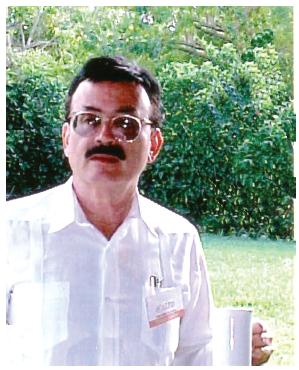
</front><body><![CDATA[  <font face="Verdana" size="2">     <p align="right">Rese&ntilde;a</p> </font><b><font size="2"> </font><font face="Verdana" size="4">     <p align="center">The <i>Tropical Biology Award 2010: </i>has been awarded to zoologist Diomedes Quintero Arias    <br> </p>     <p align="center">    <br> <img src="/img/revistas/rbt/v58n4/a02i1.jpg" title="" alt=""  style="width: 299px; height: 370px;">    <br>     <br> </p> </font></b>     <p><font face="Verdana" size="2">Panamanian zoologist Diomedes Quintero Arias (born December 20, 1940 in Panama City) has received the <i>Tropical Biology Award 2010.</i></font></p> <font size="2"> </font><font face="Verdana" size="2"></font>     <div style="text-align: justify;"><font face="Verdana" size="2">     ]]></body>
<body><![CDATA[<p>For several decades he has conducted field research throughout the Americas, from the USA to Chile (Atacama Desert), but his work has concentrated on the biodiversity of tropical arthropods, including research trips to the Amazon jungles of Peru and Brazil.</p> </font></div> <font face="Verdana" size="2"></font>     <div style="text-align: justify;"><font face="Verdana" size="2">     <p>Well known to curators around the world, he has also studied tropical specimens in leading museums such as the Smithsonian Institution, American Museum of Natural History, Philadelphia Academy of Sciences, Carnegie Institute, Geneva Museum d&#8217;Histoire Naturelle, Natural History Museum, London and the Museum d&#8217;Histoire Naturelle in Paris, where he has done mostly systematic work on neotropical arthropods.</p> </font></div> <font face="Verdana" size="2">     <p>This Research Associate of the Smithsonian Tropical Research Institute (January 1994-May 2004) studied in the University of Panama, Southern Illinois University and Harvard University.</p> </font>     <div style="text-align: justify;"><font face="Verdana" size="2">     <p>Currently he teaches at the University of Panama and directs the G.B. Fairchild Museum of Invertebrates there, a research center that houses the main reference collection of arthropods of the Republic of Panama. Quintero is well known as a superb host to visiting scientists and for being the senior editor <i>of Insects of Panama and Mesoamerica: Selected Studies </i>(Oxford University Press 1992).</p> </font></div> <font face="Verdana" size="2">     <p>In his acceptance address, Quintero said:</p> <i> </i></font>     <div style="text-align: justify;"><font face="Verdana" size="2"><i>     <p>- The American tropics, with their enormous biological wealth, have inspired many scientists to devote their lives to their study. With the rapid changes that global ecosystems are suffering because of the enormous anthropogenic pressure caused by the expansion of human populations, we urgently need to survey and understand the diversity of life forms and their complexities, before they disappear. Biodiversity studies may have monopolized media reports, but they receive relatively little financial support and dedication from researchers and academic centers. Many groups of organisms are "orphans"; they have no scientist or funds to study them. Molecular discoveries have transformed the life sciences and have priority in many research centers. However, with these changes, especially in the last two decades, working conditions and teaching at the University of Panama have failed to modernize or upgrade to keep pace with demands from Panamanian society.</p> </i></font></div> <font face="Verdana" size="2"><i></i></font>     <div style="text-align: justify;"><font face="Verdana" size="2"><i>     ]]></body>
<body><![CDATA[<p>- As biologists we are optimistic individuals, an attitude demanded by our working circumstances and conditions. We do not receive high wages or adequate compensation for our dedication. It seems that only the love we feel for our work, and the fact that we enjoy doing what we do, drives us to continue.</p> </i></font></div> <font face="Verdana" size="2"><i></i></font>     <div style="text-align: justify;"><font face="Verdana" size="2"><i>     <p>- I long to see my best students occupy proper and well-paid positions in the academic world. But professional job opportunities are very limited for biologists who live in the tropics. Panamanian students who have shown great talent are taken over by foreign institutions that have more advanced research programs, and greater financial resources that are used more rationally.</p> </i></font></div> <font face="Verdana" size="2"><i>     <p>- Therefore, I take the excellent opportunity that this distinguished podium gives me, to appeal to the highest authorities of Panama for: </p>     <p>1. A larger budget to support research of basic sciences through the Secretar&iacute;a Nacional de Ciencia, Tecnolog&iacute;a e Innovaci&oacute;n (SENACYT).    <br> 2. More State protection for our natural areas in the Atlantic Region, as well as national parks and nature reserves in Panama, which are currently in a precarious position. Their immense biodiversity, most of which has not been studied, is in danger of disappearing without being known.    <br> 3. Better paid positions for Panamanian biologists and more attention paid to their views when making decisions about changes that will have environmental impact in Panama.</p> </i></font><font size="2"> </font><font face="Verdana" size="2"></font>     <div style="text-align: justify;"><font face="Verdana" size="2">     <p>Diomedes Quintero Arias has published more than 75 articles on the systematics and biology of Scorpiones, Amblypygi, Acari, Araneae (Arachnida), Psychidae (Lepidoptera) and wasps (Mutillidae, Plumariidae, Pompilidae and Bradynobaenidae).</p> </font></div> <font face="Verdana" size="2">     <p>The Award ceremony was held in the School of Biology, University of Costa Rica, San Jos&eacute;, Costa Rica, June 25<sup>th</sup>, 2010.</p>     ]]></body>
<body><![CDATA[<p>Juli&aacute;n Monge-N&aacute;jera    <br> Director    <br> Revista de Biolog&iacute;a Tropical / Internacional Journal of Tropical Biology and Conservation</p> </font>      ]]></body>
</article>
