<?xml version="1.0" encoding="ISO-8859-1"?><article xmlns:mml="http://www.w3.org/1998/Math/MathML" xmlns:xlink="http://www.w3.org/1999/xlink" xmlns:xsi="http://www.w3.org/2001/XMLSchema-instance">
<front>
<journal-meta>
<journal-id>0034-7744</journal-id>
<journal-title><![CDATA[Revista de Biología Tropical]]></journal-title>
<abbrev-journal-title><![CDATA[Rev. biol. trop]]></abbrev-journal-title>
<issn>0034-7744</issn>
<publisher>
<publisher-name><![CDATA[Universidad de Costa Rica]]></publisher-name>
</publisher>
</journal-meta>
<article-meta>
<article-id>S0034-77442008000300024</article-id>
<title-group>
<article-title xml:lang="en"><![CDATA[Richness and composition of gall-inducing arthropods at Coiba National Park, Panama]]></article-title>
</title-group>
<contrib-group>
<contrib contrib-type="author">
<name>
<surname><![CDATA[Nieves-Aldrey]]></surname>
<given-names><![CDATA[José Luis]]></given-names>
</name>
</contrib>
<contrib contrib-type="author">
<name>
<surname><![CDATA[Enrique Medianero]]></surname>
<given-names><![CDATA[Alicia Ibáñez]]></given-names>
</name>
</contrib>
</contrib-group>
<aff id="A01">
<institution><![CDATA[,Museo Nacional de Ciencias Naturales  ]]></institution>
<addr-line><![CDATA[Madrid ]]></addr-line>
<country>España</country>
</aff>
<aff id="A02">
<institution><![CDATA[,Smithsonian Tropical Research Institute  ]]></institution>
<addr-line><![CDATA[Balboa ]]></addr-line>
<country>Panama</country>
</aff>
<aff id="A03">
<institution><![CDATA[,Universidad de Panamá Departamento de Biodiversidad y Biología Evolutiva Museo Nacional de Ciencias Naturales]]></institution>
<addr-line><![CDATA[Madrid ]]></addr-line>
<country>España</country>
</aff>
<pub-date pub-type="pub">
<day>00</day>
<month>09</month>
<year>2008</year>
</pub-date>
<pub-date pub-type="epub">
<day>00</day>
<month>09</month>
<year>2008</year>
</pub-date>
<volume>56</volume>
<numero>3</numero>
<fpage>1269</fpage>
<lpage>1286</lpage>
<copyright-statement/>
<copyright-year/>
<self-uri xlink:href="http://www.scielo.sa.cr/scielo.php?script=sci_arttext&amp;pid=S0034-77442008000300024&amp;lng=en&amp;nrm=iso"></self-uri><self-uri xlink:href="http://www.scielo.sa.cr/scielo.php?script=sci_abstract&amp;pid=S0034-77442008000300024&amp;lng=en&amp;nrm=iso"></self-uri><self-uri xlink:href="http://www.scielo.sa.cr/scielo.php?script=sci_pdf&amp;pid=S0034-77442008000300024&amp;lng=en&amp;nrm=iso"></self-uri><abstract abstract-type="short" xml:lang="en"><p><![CDATA[Interest in studying galls and their arthropods inducers has been growing rapidly in the last two decades. However, the Neotropical region is probably the least studied region for gall-inducing arthropods. A study of the richness and composition of gall-inducing arthropods was carried out at Coiba National Park in the Republic of Panama. Field data come from samples obtained between August 1997 and September 1999, with three (two-week long) more intensive samplings. Seventeen sites, representing the main land habitats of Coiba National Park were surveyed. 4942 galls of 50 insect and 9 mite species inducing galls on 50 vascular plants from 30 botanical families were colleted. 62.7% of the galls were induced by gall midges (Diptera, Cecidomyiidae), 15.3% by mites, Eriophyidae, 8.5% by Homoptera, Psyllidae, 6.8% by Coccidae and 5.1% by Phlaeothripidae (Tysanoptera). The host plant families with the most galls were Myrtaceae with seven, Bignoniaceae with five and Euphorbiaceae, Fabaceae and Melastomataceae with four. Leaf galls accounted for about 93% of collected galls. Most leaf galls were pit/blister galls followed by covering and pouch galls. Gall richness per collecting site was between 1 and 19 species. Coiba’s gall diversity is discussed in relation to data available from other tropical sites from continental Panama and the Neotropical region. Our results support the idea that it may be premature to conclude that species richness of gall inducers declines near the equator. Rev. Biol. Trop. 56 (3): 1269-1286. Epub 2008 September 30.]]></p></abstract>
<abstract abstract-type="short" xml:lang="es"><p><![CDATA[El interés por el estudio de las agallas y los artrópodos que las inducen ha crecido en todo el mundo en los últimos veinte años. Sin embargo, los artrópodos que inducen agallas en la región Neotropical son probablemente los menos estudiados. Un estudio de la riqueza y composición de artrópodos que inducen agallas fue desarrollado en el Parque Nacional Coiba en la Republica de Panamá. Los datos provienen de muestreos intensivos de dos semanas, efectuados entre agosto de 1997 y septiembre de 1999, en 17 sitios del área insular del Parque Nacional Coiba. Un total de 4942 agallas, que corresponden a 50 especies de insectos y nueve de ácaros, fueron colectadas en 50 especies de plantas vasculares de 30 familias. El 62.7% de las agallas correspondieron a especies de la familia Cecidomyiidae (Diptera), el 15.3% a ácaros de la familia Eriophyidae, el 8.5% a Psyllidae (Homoptera), un 6.8% a Coccidae y el 5.1% a Phlaeothripidae (Tysanoptera). Las familias de plantas con más especies de inductores de agallas fueron Myrtaceae con siete, Bignoniaceae con cinco y Euphorbiaceae, Fabaceae y Melastomataceae con cuatro. Las agallas formadas en hojas representaron el 93% del total. El número de inductores de agallas por sitio osciló entre uno y diecinueve. La riqueza de artrópodos inductores de agallas del Parque Nacional Coiba se discute con datos disponibles de la literatura para el área continental de Panamá y el Neotrópico. Nuestros resultados apoyan la idea de que es prematuro concluir que la riqueza de artrópodos que inducen agallas disminuye hacia el Ecuador.]]></p></abstract>
<kwd-group>
<kwd lng="en"><![CDATA[Coiba]]></kwd>
<kwd lng="en"><![CDATA[gall-inducing insects]]></kwd>
<kwd lng="en"><![CDATA[gall richness]]></kwd>
<kwd lng="en"><![CDATA[host plant]]></kwd>
<kwd lng="en"><![CDATA[insect/plant interaction]]></kwd>
<kwd lng="en"><![CDATA[Panama]]></kwd>
<kwd lng="es"><![CDATA[Coiba]]></kwd>
<kwd lng="es"><![CDATA[insectos gallícolas]]></kwd>
<kwd lng="es"><![CDATA[riqueza de agallas]]></kwd>
<kwd lng="es"><![CDATA[plantas hospedadoras]]></kwd>
<kwd lng="es"><![CDATA[interacción planta/insecto]]></kwd>
<kwd lng="es"><![CDATA[Panamá]]></kwd>
</kwd-group>
</article-meta>
</front><body><![CDATA[  <font face="Verdana" size="2">     <p> </p> </font><b><font face="Verdana" size="4">     <p align="center">Richness and composition of gall-inducing arthropods at Coiba National Park, Panama</p> </font></b><font face="Verdana" size="2"> </font>     <p><font face="Verdana" size="2"><b>José Luis Nieves-Aldrey<sup>1</sup>, Alicia Ibáñez<sup>2 </sup>&amp; Enrique Medianero<sup>3 </sup></b></font></p>     <p><font face="Verdana" size="2">1. Museo Nacional de Ciencias Naturales (CSIC), Dpto. Biodiversidad. C/José Gutiérrez Abascal 2, 28006 Madrid (España); <a href="mailto:aldrey@mncn.csic.es.">aldrey@mncn.csic.es.</a> Correspondence author </font></p>     <p><font face="Verdana" size="2">2. Smithsonian Tropical Research Institute, Balboa, Republic of Panama; <a href="mailto:ibaneza@si.edu">ibaneza@si.edu</a> </font></p>     <p><font face="Verdana" size="2">3. Programa Centroamericano de Maestría en Entomología, Vicerrectoría de Investigación y Postgrado, Universidad de Panamá. Dirección actual: Departamento de Biodiversidad y Biología Evolutiva. Museo Nacional de Ciencias Naturales. Madrid, España; <a href="mailto:mcnem823@mncn.csic.es">mcnem823@mncn.csic.es</a>, <a href="mailto:medianero@yahoo.com">medianero@yahoo.com</a>    <br> </font></p> <hr style="width: 100%; height: 2px;">     <p><font face="Verdana" size="2"><b>Abstract: </b>Interest in studying galls and their arthropods inducers has been growing rapidly in the last two decades. However, the Neotropical region is probably the least studied region for gall-inducing arthropods. A study of the richness and composition of gall-inducing arthropods was carried out at Coiba National Park in the Republic of Panama. Field data come from samples obtained between August 1997 and September 1999, with three (two-week long) more intensive samplings. Seventeen sites, representing the main land habitats of Coiba National Park were surveyed. 4942 galls of 50 insect and 9 mite species inducing galls on 50 vascular plants from 30 botanical families were colleted. 62.7% of the galls were induced by gall midges (Diptera, Cecidomyiidae), 15.3% by mites, Eriophyidae, 8.5% by Homoptera, Psyllidae, 6.8% by Coccidae and 5.1% by Phlaeothripidae (Tysanoptera). The host plant families with the most galls were Myrtaceae with seven, Bignoniaceae with five and Euphorbiaceae, Fabaceae and Melastomataceae with four. Leaf galls accounted for about 93% of collected galls. Most leaf galls were pit/blister galls followed by covering and pouch galls. Gall richness per collecting site was between 1 and 19 species. Coiba’s gall diversity is discussed in relation to data available from other tropical sites from continental Panama and the Neotropical region. Our results support the idea that it may be premature to conclude that species richness of gall inducers declines near the equator. Rev. Biol. Trop. 56 (3): 1269-1286. Epub 2008 September 30. </font></p>     <p><font face="Verdana" size="2"><b>Key words: </b>Coiba, gall-inducing insects, gall richness, host plant, insect/plant interaction, Panama.</font></p> <hr style="width: 100%; height: 2px;">     ]]></body>
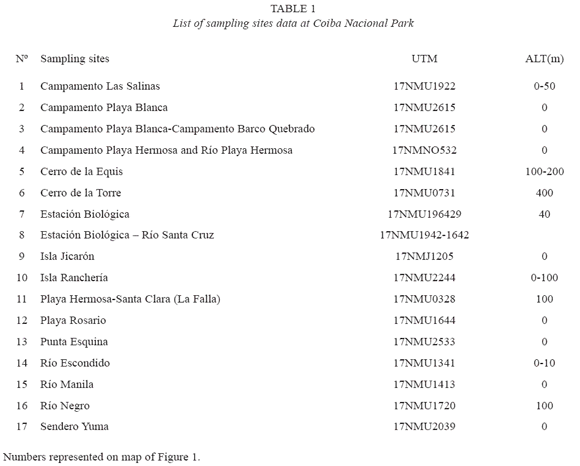
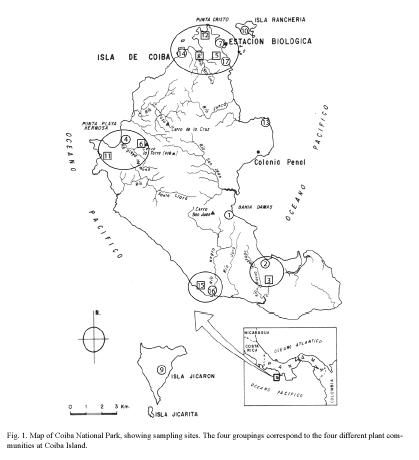
<body><![CDATA[<p><font face="Verdana" size="2"> </font></p>     <p><font face="Verdana" size="2">Many groups of insects and mites, estimated in a range from 21 000 to 211 000 species, with an average of 132 930 species (Espírito-Santo and Fernandes 2007), are capable of inducing galls on plants, which are structures that involve active differentiation and growth of plant tissues providing shelter, nutrition and protection for the gall-inducing organism (Meyer 1987, Nieves-Aldrey 1998, Stone and Schönrogge 2003). </font></p>     <p><font face="Verdana" size="2">Galls and gall-inducing arthropods have been the object of research for the last three centuries by dozens of naturalists and scientists worldwide (Mani 1992, see Raman et al. 2005 for a recent synthesis). Earlier information was compiled in a classic work by Houard (1908 1913, 1922, 1933, 1940). The most important groups of gall-inducing insects are Diptera (Cecidomyiidae), Homoptera (Cicadoidea, Psylloidea, Aphidoidea and Coccoidea), Thysanoptera and the hymenopteran families Tenthredinidae and Cynipidae. Mites inducing galls belong mostly to the family Eriophyidae. These galling-insect groups have different distribution patterns, and their distribution may be correlated with the breaking up and movement of continents (Gagné 1984). Geographic and climatic factors could also have determined the distribution patterns of gall-inducing arthropods (Schlinger 1974). The most important family of gall insects is Cecidomyiidae (Diptera), predominant in almost all zoogeographic regions, both tropical and temperate. Cynipidae and Tenthredinidae are mainly holarctic, gall-inducing thrips (Thysanoptera) are restricted mostly to Western Asia and gall-inducing psyllids and coccids are predominant in tropical regions (Felt 1940, Gagné 1984). </font></p>     <p><font face="Verdana" size="2">Interest in studying galls and their arthropod inducers has been growing rapidly in the last two decades (Raman <i>et al</i>. 2005). However, the Neotropical region continuous to be a poorly studied region for gall-inducing arthropods in general (Espírito-Santo and Fernandes 2007). The most important references are the classic work by Houard (1933), the book by Gagné (1994) on gall midges (Cecidomyiidae) and local studies in Brazil (Maia 2001, 2005, Gonçalves-Alvin and Fernandes 2001, Maia and Fernandes 2004, Costa De Oliveira and Maia 2005, Urso-Guiamares and Scareli-Santos 2006); Costa Rica (Hanson and Goméz-Laurito 2005); Mexico (Cuevas-Reyes <i>et al</i>. 2004a, 2004b) and Panama (Medianero <i>et al </i>2001). Future research in the Neotropical region will likely change the biogeographical patterns assumed until now for gall inducing insects (Espírito-Santo and Fernandes 2007). </font></p>     <p><font face="Verdana" size="2">The aim of this study is to estimate the richness and composition of gall inducing arthropod species in an unexplored insular tropical habitat off the Pacific coast of Panama, and compare them with data available from continental Panama. </font></p> <b><font face="Verdana" size="3"> </font></b>     <p><b><font face="Verdana" size="3">Materials and methods</font></b></p>     <p><font face="Verdana" size="2"> </font></p>     <p><font face="Verdana" size="2"><b>Study area: </b>The research was performed at Coiba National Park (World Heritage Site), as a part of the Joint Hispanic-Panamanian Program for National Parks. Coiba National Park is located in the Panamanian Pacific Ocean (7º39´-7º18´ N &amp; 81º53´-81º35´W), 22 Km from the mainland, and encompasses an area of 270 125 ha, of which 53 528 ha are insular and 216 543 are marine. The insular area is composed of Coiba (50 314 ha), the largest island in tropical Pacific America, eight other minor islands and 30 islets. The maximum altitude in the Park is 420 m on Coiba Island. Annual rainfall is 3 483 mm. The yearly average humidity is 80% and the mean temperature is 25 ºC. The area is characterized by an intense dry season, from December to April and a rainy season from May to November. The natural vegetation is well conserved, with about 80% forest coverage. An untouched tropical moist and wet forest occupies 60% of the park (Castroviejo 1997). The island of Coiba became separate from the mainland about 12 000 to 18 000 years ago and houses many endemic species of animals and plants. The rough forested terrain has served to make the island inhospitable and preserved, but even more so the presence of a prison, consisting of some twenty camps scattered along the coastline, that was in operation from 1918 to 2004 (Castroviejo 1997, Fontal and Nieves-Aldrey 2004). </font></p>     <p><font face="Verdana" size="2"><b>Field and laboratory work: </b>Field data were obtained from several samples between August 1997 and September 1999 with three more intensive samples (two-week long) in August 1997, July 1998 and August 1999. The sampling method consisted of transects during not less than one hour (see Price <i>et al</i>. 1998). Along the selected collecting sites all plants were searched for galls. Seventeen sites representing the main terrestrial habitats in Coiba National Park were surveyed (<a href="#t1">Table 1</a>, <a  href="#i1">Fig. 1</a>). Plants with galls were collected and photographed. Specimens of galled plants were dried and put into a herbarium collection, where plants were identified later. Samples of the galls were also stored in 70% ethanol to allow further dissection and identification. Data of altitude and geographic position was taken in the field (<a href="#t1">Table 1</a>).    <br> </font></p>     ]]></body>
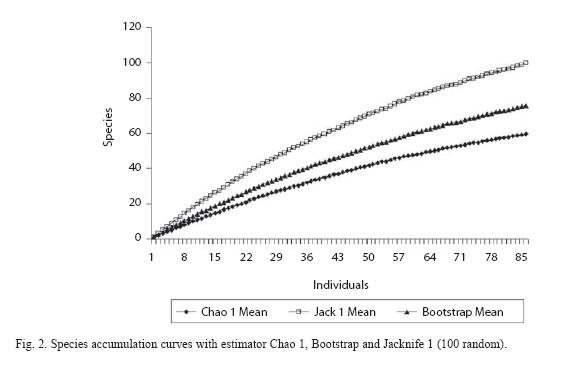
<body><![CDATA[<p style="text-align: center;"><font face="Verdana" size="2"><img  src="/img/revistas/rbt/v56n3/art24t1.gif" title="" alt=""  style="width: 580px; height: 466px;"><a name="t1"></a>    <br> </font></p>     <p style="text-align: center;"><img  src="/img/revistas/rbt/v56n3/art24i1.jpg" title="" alt=""  style="width: 419px; height: 460px;"><a name="i1"></a>    <br> </p>     <p><font face="Verdana" size="2"> </font></p>     <p><font face="Verdana" size="2">The galls were dissected in the laboratory for adult and larval identification to family level. Gall-inducing species were separated by the external morphology of the galls, the larvae and the host plant. It is assumed in a study like this that gall morphotype is unique for each gall-inducing species (Mani 1964, Ananthakrishnan 1984). Yet a very conservative methodology was employed (see Hanson and Goméz-Laurito 2005); galls found in petioles, in leaf blades, as well as in the nerve of a given leaf, and those without differentiation in plant species of the same genus were considered as of the same gall-inducing species. </font></p>     <p><font face="Verdana" size="2"><b>Data analysis: </b>Gall-inducing arthropod species richness (S) was calculated based on the number of different galls found and the </font><font face="Verdana" size="2">alpha diversity index (&#945;</font><font face="Verdana" size="2">) was estimated (Fisher 1943): </font></p> <font face="Verdana" size="2">     <p align="center">S = &#945;Log e (I + N/&#945;).</p> </font>     <p><font face="Verdana" size="2"><i>S </i>is the number of species in a sample, <i>N </i>is the </font><font face="Verdana" size="2">number of individuals in a sample and &#945; is the</font><font face="Verdana"  size="2"> diversity index. This index is not influenced by the two limitations of other known indeces because it is independent of sample size and it does not give more weight to species abundance (Wolda 1983). </font></p>     <p><font face="Verdana" size="2">To verify sampling efficiency we constructed species accumulation curves with the estimator Chao 1, Bootstrap and Jacknife 1 (100 random). The species accumulation curve is based on individual-based assessment protocol (see Gotelli and Colwell 2001). We used the software EstimatesS® 8 (Colwell 2006). </font></p> <b><font face="Verdana" size="3">     ]]></body>
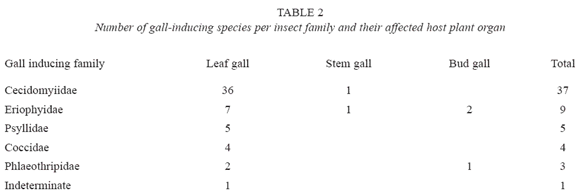
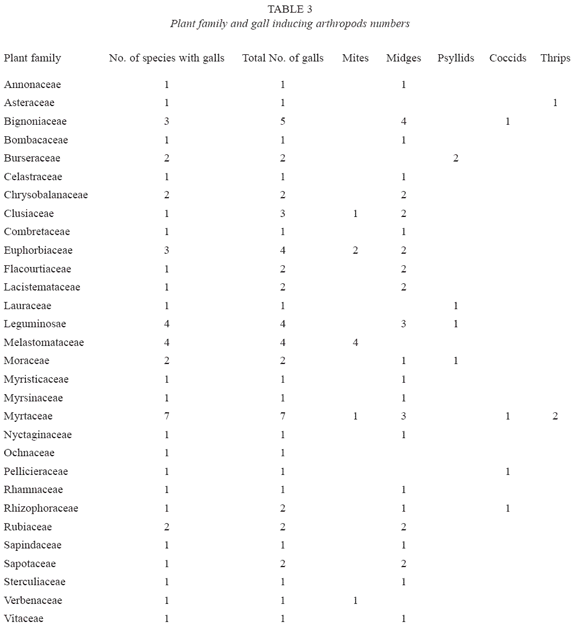
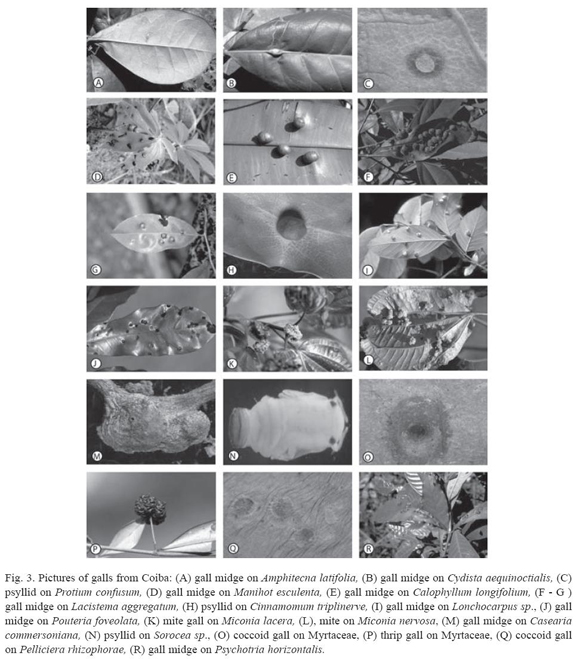
<body><![CDATA[<p>Results </p> </font></b>     <p><font face="Verdana" size="2"> </font></p>     <p><font face="Verdana" size="2"><b>Taxonomic and faunistic considerations: </b>A total 4 942 galls of 59 species, 50 insects and 9 mites, associated with 50 species of plants from 37 genera and 30 families were collected at Coiba National Park. It was not possible to identify the genus of nine host plant species mostly Myrtaceae. 62.7% of the galls were induced by species of the family Cecidomyiidae, 15.3% by Eriophyidae, 8.5% by Psyllidae, 6.8% by Coccidae, 5.1% by Phlaeothripidae; one species corresponding to 1.7% could not be determined. 93. 1% of the galls were found on leaves, 3.4% on stems and 5.2% on buds (<a href="#t2">Table 2</a>). The plant families hosting the most gall-inducing species were Myrtaceae with seven, Bignoniaceae with five and Euphorbiaceae, Fabaceae and Melastomataceae with four (<a  href="#t3">Table 3</a>). The plant species with the greatest diversity of galls was <i>Calophyllum longifolium </i>(Clusiaceae) with three, seven species were found with two galls (<i>Amphitecna latifolia, Mansoa sp., Acalypha diversifolia, Casearia commersoni</i>ana, Lacistema aggregatum, Cassipourea ellip<i>tica </i>and <i>Pouteria foveolata</i>) whilst only one gall-inducing species was found infesting two species of <i>Ficus</i>. Alpha diversity was 9.4 but, species accumulation curves did not become asymptotic suggesting than there are more gall-inducing species at Coiba National Park than those collected in this study. Gall-inducing species number increases with individual sample (<a href="#i2">Fig. 2</a>). Gall richness per collecting site was between 1 and 19 species. 71% of all species were found at only one site, 22% in two, 5% in three, 2% in four, while no species was present in more than four sites. The gall inducing arthro pod community studied shows a high comple mentarity among collecting sites.    <br> </font></p>     <p style="text-align: center;"><font face="Verdana" size="2"><img  src="/img/revistas/rbt/v56n3/art24t2.gif" title="" alt=""  style="width: 580px; height: 196px;"><a name="t2"></a>    <br> </font></p>     <p><font face="Verdana" size="2">&nbsp;    <br>     <br> </font></p>     <div style="text-align: center;"><span style="font-family: verdana;"><img  src="/img/revistas/rbt/v56n3/art24t3.gif" title="" alt=""  style="width: 580px; height: 625px;"><a name="t3"></a>    ]]></body>
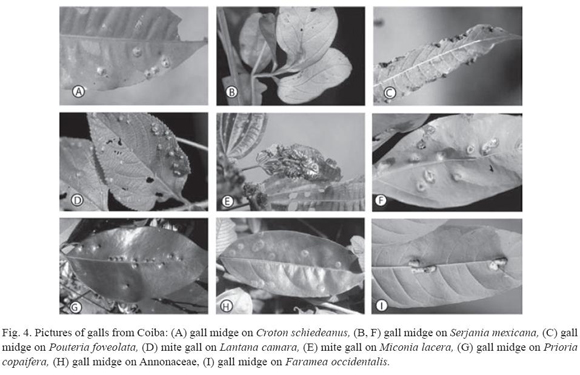
<body><![CDATA[<br>     <br>     <br>     <br> <img src="/img/revistas/rbt/v56n3/art24i2.jpg" title="" alt=""  style="width: 514px; height: 341px;"><a name="i2"></a>    <br> </span></div> <font face="Verdana" size="2"><b>     <p>List of gall-inducing taxa and host plant species at Coiba National Park (G = Gall). </p> </b> </font>     <p><font face="Verdana" size="2">ANNONACEAE </font></p>     <p><font face="Verdana" size="2">Gen. Ind. </font></p>     <p><font face="Verdana" size="2"><b>G59</b>. (<a href="#i4">Fig. 4H</a>). Family gall-inducer: Cecidomyiidae. </font></p>     <p><font face="Verdana" size="2">Leaf gall, ovoid with hairs on upper side. </font></p>     ]]></body>
<body><![CDATA[<p><font face="Verdana" size="2">BIGNONIACEAE </font></p>     <p><font face="Verdana" size="2"><i>Amphitecna latifolia </i>(Mill.) A.H. Gentry </font></p>     <p><font face="Verdana" size="2"><b>G1 </b>(<a href="#i3">Fig. 3A</a>). Family gall-inducer: Cecidomyiidae </font></p>     <p><font face="Verdana" size="2">Leaf gall, spindle shaped, on mid or secondary veins, distinct on both sides of leaf. </font></p>     <p><font face="Verdana" size="2">Manglar De Sta. Cruz. 31-VIII-97. J. L. Nieves <i>leg</i>. </font></p>     <p><font face="Verdana" size="2"><b>G2</b>. Family gall-inducer: Coccidae </font></p>     <p><font face="Verdana" size="2">Leaf gall; blister more distinct on low surface. </font></p>     <p><font face="Verdana" size="2">Manglar de Sta. Cruz. 31-VIII-97. J. L. Nieves <i>leg</i>. </font></p>     <p><font face="Verdana" size="2"><i>Cydista aequinoctialis </i>(L) Miers. </font></p>     <p><font face="Verdana" size="2"><b>G3 </b>(<a href="#i3">Fig. 3B</a>). Family gall-inducer: Cecidomyiidae </font></p>     ]]></body>
<body><![CDATA[<p><font face="Verdana" size="2">Leaf gall; spindle shaped, on petiole, mid and secondary veins. </font></p>     <p><font face="Verdana" size="2">I. Jicarón. 3-X-97. A. Ibáñez <i>leg </i></font></p>     <p><font face="Verdana" size="2">I. Ranchería. 7-IX-97. A. Ibáñez <i>leg </i>Beach estación Biológica. 30-VIII-97. J. L. Nieves <i>leg </i>Cerro Equis. 26-VIII-97. J. L. Nieves <i>leg</i>. </font></p>     <p><font face="Verdana" size="2"><i>Mansoa </i>sp.</font></p>     <p><font face="Verdana" size="2"><b>G4</b>. Family gall-inducer: Cecidomyiidae Leaf gall, a blister distinct on both sides of leaf. Sendero Yuma. IX-97. A. Ibáñez <i>leg.    <br> </i></font></p>     <p><font face="Verdana" size="2"><b>G4a</b>. Family Gall Inducer: Cecidomyiidae Leaf gall, a spindle shaped swelling on mid vein. Sendero Yuma. IX-97. A. Ibáñez <i>leg</i>. </font></p>     <p><font face="Verdana" size="2">BOMBACACEAE </font></p>     <p><font face="Verdana" size="2"><i>Quararibea asterolepis </i>Pittier </font></p>     <p><font face="Verdana" size="2"><b>G5</b>. Family gall-inducer: Cecidomyiidae </font></p>     ]]></body>
<body><![CDATA[<p><font face="Verdana" size="2">Leaf gall, a small blister distinct on both sides of leaf. </font></p>     <p><font face="Verdana" size="2">I. Jicarón. 3-X-97. A. Ibáñez <i>leg</i>. </font></p>     <p><font face="Verdana" size="2">BURSERACEAE </font></p>     <p><font face="Verdana" size="2"><i>Tetragastris panamensis </i>(Engl.) Kuntze </font></p>     <p><font face="Verdana" size="2"><b>G6</b>. Family gall-inducer: Psyllidae </font></p>     <p><font face="Verdana" size="2">Leaf gall, small circular blister more distinct on upper side; on lower side appear as a pit </font></p>     <p><font face="Verdana" size="2">or depression. </font></p>     <p><font face="Verdana" size="2">Cerro Equis XI-97. A. Ibáñez <i>leg. </i></font></p>     <p><font face="Verdana" size="2"><i>Protium confusum </i>(Rose) Pittier </font></p>     <p><font face="Verdana" size="2"><b>G7. </b>(<a href="#i3">Fig. 3C</a>). Family gall-inducer: Psyllidae </font></p>     ]]></body>
<body><![CDATA[<p><font face="Verdana" size="2">Leaf gall, circular, small, distinct on upper side; a pit on low part. </font></p>     <p><font face="Verdana" size="2">I. Ranchería. 7-IX-97. A. Ibáñez <i>leg </i>Cerro de la Torre. 12-VI-98. A. Ibáñez <i>leg</i>. </font></p>     <p><font face="Verdana" size="2">CELASTRACEAE </font></p>     <p><font face="Verdana" size="2"><i>Maytenus schippii </i>Lundell </font></p>     <p><font face="Verdana" size="2"><b>G9</b>. Family gall-inducer: Cecidomyiidae </font></p>     <p><font face="Verdana" size="2">Leaf gall, a median size blister of leaf blade distinct on both sides of leaf. </font></p>     <p><font face="Verdana" size="2">Río Santa Clara. 29-XI-97. A. Ibáñez <i>leg</i>. </font></p>     <p><font face="Verdana" size="2">CHRYSOBALANACEAE </font></p>     <p><font face="Verdana" size="2"><i>Licania hypoleuca </i>Benth. </font></p>     <p><font face="Verdana" size="2"><b>G10</b>. Family gall-inducer: Cecidomyiidae </font></p>     ]]></body>
<body><![CDATA[<p><font face="Verdana" size="2">Leaf gall, subspherical, small. </font></p>     <p><font face="Verdana" size="2">Playa Rosario. 22-VII-98. J. L. Nieves <i>leg</i>. </font></p>     <p><font face="Verdana" size="2"><i>Licania platypus </i>(Hemsl.) Fritsch </font></p>     <p><font face="Verdana" size="2"><b>G11</b>. Family gall-inducer: Cecidomyiidae </font></p>     <p><font face="Verdana" size="2">Leaf gall, on blades subspherical, small and abundant. </font></p>     <p><font face="Verdana" size="2">I. Canal De Afuera. 6-XI-97. A. Ibáñez <i>leg</i>. </font></p>     <p><font face="Verdana" size="2">CLUSIACEAE </font></p>     <p><font face="Verdana" size="2"><i>Calophyllum longifolium </i>Willd. </font></p>     <p><font face="Verdana" size="2"><b>G20 </b>(<a href="#i3">Fig. 3E</a>). Family gall-inducer: Cecidomyiidae </font></p>     <p><font face="Verdana" size="2">Leaf gall, on blades, bean shaped, big more obvious on underside.</font></p>     ]]></body>
<body><![CDATA[<p><font face="Verdana" size="2">Playa Blanca-Cativales. 26-VIII-97. J .L. Nieves <i>leg </i></font></p>     <p><font face="Verdana" size="2">Cerro De La Equis. 21-III-98. A. Ibáñez <i>leg. </i></font></p>     <p><font face="Verdana" size="2"><b>G21</b>. Family gall-inducer: Eriophyidae Gall leaf, on blades, tiny pocks in eyelet shape, on both sides of midrib.</font></p>     <p><font face="Verdana" size="2">Cerro De La Torre. 18-VII-98. J. L. Nieves <i>leg. </i></font></p>     <p><font face="Verdana" size="2"><b>G22</b>. Family gall-inducer: Cecidomyiidae Gall leaf, small pustule on blades. Cerro De La Equis. 26-VIII-97. J. L. Nieves <i>leg</i>. </font></p>     <p><font face="Verdana" size="2">COMBRETACEAE </font></p>     <p><font face="Verdana" size="2"><i>Terminalia amazonia </i>(J.F. Gmel.) Exell </font></p>     <p><font face="Verdana" size="2"><b>G12</b>. Family gall-inducer: Cecidomyiidae </font></p>     <p><font face="Verdana" size="2">Leaf gall, ovoid irregular distinct on both sides of leaf.</font></p>     <p><font face="Verdana" size="2">Cerro de la Torre. 22-VII-98. J. L. Nieves <i>leg</i>. </font></p>     ]]></body>
<body><![CDATA[<p><font face="Verdana" size="2">COMPOSITAE (ASTERACEAE) </font></p>     <p><font face="Verdana" size="2">Gen. sp. Indet. </font></p>     <p><font face="Verdana" size="2"><b>G13</b>. Family gall-inducer: Phlaeotripidae </font></p>     <p><font face="Verdana" size="2">Gall a folded at tip of the leaf blades. </font></p>     <p><font face="Verdana" size="2">Sendero de Santa Cruz. 26-VIII-99. A. Ibáñez <i>leg. </i></font></p>     <p><font face="Verdana" size="2">EUPHORBIACEAE </font></p>     <p><font face="Verdana" size="2"><i>Acalypha diversifolia </i>Jacq<i>. </i></font></p>     <p><font face="Verdana" size="2"><b>G14. </b>Family gall-inducer: Eriophyidae </font></p>     <p><font face="Verdana" size="2">Bud gall, large, subspherical.</font></p>     <p><font face="Verdana" size="2">Rio Negro. 9-XII-97. A. Ibáñez <i>leg </i></font></p>     ]]></body>
<body><![CDATA[<p><font face="Verdana" size="2">I. Jicarón. 9-XII-97. A. Ibáñez <i>leg.</i></font></p>     <p><font face="Verdana" size="2"><b>G15</b>. Family gall-inducer: Eriophyidae </font></p>     <p><font face="Verdana" size="2">Leaf gall, a small pouch more obvious on upper side. </font></p>     <p><font face="Verdana" size="2">Rio Negro. XII-97. A. Ibáñez <i>leg </i></font></p>     <p><font face="Verdana" size="2">Cerca De Sta. Cruz. XII-97. A. Ibáñez <i>leg. </i></font></p>     <p><font face="Verdana" size="2"><i>Croton schiedeanus </i>Schltdl. </font></p>     <p><font face="Verdana" size="2"><b>G16</b>. (<a href="#i4">Fig. 4A</a>).Family gall-inducer: Cecidomyiidae </font></p>     <p><font face="Verdana" size="2">Leaf gall, small blister on blades, more obvious in underside. </font></p>     <p><font face="Verdana" size="2">Manila, cerca de la parcela. 19-VI-98. A. Ibáñez <i>leg. </i></font></p>     <p><font face="Verdana" size="2"><i>Manihot esculenta </i>Crantz </font></p>     ]]></body>
<body><![CDATA[<p><font face="Verdana" size="2"><b>G17 </b>(<a href="#i3">Fig. 3D</a>). Family gall-inducer: Cecidomyiidae</font></p>     <p><font face="Verdana" size="2">Leaf gall, spindle shaped on blades, colour red, more obvious on upper side. Playa Blanca. VIII-97. J. L. Nieves <i>leg</i>. </font></p>     <p><font face="Verdana" size="2">FABACEAE </font></p>     <p><font face="Verdana" size="2"><i>Inga multijuga </i>Benth. </font></p>     <p><font face="Verdana" size="2"><b>G25</b>. Family gall-inducer: Cecidomyiidae </font></p>     <p><font face="Verdana" size="2">Leaf gall, tiny pustule, more obvious on upper side.</font></p>     <p><font face="Verdana" size="2">Cerro De La Equis. 12-VI-98. A. Ibáñez <i>leg</i>. </font></p>     <p><font face="Verdana" size="2"><i>Inga </i>sp. </font></p>     <p><font face="Verdana" size="2"><b>G26</b>. Family gall-inducer: Cecidomyiidae </font></p>     <p><font face="Verdana" size="2">Leaf gall, small blister. </font></p>     ]]></body>
<body><![CDATA[<p><font face="Verdana" size="2">Camino de las Salinas. 27-VIII-99. A. Ibáñez <i>leg</i>. </font></p>     <p><font face="Verdana" size="2"><i>Lonchocarpus </i>sp. </font></p>     <p><font face="Verdana" size="2"><b>G27 </b>(<a href="#i3">Fig. 3I</a>). Family gall-inducer: Psyllidae </font></p>     <p><font face="Verdana" size="2">Leaf gall, ovoid, on both sides of blades, medial size. </font></p>     <p><font face="Verdana" size="2">Punta Esquina. 25-VIII-97. J. L. Nieves <i>leg</i>. </font></p>     <p><font face="Verdana" size="2"><i>Prioria copaifera </i>Griseb. </font></p>     <p><font face="Verdana" size="2"><b>G28. </b>(<a href="#i4">Fig. 4G</a>). Family gall-inducer: Cecidomyiidae </font></p>     <p><font face="Verdana" size="2">Leaf gall, spherical small, abundant, scar on underside. </font></p>     <p><font face="Verdana" size="2">Playa Blanca-Cativales. 26-VIII-97. J.L.Nieves <i>leg</i>. </font></p>     <p><font face="Verdana" size="2">FLACOURTIACEAE </font></p>     ]]></body>
<body><![CDATA[<p><font face="Verdana" size="2"><i>Casearia commersoniana </i>Cambess. </font></p>     <p><font face="Verdana" size="2"><b>G18</b>. (<a href="#i3">Fig. 3M</a>). Family gall-inducer: Cecidomyiidae </font></p>     <p><font face="Verdana" size="2">Gall on stems, swelling irregular, mainly on one side. </font></p>     <p><font face="Verdana" size="2">Río Negro. 9-XII-97. A. Ibáñez <i>leg</i>. </font></p>     <p><font face="Verdana" size="2"><b>G19</b>. Family gall-inducer: Cecidomyiidae </font></p>     <p><font face="Verdana" size="2">Gall on leaf, small pouch on mid vein, more obvious on upper side. </font></p>     <p><font face="Verdana" size="2">Río Negro. 9-XII-97. A. Ibáñez <i>leg</i>. </font></p>     <p><font face="Verdana" size="2">LACISTEMATACEAE </font></p>     <p><font face="Verdana" size="2"><i>Lacistema aggregatum </i>(Bergius) Rusby </font></p>     <p><font face="Verdana" size="2"><b>G23 </b>(<a href="#i3">Fig. 3F</a>). Family gall-inducer: Cecidomyiidae </font></p>     ]]></body>
<body><![CDATA[<p><font face="Verdana" size="2">Leaf gall, spherical in groups, hairy, medial size. </font></p>     <p><font face="Verdana" size="2">Cerro De La Equis. 25-VIII-97. J. L. Nieves <i>leg </i></font></p>     <p><font face="Verdana" size="2"><b>G23a </b>(<a href="#i3">Fig. 3G</a>) </font></p>     <p><font face="Verdana" size="2">Family gall-inducer: Cecidomyiidae </font></p>     <p><font face="Verdana" size="2">Leaf gall, pit gall, cilíndrical distint on low blade of leaf. </font></p>     <p><font face="Verdana" size="2">Playa Hermosa (Falla). 20-VII-98. J. L. Nieves <i>leg</i>. </font></p>     <p><font face="Verdana" size="2">LAURACEAE </font></p>     <p><font face="Verdana" size="2"><i>Cinnamomum triplinerve </i>(Ruiz &amp; Pav.) Kosterm </font></p>     <p><font face="Verdana" size="2"><b>G24 </b>(<a href="#i3">Fig. 3H</a>). Family gall-inducer: Psyllidae </font></p>     <p><font face="Verdana" size="2">Leaf gall, globular on secondary veins, more obvious in upper side. </font></p>     ]]></body>
<body><![CDATA[<p><font face="Verdana" size="2">Cerro De La Torre. 18-VIII-98. J. L. Nieves <i>leg </i></font></p>     <p><font face="Verdana" size="2">I. Ranchería. 19-VII-98. J. L. Nieves <i>leg </i>Cima del Cerro de la Torre. 7-III-98. J. L Nieves <i>leg</i>. </font></p>     <p><font face="Verdana" size="2">MELASTOMATACEAE </font></p>     <p><font face="Verdana" size="2"><i>Clidemia discolor </i>(Triana) Cogn. </font></p>     <p><font face="Verdana" size="2"><b>G29</b>. Family gall-inducer: Eriophyidae </font></p>     <p><font face="Verdana" size="2">Bud gall, flowers. </font></p>     <p><font face="Verdana" size="2">Manglar De Sta. Cruz. 24-VII-98. J. L. Nieves <i>leg. </i></font></p>     <p><font face="Verdana" size="2"><i>Miconia lacera </i>(Bonpl.) Naudin </font></p>     <p><font face="Verdana" size="2"><b>G31</b>. (<a href="#i4">Figs. 4K</a>, 5E) Family gall-inducer: Eriophyidae </font></p>     <p><font face="Verdana" size="2">Gall on buds and stems, subspherical. </font></p>     ]]></body>
<body><![CDATA[<p><font face="Verdana" size="2">Cerro De La Torre. 7-III-98. A. Ibáñez <i>leg</i>. </font></p>     <p><font face="Verdana" size="2"><i>Miconia minutiflora </i>(Bonpl.) DC. </font></p>     <p><font face="Verdana" size="2"><b>G32</b>. Family gall-inducer: Eriophyidae </font></p>     <p><font face="Verdana" size="2">Dense erineum on underside of leaf, hairs red. </font></p>     <p><font face="Verdana" size="2">Cerro De La Equis. 26-VIII-97. J. L. Nieves <i>leg </i></font></p>     <p><font face="Verdana" size="2">Estación Biológica. Otoño 98. A. Ibáñez <i>leg </i></font></p>     <p><font face="Verdana" size="2">Sendero de Santa Cruz. 26-VIII-99. A. Ibáñez <i>leg. </i></font></p>     <p><font face="Verdana" size="2"><i>Miconia nervosa </i>(Sm.) Triana </font></p>     <p><font face="Verdana" size="2"><b>G30</b>. (<a href="#i3">Fig. 3L</a>) Family gall-inducer: Eriophyidae </font></p>     <p><font face="Verdana" size="2">Leaf gall, more obvious on underside, blades hair. </font></p>     ]]></body>
<body><![CDATA[<p><font face="Verdana" size="2">Rio Negro. 9-XII-97. A. Ibáñez <i>leg. </i></font></p>     <p><font face="Verdana" size="2">Cerro De La Equis. 18-VII-98. J. L. Nieves <i>leg. </i></font></p>     <p><font face="Verdana" size="2">MORACEAE </font></p>     <p><font face="Verdana" size="2"><i>Ficus popenoei </i>Standl. </font></p>     <p><font face="Verdana" size="2"><b>G33</b>. Family gall-inducer: Cecidomyiidae </font></p>     <p><font face="Verdana" size="2">Leaf gall, pouch on blades, small. </font></p>     <p><font face="Verdana" size="2">Cerro De La Equis. 21-III-98. A. Ibáñez <i>leg. </i></font></p>     <p><font face="Verdana" size="2"><i>Sorocea </i>sp. </font></p>     <p><font face="Verdana" size="2"><b>G35</b>. Family gall-inducer: Psyllidae (<a href="#i3">Fig. 3N</a>) </font></p>     <p><font face="Verdana" size="2">Leaf gall, spindle shaped, on blades abundant more obvious on upper side. </font></p>     ]]></body>
<body><![CDATA[<p><font face="Verdana" size="2">I. Ranchería. 7-IX-97. A. Ibáñez <i>leg</i>. </font></p>     <p><font face="Verdana" size="2">MYRISTICACEAE</font></p>     <p><font face="Verdana" size="2"> <i>Virola </i>sp. </font></p>     <p><font face="Verdana" size="2"><b>G36</b>. Family gall-inducer: Cecidomyiidae </font></p>     <p><font face="Verdana" size="2">Leaf gall, spindle shaped, in blades, tiny. </font></p>     <p><font face="Verdana" size="2">Cerro De La Equis. 12VI-98. A. Ibáñez <i>leg. </i></font></p>     <p><font face="Verdana" size="2">MYRSINACEAE </font></p>     <p><font face="Verdana" size="2"><i>Ardisia </i>sp. </font></p>     <p><font face="Verdana" size="2"><b>G37</b>. Family gall-inducer: Cecidomyiidae </font></p>     <p><font face="Verdana" size="2">Leaf gall, ovoid in blades medial size. </font></p>     ]]></body>
<body><![CDATA[<p><font face="Verdana" size="2">Manglar De Sta. Cruz. 24-VII-98. J. L. Nieves <i>leg. </i></font></p>     <p><font face="Verdana" size="2">MYRTACEAE </font></p>     <p><font face="Verdana" size="2">Gen. Ind. </font></p>     <p><font face="Verdana" size="2"><b>G38</b>. Family gall-inducer: Cecidomyiidae </font></p>     <p><font face="Verdana" size="2">Leaf gall, ovoid, small. </font></p>     <p><font face="Verdana" size="2">Cerro De La Equis. 26-VIII-97. J. L. Nieves <i>leg</i>. </font></p>     <p><font face="Verdana" size="2">Gen. Ind. </font></p>     <p><font face="Verdana" size="2"><b>G39 </b>(<a href="#i3">Fig. 3P</a>). Family gall-inducer: Phlaeotripidae </font></p>     <p><font face="Verdana" size="2">Bud gall on flower irregular spherical. </font></p>     <p><font face="Verdana" size="2">Manila. 23-VII-98. J .L. Nieves <i>leg </i></font></p>     ]]></body>
<body><![CDATA[<p><font face="Verdana" size="2">I. Jicarón. 3-X-97. A. Ibáñez <i>leg</i>. </font></p>     <p><font face="Verdana" size="2">Gen. Ind. 1, Sp.3 </font></p>     <p><font face="Verdana" size="2"><b>G40 </b>(<a href="#i3">Fig. 3O</a>). Family gall-inducer: Coccidae </font></p>     <p><font face="Verdana" size="2">Leaf gall, blister shaped, with opening below. </font></p>     <p><font face="Verdana" size="2">Río Escondido. Otoño 97. A. Ibáñez <i>leg</i>. </font></p>     <p><font face="Verdana" size="2">Gen. Ind. 2, Sp. 1 </font></p>     <p><font face="Verdana" size="2"><b>G41</b>. Family gall-inducer: Cecidomyiidae </font></p>     <p><font face="Verdana" size="2">Leaf gall subspherical irregular on blades. </font></p>     <p><font face="Verdana" size="2">La Falla. Otoño 97<b>. </b>A. Ibáñez <i>leg</i><b>. </b></font></p>     <p><font face="Verdana" size="2">Gen. Ind. 3, Sp. 4 </font></p>     ]]></body>
<body><![CDATA[<p><font face="Verdana" size="2"><b>G42</b>. Family gall-inducer: Eriophyidae </font></p>     <p><font face="Verdana" size="2">Gall leaf, blister shaped, small more obvious on upper side. </font></p>     <p><font face="Verdana" size="2">Playa Cerro De La Equis. Otoño 97. A. Ibáñez <i>leg</i>. </font></p>     <p><font face="Verdana" size="2">Sp. 5 </font></p>     <p><font face="Verdana" size="2"><b>G43</b>. Family gall-inducer: Cecidomyiidae </font></p>     <p><font face="Verdana" size="2">Leaf gall, on blades, ovoid small. </font></p>     <p><font face="Verdana" size="2">Cima del Cerro De La Torre. 7-III-98. A. Ibáñez <i>leg</i>. </font></p>     <p><font face="Verdana" size="2">Gen. Ind. Sp. 6 <b>G44</b>. Family gall-inducer: Phlaeotripidae </font></p>     <p><font face="Verdana" size="2">Leaf gall, blades margin folded thick. </font></p>     <p><font face="Verdana" size="2">NYCTAGINACEAE </font></p>     ]]></body>
<body><![CDATA[<p><font face="Verdana" size="2"><i>Neea </i>sp. </font></p>     <p><font face="Verdana" size="2"><b>G45</b>. Family gall-inducer: Cecidomyiidae </font></p>     <p><font face="Verdana" size="2">Leaf gall, blister in blades, distinct in both sides of leaf. </font></p>     <p><font face="Verdana" size="2">I. Ranchería. 19-VII-98. J. L. Nieves <i>leg </i>Rio Negro. 9-XII-97. A.Ibañez <i>leg. </i></font></p>     <p><font face="Verdana" size="2">OCHNACEAE </font></p>     <p><font face="Verdana" size="2"><i>Ouratea lucens </i>(Kunth) Engl. </font></p>     <p><font face="Verdana" size="2"><b>G46</b>. Family gall-inducer: Indeterminate </font></p>     <p><font face="Verdana" size="2">Leaf gall, blister in blades. </font></p>     <p><font face="Verdana" size="2">Cerro De La Equis. VIII-97. J. L. Nieves <i>leg </i></font></p>     <p><font face="Verdana" size="2">Subida a la Falla. 21-IX-99. A. Ibáñez <i>leg</i>. </font></p>     ]]></body>
<body><![CDATA[<p><font face="Verdana" size="2">PELLICIERACEAE </font></p>     <p><font face="Verdana" size="2"><i>Pelliciera rhizophorae </i>Triana &amp; Planch. </font></p>     <p><font face="Verdana" size="2"><b>G47 </b>(<a href="#i3">Fig. 3Q</a>). Family gall-inducer: Coccidae </font></p>     <p><font face="Verdana" size="2">Leaf gall, blister small, abundant. </font></p>     <p><font face="Verdana" size="2">Manglar De Sta. Cruz. IX- 98/ 26-VIII-99. A. Ibáñez <i>leg</i>. </font></p>     <p><font face="Verdana" size="2">RHAMNACEAE </font></p>     <p><font face="Verdana" size="2"><i>Gouania lupuloides </i>(L.) Urb. </font></p>     <p><font face="Verdana" size="2"><b>G48</b>. Family gall-inducer: Cecidomyiidae </font></p>     <p><font face="Verdana" size="2">Leaf gall, ovoid on blades with hairs. </font></p>     <p><font face="Verdana" size="2">I. Jicarón. 30-VIII-97. J. L. Nieves <i>leg</i>. </font></p>     ]]></body>
<body><![CDATA[<p><font face="Verdana" size="2">RHIZOPHORACEAE </font></p>     <p><font face="Verdana" size="2"><i>Cassipourea elliptica </i>(Sw.) Poir. </font></p>     <p><font face="Verdana" size="2"><b>G49</b>. Family gall-inducer: Cecidomyiidae </font></p>     <p><font face="Verdana" size="2">Leaf gall, spindle shaped, on mid vein, distinct on both sides of blade. </font></p>     <p><font face="Verdana" size="2">Sendero Yuma. 25-VIII-97. J. L. Nieves <i>leg </i></font></p>     <p><font face="Verdana" size="2">Cerro De La Equis, 21-III-98. J. L. Nieves <i>leg. </i></font></p>     <p><font face="Verdana" size="2"><b>G50</b>. Family Gall Inducer: Coccidae </font></p>     <p><font face="Verdana" size="2">Leaf gall, ovoid small on blade more obvious on upper side. </font></p>     <p><font face="Verdana" size="2">Cerro De La Equis, 21-III-98. J. L. Nieves <i>leg. </i></font></p>     <p><font face="Verdana" size="2">RUBIACEAE </font></p>     ]]></body>
<body><![CDATA[<p><font face="Verdana" size="2"><i>Faramea occidentalis </i>(L.) A. Rich. </font></p>     <p><font face="Verdana" size="2"><b>G51 </b>(<a href="#i4">Fig. 4I</a>). Family gall-inducer: Cecidomyiidae </font></p>     <p><font face="Verdana" size="2">Leaf gall, blister shaped on mid vein more obvious on underside. </font></p>     <p><font face="Verdana" size="2">Manila. 23-VII-98. J. L. Nieves <i>leg </i></font></p>     <p><font face="Verdana" size="2">I. Ranchería. 7-IX-97. A. Ibáñez <i>leg</i>. </font></p>     <p><font face="Verdana" size="2"><i>Psychotria horizontalis </i>Sw. </font></p>     <p><font face="Verdana" size="2"><b>G52 </b>(<a href="#i3">Fig. 3R</a>). Family gall-inducer: Cecidomyiidae</font></p>     <p><font face="Verdana" size="2">Leaf gall, blister irregular on mid vein and petioles. </font></p>     <p><font face="Verdana" size="2">Cerro De La Equis. VIII-97. J. L. Nieves <i>leg </i>Catival. 18-X-97. A. Ibáñez <i>leg. </i>    <br> </font></p>     ]]></body>
<body><![CDATA[<p><font face="Verdana" size="2">Cerro De La Torre. 7-III-98. A. Ibáñez <i>leg</i>. </font></p>     <p><font face="Verdana" size="2">SAPINDACEAE </font></p>     <p><font face="Verdana" size="2"><i>Serjania mexicana </i>(L.) Willd. </font></p>     <p><font face="Verdana" size="2"><b>G53 </b>(<a href="#i4">Fig. 4 B, F</a>). Family gall-inducer: Cecidomyiidae </font></p>     <p><font face="Verdana" size="2">Leaf gall on blades, petioles but, mainly on mid and secondary veins. </font></p>     <p><font face="Verdana" size="2">Camino de las Salinas. 27-VIII-99. A. Ibáñez <i>leg</i>. </font></p>     <p><font face="Verdana" size="2">SAPOTACEAE </font></p>     <p><font face="Verdana" size="2"><i>Pouteria cf. foveolata </i>T.D. Penn. </font></p>     <p><font face="Verdana" size="2"><b>G54 </b>(<a href="#i4">Fig. 4C</a>). Family gall-inducer: Cecidomyiidae </font></p>     <p><font face="Verdana" size="2">Leaf gall, ovoid small, aligned on blades margin. </font></p>     ]]></body>
<body><![CDATA[<p><font face="Verdana" size="2">Manglar De Sta. Cruz. XI-97. A. Ibáñez <i>leg </i></font></p>     <p><font face="Verdana" size="2">Cerro De La Equis. XI-97. A. Ibáñez <i>leg </i></font></p>     <p><font face="Verdana" size="2">Cerro De La Torre. 22-VII-98. J. L. Nieves <i>leg </i></font></p>     <p><font face="Verdana" size="2">Manglar De Sta. Cruz. 24-VII-98. J L. Nieves <i>leg. </i></font></p>     <p><font face="Verdana" size="2"><b>G55 </b>(<a href="#i3">Fig. 3J</a>). Family gall-inducer: Cecidomyiidae </font></p>     <p><font face="Verdana" size="2">Leaf gall, ovoid small on leaf blade. </font></p>     <p><font face="Verdana" size="2">Cerro De La Torre. 22-VII-98. J. L. Nieves <i>leg </i></font></p>     <p><font face="Verdana" size="2">Manglar De Sta. Cruz. 24-VII-98. J L. Nieves <i>leg. </i></font></p>     <p><font face="Verdana" size="2">STERCULIACEAE </font></p>     <p><font face="Verdana" size="2"><i>Theobroma angustifolium </i>Moç. &amp; Sessé ex DC. </font></p>     ]]></body>
<body><![CDATA[<p><font face="Verdana" size="2"><b>G56</b>. Family gall-inducer: Cecidomyiidae </font></p>     <p><font face="Verdana" size="2">Leaf gall, small spindle in leaf blade. </font></p>     <p><font face="Verdana" size="2">I. Jicarón. 3-X-97. A. Ibáñez <i>leg. </i></font></p>     <p><font face="Verdana" size="2">VERBENACEAE </font></p>     <p><font face="Verdana" size="2"><i>Lantana camara </i>L. </font></p>     <p><font face="Verdana" size="2"><b>G57 </b>(Fig.5D). Family gall-inducer: Eriophyidae </font></p>     <p><font face="Verdana" size="2">Leaf gall; a small pouch on leaf blades. </font></p>     <p><font face="Verdana" size="2">Camino de las Salinas. 27-VIII-99. A. Ibáñez <i>leg. </i></font></p>     <p><font face="Verdana" size="2">VITACEAE </font></p>     <p><font face="Verdana" size="2"><i>Cissus microcarpa </i>Vahl </font></p>     ]]></body>
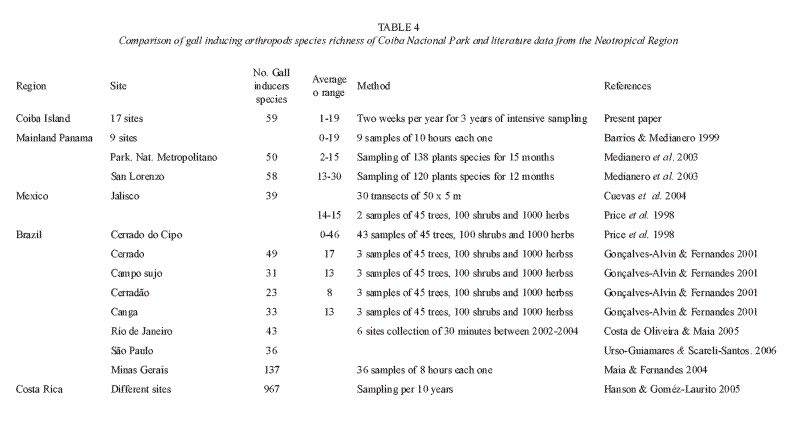
<body><![CDATA[<p><font face="Verdana" size="2"><b>G58</b>. Family gall-inducer: Cecidomyiidae </font></p>     <p><font face="Verdana" size="2">Leaf gall, ovoid abundant, distinct in both sides of blades, medial size. </font></p>     <p><font face="Verdana" size="2">Sendero de Santa Cruz. 26-VIII-99. J. L. Nieves <i>leg.    <br> </i></font></p>     <p style="text-align: center;"><font face="Verdana" size="2"><i><img  src="/img/revistas/rbt/v56n3/art24i3.jpg" title="" alt=""  style="width: 580px; height: 659px;"><a name="i3"></a>    <br> </i></font></p>     <p style="text-align: center;"><font face="Verdana" size="2"><i><img  src="/img/revistas/rbt/v56n3/art24i4.jpg" title="" alt=""  style="width: 580px; height: 375px;"><a name="i4"></a>    <br> </i></font></p> <b><font face="Verdana" size="3"> </font></b>     <p><b><font face="Verdana" size="3">Discussion </font></b></p> <font face="Verdana" size="2"> </font>     <p><font face="Verdana" size="2">Gall-inducing arthropods have been more thoroughly sampled in temperate regions than in tropical regions. Indeed, from the perspective of biodiversity inventories, we have barely scratched the surface of the tropical faunas (Hanson and Goméz-Laurito 2005). A global pattern in local number of gall-inducing insects was described recently (see Price <i>et al</i>. 1998). The study pointed to a greater richness of gallinducing insects in warm dry regions, while temperate and tropical areas with humid, mesic vegetation showed lower gall richness indices. However, as recently acknowledged by Espírito-Santo and Fernandes (2007), these results could be affected by an under-sampling of tropical rain forests, where gall richness could be higher than predicted by Price <i>et al</i>. (1998). Our results show than the moist and wet tropical forests of Coiba National Park revealed a rich diversity of gall-inducing arthropods, with species richness numbers higher than those registered in continental Panama (see Price <i>et al. </i>1998) and other parts of the Neotropical region (see Cuevas <i>et al. </i>2004a, Costa De Oliveira and Maia 2005) (<a href="#t4">Table 4</a>). Although we did not collect all species in Coiba Island, the total of fifty nine species, with a range of one to nineteen gall inducer species per site, in Coiba National Park is more that the twelve proposed for mesic vegetation in the literature (see Price <i>et al. </i>1998). Coiba National Park diversity is similar </font><font face="Verdana" size="2">to that found at San Lorenzo (&#945; = 9.3), a six ha rain forest area on the Panamanian mainland (Medianero </font><i><font face="Verdana" size="2">et al</font></i><font face="Verdana" size="2">. 2003). Our results suggest that, according to insular biogeography theory (MacArthur and Wilson 1967), that Panama’s continental territory, where close to 11000 species of plants have been identified (Correa 2001), as well as other sites in the Neotropical region, must be richer in arthropods than indicated by recorded data in literature. Certain climatic and edaphic factors can produce higher than expected gall-inducing species richness in certain warm temperature regions. Plant diversity is the predominant factor producing high gall-inducing species richness in wet tropical regions (Yukawa <i>et al. </i>2001; Hanson &amp; Gómez-Laurito 2005). Our results support the idea that it may be premature to conclude that species richness of gall inducers declines near the equator (Hanson and Gómez-Laurito 2005). Furthermore there is an urgent need for more investigation of gall-inducing arthropods in the Neotropics, a region where as many as 20.000 gall-midge species (Cecidomyiidae), could exist (Espírito-Santo and Fernandes 2007).    ]]></body>
<body><![CDATA[<br> </font></p>     <p style="text-align: center;"><font face="Verdana" size="2"><img  src="/img/revistas/rbt/v56n3/art24t4.gif" title="" alt=""  style="width: 785px; height: 429px;"><a name="t4"></a>    <br> </font></p> <b><font face="Verdana" size="3"> </font></b>     <p><b><font face="Verdana" size="3">Acknowledgments</font></b><font  face="Verdana" size="2"> </font></p>     <p><font face="Verdana" size="2">This work was supported by the Spanish Agency of International Cooperation (AECI) and also partially funded by the research project DGES PB97-1241, of the Spanish Ministry of Education and Culture to JLNA. Thanks to the Panamanian Authority of the Environment (ANAM) for collecting permits. We thank all the staff of AECI in Panama and ANAM in the Biological Research Station of Coiba, as well as many colleagues from The Natural Sciences Museum and the Royal Botanical Garden in Madrid, his friendly help and support in several ways who made possible this research. Special thanks to Dr. Santiago Castroviejo who was the direct responsible of conceiving and initiating the Coiba Inventory Research Project.</font></p> <hr style="width: 100%; height: 2px;">     <p><font face="Verdana" size="2"> </font></p> <font face="Verdana" size="2"><b> </b></font>     <p><font face="Verdana" size="2"><b>Resumen</b> </font></p>     <p><font face="Verdana" size="2">El interés por el estudio de las agallas y los artrópodos que las inducen ha crecido en todo el mundo en los últimos veinte años. Sin embargo, los artrópodos que inducen agallas en la región Neotropical son probablemente los menos estudiados. Un estudio de la riqueza y composición de artrópodos que inducen agallas fue desarrollado en el Parque Nacional Coiba en la Republica de Panamá. Los datos provienen de muestreos intensivos de dos semanas, efectuados entre agosto de 1997 y septiembre de 1999, en 17 sitios del área insular del Parque Nacional Coiba. Un total de 4942 agallas, que corresponden a 50 especies de insectos y nueve de ácaros, fueron colectadas en 50 especies de plantas vasculares de 30 familias. El 62.7% de las agallas correspondieron a especies de la familia Cecidomyiidae (Diptera), el 15.3% a ácaros de la familia Eriophyidae, el 8.5% a Psyllidae (Homoptera), un 6.8% a Coccidae y el 5.1% a Phlaeothripidae (Tysanoptera). Las familias de plantas con más especies de inductores de agallas fueron Myrtaceae con siete, Bignoniaceae con cinco y Euphorbiaceae, Fabaceae y Melastomataceae con cuatro. Las agallas formadas en hojas representaron el 93% del total. El número de inductores de agallas por sitio osciló entre uno y diecinueve. La riqueza de artrópodos inductores de agallas del Parque Nacional Coiba se discute con datos disponibles de la literatura para el área continental de Panamá y el Neotrópico. Nuestros resultados apoyan la idea de que es prematuro concluir que la riqueza de artrópodos que inducen agallas disminuye hacia el Ecuador. </font></p> <font face="Verdana" size="2"><b> </b></font>     <p><font face="Verdana" size="2"><b>Palabras clave: </b>Coiba, insectos gallícolas, riqueza de agallas, plantas hospedadoras, interacción planta/insecto, Panamá.</font></p> <hr style="width: 100%; height: 2px;">     <p><font face="Verdana" size="2"> </font></p>     ]]></body>
<body><![CDATA[<p align="center"><font face="Verdana" size="2">Received 18-V-2007. Corrected 16-V-2007. Accepted 31-VII-2008.</font></p> <b><font face="Verdana" size="3">     <p>References</p> </font></b><font face="Verdana" size="2">     <p> </p>     <!-- ref --><p>Ananthakrishnan, T.N. 1984. Adaptive strategies in cecidogenous insect, p. 1-9. <i>In </i>T. N. Ananthakrishnan (ed.). The Biology of gall insect. Oxford &amp; IBH, New Delhi, India. 362 p.    &nbsp;&nbsp;&nbsp;&nbsp;&nbsp;&nbsp;&nbsp;&nbsp;[&#160;<a href="javascript:void(0);" onclick="javascript: window.open('/scielo.php?script=sci_nlinks&ref=1703980&pid=S0034-7744200800030002400001&lng=','','width=640,height=500,resizable=yes,scrollbars=1,menubar=yes,');">Links</a>&#160;]<!-- end-ref --></p>     <!-- ref --><p>Barrios, H. &amp; E. Medianero. 1999. Riqueza de insectos formadores de agallas en nueve zonas de vida de la Republica de Panamá. Scientia 14:39-58.    &nbsp;&nbsp;&nbsp;&nbsp;&nbsp;&nbsp;&nbsp;&nbsp;[&#160;<a href="javascript:void(0);" onclick="javascript: window.open('/scielo.php?script=sci_nlinks&ref=1703982&pid=S0034-7744200800030002400002&lng=','','width=640,height=500,resizable=yes,scrollbars=1,menubar=yes,');">Links</a>&#160;]<!-- end-ref --> </p>     <!-- ref --><p>Castroviejo, S. 1997. Introducción y consideraciones biogeográficas, p 1-8 <i>In </i>S. Castroviejo (ed.). Flora y fauna del Parque Nacional Coiba (Panamá). Spanish Agency for International Cooperation, Madrid, Spain.    &nbsp;&nbsp;&nbsp;&nbsp;&nbsp;&nbsp;&nbsp;&nbsp;[&#160;<a href="javascript:void(0);" onclick="javascript: window.open('/scielo.php?script=sci_nlinks&ref=1703984&pid=S0034-7744200800030002400003&lng=','','width=640,height=500,resizable=yes,scrollbars=1,menubar=yes,');">Links</a>&#160;]<!-- end-ref --> </p>     <!-- ref --><p>Colwell, R. K. 2006. EstimateS: statistical estimation of species richness and shared species from samples (Software and User´s Guide). Version 8. http://viceroy.eeb.uconn.edu/estimates.    &nbsp;&nbsp;&nbsp;&nbsp;&nbsp;&nbsp;&nbsp;&nbsp;[&#160;<a href="javascript:void(0);" onclick="javascript: window.open('/scielo.php?script=sci_nlinks&ref=1703986&pid=S0034-7744200800030002400004&lng=','','width=640,height=500,resizable=yes,scrollbars=1,menubar=yes,');">Links</a>&#160;]<!-- end-ref --> </p>     <!-- ref --><p>Correa, M. 2001. Diversidad en la Flora de Panamá. p. 70-75. <i>In </i>S. Heckadon-Moreno (ed.). Panamá: Puente biologico. Smithsonian Tropical Research Institute, Balboa, Panama.    &nbsp;&nbsp;&nbsp;&nbsp;&nbsp;&nbsp;&nbsp;&nbsp;[&#160;<a href="javascript:void(0);" onclick="javascript: window.open('/scielo.php?script=sci_nlinks&ref=1703988&pid=S0034-7744200800030002400005&lng=','','width=640,height=500,resizable=yes,scrollbars=1,menubar=yes,');">Links</a>&#160;]<!-- end-ref --> </p>     <!-- ref --><p>Costa De Oliveira, J. &amp; V. C. Maia. 2005. Presencia y caracterizaçao de galhas de insetos na restinga de Grumari (Rio de Janeiro RJ, Brazil). Arquitos do Museo Nacional, Rio de Janeiro 63: 669-675.    &nbsp;&nbsp;&nbsp;&nbsp;&nbsp;&nbsp;&nbsp;&nbsp;[&#160;<a href="javascript:void(0);" onclick="javascript: window.open('/scielo.php?script=sci_nlinks&ref=1703990&pid=S0034-7744200800030002400006&lng=','','width=640,height=500,resizable=yes,scrollbars=1,menubar=yes,');">Links</a>&#160;]<!-- end-ref --> </p>     <!-- ref --><p>Cuevas-Reyes, P., M. Quesada, P. Hanson, R. Dirzo &amp; K. Oyama. 2004a. Diversity of gall-inducing insects in a Mexican tropical dry forest: the importance of plant species richness, life-forms, host plant age and plant density. J. Ecol. 92:707-716.    &nbsp;&nbsp;&nbsp;&nbsp;&nbsp;&nbsp;&nbsp;&nbsp;[&#160;<a href="javascript:void(0);" onclick="javascript: window.open('/scielo.php?script=sci_nlinks&ref=1703992&pid=S0034-7744200800030002400007&lng=','','width=640,height=500,resizable=yes,scrollbars=1,menubar=yes,');">Links</a>&#160;]<!-- end-ref --> </p>     <!-- ref --><p>Cuevas-Reyes, P., M. Quesada, C. Siebe, &amp; K. Oyama. 2004b. Spatial patterns of herbivory by gall-forming insects: a test of the soil fertility in a Mexican tropical dry forest. Oikos 107: 181-189.    &nbsp;&nbsp;&nbsp;&nbsp;&nbsp;&nbsp;&nbsp;&nbsp;[&#160;<a href="javascript:void(0);" onclick="javascript: window.open('/scielo.php?script=sci_nlinks&ref=1703994&pid=S0034-7744200800030002400008&lng=','','width=640,height=500,resizable=yes,scrollbars=1,menubar=yes,');">Links</a>&#160;]<!-- end-ref --> </p>     <!-- ref --><p>Espírito-Santo, M.M. &amp; G.W. Fernandes. 2007. How many species of gall-inducing insects are there on Earth, and Where are they. Ann Entomol Soc Am. 100: 95-99.    &nbsp;&nbsp;&nbsp;&nbsp;&nbsp;&nbsp;&nbsp;&nbsp;[&#160;<a href="javascript:void(0);" onclick="javascript: window.open('/scielo.php?script=sci_nlinks&ref=1703996&pid=S0034-7744200800030002400009&lng=','','width=640,height=500,resizable=yes,scrollbars=1,menubar=yes,');">Links</a>&#160;]<!-- end-ref --> </p>     <!-- ref --><p>Felt, E.P. 1940. Plant galls and gall inducers. Comstock, New York, New York, USA. 364 p.    &nbsp;&nbsp;&nbsp;&nbsp;&nbsp;&nbsp;&nbsp;&nbsp;[&#160;<a href="javascript:void(0);" onclick="javascript: window.open('/scielo.php?script=sci_nlinks&ref=1703998&pid=S0034-7744200800030002400010&lng=','','width=640,height=500,resizable=yes,scrollbars=1,menubar=yes,');">Links</a>&#160;]<!-- end-ref --> </p>     <!-- ref --><p>Fontal, F. &amp; J.L. Nieves-Aldrey. 2004. Estudio comparativo de diversidad de eucoilidos paleárticos (El Ventorrillo, España) y neotropicales (P.N. Coiba, Panamá) (Hymenoptera, Cynipoidea, Figitidae, Eucoilinae<i>). </i>Boletín de la Sociedad Entomológica Aragonesa 35:51-101.    &nbsp;&nbsp;&nbsp;&nbsp;&nbsp;&nbsp;&nbsp;&nbsp;[&#160;<a href="javascript:void(0);" onclick="javascript: window.open('/scielo.php?script=sci_nlinks&ref=1704000&pid=S0034-7744200800030002400011&lng=','','width=640,height=500,resizable=yes,scrollbars=1,menubar=yes,');">Links</a>&#160;]<!-- end-ref --> </p>     <!-- ref --><p>Gagné, R.J. 1984. The geography of gall insects, p 305-322. <i>In </i>T.N. Ananthakrishnan (ed.) The Biology of gall insect. Oxford and IBH, New Delhi, India.    &nbsp;&nbsp;&nbsp;&nbsp;&nbsp;&nbsp;&nbsp;&nbsp;[&#160;<a href="javascript:void(0);" onclick="javascript: window.open('/scielo.php?script=sci_nlinks&ref=1704002&pid=S0034-7744200800030002400012&lng=','','width=640,height=500,resizable=yes,scrollbars=1,menubar=yes,');">Links</a>&#160;]<!-- end-ref --> </p>     <!-- ref --><p>Gagné, R.J. 1994. The Gall Midges of the Neotropical. Cornell University, Ithaca, New.York, USA. 352 p.    &nbsp;&nbsp;&nbsp;&nbsp;&nbsp;&nbsp;&nbsp;&nbsp;[&#160;<a href="javascript:void(0);" onclick="javascript: window.open('/scielo.php?script=sci_nlinks&ref=1704004&pid=S0034-7744200800030002400013&lng=','','width=640,height=500,resizable=yes,scrollbars=1,menubar=yes,');">Links</a>&#160;]<!-- end-ref --> </p>     <!-- ref --><p>Gonçalves-Alvim, S.J. &amp; G.W. Fernandes. 2001. Biodiversity of galling insect: historical, community and habitat effects in four neotropical savannas. Biodivers Conserv. 10: 79-98.    &nbsp;&nbsp;&nbsp;&nbsp;&nbsp;&nbsp;&nbsp;&nbsp;[&#160;<a href="javascript:void(0);" onclick="javascript: window.open('/scielo.php?script=sci_nlinks&ref=1704006&pid=S0034-7744200800030002400014&lng=','','width=640,height=500,resizable=yes,scrollbars=1,menubar=yes,');">Links</a>&#160;]<!-- end-ref --> </p>     <!-- ref --><p>Gotelli, N.J. &amp; R.K. Colwell. 2001. Quantifying biodiversity: procedures and pitfalls in the measurement and comparison of species richness. Ecol Lett. 4: 379-391.    &nbsp;&nbsp;&nbsp;&nbsp;&nbsp;&nbsp;&nbsp;&nbsp;[&#160;<a href="javascript:void(0);" onclick="javascript: window.open('/scielo.php?script=sci_nlinks&ref=1704008&pid=S0034-7744200800030002400015&lng=','','width=640,height=500,resizable=yes,scrollbars=1,menubar=yes,');">Links</a>&#160;]<!-- end-ref --> </p>     <!-- ref --><p>Hanson, P.E. &amp; J. Gomez-Laurito. 2005. Diversity of gall-inducing arthropods of Costa Rica, p 673692 <i>In </i>A. Raman, C. Schaefer &amp; T. Withers (eds.) Biology, ecology, and evolution of gall-inducing arthropods. Science, Enfield, New Hampshire, USA. 817 p.    &nbsp;&nbsp;&nbsp;&nbsp;&nbsp;&nbsp;&nbsp;&nbsp;[&#160;<a href="javascript:void(0);" onclick="javascript: window.open('/scielo.php?script=sci_nlinks&ref=1704010&pid=S0034-7744200800030002400016&lng=','','width=640,height=500,resizable=yes,scrollbars=1,menubar=yes,');">Links</a>&#160;]<!-- end-ref --> </p>     <!-- ref --><p>Houard, C. 1908-1913. Les Zoocécidies des Plantes d´Europe el du Bassin de la Mediterranée. 3 Tome. Librairie Scientifique A. Hermann, Paris, France.    &nbsp;&nbsp;&nbsp;&nbsp;&nbsp;&nbsp;&nbsp;&nbsp;[&#160;<a href="javascript:void(0);" onclick="javascript: window.open('/scielo.php?script=sci_nlinks&ref=1704012&pid=S0034-7744200800030002400017&lng=','','width=640,height=500,resizable=yes,scrollbars=1,menubar=yes,');">Links</a>&#160;]<!-- end-ref --> </p>     <!-- ref --><p>Houard, C. 1922. Les Zoocécidies des Plantes d´Afrique, d´Asie et d´Océanie<i>. </i>2 Tome. Librairie Scientifique Jules Hermann, Paris, France.    &nbsp;&nbsp;&nbsp;&nbsp;&nbsp;&nbsp;&nbsp;&nbsp;[&#160;<a href="javascript:void(0);" onclick="javascript: window.open('/scielo.php?script=sci_nlinks&ref=1704014&pid=S0034-7744200800030002400018&lng=','','width=640,height=500,resizable=yes,scrollbars=1,menubar=yes,');">Links</a>&#160;]<!-- end-ref --> </p>     <!-- ref --><p>Houard, C. 1933. Les Zoocécidies des Plantes de l´Amerique du Sud et de l´Amerique Centrale<i>. </i>Librairie Scientifique A. Hermann, Paris, France.    &nbsp;&nbsp;&nbsp;&nbsp;&nbsp;&nbsp;&nbsp;&nbsp;[&#160;<a href="javascript:void(0);" onclick="javascript: window.open('/scielo.php?script=sci_nlinks&ref=1704016&pid=S0034-7744200800030002400019&lng=','','width=640,height=500,resizable=yes,scrollbars=1,menubar=yes,');">Links</a>&#160;]<!-- end-ref --> </p>     <!-- ref --><p>Houard, C. 1940. Les Zoocécidies des Plantes de l´Amerique du Nord. Librairie Scientifique A. Hermann, Paris, France.    &nbsp;&nbsp;&nbsp;&nbsp;&nbsp;&nbsp;&nbsp;&nbsp;[&#160;<a href="javascript:void(0);" onclick="javascript: window.open('/scielo.php?script=sci_nlinks&ref=1704018&pid=S0034-7744200800030002400020&lng=','','width=640,height=500,resizable=yes,scrollbars=1,menubar=yes,');">Links</a>&#160;]<!-- end-ref --> </p>     <!-- ref --><p>Macarthur, R.H. &amp; E.O. Wilson. 1967. The Theory of Island Biogeography. Princeton University, New Jersey, USA.    &nbsp;&nbsp;&nbsp;&nbsp;&nbsp;&nbsp;&nbsp;&nbsp;[&#160;<a href="javascript:void(0);" onclick="javascript: window.open('/scielo.php?script=sci_nlinks&ref=1704020&pid=S0034-7744200800030002400021&lng=','','width=640,height=500,resizable=yes,scrollbars=1,menubar=yes,');">Links</a>&#160;]<!-- end-ref --> </p>     <!-- ref --><p>Maia, V.C. 2001. The gall midges (Diptera, Cecidomyiidae) fron three restingas of Rio de Janeiro State, Brazil. Rev. Bras. Zool. 18: 583-629.    &nbsp;&nbsp;&nbsp;&nbsp;&nbsp;&nbsp;&nbsp;&nbsp;[&#160;<a href="javascript:void(0);" onclick="javascript: window.open('/scielo.php?script=sci_nlinks&ref=1704022&pid=S0034-7744200800030002400022&lng=','','width=640,height=500,resizable=yes,scrollbars=1,menubar=yes,');">Links</a>&#160;]<!-- end-ref --> </p>     <!-- ref --><p>Maia, V.C. 2005. Catálogo dos Cecidomyiidae (Diptera) do estado do Rio de Janeiro. Biota Neotropical 5: 1-15.    &nbsp;&nbsp;&nbsp;&nbsp;&nbsp;&nbsp;&nbsp;&nbsp;[&#160;<a href="javascript:void(0);" onclick="javascript: window.open('/scielo.php?script=sci_nlinks&ref=1704024&pid=S0034-7744200800030002400023&lng=','','width=640,height=500,resizable=yes,scrollbars=1,menubar=yes,');">Links</a>&#160;]<!-- end-ref --> </p>     <!-- ref --><p>Maia, V.C. &amp; G.W. Fernandes. 2004. Insect gall from Serra de São José (Tiradentes, MG, Brazil). Braz J Biol. 64: 423-445.    &nbsp;&nbsp;&nbsp;&nbsp;&nbsp;&nbsp;&nbsp;&nbsp;[&#160;<a href="javascript:void(0);" onclick="javascript: window.open('/scielo.php?script=sci_nlinks&ref=1704026&pid=S0034-7744200800030002400024&lng=','','width=640,height=500,resizable=yes,scrollbars=1,menubar=yes,');">Links</a>&#160;]<!-- end-ref --> </p>     <!-- ref --><p>Mani, M.S. 1964. The ecology of plant galls. Dr. W. Junk, Publishers, The Hague, Netherlands.    &nbsp;&nbsp;&nbsp;&nbsp;&nbsp;&nbsp;&nbsp;&nbsp;[&#160;<a href="javascript:void(0);" onclick="javascript: window.open('/scielo.php?script=sci_nlinks&ref=1704028&pid=S0034-7744200800030002400025&lng=','','width=640,height=500,resizable=yes,scrollbars=1,menubar=yes,');">Links</a>&#160;]<!-- end-ref --> </p>     <!-- ref --><p>Mani, M.S. 1992. Introduction to Cecidology. p 3-7. <i>In </i>J. D. Shorthouse &amp; O. Rohfritsh, (eds.) Biology of Insect-Induced Galls. Oxford Univ, New York, USA.    &nbsp;&nbsp;&nbsp;&nbsp;&nbsp;&nbsp;&nbsp;&nbsp;[&#160;<a href="javascript:void(0);" onclick="javascript: window.open('/scielo.php?script=sci_nlinks&ref=1704030&pid=S0034-7744200800030002400026&lng=','','width=640,height=500,resizable=yes,scrollbars=1,menubar=yes,');">Links</a>&#160;]<!-- end-ref --> </p>     <!-- ref --><p>Medianero, E., A. Valderrama &amp; H. Barrios 2003. Diversidad de insectos minadores de hojas y formadores de agallas en el dosel y sotobosque del bosque tropical. Acta Zool Mex. 89:153:168.    &nbsp;&nbsp;&nbsp;&nbsp;&nbsp;&nbsp;&nbsp;&nbsp;[&#160;<a href="javascript:void(0);" onclick="javascript: window.open('/scielo.php?script=sci_nlinks&ref=1704032&pid=S0034-7744200800030002400027&lng=','','width=640,height=500,resizable=yes,scrollbars=1,menubar=yes,');">Links</a>&#160;]<!-- end-ref --> </p>     <!-- ref --><p>Meyer, J. 1987. Plant galls and gall inducers. Gebrüider Borntraeger Verlagsbuchhandlung Science, Berlin, Germany. 291 p.    &nbsp;&nbsp;&nbsp;&nbsp;&nbsp;&nbsp;&nbsp;&nbsp;[&#160;<a href="javascript:void(0);" onclick="javascript: window.open('/scielo.php?script=sci_nlinks&ref=1704034&pid=S0034-7744200800030002400028&lng=','','width=640,height=500,resizable=yes,scrollbars=1,menubar=yes,');">Links</a>&#160;]<!-- end-ref --> </p>     <!-- ref --><p>Nieves-Aldrey, J.L. 1998. Insectos que inducen la formación de agallas en las plantas; una fascinante interacción ecológica y evolutiva. Bol Soc Entomol Aragonesa 23:3-12.    &nbsp;&nbsp;&nbsp;&nbsp;&nbsp;&nbsp;&nbsp;&nbsp;[&#160;<a href="javascript:void(0);" onclick="javascript: window.open('/scielo.php?script=sci_nlinks&ref=1704036&pid=S0034-7744200800030002400029&lng=','','width=640,height=500,resizable=yes,scrollbars=1,menubar=yes,');">Links</a>&#160;]<!-- end-ref --> </p>     <!-- ref --><p>Price, P., G.W. Fernandes, A.C. F. Lara, J. Brawn, H. Barrios, M.G. Wright, S. Ribeiro, &amp; N. Rothcliff. 1998. Global patterns in local number of insects galling species. J Biogeogr. 25:581-591.    &nbsp;&nbsp;&nbsp;&nbsp;&nbsp;&nbsp;&nbsp;&nbsp;[&#160;<a href="javascript:void(0);" onclick="javascript: window.open('/scielo.php?script=sci_nlinks&ref=1704038&pid=S0034-7744200800030002400030&lng=','','width=640,height=500,resizable=yes,scrollbars=1,menubar=yes,');">Links</a>&#160;]<!-- end-ref --> </p>     <!-- ref --><p>Raman, A., C.W. Schaefer &amp; T.M. Withers. 2005. Galls and gall-inducing arthropods: an overview of their Biology, Ecology and Evolution. p 1-33 <i>In </i>A. Raman, C. Schaefer &amp; T. Withers (eds.) Biology, ecology, and evolution of gall-inducing Arthropods. Science, Enfield, New Hampshire, USA. 817 p.    &nbsp;&nbsp;&nbsp;&nbsp;&nbsp;&nbsp;&nbsp;&nbsp;[&#160;<a href="javascript:void(0);" onclick="javascript: window.open('/scielo.php?script=sci_nlinks&ref=1704040&pid=S0034-7744200800030002400031&lng=','','width=640,height=500,resizable=yes,scrollbars=1,menubar=yes,');">Links</a>&#160;]<!-- end-ref --> </p>     <!-- ref --><p>Schlinger, E.I. 1974. Continental drift, <i>Nothofagus</i>, and some ecologically associated insects. Ann Rev Entomol.19:323-343.    &nbsp;&nbsp;&nbsp;&nbsp;&nbsp;&nbsp;&nbsp;&nbsp;[&#160;<a href="javascript:void(0);" onclick="javascript: window.open('/scielo.php?script=sci_nlinks&ref=1704042&pid=S0034-7744200800030002400032&lng=','','width=640,height=500,resizable=yes,scrollbars=1,menubar=yes,');">Links</a>&#160;]<!-- end-ref --> </p>     <!-- ref --><p>Stone, G.N. &amp; N. Schönrogge. 2003. The adaptive significance of insect gall morphology. Trends Ecol Evol. 18:512-522.    &nbsp;&nbsp;&nbsp;&nbsp;&nbsp;&nbsp;&nbsp;&nbsp;[&#160;<a href="javascript:void(0);" onclick="javascript: window.open('/scielo.php?script=sci_nlinks&ref=1704044&pid=S0034-7744200800030002400033&lng=','','width=640,height=500,resizable=yes,scrollbars=1,menubar=yes,');">Links</a>&#160;]<!-- end-ref --> </p>     <!-- ref --><p>Urso-Guimares, M.V. &amp; C. Scareli-Santos. 2006. Gall and gall inducers in plants from the Pé-de-Gigate Cerrado Reserve, Santa Rita do Passa Quatro SP, Brazil. Braz J Biol. 66:357-369.    &nbsp;&nbsp;&nbsp;&nbsp;&nbsp;&nbsp;&nbsp;&nbsp;[&#160;<a href="javascript:void(0);" onclick="javascript: window.open('/scielo.php?script=sci_nlinks&ref=1704046&pid=S0034-7744200800030002400034&lng=','','width=640,height=500,resizable=yes,scrollbars=1,menubar=yes,');">Links</a>&#160;]<!-- end-ref --> </p>     <!-- ref --><p>Wolda, H. 1983. Diversidad de la entomofauna y cómo medirla. Informe Final IX Claz Perú: 181-186 &nbsp;&nbsp;&nbsp;&nbsp;&nbsp;&nbsp;&nbsp;&nbsp;[&#160;<a href="javascript:void(0);" onclick="javascript: window.open('/scielo.php?script=sci_nlinks&ref=1704048&pid=S0034-7744200800030002400035&lng=','','width=640,height=500,resizable=yes,scrollbars=1,menubar=yes,');">Links</a>&#160;]<!-- end-ref --><!-- ref --><p>Yukawa, J., M. Tokuda, N. Uechi &amp; S. Sato. 2001a. Species richness of galling arthropods in Manaus Amazon and the Surroundings of the Iguassus Falls. Esakia 41:11-15.    &nbsp;&nbsp;&nbsp;&nbsp;&nbsp;&nbsp;&nbsp;&nbsp;[&#160;<a href="javascript:void(0);" onclick="javascript: window.open('/scielo.php?script=sci_nlinks&ref=1704049&pid=S0034-7744200800030002400036&lng=','','width=640,height=500,resizable=yes,scrollbars=1,menubar=yes,');">Links</a>&#160;]<!-- end-ref --> </p> </font>      ]]></body><back>
<ref-list>
<ref id="B1">
<nlm-citation citation-type="book">
<person-group person-group-type="author">
<name>
<surname><![CDATA[Ananthakrishnan]]></surname>
<given-names><![CDATA[T.N]]></given-names>
</name>
</person-group>
<article-title xml:lang="en"><![CDATA[Adaptive strategies in cecidogenous insect]]></article-title>
<person-group person-group-type="editor">
<name>
<surname><![CDATA[Ananthakrishnan]]></surname>
<given-names><![CDATA[T. N]]></given-names>
</name>
</person-group>
<source><![CDATA[The Biology of gall insect]]></source>
<year>1984</year>
<page-range>1-9</page-range><page-range>362</page-range><publisher-loc><![CDATA[New Delhi ]]></publisher-loc>
<publisher-name><![CDATA[Oxford & IBH]]></publisher-name>
</nlm-citation>
</ref>
<ref id="B2">
<nlm-citation citation-type="journal">
<person-group person-group-type="author">
<name>
<surname><![CDATA[Barrios]]></surname>
<given-names><![CDATA[H]]></given-names>
</name>
<name>
<surname><![CDATA[Medianero]]></surname>
<given-names><![CDATA[E]]></given-names>
</name>
</person-group>
<article-title xml:lang="es"><![CDATA[Riqueza de insectos formadores de agallas en nueve zonas de vida de la Republica de Panamá]]></article-title>
<source><![CDATA[Scientia]]></source>
<year>1999</year>
<volume>14</volume>
<page-range>39-58</page-range></nlm-citation>
</ref>
<ref id="B3">
<nlm-citation citation-type="book">
<person-group person-group-type="author">
<name>
<surname><![CDATA[Castroviejo]]></surname>
<given-names><![CDATA[S]]></given-names>
</name>
</person-group>
<article-title xml:lang="es"><![CDATA[Introducción y consideraciones biogeográficas]]></article-title>
<person-group person-group-type="editor">
<name>
<surname><![CDATA[Castroviejo]]></surname>
<given-names><![CDATA[S]]></given-names>
</name>
</person-group>
<source><![CDATA[Flora y fauna del Parque Nacional Coiba (Panamá)]]></source>
<year>1997</year>
<page-range>1-8</page-range><publisher-loc><![CDATA[Madrid ]]></publisher-loc>
<publisher-name><![CDATA[Spanish Agency for International Cooperation]]></publisher-name>
</nlm-citation>
</ref>
<ref id="B4">
<nlm-citation citation-type="">
<person-group person-group-type="author">
<name>
<surname><![CDATA[Colwell]]></surname>
<given-names><![CDATA[R. K]]></given-names>
</name>
</person-group>
<source><![CDATA[EstimateS: statistical estimation of species richness and shared species from samples (Software and User´s Guide). Version 8]]></source>
<year>2006</year>
</nlm-citation>
</ref>
<ref id="B5">
<nlm-citation citation-type="book">
<person-group person-group-type="author">
<name>
<surname><![CDATA[Correa]]></surname>
<given-names><![CDATA[M]]></given-names>
</name>
</person-group>
<article-title xml:lang="es"><![CDATA[Diversidad en la Flora de Panamá]]></article-title>
<person-group person-group-type="editor">
<name>
<surname><![CDATA[Heckadon-Moreno]]></surname>
<given-names><![CDATA[S]]></given-names>
</name>
</person-group>
<source><![CDATA[Panamá: Puente biologico]]></source>
<year>2001</year>
<page-range>70-75</page-range><publisher-loc><![CDATA[Balboa ]]></publisher-loc>
<publisher-name><![CDATA[Smithsonian Tropical Research Institute]]></publisher-name>
</nlm-citation>
</ref>
<ref id="B6">
<nlm-citation citation-type="journal">
<person-group person-group-type="author">
<name>
<surname><![CDATA[Costa De Oliveira]]></surname>
<given-names><![CDATA[J]]></given-names>
</name>
<name>
<surname><![CDATA[Maia]]></surname>
<given-names><![CDATA[V. C]]></given-names>
</name>
</person-group>
<article-title xml:lang="pt"><![CDATA[Presencia y caracterizaçao de galhas de insetos na restinga de Grumari (Rio de Janeiro RJ, Brazil)]]></article-title>
<source><![CDATA[Arquitos do Museo Nacional, Rio de Janeiro]]></source>
<year>2005</year>
<volume>63</volume>
<page-range>669-675</page-range></nlm-citation>
</ref>
<ref id="B7">
<nlm-citation citation-type="journal">
<person-group person-group-type="author">
<name>
<surname><![CDATA[Cuevas-Reyes]]></surname>
<given-names><![CDATA[P]]></given-names>
</name>
<name>
<surname><![CDATA[Quesada]]></surname>
<given-names><![CDATA[M]]></given-names>
</name>
<name>
<surname><![CDATA[Hanson]]></surname>
<given-names><![CDATA[P]]></given-names>
</name>
<name>
<surname><![CDATA[Dirzo]]></surname>
<given-names><![CDATA[R]]></given-names>
</name>
<name>
<surname><![CDATA[Oyama]]></surname>
<given-names><![CDATA[K]]></given-names>
</name>
</person-group>
<article-title xml:lang="en"><![CDATA[Diversity of gall-inducing insects in a Mexican tropical dry forest: the importance of plant species richness, life-forms, host plant age and plant density]]></article-title>
<source><![CDATA[J. Ecol]]></source>
<year>2004</year>
<volume>92</volume>
<page-range>707-716</page-range></nlm-citation>
</ref>
<ref id="B8">
<nlm-citation citation-type="journal">
<person-group person-group-type="author">
<name>
<surname><![CDATA[Cuevas-Reyes]]></surname>
<given-names><![CDATA[P]]></given-names>
</name>
<name>
<surname><![CDATA[Quesada]]></surname>
<given-names><![CDATA[M]]></given-names>
</name>
<name>
<surname><![CDATA[Siebe]]></surname>
<given-names><![CDATA[C]]></given-names>
</name>
<name>
<surname><![CDATA[Oyama]]></surname>
<given-names><![CDATA[K]]></given-names>
</name>
</person-group>
<article-title xml:lang="en"><![CDATA[Spatial patterns of herbivory by gall-forming insects: a test of the soil fertility in a Mexican tropical dry forest]]></article-title>
<source><![CDATA[Oikos]]></source>
<year>2004</year>
<volume>107</volume>
<page-range>181-189</page-range></nlm-citation>
</ref>
<ref id="B9">
<nlm-citation citation-type="journal">
<person-group person-group-type="author">
<name>
<surname><![CDATA[Espírito-Santo]]></surname>
<given-names><![CDATA[M.M]]></given-names>
</name>
<name>
<surname><![CDATA[Fernandes]]></surname>
<given-names><![CDATA[G.W]]></given-names>
</name>
</person-group>
<article-title xml:lang="en"><![CDATA[How many species of gall-inducing insects are there on Earth, and Where are they]]></article-title>
<source><![CDATA[Ann Entomol Soc Am]]></source>
<year>2007</year>
<volume>100</volume>
<page-range>95-99</page-range></nlm-citation>
</ref>
<ref id="B10">
<nlm-citation citation-type="book">
<person-group person-group-type="author">
<name>
<surname><![CDATA[Felt]]></surname>
<given-names><![CDATA[E.P]]></given-names>
</name>
</person-group>
<source><![CDATA[Plant galls and gall inducers]]></source>
<year>1940</year>
<page-range>364</page-range><publisher-loc><![CDATA[New York ]]></publisher-loc>
<publisher-name><![CDATA[Comstock, New York]]></publisher-name>
</nlm-citation>
</ref>
<ref id="B11">
<nlm-citation citation-type="journal">
<person-group person-group-type="author">
<name>
<surname><![CDATA[Fontal]]></surname>
<given-names><![CDATA[F]]></given-names>
</name>
<name>
<surname><![CDATA[Nieves-Aldrey]]></surname>
<given-names><![CDATA[J.L]]></given-names>
</name>
</person-group>
<article-title xml:lang="es"><![CDATA[Estudio comparativo de diversidad de eucoilidos paleárticos (El Ventorrillo, España) y neotropicales (P.N. Coiba, Panamá) (Hymenoptera, Cynipoidea, Figitidae, Eucoilinae)]]></article-title>
<source><![CDATA[Boletín de la Sociedad Entomológica Aragonesa]]></source>
<year>2004</year>
<volume>35</volume>
<page-range>51-101</page-range></nlm-citation>
</ref>
<ref id="B12">
<nlm-citation citation-type="book">
<person-group person-group-type="author">
<name>
<surname><![CDATA[Gagné]]></surname>
<given-names><![CDATA[R.J]]></given-names>
</name>
</person-group>
<article-title xml:lang="en"><![CDATA[The geography of gall insects]]></article-title>
<person-group person-group-type="editor">
<name>
<surname><![CDATA[Ananthakrishnan]]></surname>
<given-names><![CDATA[T.N]]></given-names>
</name>
</person-group>
<source><![CDATA[The Biology of gall insect]]></source>
<year>1984</year>
<page-range>305-322</page-range><publisher-loc><![CDATA[New Delhi ]]></publisher-loc>
<publisher-name><![CDATA[Oxford and IBH]]></publisher-name>
</nlm-citation>
</ref>
<ref id="B13">
<nlm-citation citation-type="book">
<person-group person-group-type="author">
<name>
<surname><![CDATA[Gagné]]></surname>
<given-names><![CDATA[R.J]]></given-names>
</name>
</person-group>
<source><![CDATA[The Gall Midges of the Neotropical]]></source>
<year>1994</year>
<page-range>352</page-range><publisher-loc><![CDATA[Ithaca^eNew.York New.York]]></publisher-loc>
<publisher-name><![CDATA[Cornell University]]></publisher-name>
</nlm-citation>
</ref>
<ref id="B14">
<nlm-citation citation-type="journal">
<person-group person-group-type="author">
<name>
<surname><![CDATA[Gonçalves-Alvim]]></surname>
<given-names><![CDATA[S.J]]></given-names>
</name>
<name>
<surname><![CDATA[Fernandes]]></surname>
<given-names><![CDATA[G.W]]></given-names>
</name>
</person-group>
<article-title xml:lang="en"><![CDATA[Biodiversity of galling insect: historical, community and habitat effects in four neotropical savannas]]></article-title>
<source><![CDATA[Biodivers Conserv]]></source>
<year>2001</year>
<volume>10</volume>
<page-range>79-98</page-range></nlm-citation>
</ref>
<ref id="B15">
<nlm-citation citation-type="journal">
<person-group person-group-type="author">
<name>
<surname><![CDATA[Gotelli]]></surname>
<given-names><![CDATA[N.J]]></given-names>
</name>
<name>
<surname><![CDATA[Colwell]]></surname>
<given-names><![CDATA[R.K]]></given-names>
</name>
</person-group>
<article-title xml:lang="en"><![CDATA[Quantifying biodiversity: procedures and pitfalls in the measurement and comparison of species richness]]></article-title>
<source><![CDATA[Ecol Lett]]></source>
<year>2001</year>
<volume>4</volume>
<page-range>379-391</page-range></nlm-citation>
</ref>
<ref id="B16">
<nlm-citation citation-type="book">
<person-group person-group-type="author">
<name>
<surname><![CDATA[Hanson]]></surname>
<given-names><![CDATA[P.E]]></given-names>
</name>
<name>
<surname><![CDATA[Gomez-Laurito]]></surname>
<given-names><![CDATA[J]]></given-names>
</name>
</person-group>
<article-title xml:lang="en"><![CDATA[Diversity of gall-inducing arthropods of Costa Rica]]></article-title>
<person-group person-group-type="editor">
<name>
<surname><![CDATA[Raman]]></surname>
<given-names><![CDATA[A]]></given-names>
</name>
<name>
<surname><![CDATA[Schaefer]]></surname>
<given-names><![CDATA[C]]></given-names>
</name>
<name>
<surname><![CDATA[Withers]]></surname>
<given-names><![CDATA[T]]></given-names>
</name>
</person-group>
<source><![CDATA[Biology, ecology, and evolution of gall-inducing arthropods]]></source>
<year>2005</year>
<page-range>673-692</page-range><page-range>817</page-range><publisher-loc><![CDATA[Enfield^eNew Hampshire New Hampshire]]></publisher-loc>
<publisher-name><![CDATA[Science]]></publisher-name>
</nlm-citation>
</ref>
<ref id="B17">
<nlm-citation citation-type="book">
<person-group person-group-type="author">
<name>
<surname><![CDATA[Houard]]></surname>
<given-names><![CDATA[C]]></given-names>
</name>
</person-group>
<source><![CDATA[Les Zoocécidies des Plantes d´Europe el du Bassin de la Mediterranée]]></source>
<year>1913</year>
<publisher-loc><![CDATA[Paris ]]></publisher-loc>
<publisher-name><![CDATA[Librairie Scientifique A. Hermann]]></publisher-name>
</nlm-citation>
</ref>
<ref id="B18">
<nlm-citation citation-type="book">
<person-group person-group-type="author">
<name>
<surname><![CDATA[Houard]]></surname>
<given-names><![CDATA[C]]></given-names>
</name>
</person-group>
<source><![CDATA[Les Zoocécidies des Plantes d´Afrique, d´Asie et d´Océanie]]></source>
<year>1922</year>
<publisher-loc><![CDATA[Paris ]]></publisher-loc>
<publisher-name><![CDATA[Librairie Scientifique Jules Hermann]]></publisher-name>
</nlm-citation>
</ref>
<ref id="B19">
<nlm-citation citation-type="book">
<person-group person-group-type="author">
<name>
<surname><![CDATA[Houard]]></surname>
<given-names><![CDATA[C]]></given-names>
</name>
</person-group>
<source><![CDATA[Les Zoocécidies des Plantes de l´Amerique du Sud et de l´Amerique Centrale]]></source>
<year>1933</year>
<publisher-loc><![CDATA[Paris ]]></publisher-loc>
<publisher-name><![CDATA[Librairie Scientifique A. Hermann]]></publisher-name>
</nlm-citation>
</ref>
<ref id="B20">
<nlm-citation citation-type="book">
<person-group person-group-type="author">
<name>
<surname><![CDATA[Houard]]></surname>
<given-names><![CDATA[C]]></given-names>
</name>
</person-group>
<source><![CDATA[Les Zoocécidies des Plantes de l´Amerique du Nord. Librairie Scientifique A]]></source>
<year>1940</year>
<publisher-loc><![CDATA[Paris ]]></publisher-loc>
<publisher-name><![CDATA[Hermann]]></publisher-name>
</nlm-citation>
</ref>
<ref id="B21">
<nlm-citation citation-type="book">
<person-group person-group-type="author">
<name>
<surname><![CDATA[Macarthur]]></surname>
<given-names><![CDATA[R.H]]></given-names>
</name>
<name>
<surname><![CDATA[Wilson]]></surname>
<given-names><![CDATA[E.O]]></given-names>
</name>
</person-group>
<source><![CDATA[The Theory of Island Biogeography]]></source>
<year>1967</year>
<publisher-loc><![CDATA[New Jersey ]]></publisher-loc>
<publisher-name><![CDATA[Princeton University]]></publisher-name>
</nlm-citation>
</ref>
<ref id="B22">
<nlm-citation citation-type="journal">
<person-group person-group-type="author">
<name>
<surname><![CDATA[Maia]]></surname>
<given-names><![CDATA[V.C]]></given-names>
</name>
</person-group>
<article-title xml:lang="en"><![CDATA[The gall midges (Diptera, Cecidomyiidae) fron three restingas of Rio de Janeiro State, Brazil]]></article-title>
<source><![CDATA[Rev. Bras. Zool]]></source>
<year>2001</year>
<volume>18</volume>
<page-range>583-629</page-range></nlm-citation>
</ref>
<ref id="B23">
<nlm-citation citation-type="journal">
<person-group person-group-type="author">
<name>
<surname><![CDATA[Maia]]></surname>
<given-names><![CDATA[V.C]]></given-names>
</name>
</person-group>
<article-title xml:lang="en"><![CDATA[Catálogo dos Cecidomyiidae (Diptera) do estado do Rio de Janeiro]]></article-title>
<source><![CDATA[Biota Neotropical]]></source>
<year>2005</year>
<volume>5</volume>
<page-range>1-15</page-range></nlm-citation>
</ref>
<ref id="B24">
<nlm-citation citation-type="journal">
<person-group person-group-type="author">
<name>
<surname><![CDATA[Maia]]></surname>
<given-names><![CDATA[V.C]]></given-names>
</name>
<name>
<surname><![CDATA[Fernandes]]></surname>
<given-names><![CDATA[G.W]]></given-names>
</name>
</person-group>
<article-title xml:lang="en"><![CDATA[Insect gall from Serra de São José (Tiradentes, MG, Brazil)]]></article-title>
<source><![CDATA[Braz J Biol]]></source>
<year>2004</year>
<volume>64</volume>
<page-range>423-445</page-range></nlm-citation>
</ref>
<ref id="B25">
<nlm-citation citation-type="book">
<person-group person-group-type="author">
<name>
<surname><![CDATA[Mani]]></surname>
<given-names><![CDATA[M.S]]></given-names>
</name>
</person-group>
<source><![CDATA[The ecology of plant galls]]></source>
<year>1964</year>
<publisher-loc><![CDATA[The Hague ]]></publisher-loc>
<publisher-name><![CDATA[Dr. W. Junk, Publishers]]></publisher-name>
</nlm-citation>
</ref>
<ref id="B26">
<nlm-citation citation-type="book">
<person-group person-group-type="author">
<name>
<surname><![CDATA[Mani]]></surname>
<given-names><![CDATA[M.S]]></given-names>
</name>
</person-group>
<article-title xml:lang="en"><![CDATA[Introduction to Cecidology]]></article-title>
<person-group person-group-type="editor">
<name>
<surname><![CDATA[Shorthouse]]></surname>
<given-names><![CDATA[J. D]]></given-names>
</name>
<name>
<surname><![CDATA[Rohfritsh]]></surname>
<given-names><![CDATA[O]]></given-names>
</name>
</person-group>
<source><![CDATA[Biology of Insect-Induced Galls]]></source>
<year>1992</year>
<page-range>3-7</page-range><publisher-loc><![CDATA[New York ]]></publisher-loc>
<publisher-name><![CDATA[Oxford Univ]]></publisher-name>
</nlm-citation>
</ref>
<ref id="B27">
<nlm-citation citation-type="journal">
<person-group person-group-type="author">
<name>
<surname><![CDATA[Medianero]]></surname>
<given-names><![CDATA[E]]></given-names>
</name>
<name>
<surname><![CDATA[Valderrama]]></surname>
<given-names><![CDATA[A]]></given-names>
</name>
<name>
<surname><![CDATA[Barrios]]></surname>
<given-names><![CDATA[H]]></given-names>
</name>
</person-group>
<article-title xml:lang="es"><![CDATA[Diversidad de insectos minadores de hojas y formadores de agallas en el dosel y sotobosque del bosque tropical]]></article-title>
<source><![CDATA[Acta Zool Mex]]></source>
<year>2003</year>
<volume>89</volume>
<page-range>153:168</page-range></nlm-citation>
</ref>
<ref id="B28">
<nlm-citation citation-type="book">
<person-group person-group-type="author">
<name>
<surname><![CDATA[Meyer]]></surname>
<given-names><![CDATA[J]]></given-names>
</name>
</person-group>
<source><![CDATA[Plant galls and gall inducers. Gebrüider Borntraeger Verlagsbuchhandlung]]></source>
<year>1987</year>
<page-range>291</page-range><publisher-loc><![CDATA[Berlin ]]></publisher-loc>
<publisher-name><![CDATA[Science]]></publisher-name>
</nlm-citation>
</ref>
<ref id="B29">
<nlm-citation citation-type="journal">
<person-group person-group-type="author">
<name>
<surname><![CDATA[Nieves-Aldrey]]></surname>
<given-names><![CDATA[J.L]]></given-names>
</name>
</person-group>
<article-title xml:lang="es"><![CDATA[Insectos que inducen la formación de agallas en las plantas; una fascinante interacción ecológica y evolutiva]]></article-title>
<source><![CDATA[Bol Soc Entomol Aragonesa]]></source>
<year>1998</year>
<volume>23</volume>
<page-range>3-12</page-range></nlm-citation>
</ref>
<ref id="B30">
<nlm-citation citation-type="journal">
<person-group person-group-type="author">
<name>
<surname><![CDATA[Price]]></surname>
<given-names><![CDATA[P]]></given-names>
</name>
<name>
<surname><![CDATA[Fernandes]]></surname>
<given-names><![CDATA[G.W]]></given-names>
</name>
<name>
<surname><![CDATA[Lara]]></surname>
<given-names><![CDATA[A.C. F]]></given-names>
</name>
<name>
<surname><![CDATA[Brawn]]></surname>
<given-names><![CDATA[J]]></given-names>
</name>
<name>
<surname><![CDATA[Barrios]]></surname>
<given-names><![CDATA[H]]></given-names>
</name>
<name>
<surname><![CDATA[Wright]]></surname>
<given-names><![CDATA[M.G]]></given-names>
</name>
<name>
<surname><![CDATA[Ribeiro]]></surname>
<given-names><![CDATA[S]]></given-names>
</name>
<name>
<surname><![CDATA[Rothcliff]]></surname>
<given-names><![CDATA[N]]></given-names>
</name>
</person-group>
<article-title xml:lang="en"><![CDATA[Global patterns in local number of insects galling species]]></article-title>
<source><![CDATA[J Biogeogr]]></source>
<year>1998</year>
<volume>25</volume>
<page-range>581-591</page-range></nlm-citation>
</ref>
<ref id="B31">
<nlm-citation citation-type="book">
<person-group person-group-type="author">
<name>
<surname><![CDATA[Raman]]></surname>
<given-names><![CDATA[A]]></given-names>
</name>
<name>
<surname><![CDATA[Schaefer]]></surname>
<given-names><![CDATA[C.W]]></given-names>
</name>
<name>
<surname><![CDATA[Withers]]></surname>
<given-names><![CDATA[T.M]]></given-names>
</name>
</person-group>
<article-title xml:lang="en"><![CDATA[Galls and gall-inducing arthropods: an overview of their Biology, Ecology and Evolution]]></article-title>
<person-group person-group-type="editor">
<name>
<surname><![CDATA[Raman]]></surname>
<given-names><![CDATA[A]]></given-names>
</name>
<name>
<surname><![CDATA[Schaefer]]></surname>
<given-names><![CDATA[C]]></given-names>
</name>
<name>
<surname><![CDATA[Withers]]></surname>
<given-names><![CDATA[T]]></given-names>
</name>
</person-group>
<source><![CDATA[Biology, ecology, and evolution of gall-inducing Arthropods]]></source>
<year>2005</year>
<page-range>1-33</page-range><page-range>817</page-range><publisher-loc><![CDATA[Enfield^eNew Hampshire New Hampshire]]></publisher-loc>
<publisher-name><![CDATA[Science]]></publisher-name>
</nlm-citation>
</ref>
<ref id="B32">
<nlm-citation citation-type="journal">
<person-group person-group-type="author">
<name>
<surname><![CDATA[Schlinger]]></surname>
<given-names><![CDATA[E.I]]></given-names>
</name>
</person-group>
<article-title xml:lang="en"><![CDATA[Continental drift, Nothofagus, and some ecologically associated insects]]></article-title>
<source><![CDATA[Ann Rev Entomol]]></source>
<year>1974</year>
<volume>19</volume>
<page-range>323-343</page-range></nlm-citation>
</ref>
<ref id="B33">
<nlm-citation citation-type="journal">
<person-group person-group-type="author">
<name>
<surname><![CDATA[Stone]]></surname>
<given-names><![CDATA[G.N]]></given-names>
</name>
<name>
<surname><![CDATA[Schönrogge]]></surname>
<given-names><![CDATA[N]]></given-names>
</name>
</person-group>
<article-title xml:lang="en"><![CDATA[The adaptive significance of insect gall morphology]]></article-title>
<source><![CDATA[Trends Ecol Evol]]></source>
<year>2003</year>
<volume>18</volume>
<page-range>512-522</page-range></nlm-citation>
</ref>
<ref id="B34">
<nlm-citation citation-type="journal">
<person-group person-group-type="author">
<name>
<surname><![CDATA[Urso-Guimares]]></surname>
<given-names><![CDATA[M.V]]></given-names>
</name>
<name>
<surname><![CDATA[Scareli-Santos]]></surname>
<given-names><![CDATA[C]]></given-names>
</name>
</person-group>
<article-title xml:lang="en"><![CDATA[Gall and gall inducers in plants from the Pé-de-Gigate Cerrado Reserve, Santa Rita do Passa Quatro SP, Brazil]]></article-title>
<source><![CDATA[Braz J Biol]]></source>
<year>2006</year>
<volume>66</volume>
<page-range>357-369</page-range></nlm-citation>
</ref>
<ref id="B35">
<nlm-citation citation-type="">
<person-group person-group-type="author">
<name>
<surname><![CDATA[Wolda]]></surname>
<given-names><![CDATA[H]]></given-names>
</name>
</person-group>
<source><![CDATA[Diversidad de la entomofauna y cómo medirla]]></source>
<year>1983</year>
<page-range>181-186</page-range></nlm-citation>
</ref>
<ref id="B36">
<nlm-citation citation-type="journal">
<person-group person-group-type="author">
<name>
<surname><![CDATA[Yukawa]]></surname>
<given-names><![CDATA[J]]></given-names>
</name>
<name>
<surname><![CDATA[Tokuda]]></surname>
<given-names><![CDATA[M]]></given-names>
</name>
<name>
<surname><![CDATA[Uechi]]></surname>
<given-names><![CDATA[N]]></given-names>
</name>
<name>
<surname><![CDATA[Sato]]></surname>
<given-names><![CDATA[S]]></given-names>
</name>
</person-group>
<article-title xml:lang="en"><![CDATA[Species richness of galling arthropods in Manaus Amazon and the Surroundings of the Iguassus Falls]]></article-title>
<source><![CDATA[Esakia]]></source>
<year>2001</year>
<volume>41</volume>
<page-range>11-15</page-range></nlm-citation>
</ref>
</ref-list>
</back>
</article>