<?xml version="1.0" encoding="ISO-8859-1"?><article xmlns:mml="http://www.w3.org/1998/Math/MathML" xmlns:xlink="http://www.w3.org/1999/xlink" xmlns:xsi="http://www.w3.org/2001/XMLSchema-instance">
<front>
<journal-meta>
<journal-id>0034-7744</journal-id>
<journal-title><![CDATA[Revista de Biología Tropical]]></journal-title>
<abbrev-journal-title><![CDATA[Rev. biol. trop]]></abbrev-journal-title>
<issn>0034-7744</issn>
<publisher>
<publisher-name><![CDATA[Universidad de Costa Rica]]></publisher-name>
</publisher>
</journal-meta>
<article-meta>
<article-id>S0034-77442006000600006</article-id>
<title-group>
<article-title xml:lang="en"><![CDATA[New records of parasites for culture Cobia, Rachycentron canadum (Perciformes: Rachycentridae) in Puerto Rico]]></article-title>
</title-group>
<contrib-group>
<contrib contrib-type="author">
<name>
<surname><![CDATA[Bunkley-Williams]]></surname>
<given-names><![CDATA[Lucy]]></given-names>
</name>
<xref ref-type="aff" rid="A01"/>
</contrib>
<contrib contrib-type="author">
<name>
<surname><![CDATA[Williams, Jr.]]></surname>
<given-names><![CDATA[Ernest H]]></given-names>
</name>
<xref ref-type="aff" rid="A02"/>
</contrib>
</contrib-group>
<aff id="A01">
<institution><![CDATA[,University of Puerto Rico  ]]></institution>
<addr-line><![CDATA[ ]]></addr-line>
<country>USA</country>
</aff>
<aff id="A02">
<institution><![CDATA[,University of Puerto Rico  ]]></institution>
<addr-line><![CDATA[ ]]></addr-line>
<country>USA</country>
</aff>
<pub-date pub-type="pub">
<day>00</day>
<month>12</month>
<year>2006</year>
</pub-date>
<pub-date pub-type="epub">
<day>00</day>
<month>12</month>
<year>2006</year>
</pub-date>
<volume>54</volume>
<fpage>1</fpage>
<lpage>7</lpage>
<copyright-statement/>
<copyright-year/>
<self-uri xlink:href="http://www.scielo.sa.cr/scielo.php?script=sci_arttext&amp;pid=S0034-77442006000600006&amp;lng=en&amp;nrm=iso"></self-uri><self-uri xlink:href="http://www.scielo.sa.cr/scielo.php?script=sci_abstract&amp;pid=S0034-77442006000600006&amp;lng=en&amp;nrm=iso"></self-uri><self-uri xlink:href="http://www.scielo.sa.cr/scielo.php?script=sci_pdf&amp;pid=S0034-77442006000600006&amp;lng=en&amp;nrm=iso"></self-uri><abstract abstract-type="short" xml:lang="en"><p><![CDATA[Intensive aquaculture sometimes provides conditions favorable for parasites that are not ordinarily found on culture fishes in the wild, and the use of introduced stocks sometimes introduces non-indigenous species to the habitat. When officially asked about the culture of Cobia Rachycentron canadum (Linnaeus) in Puerto Rico, the authors responded that it was unlikely to cause harm. It was assumed that a well-known culture facility in Florida would assure parasite-free stocks. Subsequent examinations of stocked juveniles surprisingly found parasites new to this fish. An outbreak of Slime-blotch disease, Brooklynella hostilis Lom & Nigrilli, 1970 (Dysteriida: Hartmannulidae) occurred in juvenile Cobia after they were shipped from Florida and stocked. This apparently represents a local parasite that took advantage of the weakened and/or crowded fish. The universal aquarium and culture superparasite, Marine Ich, Cryptocaryon irritans Brown, 1951 (Colpodia: Ichthyophthiriidae) was introduced with a shipment of juvenile Cobia from Florida. This may not be serious, since the parasite occurs worldwide, unless it represents a new strain to Puerto Rico. Marine Costia, Ichthyobodo sp. (Kinetoplastida: Bodonidae) was introduced into Puerto Rico with juvenile Cobia shipped from Florida. This parasite has caused some severe problems in aquaculture hatcheries in Hawaii and Texas after it was introduced with cultured organisms. Thus far, it has not caused any problems locally, but Puerto Rico lacks the marine hatchery facilities where such outbreaks would occur. The question of whether it is established locally will have to wait the development of similar facilities in Puerto Rico. These three species of parasites represent new host records for Cobia. The non-indigenous Ichthyobodo sp. represents new locality records for the tropical Atlantic, Caribbean, and Florida and Puerto Rico. Cobia mature more quickly in culture than in the wild and thus female Cobia apparently mature sufficiently before harvest to attract wild male Cobia to the net pen culture facilities. This represents a potential source of parasite and disease infection for the cultured and wild fish. Rev. Biol. Trop. 54 (Suppl. 3): 1-7. Epub 2007 Jan. 15.]]></p></abstract>
<abstract abstract-type="short" xml:lang="es"><p><![CDATA[En un criadero del pez Rachycentron canadum establecido en Puerto Rico a partir de especímenes de Florida hallamos parásitos nuevos. La enfermedad causada por Brooklynella hostilis Lom and Nigrilli, 1970 (Dysteriida: Hartmannulidae) podría indicar que un parásito local tomó ventaja de los peces debilitados y/o hacinados. También hallamos Cryptocaryon irritans Brown, 1951 (Colpodia: Ichthyophthiriidae), parásito cosmopolita. También llegó de Florida Ichthyobodo sp. (Kinetoplastida: Bodonidae), el cual hasta ahora no ha causado ningún problema localmente, pero es un nuevo registro para el Atlántico tropical, el Caribe, Florida y Puerto Rico. Los tres parásitos son huéspedes nuevos de R. canadum. Aparentemente, antes de la cosecha las hembras maduran lo suficiente para atraer machos salvajes hacia los cultivos. Esto representa una potencial fuente de infección.]]></p></abstract>
<kwd-group>
<kwd lng="en"><![CDATA[parasites]]></kwd>
<kwd lng="en"><![CDATA[Cobia]]></kwd>
<kwd lng="en"><![CDATA[Brooklynella hostili]]></kwd>
<kwd lng="en"><![CDATA[Cryptocaryon irritans]]></kwd>
<kwd lng="en"><![CDATA[Ichthyobodo sp.]]></kwd>
<kwd lng="en"><![CDATA[Rachycentron canadum]]></kwd>
<kwd lng="es"><![CDATA[parásitos]]></kwd>
<kwd lng="es"><![CDATA[Cobia]]></kwd>
<kwd lng="es"><![CDATA[Brooklynella hostilis]]></kwd>
<kwd lng="es"><![CDATA[Cryptocaryon irritans]]></kwd>
<kwd lng="es"><![CDATA[Ichthyobodo sp.]]></kwd>
<kwd lng="es"><![CDATA[Rachycentron canadum]]></kwd>
</kwd-group>
</article-meta>
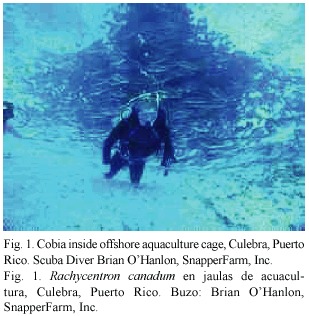
</front><body><![CDATA[  <b><font face="Arial"></font></b>     <p align="center"><b><font face="Arial">New records of parasites for culture Cobia, </font></b><font face="Arial"><i>Rachycentron canadum </i><b>(Perciformes: Rachycentridae) in Puerto Rico</b></font></p> <font face="Arial" size="2"></font>     <p><font face="Arial" size="2">Lucy Bunkley-Williams<sup><a name="1"></a><a  href="#2">1</a></sup> &amp; Ernest H. Williams, Jr.<a href="#2"><sup>2</sup></a> </font></p>     <p><font face="Arial" size="2"><a name="2"></a><a href="#1">1</a> Caribbean Aquatic Animal Health Project, Department of Biology, University of Puerto Rico, P.O. Box 9012, Mayagüez, PR 00861, USA; <a  href="mailto:lwilliams@uprm.edu">lwilliams@uprm.edu</a> </font></p>     <p><font face="Arial" size="2"><a href="#1">2</a> Department of Marine Sciences, University of Puerto Rico, P.O. Box 908, Lajas, Puerto Rico 00667, USA; <a href="mailto:ewilliams@uprm.edu">ewilliams@uprm.edu</a></font></p>     <p><font face="Arial" size="2">Author for correspondence: LBW, address as above. Telephone: 1 (787) 832-4040 x 3900 or 265-3837 (Administrative Office), x 3936, 3937 (Research Labs), x 3929 (Office); Fax: 1-787-834-3673; <a href="mailto:lwilliams@uprm.edu">lwilliams@uprm.edu</a></font></p>     <p align="center"><font face="Arial" size="2">Received 01-VI-2006. Corrected 02-X-2006. Accepted 13-X-2006.</font></p> <font face="Arial" size="2"><b></b></font>     <p><font face="Arial" size="2"><b>Abstract: </b>Intensive aquaculture sometimes provides conditions favorable for parasites that are not ordinarily found on culture fishes in the wild, and the use of introduced stocks sometimes introduces non-indigenous species to the habitat. When officially asked about the culture of Cobia <i>Rachycentron canadum </i>(Linnaeus) in Puerto Rico, the authors responded that it was unlikely to cause harm. It was assumed that a well-known culture facility in Florida would assure parasite-free stocks. Subsequent examinations of stocked juveniles surprisingly found parasites new to this fish. An outbreak of Slime-blotch disease, <i>Brooklynella hostilis </i>Lom &amp; Nigrilli, 1970 (Dysteriida: Hartmannulidae) occurred in juvenile Cobia after they were shipped from Florida and stocked. This apparently represents a local parasite that took advantage of the weakened and/or crowded fish. The universal aquarium and culture superparasite, Marine Ich, <i>Cryptocaryon irritans </i>Brown, 1951 (Colpodia: Ichthyophthiriidae) was introduced with a shipment of juvenile Cobia from Florida. This may not be serious, since the parasite occurs worldwide, unless it represents a new strain to Puerto Rico. Marine Costia, <i>Ichthyobodo </i>sp. (Kinetoplastida: Bodonidae) was introduced into Puerto Rico with juvenile Cobia shipped from Florida. This parasite has caused some severe problems in aquaculture hatcheries in Hawaii and Texas after it was introduced with cultured organisms. Thus far, it has not caused any problems locally, but Puerto Rico lacks the marine hatchery facilities where such outbreaks would occur. The question of whether it is established locally will have to wait the development of similar facilities in Puerto Rico. These three species of parasites represent new host records for Cobia. The non-indigenous <i>Ichthyobodo </i>sp. represents new locality records for the tropical Atlantic, Caribbean, and Florida and Puerto Rico. Cobia mature more quickly in culture than in the wild and thus female Cobia apparently mature sufficiently before harvest to attract wild male Cobia to the net pen culture facilities. This represents a potential source of parasite and disease infection for the cultured and wild fish. Rev. Biol. Trop. 54 (Suppl. 3): 1-7. Epub 2007 Jan. 15.</font></p> <font face="Arial" size="2"><b></b></font>     <p><font face="Arial" size="2"><b>Key words: </b>parasites, Cobia, <i>Brooklynella hostili</i>, <i>Cryptocaryon irritans</i>, <i>Ichthyobodo </i>sp., <i>Rachycentron canadum</i>.</font></p>     <p><font face="Arial" size="2">Cobia, <i>Rachycentron canadum </i>(Linnaeus) (Perciformes: Rachycentridae), is a highly prized, commercially important fish found worldwide in tropical and warm-temperate waters. In recent years, it has been intensively cage cultured (<a href="#f1">Fig. 1</a>). Its scarcity in Puerto Rico prompted us to suggest any escapees from culture of transferred specimens would only improve local sport fishing (unpubl. report to Puerto Rican Department of Natural and Environmental Resources [DNER]). <a href="#wi96">Williams and Bunkley-Williams (1996)</a> detailed the known parasites of Cobia in the western Atlantic, and listed those known throughout the world. Since that time, <a href="#ch01">Chen <i>et al. </i>(2001)</a> reported a Sphaerospora-like myxosporean in the kidney of Cobia in Taiwan; <a href="#bu01">Bullard and Overstreet (2001)</a> a blood fluke, <i>Psettaroides </i>sp. (Digenea: Sanguinicolidae) in the heart of Cobia in the northern Gulf of Mexico; and <a href="#ho01">Ho (2001)</a> reported <i>Neobenedenia </i>sp. (Platyhelminthes: Monogenea) from this host in Taiwan [presumably <i>N. melleni</i>]. SnapperFarm, Inc. in Culebra, Puerto Rico, is rearing Cobia in net pens. In studies conducted for DNER, the authors examined subsamples of the juvenile Cobia they imported from a hatchery in Florida. The authors found three parasites, which have not been previously noted in this fish (<a href="#bu05">Bunkley-Williams and Williams 2005</a>). </font></p> <a name="f1"></a>     ]]></body>
<body><![CDATA[<div style="text-align: center;"><img src="/img/fbpe/rbt/v54s3/3388i1.JPG" title=""  alt="" style="width: 309px; height: 316px;"></div>     
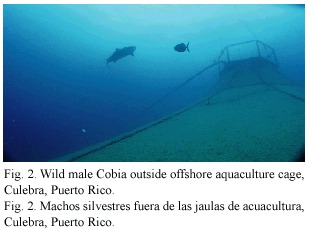
<p><font face="Arial" size="2"><b>Materials and methods </b></font></p>     <p><font face="Arial" size="2"><b>Study Animal: </b>Reports of Cobia in Puerto Rico are reviewed and a few new records are added. Cited museum records were not re-examined to confirm the identity, but Cobia are unlikely to have been confused with any other species. Museum abbreviations used in the text: AMNH = American Museum of Natural History, New York, New York, USA; BMNH = Natural History Museum, London, England; CAS = California Academy of Science, San Francisco, California, USA; USNM = Ichthyological Collections of the U.S. National Museum of Natural History, Smithsonian Institution, Division of Fishes, Washington, District of Columbia, USA. Standard Length from tip of lower jaw of a fish to the fold in the caudal peduncle made by the hypural plate when the tail is folded abbreviation = SL; Total Length from tip of lower jaw of a fish to the end of the caudal fin = TL.</font></p> <font face="Arial" size="2"><b></b></font>     <p><font face="Arial" size="2"><b>Parasites: </b>The authors were scheduled to examine subsamples of the Cobia fingerlings brought into Puerto Rico for aquaculture prior to their being stocked into a local facility. Unfortunately, the first three samples were received after the fingerlings were placed in the culture facility. It was recommended to DNER that this sequence of events defeated the purpose of the authors’ examinations for parasites and diseases. No further samples were received for analysis. Requested examination records from the facility in Florida were never received. Standard methods were employed to examine cobia fingerlings for total parasites, and bacterial and fungal diseases. Since the three cases in which parasites were found were rather different in details and importance, each is considered separately. </font></p> <font face="Arial" size="2"><b></b></font>     <p><font face="Arial" size="2"><b>Results and discussion </b></font></p>     <p><font face="Arial" size="2"><b>Study Animal: </b>The occurrence of Cobia, <i>Rachycentron canadum</i>, in Puerto Rico is not well documented, and is even confusing. <a href="#er56">Erdman (1956)</a> reported observations of what were apparently Cobia off Guánica and Parguera, Puerto Rico, in the summer. <a href="#ra67">Randall (1967)</a> noted food items from an 84.0 cm SL Cobia possibly collected off Puerto Rico (exact locality not stated). <a href="#er76">Erdman (1976)</a> noted 10 specimens of juvenile to adult female and male Cobia that may have been collected in Puerto Rico. The exact locations were not stated and some of the specimens came from Antigua (17ºN, 62º W) to the Silver Bank (21º N, 70º W) including the Virgin Islands. Dennis (2000) stated the Erdman specimens were taken off Parguera, but nothing in <a  href="#er76">Erdman (1976)</a> suggested this locality. <a  href="#er86">Erdman <i>et al. </i>(1986)</a>, in a rather limited edition volume issued by DNER, which may not technically be considered published, noted 6.4 and 10.2 cm TL Cobia juveniles collected 11 August 1956, a 9.07 kg female collected 26 August 1961, and a 7.3 kg male collected 15 April 1956 off Parguera, Puerto Rico. This filled in some data presumably for the <a href="#er76">Erdman (1976)</a> paper; however, with only four of the 10 specimens considered, confusion continues. The present paper presents what may be the first, unambiguous, published, confirmation of the occurrence of Cobia in Puerto Rico (<a href="#f2">Fig. 2</a>). There are also few references for the insular Caribbean [Barbados (<a href="#bu39">Butsch 1939</a>), British Virgin Islands (<a href="#an05a">Anonymous 2005a</a>, <a  href="#an05b">b</a>, underwater observations), Cuba (<a href="#cl94">Claro 1994</a>), Jamaica (<a href="#go51">Gosse 1851</a>, <a href="#cl66">Cladwell 1966</a>), St. Croix, U.S. Virgin Islands (<a href="#og75">Ogden <i>et al. </i>1975</a>, <a href="#cl80">Clavijo <i>et al. </i>1980</a>)], since it occurs rarely in the region (<a href="#go88">Goldstein 1988</a>, <a href="#ra68">Randall 1968</a>). Many articles cite <a href="#bo93">Böhlke and Chaplin (1993)</a> as evidence of Cobia occurring in the Bahamas; however, they did not collect or even see this species during their studies, and only repeated rumors of catches of this fish in Bimini, Bahamas. <a href="#co78">Collette (1978</a>, <a href="#co02">2002)</a> gave only a generalized regional map for this species in the area (although these references are frequently, albeit incorrectly, cited for specific islands). The authors are not aware of any museum depositions from Puerto Rico, and there are few from the insular Caribbean [Cuba (USNM 111312, 111355), Haiti (AMNH 201567), Jamaica (CAS 288223, USNM 32078), Tobago (BMNH 1920.12.22.132-133)]. <a  href="#wi96">Williams and Bunkley-Williams (1996</a>, unpubl. data) could not obtain any specimens to examine in Puerto Rico 1974-1996, although all the fishermen questioned explained this fish is occasionally caught there. Hector Vega (pers. comm., then with the Caribbean Fisheries Management Council) caught two juvenile Cobia near Patillas, Puerto Rico, in 1980.</font></p> <a name="f2"></a>     <div style="text-align: center;"><img src="/img/fbpe/rbt/v54s3/3388i2.JPG" title=""  alt="" style="width: 309px; height: 230px;"></div>     
<p><font face="Arial" size="2">At the end of each culture period at the SnapperFarm facilities, Culebra, Puerto Rico, some of the female Cobia around 9.1 kg become mature and attract wild male Cobia up to 40.99 kg to the outside of the cages (O’Hanlan, pers. comm., <a href="#f2">Fig. 2</a>). This represents a potential source of Cobia parasites to be introduced into the culture facility or for parasites and diseases of the cultured fish to be spread to wild ones. Although the cage with the mature female Cobia would soon be harvested and would thus suffer little effect from transferred parasites, the parasites might spread to adjacent cages with Cobia in various stages of growth.Transfer of non-indigenous parasites and diseases to wild stocks could be more serious. Direct contact is not necessary for parasite transfer (e.g., adult <i>Caligus </i>spp. [copepods], erroneously known as "Fish Lice" [argulids] in the cage-culture industry, can swim from host to host).</font></p>     <p><font face="Arial" size="2">Cobia are generally thought to mature in three years at about 8.3 kg in weight, but there are records of maturity in two years (<a href="#ri67">Richards 1967</a>, <a  href="#ra68">Rajan <i>et al. </i>1968</a>, <a href="#sh89">Shaffer and Nakamura 1989</a>). Possibly under ideal conditions, including superior nutrition, in culture, Cobia females mature more quickly. Culturalists try to harvest of fish before they begin maturing and diverting energy from the production of flesh. Another reason to harvest before maturity may be to avoid the attraction of wild fish and the potential for disease interchange.</font></p> <font face="Arial" size="2"><b></b></font>     <p><font face="Arial" size="2"><b>Slime-blotch Disease, </b><i>Brooklynella hostilis </i><b>Lom and Nigrilli, 1970 (Dysteriida: Hartmannulidae): </b>Slime-blotch Disease was previously reported as only causing problems in aquaculture facilities, but in the last 20- or- so years, it has become a problem in wild Caribbean coral-reef fishes as well. This disease caused a Caribbean-wide mass mortality in 1980, and has caused repeated mass mortalities in south Florida and the eastern Caribbean (<a href="#wi00">Williams and Bunkley-Williams 2000</a>). The disease is enzootic throughout the Caribbean (<a href="#wi00">Williams and Bunkley-Williams 2000</a>). A few isolated fishes were observed dying from this disease in Belize in 2001 and in Barbados in 2004, and a mass mortality of fishes occurred in St. Maarten in 2003 (Caballero, pers. comm.).</font></p>     ]]></body>
<body><![CDATA[<p><font face="Arial" size="2">On 17 October 2002, a subsample of 20 juvenile 3.2-4.7 cm SL, 6.0-8.4 cm TL, Cobia was received from a shipment reared in a culture facility in south Florida to be stocked in marine cages at the SnapperFarm facilities. This sample was sent because mortalities were occurring among these juveniles.The fish were originally received by the culture facility in a weakened condition, but without any signs of disease. They were held for feeding and rehabilitation, but unfortunately, contracted Slime-blotch disease. The authors found a very heavy infection (<a href="#wi96">Williams and Bunkley-Williams 1996</a>) of Slime-blotch disease on the skin and gills. Eventually, all 30 000 Cobia fingerlings received by SnapperFarm died. The disease did not spread to the Cobia in the pen-culture facilities. Circumstantially this appears to be a local parasite that attacked the weakened fish in the holding facility, and not an introduced pathogen.</font></p>     <p><font face="Arial" size="2">Slime-blotch disease already occurs in the Caribbean, but if the disease had been introduced from Florida, it could represent a different strain of the organism. The Slime-blotch disease organism is a new parasite for Cobia.</font></p> <font face="Arial" size="2"><b></b></font>     <p><font face="Arial" size="2"><b>Marine Ich,<i>Cryptocaryon irritans </i>Brown, 1951 (Colpodia: Ichthyophthiriidae): </b>Marine Ich is one of the "superparasites" that either occurs worldwide or has been spread across the globe by aquaculture and aquarium-fish transfers. It generally only causes problems in aquaria and in aquaculture conditions. However, it can rarely attack wild fishes (<a href="#bu94">Bunkley-Williams and Williams 1994</a>). </font></p>     <p><font face="Arial" size="2">On 21 August 2002, a subsample of 15 juvenile 3.6-5.5 cm SL, 8.4-11.2 cm TL, Cobia was received from a shipment reared in a culture facility in south Florida and stocked in marine cages at the SnapperFarm facilities. Unfortunately, the fish were stocked in a cage before analyses were completed. A moderate infection (<a href="#wi96">Williams and Bunkley-Williams 1996</a>) of Marine Ich was found on the gills.</font></p>     <p><font face="Arial" size="2">Marine Ich already occurs in the Caribbean, but the introduced form from Florida could represent a different form of the organism. While the authors are not aware of any studies suggesting that Marine Ich may represent a species complex, other protozoans formerly thought to be wide-ranging have been found to represent multiple similar species or forms (e.g., see <i>Ichthyobodo </i>sp. below). Marine Ich is a new parasite for Cobia.</font></p> <font face="Arial" size="2"><b></b></font>     <p><font face="Arial" size="2"><b>Marine Costia,<i>Ichthyobodo </i>sp. (Kinetoplastida: Bodonidae): </b>A small flagellate (<i>Ichthyobodo necator </i>Henneguy) about the size of a fish red blood cell, causes Ichthyobodosis or Costiosis (for the former genus name <i>Costia </i>), particularly in young fishes held in culture. A marine form of <i>Ichthyobodo </i>sp. has been reported worldwide, but predominantly in the subarctic to cooler parts of the temperate zones (<a href="#ur98">Urawa <i>et al. </i>1998</a>). It may not have existed naturally in waters warmer than the temperate zone since it has only been introduced as a non-indigenous species to Hawaii and Texas. The identity of the marine form is still in question, and is under genetic and molecular study (<a  href="#to01">Todal <i>et al. </i>2001</a>, <a href="#ca02">Callahan <i>et al. </i>2002</a>, <a href="#ca05">2005</a>). It has caused serious problems in cultured marine fishes including some species held in marine cages. The authors report <i>Ichthyobodo </i>sp. in Cobia, from south Florida (subtropical) introduced into Puerto Rico (tropical).</font></p>     <p><font face="Arial" size="2">On 7 June 2003, a subsample of seven juvenile 2.7-3.6 cm SL, 3.5-5.2 cm TL, Cobia was received from a shipment reared in a culture facility in south Florida and stocked in marine cages at the SnapperFarm facilities. A few fish had died during these shipments, but exact details were not available. Unfortunately, the fish were stocked in a cage before analyses were completed. A moderate infection (<a href="#wi96">Williams and Bunkley-Williams 1996</a>) of <i>Ichthyobodo </i>sp. was found on the skin and gills.</font></p>     <p><font face="Arial" size="2"><a href="#ca05">Callahan <i>et al. </i>(2005)</a> suggest that multiple species of this parasite exist with limited geographic distributions and host preferences. They also emphasized that introduction of these forms could cause serious problems and should be strictly controlled. <i>Ichthyobodo </i>sp. was introduced into Hawaii with Bastard Halibut, <i>Paralichthys olivaceus </i>(Temminck and Schlegel) (Pleuronectiformes: Paralichthyidae), imported from Japan for aquaculture (<a href="#br93">Brock <i>et al. </i>1993</a>). It was introduced into Texas with California Two-spot Octopus, <i>Octopus bimaculoides </i>Pickford and McConnaughey (Octopoda: Octopodidae) (<a  href="#fo91">Forsythe <i>et al. </i>1991</a>). </font></p> <font face="Arial" size="2"><i></i></font>     <p><font face="Arial" size="2"><i>Ichthyobodo </i>sp. is a new parasite for Cobia. The tropical Atlantic, Caribbean, Puerto Rico and Florida are new localities for this parasite.</font></p>     <p><font face="Arial" size="2">Many projects and companies are ither culturing Cobia in offshore cages or are planning to culture this fish. The National Offshore Aquaculture Act of 2005, prepared by the National Oceanic and Atmospheric Administration, was recently submitted to the U.S. Congress by the Bush Administration. This bill seeks to expedite and encourage offshore aquaculture. Offshore aquaculture of Cobia has made its parasites and diseases of much greater interest and importance. While the three parasites reported are new for Cobia, they are not typically Cobia parasites. These are aquaculture or confinement parasites. Almost any marine fish held very long in hatchery conditions will contract these parasites. Only one of the three parasites reported, Marine Costia, represents a potentially damaging non-indigenous introduction. However, the Marine Ich record could also potentially represent a dangerous species or form new to the Caribbean. Increased vigilance and improved precautions nevertheless should be emphasized to prevent future introductions that may be harmful to the environment and the aquaculture industry. </font></p> <font face="Arial" size="2"><b>     ]]></body>
<body><![CDATA[<p>Acknowledgments </p> </b></font>     <p><font face="Arial" size="2">The authors thank Brian O ’Hanlon, SnapperFarm, Inc., Culebra, Puerto Rico, for the photographs used in this paper, fish samples, and information; and Andy Caballero, Marine Park, Philipsburg, St. Maartin, for information concerning the fish kill. Support was provided by Sportfish Restoration Funds, Wallop-Breaux Project F-28-13. </font></p> <font face="Arial" size="2"><b>     <p>Resumen </p> </b></font>     <p><font face="Arial" size="2">En un criadero del pez <i>Rachycentron canadum </i>establecido en Puerto Rico a partir de especímenes de Florida hallamos parásitos nuevos. La enfermedad causada por <i>Brooklynella hostilis </i>Lom and Nigrilli, 1970 (Dysteriida: Hartmannulidae) podría indicar que un parásito local tomó ventaja de los peces debilitados y/o hacinados. También hallamos <i>Cryptocaryon irritans </i>Brown, 1951 (Colpodia: Ichthyophthiriidae), parásito cosmopolita. También llegó de Florida <i>Ichthyobodo </i>sp. (Kinetoplastida: Bodonidae), el cual hasta ahora no ha causado ningún problema localmente, pero es un nuevo registro para el Atlántico tropical, el Caribe, Florida y Puerto Rico. Los tres parásitos son huéspedes nuevos de <i>R. canadum</i>. Aparentemente, antes de la cosecha las hembras maduran lo suficiente para atraer machos salvajes hacia los cultivos. Esto representa una potencial fuente de infección.</font></p> <font face="Arial" size="2"><b></b></font>     <p><font face="Arial" size="2"><b>Palabras clave: </b>parásitos, Cobia, <i>Brooklynella hostilis, Cryptocaryon irritans, Ichthyobodo </i>sp., <i>Rachycentron canadum </i>. </font></p> <font face="Arial" size="2"><b>     <p>References </p> </b></font>     <!-- ref --><p><font face="Arial" size="2"><a name="bo93"></a>Böhlke, J. E. &amp; C. C. G. Chaplin. 1993. Fishes of the Bahamas and adjacent tropical waters. Univ. Texas Press, Austin, Texas, USA. 771 p.</font>&nbsp;&nbsp;&nbsp;&nbsp;&nbsp;&nbsp;&nbsp;&nbsp;[&#160;<a href="javascript:void(0);" onclick="javascript: window.open('/scielo.php?script=sci_nlinks&ref=1237276&pid=S0034-7744200600060000600001&lng=','','width=640,height=500,resizable=yes,scrollbars=1,menubar=yes,');">Links</a>&#160;]<!-- end-ref --><!-- ref --><p><font face="Arial" size="2"><a name="br93"></a>Brock, J. A., B. R. LeaMaster &amp; C. S. Lee. 1993. An overview of pathogens and diseases in marine finfish hatcheries in Hawaii with comments on strategies for health management and disease prevention, p. 211-238. In C. S. Lee, M. S. Su and I. C. Liao (eds.). Finfish hatchery in Asia: Proceedings of finfish hatchery in Asia "9". TML Conference Proceedings 3. Tungkaug Marine Laboratory, Taiwan Fisheries Research Institute, Tungkaug, Pingtung, Taiwan.</font>&nbsp;&nbsp;&nbsp;&nbsp;&nbsp;&nbsp;&nbsp;&nbsp;[&#160;<a href="javascript:void(0);" onclick="javascript: window.open('/scielo.php?script=sci_nlinks&ref=1237277&pid=S0034-7744200600060000600002&lng=','','width=640,height=500,resizable=yes,scrollbars=1,menubar=yes,');">Links</a>&#160;]<!-- end-ref --><!-- ref --><p><font face="Arial" size="2"><a name="bu01"></a>Bullard, S. A. &amp; R. M. Overstreet. 2001. Blood flukes (Sanguinicolidae) from fishes of the Northern Gulf of Mexico. Program and abstracts of the annual meeting of the American Society of Parasitologists, Albuquerque, New Mexico, USA., p. 84.</font>&nbsp;&nbsp;&nbsp;&nbsp;&nbsp;&nbsp;&nbsp;&nbsp;[&#160;<a href="javascript:void(0);" onclick="javascript: window.open('/scielo.php?script=sci_nlinks&ref=1237278&pid=S0034-7744200600060000600003&lng=','','width=640,height=500,resizable=yes,scrollbars=1,menubar=yes,');">Links</a>&#160;]<!-- end-ref --><!-- ref --><p><font face="Arial" size="2"><a name="bu94"></a>Bunkley-Williams, L. &amp; E. H. Williams, Jr. 1994. Diseases caused by <i>Trichodina spheroidesi </i>and <i>Cryptocaryon irritans </i>(Ciliophora) in wild coral reef fishes. J. Aquatic Animal Health 6: 360-361.</font>&nbsp;&nbsp;&nbsp;&nbsp;&nbsp;&nbsp;&nbsp;&nbsp;[&#160;<a href="javascript:void(0);" onclick="javascript: window.open('/scielo.php?script=sci_nlinks&ref=1237279&pid=S0034-7744200600060000600004&lng=','','width=640,height=500,resizable=yes,scrollbars=1,menubar=yes,');">Links</a>&#160;]<!-- end-ref --><!-- ref --><p><font face="Arial" size="2"><a name="bu05"></a>Bunkley-Williams, L. &amp; E. H. Williams, Jr. 2005. New records of parasites for Cobia, <i>Rachycentron canadum </i>(Linnaeus) (Perciformes: Rachycentridae), being reared in eastern Puerto Rico. Proc. Assoc. Mar. Labs. Carib. 32: 15 (abstract).</font>&nbsp;&nbsp;&nbsp;&nbsp;&nbsp;&nbsp;&nbsp;&nbsp;[&#160;<a href="javascript:void(0);" onclick="javascript: window.open('/scielo.php?script=sci_nlinks&ref=1237280&pid=S0034-7744200600060000600005&lng=','','width=640,height=500,resizable=yes,scrollbars=1,menubar=yes,');">Links</a>&#160;]<!-- end-ref --><p><font face="Arial" size="2"><a name="bu39"></a>Butsch, R. S. 1939. A list of Barbadian fishes. J. Barbados Mus. Historical Soc. 7: 17-331.</font></p>     <p><font face="Arial" size="2"><a name="ca02"></a>Callahan, H. A., R. W. Litaker &amp; E. J. Noga. 2002. Molecular taxonomy of the suborder Bodonina (Order Kinetoplastida), including the important fish parasite, <i>Ichthyobodo necator</i>. J. Eukaryotic Microbiol. 49: 119-1128.</font></p>     <!-- ref --><p><font face="Arial" size="2"><a name="ca05"></a>Callahan, H. A., R. W. Litaker &amp; E. J. Noga. 2005. Genetic relationships among members of the <i>Ichthyobodo necator </i>complex: Implications for the management of aquaculture stocks. J. Fish Dis. 28: 111-118.</font>&nbsp;&nbsp;&nbsp;&nbsp;&nbsp;&nbsp;&nbsp;&nbsp;[&#160;<a href="javascript:void(0);" onclick="javascript: window.open('/scielo.php?script=sci_nlinks&ref=1237283&pid=S0034-7744200600060000600008&lng=','','width=640,height=500,resizable=yes,scrollbars=1,menubar=yes,');">Links</a>&#160;]<!-- end-ref --><!-- ref --><p><font face="Arial" size="2"><a name="ch01"></a>Chen, S. C., R. J. Kou, C. T. Wu, P. C. Wang &amp; F. Z. Su. 2001. Mass mortality associated with a Sphaerospora-like myxosporidean infestation in juvenile cobia, <i>Rachycentron canadum </i>(L.), marine cage cultured in Taiwan. J. Fish Dis. 24: 189-195.</font>&nbsp;&nbsp;&nbsp;&nbsp;&nbsp;&nbsp;&nbsp;&nbsp;[&#160;<a href="javascript:void(0);" onclick="javascript: window.open('/scielo.php?script=sci_nlinks&ref=1237284&pid=S0034-7744200600060000600009&lng=','','width=640,height=500,resizable=yes,scrollbars=1,menubar=yes,');">Links</a>&#160;]<!-- end-ref --><!-- ref --><p><font face="Arial" size="2"><a name="cl66"></a>Cladwell, D. K. 1966. Marine and freshwater fishes of Jamaica. Bull. Inst. Jamaica Sci. Ser. 17: 1-120.</font>&nbsp;&nbsp;&nbsp;&nbsp;&nbsp;&nbsp;&nbsp;&nbsp;[&#160;<a href="javascript:void(0);" onclick="javascript: window.open('/scielo.php?script=sci_nlinks&ref=1237285&pid=S0034-7744200600060000600010&lng=','','width=640,height=500,resizable=yes,scrollbars=1,menubar=yes,');">Links</a>&#160;]<!-- end-ref --><p><font face="Arial" size="2"><a name="cl94"></a>Claro, R. 1994. Características generales de la ictiofauna, p. 55-770. In R. Claro (ed.). Ecología de los peces marinos de Cuba. Inst. Ocean. Acad. Cienc. Cuba y Cent. Inv. Quintana Roo, México.</font></p>     <!-- ref --><p><font face="Arial" size="2"><a name="cl80"></a>Clavijo, I., J.A. Yntema &amp; J.C. Ogden. 1980. An annotated list of the fishes of St. Croix U.S. Virgin Islands. West Indies Laboratory, St. Croix, U.S. Virgin Islands, USA. 49 p.</font>&nbsp;&nbsp;&nbsp;&nbsp;&nbsp;&nbsp;&nbsp;&nbsp;[&#160;<a href="javascript:void(0);" onclick="javascript: window.open('/scielo.php?script=sci_nlinks&ref=1237287&pid=S0034-7744200600060000600012&lng=','','width=640,height=500,resizable=yes,scrollbars=1,menubar=yes,');">Links</a>&#160;]<!-- end-ref --><!-- ref --><p><font face="Arial" size="2"><a name="co78"></a>Collette, B. B. 1978. Rachycentridae. In W. Fischer (ed.). FAO species identification sheets for fishery purposes. Western Central Atlantic (Fishing Area 31), Vol. 4. FAO, Rome, Italy.</font>&nbsp;&nbsp;&nbsp;&nbsp;&nbsp;&nbsp;&nbsp;&nbsp;[&#160;<a href="javascript:void(0);" onclick="javascript: window.open('/scielo.php?script=sci_nlinks&ref=1237288&pid=S0034-7744200600060000600013&lng=','','width=640,height=500,resizable=yes,scrollbars=1,menubar=yes,');">Links</a>&#160;]<!-- end-ref --><p><font face="Arial" size="2"><a name="co02"></a>Collette, B. B. 2002. Rachycentridae. Cobia, p. 1419-1420. In K.E. Carpenter (ed.). FAO species identification guide for fishery purposes. The living marine resources of the Western Central Atlantic. Vol. 3: Bony fishes part 2 (Opistognathidae to Molidae), sea turtles and marine mammals. FAO species identification sheets for fishery purposes. FAO, Rome, Italy.</font></p>     ]]></body>
<body><![CDATA[<!-- ref --><p><font face="Arial" size="2"><a name="er56"></a>Erdman, D. S. 1956. Recent fish records from Puerto Rico. Bull. Mar. Sci. Gulf Carib. 6: 315-348.</font>&nbsp;&nbsp;&nbsp;&nbsp;&nbsp;&nbsp;&nbsp;&nbsp;[&#160;<a href="javascript:void(0);" onclick="javascript: window.open('/scielo.php?script=sci_nlinks&ref=1237290&pid=S0034-7744200600060000600015&lng=','','width=640,height=500,resizable=yes,scrollbars=1,menubar=yes,');">Links</a>&#160;]<!-- end-ref --><!-- ref --><p><font face="Arial" size="2"><a name="er76"></a>Erdman, D. S. 1976. Spawning patterns of fishes from the northeastern Caribbean. Puerto Rico Department of Agriculture Commonwealth of Puerto Rico, Area of Special Services, Commercial Fisheries Laboratory, Agricultural and Fisheries Contributions, Official Publication in the Area of Special Services 8: 1-36.</font>&nbsp;&nbsp;&nbsp;&nbsp;&nbsp;&nbsp;&nbsp;&nbsp;[&#160;<a href="javascript:void(0);" onclick="javascript: window.open('/scielo.php?script=sci_nlinks&ref=1237291&pid=S0034-7744200600060000600016&lng=','','width=640,height=500,resizable=yes,scrollbars=1,menubar=yes,');">Links</a>&#160;]<!-- end-ref --><!-- ref --><p><font face="Arial" size="2"><a name="er86"></a>Erdman, D. S., J. M. Berríos-Díaz, I. N. Corujo-Flores &amp; J. González. 1986. Los peces marinos de Puerto Rico. Volume 7 <i>In </i>J. L. Vivaldi (Ed.) Compendio enciclopédico de los recursos naturales, Estado Libre Asociado de Puerto Rico, Dep. Rec. Nat., Área Inv. Cient., San Juan, Puerto Rico. 487 p.</font>&nbsp;&nbsp;&nbsp;&nbsp;&nbsp;&nbsp;&nbsp;&nbsp;[&#160;<a href="javascript:void(0);" onclick="javascript: window.open('/scielo.php?script=sci_nlinks&ref=1237292&pid=S0034-7744200600060000600017&lng=','','width=640,height=500,resizable=yes,scrollbars=1,menubar=yes,');">Links</a>&#160;]<!-- end-ref --><!-- ref --><p><font face="Arial" size="2"><a name="fo91"></a>Forsythe, J. W., R. T. Hanlon, R. A. Bullis &amp; E. J. Noga. 1991. <i>Octopus bimaculoides </i>(Pickford and McConnaughey, 1949): a marine invertebrate host for ectoparasitic protozoans. J. Fish Dis. 14: 431-442.</font>&nbsp;&nbsp;&nbsp;&nbsp;&nbsp;&nbsp;&nbsp;&nbsp;[&#160;<a href="javascript:void(0);" onclick="javascript: window.open('/scielo.php?script=sci_nlinks&ref=1237293&pid=S0034-7744200600060000600018&lng=','','width=640,height=500,resizable=yes,scrollbars=1,menubar=yes,');">Links</a>&#160;]<!-- end-ref --><!-- ref --><p><font face="Arial" size="2"><a name="go88"></a>Goldstein, R. J. 1988. Offshore fishing from Virginia to Texas. John F. Blair, Winston-Salem, North Carolina, USA. 248 p.</font>&nbsp;&nbsp;&nbsp;&nbsp;&nbsp;&nbsp;&nbsp;&nbsp;[&#160;<a href="javascript:void(0);" onclick="javascript: window.open('/scielo.php?script=sci_nlinks&ref=1237294&pid=S0034-7744200600060000600019&lng=','','width=640,height=500,resizable=yes,scrollbars=1,menubar=yes,');">Links</a>&#160;]<!-- end-ref --><!-- ref --><p><font face="Arial" size="2"><a name="go51"></a>Gosse, P. H. 1851. A naturalist’s sojourn in Jamaica. Longman, Brown, Green and Longman, London, England. 508 p.</font>&nbsp;&nbsp;&nbsp;&nbsp;&nbsp;&nbsp;&nbsp;&nbsp;[&#160;<a href="javascript:void(0);" onclick="javascript: window.open('/scielo.php?script=sci_nlinks&ref=1237295&pid=S0034-7744200600060000600020&lng=','','width=640,height=500,resizable=yes,scrollbars=1,menubar=yes,');">Links</a>&#160;]<!-- end-ref --><p><font face="Arial" size="2"><a name="ho01"></a>Ho, J.-S. 2001. Invasions of sea lice (Caligidae, Copepoda) to fishes cultured in ocean cages in Japan and Taiwan. 6<sup>th</sup> Asian Fisheries Forum, Kaohsiung, Taiwan, 25-330 Nov. 2001, Abstract Book, p. 97.</font></p>     <!-- ref --><p><font face="Arial" size="2"><a name="og75"></a>Ogden, J.C., J. A. Yntema &amp; I. Clavijo. 1975. An annotated list of the fishes of St. Croix, U.S. Virgin Islands. West Indies Lab., Spec. Publ. No. 3. 36 p.</font>&nbsp;&nbsp;&nbsp;&nbsp;&nbsp;&nbsp;&nbsp;&nbsp;[&#160;<a href="javascript:void(0);" onclick="javascript: window.open('/scielo.php?script=sci_nlinks&ref=1237297&pid=S0034-7744200600060000600022&lng=','','width=640,height=500,resizable=yes,scrollbars=1,menubar=yes,');">Links</a>&#160;]<!-- end-ref --><p><font face="Arial" size="2"><a name="raj68"></a>Rajan, S., S. Patnaink &amp; N. C. Basu. 1968. New records of fishes from the Chilka Lake J. Zool. Soc. India 20: 80-993.</font></p>     <!-- ref --><p><font face="Arial" size="2"><a name="ri67"></a>Richards, C. E. 1967. Age, growth and fecundity of the cobia, <i>Rachycentron canadum</i>, from Chesapeake Bay and adjacent mid-Atlantic waters. Trans. Amer. Fish. Soc. 96: 343-350.</font>&nbsp;&nbsp;&nbsp;&nbsp;&nbsp;&nbsp;&nbsp;&nbsp;[&#160;<a href="javascript:void(0);" onclick="javascript: window.open('/scielo.php?script=sci_nlinks&ref=1237299&pid=S0034-7744200600060000600024&lng=','','width=640,height=500,resizable=yes,scrollbars=1,menubar=yes,');">Links</a>&#160;]<!-- end-ref --><!-- ref --><p><font face="Arial" size="2"><a name="ra67"></a>Randall, J. E. 1967. Food habits of reef fishes of the West Indies. Stud. Trop. Oceanogr. Miami 5: 665-847.</font>&nbsp;&nbsp;&nbsp;&nbsp;&nbsp;&nbsp;&nbsp;&nbsp;[&#160;<a href="javascript:void(0);" onclick="javascript: window.open('/scielo.php?script=sci_nlinks&ref=1237300&pid=S0034-7744200600060000600025&lng=','','width=640,height=500,resizable=yes,scrollbars=1,menubar=yes,');">Links</a>&#160;]<!-- end-ref --><!-- ref --><p><font face="Arial" size="2"><a name="ra68"></a>Randall, J. E. 1968. Caribbean reef fishes. Tropical Fish Hobbyist Publications, Inc. Ltd., Hong Kong. 318 p.</font>&nbsp;&nbsp;&nbsp;&nbsp;&nbsp;&nbsp;&nbsp;&nbsp;[&#160;<a href="javascript:void(0);" onclick="javascript: window.open('/scielo.php?script=sci_nlinks&ref=1237301&pid=S0034-7744200600060000600026&lng=','','width=640,height=500,resizable=yes,scrollbars=1,menubar=yes,');">Links</a>&#160;]<!-- end-ref --><!-- ref --><p><font face="Arial" size="2"><a name="sh89"></a>Shaffer, R. V. &amp; E. L. Nakamura. 1989. Synopsis of biological data on the cobia <i>Rachycentron canadum </i>(Pisces: Rachycentridae). NOAA Tech. Rep. NMFS 82. 21 p.</font>&nbsp;&nbsp;&nbsp;&nbsp;&nbsp;&nbsp;&nbsp;&nbsp;[&#160;<a href="javascript:void(0);" onclick="javascript: window.open('/scielo.php?script=sci_nlinks&ref=1237302&pid=S0034-7744200600060000600027&lng=','','width=640,height=500,resizable=yes,scrollbars=1,menubar=yes,');">Links</a>&#160;]<!-- end-ref --><!-- ref --><p><font face="Arial" size="2"><a name="to01"></a>Todal, J. A., A. Nylund &amp; E. Karlsbakk. 2001. A genetic and morphological study of <i>Ichthyobodo </i>spp. from marine and freshwater hosts. I: Diseases of fish and Shellfish. Abstract Book. European Association of Fish Pathologists; s. P-077 European Association of Fish Pathologists, 10th International Conference on "Fish and Shellfish Diseases". Trinity College, Dublin, Ireland, 10-14. Sep. 2001.</font>&nbsp;&nbsp;&nbsp;&nbsp;&nbsp;&nbsp;&nbsp;&nbsp;[&#160;<a href="javascript:void(0);" onclick="javascript: window.open('/scielo.php?script=sci_nlinks&ref=1237303&pid=S0034-7744200600060000600028&lng=','','width=640,height=500,resizable=yes,scrollbars=1,menubar=yes,');">Links</a>&#160;]<!-- end-ref --><!-- ref --><p><font face="Arial" size="2"><a name="ur98"></a>Urawa, S., N. Ueki &amp; E. Karlsbakk. 1998. A review of <i>Ichthyobodo </i>in marine fishes. Fish Pathol. 33: 311-320.</font>&nbsp;&nbsp;&nbsp;&nbsp;&nbsp;&nbsp;&nbsp;&nbsp;[&#160;<a href="javascript:void(0);" onclick="javascript: window.open('/scielo.php?script=sci_nlinks&ref=1237304&pid=S0034-7744200600060000600029&lng=','','width=640,height=500,resizable=yes,scrollbars=1,menubar=yes,');">Links</a>&#160;]<!-- end-ref --><!-- ref --><p><font face="Arial" size="2"><a name="wi96"></a>Williams, E. H., Jr. &amp; L. Bunkley-Williams. 1996. Parasites of offshore, big game sport fishes of Puerto Rico and the western North Atlantic. Puerto Rico Department of Natural and Environmental Resources, San Juan, Puerto Rico, and Department of Biology, University of Puerto Rico, Mayagüez, Puerto Rico. 384 p.</font>&nbsp;&nbsp;&nbsp;&nbsp;&nbsp;&nbsp;&nbsp;&nbsp;[&#160;<a href="javascript:void(0);" onclick="javascript: window.open('/scielo.php?script=sci_nlinks&ref=1237305&pid=S0034-7744200600060000600030&lng=','','width=640,height=500,resizable=yes,scrollbars=1,menubar=yes,');">Links</a>&#160;]<!-- end-ref --><!-- ref --><p><font face="Arial" size="2"><a name="wi00"></a>Williams, E. H., Jr. &amp; L. Bunkley-Williams. 2000. Marine major ecological disturbances of the Caribbean. Infect. Dis. Rev. 2: 110-127. </font>&nbsp;&nbsp;&nbsp;&nbsp;&nbsp;&nbsp;&nbsp;&nbsp;[&#160;<a href="javascript:void(0);" onclick="javascript: window.open('/scielo.php?script=sci_nlinks&ref=1237306&pid=S0034-7744200600060000600031&lng=','','width=640,height=500,resizable=yes,scrollbars=1,menubar=yes,');">Links</a>&#160;]<!-- end-ref --><p>Internet references </p> </b></font>     <!-- ref --><p><font face="Arial" size="2"><a name="an05a"></a>Anonymous. 2005a. BVI Tourist Board (Downloaded: 8 August 2005, <a  href="http://www.bvitouristboard.com/bvi/bvi-divesites.htm">http://www.bvitouristboard.com/bvi/bvi-divesites.htm</a>).</font>&nbsp;&nbsp;&nbsp;&nbsp;&nbsp;&nbsp;&nbsp;&nbsp;[&#160;<a href="javascript:void(0);" onclick="javascript: window.open('/scielo.php?script=sci_nlinks&ref=1237308&pid=S0034-7744200600060000600032&lng=','','width=640,height=500,resizable=yes,scrollbars=1,menubar=yes,');">Links</a>&#160;]<!-- end-ref --><p><font face="Arial" size="2"><a name="an05b"></a>Anonymous. 2005b. Scuba Sailing (Downloaded: 8 August 2005, <a  href="http:///wwww.intewild.org/Scuba_Sailing.htm">http:///wwww.intewild.org/Scuba_Sailing.htm</a>).</font></p>     ]]></body>
<body><![CDATA[<p><font face="Arial" size="2"><a  href="http://www.fcsc.usgs.gov/Marine_Studies/Marine_Puerto_Rico_Plateau/Marine_Puerto_Rico_Plateau_Int/marine_puerto_rico_plateau_int.html%29">www.fcsc.usgs.gov/Marine_Studies/Marine_Puerto_Rico_Plateau/Marine_Puerto_Rico_Plateau_Int/</a>    <br> <a  href="http://www.fcsc.usgs.gov/Marine_Studies/Marine_Puerto_Rico_Plateau/Marine_Puerto_Rico_Plateau_Int/marine_puerto_rico_plateau_int.html%29">marine_puerto_rico_plateau_int.html)</a>;History of ichthyology in Puerto Rico (Downloaded: 8 August 2005). </font></p>     <!-- ref --><p><font face="Arial" size="2"><a  href="http://www.fcsc.usgs.gov/Marine_Studies/Marine_Puerto_Rico_Plateau/Marine_Puerto_Rico_Plateau_His/%20marine_puerto_rico_plateau_his.html">www.fcsc.usgs.gov/Marine_Studies/Marine_Puerto_Rico_Plateau/Marine_Puerto_Rico_Plateau_His/ marine_puerto_rico_plateau_his.html</a>); Annotated list of species from the Puerto Rican Plateau (Downloaded: 8 August 2005, </font>&nbsp;&nbsp;&nbsp;&nbsp;&nbsp;&nbsp;&nbsp;&nbsp;[&#160;<a href="javascript:void(0);" onclick="javascript: window.open('/scielo.php?script=sci_nlinks&ref=1237312&pid=S0034-7744200600060000600035&lng=','','width=640,height=500,resizable=yes,scrollbars=1,menubar=yes,');">Links</a>&#160;]<!-- end-ref --><!-- ref --><p><font face="Arial" size="2"><a  href="http://www.fcsc.usgs.gov/PRAnnotated.pdf">www.fcsc.usgs.gov/PRAnnotated.pdf</a>); References (Downloaded: August 2005, <a  href="http://www.fcsc.usgs.gov/PRreference.pdf">http://www.fcsc.usgs.gov/PRreference.pdf</a>).</font>&nbsp;&nbsp;&nbsp;&nbsp;&nbsp;&nbsp;&nbsp;&nbsp;[&#160;<a href="javascript:void(0);" onclick="javascript: window.open('/scielo.php?script=sci_nlinks&ref=1237313&pid=S0034-7744200600060000600036&lng=','','width=640,height=500,resizable=yes,scrollbars=1,menubar=yes,');">Links</a>&#160;]<!-- end-ref --><!-- ref --><p><font face="Arial" size="2"><a name="de00"></a>Dennis, G. D. III. 2000. Annotated checklist of shallow-water marine fishes from the Puerto Rico Plateau including Puerto Rico, Culebra, Vieques, St. Thomas, St. John, Tortola, Virgin Gorda, and Anegada. Florida Caribbean Science Center, U.S. Geological Survey-BRD, Gainesville, Florida. Introduction (Downloaded: 8 August 2005). </font>&nbsp;&nbsp;&nbsp;&nbsp;&nbsp;&nbsp;&nbsp;&nbsp;[&#160;<a href="javascript:void(0);" onclick="javascript: window.open('/scielo.php?script=sci_nlinks&ref=1237314&pid=S0034-7744200600060000600037&lng=','','width=640,height=500,resizable=yes,scrollbars=1,menubar=yes,');">Links</a>&#160;]<!-- end-ref --> ]]></body><back>
<ref-list>
<ref id="B1">
<nlm-citation citation-type="book">
<person-group person-group-type="author">
<name>
<surname><![CDATA[Böhlke]]></surname>
<given-names><![CDATA[J. E]]></given-names>
</name>
<name>
<surname><![CDATA[Chaplin]]></surname>
<given-names><![CDATA[C. C. G]]></given-names>
</name>
</person-group>
<source><![CDATA[Fishes of the Bahamas and adjacent tropical waters]]></source>
<year>1993</year>
<page-range>771</page-range><publisher-loc><![CDATA[Austin^eTexas Texas]]></publisher-loc>
<publisher-name><![CDATA[Univ. Texas Press]]></publisher-name>
</nlm-citation>
</ref>
<ref id="B2">
<nlm-citation citation-type="book">
<person-group person-group-type="author">
<name>
<surname><![CDATA[Brock]]></surname>
<given-names><![CDATA[J. A]]></given-names>
</name>
<name>
<surname><![CDATA[LeaMaster]]></surname>
<given-names><![CDATA[B. R]]></given-names>
</name>
<name>
<surname><![CDATA[Lee]]></surname>
<given-names><![CDATA[C. S]]></given-names>
</name>
</person-group>
<article-title xml:lang="en"><![CDATA[An overview of pathogens and diseases in marine finfish hatcheries in Hawaii with comments on strategies for health management and disease prevention]]></article-title>
<person-group person-group-type="editor">
<name>
<surname><![CDATA[Lee]]></surname>
<given-names><![CDATA[C. S]]></given-names>
</name>
<name>
<surname><![CDATA[Su]]></surname>
<given-names><![CDATA[M. S]]></given-names>
</name>
<name>
<surname><![CDATA[Liao]]></surname>
<given-names><![CDATA[I. C]]></given-names>
</name>
</person-group>
<source><![CDATA[Finfish hatchery in Asia: Proceedings of finfish hatchery in Asia "9". TML Conference Proceedings 3]]></source>
<year>1993</year>
<page-range>211-238</page-range><publisher-loc><![CDATA[Tungkaug^ePingtung Pingtung]]></publisher-loc>
<publisher-name><![CDATA[Tungkaug Marine Laboratory, Taiwan Fisheries Research Institute]]></publisher-name>
</nlm-citation>
</ref>
<ref id="B3">
<nlm-citation citation-type="">
<person-group person-group-type="author">
<name>
<surname><![CDATA[Bullard]]></surname>
<given-names><![CDATA[S. A]]></given-names>
</name>
<name>
<surname><![CDATA[Overstreet]]></surname>
<given-names><![CDATA[R. M]]></given-names>
</name>
</person-group>
<source><![CDATA[Blood flukes (Sanguinicolidae) from fishes of the Northern Gulf of Mexico. Program and abstracts of the annual meeting of the American Society of Parasitologists, Albuquerque, New Mexico, USA]]></source>
<year>2001</year>
<page-range>84</page-range></nlm-citation>
</ref>
<ref id="B4">
<nlm-citation citation-type="journal">
<person-group person-group-type="author">
<name>
<surname><![CDATA[Bunkley-Williams]]></surname>
<given-names><![CDATA[L]]></given-names>
</name>
<name>
<surname><![CDATA[Williams, Jr]]></surname>
<given-names><![CDATA[E. H]]></given-names>
</name>
</person-group>
<article-title xml:lang="en"><![CDATA[Diseases caused by Trichodina spheroidesi and Cryptocaryon irritans (Ciliophora) in wild coral reef fishes]]></article-title>
<source><![CDATA[J. Aquatic Animal Health]]></source>
<year>1994</year>
<volume>6</volume>
<page-range>360-361</page-range></nlm-citation>
</ref>
<ref id="B5">
<nlm-citation citation-type="journal">
<person-group person-group-type="author">
<name>
<surname><![CDATA[Bunkley-Williams]]></surname>
<given-names><![CDATA[L]]></given-names>
</name>
<name>
<surname><![CDATA[Williams, Jr]]></surname>
<given-names><![CDATA[E. H]]></given-names>
</name>
</person-group>
<article-title xml:lang="en"><![CDATA[New records of parasites for Cobia, Rachycentron canadum (Linnaeus) (Perciformes: Rachycentridae), being reared in eastern Puerto Rico]]></article-title>
<source><![CDATA[Proc. Assoc. Mar. Labs. Carib]]></source>
<year>2005</year>
<volume>32</volume>
<page-range>15</page-range></nlm-citation>
</ref>
<ref id="B6">
<nlm-citation citation-type="journal">
<person-group person-group-type="author">
<name>
<surname><![CDATA[Butsch]]></surname>
<given-names><![CDATA[R. S]]></given-names>
</name>
</person-group>
<article-title xml:lang="en"><![CDATA[A list of Barbadian fishes]]></article-title>
<source><![CDATA[J. Barbados Mus. Historical Soc]]></source>
<year>1939</year>
<volume>7</volume>
<page-range>17-31</page-range></nlm-citation>
</ref>
<ref id="B7">
<nlm-citation citation-type="journal">
<person-group person-group-type="author">
<name>
<surname><![CDATA[Callahan]]></surname>
<given-names><![CDATA[H. A]]></given-names>
</name>
<name>
<surname><![CDATA[Litaker]]></surname>
<given-names><![CDATA[R. W]]></given-names>
</name>
<name>
<surname><![CDATA[Noga]]></surname>
<given-names><![CDATA[E. J]]></given-names>
</name>
</person-group>
<article-title xml:lang="en"><![CDATA[Molecular taxonomy of the suborder Bodonina (Order Kinetoplastida), including the important fish parasite, Ichthyobodo necator]]></article-title>
<source><![CDATA[J. Eukaryotic Microbiol]]></source>
<year>2002</year>
<volume>49</volume>
<page-range>119-128</page-range></nlm-citation>
</ref>
<ref id="B8">
<nlm-citation citation-type="journal">
<person-group person-group-type="author">
<name>
<surname><![CDATA[Callahan]]></surname>
<given-names><![CDATA[H. A]]></given-names>
</name>
<name>
<surname><![CDATA[Litaker]]></surname>
<given-names><![CDATA[R. W]]></given-names>
</name>
<name>
<surname><![CDATA[Noga]]></surname>
<given-names><![CDATA[E. J]]></given-names>
</name>
</person-group>
<article-title xml:lang="en"><![CDATA[Genetic relationships among members of the Ichthyobodo necator complex: Implications for the management of aquaculture stocks]]></article-title>
<source><![CDATA[J. Fish Dis]]></source>
<year>2005</year>
<volume>28</volume>
<page-range>111-118</page-range></nlm-citation>
</ref>
<ref id="B9">
<nlm-citation citation-type="journal">
<person-group person-group-type="author">
<name>
<surname><![CDATA[Chen]]></surname>
<given-names><![CDATA[S. C]]></given-names>
</name>
<name>
<surname><![CDATA[Kou]]></surname>
<given-names><![CDATA[R. J]]></given-names>
</name>
<name>
<surname><![CDATA[Wu]]></surname>
<given-names><![CDATA[C. T]]></given-names>
</name>
<name>
<surname><![CDATA[Wang]]></surname>
<given-names><![CDATA[P. C]]></given-names>
</name>
<name>
<surname><![CDATA[Su]]></surname>
<given-names><![CDATA[F. Z]]></given-names>
</name>
</person-group>
<article-title xml:lang="en"><![CDATA[Mass mortality associated with a Sphaerospora-like myxosporidean infestation in juvenile cobia, Rachycentron canadum (L.), marine cage cultured in Taiwan]]></article-title>
<source><![CDATA[J. Fish Dis]]></source>
<year>2001</year>
<volume>24</volume>
<page-range>189-195</page-range></nlm-citation>
</ref>
<ref id="B10">
<nlm-citation citation-type="journal">
<person-group person-group-type="author">
<name>
<surname><![CDATA[Cladwell]]></surname>
<given-names><![CDATA[D. K]]></given-names>
</name>
</person-group>
<article-title xml:lang="en"><![CDATA[Marine and freshwater fishes of Jamaica]]></article-title>
<source><![CDATA[Bull. Inst. Jamaica Sci. Ser]]></source>
<year>1966</year>
<volume>17</volume>
<page-range>1-120</page-range></nlm-citation>
</ref>
<ref id="B11">
<nlm-citation citation-type="book">
<person-group person-group-type="author">
<name>
<surname><![CDATA[Claro]]></surname>
<given-names><![CDATA[R]]></given-names>
</name>
</person-group>
<article-title xml:lang="es"><![CDATA[Características generales de la ictiofauna]]></article-title>
<person-group person-group-type="editor">
<name>
<surname><![CDATA[Claro]]></surname>
<given-names><![CDATA[R]]></given-names>
</name>
</person-group>
<source><![CDATA[Ecología de los peces marinos de Cuba]]></source>
<year>1994</year>
<page-range>55-70</page-range><publisher-name><![CDATA[Inst. Ocean. Acad. Cienc. Cuba y Cent. Inv. Quintana Roo]]></publisher-name>
</nlm-citation>
</ref>
<ref id="B12">
<nlm-citation citation-type="book">
<person-group person-group-type="author">
<name>
<surname><![CDATA[Clavijo]]></surname>
<given-names><![CDATA[I]]></given-names>
</name>
<name>
<surname><![CDATA[Yntema]]></surname>
<given-names><![CDATA[J.A]]></given-names>
</name>
<name>
<surname><![CDATA[Ogden]]></surname>
<given-names><![CDATA[J.C]]></given-names>
</name>
</person-group>
<source><![CDATA[An annotated list of the fishes of St. Croix U.S. Virgin Islands]]></source>
<year>1980</year>
<page-range>49</page-range><publisher-loc><![CDATA[St. Croix^eU.S. Virgin Islands U.S. Virgin Islands]]></publisher-loc>
<publisher-name><![CDATA[West Indies Laboratory]]></publisher-name>
</nlm-citation>
</ref>
<ref id="B13">
<nlm-citation citation-type="book">
<person-group person-group-type="author">
<name>
<surname><![CDATA[Collette]]></surname>
<given-names><![CDATA[B. B]]></given-names>
</name>
</person-group>
<article-title xml:lang="en"><![CDATA[Rachycentridae]]></article-title>
<person-group person-group-type="editor">
<name>
<surname><![CDATA[Fischer]]></surname>
<given-names><![CDATA[W]]></given-names>
</name>
</person-group>
<source><![CDATA[FAO species identification sheets for fishery purposes]]></source>
<year>1978</year>
<volume>Vol. 4</volume>
<publisher-loc><![CDATA[Rome ]]></publisher-loc>
<publisher-name><![CDATA[FAO]]></publisher-name>
</nlm-citation>
</ref>
<ref id="B14">
<nlm-citation citation-type="book">
<person-group person-group-type="author">
<name>
<surname><![CDATA[Collette]]></surname>
<given-names><![CDATA[B. B]]></given-names>
</name>
</person-group>
<article-title xml:lang="en"><![CDATA[Rachycentridae. Cobia]]></article-title>
<person-group person-group-type="editor">
<name>
<surname><![CDATA[Carpenter]]></surname>
<given-names><![CDATA[K.E]]></given-names>
</name>
</person-group>
<source><![CDATA[FAO species identification guide for fishery purposes. The living marine resources of the Western Central Atlantic. Vol. 3: Bony fishes part 2 (Opistognathidae to Molidae), sea turtles and marine mammals. FAO species identification sheets for fishery purposes]]></source>
<year>2002</year>
<page-range>1419-11420</page-range><publisher-loc><![CDATA[Rome ]]></publisher-loc>
<publisher-name><![CDATA[FAO]]></publisher-name>
</nlm-citation>
</ref>
<ref id="B15">
<nlm-citation citation-type="journal">
<person-group person-group-type="author">
<name>
<surname><![CDATA[Erdman]]></surname>
<given-names><![CDATA[D. S]]></given-names>
</name>
</person-group>
<article-title xml:lang="en"><![CDATA[Recent fish records from Puerto Rico]]></article-title>
<source><![CDATA[Bull. Mar. Sci. Gulf Carib]]></source>
<year>1956</year>
<volume>6</volume>
<page-range>315-348</page-range></nlm-citation>
</ref>
<ref id="B16">
<nlm-citation citation-type="">
<person-group person-group-type="author">
<name>
<surname><![CDATA[Erdman]]></surname>
<given-names><![CDATA[D. S]]></given-names>
</name>
</person-group>
<source><![CDATA[Spawning patterns of fishes from the northeastern Caribbean. Puerto Rico Department of Agriculture Commonwealth of Puerto Rico, Area of Special Services, Commercial Fisheries Laboratory, Agricultural and Fisheries Contributions, Official Publication in the Area of Special Services]]></source>
<year>1976</year>
<volume>8</volume>
<page-range>1-36</page-range></nlm-citation>
</ref>
<ref id="B17">
<nlm-citation citation-type="book">
<person-group person-group-type="author">
<name>
<surname><![CDATA[Erdman]]></surname>
<given-names><![CDATA[D. S]]></given-names>
</name>
<name>
<surname><![CDATA[Berríos-Díaz]]></surname>
<given-names><![CDATA[J. M]]></given-names>
</name>
<name>
<surname><![CDATA[Corujo-Flores]]></surname>
<given-names><![CDATA[I. N]]></given-names>
</name>
<name>
<surname><![CDATA[González]]></surname>
<given-names><![CDATA[J]]></given-names>
</name>
</person-group>
<article-title xml:lang="es"><![CDATA[Los peces marinos de Puerto Rico. Volume 7]]></article-title>
<person-group person-group-type="editor">
<name>
<surname><![CDATA[Vivaldi]]></surname>
<given-names><![CDATA[J. L]]></given-names>
</name>
</person-group>
<source><![CDATA[Compendio enciclopédico de los recursos naturales, Estado Libre Asociado de Puerto Rico]]></source>
<year>1986</year>
<page-range>487</page-range><publisher-loc><![CDATA[San Juan ]]></publisher-loc>
<publisher-name><![CDATA[Dep. Rec. Nat., Área Inv. Cient]]></publisher-name>
</nlm-citation>
</ref>
<ref id="B18">
<nlm-citation citation-type="journal">
<person-group person-group-type="author">
<name>
<surname><![CDATA[Forsythe]]></surname>
<given-names><![CDATA[J. W]]></given-names>
</name>
<name>
<surname><![CDATA[Hanlon]]></surname>
<given-names><![CDATA[R. T]]></given-names>
</name>
<name>
<surname><![CDATA[Bullis]]></surname>
<given-names><![CDATA[R. A]]></given-names>
</name>
<name>
<surname><![CDATA[Noga]]></surname>
<given-names><![CDATA[E. J]]></given-names>
</name>
</person-group>
<article-title xml:lang="en"><![CDATA[Octopus bimaculoides (Pickford and McConnaughey, 1949): a marine invertebrate host for ectoparasitic protozoans]]></article-title>
<source><![CDATA[J. Fish Dis]]></source>
<year>1991</year>
<volume>14</volume>
<page-range>431-442</page-range></nlm-citation>
</ref>
<ref id="B19">
<nlm-citation citation-type="book">
<person-group person-group-type="author">
<name>
<surname><![CDATA[Goldstein]]></surname>
<given-names><![CDATA[R. J]]></given-names>
</name>
</person-group>
<source><![CDATA[Offshore fishing from Virginia to Texas]]></source>
<year>1988</year>
<page-range>248</page-range><publisher-loc><![CDATA[Winston-Salem^eNorth Carolina North Carolina]]></publisher-loc>
<publisher-name><![CDATA[John F. Blair]]></publisher-name>
</nlm-citation>
</ref>
<ref id="B20">
<nlm-citation citation-type="book">
<person-group person-group-type="author">
<name>
<surname><![CDATA[Gosse]]></surname>
<given-names><![CDATA[P. H]]></given-names>
</name>
</person-group>
<source><![CDATA[A naturalist’s sojourn in Jamaica]]></source>
<year>1851</year>
<page-range>508</page-range><publisher-loc><![CDATA[BrownLondon ]]></publisher-loc>
<publisher-name><![CDATA[LongmanGreen and Longman]]></publisher-name>
</nlm-citation>
</ref>
<ref id="B21">
<nlm-citation citation-type="">
<person-group person-group-type="author">
<name>
<surname><![CDATA[Ho]]></surname>
<given-names><![CDATA[J.-S]]></given-names>
</name>
</person-group>
<source><![CDATA[Invasions of sea lice (Caligidae, Copepoda) to fishes cultured in ocean cages in Japan and Taiwan. 6 th Asian Fisheries Forum, Kaohsiung, Taiwan, 25-30 Nov. 2001, Abstract Book]]></source>
<year>2001</year>
<page-range>97</page-range></nlm-citation>
</ref>
<ref id="B22">
<nlm-citation citation-type="journal">
<person-group person-group-type="author">
<name>
<surname><![CDATA[Ogden]]></surname>
<given-names><![CDATA[J.C]]></given-names>
</name>
<name>
<surname><![CDATA[Yntema]]></surname>
<given-names><![CDATA[J. A]]></given-names>
</name>
<name>
<surname><![CDATA[Clavijo]]></surname>
<given-names><![CDATA[I]]></given-names>
</name>
</person-group>
<article-title xml:lang="en"><![CDATA[An annotated list of the fishes of St. Croix, U.S. Virgin Islands]]></article-title>
<source><![CDATA[West Indies Lab., Spec. Publ]]></source>
<year>1975</year>
<numero>3</numero>
<issue>3</issue>
<page-range>36</page-range></nlm-citation>
</ref>
<ref id="B23">
<nlm-citation citation-type="journal">
<person-group person-group-type="author">
<name>
<surname><![CDATA[Rajan]]></surname>
<given-names><![CDATA[S]]></given-names>
</name>
<name>
<surname><![CDATA[Patnaink]]></surname>
<given-names><![CDATA[S]]></given-names>
</name>
<name>
<surname><![CDATA[Basu]]></surname>
<given-names><![CDATA[N. C]]></given-names>
</name>
</person-group>
<article-title xml:lang="en"><![CDATA[New records of fishes from the Chilka Lake]]></article-title>
<source><![CDATA[J. Zool. Soc. India]]></source>
<year>1968</year>
<volume>20</volume>
<page-range>80-93</page-range></nlm-citation>
</ref>
<ref id="B24">
<nlm-citation citation-type="journal">
<person-group person-group-type="author">
<name>
<surname><![CDATA[Richards]]></surname>
<given-names><![CDATA[C. E]]></given-names>
</name>
</person-group>
<article-title xml:lang="en"><![CDATA[Age, growth and fecundity of the cobia, Rachycentron canadum, from Chesapeake Bay and adjacent mid-Atlantic waters]]></article-title>
<source><![CDATA[Trans. Amer. Fish. Soc]]></source>
<year>1967</year>
<volume>96</volume>
<page-range>343-350</page-range></nlm-citation>
</ref>
<ref id="B25">
<nlm-citation citation-type="journal">
<person-group person-group-type="author">
<name>
<surname><![CDATA[Randall]]></surname>
<given-names><![CDATA[J. E]]></given-names>
</name>
</person-group>
<article-title xml:lang="en"><![CDATA[Food habits of reef fishes of the West Indies]]></article-title>
<source><![CDATA[Stud. Trop. Oceanogr. Miami]]></source>
<year>1967</year>
<volume>5</volume>
<page-range>665-847</page-range></nlm-citation>
</ref>
<ref id="B26">
<nlm-citation citation-type="book">
<person-group person-group-type="author">
<name>
<surname><![CDATA[Randall]]></surname>
<given-names><![CDATA[J. E]]></given-names>
</name>
</person-group>
<source><![CDATA[Caribbean reef fishes]]></source>
<year>1968</year>
<page-range>318</page-range><publisher-loc><![CDATA[Hong Kong ]]></publisher-loc>
<publisher-name><![CDATA[Tropical Fish Hobbyist Publications, Inc. Ltd]]></publisher-name>
</nlm-citation>
</ref>
<ref id="B27">
<nlm-citation citation-type="">
<person-group person-group-type="author">
<name>
<surname><![CDATA[Shaffer]]></surname>
<given-names><![CDATA[R. V]]></given-names>
</name>
<name>
<surname><![CDATA[Nakamura]]></surname>
<given-names><![CDATA[E. L]]></given-names>
</name>
</person-group>
<source><![CDATA[Synopsis of biological data on the cobia Rachycentron canadum (Pisces: Rachycentridae). NOAA Tech. Rep. NMFS 82]]></source>
<year>1989</year>
<page-range>21</page-range></nlm-citation>
</ref>
<ref id="B28">
<nlm-citation citation-type="confpro">
<person-group person-group-type="author">
<name>
<surname><![CDATA[Todal]]></surname>
<given-names><![CDATA[J. A]]></given-names>
</name>
<name>
<surname><![CDATA[Nylund]]></surname>
<given-names><![CDATA[A]]></given-names>
</name>
<name>
<surname><![CDATA[Karlsbakk]]></surname>
<given-names><![CDATA[E]]></given-names>
</name>
</person-group>
<source><![CDATA[A genetic and morphological study of Ichthyobodo spp. from marine and freshwater hosts. I: Diseases of fish and Shellfish. Abstract Book. European Association of Fish Pathologists]]></source>
<year>2001</year>
<conf-name><![CDATA[10 International Conference on "Fish and Shellfish Diseases"]]></conf-name>
<conf-date>10-14. Sep. 2001</conf-date>
<conf-loc>Dublin </conf-loc>
</nlm-citation>
</ref>
<ref id="B29">
<nlm-citation citation-type="journal">
<person-group person-group-type="author">
<name>
<surname><![CDATA[Urawa]]></surname>
<given-names><![CDATA[S]]></given-names>
</name>
<name>
<surname><![CDATA[Ueki]]></surname>
<given-names><![CDATA[N]]></given-names>
</name>
<name>
<surname><![CDATA[Karlsbakk]]></surname>
<given-names><![CDATA[E]]></given-names>
</name>
</person-group>
<article-title xml:lang="en"><![CDATA[A review of Ichthyobodo in marine fishes]]></article-title>
<source><![CDATA[Fish Pathol]]></source>
<year>1998</year>
<volume>33</volume>
<page-range>311-320</page-range></nlm-citation>
</ref>
<ref id="B30">
<nlm-citation citation-type="book">
<person-group person-group-type="author">
<name>
<surname><![CDATA[Williams]]></surname>
<given-names><![CDATA[E. H., Jr]]></given-names>
</name>
<name>
<surname><![CDATA[Bunkley-Williams]]></surname>
<given-names><![CDATA[L]]></given-names>
</name>
</person-group>
<source><![CDATA[Parasites of offshore, big game sport fishes of Puerto Rico and the western North Atlantic]]></source>
<year>1996</year>
<page-range>384</page-range><publisher-loc><![CDATA[Mayagüez ]]></publisher-loc>
<publisher-name><![CDATA[Puerto Rico Department of Natural and Environmental Resources, San Juan, Puerto Rico, and Department of Biology, University of Puerto Rico]]></publisher-name>
</nlm-citation>
</ref>
<ref id="B31">
<nlm-citation citation-type="journal">
<person-group person-group-type="author">
<name>
<surname><![CDATA[Williams]]></surname>
<given-names><![CDATA[E. H., Jr]]></given-names>
</name>
<name>
<surname><![CDATA[Bunkley-Williams]]></surname>
<given-names><![CDATA[L]]></given-names>
</name>
</person-group>
<article-title xml:lang="en"><![CDATA[Marine major ecological disturbances of the Caribbean]]></article-title>
<source><![CDATA[Infect. Dis. Rev]]></source>
<year>2000</year>
<volume>2</volume>
<page-range>110-127</page-range></nlm-citation>
</ref>
<ref id="B32">
<nlm-citation citation-type="">
<person-group person-group-type="author">
<name>
</name>
<name>
</name>
</person-group>
<source><![CDATA[BVI Tourist Board]]></source>
<year>2005</year>
<month>a</month>
</nlm-citation>
</ref>
<ref id="B33">
<nlm-citation citation-type="">
<person-group person-group-type="author">
<name>
</name>
<name>
</name>
</person-group>
<source><![CDATA[Scuba Sailing]]></source>
<year>2005</year>
<month>b</month>
</nlm-citation>
</ref>
<ref id="B34">
<nlm-citation citation-type="">
<source><![CDATA[History of ichthyology in Puerto Rico]]></source>
<year></year>
</nlm-citation>
</ref>
<ref id="B35">
<nlm-citation citation-type="">
<source><![CDATA[Annotated list of species from the Puerto Rican Plateau]]></source>
<year></year>
</nlm-citation>
</ref>
<ref id="B36">
<nlm-citation citation-type="">
<source><![CDATA[References]]></source>
<year></year>
</nlm-citation>
</ref>
<ref id="B37">
<nlm-citation citation-type="book">
<person-group person-group-type="author">
<name>
<surname><![CDATA[Dennis]]></surname>
<given-names><![CDATA[G. D. III]]></given-names>
</name>
</person-group>
<source><![CDATA[Annotated checklist of shallow-water marine fishes from the Puerto Rico Plateau including Puerto Rico, Culebra, Vieques, St. Thomas, St. John, Tortola, Virgin Gorda, and Anegada]]></source>
<year>2000</year>
<publisher-loc><![CDATA[Gainesville^eFlorida Florida]]></publisher-loc>
<publisher-name><![CDATA[Florida Caribbean Science Center, U.S. Geological Survey-BRD]]></publisher-name>
</nlm-citation>
</ref>
</ref-list>
</back>
</article>