<?xml version="1.0" encoding="ISO-8859-1"?><article xmlns:mml="http://www.w3.org/1998/Math/MathML" xmlns:xlink="http://www.w3.org/1999/xlink" xmlns:xsi="http://www.w3.org/2001/XMLSchema-instance">
<front>
<journal-meta>
<journal-id>0034-7744</journal-id>
<journal-title><![CDATA[Revista de Biología Tropical]]></journal-title>
<abbrev-journal-title><![CDATA[Rev. biol. trop]]></abbrev-journal-title>
<issn>0034-7744</issn>
<publisher>
<publisher-name><![CDATA[Universidad de Costa Rica]]></publisher-name>
</publisher>
</journal-meta>
<article-meta>
<article-id>S0034-77441999000300008</article-id>
<title-group>
<article-title xml:lang="en"><![CDATA[Anti-inflammatory activity of Urera baccifera (Urticaceae) in Sprague-Dawley rats]]></article-title>
</title-group>
<contrib-group>
<contrib contrib-type="author">
<name>
<surname><![CDATA[Badilla]]></surname>
<given-names><![CDATA[Beatriz]]></given-names>
</name>
<xref ref-type="aff" rid="A01"/>
</contrib>
<contrib contrib-type="author">
<name>
<surname><![CDATA[Mora]]></surname>
<given-names><![CDATA[Gerardo]]></given-names>
</name>
<xref ref-type="aff" rid="A02"/>
</contrib>
<contrib contrib-type="author">
<name>
<surname><![CDATA[Lapa]]></surname>
<given-names><![CDATA[Antonio José]]></given-names>
</name>
<xref ref-type="aff" rid="A03"/>
</contrib>
<contrib contrib-type="author">
<name>
<surname><![CDATA[Silva Emim]]></surname>
<given-names><![CDATA[Jose Arthur]]></given-names>
</name>
<xref ref-type="aff" rid="A03"/>
</contrib>
</contrib-group>
<aff id="A01">
<institution><![CDATA[,Universidad de Costa Rica instituto de Investigación en Ciencias Farmacéuticas ]]></institution>
<addr-line><![CDATA[ ]]></addr-line>
<country>Costa Rica</country>
</aff>
<aff id="A02">
<institution><![CDATA[,Universidad de Costa Rica Centro de Investigación en Productos Naturales ]]></institution>
<addr-line><![CDATA[ ]]></addr-line>
</aff>
<aff id="A03">
<institution><![CDATA[,Escola Paulista de Medicina, UNIFESP  ]]></institution>
<addr-line><![CDATA[ Sao Paulo]]></addr-line>
<country>Brasil</country>
</aff>
<pub-date pub-type="pub">
<day>00</day>
<month>09</month>
<year>1999</year>
</pub-date>
<pub-date pub-type="epub">
<day>00</day>
<month>09</month>
<year>1999</year>
</pub-date>
<volume>47</volume>
<numero>3</numero>
<fpage>365</fpage>
<lpage>371</lpage>
<copyright-statement/>
<copyright-year/>
<self-uri xlink:href="http://www.scielo.sa.cr/scielo.php?script=sci_arttext&amp;pid=S0034-77441999000300008&amp;lng=en&amp;nrm=iso"></self-uri><self-uri xlink:href="http://www.scielo.sa.cr/scielo.php?script=sci_abstract&amp;pid=S0034-77441999000300008&amp;lng=en&amp;nrm=iso"></self-uri><self-uri xlink:href="http://www.scielo.sa.cr/scielo.php?script=sci_pdf&amp;pid=S0034-77441999000300008&amp;lng=en&amp;nrm=iso"></self-uri><abstract abstract-type="short" xml:lang="en"><p><![CDATA[On a preliminary test, anti-inflammatory and analgesic dose-related activities on rats were observed for the aqueous fraction of Urera baccifera; this extract was bioassay-guided fractionated and the final aqueous fraction was used according the ethnobotanical use. Carrageenan-induced edema (n=6), was used as an assay in the fractionating process. The anti-inflammatory and antinociceptive properties of the final aqueous fraction were studied using in vivo models. For the anti-inflammatory activity rat paw edema (n=6), pleurisy induced by carrageenan (n=6) and ear edema induced by topical croton oil (n=6) models were used, and tail-flick test (n=6), abdominal constrictions induced by acetic acid (n=6), and formalin test (n=6), were used for the antinociceptive activity. The tests performed showed an inhibition effect on leukocyte migration, and a reduction on pleural exudate, as well as dose-dependant peripheral analgesic activity, at a range of 25-100 mg/kg i.p. The final aqueous fraction contains most of the anti-inflammatory activity of the plant U. baccifera. A possible mechanism of action is discussed and based on the results we conclude that this plant has a potential for both anti-inflammatory and analgesic activity at the clinical level.]]></p></abstract>
<kwd-group>
<kwd lng="la"><![CDATA[Urera baccifera]]></kwd>
<kwd lng="en"><![CDATA[anti-inflammatory agent]]></kwd>
<kwd lng="en"><![CDATA[analgesic]]></kwd>
<kwd lng="en"><![CDATA[antinociceptive]]></kwd>
<kwd lng="en"><![CDATA[rat paw edema]]></kwd>
<kwd lng="en"><![CDATA[Urticaceae]]></kwd>
</kwd-group>
</article-meta>
</front><body><![CDATA[ <CENTER><B><FONT FACE="Arial,Helvetica">Anti-inflammatory activity of <I>Urera baccifera</I> (Urticaceae)</FONT></B></CENTER>      <CENTER><B><FONT FACE="Arial,Helvetica">in Sprague-Dawley rats</FONT></B></CENTER> <FONT FACE="Arial,Helvetica"><FONT SIZE=-1></FONT></FONT>      <P><FONT FACE="Arial,Helvetica"><FONT SIZE=-1>&nbsp;</FONT></FONT><FONT FACE="Arial,Helvetica"><FONT SIZE=-1></FONT></FONT>     <CENTER><B><FONT FACE="Arial,Helvetica"><FONT SIZE=-1>Beatriz Badilla<A NAME="1a"></A><SUP><A HREF="#1">1</A></SUP>, Gerardo Mora<SUP><A HREF="#2">2</A></SUP>, Antonio Jos&eacute; Lapa<SUP><A HREF="#3">3</A></SUP> and Jose Arthur Silva Emim<SUP><A HREF="#3">3</A></SUP></FONT></FONT></B></CENTER>      <CENTER><B><FONT FACE="Arial,Helvetica"><FONT SIZE=-1>&nbsp;</FONT></FONT></B></CENTER> <FONT FACE="Arial,Helvetica"><FONT SIZE=-1></FONT></FONT>      <P><FONT FACE="Arial,Helvetica"><FONT SIZE=-1>&nbsp;</FONT></FONT>     <BR><FONT FACE="Arial,Helvetica"><FONT SIZE=-1>&nbsp;</FONT></FONT>     <CENTER><FONT FACE="Arial,Helvetica"><FONT SIZE=-1>Received 8-VI-1998 Corrected 09-III-1999 Accepted 17-III-1999</FONT></FONT></CENTER> <FONT FACE="Arial,Helvetica"><FONT SIZE=-1>&nbsp;</FONT></FONT><FONT FACE="Arial,Helvetica"><FONT SIZE=-1></FONT></FONT>      <P><B><FONT FACE="Arial,Helvetica"><FONT SIZE=-1>Abstract</FONT></FONT></B><FONT FACE="Arial,Helvetica"><FONT SIZE=-1></FONT></FONT>      <P><FONT FACE="Arial,Helvetica"><FONT SIZE=-1>On a preliminary test, anti-inflammatory and analgesic dose-related activities on rats were observed for the aqueous fraction of <I>Urera baccifera</I>; this extract was bioassay-guided fractionated and the final aqueous fraction was used according the ethnobotanical use. Carrageenan-induced edema (n=6), was used as an assay in the fractionating process. The anti-inflammatory and antinociceptive properties of the final aqueous fraction were studied using <I>in vivo</I> models. For the anti-inflammatory activity rat paw edema (n=6), pleurisy induced by carrageenan (n=6) and ear edema induced by topical croton oil (n=6) models were used, and tail-flick test (n=6), abdominal constrictions induced by acetic acid (n=6), and formalin test (n=6), were used for the antinociceptive activity. The tests performed showed an inhibition effect on leukocyte migration, and a reduction on pleural exudate, as well as dose-dependant peripheral analgesic activity, at a range of 25-100 mg/kg i.p. The final aqueous fraction contains most of the anti-inflammatory activity of the plant <I>U. baccifera</I>. A possible mechanism of action is discussed and based on the results we conclude that this plant has a potential for both anti-inflammatory and analgesic activity at the clinical level.</FONT></FONT><FONT FACE="Arial,Helvetica"><FONT SIZE=-1></FONT></FONT>      ]]></body>
<body><![CDATA[<P><B><FONT FACE="Arial,Helvetica"><FONT SIZE=-1>Key words</FONT></FONT></B><I><FONT FACE="Arial,Helvetica"><FONT SIZE=-1></FONT></FONT></I>      <P><FONT FACE="Arial,Helvetica"><FONT SIZE=-1><I>Urera baccifera</I>, anti-inflammatory agent, analgesic, antinociceptive, rat paw edema, Urticaceae.</FONT></FONT><FONT FACE="Arial,Helvetica"><FONT SIZE=-1></FONT></FONT>      <P><FONT FACE="Arial,Helvetica"><FONT SIZE=-1>&nbsp;</FONT></FONT>     <BR><FONT FACE="Arial,Helvetica"><FONT SIZE=-1><I>Urera baccifera</I> Gaud (Urticaceae) is known in Costa Rica as "Chichicaste" or "Ortiga brava" and is popularly used for a variety of inflammatory conditions. Information obtained from local communities shows that people use the leaves as an herbal remedy both orally as an infusion and topically applied (J. Poveda 1995 pers. comm.). Costa Rican Amerindians, when crossing high mountains, chastise themselves with the spiny stems to ward off chills; the rubefacient effect is also employed on rheumatic pains ( <A HREF="#Morton">Morton 1981</A>).</FONT></FONT><FONT FACE="Arial,Helvetica"><FONT SIZE=-1></FONT></FONT>      <P><FONT FACE="Arial,Helvetica"><FONT SIZE=-1>The leaves and stems of <I>Urera baccifera</I> are covered with stinging hairs, which is why they are commonly named "ortigas" (nettles). Nettles are multipurpose medicinal plants and are often included in naturalistic remedies (<A HREF="#Hoffman">Hoffman <I>et al.</I> 1992</A>)</FONT></FONT><FONT FACE="Arial,Helvetica"><FONT SIZE=-1></FONT></FONT>      <P><FONT FACE="Arial,Helvetica"><FONT SIZE=-1>In spite of extensive literature search, it was not possible to find any reference concerning the pharmacological actions of this plant. In a preliminary work, an important anti-inflammatory activity was found for the leaves when administered intraperitoneally (i.p.) or subcutaneously (s.c.), but not for the oral administration (p.o.). The present study was, therefore, undertaken to work out the fraction that exerts the anti-inflammatory action and to elucidate its mechanism of action.</FONT></FONT>     <BR><FONT FACE="Arial,Helvetica"><FONT SIZE=-1></FONT></FONT>&nbsp;<FONT FACE="Arial,Helvetica"><FONT SIZE=-1></FONT></FONT>      <P><B><FONT FACE="Arial,Helvetica"><FONT SIZE=-1>Materials and methods</FONT></FONT></B><B><FONT FACE="Arial,Helvetica"><FONT SIZE=-1></FONT></FONT></B>      <P><FONT FACE="Arial,Helvetica"><FONT SIZE=-1><B>Plant material:</B> <I>Urera baccifera</I> was identified at source by Luis Poveda, School of Biology, Universidad Nacional (Heredia, Costa Rica) and a voucher specimen (JVR 6997) was deposited in the Universidad Nacional<B> </B>Herbarium<B>.</B></FONT></FONT><FONT FACE="Arial,Helvetica"><FONT SIZE=-1></FONT></FONT>      <P><FONT FACE="Arial,Helvetica"><FONT SIZE=-1>The leaves of <I>U. baccifera</I> were collected in Gu&aacute;piles (Lim&oacute;n, Costa Rica) in February 1995. Leaves were chopped and dried for 3 days at about 40 &deg;C. A decoction was prepared in the following proportional manner: 10 g of dried leaves were warmed in 100 ml of distilled water for 30 min at 70&deg; C. The solution was filtered using a paper filter, rotavapor-concentrated and freeze-dried to obtain the raw aqueous extract (RA) with a yield of 9% on the basis of dry plant material. 14.3 g of RA were dissolved in 100 ml of distilled water and successively extracted with hexane, ethyl acetate, and butanol to yield the hexane fraction (H) (0.34%), the ethyl acetate fraction (EA) (0.42%), and the butanol fraction (B) (4.19%). The residue of this extraction (intermediate aqueous extract, IA) was freeze-dried to a yield of 94.4% on the basis of RA, resuspended on distilled water and filtered through a column of Diaion HP-20 (10 g; 2 cm i.d.) using 50 ml of distilled water and then 50 ml of methanol to give two fractions: a final aqueous fraction (FA) (88.3% of IA) and a methanol fraction (M) (8.8% of IA) .TLC on silica gel (Merck Alufolio) using EtoAc/IPA/H<SUB>2</SUB>O (6:5:1) or CH<SUB>3</SUB>CN/H<SUB>2</SUB>O (17:3), showed only one spot.</FONT></FONT><FONT FACE="Arial,Helvetica"><FONT SIZE=-1></FONT></FONT>      ]]></body>
<body><![CDATA[<P><B><FONT FACE="Arial,Helvetica"><FONT SIZE=-1>Experimental animals<I>:</I></FONT></FONT></B><FONT FACE="Arial,Helvetica"><FONT SIZE=-1><I> </I>The animals used were adult male Sprague-Dawley rats (<I>Rattus norvegicus)</I> with a corporal weight from 180 g to 220 g, supplied by the Animal Care Unit of the University of Costa Rica, and adult male mice (<I>Mus musculus</I>) with corporal weight from 25 g to 35 g supplied by the Pharmacology Department of Escola Paulista de Medicina, Sao Paulo, Brazil. They had free access to food and water and were kept on a 12/12 h light/dark cycle. Before each study, animals were submitted to fasting for at least 12 h.</FONT></FONT><FONT FACE="Arial,Helvetica"><FONT SIZE=-1></FONT></FONT>      <P><B><FONT FACE="Arial,Helvetica"><FONT SIZE=-1>Drugs and chemicals<I>:</I></FONT></FONT></B><FONT FACE="Arial,Helvetica"><FONT SIZE=-1><I> </I>Indomethacin, sodium chloride, sulfuric ether, butanol, acetonitrile and sodium bicarbonate, acetic acid (Merck), lambda-carrageenan (Sigma), heparin (Liquemine<IMG SRC="/img/fbpe/rbt/v47n3/marca_registrada.JPG" HEIGHT=8 WIDTH=15 ALIGN=TEXTTOP> Roche), phentanile (Fentanyl<IMG SRC="/img/fbpe/rbt/v47n3/marca_registrada.JPG" HEIGHT=8 WIDTH=15 ALIGN=TEXTTOP>, Janssen), croton oil (Veado d’Ouro, Sao Paulo, Brazil), dexamethasone (Merck Sharp and Dohme), formalin (Sigma)</FONT></FONT><FONT FACE="Arial,Helvetica"><FONT SIZE=-1></FONT></FONT>      
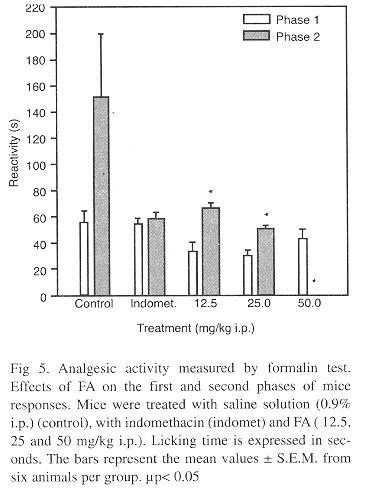
<P><FONT FACE="Arial,Helvetica"><FONT SIZE=-1><B>Rat paw edema:</B> The anti-edematogenic properties of the fractions were studied using the carrageenan-induced edema model. Groups of six rats were used. Animals were given a saline solution, indomethacin (10 mg/kg intraperitoneally) or a dose of a selected fraction, 1 h before administration of an intradermal injection of carrageenan (0.1 ml of a 1% solution in 0.9% saline solution) into the plantar region of the right hind paw. The contralateral<B> </B>paw was injected with 0.1 ml saline solution. The group treated with the plant extract was injected with 500 mg/kg i.p. or an equivalent dose dissolved in normal saline solution, or an equivalent dose, according to the fraction used. The paw volume was measured before the injection and each hour after for a period of 6 h by means of volume displacement methods (<A HREF="#Winter">Winter <I>et al</I>. 1962</A>; <A HREF="#DiRosa">Di Rosa <I>et al</I>. 1971</A>). The difference between the left paw and the right paw volumes indicated the degree of inflammation. The average increase in paw volume of each group was calculated and compared with the control (saline) and the indomethacin<B> </B>groups.</FONT></FONT><FONT FACE="Arial,Helvetica"><FONT SIZE=-1></FONT></FONT>      <P><B><FONT FACE="Arial,Helvetica"><FONT SIZE=-1>Pleurisy induced by carrageenan<I>:</I></FONT></FONT></B><FONT FACE="Arial,Helvetica"><FONT SIZE=-1> Seven groups of six-animals were used. The rats of the control group were pretreated with the vehicle (0.9% saline solution i.m. or sc.). The experimental groups were pretreated with FA in 0.9% saline solution (25 and 50 mg/kg i.p and 50, 150 and 300 mg/kg s.c.). Thirty min later all animals received an intrapleural injection of 0.25 ml carrageenan (0.2% in saline solution) on the right intrapleural conty. The animals were anaesthetized 3 h later using ether and bled through the portal vein. The pleural exudate was collected and the pleural cavity washed with 1.0 ml saline containing heparin (10 IU/ ml) (<A HREF="#Vinegar73">Vinegar <I>et al</I>. 1973</A>). The number of migrating leukocytes in the exudate was determined with a Newbauer chamber.</FONT></FONT><FONT FACE="Arial,Helvetica"><FONT SIZE=-1></FONT></FONT>      <P><FONT FACE="Arial,Helvetica"><FONT SIZE=-1><B>Ear edema induced by topical croton oil:</B><I> </I>Three groups of six mice were used. One group was topically treated 1 h before, on the inner surface of the right ear with 20 ml of FA (100 mg/ml in acetone). Another group of mice was pretreated with 20 &micro;l of dexametasone (4 mg/ml in saline). The third group was pretreated with 20 &micro;l of saline solution. The left ears of all mice were treated with the corresponding solvents (<A HREF="#Schianterelli">Schiantarelli <I>et al.</I> 1982</A>).</FONT></FONT><FONT FACE="Arial,Helvetica"><FONT SIZE=-1></FONT></FONT>      <P><FONT FACE="Arial,Helvetica"><FONT SIZE=-1>Mice were treated then with 20 &micro;l of a fresh solution of croton oil (2.5% v/v in acetone) on the inner surface of their right ear. The left ears were treated with 20 &micro;l of acetone. After 3 h of the administration of croton oil, animals were killed by cervical dislocation and 6 mm circles of the ear tissue were collected and weighed. The results are expressed as the mean weight difference between tissue circles of croton treated ears, and acetone treated ears.</FONT></FONT><FONT FACE="Arial,Helvetica"><FONT SIZE=-1></FONT></FONT>      <P><FONT FACE="Arial,Helvetica"><FONT SIZE=-1><B>Tail-flick test:</B><I> </I>The antinociceptive effect was determined in mice using the tail-flick test by caloric focus. The responses were elicited every 30 min the hour before, and 2 h after treatment, with either the fraction under study or the vehicle. Four experimental groups were used. Mice treated with phentanyl (400 &micro;g/kg, s.c.) and saline solution were employed as controls. The experimental groups were treated with FA (25 and 50 mg/kg i.p.) (<A HREF="#Jansen">Jansen <I>et al</I>.1963</A>, <A HREF="#Riesteree">Riesterer and Jaques 1968</A>, <A HREF="#Emim">Emim <I>et al</I>. 1994</A>).</FONT></FONT><FONT FACE="Arial,Helvetica"><FONT SIZE=-1></FONT></FONT>      <P><B><FONT FACE="Arial,Helvetica"><FONT SIZE=-1>Abdominal contractions induced by acetic acid<I>:</I></FONT></FONT></B><FONT FACE="Arial,Helvetica"><FONT SIZE=-1><I> </I>Abdominal muscle contractions were induced by 1% acetic acid solution (0.1 ml /10 g, i.p.) in mice pretreated with saline solution or one of the test samples (<A HREF="#Koster">Koster <I>et al</I>. 1959</A>). The number of abdominal writhings was measured over 30 min at 5 min intervals, and animals treated with indomethacin (10 mg/kg, i.p.) were used as positive controls.</FONT></FONT><FONT FACE="Arial,Helvetica"><FONT SIZE=-1></FONT></FONT>      <P><B><FONT FACE="Arial,Helvetica"><FONT SIZE=-1>Formalin test<I>:</I></FONT></FONT></B><FONT FACE="Arial,Helvetica"><FONT SIZE=-1><I> </I>Five groups of six-animals were used. Each group of mice was treated with FA (12.5, 25 or 50 mg/kg i.p. in saline solution), saline solution (0.9% i.p.) or indomethacin (10 mg/kg i.p.). One hour after treatment all animals were injected with 20 &micro;l of a 1% formalin in saline solution into the plantar surface of the left hind paw. Licking time was measured over 30 min divided into two phases. The first phase was from time zero to five min after formalin injection and the second phase was from 20 min to 30 min after formalin injection.</FONT></FONT><FONT FACE="Arial,Helvetica"><FONT SIZE=-1></FONT></FONT>      <P><FONT FACE="Arial,Helvetica"><FONT SIZE=-1><B>Statistical analysis:</B><I> </I>The data are expressed as mean &plusmn; S.E.M. and the Student’s "t" test was used for comparison of the data of the control and standard groups. Probabilities of &lt; 0.05 were considered.</FONT></FONT>     ]]></body>
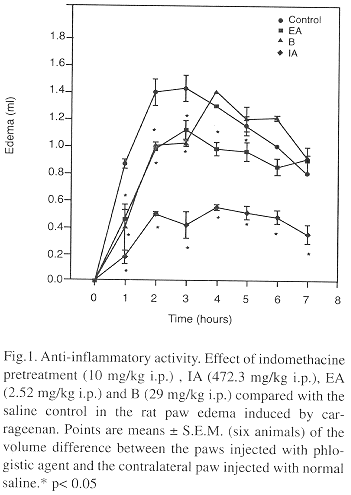
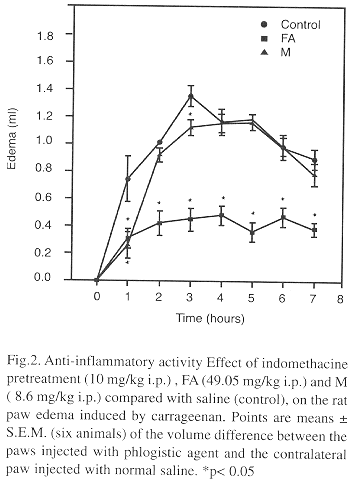
<body><![CDATA[<CENTER><FONT FACE="Arial,Helvetica"><FONT SIZE=-1>&nbsp;</FONT></FONT></CENTER>      <CENTER><FONT FACE="Arial,Helvetica"><FONT SIZE=-1>&nbsp;</FONT></FONT></CENTER> <B><FONT FACE="Arial,Helvetica"><FONT SIZE=-1>Results</FONT></FONT></B>     <CENTER><FONT FACE="Arial,Helvetica"><FONT SIZE=-1>&nbsp;</FONT></FONT></CENTER> <B><FONT FACE="Arial,Helvetica"><FONT SIZE=-1>Rat paw edema<I> </I>:</FONT></FONT></B><FONT FACE="Arial,Helvetica"><FONT SIZE=-1><I> </I>The intraplantar injection of the hind paw induced a progressive edema reaching its maximum at 3 h. Animals treated with IA (472.3 mg/kg i.p.) showed edema inhibition in all phases of experimental model and differing from the control group. Animals treated with B (29 mg/kg i.p.) and EA (2.52 mg/kg i.p.) showed edema inhibition only in the early phase; in later phases they were similar to the control group (<A HREF="#Fig. 1">Fig.1</A>). Subsequently IA was fractionated and animals treated with the fraction M (8.6 mg/kg i.p.), showed no effect. Fraction FA (49.05 mg/kg i.p.) reduced the paw edema in a significantly different manner from the control group (<A HREF="#Fig. 2">Fig. 2</A>). FA was then used for subsequent tests in order to elucidate its mechanism of action.</FONT></FONT>     <BR><FONT FACE="Arial,Helvetica"><FONT SIZE=-1>&nbsp;</FONT></FONT>     <BR><FONT FACE="Arial,Helvetica"><FONT SIZE=-1>&nbsp;</FONT></FONT>     <CENTER><A NAME="Fig. 1"></A><IMG SRC="/img/fbpe/rbt/v47n3/0543i01.GIF" HEIGHT=495 WIDTH=351></CENTER>      
<CENTER><FONT FACE="Arial,Helvetica"><FONT SIZE=-1>&nbsp;</FONT></FONT></CENTER>      <CENTER><FONT FACE="Arial,Helvetica"><FONT SIZE=-1>&nbsp;</FONT></FONT></CENTER>      <CENTER><FONT FACE="Arial,Helvetica"><FONT SIZE=-1>&nbsp;</FONT></FONT></CENTER>      <CENTER><A NAME="Fig. 2"></A><IMG SRC="/img/fbpe/rbt/v47n3/0543i02.GIF" HEIGHT=482 WIDTH=357></CENTER> <FONT FACE="Arial,Helvetica"><FONT SIZE=-1>&nbsp;</FONT></FONT>     
]]></body>
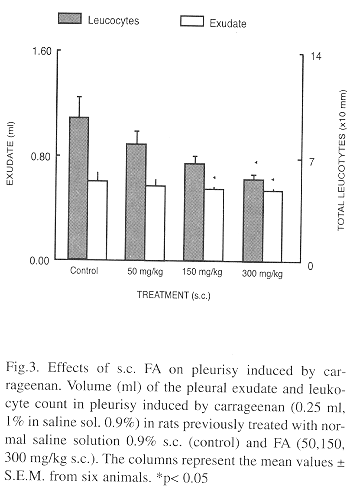
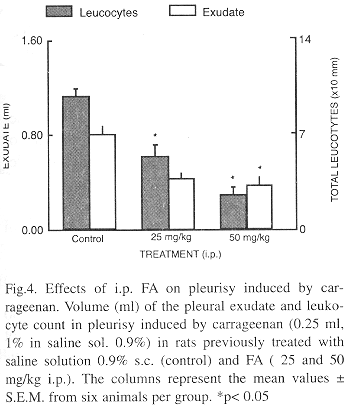
<body><![CDATA[<BR><FONT FACE="Arial,Helvetica"><FONT SIZE=-1>&nbsp;</FONT></FONT><FONT FACE="Arial,Helvetica"><FONT SIZE=-1></FONT></FONT>      <P><FONT FACE="Arial,Helvetica"><FONT SIZE=-1><B>Pleurisy induced by carrageenan:</B><I> </I>The volume of the pleural exudate in subcutaneously vehicle-treated rats was 0.60 &plusmn; 0.08 ml and the leukocyte count was (9.60 &plusmn; 1.34) x 10<SUP>6</SUP> /ml cells. The volume of the pleural exudate in intraperitoneal vehicle-treated rats was 0.80 &plusmn; 0.07 ml and the leukocyte count was (9.86 &plusmn; 0.59) x 10<SUP>6</SUP> /ml cells when an intraperitoneal route was used. Treatment with subcutaneous FA (50, 150 and 300 mg/kg) did not modify the exudate volume; only the leukocyte count was modified at doses of 150 and 300 mg/kg (6.50 &plusmn; 0.60 x 10<SUP>6</SUP> /ml and 5.46 &plusmn; 0.48 x 10<SUP>6</SUP> /ml respectively) (<A HREF="#Fig. 3">Fig.3</A>). Treatment with FA intraperitoneally (25 and 50 mg/kg) decreased both the pleural exudate (0.42&plusmn; 0.07 ml and 0.37 &plusmn; 0.07 ml respectively) and leukocyte migration [(5.34 &plusmn; 0.91) x 10<SUP>6</SUP> /ml and (2.50 &plusmn; 0.60)x 10<SUP>6</SUP> /ml respectively] (<A HREF="#Fig. 4">Fig.4</A>).</FONT></FONT>     <BR><FONT FACE="Arial,Helvetica"><FONT SIZE=-1>&nbsp;</FONT></FONT>     <BR><FONT FACE="Arial,Helvetica"><FONT SIZE=-1>&nbsp;</FONT></FONT>     <CENTER><A NAME="Fig. 3"></A><IMG SRC="/img/fbpe/rbt/v47n3/0543i03.GIF" HEIGHT=488 WIDTH=351></CENTER>      
<CENTER><FONT FACE="Arial,Helvetica"><FONT SIZE=-1>&nbsp;</FONT></FONT></CENTER>      <CENTER><FONT FACE="Arial,Helvetica"><FONT SIZE=-1>&nbsp;</FONT></FONT></CENTER>      <CENTER><FONT FACE="Arial,Helvetica"><FONT SIZE=-1>&nbsp;</FONT></FONT></CENTER>      <CENTER><A NAME="Fig. 4"></A><IMG SRC="/img/fbpe/rbt/v47n3/0543i04.GIF" HEIGHT=408 WIDTH=349></CENTER> <FONT FACE="Arial,Helvetica"><FONT SIZE=-1>&nbsp;</FONT></FONT><FONT FACE="Arial,Helvetica"><FONT SIZE=-1></FONT></FONT>      
<P><B><FONT FACE="Arial,Helvetica"><FONT SIZE=-1>Ear edema induced by topical croton oil:<I> </I></FONT></FONT></B><FONT FACE="Arial,Helvetica"><FONT SIZE=-1>The topical treatment with FA (20 &micro;l, 100 mg/ml) did not significantly reduce the auricular edema induced by topical croton oil (70.7 &plusmn; 13.4 mg). Dexamethasone (20 &micro;l, 4 mg/ml), (positive control) produced a significant reduction of the edema (30.8 &plusmn; 6.4 mg).</FONT></FONT><FONT FACE="Arial,Helvetica"><FONT SIZE=-1></FONT></FONT>      ]]></body>
<body><![CDATA[<P><FONT FACE="Arial,Helvetica"><FONT SIZE=-1><B>Tail flick test:</B><I> </I>Animals pretreated with fraction FA (25 and 50 mg/kg i.p.) did not show any response different from the control group. In the same conditions as above, phentanyl treated animals showed significantly increased reaction time as compared to the control group.</FONT></FONT><FONT FACE="Arial,Helvetica"><FONT SIZE=-1></FONT></FONT>      <P><FONT FACE="Arial,Helvetica"><FONT SIZE=-1><B>Formalin test:</B><I> </I>The response time of control mice in the first and second phases were 55.50 &plusmn; 9.07 s and 151.70 &plusmn; 48.40 s respectively. FA at low doses (12.5 mg/kg i.p.) inhibited only the second phase (66.60 &plusmn; 0.17 s); at medium doses (25 mg/kg i.p) inhibited the first and second phases (26.0 &plusmn; 4.80 s and 51.0 &plusmn; 2.2 s respectively) and at higher doses (50 mg/kg i.p.) totally inhibited the second phase. Indomethacin (10 mg/kg i.p.), positive control, only reduced the second phase (48.40 &plusmn; 5.22 s) (<A HREF="#Fig. 5">Fig.5</A>).</FONT></FONT>     <BR><FONT FACE="Arial,Helvetica"><FONT SIZE=-1>&nbsp;</FONT></FONT>     <BR><FONT FACE="Arial,Helvetica"><FONT SIZE=-1>&nbsp;</FONT></FONT>     <CENTER><A NAME="Fig. 5"></A><IMG SRC="/img/fbpe/rbt/v47n3/0543i05.GIF" HEIGHT=490 WIDTH=378></CENTER> <FONT FACE="Arial,Helvetica"><FONT SIZE=-1>&nbsp;</FONT></FONT><FONT FACE="Arial,Helvetica"><FONT SIZE=-1></FONT></FONT>      
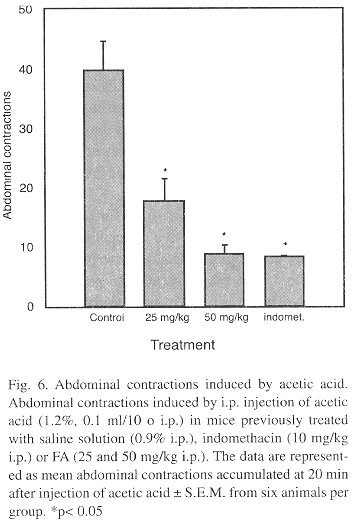
<P><FONT FACE="Arial,Helvetica"><FONT SIZE=-1><B>Abdominal contractions induced by acetic acid:</B><I> </I>Animals from the control group showed 39.9 &plusmn; 4.7 abdominal writhings accumulated at 30 min after acetic acid injection. Animals pretreated with FA (25 and 50 mg/kg i.p.) showed diminished writhings (17.8 &plusmn; 3.8 and 9.0 &plusmn; 1.4 respectively) in a dose-dependant manner. Animals treated with indomethacin (10 mg/kg i.p.) showed 8.5 &plusmn; 0.2 writhings in 30 min (<A HREF="#Fig. 6">Fig.6</A>).</FONT></FONT>     <BR><FONT FACE="Arial,Helvetica"><FONT SIZE=-1>&nbsp;</FONT></FONT>     <CENTER><A NAME="Fig. 6"></A><IMG SRC="/img/fbpe/rbt/v47n3/0543i06.GIF" HEIGHT=521 WIDTH=356></CENTER> <FONT FACE="Arial,Helvetica"><FONT SIZE=-1>&nbsp;</FONT></FONT>     
<CENTER><FONT FACE="Arial,Helvetica"><FONT SIZE=-1>&nbsp;</FONT></FONT></CENTER>      <CENTER><FONT FACE="Arial,Helvetica"><FONT SIZE=-1>&nbsp;</FONT></FONT></CENTER> <B><FONT FACE="Arial,Helvetica"><FONT SIZE=-1>Discussion</FONT></FONT></B>     ]]></body>
<body><![CDATA[<CENTER><FONT FACE="Arial,Helvetica"><FONT SIZE=-1>&nbsp;</FONT></FONT></CENTER> <FONT FACE="Arial,Helvetica"><FONT SIZE=-1>The most widely used primary test to screen new anti-inflammatory agents measures the ability of a compound to reduce local edema induced in the rat paw by injection of an irritant agent (<A HREF="#Winter">Winter <I>et al</I>. 1962</A>). This edema depends on the participation of kinins and polymorphonuclear leukocytes with their pro-inflammatory factors including prostaglandins (<A HREF="#Damas">Damas <I>et al</I>.1986</A>). The development of edema in the paw of the rat after the injection of carrageenan has been described by <A HREF="#Vinegar69">Vinegar <I>et al</I>. (1969)</A> as a biphasic event. The initial phase, observed around 1 h, is attributed to the release of histamine and serotonin (<A HREF="#Crunkhon">Crunkhon and Meacock 1971</A>); the second, accelerating, phase of swelling is due to the release of prostaglandin-like substances (<A HREF="#Vinegar69">Vinegar <I>et al</I>.1969</A>). It has been reported that the second phase of edema is sensitive to both clinically useful steroidal and non-steroidal anti-inflammatory agents (<A HREF="#Vinegar69">Vinegar <I>et al</I>.1969</A>, <A HREF="#DiRosa">Di Rosa <I>et al</I>.1971</A>)</FONT></FONT><FONT FACE="Arial,Helvetica"><FONT SIZE=-1></FONT></FONT>      <P><FONT FACE="Arial,Helvetica"><FONT SIZE=-1>The biodirected fractionation shows that the final aqueous fraction (FA), in this study and by the methods described, is the main responsible for the anti-inflammatory activity of the plant <I>Urera baccifera</I>. The significant activity observed in the suppression of the first and second phases of carrageenan-induced inflammation may due to inhibition of the release of the early mediators such as histamine, serotonin and kinins (<A HREF="#Winter">Winter <I>et al</I>.1962</A>). The action on the second phase may be explained by an inhibition of cyclooxigenase. According to <A HREF="#Seibert">Seibert <I>et al</I>. (1994)</A> it could be inferred that FA inhibits cyclooxigenase-2. There are not enough data in this work to make us assume that FA inhibits cyclooxigenase 1 as well.</FONT></FONT><FONT FACE="Arial,Helvetica"><FONT SIZE=-1></FONT></FONT>      <P><FONT FACE="Arial,Helvetica"><FONT SIZE=-1>There are two phases in the formalin test that have different nociceptive mechanisms. It has been suggested that the early phase is due to a direct effect on nociceptors and the prostaglandins do not play an important role during this phase (<A HREF="#Hunskaar">Hunskaar and Hole 1987</A>). The late phase seems to be an inflammatory response with pain that can be inhibited by anti-inflammatory drugs (<A HREF="#Hunskaar">Hunskaar and Hole 1987</A>). Despite this, studies have indicated that the endogenous opiod-peptidergic and serotoninergic systems modulate the early and late phases differently (<A HREF="#Fasmer">Fasmer <I>et al</I>.1985</A>). Central analgesics are known to inhibit the two phases; in contrast, the non-steroidal anti-inflammatory drugs, like indomethacin, inhibit only the late phase (<A HREF="#Hunskaar">Hunskaar and Hole 1987</A>). The FA fraction is endowed with peripheral analgesic activity which could be related to an inhibition of cicloxygenase.</FONT></FONT><FONT FACE="Arial,Helvetica"><FONT SIZE=-1></FONT></FONT>      <P><FONT FACE="Arial,Helvetica"><FONT SIZE=-1>The tests done with the purified FA fraction showed that it behaves as an inhibitor of leukocyte migration and pleural exudate under both subcutaneous and intraperitoneal administration as occurs with some non-steroidal analgesic anti-inflammatory drugs (<A HREF="#Mikami">Mikami and Miyasaka 1983</A>).</FONT></FONT><FONT FACE="Arial,Helvetica"><FONT SIZE=-1></FONT></FONT>      <P><FONT FACE="Arial,Helvetica"><FONT SIZE=-1>The results also showed that the analgesic and anti-inflammatory activities of the FA fraction are dose-dependant at a range of 25 to 100 mg/kg intraperitoneally, and that it does not exhibit anti-inflammatory activity when topically administered.</FONT></FONT><FONT FACE="Arial,Helvetica"><FONT SIZE=-1></FONT></FONT>      <P><FONT FACE="Arial,Helvetica"><FONT SIZE=-1>Based on the results of this study, we came to the conclusion that the final aqueous fraction (FA) of <I>Urera baccifera</I> does have both anti-inflammatory and analgesic activities and have potential pharmaceutical and commercial interest. Studies to define the structure of the active principle are being pursued.</FONT></FONT>     <CENTER><FONT FACE="Arial,Helvetica"><FONT SIZE=-1>&nbsp;</FONT></FONT></CENTER>      <CENTER><FONT FACE="Arial,Helvetica"><FONT SIZE=-1>&nbsp;</FONT></FONT></CENTER> <B><FONT FACE="Arial,Helvetica"><FONT SIZE=-1>Acknowledgements</FONT></FONT></B>     <CENTER><FONT FACE="Arial,Helvetica"><FONT SIZE=-1>&nbsp;</FONT></FONT></CENTER> <FONT FACE="Arial,Helvetica"><FONT SIZE=-1>This study was carried out with financial support from Vicerrector&iacute;a de Investigaci&oacute;n Universidad de Costa Rica N 410-95-561, Consejo Nacional para Investigaciones Cient&iacute;ficas y Tecnol&oacute;gicas (CONICIT) FR 198-09 and Programa Iberoamericano de Ciencia y Tecnolog&iacute;a para el Desarrollo (CYTED).</FONT></FONT>     <BR><FONT FACE="Arial,Helvetica"><FONT SIZE=-1>&nbsp;</FONT></FONT>     ]]></body>
<body><![CDATA[<CENTER><FONT FACE="Arial,Helvetica"><FONT SIZE=-1>&nbsp;</FONT></FONT></CENTER> <B><FONT FACE="Arial,Helvetica"><FONT SIZE=-1>References</FONT></FONT></B><FONT FACE="Arial,Helvetica"><FONT SIZE=-1></FONT></FONT>      <!-- ref --><P><A NAME="Crunkhon"></A><FONT FACE="Arial,Helvetica"><FONT SIZE=-1>Crunkhon,P. &amp; S.E.R. Meacock. 1971. Mediators of the inflammation induced in the rat paw by carrageenan. Brit. J. Pharmacol. 42:392-402.</FONT></FONT><FONT FACE="Arial,Helvetica"><FONT SIZE=-1></FONT></FONT>    &nbsp;&nbsp;&nbsp;&nbsp;&nbsp;&nbsp;&nbsp;&nbsp;[&#160;<a href="javascript:void(0);" onclick="javascript: window.open('/scielo.php?script=sci_nlinks&ref=1306691&pid=S0034-7744199900030000800001&lng=','','width=640,height=500,resizable=yes,scrollbars=1,menubar=yes,');">Links</a>&#160;]<!-- end-ref --><!-- ref --><P><A NAME="Damas"></A><FONT FACE="Arial,Helvetica"><FONT SIZE=-1>Damas,J., G.Remacle-Volon &amp; E. Deflandre.1986. Further studies of the mechanism of counter irritation by turpentine. Arch. Pharmacol.332:196-200.</FONT></FONT><FONT FACE="Arial,Helvetica"><FONT SIZE=-1></FONT></FONT>    &nbsp;&nbsp;&nbsp;&nbsp;&nbsp;&nbsp;&nbsp;&nbsp;[&#160;<a href="javascript:void(0);" onclick="javascript: window.open('/scielo.php?script=sci_nlinks&ref=1306692&pid=S0034-7744199900030000800002&lng=','','width=640,height=500,resizable=yes,scrollbars=1,menubar=yes,');">Links</a>&#160;]<!-- end-ref --><!-- ref --><P><FONT FACE="Arial,Helvetica"><FONT SIZE=-1>Di&nbsp;<A NAME="DiRosa"></A>Rosa, M., P.J. Giroud &amp; D.A. Willoughby. 1971. Study of the mediators of acute inflammatory response induced in rats in different sites by carrageenan and turpine. J. Pathol<I>.</I> 101,15-29.</FONT></FONT><FONT FACE="Arial,Helvetica"><FONT SIZE=-1></FONT></FONT>    &nbsp;&nbsp;&nbsp;&nbsp;&nbsp;&nbsp;&nbsp;&nbsp;[&#160;<a href="javascript:void(0);" onclick="javascript: window.open('/scielo.php?script=sci_nlinks&ref=1306693&pid=S0034-7744199900030000800003&lng=','','width=640,height=500,resizable=yes,scrollbars=1,menubar=yes,');">Links</a>&#160;]<!-- end-ref --><!-- ref --><P><A NAME="Emim"></A><FONT FACE="Arial,Helvetica"><FONT SIZE=-1>Emim, J.A.S., R.B. Oliviera &amp; A.J. Lapa. 1994. Pharmacological evaluation of the anti-inflammatory activity of a citrus bioflavonoid, hesperidin, and the isoflavonoids, duartin and claussequinone, in rats and mice. J. Pharm. Pharmacol<I>.</I> 46:118-122.</FONT></FONT><FONT FACE="Arial,Helvetica"><FONT SIZE=-1></FONT></FONT>    &nbsp;&nbsp;&nbsp;&nbsp;&nbsp;&nbsp;&nbsp;&nbsp;[&#160;<a href="javascript:void(0);" onclick="javascript: window.open('/scielo.php?script=sci_nlinks&ref=1306694&pid=S0034-7744199900030000800004&lng=','','width=640,height=500,resizable=yes,scrollbars=1,menubar=yes,');">Links</a>&#160;]<!-- end-ref --><!-- ref --><P><A NAME="Fasmer"></A><FONT FACE="Arial,Helvetica"><FONT SIZE=-1>Fasmer, O.B., O.G. Berge &amp; K.Hole.1985. Changes in nociception after lesions of descending serotoninergic pathways induced with 5,6-dihydroxytryptamine. Different effects in the formalin and tail-flick tests. Neuropharmacology 24:729-734.</FONT></FONT><FONT FACE="Arial,Helvetica"><FONT SIZE=-1></FONT></FONT>    &nbsp;&nbsp;&nbsp;&nbsp;&nbsp;&nbsp;&nbsp;&nbsp;[&#160;<a href="javascript:void(0);" onclick="javascript: window.open('/scielo.php?script=sci_nlinks&ref=1306695&pid=S0034-7744199900030000800005&lng=','','width=640,height=500,resizable=yes,scrollbars=1,menubar=yes,');">Links</a>&#160;]<!-- end-ref --><!-- ref --><P><A NAME="Hoffman"></A><FONT FACE="Arial,Helvetica"><FONT SIZE=-1>Hoffman A., C. Farga, L. Lastra &amp; E. Veghazi. 1992. Plantas medicinales de uso com&uacute;n en Chile. A. Hoffman, Santiago. p 5.</FONT></FONT><FONT FACE="Arial,Helvetica"><FONT SIZE=-1></FONT></FONT>    &nbsp;&nbsp;&nbsp;&nbsp;&nbsp;&nbsp;&nbsp;&nbsp;[&#160;<a href="javascript:void(0);" onclick="javascript: window.open('/scielo.php?script=sci_nlinks&ref=1306696&pid=S0034-7744199900030000800006&lng=','','width=640,height=500,resizable=yes,scrollbars=1,menubar=yes,');">Links</a>&#160;]<!-- end-ref --><!-- ref --><P><A NAME="Hunskaar"></A><FONT FACE="Arial,Helvetica"><FONT SIZE=-1>Hunskaar, S. &amp; K. Hole. 1987. The formalin test in mice: dissociation between inflammatory and non-inflammatory pain. Pain 30:103-114.</FONT></FONT><FONT FACE="Arial,Helvetica"><FONT SIZE=-1></FONT></FONT>    &nbsp;&nbsp;&nbsp;&nbsp;&nbsp;&nbsp;&nbsp;&nbsp;[&#160;<a href="javascript:void(0);" onclick="javascript: window.open('/scielo.php?script=sci_nlinks&ref=1306697&pid=S0034-7744199900030000800007&lng=','','width=640,height=500,resizable=yes,scrollbars=1,menubar=yes,');">Links</a>&#160;]<!-- end-ref --><!-- ref --><P><A NAME="Jansen"></A><FONT FACE="Arial,Helvetica"><FONT SIZE=-1>Jansen P.S.J., C.J.E. Niemegeers &amp; G.H. Dong. 1963.The inhibitory effect of phentanyl and other morphine-like analgesics on the warm water induced tail withdrawal reflex in rats. Arzneim. Frosch. Drug Res. 25: 296-298.</FONT></FONT><FONT FACE="Arial,Helvetica"><FONT SIZE=-1></FONT></FONT>    &nbsp;&nbsp;&nbsp;&nbsp;&nbsp;&nbsp;&nbsp;&nbsp;[&#160;<a href="javascript:void(0);" onclick="javascript: window.open('/scielo.php?script=sci_nlinks&ref=1306698&pid=S0034-7744199900030000800008&lng=','','width=640,height=500,resizable=yes,scrollbars=1,menubar=yes,');">Links</a>&#160;]<!-- end-ref --><!-- ref --><P><A NAME="Koster"></A><FONT FACE="Arial,Helvetica"><FONT SIZE=-1>Koster R., M. Anderson &amp; E.J. De Beer. 1959. Acetic acid for analgesic screening Fed. Proc. 18: 412-413.</FONT></FONT><FONT FACE="Arial,Helvetica"><FONT SIZE=-1></FONT></FONT>    &nbsp;&nbsp;&nbsp;&nbsp;&nbsp;&nbsp;&nbsp;&nbsp;[&#160;<a href="javascript:void(0);" onclick="javascript: window.open('/scielo.php?script=sci_nlinks&ref=1306699&pid=S0034-7744199900030000800009&lng=','','width=640,height=500,resizable=yes,scrollbars=1,menubar=yes,');">Links</a>&#160;]<!-- end-ref --><!-- ref --><P><A NAME="Mikami"></A><FONT FACE="Arial,Helvetica"><FONT SIZE=-1>Mikami T. &amp; K. Miyasaka. 1983. Effects of several anti-inflammatory drugs on the various parameters involved in the inflammatory response in rat carrageenan-induced pleurisy. Europe. J. Pharmacol. 95:1-12.</FONT></FONT><FONT FACE="Arial,Helvetica"><FONT SIZE=-1></FONT></FONT>    &nbsp;&nbsp;&nbsp;&nbsp;&nbsp;&nbsp;&nbsp;&nbsp;[&#160;<a href="javascript:void(0);" onclick="javascript: window.open('/scielo.php?script=sci_nlinks&ref=1306700&pid=S0034-7744199900030000800010&lng=','','width=640,height=500,resizable=yes,scrollbars=1,menubar=yes,');">Links</a>&#160;]<!-- end-ref --><!-- ref --><P><A NAME="Morton"></A><FONT FACE="Arial,Helvetica"><FONT SIZE=-1>Morton J. 1981. Atlas of Medicinal Plants of Middle America. Charles Thomas , New York. p 154.</FONT></FONT><FONT FACE="Arial,Helvetica"><FONT SIZE=-1></FONT></FONT>    &nbsp;&nbsp;&nbsp;&nbsp;&nbsp;&nbsp;&nbsp;&nbsp;[&#160;<a href="javascript:void(0);" onclick="javascript: window.open('/scielo.php?script=sci_nlinks&ref=1306701&pid=S0034-7744199900030000800011&lng=','','width=640,height=500,resizable=yes,scrollbars=1,menubar=yes,');">Links</a>&#160;]<!-- end-ref --><!-- ref --><P><A NAME="Riesteree"></A><FONT FACE="Arial,Helvetica"><FONT SIZE=-1>Riesteree L.&amp; R. Jaques. 1968. Anti-inflammatory action of benzylglucofuranoside applied topically. Experimentia 24: 581-582.</FONT></FONT><FONT FACE="Arial,Helvetica"><FONT SIZE=-1></FONT></FONT>    &nbsp;&nbsp;&nbsp;&nbsp;&nbsp;&nbsp;&nbsp;&nbsp;[&#160;<a href="javascript:void(0);" onclick="javascript: window.open('/scielo.php?script=sci_nlinks&ref=1306702&pid=S0034-7744199900030000800012&lng=','','width=640,height=500,resizable=yes,scrollbars=1,menubar=yes,');">Links</a>&#160;]<!-- end-ref --><!-- ref --><P><A NAME="Schianterelli"></A><FONT FACE="Arial,Helvetica"><FONT SIZE=-1>Schianterelli P., S. Dacel, D. Acerbi &amp; L. Pavesi. 1982. Anti-inflammatory activity for percutaneous piroxicam Arzneim. Forsch. Drug Res.32: 230-235.</FONT></FONT><FONT FACE="Arial,Helvetica"><FONT SIZE=-1></FONT></FONT>    &nbsp;&nbsp;&nbsp;&nbsp;&nbsp;&nbsp;&nbsp;&nbsp;[&#160;<a href="javascript:void(0);" onclick="javascript: window.open('/scielo.php?script=sci_nlinks&ref=1306703&pid=S0034-7744199900030000800013&lng=','','width=640,height=500,resizable=yes,scrollbars=1,menubar=yes,');">Links</a>&#160;]<!-- end-ref --><!-- ref --><P><A NAME="Seibert"></A><FONT FACE="Arial,Helvetica"><FONT SIZE=-1>Seibert K., Y. Zhang, K. Leahy, S. Hauser, J. Masferrer, W. Perkins, L. Lee &amp; P. Isakson. 1994. Pharmacological and biochemical demonstration of the role of cyclooxigenase 2 in inflammation and pain<I>. </I>Proc. Natur. Acad. Scie<I>. </I>91 :12013-12017<I>.</I></FONT></FONT><FONT FACE="Arial,Helvetica"><FONT SIZE=-1></FONT></FONT>    &nbsp;&nbsp;&nbsp;&nbsp;&nbsp;&nbsp;&nbsp;&nbsp;[&#160;<a href="javascript:void(0);" onclick="javascript: window.open('/scielo.php?script=sci_nlinks&ref=1306704&pid=S0034-7744199900030000800014&lng=','','width=640,height=500,resizable=yes,scrollbars=1,menubar=yes,');">Links</a>&#160;]<!-- end-ref --><!-- ref --><P><A NAME="Vinegar73"></A><FONT FACE="Arial,Helvetica"><FONT SIZE=-1>Vinegar R., J F. Truax &amp; J.L. Selph.1973. Some quantitative temporal characteristics of carrageenan-induced pleurisy in the rat. Proc. Soc. Exp. Biol. Med. 143:711-714.</FONT></FONT><FONT FACE="Arial,Helvetica"><FONT SIZE=-1></FONT></FONT>    &nbsp;&nbsp;&nbsp;&nbsp;&nbsp;&nbsp;&nbsp;&nbsp;[&#160;<a href="javascript:void(0);" onclick="javascript: window.open('/scielo.php?script=sci_nlinks&ref=1306705&pid=S0034-7744199900030000800015&lng=','','width=640,height=500,resizable=yes,scrollbars=1,menubar=yes,');">Links</a>&#160;]<!-- end-ref --><!-- ref --><P><A NAME="Vinegar69"></A><FONT FACE="Arial,Helvetica"><FONT SIZE=-1>Vinegar, R.,W. Scheirber &amp; R. Hugo. 1969. Biphasic development of carrageenan edema in rats. J. Pharmacol. Exp.Ther.150: 328-334.</FONT></FONT><FONT FACE="Arial,Helvetica"><FONT SIZE=-1></FONT></FONT>    &nbsp;&nbsp;&nbsp;&nbsp;&nbsp;&nbsp;&nbsp;&nbsp;[&#160;<a href="javascript:void(0);" onclick="javascript: window.open('/scielo.php?script=sci_nlinks&ref=1306706&pid=S0034-7744199900030000800016&lng=','','width=640,height=500,resizable=yes,scrollbars=1,menubar=yes,');">Links</a>&#160;]<!-- end-ref --><!-- ref --><P><A NAME="Winter"></A><FONT FACE="Arial,Helvetica"><FONT SIZE=-1>Winter, C.A., E.A Risley &amp; G.W. Nuss. 1962. Carrageenan-induced edema in hind paw of the rat as an assay for anti-inflammatory drugs. Proc. Soc. Exp. Biol. Med. 111: 544-547.</FONT></FONT>    &nbsp;&nbsp;&nbsp;&nbsp;&nbsp;&nbsp;&nbsp;&nbsp;[&#160;<a href="javascript:void(0);" onclick="javascript: window.open('/scielo.php?script=sci_nlinks&ref=1306707&pid=S0034-7744199900030000800017&lng=','','width=640,height=500,resizable=yes,scrollbars=1,menubar=yes,');">Links</a>&#160;]<!-- end-ref --><BR><FONT FACE="Arial,Helvetica"><FONT SIZE=-1></FONT></FONT>&nbsp;<FONT FACE="Arial,Helvetica"><FONT SIZE=-1></FONT></FONT>     <CENTER><B><FONT FACE="Arial,Helvetica"><FONT SIZE=-1>&nbsp;</FONT></FONT></B></CENTER> <A NAME="1"></A><FONT FACE="Arial,Helvetica"><FONT SIZE=-1><A HREF="#1a">1</A> Instituto de Investigaci&oacute;n en Ciencias Farmac&eacute;uticas (INIFAR), Facultad de Farmacia.Universidad de Costa Rica. 2060 San Jos&eacute;, Costa Rica. Fax (506) 225-35-74. E-mail: <U><FONT COLOR="#0000FF"><A HREF="mailto:bbadilla@cariari.ucr.ac.cr">bbadilla@cariari.ucr.ac.cr</A></FONT></U></FONT></FONT>     ]]></body>
<body><![CDATA[<BR><FONT FACE="Arial,Helvetica"><FONT SIZE=-1>&nbsp;</FONT></FONT>     <BR><A NAME="2"></A><FONT FACE="Arial,Helvetica"><FONT SIZE=-1><A HREF="#1a">2</A> Centro de Investigaci&oacute;n en Productos Naturales (CIPRONA) y Facultad de Farmacia Universidad de Costa Rica. E-mail: <FONT COLOR="#000000"><A HREF="mailto:gamora@cariari.ucr.ac.cr">gamora@cariari.ucr.ac.cr</A></FONT></FONT></FONT>     <BR><FONT FACE="Arial,Helvetica"><FONT SIZE=-1>&nbsp;</FONT></FONT>     <BR><A NAME="3"></A><FONT FACE="Arial,Helvetica"><FONT SIZE=-1><A HREF="#1a">3</A> Instituto Nacional de Farmacolog&iacute;a (INFAR), Escola Paulista de Medicina, UNIFESP, Sao Paulo, Brasil.</FONT></FONT>      ]]></body><back>
<ref-list>
<ref id="B1">
<nlm-citation citation-type="journal">
<person-group person-group-type="author">
<name>
<surname><![CDATA[Crunkhon]]></surname>
<given-names><![CDATA[P.]]></given-names>
</name>
<name>
<surname><![CDATA[Meacock]]></surname>
<given-names><![CDATA[S.E.R.]]></given-names>
</name>
</person-group>
<article-title xml:lang="en"><![CDATA[Mediators of the inflammation induced in the rat paw by carrageenan]]></article-title>
<source><![CDATA[Brit. J. Pharmacol.]]></source>
<year>1971</year>
<volume>42</volume>
<page-range>392-402</page-range></nlm-citation>
</ref>
<ref id="B2">
<nlm-citation citation-type="journal">
<person-group person-group-type="author">
<name>
<surname><![CDATA[Damas]]></surname>
<given-names><![CDATA[J.]]></given-names>
</name>
<name>
<surname><![CDATA[Remacle-Volon]]></surname>
<given-names><![CDATA[G.]]></given-names>
</name>
<name>
<surname><![CDATA[Deflandre]]></surname>
<given-names><![CDATA[E.]]></given-names>
</name>
</person-group>
<article-title xml:lang="en"><![CDATA[Further studies of the mechanism of counter irritation by turpentine]]></article-title>
<source><![CDATA[Arch. Pharmacol.]]></source>
<year>1986</year>
<volume>332</volume>
<page-range>196-200</page-range></nlm-citation>
</ref>
<ref id="B3">
<nlm-citation citation-type="journal">
<person-group person-group-type="author">
<name>
<surname><![CDATA[Di Rosa]]></surname>
<given-names><![CDATA[M.]]></given-names>
</name>
<name>
<surname><![CDATA[Giroud]]></surname>
<given-names><![CDATA[P.J.]]></given-names>
</name>
<name>
<surname><![CDATA[Willoughby]]></surname>
<given-names><![CDATA[D.A.]]></given-names>
</name>
</person-group>
<article-title xml:lang="en"><![CDATA[Study of the mediators of acute inflammatory response induced in rats in different sites by carrageenan and turpine]]></article-title>
<source><![CDATA[J. Pathol.]]></source>
<year>1971</year>
<volume>101</volume>
<page-range>15-29</page-range></nlm-citation>
</ref>
<ref id="B4">
<nlm-citation citation-type="journal">
<person-group person-group-type="author">
<name>
<surname><![CDATA[Emim]]></surname>
<given-names><![CDATA[J.A.S.]]></given-names>
</name>
<name>
<surname><![CDATA[Oliviera]]></surname>
<given-names><![CDATA[R.B.]]></given-names>
</name>
<name>
<surname><![CDATA[Lapa]]></surname>
<given-names><![CDATA[A.J.]]></given-names>
</name>
</person-group>
<article-title xml:lang="en"><![CDATA[Pharmacological evaluation of the anti-inflammatory activity of a citrus bioflavonoid, hesperidin, and the isoflavonoids, duartin and claussequinone, in rats and mice]]></article-title>
<source><![CDATA[J. Pharm. Pharmacol.]]></source>
<year>1994</year>
<volume>46</volume>
<page-range>118-122</page-range></nlm-citation>
</ref>
<ref id="B5">
<nlm-citation citation-type="journal">
<person-group person-group-type="author">
<name>
<surname><![CDATA[Fasmer]]></surname>
<given-names><![CDATA[O.B.]]></given-names>
</name>
<name>
<surname><![CDATA[Berge]]></surname>
<given-names><![CDATA[O.G.]]></given-names>
</name>
<name>
<surname><![CDATA[Hole]]></surname>
<given-names><![CDATA[K.]]></given-names>
</name>
</person-group>
<article-title xml:lang="en"><![CDATA[Changes in nociception after lesions of descending serotoninergic pathways induced with 5,6-dihydroxytryptamine: Different effects in the formalin and tail-flick tests]]></article-title>
<source><![CDATA[Neuropharmacology]]></source>
<year>1985</year>
<volume>24</volume>
<page-range>729-734</page-range></nlm-citation>
</ref>
<ref id="B6">
<nlm-citation citation-type="book">
<person-group person-group-type="author">
<name>
<surname><![CDATA[Hoffman]]></surname>
<given-names><![CDATA[A.]]></given-names>
</name>
<name>
<surname><![CDATA[Farga]]></surname>
<given-names><![CDATA[C.]]></given-names>
</name>
<name>
<surname><![CDATA[Lastra]]></surname>
<given-names><![CDATA[L.]]></given-names>
</name>
<name>
<surname><![CDATA[Veghazi]]></surname>
<given-names><![CDATA[E.]]></given-names>
</name>
</person-group>
<source><![CDATA[Plantas medicinales de uso común en Chile]]></source>
<year>1992</year>
<page-range>5</page-range><publisher-name><![CDATA[A. Hoffman]]></publisher-name>
</nlm-citation>
</ref>
<ref id="B7">
<nlm-citation citation-type="journal">
<person-group person-group-type="author">
<name>
<surname><![CDATA[Hunskaar]]></surname>
<given-names><![CDATA[S.]]></given-names>
</name>
<name>
<surname><![CDATA[Hole]]></surname>
<given-names><![CDATA[K.]]></given-names>
</name>
</person-group>
<article-title xml:lang="en"><![CDATA[The formalin test in mice: dissociation between inflammatory and non-inflammatory pain]]></article-title>
<source><![CDATA[Pain]]></source>
<year>1987</year>
<volume>30</volume>
<page-range>103-114</page-range></nlm-citation>
</ref>
<ref id="B8">
<nlm-citation citation-type="journal">
<person-group person-group-type="author">
<name>
<surname><![CDATA[Jansen]]></surname>
<given-names><![CDATA[P.S.J.]]></given-names>
</name>
<name>
<surname><![CDATA[Niemegeers]]></surname>
<given-names><![CDATA[C.J.E.]]></given-names>
</name>
<name>
<surname><![CDATA[Dong]]></surname>
<given-names><![CDATA[G.H.]]></given-names>
</name>
</person-group>
<article-title xml:lang="en"><![CDATA[The inhibitory effect of phentanyl and other morphine-like analgesics on the warm water induced tail withdrawal reflex in rats]]></article-title>
<source><![CDATA[Arzneim. Frosch. Drug Res.]]></source>
<year>1963</year>
<volume>25</volume>
<page-range>296-298</page-range></nlm-citation>
</ref>
<ref id="B9">
<nlm-citation citation-type="journal">
<person-group person-group-type="author">
<name>
<surname><![CDATA[Koster]]></surname>
<given-names><![CDATA[R.]]></given-names>
</name>
<name>
<surname><![CDATA[Anderson]]></surname>
<given-names><![CDATA[M.]]></given-names>
</name>
<name>
<surname><![CDATA[De Beer]]></surname>
<given-names><![CDATA[E.J.]]></given-names>
</name>
</person-group>
<article-title xml:lang="en"><![CDATA[Acetic acid for analgesic screening]]></article-title>
<source><![CDATA[Fed. Proc.]]></source>
<year>1959</year>
<volume>18</volume>
<page-range>412-413</page-range></nlm-citation>
</ref>
<ref id="B10">
<nlm-citation citation-type="journal">
<person-group person-group-type="author">
<name>
<surname><![CDATA[Mikami]]></surname>
<given-names><![CDATA[T.]]></given-names>
</name>
<name>
<surname><![CDATA[Miyasaka]]></surname>
<given-names><![CDATA[K.]]></given-names>
</name>
</person-group>
<article-title xml:lang="en"><![CDATA[Effects of several anti-inflammatory drugs on the various parameters involved in the inflammatory response in rat carrageenan-induced pleurisy]]></article-title>
<source><![CDATA[Europe. J. Pharmacol.]]></source>
<year>1983</year>
<volume>95</volume>
<page-range>1-12</page-range></nlm-citation>
</ref>
<ref id="B11">
<nlm-citation citation-type="book">
<person-group person-group-type="author">
<name>
<surname><![CDATA[Morton]]></surname>
<given-names><![CDATA[J.]]></given-names>
</name>
</person-group>
<source><![CDATA[Atlas of Medicinal Plants of Middle America]]></source>
<year>1981</year>
<page-range>154</page-range><publisher-loc><![CDATA[New York ]]></publisher-loc>
<publisher-name><![CDATA[Charles Thomas]]></publisher-name>
</nlm-citation>
</ref>
<ref id="B12">
<nlm-citation citation-type="journal">
<person-group person-group-type="author">
<name>
<surname><![CDATA[Riesteree]]></surname>
<given-names><![CDATA[L.]]></given-names>
</name>
<name>
<surname><![CDATA[Jaques]]></surname>
<given-names><![CDATA[R.]]></given-names>
</name>
</person-group>
<article-title xml:lang="en"><![CDATA[Anti-inflammatory action of benzylglucofuranoside applied topically]]></article-title>
<source><![CDATA[Experimentia]]></source>
<year>1968</year>
<volume>24</volume>
<page-range>581-582</page-range></nlm-citation>
</ref>
<ref id="B13">
<nlm-citation citation-type="journal">
<person-group person-group-type="author">
<name>
<surname><![CDATA[Schianterelli]]></surname>
<given-names><![CDATA[P.]]></given-names>
</name>
<name>
<surname><![CDATA[Dacel]]></surname>
<given-names><![CDATA[S.]]></given-names>
</name>
<name>
<surname><![CDATA[Acerbi]]></surname>
<given-names><![CDATA[D.]]></given-names>
</name>
<name>
<surname><![CDATA[Pavesi]]></surname>
<given-names><![CDATA[L.]]></given-names>
</name>
</person-group>
<article-title xml:lang="en"><![CDATA[Anti-inflammatory activity for percutaneous piroxicam Arzneim. Forsch]]></article-title>
<source><![CDATA[Drug Res.]]></source>
<year>1982</year>
<volume>32</volume>
<page-range>230-235</page-range></nlm-citation>
</ref>
<ref id="B14">
<nlm-citation citation-type="journal">
<person-group person-group-type="author">
<name>
<surname><![CDATA[Seibert]]></surname>
<given-names><![CDATA[K.]]></given-names>
</name>
<name>
<surname><![CDATA[Zhang]]></surname>
<given-names><![CDATA[Y.]]></given-names>
</name>
<name>
<surname><![CDATA[Leahy]]></surname>
<given-names><![CDATA[K.]]></given-names>
</name>
<name>
<surname><![CDATA[Hauser]]></surname>
<given-names><![CDATA[S.]]></given-names>
</name>
<name>
<surname><![CDATA[Masferrer]]></surname>
<given-names><![CDATA[J.]]></given-names>
</name>
<name>
<surname><![CDATA[Perkins]]></surname>
<given-names><![CDATA[W.]]></given-names>
</name>
<name>
<surname><![CDATA[Lee]]></surname>
<given-names><![CDATA[L.]]></given-names>
</name>
<name>
<surname><![CDATA[Isakson]]></surname>
<given-names><![CDATA[P.]]></given-names>
</name>
</person-group>
<article-title xml:lang="en"><![CDATA[Pharmacological and biochemical demonstration of the role of cyclooxigenase 2 in inflammation and pain]]></article-title>
<source><![CDATA[Proc. Natur. Acad. Scie.]]></source>
<year>1994</year>
<volume>91</volume>
<page-range>12013-12017</page-range></nlm-citation>
</ref>
<ref id="B15">
<nlm-citation citation-type="journal">
<person-group person-group-type="author">
<name>
<surname><![CDATA[Vinegar]]></surname>
<given-names><![CDATA[R.]]></given-names>
</name>
<name>
<surname><![CDATA[Truax]]></surname>
<given-names><![CDATA[J F.]]></given-names>
</name>
<name>
<surname><![CDATA[Selph]]></surname>
<given-names><![CDATA[J.L.]]></given-names>
</name>
</person-group>
<article-title xml:lang="en"><![CDATA[Some quantitative temporal characteristics of carrageenan-induced pleurisy in the rat]]></article-title>
<source><![CDATA[Proc. Soc. Exp. Biol. Med.]]></source>
<year>1973</year>
<volume>143</volume>
<page-range>711-714</page-range></nlm-citation>
</ref>
<ref id="B16">
<nlm-citation citation-type="journal">
<person-group person-group-type="author">
<name>
<surname><![CDATA[Vinegar]]></surname>
<given-names><![CDATA[R.]]></given-names>
</name>
<name>
<surname><![CDATA[Scheirber]]></surname>
<given-names><![CDATA[W.]]></given-names>
</name>
<name>
<surname><![CDATA[Hugo]]></surname>
<given-names><![CDATA[R.]]></given-names>
</name>
</person-group>
<article-title xml:lang="en"><![CDATA[Biphasic development of carrageenan edema in rats]]></article-title>
<source><![CDATA[J. Pharmacol. Exp.Ther.]]></source>
<year>1969</year>
<volume>150</volume>
<page-range>328-334</page-range></nlm-citation>
</ref>
<ref id="B17">
<nlm-citation citation-type="journal">
<person-group person-group-type="author">
<name>
<surname><![CDATA[Winter]]></surname>
<given-names><![CDATA[C.A.]]></given-names>
</name>
<name>
<surname><![CDATA[Risley]]></surname>
<given-names><![CDATA[E.A]]></given-names>
</name>
<name>
<surname><![CDATA[Nuss]]></surname>
<given-names><![CDATA[G.W.]]></given-names>
</name>
</person-group>
<article-title xml:lang="en"><![CDATA[Carrageenan-induced edema in hind paw of the rat as an assay for anti-inflammatory drugs]]></article-title>
<source><![CDATA[Proc. Soc. Exp. Biol. Med.]]></source>
<year>1962</year>
<volume>111</volume>
<page-range>544-547</page-range></nlm-citation>
</ref>
</ref-list>
</back>
</article>