<?xml version="1.0" encoding="ISO-8859-1"?><article xmlns:mml="http://www.w3.org/1998/Math/MathML" xmlns:xlink="http://www.w3.org/1999/xlink" xmlns:xsi="http://www.w3.org/2001/XMLSchema-instance">
<front>
<journal-meta>
<journal-id>0034-7744</journal-id>
<journal-title><![CDATA[Revista de Biología Tropical]]></journal-title>
<abbrev-journal-title><![CDATA[Rev. biol. trop]]></abbrev-journal-title>
<issn>0034-7744</issn>
<publisher>
<publisher-name><![CDATA[Universidad de Costa Rica]]></publisher-name>
</publisher>
</journal-meta>
<article-meta>
<article-id>S0034-77441999000300005</article-id>
<title-group>
<article-title xml:lang="es"><![CDATA[Ritmo de crecimiento y longevidad de follaje del estrato arbustivo en la Reserva Biológica A. Brenes, Costa Rica]]></article-title>
</title-group>
<contrib-group>
<contrib contrib-type="author">
<name>
<surname><![CDATA[Freiberg]]></surname>
<given-names><![CDATA[Elke]]></given-names>
</name>
<xref ref-type="aff" rid="A01"/>
</contrib>
<contrib contrib-type="author">
<name>
<surname><![CDATA[Freiberg]]></surname>
<given-names><![CDATA[Martin]]></given-names>
</name>
<xref ref-type="aff" rid="A01"/>
</contrib>
</contrib-group>
<aff id="A01">
<institution><![CDATA[,Universidad de Ulm Departamento Spezielle Botanik ]]></institution>
<addr-line><![CDATA[ ]]></addr-line>
<country>República Federal de Alemania</country>
</aff>
<pub-date pub-type="pub">
<day>00</day>
<month>09</month>
<year>1999</year>
</pub-date>
<pub-date pub-type="epub">
<day>00</day>
<month>09</month>
<year>1999</year>
</pub-date>
<volume>47</volume>
<numero>3</numero>
<fpage>339</fpage>
<lpage>349</lpage>
<copyright-statement/>
<copyright-year/>
<self-uri xlink:href="http://www.scielo.sa.cr/scielo.php?script=sci_arttext&amp;pid=S0034-77441999000300005&amp;lng=en&amp;nrm=iso"></self-uri><self-uri xlink:href="http://www.scielo.sa.cr/scielo.php?script=sci_abstract&amp;pid=S0034-77441999000300005&amp;lng=en&amp;nrm=iso"></self-uri><self-uri xlink:href="http://www.scielo.sa.cr/scielo.php?script=sci_pdf&amp;pid=S0034-77441999000300005&amp;lng=en&amp;nrm=iso"></self-uri><abstract abstract-type="short" xml:lang="en"><p><![CDATA[During one and a half years (February 1991 - July 1992) the growth rhythm and the longevity of leaves of 22 abundant understory species in the tropical premontane rain forest of Reserva Biológica Alberto Ml. Brenes, Alajuela, Costa Rica, were investigated. Three types of growth rhythm were identified. Most species, especially the monocotyledones, produce new leaves in defined intervals throughout the year. Only some have a slower leaf production in the dry season. Other species sprout periodically or only once a year. This interval, which is the time period between the beginning of the shooting of one leaf and the next, varied among the investigated species between 17-22 days (Malvaviscus arboreus, Urera elata, Myriocarpa longipes) and more than half a year (Cyclanthus bipartitus, Iriartea deltoidea, Ocotea gomezii). For some species this interval was longer at dry and dark sites (M. arboreus), but in many cases microclimatical factors such as temperature, relative light intensity, and evaporation varied to such a small extent within the forest that the differences did not lead to significant influences on growth factors of the plants. The mean leaf longevity varied between a half and four years. The maximum leaf age of the palms Cryosophila warscewiczii, I. deltoidea and Calyptrogyne trichostachys was estimated to be more than five years. In some cases leaf age was significantly correlated with microclimatical factors. Leaves of Begonia cooperi growing at higher light intensities in gaps fell earlier than leaves of plants in darker sites in the understory. Generally, the longevity of leaves was lower in plants growing at moister sites, but in most cases this relation was not significant. The data show that even in a rather constant climate in the understory of a very moist premontane rain forest, there is some seasonality in growth rhythm and that plant growth varies between different sites within the forest although climate variations are very small.]]></p></abstract>
<abstract abstract-type="short" xml:lang="es"><p><![CDATA[Durante un año y medio se investigó el ritmo de crecimiento y la longevidad de follaje de 22 especies abundantes del estrato arbustivo en el bosque tropical premontano de la Reserva Biológica Alberto Ml. Brenes, Provincia Alajuela, San Ramón, Costa Rica. Se distinguieron y describieron tres tipos de brotación de las hojas. Una gran cantidad de las especies, especialmente las monocotiledóneas, brotan hojas nuevas en intervalos determinados contínuamente durante todo el año, en efecto parte de las plantas muestran una producción de hojas más lenta en la estación seca. Esta frecuencia de brotación, es decir el intervalo entre el desarrollo de dos hojas siguientes, varía entre las especies investigadas entre 17-22 días y más de medio año. La longevidad de follaje promedio de las plantas investigadas varía entre medio y cuatro años. Se estimó que la edad máxima de hojas de las palmas Cryosophila warscewiczii, Iriartea deltoidea y Calyptrogyne trichostachys es más de cinco años. Generalmente, en sitios más secos y más oscuros, la frecuencia de brotación fue más larga y la longevidad de follaje más alta. Esta relación fue significante en algunos casos, pero muestra que aunque las diferencias microclimáticas son muy pequeñas, el crecimiento varía entre diferentes sitios en el bosque. Además, los datos muestran que aunque el clima en el sotobosque premontano muy húmedo es relativamente constante, algunas especies muestran una estacionalidad del ritmo de crecimiento.]]></p></abstract>
<kwd-group>
<kwd lng="en"><![CDATA[Costa Rica]]></kwd>
<kwd lng="en"><![CDATA[growth rhythm]]></kwd>
<kwd lng="en"><![CDATA[longevity of leaves]]></kwd>
<kwd lng="en"><![CDATA[microclimate]]></kwd>
<kwd lng="en"><![CDATA[phenology]]></kwd>
<kwd lng="en"><![CDATA[seasonality]]></kwd>
<kwd lng="en"><![CDATA[tropical premontane rain forest]]></kwd>
<kwd lng="en"><![CDATA[understory]]></kwd>
</kwd-group>
</article-meta>
</front><body><![CDATA[ <CENTER><B><FONT FACE="Arial,Helvetica">Ritmo de crecimiento y longevidad de follaje del estrato arbustivo en la</FONT></B></CENTER>      <CENTER><B><FONT FACE="Arial,Helvetica">Reserva Biol&oacute;gica A. Brenes, Costa Rica</FONT></B></CENTER>       <P><FONT FACE="Arial,Helvetica">&nbsp;</FONT>     <CENTER><B><FONT FACE="Arial,Helvetica"><FONT SIZE=-1>Elke Freiberg y Martin Freiberg&nbsp;<A NAME="1a"></A></FONT><SUP><FONT SIZE=-2><A HREF="#1b">1</A></FONT></SUP></FONT><FONT SIZE=-1></FONT></B></CENTER>      <CENTER><B><FONT SIZE=-1></FONT></B>&nbsp;</CENTER> <FONT SIZE=-1></FONT>      <P><FONT SIZE=-1>&nbsp;</FONT>     <CENTER><FONT FACE="Arial,Helvetica"><FONT SIZE=-1>Recibido 3-VI-1998. Corregido 11-I-1999. Aceptado 2-II-1999.</FONT></FONT></CENTER> <FONT SIZE=-1></FONT>      <P><FONT SIZE=-1><FONT FACE="Arial,Helvetica">&nbsp;</FONT></FONT>     <BR><B><FONT FACE="Arial,Helvetica"><FONT SIZE=-1>Abstract</FONT></FONT></B><FONT FACE="Arial,Helvetica"><FONT SIZE=-1></FONT></FONT>      <P><FONT SIZE=-1><FONT FACE="Arial,Helvetica">During one and a half years (February 1991 - July 1992) the growth rhythm and the longevity of leaves of 22 abundant understory species in the tropical premontane rain forest of Reserva Biol&oacute;gica Alberto Ml. Brenes, Alajuela, Costa Rica, were investigated. Three types of growth rhythm were identified. Most species, especially the monocotyledones, produce new leaves in defined intervals throughout the year. Only some have a slower leaf production in the dry season. Other species sprout periodically or only once a year. This interval, which is the time period between the beginning of the shooting of one leaf and the next, varied among the investigated species between 17-22 days (<I>Malvaviscus</I> <I>arboreus</I>, <I>Urera</I> <I>elata</I>, <I>Myriocarpa</I> <I>longipes</I>) and more than half a year (<I>Cyclanthus</I> <I>bipartitus</I>, <I>Iriartea</I> <I>deltoidea</I>, <I>Ocotea</I> <I>gomezii</I>). For some species this interval was longer at dry and dark sites (<I>M. arboreus</I>), but in many cases microclimatical factors such as temperature, relative light intensity, and evaporation varied to such a small extent within the forest that the differences did not lead to significant influences on growth factors of the plants. The mean leaf longevity varied between a half and four years. The maximum leaf age of the palms <I>Cryosophila warscewiczii</I>, <I>I. deltoidea</I> and <I>Calyptrogyne</I> <I>trichostachys</I> was estimated to be more than five years. In some cases leaf age was significantly correlated with microclimatical factors. Leaves of <I>Begonia cooperi</I> growing at higher light intensities in gaps fell earlier than leaves of plants in darker sites in the understory. Generally, the longevity of leaves was lower in plants growing at moister sites, but in most cases this relation was not significant. The data show that even in a rather constant climate in the understory of a very moist premontane rain forest, there is some seasonality in growth rhythm and that plant growth varies between different sites within the forest although climate variations are very small.</FONT></FONT><FONT SIZE=-1></FONT>      ]]></body>
<body><![CDATA[<P><B><FONT FACE="Arial,Helvetica"><FONT SIZE=-1>Key words</FONT></FONT></B><FONT FACE="Arial,Helvetica"><FONT SIZE=-1></FONT></FONT>      <P><FONT SIZE=-1><FONT FACE="Arial,Helvetica">Costa Rica, growth rhythm, longevity of leaves, microclimate, phenology, seasonality, tropical premontane rain forest, understory.</FONT></FONT>     <BR><FONT SIZE=-1></FONT>&nbsp;<FONT SIZE=-1></FONT>      <P><FONT SIZE=-1><FONT FACE="Arial,Helvetica">En los bosques templados el fr&iacute;o en invierno causa la abscisi&oacute;n de las hojas, mientras que en los bosques tropicales el ritmo de precipitaci&oacute;n tiene m&aacute;s importancia. El aspecto de bosques tropicales muy h&uacute;medos es perennifolia. Pero, aunque el clima es casi constante durante todo el a&ntilde;o, ciertas especies muestran un ritmo anual de fenolog&iacute;a (Medway, citado en <A HREF="#Whitmore">Whitmore 1993</A>, p. 73). Por ejemplo, en la estaci&oacute;n cient&iacute;fica "La Selva", Costa Rica, muchos &aacute;rboles brotan hojas nuevas al principio de la estaci&oacute;n seca, poco despu&eacute;s de la abscisi&oacute;n de todas las hojas viejas (<A HREF="#Frankie">Frankie <I>et al.</I> 1974</A>). All&aacute;, se distinguen tres tipos de brotaci&oacute;n (<A HREF="#Frankie">Frankie <I>et al.</I> 1974</A>):</FONT></FONT><FONT SIZE=-1></FONT>      <P><FONT SIZE=-1><FONT FACE="Arial,Helvetica">I: especies que producen hojas nuevas cont&iacute;nuamente y que no muestran una &eacute;poca distinta de abscisi&oacute;n (26% de las especies del dosel, 37% de las especies del estrato arbustivo),</FONT></FONT><FONT SIZE=-1></FONT>      <P><FONT SIZE=-1><FONT FACE="Arial,Helvetica">II: especies que cambian entre la producci&oacute;n de muchas, pocas o ninguna hojas y que no muestran una &eacute;poca distinta de abscisi&oacute;n o una &eacute;poca sin hojas (37%, 44%),</FONT></FONT><FONT SIZE=-1></FONT>      <P><FONT SIZE=-1><FONT FACE="Arial,Helvetica">III: y especies con &eacute;pocas distintas de brotaci&oacute;n y abscisi&oacute;n (25%, 7%).</FONT></FONT><FONT SIZE=-1></FONT>      <P><FONT SIZE=-1><FONT FACE="Arial,Helvetica">En bosques tropicales con una estaci&oacute;n seca m&aacute;s distintiva que en "La Selva", como en la Isla Barro Colorado, Panam&aacute;, una gran cantidad de &aacute;rboles son caducifolios y botan todas las hojas al principio de la estaci&oacute;n seca y no tienen hojas antes de las primeras lluvias (<A HREF="#Leigh">Leigh y Windsor 1982</A>). Otros &aacute;rboles del mismo bosque son perennifolios o cambian las hojas muy irregularmente e imprevisiblemente, como <I>Ceiba pentandra</I>. Un cambio peri&oacute;dico de hojas se observa especialmente en el dosel, mientras que las plantas del estrato arbustivo son perennifolios (<A HREF="#Richards">Richards 1966</A>).</FONT></FONT><FONT SIZE=-1></FONT>      <P><FONT SIZE=-1><FONT FACE="Arial,Helvetica">En bosques tropicales secos, como en Guanacaste, Costa Rica, la mayor&iacute;a de los &aacute;rboles son caducifolios y pierden sus hojas cada a&ntilde;o durante la estaci&oacute;n seca para reducir la evaporaci&oacute;n (<A HREF="#Frankie">Frankie <I>et al.</I> 1974</A>, <A HREF="#Reich">Reich y Borchert 1984</A>). Plantas que crecen en sitios m&aacute;s h&uacute;medos cerca de r&iacute;os en el mismo bosque se permanecen verdes o el per&iacute;odo defoliado es m&aacute;s corto (<A HREF="#Frankie">Frankie <I>et al.</I> 1974</A>, <A HREF="#Janzen">Janzen 1975</A>, <A HREF="#Reich">Reich y Borchert 1984</A>). Adem&aacute;s, ciertas especies cambian su h&aacute;bito a diferentes altitudes en Costa Rica (<A HREF="#Borchert">Borchert 1983</A>). En sitios m&aacute;s altos la intensidad de la sequ&iacute;a disminuye y especies como <I>Erythrina</I> <I>poeppingiana</I> y <I>Tabebuia</I> <I>rosea</I> cambian de un aspecto caducifolio a un aspecto perennifolio. Mientras que <I>T.</I> <I>rosea</I> se queda sin hojas durante varias semanas en Guanacaste, en alturas m&aacute;s altas &aacute;rboles de la misma especie tienen hojas nuevas al mismo tiempo que botan las hojas viejas (<A HREF="#Borchert">Borchert 1983</A>).</FONT></FONT><FONT SIZE=-1></FONT>      <P><FONT SIZE=-1><FONT FACE="Arial,Helvetica">Otros factores clim&aacute;ticos como temperatura, viento y factores ed&aacute;ficos pueden influir en la producci&oacute;n y ca&iacute;da de las hojas (<A HREF="#Addicott">Addicott y Lyon 1973</A>, citado en <A HREF="#Bentley">Bentley 1979</A>).</FONT></FONT><FONT SIZE=-1></FONT>      ]]></body>
<body><![CDATA[<P><FONT SIZE=-1><FONT FACE="Arial,Helvetica">La longevidad de las hojas var&iacute;a mucho (<A HREF="#Chabot">Chabot y Hicks 1982</A>). Las hojas de ef&iacute;meros viven solamente pocas semanas, mientras que las hojas de una <I>Araucaria</I> pueden vivir por 25 a&ntilde;os. Las hojas de <I>Welwitschia mirabilis</I> crecen durante toda la vida de la planta. Mientras que una gran cantidad de los &aacute;rboles en los bosques tropicales cambian sus hojas por lo menos una vez cada a&ntilde;o, la edad promedio de las hojas en el estrato arbustivo en el Parque Nacional Braulio Carillo, Costa Rica, var&iacute;a entre 14-15 meses y 5-6 a&ntilde;os (<A HREF="#Lücking94">R. L&uuml;cking 1994</A>, <A HREF="#Lücking95">A. L&uuml;cking 1995</A>). Un factor que puede influir en la longevidad de follaje es la luz (<A HREF="#Bentley">Bentley 1979</A>). En la Isla Barro Colorado, Panam&aacute;, la edad promedio de hojas de especies t&iacute;picas de sombra es tres veces m&aacute;s alta (21.7 meses) que la edad de las hojas de especies de claros (6.8 meses) (<A HREF="#Coley88">Coley 1988</A>).</FONT></FONT><FONT SIZE=-1></FONT>      <P><FONT SIZE=-1><FONT FACE="Arial,Helvetica">Adem&aacute;s, el m&eacute;todo de defenderse de los herb&iacute;voros puede influir en la longevidad de las hojas (<A HREF="#Coley88">Coley 1988</A>). Plantas con hojas longevas producen sustancias de defensa de peso molecular grande, como taninos y ligninas. Las hojas producen estas sustancias solamente una vez, y as&iacute; tienen gastos solamente al principio de su vida. Plantas con hojas de vida corta producen sustancias de menor peso molecular, como alcaloides y monoterpenos, los cuales se sintetizan cont&iacute;nuamente (<A HREF="#Coley88">Coley 1988</A>).</FONT></FONT><FONT SIZE=-1></FONT>      <P><FONT SIZE=-1><FONT FACE="Arial,Helvetica">El objetivo de este estudio es analizar el ritmo de defoliaci&oacute;n y brotaci&oacute;n y determinar la longevidad de follaje de diferentes plantas en el estrato arbustivo en la Reserva Biol&oacute;gica Alberto Ml. Brenes, San Ram&oacute;n, Costa Rica. Adem&aacute;s, se quer&iacute;a verificar la existencia y el efecto del clima sobre la fenolog&iacute;a de las plantas en un bosque h&uacute;medo premontano. El conocimiento de la fenolog&iacute;a tiene importancia para investigaciones sobre los organismos en la fil&oacute;sfera (<A HREF="#E.Freiberg98">E. Freiberg 1998</A>) o sobre los ciclos de minerales.</FONT></FONT>     <BR><FONT SIZE=-1>&nbsp;</FONT>     <BR><FONT SIZE=-1>&nbsp;</FONT>     <BR><B><FONT FACE="Arial,Helvetica"><FONT SIZE=-1>Materiales y m&eacute;todos</FONT></FONT></B>     <CENTER><FONT SIZE=-1>&nbsp;</FONT></CENTER> <FONT SIZE=-1><FONT FACE="Arial,Helvetica"><B>&Aacute;rea de investigaci&oacute;n:</B> Las investigaciones se realizaron alrededor de la estaci&oacute;n biol&oacute;gica de la Reserva Biol&oacute;gica Alberto Ml. Brenes (RBAMB) en la Provincia Alajuela, San Ram&oacute;n, Costa Rica. La reserva est&aacute; situada en la Cordillera de Tilar&aacute;n en una altura de 800 a 1500 m s.n.m. (10&deg;10'-10&deg;24' N; 84&deg;34'-84&deg;40' W). En su mayor&iacute;a, el bosque es primario. Se encuentran transiciones de bosque tropical muy h&uacute;medo, bosque premontano muy h&uacute;medo a bosque montano bajo muy h&uacute;medo (<A HREF="#Holdridge">Holdridge 1967</A>, <A HREF="#Hartshorn">Hartshorn 1983</A>, <A HREF="#Vargas">Vargas 1991</A>). Ya existen varias investigaciones sobre la vegetaci&oacute;n (<A HREF="#Ortiz">Ortiz 1991</A>, <A HREF="#Wattenberg95">Wattenberg y Breckle 1995</A>, <A HREF="#Wattenberg97">1997</A>, <A HREF="#M.Freiberg96">M. Freiberg 1996</A>). Se midi&oacute; una precipitaci&oacute;n anual de 4360 mm desde mayo 1991 hasta abril 1992 (<A HREF="#E.Freiberg94">E. Freiberg 1994</A>, <A HREF="#M.Freiberg96">M. Freiberg 1996</A>) y 3660 mm desde setiembre 1992 hasta setiembre 1993 (<A HREF="#Dombeck">Dombeck 1997</A>). El clima era perh&uacute;medo (seg&uacute;n terminolog&iacute;a de <A HREF="#Walter">Walter 1973</A>) desde abril hasta diciembre y hab&iacute;a una estaci&oacute;n seca desde enero hasta marzo. Al mismo tiempo, la temperatura media mensual en el estrato arbustivo a 1.5 m sobre el suelo vari&oacute; entre 18.0 &deg;C y 20.8 &deg;C (<A HREF="#M.Freiberg97">M. Freiberg 1997</A>).</FONT></FONT><FONT SIZE=-1></FONT>      <P><FONT SIZE=-1><FONT FACE="Arial,Helvetica"><B>Plantas investigadas:</B> Se investigaron 22 especies de plantas vasculares, las cuales fueron abundantes en el estrato arbustivo cerca de la estaci&oacute;n biol&oacute;gica a una altura de 870 m s.n.m. (<A HREF="#CUADRO 1">Cuadro 1</A>). Se deposit&oacute; material herborizado de cada especie en el Herbario Nacional de Costa Rica (CR) y en el Herbario de la Universidad de Ulm, Alemania (ULM), bajo los n&uacute;meros que se muestran en <A HREF="#CUADRO 1">Cuadro 1</A>.</FONT></FONT><FONT SIZE=-1></FONT>      <P><FONT SIZE=-1>&nbsp;</FONT>     <CENTER><A NAME="CUADRO 1"></A><B><FONT FACE="Arial,Helvetica"><FONT SIZE=-1>CUADRO 1</FONT></FONT></B></CENTER>      ]]></body>
<body><![CDATA[<CENTER><FONT SIZE=-1>&nbsp;</FONT></CENTER>      <CENTER><I><FONT FACE="Arial,Helvetica"><FONT SIZE=-1>Lista de las plantas investigadas, n&uacute;mero de colecci&oacute;n depositada en los herbarios (CR/ULM) y tipo de brotaci&oacute;n: anual (A), cont&iacute;nua (C) y peri&oacute;dica (P).</FONT></FONT></I></CENTER>      <CENTER><I><FONT FACE="Arial,Helvetica"><FONT SIZE=-1>&nbsp;</FONT></FONT></I></CENTER>      <CENTER><I><FONT FACE="Arial,Helvetica"><FONT SIZE=-1>List of investigated plants, number of collection deposited in the herbaria (CR/ULM) and type of leaf production: annually (A), continuously (C), and periodically (P).</FONT></FONT></I></CENTER>      <CENTER><FONT SIZE=-1>&nbsp;</FONT></CENTER>      <CENTER><TABLE BORDER=0 CELLSPACING=0 WIDTH="85%" > <TR> <TD VALIGN=TOP WIDTH="24%"><FONT FACE="Arial,Helvetica"><FONT SIZE=-1>Posici&oacute;n taxon&oacute;mica</FONT></FONT></TD>  <TD VALIGN=TOP WIDTH="46%">     <CENTER><FONT FACE="Arial,Helvetica"><FONT SIZE=-1>Especie</FONT></FONT></CENTER> </TD>  <TD VALIGN=TOP WIDTH="17%">     <CENTER><FONT FACE="Arial,Helvetica"><FONT SIZE=-1>N&uacute;mero en el herbario&nbsp;</FONT></FONT></CENTER>      <CENTER><FONT FACE="Arial,Helvetica"><FONT SIZE=-1>CR / ULM</FONT></FONT></CENTER> </TD>  <TD VALIGN=TOP WIDTH="12%">     <CENTER><FONT FACE="Arial,Helvetica"><FONT SIZE=-1>Tipo de brotaci&oacute;n</FONT></FONT></CENTER> </TD> </TR>  <TR> <TD VALIGN=TOP WIDTH="24%"><FONT FACE="Arial,Helvetica"><FONT SIZE=-1>&nbsp;</FONT></FONT></TD>  <TD VALIGN=TOP WIDTH="46%"><FONT FACE="Arial,Helvetica"><FONT SIZE=-1>&nbsp;</FONT></FONT></TD>  <TD VALIGN=TOP WIDTH="17%"><FONT FACE="Arial,Helvetica"><FONT SIZE=-1>&nbsp;</FONT></FONT></TD>  <TD VALIGN=TOP WIDTH="12%"><FONT FACE="Arial,Helvetica"><FONT SIZE=-1>&nbsp;</FONT></FONT></TD> </TR>  <TR> <TD VALIGN=TOP WIDTH="46%"><FONT FACE="Arial,Helvetica"><FONT SIZE=-1>Pteridophyta</FONT></FONT></TD>  <TD VALIGN=TOP WIDTH="17%"><FONT FACE="Arial,Helvetica"><FONT SIZE=-1>&nbsp;</FONT></FONT></TD>  <TD VALIGN=TOP WIDTH="12%"><FONT FACE="Arial,Helvetica"><FONT SIZE=-1>&nbsp;</FONT></FONT></TD> </TR>  <TR> <TD VALIGN=TOP WIDTH="24%"><FONT FACE="Arial,Helvetica"><FONT SIZE=-1>&nbsp;&nbsp; Hypolepidiaceae</FONT></FONT></TD>  <TD VALIGN=TOP WIDTH="46%"><FONT FACE="Arial,Helvetica"><FONT SIZE=-1><I>Pteris</I> sp.</FONT></FONT></TD>  <TD VALIGN=TOP WIDTH="17%">     ]]></body>
<body><![CDATA[<CENTER><FONT FACE="Arial,Helvetica"><FONT SIZE=-1>234/-</FONT></FONT></CENTER> </TD>  <TD VALIGN=TOP WIDTH="12%">     <CENTER><FONT FACE="Arial,Helvetica"><FONT SIZE=-1>C</FONT></FONT></CENTER> </TD> </TR>  <TR> <TD VALIGN=TOP WIDTH="24%"><FONT FACE="Arial,Helvetica"><FONT SIZE=-1>Monocotyledoneae</FONT></FONT></TD>  <TD VALIGN=TOP WIDTH="46%"><FONT FACE="Arial,Helvetica"><FONT SIZE=-1>&nbsp;</FONT></FONT></TD>  <TD VALIGN=TOP WIDTH="17%"><FONT FACE="Arial,Helvetica"><FONT SIZE=-1>&nbsp;</FONT></FONT></TD>  <TD VALIGN=TOP WIDTH="12%"><FONT FACE="Arial,Helvetica"><FONT SIZE=-1>&nbsp;</FONT></FONT></TD> </TR>  <TR> <TD VALIGN=TOP WIDTH="24%"><FONT FACE="Arial,Helvetica"><FONT SIZE=-1>&nbsp;&nbsp; Arecaceae</FONT></FONT></TD>  <TD VALIGN=TOP WIDTH="46%"><FONT FACE="Arial,Helvetica"><FONT SIZE=-1><I>Calyptrogyne</I> <I>trichostachys</I> Burret</FONT></FONT></TD>  <TD VALIGN=TOP WIDTH="17%">     <CENTER><FONT FACE="Arial,Helvetica"><FONT SIZE=-1>207/92207</FONT></FONT></CENTER> </TD>  <TD VALIGN=TOP WIDTH="12%">     <CENTER><FONT FACE="Arial,Helvetica"><FONT SIZE=-1>C</FONT></FONT></CENTER> </TD> </TR>  <TR> <TD VALIGN=TOP WIDTH="24%"><FONT FACE="Arial,Helvetica"><FONT SIZE=-1>&nbsp;</FONT></FONT></TD>  <TD VALIGN=TOP WIDTH="46%"><FONT SIZE=-1><FONT FACE="Arial,Helvetica"><I>Chamaedorea</I> <I>tepejilote</I> Liebm.</FONT>&nbsp;&nbsp;</FONT>     <BR><FONT FACE="Arial,Helvetica"><FONT SIZE=-1>= <I>C. exorrhiza</I> H.A.Wendl. ex Guillaumin</FONT></FONT></TD>  <TD VALIGN=TOP WIDTH="17%">     <CENTER><FONT FACE="Arial,Helvetica"><FONT SIZE=-1>-/92304</FONT></FONT></CENTER> </TD>  <TD VALIGN=TOP WIDTH="12%">     <CENTER><FONT FACE="Arial,Helvetica"><FONT SIZE=-1>C</FONT></FONT></CENTER> </TD> </TR>  <TR> <TD VALIGN=TOP WIDTH="24%"><FONT FACE="Arial,Helvetica"><FONT SIZE=-1>&nbsp;</FONT></FONT></TD>  <TD VALIGN=TOP WIDTH="46%"><FONT FACE="Arial,Helvetica"><FONT SIZE=-1><I>Cryosophila warscewiczii</I> (H.A.Wendl.) Burret = <I>C. albida</I> Bartlett</FONT></FONT></TD>  <TD VALIGN=TOP WIDTH="17%">     <CENTER><FONT FACE="Arial,Helvetica"><FONT SIZE=-1>-/92218</FONT></FONT></CENTER> </TD>  <TD VALIGN=TOP WIDTH="12%">     <CENTER><FONT FACE="Arial,Helvetica"><FONT SIZE=-1>C</FONT></FONT></CENTER> </TD> </TR>  <TR> <TD VALIGN=TOP WIDTH="24%"><FONT FACE="Arial,Helvetica"><FONT SIZE=-1>&nbsp;</FONT></FONT></TD>  <TD VALIGN=TOP WIDTH="46%"><FONT SIZE=-1><FONT FACE="Arial,Helvetica"><I>Iriartea deltoidea</I> Ruiz &amp; Pav.</FONT>&nbsp;&nbsp;</FONT>     <BR><FONT FACE="Arial,Helvetica"><FONT SIZE=-1>= <I>I. gigantea</I> H.A.Wendl.</FONT></FONT></TD>  <TD VALIGN=TOP WIDTH="17%">     ]]></body>
<body><![CDATA[<CENTER><FONT FACE="Arial,Helvetica"><FONT SIZE=-1>-/92224</FONT></FONT></CENTER> </TD>  <TD VALIGN=TOP WIDTH="12%">     <CENTER><FONT FACE="Arial,Helvetica"><FONT SIZE=-1>C</FONT></FONT></CENTER> </TD> </TR>  <TR> <TD VALIGN=TOP WIDTH="24%"><FONT FACE="Arial,Helvetica"><FONT SIZE=-1>&nbsp;&nbsp; Cyclanthaceae</FONT></FONT></TD>  <TD VALIGN=TOP WIDTH="46%"><FONT FACE="Arial,Helvetica"><FONT SIZE=-1><I>Cyclanthus bipartitus</I> Poit.</FONT></FONT></TD>  <TD VALIGN=TOP WIDTH="17%">     <CENTER><FONT FACE="Arial,Helvetica"><FONT SIZE=-1>-/92212</FONT></FONT></CENTER> </TD>  <TD VALIGN=TOP WIDTH="12%">     <CENTER><FONT FACE="Arial,Helvetica"><FONT SIZE=-1>C</FONT></FONT></CENTER> </TD> </TR>  <TR> <TD VALIGN=TOP WIDTH="24%"><FONT FACE="Arial,Helvetica"><FONT SIZE=-1>&nbsp;&nbsp; Araceae</FONT></FONT></TD>  <TD VALIGN=TOP WIDTH="46%"><FONT FACE="Arial,Helvetica"><FONT SIZE=-1><I>Philodendron verrucosum</I> Mathieu</FONT></FONT></TD>  <TD VALIGN=TOP WIDTH="17%">     <CENTER><FONT FACE="Arial,Helvetica"><FONT SIZE=-1>306/-</FONT></FONT></CENTER> </TD>  <TD VALIGN=TOP WIDTH="12%">     <CENTER><FONT FACE="Arial,Helvetica"><FONT SIZE=-1>C</FONT></FONT></CENTER> </TD> </TR>  <TR> <TD VALIGN=TOP WIDTH="24%"><FONT FACE="Arial,Helvetica"><FONT SIZE=-1>&nbsp;&nbsp; Heliconiaceae</FONT></FONT></TD>  <TD VALIGN=TOP WIDTH="46%"><FONT FACE="Arial,Helvetica"><FONT SIZE=-1><I>Heliconia irrasa</I> ssp. <I>undulata</I> Daniels &amp; Stiles</FONT></FONT></TD>  <TD VALIGN=TOP WIDTH="17%">     <CENTER><FONT FACE="Arial,Helvetica"><FONT SIZE=-1>-</FONT></FONT></CENTER> </TD>  <TD VALIGN=TOP WIDTH="12%">     <CENTER><FONT FACE="Arial,Helvetica"><FONT SIZE=-1>C</FONT></FONT></CENTER> </TD> </TR>  <TR> <TD VALIGN=TOP WIDTH="24%"><FONT FACE="Arial,Helvetica"><FONT SIZE=-1>&nbsp;&nbsp; Marantaceae</FONT></FONT></TD>  <TD VALIGN=TOP WIDTH="46%"><FONT FACE="Arial,Helvetica"><FONT SIZE=-1><I>Calathea leucostachys</I> Hook. f.</FONT></FONT></TD>  <TD VALIGN=TOP WIDTH="17%">     <CENTER><FONT FACE="Arial,Helvetica"><FONT SIZE=-1>-</FONT></FONT></CENTER> </TD>  <TD VALIGN=TOP WIDTH="12%">     <CENTER><FONT FACE="Arial,Helvetica"><FONT SIZE=-1>C</FONT></FONT></CENTER> </TD> </TR>  <TR> <TD VALIGN=TOP WIDTH="24%"><FONT FACE="Arial,Helvetica"><FONT SIZE=-1>Dicotyledoneae</FONT></FONT></TD>  <TD VALIGN=TOP WIDTH="46%"><FONT FACE="Arial,Helvetica"><FONT SIZE=-1>&nbsp;</FONT></FONT></TD>  <TD VALIGN=TOP WIDTH="17%"><FONT FACE="Arial,Helvetica"><FONT SIZE=-1>&nbsp;</FONT></FONT></TD>  <TD VALIGN=TOP WIDTH="12%"><FONT FACE="Arial,Helvetica"><FONT SIZE=-1>&nbsp;</FONT></FONT></TD> </TR>  <TR> <TD VALIGN=TOP WIDTH="24%"><FONT FACE="Arial,Helvetica"><FONT SIZE=-1>&nbsp;&nbsp; Acanthaceae</FONT></FONT></TD>  <TD VALIGN=TOP WIDTH="46%"><FONT FACE="Arial,Helvetica"><FONT SIZE=-1><I>Justicia crenata</I> (Leonard) Durkee</FONT></FONT></TD>  <TD VALIGN=TOP WIDTH="17%">     ]]></body>
<body><![CDATA[<CENTER><FONT FACE="Arial,Helvetica"><FONT SIZE=-1>109/91109</FONT></FONT></CENTER> </TD>  <TD VALIGN=TOP WIDTH="12%">     <CENTER><FONT FACE="Arial,Helvetica"><FONT SIZE=-1>C</FONT></FONT></CENTER> </TD> </TR>  <TR> <TD VALIGN=TOP WIDTH="24%"><FONT FACE="Arial,Helvetica"><FONT SIZE=-1>&nbsp;</FONT></FONT></TD>  <TD VALIGN=TOP WIDTH="46%"><FONT FACE="Arial,Helvetica"><FONT SIZE=-1><I>Spathacanthus hoffmannii</I> Lindau</FONT></FONT></TD>  <TD VALIGN=TOP WIDTH="17%">     <CENTER><FONT FACE="Arial,Helvetica"><FONT SIZE=-1>317/91317</FONT></FONT></CENTER> </TD>  <TD VALIGN=TOP WIDTH="12%">     <CENTER><FONT FACE="Arial,Helvetica"><FONT SIZE=-1>C</FONT></FONT></CENTER> </TD> </TR>  <TR> <TD VALIGN=TOP WIDTH="24%"><FONT FACE="Arial,Helvetica"><FONT SIZE=-1>&nbsp;&nbsp; Begoniaceae</FONT></FONT></TD>  <TD VALIGN=TOP WIDTH="46%"><FONT FACE="Arial,Helvetica"><FONT SIZE=-1><I>Begonia cooperi</I> C.DC.</FONT></FONT></TD>  <TD VALIGN=TOP WIDTH="17%">     <CENTER><FONT FACE="Arial,Helvetica"><FONT SIZE=-1>104/92104</FONT></FONT></CENTER> </TD>  <TD VALIGN=TOP WIDTH="12%">     <CENTER><FONT FACE="Arial,Helvetica"><FONT SIZE=-1>C</FONT></FONT></CENTER> </TD> </TR>  <TR> <TD VALIGN=TOP WIDTH="24%"><FONT FACE="Arial,Helvetica"><FONT SIZE=-1>&nbsp;&nbsp; Lauraceae</FONT></FONT></TD>  <TD VALIGN=TOP WIDTH="46%"><FONT FACE="Arial,Helvetica"><FONT SIZE=-1><I>Ocotea gomezii</I> W.C.Burger</FONT></FONT></TD>  <TD VALIGN=TOP WIDTH="17%">     <CENTER><FONT FACE="Arial,Helvetica"><FONT SIZE=-1>-/92223</FONT></FONT></CENTER> </TD>  <TD VALIGN=TOP WIDTH="12%">     <CENTER><FONT FACE="Arial,Helvetica"><FONT SIZE=-1>A</FONT></FONT></CENTER> </TD> </TR>  <TR> <TD VALIGN=TOP WIDTH="24%"><FONT FACE="Arial,Helvetica"><FONT SIZE=-1>&nbsp;&nbsp; Malvaceae</FONT></FONT></TD>  <TD VALIGN=TOP WIDTH="46%"><FONT FACE="Arial,Helvetica"><FONT SIZE=-1><I>Malvaviscus arboreus</I> Cav.</FONT></FONT></TD>  <TD VALIGN=TOP WIDTH="17%">     <CENTER><FONT FACE="Arial,Helvetica"><FONT SIZE=-1>102/91335</FONT></FONT></CENTER> </TD>  <TD VALIGN=TOP WIDTH="12%">     <CENTER><FONT FACE="Arial,Helvetica"><FONT SIZE=-1>P</FONT></FONT></CENTER> </TD> </TR>  <TR> <TD VALIGN=TOP WIDTH="24%"><FONT FACE="Arial,Helvetica"><FONT SIZE=-1>&nbsp;&nbsp; Melastomataceae</FONT></FONT></TD>  <TD VALIGN=TOP WIDTH="46%"><FONT FACE="Arial,Helvetica"><FONT SIZE=-1><I>Blakea gracilis</I> Hemsl.</FONT></FONT></TD>  <TD VALIGN=TOP WIDTH="17%">     ]]></body>
<body><![CDATA[<CENTER><FONT FACE="Arial,Helvetica"><FONT SIZE=-1>336/91336</FONT></FONT></CENTER> </TD>  <TD VALIGN=TOP WIDTH="12%">     <CENTER><FONT FACE="Arial,Helvetica"><FONT SIZE=-1>P</FONT></FONT></CENTER> </TD> </TR>  <TR> <TD VALIGN=TOP WIDTH="24%"><FONT FACE="Arial,Helvetica"><FONT SIZE=-1>&nbsp;&nbsp; Monimiaceae</FONT></FONT></TD>  <TD VALIGN=TOP WIDTH="46%"><FONT FACE="Arial,Helvetica"><FONT SIZE=-1><I>Siparuna nicaraguensis</I> Hemsl.</FONT></FONT></TD>  <TD VALIGN=TOP WIDTH="17%">     <CENTER><FONT FACE="Arial,Helvetica"><FONT SIZE=-1>106</FONT></FONT></CENTER> </TD>  <TD VALIGN=TOP WIDTH="12%">     <CENTER><FONT FACE="Arial,Helvetica"><FONT SIZE=-1>P</FONT></FONT></CENTER> </TD> </TR>  <TR> <TD VALIGN=TOP WIDTH="24%"><FONT FACE="Arial,Helvetica"><FONT SIZE=-1>&nbsp;&nbsp; Piperaceae</FONT></FONT></TD>  <TD VALIGN=TOP WIDTH="46%"><FONT FACE="Arial,Helvetica"><FONT SIZE=-1><I>Piper augustum</I> Rudge</FONT></FONT></TD>  <TD VALIGN=TOP WIDTH="17%">     <CENTER><FONT FACE="Arial,Helvetica"><FONT SIZE=-1>-/91213</FONT></FONT></CENTER> </TD>  <TD VALIGN=TOP WIDTH="12%">     <CENTER><FONT FACE="Arial,Helvetica"><FONT SIZE=-1>P</FONT></FONT></CENTER> </TD> </TR>  <TR> <TD VALIGN=TOP WIDTH="24%"><FONT FACE="Arial,Helvetica"><FONT SIZE=-1>&nbsp;</FONT></FONT></TD>  <TD VALIGN=TOP WIDTH="46%"><FONT FACE="Arial,Helvetica"><FONT SIZE=-1><I>Piper </I>sp.</FONT></FONT></TD>  <TD VALIGN=TOP WIDTH="17%">     <CENTER><FONT FACE="Arial,Helvetica"><FONT SIZE=-1>111/92111</FONT></FONT></CENTER> </TD>  <TD VALIGN=TOP WIDTH="12%">     <CENTER><FONT FACE="Arial,Helvetica"><FONT SIZE=-1>C</FONT></FONT></CENTER> </TD> </TR>  <TR> <TD VALIGN=TOP WIDTH="24%"><FONT FACE="Arial,Helvetica"><FONT SIZE=-1>&nbsp;&nbsp; Rubiaceae</FONT></FONT></TD>  <TD VALIGN=TOP WIDTH="46%"><FONT FACE="Arial,Helvetica"><FONT SIZE=-1><I>Hoffmannia dotae</I> Standl.</FONT></FONT></TD>  <TD VALIGN=TOP WIDTH="17%">     <CENTER><FONT FACE="Arial,Helvetica"><FONT SIZE=-1>100/91330</FONT></FONT></CENTER> </TD>  <TD VALIGN=TOP WIDTH="12%">     <CENTER><FONT FACE="Arial,Helvetica"><FONT SIZE=-1>C</FONT></FONT></CENTER> </TD> </TR>  <TR> <TD VALIGN=TOP WIDTH="24%"><FONT FACE="Arial,Helvetica"><FONT SIZE=-1>&nbsp;</FONT></FONT></TD>  <TD VALIGN=TOP WIDTH="46%"><FONT FACE="Arial,Helvetica"><FONT SIZE=-1><I>Psychotria</I> cf. <I>uliginosa</I> Sw.</FONT></FONT></TD>  <TD VALIGN=TOP WIDTH="17%">     ]]></body>
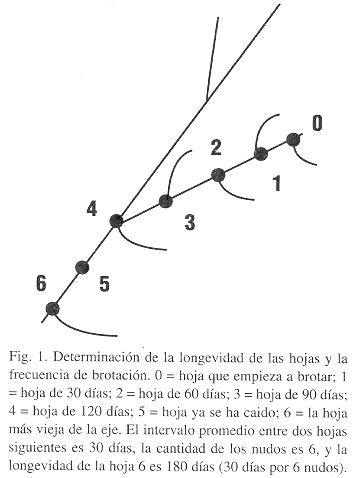
<body><![CDATA[<CENTER><FONT FACE="Arial,Helvetica"><FONT SIZE=-1>101/-</FONT></FONT></CENTER> </TD>  <TD VALIGN=TOP WIDTH="12%">     <CENTER><FONT FACE="Arial,Helvetica"><FONT SIZE=-1>C</FONT></FONT></CENTER> </TD> </TR>  <TR> <TD VALIGN=TOP WIDTH="24%"><FONT FACE="Arial,Helvetica"><FONT SIZE=-1>&nbsp;&nbsp; Urticaceae</FONT></FONT></TD>  <TD VALIGN=TOP WIDTH="46%"><FONT FACE="Arial,Helvetica"><FONT SIZE=-1><I>Myriocarpa longipes</I> Liebm.</FONT></FONT></TD>  <TD VALIGN=TOP WIDTH="17%">     <CENTER><FONT FACE="Arial,Helvetica"><FONT SIZE=-1>303/92303</FONT></FONT></CENTER> </TD>  <TD VALIGN=TOP WIDTH="12%">     <CENTER><FONT FACE="Arial,Helvetica"><FONT SIZE=-1>C</FONT></FONT></CENTER> </TD> </TR>  <TR> <TD VALIGN=TOP WIDTH="24%"><FONT FACE="Arial,Helvetica"><FONT SIZE=-1>&nbsp;</FONT></FONT></TD>  <TD VALIGN=TOP WIDTH="46%"><FONT FACE="Arial,Helvetica"><FONT SIZE=-1><I>Urera elata</I> (Sw.) Griseb.</FONT></FONT></TD>  <TD VALIGN=TOP WIDTH="17%">     <CENTER><FONT FACE="Arial,Helvetica"><FONT SIZE=-1>333/91334</FONT></FONT></CENTER> </TD>  <TD VALIGN=TOP WIDTH="12%">     <CENTER><FONT FACE="Arial,Helvetica"><FONT SIZE=-1>P</FONT></FONT></CENTER> </TD> </TR> </TABLE></CENTER> <FONT SIZE=-1>&nbsp;</FONT>     <BR><FONT SIZE=-1>&nbsp;</FONT><FONT SIZE=-1></FONT>      <P><FONT SIZE=-1><FONT FACE="Arial,Helvetica"><B>Determinaci&oacute;n del ritmo de crecimiento y de la edad de follaje:</B> Durante un estudio de un a&ntilde;o y medio (febrero 1991-julio 1992) se marcaron las hojas reci&eacute;n brotadas de las 22 especies con anillos pl&aacute;sticos. Al final de los estudios se calcul&oacute; la edad de cada hoja marcada y el intervalo promedio entre el desarrollo de dos hojas siguientes, lo que fue denominado "frecuencia de brotaci&oacute;n", para cada planta o eje (<A HREF="#Fig. 1">Fig. 1</A>). Adem&aacute;s, se determin&oacute; la cantidad de nudos entre el punto y la hoja m&aacute;s antigua de cada eje. Sobre la base de estos datos se estim&oacute; la edad de las hojas que no fueron marcadas y la longevidad de follaje promedio y m&aacute;xima de cada especie, asumiendo condiciones constantes.</FONT></FONT>     <BR><FONT SIZE=-1>&nbsp;</FONT>     <CENTER><A NAME="Fig. 1"></A><IMG SRC="/img/fbpe/rbt/v47n3/0540i01.GIF" HEIGHT=478 WIDTH=356></CENTER> <FONT SIZE=-1>&nbsp;</FONT>     
]]></body>
<body><![CDATA[<BR><FONT SIZE=-1>&nbsp;</FONT><FONT SIZE=-1></FONT>      <P><FONT SIZE=-1><FONT FACE="Arial,Helvetica"><B>Mediciones clim&aacute;ticas:</B> Al mismo tiempo, se midieron factores microclim&aacute;ticos (la temperatura, la intensidad de la luz, la evaporaci&oacute;n, y la precipitaci&oacute;n) para determinar si el microclima influye en el ritmo de crecimiento.</FONT></FONT><FONT SIZE=-1></FONT>      <P><FONT SIZE=-1><FONT FACE="Arial,Helvetica">Se midi&oacute; la intensidad de la luz con un fot&oacute;metro (LX-101, Lutron, Taiwan) directamente encima de cada hoja y simult&aacute;neamente encima del dosel y se calcul&oacute; la iluminaci&oacute;n relativa. Se realizaron las mediciones de la temperatura con term&oacute;metros de alcohol cont&iacute;nuamente en 16 sitios en el &aacute;rea de investigaci&oacute;n. En estos sitios tambi&eacute;n se midi&oacute; la evaporaci&oacute;n con evapor&iacute;metros Pich&eacute; con papel de filtro de 3 cm de di&aacute;metro (<A HREF="#Bannister">Bannister 1986</A>). Sobre la base de estos datos se subdividi&oacute; el &aacute;rea de investigaci&oacute;n en tres clases de humedad: 9-14.9 *&micro;l H<SUB>2</SUB>O h<SUP>-1</SUP> (clase 1), 15-20.9 *&micro;l H<SUB>2</SUB>O h<SUP>-1</SUP> (clase 2), y 21-26.9 *&micro;l H<SUB>2</SUB>O h<SUP>-1</SUP> (clase 3). Se midi&oacute; la precipitaci&oacute;n cada d&iacute;a cerca de la estaci&oacute;n biol&oacute;gica.</FONT></FONT>     <BR><FONT SIZE=-1>&nbsp;</FONT>     <BR><FONT SIZE=-1>&nbsp;</FONT>     <BR><B><FONT FACE="Arial,Helvetica"><FONT SIZE=-1>Resultados</FONT></FONT></B>     <CENTER><FONT SIZE=-1>&nbsp;</FONT></CENTER> <FONT SIZE=-1><FONT FACE="Arial,Helvetica">El ritmo de crecimiento: Se distingi&oacute; entre tres tipos de brotaci&oacute;n: la brotaci&oacute;n cont&iacute;nua, la brotaci&oacute;n peri&oacute;dica y la brotaci&oacute;n anual (<A HREF="#CUADRO 1">Cuadro 1</A>). Las hojas de algunas especies, especialmente de las monocotiled&oacute;neas, brotaron cont&iacute;nuamente durante todo el a&ntilde;o. Otras especies, como <I>Malvaviscus</I> <I>arboreus</I> y <I>Urera</I> <I>elata</I>, produjeron series de hojas muy r&aacute;pidamente y despu&eacute;s no lo hicieron durante cierto tiempo. <I>Ocotea gomezii</I> produjo hojas nuevas solamente una vez cada a&ntilde;o, en diciembre. Todas las plantas investigadas fueron de aspecto perennifolio y nunca se permanecieron sin hojas.</FONT></FONT><FONT SIZE=-1></FONT>      <P><FONT SIZE=-1><FONT FACE="Arial,Helvetica">Entre las especies, tambi&eacute;n vari&oacute; la frecuencia de brotaci&oacute;n, es decir el intervalo promedio entre el desarollo de dos hojas siguientes. Algunas plantas produjeron las hojas r&aacute;pidamente. Por ejemplo, una rama de <I>Myriocarpa longipes</I> tuvo una hoja nueva cada 25 d&iacute;as (<A HREF="#CUADRO 2">Cuadro 2</A>), mientras que otras especies, como <I>Iriartea deltoidea</I> y <I>Cyclanthus bipartitus</I>, solamente produjeron una o dos hojas cada a&ntilde;o.</FONT></FONT><FONT SIZE=-1></FONT>      <P><FONT SIZE=-1><FONT FACE="Arial,Helvetica">La cantidad de nudos con hojas de los ejes o las plantas vari&oacute; entre tres (<I>Chamaedorea</I> <I>tepejilote</I>) y m&aacute;s de 30 (<I>M.</I> <I>arboreus</I> y <I>M.</I> <I>longipes</I>) (<A HREF="#CUADRO 2">Cuadro 2</A>).</FONT></FONT>     <BR><FONT SIZE=-1>&nbsp;</FONT>     ]]></body>
<body><![CDATA[<CENTER><A NAME="CUADRO 2"></A><B><FONT FACE="Arial,Helvetica"><FONT SIZE=-1>CUADRO 2</FONT></FONT></B></CENTER>      <CENTER><FONT SIZE=-1>&nbsp;</FONT></CENTER>      <CENTER><I><FONT FACE="Arial,Helvetica"><FONT SIZE=-1>La frecuencia de brotaci&oacute;n de 22 especies del estrato arbustivo como intervalo promedio entre dos hojas, el n&uacute;mero de nudos desde la hoja m&aacute;s vieja y el punto del eje, la longevidad de follaje promedio y m&aacute;xima y el n&uacute;mero de ejes o plantas analizadas, ordenado por la columna 2.</FONT></FONT></I></CENTER>      <CENTER><I><FONT FACE="Arial,Helvetica"><FONT SIZE=-1>&nbsp;</FONT></FONT></I></CENTER>      <CENTER><I><FONT FACE="Arial,Helvetica"><FONT SIZE=-1>The frequency of leaf production of 22 understory species as mean interval between two leaves, the number of nodes between the oldest leaf and the shoot tip, the mean and maximum longevity of leaves, and the number of shoots or plants that were considered in the analysis, ordered by the second column.</FONT></FONT></I></CENTER>      <CENTER><FONT SIZE=-1>&nbsp;</FONT></CENTER>      <CENTER><FONT SIZE=-1>&nbsp;</FONT></CENTER>      <CENTER><TABLE BORDER=0 CELLSPACING=0 CELLPADDING=3 WIDTH="70%" > <TR> <TD VALIGN=TOP WIDTH="29%"><FONT FACE="Arial,Helvetica"><FONT SIZE=-1>&nbsp;</FONT></FONT></TD>  <TD VALIGN=TOP WIDTH="13%">     <CENTER><FONT FACE="Arial,Helvetica"><FONT SIZE=-1>Intervalo&nbsp;</FONT></FONT></CENTER>      <CENTER><FONT FACE="Arial,Helvetica"><FONT SIZE=-1>promedio&nbsp;</FONT></FONT></CENTER>      ]]></body>
<body><![CDATA[<CENTER><FONT FACE="Arial,Helvetica"><FONT SIZE=-1>[d&iacute;as]</FONT></FONT></CENTER> </TD>  <TD VALIGN=TOP COLSPAN="2" WIDTH="24%">     <CENTER><FONT FACE="Arial,Helvetica"><FONT SIZE=-1>Cantidad&nbsp;</FONT></FONT></CENTER>      <CENTER><FONT FACE="Arial,Helvetica"><FONT SIZE=-1>de nudos</FONT></FONT></CENTER> </TD>  <TD VALIGN=TOP COLSPAN="2" WIDTH="2%">     <CENTER><FONT FACE="Arial,Helvetica"><FONT SIZE=-1>&nbsp;Longevidad de follaje&nbsp;</FONT></FONT></CENTER> <FONT FACE="Arial,Helvetica"><FONT SIZE=-1>[meses]</FONT></FONT></TD>  <TD VALIGN=TOP WIDTH="23%">     <CENTER><FONT SIZE=-1>&nbsp;<FONT FACE="Arial,Helvetica">n</FONT></FONT></CENTER> </TD> </TR>  <TR> <TD VALIGN=TOP WIDTH="29%"><FONT FACE="Arial,Helvetica"><FONT SIZE=-1>Especie</FONT></FONT></TD>  <TD VALIGN=TOP WIDTH="13%"><FONT FACE="Arial,Helvetica"><FONT SIZE=-1>&nbsp;</FONT></FONT></TD>  <TD VALIGN=TOP WIDTH="13%">     <CENTER><FONT FACE="Arial,Helvetica"><FONT SIZE=-1>Promedio</FONT></FONT></CENTER> </TD>  <TD VALIGN=TOP WIDTH="11%">     <CENTER><FONT FACE="Arial,Helvetica"><FONT SIZE=-1>M&aacute;xima</FONT></FONT></CENTER> </TD>  <TD VALIGN=TOP WIDTH="2%"><FONT FACE="Arial,Helvetica"><FONT SIZE=-1>&nbsp;Promedio</FONT></FONT></TD>  <TD VALIGN=TOP WIDTH="11%">     <CENTER><FONT FACE="Arial,Helvetica"><FONT SIZE=-1>M&aacute;xima</FONT></FONT></CENTER> </TD>  <TD VALIGN=TOP WIDTH="8%"><FONT FACE="Arial,Helvetica"><FONT SIZE=-1>&nbsp;</FONT></FONT></TD> </TR>  <TR> <TD VALIGN=TOP WIDTH="29%"><FONT FACE="Arial,Helvetica"><FONT SIZE=-1>&nbsp;</FONT></FONT></TD>  <TD VALIGN=TOP WIDTH="13%"><FONT FACE="Arial,Helvetica"><FONT SIZE=-1>&nbsp;</FONT></FONT></TD>  <TD VALIGN=TOP WIDTH="13%"><FONT FACE="Arial,Helvetica"><FONT SIZE=-1>&nbsp;</FONT></FONT></TD>  <TD VALIGN=TOP WIDTH="11%"><FONT FACE="Arial,Helvetica"><FONT SIZE=-1>&nbsp;</FONT></FONT></TD>  <TD VALIGN=TOP WIDTH="2%"><FONT FACE="Arial,Helvetica"><FONT SIZE=-1>&nbsp;</FONT></FONT></TD>  <TD VALIGN=TOP WIDTH="11%"><FONT FACE="Arial,Helvetica"><FONT SIZE=-1>&nbsp;</FONT></FONT></TD>  <TD VALIGN=TOP WIDTH="8%"><FONT FACE="Arial,Helvetica"><FONT SIZE=-1>&nbsp;</FONT></FONT></TD> </TR>  <TR> <TD VALIGN=TOP WIDTH="29%"><I><FONT FACE="Arial,Helvetica"><FONT SIZE=-1>M. arboreus</FONT></FONT></I></TD>  <TD VALIGN=TOP WIDTH="13%">     <CENTER><FONT FACE="Arial,Helvetica"><FONT SIZE=-1>17</FONT></FONT></CENTER> </TD>  <TD VALIGN=TOP WIDTH="13%">     <CENTER><FONT FACE="Arial,Helvetica"><FONT SIZE=-1>18</FONT></FONT></CENTER> </TD>  <TD VALIGN=TOP WIDTH="11%">     ]]></body>
<body><![CDATA[<CENTER><FONT FACE="Arial,Helvetica"><FONT SIZE=-1>35</FONT></FONT></CENTER> </TD>  <TD VALIGN=TOP WIDTH="2%">     <CENTER><FONT FACE="Arial,Helvetica"><FONT SIZE=-1>&nbsp;10</FONT></FONT></CENTER> </TD>  <TD VALIGN=TOP WIDTH="11%">     <CENTER><FONT FACE="Arial,Helvetica"><FONT SIZE=-1>20</FONT></FONT></CENTER> </TD>  <TD VALIGN=TOP WIDTH="8%">     <CENTER><FONT FACE="Arial,Helvetica"><FONT SIZE=-1>16</FONT></FONT></CENTER> </TD> </TR>  <TR> <TD VALIGN=TOP WIDTH="29%"><I><FONT FACE="Arial,Helvetica"><FONT SIZE=-1>U. elata</FONT></FONT></I></TD>  <TD VALIGN=TOP WIDTH="13%">     <CENTER><FONT FACE="Arial,Helvetica"><FONT SIZE=-1>22</FONT></FONT></CENTER> </TD>  <TD VALIGN=TOP WIDTH="13%">     <CENTER><FONT FACE="Arial,Helvetica"><FONT SIZE=-1>14</FONT></FONT></CENTER> </TD>  <TD VALIGN=TOP WIDTH="11%">     <CENTER><FONT FACE="Arial,Helvetica"><FONT SIZE=-1>27</FONT></FONT></CENTER> </TD>  <TD VALIGN=TOP WIDTH="2%">     <CENTER><FONT FACE="Arial,Helvetica"><FONT SIZE=-1>&nbsp;10</FONT></FONT></CENTER> </TD>  <TD VALIGN=TOP WIDTH="11%">     <CENTER><FONT FACE="Arial,Helvetica"><FONT SIZE=-1>20</FONT></FONT></CENTER> </TD>  <TD VALIGN=TOP WIDTH="8%">     <CENTER><FONT FACE="Arial,Helvetica"><FONT SIZE=-1>17</FONT></FONT></CENTER> </TD> </TR>  <TR> <TD VALIGN=TOP WIDTH="29%"><I><FONT FACE="Arial,Helvetica"><FONT SIZE=-1>M. longipes</FONT></FONT></I></TD>  <TD VALIGN=TOP WIDTH="13%">     ]]></body>
<body><![CDATA[<CENTER><FONT FACE="Arial,Helvetica"><FONT SIZE=-1>25</FONT></FONT></CENTER> </TD>  <TD VALIGN=TOP WIDTH="13%">     <CENTER><FONT FACE="Arial,Helvetica"><FONT SIZE=-1>20</FONT></FONT></CENTER> </TD>  <TD VALIGN=TOP WIDTH="11%">     <CENTER><FONT FACE="Arial,Helvetica"><FONT SIZE=-1>39</FONT></FONT></CENTER> </TD>  <TD VALIGN=TOP WIDTH="2%">     <CENTER><FONT FACE="Arial,Helvetica"><FONT SIZE=-1>&nbsp;17</FONT></FONT></CENTER> </TD>  <TD VALIGN=TOP WIDTH="11%">     <CENTER><FONT FACE="Arial,Helvetica"><FONT SIZE=-1>32</FONT></FONT></CENTER> </TD>  <TD VALIGN=TOP WIDTH="8%">     <CENTER><FONT FACE="Arial,Helvetica"><FONT SIZE=-1>19</FONT></FONT></CENTER> </TD> </TR>  <TR> <TD VALIGN=TOP WIDTH="29%"><I><FONT FACE="Arial,Helvetica"><FONT SIZE=-1>B. cooperi</FONT></FONT></I></TD>  <TD VALIGN=TOP WIDTH="13%">     <CENTER><FONT FACE="Arial,Helvetica"><FONT SIZE=-1>31</FONT></FONT></CENTER> </TD>  <TD VALIGN=TOP WIDTH="13%">     <CENTER><FONT FACE="Arial,Helvetica"><FONT SIZE=-1>8</FONT></FONT></CENTER> </TD>  <TD VALIGN=TOP WIDTH="11%">     <CENTER><FONT FACE="Arial,Helvetica"><FONT SIZE=-1>12</FONT></FONT></CENTER> </TD>  <TD VALIGN=TOP WIDTH="2%">     <CENTER><FONT FACE="Arial,Helvetica"><FONT SIZE=-1>&nbsp;8</FONT></FONT></CENTER> </TD>  <TD VALIGN=TOP WIDTH="11%">     ]]></body>
<body><![CDATA[<CENTER><FONT FACE="Arial,Helvetica"><FONT SIZE=-1>12</FONT></FONT></CENTER> </TD>  <TD VALIGN=TOP WIDTH="8%">     <CENTER><FONT FACE="Arial,Helvetica"><FONT SIZE=-1>14</FONT></FONT></CENTER> </TD> </TR>  <TR> <TD VALIGN=TOP WIDTH="29%"><I><FONT FACE="Arial,Helvetica"><FONT SIZE=-1>S. nicaraguensis</FONT></FONT></I></TD>  <TD VALIGN=TOP WIDTH="13%">     <CENTER><FONT FACE="Arial,Helvetica"><FONT SIZE=-1>34</FONT></FONT></CENTER> </TD>  <TD VALIGN=TOP WIDTH="13%">     <CENTER><FONT FACE="Arial,Helvetica"><FONT SIZE=-1>6</FONT></FONT></CENTER> </TD>  <TD VALIGN=TOP WIDTH="11%">     <CENTER><FONT FACE="Arial,Helvetica"><FONT SIZE=-1>8</FONT></FONT></CENTER> </TD>  <TD VALIGN=TOP WIDTH="2%">     <CENTER><FONT FACE="Arial,Helvetica"><FONT SIZE=-1>&nbsp;7</FONT></FONT></CENTER> </TD>  <TD VALIGN=TOP WIDTH="11%">     <CENTER><FONT FACE="Arial,Helvetica"><FONT SIZE=-1>9</FONT></FONT></CENTER> </TD>  <TD VALIGN=TOP WIDTH="8%">     <CENTER><FONT FACE="Arial,Helvetica"><FONT SIZE=-1>7</FONT></FONT></CENTER> </TD> </TR>  <TR> <TD VALIGN=TOP WIDTH="29%"><I><FONT FACE="Arial,Helvetica"><FONT SIZE=-1>P. augustum</FONT></FONT></I></TD>  <TD VALIGN=TOP WIDTH="13%">     <CENTER><FONT FACE="Arial,Helvetica"><FONT SIZE=-1>45</FONT></FONT></CENTER> </TD>  <TD VALIGN=TOP WIDTH="13%">     <CENTER><FONT FACE="Arial,Helvetica"><FONT SIZE=-1>8</FONT></FONT></CENTER> </TD>  <TD VALIGN=TOP WIDTH="11%">     ]]></body>
<body><![CDATA[<CENTER><FONT FACE="Arial,Helvetica"><FONT SIZE=-1>11</FONT></FONT></CENTER> </TD>  <TD VALIGN=TOP WIDTH="2%">     <CENTER><FONT FACE="Arial,Helvetica"><FONT SIZE=-1>12</FONT></FONT></CENTER> </TD>  <TD VALIGN=TOP WIDTH="11%">     <CENTER><FONT FACE="Arial,Helvetica"><FONT SIZE=-1>17</FONT></FONT></CENTER> </TD>  <TD VALIGN=TOP WIDTH="8%">     <CENTER><FONT FACE="Arial,Helvetica"><FONT SIZE=-1>9</FONT></FONT></CENTER> </TD> </TR>  <TR> <TD VALIGN=TOP WIDTH="29%"><I><FONT FACE="Arial,Helvetica"><FONT SIZE=-1>C. leucostachys</FONT></FONT></I></TD>  <TD VALIGN=TOP WIDTH="13%">     <CENTER><FONT FACE="Arial,Helvetica"><FONT SIZE=-1>47</FONT></FONT></CENTER> </TD>  <TD VALIGN=TOP WIDTH="13%">     <CENTER><FONT FACE="Arial,Helvetica"><FONT SIZE=-1>6</FONT></FONT></CENTER> </TD>  <TD VALIGN=TOP WIDTH="11%">     <CENTER><FONT FACE="Arial,Helvetica"><FONT SIZE=-1>6</FONT></FONT></CENTER> </TD>  <TD VALIGN=TOP WIDTH="2%">     <CENTER><FONT FACE="Arial,Helvetica"><FONT SIZE=-1>&nbsp;9</FONT></FONT></CENTER> </TD>  <TD VALIGN=TOP WIDTH="11%">     <CENTER><FONT FACE="Arial,Helvetica"><FONT SIZE=-1>9</FONT></FONT></CENTER> </TD>  <TD VALIGN=TOP WIDTH="8%">     <CENTER><FONT FACE="Arial,Helvetica"><FONT SIZE=-1>1</FONT></FONT></CENTER> </TD> </TR>  <TR> <TD VALIGN=TOP WIDTH="29%"><I><FONT FACE="Arial,Helvetica"><FONT SIZE=-1>H. dotae</FONT></FONT></I></TD>  <TD VALIGN=TOP WIDTH="13%">     ]]></body>
<body><![CDATA[<CENTER><FONT FACE="Arial,Helvetica"><FONT SIZE=-1>52</FONT></FONT></CENTER> </TD>  <TD VALIGN=TOP WIDTH="13%">     <CENTER><FONT FACE="Arial,Helvetica"><FONT SIZE=-1>9</FONT></FONT></CENTER> </TD>  <TD VALIGN=TOP WIDTH="11%">     <CENTER><FONT FACE="Arial,Helvetica"><FONT SIZE=-1>16</FONT></FONT></CENTER> </TD>  <TD VALIGN=TOP WIDTH="2%">     <CENTER><FONT FACE="Arial,Helvetica"><FONT SIZE=-1>&nbsp;16</FONT></FONT></CENTER> </TD>  <TD VALIGN=TOP WIDTH="11%">     <CENTER><FONT FACE="Arial,Helvetica"><FONT SIZE=-1>28</FONT></FONT></CENTER> </TD>  <TD VALIGN=TOP WIDTH="8%">     <CENTER><FONT FACE="Arial,Helvetica"><FONT SIZE=-1>24</FONT></FONT></CENTER> </TD> </TR>  <TR> <TD VALIGN=TOP WIDTH="29%"><FONT FACE="Arial,Helvetica"><FONT SIZE=-1><I>Piper</I> sp<I>.</I></FONT></FONT></TD>  <TD VALIGN=TOP WIDTH="13%">     <CENTER><FONT FACE="Arial,Helvetica"><FONT SIZE=-1>58</FONT></FONT></CENTER> </TD>  <TD VALIGN=TOP WIDTH="13%">     <CENTER><FONT FACE="Arial,Helvetica"><FONT SIZE=-1>8</FONT></FONT></CENTER> </TD>  <TD VALIGN=TOP WIDTH="11%">     <CENTER><FONT FACE="Arial,Helvetica"><FONT SIZE=-1>10</FONT></FONT></CENTER> </TD>  <TD VALIGN=TOP WIDTH="2%">     <CENTER><FONT FACE="Arial,Helvetica"><FONT SIZE=-1>&nbsp;15</FONT></FONT></CENTER> </TD>  <TD VALIGN=TOP WIDTH="11%">     ]]></body>
<body><![CDATA[<CENTER><FONT FACE="Arial,Helvetica"><FONT SIZE=-1>19</FONT></FONT></CENTER> </TD>  <TD VALIGN=TOP WIDTH="8%">     <CENTER><FONT FACE="Arial,Helvetica"><FONT SIZE=-1>15</FONT></FONT></CENTER> </TD> </TR>  <TR> <TD VALIGN=TOP WIDTH="29%"><I><FONT FACE="Arial,Helvetica"><FONT SIZE=-1>B. gracilis</FONT></FONT></I></TD>  <TD VALIGN=TOP WIDTH="13%">     <CENTER><FONT FACE="Arial,Helvetica"><FONT SIZE=-1>59</FONT></FONT></CENTER> </TD>  <TD VALIGN=TOP WIDTH="13%">     <CENTER><FONT FACE="Arial,Helvetica"><FONT SIZE=-1>4</FONT></FONT></CENTER> </TD>  <TD VALIGN=TOP WIDTH="11%">     <CENTER><FONT FACE="Arial,Helvetica"><FONT SIZE=-1>7</FONT></FONT></CENTER> </TD>  <TD VALIGN=TOP WIDTH="2%">     <CENTER><FONT FACE="Arial,Helvetica"><FONT SIZE=-1>&nbsp;9</FONT></FONT></CENTER> </TD>  <TD VALIGN=TOP WIDTH="11%">     <CENTER><FONT FACE="Arial,Helvetica"><FONT SIZE=-1>14</FONT></FONT></CENTER> </TD>  <TD VALIGN=TOP WIDTH="8%">     <CENTER><FONT FACE="Arial,Helvetica"><FONT SIZE=-1>13</FONT></FONT></CENTER> </TD> </TR>  <TR> <TD VALIGN=TOP WIDTH="29%"><FONT FACE="Arial,Helvetica"><FONT SIZE=-1><I>P.</I> cf. <I>uliginosa</I></FONT></FONT></TD>  <TD VALIGN=TOP WIDTH="13%">     <CENTER><FONT FACE="Arial,Helvetica"><FONT SIZE=-1>66</FONT></FONT></CENTER> </TD>  <TD VALIGN=TOP WIDTH="13%">     <CENTER><FONT FACE="Arial,Helvetica"><FONT SIZE=-1>9</FONT></FONT></CENTER> </TD>  <TD VALIGN=TOP WIDTH="11%">     ]]></body>
<body><![CDATA[<CENTER><FONT FACE="Arial,Helvetica"><FONT SIZE=-1>10</FONT></FONT></CENTER> </TD>  <TD VALIGN=TOP WIDTH="2%">     <CENTER><FONT FACE="Arial,Helvetica"><FONT SIZE=-1>&nbsp;19</FONT></FONT></CENTER> </TD>  <TD VALIGN=TOP WIDTH="11%">     <CENTER><FONT FACE="Arial,Helvetica"><FONT SIZE=-1>22</FONT></FONT></CENTER> </TD>  <TD VALIGN=TOP WIDTH="8%">     <CENTER><FONT FACE="Arial,Helvetica"><FONT SIZE=-1>2</FONT></FONT></CENTER> </TD> </TR>  <TR> <TD VALIGN=TOP WIDTH="29%"><I><FONT FACE="Arial,Helvetica"><FONT SIZE=-1>J. crenata</FONT></FONT></I></TD>  <TD VALIGN=TOP WIDTH="13%">     <CENTER><FONT FACE="Arial,Helvetica"><FONT SIZE=-1>68</FONT></FONT></CENTER> </TD>  <TD VALIGN=TOP WIDTH="13%">     <CENTER><FONT FACE="Arial,Helvetica"><FONT SIZE=-1>4</FONT></FONT></CENTER> </TD>  <TD VALIGN=TOP WIDTH="11%">     <CENTER><FONT FACE="Arial,Helvetica"><FONT SIZE=-1>9</FONT></FONT></CENTER> </TD>  <TD VALIGN=TOP WIDTH="2%">     <CENTER><FONT FACE="Arial,Helvetica"><FONT SIZE=-1>&nbsp;10</FONT></FONT></CENTER> </TD>  <TD VALIGN=TOP WIDTH="11%">     <CENTER><FONT FACE="Arial,Helvetica"><FONT SIZE=-1>20</FONT></FONT></CENTER> </TD>  <TD VALIGN=TOP WIDTH="8%">     <CENTER><FONT FACE="Arial,Helvetica"><FONT SIZE=-1>23</FONT></FONT></CENTER> </TD> </TR>  <TR> <TD VALIGN=TOP WIDTH="29%"><I><FONT FACE="Arial,Helvetica"><FONT SIZE=-1>P. verrucosum</FONT></FONT></I></TD>  <TD VALIGN=TOP WIDTH="13%">     ]]></body>
<body><![CDATA[<CENTER><FONT FACE="Arial,Helvetica"><FONT SIZE=-1>71</FONT></FONT></CENTER> </TD>  <TD VALIGN=TOP WIDTH="13%">     <CENTER><FONT FACE="Arial,Helvetica"><FONT SIZE=-1>5</FONT></FONT></CENTER> </TD>  <TD VALIGN=TOP WIDTH="11%">     <CENTER><FONT FACE="Arial,Helvetica"><FONT SIZE=-1>7</FONT></FONT></CENTER> </TD>  <TD VALIGN=TOP WIDTH="2%">     <CENTER><FONT FACE="Arial,Helvetica"><FONT SIZE=-1>&nbsp;12</FONT></FONT></CENTER> </TD>  <TD VALIGN=TOP WIDTH="11%">     <CENTER><FONT FACE="Arial,Helvetica"><FONT SIZE=-1>17</FONT></FONT></CENTER> </TD>  <TD VALIGN=TOP WIDTH="8%">     <CENTER><FONT FACE="Arial,Helvetica"><FONT SIZE=-1>3</FONT></FONT></CENTER> </TD> </TR>  <TR> <TD VALIGN=TOP WIDTH="29%"><I><FONT FACE="Arial,Helvetica"><FONT SIZE=-1>C. tepejilote</FONT></FONT></I></TD>  <TD VALIGN=TOP WIDTH="13%">     <CENTER><FONT FACE="Arial,Helvetica"><FONT SIZE=-1>107</FONT></FONT></CENTER> </TD>  <TD VALIGN=TOP WIDTH="13%">     <CENTER><FONT FACE="Arial,Helvetica"><FONT SIZE=-1>3</FONT></FONT></CENTER> </TD>  <TD VALIGN=TOP WIDTH="11%">     <CENTER><FONT FACE="Arial,Helvetica"><FONT SIZE=-1>5</FONT></FONT></CENTER> </TD>  <TD VALIGN=TOP WIDTH="2%">     <CENTER><FONT FACE="Arial,Helvetica"><FONT SIZE=-1>&nbsp;12</FONT></FONT></CENTER> </TD>  <TD VALIGN=TOP WIDTH="11%">     ]]></body>
<body><![CDATA[<CENTER><FONT FACE="Arial,Helvetica"><FONT SIZE=-1>18</FONT></FONT></CENTER> </TD>  <TD VALIGN=TOP WIDTH="8%">     <CENTER><FONT FACE="Arial,Helvetica"><FONT SIZE=-1>11</FONT></FONT></CENTER> </TD> </TR>  <TR> <TD VALIGN=TOP WIDTH="29%"><I><FONT FACE="Arial,Helvetica"><FONT SIZE=-1>S. hoffmannii</FONT></FONT></I></TD>  <TD VALIGN=TOP WIDTH="13%">     <CENTER><FONT FACE="Arial,Helvetica"><FONT SIZE=-1>126</FONT></FONT></CENTER> </TD>  <TD VALIGN=TOP WIDTH="13%">     <CENTER><FONT FACE="Arial,Helvetica"><FONT SIZE=-1>5</FONT></FONT></CENTER> </TD>  <TD VALIGN=TOP WIDTH="11%">     <CENTER><FONT FACE="Arial,Helvetica"><FONT SIZE=-1>12</FONT></FONT></CENTER> </TD>  <TD VALIGN=TOP WIDTH="2%">     <CENTER><FONT FACE="Arial,Helvetica"><FONT SIZE=-1>&nbsp;21</FONT></FONT></CENTER> </TD>  <TD VALIGN=TOP WIDTH="11%">     <CENTER><FONT FACE="Arial,Helvetica"><FONT SIZE=-1>50</FONT></FONT></CENTER> </TD>  <TD VALIGN=TOP WIDTH="8%">     <CENTER><FONT FACE="Arial,Helvetica"><FONT SIZE=-1>41</FONT></FONT></CENTER> </TD> </TR>  <TR> <TD VALIGN=TOP WIDTH="29%"><FONT FACE="Arial,Helvetica"><FONT SIZE=-1><I>H. irrasa</I> ssp<I>. undulata</I></FONT></FONT></TD>  <TD VALIGN=TOP WIDTH="13%">     <CENTER><FONT FACE="Arial,Helvetica"><FONT SIZE=-1>108</FONT></FONT></CENTER> </TD>  <TD VALIGN=TOP WIDTH="13%">     <CENTER><FONT FACE="Arial,Helvetica"><FONT SIZE=-1>6</FONT></FONT></CENTER> </TD>  <TD VALIGN=TOP WIDTH="11%">     ]]></body>
<body><![CDATA[<CENTER><FONT FACE="Arial,Helvetica"><FONT SIZE=-1>6</FONT></FONT></CENTER> </TD>  <TD VALIGN=TOP WIDTH="2%">     <CENTER><FONT FACE="Arial,Helvetica"><FONT SIZE=-1>&nbsp;22</FONT></FONT></CENTER> </TD>  <TD VALIGN=TOP WIDTH="11%">     <CENTER><FONT FACE="Arial,Helvetica"><FONT SIZE=-1>22</FONT></FONT></CENTER> </TD>  <TD VALIGN=TOP WIDTH="8%">     <CENTER><FONT FACE="Arial,Helvetica"><FONT SIZE=-1>1</FONT></FONT></CENTER> </TD> </TR>  <TR> <TD VALIGN=TOP WIDTH="29%"><I><FONT FACE="Arial,Helvetica"><FONT SIZE=-1>C. trichostachys</FONT></FONT></I></TD>  <TD VALIGN=TOP WIDTH="13%">     <CENTER><FONT FACE="Arial,Helvetica"><FONT SIZE=-1>132</FONT></FONT></CENTER> </TD>  <TD VALIGN=TOP WIDTH="13%">     <CENTER><FONT FACE="Arial,Helvetica"><FONT SIZE=-1>11</FONT></FONT></CENTER> </TD>  <TD VALIGN=TOP WIDTH="11%">     <CENTER><FONT FACE="Arial,Helvetica"><FONT SIZE=-1>14</FONT></FONT></CENTER> </TD>  <TD VALIGN=TOP WIDTH="2%">     <CENTER><FONT FACE="Arial,Helvetica"><FONT SIZE=-1>&nbsp;50</FONT></FONT></CENTER> </TD>  <TD VALIGN=TOP WIDTH="11%">     <CENTER><FONT FACE="Arial,Helvetica"><FONT SIZE=-1>62</FONT></FONT></CENTER> </TD>  <TD VALIGN=TOP WIDTH="8%">     <CENTER><FONT FACE="Arial,Helvetica"><FONT SIZE=-1>3</FONT></FONT></CENTER> </TD> </TR>  <TR> <TD VALIGN=TOP WIDTH="29%"><I><FONT FACE="Arial,Helvetica"><FONT SIZE=-1>C. warscewiczii</FONT></FONT></I></TD>  <TD VALIGN=TOP WIDTH="13%">     ]]></body>
<body><![CDATA[<CENTER><FONT FACE="Arial,Helvetica"><FONT SIZE=-1>147</FONT></FONT></CENTER> </TD>  <TD VALIGN=TOP WIDTH="13%">     <CENTER><FONT FACE="Arial,Helvetica"><FONT SIZE=-1>10</FONT></FONT></CENTER> </TD>  <TD VALIGN=TOP WIDTH="11%">     <CENTER><FONT FACE="Arial,Helvetica"><FONT SIZE=-1>14</FONT></FONT></CENTER> </TD>  <TD VALIGN=TOP WIDTH="2%">     <CENTER><FONT FACE="Arial,Helvetica"><FONT SIZE=-1>&nbsp;49</FONT></FONT></CENTER> </TD>  <TD VALIGN=TOP WIDTH="11%">     <CENTER><FONT FACE="Arial,Helvetica"><FONT SIZE=-1>69</FONT></FONT></CENTER> </TD>  <TD VALIGN=TOP WIDTH="8%">     <CENTER><FONT FACE="Arial,Helvetica"><FONT SIZE=-1>5</FONT></FONT></CENTER> </TD> </TR>  <TR> <TD VALIGN=TOP WIDTH="29%"><FONT FACE="Arial,Helvetica"><FONT SIZE=-1><I>Pteris</I> sp.</FONT></FONT></TD>  <TD VALIGN=TOP WIDTH="13%">     <CENTER><FONT FACE="Arial,Helvetica"><FONT SIZE=-1>164</FONT></FONT></CENTER> </TD>  <TD VALIGN=TOP WIDTH="13%">     <CENTER><FONT FACE="Arial,Helvetica"><FONT SIZE=-1>3</FONT></FONT></CENTER> </TD>  <TD VALIGN=TOP WIDTH="11%">     <CENTER><FONT FACE="Arial,Helvetica"><FONT SIZE=-1>5</FONT></FONT></CENTER> </TD>  <TD VALIGN=TOP WIDTH="2%">     <CENTER><FONT FACE="Arial,Helvetica"><FONT SIZE=-1>&nbsp;18</FONT></FONT></CENTER> </TD>  <TD VALIGN=TOP WIDTH="11%">     ]]></body>
<body><![CDATA[<CENTER><FONT FACE="Arial,Helvetica"><FONT SIZE=-1>27</FONT></FONT></CENTER> </TD>  <TD VALIGN=TOP WIDTH="8%">     <CENTER><FONT FACE="Arial,Helvetica"><FONT SIZE=-1>8</FONT></FONT></CENTER> </TD> </TR>  <TR> <TD VALIGN=TOP WIDTH="29%"><I><FONT FACE="Arial,Helvetica"><FONT SIZE=-1>C. bipartitus</FONT></FONT></I></TD>  <TD VALIGN=TOP WIDTH="13%">     <CENTER><FONT FACE="Arial,Helvetica"><FONT SIZE=-1>172</FONT></FONT></CENTER> </TD>  <TD VALIGN=TOP WIDTH="13%">     <CENTER><FONT FACE="Arial,Helvetica"><FONT SIZE=-1>8</FONT></FONT></CENTER> </TD>  <TD VALIGN=TOP WIDTH="11%">     <CENTER><FONT FACE="Arial,Helvetica"><FONT SIZE=-1>10</FONT></FONT></CENTER> </TD>  <TD VALIGN=TOP WIDTH="2%">     <CENTER><FONT FACE="Arial,Helvetica"><FONT SIZE=-1>&nbsp;46</FONT></FONT></CENTER> </TD>  <TD VALIGN=TOP WIDTH="11%">     <CENTER><FONT FACE="Arial,Helvetica"><FONT SIZE=-1>57</FONT></FONT></CENTER> </TD>  <TD VALIGN=TOP WIDTH="8%">     <CENTER><FONT FACE="Arial,Helvetica"><FONT SIZE=-1>7</FONT></FONT></CENTER> </TD> </TR>  <TR> <TD VALIGN=TOP WIDTH="29%"><I><FONT FACE="Arial,Helvetica"><FONT SIZE=-1>I. deltoidea</FONT></FONT></I></TD>  <TD VALIGN=TOP WIDTH="13%">     <CENTER><FONT FACE="Arial,Helvetica"><FONT SIZE=-1>266</FONT></FONT></CENTER> </TD>  <TD VALIGN=TOP WIDTH="13%">     <CENTER><FONT FACE="Arial,Helvetica"><FONT SIZE=-1>6</FONT></FONT></CENTER> </TD>  <TD VALIGN=TOP WIDTH="11%">     ]]></body>
<body><![CDATA[<CENTER><FONT FACE="Arial,Helvetica"><FONT SIZE=-1>7</FONT></FONT></CENTER> </TD>  <TD VALIGN=TOP WIDTH="2%">     <CENTER><FONT FACE="Arial,Helvetica"><FONT SIZE=-1>&nbsp;53</FONT></FONT></CENTER> </TD>  <TD VALIGN=TOP WIDTH="11%">     <CENTER><FONT FACE="Arial,Helvetica"><FONT SIZE=-1>62</FONT></FONT></CENTER> </TD>  <TD VALIGN=TOP WIDTH="8%">     <CENTER><FONT FACE="Arial,Helvetica"><FONT SIZE=-1>6</FONT></FONT></CENTER> </TD> </TR>  <TR> <TD VALIGN=TOP WIDTH="29%"><I><FONT FACE="Arial,Helvetica"><FONT SIZE=-1>O. gomezii</FONT></FONT></I></TD>  <TD VALIGN=TOP WIDTH="13%">     <CENTER><FONT FACE="Arial,Helvetica"><FONT SIZE=-1>360</FONT></FONT></CENTER> </TD>  <TD VALIGN=TOP WIDTH="13%">     <CENTER><FONT FACE="Arial,Helvetica"><FONT SIZE=-1>5</FONT></FONT></CENTER> </TD>  <TD VALIGN=TOP WIDTH="11%">     <CENTER><FONT FACE="Arial,Helvetica"><FONT SIZE=-1>5</FONT></FONT></CENTER> </TD>  <TD VALIGN=TOP WIDTH="2%">     <CENTER><FONT FACE="Arial,Helvetica"><FONT SIZE=-1>&nbsp;54</FONT></FONT></CENTER> </TD>  <TD VALIGN=TOP WIDTH="11%">     <CENTER><FONT FACE="Arial,Helvetica"><FONT SIZE=-1>54</FONT></FONT></CENTER> </TD>  <TD VALIGN=TOP WIDTH="8%">     <CENTER><FONT FACE="Arial,Helvetica"><FONT SIZE=-1>1</FONT></FONT></CENTER> </TD> </TR> </TABLE></CENTER> <FONT SIZE=-1>&nbsp;</FONT>     ]]></body>
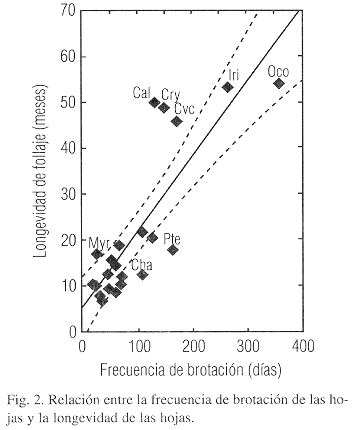
<body><![CDATA[<BR><FONT SIZE=-1>&nbsp;</FONT><FONT SIZE=-1></FONT>      <P><FONT SIZE=-1><FONT FACE="Arial,Helvetica"><B>Longevidad de follaje:</B> La longevidad de las hojas vari&oacute; distintamente (<A HREF="#CUADRO 2">Cuadro 2</A>). Entre las plantas investigadas, <I>Calyptrogyne trichostachys</I>, <I>Cryosophila warscewiczii</I>, <I>C.</I> <I>bipartitus</I>, <I>I.</I> <I>deltoidea</I> y <I>O.</I> <I>gomezii</I> tuvieron las hojas m&aacute;s viejas. Seg&uacute;n la extrapolaci&oacute;n de los datos, las hojas de <I>I. deltoidea</I> podr&iacute;an tener m&aacute;s de cinco a&ntilde;os. Normalmente, las hojas de <I>Begonia</I> <I>cooperi</I>, <I>Siparuna</I> <I>nicaraguensis</I>, <I>Blakea</I> <I>gracilis</I>, <I>Justicia</I> <I>crenata</I>, <I>U.</I> <I>elata</I>, <I>M.</I> <I>arboreus</I> y <I>Calathea</I> <I>leucostachys</I> no tuvieron m&aacute;s de un a&ntilde;o.</FONT></FONT><FONT SIZE=-1></FONT>      <P><FONT SIZE=-1><FONT FACE="Arial,Helvetica">Hubo una relaci&oacute;n significativa entre la longevidad de la hoja y la frecuencia de la brotaci&oacute;n (n=22, coeficiente de corelaci&oacute;n de Spearman, P&lt;0.001, <A HREF="#Fig. 2">Fig. 2</A>). Sin embargo hubo excepciones. Por ejemplo, las hojas de <I>C.</I> <I>trichostachys</I>, <I>C.</I> <I>warscewiczii</I> y <I>M. longipes </I>brotaron relativamente r&aacute;pido pero alcanzaron bastante edad, mientras que las hojas de <I>C. tepejilote</I> y <I>Pteris</I> sp. tuvieron relativamente una corta vida pero brotaron muy despacio. No hubo una relaci&oacute;n significativa entre la cantidad de nudos y la longevidad de follaje (n=22, Spearman, P=0.946) ni con la frecuencia de brotaci&oacute;n (n=22, Spearman, P=0.982).</FONT></FONT>     <BR><FONT SIZE=-1>&nbsp;</FONT>     <CENTER><A NAME="Fig. 2"></A><IMG SRC="/img/fbpe/rbt/v47n3/0540i02.GIF" HEIGHT=430 WIDTH=357></CENTER> <FONT SIZE=-1>&nbsp;</FONT><FONT SIZE=-1></FONT>      
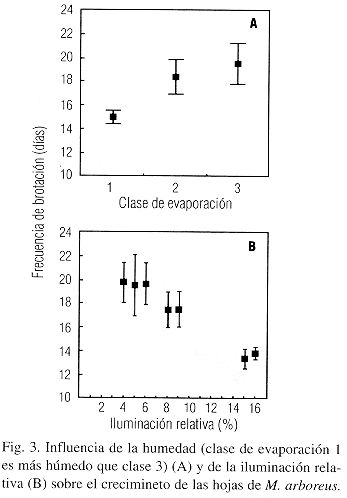
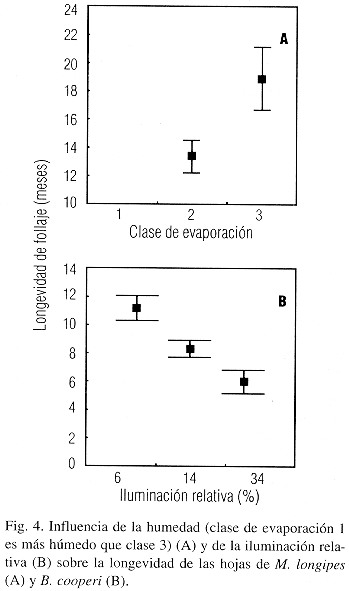
<P><FONT SIZE=-1><FONT FACE="Arial,Helvetica"><B>Influencia del microclima:</B> Aunque el clima pareci&oacute; ser muy constante en el estrato arbustivo del &aacute;rea de investigaci&oacute;n, se pudo distinguir sitios m&aacute;s o menos h&uacute;medos y m&aacute;s o menos oscuros. Generalmente, la frecuencia de brotaci&oacute;n (<I>M.</I> <I>arboreus</I> (n=310, Spearman, P=0.0002, <A HREF="#Fig. 3">Fig. 3</A>) y <I>Hoffmannia</I> <I>dotae</I> (n=147, Spearman, P=0.0047)) y la longevidad de follaje (<I>M.</I> <I>arboreus </I>(n=13, Spearman, P=0.0388) y <I>B. cooperi </I>(n=14, ANOVA de Kruskal-Wallis, P=0.0014, <A HREF="#Fig. 4">Fig. 4</A>)) fueron m&aacute;s largos en sitios m&aacute;s oscuros, pero esta relaci&oacute;n fue significante solamente en pocos casos.</FONT></FONT>     <BR><FONT SIZE=-1>&nbsp;</FONT>     <CENTER><A NAME="Fig. 3"></A><IMG SRC="/img/fbpe/rbt/v47n3/0540i04.GIF" HEIGHT=498 WIDTH=347></CENTER> <FONT SIZE=-1>&nbsp;</FONT><FONT SIZE=-1></FONT>      
<P><FONT SIZE=-1><FONT FACE="Arial,Helvetica">La longevidad de follaje generalmente fue m&aacute;s larga en sitios m&aacute;s secos. Esta relaci&oacute;n fue significante para <I>M. longipes</I> (n=13, Mann-Whitney U-Test, P=0.0425, <A HREF="#Fig. 4">Fig. 4</A>). La frecuencia de brotaci&oacute;n de <I>B. cooperi </I>(n=117, U-Test, P=0.0002), <I>H. dotae </I>(n=147, U-Test, P=0.0119), <I>M.</I> <I>arboreus</I> (n=310, ANOVA de Kruskal-Wallis, P=0.0007, <A HREF="#Fig. 3">Fig. 3</A>) y <I>B.</I> <I>gracilis </I>(n=45, U-Test, P=0.0039) fue significantemente m&aacute;s corto en sitios m&aacute;s h&uacute;medos. Con solamente una excepci&oacute;n, la cantidad de nudos se mostr&oacute; independiente de la humedad y de la luz.</FONT></FONT><FONT SIZE=-1></FONT>      <P><FONT SIZE=-1>&nbsp;</FONT>     ]]></body>
<body><![CDATA[<CENTER><A NAME="Fig. 4"></A><IMG SRC="/img/fbpe/rbt/v47n3/0540i05.GIF" HEIGHT=591 WIDTH=349></CENTER> <FONT SIZE=-1>&nbsp;</FONT><FONT SIZE=-1></FONT>      
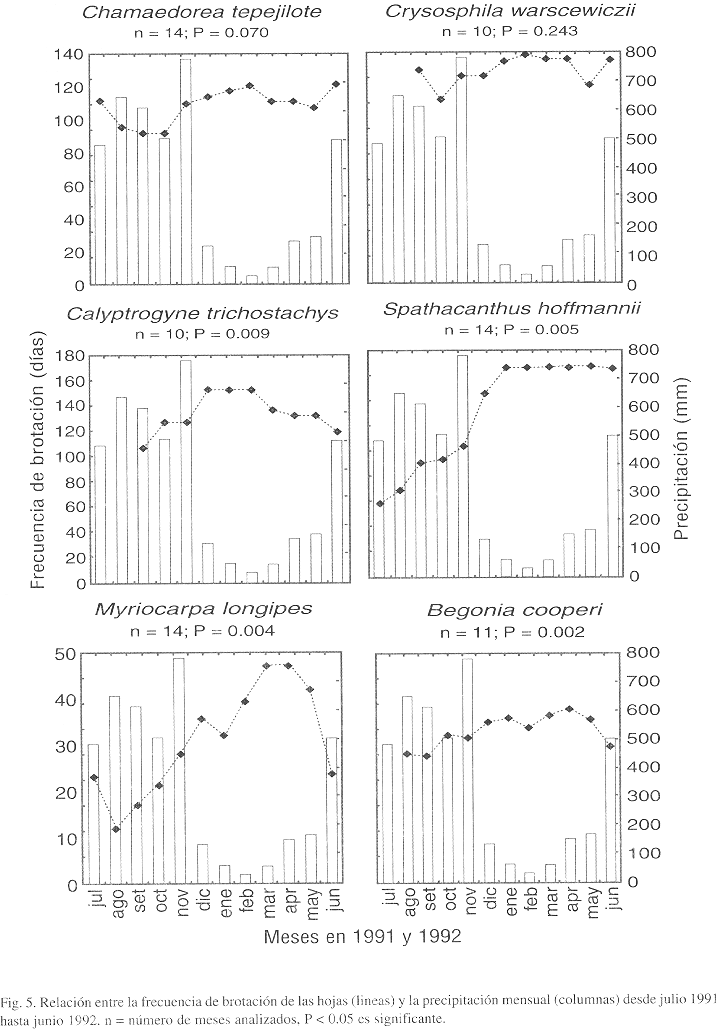
<P><FONT SIZE=-1><FONT FACE="Arial,Helvetica">La diferencia promedio entre la temperatura m&aacute;s alta y m&aacute;s baja medida simult&aacute;neamente en los 16 sitios fue solamente 1.2&deg;C. Por eso, se supuso que en esa regi&oacute;n la temperatura no tuvo por consecuencia diferencias en el ritmo de crecimiento de las hojas.</FONT></FONT><FONT SIZE=-1></FONT>      <P><FONT SIZE=-1><FONT FACE="Arial,Helvetica"><B>Influencia de la precipitaci&oacute;n:</B> Entre las plantas de tipo de brotaci&oacute;n cont&iacute;nuo, el ritmo anual de la precipitaci&oacute;n influy&oacute; la frecuencia de brotaci&oacute;n de algunas especies (<A HREF="#Fig. 5">Fig. 5</A>). En la estaci&oacute;n seca el intervalo entre dos hojas de <I>M. longipes</I>, <I>B.</I> <I>cooperi</I>, <I>C.</I> <I>trichostachys</I> y de <I>Spathacanthus hoffmannii</I> fue m&aacute;s largo que en la estaci&oacute;n lluviosa. Lo mismo vale para <I>H.</I> <I>dotae</I> (n=14, Spearman, P=0.002). Por otro lado, la frecuencia de brotaci&oacute;n de <I>C. warscewiczii</I> y <I>C. tepejilote</I> fue constante durante todo el a&ntilde;o.</FONT></FONT>     <BR><FONT SIZE=-1>&nbsp;</FONT><FONT SIZE=-1></FONT>      <P><FONT SIZE=-1>&nbsp;</FONT>     <CENTER><A NAME="Fig. 5"></A><IMG SRC="/img/fbpe/rbt/v47n3/0540i03.GIF" HEIGHT=1032 WIDTH=720></CENTER> <FONT SIZE=-1>&nbsp;</FONT>     
<CENTER><FONT SIZE=-1>&nbsp;</FONT></CENTER> <B><FONT FACE="Arial,Helvetica"><FONT SIZE=-1>Discusi&oacute;n</FONT></FONT></B><FONT SIZE=-1></FONT>      <P><FONT SIZE=-1><FONT FACE="Arial,Helvetica">La mayor&iacute;a de las plantas investigadas en el sotobosque de la RBAMB brotaron las hojas cont&iacute;nuamente durante todo el per&iacute;odo del estudio: tipo de brotaci&oacute;n C o tipo I seg&uacute;n <A HREF="#Frankie">Frankie <I>et al.</I> (1974)</A>, aunque algunas de estas especies (<I>C. trichostachys</I>, S<I>. hoffmannii</I>, <I>M. longipes</I>, <I>B. cooperi</I>, <I>H. dotae</I>) crecen m&aacute;s despacio en la estaci&oacute;n seca. Muchas palmas producen hojas cont&iacute;nuamente, como <I>Coco nucifera</I>, que produce una hoja nueva y bota una hoja vieja de cinco a&ntilde;os cada mes (<A HREF="#Mabberly">Mabberly 1983</A>). Tambi&eacute;n <I>Zamia skinneri</I> produce hojas nuevas en cualquier mes, pero con m&aacute;s frecuencia al principio de la estaci&oacute;n lluviosa (<A HREF="#Clark">Clark <I>et al.</I> 1992</A>). Otras especies brotan las hojas en per&iacute;odos irregulares: tipo P o tipo II seg&uacute;n <A HREF="#Frankie">Frankie <I>et al.</I> (1974)</A>. Ninguna de las especies del estrato arbustivo pertenece al tipo III seg&uacute;n <A HREF="#Frankie">Frankie <I>et al.</I> (1974)</A>, sin embargo un &aacute;rbol del dosel, <I>Ficus jimenezii</I>, pierde todas las hojas al principio de la estaci&oacute;n seca en diciembre y enero y tiene hojas nuevas poco despu&eacute;s en enero y febrero (<A HREF="#M.Freiberg94">M. Freiberg 1994</A>).</FONT></FONT><FONT SIZE=-1></FONT>      <P><FONT SIZE=-1><FONT FACE="Arial,Helvetica">Tambi&eacute;n, la frecuencia de brotaci&oacute;n var&iacute;a entre las plantas investigadas. Algunas especies producen de 15 a 21 hojas nuevas (<I>M. longipes</I>, <I>U. elata</I>, <I>M. arboreus</I>), otras solamente de una a dos hojas cada a&ntilde;o (<I>I. deltoidea</I>, <I>O. gomezii</I>). Estudios en la estaci&oacute;n biol&oacute;gica "La Selva", Costa Rica (<A HREF="#Bentley">Bentley 1979</A>, <A HREF="#Clark">Clark <I>et al. </I>1992</A>), muestran que las especies en el estrato arbustivo producen de cinco a seis hojas por eje cada a&ntilde;o (<I>Syngonium</I> sp., <I>Parathesis chryophylla</I>, <I>Renealmia cernua</I>) y otras solamente de una a dos (<I>Myrica carnea</I>, <I>Inga thibaudiana</I>, <I>Aphelandra</I> sp., <I>Proteum pittieri</I>, <I>Zamia skinneri</I>).</FONT></FONT><FONT SIZE=-1></FONT>      <P><FONT SIZE=-1><FONT FACE="Arial,Helvetica">La longevidad de las hojas var&iacute;a distintamente entre las plantas en el bosque tropical premontano de la RBAMB. Algunas plantas no tienen hojas de m&aacute;s de nueve o diez meses y otras hojas, sag&uacute;n la extrapolaci&oacute;n, pueden vivir m&aacute;s de cinco a&ntilde;os. Este resultado coincide con estudios sobre la fenolog&iacute;a de las hojas en el estrato arbustivo que se realizaron en el Parque Nacional Braulio Carillo, Costa Rica, (<A HREF="#Lücking94">R. L&uuml;cking 1994</A>, <A HREF="#Lücking95">A. L&uuml;cking 1995</A>). All&aacute;, la longevidad promedio de las hojas var&iacute;a entre 14 a 15 meses (<I>Costus</I> <I>curvibracteatus</I>, <I>Costus</I> <I>malortieanus</I>, <I>Columnea</I> <I>consanguinea</I>) y de 63 a 73 meses (<I>Ocotea</I> <I>atirrensis</I>, <I>Naucleopsis</I> <I>naga</I>, <I>I.</I> <I>deltoidea</I>). En ambas regiones, entre las plantas investigadas, <I>I. deltoidea</I> y especies de <I>Ocotea</I> son las plantas con las hojas m&aacute;s viejas. Valores similares tambi&eacute;n existen sobre las ep&iacute;fitas vasculares en RBAMB. <I>Columnea microphylla</I> tiene hojas de m&aacute;s de cuatro a&ntilde;os, mientras que <I>Columnea verecunda</I> no tiene hojas de m&aacute;s de un a&ntilde;o (<A HREF="#M.Freiberg94">M. Freiberg 1994</A>). En la estaci&oacute;n biol&oacute;gica "La Selva", Costa Rica, las hojas de <I>Zamia skinneri</I> pueden vivir nueve a&ntilde;os o m&aacute;s (<A HREF="#Clark">Clark <I>et al.</I> 1992</A>).</FONT></FONT><FONT SIZE=-1></FONT>      ]]></body>
<body><![CDATA[<P><FONT SIZE=-1><FONT FACE="Arial,Helvetica">La longevidad depende en parte del microclima. Generalmente, la longevidad de follaje fue m&aacute;s alta en sitios m&aacute;s oscuros y m&aacute;s secos. Pero, esta relaci&oacute;n no fue significante en todos los casos. Las variaciones del microclima (temperatura, luz, humedad) en el sotobosque son relativamente peque&ntilde;as y muchas veces no tienen por consecuencia una influencia significante sobre el crecimiento. Si los estudios incluyen individuos que crecen en claros, como en el caso de <I>B. cooperi</I>, existe una correlaci&oacute;n significante. Este resultado coincide con estudios realizados en la Isla Barro Colorado, Panam&aacute; (<A HREF="#Coley88">Coley 1988</A>). All&aacute;, la longevidad promedio de hojas de especies t&iacute;picas de sombra es tres veces m&aacute;s alta, 21.7 meses, que la longevidad de las hojas de especies de claros, 6.8 meses (<A HREF="#Coley88">Coley 1988</A>). En "La Selva", <A HREF="#Bentley">Bentley (1979)</A> tambi&eacute;n encontr&oacute;, que las plantas en los claros botan sus hojas m&aacute;s r&aacute;pido que en la sombra. Otros estudios tambi&eacute;n muestran que la abscisi&oacute;n de las hojas de plantas creciendo en la luz es m&aacute;s r&aacute;pida que la abscisi&oacute;n de hojas en la sombra (<A HREF="#Bentley">Bentley 1979</A>, <A HREF="#Ackerly">Ackerly y Bazzaz 1995</A>).</FONT></FONT><FONT SIZE=-1></FONT>      <P><FONT SIZE=-1><FONT FACE="Arial,Helvetica">Esta diferencia entre las plantas creciendo en la luz (claros) y en la sombra (sotobosque) refleja dos tipos de estrategia de defenderse de los herb&iacute;voros. Las especies persistentes en el sotobosque crecen despacio y probablemente no pueden permitirse de cambiar las hojas frecuentemente. Por eso, es imprescindible de defender las hojas efectivamente contra los herb&iacute;voros (<A HREF="#Coley82">Coley 1982</A>). Debido a esta defensa qu&iacute;mica, la cantidad de ep&iacute;filas en las hojas de estas especies est&aacute; reducida significativamente (<A HREF="#Coley93">Coley <I>et al.</I> 1993</A>). Por el contrario, las especies pioneras dependen de una germinaci&oacute;n en claros nuevos. Estas plantas crecen r&aacute;pidamente y no gastan energ&iacute;a en hojas longevas (<A HREF="#Coley82">Coley 1982</A>).</FONT></FONT><FONT SIZE=-1></FONT>      <P><FONT SIZE=-1><FONT FACE="Arial,Helvetica">No existen datos sobre la influencia de la humedad del aire sobre la longevidad de hojas. Se puede suponer, que las hojas en sitios secos son m&aacute;s duras o esclerom&oacute;rficas y por eso son m&aacute;s longevas que hojas en sitios m&aacute;s h&uacute;medos.</FONT></FONT><FONT SIZE=-1></FONT>      <P><FONT SIZE=-1><FONT FACE="Arial,Helvetica">Adem&aacute;s, la longevidad de las hojas tiene importancia para el desarollo de muchos organismos que viven en la superficie foliar. Algunas especies de l&iacute;quenes de los g&eacute;neros <I>Porina</I>, <I>Dimerella</I> y <I>Echinoplaca</I> se pueden observar a partir de 2.5 meses (<A HREF="#Hartmann">Hartmann 1993</A>). Para frutificar necesitan por lo menos seis meses (<A HREF="#E.Freiberg94">E. Freiberg 1994</A>), y la mayor&iacute;a de las especies necesitan mucho m&aacute;s tiempo para su desarrollo. En la RBAMB, los musgos aparecen en hojas a partir de cinco meses, y 2-5% de la superficie de hojas de 7-10 meses de edad es poblada por musgos. Algas azules (cianobacterias) necesitan como m&iacute;nimo ocho meses para establecerse (<A HREF="#E.Freiberg94">E. Freiberg 1994</A>).</FONT></FONT><FONT SIZE=-1></FONT>      <P><FONT SIZE=-1><FONT FACE="Arial,Helvetica"><A HREF="#Richards">Richards (1966)</A> observ&oacute; que los &aacute;rboles caducifolios tambi&eacute;n son abundantes en bosques h&uacute;medos con un clima constante, especialmente en el dosel, y que las plantas del estrato arbustivo son casi completamente perennifolios. Los datos de este estudio muestran que aunque el clima en el sotobosque de la RBAMB es relativamente constante, las variaciones m&iacute;nimas del microclima son suficientes para influir en el crecimiento de las plantas en el estrato arbustivo.</FONT></FONT>     <BR><FONT SIZE=-1>&nbsp;</FONT>     <BR><FONT SIZE=-1>&nbsp;</FONT>     <BR><B><FONT FACE="Arial,Helvetica"><FONT SIZE=-1>Agradecimientos</FONT></FONT></B>     <BR><B><FONT SIZE=-1>&nbsp;</FONT></B><FONT SIZE=-1></FONT>      <P><FONT SIZE=-1><FONT FACE="Arial,Helvetica">Agradezco a Rodolfo Ortiz Vargas, director de la Reserva Biol&oacute;gica Alberto Ml. Brenes, a Victor Mora y la Universidad de Costa Rica y el Herbario Nacional de Costa Rica por su apoyo. Adem&aacute;s, doy las gracias a Alma Koch y Klaus Mehltreter por sus comentarios sobre el texto y por su ayuda en corregir el manuscrito. Esta investigaci&oacute;n recibi&oacute; apoyo a trav&eacute;s de fondos del DAAD (Servicio Alem&aacute;n de Intercambio Acad&eacute;mico) y de la Studienstiftung des Deutschen Volkes.</FONT></FONT>     ]]></body>
<body><![CDATA[<BR><FONT SIZE=-1>&nbsp;</FONT>     <CENTER><FONT SIZE=-1>&nbsp;</FONT></CENTER> <B><FONT FACE="Arial,Helvetica"><FONT SIZE=-1>Resumen</FONT></FONT></B>     <CENTER><FONT SIZE=-1>&nbsp;</FONT></CENTER> <FONT SIZE=-1><FONT FACE="Arial,Helvetica">Durante un a&ntilde;o y medio se investig&oacute; el ritmo de crecimiento y la longevidad de follaje de 22 especies abundantes del estrato arbustivo en el bosque tropical premontano de la Reserva Biol&oacute;gica Alberto Ml. Brenes, Provincia Alajuela, San Ram&oacute;n, Costa Rica. Se distinguieron y describieron tres tipos de brotaci&oacute;n de las hojas. Una gran cantidad de las especies, especialmente las monocotiled&oacute;neas, brotan hojas nuevas en intervalos determinados cont&iacute;nuamente durante todo el a&ntilde;o, en efecto parte de las plantas muestran una producci&oacute;n de hojas m&aacute;s lenta en la estaci&oacute;n seca. Esta frecuencia de brotaci&oacute;n, es decir el intervalo entre el desarrollo de dos hojas siguientes, var&iacute;a entre las especies investigadas entre 17-22 d&iacute;as y m&aacute;s de medio a&ntilde;o. La longevidad de follaje promedio de las plantas investigadas var&iacute;a entre medio y cuatro a&ntilde;os. Se estim&oacute; que la edad m&aacute;xima de hojas de las palmas <I>Cryosophila warscewiczii</I>, <I>Iriartea deltoidea</I> y <I>Calyptrogyne</I> <I>trichostachys</I> es m&aacute;s de cinco a&ntilde;os. Generalmente, en sitios m&aacute;s secos y m&aacute;s oscuros, la frecuencia de brotaci&oacute;n fue m&aacute;s larga y la longevidad de follaje m&aacute;s alta. Esta relaci&oacute;n fue significante en algunos casos, pero muestra que aunque las diferencias microclim&aacute;ticas son muy peque&ntilde;as, el crecimiento var&iacute;a entre diferentes sitios en el bosque. Adem&aacute;s, los datos muestran que aunque el clima en el sotobosque premontano muy h&uacute;medo es relativamente constante, algunas especies muestran una estacionalidad del ritmo de crecimiento.</FONT></FONT><FONT SIZE=-1></FONT>      <P><FONT SIZE=-1><FONT FACE="Arial,Helvetica">&nbsp;</FONT></FONT>     <BR><B><FONT FACE="Arial,Helvetica"><FONT SIZE=-1>Referencias</FONT></FONT></B><FONT SIZE=-1></FONT>      <P><A NAME="Ackerly"></A><FONT SIZE=-1><FONT FACE="Arial,Helvetica">Ackerly, D.D. &amp; F.A. Bazzaz. 1995. Leaf dynamics, self-shading and carbon gain in seedlings of a tropical pioneer tree. Oecologia 101: 289-298.</FONT></FONT><FONT SIZE=-1></FONT>      <P><A NAME="Addicott"></A><FONT SIZE=-1><FONT FACE="Arial,Helvetica">Addicott, F.T. &amp; J.L. Lyon. 1973. Physiological ecology of abscission. <I>In</I> T.T. Kozlowski (ed.). The Shedding of Plant Parts. Academic, Londres. 560 p.</FONT></FONT><FONT SIZE=-1></FONT>      <!-- ref --><P><A NAME="Bannister"></A><FONT SIZE=-1><FONT FACE="Arial,Helvetica">Bannister, P. 1986. Water relation and stress, p. 73-82. <I>In</I> P.D. Moore &amp; S.B. Chapman (eds.). Methods in Plant Ecology. Blackwell Scientific, Oxford.</FONT></FONT><FONT SIZE=-1></FONT>    &nbsp;&nbsp;&nbsp;&nbsp;&nbsp;&nbsp;&nbsp;&nbsp;[&#160;<a href="javascript:void(0);" onclick="javascript: window.open('/scielo.php?script=sci_nlinks&ref=1313132&pid=S0034-7744199900030000500003&lng=','','width=640,height=500,resizable=yes,scrollbars=1,menubar=yes,');">Links</a>&#160;]<!-- end-ref --><!-- ref --><P><A NAME="Bentley"></A><FONT SIZE=-1><FONT FACE="Arial,Helvetica">Bentley, B.L. 1979. Longevity of individual leaves in a tropical rainforest understory. Ann. Bot. 43: 119-121.</FONT></FONT><FONT SIZE=-1></FONT>    &nbsp;&nbsp;&nbsp;&nbsp;&nbsp;&nbsp;&nbsp;&nbsp;[&#160;<a href="javascript:void(0);" onclick="javascript: window.open('/scielo.php?script=sci_nlinks&ref=1313133&pid=S0034-7744199900030000500004&lng=','','width=640,height=500,resizable=yes,scrollbars=1,menubar=yes,');">Links</a>&#160;]<!-- end-ref --><!-- ref --><P><A NAME="Borchert"></A><FONT SIZE=-1><FONT FACE="Arial,Helvetica">Borchert, R. 1983. Phenology and control of flowering in tropical trees. Biotropica 15: 81-89.</FONT></FONT><FONT SIZE=-1></FONT>    &nbsp;&nbsp;&nbsp;&nbsp;&nbsp;&nbsp;&nbsp;&nbsp;[&#160;<a href="javascript:void(0);" onclick="javascript: window.open('/scielo.php?script=sci_nlinks&ref=1313134&pid=S0034-7744199900030000500005&lng=','','width=640,height=500,resizable=yes,scrollbars=1,menubar=yes,');">Links</a>&#160;]<!-- end-ref --><!-- ref --><P><A NAME="Chabot"></A><FONT SIZE=-1><FONT FACE="Arial,Helvetica">Chabot, B.F. &amp; D.J. Hicks. 1982. The ecology of leaf life spans. Annu. Rev. Ecol. Syst. 13: 229-259.</FONT></FONT><FONT SIZE=-1></FONT>    &nbsp;&nbsp;&nbsp;&nbsp;&nbsp;&nbsp;&nbsp;&nbsp;[&#160;<a href="javascript:void(0);" onclick="javascript: window.open('/scielo.php?script=sci_nlinks&ref=1313135&pid=S0034-7744199900030000500006&lng=','','width=640,height=500,resizable=yes,scrollbars=1,menubar=yes,');">Links</a>&#160;]<!-- end-ref --><!-- ref --><P><A NAME="Clark"></A><FONT SIZE=-1><FONT FACE="Arial,Helvetica">Clark, D.B., Clark, D.A. &amp; Grayum, M.H. (1992): Leaf demography of a neotropical rain forest cycad, <I>Zamia skinneri</I> (Zamiaceae). Am. J. Bot. 78: 28-33.</FONT></FONT><FONT SIZE=-1></FONT>    &nbsp;&nbsp;&nbsp;&nbsp;&nbsp;&nbsp;&nbsp;&nbsp;[&#160;<a href="javascript:void(0);" onclick="javascript: window.open('/scielo.php?script=sci_nlinks&ref=1313136&pid=S0034-7744199900030000500007&lng=','','width=640,height=500,resizable=yes,scrollbars=1,menubar=yes,');">Links</a>&#160;]<!-- end-ref --><!-- ref --><P><A NAME="Coley82"></A><FONT SIZE=-1><FONT FACE="Arial,Helvetica">Coley, P.D. 1982. Rates of herbivory on different tropical trees, p. 123-132. <I>In</I> E.G.Jr. Leigh, A.S. Rand &amp; D.M. Windsor (eds.). The Ecology of a Tropical Forest. Seasonal Rhythms and Long-term Changes. Smithsonian Institution, Washington, D.C.</FONT></FONT><FONT SIZE=-1></FONT>    &nbsp;&nbsp;&nbsp;&nbsp;&nbsp;&nbsp;&nbsp;&nbsp;[&#160;<a href="javascript:void(0);" onclick="javascript: window.open('/scielo.php?script=sci_nlinks&ref=1313137&pid=S0034-7744199900030000500008&lng=','','width=640,height=500,resizable=yes,scrollbars=1,menubar=yes,');">Links</a>&#160;]<!-- end-ref --><!-- ref --><P><A NAME="Coley88"></A><FONT SIZE=-1><FONT FACE="Arial,Helvetica">Coley, P.D. 1988. Effects of plant growth rate and leaf lifetime on the amount and type of anti-herbivore defense. Oecologia 74: 531-536.</FONT></FONT><FONT SIZE=-1></FONT>    &nbsp;&nbsp;&nbsp;&nbsp;&nbsp;&nbsp;&nbsp;&nbsp;[&#160;<a href="javascript:void(0);" onclick="javascript: window.open('/scielo.php?script=sci_nlinks&ref=1313138&pid=S0034-7744199900030000500009&lng=','','width=640,height=500,resizable=yes,scrollbars=1,menubar=yes,');">Links</a>&#160;]<!-- end-ref --><!-- ref --><P><A NAME="Coley93"></A><FONT SIZE=-1><FONT FACE="Arial,Helvetica">Coley, P.D., T.A. Kursar &amp; J.-L. Machado. 1993. Colonization of tropical rain forest leaves by epiphylls: effects of site and host plant leaf lifetime. Ecology 74: 619-623.</FONT></FONT><FONT SIZE=-1></FONT>    &nbsp;&nbsp;&nbsp;&nbsp;&nbsp;&nbsp;&nbsp;&nbsp;[&#160;<a href="javascript:void(0);" onclick="javascript: window.open('/scielo.php?script=sci_nlinks&ref=1313139&pid=S0034-7744199900030000500010&lng=','','width=640,height=500,resizable=yes,scrollbars=1,menubar=yes,');">Links</a>&#160;]<!-- end-ref --><!-- ref --><P><A NAME="Dombeck"></A><FONT SIZE=-1><FONT FACE="Arial,Helvetica">Dombeck, T. 1997. Distribuci&oacute;n altitudinal de los helechos arborescentes en la Reserva Biol&oacute;gica Alberto Brenes, Cordillera de Tilar&aacute;n, p. 37-45. <I>In</I> I. Wattenberg &amp; S.-W. Breckle (eds). Contributions to Tropical Ecology Research in Costa Rica. Bielfelder &Ouml;kologische Beitr&auml;ge 11.</FONT></FONT><FONT SIZE=-1></FONT>    &nbsp;&nbsp;&nbsp;&nbsp;&nbsp;&nbsp;&nbsp;&nbsp;[&#160;<a href="javascript:void(0);" onclick="javascript: window.open('/scielo.php?script=sci_nlinks&ref=1313140&pid=S0034-7744199900030000500011&lng=','','width=640,height=500,resizable=yes,scrollbars=1,menubar=yes,');">Links</a>&#160;]<!-- end-ref --><!-- ref --><P><A NAME="Frankie"></A><FONT SIZE=-1><FONT FACE="Arial,Helvetica">Frankie, G.W., H.G. Baker &amp; P.A. Opler. 1974. Comparative phenological studies of trees in tropical wet and dry forests in the lowlands of Costa Rica. J. Ecol. 62: 881-913.</FONT></FONT><FONT SIZE=-1></FONT>    &nbsp;&nbsp;&nbsp;&nbsp;&nbsp;&nbsp;&nbsp;&nbsp;[&#160;<a href="javascript:void(0);" onclick="javascript: window.open('/scielo.php?script=sci_nlinks&ref=1313141&pid=S0034-7744199900030000500012&lng=','','width=640,height=500,resizable=yes,scrollbars=1,menubar=yes,');">Links</a>&#160;]<!-- end-ref --><!-- ref --><P><A NAME="E.Freiberg94"></A><FONT SIZE=-1><FONT FACE="Arial,Helvetica">Freiberg, E. 1994. Stickstoffixierung in der Phyllosph&auml;re tropischer Regenwaldpflanzen in Costa Rica. Tesis de doctorado, Universidad de Ulm, Alemania. 121 p.</FONT></FONT><FONT SIZE=-1></FONT>    &nbsp;&nbsp;&nbsp;&nbsp;&nbsp;&nbsp;&nbsp;&nbsp;[&#160;<a href="javascript:void(0);" onclick="javascript: window.open('/scielo.php?script=sci_nlinks&ref=1313142&pid=S0034-7744199900030000500013&lng=','','width=640,height=500,resizable=yes,scrollbars=1,menubar=yes,');">Links</a>&#160;]<!-- end-ref --><!-- ref --><P><A NAME="E.Freiberg98"></A><FONT SIZE=-1><FONT FACE="Arial,Helvetica">Freiberg, E. 1998. Microclimatical parameters influencing nitrogen fixation in the phyllosphere in a Costa Rican premontane rain forest. Oecologia 117: 9-18.</FONT></FONT><FONT SIZE=-1></FONT>    &nbsp;&nbsp;&nbsp;&nbsp;&nbsp;&nbsp;&nbsp;&nbsp;[&#160;<a href="javascript:void(0);" onclick="javascript: window.open('/scielo.php?script=sci_nlinks&ref=1313143&pid=S0034-7744199900030000500014&lng=','','width=640,height=500,resizable=yes,scrollbars=1,menubar=yes,');">Links</a>&#160;]<!-- end-ref --><!-- ref --><P><A NAME="M.Freiberg94"></A><FONT SIZE=-1><FONT FACE="Arial,Helvetica">Freiberg, M. 1994. Ph&auml;nomorphologie epiphytischer Gesneriaceen in Costa Rica unter besonderer Ber&uuml;cksichtigung des Mikroklimas. Tesis de doctorado, Universidad de Ulm, Alemania. 147 p.</FONT></FONT><FONT SIZE=-1></FONT>    &nbsp;&nbsp;&nbsp;&nbsp;&nbsp;&nbsp;&nbsp;&nbsp;[&#160;<a href="javascript:void(0);" onclick="javascript: window.open('/scielo.php?script=sci_nlinks&ref=1313144&pid=S0034-7744199900030000500015&lng=','','width=640,height=500,resizable=yes,scrollbars=1,menubar=yes,');">Links</a>&#160;]<!-- end-ref --><!-- ref --><P><A NAME="M.Freiberg96"></A><FONT SIZE=-1><FONT FACE="Arial,Helvetica">Freiberg, M. 1996. Phenotype expression of epipyhtic Gesneriaceae under different microclimatic conditions in Costa Rica. Ecotropica 2: 49-57.</FONT></FONT><FONT SIZE=-1></FONT>    &nbsp;&nbsp;&nbsp;&nbsp;&nbsp;&nbsp;&nbsp;&nbsp;[&#160;<a href="javascript:void(0);" onclick="javascript: window.open('/scielo.php?script=sci_nlinks&ref=1313145&pid=S0034-7744199900030000500016&lng=','','width=640,height=500,resizable=yes,scrollbars=1,menubar=yes,');">Links</a>&#160;]<!-- end-ref --><!-- ref --><P><A NAME="M.Freiberg97"></A><FONT SIZE=-1><FONT FACE="Arial,Helvetica">Freiberg, M. 1997. Spatial and temporal pattern of temperature and humidity of a tropical premontane rain forest tree in Costa Rica. Selbyana 18: 77-84.</FONT></FONT><FONT SIZE=-1></FONT>    &nbsp;&nbsp;&nbsp;&nbsp;&nbsp;&nbsp;&nbsp;&nbsp;[&#160;<a href="javascript:void(0);" onclick="javascript: window.open('/scielo.php?script=sci_nlinks&ref=1313146&pid=S0034-7744199900030000500017&lng=','','width=640,height=500,resizable=yes,scrollbars=1,menubar=yes,');">Links</a>&#160;]<!-- end-ref --><!-- ref --><P><A NAME="Hartmann"></A><FONT SIZE=-1><FONT FACE="Arial,Helvetica">Hartmann, C. 1993. &Ouml;kologische Untersuchungen an foliikolen Flechten in Costa Rica, Zentralamerika. T&eacute;sis de diploma, Universidad de Ulm, Alemania. 86 p.</FONT></FONT><FONT SIZE=-1></FONT>    &nbsp;&nbsp;&nbsp;&nbsp;&nbsp;&nbsp;&nbsp;&nbsp;[&#160;<a href="javascript:void(0);" onclick="javascript: window.open('/scielo.php?script=sci_nlinks&ref=1313147&pid=S0034-7744199900030000500018&lng=','','width=640,height=500,resizable=yes,scrollbars=1,menubar=yes,');">Links</a>&#160;]<!-- end-ref --><!-- ref --><P><A NAME="Hartshorn"></A><FONT SIZE=-1><FONT FACE="Arial,Helvetica">Hartshorn, G.S. 1983. Costa Rica Perfil Ambiental. Centro Cient&iacute;fico Tropical, San Jos&eacute;, Costa Rica. 151 p.</FONT></FONT><FONT SIZE=-1></FONT>    &nbsp;&nbsp;&nbsp;&nbsp;&nbsp;&nbsp;&nbsp;&nbsp;[&#160;<a href="javascript:void(0);" onclick="javascript: window.open('/scielo.php?script=sci_nlinks&ref=1313148&pid=S0034-7744199900030000500019&lng=','','width=640,height=500,resizable=yes,scrollbars=1,menubar=yes,');">Links</a>&#160;]<!-- end-ref --><!-- ref --><P><A NAME="Holdridge"></A><FONT SIZE=-1><FONT FACE="Arial,Helvetica">Holdridge, L.R. 1967. Life Zone Ecology. Tropical Science Center, San Jos&eacute;, Costa Rica. 206 p.</FONT></FONT><FONT SIZE=-1></FONT>    &nbsp;&nbsp;&nbsp;&nbsp;&nbsp;&nbsp;&nbsp;&nbsp;[&#160;<a href="javascript:void(0);" onclick="javascript: window.open('/scielo.php?script=sci_nlinks&ref=1313149&pid=S0034-7744199900030000500020&lng=','','width=640,height=500,resizable=yes,scrollbars=1,menubar=yes,');">Links</a>&#160;]<!-- end-ref --><!-- ref --><P><A NAME="Janzen"></A><FONT SIZE=-1><FONT FACE="Arial,Helvetica">Janzen, D.H. 1975. Ecology of Plants in the Tropics. Butler &amp; Tanner, Frome, Londres. 66 p.</FONT></FONT><FONT SIZE=-1></FONT>    &nbsp;&nbsp;&nbsp;&nbsp;&nbsp;&nbsp;&nbsp;&nbsp;[&#160;<a href="javascript:void(0);" onclick="javascript: window.open('/scielo.php?script=sci_nlinks&ref=1313150&pid=S0034-7744199900030000500021&lng=','','width=640,height=500,resizable=yes,scrollbars=1,menubar=yes,');">Links</a>&#160;]<!-- end-ref --><!-- ref --><P><A NAME="Leigh"></A><FONT SIZE=-1><FONT FACE="Arial,Helvetica">Leigh, E.G.Jr. &amp; D.M. Winsdor. 1982. Forest production and regulation of primary consumers on Barro Colorado Island, p. 111-122. <I>In</I> E.G.Jr. Leigh, A.S. Rand &amp; D.M. Windsor (eds.). The Ecology of a Tropical Forest. Seasonal Rhythms and Long-term Changes. Smithsonian Institution, Washington, D.C.</FONT></FONT><FONT SIZE=-1></FONT>    &nbsp;&nbsp;&nbsp;&nbsp;&nbsp;&nbsp;&nbsp;&nbsp;[&#160;<a href="javascript:void(0);" onclick="javascript: window.open('/scielo.php?script=sci_nlinks&ref=1313151&pid=S0034-7744199900030000500022&lng=','','width=640,height=500,resizable=yes,scrollbars=1,menubar=yes,');">Links</a>&#160;]<!-- end-ref --><!-- ref --><P><A NAME="Lücking95"></A><FONT SIZE=-1><FONT FACE="Arial,Helvetica">L&uuml;cking, A. 1995. Diversit&auml;t und Mikrohabitatpr&auml;ferenzen epiphyller Moose in einem tropischen Regenwald in Costa Rica unter besonderer Ber&uuml;cksichtigung der Familie Lejeuneaceae. Tesis de doctorado, Universidad de Ulm, Alemania. 211 p.</FONT></FONT><FONT SIZE=-1></FONT>    &nbsp;&nbsp;&nbsp;&nbsp;&nbsp;&nbsp;&nbsp;&nbsp;[&#160;<a href="javascript:void(0);" onclick="javascript: window.open('/scielo.php?script=sci_nlinks&ref=1313152&pid=S0034-7744199900030000500023&lng=','','width=640,height=500,resizable=yes,scrollbars=1,menubar=yes,');">Links</a>&#160;]<!-- end-ref --><!-- ref --><P><A NAME="Lücking94"></A><FONT SIZE=-1><FONT FACE="Arial,Helvetica">L&uuml;cking, R. 1994. Foliikole Flechten und ihre Mikrohabitatpr&auml;ferenzen in einem tropischen Regenwald in Costa Rica. Tesis de doctorado, Universidad de Ulm, Alemania. 203 p.</FONT></FONT><FONT SIZE=-1></FONT>    &nbsp;&nbsp;&nbsp;&nbsp;&nbsp;&nbsp;&nbsp;&nbsp;[&#160;<a href="javascript:void(0);" onclick="javascript: window.open('/scielo.php?script=sci_nlinks&ref=1313153&pid=S0034-7744199900030000500024&lng=','','width=640,height=500,resizable=yes,scrollbars=1,menubar=yes,');">Links</a>&#160;]<!-- end-ref --><!-- ref --><P><A NAME="Mabberly"></A><FONT SIZE=-1><FONT FACE="Arial,Helvetica">Mabberly, D.J. 1983. Tropical Rain Forest Ecology. Blackie, Bishopbriggs, Glasgow. 156 p.</FONT></FONT><FONT SIZE=-1></FONT>    &nbsp;&nbsp;&nbsp;&nbsp;&nbsp;&nbsp;&nbsp;&nbsp;[&#160;<a href="javascript:void(0);" onclick="javascript: window.open('/scielo.php?script=sci_nlinks&ref=1313154&pid=S0034-7744199900030000500025&lng=','','width=640,height=500,resizable=yes,scrollbars=1,menubar=yes,');">Links</a>&#160;]<!-- end-ref --><!-- ref --><P><A NAME="Medway"></A><FONT SIZE=-1><FONT FACE="Arial,Helvetica">Medway. L. (1972): Phenology of a tropical rain forest in Malaya. Biol. J. Linnean Soc., London 4: 117-146.</FONT></FONT><FONT SIZE=-1></FONT>    &nbsp;&nbsp;&nbsp;&nbsp;&nbsp;&nbsp;&nbsp;&nbsp;[&#160;<a href="javascript:void(0);" onclick="javascript: window.open('/scielo.php?script=sci_nlinks&ref=1313155&pid=S0034-7744199900030000500026&lng=','','width=640,height=500,resizable=yes,scrollbars=1,menubar=yes,');">Links</a>&#160;]<!-- end-ref --><!-- ref --><P><A NAME="Ortiz"></A><FONT SIZE=-1><FONT FACE="Arial,Helvetica">Ortiz Vargas, R. (ed.). 1991. Memoria de Investigaci&oacute;n Reserva Forestal de San Ram&oacute;n. Universidad de Costa Rica (Serie Cat&eacute;dra Universitaria), San Jos&eacute;, Costa Rica. 110 p.</FONT></FONT><FONT SIZE=-1></FONT>    &nbsp;&nbsp;&nbsp;&nbsp;&nbsp;&nbsp;&nbsp;&nbsp;[&#160;<a href="javascript:void(0);" onclick="javascript: window.open('/scielo.php?script=sci_nlinks&ref=1313156&pid=S0034-7744199900030000500027&lng=','','width=640,height=500,resizable=yes,scrollbars=1,menubar=yes,');">Links</a>&#160;]<!-- end-ref --><!-- ref --><P><A NAME="Reich"></A><FONT SIZE=-1><FONT FACE="Arial,Helvetica">Reich, P.B. &amp; R. Borchert. 1984. Water stress and tree phenology in a tropical dry forest in the lowlands of Costa Rica. J. Ecol. 72: 61-74.</FONT></FONT><FONT SIZE=-1></FONT>    &nbsp;&nbsp;&nbsp;&nbsp;&nbsp;&nbsp;&nbsp;&nbsp;[&#160;<a href="javascript:void(0);" onclick="javascript: window.open('/scielo.php?script=sci_nlinks&ref=1313157&pid=S0034-7744199900030000500028&lng=','','width=640,height=500,resizable=yes,scrollbars=1,menubar=yes,');">Links</a>&#160;]<!-- end-ref --><!-- ref --><P><A NAME="Richards"></A><FONT SIZE=-1><FONT FACE="Arial,Helvetica">Richards, P.W. 1966. The tropical rain forest. An ecological study. Cambridge University, Cambridge. 450 p.</FONT></FONT><FONT SIZE=-1></FONT>    &nbsp;&nbsp;&nbsp;&nbsp;&nbsp;&nbsp;&nbsp;&nbsp;[&#160;<a href="javascript:void(0);" onclick="javascript: window.open('/scielo.php?script=sci_nlinks&ref=1313158&pid=S0034-7744199900030000500029&lng=','','width=640,height=500,resizable=yes,scrollbars=1,menubar=yes,');">Links</a>&#160;]<!-- end-ref --><!-- ref --><P><A NAME="Vargas"></A><FONT SIZE=-1><FONT FACE="Arial,Helvetica">Vargas, G. 1991. Algunas consideraciones geogr&aacute;ficas, geol&oacute;gicas y ecol&oacute;gicas de la cuenca del R&iacute;o San Lorenzo, San Ram&oacute;n, Alajuela, Costa Rica, p. 17-22. <I>In</I> Ortiz Vargas, R. (ed.). Memoria de Investigaci&oacute;n. Reserva Forestal San Ram&oacute;n. Universidad de Costa Rica (Serie Cat&eacute;dra Universitaria), San Jos&eacute;, Costa Rica.</FONT></FONT><FONT SIZE=-1></FONT>    &nbsp;&nbsp;&nbsp;&nbsp;&nbsp;&nbsp;&nbsp;&nbsp;[&#160;<a href="javascript:void(0);" onclick="javascript: window.open('/scielo.php?script=sci_nlinks&ref=1313159&pid=S0034-7744199900030000500030&lng=','','width=640,height=500,resizable=yes,scrollbars=1,menubar=yes,');">Links</a>&#160;]<!-- end-ref --><!-- ref --><P><A NAME="Walter"></A><FONT SIZE=-1><FONT FACE="Arial,Helvetica">Walter, H. (1973): Die Vegetation der Erde. Band I. Die tropischen und subtropischen Zonen. Gustav Fischer, Stuttgart. 743 p.</FONT></FONT><FONT SIZE=-1></FONT>    &nbsp;&nbsp;&nbsp;&nbsp;&nbsp;&nbsp;&nbsp;&nbsp;[&#160;<a href="javascript:void(0);" onclick="javascript: window.open('/scielo.php?script=sci_nlinks&ref=1313160&pid=S0034-7744199900030000500031&lng=','','width=640,height=500,resizable=yes,scrollbars=1,menubar=yes,');">Links</a>&#160;]<!-- end-ref --><!-- ref --><P><A NAME="Wattenberg95"></A><FONT SIZE=-1><FONT FACE="Arial,Helvetica">Wattenberg, I. &amp; S.-W. Breckle. 1995. Tree species diversity of a premontane rain forest in the Cordillera de Tilar&aacute;n, Costa Rica. Ecotropica 1: 21-30.</FONT></FONT><FONT SIZE=-1></FONT>    &nbsp;&nbsp;&nbsp;&nbsp;&nbsp;&nbsp;&nbsp;&nbsp;[&#160;<a href="javascript:void(0);" onclick="javascript: window.open('/scielo.php?script=sci_nlinks&ref=1313161&pid=S0034-7744199900030000500032&lng=','','width=640,height=500,resizable=yes,scrollbars=1,menubar=yes,');">Links</a>&#160;]<!-- end-ref --><!-- ref --><P><A NAME="Wattenberg97"></A><FONT SIZE=-1><FONT FACE="Arial,Helvetica">Wattenberg, I. &amp; S.-W. Breckle (eds.). 1997. Contributions to Tropical Ecology Research in Costa Rica. Bielfelder &Ouml;kologische Beitr&auml;ge, vol. 11, Bielefeld, 99 p.</FONT></FONT><FONT SIZE=-1></FONT>    &nbsp;&nbsp;&nbsp;&nbsp;&nbsp;&nbsp;&nbsp;&nbsp;[&#160;<a href="javascript:void(0);" onclick="javascript: window.open('/scielo.php?script=sci_nlinks&ref=1313162&pid=S0034-7744199900030000500033&lng=','','width=640,height=500,resizable=yes,scrollbars=1,menubar=yes,');">Links</a>&#160;]<!-- end-ref --><!-- ref --><P><A NAME="Whitmore"></A><FONT SIZE=-1><FONT FACE="Arial,Helvetica">Whitmore, T.C. 1993. Tropische Regenw&auml;lder. Spektrum Akademischer, Heidelberg. 275 p.</FONT></FONT>    &nbsp;&nbsp;&nbsp;&nbsp;&nbsp;&nbsp;&nbsp;&nbsp;[&#160;<a href="javascript:void(0);" onclick="javascript: window.open('/scielo.php?script=sci_nlinks&ref=1313163&pid=S0034-7744199900030000500034&lng=','','width=640,height=500,resizable=yes,scrollbars=1,menubar=yes,');">Links</a>&#160;]<!-- end-ref --><BR><FONT SIZE=-1></FONT>&nbsp;      ]]></body>
<body><![CDATA[<P><A NAME="1b"></A><FONT SIZE=-1><FONT FACE="Arial,Helvetica"><SUP><A HREF="#1a">1</A></SUP> Departamento Spezielle Botanik, Universidad de Ulm, 89069 Ulm, Rep&uacute;blica Federal de Alemania, Fax: ++49-731-502-2720, correo electr&oacute;nico: <A HREF="mailto:elke.freiberg@biologie.uni-ulm.de">elke.freiberg@biologie.uni-ulm.de</A></FONT></FONT>      ]]></body><back>
<ref-list>
<ref id="B1">
<nlm-citation citation-type="journal">
<person-group person-group-type="author">
<name>
<surname><![CDATA[Ackerly]]></surname>
<given-names><![CDATA[D.D.]]></given-names>
</name>
<name>
<surname><![CDATA[Bazzaz]]></surname>
<given-names><![CDATA[F.A.]]></given-names>
</name>
</person-group>
<article-title xml:lang="en"><![CDATA[Leaf dynamcs, self-shading and carbon gain in seedlings of a tropical pioneer tree]]></article-title>
<source><![CDATA[Oecologia]]></source>
<year>1995</year>
<volume>101</volume>
<page-range>289-298</page-range></nlm-citation>
</ref>
<ref id="B2">
<nlm-citation citation-type="book">
<person-group person-group-type="author">
<name>
<surname><![CDATA[Addicott]]></surname>
<given-names><![CDATA[F.T.]]></given-names>
</name>
<name>
<surname><![CDATA[Lyon]]></surname>
<given-names><![CDATA[J.L.]]></given-names>
</name>
</person-group>
<article-title xml:lang="en"><![CDATA[Physiological ecology oif abscission]]></article-title>
<person-group person-group-type="editor">
<name>
<surname><![CDATA[Kozlowski]]></surname>
<given-names><![CDATA[T.T.]]></given-names>
</name>
</person-group>
<source><![CDATA[The Shedding of Plant Parts]]></source>
<year>1973</year>
<page-range>560</page-range><publisher-loc><![CDATA[Londres ]]></publisher-loc>
<publisher-name><![CDATA[Academic]]></publisher-name>
</nlm-citation>
</ref>
<ref id="B3">
<nlm-citation citation-type="book">
<person-group person-group-type="author">
<name>
<surname><![CDATA[Bannister]]></surname>
<given-names><![CDATA[P.]]></given-names>
</name>
</person-group>
<article-title xml:lang="en"><![CDATA[Water relation and stress]]></article-title>
<person-group person-group-type="editor">
<name>
<surname><![CDATA[Moore]]></surname>
<given-names><![CDATA[P.D.]]></given-names>
</name>
<name>
<surname><![CDATA[Chapman]]></surname>
<given-names><![CDATA[S.B.]]></given-names>
</name>
</person-group>
<source><![CDATA[Methods in Plant Ecology]]></source>
<year>1986</year>
<page-range>73-82</page-range><publisher-loc><![CDATA[Oxford ]]></publisher-loc>
<publisher-name><![CDATA[Blackwell Scientific]]></publisher-name>
</nlm-citation>
</ref>
<ref id="B4">
<nlm-citation citation-type="journal">
<person-group person-group-type="author">
<name>
<surname><![CDATA[Bentley]]></surname>
<given-names><![CDATA[B.L.]]></given-names>
</name>
</person-group>
<article-title xml:lang="en"><![CDATA[Longevity of individual leaves in a tropical rainforest understory]]></article-title>
<source><![CDATA[Ann. Bot.]]></source>
<year>1979</year>
<volume>43</volume>
<page-range>119-121</page-range></nlm-citation>
</ref>
<ref id="B5">
<nlm-citation citation-type="journal">
<person-group person-group-type="author">
<name>
<surname><![CDATA[Borchert]]></surname>
<given-names><![CDATA[R.]]></given-names>
</name>
</person-group>
<article-title xml:lang="en"><![CDATA[Phenology and control of flowering in tropical trees]]></article-title>
<source><![CDATA[Biotropica]]></source>
<year>1983</year>
<volume>15</volume>
<page-range>81-89</page-range></nlm-citation>
</ref>
<ref id="B6">
<nlm-citation citation-type="journal">
<person-group person-group-type="author">
<name>
<surname><![CDATA[Chabot]]></surname>
<given-names><![CDATA[B.F.]]></given-names>
</name>
<name>
<surname><![CDATA[Hicks]]></surname>
<given-names><![CDATA[D.J.]]></given-names>
</name>
</person-group>
<article-title xml:lang="en"><![CDATA[The ecology of leaf life spans]]></article-title>
<source><![CDATA[Annu. Rev. Ecol. Syst.]]></source>
<year>1982</year>
<volume>13</volume>
<page-range>229-259</page-range></nlm-citation>
</ref>
<ref id="B7">
<nlm-citation citation-type="journal">
<person-group person-group-type="author">
<name>
<surname><![CDATA[Clark]]></surname>
<given-names><![CDATA[D.B.]]></given-names>
</name>
<name>
<surname><![CDATA[Clark]]></surname>
<given-names><![CDATA[D.A.]]></given-names>
</name>
<name>
<surname><![CDATA[Grayum]]></surname>
<given-names><![CDATA[M.H.]]></given-names>
</name>
</person-group>
<article-title xml:lang="en"><![CDATA[Leaf demography of a neotropical rain forest cycad, Zamia skinneri (Zamiaceae)]]></article-title>
<source><![CDATA[Am. J. Bot.]]></source>
<year>1992</year>
<volume>78</volume>
<page-range>28-33</page-range></nlm-citation>
</ref>
<ref id="B8">
<nlm-citation citation-type="book">
<person-group person-group-type="author">
<name>
<surname><![CDATA[Coley]]></surname>
<given-names><![CDATA[P.D.]]></given-names>
</name>
</person-group>
<article-title xml:lang="en"><![CDATA[Rates of herbivory on different tropical trees]]></article-title>
<person-group person-group-type="editor">
<name>
<surname><![CDATA[Leigh]]></surname>
<given-names><![CDATA[E.G.Jr.]]></given-names>
</name>
<name>
<surname><![CDATA[Rand]]></surname>
<given-names><![CDATA[A.S.]]></given-names>
</name>
<name>
<surname><![CDATA[Windsor]]></surname>
<given-names><![CDATA[D.M.]]></given-names>
</name>
</person-group>
<source><![CDATA[The Ecology of a Tropical Forest: Seasonal Rhythms and Long-term Changes]]></source>
<year>1982</year>
<page-range>123-132</page-range><publisher-loc><![CDATA[Washington, D.C. ]]></publisher-loc>
<publisher-name><![CDATA[Smithsonian Institution]]></publisher-name>
</nlm-citation>
</ref>
<ref id="B9">
<nlm-citation citation-type="journal">
<person-group person-group-type="author">
<name>
<surname><![CDATA[Coley]]></surname>
<given-names><![CDATA[P.D.]]></given-names>
</name>
</person-group>
<article-title xml:lang="en"><![CDATA[Effects of plant growth rate and leaf lifetime on the amount and type of anti-herbivore defense]]></article-title>
<source><![CDATA[Oecologia]]></source>
<year>1988</year>
<volume>74</volume>
<page-range>531-536</page-range></nlm-citation>
</ref>
<ref id="B10">
<nlm-citation citation-type="journal">
<person-group person-group-type="author">
<name>
<surname><![CDATA[Coley]]></surname>
<given-names><![CDATA[P.D.]]></given-names>
</name>
<name>
<surname><![CDATA[Kursar]]></surname>
<given-names><![CDATA[T.A.]]></given-names>
</name>
<name>
<surname><![CDATA[Machado]]></surname>
<given-names><![CDATA[J.-L.]]></given-names>
</name>
</person-group>
<article-title xml:lang="en"><![CDATA[Colonization of tropical rain forest leaves by epiphylls: effects of site and host plant leaf lifetime]]></article-title>
<source><![CDATA[Ecology]]></source>
<year>1993</year>
<volume>74</volume>
<page-range>619-623</page-range></nlm-citation>
</ref>
<ref id="B11">
<nlm-citation citation-type="book">
<person-group person-group-type="author">
<name>
<surname><![CDATA[Dombeck]]></surname>
<given-names><![CDATA[T.]]></given-names>
</name>
</person-group>
<article-title xml:lang="es"><![CDATA[Distribución altitudinal de los helechos arborescentes en la Reserva Biológica Alberto Brenes, Cordillera de Tilarán]]></article-title>
<person-group person-group-type="editor">
<name>
<surname><![CDATA[Wattenberg]]></surname>
<given-names><![CDATA[I.]]></given-names>
</name>
<name>
<surname><![CDATA[Breckle]]></surname>
<given-names><![CDATA[S.-W.]]></given-names>
</name>
</person-group>
<source><![CDATA[Contributions to Tropical Ecology Research in Costa Rica]]></source>
<year>1997</year>
<page-range>37-45</page-range><publisher-name><![CDATA[Bielfelder Ökologische Beiträge 11]]></publisher-name>
</nlm-citation>
</ref>
<ref id="B12">
<nlm-citation citation-type="journal">
<person-group person-group-type="author">
<name>
<surname><![CDATA[Frankie]]></surname>
<given-names><![CDATA[G.W.]]></given-names>
</name>
<name>
<surname><![CDATA[Baker]]></surname>
<given-names><![CDATA[H.G.]]></given-names>
</name>
<name>
<surname><![CDATA[Opler]]></surname>
<given-names><![CDATA[P.A.]]></given-names>
</name>
</person-group>
<article-title xml:lang="en"><![CDATA[Comparative phenological studies of trees in tropical wet and dry forests in the lowlands of Costa Rica]]></article-title>
<source><![CDATA[J. Ecol.]]></source>
<year>1974</year>
<volume>62</volume>
<page-range>881-913</page-range></nlm-citation>
</ref>
<ref id="B13">
<nlm-citation citation-type="">
<person-group person-group-type="author">
<name>
<surname><![CDATA[Freiberg]]></surname>
<given-names><![CDATA[E.]]></given-names>
</name>
</person-group>
<source><![CDATA[Stickstoffixierung in der Phyllosphäre tropischer Regenwaldpflanzen in Costa Rica]]></source>
<year>1994</year>
<page-range>121</page-range></nlm-citation>
</ref>
<ref id="B14">
<nlm-citation citation-type="journal">
<person-group person-group-type="author">
<name>
<surname><![CDATA[Freiberg]]></surname>
<given-names><![CDATA[E.]]></given-names>
</name>
</person-group>
<article-title xml:lang="en"><![CDATA[Microclimatical parameters influencing nitrogen fixation in the phyllosphere in a Costa Rican premontane rain forest]]></article-title>
<source><![CDATA[Oecologia]]></source>
<year>1998</year>
<volume>117</volume>
<page-range>9-18</page-range></nlm-citation>
</ref>
<ref id="B15">
<nlm-citation citation-type="">
<person-group person-group-type="author">
<name>
<surname><![CDATA[Freiberg]]></surname>
<given-names><![CDATA[M.]]></given-names>
</name>
</person-group>
<source><![CDATA[Phänomorphologie epiphytischer Gesneriaceen in Costa Rica unter besonderer Berücksichtigung des Mikroklimas]]></source>
<year>1994</year>
<page-range>147</page-range></nlm-citation>
</ref>
<ref id="B16">
<nlm-citation citation-type="journal">
<person-group person-group-type="author">
<name>
<surname><![CDATA[Freiberg]]></surname>
<given-names><![CDATA[M.]]></given-names>
</name>
</person-group>
<article-title xml:lang="en"><![CDATA[Phenotype expression of epipyhtic Gesneriaceae under different microclimatic conditions in Costa Rica]]></article-title>
<source><![CDATA[Ecotropica]]></source>
<year>1996</year>
<volume>2</volume>
<page-range>49-57</page-range></nlm-citation>
</ref>
<ref id="B17">
<nlm-citation citation-type="journal">
<person-group person-group-type="author">
<name>
<surname><![CDATA[Freiberg]]></surname>
<given-names><![CDATA[M.]]></given-names>
</name>
</person-group>
<article-title xml:lang="en"><![CDATA[Spatial and temporal pattern of temperature and humidity of a tropical premontane rain forest tree in Costa Rica]]></article-title>
<source><![CDATA[Selbyana]]></source>
<year>1997</year>
<volume>18</volume>
<page-range>77-84</page-range></nlm-citation>
</ref>
<ref id="B18">
<nlm-citation citation-type="">
<person-group person-group-type="author">
<name>
<surname><![CDATA[Hartmann]]></surname>
<given-names><![CDATA[C.]]></given-names>
</name>
</person-group>
<source><![CDATA[Ökologische Untersuchungen an foliikolen Flechten in Costa Rica, Zentralamerika]]></source>
<year>1993</year>
<page-range>86</page-range></nlm-citation>
</ref>
<ref id="B19">
<nlm-citation citation-type="book">
<person-group person-group-type="author">
<name>
<surname><![CDATA[Hartshorn]]></surname>
<given-names><![CDATA[G.S.]]></given-names>
</name>
</person-group>
<source><![CDATA[Costa Rica Perfil Ambiental]]></source>
<year>1983</year>
<page-range>151</page-range><publisher-loc><![CDATA[San José ]]></publisher-loc>
<publisher-name><![CDATA[Centro Científico Tropical]]></publisher-name>
</nlm-citation>
</ref>
<ref id="B20">
<nlm-citation citation-type="book">
<person-group person-group-type="author">
<name>
<surname><![CDATA[Holdridge]]></surname>
<given-names><![CDATA[L.R.]]></given-names>
</name>
</person-group>
<source><![CDATA[Life Zone Ecology]]></source>
<year>1967</year>
<page-range>206</page-range><publisher-loc><![CDATA[San José ]]></publisher-loc>
<publisher-name><![CDATA[Tropical Science Center]]></publisher-name>
</nlm-citation>
</ref>
<ref id="B21">
<nlm-citation citation-type="book">
<person-group person-group-type="author">
<name>
<surname><![CDATA[Janzen]]></surname>
<given-names><![CDATA[D.H.]]></given-names>
</name>
</person-group>
<source><![CDATA[Ecology of Plants in the Tropics]]></source>
<year>1975</year>
<page-range>66</page-range><publisher-loc><![CDATA[Londres ]]></publisher-loc>
<publisher-name><![CDATA[Butler & Tanner]]></publisher-name>
</nlm-citation>
</ref>
<ref id="B22">
<nlm-citation citation-type="book">
<person-group person-group-type="author">
<name>
<surname><![CDATA[Leigh]]></surname>
<given-names><![CDATA[E.G.Jr.]]></given-names>
</name>
<name>
<surname><![CDATA[Winsdor]]></surname>
<given-names><![CDATA[D.M.]]></given-names>
</name>
</person-group>
<article-title xml:lang="en"><![CDATA[Forest production and regulation of primary consumers on Barro Colorado Island]]></article-title>
<person-group person-group-type="editor">
<name>
<surname><![CDATA[Leigh]]></surname>
<given-names><![CDATA[E.G.Jr.]]></given-names>
</name>
<name>
<surname><![CDATA[Rand]]></surname>
<given-names><![CDATA[A.S.]]></given-names>
</name>
<name>
<surname><![CDATA[Windsor]]></surname>
<given-names><![CDATA[D.M.]]></given-names>
</name>
</person-group>
<source><![CDATA[The Ecology of a Tropical Forest. Seasonal Rhythms and Long-term Changes]]></source>
<year>1982</year>
<page-range>111-122</page-range><publisher-loc><![CDATA[Washington, D.C. ]]></publisher-loc>
<publisher-name><![CDATA[Smithsonian Institution]]></publisher-name>
</nlm-citation>
</ref>
<ref id="B23">
<nlm-citation citation-type="">
<person-group person-group-type="author">
<name>
<surname><![CDATA[Lücking]]></surname>
<given-names><![CDATA[A.]]></given-names>
</name>
</person-group>
<source><![CDATA[Diversität und Mikrohabitatpräferenzen epiphyller Moose in einem tropischen Regenwald in Costa Rica unter besonderer Berücksichtigung der Familie Lejeuneaceae]]></source>
<year>1995</year>
<page-range>211</page-range></nlm-citation>
</ref>
<ref id="B24">
<nlm-citation citation-type="">
<person-group person-group-type="author">
<name>
<surname><![CDATA[Lücking]]></surname>
<given-names><![CDATA[R.]]></given-names>
</name>
</person-group>
<source><![CDATA[Foliikole Flechten und ihre Mikrohabitatpräferenzen in einem tropischen Regenwald in Costa Rica]]></source>
<year>1994</year>
<page-range>203</page-range></nlm-citation>
</ref>
<ref id="B25">
<nlm-citation citation-type="">
<person-group person-group-type="author">
<name>
<surname><![CDATA[Mabberly]]></surname>
<given-names><![CDATA[D.J.]]></given-names>
</name>
</person-group>
<source><![CDATA[Tropical Rain Forest Ecology]]></source>
<year>1983</year>
<page-range>156</page-range><publisher-loc><![CDATA[Glasgow ]]></publisher-loc>
</nlm-citation>
</ref>
<ref id="B26">
<nlm-citation citation-type="journal">
<person-group person-group-type="author">
<name>
<surname><![CDATA[Medway]]></surname>
<given-names><![CDATA[L.]]></given-names>
</name>
</person-group>
<article-title xml:lang="en"><![CDATA[Phenology of a tropical rain forest in Malaya]]></article-title>
<source><![CDATA[Biol. J. Linnean Soc.]]></source>
<year>1972</year>
<volume>4</volume>
<page-range>117-146</page-range><publisher-loc><![CDATA[London ]]></publisher-loc>
</nlm-citation>
</ref>
<ref id="B27">
<nlm-citation citation-type="book">
<person-group person-group-type="author">
<name>
<surname><![CDATA[Ortiz Vargas]]></surname>
<given-names><![CDATA[R.]]></given-names>
</name>
</person-group>
<source><![CDATA[Memoria de Investigación Reserva Forestal de San Ramón]]></source>
<year>1991</year>
<page-range>110</page-range><publisher-loc><![CDATA[San José ]]></publisher-loc>
<publisher-name><![CDATA[Universidad de Costa Rica]]></publisher-name>
</nlm-citation>
</ref>
<ref id="B28">
<nlm-citation citation-type="journal">
<person-group person-group-type="author">
<name>
<surname><![CDATA[Reich]]></surname>
<given-names><![CDATA[P.B.]]></given-names>
</name>
<name>
<surname><![CDATA[Borchert]]></surname>
<given-names><![CDATA[R.]]></given-names>
</name>
</person-group>
<article-title xml:lang="en"><![CDATA[Water stress and tree phenology in a tropical dry forest in the lowlands of Costa Rica]]></article-title>
<source><![CDATA[J. Ecol.]]></source>
<year>1984</year>
<volume>72</volume>
<page-range>61-74</page-range></nlm-citation>
</ref>
<ref id="B29">
<nlm-citation citation-type="book">
<person-group person-group-type="author">
<name>
<surname><![CDATA[Richards]]></surname>
<given-names><![CDATA[P.W.]]></given-names>
</name>
</person-group>
<source><![CDATA[The tropical rain forest. An ecological study]]></source>
<year>1966</year>
<page-range>450</page-range><publisher-loc><![CDATA[Cambridge ]]></publisher-loc>
<publisher-name><![CDATA[Cambridge University]]></publisher-name>
</nlm-citation>
</ref>
<ref id="B30">
<nlm-citation citation-type="book">
<person-group person-group-type="author">
<name>
<surname><![CDATA[Vargas]]></surname>
<given-names><![CDATA[G.]]></given-names>
</name>
</person-group>
<article-title xml:lang="es"><![CDATA[Algunas consideraciones geográficas, geológicas y ecológicas de la cuenca del Río San Lorenzo, San Ramón, Alajuela, Costa Rica]]></article-title>
<person-group person-group-type="editor">
<name>
<surname><![CDATA[Ortiz Vargas]]></surname>
<given-names><![CDATA[R.]]></given-names>
</name>
</person-group>
<source><![CDATA[Memoria de Investigación. Reserva Forestal San Ramón]]></source>
<year>1991</year>
<page-range>17-22</page-range><publisher-loc><![CDATA[San José ]]></publisher-loc>
<publisher-name><![CDATA[Universidad de Costa Rica]]></publisher-name>
</nlm-citation>
</ref>
<ref id="B31">
<nlm-citation citation-type="book">
<person-group person-group-type="author">
<name>
<surname><![CDATA[Walter]]></surname>
<given-names><![CDATA[H.]]></given-names>
</name>
</person-group>
<source><![CDATA[Die Vegetation der Erde. Band I. Die tropischen und subtropischen Zonen]]></source>
<year>1973</year>
<page-range>743</page-range><publisher-loc><![CDATA[Stuttgart ]]></publisher-loc>
<publisher-name><![CDATA[Gustav Fischer]]></publisher-name>
</nlm-citation>
</ref>
<ref id="B32">
<nlm-citation citation-type="journal">
<person-group person-group-type="author">
<name>
<surname><![CDATA[Wattenberg]]></surname>
<given-names><![CDATA[I.]]></given-names>
</name>
<name>
<surname><![CDATA[Breckle]]></surname>
<given-names><![CDATA[S.-W.]]></given-names>
</name>
</person-group>
<article-title xml:lang="en"><![CDATA[Tree species diversity of a premontane rain forest in the Cordillera de Tilarán, Costa Rica]]></article-title>
<source><![CDATA[Ecotropica]]></source>
<year>1995</year>
<volume>1</volume>
<page-range>21-30</page-range></nlm-citation>
</ref>
<ref id="B33">
<nlm-citation citation-type="book">
<person-group person-group-type="author">
<name>
<surname><![CDATA[Wattenberg]]></surname>
<given-names><![CDATA[I.]]></given-names>
</name>
<name>
<surname><![CDATA[Breckle]]></surname>
<given-names><![CDATA[S.-W.]]></given-names>
</name>
</person-group>
<source><![CDATA[Contributions to Tropical Ecology Research in Costa Rica]]></source>
<year>1997</year>
<volume>11</volume>
<page-range>99</page-range><publisher-loc><![CDATA[Bielefeld ]]></publisher-loc>
<publisher-name><![CDATA[Bielfelder Ökologische Beiträge]]></publisher-name>
</nlm-citation>
</ref>
<ref id="B34">
<nlm-citation citation-type="book">
<person-group person-group-type="author">
<name>
<surname><![CDATA[Whitmore]]></surname>
<given-names><![CDATA[T.C.]]></given-names>
</name>
</person-group>
<source><![CDATA[Tropische Regenwälder]]></source>
<year>1993</year>
<page-range>275</page-range><publisher-loc><![CDATA[Heidelberg ]]></publisher-loc>
<publisher-name><![CDATA[Spektrum Akademischer]]></publisher-name>
</nlm-citation>
</ref>
</ref-list>
</back>
</article>