<?xml version="1.0" encoding="ISO-8859-1"?><article xmlns:mml="http://www.w3.org/1998/Math/MathML" xmlns:xlink="http://www.w3.org/1999/xlink" xmlns:xsi="http://www.w3.org/2001/XMLSchema-instance">
<front>
<journal-meta>
<journal-id>0034-7744</journal-id>
<journal-title><![CDATA[Revista de Biología Tropical]]></journal-title>
<abbrev-journal-title><![CDATA[Rev. biol. trop]]></abbrev-journal-title>
<issn>0034-7744</issn>
<publisher>
<publisher-name><![CDATA[Universidad de Costa Rica]]></publisher-name>
</publisher>
</journal-meta>
<article-meta>
<article-id>S0034-77441998000300036</article-id>
<title-group>
<article-title xml:lang="es"><![CDATA[Población y uso de hábitat del venado de páramo Odocoileus lasiotis (Artiodactyla: Cervidae) en Venezuela]]></article-title>
</title-group>
<contrib-group>
<contrib contrib-type="author">
<name>
<surname><![CDATA[Molina]]></surname>
<given-names><![CDATA[Misael]]></given-names>
</name>
</contrib>
<contrib contrib-type="author">
<name>
<surname><![CDATA[Arias]]></surname>
<given-names><![CDATA[José H.]]></given-names>
</name>
<xref ref-type="aff" rid="A01"/>
</contrib>
</contrib-group>
<aff id="A01">
<institution><![CDATA[,Universidad de Los Andes Facultad de Ciencias Forestales y Ambientales ]]></institution>
<addr-line><![CDATA[Mérida ]]></addr-line>
<country>Venezuela</country>
</aff>
<pub-date pub-type="pub">
<day>00</day>
<month>09</month>
<year>1998</year>
</pub-date>
<pub-date pub-type="epub">
<day>00</day>
<month>09</month>
<year>1998</year>
</pub-date>
<volume>46</volume>
<numero>3</numero>
<fpage>817</fpage>
<lpage>820</lpage>
<copyright-statement/>
<copyright-year/>
<self-uri xlink:href="http://www.scielo.sa.cr/scielo.php?script=sci_arttext&amp;pid=S0034-77441998000300036&amp;lng=en&amp;nrm=iso"></self-uri><self-uri xlink:href="http://www.scielo.sa.cr/scielo.php?script=sci_abstract&amp;pid=S0034-77441998000300036&amp;lng=en&amp;nrm=iso"></self-uri><self-uri xlink:href="http://www.scielo.sa.cr/scielo.php?script=sci_pdf&amp;pid=S0034-77441998000300036&amp;lng=en&amp;nrm=iso"></self-uri><abstract abstract-type="short" xml:lang="en"><p><![CDATA[Direct observations of Paramo&acute;s white-tailed deer were made along transect in the Mucubají area (Parque Nacional Sierra Nevada, Mérida, Venezuela). Sex ratio was two does per buck. Group composition varied with time of year and reproductive condition. The reproductive cycle was similar to that of the white-tailed deer from the Costa Rican dry Pacific region. Activity was maximum between 9 - 11 h and 15 - 17 h, and minimum at night. The deer feed on 13 species of vascular plants (five families), and one of mushroom (Boletaceae: Agaricales). Fifteen plant species were used for shelter. Territory delimitation and signs for social communication were made primarily on gymnosperms (Cupressus and Pinus). Most deer were observed in terrain with slopes under 20% where the more complex and diverse vegetation associations exist.]]></p></abstract>
<kwd-group>
<kwd lng="en"><![CDATA[Activity periods]]></kwd>
<kwd lng="en"><![CDATA[antler rubbing]]></kwd>
<kwd lng="en"><![CDATA[food]]></kwd>
<kwd lng="en"><![CDATA[paramo]]></kwd>
<kwd lng="en"><![CDATA[Venezuela]]></kwd>
<kwd lng="en"><![CDATA[white-tailed deer]]></kwd>
</kwd-group>
</article-meta>
</front><body><![CDATA[  <FONT FACE="Arial,Helvetica"><FONT SIZE=-1>Art&iacute;culo breve</FONT></FONT>     <CENTER></CENTER>      <CENTER><B><FONT FACE="Arial,Helvetica">Poblaci&oacute;n y uso de h&aacute;bitat del venado de p&aacute;ramo</FONT></B></CENTER>      <CENTER><B><FONT FACE="Arial,Helvetica"><I>Odocoileus lasiotis (</I>Artiodactyla: Cervidae) en Venezuela</FONT></B></CENTER>      <CENTER><B><FONT FACE="Arial,Helvetica"><FONT SIZE=-1>&nbsp;</FONT></FONT></B></CENTER>      <CENTER><B><FONT FACE="Arial,Helvetica"><FONT SIZE=-1>&nbsp;</FONT></FONT></B></CENTER>      <CENTER><FONT FACE="Arial,Helvetica"><FONT SIZE=-1><B>Misael Molina&nbsp;&nbsp;&nbsp; Jos&eacute; H. Arias<A NAME="1"></A></B><SUP><A HREF="#1a">1</A></SUP></FONT></FONT></CENTER>      <CENTER>&nbsp;</CENTER>      <CENTER>&nbsp;</CENTER>      <CENTER><FONT FACE="Arial,Helvetica"><FONT SIZE=-1>Recibido 05-III-1997. Corregido 21-V-1998. Aceptado 16-VI-1998</FONT></FONT></CENTER>       ]]></body>
<body><![CDATA[<P>&nbsp;     <BR><B><FONT FACE="Arial,Helvetica"><FONT SIZE=-1>Abstract</FONT></FONT></B>      <P><FONT FACE="Arial,Helvetica"><FONT SIZE=-1>Direct observations of Paramo&acute;s white-tailed deer were made along transect in the Mucubaj&iacute; area (Parque Nacional Sierra Nevada, M&eacute;rida, Venezuela). Sex ratio was two does per buck. Group composition varied with time of year and reproductive condition. The reproductive cycle was similar to that of the white-tailed deer from the Costa Rican dry Pacific region. Activity was maximum between 9 - 11 h and 15 - 17 h, and minimum at night. The deer feed on 13 species of vascular plants (five families), and one of mushroom (Boletaceae: Agaricales). Fifteen plant species were used for shelter. Territory delimitation and signs for social communication were made primarily on gymnosperms (<I>Cupressus</I> and <I>Pinus</I>). Most deer were observed in terrain with slopes under 20% where the more complex and diverse vegetation associations exist.</FONT></FONT>     <BR>&nbsp;      <P><B><FONT FACE="Arial,Helvetica"><FONT SIZE=-1>Key words</FONT></FONT></B>      <P><FONT FACE="Arial,Helvetica"><FONT SIZE=-1>Activity periods, antler rubbing, food, paramo, Venezuela, white-tailed deer.</FONT></FONT>     <BR>&nbsp;      <P><FONT FACE="Arial,Helvetica"><FONT SIZE=-1>El venado de p&aacute;ramo <I>Odocoileus lasiotis</I> (Osgood 1914), aunque protegido mediante veda indefinida, se encuentra amenazado de extinci&oacute;n y sobrevive en unos pocos reductos de los Andes Venezolanos. La depredaci&oacute;n por perros cimarrones, la cacer&iacute;a furtiva y la destrucci&oacute;n del h&aacute;bitat, son sus principales amenazas (<A HREF="#Molina, M.">Molina 1996</A>). La informaci&oacute;n publicada sobre este c&eacute;rvido es muy escasa.<A HREF="#Rubio, I."> Rubio (1981</A>) present&oacute; nociones preliminares sobre su distribuci&oacute;n, relaciones con el h&aacute;bitat, comportamiento y aspectos b&aacute;sicos de su biolog&iacute;a reproductiva. <A HREF="#Molina, M.">Molina (1996</A>) revis&oacute; la taxonom&iacute;a de los <I>Odocoileus</I> de Venezuela, asignando al venado de p&aacute;ramo la ubicaci&oacute;n taxon&oacute;mica aqu&iacute; presentada. Este autor adem&aacute;s aport&oacute; informaci&oacute;n novedosa sobre la historia natural de este venado.</FONT></FONT>      <P><FONT FACE="Arial,Helvetica"><FONT SIZE=-1>En el presente trabajo se estudia para una poblaci&oacute;n del venado de p&aacute;ramo, (1) la proporci&oacute;n de sexos, (2) el tama&ntilde;o y la composici&oacute;n de los grupos sociales, (3) algunos aspectos de la reproducci&oacute;n, (4) los picos de actividad, (5) el uso de la vegetaci&oacute;n para alimento, refugio, delimitaci&oacute;n de territorios y comunicaci&oacute;n social, as&iacute; como (6) el efecto de la inclinaci&oacute;n del terreno sobre la actividad de los venados.</FONT></FONT>      <P><FONT FACE="Arial,Helvetica"><FONT SIZE=-1>El &aacute;rea de estudio se ubic&oacute; en el P&aacute;ramo de Mucubaj&iacute; (8&deg;47’N y 70&deg;48’W), Parque Nacional Sierra Nevada, Estado M&eacute;rida, Venezuela. Mucubaj&iacute; tiene un per&iacute;odo fr&iacute;o y seco (diciembre - mayo) y uno lluvioso (abril - octubre), siendo noviembre un mes de transici&oacute;n. Los promedios anuales de temperatura oscilan entre -6 &deg;C y 5 &deg;C con una media diaria de 5.4 &deg;C, el promedio de precipitaciones est&aacute; alrededor de los 1000 mm (<A HREF="#Azocar, A.">Azocar y Monasterio 1980</A>). La vegetaci&oacute;n nativa del &aacute;rea presenta variaciones locales: en las partes h&uacute;medas de los valles dominan las gram&iacute;neas, en las laderas predomina el rosetal de <I>Espeletia</I> y en los sitios rocosos y morrenas de los valles existen peque&ntilde;os bosques de "Coloradito" (<I>Polylepis sericea</I>).</FONT></FONT>      ]]></body>
<body><![CDATA[<P><FONT FACE="Arial,Helvetica"><FONT SIZE=-1>Desde diciembre de 1994 hasta mayo de 1995 se realizaron recorridos a pie que abarcaron el per&iacute;odo comprendido entre las 7 y las 19 h., a trav&eacute;s de cuatro transectos de 6 km de largo y de aproximadamente 0.2 km de ancho. Los transectos se ubicaron siguiendo los puntos cardinales, tomando como centro el Refugio de la Laguna Negra localizado 1 km al este de la Laguna de Mucubaj&iacute;. Una persona recorri&oacute; cada transecto a una velocidad de 1-2 km/h por lo menos una vez cada semana. Muestras de las plantas halladas o vistas al ser mordidas por los venados se identificaron en el herbario. No se observ&oacute; ning&uacute;n individuo del g&eacute;nero <I>Mazama </I>y no existen reportes de su presencia all&iacute;. Por otro lado, las mordidas de caballos y vacas sobre la vegetaci&oacute;n, se pueden distinguir por su escasa selectividad y por ocasionar cortes profundos. Los venados de p&aacute;ramo son m&aacute;s selectivos y ocasionan cortes menos profundos. El esfuerzo de trabajo total fue de 711 hr/hombre.</FONT></FONT>      <P><FONT FACE="Arial,Helvetica"><FONT SIZE=-1>Para definir la composici&oacute;n de los grupos sociales se utilizaron datos cualitativos recopilados por los autores entre febrero de 1993 y mayo de 1995.</FONT></FONT>      <P><FONT FACE="Arial,Helvetica"><FONT SIZE=-1>Se marcaron las plantas observadas con desgarramientos de corteza ocasionados por los venados al pulir sus astas y delimitar sus territorios. A 36 de estas plantas se les tomaron las medidas indicadas en el <A HREF="#CUADRO 2">Cuadro 2</A>. Se midi&oacute; el di&aacute;metro del &aacute;rea descortezada en: (a) el extremo inferior, (b) el centro y, (c) el borde superior de la misma. Para evaluar si la magnitud de las variables medidas cambia con la especie de planta, se utiliz&oacute; el an&aacute;lisis de varianza de una v&iacute;a.</FONT></FONT>      <P><FONT FACE="Arial,Helvetica"><FONT SIZE=-1>Se clasific&oacute; la inclinaci&oacute;n del terreno en las siguientes categor&iacute;as: (1) 0-20%, (2) 21-40%, (3) 41-60%, y (4) 61-80%.</FONT></FONT>      <P><FONT FACE="Arial,Helvetica"><FONT SIZE=-1>El n&uacute;mero total de machos y hembras juveniles observados durante los seis meses fue bajo (ocho y seis, respectivamente) si se compara con el n&uacute;mero de adultos (30 y 83, respectivamente) observados durante el mismo per&iacute;odo (<A HREF="#CUADRO 1">Cuadro 1</A>). De la misma manera, se observaron solamente 19 cr&iacute;as. El bajo n&uacute;mero de cervatillos y venados juveniles observados puede deberse a: (1) la depredaci&oacute;n por perros cimarrones que afecta especialmente a los venados de escasa edad y (2) que tales venados son dif&iacute;ciles de observar debido a que se ocultan entre la vegetaci&oacute;n durante los primeros d&iacute;as de vida. Si se excluye el problema de diferenciaci&oacute;n a larga distancia entre juveniles y adultos, la poblaci&oacute;n parece tener una composici&oacute;n de edades caracterizada por un 79.64% de adultos, 8.98% de juveniles y 11.38% de cervatillos. Durante todos los meses (excepto febrero) se observaron cervatillos de temprana edad, lo que indica que &eacute;stos pueden nacer durante todo el per&iacute;odo. En todos los casos se observ&oacute; solamente un cervatillo por cada venada lo que podr&iacute;a estar reflejando que normalmente nace s&oacute;lo una cr&iacute;a por parto. La proporci&oacute;n de sexos fue un macho/dos hembras. Entre abril y junio fue frecuente observar machos solitarios y grupos peque&ntilde;os de hembras; entre julio y septiembre se encontraron parejas de hembras y machos. Entre septiembre y octubre se observaron grupos de dos o tres hembras pre&ntilde;adas. El ciclo reproductivo parece seguir un patr&oacute;n similar al presentado por <A HREF="#Rodríguez, M.">Rodr&iacute;guez y Sol&iacute;s (1987</A>) para los <I>O. virginianus</I> del Pac&iacute;fico Seco de Costa Rica.</FONT></FONT>     <BR>&nbsp;     <BR>&nbsp;     <CENTER></CENTER>      <CENTER><A NAME="CUADRO 1"></A><FONT FACE="Arial,Helvetica"><FONT SIZE=-1>CUADRO 1</FONT></FONT></CENTER>      <CENTER><I><FONT FACE="Arial,Helvetica"><FONT SIZE=-1>N&uacute;mero de venados observados durante la &eacute;poca seca, de acuerdo a sexo y edad, indicando el esfuerzo.</FONT></FONT></I></CENTER> &nbsp;     ]]></body>
<body><![CDATA[<BR>&nbsp;     <CENTER><TABLE BORDER=0 CELLSPACING=0 CELLPADDING=3 WIDTH="731" > <TR> <TD VALIGN=TOP WIDTH="14%"><FONT FACE="Arial,Helvetica"><FONT SIZE=-1>Mes/a&ntilde;o&nbsp;</FONT></FONT></TD>  <TD VALIGN=TOP WIDTH="14%">     <CENTER><FONT FACE="Arial,Helvetica"><FONT SIZE=-1>Machos J.&nbsp;</FONT></FONT></CENTER> </TD>  <TD VALIGN=TOP WIDTH="14%">     <CENTER><FONT FACE="Arial,Helvetica"><FONT SIZE=-1>Machos A.&nbsp;</FONT></FONT></CENTER> </TD>  <TD VALIGN=TOP WIDTH="14%">     <CENTER><FONT FACE="Arial,Helvetica"><FONT SIZE=-1>Hembras J.&nbsp;</FONT></FONT></CENTER> </TD>  <TD VALIGN=TOP WIDTH="14%">     <CENTER><FONT FACE="Arial,Helvetica"><FONT SIZE=-1>Hembras A.&nbsp;</FONT></FONT></CENTER> </TD>  <TD VALIGN=TOP WIDTH="14%"><FONT FACE="Arial,Helvetica"><FONT SIZE=-1>Cr&iacute;as sexo ind.&nbsp;</FONT></FONT></TD>  <TD VALIGN=TOP WIDTH="14%"><FONT FACE="Arial,Helvetica"><FONT SIZE=-1>Esfuerzo horas)&nbsp;</FONT></FONT></TD> </TR>  <TR> <TD VALIGN=TOP WIDTH="14%"><FONT FACE="Arial,Helvetica"><FONT SIZE=-1>Dic. 1994&nbsp;</FONT></FONT></TD>  <TD VALIGN=TOP WIDTH="14%">     <CENTER><FONT FACE="Arial,Helvetica"><FONT SIZE=-1>3&nbsp;</FONT></FONT></CENTER> </TD>  <TD VALIGN=TOP WIDTH="14%">     <CENTER><FONT FACE="Arial,Helvetica"><FONT SIZE=-1>7&nbsp;</FONT></FONT></CENTER> </TD>  <TD VALIGN=TOP WIDTH="14%">     <CENTER><FONT FACE="Arial,Helvetica"><FONT SIZE=-1>0&nbsp;</FONT></FONT></CENTER> </TD>  <TD VALIGN=TOP WIDTH="14%">     <CENTER><FONT FACE="Arial,Helvetica"><FONT SIZE=-1>17&nbsp;</FONT></FONT></CENTER> </TD>  <TD VALIGN=TOP WIDTH="14%">     ]]></body>
<body><![CDATA[<CENTER><FONT FACE="Arial,Helvetica"><FONT SIZE=-1>5&nbsp;</FONT></FONT></CENTER> </TD>  <TD VALIGN=TOP WIDTH="14%">     <DIV ALIGN=right><FONT FACE="Arial,Helvetica"><FONT SIZE=-1>145&nbsp;</FONT></FONT></DIV> </TD> </TR>  <TR> <TD VALIGN=TOP WIDTH="14%"><FONT FACE="Arial,Helvetica"><FONT SIZE=-1>Ene. 1995&nbsp;</FONT></FONT></TD>  <TD VALIGN=TOP WIDTH="14%">     <CENTER><FONT FACE="Arial,Helvetica"><FONT SIZE=-1>0&nbsp;</FONT></FONT></CENTER> </TD>  <TD VALIGN=TOP WIDTH="14%">     <CENTER><FONT FACE="Arial,Helvetica"><FONT SIZE=-1>3&nbsp;</FONT></FONT></CENTER> </TD>  <TD VALIGN=TOP WIDTH="14%">     <CENTER><FONT FACE="Arial,Helvetica"><FONT SIZE=-1>3&nbsp;</FONT></FONT></CENTER> </TD>  <TD VALIGN=TOP WIDTH="14%">     <CENTER><FONT FACE="Arial,Helvetica"><FONT SIZE=-1>8&nbsp;</FONT></FONT></CENTER> </TD>  <TD VALIGN=TOP WIDTH="14%">     <CENTER><FONT FACE="Arial,Helvetica"><FONT SIZE=-1>1&nbsp;</FONT></FONT></CENTER> </TD>  <TD VALIGN=TOP WIDTH="14%">     <DIV ALIGN=right><FONT FACE="Arial,Helvetica"><FONT SIZE=-1>29&nbsp;</FONT></FONT></DIV> </TD> </TR>  <TR> <TD VALIGN=TOP WIDTH="14%"><FONT FACE="Arial,Helvetica"><FONT SIZE=-1>Feb.&nbsp;</FONT></FONT></TD>  <TD VALIGN=TOP WIDTH="14%">     <CENTER><FONT FACE="Arial,Helvetica"><FONT SIZE=-1>0&nbsp;</FONT></FONT></CENTER> </TD>  <TD VALIGN=TOP WIDTH="14%">     <CENTER><FONT FACE="Arial,Helvetica"><FONT SIZE=-1>0&nbsp;</FONT></FONT></CENTER> </TD>  <TD VALIGN=TOP WIDTH="14%">     ]]></body>
<body><![CDATA[<CENTER><FONT FACE="Arial,Helvetica"><FONT SIZE=-1>1&nbsp;</FONT></FONT></CENTER> </TD>  <TD VALIGN=TOP WIDTH="14%">     <CENTER><FONT FACE="Arial,Helvetica"><FONT SIZE=-1>2&nbsp;</FONT></FONT></CENTER> </TD>  <TD VALIGN=TOP WIDTH="14%">     <CENTER><FONT FACE="Arial,Helvetica"><FONT SIZE=-1>0&nbsp;</FONT></FONT></CENTER> </TD>  <TD VALIGN=TOP WIDTH="14%">     <DIV ALIGN=right><FONT FACE="Arial,Helvetica"><FONT SIZE=-1>102&nbsp;</FONT></FONT></DIV> </TD> </TR>  <TR> <TD VALIGN=TOP WIDTH="14%"><FONT FACE="Arial,Helvetica"><FONT SIZE=-1>Mar.&nbsp;</FONT></FONT></TD>  <TD VALIGN=TOP WIDTH="14%">     <CENTER><FONT FACE="Arial,Helvetica"><FONT SIZE=-1>3&nbsp;</FONT></FONT></CENTER> </TD>  <TD VALIGN=TOP WIDTH="14%">     <CENTER><FONT FACE="Arial,Helvetica"><FONT SIZE=-1>7&nbsp;</FONT></FONT></CENTER> </TD>  <TD VALIGN=TOP WIDTH="14%">     <CENTER><FONT FACE="Arial,Helvetica"><FONT SIZE=-1>1&nbsp;</FONT></FONT></CENTER> </TD>  <TD VALIGN=TOP WIDTH="14%">     <CENTER><FONT FACE="Arial,Helvetica"><FONT SIZE=-1>10&nbsp;</FONT></FONT></CENTER> </TD>  <TD VALIGN=TOP WIDTH="14%">     <CENTER><FONT FACE="Arial,Helvetica"><FONT SIZE=-1>2&nbsp;</FONT></FONT></CENTER> </TD>  <TD VALIGN=TOP WIDTH="14%">     <DIV ALIGN=right><FONT FACE="Arial,Helvetica"><FONT SIZE=-1>160&nbsp;</FONT></FONT></DIV> </TD> </TR>  <TR> <TD VALIGN=TOP WIDTH="14%"><FONT FACE="Arial,Helvetica"><FONT SIZE=-1>Abr.&nbsp;</FONT></FONT></TD>  <TD VALIGN=TOP WIDTH="14%">     ]]></body>
<body><![CDATA[<CENTER><FONT FACE="Arial,Helvetica"><FONT SIZE=-1>1&nbsp;</FONT></FONT></CENTER> </TD>  <TD VALIGN=TOP WIDTH="14%">     <CENTER><FONT FACE="Arial,Helvetica"><FONT SIZE=-1>5&nbsp;</FONT></FONT></CENTER> </TD>  <TD VALIGN=TOP WIDTH="14%">     <CENTER><FONT FACE="Arial,Helvetica"><FONT SIZE=-1>0&nbsp;</FONT></FONT></CENTER> </TD>  <TD VALIGN=TOP WIDTH="14%">     <CENTER><FONT FACE="Arial,Helvetica"><FONT SIZE=-1>16&nbsp;</FONT></FONT></CENTER> </TD>  <TD VALIGN=TOP WIDTH="14%">     <CENTER><FONT FACE="Arial,Helvetica"><FONT SIZE=-1>7&nbsp;</FONT></FONT></CENTER> </TD>  <TD VALIGN=TOP WIDTH="14%">     <DIV ALIGN=right><FONT FACE="Arial,Helvetica"><FONT SIZE=-1>188&nbsp;</FONT></FONT></DIV> </TD> </TR>  <TR> <TD VALIGN=TOP WIDTH="14%"><FONT FACE="Arial,Helvetica"><FONT SIZE=-1>May.&nbsp;</FONT></FONT></TD>  <TD VALIGN=TOP WIDTH="14%">     <CENTER><FONT FACE="Arial,Helvetica"><FONT SIZE=-1>1&nbsp;</FONT></FONT></CENTER> </TD>  <TD VALIGN=TOP WIDTH="14%">     <CENTER><FONT FACE="Arial,Helvetica"><FONT SIZE=-1>8&nbsp;</FONT></FONT></CENTER> </TD>  <TD VALIGN=TOP WIDTH="14%">     <CENTER><FONT FACE="Arial,Helvetica"><FONT SIZE=-1>1&nbsp;</FONT></FONT></CENTER> </TD>  <TD VALIGN=TOP WIDTH="14%">     <CENTER><FONT FACE="Arial,Helvetica"><FONT SIZE=-1>30&nbsp;</FONT></FONT></CENTER> </TD>  <TD VALIGN=TOP WIDTH="14%">     ]]></body>
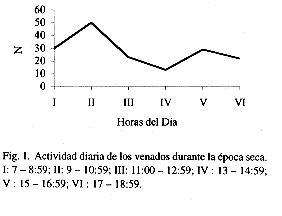
<body><![CDATA[<CENTER><FONT FACE="Arial,Helvetica"><FONT SIZE=-1>4&nbsp;</FONT></FONT></CENTER> </TD>  <TD VALIGN=TOP WIDTH="14%">     <DIV ALIGN=right><FONT FACE="Arial,Helvetica"><FONT SIZE=-1>87&nbsp;</FONT></FONT></DIV> </TD> </TR>  <TR> <TD VALIGN=TOP WIDTH="14%"><FONT FACE="Arial,Helvetica"><FONT SIZE=-1>Total&nbsp;</FONT></FONT></TD>  <TD VALIGN=TOP WIDTH="14%">     <CENTER><FONT FACE="Arial,Helvetica"><FONT SIZE=-1>8&nbsp;</FONT></FONT></CENTER> </TD>  <TD VALIGN=TOP WIDTH="14%">     <CENTER><FONT FACE="Arial,Helvetica"><FONT SIZE=-1>30&nbsp;</FONT></FONT></CENTER> </TD>  <TD VALIGN=TOP WIDTH="14%">     <CENTER><FONT FACE="Arial,Helvetica"><FONT SIZE=-1>6&nbsp;</FONT></FONT></CENTER> </TD>  <TD VALIGN=TOP WIDTH="14%">     <CENTER><FONT FACE="Arial,Helvetica"><FONT SIZE=-1>83&nbsp;</FONT></FONT></CENTER> </TD>  <TD VALIGN=TOP WIDTH="14%">     <CENTER><FONT FACE="Arial,Helvetica"><FONT SIZE=-1>19&nbsp;</FONT></FONT></CENTER> </TD>  <TD VALIGN=TOP WIDTH="14%">     <DIV ALIGN=right><FONT FACE="Arial,Helvetica"><FONT SIZE=-1>711&nbsp;</FONT></FONT></DIV> </TD> </TR> </TABLE></CENTER> <FONT FACE="Arial,Helvetica"><FONT SIZE=-1>J: Juveniles; A: adultos; sexo ind.: indeterminado, imposible de identificar en el campo</FONT></FONT>     <BR>&nbsp;      <P><FONT FACE="Arial,Helvetica"><FONT SIZE=-1>Asumiendo que existe una relaci&oacute;n directa entre el n&uacute;mero de observaciones de venados y su actividad diaria, se puede mencionar la existencia de dos picos de actividad: 9-11 y 15-17 hr (<A HREF="#fig. 1">Fig. 1</A>). Estos resultados son similares a los obtenidos por <A HREF="#Correa-Viana, M. 1996">Correa-Viana y Pe&ntilde;aloza (1996</A>). Aparentemente, durante la noche los venados permanecieron inactivos, ocupando sitios protegidos del viento. Los picos de actividad pueden estar relacionados con condiciones ambientales favorables para los venados como temperaturas m&aacute;s altas, vientos moderados, y niveles bajos de insolaci&oacute;n. En la estaci&oacute;n seca, los altos niveles de insolaci&oacute;n (mediod&iacute;a) y las bajas temperaturas nocturnas pueden ser los factores determinantes de los momentos de menor actividad. Otras poblaciones son muy activas durante la noche (<A HREF="#Michael, E. D.">Michael 1970</A>, <A HREF="#Solís, V.">Sol&iacute;s 1986</A>, <A HREF="#Beier, P.">Beier y McCullogh 1990</A>, <A HREF="#Correa-Viana, M. 1994.">Correa-Viana 1994</A>).</FONT></FONT>     ]]></body>
<body><![CDATA[<BR>&nbsp;     <BR>&nbsp;     <CENTER></CENTER>      <CENTER><A NAME="fig. 1"></A><IMG SRC="/img/fbpe/rbt/v46n3/0218i01.GIF" HEIGHT=216 WIDTH=282></CENTER>       
<P><FONT FACE="Arial,Helvetica"><FONT SIZE=-1>La alimentaci&oacute;n del venado de p&aacute;ramo incluy&oacute; po&aacute;ceas (<I>Aciachne pulvinata</I>, <I>Danthonia secundiflora</I>, <I>Poa pauciflorra</I> y <I>Trisetum foliosum</I>), ciper&aacute;ceas (<I>Carex albolutescens</I>), poligon&aacute;ceas (<I>Rumex acetosella</I>), ros&aacute;ceas (<I>Acaena elongata</I>, <I>A. cylindrostrachya</I>, <I>Hesperomeles pernettyoides</I>, <I>Lachemilla hirta</I>, y <I>L. polylepis</I>), oxalid&aacute;ceas (<I>Oxalis spiralis</I>) y hongos (<I>Boletus</I> sp., Boletaceae:Agaricales).</FONT></FONT>      <P><FONT FACE="Arial,Helvetica"><FONT SIZE=-1>El refugio estuvo representado por plantas introducidas: cupres&aacute;ceas (<I>Cupressus lusitanica</I>) y pin&aacute;ceas (<I>Pinus patula</I>,<I> P. radiata</I>,<I> P</I>.<I> lutea</I>), y plantas nativas: compuestas (<I>Bacharis prunifolia</I>,<I> Espeletia timotensis</I>,<I> E</I>.<I> schultzii</I>), ros&aacute;ceas (<I>Hesperomeles pernettyoides</I>,<I> Polylepis sericea</I>) y rubi&aacute;ceas (<I>Arcytophyllum caracasanum</I>,<I> Hypericum larcifolium</I>,<I> </I>y<I> Sisyrinchium iridifolium</I>).</FONT></FONT>      <P><FONT FACE="Arial,Helvetica"><FONT SIZE=-1>Se pudo observar marcas ocasionadas por astas de venados sobre <I>C. lusutanica</I>, <I>P</I>.<I> patula</I>, <I>P</I>.<I> radiata</I>,<I> P</I>.<I> lutea</I>,<I> E</I>.<I> timotensis</I>,<I> P</I>.<I> sericea</I>,<I> A</I>.<I> caracasanum</I>,<I> </I>y<I> H. laricifolium</I>. AIZD y AP no fueron significativamente diferentes (0.1 > p > 0.05, F = 0.38) entre las especies, pero si se encontraron diferencias al comparar el DP (p &lt; 0.025, F = 4.26) y LZD (p &lt; 0.005, F = 20.27) entre las mismas. Los venados usan principalmente plantas de baja altura (<IMG SRC="/img/fbpe/rbt/v46n3/simbi11.GIF" HEIGHT=17 WIDTH=17>= 171.08 cm, N = 36) y tallos delgados (`<IMG SRC="/img/fbpe/rbt/v46n3/simbi11.GIF" HEIGHT=17 WIDTH=17>= 6.28 cm, N = 36) para pulir sus astas (<A HREF="#CUADRO 2">Cuadro 2</A>).</FONT></FONT>     
<BR>&nbsp;     <BR>&nbsp;     <CENTER></CENTER>      ]]></body>
<body><![CDATA[<CENTER><A NAME="CUADRO 2"></A><FONT FACE="Arial,Helvetica"><FONT SIZE=-1>CUADRO 2</FONT></FONT></CENTER>      <CENTER><I><FONT FACE="Arial,Helvetica"><FONT SIZE=-1>Promedio (cm) de las variables medidas en cada tipo de planta.</FONT></FONT></I></CENTER> &nbsp;     <BR>&nbsp;     <CENTER><TABLE BORDER=0 CELLSPACING=0 CELLPADDING=3 WIDTH="639" > <TR> <TD VALIGN=TOP WIDTH="28%">     <CENTER><FONT FACE="Arial,Helvetica"><FONT SIZE=-1>Variable&nbsp;</FONT></FONT></CENTER> </TD>  <TD VALIGN=TOP WIDTH="18%">     <CENTER><FONT FACE="Arial,Helvetica"><FONT SIZE=-1>Pinos (N=21)&nbsp;</FONT></FONT></CENTER> </TD>  <TD VALIGN=TOP WIDTH="27%">     <CENTER><FONT FACE="Arial,Helvetica"><FONT SIZE=-1><I>Hypericum </I>sp. (N=7)&nbsp;</FONT></FONT></CENTER> </TD>  <TD VALIGN=TOP WIDTH="27%">     <CENTER><FONT FACE="Arial,Helvetica"><FONT SIZE=-1><I>Arcytophylum s</I>p. (N=8)&nbsp;</FONT></FONT></CENTER> </TD> </TR>  <TR> <TD VALIGN=TOP WIDTH="28%">     <CENTER><FONT FACE="Arial,Helvetica"><FONT SIZE=-1>AIZD&nbsp;</FONT></FONT></CENTER> </TD>  <TD VALIGN=TOP WIDTH="18%">     <CENTER><FONT FACE="Arial,Helvetica"><FONT SIZE=-1>45.33&nbsp;</FONT></FONT></CENTER> </TD>  <TD VALIGN=TOP WIDTH="27%">     ]]></body>
<body><![CDATA[<CENTER><FONT FACE="Arial,Helvetica"><FONT SIZE=-1>32.50&nbsp;</FONT></FONT></CENTER> </TD>  <TD VALIGN=TOP WIDTH="27%">     <CENTER><FONT FACE="Arial,Helvetica"><FONT SIZE=-1>44.43</FONT></FONT></CENTER> </TD> </TR>  <TR> <TD VALIGN=TOP WIDTH="28%">     <CENTER><FONT FACE="Arial,Helvetica"><FONT SIZE=-1>DP&nbsp;</FONT></FONT></CENTER> </TD>  <TD VALIGN=TOP WIDTH="18%">     <CENTER><FONT FACE="Arial,Helvetica"><FONT SIZE=-1>8.24&nbsp;</FONT></FONT></CENTER> </TD>  <TD VALIGN=TOP WIDTH="27%">     <CENTER><FONT FACE="Arial,Helvetica"><FONT SIZE=-1>3.63&nbsp;</FONT></FONT></CENTER> </TD>  <TD VALIGN=TOP WIDTH="27%">     <CENTER><FONT FACE="Arial,Helvetica"><FONT SIZE=-1>3.43&nbsp;</FONT></FONT></CENTER> </TD> </TR>  <TR> <TD VALIGN=TOP WIDTH="28%">     <CENTER><FONT FACE="Arial,Helvetica"><FONT SIZE=-1>LZD&nbsp;</FONT></FONT></CENTER> </TD>  <TD VALIGN=TOP WIDTH="18%">     <CENTER><FONT FACE="Arial,Helvetica"><FONT SIZE=-1>40.71&nbsp;</FONT></FONT></CENTER> </TD>  <TD VALIGN=TOP WIDTH="27%">     <CENTER><FONT FACE="Arial,Helvetica"><FONT SIZE=-1>52.00&nbsp;</FONT></FONT></CENTER> </TD>  <TD VALIGN=TOP WIDTH="27%">     <CENTER><FONT FACE="Arial,Helvetica"><FONT SIZE=-1>20.00&nbsp;</FONT></FONT></CENTER> </TD> </TR>  <TR> <TD VALIGN=TOP WIDTH="28%">     ]]></body>
<body><![CDATA[<CENTER><FONT FACE="Arial,Helvetica"><FONT SIZE=-1>AP&nbsp;</FONT></FONT></CENTER> </TD>  <TD VALIGN=TOP WIDTH="18%">     <CENTER><FONT FACE="Arial,Helvetica"><FONT SIZE=-1>163.76&nbsp;</FONT></FONT></CENTER> </TD>  <TD VALIGN=TOP WIDTH="27%">     <CENTER><FONT FACE="Arial,Helvetica"><FONT SIZE=-1>208.75&nbsp;</FONT></FONT></CENTER> </TD>  <TD VALIGN=TOP WIDTH="27%">     <CENTER><FONT FACE="Arial,Helvetica"><FONT SIZE=-1>150.00&nbsp;</FONT></FONT></CENTER> </TD> </TR> </TABLE></CENTER> <FONT FACE="Arial,Helvetica"><FONT SIZE=-1>&nbsp;</FONT></FONT>     <BR><FONT FACE="Arial,Helvetica"><FONT SIZE=-1>AIZD: altura al inicio de la zona descortezada; DP: di&aacute;metro promedio de la zona descortezada; LZD: longitud de la zona descortezada, y AP: altura estimada de la planta.</FONT></FONT>      <P><FONT FACE="Arial,Helvetica"><FONT SIZE=-1>El 77% de las observaciones corresponden a &aacute;reas con pendientes menores de 20% en las que se concentraron los venados durante los meses m&aacute;s secos (20% en pendientes de 21 a 40%; 2% en pendientes de 41 a 60%, y 1% en pendientes de 61 a 80%. Seg&uacute;n <A HREF="#Day, G. I.">Day (1964</A>), y <A HREF="#Suring, L. H.">Suring (1979)</A>, el mayor uso de las &aacute;reas de menor pendiente se explica por la existencia de asociaciones vegetales m&aacute;s diversas y complejas.</FONT></FONT>      <P><FONT FACE="Arial,Helvetica"><FONT SIZE=-1>Este trabajo se realiz&oacute; con apoyo econ&oacute;mico de EcoNatura. Jairo Ram&iacute;rez, Alirio Nieto y Jos&eacute; Pe&ntilde;aloza, guardaparques del Parque Nacional Sierra Nevada, Sector Mucubaj&iacute;, ayudaron en la log&iacute;stica durante el trabajo de campo.</FONT></FONT>     <BR>&nbsp;     <BR>&nbsp;     <BR><B><FONT FACE="Arial,Helvetica"><FONT SIZE=-1>Referencias</FONT></FONT></B>      ]]></body>
<body><![CDATA[<!-- ref --><P><A NAME="Azocar, A."></A><FONT FACE="Arial,Helvetica"><FONT SIZE=-1>Azocar, A. &amp; M. Monasterio. 1980. Estudio de la variabilidad meso y microclim&aacute;tica en el p&aacute;ramo de Mucubaj&iacute;, p. 225-262. <I>In</I> M. Monasterio (ed.). Estudios ecol&oacute;gicos en los p&aacute;ramos andinos, Universidad de Los Andes, M&eacute;rida, Venezuela.</FONT></FONT>    &nbsp;&nbsp;&nbsp;&nbsp;&nbsp;&nbsp;&nbsp;&nbsp;[&#160;<a href="javascript:void(0);" onclick="javascript: window.open('/scielo.php?script=sci_nlinks&ref=1135738&pid=S0034-7744199800030003600001&lng=','','width=640,height=500,resizable=yes,scrollbars=1,menubar=yes,');">Links</a>&#160;]<!-- end-ref --><!-- ref --><P><A NAME="Beier, P."></A><FONT FACE="Arial,Helvetica"><FONT SIZE=-1>Beier, P. &amp; D. R. McCullogh. 1990. Factors influencing white-tailed deer activity patterns and habitat use. Wildl. Monogr. 121. The Wildlife Society, Washington, D. C. 51p.</FONT></FONT>    &nbsp;&nbsp;&nbsp;&nbsp;&nbsp;&nbsp;&nbsp;&nbsp;[&#160;<a href="javascript:void(0);" onclick="javascript: window.open('/scielo.php?script=sci_nlinks&ref=1135739&pid=S0034-7744199800030003600002&lng=','','width=640,height=500,resizable=yes,scrollbars=1,menubar=yes,');">Links</a>&#160;]<!-- end-ref --><!-- ref --><P><A NAME="Correa-Viana, M. 1994."></A><FONT FACE="Arial,Helvetica"><FONT SIZE=-1>Correa-Viana, M. 1994. Actividad diaria y selecci&oacute;n de h&aacute;bitat por el venado caramerudo, <I>Odocoileusvirginianus</I>, en Masaguaral, Edo. Gu&aacute;rico, Venezuela. Biollania 10:33-42.</FONT></FONT>    &nbsp;&nbsp;&nbsp;&nbsp;&nbsp;&nbsp;&nbsp;&nbsp;[&#160;<a href="javascript:void(0);" onclick="javascript: window.open('/scielo.php?script=sci_nlinks&ref=1135740&pid=S0034-7744199800030003600003&lng=','','width=640,height=500,resizable=yes,scrollbars=1,menubar=yes,');">Links</a>&#160;]<!-- end-ref --><!-- ref --><P><A NAME="Correa-Viana, M. 1996"></A><FONT FACE="Arial,Helvetica"><FONT SIZE=-1>Correa-Viana, M. &amp; J. Pe&ntilde;aloza. 1996. Situaci&oacute;n actual y ecolog&iacute;a del venado de p&aacute;ramo en Mucubaj&iacute; (Estado M&eacute;rida, Venezuela). Biollania 11:149-152.</FONT></FONT>    &nbsp;&nbsp;&nbsp;&nbsp;&nbsp;&nbsp;&nbsp;&nbsp;[&#160;<a href="javascript:void(0);" onclick="javascript: window.open('/scielo.php?script=sci_nlinks&ref=1135741&pid=S0034-7744199800030003600004&lng=','','width=640,height=500,resizable=yes,scrollbars=1,menubar=yes,');">Links</a>&#160;]<!-- end-ref --><!-- ref --><P><A NAME="Danields, H."></A><FONT FACE="Arial,Helvetica"><FONT SIZE=-1>Danields, H. 1987. Ecolog&iacute;a nutricional del venado caramerudo (<I>Odocoileus virginianus</I>) en los llanos centrales. Tesis Doctoral, Univ. Central de Venezuela, Caracas.</FONT></FONT>    &nbsp;&nbsp;&nbsp;&nbsp;&nbsp;&nbsp;&nbsp;&nbsp;[&#160;<a href="javascript:void(0);" onclick="javascript: window.open('/scielo.php?script=sci_nlinks&ref=1135742&pid=S0034-7744199800030003600005&lng=','','width=640,height=500,resizable=yes,scrollbars=1,menubar=yes,');">Links</a>&#160;]<!-- end-ref --><!-- ref --><P><A NAME="Day, G. I."></A><FONT FACE="Arial,Helvetica"><FONT SIZE=-1>Day, G. I. 1964. An investigation of white-tailed deer (<I>Odocoileusvirginianus</I>) forage relationships in the Chiricagua Mountains. Tesis de Maestr&iacute;a, Univ. de Arizona, Tuczon.</FONT></FONT>    &nbsp;&nbsp;&nbsp;&nbsp;&nbsp;&nbsp;&nbsp;&nbsp;[&#160;<a href="javascript:void(0);" onclick="javascript: window.open('/scielo.php?script=sci_nlinks&ref=1135743&pid=S0034-7744199800030003600006&lng=','','width=640,height=500,resizable=yes,scrollbars=1,menubar=yes,');">Links</a>&#160;]<!-- end-ref --><!-- ref --><P><A NAME="Michael, E. D."></A><FONT FACE="Arial,Helvetica"><FONT SIZE=-1>Michael, E. D. 1970. Activity patterns of white-tailed deer in south Texas. Tex. J. Sci. 21:417-428.</FONT></FONT>    &nbsp;&nbsp;&nbsp;&nbsp;&nbsp;&nbsp;&nbsp;&nbsp;[&#160;<a href="javascript:void(0);" onclick="javascript: window.open('/scielo.php?script=sci_nlinks&ref=1135744&pid=S0034-7744199800030003600007&lng=','','width=640,height=500,resizable=yes,scrollbars=1,menubar=yes,');">Links</a>&#160;]<!-- end-ref --><!-- ref --><P><A NAME="Molina, M."></A><FONT FACE="Arial,Helvetica"><FONT SIZE=-1>Molina, M. 1996. Revisi&oacute;n taxon&oacute;mica de los <I>Odocoileus</I> (Mammalia, Artiodactyla, Cervidae) de Venezuela, con aportes a la historia natural y conservaci&oacute;n del venado de p&aacute;ramo. Tesis de Licenciatura en Biolog&iacute;a, Univ. de Los Andes, M&eacute;rida, Venezuela. 116 p.</FONT></FONT>    &nbsp;&nbsp;&nbsp;&nbsp;&nbsp;&nbsp;&nbsp;&nbsp;[&#160;<a href="javascript:void(0);" onclick="javascript: window.open('/scielo.php?script=sci_nlinks&ref=1135745&pid=S0034-7744199800030003600008&lng=','','width=640,height=500,resizable=yes,scrollbars=1,menubar=yes,');">Links</a>&#160;]<!-- end-ref --><!-- ref --><P><A NAME="Rodríguez, M."></A><FONT FACE="Arial,Helvetica"><FONT SIZE=-1>Rodr&iacute;guez, M. &amp; V. Sol&iacute;s. 1987. Ciclo reproductivo del venado cola blanca de la Isla de San Lucas, Costa Rica, p. 31-32. <I>In</I> V. Sol&iacute;s, M. Rodr&iacute;guez y C. Vaughan (eds.). Actas del primer taller nacional sobre el venado cola blanca (<I>Odocoileus virginianus</I>) del Pac&iacute;fico Seco, Costa Rica. 129 p.</FONT></FONT>    &nbsp;&nbsp;&nbsp;&nbsp;&nbsp;&nbsp;&nbsp;&nbsp;[&#160;<a href="javascript:void(0);" onclick="javascript: window.open('/scielo.php?script=sci_nlinks&ref=1135746&pid=S0034-7744199800030003600009&lng=','','width=640,height=500,resizable=yes,scrollbars=1,menubar=yes,');">Links</a>&#160;]<!-- end-ref --><!-- ref --><P><A NAME="Rubio, I."></A><FONT FACE="Arial,Helvetica"><FONT SIZE=-1>Rubio, I. 1981. Contribuci&oacute;n al estudio del venado de p&aacute;ramo (<I>Odocoileus</I> sp.) (P&aacute;ramo de Mucubaj&iacute;), M&eacute;rida, Venezuela. Rev. Ecol. Conserv. Ornit. Lat.1:4-7.</FONT></FONT>    &nbsp;&nbsp;&nbsp;&nbsp;&nbsp;&nbsp;&nbsp;&nbsp;[&#160;<a href="javascript:void(0);" onclick="javascript: window.open('/scielo.php?script=sci_nlinks&ref=1135747&pid=S0034-7744199800030003600010&lng=','','width=640,height=500,resizable=yes,scrollbars=1,menubar=yes,');">Links</a>&#160;]<!-- end-ref --><!-- ref --><P><A NAME="Solís, V."></A><FONT FACE="Arial,Helvetica"><FONT SIZE=-1>Sol&iacute;s, V. 1986. Aspectos de la ecolog&iacute;a de las cr&iacute;as de venado en la Isla San Lucas, Costa Rica, p 27-29. <I>In</I> V. Sol&iacute;s, H. Rodr&iacute;guez y C. Vaughan (eds.). Actas del primer taller nacional sobre el venado cola blanca (<I>Odocoileus virginianus</I>) del Pac&iacute;fico Seco, Costa Rica.</FONT></FONT>    &nbsp;&nbsp;&nbsp;&nbsp;&nbsp;&nbsp;&nbsp;&nbsp;[&#160;<a href="javascript:void(0);" onclick="javascript: window.open('/scielo.php?script=sci_nlinks&ref=1135748&pid=S0034-7744199800030003600011&lng=','','width=640,height=500,resizable=yes,scrollbars=1,menubar=yes,');">Links</a>&#160;]<!-- end-ref --><!-- ref --><P><A NAME="Suring, L. H."></A><FONT FACE="Arial,Helvetica"><FONT SIZE=-1>Suring, L. H. &amp; P. A. Vohs Jr. 1979. Habitat use by columbian white-tailed deer. J. Wildl. Mgmt. 43:610-619.</FONT></FONT>    &nbsp;&nbsp;&nbsp;&nbsp;&nbsp;&nbsp;&nbsp;&nbsp;[&#160;<a href="javascript:void(0);" onclick="javascript: window.open('/scielo.php?script=sci_nlinks&ref=1135749&pid=S0034-7744199800030003600012&lng=','','width=640,height=500,resizable=yes,scrollbars=1,menubar=yes,');">Links</a>&#160;]<!-- end-ref --><P><A NAME="1a"></A><FONT FACE="Arial,Helvetica"><FONT SIZE=-1><SUP><A HREF="#1">1</A></SUP>Universidad de Los Andes, Facultad de Ciencias Forestales y Ambientales, Escuela T&eacute;cnica Superior Forestal, M&eacute;rida 5101, Venezuela. Fax: 058-74401630. E-mail: <A HREF="mailto:mmolina@forest.ula.ve">mmolina@forest.ula.ve</A></FONT></FONT>      ]]></body><back>
<ref-list>
<ref id="B1">
<nlm-citation citation-type="book">
<person-group person-group-type="author">
<name>
<surname><![CDATA[Azocar]]></surname>
<given-names><![CDATA[A.]]></given-names>
</name>
<name>
<surname><![CDATA[Monasterio]]></surname>
<given-names><![CDATA[M.]]></given-names>
</name>
</person-group>
<article-title xml:lang="es"><![CDATA[Estudio de la variabilidad meso y microclimática en el páramo de Mucubají]]></article-title>
<person-group person-group-type="editor">
<name>
<surname><![CDATA[Monasterio]]></surname>
<given-names><![CDATA[M.]]></given-names>
</name>
</person-group>
<source><![CDATA[Estudios ecológicos en los páramos andinos]]></source>
<year>1980</year>
<page-range>225-262.</page-range><publisher-loc><![CDATA[Mérida ]]></publisher-loc>
<publisher-name><![CDATA[Universidad de Los Andes]]></publisher-name>
</nlm-citation>
</ref>
<ref id="B2">
<nlm-citation citation-type="book">
<person-group person-group-type="author">
<name>
<surname><![CDATA[Beier]]></surname>
<given-names><![CDATA[P.]]></given-names>
</name>
<name>
<surname><![CDATA[McCullogh]]></surname>
<given-names><![CDATA[D. R.]]></given-names>
</name>
</person-group>
<source><![CDATA[Factors influencing white-tailed deer activity patterns and habitat use]]></source>
<year>1990</year>
<volume>121</volume>
<publisher-loc><![CDATA[Washington, D. C. ]]></publisher-loc>
<publisher-name><![CDATA[The Wildlife Society]]></publisher-name>
</nlm-citation>
</ref>
<ref id="B3">
<nlm-citation citation-type="journal">
<person-group person-group-type="author">
<name>
<surname><![CDATA[Correa-Viana]]></surname>
<given-names><![CDATA[M.]]></given-names>
</name>
</person-group>
<article-title xml:lang="es"><![CDATA[Actividad diaria y selección de hábitat por el venado caramerudo, Odocoileus virginianus, en Masaguaral, Edo. Guárico, Venezuela.]]></article-title>
<source><![CDATA[Biollania]]></source>
<year>1994</year>
<volume>10</volume>
<page-range>33-42</page-range></nlm-citation>
</ref>
<ref id="B4">
<nlm-citation citation-type="journal">
<person-group person-group-type="author">
<name>
<surname><![CDATA[Correa-Viana]]></surname>
<given-names><![CDATA[M.]]></given-names>
</name>
<name>
<surname><![CDATA[Peñaloza]]></surname>
<given-names><![CDATA[J.]]></given-names>
</name>
</person-group>
<article-title xml:lang="es"><![CDATA[Situación actual y ecología del venado de páramo en Mucubají (Estado Mérida, Venezuela)]]></article-title>
<source><![CDATA[Biollania]]></source>
<year>1996</year>
<volume>11</volume>
<page-range>149-152</page-range></nlm-citation>
</ref>
<ref id="B5">
<nlm-citation citation-type="">
<person-group person-group-type="author">
<name>
<surname><![CDATA[Danields]]></surname>
<given-names><![CDATA[H.]]></given-names>
</name>
</person-group>
<source><![CDATA[Ecología nutricional del venado caramerudo (Odocoileus virginianus) en los llanos centrales.]]></source>
<year>1987</year>
</nlm-citation>
</ref>
<ref id="B6">
<nlm-citation citation-type="">
<person-group person-group-type="author">
<name>
<surname><![CDATA[Day]]></surname>
<given-names><![CDATA[G. I.]]></given-names>
</name>
</person-group>
<source><![CDATA[An investigation of white-tailed deer (Odocoileus virginianus) forage relationships in the Chiricagua Mountains.]]></source>
<year>1964</year>
</nlm-citation>
</ref>
<ref id="B7">
<nlm-citation citation-type="journal">
<person-group person-group-type="author">
<name>
<surname><![CDATA[Michael]]></surname>
<given-names><![CDATA[E. D.]]></given-names>
</name>
</person-group>
<article-title xml:lang="en"><![CDATA[Activity patterns of white-tailed deer in south Texas]]></article-title>
<source><![CDATA[Tex. J. Sci.]]></source>
<year>1970</year>
<volume>21</volume>
<page-range>417-428</page-range></nlm-citation>
</ref>
<ref id="B8">
<nlm-citation citation-type="">
<person-group person-group-type="author">
<name>
<surname><![CDATA[Molina]]></surname>
<given-names><![CDATA[M.]]></given-names>
</name>
</person-group>
<source><![CDATA[Revisión taxonómica de los Odocoileus (Mammalia, Artiodactyla, Cervidae) de Venezuela, con aportes a la historia natural y conservación del venado de páramo]]></source>
<year>1996</year>
</nlm-citation>
</ref>
<ref id="B9">
<nlm-citation citation-type="">
<person-group person-group-type="author">
<name>
<surname><![CDATA[odríguez]]></surname>
<given-names><![CDATA[M.]]></given-names>
</name>
<name>
<surname><![CDATA[Solís]]></surname>
<given-names><![CDATA[V.]]></given-names>
</name>
</person-group>
<article-title xml:lang="es"><![CDATA[Ciclo reproductivo del venado cola blanca de la Isla de San Lucas, Costa Rica]]></article-title>
<person-group person-group-type="editor">
<name>
<surname><![CDATA[Solís]]></surname>
<given-names><![CDATA[V.]]></given-names>
</name>
<name>
<surname><![CDATA[Rodríguez]]></surname>
<given-names><![CDATA[M.]]></given-names>
</name>
<name>
<surname><![CDATA[Vaughan]]></surname>
<given-names><![CDATA[C.]]></given-names>
</name>
</person-group>
<source><![CDATA[Actas del primer taller nacional sobre el venado cola blanca (Odocoileus virginianus) del Pacífico Seco, Costa Rica.]]></source>
<year>1987</year>
<page-range>31-32</page-range></nlm-citation>
</ref>
<ref id="B10">
<nlm-citation citation-type="journal">
<person-group person-group-type="author">
<name>
<surname><![CDATA[Rubio]]></surname>
<given-names><![CDATA[I.]]></given-names>
</name>
</person-group>
<article-title xml:lang="es"><![CDATA[Contribución al estudio del venado de páramo (Odocoileus sp.) (Páramo de Mucubají), Mérida, Venezuela.]]></article-title>
<source><![CDATA[Rev. Ecol. Conserv. Ornit. Lat.]]></source>
<year>1981</year>
<volume>1</volume>
<page-range>4-7</page-range></nlm-citation>
</ref>
<ref id="B11">
<nlm-citation citation-type="">
<person-group person-group-type="author">
<name>
<surname><![CDATA[Solís]]></surname>
<given-names><![CDATA[V.]]></given-names>
</name>
</person-group>
<article-title xml:lang="es"><![CDATA[Aspectos de la ecología de las crías de venado en la Isla San Lucas, Costa Rica,]]></article-title>
<person-group person-group-type="editor">
<name>
<surname><![CDATA[Solís]]></surname>
<given-names><![CDATA[V.]]></given-names>
</name>
<name>
<surname><![CDATA[Rodríguez]]></surname>
<given-names><![CDATA[H.]]></given-names>
</name>
<name>
<surname><![CDATA[Vaughan]]></surname>
<given-names><![CDATA[C.]]></given-names>
</name>
</person-group>
<source><![CDATA[Actas del primer taller nacional sobre el venado cola blanca (Odocoileus virginianus) del Pacífico Seco, Costa Rica.]]></source>
<year>1986</year>
<page-range>27-29.</page-range></nlm-citation>
</ref>
<ref id="B12">
<nlm-citation citation-type="journal">
<person-group person-group-type="author">
<name>
<surname><![CDATA[Suring]]></surname>
<given-names><![CDATA[L. H.]]></given-names>
</name>
<name>
<surname><![CDATA[Vohs Jr.]]></surname>
<given-names><![CDATA[P. A.]]></given-names>
</name>
</person-group>
<article-title xml:lang="en"><![CDATA[Habitat use by columbian white-tailed deer.]]></article-title>
<source><![CDATA[J. Wildl. Mgmt.]]></source>
<year>1979</year>
<volume>43</volume>
<page-range>610-619</page-range></nlm-citation>
</ref>
</ref-list>
</back>
</article>
