<?xml version="1.0" encoding="ISO-8859-1"?><article xmlns:mml="http://www.w3.org/1998/Math/MathML" xmlns:xlink="http://www.w3.org/1999/xlink" xmlns:xsi="http://www.w3.org/2001/XMLSchema-instance">
<front>
<journal-meta>
<journal-id>0034-7744</journal-id>
<journal-title><![CDATA[Revista de Biología Tropical]]></journal-title>
<abbrev-journal-title><![CDATA[Rev. biol. trop]]></abbrev-journal-title>
<issn>0034-7744</issn>
<publisher>
<publisher-name><![CDATA[Universidad de Costa Rica]]></publisher-name>
</publisher>
</journal-meta>
<article-meta>
<article-id>S0034-77441998000300032</article-id>
<title-group>
<article-title xml:lang="es"><![CDATA[Alimentación y reproducción de Creagrutus brevipinnis (Pisces: Characidae) en Alto Cauca, Colombia]]></article-title>
</title-group>
<contrib-group>
<contrib contrib-type="author">
<name>
<surname><![CDATA[Román-Valencia]]></surname>
<given-names><![CDATA[César]]></given-names>
</name>
<xref ref-type="aff" rid="A01"/>
</contrib>
</contrib-group>
<aff id="A01">
<institution><![CDATA[,Universidad del Quindío Depto. De Biología ]]></institution>
<addr-line><![CDATA[Armenia ]]></addr-line>
<country>Colombia</country>
</aff>
<pub-date pub-type="pub">
<day>00</day>
<month>09</month>
<year>1998</year>
</pub-date>
<pub-date pub-type="epub">
<day>00</day>
<month>09</month>
<year>1998</year>
</pub-date>
<volume>46</volume>
<numero>3</numero>
<fpage>783</fpage>
<lpage>789</lpage>
<copyright-statement/>
<copyright-year/>
<self-uri xlink:href="http://www.scielo.sa.cr/scielo.php?script=sci_arttext&amp;pid=S0034-77441998000300032&amp;lng=en&amp;nrm=iso"></self-uri><self-uri xlink:href="http://www.scielo.sa.cr/scielo.php?script=sci_abstract&amp;pid=S0034-77441998000300032&amp;lng=en&amp;nrm=iso"></self-uri><self-uri xlink:href="http://www.scielo.sa.cr/scielo.php?script=sci_pdf&amp;pid=S0034-77441998000300032&amp;lng=en&amp;nrm=iso"></self-uri><abstract abstract-type="short" xml:lang="en"><p><![CDATA[Stomach contents and reproduction were studied in characid fish (C. brevipinnis)collected in the Vieja River Basin, Alto Cauca, Colombia (July 1995 and December 1996); the temperature in the region was 21.7 °C (18.70-24.40 °C), pH was neutral and water oxygen content high (8 ppm); C . brevipinnis is nonmigratory and sympatric with other 30 fish species; The fish is insectivorous and specializes on Diptera (Simuliidae) and Ephemeroptera; being a third level predator in the trophic web; it feeds from 06:00-18:00 hr ; the results indicate seasonal variation in feeding activity (F= 19.04 P< 0.0001) and a negative correlation between stomach weight and voracity indexes; in the reproductive season food in take is low; the ovaries mature primarily between May and January ; fecundity is low (613 oocytes) and the eggs are of small (diameter 0.6254 mm) ; the sex ratio is 1:1 (X²= 2.56 P< 0.1 df = 1) and the mean size at maturity is 4.0 cm (standard length).]]></p></abstract>
<abstract abstract-type="short" xml:lang="es"><p><![CDATA[Contenido estomacal y aspectos reproductivos fueron estudiados en un pez caracido (C. brevipinnis) de el Alto Cauca (Julio 1995 a diciembre de 1996). La temperatura promedio en la región fue de 21° C, pH alrededor de la neutralidad; oxígeno disuelto alto (8 ppm); es una especie no migratoria. El pez es predominantemente insectívora y especializado (Diptera: Simuliidae ; Ephemeroptera), siendo ubicado en el tercer nivel de la red trófica. La actividad alimentaria registró diferencias altamente significativas entre la época lluviosa y la seca de la región (F=19.04 ; P< 0.0001). El comportamiento alimentario se realizó en el sustrato entre las 6:00 hr y las 18:00 hr. Se observó correlación negativa entre el peso del estómago y el índice de voracidad. La especie en la época de reproducción consumió poco alimento. El desarrollo máximo de las gónadas se registró entre mayo y junio. La fecundidad fue baja ( promedio 613 ovocitos) y el ovocito fue pequeño (promedio 0.6254 mm). La proporción entre sexos fue de 1:1 (x²= 2.56 P<0.1 gl=1) y el tamaño promedio de madurez para la población estudiada fue de 4.0 cm de longitud estándar. Es simpátrica con 30 especies de peces, siendo La Sabaleta Brycon henni y C. brevipinnis las más abundantes.]]></p></abstract>
<kwd-group>
<kwd lng="en"><![CDATA[Trophic]]></kwd>
<kwd lng="en"><![CDATA[ecology]]></kwd>
<kwd lng="en"><![CDATA[feeding]]></kwd>
<kwd lng="en"><![CDATA[reproduction]]></kwd>
<kwd lng="en"><![CDATA[Creagrutus brevipinnis]]></kwd>
<kwd lng="en"><![CDATA[tropical fishes]]></kwd>
</kwd-group>
</article-meta>
</front><body><![CDATA[ <CENTER><B><FONT FACE="Arial,Helvetica">Alimentaci&oacute;n y reproducci&oacute;n de <I>Creagrutus brevipinnis</I></FONT></B></CENTER>      <CENTER><B><FONT FACE="Arial,Helvetica">(Pisces: Characidae) en Alto Cauca, Colombia</FONT></B></CENTER>      <CENTER>&nbsp;</CENTER>      <CENTER>&nbsp;</CENTER>      <CENTER><FONT FACE="Arial,Helvetica"><FONT SIZE=-1><B>C&eacute;sar Rom&aacute;n-Valencia&nbsp;<A NAME="1"></A></B><SUP><A HREF="#1a">1</A></SUP></FONT></FONT></CENTER>      <CENTER>&nbsp;</CENTER>      <CENTER>&nbsp;</CENTER>      <CENTER><FONT FACE="Arial,Helvetica"><FONT SIZE=-1>Recibido 18-VIII-1997. Corregido 27-V-1998. Aceptado 8-VI-1998.</FONT></FONT></CENTER>       <P><B><FONT FACE="Arial,Helvetica"><FONT SIZE=-1>Abstract</FONT></FONT></B>      <P><FONT FACE="Arial,Helvetica"><FONT SIZE=-1>Stomach contents and reproduction were studied in characid fish (<I>C. brevipinnis)</I>collected in the Vieja River Basin, Alto Cauca, Colombia (July 1995 and December 1996); the temperature in the region was 21.7&deg;C (18.70-24.40&ordm;C), pH was neutral and water oxygen content high (8 ppm); <I>C .</I> <I>brevipinnis</I> is nonmigratory and sympatric with other 30 fish species; The fish is insectivorous and specializes on Diptera (Simuliidae) and Ephemeroptera; being a third level predator in the trophic web; it feeds from 06:00-18:00 hr ; the results indicate seasonal variation in feeding activity (F= 19.04 P&lt; 0.0001) and a negative correlation between stomach weight and voracity indexes; in the reproductive season food in take is low; the ovaries mature primarily between May and January ; fecundity is low (613 oocytes) and the eggs are of small (diameter 0.6254 mm) ; the sex ratio is 1:1 (X<SUP>2</SUP>= 2.56 P&lt; 0.1 df = 1) and the mean size at maturity is 4.0 cm (standard length).</FONT></FONT>     ]]></body>
<body><![CDATA[<BR>&nbsp;      <P><B><FONT FACE="Arial,Helvetica"><FONT SIZE=-1>Key words</FONT></FONT></B>      <P><FONT FACE="Arial,Helvetica"><FONT SIZE=-1>Trophic, ecology, feeding, reproduction, <I>Creagrutus brevipinnis, </I>tropical fishes.</FONT></FONT>     <BR>&nbsp;      <P><FONT FACE="Arial,Helvetica"><FONT SIZE=-1>Observaciones no concluyentes sobre la ecolog&iacute;a de las especies de <I>Creagrutu</I>s se pueden encontraren: <A HREF="#Saul, G.W. 1967.">Saul (1967</A>),<A HREF="#Harold, A.S. , R.P. Vari , A. Machado-Allison 1994"> Harold et al. (1994)</A> , <A HREF="#Harold, A.S. & R.P. Vari. 1994.">Harold &amp; Vari (1994</A>) y <A HREF="#Vari,">Vari et al. (1993</A>)<I>.</I> En el &uacute;nico trabajo (<A HREF="#Ortaz, M.">Ortaz 1992</A>) que analiza la dieta de una especie de <I>Creagrutus, </I>se planteo que <I>C. beni</I> del r&iacute;o Lim&oacute;n en la regi&oacute;n centro-norte de Venezuela se alimenta predominantemente de Diptera, Trichoptera,</FONT></FONT>      <P><FONT FACE="Arial,Helvetica"><FONT SIZE=-1>Coleoptera , restos de insectos y vegetales. De <I>C. brevipinnis</I>, <A HREF="#Román-Valencia, C. 1995.">Rom&aacute;n-Valencia (1995</A>) expreso</FONT></FONT>      <P><FONT FACE="Arial,Helvetica"><FONT SIZE=-1>observaciones preliminares sobre el ambiente y su dieta, que comprende insectos (D&iacute;ptera,Hem&iacute;ptera) y esti&eacute;rcol de ganado vacuno; <A HREF="#Roman-Valencia, C. 1997">Roman-Valencia &amp; Cala (1997</A>) plantearon que es una especie end&eacute;mica del Alto Cauca. Por lo tanto, los estudios ecol&oacute;gicos en comunidades (<A HREF="#Ortaz, M.">Ortaz 1992</A>) y en poblaciones de alta monta&ntilde;a neotropical son escasos. Mas aun si el estudio de los h&aacute;bitos alimenticios basados en el an&aacute;lisis de contenido estomacal es uno de los m&eacute;todos mas usados para el conocimiento del rol trofico de los peces en los ecosistemas acu&aacute;ticos (<A HREF="#Ferris, A. R.">Ferriz &amp; Salas 1996</A>). En esta &oacute;ptica, el objetivo de este trabajo es establecer aspectos ecol&oacute;gicos y troficos de <I>C. brevipinnis</I> a partir de un an&aacute;lisis cualitativo y cuantitativo del contenido g&aacute;strico, voracidad, la relaci&oacute;n contenido estomacal medio externo, y posibles cambios relacionados con la alimentaci&oacute;n; asociaciones entre el peso total, sexo, &iacute;ndice gonosom&aacute;tico, factor de condici&oacute;n; adem&aacute;s, obtener datos referentes a la biometr&iacute;a del tracto digestivo, frecuencia de captura, abundancia relativa y algunos par&aacute;metros f&iacute;sicos y qu&iacute;micos.</FONT></FONT>     <BR>&nbsp;      <P><B><FONT FACE="Arial,Helvetica"><FONT SIZE=-1>Materiales y M&eacute;todos</FONT></FONT></B>      <P><FONT FACE="Arial,Helvetica"><FONT SIZE=-1>Utilizando red de arrastre se realizaron capturas en r&iacute;os , quebradas y arteria principal de la cuenca del r&iacute;o La Vieja (75 10’- 75 50’ W y 4 10’ 4 40’ N), complementando con algunas colectas en la cuenca del r&iacute;o La Paila entre julio de 1995 y diciembre de 1996. Se examinaron 465 ejemplares adultos (talla promedio 4.0 cm de longitud ). Se hicieron disecciones de est&oacute;magos, g&oacute;nadas e intestinos. Los par&aacute;metros f&iacute;sico-qu&iacute;micos se determinaron <I>in situ</I> entre enero y diciembre de 1996. Las determinaciones de la ictiofauna acompa&ntilde;ante se realizaron integralmente <I>in situ</I> y se devolvieron al agua; salvo excepciones, se fijaron en formol al 10% para su posterior confirmaci&oacute;n taxon&oacute;mica. Ejemplares testigo se hallan depositados en la Unidad de Ictiolog&iacute;a del Instituto de Ciencias Naturales, Universidad Nacional de Colombia, Bogot&aacute; (ICN-MHN 978-2469) y en el Laboratorio de Biolog&iacute;a , Universidad del Quindio, Armenia (IUQ 170). Con los m&eacute;todos de frecuencia de ocurrencia y num&eacute;rica (<A HREF="#Hyslop, E.J.">Hyslop 1980</A>) se realiz&oacute; el an&aacute;lisis de los presentes &iacute;tems en 345 est&oacute;magos con contenido. El &iacute;ndice de voracidad se determin&oacute; a partir del coeficiente (b) de regresi&oacute;n (<A HREF="#Movillo, J.">Movillo &amp; Bahamonde 1971</A>). La relaci&oacute;n gonosom&aacute;tica (<A HREF="#Vazzoler, A.E.A.">Vazzoler 1996</A>) se calcul&oacute; con la ecuaci&oacute;n : RGS= W/W X 100, siendo Wc= Wt-Wo donde Wo= peso de la g&oacute;nada , Wt= peso total y Wc= peso del cuerpo. El an&aacute;lisis de la actividad alimentaria (R)se bas&oacute; en el coeficiente de contenido estomacal (<A HREF="#Ghazai">Ghazai et al. 1991</A>). El factor de condici&oacute;n total alom&eacute;trico (<A HREF="#Vazzoler, A.E.A.">Vazzoler 1996</A>) se obtuvo por la ecuaci&oacute;n : K= W/Lt donde W= peso del cuerpo, Lt= longitud total y b=0.434.</FONT></FONT>      ]]></body>
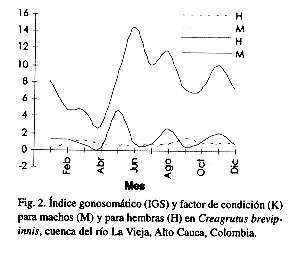
<body><![CDATA[<P><FONT FACE="Arial,Helvetica"><FONT SIZE=-1>Los datos f&iacute;sicos y qu&iacute;micos se tomaron basados en las t&eacute;cnicas descritas por la Apha (<A HREF="#Anónimo. 1985.">An&oacute;nimo 1985</A>); tanto la coloraci&oacute;n como el tipo de sustrato de los biotopos calificados por observaci&oacute;n directa; el oxigeno disuelto y la temperatura se obtuvieron con oximetro, el pH con potenciometro , la velocidad de la corriente por el tiempo que tarda una bola de icopor en recorrer dos metros sobre la superficie del agua, el ancho y la profundidad en cada sitio de muestreo, medidas con dec&aacute;metro y una vareta graduada en cm .</FONT></FONT>     <BR>&nbsp;      <P><B><FONT FACE="Arial,Helvetica"><FONT SIZE=-1>Resultados</FONT></FONT></B>      <P><I><FONT FACE="Arial,Helvetica"><FONT SIZE=-1><B>H&aacute;bitat.- </B>C. brevipinnis</FONT></FONT></I><FONT FACE="Arial,Helvetica"><FONT SIZE=-1> habita en la ribera del r&iacute;o La Vieja, de anchura total 46 m, en afluentes de tipo secundario entre los 900 y 1200 m.s.n.m. , de ancho promedio ponderado 7.95 m y profundidad 0.58 m. Charcos y r&aacute;pidos forman un gradiente moderado de flujo permanente un sustrato estructurado por arena, piedra y en algunos sitios material org&aacute;nica descompuesta o detritos; las riberas de las quebradas est&aacute;n cubiertas de vegetaci&oacute;n arbustiva, mientras que al r&iacute;o La Vieja y sus afluentes mayores lo dominan playas de arena, vegetaci&oacute;n arb&oacute;rea con predominio de <I>Guadua angustifolia </I>y pasto kikuyo (Poaceae) para el ganado vacuno. El agua es cristalina o clara, pero despu&eacute;s de una lluvia breve de un dia u horas se torna caf&eacute; o gris. La temperatura superficial oscil&oacute; entre 18.7 &deg;C (enero) y 24.4&deg; C (junio); el ox&iacute;geno disuelto vari&oacute; entre 6.8 mg/l (mayo y octubre) y 8.4 mg/l (agosto) y el pH estuvo alrededor de la neutralidad (<A HREF="#fig. 1">Fig. 1</A>); la profundidad oscil&oacute; de 0.5 m ( enero, marzo, mayo y diciembre) a 0.72 m (abril).</FONT></FONT>     <BR>&nbsp;     <BR>&nbsp;     <BR>&nbsp;     <CENTER></CENTER>      <CENTER><A NAME="fig. 1"></A><IMG SRC="/img/fbpe/rbt/v46n3/0214i01.GIF" HEIGHT=318 WIDTH=294></CENTER> &nbsp;     
<BR>&nbsp;      ]]></body>
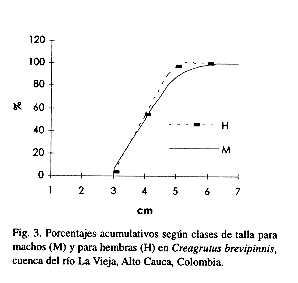
<body><![CDATA[<P><FONT FACE="Arial,Helvetica"><FONT SIZE=-1><B>Alimentaci&oacute;n.- </B><I>C. brevipinnis</I> posee un est&oacute;mago en forma de saco, redondo; se localiza en la parte anterior de la cavidad cel&oacute;mica en medio de la masa visceral. Se logr&oacute; determinar que es m&aacute;s largo (promedio 6.56 mm) que ancho (promedio 3.79 mm); los ciegos pil&oacute;ricos se hallan en el extremo anterior del est&oacute;mago, su n&uacute;mero var&iacute;a entre cuatro y seis, siendo cinco el dato mas frecuente. Se determin&oacute; que<I> C. brevipinnis</I> mantiene una dieta diversa con predominio de insectos y material vegetal (<A HREF="#CUADRO 1">Cuadro 1</A>) . De acuerdo con su aporte a la dieta, los contenidos estomacales se agruparon en 35 categor&iacute;as troficas ( n&uacute;meros 1 al 35) (<A HREF="#CUADRO 1">Cuadro 1)</A> ; los resultados obtenidos seg&uacute;n frecuencia de ocurrencia para el total de la poblaci&oacute;n (<A HREF="#CUADRO 1">Cuadro 1</A>) se&ntilde;alan que la oferta alimentaria est&aacute; dominada por larvas de Diptera (Simuliidae), ninfas de Ephemeroptera y restos de insectos, trozos de frutos de corozo (Arecacea) y semillas de diversas especies. El an&aacute;lisis de las categor&iacute;as alimentarias a trav&eacute;s del m&eacute;todo num&eacute;rico (<A HREF="#CUADRO 1">Cuadro1</A>) indic&oacute; la importancia de la selecci&oacute;n y captura de organismos de Diptera ( Simuliidae) ( 17.06%), restos de otros insectos (7.92 %), Arecaeae (29.99%), Bacillariophyceae ( 13.23%) y semillas de diversas especies (9.79%). No se observaron diferencias cualitativas o cuantitativas en la composici&oacute;n del alimento ingerido entre los per&iacute;odos secos ( enero-marzo, junio-septiembre) y lluvioso ( abril-mayo, septiembre-diciembre). Sin embargo, la actividad alimentaria (R) registr&oacute; diferencias marcadas; de tal manera los valores m&aacute;s bajos se obtuvieron entre abril-junio y noviembre, mientras las observaciones m&aacute;s altas entre enero-marzo y julio, octubre y diciembre (prueba de U (Ts= 3.153; P= 0.95 y un an&aacute;lisis de varianza P= 19.04 ; P> 0.0001). <I>C. brevipinnis </I>no efect&uacute;a migraciones de tipo tr&oacute;fico; su actividad se lleva a cabo durante el d&iacute;a (6:00 hr-18:00 hr), localiza la presa visualmente, la captura, se coloca en posici&oacute;n contraria a la corriente de agua e inmediatamente la ingiere. Existe una asociaci&oacute;n baja y positiva entre la longitud est&aacute;ndar y el largo del intestino (r=0.5; n=317, la relaci&oacute;n 0.866,valor m&iacute;nimo 0.57, valor m&aacute;ximo 1.01). No se hall&oacute; correlaci&oacute;n entre el peso del est&oacute;mago y la longitud del ejemplar (r=0.19, n=465), y con el peso total (r=0.060; n=465); lo cual indica que el volumen del alimento ingerido es independiente del tama&ntilde;o del esp&eacute;cimen. Hay una estrecha relaci&oacute;n entre longitud total y peso total ( r= 0.748; n=465) y es significativa (t= 11.28, P&lt; 0.01, gl 463). El factor de condici&oacute;n (<A HREF="#fig. 2">Fig. 2</A>) vari&oacute; entre un valor m&iacute;nimo de 0.46 (julio) y un m&aacute;ximo de 1.39 (septiembre), y no se observ&oacute; asociaci&oacute;n con el peso del est&oacute;mago ni con el &iacute;ndice de voracidad.</FONT></FONT>     <BR>&nbsp;     <BR>&nbsp;     <CENTER></CENTER>      <CENTER><IMG SRC="/img/fbpe/rbt/v46n3/0214i02.GIF" HEIGHT=269 WIDTH=298><A NAME="fig. 2"></A></CENTER>      
<CENTER>&nbsp;</CENTER>      <CENTER></CENTER>      <CENTER><A NAME="CUADRO 1"></A></CENTER>      <CENTER><FONT FACE="Arial,Helvetica"><FONT SIZE=-1>CUADRO 1</FONT></FONT></CENTER>      <CENTER><FONT FACE="Arial,Helvetica"><FONT SIZE=-1><I>Contenido estomacal en</I> Creagrutus brevipinnis</FONT></FONT></CENTER> &nbsp;     ]]></body>
<body><![CDATA[<BR>&nbsp;     <CENTER><TABLE BORDER=0 CELLSPACING=0 CELLPADDING=5 WIDTH="493" > <TR> <TD VALIGN=TOP WIDTH="33%">     <CENTER><FONT FACE="Arial,Helvetica"><FONT SIZE=-1>Contenido</FONT></FONT></CENTER> </TD>  <TD VALIGN=TOP WIDTH="33%">     <CENTER><FONT FACE="Arial,Helvetica"><FONT SIZE=-1>Cantidad (%)</FONT></FONT></CENTER> </TD>  <TD VALIGN=TOP WIDTH="33%">     <CENTER><FONT FACE="Arial,Helvetica"><FONT SIZE=-1>Frecuencia (%)</FONT></FONT></CENTER> </TD> </TR>  <TR> <TD VALIGN=TOP WIDTH="33%"><FONT FACE="Arial,Helvetica"><FONT SIZE=-1>Trichoptera</FONT></FONT></TD>  <TD VALIGN=TOP WIDTH="33%">     <CENTER><FONT FACE="Arial,Helvetica"><FONT SIZE=-1>1.17</FONT></FONT></CENTER> </TD>  <TD VALIGN=TOP WIDTH="33%">     <CENTER><FONT FACE="Arial,Helvetica"><FONT SIZE=-1>2.15</FONT></FONT></CENTER> </TD> </TR>  <TR> <TD VALIGN=TOP WIDTH="33%"><FONT FACE="Arial,Helvetica"><FONT SIZE=-1>Odonata</FONT></FONT></TD>  <TD VALIGN=TOP WIDTH="33%">     <CENTER><FONT FACE="Arial,Helvetica"><FONT SIZE=-1>0.50</FONT></FONT></CENTER> </TD>  <TD VALIGN=TOP WIDTH="33%">     <CENTER><FONT FACE="Arial,Helvetica"><FONT SIZE=-1>1.91</FONT></FONT></CENTER> </TD> </TR>  <TR> <TD VALIGN=TOP WIDTH="33%"><FONT FACE="Arial,Helvetica"><FONT SIZE=-1>Coleoptera</FONT></FONT></TD>  <TD VALIGN=TOP WIDTH="33%">     <CENTER><FONT FACE="Arial,Helvetica"><FONT SIZE=-1>0.87</FONT></FONT></CENTER> </TD>  <TD VALIGN=TOP WIDTH="33%">     ]]></body>
<body><![CDATA[<CENTER><FONT FACE="Arial,Helvetica"><FONT SIZE=-1>2.98</FONT></FONT></CENTER> </TD> </TR>  <TR> <TD VALIGN=TOP WIDTH="33%"><FONT FACE="Arial,Helvetica"><FONT SIZE=-1>Diptera: Simulidae</FONT></FONT></TD>  <TD VALIGN=TOP WIDTH="33%">     <CENTER><FONT FACE="Arial,Helvetica"><FONT SIZE=-1>17.06</FONT></FONT></CENTER> </TD>  <TD VALIGN=TOP WIDTH="33%">     <CENTER><FONT FACE="Arial,Helvetica"><FONT SIZE=-1>15.16</FONT></FONT></CENTER> </TD> </TR>  <TR> <TD VALIGN=TOP WIDTH="33%"><FONT FACE="Arial,Helvetica"><FONT SIZE=-1>Hymenoptera: Formicidae</FONT></FONT></TD>  <TD VALIGN=TOP WIDTH="33%">     <CENTER><FONT FACE="Arial,Helvetica"><FONT SIZE=-1>1.27</FONT></FONT></CENTER> </TD>  <TD VALIGN=TOP WIDTH="33%">     <CENTER><FONT FACE="Arial,Helvetica"><FONT SIZE=-1>2.15</FONT></FONT></CENTER> </TD> </TR>  <TR> <TD VALIGN=TOP WIDTH="33%"><FONT FACE="Arial,Helvetica"><FONT SIZE=-1>Ephemeroptera</FONT></FONT></TD>  <TD VALIGN=TOP WIDTH="33%">     <CENTER><FONT FACE="Arial,Helvetica"><FONT SIZE=-1>2.28</FONT></FONT></CENTER> </TD>  <TD VALIGN=TOP WIDTH="33%">     <CENTER><FONT FACE="Arial,Helvetica"><FONT SIZE=-1>5.25</FONT></FONT></CENTER> </TD> </TR>  <TR> <TD VALIGN=TOP WIDTH="33%"><FONT FACE="Arial,Helvetica"><FONT SIZE=-1>Lepidoptera</FONT></FONT></TD>  <TD VALIGN=TOP WIDTH="33%">     <CENTER><FONT FACE="Arial,Helvetica"><FONT SIZE=-1>0.20</FONT></FONT></CENTER> </TD>  <TD VALIGN=TOP WIDTH="33%">     <CENTER><FONT FACE="Arial,Helvetica"><FONT SIZE=-1>0.84</FONT></FONT></CENTER> </TD> </TR>  <TR> <TD VALIGN=TOP WIDTH="33%"><FONT FACE="Arial,Helvetica"><FONT SIZE=-1>Hemiptera</FONT></FONT></TD>  <TD VALIGN=TOP WIDTH="33%">     <CENTER><FONT FACE="Arial,Helvetica"><FONT SIZE=-1>0.02</FONT></FONT></CENTER> </TD>  <TD VALIGN=TOP WIDTH="33%">     ]]></body>
<body><![CDATA[<CENTER><FONT FACE="Arial,Helvetica"><FONT SIZE=-1>0.12</FONT></FONT></CENTER> </TD> </TR>  <TR> <TD VALIGN=TOP WIDTH="33%"><FONT FACE="Arial,Helvetica"><FONT SIZE=-1>Isoptera</FONT></FONT></TD>  <TD VALIGN=TOP WIDTH="33%">     <CENTER><FONT FACE="Arial,Helvetica"><FONT SIZE=-1>0.06</FONT></FONT></CENTER> </TD>  <TD VALIGN=TOP WIDTH="33%">     <CENTER><FONT FACE="Arial,Helvetica"><FONT SIZE=-1>0.36</FONT></FONT></CENTER> </TD> </TR>  <TR> <TD VALIGN=TOP WIDTH="33%"><FONT FACE="Arial,Helvetica"><FONT SIZE=-1>Orthoptera</FONT></FONT></TD>  <TD VALIGN=TOP WIDTH="33%">     <CENTER><FONT FACE="Arial,Helvetica"><FONT SIZE=-1>0.06</FONT></FONT></CENTER> </TD>  <TD VALIGN=TOP WIDTH="33%">     <CENTER><FONT FACE="Arial,Helvetica"><FONT SIZE=-1>0.24</FONT></FONT></CENTER> </TD> </TR>  <TR> <TD VALIGN=TOP WIDTH="33%"><FONT FACE="Arial,Helvetica"><FONT SIZE=-1>Oocitos de Diptera</FONT></FONT></TD>  <TD VALIGN=TOP WIDTH="33%">     <CENTER><FONT FACE="Arial,Helvetica"><FONT SIZE=-1>1.13</FONT></FONT></CENTER> </TD>  <TD VALIGN=TOP WIDTH="33%">     <CENTER><FONT FACE="Arial,Helvetica"><FONT SIZE=-1>0.72</FONT></FONT></CENTER> </TD> </TR>  <TR> <TD VALIGN=TOP WIDTH="33%"><FONT FACE="Arial,Helvetica"><FONT SIZE=-1>Restos de otros insectos</FONT></FONT></TD>  <TD VALIGN=TOP WIDTH="33%">     <CENTER><FONT FACE="Arial,Helvetica"><FONT SIZE=-1>7.92</FONT></FONT></CENTER> </TD>  <TD VALIGN=TOP WIDTH="33%">     <CENTER><FONT FACE="Arial,Helvetica"><FONT SIZE=-1>17.18</FONT></FONT></CENTER> </TD> </TR>  <TR> <TD VALIGN=TOP WIDTH="33%"><FONT FACE="Arial,Helvetica"><FONT SIZE=-1>Arachnida: Aranea</FONT></FONT></TD>  <TD VALIGN=TOP WIDTH="33%">     <CENTER><FONT FACE="Arial,Helvetica"><FONT SIZE=-1>0.10</FONT></FONT></CENTER> </TD>  <TD VALIGN=TOP WIDTH="33%">     ]]></body>
<body><![CDATA[<CENTER><FONT FACE="Arial,Helvetica"><FONT SIZE=-1>0.06</FONT></FONT></CENTER> </TD> </TR>  <TR> <TD VALIGN=TOP WIDTH="33%"><FONT FACE="Arial,Helvetica"><FONT SIZE=-1>Nematoda</FONT></FONT></TD>  <TD VALIGN=TOP WIDTH="33%">     <CENTER><FONT FACE="Arial,Helvetica"><FONT SIZE=-1>4.32</FONT></FONT></CENTER> </TD>  <TD VALIGN=TOP WIDTH="33%">     <CENTER><FONT FACE="Arial,Helvetica"><FONT SIZE=-1>3.46</FONT></FONT></CENTER> </TD> </TR>  <TR> <TD VALIGN=TOP WIDTH="33%"><FONT FACE="Arial,Helvetica"><FONT SIZE=-1>Annelida</FONT></FONT></TD>  <TD VALIGN=TOP WIDTH="33%">     <CENTER><FONT FACE="Arial,Helvetica"><FONT SIZE=-1>0.06</FONT></FONT></CENTER> </TD>  <TD VALIGN=TOP WIDTH="33%">     <CENTER><FONT FACE="Arial,Helvetica"><FONT SIZE=-1>0.36</FONT></FONT></CENTER> </TD> </TR>  <TR> <TD VALIGN=TOP WIDTH="33%"><FONT FACE="Arial,Helvetica"><FONT SIZE=-1>Mollusca:Gastropoda</FONT></FONT></TD>  <TD VALIGN=TOP WIDTH="33%">     <CENTER><FONT FACE="Arial,Helvetica"><FONT SIZE=-1>0.08</FONT></FONT></CENTER> </TD>  <TD VALIGN=TOP WIDTH="33%">     <CENTER><FONT FACE="Arial,Helvetica"><FONT SIZE=-1>0.36</FONT></FONT></CENTER> </TD> </TR>  <TR> <TD VALIGN=TOP WIDTH="33%"><FONT FACE="Arial,Helvetica"><FONT SIZE=-1>Frutos de arecaceae</FONT></FONT></TD>  <TD VALIGN=TOP WIDTH="33%">     <CENTER><FONT FACE="Arial,Helvetica"><FONT SIZE=-1>29.99</FONT></FONT></CENTER> </TD>  <TD VALIGN=TOP WIDTH="33%">     <CENTER><FONT FACE="Arial,Helvetica"><FONT SIZE=-1>10.14</FONT></FONT></CENTER> </TD> </TR>  <TR> <TD VALIGN=TOP WIDTH="33%"><FONT FACE="Arial,Helvetica"><FONT SIZE=-1>Poaceae</FONT></FONT></TD>  <TD VALIGN=TOP WIDTH="33%">     <CENTER><FONT FACE="Arial,Helvetica"><FONT SIZE=-1>0.14</FONT></FONT></CENTER> </TD>  <TD VALIGN=TOP WIDTH="33%">     ]]></body>
<body><![CDATA[<CENTER><FONT FACE="Arial,Helvetica"><FONT SIZE=-1>0.60</FONT></FONT></CENTER> </TD> </TR>  <TR> <TD VALIGN=TOP WIDTH="33%"><FONT FACE="Arial,Helvetica"><FONT SIZE=-1>Bacillariophyceae</FONT></FONT></TD>  <TD VALIGN=TOP WIDTH="33%">     <CENTER><FONT FACE="Arial,Helvetica"><FONT SIZE=-1>13.23</FONT></FONT></CENTER> </TD>  <TD VALIGN=TOP WIDTH="33%">     <CENTER><FONT FACE="Arial,Helvetica"><FONT SIZE=-1>2.27</FONT></FONT></CENTER> </TD> </TR>  <TR> <TD VALIGN=TOP WIDTH="33%"><FONT FACE="Arial,Helvetica"><FONT SIZE=-1>Semillas</FONT></FONT></TD>  <TD VALIGN=TOP WIDTH="33%">     <CENTER><FONT FACE="Arial,Helvetica"><FONT SIZE=-1>9.79</FONT></FONT></CENTER> </TD>  <TD VALIGN=TOP WIDTH="33%">     <CENTER><FONT FACE="Arial,Helvetica"><FONT SIZE=-1>10.02</FONT></FONT></CENTER> </TD> </TR>  <TR> <TD VALIGN=TOP WIDTH="33%"><FONT FACE="Arial,Helvetica"><FONT SIZE=-1>Hojas</FONT></FONT></TD>  <TD VALIGN=TOP WIDTH="33%">     <CENTER><FONT FACE="Arial,Helvetica"><FONT SIZE=-1>1.21</FONT></FONT></CENTER> </TD>  <TD VALIGN=TOP WIDTH="33%">     <CENTER><FONT FACE="Arial,Helvetica"><FONT SIZE=-1>1.55</FONT></FONT></CENTER> </TD> </TR>  <TR> <TD VALIGN=TOP WIDTH="33%"><FONT FACE="Arial,Helvetica"><FONT SIZE=-1>Tallos</FONT></FONT></TD>  <TD VALIGN=TOP WIDTH="33%">     <CENTER><FONT FACE="Arial,Helvetica"><FONT SIZE=-1>1.70</FONT></FONT></CENTER> </TD>  <TD VALIGN=TOP WIDTH="33%">     <CENTER><FONT FACE="Arial,Helvetica"><FONT SIZE=-1>3.34</FONT></FONT></CENTER> </TD> </TR>  <TR> <TD VALIGN=TOP WIDTH="33%"><FONT FACE="Arial,Helvetica"><FONT SIZE=-1>Frutos</FONT></FONT></TD>  <TD VALIGN=TOP WIDTH="33%">     <CENTER><FONT FACE="Arial,Helvetica"><FONT SIZE=-1>1.49</FONT></FONT></CENTER> </TD>  <TD VALIGN=TOP WIDTH="33%">     ]]></body>
<body><![CDATA[<CENTER><FONT FACE="Arial,Helvetica"><FONT SIZE=-1>2.63</FONT></FONT></CENTER> </TD> </TR>  <TR> <TD VALIGN=TOP WIDTH="33%"><FONT FACE="Arial,Helvetica"><FONT SIZE=-1>Flores</FONT></FONT></TD>  <TD VALIGN=TOP WIDTH="33%">     <CENTER><FONT FACE="Arial,Helvetica"><FONT SIZE=-1>0.63</FONT></FONT></CENTER> </TD>  <TD VALIGN=TOP WIDTH="33%">     <CENTER><FONT FACE="Arial,Helvetica"><FONT SIZE=-1>1.67</FONT></FONT></CENTER> </TD> </TR>  <TR> <TD VALIGN=TOP WIDTH="33%"><FONT FACE="Arial,Helvetica"><FONT SIZE=-1>Pisces: Siluriformes, Loricariidae</FONT></FONT></TD>  <TD VALIGN=TOP WIDTH="33%">     <CENTER><FONT FACE="Arial,Helvetica"><FONT SIZE=-1>0.02</FONT></FONT></CENTER> </TD>  <TD VALIGN=TOP WIDTH="33%">     <CENTER><FONT FACE="Arial,Helvetica"><FONT SIZE=-1>0.12</FONT></FONT></CENTER> </TD> </TR>  <TR> <TD VALIGN=TOP WIDTH="33%"><FONT FACE="Arial,Helvetica"><FONT SIZE=-1>Radios de aletas de pez</FONT></FONT></TD>  <TD VALIGN=TOP WIDTH="33%">     <CENTER><FONT FACE="Arial,Helvetica"><FONT SIZE=-1>0.02</FONT></FONT></CENTER> </TD>  <TD VALIGN=TOP WIDTH="33%">     <CENTER><FONT FACE="Arial,Helvetica"><FONT SIZE=-1>0.12</FONT></FONT></CENTER> </TD> </TR>  <TR> <TD VALIGN=TOP WIDTH="33%"><FONT FACE="Arial,Helvetica"><FONT SIZE=-1>Arena</FONT></FONT></TD>  <TD VALIGN=TOP WIDTH="33%">     <CENTER><FONT FACE="Arial,Helvetica"><FONT SIZE=-1>0.08</FONT></FONT></CENTER> </TD>  <TD VALIGN=TOP WIDTH="33%">     <CENTER><FONT FACE="Arial,Helvetica"><FONT SIZE=-1>0.48</FONT></FONT></CENTER> </TD> </TR>  <TR> <TD VALIGN=TOP WIDTH="33%"><FONT FACE="Arial,Helvetica"><FONT SIZE=-1>Piedras</FONT></FONT></TD>  <TD VALIGN=TOP WIDTH="33%">     <CENTER><FONT FACE="Arial,Helvetica"><FONT SIZE=-1>1.94</FONT></FONT></CENTER> </TD>  <TD VALIGN=TOP WIDTH="33%">     ]]></body>
<body><![CDATA[<CENTER><FONT FACE="Arial,Helvetica"><FONT SIZE=-1>10.38</FONT></FONT></CENTER> </TD> </TR>  <TR> <TD VALIGN=TOP WIDTH="33%"><FONT FACE="Arial,Helvetica"><FONT SIZE=-1>Trozo de nylon</FONT></FONT></TD>  <TD VALIGN=TOP WIDTH="33%">     <CENTER><FONT FACE="Arial,Helvetica"><FONT SIZE=-1>0.02</FONT></FONT></CENTER> </TD>  <TD VALIGN=TOP WIDTH="33%">     <CENTER><FONT FACE="Arial,Helvetica"><FONT SIZE=-1>0.12</FONT></FONT></CENTER> </TD> </TR>  <TR> <TD VALIGN=TOP WIDTH="33%"><FONT FACE="Arial,Helvetica"><FONT SIZE=-1>Raices de angiospermas</FONT></FONT></TD>  <TD VALIGN=TOP WIDTH="33%">     <CENTER><FONT FACE="Arial,Helvetica"><FONT SIZE=-1>1.35</FONT></FONT></CENTER> </TD>  <TD VALIGN=TOP WIDTH="33%">     <CENTER><FONT FACE="Arial,Helvetica"><FONT SIZE=-1>1.55</FONT></FONT></CENTER> </TD> </TR>  <TR> <TD VALIGN=TOP WIDTH="33%"><FONT FACE="Arial,Helvetica"><FONT SIZE=-1>Oocitos de pez</FONT></FONT></TD>  <TD VALIGN=TOP WIDTH="33%">     <CENTER><FONT FACE="Arial,Helvetica"><FONT SIZE=-1>0.10</FONT></FONT></CENTER> </TD>  <TD VALIGN=TOP WIDTH="33%">     <CENTER><FONT FACE="Arial,Helvetica"><FONT SIZE=-1>0.36</FONT></FONT></CENTER> </TD> </TR>  <TR> <TD VALIGN=TOP WIDTH="33%"><FONT FACE="Arial,Helvetica"><FONT SIZE=-1>Vidrios&nbsp;</FONT></FONT></TD>  <TD VALIGN=TOP WIDTH="33%">     <CENTER><FONT FACE="Arial,Helvetica"><FONT SIZE=-1>1.11</FONT></FONT></CENTER> </TD>  <TD VALIGN=TOP WIDTH="33%">     <CENTER><FONT FACE="Arial,Helvetica"><FONT SIZE=-1>0.12</FONT></FONT></CENTER> </TD> </TR>  <TR> <TD VALIGN=TOP WIDTH="33%"><FONT FACE="Arial,Helvetica"><FONT SIZE=-1>Crustaceae&nbsp;</FONT></FONT></TD>  <TD VALIGN=TOP WIDTH="33%">     <CENTER><FONT FACE="Arial,Helvetica"><FONT SIZE=-1>0.02</FONT></FONT></CENTER> </TD>  <TD VALIGN=TOP WIDTH="33%">     ]]></body>
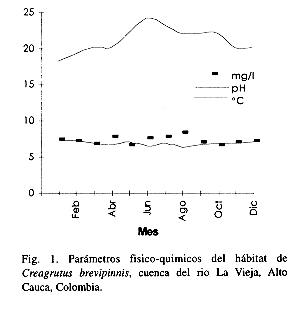
<body><![CDATA[<CENTER><FONT FACE="Arial,Helvetica"><FONT SIZE=-1>0.12</FONT></FONT></CENTER> </TD> </TR>  <TR> <TD VALIGN=TOP WIDTH="33%"><FONT FACE="Arial,Helvetica"><FONT SIZE=-1>Microforidios&nbsp;</FONT></FONT></TD>  <TD VALIGN=TOP WIDTH="33%">     <CENTER><FONT FACE="Arial,Helvetica"><FONT SIZE=-1>0.02</FONT></FONT></CENTER> </TD>  <TD VALIGN=TOP WIDTH="33%">     <CENTER><FONT FACE="Arial,Helvetica"><FONT SIZE=-1>0.12</FONT></FONT></CENTER> </TD> </TR>  <TR> <TD VALIGN=TOP WIDTH="33%"><FONT FACE="Arial,Helvetica"><FONT SIZE=-1>Acarina&nbsp;</FONT></FONT></TD>  <TD VALIGN=TOP WIDTH="33%">     <CENTER><FONT FACE="Arial,Helvetica"><FONT SIZE=-1>0.02</FONT></FONT></CENTER> </TD>  <TD VALIGN=TOP WIDTH="33%">     <CENTER><FONT FACE="Arial,Helvetica"><FONT SIZE=-1>0.12</FONT></FONT></CENTER> </TD> </TR> </TABLE></CENTER>       <P>&nbsp;      <P><FONT FACE="Arial,Helvetica"><FONT SIZE=-1><B>Reproducci&oacute;n.- </B>El mayor desarrollo de los ovarios se present&oacute; entre mayo y enero, lo cual abarca tanto el per&iacute;odo de lluvias m&iacute;nimas ("verano") como de lluvias m&aacute;ximas ("invierno"); de febrero a abril decrece el IGS; de manera similar los test&iacute;culos alcanzaron registros m&aacute;ximos en mayo, agosto y noviembre (<A HREF="#fig. 2">Fig. 2)</A>; adem&aacute;s se observaron hembras y machos con g&oacute;nadas maduras, al igual que larvas y alevines a lo largo del a&ntilde;o y en su h&aacute;bitat caracter&iacute;stico, lo cual sugiere que <I>C. brevipinnis</I> registra un per&iacute;odo de desove largo y no efect&uacute;a migraciones con fines reproductivos. Durante los meses del estudio no se observ&oacute; un dominio de uno de los sexos; la diferencia: hembras 203 (54.13%) y machos 172 (45.87%), no se desv&iacute;a significativamente de la proporci&oacute;n 1:1 esperada (X<SUP>2</SUP> = 2.56; P&lt;0.1 gl = 1). El pez registra una talla m&iacute;nima de 3 cm de longitud est&aacute;ndar en hembras y machos; la talla de maduraci&oacute;n para el 50 % de la poblaci&oacute;n fue de 4.0 cm de longitud est&aacute;ndar (<A HREF="#fig. 3">Fig. 3</A>). Durante el transcurso del per&iacute;odo del estudio se not&oacute; que los machos, a diferencia de las hembras, presentaron espinas en el tercer radio ramificado de la aleta anal, localizadas sobre el borde posterior, a lo largo de la margen media y cuyo n&uacute;mero varia entre diez y 13; de igual manera, se observaron espinas entre el segundo y s&eacute;ptimo radio de las aletas ventrales en el borde posterior desde cerca de la base hasta pr&oacute;ximo al extremo distal; este car&aacute;cter se observ&oacute; en ejemplares sexualmente maduros. Los conteos de ovocitos arrojaron un promedio ponderado de 613 (148- 2563) ovocitos por hembra en estado de predesove; no se observ&oacute; relaci&oacute;n entre el n&uacute;mero de ovocitos y la longitud est&aacute;ndar, ni con el peso del cuerpo (r= 0.33 y 0.54 respectivamente) . Las mediciones arrojaron un promedio ponderado para el di&aacute;metro del ovocito de 0.6254 mm (promedio m&iacute;nimo 0.47 mm; promedio m&aacute;ximo 0.920 mm); se encontr&oacute; una relaci&oacute;n inversamente proporcional del di&aacute;metro del ovocito con la fecundidad y con la longitud est&aacute;ndar (r= - 0.1638 y -0.0103 respectivamente).</FONT></FONT>     <BR>&nbsp;     <BR>&nbsp;     <CENTER></CENTER>      ]]></body>
<body><![CDATA[<CENTER><A NAME="fig. 3"></A><IMG SRC="/img/fbpe/rbt/v46n3/0214i03.GIF" HEIGHT=283 WIDTH=298></CENTER>       
<P><FONT FACE="Arial,Helvetica"><FONT SIZE=-1>Se determinaron 30 especies de peces que conviven de manera simp&aacute;trica con <I>C. brevipinnis</I> (<A HREF="#CUADRO   2">Cuadro 2</A>); se hall&oacute; que la especie m&aacute;s abundante es <I>Brycon henni</I> (juveniles) (25.83%); le siguen en orden decreciente de abundancia <I>C. brevipinnis</I> (24.93%), adultos y juveniles de<I> Chaetostoma fischeri</I> (14.19%), adultos y juveniles de <I>Sturisoma leightoni</I><B> </B>(10.40%), <I>Argopleura magdalenensis</I><B> </B>(6.50%)<B> </B>y <I>Bryconamericus caucanus</I> (5.14%).</FONT></FONT>     <BR>&nbsp;      <P><B><FONT FACE="Arial,Helvetica"><FONT SIZE=-1>Discusi&oacute;n</FONT></FONT></B>      <P><FONT FACE="Arial,Helvetica"><FONT SIZE=-1><A HREF="#Wikramanayake, D.E.">Wikramanayake (1990</A>) y <A HREF="#Wootton,, R. J.">Wootton (1992</A>) afirmaron que la orientaci&oacute;n y forma de la cavidad bucal son de alguna manera atributos relacionados con el comportamiento alimentario; <B>C. brevipinnis</B> posee una cavidad bucal subterminal o ventralmente orientada, relacionada con su actividad de b&uacute;squeda del alimento, la que se efect&uacute;a en el sustrato y en la base de la columna de agua, evidente por el contenido estomacal de piedras y fitobentos (Bacillariophyceae). La especie en per&iacute;odo de desove ingiere poco alimento, en este lapso se lograron observar los &uacute;nicos tres est&oacute;magos vac&iacute;os del total examinado; lo cual indica una ingesti&oacute;n previa de alimento con el prop&oacute;sito de obtener reservas energ&eacute;ticas para llevar a cabo su evento reproductivo. La relaci&oacute;n longitud est&aacute;ndar-largo del intestino obtenida esta asociada con la eficiencia digestiva y refleja la generalidad de que los peces carn&iacute;voros poseen un intestino mas corto que los herb&iacute;voros(<A HREF="#Kappor, B.G.">Kappor et al. 1975</A>; <A HREF="#Wikramanayake, D.E.">Wikramanayake 1990</A>); adem&aacute;s, <A HREF="#Bussing">Bussing (1993</A>) plante&oacute; que la relaci&oacute;n mencionada en carn&iacute;voros es menor de uno, lo cual se cumple con <I>C. brevipinnis</I>, sin embargo, la morfolog&iacute;a de la dentici&oacute;n para carn&iacute;voros (dientes alargados y puntiagudos) no coincide con la observada en <I>C. brevipinnis. </I>En cuanto a las interacciones tr&oacute;ficas de <I>C. brevipinnis</I> se observ&oacute; que los grupos de m&aacute;s profusi&oacute;n como <I>Brycon henni</I> podr&iacute;an competir por espacio y por alimento, en esta especie se reportaron datos similares en cuanto a h&aacute;bitos tr&oacute;ficos (<A HREF="#Builes, J.">Builes &amp; Ur&aacute;n 1974</A>); los loricaridos <I>Chaetostoma fischeri </I>y <I>Sturisoma leightoni</I> por su condici&oacute;n de especies algu&iacute;voras y bet&oacute;nicas (<A HREF="#Power, M. 1984.">Power 1984</A>; <A HREF="#Power, M. 1990.">1990</A>; <A HREF="#López, J.">L&oacute;pez &amp; Rom&aacute;n-Valencia 1996</A>) se ubicar&iacute;an en la base de la red tr&oacute;fica del ambiente acu&aacute;tico de <I>C. brevipinnis</I>; en estas condiciones es evidente la separaci&oacute;n de nichos entre estos taxones, sin embargo, se logr&oacute; observar fitoplancton en la dieta de <I>C. brevipinni</I>s.</FONT></FONT>     <BR>&nbsp;     <CENTER><A NAME="CUADRO   2"></A><FONT FACE="Arial,Helvetica"><FONT SIZE=-1>CUADRO&nbsp;&nbsp; 2</FONT></FONT></CENTER>      <CENTER><FONT FACE="Arial,Helvetica"><FONT SIZE=-1>Comunidad de peces en el h&aacute;bitat de Creagrutus brevipinnis</FONT></FONT></CENTER>       <P>&nbsp;     <CENTER><TABLE BORDER=0 CELLSPACING=0 CELLPADDING=0 COLS=3 WIDTH="66%" > <TR> <TD>     ]]></body>
<body><![CDATA[<CENTER><FONT FACE="Arial,Helvetica"><FONT SIZE=-1>Especie</FONT></FONT></CENTER> </TD>  <TD>     <CENTER><FONT FACE="Arial,Helvetica"><FONT SIZE=-1>Cantidad</FONT></FONT></CENTER> </TD>  <TD>     <CENTER><FONT FACE="Arial,Helvetica"><FONT SIZE=-1>Frecuencia</FONT></FONT></CENTER> </TD> </TR>  <TR> <TD><I><FONT FACE="Arial,Helvetica"><FONT SIZE=-1>Argopleura magdafenensis</FONT></FONT></I></TD>  <TD>     <CENTER><FONT FACE="Arial,Helvetica"><FONT SIZE=-1>115</FONT></FONT></CENTER> </TD>  <TD>     <CENTER><FONT FACE="Arial,Helvetica"><FONT SIZE=-1>16</FONT></FONT></CENTER> </TD> </TR>  <TR> <TD><I><FONT FACE="Arial,Helvetica"><FONT SIZE=-1>Argopleura sp.</FONT></FONT></I></TD>  <TD>     <CENTER><FONT FACE="Arial,Helvetica"><FONT SIZE=-1>13</FONT></FONT></CENTER> </TD>  <TD>     <CENTER><FONT FACE="Arial,Helvetica"><FONT SIZE=-1>1</FONT></FONT></CENTER> </TD> </TR>  <TR> <TD><I><FONT FACE="Arial,Helvetica"><FONT SIZE=-1>Astyanax caucanus</FONT></FONT></I></TD>  <TD>     <CENTER><FONT FACE="Arial,Helvetica"><FONT SIZE=-1>1</FONT></FONT></CENTER> </TD>  <TD>     <CENTER><FONT FACE="Arial,Helvetica"><FONT SIZE=-1>1</FONT></FONT></CENTER> </TD> </TR>  <TR> <TD><I><FONT FACE="Arial,Helvetica"><FONT SIZE=-1>Astyanax mirolepis</FONT></FONT></I></TD>  <TD>     <CENTER><FONT FACE="Arial,Helvetica"><FONT SIZE=-1>20</FONT></FONT></CENTER> </TD>  <TD>     ]]></body>
<body><![CDATA[<CENTER><FONT FACE="Arial,Helvetica"><FONT SIZE=-1>8</FONT></FONT></CENTER> </TD> </TR>  <TR> <TD><I><FONT FACE="Arial,Helvetica"><FONT SIZE=-1>Branchioica phaneronema</FONT></FONT></I></TD>  <TD>     <CENTER><FONT FACE="Arial,Helvetica"><FONT SIZE=-1>1</FONT></FONT></CENTER> </TD>  <TD>     <CENTER><FONT FACE="Arial,Helvetica"><FONT SIZE=-1>1</FONT></FONT></CENTER> </TD> </TR>  <TR> <TD><I><FONT FACE="Arial,Helvetica"><FONT SIZE=-1>Brycon henni</FONT></FONT></I></TD>  <TD>     <CENTER><FONT FACE="Arial,Helvetica"><FONT SIZE=-1>457</FONT></FONT></CENTER> </TD>  <TD>     <CENTER><FONT FACE="Arial,Helvetica"><FONT SIZE=-1>15</FONT></FONT></CENTER> </TD> </TR>  <TR> <TD><FONT FACE="Arial,Helvetica"><FONT SIZE=-1>Bryconamericus caucanus</FONT></FONT></TD>  <TD>     <CENTER><FONT FACE="Arial,Helvetica"><FONT SIZE=-1>91</FONT></FONT></CENTER> </TD>  <TD>     <CENTER><FONT FACE="Arial,Helvetica"><FONT SIZE=-1>18</FONT></FONT></CENTER> </TD> </TR>  <TR> <TD><I><FONT FACE="Arial,Helvetica"><FONT SIZE=-1>Cefopsorhamdia boquillae</FONT></FONT></I></TD>  <TD>     <CENTER><FONT FACE="Arial,Helvetica"><FONT SIZE=-1>1</FONT></FONT></CENTER> </TD>  <TD>     <CENTER><FONT FACE="Arial,Helvetica"><FONT SIZE=-1>1</FONT></FONT></CENTER> </TD> </TR>  <TR> <TD><I><FONT FACE="Arial,Helvetica"><FONT SIZE=-1>Bryconamericus sp.</FONT></FONT></I></TD>  <TD>     <CENTER><FONT FACE="Arial,Helvetica"><FONT SIZE=-1>26</FONT></FONT></CENTER> </TD>  <TD>     ]]></body>
<body><![CDATA[<CENTER><FONT FACE="Arial,Helvetica"><FONT SIZE=-1>5</FONT></FONT></CENTER> </TD> </TR>  <TR> <TD><I><FONT FACE="Arial,Helvetica"><FONT SIZE=-1>Creagrutus brevipinnnis</FONT></FONT></I></TD>  <TD>     <CENTER><FONT FACE="Arial,Helvetica"><FONT SIZE=-1>441</FONT></FONT></CENTER> </TD>  <TD>     <CENTER><FONT FACE="Arial,Helvetica"><FONT SIZE=-1>35</FONT></FONT></CENTER> </TD> </TR>  <TR> <TD><FONT FACE="Arial,Helvetica"><FONT SIZE=-1>Chaetostoma fischeri</FONT></FONT></TD>  <TD>     <CENTER><FONT FACE="Arial,Helvetica"><FONT SIZE=-1>251</FONT></FONT></CENTER> </TD>  <TD>     <CENTER><FONT FACE="Arial,Helvetica"><FONT SIZE=-1>24</FONT></FONT></CENTER> </TD> </TR>  <TR> <TD><I><FONT FACE="Arial,Helvetica"><FONT SIZE=-1>Characidium caucanus</FONT></FONT></I></TD>  <TD>     <CENTER><FONT FACE="Arial,Helvetica"><FONT SIZE=-1>17</FONT></FONT></CENTER> </TD>  <TD>     <CENTER><FONT FACE="Arial,Helvetica"><FONT SIZE=-1>8</FONT></FONT></CENTER> </TD> </TR>  <TR> <TD><I><FONT FACE="Arial,Helvetica"><FONT SIZE=-1>Hyphessobrycon poecilioides</FONT></FONT></I></TD>  <TD>     <CENTER><FONT FACE="Arial,Helvetica"><FONT SIZE=-1>6</FONT></FONT></CENTER> </TD>  <TD>     <CENTER><FONT FACE="Arial,Helvetica"><FONT SIZE=-1>1</FONT></FONT></CENTER> </TD> </TR>  <TR> <TD><I><FONT FACE="Arial,Helvetica"><FONT SIZE=-1>Lasiancistrus caucanus</FONT></FONT></I></TD>  <TD>     <CENTER><FONT FACE="Arial,Helvetica"><FONT SIZE=-1>17</FONT></FONT></CENTER> </TD>  <TD>     ]]></body>
<body><![CDATA[<CENTER><FONT FACE="Arial,Helvetica"><FONT SIZE=-1>7</FONT></FONT></CENTER> </TD> </TR>  <TR> <TD><I><FONT FACE="Arial,Helvetica"><FONT SIZE=-1>Microgenys minutus</FONT></FONT></I></TD>  <TD>     <CENTER><FONT FACE="Arial,Helvetica"><FONT SIZE=-1>10</FONT></FONT></CENTER> </TD>  <TD>     <CENTER><FONT FACE="Arial,Helvetica"><FONT SIZE=-1>5</FONT></FONT></CENTER> </TD> </TR>  <TR> <TD><I><FONT FACE="Arial,Helvetica"><FONT SIZE=-1>Nannorhamdia nemacheir</FONT></FONT></I></TD>  <TD>     <CENTER><FONT FACE="Arial,Helvetica"><FONT SIZE=-1>6</FONT></FONT></CENTER> </TD>  <TD>     <CENTER><FONT FACE="Arial,Helvetica"><FONT SIZE=-1>3</FONT></FONT></CENTER> </TD> </TR>  <TR> <TD><I><FONT FACE="Arial,Helvetica"><FONT SIZE=-1>Poecilia caucana</FONT></FONT></I></TD>  <TD>     <CENTER><FONT FACE="Arial,Helvetica"><FONT SIZE=-1>33</FONT></FONT></CENTER> </TD>  <TD>     <CENTER><FONT FACE="Arial,Helvetica"><FONT SIZE=-1>10</FONT></FONT></CENTER> </TD> </TR>  <TR> <TD><I><FONT FACE="Arial,Helvetica"><FONT SIZE=-1>Rhamdia quelen</FONT></FONT></I></TD>  <TD>     <CENTER><FONT FACE="Arial,Helvetica"><FONT SIZE=-1>5</FONT></FONT></CENTER> </TD>  <TD>     <CENTER><FONT FACE="Arial,Helvetica"><FONT SIZE=-1>3</FONT></FONT></CENTER> </TD> </TR>  <TR> <TD><I><FONT FACE="Arial,Helvetica"><FONT SIZE=-1>Sturisoma leightoni</FONT></FONT></I></TD>  <TD>     <CENTER><FONT FACE="Arial,Helvetica"><FONT SIZE=-1>184</FONT></FONT></CENTER> </TD>  <TD>     ]]></body>
<body><![CDATA[<CENTER><FONT FACE="Arial,Helvetica"><FONT SIZE=-1>27</FONT></FONT></CENTER> </TD> </TR>  <TR> <TD><I><FONT FACE="Arial,Helvetica"><FONT SIZE=-1>Priapichthys caliensis</FONT></FONT></I></TD>  <TD>     <CENTER><FONT FACE="Arial,Helvetica"><FONT SIZE=-1>14</FONT></FONT></CENTER> </TD>  <TD>     <CENTER><FONT FACE="Arial,Helvetica"><FONT SIZE=-1>2</FONT></FONT></CENTER> </TD> </TR>  <TR> <TD><I><FONT FACE="Arial,Helvetica"><FONT SIZE=-1>Trichomycterus caliense</FONT></FONT></I></TD>  <TD>     <CENTER><FONT FACE="Arial,Helvetica"><FONT SIZE=-1>8</FONT></FONT></CENTER> </TD>  <TD>     <CENTER><FONT FACE="Arial,Helvetica"><FONT SIZE=-1>4</FONT></FONT></CENTER> </TD> </TR>  <TR> <TD><I><FONT FACE="Arial,Helvetica"><FONT SIZE=-1>Trichomycterus retropinne</FONT></FONT></I></TD>  <TD>     <CENTER><FONT FACE="Arial,Helvetica"><FONT SIZE=-1>2</FONT></FONT></CENTER> </TD>  <TD>     <CENTER><FONT FACE="Arial,Helvetica"><FONT SIZE=-1>1</FONT></FONT></CENTER> </TD> </TR>  <TR> <TD><I><FONT FACE="Arial,Helvetica"><FONT SIZE=-1>Astyanax gisleni</FONT></FONT></I></TD>  <TD>     <CENTER><FONT FACE="Arial,Helvetica"><FONT SIZE=-1>9</FONT></FONT></CENTER> </TD>  <TD>     <CENTER><FONT FACE="Arial,Helvetica"><FONT SIZE=-1>1</FONT></FONT></CENTER> </TD> </TR>  <TR> <TD><I><FONT FACE="Arial,Helvetica"><FONT SIZE=-1>Cariastyanax aurocaudatus</FONT></FONT></I></TD>  <TD>     <CENTER><FONT FACE="Arial,Helvetica"><FONT SIZE=-1>4</FONT></FONT></CENTER> </TD>  <TD>     ]]></body>
<body><![CDATA[<CENTER><FONT FACE="Arial,Helvetica"><FONT SIZE=-1>1</FONT></FONT></CENTER> </TD> </TR>  <TR> <TD><I><FONT FACE="Arial,Helvetica"><FONT SIZE=-1>Apteronotus rostratus</FONT></FONT></I></TD>  <TD>     <CENTER><FONT FACE="Arial,Helvetica"><FONT SIZE=-1>1</FONT></FONT></CENTER> </TD>  <TD>     <CENTER><FONT FACE="Arial,Helvetica"><FONT SIZE=-1>1</FONT></FONT></CENTER> </TD> </TR>  <TR> <TD><I><FONT FACE="Arial,Helvetica"><FONT SIZE=-1>Aequidens latifrons</FONT></FONT></I></TD>  <TD>     <CENTER><FONT FACE="Arial,Helvetica"><FONT SIZE=-1>2</FONT></FONT></CENTER> </TD>  <TD>     <CENTER><FONT FACE="Arial,Helvetica"><FONT SIZE=-1>2</FONT></FONT></CENTER> </TD> </TR>  <TR> <TD><I><FONT FACE="Arial,Helvetica"><FONT SIZE=-1>Geohyrocharax caucanus</FONT></FONT></I></TD>  <TD>     <CENTER><FONT FACE="Arial,Helvetica"><FONT SIZE=-1>5</FONT></FONT></CENTER> </TD>  <TD>     <CENTER><FONT FACE="Arial,Helvetica"><FONT SIZE=-1>1</FONT></FONT></CENTER> </TD> </TR>  <TR> <TD><I><FONT FACE="Arial,Helvetica"><FONT SIZE=-1>Roeboides caucae</FONT></FONT></I></TD>  <TD>     <CENTER><FONT FACE="Arial,Helvetica"><FONT SIZE=-1>27</FONT></FONT></CENTER> </TD>  <TD>     <CENTER><FONT FACE="Arial,Helvetica"><FONT SIZE=-1>2</FONT></FONT></CENTER> </TD> </TR>  <TR> <TD><I><FONT FACE="Arial,Helvetica"><FONT SIZE=-1>Oreochromis nilioticus</FONT></FONT></I></TD>  <TD>     <CENTER><FONT FACE="Arial,Helvetica"><FONT SIZE=-1>1</FONT></FONT></CENTER> </TD>  <TD>     ]]></body>
<body><![CDATA[<CENTER><FONT FACE="Arial,Helvetica"><FONT SIZE=-1>1</FONT></FONT></CENTER> </TD> </TR>  <TR> <TD><I><FONT FACE="Arial,Helvetica"><FONT SIZE=-1>Homodiaetus sp.</FONT></FONT></I></TD>  <TD>     <CENTER><FONT FACE="Arial,Helvetica"><FONT SIZE=-1>1</FONT></FONT></CENTER> </TD>  <TD>     <CENTER><FONT FACE="Arial,Helvetica"><FONT SIZE=-1>1</FONT></FONT></CENTER> </TD> </TR> </TABLE></CENTER> <FONT FACE="Arial,Helvetica"><FONT SIZE=-1><A HREF="#Román-Valencia, C. 1995."></A></FONT></FONT>&nbsp;<FONT FACE="Arial,Helvetica"><FONT SIZE=-1><A HREF="#Román-Valencia, C. 1995."></A></FONT></FONT>      <P><FONT FACE="Arial,Helvetica"><FONT SIZE=-1><A HREF="#Román-Valencia, C. 1995.">Rom&aacute;n-Valencia (1995</A>) hall&oacute; hembras con ovocitos entre enero y febrero; <A HREF="#Vazzoler, A.E.A.">Vazzoler (1996</A>) anoto que el per&iacute;odo reproductivo de las especies de peces es diferente, var&iacute;a entre uno y nueve meses, siendo raras (5-7%) las que poseen este rango. <A HREF="#Harold, A.S. & R.P. Vari. 1994.">Harold &amp; Vari (1994</A>) citaron para <I>C. paralacus</I> la presencia en la aleta anal de espinas entre el primero y el cuarto radio, principalmente en el tercero ramificado, sin embargo, no reportaron este car&aacute;cter dimorfico sexual en las aletas ventrales. <A HREF="#Adebisi">Adebisi (1990</A>) plantea que existe relaci&oacute;n amplia entre el di&aacute;metro del ovocito y la fecundidad y viceversa, de tal manera, que a mayor di&aacute;metro se observa baja fecundidad y viceversa; <A HREF="#Heins, D.C.">Heins &amp; Baker (1987)</A> demostraron que los peces ov&iacute;paros producen ovocitos que var&iacute;an en tama&ntilde;o, probablemente como una adaptaci&oacute;n a una variable ambiental. De modo general<A HREF="#Vazzoler, A.E.A."> Vazzoler (1996</A>) sugiri&oacute; que la fecundidad var&iacute;a con la longitud de la hembra, aumenta con el crecimiento y esta mas relacionada con el tama&ntilde;o que con la edad del individuo.</FONT></FONT>     <BR>&nbsp;      <P><B><FONT FACE="Arial,Helvetica"><FONT SIZE=-1>Agradecimientos</FONT></FONT></B>      <P><FONT FACE="Arial,Helvetica"><FONT SIZE=-1>Este trabajo se llev&oacute; a cabo con aportes de la facultad de Investigaciones, Universidad del Quindio (Proyecto 136). Muy agradecido a Germ&aacute;n Arbelaez Serna, Ricardo A. ferriz, Ana Milena Mu&ntilde;oz, Alejandro Vasquez, Anibal Gonzales y Mario Cardona.</FONT></FONT>     <BR>&nbsp;      <P><B><FONT FACE="Arial,Helvetica"><FONT SIZE=-1>Resumen</FONT></FONT></B>      <P><FONT FACE="Arial,Helvetica"><FONT SIZE=-1>Contenido estomacal y aspectos reproductivos fueron estudiados en un pez caracido (<I>C. brevipinnis) </I>de el Alto Cauca (Julio 1995 a diciembre de 1996). La temperatura promedio en la regi&oacute;n fue de 21&deg; C, pH alrededor de la neutralidad; ox&iacute;geno disuelto alto (8 ppm); es una especie no migratoria. El pez es predominantemente insect&iacute;vora y especializado (Diptera: Simuliidae ; Ephemeroptera), siendo ubicado en el tercer nivel de la red tr&oacute;fica. La actividad alimentaria registr&oacute; diferencias altamente significativas entre la &eacute;poca lluviosa y la seca de la regi&oacute;n (F=19.04 ; P&lt; 0.0001). El comportamiento alimentario se realiz&oacute; en el sustrato entre las 6:00 hr y las 18:00 hr. Se observ&oacute; correlaci&oacute;n negativa entre el peso del est&oacute;mago y el &iacute;ndice de voracidad. La especie en la &eacute;poca de reproducci&oacute;n consumi&oacute; poco alimento. El desarrollo m&aacute;ximo de las g&oacute;nadas se registr&oacute; entre mayo y junio. La fecundidad fue baja ( promedio 613 ovocitos) y el ovocito fue peque&ntilde;o (promedio 0.6254 mm). La proporci&oacute;n entre sexos fue de 1:1 (x<SUP>2</SUP>= 2.56 P&lt;0.1 gl=1) y el tama&ntilde;o promedio de madurez para la poblaci&oacute;n estudiada fue de 4.0 cm de longitud est&aacute;ndar. Es simp&aacute;trica con 30 especies de peces, siendo La Sabaleta <I>Brycon henni</I> y<I> C. brevipinnis </I>las m&aacute;s abundantes</FONT></FONT>     ]]></body>
<body><![CDATA[<BR>&nbsp;      <P><B><FONT FACE="Arial,Helvetica"><FONT SIZE=-1>Referencias</FONT></FONT></B>      <!-- ref --><P><A NAME="Adebisi"></A><FONT FACE="Arial,Helvetica"><FONT SIZE=-1>Adebisi, A.A. 1990. A mathematical expression for the estimation of relative fish fecundity using oocyte size. Rev. Biol. Trop. 38:323-324,</FONT></FONT>    &nbsp;&nbsp;&nbsp;&nbsp;&nbsp;&nbsp;&nbsp;&nbsp;[&#160;<a href="javascript:void(0);" onclick="javascript: window.open('/scielo.php?script=sci_nlinks&ref=1142398&pid=S0034-7744199800030003200001&lng=','','width=640,height=500,resizable=yes,scrollbars=1,menubar=yes,');">Links</a>&#160;]<!-- end-ref --><!-- ref --><P><A NAME="Anónimo. 1985."></A><FONT FACE="Arial,Helvetica"><FONT SIZE=-1>An&oacute;nimo. 1985. Standard methods for examination of water and waste water. Apha, Washington, D.C. 1193 p.</FONT></FONT>    &nbsp;&nbsp;&nbsp;&nbsp;&nbsp;&nbsp;&nbsp;&nbsp;[&#160;<a href="javascript:void(0);" onclick="javascript: window.open('/scielo.php?script=sci_nlinks&ref=1142399&pid=S0034-7744199800030003200002&lng=','','width=640,height=500,resizable=yes,scrollbars=1,menubar=yes,');">Links</a>&#160;]<!-- end-ref --><!-- ref --><P><A NAME="Builes, J."></A><FONT FACE="Arial,Helvetica"><FONT SIZE=-1>Builes, J. &amp; A. Uran 1974. Estudio del c&iacute;clo sexual de la Sabaleta <I>Brycon henni</I>. Su comportamiento y fecundaci&oacute;n artificial. Actual. Biol. 3:2-12.</FONT></FONT>    &nbsp;&nbsp;&nbsp;&nbsp;&nbsp;&nbsp;&nbsp;&nbsp;[&#160;<a href="javascript:void(0);" onclick="javascript: window.open('/scielo.php?script=sci_nlinks&ref=1142400&pid=S0034-7744199800030003200003&lng=','','width=640,height=500,resizable=yes,scrollbars=1,menubar=yes,');">Links</a>&#160;]<!-- end-ref --><!-- ref --><P><A NAME="Bussing"></A><FONT FACE="Arial,Helvetica"><FONT SIZE=-1>Bussing, A.W. 1993. Fish communities and environmental characteristics of a tropical rain forest river in Costa Rica. Rev. Biol. Trop. 4: 791-809</FONT></FONT>    &nbsp;&nbsp;&nbsp;&nbsp;&nbsp;&nbsp;&nbsp;&nbsp;[&#160;<a href="javascript:void(0);" onclick="javascript: window.open('/scielo.php?script=sci_nlinks&ref=1142401&pid=S0034-7744199800030003200004&lng=','','width=640,height=500,resizable=yes,scrollbars=1,menubar=yes,');">Links</a>&#160;]<!-- end-ref --><!-- ref --><P><A NAME="Ferris, A. R."></A><FONT FACE="Arial,Helvetica"><FONT SIZE=-1>Ferris, A. R. &amp; W. Salas A. 1996. Dieta de <I>Galaxias maculatus</I> (Jenyns, 1842) (Salmoniformes: Galaxiidae) en un embalse norpatagonico. Boll. Mus. reg. Sci. nat. Torino 14 (1):249-257</FONT></FONT>    &nbsp;&nbsp;&nbsp;&nbsp;&nbsp;&nbsp;&nbsp;&nbsp;[&#160;<a href="javascript:void(0);" onclick="javascript: window.open('/scielo.php?script=sci_nlinks&ref=1142402&pid=S0034-7744199800030003200005&lng=','','width=640,height=500,resizable=yes,scrollbars=1,menubar=yes,');">Links</a>&#160;]<!-- end-ref --><!-- ref --><P><A NAME="Ghazai"></A><FONT FACE="Arial,Helvetica"><FONT SIZE=-1>Ghazai, A.M., V. Benech &amp; D. Paugy. 1991. L’ alimentation de <I>Brycinus leuciscus</I>(Teleostei:Characidae) au Mali: sapects qualitifs, quantitatifs at comportamentaux. Ichthyol. Explor. Freshwaters 2: 47-54.</FONT></FONT>    &nbsp;&nbsp;&nbsp;&nbsp;&nbsp;&nbsp;&nbsp;&nbsp;[&#160;<a href="javascript:void(0);" onclick="javascript: window.open('/scielo.php?script=sci_nlinks&ref=1142403&pid=S0034-7744199800030003200006&lng=','','width=640,height=500,resizable=yes,scrollbars=1,menubar=yes,');">Links</a>&#160;]<!-- end-ref --><!-- ref --><P><A NAME="Harold, A.S. , R.P. Vari , A. Machado-Allison 1994"></A><FONT FACE="Arial,Helvetica"><FONT SIZE=-1>Harold, A.S. , R.P. Vari , A. Machado-Allison &amp; F. Provenzano. 1994. <I>Creagrutus hysginus</I><B> </B>(Teleostei:Characiformes<B>)</B> a new species of characid from northeastern Venezuela, Sucre State. Copeia, 1994: 975-979.</FONT></FONT>    &nbsp;&nbsp;&nbsp;&nbsp;&nbsp;&nbsp;&nbsp;&nbsp;[&#160;<a href="javascript:void(0);" onclick="javascript: window.open('/scielo.php?script=sci_nlinks&ref=1142404&pid=S0034-7744199800030003200007&lng=','','width=640,height=500,resizable=yes,scrollbars=1,menubar=yes,');">Links</a>&#160;]<!-- end-ref --><!-- ref --><P><A NAME="Harold, A.S. & R.P. Vari. 1994."></A><FONT FACE="Arial,Helvetica"><FONT SIZE=-1>Harold, A.S. &amp; R.P. Vari. 1994. Systematics of the trans Andean species of <I>Creagrutus </I>(Ostariophysi, Characiformes, Characidae). Smithson. Contr. Zool. 551:1-31.</FONT></FONT>    &nbsp;&nbsp;&nbsp;&nbsp;&nbsp;&nbsp;&nbsp;&nbsp;[&#160;<a href="javascript:void(0);" onclick="javascript: window.open('/scielo.php?script=sci_nlinks&ref=1142405&pid=S0034-7744199800030003200008&lng=','','width=640,height=500,resizable=yes,scrollbars=1,menubar=yes,');">Links</a>&#160;]<!-- end-ref --><!-- ref --><P><A NAME="Heins, D.C."></A><FONT FACE="Arial,Helvetica"><FONT SIZE=-1>Heins, D.C. &amp; A. Baker. 1987. Analysis of factors associated with intrasoecific variation in propagule size of a stream dwelling fish p. 223-231 in community and evolutionary ecology of North American stream fishes W.J. Matthewsand, D.C. Heins (Ed.) Univ. of Oklahoma Press Norman, Oklahoma.</FONT></FONT>    &nbsp;&nbsp;&nbsp;&nbsp;&nbsp;&nbsp;&nbsp;&nbsp;[&#160;<a href="javascript:void(0);" onclick="javascript: window.open('/scielo.php?script=sci_nlinks&ref=1142406&pid=S0034-7744199800030003200009&lng=','','width=640,height=500,resizable=yes,scrollbars=1,menubar=yes,');">Links</a>&#160;]<!-- end-ref --><!-- ref --><P><A NAME="Hyslop, E.J."></A><FONT FACE="Arial,Helvetica"><FONT SIZE=-1>Hyslop, E.J. 1980. Stomach contents analysis- a review of methods and their application. J. Fish. 17:411-429.</FONT></FONT>    &nbsp;&nbsp;&nbsp;&nbsp;&nbsp;&nbsp;&nbsp;&nbsp;[&#160;<a href="javascript:void(0);" onclick="javascript: window.open('/scielo.php?script=sci_nlinks&ref=1142407&pid=S0034-7744199800030003200010&lng=','','width=640,height=500,resizable=yes,scrollbars=1,menubar=yes,');">Links</a>&#160;]<!-- end-ref --><!-- ref --><P><A NAME="Kappor, B.G."></A><FONT FACE="Arial,Helvetica"><FONT SIZE=-1>Kappor, B.G., H. Smith &amp; L.A. Verighina. 1975. The alimentary canal and digestion in teleost, in F.S. Russell &amp; M. Younge (Ed.). Advances in Marine Biology 113 : 109-239.</FONT></FONT>    &nbsp;&nbsp;&nbsp;&nbsp;&nbsp;&nbsp;&nbsp;&nbsp;[&#160;<a href="javascript:void(0);" onclick="javascript: window.open('/scielo.php?script=sci_nlinks&ref=1142408&pid=S0034-7744199800030003200011&lng=','','width=640,height=500,resizable=yes,scrollbars=1,menubar=yes,');">Links</a>&#160;]<!-- end-ref --><P><A NAME="López, J."></A><FONT FACE="Arial,Helvetica"><FONT SIZE=-1>L&oacute;pez, J. &amp; C. Rom&aacute;n-Valencia, C. 1996. Sobre la biolog&iacute;a del Corroncho <I>Chaetostoma fischeri </I>(Pisces: Loricariidae) en el r&iacute;o La Vieja, Alto Cauca, Colombia. Bolet&iacute;n Ecotr&oacute;pica 30: 37-57.</FONT></FONT>      <!-- ref --><P><A NAME="Movillo, J."></A><FONT FACE="Arial,Helvetica"><FONT SIZE=-1>Movillo, J. &amp; N. Bahamonde. 1971. Contenido gastrico y relaciones troficas de <I>Thrsites atun </I>(Euphrasen) en San Antonio, Chile. Bol. Mus. Nat. Hist. XXIX :289-338.</FONT></FONT>    &nbsp;&nbsp;&nbsp;&nbsp;&nbsp;&nbsp;&nbsp;&nbsp;[&#160;<a href="javascript:void(0);" onclick="javascript: window.open('/scielo.php?script=sci_nlinks&ref=1142410&pid=S0034-7744199800030003200013&lng=','','width=640,height=500,resizable=yes,scrollbars=1,menubar=yes,');">Links</a>&#160;]<!-- end-ref --><!-- ref --><P><A NAME="Ortaz, M."></A><FONT FACE="Arial,Helvetica"><FONT SIZE=-1>Ortaz, M. 1992. H&aacute;bitos alimenticios de los peces de un R&iacute;o de Monta&ntilde;a Neotropical. Biotropica 24:550-559.</FONT></FONT>    &nbsp;&nbsp;&nbsp;&nbsp;&nbsp;&nbsp;&nbsp;&nbsp;[&#160;<a href="javascript:void(0);" onclick="javascript: window.open('/scielo.php?script=sci_nlinks&ref=1142411&pid=S0034-7744199800030003200014&lng=','','width=640,height=500,resizable=yes,scrollbars=1,menubar=yes,');">Links</a>&#160;]<!-- end-ref --><!-- ref --><P><A NAME="Power, M. 1984."></A><FONT FACE="Arial,Helvetica"><FONT SIZE=-1>Power, M. 1984. Habitat quality and the distribution of algae grazing catfish in a Panamian stream. Journal of Animal Ecology 53:357-374</FONT></FONT>    &nbsp;&nbsp;&nbsp;&nbsp;&nbsp;&nbsp;&nbsp;&nbsp;[&#160;<a href="javascript:void(0);" onclick="javascript: window.open('/scielo.php?script=sci_nlinks&ref=1142412&pid=S0034-7744199800030003200015&lng=','','width=640,height=500,resizable=yes,scrollbars=1,menubar=yes,');">Links</a>&#160;]<!-- end-ref --><!-- ref --><P><A NAME="Power, M. 1990."></A><FONT FACE="Arial,Helvetica"><FONT SIZE=-1>Power, M. 1990. Benthic turfs vs floating mate of algae in river food webs. Oikos 58:67-79.</FONT></FONT>    &nbsp;&nbsp;&nbsp;&nbsp;&nbsp;&nbsp;&nbsp;&nbsp;[&#160;<a href="javascript:void(0);" onclick="javascript: window.open('/scielo.php?script=sci_nlinks&ref=1142413&pid=S0034-7744199800030003200016&lng=','','width=640,height=500,resizable=yes,scrollbars=1,menubar=yes,');">Links</a>&#160;]<!-- end-ref --><!-- ref --><P><A NAME="Román-Valencia, C. 1995."></A><FONT FACE="Arial,Helvetica"><FONT SIZE=-1>Rom&aacute;n-Valencia, C. 1995. Lista anotada de los peces de la cuenca del r&iacute;o La Vieja, Alto Cauca, Colombia. Bolet&iacute;n Ecotr&oacute;pica 29: 1-19.</FONT></FONT>    &nbsp;&nbsp;&nbsp;&nbsp;&nbsp;&nbsp;&nbsp;&nbsp;[&#160;<a href="javascript:void(0);" onclick="javascript: window.open('/scielo.php?script=sci_nlinks&ref=1142414&pid=S0034-7744199800030003200017&lng=','','width=640,height=500,resizable=yes,scrollbars=1,menubar=yes,');">Links</a>&#160;]<!-- end-ref --><!-- ref --><P><A NAME="Roman-Valencia, C. 1997"></A><FONT FACE="Arial,Helvetica"><FONT SIZE=-1>Roman-Valencia, C. &amp; Cala, P. 1997. Las especies Colombianas del genero <I>Creagrutus</I> (Pisces,Characidae). Rev. Acad. Colomb. Cienc. XXI: 141-153.</FONT></FONT>    &nbsp;&nbsp;&nbsp;&nbsp;&nbsp;&nbsp;&nbsp;&nbsp;[&#160;<a href="javascript:void(0);" onclick="javascript: window.open('/scielo.php?script=sci_nlinks&ref=1142415&pid=S0034-7744199800030003200018&lng=','','width=640,height=500,resizable=yes,scrollbars=1,menubar=yes,');">Links</a>&#160;]<!-- end-ref --><!-- ref --><P><A NAME="Saul, G.W. 1967."></A><FONT FACE="Arial,Helvetica"><FONT SIZE=-1>Saul, G.W. 1967. An Saul ecological study of fishes at site in upper Amazonian Ecuador. Thesis M.Sc. The University of Kansas, Lawrence, Kansas, USA 113 p.</FONT></FONT>    &nbsp;&nbsp;&nbsp;&nbsp;&nbsp;&nbsp;&nbsp;&nbsp;[&#160;<a href="javascript:void(0);" onclick="javascript: window.open('/scielo.php?script=sci_nlinks&ref=1142416&pid=S0034-7744199800030003200019&lng=','','width=640,height=500,resizable=yes,scrollbars=1,menubar=yes,');">Links</a>&#160;]<!-- end-ref --><!-- ref --><P><A NAME="Vari,"></A><FONT FACE="Arial,Helvetica"><FONT SIZE=-1>Vari, R.P. ,A.S. Harold, C.A. Lasso &amp; A. Machado-Allison. 1993. <I>Creagrutus lepidus</I>, a new species from the Rio Aroa Systems, Yaracuy State, Venezuela (Teleostei: Characiformes, Characidae). Ichthyol. Explor. Freshwaters 4: 351-355.</FONT></FONT>    &nbsp;&nbsp;&nbsp;&nbsp;&nbsp;&nbsp;&nbsp;&nbsp;[&#160;<a href="javascript:void(0);" onclick="javascript: window.open('/scielo.php?script=sci_nlinks&ref=1142417&pid=S0034-7744199800030003200020&lng=','','width=640,height=500,resizable=yes,scrollbars=1,menubar=yes,');">Links</a>&#160;]<!-- end-ref --><!-- ref --><P><A NAME="Vazzoler, A.E.A."></A><FONT FACE="Arial,Helvetica"><FONT SIZE=-1>Vazzoler, A.E.A. de M. 1996. Biologia da reproducao de peixes teleosteos: teoria e pratica. EDUEM, Maringa, Sao Pablo 169 p.</FONT></FONT>    &nbsp;&nbsp;&nbsp;&nbsp;&nbsp;&nbsp;&nbsp;&nbsp;[&#160;<a href="javascript:void(0);" onclick="javascript: window.open('/scielo.php?script=sci_nlinks&ref=1142418&pid=S0034-7744199800030003200021&lng=','','width=640,height=500,resizable=yes,scrollbars=1,menubar=yes,');">Links</a>&#160;]<!-- end-ref --><!-- ref --><P><A NAME="Wikramanayake, D.E."></A><FONT FACE="Arial,Helvetica"><FONT SIZE=-1>Wikramanayake, D.E. 1990.<B> </B>Ecomorphology and biogeography of a tropical stream fish assemblage: evolution of assemblage structure. Ecology 7 :1756-1764</FONT></FONT>    &nbsp;&nbsp;&nbsp;&nbsp;&nbsp;&nbsp;&nbsp;&nbsp;[&#160;<a href="javascript:void(0);" onclick="javascript: window.open('/scielo.php?script=sci_nlinks&ref=1142419&pid=S0034-7744199800030003200022&lng=','','width=640,height=500,resizable=yes,scrollbars=1,menubar=yes,');">Links</a>&#160;]<!-- end-ref --><!-- ref --><P><A NAME="Wootton,, R. J."></A><FONT FACE="Arial,Helvetica"><FONT SIZE=-1>Wootton,, R. J. 1992. Fish Ecology. Chapman &amp; Hall, Nueva York, 221 p.</FONT></FONT>    &nbsp;&nbsp;&nbsp;&nbsp;&nbsp;&nbsp;&nbsp;&nbsp;[&#160;<a href="javascript:void(0);" onclick="javascript: window.open('/scielo.php?script=sci_nlinks&ref=1142420&pid=S0034-7744199800030003200023&lng=','','width=640,height=500,resizable=yes,scrollbars=1,menubar=yes,');">Links</a>&#160;]<!-- end-ref --><P><A NAME="1a"></A><FONT FACE="Arial,Helvetica"><FONT SIZE=-1><SUP><A HREF="#1">1</A></SUP>Universidad del Quind&iacute;o, Depto. de Biolog&iacute;a, A.A. 460, Armenia, Colombia. Correo electr&oacute;nico: <A HREF="mailto:croman@cocora.uniquindio.edu.co">croman@cocora.uniquindio.edu.co</A></FONT></FONT>      ]]></body><back>
<ref-list>
<ref id="B1">
<nlm-citation citation-type="journal">
<person-group person-group-type="author">
<name>
<surname><![CDATA[Adebisi]]></surname>
<given-names><![CDATA[A.A.]]></given-names>
</name>
</person-group>
<article-title xml:lang="en"><![CDATA[A mathematical expression for the estimation of relative fish fecundity using oocyte size]]></article-title>
<source><![CDATA[Rev. Biol. Trop.]]></source>
<year>1990</year>
<volume>38</volume>
<page-range>323-324</page-range></nlm-citation>
</ref>
<ref id="B2">
<nlm-citation citation-type="book">
<person-group person-group-type="author">
<name>
</name>
<name>
</name>
</person-group>
<source><![CDATA[Standard methods for examination of water and waste water]]></source>
<year>1985</year>
<publisher-loc><![CDATA[Washington, D.C. ]]></publisher-loc>
<publisher-name><![CDATA[Apha]]></publisher-name>
</nlm-citation>
</ref>
<ref id="B3">
<nlm-citation citation-type="journal">
<person-group person-group-type="author">
<name>
<surname><![CDATA[Builes]]></surname>
<given-names><![CDATA[J.]]></given-names>
</name>
<name>
<surname><![CDATA[Uran]]></surname>
<given-names><![CDATA[A.]]></given-names>
</name>
</person-group>
<article-title xml:lang="es"><![CDATA[Estudio del cíclo sexual de la Sabaleta Brycon henni: Su comportamiento y fecundación artificial.]]></article-title>
<source><![CDATA[Actual. Biol.]]></source>
<year>1974</year>
<month>.</month>
<volume>3</volume>
<page-range>2-12</page-range></nlm-citation>
</ref>
<ref id="B4">
<nlm-citation citation-type="journal">
<person-group person-group-type="author">
<name>
<surname><![CDATA[Bussing]]></surname>
<given-names><![CDATA[A.W.]]></given-names>
</name>
</person-group>
<article-title xml:lang="en"><![CDATA[Fish communities and environmental characteristics of a tropical rain forest river in Costa Rica.]]></article-title>
<source><![CDATA[Rev. Biol. Trop.]]></source>
<year>1993</year>
<volume>4</volume>
<page-range>791-809</page-range></nlm-citation>
</ref>
<ref id="B5">
<nlm-citation citation-type="journal">
<person-group person-group-type="author">
<name>
<surname><![CDATA[Ferris]]></surname>
<given-names><![CDATA[A. R.]]></given-names>
</name>
<name>
<surname><![CDATA[Salas A.]]></surname>
<given-names><![CDATA[W.]]></given-names>
</name>
</person-group>
<article-title xml:lang="es"><![CDATA[Dieta de Galaxias maculatus (Jenyns, 1842) (Salmoniformes: Galaxiidae) en un embalse norpatagonico]]></article-title>
<source><![CDATA[Boll. Mus. reg. Sci. nat. Torino]]></source>
<year>1996</year>
<volume>14</volume>
<numero>1</numero>
<issue>1</issue>
<page-range>249-257</page-range></nlm-citation>
</ref>
<ref id="B6">
<nlm-citation citation-type="journal">
<person-group person-group-type="author">
<name>
<surname><![CDATA[Ghazai]]></surname>
<given-names><![CDATA[A.M.]]></given-names>
</name>
<name>
<surname><![CDATA[Benech]]></surname>
<given-names><![CDATA[V.]]></given-names>
</name>
<name>
<surname><![CDATA[Paugy]]></surname>
<given-names><![CDATA[D.]]></given-names>
</name>
</person-group>
<article-title xml:lang="pt"><![CDATA[L’ alimentation de Brycinus leuciscus(Teleostei:Characidae) au Mali: sapects qualitifs, quantitatifs at comportamentaux.]]></article-title>
<source><![CDATA[Ichthyol. Explor. Freshwaters]]></source>
<year>1991</year>
<volume>2</volume>
<page-range>47-54</page-range></nlm-citation>
</ref>
<ref id="B7">
<nlm-citation citation-type="journal">
<person-group person-group-type="author">
<name>
<surname><![CDATA[Harold]]></surname>
<given-names><![CDATA[A.S.]]></given-names>
</name>
<name>
<surname><![CDATA[Vari]]></surname>
<given-names><![CDATA[R.P.]]></given-names>
</name>
<name>
<surname><![CDATA[Machado-Allison]]></surname>
<given-names><![CDATA[A.]]></given-names>
</name>
<name>
<surname><![CDATA[Provenzano]]></surname>
<given-names><![CDATA[F.]]></given-names>
</name>
</person-group>
<article-title xml:lang="en"><![CDATA[Creagrutus hysginus (Teleostei:Characiformes) a new species of characid from northeastern Venezuela, Sucre State.]]></article-title>
<source><![CDATA[Copeia]]></source>
<year>1994</year>
<volume>1994</volume>
<page-range>975-979</page-range></nlm-citation>
</ref>
<ref id="B8">
<nlm-citation citation-type="journal">
<person-group person-group-type="author">
<name>
<surname><![CDATA[Harold]]></surname>
<given-names><![CDATA[A.S.]]></given-names>
</name>
<name>
<surname><![CDATA[Vari]]></surname>
<given-names><![CDATA[R.P.]]></given-names>
</name>
</person-group>
<article-title xml:lang="en"><![CDATA[Systematics of the trans Andean species of Creagrutus (Ostariophysi, Characiformes, Characidae).]]></article-title>
<source><![CDATA[Smithson. Contr. Zool.]]></source>
<year>1994</year>
<volume>551</volume>
<page-range>1-31</page-range></nlm-citation>
</ref>
<ref id="B9">
<nlm-citation citation-type="book">
<person-group person-group-type="author">
<name>
<surname><![CDATA[Heins]]></surname>
<given-names><![CDATA[D.C.]]></given-names>
</name>
<name>
<surname><![CDATA[Baker]]></surname>
<given-names><![CDATA[A.]]></given-names>
</name>
</person-group>
<article-title xml:lang="en"><![CDATA[Analysis of factors associated with intrasoecific variation in propagule size of a stream dwelling fish]]></article-title>
<person-group person-group-type="editor">
<name>
<surname><![CDATA[Matthewsand]]></surname>
<given-names><![CDATA[W.J.]]></given-names>
</name>
<name>
<surname><![CDATA[Heins]]></surname>
<given-names><![CDATA[D.C.]]></given-names>
</name>
</person-group>
<source><![CDATA[community and evolutionary ecology of North American stream fishes]]></source>
<year>1987</year>
<page-range>223-231</page-range><publisher-loc><![CDATA[^eOklahoma Oklahoma]]></publisher-loc>
<publisher-name><![CDATA[Univ. of Oklahoma Press Norman]]></publisher-name>
</nlm-citation>
</ref>
<ref id="B10">
<nlm-citation citation-type="journal">
<person-group person-group-type="author">
<name>
<surname><![CDATA[Hyslop,]]></surname>
<given-names><![CDATA[E.J.]]></given-names>
</name>
</person-group>
<article-title xml:lang="en"><![CDATA[Stomach contents analysis- a review of methods and their application]]></article-title>
<source><![CDATA[J. Fish.]]></source>
<year>1980</year>
<volume>17</volume>
<page-range>411-429</page-range></nlm-citation>
</ref>
<ref id="B11">
<nlm-citation citation-type="">
<person-group person-group-type="author">
<name>
<surname><![CDATA[Kappor]]></surname>
<given-names><![CDATA[B.G.]]></given-names>
</name>
<name>
<surname><![CDATA[Smith]]></surname>
<given-names><![CDATA[H.]]></given-names>
</name>
<name>
<surname><![CDATA[Verighina]]></surname>
<given-names><![CDATA[L.A.]]></given-names>
</name>
</person-group>
<article-title xml:lang="en"><![CDATA[The alimentary canal and digestion in teleost]]></article-title>
<person-group person-group-type="editor">
<name>
<surname><![CDATA[Russell]]></surname>
<given-names><![CDATA[F.S.]]></given-names>
</name>
<name>
<surname><![CDATA[Younge]]></surname>
<given-names><![CDATA[M.]]></given-names>
</name>
</person-group>
<source><![CDATA[Advances in Marine Biology]]></source>
<year>1975</year>
<volume>113</volume>
<page-range>109-239</page-range></nlm-citation>
</ref>
<ref id="B12">
<nlm-citation citation-type="journal">
<person-group person-group-type="author">
<name>
<surname><![CDATA[López]]></surname>
<given-names><![CDATA[J.]]></given-names>
</name>
<name>
<surname><![CDATA[Román-Valencia]]></surname>
<given-names><![CDATA[C.]]></given-names>
</name>
</person-group>
<article-title xml:lang="es"><![CDATA[Sobre la biología del Corroncho Chaetostoma fischeri (Pisces: Loricariidae) en el río La Vieja, Alto Cauca, Colombia]]></article-title>
<source><![CDATA[Boletín Ecotrópica]]></source>
<year>1996</year>
<month>.</month>
<volume>30</volume>
<page-range>37-57</page-range></nlm-citation>
</ref>
<ref id="B13">
<nlm-citation citation-type="journal">
<person-group person-group-type="author">
<name>
<surname><![CDATA[Movillo]]></surname>
<given-names><![CDATA[J.]]></given-names>
</name>
<name>
<surname><![CDATA[Bahamonde]]></surname>
<given-names><![CDATA[N.]]></given-names>
</name>
</person-group>
<article-title xml:lang="en"><![CDATA[Contenido gastrico y relaciones troficas de Thrsites atun (Euphrasen) en San Antonio, Chile.]]></article-title>
<source><![CDATA[Bol. Mus. Nat. Hist.]]></source>
<year>1971</year>
<volume>XXIX</volume>
<page-range>289-338</page-range></nlm-citation>
</ref>
<ref id="B14">
<nlm-citation citation-type="journal">
<person-group person-group-type="author">
<name>
<surname><![CDATA[Ortaz]]></surname>
<given-names><![CDATA[M.]]></given-names>
</name>
</person-group>
<article-title xml:lang="es"><![CDATA[Hábitos alimenticios de los peces de un Río de Montaña Neotropical]]></article-title>
<source><![CDATA[Biotropica]]></source>
<year>1992</year>
<volume>24</volume>
<page-range>550-559</page-range></nlm-citation>
</ref>
<ref id="B15">
<nlm-citation citation-type="journal">
<person-group person-group-type="author">
<name>
<surname><![CDATA[Power]]></surname>
<given-names><![CDATA[M.]]></given-names>
</name>
</person-group>
<article-title xml:lang="en"><![CDATA[Habitat quality and the distribution of algae grazing catfish in a Panamian stream]]></article-title>
<source><![CDATA[Journal of Animal Ecology]]></source>
<year>1984</year>
<volume>53</volume>
<page-range>357-374</page-range></nlm-citation>
</ref>
<ref id="B16">
<nlm-citation citation-type="journal">
<person-group person-group-type="author">
<name>
<surname><![CDATA[Power]]></surname>
<given-names><![CDATA[M.]]></given-names>
</name>
</person-group>
<article-title xml:lang="en"><![CDATA[Benthic turfs vs floating mate of algae in river food webs]]></article-title>
<source><![CDATA[Oikos]]></source>
<year>1990</year>
<volume>58</volume>
<page-range>67-79</page-range></nlm-citation>
</ref>
<ref id="B17">
<nlm-citation citation-type="journal">
<person-group person-group-type="author">
<name>
<surname><![CDATA[Román-Valencia]]></surname>
<given-names><![CDATA[C.]]></given-names>
</name>
</person-group>
<article-title xml:lang="es"><![CDATA[Lista anotada de los peces de la cuenca del río La Vieja, Alto Cauca, Colombia]]></article-title>
<source><![CDATA[Boletín Ecotrópica]]></source>
<year>1995</year>
<month>.</month>
<volume>29</volume>
<page-range>1-19</page-range></nlm-citation>
</ref>
<ref id="B18">
<nlm-citation citation-type="journal">
<person-group person-group-type="author">
<name>
<surname><![CDATA[Roman-Valencia]]></surname>
<given-names><![CDATA[C.]]></given-names>
</name>
<name>
<surname><![CDATA[Cala]]></surname>
<given-names><![CDATA[P.]]></given-names>
</name>
</person-group>
<article-title xml:lang="es"><![CDATA[Las especies Colombianas del genero Creagrutus (Pisces,Characidae)]]></article-title>
<source><![CDATA[Rev. Acad. Colomb. Cienc.]]></source>
<year>1997</year>
<volume>XXI</volume>
<page-range>141-153</page-range></nlm-citation>
</ref>
<ref id="B19">
<nlm-citation citation-type="">
<person-group person-group-type="author">
<name>
<surname><![CDATA[Saul]]></surname>
<given-names><![CDATA[G.W.]]></given-names>
</name>
</person-group>
<source><![CDATA[An Saul ecological study of fishes at site in upper Amazonian Ecuador]]></source>
<year>1967</year>
</nlm-citation>
</ref>
<ref id="B20">
<nlm-citation citation-type="journal">
<person-group person-group-type="author">
<name>
<surname><![CDATA[Vari]]></surname>
<given-names><![CDATA[R.P.]]></given-names>
</name>
<name>
<surname><![CDATA[Harold]]></surname>
<given-names><![CDATA[A.S.]]></given-names>
</name>
<name>
<surname><![CDATA[Lasso]]></surname>
<given-names><![CDATA[C.A.]]></given-names>
</name>
<name>
<surname><![CDATA[Machado-Allison]]></surname>
<given-names><![CDATA[A.]]></given-names>
</name>
</person-group>
<article-title xml:lang="en"><![CDATA[Creagrutus lepidus, a new species from the Rio Aroa Systems, Yaracuy State, Venezuela (Teleostei: Characiformes, Characidae)]]></article-title>
<source><![CDATA[Ichthyol. Explor. Freshwaters]]></source>
<year>1993</year>
<volume>4</volume>
<page-range>351-355</page-range></nlm-citation>
</ref>
<ref id="B21">
<nlm-citation citation-type="book">
<person-group person-group-type="author">
<name>
<surname><![CDATA[Vazzoler]]></surname>
<given-names><![CDATA[A.E.A. de M.]]></given-names>
</name>
</person-group>
<source><![CDATA[Biologia da reproducao de peixes teleosteos: teoria e pratica]]></source>
<year>1996</year>
<month>.</month>
<publisher-loc><![CDATA[Maringa^eSao Pablo Sao Pablo]]></publisher-loc>
<publisher-name><![CDATA[EDUEM]]></publisher-name>
</nlm-citation>
</ref>
<ref id="B22">
<nlm-citation citation-type="journal">
<person-group person-group-type="author">
<name>
<surname><![CDATA[Wikramanayake]]></surname>
<given-names><![CDATA[D.E.]]></given-names>
</name>
</person-group>
<article-title xml:lang="en"><![CDATA[Ecomorphology and biogeography of a tropical stream fish assemblage: evolution of assemblage structure]]></article-title>
<source><![CDATA[Ecology]]></source>
<year>1990</year>
<volume>7</volume>
<page-range>1756-1764</page-range></nlm-citation>
</ref>
<ref id="B23">
<nlm-citation citation-type="book">
<person-group person-group-type="author">
<name>
<surname><![CDATA[Wootton]]></surname>
<given-names><![CDATA[R. J.]]></given-names>
</name>
</person-group>
<source><![CDATA[Fish Ecology]]></source>
<year>1992</year>
<publisher-loc><![CDATA[^eNueva York Nueva York]]></publisher-loc>
<publisher-name><![CDATA[Chapman & Hall]]></publisher-name>
</nlm-citation>
</ref>
</ref-list>
</back>
</article>