<?xml version="1.0" encoding="ISO-8859-1"?><article xmlns:mml="http://www.w3.org/1998/Math/MathML" xmlns:xlink="http://www.w3.org/1999/xlink" xmlns:xsi="http://www.w3.org/2001/XMLSchema-instance">
<front>
<journal-meta>
<journal-id>0034-7744</journal-id>
<journal-title><![CDATA[Revista de Biología Tropical]]></journal-title>
<abbrev-journal-title><![CDATA[Rev. biol. trop]]></abbrev-journal-title>
<issn>0034-7744</issn>
<publisher>
<publisher-name><![CDATA[Universidad de Costa Rica]]></publisher-name>
</publisher>
</journal-meta>
<article-meta>
<article-id>S0034-77441998000300029</article-id>
<title-group>
<article-title xml:lang="es"><![CDATA[Revisión de la morfología genital masculina de Eulaema (Hymenoptera: Apidae)]]></article-title>
</title-group>
<contrib-group>
<contrib contrib-type="author">
<name>
<surname><![CDATA[Ospina-Torres]]></surname>
<given-names><![CDATA[Rodulfo]]></given-names>
</name>
<xref ref-type="aff" rid="A01"/>
</contrib>
</contrib-group>
<aff id="A01">
<institution><![CDATA[,Universidad Nacional de Colombia Departamento de Biología ]]></institution>
<addr-line><![CDATA[Bogotá ]]></addr-line>
<country>Colombia</country>
</aff>
<pub-date pub-type="pub">
<day>00</day>
<month>09</month>
<year>1998</year>
</pub-date>
<pub-date pub-type="epub">
<day>00</day>
<month>09</month>
<year>1998</year>
</pub-date>
<volume>46</volume>
<numero>3</numero>
<fpage>749</fpage>
<lpage>762</lpage>
<copyright-statement/>
<copyright-year/>
<self-uri xlink:href="http://www.scielo.sa.cr/scielo.php?script=sci_arttext&amp;pid=S0034-77441998000300029&amp;lng=en&amp;nrm=iso"></self-uri><self-uri xlink:href="http://www.scielo.sa.cr/scielo.php?script=sci_abstract&amp;pid=S0034-77441998000300029&amp;lng=en&amp;nrm=iso"></self-uri><self-uri xlink:href="http://www.scielo.sa.cr/scielo.php?script=sci_pdf&amp;pid=S0034-77441998000300029&amp;lng=en&amp;nrm=iso"></self-uri><abstract abstract-type="short" xml:lang="en"><p><![CDATA[Although the morphological characters of the male genital capsule and the associated sternites of the five genera of euglossine bees is generally well known, the male genital morphology of many species of the genus Euglossa and Eulaema has not been described before. The genital characters can be useful for the determination of species and for the examination of phylogenetic relationships. The morphology of male genital capsules of all 15 Eulaema species is presented. 30 dry conserved and needled specimens were observed. Eleven genital and non-genital chracteres are proposed to explore the relationships between the species of Eulaema, including the subgeneric status. The results confirm the present division of the genus into two subgerera (Eulaema s.str. and Apeulaema) and three groups are proposed in Eulaema s.str. An updated key for the males of Eulaema is presented.]]></p></abstract>
<abstract abstract-type="short" xml:lang="es"><p><![CDATA[Se presenta una revisión de la morfología de la cápsula genital del macho de las 15 especies de Eulaema y una caracterización del aparato copulador de cada una de ellas. Usando 11 caracteres genitales y corporales se presenta un análisis preliminar de las especies que confirma la división subgenérica actual y plantea la existencia de tres grupos de especies en el subgénero Eulaema s.str. Se presenta también una clave actualizada para los machos de Eulaema.]]></p></abstract>
<kwd-group>
<kwd lng="en"><![CDATA[Eulaema]]></kwd>
<kwd lng="en"><![CDATA[euglosine bees]]></kwd>
<kwd lng="en"><![CDATA[genital morphology]]></kwd>
<kwd lng="en"><![CDATA[keys]]></kwd>
<kwd lng="en"><![CDATA[species groups]]></kwd>
<kwd lng="en"><![CDATA[Neotropic]]></kwd>
<kwd lng="en"><![CDATA[Apidae]]></kwd>
</kwd-group>
</article-meta>
</front><body><![CDATA[ <CENTER><B><FONT FACE="Arial,Helvetica">Revisi&oacute;n de la morfolog&iacute;a genital masculina de <I>Eulaema</I></FONT></B></CENTER>      <CENTER><B><FONT FACE="Arial,Helvetica">(Hymenoptera: Apidae).</FONT></B></CENTER>      <CENTER>&nbsp;</CENTER>      <CENTER>&nbsp;</CENTER>      <CENTER><B><FONT FACE="Arial,Helvetica"><FONT SIZE=-1>Rodulfo Ospina-Torres<A NAME="1"></A></FONT></FONT></B><SUP><FONT FACE="Arial,Helvetica"><FONT SIZE=-1><A HREF="#1a">1</A></FONT></FONT></SUP></CENTER>      <CENTER>&nbsp;</CENTER>      <CENTER>&nbsp;</CENTER>      <CENTER><FONT FACE="Arial,Helvetica"><FONT SIZE=-1>Recibido 5-V-1997. Corregido 20-III-1998. Aceptado 6-IV-1998.</FONT></FONT></CENTER>       <P><B><FONT FACE="Arial,Helvetica"><FONT SIZE=-1>Abstract</FONT></FONT></B>      <P><FONT FACE="Arial,Helvetica"><FONT SIZE=-1>Although the morphological characters of the male genital capsule and the associated sternites of the five genera of euglossine bees is generally well known, the male genital morphology of many species of the genus <I>Euglossa</I> and <I>Eulaema</I> has not been described before. The genital characters can be useful for the determination of species and for the examination of phylogenetic relationships. The morphology of male genital capsules of all 15 <I>Eulaema</I> species is presented. 30 dry conserved and needled specimens were observed. Eleven genital and non-genital chracteres are proposed to explore the relationships between the species of <I>Eulaema, </I>including the subgeneric status. The results confirm the present division of the genus into two subgerera (<I>Eulaema</I> s.str. and <I>Apeulaema</I>) and three groups are proposed in <I>Eulaema</I> s.str. An updated key for the males of <I>Eulaema</I> is presented.</FONT></FONT>     ]]></body>
<body><![CDATA[<BR>&nbsp;      <P><B><FONT FACE="Arial,Helvetica"><FONT SIZE=-1>Key words</FONT></FONT></B>      <P><FONT FACE="Arial,Helvetica"><FONT SIZE=-1><I>Eulaema</I>, euglosine bees, genital morphology,keys, species groups, Neotropic, Apidae.</FONT></FONT>     <BR>&nbsp;      <P><FONT FACE="Arial,Helvetica"><FONT SIZE=-1>A partir del descubrimiento de las relaciones de las orqu&iacute;deas con las abejas euglosinas (tribu Euglossini) y de la determinaci&oacute;n de sustancias arom&aacute;ticas que atraen a los machos de estas, el n&uacute;mero de especies conocidas de este grupo de insectos neotropicales aument&oacute; r&aacute;pidamente. Desde de la d&eacute;cada de los sesenta, la utilizaci&oacute;n de algunas de estas sustancias como cebos, ha permitido la captura relativamente f&aacute;cil de los machos de muchas especies y el estudio de la fauna de euglosinos de diversas regiones del neotr&oacute;pico.</FONT></FONT>      <P><FONT FACE="Arial,Helvetica"><FONT SIZE=-1>Hasta el presente se han descrito cerca de 170 especies (<A HREF="#Kimsey, L.S. 1986">Kimsey y Dressler 1986</A>), pertenecientes a cinco g&eacute;neros: <I>Euglossa </I>Latreille, <I>Eufriesea </I>Cockerell, <I>Eulaema </I>Lepeletier, <I>Exaerete </I>Hoffmannsegg y <I>Aglae </I>Lepeletier y Serville, de los cuales los dos &uacute;ltimos son cleptopar&aacute;sitos. <I>Eulaema</I>, est&aacute; conformado por 15 especies.</FONT></FONT>      <P><FONT FACE="Arial,Helvetica"><FONT SIZE=-1>La mayor&iacute;a de las especies de <I>Eulaema</I> se pueden determinar bas&aacute;ndose en caracteres de coloraci&oacute;n de la pilosidad del cuerpo y el integumento. Los complejos mim&eacute;ticos que incluyen las subespecies de <I>Eulaema meriana</I> y <I>Eulaema bombiformis</I> y las especies <I>Eulaema sororia</I> y <I>Eulaema chocoana</I> requieren, sin embargo, el uso de caracteres estructurales para su segura separaci&oacute;n taxon&oacute;mica, entre ellos algunos del aparato genital del macho.</FONT></FONT>      <P><FONT FACE="Arial,Helvetica"><FONT SIZE=-1>En la actualidad las caracter&iacute;sticas morfol&oacute;gicas del aparato genital del macho de los cinco g&eacute;neros de euglosinos se conocen de manera general (<A HREF="#Kimsey, L.S. 1987.">Kimsey, 1987</A>) y se reconoce para algunos de estos caracteres un significado filogen&eacute;tico importante (<A HREF="#Michener, C.D.">Michener 1990</A>, <A HREF="#Roig-Alsina">Roig-Alsina y Michener 1993</A>). Sin embargo, la morfolog&iacute;a genital en muchas de las especies de los g&eacute;neros <I>Eulaema</I> y <I>Euglossa</I> no ha sido a&uacute;n documentada.</FONT></FONT>      <P><FONT FACE="Arial,Helvetica"><FONT SIZE=-1>En este caso, el estudio morfol&oacute;gico del aparato genital, adem&aacute;s de brindar caracteres &uacute;tiles en la determinaci&oacute;n, puede tambi&eacute;n ayudar a establecer hip&oacute;tesis de parentesco o de agrupamiento sistem&aacute;tico entre las especies.</FONT></FONT>      <P><FONT FACE="Arial,Helvetica"><FONT SIZE=-1>El objetivo de este trabajo es revisar la morfolog&iacute;a genital de las especies conocidas de <I>Eulaema</I> y presentar una serie de caracteres relevantes, as&iacute; como un an&aacute;lisis de la variaci&oacute;n y distribuci&oacute;n de &eacute;stos dentro del g&eacute;nero. El an&aacute;lisis de caracteres genitales junto con otros caracteres estructurales del cuerpo, conduce a plantear agrupamientos de especies. Adem&aacute;s, el reciente descubrimiento de dos especies nuevas del g&eacute;nero (<A HREF="#Dressler, R.L. 1997">Dressler y Ospina 1997</A>,<A HREF="#Ospina, R."> Ospina y Sandino 1997</A>) cre&oacute; la necesidad de actualizar las claves propuestas por <A HREF="#Dressler, R.L. 1979.">Dressler en 1979</A>.</FONT></FONT>     ]]></body>
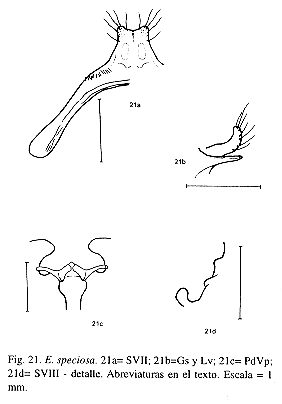
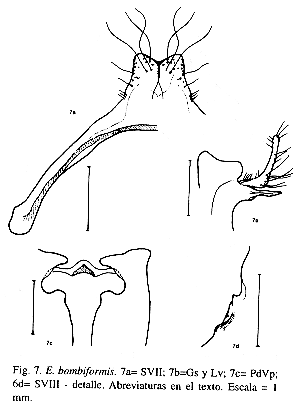
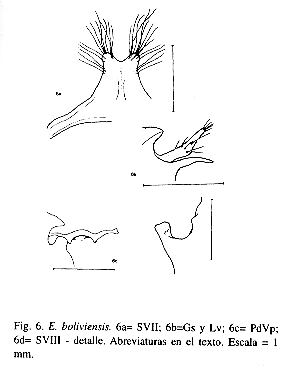
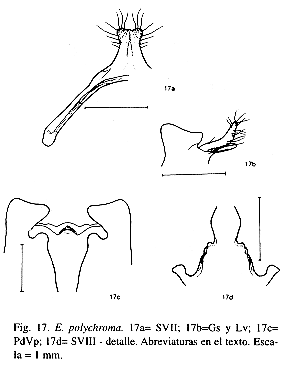
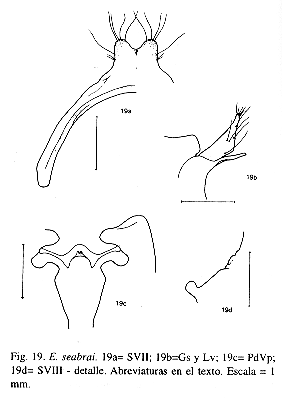
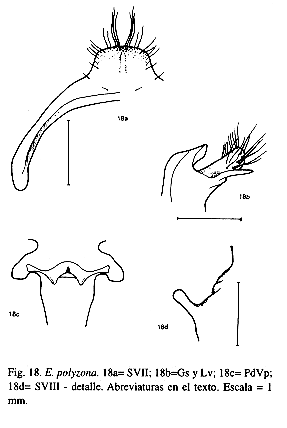
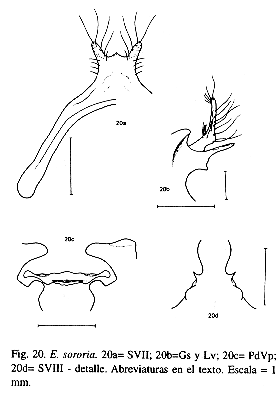
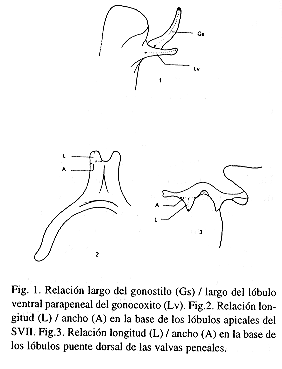
<body><![CDATA[<BR>&nbsp;      <P><B><FONT FACE="Arial,Helvetica"><FONT SIZE=-1>Materiales y M&eacute;todos</FONT></FONT></B>      <P><FONT FACE="Arial,Helvetica"><FONT SIZE=-1>Se utilizaron ejemplares de todas las especies v&aacute;lidas de <I>Eulaema</I>, preservados en seco y montados en alfileres. Mediante disecci&oacute;n, a cada ejemplar se le extrajo la c&aacute;psula genital y los esternos VII y VIII. Estas partes fueron preservadas en alcohol al 70%. Para la observaci&oacute;n, dibujo y medici&oacute;n, las c&aacute;psulas genitales fueron colocadas provisionalmente en seco y los s&eacute;ptimos esternos (SVII) fueron colocados sobre un portaobjetos de vidrio. Los dibujos y observaciones fueron realizados mediante un microscopio estereosc&oacute;pico Wild modelo M8 con c&aacute;mara l&uacute;cida.</FONT></FONT>      <P><FONT FACE="Arial,Helvetica"><FONT SIZE=-1><B>Terminolog&iacute;a: </B>La terminolog&iacute;a relativa a las partes del aparato genital del macho en este trabajo es b&aacute;sicamente la utilizada por<A HREF="#Roig-Alsina"> Roig-Alsina y Michener (1993</A>). El t&eacute;rmino <I>aedeagus</I>, utilizado entre otros por <A HREF="#Kimsey, L.S. 1987.">Kimsey (1987</A>), se considera aqu&iacute; como incluyendo el conjunto de las valvas peneales, el puente dorsal de las valvas peneales ("spatha" en <I>Bombus</I>) y el pene no esclerotizado. Se presenta a continuaci&oacute;n la lista de t&eacute;rminos y abreviaturas utilizados en este trabajo.</FONT></FONT>      <P><FONT FACE="Arial,Helvetica"><FONT SIZE=-1>Gonobase (Gb); Gonocoxito (Gc): l&oacute;bulo dorsomedial, l&oacute;bulo dorsoapical, l&oacute;bulo ventral parapeneal (Lv); Gonostilo (Gs); Valvas peneales (Vp); Puente dorsal de las valvas peneales (PdVp): l&oacute;bulos laterales, l&oacute;bulo central; Placa subgenital (SVIII): proceso basal; Esterno VII (SVII): l&oacute;bulos apicales.</FONT></FONT>      <P><FONT FACE="Arial,Helvetica"><FONT SIZE=-1>Para la caracterizaci&oacute;n del aparato genital de las especies de <I>Eulaema</I> se utilizaron tambi&eacute;n las siguientes proporciones:</FONT></FONT>      <P><FONT FACE="Arial,Helvetica"><FONT SIZE=-1>- Relaci&oacute;n Gs/Lv = largo del gonostilo desde la articulaci&oacute;n a la punta/ largo del l&oacute;bulo ventral parapeneal del gonocoxito (<A HREF="#fig. 1">Fig. 1)</A>, teniendo como referencia para esta &uacute;ltima medida el punto de cruce entre el eje principal y la l&iacute;nea imaginaria que forma la base del l&oacute;bulo.</FONT></FONT>     <BR>&nbsp;     <BR>&nbsp;     <BR>&nbsp;     ]]></body>
<body><![CDATA[<CENTER></CENTER>      <CENTER><A NAME="fig. 1"></A><IMG SRC="/img/fbpe/rbt/v46n3/0211i01.GIF" HEIGHT=369 WIDTH=282></CENTER> &nbsp;     
<BR>&nbsp;      <P><FONT FACE="Arial,Helvetica"><FONT SIZE=-1>- Relaci&oacute;n longitud (L) / ancho (A) en la base de los l&oacute;bulos apicales del SVII, seg&uacute;n <A HREF="#Kimsey, L.S. 1982.">Kimsey (1982</A>).(<A HREF="#fig. 2">Fig. 2</A>)</FONT></FONT>      <P><FONT FACE="Arial,Helvetica"><FONT SIZE=-1>- Relaci&oacute;n longitud (L) / ancho (A) en la base de los l&oacute;bulos laterales dirigidos basalmente del puente dorsal de las valvas peneales. (<A HREF="#fig. 1">Fig. 3</A>)</FONT></FONT>      <P><FONT FACE="Arial,Helvetica"><FONT SIZE=-1><B>Ejemplares examinados: </B>Cuando no se indica otra cosa, los ejemplares est&aacute;n depositados en la Colecci&oacute;n de Abejas del DEPARTAMENTO DE BIOLOGIA UNIVERSIDAD NACIONAL DE COLOMBIA - DBUN.</FONT></FONT>      <P><FONT FACE="Arial,Helvetica"><FONT SIZE=-1><I>Eulaema boliviensis </I>(Friese), 1898: 2 machos: COLOMBIA, Nari&ntilde;o, La Planada.G-39,G-40.</FONT></FONT>      <P><FONT FACE="Arial,Helvetica"><FONT SIZE=-1><I>Eulaema bombiformis </I>(Packard), 1869 : 1 macho : COLOMBIA, Choc&oacute;, Bah&iacute;a Solano, G-13; 1 macho COLOMBIA, Valle del Cauca, bajo Anchicay&aacute; a 20 km de Buenaventura, G-46; 1 macho COLOMBIA, Amazonas, Puerto C&oacute;rdoba, G-29.</FONT></FONT>      <P><FONT FACE="Arial,Helvetica"><FONT SIZE=-1><I>Eulaema bomboides</I> (Friese), 1923: 1 macho : ECUADOR, Pichincha, Santo Domingo, G-47, 718 Col. Dressler ; 1 macho : ECUADOR, Los r&iacute;os, R&iacute;o Palenque Station.. Col. Dressler.</FONT></FONT>      <P><FONT FACE="Arial,Helvetica"><FONT SIZE=-1><I>Eulaema cingulata</I> (Fabricius), 1804: 1 macho : COLOMBIA, Choc&oacute;, Bah&iacute;a Solano, G-10; 1 macho : COLOMBIA, Meta, Villavicencio, G-26.</FONT></FONT>      ]]></body>
<body><![CDATA[<P><FONT FACE="Arial,Helvetica"><FONT SIZE=-1><I>Eulaema chocoana </I>Ospina y Sandino, 1997: 1 macho COLOMBIA, Nari&ntilde;o, Barbacoas, G-34; 2 machos : COLOMBIA, Valle del Cauca, bajo Anchicay&aacute; a 20 km de Buenaventura, G-45.</FONT></FONT>      <P><FONT FACE="Arial,Helvetica"><FONT SIZE=-1><I>Eulaema leucopyga</I> (Friese), 1898: 1 macho : COLOMBIA, Choc&oacute;, Bah&iacute;a Solano, G-9.</FONT></FONT>      <P><FONT FACE="Arial,Helvetica"><FONT SIZE=-1><I>Eulaema meriana</I> (Oliver), 1789: 2 machos: COLOMBIA, Meta, Cubaral, G-12, G-14; 1 macho : TRINIDAD, Curepe, Col. Schwarz - Gerlach.</FONT></FONT>      <P><FONT FACE="Arial,Helvetica"><FONT SIZE=-1><I>Eulaema mocsaryi</I> (Friese), 1899: 2 machos : COLOMBIA, Meta, Ca&ntilde;o Cristales,G-25, G-30.</FONT></FONT>      <P><FONT FACE="Arial,Helvetica"><FONT SIZE=-1><I>Eulaema nigrita</I> Lepeletier, 1841: 1 macho : COLOMBIA, Meta, Villavicencio,G-28; 1 macho: COLOMBIA, Choc&oacute;, Bah&iacute;a Solano, G-11.</FONT></FONT>      <P><FONT FACE="Arial,Helvetica"><FONT SIZE=-1><I>Eulaema peruviana </I>(Friese), 1903: 1 macho. TRINIDAD, Aripo, G-44. Col. Schwarz - Gerlach</FONT></FONT>      <P><FONT FACE="Arial,Helvetica"><FONT SIZE=-1><I>Eulaema polychroma</I> (Mocs&agrave;ry), 1899: 1 macho : COLOMBIA, Cundinamarca, Bogot&aacute;, G-27.</FONT></FONT>      <P><FONT FACE="Arial,Helvetica"><FONT SIZE=-1><I>Eulaema polyzona</I> (Mocs&agrave;ry), 1897: 1 macho : COLOMBIA, Cundinamarca, Bogot&aacute;, G-24.</FONT></FONT>      <P><FONT FACE="Arial,Helvetica"><FONT SIZE=-1><I>Eulaema seabrai</I> Moure, 1960: 1 macho : COLOMBIA, Cundinamarca, Fusagasug&aacute;, G-23.</FONT></FONT>      <P><FONT FACE="Arial,Helvetica"><FONT SIZE=-1><I>Eulaema sororia</I> Dressler y Ospina, 1997: 4 machos : COLOMBIA, Nari&ntilde;o, Barbacoas, G-32, G-33, G-35, G-36; 1 macho : COLOMBIA, Choc&oacute;, Nuqu&iacute;, El Amargal, G-22.</FONT></FONT>      ]]></body>
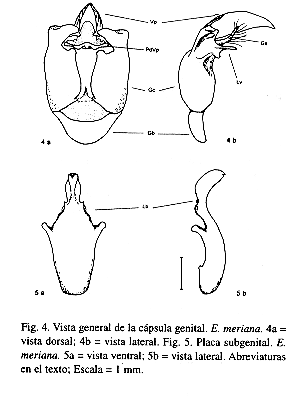
<body><![CDATA[<P><FONT FACE="Arial,Helvetica"><FONT SIZE=-1><I>Eulaema speciosa</I> (Mocs&agrave;ry), 1897: 1 macho : COSTA RICA, Punta Arenas, Las Cruces, G-38, 1099 Col. Dressler.</FONT></FONT>     <BR>&nbsp;      <P><B><FONT FACE="Arial,Helvetica"><FONT SIZE=-1>Resultados</FONT></FONT></B>      <P><B><FONT FACE="Arial,Helvetica"><FONT SIZE=-1>El aparato genital de <I>Eulaema</I>: </FONT></FONT></B><FONT FACE="Arial,Helvetica"><FONT SIZE=-1>La morfolog&iacute;a general de la c&aacute;psula genital de <I>Eulaema</I> y los esternos asociados se presenta en la <A HREF="#fig. 2">Fig. 4</A>. En general, el aparato genital de <I>Eulaema </I>se puede diferenciar del de otros euglosinos mediante los siguientes caracteres:</FONT></FONT>     <BR>&nbsp;     <BR>&nbsp;     <CENTER></CENTER>      <CENTER><A NAME="fig. 2"></A><IMG SRC="/img/fbpe/rbt/v46n3/0211i02.GIF" HEIGHT=396 WIDTH=290></CENTER> &nbsp;     
<BR>&nbsp;      <P><FONT FACE="Arial,Helvetica"><FONT SIZE=-1>- Gonobase (Gb): bien desarrollada, en comparaci&oacute;n con otros ap&iacute;deos, por ejemplo <I>Melipona</I>.</FONT></FONT>      ]]></body>
<body><![CDATA[<P><FONT FACE="Arial,Helvetica"><FONT SIZE=-1>- Gonocoxitos (Gc): con dos l&oacute;bulos dorsales, uno medial de forma aproximadamente cuadrada y otro apical grande con forma de cabeza de clavo y un l&oacute;bulo digitiforme en la parte ventral o "l&oacute;bulo ventral parapeneal" (Lv) seg&uacute;n <A HREF="#Roig-Alsina">Roig-Alsina y Michener (1993</A>).</FONT></FONT>      <P><FONT FACE="Arial,Helvetica"><FONT SIZE=-1>- Valvas peneales (Vp): glabras, robustas comparado con otros euglosinos por ejemplo <I>Aglae</I> y laminares. Proyectadas apical-ventralmente en una punta.</FONT></FONT>      <P><FONT FACE="Arial,Helvetica"><FONT SIZE=-1>- Placa subgenital (SVIII): tambi&eacute;n robusta comparada con <I>Euglossa</I> y proyectada apicalmente en una punta que se acopla con las puntas de las valvas peneales para formar una estructura en forma de pico. En la base de esta proyecci&oacute;n apical principal se presentan a cada lado o bien uno o dos engrosamientos o un proceso claramente espinoso acompa&ntilde;ado de un engrosamiento.</FONT></FONT>      <P><FONT FACE="Arial,Helvetica"><FONT SIZE=-1>- Gonostilo (Gs): simple, relativamente peque&ntilde;o y de forma variable, algunas veces redondeado y algunas veces alargado y acodado. Pilosidad escasa, algunas veces con un grupo de cerdas bastante gruesas pero nunca con penachos de pelos largos como en algunas especies de <I>Euglossa</I>.</FONT></FONT>      <P><FONT FACE="Arial,Helvetica"><FONT SIZE=-1>- Puente dorsal de las valvas peneales (PdVp): de forma variable, con un l&oacute;bulo central dirigido apicalmente y dos l&oacute;bulos laterales dirigidos basalmente pero nunca proyectado apicalmente mas all&aacute; del borde del gonocoxito.</FONT></FONT>      <P><FONT FACE="Arial,Helvetica"><FONT SIZE=-1>- SVII: De forma variable desde redondeado en su borde apical con una peque&ntilde;a proyecci&oacute;n central hasta claramente bilobulado. Con una carina longitudinal de altura variable.</FONT></FONT>     <BR>&nbsp;      <P><FONT FACE="Arial,Helvetica"><FONT SIZE=-1><B>Caracterizaci&oacute;n del aparato genital de las especies: </B>Para la caracterizaci&oacute;n de los aparatos genitales de las diferentes especies del g&eacute;nero los siguientes caracteres permiten un mayor grado de diferenciaci&oacute;n.</FONT></FONT>     <CENTER></CENTER>      <CENTER><FONT FACE="Arial,Helvetica"><FONT SIZE=-1><I>Eulaema boliviensis</I> <B><A HREF="#fig. 6">Fig.6</A></B></FONT></FONT></CENTER>       ]]></body>
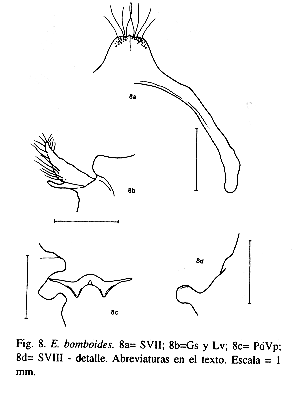
<body><![CDATA[<P><FONT FACE="Arial,Helvetica"><FONT SIZE=-1>- Gonostilo: Corto; proporci&oacute;n Gs/Lv = 1.4 ; delgado y claramente acodado. Parte basal ligeramente m&aacute;s ancha y aproximadamente tan larga como la parte distal. Sin cerdas gruesas. -Placa subgenital (S VIII): Sin procesos espinosos en la base de la proyecci&oacute;n apical principal, solamente con un engrosamiento d&eacute;bil a cada lado en esa posici&oacute;n.- Puente dorsal de las valvas peneales: Ancho; con dos l&oacute;bulos laterales dirigidos basalmente bien desarrollados pero claramente separados entre si. Proporci&oacute;n L/A de los l&oacute;bulos = 0.46 ; l&oacute;bulo central dirigido apicalmente d&eacute;bil, ampliamente redondeado.- S VII: Claramente bilobulado apicalmente. L&oacute;bulos anchos y unidos en la base. Relaci&oacute;n L/A= 0.72</FONT></FONT>     <CENTER></CENTER>      <CENTER><FONT FACE="Arial,Helvetica"><FONT SIZE=-1><I>Eulaema bombiformis</I><B><A HREF="#fig. 7">Fig.7</A></B></FONT></FONT></CENTER>       <P><FONT FACE="Arial,Helvetica"><FONT SIZE=-1>- Gonostilo: Muy largo; proporci&oacute;n Gs/Lv = 2.55; delgado y claramente acodado. Parte basal ligeramente m&aacute;s ancha y por lo menos tres veces mas corta que la parte distal. Sin cerdas gruesas.- Placa subgenital (S VIII): Con un peque&ntilde;o proceso espinoso y un engrosamiento a cada lado en la base de la proyecci&oacute;n apical.- Puente dorsal de las valvas peneales: Delgado; l&oacute;bulos laterales dirigidos basalmente muy d&eacute;biles y separados entre si. Proporci&oacute;n L/A de los l&oacute;bulos = 0.16 ; l&oacute;bulo central un poco mas desarrollado (L/A = 0.4).- S VII: Bilobulado; L&oacute;bulos muy anchos, cortos y unidos en la base. Proporci&oacute;n L/A = 0.62</FONT></FONT>     <CENTER><I><FONT FACE="Arial,Helvetica"><FONT SIZE=-1>&nbsp;</FONT></FONT></I></CENTER>      <CENTER><I><FONT FACE="Arial,Helvetica"><FONT SIZE=-1>&nbsp;</FONT></FONT></I></CENTER>      <CENTER><FONT FACE="Arial,Helvetica"><FONT SIZE=-1><I>Eulaema bomboides</I> <B><A HREF="#fig. 8">Fig.8</A></B></FONT></FONT></CENTER>       <P><FONT FACE="Arial,Helvetica"><FONT SIZE=-1>- Gonostilo: Relativamente largo; proporci&oacute;n Gs/Lv = 1.77 ; acodado pero ancho en la parte media, con aspecto subtriangular. Parte basal aproximadamente igual a la parte distal. Con algunas cerdas gruesas en la parte media.- Placa subgenital: Con un engrosamiento muy d&eacute;bil a cada lado en la base de la proyecci&oacute;n apical.- Puente dorsal de las valvas peneales: Ancho; l&oacute;bulos laterales dirigidos basalmente muy desarrollados. Proporci&oacute;n L/A = 0.6. L&oacute;bulo central amplio y redondeado.- S VII: Simple; con una peque&ntilde;a proyecci&oacute;n central.</FONT></FONT>     <CENTER></CENTER>      <CENTER><FONT FACE="Arial,Helvetica"><FONT SIZE=-1><I>Eulaema cingulata</I> <B><A HREF="#fig. 9">Fig.9</A></B></FONT></FONT></CENTER>       ]]></body>
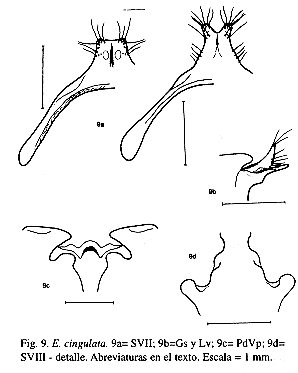
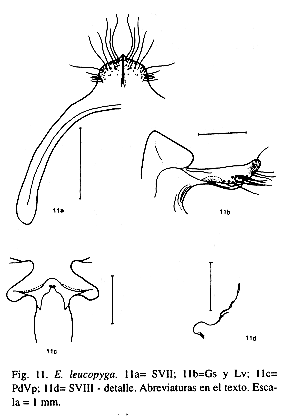
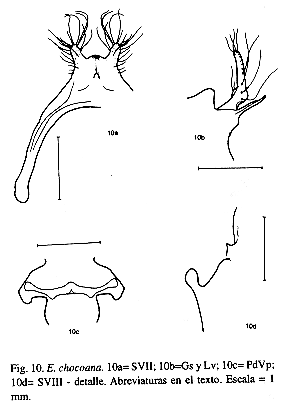
<body><![CDATA[<P><FONT FACE="Arial,Helvetica"><FONT SIZE=-1>- Gonostilo: Muy corto; proporci&oacute;n Gs/Lv = 1.15 ; solo ligeramente acodado y mas o menos subtriangular. Parte basal mas ancha y un poco mas larga que la parte distal. Sin cerdas gruesas.- Placa subgenital: Con dos engrosamientos relativamente fuertes a cada lado en la base de la proyecci&oacute;n apical principal.- Puente dorsal de las valvas peneales: Ancho; l&oacute;bulos laterales basales bien desarrollados, con las bases unidas. Proporci&oacute;n L/A = 0.5 ; l&oacute;bulo central amplio y redondeado.- S VII: De forma variable; desde simples con borde anterior ligeramente c&oacute;ncavo hasta claramente bilobulados, con l&oacute;bulos algo mas largos que anchos y unidos en la base. Proporci&oacute;n L/A = 1.12</FONT></FONT>     <CENTER></CENTER>      <CENTER><FONT FACE="Arial,Helvetica"><FONT SIZE=-1><I>Eulaema chocoana</I><B><A HREF="#fig. 10">Fig.10</A></B></FONT></FONT></CENTER>       <P><FONT FACE="Arial,Helvetica"><FONT SIZE=-1>- Gonostilo: Muy largo; proporci&oacute;n Gs/Lv = 1.8 ; delgado y acodado. Parte basal ligeramente mas ancha y mas de dos veces mas corta que la parte distal. Sin cerdas gruesas.- Placa subgenital: Con un proceso espinoso bien desarrollado y un engrosamiento a cada lado en la base de la proyecci&oacute;n apical principal.- Puente dorsal de las valvas peneales: Delgado; l&oacute;bulos laterales basales poco desarrollados y ampliamente separados. Proporci&oacute;n L/A = 0.5 ; l&oacute;bulo central poco desarrollado.- S VII: Claramente bilobulado; l&oacute;bulos delgados, mucho m&aacute;s largos que anchos y ampliamente separados entre si. Proporci&oacute;n L/A = 1.7</FONT></FONT>     <BR>&nbsp;     <CENTER><FONT FACE="Arial,Helvetica"><FONT SIZE=-1><I>Eulaema leucopyga</I> <B><A HREF="#fig. 11">Fig.11</A></B></FONT></FONT></CENTER>       <P><FONT FACE="Arial,Helvetica"><FONT SIZE=-1>- Gonostilo: Relativamente corto; proporci&oacute;n Gs/Lv = 1.53 ; ancho y poco acodado, con el borde posterior casi recto. Parte basal mas larga que la parte distal. Con un grupo de cerdas gruesas en la parte media.- Placa subgenital: Sin procesos espinosos en la base de la proyecci&oacute;n apical principal, solamente con dos engrosamientos d&eacute;biles a cada lado en esa posici&oacute;n.- Puente dorsal de las valvas peneales: Muy ancho; l&oacute;bulos laterales muy desarrollados y unidos en la base. Proporci&oacute;n L/A = 1; l&oacute;bulo central bien desarrollado.- S VII: Simple; borde apical con solo una peque&ntilde;a proyecci&oacute;n central.</FONT></FONT>     <BR>&nbsp;     <CENTER></CENTER>      <CENTER><FONT FACE="Arial,Helvetica"><FONT SIZE=-1><I>Eulaema meriana</I> <B><A HREF="#fig. 12">Figs.12</A> y <A HREF="#fig. 13">13</A></B></FONT></FONT></CENTER>       ]]></body>
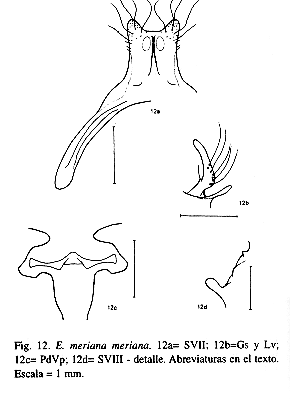
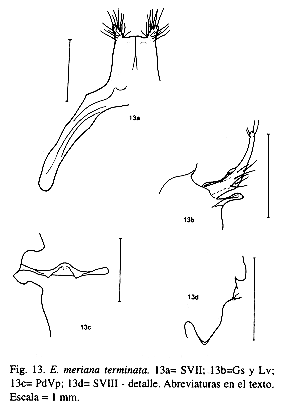
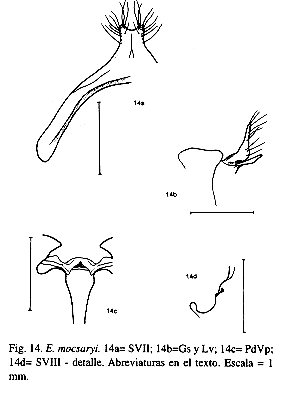
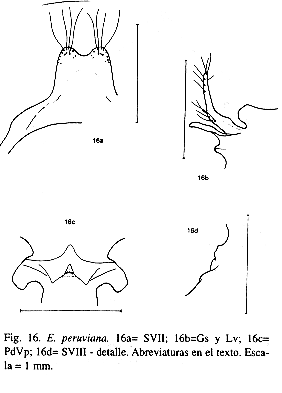
<body><![CDATA[<P><FONT FACE="Arial,Helvetica"><FONT SIZE=-1>- Gonostilo: Muy largo; proporci&oacute;n Gs/Lv = 2.3 ; delgado y fuertemente acodado. Parte basal solo muy ligeramente mas ancha y dos veces mas corta que la parte distal. Sin cerdas gruesas. En la subespecie <I>E. meriana terminata</I> el gonostilo es a&uacute;n mas largo en comparaci&oacute;n con el l&oacute;bulo ventral del gonocoxito. Proporci&oacute;n Gs/Lv = 2.95.- Placa subgenital: Con un proceso espinoso y un engrosamiento a cada lado en la base de la proyecci&oacute;n apical principal. En la subespecie <I>E. meriana terminata</I> los procesos espinosos aparecen m&aacute;s desarrollados.- Puente dorsal de las valvas peneales: Delgado; l&oacute;bulos laterales d&eacute;biles y claramente separados en la base. Proporci&oacute;n L/A = 0.33 ; l&oacute;bulo central tambi&eacute;n poco desarrollado, ampliamente redondeado.- SVII: Claramente bilobulado. L&oacute;bulos claramente separados entre si y aproximadamente tan largos como anchos en la base en las subespecies <I>E. meriana meriana</I> y <I>E. meriana flavescens</I>. Proporci&oacute;n L/A = 1.08 ; l&oacute;bulos a&uacute;n mas separados y claramente mas largos que anchos en la base en la subespecie <I>E. meriana terminata.</I></FONT></FONT>     <CENTER></CENTER>      <CENTER><FONT FACE="Arial,Helvetica"><FONT SIZE=-1><I>Eulaema mocsaryi</I><B> <A HREF="#fig. 14">Fig.14</A></B></FONT></FONT></CENTER>       <P><FONT FACE="Arial,Helvetica"><FONT SIZE=-1>- Gonostilo: Relativamente corto; proporci&oacute;n Gs/Lv = 1.57 ; delgado y acodado. Parte basal claramente mas corta que la parte distal y mas ancha que ella. Sin cerdas gruesas.- Placa subgenital: Con dos engrosamientos relativamente fuertes a cada lado en la base de la proyecci&oacute;n apical principal.- Puente dorsal de las valvas peneales: Ancho, con los l&oacute;bulos basales laterales bien desarrollados. Proporci&oacute;n L/A = 0.57 ; l&oacute;bulo central amplio y redondeado.- SVII: Bilobulado. L&oacute;bulos de forma variable. Pueden ser casi tan largos como anchos en la base (Proporci&oacute;n L/A = 0.8) o claramente alargados (Proporci&oacute;n L/A= 1.5). El borde apical tambi&eacute;n varia desde ligeramente c&oacute;ncavo hasta fuertemente hendido con forma de "V".</FONT></FONT>     <BR>&nbsp;     <CENTER><FONT FACE="Arial,Helvetica"><FONT SIZE=-1><I>Eulaema nigrita</I> <B><A HREF="#fig.  15">Fig.15</A></B></FONT></FONT></CENTER>       <P><FONT FACE="Arial,Helvetica"><FONT SIZE=-1>- Gonostilo: Corto; proporci&oacute;n Gs/Lv = 1.42 ; acodado, parte basal claramente m&aacute;s ancha y casi tan larga como la parte distal. Sin cerdas gruesas.- Placa subgenital: Con dos engrosamientos d&eacute;biles a cada lado en la base de la proyecci&oacute;n apical principal.- Puente dorsal de las valvas peneales: Ancho; l&oacute;bulos laterales basales bien desarrollados. Proporci&oacute;n L/A = 0.8 ; l&oacute;bulo central bien desarrollado, redondeado.- S VII: De forma variable; desde simple hasta d&eacute;bilmente bilobulado. Pilosidad en la base de los brazos principales presente.</FONT></FONT>     <CENTER></CENTER>      <CENTER><FONT FACE="Arial,Helvetica"><FONT SIZE=-1><I>Eulaema peruviana</I> <B><A HREF="#fig. 16">Fig.16</A></B></FONT></FONT></CENTER>       <P><FONT FACE="Arial,Helvetica"><FONT SIZE=-1>- Gonostilo: Muy largo; proporci&oacute;n Gs/Lv = 1.96 ; delgado y claramente acodado. Parte basal ligeramente m&aacute;s ancha y m&aacute;s corta que la parte distal. Sin cerdas gruesas.- Placa subgenital: Con un proceso espinoso de dos puntas a cada lado en la base de la proyecci&oacute;n apical principal, acompa&ntilde;ado de un engrosamiento adicional d&eacute;bil.- Puente dorsal de las valvas peneales: Ancho; l&oacute;bulos laterales basales muy bien desarrollados y unidos en la base. Proporci&oacute;n L/A = 0.6 ; l&oacute;bulo central bien desarrollado, ligeramente agudo.- SVII: Bilobulado; l&oacute;bulos anchos, unidos en la base. Proporci&oacute;n L/A = 0.55</FONT></FONT>     ]]></body>
<body><![CDATA[<CENTER></CENTER>      <CENTER><FONT FACE="Arial,Helvetica"><FONT SIZE=-1><I>Eulaema polychroma</I> <B><A HREF="#fig. 17">Fig.17</A></B></FONT></FONT></CENTER>       <P><FONT FACE="Arial,Helvetica"><FONT SIZE=-1>- Gonostilo: Relativamente largo; proporci&oacute;n Gs/Lv = 1.42 ; delgado y acodado. Parte basal ligeramente mas ancha y mas larga que la parte distal. Sin cerdas gruesas.- Placa subgenital: Con dos engrosamientos a cada lado en la base de la proyecci&oacute;n apical principal.- Puente dorsal de las valvas peneales: Ancho; l&oacute;bulos laterales basales bien desarrollados y unidos en la base. Proporci&oacute;n L/A = 0.57 ; l&oacute;bulo central d&eacute;bil, amplio y redondeado.- SVII: D&eacute;bilmente bilobulado.</FONT></FONT>     <BR>&nbsp;     <CENTER><FONT FACE="Arial,Helvetica"><FONT SIZE=-1><I>Eulaema polyzona</I> <B><A HREF="#fig.  18">Fig.18</A></B></FONT></FONT></CENTER>       <P><FONT FACE="Arial,Helvetica"><FONT SIZE=-1>- Gonostilo: Muy corto; proporci&oacute;n Gs/Lv = 1.16; no acodado. Mitad distal mas ancha que la mitad basal. Con un grupo de cerdas gruesas en la mitad distal.- Placa subgenital: Con dos engrosamientos d&eacute;biles a cada lado en la base de la proyecci&oacute;n distal principal.- Puente dorsal de las valvas peneales: Ancho; l&oacute;bulos laterales basales bien desarrollados. Proporci&oacute;n L/A = 0.75 ; l&oacute;bulo central distal bien desarrollado, amplio y redondeado. -SVII: Simple. Borde apical casi recto, solo muy ligeramente convexo.</FONT></FONT>     <CENTER></CENTER>      <CENTER><FONT FACE="Arial,Helvetica"><FONT SIZE=-1><I>Eulaema seabrai</I> <B><A HREF="#fig. 19">Fig.19</A></B></FONT></FONT></CENTER>       <P><FONT FACE="Arial,Helvetica"><FONT SIZE=-1>- Gonostilo: Relativamente corto; proporci&oacute;n Gs/Lv = 1.5 ; d&eacute;bilmente acodado y subtriangular. Parte basal tan larga y claramente mas ancha que la parte distal. Sin cerdas gruesas.- Placa subgenital: Con dos engrosamientos d&eacute;biles a cada lado en la base de la proyecci&oacute;n apical principal.- Puente dorsal de las valvas peneales: Muy ancho; l&oacute;bulos laterales basales muy desarrollados y unidos en la base. Proporci&oacute;n L/A = 0.8 ; l&oacute;bulo central bien desarrollado.</FONT></FONT>      <P><FONT FACE="Arial,Helvetica"><FONT SIZE=-1>- SVII: Bilobulado; l&oacute;bulos anchos y unidos en la base. Proporci&oacute;n L/A = 0.66</FONT></FONT>     ]]></body>
<body><![CDATA[<CENTER></CENTER>      <CENTER><FONT FACE="Arial,Helvetica"><FONT SIZE=-1><I>Eulaema sororia</I> <B><A HREF="#fig. 20">Fig.20</A></B></FONT></FONT></CENTER>       <P><FONT FACE="Arial,Helvetica"><FONT SIZE=-1>- Gonostilo: Muy largo; proporci&oacute;n Gs/Lv = 1.9 ; delgado y claramente acodado. Parte basal ligeramente mas ancha y claramente mas corta que la parte distal. Sin cerdas gruesas.- Placa subgenital: Con un proceso espinoso bien desarrollado y un engrosamiento adicional en la base a cada lado de la proyecci&oacute;n apical principal.- Puente dorsal de las valvas peneales: Delgado; l&oacute;bulos laterales basales d&eacute;biles y separados ampliamente entre si. L&oacute;bulo central tambi&eacute;n muy d&eacute;bil.- SVII: Claramente bilobulado. L&oacute;bulos dos veces mas largos que anchos en la base y ampliamente separados entre si por una peque&ntilde;a proyecci&oacute;n. Proporci&oacute;n L/A = 2.</FONT></FONT>     <CENTER></CENTER>      <CENTER><FONT FACE="Arial,Helvetica"><FONT SIZE=-1>- <I>Eulaema speciosa</I> <B><A HREF="#fig.  21">Fig.21</A></B></FONT></FONT></CENTER>       <P><FONT FACE="Arial,Helvetica"><FONT SIZE=-1>- Gonostilo: Corto; proporci&oacute;n Gs/Lv = 1.29 ; delgado y acodado. Parte basal tan larga y mas ancha que la parte distal. Sin cerdas gruesas.- Placa subgenital: Con dos engrosamientos a cada lado en la base de la proyecci&oacute;n apical principal.- Puente dorsal de las valvas peneales: Ancho; l&oacute;bulos laterales basales bien desarrollados L/A = 0.6 ; l&oacute;bulo central bien desarrollado.</FONT></FONT>      <P><FONT FACE="Arial,Helvetica"><FONT SIZE=-1>- SVII: Bilobulado; l&oacute;bulos anchos y unidos en la base. Proporci&oacute;n L/A= 0.5 ; pilosidad en la base de los brazos principales presente.</FONT></FONT>     <BR>&nbsp;      <P><A NAME="fig. 7"></A><IMG SRC="/img/fbpe/rbt/v46n3/0211i04.GIF" HEIGHT=408 WIDTH=306>     
<BR>&nbsp;     ]]></body>
<body><![CDATA[<BR>&nbsp;      <P><A NAME="fig. 6"></A><IMG SRC="/img/fbpe/rbt/v46n3/0211i03.GIF" HEIGHT=377 WIDTH=282><A NAME="fig. 8"></A><IMG SRC="/img/fbpe/rbt/v46n3/0211i05.GIF" HEIGHT=400 WIDTH=294>     
<BR>&nbsp;      <P><A NAME="fig. 9"></A><IMG SRC="/img/fbpe/rbt/v46n3/0211i06.GIF" HEIGHT=373 WIDTH=298><A NAME="fig. 11"></A><IMG SRC="/img/fbpe/rbt/v46n3/0211i08.GIF" HEIGHT=416 WIDTH=286>     
<BR>&nbsp;     <BR>&nbsp;     <BR>&nbsp;      <P><A NAME="fig. 10"></A><IMG SRC="/img/fbpe/rbt/v46n3/0211i07.GIF" HEIGHT=416 WIDTH=286><A NAME="fig. 12"></A><IMG SRC="/img/fbpe/rbt/v46n3/0211i09.GIF" HEIGHT=400 WIDTH=290>     
<BR>&nbsp;     <BR>&nbsp;     ]]></body>
<body><![CDATA[<BR>&nbsp;     <BR>&nbsp;      <P><A NAME="fig. 13"></A><IMG SRC="/img/fbpe/rbt/v46n3/0211i10.GIF" HEIGHT=412 WIDTH=286><A NAME="fig.  15"></A><IMG SRC="/img/fbpe/rbt/v46n3/0211i11a.GIF" HEIGHT=412 WIDTH=290>     
<BR>&nbsp;      <P><A NAME="fig. 14"></A><IMG SRC="/img/fbpe/rbt/v46n3/0211i11.GIF" HEIGHT=400 WIDTH=286><A NAME="fig. 16"></A><IMG SRC="/img/fbpe/rbt/v46n3/0211i12.GIF" HEIGHT=393 WIDTH=282>     
<BR><A NAME="fig. 17"></A><IMG SRC="/img/fbpe/rbt/v46n3/0211i13.GIF" HEIGHT=373 WIDTH=294><A NAME="fig. 19"></A><IMG SRC="/img/fbpe/rbt/v46n3/0211i15.GIF" HEIGHT=412 WIDTH=282>     
<BR>&nbsp;     <BR>&nbsp;      <P><A NAME="fig.  18"></A><IMG SRC="/img/fbpe/rbt/v46n3/0211i14.GIF" HEIGHT=428 WIDTH=287><A NAME="fig. 20"></A><IMG SRC="/img/fbpe/rbt/v46n3/0211i16.GIF" HEIGHT=412 WIDTH=278>     
<BR>&nbsp;      ]]></body>
<body><![CDATA[<P><A NAME="fig.  21"></A><IMG SRC="/img/fbpe/rbt/v46n3/0211i17.GIF" HEIGHT=404 WIDTH=282>     
<BR>&nbsp;      <P><B><FONT FACE="Arial,Helvetica"><FONT SIZE=-1>Discusi&oacute;n</FONT></FONT></B>      <P><FONT FACE="Arial,Helvetica"><FONT SIZE=-1>El <A HREF="#CUADRO 1">Cuadro 1</A> presenta un resumen de la variaci&oacute;n intragen&eacute;rica de los caracteres utilizados en la descripci&oacute;n de los aparatos genitales por especies. Adem&aacute;s de los caracteres genitales, se presenta tambi&eacute;n en la tabla la variaci&oacute;n de otros caracteres estructurales no genitales que ser&aacute;n considerados para la propuesta de agrupaci&oacute;n de especies dentro del subg&eacute;nero <I>Eulaema </I>s.str.</FONT></FONT>      <P><FONT FACE="Arial,Helvetica"><FONT SIZE=-1><B>Caracteres del aparato genital de los machos: </B>- Gonostilo: El examen de los aparatos genitales de las diferentes especies revel&oacute; que estas estructuras presentan variaciones importantes.</FONT></FONT>      <P><FONT FACE="Arial,Helvetica"><FONT SIZE=-1>La primera de estas variaciones se refiere a la longitud relativa del gonostilo. Encontramos especies con gonostilos (Gs) apenas un poco m&aacute;s largos que el l&oacute;bulo ventral parapeneal del gonocoxito (Lv) (Proporci&oacute;n Gs/Lv = 1.15) como <I>E. cingulata</I> y <I>E. polyzona</I>, mientras que otras como <I>E. bombiformis</I> poseen gonostilos casi 3 veces m&aacute;s largos que el l&oacute;bulo ventral (Gs/Lv = 2.55).</FONT></FONT>      <P><FONT FACE="Arial,Helvetica"><FONT SIZE=-1>En general, se puede reconocer un grupo de especies (<I>E. meriana</I>, <I>E. bombiformis, E. sororia, E. chocoana y E. peruviana</I>) con gonostilos comparativamente largos (Gs/Lv > 1.8); sin embargo, el resto de especies presentan valores de Gs/Lv que muestran una variaci&oacute;n casi continua de la longitud gonostilar.</FONT></FONT>      <P><FONT FACE="Arial,Helvetica"><FONT SIZE=-1>Una segunda variaci&oacute;n notable se observa en la setaci&oacute;n de esta estructura. La pilosidad del gonostilo, que en muchas especies de <I>Euglossa</I> se desarrolla de manera bastante notable, en <I>Eulaema</I> es poco desarrollada y la mayor&iacute;a de las especies poseen una setaci&oacute;n compuesta de pelos delgados y claros.</FONT></FONT>      <P><FONT FACE="Arial,Helvetica"><FONT SIZE=-1>Solamente un grupo de 3 especies (<I>E. polyzona, E. leucopyga y E. bomboides</I>) poseen un conjunto de cerdas notablemente m&aacute;s gruesas y oscuras.</FONT></FONT>      <P><FONT FACE="Arial,Helvetica"><FONT SIZE=-1>- Placa subgenital (SVIII): Dentro de las especies de <I>Eulaema</I> encontramos un grupo que presenta un proceso espinoso basal claramente desarrollado con una punta (<I>E. meriana, E. bombiformis, E. sororia y E. chocoana</I>) o un poco m&aacute;s d&eacute;bil pero con dos puntas (en <I>E. peruviana</I>), adem&aacute;s de engrosamientos en esa zona. Esta situaci&oacute;n, tambi&eacute;n se presenta en algunas especies de <I>Eufriesea</I>, pero no en <I>Euglossa</I>. Las restantes especies de <I>Eulaema</I> presentan uno o dos engrosamientos pero nunca formando una espina claramente definida.</FONT></FONT>      ]]></body>
<body><![CDATA[<P><FONT FACE="Arial,Helvetica"><FONT SIZE=-1>- Puente dorsal de las valvas peneales: La forma de esta estructura permite tambi&eacute;n agrupar a las especies <I>E. meriana, E. bombiformis, E. sororia y E. chocoana</I>, las cuales poseen l&oacute;bulos dirigidos basalmente bastante atenuados y separados entre si d&aacute;ndole a la estructura un aspecto delgado y alargado transversalmente.</FONT></FONT>      <P><FONT FACE="Arial,Helvetica"><FONT SIZE=-1>- SVII: Al estudiar la variaci&oacute;n de la morfolog&iacute;a del SVII se pueden reconocer tres tendencias:</FONT></FONT>      <P><FONT FACE="Arial,Helvetica"><FONT SIZE=-1>La primera en el grupo formado por las especies <I>E. leucopyga, E. polyzona y E. bomboides</I>, cuyo borde posterior es aproximadamente convexo con una peque&ntilde;a proyecci&oacute;n central.</FONT></FONT>     <BR>&nbsp;      <P><FONT FACE="Arial,Helvetica"><FONT SIZE=-1>La segunda en el grupo formado por las especies <I>E. mocsaryi, E. nigrita, E. polychroma, E. boliviensis</I> y <I>E. cingulata</I>, donde el SVII presenta una forma evidentemente variable, como es el caso en muchas especies de <I>Eufriesea</I> (<A HREF="#Kimsey, L.S. 1982.">Kimsey, 1982</A>). Sin embargo, en estas especies la proyecci&oacute;n principal del esterno es siempre relativamente angosta y los l&oacute;bulos, cuando el borde posterior es bilobulado, est&aacute;n unidos en la base. Por &uacute;ltimo, en las subespecies de <I>E. meriana</I>, especialmente <I>E. meriana terminata</I>, y en <I>E. sororia</I> y <I>E. chocoana</I> se presentan dos l&oacute;bulos claramente alargados y separados en la base.</FONT></FONT>      <P><FONT FACE="Arial,Helvetica"><FONT SIZE=-1><B>Divisi&oacute;n infragen&eacute;rica y grupos de especies: </B>Los caracteres 1 y 2 del <A HREF="#CUADRO 1">Cuadro 1</A> (posesi&oacute;n de palpos bisegmentados y ausencia de gonostilo con dos l&oacute;bulos) son compartidos por todas las especies de Eulaema. (<A HREF="#Kimsey, L.S. 1982.">Kimsey, 1982,</A> <A HREF="#Kimsey, L.S. 1987.">1987</A>).</FONT></FONT>     <BR>&nbsp;     <BR>&nbsp;     <BR>&nbsp;     <CENTER></CENTER>      ]]></body>
<body><![CDATA[<CENTER><A NAME="CUADRO 1"></A><FONT FACE="Arial,Helvetica"><FONT SIZE=-1>CUADRO 1</FONT></FONT></CENTER>      <CENTER><FONT FACE="Arial,Helvetica"><FONT SIZE=-1>Variaci&oacute;n intragen&eacute;rica de los caracteres analizados.</FONT></FONT></CENTER>       <P>&nbsp;     <CENTER><TABLE BORDER=0 CELLSPACING=0 CELLPADDING=5 WIDTH="714" >     <TR>     <TD VALIGN=TOP WIDTH="10%"></TD>     <TD VALIGN=TOP WIDTH="6%"><FONT FACE="Arial,Helvetica"><FONT SIZE=-1>mer&nbsp;</FONT></FONT></TD>     <TD VALIGN=TOP WIDTH="6%"><FONT FACE="Arial,Helvetica"><FONT SIZE=-1>bfm&nbsp;</FONT></FONT></TD>     <TD VALIGN=TOP WIDTH="6%"><FONT FACE="Arial,Helvetica"><FONT SIZE=-1>cho&nbsp;</FONT></FONT></TD>     <TD VALIGN=TOP WIDTH="6%"><FONT FACE="Arial,Helvetica"><FONT SIZE=-1>sor&nbsp;</FONT></FONT></TD>     ]]></body>
<body><![CDATA[<TD VALIGN=TOP WIDTH="6%"><FONT FACE="Arial,Helvetica"><FONT SIZE=-1>per&nbsp;</FONT></FONT></TD>     <TD VALIGN=TOP WIDTH="6%"><FONT FACE="Arial,Helvetica"><FONT SIZE=-1>sea&nbsp;</FONT></FONT></TD>     <TD VALIGN=TOP WIDTH="6%"><FONT FACE="Arial,Helvetica"><FONT SIZE=-1>spe&nbsp;</FONT></FONT></TD>     <TD VALIGN=TOP WIDTH="6%"><FONT FACE="Arial,Helvetica"><FONT SIZE=-1>pzn&nbsp;</FONT></FONT></TD>     <TD VALIGN=TOP WIDTH="6%"><FONT FACE="Arial,Helvetica"><FONT SIZE=-1>leu&nbsp;</FONT></FONT></TD>     <TD VALIGN=TOP WIDTH="6%"><FONT FACE="Arial,Helvetica"><FONT SIZE=-1>bmb&nbsp;</FONT></FONT></TD>     <TD VALIGN=TOP WIDTH="6%"><FONT FACE="Arial,Helvetica"><FONT SIZE=-1>nig&nbsp;</FONT></FONT></TD>     <TD VALIGN=TOP WIDTH="6%"><FONT FACE="Arial,Helvetica"><FONT SIZE=-1>moc&nbsp;</FONT></FONT></TD>     <TD VALIGN=TOP WIDTH="6%"><FONT FACE="Arial,Helvetica"><FONT SIZE=-1>pch&nbsp;</FONT></FONT></TD>     <TD VALIGN=TOP WIDTH="6%"><FONT FACE="Arial,Helvetica"><FONT SIZE=-1>bol&nbsp;</FONT></FONT></TD>     ]]></body>
<body><![CDATA[<TD VALIGN=TOP WIDTH="6%"><FONT FACE="Arial,Helvetica"><FONT SIZE=-1>cin&nbsp;</FONT></FONT></TD>     </TR>     <TR>     <TD VALIGN=TOP WIDTH="10%"><FONT FACE="Arial,Helvetica"><FONT SIZE=-1>1-Palpos     bisegmentados&nbsp;</FONT></FONT></TD>     <TD VALIGN=TOP WIDTH="6%"><FONT FACE="Arial,Helvetica"><FONT SIZE=-1>x&nbsp;</FONT></FONT></TD>     <TD VALIGN=TOP WIDTH="6%"><FONT FACE="Arial,Helvetica"><FONT SIZE=-1>x&nbsp;</FONT></FONT></TD>     <TD VALIGN=TOP WIDTH="6%"><FONT FACE="Arial,Helvetica"><FONT SIZE=-1>x&nbsp;</FONT></FONT></TD>     <TD VALIGN=TOP WIDTH="6%"><FONT FACE="Arial,Helvetica"><FONT SIZE=-1>x&nbsp;</FONT></FONT></TD>     <TD VALIGN=TOP WIDTH="6%"><FONT FACE="Arial,Helvetica"><FONT SIZE=-1>x&nbsp;</FONT></FONT></TD>     ]]></body>
<body><![CDATA[<TD VALIGN=TOP WIDTH="6%"><FONT FACE="Arial,Helvetica"><FONT SIZE=-1>x&nbsp;</FONT></FONT></TD>     <TD VALIGN=TOP WIDTH="6%"><FONT FACE="Arial,Helvetica"><FONT SIZE=-1>x&nbsp;</FONT></FONT></TD>     <TD VALIGN=TOP WIDTH="6%"><FONT FACE="Arial,Helvetica"><FONT SIZE=-1>x&nbsp;</FONT></FONT></TD>     <TD VALIGN=TOP WIDTH="6%"><FONT FACE="Arial,Helvetica"><FONT SIZE=-1>x&nbsp;</FONT></FONT></TD>     <TD VALIGN=TOP WIDTH="6%"><FONT FACE="Arial,Helvetica"><FONT SIZE=-1>x&nbsp;</FONT></FONT></TD>     <TD VALIGN=TOP WIDTH="6%"><FONT FACE="Arial,Helvetica"><FONT SIZE=-1>x&nbsp;</FONT></FONT></TD>     <TD VALIGN=TOP WIDTH="6%"><FONT FACE="Arial,Helvetica"><FONT SIZE=-1>x&nbsp;</FONT></FONT></TD>     <TD VALIGN=TOP WIDTH="6%"><FONT FACE="Arial,Helvetica"><FONT SIZE=-1>x&nbsp;</FONT></FONT></TD>     <TD VALIGN=TOP WIDTH="6%"><FONT FACE="Arial,Helvetica"><FONT SIZE=-1>x&nbsp;</FONT></FONT></TD>     <TD VALIGN=TOP WIDTH="6%"><FONT FACE="Arial,Helvetica"><FONT SIZE=-1>x&nbsp;</FONT></FONT></TD>     ]]></body>
<body><![CDATA[</TR>     <TR>     <TD VALIGN=TOP WIDTH="10%"><FONT FACE="Arial,Helvetica"><FONT SIZE=-1>2-Gs     bilobulado&nbsp;</FONT></FONT></TD>     <TD VALIGN=TOP WIDTH="6%"><FONT FACE="Arial,Helvetica"><FONT SIZE=-1>-&nbsp;</FONT></FONT></TD>     <TD VALIGN=TOP WIDTH="6%"><FONT FACE="Arial,Helvetica"><FONT SIZE=-1>-&nbsp;</FONT></FONT></TD>     <TD VALIGN=TOP WIDTH="6%"><FONT FACE="Arial,Helvetica"><FONT SIZE=-1>-&nbsp;</FONT></FONT></TD>     <TD VALIGN=TOP WIDTH="6%"><FONT FACE="Arial,Helvetica"><FONT SIZE=-1>-&nbsp;</FONT></FONT></TD>     <TD VALIGN=TOP WIDTH="6%"><FONT FACE="Arial,Helvetica"><FONT SIZE=-1>-&nbsp;</FONT></FONT></TD>     <TD VALIGN=TOP WIDTH="6%"><FONT FACE="Arial,Helvetica"><FONT SIZE=-1>-&nbsp;</FONT></FONT></TD>     ]]></body>
<body><![CDATA[<TD VALIGN=TOP WIDTH="6%"><FONT FACE="Arial,Helvetica"><FONT SIZE=-1>-&nbsp;</FONT></FONT></TD>     <TD VALIGN=TOP WIDTH="6%"><FONT FACE="Arial,Helvetica"><FONT SIZE=-1>-&nbsp;</FONT></FONT></TD>     <TD VALIGN=TOP WIDTH="6%"><FONT FACE="Arial,Helvetica"><FONT SIZE=-1>-&nbsp;</FONT></FONT></TD>     <TD VALIGN=TOP WIDTH="6%"><FONT FACE="Arial,Helvetica"><FONT SIZE=-1>-&nbsp;</FONT></FONT></TD>     <TD VALIGN=TOP WIDTH="6%"><FONT FACE="Arial,Helvetica"><FONT SIZE=-1>-&nbsp;</FONT></FONT></TD>     <TD VALIGN=TOP WIDTH="6%"><FONT FACE="Arial,Helvetica"><FONT SIZE=-1>-&nbsp;</FONT></FONT></TD>     <TD VALIGN=TOP WIDTH="6%"><FONT FACE="Arial,Helvetica"><FONT SIZE=-1>-&nbsp;</FONT></FONT></TD>     <TD VALIGN=TOP WIDTH="6%"><FONT FACE="Arial,Helvetica"><FONT SIZE=-1>-&nbsp;</FONT></FONT></TD>     <TD VALIGN=TOP WIDTH="6%"><FONT FACE="Arial,Helvetica"><FONT SIZE=-1>-&nbsp;</FONT></FONT></TD>     </TR>     ]]></body>
<body><![CDATA[<TR>     <TD VALIGN=TOP WIDTH="10%"><FONT FACE="Arial,Helvetica"><FONT SIZE=-1>3-Manchas     paraoculares&nbsp;</FONT></FONT></TD>     <TD VALIGN=TOP WIDTH="6%"><FONT FACE="Arial,Helvetica"><FONT SIZE=-1>-&nbsp;</FONT></FONT></TD>     <TD VALIGN=TOP WIDTH="6%"><FONT FACE="Arial,Helvetica"><FONT SIZE=-1>-&nbsp;</FONT></FONT></TD>     <TD VALIGN=TOP WIDTH="6%"><FONT FACE="Arial,Helvetica"><FONT SIZE=-1>-&nbsp;</FONT></FONT></TD>     <TD VALIGN=TOP WIDTH="6%"><FONT FACE="Arial,Helvetica"><FONT SIZE=-1>-&nbsp;</FONT></FONT></TD>     <TD VALIGN=TOP WIDTH="6%"><FONT FACE="Arial,Helvetica"><FONT SIZE=-1>-&nbsp;</FONT></FONT></TD>     <TD VALIGN=TOP WIDTH="6%"><FONT FACE="Arial,Helvetica"><FONT SIZE=-1>-&nbsp;</FONT></FONT></TD>     <TD VALIGN=TOP WIDTH="6%"><FONT FACE="Arial,Helvetica"><FONT SIZE=-1>-&nbsp;</FONT></FONT></TD>     ]]></body>
<body><![CDATA[<TD VALIGN=TOP WIDTH="6%"><FONT FACE="Arial,Helvetica"><FONT SIZE=-1>-&nbsp;</FONT></FONT></TD>     <TD VALIGN=TOP WIDTH="6%"><FONT FACE="Arial,Helvetica"><FONT SIZE=-1>-&nbsp;</FONT></FONT></TD>     <TD VALIGN=TOP WIDTH="6%"><FONT FACE="Arial,Helvetica"><FONT SIZE=-1>-&nbsp;</FONT></FONT></TD>     <TD VALIGN=TOP WIDTH="6%"><FONT FACE="Arial,Helvetica"><FONT SIZE=-1>x&nbsp;</FONT></FONT></TD>     <TD VALIGN=TOP WIDTH="6%"><FONT FACE="Arial,Helvetica"><FONT SIZE=-1>-&nbsp;</FONT></FONT></TD>     <TD VALIGN=TOP WIDTH="6%"><FONT FACE="Arial,Helvetica"><FONT SIZE=-1>x&nbsp;</FONT></FONT></TD>     <TD VALIGN=TOP WIDTH="6%"><FONT FACE="Arial,Helvetica"><FONT SIZE=-1>x&nbsp;</FONT></FONT></TD>     <TD VALIGN=TOP WIDTH="6%"><FONT FACE="Arial,Helvetica"><FONT SIZE=-1>x&nbsp;</FONT></FONT></TD>     </TR>     <TR>     ]]></body>
<body><![CDATA[<TD VALIGN=TOP WIDTH="10%"><FONT FACE="Arial,Helvetica"><FONT SIZE=-1>4-Brillo     met&aacute;lico ausente&nbsp;</FONT></FONT></TD>     <TD VALIGN=TOP WIDTH="6%"><FONT FACE="Arial,Helvetica"><FONT SIZE=-1>-&nbsp;</FONT></FONT></TD>     <TD VALIGN=TOP WIDTH="6%"><FONT FACE="Arial,Helvetica"><FONT SIZE=-1>-&nbsp;</FONT></FONT></TD>     <TD VALIGN=TOP WIDTH="6%"><FONT FACE="Arial,Helvetica"><FONT SIZE=-1>-&nbsp;</FONT></FONT></TD>     <TD VALIGN=TOP WIDTH="6%"><FONT FACE="Arial,Helvetica"><FONT SIZE=-1>-&nbsp;</FONT></FONT></TD>     <TD VALIGN=TOP WIDTH="6%"><FONT FACE="Arial,Helvetica"><FONT SIZE=-1>-&nbsp;</FONT></FONT></TD>     <TD VALIGN=TOP WIDTH="6%"><FONT FACE="Arial,Helvetica"><FONT SIZE=-1>-&nbsp;</FONT></FONT></TD>     <TD VALIGN=TOP WIDTH="6%"><FONT FACE="Arial,Helvetica"><FONT SIZE=-1>-&nbsp;</FONT></FONT></TD>     <TD VALIGN=TOP WIDTH="6%"><FONT FACE="Arial,Helvetica"><FONT SIZE=-1>-&nbsp;</FONT></FONT></TD>     ]]></body>
<body><![CDATA[<TD VALIGN=TOP WIDTH="6%"><FONT FACE="Arial,Helvetica"><FONT SIZE=-1>-&nbsp;</FONT></FONT></TD>     <TD VALIGN=TOP WIDTH="6%"><FONT FACE="Arial,Helvetica"><FONT SIZE=-1>-&nbsp;</FONT></FONT></TD>     <TD VALIGN=TOP WIDTH="6%"><FONT FACE="Arial,Helvetica"><FONT SIZE=-1>(x)&nbsp;</FONT></FONT></TD>     <TD VALIGN=TOP WIDTH="6%"><FONT FACE="Arial,Helvetica"><FONT SIZE=-1>x&nbsp;</FONT></FONT></TD>     <TD VALIGN=TOP WIDTH="6%"><FONT FACE="Arial,Helvetica"><FONT SIZE=-1>x&nbsp;</FONT></FONT></TD>     <TD VALIGN=TOP WIDTH="6%"><FONT FACE="Arial,Helvetica"><FONT SIZE=-1>x&nbsp;</FONT></FONT></TD>     <TD VALIGN=TOP WIDTH="6%"><FONT FACE="Arial,Helvetica"><FONT SIZE=-1>x&nbsp;</FONT></FONT></TD>     </TR>     <TR>     <TD VALIGN=TOP WIDTH="10%"><FONT FACE="Arial,Helvetica"><FONT SIZE=-1>5-SVII     ]]></body>
<body><![CDATA[simple&nbsp;</FONT></FONT></TD>     <TD VALIGN=TOP WIDTH="6%"><FONT FACE="Arial,Helvetica"><FONT SIZE=-1>-&nbsp;</FONT></FONT></TD>     <TD VALIGN=TOP WIDTH="6%"><FONT FACE="Arial,Helvetica"><FONT SIZE=-1>-&nbsp;</FONT></FONT></TD>     <TD VALIGN=TOP WIDTH="6%"><FONT FACE="Arial,Helvetica"><FONT SIZE=-1>-&nbsp;</FONT></FONT></TD>     <TD VALIGN=TOP WIDTH="6%"><FONT FACE="Arial,Helvetica"><FONT SIZE=-1>-&nbsp;</FONT></FONT></TD>     <TD VALIGN=TOP WIDTH="6%"><FONT FACE="Arial,Helvetica"><FONT SIZE=-1>-&nbsp;</FONT></FONT></TD>     <TD VALIGN=TOP WIDTH="6%"><FONT FACE="Arial,Helvetica"><FONT SIZE=-1>-&nbsp;</FONT></FONT></TD>     <TD VALIGN=TOP WIDTH="6%"><FONT FACE="Arial,Helvetica"><FONT SIZE=-1>-&nbsp;</FONT></FONT></TD>     <TD VALIGN=TOP WIDTH="6%"><FONT FACE="Arial,Helvetica"><FONT SIZE=-1>x&nbsp;</FONT></FONT></TD>     <TD VALIGN=TOP WIDTH="6%"><FONT FACE="Arial,Helvetica"><FONT SIZE=-1>x&nbsp;</FONT></FONT></TD>     ]]></body>
<body><![CDATA[<TD VALIGN=TOP WIDTH="6%"><FONT FACE="Arial,Helvetica"><FONT SIZE=-1>x&nbsp;</FONT></FONT></TD>     <TD VALIGN=TOP WIDTH="6%"><FONT FACE="Arial,Helvetica"><FONT SIZE=-1>-&nbsp;</FONT></FONT></TD>     <TD VALIGN=TOP WIDTH="6%"><FONT FACE="Arial,Helvetica"><FONT SIZE=-1>-&nbsp;</FONT></FONT></TD>     <TD VALIGN=TOP WIDTH="6%"><FONT FACE="Arial,Helvetica"><FONT SIZE=-1>-&nbsp;</FONT></FONT></TD>     <TD VALIGN=TOP WIDTH="6%"><FONT FACE="Arial,Helvetica"><FONT SIZE=-1>-&nbsp;</FONT></FONT></TD>     <TD VALIGN=TOP WIDTH="6%"><FONT FACE="Arial,Helvetica"><FONT SIZE=-1>-&nbsp;</FONT></FONT></TD>     </TR>     <TR>     <TD VALIGN=TOP WIDTH="10%"><FONT FACE="Arial,Helvetica"><FONT SIZE=-1>6-Gs     con cerdas fuertes&nbsp;</FONT></FONT></TD>     ]]></body>
<body><![CDATA[<TD VALIGN=TOP WIDTH="6%"><FONT FACE="Arial,Helvetica"><FONT SIZE=-1>-&nbsp;</FONT></FONT></TD>     <TD VALIGN=TOP WIDTH="6%"><FONT FACE="Arial,Helvetica"><FONT SIZE=-1>-&nbsp;</FONT></FONT></TD>     <TD VALIGN=TOP WIDTH="6%"><FONT FACE="Arial,Helvetica"><FONT SIZE=-1>-&nbsp;</FONT></FONT></TD>     <TD VALIGN=TOP WIDTH="6%"><FONT FACE="Arial,Helvetica"><FONT SIZE=-1>-&nbsp;</FONT></FONT></TD>     <TD VALIGN=TOP WIDTH="6%"><FONT FACE="Arial,Helvetica"><FONT SIZE=-1>-&nbsp;</FONT></FONT></TD>     <TD VALIGN=TOP WIDTH="6%"><FONT FACE="Arial,Helvetica"><FONT SIZE=-1>-&nbsp;</FONT></FONT></TD>     <TD VALIGN=TOP WIDTH="6%"><FONT FACE="Arial,Helvetica"><FONT SIZE=-1>-&nbsp;</FONT></FONT></TD>     <TD VALIGN=TOP WIDTH="6%"><FONT FACE="Arial,Helvetica"><FONT SIZE=-1>x&nbsp;</FONT></FONT></TD>     <TD VALIGN=TOP WIDTH="6%"><FONT FACE="Arial,Helvetica"><FONT SIZE=-1>x&nbsp;</FONT></FONT></TD>     <TD VALIGN=TOP WIDTH="6%"><FONT FACE="Arial,Helvetica"><FONT SIZE=-1>x&nbsp;</FONT></FONT></TD>     ]]></body>
<body><![CDATA[<TD VALIGN=TOP WIDTH="6%"><FONT FACE="Arial,Helvetica"><FONT SIZE=-1>-&nbsp;</FONT></FONT></TD>     <TD VALIGN=TOP WIDTH="6%"><FONT FACE="Arial,Helvetica"><FONT SIZE=-1>-&nbsp;</FONT></FONT></TD>     <TD VALIGN=TOP WIDTH="6%"><FONT FACE="Arial,Helvetica"><FONT SIZE=-1>-&nbsp;</FONT></FONT></TD>     <TD VALIGN=TOP WIDTH="6%"><FONT FACE="Arial,Helvetica"><FONT SIZE=-1>-&nbsp;</FONT></FONT></TD>     <TD VALIGN=TOP WIDTH="6%"><FONT FACE="Arial,Helvetica"><FONT SIZE=-1>-&nbsp;</FONT></FONT></TD>     </TR>     <TR>     <TD VALIGN=TOP WIDTH="10%"><FONT FACE="Arial,Helvetica"><FONT SIZE=-1>7-DCO     larga&nbsp;</FONT></FONT></TD>     <TD VALIGN=TOP WIDTH="6%"><FONT FACE="Arial,Helvetica"><FONT SIZE=-1>x&nbsp;</FONT></FONT></TD>     ]]></body>
<body><![CDATA[<TD VALIGN=TOP WIDTH="6%"><FONT FACE="Arial,Helvetica"><FONT SIZE=-1>x&nbsp;</FONT></FONT></TD>     <TD VALIGN=TOP WIDTH="6%"><FONT FACE="Arial,Helvetica"><FONT SIZE=-1>x&nbsp;</FONT></FONT></TD>     <TD VALIGN=TOP WIDTH="6%"><FONT FACE="Arial,Helvetica"><FONT SIZE=-1>x&nbsp;</FONT></FONT></TD>     <TD VALIGN=TOP WIDTH="6%"><FONT FACE="Arial,Helvetica"><FONT SIZE=-1>-&nbsp;</FONT></FONT></TD>     <TD VALIGN=TOP WIDTH="6%"><FONT FACE="Arial,Helvetica"><FONT SIZE=-1>-&nbsp;</FONT></FONT></TD>     <TD VALIGN=TOP WIDTH="6%"><FONT FACE="Arial,Helvetica"><FONT SIZE=-1>-&nbsp;</FONT></FONT></TD>     <TD VALIGN=TOP WIDTH="6%"><FONT FACE="Arial,Helvetica"><FONT SIZE=-1>-&nbsp;</FONT></FONT></TD>     <TD VALIGN=TOP WIDTH="6%"><FONT FACE="Arial,Helvetica"><FONT SIZE=-1>-&nbsp;</FONT></FONT></TD>     <TD VALIGN=TOP WIDTH="6%"><FONT FACE="Arial,Helvetica"><FONT SIZE=-1>-&nbsp;</FONT></FONT></TD>     <TD VALIGN=TOP WIDTH="6%"><FONT FACE="Arial,Helvetica"><FONT SIZE=-1>-&nbsp;</FONT></FONT></TD>     ]]></body>
<body><![CDATA[<TD VALIGN=TOP WIDTH="6%"><FONT FACE="Arial,Helvetica"><FONT SIZE=-1>-&nbsp;</FONT></FONT></TD>     <TD VALIGN=TOP WIDTH="6%"><FONT FACE="Arial,Helvetica"><FONT SIZE=-1>-&nbsp;</FONT></FONT></TD>     <TD VALIGN=TOP WIDTH="6%"><FONT FACE="Arial,Helvetica"><FONT SIZE=-1>-&nbsp;</FONT></FONT></TD>     <TD VALIGN=TOP WIDTH="6%"><FONT FACE="Arial,Helvetica"><FONT SIZE=-1>-&nbsp;</FONT></FONT></TD>     </TR>     <TR>     <TD VALIGN=TOP WIDTH="10%"><FONT FACE="Arial,Helvetica"><FONT SIZE=-1>8-Proceso     espinoso en SVIII&nbsp;</FONT></FONT></TD>     <TD VALIGN=TOP WIDTH="6%"><FONT FACE="Arial,Helvetica"><FONT SIZE=-1>x&nbsp;</FONT></FONT></TD>     <TD VALIGN=TOP WIDTH="6%"><FONT FACE="Arial,Helvetica"><FONT SIZE=-1>x&nbsp;</FONT></FONT></TD>     ]]></body>
<body><![CDATA[<TD VALIGN=TOP WIDTH="6%"><FONT FACE="Arial,Helvetica"><FONT SIZE=-1>x&nbsp;</FONT></FONT></TD>     <TD VALIGN=TOP WIDTH="6%"><FONT FACE="Arial,Helvetica"><FONT SIZE=-1>x&nbsp;</FONT></FONT></TD>     <TD VALIGN=TOP WIDTH="6%"><FONT FACE="Arial,Helvetica"><FONT SIZE=-1>(x)&nbsp;</FONT></FONT></TD>     <TD VALIGN=TOP WIDTH="6%"><FONT FACE="Arial,Helvetica"><FONT SIZE=-1>-&nbsp;</FONT></FONT></TD>     <TD VALIGN=TOP WIDTH="6%"><FONT FACE="Arial,Helvetica"><FONT SIZE=-1>-&nbsp;</FONT></FONT></TD>     <TD VALIGN=TOP WIDTH="6%"><FONT FACE="Arial,Helvetica"><FONT SIZE=-1>-&nbsp;</FONT></FONT></TD>     <TD VALIGN=TOP WIDTH="6%"><FONT FACE="Arial,Helvetica"><FONT SIZE=-1>-&nbsp;</FONT></FONT></TD>     <TD VALIGN=TOP WIDTH="6%"><FONT FACE="Arial,Helvetica"><FONT SIZE=-1>-&nbsp;</FONT></FONT></TD>     <TD VALIGN=TOP WIDTH="6%"><FONT FACE="Arial,Helvetica"><FONT SIZE=-1>-&nbsp;</FONT></FONT></TD>     <TD VALIGN=TOP WIDTH="6%"><FONT FACE="Arial,Helvetica"><FONT SIZE=-1>-&nbsp;</FONT></FONT></TD>     ]]></body>
<body><![CDATA[<TD VALIGN=TOP WIDTH="6%"><FONT FACE="Arial,Helvetica"><FONT SIZE=-1>-&nbsp;</FONT></FONT></TD>     <TD VALIGN=TOP WIDTH="6%"><FONT FACE="Arial,Helvetica"><FONT SIZE=-1>-&nbsp;</FONT></FONT></TD>     <TD VALIGN=TOP WIDTH="6%"><FONT FACE="Arial,Helvetica"><FONT SIZE=-1>-&nbsp;</FONT></FONT></TD>     </TR>     <TR>     <TD VALIGN=TOP WIDTH="10%"><FONT FACE="Arial,Helvetica"><FONT SIZE=-1>9-Lunar     afelpado corto&nbsp;</FONT></FONT></TD>     <TD VALIGN=TOP WIDTH="6%"><FONT FACE="Arial,Helvetica"><FONT SIZE=-1>-&nbsp;</FONT></FONT></TD>     <TD VALIGN=TOP WIDTH="6%"><FONT FACE="Arial,Helvetica"><FONT SIZE=-1>-&nbsp;</FONT></FONT></TD>     <TD VALIGN=TOP WIDTH="6%"><FONT FACE="Arial,Helvetica"><FONT SIZE=-1>-&nbsp;</FONT></FONT></TD>     ]]></body>
<body><![CDATA[<TD VALIGN=TOP WIDTH="6%"><FONT FACE="Arial,Helvetica"><FONT SIZE=-1>-&nbsp;</FONT></FONT></TD>     <TD VALIGN=TOP WIDTH="6%"><FONT FACE="Arial,Helvetica"><FONT SIZE=-1>-&nbsp;</FONT></FONT></TD>     <TD VALIGN=TOP WIDTH="6%"><FONT FACE="Arial,Helvetica"><FONT SIZE=-1>-&nbsp;</FONT></FONT></TD>     <TD VALIGN=TOP WIDTH="6%"><FONT FACE="Arial,Helvetica"><FONT SIZE=-1>-&nbsp;</FONT></FONT></TD>     <TD VALIGN=TOP WIDTH="6%"><FONT FACE="Arial,Helvetica"><FONT SIZE=-1>-&nbsp;</FONT></FONT></TD>     <TD VALIGN=TOP WIDTH="6%"><FONT FACE="Arial,Helvetica"><FONT SIZE=-1>x&nbsp;</FONT></FONT></TD>     <TD VALIGN=TOP WIDTH="6%"><FONT FACE="Arial,Helvetica"><FONT SIZE=-1>x&nbsp;</FONT></FONT></TD>     <TD VALIGN=TOP WIDTH="6%"><FONT FACE="Arial,Helvetica"><FONT SIZE=-1>-&nbsp;</FONT></FONT></TD>     <TD VALIGN=TOP WIDTH="6%"><FONT FACE="Arial,Helvetica"><FONT SIZE=-1>-&nbsp;</FONT></FONT></TD>     <TD VALIGN=TOP WIDTH="6%"><FONT FACE="Arial,Helvetica"><FONT SIZE=-1>-&nbsp;</FONT></FONT></TD>     ]]></body>
<body><![CDATA[<TD VALIGN=TOP WIDTH="6%"><FONT FACE="Arial,Helvetica"><FONT SIZE=-1>-&nbsp;</FONT></FONT></TD>     <TD VALIGN=TOP WIDTH="6%"><FONT FACE="Arial,Helvetica"><FONT SIZE=-1>-&nbsp;</FONT></FONT></TD>     </TR>     <TR>     <TD VALIGN=TOP WIDTH="10%"><FONT FACE="Arial,Helvetica"><FONT SIZE=-1>10-Gs     muy largo&nbsp;</FONT></FONT></TD>     <TD VALIGN=TOP WIDTH="6%"><FONT FACE="Arial,Helvetica"><FONT SIZE=-1>x&nbsp;</FONT></FONT></TD>     <TD VALIGN=TOP WIDTH="6%"><FONT FACE="Arial,Helvetica"><FONT SIZE=-1>x&nbsp;</FONT></FONT></TD>     <TD VALIGN=TOP WIDTH="6%"><FONT FACE="Arial,Helvetica"><FONT SIZE=-1>x&nbsp;</FONT></FONT></TD>     <TD VALIGN=TOP WIDTH="6%"><FONT FACE="Arial,Helvetica"><FONT SIZE=-1>x&nbsp;</FONT></FONT></TD>     ]]></body>
<body><![CDATA[<TD VALIGN=TOP WIDTH="6%"><FONT FACE="Arial,Helvetica"><FONT SIZE=-1>x&nbsp;</FONT></FONT></TD>     <TD VALIGN=TOP WIDTH="6%"><FONT FACE="Arial,Helvetica"><FONT SIZE=-1>-&nbsp;</FONT></FONT></TD>     <TD VALIGN=TOP WIDTH="6%"><FONT FACE="Arial,Helvetica"><FONT SIZE=-1>-&nbsp;</FONT></FONT></TD>     <TD VALIGN=TOP WIDTH="6%"><FONT FACE="Arial,Helvetica"><FONT SIZE=-1>-&nbsp;</FONT></FONT></TD>     <TD VALIGN=TOP WIDTH="6%"><FONT FACE="Arial,Helvetica"><FONT SIZE=-1>-&nbsp;</FONT></FONT></TD>     <TD VALIGN=TOP WIDTH="6%"><FONT FACE="Arial,Helvetica"><FONT SIZE=-1>-&nbsp;</FONT></FONT></TD>     <TD VALIGN=TOP WIDTH="6%"><FONT FACE="Arial,Helvetica"><FONT SIZE=-1>-&nbsp;</FONT></FONT></TD>     <TD VALIGN=TOP WIDTH="6%"><FONT FACE="Arial,Helvetica"><FONT SIZE=-1>-&nbsp;</FONT></FONT></TD>     <TD VALIGN=TOP WIDTH="6%"><FONT FACE="Arial,Helvetica"><FONT SIZE=-1>-&nbsp;</FONT></FONT></TD>     <TD VALIGN=TOP WIDTH="6%"><FONT FACE="Arial,Helvetica"><FONT SIZE=-1>-&nbsp;</FONT></FONT></TD>     ]]></body>
<body><![CDATA[<TD VALIGN=TOP WIDTH="6%"><FONT FACE="Arial,Helvetica"><FONT SIZE=-1>-&nbsp;</FONT></FONT></TD>     </TR>     <TR>     <TD VALIGN=TOP WIDTH="10%"><FONT FACE="Arial,Helvetica"><FONT SIZE=-1>11-PdVp     angosto&nbsp;</FONT></FONT></TD>     <TD VALIGN=TOP WIDTH="6%"><FONT FACE="Arial,Helvetica"><FONT SIZE=-1>x&nbsp;</FONT></FONT></TD>     <TD VALIGN=TOP WIDTH="6%"><FONT FACE="Arial,Helvetica"><FONT SIZE=-1>x&nbsp;</FONT></FONT></TD>     <TD VALIGN=TOP WIDTH="6%"><FONT FACE="Arial,Helvetica"><FONT SIZE=-1>x&nbsp;</FONT></FONT></TD>     <TD VALIGN=TOP WIDTH="6%"><FONT FACE="Arial,Helvetica"><FONT SIZE=-1>x&nbsp;</FONT></FONT></TD>     <TD VALIGN=TOP WIDTH="6%"><FONT FACE="Arial,Helvetica"><FONT SIZE=-1>-&nbsp;</FONT></FONT></TD>     ]]></body>
<body><![CDATA[<TD VALIGN=TOP WIDTH="6%"><FONT FACE="Arial,Helvetica"><FONT SIZE=-1>-&nbsp;</FONT></FONT></TD>     <TD VALIGN=TOP WIDTH="6%"><FONT FACE="Arial,Helvetica"><FONT SIZE=-1>-&nbsp;</FONT></FONT></TD>     <TD VALIGN=TOP WIDTH="6%"><FONT FACE="Arial,Helvetica"><FONT SIZE=-1>-&nbsp;</FONT></FONT></TD>     <TD VALIGN=TOP WIDTH="6%"><FONT FACE="Arial,Helvetica"><FONT SIZE=-1>-&nbsp;</FONT></FONT></TD>     <TD VALIGN=TOP WIDTH="6%"><FONT FACE="Arial,Helvetica"><FONT SIZE=-1>-&nbsp;</FONT></FONT></TD>     <TD VALIGN=TOP WIDTH="6%"><FONT FACE="Arial,Helvetica"><FONT SIZE=-1>-&nbsp;</FONT></FONT></TD>     <TD VALIGN=TOP WIDTH="6%"><FONT FACE="Arial,Helvetica"><FONT SIZE=-1>-&nbsp;</FONT></FONT></TD>     <TD VALIGN=TOP WIDTH="6%"><FONT FACE="Arial,Helvetica"><FONT SIZE=-1>-&nbsp;</FONT></FONT></TD>     <TD VALIGN=TOP WIDTH="6%"><FONT FACE="Arial,Helvetica"><FONT SIZE=-1>-&nbsp;</FONT></FONT></TD>     <TD VALIGN=TOP WIDTH="6%"><FONT FACE="Arial,Helvetica"><FONT SIZE=-1>-&nbsp;</FONT></FONT></TD>     ]]></body>
<body><![CDATA[</TR>     </TABLE></CENTER>     <FONT FACE="Arial,Helvetica"><FONT SIZE=-1>X = car&aacute;cter presente;     - = car&aacute;cter ausente; (X) = car&aacute;cter intermedio</FONT></FONT>     <P><FONT FACE="Arial,Helvetica"><FONT SIZE=-1>Abreviaturas de las especies :</FONT></FONT>      <P><FONT FACE="Arial,Helvetica"><FONT SIZE=-1>mer = <I>E. meriana </I>bfm = <I>E. bombiformis </I>cho = <I>E. chocoana</I></FONT></FONT>     <BR><FONT FACE="Arial,Helvetica"><FONT SIZE=-1>sor = <I>E. sororia </I>per = <I>E. peruviana </I>sea= <I>E. seabrai</I></FONT></FONT>     <BR><FONT FACE="Arial,Helvetica"><FONT SIZE=-1>spe= <I>E. speciosa </I>pzn= <I>E. polyzona </I>leu= <I>E. leucopyga</I></FONT></FONT>     <BR><FONT FACE="Arial,Helvetica"><FONT SIZE=-1>bmb= <I>E. bomboides </I>nig= <I>E. nigrita </I>moc= <I>E. mocsaryi</I></FONT></FONT>     <BR><FONT FACE="Arial,Helvetica"><FONT SIZE=-1>pch= <I>E. polychroma </I>bol= <I>E. boliviensis </I>cin= <I>E. cingulata</I></FONT></FONT>     ]]></body>
<body><![CDATA[<BR>&nbsp;      <P><FONT FACE="Arial,Helvetica"><FONT SIZE=-1>El subg&eacute;nero <I>Apeulaema </I>establecido por <A HREF="#Moure, J.S.">Moure (1950</A>) puede ser confirmado mediante los caracteres, usadas por &eacute;l mismo en su definici&oacute;n. Dentro de las especies del subg&eacute;nero <I>Eulaema</I> s.str. los caracteres genitales 5 y 6 sirven para establecer una agrupaci&oacute;n de especies formada por <I>E. leucopyga, E. bomboides</I> y <I>E. polyzona</I>. Dentro de este grupo de especies, el car&aacute;cter 9 pone de presente la estrecha relaci&oacute;n de las especies <I>E. leucopyga </I>y <I>E. bomboides.</I> Los caracteres 7, 8, 10 y 11 sirven para definir un grupo de especies conformado por <I>E. meriana, E. bomboides, E. sororia</I> y <I>E. chocoana</I>. El car&aacute;cter 10, relativo a la longitud del gonostilo, se presenta en <I>E. peruviana</I> pero se puede reconocer una variaci&oacute;n continua en el g&eacute;nero, por lo cual no ser&iacute;a suficiente argumento para incluir a <I>peruviana</I> en este grupo de especies. Por el contrario, los caracteres 7 y 11 separan claramente a <I>E. peruviana</I> del grupo de especies anteriormente mencionado.</FONT></FONT>      <P><FONT FACE="Arial,Helvetica"><FONT SIZE=-1>En resumen, el an&aacute;lisis de los aspectos morfol&oacute;gicos del aparato genital de los machos de <I>Eulaema </I>brinda caracteres adicionales para la definici&oacute;n de las especies y permite la caracterizaci&oacute;n de los siguientes 3 grupos de especies al interior del subg&eacute;nero <I>Eulaema</I> s.str.:</FONT></FONT>      <P><FONT FACE="Arial,Helvetica"><FONT SIZE=-1>grupo <I>meriana</I>; formado por : <I>E. meriana, E. bombiformis, E. sororia</I> y<I> E. chocoana</I></FONT></FONT>     <BR><FONT FACE="Arial,Helvetica"><FONT SIZE=-1>grupo <I>seabrai</I>; formado por : <I>E. seabrai, E. speciosa</I> y <I>E. peruviana</I></FONT></FONT>     <BR><FONT FACE="Arial,Helvetica"><FONT SIZE=-1>grupo <I>leucopyga</I>; formado por : <I>E. leucopyga, E. bomboides</I> y <I>E. polyzona</I>.</FONT></FONT>     <BR>&nbsp;     <BR>&nbsp;      <P><B><FONT FACE="Arial,Helvetica"><FONT SIZE=-1>Clave para las especies de <I>Eulaema</I> (machos). </FONT></FONT></B><FONT FACE="Arial,Helvetica"><FONT SIZE=-1>Modificada de <A HREF="#Dressler, R.L. 1979.">Dressler (1979</A>)</FONT></FONT>      <P><FONT FACE="Arial,Helvetica"><FONT SIZE=-1>1. - Manchas claras paraoculares y en el cl&iacute;peo ausentes. Con brillo met&aacute;lico en los primeros tergos abdominales (subg. Eulaema s.str.) ................2</FONT></FONT>     ]]></body>
<body><![CDATA[<BR><FONT FACE="Arial,Helvetica"><FONT SIZE=-1>- Manchas claras paraoculares y en el cl&iacute;peo presentes (excepto en <I>E. Mocsaryi). </I>Sin brillo met&aacute;lico en ninguna parte del cuerpo (excepto en <I>E. nigrita</I>) (subg. Apeulaema) ..............11</FONT></FONT>     <BR><FONT FACE="Arial,Helvetica"><FONT SIZE=-1>2. -Lunar afelpado de la tibia media muy corto, semicircular ................3</FONT></FONT>     <BR><FONT FACE="Arial,Helvetica"><FONT SIZE=-1>-Lunar afelpado de la tibia media normal, ocupando m&aacute;s de la mitad de la extensi&oacute;n de la cara externa ...........................................................................................4</FONT></FONT>     <BR><FONT FACE="Arial,Helvetica"><FONT SIZE=-1>3. -TI - TIII con pilosidad oscura, TIV-TVI con pilosidad clara .....................<I>E. leucopyga</I></FONT></FONT>     <BR><FONT FACE="Arial,Helvetica"><FONT SIZE=-1>-TI con pilosidad clara, TII con una banda ancha de pelos negros y una banda apical de pelos claros, TIII-TVI con pilosidad clara ...............................................................................................<I>E. bomboides</I></FONT></FONT>     <BR><FONT FACE="Arial,Helvetica"><FONT SIZE=-1>4. -Distancia clipeo-orbital inferior muy corta .........................................................5</FONT></FONT>     <BR><FONT FACE="Arial,Helvetica"><FONT SIZE=-1>-Distancia clipeo-orbital larga (grupo <I>meriana</I>)..........................8</FONT></FONT>     <BR><FONT FACE="Arial,Helvetica"><FONT SIZE=-1>5. -TI con pilosidad oscura, TII-TVI con pilosidad clara .....................................<I>E. speciosa</I></FONT></FONT>     <BR><FONT FACE="Arial,Helvetica"><FONT SIZE=-1>-Abdomen con 2 o mas bandas de pilosidad oscura ...................................................6</FONT></FONT>     <BR><FONT FACE="Arial,Helvetica"><FONT SIZE=-1>6. -Tergos II y III con bandas basales de pelos claros y bandas</FONT></FONT>     ]]></body>
<body><![CDATA[<BR><FONT FACE="Arial,Helvetica"><FONT SIZE=-1>.distales de pelos oscuros .................................................................<I>E. peruviana</I></FONT></FONT>     <BR><FONT FACE="Arial,Helvetica"><FONT SIZE=-1>-Tergos II y III con bandas basales de pelos oscuros y bandas distales de pelos claros .......................................................................................................7</FONT></FONT>     <BR><FONT FACE="Arial,Helvetica"><FONT SIZE=-1>7. -Abejas peque&ntilde;as (18-22 mm de largo). Lunar afelpado agudo apicalmente. Gonostilo con el &aacute;pice redondeado y con cerdas gruesas y oscuras ........................................................<I>E. polyzona</I></FONT></FONT>     <BR><FONT FACE="Arial,Helvetica"><FONT SIZE=-1>-Abejas mas grandes (22-25 mm de largo). Lunar afelpado obtuso apicalmente. Gonostilo con el &aacute;pice agudo, sin cerdas especialmente gruesas ..................................................<I>E. seabrai</I></FONT></FONT>     <BR><FONT FACE="Arial,Helvetica"><FONT SIZE=-1>8. -SV con cerdas largas distribuidas en toda la superficie, sin formar un borde de pelos mas largos bien definido. Proboscis en reposo nunca alcanza el SV ..................................<I>E. bombiformis</I></FONT></FONT>     <BR><FONT FACE="Arial,Helvetica"><FONT SIZE=-1>-SV con un borde posterior de cerdas mas largas. Si el borde no est&aacute; claramente definido, proboscis en reposo alcanza el SV ..................................................……………………....9</FONT></FONT>     <BR><FONT FACE="Arial,Helvetica"><FONT SIZE=-1>9. -Proboscis en reposo no alcanza el SV. Pilosidad de este esterno sin una banda longitudinal de pelos mas claros y delgados ....................…………………………………………….....<I>E. meriana</I></FONT></FONT>     <BR><FONT FACE="Arial,Helvetica"><FONT SIZE=-1>-Proboscis en reposo alcanzando el SV. Pilosidad de este esterno con una banda longitudinal de pelos mas claros y delgados ................................…………………………………………......10</FONT></FONT>     <BR><FONT FACE="Arial,Helvetica"><FONT SIZE=-1>10. -TI con pelos negros. Pilosidad del abdomen de coloraci&oacute;n variable, TII y TIII sin una banda completa de pelos claros ocupando la mitad o m&aacute;s del tergo .........................................<I>E. sororia</I></FONT></FONT>     <BR><FONT FACE="Arial,Helvetica"><FONT SIZE=-1>-TI con pelos claros. Pilosidad abdominal de coloraci&oacute;n constante.</FONT></FONT>     ]]></body>
<body><![CDATA[<BR><FONT FACE="Arial,Helvetica"><FONT SIZE=-1>TII y TIII con pilosidad clara ocupando la mitad o m&aacute;s del tergo ....................<I>E. chocoana</I></FONT></FONT>     <BR><FONT FACE="Arial,Helvetica"><FONT SIZE=-1>11. -Abdomen sin bandas oscuras claramente definidas................................................….12</FONT></FONT>     <BR><FONT FACE="Arial,Helvetica"><FONT SIZE=-1>-Abdomen por lo menos con una banda oscura ..................................................13</FONT></FONT>     <BR><FONT FACE="Arial,Helvetica"><FONT SIZE=-1>12. -Abdomen con pilosidad completamente oscura ........................................<I>E. nigrita</I></FONT></FONT>     <BR><FONT FACE="Arial,Helvetica"><FONT SIZE=-1>-Abdomen con pilosidad completamente clara ...............................................<I>E. mocsaryi</I></FONT></FONT>     <BR><FONT FACE="Arial,Helvetica"><FONT SIZE=-1>13. -TI con pilosidad oscura, resto del abdomen con pelos claros ..............………...<I>E. polychroma</I></FONT></FONT>     <BR><FONT FACE="Arial,Helvetica"><FONT SIZE=-1>-TI con pilosidad clara ......................................................................................14</FONT></FONT>     <BR><FONT FACE="Arial,Helvetica"><FONT SIZE=-1>14. -TIII con una banda basal de pelos negros ..............................................<I>E. oliviensis</I></FONT></FONT>     <BR><FONT FACE="Arial,Helvetica"><FONT SIZE=-1>-TIII con pilosidad completamente clara......................................................<I>E. cingulata</I></FONT></FONT>     <BR>&nbsp;      ]]></body>
<body><![CDATA[<P><B><FONT FACE="Arial,Helvetica"><FONT SIZE=-1>Resumen</FONT></FONT></B>      <P><FONT FACE="Arial,Helvetica"><FONT SIZE=-1>Se presenta una revisi&oacute;n de la morfolog&iacute;a de la c&aacute;psula genital del macho de las 15 especies de <I>Eulaema </I>y una caracterizaci&oacute;n del aparato copulador de cada una de ellas. Usando 11 caracteres genitales y corporales se presenta un an&aacute;lisis preliminar de las especies que confirma la divisi&oacute;n subgen&eacute;rica actual y plantea la existencia de tres grupos de especies en el subg&eacute;nero <I>Eulaema</I> s.str. Se presenta tambi&eacute;n una clave actualizada para los machos de <I>Eulaema</I>.</FONT></FONT>     <CENTER></CENTER>      <CENTER><FONT FACE="Arial,Helvetica"><FONT SIZE=-1>&nbsp;</FONT></FONT></CENTER> <B><FONT FACE="Arial,Helvetica"><FONT SIZE=-1>Agradecimientos</FONT></FONT></B>      <P><FONT FACE="Arial,Helvetica"><FONT SIZE=-1>Este trabajo fue realizado gracias a la colaboraci&oacute;n desinteresada de varios amigos a los cuales se agradece muy especialmente en este punto: G&uuml;nther Gerlach por el pr&eacute;stamo y env&iacute;o de material ausente en colecciones colombianas. Robert Dressler por el pr&eacute;stamo de material y por sus valiosas opiniones. Juan Carlos Sandino, Joel Tupac Otero y Argenis Bonilla por el pr&eacute;stamo de material recolectado por ellos. Guiomar Nates por el acceso al laboratorio y pr&eacute;stamo de material de su colecci&oacute;n. Alberto Cadena y Fernando Nu&ntilde;ez por su apoyo. Edgard Palacio por la elaboraci&oacute;n de los dibujos a tinta.</FONT></FONT>     <BR>&nbsp;      <P><B><FONT FACE="Arial,Helvetica"><FONT SIZE=-1>Referencias</FONT></FONT></B>      <!-- ref --><P><A NAME="Bonilla-Gomez"></A><FONT FACE="Arial,Helvetica"><FONT SIZE=-1>Bonilla-Gomez, M.A. &amp; G. Nates-Parra. 1992. Abejas euglosinas de Colombia (Hymenoptera: Apidae) I. Claves ilustradas. Caldasia 17: 149-172.</FONT></FONT>    &nbsp;&nbsp;&nbsp;&nbsp;&nbsp;&nbsp;&nbsp;&nbsp;[&#160;<a href="javascript:void(0);" onclick="javascript: window.open('/scielo.php?script=sci_nlinks&ref=1142871&pid=S0034-7744199800030002900001&lng=','','width=640,height=500,resizable=yes,scrollbars=1,menubar=yes,');">Links</a>&#160;]<!-- end-ref --><!-- ref --><P><A NAME="Dressler, R.L. 1979."></A><FONT FACE="Arial,Helvetica"><FONT SIZE=-1>Dressler, R.L. 1979. <I>Eulaema bombiformis, E.meriana</I> and m&uuml;llerian mimicry in related species (Hymenoptera: Apidae). Biotropica 11: 144-151.</FONT></FONT>    &nbsp;&nbsp;&nbsp;&nbsp;&nbsp;&nbsp;&nbsp;&nbsp;[&#160;<a href="javascript:void(0);" onclick="javascript: window.open('/scielo.php?script=sci_nlinks&ref=1142872&pid=S0034-7744199800030002900002&lng=','','width=640,height=500,resizable=yes,scrollbars=1,menubar=yes,');">Links</a>&#160;]<!-- end-ref --><!-- ref --><P><A NAME="Dressler, R.L. 1997"></A><FONT FACE="Arial,Helvetica"><FONT SIZE=-1>Dressler, R.L. &amp; R. Ospina. 1997. Una nueva especie de Eulaema del Choc&oacute;: <I>Eulaema sororia</I> sp.nov. (Hymenoptera: Apidae). Caldasia 19 (1-2): 95-100</FONT></FONT>    &nbsp;&nbsp;&nbsp;&nbsp;&nbsp;&nbsp;&nbsp;&nbsp;[&#160;<a href="javascript:void(0);" onclick="javascript: window.open('/scielo.php?script=sci_nlinks&ref=1142873&pid=S0034-7744199800030002900003&lng=','','width=640,height=500,resizable=yes,scrollbars=1,menubar=yes,');">Links</a>&#160;]<!-- end-ref --><!-- ref --><P><A NAME="Kimsey, L.S. 1982."></A><FONT FACE="Arial,Helvetica"><FONT SIZE=-1>Kimsey, L.S. 1982. Systematics of bees of the genus <I>Eufriesea</I>. University of California Publications in Entomology. vol 95 : 1-97</FONT></FONT>    &nbsp;&nbsp;&nbsp;&nbsp;&nbsp;&nbsp;&nbsp;&nbsp;[&#160;<a href="javascript:void(0);" onclick="javascript: window.open('/scielo.php?script=sci_nlinks&ref=1142874&pid=S0034-7744199800030002900004&lng=','','width=640,height=500,resizable=yes,scrollbars=1,menubar=yes,');">Links</a>&#160;]<!-- end-ref --><!-- ref --><P><A NAME="Kimsey, L.S. 1984."></A><FONT FACE="Arial,Helvetica"><FONT SIZE=-1>Kimsey, L.S. 1984. A re-evaluation of the phylogenetic relationships in the Apidae (Hymenoptera). Syst. Ent. 9: 435-441</FONT></FONT>    &nbsp;&nbsp;&nbsp;&nbsp;&nbsp;&nbsp;&nbsp;&nbsp;[&#160;<a href="javascript:void(0);" onclick="javascript: window.open('/scielo.php?script=sci_nlinks&ref=1142875&pid=S0034-7744199800030002900005&lng=','','width=640,height=500,resizable=yes,scrollbars=1,menubar=yes,');">Links</a>&#160;]<!-- end-ref --><!-- ref --><P><A NAME="Kimsey, L.S. 1987."></A><FONT FACE="Arial,Helvetica"><FONT SIZE=-1>Kimsey, L.S. 1987. Generic relationships within the Euglossini (Hymenoptera: Apidae). Syst. Ent. 12: 63-72.</FONT></FONT>    &nbsp;&nbsp;&nbsp;&nbsp;&nbsp;&nbsp;&nbsp;&nbsp;[&#160;<a href="javascript:void(0);" onclick="javascript: window.open('/scielo.php?script=sci_nlinks&ref=1142876&pid=S0034-7744199800030002900006&lng=','','width=640,height=500,resizable=yes,scrollbars=1,menubar=yes,');">Links</a>&#160;]<!-- end-ref --><!-- ref --><P><A NAME="Kimsey, L.S. 1986"></A><FONT FACE="Arial,Helvetica"><FONT SIZE=-1>Kimsey, L.S. &amp; R.L. Dressler 1986. Synonimic species list of Euglossini. Panpac. Ent. 62: 229-236.</FONT></FONT>    &nbsp;&nbsp;&nbsp;&nbsp;&nbsp;&nbsp;&nbsp;&nbsp;[&#160;<a href="javascript:void(0);" onclick="javascript: window.open('/scielo.php?script=sci_nlinks&ref=1142877&pid=S0034-7744199800030002900007&lng=','','width=640,height=500,resizable=yes,scrollbars=1,menubar=yes,');">Links</a>&#160;]<!-- end-ref --><!-- ref --><P><A NAME="Michener, C.D."></A><FONT FACE="Arial,Helvetica"><FONT SIZE=-1>Michener, C.D. 1990. Classification of the Apidae (Hymenoptera). Univ. Kansas Sci. Bull. 54: 75-164.</FONT></FONT>    &nbsp;&nbsp;&nbsp;&nbsp;&nbsp;&nbsp;&nbsp;&nbsp;[&#160;<a href="javascript:void(0);" onclick="javascript: window.open('/scielo.php?script=sci_nlinks&ref=1142878&pid=S0034-7744199800030002900008&lng=','','width=640,height=500,resizable=yes,scrollbars=1,menubar=yes,');">Links</a>&#160;]<!-- end-ref --><!-- ref --><P><A NAME="Moure, J.S."></A><FONT FACE="Arial,Helvetica"><FONT SIZE=-1>Moure, J.S. 1950. Contribu&ccedil;ao para o conhecimento do g&ecirc;nero <I>Eulaema</I> Lepeletier. Dusenia I : 191-200.</FONT></FONT>    &nbsp;&nbsp;&nbsp;&nbsp;&nbsp;&nbsp;&nbsp;&nbsp;[&#160;<a href="javascript:void(0);" onclick="javascript: window.open('/scielo.php?script=sci_nlinks&ref=1142879&pid=S0034-7744199800030002900009&lng=','','width=640,height=500,resizable=yes,scrollbars=1,menubar=yes,');">Links</a>&#160;]<!-- end-ref --><!-- ref --><P><A NAME="Ospina, R."></A><FONT FACE="Arial,Helvetica"><FONT SIZE=-1>Ospina, R. &amp; J.C. Sandino. 1997. <I>Eulaema chocoana</I>, nueva especie de abeja euglosina de la costa pac&iacute;fica colombiana (Hymenoptera : Apidae). Caldasia 19 : 165-174.</FONT></FONT>    &nbsp;&nbsp;&nbsp;&nbsp;&nbsp;&nbsp;&nbsp;&nbsp;[&#160;<a href="javascript:void(0);" onclick="javascript: window.open('/scielo.php?script=sci_nlinks&ref=1142880&pid=S0034-7744199800030002900010&lng=','','width=640,height=500,resizable=yes,scrollbars=1,menubar=yes,');">Links</a>&#160;]<!-- end-ref --><!-- ref --><P><A NAME="Roig-Alsina"></A><FONT FACE="Arial,Helvetica"><FONT SIZE=-1>Roig-Alsina, A. &amp; C. D. Michener. 1993. Studies of the phylogeny and classification of long-tonged bees (Hymenoptera: Apoidea). Univ. Kansas Sci. Bull. 55: 124-164</FONT></FONT>    &nbsp;&nbsp;&nbsp;&nbsp;&nbsp;&nbsp;&nbsp;&nbsp;[&#160;<a href="javascript:void(0);" onclick="javascript: window.open('/scielo.php?script=sci_nlinks&ref=1142881&pid=S0034-7744199800030002900011&lng=','','width=640,height=500,resizable=yes,scrollbars=1,menubar=yes,');">Links</a>&#160;]<!-- end-ref --><P><A NAME="1a"></A><FONT FACE="Arial,Helvetica"><FONT SIZE=-1><SUP><A HREF="#1">1</A></SUP>Departamento de Biolog&iacute;a, Universidad Nacional de Colombia. Apartado A&eacute;reo 14490 - Bogot&aacute;, Colombia. Email: <A HREF="mailto:rospina@ciencias.ciencias.unal.edu.co">rospina@ciencias.ciencias.unal.edu.co</A></FONT></FONT>      ]]></body><back>
<ref-list>
<ref id="B1">
<nlm-citation citation-type="journal">
<person-group person-group-type="author">
<name>
<surname><![CDATA[Bonilla-Gomez]]></surname>
<given-names><![CDATA[M.A.]]></given-names>
</name>
<name>
<surname><![CDATA[Nates-Parra]]></surname>
<given-names><![CDATA[G.]]></given-names>
</name>
</person-group>
<article-title xml:lang="es"><![CDATA[Abejas euglosinas de Colombia (Hymenoptera: Apidae) I.: Claves ilustradas]]></article-title>
<source><![CDATA[Caldasia]]></source>
<year>1992</year>
<volume>17</volume>
<page-range>149-172</page-range></nlm-citation>
</ref>
<ref id="B2">
<nlm-citation citation-type="journal">
<person-group person-group-type="author">
<name>
<surname><![CDATA[Dressler]]></surname>
<given-names><![CDATA[R.L.]]></given-names>
</name>
</person-group>
<article-title xml:lang="en"><![CDATA[Eulaema bombiformis, E.meriana and müllerian mimicry in related species (Hymenoptera: Apidae).]]></article-title>
<source><![CDATA[Biotropica]]></source>
<year>1979</year>
<volume>11</volume>
<page-range>144-151</page-range></nlm-citation>
</ref>
<ref id="B3">
<nlm-citation citation-type="journal">
<person-group person-group-type="author">
<name>
<surname><![CDATA[Dressler]]></surname>
<given-names><![CDATA[R.L.]]></given-names>
</name>
<name>
<surname><![CDATA[Ospina]]></surname>
<given-names><![CDATA[R.]]></given-names>
</name>
</person-group>
<article-title xml:lang="es"><![CDATA[Una nueva especie de Eulaema del Chocó: Eulaema sororia sp.nov. (Hymenoptera: Apidae).]]></article-title>
<source><![CDATA[Caldasia]]></source>
<year>1997</year>
<volume>19</volume>
<numero>1-2</numero>
<issue>1-2</issue>
<page-range>95-100</page-range></nlm-citation>
</ref>
<ref id="B4">
<nlm-citation citation-type="journal">
<person-group person-group-type="author">
<name>
<surname><![CDATA[Kimsey]]></surname>
<given-names><![CDATA[L.S.]]></given-names>
</name>
</person-group>
<article-title xml:lang="en"><![CDATA[Systematics of bees of the genus Eufriesea.]]></article-title>
<source><![CDATA[University of California Publications in Entomology]]></source>
<year>1982</year>
<volume>95</volume>
<page-range>1-97</page-range></nlm-citation>
</ref>
<ref id="B5">
<nlm-citation citation-type="journal">
<person-group person-group-type="author">
<name>
<surname><![CDATA[Kimsey]]></surname>
<given-names><![CDATA[L.S.]]></given-names>
</name>
</person-group>
<article-title xml:lang="en"><![CDATA[A re-evaluation of the phylogenetic relationships in the Apidae (Hymenoptera).]]></article-title>
<source><![CDATA[Syst. Ent.]]></source>
<year>1984</year>
<volume>9</volume>
<page-range>435-441</page-range></nlm-citation>
</ref>
<ref id="B6">
<nlm-citation citation-type="journal">
<person-group person-group-type="author">
<name>
<surname><![CDATA[Kimsey]]></surname>
<given-names><![CDATA[L.S.]]></given-names>
</name>
</person-group>
<article-title xml:lang="en"><![CDATA[Generic relationships within the Euglossini (Hymenoptera: Apidae)]]></article-title>
<source><![CDATA[Syst. Ent.]]></source>
<year>1987</year>
<volume>12</volume>
<page-range>63-72</page-range></nlm-citation>
</ref>
<ref id="B7">
<nlm-citation citation-type="journal">
<person-group person-group-type="author">
<name>
<surname><![CDATA[Kimsey]]></surname>
<given-names><![CDATA[L.S.]]></given-names>
</name>
<name>
<surname><![CDATA[Dressler]]></surname>
<given-names><![CDATA[R.L.]]></given-names>
</name>
</person-group>
<article-title xml:lang="en"><![CDATA[Synonimic species list of Euglossini]]></article-title>
<source><![CDATA[Panpac. Ent.]]></source>
<year>1986</year>
<volume>62</volume>
<page-range>229-236</page-range></nlm-citation>
</ref>
<ref id="B8">
<nlm-citation citation-type="journal">
<person-group person-group-type="author">
<name>
<surname><![CDATA[Michener]]></surname>
<given-names><![CDATA[C.D.]]></given-names>
</name>
</person-group>
<article-title xml:lang="en"><![CDATA[Classification of the Apidae (Hymenoptera).]]></article-title>
<source><![CDATA[Univ. Kansas Sci. Bull.]]></source>
<year>1990</year>
<volume>54</volume>
<page-range>75-164</page-range></nlm-citation>
</ref>
<ref id="B9">
<nlm-citation citation-type="journal">
<person-group person-group-type="author">
<name>
<surname><![CDATA[Moure]]></surname>
<given-names><![CDATA[J.S.]]></given-names>
</name>
</person-group>
<article-title xml:lang="en"><![CDATA[Contribuçao para o conhecimento do gênero Eulaema Lepeletier.]]></article-title>
<source><![CDATA[Dusenia]]></source>
<year>1950</year>
<volume>I</volume>
<page-range>191-200</page-range></nlm-citation>
</ref>
<ref id="B10">
<nlm-citation citation-type="journal">
<person-group person-group-type="author">
<name>
<surname><![CDATA[Ospina]]></surname>
<given-names><![CDATA[R.]]></given-names>
</name>
<name>
<surname><![CDATA[Sandino]]></surname>
<given-names><![CDATA[J.C.]]></given-names>
</name>
</person-group>
<article-title xml:lang="en"><![CDATA[Eulaema chocoana, nueva especie de abeja euglosina de la costa pacífica colombiana (Hymenoptera : Apidae).]]></article-title>
<source><![CDATA[Caldasia]]></source>
<year>1997</year>
<volume>19</volume>
<page-range>165-174</page-range></nlm-citation>
</ref>
<ref id="B11">
<nlm-citation citation-type="journal">
<person-group person-group-type="author">
<name>
<surname><![CDATA[Roig-Alsina]]></surname>
<given-names><![CDATA[A.]]></given-names>
</name>
<name>
<surname><![CDATA[Michener.]]></surname>
<given-names><![CDATA[C. D.]]></given-names>
</name>
</person-group>
<article-title xml:lang="en"><![CDATA[Studies of the phylogeny and classification of long-tonged bees (Hymenoptera: Apoidea).]]></article-title>
<source><![CDATA[Univ. Kansas Sci. Bull.]]></source>
<year>1993</year>
<volume>55</volume>
<page-range>124-164</page-range></nlm-citation>
</ref>
</ref-list>
</back>
</article>