<?xml version="1.0" encoding="ISO-8859-1"?><article xmlns:mml="http://www.w3.org/1998/Math/MathML" xmlns:xlink="http://www.w3.org/1999/xlink" xmlns:xsi="http://www.w3.org/2001/XMLSchema-instance">
<front>
<journal-meta>
<journal-id>0034-7744</journal-id>
<journal-title><![CDATA[Revista de Biología Tropical]]></journal-title>
<abbrev-journal-title><![CDATA[Rev. biol. trop]]></abbrev-journal-title>
<issn>0034-7744</issn>
<publisher>
<publisher-name><![CDATA[Universidad de Costa Rica]]></publisher-name>
</publisher>
</journal-meta>
<article-meta>
<article-id>S0034-77441998000200027</article-id>
<title-group>
<article-title xml:lang="en"><![CDATA[Gymnothorax phalarus, a new eastern Pacific moray eel (Pisces: Muraenidae)]]></article-title>
</title-group>
<contrib-group>
<contrib contrib-type="author">
<name>
<surname><![CDATA[Bussing]]></surname>
<given-names><![CDATA[William A.]]></given-names>
</name>
<xref ref-type="aff" rid="A01"/>
</contrib>
</contrib-group>
<aff id="A01">
<institution><![CDATA[,Universidad de Costa Rica Escuela de Biología ]]></institution>
<addr-line><![CDATA[San José ]]></addr-line>
<country>Costa Rica</country>
</aff>
<pub-date pub-type="pub">
<day>00</day>
<month>06</month>
<year>1998</year>
</pub-date>
<pub-date pub-type="epub">
<day>00</day>
<month>06</month>
<year>1998</year>
</pub-date>
<volume>46</volume>
<numero>2</numero>
<fpage>439</fpage>
<lpage>446</lpage>
<copyright-statement/>
<copyright-year/>
<self-uri xlink:href="http://www.scielo.sa.cr/scielo.php?script=sci_arttext&amp;pid=S0034-77441998000200027&amp;lng=en&amp;nrm=iso"></self-uri><self-uri xlink:href="http://www.scielo.sa.cr/scielo.php?script=sci_abstract&amp;pid=S0034-77441998000200027&amp;lng=en&amp;nrm=iso"></self-uri><self-uri xlink:href="http://www.scielo.sa.cr/scielo.php?script=sci_pdf&amp;pid=S0034-77441998000200027&amp;lng=en&amp;nrm=iso"></self-uri><abstract abstract-type="short" xml:lang="en"><p><![CDATA[Gymnothorax phalarus is described from 23 individuals taken in trawl and dredge collections made on the Pacific coast of Costa Rica. The new species is nearly always syntopic with a similar species, Gymnothorax equatorialis. The new moray is distinguished by its white-spotted pattern, uniserial, slightly serrated teeth in adults, four infraorbital pores and mean vertebral formula of 6-58-140. Of the total of 21 valid species of morays recorded from the Pacific coast of Costa Rica, only the new species and G. equatorialis form part of the trawl fishery as the remainder are almost entirely restricted to nearshore rocky habitats. The known range of G. phalarus is from Baja California to Peru.]]></p></abstract>
<abstract abstract-type="short" xml:lang="es"><p><![CDATA[Gymnothorax phalarus se describe con base en 23 individuos de colecciones hechas por redes de arrastre y dragas en la costa Pacífica de Costa Rica. La especie nueva es casi siempre sintópica con la especie similar, Gymnothorax equatorialis. La nueva morena se distingue por su patrón de puntos blancos, dientes ligeramente aserrados y uniseriales en adultos, cuatro poros infraorbitales y MVF (Fórmula de Vértebras) de 6-58-140. México a Perú.]]></p></abstract>
<kwd-group>
<kwd lng="en"><![CDATA[New species]]></kwd>
<kwd lng="en"><![CDATA[eastern Pacific]]></kwd>
<kwd lng="en"><![CDATA[Pisces: Muraenida]]></kwd>
<kwd lng="en"><![CDATA[moray eel]]></kwd>
</kwd-group>
</article-meta>
</front><body><![CDATA[ <CENTER><B><FONT FACE="Arial,Helvetica">Gymnothorax phalarus, a new eastern Pacific moray eel</FONT></B></CENTER>      <CENTER><B><FONT FACE="Arial,Helvetica">(Pisces: Muraenidae)</FONT></B></CENTER>      <CENTER>&nbsp;</CENTER>      <CENTER>&nbsp;</CENTER>      <CENTER><FONT FACE="Arial,Helvetica"><FONT SIZE=-1><B>William A. Bussing&nbsp;<A NAME="1"></A></B><SUP><A HREF="#1a">1</A></SUP></FONT></FONT></CENTER>      <CENTER>&nbsp;</CENTER>      <CENTER>&nbsp;</CENTER>      <CENTER><FONT FACE="Arial,Helvetica"><FONT SIZE=-1>Received 2-III-1997. Corrected 27-I-1998. Accepted 19-II-1998.</FONT></FONT></CENTER>       <P>&nbsp;     <BR><B><FONT FACE="Arial,Helvetica"><FONT SIZE=-1>Abstract</FONT></FONT></B>      ]]></body>
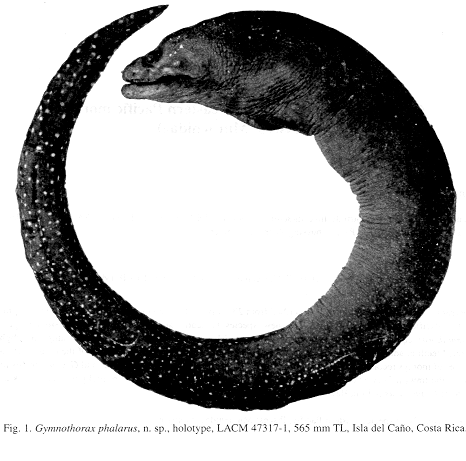
<body><![CDATA[<P><FONT FACE="Arial,Helvetica"><FONT SIZE=-1>Gymnothorax phalarus is described from 23 individuals taken in trawl and dredge collections made on the Pacific coast of Costa Rica. The new species is nearly always syntopic with a similar species, Gymnothorax equatorialis. The new moray is distinguished by its white-spotted pattern, uniserial, slightly serrated teeth in adults, four infraorbital pores and mean vertebral formula of 6-58-140. Of the total of 21 valid species of morays recorded from the Pacific coast of Costa Rica, only the new species and G. equatorialis form part of the trawl fishery as the remainder are almost entirely restricted to nearshore rocky habitats. The known range of G. phalarus is from Baja California to Peru.</FONT></FONT>     <BR>&nbsp;&nbsp;     <BR><B><FONT FACE="Arial,Helvetica"><FONT SIZE=-1>Key words</FONT></FONT></B>      <P><FONT FACE="Arial,Helvetica"><FONT SIZE=-1>New species, eastern Pacific, Pisces: Muraenidae, moray eel.</FONT></FONT>     <BR>&nbsp;      <P><FONT FACE="Arial,Helvetica"><FONT SIZE=-1>The moray eel fauna of the Pacific coast of Costa Rica is abundant and diverse. To date, 19 valid species of morays have been recorded from nearshore rocky habitats and another two species by trawling in deeper waters over soft substrata. Nine of these eels, including the two deep-water species, belong to the genus Gymnothorax. In addition, <A HREF="#Böhlke, E. B. 1989">B&ouml;hlke et al. (1989</A>:149;172) referred to the presence in the eastern Pacific of one or two unidentified species of Gymnothorax of the subgenus Neomuraena similar to several Neomuraena in the western Atlantic.</FONT></FONT>      <P><FONT FACE="Arial,Helvetica"><FONT SIZE=-1>Trawl samples on the Pacific coast of Costa Rica routinely yield fair numbers of the white-spotted Gymnothorax (Neomuraena) equatorialis (Hildebrand) and a similar less-common, undescribed species (<A HREF="#fig. 1">Fig. 1</A>). Unlike members of Neomuraena which have three infraorbital pores, the new species, described herein, possesses four infraorbital pores and slightly serrated uniserial teeth and possibly belongs to another subgenus.</FONT></FONT>     <BR>&nbsp;     <CENTER></CENTER>      <CENTER><A NAME="fig. 1"></A><IMG SRC="/img/fbpe/rbt/v46n2/0178i01.GIF" HEIGHT=461 WIDTH=466></CENTER>       
]]></body>
<body><![CDATA[<P><FONT FACE="Arial,Helvetica"><FONT SIZE=-1>&nbsp;</FONT></FONT>     <BR><FONT FACE="Arial,Helvetica"><FONT SIZE=-1>Methodology follows (<A HREF="#Böhlke, E.B. 1982">B&ouml;hlke 1982</A> &amp; <A HREF="#Böhlke, E. B. 1989">B&ouml;hlke et al. 1989</A>). Institutional acronyms follow <A HREF="#Leviton">Leviton et al. (1985</A>). All measurements are expressed in millimeters (mm) and length is total length (TL) throughout. Specimens are deposited at LACM and UCR.</FONT></FONT>     <BR>&nbsp;     <CENTER><FONT FACE="Arial,Helvetica"><FONT SIZE=-1>&nbsp;</FONT></FONT></CENTER>      <CENTER><FONT FACE="Arial,Helvetica"><FONT SIZE=-1>Gymnothorax phalarus, new species</FONT></FONT></CENTER>      <CENTER><FONT FACE="Arial,Helvetica"><FONT SIZE=-1><A HREF="#fig. 1">(Figs. 1</A>-<A HREF="#fig. 4">4</A>)</FONT></FONT></CENTER>       <P><FONT FACE="Arial,Helvetica"><FONT SIZE=-1>Gymnothorax sp. nov. <A HREF="#Bussing 1993">Bussing &amp; L&oacute;pez 1993</A> (figure legend and description inverted with G. equatorialis);<A HREF="#Bussing 1996"> Bussing &amp; L&oacute;pez 1996</A> (listed).</FONT></FONT>      <P><FONT FACE="Arial,Helvetica"><FONT SIZE=-1><B>Holotype: </B>LACM 47317-1, an adult female of 565 mm total length (TL), W side of Isla del Ca&ntilde;o off Osa Peninsula, Costa Rica. (8&deg;47'00" N; 84&deg;03'48" W). Collected with 3 m dredge at 136-237 m depth on 12 Feb. 1994 by M.I., W.A. Bussing and crew of R/V Victor Hensen, (ex UCR 2373-12).</FONT></FONT>      <P><FONT FACE="Arial,Helvetica"><FONT SIZE=-1>Paratypes: Data is presented as follows: catalog number, number of specimens, length in mm TL and collection data. All specimens are from Costa Rica. Additional data are available on the Internet.</FONT></FONT>      <P><FONT FACE="Arial,Helvetica"><FONT SIZE=-1>LACM 32560-13, 1 (485 mm), Isla del Ca&ntilde;o, 55-73 m, 17 Mar. 1972. LACM 47318-1, 2 (468-620), SW of Cabo Blanco, Nicoya Peninsula, 275-339 m, 7-8 May 1970. LACM 47320-1, 5 (352-598), 8 km offshore of Bah&iacute;a Herradura, 184 m, 10 Feb. 1984. LACM 47319-1, 1 (523), off Punta Coyote, Nicoya Peninsula, 83 m, 31 Oct. 1983. UCR 427-16, 1 (339), between Cabo Blanco and Punta Herradura, 220 m, 19-21 May 1970. UCR 489-17, 1 (570), Golfo de Nicoya, 23-25 m, 26-29 Oct. 1970. UCR 1242-4, 1 (660), coast N of Cabo Velas, 118-139 m, 5 Dec. 1977. UCR 1555-1, 3 (397-927),off Punta Coyote, Nicoya Peninsula, 80 m, 30 Oct. 1983. UCR 1711-2, 1 (283), 1.2 km offshore of Punta Leona, 54 m, 7 Dec. 1983. UCR 1730-6, 2 (420-437), 6 km offshore of Malpa&iacute;s, Nicoya Peninsula, 295 m, 12 Feb. 1984. UCR 1963-4, 1 (603), off Punta Coyote, Nicoya Peninsula, 65 m, 23 May 1987. UCR 2353-14, 3 (505-755). Golfo Dulce, at center of entrance to gulf, 130-268 m, 15 Dec. 1993. UCR 2366-1, 1 (402), Golfo Dulce, just outside entrance to gulf, 200 m, 10 Feb. 1994. UCR 2372-6, 1 (400), off mouth of R&iacute;o Sierpe, 103 m, 12 Feb. 1994.</FONT></FONT>      ]]></body>
<body><![CDATA[<P><FONT FACE="Arial,Helvetica"><FONT SIZE=-1><B>Comparative Material: </B>Gymnothorax equatorialis from Mexico (3 specimens) and from Costa Rica (63 specimens) are deposited at LACM and UCR. Gymnothorax castaneus (13 specimens) and G. dovii (33 specimens) from Costa Rica and Isla del Coco are deposited at UCR. Additional data for UCR collections is available on Internet.</FONT></FONT>      <P><FONT FACE="Arial,Helvetica"><FONT SIZE=-1><B>Diagnosis: </B>A moderately deep-bodied moray of the genus Gymnothorax, with: medium to dark brown coloration overlain with white dots becoming larger posteriorly; jaw teeth uniserial and serrate; one or two vomerine teeth in adults; four infraorbital pores; and mean vertebral formula (MVF) 6-58-140.</FONT></FONT>      <P><FONT FACE="Arial,Helvetica"><FONT SIZE=-1><B>Description: </B>Measurements in percentage of TL appear in <A HREF="#TABLE  1">Table 1</A>. In the following, proportions of the holotype are in parentheses following the range of 15 paratypes. Body depth at gill opening greatest in large specimens, 11.2-19.2 (11.9) times in TL, depth at anus 14.1-25.4 (15.2) in TL; tapering gradually and becoming more compressed posteriorly. Predorsal distance 7.2-11.1 in TL (determined on radiographs of 8 paratypes). Anus slightly before or after midbody, preanal distance 1.9-2.2 (2.2) in TL; tail length 1.9-2.2 (1.9) in TL.</FONT></FONT>     <CENTER></CENTER>      <CENTER><A NAME="TABLE  1"></A><FONT FACE="Arial,Helvetica"><FONT SIZE=-1>TABLE 1</FONT></FONT></CENTER>      <CENTER><FONT FACE="Arial,Helvetica"><FONT SIZE=-1>Proportional measurements in percentage of total length</FONT></FONT></CENTER>      <CENTER><FONT FACE="Arial,Helvetica"><FONT SIZE=-1>of holotype, 15 paratypes of Gymnothorax phalarus from</FONT></FONT></CENTER>      <CENTER><FONT FACE="Arial,Helvetica"><FONT SIZE=-1>the Pacific coast of Costa Rica.</FONT></FONT></CENTER>       <P><FONT FACE="Arial,Helvetica"><FONT SIZE=-1>&nbsp;&nbsp;&nbsp;&nbsp;&nbsp;&nbsp;&nbsp;&nbsp;&nbsp;&nbsp;&nbsp;&nbsp;&nbsp;&nbsp;&nbsp;&nbsp;&nbsp;&nbsp;&nbsp;&nbsp;&nbsp;&nbsp;&nbsp;&nbsp;&nbsp;&nbsp;&nbsp;&nbsp;&nbsp;&nbsp;&nbsp;&nbsp;&nbsp;&nbsp;&nbsp;&nbsp;&nbsp;&nbsp;&nbsp;&nbsp;&nbsp;&nbsp;&nbsp;&nbsp;&nbsp;&nbsp;&nbsp;&nbsp;&nbsp;&nbsp;&nbsp;&nbsp;&nbsp;&nbsp;&nbsp;&nbsp;&nbsp;&nbsp;&nbsp;&nbsp;&nbsp;&nbsp;&nbsp;&nbsp;&nbsp;&nbsp;&nbsp;&nbsp;&nbsp;&nbsp;&nbsp; Holotype&nbsp;&nbsp;&nbsp;&nbsp;&nbsp;&nbsp;&nbsp;&nbsp;&nbsp;&nbsp;&nbsp;&nbsp;&nbsp;&nbsp;&nbsp;&nbsp;&nbsp;&nbsp;&nbsp;&nbsp;&nbsp;&nbsp;&nbsp;&nbsp;&nbsp; Paratypes&nbsp;&nbsp;&nbsp;&nbsp;&nbsp;&nbsp;&nbsp;&nbsp;&nbsp;&nbsp;&nbsp;&nbsp;&nbsp;&nbsp;&nbsp;&nbsp;&nbsp;&nbsp;&nbsp;&nbsp;&nbsp;&nbsp;&nbsp;&nbsp;&nbsp;&nbsp;&nbsp;&nbsp;&nbsp; Paratypes</FONT></FONT>     <BR><FONT FACE="Arial,Helvetica"><FONT SIZE=-1>&nbsp;&nbsp;&nbsp;&nbsp;&nbsp;&nbsp;&nbsp;&nbsp;&nbsp;&nbsp;&nbsp;&nbsp;&nbsp;&nbsp;&nbsp;&nbsp;&nbsp;&nbsp;&nbsp;&nbsp;&nbsp;&nbsp;&nbsp;&nbsp;&nbsp;&nbsp;&nbsp;&nbsp;&nbsp;&nbsp;&nbsp;&nbsp;&nbsp;&nbsp;&nbsp;&nbsp;&nbsp;&nbsp;&nbsp;&nbsp;&nbsp;&nbsp;&nbsp;&nbsp;&nbsp;&nbsp;&nbsp;&nbsp;&nbsp;&nbsp;&nbsp;&nbsp;&nbsp;&nbsp;&nbsp;&nbsp;&nbsp;&nbsp;&nbsp;&nbsp;&nbsp;&nbsp;&nbsp;&nbsp;&nbsp;&nbsp;&nbsp;&nbsp;&nbsp;&nbsp;&nbsp;&nbsp;&nbsp;&nbsp;&nbsp;&nbsp;&nbsp;&nbsp;&nbsp;&nbsp;&nbsp;&nbsp;&nbsp;&nbsp;&nbsp;&nbsp;&nbsp;&nbsp;&nbsp;&nbsp;&nbsp;&nbsp;&nbsp;&nbsp;&nbsp;&nbsp;&nbsp;&nbsp;&nbsp;&nbsp;&nbsp;&nbsp;&nbsp;&nbsp;&nbsp;&nbsp;&nbsp;&nbsp;&nbsp;&nbsp;&nbsp;&nbsp; N = 10&nbsp;&nbsp;&nbsp;&nbsp;&nbsp;&nbsp;&nbsp;&nbsp;&nbsp;&nbsp;&nbsp;&nbsp;&nbsp;&nbsp;&nbsp;&nbsp;&nbsp;&nbsp;&nbsp;&nbsp;&nbsp;&nbsp;&nbsp;&nbsp;&nbsp;&nbsp;&nbsp;&nbsp;&nbsp;&nbsp;&nbsp;&nbsp;&nbsp;&nbsp;&nbsp;&nbsp; N = 5</FONT></FONT>      ]]></body>
<body><![CDATA[<P><FONT FACE="Arial,Helvetica"><FONT SIZE=-1>Total length (mm)&nbsp;&nbsp;&nbsp;&nbsp;&nbsp;&nbsp;&nbsp;&nbsp;&nbsp;&nbsp;&nbsp;&nbsp;&nbsp;&nbsp;&nbsp;&nbsp;&nbsp;&nbsp;&nbsp;&nbsp;&nbsp;&nbsp;&nbsp;&nbsp;&nbsp;&nbsp;&nbsp;&nbsp;&nbsp;&nbsp;&nbsp;&nbsp;&nbsp;&nbsp;&nbsp;&nbsp;&nbsp;&nbsp;&nbsp;&nbsp;&nbsp;&nbsp;&nbsp;&nbsp;&nbsp; 565&nbsp;&nbsp;&nbsp;&nbsp;&nbsp;&nbsp;&nbsp;&nbsp;&nbsp;&nbsp;&nbsp;&nbsp;&nbsp;&nbsp;&nbsp;&nbsp;&nbsp;&nbsp;&nbsp;&nbsp;&nbsp;&nbsp;&nbsp;&nbsp;&nbsp;&nbsp;&nbsp;&nbsp;&nbsp;&nbsp;&nbsp;&nbsp;&nbsp; 283-445&nbsp;&nbsp;&nbsp;&nbsp;&nbsp;&nbsp;&nbsp;&nbsp;&nbsp;&nbsp;&nbsp;&nbsp;&nbsp;&nbsp;&nbsp;&nbsp;&nbsp;&nbsp;&nbsp;&nbsp;&nbsp;&nbsp;&nbsp;&nbsp;&nbsp;&nbsp;&nbsp;&nbsp;&nbsp;&nbsp;&nbsp; 577-929</FONT></FONT>     <BR><FONT FACE="Arial,Helvetica"><FONT SIZE=-1>Head length&nbsp;&nbsp;&nbsp;&nbsp;&nbsp;&nbsp;&nbsp;&nbsp;&nbsp;&nbsp;&nbsp;&nbsp;&nbsp;&nbsp;&nbsp;&nbsp;&nbsp;&nbsp;&nbsp;&nbsp;&nbsp;&nbsp;&nbsp;&nbsp;&nbsp;&nbsp;&nbsp;&nbsp;&nbsp;&nbsp;&nbsp;&nbsp;&nbsp;&nbsp;&nbsp;&nbsp;&nbsp;&nbsp;&nbsp;&nbsp;&nbsp;&nbsp;&nbsp;&nbsp;&nbsp;&nbsp;&nbsp;&nbsp;&nbsp;&nbsp;&nbsp;&nbsp;&nbsp; 17.9&nbsp;&nbsp;&nbsp;&nbsp;&nbsp;&nbsp;&nbsp;&nbsp;&nbsp;&nbsp;&nbsp;&nbsp;&nbsp;&nbsp;&nbsp;&nbsp;&nbsp;&nbsp;&nbsp;&nbsp;&nbsp;&nbsp;&nbsp;&nbsp;&nbsp;&nbsp;&nbsp;&nbsp;&nbsp;&nbsp;&nbsp;&nbsp; 15.6-17.6&nbsp;&nbsp;&nbsp;&nbsp;&nbsp;&nbsp;&nbsp;&nbsp;&nbsp;&nbsp;&nbsp;&nbsp;&nbsp;&nbsp;&nbsp;&nbsp;&nbsp;&nbsp;&nbsp;&nbsp;&nbsp;&nbsp;&nbsp;&nbsp;&nbsp;&nbsp;&nbsp;&nbsp;&nbsp; 16.5-18.7</FONT></FONT>     <BR><FONT FACE="Arial,Helvetica"><FONT SIZE=-1>Eye diameter&nbsp;&nbsp;&nbsp;&nbsp;&nbsp;&nbsp;&nbsp;&nbsp;&nbsp;&nbsp;&nbsp;&nbsp;&nbsp;&nbsp;&nbsp;&nbsp;&nbsp;&nbsp;&nbsp;&nbsp;&nbsp;&nbsp;&nbsp;&nbsp;&nbsp;&nbsp;&nbsp;&nbsp;&nbsp;&nbsp;&nbsp;&nbsp;&nbsp;&nbsp;&nbsp;&nbsp;&nbsp;&nbsp;&nbsp;&nbsp;&nbsp;&nbsp;&nbsp;&nbsp;&nbsp;&nbsp;&nbsp;&nbsp;&nbsp;&nbsp;&nbsp;&nbsp; 1.3&nbsp;&nbsp;&nbsp;&nbsp;&nbsp;&nbsp;&nbsp;&nbsp;&nbsp;&nbsp;&nbsp;&nbsp;&nbsp;&nbsp;&nbsp;&nbsp;&nbsp;&nbsp;&nbsp;&nbsp;&nbsp;&nbsp;&nbsp;&nbsp;&nbsp;&nbsp;&nbsp;&nbsp;&nbsp;&nbsp;&nbsp;&nbsp;&nbsp; 1.0-1.6&nbsp;&nbsp;&nbsp;&nbsp;&nbsp;&nbsp;&nbsp;&nbsp;&nbsp;&nbsp;&nbsp;&nbsp;&nbsp;&nbsp;&nbsp;&nbsp;&nbsp;&nbsp;&nbsp;&nbsp;&nbsp;&nbsp;&nbsp;&nbsp;&nbsp;&nbsp;&nbsp;&nbsp;&nbsp;&nbsp;&nbsp;&nbsp;&nbsp;&nbsp; 0.9-1.3</FONT></FONT>     <BR><FONT FACE="Arial,Helvetica"><FONT SIZE=-1>Fleshy interorbital&nbsp;&nbsp;&nbsp;&nbsp;&nbsp;&nbsp;&nbsp;&nbsp;&nbsp;&nbsp;&nbsp;&nbsp;&nbsp;&nbsp;&nbsp;&nbsp;&nbsp;&nbsp;&nbsp;&nbsp;&nbsp;&nbsp;&nbsp;&nbsp;&nbsp;&nbsp;&nbsp;&nbsp;&nbsp;&nbsp;&nbsp;&nbsp;&nbsp;&nbsp;&nbsp;&nbsp;&nbsp;&nbsp;&nbsp;&nbsp;&nbsp;&nbsp;&nbsp;&nbsp;&nbsp; 2.0&nbsp;&nbsp;&nbsp;&nbsp;&nbsp;&nbsp;&nbsp;&nbsp;&nbsp;&nbsp;&nbsp;&nbsp;&nbsp;&nbsp;&nbsp;&nbsp;&nbsp;&nbsp;&nbsp;&nbsp;&nbsp;&nbsp;&nbsp;&nbsp;&nbsp;&nbsp;&nbsp;&nbsp;&nbsp;&nbsp;&nbsp;&nbsp;&nbsp; 14-2.2&nbsp;&nbsp;&nbsp;&nbsp;&nbsp;&nbsp;&nbsp;&nbsp;&nbsp;&nbsp;&nbsp;&nbsp;&nbsp;&nbsp;&nbsp;&nbsp;&nbsp;&nbsp;&nbsp;&nbsp;&nbsp;&nbsp;&nbsp;&nbsp;&nbsp;&nbsp;&nbsp;&nbsp;&nbsp;&nbsp;&nbsp;&nbsp;&nbsp;&nbsp;&nbsp; 1.7-2.6</FONT></FONT>     <BR><FONT FACE="Arial,Helvetica"><FONT SIZE=-1>Snout length&nbsp;&nbsp;&nbsp;&nbsp;&nbsp;&nbsp;&nbsp;&nbsp;&nbsp;&nbsp;&nbsp;&nbsp;&nbsp;&nbsp;&nbsp;&nbsp;&nbsp;&nbsp;&nbsp;&nbsp;&nbsp;&nbsp;&nbsp;&nbsp;&nbsp;&nbsp;&nbsp;&nbsp;&nbsp;&nbsp;&nbsp;&nbsp;&nbsp;&nbsp;&nbsp;&nbsp;&nbsp;&nbsp;&nbsp;&nbsp;&nbsp;&nbsp;&nbsp;&nbsp;&nbsp;&nbsp;&nbsp;&nbsp;&nbsp;&nbsp;&nbsp;&nbsp;&nbsp; 2.7&nbsp;&nbsp;&nbsp;&nbsp;&nbsp;&nbsp;&nbsp;&nbsp;&nbsp;&nbsp;&nbsp;&nbsp;&nbsp;&nbsp;&nbsp;&nbsp;&nbsp;&nbsp;&nbsp;&nbsp;&nbsp;&nbsp;&nbsp;&nbsp;&nbsp;&nbsp;&nbsp;&nbsp;&nbsp;&nbsp;&nbsp;&nbsp;&nbsp; 2.3-3.2&nbsp;&nbsp;&nbsp;&nbsp;&nbsp;&nbsp;&nbsp;&nbsp;&nbsp;&nbsp;&nbsp;&nbsp;&nbsp;&nbsp;&nbsp;&nbsp;&nbsp;&nbsp;&nbsp;&nbsp;&nbsp;&nbsp;&nbsp;&nbsp;&nbsp;&nbsp;&nbsp;&nbsp;&nbsp;&nbsp;&nbsp;&nbsp;&nbsp;&nbsp; 2.6-3.4</FONT></FONT>     <BR><FONT FACE="Arial,Helvetica"><FONT SIZE=-1>Jaw length&nbsp;&nbsp;&nbsp;&nbsp;&nbsp;&nbsp;&nbsp;&nbsp;&nbsp;&nbsp;&nbsp;&nbsp;&nbsp;&nbsp;&nbsp;&nbsp;&nbsp;&nbsp;&nbsp;&nbsp;&nbsp;&nbsp;&nbsp;&nbsp;&nbsp;&nbsp;&nbsp;&nbsp;&nbsp;&nbsp;&nbsp;&nbsp;&nbsp;&nbsp;&nbsp;&nbsp;&nbsp;&nbsp;&nbsp;&nbsp;&nbsp;&nbsp;&nbsp;&nbsp;&nbsp;&nbsp;&nbsp;&nbsp;&nbsp;&nbsp;&nbsp;&nbsp;&nbsp;&nbsp;&nbsp;&nbsp; 6.9&nbsp;&nbsp;&nbsp;&nbsp;&nbsp;&nbsp;&nbsp;&nbsp;&nbsp;&nbsp;&nbsp;&nbsp;&nbsp;&nbsp;&nbsp;&nbsp;&nbsp;&nbsp;&nbsp;&nbsp;&nbsp;&nbsp;&nbsp;&nbsp;&nbsp;&nbsp;&nbsp;&nbsp;&nbsp;&nbsp;&nbsp;&nbsp;&nbsp; 5.6-8.1&nbsp;&nbsp;&nbsp;&nbsp;&nbsp;&nbsp;&nbsp;&nbsp;&nbsp;&nbsp;&nbsp;&nbsp;&nbsp;&nbsp;&nbsp;&nbsp;&nbsp;&nbsp;&nbsp;&nbsp;&nbsp;&nbsp;&nbsp;&nbsp;&nbsp;&nbsp;&nbsp;&nbsp;&nbsp;&nbsp;&nbsp;&nbsp;&nbsp;&nbsp; 5.8-7.4</FONT></FONT>     <BR><FONT FACE="Arial,Helvetica"><FONT SIZE=-1>Body depth at gill open.&nbsp;&nbsp;&nbsp;&nbsp;&nbsp;&nbsp;&nbsp;&nbsp;&nbsp;&nbsp;&nbsp;&nbsp;&nbsp;&nbsp;&nbsp;&nbsp;&nbsp;&nbsp;&nbsp;&nbsp;&nbsp;&nbsp;&nbsp;&nbsp;&nbsp;&nbsp;&nbsp;&nbsp;&nbsp;&nbsp;&nbsp;&nbsp;&nbsp;&nbsp;&nbsp;&nbsp; 8.4&nbsp;&nbsp;&nbsp;&nbsp;&nbsp;&nbsp;&nbsp;&nbsp;&nbsp;&nbsp;&nbsp;&nbsp;&nbsp;&nbsp;&nbsp;&nbsp;&nbsp;&nbsp;&nbsp;&nbsp;&nbsp;&nbsp;&nbsp;&nbsp;&nbsp;&nbsp;&nbsp;&nbsp;&nbsp;&nbsp;&nbsp;&nbsp;&nbsp; 5.2-8.2&nbsp;&nbsp;&nbsp;&nbsp;&nbsp;&nbsp;&nbsp;&nbsp;&nbsp;&nbsp;&nbsp;&nbsp;&nbsp;&nbsp;&nbsp;&nbsp;&nbsp;&nbsp;&nbsp;&nbsp;&nbsp;&nbsp;&nbsp;&nbsp;&nbsp;&nbsp;&nbsp;&nbsp;&nbsp;&nbsp;&nbsp;&nbsp;&nbsp;&nbsp; 6.3-9.0</FONT></FONT>     <BR><FONT FACE="Arial,Helvetica"><FONT SIZE=-1>Body depth at anus&nbsp;&nbsp;&nbsp;&nbsp;&nbsp;&nbsp;&nbsp;&nbsp;&nbsp;&nbsp;&nbsp;&nbsp;&nbsp;&nbsp;&nbsp;&nbsp;&nbsp;&nbsp;&nbsp;&nbsp;&nbsp;&nbsp;&nbsp;&nbsp;&nbsp;&nbsp;&nbsp;&nbsp;&nbsp;&nbsp;&nbsp;&nbsp;&nbsp;&nbsp;&nbsp;&nbsp;&nbsp;&nbsp;&nbsp;&nbsp;&nbsp;&nbsp;&nbsp; 6.6&nbsp;&nbsp;&nbsp;&nbsp;&nbsp;&nbsp;&nbsp;&nbsp;&nbsp;&nbsp;&nbsp;&nbsp;&nbsp;&nbsp;&nbsp;&nbsp;&nbsp;&nbsp;&nbsp;&nbsp;&nbsp;&nbsp;&nbsp;&nbsp;&nbsp;&nbsp;&nbsp;&nbsp;&nbsp;&nbsp;&nbsp;&nbsp;&nbsp; 4.6-6.8&nbsp;&nbsp;&nbsp;&nbsp;&nbsp;&nbsp;&nbsp;&nbsp;&nbsp;&nbsp;&nbsp;&nbsp;&nbsp;&nbsp;&nbsp;&nbsp;&nbsp;&nbsp;&nbsp;&nbsp;&nbsp;&nbsp;&nbsp;&nbsp;&nbsp;&nbsp;&nbsp;&nbsp;&nbsp;&nbsp;&nbsp;&nbsp;&nbsp;&nbsp; 3.9-7.1</FONT></FONT>     <BR><FONT FACE="Arial,Helvetica"><FONT SIZE=-1>Predorsal distance&nbsp;&nbsp;&nbsp;&nbsp;&nbsp;&nbsp;&nbsp;&nbsp;&nbsp;&nbsp;&nbsp;&nbsp;&nbsp;&nbsp;&nbsp;&nbsp;&nbsp;&nbsp;&nbsp;&nbsp;&nbsp;&nbsp;&nbsp;&nbsp;&nbsp;&nbsp;&nbsp;&nbsp;&nbsp;&nbsp;&nbsp;&nbsp;&nbsp;&nbsp;&nbsp;&nbsp;&nbsp;&nbsp;&nbsp;&nbsp;&nbsp;&nbsp;&nbsp;&nbsp; 11.7&nbsp;&nbsp;&nbsp;&nbsp;&nbsp;&nbsp;&nbsp;&nbsp;&nbsp;&nbsp;&nbsp;&nbsp;&nbsp;&nbsp;&nbsp;&nbsp;&nbsp;&nbsp;&nbsp;&nbsp;&nbsp;&nbsp;&nbsp;&nbsp;&nbsp;&nbsp;&nbsp;&nbsp;&nbsp;&nbsp;&nbsp; 9.0-11.8&nbsp;&nbsp;&nbsp;&nbsp;&nbsp;&nbsp;&nbsp;&nbsp;&nbsp;&nbsp;&nbsp;&nbsp;&nbsp;&nbsp;&nbsp;&nbsp;&nbsp;&nbsp;&nbsp;&nbsp;&nbsp;&nbsp;&nbsp;&nbsp;&nbsp;&nbsp;&nbsp;&nbsp;&nbsp;&nbsp;&nbsp;&nbsp; 12.5-13.8</FONT></FONT>     <BR><FONT FACE="Arial,Helvetica"><FONT SIZE=-1>Preanal distance&nbsp;&nbsp;&nbsp;&nbsp;&nbsp;&nbsp;&nbsp;&nbsp;&nbsp;&nbsp;&nbsp;&nbsp;&nbsp;&nbsp;&nbsp;&nbsp;&nbsp;&nbsp;&nbsp;&nbsp;&nbsp;&nbsp;&nbsp;&nbsp;&nbsp;&nbsp;&nbsp;&nbsp;&nbsp;&nbsp;&nbsp;&nbsp;&nbsp;&nbsp;&nbsp;&nbsp;&nbsp;&nbsp;&nbsp;&nbsp;&nbsp;&nbsp;&nbsp;&nbsp;&nbsp;&nbsp;&nbsp; 46.6&nbsp;&nbsp;&nbsp;&nbsp;&nbsp;&nbsp;&nbsp;&nbsp;&nbsp;&nbsp;&nbsp;&nbsp;&nbsp;&nbsp;&nbsp;&nbsp;&nbsp;&nbsp;&nbsp;&nbsp;&nbsp;&nbsp;&nbsp;&nbsp;&nbsp;&nbsp;&nbsp;&nbsp;&nbsp;&nbsp;&nbsp; 46.0-53.1&nbsp;&nbsp;&nbsp;&nbsp;&nbsp;&nbsp;&nbsp;&nbsp;&nbsp;&nbsp;&nbsp;&nbsp;&nbsp;&nbsp;&nbsp;&nbsp;&nbsp;&nbsp;&nbsp;&nbsp;&nbsp;&nbsp;&nbsp;&nbsp;&nbsp;&nbsp;&nbsp;&nbsp;&nbsp;&nbsp;&nbsp; 49.2-53.1</FONT></FONT>     ]]></body>
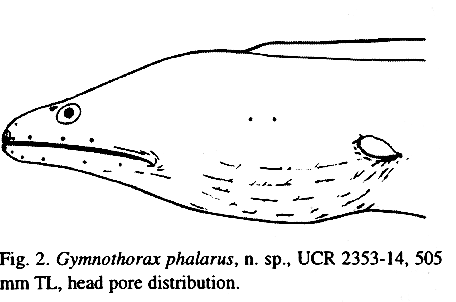
<body><![CDATA[<BR><FONT FACE="Arial,Helvetica"><FONT SIZE=-1>Tail length&nbsp;&nbsp;&nbsp;&nbsp;&nbsp;&nbsp;&nbsp;&nbsp;&nbsp;&nbsp;&nbsp;&nbsp;&nbsp;&nbsp;&nbsp;&nbsp;&nbsp;&nbsp;&nbsp;&nbsp;&nbsp;&nbsp;&nbsp;&nbsp;&nbsp;&nbsp;&nbsp;&nbsp;&nbsp;&nbsp;&nbsp;&nbsp;&nbsp;&nbsp;&nbsp;&nbsp;&nbsp;&nbsp;&nbsp;&nbsp;&nbsp;&nbsp;&nbsp;&nbsp;&nbsp;&nbsp;&nbsp;&nbsp;&nbsp;&nbsp;&nbsp;&nbsp;&nbsp;&nbsp;&nbsp;&nbsp; 53.4&nbsp;&nbsp;&nbsp;&nbsp;&nbsp;&nbsp;&nbsp;&nbsp;&nbsp;&nbsp;&nbsp;&nbsp;&nbsp;&nbsp;&nbsp;&nbsp;&nbsp;&nbsp;&nbsp;&nbsp;&nbsp;&nbsp;&nbsp;&nbsp;&nbsp;&nbsp;&nbsp;&nbsp;&nbsp;&nbsp;&nbsp; 47.4-52.9&nbsp;&nbsp;&nbsp;&nbsp;&nbsp;&nbsp;&nbsp;&nbsp;&nbsp;&nbsp;&nbsp;&nbsp;&nbsp;&nbsp;&nbsp;&nbsp;&nbsp;&nbsp;&nbsp;&nbsp;&nbsp;&nbsp;&nbsp;&nbsp;&nbsp;&nbsp;&nbsp;&nbsp;&nbsp;&nbsp;&nbsp; 45.1-51.5</FONT></FONT>     <BR>&nbsp;     <BR>&nbsp;      <P><FONT FACE="Arial,Helvetica"><FONT SIZE=-1>Head length 5.4-6.4 (5.6) in TL; eye slightly in advance of mid-jaw, 10.4-21.4 (13.7) in head length (HL). Fleshy interorbital space convex, width 7.2-11.2 (9.2) in HL. Snout length 5.1-6.9 (6.6) in HL. Anterior nostril tubular, near tip of snout; posterior nostril with a slightly raised margin, near anterodorsal margin of eye. Gill opening in form of an oblique slit slightly above or at mid-side.</FONT></FONT>      <P><FONT FACE="Arial,Helvetica"><FONT SIZE=-1>Head pores (<A HREF="#fig. 2">Fig. 2</A>) usually rimmed with darker pigment. Four conspicuous infraorbital pores; three smaller supraorbital pores; mandibular pores 5-7, usually 6 (holotype with 6-7).</FONT></FONT>     <BR>&nbsp;     <BR>&nbsp;     <BR>&nbsp;     <CENTER></CENTER>      <CENTER><A NAME="fig. 2"></A><IMG SRC="/img/fbpe/rbt/v46n2/0178i02.GIF" HEIGHT=302 WIDTH=456></CENTER> &nbsp;     
]]></body>
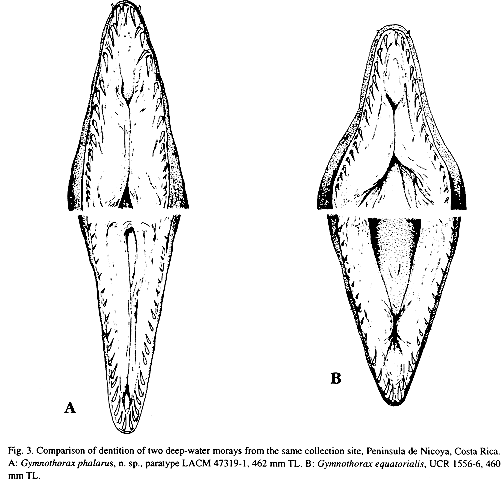
<body><![CDATA[<BR>&nbsp;      <P><FONT FACE="Arial,Helvetica"><FONT SIZE=-1>Jaws of equal length or lower jaw extending slightly, snout to rictus (upper jaw length) 2.1-2.9 (2.6) in HL. Teeth sharp, slender and uniserial with margins most strongly serrated on posterior edge. On upper jaw usually an anterior median fang, followed on each side by three or four widely-spaced long intermaxillary teeth, and followed by about eight maxillary teeth, the teeth evenly spaced and decreasing in size posteriorly (<A HREF="#fig. 3">Fig. 3A</A>). On lower jaw, a single row of 11-15 teeth, the anterior three to five, similar in size and shape to intermaxillary teeth, the remainder decreasing gradually in size posteriorly, but less so than in upper jaw. Depressible replacement teeth present, in process of becoming functional. Median intermaxillary teeth absent. One or two conical vomerine teeth only on large specimens.</FONT></FONT>     <BR>&nbsp;     <CENTER></CENTER>      <CENTER><A NAME="fig. 3"></A><IMG SRC="/img/fbpe/rbt/v46n2/0178i03.GIF" HEIGHT=495 WIDTH=501></CENTER> &nbsp;     
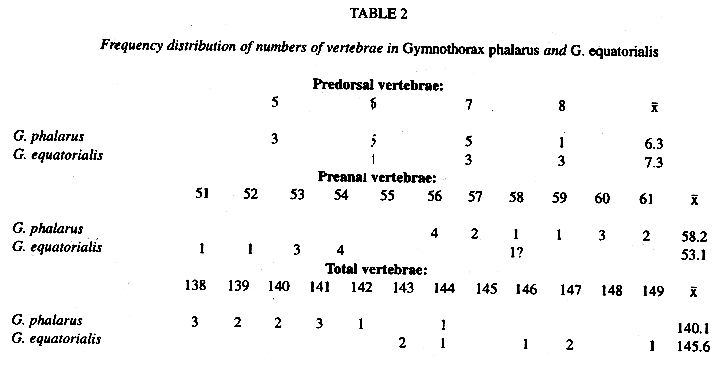
<BR>&nbsp;      <P><FONT FACE="Arial,Helvetica"><FONT SIZE=-1>Vertebral counts (<A HREF="#TABLE 2">Table 2</A>) based on radiographs of holotype and 13 paratypes (means in parentheses): predorsal vertebrae 5-8 (6.3); preanal vertebrae 56-61 (58.2); total vertebrae 138-144 (140.1). Holotype with VF value of 5-56-144.</FONT></FONT>     <BR>&nbsp;     <BR>&nbsp;     <BR>&nbsp;     ]]></body>
<body><![CDATA[<CENTER></CENTER>      <CENTER><A NAME="tabla 2"></A><IMG SRC="/img/fbpe/rbt/v46n2/0178i05.GIF" HEIGHT=366 WIDTH=715></CENTER> &nbsp;     
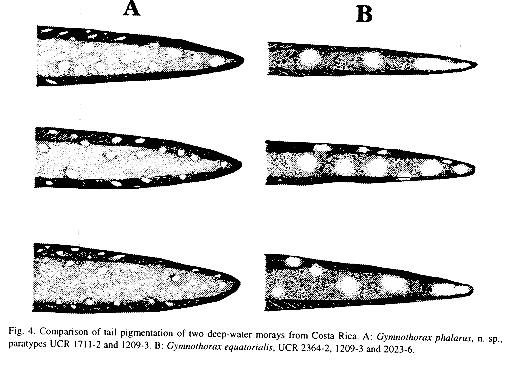
<BR>&nbsp;      <P><FONT FACE="Arial,Helvetica"><FONT SIZE=-1><B>Coloration: </B>Color of live and preserved specimens the same. Head and trunk brown, becoming darker posteriorly to dusky chocolate brown or black on tail. Eye rimmed in darker pigment. Numerous small, pale, spots behind head, becoming fewer and larger (pupil to eye-diameter size) posteriorly; round or oval white spots very conspicuous on tail (<A HREF="#fig. 4">Fig. 4A</A>). Spots on trunk fewer and less distinct on some specimens, more numerous and distinctly white on others; head and abdomen brown or straw-colored with few or no spots. Dorsal fin also white-spotted, becoming nearly black on tail; anal fin black with few or no white spots.</FONT></FONT>     <BR>&nbsp;     <CENTER></CENTER>      <CENTER><A NAME="fig. 4"></A><IMG SRC="/img/fbpe/rbt/v46n2/0178i04.GIF" HEIGHT=378 WIDTH=508></CENTER> &nbsp;     
<BR>&nbsp;      <P><FONT FACE="Arial,Helvetica"><FONT SIZE=-1>An immature specimen (283 mm) has small white spots commencing at snout tip; becoming larger ovals on branchial region; eye-sized white spots behind gill opening well-separated and contrasting with nearly black tail. The largest specimen, a 927 mm adult male, is dark brown, nearly black on mid-dorsal line from snout to tail tip; head with a wide black ring around orbit; few well-separated white specks on trunk, becoming more numerous and larger (pupil-sized) round or oval spots on tail; dorsal fin black with white spots, anal fin black without spots.</FONT></FONT>      <P><FONT FACE="Arial,Helvetica"><FONT SIZE=-1><B>Etymology:</B> From the Greek phalaros meaning white-spotted; to be treated as an adjective.</FONT></FONT>      ]]></body>
<body><![CDATA[<P><FONT FACE="Arial,Helvetica"><FONT SIZE=-1><B>Distribution:</B> Known from Baja California, Mexico to Peru, (only Costa Rican material was utilized in the present study). Specimens of G. phalarus labeled "Gymnothorax C" or "Gymnothorax sp." were examined by the B&ouml;hlkes during their survey on the Gymnothorax ocellatus-marginatus-saxicola complex, and are deposited at several institutions including SIO, LACM and USNM (E. B&ouml;hlke, pers. comm.). Taken by trawl and dredge on soft substrata between 23 and at least 295 m depth in Costa Rican waters.</FONT></FONT>     <BR>&nbsp;<B><FONT FACE="Arial,Helvetica"><FONT SIZE=-1></FONT></FONT></B>      <P><B><FONT FACE="Arial,Helvetica"><FONT SIZE=-1>Remarks</FONT></FONT></B>      <P><FONT FACE="Arial,Helvetica"><FONT SIZE=-1>Although not necessarily closely related, in general appearance, body shape and habitat, Gymnothorax phalarus resembles G. equatorialis. Both species are dark, white-spotted eels with uniserial jaw teeth and few or no vomerine teeth. The anus is located near midbody and the tail tapers to a slender tip. Gymnothorax equatorialis is distinguished by its three infraorbital pores, different MVF values (<A HREF="#TABLE 2">Table 2</A>), different jaw shape (<A HREF="#fig. 3">Fig. 3B</A>), often a median intermaxillary tooth, and by a narrower tail with very elongate (longer than eye diameter), widely-spaced, terminal spots (Fig. 4B). Terminal spots on the tail of G. phalarus (<A HREF="#fig. 4">Fig. 4A</A>) are round or oval, smaller than eye diameter, and more closely spaced.</FONT></FONT>      <P><FONT FACE="Arial,Helvetica"><FONT SIZE=-1>The reef morays Gymnothorax castaneus Gilbert and G. dovii (G&uuml;nther) may be related to and share several characteristics with G. phalarus. They also have four infraorbital pores, similar MVF values, uniserial teeth (but with an inner, median intermaxillary tooth) and anus near midbody. However the tail is more robust, ending in a blunt tip and the median fins are more elevated. The teeth are extremely finely serrated even on large specimens, whereas the teeth of G. phalarus are more conspicuously serrate. Both reef species are found in nearshore rocky habitats and have not been collected by trawls in deeper water.</FONT></FONT>      <P><FONT FACE="Arial,Helvetica"><FONT SIZE=-1>Gymnothorax dovii is a dark brown or black eel covered with small (less than pupil size) white spots and can be more readily confused with G. phalarus, whereas G. castaneus is brown or brownish green with few white or yellow flecks mostly on the posterior half of body and dorsal fin (<A HREF="#McCosker, J.E.">McCosker &amp; Rosenblatt 1975</A>).</FONT></FONT>      <P><FONT FACE="Arial,Helvetica"><FONT SIZE=-1>Two other, somewhat similar species, G. angusticeps (<A HREF="#Hildebrand">Hildebrand</A>) and G. serratidens (<A HREF="#Hildebrand">Hildebrand</A>), reported only from Peru, have quite different MVF values: 5-73-170 and 8-68-156 respectively (<A HREF="#Böhlke, E.B. 1982">B&ouml;hlke, 1982</A>) and differ in a number of other respects (<A HREF="#Hildebrand">Hildebrand, 1949</A>).</FONT></FONT>      <P><FONT FACE="Arial,Helvetica"><FONT SIZE=-1>Three other spotted eels have been reported from the mid Pacific at Easter Island (<A HREF="#Randall, J.E.">Randall &amp; McCosker, 1975</A>). Gymnothorax nasuta De Buen has a dark reticulum overlaying white spotting, the anterior nostril is exceptionally long (6-7% of HL), several inner median intermaxillary fangs and a row of several vomerine teeth. Gymnothorax eurostus (Abbott), in addition to a dense covering of minute white spots, presents larger (pupil diameter) black spots on the anterior third of the body; biserial maxillary teeth, three rows of intermaxillary fangs, a row of several vomerine teeth and the Easter Island specimens have 124-128 total vertebrae.<A HREF="#Randall, J.E."> Randall &amp; McCosker (1975</A>) placed Gymnothorax dentex De Buen in the synonymy of G. eurostus and described the deep-water (250 m) Gymnothorax bathyphilus. The latter species has similar dentition, but presents a light yellowish gray color with scattered dark brown blotches, mostly larger than eye and 145 total vertebrae.</FONT></FONT>      <P><FONT FACE="Arial,Helvetica"><FONT SIZE=-1>No attempt is made to place G. phalarus in one of the provisional subgenera of <A HREF="#Böhlke, E. B. 1989">B&ouml;hlke et al. (1989</A>) until further study and comparison with Indo-Pacific species is carried out.</FONT></FONT>     <BR>&nbsp;      ]]></body>
<body><![CDATA[<P><B><FONT FACE="Arial,Helvetica"><FONT SIZE=-1>Acknoledgements</FONT></FONT></B>      <P><FONT FACE="Arial,Helvetica"><FONT SIZE=-1>I appreciate the assistance of B. Burgos, C. Gamboa, M. Gauthier, E. Quesada and R. Rojas for collecting material; R. Lavenberg, R. Feeney and J. Seigel (LACM) for providing radiographs and G. Serrano for drawing the figures. Previous drafts of the paper greatly benefited from the critical scrutiny of E. B&ouml;hlke, J. McCosker and R. Rosenblatt. Contribution No. 111, Museo de Zoolog&iacute;a, Universidad de Costa Rica and CIMAR Contribution No. 281.</FONT></FONT>     <BR>&nbsp;      <P><B><FONT FACE="Arial,Helvetica"><FONT SIZE=-1>Resumen</FONT></FONT></B>      <P><FONT FACE="Arial,Helvetica"><FONT SIZE=-1>Gymnothorax phalarus se describe con base en 23 individuos de colecciones hechas por redes de arrastre y dragas en la costa Pac&iacute;fica de Costa Rica. La especie nueva es casi siempre sint&oacute;pica con la especie similar, Gymnothorax equatorialis. La nueva morena se distingue por su patr&oacute;n de puntos blancos, dientes ligeramente aserrados y uniseriales en adultos, cuatro poros infraorbitales y MVF (F&oacute;rmula de V&eacute;rtebras) de 6-58-140. M&eacute;xico a Per&uacute;.</FONT></FONT>     <BR>&nbsp;      <P><B><FONT FACE="Arial,Helvetica"><FONT SIZE=-1>References</FONT></FONT></B>      <!-- ref --><P><A NAME="Böhlke, E.B. 1982"></A><FONT FACE="Arial,Helvetica"><FONT SIZE=-1>B&ouml;hlke, E.B. 1982. Vertebral formulae for type specimens of eels (Pisces: Anguilliformes). Proc. Acad. Nat. Sci. Philadelphia 134: 31-49.</FONT></FONT>    &nbsp;&nbsp;&nbsp;&nbsp;&nbsp;&nbsp;&nbsp;&nbsp;[&#160;<a href="javascript:void(0);" onclick="javascript: window.open('/scielo.php?script=sci_nlinks&ref=1132538&pid=S0034-7744199800020002700001&lng=','','width=640,height=500,resizable=yes,scrollbars=1,menubar=yes,');">Links</a>&#160;]<!-- end-ref --><!-- ref --><P><A NAME="Böhlke, E. B. 1989"></A><FONT FACE="Arial,Helvetica"><FONT SIZE=-1>B&ouml;hlke, E.B., J.E. McCosker &amp; J.E. B&ouml;hlke. 1989. Family Muraenidae. In: (E.B. B&ouml;hlke, ed.) Fishes of the western North Atlantic. Sears Fdn. Mar. Res. Mem. (New Haven) 1: 104-206.</FONT></FONT>    &nbsp;&nbsp;&nbsp;&nbsp;&nbsp;&nbsp;&nbsp;&nbsp;[&#160;<a href="javascript:void(0);" onclick="javascript: window.open('/scielo.php?script=sci_nlinks&ref=1132539&pid=S0034-7744199800020002700002&lng=','','width=640,height=500,resizable=yes,scrollbars=1,menubar=yes,');">Links</a>&#160;]<!-- end-ref --><!-- ref --><P><A NAME="Bussing 1993"></A><FONT FACE="Arial,Helvetica"><FONT SIZE=-1>Bussing, W.A. &amp; M.I. L&oacute;pez. 1993. Peces demersales y pel&aacute;gicos costeros del Pac&iacute;fico de Centro Am&eacute;rica meridional. Guia ilustrada (Span/English) Special Pub. Rev. Biol. Trop. 164 p.</FONT></FONT>    &nbsp;&nbsp;&nbsp;&nbsp;&nbsp;&nbsp;&nbsp;&nbsp;[&#160;<a href="javascript:void(0);" onclick="javascript: window.open('/scielo.php?script=sci_nlinks&ref=1132540&pid=S0034-7744199800020002700003&lng=','','width=640,height=500,resizable=yes,scrollbars=1,menubar=yes,');">Links</a>&#160;]<!-- end-ref --><!-- ref --><P><A NAME="Bussing 1996"></A><FONT FACE="Arial,Helvetica"><FONT SIZE=-1>Bussing, W.A. &amp; M.I. L&oacute;pez. 1996. Fishes collected during the Victor Hensen Costa Rica Expedition (1993/1994). Rev. Biol. Trop. 44, Suppl. 3: 183-186.</FONT></FONT>    &nbsp;&nbsp;&nbsp;&nbsp;&nbsp;&nbsp;&nbsp;&nbsp;[&#160;<a href="javascript:void(0);" onclick="javascript: window.open('/scielo.php?script=sci_nlinks&ref=1132541&pid=S0034-7744199800020002700004&lng=','','width=640,height=500,resizable=yes,scrollbars=1,menubar=yes,');">Links</a>&#160;]<!-- end-ref --><!-- ref --><P><A NAME="Hildebrand"></A><FONT FACE="Arial,Helvetica"><FONT SIZE=-1>Hildebrand, S.F. 1949. A collection of fishes from Talara, Per&uacute;. Smithsonian Misc. Coll. 111: 1-36.</FONT></FONT>    &nbsp;&nbsp;&nbsp;&nbsp;&nbsp;&nbsp;&nbsp;&nbsp;[&#160;<a href="javascript:void(0);" onclick="javascript: window.open('/scielo.php?script=sci_nlinks&ref=1132542&pid=S0034-7744199800020002700005&lng=','','width=640,height=500,resizable=yes,scrollbars=1,menubar=yes,');">Links</a>&#160;]<!-- end-ref --><P><A NAME="Leviton"></A><FONT FACE="Arial,Helvetica"><FONT SIZE=-1>Leviton, A.E., Gibbs, JrJ, E. Heal &amp; C.E. Dawson. 1985. Standards in herpetology and ichthyology: Part 1. Copeia 1985: 802-832.</FONT></FONT>      <!-- ref --><P><A NAME="McCosker, J.E."></A><FONT FACE="Arial,Helvetica"><FONT SIZE=-1>McCosker, J.E. &amp; R.H. Rosenblatt. 1975. The moray eels (Pisces: Muraenidae) of the Galapagos Islands, with new records and synonymies of extralimital species. Proc. Calif. Acad. Sci. (Ser. 4) 40: 417-427.</FONT></FONT>    &nbsp;&nbsp;&nbsp;&nbsp;&nbsp;&nbsp;&nbsp;&nbsp;[&#160;<a href="javascript:void(0);" onclick="javascript: window.open('/scielo.php?script=sci_nlinks&ref=1132544&pid=S0034-7744199800020002700006&lng=','','width=640,height=500,resizable=yes,scrollbars=1,menubar=yes,');">Links</a>&#160;]<!-- end-ref --><!-- ref --><P><A NAME="Randall, J.E."></A><FONT FACE="Arial,Helvetica"><FONT SIZE=-1>Randall, J.E. &amp; J.E. McCosker. 1975. The eels of Easter Island with a description of a new moray. Contrib. Sci., Nat. Hist. Museum Los Angeles County 264: 1-32.</FONT></FONT>    &nbsp;&nbsp;&nbsp;&nbsp;&nbsp;&nbsp;&nbsp;&nbsp;[&#160;<a href="javascript:void(0);" onclick="javascript: window.open('/scielo.php?script=sci_nlinks&ref=1132545&pid=S0034-7744199800020002700007&lng=','','width=640,height=500,resizable=yes,scrollbars=1,menubar=yes,');">Links</a>&#160;]<!-- end-ref --><P><A NAME="1a"></A><FONT FACE="Arial,Helvetica"><FONT SIZE=-1><SUP><A HREF="#1">1</A></SUP>Escuela de Biolog&iacute;a &amp; Centro de Investigaci&oacute;n en Ciencias del Mar y Limnolog&iacute;a (CIMAR), Universidad de Costa Rica, 2060 San Jos&eacute;, Costa Rica; <A HREF="mailto: wbussing@cariari.ucr.ac.cr">wbussing@cariari.ucr.ac.cr</A></FONT></FONT>      ]]></body><back>
<ref-list>
<ref id="B1">
<nlm-citation citation-type="journal">
<person-group person-group-type="author">
<name>
<surname><![CDATA[Böhlke]]></surname>
<given-names><![CDATA[E.B.]]></given-names>
</name>
</person-group>
<article-title xml:lang="en"><![CDATA[Vertebral formulae for type specimens of eels (Pisces: Anguilliformes).]]></article-title>
<source><![CDATA[Proc. Acad. Nat. Sci.]]></source>
<year>1982</year>
<volume>134</volume>
<page-range>31-49</page-range><publisher-loc><![CDATA[Philadelphia ]]></publisher-loc>
</nlm-citation>
</ref>
<ref id="B2">
<nlm-citation citation-type="book">
<person-group person-group-type="author">
<name>
<surname><![CDATA[Böhlke]]></surname>
<given-names><![CDATA[E.B.]]></given-names>
</name>
<name>
<surname><![CDATA[McCosker]]></surname>
<given-names><![CDATA[J.E.]]></given-names>
</name>
<name>
<surname><![CDATA[Böhlke]]></surname>
<given-names><![CDATA[J.E]]></given-names>
</name>
</person-group>
<article-title xml:lang="en"><![CDATA[Family Muraenidae]]></article-title>
<person-group person-group-type="editor">
<name>
<surname><![CDATA[Böhlke]]></surname>
<given-names><![CDATA[E.B.]]></given-names>
</name>
</person-group>
<source><![CDATA[Fishes of the western North Atlantic]]></source>
<year>1989</year>
<volume>1</volume>
<page-range>104-206</page-range><publisher-name><![CDATA[Sears Fdn. Mar. Res. Mem]]></publisher-name>
</nlm-citation>
</ref>
<ref id="B3">
<nlm-citation citation-type="journal">
<person-group person-group-type="author">
<name>
<surname><![CDATA[Bussing]]></surname>
<given-names><![CDATA[W.A.]]></given-names>
</name>
<name>
<surname><![CDATA[López]]></surname>
<given-names><![CDATA[M.I.]]></given-names>
</name>
</person-group>
<article-title xml:lang="es"><![CDATA[Peces demersales y pelágicos costeros del Pacífico de Centro América meridional.: Guia ilustrada (Span/English)]]></article-title>
<source><![CDATA[Rev. Biol. Trop.]]></source>
<year>1993</year>
</nlm-citation>
</ref>
<ref id="B4">
<nlm-citation citation-type="journal">
<person-group person-group-type="author">
<name>
<surname><![CDATA[Bussing]]></surname>
<given-names><![CDATA[W.A.]]></given-names>
</name>
<name>
<surname><![CDATA[López]]></surname>
<given-names><![CDATA[M.I.]]></given-names>
</name>
</person-group>
<article-title xml:lang="en"><![CDATA[Fishes collected during the Victor Hensen Costa Rica Expedition (1993/1994]]></article-title>
<source><![CDATA[Rev. Biol. Trop.]]></source>
<year>1996</year>
<volume>44</volume>
<numero>3^sSuppl.</numero>
<issue>3^sSuppl.</issue>
<supplement>Suppl.</supplement>
<page-range>183-186</page-range></nlm-citation>
</ref>
<ref id="B5">
<nlm-citation citation-type="journal">
<person-group person-group-type="author">
<name>
<surname><![CDATA[Hildebrand]]></surname>
<given-names><![CDATA[S.F.]]></given-names>
</name>
</person-group>
<article-title xml:lang="en"><![CDATA[A collection of fishes from Talara, Perú.]]></article-title>
<source><![CDATA[Smithsonian Misc. Coll.]]></source>
<year>1949</year>
<volume>111</volume>
<page-range>1-36</page-range></nlm-citation>
</ref>
<ref id="B6">
<nlm-citation citation-type="journal">
<person-group person-group-type="author">
<name>
<surname><![CDATA[McCosker]]></surname>
<given-names><![CDATA[J.E.]]></given-names>
</name>
<name>
<surname><![CDATA[Rosenblatt]]></surname>
<given-names><![CDATA[R.H.]]></given-names>
</name>
</person-group>
<article-title xml:lang="en"><![CDATA[The moray eels (Pisces: Muraenidae) of the Galapagos Islands, with new records and synonymies of extralimital species]]></article-title>
<source><![CDATA[Proc. Calif. Acad. Sci.]]></source>
<year>1975</year>
<volume>40</volume>
<page-range>417-427</page-range></nlm-citation>
</ref>
<ref id="B7">
<nlm-citation citation-type="journal">
<person-group person-group-type="author">
<name>
<surname><![CDATA[Randall]]></surname>
<given-names><![CDATA[J.E.]]></given-names>
</name>
<name>
<surname><![CDATA[McCosker]]></surname>
<given-names><![CDATA[J.E.]]></given-names>
</name>
</person-group>
<article-title xml:lang="en"><![CDATA[The eels of Easter Island with a description of a new moray]]></article-title>
<source><![CDATA[Contrib. Sci.]]></source>
<year>1975</year>
<volume>264</volume>
<page-range>1-32</page-range><publisher-name><![CDATA[Nat. Hist. Museum Los Angeles County]]></publisher-name>
</nlm-citation>
</ref>
</ref-list>
</back>
</article>