<?xml version="1.0" encoding="ISO-8859-1"?><article xmlns:mml="http://www.w3.org/1998/Math/MathML" xmlns:xlink="http://www.w3.org/1999/xlink" xmlns:xsi="http://www.w3.org/2001/XMLSchema-instance">
<front>
<journal-meta>
<journal-id>0001-6002</journal-id>
<journal-title><![CDATA[Acta Médica Costarricense]]></journal-title>
<abbrev-journal-title><![CDATA[Acta méd. costarric]]></abbrev-journal-title>
<issn>0001-6002</issn>
<publisher>
<publisher-name><![CDATA[Colegio de Médicos y Cirujanos de Costa Rica]]></publisher-name>
</publisher>
</journal-meta>
<article-meta>
<article-id>S0001-60022014000300010</article-id>
<title-group>
<article-title xml:lang="es"><![CDATA[Reparación endovascular de coartación de aorta con parada cardíaca inducida con adenosina]]></article-title>
<article-title xml:lang="en"><![CDATA[Endovascular Repair of Aortic Coarctation with Adenosine Induced Cardiac Arrest]]></article-title>
</title-group>
<contrib-group>
<contrib contrib-type="author">
<name>
<surname><![CDATA[Rivera-Chavarría]]></surname>
<given-names><![CDATA[Ignacio José]]></given-names>
</name>
<xref ref-type="aff" rid="A01"/>
</contrib>
<contrib contrib-type="author">
<name>
<surname><![CDATA[Abarca-Brenes]]></surname>
<given-names><![CDATA[Michael]]></given-names>
</name>
</contrib>
<contrib contrib-type="author">
<name>
<surname><![CDATA[Brenes-Gutiérrez]]></surname>
<given-names><![CDATA[José David]]></given-names>
</name>
</contrib>
<contrib contrib-type="author">
<name>
<surname><![CDATA[Alvarado-Marín]]></surname>
<given-names><![CDATA[Juan Carlos]]></given-names>
</name>
</contrib>
</contrib-group>
<aff id="A01">
<institution><![CDATA[,Caja Costarricense de Seguro Social  ]]></institution>
<addr-line><![CDATA[ ]]></addr-line>
</aff>
<pub-date pub-type="pub">
<day>00</day>
<month>09</month>
<year>2014</year>
</pub-date>
<pub-date pub-type="epub">
<day>00</day>
<month>09</month>
<year>2014</year>
</pub-date>
<volume>56</volume>
<numero>3</numero>
<fpage>138</fpage>
<lpage>140</lpage>
<copyright-statement/>
<copyright-year/>
<self-uri xlink:href="http://www.scielo.sa.cr/scielo.php?script=sci_arttext&amp;pid=S0001-60022014000300010&amp;lng=en&amp;nrm=iso"></self-uri><self-uri xlink:href="http://www.scielo.sa.cr/scielo.php?script=sci_abstract&amp;pid=S0001-60022014000300010&amp;lng=en&amp;nrm=iso"></self-uri><self-uri xlink:href="http://www.scielo.sa.cr/scielo.php?script=sci_pdf&amp;pid=S0001-60022014000300010&amp;lng=en&amp;nrm=iso"></self-uri><abstract abstract-type="short" xml:lang="es"><p><![CDATA[La coartación de aorta es un estrechamiento congénito de la luz aórtica que, generalmente, afecta la porción torácica distal a la emergencia de la arteria subclavia izquierda. Esta condición es de gran importancia, pues predispone al desarrollo de patologías cardiovasculares a edades tempranas, lo que se traduce en una alta morbimortalidad. Se reporta el primer caso en Costa Rica, de reparación endovascular de una coartación de aorta, mediante la colocación de un stent recubierto, con parada cardiaca inducida con adenosina. La paciente toleró el procedimiento bien y el gradiente postintervención fue menor de 5 mmHg. Su presión arterial sistémica es 100/60mmHg y no tiene limitaciones o sintomatología.]]></p></abstract>
<abstract abstract-type="short" xml:lang="en"><p><![CDATA[Aortic coarctation is a congenital narrowing of the aortic lumen that generally occurs distally from the origin of the left subclavian artery. It is of great importance because it predisposes to cardiovascular conditions at an early age, resulting in high morbidity and mortality. We report the first case in Costa Rica of endovascular repair of aortic coarctation utilizing stent grafting with adenosine induced cardiac arrest. The patient tolerated the procedure well and her post-procedure gradient was <5 mmHg. Her blood pressure is 100/60mmHg and she has no limitations or residual symptomatology.]]></p></abstract>
<kwd-group>
<kwd lng="es"><![CDATA[coartación de aorta]]></kwd>
<kwd lng="es"><![CDATA[terapia endovascular]]></kwd>
<kwd lng="es"><![CDATA[parada cardíaca]]></kwd>
<kwd lng="es"><![CDATA[stent recubierto]]></kwd>
<kwd lng="es"><![CDATA[adenosina]]></kwd>
<kwd lng="en"><![CDATA[Aortic Coarctation]]></kwd>
<kwd lng="en"><![CDATA[Endovascular Therapy]]></kwd>
<kwd lng="en"><![CDATA[Cardiac Arrest, Stentgraft]]></kwd>
<kwd lng="en"><![CDATA[Adenosine]]></kwd>
</kwd-group>
</article-meta>
</front><body><![CDATA[ <div class="Section1">     <div>     <p class="MsoNormal" style="text-align: right;" align="right"><b  style=""><span style="font-family: Verdana;">Caso cl&#237;nico<o:p></o:p></span></b></p>     <p class="MsoNormal" style="text-align: center;" align="center"><b><span  style="font-family: Verdana;">Reparaci&#243;n <span class="SpellE">endovascular</span> de coartaci&#243;n de aorta con parada card&#237;aca </span></b><b style=""><span  style="font-family: Verdana;">inducida con adenosina    <br> </span></b></p>     <p class="MsoNormal" style="text-align: center;" align="center">    <br> <b style=""><span style="font-family: Verdana;"><span style=""><o:p></o:p></span></span></b></p>     <div>     <div>     <p class="MsoNormal" style="text-align: center;" align="center"><b  style=""><span style="font-family: Verdana;" lang="EN-US">Endovascular Repair of Aortic <span class="SpellE">Coarctation</span> with Adenosine Induced Cardiac Arrest    ]]></body>
<body><![CDATA[<br> </span></b></p>     <p class="MsoNormal" style="text-align: center;" align="center">    <br> <b style=""><span style="font-family: Verdana;" lang="EN-US"><o:p></o:p></span></b></p>     <p class="MsoNormal" style="text-align: center;" align="center"><b  style=""><span style="font-size: 11pt; font-family: Verdana;">Ignacio Jos&#233; Rivera-Chavarr&#237;a, Michael Abarca-Brenes, Jos&#233; David Brenes-Guti&#233;rrez y Juan Carlos Alvarado-Mar&#237;n    <br> </span></b></p>     <p class="MsoNormal" style="text-align: left;">    <br> <span style="font-size: 10pt; font-family: Verdana;" lang="EN-US"><a  name="Correspondencia2"></a>*<a href="#Correspondencia1">Direcci&#243;n para correspondencia:</a></span>    <br> <b style=""><span style="font-size: 11pt; font-family: Verdana;"><o:p></o:p></span></b></p>     <div>     <div>     ]]></body>
<body><![CDATA[<p class="MsoNormal"><b style=""><span  style="font-size: 11pt; font-family: Verdana;"></span></b></p> <hr style="width: 100%; height: 2px;">     <p class="MsoNormal"><b style=""><span  style="font-size: 11pt; font-family: Verdana;">Resumen <span style=""><o:p></o:p></span></span></b></p> </div>     <p style="text-align: justify;" class="MsoNormal"><span  style="font-size: 10pt; font-family: Verdana;">La coartaci&#243;n de aorta es un estrechamiento cong&#233;nito de la luz a&#243;rtica que, generalmente, afecta la porci&#243;n tor&#225;cica distal a la emergencia de la arteria subclavia izquierda. Esta condici&#243;n es de gran importancia, pues predispone al desarrollo de patolog&#237;as cardiovasculares a edades tempranas, lo que se traduce en una alta <span  class="SpellE">morbimortalidad</span>. Se reporta el primer caso en Costa Rica, de reparaci&#243;n <span class="SpellE">endovascular</span> de una coartaci&#243;n de aorta, mediante la colocaci&#243;n de un <span class="SpellE"><i>stent</i></span><i> </i>recubierto, con parada cardiaca inducida con adenosina. La paciente toler&#243; el procedimiento bien y el gradiente <span class="SpellE">postintervenci&#243;n</span> fue menor de 5 <span  class="SpellE">mmHg</span>. Su presi&#243;n arterial sist&#233;mica es 100/<span  class="SpellE">60mmHg</span> y no tiene limitaciones o sintomatolog&#237;a. <o:p></o:p></span></p>     <div style="text-align: justify;"></div>     <p style="text-align: justify;" class="MsoNormal"><span class="SpellE"><b  style=""><span style="font-size: 10pt; font-family: Verdana;"  lang="EN-US">Descriptores</span></b></span><b style=""><span  style="font-size: 10pt; font-family: Verdana;" lang="EN-US">:</span></b><span  style="font-size: 10pt; font-family: Verdana;" lang="EN-US"> <span  class="SpellE">coartaci&#243;n</span> de aorta, <span class="SpellE">terapia</span> endovascular, <span class="SpellE">parada</span> <span class="SpellE">card&#237;aca</span>, <i>stent</i> <span class="SpellE">recubierto</span>, <span  class="SpellE">adenosina</span> <o:p></o:p></span></p> </div>     <div>     <div>     <p class="MsoNormal"><b style=""><span  style="font-size: 11pt; font-family: Verdana;" lang="EN-US">Abstract <span  style=""><o:p></o:p></span></span></b></p> </div>     <p style="text-align: justify;" class="MsoNormal"><span  style="font-size: 10pt; font-family: Verdana;" lang="EN-US">Aortic <span  class="SpellE">coarctation</span> is a congenital narrowing of the aortic lumen that generally occurs distally from the origin of the left <span class="SpellE">subclavian</span> artery. It is of great importance because it predisposes to cardiovascular conditions at an early age, resulting in high morbidity and mortality. We report the first case in <st1:country-region w:st="on"><st1:place w:st="on">Costa Rica</st1:place></st1:country-region> of endovascular repair of aortic <span class="SpellE">coarctation</span> utilizing stent grafting with adenosine induced cardiac arrest. The patient tolerated the procedure well and her post-procedure gradient was &lt;5 mmHg. Her blood pressure is 100/60mmHg and she has no limitations or residual <span  class="SpellE">symptomatology</span>. <o:p></o:p></span></p>     <div style="text-align: justify;"></div>     ]]></body>
<body><![CDATA[<p style="text-align: justify;" class="MsoNormal"><b style=""><span  style="font-size: 10pt; font-family: Verdana;" lang="EN-US">Keywords:</span></b><span  style="font-size: 10pt; font-family: Verdana;" lang="EN-US"> Aortic <span class="SpellE">Coarctation</span>, Endovascular Therapy, Cardiac Arrest, <span class="SpellE">Stentgraft</span>, Adenosine <o:p></o:p></span></p>     <div>     <p class="MsoNormal"><span  style="font-size: 10pt; font-family: Verdana;"></span></p> <hr style="width: 100%; height: 2px;">     <p style="text-align: justify;" class="MsoNormal"><span  style="font-size: 10pt; font-family: Verdana;">La coartaci&#243;n de aorta (<span class="SpellE">CoA</span>) se define como el estrechamiento del lumen a&#243;rtico que suele afectar la aorta tor&#225;cica descendente, generalmente distal a la subclavia izquierda.<sup><a  href="#1">1</a> </sup>La <span class="SpellE">CoA</span> se puede asociar a diferentes condiciones, tales como: v&#225;lvula a&#243;rtica bic&#250;spide, arco a&#243;rtico <span class="SpellE">hipopl&#225;sico</span>, y <span  class="SpellE">aberrancia</span> de los vasos de cuello. <o:p></o:p></span></p>     <div style="text-align: justify;"></div>     <p style="text-align: justify;" class="MsoNormal"><span  style="font-size: 10pt; font-family: Verdana;">La disminuci&#243;n del lumen a&#243;rtico produce un aumento de la <span  class="SpellE">postcarga</span> del ventr&#237;culo izquierdo, alteraciones en el flujo de la aorta tor&#225;cica y disminuci&#243;n en el flujo sangu&#237;neo de la parte inferior del cuerpo.<a href="#2"><sup><a>2</a> </sup></a><o:p></o:p></span></p>     <div style="text-align: justify;"></div>     <p style="text-align: justify;" class="MsoNormal"><span  style="font-size: 10pt; font-family: Verdana;">La incidencia es de 4 por cada 10000 nacimientos y corresponde a un 5-8% de todos los nacimientos de ni&#241;os con enfermedades card&#237;acas.<sup><a href="#2">2</a> </sup>Usualmente, el diagn&#243;stico se realiza durante la infancia, sin embargo, su diagn&#243;stico puede ser tard&#237;o.<sup><a href="#3">3</a> </sup>La <span  class="SpellE">CoA</span> no tratada tiene un pobre pron&#243;stico en la mayor&#237;a de los pacientes, asociando morbilidades como hipertensi&#243;n arterial, hipertrofia ventricular izquierda, <span class="SpellE">valvulopat&#237;a</span> mitral, estenosis suba&#243;rtica, muerte prematura, falla card&#237;aca, eventos cerebro-vasculares y enfermedad arterial coronaria prematura.<sup><a  href="#4">4</a> </sup>El tratamiento usual de esta condici&#243;n fue siempre la cirug&#237;a, al principio mediante la resecci&#243;n del segmento <span class="SpellE">esten&#243;tico</span> y la <span class="SpellE">reanastaomosis</span> a&#243;rtica,<sup><a  href="#5">5</a> </sup>y posteriormente, utilizando colgajos arteriales o parches biol&#243;gicos o sint&#233;ticos, para aumentar el lumen.<a href="#6"><sup><a>6</a> </sup></a><o:p></o:p></span></p> </div>     <div>     <div>     ]]></body>
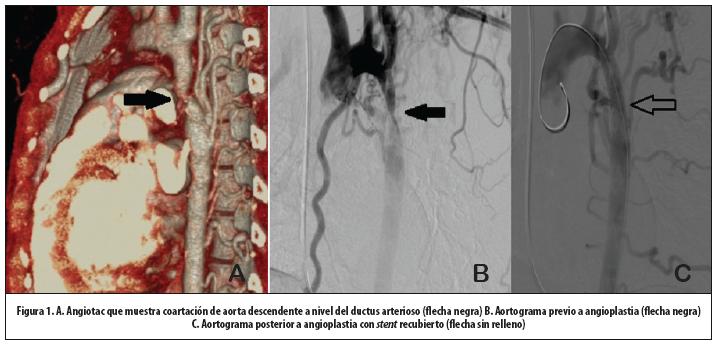
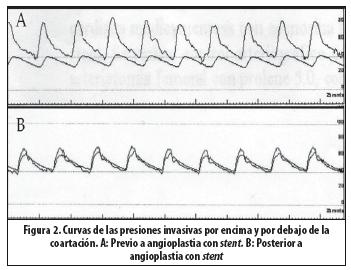
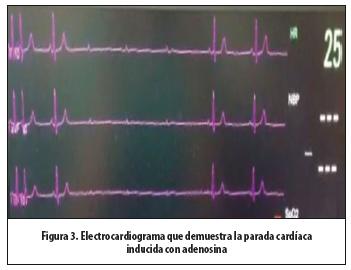
<body><![CDATA[<p class="MsoNormal"><b style=""><span  style="font-size: 11pt; font-family: Verdana;">Caso cl&#237;nico <span  style=""><o:p></o:p></span></span></b></p>     <p style="text-align: justify;" class="MsoNormal"><span  style="font-size: 10pt; font-family: Verdana;">Paciente femenina de 28 a&#241;os, costarricense, de Cartago. Hipertensa, de 10 a&#241;os de evoluci&#243;n, en tratamiento con <span class="SpellE">Irbesart&#225;n</span> 150 <span class="SpellE">mg</span> c/12horas. Fue referida al Hospital Dr. R. &#193;. Calder&#243;n Guardia, por <span class="SpellE">CoA</span> <span  class="SpellE">ductal</span>, diagnosticada en mayo de 2013, por <span  class="SpellE">angioresonancia</span>. Sin ning&#250;n otro antecedente significativo. <o:p></o:p></span></p>     <div style="text-align: justify;"></div>     <p style="text-align: justify;" class="MsoNormal"><span  style="font-size: 10pt; font-family: Verdana;">Un <span class="SpellE">angiotac</span> tor&#225;cico evidenci&#243; la <span class="SpellE">CoA</span> y abundante circulaci&#243;n colateral (<a href="/img/revistas/amc/v56n3/art10i1.jpg">Figura 1A</a>). El ecocardiograma mostr&#243; un ventr&#237;culo izquierdo hipertr&#243;fico con una fracci&#243;n de eyecci&#243;n del 68%, sin otras anomal&#237;as, y una <span class="SpellE">CoA</span> a nivel del remanente del <span class="SpellE">ductus</span> arterioso, con di&#225;metro m&#237;nimo de 3mm; la aorta <span class="SpellE">postcoartaci&#243;n</span> era <span class="SpellE">hipopl&#225;sica</span> y med&#237;a 1,2cm, con importante circulaci&#243;n colateral. <o:p></o:p></span></p>     <div style="text-align: justify;"></div>     <p style="text-align: justify;" class="MsoNormal"><span  style="font-size: 10pt; font-family: Verdana;">Previa obtenci&#243;n del consentimiento informado, explicando a la paciente las posibles complicaciones y riesgos del procedimiento, y con equipo quir&#250;rgico preparado ante cualquier </span><span  style="font-size: 10pt; font-family: Verdana; color: rgb(34, 30, 31);">complicaci&#243;n, en sala de <span class="SpellE">hemodinamia</span>, bajo anestesia general, se le coloc&#243; un marcapaso <span class="SpellE">transvenoso</span>. Se accedi&#243; la arteria braquial izquierda y se expusieron los vasos inguinales derechos. Se hizo un <span class="SpellE">aortograma</span> por cat&#233;ter desde el arco a&#243;rtico (<a href="/img/revistas/amc/v56n3/art10i1.jpg">Figura 1B</a>). Se midieron las presiones por encima y por debajo de la coartaci&#243;n, obteni&#233;ndose un gradiente de <span class="SpellE">40mmHg</span> (<a href="/img/revistas/amc/v56n3/art10i2.jpg">Figura 2A</a>). Se introduce un <span class="SpellE"><i>stent</i></span><i> </i>recubierto de politetrafluoroetileno bal&#243;n expandible (ADVANTA V12<b>&#174;</b><span  class="GramE">)12X41mm</span>, el cual se coloc&#243; en la posici&#243;n deseada y luego se indujo la parada card&#237;aca con adenosina (bolo intravenoso de 60 <span class="SpellE">mg</span> de adenosina por v&#237;a central), que se logra por un tiempo aproximado de 6 segundos (<a  href="/img/revistas/amc/v56n3/art10i3.jpg">Figura 3</a>), durante el cual se libera el <span class="SpellE"><i>stent</i></span>. La paciente recupera espont&#225;neamente el ritmo sinusal. El control <span  class="SpellE">arteriogr&#225;fico</span> muestra un excelente resultado (<a href="/img/revistas/amc/v56n3/art10i1.jpg">Figura <st1:metricconverter  productid="1C" w:st="on">1C</st1:metricconverter></a>) y las presiones por encima y por debajo del <span class="SpellE"><i>stent</i></span>, detectan un gradiente menor a 5 <span class="SpellE">mmHg</span> (<a  href="/img/revistas/amc/v56n3/art10i1.jpg">Figura 2B</a>). </span><span  style="font-size: 10pt; font-family: Verdana;"><o:p></o:p></span></p> </div>     <div>     <div style="text-align: justify;"></div>     <p style="text-align: justify;" class="MsoNormal"><span  style="font-size: 10pt; font-family: Verdana;">La paciente es egresada 2 d&#237;as despu&#233;s de la intervenci&#243;n, sin ninguna molestia. <o:p></o:p></span></p> </div> </div> </div>     <div>     ]]></body>
<body><![CDATA[<div>     <p class="MsoNormal"><b style=""><span  style="font-size: 11pt; font-family: Verdana;">Discusi&#243;n <o:p></o:p></span></b></p> </div>     <p style="text-align: justify;" class="MsoNormal"><span  style="font-size: 10pt; font-family: Verdana;">La reparaci&#243;n quir&#250;rgica de la <span class="SpellE">CoA</span> fue descrita inicialmente en 1944, desarroll&#225;ndose diferentes t&#233;cnicas, dependiendo del tipo anat&#243;mico. Estas inclu&#237;an: resecci&#243;n con anastomosis termino-terminal, reparaci&#243;n con parche, <i>bypass </i>con pr&#243;tesis, entre otras.<sup><a href="#5">5-7</a> </sup>La cirug&#237;a sigue siendo el tratamiento de elecci&#243;n en infantes.<a href="#8"><sup><a>8</a> </sup></a><o:p></o:p></span></p>     <div style="text-align: justify;"></div>     <p style="text-align: justify;" class="MsoNormal"><span  style="font-size: 10pt; font-family: Verdana;">El manejo actual <span class="SpellE">endovascular</span> de la patolog&#237;a a&#243;rtica tor&#225;cica, ha disminuido la mortalidad del 40% al 14%.<sup><a  href="#9">9</a> </sup>La angioplastia con bal&#243;n ha sido aceptada en las 3 &#250;ltimas d&#233;cadas, como tratamiento de la <span class="SpellE">CoA</span>. Esta t&#233;cnica es satisfactoria en casos de <span class="SpellE">recoartaci&#243;n</span>, despu&#233;s de la reparaci&#243;n quir&#250;rgica en infantes, pero su uso en coartaciones nativas en todas las edades, es controversial, debido a la disrupci&#243;n de la &#237;ntima y media de la pared de la aorta ocasionada durante el procedimiento, y a que tiene una alta predisposici&#243;n de formaci&#243;n de aneurismas y persistencia de la lesi&#243;n. Lo anterior obedece a que la pared arterial de la aorta en la coartaci&#243;n es primariamente anormal, y la alteraci&#243;n en el flujo hace que con el tiempo la aorta se vuelva tortuosa, delgada, con necrosis qu&#237;stica de la media y calcificaci&#243;n, lo que puede predisponer la disecci&#243;n y formaci&#243;n de aneurismas con el riesgo de ruptura.<a  href="#10"><sup><a>10</a> </sup></a></span><span  style="font-size: 10pt; font-family: Verdana; color: rgb(34, 30, 31);"><o:p></o:p></span></p>     <div style="text-align: justify;"></div>     <p style="text-align: justify;" class="MsoNormal"><span  style="font-size: 10pt; font-family: Verdana;">La utilizaci&#243;n de <span class="SpellE"><i>stent</i></span><i> </i>bal&#243;n expandible en las coartaciones de aorta fue reportada por primera vez en 1996,<sup><a href="#11">11</a> </sup>y ha ganado popularidad desde la d&#233;cada de los noventa. El <span  class="SpellE"><i>stent</i></span><i> </i>puede reforzar &#225;reas de debilidad de la pared y promover la formaci&#243;n de <span class="SpellE">neo&#237;ntima</span>, disminuyendo la formaci&#243;n de aneurismas, al compararse con la reparaci&#243;n &#250;nicamente con bal&#243;n.<a href="#12"><sup><a>12</a> </sup></a><o:p></o:p></span></p>     <div style="text-align: justify;"></div>     <p style="text-align: justify;" class="MsoNormal"><span  style="font-size: 10pt; font-family: Verdana;">Existen indicaciones de implantaci&#243;n de <span class="SpellE"><i>stent</i></span><i> </i>recubierto en pacientes con <span class="SpellE">CoA</span>, entre las cuales se citan<span class="GramE">:<a href="#13"><sup>13</sup></a></span><sup> </sup><o:p></o:p></span></p>     <div style="text-align: justify;"></div>     ]]></body>
<body><![CDATA[<div>     <div style="text-align: justify;"></div>     <p style="text-align: justify;" class="MsoNormal"><span class="SpellE"><span  style="font-size: 10pt; font-family: Verdana;">CoA</span></span><span  style="font-size: 10pt; font-family: Verdana;"> asociada con aneurismas o con cambios degenerativos en la pared de la aorta, que sugieran las presencia de aneurismas ascendentes o una aorta sumamente tortuosa. <o:p></o:p></span></p>     <div style="text-align: justify;"></div>     <p style="text-align: justify;" class="MsoNormal"><span  style="font-size: 10pt; font-family: Verdana;">Obstrucciones cr&#237;ticas o <span class="SpellE">atr&#233;sicas</span> <o:p></o:p></span></p>     <div style="text-align: justify;"></div>     <p style="text-align: justify;" class="MsoNormal"><span  style="font-size: 10pt; font-family: Verdana;">Edad mayor de 18 a&#241;os <o:p></o:p></span></p>     <div style="text-align: justify;"></div>     <p style="text-align: justify;" class="MsoNormal"><span  style="font-size: 10pt; font-family: Verdana;">Aortitis, s&#237;ndrome de Turner, s&#237;ndrome de Williams <o:p></o:p></span></p>     <div style="text-align: justify;"></div>     ]]></body>
<body><![CDATA[<p style="text-align: justify;" class="MsoNormal"><span  style="font-size: 10pt; font-family: Verdana;">Da&#241;o de la pared de la aorta (aneurisma, disecci&#243;n o ruptura) despu&#233;s de la dilataci&#243;n con bal&#243;n o cirug&#237;a. <o:p></o:p></span></p> </div>     <p style="text-align: justify;" class="MsoNormal"><span  style="font-size: 10pt; font-family: Verdana;">La mayor preocupaci&#243;n de la implantaci&#243;n de un <span class="SpellE"><i>stent</i></span><i> </i>recubierto en la aorta, es el riesgo de oclusiones de las ramas durante la implantaci&#243;n, especialmente la subclavia izquierda y la arteria espinal, lo que podr&#237;a resultar en <span class="SpellE">paraplejia</span>. El <span  class="SpellE"><i>stent</i></span><i> </i>puede migrar y producir oclusiones de arterias en otros sitios, como en las arterias renales o las mesent&#233;ricas.<a href="#13"><sup><a>13</a> </sup></a><o:p></o:p></span></p>     <div style="text-align: justify;"></div>     <p style="text-align: justify;" class="MsoNormal"><span  style="font-size: 10pt; font-family: Verdana;">Debido a lo anterior, la implantaci&#243;n de los <span class="SpellE"><i>stents</i></span><i> </i>recubiertos debe realizarse con mucha precisi&#243;n. Sin embargo, el gran flujo de la aorta tor&#225;cica afecta la estabilidad y, por lo tanto, la exactitud al despliegue. Existen m&#233;todos para contrarrestar esta situaci&#243;n: hipotensi&#243;n controlada, oclusi&#243;n con bal&#243;n proximal, fibrilaci&#243;n ventricular inducida y parada card&#237;aca con adenosina.<a href="#14"><sup><a>14</a> </sup></a><o:p></o:p></span></p>     <div style="text-align: justify;"></div>     <p style="text-align: justify;" class="MsoNormal"><span  style="font-size: 10pt; font-family: Verdana;">La adenosina ha probado ser segura y simple de utilizar, con pocos efectos secundarios.<sup><a href="#15">15<span class="GramE">,16</span></a> </sup>Una dosis de 60-90 <span class="SpellE">mg</span> (1 <span class="SpellE">mg</span>/<span  class="SpellE">kg</span>) induce una parada card&#237;aca de 20-30 segundos, tiempo suficiente para el despliegue del <span class="SpellE"><i>stent</i></span>.<a href="#16"><sup><a>16</a> </sup></a><o:p></o:p></span></p>     <div style="text-align: justify;"></div>     <p style="text-align: justify;" class="MsoNormal"><span  style="font-size: 10pt; font-family: Verdana;">Se concluye entonces que la reparaci&#243;n <span class="SpellE">endovascular</span> con <span class="SpellE"><i>stent</i></span><i> </i>recubierto bal&#243;n expandible, es una buena opci&#243;n terap&#233;utica, r&#225;pida, efectiva, y con menor morbilidad que la cirug&#237;a convencional. El uso de adenosina para inducir la parada card&#237;aca en procedimientos <span class="SpellE">endovasculares</span> es un m&#233;todo sencillo y seguro. <o:p></o:p></span></p>     <div style="text-align: justify;"></div>     <div>     ]]></body>
<body><![CDATA[<div style="text-align: justify;"></div>     <p style="text-align: justify;" class="MsoNormal"><span  style="font-size: 10pt; font-family: Verdana;">Agradecimientos: a la Dra. Mayra Vanesa Vaca Rojas, quien fue la anestesi&#243;loga del caso, y al Dr. V&#237;ctor Hugo Monge <span class="SpellE">Monge</span>, por su colaboraci&#243;n durante el procedimiento. <o:p></o:p></span></p> </div> </div>     <div>     <div>     <p class="MsoNormal"><b style=""><span  style="font-size: 11pt; font-family: Verdana;" lang="EN-US"></span></b></p> <hr style="width: 100%; height: 2px;">     <p class="MsoNormal"><b style=""><span  style="font-size: 11pt; font-family: Verdana;" lang="EN-US">Referencias <o:p></o:p></span></b></p>     <!-- ref --><p class="MsoNormal"><span  style="font-size: 10pt; font-family: Verdana;" lang="EN-US"><a name="1"></a>1. <span class="SpellE">Budoff</span> M, <span class="SpellE">Shittu</span> A, Roy S, <span class="GramE">Use</span> of cardiovascular computed tomography in the diagnosis and management of <span  class="SpellE">coarctation</span> of the aorta. J <span class="SpellE">Thorac</span> <span class="SpellE">Cardiovasc</span> <span class="SpellE">Surg</span> 2013; 146:229-32.    &nbsp;&nbsp;&nbsp;&nbsp;&nbsp;&nbsp;&nbsp;&nbsp;[&#160;<a href="javascript:void(0);" onclick="javascript: window.open('/scielo.php?script=sci_nlinks&ref=063959&pid=S0001-6002201400030001000001&lng=','','width=640,height=500,resizable=yes,scrollbars=1,menubar=yes,');">Links</a>&#160;]<!-- end-ref --> <o:p></o:p></span></p>     <!-- ref --><p class="MsoNormal"><span  style="font-size: 10pt; font-family: Verdana;" lang="EN-US"><a name="2"></a>2. <span class="SpellE">Jurcut</span> R, <span class="SpellE">Daraban</span> A, <span class="SpellE">Lorber</span> A, <span class="SpellE">Deleanu</span> D, <span class="SpellE">Amzulescu</span> M, <span class="GramE">Zara</span> C <i>et al. </i><span class="SpellE">Coarctation</span> of the aorta in adults: what is the best treatment? Case report and literature review. J Med Life 2011; 4:189-195.    &nbsp;&nbsp;&nbsp;&nbsp;&nbsp;&nbsp;&nbsp;&nbsp;[&#160;<a href="javascript:void(0);" onclick="javascript: window.open('/scielo.php?script=sci_nlinks&ref=063961&pid=S0001-6002201400030001000002&lng=','','width=640,height=500,resizable=yes,scrollbars=1,menubar=yes,');">Links</a>&#160;]<!-- end-ref --> <o:p></o:p></span></p>     ]]></body>
<body><![CDATA[<!-- ref --><p class="MsoNormal"><span  style="font-size: 10pt; font-family: Verdana;" lang="EN-US"><a name="3"></a>3. <span class="SpellE">Thani</span> K, <span class="SpellE">Kaushal</span> K, Barnard D, Copeland J, Prasad A. <span class="SpellE">Coarctation</span> of the thoracic aorta masquerading as bilateral <span class="SpellE">aorto</span>-iliac <span class="SpellE">stenosis</span>. J <span class="SpellE">Cardiol</span> Cases 2011<span class="GramE">;4:172</span>-175.    &nbsp;&nbsp;&nbsp;&nbsp;&nbsp;&nbsp;&nbsp;&nbsp;[&#160;<a href="javascript:void(0);" onclick="javascript: window.open('/scielo.php?script=sci_nlinks&ref=063963&pid=S0001-6002201400030001000003&lng=','','width=640,height=500,resizable=yes,scrollbars=1,menubar=yes,');">Links</a>&#160;]<!-- end-ref --> <o:p></o:p></span></p>     <!-- ref --><p class="MsoNormal"><span  style="font-size: 10pt; font-family: Verdana;" lang="EN-US"><a name="4"></a>4. Maldonado J, Henry T, <span class="SpellE">Guti&#233;rrez</span> F. Congenital Thoracic Vascular Anomalies. <span class="SpellE">Radiol</span> <span class="SpellE">Clin</span> North Am 2010<span class="GramE">;48:85</span>&#8211;115 <o:p></o:p></span>&nbsp;&nbsp;&nbsp;&nbsp;&nbsp;&nbsp;&nbsp;&nbsp;[&#160;<a href="javascript:void(0);" onclick="javascript: window.open('/scielo.php?script=sci_nlinks&ref=063965&pid=S0001-6002201400030001000004&lng=','','width=640,height=500,resizable=yes,scrollbars=1,menubar=yes,');">Links</a>&#160;]<!-- end-ref --><!-- ref --><p class="MsoNormal"><span class="GramE"><span  style="font-size: 10pt; font-family: Verdana;" lang="EN-US"><a name="5"></a>5. <span class="SpellE">Crafoord</span> S. Congenital <span class="SpellE">coarctation</span> of the aorta and its surgical management.</span></span><span  style="font-size: 10pt; font-family: Verdana;" lang="EN-US"> J <span  class="SpellE">thorac</span> <span class="SpellE">Cardivasc</span> <span class="SpellE">Surg</span>, <span class="GramE">1945 ;</span> 14:347.    &nbsp;&nbsp;&nbsp;&nbsp;&nbsp;&nbsp;&nbsp;&nbsp;[&#160;<a href="javascript:void(0);" onclick="javascript: window.open('/scielo.php?script=sci_nlinks&ref=063966&pid=S0001-6002201400030001000005&lng=','','width=640,height=500,resizable=yes,scrollbars=1,menubar=yes,');">Links</a>&#160;]<!-- end-ref --> <o:p></o:p></span></p>     <!-- ref --><p class="MsoNormal"><span  style="font-size: 10pt; font-family: Verdana;" lang="EN-US"><a name="6"></a>6. <span class="SpellE">Induni</span> </span><span  style="font-size: 10pt; font-family: Verdana;">E, <span class="SpellE">Pucci</span> J, Soto L, Alvarado M, M&#233;ndez E, Salazar C, <i>et al</i>. Correcci&#243;n quir&#250;rgica de la coartaci&#243;n de la aorta: experiencia quir&#250;rgica durante 30 a&#241;os en el Hospital M&#233;xico. </span><span style="font-size: 10pt; font-family: Verdana;"  lang="EN-US">Rev <span class="SpellE">costarric</span> <span  class="SpellE">cardiol</span> 2000; 2: 11-<span class="GramE">14 .    &nbsp;&nbsp;&nbsp;&nbsp;&nbsp;&nbsp;&nbsp;&nbsp;[&#160;<a href="javascript:void(0);" onclick="javascript: window.open('/scielo.php?script=sci_nlinks&ref=063968&pid=S0001-6002201400030001000006&lng=','','width=640,height=500,resizable=yes,scrollbars=1,menubar=yes,');">Links</a>&#160;]<!-- end-ref --></span> <o:p></o:p></span></p>     <!-- ref --><p class="MsoNormal"><span  style="font-size: 10pt; font-family: Verdana;" lang="EN-US"><a name="7"></a>7. <span class="SpellE">Mettler</span> B, Peeler B. Congenital Heart Disease Surgery in the Adult. <span class="SpellE">Surg</span> <span class="SpellE">Clin</span> North Am 2009; 89:1021&#8211;1032.    &nbsp;&nbsp;&nbsp;&nbsp;&nbsp;&nbsp;&nbsp;&nbsp;[&#160;<a href="javascript:void(0);" onclick="javascript: window.open('/scielo.php?script=sci_nlinks&ref=063970&pid=S0001-6002201400030001000007&lng=','','width=640,height=500,resizable=yes,scrollbars=1,menubar=yes,');">Links</a>&#160;]<!-- end-ref --> <o:p></o:p></span></p>     <!-- ref --><p class="MsoNormal"><span  style="font-size: 10pt; font-family: Verdana;" lang="EN-US"><a name="8"></a>8. Bentham J, English K, Ballard G, Thomson J. Effect of Interventional Stent Treatment of Native and Recurrent <span  class="SpellE">Coarctation</span> of Aorta on Blood Pressure. Am J <span class="SpellE">Cardiol</span> 2013; 111:731-<span class="GramE">736.    &nbsp;&nbsp;&nbsp;&nbsp;&nbsp;&nbsp;&nbsp;&nbsp;[&#160;<a href="javascript:void(0);" onclick="javascript: window.open('/scielo.php?script=sci_nlinks&ref=063972&pid=S0001-6002201400030001000008&lng=','','width=640,height=500,resizable=yes,scrollbars=1,menubar=yes,');">Links</a>&#160;]<!-- end-ref --></span> <o:p></o:p></span></p>     <!-- ref --><p class="MsoNormal"><span  style="font-size: 10pt; font-family: Verdana;" lang="EN-US"><a name="9"></a>9. Baker B, Phil D. <span class="SpellE">Perioperative</span> Considerations and Anesthetic Management for Endovascular Procedures. Advances in Anesthesia 2008; 26:137-156 <o:p></o:p></span>&nbsp;&nbsp;&nbsp;&nbsp;&nbsp;&nbsp;&nbsp;&nbsp;[&#160;<a href="javascript:void(0);" onclick="javascript: window.open('/scielo.php?script=sci_nlinks&ref=063974&pid=S0001-6002201400030001000009&lng=','','width=640,height=500,resizable=yes,scrollbars=1,menubar=yes,');">Links</a>&#160;]<!-- end-ref --><!-- ref --><p class="MsoNormal"><span  style="font-size: 10pt; font-family: Verdana;" lang="EN-US"><a  name="10"></a>10. <span class="SpellE">Tanous</span> D, Collins N, <span  class="SpellE">Dehghani</span> P, Benson L, <span class="SpellE">Horlick</span> E. Covered stents in the management of <span class="SpellE">coarctation</span> of the aorta in the adult: Initial results and 1-year angiographic and hemodynamic follow&#8211;up. <span class="SpellE">Int</span> J <span class="SpellE">Cardiol</span> 2010; 140:287-295.    &nbsp;&nbsp;&nbsp;&nbsp;&nbsp;&nbsp;&nbsp;&nbsp;[&#160;<a href="javascript:void(0);" onclick="javascript: window.open('/scielo.php?script=sci_nlinks&ref=063975&pid=S0001-6002201400030001000010&lng=','','width=640,height=500,resizable=yes,scrollbars=1,menubar=yes,');">Links</a>&#160;]<!-- end-ref --> <o:p></o:p></span></p>     <!-- ref --><p class="MsoNormal"><span  style="font-size: 10pt; font-family: Verdana;" lang="EN-US"><a  name="11"></a>11. <span class="SpellE">Ringel</span> R, <span  class="SpellE">Gauvreau</span> K, Moses H, Jenkins K. <span  class="SpellE">Coarctation</span> of the Aorta Stent Trial (COAST) Study design and rationale. <span  class="GramE">Am Heart J 2012; 164:7-13.    &nbsp;&nbsp;&nbsp;&nbsp;&nbsp;&nbsp;&nbsp;&nbsp;[&#160;<a href="javascript:void(0);" onclick="javascript: window.open('/scielo.php?script=sci_nlinks&ref=063977&pid=S0001-6002201400030001000011&lng=','','width=640,height=500,resizable=yes,scrollbars=1,menubar=yes,');">Links</a>&#160;]<!-- end-ref --></span> <o:p></o:p></span></p>     <!-- ref --><p class="MsoNormal"><span  style="font-size: 10pt; font-family: Verdana;" lang="EN-US"><a  name="12"></a>12. Forbes T, Kim D, Du W, Turner D, <span  class="SpellE">Holzer</span> R, <span class="SpellE">Amin</span> Z, et al. Comparison of Surgical, Stent, and Balloon Angioplasty Treatment of Native <span class="SpellE">Coarctation</span> of the Aorta. J Am <span  class="SpellE">Coll</span> <span class="SpellE">Cardiol</span> 2011; 58:2664&#8211;74.    &nbsp;&nbsp;&nbsp;&nbsp;&nbsp;&nbsp;&nbsp;&nbsp;[&#160;<a href="javascript:void(0);" onclick="javascript: window.open('/scielo.php?script=sci_nlinks&ref=063979&pid=S0001-6002201400030001000012&lng=','','width=640,height=500,resizable=yes,scrollbars=1,menubar=yes,');">Links</a>&#160;]<!-- end-ref --> <o:p></o:p></span></p>     <!-- ref --><p class="MsoNormal"><span  style="font-size: 10pt; font-family: Verdana;" lang="EN-US"><a  name="13"></a>13. <span class="SpellE">Aboulhosn</span> J, Levi D, Child J. Common Congenital Heart Disorders in Adults: <span  class="SpellE">Percutaneous</span> Therapeutic Procedures. <span class="SpellE">Curr</span> <span  class="SpellE">Probl</span> <span class="SpellE">Cardiol</span> 2011; 36:263-284.    &nbsp;&nbsp;&nbsp;&nbsp;&nbsp;&nbsp;&nbsp;&nbsp;[&#160;<a href="javascript:void(0);" onclick="javascript: window.open('/scielo.php?script=sci_nlinks&ref=063981&pid=S0001-6002201400030001000013&lng=','','width=640,height=500,resizable=yes,scrollbars=1,menubar=yes,');">Links</a>&#160;]<!-- end-ref --> <o:p></o:p></span></p>     ]]></body>
<body><![CDATA[<!-- ref --><p class="MsoNormal"><span  style="font-size: 10pt; font-family: Verdana;" lang="EN-US"><a  name="14"></a>14. Bruckheimer E, Cardoso C. <span class="SpellE">Stenting</span> Options for <span class="SpellE">Coarctation</span> of the Aorta. <span  class="SpellE">Intervent</span> <span class="SpellE">Cardiol</span> <span  class="SpellE">Clin</span> 2013; 2:115-129.    &nbsp;&nbsp;&nbsp;&nbsp;&nbsp;&nbsp;&nbsp;&nbsp;[&#160;<a href="javascript:void(0);" onclick="javascript: window.open('/scielo.php?script=sci_nlinks&ref=063983&pid=S0001-6002201400030001000014&lng=','','width=640,height=500,resizable=yes,scrollbars=1,menubar=yes,');">Links</a>&#160;]<!-- end-ref --> <o:p></o:p></span></p>     <!-- ref --><p class="MsoNormal"><span  style="font-size: 10pt; font-family: Verdana;" lang="EN-US"><a  name="15"></a>15. Fang T, Lippmann M, <span class="SpellE">Kakazu</span> C, <span class="SpellE">Donayre</span> C, Bui H, <span class="SpellE">Kopchok</span> G <i>et al. </i>High-Dose Adenosine-Induced <span class="SpellE">Asystole</span> Assisting Accurate Deployment of Thoracic Stent Grafts in Conscious Patients. </span><span style="font-size: 10pt; font-family: Verdana;">Ann <span class="SpellE">Vasc</span> <span class="SpellE">Surg</span> 2008; 22:602-607.    &nbsp;&nbsp;&nbsp;&nbsp;&nbsp;&nbsp;&nbsp;&nbsp;[&#160;<a href="javascript:void(0);" onclick="javascript: window.open('/scielo.php?script=sci_nlinks&ref=063985&pid=S0001-6002201400030001000015&lng=','','width=640,height=500,resizable=yes,scrollbars=1,menubar=yes,');">Links</a>&#160;]<!-- end-ref --> <o:p></o:p></span></p>     <!-- ref --><p class="MsoNormal"><span  style="font-size: 10pt; font-family: Verdana;"><a name="16"></a>16. <span  class="SpellE">Qu</span> L, <span class="SpellE">Raithel</span> D. <span  class="SpellE">Techniques</span> <span class="SpellE">for</span> precise <span class="SpellE">thoracic</span> <span class="SpellE">endograft</span> <span class="SpellE">placement</span>. J <span class="SpellE">Vasc</span> <span class="SpellE">Surg</span> 2009; 49:1069-72.    &nbsp;&nbsp;&nbsp;&nbsp;&nbsp;&nbsp;&nbsp;&nbsp;[&#160;<a href="javascript:void(0);" onclick="javascript: window.open('/scielo.php?script=sci_nlinks&ref=063987&pid=S0001-6002201400030001000016&lng=','','width=640,height=500,resizable=yes,scrollbars=1,menubar=yes,');">Links</a>&#160;]<!-- end-ref --> <o:p></o:p></span></p>     <p class="MsoNormal"><span  style="font-size: 10pt; font-family: Verdana;"><a  name="Correspondencia1"></a><a href="#Correspondencia2">*</a>Correspondencia a:</span><b style=""><span  style="font-size: 10pt; font-family: Verdana;">    <br> Afiliaci&#243;n de los autores:</span></b><span  style="font-size: 10pt; font-family: Verdana;"> <span class="SpellE">Sevicio</span> de Vascular Perif&#233;rico, Hospital Dr. Rafael &#193;ngel Calder&#243;n Guardia, Caja Costarricense de Seguro Social, San Jos&#233;, Costa Rica </span><span  style="font-size: 10pt; font-family: Symbol;"><span style="">*</span></span><span  style="font-size: 10pt; font-family: Verdana;">riveraignacio@hotmail.com <o:p></o:p></span></p>     <p class="MsoNormal"><b style=""><span  style="font-size: 10pt; font-family: Verdana;"></span></b></p> <hr style="width: 100%; height: 2px;">     <p style="text-align: center;" class="MsoNormal"><b style=""><span  style="font-size: 10pt; font-family: Verdana;">Fecha recibido:</span></b><span  style="font-size: 10pt; font-family: Verdana;"> 06 de enero de 2014 <b  style="">Fecha aceptado:</b> 15 de mayo de 2014 <o:p></o:p></span></p> </div> </div> </div> </div> </div> </div>     ]]></body>
<body><![CDATA[ ]]></body><back>
<ref-list>
<ref id="B1">
<label>1</label><nlm-citation citation-type="journal">
<person-group person-group-type="author">
<name>
<surname><![CDATA[Budoff]]></surname>
<given-names><![CDATA[M]]></given-names>
</name>
<name>
<surname><![CDATA[Shittu]]></surname>
<given-names><![CDATA[A]]></given-names>
</name>
<name>
<surname><![CDATA[Roy]]></surname>
<given-names><![CDATA[S]]></given-names>
</name>
</person-group>
<article-title xml:lang="es"><![CDATA[Use of cardiovascular computed tomography in the diagnosis and management of coarctation of the aorta]]></article-title>
<source><![CDATA[J Thorac Cardiovasc Surg]]></source>
<year>2013</year>
<volume>146</volume>
<page-range>229-32</page-range></nlm-citation>
</ref>
<ref id="B2">
<label>2</label><nlm-citation citation-type="journal">
<person-group person-group-type="author">
<name>
<surname><![CDATA[Jurcut]]></surname>
<given-names><![CDATA[R]]></given-names>
</name>
<name>
<surname><![CDATA[Daraban]]></surname>
<given-names><![CDATA[A]]></given-names>
</name>
<name>
<surname><![CDATA[Lorber]]></surname>
<given-names><![CDATA[A]]></given-names>
</name>
<name>
<surname><![CDATA[Deleanu]]></surname>
<given-names><![CDATA[D]]></given-names>
</name>
<name>
<surname><![CDATA[Amzulescu]]></surname>
<given-names><![CDATA[M]]></given-names>
</name>
<name>
<surname><![CDATA[Zara]]></surname>
<given-names><![CDATA[C]]></given-names>
</name>
</person-group>
<article-title xml:lang="en"><![CDATA[Coarctation of the aorta in adults: what is the best treatment? Case report and literature review]]></article-title>
<source><![CDATA[J Med Life]]></source>
<year>2011</year>
<volume>4</volume>
<page-range>189-195</page-range></nlm-citation>
</ref>
<ref id="B3">
<label>3</label><nlm-citation citation-type="journal">
<person-group person-group-type="author">
<name>
<surname><![CDATA[Thani]]></surname>
<given-names><![CDATA[K]]></given-names>
</name>
<name>
<surname><![CDATA[Kaushal]]></surname>
<given-names><![CDATA[K]]></given-names>
</name>
<name>
<surname><![CDATA[Barnard]]></surname>
<given-names><![CDATA[D]]></given-names>
</name>
<name>
<surname><![CDATA[Copeland]]></surname>
<given-names><![CDATA[J]]></given-names>
</name>
<name>
<surname><![CDATA[Prasad]]></surname>
<given-names><![CDATA[A]]></given-names>
</name>
</person-group>
<article-title xml:lang="en"><![CDATA[Coarctation of the thoracic aorta masquerading as bilateral aorto-iliac stenosis]]></article-title>
<source><![CDATA[J Cardiol Cases]]></source>
<year>2011</year>
<volume>4</volume>
<page-range>172-175</page-range></nlm-citation>
</ref>
<ref id="B4">
<label>4</label><nlm-citation citation-type="journal">
<person-group person-group-type="author">
<name>
<surname><![CDATA[Maldonado]]></surname>
<given-names><![CDATA[J]]></given-names>
</name>
<name>
<surname><![CDATA[Henry]]></surname>
<given-names><![CDATA[T]]></given-names>
</name>
<name>
<surname><![CDATA[Gutiérrez]]></surname>
<given-names><![CDATA[F]]></given-names>
</name>
</person-group>
<article-title xml:lang="en"><![CDATA[Congenital Thoracic Vascular Anomalies]]></article-title>
<source><![CDATA[Radiol Clin North Am]]></source>
<year>2010</year>
<volume>48</volume>
<page-range>85-115</page-range></nlm-citation>
</ref>
<ref id="B5">
<label>5</label><nlm-citation citation-type="journal">
<person-group person-group-type="author">
<name>
<surname><![CDATA[Crafoord]]></surname>
<given-names><![CDATA[S]]></given-names>
</name>
</person-group>
<article-title xml:lang="en"><![CDATA[Congenital coarctation of the aorta and its surgical management]]></article-title>
<source><![CDATA[J thorac Cardivasc Surg]]></source>
<year>1945</year>
<volume>14</volume>
<page-range>347</page-range></nlm-citation>
</ref>
<ref id="B6">
<label>6</label><nlm-citation citation-type="journal">
<person-group person-group-type="author">
<name>
<surname><![CDATA[Induni]]></surname>
<given-names><![CDATA[E]]></given-names>
</name>
<name>
<surname><![CDATA[Pucci]]></surname>
<given-names><![CDATA[J]]></given-names>
</name>
<name>
<surname><![CDATA[Soto]]></surname>
<given-names><![CDATA[L]]></given-names>
</name>
<name>
<surname><![CDATA[Alvarado]]></surname>
<given-names><![CDATA[M]]></given-names>
</name>
<name>
<surname><![CDATA[Méndez]]></surname>
<given-names><![CDATA[E]]></given-names>
</name>
<name>
<surname><![CDATA[Salazar]]></surname>
<given-names><![CDATA[C]]></given-names>
</name>
</person-group>
<article-title xml:lang="es"><![CDATA[Corrección quirúrgica de la coartación de la aorta: experiencia quirúrgica durante 30 años en el Hospital México]]></article-title>
<source><![CDATA[Rev costarric cardiol]]></source>
<year>2000</year>
<volume>2</volume>
<page-range>11-14</page-range></nlm-citation>
</ref>
<ref id="B7">
<label>7</label><nlm-citation citation-type="journal">
<person-group person-group-type="author">
<name>
<surname><![CDATA[Mettler]]></surname>
<given-names><![CDATA[B]]></given-names>
</name>
<name>
<surname><![CDATA[Peeler]]></surname>
<given-names><![CDATA[B]]></given-names>
</name>
</person-group>
<article-title xml:lang="en"><![CDATA[Congenital Heart Disease Surgery in the Adult]]></article-title>
<source><![CDATA[Surg Clin North Am]]></source>
<year>2009</year>
<volume>89</volume>
<page-range>1021-1032</page-range></nlm-citation>
</ref>
<ref id="B8">
<label>8</label><nlm-citation citation-type="journal">
<person-group person-group-type="author">
<name>
<surname><![CDATA[Bentham]]></surname>
<given-names><![CDATA[J]]></given-names>
</name>
<name>
<surname><![CDATA[English]]></surname>
<given-names><![CDATA[K]]></given-names>
</name>
<name>
<surname><![CDATA[Ballard]]></surname>
<given-names><![CDATA[G]]></given-names>
</name>
<name>
<surname><![CDATA[Thomson]]></surname>
<given-names><![CDATA[J]]></given-names>
</name>
</person-group>
<article-title xml:lang="en"><![CDATA[Effect of Interventional Stent Treatment of Native and Recurrent Coarctation of Aorta on Blood Pressure]]></article-title>
<source><![CDATA[Am J Cardiol]]></source>
<year>2013</year>
<volume>111</volume>
<page-range>731-736</page-range></nlm-citation>
</ref>
<ref id="B9">
<label>9</label><nlm-citation citation-type="journal">
<person-group person-group-type="author">
<name>
<surname><![CDATA[Baker]]></surname>
<given-names><![CDATA[B]]></given-names>
</name>
<name>
<surname><![CDATA[Phil]]></surname>
<given-names><![CDATA[D]]></given-names>
</name>
</person-group>
<article-title xml:lang="en"><![CDATA[Perioperative Considerations and Anesthetic Management for Endovascular Procedures]]></article-title>
<source><![CDATA[Advances in Anesthesia]]></source>
<year>2008</year>
<volume>26</volume>
<page-range>137-156</page-range></nlm-citation>
</ref>
<ref id="B10">
<label>10</label><nlm-citation citation-type="journal">
<person-group person-group-type="author">
<name>
<surname><![CDATA[Tanous]]></surname>
<given-names><![CDATA[D]]></given-names>
</name>
<name>
<surname><![CDATA[Collins]]></surname>
<given-names><![CDATA[N]]></given-names>
</name>
<name>
<surname><![CDATA[Dehghani]]></surname>
<given-names><![CDATA[P]]></given-names>
</name>
<name>
<surname><![CDATA[Benson]]></surname>
<given-names><![CDATA[L]]></given-names>
</name>
<name>
<surname><![CDATA[Horlick]]></surname>
<given-names><![CDATA[E]]></given-names>
</name>
</person-group>
<article-title xml:lang="en"><![CDATA[Covered stents in the management of coarctation of the aorta in the adult: Initial results and 1-year angiographic and hemodynamic follow-up]]></article-title>
<source><![CDATA[Int J Cardiol]]></source>
<year>2010</year>
<volume>140</volume>
<page-range>287-295</page-range></nlm-citation>
</ref>
<ref id="B11">
<label>11</label><nlm-citation citation-type="journal">
<person-group person-group-type="author">
<name>
<surname><![CDATA[Ringel]]></surname>
<given-names><![CDATA[R]]></given-names>
</name>
<name>
<surname><![CDATA[Gauvreau]]></surname>
<given-names><![CDATA[K]]></given-names>
</name>
<name>
<surname><![CDATA[Moses]]></surname>
<given-names><![CDATA[H]]></given-names>
</name>
<name>
<surname><![CDATA[Jenkins]]></surname>
<given-names><![CDATA[K]]></given-names>
</name>
</person-group>
<article-title xml:lang="en"><![CDATA[Coarctation of the Aorta Stent Trial (COAST) Study design and rationale]]></article-title>
<source><![CDATA[Am Heart J]]></source>
<year>2012</year>
<volume>164</volume>
<page-range>7-13</page-range></nlm-citation>
</ref>
<ref id="B12">
<label>12</label><nlm-citation citation-type="journal">
<person-group person-group-type="author">
<name>
<surname><![CDATA[Forbes]]></surname>
<given-names><![CDATA[T]]></given-names>
</name>
<name>
<surname><![CDATA[Kim]]></surname>
<given-names><![CDATA[D]]></given-names>
</name>
<name>
<surname><![CDATA[Du]]></surname>
<given-names><![CDATA[W]]></given-names>
</name>
<name>
<surname><![CDATA[Turner]]></surname>
<given-names><![CDATA[D]]></given-names>
</name>
<name>
<surname><![CDATA[Holzer]]></surname>
<given-names><![CDATA[R]]></given-names>
</name>
<name>
<surname><![CDATA[Amin]]></surname>
<given-names><![CDATA[Z]]></given-names>
</name>
</person-group>
<article-title xml:lang="en"><![CDATA[Comparison of Surgical, Stent, and Balloon Angioplasty Treatment of Native Coarctation of the Aorta]]></article-title>
<source><![CDATA[J Am Coll Cardiol]]></source>
<year>2011</year>
<volume>58</volume>
<page-range>2664-74</page-range></nlm-citation>
</ref>
<ref id="B13">
<label>13</label><nlm-citation citation-type="journal">
<person-group person-group-type="author">
<name>
<surname><![CDATA[Aboulhosn]]></surname>
<given-names><![CDATA[J]]></given-names>
</name>
<name>
<surname><![CDATA[Levi]]></surname>
<given-names><![CDATA[D]]></given-names>
</name>
<name>
<surname><![CDATA[Child]]></surname>
<given-names><![CDATA[J]]></given-names>
</name>
</person-group>
<article-title xml:lang="en"><![CDATA[Common Congenital Heart Disorders in Adults: Percutaneous Therapeutic Procedures]]></article-title>
<source><![CDATA[Curr Probl Cardiol]]></source>
<year>2011</year>
<volume>36</volume>
<page-range>263-284</page-range></nlm-citation>
</ref>
<ref id="B14">
<label>14</label><nlm-citation citation-type="journal">
<person-group person-group-type="author">
<name>
<surname><![CDATA[Bruckheimer]]></surname>
<given-names><![CDATA[E]]></given-names>
</name>
<name>
<surname><![CDATA[Cardoso]]></surname>
<given-names><![CDATA[C]]></given-names>
</name>
</person-group>
<article-title xml:lang="en"><![CDATA[Stenting Options for Coarctation of the Aorta]]></article-title>
<source><![CDATA[Intervent Cardiol Clin]]></source>
<year>2013</year>
<volume>2</volume>
<page-range>115-129</page-range></nlm-citation>
</ref>
<ref id="B15">
<label>15</label><nlm-citation citation-type="journal">
<person-group person-group-type="author">
<name>
<surname><![CDATA[Fang]]></surname>
<given-names><![CDATA[T]]></given-names>
</name>
<name>
<surname><![CDATA[Lippmann]]></surname>
<given-names><![CDATA[M]]></given-names>
</name>
<name>
<surname><![CDATA[Kakazu]]></surname>
<given-names><![CDATA[C]]></given-names>
</name>
<name>
<surname><![CDATA[Donayre]]></surname>
<given-names><![CDATA[C]]></given-names>
</name>
<name>
<surname><![CDATA[Bui]]></surname>
<given-names><![CDATA[H]]></given-names>
</name>
<name>
<surname><![CDATA[Kopchok]]></surname>
<given-names><![CDATA[G]]></given-names>
</name>
</person-group>
<article-title xml:lang="en"><![CDATA[High-Dose Adenosine-Induced Asystole Assisting Accurate Deployment of Thoracic Stent Grafts in Conscious Patients]]></article-title>
<source><![CDATA[Ann Vasc Surg]]></source>
<year>2008</year>
<volume>22</volume>
<page-range>602-607</page-range></nlm-citation>
</ref>
<ref id="B16">
<label>16</label><nlm-citation citation-type="journal">
<person-group person-group-type="author">
<name>
<surname><![CDATA[Qu]]></surname>
<given-names><![CDATA[L]]></given-names>
</name>
<name>
<surname><![CDATA[Raithel]]></surname>
<given-names><![CDATA[D]]></given-names>
</name>
</person-group>
<article-title xml:lang="en"><![CDATA[Techniques for precise thoracic endograft placement]]></article-title>
<source><![CDATA[J Vasc Surg]]></source>
<year>2009</year>
<volume>49</volume>
<page-range>1069-72</page-range></nlm-citation>
</ref>
</ref-list>
</back>
</article>