<?xml version="1.0" encoding="ISO-8859-1"?><article xmlns:mml="http://www.w3.org/1998/Math/MathML" xmlns:xlink="http://www.w3.org/1999/xlink" xmlns:xsi="http://www.w3.org/2001/XMLSchema-instance">
<front>
<journal-meta>
<journal-id>0001-6002</journal-id>
<journal-title><![CDATA[Acta Médica Costarricense]]></journal-title>
<abbrev-journal-title><![CDATA[Acta méd. costarric]]></abbrev-journal-title>
<issn>0001-6002</issn>
<publisher>
<publisher-name><![CDATA[Colegio de Médicos y Cirujanos de Costa Rica]]></publisher-name>
</publisher>
</journal-meta>
<article-meta>
<article-id>S0001-60022002000200008</article-id>
<title-group>
<article-title xml:lang="es"><![CDATA[Sarcoidosis: experiencia con 15 casos en el Hospital Calderón Guardia]]></article-title>
</title-group>
<contrib-group>
<contrib contrib-type="author">
<name>
<surname><![CDATA[Mainieri-Hidalgo]]></surname>
<given-names><![CDATA[José]]></given-names>
</name>
<xref ref-type="aff" rid="A01"/>
</contrib>
<contrib contrib-type="author">
<name>
<surname><![CDATA[Monge-Bonilla]]></surname>
<given-names><![CDATA[Cecilia]]></given-names>
</name>
<xref ref-type="aff" rid="A02"/>
</contrib>
<contrib contrib-type="author">
<name>
<surname><![CDATA[Sánchez-Ramírez]]></surname>
<given-names><![CDATA[Adriana]]></given-names>
</name>
</contrib>
</contrib-group>
<aff id="A01">
<institution><![CDATA[,CCSS Hospital Calderón Guardia ]]></institution>
<addr-line><![CDATA[ ]]></addr-line>
<country>Costa Rica</country>
</aff>
<aff id="A02">
<institution><![CDATA[,Universidad de Costa Rica  ]]></institution>
<addr-line><![CDATA[ ]]></addr-line>
</aff>
<pub-date pub-type="pub">
<day>00</day>
<month>06</month>
<year>2002</year>
</pub-date>
<pub-date pub-type="epub">
<day>00</day>
<month>06</month>
<year>2002</year>
</pub-date>
<volume>44</volume>
<numero>2</numero>
<fpage>82</fpage>
<lpage>86</lpage>
<copyright-statement/>
<copyright-year/>
<self-uri xlink:href="http://www.scielo.sa.cr/scielo.php?script=sci_arttext&amp;pid=S0001-60022002000200008&amp;lng=en&amp;nrm=iso"></self-uri><self-uri xlink:href="http://www.scielo.sa.cr/scielo.php?script=sci_abstract&amp;pid=S0001-60022002000200008&amp;lng=en&amp;nrm=iso"></self-uri><self-uri xlink:href="http://www.scielo.sa.cr/scielo.php?script=sci_pdf&amp;pid=S0001-60022002000200008&amp;lng=en&amp;nrm=iso"></self-uri><abstract abstract-type="short" xml:lang="es"><p><![CDATA[La sarcoidosis es una enfermedad que se diagnostica con poca frecuencia en Costa Rica; en 1988 fueron informados 6 casos en el Hospital San Juan de Dios. En este estudio se da cuenta de las características clínicas y el manejo de 15 pacientes del Hospital Calderón Guardia, diagnosticados entre 1987 y 2001. Todos los casos fueron de localización torácica y en doce de ellos la enfermedad afectó solamente los ganglios del mediastino, por lo que la radiografía de tórax fue el método de detección . Los síntomas más frecuentes fueron tos y disnea. La mediastinoscopía fue el método más utilizado para obtener la biopsia. El diagnóstico histológico se hizo por el hallazgo de granulomas no necrotizantes, infiltrado linfocitario y la presencia de células gigantes, sin que se aislara ningún germen. Catorce pacientes recibieron tratamiento sintomático y observación y solo uno presentó afección pulmonar y sintomatología respiratoria y recibió esteroides. El paciente con enfermedad pulmonar sintomática continúa con esteroides y los pacientes observados, por un promedio de 7 años, evolucionaron a resolución espontánea sin producirse recidivas.]]></p></abstract>
<abstract abstract-type="short" xml:lang="en"><p><![CDATA[Sarcoidosis is an infrequent disease in Costa Rica. In 1988 the Hospital San Juan de Dios reported six cases. This is a clinical study of 15 patients diagnosed at the Hospital Calderón Guardia from 1987 to 2001. All the patients presented with thoracic disease and in 12 of them it was localized to the mediastinal lymph nodes. A chest X-ray detected all the cases; cough and dispnea were the most frequent symptoms and mediastinoscopy was the most useful method to obtain a biopsy. The histologic diagnosis was made in the presence of non-necrotizing granulomas, giant cells and a lymphocytic infiltrate. No microorganisms were isolated. Fourteen patients received symptomatic treatment and observation, and one with pulmonary disease and respiratory symptoms received also steroids. All the patients were observed, for an average of 7 years. They presented spontaneous resolution without remissions.]]></p></abstract>
<kwd-group>
<kwd lng="es"><![CDATA[Sarcoidosis]]></kwd>
<kwd lng="es"><![CDATA[tumores del mediastino]]></kwd>
<kwd lng="es"><![CDATA[mediastinoscopía]]></kwd>
</kwd-group>
</article-meta>
</front><body><![CDATA[ <CENTER><B><FONT FACE="Arial">Sarcoidosis</FONT></B></CENTER>      <CENTER><B><FONT FACE="Arial">Experiencia con 15 casos en el Hospital Calder&oacute;n Guardia</FONT></B></CENTER>      <CENTER>&nbsp;</CENTER>      <CENTER>&nbsp;</CENTER>      <CENTER></CENTER>      <CENTER><FONT FACE="Arial"><FONT SIZE=-1>Jos&eacute; Mainieri-Hidalgo&nbsp;<A NAME="R1"></A></FONT></FONT><SUP><FONT FACE="Arial,Helvetica"><FONT SIZE=-2><A HREF="#A1">1</A></FONT></FONT></SUP><FONT FACE="Arial"><FONT SIZE=-1>, Cecilia Monge-Bonilla </FONT></FONT><SUP><FONT FACE="Arial,Helvetica"><FONT SIZE=-2><A HREF="#A2">2</A></FONT></FONT></SUP><FONT FACE="Arial"><FONT SIZE=-1>, Adriana S&aacute;nchez-Ram&iacute;rez </FONT></FONT><SUP><FONT FACE="Arial,Helvetica"><FONT SIZE=-2>3</FONT></FONT></SUP></CENTER>       <P>&nbsp;     <BR>&nbsp;<FONT FACE="Arial"><FONT SIZE=-1><B>Resumen: </B>La sarcoidosis es una enfermedad que se diagnostica con poca frecuencia en Costa Rica; en 1988 fueron informados 6 casos en el Hospital San Juan de Dios. En este estudio se da cuenta de las caracter&iacute;sticas cl&iacute;nicas y el manejo de 15 pacientes del Hospital Calder&oacute;n Guardia, diagnosticados entre 1987 y 2001. Todos los casos fueron de localizaci&oacute;n tor&aacute;cica y en doce de ellos la enfermedad afect&oacute; solamente los ganglios del mediastino, por lo que la radiograf&iacute;a de t&oacute;rax fue el m&eacute;todo de detecci&oacute;n . Los s&iacute;ntomas m&aacute;s frecuentes fueron tos y disnea. La mediastinoscop&iacute;a fue el m&eacute;todo m&aacute;s utilizado para obtener la biopsia. El diagn&oacute;stico histol&oacute;gico se hizo por el hallazgo de granulomas no necrotizantes, infiltrado linfocitario y la presencia de c&eacute;lulas gigantes, sin que se aislara ning&uacute;n germen. Catorce pacientes recibieron tratamiento sintom&aacute;tico y observaci&oacute;n y solo uno present&oacute; afecci&oacute;n pulmonar y sintomatolog&iacute;a respiratoria y recibi&oacute; esteroides. El paciente con enfermedad pulmonar sintom&aacute;tica contin&uacute;a con esteroides y los pacientes observados, por un promedio de 7 a&ntilde;os, evolucionaron a resoluci&oacute;n espont&aacute;nea sin producirse recidivas.</FONT></FONT>      <P><FONT FACE="Arial"><FONT SIZE=-1><B>Descriptores: </B>Sarcoidosis, tumores del mediastino, mediastinoscop&iacute;a</FONT></FONT>      <P><I><FONT FACE="Arial"><FONT SIZE=-1>Recibido: 06 de febrero del 2002.</FONT></FONT></I>     ]]></body>
<body><![CDATA[<BR><I><FONT FACE="Arial"><FONT SIZE=-1>Aceptado: 23 de abril del 2002.</FONT></FONT></I>     <BR>&nbsp;      <P><FONT FACE="Arial"><FONT SIZE=-1>La sarcoidosis es una enfermedad multisist&eacute;mica descrita por primera vez en 1877 por el m&eacute;dico ingl&eacute;s Jonathon Hutchinson </FONT></FONT><SUP><FONT FACE="Arial,Helvetica"><FONT SIZE=-2><A HREF="#2">2-3</A></FONT></FONT></SUP><FONT FACE="Arial"><FONT SIZE=-1>. Su incidencia y prevalencia presentan variaciones considerables entre pa&iacute;ses y continentes, y a pesar de que estas posiblemente son reales, tambi&eacute;n se relacionan con la conciencia local e inter&eacute;s por la enfermedad. En 1988 Alvarado y Haryley informaron seis casos diagnosticados en Costa Rica </FONT></FONT><SUP><FONT FACE="Arial,Helvetica"><FONT SIZE=-2><A HREF="#1">1</A></FONT></FONT></SUP><FONT FACE="Arial"><FONT SIZE=-1>.</FONT></FONT>      <P><FONT FACE="Arial"><FONT SIZE=-1>Aunque su causa es a&uacute;n desconocida, el hecho de que los &oacute;rganos m&aacute;s com&uacute;nmente afectados son los pulmones y los m&oacute;dulos linf&aacute;ticos mediastinales, sugiere que la enfermedad sea causada por un agente que se adquiere posiblemente por inhalaci&oacute;n. Algunos microorganismos como Mycobacterium tuberculosis, Yersinia enterocol&iacute;tica, Borrelia burgdorferi y Propionibacterium acnes, se han mencionado como posibles causas </FONT></FONT><SUP><FONT FACE="Arial,Helvetica"><FONT SIZE=-2><A HREF="#2">2</A>,<A HREF="#4">4</A></FONT></FONT></SUP><FONT FACE="Arial"><FONT SIZE=-1>. Otros proponen que la enfermedad se desarrolla en individuos con predisposici&oacute;n gen&eacute;tica, los cuales son expuestos a un ant&iacute;geno que desencadena una reacci&oacute;n inflamatoria de tipo granulomatosa </FONT></FONT><SUP><FONT FACE="Arial,Helvetica"><FONT SIZE=-2><A HREF="#5">5-6</A></FONT></FONT></SUP><FONT FACE="Arial"><FONT SIZE=-1>. Los hallazgos, tanto moleculares como histol&oacute;gicos, evidencian una respuesta inflamatoria e inmune a un est&iacute;mulo antig&eacute;nico. Se han observado c&uacute;mulos familiares de sarcoidosis, sin embargo, parece poco probable que un solo gen sea el responsable y es m&aacute;s posible que el factor gen&eacute;tico que promueve susceptibilidad resida en loci que influencian la regulaci&oacute;n inmune, la funci&oacute;n de c&eacute;lulas T o la presentaci&oacute;n y reconocimiento de ant&iacute;genos </FONT></FONT><SUP><FONT FACE="Arial,Helvetica"><FONT SIZE=-2><A HREF="#7">7-9</A></FONT></FONT></SUP><FONT FACE="Arial"><FONT SIZE=-1>.</FONT></FONT>      <P><FONT FACE="Arial"><FONT SIZE=-1>Es m&aacute;s frecuente en mujeres </FONT></FONT><SUP><FONT FACE="Arial,Helvetica"><FONT SIZE=-2><A HREF="#16">16</A></FONT></FONT></SUP><FONT FACE="Arial"><FONT SIZE=-1> y se puede presentar a cualquier edad, pero es m&aacute;s com&uacute;n entre los 20 y 40 a&ntilde;os </FONT></FONT><SUP><FONT FACE="Arial,Helvetica"><FONT SIZE=-2><A HREF="#10">10-13</A></FONT></FONT></SUP><FONT FACE="Arial"><FONT SIZE=-1>. De acuerdo con el &oacute;rgano afectado, presenta una amplia variedad de caracter&iacute;sticas cl&iacute;nicas y radiol&oacute;gicas. Los tejidos que se ven afectados con m&aacute;s frecuencia por esta enfermedad son los ganglios mediastinales y el pulm&oacute;n (80% a 90% de los casos) </FONT></FONT><SUP><FONT FACE="Arial,Helvetica"><FONT SIZE=-2><A HREF="#1">1</A></FONT></FONT></SUP><FONT FACE="Arial"><FONT SIZE=-1>. Tambi&eacute;n puede involucrar el h&iacute;gado, ojos, bazo, gl&aacute;ndulas salivales, coraz&oacute;n, sistema nervioso, m&uacute;sculos, huesos y otros &oacute;rganos, con menos frecuencia.</FONT></FONT>      <P><FONT FACE="Arial"><FONT SIZE=-1>Histol&oacute;gicamente se describe una acumulaci&oacute;n de linfocitos T, fagocitos mononucleares y, caracter&iacute;sticamente, es la presencia de granulomas no caseificantes asociados con c&eacute;lulas gigantes multinucleadas </FONT></FONT><SUP><FONT FACE="Arial,Helvetica"><FONT SIZE=-2><A HREF="#21">21</A></FONT></FONT></SUP><FONT FACE="Arial"><FONT SIZE=-1>. Los ganglios linf&aacute;ticos se ven reemplazados difusamente por granulomas de apariencia histol&oacute;gica variable, que se palpan duro el&aacute;sticos y se encuentran mal delimitados. La mayor&iacute;a de los granulomas en sarcoidosis no presentan necrosis sin embargo &eacute;sta se ha documentado en un 4% a un 38% de los casos </FONT></FONT><SUP><FONT FACE="Arial,Helvetica"><FONT SIZE=-2><A HREF="#14">14</A></FONT></FONT></SUP><FONT FACE="Arial"><FONT SIZE=-1>, raz&oacute;n por la cual se ha relacionado con tuberculosis y sugerido, sin confirmarse, la posibilidad de una micobacteria at&iacute;pica. Algunos pacientes que en el pasado se curaban de tuberculosis espont&aacute;neamente, bien pudieron ser portadores de esta enfermedad, pues se asocia con curaci&oacute;n espont&aacute;nea.</FONT></FONT>      <P><FONT FACE="Arial"><FONT SIZE=-1>Cuando hay afecci&oacute;n pulmonar, los granulomas son inicialmente discretos e histol&oacute;gicamente activos, pero conforme avanza la enfermedad, pasan a ser confluentes y se asocia fibrosis que produce engrosamiento intersticial difuso. Los granulomas se localizan en el tejido conectivo peribronquial, pero tambi&eacute;n afectan la mucosa de la v&iacute;a a&eacute;rea. Son m&aacute;s comunes en las v&iacute;as a&eacute;reas peque&ntilde;as, aunque se pueden encontrar tambi&eacute;n en las paredes bronquiales.</FONT></FONT>      <P><FONT FACE="Arial"><FONT SIZE=-1>Algunos granulomas se resuelven espont&aacute;neamente, pero otros sufren fibrosis. La apariencia de sarcoidosis pulmonar depende de la severidad y de la etapa en la cual se encuentra la patolog&iacute;a. En etapas tempranas la inflamaci&oacute;n granulomatosa es prominente en el nivel peribroncovascular, interlobular y en el tejido conectivo pleural, presentando cierto parecido a una carcinomatosis linfang&iacute;tica. Conforme avanza la enfermedad, en el par&eacute;nquima pulmonar se observan focos de fibrosis intersticial o nodular; siendo este proceso m&aacute;s severo en los l&oacute;bulos superiores </FONT></FONT><SUP><FONT FACE="Arial,Helvetica"><FONT SIZE=-2><A HREF="#4">4</A>,<A HREF="#15">15</A></FONT></FONT></SUP><FONT FACE="Arial"><FONT SIZE=-1>.</FONT></FONT>      <P><FONT FACE="Arial"><FONT SIZE=-1>En pacientes con sarcoidosis hay aumento del complejo mayor de histocompatibilidad clase II y de otras mol&eacute;culas involucradas en la activaci&oacute;n de c&eacute;lulas T. Debido a esto, la habilidad de los macr&oacute;fagos alveolares para producir ant&iacute;genos se encuentra aumentada </FONT></FONT><SUP><FONT FACE="Arial,Helvetica"><FONT SIZE=-2><A HREF="#16">16</A></FONT></FONT></SUP><FONT FACE="Arial"><FONT SIZE=-1>. El macr&oacute;fago alveolar es responsable del procesamiento y presentaci&oacute;n del supuesto ant&iacute;geno productor de sarcoidosis a las c&eacute;lulas inmunocompetentes, iniciando de esta manera la alveolitis linfocitaria caracter&iacute;stica de la enfermedad. El papel principal de dichas c&eacute;lulas es la iniciaci&oacute;n de la respuesta inmune mediada por c&eacute;lulas T, que lleva a la formaci&oacute;n de granulomas </FONT></FONT><SUP><FONT FACE="Arial,Helvetica"><FONT SIZE=-2><A HREF="#9">9</A></FONT></FONT></SUP><FONT FACE="Arial"><FONT SIZE=-1>. La activaci&oacute;n de macr&oacute;fagos se caracteriza por acumulaci&oacute;n de linfocitos alrededor de ellos y producci&oacute;n de citoquinas (IL-1, IL-2, IL-6 e IL-8, factor de necrosis tumoral a, prote&iacute;na quimiot&aacute;ctica monocitaria-1), glucoprote&iacute;nas (CD14) y mol&eacute;culas de adhesi&oacute;n. Dichas mol&eacute;culas estimulan la migraci&oacute;n y activaci&oacute;n de linfocitos, leucocitos polimorfonucleares y fibroblastos, los cuales participan en la reacci&oacute;n inflamatoria y fibrosis caracter&iacute;stica </FONT></FONT><SUP><FONT FACE="Arial,Helvetica"><FONT SIZE=-2><A HREF="#2">2</A></FONT></FONT></SUP><FONT FACE="Arial"><FONT SIZE=-1>. Los macr&oacute;fagos se incorporan a los granulomas como histiocitos epiteliales y secretan T G F - &szlig;</FONT></FONT><FONT FACE="Arial,Helvetica"><FONT SIZE=-2>1</FONT></FONT><FONT FACE="Arial"><FONT SIZE=-1> (factor transformador de crecimiento), el cual modula la fibrosis del granuloma, debido a su acci&oacute;n antiinflamatoria.</FONT></FONT>      <P><FONT FACE="Arial"><FONT SIZE=-1>Un 50% de los pacientes son asintom&aacute;ticos y la enfermedad se detecta como hallazgo casual en una radiograf&iacute;a de t&oacute;rax. La sintomatolog&iacute;a es generalmente de inicio insidioso. Un 90% de los pacientes presenta s&iacute;ntomas respiratorios caracterizados por tos seca y disnea y s&oacute;lo un 10% manifiestan s&iacute;ntomas referidos a otros &oacute;rganos </FONT></FONT><SUP><FONT FACE="Arial,Helvetica"><FONT SIZE=-2><A HREF="#2">2</A></FONT></FONT></SUP><FONT FACE="Arial"><FONT SIZE=-1>. Los m&aacute;s afectados son el coraz&oacute;n, la piel y los ojos </FONT></FONT><SUP><FONT FACE="Arial,Helvetica"><FONT SIZE=-2><A HREF="#3">3</A></FONT></FONT></SUP><FONT FACE="Arial"><FONT SIZE=-1>. El agrandamiento de ganglios linf&aacute;ticos mediastinales ocurre en el 75% al 90% de los casos, y la compresi&oacute;n del &aacute;rbol respiratorio es causa de la disnea. La afecci&oacute;n ocular se presenta en un 25% de los pacientes con uve&iacute;tis anterior aguda o cr&oacute;nica </FONT></FONT><SUP><FONT FACE="Arial,Helvetica"><FONT SIZE=-2><A HREF="#17">17</A></FONT></FONT></SUP><FONT FACE="Arial"><FONT SIZE=-1>. De un 20% a un 30% de los afectados presentan alteraciones dermatol&oacute;gicas inespec&iacute;ficas como eritema nodoso y lupus pernio, que resuelven espont&aacute;neamente </FONT></FONT><SUP><FONT FACE="Arial,Helvetica"><FONT SIZE=-2><A HREF="#18">18</A>,<A HREF="#19">19</A></FONT></FONT></SUP><FONT FACE="Arial"><FONT SIZE=-1>. Un 5% de los pacientes presenta evidencia cl&iacute;nica de afectaci&oacute;n cardiaca</FONT></FONT><SUP><FONT FACE="Arial,Helvetica"><FONT SIZE=-2> <A HREF="#2">2</A></FONT></FONT></SUP><FONT FACE="Arial"><FONT SIZE=-1> que puede ser directa como la miocarditis granulomatosa, o indirecta cuando se desarrolla de cor pulmonale secundario a fibrosis parenquimatosa </FONT></FONT><SUP><FONT FACE="Arial,Helvetica"><FONT SIZE=-2><A HREF="#12">12</A></FONT></FONT></SUP><FONT FACE="Arial"><FONT SIZE=-1>. En un estudio de autopsias se inform&oacute; que aproximadamente dos tercios de los pacientes presentan compromiso de h&iacute;gado, bazo y ri&ntilde;&oacute;n, que raramente produce sintomatolog&iacute;a </FONT></FONT><SUP><FONT FACE="Arial,Helvetica"><FONT SIZE=-2><A HREF="#20">20</A></FONT></FONT></SUP><FONT FACE="Arial"><FONT SIZE=-1>. Puede tambi&eacute;n afectar el cerebro, m&eacute;dula espinal, meninges, pares craneales y nervios perif&eacute;ricos </FONT></FONT><SUP><FONT FACE="Arial,Helvetica"><FONT SIZE=-2><A HREF="#21">21</A></FONT></FONT></SUP><FONT FACE="Arial"><FONT SIZE=-1>.</FONT></FONT>      ]]></body>
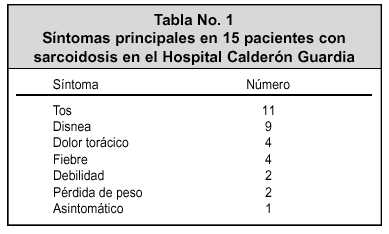
<body><![CDATA[<P><FONT FACE="Arial"><FONT SIZE=-1>El mal estado general, p&eacute;rdida de peso, fiebre, sudoraci&oacute;n nocturna y fatiga, son manifestaciones sist&eacute;micas y son inespec&iacute;ficas. Esta enfermedad se asocia con dos s&iacute;ndromes, el S&iacute;ndrome de Lofgren que es la tr&iacute;ada de linfadenopat&iacute;a hiliar bilateral, eritema nodoso y poliartralgias </FONT></FONT><SUP><FONT FACE="Arial,Helvetica"><FONT SIZE=-2><A HREF="#22">22</A></FONT></FONT></SUP><FONT FACE="Arial"><FONT SIZE=-1> y el S&iacute;ndrome de Heerfordt Waldestrom con fiebre, parotiditis, uve&iacute;tis anterior y par&aacute;lisis facial. Tambi&eacute;n se asocia con enfermedades del col&aacute;geno </FONT></FONT><SUP><FONT FACE="Arial,Helvetica"><FONT SIZE=-2><A HREF="#4">4</A></FONT></FONT></SUP><FONT FACE="Arial"><FONT SIZE=-1>.</FONT></FONT>      <P><FONT FACE="Arial"><FONT SIZE=-1>Las alteraciones radiol&oacute;gicas en sarcoidosis tor&aacute;cica (ver <A HREF="#fig1">figura 1</A>) se clasifican seg&uacute;n la clasificaci&oacute;n propuesta por Wurm y colaboradores </FONT></FONT><SUP><FONT FACE="Arial,Helvetica"><FONT SIZE=-2><A HREF="#25">25</A></FONT></FONT></SUP><FONT FACE="Arial"><FONT SIZE=-1> en cuatro grupos:</FONT></FONT>      <P><FONT FACE="Arial"><FONT SIZE=-1>Etapa I: &Uacute;nicamente aumento de tama&ntilde;o de los ganglios linf&aacute;ticos mediastinales e hiliares.</FONT></FONT>      <P><FONT FACE="Arial"><FONT SIZE=-1>Etapa II: Aumento de tama&ntilde;o de ganglios linf&aacute;ticos, asociado con anormalidades pulmonares</FONT></FONT>      <P><FONT FACE="Arial"><FONT SIZE=-1>Etapa III: Enfermedad pulmonar difusa, no asociada con aumento de tama&ntilde;o ganglionar</FONT></FONT>      <P><FONT FACE="Arial"><FONT SIZE=-1>Etapa IV: Fibrosis pulmonar</FONT></FONT>     <BR>&nbsp;     <CENTER><A NAME="fig1"></A><IMG SRC="/img/fbpe/amc/v44n2/2068i1.JPG" HEIGHT=314 WIDTH=566></CENTER> <FONT FACE="Arial"><FONT SIZE=-1>&nbsp;</FONT></FONT>     
<BR><FONT FACE="Arial"><FONT SIZE=-1>Para confirmar el diagn&oacute;stico se debe recurrir a la biopsia que identifica los granulomas no necrotizantes, ya sea esta realizada transbronquial o por mediastinoscop&iacute;a</FONT></FONT><SUP><FONT FACE="Arial,Helvetica"><FONT SIZE=-2> <A HREF="#2">2</A></FONT></FONT></SUP><FONT FACE="Arial"><FONT SIZE=-1>. Se debe hacer el diagn&oacute;stico diferencial con linfoma, tuberculosis, brucelosis, infecci&oacute;n por hongos y alveolitis extr&iacute;nseca al&eacute;rgica </FONT></FONT><SUP><FONT FACE="Arial,Helvetica"><FONT SIZE=-2><A HREF="#4">4</A></FONT></FONT></SUP><FONT FACE="Arial"><FONT SIZE=-1>. El lavado bronquioalveolar, com&uacute;nmente evidencia la presencia de alveolitis linfoc&iacute;tica con predominio de c&eacute;lulas CD4 helper. Se encuentra hipercalcemia en un 10% de los afectados e hipercalciuria en un 30% </FONT></FONT><SUP><FONT FACE="Arial,Helvetica"><FONT SIZE=-2><A HREF="#23">23</A></FONT></FONT></SUP><FONT FACE="Arial"><FONT SIZE=-1>.</FONT></FONT>      <P><FONT FACE="Arial"><FONT SIZE=-1>Existe gran discordancia en cuanto al esquema de tratamiento. Los puntos debatibles son el momento de inicio, la duraci&oacute;n y la dosificaci&oacute;n. Como una regla general, los esteroides constituyen la droga de primera l&iacute;nea </FONT></FONT><SUP><FONT FACE="Arial,Helvetica"><FONT SIZE=-2><A HREF="#18">18</A></FONT></FONT></SUP><FONT FACE="Arial"><FONT SIZE=-1>. Se utilizan de entrada en las siguientes situaciones: enfermedad ocular severa, sarcoidosis neurol&oacute;gica o cardiaca, hipercalcemia maligna, etapa II sintom&aacute;tica, etapa II en v&iacute;as de progresi&oacute;n y etapa III </FONT></FONT><SUP><FONT FACE="Arial,Helvetica"><FONT SIZE=-2><A HREF="#3">3</A></FONT></FONT></SUP><FONT FACE="Arial"><FONT SIZE=-1>. Los protocolos son de 30 a 40 mg de prednisona diarios por 8 a 12 semanas con disminuci&oacute;n gradual a 10 a 20 mg por d&iacute;a, en un periodo de 6 a 12 meses, para establecer la m&iacute;nima dosis efectiva </FONT></FONT><SUP><FONT FACE="Arial,Helvetica"><FONT SIZE=-2><A HREF="#3">3</A></FONT></FONT></SUP><FONT FACE="Arial"><FONT SIZE=-1>.</FONT></FONT>      ]]></body>
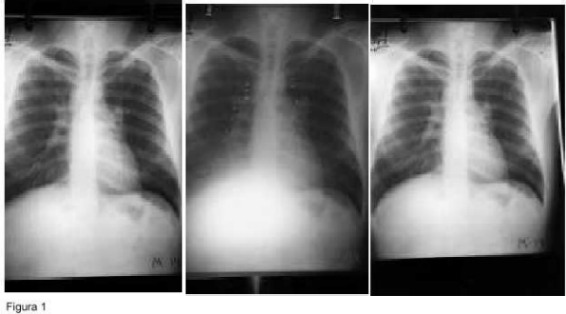
<body><![CDATA[<P><FONT FACE="Arial"><FONT SIZE=-1>La mayor&iacute;a de los pacientes en estadio I y II suelen remitir espont&aacute;neamente, mientras que en estadios m&aacute;s avanzados es necesaria la inmunoterapia para lograr la remisi&oacute;n, y estos tienden a las reca&iacute;das </FONT></FONT><SUP><FONT FACE="Arial,Helvetica"><FONT SIZE=-2><A HREF="#24">24</A></FONT></FONT></SUP><FONT FACE="Arial"><FONT SIZE=-1>. La mayor&iacute;a de los pacientes que mueren es a causa de cor pulmonale secundario a fibrosis pulmonar o de una arritmia cardiaca secundaria a miocarditis granulomatosa </FONT></FONT><SUP><FONT FACE="Arial,Helvetica"><FONT SIZE=-2><A HREF="#4">4</A></FONT></FONT></SUP><FONT FACE="Arial"><FONT SIZE=-1>.</FONT></FONT>      <P><FONT FACE="Arial"><FONT SIZE=-1>El objetivo de este estudio es informar la experiencia con la presentaci&oacute;n cl&iacute;nica, m&eacute;todos de diagn&oacute;stico, manejo y evoluci&oacute;n de </FONT></FONT><SUP><FONT FACE="Arial,Helvetica"><FONT SIZE=-2><A HREF="#15">15</A></FONT></FONT></SUP><FONT FACE="Arial"><FONT SIZE=-1> casos de Sarcoidosis tratados en el Hospital Calder&oacute;n Guardia y ofrecer una revisi&oacute;n bibliogr&aacute;fica para motivar a la comunidad m&eacute;dica en la detecci&oacute;n de estos casos.</FONT></FONT>     <BR>&nbsp;     <BR><B><FONT FACE="Arial"><FONT SIZE=-1>Materiales y M&eacute;todo</FONT></FONT></B>      <P><FONT FACE="Arial"><FONT SIZE=-1>La poblaci&oacute;n del estudio est&aacute; constituida por quince pacientes diagnosticados de sarcoidosis en el Hospital Calder&oacute;n Guardia, en el periodo comprendido entre enero de 1987 y julio del 2001. El criterio para hacer el diagn&oacute;stico se bas&oacute; en el cuadro cl&iacute;nico, apoyado en todos los casos por una biopsia con el hallazgo histol&oacute;gico de granulomas sin necrosis, con presencia de infiltrado linfocitario, c&eacute;lulas gigantes y ausencia de microorganismos. Se recolectaron los datos cl&iacute;nicos mediante un instrumento de recolecci&oacute;n que fue aplicado a los expedientes en cuesti&oacute;n. El estudio se realiz&oacute; en forma retrospectiva, se trabaj&oacute; con el universo entero y no se efectu&oacute; an&aacute;lisis estad&iacute;stico, dado el tama&ntilde;o reducido de la muestra.</FONT></FONT>     <BR>&nbsp;     <BR><B><FONT FACE="Arial"><FONT SIZE=-1>Resultados</FONT></FONT></B>      <P><FONT FACE="Arial"><FONT SIZE=-1>Se encontraron 8 pacientes femeninos y 7 masculinos, todos cauc&aacute;sicos. La edad oscil&oacute; entre 17 y 55 a&ntilde;os, con un promedio de 37 a&ntilde;os. Nueve con antecedente de tabaquismo y 6 sin &eacute;l. Ninguno refiri&oacute; antecedente familiar de sarcoidosis, ni ser portadores de enfermedades del col&aacute;geno. En todos los casos la lesi&oacute;n se observ&oacute; en la radiograf&iacute;a de t&oacute;rax. El tiempo de evoluci&oacute;n de los s&iacute;ntomas fue entre 1 mes y 18 meses, con una media de 5 meses. Los s&iacute;ntomas m&aacute;s frecuentes se muestran en la <A HREF="#tab1">tabla No. 1</A>. La biopsia se obtuvo en 11 pacientes por mediastinoscopia, en 3 por cielo abierto y en uno por v&iacute;a transbronquial. No se encontr&oacute; ning&uacute;n caso de sarcoidosis extrator&aacute;cica en los archivos de patolog&iacute;a del hospital. Los pacientes fueron agrupados de acuerdo con los hallazgos radiol&oacute;gicos, correspondiendo doce a la etapa 1, dos a la etapa 2 y uno a la etapa 3</FONT></FONT>      <P><FONT FACE="Arial"><FONT SIZE=-1>El tratamiento que se le dio a los pacientes consisti&oacute; en: explicarles su enfermedad, medicaci&oacute;n sintom&aacute;tica y observaci&oacute;n en 14 casos, y en el paciente con infiltrado pulmonar difuso y sintomatolog&iacute;a, esteroides. Salvo este &uacute;ltimo caso, que a&uacute;n se encuentra en tratamiento, todos los pacientes han tenido remisi&oacute;n espont&aacute;nea de las adenomegalias y se encuentran asintom&aacute;ticos. El tiempo en que se ha observado va de 6 meses a 14 a&ntilde;os, con un promedio de 7 a&ntilde;os, per&iacute;odo durante el cual no se ha presentado ninguna recidiva ni complicaci&oacute;n relacionada.</FONT></FONT>     <BR>&nbsp;     ]]></body>
<body><![CDATA[<BR>&nbsp;     <CENTER><A NAME="tab1"></A><IMG SRC="/img/fbpe/amc/v44n2/2068i02.JPG" HEIGHT=234 WIDTH=389></CENTER>       
<P><B><FONT FACE="Arial"><FONT SIZE=-1>Discusi&oacute;n</FONT></FONT></B>      <P><FONT FACE="Arial"><FONT SIZE=-1>La sarcoidosis es una enfermedad poco frecuente en Costa Rica, sin embargo, podr&iacute;an existir casos no diagnosticados, sobre todo en localizaciones donde tomar una biopsia resulta un proceso complejo.</FONT></FONT>      <P><FONT FACE="Arial"><FONT SIZE=-1>Aunque en los pa&iacute;ses del norte la enfermedad se presenta con mayor frecuencia en pacientes de raza negra con una proporci&oacute;n de 3:1 </FONT></FONT><SUP><FONT FACE="Arial,Helvetica"><FONT SIZE=-2><A HREF="#26">26</A>,<A HREF="#27">27</A></FONT></FONT></SUP><FONT FACE="Arial"><FONT SIZE=-1>, en nuestra serie no se present&oacute; en ninguno. De acuerdo con la bibliograf&iacute;a hay predilecci&oacute;n por adultos menores de 40 a&ntilde;os; en este caso el promedio fue de 37 a&ntilde;os.</FONT></FONT>      <P><FONT FACE="Arial"><FONT SIZE=-1>En 1940 casos de sarcoidosis en mujeres trabajadoras de la industria de fluorescentes en Salem, Massachussets, se reconoci&oacute; la exposici&oacute;n al berilio como causante de "Sarcoidosis de Salem". La exposici&oacute;n a otros polvos de metal, gases y ant&iacute;genos org&aacute;nicos, puede causar enfermedades pulmonares granulomatosas dif&iacute;ciles de distinguir cl&iacute;nicamente de la sarcoidosis </FONT></FONT><SUP><FONT FACE="Arial,Helvetica"><FONT SIZE=-2><A HREF="#18">18</A>,<A HREF="#28">28</A></FONT></FONT></SUP><FONT FACE="Arial"><FONT SIZE=-1> . Solo uno de los pacientes en este estudio es operario industrial, por lo que no existe de la enfermedad con riesgo el ocupacional.</FONT></FONT>      <P><FONT FACE="Arial"><FONT SIZE=-1>A pesar de que en la bibliograf&iacute;a se informa que un 50% de pacientes son asintom&aacute;ticos, lo que obedece posiblemente a la rutina de realizar estudios en pacientes sanos para tamizaje, en nuestra serie todos presentaron s&iacute;ntomas respiratorios, siendo la tos y la disnea los m&aacute;s frecuentes, y en ning&uacute;n caso se encontraron s&iacute;ntomas extrator&aacute;cicos. Al &uacute;nico paciente asintom&aacute;tico se le encontr&oacute; una masa mediastinal en una radiograf&iacute;a de previo empleo.</FONT></FONT>      <P><FONT FACE="Arial"><FONT SIZE=-1>La mediastinoscop&iacute;a fue el m&eacute;todo m&aacute;s utilizado para obtener la biopsia, ya que en la mayor&iacute;a de los casos la enfermedad estaba localizada en los ganglios del mediastino. En este estudio el diagn&oacute;stico se hizo relacionando la cl&iacute;nica, los hallazgos histol&oacute;gicos y la evoluci&oacute;n.</FONT></FONT>      <P><FONT FACE="Arial"><FONT SIZE=-1>Los pacientes fueron agrupados en etapas, sin que se considerara ello una clasificaci&oacute;n de estadio, ya que &uacute;nicamente se aplican criterios radiol&oacute;gicos. Los pacientes clasificados en etapa I y II resolvieron espont&aacute;neamente, de acuerdo con lo citado en la bibliograf&iacute;a. El paciente en etapa III recibi&oacute; Prednisona 50 mg por d&iacute;a, durante tres meses, 37.5 mg, durante d&iacute;a por diez meses, 12.5 mg en d&iacute;as alternos, durante un mes y 1 miligramo cada tercer d&iacute;a, durante un mes. El resto del grupo fue &uacute;nicamente observado en su evoluci&oacute;n.</FONT></FONT>     <BR>&nbsp;     ]]></body>
<body><![CDATA[<BR><B><FONT FACE="Arial"><FONT SIZE=-1>Abstract</FONT></FONT></B>      <P><FONT FACE="Arial"><FONT SIZE=-1>Sarcoidosis is an infrequent disease in Costa Rica. In 1988 the Hospital San Juan de Dios reported six cases. This is a clinical study of 15 patients diagnosed at the Hospital Calder&oacute;n Guardia from 1987 to 2001. All the patients presented with thoracic disease and in 12 of them it was localized to the mediastinal lymph nodes. A chest X-ray detected all the cases; cough and dispnea were the most frequent symptoms and mediastinoscopy was the most useful method to obtain a biopsy. The histologic diagnosis was made in the presence of non-necrotizing granulomas, giant cells and a lymphocytic infiltrate. No microorganisms were isolated. Fourteen patients received symptomatic treatment and observation, and one with pulmonary disease and respiratory symptoms received also steroids. All the patients were observed, for an average of 7 years. They presented spontaneous resolution without remissions.</FONT></FONT>     <BR>&nbsp;     <BR><B><FONT FACE="Arial"><FONT SIZE=-1>Referencias</FONT></FONT></B>      <!-- ref --><P><A NAME="1"></A><FONT FACE="Arial"><FONT SIZE=-1>1. Alvarado A. Haryley L. Sarcoidosis. Acta M&eacute;dica Costarricense 1988; 31(1):10-19.</FONT></FONT>    &nbsp;&nbsp;&nbsp;&nbsp;&nbsp;&nbsp;&nbsp;&nbsp;[&#160;<a href="javascript:void(0);" onclick="javascript: window.open('/scielo.php?script=sci_nlinks&ref=009790&pid=S0001-6002200200020000800001&lng=','','width=640,height=500,resizable=yes,scrollbars=1,menubar=yes,');">Links</a>&#160;]<!-- end-ref --><!-- ref --><P><A NAME="2"></A><FONT FACE="Arial"><FONT SIZE=-1>2. Hillerdal G. et al. Statement on Sarcoidosis. Am J Resp Crit Care Med. 1999; 160: 735-755.</FONT></FONT>    &nbsp;&nbsp;&nbsp;&nbsp;&nbsp;&nbsp;&nbsp;&nbsp;[&#160;<a href="javascript:void(0);" onclick="javascript: window.open('/scielo.php?script=sci_nlinks&ref=009791&pid=S0001-6002200200020000800002&lng=','','width=640,height=500,resizable=yes,scrollbars=1,menubar=yes,');">Links</a>&#160;]<!-- end-ref --><!-- ref --><P><A NAME="3"></A><FONT FACE="Arial"><FONT SIZE=-1>3. Newman L. Rose C. and Maier L. Sarcoidosis. N. Engl. J. Med. 1997; 336:1224-1232.</FONT></FONT>    &nbsp;&nbsp;&nbsp;&nbsp;&nbsp;&nbsp;&nbsp;&nbsp;[&#160;<a href="javascript:void(0);" onclick="javascript: window.open('/scielo.php?script=sci_nlinks&ref=009792&pid=S0001-6002200200020000800003&lng=','','width=640,height=500,resizable=yes,scrollbars=1,menubar=yes,');">Links</a>&#160;]<!-- end-ref --><!-- ref --><P><A NAME="4"></A><FONT FACE="Arial"><FONT SIZE=-1>4. Fraser R. et al. Sarcoidosis. Diagnosis of Diseases of the Chest. Saunders, Pennsylvania, 1999. P&aacute;gs. 1533-1573.</FONT></FONT>    &nbsp;&nbsp;&nbsp;&nbsp;&nbsp;&nbsp;&nbsp;&nbsp;[&#160;<a href="javascript:void(0);" onclick="javascript: window.open('/scielo.php?script=sci_nlinks&ref=009793&pid=S0001-6002200200020000800004&lng=','','width=640,height=500,resizable=yes,scrollbars=1,menubar=yes,');">Links</a>&#160;]<!-- end-ref --><!-- ref --><P><A NAME="5"></A><FONT FACE="Arial"><FONT SIZE=-1>5. Rybicki B et al. Racial diffferences in sarcoidosis incidence: a 5 year study in a health maintenance organization. Am J Epidemiol 1997; 145:234-241.</FONT></FONT>    &nbsp;&nbsp;&nbsp;&nbsp;&nbsp;&nbsp;&nbsp;&nbsp;[&#160;<a href="javascript:void(0);" onclick="javascript: window.open('/scielo.php?script=sci_nlinks&ref=009794&pid=S0001-6002200200020000800005&lng=','','width=640,height=500,resizable=yes,scrollbars=1,menubar=yes,');">Links</a>&#160;]<!-- end-ref --><!-- ref --><P><A NAME="6"></A><FONT FACE="Arial"><FONT SIZE=-1>6. Buck A. Epidemiologic investigations on sarcoidosis. Am J Hyg 1961; 74:189-202.</FONT></FONT>    &nbsp;&nbsp;&nbsp;&nbsp;&nbsp;&nbsp;&nbsp;&nbsp;[&#160;<a href="javascript:void(0);" onclick="javascript: window.open('/scielo.php?script=sci_nlinks&ref=009795&pid=S0001-6002200200020000800006&lng=','','width=640,height=500,resizable=yes,scrollbars=1,menubar=yes,');">Links</a>&#160;]<!-- end-ref --><!-- ref --><P><A NAME="7"></A><FONT FACE="Arial"><FONT SIZE=-1>7. Konishi K. Molleer et al. Spontaneous expression of the IL2 receptor gene and presence of functional IL2 receptors on T lymphocytes in the blood of individuals with active pulmonary sarcoidosis. J Clin Invest 1988; 82:775-781.</FONT></FONT>    &nbsp;&nbsp;&nbsp;&nbsp;&nbsp;&nbsp;&nbsp;&nbsp;[&#160;<a href="javascript:void(0);" onclick="javascript: window.open('/scielo.php?script=sci_nlinks&ref=009796&pid=S0001-6002200200020000800007&lng=','','width=640,height=500,resizable=yes,scrollbars=1,menubar=yes,');">Links</a>&#160;]<!-- end-ref --><!-- ref --><P><A NAME="8"></A><FONT FACE="Arial"><FONT SIZE=-1>8. Agostini C. et al. Role of IL15 and IL2 and their receptors in the development of T cell alveolitis in pulmonary sarcoidosis. J Inmunol 1996; 157: 910-918.</FONT></FONT>    &nbsp;&nbsp;&nbsp;&nbsp;&nbsp;&nbsp;&nbsp;&nbsp;[&#160;<a href="javascript:void(0);" onclick="javascript: window.open('/scielo.php?script=sci_nlinks&ref=009797&pid=S0001-6002200200020000800008&lng=','','width=640,height=500,resizable=yes,scrollbars=1,menubar=yes,');">Links</a>&#160;]<!-- end-ref --><!-- ref --><P><A NAME="9"></A><FONT FACE="Arial"><FONT SIZE=-1>9. Gibson G. Prescott R. Muers M. et al. British Thoracic Society Sarcoidosis study: effects of long term corticosteroid treatment. Thorax 1996; 51:238-47.</FONT></FONT>    &nbsp;&nbsp;&nbsp;&nbsp;&nbsp;&nbsp;&nbsp;&nbsp;[&#160;<a href="javascript:void(0);" onclick="javascript: window.open('/scielo.php?script=sci_nlinks&ref=009798&pid=S0001-6002200200020000800009&lng=','','width=640,height=500,resizable=yes,scrollbars=1,menubar=yes,');">Links</a>&#160;]<!-- end-ref --><!-- ref --><P><A NAME="10"></A><FONT FACE="Arial"><FONT SIZE=-1>10. Gordis L. Sarcoidosis: Epidemiology of Chronic Lung Diseases in Children. The John Hopkins University Press, Baltimore. 1973; 53-78.</FONT></FONT>    &nbsp;&nbsp;&nbsp;&nbsp;&nbsp;&nbsp;&nbsp;&nbsp;[&#160;<a href="javascript:void(0);" onclick="javascript: window.open('/scielo.php?script=sci_nlinks&ref=009799&pid=S0001-6002200200020000800010&lng=','','width=640,height=500,resizable=yes,scrollbars=1,menubar=yes,');">Links</a>&#160;]<!-- end-ref --><!-- ref --><P><A NAME="11"></A><FONT FACE="Arial"><FONT SIZE=-1>11. English J. Patel P. Greer K. Sarcoidosis. J Am Acad Dermatol. 1999; 44 (5): 725-43.</FONT></FONT>    &nbsp;&nbsp;&nbsp;&nbsp;&nbsp;&nbsp;&nbsp;&nbsp;[&#160;<a href="javascript:void(0);" onclick="javascript: window.open('/scielo.php?script=sci_nlinks&ref=009800&pid=S0001-6002200200020000800011&lng=','','width=640,height=500,resizable=yes,scrollbars=1,menubar=yes,');">Links</a>&#160;]<!-- end-ref --><!-- ref --><P><A NAME="12"></A><FONT FACE="Arial"><FONT SIZE=-1>12. Kwai K. Et al. Racial difference in cardiac sarcoidosis incidence observed at autopsy. Sarcoidosis 1994; 11:26-31.</FONT></FONT>    &nbsp;&nbsp;&nbsp;&nbsp;&nbsp;&nbsp;&nbsp;&nbsp;[&#160;<a href="javascript:void(0);" onclick="javascript: window.open('/scielo.php?script=sci_nlinks&ref=009801&pid=S0001-6002200200020000800012&lng=','','width=640,height=500,resizable=yes,scrollbars=1,menubar=yes,');">Links</a>&#160;]<!-- end-ref --><!-- ref --><P><A NAME="13"></A><FONT FACE="Arial"><FONT SIZE=-1>13. Milman N. Selroos. Pulmonary sarcoidosis in the Nordic countries 1950-1982: epidemiology and clinical picture. Sarcoidosis 1990; 7:50-57.</FONT></FONT>    &nbsp;&nbsp;&nbsp;&nbsp;&nbsp;&nbsp;&nbsp;&nbsp;[&#160;<a href="javascript:void(0);" onclick="javascript: window.open('/scielo.php?script=sci_nlinks&ref=009802&pid=S0001-6002200200020000800013&lng=','','width=640,height=500,resizable=yes,scrollbars=1,menubar=yes,');">Links</a>&#160;]<!-- end-ref --><!-- ref --><P><A NAME="14"></A><FONT FACE="Arial"><FONT SIZE=-1>14. Rosen Y. Sarcoidosis. In D. Dail and P. Hammer, editors. Pulmonary Pathology. Springer-Verlag, New York 1994; 13-645.</FONT></FONT>    &nbsp;&nbsp;&nbsp;&nbsp;&nbsp;&nbsp;&nbsp;&nbsp;[&#160;<a href="javascript:void(0);" onclick="javascript: window.open('/scielo.php?script=sci_nlinks&ref=009803&pid=S0001-6002200200020000800014&lng=','','width=640,height=500,resizable=yes,scrollbars=1,menubar=yes,');">Links</a>&#160;]<!-- end-ref --><!-- ref --><P><A NAME="15"></A><FONT FACE="Arial"><FONT SIZE=-1>15. Colby T. Intersticial lung diseases. In W. Thurlbeck and A. Churg editors. Pathology of the Lund. Thieme Medical Publishers, New York 1995; 589-737.</FONT></FONT>    &nbsp;&nbsp;&nbsp;&nbsp;&nbsp;&nbsp;&nbsp;&nbsp;[&#160;<a href="javascript:void(0);" onclick="javascript: window.open('/scielo.php?script=sci_nlinks&ref=009804&pid=S0001-6002200200020000800015&lng=','','width=640,height=500,resizable=yes,scrollbars=1,menubar=yes,');">Links</a>&#160;]<!-- end-ref --><!-- ref --><P><A NAME="16"></A><FONT FACE="Arial"><FONT SIZE=-1>16. Semenzato G. et al. Redistribution of T lymphocytes in the lymph nodes of patients with sarcoidosis. N Engl J Med 1982; 306:48-49.</FONT></FONT>    &nbsp;&nbsp;&nbsp;&nbsp;&nbsp;&nbsp;&nbsp;&nbsp;[&#160;<a href="javascript:void(0);" onclick="javascript: window.open('/scielo.php?script=sci_nlinks&ref=009805&pid=S0001-6002200200020000800016&lng=','','width=640,height=500,resizable=yes,scrollbars=1,menubar=yes,');">Links</a>&#160;]<!-- end-ref --><!-- ref --><P><A NAME="17"></A><FONT FACE="Arial"><FONT SIZE=-1>17. Karma A. Ophthalmic changes in sarcoidosis. Acta Ophthalmol Suppl 1979; 141:1-94.</FONT></FONT>    &nbsp;&nbsp;&nbsp;&nbsp;&nbsp;&nbsp;&nbsp;&nbsp;[&#160;<a href="javascript:void(0);" onclick="javascript: window.open('/scielo.php?script=sci_nlinks&ref=009806&pid=S0001-6002200200020000800017&lng=','','width=640,height=500,resizable=yes,scrollbars=1,menubar=yes,');">Links</a>&#160;]<!-- end-ref --><!-- ref --><P><A NAME="18"></A><FONT FACE="Arial"><FONT SIZE=-1>18. Wilson et al. Sarcoidosis. Harrison&acute;s Principles of Internal Medicine. Mc Graw Hill, Estados Unidos. P&aacute;gs. 1463-1469.</FONT></FONT>    &nbsp;&nbsp;&nbsp;&nbsp;&nbsp;&nbsp;&nbsp;&nbsp;[&#160;<a href="javascript:void(0);" onclick="javascript: window.open('/scielo.php?script=sci_nlinks&ref=009807&pid=S0001-6002200200020000800018&lng=','','width=640,height=500,resizable=yes,scrollbars=1,menubar=yes,');">Links</a>&#160;]<!-- end-ref --><!-- ref --><P><A NAME="19"></A><FONT FACE="Arial"><FONT SIZE=-1>19. Sharma O. Cutaneous sarcoidosis: clinical features and management. Chest 1972; 61:320-325.</FONT></FONT>    &nbsp;&nbsp;&nbsp;&nbsp;&nbsp;&nbsp;&nbsp;&nbsp;[&#160;<a href="javascript:void(0);" onclick="javascript: window.open('/scielo.php?script=sci_nlinks&ref=009808&pid=S0001-6002200200020000800019&lng=','','width=640,height=500,resizable=yes,scrollbars=1,menubar=yes,');">Links</a>&#160;]<!-- end-ref --><!-- ref --><P><A NAME="20"></A><FONT FACE="Arial"><FONT SIZE=-1>20. Maddrey W. et al. Sarcoidosis and chronic hepatic disease: a clinical and pathology study of 20 patients. Medicine 1970; 49:375-395.</FONT></FONT>    &nbsp;&nbsp;&nbsp;&nbsp;&nbsp;&nbsp;&nbsp;&nbsp;[&#160;<a href="javascript:void(0);" onclick="javascript: window.open('/scielo.php?script=sci_nlinks&ref=009809&pid=S0001-6002200200020000800020&lng=','','width=640,height=500,resizable=yes,scrollbars=1,menubar=yes,');">Links</a>&#160;]<!-- end-ref --><!-- ref --><P><A NAME="21"></A><FONT FACE="Arial"><FONT SIZE=-1>21. Sharma O. Vitamin D, calcium, and sarcoidosis. Chest 1996; 109:525- 539.</FONT></FONT>    &nbsp;&nbsp;&nbsp;&nbsp;&nbsp;&nbsp;&nbsp;&nbsp;[&#160;<a href="javascript:void(0);" onclick="javascript: window.open('/scielo.php?script=sci_nlinks&ref=009810&pid=S0001-6002200200020000800021&lng=','','width=640,height=500,resizable=yes,scrollbars=1,menubar=yes,');">Links</a>&#160;]<!-- end-ref --><!-- ref --><P><A NAME="22"></A><FONT FACE="Arial"><FONT SIZE=-1>22. Lofgren S. Erythema nodosum: studies on etiology and pathogenesis in 185 adult cases. Acta. Med. Scand. 1996; 124:1-197.</FONT></FONT>    &nbsp;&nbsp;&nbsp;&nbsp;&nbsp;&nbsp;&nbsp;&nbsp;[&#160;<a href="javascript:void(0);" onclick="javascript: window.open('/scielo.php?script=sci_nlinks&ref=009811&pid=S0001-6002200200020000800022&lng=','','width=640,height=500,resizable=yes,scrollbars=1,menubar=yes,');">Links</a>&#160;]<!-- end-ref --><!-- ref --><P><A NAME="23"></A><FONT FACE="Arial"><FONT SIZE=-1>23. Alsbirck P. Epidemiologic studies on sarcoidosis in Denmark based on a nationwide central register: a preliminary report. Acta Med Scand 1964; 176:106-109.</FONT></FONT>    &nbsp;&nbsp;&nbsp;&nbsp;&nbsp;&nbsp;&nbsp;&nbsp;[&#160;<a href="javascript:void(0);" onclick="javascript: window.open('/scielo.php?script=sci_nlinks&ref=009812&pid=S0001-6002200200020000800023&lng=','','width=640,height=500,resizable=yes,scrollbars=1,menubar=yes,');">Links</a>&#160;]<!-- end-ref --><!-- ref --><P><A NAME="24"></A><FONT FACE="Arial"><FONT SIZE=-1>24. Sharma O. Pulmonary sarcoidosis and corticosteroids. Am Rev Resp. Dis 1993; 147:598-600.</FONT></FONT>    &nbsp;&nbsp;&nbsp;&nbsp;&nbsp;&nbsp;&nbsp;&nbsp;[&#160;<a href="javascript:void(0);" onclick="javascript: window.open('/scielo.php?script=sci_nlinks&ref=009813&pid=S0001-6002200200020000800024&lng=','','width=640,height=500,resizable=yes,scrollbars=1,menubar=yes,');">Links</a>&#160;]<!-- end-ref --><!-- ref --><P><A NAME="25"></A><FONT FACE="Arial"><FONT SIZE=-1>25. De Remee R. Concise Review for Prmary-Care Physicians. Sarcoidosis. Mayo Clin Proc 1995; 70:177-181</FONT></FONT>    &nbsp;&nbsp;&nbsp;&nbsp;&nbsp;&nbsp;&nbsp;&nbsp;[&#160;<a href="javascript:void(0);" onclick="javascript: window.open('/scielo.php?script=sci_nlinks&ref=009814&pid=S0001-6002200200020000800025&lng=','','width=640,height=500,resizable=yes,scrollbars=1,menubar=yes,');">Links</a>&#160;]<!-- end-ref --><!-- ref --><P><A NAME="26"></A><FONT FACE="Arial"><FONT SIZE=-1>26. Rybicki B. Maliarik M. Popovich J. Jr, et al: Epidemiology, demographics and genetics of sarcoidosis. Semin Respir Infect 1998; 13: 166.</FONT></FONT>    &nbsp;&nbsp;&nbsp;&nbsp;&nbsp;&nbsp;&nbsp;&nbsp;[&#160;<a href="javascript:void(0);" onclick="javascript: window.open('/scielo.php?script=sci_nlinks&ref=009815&pid=S0001-6002200200020000800026&lng=','','width=640,height=500,resizable=yes,scrollbars=1,menubar=yes,');">Links</a>&#160;]<!-- end-ref --><!-- ref --><P><A NAME="27"></A><FONT FACE="Arial"><FONT SIZE=-1>27. Douglas J. Middleton J. Gaddie G. Petrie Y. Chookang R. Prescott and Crompton. 1986. Sarcoidosis: a disorder commoner in non-smokers? Thorax 1986; 41:787-791.</FONT></FONT>    &nbsp;&nbsp;&nbsp;&nbsp;&nbsp;&nbsp;&nbsp;&nbsp;[&#160;<a href="javascript:void(0);" onclick="javascript: window.open('/scielo.php?script=sci_nlinks&ref=009816&pid=S0001-6002200200020000800027&lng=','','width=640,height=500,resizable=yes,scrollbars=1,menubar=yes,');">Links</a>&#160;]<!-- end-ref --><!-- ref --><P><A NAME="28"></A><FONT FACE="Arial"><FONT SIZE=-1>28. De Vuyst P. Dumortier L. Schandene M. Estenne A. Verhest and Yernault. Sarcoidlike lung granulomatosas induced by aluminum dusts. Am Rev Respir Dis 1987; 135:493-497.</FONT></FONT>    &nbsp;&nbsp;&nbsp;&nbsp;&nbsp;&nbsp;&nbsp;&nbsp;[&#160;<a href="javascript:void(0);" onclick="javascript: window.open('/scielo.php?script=sci_nlinks&ref=009817&pid=S0001-6002200200020000800028&lng=','','width=640,height=500,resizable=yes,scrollbars=1,menubar=yes,');">Links</a>&#160;]<!-- end-ref --><BR>&nbsp;      <P><A NAME="A1"></A><FONT FACE="Arial"><FONT SIZE=-1><A HREF="#A1">1</A> Jefe Servicio Cirug&iacute;a de T&oacute;rax. Profesor de Cirug&iacute;a. Hospital Calder&oacute;n Guardia,</FONT></FONT>      <P><A NAME="A2"></A><FONT FACE="Arial"><FONT SIZE=-1><A HREF="#R1">2</A> M&eacute;dico General, Universidad de Costa Rica</FONT></FONT>      <P><FONT FACE="Arial"><FONT SIZE=-1><B>Correspondencia: </B>Jos&eacute; A. Mainieri Hidalgo. Apartado Postal: 1964-2100</FONT></FONT>     <BR><FONT SIZE=-1><FONT FACE="Arial">Costa Rica. Correo electr&oacute;nico: </FONT><FONT FACE="Arial,Helvetica"><A HREF="mailto:albertom@racsa.co.cr">albertom@racsa.co.cr</A></FONT></FONT>      ]]></body><back>
<ref-list>
<ref id="B1">
<nlm-citation citation-type="journal">
<person-group person-group-type="author">
<name>
<surname><![CDATA[Alvarado]]></surname>
<given-names><![CDATA[A]]></given-names>
</name>
<name>
<surname><![CDATA[Haryley]]></surname>
<given-names><![CDATA[L]]></given-names>
</name>
</person-group>
<article-title xml:lang="en"><![CDATA[Sarcoidosis]]></article-title>
<source><![CDATA[Acta Médica Costarricense]]></source>
<year>1988</year>
<volume>31</volume>
<numero>^s1</numero>
<issue>^s1</issue>
<supplement>1</supplement>
<page-range>10-19</page-range></nlm-citation>
</ref>
<ref id="B2">
<nlm-citation citation-type="journal">
<person-group person-group-type="author">
<name>
<surname><![CDATA[Hillerdal]]></surname>
<given-names><![CDATA[G]]></given-names>
</name>
</person-group>
<article-title xml:lang="en"><![CDATA[Statement on Sarcoidosis]]></article-title>
<source><![CDATA[Am J Resp Crit Care Med]]></source>
<year>1999</year>
<volume>160</volume>
<page-range>735-755</page-range></nlm-citation>
</ref>
<ref id="B3">
<nlm-citation citation-type="journal">
<person-group person-group-type="author">
<name>
<surname><![CDATA[Newman]]></surname>
<given-names><![CDATA[L]]></given-names>
</name>
<name>
<surname><![CDATA[Rose]]></surname>
<given-names><![CDATA[C]]></given-names>
</name>
<name>
<surname><![CDATA[Maier]]></surname>
<given-names><![CDATA[L]]></given-names>
</name>
</person-group>
<article-title xml:lang="en"><![CDATA[Sarcoidosis]]></article-title>
<source><![CDATA[N. Engl. J. Med]]></source>
<year>1997</year>
<volume>336</volume>
<page-range>1224-1232</page-range></nlm-citation>
</ref>
<ref id="B4">
<nlm-citation citation-type="book">
<person-group person-group-type="author">
<name>
<surname><![CDATA[Fraser]]></surname>
<given-names><![CDATA[R]]></given-names>
</name>
</person-group>
<source><![CDATA[Sarcoidosis. Diagnosis of Diseases of the Chest]]></source>
<year>1999</year>
<page-range>1533-1573</page-range><publisher-loc><![CDATA[Pennsylvania ]]></publisher-loc>
<publisher-name><![CDATA[Saunders]]></publisher-name>
</nlm-citation>
</ref>
<ref id="B5">
<nlm-citation citation-type="journal">
<person-group person-group-type="author">
<name>
<surname><![CDATA[Rybicki]]></surname>
<given-names><![CDATA[B]]></given-names>
</name>
</person-group>
<article-title xml:lang="en"><![CDATA[Racial diffferences in sarcoidosis incidence: a 5 year study in a health maintenance organization]]></article-title>
<source><![CDATA[Am J Epidemiol]]></source>
<year>1997</year>
<volume>145</volume>
<page-range>234-241</page-range></nlm-citation>
</ref>
<ref id="B6">
<nlm-citation citation-type="journal">
<person-group person-group-type="author">
<name>
<surname><![CDATA[Buck]]></surname>
<given-names><![CDATA[A]]></given-names>
</name>
</person-group>
<article-title xml:lang="en"><![CDATA[Epidemiologic investigations on sarcoidosis]]></article-title>
<source><![CDATA[Am J Hyg]]></source>
<year>1961</year>
<volume>74</volume>
<page-range>189-202</page-range></nlm-citation>
</ref>
<ref id="B7">
<nlm-citation citation-type="journal">
<person-group person-group-type="author">
<name>
<surname><![CDATA[Konishi]]></surname>
<given-names><![CDATA[K]]></given-names>
</name>
<name>
<surname><![CDATA[Molleer]]></surname>
</name>
</person-group>
<article-title xml:lang="en"><![CDATA[Spontaneous expression of the IL2 receptor gene and presence of functional IL2 receptors on T lymphocytes in the blood of individuals with active pulmonary sarcoidosis]]></article-title>
<source><![CDATA[J Clin Invest]]></source>
<year>1988</year>
<volume>82</volume>
<page-range>775-781</page-range></nlm-citation>
</ref>
<ref id="B8">
<nlm-citation citation-type="journal">
<person-group person-group-type="author">
<name>
<surname><![CDATA[Agostini]]></surname>
<given-names><![CDATA[C]]></given-names>
</name>
</person-group>
<article-title xml:lang="en"><![CDATA[Role of IL15 and IL2 and their receptors in the development of T cell alveolitis in pulmonary sarcoidosis]]></article-title>
<source><![CDATA[J Inmunol]]></source>
<year>1996</year>
<volume>157</volume>
<page-range>910-918</page-range></nlm-citation>
</ref>
<ref id="B9">
<nlm-citation citation-type="journal">
<person-group person-group-type="author">
<name>
<surname><![CDATA[Gibson]]></surname>
<given-names><![CDATA[G]]></given-names>
</name>
<name>
<surname><![CDATA[Prescott]]></surname>
<given-names><![CDATA[R]]></given-names>
</name>
<name>
<surname><![CDATA[Muers]]></surname>
<given-names><![CDATA[M]]></given-names>
</name>
</person-group>
<article-title xml:lang="en"><![CDATA[British Thoracic Society Sarcoidosis study: effects of long term corticosteroid treatment]]></article-title>
<source><![CDATA[Thorax]]></source>
<year>1996</year>
<volume>51</volume>
<page-range>238-47</page-range></nlm-citation>
</ref>
<ref id="B10">
<nlm-citation citation-type="book">
<person-group person-group-type="author">
<name>
<surname><![CDATA[Gordis]]></surname>
<given-names><![CDATA[L]]></given-names>
</name>
</person-group>
<source><![CDATA[Sarcoidosis: Epidemiology of Chronic Lung Diseases in Children]]></source>
<year>1973</year>
<page-range>53-78</page-range><publisher-loc><![CDATA[Baltimore ]]></publisher-loc>
<publisher-name><![CDATA[The John Hopkins University Press]]></publisher-name>
</nlm-citation>
</ref>
<ref id="B11">
<nlm-citation citation-type="journal">
<person-group person-group-type="author">
<name>
<surname><![CDATA[English]]></surname>
<given-names><![CDATA[J]]></given-names>
</name>
<name>
<surname><![CDATA[Patel]]></surname>
<given-names><![CDATA[P]]></given-names>
</name>
<name>
<surname><![CDATA[Greer]]></surname>
<given-names><![CDATA[K]]></given-names>
</name>
</person-group>
<article-title xml:lang="en"><![CDATA[Sarcoidosis]]></article-title>
<source><![CDATA[J Am Acad Dermatol]]></source>
<year>1999</year>
<volume>44</volume>
<numero>^s5</numero>
<issue>^s5</issue>
<supplement>5</supplement>
<page-range>725-43</page-range></nlm-citation>
</ref>
<ref id="B12">
<nlm-citation citation-type="journal">
<person-group person-group-type="author">
<name>
<surname><![CDATA[Kwai]]></surname>
<given-names><![CDATA[K]]></given-names>
</name>
</person-group>
<article-title xml:lang="en"><![CDATA[Racial difference in cardiac sarcoidosis incidence observed at autopsy]]></article-title>
<source><![CDATA[arcoidosis]]></source>
<year>1994</year>
<volume>11</volume>
<page-range>26-31</page-range></nlm-citation>
</ref>
<ref id="B13">
<nlm-citation citation-type="journal">
<person-group person-group-type="author">
<name>
<surname><![CDATA[Milman]]></surname>
<given-names><![CDATA[N]]></given-names>
</name>
</person-group>
<article-title xml:lang="en"><![CDATA[Selroos. Pulmonary sarcoidosis in the Nordic countries 1950-1982: epidemiology and clinical picture]]></article-title>
<source><![CDATA[Sarcoidosis]]></source>
<year>1990</year>
<volume>7</volume>
<page-range>50-57</page-range></nlm-citation>
</ref>
<ref id="B14">
<nlm-citation citation-type="book">
<person-group person-group-type="author">
<name>
<surname><![CDATA[Rosen]]></surname>
<given-names><![CDATA[Y]]></given-names>
</name>
</person-group>
<article-title xml:lang="en"><![CDATA[Sarcoidosis]]></article-title>
<person-group person-group-type="editor">
<name>
<surname><![CDATA[Dail]]></surname>
<given-names><![CDATA[D]]></given-names>
</name>
<name>
<surname><![CDATA[Hammer]]></surname>
<given-names><![CDATA[P]]></given-names>
</name>
</person-group>
<source><![CDATA[Pulmonary Pathology]]></source>
<year>1994</year>
<page-range>13-645</page-range><publisher-loc><![CDATA[New York ]]></publisher-loc>
<publisher-name><![CDATA[Springer-Verlag]]></publisher-name>
</nlm-citation>
</ref>
<ref id="B15">
<nlm-citation citation-type="book">
<person-group person-group-type="author">
<name>
<surname><![CDATA[Colby]]></surname>
<given-names><![CDATA[T]]></given-names>
</name>
</person-group>
<article-title xml:lang="en"><![CDATA[Intersticial lung diseases]]></article-title>
<person-group person-group-type="editor">
<name>
<surname><![CDATA[Thurlbeck]]></surname>
<given-names><![CDATA[W]]></given-names>
</name>
<name>
<surname><![CDATA[Churg]]></surname>
<given-names><![CDATA[A]]></given-names>
</name>
</person-group>
<source><![CDATA[Pathology of the Lund]]></source>
<year>1995</year>
<page-range>589-737</page-range><publisher-loc><![CDATA[New York ]]></publisher-loc>
<publisher-name><![CDATA[Thieme Medical Publishers]]></publisher-name>
</nlm-citation>
</ref>
<ref id="B16">
<nlm-citation citation-type="journal">
<person-group person-group-type="author">
<name>
<surname><![CDATA[Semenzato]]></surname>
<given-names><![CDATA[G]]></given-names>
</name>
</person-group>
<article-title xml:lang="en"><![CDATA[Redistribution of T lymphocytes in the lymph nodes of patients with sarcoidosis]]></article-title>
<source><![CDATA[N Engl J Med]]></source>
<year>1982</year>
<volume>306</volume>
<page-range>48-49</page-range></nlm-citation>
</ref>
<ref id="B17">
<nlm-citation citation-type="journal">
<person-group person-group-type="author">
<name>
<surname><![CDATA[Karma]]></surname>
<given-names><![CDATA[A]]></given-names>
</name>
</person-group>
<article-title xml:lang="en"><![CDATA[Ophthalmic changes in sarcoidosis]]></article-title>
<source><![CDATA[Acta Ophthalmol Suppl]]></source>
<year>1979</year>
<volume>141</volume>
<page-range>1-94</page-range></nlm-citation>
</ref>
<ref id="B18">
<nlm-citation citation-type="book">
<person-group person-group-type="author">
<name>
<surname><![CDATA[Wilson]]></surname>
</name>
</person-group>
<source><![CDATA[Sarcoidosis. Harrison's Principles of Internal Medicine]]></source>
<year></year>
<page-range>1463-1469</page-range><publisher-name><![CDATA[Mc Graw Hill]]></publisher-name>
</nlm-citation>
</ref>
<ref id="B19">
<nlm-citation citation-type="journal">
<person-group person-group-type="author">
<name>
<surname><![CDATA[Sharma]]></surname>
<given-names><![CDATA[O]]></given-names>
</name>
</person-group>
<article-title xml:lang="en"><![CDATA[Cutaneous sarcoidosis: clinical features and management]]></article-title>
<source><![CDATA[Chest]]></source>
<year>1972</year>
<volume>61</volume>
<page-range>320-325</page-range></nlm-citation>
</ref>
<ref id="B20">
<nlm-citation citation-type="journal">
<person-group person-group-type="author">
<name>
<surname><![CDATA[Maddrey]]></surname>
<given-names><![CDATA[W]]></given-names>
</name>
</person-group>
<article-title xml:lang="en"><![CDATA[Sarcoidosis and chronic hepatic disease: a clinical and pathology study of 20 patients]]></article-title>
<source><![CDATA[Medicine]]></source>
<year>1970</year>
<volume>49</volume>
<page-range>375-395</page-range></nlm-citation>
</ref>
<ref id="B21">
<nlm-citation citation-type="journal">
<person-group person-group-type="author">
<name>
<surname><![CDATA[Sharma]]></surname>
<given-names><![CDATA[O]]></given-names>
</name>
</person-group>
<article-title xml:lang="en"><![CDATA[Vitamin D, calcium, and sarcoidosis]]></article-title>
<source><![CDATA[Chest]]></source>
<year>1996</year>
<volume>109</volume>
<page-range>525- 539</page-range></nlm-citation>
</ref>
<ref id="B22">
<nlm-citation citation-type="journal">
<person-group person-group-type="author">
<name>
<surname><![CDATA[Lofgren]]></surname>
<given-names><![CDATA[S]]></given-names>
</name>
</person-group>
<article-title xml:lang="en"><![CDATA[Erythema nodosum: studies on etiology and pathogenesis in 185 adult cases]]></article-title>
<source><![CDATA[Acta. Med. Scand]]></source>
<year>1996</year>
<volume>124</volume>
<page-range>1-197</page-range></nlm-citation>
</ref>
<ref id="B23">
<nlm-citation citation-type="journal">
<person-group person-group-type="author">
<name>
<surname><![CDATA[Alsbirck]]></surname>
<given-names><![CDATA[P]]></given-names>
</name>
</person-group>
<article-title xml:lang="en"><![CDATA[Epidemiologic studies on sarcoidosis in Denmark based on a nationwide central register: a preliminary report]]></article-title>
<source><![CDATA[Acta Med Scand]]></source>
<year>1964</year>
<volume>176</volume>
<page-range>106-109</page-range></nlm-citation>
</ref>
<ref id="B24">
<nlm-citation citation-type="journal">
<person-group person-group-type="author">
<name>
<surname><![CDATA[Sharma]]></surname>
<given-names><![CDATA[O]]></given-names>
</name>
</person-group>
<article-title xml:lang="en"><![CDATA[Pulmonary sarcoidosis and corticosteroids]]></article-title>
<source><![CDATA[Am Rev Resp. Dis]]></source>
<year>1993</year>
<volume>147</volume>
<page-range>598-600</page-range></nlm-citation>
</ref>
<ref id="B25">
<nlm-citation citation-type="journal">
<person-group person-group-type="author">
<name>
<surname><![CDATA[De Remee]]></surname>
<given-names><![CDATA[R]]></given-names>
</name>
</person-group>
<article-title xml:lang="en"><![CDATA[Concise Review for Prmary-Care Physicians]]></article-title>
<source><![CDATA[Mayo Clin Proc]]></source>
<year>1995</year>
<volume>70</volume>
<page-range>177-181</page-range></nlm-citation>
</ref>
<ref id="B26">
<nlm-citation citation-type="journal">
<person-group person-group-type="author">
<name>
<surname><![CDATA[Rybicki]]></surname>
<given-names><![CDATA[B]]></given-names>
</name>
<name>
<surname><![CDATA[Maliarik]]></surname>
<given-names><![CDATA[M]]></given-names>
</name>
<name>
<surname><![CDATA[Popovich]]></surname>
<given-names><![CDATA[J]]></given-names>
</name>
</person-group>
<article-title xml:lang="en"><![CDATA[Epidemiology, demographics and genetics of sarcoidosis]]></article-title>
<source><![CDATA[Semin Respir Infect]]></source>
<year>1998</year>
<volume>13</volume>
<page-range>166</page-range></nlm-citation>
</ref>
<ref id="B27">
<nlm-citation citation-type="journal">
<person-group person-group-type="author">
<name>
<surname><![CDATA[Douglas]]></surname>
<given-names><![CDATA[J]]></given-names>
</name>
<name>
<surname><![CDATA[Middleton]]></surname>
<given-names><![CDATA[J]]></given-names>
</name>
<name>
<surname><![CDATA[Gaddie]]></surname>
<given-names><![CDATA[G]]></given-names>
</name>
<name>
<surname><![CDATA[Petrie]]></surname>
<given-names><![CDATA[Y]]></given-names>
</name>
<name>
<surname><![CDATA[Chookang]]></surname>
<given-names><![CDATA[R]]></given-names>
</name>
</person-group>
<article-title xml:lang="en"><![CDATA[Sarcoidosis: a disorder commoner in non-smokers]]></article-title>
<source><![CDATA[Thorax]]></source>
<year>1986</year>
<month>19</month>
<day>86</day>
<volume>41</volume>
<page-range>787-791</page-range></nlm-citation>
</ref>
<ref id="B28">
<nlm-citation citation-type="journal">
<person-group person-group-type="author">
<name>
<surname><![CDATA[De Vuyst]]></surname>
<given-names><![CDATA[P]]></given-names>
</name>
<name>
<surname><![CDATA[Dumortier]]></surname>
<given-names><![CDATA[L]]></given-names>
</name>
<name>
<surname><![CDATA[Schandene]]></surname>
<given-names><![CDATA[M]]></given-names>
</name>
<name>
<surname><![CDATA[Estenne]]></surname>
<given-names><![CDATA[A]]></given-names>
</name>
</person-group>
<article-title xml:lang="en"><![CDATA[Verhest and Yernault. Sarcoidlike lung granulomatosas induced by aluminum dusts]]></article-title>
<source><![CDATA[Am Rev Respir Dis]]></source>
<year>1987</year>
<volume>135</volume>
<page-range>493-497</page-range></nlm-citation>
</ref>
</ref-list>
</back>
</article>